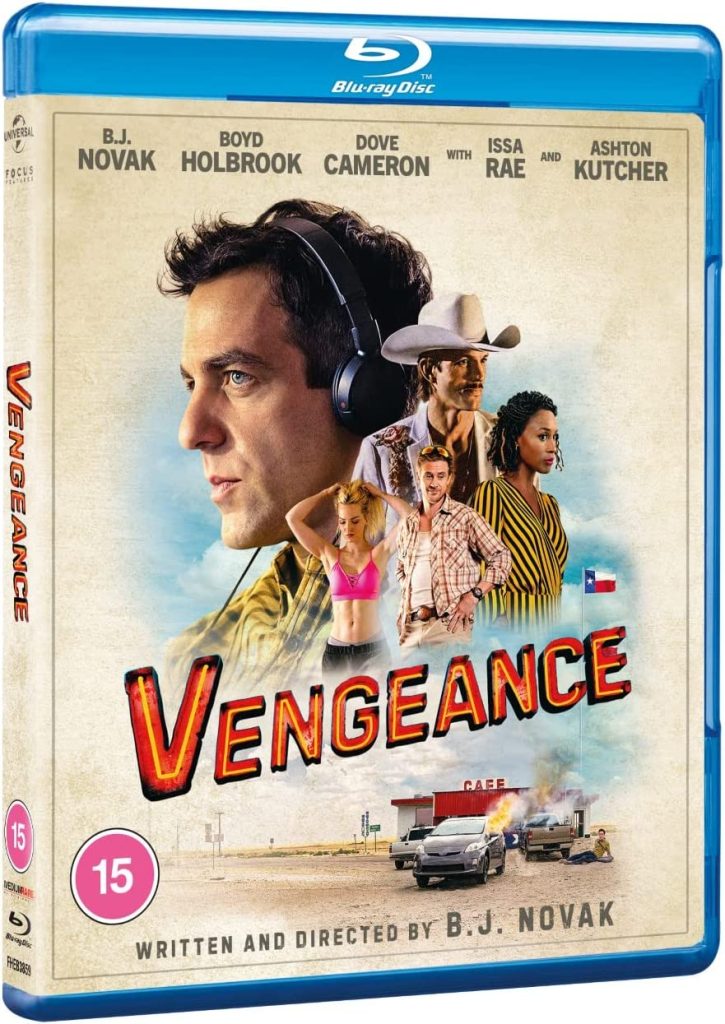
[ENDED] Win Dark Comic Thriller VENGEANCE on Blu-ray

win vengeance on DVD

Unsolvable deaths, deep state conspiracy theories, exploding electric cars – welcome to the weird and wild world of VENGEANCE, the terrific directorial debut from B.J. Novak (better known for his role as Ryan in The Office: An American Workplace). We have three copies of the film on Blu-ray to giveaway, so read on, watch the trailer and enter below…

B.J. Novak has lined up a fantastic cast to star alongside him, including The Sandman’s Boyd Holbrook, Ashton Kutcher (Jobs) in a scene-stealing part as a cowboy record producer, singing sensation Dove Cameron, and Issa Rae (Roar).

It seems like Novak might well have been taking notes from Tarantino while appearing in Inglourious Basterds: VENGEANCE is filled with hilarious dialogue – “As a personal boundary, I don’t avenge deaths” – and quirky characters, and brings the murder mystery genre bang up to date in a fresh and wildly entertaining style.

A fish-out-of-water comedy thriller with a gripping puzzle of a plot at its heart, fans of Knives Out and Reason to Leave will be sure to enjoy Novak’s sharp-edged debut.

a Rafflecopter giveaway

Vengeance is out now on Blu-ray. 

Gaming’s Influence on the Film Industry

Video games are the world’s most popular form of entertainment, surpassing movies and music to claim the top spot. Technological advances have made it possible for everyone to carry a console in their pocket, making gaming accessible to a wider audience than ever before.

Gaming has influenced Hollywood for decades. The movie Tron, released in 1982, is one of the earliest examples. Pong, one of the first video games ever released, inspired the film, which awed audiences with its state-of-the-art digital storytelling.

Video gaming has come a long way since Tron’s release, having an even greater impact on Hollywood than many ever thought possible. Keep reading to learn about how gaming has influenced the film industry.

The Rise of Gaming

While video games have been around for decades, they only became a go-to form of entertainment for the masses in recent years. The development of smartphones meant that everyone carried a mini computer in their pockets, allowing developers to make games people could play on the go.

The first mobile games were basic, casual games with limited graphics. However, that has changed in recent years. There’s now a wide range of mobile titles available, from online casinos to AAA titles.

Players can visit online casinos from their phones and play their favourite titles. For card fans, new variants of popular titles such as Texas Hold’em, which have evolved thanks to the internet, can be enjoyed to the fullest so that the user can enjoy them from anywhere. Similarly, if battle royale style titles like Fortnite are more your speed, these games and many more genres are also available.

Movies Inspired by Video Games


When the movie industry started making movies based on video games, they were often flops. They were effective at drawing people to the box office but were often panned by the critics.

However, Hollywood wasn’t deterred. Some of the biggest video game titles made it to the big screen, including Resident Evil: Welcome To Racoon City, Sonic the Hedgehog, and Angry Birds. Lara Craft: Tomb Raider was number one at the box office and ended up being the 15th biggest release in 2001.

A film based on the popular Nintendo series, Super Mario Brothers, will be released in 2023. Given the success of these movies, we will continue to see popular titles adapted to the big screen.

Cutting Edge Tools

In an effort to create the best games possible, developers are always seeking to push the envelope when it comes to technology. Studios spend a significant amount of money on research and development, resulting in innovative tools being designed to build games.

These storytelling tools aren’t just useful for creating the next big gaming hit; they can also be adapted for movie-making. Epic’s Unreal Engine has created real-time 3D environments for Fortnite, one of the most popular gaming franchises in recent years. When players put the game into replay mode, they can capture all of the action and see everything that happened while they were playing.

Epic was able to invest significant money into developing its Unreal Engine because of the billions in revenue it earned from Fortnite and other video games. Players are even making niche films using game replays on the engine. Film studios in Hollywood could one day use the Epic Engine to create the next hit movie.

Merging Films and Games

Major film studios like Warner Bros. and Disney have successfully crossed over into the gaming industry. Warner Bros. MultVersus was July’s highest-grossing game, pushing aside the popular Elden Ring.

The free-to-play game featured characters from film and TV, including Gizmo (Gremlins), Black Adam (DC Comics), Taz (Looney Tunes), and Lebron (Space Jam). MultiVersus has continued the trend started by other free-to-play titles like Fall Guys, Fortnite, and Call of Duty: Warzone, which have all experienced massive success.

The gaming industry is also leveraging film to create hits. Swedish video game and media holding company Embracer Group recently acquired the rights to the Lord of the Rings IP. This move came only a few months after the company bought the rights to the popular Lara Craft franchise.

TITANS OF TELEPHEMERA: DIC – PART 2

Street Sharks, 1994

Ah, telephemera… those shows whose stay with us was tantalisingly brief, snatched away before their time, and sometimes with good cause. Dedicated miners of this fecund seam begin to notice the same names cropping up, again and again, as if their whole career was based on a principle of throwing stuff at the wall and seeing what sticks. What’s more, it isn’t all one-season failures and unsold pilots, there’s genuine gold to be found amongst their hoards; these men are surely the Titans of Telephemera!

DIC ENTERTAINMENT

Formed as DIC Audiovisuel in France in 1971, Diffusion Information Communication began as the production arm of Radio Television Luxembourg but found Jean Chalopin had his sights set beyond Francophile Europe and made a deal in 1981 with Japanese animation studios Tokyo Studio Shinsha. They helped to produce and distribute Japanese shows to Europe such as Ulysses 31 and Mysterious Cities of Gold, but there were still territories to conquer and in 1982 DIC enterprises was established in Los Angeles by former Hanna-Barbera staffer Andy Heyward.

Heyward’s initial aim was to translate DIC’s products into English for sale to the US market but in 1983 they made their first cartoon primarily for American screens, Inspector Gadget. DIC partnered with companies such as Atari, Kenner, American Greetings, and Hallmark, and they soon had a string of shows filling the Saturday morning schedules, although they gained a reputation in the industry for cutting corners and enforcing anti-union policies, leading to DIC becoming shorthand for Do It Cheap. DIC’s history stretches into the 2010s but it is a story about the cartoons they produced (and the things that happened along the way); we kicked off last time with the 1980s so let’s travel back to 1990 and pick up the story there…

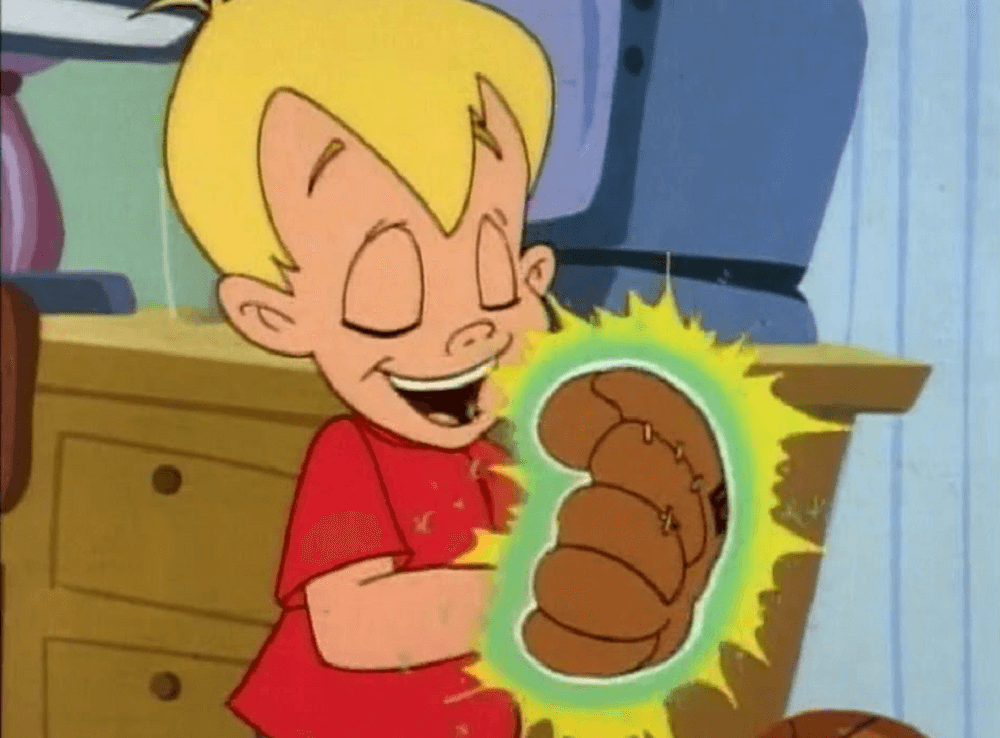
Wish Kid (NBC, 1991): DIC started the nineties with five new shows on the docket, including adaptations of The Wizard of Oz and The Adventures of Super Mario Bros 3 for ABC and NBC, respectively. They also had three shows out in syndication as videogame tie-in The Power Team (renamed Video Power for its second season), body horror-lite Swamp Thing, and the Earth Day shenanigans of Captain Planet and the Planeteers all began their runs. In 1991, DIC delivered their first show for the Fox network with the further animated antics of Bill and Ted’s Excellent Adventures, had Where’s Waldo? on CBS, and gave the world – and ABC – Hammerman. Chip & Pepper’s Cartoon Madness was put in syndication, but the lion’s share of the studio’s output was for the Peacock network.

Sports show Pro-Stars and videogame bonanza Super Mario World made their bows, along with a show that warned of the terrible portent of Macauley Culkin being given magic powers. From an idea by Andy Heyward, fleshed out by cartoon script veteran Jeffrey Scott, Wish Kid starred Macauley Culkin as Nick McClary, a child who owned a baseball glove that – for some reason – was able to grant him wishes after it was struck by a meteor. Culkin not only provided the character’s voice and acted as a model for Nick’s design, but he also filmed live-action sequences to top and tail each episode, introducing the stories we were about to watch.

Wish Kid, 1991

All Nick had to do to activate his glove was to punch it three times and he shared his secret with his best friend, Darryl Singletary. The two used the glove to enjoy all manner of adventures and escape the attentions of neighbourhood bully Frankie, restricted by a limitation of just one wish per week (and not knowing when that wish would expire, which was usually at the worst possible time). All in all, it was low stakes stuff and the show’s thirteen-episode first season passed without much notice, although it was considered for a second season in 1993 on The Family Channel.

Just about the most interesting thing about Whiz Kid is that, after the first season had initially aired, subsequent re-runs were given a new theme song due to its similarity to The Big Bopper’s 1953 hit, “Chantilly Lace.” Culkin played Thomas in My Girl the same year, breaking hearts of iron everywhere as he succumbed to beestings and left best friend Anna Chlumsky alone, eventually growing tired of acting in 1994 after starring in Richie Rich, retiring to go to school, only returning to the screen in 2003 as a world-weary twenty-three-year-old, How different it could have been if only he’d had a magic baseball glove to punch three times…

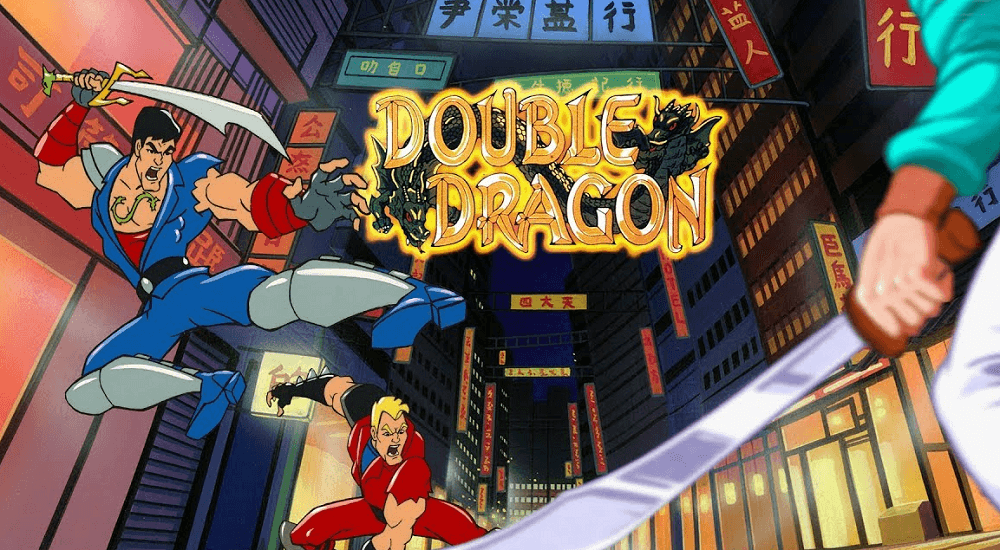
Double Dragon (syndication, 1993): 1992 had been quiet for the studio, with just three new shows making an appearance, as they teamed with Ruby-Spears to make Wild West C.O.W.-Boys of Moo Mesa for ABC, inexplicably showcased Super Dave: Daredevil for Hire on Fox and had Stunt Dawgs in syndication. 1993 was busier, with Madeline debuting on The Family Channel for Disney, Sonic the Hedgehog and All-New Dennis the Menace for ABC and CBS, respectively, and a pair of shows in syndication. You can read about soccer-themed mystery show Hurricanes in part four of 1993’s The Telephemera Years when it arrives but, for now, let’s turn our attention to a pair of brothers out for revenge…

The Double Dragon videogame was released into arcades in 1987, porting to the Nintendo Entertainment System a year later. The original game told the story of twin brothers Billy and Jimmy Lee, who must fight their way into the turf of a rival gang, the Black Warriors, to rescue Billy’s girlfriend Marian. As the TV show opens, Billy and Jimmy have been separated at birth, raised by rival martial-arts masters. Billy’s plan to open a school for local youths is interrupted when he is kidnapped by Jimmy on the orders of the Shadow Master, only for Jimmy to turn on his evil foster-father and pledge to fight alongside his brother for the forces of good.

Double Dragon, 1993

The series was developed by Phil Harnage, who’d been with DIC since 1987 having earned his stripes working on Filmation’s He-Man and the Masters of the Universe, Fat Albert and the Cosby Kids, and Challenge of the Go-Bots. Although the Marian subplot was dropped from the origin story, she does appear throughout the show as Billy’s girlfriend, but the rest of the cast of characters are otherwise original creations by Harnage and director Chuck Patton, a former DC Comics artist who had created many of the characters from Justice League of America’s infamous Detroit era.

Billy and Jimmy fought their way through the Shadow Master’s Shadow Warriors – evil mutants created by high levels of electro-magnetic energy generated by Metro City’s ancient underground power grid – across two seasons of thirteen episodes each, earning a reverse adaptation into the videogame Double Dragon V: The Shadow Falls in 1994. There were also a series of action figures released by Tyco in 1993 and a live-action movie, also released in 1984, produced independently of the TV show and starring Alyssa Milano.

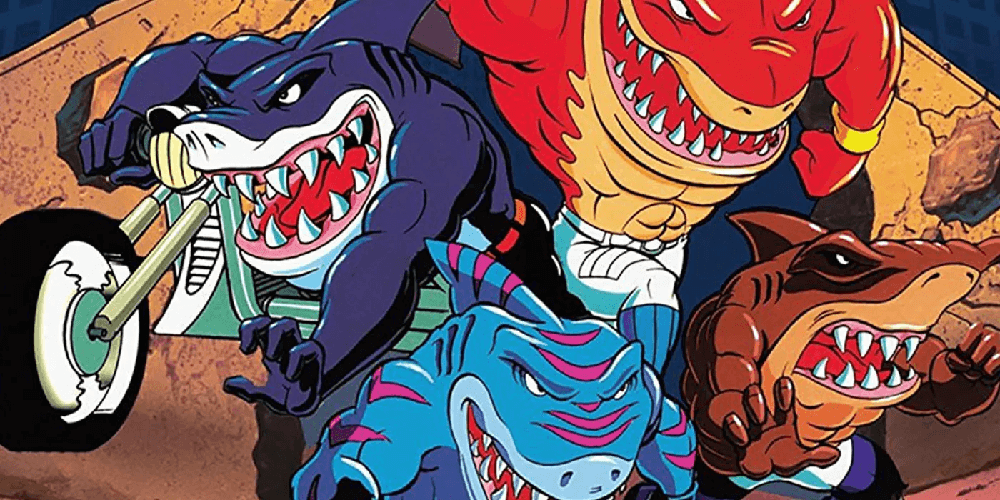
Street Sharks (syndication, 1994): One of only three new DIC shows on the 1994 TV schedules (alongside Bump in the Night on ABC and the well-remembered Where on Earth Is Carmen Sandiego? For Fox), Street Sharks was another Phil Harnage show that, this time, used a toy line from Mattel as its inspiration. Created by Joe Galliani and David Siegel of Joe’s Really Big Productions, the eponymous carcharhiniformes were introduced at the 1994 Toy Fair by a young Vin Diesel and the syndicated show debuted on September 7th 1994 with a thirteen-episode first season designed to whet appetites for the toys’ 1995 release.

As imagined by Harnage and co-developer Martha Moran, the Street Sharks were the four sons of Dr Robert Bolton, the inventor of the Gene Slammer, a device which could combine aquatic and human DNA. In an accident caused by his secretly evil lab partner, Dr Luther Paradigm, Bolton is transformed into a monstrous creature and runs away. Searching for their father, his sons also fall victim to the machine and are transformed into shark-human hybrids. Their new lives? Stop Dr Paradigm at every turn while trying to keep hidden from the society at large which believes them to be monsters!

Street Sharks, 1994

The first season was such a success that a second season of nineteen episodes was put into production, in order to keep the toys flying off the shelves. New characters were introduced, and the sea dogs helped to save the President of the United States, met their ancestor Sir Shark-a-Lot, and help save the city from a wave of Wolverinepedes, causing enough of a star that a third season was ordered, this time on ABC. The third season introduced the Dino Vengers, Mattel’s new dinosaur offshoot toy line, and by the end of the season the two teams were sharing top billing, with the sauropods emerging into their own show for the 1997 season as Extreme Dinosaurs.

With Street Sharks and Carmen Sandiego both bona fide successes, DIC went into 1995 with a swagger, having landed the contract to provide English dubs of Sailor Moon for Cartoon Network, as well as four new shows of their own. With the GI Joe action figure line winding down its new releases, Hasbro decided to reimagine the twelve-inch line that inspired the smaller 1980s figures by using Action Man, the name the toy had used in the UK in its heyday, and DIC provided a syndicated show that mixed animation and live-action to sell it. Disgusting dog What-a-Mess debuted over on ABC and DIC reached back into their history for the syndicated Gadget Boy & Heather reboot, but it was an animated superhero show for the USA Network that caught the eye from that year’s offerings…

Ultraforce (USA, 1995): In 1993, flush with the success of having helped Todd McFarlane, Jim Lee, and the gang launch Image Comics, California publisher Malibu Comics decided to create its own universe of superheroes with the express intention of competing with the traditional big two, Marvel and DC. Dubbed the Ultraverse, the Malibu characters were novel but not always exploited to their full potential, especially when they were grouped together in imitation of The Avengers or JLA as Ultraforce. Led by Hardcase, the first of the new heroes to go public, Ultraforce debuted in the first issue of their own title in August 1994, vowing to protect the public and police the other “ultras” that had emerged in Malibu’s new world.

It’s difficult to explain just how crazy the comic book business became in the early 1990s but needless to say there were people willing to throw money at anything that might become a hot property and Ultraforce was no exception. As well as a line of action figures produced by Galoob, the concept was licensed for an animated series, with DIC winning the race to produce the show. Rushing into production just months after the comic book had introduced the team, the Martha Moran-helmed project was sold to the USA Network for a December 1994 release.

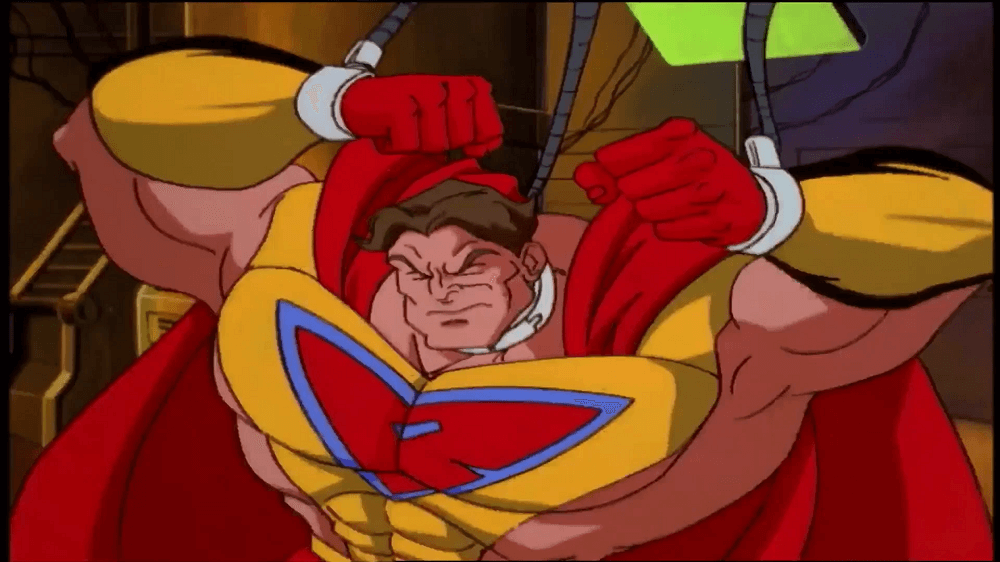
Just as in the comics, the team was led by Hardcase and also included the Superman-like Prime (who was secretly a child in his everyday life), the armoured Prototype, warrior queen Topaz, zombie hero Ghoul, illusion punk Pixx, and the mysterious Contrary. Together they faced such adversaries as Atalon, Lord Pumpkin, and the vampiric Rune, finding time to introduce the world to other Ultraverse heroes such as Night Man and The Strangers along the way.

Ultraforce, 1995

The thirteen-episode first season was well received but, by the time it entered syndication in September 1995, the Ultraverse was undergoing a change. Dubbed Black September, the event upset the status quo and introduced the Marvel Comics character Black Knight to the Ultraverse, with Malibu having been purchased by their rival in November 1994, before the animated series had even begun airing. With properties of their own as a priority (and a rumoured complication over rights in the contracts signed by Ultraverse creators), Marvel downplayed the line and then dropped it all together, meaning no more Ultraforce comics and certainly no more Ultraforce cartoons.

Ultraforce, Action Man, and the rest of DIC’s 1995 slate were followed by just two new shows in 1996, as they became an official part of the Disney empire, having been partnered with ABC since 1993. Future tiger bait, Siegfried & Roy: Masters of the Impossible debuted on Fox, with the – spit! – educational show Inspector Gadget’s Field Trip turning up on the History Channel. That series was retooled as Gadget Boy’s Adventures in History the following year, and 1997 also saw the studio produce Extreme Dinosaurs and The Wacky World of Tex Avery for the syndicated market. Extreme Dinosaurs was joined in syndication by another action show, one four-thousand years in the making…

Mummies Alive! (1997): In ancient Egypt, while the pyramids were still in everyday use, an evil sorcerer named Scarab kidnapped Prince Rapses, the son of the Pharaoh, in an attempt to become immortal. Scarab was entombed alive for his crimes but revived in the modern era where he begins a search for the reincarnation of Rapses, still seeking that everliving state that eluded him (although, did it? Really?)…

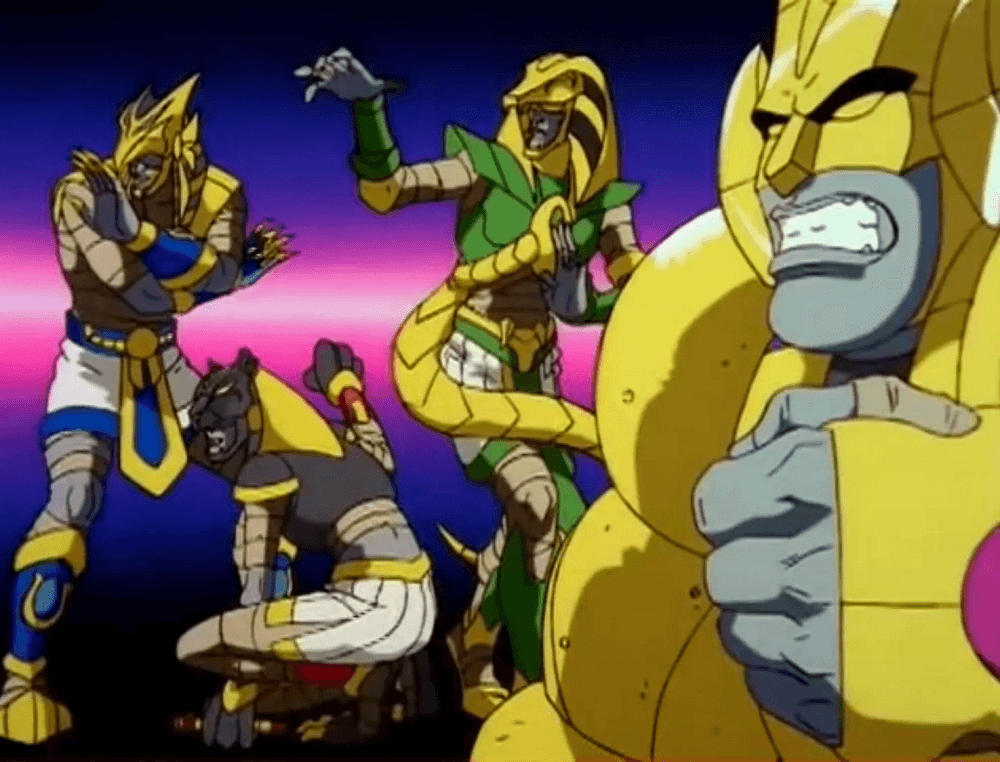
This is the backstory behind Mummies Alive!, DIC’s second syndicated action show of 1997, produced hand-in-hand with a wave of action figures from Hasbro. The mummies of the title are Rapses’s four bodyguards, reviving at the same time as Scarab to prevent him harming twelve-year-old Presley Carnovan, the modern-day incarnation of their precious Prince. Each of the mummies has the power of an Egyptian God, with their leader Ja-Kai able to transform himself into a falcon, backed up by snake magician Rath, golden giant Armon, and the cat-like Nefer-Tina.

Mummies Alive!, 1997

Initially intended to strike a more mature tone similar to Gargoyles, with writers Eric and Julia Lewald having worked on that show for Disney, the show evolved during production into a more child-friendly affair, quite at odds with its origin tale involving being buried alive and subsequent story beats that included sucking the life out of homeless people, the return of ancient gods ambivalent to the lives of everyday people, and the constant threat of a twelve-year-old boy being murdered. The end result was a mix that satisfied neither master and just forty-two episodes – a full season is either thirteen or sixty-five – were produced, airing between September and November 1997. Still, the show retains a following, especially in Europe where the full series has been released on DVD, with English and German audio included.

DIC finished the nineties with the same curious mix of action and children’s shows that had supported them since their inception, with Pocket Dragon Adventures their sole new show for 1998, 1999, however, brought four new arrivals, as Sabrina: The Animated Series debuted on UPN, Fox had Sherlock Holmes in the 22nd Century, Archie’s Weird Mysteries was made for the short-lived PAX channel, and Sonic Underground was put into syndication. Many at the studio, however, felt that their output was being stifled by their association with Disney and in November 2000, backed by venture capitalists, Andy Heyward bought DIC back into independent ownership, going public in 2004. Despite some minor hits in the 2000s, they could never quite recapture their former glories and in 2008 they merged with Canadian studio Cookie Jar, effectively ending DIC’s almost forty-year history.

Next time on The Telephemera Years: It’s a return to our journey through the golden years of US television, and we wash up in 1989!

Check out our other Telephemera articles:

The Telephemera Years: 1966 (part 1, 2, 3, 4)

The Telephemera Years: 1968 (part 1, 2, 3, 4)

The Telephemera Years: 1969 (part 1, 2, 3, 4)

The Telephemera Years: 1971 (part 1, 2, 3, 4)

The Telephemera Years: 1973 (part 1, 2, 3, 4)

The Telephemera Years: 1975 (part 1, 2, 3, 4)

The Telephemera Years: 1977 (part 1, 2, 3, 4)

The Telephemera Years: 1980 (part 12, 3, 4)

The Telephemera Years: 1982 (part 1, 2, 3, 4)

The Telephemera Years: 1984 (part 1, 2, 3, 4)

The Telephemera Years: 1986 (part 1, 2, 3, 4)

The Telephemera Years: 1987 (part 1, 2, 3, 4)

The Telephemera Years: 1990 (part 1, 2, 3, 4)

The Telephemera Years: 1992 (part 1, 2, 3, 4)

The Telephemera Years: 1995 (part 12, 3, 4)

The Telephemera Years: 1997 (part 1, 2, 3, 4)

The Telephemera Years: 2000 (part 1, 2, 3, 4)

The Telephemera Years: 2003 (part 1, 2, 3, 4)

The Telephemera Years: 2005 (part 1, 2, 3, 4)

The Telephemera Years: 2008 (part 1, 23, 4)

Titans of Telephemera: Irwin Allen

Titans of Telephemera: Stephen J Cannell (part 1, 2, 3, 4)

Titans of Telephemera: Hanna-Barbera (part 1, 2, 3, 4, 5)

Titans of Telephemera: Kenneth Johnson

Titans of Telephemera: Sid & Marty Krofft

Titans of Telephemera: Glen A Larson (part 1, 2, 3, 4)

Titans of Telephemera: Quinn Martin (part 1, 2)

Titans of Telephemera: Ruby-Spears


Five Films to Check Out on Legend This Week – 090123

legend to the devil

Legend, as always, brings us some cracking films and TV series to keep the cold days fun. Here are our picks you shouldn’t miss this week…


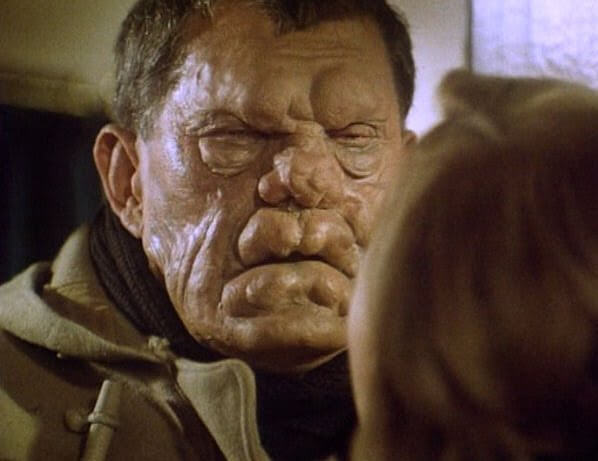
Tuesday January 10th, 10.45pm – Rabid (2019)

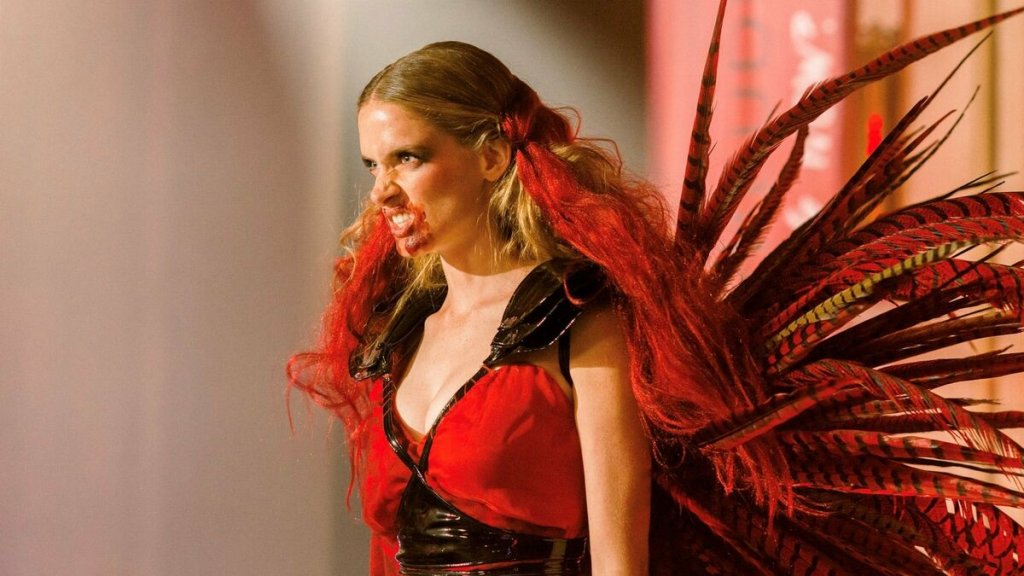
The Soska Sisters remake David Cronenberg’s classic body horror with gory results. A fashion designer has experimental plastic surgery after an accident that has horrific consequences.


Wednesday January 11th, 10.55pm – The Black Torment (1964)  

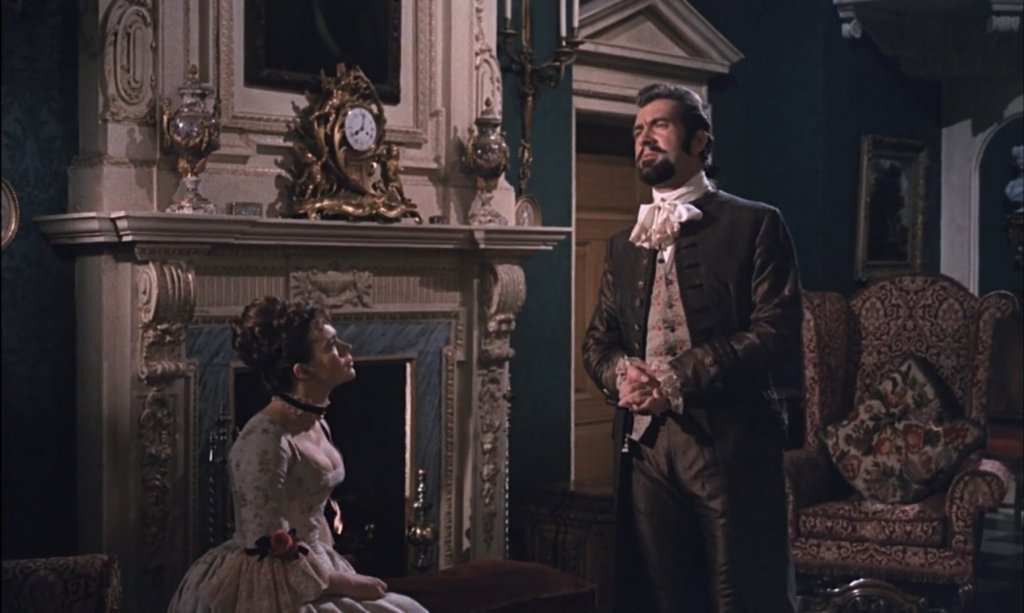
Classic British Gothic horror directed by Robert Hartford-Davis (who helmed Beware my Brethren, which was recently screened as part of The Vintage Vault). It’s a fine production from Compton Films, put together by the legendary Tony Tenser, who later founded Tigon.


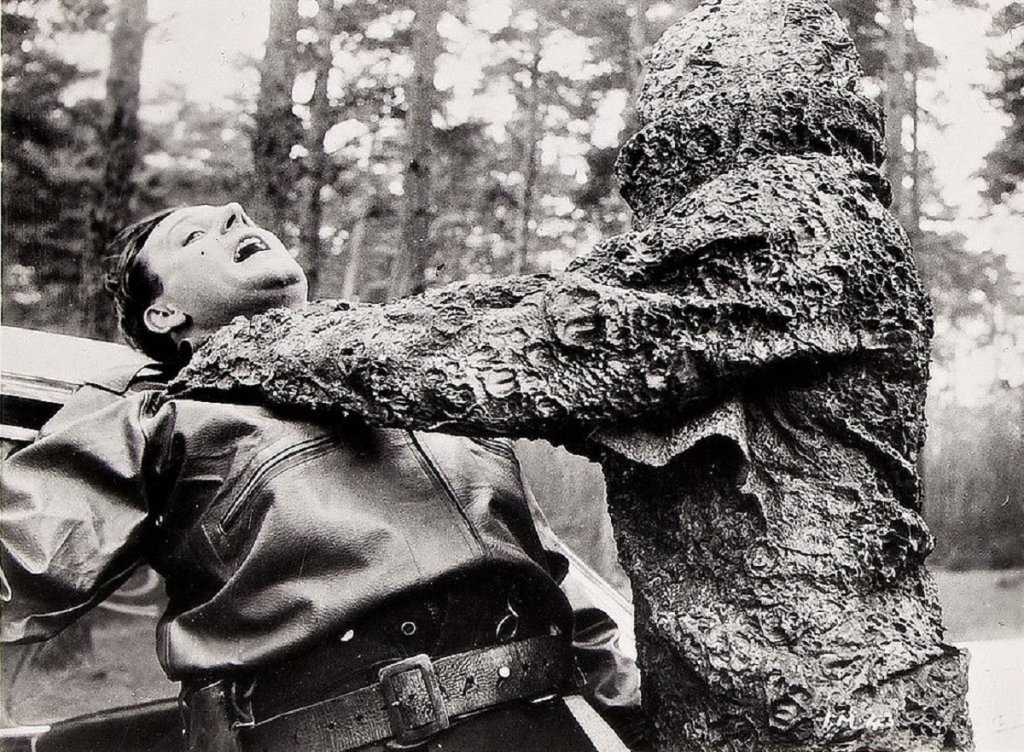
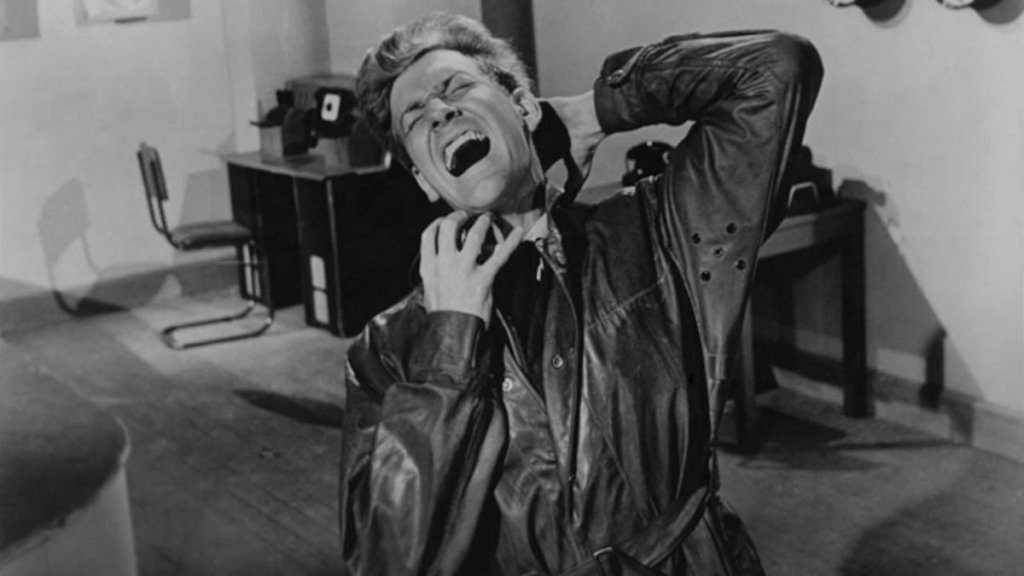
Thursday January 12th, 1pm – First Man into Space (1959)

An astronaut crash-lands on Earth but has become a hideous bloodthirsty creature in this fun sci-fi horror classic.


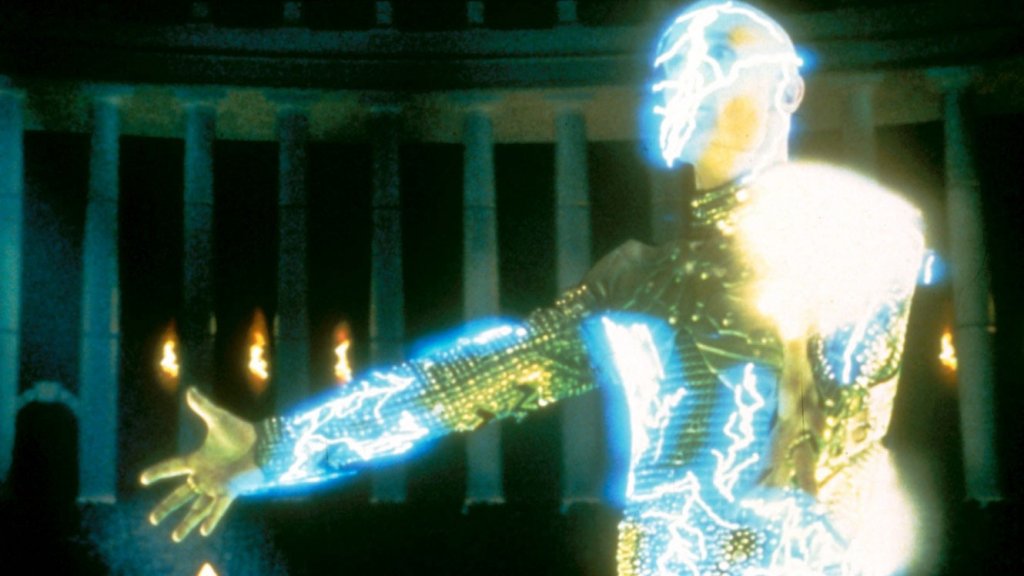
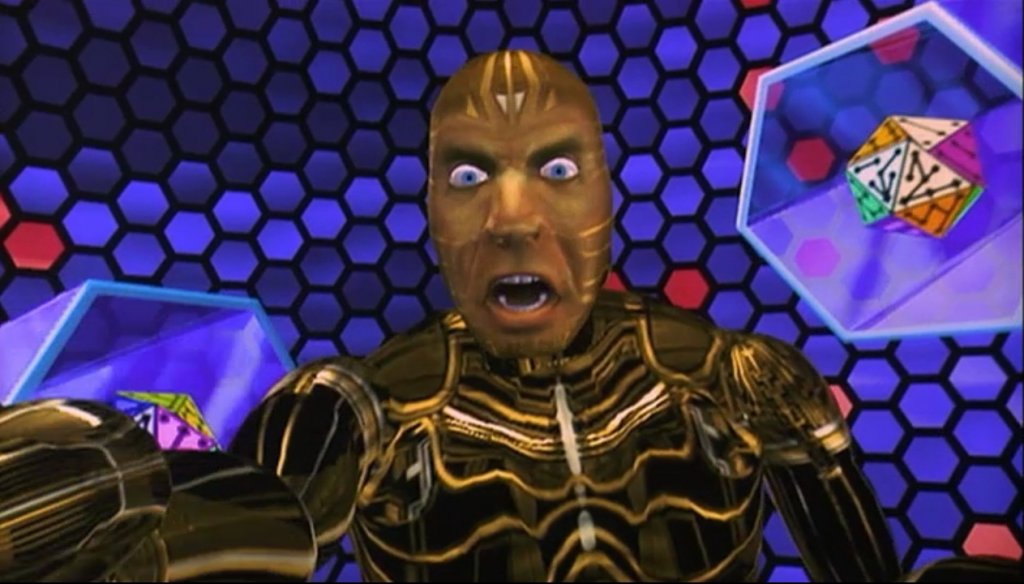
Saturday January 14th, 9pm The Lawnmower Man 2: Beyond Cyberspace (1996)

More virtual reality shenanigans in this sci-fi sequel as the consciousness of an evil genius attempts to hack the world’s computers from within.


Sunday January 15th, 9pm – 12.40am The Vintage Vault

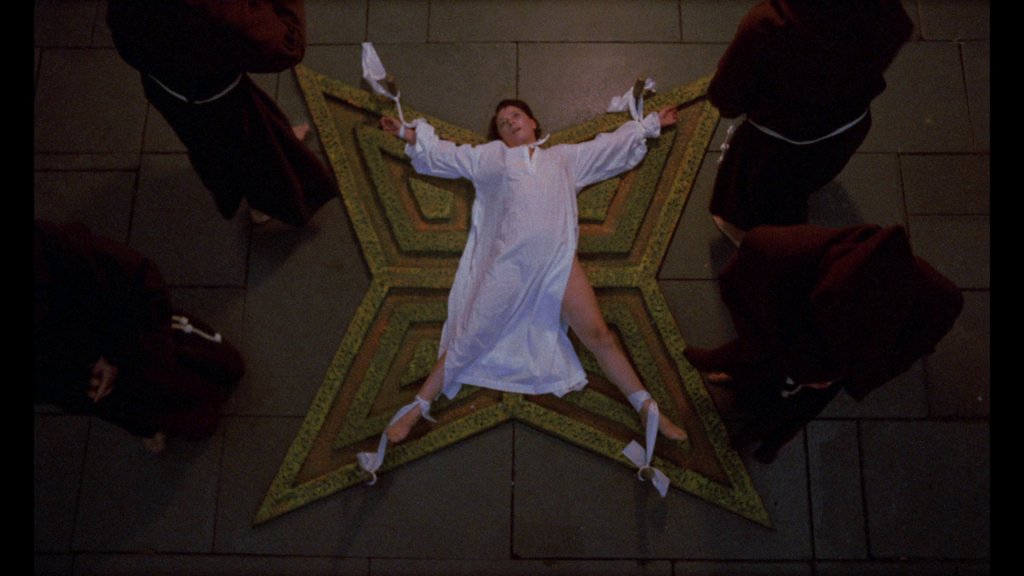
Legend continues to celebrate the Golden Age of genre cinema with a season of double bills. This week, there’s a big-screen version of a popular early ‘70s BBC TV series, Doomwatch (1972). Ian Bannen, George Sanders, and Judy Geeson star in this ecological horror that was way ahead of its time. It’s directed by Hammer regular Peter Sasdy. This is followed by the last of the original Hammer classics, To the Devil a Daughter (1976). Christopher Lee, Richard Widmark, Honor Blackman, and Nastassja Kinski star in this adaptation of Dennis Wheatley’s story.


Find out more information at https://www.legend-tv.co.uk/

Tune into Legend on Sky 317, Virgin 149, Freeview 41, Freesat 138.

Holly Black’s The Stolen Heir – Extract

The Stolen Heir

International bestseller Holly Black will be very familar to Starburst Readers. Who works include The Spiderwick Chronicles, The Darkest Part of the Forest and  Magisterium. Her latest book, The Stolen Heir is set in the same world as the award winning Curse of The Air.  The new book can be ordered here.

We’ve been able to nab an extract of the book for your reading pleasure.

“Come out, come out,” she says.

I step from behind the screen, taking a sharp breath as I do so, dreading seeing myself in the mirror and feeling the burn of further humiliation.

The little seamstress pushes me toward a polished bronze thing that looks like a shield. My reflection stares back at me.

I am taller than I remembered. My hair is a wild tangle despite my attempts at finger combing and washing it back at the motel. I never gotout all the knots. My clavicle shows at the top of the collar, and I know I am too thin. But the dress clings to my chest and waist, skirt flaring over my hips. The tattered edges give it a haunting elegance, as though I am wrapped in the shadows of dusk. I look the picture of a mysterious courtier, rather than someone who sleeps in dirt.

Habetrot drops boots beside me, and I realize how long I’ve been standing there, staring at myself. A different kind of shame heats my cheeks.

I twist my hands in the skirt.

The dress even has pockets. “I knew I kept these,” she says, indicating the footwear. “If he’s half as taken with you as you are with yourself, I imagine he’ll be well pleased.”

“Who?” I demand sharply, but she only shrugs and presses a bone comb into my hand.

“Fix your hair,” she says, then shrugs again. “Or make it wilder. You look lovely either way.”

“What will you want for all this?” I ask, thinking of all the faerie bargains I’ve overheard, and of how much I like the dress I am wearing, how I could use the boots. I understand the temptation felt by every fool in a forest.

Her bead black eyes study me, then she shakes her head. “I serve Queen Annet, and she bade me gift whatever the prince of the High Court asked, were it within the scope of my talents.”

Of course someone must have told Oak where Habetrot’s cham bers were and assured him that she could do what he asked. So it is not Habetrot I owe, but Oak. And he owes Queen Annet in turn. My heart sinks. Debt is not easily dismissed in Faerie.

And the Court of Moths are showing off what good hosts they are.

“The gown is the most gorgeous thing I’ve ever seen,” I say to her, as I can pay her no other way without insult. It has been a long time since I have been given a gift, barbed though it may be. “It does feel as though it might come from a dream.”

That makes Habetrot’s cheeks pink. “Good. Maybe you will come back and tell me how the Prince of Sunlight liked the Queen of Night.”

Embarrassed, I step out into the hall, wondering how she could believe that a dress—no matter how beautiful—could make me into an object of desire. Wondering if everyone at the revel would think that I was dangling after Oak and laugh behind their hands.

I stomp back through the hall to my room and swing open the door, only to find Oak lounging in one of the chairs, his long limbs spread out in shameless comfort. A flower crown of myrtle rests just above his horns. With it, he wears a new shirt of white linen and scarlet trousers embroidered with vines. Even his hooves appear polished.

He looks every bit the handsome faerie prince, beloved by everyone and everything. Rabbits probably eat from his hands. Blue jays try to feed him worms meant for their own children.
He smiles, as though not surprised to see me in a beautiful gown. In fact, his gaze passes over it quickly, to rest with an odd intensity on my face. “Striking,” he says, although I do not see how he could have possibly given it enough attention to know.

I feel both shy and resentful.

The Prince of Sunlight.

I do not bother telling him what he looks like. I am sure he already knows. He brushes one hand through his golden curls. “We have an audi ence with Annet. Hopefully we can persuade her to send us to the Thistlewitch swiftly. Until then, we have been invited to roam her halls and eat from her banquet tables.”

I sit on a stool, pull on my new boots, and then tie up the laces.

“Why do you think she took Hyacinthe?”

Oak rubs a hand over his face. “I believe she wanted to show she could. I hope there’s no more to it than that.”

I take the comb from a pocket of my new dress and then hesitate. If I begin to untangle my nimbus of snarls, he will see how badly my hair
is matted and be reminded of where he found me.

He stands.

Good. He will leave, and then I will be able to wrangle my hair alone.

But instead he steps behind me and takes the comb from my hands.

“Let me do that,” he says, taking strands of my hair in his fingers. “It’s the color of primroses.”
My shoulders tense. I am unused to people touching me. “You don’t need to—” I start.

“It’s no trouble,” he says. “I had three older sisters brushing and braiding mine, no matter how I howled. I had to learn to do theirs, in
self defense. And my mother…”

His fingers are clever. He holds each lock at the base, slowly teasing out the knots at the very ends and then working backward to the scalp.

Under his hands, it becomes smooth ribbons. If I had done this, I would have yanked half of it out in frustration.
“Your mother…,” I echo, prompting him to continue in a voice that shakes only a little.

He begins to braid, sweeping my hair up so that thick plaits become something like his circlet, wrapping around my head.
“When we were in the mortal world, away from her servants, she needed help arranging it.” His voice is soft.

This, along with the slightly painful pull against my scalp, the brush of his fingertips against my neck as he separates a section, the slight
frown of concentration on his face, is overwhelming. I am not accustomed to someone being this close.

When I look up, his smile is all invitation.

We are no longer children, playing games and hiding beneath his bed, but I feel as though this is a different kind of game, one where I do not understand the rules.

With a shiver, I take up the mirror from the dresser. In this hair and with this dress, I look pretty. The kind of pretty that allows monsters to deceive people into forests, into dances where they will find their doom.


The full book can be ordered from here. 

[ENDED] Win THE MUNSTERS Blu-ray + Merch Bundle

win Rob Zombie's The Munsters

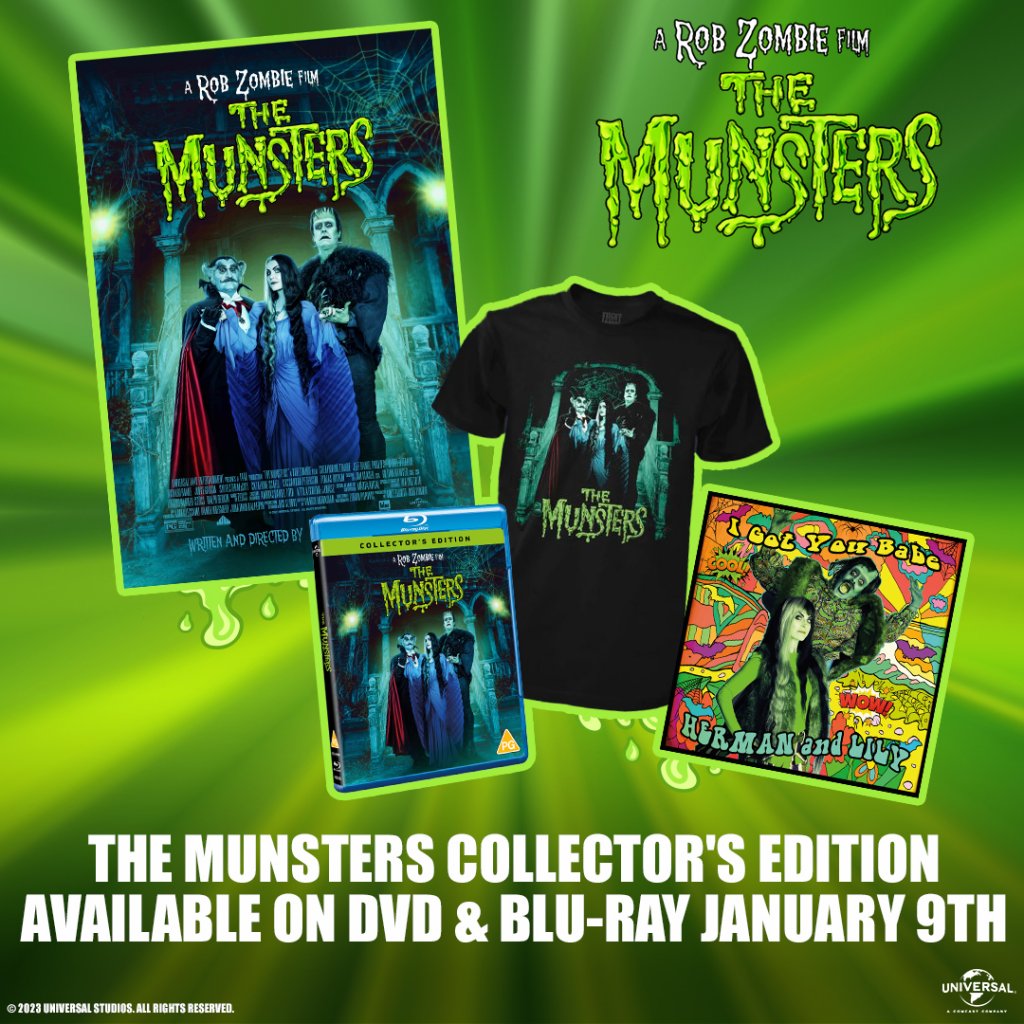
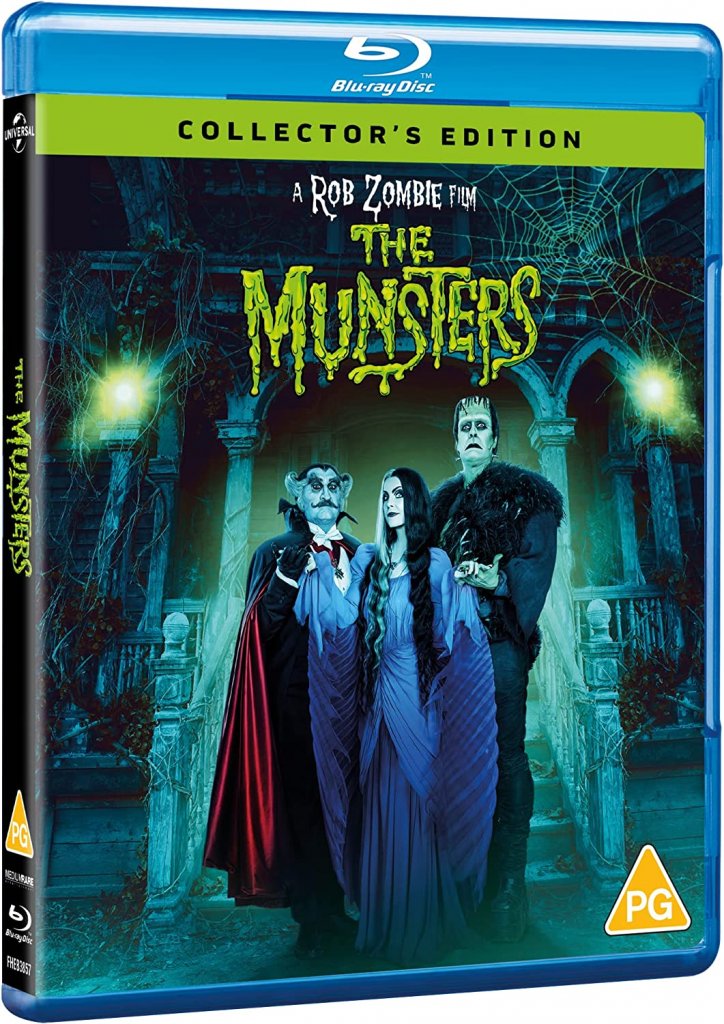
Rob Zombie’s reimagining of the classic TV show The Munsters hits Blu-ray and DVD on January 9th, and we have a superb bundle to give away that includes the Blu-ray, a T-shirt, a one-sheet poster and a 12” vinyl record of I Got You Babe, performed by Herman (Jeff Daniel Phillips) and Lily (Sheri Moon Zombie). One runner-up will win the film on Blu-ray and a one-sheet poster!

To be in with a chance of winning, just read on and answer the question below….


Lily is just your typical 150-year-old, lovelorn vampire looking for the man of her nightmares . . . that is until she lays eyes on Herman, a seven-foot-tall, green experiment with a heart of gold. It’s love at first shock as these two ghouls fall fangs over feet in this crazy Transylvanian romance. Unfortunately, it’s not all smooth sailing in the cemetery as Lily’s father The Count has other plans for his beloved daughter’s future, and they don’t involve her bumbling beau Herman.


The Blu-ray and DVD feature the following special features:

The Munsters: Return to Mockingbird Lane – From the mind of Rob Zombie, this hour-long look behind the scenes of The Munsters gives an intimate window into his filmmaking process.

Feature Commentary with director/writer/producer Rob Zombie.


a Rafflecopter giveaway


Rob Zombie’s The Munsters is available on Blu-ray and DVD from January 9th, 2023, and is out now on Digital.

Check into the HORROR HOSPITAL

check in horror hospital

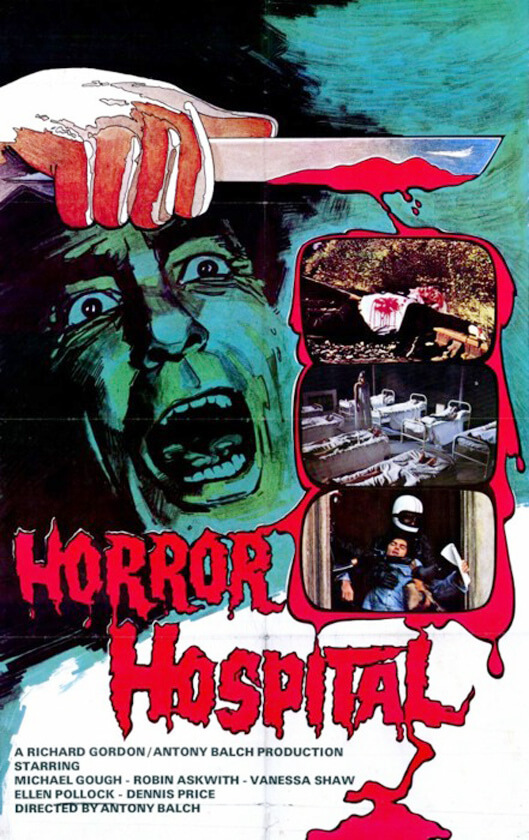
In the early ’70s, British horror cinema was having something of a renaissance. Hammer was getting more sexually explicit, and Amicus were pulling big-name theatrical stars into their anthology films. On the periphery were the independents. Richard Gordon was a producer with decades of experience. He had worked with the giants of the genre, Bela Lugosi, Boris Karloff, Peter Cushing and Christopher Lee. His 1958 film Fiend Without a Face is one of the most fondly remembered of his oeuvre, not least for the stop-motion flying brains in its climax. In 1973, he followed up the hit Tower of Evil (1972) with Horror Hospital.


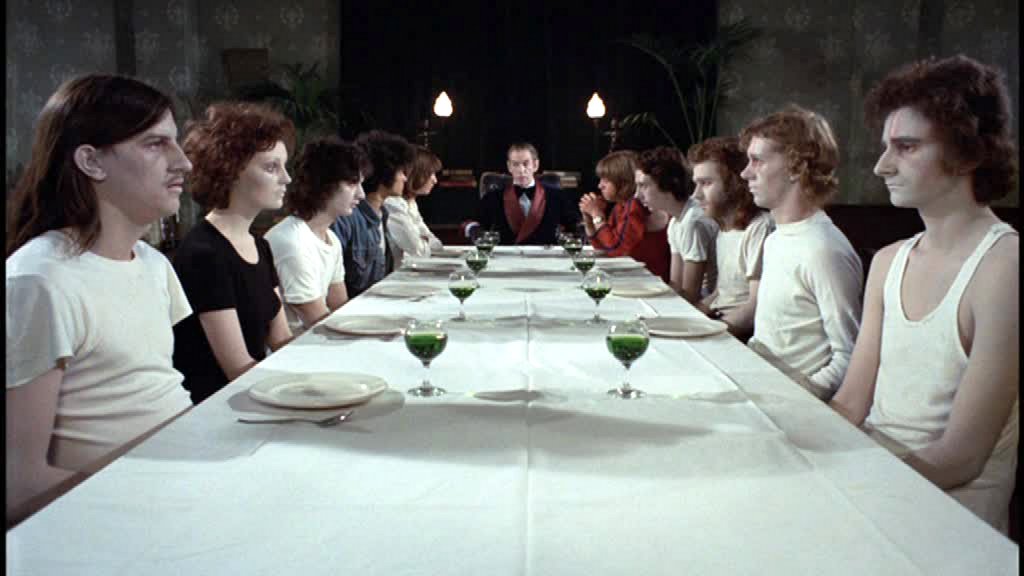
At the heart of the story is Jason Jones (Robin Askwith), a down-on-his-luck songwriter, disillusioned with bands stealing his songs, and having to suffer the indignity of being beaten up by the band’s transvestite frontman. At the suggestion of his beatnik group of friends, he decides to take a break. The one advert that jumps out at him is for ‘Hairy Holidays’ (tagline: “fun and sun for the under 30s”). The travel agent’s office is less than inspiring, being in a back street and fronted by the salacious Mr Pollack (Dennis Price, in one of his final roles). He suggests a trip to Brittlehurst Manor, a health retreat in the countryside, and he sends him off with a rather unnerving wink. While on the train Jason meets Judy Peters (Vanessa Shaw), and makes an instant good impression, reassuring her that he’s not a threat. Judy just so happens to be going to the Manor to see her Aunt Harris (Ellen Pollock), who she has never met. She’s not too shy to tell Jason that she used to run a brothel before running away with the mysterious Dr Storm, who runs the health farm. When the car Judy is expecting to be sent to collect her fails to turn up, the conductor (Kenneth Benda) at the station sends them in the right direction, while slyly notifying the Manor. The pair eventually get picked up by two sinister-looking bikers and are met at the imposing entrance by the diminutive servant, Frederick (Skip Martin), a sarcastic little bugger who’s forever spouting random comments. Aunt Harris is not at all pleased at Judy turning up and having only one room free, the pair have to share, not that Jason is complaining. At dinner, they meet the other ‘residents’ who all have the same vacant expression and ugly scars on their foreheads. The only other normal-looking girl, Millie (Barbara Wendy) suddenly becomes hysterical and is led away by the mysterious biker men.


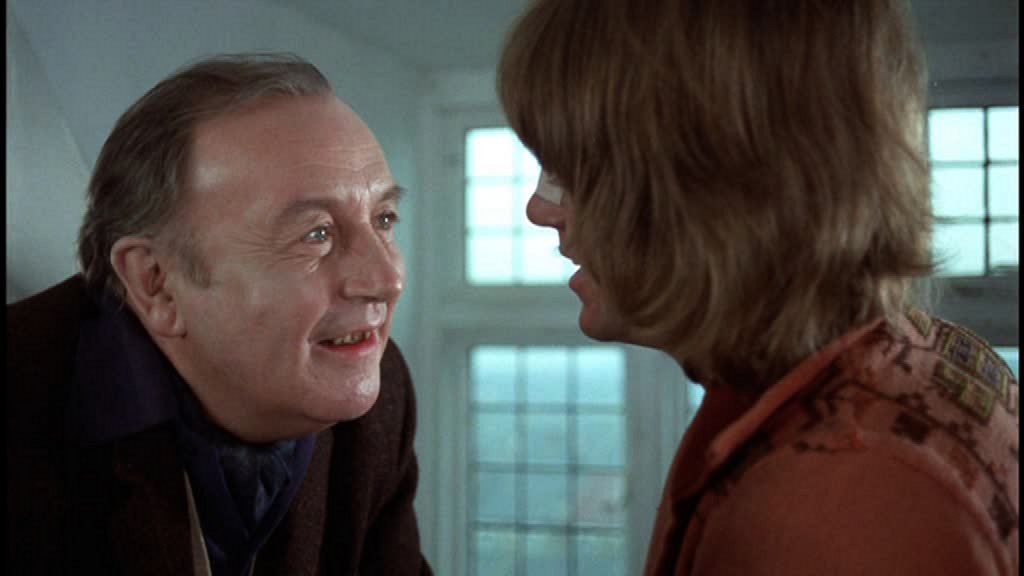
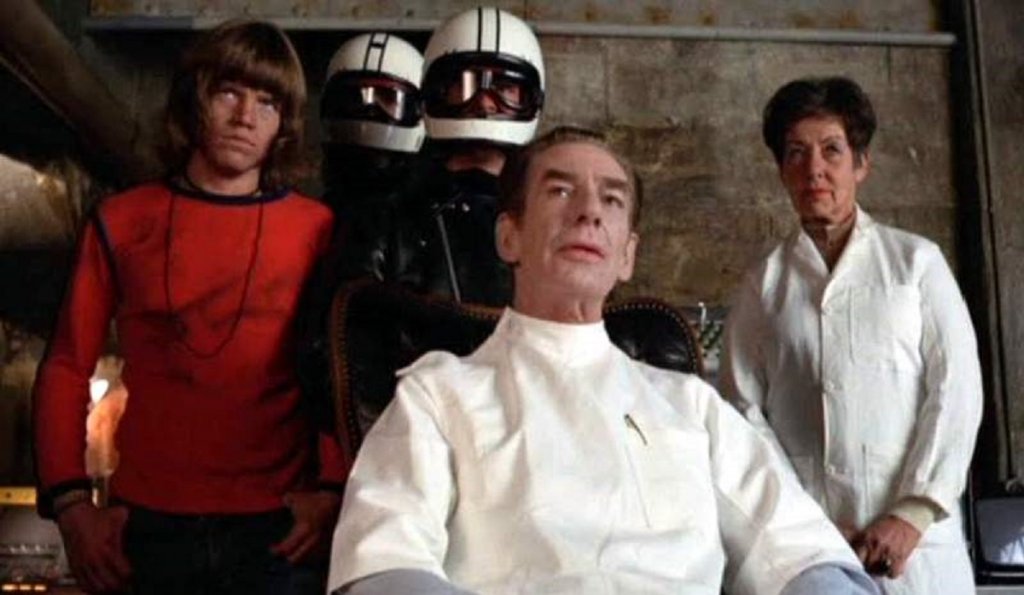
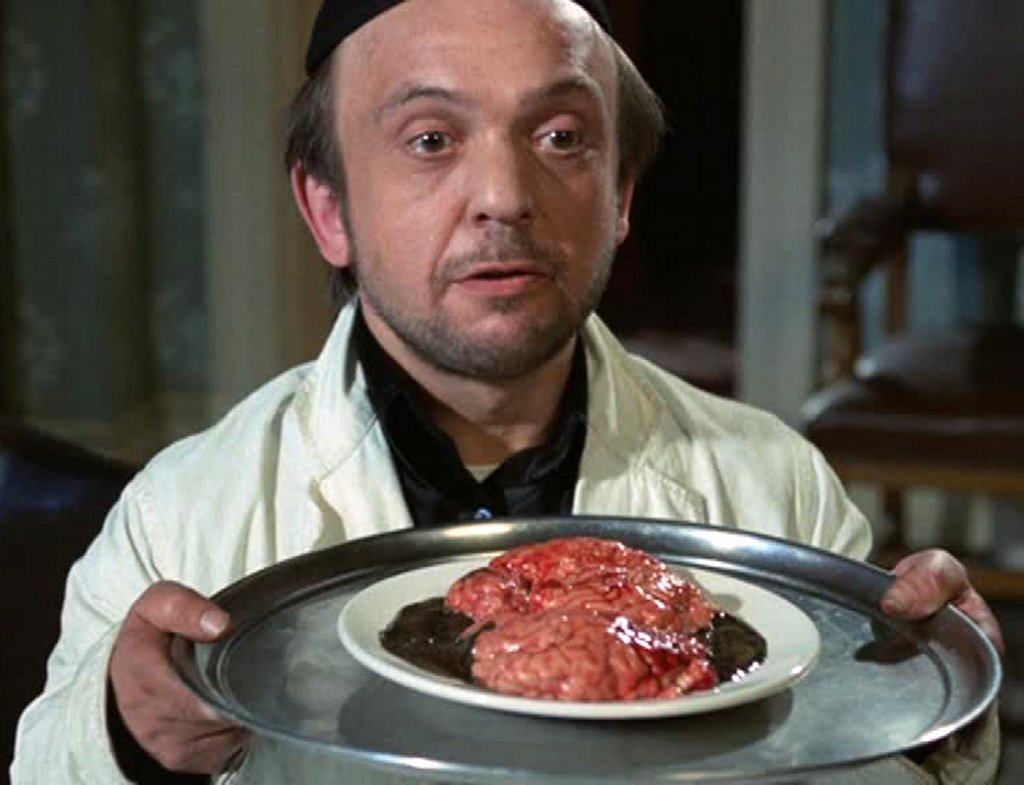
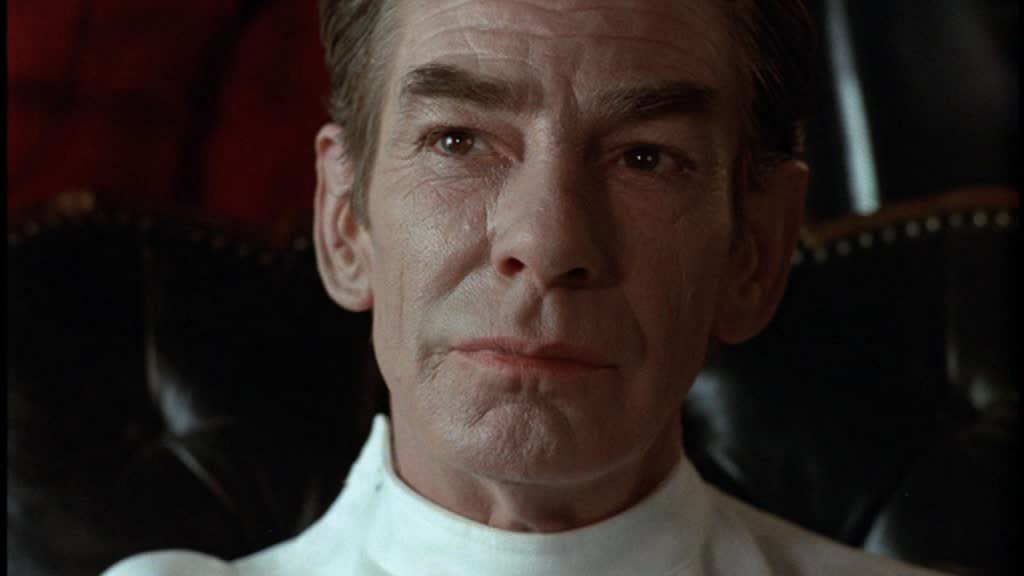
Retiring early, they are disturbed even more to find the water running with blood, prompting Dr Storm (Michael Gough) to make his presence known. Wheelchair-bound, yet imposing, he apologises, and it becomes clear he has a ruthless streak, “women can be so troublesome, Mr Jones, but then so can little men”, as he gives Frederick a swift whack across the face with his cane. Cracking his knuckles, he insists they cannot leave at this late hour. Nursing his smarting face, Frederick leaves them for the night with a sardonic, “don’t forget to brush your teeth”. The blood in the pipes has come from the cisterns where the hapless dwarf has left the heads of two recent runaways. A fate which will soon befall Pollack as he appears at the Manor demanding payment for all the nubile young bodies he has sent Storm’s way. Smugly walking away with his money, he is cut down by a car equipped with a retractable blade (and a basket for collecting the neatly severed head). Jason witnesses all this, and soon finds out what Storm’s evil plans involve. He is producing a race of obedient super-humans, performing a lobotomy-style operation that makes them impervious to pain, and then able to carry out his every whim; “Just like puppets… And I’m the puppet master!


Director Antony Balch and producer Gordon had previously worked together on the 1970 film, Secrets of Sex (aka Bizarre), a film that certainly lived up to its name, in which an Egyptian mummy narrates a series of saucy, occasionally horror-tinged vignettes. Balch had made a name for himself as a distributor; one of his triumphs was getting Tod Browning’s classic Freaks (1932) through the British censors, after decades of being banned, a feat even Gordon himself had unsuccessfully tried in the late ‘50s.

legend horror hospital


The film has many great homages to horror films of old, with nods to films such as Mystery of the Wax Museum (1933), The Tingler (1959), and Psycho (1960) for eagle-eyed fans to spot, and it was intended from the start to be taken as a comedy. Although not a spoof as Carry On Screaming was, it was certainly not meant to be taken seriously.

Richard Gordon went on record several times stating it was the most fun he ever had making a film, due mainly to the fun atmosphere Skip and Robin brought to the set. Both were more than willing to do anything asked of them and kept everyone entertained between takes. Robin Askwith, of course, is most famous in the UK for his series of films based on the Timmy Lea Confessions novels, which began in 1974 with Confessions of a Window Cleaner. It’s often forgotten that the first film was directed by Hammer veteran Val Guest. Robin had already made a name for himself, with small parts in Lindsay Anderson’s If… (1968), numerous UKTV appearances, and several films with Pete Walker, notably Cool It Carol! (1972), which despite being marketed nowadays as a sex comedy is actually quite a gritty look at life in the early ‘70s. He even appeared, urinating over a crowd, in Pier Paolo Pasolini’s The Canterbury Tales (1972); a film which is also notable for having soon-to-be Doctor Who Tom Baker with his knob out. It’s art, of course. However, Robin did make a number of horror films in this early period, too. He had a minor role (and is killed off quite spectacularly) in Tower of Evil (where he first met Gordon) and a similar role in Pete Walker’s slasher The Flesh and Blood Show (1972). Later on, he’d appear alongside Rula Lenska and a tatty-suited giant gorilla as Ray Fay in the cult ‘classic’ Queen Kong (1976). Intended to cash in on the big budget Dino De Laurentiis production of the same year, this poverty row effort is so bad that you can’t help but enjoy it. He pops up now and again in equally low-budget efforts cranked out by Richard Driscoll, who has so far managed to release the same film, re-edited and re-titled several times, each time removing all reference to the older version from the IMDb listings. The film is at times called Evil Calls, or The Raven, and even The Legend of Harrow Woods. When quizzed about Driscoll, Robin wisely decided to keep quiet, only saying, “Well, I got paid”, which is much more than most of the people who worked on his ‘films’ did.

Eagle-eyed viewers can spot both Gordon and Balch in the opening scenes, Gordon is leaning against a wall in the background (his only cameo in any of his films) and Balch, under a false beard and glasses, is the one who tells Jason he needs a holiday.


While far from a household name, Skip Martin is a familiar face to horror fans. Not only did he have a very small role in the Richard Gordon-produced Corridors of Blood (1958), he was memorable in Roger Corman’s The Masque of the Red Death (1964). He also appeared in both Circus of Fear (1966) and Hammer’s Vampire Circus (1972), unsurprisingly playing one of the circus performers. Horror Hospital was arguably his biggest role, one in which he starts out as a villainous sidekick but ends as a hero, albeit reluctantly. He pays the ultimate price and his demise is rather touching. Skip’s acting is deliberately over the top. He knew the intention was to make a fun horror film and mugs for the camera admirably. His rather surreal quips add to the sense of being trapped in a nightmare. When the script called for Skip to pile up the two biker men guarding Jason and Abraham in the cell in order to reach the top latch on the large, metal door, he was more than willing to add his own opinion on how it would be done for the best comic effect. Indeed, the sight of the actor, in his early 40s at this point, dragging the burly, strapping, leather-clad henchmen across the floor and flailing under his own tiny legs is hilarious. He didn’t mind being laughed at and threw himself, literally, into the part. Robin also came up with some of the more humorous aspects of the shoot. In the climax, when Jason, Judy and Abraham are dashing through the burning building, being chased by the biker boys, they run through the kitchen, and Jason stops to help himself to a piece of pie that has been left on the table. Not in the original script, this moment is brilliant, and completely fitting for the character. Gough also entered into the spirit of the piece. After asking what would be expected from him, he hams it up like a trooper. Unfortunately for genre fans, he didn’t like to talk about his horror work, of which there was plenty. It didn’t stop him from delivering wonderful performances, however, no matter how bad the script was. When he was being lined up for Horror Hospital, Balch screened the Bela Lugosi film, The Devil Bat to give Gough an idea of what type of character they were looking for. Enjoying the film, he told Balch, “If that’s what you want, that’s what you’ll get”.

Knebworth House in Hertfordshire doubled for the exterior of the grand Brittlehurst Manor, with the interiors shot at the disused Battersea Town Hall, due to the cost of the insurance for filming in the famous stately home. The sequence where Jason goes to the Hairy Holidays office was filmed in a back street in Soho, and shot quickly, very early in the morning as they did not have a permit.


On its original release in the UK, rather than have their film play as a second feature to a Hammer film or the like, Gordon and Balch acquired Ted V. Mikels’ The Corpse Grinders and put the films on a double bill. It was very successful. In the US, however, a deal was made with Hallmark Distributors (no relation to the card company) who had released Michael Armstrong’s Mark of the Devil (1970). They insisted, much to Gordon’s dismay, on retitling the film Computer Killers. For its German release, the character of Dr Storm was renamed Frankenstein, and the film played as Frankenstein’s Horror Klinik.

Over the past few years, Horror Hospital has had a reappraisal in the eyes of fans. A Blu-ray was released a few years back and it returns to our screens thanks to Legend, who screen it as part of their superb Vintage Vault strand on Sunday nights.

Find out more at https://www.legend-tv.co.uk/

You can tune into Legend via Sky 148 / Virgin 149 / Freeview 41 / Freesat 137

TITANS OF TELEPHEMERA: DIC – PART 1

MASK, 1985

Ah, telephemera… those shows whose stay with us was tantalisingly brief, snatched away before their time, and sometimes with good cause. Dedicated miners of this fecund seam begin to notice the same names cropping up, again and again, as if their whole career was based on a principle of throwing stuff at the wall and seeing what sticks. What’s more, it isn’t all one-season failures and unsold pilots, there’s genuine gold to be found amongst their hoards; these men are surely the Titans of Telephemera!

DIC ENTERTAINMENT

Formed as DIC Audiovisuel in France in 1971, Diffusion Information Communication began as the production arm of Radio Television Luxembourg but found Jean Chalopin had his sights set beyond Francophile Europe and made a deal in 1981 with Japanese animation studios Tokyo Studio Shinsha. They helped to produce and distribute Japanese shows to Europe such as Ulysses 31 and Mysterious Cities of Gold, but there were still territories to conquer and in 1982 DIC enterprises was established in Los Angeles by former Hanna-Barbera staffer Andy Heyward.

Heyward’s initial aim was to translate DIC’s products into English for sale to the US market but in 1983 they made their first cartoon primarily for American screens, Inspector Gadget. DIC partnered with companies such as Atari, Kenner, American Greetings, and Hallmark, and they soon had a string of shows filling the Saturday morning schedules, although they gained a reputation in the industry for cutting corners and enforcing anti-union policies, leading to DIC becoming shorthand for Do It Cheap. DIC’s history stretches into the 2010s but it is a story about the cartoons they produced (and the things that happened along the way), so let’s start with the studio’s incredible 1980s…

Inspector Gadget (syndication, 1983): Obviously inspired by 1960s spy show Get Smart, Inspector Gadget was the brainchild of Andy Heyward, developed in conjunction with Jean Chalopin and French animator Bruno Bianchi. The show started in media res with a pilot episode that saw Gadget stop his arch-nemesis Dr Claw and his agents of MAD from sabotaging the Winter Olympics, and which also had Gadget with a moustache, removed to see off a threatened lawsuit by MGM who felt the character was too similar to Inspector Clouseau from The Pink Panther movies. Gadget was an agent of a secret police organisation, sent on cases by Chief Quimby and accompanied by his niece, Penny.

Penny, of course, was the real smarts behind the Inspector, who blundered into cases that got good mileage out of his bionic adaptations but often saw him make things worse before Penny and her dog Brain saved the day without his knowledge. In season two, the cast was swelled by the addition of Corporal Capeman, a similarly inept superhero who developed a friendly antagonism with Brain, and – to be quite honest – it must have been a source of constant frustration for Dr Claw to have his schemes foiled by idiots, children, and a dog.
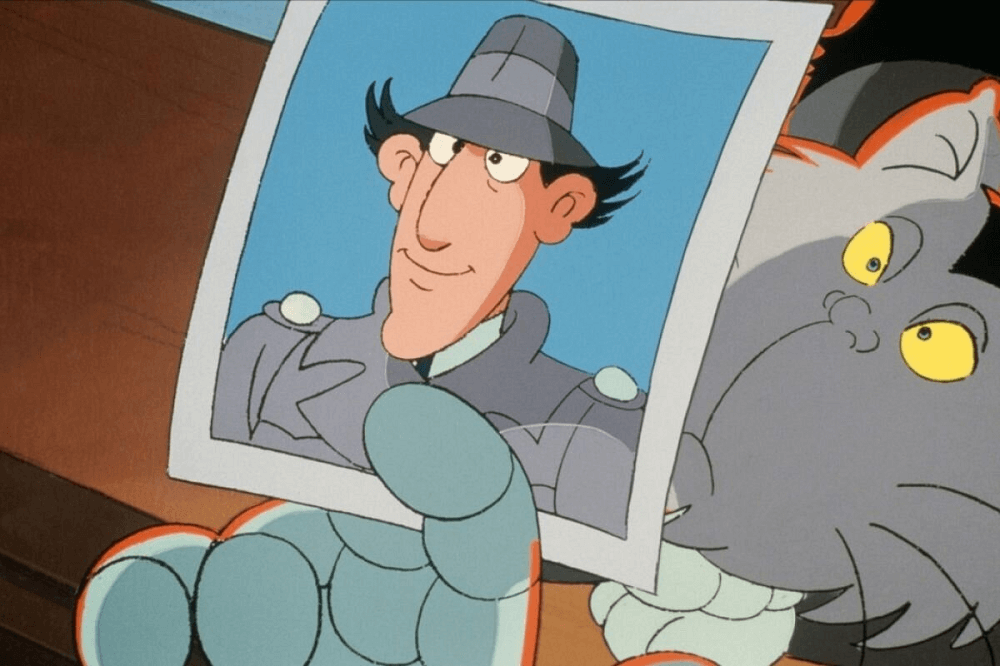
Inspector Gadget, 1983

The first season of Inspector Gadget ran across weeknights between September and December 1983, with sixty-five episodes produced to ensure it would live forever in syndication. Don Adams, Agent Maxwell Smart in Get Smart, was cast as Gadget, with the ever-dependable Frank Welker providing the voices of Brain, Claw, and Claw’s pet, MAD Cat. The rest of the cast were Canadians local to the Nelvana studios where the voice acting was recorded but when production shifted to Los Angeles for the twenty-one-episode second season, they were replaced by LA industry regulars. After eighty-five episodes of bungling fun, no new episodes were produced, although Gadget did return in various guises over the next two decades. In 1999, Matthew Broderick starred as the bumbling fool in a big-budget movie adaptation which did well enough at the box office that it received a direct-to-video sequel four years later.

Gadget wasn’t the only DIC character bursting onto TV screens in 1983 as The Littles premiered on ABC, followed by a slew of shows in 1984 for all three networks and the syndication market. Wolf Rock TV and Kidd Video may not have been the hits they were looking for, but videogame tie-in Pole Position and The Get Along Gang on CBS certainly made a splash, with Rainbow Brite and Heathcliff and the Catillac Cats delighting young viewers in syndication. If 1984 had been a big year, then 1985 was ready to blow it right out of the water…

Jayce and the Wheeled Warriors (syndication, 1985): DIC started 1985 with four new shows on the air. Hulk Hogan’s Rock ‘n’ Wrestling debuted on CBS, giving grapple hungry kids a dose of the WWF superstars‘ bizarre everyday lives, and Care Bears hit the syndicated market, filling schoolyards across America with thousands of kids pretending to have superpowers in their tummies. But it was a pair of action shows, also in syndication, that began to spell out what DIC would become best known for over the next ten years, the first of them featuring a hero’s quest that somehow involved a magic plant…

Developed by future Babylon 5 creator J Michael Straczynski (in his words, “to hijack a dopey concept and turn into something more”), Jayce and the Wheeled Warriors was aptly summed up by its title, the story of a young man – Jayce – and his journey to find his missing father Audric, accompanied by the Lightning League, a group of heroic warriors inhabiting some strange vehicles.
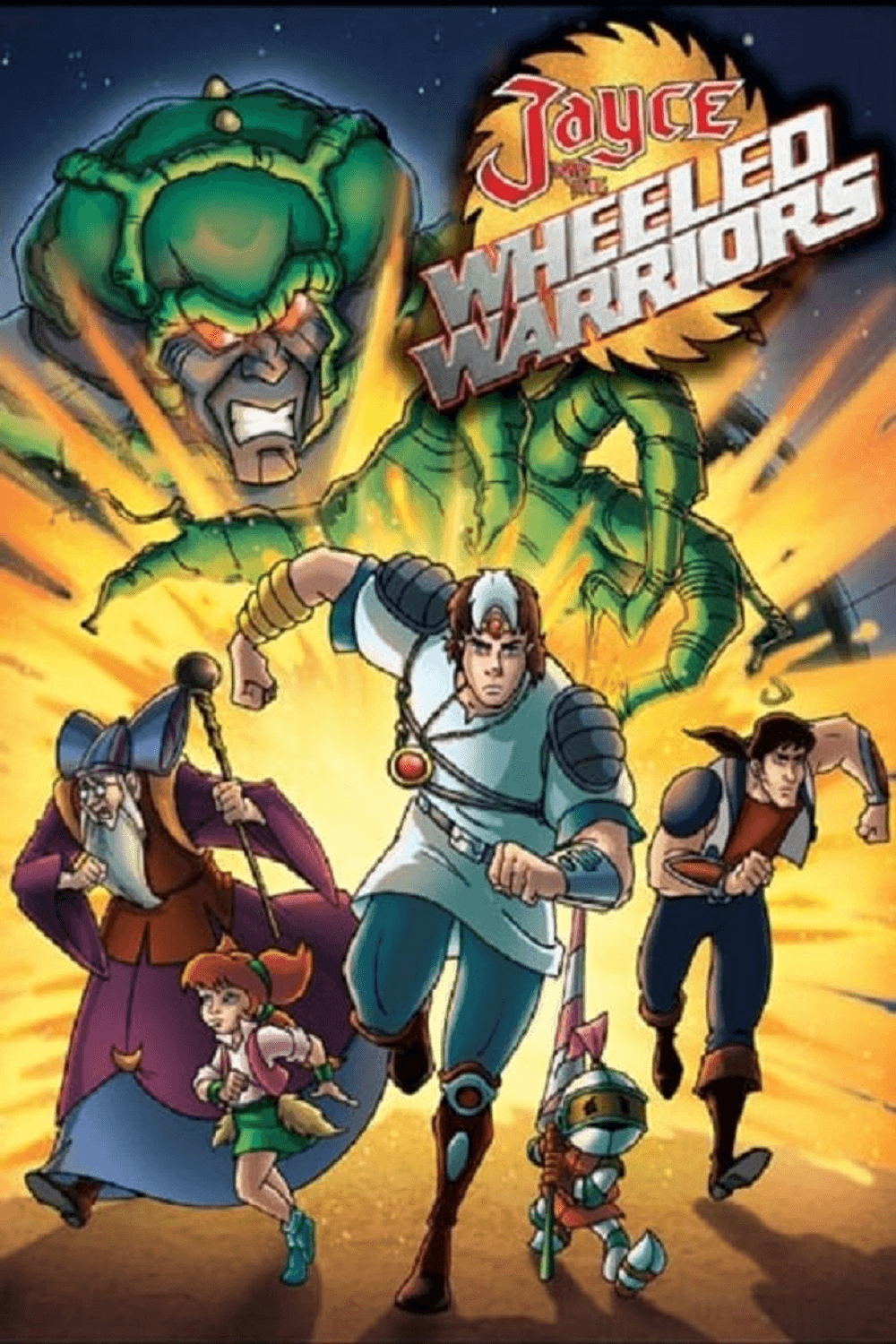
Jayce and the Wheeled Warriors, 1985

Jayce was the possessor of one half of the Magic Root, a plant that could end the threat of the Monster Minds, mutant marauders who appeared after a nearby star went supernova, ending Audric’s attempts to solve world hunger. With Auric in possession of the other half of the root, Jayce embarks on a quest to reunite the two halves and thwart the evil mutants. The show was intended to support Mattel’s Wheeled Warriors toy line, a selection of eight vehicles with parts that could be swapped and mixed to make new combinations. By the time the show debuted, sales of the toys were already less than Mattel had hoped and Straczynski’s tinkering had the result of taking the flimsy concept further away from its initial intent

Still, sixty-five episodes were produced, airing between September and December 1985, and with hopes of a second wave of Wheeled Warriors toys – there were unproduced designs – there was no definitive end to the series, the intention being to continue it into a movie, as per GI Joe and Transformers. There was no movie, however, and Jayce’s story ended abruptly, his father still missing. Straczynski claims the plot of the movie would have seen Jayce reunited with his father, only for Audric to die. It would then be up to Jayce to join the two halves of the Magic Root, end the tyranny of the Monster Minds, and save the universe.

M.A.S.K. (syndication, 1985): DIC had better luck with MASK, although you could argue that the source material made for a much easier adaptation. Standing for Mobile Army Strike Kommand (sic), the MASK team were a special task force led by Matt Trakker, a rich philanthropist who has developed a range of transforming vehicles controlled by helmets in association with his brother, Andy, and partner Miles Mayhem. Mayhem double-crosses Trakker, causing the death of Andy and stealing some of the MASKs. He forms his own organisation, the Vicious Evil Network Of Mayhem (or VENOM), and the battle to stop his evil schemes began!

Produced in association with Kenner, who released the first wave of toys to coincide with the show’s debut in the Fall of 1985, MASK combined two of the popular kids’ shows of the time in GI Joe and Transformers. Trakker and Mayhem both led teams of colourful characters, each equipped with a standard-looking vehicle that could transform to enter battle. The sixty-five-episode first season, overseen by Japanese animator Tetsuo Katayama and Ashi Productions, saw Mayhem attempt to steal a mystical arrowhead, hypnotise with the power of television, enslave Australian aborigines, plot to destroy the Panama Canal, and other wacky plans, all the while foiled by Trakker, his MASK team, and his adolescent son, Scott (who, of course, was accompanied by a cute robot scooter named T-Bob).
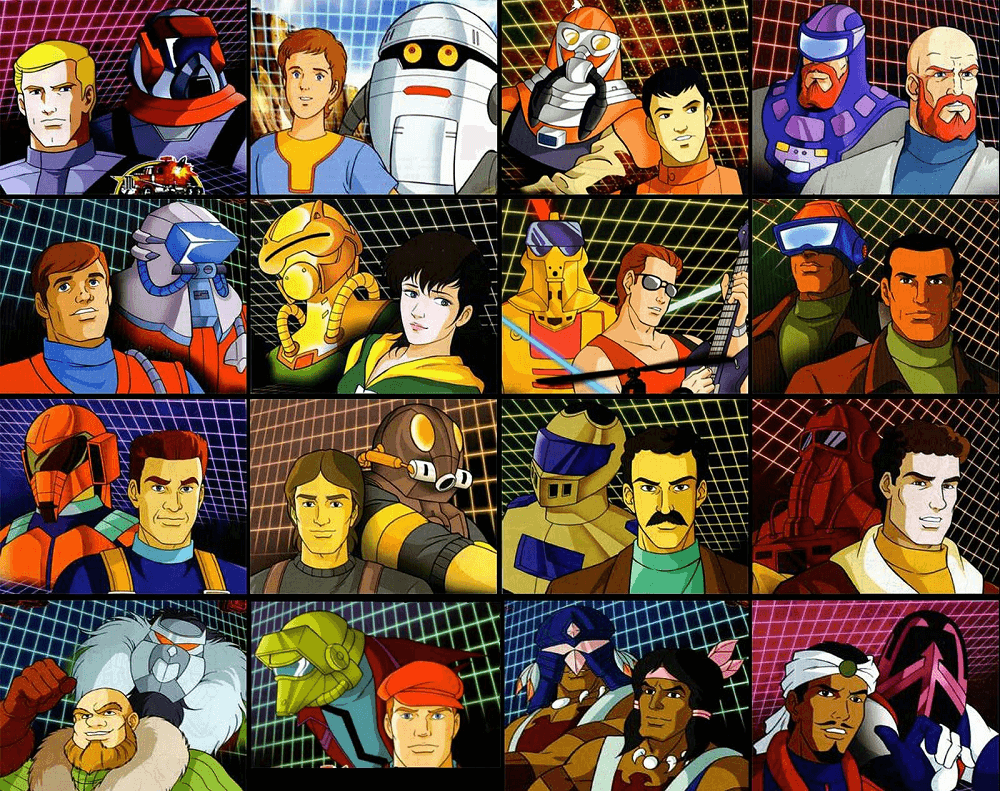
MASK, 1985

MASK returned for a second season in September 1986 but, inexplicably, the plot was altered to have Trakker and Mayhem do battle through a series of races, although VENOM had plenty of side-hustles on the go. A third series of toys accompanied the reboot, but it was hollow stuff and only ten episodes were made using the new status quo. MASK remained a beloved property for years after its cancellation as both a TV series and toy line, and Kenner was later purchased by Hasbro. In recent years, MASK has been referred to in episodes of Transformers: Prime and Transformers: Robots in Disguise, a Matt Trakker figure was added to the GI Joe action figure collection, and there were plans to unite the three franchises – along with Micronauts, ROM, and Visionaries – in a shared Hasbro Universe. These were put on ice in 2021 but you never know when VENOM will strike again and MASK will be called into action…

A massive 1985 was followed by an equally impressive 1986, with The Real Ghostbusters arriving on ABC, telling the further adventures of Peter, Ray, Egon, and Winston from the hit 1984 movie, but with added Slimer. Circus bear show Kissyfur was also unveiled over on NBC, and a trio of syndicated shows featuring hot new toys and an American instituation hit the airwaves as Popples, The Adventures of Teddy Ruxpin, and Dennis the Menace made their debuts. Five new shows may have seemed a lot for a fledgling studio, even one with an overseas background like DIC, but the eight new shows that followed in 1987 showed just how far the company’s resources could be stretched, especially now it was under new ownership, with Andy Heyward having purchased the company outright from Jean Chalopin. After the purchase, DIC were heavily in debt and were forced to sell the back catalogue to Saban Entertainment, who in turn sold it to Chalopin’s new company, C&D Entertainment…

Starcom: The US Space Force (syndication, 1987): Among the eight new shows that debuted in 1987, NBC’s ALF: The Animated Series and The New Archies were probably the most eagerly anticipated, given America’s continuing love affair with cat-eating aliens and 1950s teenagers, but there was also Little Clowns of Happytown  on ABC and Hello Kitty’s Furry Tale Theater for CBS, as well as Beverly Hills Teens and Lady Lovely Locks to see in syndication, for fans of clowns, non-food cats, rich kids, and American Greetings’ hirsute heroine, respectively.

Action shows, most often in conjunction with toy lines, were still the flavour of the day, however, and 1987 saw DIC unveil two new projects that satisfied the definition. Accompanying a line of action figures and vehicles from Coleco, Starcom: The US Space Force was co-produced with NASA’s Young Astronaut Council, with the intention of getting young people interested in the work of the US space agency. The toy line’s major selling point was its Magna Lock technology, which allowed the figures to stay with their vehicles without fear of falling off and also activated special features inside the vehicles.
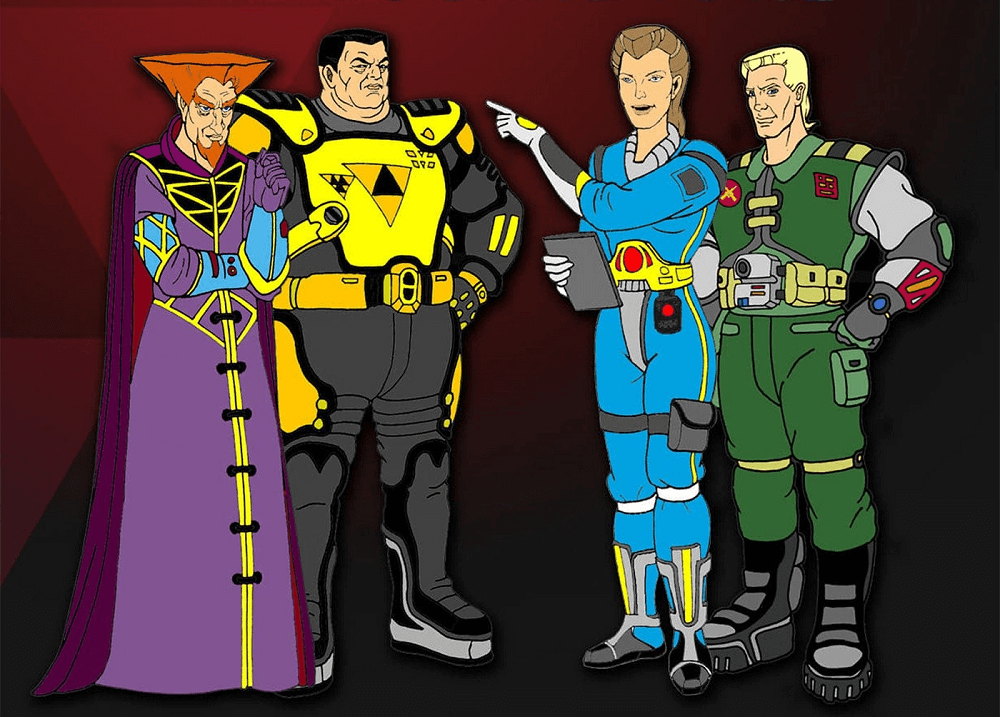
Starcom, 1987

The show was developed by Brynne Stephens, a rare woman writer in a world dominated by her male counterparts, who had cut her teeth on He-Man and the Masters of the Universe, She-Ra: Princess of Power, and My Little Pony, for which she also acted as story editor. Stephens created the backstories for Starcom’s characters and penned an episode of the series, which also counted her future husband Michael Reaves and comic book veteran Marv Wolfman among its writing staff. The cartoon created a narrative whereby Starcom battled Shadow Force, a collection of robots and evil humans led by Emperor Dark, both sides utilising the toy line’s gimmick to further their own ends.

Unfortunately, the toy line did not sell particularly well, as much due to its staid concept as its complicated nature, although it did take off in Europe and Asia when re-released by Mattel in 1990, although only after all national symbols had been removed. The cartoon lasted for just a thirteen-episode first season, despite some excellent animation provided by DIC’s Animation City studio which operated out of Los Angeles. Unlike many of its contemporaries, there has been little clamour for a return or reboot for Starcom, although the complete series was released on DVD by Mill Creek Entertainment in 2015

Dinosaucers (syndication, 1987): At least Starcom had a toy line to go with it, unlike its 1987 syndication partner Dinosaucers. Created by Michael E Uslan, a former comic book writer who is best known for securing the film rights to Batman in 1979 and holding them for over forty years, Dinosaucers was supposed to have been accompanied by a toy line from Galoob, intended to have been produced once the ground had been prepared by a sixty-five-episode animated series. With Uslan, his partner Benjamin Melniker, and DIC’s Andy Heyward co-producing, the show debuted in September 1987 and viewers were introduced to the Dinosaucers and their evil equivalents, the Tyrannos.

The Dinosaucers and Tyrannos both arrived on Earth to continue a battle that had begun on their homeworld of  Reptilon, a planet in counter orbit to Earth. Both groups were a species of evolved dinosaurs, although only the Dinosaucers had the ability to “dinovolve” and revert back to the root species from which they had originated, retaining their intelligence and personalities. The Dinosaucers were aided in their battle against the Tyrannos by the Secret Scouts, a group of four human teenagers who are given power-imbuing rings by the Dinosaucers when they arrived on Earth. Together, the Dinosaucers and Secret Scouts prevent the Tyrannos (led by Genghis Rex) from stealing the world’s biggest diamond, forcing Dinosaucer Teryx to be Rex’s queen, and recruiting the Abominable Snowman, all while learning to be more human (and to play baseball).
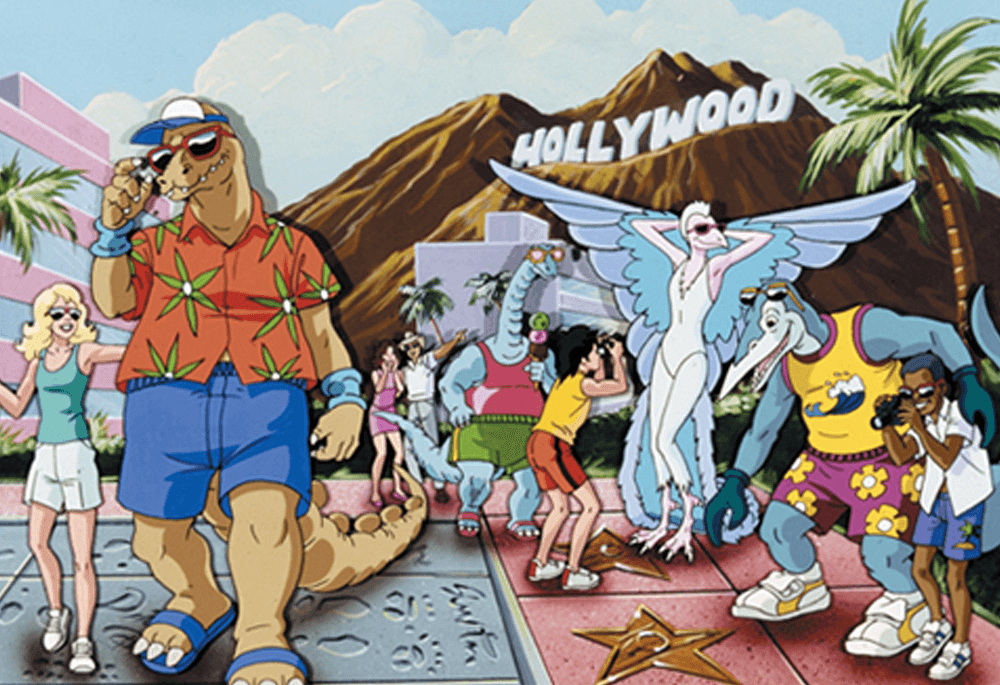
Dinosaucers, 1987

The series was not well-received, falling between stools as it tried to be both a kids’ and a teens’ show, and plans for the toy line were cancelled when ratings were revealed to be some of the lowest in syndication that season. Prototypes had been produced, however, and the Brazilian company Glasslite bought the molds from Gallob, producing five of the eight figures for domestic release. These are now some of the most sought-after action figures on the collectors’ market and there is a small but vocal band of Dinosaucers fans scattered across the globe, keen to bring their favourites back. In 2018, Uslan worked with Lion Forge Comics to produce a five-part comic book mini-series, ending on a cliffhanger which still remains unresolved. Both the Dinosaucers and the Tyrannos are presumably still waging war although, if no-one is around to witness it, did it really happen?

DIC finished the eighties strongly, taking over The Chipmunks from Murakami-Wolf-Swenson for NBC in 1988 and adding ALF Tales to that network’s Melmacian adventures. ABC’s The New Adventures of Beany and Cecil and syndicated action figure cash-in C.O.P.S. rounded out 1988, with 1989 bringing a trio of new shows for NBC as The Karate Kid, Captain N: The Game Master, and Camp Candy all appeared on the Fall TV schedule. In syndication, DIC produced flimsy toy transfer Ring Raiders, the charming yet amateur The Super Mario Bros. Super Show! (with the WWF’s Captain Lou Albano and The Jeffersons’ Danny Wells as the titular plumbers), and the rebooted GI Joe: A Real American Hero!, beginning with a five-episode mini-series that tidied up the events of the GI Joe movie.

DIC shows provided thirty percent of the networks’ Saturday morning output in the 1989-90 season, despite leveraging further debt with Prudential Insurance. The nineties were just around the corner, though, and with them the promise of sharks, dragons, and mummies!

Next time on Titans of Telephemera: Into the 1990s with more DIC productions!

Check out our other Telephemera articles:

The Telephemera Years: 1966 (part 1, 2, 3, 4)

The Telephemera Years: 1968 (part 1, 2, 3, 4)

The Telephemera Years: 1969 (part 1, 2, 3, 4)

The Telephemera Years: 1971 (part 1, 2, 3, 4)

The Telephemera Years: 1973 (part 1, 2, 3, 4)

The Telephemera Years: 1975 (part 1, 2, 3, 4)

The Telephemera Years: 1977 (part 1, 2, 3, 4)

The Telephemera Years: 1980 (part 12, 3, 4)

The Telephemera Years: 1982 (part 1, 2, 3, 4)

The Telephemera Years: 1984 (part 1, 2, 3, 4)

The Telephemera Years: 1986 (part 1, 2, 3, 4)

The Telephemera Years: 1987 (part 1, 2, 3, 4)

The Telephemera Years: 1990 (part 1, 2, 3, 4)

The Telephemera Years: 1992 (part 1, 2, 3, 4)

The Telephemera Years: 1995 (part 12, 3, 4)

The Telephemera Years: 1997 (part 1, 2, 3, 4)

The Telephemera Years: 2000 (part 1, 2, 3, 4)

The Telephemera Years: 2003 (part 1, 2, 3, 4)

The Telephemera Years: 2005 (part 1, 2, 3, 4)

The Telephemera Years: 2008 (part 1, 23, 4)

Titans of Telephemera: Irwin Allen

Titans of Telephemera: Stephen J Cannell (part 1, 2, 3, 4)

Titans of Telephemera: Hanna-Barbera (part 1, 2, 3, 4, 5)

Titans of Telephemera: Kenneth Johnson

Titans of Telephemera: Sid & Marty Krofft

Titans of Telephemera: Glen A Larson (part 1, 2, 3, 4)

Titans of Telephemera: Quinn Martin (part 1, 2)

Titans of Telephemera: Ruby-Spears

THE TELEPHEMERA YEARS: O Canada! (part 2)

The Odyssey, 1992

Ah, telephemera… those shows whose stay with us was tantalisingly brief, snatched away before their time, and sometimes with good cause. They hit the schedules alongside established shows, hoping for a long run, but it’s not always to be, and for every Street Hawk there’s two Manimals. But here at STARBURST we celebrate their existence and mourn their departure, drilling down into the new season’s entertainment with equal opportunities square eyes… these are The Telephemera Years!

O Canada!

Although the odd European show occasionally slips through the net, a massive percentage of the shows featured in The Telephemera Years originate from North America, and almost exclusively from the USA. Canada, though, has a thriving film and TV industry – including providing locations and supporting cast members for many of those American shows – and even has its own range of TV channels, including CBC, CTV, Global, and Space. To celebrate those gems made north of the border – some of which enjoyed three- or four-season runs but little acclaim outside their native land – we’re giving over four weeks of this column to our Canucklehead friends.

Some of the shows produced in Canada that have enjoyed wider acclaim include telefantasy schlockbusters Lexx and Relic Hunter, while the beloved Due South also falls into this category. Viewers of children’s BBC in the 1980s will no doubt have fond memories of The Raccoons and Degrassi Junior High, while Kids in the Hall rewrote comedy in the early nineties with a decidedly surreal touch. But those are the shows you’ve heard of and probably watched… what about those that didn’t get much reach beyond the provinces and territories of the Great White North? This is the story of more gems from Lumberjack Country…

Maniac Mansion (1990, YTV): As Star Wars money flooded into his studio in the late 1970s, George Lucas decided he wanted to push the boundaries of what was possible using the computers of the time. In 1979, he established the Lucasfilm Computer Division which, after the computer graphics group was split off into its own department (eventually becoming Pixar), was renamed Lucasfilm Games. The first games produced by the team were done in conjunction with established studios such as Atari, Epyx, and Electronic Arts, but in 1987 they released the first game wholly developed by Lucasfilm.

Maniac Mansion was a point-and-click adventure game that put you in the role of teenager Dave Miller, attempting to rescue your girlfriend from a mad scientist. The game was a commercial and critical success, and when Lucasfilm animators Elana Lasser and Cliff Ruby pitched a TV show based on the game, the company were interested enough to contract Canadian production company Atlantis Films to develop the project. Atlantis brought in comedian Eugene Levy to head the writing team for the show and under Levy the concept moved away from the original game.

Maniac Mansion, 1990

Debuting on September 14th 1990 on both YTV in Canada and the Family Channel in the US, Maniac Mansion starred Joe Flaherty as Fred Edison, a wacky scientist with a family to match. Like Levy, Flaherty was an alumnus of the Second City theatre, the famous Toronto improv factory which enjoyed its own sketch TV show on from 1976 to 1984. Flaherty was joined by Deborah Theaker as wife Casey and by Kathleen Robertson, Avi Phillips, and George Buza as their children, the latter of whom – toddler Turner – had been rapidly aged into a balding middle-aged man. The cast also included another SCTV graduate in John Hemphill, playing Casey’s brother Harry, mutated into a human-housefly hybrid by the same accident that evolved Turner.

Over three seasons, Maniac Mansion combined regular family sitcom fare with science fiction and fantasy humour, bringing in a plethora of special guests like Jose Ferrer, Martin Short, Levy himself, and even The Fly director David Cronenberg in a very meta appearance. UK viewers might have caught the show when it aired overnight as part of ITV’s move to round-the-clock broadcasting and it remains highly thought of by critics and fans, although gamers are less fond of the show, which had the Edison family as its antagonists.

Beyond Reality (1991, CTV): Plenty of shows have been cited as influences on The X-Files, including Kolchak: The Night Stalker and Twin Peaks, but upon watching Beyond Reality, a two-season outing from Canada’s CTV channel, you have to wonder if perhaps Chris Carter might have caught an episode or two as it ran in syndication in the US…

Beyond Reality starred Shari Belafonte and Carl Marotte as Laura Wingate and JJ Stillman, two parapsychologists employed by a Toronto university who have a nifty sideline in investigating paranormal phenomena. Cases involving alternate worlds, doppelgangers, reincarnation, and UFOs all pass across their desks in the first season of the show, which debuted on October 4th 1991.

Beyond Reality, 1991

Many of that first season’s episodes were scripted by James Kahn, probably still best known for the novelisation of Return of the Jedi, who had met show creators Hans Beimler and Richard Manning when they were all part of the writing team on Star Trek: The Next Generation. The second season continued in the same vein, with psychics, near-death experiences, poltergeists, and alien viruses all featuring, leading to a season finale that dealt with a Satanic cult.

Season two saw a drop in viewing figures, though, attributed by some to a more melodramatic and fantastic air to the show that had developed. Critics also pointed to the short episode lengths at just twenty-three minutes a week, half that of the usual runtime for most dramatic shows on US and Canadian TV. Hans Beimler later co-developed The Dresden Files for TV, another attempt to do paranormal investigations, but that lasted for just a single, curtailed season in 2007.

The Odyssey (1992, CBC): Keen to join a tree-fort club led by bully Keith, eleven-year-old Jay Ziegler (Illya Woloshyn, an experienced hand already at thirteen) agrees to give them his father’s old telescope, only for Keith to renege on the deal and keep the telescope for himself. Trying to retrieve it – one of the only things he has left from his father (who is missing presumed dead) – with the help of his friend Donna, Jay climbs the tree but falls, striking his head and being left in a coma.

In the coma, though, Jay finds himself in Downworld, a fantasy land where everyone is under sixteen. In the absence of adults, the kids have formed into clans such as the Library Clan and the Forest Clan, with the despotic Tower Clan ruling the roost. Desperate to get home, Jay enlists the help of Alpha and Flash (who are identical to – and played by the same actors as – Donna and Keith), all the while wondering if there is any connection between Tower Clan leader Brad and his missing father.

The Odyssey, 1992

The Odyssey was created Warren Easton and Paul Vitols but they were fired after season one had finished production, replaced by Charles Lazer. Lazer guided the show through its second and third seasons, which continued Jay’s adventures in Downworld, alongside the real-life drama at his hospital bedside. By season two, however, Jay was out of his coma and combining his Downworld adventures with solving the mystery of his dad’s disappearance, something that continued into season three.

Today, The Odyssey is probably best remembered as one of Ryan Reynolds’s first regular jobs – he played the role of Macro, a tyrant who overthrew Brad and took over the Tower Clan – and it also gave early opportunities to the likes of Sarah Chalke, Mark Hildreth, Andrea Nemeth, and Jewel Staite. There was talk of a reboot in 2016 but nothing developed beyond the initial announcement.

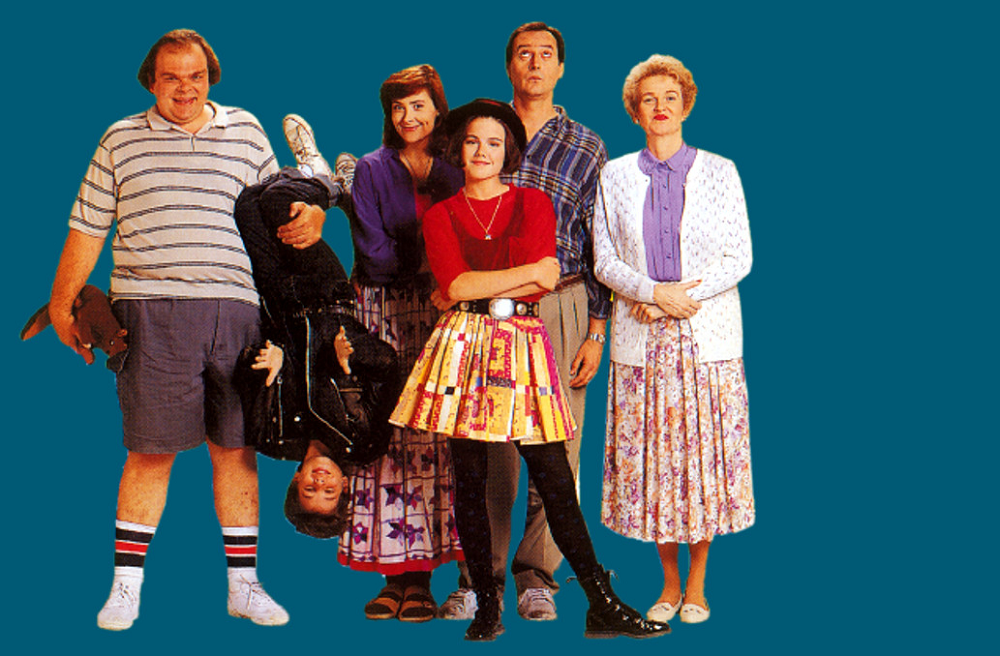
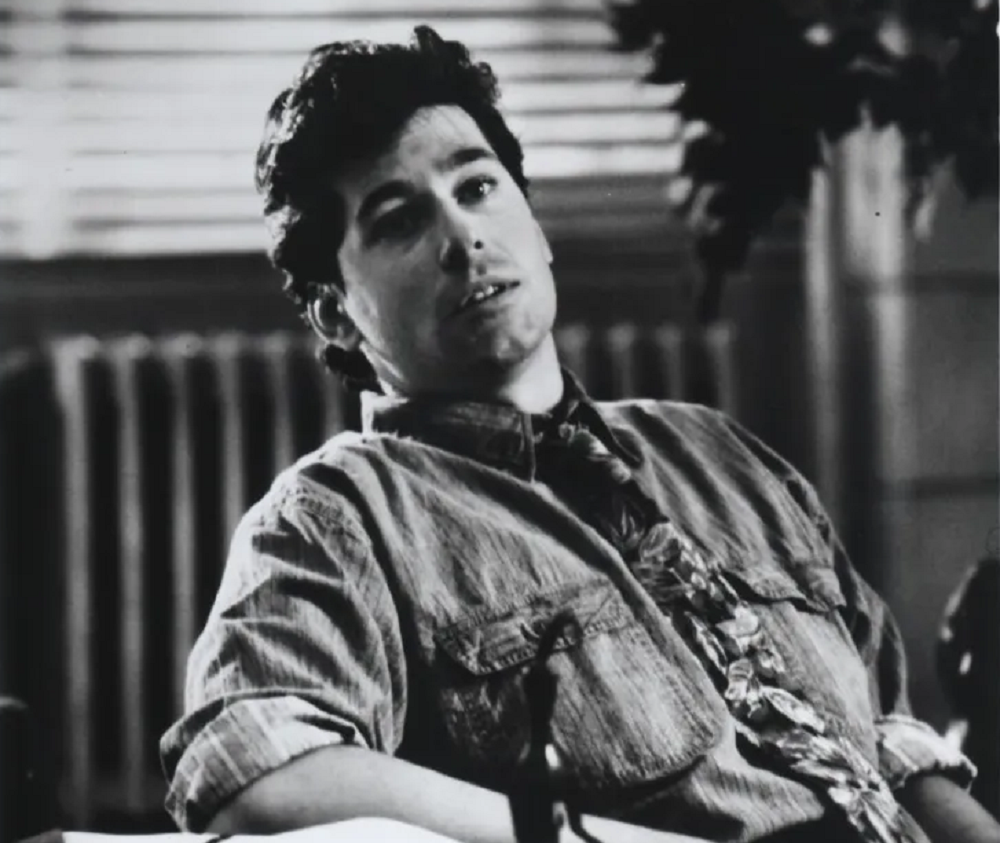
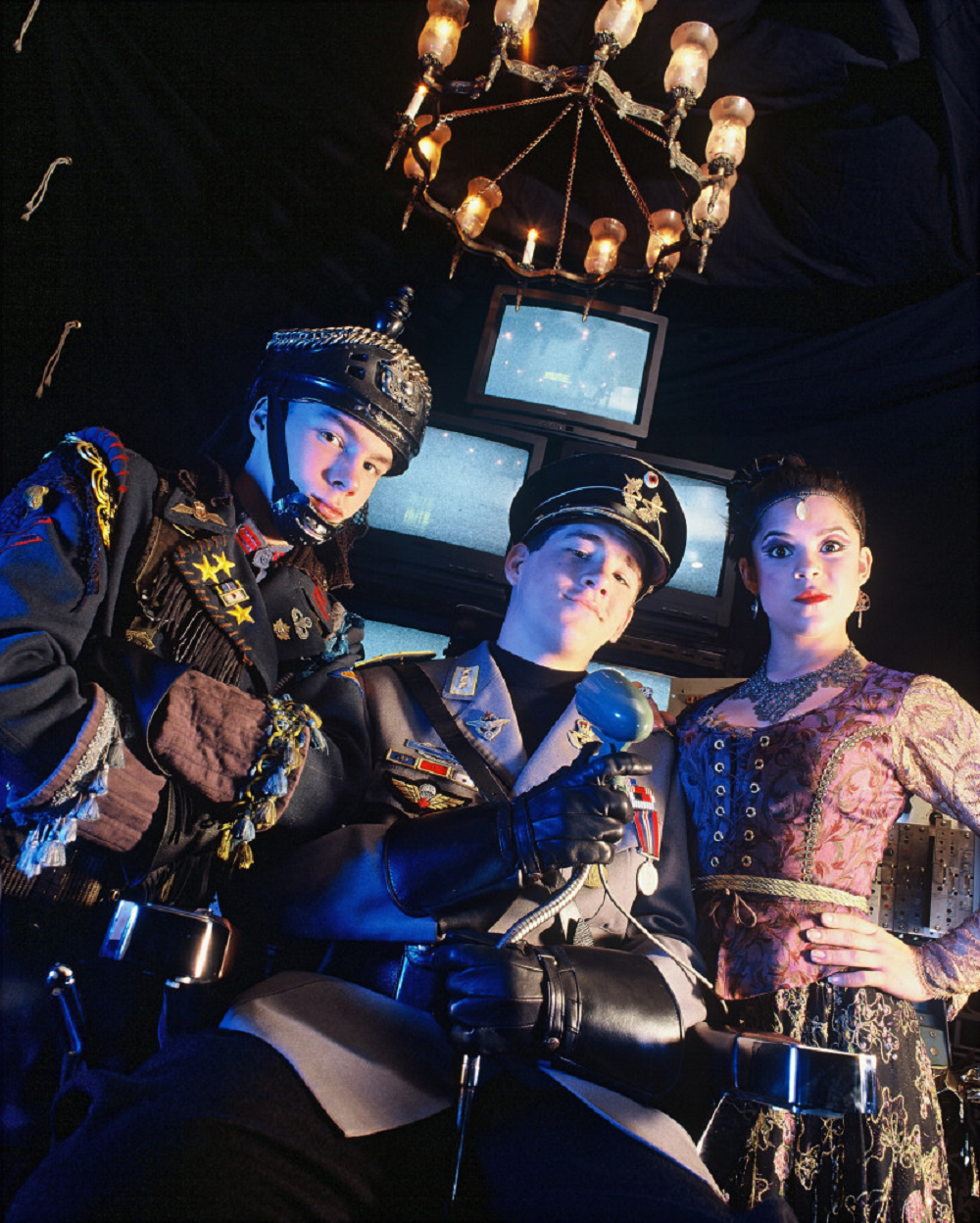
Madison (1993, Global): It’s unlikely that there is any other show with an origin story quite like Madison, created as it was to be shown exclusively in schools as a tool for discussing teenage issues. Under the title Working It Out at Madison, each of the first thirteen episodes focussed on a different character, introducing the likes of Carol Lemieux (Sarah Strange), Penny Foster (Michelle Beaudoin), and Derek Wakaluk (Will Sasso), all of whom would return for a second season.

This time, however, the retitled Madison was a more traditional show, with multiple storylines threaded throughout, a large cast of interacting characters, and broadcast on the Global TV network. Joining Beaudoin, Sasso, and Strange as series regulars were season one returnees Chris William Martin, Enuka Okuma, Peter Stebbings, and Chad Willett, along with newcomers Stacy Grant, Shaira Holman, Jonathan Scarfe, and Joely Collins (adopted daughter of rock star Phil).

Madison, 1993

The show never shied away from touching on hot button topics such as teenage pregnancy, drugs, abusive relationships, and even death, even managing to mix in an understated cool that reflected the slacker ethos of the time. This, of course, ensured that Madison earned an audience beyond its target demographic, becoming must-see TV for twenty-somethings in shared housing across Canada, the US, and the UK, where it aired on The Children’s Channel on satellite TV.

Madison lasted for five seasons of thirteen episodes, with many of the cast staying for the full run, although Beaudoin ducked out after three seasons to take the role of Jenny in Sabrina the Teenage Witch. Scarfe later turned up in ER, Sasso joined MADtv, and the rest of the cast would become familiar faces to viewers of shows filmed in and around Vancouver, even if they didn’t know their names.

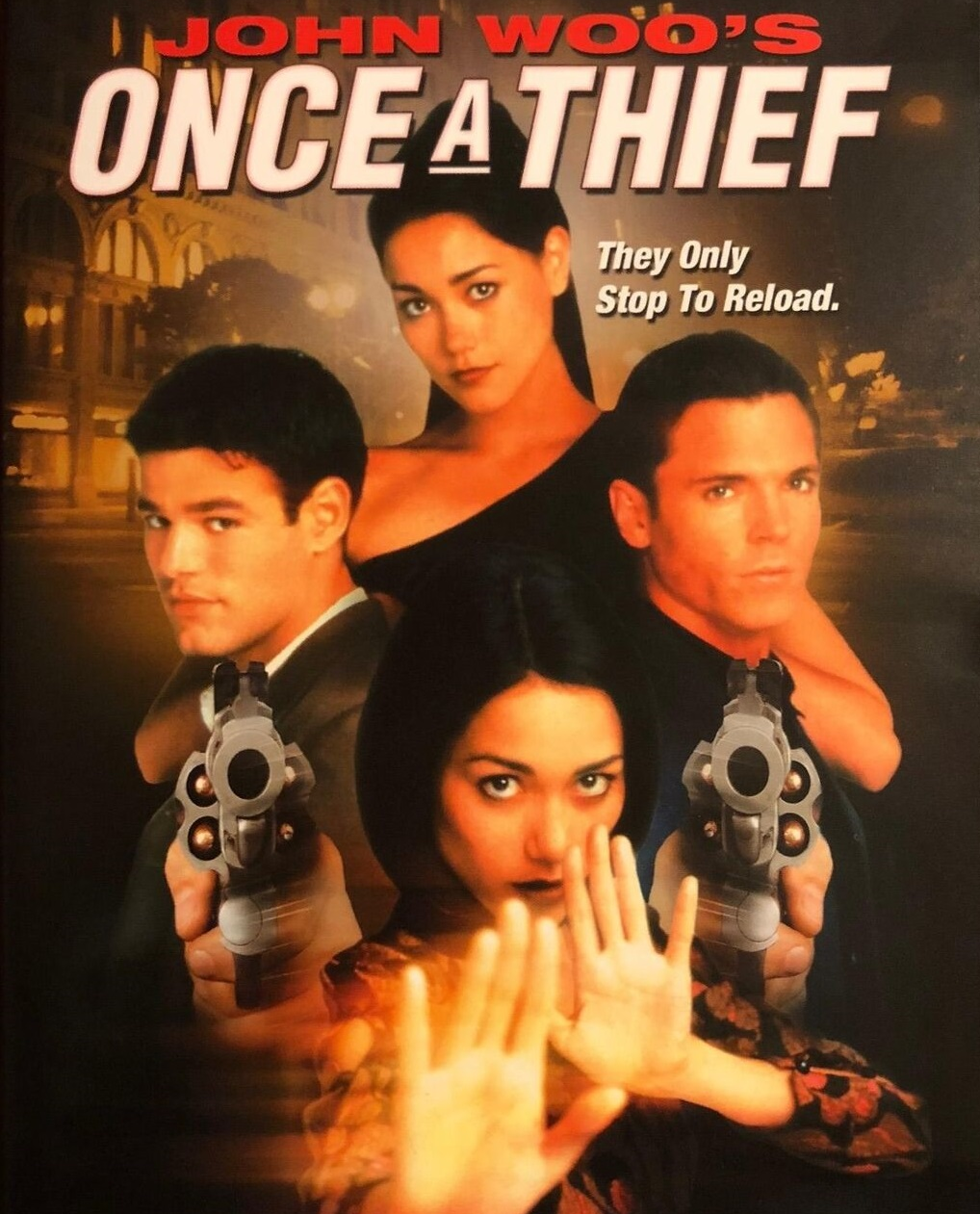
Once a Thief (1997, CTV): Once a Thief was a 1991 actioner from prolific Hong Kong director John Woo, the fourth of his films to earn him a nomination for Best Director at the Hong Kong film awards. Woo had exploded into the West with the release of The Killer in 1989, the most successful Hong Kong film in the US since Enter the Dragon, but its follow-up – Bullet in the Head – didn’t quite do the business its backers had hoped.

Once a Thief saw Woo come back stronger and 1992’s Hard Boiled saw him become a desirable commodity in Hollywood, leading to a solid decade of action movie success with stars such as Jean-Claude van Damme, John Travolta, and Nicolas Cage. His directorial style was copied by many a rival with the slow-motion shootout becoming a well-used trope, but perhaps the strangest result of his Hollywood star ascending was a 1997 Canadian TV show based on one of his earlier films.

Once A Thief, 1997

The movie of Once a Thief centres on three orphans taken in first by a crime boss and then by a policeman, growing up to specialise in stealing high value paintings. In the TV show, one orphan – Sandrine Holt’s Li Anne Tsei – is raised by a gangster and falls in love with one of his underlings, Mac Ramsay (played by Ivan Sergei). Their attempt to start a new life fails but they are later reunited in the employ of The Director, the head of a crime-fighting institution that also includes Li Anne’s former fiancé, Victor Mansfield (Nicholas Lea). The trio have to form an uneasy team to carry out The Director’s instructions, all the while never completely trusting her.

The TV version of Once a Thief began as a TV movie which told the backstory of Li Anne and Mac, with the series picking up two years after the events of that film. The show was sold into syndication in the US and began with decent ratings, but these declined to the point that producers were informed before they filmed the last few episodes of the twenty-two-episode run that the show would not be renewed for a second season. This meant they were able to wrap up the series with an episode called “Endgame.”

Next on The Telephemera Years: Even more Canadian treats, with beastmasters, immortals, trackers, and more!

Check out our other Telephemera articles:

The Telephemera Years: pre-1965 (part 1, 2, 3, 4)

The Telephemera Years: 1966 (part 1, 2, 3, 4)

The Telephemera Years: 1967 (part 1, 2, 3, 4)

The Telephemera Years: 1968 (part 1, 2, 3, 4)

The Telephemera Years: 1969 (part 1, 2, 3, 4)

The Telephemera Years: 1970 (part 1, 2, 3, 4)

The Telephemera Years: 1971 (part 1, 2, 3, 4)

The Telephemera Years: 1973 (part 1, 2, 3, 4)

The Telephemera Years: 1974 (part 1, 2, 3, 4, 5)

The Telephemera Years: 1975 (part 1, 2, 3, 4)

The Telephemera Years: 1977 (part 1, 2, 3, 4)

The Telephemera Years: 1978 (part 1, 2, 3, 4)

The Telephemera Years: 1980 (part 12, 3, 4)

The Telephemera Years: 1982 (part 1, 2, 3, 4)

The Telephemera Years: 1983 (part 1, 2, 3, 4)

The Telephemera Years: 1984 (part 1, 2, 3, 4)

The Telephemera Years: 1986 (part 1, 2, 3, 4)

The Telephemera Years: 1987 (part 1, 2, 3, 4)

The Telephemera Years: 1989 (part 1, 2, 3, 4)

The Telephemera Years: 1990 (part 1, 2, 3, 4)

The Telephemera Years: 1992 (part 1, 2, 3, 4)

The Telephemera Years: 1995 (part 12, 3, 4)

The Telephemera Years: 1997 (part 1, 2, 3, 4)

The Telephemera Years: 1998 (part 1, 2, 3, 4)

The Telephemera Years: 2000 (part 1, 2, 3, 4)

The Telephemera Years: 2002 (part 1, 2, 3, 4)

The Telephemera Years: 2003 (part 1, 2, 3, 4)

The Telephemera Years: 2005 (part 1, 2, 3, 4)

The Telephemera Years: 2006 (part 1, 2, 3, 4)

The Telephemera Years: 2008 (part 1, 23, 4)

The Telephemera Years: O Canada! (part 1)

Titans of Telephemera: Irwin Allen

Titans of Telephemera: Stephen J Cannell (part 1, 2, 3, 4)

Titans of Telephemera: DIC (part 1, 2)

Titans of Telephemera: Hanna-Barbera (part 1, 2, 3, 4, 5)

Titans of Telephemera: Kenneth Johnson

Titans of Telephemera: Sid & Marty Krofft

Titans of Telephemera: Glen A Larson (part 1, 2, 3, 4)

Titans of Telephemera: Quinn Martin (part 1, 2)

Titans of Telephemera: Ruby-Spears

Five Films to Check Out on Legend This Week – 020123

legend horror hospital

Happy New Year to everyone! Legend as always brings us some cracking films and TV series to keep the cold days fun. Here are our picks you shouldn’t miss this week…


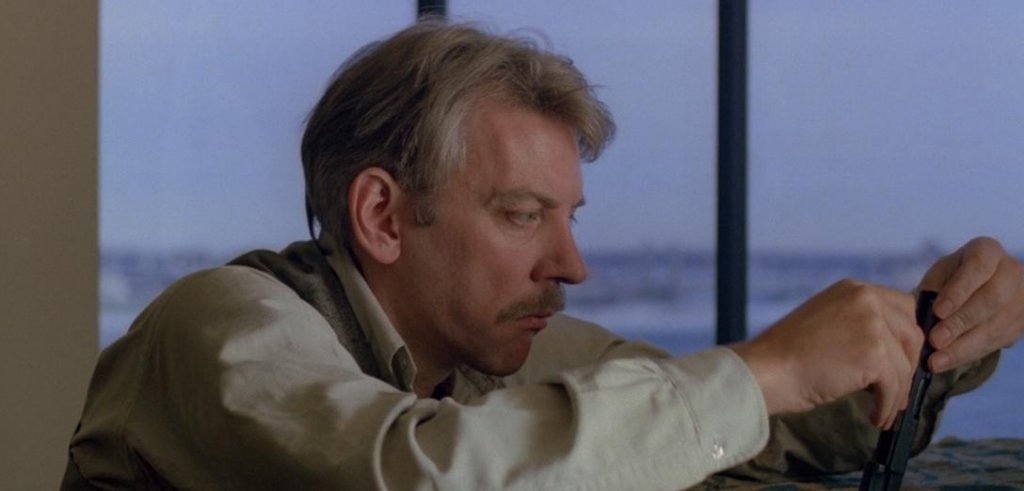
Tuesday January 3rd, 9pm – The Disappearance (1977)

A hitman (Donald Sutherland) is given a job that’s connected to his missing wife. Tense action, also starring David Hemmings, Christopher Plummer, John Hurt, and David Warner.


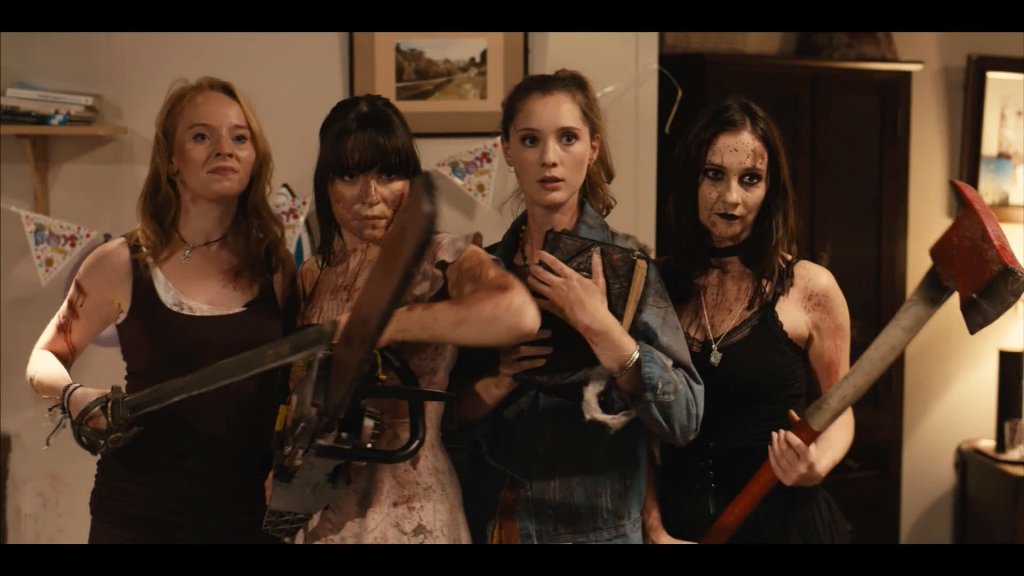
Wednesday January 4th, 1.05am – Book of Monsters (2018)  

This British indie film is worth staying up for! Full of fun gore and creatures aplenty, it stars the crème of up-and-coming talent and is directed by Stewart Sparke. A sequel, How to Kill Monsters is in production.


Thursday January 5th, 1pm – Fiend Without a Face (1958)

Superb sci-fi action from the post-atomic era. Wait until you see this invisible threat manifest in the fantastic climax!


Saturday January 7th, 9pm The Lawnmower Man (1992)

Pierce Brosnan and Jeff Farley star in this visually stunning sci-fi caper that involves virtual reality. Based on an idea by Stephen King, it deviates so much from his story, he sued to have his name removed from the title.


Sunday January 8th, 9pm – 12.40am The Vintage Vault

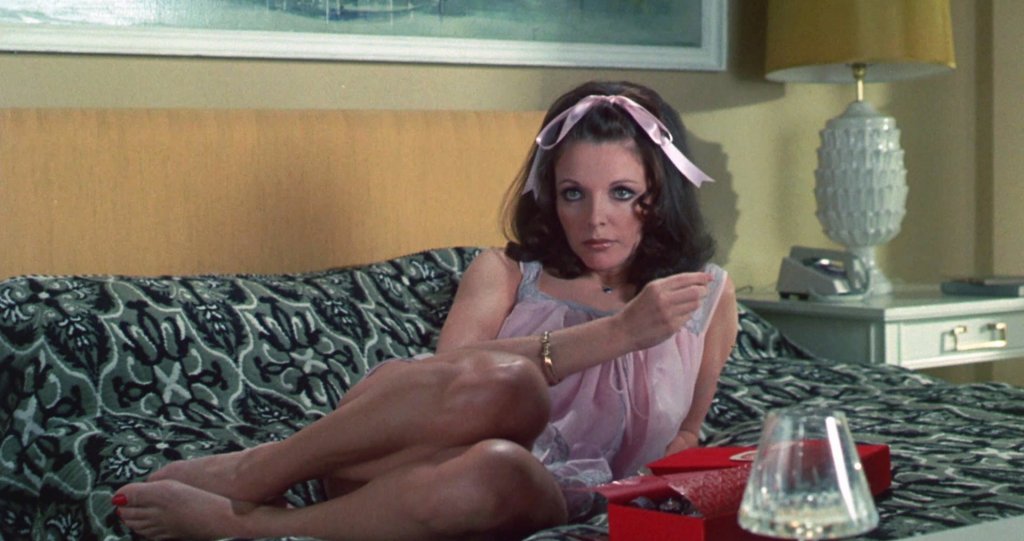
Legend continues to celebrate the Golden Age of genre cinema with a season of double bills. This week, a host of legendary stars (Donald Pleasence, Kim Novak, Jack Hawkins, and Joan Collins to name but a few) appear in the portmanteau film Tales That Witness Madness (1973). Despite appearances, this isn’t an Amicus production, however. It’s no less fun, though. This is followed by the channel premiere of Horror Hospital (1973). One of this writer’s favourite films of all time, Antony Balch directs Michael Gough and Robin Askwith in a twisted tale of a doctor using a health farm as a cover for his sordid experiments. Eminently quotable and luridly camp, it’s not to be missed! A little bit of linking trivia: producer Richard Gordon was also behind Fiend Without a Face (see above).

Find out more information at https://www.legend-tv.co.uk/

Tune into Legend on Sky 317, Virgin 149, Freeview 41, Freesat 138.