Tips for Safe Online Gaming

It wasn’t so long ago that gaming was seen as something of a solitary pastime. It conjured images of youngsters locked away in darkened rooms, just them and their consoles or PCs, lost in a virtual world of fantasy, warfare or sport.

Today, of course all that has changed, both in terms of the demographics and the social nature of gaming. For one thing, practically all of us are gamers these days. Anyone aged 50 or under grew up with gaming as a part of their lives, and most never grew out of it. It is simply as routine, popular an accepted pastime as watching TV or reading a book.

For another, the technological revolution has made gaming a far more social activity. Online games can be battled out between people on opposite sides of the globe in real time. There is also a far wider variety of games, not least to meet the needs of this broader demographic – after all, we might not grow out of gaming per se, but there comes a time when even the most devoted will get tired of Dungeons and Dragons!

Of course, there is also a downside, and that is the fact that in every walk of life, there are scammers, chancers and downright criminals. The gaming community is no exception, so here are some top tips to make sure your gaming experience is a safe one.

Protect your funds at the casino

The online casino sector has grown like no other – again, this is a consequence of more adult gamers looking for adult oriented games. The variety of casinos online is nothing short of mind-boggling, and each offers a subtly different experience, and will have its own welcome bonuses and so on. One thing to make extra certain of is the payment method you choose. These days, the world of online payments is far safer than it used to be, so make sure you use a recognised conduit such as PayPal or Neteller.

Update your antivirus and spyware

If you are in a crowded city, you keep a close eye on your belongings, Take the same approach to a busy online world. Remember how many thousands or even millions of people are around you, and keep your PC updated and secure from possible attack. After all, you wouldn’t drive into a busy town and leave your car parked at the side of the road unlocked with all your valuables on view, now would you?

Don’t get too personal

Keen gamers will inevitably get to know people online, but be careful about letting the virtual and real worlds collide. Gamerdude666 might seem like a great guy, but what do you really know about him? Absolutely nothing, so don’t share personal information.

Don’t use the same password

Trying to remember all those passwords can be a pain, and it is tempting to use the same one everywhere. Resist the temptation, it is bad enough to have one account compromised without giving the hacker access to your entire online presence.


Michael Giacchino | DOCTOR STRANGE

Michael Giacchino is an American composer of music for films, television, and video games. In a prolific career, he has provided the music for films including Jurassic World, The Incredibles, Doctor Strange and Rogue One: A Star Wars Story, and has received and Emmy Award, multiple Grammy Awards, alongside a Golden Globe Award and an Oscar for Up.

In celebration of his 50th birthday, on Friday, October 20th, the Royal Albert Hall is hosting a one-off event, with a concert featuring music and film clips from his most famous works. Michael took some time out from his busy schedule to sit down with Starburst to discuss his career thus far.

STARBURST: It’s day one, you’re sat at your desk, you have a blank screen and a new film commission. What do you do first?

Michael Giacchino: I don’t start at a blank screen. I start with the movie, the knowledge of the story, and in the environment of where I am going to be taken. I am lucky that I often work with directors who have become my friends, so I often know their ideas in advance, and I often think that these ideas marinate and by the time I get the picture to write, I have already been living in this world.

How did you get started as a composer?

I went to film school and was planning on being a director/writer. My first job was in marketing and I ended up at Disney in their marketing department. While working, I started studying composition at Juilliard and then at UCLA when I moved to California. It was the early days of Disney’s Interactive division and I was moved into that department as a producer. I was able to write the music for some of the video games. From there I moved to the same position at Dreamworks where I was asked to write the temp music for a meeting my boss was having with Steven Spielberg for the video game of The Lost World. Steven happened to like it, hired me to write for that game and then for his Medal Of Honor games. I was just doing the best job that I could and fortunately, someone who would end up being a very important part of my career contacted me because he liked my video game music. That person was J.J. Abrams who played Medal Of Honor.  I got an email from him introducing himself and saying that he was developing a new TV show called Alias and was wondering if I would be interested in meeting and talking about the possibility of doing the music. I actually thought it was one of my friends playing a prank, but it wasn’t. We met, and immediately hit it off. I worked on Alias, and then LOST. During that time, J.J. got his first feature directing job, Mission Impossible 3, and I worked with him on that, and so on.

Do you have themes and musical snippets all saved somewhere just for a moment when they might come in handy for a project?

No – I don’t really compile unused music for future use.  I prefer to have the music be born out of the project.

As such a prolific composer, do you instantly know when you’ve hit upon a great theme or piece of music, and is it then a case of matching to right project?

I always write the music after I see the film, not before.

You’ve picked up the composer baton on several recent projects such as Rogue One, Star Trek and Jurassic Park. Is it more daunting or exciting to be presented with the opportunity to incorporate some well-known, and well-loved themes into a new score?

I have been so fortunate because I have worked on so many of the films and TV shows that captured my imagination as a kid. I’ve been able to work with two of the most iconic television themes in history, Star Trek, and Mission Impossible.

For Star Trek, J.J. and I agreed that we wouldn’t use Alexander Courage’s theme until the end credits of the first film, because this film was not about Star Trek as we know it. The crew needed to earn that iconic theme first, and it becomes a bonus at the end for the fans. It worked so well for the first film, we did the same in the second. But getting that main theme right in the first film, Enterprising Young Men, was quite a challenge. I was so caught up in it being a movie about space. It wasn’t until Damon Lindelof, a writer on the film said, just think of it as a story between two friends, it’s not a space film, it’s about two very different men who meet and develop a lifelong friendship. That advice really helped.

For Mission Impossible…I was so nervous. I actually had lunch with Lalo Schifrin when I got the job, who, by the way, wrote the absolute greatest theme ever, to talk about the project. I asked him should I do this, should I do that, do you have any advice? And he just looked up from his salad and said, “just have fun with it.” That made it a whole lot easier!

I always want to pay at least a little homage to the original work. Jerry Goldsmith and John Williams are giants and have created monumental scores for films like Apes and Star Wars.  I feel it is really important to always honour that while creating something entirely new, something that works with the film we are making right now.

In recent years, you’ve moved from action films, to Pixar, and back again very quickly. How easy do you find it to get into the right mindset for each film?

Every film has its own story, its own emotions. It doesn’t matter what the genre, the process is the same. Pixar films have characters and storylines very similar to live action. I watch through a film and see what emotional reaction I have, then try to support the storytelling with my music.

How is it being the first composer to follow the legendary John Williams on Star Wars?

I was incredibly honoured and humbled.

You only had four weeks to complete the Rogue One score – did you have to adapt your way of working given the short time period, or was it a case of “just getting on with it”?

I had been planning a vacation following Dr. Strange, after having finished Book Of Henry, Zootopia and Star Trek Beyond. But this was STAR WARS! And that original trilogy is one of the main reasons I am in the business that I am in today. As a kid, I was inspired not only by the adventures of Luke Skywalker and Han Solo, but by John Williams and his fantastic score. I knew back then that I was going to work in film, and here was my chance to be a part of the Star Wars universe. I had to make it work, time crunch or not.  I basically sat down and went to work as I normally do, creating themes for characters. Looking back, I think my adrenaline shot up so quickly, all I was thinking of was getting it done, and getting it done at a level that I would be happy with if I, as a fan, saw it in a theatre. I talked to my brother about it, and he said, “Come on, you’ve been writing this since you were 10 years old.” The magnitude of it didn’t really hit me until the first day of the recording sessions. We were at Fox, and we used the original Star Wars main title as a warm-up, to have some fun and test our mics. When those musicians started playing that music, I thought, “This is absolutely insane that I get to be doing this.” And then I got really scared. But everyone at Lucasfilm was so supportive, and we really ended up having a lot of fun during the sessions.

How was it joining the Marvel Universe with Doctor Strange and did you feel this was specifically the film for you to get involved with?

It was a combination of things. Or course, first and foremost, I have always been intrigued by the Marvel Universe. I used to go down to the local 7-11 convenience store to buy my comics – many of the Marvel Comics.  Second, I remembered Dr. Strange from when I was young, and I liked that he was an unusual, not often seen, character from the Marvel World. I was completely fascinated by the supernatural world the character lived in.  I also loved writing for Benedict Cumberbatch during Star Trek Into Darkness, so that was the perfect storm that I couldn’t pass up.

How involved are you in a project generally, as in do you visit the set or studios often to get a feel for the tone and atmosphere?

If I have the time, I really enjoy visiting the set, but that’s more about my love of the filmmaking process than going there to be inspired for tone or atmosphere. But it is always mind boggling when you are on set to acknowledge the sheer number of people that it takes to make these films. Since I work with many of the same directors over and over, I often have been speaking to them about their script a lot earlier than the usual time a composer would come in on the project. So, these ideas begin marinating in my brain and by the time I see the first cut, I have a good sense of what the story is that the director wants to tell. Then I watch the movie, and see what emotions come up for me, and explore what is happening in these characters minds. I then usually sit down and write a 10-minute suite that will encompass the various themes that were evoked for me. I share it with the director, we sit down and discuss and come to a common ground about where the film should go musically.

You have a penchant for puns in your score titles, “Close Encounters Of The Furred Kind” being one of our favourites. Do these just occur to you during composition?

Yeah, it’s become somewhat of a thing, and it is a group effort. It actually started when I was working on Alias with my music editor, Stephen Davis.  We would have these little contests about who could come up with the best title for the cue.  He won most of the time, because he is really great at it. When I started working on other films with different music editors, they wanted to keep it up. It became a little contest between all of us, and it’s something we continue to this day. Some people love them, and some consider it the lowest of humour.

For the Albert Hall event, how do you go about deciding which pieces to include, and in what order? There will be fan’s favourites, but also some of the best piece are hidden away in the score.

My sister and producer Maria (Giacchino) is shepherding the whole project so that I might have some surprises. But I know that she is trying to have a pretty complete retrospective of my work so far. Obviously due to time constraints we can’t have everything and we have created a couple of premiere pieces specifically for the show. I am going to share some of the conducting duties with my good friend Ludwig Wicki.  In terms of getting those pieces that are hidden in the score—over the last few years, I have been creating full suites that touch on all the important elements of every film, so hopefully you will get to hear and recognize some of those as well.

How exciting is it to have your music played at such an iconic venue, with some pieces performed in front of a live audience for the first time?

We played the Royal Albert Hall in May of 2014, doing two shows of Star Trek and two shows of Star Trek Into Darkness live to picture. It was insane. We had many representatives of the production team in the audience because they were in town filming The Force Awakens. Being in that hall was a surreal experience, you walk through the corridors and see all the legends that have played there. The building is stunning, the ambience and seating is wonderful. There really isn’t any place like it. To be having my 50th Birthday there is a little unbelievable. The last retrospective of my music was back in 2012, and there have been a few more films since then.

Do you have anything special planned you can tell us about or are you keeping things secret until the night?

Some things are secret of course, I do want the element of surprise. A number of my filmmaking friends are joining me, I think the audience will enjoy that. Adam Savage, a good friend and former host of Myth Busters as our MC.

Thank you for your time and we’re looking forward to the concert.

Thank you. I am looking forward to being back in London, one of my favourite places!

Michael Giacchino at 50 – a special concert at London’s Royal Albert Hall – takes place on October 20th. Tickets are available here.

Katharine Isabelle | TORMENT, AMERICAN MARY, GINGER SNAPS

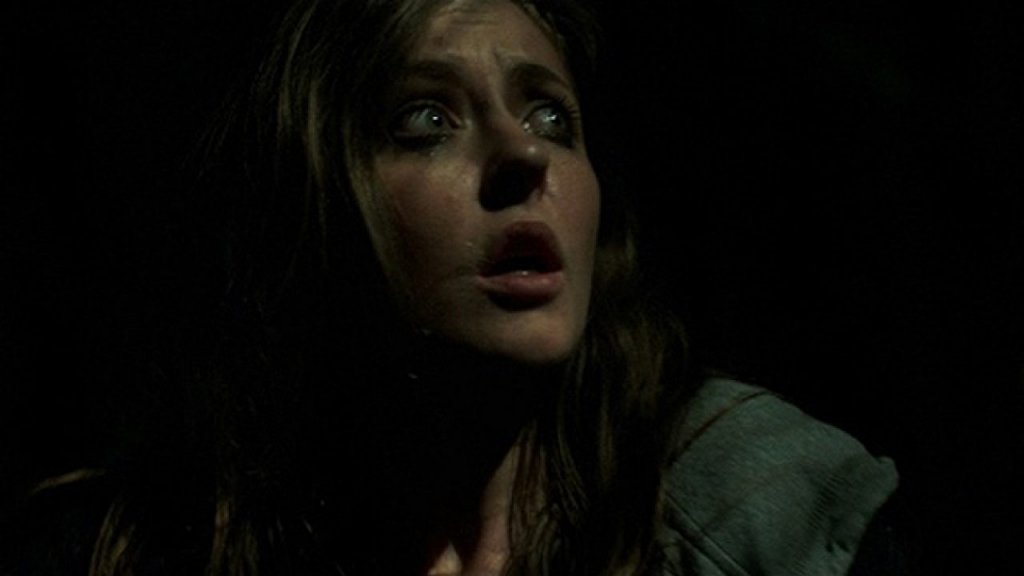
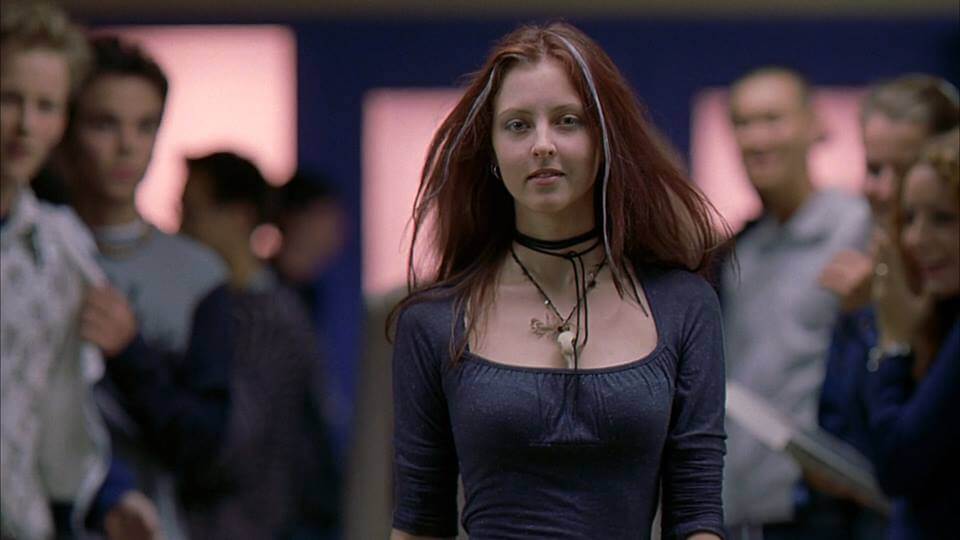
Canadian actress KATHARINE ISABELLE  s a favourite of many a genre fan and STARBURST reader. Having been involved in the entertainment business from an early age, it was with 2000’s GINGER SNAPS where she really made her mark in the world of horror. That film spawned into a trilogy, although Isabelle has also appeared in many a genre movie, such as FREDDY VS. JASON, 30 DAYS OF NIGHT: DARK DAYS, headlined the stunning AMERICAN MARY, and has more recently had roles in HANNIBAL and SEE NO EVIL 2. We were lucky enough to grab some time with this delightful icon of modern-day horror to discuss her latest film, TORMENT, as well as her experiences in the genre, her dislike of horror films, the reaction to AMERICAN MARY, how her roles have changed over the years, and a whole host more…

STARBURST: With Torment, it seems to touch on various horror subgenres, with parts coming of as like a slasher, parts like a home invasion film, the twisted sense of family, etc. How would you actually describe the film to somebody?

Katharine Isabelle: Oh god, I don’t know. I’m terrible at that. It definitely ticks thriller and terror. Movies, they are what they are. And when you’re producing that amount of fear and tension, you’re hoping that people are feeling it. I guess it falls into all of those categories, so I don’t really know how to describe it other than that.

Genre fans have seen you so much in so many roles over so many years, but this time out you play a mother figure. How was that for you?

It’s definitely a little bit different from what role genre fans are used to seeing me in. The three of us, Robin is just a great kid, so it wasn’t difficult to jump into that role at all. It was difficult to keep up, for all of us, the energy that was needed; to keep that level of terror, that level of tension up for the whole time. That’s hard for everybody. You’re drinking a lot of coke and eating a lot of sugar.

At one point you were seen as teen fodder for creepy killers in horror films, but now you’re playing the mother figure. How has that progression been for you?

I’m a working actor, so I do what comes along and what I like. I’m always drawn to darker, more interesting characters as opposed to the sweet girl next door. I always want my girls to sort of kill everyone and win at the end, regardless of whether she’s a fucked up doctor, a mother, or whatever. You want your girl to win. Playing a mom, it’s not a whole other kettle of fish or anything but it’s definitely… I like to do what I like. Whatever form that takes, it’s hard to describe or plot out. It’s not like I planned my career, it’s most about whatever comes along and I’d like to do. It’s kind of just going with the flow, wherever that takes you and whatever that evolves into. It’s still evolving, so it’s hard to say really.


You mention the fucked up doctor role from the brilliant American Mary. How is it for you as an actress to see people dressing up as Mary Mason from the film at conventions and cosplay events?

Oh my god, it’s so great, it’s so funny! That was like Sylv’s dream come true, to see people dressing up as Mary for Halloween. They have now, so she’s cried several times. It’s great, it’s such an honour. The character is so well-written. The Soskas are geniuses for writing that character and that movie, and the fact I was involved in it at all was amazing. I think it’s the greatest thing ever.

We spoke to the Soska sisters last year and they mentioned how they were approached several times after that movie to do films which focussed on a sexy surgeon played by Katharine Isabelle. Did you get that from your angle as well, people approaching you to do a film similar to American Mary?

I think any time that you do something that’s like Ginger Snaps or American May, people come out of the woodwork and they want you to do another one that’s similar to that. It’s a ‘what’s successful will be successful again’ type formula. Being an actor in the genre, I float around and it’s definitely good to be wary of doing the same thing over and over again. People are going to get sick of you and stop caring after a while. Within the genre that we’re talking about, definitely there’s a purposeful, mindful thought process to not just say the same things over and over again. I mean, it’s boring anyway. It’d be boring to do another American Mary. It’s been done, it was super fun, then we move on, we grow, we evolve and do different things.

You touched on the Soskas there, and including Tristen Risk in the conversation, you seem to have some good friends in the genre. How is it when you guys get together?

Oh, when we’re together it’s a complete shit-show – it’s hysterical! Get us all together in a room and there’s screaming and laughing hysterically and crying. We’re all great friends. It’s a good time.

You’re seen as a bit of a modern-day horror ‘scream queen’ by many fans. How is it to be so synonymous with the genre?

It’s interesting because that was never a purposeful intention of mine. I just want to do good work that I like. It turns out I’m attracted to the darker stuff, not necessarily the sweet girl next door – and I wouldn’t wanna be, that’d be boring. It just so happens that these interesting characters are more prevalent and popping up in genre stuff. Even playing Margot Verger in Hannibal, that’s a dark fucking show that is in the horror genre. I’m equally drawn to hilarious characters and comedy. Instead of playing women in westerns or whatever, I happened to do a few horror movies that were well received and the characters were generally loved. Horror movies and the horror genre is probably less than a quarter of my entire body of work but when a character reaches out and touches people, that’s the most important thing about what we’re all doing here. If it’s horror, it’s horror – and it’s awesome. I love the characters of Ginger and Mary and Margot that have affected people so strongly. I totally get it; I love those characters too. They are my favourites, that’s why I do them. I’ll continue to do whatever work that I like, regardless of whether it’s in the horror genre or any other genre, I just want to do some shit that I like.

A lot of the roles that you have played, there always seems to be some sort of attitude to your character and you make them stand out, even if it’s a small role in something like Freddy vs. Jason. You seem to always grab people’s attention and make the most of your roles.

Well that’s good! Thank you. When I auditioned for Freddy vs. Jason, I was auditioning for the lead, for Monica Keenan’s character. They were like, “Yeah, that’s great but could you come back in for the slutty, bitchy best friend?” That’s the story of my life .

Your career isn’t just about horror or the creepy stuff, but were you a fan of darker films when you were growing up?

No, I don’t watch horror movies. They’re scary and I don’t watch them.

Not even your own horror films?

Oh no, I watch my own and reminisce. No, other horror movies are scary. I’m too easily affected. I’ve already been fully traumatised. I can’t walk through a parking lot at night with heels clicking. I’m like, “Damn, this is how movies that I star in start!” So I don’t really watch horror movies. Sylv is always so disappointed. She’s like, “You remember that time in Audition?” and I’m just, “Nope!” They talk about that stuff and I just have no idea what they’re talking about. I go blank and start talking about ponies and The LEGO Movie.

In fairness, the Soskas are like an encyclopaedia when it comes to horror movies…

They know so much, they’re so hardcore!

On the topic of watching your own films back, are you a harsh critic on your own performances?

I think I used to be, when I was growing up and was younger. I remember watching a 20-minute rough-cut of Ginger Snaps and thinking to myself that this was horrible. I probably locked myself away and cried or something. It’s very different how you become when you’re working and where you’re on set. If in real life someone wanted me to throw a scene in a restaurant, I’d be mortified. Out in public, I’m so shy and apologetic for existing. On set, in character, you go into another almost altered state. To watch it out there, I’ve always wanted to see if it worked out, if what I intended came through. I’m also interested in viewing what the point of the movie is. It’s such a panic – we’re losing time and light and money, it’s a shit-show. Then you come out and it’s all just, “What happened? Did I come across as I intended to?” It’s very sort of haphazard. I can watch stuff now but I wanna go back and do them all over again.

You briefly mentioned Ginger Snaps there. From what you were aware, was that always planned to be a trilogy?

No, it wasn’t until 2 years later, I was at a premiere for some other movie and a fan was like, “Can’t wait for the sequel.” I said, “Yeah, right! I dunno what you’re talking about!” It was successful and it was good, and people wanted to see more of that when it happened.

IIn terms of looking at your career at the moment, what’s the one role that stands out as the one you’re most proud of? Would that be Mary Mason?

It’s hard. The whole experience, with the girls and everything, Mary was definitely a standout experience and character. I liked them all. I’m just equally thrilled that anybody cares about any of them. They’re all near and dear to me.

More recently fans will have seen you in See No Evil 2

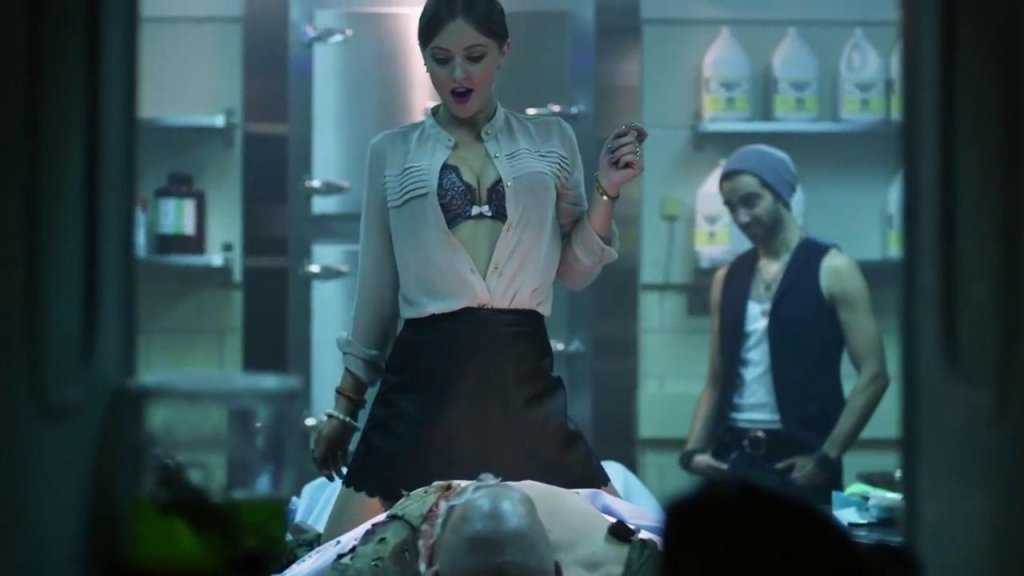
And I was proud of that, too. I was like, “Jesus! How am I going to dry-hump the dead body of WWE wrestling sensation Kane?” There’s some fucking terrible things in that and it’s totally over the top.

How was Glenn Jacobs, aka Kane, with that?

Oh, he was lovely. I apologised to him, like, 300 times that day. I was like, “I’m so sorry, I’m so sorry, I’m so sorry.” He was just, “No, you can just pretend I’m dead.” He’s a really nice guy, this southern gentleman. I was like, “I’m sorry for humping you.”

Do you feel at the moment, with the likes of Soskas, James Wan, Leigh Whannell and fellow Canadians like Lowell Dean and Jason Eisner, that there’s maybe a resurgence in the horror genre?

I guess so. Because I’m not tapped into that whole genre in general, it’s hard for me to say where it was before compared to where it is now. I think definitely in culture in general it’s becoming more mainstream. Like Hannibal, how dark and fucked up it is, that’s part of network television. It’s crazy! I watched American Horror Story, I started watching that the other day. It’s come up in popular culture and is no longer relegated to this dirty side genre. But there’s a face in the world – fear is what’s drawn humanity to do everything forever. I think it’ll always be interesting and valuable to people.

How did you get on with American Horror Story?

I watched the Coven one. I’m reluctant to watch the new one because there’s scary clowns. I really, really, really do not like scary clowns. I watched Coven and I really enjoyed that, I thought that was really good. I think I’m going to skip the scary clowns. That’s me done with that. I already had to fast forward the credits sequence. The opening credits sequence is scary.

Are there any projects out there that you’ve always wanted to do, be it a musical or something a bit more unusual?

I wish, if I could sing! There’s probably millions of things that I wanna do, but I don’t know until I see it in front of me, until it lands in my hands. People will ask me what’s my ideal role but I don’t know. They’ll ask if there’s a historical figure or a literary figure that I want to play, but I don’t really have that set in my mind. I just want more interesting, cool, layered people, like the ones I’ve been lucky enough to be given in the past. Half the time I’m like, “Oh, it’s shooting in that location? With these people? That’s fucking awesome!” It’s an adventure. I’m a gypsy. If there’s adventure to be had, I’m a fucking dwarf, like, “Let’s go adventuring!”

From our chat with the Soskas, they were singing your praises as literally the perfect person for them to work with. It sounded almost like a Kevin Smith and Ben Affleck relationship or a Martin Scorsese and Robert De Niro dynamic. Do you have any plans to work with the sisters again any time soon?

I would in a heartbeat! Anything they are doing that they need me or call me for, I would do. Absolutely. They’re best friends of mine. I think they’re amazing and it’s been amazing watching them in their journey thus far. I’ll be the Johnny Depp to their Tim Burton any day.

And what else is coming up next for you?

There’s the third season of Hannibal. I’ve just finished a movie called How to Plan an Orgy in a Small Town. I’ve got a movie called 88 coming out later this year that’s really, really cool. It’s a girl who witnesses a traumatic event. Christopher Lloyd plays the bad guy – it’s really exciting, he’s doing coke and banging hookers! Sometime this year I’ll be going to Ireland to do a cool post-apocalyptic movie called Origami.

TORMENT is out now on DVD and Blu-ray.

Who Do You Think You AAARGH! (A TEXAS CHAINSAW Family History)

chainsaw

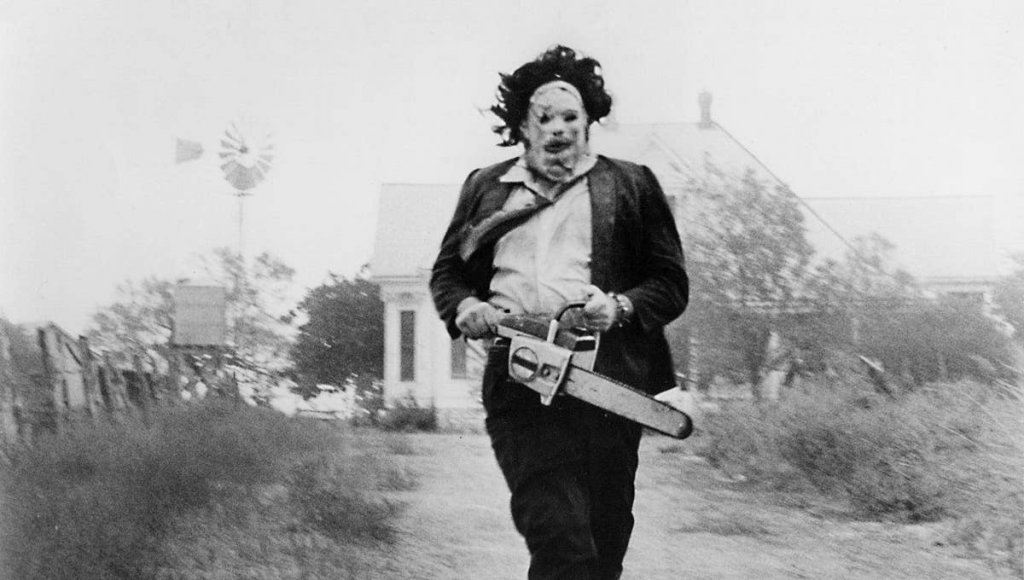
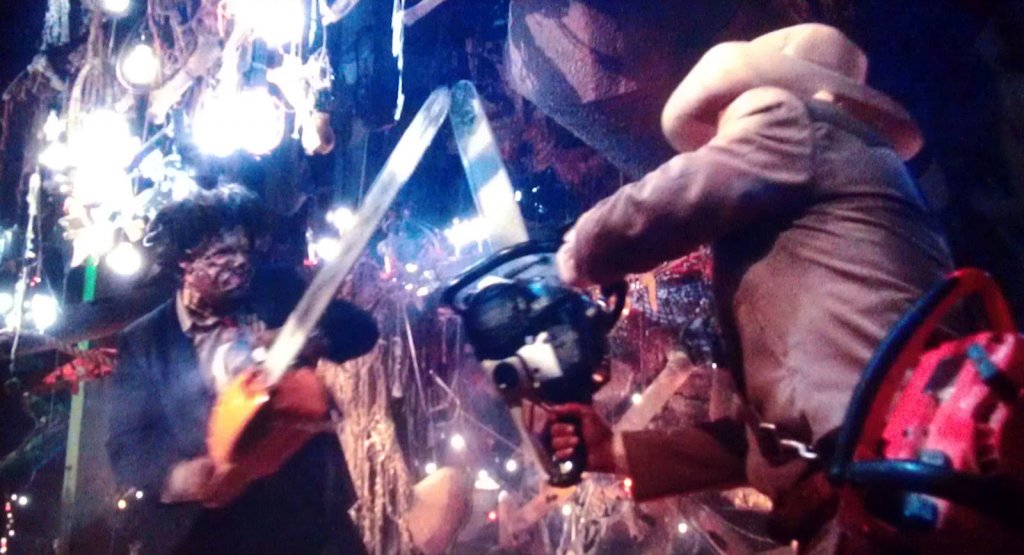
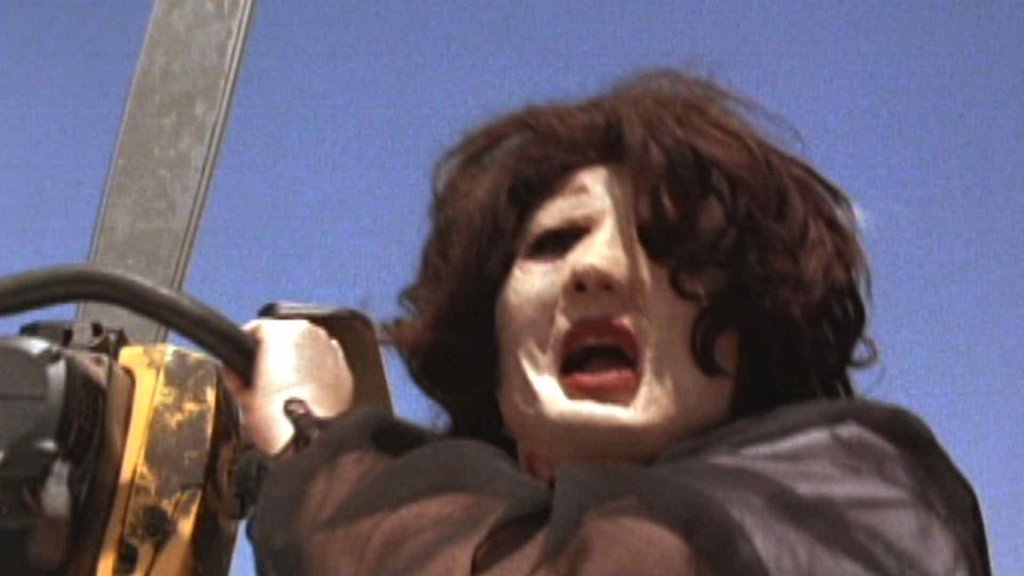
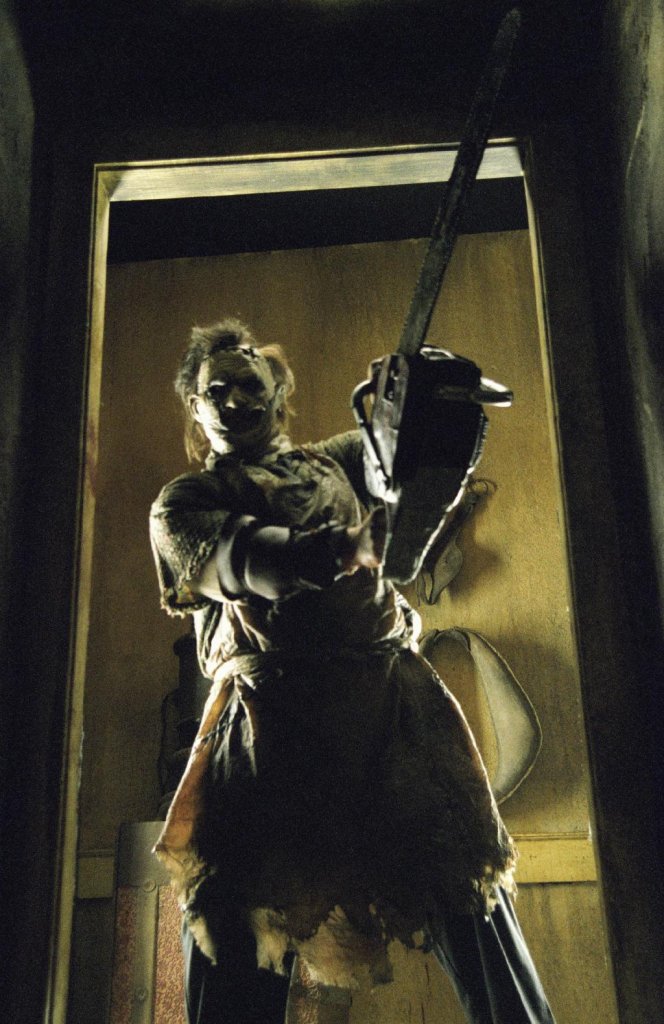
‘The saw’, as the family motto goes, ‘is family’. And what a family. For years, Leatherface and his cannibal clan have terrorised rural Texas and its innocent denizens. But how well do we know Bubba (or Junior, or Thomas) Sawyer (or Slaughter, or Hewitt?) and his family? As Leatherface gears up for yet another return to our screens, we take a gander at the Sawyer family tree. A word of warning: with families so inbred, these things can get a bit convoluted…

THE TEXAS CHAIN SAW MASSACRE  

The Sawyer family in the very first recorded massacre were a family of five, residing in their dilapidated but cosy family home. Drayton ‘Cook’ Sawyer was the eldest of four brothers, owner of a local gas station and family cook (hence the nickname). He was the most outwardly normal Sawyer, although with such competition, that wasn’t a particularly difficult achievement. Especially given that Nubbins ‘Hitchhiker’ Sawyer – the middle brother – was absolutely insane. While his twin brother Chop-Top was in Vietnam, Hitchhiker was the family breadwinner. Unfortunately, his victims had an unfortunate habit of escaping, leaving Drayton, as the most sensible Sawyer, to clean up after him. Childlike Bubba ‘Leatherface’ Sawyer was the most infamous member of the family, killing the victims and preparing the meat for Drayton to whip up into a lovely chili. They lived with their wrinkly grandpa, a former slaughterman and probable mass murderer. Grandpa was mostly inert, but showed enough life to suck the occasional finger or hit someone with a hammer. For a while, the Sawyers committed their crimes successfully and unimpeded, until one of Hitchhiker’s victims made a particularly good job of escaping the family’s clutches. Although Sally Hardesty was destined to see out the rest of her days in a mental institution, she at least managed to kill Nubbins during her escape. He was rendered a piece of roadkill, and would only return in later movies as a skeleton, dispensing grenades to Drayton or carried around by Chop-Top. At least he was a lot quieter during those later days.

THE TEXAS CHAINSAW MASSACRE 2

With their crimes uncovered, Drayton, Leatherface and Chop-Top (since returned from Vietnam) fled to a different area of Texas. Drayton took his chili on tour, winning many a cook-out with his special recipe (did someone say Soylent Green?). Chop-Top was Nubbins’ twin, and had certainly inherited the family mouth. In addition to his severe case of verbal diarrhoea, Chop-Top had the nasty habit of picking at his grisly skull wound (obtained in ‘Nam) with a heated metal coat hanger. He was a fan of modern music and dressed in colourful ‘70s clothes and a nifty Sonny Bono wig. Again, Drayton was left picking up the pieces when his brothers attracted too much attention with one of their kills (in this case, slaughtering a pair of teenagers and kidnapping the DJ who had recorded the evidence). Drayton and Chop-Top were themselves killed when a relative of one of their victims – Lieutenant ‘Lefty’ Enright (Dennis Hopper!) came looking to avenge his niece and nephew’s deaths. Presumably it was Sally’s death he was most distressed by – after all, Franklin Hardesty was as annoying as any screeching Sawyer. “Ka plooey,” said Drayton, popping the pin from a nearby hand grenade. Ka plooey indeed. The explosion killed not only Lieutenant Enright, but himself and Chop-Top too.

LEATHERFACE: THE TEXAS CHAINSAW MASSACRE III

Somehow, Leatherface survived to see another day, and took Grandpa with him too. Old Gramps might actually have been dead at this point, since we never actually saw the old husk move in the third Texas Chainsaw Massacre, but the family kept him around anyway, alive or dead. It was a larger family unit than he’d lived with before, but one which seemed to deeply care about one another. The family who slays together, stays together, after all. Edward ‘Tex’ Sawyer was the outwardly normal Sawyer this time around, a charming, handsome hitchhiker who dressed like a cowboy and looked quite a lot like Aragorn from Lord of the Rings. He had a close bond with brother ‘Tinker’ who had a hook for a hand and drove a pickup truck. The most demented Sawyer here was Alfredo, attendant at a local gas station and purveyor of urinating women (through his peephole in the ladies’ toilets). Maybe the explanation for the warmer family environment was thanks to the Sawyer contingent of girls – Mama Sawyer was the family matriarch, while they also kept a little girl in the house too – allegedly Leatherface’s daughter. Mama and all of the menfolk but Leatherface were killed during yet another escape by a victim. In this case, Mama, Alfredo, Tink and Grandpa (if not dead already) were shot to death and Tex was burned to a crisp. Leatherface and his daughter survived the massacre, although the little girl was never seen or heard from again. She was lucky to escape the next instalment.

THE NEXT GENERATION: BOLDLY GO AWAY

The rest of his relatives dead, Leatherface had little option but to go and live with the black sheep of the family. He found himself living with the Slaughters, led by loudmouth trucker Vilmer and his animatronic leg. With his brothers gone, Leatherface must have decided the time was ripe to give himself a makeover, since in The Texas Chainsaw Massacre: The Next Generation he had become a crossdresser and a useless idiot who lets Bridget Jones tell him what to do. The other family members consist of W.E Slaughter (mentioned in the previous film – supposedly having perished in a gas chamber for the family crimes) and Darla, Vilmer’s spouse. She was the ‘normal’ member of the family, although that really wasn’t saying much. Grandpa was back too apparently, named Victor and as comatose as ever. This branch of the Sawyers/Slaughters were perhaps the most insane of all – working for the Illuminati, maybe being from outer space and possibly having had a hand in the assassination of President Kennedy. W.E was (probably) killed when Vilmer bashed him over the head with a hammer during one of his rages. Vilmer himself was (also probably) killed when he was smashed over the head with an aeroplane. Leatherface remains at large. Hopefully now he will have gained some self-respect since Bridget Jones told him to “sit the fuck down”.

THE HEWITTS

In an alternate ‘70s Texas, another disfigured young misfit could also be found indulging a chainsaw fetish. Thomas ‘Leatherface’ Hewitt was the adoptive child of the Hewitts, found abandoned in a dumpster by Luda May. He would grow up working at the slaughterhouse where he was born and also dumped. When his boss closed the business down, Leatherface didn’t take redundancy too well. He brutally battered his boss to death with a sledgehammer, setting in motion a killing spree that would go on to be one of the most infamous crimes in the annals of American history. He lived with his extended adoptive family. Most notable was Charlie Hewitt, who murdered the local town Sheriff to take both the name and title of Hoyt. Hoyt would indulge and encourage Leatherface’s nastiest tendencies, and introduced the family to the joys of cannibalism, a practice he discovered and found to be extremely pleasant during his time serving in the Korean War. He lived with his mother Luda May, brother/nephew Leatherface and legless uncle Monty (his lower extremities chopped off by Hoyt during a particularly messy emergency surgery). Frequent visitors were Tea Lady Hewitt (a morbidly obese lady who likes tea) and her daughter Henrietta, who lived in a nearby trailer. The most normal member of the family was this time young Jedidiah Hewitt, who went against the family tendency for cruel violence and actually helped one of their victims to escape. Hoyt was killed during this escape attempt, repeatedly run over with a very large truck. Despite having his arm lopped off, Leatherface remains at large. Since it’s unlikely we’ll ever see a return to the Hewitt family universe, it’s likely that he will stay that way for a very long time.

Despite the worst attempts at (family) tree surgery by Matthew McConaughey and Platinum Dunes, the bloodline remains as strong as ever. Only time will tell who has survived, and what might be left of them…


Top 15: MERLIN Episodes

After five years of joyously silly – and increasingly dark – entertainment, Merlin is sadly drawing to an end. No more of Gaius’ raised eyebrow as he over-annunciates the word “sorcery”. No more Nipple Escape Watch on Gwen’s impressively heaving cleavage. No more rampant homoeroticism between Merlin and Arthur.

So it’s time to bid the show a fond farewell, with this countdown of the 15 best episodes. Hopefully the finale will be good enough to reshuffle this list, but for now here are our 15 favourites…

15. The Coming of Arthur – Series 3
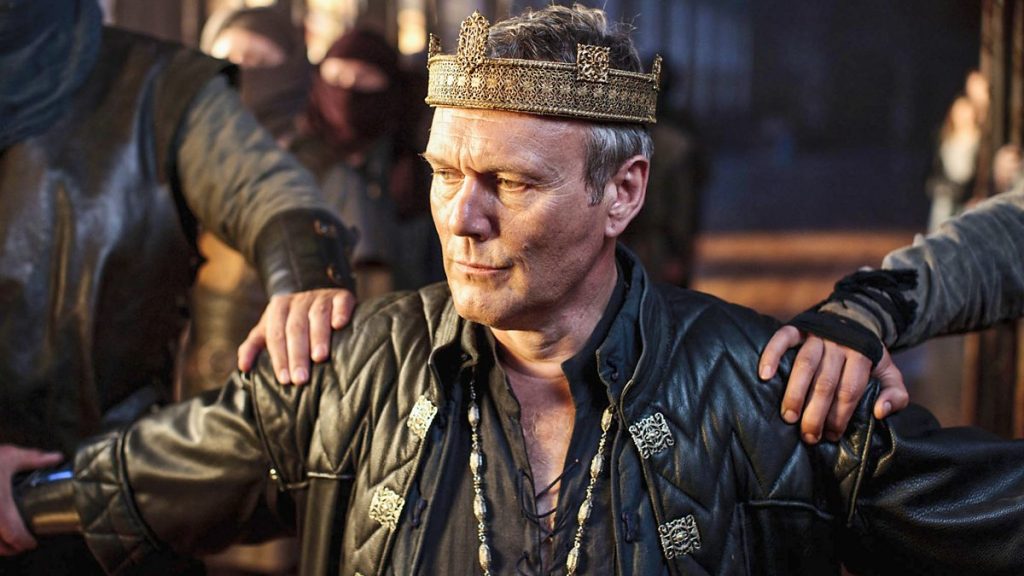
In this series three finale, Morgana has gained control of Camelot and captured King Uther, while Merlin and Arthur find themselves on the road, amassing a team capable of bringing her and her army down.

This episode marked a tide change for Merlin. Morgana finally went openly evil after a series of constant smirking, the team of Knights was assembled and the Round Table was first introduced. It was the first episode we saw genuine kingship qualities in Arthur, and it also revealed to Arthur that Morgana is his sister (a fact which, sadly, was never explored as far as it could have been). It also, of course, marked the beginning of the end for Uther, but more on that later…

14. Arthur’s Bane – Series 5
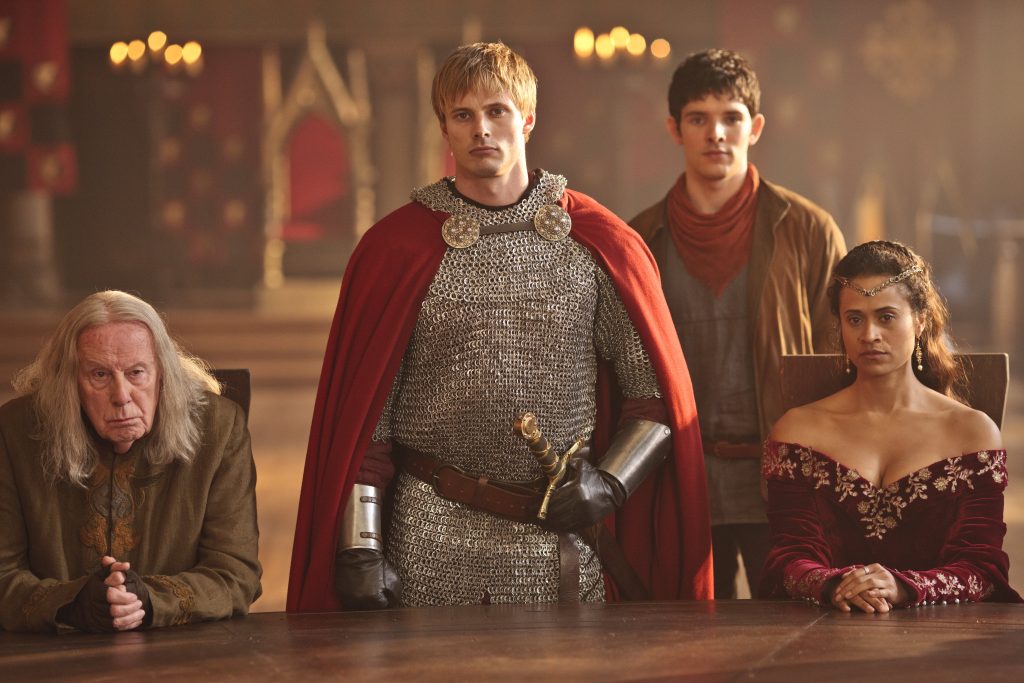
Despite the gorgeous snowy landscapes, Morgana’s wolf sledge and wanton shirtlessness on an unprecedented level, this series five opener really owes its place entirely to one scene: Mordred stabs Morgana in the back. Literally. It blind-sided the audience more than perhaps any other moment in the entire show.

Arthur’s Bane re-introduces a key figure in Arthurian myth: Mordred, now in the grown-up form of Alexander Vlahos. This two-parter treads the same tightrope as all of series five does: Is Mordred being sincere when he proclaims loyalty to Arthur, or is he plotting? This episode also boasts a rather fabulous scene between Mordred and Morgana, in which we see her irredeemable madness through his shocked eyes. Finally, there’s the powerful nutcase of legend.

13. Le Mort d’Arthur – Series 1
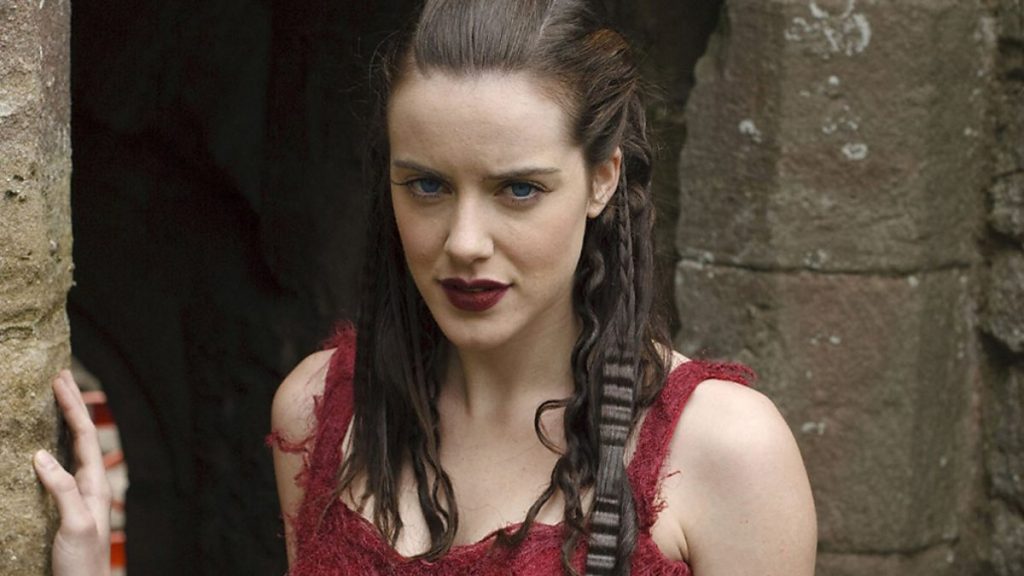
Going all the way back to the first series, this episode saw the demise of series one villain Nimueh, played by Michelle Ryan. After a full series of wacky hijinks, Merlin finally faces the really nasty side of magic when a desperate deal to save Arthur’s life ends with his mother’s – and later Gaius’ – life being taken instead.

This episode is the first to look at the lengths Merlin will go to save Arthur, an issue which raises it’s head throughout the show as Merlin is forced to make increasingly murky decisions to keep the Once and Future King alive. But mostly it’s the episode where Merlin kills Nimueh with lightning while grief-crazy. Sadly the show has shied away from showing Merlin using anything like that level of magic ever since – presumably (hopefully) holding out for a pretty spectacular showing in the last ever episode…

12. The Darkest Hour – Series 4
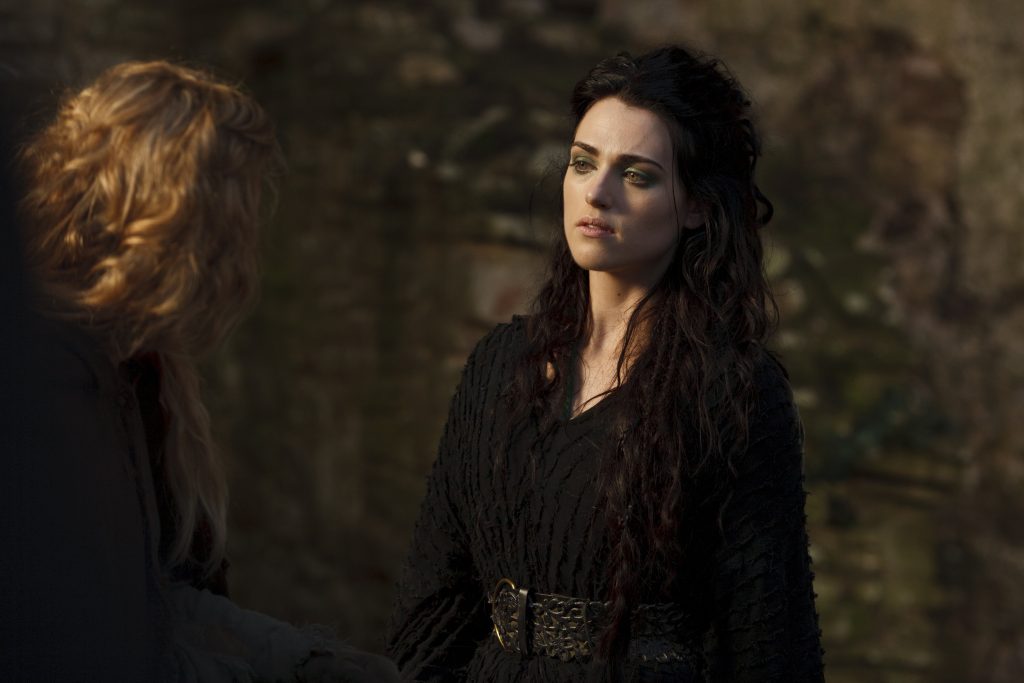
In this series four opener, Merlin, Arthur and his knights set out to close a veil to the Other Side that Morgana carelessly left open, knowing that only a human sacrifice can close it. Both Arthur and Merlin intend on being that sacrifice, but Santiago Cabrera’s Lancelot beats them to it.

Aside from boasting Lancelot’s tear-jerking death (he gets another one later on, but we’ll get to that later…), this episode also shows Arthur stepping up to the plate during his father’s mental illness, some genuinely creepy ghosts in the shape of the Dorocha, and some very moving stuff from Merlin and Arthur, neither of whom intend to return home alive. This episode set the tone for a deeper and murkier series four, killing off a regular (not to mention Morgause in the opening scenes) and creating an unsettling, moody atmosphere. It was a very impressive opener.

11. The Sins of the Father – Series 2
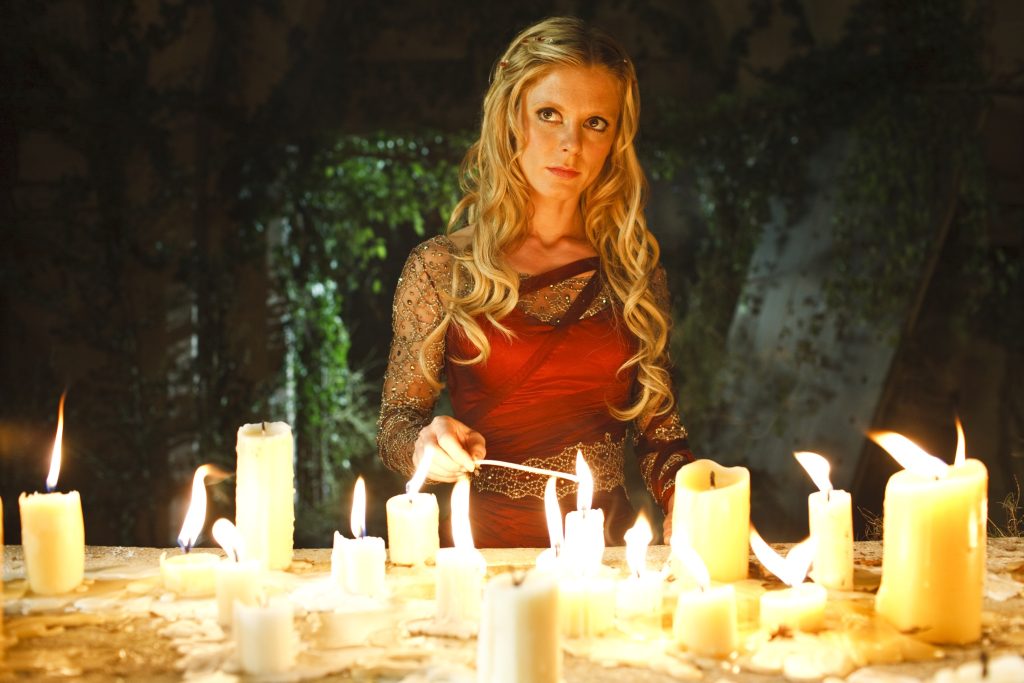
This one is probably the key episode about the relationship between Arthur and Uther. The audience had known for some time that Uther had inadvertently caused the death of Arthur’s mother by dabbling in magic to make sure he had a son, but this was the episode where Arthur found out.

It also marked the introduction of the wonderful Emilia Fox as Morgause, the series’ chief villain before Morgana stepped up to the plate. In this episode, though, Morgause’s behaviour seems really quite reasonable. Okay, she challenges Arthur to a fight to the death, but she lets him live and in the end she only wants to tell him some truths about his mother’s death. Of course, those truths lead to Arthur trying to kill his father, but she can hardly be blamed for that, right?! Arthur and Uther’s emotionally charged sword fight is one of the best of the series, beautifully choreographed and packed with excellent character beats along the way. And the ending, where Merlin lies to Arthur in order to save the life of the man whose outlawed magic is wonderfully complex.

10. The Moment of Truth – Series 1
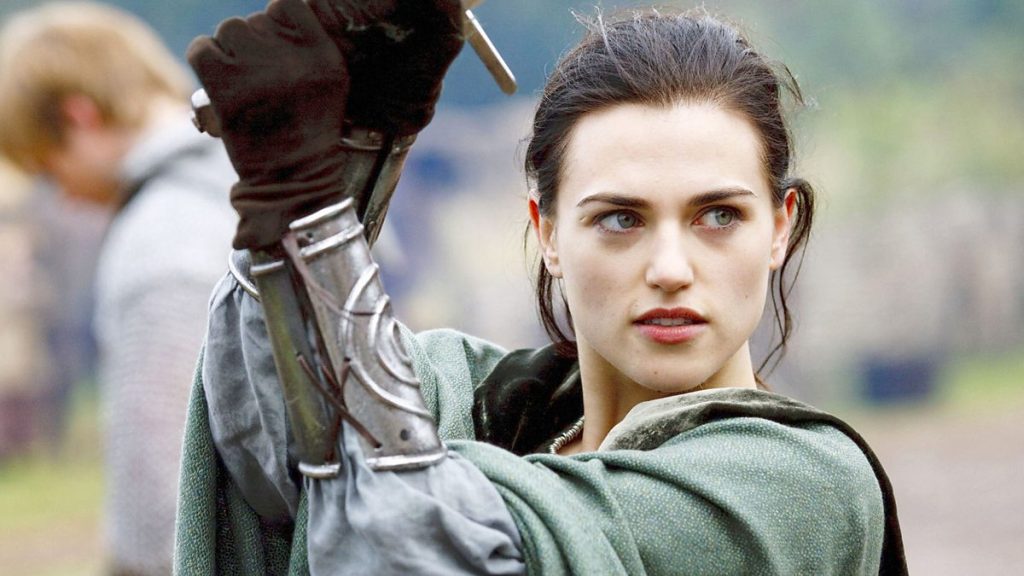
This series one episode was a rare chance to get all four leading characters out of Camelot and on a joint mission – in this case saving Merlin’s village from bandits.

This episode had a lovely sense of camaraderie, and gave us a chance to see Merlin and Arthur’s relationship evolve outside of the servant/master roles they occupy in Camelot – largely via the medium of Arthur prodding Merlin in the face with his feet. But this being a British show, that genuinely is how we show fondness. The episode also boasted slow, but important, development in the Arthur/Gwen relationship, and gave Morgana a rare chance to be a hero. Also, as any Skins/The Fades/Game of Thrones fan can tell you, a Joe Dempsie guest appearance is always a good thing. This was a fun episode that leaves a real lump in the throat at the end.

9. The Once and Future Queen – Series 2
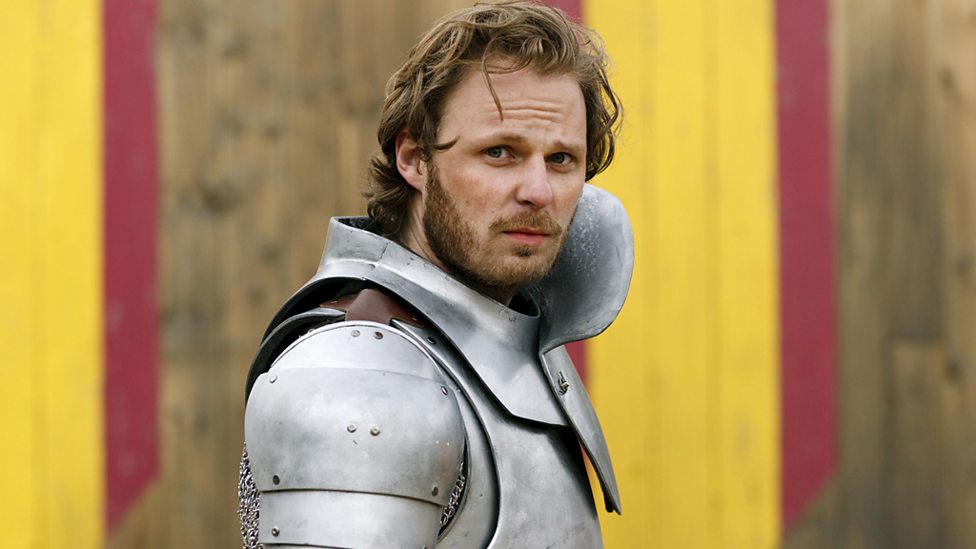
Back to the Arthur/Gwen relationship here, as this episode marks their (surprisingly early) first kiss. Arthur stays at her house while entering a joust incognito, unaware that an assassin (played by Adrian Lester) is on his tail.

This was a big, romantic episode, topped off by a beautifully-shot first kiss between the two lovers of legend. It served to give Arthur more humility (even if only temporarily) and it was nice to see Gwen shape him into the King he becomes. In an episode that focused heavily on knightly chivalry and downtrodden fair maidens, this episode appropriately centred around an impressively realised jousting tournament, not looking any more low-budget that those seen on the big screen. It also boasted an inexplicably hilarious guest appearance from Alex Price (also excellent in Being Human and Doctor Who) as William, the peasant pretending to be the unknown knight Arthur is ‘playing’ in the joust.

8. Goblin’s Gold – Series 3
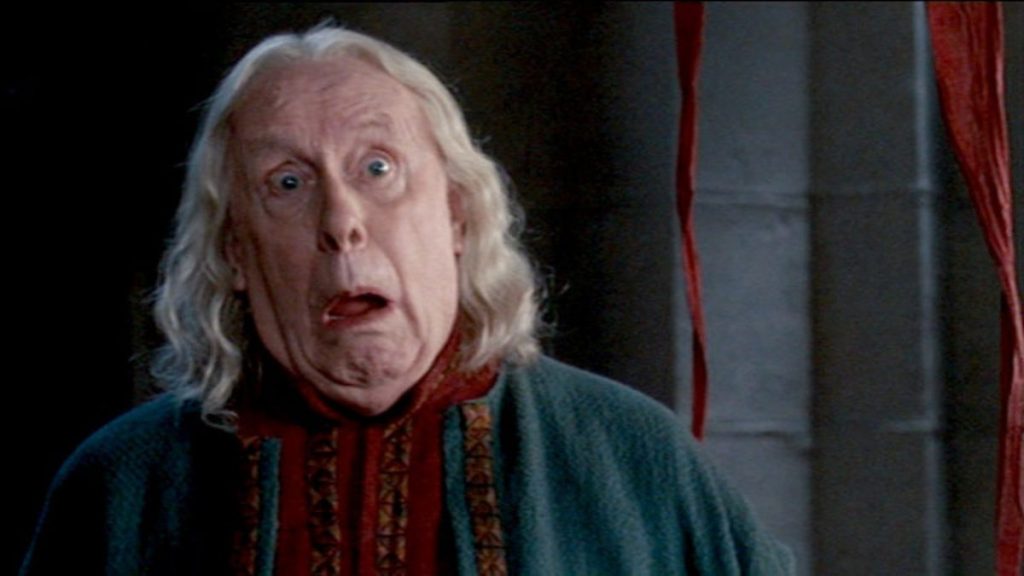
In a rare opportunity for Richard Wilson to flex his formidable comedic muscles, Gaius is possessed by a goblin with a taste for gold and practical jokes.

Wilson is brilliant as the possessed Gaius, balancing slapstick and wit with ease, letting Colin Morgan fall into step as the straight man opposite him. In another writer’s hands, silly fart jokes and Arthur growing donkey ears would have been cringe-worthy, but in Howard ‘Misfits’ Overman’s hands, it’s 45 minutes of sublime comedy. The pissed-off expression on Bradley James’ face as Arthur realises he can only communicate via donkey brays was pretty damn good, but the piece de résistance was undoubtedly Gaius repeatedly slapping Uther across his bald head. It might not sound like much, but if you weren’t crying with laughter then there’s something wrong with you.

7. The Fires of Idirsholas – Series 2
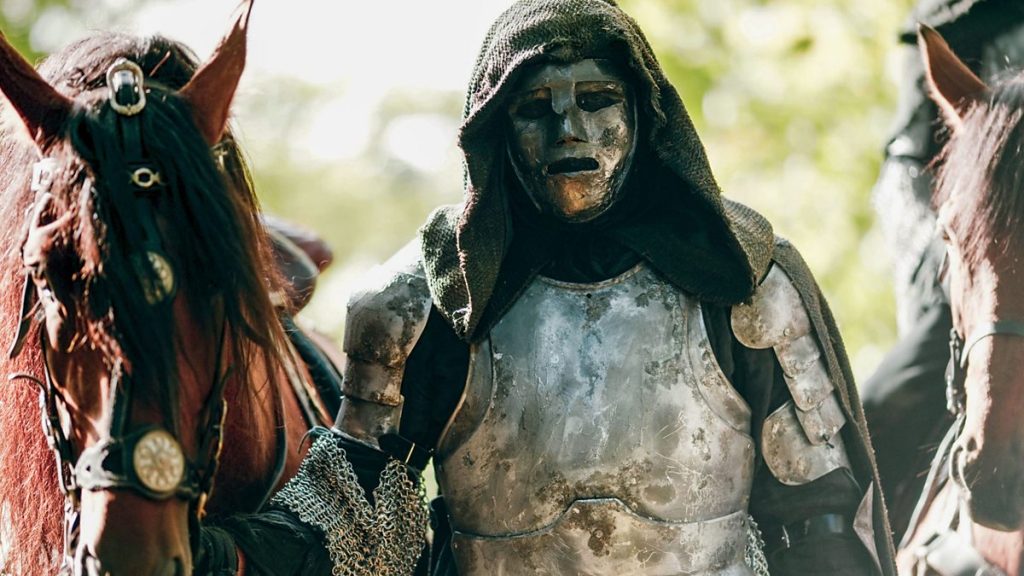
The dye is cast on Morgana’s fate in this episode, as she unwittingly becomes the focus of Morgause’s curse to make everyone in Camelot fall asleep, making them helpless victims of the Knights of Medhir. The only solution, Merlin gradually realises, is to kill the focus of the curse.

The sleeping Camelot makes for an eerie sight, and the show manages some comedy (transporting the sleeping Uther around) and some quality sleepy sword fighting from Arthur before getting down to the serious business. Series two was predominantly a light-hearted, fun series, so the end of this episode was a real shocker. Merlin actually does it. He poisons Morgana. It was a real jaw-dropper, and the sight of Merlin soothing Morgana as she realises what he’s done and chokes to death is unsettling even on a rewatch. No wonder the poor woman goes evil. In the end, Morgana is saved by chance by Morgause’s intervention – Merlin would really have killed her. It’s a brave move, to have your leading man try to kill one of the leading women.

Oh, and the Great Dragon punks Merlin by pretending to be asleep at one point for lols. And did I mention that Merlin frees said dragon in the closing seconds of the episode? Yeah, it was a pretty good instalment of Merlin.

6. Lancelot du Lac – Series 4

This was the second of two ground shaking myth-heavy episodes in series four, as Morgana resurrected Lancelot and sent him to seduce Gwen, with the help of an enchanted bracelet.

Without that enchanted bracelet, this episode would have been higher on the list. It seems like a bit of a cop-out to have the most famous affair in myth reduced to the actions of a couple of puppets dangling on Morgana’s strings, but at the same time I know that it’s a kids show, and kids can’t be expected to understand the complexity of loving two people at the same time. But that nitpick aside, what an episode. Sword fighting, (off-screen) suicide, a heart-breaking (and maturely handled) break-up, Lancelot’s true death, and no reset button in sight. Angel Coulby gives her performance of the series in this episode, and is absolutely devastating as the woman who realises too late that she’s thrown her entire life away. It’s a beautifully-written episode by Lucy Watkins (who, to my mind, was never given enough episodes of Merlin, despite writing some of the best), and to this day it remains the most grown-up episode the show ever put out. It’s almost like it’s wandered in from another show.

5. Beauty and the Beast – Series 2
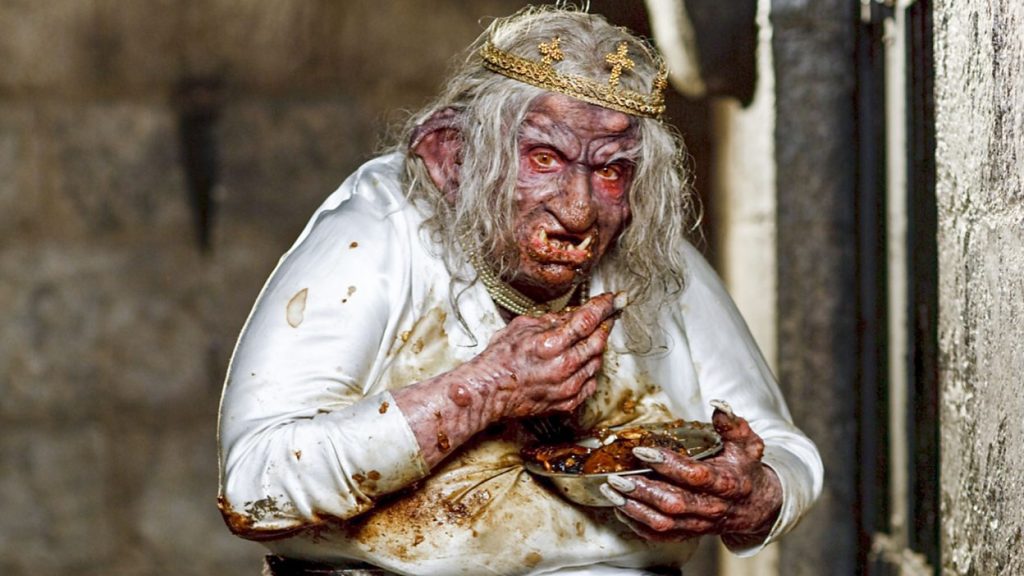
From one of the most mature episodes to one of the silliest, as Uther falls in love with a troll. Yes, that actually happened. Gotta love Merlin.

Too often, Anthony Head wasn’t given enough to do as Uther – usually just sitting on a throne and pronouncing death sentences. But in this episode, Head gets to play to his rarely-seen comedic talents as a man head-over-heels in love with a troll. The first part of this two-parter plays it (comparatively) straight, with the troll disguised in the lovely form of Sarah Parish (who does a magnificent job in the role), but it’s the second part, where she’s reverted to troll form and Uther’s still smitten which is gloriously ridiculous. Just look at Gaius and Sir Leon trying to ascertain if Uther has realised that his wife is a troll, or the look on Arthur’s face as he realised just what Merlin’s mad ‘troll’ claims meant. But that seduction scene, with Uther lowering the troll onto the bed as romantic background music swells was in a league of its own. Absolutely hilarious.

4. Sweet Dreams – Series 2
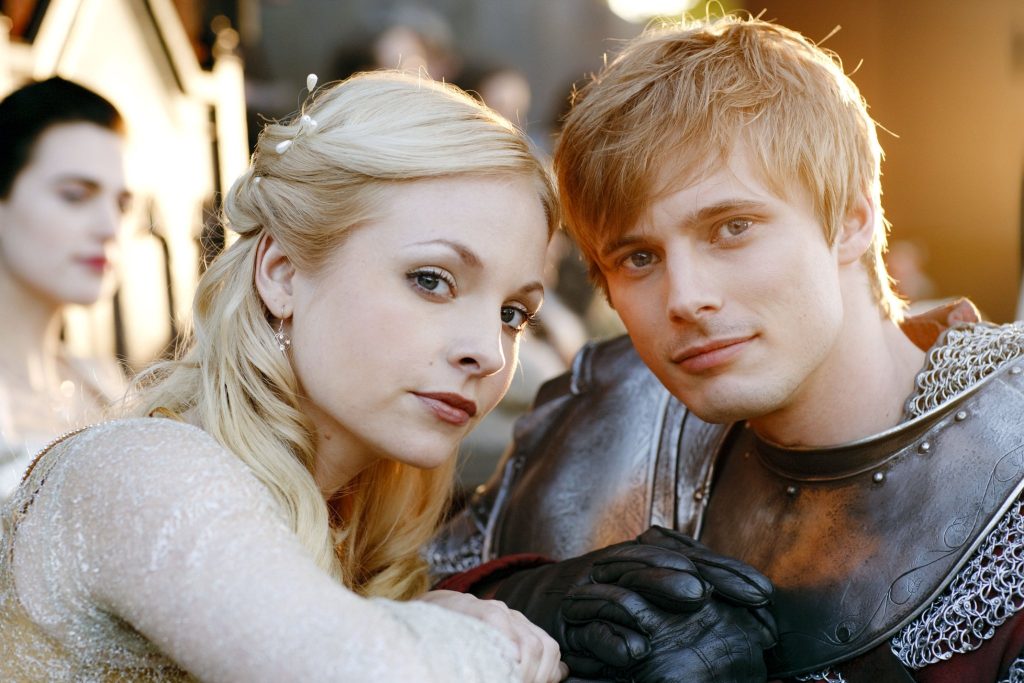
You may wonder why a simple ‘Arthur falls under a love spell’ episode would be so high on my list, and perhaps I could sum up my reason with a few simple words: “It’s destiny, my love! Destiny and chicken!”

Okay, so I might need to explain myself more than that. Sweet Dreams was a simple, linear and predictable episode, but it was beautifully constructed and acted, from Gwen’s quiet heartbreak at watching Arthur fall in love with someone else to Georgia Moffett’s infectious loved-up princess. But this episode belonged to Bradley James, who firmly established himself as an extremely talented comedic actor in this episode. Previously he’d not done much beyond get in sword fights and insult Merlin, but here he wheels out some pratfalling genius, proving that he is at his best when undermining his heroic leading-man status, pulling ‘oops’ faces at Lady Vivian while her father beats the crap out of him. It’s a pure fairytale of an episode, even down to True Love’s Kiss saving the day at the end. And sometimes, when you’re settling down to watch a family show on a Saturday evening, a fairytale is all you want.

3. The Last Dragonlord – Series 2
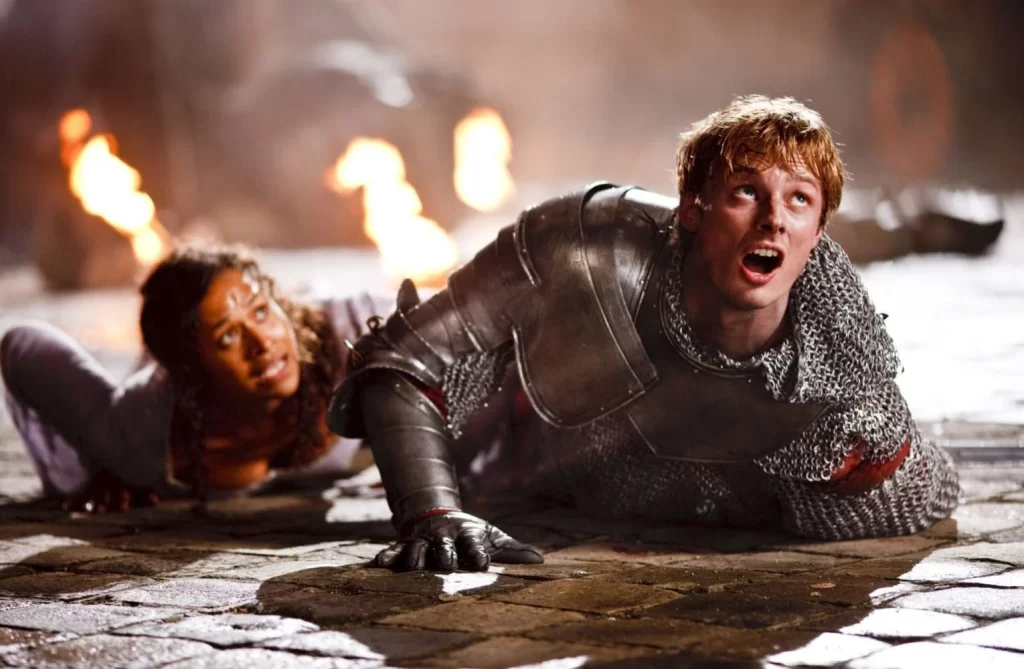
Following on from Merlin’s actions in The Fires of Idirsholas, the Great Dragon is laying spectacular waste to Camelot. Only a Dragonlord can save them – luckily, Gaius knows the last one. And he just happens to be the father Merlin never knew.

You put a dragon under a castle at the beginning of a series, you better hope you can do a pretty damn good dragon attack when it eventually gets out. It’s the fantasy TV version of Chekhov’s gun rule. Luckily, Merlin pulls it off with spectacular special effects. This episode is the best of (many) Camelot siege episodes, and the dragon has never looked better. But the best content of this series two finale comes when Arthur and Merlin leave Camelot in search of Balinor, the last Dragonlord. Merlin has an initially difficult reunion with his apparently stubborn, spiteful father (played by John Lynch), but things turn heart-warming just in time for Balinor to get a sword in the gut and die in his son’s arms. Colin Morgan plays a blinder, choking down sobs as he hides his grief from Arthur, and carrying that sorrow with him for the rest of the episode, even when he’s out of focus in the background. All that, and we get Merlin saving Arthur from a brave last stand against the dragon, releasing his Dragonlord powers for the first time. Badass, and emotionally affecting.

2. The Wicked Day – Series 4
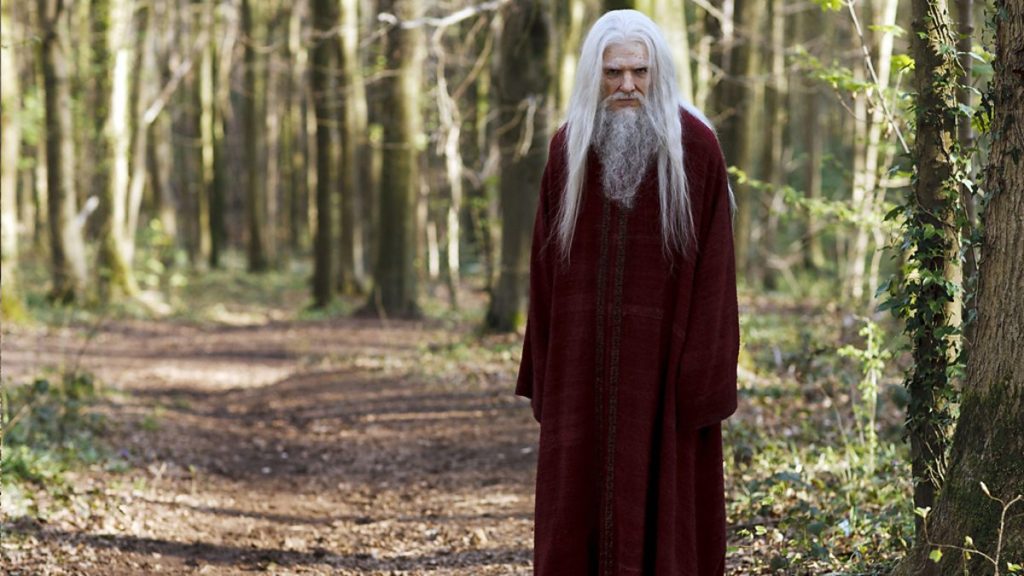
The biggie, and perhaps you might be surprised not to see this in the number one slot. After all, this is the episode where Uther died, and Arthur became King.

In another Overman-penned episode, the audience are completely wrong-footed by Uther being killed off in only episode three of series four. We savvy TV viewers are used to the big deaths happening in the finale. It’s an effective shock twist, and one which left most viewers staring at the telly in stunned surprise for some minutes after it ended. We were sad to see Anthony Head go, but at least he got an excellent goodbye, heroically coming out of his depressed stupor long enough to save his son’s life, getting mortally wounded in the process. Merlin sees his opportunity to prove the good of magic by saving Uther (in his guise as Emrys) but it all backfires, killing Uther rather than saving him and leaving Arthur more set against magic than ever. The entire show was turned upside down in just one episode, and beautiful performances were given throughout, from Katie McGrath’s conflicted twinge when she feels that Uther has died to Bradley James’ incredibly moving grief, which he has to push aside too soon in order to become King.

But strangely enough, the image that always sticks in the mind from this episode, is the final close-up of Merlin, breaking into a huge smile and yelling “long live the king!” with all his heart. The feel-good moment of the series.

1. A Servant of Two Masters – Series 4
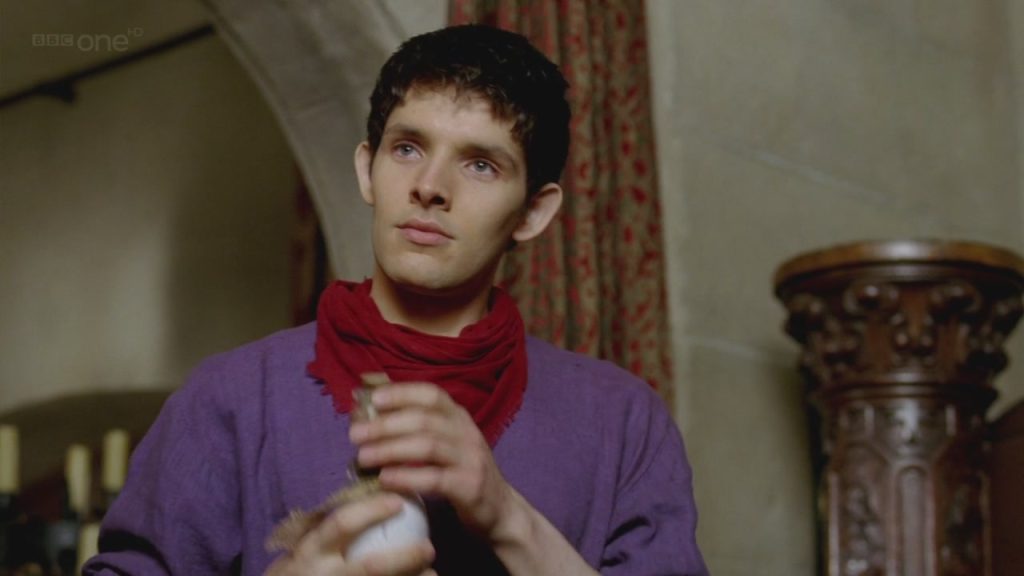
And the best-ever episode of Merlin (in this humble reviewer’s opinion)? The one in which Morgana captures and enchants Merlin, turning him into the most ineffectual assassin in history.

It doesn’t sound like much. No deaths. No major action set-pieces (aside from a long-awaited Merlin-as-Emrys vs. Morgana showdown). But it’s a perfectly-crafted episode, expertly moving through the story and across tones, making it essentially three episodes in one. First we get Merlin sacrificing himself for Arthur, leaving him strung up from Morgana’s ceiling (and Katie McGrath has never been better than in this episode, pouring out all her bitterness in Merlin’s direction). Next we get the pure comedy of the enchanted Merlin spectacularly failing to kill Arthur, despite his enthusiastic attempts, and finally the cured Merlin taking on Morgana in disguise – and kicking her arse.

So why is it the best episode? In two words: Colin Morgan. He’s been the heart of the show for five years and has never been less than excellent. He’s almost single-handedly responsible for the charm of the show (well, him and his flawless chemistry with Bradley James), and A Servant of Two Masters is the best showcase of his talents. His Evil Merlin is cheerfully amoral, with even his speech patterns setting him apart from Real Merlin. His Emrys is, as always, a surprisingly confident and assured performance. And as for the scenes between him and Morgana: How do you make your chief villain even more dangerous? Have her threaten Colin Morgan and let him sell the rest. It’s a brilliant episode, scary, funny and exciting by turns (it’s that Lucy Watkins on writing duty again), all held together by one of the best (and perhaps least likely) leading men on TV.

Ah, Merlin, we’ll miss you.

All five seasons of MERLIN can currently be streamed in the UK via iPlayer, BritBox, and itvX

Scott Derrickson | SINISTER

With Sinister being one of the scariest movies of 2012, Starburst’s Jon Towlson sat down with its director, Scott Derrickson, to talk about fear.

STARBURST: Do you test preview your films in the way studios often insist?

Scott Derrickson: We did that once with Sinister. How wide our distribution would be in the States was dependent upon a certain score with a test audience. We went pretty far beyond that score, which was great. But I didn’t use that screening or any subsequent screening to test out things or to make sure that things were working. There wasn’t a lot from the test screening that I didn’t have, I didn’t get a lot of information that resulted in changing anything.

You grew up in a movie-going family, and you’re what in Britain we call cine-literate…

That’s a good term. I know I’ve been called a cinephile, and I teach film history to college level so I’m about as cine-literate as it gets, I suppose.

So, as someone who’s seen a lot of films and brings that to bear on the making of their film, this talent that you have for horror and creating a sense of fear, is that something that you’ve consciously developed, something you’ve had from the start, or a combination of the two?

I think it’s certainly both to a degree. I’ve certainly developed it, in with the films that I’ve made and by studying what’s actually effective in scaring people in horror films. If you look at my first Hellraiser movie that I did (Hellraiser Inferno, 2000) it’s actually not scary! Those movies are really not scary in general – as a franchise they’re more gory than scary.  But I think that the reason that I’ve been able to develop it and learn it is just because of my personal understanding of fear, and the emotion of fear that I’ve spent such a good portion of my life reckoning with and continue to reckon with. I’ve experienced some pretty extreme levels of fear in my own life. I think that qualifies me to become good at it and it’s why it’s so effective. Certainly in the case of The Exorcism of Emily Rose (2005) and Sinister (2012) the objective that I always had – both in terms of the general concept and right down to the beats of every scene – was to make something that I found genuinely scary, something that really disturbed me or really scared me, and I knew that when I was feeling uncomfortable in dealing with something conceptually or even in the minutiae of editing it – when it started to make me feel uneasy I knew that I was on to something! The bottom line is I know a lot about fear – I think it’s an incredibly powerful and complex emotion that isn’t explored in complicated ways typically, even in horror films. So my gravitation toward the genre – I love horror films but it’s not like I love that genre more than other genres – I just think it’s what I’m good at, it’s a skill-set that I just happen to have. So I’ve continued to invest myself in it because it’s – at least up until this point – that I’ve been able to do better than other things.

In Sinister you have this idea of evil captured or contained and transferred by images, be they photographs or Super 8 films. It’s almost an ancient or primal fear, the soul being captured in an icon. What drew you to that idea?

Part of it is exactly that. That it’s ‘Be Careful What You Watch’. Something about it is primal, going all the way back to the prehistoric. I saw Werner Herzog’s movie, Cave of Forgotten Dreams with this extraordinary and ambitious, incredibly beautiful artwork in these caves from thirty thousand years ago and I’m sure that with the guy who was creating that there were other people who were disturbed by these images just because the images are so disturbing. And I think in the modern era horror comments on the times in which it’s made – whether that’s consciously or unconsciously. I think Sinister’s great contribution if nothing else is that it’s one of a handful of films that really is effectively tapping into the day to day position that we find ourselves in which is that we’re all sitting in front of our computers with a glowing screen every night in the dark. Everyone does it and that wasn’t the case even ten years ago. The Ring tapped into the fact that we were all now starting to not just passively watch these TV shows at eight o’clock at night, but we were taking these video tapes and watching them at all hours and watching them in groups. There’s something about the personal private exploration of imagery that is a severe reality now beyond anything that human beings have ever been a part of. There’s no place in human history where we see people doing what they’ve been doing now for the last five or ten years, which is log just countless hours perusing imagery in the quiet darkness of their homespace.

That certainly would be the case with the Ethan Hawke character in Sinister. He becomes more isolated even though he’s amongst his family.

And I think that’s one of the main reasons why the movie connects with audiences. You have to have scary imagery and effective execution of suspense, but before any of that can work you have to have an audience identifying with a character and understanding the situation that they’re in, and I can’t think of another movie that demonstrates that night-time quality that we all seem to participate in now, which is just sitting alone in our offices or our bedrooms – or wherever it is that we’re in – looking at images, staring at images, scrolling through words and pictures. So when that turns supernatural and evil, it’s something that scares an audience more than something they can’t relate to.

There’s also another aspect to his character which is a sense of failed ambition. Is this part of a greater theme which The Exorcism of Emily Rose shares? You have these characters – like Laura Linney in Emily Rose – who start out desiring material success, material wealth, fame, but then they start to realise that there are forces beyond the material world which they can’t control and in fact they are controlled by these forces which influence their fate.

Very much so. In both cases it’s about elevating something above materialism. Maybe because I think that materialistic tendencies of the culture are so awful and worthless. I think that the things that matter most in life, that are the most significant things in life on a personal level, are not material things. I have tremendous appreciation for the material world in terms of science and in terms of health and all of that. But these things are only worthwhile in that they take us into things that are immaterial: joy, love – those sorts of things. In the case of Emily Rose, it was a conscious didactic attempt to posit materialism versus the existence of the demonic – other worldly entities and otherworldly realities – and the implications of that are in the movie. That is my thing, I think, as a person. I don’t mean it as a point of pride or to be condescending, but I think that – if there’s a continuum of materialism versus motivation for immaterial realities and other people – then I’m all about going in the extreme opposite direction of materialism. Basing your life around the quest for status, for money, material wealth – those things are traps. There’s nothing good about them. And yet, I think we’re all more motivated by those things than we realise – especially status!

Can you tell us about your new script, Beware the Night? About a cop who assists exorcists?

It’s based on a real guy, Ralph Sarchie, who I’ve gotten to know and have spent time with. He’s a tough, foul-mouthed Italian police sergeant who works in the 46th district in South Bronx – what the FBI calls the most dangerous square mile in America, a real shit hole. Through a series of events he ended up going from being a totally non-religious lapsed Catholic to being the guy who goes to investigate possible paranormal activity in people’s homes and cases of possession, and he spent many years of his life as an assistant during the practices of exorcism authorised by the Church of New York.

It sounds like an intriguing mix of genres.

It’s definitely that. When Jerry Bruckheimer hired me to work on the script he said, “I wanna make Serpico meets The Exorcist!” And I thought, ‘well that’s just the coolest sounding thing I’ve ever heard’.

Is it definitely a ‘Go’?

I would say ‘definitely’ – but it’s my experience in the business that once you say that it goes away! So I’m not actually going to say that! But, yes, it looks very likely that that will be my next film and we’ve cast Eric Bana in the lead role, and was the actor I really wanted. He has a lot of the qualities of this guy.

You also wrote the screenplay for Atom Egoyan’s new film, The Devil’s Knot, which is about the West Memphis Three. Did you write that as a riposte to Emily Rose?

I did. I was planning to direct it. I really loved Emily Rose, I was very happy with that film. I think one of the things that surprised me was even though I find the movie fairly even-handed – my writing partner both on Emily Rose and The Devil’s Knot is agnostic – and even though I feel the movie’s not a biased or weighted clash of faith versus reason – or faith versus science even – I was surprised by how many people – critics especially (probably because critics tend to be liberal and non-religious) took offence that the movie dared to take the demonic seriously. Even though I didn’t mind that – I think it says more about the critic than it does about the movie – I also understood that it’s a sore point because terrible things can happen when people take the Devil too seriously and the West Memphis Three is the case in point. So I essentially wanted to make what was a counterpoint, a complementary film to Emily Rose, a movie that really represents religion in America and what happens when things like belief in the Devil and these very religious concepts infect what is meant to be a very clean purely logical process, like police investigations, like the judicial process. Once you happen to have religion and religious bias entering into that process it just infects everything, and terrible injustice can result, and what we saw in that case really was a kind of modern day, Salem Witch trial.

Were you ever accused of contributing to the Satanic ritual abuse moral panic with Emily Rose?

No, nobody really thought that, because when Emily Rose came out that was all past. The Satanic ritual abuse craze was really the late 1980s and early 1990s. The McMartin Case really did a lot to ultimately expose the nonsense that all that was. Once you’re in a post-9/11 world all that stuff seems as silly as Alice Cooper. It’s kind of hard to believe now that people were taking it seriously and even in retrospect there’s nothing realistic or frightening or menacing about it. It’s just ridiculous.

Sinister is released on DVD and Blu-ray on February 11th.