Jim Zub • CONAN THE BARBARIAN: BOUND IN BLACK STONE

Conan the Barbarian may be a 90-year-old character, but that doesn’t for a moment mean he’s obsolete. The iconic pulp staple enjoys an ever-strengthening presence in comics, and film fans remember Arnold Schwarzenegger’s time with the character fondly. Now, Titan Comics is unleashing CONAN THE BARBARIAN: BOUND IN BLACK STONE, a sprawling epic charting the eponymous warrior’s adventures in monster-clogged locales. Co-leading the charge into Conan’s new ongoing series is writer JIM ZUB, whose knowledge and zeal make him a perfect fit for the project. A long-time comics scribe with a fierce love for pulp, Zub strives to do right by creator Robert E. Howard even as he strikes out to make his own mark on Conan canon…

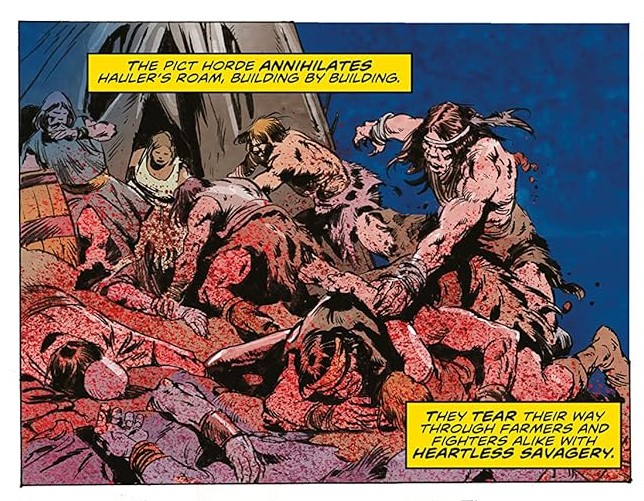
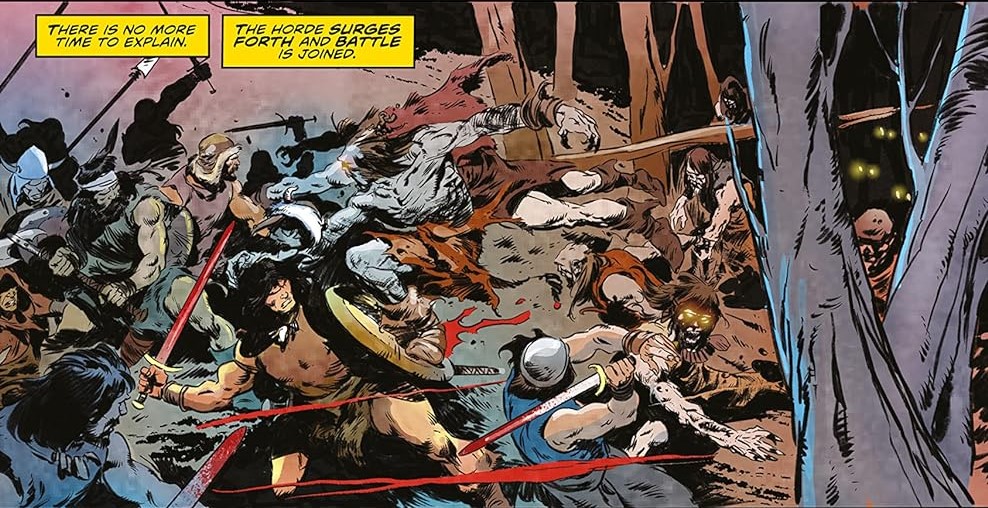
With Conan the Barbarian: Bound in Black Stone, Zub has teamed up with artist Rob De La Torre to revive the retro pulp spirit underpinning every Conan adventure. Zub’s accessible storytelling, coupled with art that would have John Buscema swelling at the seams, escalates everything fans already love about Howard’s world: satisfying beat-downs, bottomless mythopoeia, and vibrant characters who basically peel themselves off the page. STARBURST MAGAZINE recently caught up with Zub about Bound in Black Stone, Conan’s immortal appeal, and the breadth and depth of his mythology…

STARBURST: Tell us about your dynamic with artist Rob De La Torre. How do you guys complement each other as creators?

 Jim Zub: Here’s the thing, Rob and I, we had been wanting to work together for quite some time, and being able to team up on this Titan relaunch was really a dream come true. So I’ll roll back a bit and explain a bit on that because I think that it informs a lot of the way that we’re working. Heroic Signatures and I had stayed in touch after the license wrapped up at Marvel and they wanted to take a different tack going forward with their publishing plan. They wanted to have a more direct hand. Rather than doing a licensing thing, they wanted to really be deeply involved in the creative aspect of publishing Conan going forward. The character has got a 50-year legacy in comics and a 90-year legacy in publishing. He’s one of the most important literary characters.

Huge!

He’s the Superman of sword and sorcery. And so they felt like they could do that and they found a partnership in Titan, and they had approached me because they really liked the voice that I had for the character previously, and they knew I had some pretty ambitious plans and ideas. I pitched them this longer term, big mythic structure that we could follow and ways that we could use the canon stories as pillars for future plans. And I felt like De La Torre’s art spoke to a classic era of the character, obviously, John Buscema and Frank Frazetta and his own artistry that he brings a really great pulp kind of aesthetic that we could convince readers that we had their backs, that we knew why they love this character and what was so special about it. And the more Rob and I talked about that, the more we also looked at even the working methodology that worked so well with those old comics.

And so, Rob is a very complete artist package. So he and I spoke about working plot style like Roy Thomas and John Buscema did in the seventies. I’m laying out the big beats of the story in a plot manner. I’m describing big poetic moments and then letting him go buck on the page. Then I come back in and I dialogue it. So the reason why I think the text marries so well is because it’s being built with that specific page in mind. I am trying to summon the poetry to match his phenomenal vision of the Hyborian Age. And it is really a vision between him and Dean White and Jose Villarrubia, with the colours just enhancing it.

It feels like the best kind of throwback where it’s not like… It’s not homage in the sense that we’re tracing off that old thing or trying to just redo what’s been done before, but we’re trying to take the fuel, the reason why Conan was one of the bestselling books in the seventies and had consistently some of the highest subscriptions at Marvel in that period, both for Savage Sword in the monthly title and go, “Why? Why do people love it so much? What makes this character stick around so long and be so intrinsic to that broader pulp culture voice that it seems to have?” And put all of that on the page but try and move forward with new stories that can still surprise readers.

That’s that weird, crazy tightrope that we’re walking with this thing, than if it’s just a complete throwback, that it feels like everyone goes, “Well, I’ve seen this before. I know what comes next.” Then it’s forgettable. It just gets lumped in with existing material. And so, for us, it was like, “Okay, take the best stuff. Don’t throw the baby out with the bathwater and surge forward as much as we can with it.” And we knew we only had one shot at grabbing the old fan base and saying, “Remember how badass this was? Remember how amazing this was? Stick with us. We got a cool ride coming.

The plot and the story, is that where you feel the concept is the most pliable in terms of trying to walk that tightrope between honouring what has been and then trying to create something new?

We’ve got two main advantages. We’ve got a big overplot that we can plan out over a longer period in a way that a monthly comic of the seventies didn’t have those kinds of benefits. You get the fidelity of modern printing and colour reproduction and stuff that we can do on a whole other level. And we can make it a mature reader’s book, the promise of the pulps in terms of being a bit of forbidden fruit in terms of violence and content that you just couldn’t get away with under the Comics Code Authority or even the black and white magazine. We can take things further in that respect. And so in that way, I think it updates that feeling, it makes a modern version, but trying to project it forward rather than feel embarrassed by the past, if you will.

It’s cool because Conan stirs nostalgia in us, creating this illusion that he was always part of our coming-of-age. Even, or especially, if we’re picking up his stories for the first time.

An icon. It created a publishing empire for the character that didn’t exist before beyond the Weird Tales readership, which was obviously substantial, but not like the Lancer paperbacks changed fantasy publishing. And that’s on the back of that vision of Frazetta and that grit of that character that he projected on those covers. And then you get artists like Barry Smith and John Buscema and just Ernie Chan and Alcala and all these other artists that brought that vision forward with the comics and with Joe Jusco and Boris Vallejo and all these guys. And so it’s this amazing legacy that we’re trying to capture and say, “Here are the coolest qualities or here is as much of that…” Acknowledging that stuff exists, but not getting ourselves so wound up in the minutiae that a new reader couldn’t dive in and just go, “What’s Conan all about?

Conan is an adventurer with wanderlust and where he goes, incredible things will happen. Is there other stuff that you can know? Of course. There are periods of the character’s history. There is the geography of the Hyborian Age and there are cultures and interesting echoes of real world history, but all of that is bonus material. You don’t need to know any of that in order to pick up a book and enjoy. Conan is a survivor. He is a barbarian in a civilized kind of kingdoms, and the clashing of those concepts and the intrinsic themes of, you can trust a barbarian more than you can trust any kind of ‘civilized’ – and I use civilized with the hanging air quotes – and, because the act of running a kingdom and a government creates corruption. And this barbarian will kill you where you stand, but he’s going to tell it to your face. You know what I mean?

He demands honour from the people around him, too.

Right. And that’s a form of the author. Robert E. Howard grew up in rural Texas during the oil boom and saw these civilized structures corrupting and crushing and destroying, and he lusted after the idea of the frontier and the self-made man, and it’s very intrinsic into the writing and you see that survivalist mentality and explorer, adventurer sort of stuff that ignites his imagination and his ability to take a pretty… The pulps, which were very disposable kind of entertainment and try and forge a real poetry around it. There’s a reason why there’s only a handful of writers from that era that we still look at to this day. Howard and H.P. Lovecraft and a couple other contemporaries of that time, and it still works. You read those short stories and they are pure entertainment. They’re quick, they don’t waste time, they’re just intense from start to finish and it’s trying to summon that up on the printed page as much as possible. That’s the challenge and that’s what’s so exciting about it.
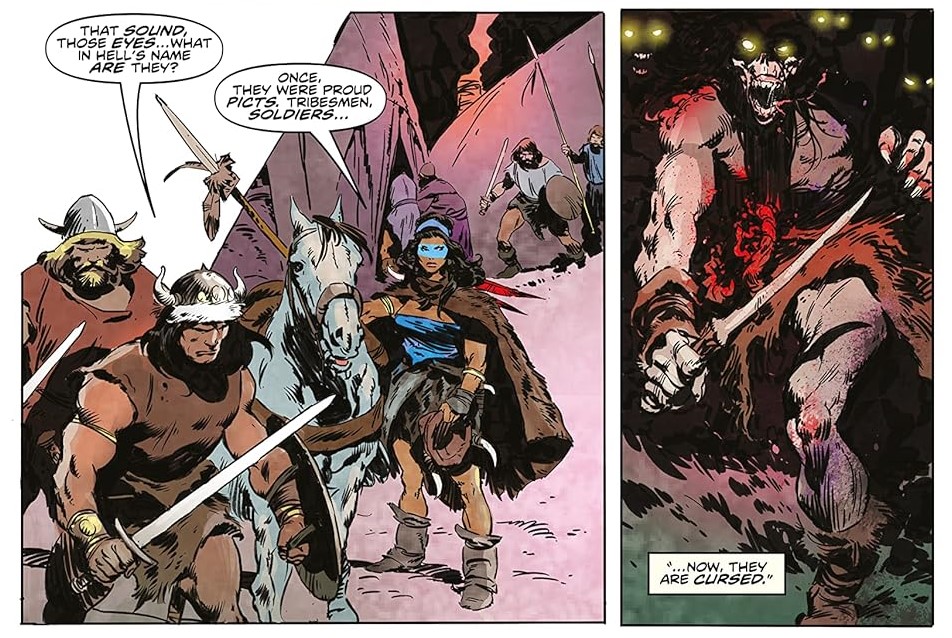
You can read Bound in Black Stone on its own. You don’t need to know anything else. And so I think, like you said, it is tailor-made to be enjoyed in the moment without prior knowledge.

There’s a procedural aspect to this kind of iconic character. What we’re most fascinated by is putting Conan into different situations and seeing how the character we know responds to it rather than, he doesn’t necessarily follow traditional character arcs where the character has to go through dramatic revelations. We have some of those elements. If you look at the longer progression of the character, whether it’s Conan in his impetuous youth testing his limits, Conan is his prime, realising he’s a veteran of many battles and a capable leader, and then being pulled into becoming a king by his own hand and realising that he has to somehow become a king and not lose his soul, not lose the thing that made him vibrant. And can anyone do that once they’re past their prime? That’s the big question. So there is a broader arc, but you can drop into a story at any point and just go, “Oh, this is Conan in this period!”

The fandom doesn’t seem toxic at all.

Yeah, that’s really exciting about it. And so within my stories, we’re forging certain types of continuity and callbacks and we’re utilising the pillars of the canon in hopefully ways that readers haven’t quite seen before. The other thing that we have to our advantage is, although there are these twenty-odd Conan stories, he wrote hundreds of pulp stories and many of them, whether it was for expediency or whether it was with this idea of continuity, call to each other. The Thurian age of Kull the Conqueror is the pre-history of the Hyborian Age. And it isn’t just because of fan theories. That is nailed down in the texts. There are callbacks and there are tethers between them. But then other stories that Robert E. Howard wrote have those tethers as well. There’s a story, there’s these two characters called Kirowan and Conrad, and they’re kind of pulp investigators, scholars of the occult, and one of the stories that they have, the Haunter of the Ring, they find the ring of Thoth-Amon. That’s in Howard’s pulp stories, and Thoth-Amon is a villain from the Conan stories. That’s not just us blowing smoke, that’s in the actual text.

And that kind of stuff is so cool. There’s another one, Kings of the Night, which is literally Bran Mak Morn calling upon the power of a lost king. It’s Kull by name. Kull’s basic ghost or spirit comes forward and helps lead Bran Mak Morn’s army into battle. You’re like, “Ah.” Well, this is the original multiverse. This is the original shared pulp promise. And that’s really cool as well that we can take these little tethers and go, “You know what? This is the grandest of adventures across all these pulp milieus, and what is the potential of that going forward?” In a way that you couldn’t do with a monthly book in the seventies and that hasn’t quite been done before. And that’s the exciting part for me is looking forward and saying, “Man, there’s so many cool stories we can tell. You can drop in and enjoy any of them, but if you stick with us on the journey, you’re going to see something so much bigger and cooler to come.

You’ve had to adhere to more stringent universe-building before. I know this isn’t your first time writing Conan, but what is it like switching from something with reasonably flexible parameters to, say, Marvel’s continuity-bound superheroes.

I had a great time writing content at Marvel. I have a great time writing superhero stuff and Dungeons & Dragons and all kinds of different properties – Rick and Morty and Stranger Things and all kinds of different stuff. But I think what’s cool about this is, there are little stakes in the ground, but it’s much looser in between. Because we don’t have the tight continuity of a superhero universe, we can forge interesting pieces. And the Hyborian Age is meant to be this mysterious and vast place, so we can put down new areas and just say, “Here is some new kind of thing.”

And it speaks to these broader pulp patterns, but we can make stuff too. And as long as it doesn’t directly contradict what’s been said, why not? That’s fun. And have fun with those kinds of elements of it. And the readers are more than happy to come along for the ride as long as it speaks to those kind of inspirations and ideas that they know the character does well. And that’s super fun for me. I love being able to build stuff out. I love being able to take these kind of ingredients and funky things that are referenced in obscure pulp stories or even poetry that Robert E. Howard put together and go, “Okay, if you read the story as just a comic reader, you’ll enjoy it. And if you are a fan of the Robert E. Howard canon…” Or in some cases, I know this sounds dramatic, but I’m not kidding, there are scholars of the material. They read everything and they notice that we’re pulling some little funky thread and they’re delighted as much as I’m delighted to have that kind of stuff to be able to pull on, that there’s enough foundational material there that I can always keep digging almost archeologically. But on the other hand, it’s not telling me, “You must use it like this.” It is absolute in its rules or in its prior established usage.

Absolutely. There are varying degrees of appreciation here.

Right. And everything from someone who only knows Conan from the Arnold Schwarzenegger movie, all the way to… Everyone knows the name. It carries certain pop culture cachet, but a lot of people aren’t well-read in the material. And if they’re read, they’ve read a weird mixture of the comics and the pulp stories and some of the stuff that was rewritten and overwritten by Sprague de Camp and Lin Carter from the sixties and seventies. Very few people are carrying encyclopedic knowledge of this stuff, and that’s to our advantage where I can cherry-pick and go, “You know what? But why do you remember the movie so much? Because it has this very cool, powerful, potent storytelling.” Great. I want that feeling, even if I’m not going to use the movie specifically. If you were a fan of the movie and you pick up Bound in Black Stone, that feels like your Conan. But it’s not Arnold. It is that adventurous character.

CONAN THE BARBARIAN: BOUND IN BLACK STONE is out now from Titan Comics.


Ruby Barker • BAGHEAD

Ruby Barker Baghead

Ruby Barker is a British actor best known for playing Marina in the Netflix show Bridgerton. Now, she has made the leap to the big screen with a key role in the new horror Baghead. Ruby took some time to talk to us about her new film, her favourite horrors and what scares her.

STARBURST: How would you describe your character and role in Baghead?

Ruby Barker: So, I play the role of Katie who is Iris’s, played by Freya Allan, best mate. We’ve known each other for years, and they have a sisterly bond. Katie is the voice of sanity, the voice of reason. She’s correct, and on it. Got good acumen and is hard-working. And she cuts through the nonsense. She’s basically the audience.

When you received the script, what was particularly interesting about it for you?

It’s written really well, and I loved the premise. It was originally a short film, and I love the idea that there are a set of circumstances that are hella creepy, that you can bring back the dead for a couple of minutes. But at what cost? It’s really fascinating as it’s something we’ve all thought about, and if you haven’t yet then you surely will at some point in your life. Because grief is something we’re all going to experience. It’s something that unites everybody. So, yeah, it’s a cool idea with cool creatives behind it.

The location is important with Baghead; did that feed into your performance?

Yeah, it was really creepy. There was some stuff in a studio but a lot on location. I love being on location and it was beautiful. It was like a castle, and it was so creepy, it was perfect. There was this beautiful garden, and it was autumn which is one of my favourite seasons. It was nice to go into this dark, creepy set and then come outside to just the cleanest air and beautiful scenery. Just to be able to sit out and talk to people. It was a lovely environment to work in.

How would you describe what Baghead is?

So, what is Baghead? The ambiguity surrounding Baghead is kind of what makes it so scary. On paper, she’s a witch. She’s of the supernatural world. And supernatural horror is really scary. In life, we don’t fully understand things or why we’re here. Lots of science is disproven. Some people are really spiritual, and some people aren’t. But when you go into the supernatural, and spirituality, there aren’t any rules. What is possible here? That’s creepy and really scary. And Baghead is just really scary. The costume alone is really scary.

You mention the supernatural there; are you a horror fan?

I do like horror, but I can’t really do it alone. I get really scared. Even as a kid I couldn’t watch scary movies. Even Jurassic Park, that was scary to me. I think it’s because I get really into it, and I’ve got a big imagination. I do watch it, but I’m traumatised after. I’m a screamer and a jumper! Let me think of my favourites. Alien, I mean, what on Earth? And REC.? Lord have mercy! And it’s always best to see horror when you don’t know what to expect.

How do you choose your roles? Do you seek out horror?

I’m seldom asked to play the voice of reason. But how do you choose? Is the script really good? Who’s behind it? What other actors are involved? That all helps me choose. Freya had attached before I had, and when I heard I jumped at it. She was a real reason. I wanted to work with her and held her high up in my estimations. Peter Mullan, Ned Dennehy, Saffron Burrows – she’s really cool.

How have you found the transition from television to film?

They’re both very different experiences but I like them both. Bridgerton was shot over something like seven months, you spend a long time in the job. Whereas film is shorter; we shot Baghead in six weeks. It’s really intense for this short period of time. It can be easier to take television for granted but that’s not the case with film. It really is going to end soon.

Exclusive Interview: Director Nikolaj Arcel on THE PROMISED LAND

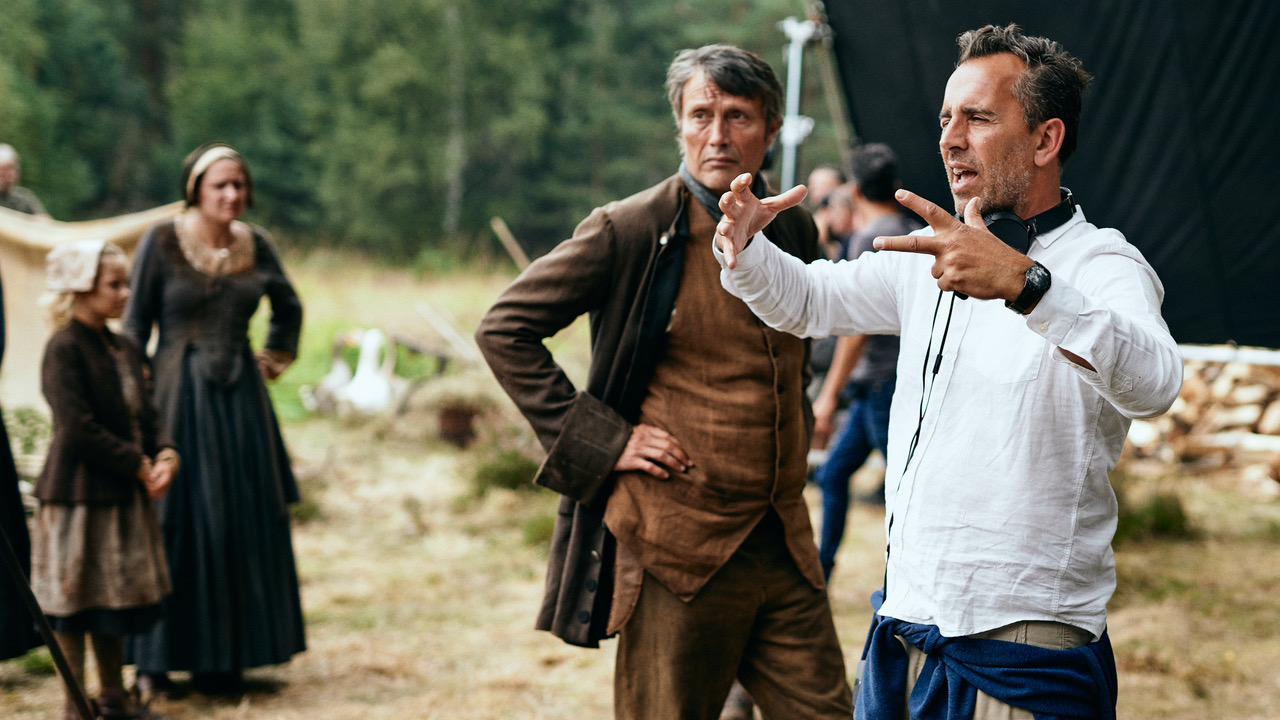
To celebrate the UK release of the epic Nordic western The Promised Land, we caught up with the film’s BAFTA-nominated writer and director Nikolaj Arcel (The Girl with the Dragon Tattoo) about the making of his latest, critically acclaimed film.

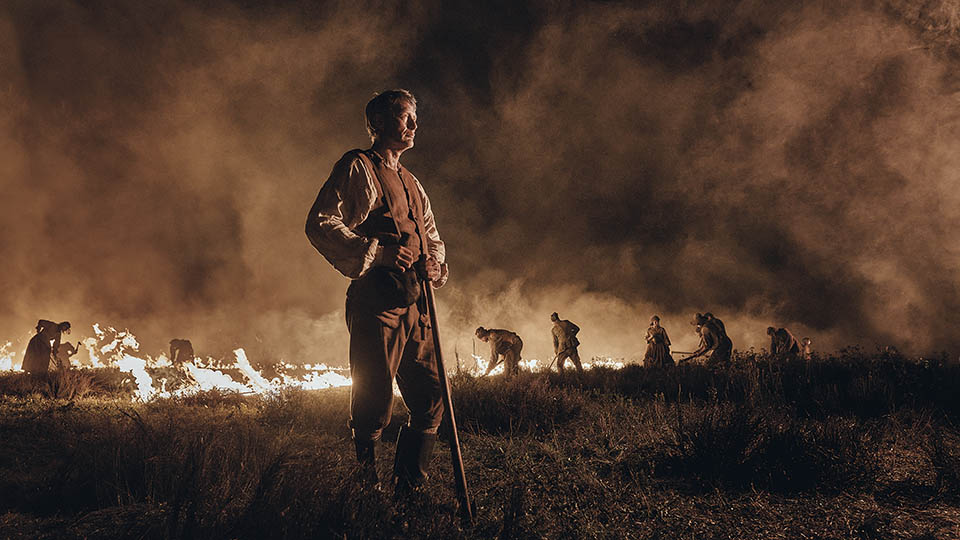
In 1755, the impoverished Captain Ludvig Kahlen sets out to conquer the uninhabitable Danish heath in the name of the King. But the sole ruler of the area, the merciless Frederik de Schinkel, who believes the land belongs to him, swears revenge when the maid Ann Barbara and her serf husband escape for refuge with Kahlen.

As a filmmaker, Arcel has reunited after a decade with actor Mads Mikkelsen (The Hunt, Another Round), headlining a strong supporting cast including Amanda Collin (Raised by Wolves), Simon Bennebjerg (Borgen), Kristine Kujath Thorp (Sick of Myself) and Gustav Lindh (The Northman). Arcel tells us more about this new historical epic.

STARBURST: After working with Mads Mikkelsen on A Royal Affair, The Promised Land takes us back into the world of the period epic. Was this a conscious return to a genre you enjoy?

Nikolaj Arcel: I’ve always loved the scope of epic films, but this time around, I didn’t want to return to a certain period so much as I fell in love with the characters in the source novel, “The Captain and Ann Barbara” by Ida Jessen. The characters being so powerful is what truly inspired me to make this film. It was also the perfect opportunity to work with Mads again. We’ve been looking for a new project to collaborate on and couldn’t find one that suited us, but this was the right film at the right time.

Was working with Mads on The Promised Land different this time around?

It was kind of the same, actually! Mads and I have even discussed this, and we agree it felt like getting back on the bike. I never knew Mads before making A Royal Affair, but we became friends through that experience. We’ve seen each other many times since but, remember, his career really took off after that and he’s done so many huge films. Yet at the same time, none of us changed or became divas! I’d say the only thing that significantly changed was our experience. We’re a bit older now, and we wanted to exceed what we’ve done before by doing something better and more nuanced. I think we wanted to go a step further in terms of storytelling and saying something about human nature.

Did Mads encourage this from you as well?

Yes, he always encourages me to push things further. For The Promised Land, he was always adamant, and rightly so, that we should be bold in the choices our main character makes. It’s not about being heroic or looking good, it’s about doing things that are true to his nature.

credit: Henrik Ohsten

As a writer and director, do you welcome improvisation from your actors, or do you prefer they closely follow the script?

As a writer, I obviously prefer if they say what I’ve written! [laughs] However, I’m very open to input and changes from actors. In fact, I’m even happy to remove words. The more words you can remove, the better it usually becomes. You can say so much with facial expressions and visuals, so removing dialogue is fine. Look at Mads, he can convey so much without any words. On the other side of it, I would probably avoid adding much dialogue. In fact, for a film set in the 1750s, it’s quite hard to get the tone of the language right, so you can’t really improvise on a film like this.

Apart from being a historical drama, the film has been described as a ‘Nordic western’. Did you have any ambition to reinvent a classic formula?

No, we didn’t. I mean, we did look at certain westerns for inspiration around the visuals because there is a western element. But for me, it was always a historical epic because it takes place on the heath, but also in the grand manors with the wigs and fancy parties!

You directed the big-screen adaptation of The Dark Tower, which had Wild West influences, too…

Well, lets not forget that Stephen King’s novels are actually westerns! One of the many things that was tough about making that film was the first dictate from the studio telling us “don’t make it a western because nobody wants to watch a western” [Laughs]. Then perhaps it became a case of trying too hard ‘not’ to make it a western! But look, I love certain westerns like The Searchers and Unforgiven, however I’d say there are genres I have a greater affinity for. So, there was a western-inspired visual influence on The Promised Land, but it’s not a genre we set out to recreate.

Looking back at another of your earlier works, the original The Girl with the Dragon Tattoo became a huge international phenomenon and spawned the Hollywood remake. Did you get a sense of what it would become, back when you were adapting the book and writing the original screenplay?

I had no idea! While we were working on the script, the book was only just becoming popular. Only after I saw the final film in the editing room did I think, “Wow, this could be something special”. I think a big part of that is down to Noomi Rapace; her performance and the way she totally became Lisbeth Salander is incredible. But I had no idea how big it would become and, truthfully, you never really know!

How do you feel about the response to The Promised Land so far, and what do you hope audiences take away from it?

Compared to the big, beautiful period romance of A Royal Affair, we made a deliberate change in The Promised Land to go very earthy and gritty and tell a more harrowing human story. The response worldwide has been incredibly overwhelming, and I hope audiences enjoy becoming deeply immersed in these complex characters.

Icon Film Distribution presents THE PROMISED LAND in UK cinemas from February 16th.

THE TELEPHEMERA YEARS: 1981, part 4

Spider-Man, 1981

Ah, telephemera… those shows whose stay with us was tantalisingly brief, snatched away before their time, and sometimes with good cause. They hit the schedules alongside established shows, hoping for a long run, but it’s not always to be, and for every Street Hawk there’s two Manimals. But here at STARBURST we celebrate their existence and mourn their departure, drilling down into the new season’s entertainment with equal opportunities square eyes… these are The Telephemera Years!

1981-82

The TV junkies must have been absolutely salivating at the new Fall season line-up in 1981, including as it did such treasures as The Fall Guy, TJ Hooker, Cagney & Lacey, Falcon Crest, and Fame! They joined a schedule already dominated by Dallas, The Dukes of Hazzard, and M*A*S*H as American TV continued through one of its truly golden eras. There were goodbyes to be said to Mork & Mindy, The Incredible Hulk, and Lou Grant, but network TV was in a very good place with the top nineteen shows all averaging over twenty million viewers per episode.

The only one struggling was NBC, continuing a ratings slump that had begun in six years before and would continue until Bill Cosby, Michael J Fox, and Mr T dragged it out of the mire a few years later, although Late Night with David Letterman did make its debut in February 1982. For genre fans, the final seasons of The Incredible Hulk and Mork & Mindy were joined by a new arrival called The Greatest American Hero on ABC, as well as single-season classic Police Squad!, but those are the shows that the grow-ups were watching – what about the kids? This is the story of 1981’s new cartoons…

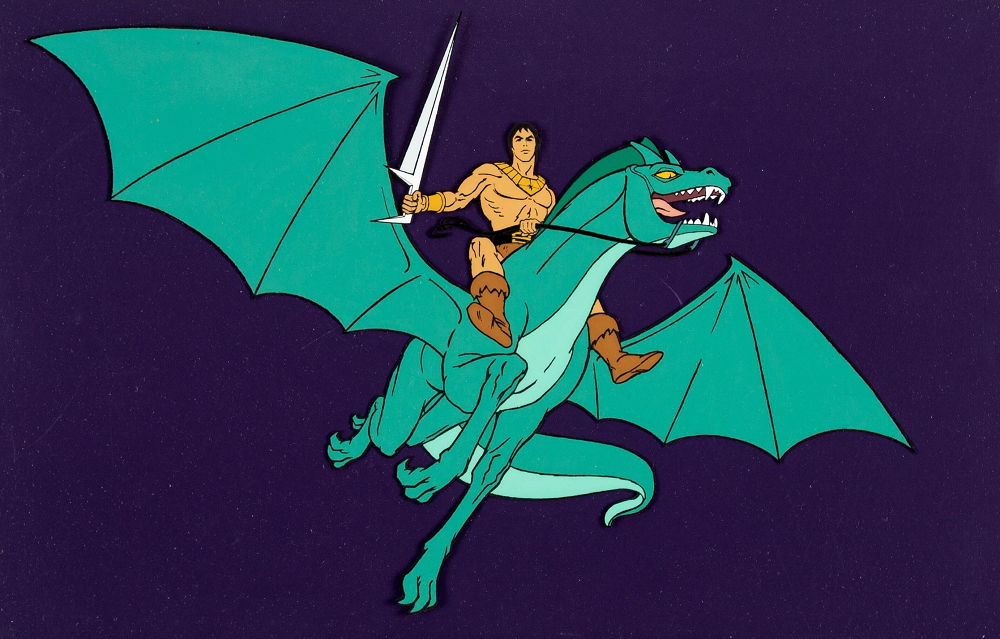
Blackstar (CBS): John Blackstar is a stranger in a strange world. An Earth astronaut catapulted to the planet Sagar after being sucked into a Black Hole, he must help protect the planet from the evil Overlord, gathering allies in the form of the Trobbits (think trolls meet hobbits), Warlock the dragon, Mara the enchantress, and the shapeshifting Klone.

Arriving two years before He-Man and the Masters of the Universe, and from the same Filmation studio as that blockbuster show, Blackstar never quite hit the heights of its famous younger brother but that doesn’t take away from a superb piece of world-building in its own right. Indeed, it could even be suggested that parts of Blackstar’s story were absorbed by the later show, not least of which the twin magical weapons, the Starsword and Powersword.

Blackstar, 1981

Unfortunately, Blackstar didn’t have the action figures for kids to play along at home. Well, it did but when they finally arrived in 1983 from Galoob, the show had been off the air for over a year. The cartoon market had only just begun to adapt to the relaxed rules forced through by Strawberry Shortcake a year before and wasn’t ready for a full assault on kids’ imaginations and parents’ wallets.

It’s a shame, because there’s a lot to like about Blackstar and it’s become a bit of a forgotten gem, with just a hardcore of fans keeping its memory alive, unavailable on DVD and not currently streaming anywhere. Many of those fans will have come to it late, shown alongside He-Man in 1983 to capitalise on that show’s monster ratings, somewhat ironic given the He-Man’s obvious debt to its older sibling.

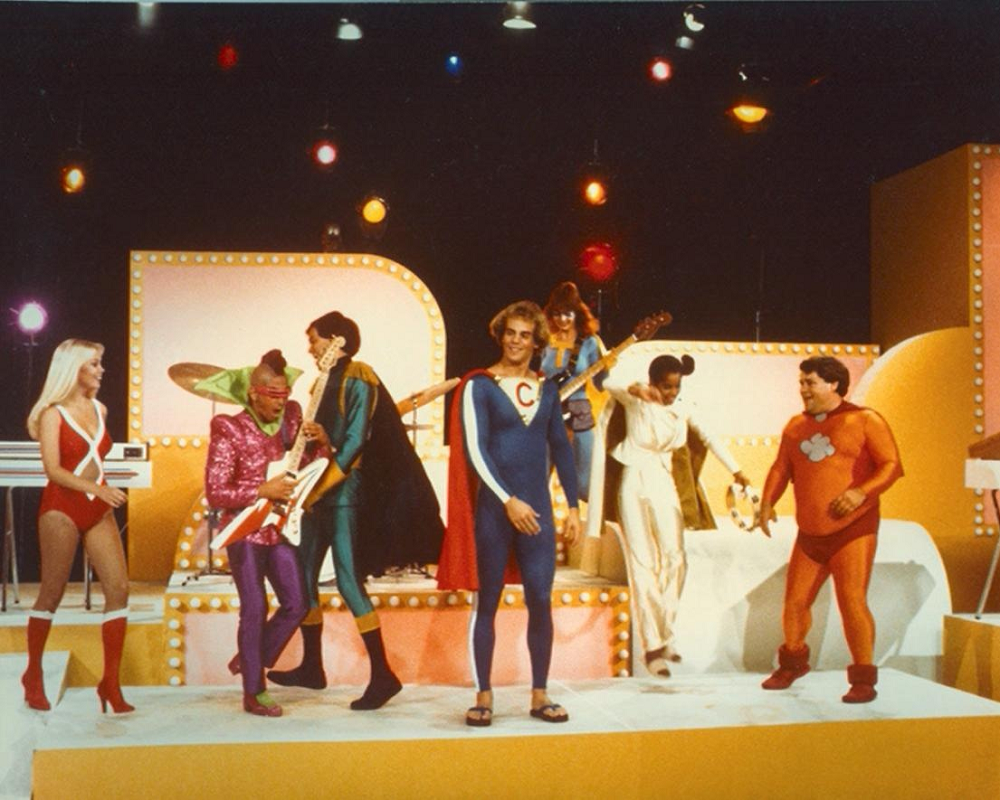
The Kid Super Power Hour with Shazam! (NBC): Alongside Blackstar and a remixed continuation of its Tarzan block, Filmation also debuted this curious mix of adapted and new superhero cartoons for eager cereal addicts in September 1981. The show was built around golden age Superman clone Captain Marvel, his adventures here – as in the DC comic books and the 1970s live-action show – given the name of his magic word to avoid issues with DC’s rivals, Marvel Comics, and their character of the same name.

Captain Marvel had been created in the 1940s by CC Beck and Bill Parker, the star of a Fawcett Comics line that sold so well that DC Comics took legal action to remove it from the market, latterly absorbing the character into their own line of books. His strange world of kid heroes and odd villains was a perfect fit for kids from the 1940s to the 1980s but Filmation chose to hedge their bets by throwing in their band (literally) of teen superheroes, just in case.

The Kid Super Power Hour with Shazam!, 1981

Second feature Hero High was set in a high school where super-powered youngsters learned to use their powers and fight crime, much like Marvel Comics’ original X-Men concept. Led by the blond-haired Captain California and also including Brat Man, Dirty Trixie, and Misty Magic, amongst others, the teens of Hero High were originally intended to be Archie Andrews and pals from Riverdale, who occasionally enjoyed their own costumed alter-egos, but Filmation’s rights to use the characters expired and new analogues were swiftly created.

Alongside their cartoon adventures (which would also occasionally feature characters from Shazam!, including Isis, created by Filmation for a live-action show in the 1970s set in the same universe), the Hero High teens would also appear in live-action in short comedy sketches and as a pop band, with the good Captain on lead vocals, Punk Rock on lead guitar, Rex Ruthless on drums, and the rest of the group pitching in to create a sugary sound.

Despite being nominated for Best Show at the Young Artist Awards, where Rebecca “Glorious Gal” Perle picked up Best Young Actress in a Daytime Series, the show lasted for just one season of thirty-eight episodes, with the twelve Shazam! stories and twenty-six Hero High adventures recycled throughout. None of the cast went onto bigger things, with Perle and Johnny “Punk Rock” Venocour later turning up in “ooh, isn’t Linda Blair mature now!” schlocker Savage Streets, Jim “Weatherman” Greenleaf “starring” in sex nerd comedy Joysticks, and Jere “Misty Magic” Fields playing the wife in a Rick James music video, although Maylo “Dirty Trixie” McCaslin was in Bibleman so it’s difficult to make a sweeping statement about Hero High’s post-graduate record…

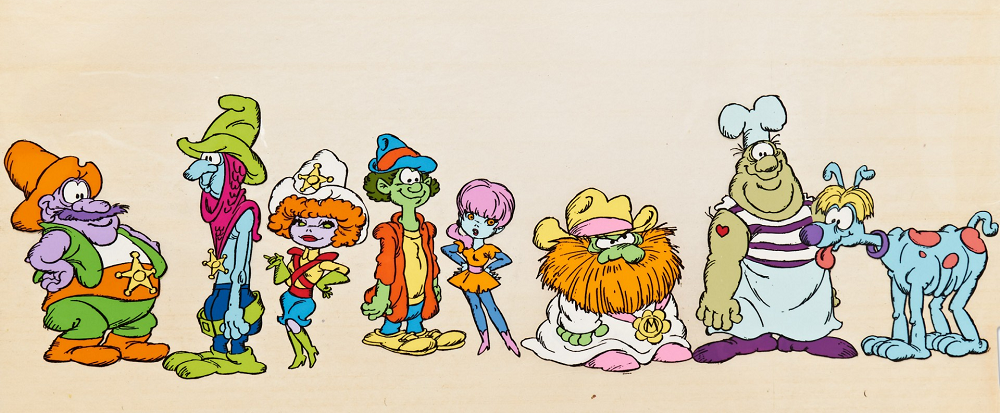
Trollkins (CBS): While Filmation had just three new shows hit the air in Fall 1981, rivals Hanna-Barbera enjoyed five new arrivals, including The Smurfs, Laverne & Shirley, and The Kwicky Koala Show. Probably least remembered of its quintet was Trollkins, possibly because – at first glance – it looks to be nothing more than a clone of Peyo’s famous blueskins.

Blitz Lumpkins and Pixlee Trollsom are good-natured troublemakers, very much inspired by Beau and Luke Duke, albeit if Luke was a cute pink-haired girl. The son and daughter of the Mayor and Sheriff of Trolltown, respectively, Blitz and Pixlee ride around in their souped-up dragster, accompanied by pet something Flooky (voiced, as were most non-human characters in animation, by Frank Welker).

Trollkins, 1981

Trolltown appears to a slightly chaotic place, not helped by the irascible Mayor Lumpkin and its incompetent police department, who fail to deal with Blitz and Pixlee’s shenanigans and just can’t get a handle on the Troll Choppers, a gang of bikers  led by Bogg (who had the hots for our girl Pixlee). Each half-hour episode contained two stories, the titles of which were often based on popular movies, such as “Escape from Alcatroll,” “The Empire Strikes Trolltown,” and “Raiders of the Lost Troll.”

Despite an unusually southern flavour and a solid voice cast that included Jennifer Darling, Alan Oppenheimer, and Paul Winchell alongside Welker, Trollkins failed to move out of the shadow of its blue-skinned cousins and lasted for just a single season, a similar fate to most of Hanna-Barbera’s other non-Smurfs properties that debuted that year. With no merchandise to speak of, and only a couple of episodes uploaded to YouTube, it’s one of the truly telephemeric shows of its era and you can’t help but think Blitz and Pixlee deserved better.

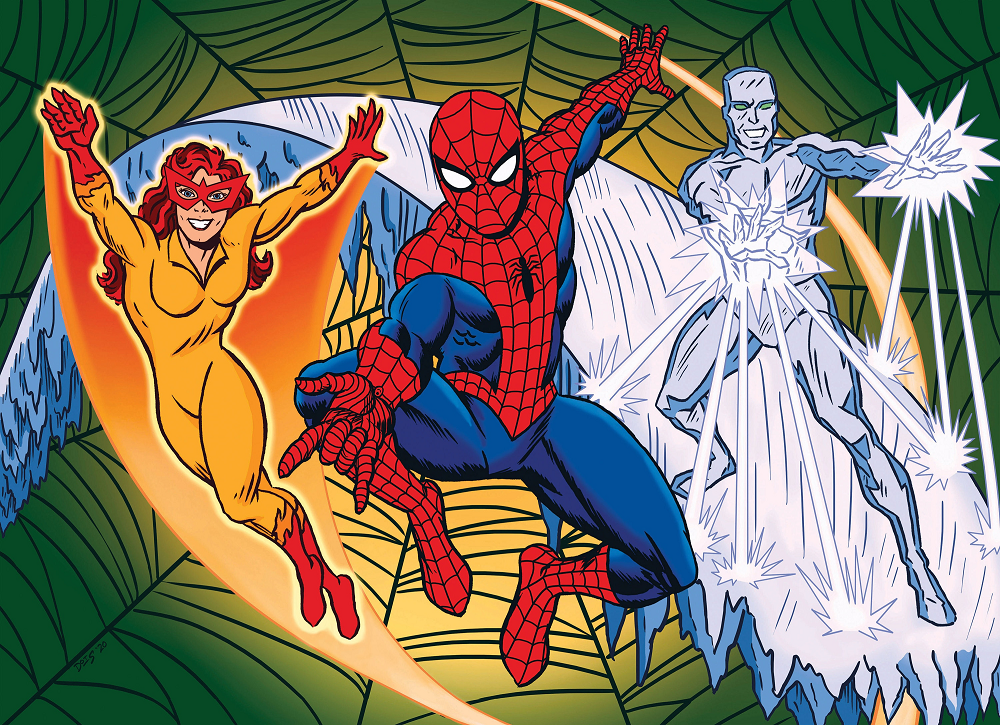
Spider-Man and His Amazing Friends (NBC)/Spider-Man (syndication): Fans of Marvel’s humanly flawed brand of superheroics could already consider themselves fortunate as the 1970s turned to the 1980s. The comic book adventures of Daredevil, The X-Men, and Shang-Chi were either in the middle of or about to enter legendary runs by seminal creative teams, and there was a slew of TV adaptations, including the live-action Incredible Hulk and Spider-Man, and animated shows featuring The Fantastic Four and Spider-Woman.

It only got better in the Fall of 1981, when TV watching Marvelites not only got the final season of The Incredible Hulk but were also treated to two new animated Spider-Man shows, one shown on weekdays in syndication and one on Saturday mornings on NBC, although quite why there were two new Spider-Man shows is lost to history. Both shows were produced by Marvel Productions, a new animation studio established from the ashes of DePatie-Freleng Enterprises when Fritz Freleng returned to Warner Bros, and they share an animation style and a voice cast that – the role of Spider-Man himself apart – makes them pretty much indistinguishable from each other.

Spider-Man and his Amazing Friends, 1981

It’s been suggested that Marvel were already in the process of developing a standalone series as a sequel to the 1967 Ralph Bakshi cartoon, with the adventures of Peter Parker in college alongside his superheroics, when NBC suggested that they create a super-team show to rival ABC’s Super Friends. Keen to find work for the nascent studio, and seizing the opportunity to sell Spider-Man six days a week, Marvel opted to go ahead with both projects, choosing a Spider-Man-led team possibly as a labour- and money-saving device.

Joining the webslinger in his Amazing Friends were the X-Men’s Iceman (currently between engagements as a Champion and a Defender) and the Fantastic Four’s Human Torch. However,  rights issues with the latter that had already seen him removed from the FF’s 1978 animated show forced the creation of a new hero with similar powers; the mutant Firestar also adding a female character for any girls who might have been watching, becoming popular enough that she was eventually introduced into the comic books, eventually becoming a member of The New Warriors and The Avengers.

Spider-Man got a single season of twenty-six episodes, attention turning to an Incredible Hulk series on NBC the next year that spun out of an episode of Spider-Man and his Amazing Friends. The team returned for a second and third season, although its second outing added just three new episodes – all telling the origins of the principals – before a third season of eight episodes took the total run of that show to twenty-four. In the season three episode “The Origin of the Super Friends,” Stan Lee narrates the story of how the team came together, including footage from the syndicated show which some have theorised places Amazing Friends as happening after that show concludes, forming the third part of a trilogy with the Bakshi show.

Next on The Telephemera Years: We sally forth into 1999 when the fear of Y2K was assuaged by… Battle Dome!

Check out our other Telephemera articles:

The Telephemera Years: pre-1965 (part 1, 2, 3, 4)

The Telephemera Years: 1966 (part 1, 2, 3, 4)

The Telephemera Years: 1967 (part 1, 2, 3, 4)

The Telephemera Years: 1968 (part 1, 2, 3, 4)

The Telephemera Years: 1969 (part 1, 2, 3, 4)

The Telephemera Years: 1970 (part 1, 2, 3, 4)

The Telephemera Years: 1971 (part 1, 2, 3, 4)

The Telephemera Years: 1973 (part 1, 2, 3, 4)

The Telephemera Years: 1974 (part 1, 2, 3, 4, 5)

The Telephemera Years: 1975 (part 1, 2, 3, 4)

The Telephemera Years: 1977 (part 1, 2, 3, 4)

The Telephemera Years: 1978 (part 1, 2, 3, 4)

The Telephemera Years: 1980 (part 12, 3, 4)

The Telephemera Years: 1981 (part 1, 2, 3)

The Telephemera Years: 1982 (part 1, 2, 3, 4)

The Telephemera Years: 1983 (part 1, 2, 3, 4)

The Telephemera Years: 1984 (part 1, 2, 3, 4)

The Telephemera Years: 1986 (part 1, 2, 3, 4)

The Telephemera Years: 1987 (part 1, 2, 3, 4)

The Telephemera Years: 1989 (part 1, 2, 3, 4)

The Telephemera Years: 1990 (part 1, 2, 3, 4)

The Telephemera Years: 1992 (part 1, 2, 3, 4)

The Telephemera Years: 1995 (part 12, 3, 4)

The Telephemera Years: 1997 (part 1, 2, 3, 4)

The Telephemera Years: 1998 (part 1, 2, 3, 4)

The Telephemera Years: 2000 (part 1, 2, 3, 4)

The Telephemera Years: 2002 (part 1, 2, 3, 4)

The Telephemera Years: 2003 (part 1, 2, 3, 4)

The Telephemera Years: 2005 (part 1, 2, 3, 4)

The Telephemera Years: 2006 (part 1, 2, 3, 4)

The Telephemera Years: 2008 (part 1, 23, 4)

The Telephemera Years: O Canada! (part 1, 2, 3, 4)

Titans of Telephemera: Irwin Allen

Titans of Telephemera: Stephen J Cannell (part 1, 2, 3, 4)

Titans of Telephemera: DIC (part 1, 2)

Titans of Telephemera: Hanna-Barbera (part 1, 2, 3, 4, 5)

Titans of Telephemera: Kenneth Johnson

Titans of Telephemera: Sid & Marty Krofft

Titans of Telephemera: Glen A Larson (part 1, 2, 3, 4)

Titans of Telephemera: Quinn Martin (part 1, 2)

Titans of Telephemera: Ruby-Spears

STARBURST’s Valentine’s Gift List 2024

February can be a pretty bleak time of year, so it’s good to have an excuse to treat yourself to something a bit different and a bit special. Here’s our top pick of gift ideas for a loved one or yourself.

If you can’t say it with flowers, you may want to say it with a giant robot. Or the Mighty Thor? Hasbro is currently doing a Heroes promotion over on Hasbro Pulse, which includes a discount on selected toys.  Why say it with flowers when you can say it with Optimus Prime? (Specifically the Transformers Legacy Evolution Core Class Optimus Prime ). Roses may be red, but so is a Darth Vader Lightsaber.

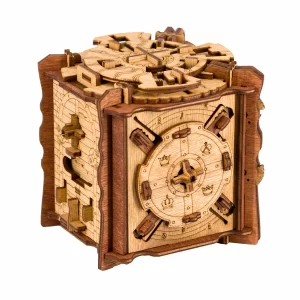
They say the best way to keep a relationship interesting is to insert a little mystery. Over at Starburst Towers, we don’t know what that means, but we do like puzzles. Idventure’s Trial of Camelot describes itself as an escape room in a box, and that’s a good way to describe it. This little cube is a tricky little thing that you can use to hide a more interesting gift inside if you really want to. It should take most patient people a couple of hours to solve, faster if they’re impatient and have a hammer.

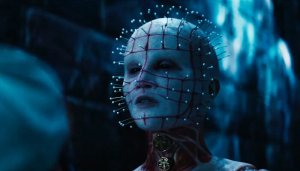
Of course, STARBURST readers might hear the words puzzle box and think of something else entirely. Arrow Video do some lovely boxed sets, and the HELLRAISER one is especially nicely done. It’s not exactly a typical Valentine’s gift, but who wants to be typical?

Hellraiser Pinhead

If you want to go for something a bit more typical, those popcorn masters over after Joe & Sephs have a wide range of sweeties for all occasions. We were delighted by their White Chocolate & Strawberry Popcorn and their whisky-flavoured popcorn. They’ve also branched out into truffles, which are quite more-ish.


THE TELEPHEMERA YEARS: 1981, part 3

The Archer, 1981

Ah, telephemera… those shows whose stay with us was tantalisingly brief, snatched away before their time, and sometimes with good cause. They hit the schedules alongside established shows, hoping for a long run, but it’s not always to be, and for every Street Hawk there’s two Manimals. But here at STARBURST we celebrate their existence and mourn their departure, drilling down into the new season’s entertainment with equal opportunities square eyes… these are The Telephemera Years!

1981-82

The TV junkies must have been absolutely salivating at the new Fall season line-up in 1981, including as it did such treasures as The Fall Guy, TJ Hooker, Cagney & Lacey, Falcon Crest, and Fame! They joined a schedule already dominated by Dallas, The Dukes of Hazzard, and M*A*S*H as American TV continued through one of its truly golden eras. There were goodbyes to be said to Mork & Mindy, The Incredible Hulk, and Lou Grant, but network TV was in a very good place with the top nineteen shows all averaging over twenty million viewers per episode.

The only one struggling was NBC, continuing a ratings slump that had begun in six years before and would continue until Bill Cosby, Michael J Fox, and Mr T dragged it out of the mire a few years later, although Late Night with David Letterman did make its debut in February 1982. For genre fans, the final seasons of The Incredible Hulk and Mork & Mindy were joined by a new arrival called The Greatest American Hero on ABC, as well as single-season classic Police Squad!, but those are the shows that made it to series – what about those that didn’t? This is the story of 1981’s unsold pilots…Hero

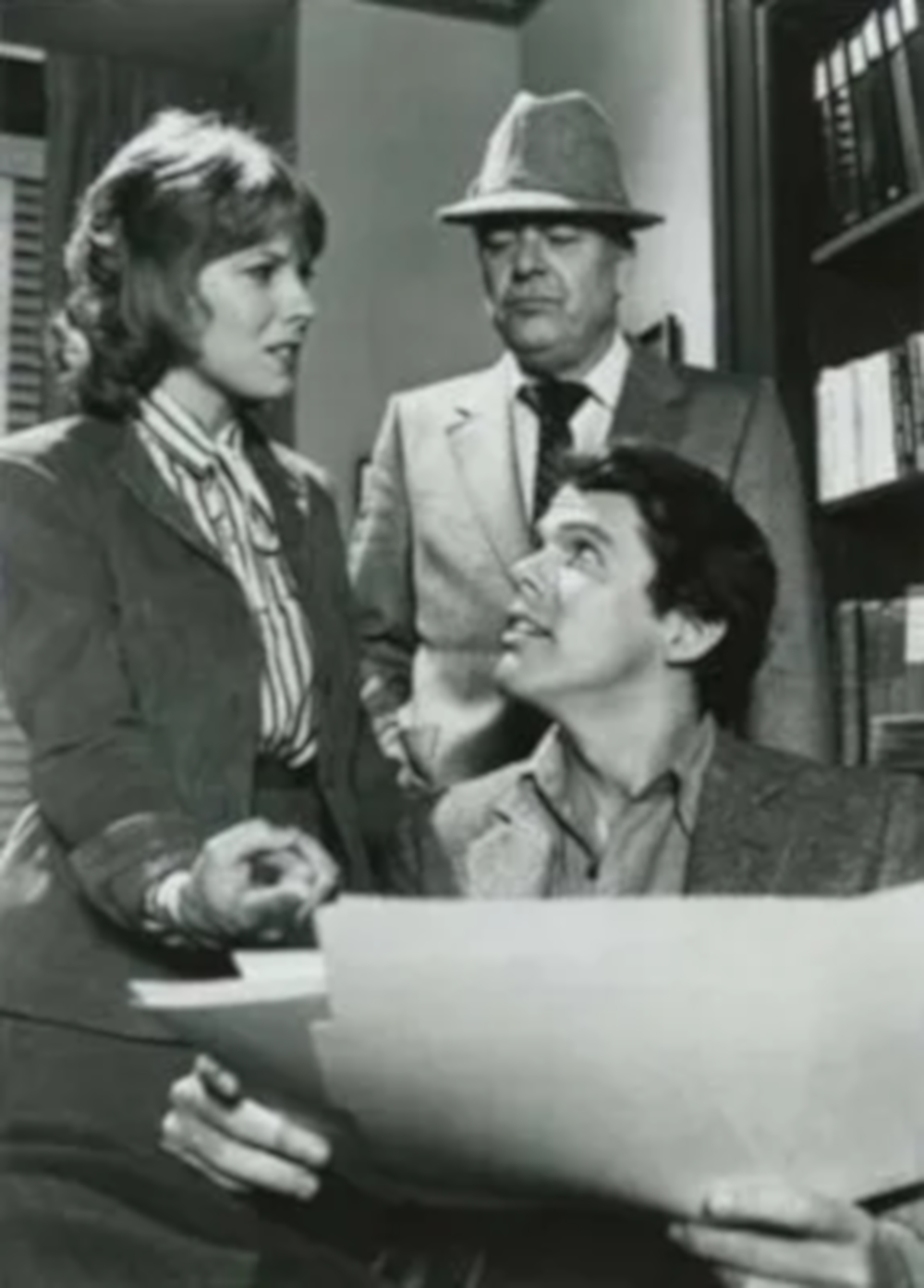
Quick and Quiet (CBS): Someone at CBS was determined that veteran character actor William Windom should play a ghostly detective. 1980’s Landon, Landon & Landon saw him star as Ben Landon, murdered in the line of duty only to return as a ghost to help his adult children keep his detective agency running and – of course – be the father to them he never was in life.

Landon, Landon & Landon wasn’t picked up as a series and so writer Bruce Kalish (who’d scripted the first pilot with his Mork & Mindy writing partner Philip John Taylor) retooled the idea and transformed Windom’s character – now called Thaddeus Charles (or TC) Cooper – into a man who is as dead as he is deadbeat, helping his son to rescue the ailing Quick & Quiet Detective Agency he bequeathed him in his will.

The new script, written with playwright Sam Bobrick (who would one day create Saved by the Bell), gave the starring role to TC’s son, Elliot (played by Rick Lohman), every bit as desperate as his father, who in this version died while in flagrante delicto with his secretary, Camille (Millie Slavin). Elliot is only holding onto the business because selling it wouldn’t raise enough cash to pay his gambling debts but with a hand from his ghostly old man – a hand that also finds its way to pinching Camille’s butt once in a while – they might just save the day.

Just as they’d done with Landon, Landon & Landon, CBS passed on taking Quick and Quiet to series, instead trusting that its new sitcom line-up – which included such treats as Baker’s Dozen, Making the Grade, and Report to Murphy, none of which lasted more than six episodes – could get the job done. Windom died in 2012 without, as far as I know, playing a ghost detective, although with over 250 credits on his filmography, you can forgive me for being as slapdash as TC Cooper.

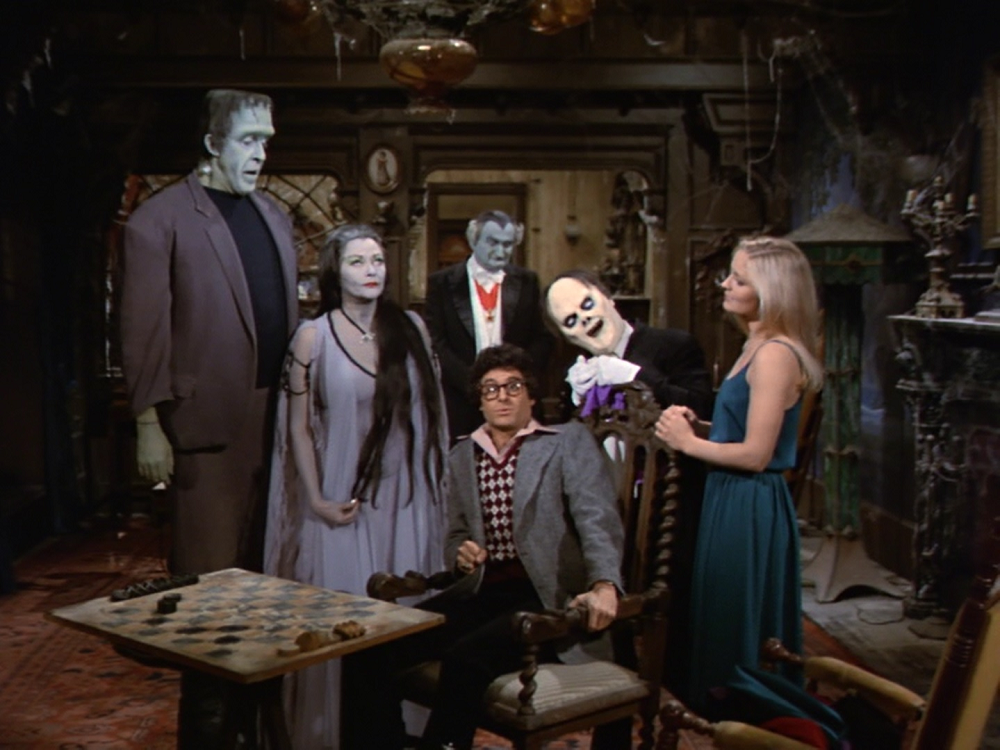
The Munsters’ Revenge (NBC): For two seasons in the mid-1960s – and no matter what fans of The Addams Family might say – The Munsters ruled the admittedly niche world of horror sitcoms. Frankenstein’s monster Herman, vampire wife Lily, werewolf son Eddie, and Lily’s vampire dad Grandpa were the first family of creepy comedy and – look! – isn’t it hilarious that their niece is disgustingly normal?

As their CBS TV run ended, The Munsters transferred to the silver screen with Munster, Go Home!, a box office flop that saw the family inherit a stately home in England, and then pretty much disappeared from existence, save for a 1973 animated special, The Mini Munsters, which saw only Al Lewis return as Grandpa in an otherwise all-new voice cast. In 1981, though, the original cast – save for Butch Patrick, who had long outgrown the role of Eddie – were reunited, but only after Fred Gwynne had given NBC an astronomical price for his participation, expecting them to balk. Instead, they paid up and decided to test the water for a possible revival series with a pilot film entitled The Munsters’ Revenge.

The Munsters' Revenge, 1981

The plot of The Munsters’ Revenge begins with a family outing to a wax museum, where a very lifelike exhibit of our frightful family is on display. After the museum closes for the night, we discover that the wax dummies are actually robots as an evil scientist activates “Herman” and “Grandpa,” sending them off on a crime spree. The next morning, police arrive to arrest the real Herman and Grandpa, who escape from custody and set out to clear their names.

To say that The Munsters’ Revenge was eagerly anticipated is an understatement: their former network CBS were so worried that the pilot would destroy them in the ratings that they scheduled a rare showing of The Wizard of Oz as competition. As it happened, the excitement of the networks did not rub off on the viewers at home and the new series of The Munsters had to wait until 1988’s The Munsters Today, by which time none of the original cast were interesting in returning.

J Digger Doyle (CBS): Glen A Larson was already producing Battlestar Galactica and The Hardy Boys/Nancy Drew Mysteries for ABC when he began development on Magnum, PI. When ABC cancelled his other two shows, Larson took Magnum to CBS, casting Tom Selleck, a jobbing actor who had turned heads with a recurring role as a rival PI on The Rockford Files. Selleck signed on for the show – about a detective operating out of a private estate in Hawaii, missing out on the part of Indian Jones on Raiders of the Lost Ark when filming for the two clashed.

As it was, a SAG/AFTRA strike caused the start date on Magnum to be pushed back by three months, which meant that he could starred as George Lucas’s wise-cracking archaeologist after all, but Selleck made Magnum his own, appearing in 162 episodes over eight seasons. It was in one of those outings – in the first season, in fact – that he encountered J Digger Doyle, an archaeologist turned security expert played by Buck Rogers in the 25th Century’s Erin Gray.

J Digger Doyle, 1981

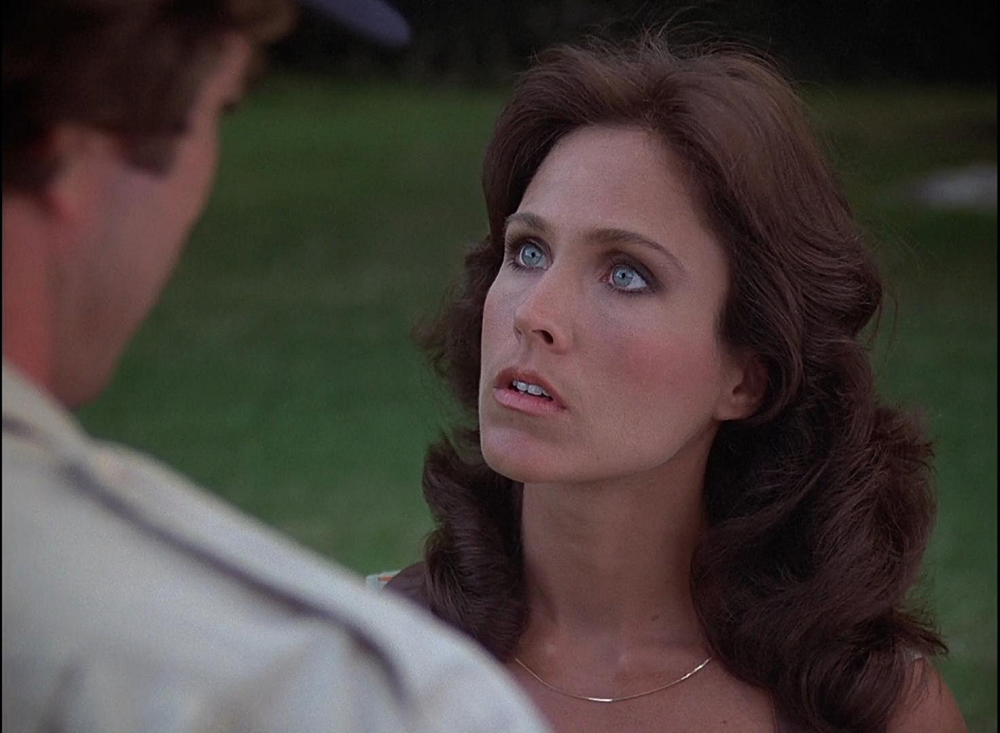
In the episode named for her, Doyle flirts with Magnum in order to get him to give her a tour of Robin’s Nest, the home of Magnum’s unseen benefactor Robin Masters. Once inside, she reveals that has been brought in to find gaps in the estate’s security in the face of a threat to steal tapes of Masters’s new book. After Higgins is kidnapped and rescued, and Magnum and Doyle work out that it might be her own boss who is behind the caper, the tapes are safe and it is revealed that the book’s plot revolves around selling laser technology to the Russians, which upset someone, somewhere. It’s not terribly clear. What is clear is that Magnum and Doyle have chemistry and the episode ends with a make-out session.

Gray’s turn in “J Digger Doyle” was intended to be a backdoor pilot for a series of her own, one which you’d imagine would have seen her travel the world lending her security expertise – and presumably her feminine wiles – to the highest bidder. It wasn’t to be, though, and Gray bounced back by landing the role of Kate Summers in Silver Spoons. Magnum tried again with season three’s “Two Birds of a Feather,” looking to launch William Lucking’s treasure hunter into a series of his own, but that also failed to develop into a full series.

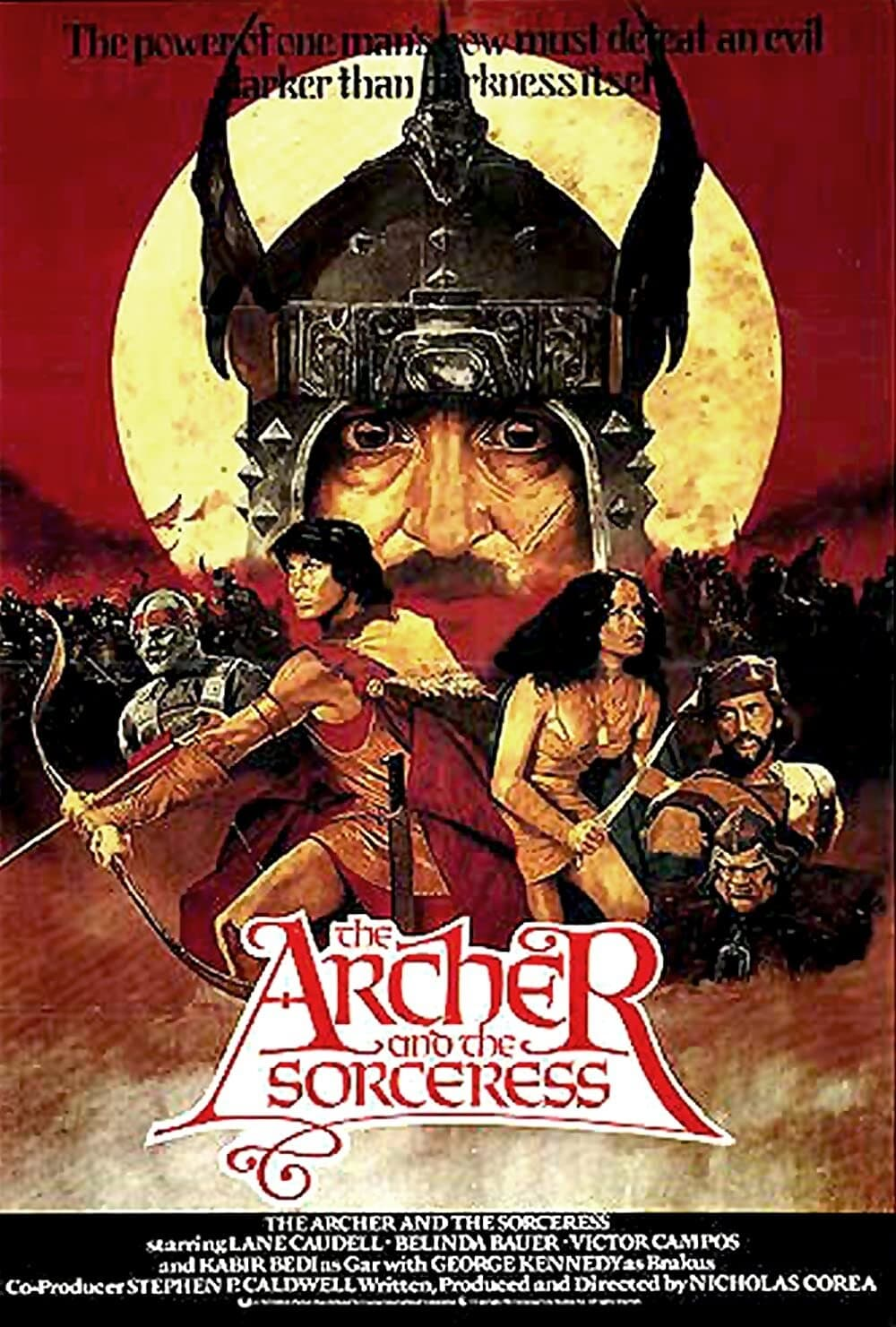
The Archer (NBC): Sword and sorcery was big in the early 1980s, with Hawk the Slayer, Clash of the Titans, Dragonslayer, and Excalibur all thrilling movie goers and Arnold Schwarzenegger about to make his big splash as Conan the Barbarian. Where movies go, TV follows, and so NBC dipped their toes into the genre with The Archer, written and directed by Vietnam veteran Nicholas J Corea.

The Archer was the story of Toran, the fugitive son of a murdered King who must find the mysterious Lazar-sa if his people have any hope of overthrowing the evil Dynasty, led by Gar and his snake people. Playing Toran was Lane Caudell, a singer-songwriter signed to MCA Records who hung up his guitar after two albums, seven singles, and not much in the way of chart success, who had dabbled with sword and sorcery imagery as a member of soft-rock trio Skyband.

The Archer, 1981

Caudell had already starred in two failed pilots for NBC when he was cast as Toran and it’s easy to see why the network persevered with him, although the complex plot and plethora of ridiculous names found in Corea’s script do him no favours. The pilot ends with Toran avenging his father’s death and continuing his search for Lazar-sa, unaware that his mortal enemy Gar is still alive and thirsty for revenge. With beautiful sorceress Estra (Belinda Bauer) and her complicated feelings for Toran thrown into the mix, the TV series that would surely follow looked to be a ton of fun.

There was no TV series that followed, and NBC made the most of their investment by releasing the pilot as a standalone TV movie under the names The Archer: Fugitive from the Empire and The Archer and the Sorceress, made available on VHS in the US and with a limited theatrical release in Europe. Caudell landed a role on Days of Our Lives but soon left acting and music behind for a relatively normal life as a country music session musician, although he did call his son – born in 1982 – Toran.

The Return of the Beverly Hillbilies (CBS): If this column proves nothing else it’s that there is no shortage of new half-baked ideas for TV shows, with every year providing a fresh crop to be cut down in its prime before the end of its season order. Nostalgia, though, is a demanding mistress and – as The Munster’s Revenge neatly illustrates – there’s no shame in dusting off an old half-baked idea for a TV show once in a while.

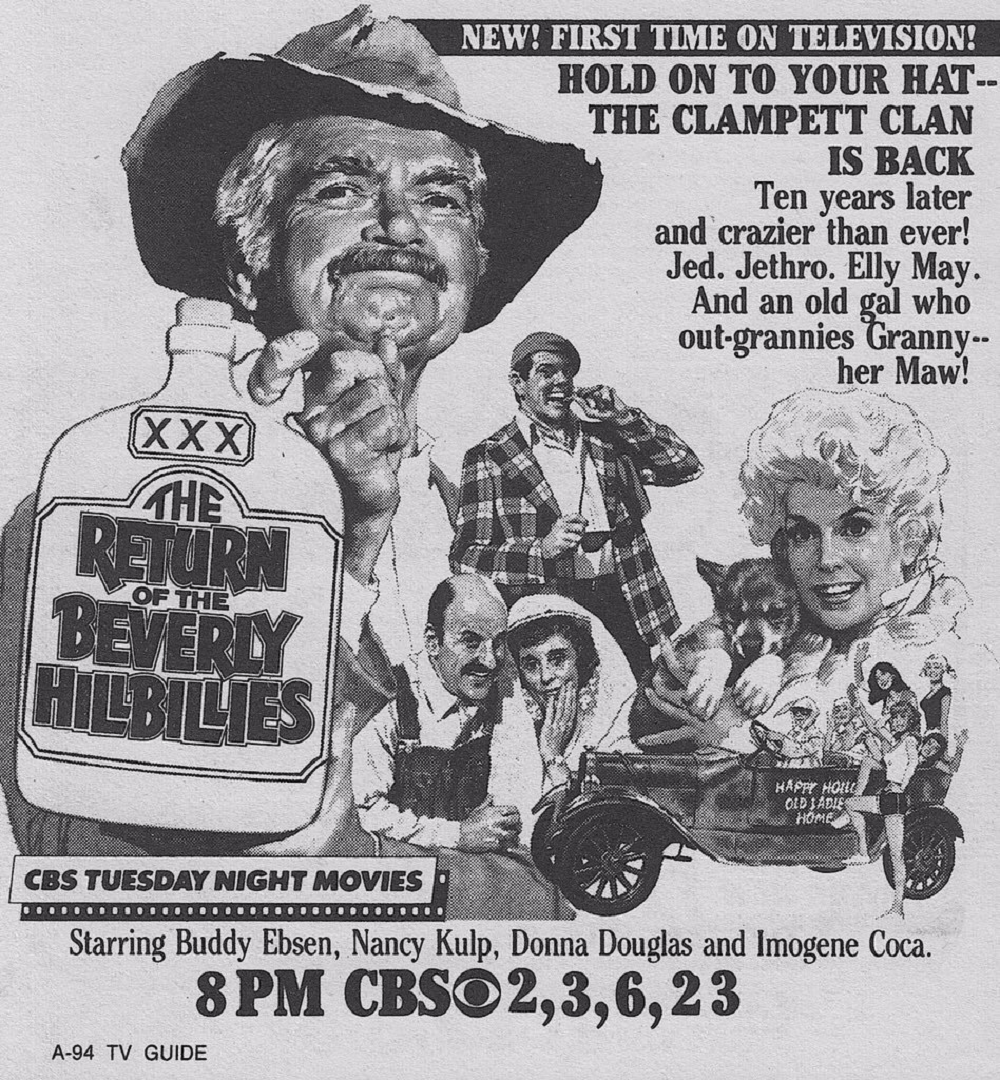
That can surely be the only reason why CBS decided to bring back The Beverly Hillbillies, ten years after the original show – which ran for an astonishing nine seasons after its 1962 debut – spluttered to an end in March 1971. Buddy Ebsen, Donna Douglas, and Nancy Kulp all returned from the original cast, but Irene Ryan had died two years after the original show ended and The Return of the Beverly Hillbillies made that a story point, with Jed Clampett returning to his backwoods cabin rather than live alone in his mansion after the death of his mother-in-law, having divided his fortune between daughter Ellie-May and nephew Jethro Bodine.

The Return of the Beverly Hillbillies, 1981

When an energy crisis hits the new Reagan administration, they send the Clampetts’ former friend Jane Hathaway and her obnoxious boss at the Department of Energy to find Jed to see if Granny’s powerful moonshine is the answer to the gas shortage. After a series of mishaps results in Jed’s supply of the hooch running dry, they embark on a quest to find Granny’s mother, the only one who knows the recipe…

Writer-producer (and creator of the original show) Paul Henning fully intended The Return of the Beverly Hillbillies to presage a full-time return for the oil-rich bumpkins but it did less than stellar ratings when it was aired as a CBS Tuesday Night Movie in October 1981, possibly because it was preceded by an hour-long special news broadcast on the assassination of Anwar Sadat but more probably because it was The Beverly Hillbillies in 1981. Still, the pilot did achieve one thing in giving Heather Locklear her TV debut, affecting the tightness of teenage boys’ trousers for the next decade.

Next on The Telephemera Years: What the kids were watching in 1981, including some very amazing friends!

Check out our other Telephemera articles:

The Telephemera Years: pre-1965 (part 1, 2, 3, 4)

The Telephemera Years: 1966 (part 1, 2, 3, 4)

The Telephemera Years: 1967 (part 1, 2, 3, 4)

The Telephemera Years: 1968 (part 1, 2, 3, 4)

The Telephemera Years: 1969 (part 1, 2, 3, 4)

The Telephemera Years: 1970 (part 1, 2, 3, 4)

The Telephemera Years: 1971 (part 1, 2, 3, 4)

The Telephemera Years: 1973 (part 1, 2, 3, 4)

The Telephemera Years: 1974 (part 1, 2, 3, 4, 5)

The Telephemera Years: 1975 (part 1, 2, 3, 4)

The Telephemera Years: 1977 (part 1, 2, 3, 4)

The Telephemera Years: 1978 (part 1, 2, 3, 4)

The Telephemera Years: 1980 (part 12, 3, 4)

The Telephemera Years: 1981 (part 1, 2)

The Telephemera Years: 1982 (part 1, 2, 3, 4)

The Telephemera Years: 1983 (part 1, 2, 3, 4)

The Telephemera Years: 1984 (part 1, 2, 3, 4)

The Telephemera Years: 1986 (part 1, 2, 3, 4)

The Telephemera Years: 1987 (part 1, 2, 3, 4)

The Telephemera Years: 1989 (part 1, 2, 3, 4)

The Telephemera Years: 1990 (part 1, 2, 3, 4)

The Telephemera Years: 1992 (part 1, 2, 3, 4)

The Telephemera Years: 1995 (part 12, 3, 4)

The Telephemera Years: 1997 (part 1, 2, 3, 4)

The Telephemera Years: 1998 (part 1, 2, 3, 4)

The Telephemera Years: 2000 (part 1, 2, 3, 4)

The Telephemera Years: 2002 (part 1, 2, 3, 4)

The Telephemera Years: 2003 (part 1, 2, 3, 4)

The Telephemera Years: 2005 (part 1, 2, 3, 4)

The Telephemera Years: 2006 (part 1, 2, 3, 4)

The Telephemera Years: 2008 (part 1, 23, 4)

The Telephemera Years: O Canada! (part 1, 2, 3, 4)

Titans of Telephemera: Irwin Allen

Titans of Telephemera: Stephen J Cannell (part 1, 2, 3, 4)

Titans of Telephemera: DIC (part 1, 2)

Titans of Telephemera: Hanna-Barbera (part 1, 2, 3, 4, 5)

Titans of Telephemera: Kenneth Johnson

Titans of Telephemera: Sid & Marty Krofft

Titans of Telephemera: Glen A Larson (part 1, 2, 3, 4)

Titans of Telephemera: Quinn Martin (part 1, 2)

Titans of Telephemera: Ruby-Spears

Jeff Wayne | JEFF WAYNE’S MUSICAL VERSION OF THE WAR OF THE WORLDS

Jeff Wayne's Musical Version of the War of the Worlds

Jeff Wayne’s Musical Version of The War of the Worlds returns to the stage in 2025 with The Spirit of Man Tour, which will also mark the return of its 35-foot onstage Martian war machine. This adaptation of H.G. Wells’ The War of the Worlds remains one of the most popular musicals ever to be produced. STARBURST sat down with Wayne to discuss the new production and what the future might hold for his take on Wells’ story. 

STARBURST: How excited are you to bring The Spirit of Man tour to theatres? 

Jeff Wayne: I wouldn’t have been doing this for as many years as I have if it wasn’t as exhilarating as when I started with the tours in 2006. The live environment is, and I’m sure any musician or performer would say the same, the most exciting part of a person’s career. We’re all on stage during the performance; we’re not in an orchestral pit like you often get at the theatre. So it’s really most exciting. Two-and-a-half hours, and I feel like my feet never touch the floor. 

The scale of the production has increased significantly in the last 20 years, hasn’t it? What will this offer to the audience that they perhaps haven’t seen before? 

When I started doing this, I made a promise that we would never take The War of the Worlds out of the box and do it exactly the same way twice. There are new things technologically, and some of the show – more so in the next tour – is performed either in or over the audience with special effects and other things we do. Every production is different, and I hope we keep trying to top the previous ones because many people come back again and again.  

More and more stage musicals have been adapted for the big screen in recent years – Cats, Matilda, Mean Girls. What would you say if a studio approached you and said they wanted to make a film adaptation of your show?

It has been a dream to see my musical become a big-screen production, a film for TV, or a series. The way that The War of the Worlds is structured means that it is almost like a series with episodes, even though it’s all joined together. Even our CGI, which spans the whole length of our shows, is pretty much feature film standard. Over the years, I have had a couple of approaches, but usually, it has gone the way of “Okay, we would now like to turn it into a contemporary piece set in America or somewhere else”. And I’ve resisted that. I fell in love with the dark Victorian tale. So I know where I would like to go with it, and every time we finish a tour, we put some more time and effort into trying to make it happen. 

The Spirit of Man tour runs from March 28th to April 20th, 2025. You can buy tickets here.

Tom Morton-Smith | MY NEIGHBOUR TOTORO

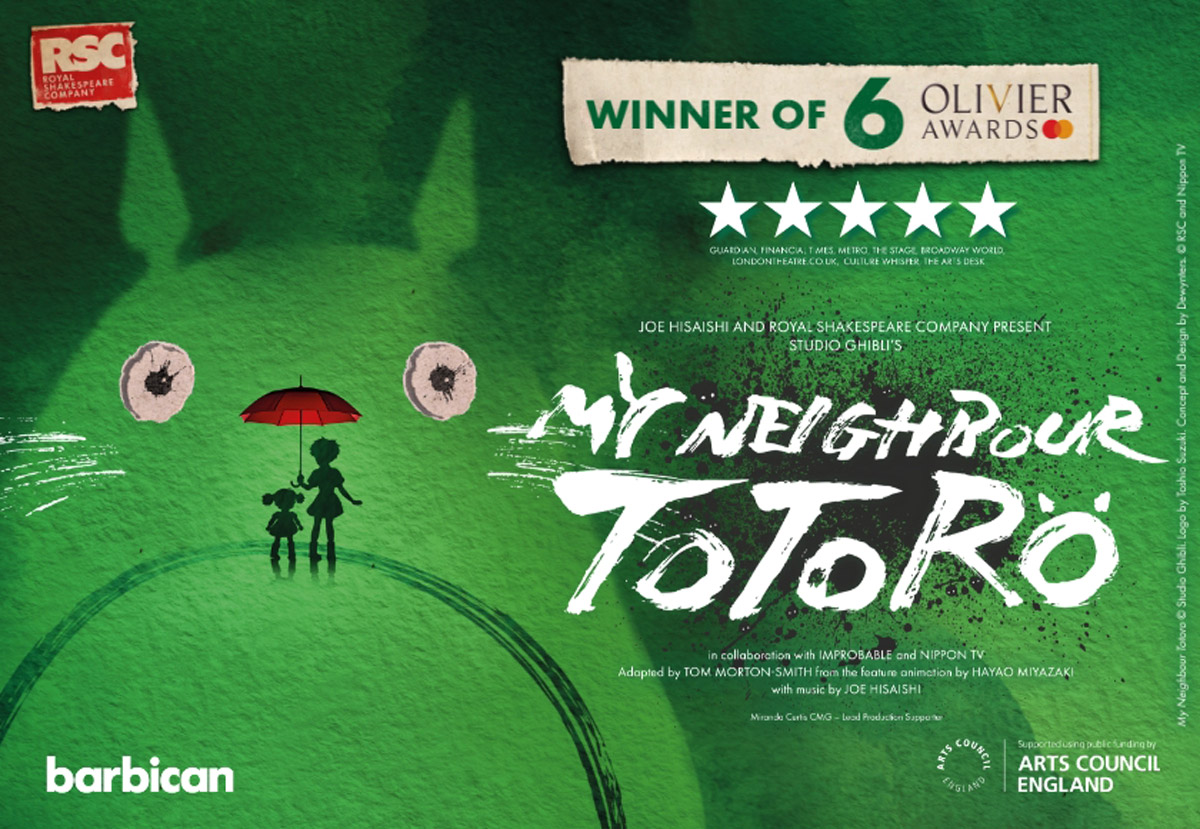
Tom Morton-Smith is the writer who adapted Studio Ghibli’s My Neighbour Totoro for the Royal Shakespeare Company (RSC). He is also well-known for his plays Oppenheimer and The Earthworks, the latter of which originally played as part of the RSC’s Mischief Festival in 2017. Earthworks will also play at the Young Vic later this year.

STARBURST: Why Studio Ghibli?

Tom Morton-Smith: I’ve been in love with their work for so long. Not only are they visually stunning, but they often tap into powerful, deep-rooted emotions. A story such as My Neighbour Totoro is deceptively simple and joyous, but there is a pain at the heart of it – the illness of a parent and the pressures that it puts on a family. The grief of learning that your mum and dad are mortal is as universal as you can get – that the film handles such a delicate subject with such verve and imagination is a marvel. Yes, there are fantastical creatures, but they are warm, protective, and empathetic. Ghibli makes movies that hold you close as they entertain you, and that’s everything I want to do with my work.

Why the RSC?

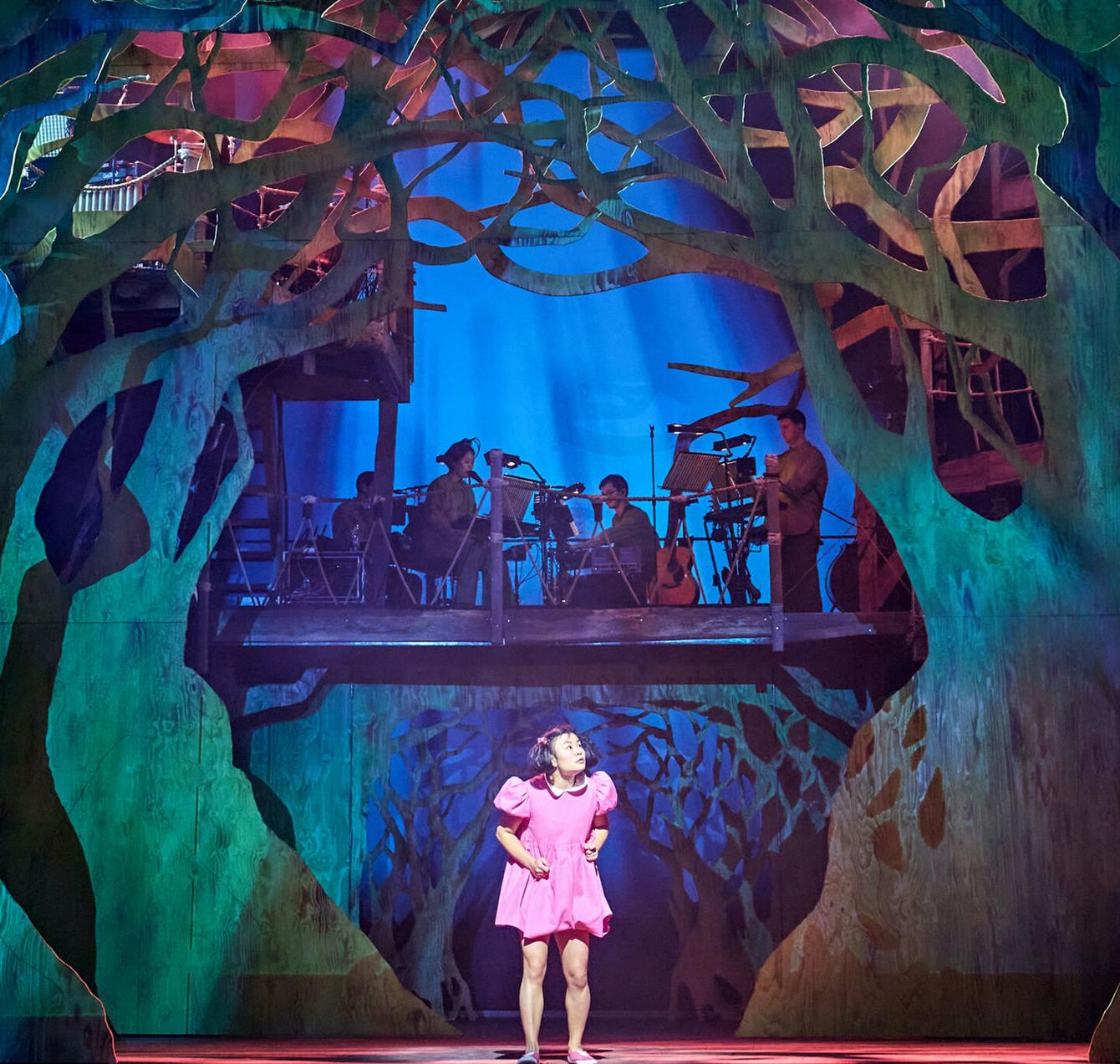
When a company’s bread-and-butter is Shakespeare, they understand epic theatrical storytelling like no other. Through As You Like It and A Midsummer’s Night’s Dream, the ‘wild wood’ holds an important place in the Shakespearean canon, and spirits, sprites, and magic appear repeatedly – …Dream, The Tempest, Macbeth,etc. Because of that, My Neighbour Totoro sits very comfortably within the world of the RSC. This is also a company whose biggest successes have been stage adaptations of major non-theatrical works – Nicholas Nickleby, Les Mirables, Matilda The Musical – I can’t think of anyone else I’d trust to drive the Catbus!

What was the hardest part of My Neighbour Totoro to adapt?

So much of the film is in the atmosphere it conjures. I knew that if I could capture something close to that atmosphere, then the production would work, no matter what form the spirits and creatures took. But of course, the way that atmosphere works on stage is very different to the way it does in an animated film. So, trying to remain true to that sense of place and all of the feelings that the images evoke, but using an entirely different set of tools, was pretty tricky.

What considerations do you have to make for modern audiences with this adaptation?

Honestly, hardly any. The film was released in 1988 but set in 1955 – it was already a period piece – so there was no need to do too much in that regard.

In broader terms, what does the stage do better than animation?

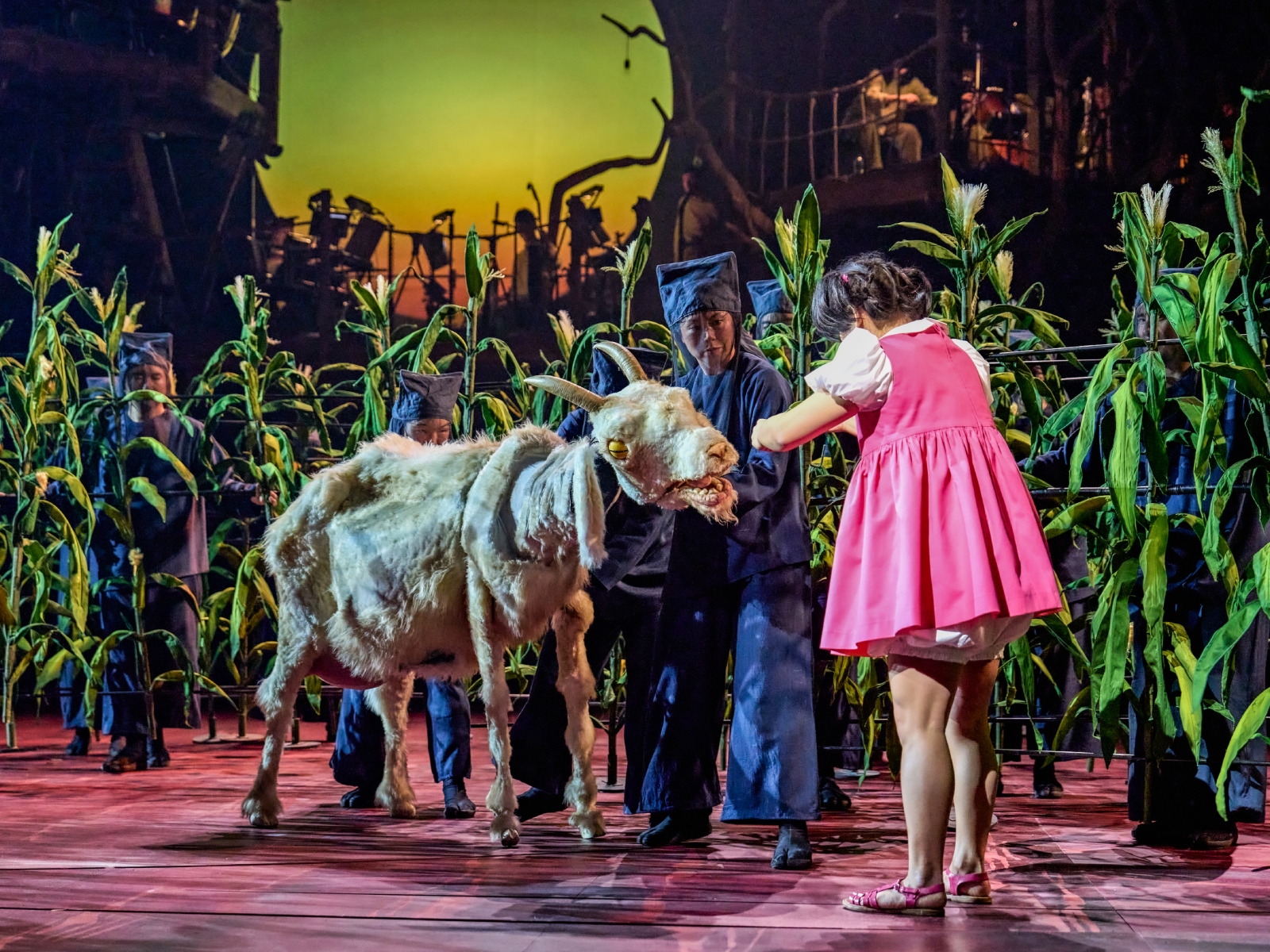
There’s obviously a liveness to theatre that you can’t get anywhere else. You are watching actors and stage crew create the show in front of you – specifically for you. No other audience will see exactly what you see on the night you go. It was important to us that we leaned heavily on that liveness – that you can see the puppeteers as they bring Totoro to life, as they turn a piece of paper into a butterfly, or how they articulate all twelve legs of a full-size Catbus. It’s like showing the workings of a magic trick and not relying too heavily on technology so that the kids in the audience go home understanding how we made the show and that – given the chance – they could too.

What can we expect to see in the remounting of The Earthworks?

The Earthworks works on a much smaller scale than My Neighbour Totoro. It’s two strangers meeting in a hotel bar, getting a bit drunk, pestering a famous scientist, having a custard fight, and opening their hearts to each other. It’s gentle and a bit sad – so in that sense, it has some commonality with Totoro. But it’s funny, too. It’s one of my favourite things I’ve written, and I’m thrilled that more people will get to see it. And at the Young Vic, which is a theatre I love.

How different is creating a stage play from a screenplay?

There’s a freedom to write for the stage. When writing a screenplay, you have to consider what genre the film sits in, and with that comes rules and expectations. That doesn’t mean you can’t subvert those; it just means there is something to push against. Genre is a brilliant shorthand to have with a movie audience – put a man in a hat on a horse in the desert, and you have a Western – whereas, in theatre, you can be a bit more freeform, but it requires a little more explanation as to where and when everything is happening. As both a theatre nerd and a movie buff, I love both ways of working.

What is your favourite part of the production?

How can I pick?! The moment when the soot sprites leave the house. The first time we reveal Totoro. Kanta and his chickens. The iconic bus stop scene and the audience’s gasp when the Catbus arrives. But if I’m honest, my favourite moment is the last scene – at the hospital between the father, Tatsuo, and the mother,Yasuko.

How hard was it to put Catbus on the stage?

There was a lot of experimentation with the Catbus – in terms of its size, material, and mechanics of it. There was one puppetry workshop where we built a new Catbus every day for five days. He’s a big boy and an incredible piece of engineering. It takes eleven puppeteers to bring him to life every night, and it is demanding physical work. But for me, it wasn’t hard at all, I just wrote: ‘CATBUS enters.’

What other anime would you like to adapt? What other children’s stories would you like to work on?

I’d like to see some Satoshi Kon on stage – I think Paprika would work incredibly well. Or maybe Hosoda’s The Girl Who Leapt Through Time. Closer to home, I’ve often thought of rewriting The Wind in the Willows from the weasels’ point of view, taking over Toad Hall as an act of a working-class rebellion.

If you could give your 16-year-old self any piece of advice, what would it be?

Don’t care so much about what other people are thinking.

If you could see a stage play again – by perhaps travelling back in time – what would it be and why?

I remember being completely transported by Mnemonic by Complicité theatre company in 2003. The way that it weaved multiple narratives and spanned continents and centuries – and trusted the audience to see the patterns and links between its many disparate parts – was so galvanising and has stayed with me ever since.

What’s next for you?

When the theatres closed during the pandemic, I started to shift my focus more towards screenwriting. I have several feature films and a TV show in quite advanced stages of development. So, I guess we’ll see where all of that goes.

Doctor Who or Dr No?

The Bond films were very formative for me. They were constantly on TV when I was growing up, and whenever a new one came out, there would be a big family trip to the cinema to see it. The gadgets and the puns and the ridiculous rogues’ gallery. So I’ll say Dr No.

Dragons or Deathstars?

As a Trekkie, I am loathed to say ‘deathstars’, but I would generally always choose science fiction over fantasy.

Truth or Beauty?

A little from column A and a little from column B.

My Neighbour Totoro plays at the Barbican Centre until March 23rd. Tickets are available via the Barbican Box Office. https://www.rsc.org.uk/

Earthworks is at the Young Vic from March 26th – April 6th. www.youngvic.org


[ENDED] Win Brutal French Shocker INSIDE on Limited Edition Blu-ray

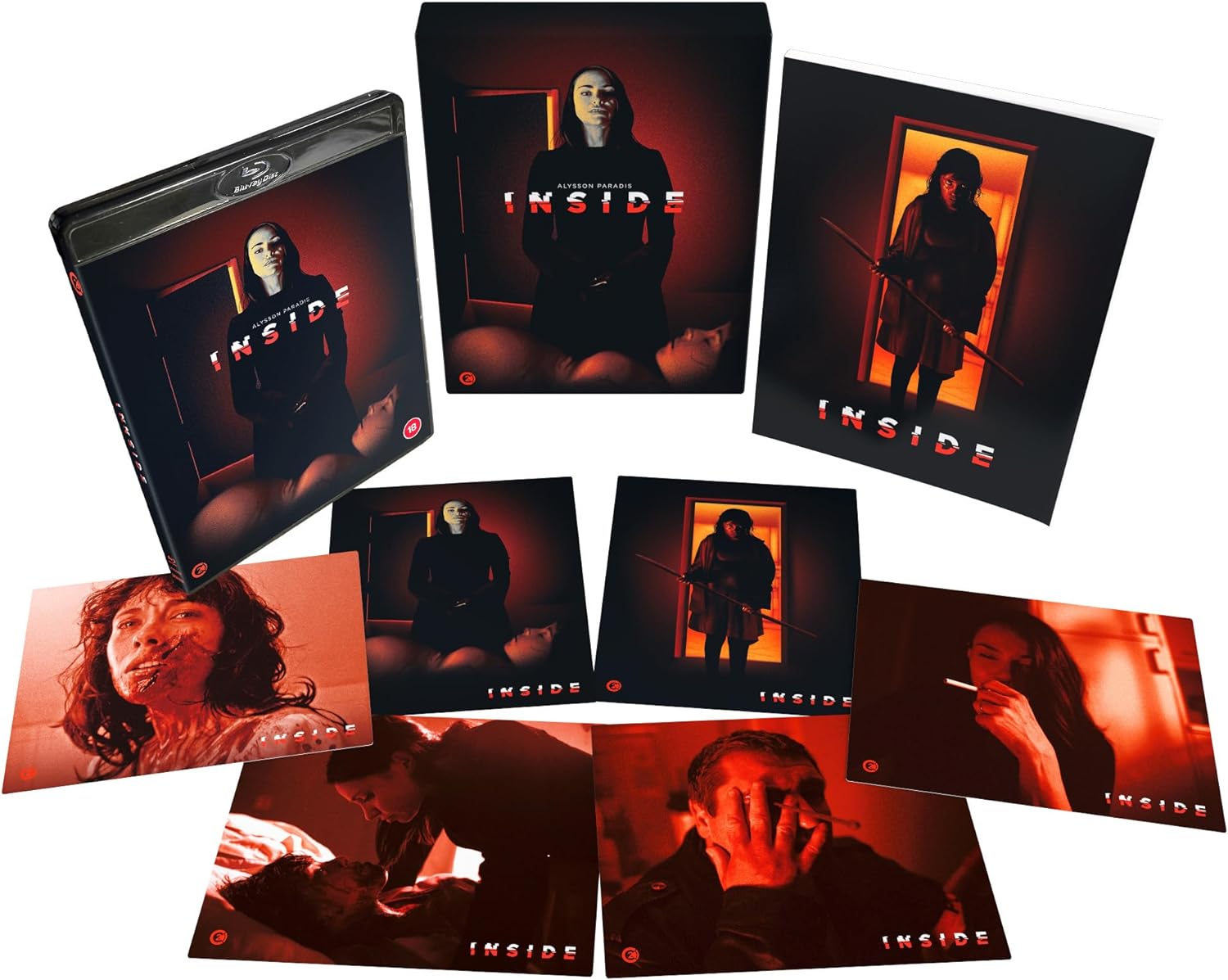
We’ve teamed up with Second Sight Films to give one lucky reader a chance to win the new limited edition Blu-ray box set of the cult French horror film Inside. Just read on and enter below…

Following a car accident that leaves her husband dead, expectant mother Sarah (Alysson Paradis – The Childhood of Icarus) is left to prepare for her impending birth alone while grieving her terrible loss. But when a stranger (Béatrice Dalle – Betty Blue) turns up at her house on Christmas Eve, things take a terrifying, unimaginably twisted turn… as the deranged intruder will stop at nothing to take her unborn baby.

The Inside Limited Edition box set is presented in a stunning rigid slipcase with new artwork by James Neal and includes a 70-page book with new essays. The special features include: new audio commentaries by Anna Bogutskaya and Elena Lazic, brand-new interviews with the writer/directors Maury and Bustillo, and many more. Please see the full listing below. A Standard Edition Blu-ray will be available on the same date that includes the special features.

Special Features

  • New audio commentary by Anna Bogutskaya
  • New audio commentary by Elena Lazic
  • First Born: a new interview with co-writer/directors Alexandre Bustillo and Julien Maury
  • Labour Pains: a new interview with actor Alysson Paradis

 
a Rafflecopter giveaway

Inside is available on limited edition Blu-ray and standard Blu-ray from February 5th. You can order your copy here.

THE TELEPHEMERA YEARS: 1981, part 2

The Phoenix, 1981

Ah, telephemera… those shows whose stay with us was tantalisingly brief, snatched away before their time, and sometimes with good cause. They hit the schedules alongside established shows, hoping for a long run, but it’s not always to be, and for every Street Hawk there’s two Manimals. But here at STARBURST we celebrate their existence and mourn their departure, drilling down into the new season’s entertainment with equal opportunities square eyes… these are The Telephemera Years!

1981-82

The TV junkies must have been absolutely salivating at the new Fall season line-up in 1981, including as it did such treasures as The Fall Guy, TJ Hooker, Cagney & Lacey, Falcon Crest, and Fame! They joined a schedule already dominated by Dallas, The Dukes of Hazzard, and M*A*S*H as American TV continued through one of its truly golden eras. There were goodbyes to be said to Mork & Mindy, The Incredible Hulk, and Lou Grant, but network TV was in a very good place with the top nineteen shows all averaging over twenty million viewers per episode.

The only one struggling was NBC, continuing a ratings slump that had begun in six years before and would continue until Bill Cosby, Michael J Fox, and Mr T dragged it out of the mire a few years later, although Late Night with David Letterman did make its debut in February 1982. For genre fans, the final seasons of The Incredible Hulk and Mork & Mindy were joined by a new arrival called The Greatest American Hero on ABC, as well as single-season classic Police Squad!, but those are the shows that most people remember – what about those they don’t? This is the story of four more forgotten “classics”…Hero

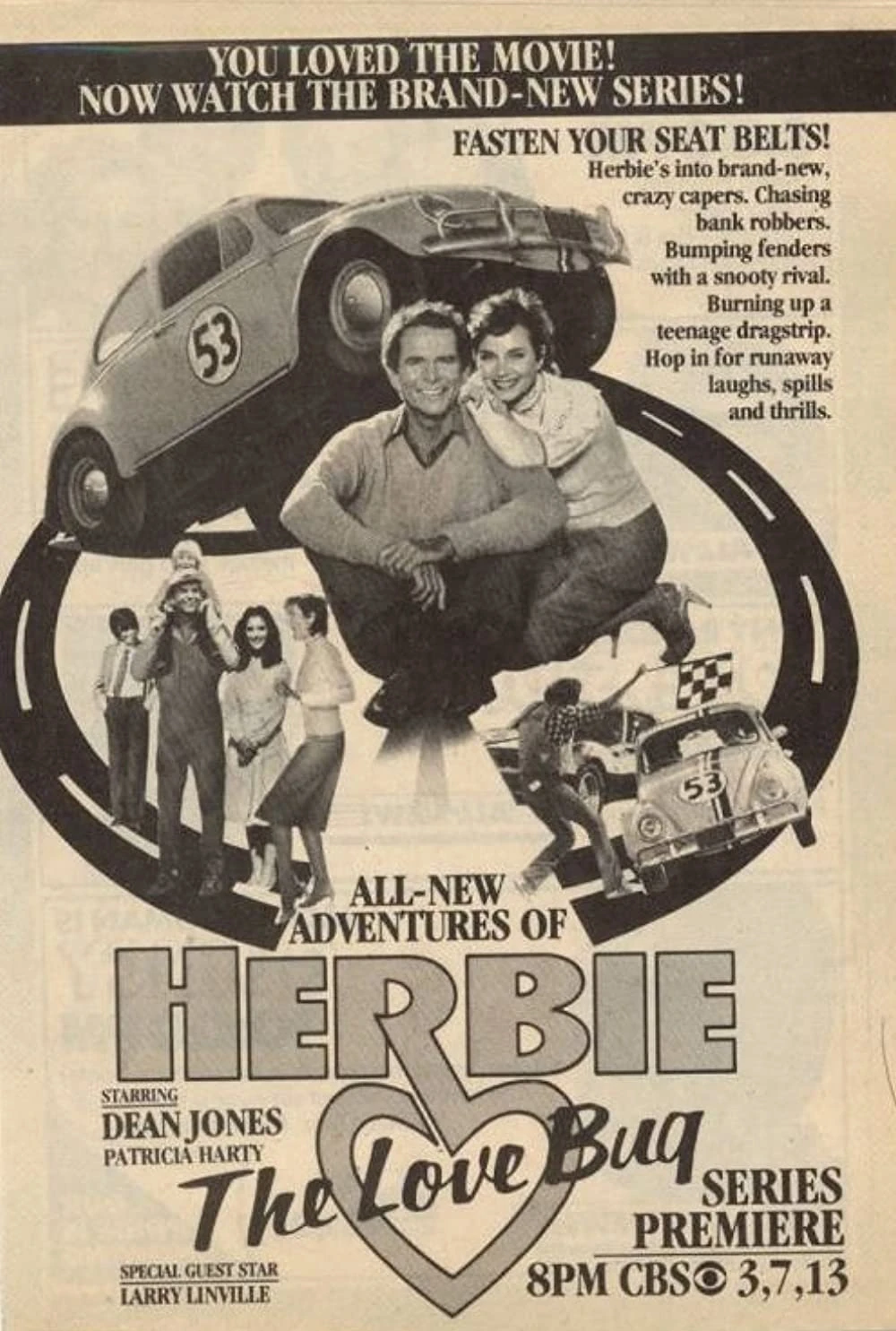
Herbie the Love Bug (CBS): In 1961, Gordon Buford wrote a short story called Car, Boy, Girl which was bought by Disney before it could be published. Seven years later, Buford’s story was turned into The Love Bug, Disney’s first adventure starring that loveable sentient Volkwagen Beetle, Herbie. In Buford’s story the car doesn’t have a name, but it is a Beetle, albeit a maroon one. Where the original story was more a satire on America’s love affair with technology, the resultant movie was warm, cuddly, and lots of fun.

Herbie got the sequel treatment six years later with Herbie Rides Again, and a third outing in 1977 – Herbie Goes to Monte Carlo. In 1980, Disney brought the bug back for his fourth adventure, Herbie Goes Bananas, which was panned by critics and took just $18 million at the box office. Two years later, as a spring replacement in a slot vacated by WKRP in Cincinnati’s move to a later time, Herbie the Love Bug premiered on CBS.

Herbie the Love Bug, 1982

If the total running time was less than six hours, the five-episode “mini-series” would all the hallmarks of a fifth film sold to TV rather than fail in theatres, but regardless of its origins, Herbie the Love Bug brought Dean Jones (from the original film and its Monte Carlo sequel) back for another turn with number fifty-three as mechanic Jim Douglas, now working as a driving instructor. Jim and Herbie thwart a bank robbery and meet a young divorcée (Patricia Harty), with Herbie working his magic to bring the two together.

Although the show was well-received at the time, it already seemed very dated by 1982, even if its storyline of a divorcée finding happiness with another man could be considered racy for Disney. This might explain why Herbie virtually disappeared afterwards, not returning to screens until the 1997 remake/sequel, The Love Bug, a TV movie starring Bruce Campbell that Disney might have hoped would reboot the franchise. That didn’t happen and Herbie lights were dimmed until 2005’s Herbie: Fully Loaded, which brings the car into the twenty-first century while acknowledging his past. Lindsay Lohan was in the driving seat two years before her very public drink and drug issues. Thankfully, Herbie: Fully Loaded did not feature a roadside sobriety test…

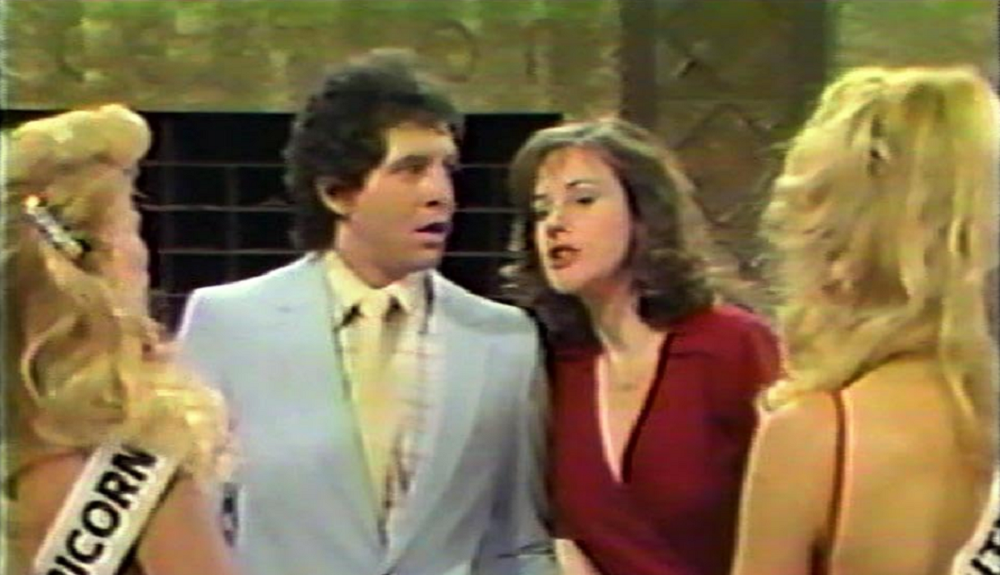
No Soap, Radio (ABC): A curious mix of sitcom and sketch show, No Soap, Radio took its title from a 1950s prank aimed at getting people to laugh at a joke despite its nonsensical punchline, a less disgusting version of “The Aristocrats” for those who know their joke history. The TV show was developed by producer Merrill Grant, who brought together a team of young writers that included future My Two Dads, Dinosaurs, and Boys Meets World creator Michael Jacobs and The David Letterman Show’s Ron Richards.

Set in the Pelican Hotel, where manager Roger (a young Steve Guttenberg) tried to corral a staff that included Hilary B Smith’s Karen and Stuart Pankin’s Tuttle. The meat of the show, though, was a mix of sight gags and non-sequiturs in loosely constructed sketches, often taking place in different “themed” rooms of the hotel to allow for a range of settings, and the show would abruptly cut away from the story for “Special Reports” in the middle of a scene, wherein a news anchor would recount increasingly improbably stories.

No Soap, Radio, 1981

No Soap, Radio was a mid-season replacement for Police Squad!, the Leslie Nielsen-starring Zucker, Abrahams, and Zucker production that was cancelled after just four of its six completed episodes had aired, despite going on to become a beloved cult classic. Viewer eaction was mixed; to some it was the first real attempt at doing a Monty Python style show on US TV, but to others it was bizarre nonsense.

A run of thirteen episodes was ordered but ABC pulled the plug after just five had been filmed, all of which were later shown on the BBC in the UK. Guttenberg shot to fame with the release of Diner the same year, and would soon become irrevocably attached to the Police Academy series, while Hilary Smith became a soap opera queen thanks to lengthy spells on As the World Turns and One Life to Live. No Soap, Radio is probably nothing more than a footnote on their résumés but the surviving evidence – the pilot is on YouTube, along with some other sketches – suggests it was just ahead of its time.

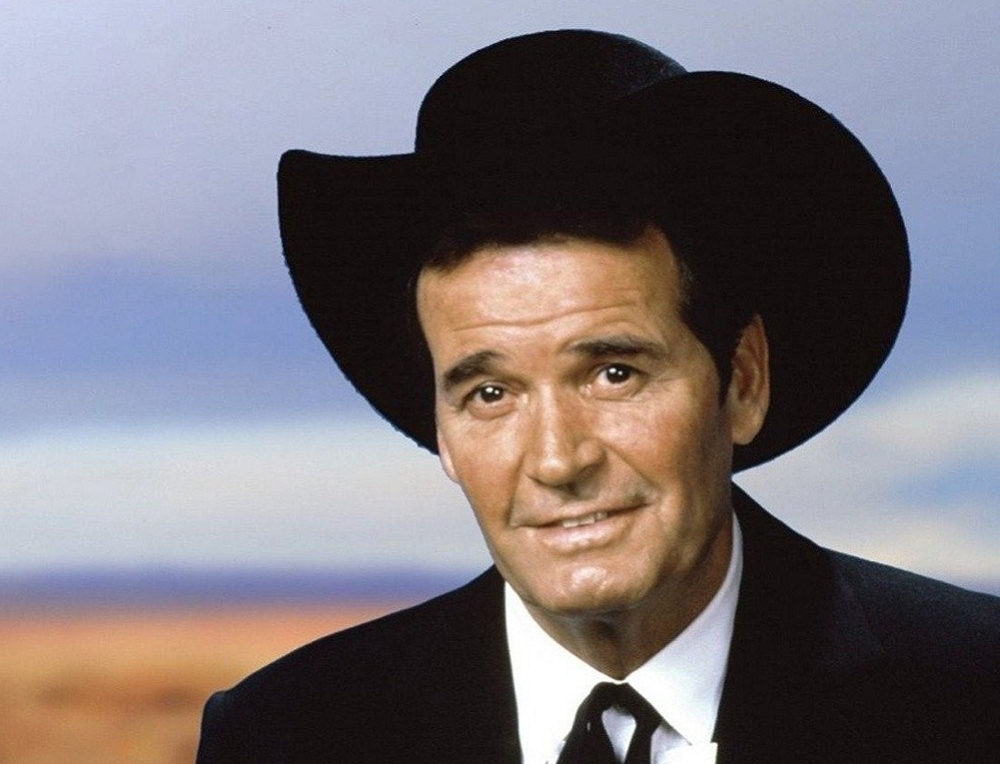
Bret Maverick (NBC): Two decades after the end of the original Maverick series, James Garner returned for a second turn as professional poker Bret Maverick, now putting down roots as the co-owner of the Red Ox saloon in Sweetwater, Arizona, after winning it in a card game. It was the third time Garner stepped into Maverick’s shoes, having reprised the role four years before in the TV movie The New Maverick, a pilot for the short-lived 1979 show Young Maverick that featured Charles Frank as Bret’s first cousin, once removed.

The biggest change between the original show and its 1982 sequel was that Bret was now tied to one location, rather than travel between marks, something which Maverick creator Roy Huggins felt sapped some of the magic from his creation. Bret’s partner in the Red Ox is Tom Guthrie, a former sheriff of Sweetwater played by country singer Ed Bruce (who also performed the show’s theme song), and much is made of their ideological clashes, especially over Maverick’s penchant for a scam, although they always make up by the end of the show.

Brett Maverick, 1981

Bret Maverick premiered on December 1st 1981, as part of a new-look Tuesday night line-up that also included Father Murphy – a western series created by Michael Landon for his Little House on the Prairie co-star Merlin Olsen – and soap opera Flamingo Road. Despite switching between the 7 and 8pm timeslots, the show always had tough competition, either from Happy Days and Laverne & Shirley, or from Three’s Company and Too Close to Comfort which followed, but garnered (heh) respectable ratings.

It was with some surprise, then, that NBC cancelled the show after just one season of eighteen episodes, especially as several scripts had already commissioned for a second season, one which would have seen Maverick return to his itinerant ways while Guthrie ran the Red Ox, thus bringing things nearer to the original show’s concept. The feature-length pilot and the two-part “Faith, Hope and Clarity” story were later repackaged as TV movies, dusted off when NBC needed a schedule-filler, and Garner eventually returned to Maverick a final time in the 1994 Mel Gibson movie remake.

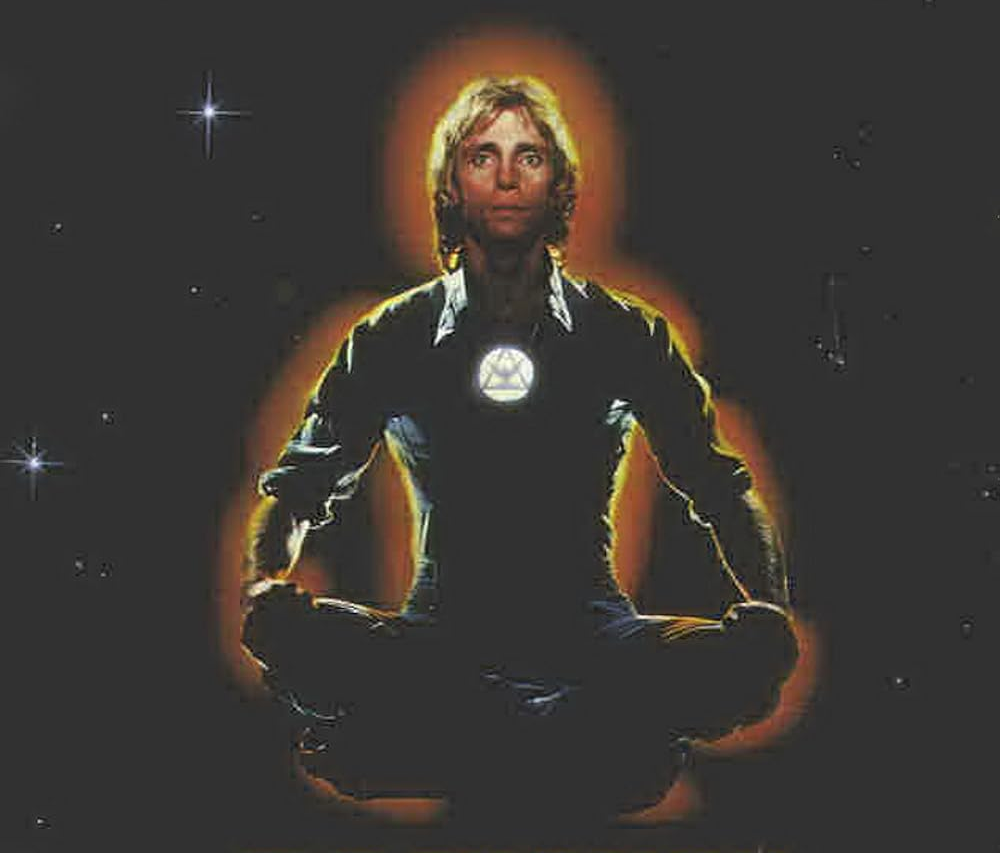
The Phoenix (ABC): Created by the husband-and-wife team of Anthony and Nancy Lawrence, The Phoenix starred newcomer Judson Scott as Bennu of the Golden Light, an ancient extra-terrestrial discovered in an Incan temple in Peru and awakened in the twentieth century. While this was his first co-creation with his wife, Anthony Lawrence had a pedigree stretching back to the late 1950s which included scripts for Bonanza, Hawaii Five-O, and Ironside.

Although he’d dipped his toes into fantastical waters with work on The Planet of the Apes and his own creation, The Sixth Sense, much of Lawrence’s work was more earthbound and that’s what makes The Phoenix, with its genesis rooted in the books of Erich von Daniken, all the more surprising. Bennu awakes with information on the location of his fellow aliens missing and the show centres around his search for them, especially his life-partner Mira (Sheila Frazier), all the while trying to escape the attentions of evil rival Yago and US government agents led by Richard Lynch.

The Phoenix, 1981

With an aesthetic firmly rooted in the age of Aquarius, The Phoenix seems too gentle for a 1980s that would soon embrace The A-Team and Knight Rider, but Bennu is a good sort, bringing peace and love but not afraid to use his Phoenix Amulet-granted powers to aid him in his quest and help out those in trouble he encounters along the way. Yago, on the other hand, is pure evil, and it is hinted that he was the inspiration for Lucifer, Dracula, and any number of other historical monsters.

Despite its intriguing concept, and a set-up not a million miles away from The Incredible Hulk, poor ratings ensured that just five episodes of The Phoenix were aired – in opposition to Dallas on CBS – before it was replaced in the schedules by The ABC Friday Night Movie. It has never been made available on DVD but the full series is on YouTube if you fancy seeing what Scott was up to before he turned three brief roles in the Star Trek franchise into a career on the convention circuit.

Next on The Telephemera Years: The shows that didn’t make it to air in 1981, with more murder than you can shake a stick at!

Check out our other Telephemera articles:

The Telephemera Years: pre-1965 (part 1, 2, 3, 4)

The Telephemera Years: 1966 (part 1, 2, 3, 4)

The Telephemera Years: 1967 (part 1, 2, 3, 4)

The Telephemera Years: 1968 (part 1, 2, 3, 4)

The Telephemera Years: 1969 (part 1, 2, 3, 4)

The Telephemera Years: 1970 (part 1, 2, 3, 4)

The Telephemera Years: 1971 (part 1, 2, 3, 4)

The Telephemera Years: 1973 (part 1, 2, 3, 4)

The Telephemera Years: 1974 (part 1, 2, 3, 4, 5)

The Telephemera Years: 1975 (part 1, 2, 3, 4)

The Telephemera Years: 1977 (part 1, 2, 3, 4)

The Telephemera Years: 1978 (part 1, 2, 3, 4)

The Telephemera Years: 1980 (part 12, 3, 4)

The Telephemera Years: 1981 (part 1)

The Telephemera Years: 1982 (part 1, 2, 3, 4)

The Telephemera Years: 1983 (part 1, 2, 3, 4)

The Telephemera Years: 1984 (part 1, 2, 3, 4)

The Telephemera Years: 1986 (part 1, 2, 3, 4)

The Telephemera Years: 1987 (part 1, 2, 3, 4)

The Telephemera Years: 1989 (part 1, 2, 3, 4)

The Telephemera Years: 1990 (part 1, 2, 3, 4)

The Telephemera Years: 1992 (part 1, 2, 3, 4)

The Telephemera Years: 1995 (part 12, 3, 4)

The Telephemera Years: 1997 (part 1, 2, 3, 4)

The Telephemera Years: 1998 (part 1, 2, 3, 4)

The Telephemera Years: 2000 (part 1, 2, 3, 4)

The Telephemera Years: 2002 (part 1, 2, 3, 4)

The Telephemera Years: 2003 (part 1, 2, 3, 4)

The Telephemera Years: 2005 (part 1, 2, 3, 4)

The Telephemera Years: 2006 (part 1, 2, 3, 4)

The Telephemera Years: 2008 (part 1, 23, 4)

The Telephemera Years: O Canada! (part 1, 2, 3, 4)

Titans of Telephemera: Irwin Allen

Titans of Telephemera: Stephen J Cannell (part 1, 2, 3, 4)

Titans of Telephemera: DIC (part 1, 2)

Titans of Telephemera: Hanna-Barbera (part 1, 2, 3, 4, 5)

Titans of Telephemera: Kenneth Johnson

Titans of Telephemera: Sid & Marty Krofft

Titans of Telephemera: Glen A Larson (part 1, 2, 3, 4)

Titans of Telephemera: Quinn Martin (part 1, 2)

Titans of Telephemera: Ruby-Spears