THE TELEPHEMERA YEARS: 1981, part 1

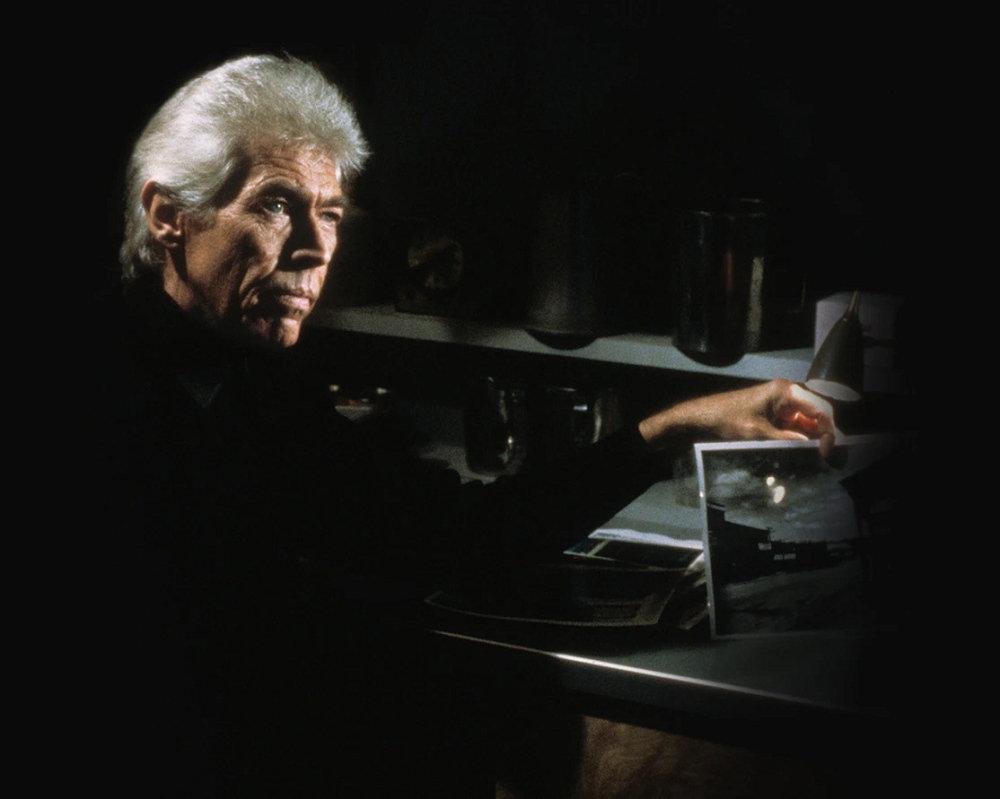
Darkroom, 1981

Ah, telephemera… those shows whose stay with us was tantalisingly brief, snatched away before their time, and sometimes with good cause. They hit the schedules alongside established shows, hoping for a long run, but it’s not always to be, and for every Street Hawk there’s two Manimals. But here at STARBURST we celebrate their existence and mourn their departure, drilling down into the new season’s entertainment with equal opportunities square eyes… these are The Telephemera Years!

1981-82

The TV junkies must have been absolutely salivating at the new Fall season line-up in 1981, including as it did such treasures as The Fall Guy, TJ Hooker, Cagney & Lacey, Falcon Crest, and Fame! They joined a schedule already dominated by Dallas, The Dukes of Hazzard, and M*A*S*H as American TV continued through one of its truly golden eras. There were goodbyes to be said to Mork & Mindy, The Incredible Hulk, and Lou Grant, but network TV was in a very good place with the top nineteen shows all averaging over twenty million viewers per episode.

The only one struggling was NBC, continuing a ratings slump that had begun in six years before and would continue until Bill Cosby, Michael J Fox, and Mr T dragged it out of the mire a few years later, although Late Night with David Letterman did make its debut in February 1982. For genre fans, the final seasons of The Incredible Hulk and Mork & Mindy were joined by a new arrival called The Greatest American Hero on ABC, as well as single-season classic Police Squad!, but those are the shows that most people remember – what about those they don’t? This is the story of four underwatched shows…Hero

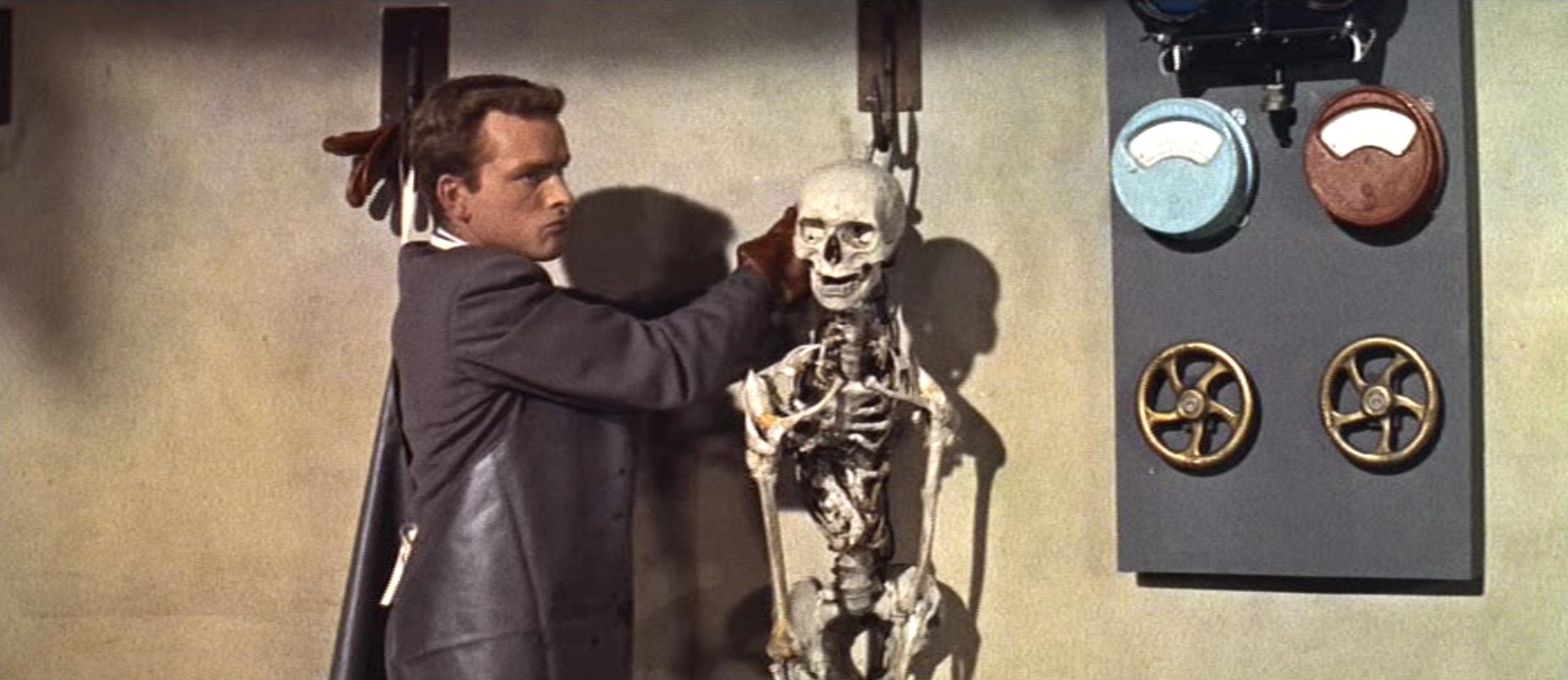
Darkroom (ABC): “You’re in a house. Maybe your own… maybe one you’ve never seen before. You feel it. Something evil. You run, but there’s no escape… nowhere to turn. You feel something beckoning you… drawing you into the terror that awaits you in the Darkroom!”

James Coburn’s voiceover opened very episode of Darkroom, a seven-episode anthology series that aired between November 1981 and January 1982 on ABC. Helmed by executive producer Peter S Fischer, whose background was in crime shows such as Colombo and Kojak, the show used short stories by Robert Block (Psycho), Davis Grubb (Night of the Hunter), and William F Nolan Logan’s Run), and others as fuel for a series of stories that put their protagonists in some kind of misadventure, usually of the supernatural kind.

Darkroom, 1981

Occupying the same territory as Rod Serling’s Twilight Zone and Night Gallery, each episode of Darkroom featured two stories (with episode seven having three), with the first episode alone spells the dangers of computer simulation for Robert Webber and sees Lawrence Pressman establish radio contact with the U-boat that killed his father in World War Two, and things just got stranger from there. Subsequent stories would feature vampires, witches, and living toys, all threatening the welfare of guest stars such as David Carradine, Billy Crystal, Brian Dennehy, and Helen Hunt.

Unfortunately (or fortunately, if you like that kind of thing), the tone was unrelentingly gloomy with few happy endings and plenty of downbeats. The few viewers that were seeking respite from The Dukes of Hazzard on CBS would find nothing but misery over on ABC, sending them to NBC’s short-lived McCain’s Law or, even worse, outside. The series has its fans, though, especially of the opening credits, and repeat showings on the USA network and the Sci-Fi channel, and streaming on NBC’s website, ensured that new fan continue to discover this unusual, depressing treat.

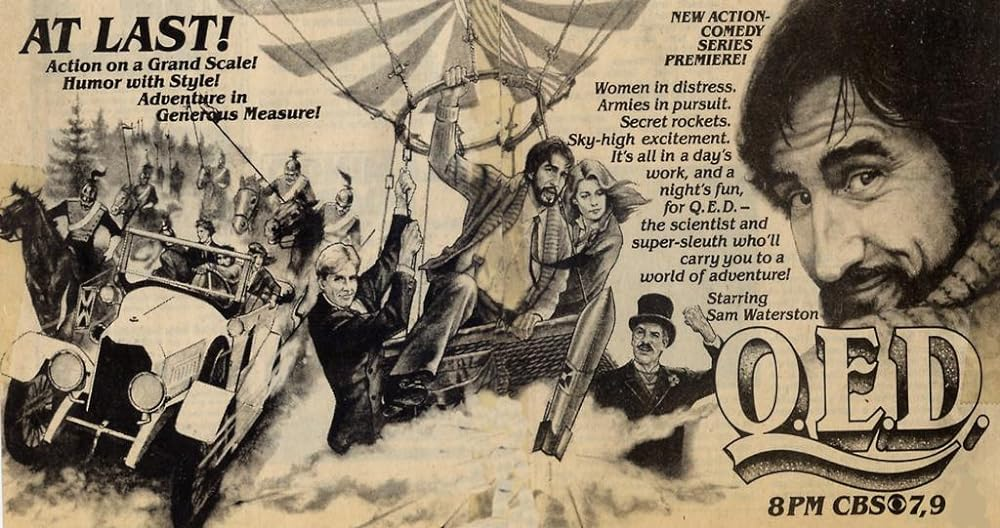
QED (CBS): A spring replacement for the short first season of Simon & Simon on Tuesday nights, QED starred Sam Waterston as Quentin Everett Deverill, a gentleman detective in the manner of Sherlock Holmes, solving crimes in Edwardian London with the help of his scientific know-how and man-servant Phipps (British actor George Innes). The series had something of a steampunk aesthetic and Waterston seemed to be having a great deal of fun as a scientific inventor turned sleuth.

Originally a stage actor, Waterston had built a considerable reputation as a fine dramatic actor, earning Emmys and Golden Globes for his work on The Glass Menagerie and The Great Gatsby. There must have been a few eyebrows raised when he took the role of Deverill, known almost exclusively by his initials (which would often be used as a catchphrase with the meaning “quite easily done”), especially as it sandwiched between Oppenheimer and The Killing Fields in a list of his career roles.

QED, 1982

Still, the show was co-created by John Hawkesworth, the man responsible for Upstairs, Downstairs and Granada’s Sherlock Holmes, and touched on some serious issues despite its comedic tone. Deverill solved locked room mysteries, investigated the disappearance of a deadly nerve agent, and took up the cause of disposable immigrant labour, as well as taking part in an automobile race and trying his hand at ghostbusting, backed up by Phipps and girl Friday Jenny.

Unfortunately, the audience just wasn’t there for a whimsical, clever period drama and just six episodes were broadcast before the network admitted defeat. It didn’t help that Happy Days and Joanie Loves Chachi were monopolising viewers over on ABC, but QED is still fondly remembered by those who didn’t fancy spending their evenings in Milwaukee.

Jokebook (NBC): Jokebook was Hanna-Barbera’s first animated show in prime time since 1970’s Wait Til Your Father Gets Home, something the company hadn’t enjoyed huge success with since the heyday of The Flintstones and Top Cat. They were riding high, though, with the Saturday morning cartoons and even produced some special episodes of The Smurfs to be shown while the adults were in control of the remote control.

Jokebook was different to the usual Hanna-Barbera show. Rather than focus on one set of characters in a traditional sitcom manner, Jokebook was supposed to be more akin to reading an issue of MAD or National Lampoon magazines, with little in the way of recurring characters and lots of attempts at “grown-up” humour. Unfortunately, the show landed in the lap of veteran producer Harry Love, whose idea of adult humour seemingly started and ended with Playboy, and the humour – and animation – was crude.

Jokebook, 1982

NBC had ordered seven episodes from the studio but were aghast at what they received. A late scramble was made to improve the quality of, well, everything, and they ended up burying the show on Friday nights against ratings smash The Dukes of Hazzard (which, ironically, became a Hanna-Barbera cartoon a year later). In the end, much of the material produced for Jokebook was declared unusable.

This meant that, alongside segments produced by the studio, Jokebook also made use of classic, foreign, and independent animation to fill the gaps. This was entrusted to Marty Murphy, who had risen from character designer for the likes of Hong Kong Phooey, Valley of the Dinosaurs, and Dinky Dog to become one of Hanna-Barbera’s most trusted lieutenants and worked hard to override the non-comedic instincts of Love. Oscar-winning short Crunch Bird was among the extras, but NBC were still less than impressed and cancelled the show after just three episodes had aired.

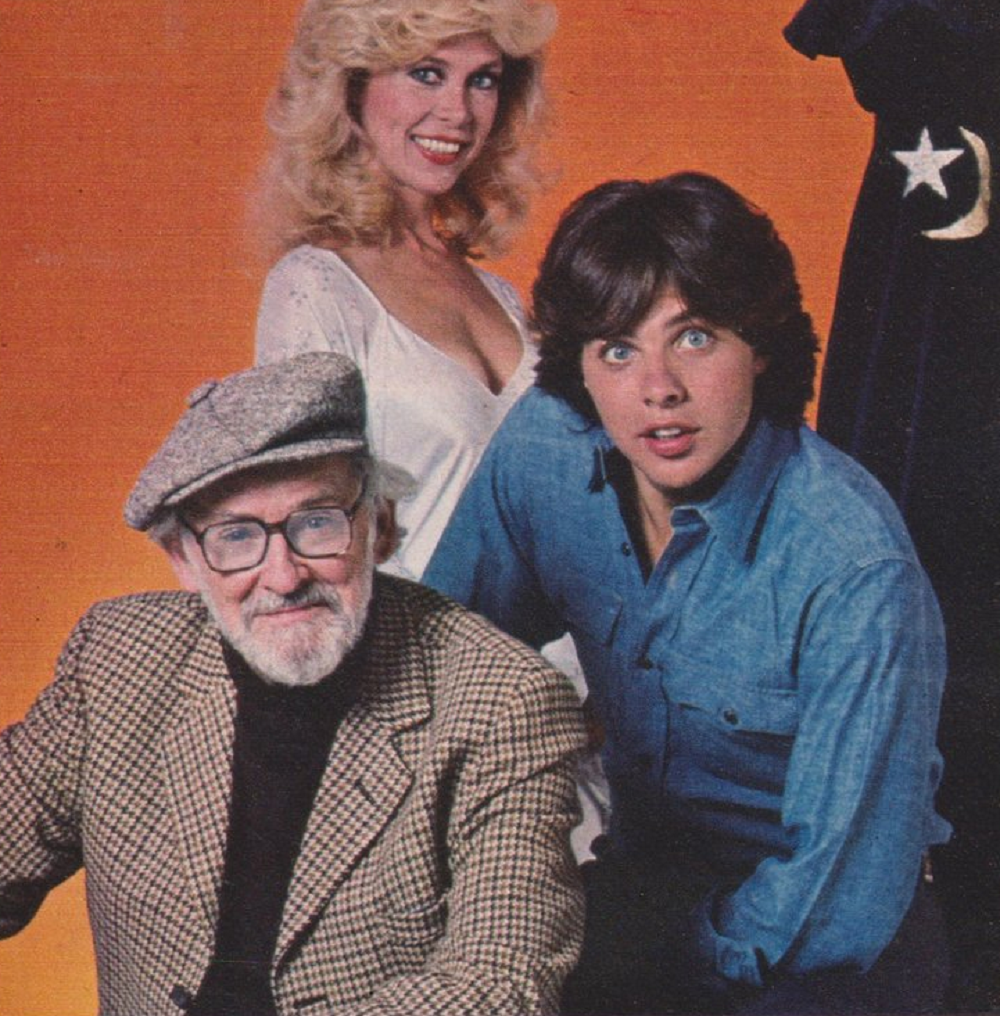
Mr Merlin (CBS): Produced by jazz entrepreneur Larry Rosen and Bob & Carol & Ted & Alice writer Larry Tucker, Mr Merlin starred Barnard Hughes – later Grandpa in The Lost Boys – as the immortal magician from King Arthur’s court, now living a quiet life in San Francisco, where he masquerades as mechanic Max Merlin. In the pilot episode, written by the two Larrys and directed by The Addams Family’s John Astin, Merlin hires a young assistant to work in his garage.

Things change, though, when Zac (Clark Brandon) pulls a crowbar from a block of cement, for this was no ordinary crowbar – it was the mystical sword Excalibur! Under pain of being stripped of his powers and immortality by the magic council, Merlin reveals his true identity to Zac and takes him on as a wizard in training, unbeknownst to Zac’s best friend Leo.

Mr Merlin, 1981

From these auspicious beginnings, Zac and Merlin embark on a journey – not an actual one, more than American Idol type – that brings them together and warms the cockles of your hearts, imparting life lessons as they went. Shown on Wednesday nights opposite The Greatest American Hero and reality show Real People, the first season of twenty-two episodes saw Max help Zac enter the music business, unwittingly become a forger, and negotiate the perils of teenage dating, amongst other comedic set-ups.

Mr Merlin was shown in the UK on Saturday evenings on ITV and even got the comic strip treatment from TV Comic, but ratings in the US were not what CBS had hoped for and, despite earning more viewers than shows that were renewed such as Cagney and Lacey, Fame, and Quincy, ME, there was to be no second season for our magical pair. The show is not currently available on DVD or Bluray but there are plenty of episodes on YouTube if you fancy basking in some magical nostalgia.

Next on The Telephemera Years: More of 1981’s forgotten “classics,” including Steve Guttenberg, Bennu of the Golden Light, and sentient Beetles!

Check out our other Telephemera articles:

The Telephemera Years: pre-1965 (part 1, 2, 3, 4)

The Telephemera Years: 1966 (part 1, 2, 3, 4)

The Telephemera Years: 1967 (part 1, 2, 3, 4)

The Telephemera Years: 1968 (part 1, 2, 3, 4)

The Telephemera Years: 1969 (part 1, 2, 3, 4)

The Telephemera Years: 1970 (part 1, 2, 3, 4)

The Telephemera Years: 1971 (part 1, 2, 3, 4)

The Telephemera Years: 1973 (part 1, 2, 3, 4)

The Telephemera Years: 1974 (part 1, 2, 3, 4, 5)

The Telephemera Years: 1975 (part 1, 2, 3, 4)

The Telephemera Years: 1977 (part 1, 2, 3, 4)

The Telephemera Years: 1978 (part 1, 2, 3, 4)

The Telephemera Years: 1980 (part 12, 3, 4)

The Telephemera Years: 1982 (part 1, 2, 3, 4)

The Telephemera Years: 1983 (part 1, 2, 3, 4)

The Telephemera Years: 1984 (part 1, 2, 3, 4)

The Telephemera Years: 1986 (part 1, 2, 3, 4)

The Telephemera Years: 1987 (part 1, 2, 3, 4)

The Telephemera Years: 1989 (part 1, 2, 3, 4)

The Telephemera Years: 1990 (part 1, 2, 3, 4)

The Telephemera Years: 1992 (part 1, 2, 3, 4)

The Telephemera Years: 1995 (part 12, 3, 4)

The Telephemera Years: 1997 (part 1, 2, 3, 4)

The Telephemera Years: 1998 (part 1, 2, 3, 4)

The Telephemera Years: 2000 (part 1, 2, 3, 4)

The Telephemera Years: 2002 (part 1, 2, 3, 4)

The Telephemera Years: 2003 (part 1, 2, 3, 4)

The Telephemera Years: 2005 (part 1, 2, 3, 4)

The Telephemera Years: 2006 (part 1, 2, 3, 4)

The Telephemera Years: 2008 (part 1, 23, 4)

The Telephemera Years: O Canada! (part 1, 2, 3, 4)

Titans of Telephemera: Irwin Allen

Titans of Telephemera: Stephen J Cannell (part 1, 2, 3, 4)

Titans of Telephemera: DIC (part 1, 2)

Titans of Telephemera: Hanna-Barbera (part 1, 2, 3, 4, 5)

Titans of Telephemera: Kenneth Johnson

Titans of Telephemera: Sid & Marty Krofft

Titans of Telephemera: Glen A Larson (part 1, 2, 3, 4)

Titans of Telephemera: Quinn Martin (part 1, 2)

Titans of Telephemera: Ruby-Spears

Dolph Lundgren | WANTED MAN

dolph lundgren and christina villa in wanted man

Rising to fame as human-mountain and Soviet boxer Drago in Rocky IV, and as an icy Bond villain in A View to a Kill – both films released in 1985 –, Swedish actor and martial artist Dolph Lundgren would go on to become a mainstay of the action genre in the 1990s, a peer of B-movie legends Steven Seagal and Jean-Claude Van Damme. Since, Lundgren has continued acting, as well as producing, writing, and directing.

In recent years, he’s starred in a number of massive blockbusters that include The Expendables films, which reunited him with Sylvester Stallone, and a key role in the DCEU’s Aquaman movies. This year however, he returns as a multi-hyphenate force: as director, co-writer, producer, and star of Wanted Man, a timely action thriller that showcases Lundgren’s enduring talent for enacting a good fight scene.

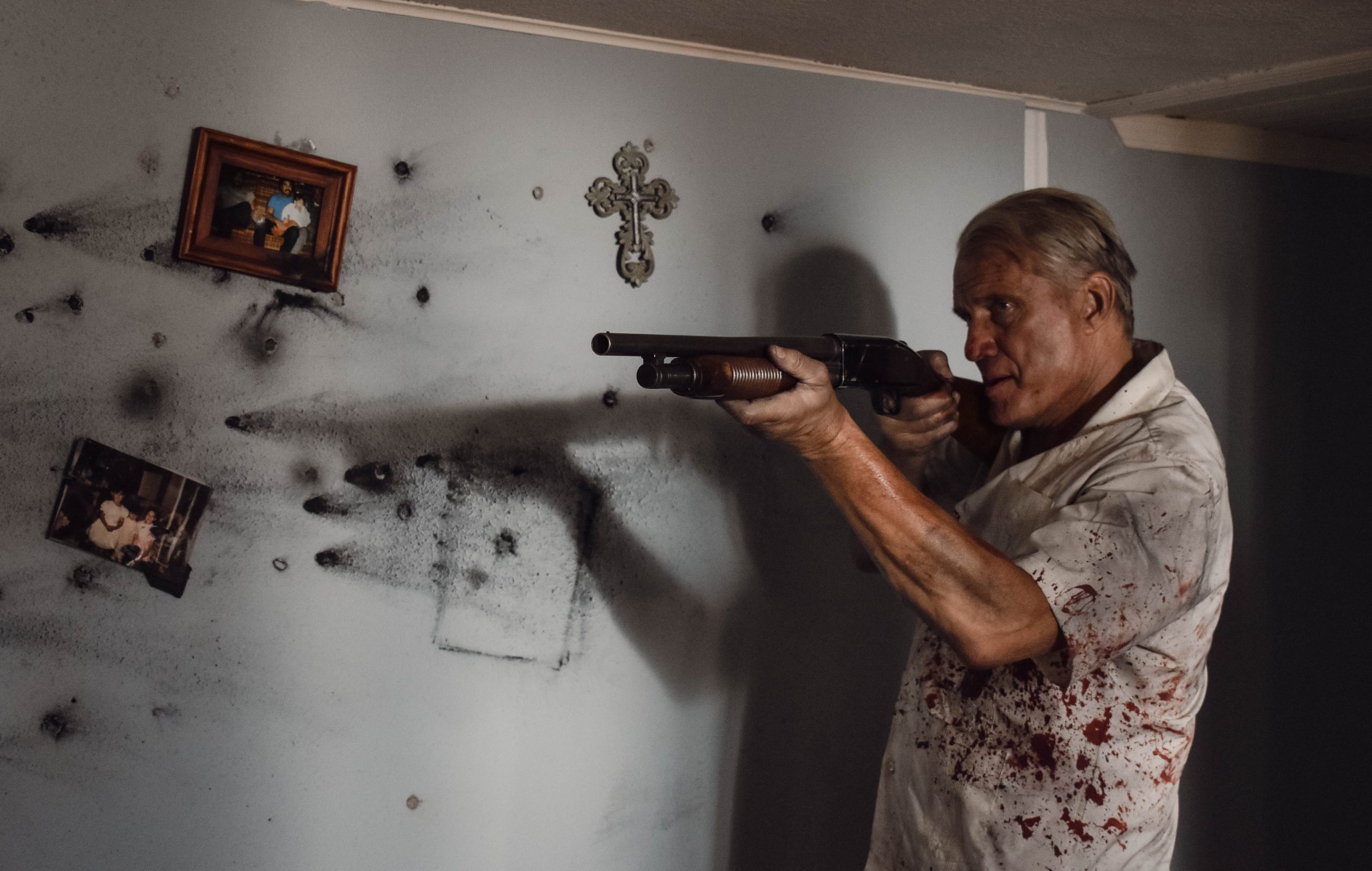
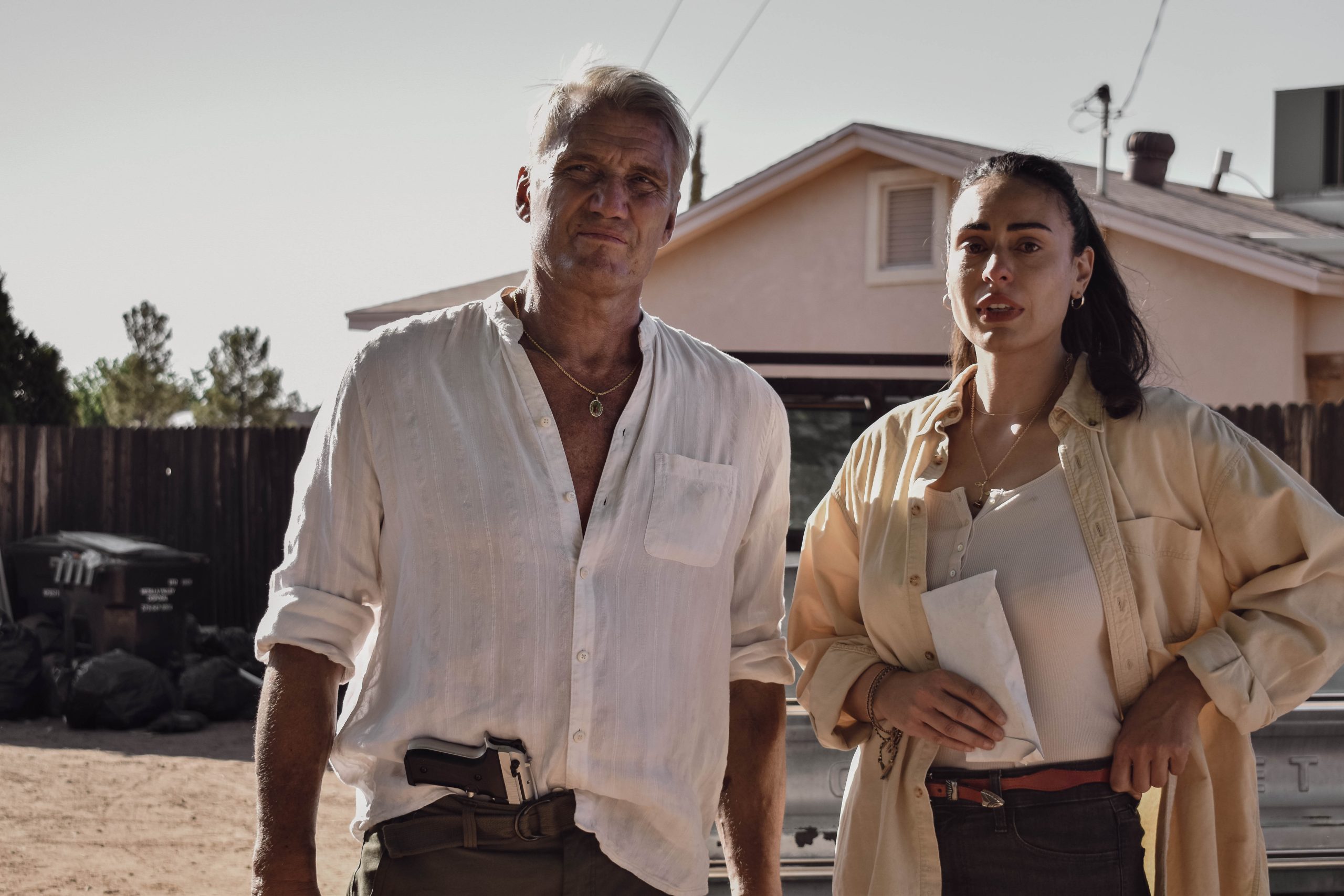
In Wanted Man, Lundgren is Johansen, an ageing detective whose outdated policing methods have dragged his department into the middle of a public relations crisis. To save his job and get himself out of the media limelight, he is sent to Mexico to extradite a female witness (Christina Villa) to the murders of two DEA agents. Once there, not only does he have his worldview challenged, but he finds that forces on both sides of the border are now gunning for him and his charge.

Ahead of the film’s release, STARBURST spoke with Dolph Lundgren about his work on the picture, which comes to cinemas and on demand on January 19th.

dolph lundgren in wanted man, courtesy of quiver distribution

As co-writer, from where did you draw inspiration for this script?

Dolph Lundgren: Originally, it was developed about fifteen years ago and was inspired by this Clint Eastwood picture called Gauntlet, where he brings a prisoner across state lines. And I thought, why not instead have the story be about bringing someone over from Mexico? And then, I got caught up with a bunch of other projects, until a couple of years ago – immigration was such a hot topic, so maybe I’ll bring the script back.

Until later, when I was at a party and there was somebody there, this guy I know who’d had too many drinks and went on this rant about immigration. I was listening to him, thinking “that’s an interesting character” – to start with a character who was misinformed and evolve him into somebody that realises he’s wrong and works to change his attitude. It was with that in mind that we finished the script.

As well as undocumented immigration, Wanted Man touches on prescient topics like police brutality and corruption. As a Swedish actor living in the US, how does your background influence the lens through which you view these issues?

Dolph Lundgren: First of all, I am an immigrant, so I understand that feeling of wanting to be an American. I also know people who have made that journey across the border, so I know that part of it, too. I think not being from here, you can be more objective and more dispassionate about it. People here are so worked up over immigration, and while I can see both sides of the argument, I think… let’s just say that the way in which the movie ends, that’s my view on the matter. I try to see the issue with compassion.

A big part of your character’s journey comes from his knowing Christina Villa’s character. This being her first lead role, what made Christina the perfect counterpoint to your character, and how did the casting come about?

Dolph Lundgren: It was a very hard character to cast. I didn’t realise that at first, but when we started the casting process, I realised that I needed somebody who could play all those emotional moments: losing your best friend, being on the run, having your life in danger… and I wanted her to speak fluent Spanish. And that’s difficult because a lot of Hispanic actors that I was shown didn’t speak Spanish that well. I went through a long casting process before I found her. I also wanted somebody that you could believe is this character; she’s not too glamorous, and she has a certain street-smart quality to her. I was glad when we found her, and what I like about hers and mine’s characters’ relationship is that it doesn’t become a romantic relationship, necessarily. There’s a little feeling maybe, at the end, but it wasn’t about that. Them making out in a motel while people are out there hunting and shooting at them, that would have been the cheap version of this film.

Throughout the film, there are several conversations that happen in Spanish, that are not subtitled and therefore the viewers are not privy to. Then at other times, it is captioned in English. What went behind that decision?

Dolph Lundgren: I wasn’t sure about that at first. I decided that when Johanssen is around, he doesn’t understand and so the viewer doesn’t either. Then when he isn’t around and there’s a more intimate conversation that doesn’t involve him, and has information that we need to know, then I would put the subtitles on there.

dolph lundgren and christina villa in wanted man

You were involved at every level of this film. With everything going on, what was your biggest challenge?

Dolph Lundgren: I wish I’d been more involved in the producing. I was very involved in the directing and acting, and writing… I’m not a big fan of writing, I prefer to rewrite stuff. I wish I’d done more of the producing, because we’d decided to go down to New Mexico to shoot the Mexican scenes. But we had big problems on location, and I hadn’t been involved in hiring the people there. So next time, I’m going to be more of a producer and look at the budget and everything in detail. With a small movie, the margins of error are very tight. Otherwise though, it was a big effort and I’d love to do it again.

Your career has centred on the action genre. As a director, what keeps you coming back to action films?

Dolph Lundgren: I’ve directed eight movies, and all of them have some action component. I think part of it is that it’s part of my brand, and part of who I am. People like to see me do things on film physically, to move, and it tends to work in the story context… I’ve done movies as an actor, like Aquaman, where my character is more of a political figure.

And as a director, it would be hard for me – unless I wrote a great script like Sideways, about wine-tasting in Northern California – not to have some form of action and get that project made. But then, would I be the best director to do that? A new script I’m working on is a dark comedy set in LA – it has action in it, but it’s more character-driven.

I think eventually, as I get older, I will do more character-driven stuff and less action. The guy I look up to is Clint Eastwood, where in his 70s and 80s he ended up doing films like Gran Torino – it’s a super character-driven story, but he still whips out his rifle and goes to town.

Wanted Man releases in cinemas and on-demand from January 19th. Watch the trailer below:

<iframe width=”560″ height=”315″ src=”https://www.youtube.com/embed/Uaz1D2oYzco?si=5PBGGZ162ci0Y2IT” title=”YouTube video player” frameborder=”0″ allow=”accelerometer; autoplay; clipboard-write; encrypted-media; gyroscope; picture-in-picture; web-share” allowfullscreen></iframe>

THE TELEPHEMERA YEARS: O Canada! (part 4)

Charlie Jade, 2005

Ah, telephemera… those shows whose stay with us was tantalisingly brief, snatched away before their time, and sometimes with good cause. They hit the schedules alongside established shows, hoping for a long run, but it’s not always to be, and for every Street Hawk there’s two Manimals. But here at STARBURST we celebrate their existence and mourn their departure, drilling down into the new season’s entertainment with equal opportunities square eyes… these are The Telephemera Years!

O Canada!

Although the odd European show occasionally slips through the net, a massive percentage of the shows featured in The Telephemera Years originate from North America, and almost exclusively from the USA. Canada, though, has a thriving film and TV industry – including providing locations and supporting cast members for many of those American shows – and even has its own range of TV channels, including CBC, CTV, Global, and Space. To celebrate those gems made north of the border – some of which enjoyed three- or four-season runs but little acclaim outside their native land – we’re giving over four weeks of this column to our Canucklehead friends.

Some of the shows produced in Canada that have enjoyed wider acclaim include telefantasy schlockbusters Lexx and Relic Hunter, while the beloved Due South also falls into this category. Viewers of children’s BBC in the 1980s will no doubt have fond memories of The Raccoons and Degrassi Junior High, while Kids in the Hall rewrote comedy in the early nineties with a decidedly surreal touch. But those are the shows you’ve heard of and probably watched… what about those that didn’t get much reach beyond the provinces and territories of the Great White North? This is the story of five Canadian shows that don’t feature ice hockey…

Adventure Inc (2003, Global): In 1984, Barry Clifford became the first man to discover an authentic pirate shipwreck when he found the Whydah, a gully captained by “Black Sam” Bellamy during the golden age of piracy. Clifford’s life story is full of such chapters – he has an ongoing mission to find the wreck of the Santa Maria, Christopher Columbus’s flagship – and it inspired his close friend Gale Ann Hurd, screenwriter and producer of both The Terminator and Aliens with then-husband James Cameron, to create a show based on his exploits, her first project for TV.

Adventure Inc starred Michael Biehn (who had appeared in The Terminator and Aliens, as well as several other Hurd productions) as Judson Cross, a professional explorer who travels the world finding things – “things that are priceless, dangerous, sometimes even unexplainable,” – with the help of his assistants, Mackenzie (Karen Cliche) and Gabriel (Jesse Nilsson). Their ship, Vast Explorer, was named in honour of Clifford’s vessel, although their exploits were not confined to seagoing expeditions.

Adventure Inc, 2003

Debuting on Global on September 30th 2002, and shown in syndication in the US, Adventure Inc hit the blocks running, its opening episodes featuring Mayan artefacts, ghosts of the Vietnam War, prehistoric man, and treasure ships, with the rest of the season no less strange or varied. The likes of Relic Hunter’s Christien Anholt, Andromeda’s Steve Bacic, Earth: Final Conflict’s Jayne Heitmeyer and Alan van Sprang, and British actress Eva Pope popped up as guest stars but all in all the show was probably too similar to carve out its own niche.

The twenty-two-episode first season concluded on May 12th, seventeen days after Jesse Nilsson died of pneumonia-related heart failure at just twenty-five-years old. There was no second season and Hurd returned to the movies, producing several comic book adaptations, including Hulk for Ang Lee. Barry Clifford is still involved in exploration, although he takes a more hands-off role now that he is in his late seventies.

Train 48 (2003, Global): Soap operas are nothing new and, given the haphazard way TV was made in the 1940s and 1950s, it’s probably true to say that some of them featured a large amount of improvisation. What if that was your stated aim, though? What if you created a soap opera – perhaps set aboard a train? – that was, after its basic story beats were established, was entirely improvised?

That was the BIG IDEA behind Train 48, a daily soap that ran for over three hundred episodes between June 2003 and July 2005 on Global, aired weeknights at 7pm. Filming for each episode was done the same day, using a replica train coach as a set, and usually wrapped by 1.30pm. The episodes would then be edited and delivered for broadcast, a schedule more often used for news or sports broadcasts than dramatic fare.

Train 48, 2003

Based on Going Home, an Australian show with an almost identical concept, Train 48 was created by Eric Lunsky and Duncan McKenzie, who had met while working on The History Network’s History Bites, an attempt to show how historical events would be reported if TV were around at the time they occurred. They encouraged actors to flesh out outline scripts of just a few lines per scene, based on detailed character bios provided to the cast.

Train 48 dealt with some hot button topics during its run, including gay adoption and euthanasia, and occasionally introduced some high-drama events such as the death of a passenger, a shooting, and sexual congress between passengers. In June 2005, it was announced that the show was being cancelled in order to make room in the schedules for the launch of Entertainment Tonight Canada. The months’ notice given allowed Lunsky and McKenzie to wrap up ongoing storylines and the final shots showed the last day’s passengers disembarking at their station, the only time the outside of Train 48 was ever seen.

ReGenesis (2004, The Movie Network): Founded by Christina Jennings in 1987, Shaftesbury Films is probably best known for Murdoch Mysteries, a detective show set in Victorian Toronto that began its seventeenth season in Fall 2023. Their slate, though, is full of oddities such as Houdini and Doyle, Good Dog/Good God, Life with Derek, and ReGenesis, a show that puts the science in sci-fi created by Jennings herself.

ReGenesis was set at the fictional NorBAC (the North American Biotechnology Advisory Commission), a lab based in Toronto that investigated crimes and other problems that have a scientific angle. Season one dealt with deadly viruses, cloning, mad cow disease, and bioterrorism, all coming under the remit of molecular biologist David Sandström (Millennium‘s Peter Outerbridge) and his team.

ReGenesis, 2004

The ReGenesis writing team was headed up by Avrum Jacobsen, an experienced Canadian scripter who had gotten his start on Degrassi Junior High in 1987. Jacobsen worked in conjunction with consultant Aled Edwards, also a molecular biologist, to ensure that the science on the show was as close as possible to real science, albeit within the bounds of a science-fiction TV show. ReGenesis was also at the forefront of using new media to enhance viewers’ experience of the show, including the first successful game made in partnership with a TV show in ReGenesis Extended Reality, which won numerous awards between 2004 and 2007.

After a successful first season, ReGenesis was renewed a further three times for a total of fifty-two episodes over four seasons. Besides first run episodes on The Movie Network in Canada, the show was also later broadcast on Global, and sold internationally to more than two dozen countries, including the UK (where it aired on SciFi) and the US (syndication).

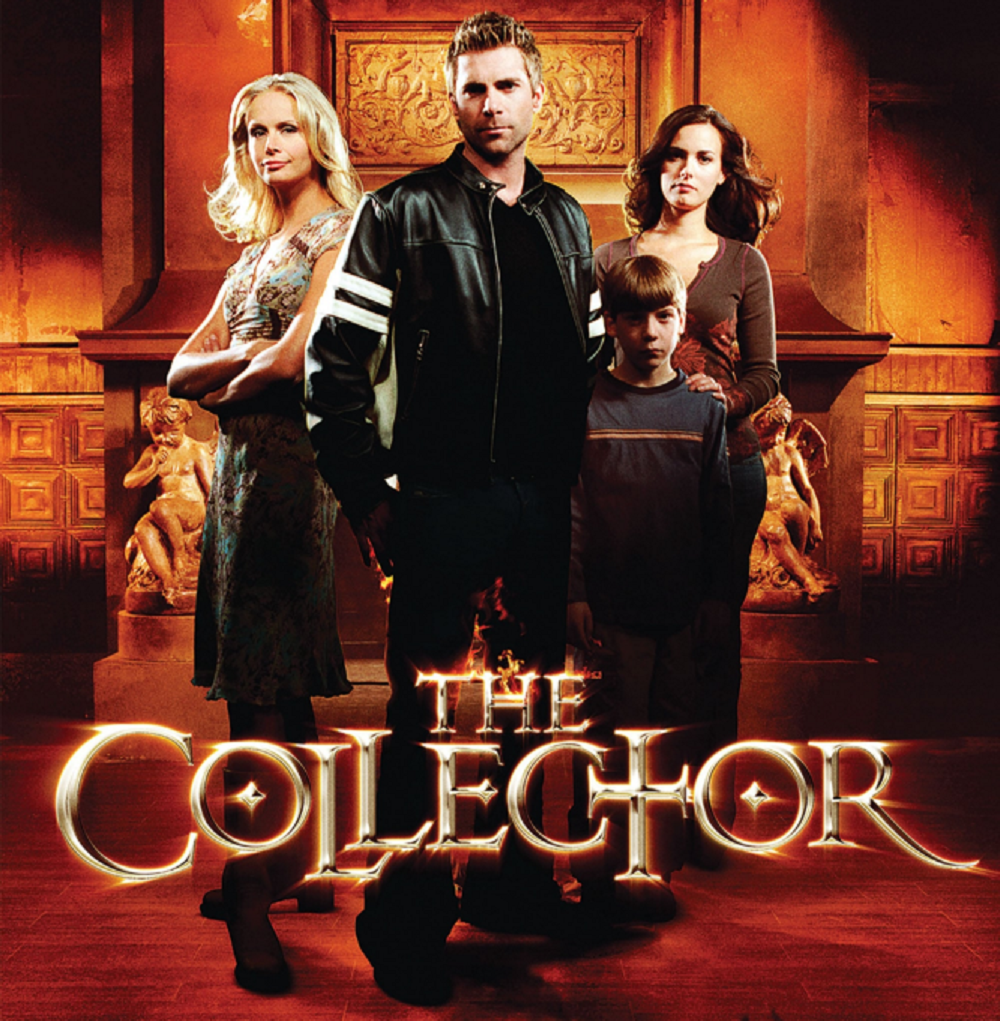
The Collector (2004, Citytv): Brimstone was one of the greatest TV shows never to reach its potential. Indeed, it never even reached the end of its first season, but there’s a touch of Brimstone to The Collector, a Canadian series about a servant of Hell given the chance to help those who’ve sold their souls to the Devil find redemption.

Created by Jon Cooksey and Ali Marie Matheson, a Canadian writing team probably best known for working on Rugrats, The Collector was the first starring role for Chris Kramer, a Canadian actor who had previously had occasional roles on shows like Dark Angel, First Wave, and Stargate SG-1. His Morgan Pym was a fourteenth-century monk who had bargained his own soul with the Devil for a cure for the woman he loved, only to be cheated by the terms of the deal.

The Collector, 2004

In return for being spared eternal suffering, the Devil offered Pym the job of The Collector, retrieving those souls traded for infernal deals, but as the show begins, he’s convinced his satanic majesty to allow him to work with his targets towards redemption rather than damnation. All the while a disdainful Devil – played by a different actor in each episode – waits for him to fail.

With backing from reporter Jeri Slate and her autistic son (who has his own relationship with the Devil), Pym helps a rapper, a lawyer, a model, and an ice skater in the first four episodes alone, all damned by their deals unless he can help them undo the benefits their bargains provided for them, and all without them knowing who or what he is. To the dismay of its dedicated fanbase, The Collector was cancelled after three seasons, but not with enough notice to conclude Pym’s story. Presumably he’s still out there, doing what he does, but don’t count on him turning up if you make your own deal with the Devil…

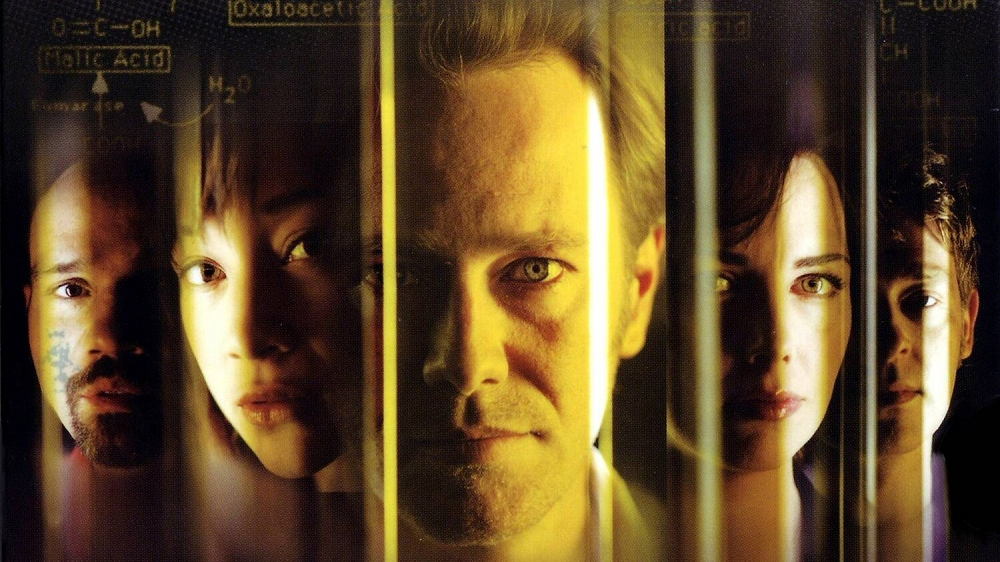
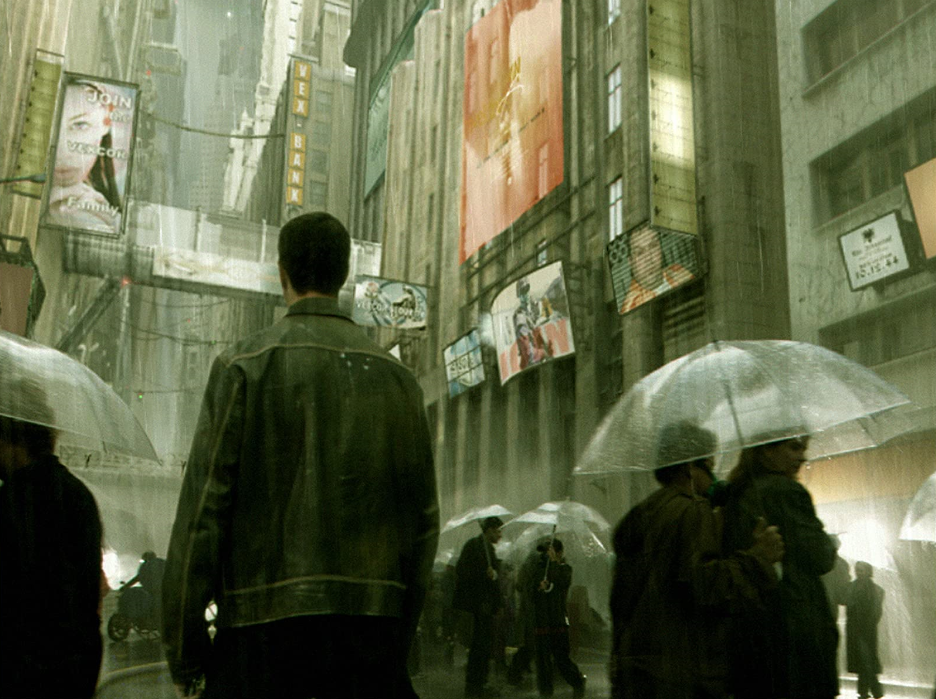
Charlie Jade (2005, CTV 2): Filmed in South Africa as part of a co-production between Canadian studio CHUM and the South African Industrial Development Corporation, Charlie Jade starred Jeffrey Pierce as the eponymous detective, his first lead role after a handful of small parts and a recurring role in the legal drama For the People.

Jade finds himself thrown into the Betaverse – our reality, basically – when scientists working for the evil Vexcor from the dystopian Alphaverse he calls home try to open a wormhole into the utopian Gammaverse. It all sounds very involved but it’s a simple story of a man trapped in a world he never made, trying to make the best of a bad situation while also trying to find a way home and fight against Vexcor agents.

Charlie Jade, 2005

The show was co-created by Chris Roland, a Californian who gave up acting in the 1990s to travel round the world before settling in South Africa and working in film production, and Robert Wertheimer, a Canadian producer best known for his work on Due South. Roland and Wertheimer were heavily influenced by Blade Runner for the look and feel of the show, paying homage to Ridley Scott, especially with the character of 01 Boxer, an enigmatic and possibly artificially created man who can travel between the universes.

Funding problems on the South African end caused production to halt after season one was completed and, despite a fan campaign to ensure that Charlie’s story continued into season two, the show was quietly cancelled. The producers did have a blueprint for a second season and ended things on a cliffhanger but were also happy that the arc of season one was satisfactorily completed. In 2009, the Charlie Jade Podcast released a fifteen-page PDF written by Wertheimer four years previously, detailing what would have happened if the show had continued.

Next on The Telephemera Years: Back to timehopping and onto 1981, where we enter… the Darkroom!

Check out our other Telephemera articles:

The Telephemera Years: pre-1965 (part 1, 2, 3, 4)

The Telephemera Years: 1966 (part 1, 2, 3, 4)

The Telephemera Years: 1967 (part 1, 2, 3, 4)

The Telephemera Years: 1968 (part 1, 2, 3, 4)

The Telephemera Years: 1969 (part 1, 2, 3, 4)

The Telephemera Years: 1970 (part 1, 2, 3, 4)

The Telephemera Years: 1971 (part 1, 2, 3, 4)

The Telephemera Years: 1973 (part 1, 2, 3, 4)

The Telephemera Years: 1974 (part 1, 2, 3, 4, 5)

The Telephemera Years: 1975 (part 1, 2, 3, 4)

The Telephemera Years: 1977 (part 1, 2, 3, 4)

The Telephemera Years: 1978 (part 1, 2, 3, 4)

The Telephemera Years: 1980 (part 12, 3, 4)

The Telephemera Years: 1982 (part 1, 2, 3, 4)

The Telephemera Years: 1983 (part 1, 2, 3, 4)

The Telephemera Years: 1984 (part 1, 2, 3, 4)

The Telephemera Years: 1986 (part 1, 2, 3, 4)

The Telephemera Years: 1987 (part 1, 2, 3, 4)

The Telephemera Years: 1989 (part 1, 2, 3, 4)

The Telephemera Years: 1990 (part 1, 2, 3, 4)

The Telephemera Years: 1992 (part 1, 2, 3, 4)

The Telephemera Years: 1995 (part 12, 3, 4)

The Telephemera Years: 1997 (part 1, 2, 3, 4)

The Telephemera Years: 1998 (part 1, 2, 3, 4)

The Telephemera Years: 2000 (part 1, 2, 3, 4)

The Telephemera Years: 2002 (part 1, 2, 3, 4)

The Telephemera Years: 2003 (part 1, 2, 3, 4)

The Telephemera Years: 2005 (part 1, 2, 3, 4)

The Telephemera Years: 2006 (part 1, 2, 3, 4)

The Telephemera Years: 2008 (part 1, 23, 4)

The Telephemera Years: O Canada! (part 1, 2, 3)

Titans of Telephemera: Irwin Allen

Titans of Telephemera: Stephen J Cannell (part 1, 2, 3, 4)

Titans of Telephemera: DIC (part 1, 2)

Titans of Telephemera: Hanna-Barbera (part 1, 2, 3, 4, 5)

Titans of Telephemera: Kenneth Johnson

Titans of Telephemera: Sid & Marty Krofft

Titans of Telephemera: Glen A Larson (part 1, 2, 3, 4)

Titans of Telephemera: Quinn Martin (part 1, 2)

Titans of Telephemera: Ruby-Spears

[ENDED] Win Cult Classics DEVIL GIRL FROM MARS and HORRORS OF THE BLACK MUSEUM on Blu-ray!

Studiocanal release a pair of cult classics this week, Devil Girl from Mars and Horrors of the Black Museum and we have a bundle featuring both films on Blu-ray to give away for one lucky reader. Just read on and enter below…

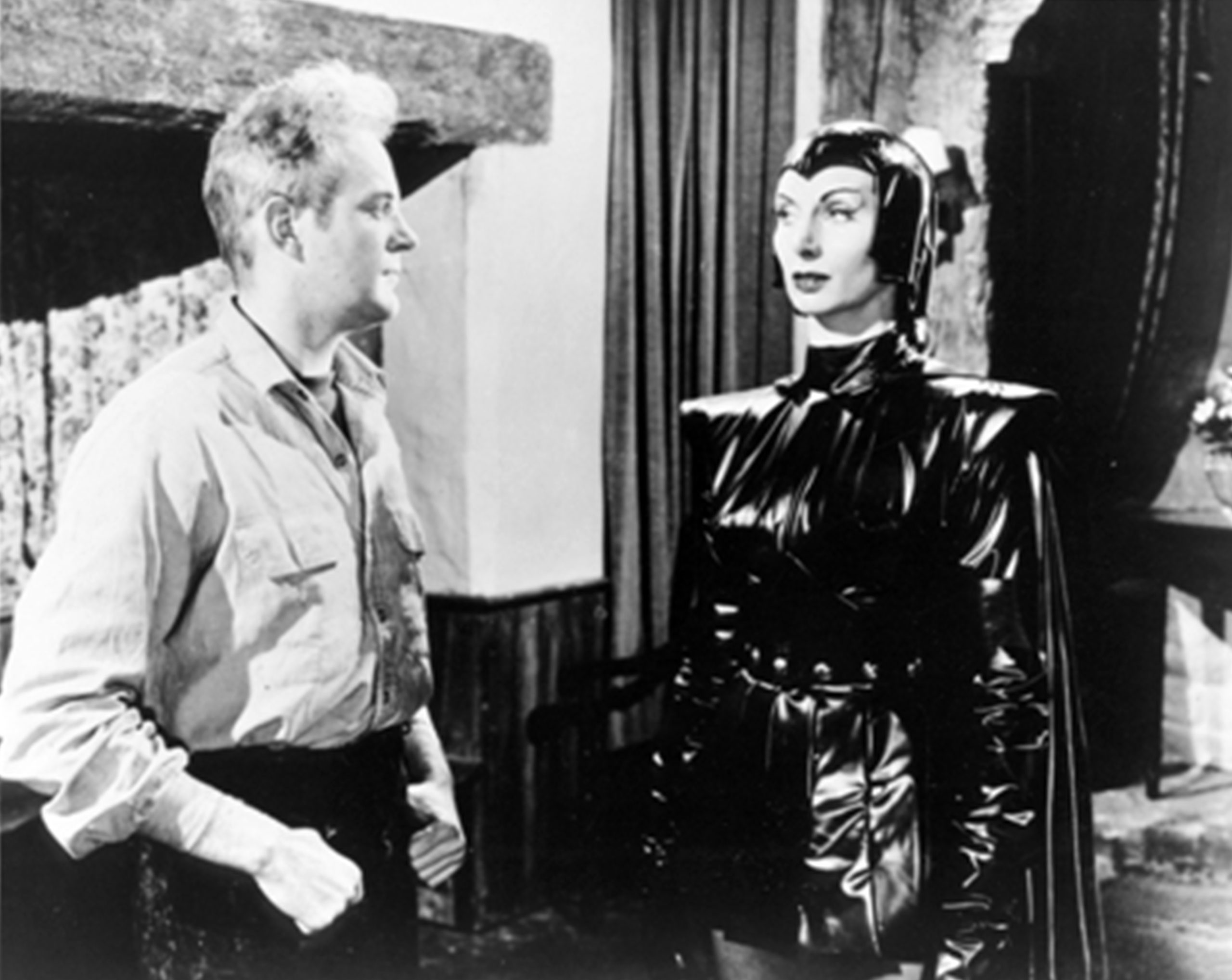
Devil Girl from Mars

A new restoration of the 1954 British black-and-white science fiction film Devil Girl from Mars, directed by David MacDonald and starring Patricia Laffan, Hugh McDermott, Hazel Court, Peter Reynolds and Adrienne Corri.

One winter evening in a lonely Scottish inn, guests become prisoners when Nyah, a pitiless Martian with a robot minion, lands on earth and traps them within an invisible wall. With Martian males extinct after a battle of the sexes, Nyah aims to capture breeding stock on Earth. As escape attempts falter, the helpless humans must decide which one of them will die to save the others and possibly the world! .

A famously economical film, Devil Girl from Mars was filmed over three weeks with no retakes in order to use up pre-booked studio time when another project finished ahead of schedule.

With a cast including the magnificent Patricia Laffan (Quo Vadis) as Nyah, and genre favourites Adrienne Corri (Vampire Circus), and fifties scream queen Hazel Court (The Masque of the Red Death), the film was shot by Jack E Cox (who filmed Hitchock’s The Lady Vanishes and Blackmail), with a score by prolific composer Edwin Astley, the man behind the catchy theme tunes to TV series The Saint and Danger Man.

Featuring the striking female Martian costume designed by Ronald Cobb, and a giant robot running amok, Devil Girl from Mars is a bona fide cult classic that STARBURST says “is as iconic as they come”.

Devil Girl from Mars is available to buy on Blu-ray, DVD, and Digital from January 15th.

INCLUDED WITH DEVIL GIRL FROM MARS:

– BRAND NEW Interview with novelist and critic Kim Newman

– BRAND NEW Audio Commentary with Kim Newman and writer & journalist Barry Forshaw

– Stills gallery

The Blu-ray edition comes with an exclusive set of four collector’s art cards.

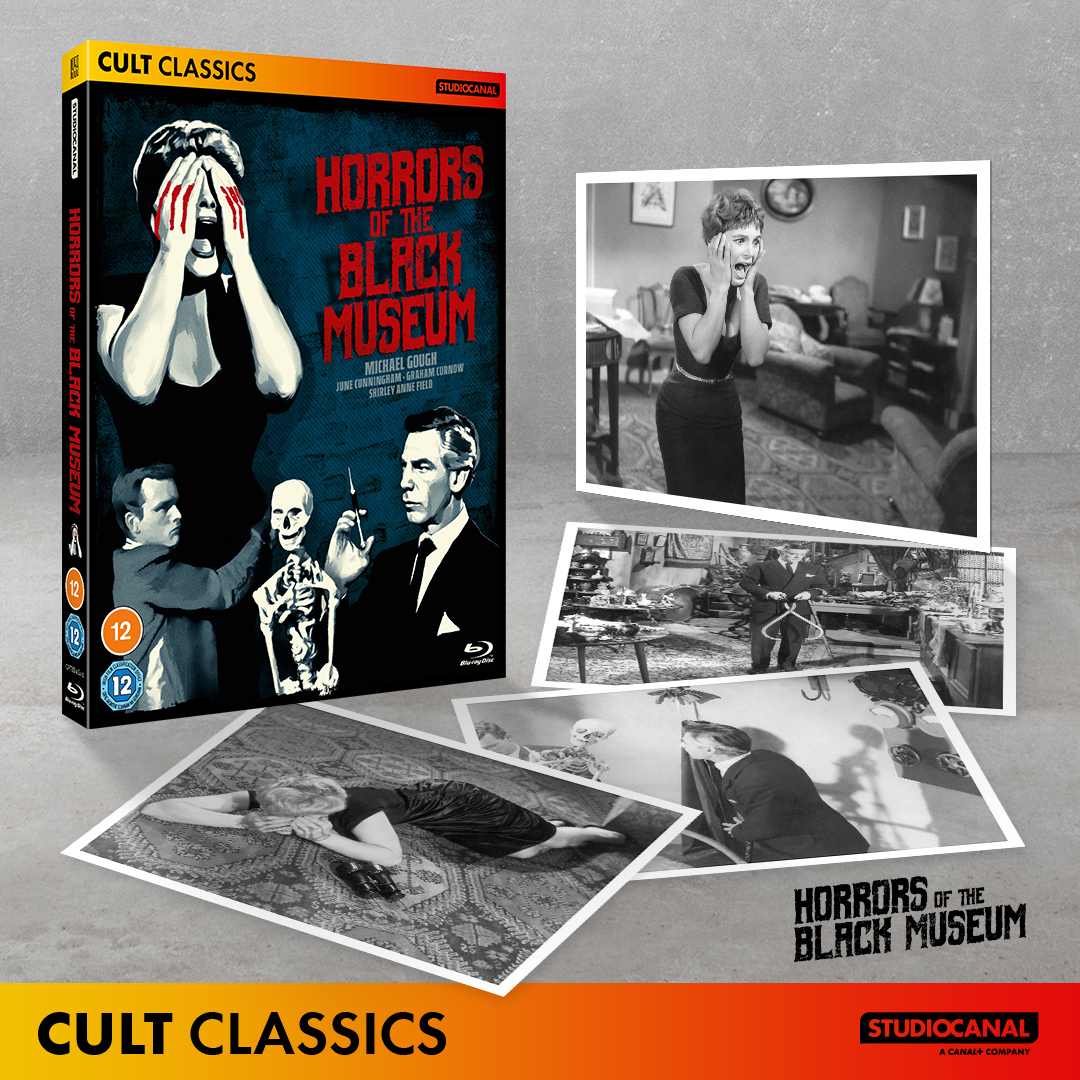
Horrors of the Black Museum

A new restoration of the 1959 horror film on Blu-ray and DVD, and making its UK digital debut, Horrors of the Black Museum, starring Michael Gough and directed by Arthur Crabtree (Fiend Without a Face), marked the first film in the ‘Sadian Trilogy’, followed by Circus of Horrors and Michael Powell’s infamous Peeping Tom – introducing cinema audiences to a more shocking and salacious brand of onscreen horror.

A series of grisly, macabre murders sweep London and leave Scotland Yard completely baffled. Bancroft, an evil crime journalist, is hypnotising his assistant to commit murders using items curated in his own personal ‘Black Museum’ – inspired by the infamous real-life collection of weapons and torture instruments used by criminals. Using these murders to fuel his own crime stories, Bancroft delights in the Yard’s embarrassment.

Experience fear beyond belief in this gruesome British horror treat that features a splendid lead performance from the estimable Michael Gough (star of horror gems including Trog, Horror Hospital, and The Skull), with a cast that also includes Shirley Anne Field (The Damned, Peeping Tom) and June Cunningham (The Small World of Sammy Lee).

Originally shown in the new filmmaking format ‘Hypno-Vista’ (‘It actually puts YOU in the picture – can you stand it?’), Horrors of the Black Museum was a box office hit, and can count Martin Scorsese among its fans – the director got the film inducted to the New York Museum of Modern Art.

Horrors of the Black Museum is available to buy on Blu-ray, DVD, and Digital from January 15th.

INCLUDED WITH HORRORS OF THE BLACK MUSEUM:

BRAND NEW Interview with novelist and critic Kim Newman

BRAND NEW Audio Commentary with Kim Newman and writer/editor Steve Jones

Hypno-Vista Introduction

Original Trailer

B&W Lobby Cards Gallery

The Blu-ray edition comes with an exclusive set of four collector’s art cards.

a Rafflecopter giveaway

You can buy Devil Girl from Mars and Horrors of the Black Museum here.

THE TELEPHEMERA YEARS: O Canada! (part 3)

Beastmaster, 1999

Ah, telephemera… those shows whose stay with us was tantalisingly brief, snatched away before their time, and sometimes with good cause. They hit the schedules alongside established shows, hoping for a long run, but it’s not always to be, and for every Street Hawk there’s two Manimals. But here at STARBURST we celebrate their existence and mourn their departure, drilling down into the new season’s entertainment with equal opportunities square eyes… these are The Telephemera Years!

O Canada!

Although the odd European show occasionally slips through the net, a massive percentage of the shows featured in The Telephemera Years originate from North America, and almost exclusively from the USA. Canada, though, has a thriving film and TV industry – including providing locations and supporting cast members for many of those American shows – and even has its own range of TV channels, including CBC, CTV, Global, and Space. To celebrate those gems made north of the border – some of which enjoyed three- or four-season runs but little acclaim outside their native land – we’re giving over four weeks of this column to our Canucklehead friends.

Some of the shows produced in Canada that have enjoyed wider acclaim include telefantasy schlockbusters Lexx and Relic Hunter, while the beloved Due South also falls into this category. Viewers of children’s BBC in the 1980s will no doubt have fond memories of The Raccoons and Degrassi Junior High, while Kids in the Hall rewrote comedy in the early nineties with a decidedly surreal touch. But those are the shows you’ve heard of and probably watched… what about those that didn’t get much reach beyond the provinces and territories of the Great White North? This is the story of yet more riches from the land of the maple…

Twice in a Lifetime (1999, CTV): Imagine that It’s a Wonderful Life was a TV show, that Clarence was played by a smouldering hunk, and that George actually dies at the end. That’s pretty much the premise of Twice in a Lifetime, in which people who’ve reached the end of their lives get a chance to go back to a pivotal moment and change something they did. It will alter their life for better or worse (always for the better, it seems) but they will return to the afterlife knowing they did a good job for themselves in some other timeline.

The key to the show was Al Waxman. The former Cagney and Lacey star played Judge Othiel, the big man who judged whether people would get that second chance, sending them back with a guide – Gordie Brown in season one and Paul Popowich in season two – to assist them in their mission. Othiel and his assistants were the only recurring characters in the series, with a parade of guest stars lining up to take their chance at redemption, including Corbin Bernsen, Michael Cera, Patrick Duffy, and Stephanie Zimbalist in season one alone.

Twice in a Lifetime, 1999

Twice in a Lifetime was created by Steve Sohmer, a former journalist who’d moved into television in 1977, occupying key roles at CBS, NBC, and ABC, where he was involved in the launches of shows such as Dallas, The Dukes of Hazzard, Cheers, and The A-Team. The show launched on both CTV in Canada and on PAX TV – a family oriented drama channel launched by the founder of the Home Shopping Network – in the US.

Waxman’s health was not good during the recording of the series, and he had to be replaced for four episodes during the first season while he recovered from heart issues. Sadly, Waxman died during heart surgery in January 2001 but had managed to complete his scenes for the rest of the second season. Without him, the heart fell out of the show, and it was decided not to bring it back for a third season without him.

Beastmaster (1999, CTV): The Beast Master was a 1959 novel by Andre Norton, the first woman to become Gandalf Grand Master of Fantasy for her life’s work in 1977. Norton’s novel told of a former Navajo solider who has a psychic connection to a group of genetically engineered animals, his story playing out over five books, the last of which was published after Norton’s death in 2006.

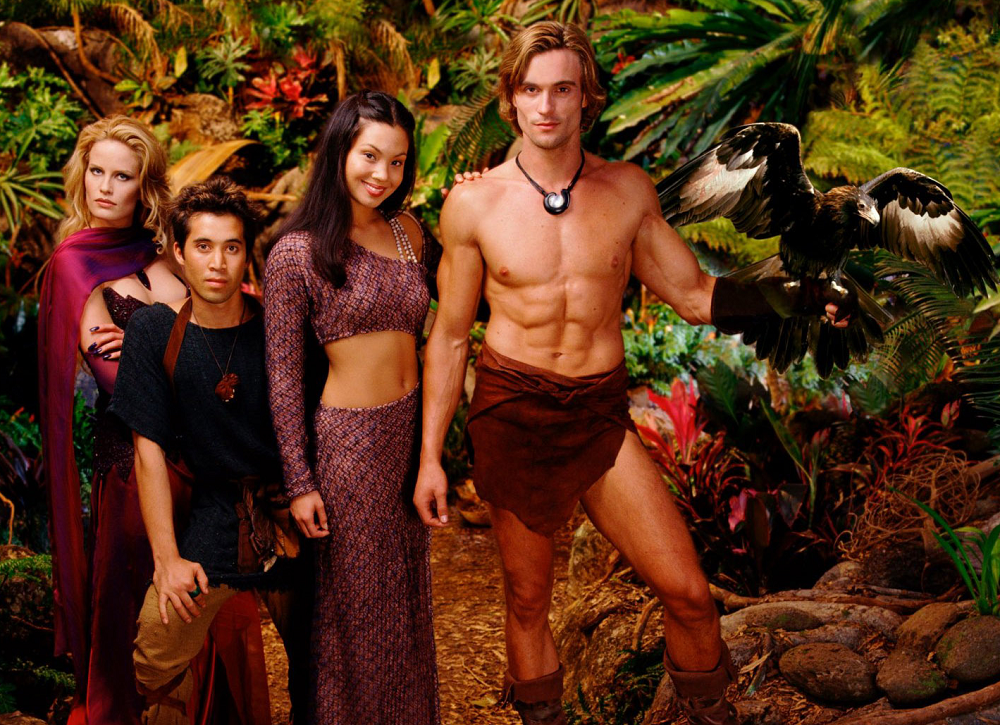
In 1982, Don Coscarelli – best known for his gruesome Phantasm series – took elements of Norton’s novel and created The Beastmaster, although Coscarelli’s version was shorn of its Earth-bound origins and set entirely in a fantasy world, to an extent that Norton asked for her name to be taken off the finished film. Marc Singer starred as Dar, the titular master of animals, fighting to free Aruk from the machinations of the high priest Maax (Rip Torn), with support from Tanya Roberts and John Amos.

Beastmaster, 1999

The Beastmaster became a big hit on the nascent VHS market and eventually spawned two sequels, both starring Singer. In 1999, Coote/Hayes Productions began production of a TV version, largely based on the 1982 movie but with enough of Norton’s original book that she didn’t object to her being credited as its inspiration. The story once again revolved around Dar, this time played by Australian actor Daniel Goddard and on a quest to find his lost love in a world riven by tribal conflict.

Debuting on CTV in September 1999, the series was also syndicated in the US, doing well enough in both markets (and more overseas) that it ran for three seasons, a total of sixty-six episodes. Filmed in Australia, Coote/Hayes also had The Lost World in production at the same time and the shows shared many of the same actors and writers, including early outings for Claudia Black, Emilie de Ravin, and Isla Fisher, while Singer appeared in season three as Dartanus, Dar’s spirit guide.

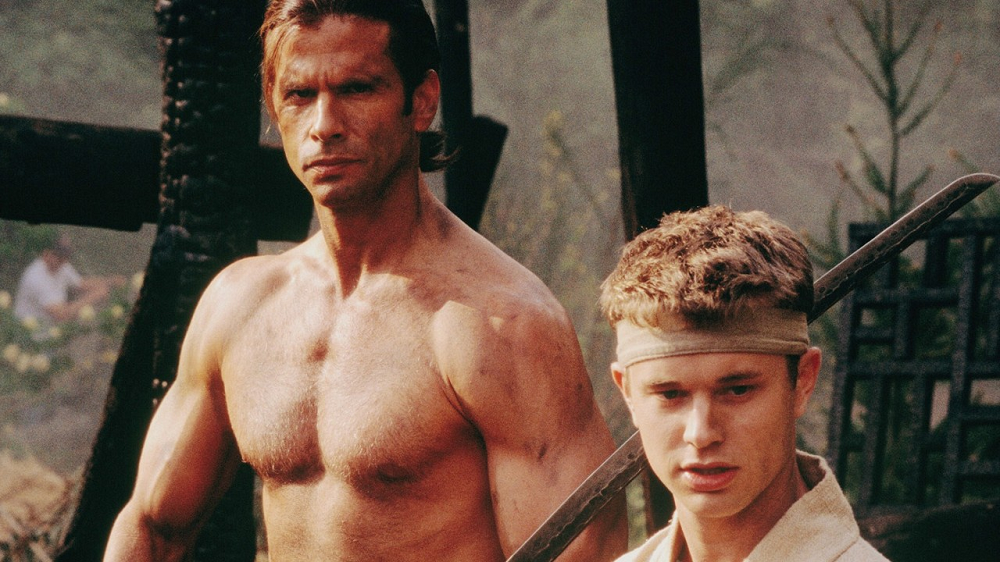
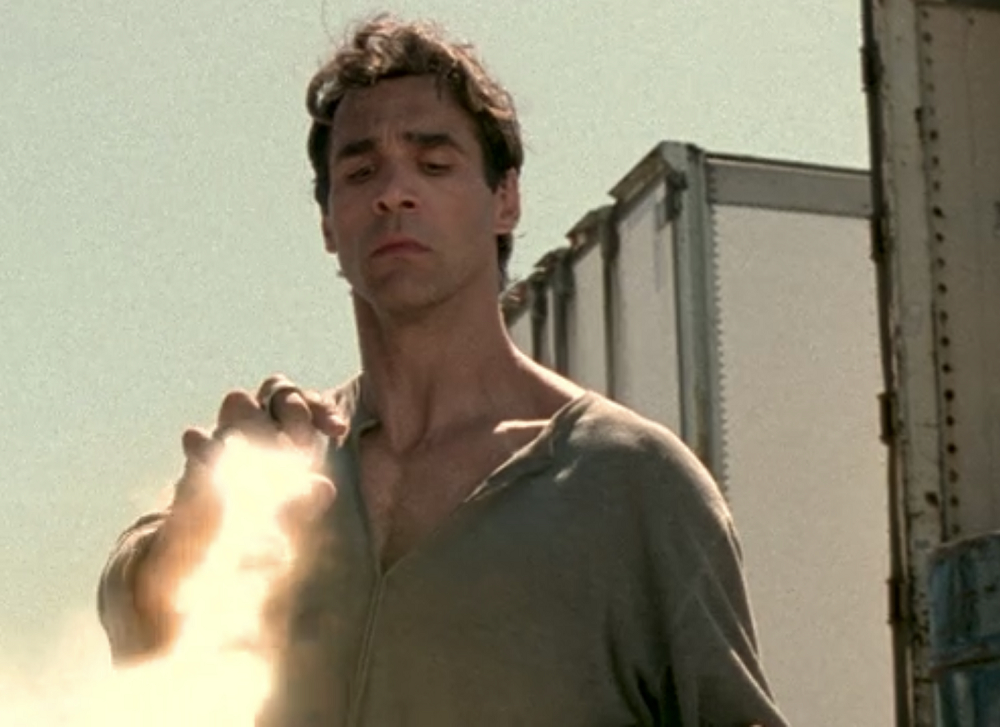
The Immortal (2000, syndication): After spending six years playing Reno Raines on Renegade, Lorenzo Lamas had firmly established himself as a syndicated TV action hero, even if his next outing – 1998’s Air America – only lasted for a single season. Hopes were high, then, for The Immortal, a curious mix of Shogun, Highlander, Buffy the Vampire Slayer, and more, with Lamas in the title role.

His Raphael Cain had his origin in the sixteenth century where his wife was killed, and his daughter abducted by a band of demons. Learning the secrets of oriental magic, Samurai swordsmanship, and eternal life, Cain – accompanied by his faithful squire Goodwin (Steve Braun) – spends five centuries tracking down the villains who may still have his daughter held captive. Destroying demons along the way with a heady mix of martial-arts and slicey-dicey, Cain is now also aided by April Telek’s Dr Sarah Beckman, an expert in otherworldly anomalies.

The Immortal, 2000

The Immortal was based on a concept decised by Chuck Knozelman and Cary Solomon, two jobbing writers who would eventually find their way into the burgeoning Christian film market. Their treatment was bought by Poltergeist writer Michael Grais and his Peace Arch Entertainment group, the show was filmed in Canada and the UK, with a supporting cast of familiar faces from both countries, including former WWF superstar Bret Hart.

The similarities to Highlander did not go unnoticed and fans of that franchise – which had recently enjoyed a six-season syndicated run of its own – were vocal in their opposition to The Immortal. They needn’t have worried because The Immortal was cancelled after just a single season, with an early cancellation notice allowing the storyline to be wrapped up in the final episode (although, of course, they left room for future continuation). Lamas returned to the world that had born him, starring in soap opera The Bold and the Beautiful, before moving into musical theatre and eventually leaving full-time acting behind, working as a helicopter pilot and offering tours of the Grand Canyon.

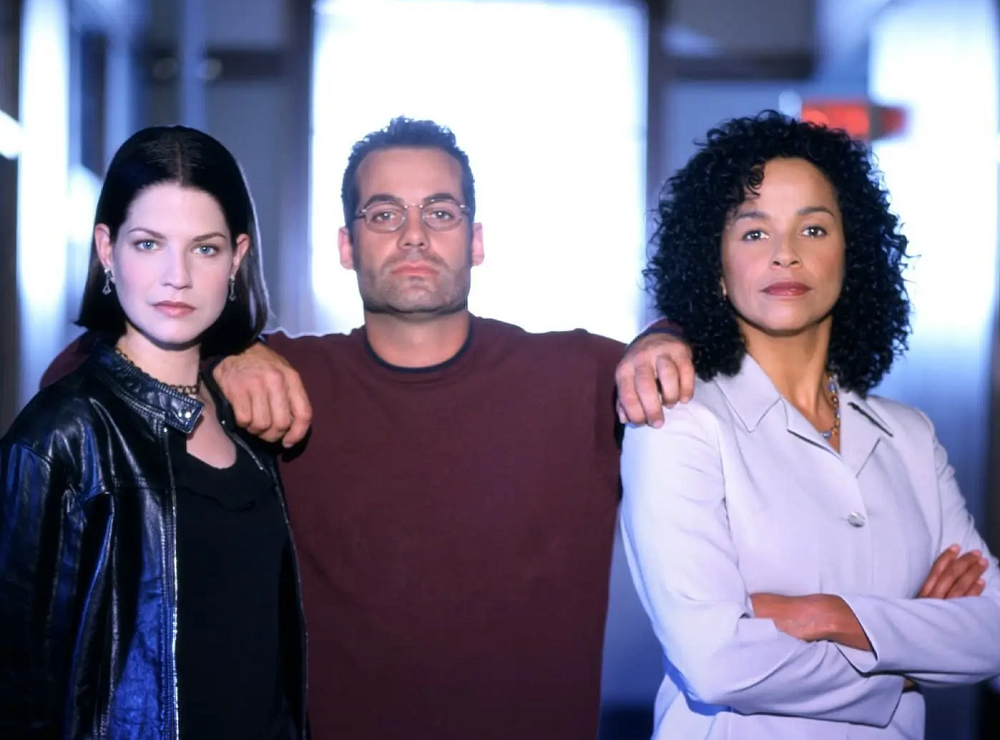
Mysterious Ways (2000, CTV): Created by Peter O’Fallon, a director with work on Party of Five and thirtysomething behind him, Mysterious Ways was essentially an X-Files that dealt exclusively with miraculous phenomena. Adrian Pasdar – later to appear in Heroes and Agents of SHIELD – starred as Declan Dunn, a professor of anthropology at the Northern University of Oregon, with a passion for the miraculous after surviving an avalanche that should have, by rights, led to his death.

Dunn is assisted in his investigations by his sceptical assistant Miranda (12 Monkeys’ Alisen Down) and equally unconvinced colleague Dr Peggy Fowler (Rae Dawn Chong), who offer rational (and often more incredulous) explanations for the things they encounter. Over the course of its two-season run, the show featured cases involving life after death, unbelievable luck, ghost children, the voice of God, and more, often leaving the viewer none the wiser.

Mysterious Ways, 2000

O’Fallon himself – who wanted to create a family-friendly sci-fi show that made its audience consider their place in the universe – wrote the pilot episode, with others including Eric Tuchman (The Handmaid’s Tale), Stargate SG-1’s Carl Binder, and the Hayes brothers chipping in. The show gained a cult following, with fans particularly drawn to its charismatic cast, although a familiar concept did not hurt.

A production of Vancouver studio Crescent Entertainment, the show aired on CTV in Canada and began airing on NBC in the US in July 2000 before being pulled for low ratings. PAX TV, a channel part-owned by the Peacock Network, took over in August 2000 and aired the show through it’s eventual end in May 2002.

Tracker (2001, Space): Daggon is an alien from the planet Cirron who lands on Earth in a field outside Chicago and takes on the identity of an underwear model named Cole. In truth, he is on a mission to recapture over two-hundred alien prisoners who escaped from the prison planet SAR-TOP as “life forces” and fled to Earth. They now inhabit human forms and only Daggon can bring them back to justice…

Starring British actor Adrian Paul, who made his name playing the immortal Duncan MacLeod on Highlander: The Series, Tracker was the brainchild of Gil Grant, a veteran scriptwriter who also created historical drama Covington Cross and the Tom Raider “inspired” Relic Hunter. Grant scripted the pilot episode, which laid out the show’s basic premise and introduced both Daggon and Geraint Wyn-Davies’s Zin, a former scientist who has martialled the six fugitive alien species into a criminal empire on Earth.

Tracker, 2001

Also starring Amy Price-Francis and Leanne Wilson, Tracker made much of Daggon’s unfamiliarity with Earth for comic effect, although his naivety kept any sort of meaningful relationship between him and Prince-Francis’s Mel from developing. This no doubt contributed to the show’s downfall, cancelled after just a single season, with a hurried finale completing Daggon’s mission.

Filmed in both Toronto and the UK, Tracker actually aired in syndication in the US six days before its Canadian debut on Space, and it enjoyed a short afterlife when the first and last episodes – with guest star WWF wrestler Chyna – were edited into a standalone movie entitled Alien Tracker. Whether it was intended to or not, it did nothing to bring Tracker back to terrestrial screens, with Grant moving on to work on 24 and the NCIS franchise.

Next on The Telephemera Years: One final batch of Canadian delights, including an improvised soap opera set on board a moving train. Honest!

Check out our other Telephemera articles:

The Telephemera Years: pre-1965 (part 1, 2, 3, 4)

The Telephemera Years: 1966 (part 1, 2, 3, 4)

The Telephemera Years: 1967 (part 1, 2, 3, 4)

The Telephemera Years: 1968 (part 1, 2, 3, 4)

The Telephemera Years: 1969 (part 1, 2, 3, 4)

The Telephemera Years: 1970 (part 1, 2, 3, 4)

The Telephemera Years: 1971 (part 1, 2, 3, 4)

The Telephemera Years: 1973 (part 1, 2, 3, 4)

The Telephemera Years: 1974 (part 1, 2, 3, 4, 5)

The Telephemera Years: 1975 (part 1, 2, 3, 4)

The Telephemera Years: 1977 (part 1, 2, 3, 4)

The Telephemera Years: 1978 (part 1, 2, 3, 4)

The Telephemera Years: 1980 (part 12, 3, 4)

The Telephemera Years: 1982 (part 1, 2, 3, 4)

The Telephemera Years: 1983 (part 1, 2, 3, 4)

The Telephemera Years: 1984 (part 1, 2, 3, 4)

The Telephemera Years: 1986 (part 1, 2, 3, 4)

The Telephemera Years: 1987 (part 1, 2, 3, 4)

The Telephemera Years: 1989 (part 1, 2, 3, 4)

The Telephemera Years: 1990 (part 1, 2, 3, 4)

The Telephemera Years: 1992 (part 1, 2, 3, 4)

The Telephemera Years: 1995 (part 12, 3, 4)

The Telephemera Years: 1997 (part 1, 2, 3, 4)

The Telephemera Years: 1998 (part 1, 2, 3, 4)

The Telephemera Years: 2000 (part 1, 2, 3, 4)

The Telephemera Years: 2002 (part 1, 2, 3, 4)

The Telephemera Years: 2003 (part 1, 2, 3, 4)

The Telephemera Years: 2005 (part 1, 2, 3, 4)

The Telephemera Years: 2006 (part 1, 2, 3, 4)

The Telephemera Years: 2008 (part 1, 23, 4)

The Telephemera Years: O Canada! (part 1, 2)

Titans of Telephemera: Irwin Allen

Titans of Telephemera: Stephen J Cannell (part 1, 2, 3, 4)

Titans of Telephemera: DIC (part 1, 2)

Titans of Telephemera: Hanna-Barbera (part 1, 2, 3, 4, 5)

Titans of Telephemera: Kenneth Johnson

Titans of Telephemera: Sid & Marty Krofft

Titans of Telephemera: Glen A Larson (part 1, 2, 3, 4)

Titans of Telephemera: Quinn Martin (part 1, 2)

Titans of Telephemera: Ruby-Spears

John Billingsley • TREK TALK

John Billingsley is best known for his portrayal of Phlox: Star Trek Enterprise’s eccentric, gregarious doctor. Outside of Trek he’s a well-established character actor, having appeared on everything from 24 to Pam and Tommy. But alongside acting, Billingsley devotes a lot of time to charity, and is the organiser and host of Trek Talks – an annual online Star Trek telethon. Now in its third year, this year’s Trek Talks takes place on Saturday January 13th, and boasts an impressive lineup of guests including Jonathan Frakes, Terry Matalas, Brent Spiner and Tawny Newsome. It’s free to stream on YouTube, and raising money for the Hollywood Food Coalition, an LA-based charity that Billingsley has been involved with for a number of years. STARBURST recently spoke to him about everything from his charity work, to Enterprise, filming naked orgies, and Kyle MacLachlan’s nipples…

STARBURST: Hi John. Thanks for taking the time to speak with us. What can people expect from this year’s Trek Talks?

John Billingsley: Well, it’s going to be a great show. It’s eight hours long. It’s on January 13th, from 10 in the morning to 6 in the evening, Pacific Time. I don’t know how that translates to the various parts of Great Britain [Note: It’s 6pm until 2am]. Every two-hour block contains a multitude of different panels, different interviews. We’ve got a one-hour-long interview with people from Picard Season 3, including Jonathan [Frakes], Brent [Spiner], Ashley Chestnut, Todd Stashwick, and a few others. Jonathan del Arco is going to moderate.

We’ve got a great panel that the SyFy Sistas are conducting with Michelle Hurd and a variety of other wonderful African American women who played instrumental roles in the history of Star Trek. It’s sort of a homage to Nichelle Nichols on Martin Luther King weekend. We’ve got a female scientists panel. We’ve got a panel devoted to looking at the episode Tuvix with most of the male cast from Voyager and one of the writers. We’ve also got standalones with a number of other guests, including Nana Visitor, and a couple that we haven’t yet formally announced yet because they haven’t quite dotted the I’s and cross the T’s. So, it’ll be a really fun day.

Can you tell us a little bit about the Hollywood Food Coalition, and how you became involved with them?

I know right now, folks in England are experiencing similar problems in this tricky economy. There is a lot of hunger in America and a lot of homelessness in America. We’re an organisation that’s devoted to attempting to address issues of hunger and poverty. And in essence, what we’re really wanting to do is to use food as a medium to help sew up a tattered social safety net. We provide around three million pounds of food a year for about 150 other not-for-profits to buttress and augment their meal programmes. Additionally, we serve a hot meal to all comers seven nights a week in our own home kitchen. And we also make sure that the people who come to us are connected in turn to some of the organisations that we’re supplying food to.

We want to kind of create a virtuous circle amongst the social service community in Los Angeles. And lastly, we work with organisations that are interested in doing what we’re interested in doing, which is seeing if there are big-picture solutions to hunger that can only be addressed collectively. For instance, food is available that we don’t have enough joint refrigeration capacity, storage capacity, transportation capacity for, etc. How do we work together to solve some of those problems?

How did you first become involved with them?

Well, the long version of the story is that after Trump won, I think I, like a lot of people in my country – and I imagine many people feel similarly, after many years of the Conservative Party – wanted to do something that would respond on a personal level, to what I thought was a deep tragedy. I wanted to feel like I was not retreating out of fear and rage but moving forward out of compassion and care.

So, I looked around at some at some length for a place that I could get myself to, and I walked in the door of this great joint – my wife actually led the way – and started making fruit salads, washing dishes, just doing quotidian stuff. But I realised it was a great organisation that maybe needed a little bit more of a sense of communitarianism. We are a coalition. And I didn’t think all the folks who were interested in doing the work were getting together and talking about the future. I helped organise the board, helped organise a little bit more structure, and helped organise a bit more of a drive towards expanding our capacity to help by rescuing and sharing more food.

I think in part because I was a theatre actor for many years and I didn’t have a buck, that the idea of being hungry and not knowing where your next meal is going to come from actually has a certain kind of personal resonance.

Is that why you what you think you chose that particular charity over others?

I’m a great believer that we all need to ask ourselves: “What is my voluntaristic bliss? Where am I going to be most happy?” And it varies wildly. Some people I think are going to be happiest teaching a kid how to read, or maybe volunteering in a prison or cleaning up the beaches.

I don’t know why, but for me there was always something very appealing about working with an organisation that provides direct services to people in need. I used to be on the board of an organisation called the AIDS Service Centre. We were kind of a one-stop shopping centre for people who had HIV AIDS-related issues. That kind of immediate gratification from feeling like somebody’s important daily needs are being provided for has always had a lot of resonance for me.

Again, I think, in part it’s because for many, many years, I made under $10,000 a year. I lived on food stamps, I was on unemployment insurance, I always had to scrounge a bit, not only my next gig, but my next paycheck, and my next rent check consequently. I had some good fortune later in life, but there’s been too many years in my life when I was, not hungry, but concerned about what was going to happen for me to have forgotten.

Do you do much other charity work? I know you’re involved with PanCAN as well, aren’t you?

My mother passed away from pancreatic cancer when she was 70. From diagnosis to death was two months. I found out that Kitty Swink – Armin Shimerman’s wife – and Jonathan Frakes were actually working with the wonderful, wonderful group Pancreatic Cancer Action Network. They organised a team to walk and raise money, which Kitty has been doing for a number of years, and they asked me if I would join, and I said “absolutely.” Right now, that’s a little more on the backburner. For me. I kind of have a two-step approach; first there’s the intense preparation for Trek Talks, and once that ends, I do a little bit more of a shuffling of the pots and I lean forward into PanCAN a bit more, although I’m also on the board of the Hollywood Food Coalition. And I chair the development committee, so all year long I’m involved in helping to raise money and awareness of it.

Would you say that charity is now more your focus than acting?

Yeah. I still love to act and I’m always happy to act. But in all candour, since Trump won, I’ve wanted to do more charitable work, but it wasn’t as if it was a brand-new thing. But I definitely moved the focus. I told my agents that I would like to be offer only [where established actors accept offers for roles but won’t audition for parts] and put more time into charitable work. You then find out right away that when you say offer only, you aren’t going to get the offers, and it’s like, “okay, well, I found out I’m not an offer only actor!” I’ve subsequently rescinded that and said, “alright, I’m back auditioning.” I don’t want to send any energy out to the universe, suggesting that I’m uninterested in acting. But once folks in the industry begin to feel you’ve receded, they’re happy to let you recede. And I’m not a stage actor anymore. I haven’t done any stage acting in a long time. That used to be something that you can keep percolating. And that is something I’ve had to let go of.

Moving onto Enterprise, Phlox was a very different type of Star Trek character. The closest to him previously was probably Voyager’s Neelix, who proved quite divisive. Did you have any concerns about how you’d be received by fans?

I wasn’t particularly conversant with Star Trek history. I’d watched the original shows as a kid, but when I got this gig, I certainly had my finger on the pulse of popular culture enough to know that it was life-changing. But I didn’t know what Phlox was, or how he was related to all of the other species that had been introduced from Next Gen on through to Voyager. It was all Greek to me. I’d never heard of Neelix, I’d never watched Voyager. I did ask a pal of mine to give me a crash course in Star Trek history. He sat me down and I watched a few episodes of each show, so I didn’t begin work on Enterprise with quite as much ignorance as when I got the part.

But how you’re perceived is outside of your control. All you can do is try and play what’s on the page. I mean, he was clearly a buoyant character with his trademark optimism, but also there’s just the sense that this is a guy who leaves his home planet. He’s well into advanced middle age, and I would imagine he’s got grown kids. He’s lived a good chunk of his life. And in my opinion, he’s going off rather merrily on what is probably a suicide mission – I mean, Earthlings for God’s sake, taking their first ship out! And he says, “yeah, I’ll come along, what the hell! What’s the worst that could happen? I die.” To me, he always was kind of like a Buddhist, he had a relaxed sense of having lived a life, one now let’s go of fear of death, and then moves on to the next stage.
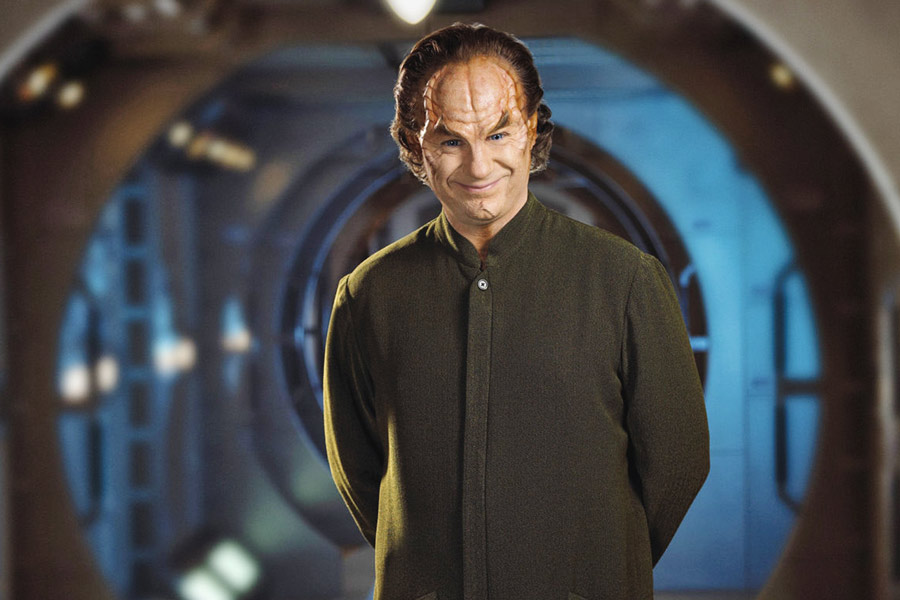
 

Star Trek Enterprise (2001-2005)

Looking back on the series now, how do you think it holds up?

I haven’t watched it much. Since it found a new audience on Netflix, I certainly have gotten a sense from people that maybe some of the initial knee-jerk negativity had as much to do with the fact that there was a certain amount of Star Trek fatigue when it premiered in 2001. I think now that has been looked at outside of time, I think there are people who might appreciate what it did well, more than was true at the time. That said, I always had my issues too. In my opinion, what I would have liked to see them do more with the show is really play up the idea that as the first Earth ship, we had our heads up our ass. We didn’t know what the fuck was coming next. The transporter terrified us. The weapons malfunctioned. In my opinion, if we’d gone more for almost a Robert Altman sense of disarray, overlapping dialogue and “what the hell was that?” Not that we would have been in full panic mode all the time, but there might have been a little bit more of a sense of really getting our feet wet. I think they started with that idea, but it quickly became a little bit more “your daddy’s Star Trek.”

Most fans seem to feel that it found its footing in Season Three. I have some issues politically with what the Xindi arc meant at a time when we were thinking about invading Iraq. I wasn’t too crazy about the idea that these lizards attacked the Earth, and anything goes to beat the bastards. That wasn’t necessarily the easiest message for me to swallow. On the other hand, it definitely provided a tension and a sense of urgency that I think the show had been missing. A lot of my favourite episodes fall within the arc of Season Three, if only because even if they didn’t have anything to do with the Xindi, there was a sense of tension that was lacking for a while on the show.

People forget, but Enterprise debuted three weeks after 9/11. I’ve always wondered, do you think part of the show’s negative reception was because the optimistic sci-fi tone was out of touch with public mood? I think Season Three reflected more of what was going on in America at the time.

Possibly, although I think one tends to overstate that. I mean, our culture is vast, God knows. And we have so many different influences, even at the time you could have found any number of shows on television that didn’t have to bow in the direction of 9/11, that had their own spirit and their own sensibility.

I think for me, it was more about the fact that because Rick [Berman] and Brannon [Braga] were rushed into production, they didn’t really have a fully fleshed out Bible for what the show wanted to do and what it wanted to be. There is a story that I tell which doubtless people have heard 1,000 times. But nonetheless, it is the story that to me kind of encapsulated what I think one of the issues was. Early on, there was a script, [for the episode Strange New World] and the transporter, which we tried not to use, did indeed malfunction. In the original draft, which was not filmed, the crewman comes back from that planet’s surface and his head is where his ass should be. By the time it got through all the various drafts, what we ended up filming was that the guy comes back from the planet surface, and there’s a twig sticking out of his ear. I thought, “there you go, that’s the opportunity missed.”

The show ended after four seasons, and while respectable, it was less than its predecessors. Why do you think it happened to end early, and when did you first get a sense that the writing was on the wall?

I think there was a certain amount of Star Trek fatigue. I think maybe it wasn’t quite a bold enough departure to have the same kind of version of Star Trek that audiences have been watching for a number of years. But some of it was also just the reality of network politics. We were on UPN in the States, which was a dying network. Nobody in Hollywood wanted to pitch an idea for a show to UPN. Nobody wanted to be on UPN, everybody pretty much knew its days were numbered. It becomes a self-fulfilling prophecy. They don’t have anything else on it, which means that when they go out to the various small marketplaces, Austin, Texas or Bumfuck, Iowa and they’re saying, “hey, pick up UPN,” the affiliate stations say, “okay, but we get to choose which shows we air and when we air them.” So frequently, Enterprise was not actually aired.

As a for instance, in San Antonio we went to a convention, and nobody showed up. We found it was because in the San Antonio market, we were always pre-empted for high school football games on Friday nights. So, there were a lot of factors that came into play. Not only did we not necessarily get a huge response from the audience, but then the show was impossible to find frequently for those people who did want to watch it. UPN was only kept alive for its last few seasons by our presence. Oddly, not only did we not make it for more than four years, but we held a network in place that was dying. And with us, it went.

Some of the Star Trek casts, particularly The Next Generation, are very close to each other. Are the Enterprise cast similar?

To a certain extent. I think what keeps a lot of the casts close is the fact that we see each other at conventions, and one of the nice, wonderful perks of Star Trek is – aside from the money – if you’re sociable, the idea that you get to see people you love on a regular basis, not only other actors, but fans as well. There are some folks from Enterprise who don’t choose to participate in that world: Jolene [Blalock], and Scott [Bakula] still has a very successful career, so he’s not around very much. Connor [Trinneer], Dominic [Keating] and Anthony [Montgomery], and to a lesser extent, Linda [Park], we see each other a fair amount, and I love them all. We’re probably not as close as some of the other casts, because some of the other casts have been doing it longer. The Next Gen cast has been out on the road together for years.

But what is interesting is that you become close to people who weren’t in your cast. So, Bob Picardo is a good friend. Nana Visitor is a very good friend. There are a number of people that I love from the other iterations. I haven’t really gotten to know folks from the current iterations yet. They’re in production, so they’re not as often at the various conventions. And I don’t tend to go to as many conventions as I used to either. But it takes a certain kind of personality, I think, not just to be on Star Trek – for actors it’s a gig – but to want to participate in the ongoing of Star Trek the rest of your life. I think the folks who want to be close self-select themselves into that circle.

Talking about the new shows, do you keep up with any of them at all?

Billingsley: To a certain extent. I don’t really watch a ton of television. I wanted to be a writer, so my first love is and always has been reading. It’s not that I don’t like TV, it’s just that there’s only so many hours in the day, so I’m sparing about TV. I’ve watched a few episodes of the various iterations of the show, just so I kind of know what I’m talking about, but I’m not up to date by any means. And in fact, I don’t think I’m up to date about anything. The last show I think I watched in its entirety was probably Better Call Saul. No, Succession, I watched Succession.

My wife and I will pick a show, we’ll watch it from beginning to end, it’ll take us months. It means one night a week, maybe two, we’ll watch an hour of television. And that’s about as much as I give myself. And then this year my wife [actress Bonita Friedericy] is a nominator for the SAG Awards, so we’re watching more movies than we ever do. And it’s fun, but I’m usually looking forward to getting back to my book.

I’m assuming you’d be open to appearing on any of the new shows if they ask?

Sure. Hell yeah. I find myself having this conversation a lot. I’d be delighted to return to any of the iterations of Star Trek, although I’m beginning to think because this has come up in a variety of interviews that the people who create these shows are going “shut up already!” But if you happen to be reading this, oh writers of Strange New Worlds, I’m around!

You’ve been suggesting recently that Phlox could show up on Strange New Worlds as a successful author of sex manuals?

People ask what do I think Phlox is doing later in life? I don’t know, can’t the guy retire? If it was up to me, he’d probably be sipping Mai Tais on Risa. But, you know, somebody has written my story already, so I suppose if you’re really deep diving, you can find out what happened to Dr. Phlox, and he’s apparently been doing all sorts of amazing shit. He runs a little bookstore somewhere, he goes home, he’s got his wives, he’s got a Beagle. He’s decided Beagles are not such a bad idea. The one thing he took away from the Enterprise, they’re kind of cute.

You’ve done a lot of guest spots on classic shows like The West Wing, X-Files, 24, and Twin Peaks. Have you got a particular favourite you’ve done over the years?

I did a couple of episodes of Cold Case where I played a really horrible serial killer. That was kind of fun. I’ve played a lot of horrible serial killers. Similarly, on NYPD Blue I was a cab driver who murdered his African American fares because he was in his dark heart a racist. That was pretty perverse. On Nip/Tuck I was a guy who felt he had an extraneous leg. And apparently this is a real condition people who feel that they are carrying the burden of an extra limb and want to self-amputate. That was that was kind of an interesting part. I liked being on Masters of Sex a few years back, I had kind of a fun part as a shrink. Recently, I enjoyed being on Pam and Tommy, where I played absolutely scabrous and scurrilous attorney for Penthouse Magazine. Everything has something fun to recommend it. But generally speaking, the life of a character actor, you go from show to show to show and occasionally you get lucky and get a TV series. But for the most part, it’s just for a couple of weeks, you’re getting to wear somebody else’s trousers and you try and have a good time doing it.
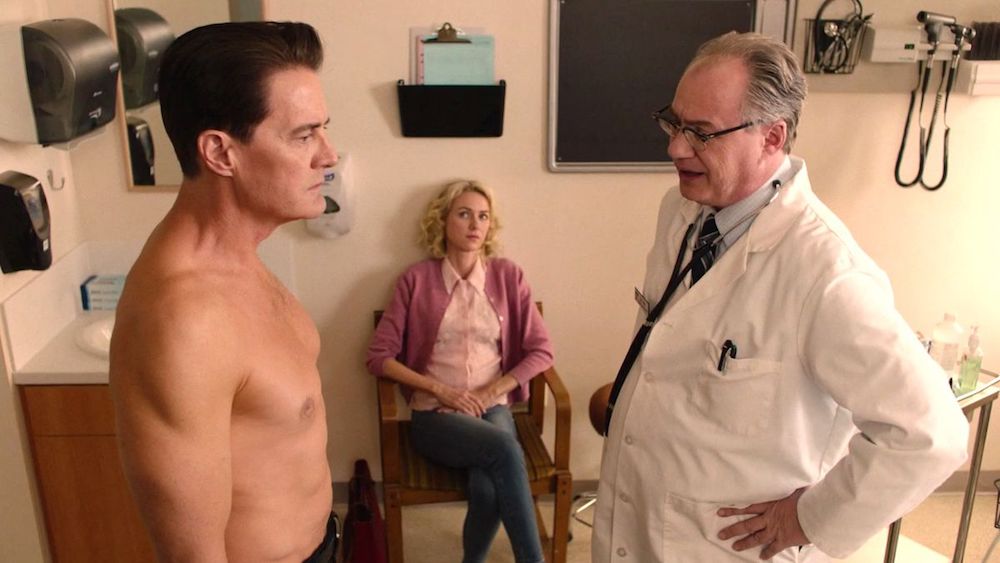
Twin Peaks: The Return (2017)

You did an episode of the new Twin Peaks. Were you there long enough to get to know David Lynch at all?

Billingsley: No – very, very short appearance.

Just the one scene…

One scene with Kyle, yeah. What did interest me is that David Lynch does not audition actors. You don’t come in and read scenes or prepare material. You’re just asked a question. And the question in this instance was “tell me something interesting you did today.” And I had given my cat an enema. I told the story. I never thought I’d give a cat an enema, that’s not a pleasant experience, I didn’t like it. Anyway, they cast me as a doctor. I told the cat, “As much as I didn’t want to give you an enema, I guess it paid off. I’m on Twin Peaks, thanks pal.” He didn’t take it in the spirit it was intended, he was more like, “fuck you!” It wasn’t a good role, but it did get me a part, and I have touched Kyle MacLachlan’s nipple.

After Enterprise, your biggest TV role was probably in True Blood. From what I know about your sense of humour, I imagine you really enjoyed yourself on that show?

No, I didn’t, it was miserable. It was a pretty small part, so I didn’t feel like I was part of it [Billingsley had a recurring role as the town’s coroner]. Much of the first season my role consisted of me saying “coming through,” as I was carrying a corpse. The second season, there was a season-long orgy, and Michelle Forbes was the villainess. She had us all in her thrall, and she fed off the erotic energy. So, the entire season was me basically having sex with a tree, having sex with a lamp post, having sex with a bar wench, anything that moved, I was down to fuck it. As was everybody else! But what this meant was that you were frequently naked, it was frequently cold out when you were doing the orgy scenes. It was actually a fairly miserable experience, plus I had to wear these gargantuan black contact lenses. So, you’re wandering round, you can’t see a fucking thing, there’s dust in your eyes, you’re freezing cold, the last thing in the world you actually feel is erotic!

In one instance, there was a woman who was playing a dirty dancer who I was dancing with. She was an extra, a perfectly nice lady, but she was bound and determined to reveal both breasts on camera because you get paid 50 bucks a breast. She was constantly trying to reveal both breasts, which would fuck up the shot, and you’d hear the director go “cut, just cover the left breast, we just want to see the right one.” Eventually I said to her “look, just show the one fucking breast, I’ll give you 50 bucks and let’s get on with this!”

My wife, when I would come home at night would ask me what I did, and I’d be “dirty danced with some lady, and I had to rub maraschino cherry juice on her tits. Another day at the office.” She was not having any of that. I kept telling her it’s a miserable experience, just you wait. And eventually she got an audition to be in a horror film for Rob Zombie [Lords of Salem], and she had to be a naked witch. And she wasn’t going to do it, and I said, “oh no, you’re doing it!” Vengeance is sweet. So, she auditioned, she got cast, Rob Zombie said, “the reason I cast you is because you look so pissed off that you have to be here.” Marriage is just basically 40 years of getting vengeance.

What’s next for you after Trek Talks?

I’m very invested in the future of this organisation [The Hollywood Food Coalition] so I spend a lot of time working for them, and I will continue to do so. Beyond that, workwise, we’ll see if anything comes up. Now that the strike is over, one is theoretically auditioning again. I’m not sure I’m on anyone’s list, and there’s not as much work once you’re over a certain age. I’m in my 60s, what work there is, you’re competing against people who are really good. It’s not like when you’re younger and you’re going up for a part and there’s a reasonably chance that half the people you’re auditioning with aren’t up to snuff. The missus and I will do some travelling, I’m going on the Trek cruise in February, monitoring the cats’ health against the possibility that I’ll have to give them enemas in the future, and reading.

Last question. Robert Picardo occasionally likes to say mean things about you. Have you got any rumours – true or otherwise – that you’d like to spread about him?

Where do I begin? I make fun of Bob because he makes fun of me, it’s clearly something we enjoy doing. I think we both secretly wish we could go back in time and become Jack Benny and Fred Allen, who had a notorious feud for years in the old radio days, which I think neither of us can unfortunately ever rival. But he is a deep love, and I really can’t say enough nice things about him, much as I hate to disappoint you. I wish I could spread some spurious rumour about him but no, he seems to be happy, healthy, and living the high life. He certainly continues to get all the work that I want!

He’s back on Star Trek in a few months [in the second season of Prodigy]…

I know! What I do know in my heart of hearts though is that when the toll is taken up yonder and they’re saying, “and now, will the sexiest doctors on Star Trek step forward,” I will be, along with Wilson [Cruz], at the head of the line, and Bob – the hologram – will be at the back.

I think that’s the perfect note to leave it on.

Yes, my pleasure.

You can stream TREK TALKS live on YouTube from 6pm GMT on Saturday January 13th. See the full line-up and donate to the Hollywood Food Coalition here. Following the live stream, the event will remain available to watch on YouTube.

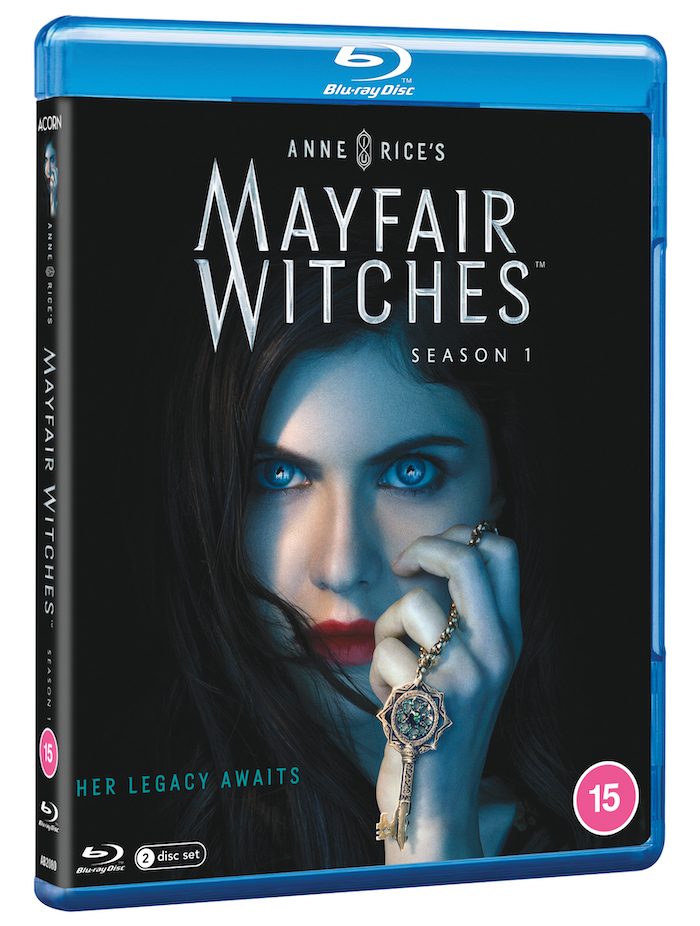
[ENDED] Win ANNE RICE’S MAYFAIR WITCHES Season One on Blu-ray

Anne Rice’s Mayfair Witches Season One hits Blu-ray and DVD on January 8th, and we have a copy of the Blu-ray to give away to one lucky reader! Just read on and enter below…

Prepare to be bewitched by Anne Rice’s Mayfair Witches Season One – a rich tale of power, destiny and the enduring legacy of a family with extraordinary mystical abilities, which comes to Blu-ray and DVD on January 8th, 2024, following its transmission on BBC Two – which begins tonight. Each episode will also be available to purchase on digital 24 hours after transmission, courtesy of Acorn Media International.

This enchanting new series showcases a stand-out cast including Alexandra Daddario (The White Lotus), Tongayi Chirisa (American Horror Story), Harry Hamlin (Mad Men), Beth Grant (Donnie Darko) and Jack Huston (Boardwalk Empire) and breathes fresh life into Rice’s acclaimed novels, The Lives of the Mayfair Witches trilogy, which includes Anne Rice’s Interview with the Vampire.
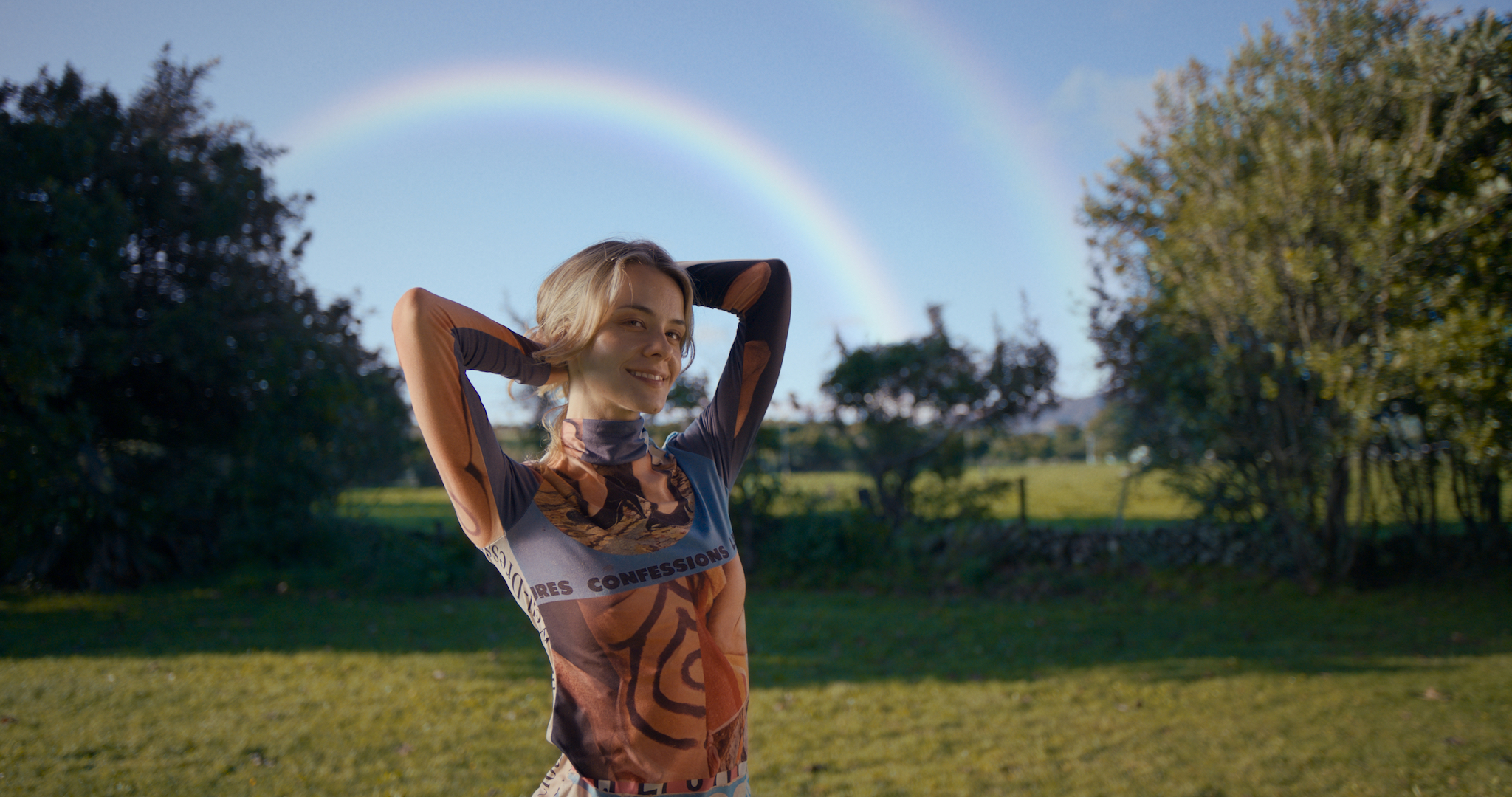
Rowan Fielding (Daddario) is a passionate and intuitive young neurosurgeon whose life is about to change forever. Compelled by the loss of her adoptive mother to question where she came from constantly, Rowan is full of questions and as strange, inexplicable things start to happen around her – her search for the truth only intensifies.

Learning that she has supernatural abilities is only the beginning and as Rowan discovers that she is the unlikely heir to a family of powerful witches, she must grapple with the truth about who she really is and contend with a dark force that has haunted her family for generations.

Travelling to New Orleans to claim her legacy, Rowan soon learns that her newfound powers could have very dangerous consequences. Torn between life as she knew it and her seductive new powers, Rowan must distinguish good from evil and decide which side she’s on.

The spellbinding, gorgeously gothic series is exec-produced by Mark Johnson (El Camino: A Breaking Bad Movie), Michelle Ashford (Operation Mincemeat) and Esta Spalding (Masters Of Sex) and marks the thrilling second instalment in AMC’s Immortal Universe franchise.

a Rafflecopter giveaway

Anne Rice’s Mayfair Witches Season One is released on Blu-ray and DVD on January 8th, 2024.


Tony Leung & Andy Lau | THE GOLDFINGER

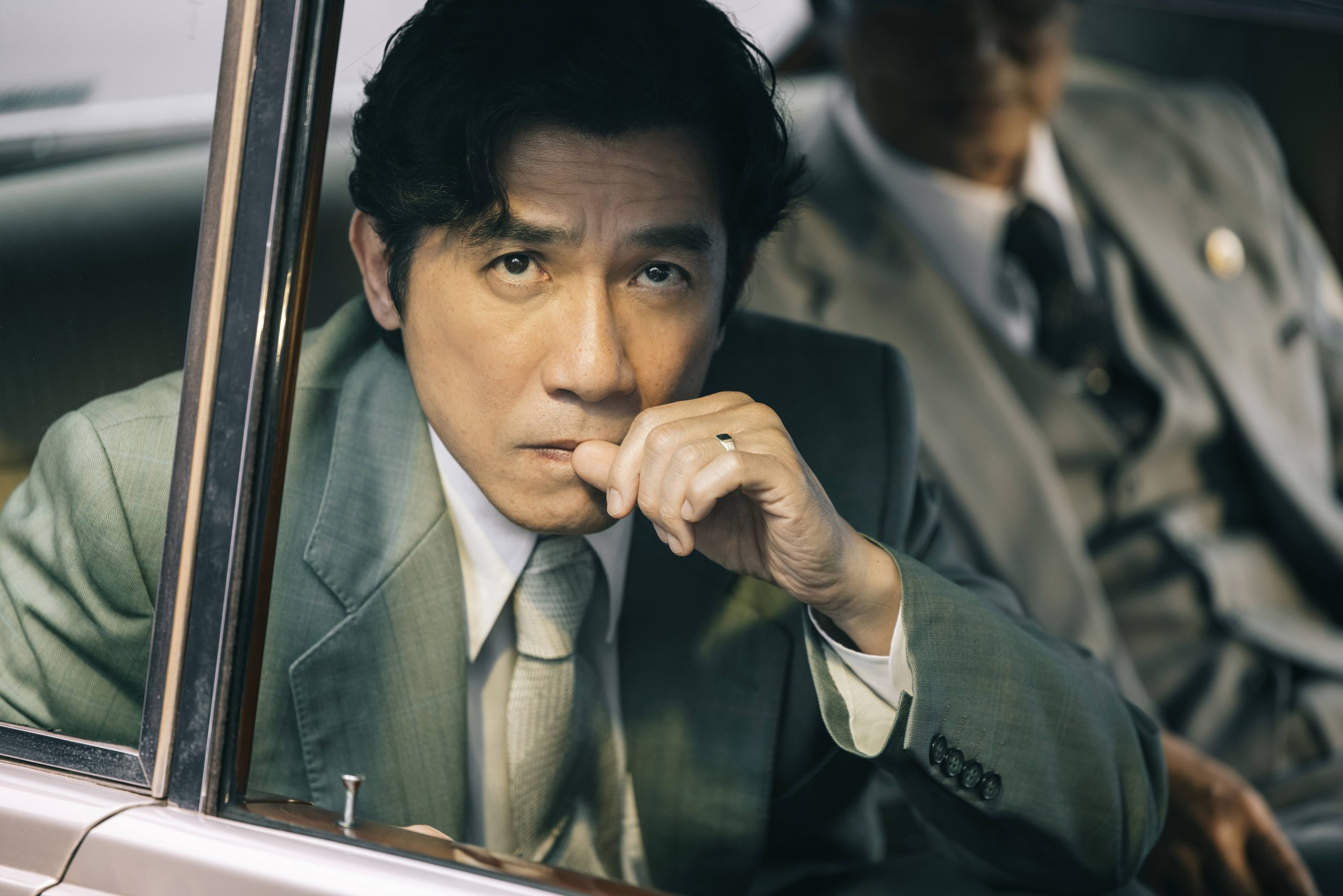
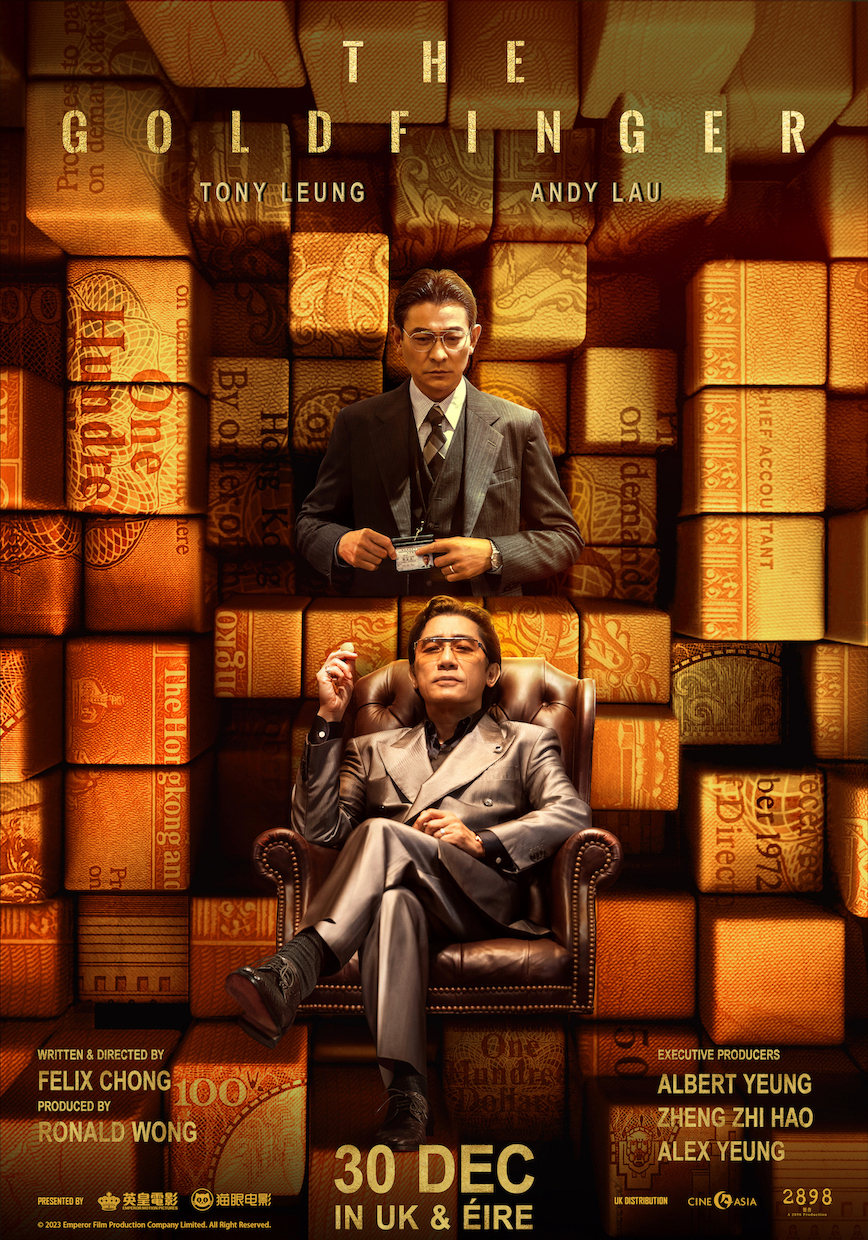
The Goldfinger is a new, big-screen crime caper. And no, it’s not a remake of the James Bond 007 classic, but for those old enough to remember, it brings two Hong Kong superstars back together after their acclaimed undercover cop thriller, Infernal Affairs (2002).

More than 20 years later, Tony Leung (Shang-Chi and the Legend of the Ten Rings, The Grandmaster) and Andy Lau (The Wandering Earth II, House of Flying Daggers) are back with writer-director Felix Chong (The Silent War, Overheard), now taking directing duties on this sweeping criminal story set in the Hong Kong financial market.

Recently promoting the release in UK and Irish cinemas, Leung and Lau were kind enough to answer some questions about making this ambitious film.

The Goldfinger follows the rise and fall of a multi-billion-dollar company and its chairman Cheng Yi-yan (Leung), who undergoes a major investigation led by an anti-corruption investigator (Lau) who dedicates himself to the case, even putting his life and family at risk, to bring justice.

Set across multiple periods during the 1970s and 1980s, the film boasts many different looks for its cast of characters, and noticeable changes in the epic production design. There’s a great soundtrack to boot.

Tony Leung explains, “These jumps in chronology didn’t affect us much. We had the full script, so we could plan ahead for our performances or ways of acting for each specific time. As for makeup, I mainly have three different styles to help create the character.”

Andy Lau recollects, “When I watched the film, I didn’t see much de-aging digital technology being applied. For the later part where we get older makeup, I have to credit the makeup team, for the hair and face, they didn’t put latex or something like that to make me look older, just normal makeup, and making aging more obvious [laughs]. This made me feel more comfortable.”

Yet for Tony Leung, his villain character – a fearlessly ambitious showman – proved to be one of the most demanding of his career to date. He says, “For me, every scene playing this role was challenging because I’ve never played someone this cocky and flamboyant, or unreserved. So, this character is the most challenging for me.”

In addition to uniting these two titans of Hong Kong cinema, The Goldfinger stars fellow industry veterans Simon Yam (Ip Man), Charlene Choi (New Police Story) and rising stars like Michael Ning (One More Chance), Carlos Chan (Anita) and Catherine Chau (The Counterfeiter).

With encouragement, Andy Lau adds, “We have worked in the industry for more than 40 years. Now we hope that a new generation of actors and actresses can have chance to work on big productions, to let audiences see our new blood.”

“Because of the change of demand, we [in Hong Kong] cannot just produce crime thrillers. This time we wanted to make a change too, apart from focusing on crime, there is something new. The Goldfinger doesn’t only focus on the villain and the cop, it also shows who else can be there when there is a loophole in the operation”, referencing the cast of shady characters who populate its world, from slick businessman to sinister gangsters.

The Goldfinger, with its deep narrative, powerful performances and slick style and visuals, goes a long way to re-establishing the big screen impact of Hong Kong cinema. Encouraging audiences to see the film, Lau simply adds, “if you miss seeing Tony and me, go and watch it!”

Trinity CineAsia presents The Goldfinger in UK and Irish cinemas from January 5th.

Book tickets here: https://trinitycineasia.com/in-cinemas/the-goldfinger/

Alice Englert | BAD BEHAVIOUR

Alice Englert is a rising star best known from the critically acclaimed Ginger & Rosa, Gothic fantasy Beautiful Creatures and, most recently, award-winning western, The Power of the Dog (directed by her mother Jane Campion).

Now, Englert has embarked on her directorial debut, a funny, touching, and offbeat comedy-drama called Bad Behaviour starring Jennifer Connelly (Top Gun: Maverick, Requiem for a Dream) and Ben Whishaw (This Is Going to Hurt, No Time to Die).

Jennifer Connelly plays Lucy, a former child actress who seeks healing from past traumas, embarking on a ‘semi-silent’ spiritual retreat run by Ben Whishaw’s new-age guru, Elon. Even with the best intentions, it proves to be anything but relaxing, especially with a self-obsessed celebrity model joining the retreat. Meanwhile, Lucy also struggles to connect with her stunt performer daughter, Dylan (played by Englert), leading the pair to confront their own complicated relationship finally.

To coincide with Bad Behaviour arriving in UK cinemas, we caught up with Alice to talk about her filmmaking debut, her love of fantasy, and what’s next.

STARBURST: What inspired you to write Bad Behaviour?

Alice Englert:  It was inspired by going to retreats when I was younger. I wanted to see what happens when that part of you that wants to let go, instead of a gentle release, holds on for dear life, starts yelling and screaming and ruins it for everybody else! [laughs] That’s absolutely not what they put on the brochure! So, it was something I wanted to explore, but with kindness. I was also inspired by this Medusa painting by Caravaggio because it always scared me when I was a kid, and I wondered why. So, I wanted to spend some time in that space.

You have a very impressive star cast, which includes Jennifer Connelly and Ben Whishaw; how was it working with them?

I’m such a fan of both. I love Jennifer so much. In some of her scenes, I was watching her, and I really don’t know how she did it, like in the swaddling baby scene. She’s just so good. I wrote Ben’s role with him in mind and he was really keen on the script. We also have an amazing supporting cast, including Dasha Nekrasova (Succession), Beulah Koale (Hawaii Five-0) and Ana Scotney (Educators), and a fantastic crew who made the experience so much fun.

You mentioned the swaddling adult baby scene. Without giving anything away, it’s both funny and immediately emotional. How did you strike that balance?

It wasn’t in the original script, and I was so worried that I was writing a film that made no sense! But my producer encouraged me to take this core idea and go even crazier, so when I had permission to go there, that’s when I think everything happened that actually made it a movie. This one scene became about being vulnerable, from being in a ridiculous situation to realising you’re going to cry in front of everybody, and then it just happens, and there’s nothing you can do. I guess the audience gets put in baby mode for that moment, laughing one minute and crying the next! To be honest, I didn’t know what it would look like, but I really can’t believe actors sometimes! Like I said, I don’t know how Jennifer did it.

Jennifer Connelly and Ana Scotney

You mentioned Dasha Nekrasova, who is also fantastic in the film!I think Dasha is so good as Beverly, the model. I love all her scenes, and she made it so quietly funny, I had to leave the set at times because I was laughing. In the emotional climax between Lucy and Beverly, which I don’t want to spoil, it’s crazy because sometimes you write something, and then, suddenly, everyone’s doing it and you almost have to get out of their way, literally in this case! When you’re working with a talented team, you get these amazing moments.

It was fun seeing your character being a stunt woman in the story!

Yeah absolutely, and I also want to say how awesome it was working with Dayna Grant who was our stunt coordinator. She’s been Wonder Woman and Xena: Warrior Princess and it was really rewarding and so much fun working with her. Also, Jess O’Connor was my stunt double and Jennifer’s too, so she took double duty. The whole team was brilliant and I’m so grateful for that.

Is writing, directing, and acting in the same film hard? And how do you juggle all those responsibilities?

For me, it’s weirdly not so hard because I think my brain needs a lot of stimulation! In a strange way that acrobatic feeling and juggling different tasks works well for me. Also, while it was a fast shoot and quite intense, in the past I’ve spent six months filming in a corset, so this was easy in comparison! All the cast, crew and producers were very trusting and fully behind the film. So for me, it’s more a question of asking myself how can I be generous with my time and efforts, in the way these people are being generous with theirs towards me?

Dasha Nekrasova

What would you like audiences to take away from Bad Behaviour?

One of my favourite things when I watch stuff is that feeling of wanting to make my own thing next! That’s something I’ve always felt, from indies to big blockbusters. For me, stories have the power to make someone else feel like they can do something. You get a chain reaction so I don’t want the conversation to end. I’d love to see people enjoy my film, then go and make their own work, keep making stuff and for it to continue going around. That, and I hope people experience laughter and comfort.

Finally, as an actor, you’ve worked across many genres including horror and fantasy. Would you like to do more of that? Maybe directing?

Yes, I want people to hire me to do big fantasy! I mean, I’ve got a Hobbit haircut right now, and I spend so much time in worlds other than this one! [laughs] I just filmed a miniseries as an actor that I loved doing, I can’t talk about it yet, but keep an eye out! Even as a filmmaker, I think my films are fantasy stories but set in the real world. I always imagine everybody as larger-than-life, as huge heroes and villains, and then bring it more down to earth. But I love fantasy, and I love ‘love’ as well. I really want to write a romantic film, but I also think there’s room to be funny because romance usually is!


BAD BEHAVIOUR is released in selected cinemas from January 5th 

Buy and Rent on Digital from February 5th

Daniel Foxx | UNFORTUNATE

Daniel Foxx

Daniel Foxx is a rising star in the British comedy scene, best known for his short comedy skits on social media and phenomenally sharp wit. When he’s not on TikTok, BBC One, or other TV screens, he’s writing musicals. We caught up with him to talk about The Little Mermaid parody, Unfortunate, currently on at the Southwark Playhouse Elephant until the middle of February 2024.

STARBURST: How would you explain Unfortunate to an elderly relative who loves cartoon fairy tales but has never heard of Wicked?

Daniel Foxx: I’d say, “Grandma, you know how the best character in all those cartoon fairy tales you watch is ALWAYS the big, glamorous camp villain?”. And she’d say, “Yes! I notice they’re always the best part, but we never get enough of them!” And I’d say, “well, we agree, so we made a musical that fixes that” and she’d say, “Wow, slay!”.

We’ve basically taken an icon and given her the stage time she deserves and the chance to tell her side of the story in all its rude, lewd, vivacious glory.

How different is the new show from the first draft? And how different is it from the show STARBURST saw in Edinburgh 2022?

Oh gosh, so different. The core is the same: it’s Ursula’s story, she is centre stage, and our aim always is a punchy comedy with proper belly laugh jokes. But it’s grown and grown with each production – compared to the first draft in 2019, this show is an extravaganza. Even since 2022, there are a tonne of new songs, new characters, new puppets, and new scenes. This is the biggest and best the show has been – it’s the version we always wanted to make.

How did you end up working with Robyn and Fat Rascal?

I wrote my first play in 2015 and took it to the Edinburgh Fringe. We had a great time, and afterwards we were like, “this could be a good musical, actually”. The producer, Laura Elmes – who is now producing Unfortunate – put me in touch with “a great musical theatre writer she met recently”, Robyn. We fell in love and have been writing together ever since.

What other popular fairy tales/media franchises would you like to see given the Unfortunate treatment?

I’d love to see a really camp and fabulous Darth Vader musical.

You’re best known for short skits on TikTok; what do you find more rewarding: theatre or sketch comedy?

I love them both for different reasons. Making little skits for TikTok and Instagram is freeing because it’s just playing about in front of a camera in my kitchen and putting a video out that same evening. Putting on a musical is obviously a much more involved process, but I love working in a group with Robyn and Tim Gilvin, our composer. Nothing compares with sitting in the audience of something you’ve written and hearing a live audience laugh.

Your show at 2023’s Edinburgh Fringe, Villain, felt very personal and raw in some places. Is that typical of your approach to comedy?

Yes, I like it when you leave a comedy show feeling like you actually know the performer. I love comedians like Simon Amstell, Mae Martin, and Tig Notaro, where you obviously laugh a lot but also learn a little something about their lives.

What’s your favourite moment in Unfortunate?

Well, Robyn’s already said “Suckin on You”, our new ’80s power-ballad masterpiece, so I’ll go for the top of Act 2: there’s a scene between the French Chef and Sebastian the Crab, both of whom are played by Allie Dart. Watching her sprinting around, pulling off the quick changes, is hysterical.

What’s the most important thing about musical theatre?

Bops. Big, glorious bangers that make you go, “oh my god, what a song”.

What can we see you in next?

We’ve got an original musical in the works, telling the story of Medusa. In the meantime, I’m taking my standup show Villain around the UK in 2024 – so either find me in a venue somewhere, or on Instagram, as always!

UNFORTUNATE The Untold Story Of Ursula The Sea Witch – A Musical Parody can be found at the Southwark Playhouse Elephant until February 17th 2024.  You can book tickets here.