Robyn Grant | UNFORTUNATE

Robyn Grant

Robyn Grant is one of the UK’s most exciting theatremakers and has been compared to Victoria Wood in terms of talent and energy. Her work includes  Buzz: A Musical History of the Vibrator and Vulvarine, a distinctly feminist take on superheroes. We caught up with Robyn to talk about Unfortunatea musical reimagining of The Little Mermaid, which is currently on show at the Southwark Playhouse Elephant. 

STARBURST: How would you explain Unfortunate to a keen writer of fan fiction who’s just discovered musical theatre?

Robyn Grant: It’s basically what Wicked did to The Wizard of Oz. Ursula from The Little Mermaid‘s side of the story. But naturally, with her being a sassy, sexy, queer icon [the original cartoon was based on legendary drag queen Divine] our musical feels much more like how she’d tell it. It’s feisty, it’s fierce, and it’s certainly NOT family-friendly!

How did Unfortunate come about? What was the inspiration?

We are big Disney fans, and having written several musicals together previously, including a gender-swapped Beauty and the Beast parody, we both agreed that exploring Ursula’s story would be great fun! I don’t think we ever realised how large the show would grow… but our blend of camp naughty comedy really lends itself to Ursula’s voice.

How different was the production of Unfortunate from your previous work, such as Buzz or Vulvarine?

With Buzz and Vulvarine being original stories, Unfortunate already had existing source material and much-loved characters – this presented gifts and challenges. Figuring out how to satisfy the canon events whilst working our own spin through was fiddly but so satisfying when everything aligned.

Any chance we’ll see something like Vulvarine again?

Absolutely! We have a lovely catalogue of pre-written musicals ready to come back out to play, as well as some new stuff in the works. We’re hoping the success of Unfortunate allows us to explore more from our other shows, too. We just love making naughty new musicals!

Why The Little Mermaid?

It’s a story with a FABULOUS unexplored villain and is, at its core, about understanding the value of the female voice… It’s about power dynamics between younger and older women, beauty standards and how humans treat the ocean. It’s a much-loved classic, but it also felt super relevant.

What’s the most important thing about musical theatre?

Making goosebumps moments and being ambitious with live theatre that is focused on creating joy on a large scale! It can be a real high-budget commitment to the art of silliness and fun.

What other popular fairy tales/media franchises would you like to see given the Unfortunate treatment?

I think we’re probably taking a break from the parodies for now. But maybe it would be fun to see Minnie Mouse as a strong, independent widow in the city after Mickey gets murdered in a glue trap? Just spitballing here…

What’s your favourite moment in Unfortunate?

It has to be one of our new songs, Suckin on You, for me. It’s CAMP, ’80s, sexy joy… and Shawna Hamic and Tom Lowe are just so good together!

What’s your next project?

I’m working on a musical TV show, which is cool, whilst cracking on as the Associate Director of Danny Robbins’ awesome play 2:22 A Ghost Story – Dan and I are cooking up lots of trouble together still, of course… including a Medusa musical in the works! Watch this space!

UNFORTUNATE The Untold Story Of Ursula The Sea Witch – A Musical Parody can be found at the Southwark Playhouse Elephant until February 17th 2024.  You can book tickets here. 


THE TELEPHEMERA YEARS: O Canada! (part 2)

The Odyssey, 1992

Ah, telephemera… those shows whose stay with us was tantalisingly brief, snatched away before their time, and sometimes with good cause. They hit the schedules alongside established shows, hoping for a long run, but it’s not always to be, and for every Street Hawk there’s two Manimals. But here at STARBURST we celebrate their existence and mourn their departure, drilling down into the new season’s entertainment with equal opportunities square eyes… these are The Telephemera Years!

O Canada!

Although the odd European show occasionally slips through the net, a massive percentage of the shows featured in The Telephemera Years originate from North America, and almost exclusively from the USA. Canada, though, has a thriving film and TV industry – including providing locations and supporting cast members for many of those American shows – and even has its own range of TV channels, including CBC, CTV, Global, and Space. To celebrate those gems made north of the border – some of which enjoyed three- or four-season runs but little acclaim outside their native land – we’re giving over four weeks of this column to our Canucklehead friends.

Some of the shows produced in Canada that have enjoyed wider acclaim include telefantasy schlockbusters Lexx and Relic Hunter, while the beloved Due South also falls into this category. Viewers of children’s BBC in the 1980s will no doubt have fond memories of The Raccoons and Degrassi Junior High, while Kids in the Hall rewrote comedy in the early nineties with a decidedly surreal touch. But those are the shows you’ve heard of and probably watched… what about those that didn’t get much reach beyond the provinces and territories of the Great White North? This is the story of more gems from Lumberjack Country…

Maniac Mansion (1990, YTV): As Star Wars money flooded into his studio in the late 1970s, George Lucas decided he wanted to push the boundaries of what was possible using the computers of the time. In 1979, he established the Lucasfilm Computer Division which, after the computer graphics group was split off into its own department (eventually becoming Pixar), was renamed Lucasfilm Games. The first games produced by the team were done in conjunction with established studios such as Atari, Epyx, and Electronic Arts, but in 1987 they released the first game wholly developed by Lucasfilm.

Maniac Mansion was a point-and-click adventure game that put you in the role of teenager Dave Miller, attempting to rescue your girlfriend from a mad scientist. The game was a commercial and critical success, and when Lucasfilm animators Elana Lasser and Cliff Ruby pitched a TV show based on the game, the company were interested enough to contract Canadian production company Atlantis Films to develop the project. Atlantis brought in comedian Eugene Levy to head the writing team for the show and under Levy the concept moved away from the original game.
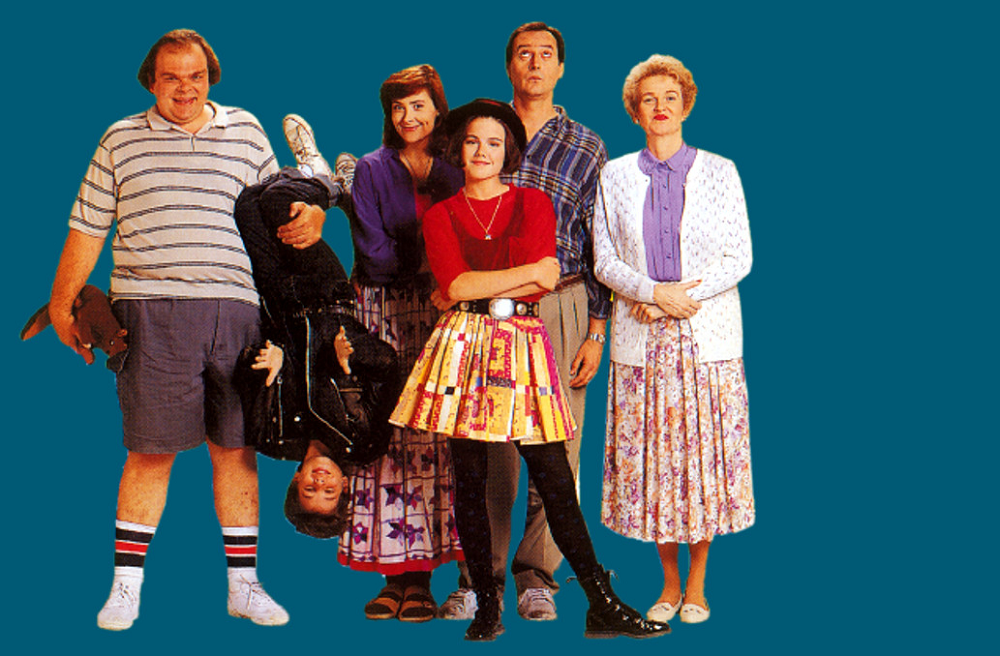
Maniac Mansion, 1990

Debuting on September 14th 1990 on both YTV in Canada and the Family Channel in the US, Maniac Mansion starred Joe Flaherty as Fred Edison, a wacky scientist with a family to match. Like Levy, Flaherty was an alumnus of the Second City theatre, the famous Toronto improv factory which enjoyed its own sketch TV show on from 1976 to 1984. Flaherty was joined by Deborah Theaker as wife Casey and by Kathleen Robertson, Avi Phillips, and George Buza as their children, the latter of whom – toddler Turner – had been rapidly aged into a balding middle-aged man. The cast also included another SCTV graduate in John Hemphill, playing Casey’s brother Harry, mutated into a human-housefly hybrid by the same accident that evolved Turner.

Over three seasons, Maniac Mansion combined regular family sitcom fare with science fiction and fantasy humour, bringing in a plethora of special guests like Jose Ferrer, Martin Short, Levy himself, and even The Fly director David Cronenberg in a very meta appearance. UK viewers might have caught the show when it aired overnight as part of ITV’s move to round-the-clock broadcasting and it remains highly thought of by critics and fans, although gamers are less fond of the show, which had the Edison family as its antagonists.

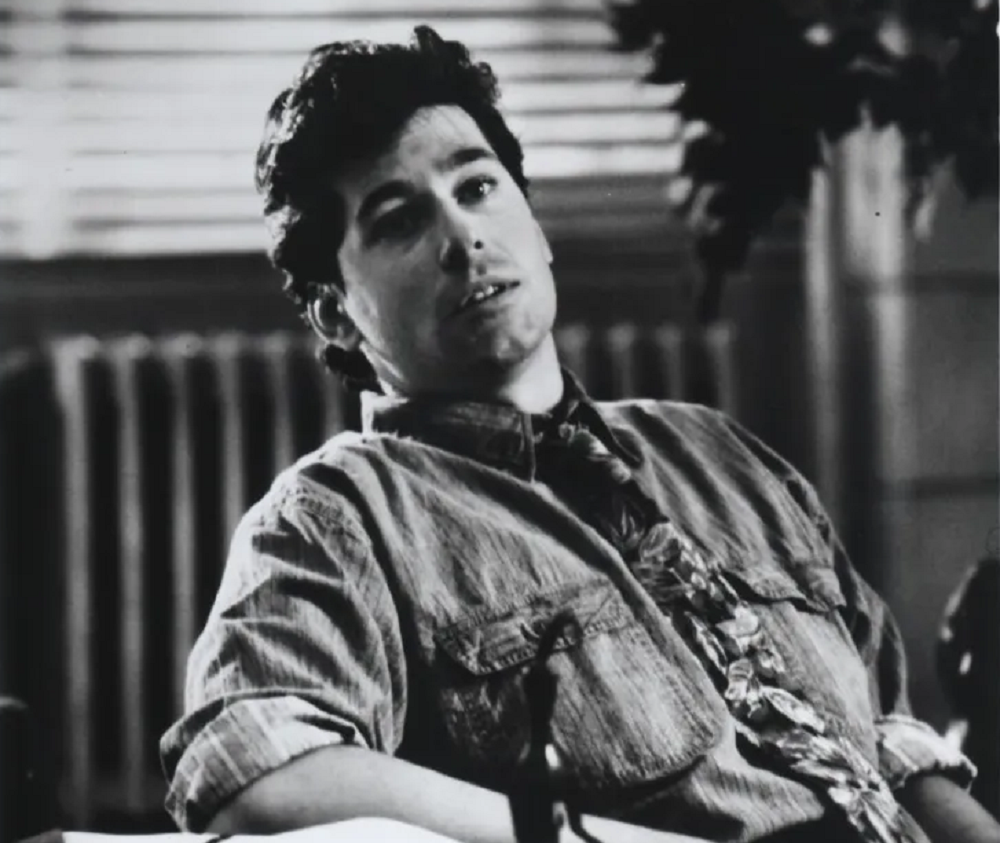
Beyond Reality (1991, CTV): Plenty of shows have been cited as influences on The X-Files, including Kolchak: The Night Stalker and Twin Peaks, but upon watching Beyond Reality, a two-season outing from Canada’s CTV channel, you have to wonder if perhaps Chris Carter might have caught an episode or two as it ran in syndication in the US…

Beyond Reality starred Shari Belafonte and Carl Marotte as Laura Wingate and JJ Stillman, two parapsychologists employed by a Toronto university who have a nifty sideline in investigating paranormal phenomena. Cases involving alternate worlds, doppelgangers, reincarnation, and UFOs all pass across their desks in the first season of the show, which debuted on October 4th 1991.
Beyond Reality, 1991

Many of that first season’s episodes were scripted by James Kahn, probably still best known for the novelisation of Return of the Jedi, who had met show creators Hans Beimler and Richard Manning when they were all part of the writing team on Star Trek: The Next Generation. The second season continued in the same vein, with psychics, near-death experiences, poltergeists, and alien viruses all featuring, leading to a season finale that dealt with a Satanic cult.

Season two saw a drop in viewing figures, though, attributed by some to a more melodramatic and fantastic air to the show that had developed. Critics also pointed to the short episode lengths at just twenty-three minutes a week, half that of the usual runtime for most dramatic shows on US and Canadian TV. Hans Beimler later co-developed The Dresden Files for TV, another attempt to do paranormal investigations, but that lasted for just a single, curtailed season in 2007.

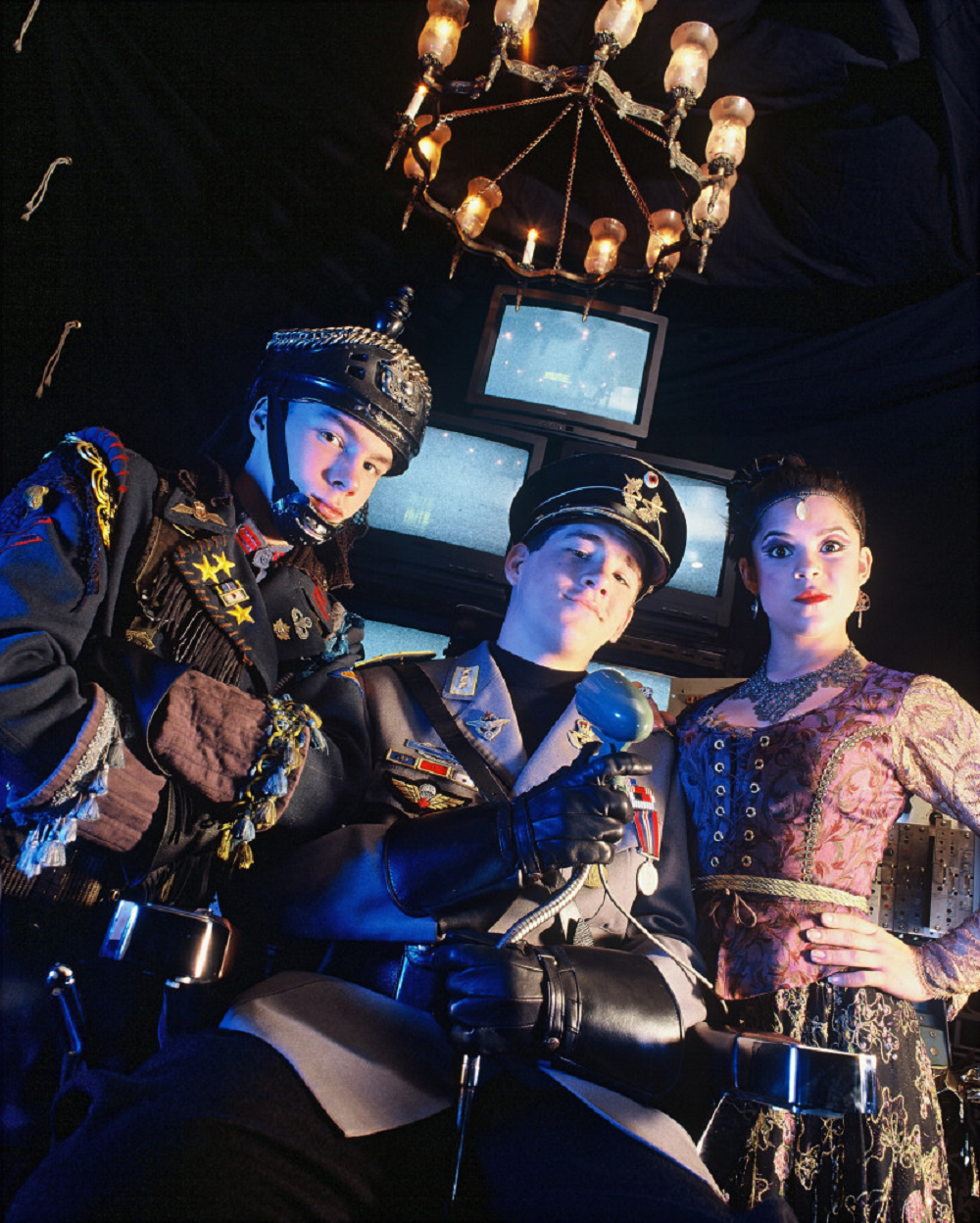
The Odyssey (1992, CBC): Keen to join a tree-fort club led by bully Keith, eleven-year-old Jay Ziegler (Illya Woloshyn, an experienced hand already at thirteen) agrees to give them his father’s old telescope, only for Keith to renege on the deal and keep the telescope for himself. Trying to retrieve it – one of the only things he has left from his father (who is missing presumed dead) – with the help of his friend Donna, Jay climbs the tree but falls, striking his head and being left in a coma.

In the coma, though, Jay finds himself in Downworld, a fantasy land where everyone is under sixteen. In the absence of adults, the kids have formed into clans such as the Library Clan and the Forest Clan, with the despotic Tower Clan ruling the roost. Desperate to get home, Jay enlists the help of Alpha and Flash (who are identical to – and played by the same actors as – Donna and Keith), all the while wondering if there is any connection between Tower Clan leader Brad and his missing father.
The Odyssey, 1992

The Odyssey was created Warren Easton and Paul Vitols but they were fired after season one had finished production, replaced by Charles Lazer. Lazer guided the show through its second and third seasons, which continued Jay’s adventures in Downworld, alongside the real-life drama at his hospital bedside. By season two, however, Jay was out of his coma and combining his Downworld adventures with solving the mystery of his dad’s disappearance, something that continued into season three.

Today, The Odyssey is probably best remembered as one of Ryan Reynolds’s first regular jobs – he played the role of Macro, a tyrant who overthrew Brad and took over the Tower Clan – and it also gave early opportunities to the likes of Sarah Chalke, Mark Hildreth, Andrea Nemeth, and Jewel Staite. There was talk of a reboot in 2016 but nothing developed beyond the initial announcement.

Madison (1993, Global): It’s unlikely that there is any other show with an origin story quite like Madison, created as it was to be shown exclusively in schools as a tool for discussing teenage issues. Under the title Working It Out at Madison, each of the first thirteen episodes focussed on a different character, introducing the likes of Carol Lemieux (Sarah Strange), Penny Foster (Michelle Beaudoin), and Derek Wakaluk (Will Sasso), all of whom would return for a second season.

This time, however, the retitled Madison was a more traditional show, with multiple storylines threaded throughout, a large cast of interacting characters, and broadcast on the Global TV network. Joining Beaudoin, Sasso, and Strange as series regulars were season one returnees Chris William Martin, Enuka Okuma, Peter Stebbings, and Chad Willett, along with newcomers Stacy Grant, Shaira Holman, Jonathan Scarfe, and Joely Collins (adopted daughter of rock star Phil).
Madison, 1993

The show never shied away from touching on hot button topics such as teenage pregnancy, drugs, abusive relationships, and even death, even managing to mix in an understated cool that reflected the slacker ethos of the time. This, of course, ensured that Madison earned an audience beyond its target demographic, becoming must-see TV for twenty-somethings in shared housing across Canada, the US, and the UK, where it aired on The Children’s Channel on satellite TV.

Madison lasted for five seasons of thirteen episodes, with many of the cast staying for the full run, although Beaudoin ducked out after three seasons to take the role of Jenny in Sabrina the Teenage Witch. Scarfe later turned up in ER, Sasso joined MADtv, and the rest of the cast would become familiar faces to viewers of shows filmed in and around Vancouver, even if they didn’t know their names.

Once a Thief (1997, CTV): Once a Thief was a 1991 actioner from prolific Hong Kong director John Woo, the fourth of his films to earn him a nomination for Best Director at the Hong Kong film awards. Woo had exploded into the West with the release of The Killer in 1989, the most successful Hong Kong film in the US since Enter the Dragon, but its follow-up – Bullet in the Head – didn’t quite do the business its backers had hoped.

Once a Thief saw Woo come back stronger and 1992’s Hard Boiled saw him become a desirable commodity in Hollywood, leading to a solid decade of action movie success with stars such as Jean-Claude van Damme, John Travolta, and Nicolas Cage. His directorial style was copied by many a rival with the slow-motion shootout becoming a well-used trope, but perhaps the strangest result of his Hollywood star ascending was a 1997 Canadian TV show based on one of his earlier films.
Once A Thief, 1997

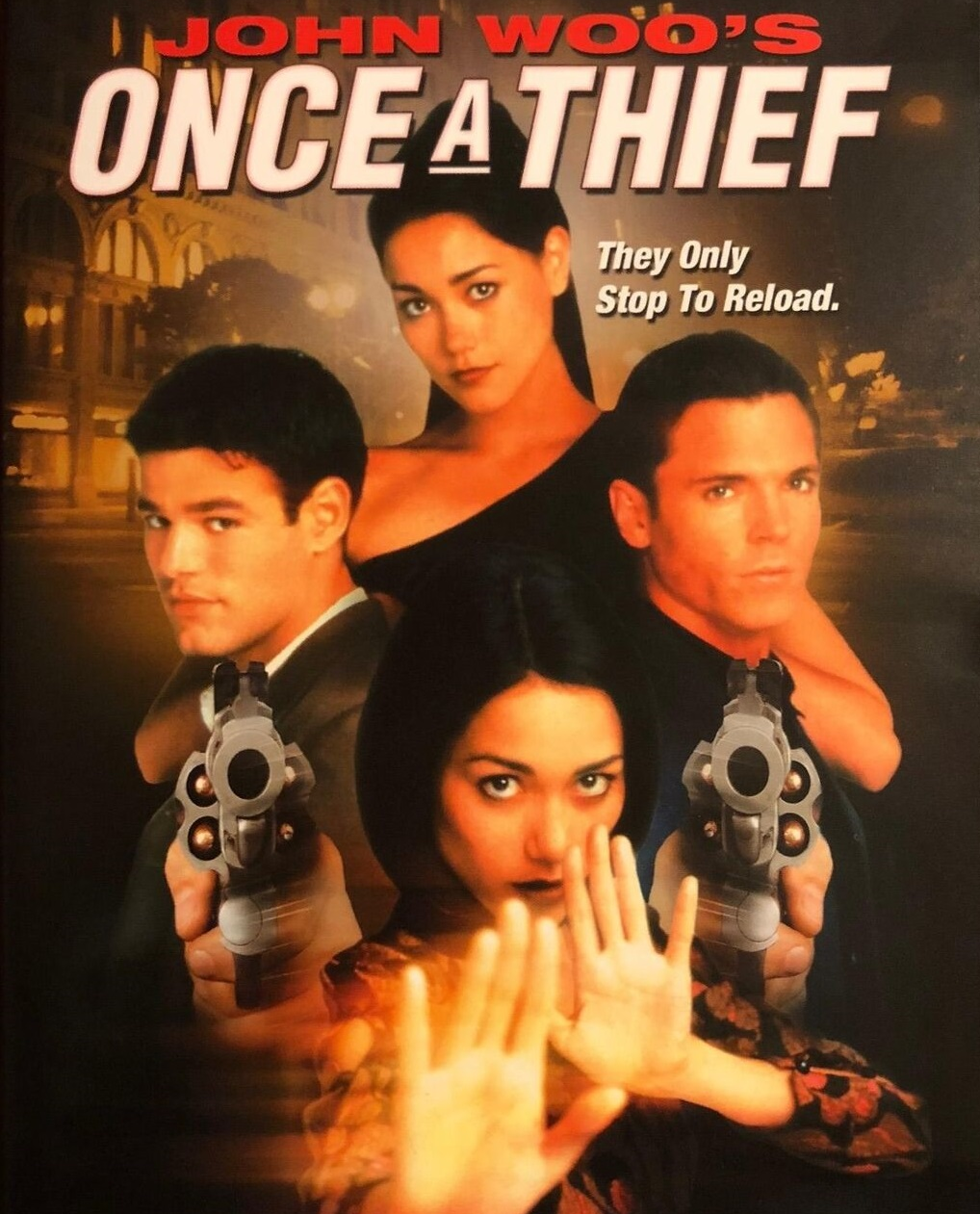
The movie of Once a Thief centres on three orphans taken in first by a crime boss and then by a policeman, growing up to specialise in stealing high value paintings. In the TV show, one orphan – Sandrine Holt’s Li Anne Tsei – is raised by a gangster and falls in love with one of his underlings, Mac Ramsay (played by Ivan Sergei). Their attempt to start a new life fails but they are later reunited in the employ of The Director, the head of a crime-fighting institution that also includes Li Anne’s former fiancé, Victor Mansfield (Nicholas Lea). The trio have to form an uneasy team to carry out The Director’s instructions, all the while never completely trusting her.

The TV version of Once a Thief began as a TV movie which told the backstory of Li Anne and Mac, with the series picking up two years after the events of that film. The show was sold into syndication in the US and began with decent ratings, but these declined to the point that producers were informed before they filmed the last few episodes of the twenty-two-episode run that the show would not be renewed for a second season. This meant they were able to wrap up the series with an episode called “Endgame.”

Next on The Telephemera Years: Even more Canadian treats, with beastmasters, immortals, trackers, and more!

Check out our other Telephemera articles:

The Telephemera Years: pre-1965 (part 1, 2, 3, 4)

The Telephemera Years: 1966 (part 1, 2, 3, 4)

The Telephemera Years: 1967 (part 1, 2, 3, 4)

The Telephemera Years: 1968 (part 1, 2, 3, 4)

The Telephemera Years: 1969 (part 1, 2, 3, 4)

The Telephemera Years: 1970 (part 1, 2, 3, 4)

The Telephemera Years: 1971 (part 1, 2, 3, 4)

The Telephemera Years: 1973 (part 1, 2, 3, 4)

The Telephemera Years: 1974 (part 1, 2, 3, 4, 5)

The Telephemera Years: 1975 (part 1, 2, 3, 4)

The Telephemera Years: 1977 (part 1, 2, 3, 4)

The Telephemera Years: 1978 (part 1, 2, 3, 4)

The Telephemera Years: 1980 (part 12, 3, 4)

The Telephemera Years: 1982 (part 1, 2, 3, 4)

The Telephemera Years: 1983 (part 1, 2, 3, 4)

The Telephemera Years: 1984 (part 1, 2, 3, 4)

The Telephemera Years: 1986 (part 1, 2, 3, 4)

The Telephemera Years: 1987 (part 1, 2, 3, 4)

The Telephemera Years: 1989 (part 1, 2, 3, 4)

The Telephemera Years: 1990 (part 1, 2, 3, 4)

The Telephemera Years: 1992 (part 1, 2, 3, 4)

The Telephemera Years: 1995 (part 12, 3, 4)

The Telephemera Years: 1997 (part 1, 2, 3, 4)

The Telephemera Years: 1998 (part 1, 2, 3, 4)

The Telephemera Years: 2000 (part 1, 2, 3, 4)

The Telephemera Years: 2002 (part 1, 2, 3, 4)

The Telephemera Years: 2003 (part 1, 2, 3, 4)

The Telephemera Years: 2005 (part 1, 2, 3, 4)

The Telephemera Years: 2006 (part 1, 2, 3, 4)

The Telephemera Years: 2008 (part 1, 23, 4)

The Telephemera Years: O Canada! (part 1)

Titans of Telephemera: Irwin Allen

Titans of Telephemera: Stephen J Cannell (part 1, 2, 3, 4)

Titans of Telephemera: DIC (part 1, 2)

Titans of Telephemera: Hanna-Barbera (part 1, 2, 3, 4, 5)

Titans of Telephemera: Kenneth Johnson

Titans of Telephemera: Sid & Marty Krofft

Titans of Telephemera: Glen A Larson (part 1, 2, 3, 4)

Titans of Telephemera: Quinn Martin (part 1, 2)

Titans of Telephemera: Ruby-Spears

THE TELEPHEMERA YEARS: O Canada! (part 1)

Seeing Things, 1981

Ah, telephemera… those shows whose stay with us was tantalisingly brief, snatched away before their time, and sometimes with good cause. They hit the schedules alongside established shows, hoping for a long run, but it’s not always to be, and for every Street Hawk there’s two Manimals. But here at STARBURST we celebrate their existence and mourn their departure, drilling down into the new season’s entertainment with equal opportunities square eyes… these are The Telephemera Years!

O Canada!

Although the odd European show occasionally slips through the net, a massive percentage of the shows featured in The Telephemera Years originate from North America, and almost exclusively from the USA. Canada, though, has a thriving film and TV industry – including providing locations and supporting cast members for many of those American shows – and even has its own range of TV channels, including CBC, CTV, Global, and Space. To celebrate those gems made north of the border – some of which enjoyed three- or four-season runs but little acclaim outside their native land – we’re giving over four weeks of this column to our Canucklehead friends.

Some of the shows produced in Canada that have enjoyed wider acclaim include telefantasy schlockbusters Lexx and Relic Hunter, while the beloved Due South also falls into this category. Viewers of children’s BBC in the 1980s will no doubt have fond memories of The Raccoons and Degrassi Junior High, while Kids in the Hall rewrote comedy in the early nineties with a decidedly surreal touch. But those are the shows you’ve heard of and probably watched… what about those that didn’t get much reach beyond the provinces and territories of the Great White North? This is the story of some lesser-known Canadian treasures…

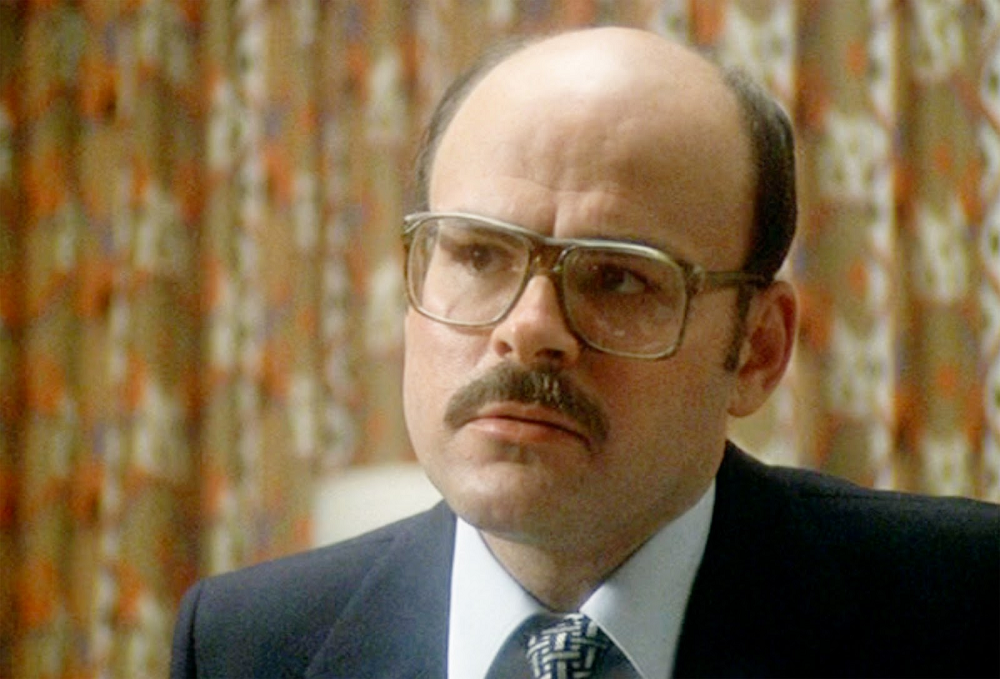
Seeing Things (1981, CBC): For those of a certain bent, one look at Louis Del Grande will elicit a Pavlovian response to prepare yourself for horror. Best known outside his native Canada as the first man to have his head explode in David Cronenberg’s Scanners, Del Grande had a background in stand-up comedy, becoming a regular on the Toronto circuit before being installed as head writer on the sitcom King of Kensington in 1975.

Starring Al Waxman, King of Kensington ran for five seasons, with Del Grande himself making the odd appearance while also finding the time to appear in the Burt Lancaster movie Atlantic City. While making King of Kensington, Del Grande formed a fast friendship with associate producer David Barlow and the two came up with an idea for a show which would star the comedian.

Seeing Things, 1981

Seeing Things features Del Grande as Louis Ciccone, a journalist on the Toronto Gazette who begins to suffer visions which impart clues to solve crimes. Teaming with ex-wife Marge (Martha Gibson, another King of Kensington alum who’d also appeared in Bob Clark’s Black Christmas), Ciccone’s visions eventually lead him to the culprit, albeit often in a roundabout way.

Debuting on September 15th 1981, Seeing Things ran for six seasons and a total of forty-three episodes. Moving between Tuesday, Wednesday, and Sunday nights, Louis Ciccone solved cases involving a boorish sitcom star, modern day Nazis, left wing terrorists, and the illegal disposal of nuclear waste, even having to prove himself innocent after a murder at his high school reunion implicates him in the crime.

Adderly (1986, Global): Created by Elliott Baker, and based on a character from his novel Pocock & Pitt, Adderly starred Winston Rekhart as VH Adderly, a debonair operative of the International Security and Intelligence agency. Coming through the Vancouver theatre scene, Rekhart had made several guest appearances on shows such as The Beachcombers, The Littlest Hobo, and Night Heat before landing the role, and had provided voices for Star Wars spin-off cartoon Droids.

As the show begins, Adderly suffers an injury at the hands of an East German spy, losing all feeling in his left hand. No longer of use on active service, he is reassigned to a desk job in the obscure Department of Miscellaneous and finds that there are unsolved cases that still require his attention, beyond his official remit.

Adderly, 1986

Rekhart was joined in the cast by Jonathan Welsh as Melvin Greenspan, his boss at the DMA who is fastidiously averse to giving Adderly the freedom he needs to solve the cases, and by Dixie Seatle as Greenspan’s secretary Mona, hopelessly addicted to romantic adventure novels and all too willing to assist Adderly in his extra-curricular activities.

Throughout the show’s two season run, Adderly is more than a match for the threats he encounters, performing as well as an active agent as he did with two working hands, and there is a sense that the DMA is a cover operation, created by ISI chief Major Clack in order with full knowledge that he would not be able to resist taking on a challenge.

The show was a cult hit in the US in a late night 11.30pm time slot, which led to CBS moving it to prime time for season two. However, a lack of promotion led to low ratings and the show was moved back to its late-night slot, where it regained its loyal following. Pocock & Pitt was Baker’s third novel, released in 1971, and he wrote a further five books before his death in 2007, but Adderly remains his only screen adaptation.

Diamonds (1987, Global): Sonny Grosso was a former NYPD detective who was instrumental in breaking a case that was later fictionalised as The French Connection. Grosso acted as a consultant for the movie starring Gene Hackman and Roy Scheider, who played Cloudy Russo, a thinly veiled version of Grosso. Grosso’s involvement with The French Connection was a gateway into the movies, also acting as a consultant on The Godfather while still working as a policeman.

In 1975, he retired from the force and became a producer, working on TV shows Kojak and Baretta while also being in demand as a consultant for many of the decade’s biggest police dramas. In 1980, Grosso partnered with former AIP Executive Producer Larry Jacobsen to form Grosso-Jacobsen Productions, producing TV series Baker’s Dozen and Hot Shots, as well as some unsold pilots, and began to look to the north as a potential market.

Diamonds, 1987

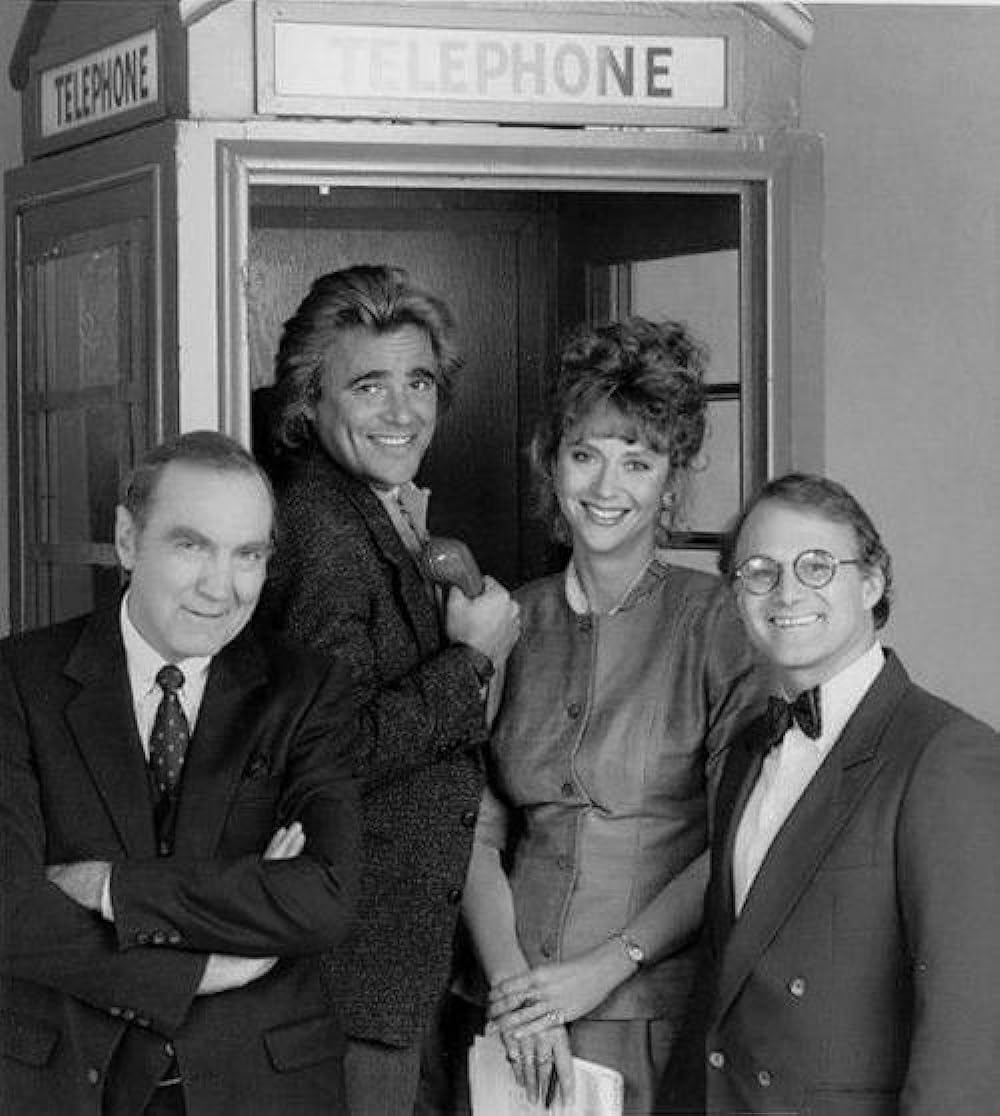
Partnering with Canadian company Alliance Entertainment, Grosso and Jacobsen developed Diamonds, which starred Nicholas Campbell and Peggy Smithhart as Mike Devitt and Christina Towne. Devitt and Towne were actors who had met and married on the set of detective show Two of Diamonds, only to go through a divorce and the cancellation of their show. Years later, the two exes now run their own real life detective agency, negotiating the pitfalls of working together as they solve the case of the week.

Diamonds was immediately compared to Moonlighting, which had started two years before, something the show played up to in an episode where somebody mistook Devitt and Towne for Bruce Willis and Cybill Shepherd. The similarity was enough that CBS aired it in the USA as a late-night competitor to that series, but Diamonds was less long-lived, enjoying just two seasons to Moonlighting’s five. Grosso-Jacobsen enjoyed more success in the Canadian market with Night Heat and Counterstrike, but never did find that elusive American success.

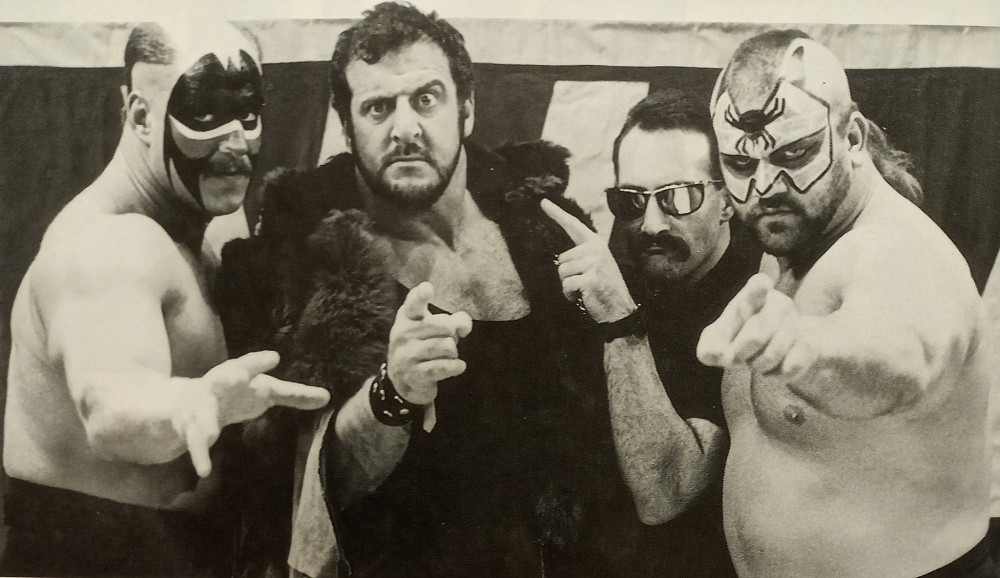
Learning the Ropes (1988, CTV): For something that exploded in popularity in the mid-1980s, there’s very little permeation of pro-wrestling into mainstream North American culture. Whether it was seen as kid’s fodder or still regarded as the stuff of smoke-filled halls, pro-wrestling themed shows were few and far between. Which makes Learning the Ropes, a one-season sitcom produced by CTV in Canada, all the more special.

Learning the Ropes starred former Super Bowl winner Lyle Alzado as Robert Randall, a mild-mannered single dad and private school vice-principal who moonlights as a jobbing professional wrestler named The Masked Maniac. After making a few guest appearances during his playing days, Alzado retired in 1985 and started working more regularly in film and TV, usually in small roles and often as himself.

Learning the Ropes, 1988

Created by producer Ed Self and Welcome Back, Kotter veterans Neil Rosen and George Tricker, Learning the Ropes was Alzado’s big break, although multi-time world tag-team champion Steve Williams was under the mask for the action scenes. Williams was competing for the National Wrestling Alliance at the time, which allowed for some cross-promotion between the products, with NWA stars including Ric Flair and The Road Warriors making appearances on the show.

Debuting on CTV in September 1988, the series was also sold into syndication in the US but failed to grab enough of an audience that a second season was viable. Alzado returned to guest starring, also attempting a failed comeback in the NFL in 1990, and a year later went public about his use of steroids as a player throughout his career. He died in 1992, aged just forty-three-years old, of brain cancer, which he asserted was due to his steroid use, a claim that remains unsubstantiated.

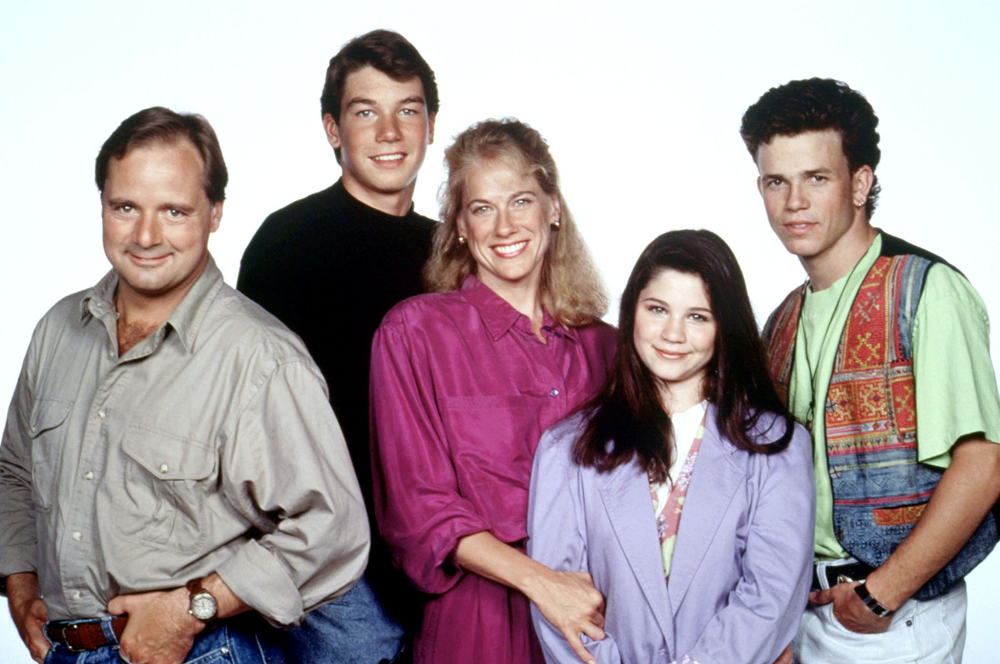
My Secret Identity (1988, CTV): “Canada has superheroes, too!” was the conceit of Secret Identity, a sitcom starring Jerry O’Connell as teenager Andrew Clements, gifted superpowers in a laboratory accident. O’Connell had been one of the child stars of Stand by Me, Rob Reiner’s 1986 adaptation of Stephen King’s short story “The Body”, but hadn’t enjoyed the same post-movie success as co-stars Corey Feldman, River Phoenix, and Wil Wheaton.

Producers Fred Fox Jr and Brian Levant had worked on Happy Days in its last two seasons and were looking for a sitcom project to call their own. Creating Secret Identity, they cast O’Connell as their everyboy hero, packing the supporting cast with Canadian veterans including Derek McGrath, Wanda Cannon, and eleven-year-old Marsha Moreau as Andrew’s younger sister Erin.

My Secret Identity, 1988

Andrew initially called himself Ultraman but enjoyed less a superhero career, more a series of personal problems befitting a boy of his age, often caused – or at least not helped – by his developing abilities, although Andrew never seemed to think of them as anything other than a gift. Only mentor Dr Jeffcoate (McGrath) knew his secret and the show walked a fine line between cutesy camp and earnest drama.

My Secret Identity enjoyed decent ratings and even earned a tie-in novel written by Jovial Bob Stine (who wrote the Goosebumps series under the name RL Stine). As well as airing on CTV in Canada, the show was syndicated into the US and lasted for three seasons, somewhat running out of steam in the third as Andrew – and O’Connell – got older, but by that time Fox Jr and Levant had created the juggernaut that was Family Matters and the cancellation of their first born was nothing major to worry about.

Next on The Telephemera Years: More Canadian goodness as we move into the 1990s, including videogame wackiness and Phil Collins’s daughter!

Check out our other Telephemera articles:

The Telephemera Years: pre-1965 (part 1, 2, 3, 4)

The Telephemera Years: 1966 (part 1, 2, 3, 4)

The Telephemera Years: 1967 (part 1, 2, 3, 4)

The Telephemera Years: 1968 (part 1, 2, 3, 4)

The Telephemera Years: 1969 (part 1, 2, 3, 4)

The Telephemera Years: 1970 (part 1, 2, 3, 4)

The Telephemera Years: 1971 (part 1, 2, 3, 4)

The Telephemera Years: 1973 (part 1, 2, 3, 4)

The Telephemera Years: 1974 (part 1, 2, 3, 4, 5)

The Telephemera Years: 1975 (part 1, 2, 3, 4)

The Telephemera Years: 1977 (part 1, 2, 3, 4)

The Telephemera Years: 1978 (part 1, 2, 3, 4)

The Telephemera Years: 1980 (part 12, 3, 4)

The Telephemera Years: 1982 (part 1, 2, 3, 4)

The Telephemera Years: 1983 (part 1, 2, 3, 4)

The Telephemera Years: 1984 (part 1, 2, 3, 4)

The Telephemera Years: 1986 (part 1, 2, 3, 4)

The Telephemera Years: 1987 (part 1, 2, 3, 4)

The Telephemera Years: 1989 (part 1, 2, 3, 4)

The Telephemera Years: 1990 (part 1, 2, 3, 4)

The Telephemera Years: 1992 (part 1, 2, 3, 4)

The Telephemera Years: 1995 (part 12, 3, 4)

The Telephemera Years: 1997 (part 1, 2, 3, 4)

The Telephemera Years: 1998 (part 1, 2, 3, 4)

The Telephemera Years: 2000 (part 1, 2, 3, 4)

The Telephemera Years: 2002 (part 1, 2, 3, 4)

The Telephemera Years: 2003 (part 1, 2, 3, 4)

The Telephemera Years: 2005 (part 1, 2, 3, 4)

The Telephemera Years: 2006 (part 1, 2, 3, 4)

The Telephemera Years: 2008 (part 1, 23, 4)

Titans of Telephemera: Irwin Allen

Titans of Telephemera: Stephen J Cannell (part 1, 2, 3, 4)

Titans of Telephemera: DIC (part 1, 2)

Titans of Telephemera: Hanna-Barbera (part 1, 2, 3, 4, 5)

Titans of Telephemera: Kenneth Johnson

Titans of Telephemera: Sid & Marty Krofft

Titans of Telephemera: Glen A Larson (part 1, 2, 3, 4)

Titans of Telephemera: Quinn Martin (part 1, 2)

Titans of Telephemera: Ruby-Spears

The Seamless Fusion of Fantasy and Reality in iGaming

The realm of digital entertainment has witnessed a staggering transformation and nestled at the heart of this evolution are online casinos, a frontier that has overhauled not just how we indulge in gaming but how we connect with the thrills of a fantasy world from the comfort of our homes. For aficionados of science fiction, fantasy and the magical interplay between technology and imagination, iGaming delivers an experience that’s as immersive as any virtual odyssey seen in movies or books.

Entering New Worlds with the Click of a Button

Imagine stepping into a landscape where the fantastical elements of your favorite science fiction narrative blend seamlessly with the adrenaline of a casino floor. This is the wonder that these virtual platforms present to their visitors. With sophisticated graphics and sound effects, each game is a gateway to a unique universe, all while offering the classic experiences found in traditional casinos. Moreover, innovative interfaces and user-focused navigation ensure that every adventure is a smooth and captivating one.

As you delve into the virtual cosmos of iGaming, the sheer diversity of games reflects the many genres and influences from beloved fantasy and sci-fi cultures. From mythical creatures to space exploration, each title is an opportunity to encounter narratives that resonate with people’s love for storytelling. Amidst this digital renaissance, the line between player and protagonist blurs, making every session an act of personal immersion into the fantasy worlds people have always yearned to explore.

Keeping Players in Safe Realms

With the exhilarating experiences provided, there must be an element of safety for anyone traversing these digital domains. Ensuring fair play is paramount, with algorithms and regulations holding the fort to guarantee honesty across all games. Just as heroes in fiction often rely on shields and strategies for protection, players can rest assured that stringent data encryption and privacy policies guard their personal information, creating a secure environment for all gaming endeavors.

Consistent vigilance is the hallmark of any reputable virtual gaming realm. Beyond the regulatory oversight, operators employ cutting-edge cyber defenses to thwart the dark sorcery of hackers and fraudsters. It’s a never-ending battle but one that must be won at all costs to preserve the sanctity and enjoyment of the digital gaming experience, ensuring players can continue to explore these fantastical worlds with peace of mind and unwavering trust.

Unlocking Treasures: The Lure of Online Bonuses

Every quest is sprinkled with incentives and in the world of iGaming, bonuses are the coveted treasures. These platforms draw in novices and seasoned players with alluring welcome offers and keep the journey interesting with loyalty rewards. For example, finding hidden items in an epic game, understanding and making the most of these benefits require some insight into the terms and conditions that come with each bonus type.

In a realm where competition is fierce, the finest iGaming enclaves outshine the rest with the brilliance of their treasure troves. They don’t just offer glittering coins to the bold and the lucky; they create epic narratives where earning a bonus is part of the quest. From free spins to deposit multipliers, the spoils of the iGaming domain are many, each designed to extend the thrill of the chase and heighten the sense of victory for those who dare to gamble with fortune.

Charting your Quest: Strategies for the Smart Adventurer

While legendary tales often highlight the importance of wisdom on a quest, the same holds for the smart gambler. Acquainting oneself with game odds and adopting a reliable betting strategy can make the difference between a triumphant campaign and a hasty retreat. Practical bankroll management and debunking betting system myths are akin to mastering the art of spellcasting or swordplay within a fantasy narrative – essential for success.

Technological Enchantments Enhancing the Experience

In the ever-evolving saga that is iGaming, technology plays the powerful wizard, continually casting spells to enhance the gaming experience. Mobile gaming allows players to embark on their adventures from anywhere, at any time and the burgeoning fields of VR and AR promise to take the immersion to new, unprecedented levels. With live dealer games simulating a real-world casino experience, the line between the virtual and the physical is becoming ever so faint.

The Fellowship of Online Players

Just as companionship is invaluable in a fantasy quest, the community aspect of iGaming draws players together into a fellowship of shared interests and experiences. Online forums and gaming communities serve as modern-day taverns where tales of gaming glory and misadventure are traded over virtual tankards. In the camaraderie of multiplayer and interactive game modes, bonds are formed that transcend the digital landscape.

Visioning the iGaming Odyssey Ahead

The iGaming saga is far from reaching its denouement, with trends and innovations continually shaping its narrative. The ever-shifting legal landscape is altering access to this digital realm, with software advancements enhancing players’ experiences. As the industry melds more closely with the broader entertainment sector, it seems set to reach new heights, promising more enchanting tales of fantasy, excitement and perhaps, a touch of magic for anyone willing to roll the dice and play the game.

Ian Cardoni, Harry Belden, and Scott Marder on RICK AND MORTY: SEASON 7

In the spiky-haired shadow of RICK AND MORTY co-creator Justin Roiland’s departure from the show, two new voice actors were cast to fill the green portal-slinging lead roles. STARBURST was given the opportunity to talk to new cast members IAN CARDONI and HARRY BELDEN, along with current series showrunner SCOTT MARDER, about their challenges giving a new voice to the latest season…

STARBURST: Were you two fans of the show before you took over?

Ian Cardoni: A hundred percent! I’ve been watching since the early days, so to be working on one of my own favourite shows is a dream come true.

Harry Belden: Yeah, I’ve been a fan of the show since day one; it’s such an honour to step into these shoes.

Harry Belden (Morty Smith)

Rick and Morty are already such iconic characters, but as voice actors and artists, it must be difficult to bring your own creative voice to them, especially after, like you say, being there since day one. Do you feel you have the freedom to bring your own creative ideas to these characters?

IC: I certainly hope so, and I hope some of that has come through. I approach it as an actor would – these are fully fleshed-out characters with histories going back to 10 years of the show. We’ve been along for that ride growing with them, and now it’s just a matter of taking that forward; taking the next steps, growing with them just from the inside. It’s not lost on me that these characters mean a lot to so many fans, myself included, worldwide. So the goal is just to give my best Rick any time I walk into the booth.

Ian Cardoni (Rick Sanchez)

HB: I think that Ian and I are in a unique and privileged position that we’ve had six seasons of watching this show to get to see who these characters are and how they operate and to then step into their headspace. I think that by being unique individuals, as everyone is, of course, we’re going to bring something a little bit different, something about who we are, to that character. One of the big challenges of this season has not just been doing the voices, but staying true to the character and to the fantastic writing of the show.

The latest season has an emphasis on bringing back characters from previous episodes. You have Mr Poopybutthole in the first episode and Unity later on… it feels like it’s planting a foundation on its expanded cast in a Simpsons-style way. What led to this creative decision and is this Rick and Morty‘s directive going forward?

Scott Marder: Definitely not the directive! It was sort of a happy accident. The episodes come to life on an individual basis. We always have an idea going on like the background arc, but Unity ended up being a great fix to episode three, in that we needed this thing to bring everything together. Like, “oh you know what? It’d be really cool if Unity was the thing that brought everything together and it’d be even cooler if she came on the radar because she heard out in the galaxy the Rick was fucking around with the idea of Rick Prime again”. And even though they’re exes, she knows that it could be bad for him. So we knew in that episode we wanted to do a little lily pad that would get us to episode five. Unity was a really cool, organic way to do that because Rick hasn’t had a lot of relationships that have really mattered in terms of this show. Diane was the essential theme of this season and Rick Prime was a real conduit to that. But then Poopy just separately was… well, it made us laugh at the idea that everyone’s so used to him being in the tags at the end of the season that we thought, “they would never expect just to pick up where we left off the previous year and just really invest in him”. It was really organic to get the gang back together for that one. We felt like that was just a refreshing palette cleanser.

Scott Marder (Showrunner)

All three of you have inherited the show from other creatives and worked on it through a rather tumultuous break-up with one of its biggest voices. What is it that attracted you all to Rick and Morty creatively?

SM: I feel like all of us individually feel like we’ve won the lottery getting to work on it. I just worshipped it. I worshipped how every episode was so different: pushing the boundaries and splitting my brain. When I ended up getting the opportunity to actually step into the shoes, that enthusiasm just spilled out like day one. I’m like, “All right, give me the download on Evil Morty! Give me the download on this!” Give me all the things that I love and I want to keep running with them because I’m so pumped to be here. It was really cool when these guys joined to feel that enthusiasm match because everyone can feel it, you know? We have 100-200 people on the production, the whole crew can feel that energy. It pushes everybody. This is a hard show and every episode is a real marathon. So that energy and then enthusiasm gets us through the wild amount of rewrites we do to give you guys the best show that we can.

HB: I would completely agree with Scott. I mean as a fan of the show, it made me laugh, incredibly hard obviously – it’s a hilarious show – but I think the other thing that really attracted me was just that every time you started an episode, you couldn’t in a million years guess where it’s going to wind up… Rick and Morty will keep you guessing until the very, very end. It never goes the way you think. And to me that’s so much fun to sit down with a new episode and go, “I can’t wait to see what they do this week!”

IC: Yeah, I think these two really said it, and then having met my fellow cast mates and many people of those 200 that work on the show, seeing how much everybody working on it really cares… it makes me want to work harder. It’s calling me to bring my A-game and it’s so inspiring to see everybody coming together. So that’s really cool.

Season 7 of RICK AND MORTY is available to stream on Channel 4 and to purchase digitally via Apple TV.

TV Zone Christmas Special 2023

Ho, ho, and, indeed, ho. Joice and rejoice! It’s the TV Zone Christmas Special, an online-only festive treat that dares to look closely at Netflix’s Bodies, goes beyond timey-wimey with Sky Premiere’s Lazarus Project, mingles with the monsters on Monarch and says hello/goodbye/er… to the Fourteenth Doctor in the long-awaited return of Doctor Who…  Not a turkey in sight!

I bloody love a good time travel story. It’s probably my favourite type of sci-fi yarn. Well, after a cracking alien invasion story. And the occasional apocalypse. Then I quite like a dystopia too (apart from the real one we’re all living in). Then there are giant monster romps. No, wait… time travel. That’s where it’s at. There’s nothing better than a rattlingly dense, mind-bending, time-paraodoxy time travel romp to really get the old great matter churning and the imagination bleeding. In the last few months, we’ve had two time travel shows that have blown away all my mental cobwebs and kept me at the edge of (or at least very close to) the edge of my seat.

Exhibit Number One: Netflix’s Bodies, based on the 2015 graphic novel from the imagination of the late Si Spencer. Bodies very cleverly marries the great British obsession with detective stories with some very dark, labyrinthine, and quite arcane SF concepts and utilises the now apparently de rigueur fad for narratives unfolding across multiple timelines. Where this can be at best tolerable and at worst bloody irritating, Bodies gets away with it because its timelines are recognisably distinct – they’re virtually characters in themselves – and each of them is populated by an intriguing, complex roll call of dramatis personae all living in beautifully realised period settings. Yet its core story isn’t especially original – fans of The Terminator and even 1972’s Doctor Who serial Day of the Daleks will recognise the conceit here – travellers from the future use time travel technology to change the course of history to prevent their dystopian future world from ever existing.

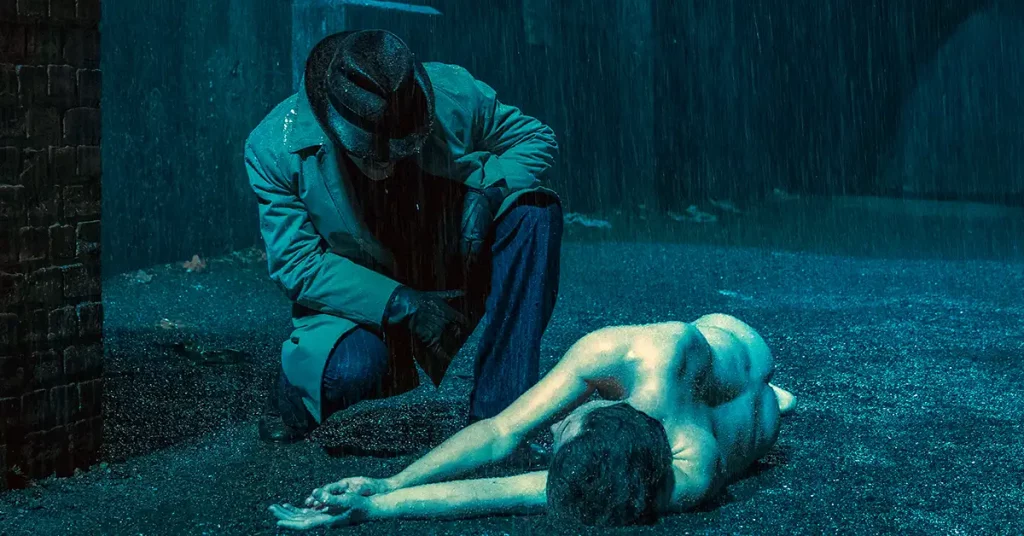
During a supervised protest through London, DS Shahara Hasan (Amaka Okafor) of the Metropolitan Police chases an armed teenager and discovers the body of a naked man with a gunshot wound through one eye and a strange tattoo on his wrist in the remote Longharvest Lane in Whitechapel. Eventually detained, the teenager explains to Shahara that she was meant to find the body – and then he commits suicide after uttering the words “know you are loved”. In 1941, DS Charles Whiteman (Jacob Fortune-Lloyd), working for a mysterious agency that ends its covert telephone calls with the words “know you are loved”, is dispatched to recover an identical body from wartime Longharvest Lane. In 1890, Detective Inspector Alfred Hillinghead (Kyle Soller) is on the scene when another identical naked body is found in Longharvest Lane, and his investigations lead him into contact with rakish photographer and journalist Henry Ashe (George Parker), who will have a devastating impact upon his life. Finally, in 2053, DC Iris Maplewood (Shira Haas) detects an electromagnetic anomaly that leads her to the now long-abandoned Longharvest Lane, where she finds the same man – but here he’s still alive.

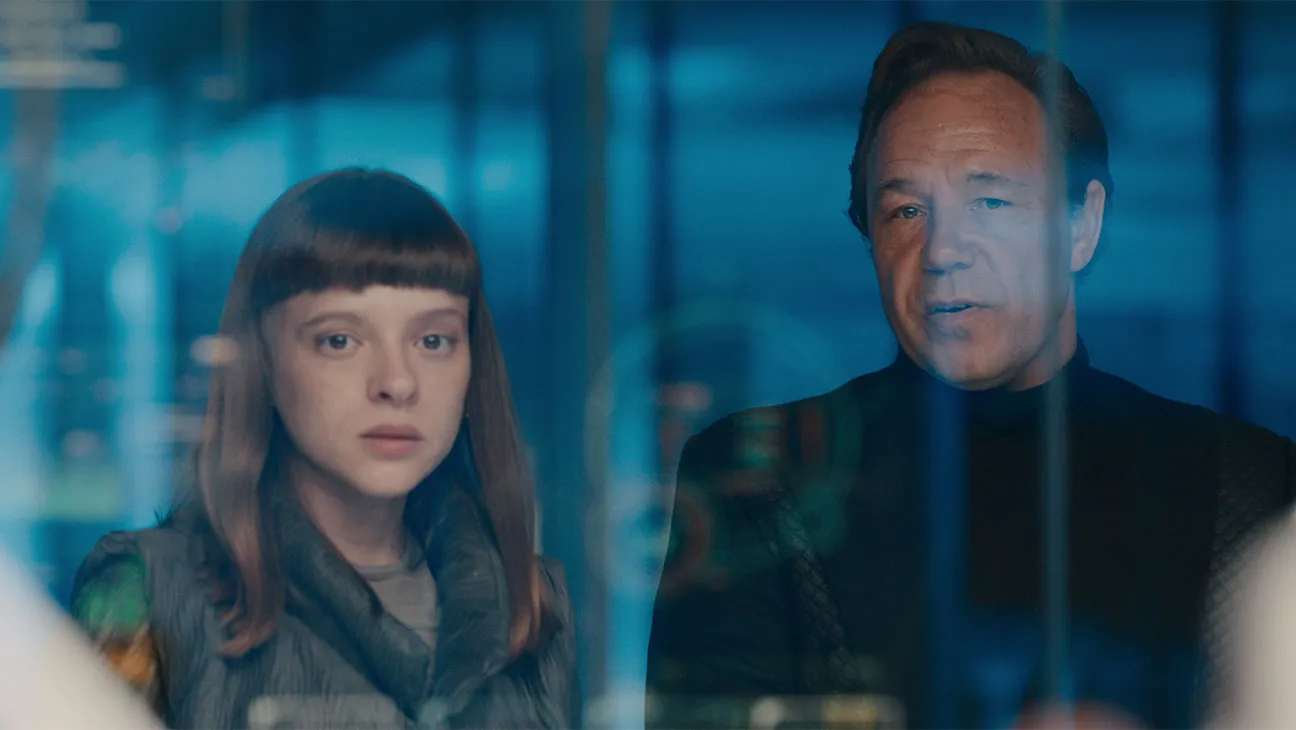
What’s going on here? How can the same body pitch up in four wildly different time zones? Who has injured/killed him – and why? What strange conspiracy connects four police officers across 163 years of Time? You’ll really have to watch the eight-episode series to find out – and it won’t be time wasted. Bodies is absolutely gripping from the get-go – and yes, it’s another of those shows that forced me to binge-watch it over a couple of days because once you’re in, you’re in; this is a series that quickly sinks its claws into your curiosity, and your imagination and every episode peels back a layer of the mystery by adding a bit more detail, a bit more light, shade, and colour to its cross-generational characters while simultaneously adding even more intrigue as its story slowly unfolds and winds its way into different, quite unexpected directions. You might well need your own scorecard to keep up with the twists and turns of the plot, especially deeper into the series when the proper sci-fi elements kick into high gear. Suffice to say that the connection between all these time zones, all these identical bodies and all these police investigations involves a devastating incident in London in 2023, which brought about a very different society where ‘United Britain’ is in the thrall of a militia called ‘The Executive’ led by the apparently-benevolent but deeply sinister Commander Elias Mannix (Stephen Graham). The Executive’s slogan is “Know You Are Loved”…

I think that’s all you’re going to get from me on this one. In a year already blessed with some genuinely ground-breaking, hugely ambitious genre series, some of the best of their type ever made, Bodies is effortlessly right up there with the best of them. It’s a real puzzlebox series, beautifully crafted and boasting yet another stellar performance from Stephen Graham, surely Britain’s finest actor at the moment, in addition to a cast of relative newcomers and less well-known performers with some welcome cameos from Greta Scacchi, Michael Jibson, Derek Riddell, Kate (Shaun of the Dead) Ashfield, and Mark Lewis-Jones. Bodies is another big home win for genre TV, a series guaranteed to reward repeat viewings. Even if its story is ultimately mining a familiar science fiction time travel theme, you’re sure to be impressed by the stylishness with which it’s done and the ruthless intelligence and inventiveness of the script, and the framework of the story generally. I’m often to be found bemoaning the lack of genre TV created in Britain in this column, but if nothing else, the voracious appetite of the streaming revolution has forced commissioners and producers to dig a little deeper in their search for content on which to splash their considerable resources of cash and shows like Bodies probably wouldn’t exist without the deep pockets of Netflix. The era of prime, top-quality TV continues, and Bodies is pretty much as good as it gets. If, like me, you were initially wary of its ‘just another detective series’ veneer, be assured this is a series that wears the clothes of a cop show and then adds extra layers of the good stuff. It’s another show that you really can’t afford to miss.

THE LAZARUS PROJECT

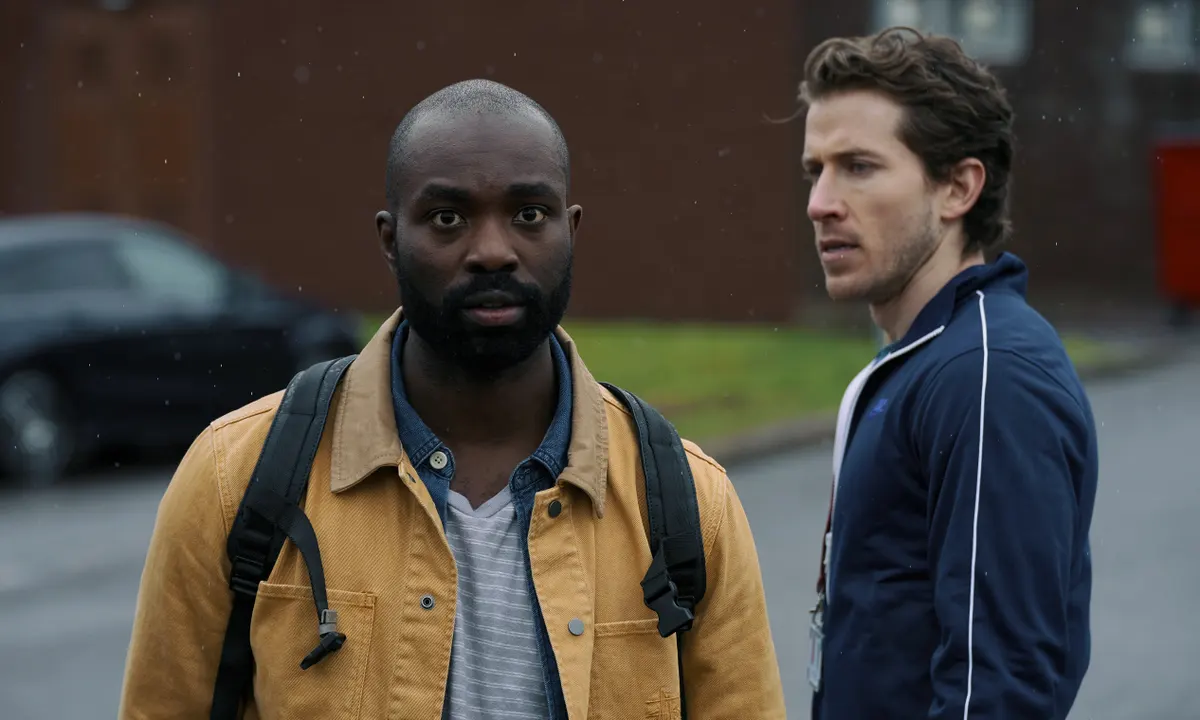
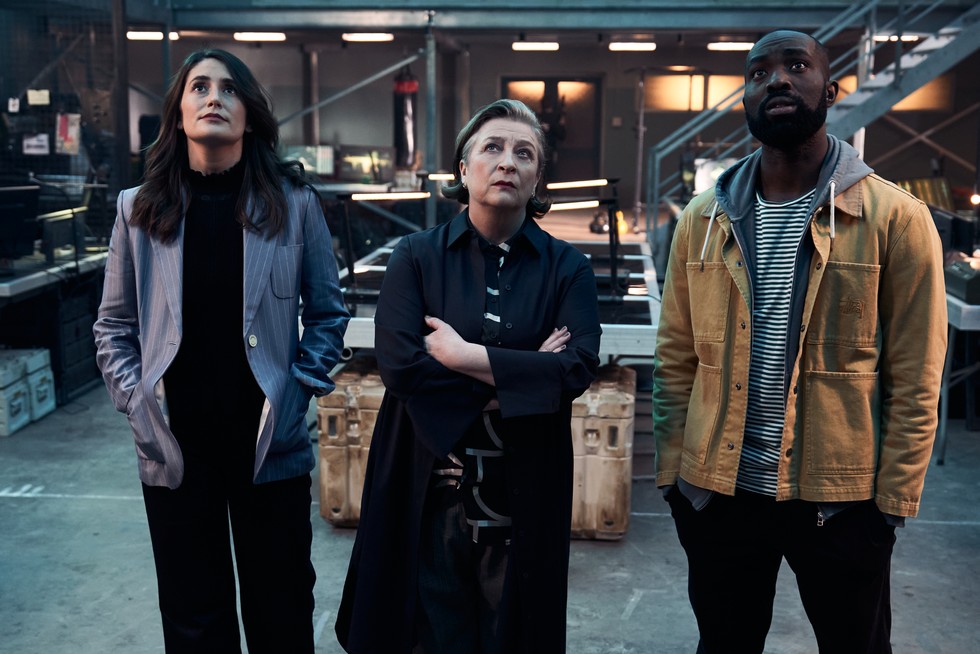
Exhibit Number Two. One of last year’s big hits for Sky Max in the UK has returned for its second season this autumn – and it’s bigger, braver, and much, much madder than it was first time out of the blocks. This is The Lazarus Project, created and written by Joe Barton and starring Paapa Essiedu, Tom Burke, Anjli Mohindra and an on-fire (not literally) Caroline Quentin. If you missed or skipped the first series in 2022, The Lazarus Project introduced us to George (Essiedu), who discovers that he is one of only 0.000001% of the population blessed/cursed with a mutant gene that allows him to recognise that time seems to be constantly reverting back to July 1st. He eventually becomes enrolled on The Lazarus Project, an extremely Torchwood-like top-secret organisation operating in an underground base in London tasked with keeping out a watching eye for possible apocalyptic events and, if it can’t prevent them, resetting time back to the most recent July 1st prior to the devastating incident in the original timeline. George is recruited as a field agent, but when his girlfriend Sarah (Charly Clive) is killed in a road accident, George breaks all the rules by instigating a conflict between Russia and America, which will force the Project to reset to the July 1st before his girlfriend died. The series ended with George disgraced and the revelation that the Chinese have created their own ‘time reset’ facility, which conflicts with the work of The Lazarus Project (are you keeping up with all this? We’ve only just started!) and the universe has somehow been thrown into a never-ending thee-week time loop. Don’t ask me, I didn’t write it.

I’ve always hated it when sniffy broadsheet critics describe sci-fi as ‘hokum’, but by all the gods, The Lazarus Project is hokum. It’s also incredibly entertaining, mind-frazzling hokum, and this latest eight-episode second season elevates the hokum level to the power of at least a dozen. This is now a show that happily doubles down on its new time travel remit, and it’s oddly refreshing to see proper, serious actors talking about time machines and time loops and end-of-the-world scenarios with the sort of gravitas usually reserved for mundane murders and missing person investigations. Series Two is The Lazarus Project dialled up to maximum absurdity Level, and if its dizzying plot contrivances aren’t always easy to keep up with – our heroes find themselves travelling through time in a plane with a time machine device built into it and for various reasons are flung about the place again and again as they attempt to get back to the point in time the plot requires them to be in – it’s never less than hugely enjoyable and wildly ambitious. There are a number of dynamic gun battles and action sequences, and Barton’s insidious scripts have the audacity to revisit events from the first series that viewers might have forgotten to change the very nature of George and Sarah’s relationship. Sam (grandson of Patrick) Troughton joins the cast as one of the scientists responsible for the creation of the proper time machine, running for his life (often repeatedly as time is ‘reset’) as the rest of his group (including the always-excellent Vinette Robinson) are picked off one by one in an attempt, orchestrated by a familiar face from the cast, to stop the time machine being created at all. Caroline Quentin as the Project’s boss Wes reveals a rather different side to her character and is at the heart of some nail-biting tension in the penultimate episode when she faces making the ultimate professional decision and absolutely refuses to do so for the sake of the human race despite the potential consequences for her own family.

Joe Barton recently admitted that writing the second series, commissioned just as the first finished and with a production commencement date set for just two months later, he was driven to distraction trying to keep up with the infernal leaps in logic of the plot he was piecing together. I can’t honestly say whether it all hangs together or whether it all makes sense in the end but it was a brilliant high energy ride nevertheless, and if Sky commissions a third series then Barton only has himself to blame as a cheeky sequence at the end of the credits of the final episode clearly suggest that there’s more story to tell and new directions for The Lazarus Project to explore. Go on, Joe, you know you want to…

MONARCH: LEGACY OF MONSTERS

The general consensus seems to be that Legendary Pictures’ attempt to establish a cinematic ‘Monsterverse’, including the likes of King Kong, Godzilla and all his associated creepazoids rebranded as ‘Titans’, hasn’t been an unparalleled success. Whilst Kong: Skull Island (2017) and Godzilla vs Kong (2021) were significant improvements upon the likes of Gareth Edwards’ deary Godzilla (2014) and the genuinely dreadful Godzilla: King of the Monsters (2019), the whole project has suffered from a surfeit of fuzzy, often undercooked monster action and a paucity of investment in the blandly written human characters. I mean, seriously, where the hell was the human interest in King of the Monsters? Fortunately, things are changing; the entirely unconnected Godzilla Minus One (in cinemas now, monster fans!) delivers genuine spectacle and characters the audience can actually care about (gasp!) and Legendary’s ten-part series Monarch: Legacy of Monsters (Apple TV+) is attempting to do likewise and is largely succeeding.

This is another of those pesky ‘multiple timeline’ TV series – come on, TV writers, what’s wrong with a proper linear narrative now and again? It’s set both in 2015 (one year after the monster attack portrayed in Edwards’ Godzilla) and in various years between 1952 and 1959 in the early days of the monster-hunting organisation Monarch, dovetailing with various conspiracies and cover-ups, all topped up by random cameo appearances of various Titans including Godzilla himself. It’s an intriguing and dynamic series, but it’s another one you’ll need to pay very close attention to as it leaps around the decades with happy abandon, never signposting its time changes to the audience and expecting us to remember the relationship dynamics between the various groups as they dig deeper into the mystery of Monarch and the creatures that lurk below the Earth’s surface. Helpfully, Kurt Russell and his son Wyatt are both cast as Lee Shaw, a US Army colonel who is initially (in the 1950s, played by Wyatt) cast as a bodyguard to Mari Yamamoto’s Dr Miura and in 2015 (as Kurt) kept under house arrest in a Monarch-controlled retirement facility in Japan (which would make his character about 90 in the series’ timeline which clearly isn’t the case considering he hurls himself into monster-chasing with the relish of a man fifty years his junior).

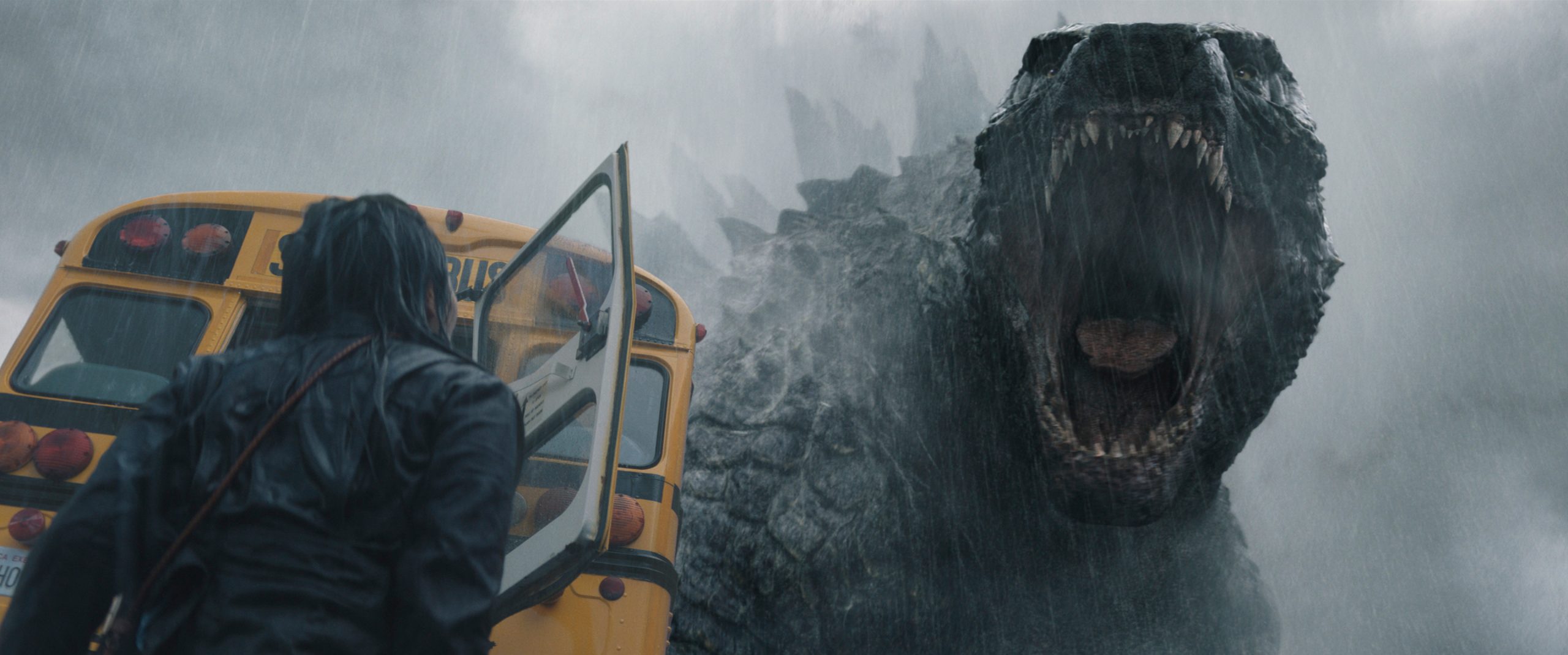
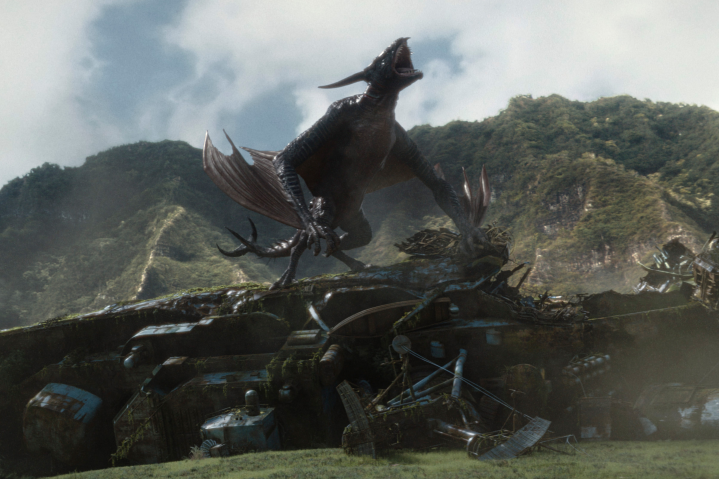
Monarch: Legacy of Monsters does exactly what Monsterverse fans have wanted since the film series started – it gives us well-rounded, motivated and generally quite interesting people to follow. It doesn’t, however, give us much in the way of monster action – and because we’re a contrary, hard-to-please bunch, we’re left waiting for the monsters to turn up and really kick the show fully into life. When the monsters do pop up, they’re wonderful; Episode One offers us a giant spider and insectoid Endoswarmers, an Ion Dragon is awakened in Episode Two, a Graboid-like Frost Vark appears in Alaska, and Godzilla makes a spectacular entrance at the end of Episode Six. It’s big, hearty stuff, and the show teases us with its monsters – fabulously CGI’d, of course – but emphasises the human interest, which only threatens to lose focus because it leaps around so many different time zones. It’s a minor criticism really because this is a handsome and lavish series and even if it’s a bit of a ‘be careful what you wish for’ scenario with its emphasis on human drama rather than monster carnage, it does manage to engender a proper sense of growing (or should that be growling?) menace that really works because the characters have some weight and presence as opposed to the witless cyphers of so many of the Monsterverse films to date. As long as you dial down your monstrous expectations, you’ll find there’s some fun to be had in M:LOM, even if the constant time jumps will require you to properly keep your wits about you if you want to get your head around a sometimes frustratingly over-complex plot.

DOCTOR WHO

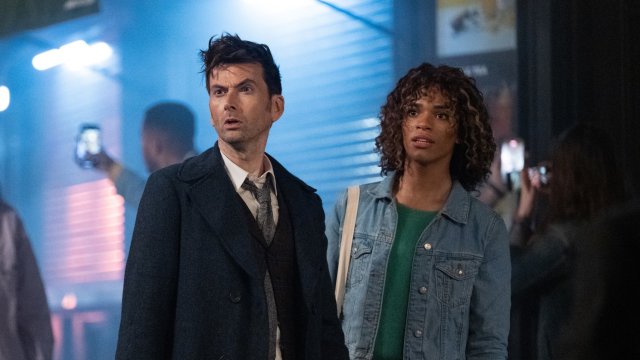
He’s back… and it’s about time! Russell T Davies’ long-awaited return to the ‘Whoniverse’ (as the entire Doctor Who TV canon and its various spin-offs are now called under its new umbrella title) finally hit the screen recently in the shape of three 60th Anniversary specials that clearly weren’t designed to ‘celebrate’ 60 years of Doctor Who but rather aired across the anniversary period. Hence, many wishful-thinking fans were left disappointed when the episodes weren’t multi-Doctor episodes featuring guest appearances from creaking old companions and mouldering monsters but were rather more concerned with carving out a path leading directly into the hotly-anticipated ‘new era’ starting on Christmas Day with the first full appearance by Ncuti Gatwa as the Fifteenth Doctor.

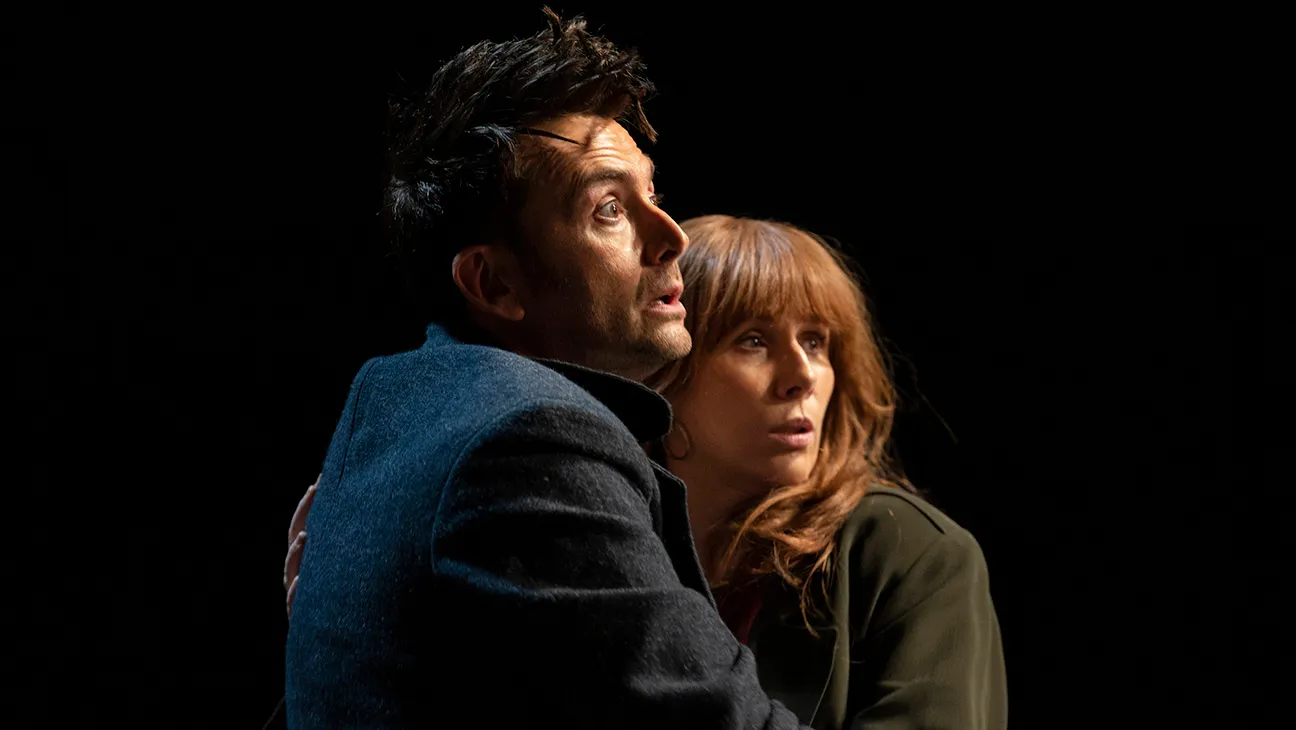
If you’ve listened to the second episode of The Blue Box Podcast, STARBURST’s all-new Doctor Who show (and if you haven’t, why not?), you’ll have heard me put forward my theory that these three episodes – The Star Beast, Wild Blue Yonder, and The Giggle – were really a compressed version of a typical Davies season from the early days of the 21st-century reboot. The Star Beast was a big, daft, colourful, madcap, family-friendly romp in the style of Series 3’s Smith and Jones and Series 4’s Partners in Crime. Wild Blue Yonder resembled something weird from later on in the season – Series 2’s Love & Monsters or Series 4’s Midnight (which seemed to inspire certain elements of what was essentially a two-hander between Tate and Tennant), and the game-changing The Giggle was a huge, gloves-off finale reminiscent (particularly) of Series 3’s Last of the Time Lords and Series 4’s The Stolen Earth. Even though I will continue to defend the much-maligned Chris Chibnall era, which was nothing like as bad as the angry Internet manbabies would have you believe, dear god, it’s good to have Russell T Davies back in the showrunner’s chair…

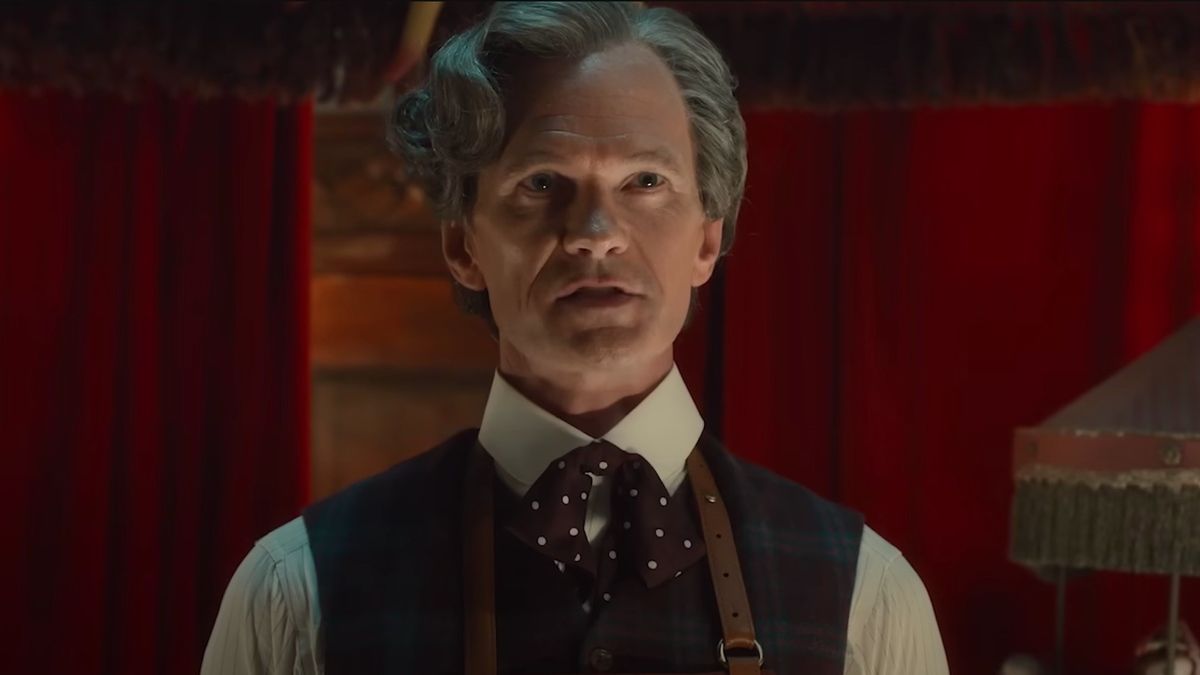
With the 60th Anniversary itself being broadly celebrated elsewhere in the Whoniverse, these three episodes were clearly engineered to celebrate the gold star casting of David Tennant and Catherine Tate, a partnership that made 2008’s fourth series easily the best yet of modern Who. With both actors having expressed a very real willingness to go ‘once more around the block’ with the characters, it’s hardly surprising that Davies leapt at the opportunity to write for these beloved characters again and, as a consequence, resume the mantle of series showrunner for the big, budget-bloated Bad Wolf/Disney era that’s just about to start in earnest. It was also an opportunity to quickly right a ship that had been on somewhat rocky ground since Davies left it way back in 2009, and it’s quite amazing how quickly the show has found its feet and become an important, valued and much talked-about cornerstone of our television culture again. Ratings have surged; the show and its stars are pretty much everywhere; there’s a real and palpable excitement in the air for the show after a few fallow years, and these three thrilling, audacious, daft and occasionally outrageous special episodes succeeded in reigniting a fire that had been burning dangerously low for the last decade or so. The Star Beast, based on an old comic strip from Doctor Who Weekly, was a joyous and cheekily unsubtle romp that happily raised the hackles of many of the show’s less tolerant devotees, and Wild Blue Wonder edged the Doctor and Donna into darker territory, trapped aboard a spaceship at the very edge of the universe and faced with strange alien creatures that mimicked their appearance and their behaviour – a real case of ‘Who’s Who?’ if ever there was one. So far, so good – and surprisingly familiar. However, the final special – The Giggle – blew the doors off and allowed Davies’ crazy imagination to run wild as he started to demonstrate how his writing for the series has changed over the years since he left, signposting that the show, when it relaunches properly on Christmas Day, is likely to be something very different indeed. The Giggle bristled with energy and ideas as Tennant’s Fourteenth Doctor – his return to ‘an old favourite’ appearance yet to be explained – found himself facing off against one of his oldest adversaries as the world started to fall into chaos. The conceit here was as brilliantly spiky as we must expect from one of our brightest writers. The returning Toymaker (played fizzingly and often terrifyingly by Neil Patrick Harris) has used television and the Internet to infiltrate everyone on the planet, turning the unfortunate and troubling modern social media phenomenon where everyone’s opinion is the right opinion all the time into a weapon to bring the planet to his knees. In truth, I’d like to have seen a bit more of this chaos rather than one mild riot staged on the streets of Bristol, but as Davies’ script nimbly took us to UNIT’s new giant Avengers tower HQ in the middle of London, the episode swept off into other directions so quickly it was hard to care all that much about what was going on down on the streets.

In a run of episodes characterised by stand-out moments – the Doctor and Donna reuniting and Donna’s ‘resurrection’ in The Star Beast, the meme-teasing “my arms are too long” and the Doctor and Donna chased by swollen, grotesque doppelgangers of themselves and, of course, the glorious return of the late and much-missed Bernard Cribbins as Wilf for one last hurrah in Wild Blue Yonder, The Giggle went into overdrive. Where to start? The return of screechy 1980s companion Mel (Bonnie Langford) as a fully paid-up member of the UNIT team, those puppets menacing Catherine Tate in the Toymaker’s domain in 1925 (if Doctor Who was ever going to give me a shiver again it was here – and it did), the Toymaker’s insane killing spree in UNIT HQ to the chart-topping sound of the Spice Girls, the bi-generation… ah yes, the bi-generation. The arrival of Gatwa’s Fifteenth Doctor to fight the Toymaker alongside Tennant’s Fourteenth for the last twenty minutes of the episode was a canon-busting masterstroke that seems to have gone down rather well even with many of the show’s most vocal “Why isn’t it still 1967?” fans. Blasted by the Toymaker with UNIT’s ‘galvanic beam’, Tennant’s Doctor prepares for the trauma of regeneration – only for his body to literally split into two, his next incarnation eventually peeling off into a separate entity, Gatwa clad only in tighty-whities, bursting with manic energy and enthusiasm, and embracing the madness of the character within seconds.

The episode ended, of course, with a poignant and entirely fitting ‘end’ (yeah, right…) to Tennant’s return to his most cherished role. Davies deftly and emotionally reversed the fate he had given Tennant last time, a mercilessly downbeat ending in 2009’s End of Time: Part 2, with the Doctor having returned to the image of 10th incarnation driven by an unconscious need to reunite with and repair his best friend Donna and find some sort of peace and respite from a life racing across the Universe dodging Daleks and crippling Cybermen. There are effectively now two Doctors at large; in a moment that stretches the credibility even of Doctor Who, the new Doctor manages to extract his own TARDIS from the original and flies off into his future, leaving Tennant to enjoy a relaxing summer picnic with the Nobles, his new family here on Earth. He’ll be back in some form or other, I feel I can almost guarantee it…

In these three episodes, Davies not only reinvigorated Doctor Who, but he indicated that he’s prepared to take it into entirely new narrative areas and to hell with the canon. That’s how it should be; Doctor Who has survived for sixty years because of its ability to evolve within its own fluid format subtly. He’s already suggested that future episodes will move into more fantastical Stranger Things territory now and again – trailers for the Christmas special suggest the sort of nightmare fairytale vibe his immediate successor Steven Moffat seemed to be striving for with his reinvention of the show as a ‘fairytale’ but just wasn’t able to nail with any conviction. Davies is an older and more fearless writer now, working in a grimmer, angrier world; several inclusive elements of these specials touched sensitive nerves amongst the YouTube ‘go woke, go broke’ crowd, and that can never be a bad thing. I’m on board with pretty much anything Davies decides to do, I trust him that much, but even I’m not averse to a little bit of nay-saying – I can’t agree with his decision to take Davros out of his ‘life support system’ (I never regarded it as a wheelchair and I don’t associate those using wheelchairs in the real world as evil and I don’t believe anyone seriously ever has) and race-swapping Isaac Newton for his brief, comedic cameo in ‘Wild Blue Yonder’ just came across a bit like unnecessary bear-prodding. But all in all, I’m happy that Davies is back; it’s been a joy seeing the Tennant/Tate dream team on screen again, and Gatwa certainly made an impression with his compelling and compassionate turn in The Giggle. The future’s looking bright; it may be a bumpy ride here and there (it always is with Doctor Who), but the show is clearly going to be adapting and changing to reflect the real world as Davies uses the most flexible TV format in the world to continue to tell the sort of mad, crazy, illogical, irreverent, socially-relevant – and hopefully more often than not downright brilliant – stories that only Doctor Who can tell. Here’s to the future. Allons-y!

That’s it for this special column and, indeed, for 2023. Have yerself a Merry Christmas ya filthy animals. See you back in the TV Zone in issue 485 in March!

THE TELEPHEMERA YEARS: 1970, part 4

Groovie Goolies, 1970

Ah, telephemera… those shows whose stay with us was tantalisingly brief, snatched away before their time, and sometimes with good cause. They hit the schedules alongside established shows, hoping for a long run, but it’s not always to be, and for every Street Hawk there’s two Manimals. But here at STARBURST we celebrate their existence and mourn their departure, drilling down into the new season’s entertainment with equal opportunities square eyes… these are The Telephemera Years!

1970-71

The arrival of a new decade brought with it some significant changes in the network television schedules. The Fall 1970 season was the final time viewers could sit down to enjoy The Ed Sullivan Show, The Beverly Hillbillies, Hogan’s Heroes, and Green Acres, all staples of CBS’s 1960s line-up, with The Newlywed Game and High Chapparal also saying their goodbyes as the year went on. Still, Here’s Lucy ensured that Lucille Ball was still a constant in American homes, while Ironside, Gunsmoke, and Marcus Welby MD all had strong showings in the year-end ratings.

New shows arriving on the scene that would leave a lasting impact included The Odd Couple, The Partridge Family, and Monday Night Football on ABC, The Mary Tyler Moore Show on CBS, and the debut of a new Black comedy star on NBC in The Flip Wilson Show. There were slim pickings for fans of genre television but at least Alias Smith and Jones and The Young Rebels upped the action quota across the week. Those were the shows that occupied adults’ time in 1970, but what of their bored offspring? This is the story of four wild Saturday morning shows…

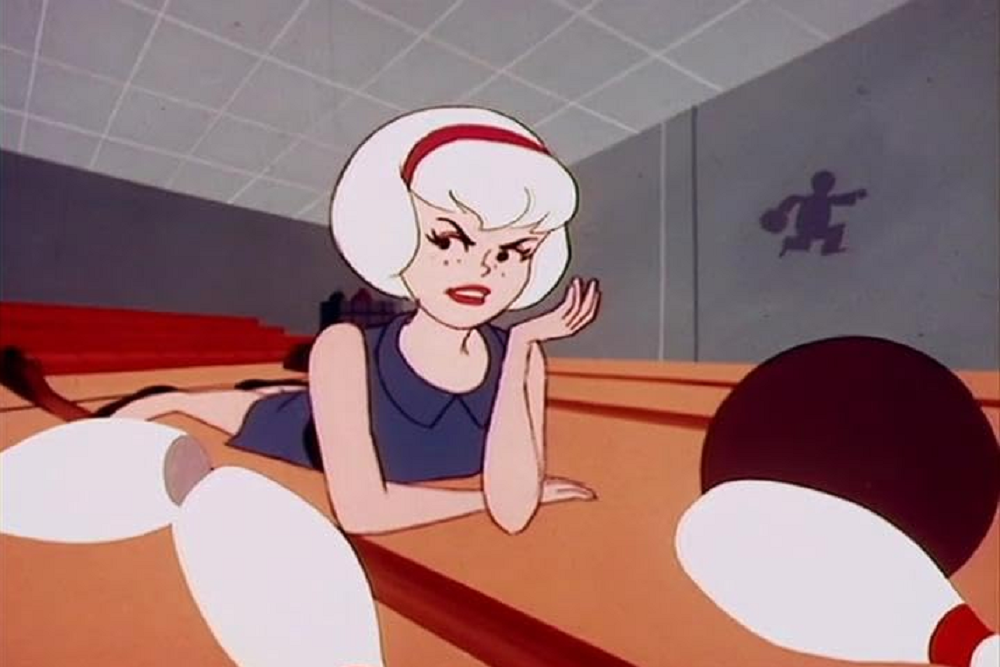
Sabrina and the Groovie Goolies (CBS): In October 1962, writer George Gladir and artist Dan DeCarlo created a new character to debut in Archie’s Mad-House, one of a number of titles published by Archie Comics and featuring the adventures of the eponymous Riverdale teenager. Intended as a one-off, fan reaction to Sabrina Spellman was so strong that the pair brought the teenage witch back for occasional appearances in Mad-House as the 1960s wore on.

Sabrina the Teenage Witch, 1970

In 1969, seeking to pad out the usual Archie adventures with new segments, Filmation decided to introduce an animated Sabrina the Teenage Witch portion to The Archie Comedy Hour, which aired on CBS on Saturday mornings. Again, reaction to the character was so strong that she was given her own show for the Fall 1970 season. Interestingly, before they introduced her to The Archie Comedy Hour, Filmation had been looking at licensing Bewitched as a Saturday morning animated show, but CBS producer Freddie Silverman tipped them off to the existence of Sabrina.

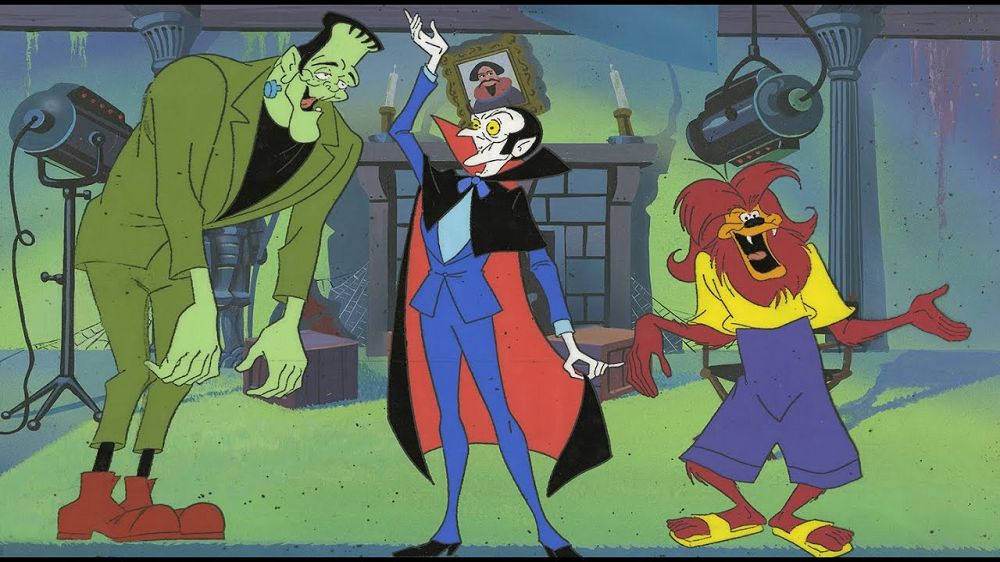
As part of The Archie Comedy Hour, Sabrina had appeared alongside another supernatural feature, Groovie Goolies. Inspired by the classic Universal monsters, the Groovie Goolies were an original Filmation creation, although they interacted with the Archie characters and moved over with Sabrina into Sabrina and the Groovie Goolies, which debuted on September 12th 1970.

The Goolies – renamed the Ghoulies in the UK to avoid testicle-based confusion – consisted of Drac, Frankie, and Wolfie, a trio of cool monsters living at Horrible Hall and surrounded by other creatures they often referred to as “cousins.” The Goolies were also a band and each episode featured them performing a musical number, alongside fast-paced physical humour and Frankie’s ever-present catchphrase, “I needed that!”

The Goolies also made a handful of appearances in Archie Comics’ titles in October and November 1970 but were otherwise not part of the wider Archie universe, also enjoying crossovers with Looney Tunes characters and appearing as part of Hanna-Barbera’s Banana Splits show when it was shown in the UK.

Sabrina and the Groovie Goolies was the highest rating show of the season, enjoying a share of over half the kids watching on Saturday mornings, and the decision was made to split them into their own shows for the 1971 season. No new episodes were produced but new wraparounds were introduced, including the earworm “Goolies Get-Together” opening sequence.

Groovie Goolies, 1970

After two seasons on their own, The Groovie Goolies was folded back into Sabrina the Teenage Witch for a final Fall 1973 outing but, again, this was reuse of older material giving fresh airings for a new audience of pre-teens. Sabrina, of course, went on to have a considerable afterlife in both live-action and animated form, but the Goolies were less fortunate. Other than a handful of appearances in 1977’s The New Archie and Sabrina Hour, they’re still waiting to be (literally) reanimated.

Filmation did consider a movie version in 1978, and in 1984 they worked on two different Goolies’ concepts; Fright Camp would have featured the children of the original Goolies, while The Goolies would have starred the Drac, Frankie, and Wolfie as toddlers. Neither got past the planning stage.

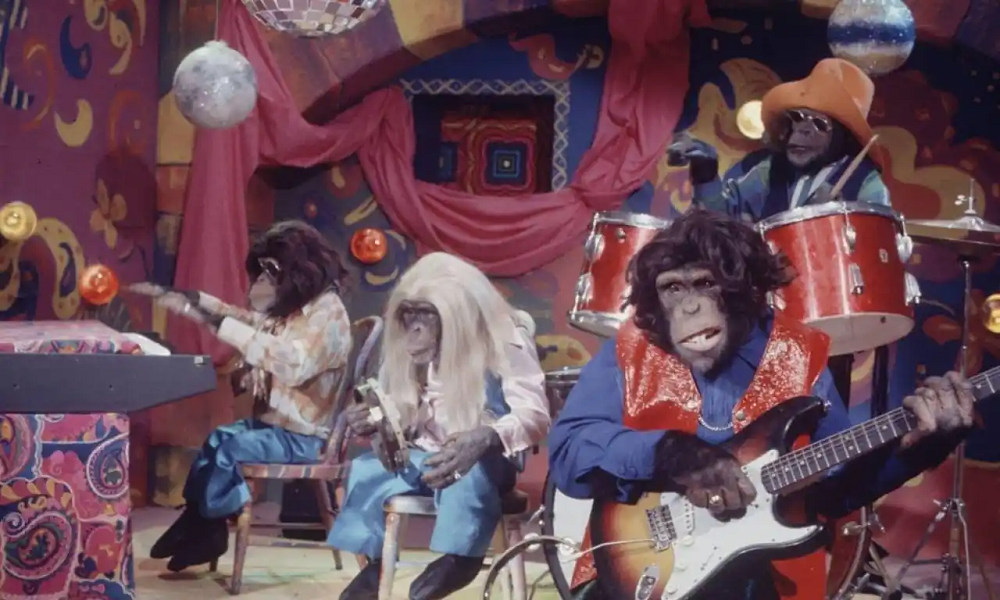
Lancelot Link Secret Chimp (ABC): It’s tempting to think of the Saturday morning line-ups as being wall-to-wall cartoons, but the occasional live-action show breaks the pattern, such as ABC’s Fall 1970 hopeful Lancelot Link Secret Chimp. Created by Stan Burns and Mike Marmer, a prolific writing team that had worked on Get Smart, Gilligan’s Island, and The Carol Burnett Show, the eponymous primate was a secret agent,

Link (voiced by Dayton Allen doing his best Humphrey Bogart impression) worked for APE – the brilliantly named Agency to Prevent Evil – in their battle against CHUMP – the less said the better Criminal Headquarters for Underworld Master Plan. Aided by Mata Hairi and Commander Darwin, he fought the evil forces of Baron von Butcher, voiced by Bernie Kopell and modelled on Siegfried, Copell’s character in Get Smart.

Lancelot Link, Secret Chimp, 1970

The elephant in the room is that all these characters were, in fact, chimpanzees, trained to react in certain ways and given human clothing and props to maintain the illusion. The show apparently enjoyed a seven-figure budget, but this still didn’t account for the unpredictability of its animal stars, leading to some wild diversions from the script to ensure footage was usable. This extended to songs performed by the house-band, the Evolution Revolution, which featured Link on guitar.

Seventeen episodes were produced, each with two stories per show, along with a musical number and a sketch featuring The Chimpies. The show was astonishingly successful, enjoying the full range of spin-off merchandise (including eight issues of a comic book from Gold Key), but there seems to have been no consideration of a second series, the network content to re-run the existing episodes over and over.

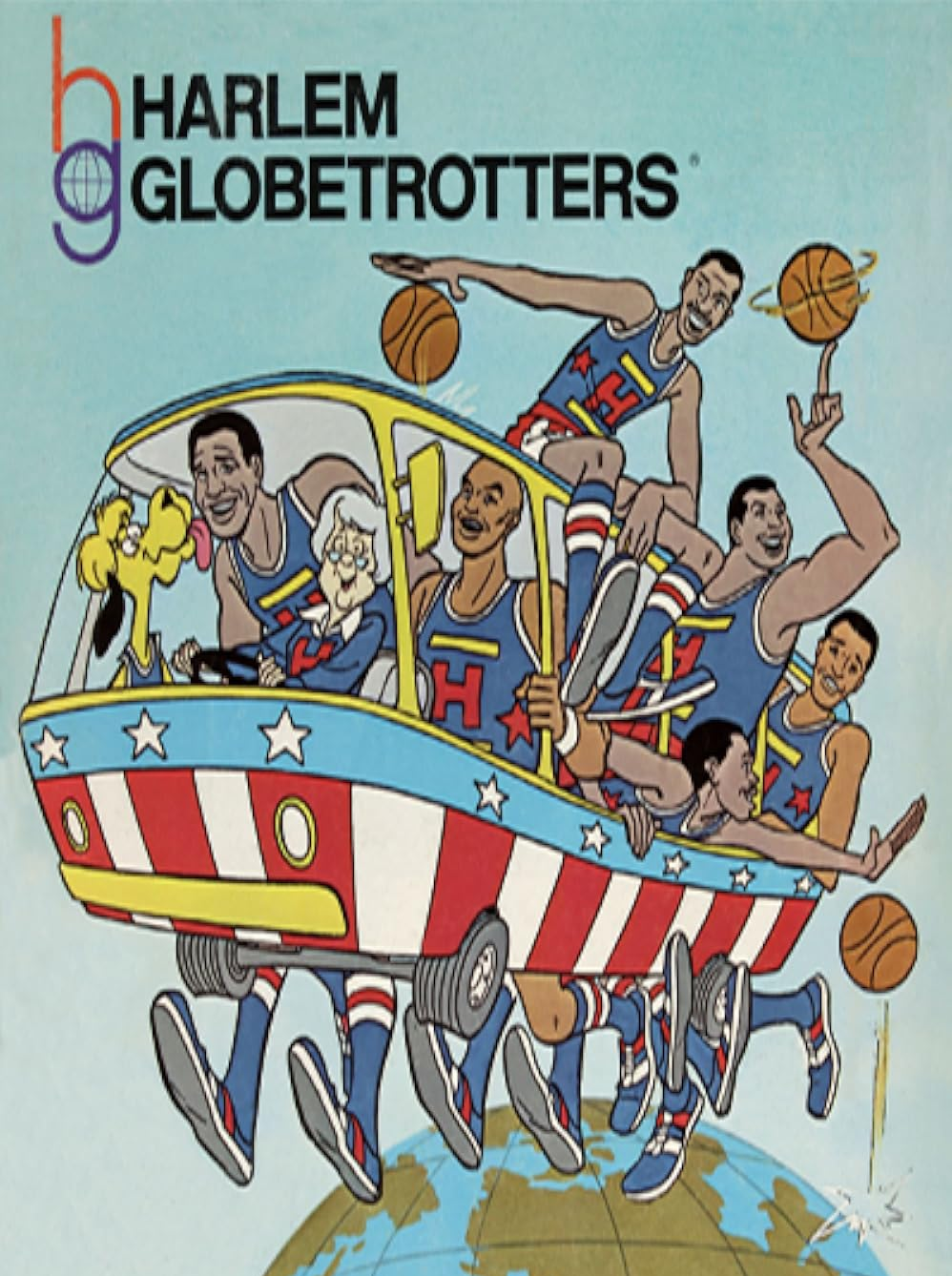
Harlem Globetrotters (CBS): The Harlem Globetrotters had their roots on the south side of Chicago, where they formed as The Savoy Big Five in 1926, playing exhibition basketball games before dance events at the city’s Savoy Ballroom. In 1928, several of the team walked out after a dispute and formed the Globe Trotters, touring southern Illinois and Iowa with the same act they’d perfected in Chicago. Signing on with touring baseball promoter Ape Saperstein, the team was renamed the New York Harlem Globe Trotters to cash in on Harlem’s position as the centre of black culture in the 1920s.

As well as their touring show, the Globetrotters (the two words soon became one) also competed in several legitimate contests, winning the World Professional Basketball Tournament in 1940 and beating the Minneapolis Lakers – reigning National Basketball League champions – eight years later in a famous game. Their bread and butter, though, was the exhibition games, and by 1952 their eternal opponents the Washington Generals were in place.

Harlem Globetrotters, 1970

In 1968, the Globetrotters were acquired by George Gillett Jr, who began aggressively marketing them beyond anything they’d previously experienced. This was the famous team that featured Fred “Curly” Neal, Meadowlark Lemon, and others, and it seemed a natural fit when that included a Hanna-Barbera cartoon for Saturday mornings from September 1970. As with other H-B productions, the show worked to a formula, with the Globetrotters arriving in town and becoming involved in some local dispute that can only be fixed by a basketball game.

Sixteen episodes of Harem Globetrotters were produced for the 1970 season, with another six added in September 1971, and it was heralded as the first cartoon to have a predominantly black cast, just a year after The Hardy Boys became the first cartoon to have a regular black cast member. The end of their series didn’t mean the end for the animated Globetrotters, however, and they appeared in several Scooby-Doo movies in 1972 and 1973, returning in 1979 as The Super Globetrotters when Hanna-Barbera gave them superpowers.

The Harlem Globetrotters are still a going concern, entertaining audiences all over the world with their trademark mix of basketball and comedy. Occasionally, the Washington Generals will get a win – the official website records just three such victories but there are believed to have been half a dozen – but usually it’s a tale of good defeating evil, especially as a Generals victory in 1971 is reported to have caused children to cry.

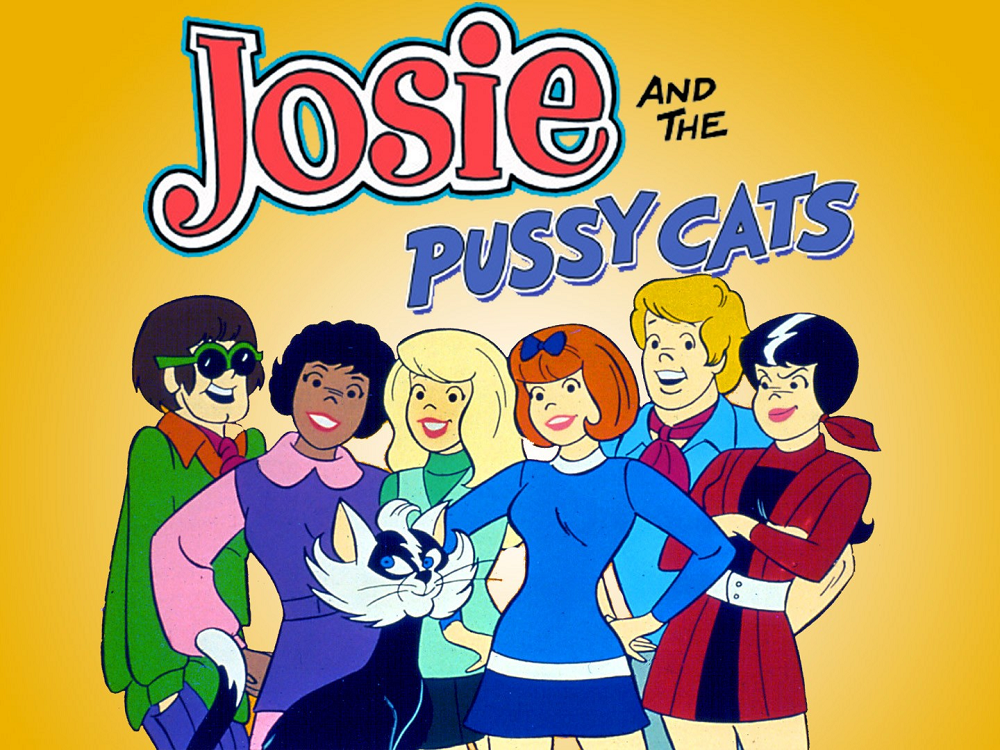
Josie and the Pussycats (CBS): It wasn’t just Sabrina Spellman breaking out of Archie Comics and onto the small screen as the sixties turned to the seventies, there was also a three-piece girl band that made the same journey, albeit a year after the teenage witch and her groovy gooly pals. Josie and the Pussycats were the creation of Dan DeCarlo, at the time a freelance cartoonist working predominantly for Atlas Comics, the pre-Marvel Marvel.

DeCarlo created the character of redhead Josie Jones in the late 1950s, remembering a cat costume his wife – also named Josie – had worn on a Caribbean cruise. DeCarlo originally pitched a solo feature called Here’s Josie, but Archie insisted on introducing her into the Archie universe (in Archie’s Pals ‘n’ Gals #23, Winter 1962-63) before spinning her off into She’s Josie in February 1963. It was there that Josie found her future Pussycats, blonde Melody and brunette Pepper.

Josie and the Pussycats, 1970

She’s Josie turned into just Josie with issue seventeen, but the biggest change came in December 1969, when the title was renamed Josie and the Pussycats for its forty-fifth issue, bringing with it the new status quo. By this time, the TV show was in development and there’s some doubt as to which influenced which, but whatever way round it was, Josie and Melody had now decided to start a band. Pepper opted out and was replaced by Valerie, a new girl at their school who happened to be black (and thus became the first black female character on a Saturday morning cartoon).

Animated by Hanna-Barbera, the cartoon began its run in September 1970, with supporting characters including useless manager Alexander, his scheming sister Alexandra (and her evil cat, Sebastian), and hunky roadie Alan. Each episode took the form of the band arriving to play a show, only to end up solving a mystery, and sixteen episodes were produced for CBS’s Saturday morning line-up, repeated through the year (and again for the Fall 1971 season).

In 1972, the show was retooled as Josie and the Pussycats in Outer Space, but the original concept continued in comic books until 1982, returning occasionally thereafter. In 2001, MGM produced a live-action reboot for the big screen, starring Rachael Leigh Cook, Tara Reid, and Rosario Dawson, but a proposed follow-up TV show never appeared. Josie had to wait until 2017 for a TV return in the bizarre Riverdale, by which point she was now black and called Josie McCoy, although she still had her Pussycats along for the ride.

Next time on The Telephemera Years: What aboot Canada, eh? We take a dive into the Great White North’s contributions to the field of telephemera…

Check out our other Telephemera articles:

The Telephemera Years: pre-1965 (part 1, 2, 3, 4)

The Telephemera Years: 1966 (part 1, 2, 3, 4)

The Telephemera Years: 1967 (part 1, 2, 3, 4)

The Telephemera Years: 1968 (part 1, 2, 3, 4)

The Telephemera Years: 1969 (part 1, 2, 3, 4)

The Telephemera Years: 1970 (part 1, 2, 3)

The Telephemera Years: 1971 (part 1, 2, 3, 4)

The Telephemera Years: 1973 (part 1, 2, 3, 4)

The Telephemera Years: 1974 (part 1, 2, 3, 4, 5)

The Telephemera Years: 1975 (part 1, 2, 3, 4)

The Telephemera Years: 1977 (part 1, 2, 3, 4)

The Telephemera Years: 1978 (part 1, 2, 3, 4)

The Telephemera Years: 1980 (part 12, 3, 4)

The Telephemera Years: 1982 (part 1, 2, 3, 4)

The Telephemera Years: 1983 (part 1, 2, 3, 4)

The Telephemera Years: 1984 (part 1, 2, 3, 4)

The Telephemera Years: 1986 (part 1, 2, 3, 4)

The Telephemera Years: 1987 (part 1, 2, 3, 4)

The Telephemera Years: 1989 (part 1, 2, 3, 4)

The Telephemera Years: 1990 (part 1, 2, 3, 4)

The Telephemera Years: 1992 (part 1, 2, 3, 4)

The Telephemera Years: 1995 (part 12, 3, 4)

The Telephemera Years: 1997 (part 1, 2, 3, 4)

The Telephemera Years: 1998 (part 1, 2, 3, 4)

The Telephemera Years: 2000 (part 1, 2, 3, 4)

The Telephemera Years: 2002 (part 1, 2, 3, 4)

The Telephemera Years: 2003 (part 1, 2, 3, 4)

The Telephemera Years: 2005 (part 1, 2, 3, 4)

The Telephemera Years: 2006 (part 1, 2, 3, 4)

The Telephemera Years: 2008 (part 1, 23, 4)

Titans of Telephemera: Irwin Allen

Titans of Telephemera: Stephen J Cannell (part 1, 2, 3, 4)

Titans of Telephemera: DIC (part 1, 2)

Titans of Telephemera: Hanna-Barbera (part 1, 2, 3, 4, 5)

Titans of Telephemera: Kenneth Johnson

Titans of Telephemera: Sid & Marty Krofft

Titans of Telephemera: Glen A Larson (part 1, 2, 3, 4)

Titans of Telephemera: Quinn Martin (part 1, 2)

Titans of Telephemera: Ruby-Spears

Andy Nyman’s ARROW Selects

From Severance to Ghost Stories to A Small Light, actor Andy Nyman has built up a diversely incredible acting portfolio alongside his writing. So it’s no surprise that ARROW has asked him to select some horror movies for their streaming platform! STARBURST reflects on just some of his brilliant acting highlights, whilst talking about his ARROW Select movie picks on the ARROW streaming service, including Deep Red, Ringu, and Zombie Flesh Eaters

STARBURST: but how did you first get into acting?

Andy Nyman: I loved acting ever since I was a kid, but the big change for me was going to see Jaws at the pictures. Not only was the film just amazing, obviously, but as a little Jewish, curly-haired kid with glasses, sitting there and seeing Richard Dreyfuss, a little curly-haired Jewish guy with glasses. I just thought, “Oh my god!” So that was the thing that made me want to be an actor, I wanted to be in films. And I was twelve, something like that.

Severance is a wildly violent movie, to say the least! How fun was it to work alongside Danny Dyer, and why do you think that this film still holds up today?

Why does it still hold up today? Because the script is fantastic. The funny is properly funny, but essentially the scary is properly scarily. So I think it really works, and it’s not horror comedy in a Shaun of the Dead way. Christopher Smith has got such a joy of the nasty, so that the horror in there is very dark. As well as the comedy. It’s a really well-made film. Danny Dyer is an absolute star. It’s very easy for people to underestimate what a brilliant actor he is, but he is sensational. He’s great in that film. It’s a terrific cast. Claudie Blakley, Toby Stephens. It’s just fantastic, and it was such a joy to do.


Death at a Funeral also makes humour out of something that can be so dark. What do you remember the most about working on it, and what was it like to work with humour like that?

I remember laughing. Laughing, laughing, laughing. Non-stop. It was the most gorgeous cast of people. Again, a brilliant script. It was directed by Frank Oz, so I was working with an absolute legend and filming at Ealing Studios. A dream come true. I’ve been an actor for nearly forty years, and that is an absolute highlight. On YouTube, look up the Death At A Funeral gag reel. We couldn’t breathe on that set. It was non-stop because it was a cast of gigglers as well. Matthew Macfadyen, Keeley Hawes, Alan Tudyk. It was just brilliant. The weird thing is, and I hear it a lot from a lot of people, that it’s their favourite film, which is such a lovely thing. However, that film was a box office smash worldwide apart from in the UK! It committed that cardinal sin of being middle class. Everyone wants to either be super posh or they want to be a hard-nosed gangster movie, thinking they’re working class. No one wants to admit that they’re middle class, and that film is as middle-class England as it gets. That’s why the rest of the world loved it. Because it was like, “That’s English!” it’s brilliant.


Dead Set is a clever idea, and it still gets talked about now. How did you get involved with the project, and what do you remember the most from reading the script for the first time?

I’d not done a TV job for ten years. I had stayed away from it because I sort of wanted to reinvent my career, so I had been going off to the States and doing movies and stuff. I got a phone call from my agent saying “Look, I know you’re not interested in TV, but we’ve had a script through, it’s called Balloon Walls, and it’s written by a bloke called Charlie Broo…” and as soon as she got to “Broo” I went “Charlie Brooker! Charlie Brooker has written a series? Yeah, let me read it” I loved Screenwipe and TV Go Home. I read the pilot, which was all they had released, and it was brilliant. So I went to meet Yann Demange, who was the director. That handlebar moustache I’ve got in the series – I had then! I just thought “I’m going to have a handlebar moustache like my dad did” I read that script, and thought “This is sensational”, but my big question, when they asked me to do it, as a horror fan was “Are you properly going to commit to the horror? Are we going to see what happens in the script, on the screen? Or will it be, sort of, softened?” they said, “No, no, no, we are going to show it all.” I was like “Oh my god. I’m in!” I just love it. I think it’s a cult favourite. Not only is the writing brilliant, it is so viscerally directed. I’m giving you lots to watch, but also on YouTube, I made a documentary about having my head ripped off in that. It’s called Andy Nyman, A Dream Come True I think it’s in two or three parts. I made a documentary all about it because it was literally a dream come true. I think they put it on the DVD of the series when it came out.

What was it like to adapt Ghost Stories into a movie, whilst being heavily involved with so many aspects of putting it together? Directing/writing/acting – it sounds pretty intense!

It was! It was eighteen months of work. The play – and the film – is like a Swiss watch, this thing is very intricately put together. Jeremy Dyson and I realised very early on, that you could not just put the play on film, because a lot of it is Professor Phillip Goodman doing a lecture to the audience, there in the moment. And that just wouldn’t work. So we had to come up with a whole construct of “Well, what could it be instead?” That’s where the whole Charles Cameron, his ex-mentor idea came from. So it has a very different path, the journey. It’s one of the most amazing, satisfying things.


You got to play Dan in the biopic Judy. What was that ‘show business’-type world like to be in as an actor, and what did you enjoy the most about working alongside an Oscar-winning performance from Renée Zellweger?

It was a very special project to be a part of. It really broke down into two bits for me, the first thing was the stuff where we went to see her in concert. She was staggering and lovely. She was lovely to every single person, the crew, the cast. The extras, there were probably three hundred extras at that, when she was singing live, and she was singing! She did it, and then she would stay, and she would be talking to people, and chatting to anyone and everyone. Lovely. We had quite a bit of time together in the makeup wagon, there’s quite a bit of prep for her. She was delightful. And then, those scenes with her were a joy to do. And I think that they live in a very special little world, those scenes. It’s like a little playlet within the rest of the film. I’m very proud of that. I think it’s a very sweet, touching storyline. And doing that with her was amazing. I loved it, and I loved working with her.

Recently, you were part of the miniseries A Small Light playing Hermann van Pels. Can you tell us what it was like to work on and how you think this World War II story stands out compared to other TV narratives within that genre?

That’s a big one. I’m very proud to be a part of that. It’s my heritage. How does a brilliantly adapted show, that tries to teach the perils of anti-Semitism to people in the current climate? I mean, it couldn’t be more needed because these are perilous times. I’m very proud of it, and I think that they did a truly brilliant job on that adaptation. It took what is a sort of sacred ‘story’ and made it very human. It’s very profoundly touching in a whole new way. It’s brilliant.

Talking of war, what was it like to play a younger version of Winston Churchill in Peaky Blinders

I went in to audition, and it was very quick, because I was doing a matinee in the West End, and it really ran late. I said to them at the audition that I’d got two minutes because they were half an hour late. I said, “I’ve got to go, otherwise I’m not going to get on stage in the West End!” They were like, “OK, you can go in!” I went in, and I met the director, Otto Bathurst. He had directed one of the very first Black Mirror episodes, called The National Anthem, where the prime minister has it off with a pig. I said to him, “Oh my god, I’ve just got to say that I love that” and because Black Mirror was with Charlie Brooker, he knew about Dead Set. He said, “OK, I just want to say I love Dead Set. Should we do the scene?” So, I read two scenes. I had listened to Churchill quite a lot, but I tried to do me as Churchill, not a Churchill impression. Anyway, I then got a call a few days later saying that they thought I was great, but they wanted to make it more like a lookalike thing. I was like, “OK, cool!” then two days later, I got a call saying, “You know what, they’ve changed their minds, they want you to do it!” So, I got to do it! I was only available for the first series. Every time they asked after that, I was busy doing other stuff. I only worked with one person, which was Sam Neill, what a legend! He was amazing and I’d been very lucky. It sounds like I’m just kissing arse to everyone, I’m not. Honestly, he was a delight. We got on like a house on fire. I knew I liked him when the first scene I shot was at the end of the first episode. Churchill is in bed. It was the last thing they shot on that day, and Sam Neill waited all day so he could be in the room and do the off-lines. I knew that he was a good bloke from then. Then we met again on The Commuter, which is a recent action movie starring Liam Neeson and myself. He was on that, and it was five years later, so I thought he would never remember me. I walked on set, and he said, “Andy! How are you?” It was just wonderful. He is great and it was a joy.
Let’s get stuck into some of your ARROW Select choices. A handful of them are Dario Argento movies. Can you tell us a bit about this style of film?

The Dario Argento movies are The Bird with the Crystal Plumage and Deep Red. They’re Argento’s early films, and they are called giallo thrillers. Giallo is Italian for yellow, and they were called giallo thrillers because they were a particular type of murder mystery. So when you bought the book it had a yellow cover, so you knew that it was that type of Edgar Wallace mystery, where you were seeing things from the POV of the killer. So, Argento was after Mario Bava, who was the guy who pioneered the movies. What’s amazing about Argento is he also wrote Once Upon A Time in the West, with Bernardo Bertolucci and Sergio Leone. The three of them wrote it. But, the way he uses mystery, violence, and the camera, is amazing!

The Bird with the Crystal Plumage is an amazing murder mystery set in an Italian art gallery. But if you’ve never seen any of them, the one to watch first is Deep Red (Profondo rosso). It is another one of my ARROW choices, which I rented as a VHS during the video nasty era. Not knowing what to expect, and it’s mind-blowing. I don’t know which version they’ve got on ARROW, but if they give you an option, don’t watch the director’s cut, watch the theatrical cut. It is phenomenal, as a murder mystery. Because what is most amazing about it is that he doesn’t cheat. What happens is, and it’s something that we tried to do with Ghost Stories, is that you are in exactly the same shoes as the protagonist in Deep Red. Something terrible happens, and he witnesses it. I’m not spoiling anything, and he has a nagging feeling that something he saw isn’t right. As do you. And when you get to the end of the film, and it is revealed to you, you are shocked! And that’s truly what I experienced when I first watched it, I was fifteen. It completely changed what I thought about theatre, film, and storytelling. It’s amazing. Not only that, but the soundtrack! The beginning of the Ghost Stories play is the Goblin soundtrack from Profondo rosso. The way he uses a camera, honestly, you won’t believe it, it’s amazing. So that’s Deep Red, that was the third of his, kind of, murder mystery ones. The Bird with the Crystal Plumage is one that was before that, and it’s also brilliant! But when you watch it, there is a cheat in it, but it’s still phenomenal. Watch Deep Red first. It’s really amazing.

What can you tell us about Zombie Flesh Eaters?

Zombie Flesh Eaters is a piece of its time. I have a very special love for it. Lucio Fulci, who directed it, is a mental filmmaker. But within his madness are moments of absolute brilliance. Iconic images infiltrated cinema from then. So the look of zombies that we all know now as in Dead Set, Shaun of the Dead, right the way through to the remake of Dawn of the Dead. That look was invented for Zombie Flesh Eaters. And it was invented by an effects artist called Giannetto De Rossi. The reason I tell you this is that I did a movie for NBC years ago, a war film called Uprising. It was filming in Slovakia. I got there, and there were lots of big stars in it. Really super famous people that I was excited to work with. But with my death in the movie, I went down in a blaze of glory. I get burnt to death, but I come out on fire, and take a Nazi down with me. So they said, “You’re going to have a meeting today with this special effects guy doing the effects.” A guy called Giannetto, and I went, “Giannetto De Rossi? Hang on! Giannetto is doing the effects? Oh my god!” So I then went to see him, and I walked in, and I said “Oh my god, can we talk about Zombie Flesh Eaters?” and he said “Oh my god, please come and talk”. We had a big hug. It was a big secret for years, in regards to how he invented the zombie look. It’s amazing, because he then did it to me, as my burn make-up. It’s incredible, I videoed the whole thing, and it’s out in the open now. But it’s modelling clay. Literally that you would go and buy in an art shop. He sticks it on your face, and then carves it like a sculpture, and then paints it. And he did this thing to me, and it looked terrible until the last eight seconds when suddenly it was like, “Holy shit!” it was the greatest magic trick you’d ever seen in your life. So with Zombie Flesh Eaters, It’s mental, but I’m very nostalgic about it. Me and Giannetto sat and watched it together. There’s an incredible eye-gouging sequence in it. Even if you just watch that bit… the music, the cut! Imagine now, we see so much, and we are so used to the stuff we are exposed to, but even now, it has a visceral energy that is just amazing. It’s a piece of work, that’s for sure. It packs a punch.


Ringu is one of the scariest horror movies ever, what do you remember the most from watching this movie?

Ringu is an amazing movie! One of the reasons I love, what became affectionately known as J-horror – but I actually think that you can make it A-horror, as in Asian horror, really – Is that they are so akin to the British ghost stories in a way that American horror is not. Ringu is like one of the great M. R. James stories. It’s basically Casting the Runes, isn’t it? It’s the same as Night of the Demon. I’m handing you that cursed object, and now you have a limited amount of time before you die.  But there’s something about the purity of the way the curse is handed on. The fact it fitted into VHS so beautifully. Again, it’s so easy now when things are so parodied and so much a part of the culture. But the first time you sat and watched that film and saw Sadako coming out of the TV. I mean, you can’t put into words the cold terror of it. There are so many brilliant things within it. In fact, the first TV job I ever did was The Woman in Black. The ITV version of it. Which if you haven’t seen, is available now. They did a Blu-ray a few years ago. I urge you to see it because it’s got maybe one of the best jumps ever filmed in anything. Not only is it a brilliant jump, it is a sustained moment of terror. It’s nightmares, proper nightmares. The Woman in Black is a real slow burn, so if you like your ghost stories and horror, then I urge you to see it. But the reason I say it, is that the performance makes the moment so terrifying, by the lady who plays the woman in black, Pauline Moran, it’s akin to the performance of the actress who plays Sadako in Ringu. There is such power in the vengeful spirit, when it’s done properly. Someone who has been wronged and is seeking revenge, and it’s driven out of an unstoppable pain. When you see, just the eye. It’s incredible. Then, the rictus that the people are left in when they die tells you the pain of this death. It’s phenomenal. My god, it’s such a brilliant film.

You’re noted for being an actor, writer, and magician, what can we expect to see from you in 2024? 

Going into 2024. I’m starring in the West End in Hello Dolly in the summer. Also, I am in, although it’s not announced and I can’t say what it is, probably what is going to be the biggest film in the world next year. I’ll leave that to your imagination. Mine and Jeremy Dyson’s novel The Warlock Effect, which, if you haven’t read, you must read, came out this year, and we are adapting it for TV, so that’s a very exciting project.

Andy Nyman Selects is out now, exclusively on ARROW. For more exciting titles, check out ARROW’s NEW TRAILER HERE.

The Warlock Effect, co-written with Jeremy Dyson, is out now.


STARBURST Christmas Snack Gift Guide 2023

Christmas time also means winter; sometimes, you really want to snuggle up somewhere warm and drink as many hot drinks and fun food as possible. Or, to put it another way, there are plenty of lovely things to eat, drink, and be merry. If you’re anything like us, you already have a home filled with books, DVDs, and life-sized statues of Bruce Campbell, so the gift of food can be a good way to give something that doesn’t add to the permanent clutter of your home.

If you’ve been to a cinema in the last year or so, you may be familiar with Joe & Seph’s, the gourmet popcorn company beloved by film lovers everywhere. Joe & Seph’s have gone full Christmas this year with Candy Cane, Egg Nogg and Yule Log flavoured popcorn. Their thing is to put sticky, sweet popcorn into anything delicious you can imagine. Their popcorn chocolate slabs are blocks of lovely chocolate slathered onto sweet popcorn. 

Joe & Seph’s have combined pretty much any comfort food you can think of with very nicely made popcorn. They even run a subscription service for the Popcorn fanatic in your life. 

Chocolates are always a good idea for Christmas, New Year, or any other time really. LoveRaw are part of the new wave of chocolate creators who do something a little different. LoveRaw’s thing is that they are vegan. Their advent calendar is surprisingly tasty, the plant-based ingredients elevating it beyond the usual fare you get in a Christmas cardboard frame. Other traditional chocolate snacks have been given the Love Raw treatment. For example, their nutty choc balls are crunchy hazelnuts coated in delicious vegan hazelnut cre&m® and covered in a crisp wafer shell – perfect for an ambassador’s reception.

The Starter Mix contains a nice mix of their wafer bars, chocolate bars, and the like. It’s pretty much a perfect choice of brand for vegans and non-vegans alike. Over at STARBURST Towers, we crunched our way through a pile of this stuff, and honestly, if it’s every bit as delicious as regular good chocolate, it’s just nicely inclusive. Delicious stuff.

If gaming is more your thing, however, you may want to take a look at some lovely things for the folk at Honey Badger Games. They do all sorts of geek-themed teas and sweeties. Their Food Pawn range comprises a collection of shaped jelly sweets in tubes. These are shaped like dice, meeples, or potion bottles. They’re thick sweeties, closer to what you’d get in a restaurant than at a sweet shop, and look so fun it feels a shame to eat them.

Honey Badger also does a range of teas. These are also geek-themed, so we get Wizard’s Tea (good black tea), Barbarian’s Tea (a nice spicy Rooibos), and Paladin’s Tea (a very tasty white tea). They also make Kit Teas, a tea suitable for humans and cats. These contain catnip (which can be used as a tea), and you’re encouraged to cool down the drink and feed it to your familiar. They’re also fantasy-themed, so you can feed them to your pet Displacer Beast if you wish.

Anyway, those are our picks for odd Christmas snacks and food-related gifts for the holiday season. What are your favourite geeky foods? Let us know the usual way. 


Unpacking the Quirky Madness of ‘Don’t Hug Me I’m Scared’

Welcome to the eccentric and unconventional world of “Don’t Hug Me I’m Scared” – the animated comedy that’s far from the typical Saturday morning cartoons you grew up with. Created by Becky Sloan and Joseph Pelling, this darkly comedic series implores a twisted take on the seemingly innocent nature of puppets, adding a splash of disturbing creativity to the mix. What started as an online series, was quickly picked up and edited into 6 episodes that will stay with you long after you watch them.

Animating the World of Don’t Hug Me I’m Scared

First things first, “Don’t Hug Me I’m Scared” isn’t your grandma’s cup of tea. It is more like a shot of espresso; intense, surprising, and possibly unsettling. The show may first appear to be a children’s program with beautiful puppets and catchy songs, but it contains inappropriate content for the younger ones. The show starts off innocuously enough by introducing three cute little puppets to us –Yellow Guy, Duck and Red Guy. The trio embarks on seemingly innocent adventures that quickly morph into bizarre and often disturbing life lessons. Over the course of the episodes, the sweetness of Sesame Street turns into something much different: surrealism in a creepy carnival.

What sets this show apart is its unique and well-executed combination of puppeteering and stop-motion animation. The seemingly simple-looking characters become alive in such a way that is both sweet and terrifying at the same time. Contrasting bright colors with disturbing themes creates a beautiful emotional complexity. Furthermore, it throws jabs at conventional educational programming. It deconstructs the formulaic nature of children’s shows, subverting expectations and challenging the audience to question the status quo. This series, “Don’t Hug Me I’m Scared“, pushes viewers into acknowledging uncomfortable truths about conformity, creativity, and the often absurd nature of societal norms.

Animation’s captivating allure has inspired social casinos to create a dynamic synergy that adds another level of thrill to the online gaming experience. Just as “Don’t Hug Me I’m Scared” used puppets innovatively, social casinos have also taken advantage of animated graphics to heighten the excitement of playing in virtual reality. In particular, Wolf Gold, Gold Party, and Great Rhino Megaways on McLuck Casino are examples of games that succeed in incorporating animations into their themes; this McLuck Casino review from BonusFinder shows how animators are pushing the boundaries to keep you entertained.

The music in the show also adds to the quirkiness. A radio station could create a number-one hit song using some of the show’s catchy melodies. These jingles have a cheerful tone but also carry subtle dark undertones that provoke a deep contemplation about life. The lyrics invite a comparison with melodies that are light-hearted but contain dark messages beneath them; there are ironic aspects that are sometimes funny as well as disturbing.

Stream It or Skip It

When it comes to sheer entertainment, the show is hard to beat, but it’s certainly not for the faint-hearted. Some episodes tend to get surreal and gruesome; they delve into topics that may make the audience doubt their own sanity. However, this unpredictability is what sets “Don’t Hug Me I’m Scared” apart from other cartoons in the genre, no matter how bizarre it may seem.

What makes the series so special though is its ability to start conversations and generate interpretations. Every episode is like a small work of art that tempts one to unravel its multiple layers of meaning. The fact that there are no concrete answers has led to different assumptions resulting in many minds being blown away as if this show were a riddle.

Ultimately, “Don’t Hug Me I’m Scared” is a dark comedy at its finest that challenges the conventions of animation. It takes an unexpected turn into the surreal, daring narrative experiment that grips and provokes viewers’ thoughts. You can watch clips of the show on the creators’ YouTube channel or catch it when it’s on your favorite streaming site. So – if you are prepared to embrace weirdness and enter into unfamiliar territories – fasten your seatbelts: this puppet-filled rollercoaster ride will stay on your mind for a while!