Watching TV or Gambling Online: Which Is Better for Brits?

In times long gone, television was one of the few forms of entertainment Brits had available at home. The advent of the internet, modern computing and smartphones drastically changed this.

In a world full of accessible new media, television has still held its ground. In the UK, more than 27.3 million households have at least one TV. However, surpassing the number of households with televisions is the number of adults who enjoy gambling using one of the many great UK online casinos. As of 2022, an estimated 32.65 million Brits were using online services to place bets. 

With so many households having at least one TV and even more people gambling, two questions can be asked: Which form of entertainment is more popular, and which is better for Brits to engage in? 

Watching TV

In the UK, there are plenty of fantastic channels and programs to watch on TV. Aside from the regular options like BBC and ITV, the state is also home to more than seven subscription video-on-demand (SVOD) services. These include Amazon Prime Video, BritBox, Netflix, BBC iPlayer and ITV Hub. 

A study conducted by the Office for National Statistics in 2023 revealed that subscribers to these SVODs and regular television channels are still watching plenty of programming. In fact, on average, Brits spend 2 hours and 17 minutes in front of the gogglebox daily. 

Gambling Online

Although streaming services and television broadcasting in the UK boast many options, online gambling provides even more. As of the end of 2022, the country was home to more than 140 licensed online casinos that offer punters as many unique experiences when trying to court Lady Luck.

The players using these services, who often rely on casinos.com reviews for trusted gambling sites, generated a gross gambling yield of more than £6.44 billion in 2022 alone. A 2022 study showed that 21.2% of people who gamble do so at least twice a week, and a further 26.9% place bets at least once a week. 

The Winner

Despite the growing number of punters enjoying these online gambling services, a 2022 study shows that there is still a clear winner between online casinos and TV. And lounging while watching the latest shows is still on top.

The study, conducted by Deloitte, surveyed all generations in the US and asked what their preferred form of entertainment at home was. All generations apart from Gen Z responded that they preferred watching TV and movies in the comfort of their own home. 

But while the TV is still the clear favourite, it is not necessarily the best option for the modern British resident. 

The Catch

Although watching shows may seem like a great way to relax and unwind after a long and taxing day, it does have some unique drawbacks. Among these is one discovered by the University of Glasgow in a 2020 study that monitored the effects of excessive television use. 

The study found that 6% of all deaths in the country and a further 8% caused by cardiovascular disease were linked to spending too much time in front of the TV. The link is caused by insufficient time spent doing activities that require movement. Furthermore, as is common in many households, viewers enjoy snacking while watching – and these snacks aren’t generally healthy. 

The same study concluded that if the time spent in front of the TV had been reduced to less than two hours (less than the current average in the UK), almost all of these deaths could have been prevented. 

The Alternative

As an alternative, online gambling offers fewer risks, as play sessions are often limited to the amount of money that a player is willing to spend on bets. Gamblers are also less likely to lounge or snack while playing. 

However, although punting online may be an alternative to watching TV, it also has unique risks and disadvantages. Primarily, online gambling generates a higher cost of entertainment than television – even if a household holds several subscriptions. 

Aside from the cost, using online casino websites could result in a gambling addiction, particularly if done regularly. To curb this eventuality, the UK government and others around the world have strict regulations in place to prevent over-expenditure and (in some cases) restrict the amount of time spent betting; they have also made it compulsory to ensure players can access help easily. 

On the other side of the proverbial coin, gambling provides a chance to win something back if players are lucky enough – which remains one of the primary reasons so many Brits enjoy casinos. Watching TV, however, has few material benefits apart from the entertainment factor it offers. 

Which Is Better?

Although watching TV is clearly a more popular form of entertainment than gambling online, it may not remain so for long. With the iGaming industry experiencing massive growth and access to online casinos becoming more prevalent, the number of people who prefer gambling may soon overtake those who enjoy watching TV.

However, with both types of entertainment having unique (and sometimes worrying) effects, the answer to which is better for Brits cannot be determined. Watching TV costs less but is proven to cause long-term health effects. Gambling may cost more but offers the chance to win, although with the additional risk of problem gambling. 

So, when it comes to gambling online or watching the latest shows and movies, the famous words of Socrates ring true: ‘Everything in moderation, including moderation.’ With this in mind, Brits can responsibly enjoy the latest content on the telly and the thrill of gambling alongside other activities that hold more benefit in the long run.

THE TELEPHEMERA YEARS: 1970, part 3

Mister Jerico, 1970

Ah, telephemera… those shows whose stay with us was tantalisingly brief, snatched away before their time, and sometimes with good cause. They hit the schedules alongside established shows, hoping for a long run, but it’s not always to be, and for every Street Hawk there’s two Manimals. But here at STARBURST we celebrate their existence and mourn their departure, drilling down into the new season’s entertainment with equal opportunities square eyes… these are The Telephemera Years!

1970-71

The arrival of a new decade brought with it some significant changes in the network television schedules. The Fall 1970 season was the final time viewers could sit down to enjoy The Ed Sullivan Show, The Beverly Hillbillies, Hogan’s Heroes, and Green Acres, all staples of CBS’s 1960s line-up, with The Newlywed Game and High Chapparal also saying their goodbyes as the year went on. Still, Here’s Lucy ensured that Lucille Ball was still a constant in American homes, while Ironside, Gunsmoke, and Marcus Welby MD all had strong showings in the year-end ratings.

New shows arriving on the scene that would leave a lasting impact included The Odd Couple, The Partridge Family, and Monday Night Football on ABC, The Mary Tyler Moore Show on CBS, and the debut of a new Black comedy star on NBC in The Flip Wilson Show. There were slim pickings for fans of genre television but at least Alias Smith and Jones and The Young Rebels the action quota across the week. Those were the shows that made it to air but what of those projects that were cut down before they got that chance? This is the story of four unsold pilots…

The Aquarians (NBC): It’s fair to say that Ivan Tors loved the water. The prolific producer – born in Budapest during the First World War – fled to the US to avoid Nazi persecution in 1939 and joined the US Army Air Corps, soon transferring to the Office of Strategic Services, the wartime intelligence bureau. After the war, Tors joined MGM as a screenwriter, scripting seven films before creating his own A-Men company with actor Richard Carlson.

A-Men productions were the stuff of fantastic adventure, with the “Office of Scientific Investigation” trilogy quickly followed by syndicated TV series Science Fiction Theater in 1955. In 1958, he cast Lloyd Bridges in Sea Hunt, his first aquatic outing which led to 1960’s The Aquanauts and Korean war drama Underwater Warrior. His first big hit came in 1963 when Flipper delighted audiences of all ages with its cetacean star swimming to the rescue, and followed it with Daktari, Gentle Ben, and Cowboy in Africa, all variations on the theme.
The Aquarians, 1970

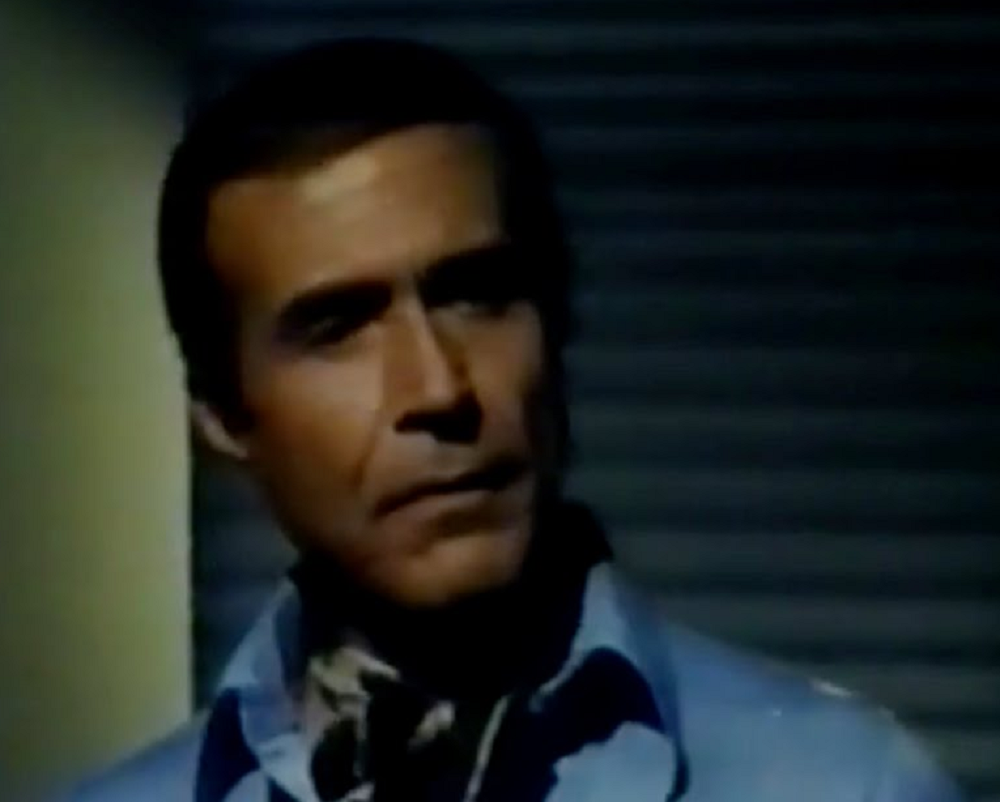
1970 saw Tors combine his two loves of underwater action and science fiction with The Aquarians, starring Ricardo Montalban as a submarine-dwelling scientist racing to find who has stolen a cache of nerve gas from a sunken ship that was carrying it for disposal. Jose Ferrer plays Montalban’s nemesis, ensuring a smouldering Latino stand-off that is all eyebrows and intensity, backed by the usual stunning score from Lalo Shifrin.

NBC passed on taking The Aquanauts to series, possibly wondering how Tors could keep Montalban busy over a full season. The Mexican actor moved onto a pair of Planet of the Apes, eventually setting sail for Fantasy Island, while Ferrer popped up in all manner of roles over the next decade, including the Angel of the Lord and Captain Nemo. For Tors, it was more of the same, with failed pilot Treasure Galleons and short-lived series Primus and Salty (a seal) occupying his time over the next few years.

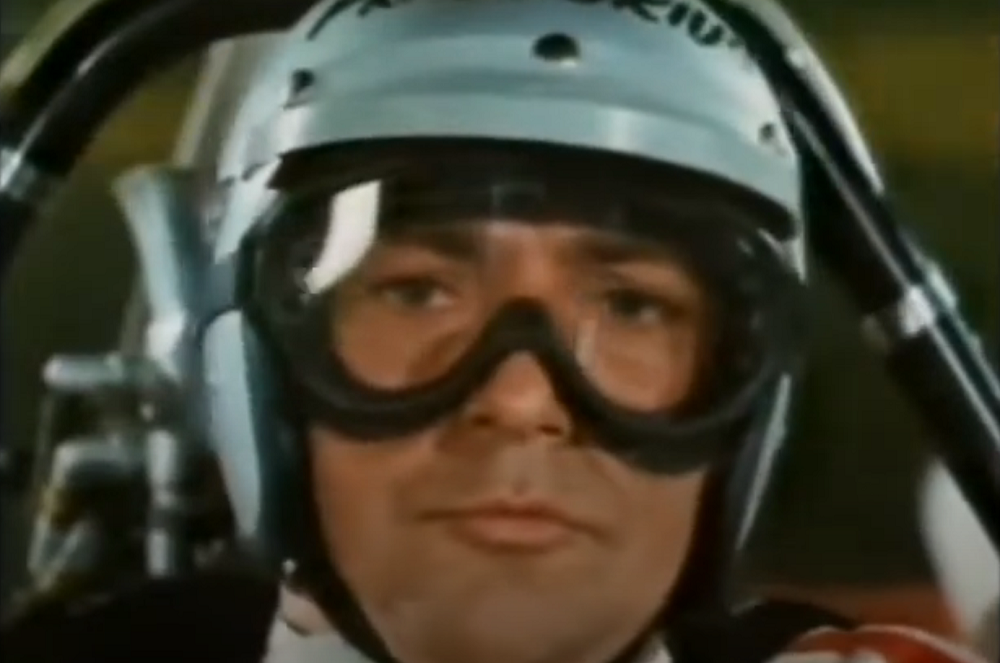
Hunter (CBS): Written by Bruce Geller and Cliff Gould, who’d first teamed up on Mannix, Hunter starred Canadian former stage actor John Vernon as a government agent with the uncanny ability to inhabit the lives of others. In the pilot film, Steve Ihnat plays famous race car driver Alain Praetorious, who has become the target of brainwashers seeking to turn him into an assassin.

Using the latest mindbending techniques – including repeat viewings of parts of The Wizard of Oz, leading to the infamous line, “stop the monkeys!” – Praetorious is programmed by Fritz Weaver and John (Holmes and Yoyo) Schuck to crash his car into the grandstand where his target will be seated but problems with the brainwashing lead to him crashing his car too soon.
Hunter, 1970

This is where David Hunter (Vernon) comes in. Adopting Praetorious’s identity, he repeats the process in an attempt to discover just who is behind the dastardly scheme. It’s all very Mission: Impossible, and it’ll come as no surprise than Vernon, Weaver, and director Leonard J Horn were all regulars on that show, created in the first instance by Geller.

Although CBS were not interested in taking Hunter to series, they did show the pilot film as part of their New CBS Tuesday Night Movie strain, although not until January 1973, by which time all involved had moved onto other projects (except for Ihnat, for whom this was his last role before his untimely death from heart disease). Interestingly, CBS did greenlight a series called Hunter in 1977 that involved undercover agents, but it had nothing to do with the Geller concept, created as it was by William Blinn. And speaking of…

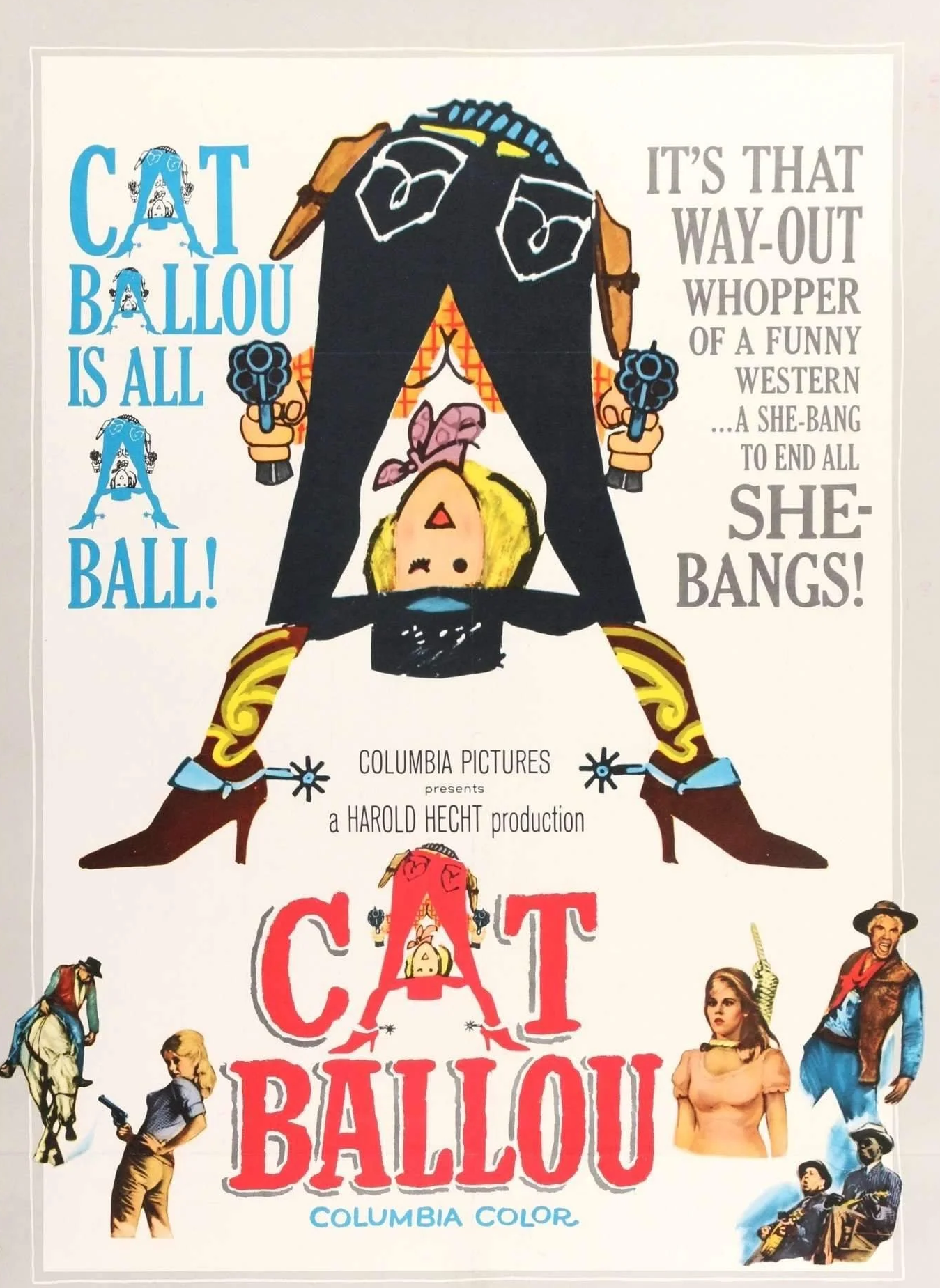
Cat Ballou (NBC): Along with Andy Griffith Show creator Aaron Ruben, William Blinn was one of a pair of scriptwriters entrusted with bringing the story of Cat Ballou to TV. In the 1965 movie, itself adapted from a novel by Roy Chanslor, Jane Fonda played Catherine “Cat” Ballou, a schoolteacher who turns outlaw when her father is killed by Tim Strawn, a gunslinger in the employ of crooked politicians.

Ballou hires legendary gunfighter Kid Shelleen to help her exact revenge, but he turns out to be a drunken bum and she has to take matters into her own hands. Lee Marvin had won an Oscar for playing both Shelleen and Strawn, but neither of the competing pilots could rely on his star power, nor that of Fonda.
Cat Ballou, 1970

Instead, Ruben’s version cast former ballet dancer Lesley Ann Warren (who’d shot to fame in 1967’s The Happiest Millionaire, the last Disney film completed by Walt before he died) as Cat, with Jack Elam as Kid Shelleen, and a story which revolved around Cat’s aim of building a school for the local children in the face of local opposition.

Blinn’s pilot – directed by Captain Kangaroo co-creator Bob Claver – saw Jo Ann Harris (soon to star as Clint Eastwood’s teen temptress in The Beguiled) hire F-Troop’s Forrest Tucker to protect her ranch from an outlaw gang, throwing in an orphan boy as a sop to family audiences. NBC passed on both pilots but, interestingly, showed them on consecutive evenings in September 1971, which must have been quite the trip for non-TV Guide reading viewers.

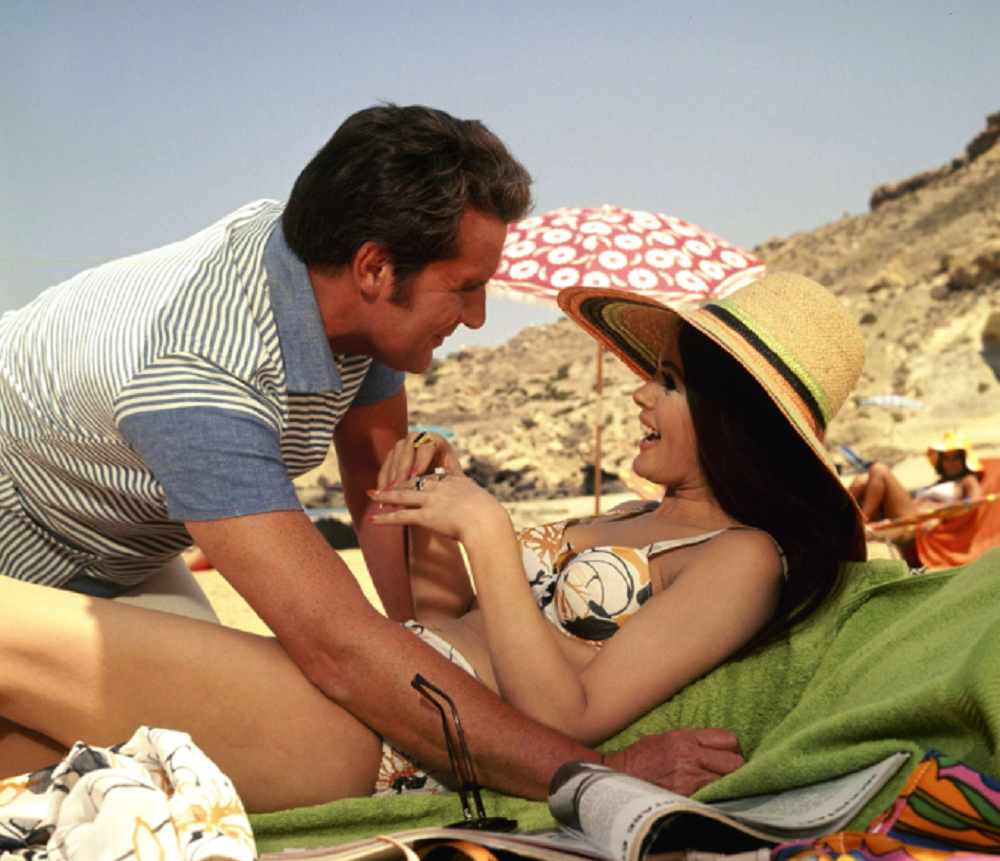
Mister Jerico (ABC): Having finished work on The Avengers in early 1969, the trio of producer Julian Wintle, director Sidney Hayers, and screenwriter Philip Levene decided they’d very much like to continue working together and concocted Mister Jerico, a pilot for a proposed series about a loveable conman.

After first choice Robert Wagner turned them down, the trio turned to someone they knew very well and cast Patrick Macnee in the title role, filming in London and Malta in the second half of the year. In the pilot, suave grifter Dudley Jerico targets nasty millionaire Rosso (Herbert Lom) for his famed Gemini diamond, aided by Marty Allen and Connie Stevens as pal Wally and Rosso’s duplicitous secretary.
Mister Jerico, 1970

Macnee plays Jerico with the aristocratic wit that was so successful in bringing John Steed to life, while Allen and Stevens – a sop to their US backers – gave great comedic value in support. Lom, for his part, is terrifically spiteful and the whole thing buzzes along in glorious technicolour, very much a thing of its time (or slightly past its time) with a wonderful Lulu theme song topping a score from Laurie Johnson.

Of course, the fact that it occupies column space here gives away the fact that ABC didn’t take Mister Jerico to series, despite its abundant charms. The same team tried again a year later with The Firechasers – starring Chad Everett as an arson investigator – with the same disappointing result as The Persuaders was taken to series ahead of it. Both pilots were shown as an ABC Movie of the Week, were given UK cinema releases, and can be seen in all their glory on YouTube.

The Kowboys (NBC): Don Kirshner began his career working for a former Tin Pan Alley songwriter, establishing his own Aldon Music publishing company in 1958, representing most of the Brill building songwriters, including Carole King and Neil Sedaka. In the early 1960s, Aldon Music began providing tunes for TV shows and soon became a prime source for pop music used in dramas and sitcoms. When Bob Rafelson and Bert Schneider sold their idea for The Monkees to NBC in 1965, the network reached out to Kirshner to provide songs for the fictional (but soon to be real) band featured on the show.

The Monkees, of course, was a huge success, and Kirshner followed it up with a show of his own about a fictional pop band, The Archies. In 1968, he’d assembled a group of musicians to record songs under the illusion that they’d been written and performed by Archie Andrews and his pals from Riverdale, as seen in the famous comic books that depicted their adventures. Teaming with animation studio Filmation, Kirshner grabbed The Archies their own TV show on CBS and then set about trying to craft a live-action follow-up to The Monkees, one which he owned outright.

Just as Rafelson and Schneider had done with the earlier show, Kirshner held an open casting for singers for his new show, which was to be set in the Old West and was titled The Kowboys. Inspired by the co-ed nature of The Archies, The Kowboys included a girl among their neighbour, with the part going to the improbably named Joy Bang. Smitty was joined by four boys – Matthew, Zak, Sweetwater, and Clem – played by Boomer Castleman, Michael Martin Murphy, Jamie Carr, and Frank Welker, respectively,
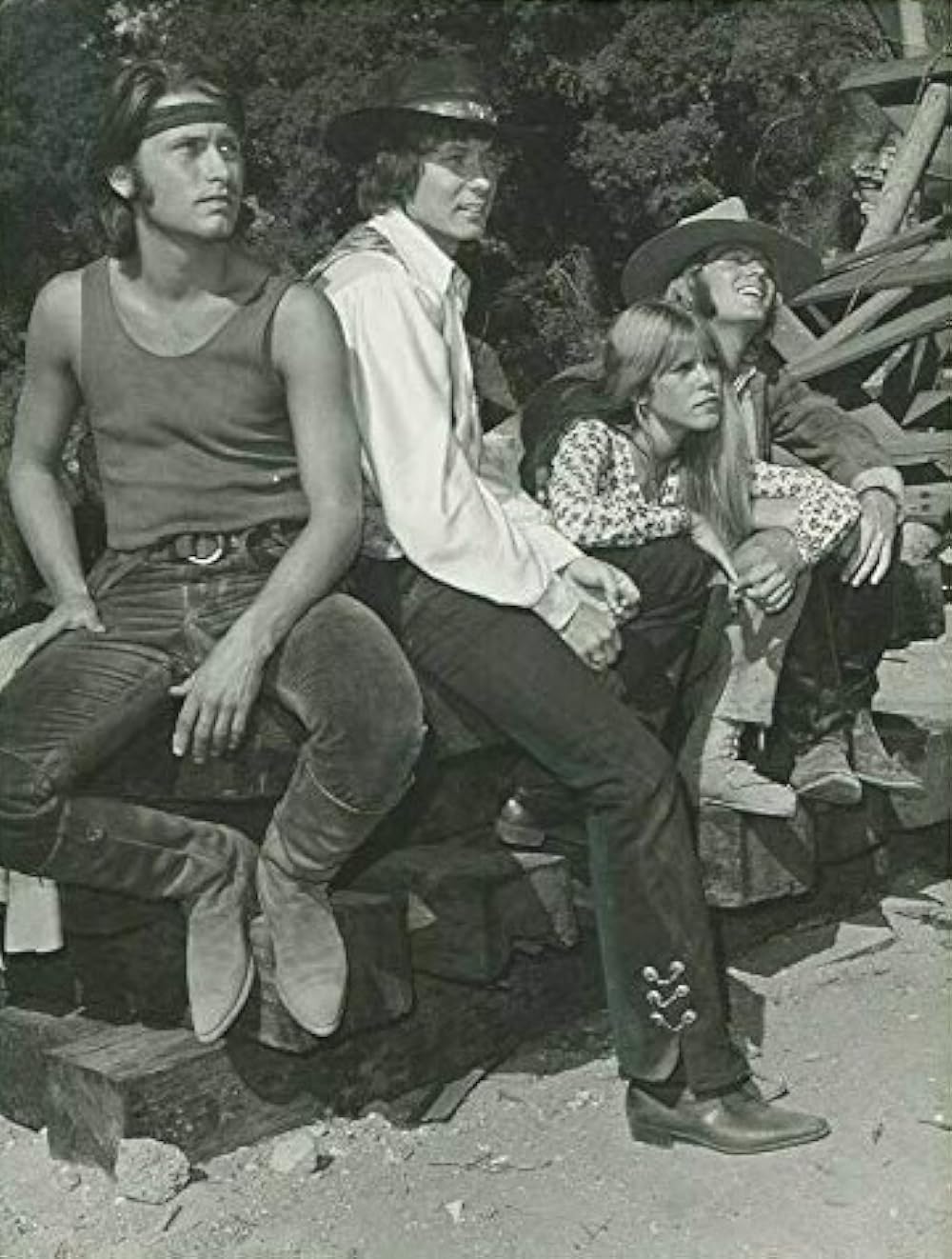
The Kowboys, 1970

Castleman and Murphy came from their own band, The Survivors, which had recorded for one of Kirshner’s labels. Interestingly, Murphy replaced Michael Nesmith in that band when Nesmith left to join The Monkees. Carr was a singer-songwriter in his own right who released an album on Capitol Records in 1970, while Welker was just beginning his career as one of the industry’s top voice actors.

Kirshner and director Don Pintoff wrote a thirty-minute pilot, with some very broad Western comedy interspersed with country-tinged songs, but NBC opted against a full series and Kirshner received the same reception when he tried to sell the show in the UK. Kirshner tried again soon after with wacky space musical Toomorrow but that’s a story for another day…

Next time on The Telephemera Years: Some very groovy cartoons as we look at the kids’ shows from 1970!

Check out our other Telephemera articles:

The Telephemera Years: pre-1965 (part 1, 2, 3, 4)

The Telephemera Years: 1966 (part 1, 2, 3, 4)

The Telephemera Years: 1967 (part 1, 2, 3, 4)

The Telephemera Years: 1968 (part 1, 2, 3, 4)

The Telephemera Years: 1969 (part 1, 2, 3, 4)

The Telephemera Years: 1970 (part 1, 2)

The Telephemera Years: 1971 (part 1, 2, 3, 4)

The Telephemera Years: 1973 (part 1, 2, 3, 4)

The Telephemera Years: 1974 (part 1, 2, 3, 4, 5)

The Telephemera Years: 1975 (part 1, 2, 3, 4)

The Telephemera Years: 1977 (part 1, 2, 3, 4)

The Telephemera Years: 1978 (part 1, 2, 3, 4)

The Telephemera Years: 1980 (part 12, 3, 4)

The Telephemera Years: 1982 (part 1, 2, 3, 4)

The Telephemera Years: 1983 (part 1, 2, 3, 4)

The Telephemera Years: 1984 (part 1, 2, 3, 4)

The Telephemera Years: 1986 (part 1, 2, 3, 4)

The Telephemera Years: 1987 (part 1, 2, 3, 4)

The Telephemera Years: 1989 (part 1, 2, 3, 4)

The Telephemera Years: 1990 (part 1, 2, 3, 4)

The Telephemera Years: 1992 (part 1, 2, 3, 4)

The Telephemera Years: 1995 (part 12, 3, 4)

The Telephemera Years: 1997 (part 1, 2, 3, 4)

The Telephemera Years: 1998 (part 1, 2, 3, 4)

The Telephemera Years: 2000 (part 1, 2, 3, 4)

The Telephemera Years: 2002 (part 1, 2, 3, 4)

The Telephemera Years: 2003 (part 1, 2, 3, 4)

The Telephemera Years: 2005 (part 1, 2, 3, 4)

The Telephemera Years: 2006 (part 1, 2, 3, 4)

The Telephemera Years: 2008 (part 1, 23, 4)

Titans of Telephemera: Irwin Allen

Titans of Telephemera: Stephen J Cannell (part 1, 2, 3, 4)

Titans of Telephemera: DIC (part 1, 2)

Titans of Telephemera: Hanna-Barbera (part 1, 2, 3, 4, 5)

Titans of Telephemera: Kenneth Johnson

Titans of Telephemera: Sid & Marty Krofft

Titans of Telephemera: Glen A Larson (part 1, 2, 3, 4)

Titans of Telephemera: Quinn Martin (part 1, 2)

Titans of Telephemera: Ruby-Spears

The Power Play: How Cryptocurrencies Can Revolutionize the Future of Gaming

Cryptocurrencies have rapidly emerged from the shadows of niche financial instruments to become key players in various industries. The gaming sector, with its penchant for innovation, is poised to undergo a significant transformation through the integration of cryptocurrencies. Note, however, that the crypto market is volatile and to be ahead of the game you need to keep track of Solana price near ATH and other crypto prices for that matter.

Keep reading to delve into the myriad ways cryptocurrencies can wield influence over the gaming industry, shaping the future of interactive entertainment.

In-Game Transactions and Virtual Economies

Cryptocurrencies are set to redefine the economics of in-game transactions and virtual economies. Traditional gaming models often involve centralized control over in-game currencies, limiting player autonomy. Cryptocurrencies, however, introduce decentralized and secure alternatives. With blockchain technology, players can possess true ownership of in-game assets, trade them seamlessly across titles and even exchange them for real-world value. This shift towards player-centric economies promotes a more immersive and rewarding gaming experience.

Tokenization of In-Game Assets

The concept of tokenization extends beyond mere ownership; it involves representing in-game assets as unique tokens on a blockchain. This not only enhances the security and traceability of virtual assets but also opens up new possibilities for interoperability between games. Players could potentially carry a prized sword or rare skin from one game to another, fostering a cross-platform gaming ecosystem. This interoperability not only adds value to virtual assets but also offers a novel and engaging gaming experience.

Decentralized Gaming Platforms

Cryptocurrencies enable the creation of decentralized gaming platforms, challenging the conventional model of centralized gaming servers. Blockchain-based platforms provide increased transparency, security and fairness by decentralizing the hosting of game servers. This shift reduces the risk of server outages, minimizes the influence of a single governing authority and prevents unauthorized alterations to game mechanics. Decentralized gaming platforms have the potential to enhance the reliability and trustworthiness of online gaming, creating a more level playing field for all participants.

Crypto-Based Rewards and Incentives

Incorporating cryptocurrencies into gaming introduces novel reward systems. Developers can design games where players earn cryptocurrency rewards for achieving in-game milestones or completing challenges. These rewards can then be traded or spent within the gaming ecosystem, providing tangible incentives for player engagement. This model not only enhances player motivation but also fosters a sense of community as gamers collaborate to achieve common goals.

Enhanced Security and Fraud Prevention

Cryptocurrencies leverage robust cryptographic techniques, enhancing the security of gaming transactions and mitigating the risks associated with fraud. The decentralized nature of blockchain technology ensures that player data and transactions are secure from centralized points of vulnerability. This heightened security can combat issues like in-game fraud, unauthorized item duplication and hacking, creating a safer and more trustworthy environment for gamers.

Blockchain-Based Gaming Marketplaces

Cryptocurrencies can revolutionize the gaming marketplace by establishing decentralized platforms for buying, selling and trading in-game assets. Traditional centralized marketplaces often come with high fees, restricted payment methods and limited transparency. Blockchain-based alternatives provide a peer-to-peer environment, reducing fees, expanding payment options and ensuring transparent transactions. This democratization of gaming marketplaces empowers players and content creators, fostering a more inclusive and accessible gaming economy.

Integration of NFTs in Gaming:

Non-Fungible Tokens (NFTs) have gained significant traction in the art world and their application in gaming holds transformative potential. NFTs represent unique digital assets on a blockchain and in gaming, this could mean one-of-a-kind characters, rare items, or exclusive experiences. NFTs introduce a new dimension to digital ownership, allowing gamers to truly own and trade rare, provably scarce in-game items. This could lead to the creation of a vibrant NFT-based gaming ecosystem, offering unique opportunities for players and developers alike.

Empowering Player Communities

Embracing blockchain-based gaming ecosystems also opens avenues for community-driven governance models. Cryptocurrencies enable the creation of decentralized autonomous organizations (DAOs) within gaming communities, giving players a direct say in decision-making processes. This democratization of governance ensures that the gaming community’s voice is heard in shaping the future of their virtual worlds.

Moreover, cryptocurrencies facilitate innovative monetization strategies, like play-to-earn models, where players can earn tokens by actively participating in the game. This not only aligns the interests of players and developers but establishes a novel paradigm where gaming transcends traditional entertainment, evolving into a dynamic and participatory economic ecosystem.

Conclusion

As the transformative force of cryptocurrencies continues to reverberate across the global financial stage, its revolutionary impact on the gaming industry stands as an imminent paradigm shift. The convergence of blockchain technology and gaming not only amplifies the economic dynamics within virtual realms but also ushers in unexplored dimensions for player interaction, ownership and security.

The trajectory of gaming’s future is inextricably tied to the decentralized potentials introduced by cryptocurrencies, assuring a gaming experience that is not just more transparent and inclusive but fundamentally centered around the players. In navigating this uncharted expanse, developers and gamers alike are poised to unravel a synergy that not only promises innovation but also a heightened level of thrill and anticipation within the interactive entertainment landscape.

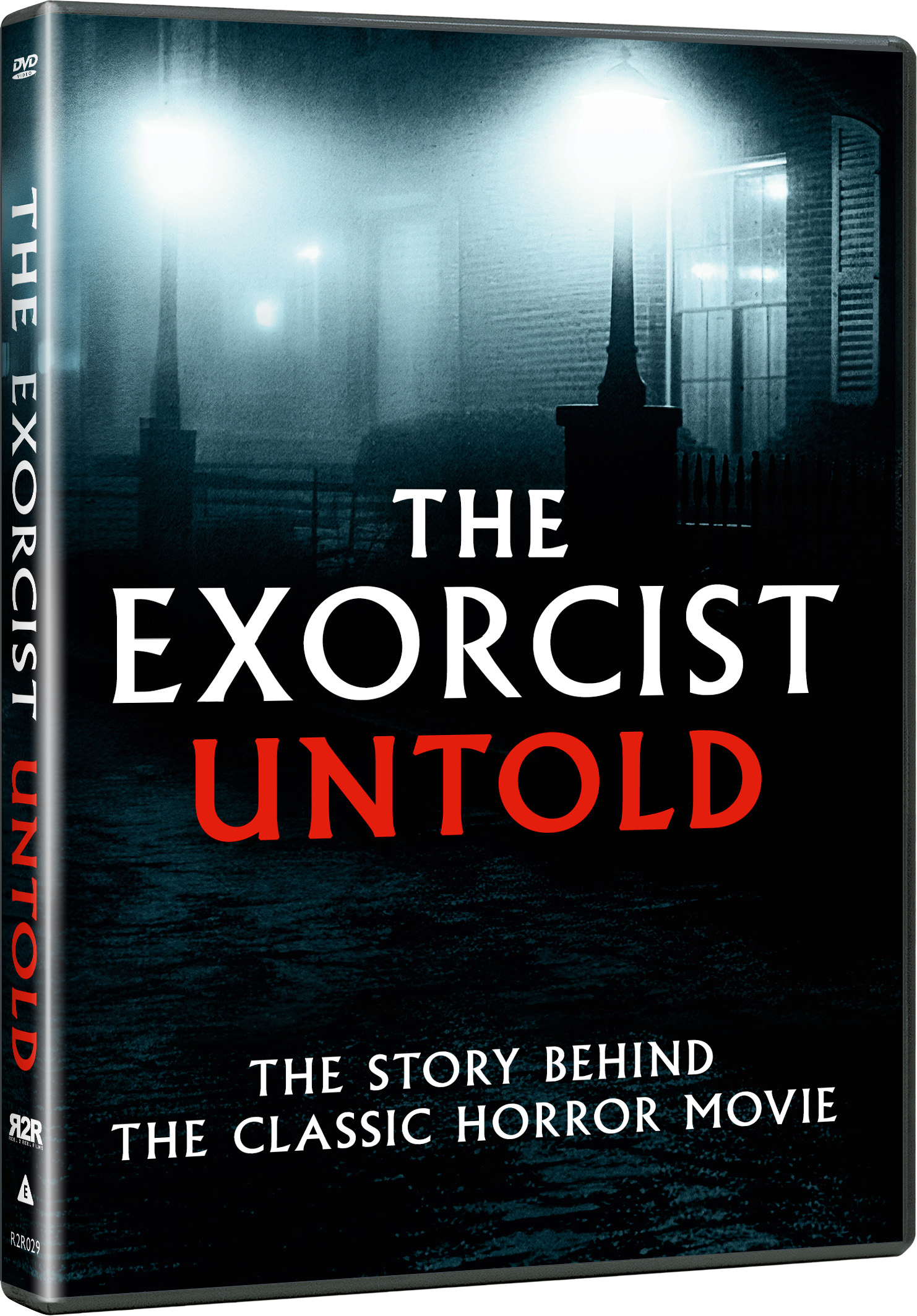
[ENDED] Win Documentary THE EXORCIST UNTOLD on DVD

A genuine classic of cinema, The Exorcist celebrated its 50th anniversary this year, and the impact the movie had on the world is examined in the new documentary The Exorcist Untold. We have a copy of the documentary to give away on DVD. Just read on, watch the trailer, and enter below…


Uncover the bloody and beating heart of film history with The Exorcist Untold – an electrifying new documentary that delves into the legacy and influence of this groundbreaking, revolutionary and revered masterpiece.

On the 50th anniversary of one of the most legendary and influential horrors of all time, Robin Bextor (Oppenheimer: The Real Story) sheds a fascinating new light in The Exorcist Untold. The documentary is set for its home entertainment bow this December, arriving on DVD and digital on December 11th, 2023, courtesy of Reel 2 Reel Films.

The Exorcist is a cultural phenomenon that changed the face of cinema, paving the way for numerous films that followed in its terrifying footsteps. It continues to haunt and captivate audiences and its legacy can still be seen across the cinematic sphere today, 50 years on.

By exploring the motivations of the creators, the genesis of this pivotal film and the historical and cultural contexts surrounding The Exorcist‘s enduring influence, Bextor’s film unveils the remarkable story behind its creation, the challenges faced during production and the profound impact it had when it hit theatres on Boxing Day, 1973.

Featuring fresh insights and commentaries from industry experts, historians, scholars and designers, including Dan Perri (Star Wars), Rich Cline, Dr. Sarah Crowther, Prof. Chris McGlothlin, Nat Segaloff and more, the film also presents rarely seen archive footage of William Peter Blatty, the Academy Award®-winning screenplay writer who penned the original book – which sold over 13 million copies – along with interviews with his wife, Julie Blatty. It also features seldom-seen footage of world-famous director William Friedkin (The French Connection) and is a must-watch for any horror fan.

Prepare to be possessed by The Exorcist Untold.

a Rafflecopter giveaway

THE EXORCIST UNTOLD is out now on DVD and digital.


Top 3 Astonishing Wins in Online Casino History

The allure of online gambling lies in its blend of convenience, variety, and the thrilling possibility of life-changing wins. While skeptics often voice concerns about the fairness of these games, suggesting they might be rigged, the reality is quite different.

Online gambling platforms operate under strict regulations to ensure fairness, and there are numerous instances of genuine. One such example is Quatro Casino, a prime example of an online platform where players have won substantial amounts. Similarly, exploring West Virginia lottery results showcases how traditional games of chance continue to deliver exciting opportunities for players. But, of course, there are more examples.

$24 Million on a 25-Cent Bet (2013)

Winner: A Finnish man in his 40s.

Game: Mega Fortune progressive jackpot slot.

Win: Approximately $24 million (€17,861,800).

In 2013, a story emerged from Finland that sounded more like a fairy tale than reality. A man, in his 40s, decided to try his luck on the Mega Fortune progressive jackpot slot, a game famous for its luxurious theme and potential for big payouts.

Operated by the Scandinavian betting company PAF, this game was about to make history. With just a 25-cent bet, this Finnish player hit the jackpot, winning an earth-shattering $24 million (€17,861,800). This event holds the record for the largest online casino jackpot win ever and highlights the incredible potential of progressive Slots Paradise online casino.

$22.4 Million on Mega Moolah (2021)

Winner: An anonymous player in Belgium.

Game: Mega Moolah, another well-known progressive jackpot slot.

Win: €19.4 million, approximately $22.4 million.

In 2021, Mega Moolah, another progressive jackpot slot known for its life-changing payouts, awarded a Belgian player a staggering €19.4 million, approximately $22.4 million. This win took place at Napoleon Sports & Casino Online and was recognized by the Guinness World Records as the largest jackpot payout in an online slot machine game.

$21.7 Million on Mega Moolah (2018)

Winner: An anonymous player.

Game: Mega Moolah.

Win: €18,915,872.81, about $21.7 million.

Before 2021’s record, Mega Moolah made headlines in September 2018 when an anonymous player won €18,915,872.81, roughly $21.7 million. This win broke the game’s own record for the largest jackpot payout, a title it had held since 2015. The story of this win spread rapidly, celebrated in both gambling and mainstream media for its remarkable size and the sheer luck involved.

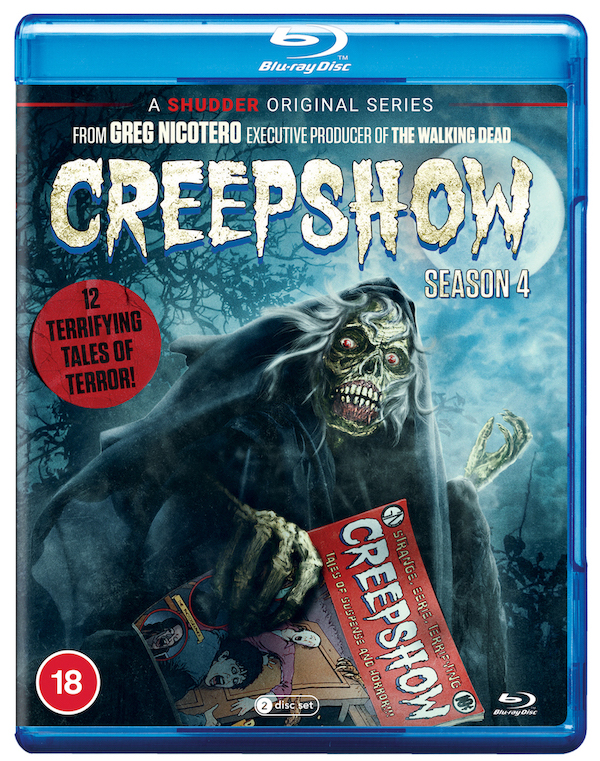
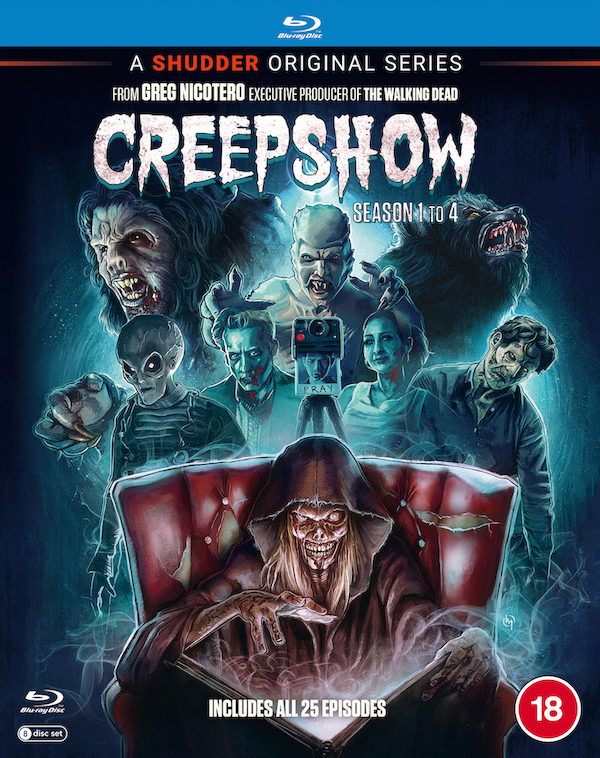
[ENDED] Win CREEPSHOW Season 4 on Blu-ray!

Tune in to Creepshow in all its gory glory as Season 4 gets its home entertainment bow this December – alongside a brand-new Season 1 – 4 Box set. Based on the seminal 1980s cult classic from horror dream team, maestro George A. Romero and virtuoso Stephen King, this critically acclaimed TV series is an essential purchase for those in need of some blood-soaked, playfully dark and irresistibly eerie seasonal viewing. We have two copies of Season 4 on Blu-ray to give away. Just read on and enter below…

Following its huge success on Shudder, Creepshow Season 4 and the Creepshow Season 1 – 4 Box set are set to arrive on Blu-ray, DVD, and digital on December 11th, 2023. The Box set comes packed with special features, including A Creepshow Animated Special, which sees Kiefer Sutherland (Designated Survivor) star in a Survivor-Type based on the short story by Stephen King and Joe King (NOS4A2) star in Twittering from the Circus of the Dead, based on the short story by Hill). It also comes with A Creepshow Holiday Special starring Anna Camp (Pitch Perfect) and Adam Pally (The Mindy Project). Please see the trailers below.

Produced by Greg Nicotero (The Walking Dead), the series features a slew of unique horror vignettes from some of the most lauded talent around, including Stephen King, as well as his son, writer Joe Hill, Primetime Emmy® award-winning Rob Schrab (Rick and Morty), Josh Malerman (Bird Box) and more.

Creepshow comic books come to life in this anthology series of terrifying tales hosted by the silent ghoul. There are haunted dollhouses, werewolves, murderous goblins, villainous trick-or-treaters, the dead and medical marvels… just a few of the things to watch out for – you never know what shocks await you in the next chapter. Viewers will be immersed in a chilling world of suspense and gore over all four series.

Season 4 offers an exhilarating scare-fest like never before, as a fresh selection of spine-tingling stories is presented over six episodes. There are tales of stranger danger, immersive virtual worlds and everything from vampires and zombies to artistic sacrifices. It’s an all-out rollercoaster of frights just waiting to be experienced.

This gorgeously gruesome series is the perfect homage to horrors of old. Good gory fun at its most entertaining; set the channel to Creepshow for a horror feast to sate your appetite for fear.

a Rafflecopter giveaway

Creepshow Season 4 and the Creepshow Seasons 1 – 4 box set are out now on Blu-ray, DVD, and Digital.


Aabria Iyengar | BURROW’S END

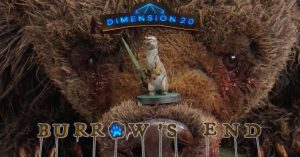
Aabria Iyengar is a world-renowned dungeon master whose work includes Adventure ZoneDimension 20, and Critical Role. Her most recent project is Dimension 20’s Burrow’s End, a D&D-inspired show that blends Watership Down with body horror. It’s currently streaming on Dropout.TV. We caught up with Aabria to find out more…

STARBURST: Where did the idea for Burrow’s End come from?

Aabria Iyengar: There was definitely a silly little joke that popped up when I was in a photo shoot about a cyberpunk Watership Down that I took home. It was like, hold on! I know we were doing a fun little bit, but I think there is actually something here.

Watership Down is that sort of fiction that we give to children to teach them about what it means to be human, and we can be sort of brutal and mystical in a way that we might find inappropriate for children. If you make it a cute little animal doing it, you can talk about deeper, sadder, scarier themes. And then, of course, cyberpunk is a genre that comes very much from the fears, economic and social, of Americans in the 1980s.

I’m a poli-sci [Political Sciences] major. So I was like, Oh, cool. I wanna talk about systems and societies. So Last Bast was always in the DNA very early on, and sort of the thing that was hidden from the audience, but also a little bit from the table, as we’re gonna talk about, the expanding world of us versus them. At the very heart of it, there’s a very silly joke.

There’s an old dystopian movie called Equilibrium, and they have Gun Kata, which is absolutely ridiculous. If you do this very precise mechanical spin around, no one can hit you with their bullets. I just couldn’t stop thinking about what if there was a rabbit kicking a full-size human gun, and then we called it Bun Kata. And truly, that’s the dumbest joke that was in my head the entire time as you were writing it, and nothing could have made me more delighted.

Like Bun-Fu from Frog God Game’s Bunnies and Burrows?

BunFu! Yes! When we first started planning this, I sat for a very long time with Bunnies and Burrows because it’s Watership Down inspired. The reason I moved away from it fairly quickly is that it has the right instinct. If you’re playing “we’re rabbits in a big scary world”, you mostly want to get away from danger, not encounter it. I want to play in a space where you do not fear danger. The power level in D&D will make you more and more equipped to take on bigger and bigger things. 

Stoats are sort of famous for fighting animals and creatures that are bigger than them, they really do swing at big monsters. So Bunnies and Burrows is such a cool system, but it didn’t quite give me the juice “if you see a problem, fight it.” 

What other works of fiction did you draw on for Burrow’s End?

Oh, yeah, the big ones. I think we mentioned Secret of NIMH up top. But as we get into it, it’s very Animal Farm and very 1984. And Attack on Titan was the secret at the end. That idea that humans are coming. And they’re this big, unknowable, unfightable monster that you’re just trying to survive incursions with. That gives way to spoilers for the first season of Attack on Titan.

Burrow’s End contains a surprising amount of body horror. As DM, what were your rules for body horror? Where did you set your limitations for your players?

We had safety tools in place just in case anyone started showing any visible signs of stress. But I think the biggest table moment was coming out of the gate in Episode Two with the bear map, the grossest thing I’ve ever envisioned and everything I’ve ever wanted. If you set the tone early, then yeah, your first fight is inside a living, dying creature. 

I think this is something so fun about talking about what you fear, and I think there’s a fear of agency externally, which is how we got into some of the undead themes about being taken over and being piloted and puppeted, but also that agency, that even while you’re alive, there’s something gross happening to you that you can’t stop and you can’t control.

My limits were; I’m not gonna say I have a personal limit because I hope to come back and do even worse horror. So, I will always say that my limit stands with the comfort level of my table, and I will always go further if allowed because I’m nasty.

No plan a Dungeon Master makes survives contact with the players. What happened during character creation that changed the story you were telling?

The moment they all agreed to play in a family unit. I told them to try to come up with things that are very interconnected. You’re all from the same warren, but you don’t necessarily have to be family members, and everyone doubled down immediately.

And they’re, “We’re gonna have kids. We’re gonna have three strict, well-understood generations within this family.” And I went, oh, great! We have a lot of mothers going on, so in the sort of weaving of horror, there is a pretty fun, strong note of motherhood. The trauma that you can pass on. The good intentions of a mother trying to protect their children. There’s a lot you can see in the First Stoats of Last Bast that feel very parental but to the detriment of the agency of the other adult stoats.

What are the things you do if you say you’re doing it out of fear and love for safety? That became a really strong theme really quickly. The bear map becomes a really gross analogy for pregnancy. So, there’s a weird motherhood theme that trickled through a lot of the writing. 

Is that something that organically happened during improv, or did you guide it between sessions?

It’s a little bit of both. It’s my job to now take it and turn up the heat on it, boil it down, be a little more specific and give it back to you. So it feels like everything meant something, Even a bit, of some light interaction. Some of the showmanship, the razzle-dazzle, is making people think that a theme was there the entire time, when sometimes it’s “oh, that was introduced in play, and you saw me be excited about it in the moment.” I love a new tool. I’m gonna take that and give it back to you.

There’s an interesting mix of cast. You’ve got some old hands (Such as Brennan and Siobhan) and some fresh faces, including Rashawn Nadine Scott and Jasper William Cartwright. What prompted you to invite them to the Dimension 20 Dome?  

I always wanna see new people come in and shine. I love bringing in new players, players that are new to me, and people that I’ve played with before who haven’t been here. I’ve played with Jasper. He’s run for me. 

I’ve run for him, and I was if I could just find the project that could tempt him to cross the pond, for this came up, and I was, Oh, give me, Jasper! I think there’s also a sense that it would be remiss, not to mention that my desire is to see more diversity at the table, both within the dome and wherever we go. 

When we look at casting, my brain is always looking to bring in different kinds of people with different perspectives because I think that always makes everything so much stronger because then you get fun moments like Rashawn’s “Hey, girl, hey?” 

And again, Rashawn, someone who I’ve watched all of her other content at Dropout. But I hadn’t met her at that point, and before doing more research on her and I realised she was in a Monster of the Week podcast. I didn’t actually know that she played D&D before we started talking. She’s funny, and she’s brilliant and so quick. And I can teach the mechanics of D&D to anyone, but that storyteller ability? If you have that, you’ve done 80% of the work. The rest is just understanding your rules from moment to moment. So it was a joy and an honour to bring in people that were new to the dome.

You always have your killers. I will play with Brennan and Erica. I drag them and say, “Just, please be in this. I just you have to tell me no, eight times to my face.” I love them. We have a whole podcast about how much we love telling stories together. Siobhan, who wanted to play with forever. So this just turned into one of the most unreal tables. And Izzy, who I first met on this set of the Seven, and then we became friends. 

It was one of those things where I’m, oh, we met where we were both players and across the two years of friendship haven’t run for you yet, so why not here? Why not now? So having people that I was like very comfortable and good with all those different levels of how comfortable and how familiar people are with each other, builds for like a very fun table that will surprise you in a lot of different directions.

Will we see more of the Three Black Halfling crew at the Dimension Twenty Dome?

I mean, that’s the dream. God, they’re all so brilliant. It’s just a matter of they happen to be so far away. So yes, if things align and the timing is right, I would happily work with all of them forever because, gosh! Everything to do is so good, and it’s so nice to be able to play with people whose work you are fans of.

What systems beyond D&D that you’d love to play with?

I love Dune. I love it so much. I have all the stuff for it, and I just sort of sit around going, “How do I get to do this?” At a scale, I mean. I’ve been kicking around whether or not to spin up a home game about it. 

But when you talk about what’s big on the horizon, I’m very much looking forward to a little rest and recharge. Just sort of resetting and finding new things to be inspired by and think about.

But yeah, if I had to call a really big, very specific shot. I think I would call that shot around the Dune RPG. Seems so cool and so fun, and I just think that world is so big, broad, and interesting that there are a lot of ways to swing around and go.

I love Forged in The Dark; I think there is something around the cycle of role adjudication and negotiation that probably could be streamlined a little bit for actual play or for narrative play, but, like several projects, I work on or places I work, have an edit that might make that a little cleaner, a little easier. 

I’ve run Hack The Planet and ran it on a podcast, and I’m still obsessed with that game. But Blades in the Dark is an absolute killer. I think I would probably sit down and do things that we’re spinning up for the future. I definitely wanna play a little bit more of my mash-up pile. I really liked hacking a little bit of The Fifth Edition D&D into Good Society for Court of Fey and Flowers

I really enjoy cherry-picking little mechanics like we did in the flashback mechanics a couple of days in the dark for Exandria Unlimited: Kymal, so there’s something inside of that, and it has a lot of Forged in the Dark DNA going into it and seeing, like what we can push together, and what very interesting story comes from the intersection of seemingly disparate mechanics and like what thematically you’re starting to do.

Because, again, mechanics matter. The first thing almost every player does is look down at their sheet. Your mechanics give you the options to how you interact with the world. So having really fun and funky mechanics means that the kind of story you’re going to get out of your table will be really fun. So, probably something in and around that.

Almost at the end of the interview, so one sort of deep question, followed by some quick fire. If you could preserve one piece of art so it lasts until the sun dies out, what would it be?

Oh, my gosh! My husband made a little stick like a popsicle stick vase, and I’m obsessed with it, so I don’t care about the rest of the world, but a thing that has been that deeply loved. I would love to see it persist.

Simpsons or Futurama?

Oh, shoot, good question… Futurama.

Star Trek or Star Wars?

Star Trek.

Dungeons or Dragons?

Dragons.

Doctor Who or Dr. No?
Doctor Who all day!

Truth or Beauty?

Beauty!

The complete BURROW’S END can be found on Dropout.TV

Joe Strickland | PUNCTURE THE SCREEN

Joe Strickland is a prolific theatre maker, digital producer, and creative technologist with great energy and passion. He’s the artistic director for Chronic Insanity, the creative force behind the Data Driven Arts Festival, Puncture The Screen. We got in touch to find out more…

STARBURST: What is a Data Driven art festival?

Joe Strickland: Exactly what it says on the tin! A festival full of art that is driven by data, either inspired by data or that uses data in the way in which audiences interact with it. Work in the festival uses one of three kinds of data: Scientific or census data, the artist’s own data, the audience’s data, either volunteered personal data or behaviour data collected from the audience in real-time.

How did the Puncture The Screen come about?

I was undertaking a PhD about the value of personal data at the University of Nottingham and wanted to find examples of data being used in artworks, specifically audience personal data, but found it difficult to find examples. Given that I was interested in making this sort of artwork and performance myself, I decided to run the festival to give myself and other artists an outlet to experiment with this sort of emerging creative practice, as well as give audiences a platform to understand data, and data driven art, in more interesting ways than news reports and spreadsheets

What’s new, and what have you kept from previous festivals?

This year we have three new commissions – a play about private companies using NHS data to predict people’s deaths called Lifetimes by Lotty Holder; an interactive audio experience where a magic creature teaches you how to cook called Stewed by myself and Natalie Patuzzo; and a virtual reality hologram system where a short play can take place on a tabletop in your room, called Fabula.

What are you looking forward to the most with the festival?

Getting a chance to dedicate some time to creating and exhibiting data-driven work, and to really push the boundaries of what digital theatre can, and should be, moving forwards

What’s been the most interesting challenge so far, when it comes to the festival?

Trying to explain to people what data-driven work is, and also getting people to trust that data-driven work can be entertaining and not scary. Normally, when we hear about personal data, it’s in the context of some sort of security breach or mass manipulation of the public by a large corporation or government, but data is a neutral tool, and there can be entertaining and educational uses for it as an artistic material, especially to inform people about data and how to use it responsibly or creatively

Why Data Driven?

It’s one thing to write a play or create an artwork based on some fact or figure using data, but it’s a whole other thing to create an artwork that is alive with data, powered by it. A work that has data running through its core, that is driven by data, is so much more evocative and engaging than an artwork that merely reports on data or talks about it. Why talk about it when we can harness it and show it to audiences within the artwork in a way that is so much more informative and enlightening?

If I can’t make it to the Festival, what’s the next best thing?

Almost everything in the festival can be accessed online until December 17th, including recordings of our in-person events and workshops, plus all the digital artwork and educational videos from previous festivals that are being re-exhibited

What’s the next big thing you are working on that you want to tell the world about?

Chronic Insanity has been around since 2019 and has almost reached 100 shows in that handful of years. I think the next thing we’re working on might just be having a break!

You can learn more about PUNCTURE THE SCREEN 2023 (and purchase tickets) here.

THE TELEPHEMERA YEARS: 1970, part 2

Four in One, 1970

Ah, telephemera… those shows whose stay with us was tantalisingly brief, snatched away before their time, and sometimes with good cause. They hit the schedules alongside established shows, hoping for a long run, but it’s not always to be, and for every Street Hawk there’s two Manimals. But here at STARBURST we celebrate their existence and mourn their departure, drilling down into the new season’s entertainment with equal opportunities square eyes… these are The Telephemera Years!

1970-71

The arrival of a new decade brought with it some significant changes in the network television schedules. The Fall 1970 season was the final time viewers could sit down to enjoy The Ed Sullivan Show, The Beverly Hillbillies, Hogan’s Heroes, and Green Acres, all staples of CBS’s 1960s line-up, with The Newlywed Game and High Chapparal also saying their goodbyes as the year went on. Still, Here’s Lucy ensured that Lucille Ball was still a constant in American homes, while Ironside, Gunsmoke, and Marcus Welby MD all had strong showings in the year-end ratings.

New shows arriving on the scene that would leave a lasting impact included The Odd Couple, The Partridge Family, and Monday Night Football on ABC, The Mary Tyler Moore Show on CBS, and the debut of a new Black comedy star on NBC in The Flip Wilson Show. There were slim pickings for fans of genre television but at least Alias Smith and Jones and The Young Rebels upped the action quota across the week. Those were all shows that found an audience, though; what about those that didn’t? This is the story of four more lesser remembered shows…

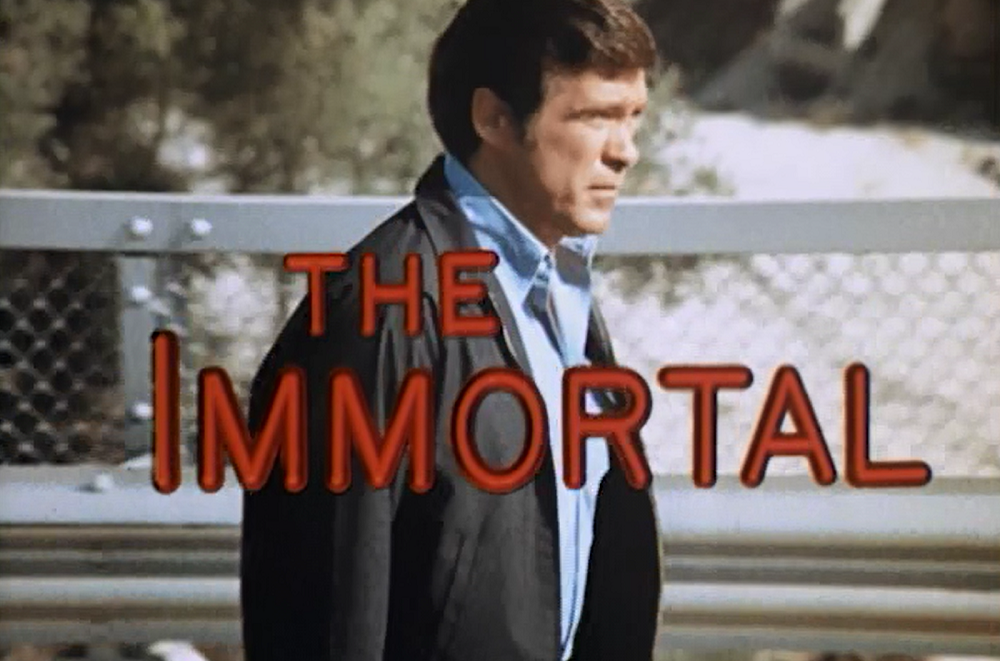
The Immortal (ABC): Based on a novel by (not that) James Gunn, The Immortal starred Christopher George – fresh off Dirty Dozen cash-in The Devil’s 8 – as Ben Richards, a race car driver who discovers the reason for his youthful looks and strong constitution: he is immortal! When his secret is revealed after a blood transfusion saves his wealthy boss’s life, Richards goes on the run, determined to avoid being literally liquidated as an asset.

The show was developed from Gunn’s story by Robert Specht, who would later find fame as the writer of Tisha: Story of a Young Teacher in the Alaskan Wilderness but at this point was a jobbing scriptwriter, with credits for The Outer Limits and My Three Sons. Producer Howie Horowitz had worked on Batman but brought a different sensibility to this show, which quickly developed into a “wandering the Earth” affair.

The Immortal, 1970

The big bad in the pilot was billionaire Jordan Braddock but actor Barry Sullivan did not return for the series and so Braddock was killed off between episodes. In his place, another evil rich man (the first word is probably redundant there) – David Brian’s Arthur Maitland – hires bounty hunter Fletcher to track Richards down, eager to sell his blood to the highest bidders.

The Immortal began its run on Thursday nights, opposite The CBS Thursday Night Movies and The Dean Martin Show, and while ratings were not terrible they left a little something to be desired. After Christmas, a move to Wednesdays – where it was up against Hawaii Five-O – proved disastrous and the show was cancelled with its fifteenth episode, shorn of a proper finale. Maybe Ben Richards is still out there, a Fugitive well into his nineties?

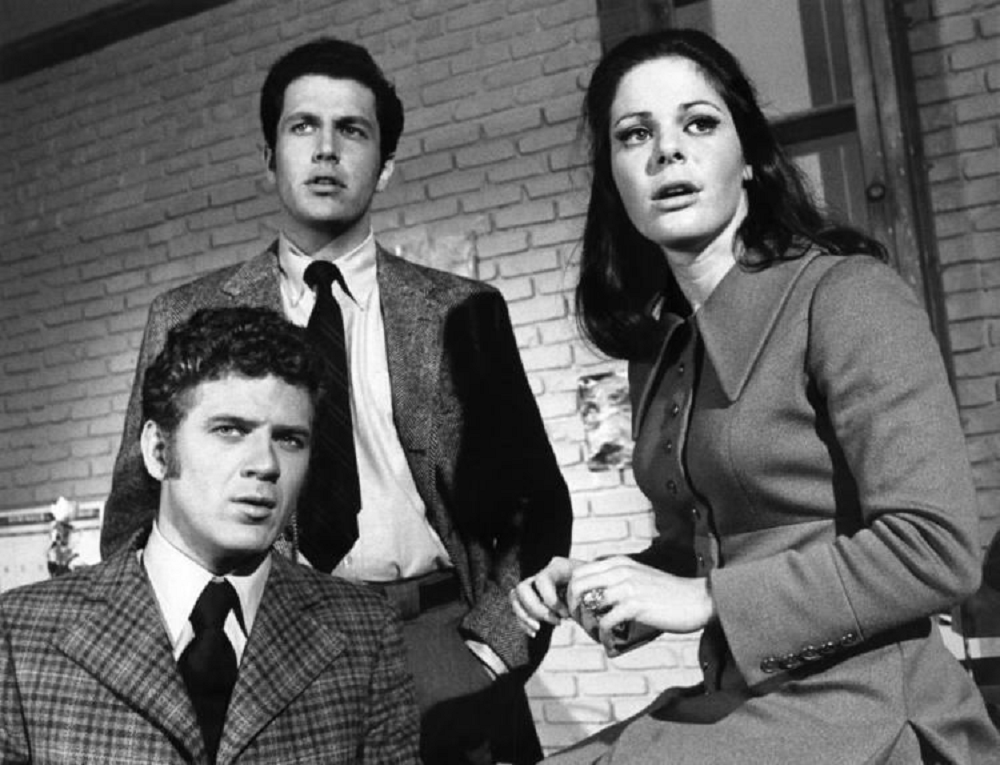
Storefront Lawyers (CBS): Tired of taking rich people’s money, David Hansen quits his law firm to start up on his own, a non-profit outfit serving the people of Century City, California. Enlisting his former colleagues Deborah Sullivan and Gabriel Kaye (as well as a law student Roberto Alvarez), their new firm took cases involving domestic abuse, affirmative action, illiteracy, and outright poverty, a world away from their former life.

Stage actor Robert Foxworth – who one day would turn down the role of JR Ewing before Larry Hagman was cast – made his TV debut as Hansen, backed by Sheila Larken and David Arkin, two other relative unknowns. The case of the week format allowed for plenty of guest stars, with Anne Archer, Edward Andrews, William Conrad, Barry Morse, and a young Kurt Russell among those either in or causing trouble for the lawyers to solve.

Storefront Lawyers, 1970

Creator David Karp, who’d written for The Untouchables and The Defenders, envisaged a different kind of legal show and the early episodes were certainly a wild ride, but network pressure saw the three lawyers return to their old firm with episode fourteen, in order that they could take rich clients, too. This watered things down somewhat, but the final nine episodes still saw their share of bleeding-heart causes.

Storefront Lawyers ran its full run of twenty-three episodes but was not renewed for a second season. Karp came back two years later with Hawkins, a rural legal drama starring James Stewart that was cancelled after just eight episodes because Stewart didn’t think it was much good. He finished his career writing the odd episode for shows like Hunter, Nero Wolfe, and Quincy, ME, his final credit coming on – yes – legal drama The Mississippi in 1983.

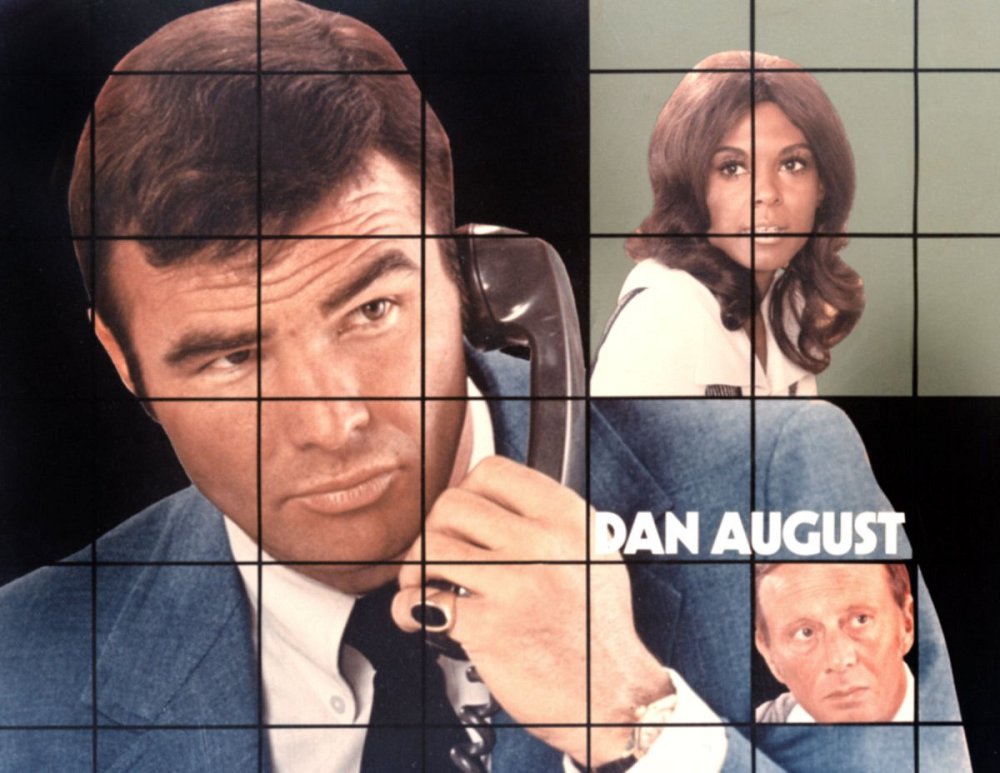
Dan August (ABC): By the end of the 1960s, Burt Reynolds’s star was still on the rise but at nowhere near the pace it looked it might acquire early on in his career. In 1962, he’d replaced Dennis Weaver in Gunsmoke, beating over three-hundred other actors to claim the role, only leaving after three years when he realised he’d never eclipse James Arness as the star of the show.

Eager to cash in on a bankable star, ABC created Hawk for the actor, where he played a Native American detective, but the show was cancelled after just seventeen episodes due to low ratings. After a series of misfires, supporting movie roles, and turning down a role in M*A*S*H, he needed something to kickstart his career once more and the offer of $15,000 an episode from producer Quinn Martin was too good to reject. Reynolds was now Dan August.

Dan August, 1970

A detective lieutenant in the fictional California town of Santa Luisa, August worked a homicide beat that was anything but mundane, solving cases that involved wild parties, sabotaged school buses, corrupt union officials, and more, stretching Dan and his partner Charles (Norman Fell) to their limits. In line with other crime shows of the time, guest stars were plentiful and loyal viewers would have seen some of the earliest TV performances from Gary Busey, Harrison Ford, Annette O’Toole, and David Soul.

Despite a not terribly original premise, Dan August was a very watchable show, with – of course – a very watchable star. That said, it was not renewed for a second season but did find a second life in re-runs and TV movies made from several episodes welded together once Reynolds had earned rave reviews for Deliverance in 1982, and the full series was released on DVD in 2018.

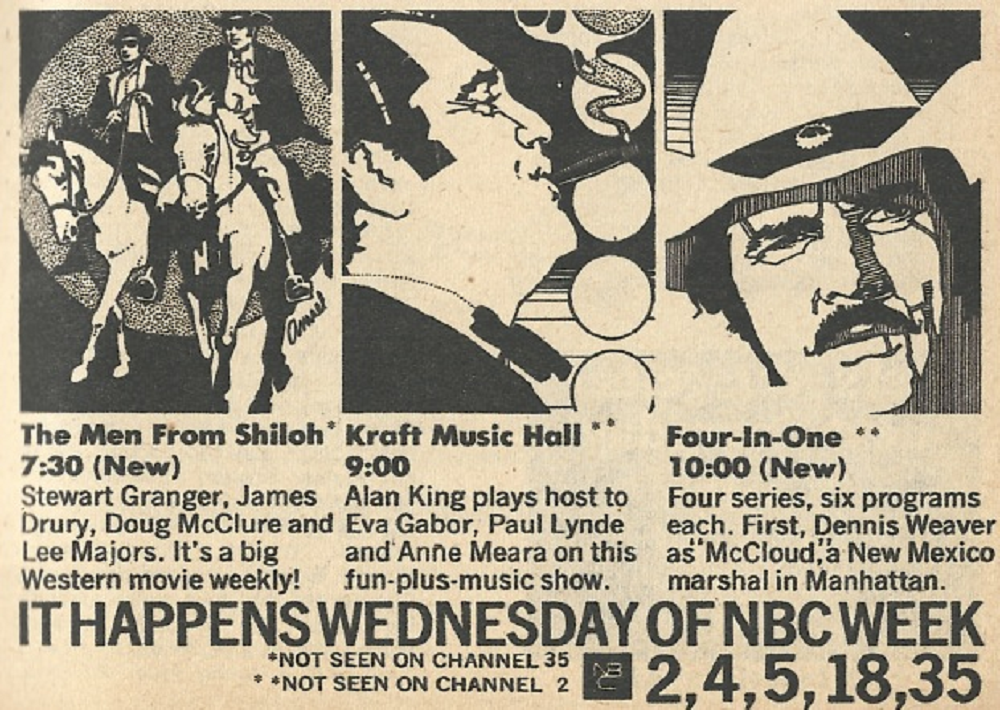
Four in One (NBC): The concept of the “wheel series” was developed in 1955 when ABC aired Warner Bros. Presents, a weekly show that presented episodes of King’s Row, Casablanca, and Cheyenne in turn. Cheyenne went on to enjoy a seven-season run and a twist on the concept was wheeled out in 1958 when 77 Sunset Strip featured alternating lead detectives, and again in 1964 when NBC’s 90 Bristol Court consisted of three separate sitcoms set in the same fictional address, although all three aired on the same night.

NBC revived the wheel series in 1968 for The Name of the Game, again with a slight twist as the three segments were all set in the same media corporation, before trying out a pure wheel concept a year later with The Bold Ones, a revolving set of The New Doctors, The Lawyers, and The Protectors (replaced in season two by The Senator). That set the stage for 1970’s Four in One, which took four new shows and gave them six weeks each in a Wednesday night slot.

Four in One, 1970

First up was McCloud, starring Dennis Weaver as the titular detective, brought from the small Western town in New Mexico to dispense justice on the streets of New York. Created by Herman Miller, who wrote the 1968 Clint Eastwood movie Coogan’s Bluff which shares much in common with McCloud, the show was easily the most popular of the Four in One line-up. It was followed by San Francisco International Airport (starring Lloyd Bridges, replacing Pernell Roberts from a pilot which was famously sent up by Mystery Science Theater 3000), Rod Serling anthology show Night Gallery, and The Psychiatrist, the most cerebral of the offerings which gave a young Steven Spielberg some of his earliest directing work.

Night Gallery was spun off into its own series for the Fall 1971 season, eventually running for a total of forty-three episodes, but International Airport and The Psychiatrist disappeared after their runs. For McCloud, NBC created another wheel series – the NBC Mystery Movie – and extended episodes from sixty to ninety minutes, filling the gaps in the wheel with two new shows, Columbo and McMillan & Wife. McCloud remained in this format through April 1977 (when his final outing saw him tackle a vampire!), although there was a one-off return in 1989, by which time Sam McCloud is a Senator in his native New Mexico and has to travel to London to solve the murder of his niece.

Next time on The Telephemera Years: 1970’s unsold pilots and the dawn of The Aquarians!

Check out our other Telephemera articles:

The Telephemera Years: pre-1965 (part 1, 2, 3, 4)

The Telephemera Years: 1966 (part 1, 2, 3, 4)

The Telephemera Years: 1967 (part 1, 2, 3, 4)

The Telephemera Years: 1968 (part 1, 2, 3, 4)

The Telephemera Years: 1969 (part 1, 2, 3, 4)

The Telephemera Years: 1970 (part 1)

The Telephemera Years: 1971 (part 1, 2, 3, 4)

The Telephemera Years: 1973 (part 1, 2, 3, 4)

The Telephemera Years: 1974 (part 1, 2, 3, 4, 5)

The Telephemera Years: 1975 (part 1, 2, 3, 4)

The Telephemera Years: 1977 (part 1, 2, 3, 4)

The Telephemera Years: 1978 (part 1, 2, 3, 4)

The Telephemera Years: 1980 (part 12, 3, 4)

The Telephemera Years: 1982 (part 1, 2, 3, 4)

The Telephemera Years: 1983 (part 1, 2, 3, 4)

The Telephemera Years: 1984 (part 1, 2, 3, 4)

The Telephemera Years: 1986 (part 1, 2, 3, 4)

The Telephemera Years: 1987 (part 1, 2, 3, 4)

The Telephemera Years: 1989 (part 1, 2, 3, 4)

The Telephemera Years: 1990 (part 1, 2, 3, 4)

The Telephemera Years: 1992 (part 1, 2, 3, 4)

The Telephemera Years: 1995 (part 12, 3, 4)

The Telephemera Years: 1997 (part 1, 2, 3, 4)

The Telephemera Years: 1998 (part 1, 2, 3, 4)

The Telephemera Years: 2000 (part 1, 2, 3, 4)

The Telephemera Years: 2002 (part 1, 2, 3, 4)

The Telephemera Years: 2003 (part 1, 2, 3, 4)

The Telephemera Years: 2005 (part 1, 2, 3, 4)

The Telephemera Years: 2006 (part 1, 2, 3, 4)

The Telephemera Years: 2008 (part 1, 23, 4)

Titans of Telephemera: Irwin Allen

Titans of Telephemera: Stephen J Cannell (part 1, 2, 3, 4)

Titans of Telephemera: DIC (part 1, 2)

Titans of Telephemera: Hanna-Barbera (part 1, 2, 3, 4, 5)

Titans of Telephemera: Kenneth Johnson

Titans of Telephemera: Sid & Marty Krofft

Titans of Telephemera: Glen A Larson (part 1, 2, 3, 4)

Titans of Telephemera: Quinn Martin (part 1, 2)

Titans of Telephemera: Ruby-Spears

Where Was Our TWILIGHT Video Game?

Movie tie-in video games can be a bit hit or miss; GoldenEye 007 on Nintendo 64 is no stranger to ‘greatest games of all time’ lists, meanwhile, the failure of Atari’s E.T. the Extra-Terrestrial is the stuff of landfill legend. 

Though less common these days, there was a time when video game adaptations based on movies, even bad ones, were practically expected. The Matrix, Lord of the Rings, … Bee Movie? So, it seems odd that there was one particular multi-million dollar franchise in the late ‘00s, filled with mystical powers, iconic characters, and merch to boot, that didn’t get the tie-in treatment: Twilight.

While 2008, the year of our sparkly Lord and Saviour Edward Cullen, saw the release of major titles like Fable II and Grand Theft Auto IV, film and TV IP also remained popular. The Incredible Hulk, Lost, The Mummy, and plenty of others, all saw adaptations released that same year. I’m not suggesting they were any good, but they existed. 

So, on the 15th anniversary of the first film’s release, I’m just going to say it… out loud … why not Twilight? Sorry but ‘Scene It?’ on the Wii doesn’t count.

The birthdays that my fellow Team Edward members and I spent gifted with notebooks, unauthorised calendars, t-shirts or just about anything you could screenprint those perfect Cullen cheekbones onto, prove that fans will part with cash, regardless of whether the product is good or not. Had Twilight been around in the ‘90s or early ‘00s, I’d bet my Hot Topic collection that I’d not only be in possession of a Twilight bubble bath gift set right now but also a heavily scratched PlayStation disc, likely, pardon me, preferably, with very little relevance to the plot of the saga. 

Personally, I’d have opted for something in the style of defunct publisher Acclaim Entertainment’s Mary-Kate and Ashley series. You know, those ‘made for girls’ mini game collections that were based on popular IP and centred around an entirely superfluous story? They had dance offs, wardrobe selections, mini golf courses, and photo ops set in time-frozen magical malls and unsupervised high schools. In short, they were great.

In this cartoonish, yet fittingly blue-filtered version of Forks, Washington, you would kick things off at the Swan house with a dress-up sequence to decide between our heroine Bella’s green henley, mustard coat or everyone’s favourite Crown Bowling shirt. You’d hop in your red truck to Forks High School where a series of mini challenges would ultimately help get you to that fairy light-showered gazebo on prom night. 

Maybe you could help classmate Eric find a new story for the school paper after Bella scuppers his front page? The level would be called ‘Feature’s dead, Angela’, and you’d snap photos of your friends on Angela’s camera while looking for tips … though I think we can forgo the “Speedo padding on the swim team” headline. Perhaps after school you’d be tasked with helping out at the Carver Cafe where Bella and Charlie have an awkward exchange over a ketchup bottle. There’d be no solid reason for you to be behind the counter, of course, but you’d need to serve up as many garden burgers and peach cobblers as you could in under two minutes.

Next would be a trip to La Push with a classic racing challenge: Bella’s Chevy versus Tyler’s van. And how about a surf competition while we’re there with a points system indicated by sticks of red liquorice? And are any of these adventure games complete without some kind of rhythm element? You could have Edward teaching Bella to play “Clair de lune” on the piano, or perhaps you’d need to create a DJ mega mix just in time for prom using clips from the film’s iconic soundtrack. I’m thinking something along the lines of the quintessential 1998 music video game, Spice World. This would be followed by another dress-up sequence, naturally.

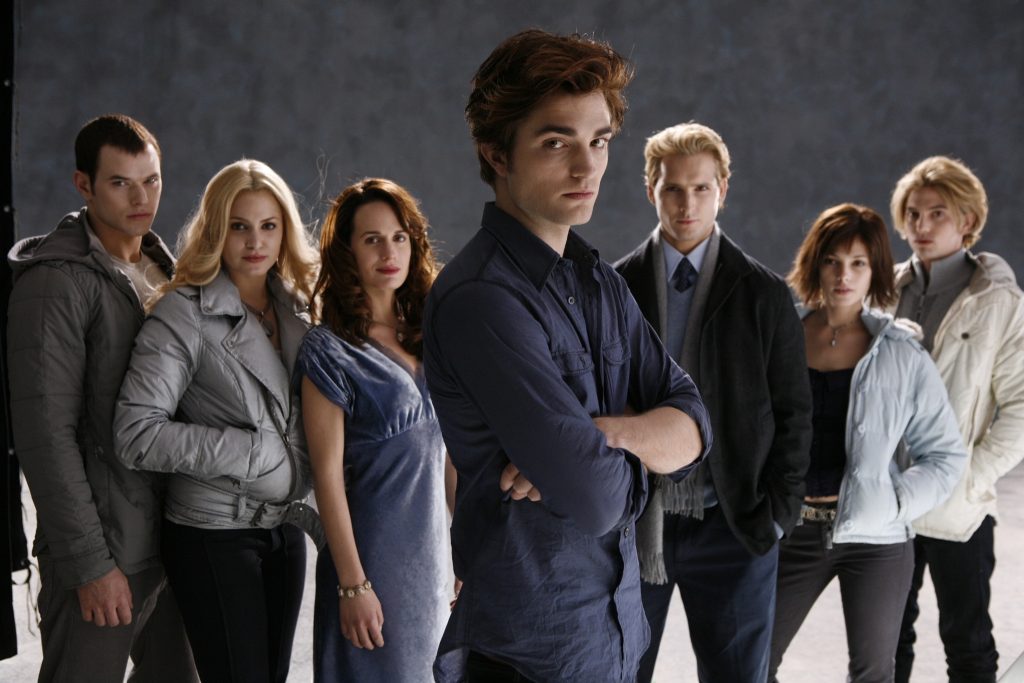
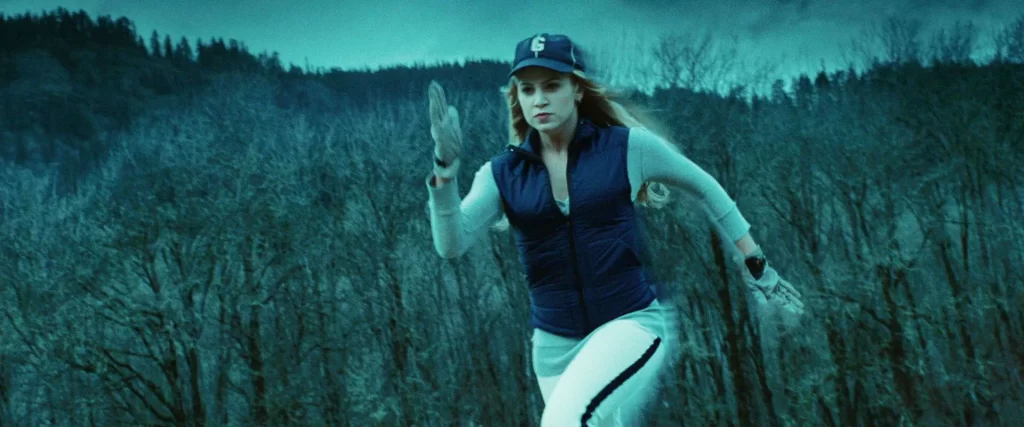
If pointless but fun mini games aren’t your thing, how about a sports title? If Mario can have his soccer, the Cullens deserve their baseball. Imagine Alice pitching you the ball with that entirely unnecessary but iconic kick, and a rotation of auto-triggered catchphrases like ‘My monkey man!’ whenever Emmett gets a home run. Unlockable characters would include gym class Mike and Jessica, and Chief Swan, who I figure has a half decent swing in him given his penchant for a classic sports and Rainier beer night. Why we didn’t get a Cullen Cup baseball game that took advantage of the Wii’s motion controls is, as one moody vampire might say, “a tragedy.” 

Alternatively, Twilight could have made for a passable platformer. You’d traverse through Forks woods as Bella, collecting apples that would also symbolise your health, perhaps culminating in a showdown with the Volturi. Or maybe schlock could meet schlock in a Resident Evil style survival horror where Bella needs to pick up different puzzle pieces to uncover who the Cullens really are while nomadic vampires James, Laurant, and Victoria serve as cannon fodder. That dramatic ballet school finale was made for an arena style boss fight. 

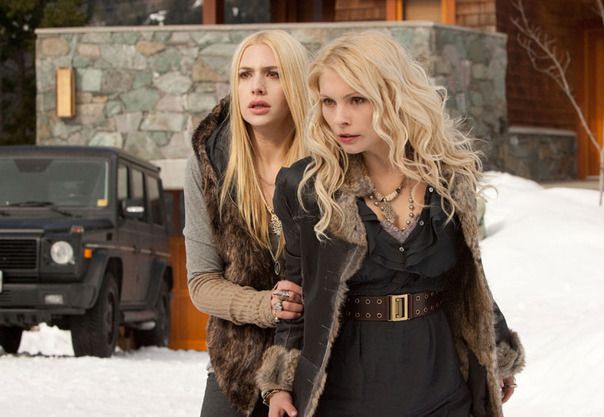
And if you really want to get ambitious, imagine an open world scenario, ‘Twilight: Covens’, that could bring in all of the various vampire clans from around the world. Think of the fun we could have had completing side quests with the Denali sisters, and playing with special abilities from elemental control to electrokinesis. Seriously, guys, it was right there!

As the first Twilight movie marks its 15th anniversary, a resurgence seems to be on the cusp. A combination of Netflix picking up its streaming rights in 2020, and Olivia Rodrigo’s Edward Cullen in-ear monitors, seem to have reignited a community of fans, and indoctrinated a generation of new ones. Throughout that decade and a half, Twilight has been fairly criticised for its flaws and, unfortunately, like a lot of media that finds an audience amongst young women, dismissed, but there is a shift happening. It’s not a tectonic one by any stretch, but enough to recognise that there’s more to this saga than shirtless werewolves and pretty boys in peacoats.

If Twilight were to have its moment now (and with a reboot television series apparently in the works with Lionsgate, who knows, it might), about one thing I am absolutely positive (I’m almost done now, I swear), a Twilight video game wouldn’t be such a stretch.

For more on TWILIGHT’s fifteenth anniversary, pick up STARBURST Issue 484 (out now!) to read our interview with director CATHERINE HARDWICKE