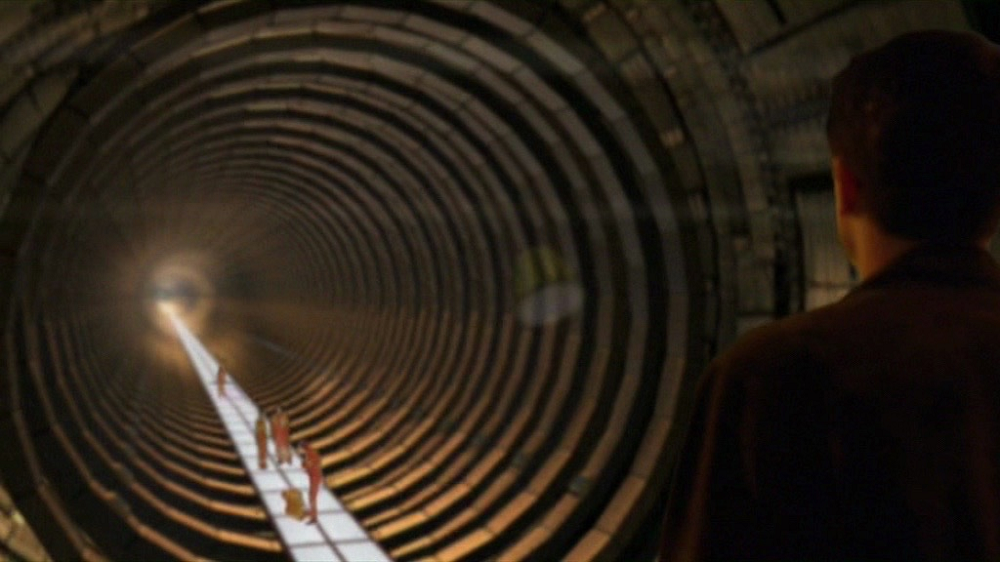
THE TELEPHEMERA YEARS: 1970, part 1

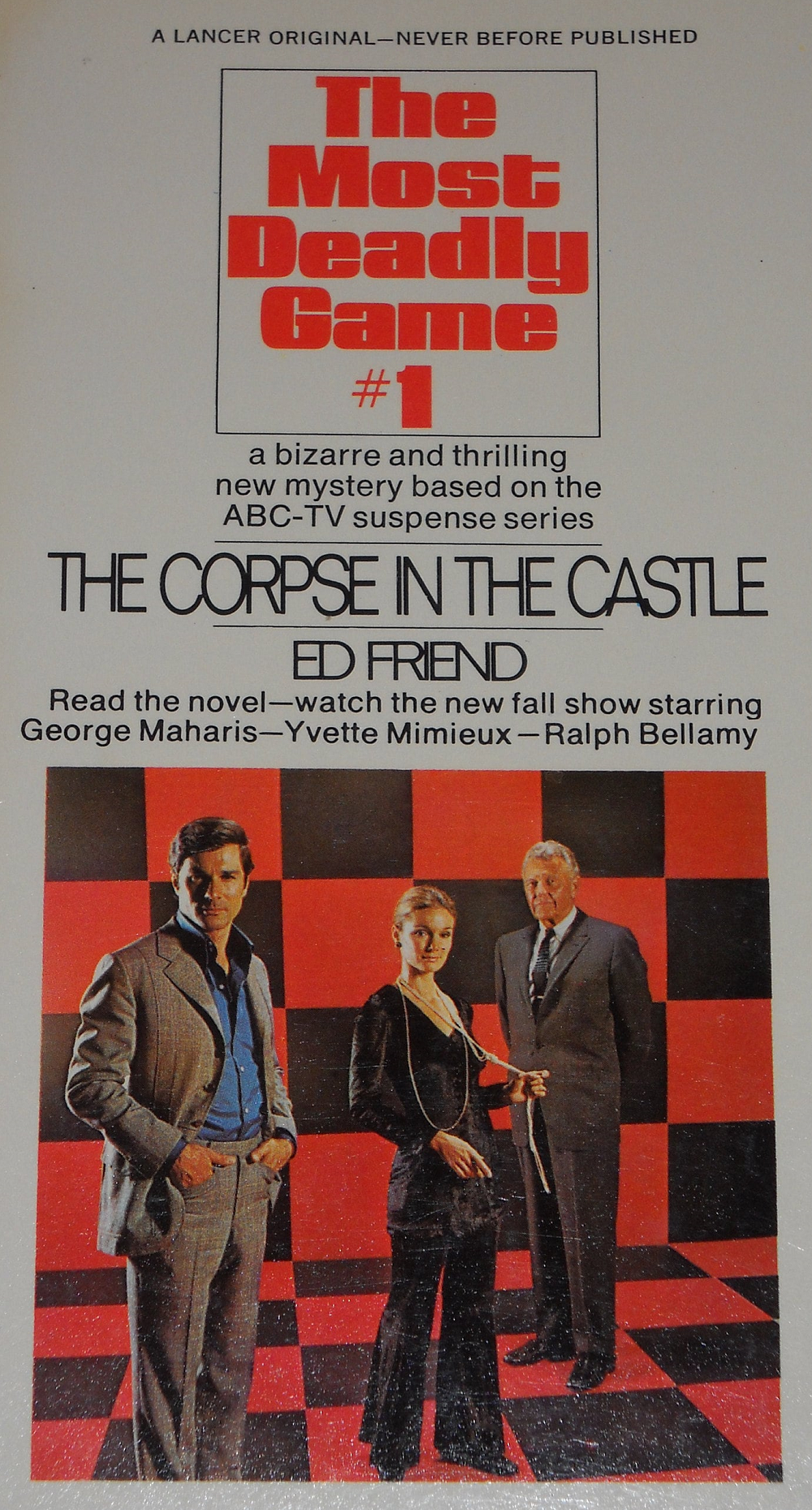
The Most Deadly Game, 1970

Ah, telephemera… those shows whose stay with us was tantalisingly brief, snatched away before their time, and sometimes with good cause. They hit the schedules alongside established shows, hoping for a long run, but it’s not always to be, and for every Street Hawk there’s two Manimals. But here at STARBURST we celebrate their existence and mourn their departure, drilling down into the new season’s entertainment with equal opportunities square eyes… these are The Telephemera Years!

1970-71

The arrival of a new decade brought with it some significant changes in the network television schedules. The Fall 1970 season was the final time viewers could sit down to enjoy The Ed Sullivan Show, The Beverly Hillbillies, Hogan’s Heroes, and Green Acres, all staples of CBS’s 1960s line-up, with The Newlywed Game and High Chapparal also saying their goodbyes as the year went on. Still, Here’s Lucy ensured that Lucille Ball was still a constant in American homes, while Ironside, Gunsmoke, and Marcus Welby MD all had strong showings in the year-end ratings.

New shows arriving on the scene that would leave a lasting impact included The Odd Couple, The Partridge Family, and Monday Night Football on ABC, The Mary Tyler Moore Show on CBS, and the debut of a new Black comedy star on NBC in The Flip Wilson Show. There were slim pickings for fans of genre television but at least Alias Smith and Jones and The Young Rebels upped the action quota across the week. Those were all shows that found an audience, though; what about those that didn’t? This is the story of four of 1970’s near misses…

The Most Deadly Game (ABC): The most deadly game, of course, is man, and he’s the target of the trio of investigators led by master criminologist Ethan Arcane in this short-lived actioner from Aaron Spelling. Originally titled Zig Zag, the show was created by the prolific team of Morton S Fine and David Freidkin, a partnership formed in the early 1950s that had worked on hits like The Virginian, The Alfred Hitchcock Hour, and I Spy.

Taken up by Aaron Spelling Productions, a pilot film was completed in 1969 that starred Ralph Bellamy, George Maharis, and Inger Stevens. Enthusiastically received, a series was ordered only for Stevens to sadly take her own life before filming began. The role of college-educated detective Vanessa Smith instead went to Yvette Mimieux, joining Bellamy and Maharis as Arcane and military veteran Jonathan Croft, respectively, and the delay meant that they missed their planned September airdate, debuting on October 10th 1970 instead.
The Most Deadly Game, 1970

The first episode – “Little David” – saw the trio attempt to solve the murder of a man found with a large hole in his head that didn’t come from a bullet, eventually discovering that the killer was using a sling like his biblical namesake. Subsequent adventures featured cryptic poems, a seemingly prophetic murderer, paranoid rock stars, and foreign assassins, with Ethan, Jonathan, and Vanessa stepping into a variety of roles in order to find those vital clues to solve the case of the week.

An intriguing premise that could have had legs for a longer run, The Most Deadly Game’s biggest negative was its time slot, scheduled opposite The Mary Tyler Moore Show and NBC Saturday Night at the Movies, an issue not helped by its late start. With ratings never really recovering and showing no signs of getting any better as 1970 turned into 1971, ABC pulled the plug, the twelfth episode – “I, Said the Sparrow” – being the last. Spelling, of course, went onto much greater things but Bellamy, Maharis, and Mimieux enjoyed a career of small supporting roles, the latter popping up eight years later as the token woman in The Black Hole.

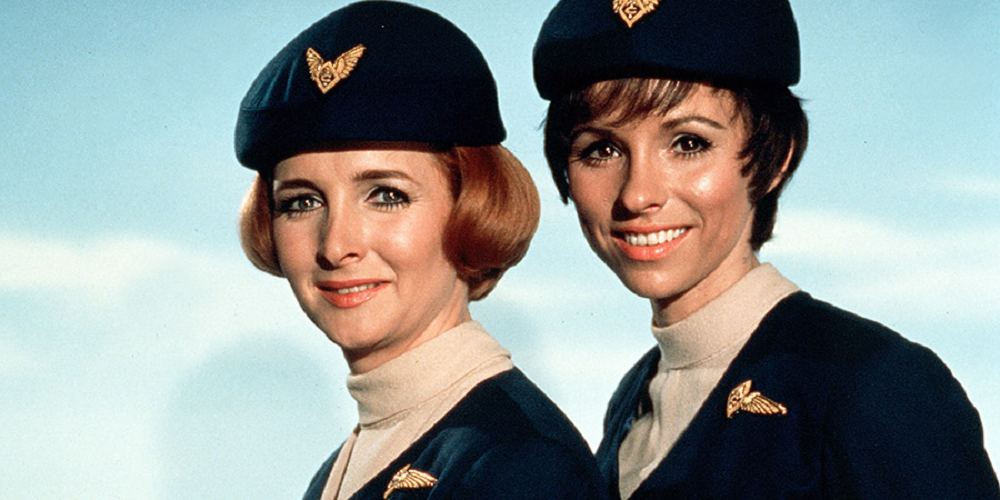
From a Bird’s Eye View (NBC): Made in conjunction with British companies ATV and ITC Entertainment, From a Bird’s Eye View was sold to NBC by Lew Grade, an attempt to make a comedy series that would appeal to both US and UK audiences. Its star was actually in place before anything else as Grade’s first aim was to work with Millicent Martin, a singer and comedy actress who had risen to prominence when starring in her own sketch show, Mainly Millicent.

Grade sent six of Martin’s sketches to US producer Sheldon Leonard, the man behind The Andy Griffith Show, The Dick van Dyke Show, and I Spy, who came up with the sit behind the com: air hostesses. Working titles included Meet Millie and Up She Goes but From a Bird’s Eye View was cheekily decided upon and a search began for a co-star to light up the screen alongside Martin, with stage musical actress Patte Finley eventually getting the nod.
From a Bird's Eye View, 1970

Martin and Finley underwent training with British European Airways and the show begins with their characters – a ditzy Brit and a canny American – working out of London to various European cities for the fictional International Airlines. A whole plane full of new passengers each week allowed ample room for guest stars, with the likes of Richard Briers, Frank Thornton, Clive Dunn, Joan Hickson, and Arthur Mullard all taking their seats, allowing US audiences a glimpse of the best of UK sitcom stars.

The show was originally supposed to debut in the Summer of 1970 as a mid-season replacement, but NBC held it back, initially for Fall and then for Spring, debuting it on Tuesday nights in March 1971. By that time, it had finished its run on ATV in the UK after the decision had been made to cancel it with just sixteen episodes completed. Although Grade’s grand experiment had failed, Leonard returned to the format later that year, enlisting Shirley Maclaine to star in Shirley’s World, another co-production with ITC. It lasted just one episode longer.

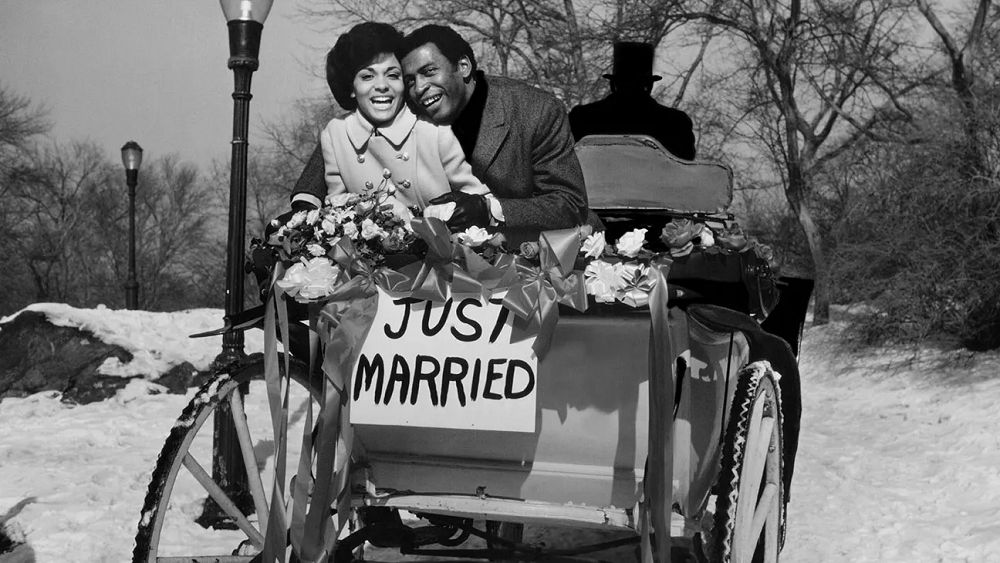
Barefoot in the Park (ABC): If there was such a thing as a sure bet in the 1960s it was that you could rely on Neil Simon for a Broadway smash. From his 1961 debut Come Blow Your Horn, through The Odd Couple and Sweet Charity, to 1969’s Last of the Red Hot Lovers, Simon’s scripts enraptured theatregoers, with several of them being made into hit movies, including Barefoot in the Park, the story of two newlyweds learning to live together that starred Robert Redford and Elizabeth Ashley when it opened in 1963.

Redford reprised the role of Paul Bratter for the 1967 movie version, this time opposite Jane Fonda’s Corie, with reviewers praising the romantic farce for its simplistic delights. Barefoot in the Park was followed by a movie version of The Odd Couple, and both shows were picked to continue as TV shows for the Fall 1970 season on ABC. Jack Klugman and Tony Randall replaced Jack Lemmon and Walter Matthau as Felix and Oscar for TV’s Odd Couple, and was an otherwise faithful transfer, but the decision was made to do something a little different with Barefoot in the Park

Barefoot in the Park, 1970

Although American society had made progressive leaps throughout the 1960s when it came to civil rights and race relations, the TV industry had not delivered a show with a predominantly black cast since The Amos ‘n’ Andy Show, which ran from 1951 to 1953 and was riven with complaints of racism from the NAACP, among others. When it came to Barefoot in the Park, executive producer William d’Angelo thought to try a sensitive portrayal of black life, charging Bill Idelson and Harvey Miller with developing Simon’s play as an ongoing TV drama with black leads and black supports, with Italian American Vito Scotti almost a token white man among the cast. Idelson and Miller – who’d worked together on The Mothers-in-Law and That Girl – looked to an actor who’d guested on those shows in Scoey Mitchell to play Paul, with newcomer Tracy Reed as Corie. Jazz singer Thelma Carpenter and comedian Nipsey Russell rounded out the core cast, with a young Garry Marshall pitching in with a script.

The show didn’t get off to the greatest start when its lead-in show, Bewitched, began to shed viewers, a decline that had an obvious knock-on for Barefoot in the Park and The Odd Couple, which followed it. Thus, when Mitchell and the producers had an irreconcilable falling out after just twelve episodes had been filmed, the decision was made to cancel the show rather than recast the role. The Odd Couple was moved to Fridays and eventually went on to enjoy a five-year run but Barefoot in the Park was soon forgotten, despite its place in Black TV history.

The Silent Force (ABC): Opening with a quote from Robert F Kennedy arguing that “If you do not, on a national scale, attack organized criminals with weapons and techniques as effective as their own, they will destroy us,” The Silent Force told the ongoing story of three US government agents tasked with combatting organised crime in southern California.

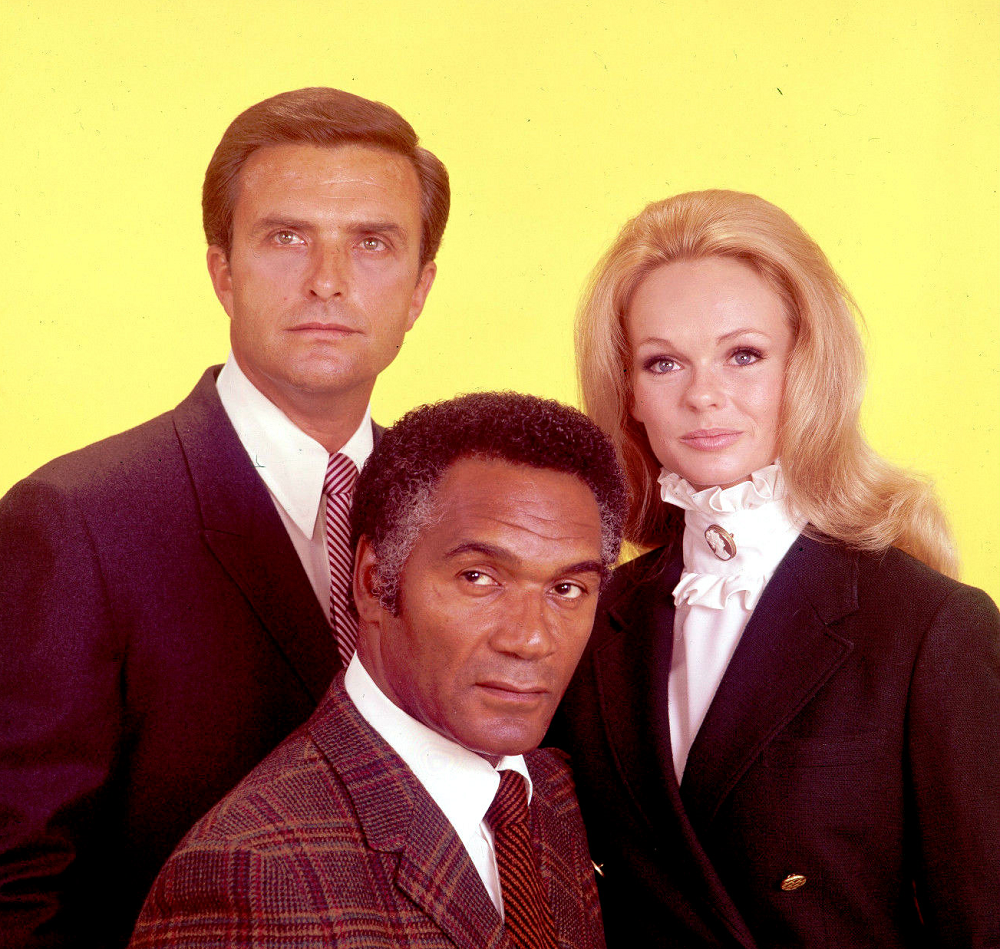
Created by Luther Davis, a former US Army Air Force Major who had carved a career writing stage musicals, the show debuted on September 21st 1970 as part of ABC’s new Monday line-up that included Monday Night Football for the first time. B-movie veteran Ed Nelson, Percy Rodriguez (Star Trek and The Man from UNCLE, among others), and the doll-like Lynda Day starred as Ward Fuller, Jason Hart, and Amelia Cole, the government’s best hope against the scourge of organised crime.
Silent Force, 1970

Working undercover and targeting a wide array of mob-associated industries, the three took on loan sharks, shady record company executives, police corruption, union busting, and more, giving ample room for the casting director to bring in guest stars like Joan van Ark, DeForest Kelly, Regis Philbin, Edward G Robinson, and Carmen Zapata.

Despite – or perhaps because of – a similar premise to CBS’s hit show Mission: Impossible, The Silent Force never caught fire with its intended audience, who perhaps wanted simpler pleasures as they prepared to watch huge men in padded armour crash into each other. The show was replaced in the schedules by quiz show The Reel Game, hosted by Jack Barry, returning to TV thirteen years after the quiz show scandals of the 1950s, which ironically would have made for a great case for The Silent Force to investigate…

Next time on The Telephemera Years: More of 1970’s less successful efforts, including The Immortal!

Check out our other Telephemera articles:

The Telephemera Years: pre-1965 (part 1, 2, 3, 4)

The Telephemera Years: 1966 (part 1, 2, 3, 4)

The Telephemera Years: 1967 (part 1, 2, 3, 4)

The Telephemera Years: 1968 (part 1, 2, 3, 4)

The Telephemera Years: 1969 (part 1, 2, 3, 4)

The Telephemera Years: 1971 (part 1, 2, 3, 4)

The Telephemera Years: 1973 (part 1, 2, 3, 4)

The Telephemera Years: 1974 (part 1, 2, 3, 4, 5)

The Telephemera Years: 1975 (part 1, 2, 3, 4)

The Telephemera Years: 1977 (part 1, 2, 3, 4)

The Telephemera Years: 1978 (part 1, 2, 3, 4)

The Telephemera Years: 1980 (part 12, 3, 4)

The Telephemera Years: 1982 (part 1, 2, 3, 4)

The Telephemera Years: 1983 (part 1, 2, 3, 4)

The Telephemera Years: 1984 (part 1, 2, 3, 4)

The Telephemera Years: 1986 (part 1, 2, 3, 4)

The Telephemera Years: 1987 (part 1, 2, 3, 4)

The Telephemera Years: 1989 (part 1, 2, 3, 4)

The Telephemera Years: 1990 (part 1, 2, 3, 4)

The Telephemera Years: 1992 (part 1, 2, 3, 4)

The Telephemera Years: 1995 (part 12, 3, 4)

The Telephemera Years: 1997 (part 1, 2, 3, 4)

The Telephemera Years: 1998 (part 1, 2, 3, 4)

The Telephemera Years: 2000 (part 1, 2, 3, 4)

The Telephemera Years: 2002 (part 1, 2, 3, 4)

The Telephemera Years: 2003 (part 1, 2, 3, 4)

The Telephemera Years: 2005 (part 1, 2, 3, 4)

The Telephemera Years: 2006 (part 1, 2, 3, 4)

The Telephemera Years: 2008 (part 1, 23, 4)

Titans of Telephemera: Irwin Allen

Titans of Telephemera: Stephen J Cannell (part 1, 2, 3, 4)

Titans of Telephemera: DIC (part 1, 2)

Titans of Telephemera: Hanna-Barbera (part 1, 2, 3, 4, 5)

Titans of Telephemera: Kenneth Johnson

Titans of Telephemera: Sid & Marty Krofft

Titans of Telephemera: Glen A Larson (part 1, 2, 3, 4)

Titans of Telephemera: Quinn Martin (part 1, 2)

Titans of Telephemera: Ruby-Spears

Sam Odlum | TIME ADDICTS

time addicts interview

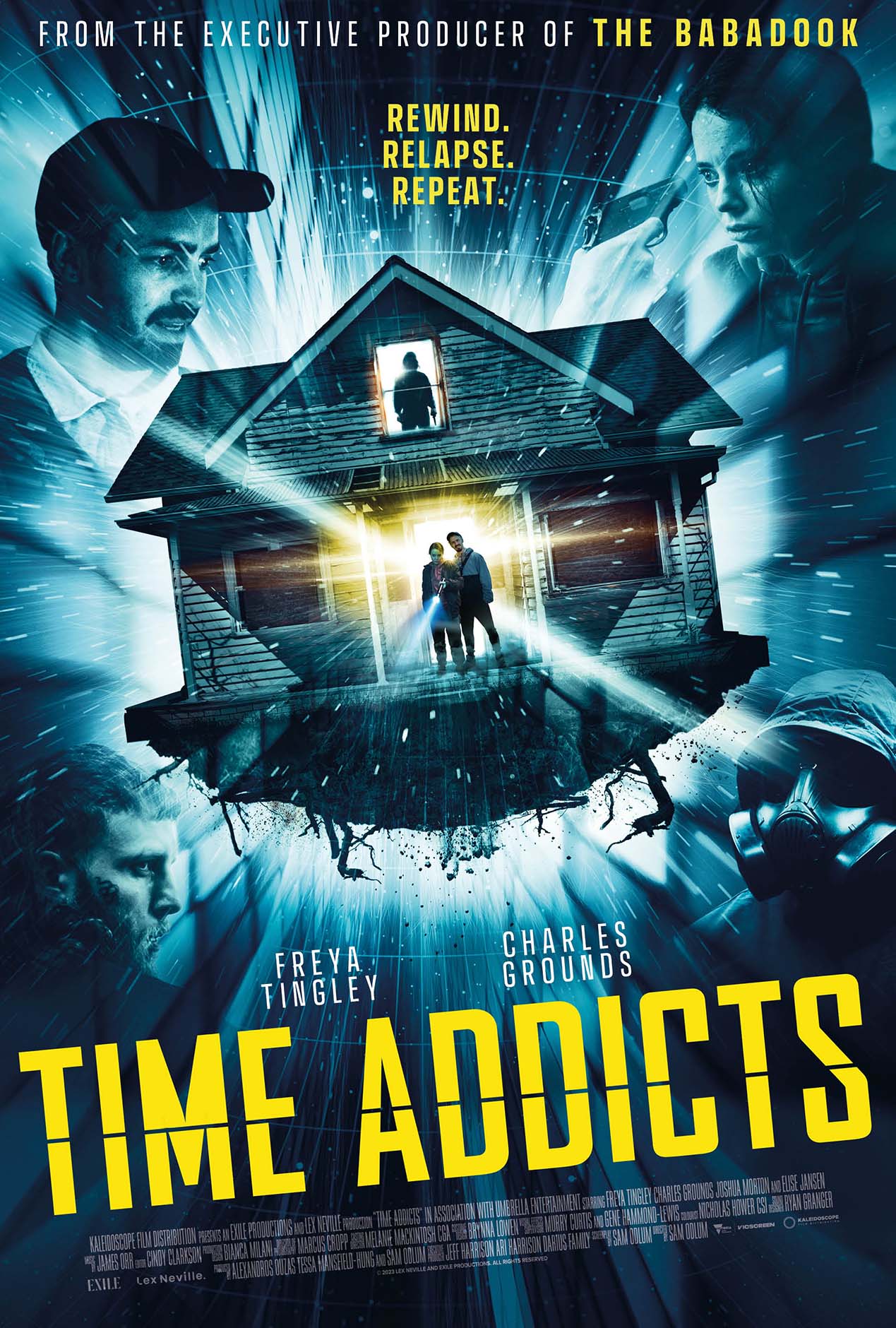
Based on the original short film, TIME ADDICTS is an audacious and brilliantly innovative new Australian feature. This captivating film stars Freya Tingley (Once Upon a Time) and Charles Grounds (Elvis). STARBURST spoke to writer and director SAM ODLUM about his experience working on this passion project and bringing his ambitious idea to life…

STARBURST: How easy or difficult was it to adapt the original short into a feature-length film? Did you find that having that original source material helped with the writing and directing process?

Sam Odlum: We shot the short around 2017. I had the idea for it a few years before, but I’d previously put off writing a feature-length film about time travel. It’s a lot to bite off and chew! I thought I’d see how it goes with the short. It wasn’t until I made the short and saw the response that I realised people seemed to really like it and gel with it. I was like, “Okay, maybe there’s something more here”. I think having the short really helped us get all the pieces in place to try to make the feature film. It definitely helped with the directing process of figuring things out. Also, because I edited the short film too, it was really handy when we came to make the feature. I could be the last port of call and say, “No, I don’t think this will work,” or “I think that’ll work”. In terms of writing it, the short was a help at first, but then things do start to expand!

What was your inspiration for telling this story?

I guess I wanted to make something unique. Australia can be quite conservative with genres. You either fit into a drama category, a thriller category, or a horror category, whereas I like a real mix of things. There was inspiration from a lot of different places. One big inspiration was A Scanner Darkly by Philip K. Dick. I thought it was masterful the way he was able to create these three-dimensional characters – who are hilarious – but at the same time, stick in the sci-fi world. That was when I thought that I could make a film where it’s got these interesting characters who have all these flaws and really unearth their behaviour and why they act the way they do, but then set it out in a world that’s a little bit different, a sci-fi kind of world. I felt that time travel gave us a good opportunity to do that because of how it sort of relates to drug use, in that you’re almost messing with your past self, messing with your future self, and I thought, ‘what could we say about that and getting stuck in loops?’ The thing about time travel stories is they often get bogged down with unpacking how time travel works, whereas we set the rules for time travel early on, and then the characters don’t always dig too deep on that front. I felt that was realistic because Denise seeing herself, for example, is probably not the craziest thing that she’s seen – she’s probably seen a lot worse! Then the pillars of screenwriting in general, goal, stakes and urgency, felt really inbuilt into that idea. They wouldn’t be asking a lot of questions because they’re just constantly dealing in the moment. That’s when I knew it was working when I felt like, yeah, the stakes are kind of inbuilt.

What was the research process when you were creating the film?

We didn’t go over the top with drug research because I felt like that’s such a rabbit hole. I wanted the story to be about these specific people, so I wouldn’t say this is cut and paste for anyone who has drug issues. I’ve had friends who’ve had problems, and it’s not really about research. It’s just being around it, or you just speak to people and find out what makes them tick. That’s something I spoke about with the actors, too; we didn’t want to play this over the top and make it really on edge and jittery. Everyone reacts differently to drugs. Like with Johnny, it’s almost like smoking just kicks in his OCD, and he’s tinkering with the plates and adjusting everything. It was more down to ‘What are we trying to say about the journey of the characters?’ and, ‘What are the other little elements that we’re going to pick up on to make them feel real, but not make them feel overly dramatised?’ There are many drug films that really ram it home, and I don’t know whether we always need to hear that. I feel like we already know it. For me, the drug use was more a symptom of other issues going on with the characters. It was ‘Well, let’s tackle the other issues’ and then use drug use as a vehicle for showing that journey.

Kaleidoscope Home Entertainment presents TIME ADDICTS on Digital from November 27th. You can read our review here and an expanded version of the interview in Issue 484 of STARBURST, which is on sale November 30th


Game-to-video Adaptations: Challenges on the Horizon

Despite what we might generously call a less-than-stellar first effort, the recent Super Mario movie has solidified just how well gaming can translate to the TV and movie space. Aided by other well-received releases like The Last of Us and the two Sonic the Hedgehog films, a form of transference once dismissed is proving a now effective source of filmmaking ideas.

As the film industry has proven time and again, one film or idea performing well means a slew of imitators, and for better or worse, that means a new generation of gaming movies and TV is coming.

Expansions on much-loved properties are exciting, but they also introduce a range of challenges that historical efforts have often overlooked. New interpretations of games into new mediums might not be as easy as some executives are hoping, and we want to look at why.


Translating Gameplay

The most important aspect of video games for many players isn’t the story, the characters, or the world, it’s the gameplay. How a game feels in your hands, and how the game’s feedback delivers a sense of power, wonder, and accomplishment are all key to delivering a satisfying experience. They are also aspects that are only possible to leverage in a directly interactive medium.

This creates a problem when trying to move a game or series from a heavy gameplay focus to a passive form of media. A famous example of a series missing this mark is demonstrated by the two Doom movies.

The gameplay famous in Doom involves moving at break-neck speeds, annihilating hordes of monsters, and never slowing down. Making a film like this goes against storytelling conventions, and would be prohibitively expensive to produce.

Better examples have been found taking a bigger picture approach, which might not gel with all games. The recent Gran Turismo and Tetris films are prime demonstrations of this idea, where the actions of these non-story-driven games devoid of context wouldn’t make sense as a movie or TV series. Instead, the films have zoomed out, taking a biographical approach to an event around Gran Turismo, and the creation of Tetris. It’s not just video games that have adopted this direction either, as is well demonstrated by the gaming landscape of casinos.

Films based on casinos like the Ocean’s series and, well, Casino, don’t obsess over the gameplay, and this is true of films that focus on online services as well. Sure, the best online casinos succeed by offering many different titles like slots, blackjack, and poker, but it’s again difficult to make a film on these components specifically. Instead of looking at people collecting bonuses and playing on their laptops or mobiles, online casino movies like Croupier or Runner Runner go broader. This makes them a better fit for movies but at the cost of not being so tightly linked to the games themselves. It’s a real balancing act, and it can be difficult to do justice.

A Matter of Choice

Another issue that we have to wonder about with the coming Fallout TV series is the emphasis that some games place on player choice. The Fallout series are role-playing games that are built on the idea of making decisions that affect the characters you like and the world you inhabit. TV series and films can’t integrate this aspect, which removes one of the most important components that made Fallout famous.

There isn’t an easy way to solve this issue, with the only path forward being to simply sweep it aside. A show or movie can still present interesting and grey moral questions, but it has to ignore the craziness that a system in gaming can provide.

What if all of my characters in Fallout had one intelligence and charisma and maximum strength and luck, for example? It’s still possible to finish the games this way, but good luck selling such a protagonist to a showrunner or a network executive.

Serious and Silly

The final component that often causes problems in moving games to TV and movies is the tone. Video games can be campy, not afraid of being ridiculous, or simply making no sense. This works in games because as long as the player has fun, realism doesn’t matter.

Source: Pexels

In films or television, especially in live action, the media must be much more careful about what audiences will accept from plausibility. This can dull down the edges of the original property, homogenizing and transforming it into something unrecognizable. If you remember the first Super Mario Bros movie, you remember how far it deviated from the source material, and the results.

The new movie understood how far suspension of disbelief was built into the core of gamers, and how much leeway they’re willing to give film adaptions. The world was ridiculous, but it didn’t matter, it was also fun.

With Mario, Sonic, and The Last of Us all slated for highly anticipated sequels, there’s a good chance that the proven direction of these franchises in the film and movie space will continue to pay off.

Less guaranteed is the range of other adaptions, which might be less able to overcome the issues inherent in bringing interactive experiences to the passive space. While we’ll be sure to give everything a fair shake, we’ll have to remember the path travelled, and those who lost their way.

THE TELEPHEMERA YEARS: 2002, part 4

Fillmore!, 2002

Ah, telephemera… those shows whose stay with us was tantalisingly brief, snatched away before their time, and sometimes with good cause. They hit the schedules alongside established shows, hoping for a long run, but it’s not always to be, and for every Street Hawk there’s two Manimals. But here at STARBURST we celebrate their existence and mourn their departure, drilling down into the new season’s entertainment with equal opportunities square eyes… these are The Telephemera Years!

2002-03

If you can take anything away from a glance at the top rating shows from the year’s Fall TV season in the US, it’s that America loved crime that year. And football, of course, along with reality shows and the ever-present “Must See TV” Thursday night NBC juggernaut of Friends, Scrubs, Will & Grace, Frasier, and ER. CSI: Crime Scene Investigation ruled the roost, drawing almost 20% more viewers than second-place Friends, while CSI: Miami, Law & Order, Law & Order: SVU, Law & Order: Criminal Intent, and Without a Trace all taking minor places.

It was a rough year for genre TV, with Touched by an Angel, Futurama, Farscape, Sabrina the Teenage Witch, and Buffy the Vampire Slayer all airing their final seasons, but surely Joss Whedon’s new show Firefly would more than make up for those losses and enjoy a long run? The wonderful Oz finished its run on HBO and was replaced by a little show named The Wire, but what were the kids watching? This is the story of 2002’s new season for younger viewers…

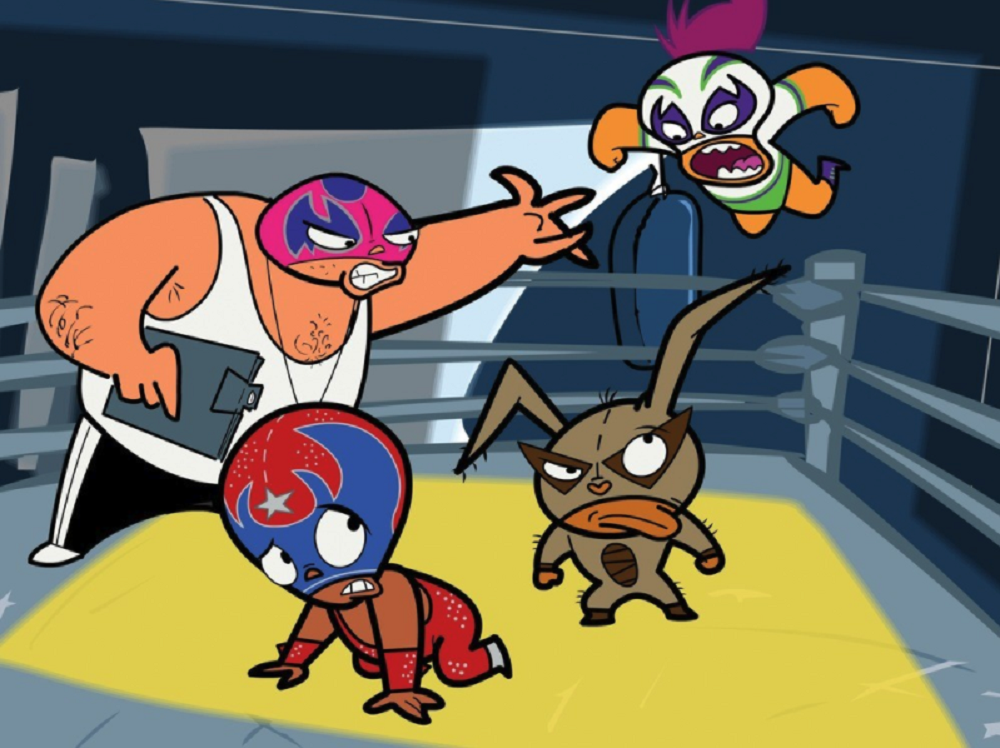
¡Mucha Lucha! (Kids WB): Unusually for an American TV show based on a Mexican sport, ¡Mucha Lucha! has its roots in Australia, where Lili Chin and Eddie Mort had formed Fwak! Animation in 2000. Mort was an Englishman who moved down under as a child and began his animation career at Disney Australia before moving over to Nickleodeon’s Antipodean arm. Malaysian-born Chin was brought on board to help Mort animate a short – Lucha School – which he had pitched to Warner Bros in 1999.

Lucha School was finished by the fledgling Fwak! studio and Warners bought the concept, which was tweaked to become ¡Mucha Lucha!, reducing the number of main characters from four to three. Rikochet, Buena Girl, and The Flea are three students at Luchaville’s Foremost World-Renowned International School of Lucha where they struggle to find their place in a society where everyone wears a lucha mask and has their own finishing move.

¡Mucha Lucha!, 2002

¡Mucha Lucha! debuted in August 2002 and is regarded as the first flash-animated show created for American television. Each episode of the first season came with a moral, similar to the classic Saturday morning cartoons of the 1980s, usually dispensed in the form of what a “true luchador” would do in any given situation. These did not continue into the second series – which arrived a year later – or beyond.

In all, fifty-two episodes and a feature film were produced before the show’s run ended in February 2005, with the final season earning the subtitle of Gigante. Antagonists and allies featured in the show included obvious parodies of real-life wrestling stars, as well as actual luchador Blue Demon Jr and magicians Penn and Teller. Although nothing has been heard of ¡Mucha Lucha! since its 2005 finale (save for a mooted 2014 reboot), Chin and Mort continue to work in the illustration and animation fields.

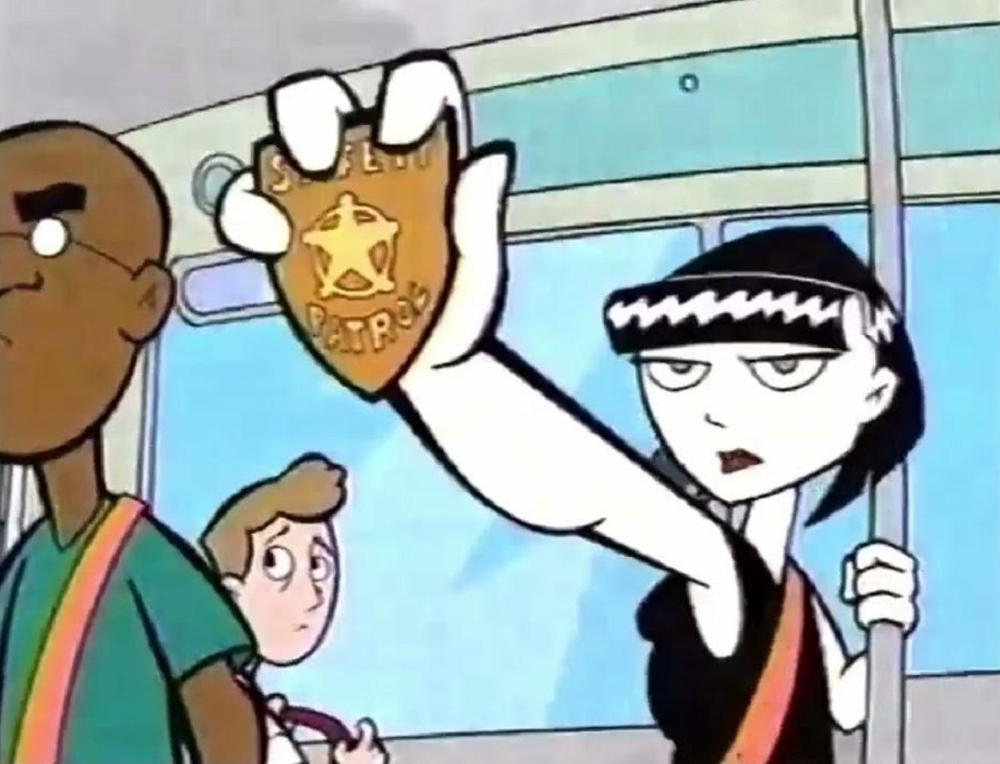
Fillmore! (ABC): Scott M Gimple graduated from the University of Southern California’s School of Cinema-Television and walked straight into a job at Disney writing for Jungle Cubs, Timon and Pumbaa, and the Ace Ventura cartoon, among others. In 2002, he pitched a new show to Disney, a parody of 1970s police and detective shows that would appeal to kids and adults alike.

Cornelius Fillmore is a juvenile delinquent who is caught raiding his school’s new shipment of chalk by Safety Patrol officer Wayne Liggett and offered a choice: spend the rest of middle school in detention or help the Safety Patrol solve another case. Fillmore chooses the latter and the show starts in media res with him partnered with Ingrid Third, another reformed troublemaker.

Fillmore!, 2002

Over Fillmore!‘s first season, Cornelius and Ingrid solve such cases as the disappearance of all the library’s books, the theft of the school’s lobster mascot, and the vandalism of a painting on a field trip to the museum, as well as flashing back to the day they met, when Cornelius helped prove Ingrid’s innocence of stink-bomb related terrorism charges.

Gimple’s designs revelled in a 1970s aesthetic, channelled through Disney’s smooth animation, with stellar voice work from Olivia Brown, Tara Strong, Don LaFontaine, and guests such as John Rhys Davies, Caroline Rhea, and Kurtwood Smith. After two seasons of thirteen episodes each, Gimple moved on to write for other Disney shows, eventually becoming story editor for NBC crime drama Life. From there, spells in production on FlashForward and Chase led to work on The Walking Dead, where he became showrunner for seasons four to eight.

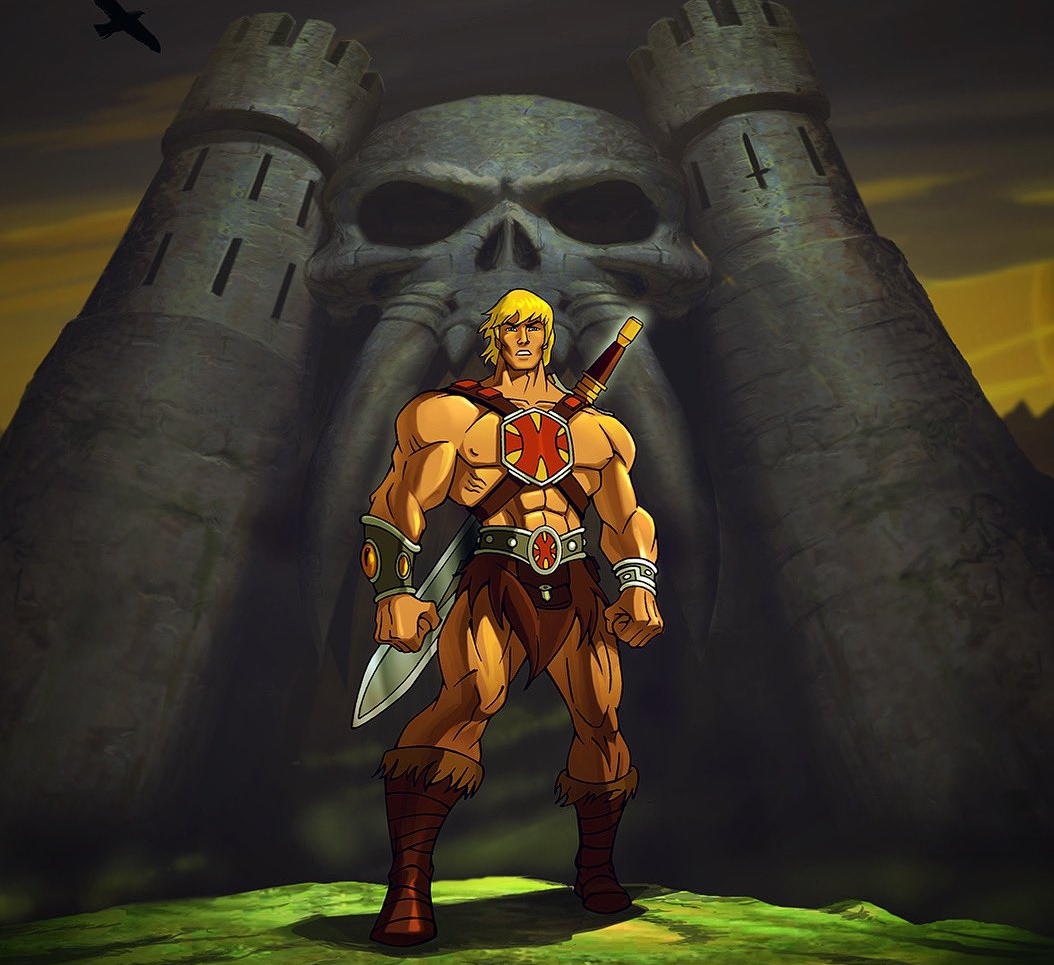
He-Man and the Masters of the Universe (Cartoon Network): The original Masters of the Universe toyline ran from 1982 to 1988, the accompanying Filmation cartoon enjoying a run of 130 episodes from 1983 to 1985. After the live-action movie starring Dolph Lundgren failed to do the business they’d hoped for, Mattel launched a misguided attempt to update the property for the nineties – The New Adventures of He-Man, which lasted for just one syndicated season of sixty-five episodes – but then put He-Man and company into mothballs for a decade.

Developed by Michael Halperin, a veteran of several Glen A Larson shows in the 1980s, this was the big return, a back to basics bid to do He-Man for the new millennium, eschewing the total do-over that the 1990 show had attempted for simple sword and sorcery action. Halperin brought back several of the original show’s writers and contracted Mike Young Productions to design and animate the show, which was accompanied by action figures designed by the Four Horsemen studio.

He-Man and the Masters of the Universe, 2002

The new series debuted on Cartoon Network in August 2002 and was praised for its updated take on a beloved franchise, including a more adult – but still kid-friendly – feel to the show, also introduced in the series of comic books from Image Comics that was released to coincide with the cartoon. Over two seasons, He-Man and the Masters of the Universe delved deep into the mythology of Eternia, providing origin stories for Castle Grayskull, Skeletor, Teela, and more.

The show finished its run in January 2004 and the Masters of the Universe were again off our screens until 2018’s She-Ra and the Princesses of Power, but 2002 was a new dawn for the franchise. On the heels of the Four Horsemen designed figures came a range of MOTU Classics toys, reinterpreting the original figures – and many more that didn’t earn an action figure back in the day – in six-inch scale, primarily aimed at the adult collector market (the original show’s audience now grown into cash-wielding thirtysomethings). Another range of comic books, this time from Dark Horse Comics and DC Comics, followed, and eventually He-Man came back to TV in the Netflix shows Masters of the Universe: Revelation and He-Man and the Masters of the Universe in 2021.

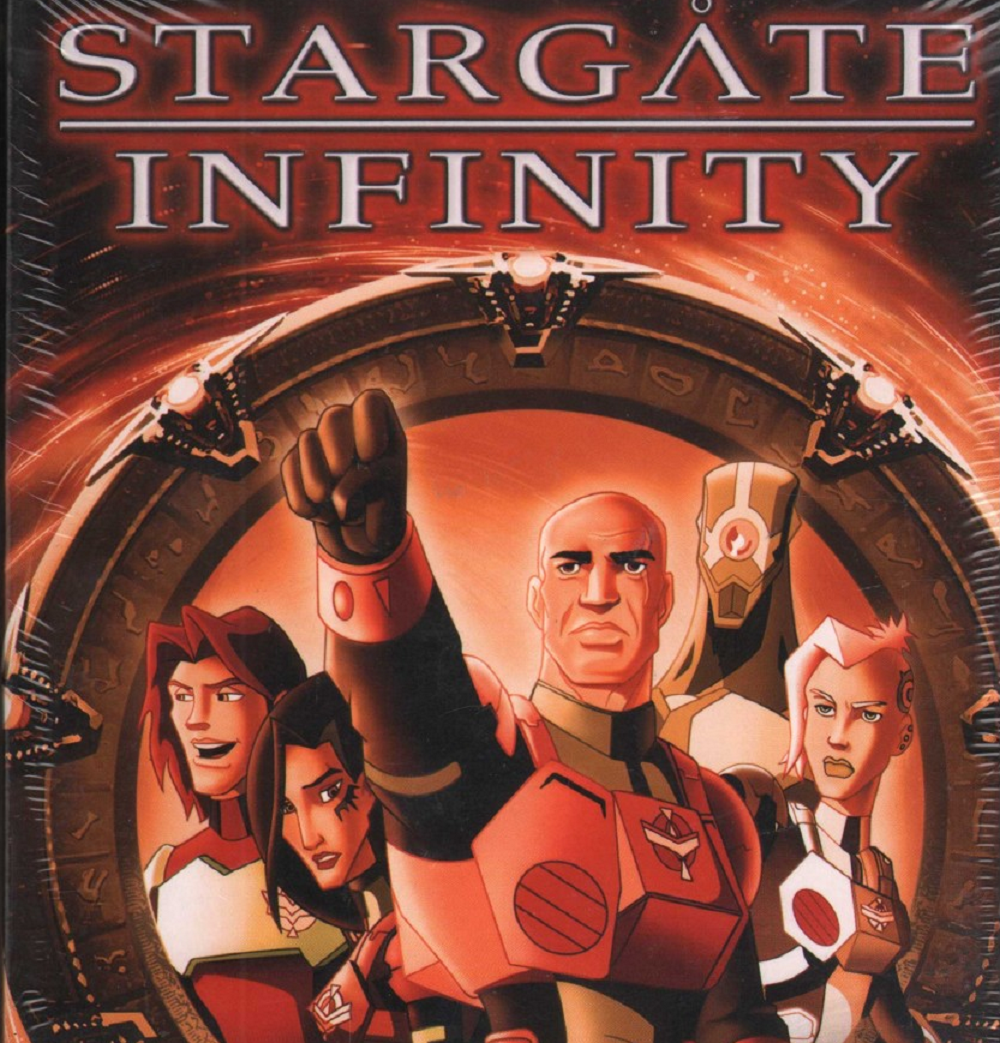
Stargate Infinity (Fox): Even in their wildest dreams, I’m not sure many involved with the making of the 1994 Roland Emmerich film Stargate envisaged the property enjoying a fourteen-year second life in a series of TV shows, beginning with 1997’s Stargate SG1. Developed by Brad Wright and Jonathan Glassner from Emmerich and Dean Devlin’s original treatment, SG-1 ran for ten season – over two-hundred episodes – before finishing its run in 2007. After SG-1 came Stargate Atlantis and Stargate Universe, the property finally resting in 2009 (although it came back for a brief webseries in 2018).

In the middle of all that was Stargate Infinity, an animated spin-off developed by Eric Lewald and Michael Maliani for DIC Entertainment. None of those working on the live-action SG-1 were involved in the show, and its place in greater Stargate canon is questionable, with Wright claiming it should not be considered as such due to his not being involved.

Stargate Infinity, 2002

Whatever the status of Infinity, the show revolves around the titular device, with former SG team veteran Gus Bonner framed for a crime he did not commit, using the Stargate to bring alien enemies through to Earth. Gathering his comrades, Bonner escapes through the Stargate and begins a world-jumping adventure, unable to return home until he proves his innocence.

Infinity debuted in September 2002, it’s first season running through March the next year and ending on a cliffhanger. Unfortunately, there never was a season two and its outlaw status meant there was little impetus to resolve its plot points in any other Stargate property.

Next time on The Telephemera Years: We jump back into the time machine and set the controls for 1970 where The Most Deadly Game awaits…

Check out our other Telephemera articles:

The Telephemera Years: pre-1965 (part 1, 2, 3, 4)

The Telephemera Years: 1966 (part 1, 2, 3, 4)

The Telephemera Years: 1967 (part 1, 2, 3, 4)

The Telephemera Years: 1968 (part 1, 2, 3, 4)

The Telephemera Years: 1969 (part 1, 2, 3, 4)

The Telephemera Years: 1971 (part 1, 2, 3, 4)

The Telephemera Years: 1973 (part 1, 2, 3, 4)

The Telephemera Years: 1974 (part 1, 2, 3, 4, 5)

The Telephemera Years: 1975 (part 1, 2, 3, 4)

The Telephemera Years: 1977 (part 1, 2, 3, 4)

The Telephemera Years: 1978 (part 1, 2, 3, 4)

The Telephemera Years: 1980 (part 12, 3, 4)

The Telephemera Years: 1982 (part 1, 2, 3, 4)

The Telephemera Years: 1983 (part 1, 2, 3, 4)

The Telephemera Years: 1984 (part 1, 2, 3, 4)

The Telephemera Years: 1986 (part 1, 2, 3, 4)

The Telephemera Years: 1987 (part 1, 2, 3, 4)

The Telephemera Years: 1989 (part 1, 2, 3, 4)

The Telephemera Years: 1990 (part 1, 2, 3, 4)

The Telephemera Years: 1992 (part 1, 2, 3, 4)

The Telephemera Years: 1995 (part 12, 3, 4)

The Telephemera Years: 1997 (part 1, 2, 3, 4)

The Telephemera Years: 1998 (part 1, 2, 3, 4)

The Telephemera Years: 2000 (part 1, 2, 3, 4)

The Telephemera Years: 2002 (part 1, 2, 3)

The Telephemera Years: 2003 (part 1, 2, 3, 4)

The Telephemera Years: 2005 (part 1, 2, 3, 4)

The Telephemera Years: 2006 (part 1, 2, 3, 4)

The Telephemera Years: 2008 (part 1, 23, 4)

Titans of Telephemera: Irwin Allen

Titans of Telephemera: Stephen J Cannell (part 1, 2, 3, 4)

Titans of Telephemera: DIC (part 1, 2)

Titans of Telephemera: Hanna-Barbera (part 1, 2, 3, 4, 5)

Titans of Telephemera: Kenneth Johnson

Titans of Telephemera: Sid & Marty Krofft

Titans of Telephemera: Glen A Larson (part 1, 2, 3, 4)
Titans of Telephemera: Quinn Martin (part 1, 2)

Titans of Telephemera: Ruby-Spears

Kyle Shire | QUEEN BY MIDNIGHT

Queen By Midnight

Kyle Shire is a games designer as well as one of the producers for the hit streaming show Critical Role. His latest game is Queen By Midnight. We caught up with him to find out more.

STARBURST: How would you pitch Queen By Midnight to a beloved family member who’s only ever played Monopoly and Settlers of Catan?

Kyle Shire: Queen By Midnight is a deck-building game where you play as powerful princesses who are battling to become the next Midnight Queen. Round by round, you play and purchase cards that add to your princesses’ unique arsenal of powers, tricks, attacks, and spells, an arsenal that you unleash upon your opponents. When the clocktower strikes Midnight, the game is over, and whoever has the most health and clout (and is still alive) is the winner!

Queen By Midnight is a straightforward introduction to the deck-building game genre with characters that vary in complexity. Play as Hephesta on your first game and give it three rounds. If it’s still not making sense to you after that, we can totally bust out Catan and fight over Longest Road.

All the princesses in Queen By Midnight have very specific looks and designs; what came first, the characters or the mechanics?

Definitely, the characters came first. As a writer and a theatre kid to the core, it was important to me to first figure out what princess archetypes I wanted to pull from, what twists and spins I could add to them, and then discern who they are as people. What do they care about? What are their outlooks? Their goals? And then, once I had all that mapped out, I used their stories to inform their mechanics and playstyles. Ludonarrative harmony is a thing of beauty to me. Rosaline, for example, is more than just a psychedelic twist on Briar Rose from Sleeping Beauty. She’s a powerful seer who dreamt of a great calamity that can only be averted if she becomes the next Queen. These powers and motivations are illustrated in her mechanics with things like her Trance cards and Prophecy Tokens, which she can use to avoid incoming attacks. Also, Rosaline has the highest Major Caster score of any princess, but her playstyle is slow, methodical, and defensive because she isn’t fighting for glory, ego, or power.

How did the clocktower board come out?

Back in the day, when I was imagining this game would only get made via crowdfunding, the ‘clocktower’ was just going to be a 2D mat. But once Alex Ubaldi from Darrington Press was brought on board, he had the inspired idea to add some table presence to the game by making the clocktower not just 3D but rotating as well, so every player sitting around the table can get a good view of the current round, what cards are available in the bazaar, etc. Then the intrepid team at Matt Paquette & Co figured out a way to somehow make the clocktower buildable, sturdy, and gosh darn gorgeous. I’m absolutely astounded at how it turned out.

You’re also a producer for Critical Role; what TTRPGS are you currently playing, and what are your all-time favourites?

Of course, I’m a huge D&D nerd and have been for almost 20 years. The Eberron campaign setting will always have a special place in my heart. I’m currently running a sandbox-style fantasy western set in Eberron as my home game. I also love the World of Darkness games, and I’m currently in a Changeling The Dreaming game that my partner Jon Sims is running, where we’re teenage fairies in Phoenix, Arizona, in 1996. The world of Shadowrun is hands down one of my all-time favourite game settings (it’s our world, in the future, but there’s magic, and a dragon was president, late-stage capitalism is the BBEG, it’s a great setting)). And now that the book is out, I’m super excited to spool up a Candela Obscura game of my own! 

Did any of these inspire Queen by Midnight?

There are some narrative seeds within the Eberron Campaign Setting and Changeling The Dreaming that inspired a bit of lore within Queen By Midnight, specifically in dealing with how the fey realm works and the role stories play in its existence.

Do you have any expansions planned?

The continent Queen By Midnight takes place on is called Twelvefold, and you only meet six princesses in the core game, and that’s all I have to say about that 🙂 

What’s your next big project?

I have about three projects in the hopper right now. I’m working on a TTRPG that unites my love of role-playing with my years of experience working in reality TV because, fun fact: there are a striking amount of similarities between what GMs do when plotting a TTRPG story and what reality TV story producers do when plotting a season of Real Housewives, or The Bachelor for example. 

I’m also writing a 5e campaign module set in Eberron that’s more of a labour of love than anything.

And finally, I’m working on a spec TV pilot that I’m sure no one will ever see, but I don’t care! I’m doing it! 🙂

You can read our review of Queen By Midnight here, and pick up a copy at your friendly local games store.

[ENDED] Win DARK WINDS on Blu-ray!

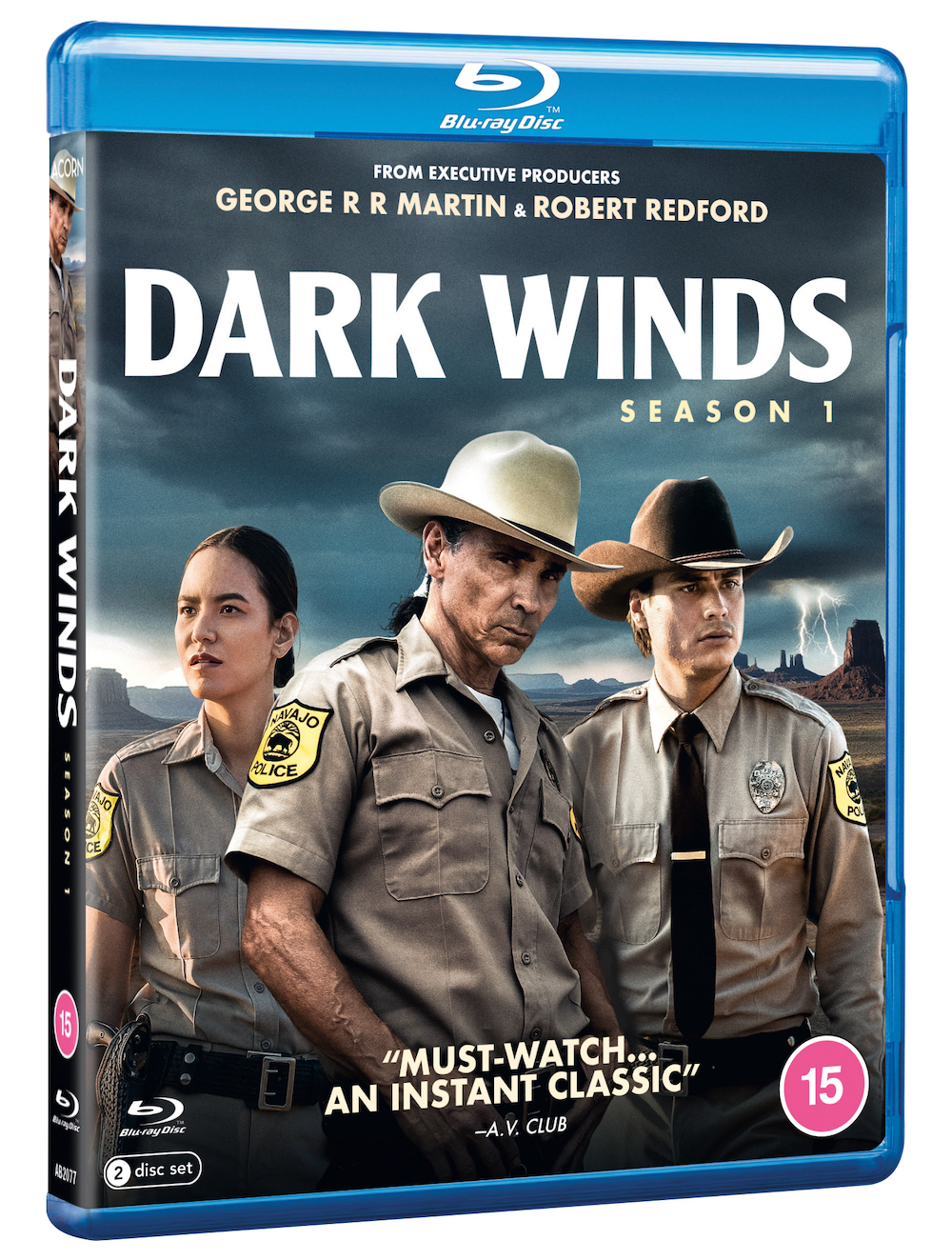
Season One of Dark Winds, which was a hit on Alibi, is released on Blu-ray and DVD on November 27th and out now on digital, and we have a copy of the Blu-ray to give away to one lucky STARBURST fan. Just read on and enter below…

On a remote outpost of the Navajo Nation near Monument Valley in 1971, taciturn and respected Lieutenant Joe Leaphorn (McClarnon) of the Tribal Police is tasked with patrolling 27,000 miles of desert, caring for his Navajo community and protecting them from the harsh realities of the world.

He’s joined by slick new deputy Jim Chee (Gordon) – who has his own scores to settle and is harbouring secrets of his own – and Sergeant Bernadette Manuelito (Jessica Matten – Frontier, Tribal), who like Joe were both born on the reservation and know their communities in a way no outsiders ever will.

Besieged with a series of seemingly unrelated crimes, including the brutal and unusual murder of a local indigenous family and the armed robbery of an armoured vehicle operation involving a helicopter, bombs and masked and uniformed thieves, the trio have their work cut out for them. With FBI Special Agent Whitover (Noah Emmerich – The Truman Show) snooping around, Joe is under pressure to crack the cases and connect the dots, but the deeper he digs into the truth, the more he exposes his own wounds from the past.

Battling the forces of evil – both human and supernatural – while fighting their personal demons, Joe and Jim must work together to save their community.

With a gripping narrative, genre-defying twists, underrepresented characters and shining an important and refreshing light on a rarely seen culture, Dark Winds is an enthralling, potent, beautifully crafted, edge-of-your-seat experience.

Special Features include a half-hour feature in which host Jeremiah Bitsui (Hoski) is joined by cast and show creators in a behind-the-scenes look at the making of Dark Winds, featuring an exclusive sit down interview with executive producers Robert Redford and Chris Eyre.

a Rafflecopter giveaway

Dark Winds Season One is released on Blu-ray and DVD on November 27th and is out now on digital.

Shelley Page | THE MANCHESTER ANIMATION FESTIVAL

Shelley Page has had a long and interesting career in the world of animation, and is currently the Artist Liaison for Locksmith Animation. Her credits include Who Framed Roger Rabbit?, The Prince Of Egypt, Shrek, Madagascar, Kung Fu Panda, How to Train Your Dragon and, most recently, Ron’s Gone Wrong.  She has a wealth of industry experience and will be part of the Animated Connections Conference at the Manchester Animation Festival. We caught up with her to find out more about her work…

STARBURST: What is your top tip for anyone looking to get a career in animation?

Shelley Page: This applies to most careers – but particularly to animation: be persistent! Becoming an animation professional is to embark on a lifetime of learning! Every project brings new challenges and opportunities to develop new skills – and our talented team are always trying out new tools and working methods to support our current and future projects. Working in a studio environment is the best opportunity to work alongside talented and experienced people – and never to be afraid to ask for advice on improving your own work – that’s how we all learn!

What’s the easiest mistake to make when approaching animation, both as a fan and as an aspiring professional?

This may seem an obvious one – but I would say that it’s a mistake not to stay informed about the latest developments in the industry. Every so often, a ground-breaking new animation feature or TV series drops – which has a huge impact on the next wave of projects. For example, Spider-Man: Into the Spiderverse  – and the TV series Love, Death & Robots both had a big impact on character design and animation style in general. As an aspiring professional, it’s always great to have a thorough understanding of traditional animation techniques – but you also need to be aware of what studios are looking for currently. 2D animation skills are always appreciated, but for feature animation, we mainly need artists who can express these skills using 3D tools.

What’s been the most fun element of working with Locksmith Animation?

No question – it’s the lovely people I get to work with every day! I joined the studio just as the world went into lockdown – which should have made getting to know the team a bit more difficult. However, actually, the opposite happened! We all bonded over lengthy Zoom meetings and shared challenges, and working on our wonderful movie That Christmas throughout that time has definitely been one of the best and most fun experiences of my entire career!

What are you looking forward to the most with the Manchester Animation Festival?

Connecting with UK schools and students. For most of my career, I have primarily been working with international studios, which meant seeking out international talent, so now that I am working with a UK-based studio again, I’m really enjoying getting to know more about the current animation courses around the UK.

If I can’t make it to the festival, what’s the next best thing?

There are many great animation tutorials available online, including online access to some festival sessions. It’s always worth seeking out animation artists whose work you admire – to see if they have posted tutorials or ‘making of’ videos. For example, many top story artists from the major studios have posted interviews or podcasts online. Also – several of the leading animation schools in France post ‘making of’s’ or teasers of their graduation films via the school website. That’s a great way to see demo reels and portfolios that can be very inspiring. Try looking at the websites of top schools such as Gobelins, ESMA, MOPA, RUBIKA – and The Animation Workshop [Denmark].

What’s the next big thing you are working on that you want to tell the world about?

We’re currently in production on our next feature, That Christmas,which will be released in 2024.

That Christmas is based on the successful series of children’s books by filmmaker Richard Curtis [Four Weddings and a Funeral, Love Actually, Yesterday] and marks the feature film directorial debut of renowned character animation and story artist veteran Simon Otto [How to Train Your Dragon trilogy].

We also have an exciting group of new feature projects in development – check out our website [https://www.locksmithanimation.com] for a sneak peek at some of the amazing talents we are working with!

The Manchester Animation Festival takes place until November 17th. An online edition will run from November 18th – 30th. https://www.manchesteranimationfestival.co.uk/


[ENDED] Win a Robert Englund and RoboCop Horror Documentary Bundle!

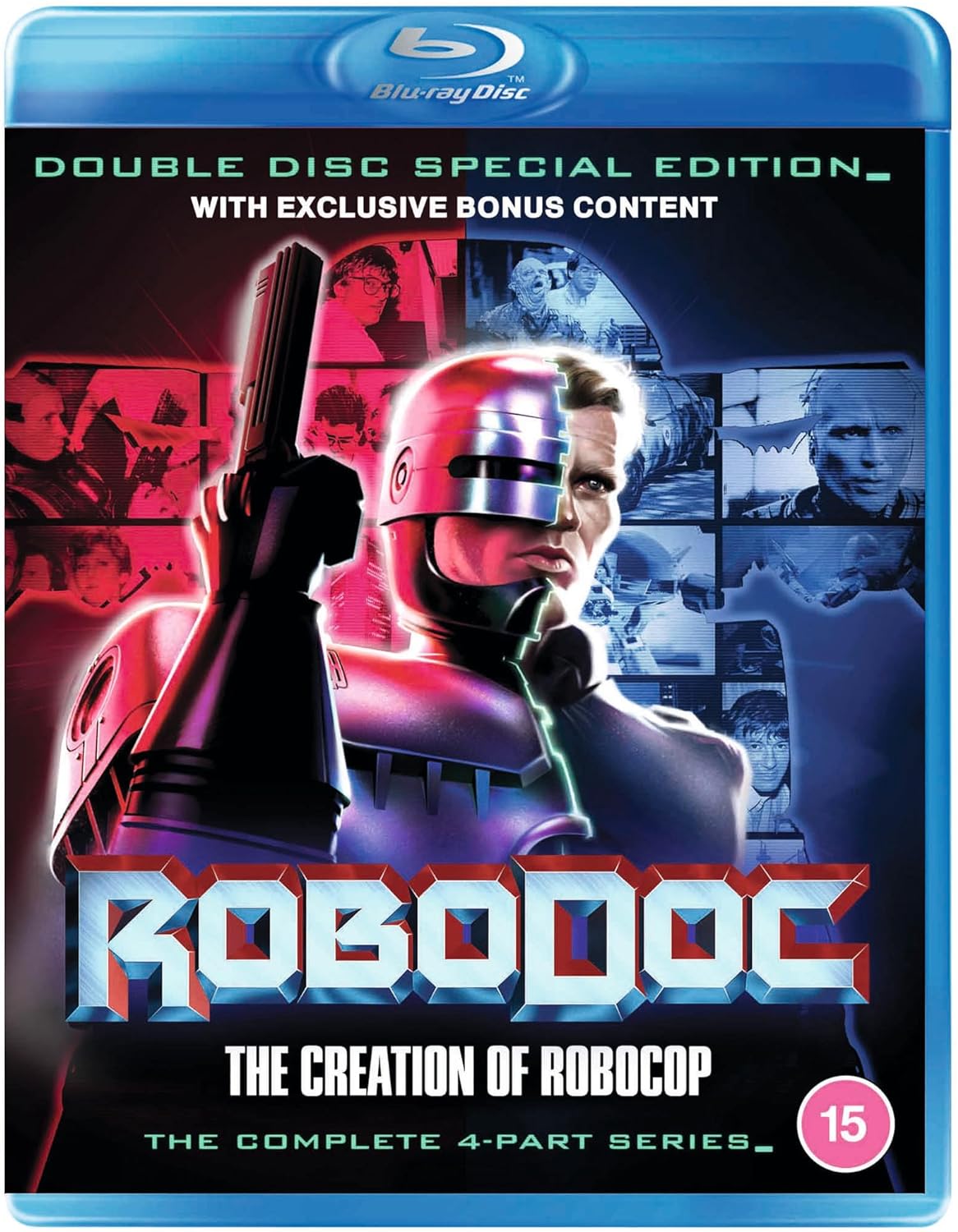
With the release on Blu-ray and digital of Hollywood Dreams & Nightmares: The Robert Englund Story and RoboDoc – The Creation of RoboCop, we have a special bundle with a copy of each to give away to two lucky STARBURST fans! Just read on and enter below…

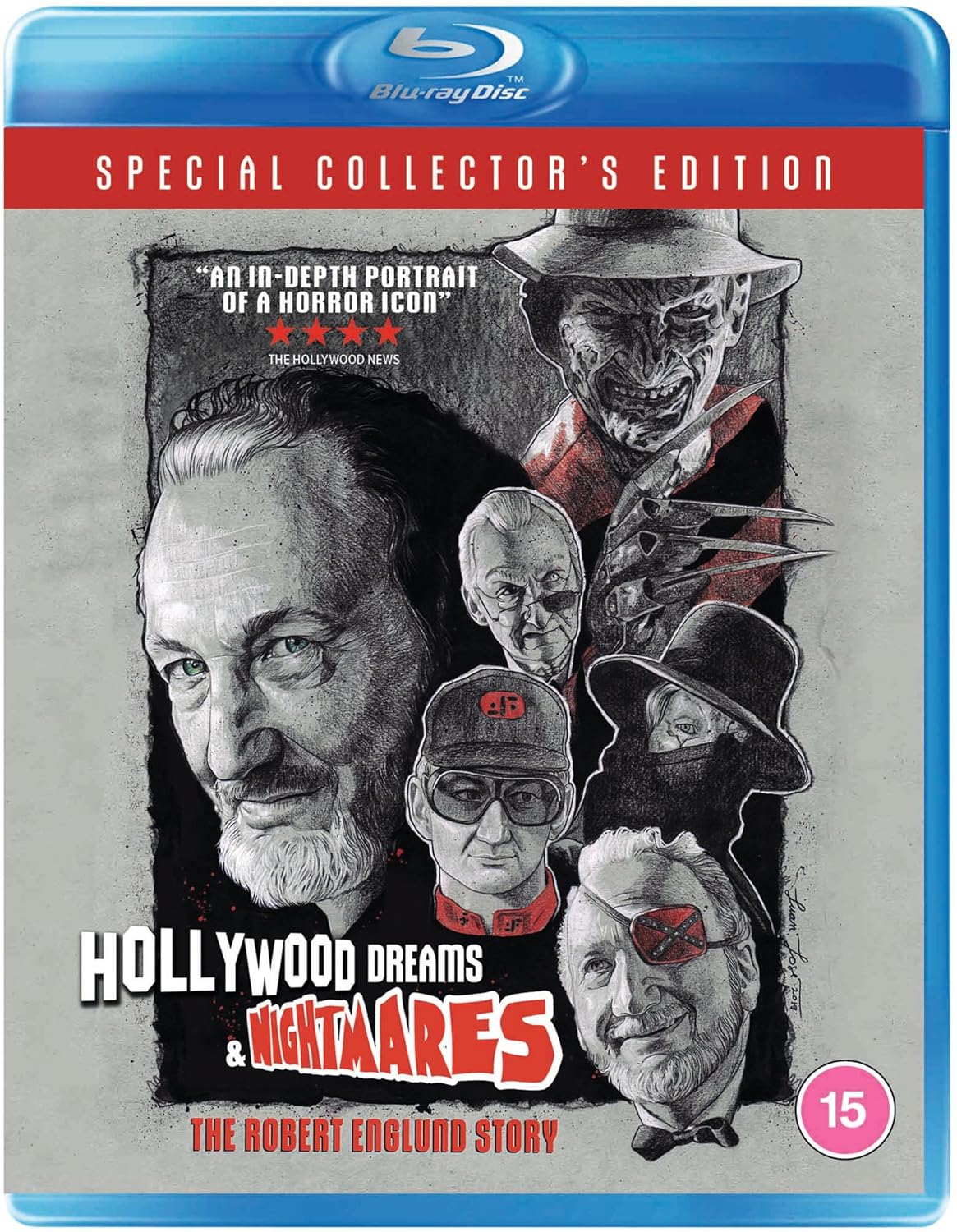
Hollywood Dreams & Nightmares – The Robert Englund Story is out now on Blu-ray and digital download, and celebrates the legacy and career of one our generation’s most beloved horror icons, the legendary Robert Englund.

Shooting to super-stardom with his revolutionary portrayal of Freddy Krueger in the Nightmare On Elm Street franchise – a moment without doubt as visceral to the horror genre as Chaney’s werewolf or Karloff’s ground-breaking realisation of Frankenstein’s monster – Englund has firmly earned his place in the pantheon of horror movie legends.

The documentary features a host of horror icons including Robert Englund himself, as well as Heather Langenkamp, Eli Roth (Hostel), Lance Henriksen (Aliens), Lin Shaye (Insidious), Tony Todd (Candyman), and Miko Hughes (Pet Sematary). With further exclusive interviews with many of the star’s co-workers from projects including Urban Legend, 2001 Maniacs, 976-EVIL, Behind the Mask: The Rise of Leslie Vernon, Wishmaster, V, Dead and Buried, Phantom of the Opera, and, of course, the Nightmare on Elm Street movies, this unique and captivating portrait captures the full story of the man behind the glove, exploring not only his most iconic role but the depths of England’s true power as a character actor in the years since Freddy’s cinematic birth.

The Special Collector’s Edition Blu-ray includes the following bonus features:

Horror Icons

Nightmare Café with Jack Coleman

A Conversation with the Directors

Robert Englund: Chatterbox

A Peek Behind the Curtain: Dance Macabre

Also included: x4 UK-exclusive art cards

Special Collector’s Edition Reversible Sleeve

RoboDoc – The Creation of RoboCop is released on Blu-ray on December 18th and digital on January 1st. It’s the definitive RoboCop documentary has landed! A 4-part limited series spanning nearly 5 hours, get ready to deep-dive into the making of the seminal ‘80s sci-fi sensation, a film that pushed boundaries and inspired a whole generation.

Featuring brand new interviews with BAFTA-nominated RoboCop director Paul Verhoeven, plus a host of stars from the original movie including Peter Weller, Nancy Allen, Ray Wise, Kurtwood Smith, and Ronny Cox, and complete with exclusive behind-the-scenes materials, this comprehensive new take on the story from the makers of Pennywise: The Story of IT offers something completely unique to the ‘making of’ format, fully immersing viewers into the world of ‘80s filmmaking.

The complete series is set across two discs, with the Special Edition Blu-ray featuring a further fantastic 60 mins of RoboCop bonus content and limited edition UK-exclusive A4 poster and x4 art cards!

BONUS MATERIAL:

Meet the Makers

Major Firepower

Robo Cast Quotes

Art of the Steel

Call To Action

Guns Guns Guns

Part Gan Part Machine All Video Game

Roboteam Assemble

LIMITED EDITION A4 poster and x4 art cards


a Rafflecopter giveaway

Hollywood Dreams & Nightmares: The Robert Englund Story is out now on Blu-ray and digital download. RoboDoc – The Creation of RoboCop is released on Blu-ray on December 18th and digital on January 1st.


[ENDED] Win EVANGELION:3.0+1.11 THRICE UPON A TIME Blu-ray SteelBook

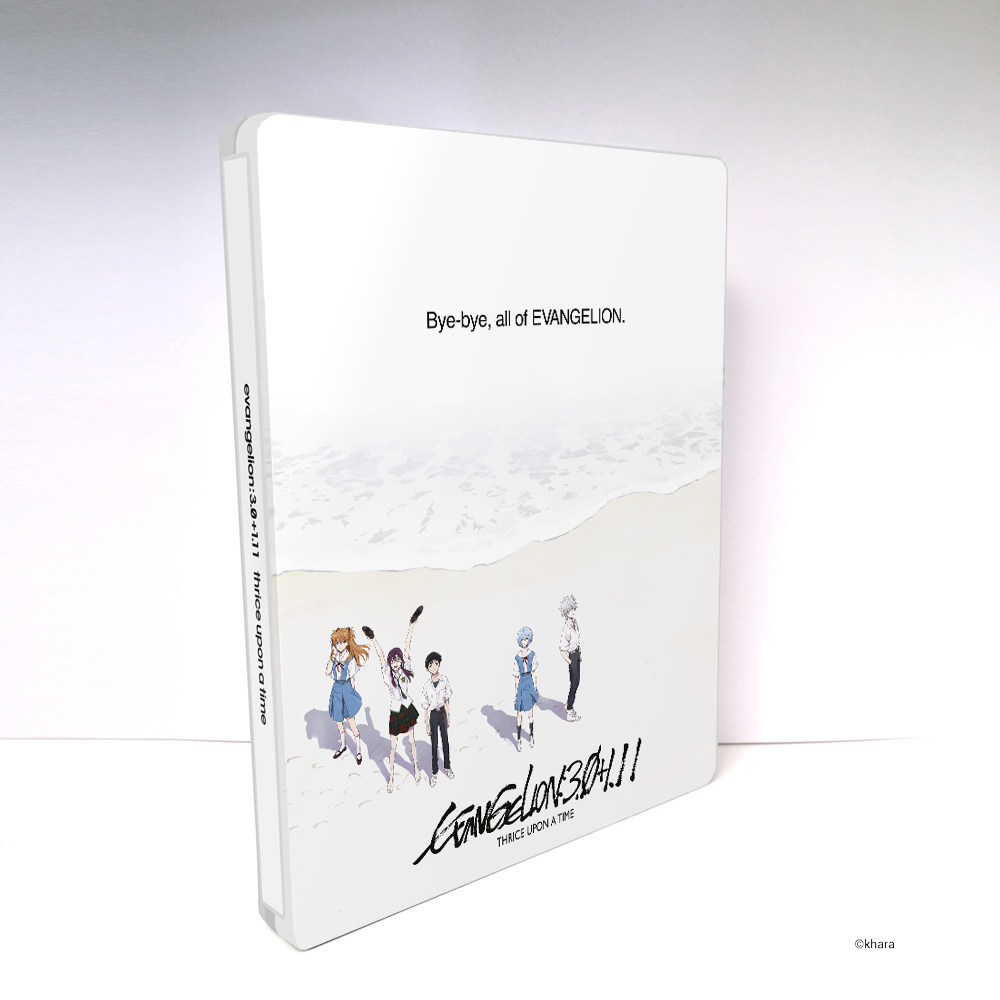
Anime Limited releases Evangelion:3.0+1.11 Thrice Upon A Time on November 20th, and we have a copy of the Blu-ray SteelBook to give away to one lucky reader! Just read on and enter below…

The fourth and final film in director Hideaki Anno’s REBUILD OF EVANGELION film series that re-imagines his ground-breaking television series, EVANGELION:3.0+1.11 THRICE UPON A TIME combines the visually striking action and emotionally intelligent characters that made the series such a landmark moment in anime history and a pop-culture juggernaut, to bring the saga to a breathtakingly epic yet intimate conclusion.

Synopsis:

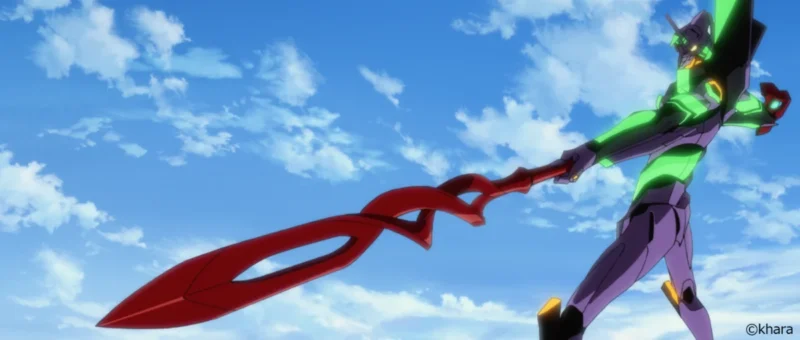
Misato and her anti-NERV group Wille arrive at Paris, a city now red from core-ization. Crew from the flagship Wunder land on a containment tower. They only have 720 seconds to restore the city. When a horde of NERV Evas appear, Mari’s improved Eva Unit 8 must intercept. Meanwhile, Shinji, Asuka, and Rei (Provisional Name) wander about Japan.

a Rafflecopter giveaway

EVANGELION:3.0+1.11 THRICE UPON A TIME will be released on DVD, Blu-ray, Steelbook Blu-ray, and AllTheAnime.com exclusive 4K UHD & Blu-ray Deluxe edition.


THE TELEPHEMERA YEARS: 2002, part 3

Matthew Blackheart, 2002

Ah, telephemera… those shows whose stay with us was tantalisingly brief, snatched away before their time, and sometimes with good cause. They hit the schedules alongside established shows, hoping for a long run, but it’s not always to be, and for every Street Hawk there’s two Manimals. But here at STARBURST we celebrate their existence and mourn their departure, drilling down into the new season’s entertainment with equal opportunities square eyes… these are The Telephemera Years!

2002-03

If you can take anything away from a glance at the top rating shows from the year’s Fall TV season in the US, it’s that America loved crime that year. And football, of course, along with reality shows and the ever-present “Must See TV” Thursday night NBC juggernaut of Friends, Scrubs, Will & Grace, Frasier, and ER. CSI: Crime Scene Investigation ruled the roost, drawing almost 20% more viewers than second-place Friends, while CSI: Miami, Law & Order, Law & Order: SVU, Law & Order: Criminal Intent, and Without a Trace all taking minor places.

It was a rough year for genre TV, with Touched by an Angel, Futurama, Farscape, Sabrina the Teenage Witch, and Buffy the Vampire Slayer all airing their final seasons, but surely Joss Whedon’s new show Firefly would more than make up for those losses and enjoy a long run? The wonderful Oz finished its run on HBO and was replaced by a little show named The Wire, but what of those concepts that didn’t even make it to series? This is the story of 2002’s unsold pilots…

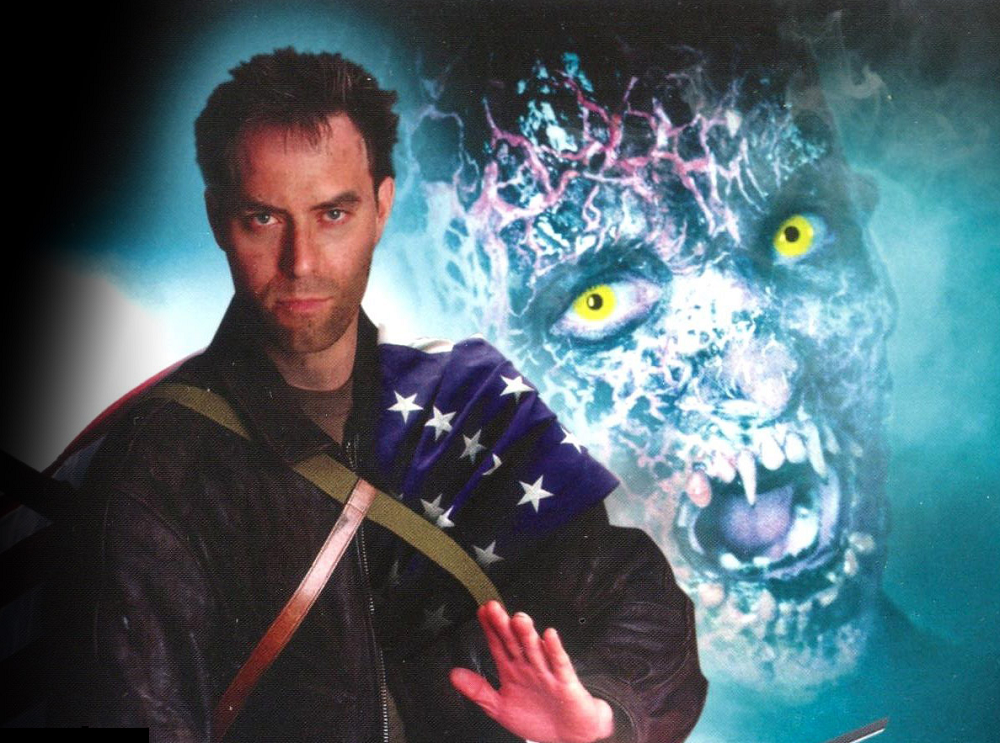
Matthew Blackheart: Monster Smasher (Sci-Fi): Robert Engels was part of David Lynch’s production team for Twin Peaks and On the Air, and scripted Twin Peaks: Fire Walk With Me alongside the director and Mark Frost. In 1993, he shepherded seaQuest DSV to air with Rockne S O’Bannon and was also instrumental in the development of Gene Roddenberry’s Andromeda series. Not everything Engels touched turned to gold, however, and Matthew Blackheart: Monster Smasher can be firmly placed in the miss column.

Matthew Blackheart, 2002

Starring Robert Bogue – who had appeared in various soaps and had a spell in prison drama Oz – as the titular hero, Monster Smasher told the story of a World War Two veteran long since presumed dead who returns in the modern day to combat the monsters (as in, literal monsters in disguise) who have taken over New York City.

A pilot, scripted by Engels and three other writes, aired on Sci-Fi as a movie on February 19th 2002 with hopes that a strong reception would lead to a series but the reaction to Monster Smasher was, at best, mixed. While some praised its tongue in cheek humour and excellent special effects, there was equal emphasis placed on the hammy dialogue and inconsistent performances, especially from Bogue who appeared to channelling Bruce Campbell in the Evil Dead movies. You can judge for yourself on YouTube.

Zero Effect (NBC): What if you rewrote Sherlock Holmes for the edgy nineties, cast Bill Pullman in the role (renamed Daryl Zero), recruited Ben Stiller and Ryan O’Neal as back-up, and released it as a movie that only earned back $2 million of its $5 million budget? If you did all that, your name is Jake Kasdan and, although you would go on to direct Orange County, Sex Tape, and the Jumanji sequels, your directorial career hasn’t gotten off to the best start.

Zero Effect, 2002

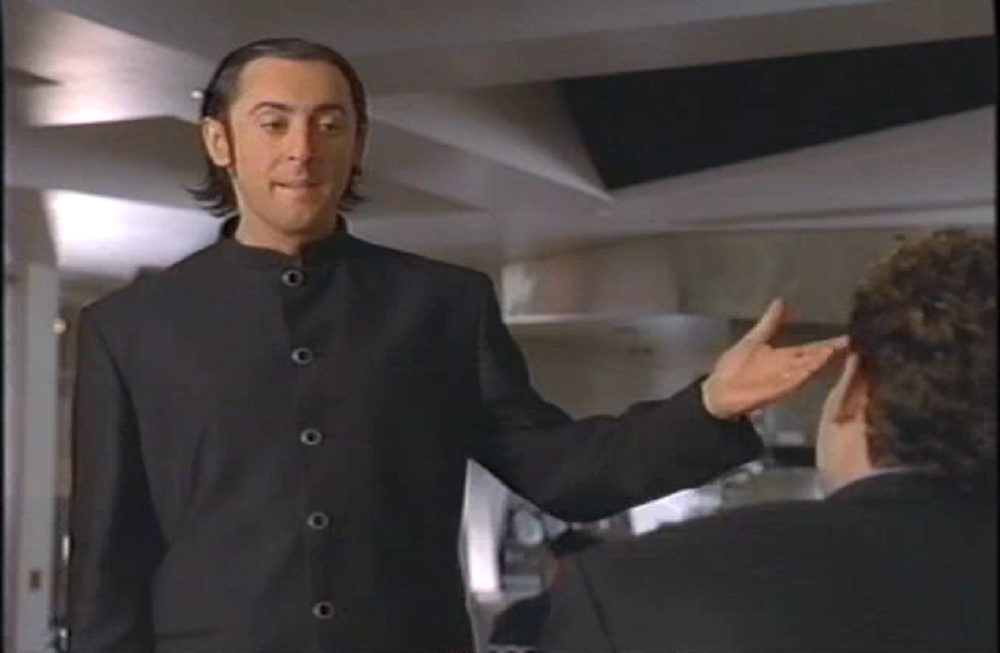
That was 1998, though, and fresh off the success of Orange County, Kasdan made another attempt to bring Zero Effect to life, this time as a pilot for a TV series for NBC. Enlisting scriptwriter Walon Green (who wrote The Wild Bunch and RoboCop 2 in a very varied career) to polish up the basic story, Kasdan brought in Alan Cumming for a fresh take on Daryl Zero, the world’s most private detective.

Intended to act as a prequel to the original movie, the NBC pilot told the story of Zero’s early days in the gumshoe game, with the series that followed filling in the gaps between the two. Unfortunately, the network didn’t take to Cumming’s portrayal of the manic sleuth, nor his partnership with David Julian Hirsh as the Watson stand-in, Arlo, and declined to pick up the series.

Welcome to Eltingville (Cartoon Network): For fans of early 1990s alternative comics, Evan Dorkin’s Milk and Cheese was a delight, an anarchic mix of humour and violence committed by anthropomorphic dairy products gone bad. Dorkin’s imagination couldn’t be contained by Milk and Cheese alone, though, and Dork (published by Slave Labor Graphics) contained a myriad of other characters, including the Murder Family, Phil the Disco Skinhead, and the Eltingville Comic Book, Science-Fiction, Fantasy, Horror, and Role-Playing Club.

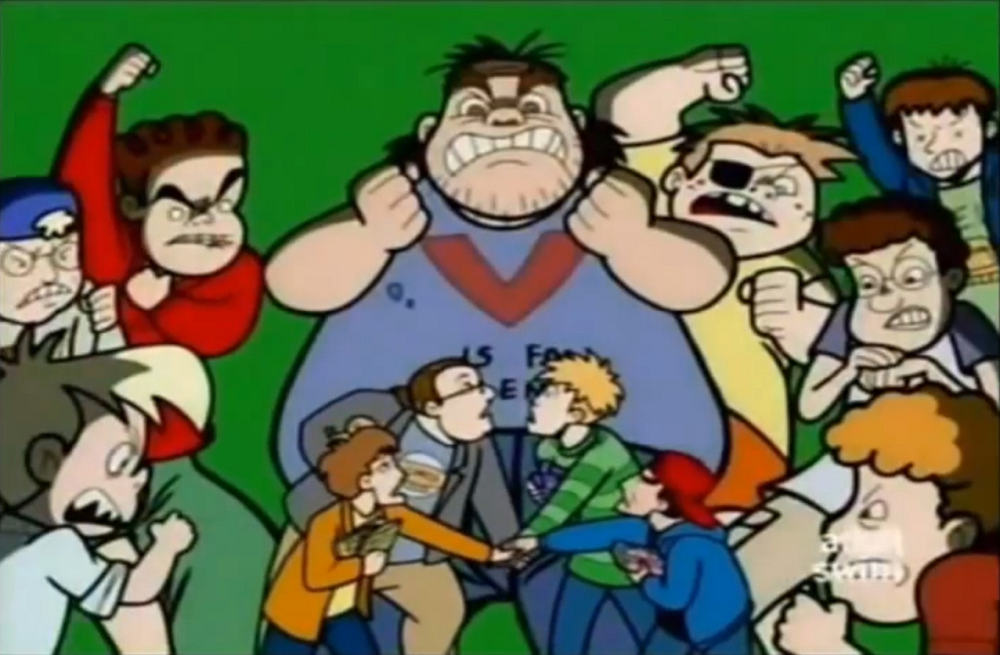
Welcome to Eltingville, 2002

This last one featured the “adventures” of a group of misanthropic nerds as they negotiated the traps and pitfalls of teenage life and the obsessive collecting that marks their tribe. Dorkin moved into TV work in the mid-nineties, becoming part of the team that produced Space Ghost: Coast to Coast for Cartoon Network, and succeeded in selling that network on a pilot for his Eltingville tales. Renamed Welcome to Eltingville, the twenty-two-minute short was based on one of the early Eltingville strips, “Bring Me the Head of Boba Fett,” the story of a fierce battle over a rare Star Wars action figure.

The pilot was animated in Japan by Tama Production, and featured the voice talents of Jason Harris, Troy Metcalf, Larc Spies, and Corey Brill. It was well-received by critics and aired as a special in the late-night [adult swim] block of programming in March 2002, alongside Space Ghost and the slew of anime that the block was famous for. Sadly, Welcome to Eltingville was not picked up for series and the world was deprived of further geek chaos, although you can buy a collection of the original strips from Dark Horse Comics.

Lost In Oz (The WB): Best known at the time for his script for the first ­X-Men (and since for X-Men 2 and Watchmen), David Hayter had been shopping around his Lost in Oz script for some time before The WB picked it up as a pilot in 2002. Several minor changes were made to Hayter’s script but otherwise it survived intact, with former Home and Away star Melissa George cast as Alexandra Wilder, an ordinary girl who finds herself in an Oz that has gone very, very dark after Dorothy Gale returned home.

Lost in Oz, 2002

Filmed in George’s native Australia, the pilot saw Alex team with Caleb, a former World War Two pilot transported to Oz played by Colin Egglesfield, to lead a rebellion against Mia Sara’s wicked witch Loriellidere. Aiding them are good witch Bellaridere and Selina the Patchwork Girl, put together after being torn apart by Loriellidere’s flying monkeys.

The WB initially passed on taking the pilot to series but recanted a year later. However, in the intervening period, George had moved to the US and landed a role on Alias, meaning she was unable to film the subsequent series in Australia. Without her, The WB again lost interest in the project. Interestingly, an animated show named Lost in Oz did eventually appear on Amazon Prime in 2017, featuring Dorothy Gale’s great granddaughter exploring the magical world with the great, great granddaughter of the original wicked witch.

Young Arthur (NBC): The story of King Arthur is an irresistible one, with all the right ingredients for a steamy TV or film drama, not least of which is a huge dollop of tragedy and romance. Even better, and similar to Robin Hood, the origins of the legend are so lost in the mists of history that it is entirely public domain. That might explain why there have been so many attempts to bring the legend to our screens, one of which almost made it to series in 2002 as Young Arthur.

Young Arthur, 2002

Taking inspiration from 2001’s A Knight’s Tale and Smallville, two very different treatments of the classic hero’s journey arc, Young Arthur was NBC’s attempt to mix the two into a new whole, devised by 24 showrunner Remi Aubuchon and Speed scripter Graham Yost. Set firmly, as the title would suggest, in Arthur’s pre-King days, the pilot nonetheless featured Merlin, Lancelot, Morgana, Mordred, and more, all played by hot young things aimed at attracting a youthful audience.

Julian Morris took the title role, dropping out of university to do so, with backing from James Fleet (The Vicar of Dibley), Paul Wesley, and Laura Rees, and veteran cinematographer Mikael Salomon in the director’s chair. It was all for nothing as NBC passed on the pilot, not even giving it a cursory airing as a TV movie, and it remains unseen to this day.

Time Tunnel (Fox): With Dark Angel and The X-Files marking them out as one of network TV’s main homes for genre TV, Fox looked to expand its line-up by sending a pair of shows to pilot, aiming to debut them in the Fall 2002 season. One of them was based on The Time Tunnel, the 1966 Irwin Allen closed-loop time travel series, and the pilot was made in association with Irwin Allen Properties.

Time Tunnel, 2002

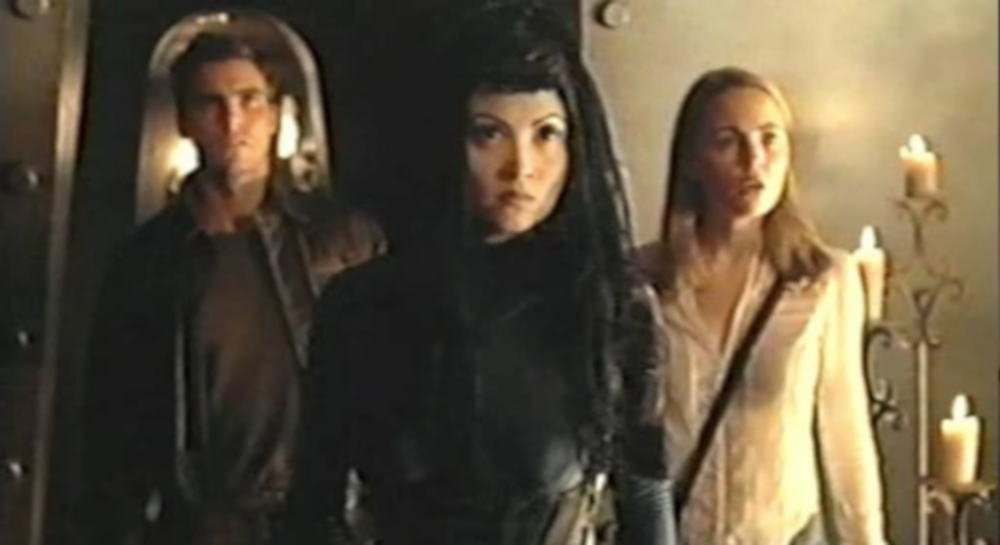
Much darker in tone than the original show, Fox’s Time Tunnel focussed on team led by David Conrad’s Doug Phillips, charged by the US Government with putting right the effects of a time storm initiated by a Department of Energy experiment gone wrong. In the pilot, Phillips’s team – which also includes Andrea Roth, Dion Luther, and Tawny Cypress – are sent back to World War Two to retrieve a man from 1546, stranded there as a result of the time storm. They succeed but their interactions in the past cause time to be changed on their arrival home…

Despite an intriguing twist on the original premise, Fox opted not to take Time Tunnel to series, instead focussing all its attentions on the other show it had taken to pilot. That show – Firefly – no doubt enjoyed a long and successful run over many years. Four years later, Sci-Fi ordered a second go-round with the treatment, but it never got further than a script. The 2002 pilot was included a DVD release of the original series from Fox Home Entertainment in 2011.

Next time on The Telephemera Years: The kids are alright and they’re really into fighting…

Check out our other Telephemera articles:

The Telephemera Years: pre-1965 (part 1, 2, 3, 4)

The Telephemera Years: 1966 (part 1, 2, 3, 4)

The Telephemera Years: 1967 (part 1, 2, 3, 4)

The Telephemera Years: 1968 (part 1, 2, 3, 4)

The Telephemera Years: 1969 (part 1, 2, 3, 4)

The Telephemera Years: 1971 (part 1, 2, 3, 4)

The Telephemera Years: 1973 (part 1, 2, 3, 4)

The Telephemera Years: 1974 (part 1, 2, 3, 4, 5)

The Telephemera Years: 1975 (part 1, 2, 3, 4)

The Telephemera Years: 1977 (part 1, 2, 3, 4)

The Telephemera Years: 1978 (part 1, 2, 3, 4)

The Telephemera Years: 1980 (part 12, 3, 4)

The Telephemera Years: 1982 (part 1, 2, 3, 4)

The Telephemera Years: 1983 (part 1, 2, 3, 4)

The Telephemera Years: 1984 (part 1, 2, 3, 4)

The Telephemera Years: 1986 (part 1, 2, 3, 4)

The Telephemera Years: 1987 (part 1, 2, 3, 4)

The Telephemera Years: 1989 (part 1, 2, 3, 4)

The Telephemera Years: 1990 (part 1, 2, 3, 4)

The Telephemera Years: 1992 (part 1, 2, 3, 4)

The Telephemera Years: 1995 (part 12, 3, 4)

The Telephemera Years: 1997 (part 1, 2, 3, 4)

The Telephemera Years: 1998 (part 1, 2, 3, 4)

The Telephemera Years: 2000 (part 1, 2, 3, 4)

The Telephemera Years: 2002 (part 1, 2)

The Telephemera Years: 2003 (part 1, 2, 3, 4)

The Telephemera Years: 2005 (part 1, 2, 3, 4)

The Telephemera Years: 2006 (part 1, 2, 3, 4)

The Telephemera Years: 2008 (part 1, 23, 4)

Titans of Telephemera: Irwin Allen

Titans of Telephemera: Stephen J Cannell (part 1, 2, 3, 4)

Titans of Telephemera: DIC (part 1, 2)

Titans of Telephemera: Hanna-Barbera (part 1, 2, 3, 4, 5)

Titans of Telephemera: Kenneth Johnson

Titans of Telephemera: Sid & Marty Krofft

Titans of Telephemera: Glen A Larson (part 1, 2, 3, 4)
Titans of Telephemera: Quinn Martin (part 1, 2)

Titans of Telephemera: Ruby-Spears