Emma Vieceli | BREAKS

Emma Vieceli is a highly talented and critically acclaimed British comic book artist, and writer.  Her work includes BREAKS, Vampire Academy, and Life Is Strange. We caught up with her to learn more about the new edition of BREAKS.

STARBURST: How would you pitch BREAKS to someone who’s only just discovered comic books via Heartstopper?

Emma Vieceli: Firstly, I’d tell that person, Welcome to comics! It’s a big and exciting world of stories, and you chose a great way in.’

For BREAKS, specifically… hmmm. If you’ve been enjoying Heartstopper and are perhaps also keen on reading something sitting a little older and a little darker, BREAKS is a good choice! Whilst still a love story at its core, BREAKS is also a mystery. The characters have their burdens to bear, fears to conquer and choices to make, but they’re discovering themselves alongside a twisting, woven story as they slowly unravel the mystery that connects their families. At times brutal, at times raw, the action is emotionally driven and emotionally complicated. Recommended for older YA readers and beyond, especially as we get into book two in June, I’d say it’s a layered story that moves beyond being pure romance and turns up the drama dial.

BREAKS has been around since 2014; what advice would you have loved to have given yourself back then?

Oh, younger me: Trust that you’re not wrong. This sort of story will find an audience. They’re out there. The time will come when people talk excitedly about LGBT comics and love stories and will watch them adapted on TV and will find it hard to fathom that it was such a struggle when you started. You’ll work hard and give over a decade to making sure this story gets told and seen, but you’ll be so proud when it is. Not rich. But proud. And, by the end of that decade, trust that the world will have changed a lot. 

 Also, maybe work in black and white and save yourself the trouble of having to convert the whole series down the line? 

Why do we keep falling for enemies to lovers stories?

Gawd, I don’t know, but there’s just something delicious about that thin line between love and hate, where emotions are turned up to eleven and can suddenly morph into a new form. In Ian and Cortland’s case, while we don’t get to see a lot of it before the story kicks in, we can assume that the entire rivalry was based on what was so obviously lurking beneath the surface. Tension is a powerful thing. 

If you could sit one of the characters from the books down and have a word with them, who would it be, and what would you say?

Oh blimey. They could all use a few words. Except Amilah, maybe. That girl has it all worked out, and I could use her sitting down to give me a few words. But yes, only one of them? Gah. I mean…I guess I’ll have to go for Cortland. Because, for all his faults, Ian sort of tunes into himself a little faster than Cortland does in some ways. 

Look, Cort… I know you seem to think that the world rests on your shoulders and that your mistakes are worse than anyone else’s mistakes, but look around you. Everyone makes mistakes. Closing yourself off from people who actually seem to care about you is not the path to making anything better. You are not your anger; not everyone is out to get you, and leaning into feeling good sometimes doesn’t make you a bad person. And hell, sometimes you’re allowed to be angry. It’s what you do with it that matters. You are on the road to recovery, even if you don’t realise it yet. And that tall ginger goof over there… yeah, he’s going to matter quite a lot. He’s going to make a few mistakes of his own, but try not to punish him too much for those. He’s on his own road, but you’re both heading to the same destination.

Why is life so difficult for the characters in BREAKS?

A big theme of BREAKS is about living with legacy. Living in the shadow of what has come before and walking the path you’ve been placed on. All of the young adults in this story are in some way emerging from the past (aren’t we all, in some ways): from having divorced parents or growing up an immigrant to coping with family loss or coming to terms with their own worst actions…it’s why their ambitions, passions, and their ability to find and accept love become so worth celebrating. 

How different is creating something like BREAKS compared to Hamlet or Life is Strange?

From Hamlet – immensely! I was working on a ‘very’ known story with an adapter. It was all about how to best illustrate the script and bring out the full meaning of the words. 

From Life is Strange – actually, not all that different! Aside from the fact that obviously, I didn’t draw Life is Strange – a big shout out to Claudia Leonardi, who is wonderful! But the themes and emotions in Life is Stange often overlap with what Malin [Rydén] and I had been doing for years with BREAKS. Emotionally, for me, the comics sit in a similar place. Self-discovery. Courage. Accepting past mistakes and learning to live with who they make you. Process-wise, of course, it’s different. I was the writer of a licensed title on LiS – and paid, to boot! – whereas with BREAKS, Malin and I co-wrote the story, each bringing our own characters to the table. Then she did the first pass of the scripts, and I would come in to edit those and move on to creating pages. Sometimes, I’d add scenes; sometimes, she would. It was a fluid process and very much our own. And done in our own time. So, I have a lot more ownership over BREAKS. It’s our baby. But yeah, those emotional beats aren’t all that far apart.

What other projects would you like to work on? 

It’s getting harder to answer this as I get older, you know? Partly because I have been lucky enough to work on some of my favourite characters and worlds over the years – Jem/Back to the Future/LiS/Nightwing, etc – but also because our priorities shift. I’ve still never gotten my hands on Gambit, but beyond that, I like being surprised by projects these days. I don’t so much crave specific titles anymore. It’s more about the types of stories I want to tell. A mood. And a big dream for me is to tell more of my own stories too! 

What’s next for you?

My next big personal story is called Gods & Graces, and I’m so excited to tell it. It’s going to be a hell of a ride. As it’s me, you can imagine it has similar themes and emotional checkpoints to BREAKS, LiS and the rest… because complicated human emotion and moral dilemma is what I do… but this time, it’s also a historical fantasy fiction. 18th century, so glorious fashion, of course. Set twenty years before the French Revolution proper; it’s part celebration of the birth of queer culture in London’s molly house scene and part epic fantasy as mortals race to become gods… I’m excited! There’s already a subscription button for it up on Tapas, and I’m hoping to launch it there this year. 

I’ll also be working on more illustrations for the amazing Juno Dawson, who continues to grow her powerful world of powerful witches. I’m so happy to be a part of it! And I’ll be teaming up again later in the year with friend and multiple-time collaborator Paul Cornell, this time with added Lizbeth Myles joining him on writing duty. We’ll be creating a four-part original story for Magma Comix, and it’s going to be something to really…get your teeth into.

Beyond comics, I’m also – um – writing a musical. So, let it never be said I’m not up for a challenge.

Dragons or Drag Queens?

Do I have to choose?? Can’t the drag queens be riding dragons??

Pop Music or Opera?

Something between the two. I’m a musical theatre baby, after all. 

Vampires or Werewolves?

Vampires. That one’s easy for me.

Truth or Beauty?

There is beauty in the truth, and truth can cast beauty.

BREAKS is out now.


THE TELEPHEMERA YEARS: 1999, part 2

Cleopatra 2525, 1999-2000

Ah, telephemera… those shows whose stay with us was tantalisingly brief, snatched away before their time, and sometimes with good cause. They hit the schedules alongside established shows, hoping for a long run, but it’s not always to be, and for every Street Hawk there’s two Manimals. But here at STARBURST we celebrate their existence and mourn their departure, drilling down into the new season’s entertainment with equal opportunities square eyes… these are The Telephemera Years!

1999-2000

As US TV moved into the twenty-first century, the schedule was full of comings and goings. Sure, old reliables like ER, Friends, Frasier, and Touched by an Angel could be relied upon to bring in millions of viewers for NBC and CBS, but everyone was talking about the new kids on the block. ABC took the top three slots in the ratings with the thrice-weekly Who Wants to Be a Millionaire?, while CBS jumped into the reality market with two feet, debuting both Big Brother and Survivor to an America hungry for average Joes. Also arriving on the network schedules was Judging Amy, Malcolm in the Middle, Law & Order: SVU, and The West Wing, while HBO debuted The Sopranos.

For genre fans, Buffy spin-off Angel premiered on The WB, as did UFO drama Roswell, and Relic Hunter, The Lost World, and Beastmaster are began syndicated runs. This made up for the loss of Sliders and Poltergeist: The Legacy, both of which were entering their final seasons, along with Boy Meets World, Chicago Hope, Beverly Hills 90210, Party of Five, and Veronica’s Closet. Many of these new shows became institutions in their own rights, but what about the 1999 debuts that failed to stick their landing? This is the story of five more shows taken before their time…

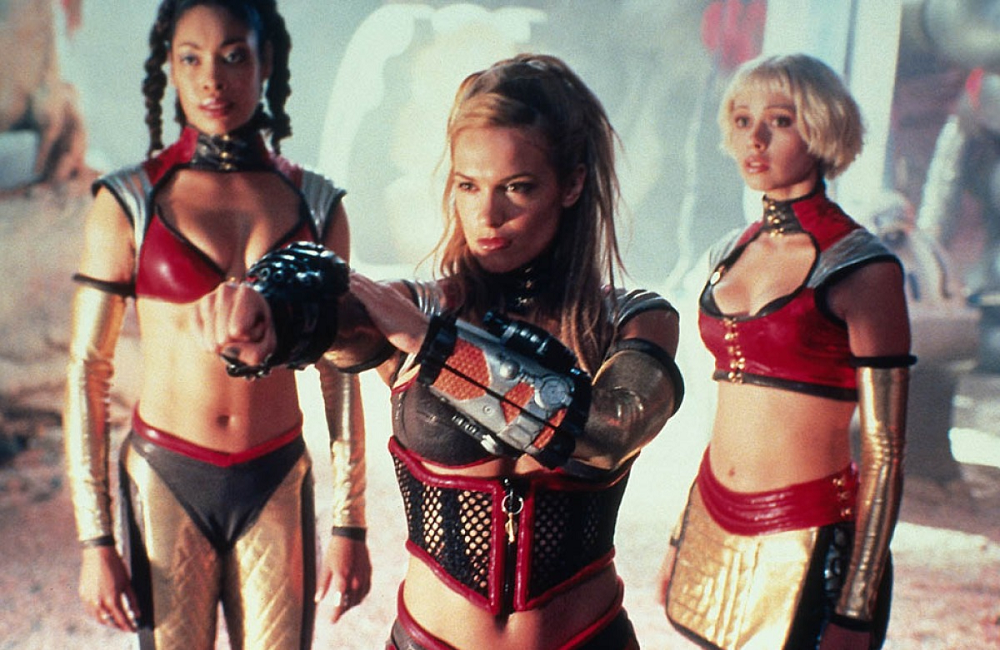
Cleopatra 2525 (syndication): There are two ways you can go when you’ve enjoyed a monster hit as the co-creators of Xena: Warrior Princess; strike out and do something different or stick with what you know. In a way, RJ Stewart and Robert G Tapert did both in creating Cleopatra 2525, bringing the same XX flavour but adding a dose of sci-fi to the heroic fantasy they’d peddled before.

Jennifer Sky made one-off appearances in shows such as Buffy the Vampire Slayer and Seaquest DSV before being cast as Amarice, a woman pretending to be an Amazon who found that she embodied their better qualities on Xena. That pretty much secured her the role of Cleo, an exotic dancer who is put into suspended animation when a breast enlargement operation goes awry, only to wake in the year 2525 and find herself thrown into a battle between men and machines.

Cleopatra 2525, 1999-2000

Teamed with Hel (One Life to Live‘s Gina Torres) and Sarge (Victoria Pratt), Cleo becomes one of humanity’s best hopes against The Baileys, armed flying robots that now control Earth. Both Torres and Pratt had guest starred in Xena (with Torres, ironically, playing Cleopatra), with much of the rest of the cast also doing time on the Hercules and Zena shows in New Zealand, where Cleopatra 2525 was also filmed.

Sold to the syndication market, the show enjoyed two seasons of fourteen episodes each, but was cancelled without a proper resolution. It retains a hardcore fanbase to this day, thrilled by the girl-powered action and Cleo’s philosophical musings, all of which were borrowed from twentieth century popular culture but wowed her future pals. Torres and Pratt would go on to appear in Firefly and Mutant X, respectively, earning themselves permanent places on the convention circuit, but this was as food as it got for Sky.

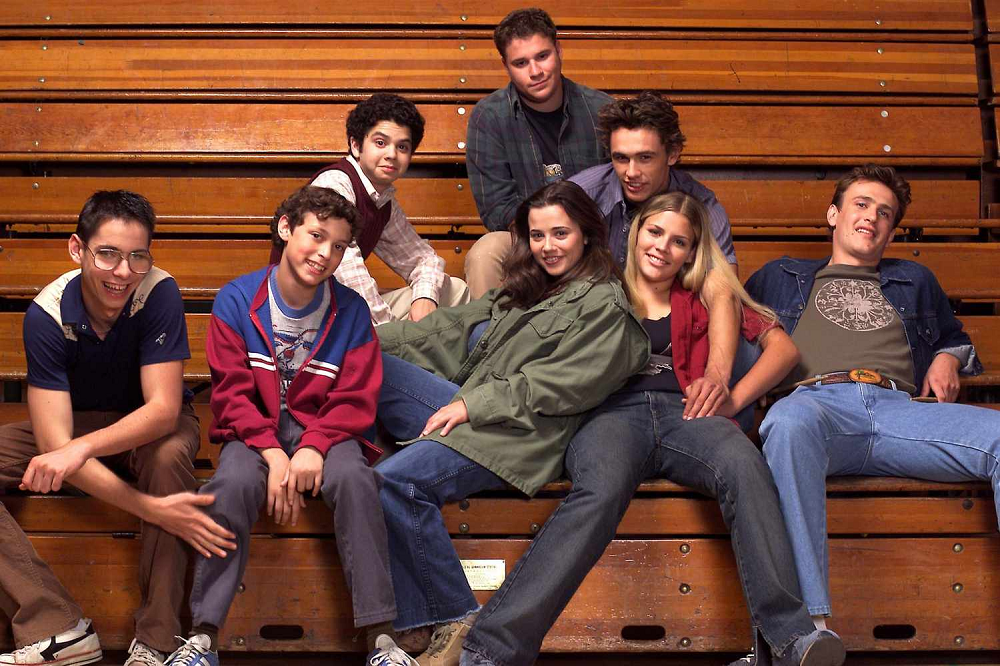
Freaks and Geeks (NBC): Paul Feig was a young stand-up comedian trying to make his way in Hollywood when he landed a role in Heavyweights, a dumb comedy about a group of fat kids terrorising Ben Stiller when he tries to get them to lose weight at Summer Camp. Heavyweights was co-written by Judd Apatow, who’d trodden the same boards as Feig a few years earlier, ending up co-creating The Ben Stiller Show, working on The Larry Sanders Show, and writing for The Critic.

Feig and Apatow became good friends and Apatow helped Feig bring a script to NBC, based on Feig’s upbringing in suburban Detroit in the 1970s (which he would later mine for the books Kick Me and Superstud). Feig’s script showed the mundanity of teenage life, those little things that seem like very big things when your hormones are racing, and was built around Linda Cardellini and John Francis Daley as Lindsay and Sam Weir, an older sister and her younger brother who attend McKinley High School in 1980. Lindsay is a mathlete who falls in with the “wrong” crowd, becoming friends (and more) with burnout Daniel Desario (James Franco) and his crew, played by future Apatow regulars Seth Rogen and Jason Segal.

Freaks and Geeks, 1999-2000

Sam, meanwhile, is enduring life as a high school freshman, his only friends being fellow nerds Neil Schweiber (Samm Levine) and Bill Haverchuck (Martin Starr). Wickedly funny and striking a tone somewhere between the absolute despair and naïve hope of your average teen, Freaks and Geeks was an immediate critical hit, earning a diehard audience and making pin-up stars of Franco and Cardellini.

Unfortunately, because it was up against Who Wants to Be a Millionaire? in the schedules, was often pre-empted, and because NBC seemed to fundamentally disagree with the producers on how the show should progress, just twelve of the eighteen completed episodes were aired. We’re not allowed to have nice things.

Feig had directed a few of the episodes and moved into that field, working on Arrested Development, The Office, Bored to Death, and other “smart” comedies, while Apatow took Rogen and Sequel to quasi-sequel Undeclared, set in a modern-day college environment, and then exploded with The 40-Year Old Virgin. It’s Freak and Geeks, though, that is the gem in both their filmographies, a rare treat of a show that – like the suburban teens it featured – deserved much better than its lot in life.


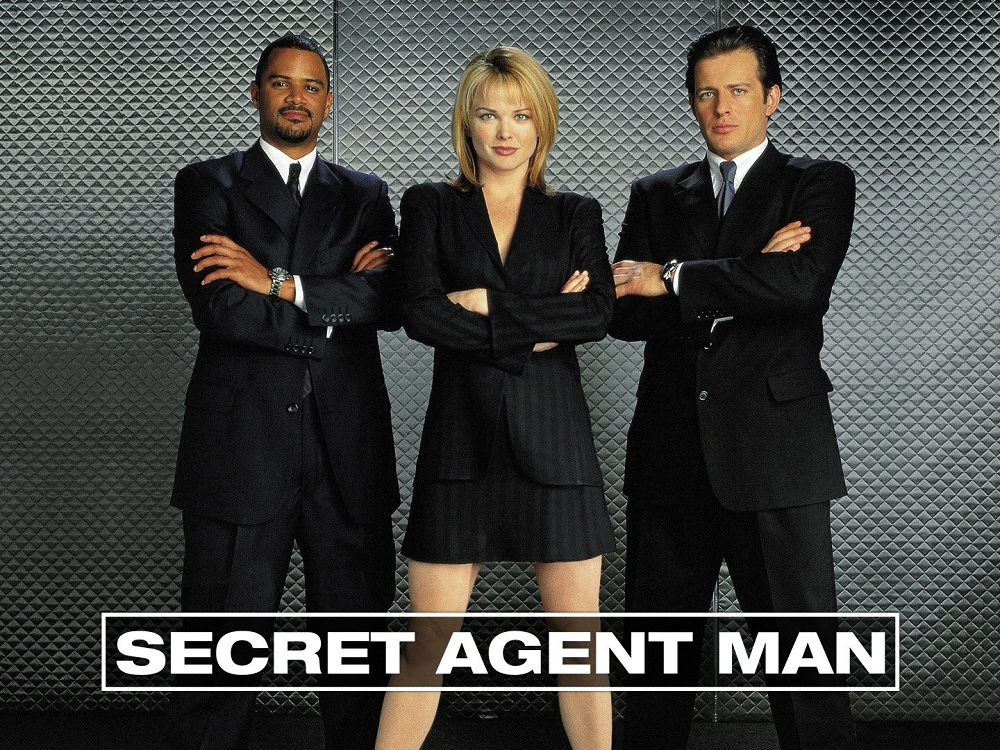
Secret Agent Man (UPN): Two years before Tony Shalhoub brought the quirky Monk to life, another character by that name was one of a pair of spies working for a government agency so secretive that no-one knows what its initials – POISE – stand for. Played by Picket Fences’ Costas Mandylor, the galivanting Monk was joined by Dina Meyer’s Holliday under the direction of Brubeck, facing enemy agents organised by their former colleague Prima.

That all the main characters were named for jazz musicians was no coincidence and the show was named for the Johnny Rivers song which had soundtracked the 1960s show Danger Man, leading some to search for a connection between the two. Secret Agent Man used Rivers’ song as its theme, too, albeit one re-recorded by hip-hop artists Supreme Beings of Leisure.

Secret Agent Man, 1999-2000

The show was supposed to have debuted as part of UPN’s Fall 1999 line-up but was delayed until March to give producers Barry Josephson and Barry Sonnenfeld (who had just directed another offbeat spy production in Wild Wild West) more time to get the special effects right for its premiere. With the benefit of hindsight, they needn’t have bothered since Secret Agent Man was almost universally despised by critics and audiences alike, or worse still ignored.

Tied for 150th out of 153 shows that aired during the 1999-2000 season, there was never any chance of second season for the show, although Sonnenfeld’s cachet did ensure that all thirteen episodes were aired. The whole thing was done much better nine years later with Archer but if you’re interested, there’s a few episodes on YouTube. Maybe just get as far as the theme tune, eh?

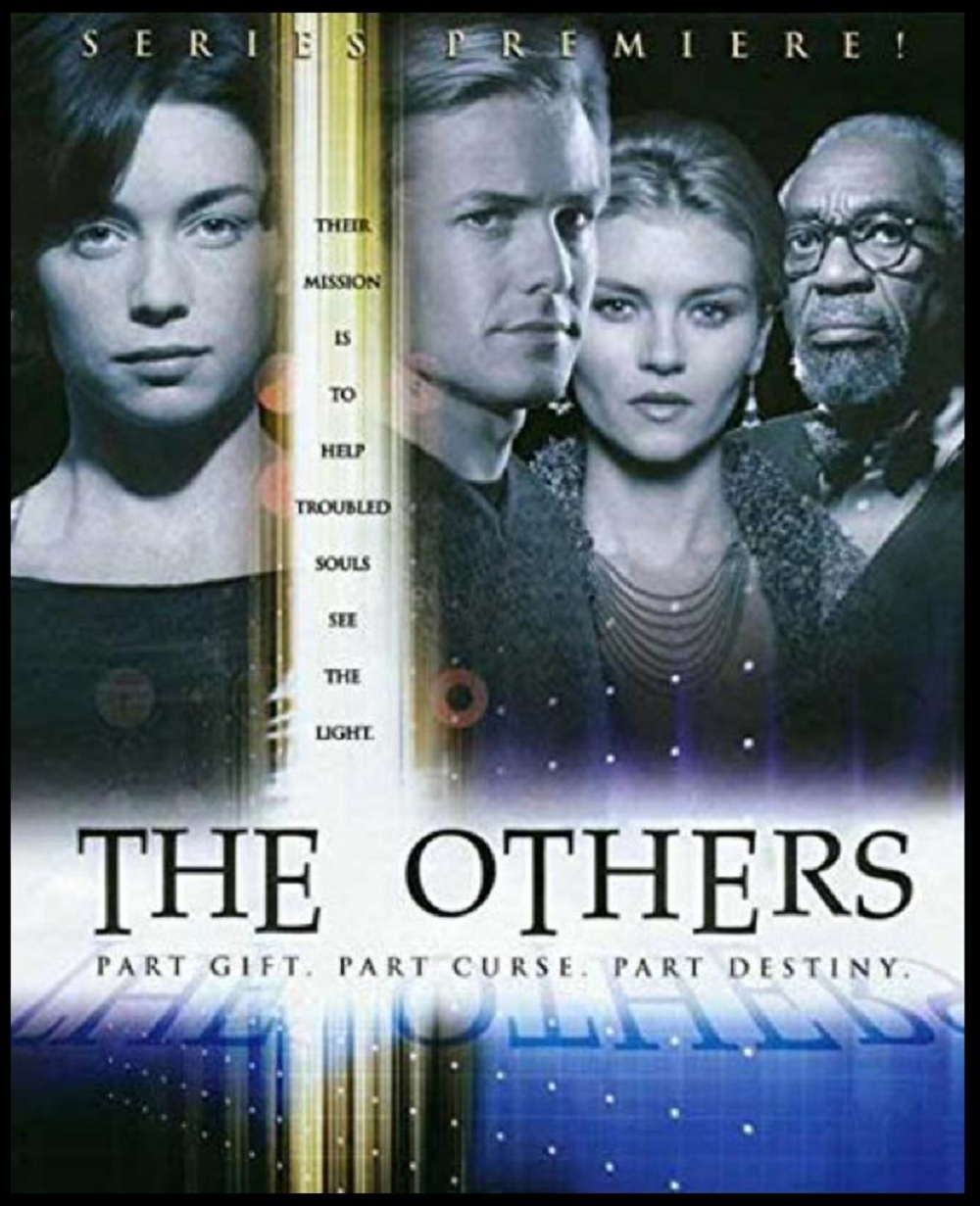
The Others (NBC): Saturday night is not traditionally a big night for TV in the US, and that was certainly the case in 1999. Both ABC and NBC were showing movies, while CBS put out a double-bill of Martial Law and Walker, Texas Ranger to compete with Fox’s twin helping of COPS and America’s Most Wanted. Occasionally, though, networks would use the night to try out new things (or burn off doomed projects), and both could probably be said of The Others, a supernatural ensemble drama created by John Brancato and Michael Ferris.

Brancato and Ferris had enjoyed a pair of minor hits as screenwriters with The Net and The Game, and The Others was their first TV work since an episode of Æon Flux in 1995, produced in association with former X-Files writers Glen Morgan and James Wong for Steven Spielberg’s DreamWorks Television. The story centred on Marian Kitt (rookie actress Julianne Nicholson), a college student who joins a support group for people, like her, with burgeoning paranormal abilities.

The Others, 1999-2000

Nicholson had been handpicked for the role by Steven Spielberg after she’d appeared with the director’s wife Kate Capshaw in The Love Letter a year earlier, and she joined a cast that also included Gabriel Macht, John Billingsley, Missy Crider, and veteran Bill Cobbs, forming a group around Kitt as a sinister threat emerged to target them all.

NBC scheduled The Others alongside the fourth seasons of both The Pretender and Profiler, hoping that the three might build an audience as a block titled “Thrillogy”, but the Saturday crowd just weren’t interested in sufficient enough numbers and all three were cancelled by the end of the year. Nicholson moved onto Ally McBeal, before landing the role of Megan Wheeler on Law & Order: Criminal Intent. Brancato and Ferris abandoned TV went back to the movies, scripting Terminator 3: Rise of the Machines, Terminator Salvation, and the Halle Berry Catwoman disaster. Meanwhile, The Others was used as a title for Alejandro Amenábar’s 2001 ghost story, meaning that if anyone remembers the name, they’re probably thinking of the wrong thing…

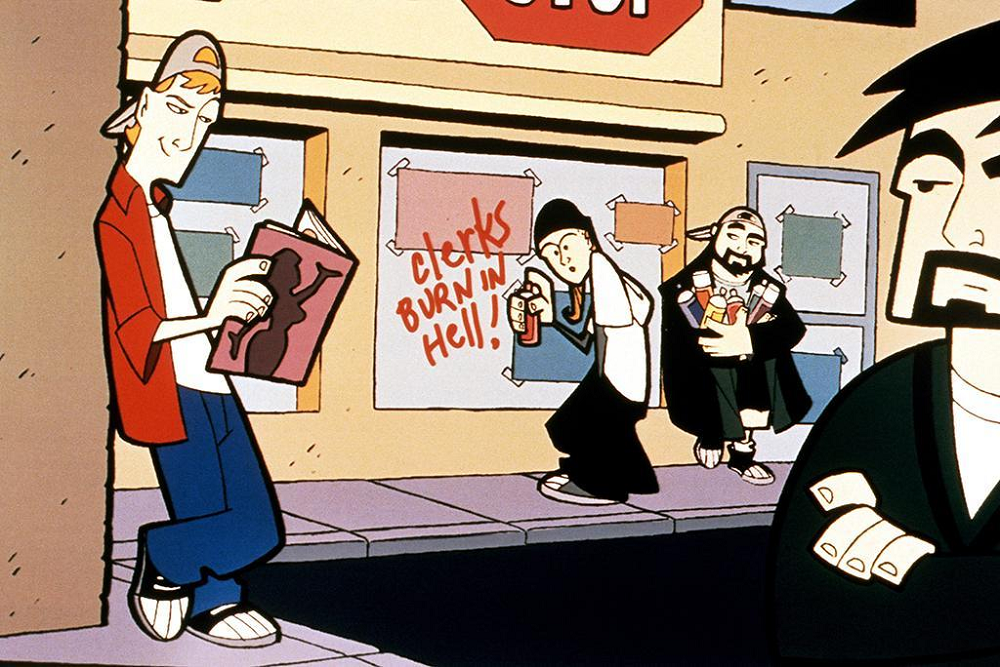
Clerks: The Animated Series (ABC): Kevin Smith famously maxed out several credit cards in order to make Clerks, his 1994 debut feature about the lives of New Jersey shopworkers based on the experiences of he and his friends. Smith followed Clerks with Mallrats and Chasing Amy, but he and producer Scott Mosier had already begun shopping around the idea to continue the escapades of Dante and Randall in animated form, approaching HBO, Fox, The WB, and several others, before finally landing a deal for a thirteen-episode run with UPN.

At the last minute, ABC made a counteroffer for more money and, with industry insiders warning the pair that UPN would be off the air within a year, they took the Alphabet Network’s offer. Clerks: The Animated Series was produced by Smith and Mosier’s View Askew Productions, in association with Miramax and David Mandel’s Woltz International Pictures Corporation, under the umbrella of Touchstone Television, making it the second adult animated show produced by Disney. In fact, although they went uncredited, it became the first (and so far only) adult animated show produced by Walt Disney Television Animation, more usually found working on such shows as Duck Tales and Chip ‘n Dale: Rescue Rangers.

Clerks, 1999-2000

Smith convinced Brian O’Halloran and the notoriously reticent Jeff Anderson to reprise the roles of Dante and Randall, joined by Jason Mewes and himself as drug dealers with a heart Jay and Silent Bob. The story revolved around the return to Leonardo, New Jersey, of billionaire Leonardo Leonardo (played by Alec Baldwin), who begins his plans to enslave all of humanity by opening a rival grocery store to the Quick Stop. Most of the scripts were by Smith and Mandel, a veteran of Seinfeld, although Paul Dini and NewsRadio’s Brian Kelley were also involved.

Despite outbidding UPN for the show, it seemed like ABC didn’t know what to do with it and its edgy content rubbed up against a network owned by Disney. Worse still, they aired episode four first, and then followed it with episode two, a story based around flashbacks to episode one (which hadn’t aired yet). That was it for Clerks, as the network pulled it after just those two episodes, the remaining four completed episodes first seen when they were released on DVD a year later. Successful sales meant that Comedy Central aired the complete series in 2002 and a year later Graphitti Designs released a series of “inaction figures,” celebrating the characters in plastic form. UPN, by the way, lasted until 2006.

Next time on The Telephemera Years: It’s unsold pilot week and 1999’s crop includes some cruel intentions and a box of delights!

Check out our other Telephemera articles:

The Telephemera Years: pre-1965 (part 1, 2, 3, 4)

The Telephemera Years: 1966 (part 1, 2, 3, 4)

The Telephemera Years: 1967 (part 1, 2, 3, 4)

The Telephemera Years: 1968 (part 1, 2, 3, 4)

The Telephemera Years: 1969 (part 1, 2, 3, 4)

The Telephemera Years: 1970 (part 1, 2, 3, 4)

The Telephemera Years: 1971 (part 1, 2, 3, 4)

The Telephemera Years: 1973 (part 1, 2, 3, 4)

The Telephemera Years: 1974 (part 1, 2, 3, 4, 5)

The Telephemera Years: 1975 (part 1, 2, 3, 4)

The Telephemera Years: 1977 (part 1, 2, 3, 4)

The Telephemera Years: 1978 (part 1, 2, 3, 4)

The Telephemera Years: 1980 (part 12, 3, 4)

The Telephemera Years: 1981 (part 1, 2, 3, 4)

The Telephemera Years: 1982 (part 1, 2, 3, 4)

The Telephemera Years: 1983 (part 1, 2, 3, 4)

The Telephemera Years: 1984 (part 1, 2, 3, 4)

The Telephemera Years: 1986 (part 1, 2, 3, 4)

The Telephemera Years: 1987 (part 1, 2, 3, 4)

The Telephemera Years: 1989 (part 1, 2, 3, 4)

The Telephemera Years: 1990 (part 1, 2, 3, 4)

The Telephemera Years: 1992 (part 1, 2, 3, 4)

The Telephemera Years: 1995 (part 12, 3, 4)

The Telephemera Years: 1997 (part 1, 2, 3, 4)

The Telephemera Years: 1998 (part 1, 2, 3, 4)

The Telephemera Years: 1999 (part 1)

The Telephemera Years: 2000 (part 1, 2, 3, 4)

The Telephemera Years: 2002 (part 1, 2, 3, 4)

The Telephemera Years: 2003 (part 1, 2, 3, 4)

The Telephemera Years: 2005 (part 1, 2, 3, 4)

The Telephemera Years: 2006 (part 1, 2, 3, 4)

The Telephemera Years: 2008 (part 1, 23, 4)

The Telephemera Years: O Canada! (part 1, 2, 3, 4)

Titans of Telephemera: Irwin Allen

Titans of Telephemera: Stephen J Cannell (part 1, 2, 3, 4)

Titans of Telephemera: DIC (part 1, 2)

Titans of Telephemera: Hanna-Barbera (part 1, 2, 3, 4, 5)

Titans of Telephemera: Kenneth Johnson

Titans of Telephemera: Sid & Marty Krofft

Titans of Telephemera: Glen A Larson (part 1, 2, 3, 4)

Titans of Telephemera: Quinn Martin (part 1, 2)

Titans of Telephemera: Ruby-Spears


Peter Strickland | FLUX GOURMET

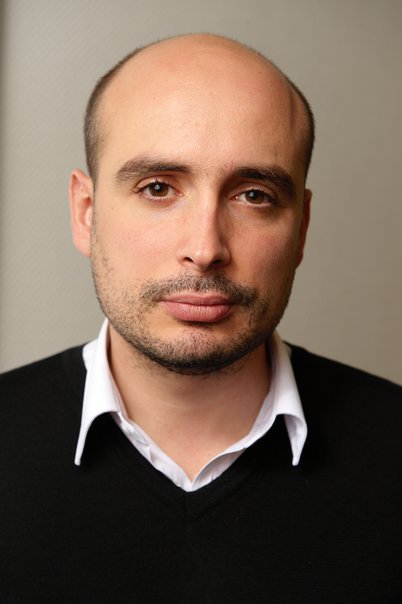
Director Peter Strickland’s films explore texture of all varieties – physical, sonic, epicurean – and his 2022 film Flux Gourmet manages to mix all three to a level of heightened madness even longtime fans of the director’s films might be surprised by. That said, the mixture of gastronomic delights and auditory experimentation makes for a fascinating viewing and listening experience, allowing for a near-complete immersion in the world of “a dysfunctional group of performance artists.”

We spoke with director Strickland about the score for Flux Gourmet, which saw a physical release from Ba Da Bing Records in January and features Strickland returning to the world of sonic adventures with his former creative in The Sonic Catering Band.

Peter Strickland

STARBURST: As a director, what attracts you to the idea of some of these very interesting professions that you’ve explored in your films?

Peter Strickland: Well, I think it depends on the film. Some films, such as Barbarian Sound Studio, were. I think so many films have been done about actors or directors. You just want to look at the more invisible jobs, really. And there’s a film just out now called Jill Uncredited, which is about an extra, and you always wonder about those people, so there’s an element of that.

Flux Gourmet was a lot more straightforward because I actually was in a band like that. I was a bit of a narcissist to make a film about that. It was the same as if you’re in Queen doing a Queen biopic or an Elton John biopic, just slightly different music. The impulse was kind of similar.

We love the attention that you have to sound in Flux Gourmet and Berbarian. What was your musical history? What was that band that led you to integrate sonics so well into your films?

Well, when we started in 1996, there were many years of working a certain way. I think the way we worked was quite naïve, really. How most people start: you get a tape delay, you get a bit of reverb, and you just drench everything through these units. But I think the way we’re using the word, the way we were taking sonics down from everyday sources, like cooking and recontextualising it, chopping it up, and treating it like a raw material to mix and layer and process – I took that way of working into my feature films, but not as a gimmick, really.

It was just that’s all I knew. I never really worked. I was a naïve thing. And it was weird because when we did the band, mostly in the 1990s and early 2000s, we were lucky if we could get a review in The Wire magazine. We could never sell many records, so most of the time, we were just invisible. We were not attracting attention. It was weird; when you put that same process to filmmaking, it did attract attention.

The idea of Flux Gourmet feels very real. It would not surprise us if there were a place such as this, and we think that the thing that we enjoy about your movies is that while they do seem somewhat outrageous, they’re rooted in reality. Is that a process that you consciously go for?

I wouldn’t say consciously. I mean, it depends on each film. But if I look back on them, they’re all rooted in very real situations or emotions, group dynamics, couple dynamics. I mean, the way you do the window dressing, it can be out of time somewhat. Sometimes, it’s best, just due to budget and circumstances, but I think if you strip the surface weirdness away, to me, they’re dramas. They’re all about anything, but I’m just fascinated by different characters, really, and I think the whole band dynamic is incredibly rich for exploring egos and rivalries. That’s the place to go to if you want to explore that.

How did you assemble all of the folks for the Flux Gourmet soundtrack?

Well, it was a mixture. It was mostly people I knew. Some of them were people from my band. Colin Fletcher and Tim Kirby, the three of us had that band together, the Sonic Catering Band. That was very easy. I just called them. I said, “Do you want to get back together for a couple of weekends and do some stuff?” I worked with the others before.

Roj, he used to be in Broadcast, he did some stuff for my first film, actually, Katalin Varga. I worked with Jeremy Barnes and Heather Trost before. I did a music video for them, and they did a soundtrack for a short film I did. Tim Gane from Cavern of Anti-Matter did my previous film, In Fabric, so yeah, I guess it was not really anything to it. I just knew these people anyway. Just picking up a telephone and seeing if they’re interested. I’m obviously thinking about who is going to work for which scene.

It wasn’t a sort of a casual pick up the phone, it was a lot of thought beforehand because I think I knew going into it, it could not be like my other films in terms of most of my films had just one main composer or main band, and that was it. There was a kind of cohesiveness to it all, whereas I knew Flux couldn’t really function like that.

It was a bit of umming and ahhing, “How is this going to work? And “Who’s going to go where?”

That’s an interesting idea that you reached out to a lot of people with whom you’ve worked before, because your work has a recurring series of folk who pop up here and there, like Fatma Mohamed or Gwendoline Christie. Is it comforting, or is it just that you like working with these people to have a regular cohort of people whom you can bring into your films?

I think it depends. I mean, there’s definitely, as a film fan, an appeal to certain directors who always bring back the same acting troupe. I used to love when you’d watch a John Waters film, “What’s Divine going to do now?” I love that. It’s the element of both continuity and the element of surprise because you know that actor’s going to do something very, very different. Not just John Waters, but Fassbinder and Bergman. I didn’t go into this thinking I’d have that kind of relationship because obviously, when you start, you have no idea.

When I worked with Fatma on my first film, I had no idea we’d still be working together. She was almost like an extra. She only had, I think, one or two lines. She was in it for like a few seconds. But there was something there. I could recognise this intensity, and I asked her if she wanted to work with me on Berberian, and it just kind of grew from that, really.

By the time we finished The Duke of Burgundy, I realised, “Okay, this is someone who can really transform with each role,” but not just that, but there was a comfort there. Someone I feel comfortable with. I hope the feeling is mutual. Maybe not off the Flux score, because I kind of put us through quite a bit, but yeah, there was a shorthand there.

When you get someone new, you never know how it will work out. If you get someone who’s good and he’s easy to work with, why would you pass on that, really?

This score is coming out on multiple formats, and several other of your scores have received very nice releases as well. What’s it feel like for you? Are you a record person? Is there an appeal to you to have a nice double vinyl release of the soundtrack or score to your film?

Not really. I mean, I do like physical, but I’d say these days, I prefer compact discs. It’s a space issue, not just the space of the actual discs, but also a record player takes up a lot of space compared to a compact disc system, or even you can put it into a computer. I mean, I like vinyl, but the reason we did vinyl was because there’s just no demand for compact discs.

It’s not in my hands. If I had my way, I would have done a compact disc release, but the same with In Fabric: vinyl sells, and it’s kind of interesting how I’ve heard somebody buy it that didn’t even have a record player. I do have quite a bit of vinyl, and I do prefer it, especially the older I get; my eyesight is not as good as it used to be, and I can actually read the liner notes, and it’s great that kind of format. I have a few Martin Denny vinyl sleeves on my wall, but I’m not obsessive over the whole thing.

Really, whatever works for each person works. I would never be dismissive of someone who just listens to streaming. I’d be dismissive of some of the businesses that run those companies in terms of how they pay the smaller artists. I’m dismissive of that, but not someone who hasn’t got any money, who gets paid peanuts as a nurse or a teacher and wants to listen to music. That’s completely an appropriate, egalitarian way of listening. It’s not their fault. It’s the whole system that is just lopsided and benefits the bigger artists.

The soundtrack to Peter Strickland’s Flux Gourmet is available now from Ba Da Bing Records.

Andrew Lee Potts | FIRECRACKER

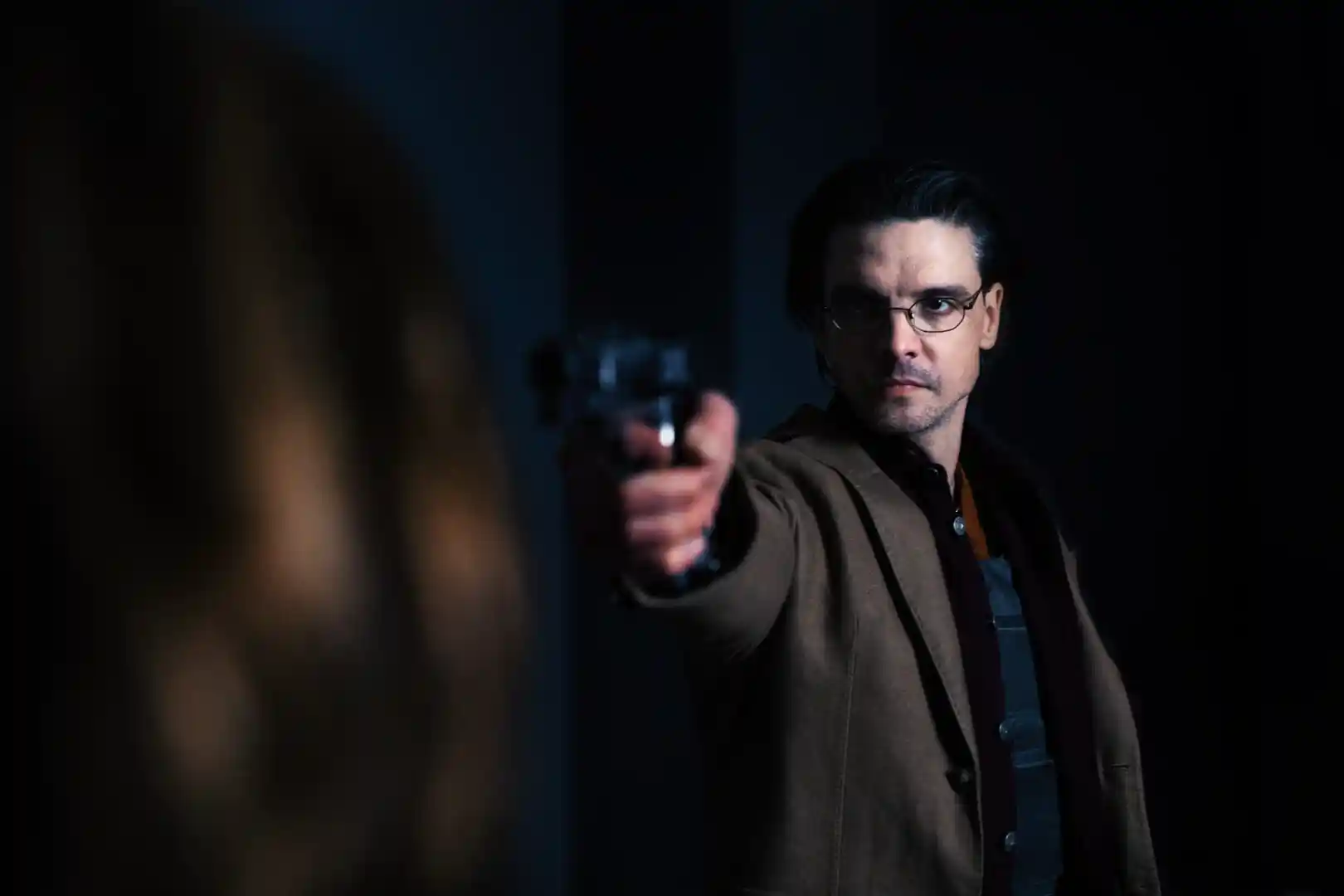
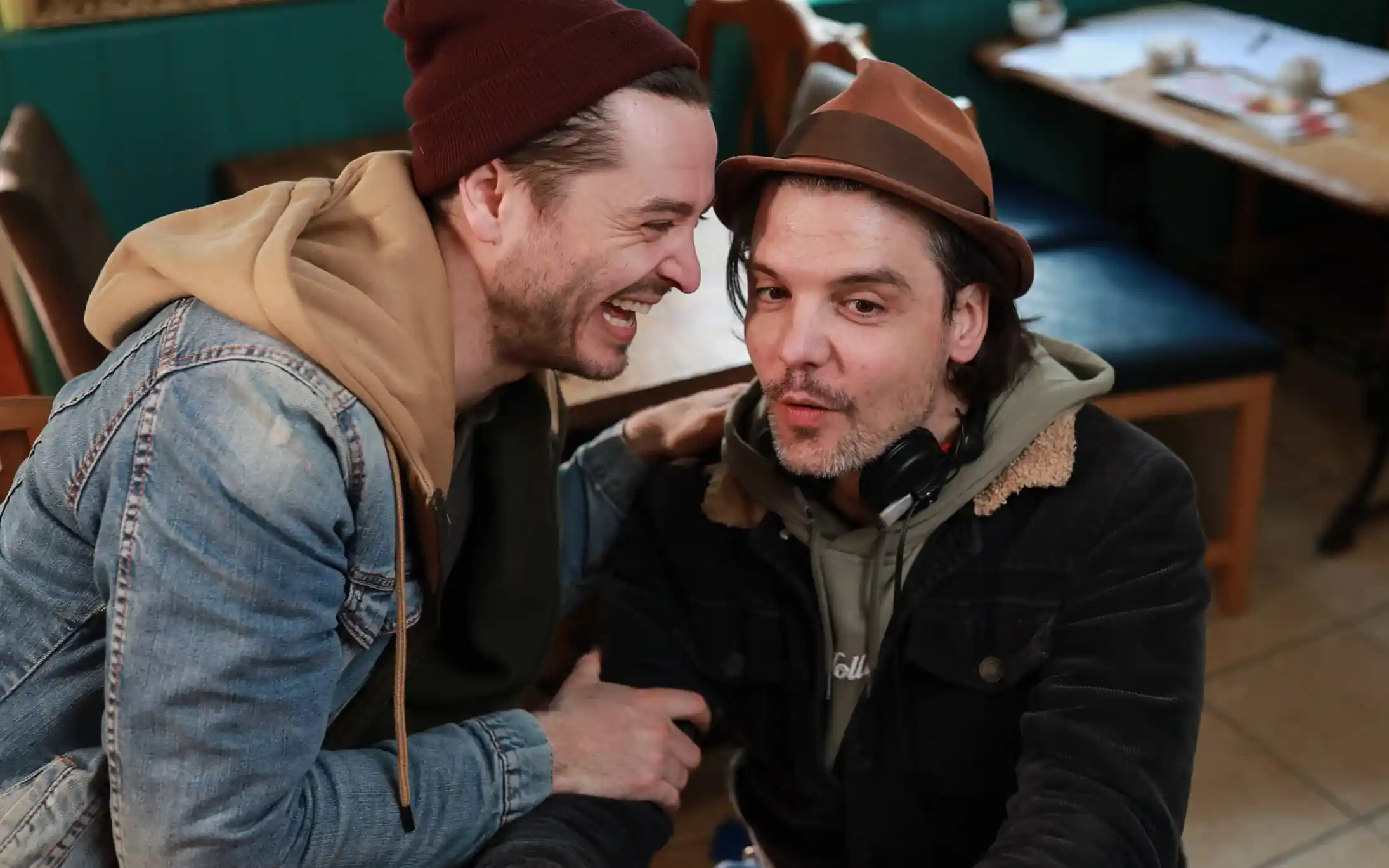
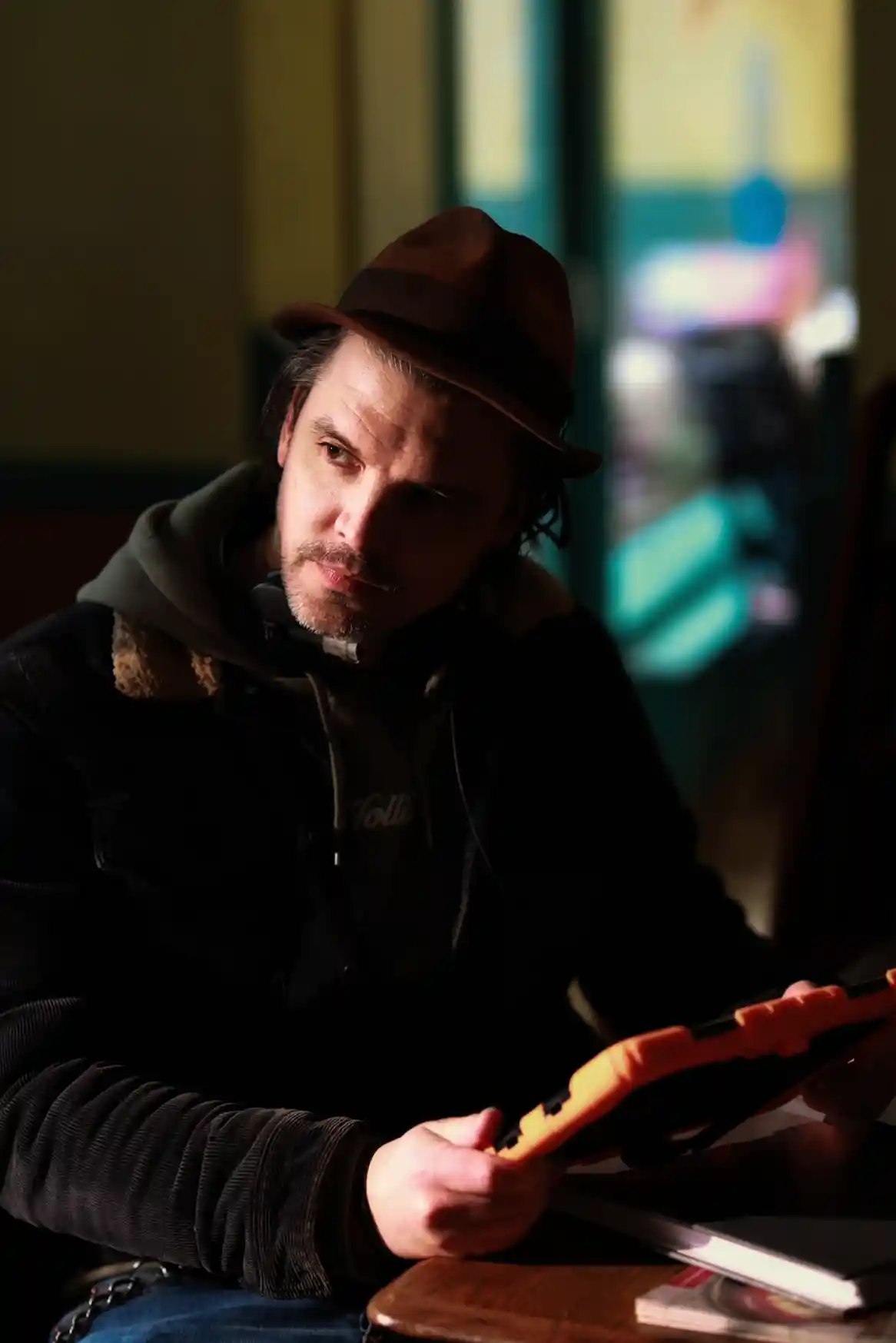
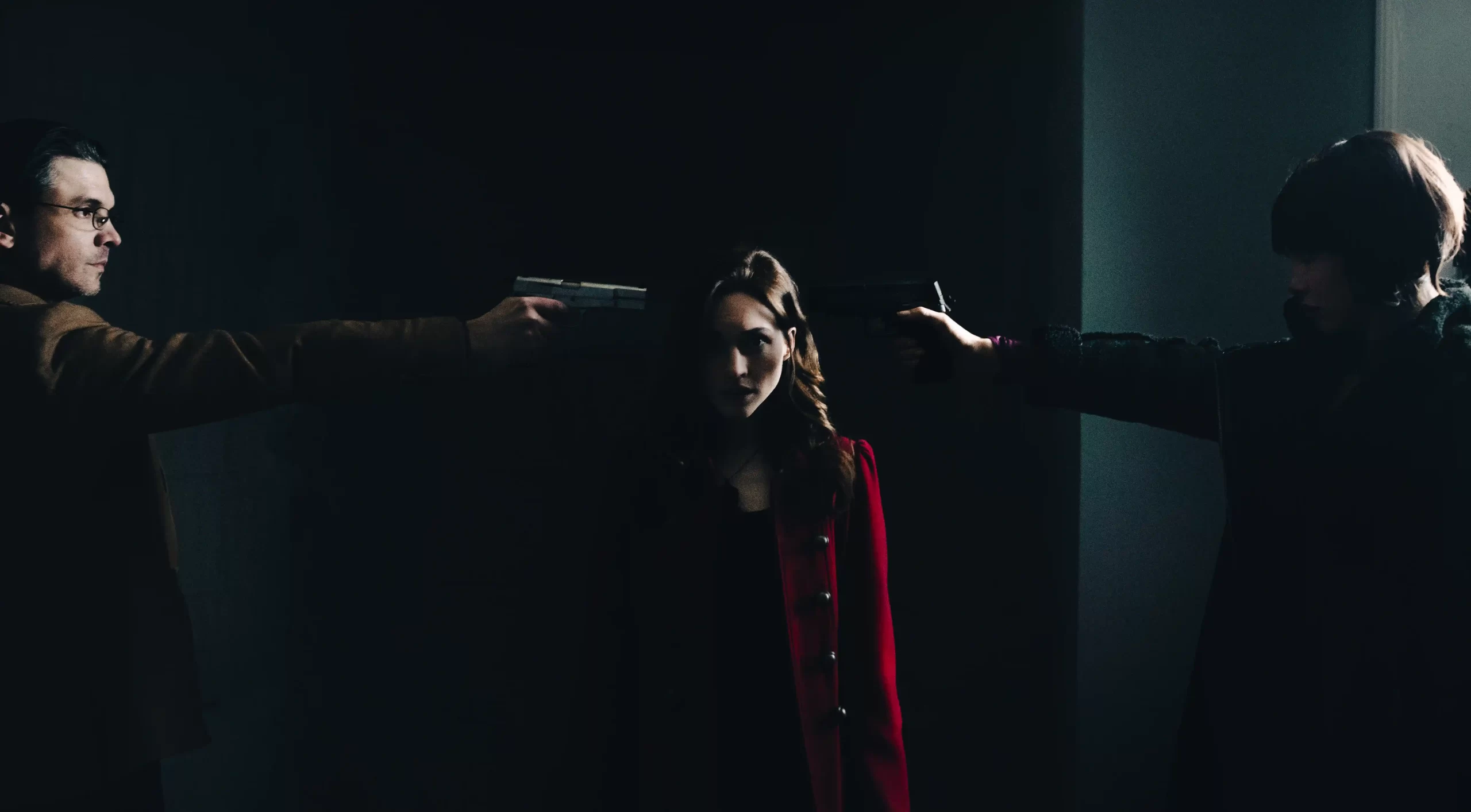
Much-loved actor Andrew Lee Potts – best known for Primeval and the recent action film 400 Bullets – has stepped behind the camera for Firecracker. The film, set on Bonfire Night, follows a pair of hardened criminals who take an estate agent hostage while attempting to find an important piece of evidence against their boss. We caught up with the always-busy star to chat about his feature directorial debut…  

STARBURST: Congratulations on the film; how do you feel now it’s been released?

Andrew Lee Potts: I’m proud of the whole film, obviously, being my first film and stuff. I know it sounds cheesy, but I really wanted to tell a story that was interesting enough to keep people’s attention, with enough action. There’s a tiny peppering of humour in there, but I was very cautious not to do that too much, you know, especially with what people know from me. I know this sounds ridiculous, but it’s really funny that I’ve just remembered that I’m in it, if you know what I mean. When Vertical did the poster and sent it over, I thought, ‘oh god, that’s me! I was so focused on the directing side of it, getting it across the line, and delivering it. That’s been my main thing. It was the same on set. Because it was such a small budget and was such a tiny crew of people mostly helping me out. I’m so unbelievably grateful for the friends I’ve made over the years. I guess they have the belief in me and want to support and help me take that next step, really. But yeah, I’m proud of it.

How did the story come about?

I had bought a new house, so this big house I was renting would be empty for a month because I couldn’t get out of my contract. So I had an empty big house, and literally, that’s how it came about. I thought, ‘what can I do with space?’ You know, I’m an opportunist! How can I contain the story in this house and use every area of it in an entertaining way? I always wanted to make a film by the time I was 40 – that was my goal. But around that time, obviously, COVID hit, so that kind of scuppered my plans a little bit. So I had to have a rethink. People around me were always going you should do it. Just do it. Just do it. And I thought, you know what, I’m going to do it. Once I had that idea in my head, I wouldn’t stop for anything. And believe me, things tried to stop me! I talked to other filmmakers, and they’d say you can’t do it for the budget. I was like, “Watch me”. I that’s what I think I’m the most proud of; that I actually I saw it through from start to finish.

There’s something that happens to me when I start directing onset and step into that role that seems right for me. I seem totally at home. I may be stressed and maybe worried about certain things, like how we are going to pull things off, but my focus doesn’t falter. I have to look at that and take confidence in that, knowing that I will see something through. Hopefully I have that kind of aura around me, like ‘it’s going to be okay, we’ll push through this. Will you trust me? I will make it work’. And you know, everyone on the film said yes, they do. And now I get to go, ‘I’m glad you did because here it is’. Vertical picking it up was just phenomenal. They are such a big distribution company in America, and picking up my little British independent film – my very first feature – was just nuts! I didn’t even have to take it festivals; I didn’t have to try and slug it. They saw it, and they really liked it.

Images: VERTICAL / RIHARDS LASIS

Your character’s quite a nasty piece of work, but as a viewer, you end up liking him…

That was so important. I worked so hard with Katie [Sheridan] and Eloise [Lovell Anderson], thinking about how we would come towards the role. I just need it to be authentic. Through my acting over the years, I’ve played many baddies, I’ve played many goodies. But one thing I think I’ve always strived to do is to have some sort of audience connection with that character. Whether it’s through vulnerability and their flaws. There’s something within these people. You might not understand their decision-making or why they’re doing that, or think, ‘I would never do that, but I kind of feel for that dude in that situation. I can see why he’s convinced himself it’s the right thing to do’. That empathy from an audience is so important when you’re telling a story. I’ve seen so many films where they’re all bells and whistles and it looks fantastic and sounds amazing, and it’s technically flawless, but I don’t connect. That’s why I want to make films I do. I’m honing in on my way of telling a story and my style. Firecracker has really helped me to do that.

What was the transition from directing shorts to a full feature?

In my head, I thought, ‘I’ve done a 20-minute short, so it’s just like doing a bunch of those back-to-back’. It’s not at all! It was a whole different ballgame. But I loved it. Editing that much material was epic. The technical stuff that I learned on this was insane. It was a baptism by fire for me. There was there was a lot of stuff that I had to learn. There was a lot of checking YouTube on how I do stuff! [Laughs]

I do need to say how grateful I am to every single person who helped me make Firecracker become what it is. I really couldn’t have done any of it without them. It was their belief in me as a filmmaker and their belief in my vision that got me through it. When I was doubting myself, they reminded me that I can do this and I will do this. I want to make the best story I can with the resources I have. But obviously, those resources were small. But can you imagine if that pot was a bit bigger and resources were bigger? That bit excites me about what I might be capable of in the future.

Images: VERTICAL / RIHARDS LASIS

We all do it! We guess you were almost edited in your head as you were filming?

Kind of, yeah. I know when I’ve got something; I know when I’ve got enough of something. So if someone’s done a performance and I know I’ve got this bit from that take, this bit from that take. Saying that we didn’t have the luxury of having loads of takes. We had to snap through this at pace, so I had to be uber-decisive. Luckily, I think that’s one of my strengths. And that really comes into play with filmmaking because I can go, “Okay, we’ve got that move on”. I also don’t have to be precious about anything. It’s a collaborative thing on set, if someone comes up with a suggestion that’s better than what I was thinking about, I’m like, “let’s do that”.

Did you have specific people in mind for characters when you were writing?

Yeah, Jason Flemying and Nick Moran were completely who I wanted. Obviously, I’m a lot closer to Jason because of Primeval and stuff; we’ve been in and out of each other’s lives for years. We did a movie together when I was 18 or something and I’ve got such a soft spot for him, he’s such a gentle, kind man and is so good on screen. He looks brilliant, and he’s such a pleasure to work with. The tricky thing with Jason was getting him in the room. He wanted to do it, but he’s just super busy. Once we worked that out, he came and was a superstar. I’ve known Nick for ages and have also done a bunch of jobs with him and he was exactly in my head is The Connect. So when he said he’d do it, I was super chuffed. really works. Also with Alex Vlahos, we come from similar backgrounds; we were both younger actors, and we both did a sci-fi show, he was in Merlin. We’d meet at comic cons over the years but never worked together. I needed someone who could make such a big impact in such a small space of time in the film for you to feel for him, and he’s got that versatility I needed.

Images: VERTICAL / RIHARDS LASIS

Did you film it around Bonfire Night?

No! Those shots weren’t even B-roll. Luckily enough, Katie’s brother is a visual effects artist. He’s super busy, working on huge stuff. But I obviously managed to talk to him. There’s a shot in the film where Lena [Eloise Lovell Anderson] looks up, and there are all the fireworks in the sky, and it pans down to her – that was in my head from the beginning. And I was lucky enough to have Robert in the family kind of to pull that off for me because I think that makes a massive difference. Like I say, it was literally me pulling every thread that I knew to try and pull this off!

What was the hardest part of the production?

With any independent filmmaker, you’re going to come up against it. Loads of things were going wrong on set. It wasn’t going well with technical stuff. It looked like we were going to lose two days of filming, but we shot it in nine days, which is insane. I remember a moment in the bedroom where we were filming, I was talking to two of the actors and so unbelievably stressed thinking, ‘how are we going to even finish this? Am I in above my head?’ My partner Katie, who’s also in the film and is amazing, took a picture of me and above my head is a sign on my wall and it says don’t give up. It was blood, sweat, and tears 100% with this. I was wearing so many different hats that I just thought I was going loopy sometimes.

There are so many different stages. Getting a bit of money together at the start to try and get it on its feet. That was difficult. Getting the people to have the belief in you to push forward that you can actually do it. That was difficult, you know? The filming schedule was insane. I’d never scheduled anything on that scale before. Dealing with the actors, dealing with their travel arrangements and all that kind of stuff. I was pretty much doing everything, and so that was difficult in itself, and then you get on set, and then suddenly I’m thinking about a million things. Jason Flemyng said to me – because he’s directed a movie – it’s like being pecked to death by 1000 chickens. Everybody has questions for you. Your head’s all over the place. And then I call action, and I step onto set as an actor, and I have to try to forget all that. Then I’m in a scene with somebody and I’m also thinking about the direction, her reactions, and whether that’s a good take or whether we want to go over that bit again. My brain had to go in so many different channels all the time. That bit was difficult. But I like a challenge. It’s been two years of my life, obviously working as an actor at the same time, but constantly doing this. I think I live for the challenge, really. So I think as much as I might moan about it and go, ‘this is mental, I’m not doing this again’, it starts to come out, and you start to get the feedback, and then you start to go “Okay, cool. What are we doing next?”

So what are you doing next?

Divided is in development now. I won’t say what stage it’s at, but it’s coming together. It’s a heist film set in 2045, so the not-too-distant future. It’s an ensemble cast, which I love. It’s kind of a Guy Ritchie high jinks mixed with Black Mirror. It’s got more of the actor that people might enjoy me being, you know, the sarcasm, the British humour, and the stuff that I got known for. There’s more of that in Divided. Half the characters are like that, and half of the characters are more serious. It mixes really well. I’m super proud the script. We’ve got a full cast attached already, just off the back of the script. So yeah, it’s exciting times. In my head, I’m like, ‘why am I doing it again?’ I’m addicted to filmmaking, obviously! I like telling the story; then, you put your baby out there to be judged. When I started doing short films, they were really small and just for me, just to prove to myself that I could do it. That’s why I started. I wanted to play the drums at 12 years old, so I sat in the drum room every lunchtime and break at school and taught myself how to play the drums, because I’ve got an idea in my head and I wanted to do it. Then a year later, they came to my high school looking for an actor who could play the drums for a show called Children’s Ward. And I was like, “I can play the drums”. So there have been a lot of those kinds of weird twists in my life that have kind of led me on a path forward. So, let’s see where Firecracker takes me!

FIRECRACKER is out now to buy or rent on digital platforms, including Amazon, Sky Store, YouTube, and Apple TV. You can read our review here.

Images: VERTICAL / RIHARDS LASIS

[ENDED] Win BAD BIOLOGY 4K UHD Blu-ray

We’ve teamed up with Severin Films to give one lucky ready a chance to win a copy of Bad Biology on 4K UHD Blu-ray. Just read on and enter below…

After a 17-year break in filmmaking, splatter maestro Frank Henenlotter – writer/director of Frankenhooker, Brain Damage, and The Basket Case Trilogy – returned with the most graphic, transgressive and jaw-droppingly depraved black comedy shocker of his career… Bad Biology.

Now this wickedly warped feature gets a re-birth from Severin Films in a Special Edition Box set, which includes the film in its newly restored version, scanned in 4K from the camera negative.

This dual 4K UHD and Blu-ray release comes complete with a slew of brand-new special features and gets its UK bow on February 26th, 2024, and will also be released on standard edition Blu-ray.

Jennifer, played by singer Charlee Danielson, is a homicidal nymphomaniac who spontaneously births mutant babies, while in another part of town Batz (Anthony Sneed – Chasing Banksy), has a monstrous penis, with a mind of its own, to contend with. In a city ruled by pleasure and pain, will the two made-for-each-other freaks deliver the ultimate orgasmic horror?

Eleonore Hendricks (Daddy Longlegs), radio host Rude Jude and director James Glickenhaus (The Exterminator) co-star in ‘one very entertaining seriously batshit film’, produced and co-written by underground hip-hop hero R.A. The Rugged Man Thorburn, with insane special effects by Gabe Bartalos (Skinned Deep).

Frank Henenlotter’s ball-busting freak fest should-be seen to be believed!

SPECIAL FEATURES:

Disc 1: 4K UHD

  • Commentary With Director Frank Henenlotter, director of photography Nick Deeg and actor Anthony Sneed
  • Archival commentary with Frank Henenlotter and producer R.A. The Rugged Man Thorburn

Disc 2: Blu-ray

  • Commentary with Frank Henenlotter, Nick Deeg and Anthony Sneed
  • Archival commentary with Frank Henenlotter and producer R.A. The Rugged Man Thorburn
  • Spook House – Interviews with Frank Henenlotter and R.A. The Rugged Man Thorburn, production coordinator Michael Shershenovich, Nick Deeg, retired detective David Henenlotter and production manager Chaz Kangas
  • In The Basement With Charlee Danielson – A brief, completely off-kilter interview with the elusive Miss Charlee Danielson and a Basketball
  • Deeg and Sneed – A Conversation between Nick Deeg and Anthony Sneed
  • Swollen Agenda – Interview with make-up effects artist Gabe Bartalos
  • Beyond Bad – Behind the Scenes of Bad Biology
  • F*ck Face – Photographer Clay Patrick McBride runs around the director’s apartment filming guys making their ‘O Face’
  • SUCK – A wonderfully twisted short film by Anthony Sneed
  • Legendary Loser – Music Video by R.A. The Rugged Man
  • Thorburn Image Gallery – publicity pics, behind-the-scenes shots, video covers and death pic

a Rafflecopter giveaway

Bad Biology is released on 4K UHD Blu-ray and standard Blu-ray on February 26th. You can pre-order your copy here.

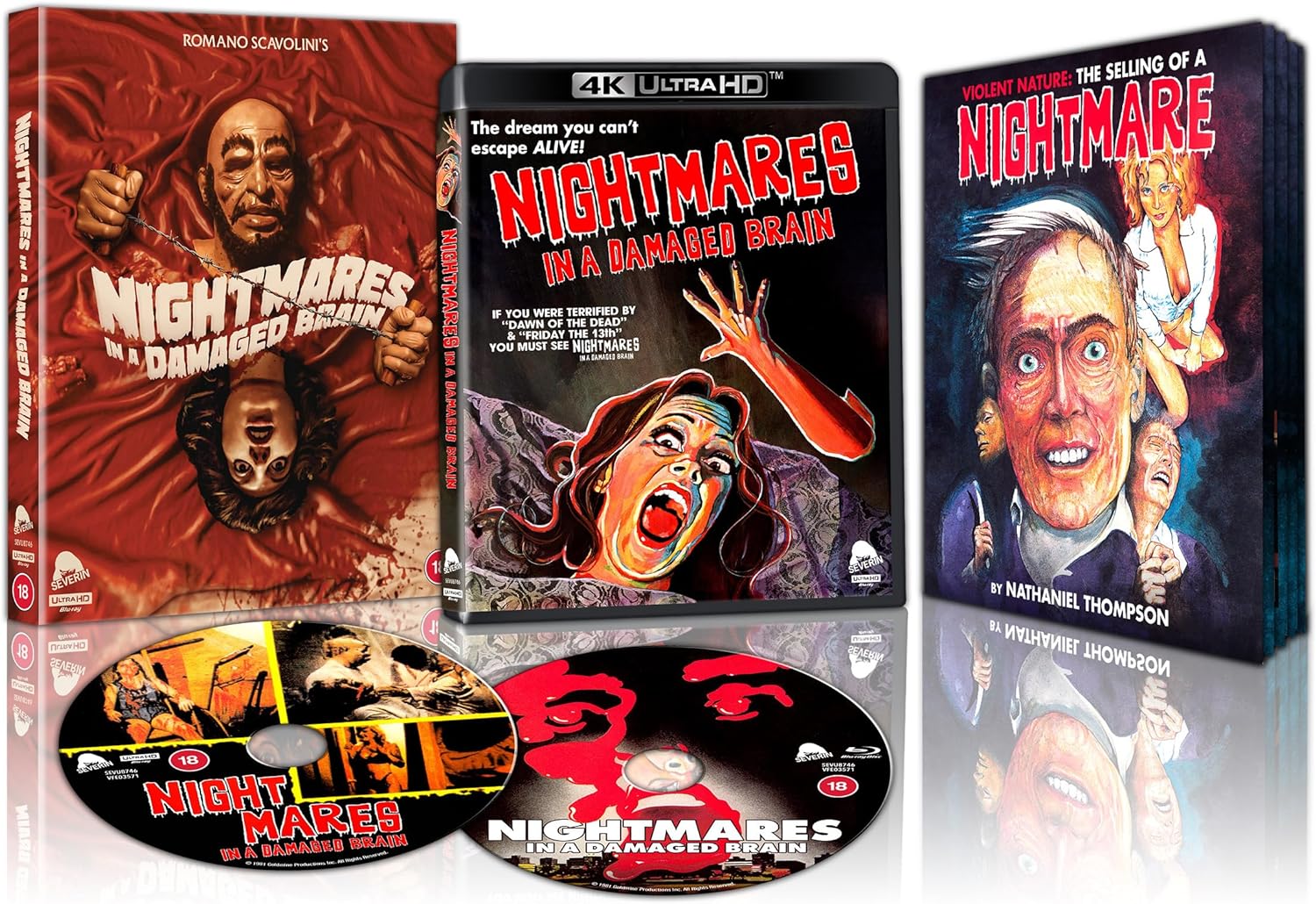
[ENDED] Win Shocking Video Nasty NIGHTMARES IN A DAMAGED BRAIN 4K Blu-ray!

We’ve teamed up with Severin Films to give away a copy of the notorious ‘video nasty’ Nightmares in a Damaged Brain on 4K Blu-ray. Just read on and answer the question below to enter…

Nightmares in a Damaged Brain remains one of the most reviled, controversial and misunderstood genre films of the 1980s. Now ‘the most repulsive, degrading and horrifying movie ever made’ (NY Daily News), can be experienced like never before, as Severin Films presents a brand new Special Edition, which comprises of two-discs, including a never-before-seen restored version and more than five-hours of brand new special features. This must-have box set will be available from February 26th 2024, alongside a standard edition Blu-ray.

Baird Stafford (Dog Tags) gives an enduringly disturbing performance as a seriously disturbed, homicidal patient who escapes from a psychiatric hospital, during an experimental drug programme. What follows is a mind-blowing trail of psychosexual carnage, which takes the maniac from the peep shows of 42nd Street to the shores of Florida, causing unimaginable slaughter and chaos his wake.

Written and directed by Romano Scavolini, this devastating masterpiece can now be experienced like never before, following its painstaking restoration process which involved scanning from the internegative and multiple foreign print sources to create the ultimate version.

The set includes an in-depth feature – Damaged: The Very British Obscenity of David Hamilton-Grant – that explores the salacious career of the mysterious British filmmaker and distributor, who was the only supplier to be sent to prison for releasing a what was dubbed a video nasty, following the UK release of the film; this joins a slew of fascinating extras, see full list below.

SPECIAL FEATURES

Disc 1: 4K UHD

  • Audio Commentary with star Baird Stafford and special effects assistant Cleve Hall moderated by Lee Christian and David DeCoteau
  • Audio Commentary with producer William Paul
  • Trailers

Disc 2: Blu-ray

  • Damaged: The Very British Obscenity of David Hamilton-Grant
  • Audio commentary with Baird Stafford and Cleve Hall moderated by Lee Christian and David DeCoteau
  • Audio commentary with producer William Paul
  • Kill Thy Father and Thy Mother – Interview with director Romano Scavolini (71 mins)
  • Dreaming Up A Nightmare – Featuring former president of 21st century distribution Arthur Schweitzer, actor/unit production manager Mik Cribben, Production Supervisor Simon Nuchtern, Florida producer/special effects artist William Milling, uncredited editor Jim Markovic and archival interviews with actor Baird Stafford and special effects artists Edward French and Cleve Hall
  • The Nightmare Of Nightmare – interview with erroneously credited special effects director Tom Savini
  • Legendary Loser – Music Video by R.A. The Rugged Man Thorburn
  • Deleted scenes
  • Image Gallery – publicity pics, behind-the-scenes shots, video covers and death pics
  • Trailers

a Rafflecopter giveaway

Nightmares in a Damaged Brain is released on February 26th. You can pre-order it here.

Exclusive clip: SPIRIT RISER

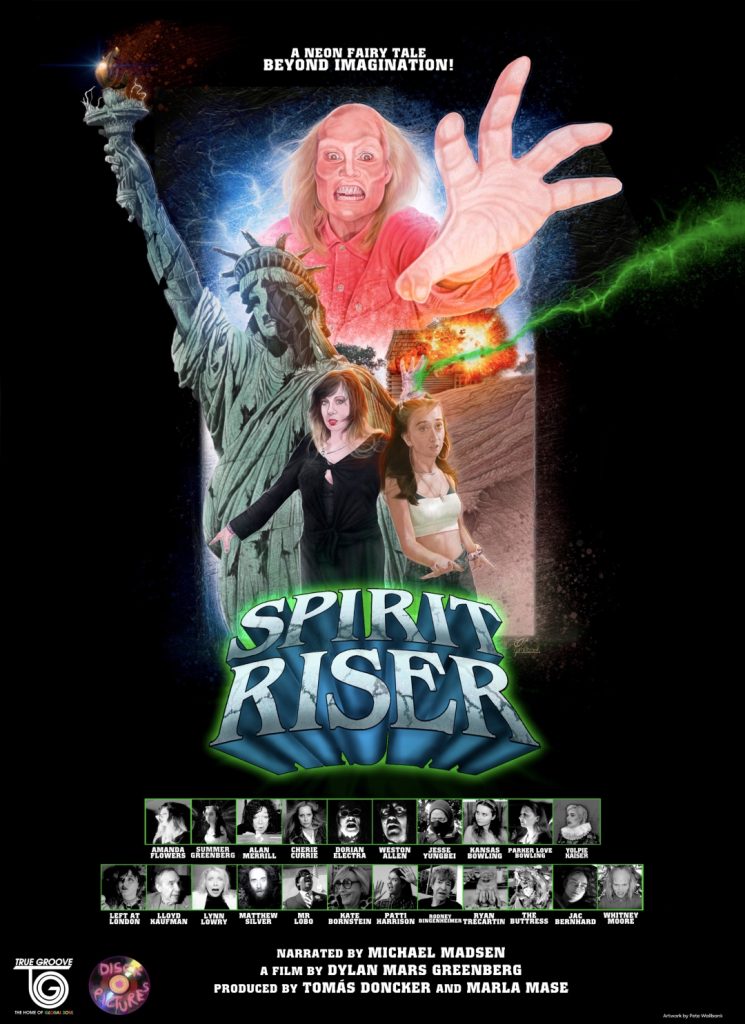
Last August, we were chuffed to premiere the video for Luxtress’ Rutherford, as directed by musician and filmmaker Dylan Mars Greenberg. Now, we’re sharing an exclusive clip from Greenberg’s upcoming feature film Spirit Riser, which the director says is one of her “most favourite horror sequences in the film!” The clip features Kansas Bowling – known for her new directorial triumph Cuddly Toys and roles in Quentin Tarantino’s Once Upon a Time in Hollywood, Verotika, and Christmas Bloody Christmas – being pursued by a terrifying monster played by Hannah Schilsky, who also designed and built the mask herself. The movie premieres on March 30th at the Museum of the Moving Image in New York and then on April 26th on the West Coast at Gardena Cinema!

“I was really inspired by Italian cinema when making this film,” says Greenberg. “This scene in particular was my attempt at paying homage to the neon aesthetics of Suspiria and an underrated classic, Luigi Cozzi’s The Black Cat!”

Spirit Riser is a genre-bending fantasy with elements of horror, comedy, action, surrealism, and martial arts from rising New York City filmmaker Dylan Mars Greenberg. The story follows two sisters who are thrown out of their isolation and onto opposite coasts of America by a terrifying cosmic entity. While one sister suffers from memory loss and the other is too young to understand her own past, the girls discover they possess supernatural powers as they are pursued by the mysterious and unearthly being hell–bent on their destruction.

You can check out the poster below, which shows the massive amount of talent on display, in addition to Bowling’s appearance.

Lily Sullivan | MONOLITH

Lily Sullivan

Lily Sullivan is an Australian actor best known for her role in Evil Dead Rise. And now she stars in Monolith, a brooding, intense mystery about one woman’s search for the truth. Before its release, Lily sat down with us for a chat.

STARBURST: One of the main themes in Monolith is isolation, and it looks like it was an intense filming experience as you’re pretty much on your own. How was the process for you?

Lily Sullivan: From an intensity point of view, carrying the film somewhat, it was definitely a big fear. Once you get into that level of immersion, once they call rolling, not having a partner is actually one of the most psychedelic experiences, where you just strip out the body language of another person. So when it comes to carbonating the energy of a film, it was so internal and heavy. The director Matt Vesely, because we’re in this giant house, would ask all the crew to step out so whoever didn’t need to be in the room wasn’t, and then we waited a large chunk of time, sitting in silence before going into the scene. It was really quite bizarre. It was amazing how much the intensity of the imagery is in your mind, which just takes over. Once you strip out a person in front of you, it’s up to you and your thoughts and the vivid imagination that we all have. But yeah, it was the most intense form of immersion I’ve felt as an actor. I was descending into this weird manic madness, and as we shot 12 hours a day, not turning around and there being another actor, yeah, it was quite psychedelic.

You mentioned the house there, and it does feel like it bleeds into your performance.

Yeah, finding the house was a key element to it. It was a lot of open spaces, and there were a lot of windows and things, so it did affect things. There was a coldness to the location, as it’s all made of concrete. There were reflections and moving walls, and everything was automatic. You could absolutely get lost in it. There was a whole underground as well that we didn’t shoot, with a theatre room and a wine cellar. It was quite bizarre as you could disappear at the other end of the house and sit in silence. It did feel like another character. And when we were in the house, shooting on such a tight schedule and budget, it elevated everyone’s performance. It was such a fun element to play with, and it lent itself to the spookiness and the eeriness of the world that we were creating. It was great, but when I was offered the chance to stay there, I couldn’t do it. I wanted to leave and go back to my cute little country cottage! It was 15 days of just absolute adrenaline-fuelled shooting. I had to hit a rhythm as soon as we hit the ground. We shot mostly in chronological order, and it just evolved and became this race to the finish line.

That’s interesting, as there’s no brevity in the film at all, so getting out to decompress must have been important.

Yeah, playing someone with this vision of their life, wanting to seek something that would validate them, like just having this real kind of ugliness. It was always nice to block it out. You need to refresh, and I think for any actor staying where you’re shooting, it’s quite a lot.

It’s interesting to film in chronological order, as the character is quite flawed, and more is revealed as time progresses. Did you draw on any particular influences for the role?

There’s a nauseating energy and desire to exist with an online presence, to have this public persona, to be doing something you see as important, to put your opinion out there. So, I was like pulling on that, trying to feel like you just have this idea of self-worth relating to public image, and trying to do something that’s noteworthy. That kind of clickbait podcast culture and the idea of misinformation. She’s a woman of immense privilege, claiming to seek the truth. It’s interesting.


MONOLITH will be on digital platforms from February 26th.

THE TELEPHEMERA YEARS: 1999, part 1

Battle Dome, 1999-2000

Ah, telephemera… those shows whose stay with us was tantalisingly brief, snatched away before their time, and sometimes with good cause. They hit the schedules alongside established shows, hoping for a long run, but it’s not always to be, and for every Street Hawk there’s two Manimals. But here at STARBURST we celebrate their existence and mourn their departure, drilling down into the new season’s entertainment with equal opportunities square eyes… these are The Telephemera Years!

1999-2000

As US TV moved into the twenty-first century, the schedule was full of comings and goings. Sure, old reliables like ER, Friends, Frasier, and Touched by an Angel could be relied upon to bring in millions of viewers for NBC and CBS, but everyone was talking about the new kids on the block. ABC took the top three slots in the ratings with the thrice-weekly Who Wants to Be a Millionaire?, while CBS jumped into the reality market with two feet, debuting both Big Brother and Survivor to an America hungry for average Joes. Also arriving on the network schedules was Judging Amy, Malcolm in the Middle, Law & Order: SVU, and The West Wing, while HBO debuted The Sopranos.

For genre fans, Buffy spin-off Angel premiered on The WB, as did UFO drama Roswell, and Relic Hunter, The Lost World, and Beastmaster are began syndicated runs. This made up for the loss of Sliders and Poltergeist: The Legacy, both of which were entering their final seasons, along with Boy Meets World, Chicago Hope, Beverly Hills 90210, Party of Five, and Veronica’s Closet. Many of these new shows became institutions in their own rights, but what about the 1999 debuts that failed to stick their landing? This is the story of five flops…

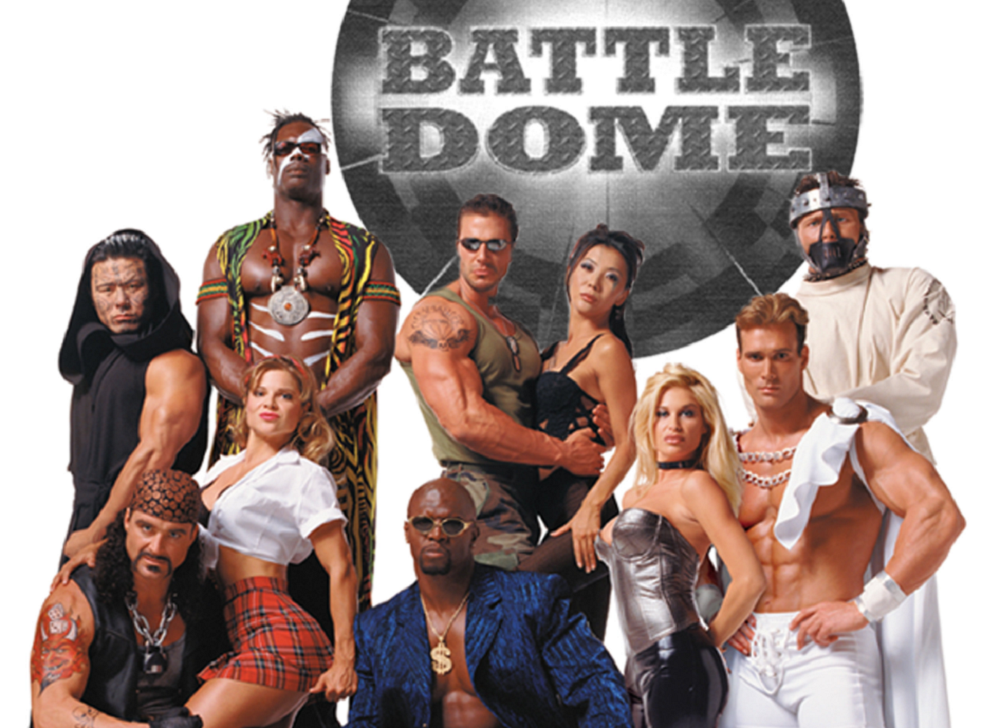
Battle Dome (syndication): If you took American Gladiators – already a colourful spectacle with elements of pro-wrestling thrown in – and turned the dial up to eleven, you’d end up with Battle Dome, where contestants not only had to battle the resident “Warriors” but also deal with some serious soap opera hamminess along the way.

Paired in most syndicated markets with the WWF’s Smackdown on Thursday nights, Battle Dome continued in the same vein, making larger-than-life stars of its characters, if not its contestants. Leading the way was Michael O’Dell, the pin-up boy of the Warriors played by former Gladiator Mike O’Hearn and accompanied by the Erica, Jaclyn, and Nicole Dahm, identical triplets who had previously occupied the Playboy centrefold.


Battle Dome, 1999-2000

Joining O’Dell were Jake Fury (veteran stuntman Gary Kasper, who memorably dislocated his ankle at the end of series one), bodybuilder Chris Boeving as The Commander, DOA (future House of a 1000 Corpses star Chad Bannon), and former NFL player Terry Crews, recast as T-Money, an arrogant hip hop-styled mogul in the shape of Suge Knight and a terrible loser. They faced their willing victims in a series of often-dangerous events such as the Rollercage of Fire, Aerial Kickboxing, and G-Force, and sometimes each other in order to find the holder of the Battledome Belt.

Coming back for second season in Fall 2000, Battle Dome crossed over with the WWF’s rival, World Championship Wrestling, with WCW wrestlers invading the Battle Dome set, leading to a retaliatory strike on a November 2000 episode of WCW Monday Nitro, but the feud fizzled out when Battle Dome was cancelled at the end of its second season and WCW went out of business soon after. Mike O’Hearn eventually reprised his role as Titan when American Gladiators returned in 2008 (the only Gladiator to be in both incarnations of the show) and Terry Crews later found fame as a sitcom actor, first on Everybody Hates Chris and then as Sergeant Terry Jeffords on Brooklyn Nine-Nine.

Now and Again (CBS): Created by Moonlighting creator Glenn Gordon Caron, who was famously fired from his own show when Cybill Shepherd rebelled against his demanding working practices, Now and Again starred both John Goodman and Eric Close as Michael Wiseman, a family man killed in a train accident but given a new chance at life in a new, specially developed body with extraordinary abilities.

Goodman played Wiseman in the pilot and in flashbacks throughout, with Close as the “new” Michael, told he can never contact his family lest they be put in extreme danger. Under the control and the microscope of Dr Theodore Morris (Major League’s Dennis Haybert), Michael must do the government’s bidding, all the time trying to find a way out of his predicament and find his way back to his family.

Now and Again, 1999-2000

Just a Moonlighting was a romantic comedy pretending to be a detective show, central to Now and Again is the bond between Michael and his family, with wife Lisa (Margaret Colin) and teenage daughter Heather (Heather Matarazzo from hit 1995 indie movie Welcome to the Dollhouse) never far from his thoughts or from the ongoing storyline. This caused a cognitive dissonance in the minds of its audience – a sci-fi show with too much family drama, a family drama with too much sci-fi.

Low ratings and a relatively expensive budget put paid to a second season of the show but not in time to wrap things up. Thus, the first season ended on a cliffhanger, with Lisa discovering her husband is alive, the family on the run from Dr Morris, and Michael’s archenemy The Eggman escaping from prison. Caron would return five years later with Medium, this time mixing family drama with the supernatural; cheaper to produce, and with the charismatic Patricia Arquette as its star, that show lasted for seven seasons.

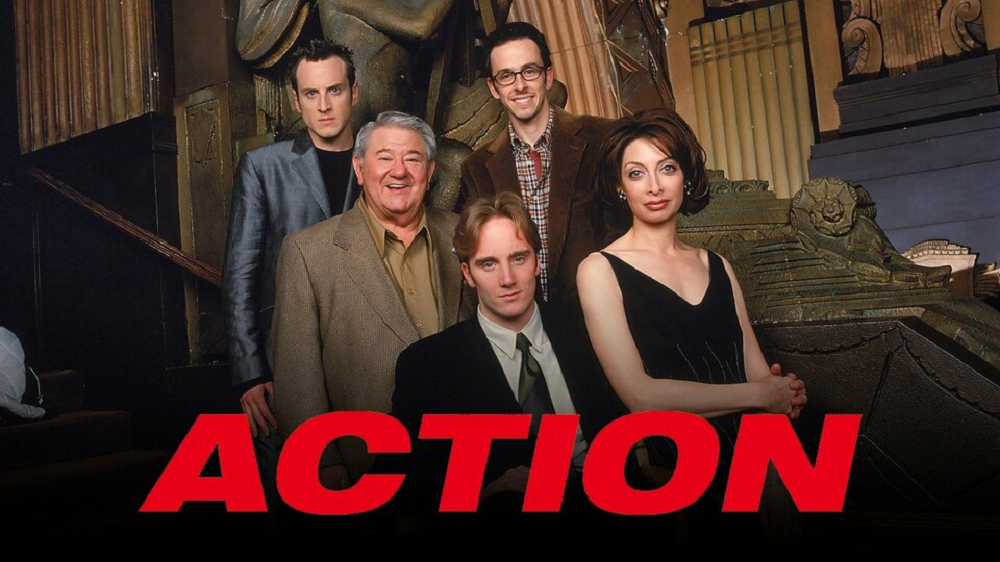
Action (Fox): A dark comedy set in the world of movie producing, Action was one of those shows that veered dangerously towards being “too inside” for a mainstream audience, which may have led to its cancellation after just thirteen episodes. It was the brainchild of Chris Thompson, who got his start as a sitcom writer on Laverne & Shirley before creating early Tom Hanks credit Bosom Buddies and scripting Jumpin’ Jack Flash for Whoopie Goldberg.

Thompson used his own experiences in TV and movies to create the character of Peter Dragon, a former pornography producer gone legit, albeit one with a reputation for tacky action flicks. His last film – Slow Torture – was an expensive failure and now the future of Dragonfire Films is resting on Beverley Hills Gun Club, a script bought by mistake because the writer was mistaken for Adam Rifkin.

Action, 1999-2000

There’s a lot going on in Action, from the studio president who married Peter’s ex-wife to hide his homosexuality to Peter’s vice-president, a former child star turned high-class call girl, with all manner of “friends” and acquaintances eager for Peter to fail. The cast is excellent, with Jay Mohr imbuing Peter Dragon with an unscrupulous charm, Illeana Douglas seemingly having the time of her life as his assistant, and Buddy Hackett in his element as Peter’s uncle (and head of security), Lonnie.

Fox outbid HBO for the rights to the series and it was probably a better fit for the latter network, especially given Fox cancelled Action after just eight episodes, burning off the remaining five on their FX cable network. Thompson had slightly better luck with Ladies Man, starring Alfred Molina and Betty White, which debuted at the same time on CBS and lasted for two seasons, but the long illness which eventually claimed his life in 2015 restricted his later work to a handful of shows; Shake It Up, his final project, launched the careers of both Bella Thorne and Zendaya.

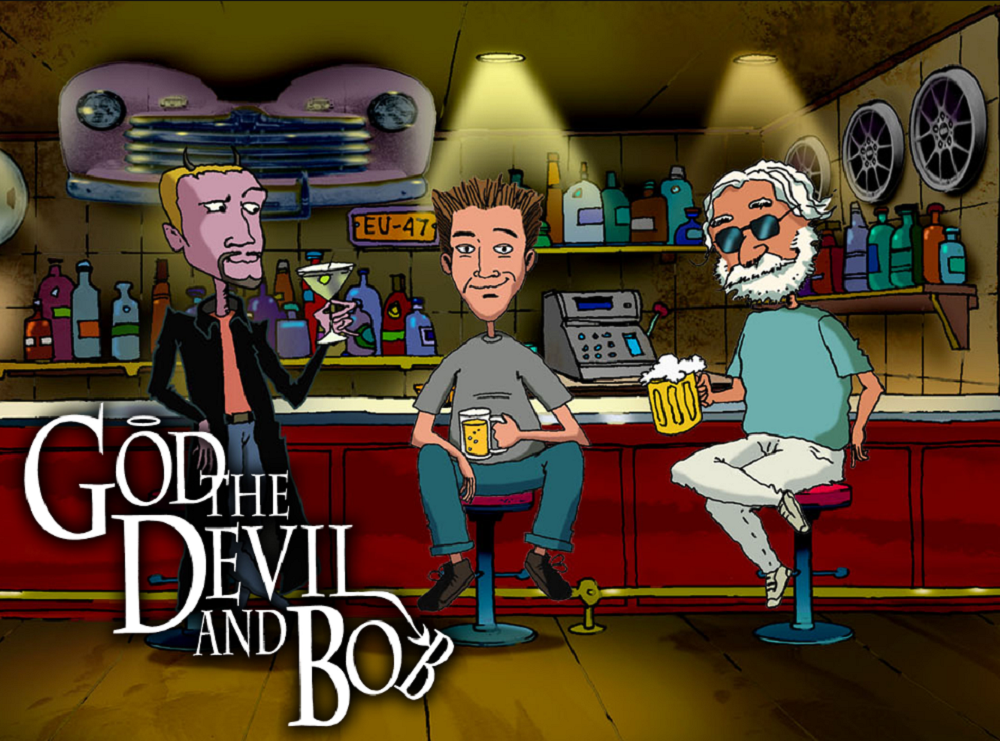
God, The Devil and Bob (NBC): There aren’t many shows that can claim to have been taken off the air by the unique combination of low ratings and pressure from the religious right, but God, The Devil and Bob can firmly nail its colours to that mast. Starring James Garner as God, the animated sitcom debuted on NBC in March 2000 in 3rd Rock from the Sun’s usual slot, with that show moved forward half an hour to act as a lead-in.

Garner was joined in the cast by Alan Cumming as The Devil, who makes a bet with his opposite number that if a man of his choosing can’t prove humanity is decent, he will destroy the world and start again. The Devil chooses Bob, a borderline alcoholic and porn addict from Detroit played by 3rd Rock’s French Stewart, and somehow Bob comes through, becoming God’s latest Prophet as a result.

God, The Devil and Bob, 1999-2000

Created by Matthew Carlson, who got his start on The Wonder Years before working on Camp Wilder and Malcolm in the Middle, which premiered two months before God, The Devil and Bob. Past its initial conceit, Bob becomes drinking buddies with God and the Devil, and God uses Bob to try out new ideas for humanity while Lucifer does his best to scupper things.

Thirteen episodes were produced but only four aired before NBC pulled it from the schedules, citing low ratings as the main reason for its early cancellation. However, the American Family Association had been working against the show from the off, convincing nine local NBC affiliates in the South to boycott the show before its debut, joined by another eight once it had begun airing. Ratings did fall from fourteen million for its premiere to six and a half for the follow-up, which went up against Who Wants To Be A Millionaire? on Tuesday nights. The show eventually got a full run on Cartoon Network’s late-night Adult Swim block in 2011 and Carlson’s success on Malcolm in the Middle meant that it quickly became forgotten as “that show where God got a girlfriend…”

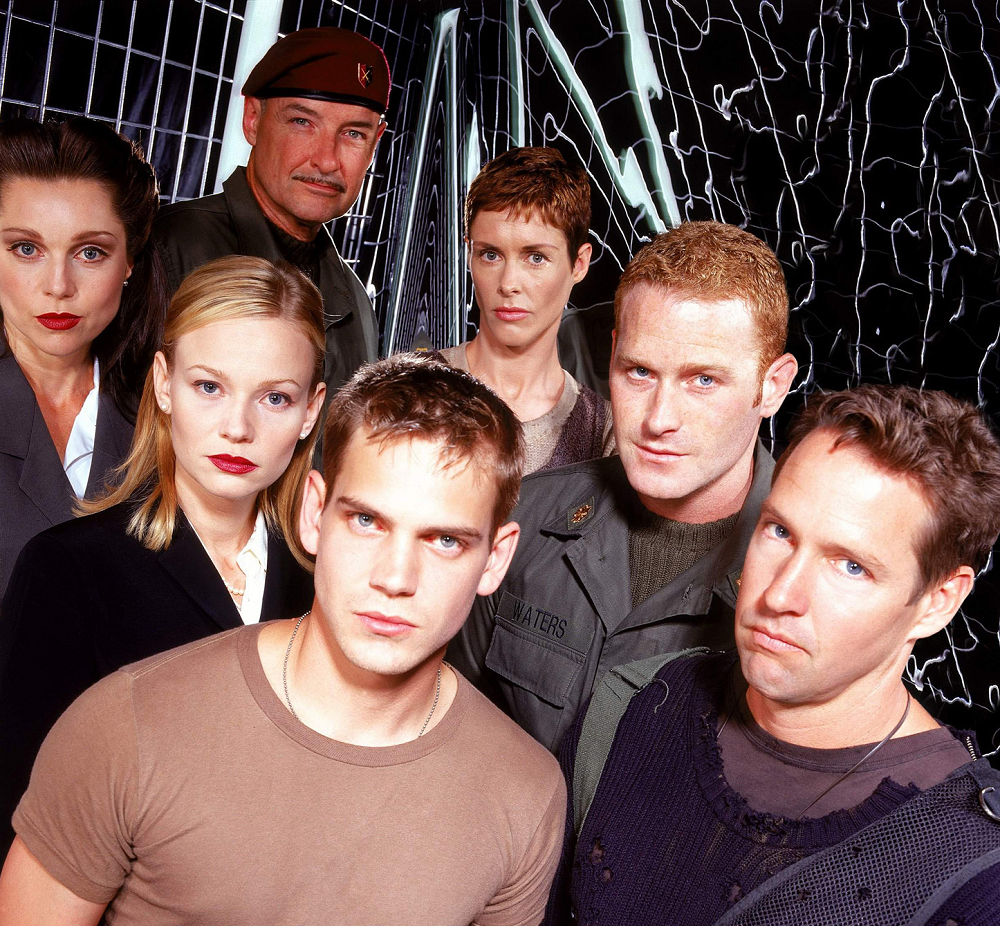
Harsh Realm (Fox): Intended to be a “high-tech version” of his favourite films (Path of Glory, Platoon, and Blade Runner), Harsh Realm was X-Files creator Chris Carter’s follow-up to the cancelled Millennium, again nominally unconnected but sharing many of the same themes as his hit show. Carter took “inspiration” from a 1994 comic book of the same name, written by James D Hudnall and drawn by Andrew Paquette, in which people are able to enter virtual reality worlds, one of which – the Harsh Realm – is an anything goes, unsupervised environment which has real-life consequences for your virtual adventures.

The name of the comic book was taken from an infamous hoax perpetuated by Sub Pop Records employee Megan Jasper, where she gave The New York Times a list of “grunge” slang words that she’d made up on the spot; a “harsh realm” was a “bummer.” Carter’s pilot borrowed the VR idea and the comic’s name, turning the Harsh Realm into a nightmare VR scenario set in the aftermath of a nuclear explosion, used as a training tool by the US military, where Lieutenant Tom Hobbes (Party of Five’s Scott Bairstow) finds himself days before he is due to leave the army.

Harsh Realm, 1999-2000

Hobbes is given a final mission, to kill General Omar Santiago, a former US Army Sergeant who has gone rogue in the Harsh Realm, and he encounters both familiar and strange faces as he works towards his target, enlisting the aid of DB Sweeney’s Mike Pinocchio (a soldier who lost his legs and an eye in Desert Storm but has no such disabilities in the Harsh Realm) and an NPC called Florence. Terry O’Quinn as Santiago is at his unhinged best, dedicated to destroying the real world to ensure the Harsh Realm becomes the prime reality.

Carter was initially given a “created by” credit, switched to “developed by” after Hudnall and Paquette took legal action to have their names added to their credits, and the first episode attracted seven and a half million viewers on Fox, around what The X-Files was averaging. Viewers quickly became confused, however, and critics wondered how many would stick with the show until it made sense. The answer was roughly half that number, and it was pulled from the schedule after just three episodes had aired. The remaining nine completed episodes were shown on the FX Network and Carter went back to The X-Files, preparing an explicit spin-off in the shape of The Lone Gunmen.

Next time on The Telephemera Years: More of the 1999-2000’s season’s one-season wonders, including Cleopatra, clerks, freaks, and geeks!

Check out our other Telephemera articles:

The Telephemera Years: pre-1965 (part 1, 2, 3, 4)

The Telephemera Years: 1966 (part 1, 2, 3, 4)

The Telephemera Years: 1967 (part 1, 2, 3, 4)

The Telephemera Years: 1968 (part 1, 2, 3, 4)

The Telephemera Years: 1969 (part 1, 2, 3, 4)

The Telephemera Years: 1970 (part 1, 2, 3, 4)

The Telephemera Years: 1971 (part 1, 2, 3, 4)

The Telephemera Years: 1973 (part 1, 2, 3, 4)

The Telephemera Years: 1974 (part 1, 2, 3, 4, 5)

The Telephemera Years: 1975 (part 1, 2, 3, 4)

The Telephemera Years: 1977 (part 1, 2, 3, 4)

The Telephemera Years: 1978 (part 1, 2, 3, 4)

The Telephemera Years: 1980 (part 12, 3, 4)

The Telephemera Years: 1981 (part 1, 2, 3, 4)

The Telephemera Years: 1982 (part 1, 2, 3, 4)

The Telephemera Years: 1983 (part 1, 2, 3, 4)

The Telephemera Years: 1984 (part 1, 2, 3, 4)

The Telephemera Years: 1986 (part 1, 2, 3, 4)

The Telephemera Years: 1987 (part 1, 2, 3, 4)

The Telephemera Years: 1989 (part 1, 2, 3, 4)

The Telephemera Years: 1990 (part 1, 2, 3, 4)

The Telephemera Years: 1992 (part 1, 2, 3, 4)

The Telephemera Years: 1995 (part 12, 3, 4)

The Telephemera Years: 1997 (part 1, 2, 3, 4)

The Telephemera Years: 1998 (part 1, 2, 3, 4)

The Telephemera Years: 2000 (part 1, 2, 3, 4)

The Telephemera Years: 2002 (part 1, 2, 3, 4)

The Telephemera Years: 2003 (part 1, 2, 3, 4)

The Telephemera Years: 2005 (part 1, 2, 3, 4)

The Telephemera Years: 2006 (part 1, 2, 3, 4)

The Telephemera Years: 2008 (part 1, 23, 4)

The Telephemera Years: O Canada! (part 1, 2, 3, 4)

Titans of Telephemera: Irwin Allen

Titans of Telephemera: Stephen J Cannell (part 1, 2, 3, 4)

Titans of Telephemera: DIC (part 1, 2)

Titans of Telephemera: Hanna-Barbera (part 1, 2, 3, 4, 5)

Titans of Telephemera: Kenneth Johnson

Titans of Telephemera: Sid & Marty Krofft

Titans of Telephemera: Glen A Larson (part 1, 2, 3, 4)

Titans of Telephemera: Quinn Martin (part 1, 2)

Titans of Telephemera: Ruby-Spears

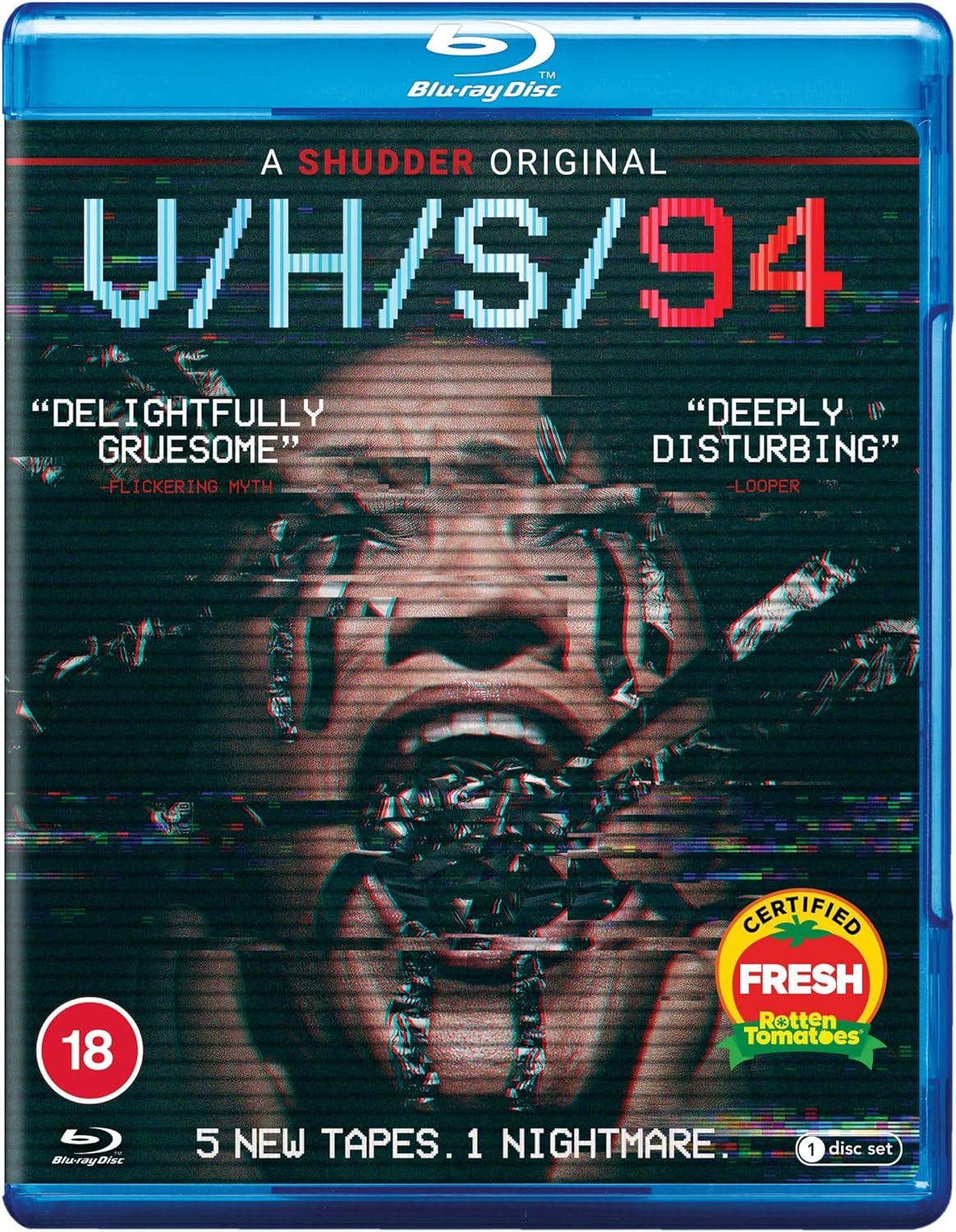
[ENDED] Win V/H/S/94 on Blu-ray

Seminal horror franchise V/H/S takes us back to the nineties with its fourth wicked instalment, V/H/S/94, which will have you taped to the telly. This acclaimed Shudder Original (we called it the best V/H/S yet) promises more hair-raising, old-school entertainment and gruesome good fun with this new collection of bone-chilling tales of found footage terror. V/H/S/94 arrives on Blu-ray, DVD, and digital on February 26th, 2024, courtesy of Acorn Media International, and we have a copy to give away to one lucky reader. Just read on and enter below…

The year is 1994 and when a mysterious VHS tape is found, a ruthless police SWAT team raid a remote warehouse, only to discover a sinister cult compound whose collection of pre-recorded material uncovers a nightmarish conspiracy… all will be revealed in the creepy compendium of horrors that follow.

The twisted tales are written and directed by an impressive line-up of horror talent, including Simon Barrett (You’re Next) and Timo Tjahjanto (The Night Comes For Us) and newcomers Jennifer Reeder, Ryan Prows, and Chloe Okuno.

In Chloe Okuno’s Storm Drain, a reporter (Anna Hopkins, The Expanse) and her cameraman enter a drain to capture footage of a legendary creature known as The Rat Man, who has reportedly been spotted in the city’s sewers. Once down there, they soon get way more than they bargained for…

In Simon Barrett’s The Empty Wake, a young woman named Hailey is assigned to host the evening wake for a man named Andrew Edwards, but there’s a strange request: that Andrew’s casket be filmed for the whole night. What exactly is Hailey in for?

In Timo Tjahjanto’s The Subject, a deranged but skilled scientist, Dr James Suhendra, wants to create a successful mechanical-human hybrid and has started kidnapping humans to use as guinea pigs. Can they escape before falling victim to his violent experiments?

Finally, in Ryan Prows’ Terror starring Christian Lloyd (The Handmaid’s Tale), a white supremacist extremist group known as the First Patriots Movement Militia is plotting to blow up a government building and take back America… but at what cost?

a Rafflecopter giveaway

V/H/S/94 is released on Blu-ray, DVD, and digital on February 26th, 2024. You can read our review here and pre-order now.