THE TELEPHEMERA YEARS: 1976, part 2

Gemini Man, 1976-77

Ah, telephemera… those shows whose stay with us was tantalisingly brief, snatched away before their time, and sometimes with good cause. They hit the schedules alongside established shows, hoping for a long run, but it’s not always to be, and for every Street Hawk there’s two Manimals. But here at STARBURST we celebrate their existence and mourn their departure, drilling down into the new season’s entertainment with equal opportunities square eyes… these are The Telephemera Years!

1976-77

For some reason – the US’s failure in Vietnam is often blamed – the American public could not get enough of the rock ‘n’ roll era in the 1970s, a point never more heavily underlined than with the success of Grease in 1978. It started before that, of course, with George Lucas’s American Graffiti giving birth to the Fonz on TV. It was almost as if the whole country wanted to forget the last decade or so and that Happy Days was the number one show for 1976-77 is no surprise. That spin-off Laverne & Shirley is number two is perhaps a little more surprising, but there’s Korean War comedy M*A*S*H at number four to ram things home. Outside this yearning for the past but also making headway in the TV ratings were telefantastic Jiggle TV mainstays Charlie’s Angels and The Bionic Woman, as well as The Six Million Dollar Man, Baretta, and Hawaii Five-O; if there was somewhere the US TV viewing audience wanted to be in 1976 it was not the 1976 outside their door.

Several big shows bade their farewells this season with The Streets of San Francisco finally running out of road, the departure of The Mary Tyler Moore Show and Phyllis setting women’s emancipation back a few years, and Sanford and Son a victim of America’s disposable Capitalism. Coming in to take their places were interfering coroner Quincy, bear-worrier Grizzly Adams, and Roots, the first of the blockbuster mini-series that gave schoolchildren everywhere license to say Kunta Kinte. But those were all hit shows – what about those shows that didn’t hang around, that didn’t make much of an impact on the 1976 public? This is the story of four more failed TV shows…

Sugar Time! (ABC): Barbie Klein became an overnight star at the age of eighteen when, as part of the ensemble cast of Playboy After Dark (an attempt to portray an “authentic” party at Hugh Hefner’s place), she caught Hefner’s eye. They embarked on a relationship which saw Klein – now calling herself Barbi Benton at Hefner’s request – put front and centre of the Playboy empire, appearing as a centrefold on four occasions and given an enlarged role on After Dark. It was Benton who discovered the Playboy Mansion in Los Angeles and encouraged Hefner to buy it, and the two were together from 1969 to 1976.

Alongside her Playboy duties, Benton also appeared in films – 1970’s How Did a Nice Girl Like You Get into This Business? ­– and on TV as part of the cast of Rowan & Martin’s Laugh-In and Hee Haw, as well as guesting on the likes of The Love Boat and Fantasy Island. In 1977, she was cast as Maxx Douglas, a nightclub hatcheck girl looking to make it big as a rock star with her band, Sugar Time! A three-piece, the band also included dental hygienist Maggie and dance instructor Diane, with the cast also including Wynn Irwin (who’d appeared alongside Dom De Luise in On the Buses remake Lotsa Luck) as Al Marks, the owner of a club which allowed the girls to perform… for free.
Sugar Time!, 1976-77

Sugar Time! was created by James Komack, who’d also created The Courtship of Eddie’s Father and guided Welcome Back, Kotter to the screen, as well as last week’s Mr T & Tina, and he had high hopes for his trio of unknowns to strike a (sorry) chord with American audiences. Maxx, Maggie, and Diane – or Benton, Marianne Black, and Didi Carr – sang the theme tune, “Girls, Girls, Girls,” written by Paul “We’ve Only Just Begun” Simpson, but the series sat on the shelf until August 1977 when it was put out on Saturday nights in a slot vacated by Wonder Woman.

Four episodes aired before Sugar Time! was shunted by the arrival of season two of Fish, with episode five randomly popping up on a Monday night in November. It was clear that the network saw Komack’s show as nothing but a space filler, which is a shame because the single surviving episode on YouTube reveals a sweet, good-natured comedy with some likeable leads. Episode six then had to wait until April 1978, when it began a run of six episodes that ended in late May, leaving the last two episodes unaired.

By that point, Komack’s follow-up series Roller Girls had also failed to find an audience and he had one foot out of the business, although he did direct Porky’s Revenge in 1985. Barbi Benton kept acting for a few more years, most notably appearing in schlock horror classic X-Ray in 1982 but retired after the birth of her first child in 1986 and went into real estate, putting that Playboy Mansion-spotting talent to good use at last.

Gemini Man (NBC): David McCallum starred in the 1975 TV version of The Invisible Man, loosely inspired by HG Wells 1897 novel, as Daniel Westin, a scientist who accidentally turns himself invisible while trying to discover the secret of teleportation. The series was a huge flop for NBC, who cancelled the show after just thirteen episodes had aired, ultimately leading to McCallum returning to the UK and gifting us Sapphire & Steel.

NBC, though, had not had their fill of the concept and producer Harve Bennett engaged The Outer Limits creator Leslie Stephens to retool the basic Invisible Man idea in a way that would use the special effects they developed for the McCallum show but in a much cheaper way. Stephens came up with Gemini Man, the story of Sam Casey, a hip, motorcycle-riding, denim-clad secret agent who is exposed to a huge dose of radiation while trying to retrieve a downed Soviet satellite. Rather than kill him, the radiation turns Casey invisible, a process reversed with the use of a special wristwatch that stabilises his DNA. Using the watch, Casey can turn himself invisible at will, but only for fifteen minutes a day. Any more and he will die and so Casey must “NEVER EXCEED!”
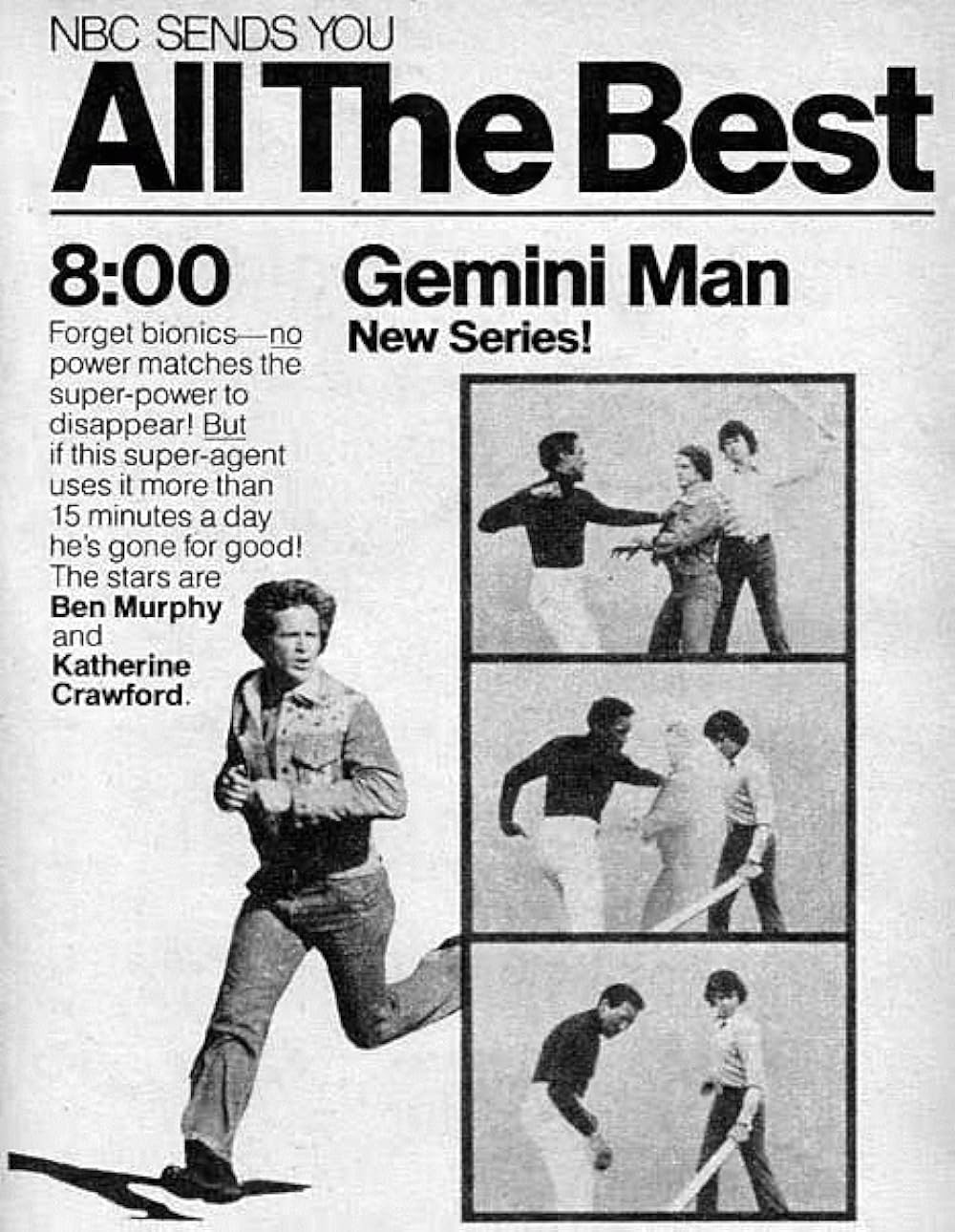
Gemini Man, 1976-77

Starring as Casey was Ben Murphy, three years after finishing the role that made his name, “Kid” Curry in Alias Smith and Jones. His follow-up show, Griff with Lorne Greene, had lasted for just thirteen episodes before being cancelled, though, and he must have hoped that Gemini Man – where he was backed by Katherine Crawford and William Sylvester – would turn a once promising career around. A pilot was shot from Stephens’s script and did well enough when it aired in May 1976 that NBC took the show to series for the new Fall season.

Unfortunately, despite a writing crew that featured Robert “Psycho“ Bloch, future Arnie wrangler Stephen E de Souza, and Steven Bochco, audiences just weren’t interested in stories featuring Casey fighting robots, tangling with doppelgangers, and guarding a women’s swimming team in enough numbers to justify the budget. Given the low ratings the first few episodes garnered, NBC made the decision to pull the plug after just five episodes had aired, although the rest of the eleven finished adventures were later shown on BBC1 in the UK, where it became enough of a hit to earn a soundtrack album and an annual from Brown Watson.

Blansky’s Beauties (ABC): Ah, there’s nothing quite like the 1976 ABC approach to spin-off shows, which doesn’t waste precious time on such trivial matters as waiting for audiences to get to like a character enough to warrant their own show. Instead, ABC would introduce a character in one of their most popular shows and immediately launch their own programme, safe in the knowledge that anyone who appears in as little as a single episode of Welcome Back, Kotter was sure to be able to convince that show’s audience to follow them across the schedules.

Happy Days was the king of the spin-off, of course. To be fair, Laverne and Shirley appeared in three episodes of that show before they got their own, and Joanie and Chachi’s love affair would play out across five seasons of the parent show before their own, doomed spin-off, but Blanksy’s Beauties was another thing altogether. Later, Mork from Orson would also appear in just a single episode before getting his own show but they at least waited to see viewer feedback before greenlighting it (and rewriting the Happy Days episode he appeared in to make it possible).
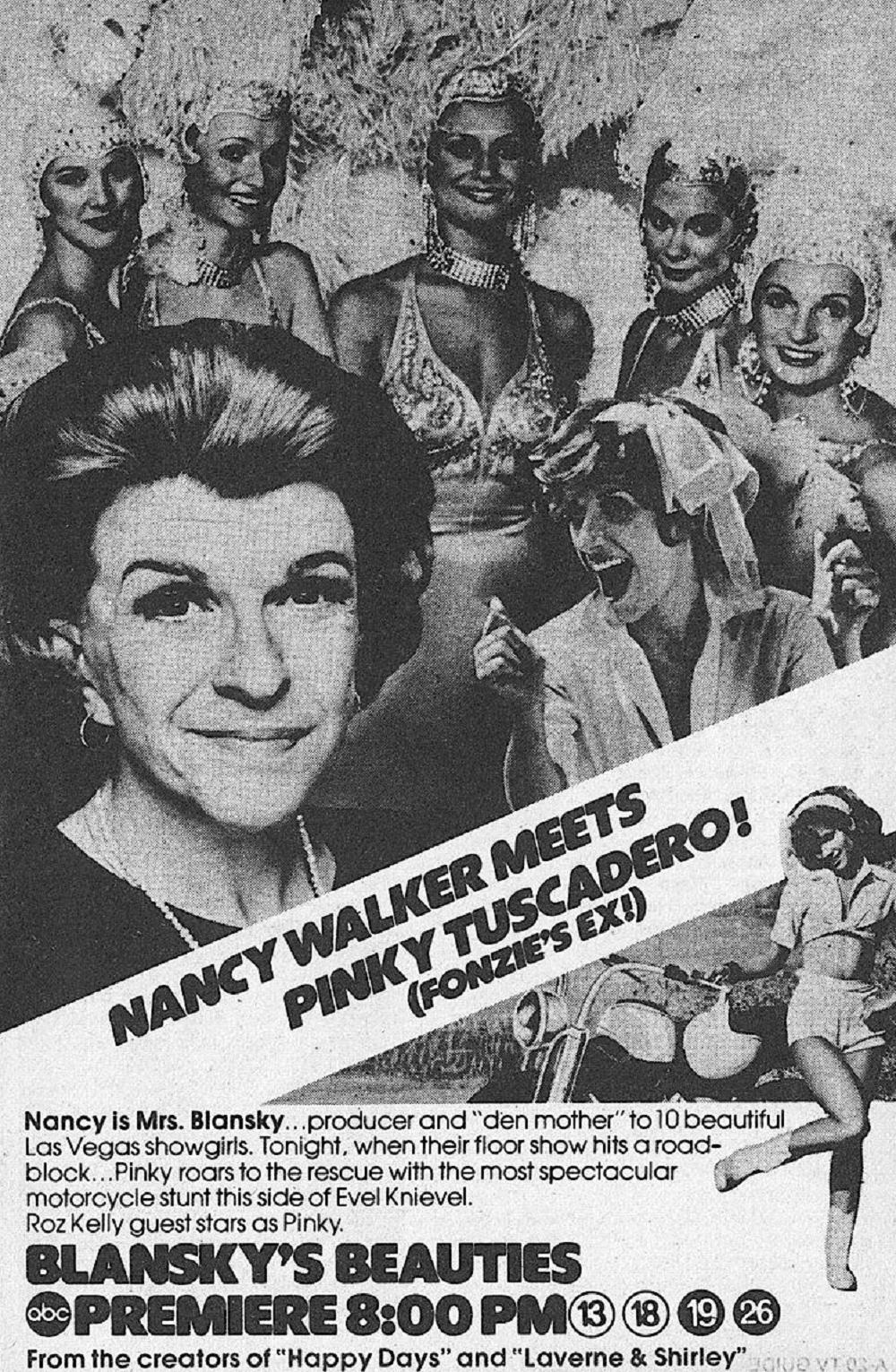
Blansky's Beauties, 1976-77

Nancy Blansky was introduced in a third anniversary celebration episode of Happy Days on February 4th 1977. Howard Cunningham’s cousin, she was visiting from Las Vegas, where she owned an apartment complex, but eight days later had transformed into a den mother for showbiz girls, having apparently enjoyed a long career as a dancer herself. And, despite Nancy Walker looking no older than her earlier appearance, there was definitely room for that because Blansky’s Beauties was set in 1977, even featuring Laverne & Shirley’s Eddie Mekka as the younger cousin of his character on that show!

The ties to the Happy Days universe didn’t end there, with Fonzie’s ex Pinky Tuscadero appearing in the first episode and Pat Morita reprising the role of Arnold after the failure of Mr T & Tina (see last week’s The Telephemera Years for that story), as well as a few mentions of a clumsy girl called Laverne. Joining Walker and Mekka in the cast were future Happy Days regulars Lynda Goodfriend and Scott Baio (a proto-Chachi as the lecherous twelve-year-old Anthony), as well as Caren Kaye and Johnny Desmond, with the whole shebang overseen by Happy Days’ Bob Brunner, Garry Marshall, and Arthur Silver.

Unlike Laverne & Shirley – which ran for eight seasons – the Fonzie magic didn’t rub off on Blansky’s Beauties and the show – a midseason replacement for Holmes and Yoyo – did not return for a second season. Walker stayed on Rhoda (which she made simultaneously with this show, as did Mekka with Laverne & Shirley), while Baio, Goodfriend, and – eventually – Morita returned to Happy Days.

Delvecchio (CBS): Judd Hirsch was still two years away from his breakthrough role as Alex in Taxi when he was cast as Sergeant Dominick Delvecchio, a tough Italian American who had graduated law school but chose to become a detective in the Los Angeles Police Department. Hirsch was picked to play Delvecchio by producer William Sackheim, who’d used him as a complete unknown in The Law two years earlier. Sackheim was also responsible for 1954’s The Human Jungle, about a police captain who qualifies as a lawyer but sticks around to helm a tough precinct.

Delvecchio was created by Sam Rolfe (the man behind The Man from UNCLE) and Joseph Gunn, very much in the spirit of the time; as such, Delvecchio’s nickname on the force was “Delwop,” his fellow detective Paul Shonski “The Fat Polish Sausage.” The man responsible for much of the feel of the show, however, was producer Steven Bochco, eight years into a career that would see him create Hill Street Blues, LA Law, and Cop Rock. Bochco wrote eight of the twenty-two episodes that made up Delvecchio’s first season and many of his later flourishes were evident even at this early stage.
Delvecchio, 1976-77

The show made its debut opposite The Streets of San Francisco, then in its final season and very much on the wane, slipping from twenty-sixth to fifty-second in the ratings. Sackheim hoped that the first episode would make an impact against weak programming before moving Delvecchio from Thursdays to Sundays two weeks later, where its opposition came from movies on both ABC and NBC. In his first few weeks on air alone, Delvecchio had to deal with unethical cops, desperate informants, traumatised rape victims, and loan sharks, setting the scene for an uncompromising season of hard to crack cases.

Unfortunately, despite Sackheim’s careful planning and some clever writing from Bochco, Michael Kozoll, and Michael Rhodes, and solid performances from Hirsch, Charles Haid, and Michael Conrad (the latter two later following Bochco and Kozoll to Hill Street Blues), Delvecchio never set the ratings on fire, finishing the season down in seventy-ninth place, well below its so-called weak opposition The Streets of San Francisco.

Dog and Cat (ABC): In 1976, male and female detective partnerships were rare enough in the LAPD that “dog and cat” was used to describe them in police slang, borrowed for the title of this show by creator Walter Hill. Having scripted a number of flicks including The Getaway, The Thief Who Came to Dinner, and The Drowning Pool, Hill had just directed his first feature – bare-knuckle boxing yarn Hard Times, featuring Charles Bronson – when a young ABC executive named Brandon Tartikoff made it his one of his first projects for the network.

Hill scripted the pilot (which apparently influenced Shane Black when he was creating Lethal Weapon) but was otherwise busy working on The Driver, leaving much of the work on Dog and Cat to executive producer Lawrence Gordon and future Supernatural showrunner Robert Singer. It was Singer who oversaw the casting of Lou Antonio and Kim Basinger, a former model who had just turned to acting and had a handful of small parts under her belt, including Charlie’s Angels (which she reportedly turned down a regular role on to take this part).
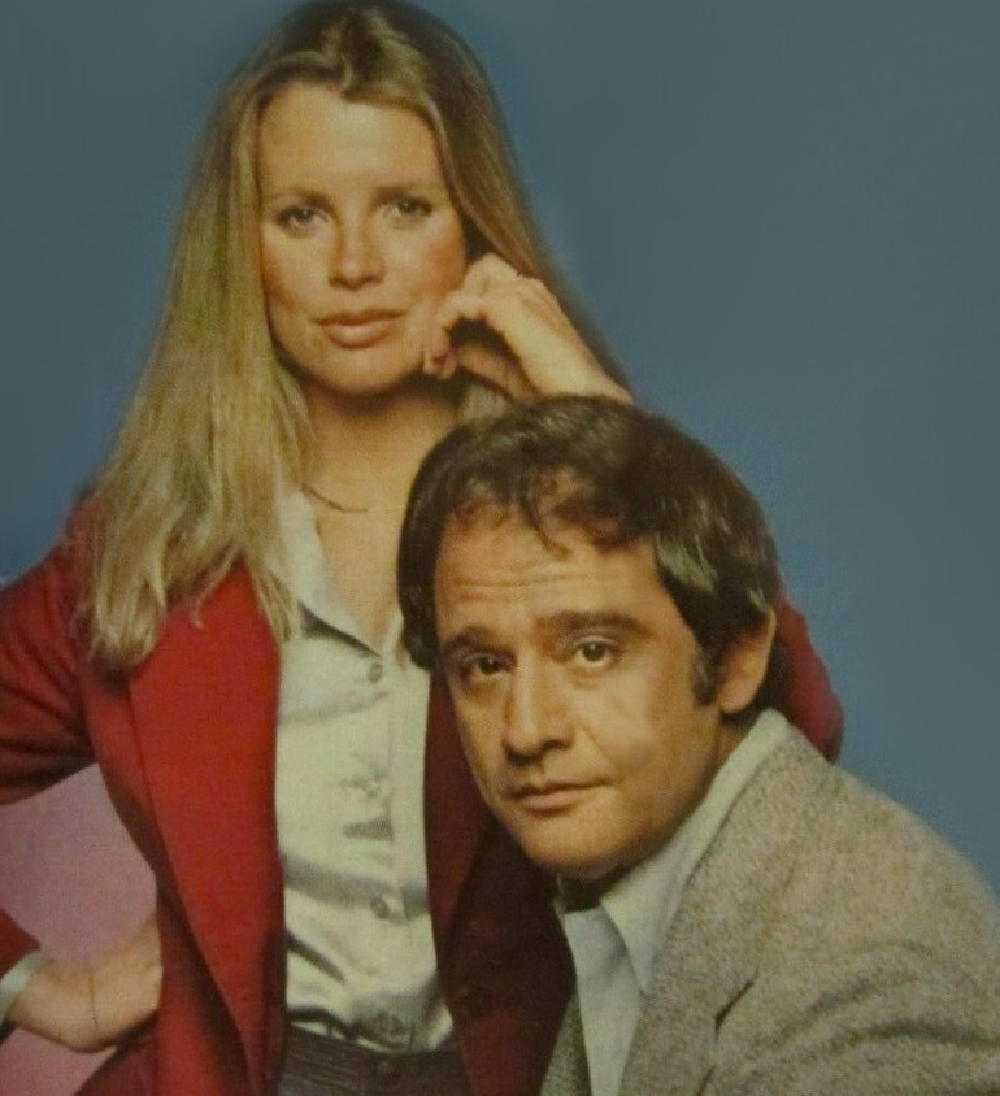
Dog and Cat, 1976-77

Hill’s pilot saw Jack Ramsey (Antonio) reluctantly accept the slightly oddball JZ Kane (Basinger) as his new partner when his old one is shot in the line of duty. Together, and completely platonically, they work undercover to ferret out some of the LAPD’s most wanted. After a promising start, and with Starsky and Hutch as a lead-in, the show hit a hiccup in week two when the planned episode, “Live Bait,” was pushed back a week due to its controversial subject matter – a serial rapist – and replaced with a jewel heist yarn.

The episode did air the next week but it was clear that the network weren’t completely behind the show, despite some positive reviews for both the concept and Basinger’s performance. There was a two-week gap between episodes three and four, by which point a decision seemed to have been made to cancel the show. Just seven episodes were completed, the last of which trickled out in mid-May 1977 after another three-week break, Ramsey and Kane’s beat-up old Volkswagen Beetle never to be seen around the streets of LA again.

Next time on The Telephemera Years: 1976’s unsold pilots, with witches, detectives, and a proto-Lost!

Check out our other Telephemera articles:

The Telephemera Years: pre-1965 (part 1, 2, 3, 4)

The Telephemera Years: 1966 (part 1, 2, 3, 4)

The Telephemera Years: 1967 (part 1, 2, 3, 4)

The Telephemera Years: 1968 (part 1, 2, 3, 4)

The Telephemera Years: 1969 (part 1, 2, 3, 4)

The Telephemera Years: 1970 (part 1, 2, 3, 4)

The Telephemera Years: 1971 (part 1, 2, 3, 4)

The Telephemera Years: 1973 (part 1, 2, 3, 4)

The Telephemera Years: 1974 (part 1, 2, 3, 4, 5)

The Telephemera Years: 1975 (part 1, 2, 3, 4)

The Telphemera Years: 1976 (part 1)

The Telephemera Years: 1977 (part 1, 2, 3, 4)

The Telephemera Years: 1978 (part 1, 2, 3, 4)

The Telephemera Years: 1980 (part 12, 3, 4)

The Telephemera Years: 1981 (part 1, 2, 3, 4)

The Telephemera Years: 1982 (part 1, 2, 3, 4)

The Telephemera Years: 1983 (part 1, 2, 3, 4)

The Telephemera Years: 1984 (part 1, 2, 3, 4)

The Telephemera Years: 1986 (part 1, 2, 3, 4)

The Telephemera Years: 1987 (part 1, 2, 3, 4)

The Telephemera Years: 1989 (part 1, 2, 3, 4)

The Telephemera Years: 1990 (part 1, 2, 3, 4)

The Telephemera Years: 1992 (part 1, 2, 3, 4)

The Telephemera Years: 1995 (part 12, 3, 4)

The Telephemera Years: 1997 (part 1, 2, 3, 4)

The Telephemera Years: 1998 (part 1, 2, 3, 4)

The Telephemera Years: 1999 (part 1, 2, 3, 4)

The Telephemera Years: 2000 (part 1, 2, 3, 4)

The Telephemera Years: 2002 (part 1, 2, 3, 4)

The Telephemera Years: 2003 (part 1, 2, 3, 4)

The Telephemera Years: 2005 (part 1, 2, 3, 4)

The Telephemera Years: 2006 (part 1, 2, 3, 4)

The Telephemera Years: 2008 (part 1, 23, 4)

The Telephemera Years: O Canada! (part 1, 2, 3, 4)

Titans of Telephemera: Irwin Allen

Titans of Telephemera: Stephen J Cannell (part 1, 2, 3, 4)

Titans of Telephemera: DIC (part 1, 2)

Titans of Telephemera: Hanna-Barbera (part 1, 2, 3, 4, 5)

Titans of Telephemera: Kenneth Johnson

Titans of Telephemera: Sid & Marty Krofft

Titans of Telephemera: Glen A Larson (part 1, 2, 3, 4)

Titans of Telephemera: Quinn Martin (part 1, 2)

Titans of Telephemera: Ruby-Spears

THE TELEPHEMERA YEARS: 1999, part 4

Big Guy and Rusty the Boy Robot, 1999-2000

Ah, telephemera… those shows whose stay with us was tantalisingly brief, snatched away before their time, and sometimes with good cause. They hit the schedules alongside established shows, hoping for a long run, but it’s not always to be, and for every Street Hawk there’s two Manimals. But here at STARBURST we celebrate their existence and mourn their departure, drilling down into the new season’s entertainment with equal opportunities square eyes… these are The Telephemera Years!

1999-2000

As US TV moved into the twenty-first century, the schedule was full of comings and goings. Sure, old reliables like ER, Friends, Frasier, and Touched by an Angel could be relied upon to bring in millions of viewers for NBC and CBS, but everyone was talking about the new kids on the block. ABC took the top three slots in the ratings with the thrice-weekly Who Wants to Be a Millionaire?, while CBS jumped into the reality market with two feet, debuting both Big Brother and Survivor to an America hungry for average Joes. Also arriving on the network schedules was Judging Amy, Malcolm in the Middle, Law & Order: SVU, and The West Wing, while HBO debuted The Sopranos.

For genre fans, Buffy spin-off Angel premiered on The WB, as did UFO drama Roswell, and Relic Hunter, The Lost World, and Beastmaster are began syndicated runs. This made up for the loss of Sliders and Poltergeist: The Legacy, both of which were entering their final seasons, along with Boy Meets World, Chicago Hope, Beverly Hills 90210, Party of Five, and Veronica’s Closet. That’s what the grown-ups were watching, at least, but what about their kids? This is the story of some of 1999’s more intriguing cartoon debuts…

The Avengers: United They Stand (Fox): It might seem difficult to imagine now, after a decade and a half of the MCU and the Avengers Initiative, but there was a time when The Avengers were deeply unfashionable. Despite some solid storytelling from Roger Stern and John Buscema in the mid-1980s, the team had lapsed into a mostly second-rate affair by the start of the 1990s, with Captain American, Iron Man, and Thor occasionally joining the team but rarely together, even after Kurt Busiek’s celebrated reboot in 1998.

It’s not surprising, then, that the efforts of Marvel Studios were directed more towards the X-Men and Spider-Man throughout the 1990s, with occasional diversions into other properties never seeming to include the Avengers. That changed in 1997 when Roland Poindexter, the head of Fox Kids, asked ­X-Men: The Animated Series writers Robert N Skir and Marty Isenberg to work up a treatment for an Avengers cartoon. That was soon set aside for a proposed Captain America solo series but in the end neither happened due to Marvel Comics’ oncoming bankruptcy.

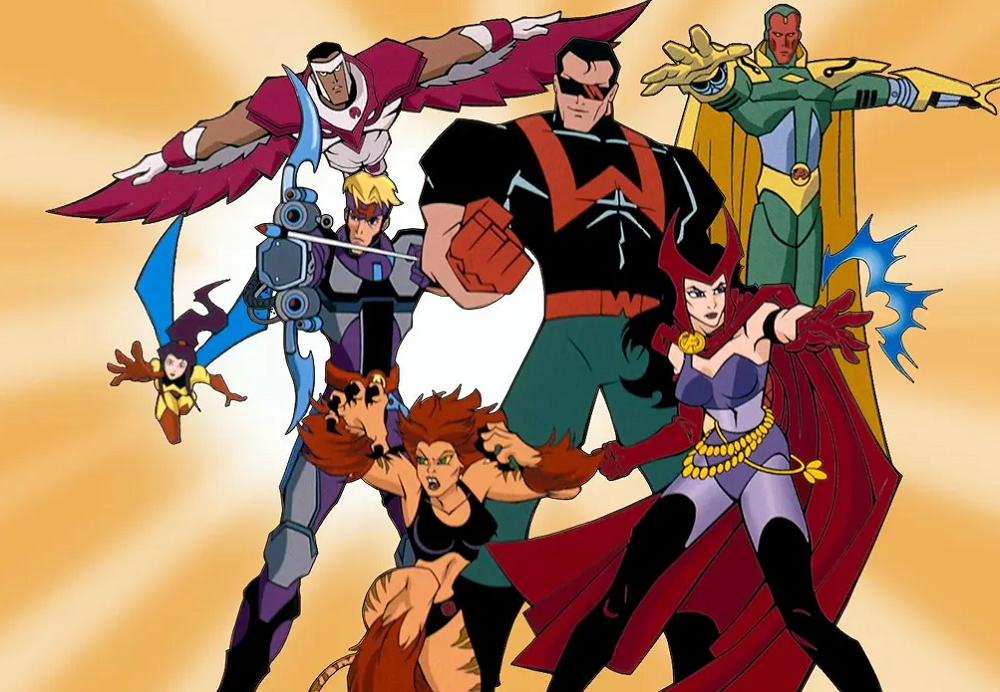
The Avengers - United They Stand, 1999-2000

A year later, and with things more settled at Marvel, Poindexter decided to revisit the Avengers idea and gave the series bible created by Skir and Isenberg to another former X-Men staffer, Eric Lewald¸ who polished the concept for a series that, like the comic books of the time, wouldn’t feature any of the big three. Instead, Avengers: United They Stand was more loosely based on the West Coast Avengers comic book of the late 1980s and early 1990s, with Falcon, Hawkeye, Scarlet Witch, Tigra, Vision, Wasp, and Wonder Man joining a team led by Ant-Man.

The series got off to a strong start with perennial Avengers villain Ultron threatening the world and went on to feature threats from such Avengers regulars as Kang the Conqueror and the Masters of Evil, with guest appearances from Captain America, Iron Man, and the Sub-Mariner. To capitalise on the success of Batman Beyond, a late decision was made to set the series twenty-five-years into the future, although without ageing the characters, and the Avengers were often given armoured costumes, presumably to make them more toyetic (and new Marvel owners Toy Biz did, indeed, release a line of action figures based on the show).

A first season of thirteen episodes was produced and plans were underway for a second season – which would have explored the origins of the characters – but Fox cancelled the show before work began on that extension. It would be 2010 before the Avengers got their own show again as Avengers: Earth’s Mightiest Heroes ramped up the excitement for their 2012 feature film debut. Notably that series had the big three along for the ride, as well as Hulk and Black Panther, as lessons had obviously been learned…

The Weekenders (ABC): Although it gets much, much worse in adulthood, that feeling of the weekend slipping away from you, with Monday morning fast approaching, is keenly felt by schoolchildren the world over. What better premise, then, than the adventures of a gang of middle school children over a weekend, with a ticking clock counting down until the end of their precious free time…

The Weekenders was created by Doug Langdale, a veteran animation staffer with credits such as Earthworm Jim, Pinky and the Brain, and Darkwing Duck on his résumé. His show revolved around four diverse character – friendly Italian American Tino Tonitini, the hyperactive Lor MacQuarrie, Haitian immigrant Carver Rene Descartes, and Tish Katsufrakis, a whipsmart Jewish girl whose relatives come from “the Old Country.”

The Weekenders, 1999-2000

Each episode begins on Friday afternoon as school gets out (although, tellingly, their school life plays little part in the show), setting up the adventure for Saturday and Sunday, all behind a theme tune – “Livin’ For The Weekend” – by Whose Line Is It Anyway? Regular Wayne Brady. The first season, which aired as part of Disney’s Saturday morning block on ABC alongside Recess and Pepper Ann in February 2000, saw the gang deal with unrequited love, immaturity, and makeovers, all wrapped up in a neat package of exploring what their friendships mean in the face of adversity.

The Weekenders was popular enough – it knocked the previously unassailable Pokémon off the top spot – that it was renewed for a second season in September 2000. A third – this time on UPN – arrived a year later and a final season of five episodes brought the total number of episodes for the gang to thirty-nine, although all but five of the episodes featured two adventures per half-hour. The final episode ended with Tino seeing his dad for the first time in eight years, a fitting way for a show which wore its heart firmly on its sleeve to go out.

Big Guy and Rusty the Boy Robot (Fox): Frank Miller rose to prominence with a celebrated run on Daredevil for Marvel Comics, much of which continues to be mined by both comic book and TV stories featuring the blind crimefighter. Miller cemented his reputation with The Dark Knight Returns, his gritty exploration of an ageing Batman, and by the end of the 1980s was preparing to work only on creator-owned projects, published through Dark Horse Comics.

The first of these was Hard Boiled, a collaboration with French artist Geof Darrow, a protégé of the legendary Mœbius. Hard Boiled was ultraviolence personified, illustrated beautifully in Darrow’s ultra-detailed style which made each panel look like a still from an explosion. Miller followed Hard Boiled with Give Me Liberty with Dave Gibbons, and with his own Sin City project, but also returned to Marvel to produce Daredevil: The Man Without Fear, a retelling of the hero’s earliest days. This set Darrow on a path to do a superhero story with Miller and the pair initially worked on an Iron Man treatment, which Marvel passed on.

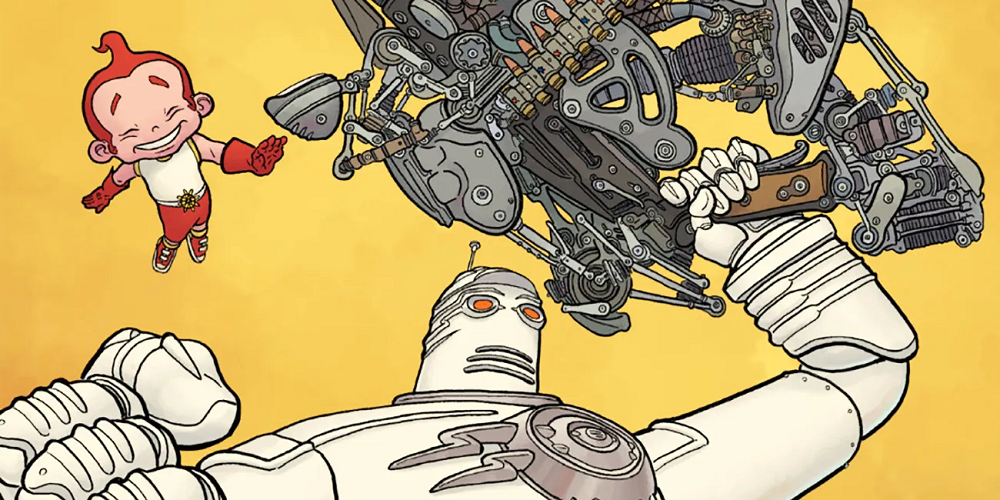
Miller and Darrow retooled their pitch into Big Guy and Rusty the Boy Robot, with Big Guy making his debut in two issues of Mike Allred’s Madman series, also published by Dark Horse. Two oversized issues followed in the summer of 1995, telling the story of Rusty, an Atom Boy-like Japanese defender of liberty, and Big Guy, his American counterpart, standing several stories high and perfect to combat the threat of alien kaiju.

Big Guy and Rusty the Boy Robot, 1999-2000

In 1999, Big Guy and Rusty the Boy Robot came to TV, courtesy of Fox Kids, who tasked animation veterans Richard Raynis, Duane Capizzi, and Jeff Kline – who had worked together on Extreme Ghostbusters ­– with adapting the comic for the screen. In the show, which debuted in September 1999, Rusty was the replacement for Big Guy, a more advanced robot capable of saving Earth on his own, but his inexperience leads to Big Guy being recommissioned to act as his guide. In reality, Big Guy is not actually a robot but has to be piloted by Lieutenant Dwayne Hunter, a weakness which the enemy are always striving to discover.

The thirteen-episode first season saw the character’s introduced and given depth, with Rusty in particular wondering what it means to be an artificial boy. In fact, the TV show was by degrees more mature and rounded than the comics that inspired it, which were – fun as they are – little more than excuses for Darrow to stretch his considerable artistic talents. A second season, also of thirteen episodes, appeared a year later but, despite the series ending with a B-movie-style question mark, there would be no third. Big Guy made one final comic book appearance – a cameo in Sin City: Hell and Back, but otherwise the pair have been absent from any media since the end of the show, hopefully still prepared to defend Earth should they be called upon.

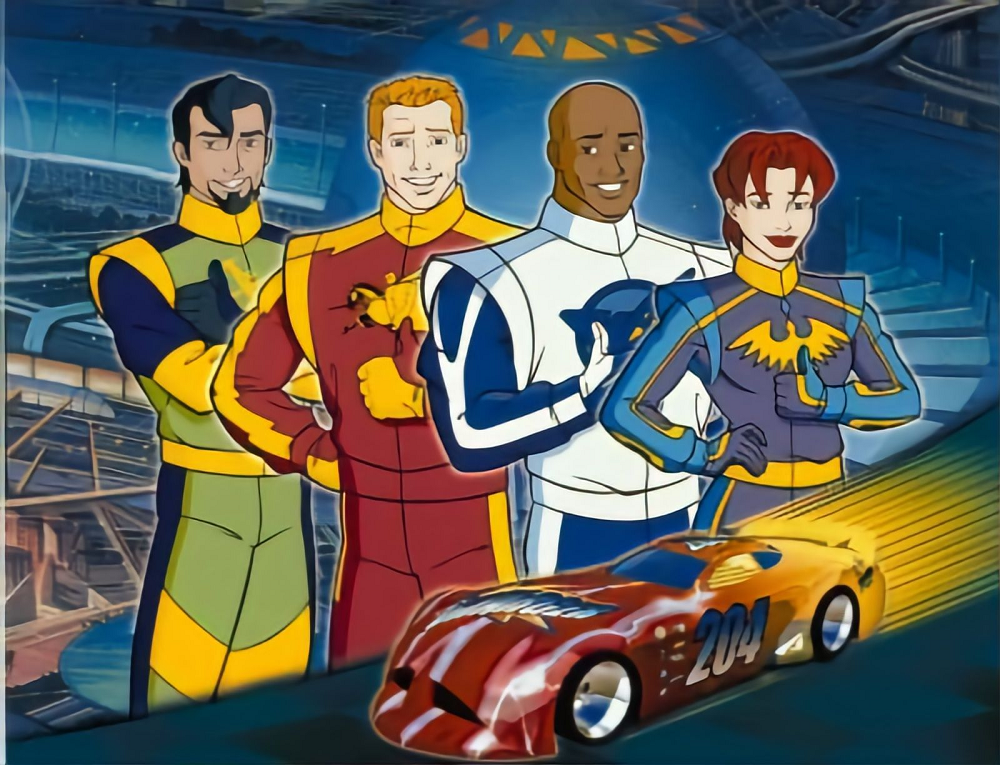
NASCAR Racers (Fox): The received wisdom that NASCAR – the USA’s most enduring form of car racing – is only popular in the American South was briefly threatened in 1999 by the arrival of NASCAR Racers, an attempt to sell the concept to kids nationwide through an animated show on Fox Kids. Produced by Saban Entertainment using a mixture of traditional and computer-generated animation, the series debuted in November 1999 on Saturday mornings, sandwiched between Digimon and Transformers: Beast Machines.

Unlike the real-life NASCAR, which currently has twenty-three teams competing for the NASCAR Cup, NASCAR Racers has just two teams fighting for supremacy, Team Fastex and Team Rexcor. Fastex are the good guys, led by Mark “Charger” McCutchen, a second-generation racer who has a crush on teammate Megan “Spitfire” Fassler, the daughter of the team’s owner. Facing them are the ruthless Lyle “The Collector” Owens and his mean-spirited Rexcor bunch, including the spooky Specter and former model Zorina.

NASCAR Racers, 1999-2000

Another difference from the real-life NASCAR racing, which mostly takes place on large ovals, is in the tracks, which encompass a wide range of styles and terrains, making a lie out of the real sport for any fans tempted to tune in by the cartoon. The races were drama- and incident-filled, and the introduction of an android programmed to win races for Rexcor and destroy Team Fastex upped the ante towards the end of season one.

Season two saw independent drivers enter the equation, goading the Fastex and Rexcor racers into accepting their challenges, the most successful of them – “Redline” O’Rourke – even winning a race, as well as competing with Charger for Spitfire’s attentions. There were plans for a third season which, alongside Saban’s sale to Disney, were abandoned after the real-life death of beloved NASCAR racer Dale Earnhardt during the Daytona 500 in February 2001. Whether Rexcor’s android was responsible is still to be confirmed.

Next time on The Telephemera Years: We’re back in the time machine and off to 1976, where future cops, rabbis, and invisible men await!

Check out our other Telephemera articles:

The Telephemera Years: pre-1965 (part 1, 2, 3, 4)

The Telephemera Years: 1966 (part 1, 2, 3, 4)

The Telephemera Years: 1967 (part 1, 2, 3, 4)

The Telephemera Years: 1968 (part 1, 2, 3, 4)

The Telephemera Years: 1969 (part 1, 2, 3, 4)

The Telephemera Years: 1970 (part 1, 2, 3, 4)

The Telephemera Years: 1971 (part 1, 2, 3, 4)

The Telephemera Years: 1973 (part 1, 2, 3, 4)

The Telephemera Years: 1974 (part 1, 2, 3, 4, 5)

The Telephemera Years: 1975 (part 1, 2, 3, 4)

The Telephemera Years: 1977 (part 1, 2, 3, 4)

The Telephemera Years: 1978 (part 1, 2, 3, 4)

The Telephemera Years: 1980 (part 12, 3, 4)

The Telephemera Years: 1981 (part 1, 2, 3, 4)

The Telephemera Years: 1982 (part 1, 2, 3, 4)

The Telephemera Years: 1983 (part 1, 2, 3, 4)

The Telephemera Years: 1984 (part 1, 2, 3, 4)

The Telephemera Years: 1986 (part 1, 2, 3, 4)

The Telephemera Years: 1987 (part 1, 2, 3, 4)

The Telephemera Years: 1989 (part 1, 2, 3, 4)

The Telephemera Years: 1990 (part 1, 2, 3, 4)

The Telephemera Years: 1992 (part 1, 2, 3, 4)

The Telephemera Years: 1995 (part 12, 3, 4)

The Telephemera Years: 1997 (part 1, 2, 3, 4)

The Telephemera Years: 1998 (part 1, 2, 3, 4)

The Telephemera Years: 1999 (part 1, 2, 3)

The Telephemera Years: 2000 (part 1, 2, 3, 4)

The Telephemera Years: 2002 (part 1, 2, 3, 4)

The Telephemera Years: 2003 (part 1, 2, 3, 4)

The Telephemera Years: 2005 (part 1, 2, 3, 4)

The Telephemera Years: 2006 (part 1, 2, 3, 4)

The Telephemera Years: 2008 (part 1, 23, 4)

The Telephemera Years: O Canada! (part 1, 2, 3, 4)

Titans of Telephemera: Irwin Allen

Titans of Telephemera: Stephen J Cannell (part 1, 2, 3, 4)

Titans of Telephemera: DIC (part 1, 2)

Titans of Telephemera: Hanna-Barbera (part 1, 2, 3, 4, 5)

Titans of Telephemera: Kenneth Johnson

Titans of Telephemera: Sid & Marty Krofft

Titans of Telephemera: Glen A Larson (part 1, 2, 3, 4)
Titans of Telephemera: Quinn Martin (part 1, 2)

Titans of Telephemera: Ruby-Spears

Ben DeVere • LONE WOLF: THE HUNTRESS – MARKED FOR DEATH

Lone Wolf: The Huntress - Marked For Death

Ben DeVere is the son of fantasy gamebook legend, Joe Dever. Joe passed away back in  2016 and Ben has been carrying on Joe’s legacy, carrying on his father’s wish to complete the Lone Wolf series.  This includes a new trilogy, The Huntress series, written by Jonathan Stark. The first book in the series is Lone Wolf: The Huntress – Marked For Death. We caught up with Ben to find out more…

STARBURST: How would you describe The Huntress to a fan of Dungeons & Dragons?

Ben DeVere: For D&D fans, I’d describe it as a solo campaign. The book is the Dungeon Master. That doesn’t mean you can’t play it with friends. In fact, we hosted a teaser campaign on the Lone Wolf fan group on Facebook and had hundreds of people involved in voting for the choices.  

What’s the elevator pitch?

Think Castlevania meets Indian Jones, written by Mary Shelley. Exploring the haunted underbelly of a magical city. Tracking a witch’s moving castle through a serpent-infested swamp… all that good stuff!

It’s been quite a journey. Why more books?

It has! But a journey of looking after a legacy. Looking after the legacy is important, of course, but I’m a creative person and so I can’t just republish old books. I had to ask myself, is this just a legacy project, or does it have a future? Are we going to build on what my dad created?

How much of your father do you see in the series?

It’s impossible not to hear his voice when I read it. The themes of self-reliance and being forced to grow up too fast chime with dad losing his own father very young. He was a very private person, loving and funny, but sometimes very insular. The series is called Lone Wolf, after all. 

What was your introduction to gaming as an adult like?

Intense. I first met the fans at Lucca, a gaming festival with upwards of a quarter of a million people and queues of Lone Wolf fans wanting books signed and photos taken. I hadn’t even read most of the books I was signing. It was weird. 

Why is fantasy so big now?

I’d argue that it’s always popular. What’s new is the way the fandom can engage with creators and with each other. The fantasy fandom is just more online than other genres. There’s a highfalutin argument that we need fantasy more when times are tough, but I’m not going to go there. 

What do you make of Critical Role and the like?

I haven’t spent enough time watching their stuff, but it’s a phenomenon. It just proves the appetite for fantasy roleplaying.

What’s next for you?

I’m right in the middle of writing the final book of the Lone Wolf saga. Book #32: Light of the Kai. And this June is Lone Wolf’s 40th Anniversary, so we have a lot of projects in the pipeline for this summer. I’m busy getting those ready, too.

Doctor Who or Doctor No?

Doctor No. I was a huge Bond fan. Goldfinger is the best film, obviously, but I grew up in the Roger Moore era, so hell always be Bond for me.   

Dragons or Death Stars? 

Death Stars. Dragons is too much like work. 

Truth or Beauty?

At 42, I’m precisely middle-aged. So, I’m in the process of turning from Beauty towards Truth, which is a wonderful process.

You can find out more about the Lone Wolf books here.


[ENDED] Win Luc Besson’s DOGMAN on Blu-ray

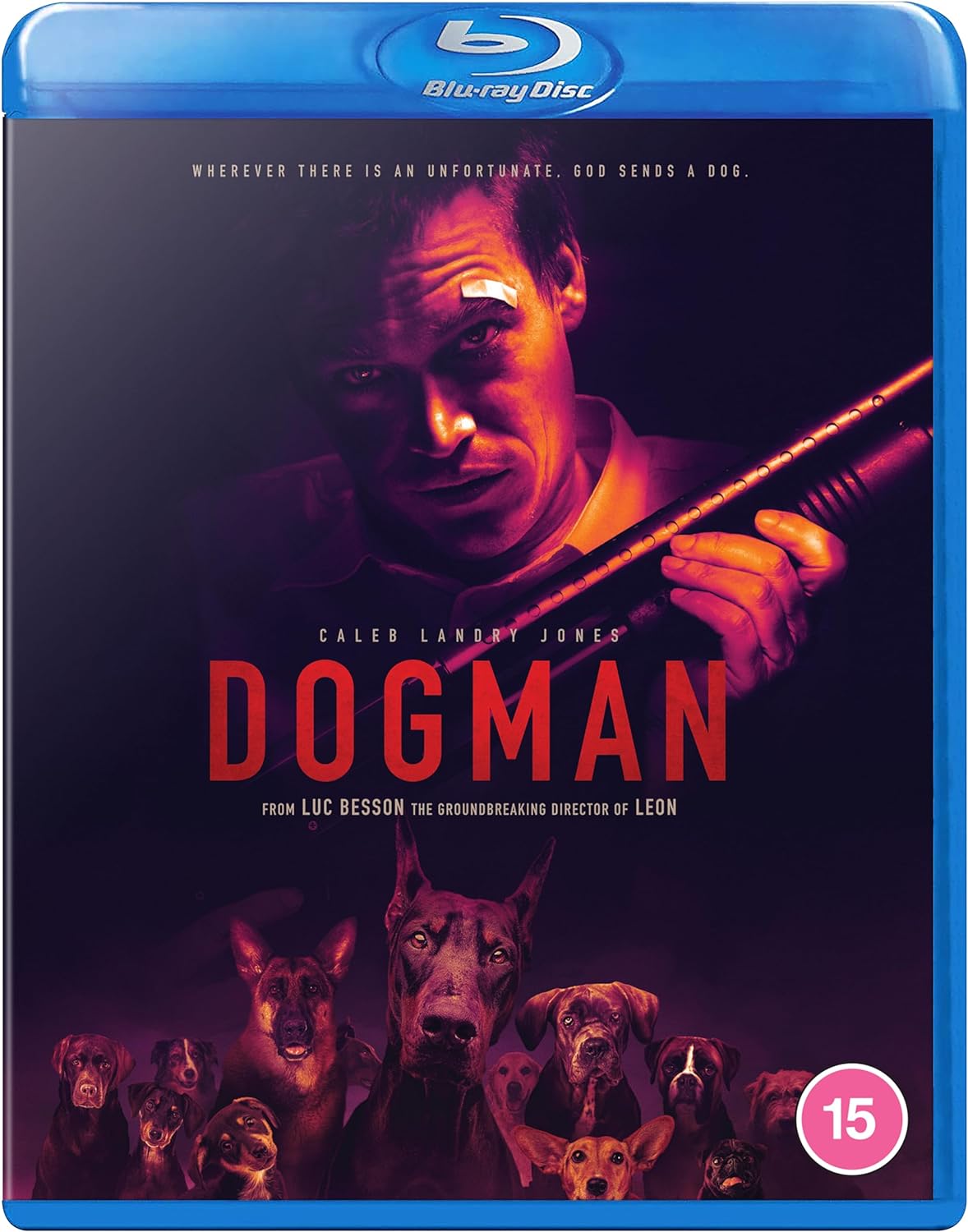
To celebrate the release of DOGMAN starring Caleb Landry Jones – out March 11th on Blu-ray, DVD, and Digital – and we have a pair of Blu-rays up for grabs! To be in with a chance, just read on and enter below…

The latest film from Luc Besson – the visionary filmmaker The Fifth Element, La Femme Nikita and the Transporter series – DOGMAN won the Graffetta d’Oro for Best Film at the 2023 Venice Film Festival. It’s extraordinary, intense and heartfelt – everything you’d expect from the unique and uncompromising mind of Besson.

Caleb Landry Jones (Cannes winner for Best Actor for Nitram) stars as Doug, a troubled man who finds salvation through his canine friends. The cast also includes Jojo T Gibbs (Fresh), Christopher Denham (Billions), Clemens Schick (Das Boot), and Marisa Berenson (Barry Lyndon).

Featuring an emotive score by Besson’s longtime collaborator Éric Serra (Léon), and exquisitely filmed by Colin Wandersman (Pandemonium), DOGMAN features production design by César award winner Hugues Tissandier (The Extraordinary Adventures of Adèle Blanc-Sec).

Think Taxi Driver meets Lassie, DOGMAN, inspired by a shocking real-life story, is a wonderfully styled excursion into the wild world of dog-loving Doug, packed with deliriously exciting set pieces, brutal moments of violence and, of course, an irresistible cast of loveable mutts.

a Rafflecopter giveaway

DOGMAN is out now on Blu-ray, DVD, and Digital. You can order today here: https://amzn.to/3VdnHbl


Jeff Wadlow • IMAGINARY

After the success of Truth or Dare and Fantasy Island, writer/director Jeff Wadlow has returned to the horror spectrum through his new movie Imaginary! Daring to create a horror character that could sit alongside the likes of Chucky and Annabelle, STARBURST discovers everything you need to know about the mysteriously off-putting bear that is Chauncey, and much more…

STARBURST: Where did the idea for Imaginary come from? As someone who has already created a couple of horror movies, how excited were you to be working on an idea like this?

Jeff Wadlow: It came from Jason Blum, who signed me to a first look deal, after Truth or Dare and Fantasy Island. He challenged me to make a classic Blumhouse film that dealt with the iconography that is in a lot of his movies. A family, in a house, at night, there’s a bump that they hear. That kind of cadence. He wanted to know what my version of that would be. The second point of inspiration honestly came from somewhere inside of me. I wanted to make a movie about an imaginary friend, and I thought it was really fertile. I enjoy playing with subjectivity in filmmaking, asking the audience, “Do you think this is real, or is this not real? If it’s not real, does it still have real consequences?” and I thought an imaginary friend movie would be the perfect opportunity to explore some of those notions cinematically. Then the third point of inspiration was my co-writers Greg Erb and Jason Oremland, these guys are two of my close friends. They are really talented screenwriters, who had been working within the family film space, and they wanted to make a scary movie about an evil teddy bear. I had asked them to come and talk about ideas at Blumhouse, and so, you take those three things and combine them, and you have the movie Imaginary.

Jessica and Max both have quite tough backstories. What were these like to create, and what did you want them to bring to the movie?

Well, Jessica and Max are the two main adult characters in the film, and they’re dealing with pasts that were problematic, and I think that that is totally relatable. It’s not like they’re particularly special in that sense. We all have trauma and unfortunate things that have happened to us. We’ve had to decide how we want to process and deal with them as we move through our lives. That created the emotional underpinnings of the film. Fortunately, I was lucky to have two incredible actors DeWanda Wise [Jessica] and Tom Payne [Max] play those parts, and bring them to life in a manner that I couldn’t have even imagined myself.

DeWanda Wise is brilliant as Jessica! Can you elaborate on what DeWanda was like to work with and what else did you really want to see from her character?

Working with DeWanda is a pleasure. She is such a pro; I’ve never worked with an actor who is so prepared. She is also an executive producer on the film, so she was really my creative partner in every decision we were making while we were shooting the film. Not just decisions around her character, but, she was helping when it came to picking the costumes that the paramedics were wearing when they show up for that one scene. She was very much my right-hand creative consultant through the whole production process. I love her, she is so talented as an actress, I just enjoy watching her do her thing, and would absolutely kill to work with her again.

What was it like to design and bring Jessica’s childhood home to life, and how did you want the home to feel and come across for the audience?

I really wanted to make sure that the home was not a classic horror movie house. We’ve all seen that scene where the family moves into the Gothic, old, dilapidated, haunted house, and you’re like “Why! Why are you doing this! This is not going to go well for you or these children you’re bringing here!” It doesn’t make any sense. We were shooting in New Orleans, and it was a challenge to avoid that Southern Gothic theme that’s everywhere. I just wanted a house that honestly looked like the suburban dream. This idyllic, middle class place, where you could raise your kids, protect them, and they could have a wonderful childhood. Despite the few things that happened to Jessica when she was young, she pretty much has good feelings about her childhood, which we put on the screen in the credit montage with the home movies, and I just wanted to have that feeling when we saw the house for the first time. From a production standpoint, it was very challenging because we shot all of the first floor stuff on location but then we had to build the second story of the house on a sound stage. We had to match the staircase to make it look like it’s seamless. There are sequences in the movie where Jessica starts upstairs and she walks down the stairs, and we do a real time cut, and we pick her up on the stairs and she walks into the first floor. Then we do another cut and she’s in the basement. We are going from a set to a location to a set in just those three shots. Often probably, stretched out over multiple weeks, and so, keeping all of that straight in your mind is certainly a challenge for a filmmaker.

Alice is pretty much the backbone of the story for the entire film, as she talks with Chauncey throughout. What was that like to work on, and how did you go about threading that key narrative through the movie?

Well that was a creative debate. Like “What does Chauncey sound like? What is it like for Alice to be talking with Chauncey?” There are versions of the script where Chauncey’s voice was a unique thing, but I had this idea in the middle of development that Chauncey’s voice should be Alice’s voice. If a kid has an imaginary friend, the kid would do the imaginary friend’s voice. So then, as it becomes clear throughout the film that Chauncey might be more than just your normal, imaginary friend, it was important for me, for him to keep Alice’s voice. But also for that voice to change. I think that it’s an interesting idea, that continues to evolve throughout the story, and I don’t want to give away any spoilers, but the audience will see that it starts with Alice, and then it changes, but then it also ends with Alice.

Betty Buckley has been in some really awesome horror movies herself! How did she end up becoming the sitter/neighbour Gloria, and what does she bring to the character?

Betty Buckley is an icon! It was beyond a privilege to be working with her. Not only was she in Carrie, but she was also in Split, which is a fantastic horror film, and Jason Blum produced it. She emailed Jason and said “Hey Jason! Do you have any horror movies for me to be in?” and of course, Jason Blum being the savvy producer that he is said “Of course I do Betty!” Then he turned to his team and said “Do we have a movie for Betty Buckley?” Jason then emailed me and said “Can Betty play Gloria?” and I was like “Can she? Will she!? I would love to have Betty Buckley play Gloria” We were really lucky to have her, and it’s not just exciting because she’s such an icon. She’s an icon for a reason, she brings her A-game, and she lights up the screen every time she’s in a scene.

Can you tell us how the look of Chauncey came to be? What was that like to create, whilst also finding a balance where the character can come across as both sinister and innocent?

Designing Chauncey was tricky, because we knew we were trying to make a horror movie icon, like something that people would remember, and would be worthy of being thought of in the same moment as like Chucky, M3GAN or Annabelle. I knew that he couldn’t look as creepy as Annabelle or like a scarred messed up Chucky, because why would any kid want to play with a teddy bear that looks that demonic? But at the same time, we looked at some designs, where he just looked too much like Paddington, or Winnie-the-Pooh, and you’re like “Well, there’s nothing really off putting about this design”. It really just came down to asymmetry, if you look at Chauncey, his ears are off, his eyes are off, and he can still be cute, but that asymmetry creates a feeling of unease. It makes you realise, on some subconscious level that things are not right.


In the trailer, we see Chauncey move by itself up the corridor! So, how important are practical effects to you, and how much can we expect from that approach in Imaginary?

Practical effects could not be more important to me. I always embrace what I call a ‘practical CG hybrid’ approach, which means if we can do the gag practically, if we can create the monster in the real world, if we can do the gag on set, then we should, and then we should use CG to clean it up, augment it, elevate it. Try to fool the audience a little bit more. Audiences are savvy; you can’t just put a guy in a rubber suit and think that they’re going to think that’s exciting, so you have to find ways to support and supplement the practical element. It should be practical because then the actors have something to react to. It gives the thing a real weight in reality. That the audience can feel. Light is interacting with it in an authentic way, and it gives the visual effects artists a reference, so when they augment it, they can make it look like the real thing.

Horror soundtracks are iconic, and for you got to work with the awesome Bear McCreary again. Is there anything you can tell us about that collaboration, and maybe how he helped shape the movie’s soundtrack?

Well, if I can toot my own horn for a second. One of the smartest things I did when making this movie was very early on, and I knew I wanted to work with Bear again. I contacted him well before you would ever talk to your composer, and I said “Hey Bear I need the Chauncey jingle! I want it before we start shooting” and he wrote it months before we started shooting. I hadn’t even cast the whole movie yet. And the first time I heard it, I was blown away. It’s such an earworm. Once you hear it, you cannot get it out of your head. It has almost this Sgt Pepper, Lennon/McCartney thing to it, which is inexplicable, but I think it’s just a fantastic piece of composition. It’s become a part of the film in a way that I just can’t even really explain. I would hum it into the microphone on set when it’s supposed to be playing through the bear, which changed how we edited the movie. I’m so glad I had that thought because you often don’t really get into the music until the movie is done. But it was an important piece of music for the film. I’m so glad that Bear wrote it before we started shooting,

IMAGINARY is in cinemas now. You can read our review here.

THE TELEPHEMERA YEARS: 1999, part 3

Heat Vision and Jack, 1999

Ah, telephemera… those shows whose stay with us was tantalisingly brief, snatched away before their time, and sometimes with good cause. They hit the schedules alongside established shows, hoping for a long run, but it’s not always to be, and for every Street Hawk there’s two Manimals. But here at STARBURST we celebrate their existence and mourn their departure, drilling down into the new season’s entertainment with equal opportunities square eyes… these are The Telephemera Years!

1999-2000

As US TV moved into the twenty-first century, the schedule was full of comings and goings. Sure, old reliables like ER, Friends, Frasier, and Touched by an Angel could be relied upon to bring in millions of viewers for NBC and CBS, but everyone was talking about the new kids on the block. ABC took the top three slots in the ratings with the thrice-weekly Who Wants to Be a Millionaire?, while CBS jumped into the reality market with two feet, debuting both Big Brother and Survivor to an America hungry for average Joes. Also arriving on the network schedules was Judging Amy, Malcolm in the Middle, Law & Order: SVU, and The West Wing, while HBO debuted The Sopranos.

For genre fans, Buffy spin-off Angel premiered on The WB, as did UFO drama Roswell, and Relic Hunter, The Lost World, and Beastmaster are began syndicated runs. This made up for the loss of Sliders and Poltergeist: The Legacy, both of which were entering their final seasons, along with Boy Meets World, Chicago Hope, Beverly Hills 90210, Party of Five, and Veronica’s Closet. At least those shows made it to screen in a crowded market where many fell before the first hurdle: this is the story of 1999’s unsold pilots…

Manchester Prep (Fox): Riding high on the insane popularity of Buffy the Vampire Slayer, Sarah Michelle Gellar was very much in demand in the late-1990s and in 1999 she led a group of attractive young things in Cruel Intentions, a sexy, school-based adaptation of Les Liaisons Dangereuses that upped the taboo ante by including some step-incest. Ryan Philippe, Reece Witherspoon, and recently wrong-headed Selma Blair completed a cast that brought in seven times the movie’s budget at the box office, enough of a success that a direct-to-video sequel appeared a year later.

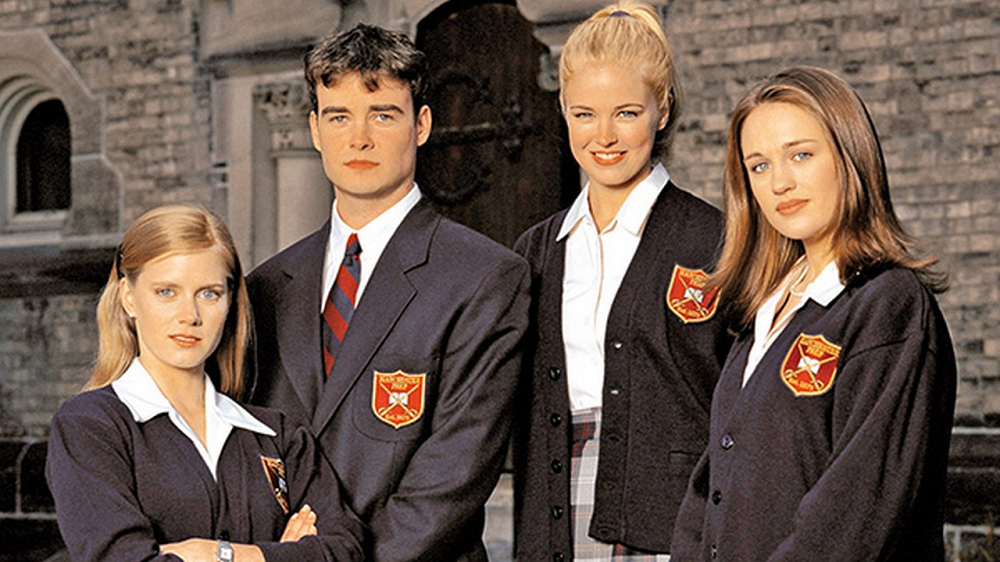
That wasn’t always the plan, though, and the sequel’s origins lie in a proposed TV series for Fox. Entitled Manchester Prep for the hoity-toity school attended by the movie’s young ingenues, it was the brainchild of writer-director Roger Kumble, an award-winning playwright who’d shepherded the original to the screen. Kumble was the only returnee from the movie, Fox’s TV budget unable to stretch to Gellar, Philippe, Witherspoon, or even Blair, and their parts were given to a new array of teen hopefuls, intending to repeat the successful formula of the year before.

Manchester Prep, 1999

A prequel set as Sebastian Valmont (with Robin Dunne of gender-swapped Canadian show Little Men replacing Philippe) is introduced to his new school and his wicked stepsister, Kathryn (newcomer Amy Adams), Kumble’s pitch included a number of new characters to further the intrigues of the blended Valmont-Merteuil siblings. Kathryn is clearly the villain of the piece once more, this time aiming her bile at new student Cherie (Keri Lynn Pratt) and the headmaster’s daughter, Danielle, also the object of Sebastian’s desire, again played by a newcomer in the shape of Sarah Thompson.

Quite how Kumble would have stretched the premise over a full series (and presumably beyond) is anyone’s guess, but you might take clues from how Gossip Girl, also set amongst the privileged Upper Manhattan school set, turned out. Regardless, Fox passed on a series and the pilot was rushed out as a DTV prequel to the original even as that movie was hitting rental stores. Kumble returned with Cameron Diaz, Christina Applegate, and – yes- Selma Blair in 2002’s The Sweetest Thing and has made quirky romcoms his stock in trade ever since.

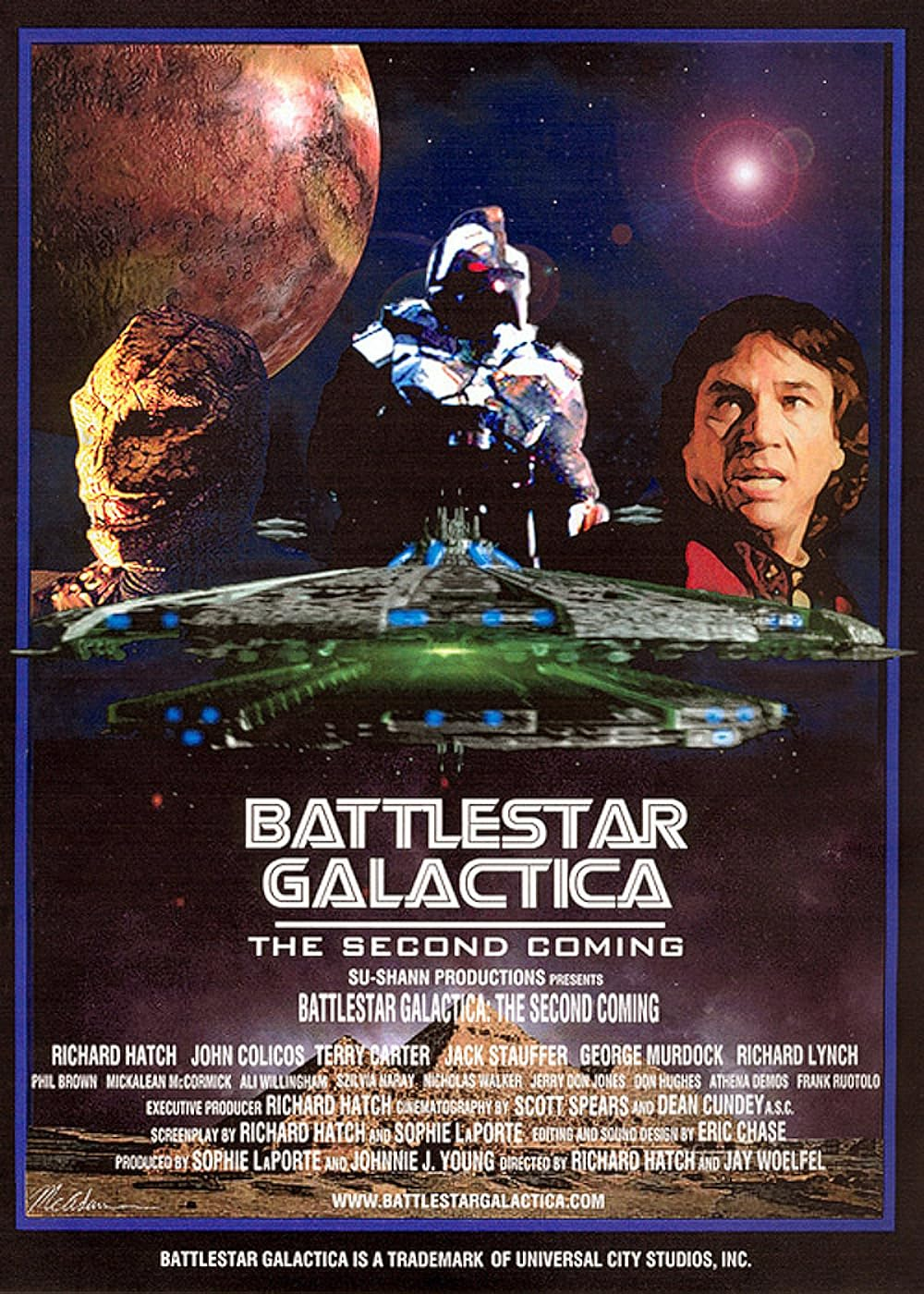
Battlestar Galactica: The Second Coming: Galactica 1980, the Earthbound sequel to the original Battlestar Galactica TV series has its fans, despite its second-rate cast and continuity shattering setting, but Richard Hatch – Apollo in the original run – clearly wasn’t one of them. In the late 1990s, Hatch decided it was time to get the band back together and pitch a sequel to Universal, one that took up exactly where the original left off some twenty years before, making the events of Galactica 1980 non-canon.

Although Lorne Greene had died in 1987, Maren Jensen had long retired, and Dirk Benedict presumably wasn’t returning Hatch’s calls, Hatch managed to get much of the original cast back on board, with John Colicos’s Baltar and Terry Carter’s Colonel Tigh – now President of the Council of Twelve – lending some heavyweight fan appeal to the project. Hatch, of course, returned as Apollo but the role of Starbuck was not recast in Benedict’s absence, instead being retooled as Starbuck’s feisty daughter (and presumable love interest for a grown-up Boxey).

Battlestar Galactica - The Second Coming, 1999

Hatch’s script, written with French producer (and then paramour) Sophie LaPorte, saw a new breed of Cylons emerge to fight a civil war with the originals, with the remnants of mankind caught in the middle of their battle. A thirty-minute short film was shot, of which only a four-minute trailer has been seen publicly, and the proposed series would have dealt with the new threat and featured a search for the missing Starbuck, Hatch obviously hopeful that his friend would pick up the phone if a series was greenlit.

Hatch toured the trailer around sci-fi conventions in 1999, hoping to catch Universal’s eye with the positive reactions he was eliciting, but Universal already ad their own plans for Battlestar Galactica underway in association with Fox and director Bryan Singer. When that project dissolved due to Fox withdrawing and Singer’s involvement in X-Men, their attention turned to Ronald D Moore, who delivered his darker reboot in 2003. Hatch eventually turned up in that series, as traitor Tom Zarek, and passed away in 2017.

Heat Vision and Jack (Fox): Wisconsin native Rob Schrab exploded onto the comic book scene with the self-published Scud the Disposable Assassin in 1994, soon earning rave reviews in the likes of Wizard magazine and catching the attention of Oliver Stone, who optioned Scud for a live-action movie in 1997. That project ultimately came to nothing and Schrab continued Scud until 1998, ending the series when he moved to Los Angeles with writing partner Dan Harmon – they were both members of Milwaukee sketch troop The Dead Alewives – in the hopes of breaking into TV.

Their spec script for BAM! (or Big Ant Movie) caught the attention of Robert Zemeckis, who signed them to a two-movie deal, although only Monster House ended up getting made, in retooled form in 2005. Such was their buzz that ABC TV also signed them to a deal, one which they found wasn’t to their liking; in order to scare the network into cancelling their agreement (or get to work on something amazing), the pair concocted their idea of the best TV show ever, which the network – predictably – passed on.

Heat Vision and Jack, 1999

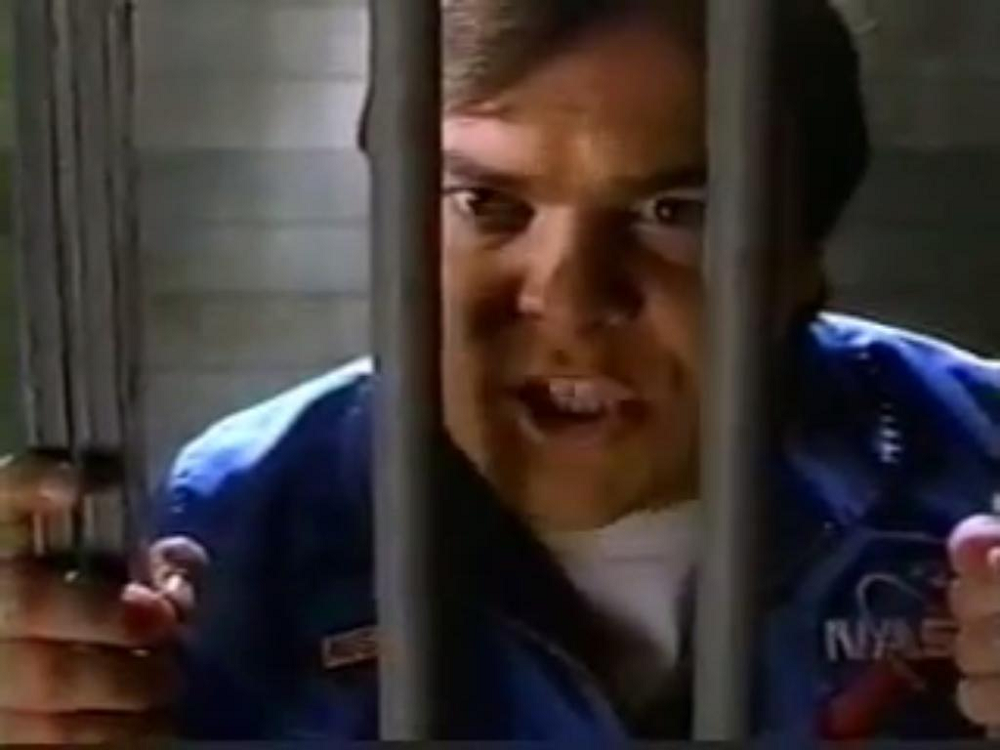
Ben Stiller, however, was impressed by their concept and talked Fox into ordering a pilot for Heat Vision and Jack, the story of a former astronaut who is exposed to dangerous amounts of solar energy, granting him super-intelligence whenever it is daylight. Heat Vision is his partner, a talking motorcycle inhabited by the spirit of Jack’s former roommate Doug, who was shot by an experimental ray gun while cleaning his bike.

Jack Black, who had yet to break through in High Fidelity, was cast as Jack, with Owen Wilson providing the voice of Heat Vision, and the cast was rounded out by Christine Taylor, Vincent Schiavelli, and Ron Silver as himself, albeit a Ron Silver who works for NASA and is impervious to harm, the villain of the piece. Heat Vision and Jack wasn’t picked up for a series, but the thirty-minute pilot has become something of a cult classic and can be freely seen on YouTube. Schrab and Harmon moved on to create Channel 101, a monthly pilot festival which gave birth to Yacht Rock, The Lonely Island, and more, a subject worthy of its own entry one day…

The Unbelievables: Ed Solomon began his writing career while still at college, selling a number of scripts to ABC for the final season of Laverne & Shirley and earning himself a place as the youngest member of the Writers Guild of America. It took a little longer for his next opportunity to arrive, hired to the writing staff of It’s Garry Shandling’s Show, during which time he met Chris Matheson and began collaborating on what would become Bill & Ted’s Excellent Adventure.

The success of Bill & Ted (and its sequel) upped Solomon’s cache and he was entrusted with the script for Super Mario Bros in 1993, a setback which took a number of years to recover from, only bouncing back with the screenplay for comic book adaptation Men in Black in 1997. In 1999, Solomon began work on a script for an alternate take on the superhero genre, focussed on retired hero Action Armstrong and his superpowered family, living a quiet life in surburbia.

The Unbelievables, 1999

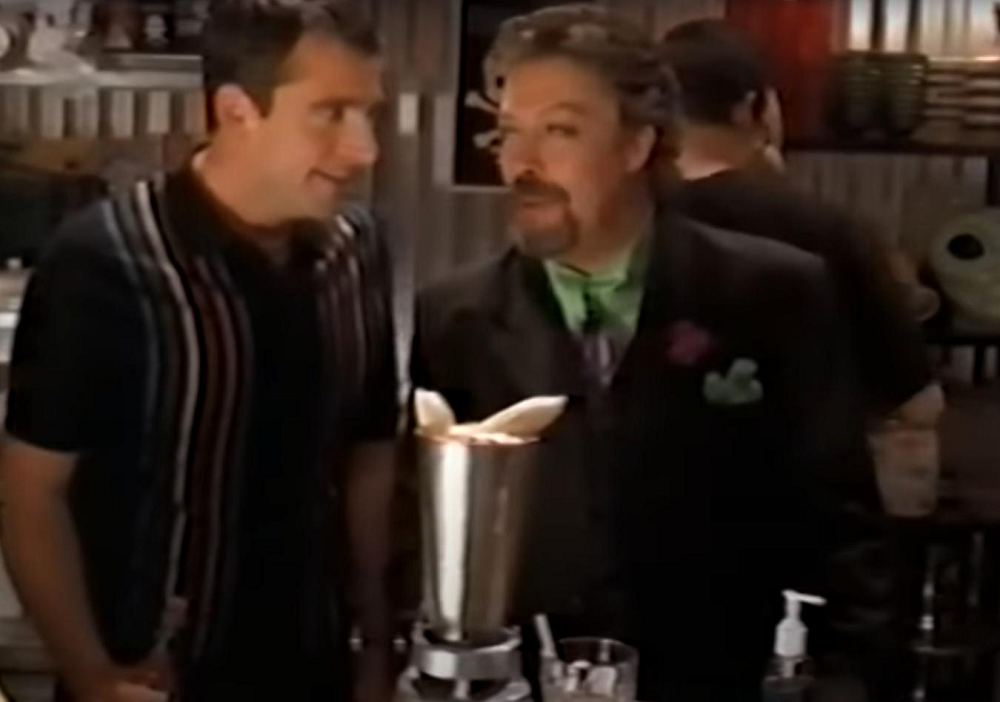
Predating Pixar’s The Incredibles by five years, The Unbelievables was being written at the same time as Mystery Men, but it was an otherwise fallow time for superhero movies, offbeat or not. Men in Black’s production company Columbia/TriStar liked the idea enough to order a pilot for the Fox network, and a twenty-three-minute introductory episode was shot with Corbin Bernsen as Armstrong, Ryan Gosling as son Josh, and Tim Curry as his former archenemy Vaudevillain, now running a bookstore.

The pilot also starred a pre-fame Steve Carrell as Vaudevillain’s sidekick Hershel, alongside Clancy Brown and Annette O’Toole as Armstrong’s ex-wife Qupid, and there’s a warmth to the show that owes as much to the charisma of it’s a-list cast as Solomon’s script. Sadly, Fox declined the show and Solomon moved on the work-for-hire of scripting McG’s Charlie’s Angels, although a low quality upload of the pilot on Dailymotion is a reminder of what could have been.

The Wonder Cabinet (Fox): Created by Glen Morgan and James Wong, The Wonder Cabinet starred Canadian actor Kim Coates as the mysterious Alvin Swissky, head of Der Wunderkammeren, a Philadelphia institute dedicated to investigating medical and biological anomalies. Back in the Age of Enlightenment, wunderkammeren were kept by wealthy men, filled with real and concocted examples of nature gone wrong, and Swissky’s institute is a modern equivalent, fearing that the likes of Ebola and AIDS may be a sign of nature fighting back.

Swissky recruits three maverick medics – heart surgeon Gordon Wayne (Space: Above and Beyond‘s James Morrison), student Sarah Coleman (Poppy Montgomery from Relativity), and unethical neurosurgeon Kevin Spitz (Currie Graham) – to join his team. Their first case is a man sharing his body with an evil conjoined twin (in the shape of a second head), the team forced to decide which one has more right to survive an operation to remove one of the heads.

The Wonder Cabinet, 1999

The Wonder Cabinet was Morgan and Wong’s fourth attempt to parlay their success on The X-Files into a production line of their own. Space: Above and Beyond had lasted for a single season on Fox, the same network had passed on The Notorious 7, and CBS had opted not to progress bail-enforcement drama Skip Chasers to series, but there were high hopes for their latest effort, the gfreak of the week approach that had been so successful on The X- Files easily transferrable to The Wonder Cabinet’s premise.

However, despite an engaging cast and an intriguing set-up, the execution on The Wonder Cabinet left a little to be desired and Fox decided against funding a full series. Morgan and Wong were reportedly given the news during shooting of what became Final Destination, a story originally pitched as an episode of The X-Files that led to a successful career in the movies.

Next time on The Telephemera Years: Kids were still watching TV in 1999, safe from the rise of YouTube for another few years… But what were they watching?

Check out our other Telephemera articles:

The Telephemera Years: pre-1965 (part 1, 2, 3, 4)

The Telephemera Years: 1966 (part 1, 2, 3, 4)

The Telephemera Years: 1967 (part 1, 2, 3, 4)

The Telephemera Years: 1968 (part 1, 2, 3, 4)

The Telephemera Years: 1969 (part 1, 2, 3, 4)

The Telephemera Years: 1970 (part 1, 2, 3, 4)

The Telephemera Years: 1971 (part 1, 2, 3, 4)

The Telephemera Years: 1973 (part 1, 2, 3, 4)

The Telephemera Years: 1974 (part 1, 2, 3, 4, 5)

The Telephemera Years: 1975 (part 1, 2, 3, 4)

The Telephemera Years: 1977 (part 1, 2, 3, 4)

The Telephemera Years: 1978 (part 1, 2, 3, 4)

The Telephemera Years: 1980 (part 12, 3, 4)

The Telephemera Years: 1981 (part 1, 2, 3, 4)

The Telephemera Years: 1982 (part 1, 2, 3, 4)

The Telephemera Years: 1983 (part 1, 2, 3, 4)

The Telephemera Years: 1984 (part 1, 2, 3, 4)

The Telephemera Years: 1986 (part 1, 2, 3, 4)

The Telephemera Years: 1987 (part 1, 2, 3, 4)

The Telephemera Years: 1989 (part 1, 2, 3, 4)

The Telephemera Years: 1990 (part 1, 2, 3, 4)

The Telephemera Years: 1992 (part 1, 2, 3, 4)

The Telephemera Years: 1995 (part 12, 3, 4)

The Telephemera Years: 1997 (part 1, 2, 3, 4)

The Telephemera Years: 1998 (part 1, 2, 3, 4)

The Telephemera Years: 1999 (part 1, 2)

The Telephemera Years: 2000 (part 1, 2, 3, 4)

The Telephemera Years: 2002 (part 1, 2, 3, 4)

The Telephemera Years: 2003 (part 1, 2, 3, 4)

The Telephemera Years: 2005 (part 1, 2, 3, 4)

The Telephemera Years: 2006 (part 1, 2, 3, 4)

The Telephemera Years: 2008 (part 1, 23, 4)

The Telephemera Years: O Canada! (part 1, 2, 3, 4)

Titans of Telephemera: Irwin Allen

Titans of Telephemera: Stephen J Cannell (part 1, 2, 3, 4)

Titans of Telephemera: DIC (part 1, 2)

Titans of Telephemera: Hanna-Barbera (part 1, 2, 3, 4, 5)

Titans of Telephemera: Kenneth Johnson

Titans of Telephemera: Sid & Marty Krofft

Titans of Telephemera: Glen A Larson (part 1, 2, 3, 4)
Titans of Telephemera: Quinn Martin (part 1, 2)

Titans of Telephemera: Ruby-Spears


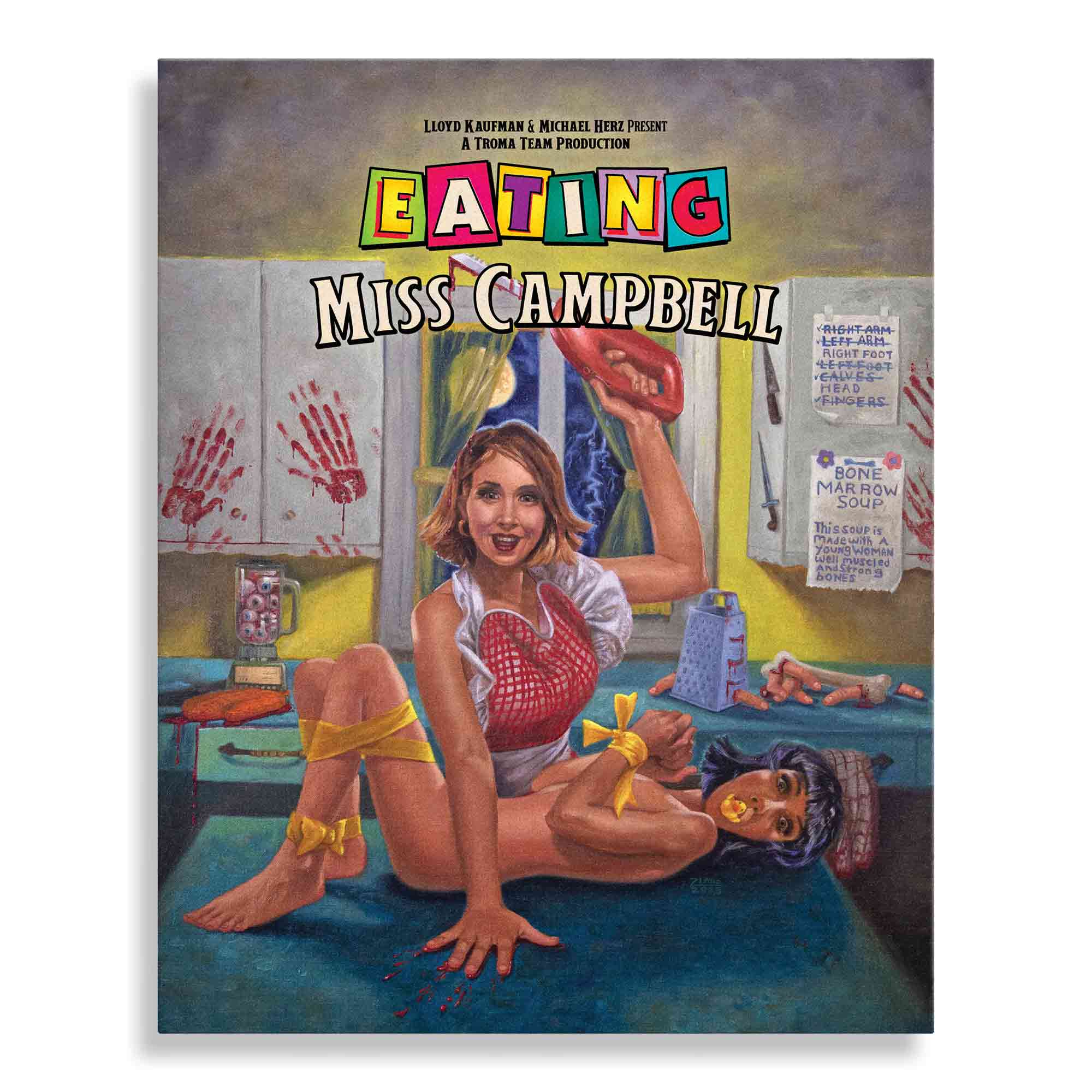
[ENDED] Win EATING MISS CAMPBELL Blu-ray and T-shirt!

The gross-out horror/comedy Eating Miss Campbell is available to buy on Blu-ray, and we have one copy and a T-shirt to give away to one lucky reader! Just read on and enter below…

The film, which has wowed festival audiences, focuses on a Goth, vegan student at Henenlotter High who gets involved with her English teacher and finds herself developing a taste for human flesh. This biting satire on the problems facing the school system in the US and other issues, this relishes every opportunity to offend and push boundaries. Naturally, we loved it.

Written and directed by Liam Regan (My Bloody Banjo), the movie wears its Troma influences on its sleeve and is as wild and wonderfully disgusting as anything Uncle Lloyd Kaufman has released.

The film stars a host of genre favourites, including Lyndsey Craine (How to Kill Monsters), Laurence R. Harvey (The Human Centipede 2: Full Sequence), Vito Trigo (My Bloody Banjo), and Lloyd Kaufman himself.

The limited edition release (only 2,500 available, all signed and numbered by the director) is packed with bonus features, including a documentary, commentary, outtakes, B-roll, raw behind-the-scenes footage and much more. The first pressing includes a slipcover by Tricia Zimic (Surf Nazis Must Die! – her first cover for a Troma movie in 30 years!), and sleeve art by Mila K.

a Rafflecopter giveaway

It’s only available directly from the filmmaker from March 4th via refusefilms.com

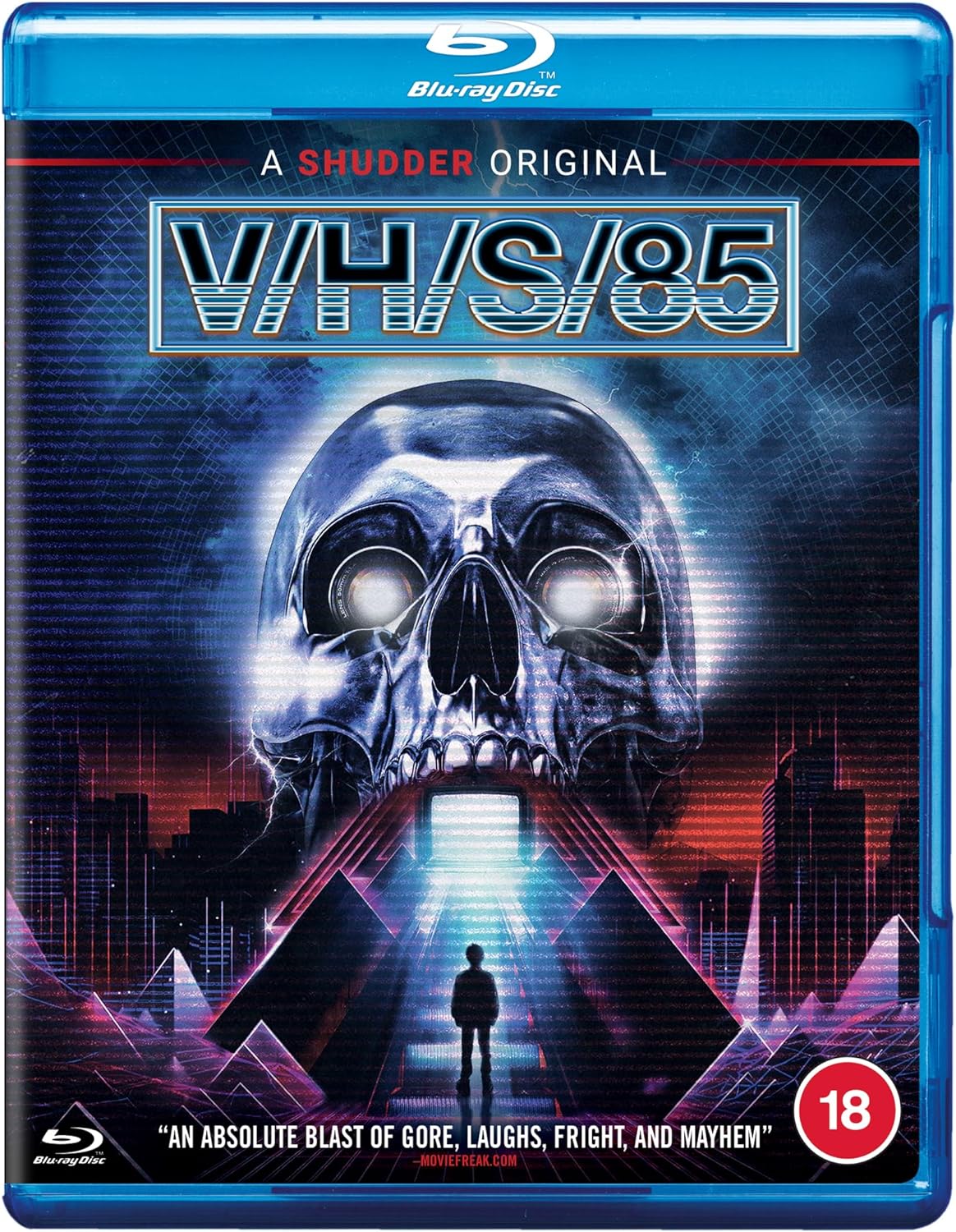
[ENDED] Win V/H/S/85 on Blu-ray

V/H/S/85 arrives on Blu-ray, DVD, and digital on March 4th, courtesy of Acorn Media International, and one lucky reader can win a copy of the Blu-ray. Just read on and enter below…

Dust off your leg warmers and rewind to the year 1985 for five uniquely twisted tales directed by David Bruckner (V/H/S), Scott Derrickson (The Black Phone), Gigi Saul Guerrero (El Gigante), Natasha Kermani (Lucky), and Mike P. Nelson (Wrong Turn). Giving nostalgia a bloodstained makeover, this series delves deep into the dark and dangerous underbelly of the decade.

In David Bruckner’s Total Copy starring Jordan Belfi (Nefarious) and Kelli Garner (The Aviator) – the wraparound story that holds the anthology together – a narrator presents a made-for-TV documentary following a group of scientists studying an unusual slime-covered entity named Rory. What is he, and more importantly, what can he do?

In Mike P. Nelson’s No Wake, seven friends head out on the road for a fun camping trip. Ignoring signs that they should avoid the water, a group of them decide to take a boat out on the lake, but it’s not long before their leisurely boat ride turns into a nightmare as they discover the water harbours unexpected and ominous secrets…

In Gigi Saul Guerrero’s God of Death, a Mexican news report is interrupted by a catastrophic earthquake, leaving only the cameraman alive. When a rescue team discovers him, they soon realise that escaping the wreckage is the least of their worries…

In Natasha Kermani’s TKNOGD, we meet a performance artist convinced that the world has replaced God with the “God of Technology.” In her quest to awaken this deity using virtual reality, a lethal creature from the unknown unexpectedly confronts her.

In Mike P. Nelson’s Ambrosia, a family hosting a party for their teenage daughter, Ruth, discovers they’re celebrating something far more sinister than a birthday. With the police closing in, it’s not long before the night turns into an all-guns-blazing bloodbath.

In the final segment Scott Derrickson’s Dreamkill, starring Freddy Rodríguez (Planet Terror), Dani Deetté (The Winter Soldier) and James Ransone (It: Chapter 2), a series of a series of brutal taped crimes lead the police to a mind-shattering conclusion.

Get ready to rewind your reality and fast-forward into frights with V/H/S 85, a gory, gruesome collection of sinister stories just calling to be devoured by horror hounds.

Special features include Uncut Super 8 Footage of Dreamkill • Uninterrupted Cuts • Film Commentary.

a Rafflecopter giveaway

V/H/S/85 is released on Blu-ray, DVD, and digital on March 4th.

Everything You Need to Know about Behind the Scenes Features of Movie Production

Making a movie is a drawn-out, multi-step process called “film production,” which sometimes takes years. The process of making a movie has five primary stages. The development stage is the first phase of film production, during which all the preliminary aspects are worked out before pre-production, which is primarily concerned with location scouting, casting, and research, begins.

Once pre-production is finished, filming can start. The duration of the production process will depend on the kind of film you’re making (short or feature-length), as shooting times vary throughout projects Eventually post-production phase later commences where cutting, commentary and sound are mixed which make the movie memorable and then the distribution phase.

So, what are the secrets of successful film production? Read on to find out.

Pre-Production Puzzle

The pre-production stage lays the groundwork for the movie before the cameras roll. In this stage, complex logistical plans are made, storyboards are created, and scripts are polished. To realize the director’s vision, casting, location scouting, costume design, and set construction are all carefully planned.

Cinematic Language

Visual storytelling and a distinct language of shots, angles, and motions are essential to film production. Cinematographers and directors collaborate extensively to create a visual aesthetic that supports the story. The lenses, camera angles, and lighting design shape every scene’s mood, tone, and emotional impact.

The Craft of Editing

Film editing is sometimes referred to as the “invisible art.” Film editors carefully assemble uncut material into a coherent story, influencing the movie’s rhythm, tempo, and emotional impact. Editors create a smooth and captivating visual experience with exact cuts, transitions, and visual effects.

Soundscapes and Music

In filmmaking, sound is essential because it improves storytelling and draws viewers into the fictional world. While composers create original music like those on online casino that amplify emotions and enhance the cinematic experience, sound designers develop complex soundscapes that give the environment depth and reality.

Special Effects Wizardry

Fantastical environments, animals, and explosions come to life using visual and practical effects (VFX). Behind the scenes, VFX artists attempt to seamlessly incorporate these aspects into the movie, frequently fusing digital magic with actual footage. Physical stunts, props, and makeup are all part of practical effects, which need a combination of technical expertise and artistic vision.

Hidden Cameos and Easter Eggs

To connect many films within a cinematic universe or to give fans a nod, filmmakers frequently tuck in inside jokes, hidden references, or cameos. For viewers paying attention, these hidden jewels can give an additional layer of engagement through subtly placed objects or subtle visual hints.

Challenges and Problem-Solving

There are many obstacles in the film industry, including erratic weather patterns and equipment failures. A critical competency for the production team is the capacity for quick adaptation and problem-solving. These difficulties frequently inspire original ideas that improve the movie’s authenticity.

The Role of Collaboration

The value of teamwork is one of the biggest secrets in the filmmaking process. A seamless collaboration across multiple departments, each lending specialized knowledge to the finished product, yields a good film. The collaborative efforts of writers, cinematographers, costume designers, makeup artists, and others enable the director’s vision to be realized.

A Glimpse into Imagination

Featurettes and behind-the-scenes documentaries provide an insight into the complex world of film production. They demonstrate the commitment, ardor, and ceaseless labor that go into making stories come to life. Through these glances, viewers can better understand the detailed artistry and teamwork that go into creating a cinematic voyage.

The Bottom Line 

The mysterious workings of the film industry combine to provide the unforgettable cinematic experiences we love. Every process step, from meticulous pre-production planning to magical post-production work, goes into creating the finished masterpiece. Filmmaking is a true marvel that enthralls and inspires people worldwide. Behind the scenes, a tapestry of talents, creativity, and collaboration is stitched together.

Eliza Chan | FATHOMFOLK

Eliza Chan is a Scottish-born Chinese diaspora writer who thinks a lot about intergenerational relationships, diaspora identity, and immigration. Her latest book, Fathomfolk is not only an amazing fantasy novel, it also explores the joys and complications of modern cityscapes and depict multiculturalism based more on East and Southeast Asian cities such as Hong Kong and Singapore rather than London or New York.  We caught up with her to find out more.

STARBURST: How would you pitch Fathomfolk to an old friend who really likes Disney?
Eliza Chan: Rather than giving up her home and culture for a man she hasn’t even had a conversation with, what if the little mermaid was an immigrant? How would she adjust to the culture shock and the different way of life above water? Would she be mocked and discriminated against because she tried to brush her hair with a fork? Where does she fit in?

Why should we read this book?
Fathomfolk is the story of a modern cityscape, divided between the generally prosperous humans at the top, looking down on the underclass fathomfolk – kelpies, kappas, mermaids and more – who live in the slums below. It is a book for people who like it when fantasy asks real-life questions and for those who argue with their GM that goblins can’t be born inherently evil as everyone is an individual. It follows three points of view characters: a privileged water dragon, newly arrived in the city; a tired half-siren who has been trying to chip away at the system; and a scheming seawitch, in it for herself; all dealing with discrimination, diaspora identity, and the cost of change. You should also read it for mythology mash-ups, messy, eclectic cities, and delicious depictions of food!

Why Sirens?
I like reading different mythologies from across the world and was getting more and more frustrated at women depicted as the seductress or damsel. Sirens, in particular, just seem to lounge on rocks waiting to drown men and have no other ambitions or life beyond this. It reminded me of the common rhetoric that women were asking for it. I started to envisage a siren who couldn’t switch ‘it’ off and how she would respond to being discriminated against and treated with hostility.

If you could sit one of the characters from the books down and have a word with them, who would it be, and what would you say?
I would sit Nami, the newly arrived water dragon, down with a nice cup of seaweed tea and tell her not jump to conclusions about a city she has only just arrived in. Knowing Nami, however, she would roll her eyes at me and do the exact opposite.

What was the funniest part of getting Fathomfolk published?
I’m not sure it’s funny, but it’s certainly been fun going from polite, professional emails with my editor and team at the beginning and slowly descending into the realms of antler gaps, kelpie butts, and cabbage man references as we got a feel for each other. It’s been brilliant to work with fellow science fiction and fantasy geeks and know they are your people.

Why are we so fascinated with dragons?
For right or wrong, we’ve labelled all reptilian flying monsters as dragons, and that means there are so many varieties to read and write about. What’s not to love about giant magical beasts that can either be your mount, lover or burn you to a crisp on a whim? Seeing my toddler in his dinosaur era at the moment, I also think it harks back to that childhood fascination that many of us never grew out of. There is a duality in my mind between the water and weather-controlling Asian dragons and the fiery-breathing Western dragons, but we can contain multitudes. Mostly, however, I just want to be able to fly.

What’s your favourite piece of folklore to write about?
I like them all, which is probably why I wrote such a mash-up of mythologies and folklore! Researching Fathomfolk made me really aware of how folklore stories are ever-evolving and that there is no one true narrative. For example, growing up, I asked my mother about the Asian dragon and the dragon pearl ubiquitous in Chinese restaurants, traditional decorations and the like. Years later, when researching, I realised everything she’d told me was different from what I was reading. She told me the dragon pearl was its soul; in the most well-known story, it is a source of wealth and prosperity. We treat the written form as the authority on the matter when often it is just one version that happens to be written down. To this day, I do not know if my mother’s stories are from her own childhood or her own flights of fancy. Either way, does it matter? Writing and reimagining folklore as writers do is another evolution in this process, and I loved reimagining dragons and dragon pearls in a new way.

What’s the toughest part of the writing process for you?
Initial drafting is tough for me. I’ve given up on so many novels over the years and never got past about 30,000 words. There’s a really tough point about two-thirds in where you can’t see the wood for the trees, and that’s usually when I throw in the towel. It’s so important to me to have writer friends to support me, to set myself achievable goals and just push through. It’s definitely worth it when I write ‘The End’.

What other projects would you like to work on?
I am drawn to the darkness of the original fairytales before they were sanitised and would love to do a retelling one day. I’d also like to do something akin to Rivers of London or American Gods with a contemporary real-life city setting with the supernatural, but I’d probably take it north to Manchester or Glasgow. On the flipside, I’d equally love to do something with nods to anime and manga, such as Studio Ghibli or Fullmetal Alchemist: Brotherhood. Too many ideas, not enough time!

What’s next for you?
I’m working on the sequel to Fathomfolk at the moment and also tinkering with my next project, Buffy the Vampire Slayer in Opium War-era Hong Kong.

Doctor Who or Doctor No?
Doctor Who, I’m still in my David Tennant-era mind.

The Little Mermaid or Aquaman?
The Little Mermaid. I particularly buy into Norton’s theory that The Little Mermaid was symbolic of an unrequited homosexual love that Hans Christian Andersen felt for his friend. It makes the othering, inability to speak, pain of transforming to fit in. and the ending so much more poignant.   

Selkies or Kelpies?
Oh that’s really hard! I’ve written a few selkie stories back in my day, but I find kelpies more intriguing these days. They are much more unpredictable, the antithesis of the docile unicorn. I love the image of galloping horses as crashing waves, and I was also the sixer of the Scottish Kelpies in Brownies as a kid.

Truth or Beauty?
Truth, every time! My Chinese name 真 literally means real or truth, and whilst I envied the other girls with their beautiful names, I’ve definitely grown into it.

FATHOMFOLK is out now and can be ordered here.