James Lovegrove • DOCTOR STRANGE: DIMENSION WAR

james lovegrove

New York Times Bestselling Author James Lovegrove has written over fifty novels, including the highly regarded Pantheon series, the Dev Harmer novels and various tie-in works, including Firefly and Sherlock Holmes. His latest book Doctor Strange: Dimension War, sees Marvel’s infamous mage takes on challenges in a way the fans will have never encountered before. We caught up with James to find out more.

STARBURST: How would you pitch Doctor Strange: Dimension War to a reality-bending space wizard?

James Lovegrove: I’d suggest they buy copies for all their friends and family so that they can then say, “See? I told you I’d travelled to far-flung other-realms where there are dragon mouths floating in the sky and these pathways that bend in all directions and weird spiky spheres, and there’s this big flamey-head man who wants to rule the Multiverse and has a really cool niece who’s taken a shine to me. And oh, there’s also a lord of a dream dimension who keeps trying to destroy my astral form, and… Look, I know it sounds strange, no pun intended, but I’m sober, honestly, I swear.”

What was the toughest part of writing this book?

The original comics that I’ve adapted for Dimension War are wonderful stuff, Stan Lee and Steve Ditko in their prime. But they’re also scrappy and episodic, and while there is an overall narrative arc across the twenty or so issues I’ve focused on, it’s not always readily evident. I had to bend their plots in places and add and remove bits in order to produce a story with a consistent throughline. That was challenging but also fun. I then had to figure out how to convey Ditko’s artwork in prose form, that extraordinary surreality of his that’s somehow both trippy and earthy. I had a go at this by playing with typographic formatting in places, using text the way Ditko did pictures, but mainly by rendering his imagery into words as carefully as I could.

Why is Doctor Strange so popular as a character?

On the surface, he’s not very relatable, not in the way that, say, Spider-Man is with his youthful neuroticism. Strange is a former surgeon who had wealth and renown, but was also arrogant and self-serving. How are you supposed to root for a guy like that? As Lee and Ditko showed, the answer was to humble him, strip away all his worldly success, and force him to start over from the bottom up. By learning to become a powerful Master of the Mystic Arts and eventually Sorcerer Supreme, Strange travels the road to redemption. Who doesn’t love a character who learns from his mistakes and becomes a better person for it? And also has white sideburns and a cool goatee?

Why have stories about wizards endured for so long?

Reality is fixed, prosaic and not always your friend. But what if you had the power to alter it, bend it to your will and make it work for you? And what if you could step outside the mundane and perceive the cosmic patterns that underpin the universe? And what if you could zap your enemies with spells and maybe have a cloak that can make you fly? Perhaps it’s a childish thing, this idea that with a wave of your hand or a wrinkle of your nose, you can make objects appear or disappear or turn a dog into a cat or a cat into a human or a human into a dog, or give yourself an endless supply of Lindt Mini Eggs, or whatever. There’s still something very appealing about that, even to an adult. Reality is stifling. Magic, and the wizardly ability to use it, is a wish-fulfilling kind of transcendence.

What other projects would you like to work on?

I’m very much hoping that there’s another Marvel novel in my near future, an adaptation of perhaps the greatest Silver Age storyline of them all. I’d gladly do even more Marvel work because I’ve been a confirmed Marvelite pretty much since I learned to read. The Marvel Universe is my happy place.

What’s next for you?

I’ve just written a novel that’s a childhood dream come true, working on an IP I’ve been a massive fan of from the age of 11 onwards, namely Conan of Cimmeria. Thanks to Titan and also the licence holders Heroic Signatures, I’ve been allowed to romp around in the Hyborian Age, and I’ve been having a ball. I’m hoping this book will be the first of several.

Loki or Thor?

I’m an attention-seeking nuisance, so Loki, obviously. Also, I don’t have the physique for Thor. Or the long hair.

Cyborgs or Dinosaurs?

Cyborgs definitely. I’ve always loved The Six Million Dollar Man and also the Marvel character Deathlok the Demolisher. In fact, I’d do anything to write a Deathlok story, even have a cherished body part replaced by the mechanical equivalent. Not that dinosaurs aren’t cool, but they’re not half-robot cool.

Kittens or Puppies?

I used to be a confirmed cat person, but then we got a Yorkshire terrier, and she drew me to the canine side of the Force. Mind you, I’m not into kittens or puppies as such because they’re all just mess, disinfectant, rolls of kitchen paper, and getting your hand gnawed.

Truth or Beauty?

According to Keats, there’s no difference.

DOCTOR STRANGE: DIMENSION WAR is available via Titan Book. It is out now.

THE TELEPHEMERA YEARS: 2007, part 1

Terminator The Sarah Connor Chronicles, 2007-08

Ah, telephemera… those shows whose stay with us was tantalisingly brief, snatched away before their time, and sometimes with good cause. They hit the schedules alongside established shows, hoping for a long run, but it’s not always to be, and for every Street Hawk there’s two Manimals. But here at STARBURST we celebrate their existence and mourn their departure, drilling down into the new season’s entertainment with equal opportunities square eyes… these are The Telephemera Years!

2007-08

Reality TV was king of the small screen in 2007, with the top five slots in the ratings filled by American Idol and Dancing with the Stars, but drama of the scripted kind was still making an impact as CSI: Crime Scene Investigation, Desperate Housewives, Grey’s Anatomy, Heroes, House, and Lost were all still pulling in big viewing figures across the four main networks. Both Jericho and The Wire were entering their final seasons, after which one of them at least would enter the annals of TV classics, but it was a bad time for fans of animated genre fare, with The Batman, Ben 10, and Space Ghost Coast to Coast all beginning their final runs.

There were tons of new arrivals, of course, with Breaking Bad making drug dealing fun again, while Chuck, Gossip Girl, Pushing Daisies, and Reaper all debuted. The geeks of The Big Bang Theory made their bow, and it became cool to laugh at people getting hurt again when Wipeout hit our screens, but those were the shows that everyone remembers – what about the ones that didn’t stick around long enough to gain the following they did/didn’t (delete where applicable) deserve? This is the story of some of 2007’s lesser lights…

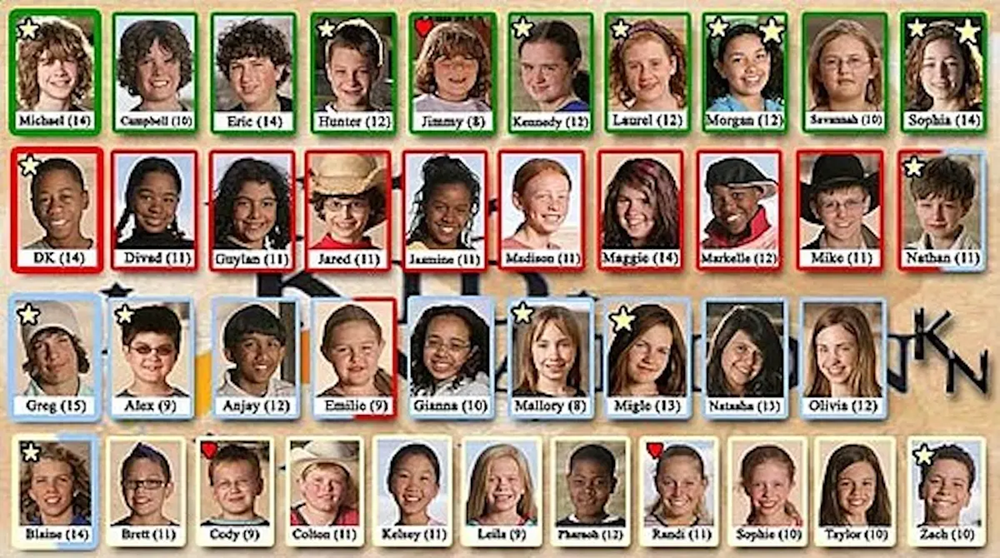
Kid Nation (CBS): What if you could televise Lord of the Flies? That’s the elevator pitch behind Kid Nation, a 2007 reality show from the people who brought you Big Brother. Filmed over a month at the Bonanza Creek Movie Ranch, built on the ruins of old west town Bonanza City in New Mexico, the show brought forty children, aged eight to fifteen, to establish their own society, free from the limitations (wise or otherwise) of adult imagination.

Adults were present throughout filming but limited their interactions with the children as little as possible, and children were free to leave at any time. Three eventually did. The population was split into four districts, labelled by colour, with each district electing a representative to the town council, which would have final oversight.

Kid Nation, 2007-08

Arguments arose over whether to kill the town’s chickens for food, the imposition of a curfew to ensure sweet-fuelled exuberance didn’t affect the next day’s activities, attendance at a mandatory faith service, and the aftermath of losing an election, no doubt engineered and portrayed dramatically by the producers but fascinating nonetheless for viewers at home. Kid Nation wasn’t without its share of controversy, mostly born out of pearl clutching, which did cost it some advertisers, although the one genuine incident on set – a burn from a cooking oil splash – was found to be not the fault of the producers.

The final episode of the show gave viewers a taste of what they probably wanted all along when the kids – freed from the responsibility of their “jobs” – ransacked the town, but ultimately came back together to repair the damage they’d done. In this, they were probably better than their elders. In 2020, The Av club spoke to several of the participants, who noted that while they didn’t consider the show to be in any way exploitative at the time, watching it as adults made them feel uncomfortable. In the end, the negative publicity attracted by Kid Nation outweighed its value to the network and the experiment has never been repeated, although Channel 4 in the UK did air a similar show, Boys and Girl Alone, in 2009.

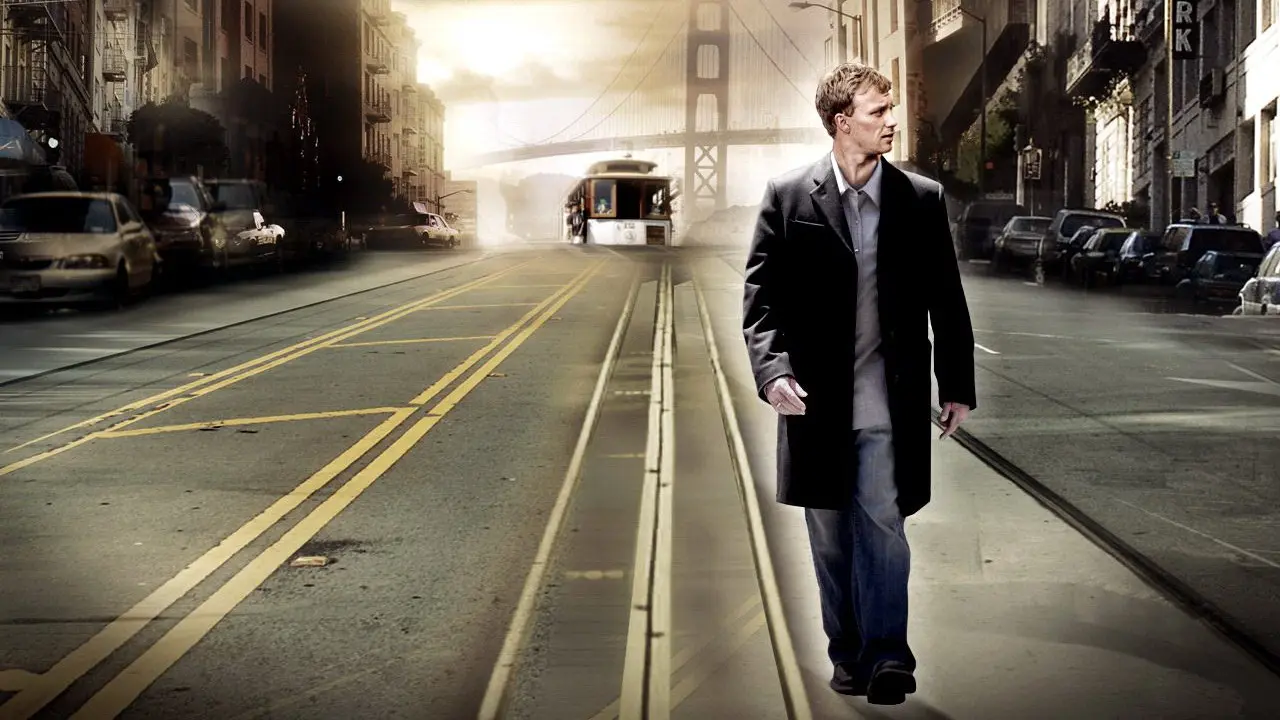
Journeyman (NBC): Created by Kevin Falls, a writer-producer whose first big break came on sports agency drama Arli$$ before going on to work on Sports Night and The West Wing, Journeyman told the story of Dan Vasser, a newspaper who is pulled through time to help his target solve a problem. Obviously taking its inspiration from Quantum Leap, where the shows differed was in Vasser’s anchorage to his “home” time, to where he’d always return at the end of his adventure and where he had a wife and child.

Scottish actor Kevin McKidd had appeared in Trainspotting and The Acid House before John Milius cast him as veteran centurion Lucius Vorenus in Rome, opening the door to this starring role as Vasser. McKidd is backed up by Gretchen Eglof as wife Katie, Reed Diamond as Dan’s brother Jack, a police detective who becomes suspicious of Dan’s activities, and Moon Bloodgod as Livia, Dan’s ex-girlfriend who was presumed killed in a plane crash ten years before.

Journeyman, 2007-08

Livia, though, is also a time traveller, one who jumped back to her home time of 1948 when the plane crash, her extended stay in Dan’s time possibly a mission to ensure he and Katie – who he met in the aftermath of the tragedy – get together. Livia often jumps to the same time as Dan, imparting advice and giving aid, and is pivotal in bringing Jack on side. Added to all this is another time traveller, Evan, whose linear timeline death occurs before Dan is thrust into his position but whom the two occasionally encounter.

Heady stuff, then, and probably a little too much for the average 2007 NBC viewer, even if Lost on ABC had softened the TV audience up for non-linear plotlines. Thirteen episodes of Journeyman were ordered, airing from September to December 2007, and while the writers’ strike initially put paid to a second half of the season, hopes were high that at least another nine episodes would be commissioned to finish the season. However, despite a fan campaign that saw fans inundate the network with boxes of Rice-a-Roni, the show was cancelled for good in April 2008.

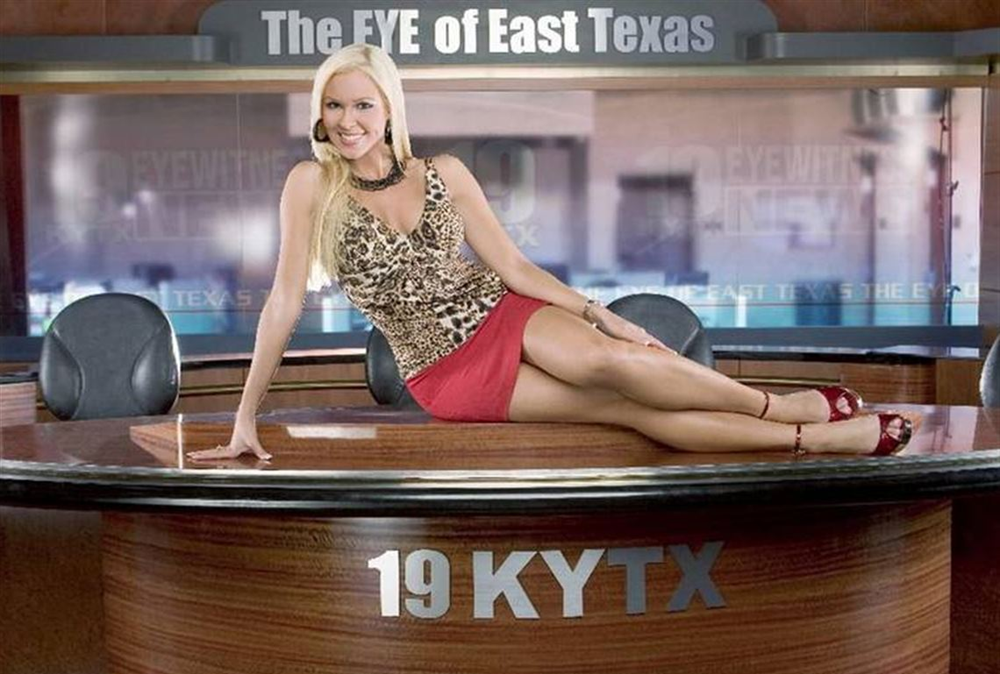
Anchorwoman (Fox): No doubt named for – and with an aesthetic definitely borrowed from – the 2004 Will Ferrell film Anchorman, Anchorwoman was another offbeat, scripted reality show, the likes of which were proliferating the schedules in the mid-2000s. Starring Lauren Jones, a former model who had enjoyed stints as a “Barker Beauty” on The Price is Right and as a “Diva” for WWE, the show asked the question, “would you trust a bikini model to deliver the news?”

The setting for the show was Tyler, Texas, a small city one-hundred miles east of Dallas, where KYTX – the local CBS affiliate – were willing to give a chance to an aspiring newsreader. KYTX was a CBS affiliate and, as Anchorwoman was a Fox production, all CBS logos had to be edited out of the final footage, the local Fox affiliate presumably unwilling to risk the credibility of Fox News by hiring a newcomer.

Anchorwoman, 2007-08

Jones was in the job for a thirty-day period, which was filmed for six half-hour episodes, the first and second of which were aired back-to-back as an hour-long premiere. What could have been an interesting concept was undercut by the scripted direction of the show, leaning heavily into comedy to try and create a real-life version of The Office.

Unfortunately, Anchorwoman had neither scriptwriters nor performers on the level of Greg Daniels and Steve Carrell, and the premiere aired to very low ratings. So low, in fact, that Fox declined to air the remaining four episodes, any chance of lessons being learned from what happens to men when a beautiful woman walks into the room lost forever. I mean, the answer is obvious, but it’s nice to be remined how dumb a species we are from time to time…

Cavemen (ABC): In 2004, car insurance company GEICO began airing a series of commercials that featured a group of Neanderthals using the company’s website with the tag line, “so easy, a caveman could do it!” The skits were the brainchild of Joe Lawson and Noel Ritter of The Martin Agency, one of the US’s top advertising firms, inspired by “Pastoralia,” a short story by George Saunders.

Just as had happened with Martin the GEICO gecko, a Cockney lizard introduced in 1999, the American public loved the GEICO cavemen, who were developed into broader characters who enjoyed modern life. Seeking to cash in on the popularity of the throwbacks, ABC commissioned a script form Lawson in March 2007 and pleased with the results, put the show into production two months later.

None of the original actors from the commercials reprised their roles for TV, although Jeff Daniel Phillips did make several guest appearances as a friend of the cavemen. The parts instead went to, Bill English, Sam Huntingdon, and Nick Kroll, their trio of extant Cro-Magnons (although their features more resembled those of Neanderthal man) trying to make a life for themselves in modern day Atlanta, negotiating the pitfalls of race politics between the “Sapes” and the “Maggers.”

Cavemen, 2007-08

Lawson – and co-creators Josh Gordon and Will Speck (who were also working on Will Ferrell flick Blades of Glory at the time) – intended Cavemen to be a “unique buddy comedy that offers a clever twist on stereotypes and turns race relations on its head,” but a very negative reaction to the an airing of the pilot in test markets resulted in some considerable retooling, including moving the setting to San Diego (although the “locals” weirdly retained southern accents throughout the series). The first episode aired on October 2nd 2007 as part of a double-bill with Carpoolers, the only sitcoms in their timeslot, and earned over nine million viewers.

By week five, however, they had slipped to number eighty-three in the weekly ratings and the writing was on the wall. Just two more episodes were aired before ABC cancelled the show, replacing it with hidden camera comedy show Just for Laughs. As a postscript, GEICO aired a commercial during the 2008 Superbowl which featured the ad cavemen discussing the show’s failure.

Terminator: The Sarah Connor Chronicles (Fox): In 1998, Carolco founders Andrew Vajna and Mario Miller formed C2 Pictures with the express aim of resurrecting the Terminator franchise, which had lain dormant since 1991’s Terminator 2: Judgment Day. Five years later, they delivered on their aim and produced Terminator 3: Rise of the Machines, fondly regarded by fans and creators alike, but missing a vital ingredient from the first two movies.

The original concept for the threequel involved Sarah Connor, Linda Hamilton’s battleworn warrior mother, but Hamilton bowed out of Terminator 3 in 2000, claiming the script did not do anything new or interesting with her character. When T3 arrived, Connor had died offscreen from leukaemia, which was an obvious problem when it was announced in 2005 that C2 were making a TV spin-off based on the character. Rather than using time travel or alternate timelines (as was eventually done in Terminator Genisys in 2015), Vajna and Miller opted to ignore the events of T3 and instead present terminator: The Sarah Connor Chronicles as a direct sequel to T2, even if they were unable to persuade Hamilton to reprise her role for TV.

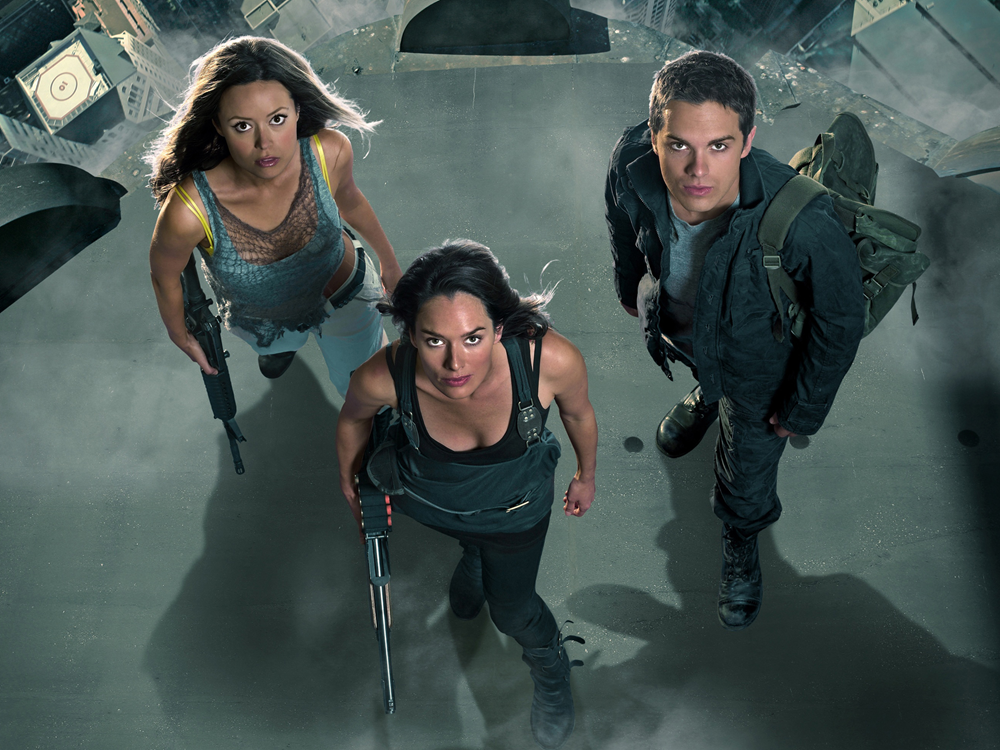
Terminator The Sarah Connor Chronicles, 2007-08

Stepping into her boots was English actress Lena Headey, whose first attempt to break the US TV market in Ultra in 2005 got no further than the pilot stage. Her Connor was every bit as badass as the original, even if the lower budget necessitated fewer and less spectacular action scenes, and she was joined by Thomas Dekker and son John, a moody teenager confused over his feelings for Summer Glau’s Cameron, a very lifelike Terminator (model unknown).

The 2007 writers’ strike reduced the original series order from thirteen episodes to nine, still ample time to establish the concept of the Connors and their allies trying to prevent the creation of Skynet, both aided and opposed by various Terminators seeded throughout human society. Debuting in January 2008, it did well enough in the ratings on Tuesday nights that a second, full season was commissioned for September 2008, but viewership tumbled to almost half of the figures they had gotten for season one.

This led to Fox cancelling the show, despite plans for a third season that involved alternate timelines and Glau playing another character who would vie for John’s interest with Cameron. Fan campaigns tried to keep the flame burning, with hopes of alternate funding through crowdsourcing or another network picking up the show, but by 2013 creator Josh Friedman admitted defeat, especially as C2 no longer had the rights to the Terminator franchise. Friedman later returned to the world of the Terminators by scripting 2019’s Terminator: Dark Fate, which again ignored the events of subsequent movies and instead presented itself as a sequel to T2.

Next time on The Telephemera Years: More of 2007’s misses, including bionic women, lovely vampires, and Japanese game shows!

Check out our other Telephemera articles:

The Telephemera Years: pre-1965 (part 1, 2, 3, 4)

The Telephemera Years: 1966 (part 1, 2, 3, 4)

The Telephemera Years: 1967 (part 1, 2, 3, 4)

The Telephemera Years: 1968 (part 1, 2, 3, 4)

The Telephemera Years: 1969 (part 1, 2, 3, 4)

The Telephemera Years: 1970 (part 1, 2, 3, 4)

The Telephemera Years: 1971 (part 1, 2, 3, 4)

The Telephemera Years: 1973 (part 1, 2, 3, 4)

The Telephemera Years: 1974 (part 1, 2, 3, 4, 5)

The Telephemera Years: 1975 (part 1, 2, 3, 4)

The Telphemera Years: 1976 (part 1, 2, 3, 4)

The Telephemera Years: 1977 (part 1, 2, 3, 4)

The Telephemera Years: 1978 (part 1, 2, 3, 4)

The Telephemera Years: 1980 (part 12, 3, 4)

The Telephemera Years: 1981 (part 1, 2, 3, 4)

The Telephemera Years: 1982 (part 1, 2, 3, 4)

The Telephemera Years: 1983 (part 1, 2, 3, 4)

The Telephemera Years: 1984 (part 1, 2, 3, 4)

The Telephemera Years: 1986 (part 1, 2, 3, 4)

The Telephemera Years: 1987 (part 1, 2, 3, 4)

The Telephemera Years: 1989 (part 1, 2, 3, 4)

The Telephemera Years: 1990 (part 1, 2, 3, 4)

The Telephemera Years: 1992 (part 1, 2, 3, 4)

The Telephemera Years: 1995 (part 12, 3, 4)

The Telephemera Years: 1997 (part 1, 2, 3, 4)

The Telephemera Years: 1998 (part 1, 2, 3, 4)

The Telephemera Years: 1999 (part 1, 2, 3, 4)

The Telephemera Years: 2000 (part 1, 2, 3, 4)

The Telephemera Years: 2002 (part 1, 2, 3, 4)

The Telephemera Years: 2003 (part 1, 2, 3, 4)

The Telephemera Years: 2005 (part 1, 2, 3, 4)

The Telephemera Years: 2006 (part 1, 2, 3, 4)

The Telephemera Years: 2008 (part 1, 23, 4)

The Telephemera Years: O Canada! (part 1, 2, 3, 4)

Titans of Telephemera: Irwin Allen

Titans of Telephemera: Stephen J Cannell (part 1, 2, 3, 4)

Titans of Telephemera: DIC (part 1, 2)

Titans of Telephemera: Hanna-Barbera (part 1, 2, 3, 4, 5)

Titans of Telephemera: Kenneth Johnson

Titans of Telephemera: Sid & Marty Krofft

Titans of Telephemera: Glen A Larson (part 1, 2, 3, 4)

Titans of Telephemera: Quinn Martin (part 1, 2)

Titans of Telephemera: Ruby-Spears

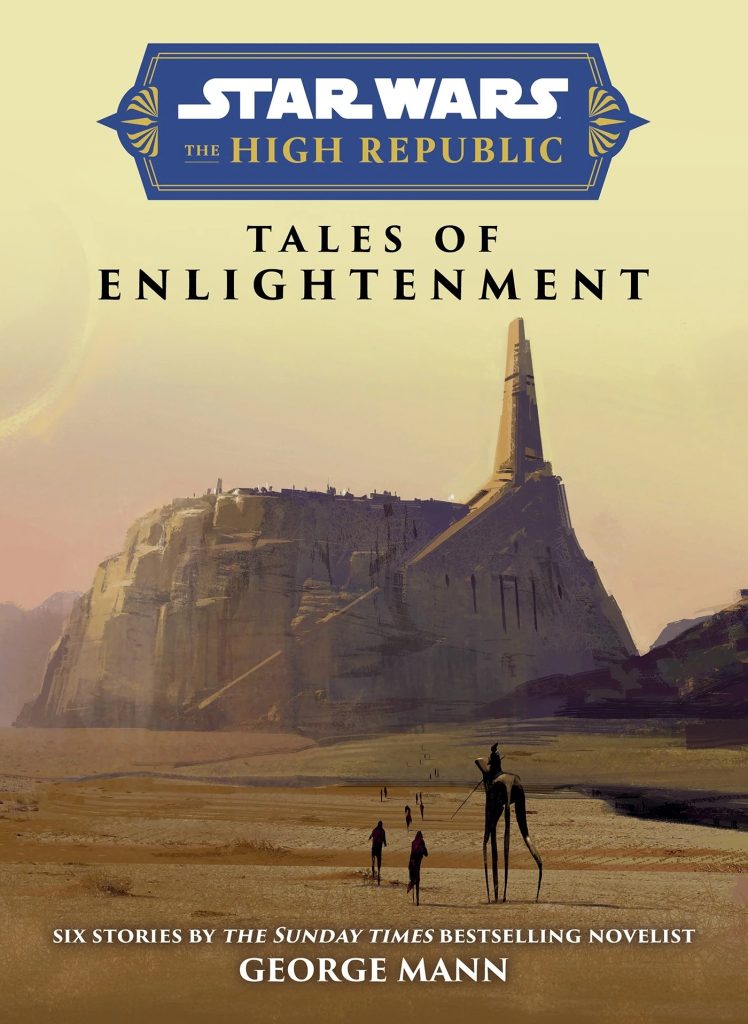
George Mann • STAR WARS: THE HIGH REPUBLIC – TALES OF ENLIGHTENMENT

Out now from Titan Books, STAR WARS: THE HIGH REPUBLIC – TALES OF ENLIGHTENMENT is a brand-new anthology set in the galaxy far, far away. This special edition release contains six short tales, including a bonus story exclusive to the collection, as well as a complete guide to the award-winning second phase of THE HIGH REPUBLIC, and interviews with a selection of the authors. Here, TALES OF ENLIGHTENMENT’s author GEORGE MANN joins us to tell us about the anthology, his STAR WARS journey, and more….

STARBURST: Tales of Enlightenment takes place on Jedha – what made this iconic planet a good backdrop for this collection of Star Wars stories, and what kinds of characters will readers meet?

George Mann: Jedha is a writer’s dream of a Star Wars location. It’s a melting pot of Force-related faiths and sects, Jedi and non-Jedi, politics and peoples. There’s a huge amount of opportunity for storytelling and tension between different factions. In this era, it’s also a place where the Jedi aren’t quite as popular as they are around some other regions of the Republic. Here, they’re just another Force sect, and that, too, creates some interesting friction. Mostly, though, we chose Jedha as the location for these stories because of the huge, pivotal events that were happening there during Phase II of The High Republic storytelling. And we decided to set the stories in a tapbar [the titular ‘Enlightenment’] because it presented the chance to show the ground level view of local people of the events going on in the city, as well as being a great setup for having walk-on or guest characters appear in each story as they visit the bar.

You’ve been writing Star Wars since 2018’s short story collection Myths & Fables, can you remember how it was taking “your first steps into a larger world” – to paraphrase Obi-Wan; was it always a goal of yours to tell tales in the galaxy far, far away?

Yeah, it was pretty much a bucket-list gig. Star Wars has played such a part in my life, ever since I was a small child, and being able to contribute something meaningful to that story and galaxy is a real honour. I still pinch myself every time I have a character ignite their lightsaber when I’m writing!

How did the opportunity first come about?

Michael Siglain from Lucasfilm Publishing read one of my original novels and approached me about working on the Myths & Fables book. The novel I’d written featured a fictional mythology and I guess it showcased that aspect of my work. We had such fun working together on the first book that we did two more in the series, and it wasn’t long before I was invited to work on The High Republic project too. I owe Mike a lot for that initial approach!

At what stage were you first brought on board the High Republic team?

I joined the team towards the end of Phase I, when I wrote a Drengir-themed story for Star Wars: Dark Legends, and a couple of picture books for kids.

The stories featured in Tales of Enlightenment are all set during that era of Star Wars storytelling too; considering that the period has already produced 28 books and counting, is this anthology accessible to fans who might not have a deep knowledge of High Republic lore yet?

I believe so, yes. We try hard to make sure there are plenty of jumping on points to keep the stories accessible, and this collection is complete in and of itself, so readers can start and finish the story here. People should be able to pick up and enjoy these stories as they are.

When were you brought into the High Republic team, what characters stood out as favourites, and are there any who you’re still chomping at the bit to write about?

I do feel as though I’ve gotten to know a lot of these characters like old friends. I’d love to return to Silandra Sho and Rooper Nitani from Phase II. I had such fun developing those characters and I feel like there’s a lot of Pathfinder stories that could still be explored.

You’re an extraordinarily prolific author, having written countless – literally, we tried! – novels, comic books, screenplays, audiobooks, and non-fiction works since your debut in 2008. I guess our question is… how? What do your daily routines and disciplines look like in order to achieve such formidable output?

Technically, I debuted in 2000, but it wasn’t until 2008 that my first full-length novel appeared! I think the truth is that I like being busy, and I like working across different media. I try to keep my hand in across lots of different projects! I also try to keep office hours, but if I’m honest, it often spills into evenings and weekends too, particularly as I work a lot with people in different time zones. There’s no particular routine or anything – I just try to knuckle down and focus on what needs to be done. I always say writing a book is a bit like climbing a mountain – it’s about the day in, day out consistency, about always pushing forward. A novel is as much a test of endurance as anything else! What I love about writing scripts, be it comic, audio or screenplay, is the collaboration with other creatives. With a novel you tend to be working alone for long stretches and the end product is very much ‘you’. That can be very fulfilling. But at the same time, working with others means you’re often pleasantly surprised by the way things turn out, and the fact the actors or artists bring something new to the story is hugely exciting. So I try to get a good mix of different projects that I feel passionate about, some personal and some collaborative. Other than that, it’s just biscuits, tea and lots of hard work!

STAR WARS: THE HIGH REPUBLIC – TALES OF ENLIGHTENMENT is on sale from all good book shops, comic stores, and online NOW! And you can catch all-new and exclusive THE HIGH REPUBLIC – PHASE III stories in the current issues of STAR WARS INSIDER!

The Telephemera Years: Godzilla x Kong Special

Godzilla, 1976-77

Ah, telephemera… those shows whose stay with us was tantalisingly brief, snatched away before their time, and sometimes with good cause. They hit the schedules alongside established shows, hoping for a long run, but it’s not always to be, and for every Street Hawk there’s two Manimals. But here at STARBURST we celebrate their existence and mourn their departure, drilling down into the new season’s entertainment with equal opportunities square eyes… these are The Telephemera Years!

Godzilla x Kong Special

With Godzilla x Kong: The New Empire riding high in the movie charts – and with a gap in the schedule to fill! – this week’s Telephemera Years dips into the archive to look at the Saturday morning shows that featured those loveable giant apes and lizards!

The King Kong Show (ABC, 1966-67): A co-production between American studio Rankin/Bass and the Japanese animators at Toei, The King Kong Show ran for three seasons from 1966 but hasn’t left quite the mark that the later Hanna-Barbera Godzilla cartoon, with or without Godzooky.

With character designs by infamous EC Comics artist Jack Davis, The King Kong Show’s main feature saw the giant ape befriending the Bond family, who were worldwide adventurers, with Kong acting as a protector of humanity. As was often the way, there was a back-up feature entitled Tom of T.H.U.M.B., parodying the spy craze of the time, which saw a secret agent reduced to just three inches tall.

The King Kong Show, 1966-67

While the show was in development, Rankin/Bass began a partnership with Toho, the Japanese film studio responsible for the Godzilla series, looking to make a sequel to Toho’s 1962 King Kong vs Godzilla (which had originally been intended to be King Kong vs Frankenstein!), in which Kong would fight giant crab Ebirah, but disagreements over who would direct the film saw Rankin/Bass drop out and Kong’s part filled by Godzilla. The studios settled their differences in time to make King Kong Escapes in 1967, which was loosely based on the animated show.

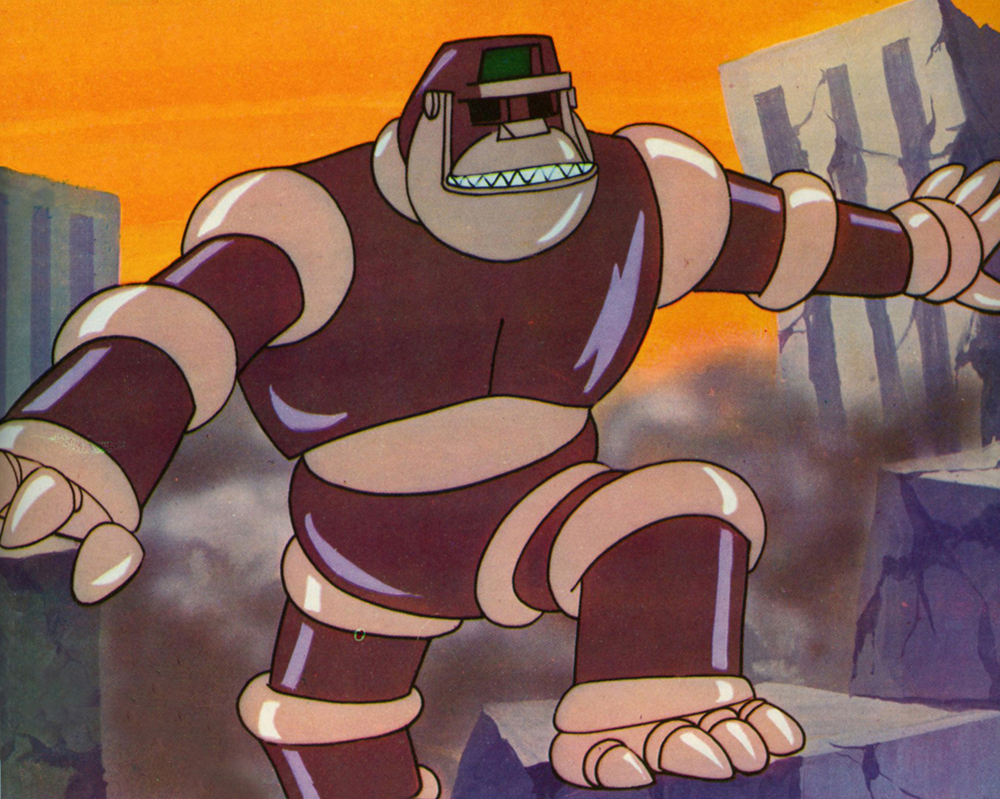
The first eight episodes are available on DVD through Sony, but you’ll have to trawl video sharing sites for the rest, including the debut of Mechani-Kong, the not-at-all MechaGodzilla-inspired robot ape that later turned up in King Kong Escapes.

Godzilla (NBC, 1978-79): You all know the story of Godzilla by now, right? Mankind’s stupidity and eagerness to destroy itself results in an ancient creature being awakened which cuts a swathe of radioactive revenge across a Japan only nine years removed from the atomic bomb atrocities in Hiroshima and Nagasaki, eventually becoming the Earth’s defender against similar creatures from outer space, even though we don’t deserve him?

The big green lizard starred in fifteen Japanese films from the Toho studio between 1954 and 1975 when the series was halted following lacklustre box office receipts for Terror of Mechagodzilla, and most of these films found an American audience in dubbed versions shown in fleapits, drive-ins, and on late night TV. The lull in Japanese action meant the US was ripe for homegrown Godzilla fare and Marvel Comics were first out of the blocks with a comic book in 1977 that eventually ran for twenty-four issues.

Godzilla, 1976-77

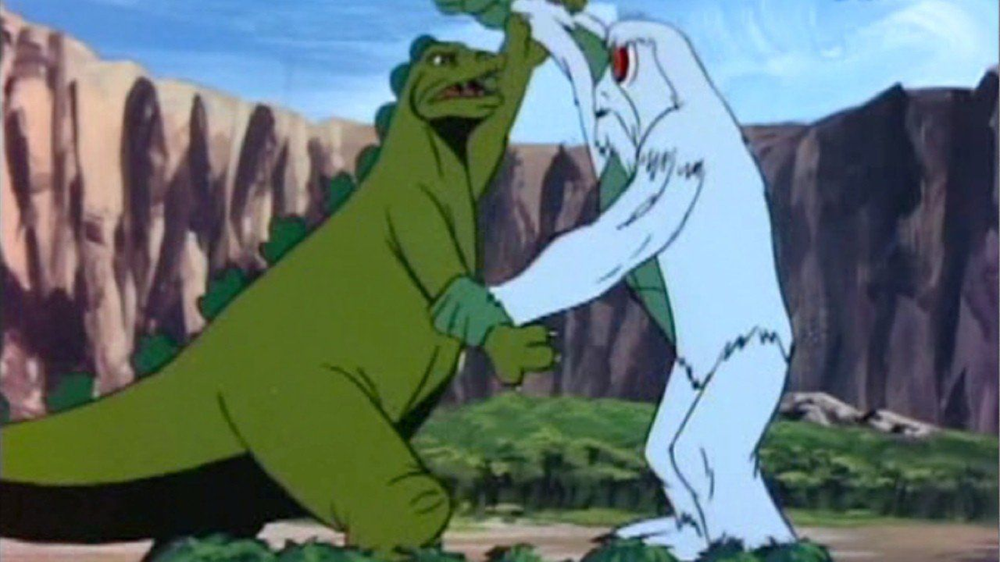
Marvel was not the only company preparing fresh Godzilla for the American market, though, and Joseph Barbera of the Hanna-Barbera animation studio thought the character perfect for his own animated show, tasking Duane Poole and Dick Robbins with coming up with a structure that could showcase the might of the creature while keeping the light peril necessary for such a show. Poole and Robbins created the crew of the research ship Calico, led by Captain Carl Majors and scientist Quinn Darien (Darien’s nephew Pete acted as the audience identification figure).

A typical story would find the Calico stumbling into the kind of dangerous situation that only the intervention of Godzilla could solve, his signature tune ringing out as he emerged from the depths to save the day. Thirteen episodes of the show were ordered, partnered with Jana of the Jungle as The Godzilla Power Hour from September 9th 1978, ultimately leading to a second season which featured the horror that was Godzooky. Toho resumed making Godzilla films in 1985 and there have been several big-screen blockbusters starring the fire-breathing behemoth but for a generation of kids, there’s only one song they hear when they think of Godzilla…

Godzilla: The Series (Fox, 1998-99): Although it was officially a sequel to Roland Emmerich’s 1998 movie, Godzilla: The Series also took inspiration from the 1978 Hanna-Barbera cartoon series, presenting a giant monster that was a friend to mankind and – in particular – one young man. Rather than Pete Darien and the crew of the Calico, this Godzilla “imprinted” on intrepid scientist Dr Nick Tatopoulos (voiced by Beverly Hills 90210’s Ian Ziering), following him and his crew around as they sought to mitigate the damage caused by monsters hatching all over the world.

The series was developed by former NBC executive Jeff Kline and Richard Raynis, who won six Emmys for his work on The Simpsons, and the two had previously worked on other film to TV transfers such as Jumanji and Men in Black. Their vision for Godzilla was one more faithful to the original movies than Emmerich’s treatment, which had been derided by fans of the property and has subsequently been banished to non-canonical status.

Godzilla The Series, 1998-99

Their Godzilla always seems to know when Nick is in danger and is willing to fight the monsters on behalf of mankind, having no living relatives of his own species. He tussles with such kaiju as giant squids, mutant worms, robotic insects, and even Quetzalcoatl itself, created either a result of ecological disasters or by the sinister forces of Nick’s old college roommate Cameron Winter and his evil allies, including the alien Leviathans.

The first season of Godzilla: The Series premiered on September 12th 1998 and did well enough that Fox commissioned a second series. However, the show was caught up in the ongoing battle for supremacy between Pokemon and Digimon, often finding itself tossed around the schedules for late-programmed Digimon marathons, and two of its forty episodes went unaired in first run due to this kind of messing around. Still, the show retains a solid fandom, although subsequent anime returns to the world of the big green monster have eclipsed its legacy.

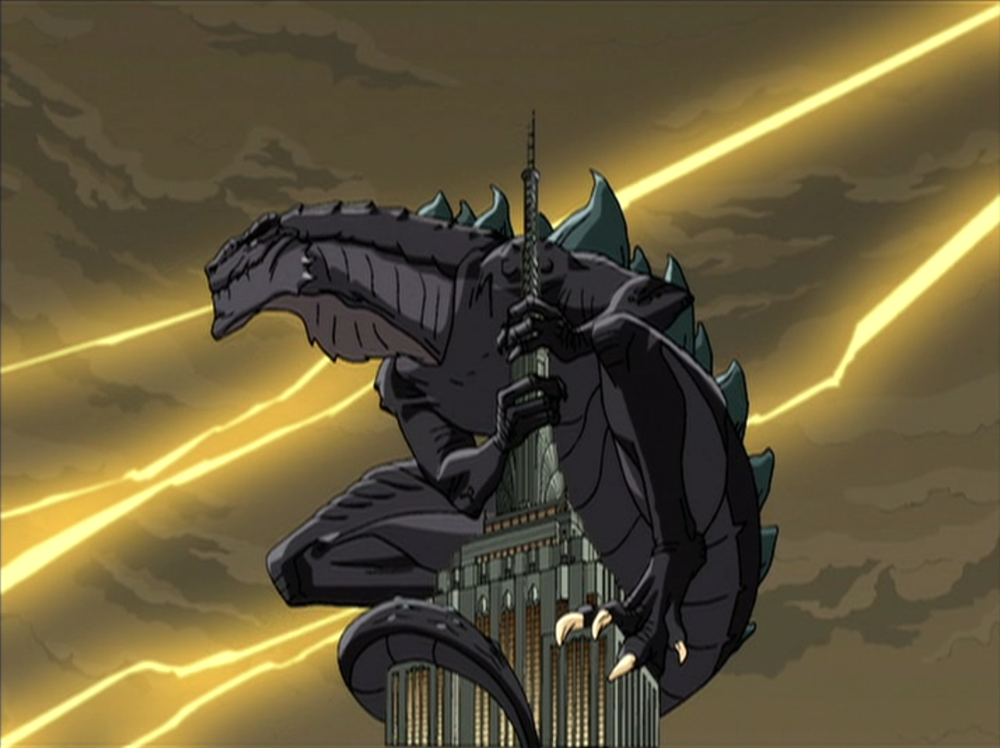
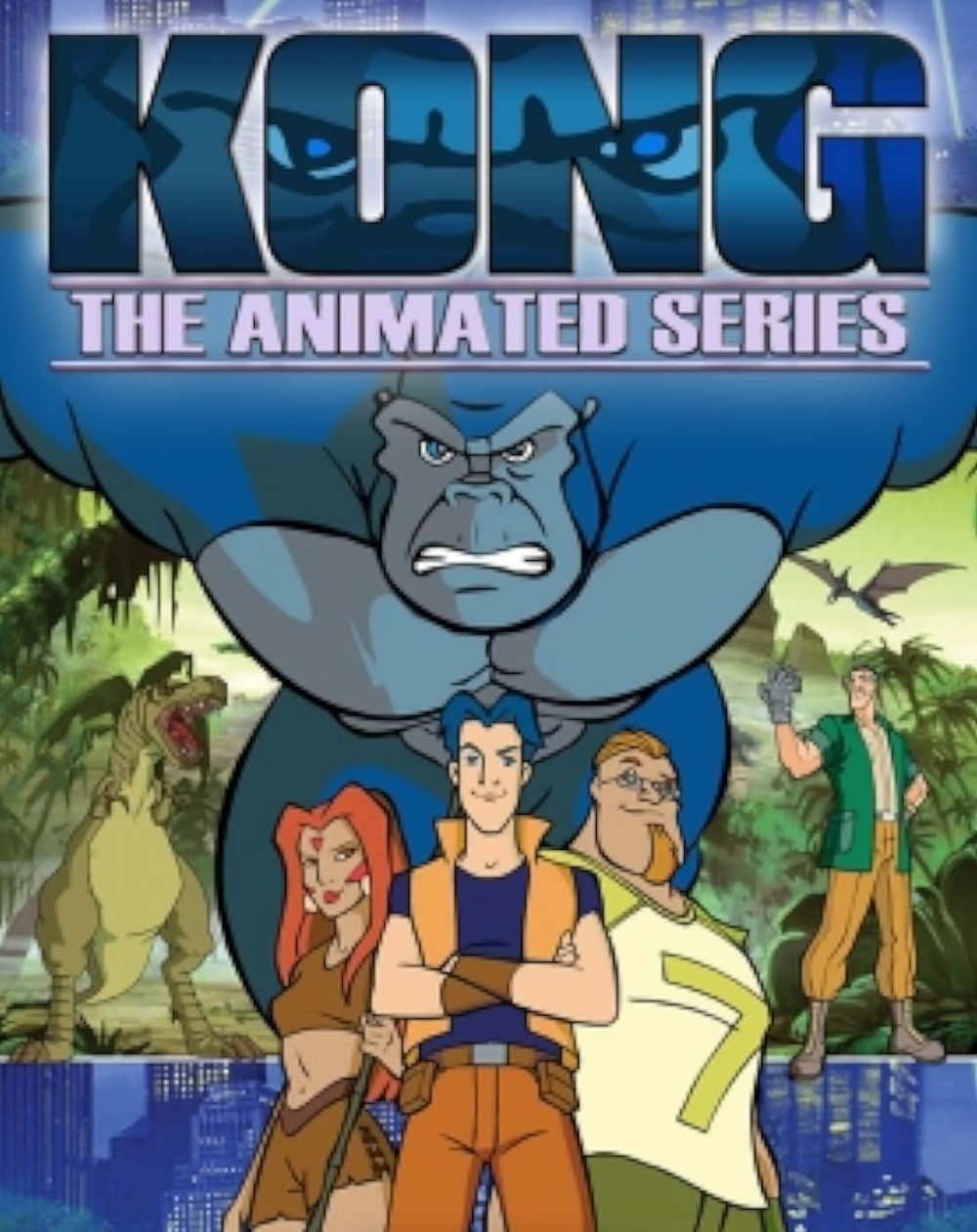
Kong: The Animated Series (Fox, 2000-01): Eyeing the success of Godzilla: The Animated Series, which had been spun out of the Dean Devlin and Roland Emmerich movie into two seasons of action on Fox Kids, the German company BKN International partnered with French animators Ellipse to produce this copycat show, featuring the giant ape from Merian C Cooper’s 1933 novel.

Sold initially to the French M6 network, BKN also managed to convince Fox Kids – which had just cancelled Godzilla – to carry their show, with a twenty-episode first season order. The premise of the show had Kong die from his injuries after falling from the Empire State Building, as in the original film, but a scientist Dr Lorna Jenkins managed to take DNA samples which she later used to recreate a clone of the beast. Many years later, she invites her grandson Jason to visit her on Kong Island but the invitation is unknowingly intercepted by an evil scientist bent on using Kong Island’s secrets for his own nefarious schemes…

Kong the Animated Series, 2000-01

As well as engineering a clone of a giant ape, Dr Jenkins has also invented the Cyber Link, a device which allows Kong and Jason to switch bodies, and they use this to not only stop the evil scientist but also fight off the forces of the demon Chiros! Yes, this is a busy show, full of densely plotted intrigue and small amounts of peril, and Ellipse (best known for Doug and Babar) did a good job, even if the animation reeks of its early-2000s origins.

A second season continued Kong’s adventures, allowing Jason to switch minds with other large animals, too, and unlike most series of its kind, there was a definite conclusion, although a 2005 movie which took Kong to Atlantis was produced to cash in on the release of Peter Jackson’s King Kong remake. A 2006 sequel to that film followed but the limited success of the Jackson film meant that Kong returned to his island home once again.

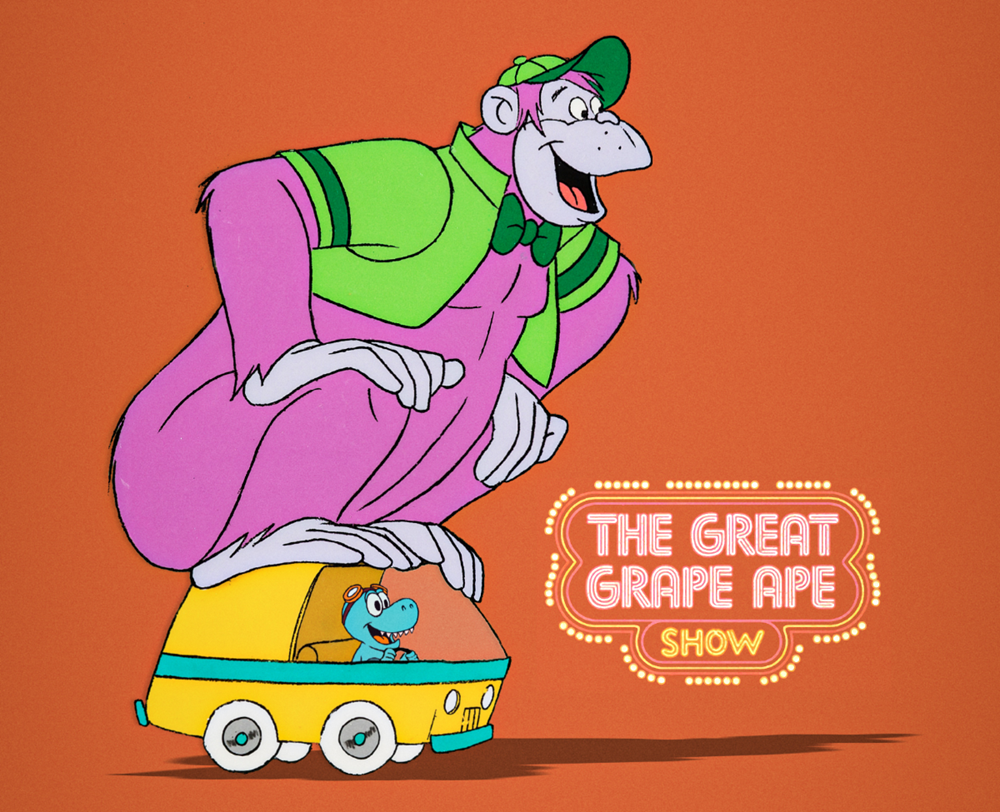
The Great Grape Ape Show (ABC, 1975-76): William Hanna and Joseph Barbera created some of children’s television’s most memorable icons, from Fred Flintstone to Scooby Doo, but they had more than their fair share of great characters that didn’t become part of the popular zeitgeist, like Magilla Gorilla, Speed Buggy, and the giant primate, Grape Ape.

Grape Ape was a forty-foot purple gorilla, with a childlike personality, who travels across America with his canine handler, Beegle Beagle. Despite his massive proportions initially frightening everyone they come across, Grape Ape and Beegle stick around long enough to help out a town in trouble before moving on to the next location in/on their little yellow van.

The Great Grape Ape Show, 1975-76

Although complete conjecture on the part of this writer, it’s not impossible that, rather than be inspired by the upcoming 1976 feature King Kong (and, of course, Grape Ape ultimately does trace his lineage back to the original feature), the long lead-in for an animated show might mean that word of Hanna-Barbera’s new project reached Dino de Laurentiis, inspiring him to remake the 1933 Willis O’Brien spectacular. De Laurentiis claims he was driven by the sight of a King Kong poster in his daughter’s bedroom, while Michael Eisner claims he got the idea while watching the original in December 1974, but they would say that, wouldn’t they?

Initially a part of The Tom & Jerry/Grape Ape Show, the giant gorilla’s fifteen double episodes were later repackaged alongside Mumbly shorts and as its own attraction. The character appeared as part of the Yogi Yahooeys in 1978’s Laff-A-Lympics, and most recently turned up in Scoob’s post-credits scene, where he joins Blue Falcon’s Falcon Force.

Next time on The Telephemera Years: We’re off to 2007 and the outer limits of The Telephemera Years where we find… The Bionic Woman?!?

Check out our other Telephemera articles:

The Telephemera Years: pre-1965 (part 1, 2, 3, 4)

The Telephemera Years: 1966 (part 1, 2, 3, 4)

The Telephemera Years: 1967 (part 1, 2, 3, 4)

The Telephemera Years: 1968 (part 1, 2, 3, 4)

The Telephemera Years: 1969 (part 1, 2, 3, 4)

The Telephemera Years: 1970 (part 1, 2, 3, 4)

The Telephemera Years: 1971 (part 1, 2, 3, 4)

The Telephemera Years: 1973 (part 1, 2, 3, 4)

The Telephemera Years: 1974 (part 1, 2, 3, 4, 5)

The Telephemera Years: 1975 (part 1, 2, 3, 4)

The Telphemera Years: 1976 (part 1, 2, 3, 4)

The Telephemera Years: 1977 (part 1, 2, 3, 4)

The Telephemera Years: 1978 (part 1, 2, 3, 4)

The Telephemera Years: 1980 (part 12, 3, 4)

The Telephemera Years: 1981 (part 1, 2, 3, 4)

The Telephemera Years: 1982 (part 1, 2, 3, 4)

The Telephemera Years: 1983 (part 1, 2, 3, 4)

The Telephemera Years: 1984 (part 1, 2, 3, 4)

The Telephemera Years: 1986 (part 1, 2, 3, 4)

The Telephemera Years: 1987 (part 1, 2, 3, 4)

The Telephemera Years: 1989 (part 1, 2, 3, 4)

The Telephemera Years: 1990 (part 1, 2, 3, 4)

The Telephemera Years: 1992 (part 1, 2, 3, 4)

The Telephemera Years: 1995 (part 12, 3, 4)

The Telephemera Years: 1997 (part 1, 2, 3, 4)

The Telephemera Years: 1998 (part 1, 2, 3, 4)

The Telephemera Years: 1999 (part 1, 2, 3, 4)

The Telephemera Years: 2000 (part 1, 2, 3, 4)

The Telephemera Years: 2002 (part 1, 2, 3, 4)

The Telephemera Years: 2003 (part 1, 2, 3, 4)

The Telephemera Years: 2005 (part 1, 2, 3, 4)

The Telephemera Years: 2006 (part 1, 2, 3, 4)

The Telephemera Years: 2008 (part 1, 23, 4)

The Telephemera Years: O Canada! (part 1, 2, 3, 4)

Titans of Telephemera: Irwin Allen

Titans of Telephemera: Stephen J Cannell (part 1, 2, 3, 4)

Titans of Telephemera: DIC (part 1, 2)

Titans of Telephemera: Hanna-Barbera (part 1, 2, 3, 4, 5)

Titans of Telephemera: Kenneth Johnson

Titans of Telephemera: Sid & Marty Krofft

Titans of Telephemera: Glen A Larson (part 1, 2, 3, 4)

Titans of Telephemera: Quinn Martin (part 1, 2)

Titans of Telephemera: Ruby-Spears

THE TELEPHEMERA YEARS: 1976, part 4

Monster Squad, 1976-77

Ah, telephemera… those shows whose stay with us was tantalisingly brief, snatched away before their time, and sometimes with good cause. They hit the schedules alongside established shows, hoping for a long run, but it’s not always to be, and for every Street Hawk there’s two Manimals. But here at STARBURST we celebrate their existence and mourn their departure, drilling down into the new season’s entertainment with equal opportunities square eyes… these are The Telephemera Years!

1976-77

For some reason – the US’s failure in Vietnam is often blamed – the American public could not get enough of the rock ‘n’ roll era in the 1970s, a point never more heavily underlined than with the success of Grease in 1978. It started before that, of course, with George Lucas’s American Graffiti giving birth to the Fonz on TV. It was almost as if the whole country wanted to forget the last decade or so and that Happy Days was the number one show for 1976-77 is no surprise. That spin-off Laverne & Shirley is number two is perhaps a little more surprising, but there’s Korean War comedy M*A*S*H at number four to ram things home. Outside this yearning for the past but also making headway in the TV ratings were telefantastic Jiggle TV mainstays Charlie’s Angels and The Bionic Woman, as well as The Six Million Dollar Man, Baretta, and Hawaii Five-O; if there was somewhere the US TV viewing audience wanted to be in 1976 it was not the 1976 outside their door.

Several big shows bade their farewells this season with The Streets of San Francisco finally running out of road, the departure of The Mary Tyler Moore Show and Phyllis setting women’s emancipation back a few years, and Sanford and Son a victim of America’s disposable Capitalism. Coming in to take their places were interfering coroner Quincy, bear-worrier Grizzly Adams, and Roots, the first of the blockbuster mini-series that gave schoolchildren everywhere license to say Kunta Kinte. But those were all shows that adults liked, even if the kids did think Steve Austin was bostin. Let’s look at four shows especially made for kids…

Monster Squad (NBC): Sometimes the smartest concepts are hidden in the history of forgotten children’s shows and Monster Squad – one of three new series for 1976 from D’Angelo-Bullock-Adams Productions – is certainly up there with off the wall, fantastic origins for its characters. Criminology student Walter takes a job as a night watchman at a wax museum and vibrations caused by the super “crime computer” he builds to help pass the time bring waxworks of Dracula, the Wolfman, and Frankenstein’s monsters to life. Burdened by their past misdeeds, the trio decide to become superheroes…

Yes, this is the Universal monsters crossed with Batman, unsurprising given William P D’Angelo and co-creator Stanley Ralph Ross worked on that series, bringing its camp charms to this delightful oddity, with a parade of supervillains that would have been very much at home in Gotham City. Anchoring things as Walter was Fred Gandy, perhaps best known at that point for a guest spot on Maude (or as Herman the German in Death Race 2000 to those with a different palate), and the monsters were played by Henry Polic II and ex-professional wrestlers Buck Kartalian and Mike Lane.
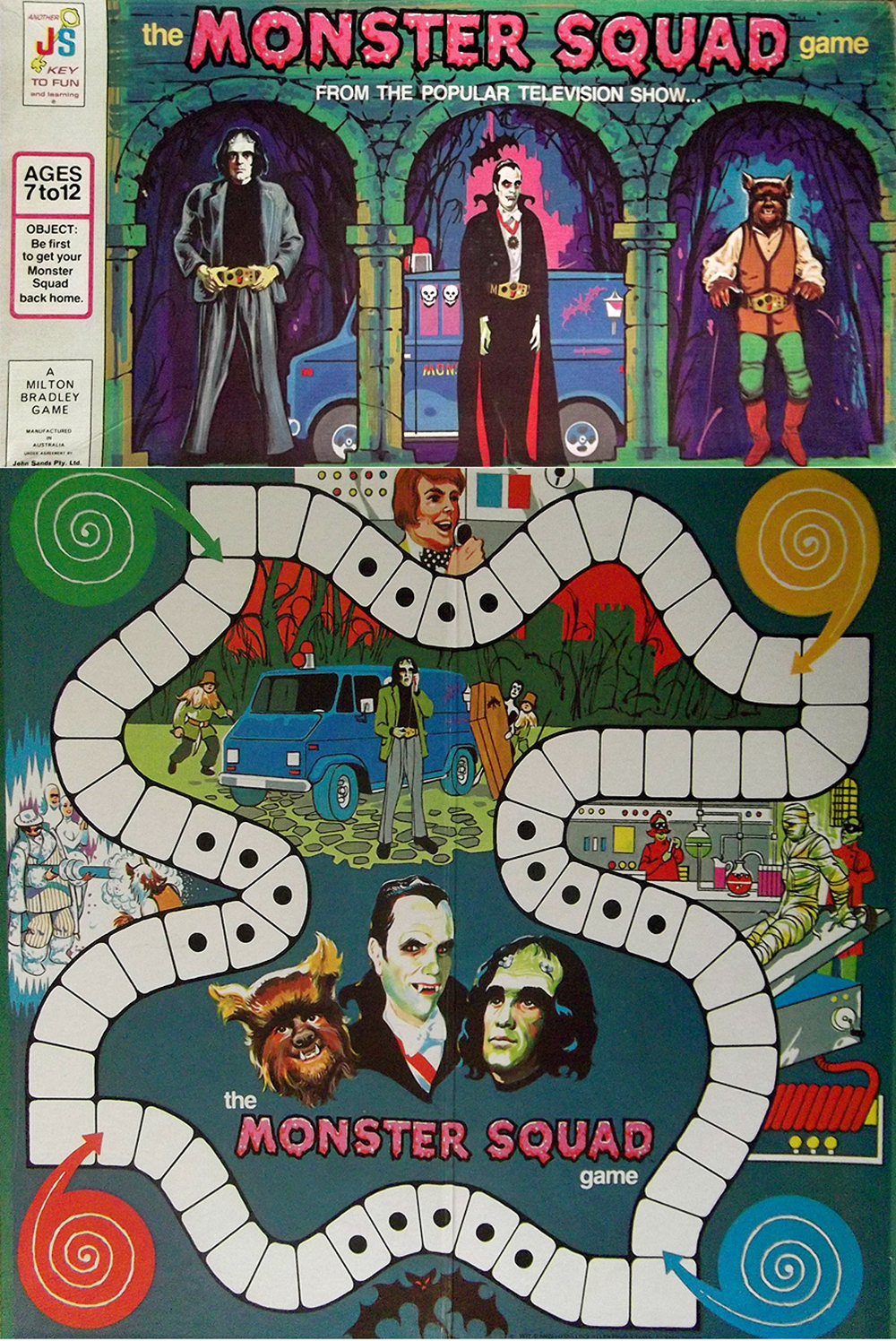
Monster Squad, 1976-77

Polic had played Dracula in a commercial a year before landing the role on Monster Squad, while Lane also had previous as Frankenstein’s monster, both B-movie Frankenstein 1970 (1958) and an episode of The Monkees. Kartalian, who wrestled as The Perpetual Motion Man, was playing Frank W Wolf (the W stood for “Were”) for the first time. The first episode saw the trio go up against the dastardly Queen Bee (Bewitched‘s Alice Ghostley), with subsequent adventures pitting our heroes against The Tickler, The Ringmaster, Lorenzo Musica, the hermaphroditic Albert/Alberta, and The Astrologer, the latter portrayed with aplomb by Lost in Space’s Jonathan Harris. Each member of the Monster Squad had a utility built and they travelled in the Monster Van, keeping the city safe to the delight of Mayor Goldwyn and Officer McMacMac.

The series debuted on September 11th 1976, running for thirteen episodes, the standard length for a Saturday morning network TV show. Despite its obvious charms, it never returned for a second season, a fate which befell most of DBA Productions’ shows (only 1974’s “dog as The Fugitive” show Run Joe Run came back for a sophomore outing). The show was released on DVD in 2009 but is long out of print; luckily the episodes are easy to find on YouTube and well worth investigating – just don’t invent a vibrating super-computer to do it.

Tarzan, Lord of the Jungle (CBS): It’s difficult to explain the grip that decades-old heroes like Tarzan, Zorro, and the Lone Ranger had on the imaginations of yesterday’s kids, but they were staples of children’s television right into the 1980s, when space-going adventurers took over. It’s odd, then, that Filmation’s Tarzan, Lord of the Jungle, which premiered in September 1976, was the first time Edgar Rice Burroughs’s jungle hero had been animated for the Saturday morning audience, although there’d been no shortage of big and small screen live-action fare over the years.

Of all the cinematic and televised Tarzans, the show was probably the most faithful to Burroughs’s original books, featuring several of the lost cities that were a running theme in Tarzan’s adventures. The animation, too, is close to the classic newspaper comic strip drawn by Burne Hogarth, using the rotoscope technique developed by Max Fleischer in 1915 and first used on his Out of the Inkwell cartoons. Tarzan was one of the first times rotoscoping was used for a TV cartoon, and Filmation would go back to the technique for future productions such as The Lone Ranger (1980), The New Adventures of Zorro (1981, told you!), and Blackstar, among others.
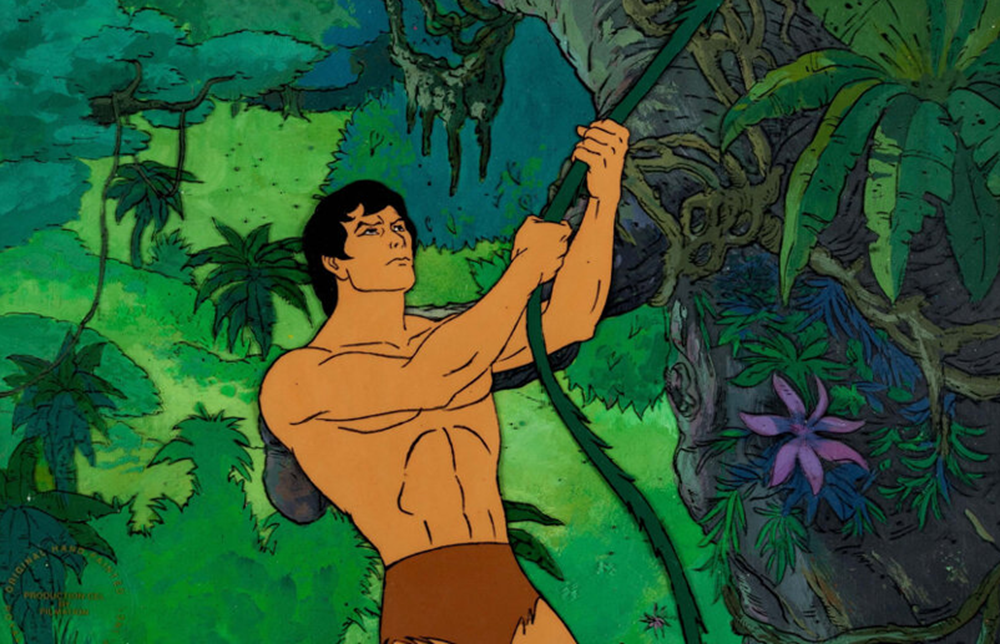
Tarzan, Lord of the Jungle, 1976-77

Filmation’s Tarzan was intelligent and well-spoken, accompanied – as in the books – by his monkey companion N’Kima. Cheetah – a creation of the Johnny Weismuller films – was nowhere to be seen, and Jane appeared just once in the season four episode “Tarzan and Jane.” The show premiered on CBS in September 1976, its first episode introducing Queen Nemone of Zandor, with subsequent adventures involving jungle Vikings, the Monkey People, the graveyard of the elephants, and more, with no shortage of Tarzan swinging from vine to vine, bellowing a famous cry that once rang out across playgrounds the world over.

Tarzan came back for a second season in 1977 as part of The Batman/Tarzan Adventure Hour, and third and fourth seasons in 1978 and 1979 under the title The Super 7 alongside The New Adventures of Batman, The Freedom Force, Manta and Moray, Superstretch and Microwoman, Web Woman, and the live-action Jason of Star Command. 1980 and 1981 also saw Tarzan on the schedules – paired with The Lone Ranger and Zorro – but no new episodes were produced for the latter two runs. Although big-haired live-action lord of the jungle Ron Ely is the first name most think of when they picture Tarzan, it’s Filmation’s version that holds a special place in the hearts of much of Generation X, and the world is a sadder place than if echoing his famous cry were deemed socially acceptable.

Big John, Little John (NBC): Besides Monster Squad, D’Angelo-Bullock-Adams Productions had two other shows debut in 1976 – McDuff, the Talking Dog and this show, probably the best remembered of the three, at least in the UK where it was shown on BBC1. William P D’Angelo flew solo on this one, partnering with Gilligan’s Island and The Brady Bunch creator Sherwood Schwartz for the story of a middle-aged man – lead actor Herb Edelman was forty-two-years-old but appeared much older – who accidentally drinks from the fountain of youth while on holiday in Florida.

The magical waters turn Big John – and Edelman was 6’ 5” tall! – into Little John, his twelve-year-old self, but only temporarily. Unfortunately for John, it happens randomly and – because this is a sitcom – often at the most inopportune times, leaving wife Marjorie and son Ricky (who both know his secret) to explain Little John away as Big John’s nephew. Joining Edelman in the regular cast were Robbie Rist (hated as Cousin Oliver in The Brady Bunch) as his younger self, Joyce Bulifant (Schwartz’s first choice for Carol Brady) as Marjorie, and Mike Darnell – who would become the king of reality TV at Fox, with such hits as When Animals Attack! under his belt – as Ricky.
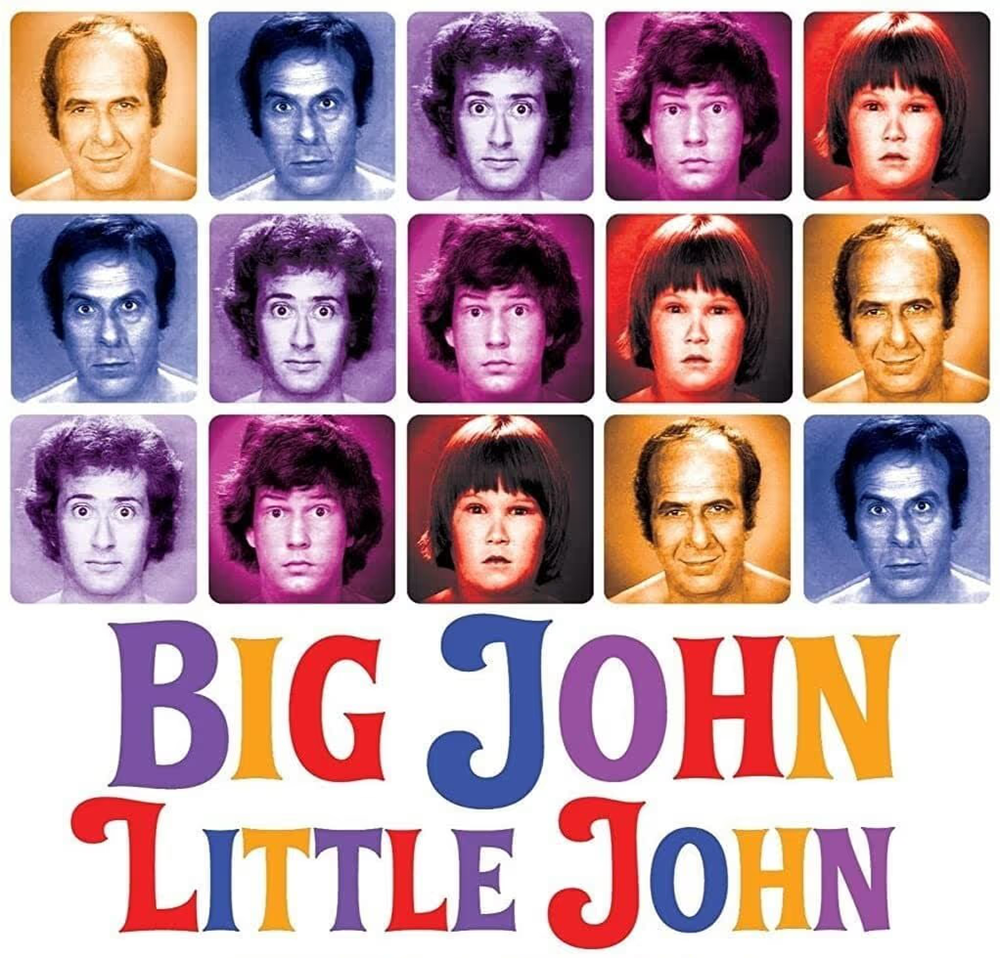
Big John, Little John, 1976-77

Scrapes involving the Big/Little Johns included being cast as both Captain Hook and Peter Pan in the school play, a poor Sheriff getting in hot water for jailing a child he thought was an adult, and Big John speaking with Little John’s voice (and vice versa). It was farce, of course, but it had an undoubted charm that should have outlived the customary thirteen episodes, any thoughts of a second season put paid to by the big ratings garnered by The Krofft Supershow on ABC in its timeslot.

DBA Productions tried again in 1977 with The Red Hand Gang but the three-man writing team that scripted the final episode of Big John, Little John would perhaps be the show’s greatest gift to comedy. Four years later, Jerome Zucker, James S Abrahams, and Davis Samuel Zucker wrote and directed Airplane!, giving Joyce Bulifant a part as the mother to a seriously ill girl on the misbegotten flight.

The Scooby-Doo/Dynomutt Hour (ABC): Although Scooby-Doo, Where Are You! (and The New Scooby-Doo Movies that followed) was in constant rotation on Saturday mornings and in syndication throughout the western world, there had been no new episodes of the canine detective’s adventures produced since 1973’s “The Haunted Carnival.” In September 1976, however, The Scooby-Doo/Dynomutt Hour not only gave the world new tales featuring Scoob, Shaggy, and a bunch of no-goodniks who would have gotten away with it if it wasn’t for those meddling kids, it also introduced a brand-new dog character.

Dynomutt had the obligatory “created by Joe Ruby and Ken Spears” credit but it’s clear to those with an interest in such things that the robotic dog and his superhero master the Blue Falcon were very much designed by Alex Toth, the man responsible for creating Space Ghost, The Herculoids, and Birdman for Ruby-Spears’ previous employers Hanna-Barbera. Blue Falcon was secretly millionaire socialite Radley Crown (voiced by Space Ghost’s Gary Owens), who created Dynomutt (Frank Welker) to help him fight crime in Big City.
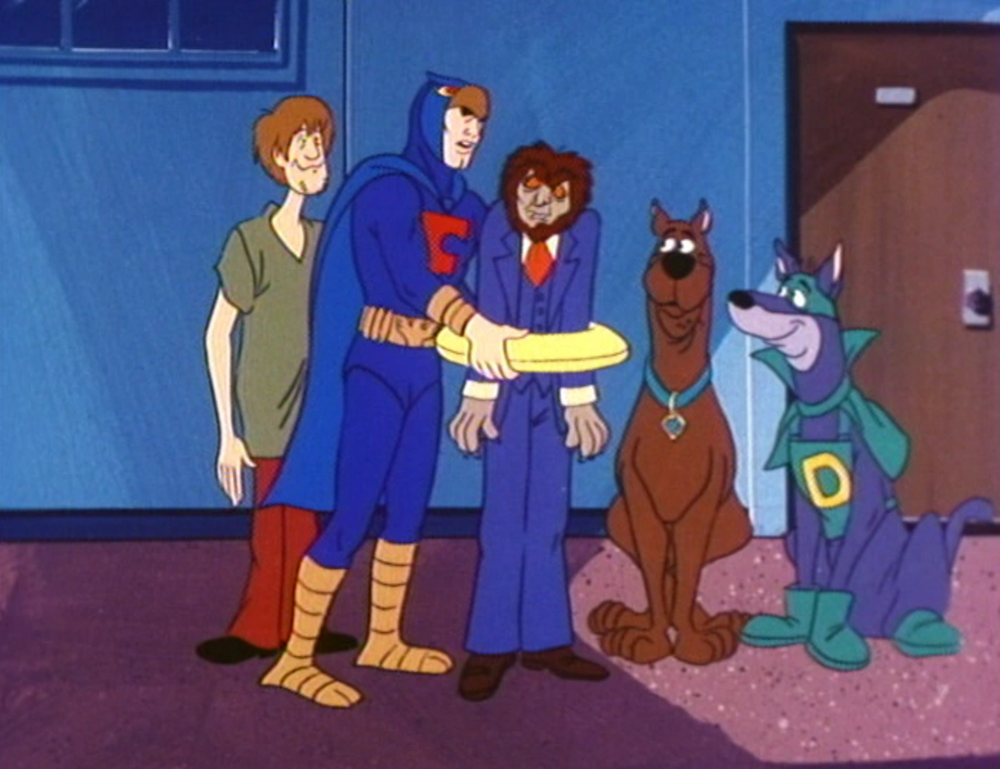
The Scooby-Doo Dynomutt Hour, 1976-77

The first two episodes of Dynomutt, Dog Wonder featured the Scooby gang, who were also present in their own adventures on haunted building sites, at frightful fiestas, in spooky swamps, and with eerie electrical eidolons. The Scooby gang was swelled by the arrival of Scooby-Dum, the Great Dane’s bumpkin cousin, whose appearances were few enough that he didn’t become an annoyance (the debut of Scrappy-Doo was still three years away). The cast from the final season of Scooby Doo, Where Are You! and The New Scooby-Doo Movies returned to voice the characters in these new episodes, which retained the classic flavour, something noticeable – or rather not – when the format was expanded by half-an-hour in December 1976 to accommodate re-runs of Scooby-Doo, Where Are You! alongside the 1976 vintage.

In 1977, both Blue Falcon and Dynomutt and The Scooby-Doo Show became part of the two-hour Scooby’s Laff-a-Lympics block, alongside Laff-a-Lympics itself, Captain Caveman and the Teen Angels, and re-runs of classic Scoob. Just four new episodes of Dynomutt were produced to go along with the sixteen from season one, while The Scooby-Doo Show added forty new mysteries to the original series’ forty-one (and twenty-four New Scooby-Doo Movies). Since their original show, Blue Falcon and Dynomutt have made several guest appearances in other Hanna-Barbera productions, notably the meta-adventures of Harvey Birdman, Attorney at Law, and had a significant role in the otherwise dreadful 2020 movie Scoob!, where it was revealed the superhero had formed Falcon Force with Atom Ant, Jabberjaw, Captain Caveman, and Grape Ape, the kid of mythology they really should teach in schools.

The Kids from CAPER (NBC): Although it was created by Romeo Muller, the scriptwriter for the beloved Rankin/Bass Christmas Christmas Specials, the fingerprints of Stanley Z Cherry and Don Kirshner were all over The Kids from CAPER. The pair had worked on The Monkees, for which Cherry was a writer and Kirshner the music supervisor, and the same madcap energy and musical numbers were seeded throughout this later show, produced by Alan Landsberg Productions (later responsible for That’s Incredible!, The Krypton Factor, and Kate & Allie).

The titular Kids from CAPER were PT (the cool one, played by Steve Bonino), feisty Bugs (Cosie Costa), food obsessed Doomsday (Biff Warren), and Doc (John Lansing), the brains of the operation. They were agents of the Civilian Authority for the Protection of Everybody, Regardless, based in the fictional city of Northeast Southwestern, helping the local police solve mysteries with the aid of the Caperband radios (actually repurposed Mego Star Trek communicators, as were those used by the Monster Squad).
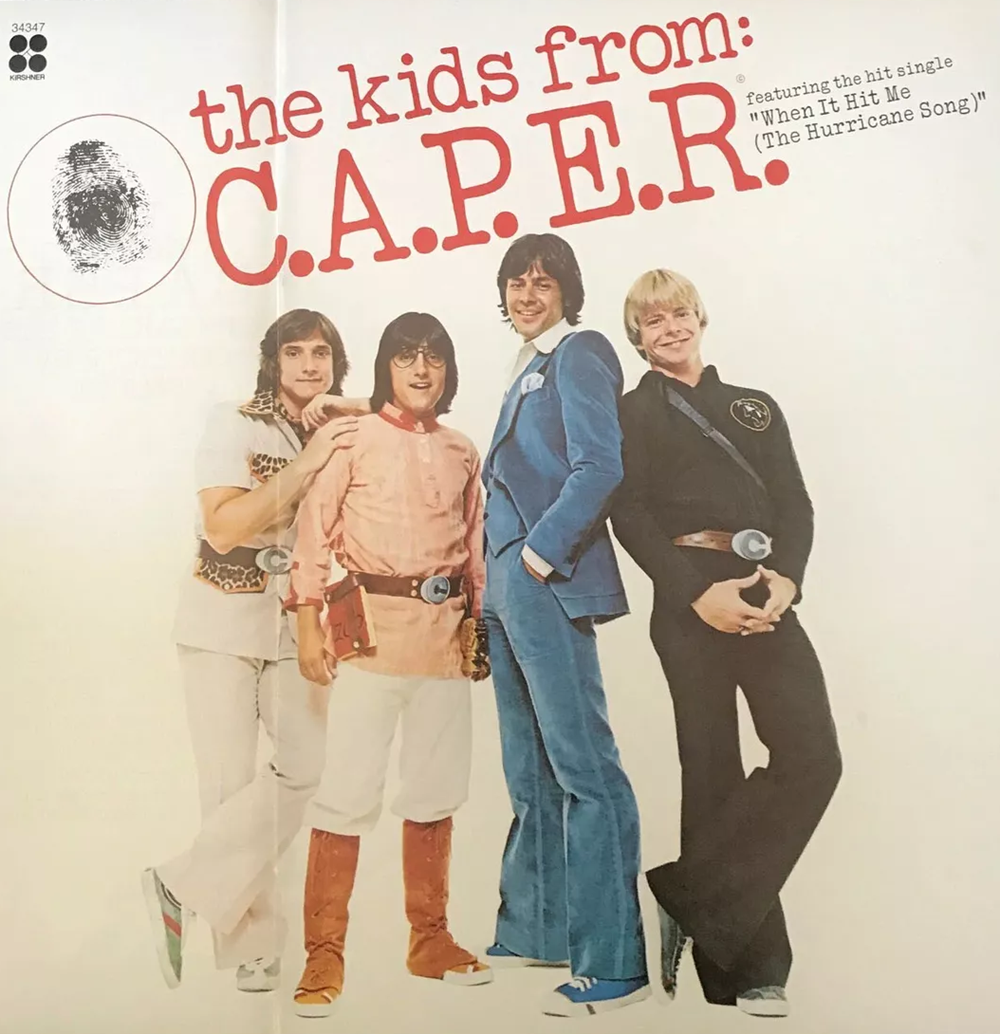
The Kids from CAPER, 1976-77

Each episode not only saw the Kids from CAPER pressed into action to save the world from very silly peril, but they also contained a song, played out in short and long form during the episode, and a soundtrack album was released on Kirshner records, although – curiously, perhaps because it was not written by Kirshner – it omits the theme music. The Kids from CAPER debuted on September 11th 1976, as part of a three-hour block of live-action shows on NBC that also featured Big John, Little John, Land of the Lost, McDuff, the Talking Dog, Monster Squad, and Muggsy, an experiment which largely failed in the face of animated opposition, although the network did try a ninety-minute block (with all new shows) a year later.

Thirteen episodes of The Kids from CAPER were produced but only eleven were shown during its initial run. The final two were shown as part of a re-run of the series a year later but that’s the last the world heard from these musical crimefighters and largely the people who portrayed them, although John Lansing did go on to work as a writer and producer for shows such as Renegade and Walker, Texas Ranger.

Next time on The Telephemera Years: To celebrate the blockbuster success of Godzilla x Kong: The New Empire, we take a detour to the Saturday Morning shows featuring the pair!

Check out our other Telephemera articles:

The Telephemera Years: pre-1965 (part 1, 2, 3, 4)

The Telephemera Years: 1966 (part 1, 2, 3, 4)

The Telephemera Years: 1967 (part 1, 2, 3, 4)

The Telephemera Years: 1968 (part 1, 2, 3, 4)

The Telephemera Years: 1969 (part 1, 2, 3, 4)

The Telephemera Years: 1970 (part 1, 2, 3, 4)

The Telephemera Years: 1971 (part 1, 2, 3, 4)

The Telephemera Years: 1973 (part 1, 2, 3, 4)

The Telephemera Years: 1974 (part 1, 2, 3, 4, 5)

The Telephemera Years: 1975 (part 1, 2, 3, 4)

The Telphemera Years: 1976 (part 1, 2, 3)

The Telephemera Years: 1977 (part 1, 2, 3, 4)

The Telephemera Years: 1978 (part 1, 2, 3, 4)

The Telephemera Years: 1980 (part 12, 3, 4)

The Telephemera Years: 1981 (part 1, 2, 3, 4)

The Telephemera Years: 1982 (part 1, 2, 3, 4)

The Telephemera Years: 1983 (part 1, 2, 3, 4)

The Telephemera Years: 1984 (part 1, 2, 3, 4)

The Telephemera Years: 1986 (part 1, 2, 3, 4)

The Telephemera Years: 1987 (part 1, 2, 3, 4)

The Telephemera Years: 1989 (part 1, 2, 3, 4)

The Telephemera Years: 1990 (part 1, 2, 3, 4)

The Telephemera Years: 1992 (part 1, 2, 3, 4)

The Telephemera Years: 1995 (part 12, 3, 4)

The Telephemera Years: 1997 (part 1, 2, 3, 4)

The Telephemera Years: 1998 (part 1, 2, 3, 4)

The Telephemera Years: 1999 (part 1, 2, 3, 4)

The Telephemera Years: 2000 (part 1, 2, 3, 4)

The Telephemera Years: 2002 (part 1, 2, 3, 4)

The Telephemera Years: 2003 (part 1, 2, 3, 4)

The Telephemera Years: 2005 (part 1, 2, 3, 4)

The Telephemera Years: 2006 (part 1, 2, 3, 4)

The Telephemera Years: 2008 (part 1, 23, 4)

The Telephemera Years: O Canada! (part 1, 2, 3, 4)

Titans of Telephemera: Irwin Allen

Titans of Telephemera: Stephen J Cannell (part 1, 2, 3, 4)

Titans of Telephemera: DIC (part 1, 2)

Titans of Telephemera: Hanna-Barbera (part 1, 2, 3, 4, 5)

Titans of Telephemera: Kenneth Johnson

Titans of Telephemera: Sid & Marty Krofft

Titans of Telephemera: Glen A Larson (part 1, 2, 3, 4)

Titans of Telephemera: Quinn Martin (part 1, 2)

Titans of Telephemera: Ruby-Spears

THE TELEPHEMERA YEARS: 1976, part 3

Alias Sherlock Holmes, 1976-77

Ah, telephemera… those shows whose stay with us was tantalisingly brief, snatched away before their time, and sometimes with good cause. They hit the schedules alongside established shows, hoping for a long run, but it’s not always to be, and for every Street Hawk there’s two Manimals. But here at STARBURST we celebrate their existence and mourn their departure, drilling down into the new season’s entertainment with equal opportunities square eyes… these are The Telephemera Years!

1976-77

For some reason – the US’s failure in Vietnam is often blamed – the American public could not get enough of the rock ‘n’ roll era in the 1970s, a point never more heavily underlined than with the success of Grease in 1978. It started before that, of course, with George Lucas’s American Graffiti giving birth to the Fonz on TV. It was almost as if the whole country wanted to forget the last decade or so and that Happy Days was the number one show for 1976-77 is no surprise. That spin-off Laverne & Shirley is number two is perhaps a little more surprising, but there’s Korean War comedy M*A*S*H at number four to ram things home. Outside this yearning for the past but also making headway in the TV ratings were telefantastic Jiggle TV mainstays Charlie’s Angels and The Bionic Woman, as well as The Six Million Dollar Man, Baretta, and Hawaii Five-O; if there was somewhere the US TV viewing audience wanted to be in 1976 it was not the 1976 outside their door.

Several big shows bade their farewells this season with The Streets of San Francisco finally running out of road, the departure of The Mary Tyler Moore Show and Phyllis setting women’s emancipation back a few years, and Sanford and Son a victim of America’s disposable Capitalism. Coming in to take their places were interfering coroner Quincy, bear-worrier Grizzly Adams, and Roots, the first of the blockbuster mini-series that gave schoolchildren everywhere license to say Kunta Kinte. But those were all shows that actually made it to air – what of the ones that were killed before they reached that hallowed ground? This is the story of four unsold pilots…

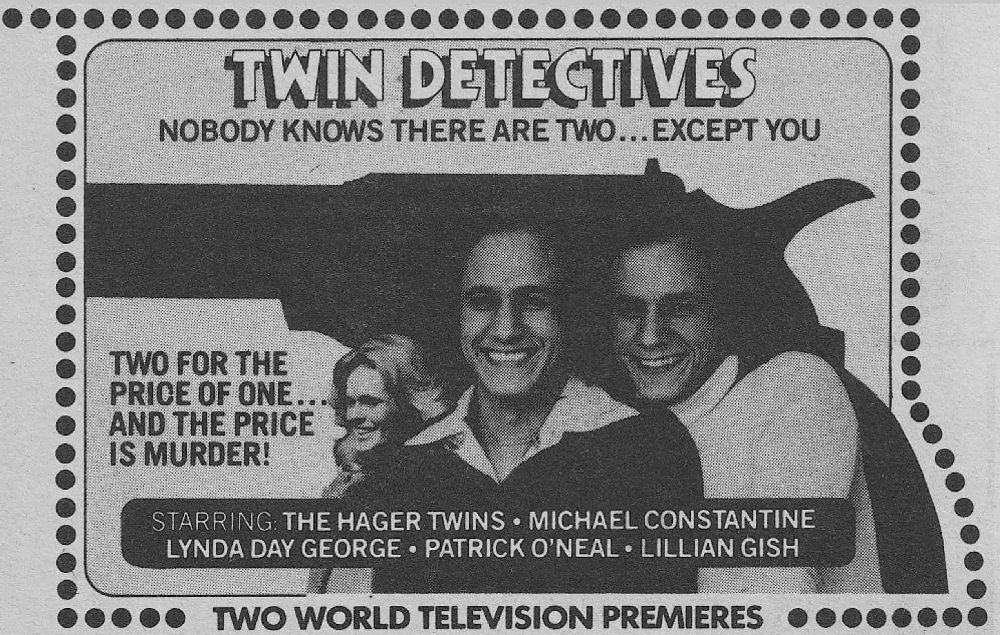
Gemini (ABC): Adopted as babies by a Methodist minister and his wife, Jim and Jon Hager started singing in church, displaying some talent which was encouraged when they joined the US Army, where they performed at officers’ clubs. After leaving the Army, they moved to Los Angeles and began singing in nightclubs, attracting the attention of country singer Buck Owens, who signed them to a contract and had them open for him on tour.

Owens’ patronage led to a record contract with Capitol and a regular role on country-themed variety show Hee Haw, on which they appeared for seventeen years, also appearing in the second issue of Playgirl in 1973. In 1976, their charm and unique twin appeal were noticed by Charles Fries, who had recently formed his own production company after leaving Metromedia, where his hits included The Undersea World of Jacques Cousteau.

Gemini, 1976-77

Fries stock in trade was in slightly unusual TV pilots, although his early record of getting them taken to series was not encouraging, having already failed to find a buyer for Strange Homecoming (with Robert Culp), Peter Graves starrer Where Have All the People Gone?, and Last Hours Before Midnight, featuring Ed Lauter, amongst a slew of others. With the Hagers on board, though, he couldn’t possibly fail, especially with a script written by Robert Specht, who had created the ambitious The Immortal  in 1969.

In Gemini, the Hager Twins starred as Tony and Shep Thomas, a pair of private detectives looking to take down a ring of phony psychics, only to wind up in the middle of a murder investigation. Fries managed to get Lillian Gish – the first lady of American cinema – to make her first appearance since the 1969 TV remake of Arsenic and Old Lace with Helen Hayes, and hired TV veteran Robert Day to direct.

Sadly, after expressing earlier interest, ABC passed on a full series featuring the brothers using their identical charms to solve crimes, but did show the pilot as a TV movie in May 1976 under the title Twin Detectives. The Hager Twins returned to Hee Haw and to their singing careers, although their last single – 1975’s “Hot Lips” – had failed to chart. In 1978, they were cast as cloned alien detectives Verm and Dier on an episode of The Bionic Woman, but otherwise the world remained untroubled by their slightly creepy charisma until their deaths in 2008 and 2009.

Bell, Book and Candle (NBC): Based on a 1950 Broadway play, the 1958 movie Bell, Book and Candle starred Kim Novak as a witch who casts a love spell on neighbour James Stewart in contemporary Greenwich Village. Bewitched creator Sol Saks claimed the film inspired the story of Samantha and Darrin and in 1976 TV producer Bruce Lansbury decided that the time was right to try a series directly taken from John van Druten’s play.

Lansbury, the brother of actress Angela, had cut his teeth producing The Wild, Wild West and Mission Impossible, and had created The Magician for Bill Bixby in 1974. Lansbury set Richard de Roy, who’d done the same movie to TV adaptation for Guess Who’s Coming to Dinner? a year earlier, to work on the script, and secured his leads in Yvette Mimieux and Michael Murphy.

Bell, Book And Candle, 1976-77

From her breakout role in The Time Machine in 1960, Mimieux had been one of the most sought-after actresses of the 1960s but an earlier attempt to cross over into TV with The Most Deadly Game in 1971 had lasted just twelve episodes. Unhappy with the roles she was offered, she wrote a script of her own featuring an almost immoral assassin. Aaron Spelling agreed to produce Counterpoint, as it was then titled, and cast Mimieux in the starring role, but the ABC network insisted on a number of changes, softening some of Mimieux’s edges and retitling it Hit Lady before airing it as a TV movie in October 1974.

By 1976, Mimieux was back doing guest roles and TV movies as work for hire but Lansbury thought her perfect for the role of witch Gil Holroyd and was impressed with her chemistry with Murphy, a regular in the films of Robert Altman. A thirty-minute pilot was directed by M*A*S*H veteran Hy Averback and shown on NBC in September 1976 but attracted poor reviews and no interest from the network as a full series. After the failure, Lansbury took work as a supervising producer on Wonder Woman and Buck Rogers in the 25th Century but would eventually achieve telephemera nirvana in 1985 when he created Street Hawk.

Stranded (ABC): If I were to describe a TV show where a group of people struggle to survive on an island in the South Pacific after their airplane crashes during a routine commercial flight, you’d probably think I was talking about Lost, right? To be fair, I do talk about Lost a lot, but in this case I’m talking about Stranded, a 1976 pilot starring Kojak sidekick Kevin Dobson.

The title had earlier been used for a 1966 unsold pilot starring Lloyd Bridges that was retooled as Lost Flight for another unsold pilot in 1970 – given a limited theatrical release a year later – and some of the footage from that film was used in the 1976 pilot, which also approximated its setting and its basic plot. In this Stranded, written by The Sixth Sense creator Anthony Lawrence, Dobson played New York detective Rafe Harder, whose flight to Australia comes down on a mysterious island, forcing him to take the lead and organise his rag-tag fellow survivors in the hope that they will be discovered.

Stranded, 1976-77

Joining Dobson on the island were brash young woman Crystal Norton (Dark Shadows‘s Lara Parker), a housewife widowed in the crash (veteran B movie actress Marie Windsor), a young black stowaway (unfortunately named Ali Baba), a retired engineer, and teenage siblings played by Devon Ericsson and Jimmy McNichol. It’s this motley crew that Harder has to corral but does the island harbour more threats?

Directed by TV veteran Earl Bellamy, Stranded aired in May 1976 in the Saturday night slot usually reserved for SWAT, but there wasn’t enough interest in the pilot for ABC to take it to series, just as their hadn’t been when producer Frank Price had tried in 1966 and 1970. The 1976 Stranded was his last try with the concept and he left TV two years later to become head of Columbia Pictures, where he would greenlight Kramer vs Kramer, Gandhi, and Ghostbusters.  He continued working until 2001, three years before Oceanic Flight 815 left from Los Angeles, bound for Sydney…

Alias Sherlock Holmes (NBC): After finishing up on Dream of Jeannie in 1970, Larry Hagman struggled to find another show for his considerable comedic and dramatic talents. 1971’s The Good Life lasted for just fifteen episodes, with Here We Go Again two years later faring even worse, and efforts to break into movies in Harry and Tonto and Mother, Juggs and Speed met with mixed success, even if his directorial debut Beware! The Blob does retain a certain B-movie charm.

Inspired by the 1971 movie version of James Goldman’s play They Might Be Giants, writers Dean Hargrove and Roland Kibbee – who began working together on It Takes a Thief and continued their partnership with Columbo – created the character of Sherman Holmes, a motorcycle cop for the Los Angeles Police Department who is not cut out for a life on two wheels. After receiving a blow to the head when his motorcycle falls on him while he is reading Sherlock Holmes, he starts to believe he is the fictional detective.

Alias Sherlock Holmes, 1976-77

Hagman was cast as Sherman, who soon adopts a deerstalker and cape, setting out to solve a murder accompanied by his social worker and psychiatrist, Dr Joan Watson (newcomer Jenny O’Hara), possessing deductive skills he did not have as an inept patrolman. Hargrove directed the pilot, in which Holmes neatly wraps up a series of crimes and exposes a case of judicial corruption, and the chemistry between he and O’Hara boded well for the inevitable series that would follow.

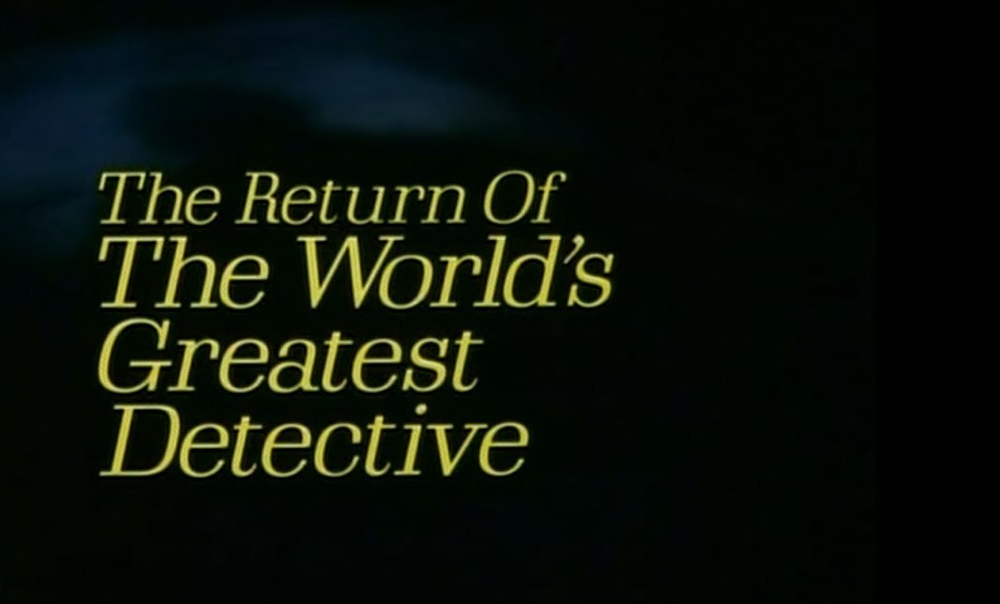
For whatever reason, that wasn’t to be. The pilot was shown in June 1976 as The Return of the World’s Greatest Detective and was reviewed favourably, but NBC passed on a series and, within two years, Hagman was cast as JR Ewing on a five-episode mini-series called Dallas that few expected to go anywhere, with even its creator admitting he should have called it Houston

Next time on The Telephemera Years: It’s Saturday morning in 1976 – what are the kids watching?

Check out our other Telephemera articles:

The Telephemera Years: pre-1965 (part 1, 2, 3, 4)

The Telephemera Years: 1966 (part 1, 2, 3, 4)

The Telephemera Years: 1967 (part 1, 2, 3, 4)

The Telephemera Years: 1968 (part 1, 2, 3, 4)

The Telephemera Years: 1969 (part 1, 2, 3, 4)

The Telephemera Years: 1970 (part 1, 2, 3, 4)

The Telephemera Years: 1971 (part 1, 2, 3, 4)

The Telephemera Years: 1973 (part 1, 2, 3, 4)

The Telephemera Years: 1974 (part 1, 2, 3, 4, 5)

The Telephemera Years: 1975 (part 1, 2, 3, 4)

The Telphemera Years: 1976 (part 1, 2)

The Telephemera Years: 1977 (part 1, 2, 3, 4)

The Telephemera Years: 1978 (part 1, 2, 3, 4)

The Telephemera Years: 1980 (part 12, 3, 4)

The Telephemera Years: 1981 (part 1, 2, 3, 4)

The Telephemera Years: 1982 (part 1, 2, 3, 4)

The Telephemera Years: 1983 (part 1, 2, 3, 4)

The Telephemera Years: 1984 (part 1, 2, 3, 4)

The Telephemera Years: 1986 (part 1, 2, 3, 4)

The Telephemera Years: 1987 (part 1, 2, 3, 4)

The Telephemera Years: 1989 (part 1, 2, 3, 4)

The Telephemera Years: 1990 (part 1, 2, 3, 4)

The Telephemera Years: 1992 (part 1, 2, 3, 4)

The Telephemera Years: 1995 (part 12, 3, 4)

The Telephemera Years: 1997 (part 1, 2, 3, 4)

The Telephemera Years: 1998 (part 1, 2, 3, 4)

The Telephemera Years: 1999 (part 1, 2, 3, 4)

The Telephemera Years: 2000 (part 1, 2, 3, 4)

The Telephemera Years: 2002 (part 1, 2, 3, 4)

The Telephemera Years: 2003 (part 1, 2, 3, 4)

The Telephemera Years: 2005 (part 1, 2, 3, 4)

The Telephemera Years: 2006 (part 1, 2, 3, 4)

The Telephemera Years: 2008 (part 1, 23, 4)

The Telephemera Years: O Canada! (part 1, 2, 3, 4)

Titans of Telephemera: Irwin Allen

Titans of Telephemera: Stephen J Cannell (part 1, 2, 3, 4)

Titans of Telephemera: DIC (part 1, 2)

Titans of Telephemera: Hanna-Barbera (part 1, 2, 3, 4, 5)

Titans of Telephemera: Kenneth Johnson

Titans of Telephemera: Sid & Marty Krofft

Titans of Telephemera: Glen A Larson (part 1, 2, 3, 4)

Titans of Telephemera: Quinn Martin (part 1, 2)

Titans of Telephemera: Ruby-Spears

Fabio Frizzi • CITY OF THE LIVING DEAD

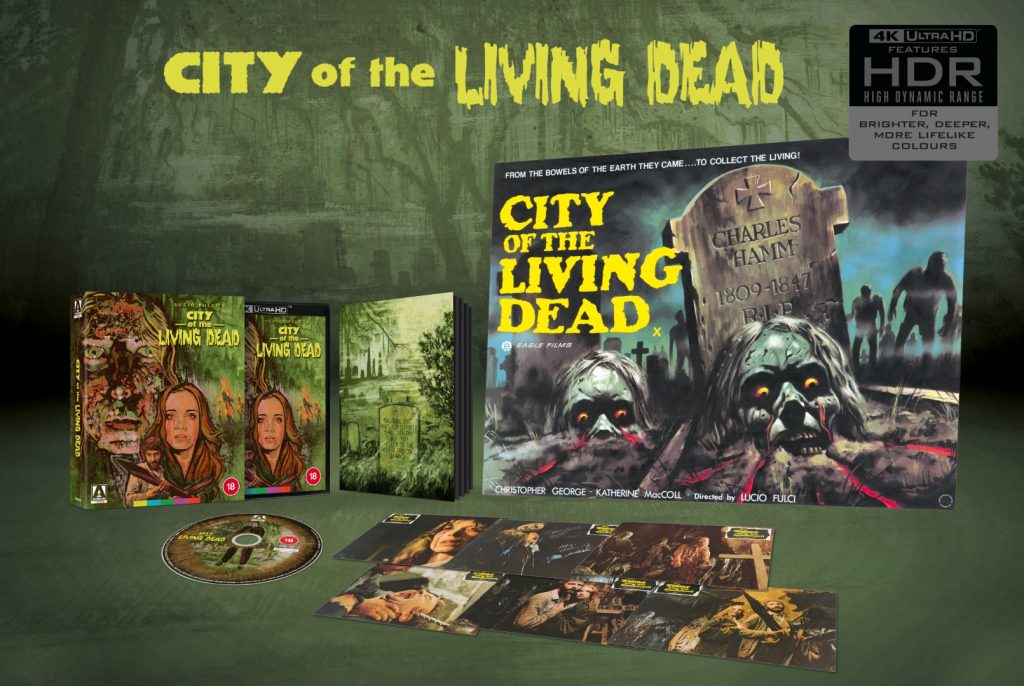
Out this week on 4K UltraHD Blu-ray  from Arrow Video is Lucio Fulci’s 1980 film, City of the Living Dead. The first entry in the Italian director’s Gates of Hell trilogy was followed by The Beyond and The House by the Cemetery in 1981, and all three films stand as masterpieces of Italian splatter horror. In addition to Fulci’s imaginative, skilful filmmaking and eye for colour, the trilogy also owes much of its success to the masterful scores composed for each. While Walter Rizzati and Alessandro Blonksteiner scored The House by the Cemetery, the first two films saw the director partnering with his frequent collaborator, composer Fabio Frizzi.

While Frizzi took a break from scoring films for most of the early ’00s, in recent years, he’s come roaring back with work for films such as Puppet Master: The Littlest Reich and the Castle Freak remake. Additionally, he’s revisited two of his Fulci scores, The Beyond and Zombie Flesh Eaters, in expanded Composer’s Cuts, which see him taking the musical ideas from 40 years prior and making them even bigger than they once were.

We spoke with composer Fabio Frizzi about his work with Lucio Fulci and his current plans.

STARBURST: In recent years, you’ve returned to and expanded the scores for Zombie and The Beyond. What appeals to you about revisiting your past work?

Fabio Frizzi: Let’s say that every time you pick up an older score written a long time ago, it’s always a confrontation with yourself. For example, I wrote Zombie in ’79. I was 28, now I’m a little older [laughs], so the first very interesting thing is the relationship with yourself, trying to understand how you were then, your ideas on music, but not only on music. This is a great psychological encounter with yourself, and obviously, there are many things that have changed. And even the movies. when you see a movie from Fulci, it’s always alive. It’s as if it’s done the year before.

When I, for example, redid The Beyond for the first time we did it in concert, Antonella Fulci, his daughter, was there. She’s a great friend of mine, and I’ve known her since she was a baby. She told me she thought this was a new way of seeing that movie, and I was so happy.

Bob Murawski is an editor from Los Angeles and the boss of Grindhouse Releasing. He had a copy of The Beyond without music, so I could work from scratch. There’s now a version called The Beyond: The Composer’s Cut with the new music, which is very similar to the old, obviously, but there’s something absolutely new.

Speaking of seeing things in a new way, how does it feel for you to see the deluxe restorations for these films?

I’m always in love with the older things. I love old cars. I love old guitars and things like this. So, obviously, when you see a movie in 35mm projected, it’s something great, but I think that these restorations can, first of all, keep the market alive. I know people, friends, and fans that have every single release of that movie and the other movies, so the market goes. But I can tell you that I’ve seen The Beyond recently, and with the 4K restoration, you see details that you haven’t ever seen before. It’s like two situations, but I think it’s it’s cool. It’s really cool.

Why was your working relationship with Lucio Fulci so long and fruitful, do you think?

Yeah, but you know, after so long, we often use the term legend, not just saying Lucio was a legend or Fabio was a legend. It’s something that the story in a moment that’s almost unknown: I went to the editing room, and Lucio was there, and then the editor. This happened some time ago, but it happened.

Lucio was the age of my mom, for example. he was like a parent for me. I think that I had a great respect for him. Maybe he could see a young composer with a great future in me. We were far in age, but I think we were near in passion because Lucio always – until the last time I saw him – was crazy for cinema, crazy for telling stories. I think that we catch each other’s quality in the best way.

After Lucio was gone, I met Antonella Fulci again because of the request to do another tour in America. We met again after a long time. So we hugged, it was a fantastic moment. She told me, “You cannot imagine how my dad was speaking about you. He loved your way so much.” And,  as many fathers don’t, he never told me. I said, “Well, it’s absolutely beautiful, more beautiful than I could suppose.”

Are there differences in making scores these days versus 40-plus years ago, and if so, what are they?

Practically everything has changed. Basically, from the technical view, I started – and it seems to me five years ago, but it was 50 years ago -with four tracks, a maximum of eight tracks. The Beatles did the first record with four tracks. Nowadays, we don’t have a limit. You open Pro Tools or Sibelius, and you can write on hundreds of tracks. But the way of doing musical commentary has changed a lot because we are, nowadays, fast in using things. We’ll take a look at the reels on the telephone, ta ta ta, and there is a receipt, and so everything changed, but I think that there is one thing that never changed. Basically, the white piece of paper is always there.

When you need to have an idea, you are just by yourself. Even if it is a great computer with many possibilities, the idea must come from here [points to head], despite the AI, but I don’t believe that it will substitute us. But my philosophy is always the same: if you want to do the best you can for a job, the only real secret is to let you go into the story, understand what the people around you – the producer, the director – want you to do and go. And this is absolutely the same 50 years before.

Given that you’ve toured extensively in recent years and released various albums and collections, what does 2024 offer you?

Well, let’s say that enthusiasm is the basis for feeling the many windows that you have on the table. It’s like a mosaic, our lifestyle. Let’s say that I discovered touring very late because I was just a musician in a recording studio. Then, exactly 10 years ago, I did Frizzi 2 Fulci in London. That has brought us – me and my musicians – really everywhere with great enthusiasm also from fans. We had our 10th anniversary in the Union Chapel on October 28th last year. It’s really something important.

When we did the Zombie Composer’s Cut, American friends would say “Please come and do it,” so I think that maybe in September, possibly in London, too. We are trying to build a good story going deeper into the movies. Every morning, I wake up, and I feel I will do it. The curiosity is my gasoline, and we’ll go ahead.

CITY OF THE LIVING DEAD is out now on 4K UltraHD Blu-ray from Arrow Video and is available to stream on ARROW

THE TELEPHEMERA YEARS: 1976, part 1

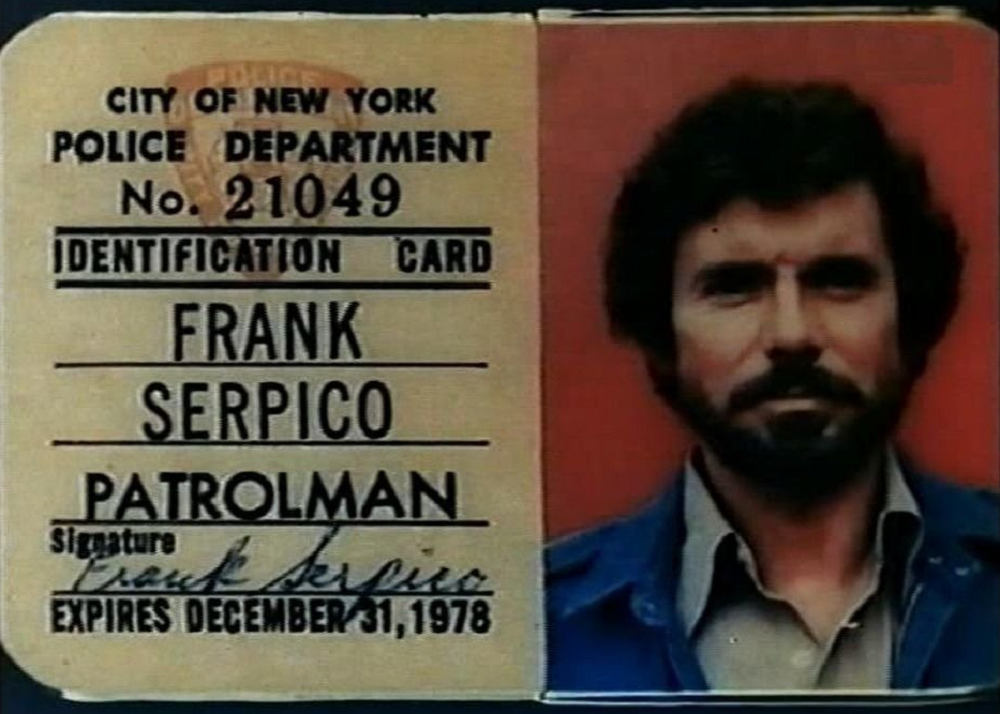
Serpico, 1976-77

Ah, telephemera… those shows whose stay with us was tantalisingly brief, snatched away before their time, and sometimes with good cause. They hit the schedules alongside established shows, hoping for a long run, but it’s not always to be, and for every Street Hawk there’s two Manimals. But here at STARBURST we celebrate their existence and mourn their departure, drilling down into the new season’s entertainment with equal opportunities square eyes… these are The Telephemera Years!

1976-77

For some reason – the US’s failure in Vietnam is often blamed – the American public could not get enough of the rock ‘n’ roll era in the 1970s, a point never more heavily underlined than with the success of Grease in 1978. It started before that, of course, with George Lucas’s American Graffiti giving birth to the Fonz on TV. It was almost as if the whole country wanted to forget the last decade or so and that Happy Days was the number one show for 1976-77 is no surprise. That spin-off Laverne & Shirley is number two is perhaps a little more surprising, but there’s Korean War comedy M*A*S*H at number four to ram things home. Outside this yearning for the past but also making headway in the TV ratings were telefantastic Jiggle TV mainstays Charlie’s Angels and The Bionic Woman, as well as The Six Million Dollar Man, Baretta, and Hawaii Five-O; if there was somewhere the US TV viewing audience wanted to be in 1976 it was not the 1976 outside their door.

Several big shows bade their farewells this season with The Streets of San Francisco finally running out of road, the departure of The Mary Tyler Moore Show and Phyllis setting women’s emancipation back a few years, and Sanford and Son a victim of America’s disposable Capitalism. Coming in to take their places were interfering coroner Quincy, bear-worrier Grizzly Adams, and Roots, the first of the blockbuster mini-series that gave schoolchildren everywhere license to say Kunta Kinte. But those were all hit shows – what about those shows that didn’t hang around, that didn’t make much of an impact on the 1976 public? This is the story of four failed TV shows…

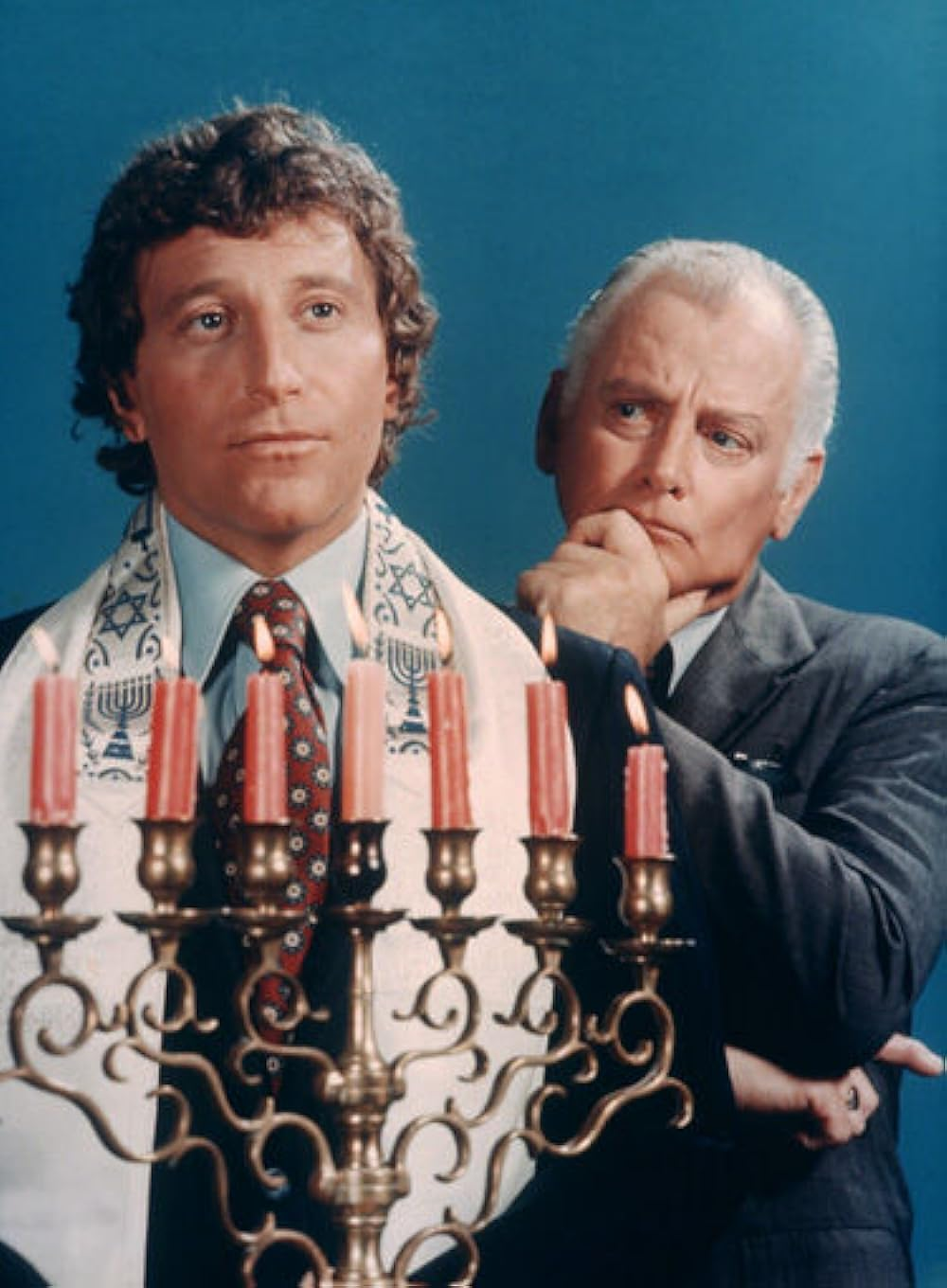
Lanigan’s Rabbi (NBC): The ongoing search to find that unique angle on the detective genre has touched on some strange corers, with blind detectives, fat detectives, woman detectives, and more all given a shake of the stick. In 1976, however, NBC decided to take inspiration from the man upstairs and bring a man of God to the table, foisting Lanigan’s Rabbi on a nation of Jew-curious gentiles.

Based on a series of books by Harry Kemelman, a former New England college professor whose first hit novel starred a New England college professor as its gumshoe principal. He hit gold with his series of novels featuring Rabbi David Small, beginning with 1964’s Friday the Rabbi Slept Late which saw him use Talmudic wisdom to find the real culprit of a crime it appeared he’d committed. Kemelman’s books were heavy on the traditions of conservative Judaism, often bringing Small into conflict with less observant types, although Kemelman seldom comes down on one side or the other.

Lannigan's Rabbi, 1976-77

After Stuart Margolin had played him in the pilot, Bruce Solomon stepped into the Rabbi’s shoes, fresh off over a hundred episodes of satirical soap opera Mary Hartman, Mary Hartman, and he was joined in the main cast by The Honeymooners’ Art Carney as Paul Lanigan, local police chief and a practising Catholic with whom the Rabbi often discusses religion between cases. After that pilot film – an adaptation of Friday the Rabbi Slept Late – was a hit, the show continued as a series of ninety-minute films, all written by Don Mankiewicz, who’d adapted Ironside from that series of novels.

“Corpse of the Year” aired in January 1977, followed by three more films – “The Cadaver in the Clutter,” “Say It Ain’t So, Chief,” and “In Hot Weather, the Crime Rate Soars” – in March and April as part of the NC Sunday Night Mystery Movie wheel format, replacing Quincy, ME, which had been spun off into its own series. There would be no spin-off for Lanigan’s Rabbi, though, as NBC discontinued the format and cancelled the show, alongside McCloud and McMillan & Wife, although Columbo was given one more series before it, too, got the axe.

Mr T & Tina (ABC): A spin-off of popular remedial education comedy Welcome Back, Kotter, Mr T and Tina was one of the first shows on American TV to have an Asian lead, admittedly one born and raised in California. Pat Morita – for it is he – had made a career out of guest appearances as the token Asian character on shows such as McCloud, Columbo, The Odd Couple, and Sanford and Son, and was starring as Arnold on Happy Days when he got the call from Mr T creator James Komack.

Morita’s character of Taro Takahashi had appeared in Kotter’s season two opener “Careers Day,” where he offered Gabe Kaplan’s character a job with his company at three times his school salary, and reaction to Morita from viewers was enough that he was brought back for a turn of his own just two days later. Of course, TV doesn’t work like that but who would I to be to suggest that his Kotter appearance was nothing but a cynical marketing ploy?

Mr T and Tina, 1976-77

In Mr T and Tina, Takahashi is a widowed inventor sent to Chicago to run a new branch of his family company, Moyati Industries. To look after his children, he employs madcap free-spirit Tina Kelly as a nanny and it doesn‘t take long for her liberal ways to clash with his uptight Japanese traditions. Of course, that’s where the comedy – and the possible “Will they? Won’t they?” – lay, and Arnold was written out of Happy Days in anticipation of the show being a hit.

Unfortunately, even after the pilot was re-written eight times, viewers hated the show, even if they loved Morita, and the show lasted just five episodes, with Kotter writer Mark Evanier later claiming that the decision had been made to cancel the show before the pilot even aired. Morita went back to being Arnold on short-lived Happy Days spin-off Blansky’s Beauties, returning to the main show for its final two seasons in 1982. Luckily, writers hadn’t taken Tom Bosley’s suggestion that Arnold be killed off by “some crazy kamakazi (sic) pilot…”

The Andros Targets (CBS): In the wake of Woodward and Bernstein breaking the Watergate scandal, crusading newspaper reporters were all the rage in the mid-1970s, with All the President’s Men -starring Robert Redford and Dustin Hoffman as Bob Woodward and Carl Bernstein themselves – nominated for eight Oscars alone. TV was quick to pick up on the craze, with Lou Grant blazing a trail on The Mary Tyler Moore Show for CBS, and it was the Tiffany Network that also dipped its toes into more dramatic fare with The Andros Targets.

James Sutorious, with just medical drama The Doctors of any note on his résumé, was Mike Andros, an investigative reporter for the New York Forum specialising in tackling corruption and uncovering miscarriages of justice. With the aid of young assistant Sandi Farrell (newcomer Pamela Reed), Andros joined a list of people doing the police jobs for them, alongside coroner Quincy and lawyer Petrocelli.

The Andros Targets, 1976-77

Creator Jerome Coopersmith, a former writer on Hawaii Five-O and The Streets of San Francisco and probably best known for Sherlock Holmes musical Baker Street, based Andros on Nicholas Gage, a journalist for the Wall Street Journal and New York Times who wrote two bestselling books about his investigations into the Mafia. Gage is given a credit as “journalistic consultant” but whether he ever had to investigate cases involving the pornography-linked death of a young stress, a doctor administering illegal amphetamines, or a brainwashing religious cult is unknown. Andros, did, though, in episodes one, four, and six.

The Andros Targets debuted in January 1977 as a replacement for the cancelled Executive Suite on Monday nights but struggled to find a consistent audience opposite football and movie presentations on the rival networks, ending its thirteen-episode run in May with an average rating that placed it eighty-fourth for the year. There was no second season and Lou Grant was given his own eponymous show a few months later instead.

Future Cop (ABC): Given that Holmes &Yoyo had lasted just thirteen episodes on ABC before being cancelled in December 1976, quite why the network decided to go ahead with Future Cop is anyone’s guess. Both shows featured uptight policemen saddled with robot partners prone to malfunctioning, although the pilot of Future Cop – shown as a TV movie – predated the other show by a few months so who knows what was going on at ABC that year!

Anyway, the Future Cop pilot starred Ernest Borgnine and John Amos as veteran patrolmen Joe Cleaver and Bill Bundy, who are given a new rookie partner in the shape of handsome young John Haven. Haven, though, is more than he seems – he’s possibly the future of law enforcement! – and the two crusty old flatfoots need to learn to embrace the future even as they impart valuable life lessons to their new android pal.

Future Cop, 1976-77

Future Cop was less slapstick than Holmes & Yoyo and not without pathos: it must have been this that convinced ABC that it could succeed where the earlier show had failed and a full series began in March 1977, in the same Saturday night slot as H&Y. The first episode saw Haven go undercover as a boxer to uncover a crooked betting operation and subsequent adventures saw the odd trio – although it was very clearly the Borgnine and Shannon show – tackle revolutionaries, drug pushers, and kidnappers.

Although viewers gave Future Cop even shorter shrift than Holmes & Yoyo, two people who did notice the show were sci-fi writers Harlan Ellison and Ben Bova, who had written a short story called “Brillo” in 1970 about a policeman and his new robot partner, later adapting their story as a pitch for a TV show. The pair claimed significant similarities between their story and Future Cop and launched legal action, finally being awarded over $300,000 in damages when the lawsuit was settled in 1980.

In the meantime, ABC employed writers John T Dugan, Dawning Forsyth, and John Anthony Mulhall to retool the concept as Cops and Robin, shooting a pilot with pretty much the same cast in 1978. This was aired as a TV movie in March 1978 although, this time at least, more sensible heads prevailed and there was no subsequent series for Borgnine’s cantankerous old cop with a heart and Shannon’s synthetic rookie (also with a heart).

Serpico (NBC): Al Pacino was nominated for an Oscar for his 1973 performance as Frank Serpico, a real-life New York cop shot in the face after blowing the whistle on police corruption, possibly at the orders of his fellow officers. Sidney Lumet’s movie was a blockbuster hit, turning Peter Maas’s book on which it was based into a bestseller but Serpico’s story – he retired in 1972 with a begrudgingly given Medal of Honor – was a one and done, and Pacino and Maas turned to other projects.

Nothing is ever truly done in television, though, and the success of Serpico’s debut on terrestrial TV in 1975 set wheels in motion at NBC, where Police Woman creator Robert L Collins was tasked with developing a series based on Frank Serpico’s general demeanour, if not his real-life exploits. A pilot film – Serpico: The Deadly Game – aired in April 1976 and was well-received enough that a full series was greenlit, debuting on Friday nights in September 1976, with The Rockford Files as a lead-in.

Serpico, 1976-77

Playing Frank Serpico in both the pilot and the subsequent series was David Birney, a stage actor whose TV résumé featured a ton of guest appearances and one lead role, the 1972 sitcom Bridget Loves Bernie with Meredith Baxter. Birney was a decent actor but also looked a little bit like Pacino in a certain light, and was given solid back-up from Tom Atkins as his boss, Lieutenant Sullivan, the only other regular cast member in a show that featured its principal mostly undercover in a different scenario each week.

Soviet defectors, loan sharks, crooked union bosses, and more crossed Serpico’s desk but viewers just didn’t buy into the continuation of his story, even with veteran directors Collins, Reza Badayi, and Paul Stanley on board. After just fifteen episodes, NBC pulled the plug, replacing the show with Quincy, ME, and it would be six years before Birney found another starring role, as Dr Ben Samuels in the first season of St Elsewhere. As for Frank Serpico himself, he’s still alive and still speaking out about police corruption but not getting shot in the face for it.

Next time on The Telephemera Years: More of 1976’s misses, including another Happy Days spin-off and Playboy‘s favourite rock star!

Check out our other Telephemera articles:

The Telephemera Years: pre-1965 (part 1, 2, 3, 4)

The Telephemera Years: 1966 (part 1, 2, 3, 4)

The Telephemera Years: 1967 (part 1, 2, 3, 4)

The Telephemera Years: 1968 (part 1, 2, 3, 4)

The Telephemera Years: 1969 (part 1, 2, 3, 4)

The Telephemera Years: 1970 (part 1, 2, 3, 4)

The Telephemera Years: 1971 (part 1, 2, 3, 4)

The Telephemera Years: 1973 (part 1, 2, 3, 4)

The Telephemera Years: 1974 (part 1, 2, 3, 4, 5)

The Telephemera Years: 1975 (part 1, 2, 3, 4)

The Telephemera Years: 1977 (part 1, 2, 3, 4)

The Telephemera Years: 1978 (part 1, 2, 3, 4)

The Telephemera Years: 1980 (part 12, 3, 4)

The Telephemera Years: 1981 (part 1, 2, 3, 4)

The Telephemera Years: 1982 (part 1, 2, 3, 4)

The Telephemera Years: 1983 (part 1, 2, 3, 4)

The Telephemera Years: 1984 (part 1, 2, 3, 4)

The Telephemera Years: 1986 (part 1, 2, 3, 4)

The Telephemera Years: 1987 (part 1, 2, 3, 4)

The Telephemera Years: 1989 (part 1, 2, 3, 4)

The Telephemera Years: 1990 (part 1, 2, 3, 4)

The Telephemera Years: 1992 (part 1, 2, 3, 4)

The Telephemera Years: 1995 (part 12, 3, 4)

The Telephemera Years: 1997 (part 1, 2, 3, 4)

The Telephemera Years: 1998 (part 1, 2, 3, 4)

The Telephemera Years: 1999 (part 1, 2, 3, 4)

The Telephemera Years: 2000 (part 1, 2, 3, 4)

The Telephemera Years: 2002 (part 1, 2, 3, 4)

The Telephemera Years: 2003 (part 1, 2, 3, 4)

The Telephemera Years: 2005 (part 1, 2, 3, 4)

The Telephemera Years: 2006 (part 1, 2, 3, 4)

The Telephemera Years: 2008 (part 1, 23, 4)

The Telephemera Years: O Canada! (part 1, 2, 3, 4)

Titans of Telephemera: Irwin Allen

Titans of Telephemera: Stephen J Cannell (part 1, 2, 3, 4)

Titans of Telephemera: DIC (part 1, 2)

Titans of Telephemera: Hanna-Barbera (part 1, 2, 3, 4, 5)

Titans of Telephemera: Kenneth Johnson

Titans of Telephemera: Sid & Marty Krofft

Titans of Telephemera: Glen A Larson (part 1, 2, 3, 4)

Titans of Telephemera: Quinn Martin (part 1, 2)

Titans of Telephemera: Ruby-Spears
Tom Payne • IMAGINARY

In new film Imaginary, Jessica and her family return to her childhood home, but events escalate quickly when a mysteriously disjointed bear called Chauncey latches on to the mind of her daughter Alice. Maintaining a sense of stability in the movie is partner and father, Max, played by Tom Payne. STARBURST caught up with Tom to discuss what it was like to play a parent on screen for the first time, practical effects, and the terrifying possibilities of imagination…

STARBURST: What do you remember the most from reading the script for the first time? What stood out to you?

Tom Payne: There’s a moment in the script, and in the film, about two-thirds in that made me audibly gasp. Which I don’t remember ever happening, reading a script. Sometimes I’ve been like “Oh, that’s cool! Or, oh, that’s exciting!” But, literally, when it came to reading this script, there was a moment where I gasped. Which is awesome. That’s when I’m like, “Oh, this is cool! If it made that happen to me, while reading it, then it should translate really well on-screen.” That made me excited to be a part of the movie. Then, lots of things on top of that, I wanted to work with Blumhouse for a while, I was very excited to get into business with them. Then DeWanda Wise was the lead, and I think she’s awesome. I was very excited to work with her. And, to be a dad on-screen! I hadn’t done that before, so I had to jump into that side of my career, and this was a great way to do it.

As a parent yourself, did that add any kind of perspective to the process?

Yeah, I would say that it actually worked the other way around. When I shot the movie, he was eighteen months old, and his kind of imaginary world hadn’t quite established itself yet. But now he’s two, I can definitely see his imagination running wild. When you tell him a story, you can tell that he is there, in the story. He is not just thinking about it, he gets this faraway look in his eyes, and he’s absolutely in the story that you’re telling. Which is so cool, but it shows you how strong a child’s imagination is, and how present they are in that. This movie is called Imaginary, and it’s all about that. The imaginary world of a child and how strong that can be.

Max provides a level of comfort and safety for the other characters, can you elaborate on that, and maybe what you wanted to see from Max?

Yeah, I think Max is the most stable character in the movie. For all of the other characters to kind of, pivot around. I talked to Jeff [Wadlow, director] about that at the beginning when I joined, I was like “OK, fundamentally, what is his function in the movie? What role does he serve?” And it’s that solid stability for his daughters. He broke up with his ex-wife to protect them, and move away and do the best for everyone involved. Then, he found a partner in Jessica who he fell in love with, and he thinks is also a good step Mum for his daughters. They move into the home, and start a new life. He is making decisions always based around what’s best for his family. Then, Jessica and he obviously have a great relationship, and she’s like “You should go and do this for yourself” he says “I can stay, I don’t have to go” and she pushes him to go. Then, when he leaves, everything takes a turn, and I hope that the audience is like “No, Max come back!” as much as the characters are, it’s just nice to be that source of stability in the picture.

Everyone is dealing with a tough backstory. Can you tell us about what that family dynamic was like to work on, and build upon as a whole with your cast?

It was wonderful. I have a teenage daughter in the movie, which is a big step for me, because I had never played a dad on screen before, and suddenly I have like a grown up daughter, and a slightly younger one. I had experience in my life, of being in a relationship that I probably shouldn’t have been in for as long as I was. I was able to easily step into what it would be for Max in the story. But I didn’t have children with my previous partner. So, in this situation he had had children, and then another child maybe, thinking, “Oh this’ll make things better!” Then I’m sure they all as a family went through this crushing realisation that it’s not going to get any better. You have to make that really tough decision. Even tougher than I had to make in my life. Max has two kids, but this is still the best thing for them, and for their mother. To separate. So yeah, that is a tough backstory for them. Pyper’s character Alice has a scar on her arm, which is obviously reminiscent of a difficult history. Yeah, everyone is carrying their own personal issues in the film.

What was Jeff Wadlow like to work with, and what did he bring to the creative process for yourself?

On set, Jeff is very egalitarian and ‘best idea wins’, and even though he wrote and directed it, he is very much “Okay! How can we make this better? What do you think? Let’s try and make the best film we can!” Which is great. I don’t particularly want to work with anyone who is very dictatorial, “do what I say, or get out” kind of thing. First of all, I don’t think that that atmosphere should exist on set. In this movie, Jeff and DeWanda are also both incredibly collaborative, and it’s “let’s work together to make this the best product that we can” and that’s just a very nice atmosphere to have on set. It makes everyone feel very empowered, and excited to do that.

Jeff confirmed that practical effects were really important for Imaginary. As an actor, what did you see from the practical effects within Imaginary, and how fun were they for you to work on?

I grew up in the ‘80s and ‘90s watching a lot of movies with a lot of practical effects. In the modern day there’s a lot more CGI, and as much as we have strong imaginations as actors, it still requires extra effort to imagine something in front of you and then react to it, so when you actually have the physical thing in front of you, it takes away a lot of that effort. All you have to do is just react, which is amazing. We had such a great team on this movie making these wonderful effects. I was so excited about that! Like “Wow, these are actual things in front of us that we can react to.” It helps the actors, but it also translates to the audience as well, because you can tell. There is an artistry to it. Not that there isn’t an artistry to CGI, but when you’re seeing it in front of you, and you know that someone has made it with their hands. Like, if you watch a Guillermo del Toro movie, it has a very different feel to something where the monsters are CGI, and it just makes it more grounded, and rooted in something real. Which makes it scarier, I think.

Finally, what do you remember the most from seeing Chauncey for the first time?

There are a few different types of Chauncey. I think I saw all of them, we were just very excited. When Chauncey first came to set in his special case, we were all just really excited to meet him. It’s so funny when you think about what happens in the movie. Like I said, to work with something practical like that, it’s so useful, and creepy. You’re actually like “Oh that’s creepy that he can do those things” and he can actually do them. It’s not like stop-motion, like, someone is coming in and moving him. He is moving. And that’s just amazing. It just adds something to the movie.

IMAGINARY is in cinemas now. You can read our review here.


W.D. Richter • INVASION OF THE BODY SNATCHERS

The 1978 adaptation of Invasion of the Body Snatchers is widely regarded as one of the best remakes ever. It kept the essence of the story while adding so much more. With the Arrow Video 4K edition in stores now, we caught up with acclaimed screenwriter W.D. Richter (also known for Big Trouble in Little China, the 1979 version of Dracula, and as director of The Adventures of Buckaroo Banzai Across the Eight Dimension) to chat about his work… 

STARBURST: How did you come to adapt Invasion of the Body Snatchers?
W.D. Richter: Producer Bob Solo liked my work and approached me to adapt it. He was simultaneously wooing Phil Kaufman to direct. Phil and I knew and liked each other, but the way I remember it, Bob didn’t know that, and I wasn’t aware that Bob was talking to each of us at the same time. That was a risky move on Bob’s part. It’s always best to get either a writer or director set first and then work with that person to find a compatible partner as writer or director.

Were you on set for the production?
I was there in San Francisco for both preproduction and production, going on location scouts with Phil and, in a hotel all during production, doing a major rewrite of my first draft script. That version had been set in a small town like the original movie. Once we decided, at the last possible minute, to move it into San Francisco proper, I was writing nonstop, often only days ahead of a scene’s being shot. The set was fun, and full of really talented people. I met the terrific and profane costume designer Aggie Rodgers there, and also Jeff Goldblum. That’s why they both came aboard Buckaroo Banzai.

One of the most terrifying moments is the dog with a human face. How did that come about?
Phil and I discussed it before it was put into the script. I loved the idea because it graphically demonstrated that nobody anywhere is perfect, not even the fearsome alien invaders. They wanted to snatch the form and the stature of the apex predators on our planet — humans — but sometimes you just can’t get between a guy and his dog.


The climax of Body Snatchers is wonderfully bleak; can you talk a little about how that came together?
Phil and I wanted to make a movie about the consequences of complacency in the face of a mindless mob bent on relentlessly and mercilessly crowding out diversity, tolerating only conformity… sort of like today’s white Christian nationalists or Don’s Terrified Base. I live in the Vermont countryside now, on a farm at the end of a dirt road at the forest’s edge, so through my bodysnatcher radar that’s developed over the years, I watch all the invasive plant species in our woodlands similarly crowding out diversity, oppressing ‘the other’, if you will, acting blindly in their own worst interests as they try to establish a fragile monoculture that would eventually collapse in on itself and kill them off, as well. I recall Donald Sutherland’s line in the movie about Brooke Adam’s boyfriend: “Maybe Jeffrey’s turned into a Republican”.

Don Siegel’s original ending was just as dark as ours, but a cowardly studio forced him to tack on a hopeful final scene. Fearing the same reaction, we kept the last few minutes of our story a secret during the entire shoot. I wrote a different, more upbeat ending for the same location, and all production copies of the script had only those pages in them. Just Donald and Veronica knew the real ending, and I think Phil only told them toward the end of the shoot just what was coming on the last day. Miraculously, Mike Medavoy, the studio chief, thought it was a great idea.

W.D. Richter (second left) with the cast of Buckeroo Banzai.

When adapting a story, what is your process?
Oh, god! Pretty much improvisation because all adaptations are different. Some books are hundreds and hundreds of pages long — Stephen King’s Needful Things was a backbreaker — and others are too internal for easy visual translation — Dracula fits that category. I always start by reading the book, a hard copy back then, with pencil in hand, marking sections I feel the movie needs. I might or might not do a rough outline. I worked closely on a lengthy treatment for Dracula with both John Badham and the great producer Walter Mirisch. With Big Trouble In Little China, I wrote it before John Carpenter even came aboard. It was a page-one ‘adaptation’ — I prefer ‘transformation’ — of a period western into a contemporary, mystical, action extravaganza. I wrote that first draft in about four furious weeks under a deadline of, I believe, a looming writers’ strike. No real notes or outline. Just a stack of books on Chinese mythology piled alongside my computer — I’d gone digital by then. I just tried to put the hero Jack Burton and his motormouth into corners I didn’t know how to get them out of when I wrote them in. I thought if I could figure out the next morning how to get Jack out, I’d surprise myself and the audience, too.

Which was the easiest to adapt – Body Snatchers or Dracula?
That’s a hard question to answer. Each presented different, tricky challenges. There was certainly more pressure to produce quality work quickly on Body Snatchers for reasons I’ve mentioned, but just before I started my adaptation of Dracula, Walter Mirisch let slip that they already had a start and release date!

Could you tell us how you came to work on Big Trouble in Little China – were you around on set for that one?
That was a strange experience. The script that existed was a late-19th-century western — cowboys and horses. It was a spec script that Fox had recently bought.  he original writers did a second draft for the studio, but that disappointed, so Fox and the producers, Keith Barish and Paul Monash, decided to replace them. The spec script was submitted to several writers who were asked to come in and talk about a new take, if the project interested them. I was one of those writers. I thought the problem was conceptual: having a mystical underground kingdom in a period western. It seemed twice removed from a modern audience’s reality. Why do that? So, I just said I’d make the story contemporary, then the only unusual thing about the setting was what lurked beneath ‘little China’… essentially play the movie off our world, not the 19th century’s. That notion immediately got everyone excited — studio execs are often a desperate, impressionable lot — and they hired me on only that thin proposal. Luckily, I stumbled upon Jack Burton’s voice as soon as I started writing. It was like he was real and couldn’t be shut up. That doesn’t always happen, at least not to me.

I did a polish for John when he first came on, but my work was done before principal photography began, and John, whom I knew from USC film school, shot the script pretty much as written. I only visited the production once, just to meet everyone and see the sets.

Have you had any input on the Big Trouble remake?
None. I was never approached. Do you mean the one with The Rock as Jack Burton? Is that still alive?


What made you turn to directing with Buckaroo Banzai? And what was that experience like?
Mac Rauch, who created and wrote Buckaroo’, was a good friend. My wife, Susan, and I paid him a small stipend to develop his idea. When we pitched it to David Begelman and he hired Mac to write a full script, with me and Neil Canton producing, He asked me if I wanted to direct it. I did because nobody else writes like Mac.

Directing it with crazy, suicidal David Begelman looking over my shoulder had its hellish aspects. But the cast and production team were great, and we were all determined to get the job done, especially after Begelman fired my first cinematographer, the peerless Jordan Cronenweth, out from under us because the operating room and nightclub scenes that Jordan shot looked to Begelman “like Blade Runner“. No shit, Dave. I’ve done dozens of interviews over the years about this. Begelman was a sad, late 1950s Beverly-Hills’ throwback who still had a manicurist lacquer his toenails because going sockless in Gucci loafers was his crowd’s gold standard in the ‘80s and who knew when you might have to remove your Guccis in public?! Not very Buckaroo.

How does it feel to know the films you’ve worked on are still being discussed and still finding new audiences?
Strange, for sure. Buckaroo is almost 40 years old. When we shot it, Gone With the Wind and The Philadelphia Story were 40 years old and seemed to have come from another world. That people are still passionate about Buckaroo and new folks are still stumbling enthusiastically upon both it and some of the other stuff I wrote is gratifying, of course. And in many ways baffling. No complaints, though. Take chances, that’s what I’ve learned. Never look over your shoulder. Just make movies that you want to see and let time sort things out.
INVASION OF THE BODY SNATCHERS is out now in 4K from Arrow Video.