THE TELEPHEMERA YEARS: 1991 – part 2

Mann and Machine, 1991-

Ah, telephemera… those shows whose stay with us was tantalisingly brief, snatched away before their time, and sometimes with good cause. They hit the schedules alongside established shows, hoping for a long run, but it’s not always to be, and for every Street Hawk there’s two Manimals. But here at STARBURST we celebrate their existence and mourn their departure, drilling down into the new season’s entertainment with equal opportunities square eyes… these are The Telephemera Years!

1991-92

As the 1991 Fall TV schedule was released, tears were no doubt shed when fans realised this would be the last time they would see such favourites as Who’s the Boss?, MacGyver, Jake and the Fatman, and The Golden Girls, although history no longer recalls how people felt in any respect about The Cosby Show. None of them were doing top ratings by the time they departed – one very good reason for such departures, obviously – but America was still wildly in love with Roseanne, Murphy Brown, Cheers, and Murder, She Wrote, as well as a brand-new show called Home Improvement about a man with a funny laugh.

Other new arrivals included The Commish on ABC, Evening Shade on CBS, the vastly underrated Herman’s Head on Fox, and a TV spin-off for Harry & The Hendersons, with Jay Leon easing into Johnny Caron’s seat on The Tonight Show ahead of everyone’d favourite David Letterman. Genre fans had it tough on the big four networks, with Twin Peaks having finished the previous year leaving Quantum Leap as the sole survivor, although Star Trek: The Next Generation was still airing new episodes in syndication. Those are all shows that people remember, though: what about the ones they’ve forgotten? This is the story of some of 1991’s “blink and you’ll miss ‘em” shows…

Scorch (CBS): Ah, ventriloquism, the second lowest form of entertainment, beaten only by impressionists in the race for the least fun possible. Still, some people seem to like it, enough that American vent Ronn Lucas was given his own show in the UK by Tmaes Television that ran for an incredible two seasons (although only those puny six-episode British seasons, let’s not get carried away).

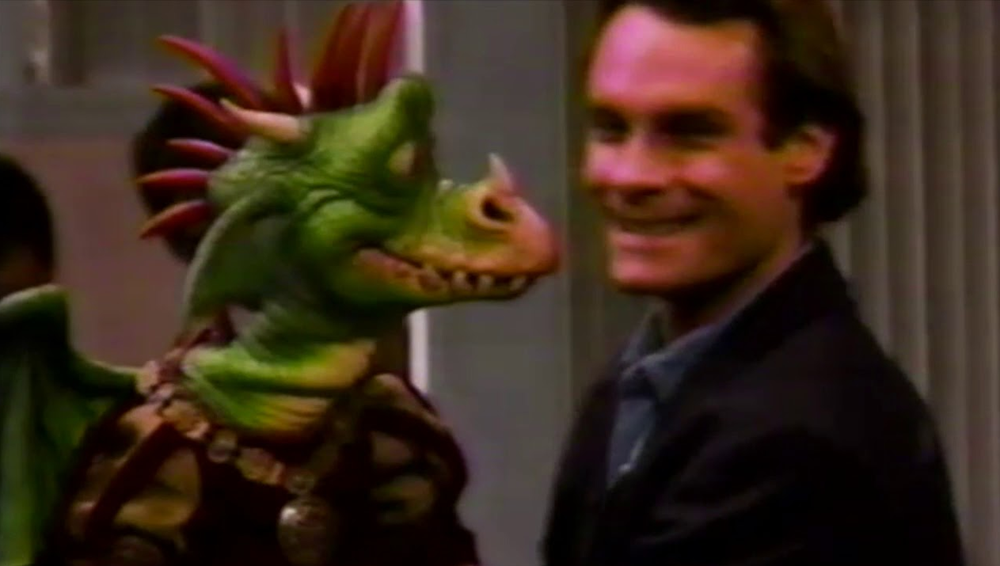
While Lucas was thrilling UK viewers with his voice lies, he was also able to secure a TV show for his beloved dragon puppet Scorch, even providing the creature’s voice. The show was the brainchild of Allan Katz, a veteran comedy writer who got his start as one of the youngest writers on Rowan & Martin’s Laugh-In and who had written and starred in the 1989 film Big Man on Campus, where he played a modern-day Quasimodo.
Scorch, 1991-92

The set up for Scorch is a simple as it is disappointing: awakened from a 100-year sleep, Scorch the dragon crash lands in front of the apartment of single dad Brian Stevens and his eight-year-old daughter Jessica. When Scorch pops out of Brian’s bag during an interview for a weatherman’s job, Brian covers by claiming the dragon is a puppet and he is a ventriloquist. He gets the job and hilarity, no doubt ensues.

Or it may have done had CBS not decided three episodes in that Scorch was bad, cancelling the show and replacing it in the schedules with one about a burrito-eating dog named Tequila who has – and I quote Wikipedia here – “a street-wise, sassy attitude.” Tequila and Bonetti, as bad as it sounds, fared slightly better, with ten of its twelve episodes airing before it, too, was cancelled as Friday nights on CBS resembled a mass grave of bad ideas.

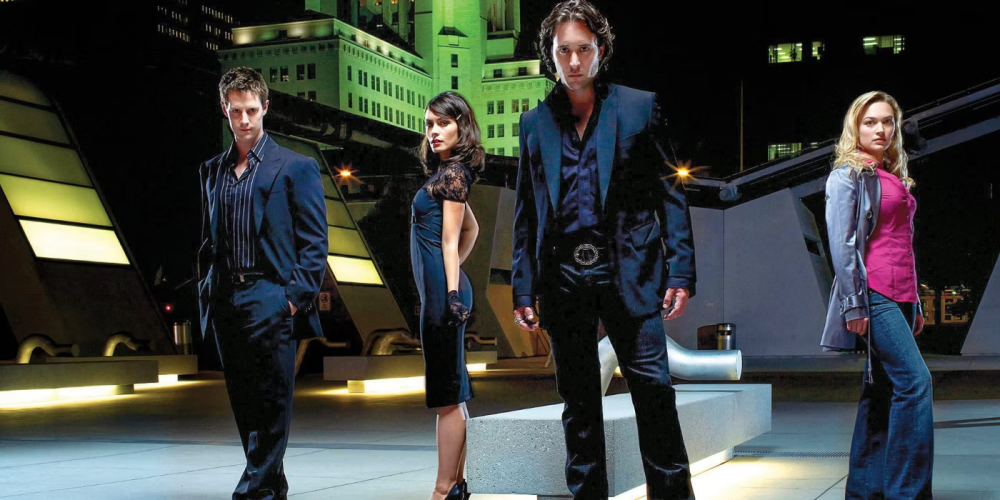
The Fifth Corner (NBC): In The Fifth Corner, hot young actor Alex MacArthur – he was Madonna’s boyfriend in the “Papa Don’t Preach” video – played Richard Braun, a man who wakes up with no memory of who he is and with a dead woman next to him in bed. What he does know is that a woman named Erica is hot on his tail and that he may just be an undercover spy known as The Fifth Corner. With sidekick Boone (JE Freeman) in tow, he sets out to find out who – and what – he is…

This intriguing concept came from John Herzfeld, a former actor whose writer-director debut – 1983’s Golden Raspberry winning Two of a Kind – reunited John Travolta and Olivia Newton-John for the first time since Grease. After directing Sylvester Stallone in Cobra, Herzfeld turned to TV, working on a series of earnest TV movies, selling The Fifth Corner to NBC on the heels of 1989’s The Preppie Murder.
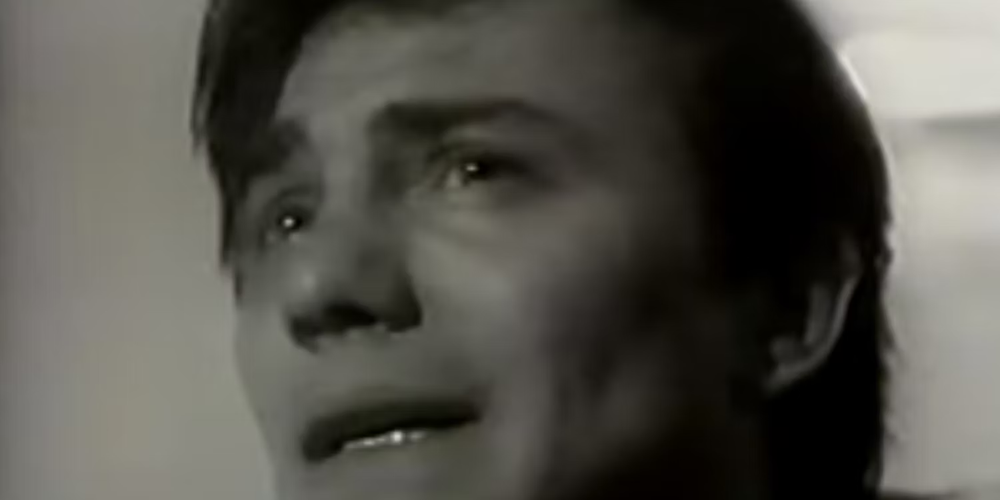
The Fifth Corner, 1991-92

The end of the first, feature-length episode of The Fifth Corner revealed that he worked for a sinister agency called The Corporation and that he had a deadly rival named The Hat. Episode three established that he has several identities and one of them is wanted for murder, and episode four would have had him discover what might be his real name and have to fight a Mob takeover of his brother’s restaurant.

I say would because NBC never let things get that far. Disappointing ratings for the premiere had already made their mind up that The Fifth Corner was a first-rate flop, and they pulled the plug after just two weeks. Three episodes remained unaired, and they reveal that Herzfeld must have had an inkling that he wouldn’t have long to tell Braun’s story as he wraps up the first arc by the end of the final episode, though still leaving room for the series to continue if necessary. It wasn’t necessary and it took Herzfeld another five years to make any kind of comeback; notably he was described as a first-time director in press for 2 Days in the Valley.

Human Target (ABC): Although there was an earlier DC Comics character with the same name and pretty much the same concept, The Human Target made his debut in December 1972 as a back-up story in the pages of Action Comics #419 by writer Len Wein and artist Carmine Infantino. After losing his father at a young age to a hitman hired by loan sharks, Christopher Chance trained obsessively in martial-arts, weaponry, and disguise. For a fee, he would assume the identities of clients whose lives were at risk from assassins and other sinister agents, not just impersonating them but becoming them…

After just eight short stories, Chance slipped into the background of the DC universe but would make occasional appearances when the story demanded it, especially in Batman titles, with whom he shared a similar back-story. In 1989, he returned to the pages of Action Comics – which was now an anthology title – for a one-off tale, “The Pow! Zap! Wham! Contract,” no doubt in response to the news that Warner Bros Television had begun work on a pilot for a proposed TV show starring the character.
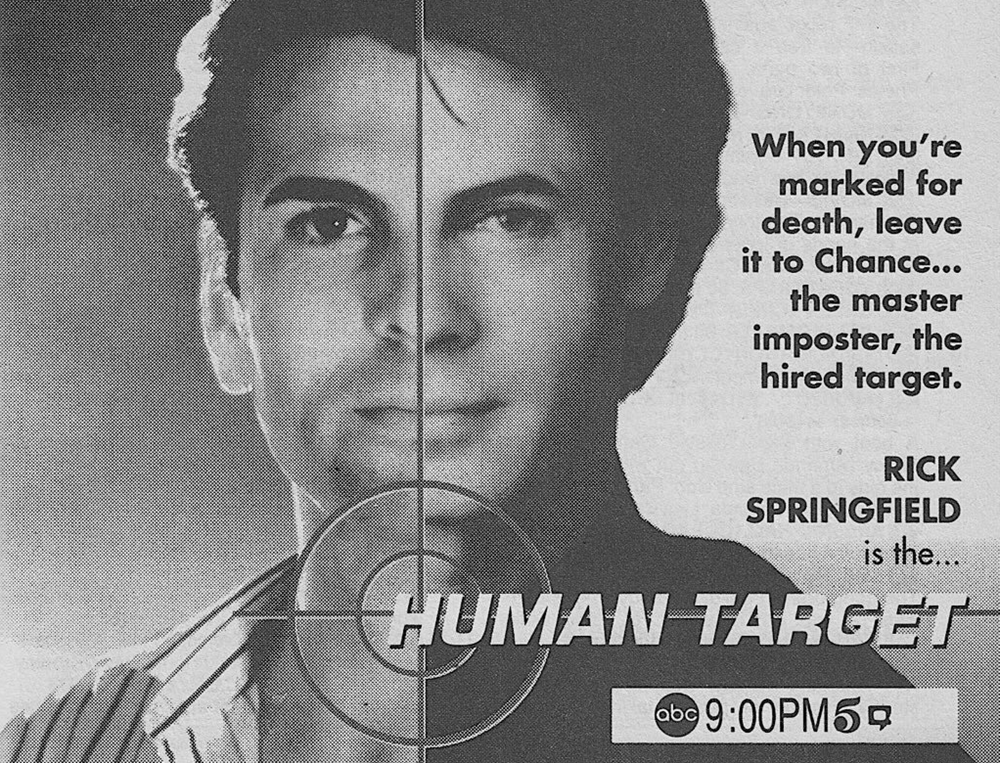
The Human Target, 1991-92

A pilot was shot, written by Danny Bilson and Paul DeMeo, who were also working on another DC Comics transfer, The Flash, for CBS. Starring musician Rick Springfield as Chance, and with E-Street Band saxophonist Clarence Clemons and Frances Fisher in support. ABC passed for the 1990-91 Fall season but were interested enough to order a do-over, with Sami Chester replacing Clemons as Chance’s pilot Jeff Carlyle. ABC were happy enough with the reshoot that they ordered a seven-episode season for a summer replacement, the pilot premiering on Monday July 20th, with the series settling into Monday nights the following week.

Critics were not exactly glowing when it came to Springfield’s performance as Chance, and there was an expectation that the show would provide comic book thrills in the same way the colourful Flash series did, something that wouldn’t fit The Human Target at all. Falling between two stools, it also failed to gain anything near enough of a following for ABC to bring it back for a second season, and Chance again faded into the background, at least until Peter Milligan and Edvin Biukovic brought the character back for adult readers in a 1999 series for Vertigo Comics.

Bill & Ted’s Excellent Adventures (Fox): Ed Solomon and Chris Matheson struck gold when a script based on a schtick they used to do in college together hit the big screen as Bill & Ted’s Excellent Adventure in 1989. The film grossed four times it’s $10 million budget and turned Bill, Ted, and Keanu Reeves into cultural icons. A sequel was immediately greenlit, but the world just could not get enough of Bill and Ted’s tremendous travels and DC Comics rushed out a comic book adaptation of the movie by Angelo Torres, while Hanna-Barbera produced an animated series that began airing on CBS in September 1990.

The animated series captured the spirit of the original, helped by the fact that Reeves, Alex Winter, and George Carlin reprised their roles from the movie, and with excitement amping up for Bill & Ted’s Bogus Journey, Fox swept in to capitalise, signing a deal to continue the series on TV in both animated and live-action form. DIC Entertainment were hired to produce season two of the animated show, and some synergy was achieved when Bill and Ted were voiced by Evan Richards and Christopher Kennedy, the actors hired to play the characters in the live-action show.
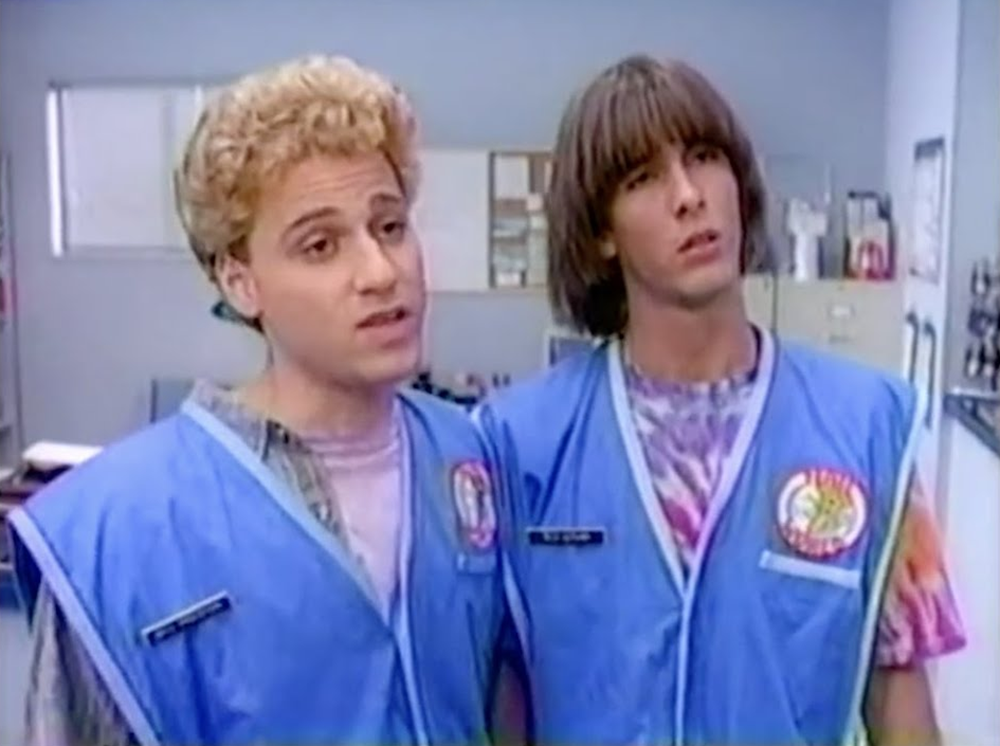
Bill & Ted's Excellent Adventures, 1991-92

Richards and Kennedy were obviously chosen for their resemblance to Reeves and Winter rather than any outstanding acting qualities, although Richards had previously been a regular on the TV version of Down and Out in Beverly Hills, but they did a fair job providing the voices for the iconic pair when the cartoon returned on Fox in September 1991. The live-action show was supposed to debut at the same time, but Fox executives were concerned that the sequel, which hit theatres in July 1991 had yet to make a profit and halted production after seven episodes had been filmed, choosing to wait until Bogus Journey’s receipts passed its $20 million budget.

That finally happened after it was released on VHS in January 1992 and Fox scheduled the show for Summer 1992, replacing True Colors on Sunday nights from June 28th. By that point, the animated show had been cancelled after just eight episodes and it seemed America’s love affair with the slacker pair had waned, with attentions moving on to Wayne’s World. The seven finished episodes aired through August 9th 1992, but that was it for Bill and Ted, at least until the original cast and creators – minus Carlin, who died in 2008 – returned for Bill and Ted Face the Music in 2020.

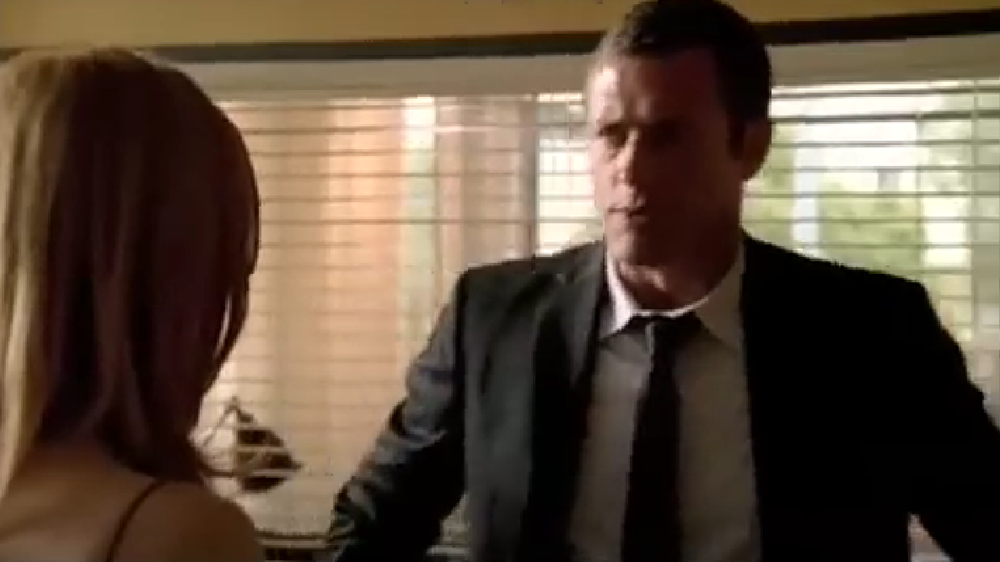
Mann & Machine (NBC): Although he’ll always be forever linked with Law & Order, Dick Wolf was a prolific creator in the late 1980s and early 1990s, responsible for a clutch of short-lived shows including crime-solving anthropologist drama Gideon Oliver, crime-solving female attorney yarn Christine Cromwell, undercover cops tale Nasty Boys, and HELP, an all-emergency services affair starring Frasier’s dad before he was Frasier’s dad. In 1991, he teamed with Robert de Laurentiis to create Mann & Machine, the latest in a line of “cop gets a new partner and they’re a robot!” shows to try its luck with network schedulers.

The machine of Mann & Machine was Sgt Eve Edison, a lifelike gynoid capable of human emotion. Played by Yancy Butler, who’d impressed Wolf when appearing in an episode of Law & Order a few months before, Eve was paired with robot hating Detective Bobby Mann, played by David Andrews, best known at that point for the BBC show Pulaski.
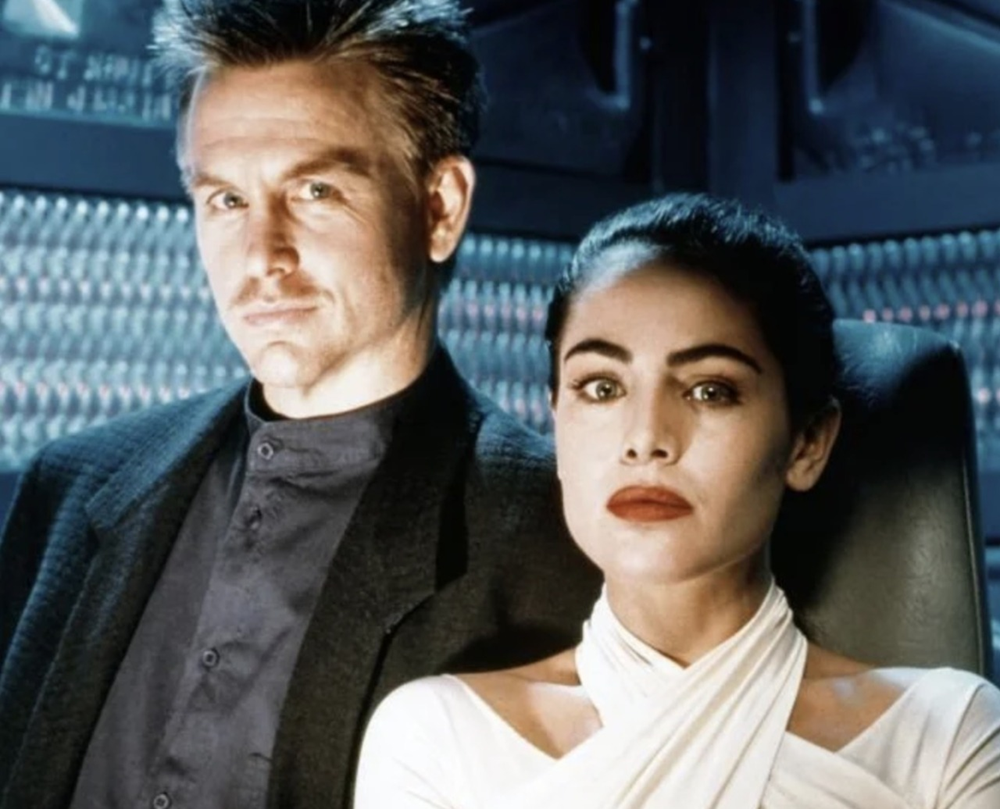
Mann and Machine, 1991-

The series revolved around Eve learning to be human and Mann finding out that, just maybe, fembots aren’t that bad after all, especially when they’re all sexy and that. Along the way, they solved crimes involving international steel brokers, a serial killer who uses dating agencies to find his victims, and organ harvesters, all to less-than-hoped-for ratings as a Spring 1992 replacement for Grand Ole Opry-style variety show, Hot Country Nights.

The few viewers that did tune in took the show to their hearts, but critics were less kind, comparing it unfavourably to shows with similar concepts, such as Holmes & Yoyo and Future Cop. NBC gave up on the show after just four episodes, showing the remaining batch to the only people left watching TV during the summer months. At that point, with Law & Order yet to establish itself as the juggernaut it became, there was little Wolf could do to change their minds, a million gynoid fetishes cut off in their prime.

Next time on The Telephemera Years: The 1991 shows that didn’t make it to air, including power packs and tag-teams!

Check out our other Telephemera articles:

The Telephemera Years: pre-1965 (part 1, 2, 3, 4)

The Telephemera Years: 1966 (part 1, 2, 3, 4)

The Telephemera Years: 1967 (part 1, 2, 3, 4)

The Telephemera Years: 1968 (part 1, 2, 3, 4)

The Telephemera Years: 1969 (part 1, 2, 3, 4)

The Telephemera Years: 1970 (part 1, 2, 3, 4)

The Telephemera Years: 1971 (part 1, 2, 3, 4)

The Telephemera Years: 1973 (part 1, 2, 3, 4)

The Telephemera Years: 1974 (part 1, 2, 3, 4, 5)

The Telephemera Years: 1975 (part 1, 2, 3, 4)

The Telphemera Years: 1976 (part 1, 2, 3, 4)

The Telephemera Years: 1977 (part 1, 2, 3, 4)

The Telephemera Years: 1978 (part 1, 2, 3, 4)

The Telephemera Years: 1980 (part 12, 3, 4)

The Telephemera Years: 1981 (part 1, 2, 3, 4)

The Telephemera Years: 1982 (part 1, 2, 3, 4)

The Telephemera Years: 1983 (part 1, 2, 3, 4)

The Telephemera Years: 1984 (part 1, 2, 3, 4)

The Telephemera Years: 1986 (part 1, 2, 3, 4)

The Telephemera Years: 1987 (part 1, 2, 3, 4)

The Telephemera Years: 1989 (part 1, 2, 3, 4)

The Telephemera Years: 1990 (part 1, 2, 3, 4)

The Telephemera Years: 1991 (part 1)

The Telephemera Years: 1992 (part 1, 2, 3, 4)

The Telephemera Years: 1995 (part 12, 3, 4)

The Telephemera Years: 1997 (part 1, 2, 3, 4)

The Telephemera Years: 1998 (part 1, 2, 3, 4)

The Telephemera Years: 1999 (part 1, 2, 3, 4)

The Telephemera Years: 2000 (part 1, 2, 3, 4)

The Telephemera Years: 2002 (part 1, 2, 3, 4)

The Telephemera Years: 2003 (part 1, 2, 3, 4)

The Telephemera Years: 2005 (part 1, 2, 3, 4)

The Telephemera Years: 2006 (part 1, 2, 3, 4)

The Telephemera Years: 2007 (part 1, 2, 3, 4)

The Telephemera Years: 2008 (part 1, 23, 4)

The Telephemera Years: O Canada! (part 1, 2, 3, 4)

Titans of Telephemera: Irwin Allen

Titans of Telephemera: Stephen J Cannell (part 1, 2, 3, 4)

Titans of Telephemera: DIC (part 1, 2)

Titans of Telephemera: Hanna-Barbera (part 1, 2, 3, 4, 5)

Titans of Telephemera: Kenneth Johnson

Titans of Telephemera: Sid & Marty Krofft

Titans of Telephemera: Glen A Larson (part 1, 2, 3, 4)

Titans of Telephemera: Quinn Martin (part 1, 2)

Titans of Telephemera: Ruby-Spears

THE TELEPHEMERA YEARS: 1991, part 1

The Young Indiana Jones Chronicles, 1991-92

Ah, telephemera… those shows whose stay with us was tantalisingly brief, snatched away before their time, and sometimes with good cause. They hit the schedules alongside established shows, hoping for a long run, but it’s not always to be, and for every Street Hawk there’s two Manimals. But here at STARBURST we celebrate their existence and mourn their departure, drilling down into the new season’s entertainment with equal opportunities square eyes… these are The Telephemera Years!

1991-92

As the 1991 Fall TV schedule was released, tears were no doubt shed when fans realised this would be the last time they would see such favourites as Who’s the Boss?, MacGyver, Jake and the Fatman, and The Golden Girls, although history no longer recalls how people felt in any respect about The Cosby Show. None of them were doing top ratings by the time they departed – one very good reason for such departures, obviously – but America was still wildly in love with Roseanne, Murphy Brown, Cheers, and Murder, She Wrote, as well as a brand-new show called Home Improvement about a man with a funny laugh.

Other new arrivals included The Commish on ABC, Evening Shade on CBS, the vastly underrated Herman’s Head on Fox, and a TV spin-off for Harry & The Hendersons, with Jay Leno easing into Johnny Carson’s seat on The Tonight Show ahead of everyone’s favourite David Letterman. Genre fans had it tough on the big four networks, with Twin Peaks having finished the previous year, leaving Quantum Leap as the sole survivor, although Star Trek: The Next Generation was still airing new episodes in syndication. Those are all shows that people remember, though: what about the ones they’ve forgotten? This is the story of some less-notable TV shows from 1991…

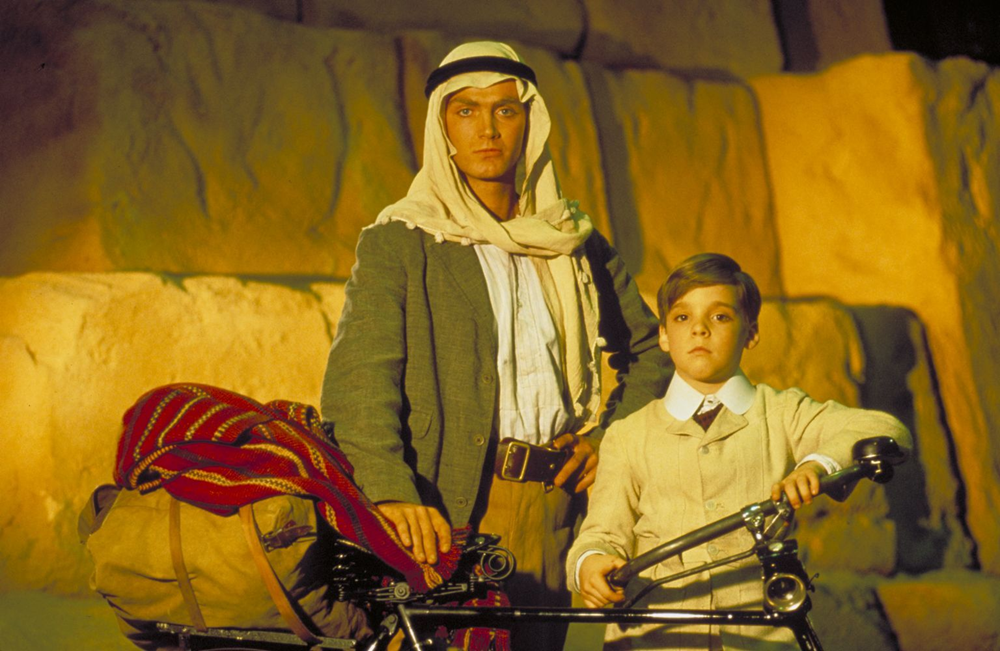
The Young Indiana Jones Chronicles (ABC): After being besieged by fans for details of Indiana Jones’s life before he entered the Temple of Doom (the events of that movie taking place a year before Raiders of the Lost Ark), George Lucas gave them a taste of the nascent archaeologist’s early years when he included a flashback sequence at the beginning of the third film in the sequence, Indiana Jones and the Last Crusade. His appetite whetted, he set about writing a complete timeline for the young explorer and secured a deal from ABC to produce a TV series telling those tales with a massive budget of $1.7 million per episode.

Lucas asked Harrison Ford and River Phoenix to reprise their roles for the series, but neither had any interest in doing television and so the main role of the teenage Indy went to newcomer Sean Patrick Flannery, with George Hall playing a modern-day incarnation looking back on his younger years. The show launched in March 1992 with a feature-length episode entitled Young Indiana Jones and the Curse of the Jackal, followed by five hour-long episodes that mostly featured Flannery but also introduced Corey Carrier as the ten-year-old Jones.

The Young Indiana Jones Chronicles, 1991-92

With stories that took place between 1909 and 1917, and in locations from Verdun to the Congo, the first block of episodes was a massive success and ABC immediately ordered a second season, this time of twenty-two episodes, to begin in September 1992. The timeline stretched into 1920 and there was even room for a guest appearance from Harrison Ford in a feature-length episode in the middle of the run entitled Young Indiana Jones and the Mystery of the Blues.

Although ratings for the second season were not anywhere near those of season one, the first few episodes rated well enough, but a five-month break between episode four and Mystery of the Blues caused an alarming drop-off, once the temporary boost of an appearance by Ford had worn off. After the tenth episode of the second season, the show took another six-week break and ratings were even worse when it returned, leading to ABC cancelling the show, their return nowhere near matching the show’s huge budget.

The final four episodes went unaired, but The Family Channel repeated the entire run, as well as commissioning four new TV movies, which aired from October 1994 to June 1996. Lucas also worked on shooting new footage for the eventual home video release to create a smoother transmission through time, transforming the first two seasons into twenty-two chapters under the title The Adventures of Young Indiana Jones.

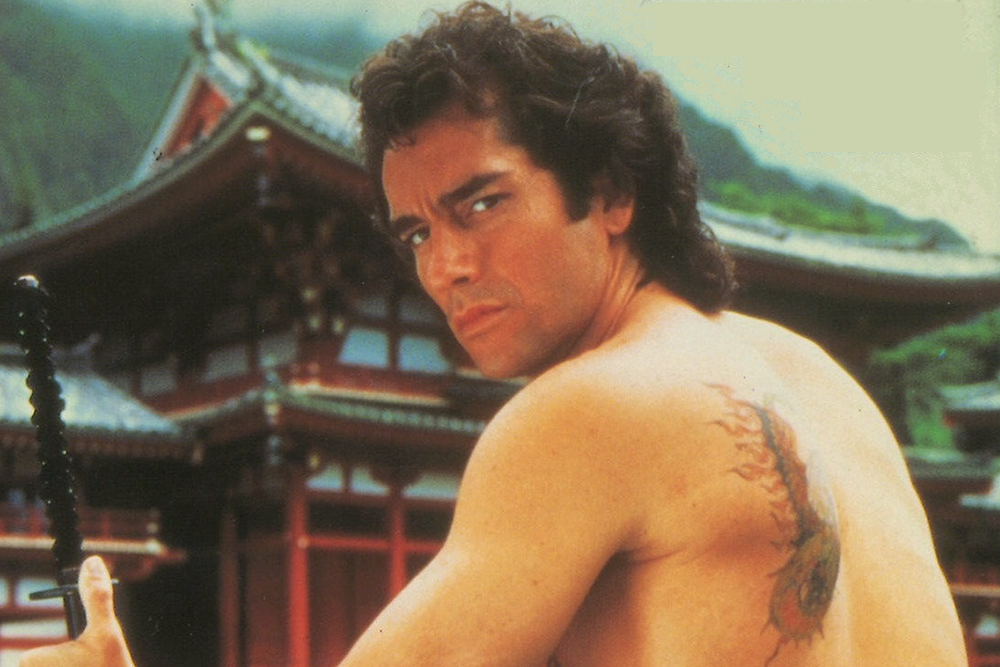
Raven (CBS): For most people, being an ex-Special Forces solider or a ninja would be enough, but Jonathan Raven, titular hero of 1992 CBS drama Raven, was both, all the better for kicking huge amounts of ass in his search for his long-lost son. Hunted by the Black Dragon gang, the mysterious martial-arts outfit he lived with after his parents were killed at the age of twelve, Raven operates out of Hawaii, helping out those in trouble.

Created by Frank Lupo, who co-created with Stephen J Cannell on The A-Team and Riptide before going solo on Hunter, Raven starred Jeffrey Meek, an actor who also had black belts in both Taekwondo and aikidō. Back up came from Lee Majors as Ski, Raven’s pal from his army days who is now working as a private investigator.

Raven, 1991-92

The show won plaudits for its accurate portrayal of Japanese culture but often seemed to be caught between two stools, appealing to the Baywatch crowd and fans of martial-arts action, but it earned a strong initial following. Ratings were certainly good enough that the seven-episode first season – it was a summer fill-in in the Jake and the Fatman spot – was renewed for a second block of thirteen for a mid-season slot in January 1993, although it was moved from a Wednesday to Saturdays, not the greatest of days for any show, even if it did have Dr Quinn, Medicine Woman as a lead-in.

Perhaps a second season stretched the concept too far or maybe viewers didn’t like such a dark concept presented in a cheerful way, but ratings fell off during the second season to the point that CBS opted to cancel Raven before the final episode had aired, not that it wrapped anything up. Still, the show did garner an increasingly fervent cult following, especially given that it was never re-run or syndicated, and the only home media release came in 2016 as a manufacture-on-demand affair.

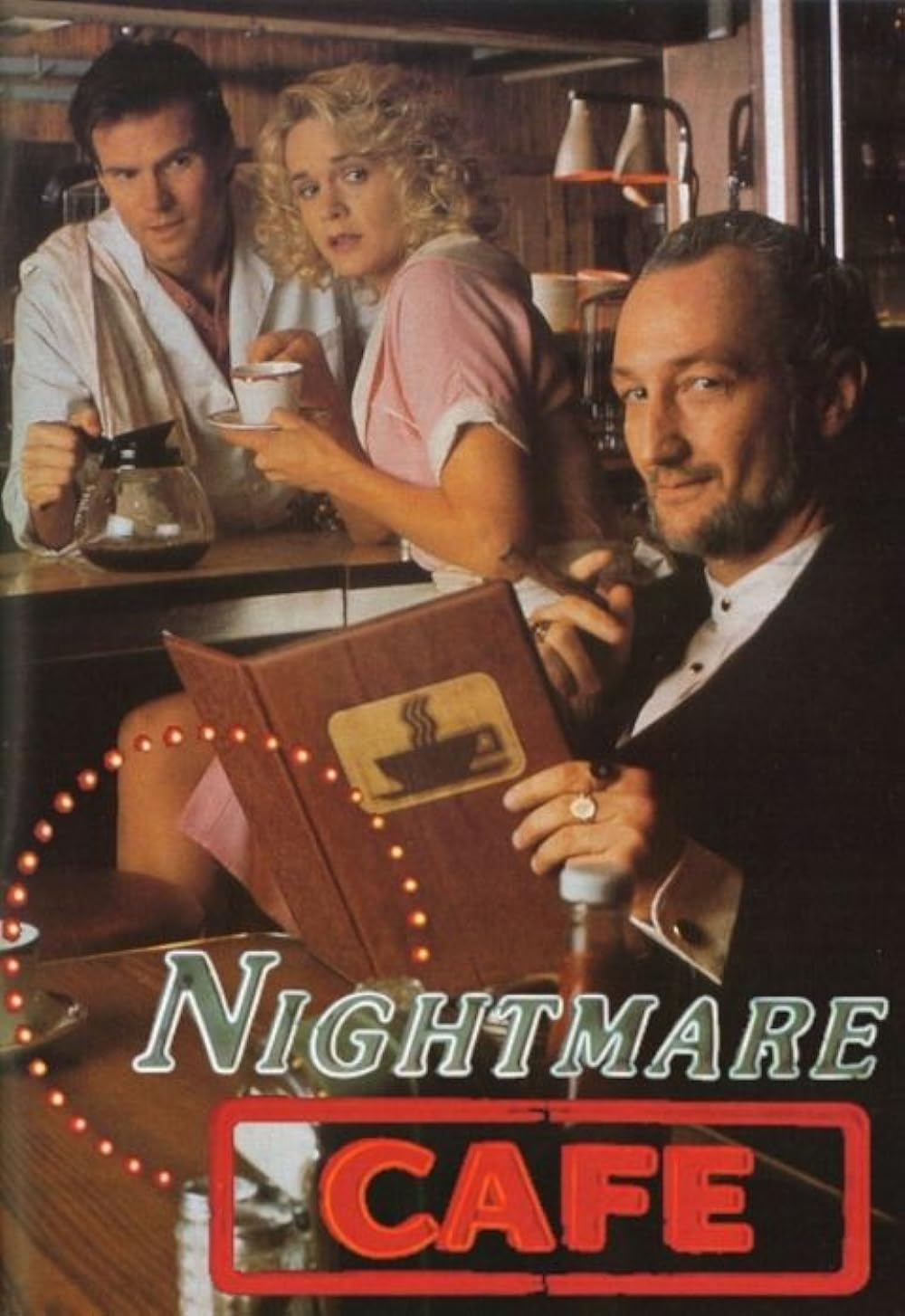
Nightmare Cafe (NBC): Wes Craven originally envisaged Nightmare Cafe as an anthology series, along the lines of The Twilight Zone or Outer Limits, each episode featuring a story told by a customer of the titular establishment. NBC liked the idea and gave Craven the go-ahead, but it was only when he started writing the first script that he realised that he much preferred the bulk of the series to be about the café and its employees.

The concept was retooled with NBC’s agreement and Craven – busy with making Shocker at the time – handed over control of the show to Thomas Baum, an experienced producer who had worked with Craven on the unsold pilot Night Visions in 1990. Craven later regretted not being fully involved but the network were happy enough with the final pilot that it was shown as a surprise preview in January 1992, ahead of its scheduled showing a month later.

Nightmare Cafe, 1991-92

The in-show origin of the Nightmare Café was a mystery, but it had the power to materialised in different locations and seemed somewhat alive. Café owner Blackie (Robert Englund, back working with Craven after completing Freddy’s Dead: The Final Nightmare) was equally mysterious, as was the story of how kind-hearted cook Frank (Jack Coleman) and waitress Fay (Lindsay Frost) found their way into his employ. The theme of the show was one of redemption, with the café able to grant wishes, whether openly asked for or not.

Nightmare Cafe debuted to mostly positive reviews as that surprise preview on January 29th 1992, with the regular series beginning with a re-showing of the pilot on February 28th in a slot vacated by Reasonable Doubts, which moved from Friday to Tuesday. Ratings, though, were less than hoped for and NBC pulled the plug after just six episodes had been produced. Craven and Englund would reunite two years later on Wes Craven’s New Nightmare, an attempt to make Freddy Krueger meta, but there were plenty who would have preferred more Nightmare Cafe instead.

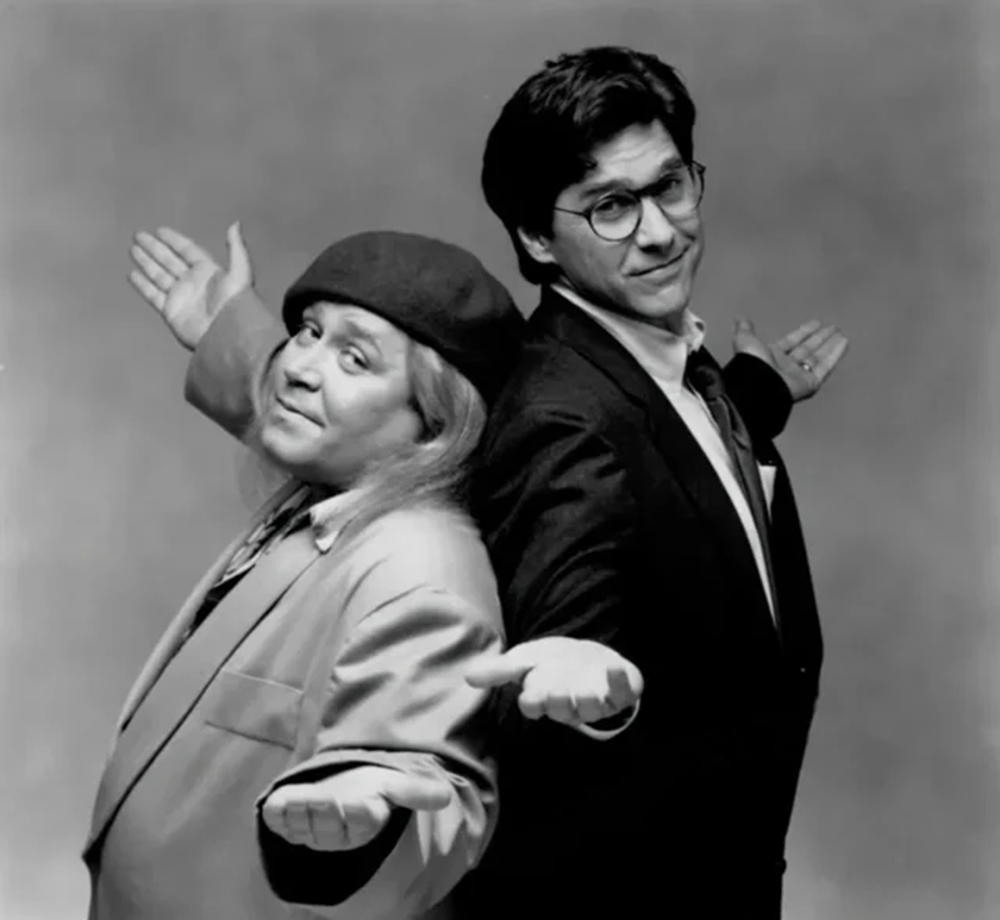
Charlie Hoover (Fox): The son of a preacher whose divorced mother married another preacher when he was eleven, it wasn’t a surprise when Sam Kinison went into preaching himself, embarking on a seven-year career as a fire and brimstone merchant, winding up in Houston, Texas. After getting divorced, Kinison switched gears to stand-up comedy, filling his routines with the same kind of rant he’d used in his previous career, influencing another local comic named Bill Hicks.

Kinison moved to Los Angeles in 1980 and finally got his big break five years later, appearing on a HBO special presented by Rodney Dangerfield, after which he blazed a trail as one of the first rock ‘n’ roll comics. Although he’d made some minor appearances in comedy movies, Kinison hadn’t transferred to acting in the way predecessors Richard Pryor, Robin Williams, and Eddie Murphy had, at least until 1991, when he was offered the role of Hugh in a sitcom called Charlie Hoover.

Charlie Hoover, 1991-92

Created by Ian Gurvitz, Charlie Hoover starred Tim Matheson as a man who reaches his fortieth birthday with a family that takes him for granted and boss that ignores him. All that changes when the voice in his head (played by you know who) appears as a foot-high guardian angel in a long coat and sets him on the path of putting things right, starting with sorting out a promotion.

Kinison’s humour never had a chance of transferring over to a mainstream sitcom, even one on a network with an edgier reputation like Fox. The show never gained anywhere near a solid following and was cancelled after just six episodes, but it turned out that this was the plan all along, at least according to Kinison’s brother, Bill, who managed his career.

Kinison had a reputation for wild partying and Charlie Hoover was a chance to prove he could work hard and be on time for filming. It also helped that many of the reviews reported that Kinison was too good for the show, and Fox were certainly happy enough to offer him another show, his own version of The Jackie Gleason Show. Unfortunately, on April 10th 1992, Kinison’s car was struck head-on by a drunk driver and, while it seemed he was initially fine, he sat down on the side of the road and died from internal injuries at just thirty-eight-years-old.

Next time on The Telephemera Years: More of 1991’s forgotten “treasures,” including Human Targets and Excellent Adventures!

Check out our other Telephemera articles:

The Telephemera Years: pre-1965 (part 1, 2, 3, 4)

The Telephemera Years: 1966 (part 1, 2, 3, 4)

The Telephemera Years: 1967 (part 1, 2, 3, 4)

The Telephemera Years: 1968 (part 1, 2, 3, 4)

The Telephemera Years: 1969 (part 1, 2, 3, 4)

The Telephemera Years: 1970 (part 1, 2, 3, 4)

The Telephemera Years: 1971 (part 1, 2, 3, 4)

The Telephemera Years: 1973 (part 1, 2, 3, 4)

The Telephemera Years: 1974 (part 1, 2, 3, 4, 5)

The Telephemera Years: 1975 (part 1, 2, 3, 4)

The Telphemera Years: 1976 (part 1, 2, 3, 4)

The Telephemera Years: 1977 (part 1, 2, 3, 4)

The Telephemera Years: 1978 (part 1, 2, 3, 4)

The Telephemera Years: 1980 (part 12, 3, 4)

The Telephemera Years: 1981 (part 1, 2, 3, 4)

The Telephemera Years: 1982 (part 1, 2, 3, 4)

The Telephemera Years: 1983 (part 1, 2, 3, 4)

The Telephemera Years: 1984 (part 1, 2, 3, 4)

The Telephemera Years: 1986 (part 1, 2, 3, 4)

The Telephemera Years: 1987 (part 1, 2, 3, 4)

The Telephemera Years: 1989 (part 1, 2, 3, 4)

The Telephemera Years: 1990 (part 1, 2, 3, 4)

The Telephemera Years: 1992 (part 1, 2, 3, 4)

The Telephemera Years: 1995 (part 12, 3, 4)

The Telephemera Years: 1997 (part 1, 2, 3, 4)

The Telephemera Years: 1998 (part 1, 2, 3, 4)

The Telephemera Years: 1999 (part 1, 2, 3, 4)

The Telephemera Years: 2000 (part 1, 2, 3, 4)

The Telephemera Years: 2002 (part 1, 2, 3, 4)

The Telephemera Years: 2003 (part 1, 2, 3, 4)

The Telephemera Years: 2005 (part 1, 2, 3, 4)

The Telephemera Years: 2006 (part 1, 2, 3, 4)

The Telephemera Years: 2007 (part 1, 2, 3, 4)

The Telephemera Years: 2008 (part 1, 23, 4)

The Telephemera Years: O Canada! (part 1, 2, 3, 4)

Titans of Telephemera: Irwin Allen

Titans of Telephemera: Stephen J Cannell (part 1, 2, 3, 4)

Titans of Telephemera: DIC (part 1, 2)

Titans of Telephemera: Hanna-Barbera (part 1, 2, 3, 4, 5)

Titans of Telephemera: Kenneth Johnson

Titans of Telephemera: Sid & Marty Krofft

Titans of Telephemera: Glen A Larson (part 1, 2, 3, 4)
Titans of Telephemera: Quinn Martin (part 1, 2)

Titans of Telephemera: Ruby-Spears

THE TELEPHEMERA YEARS: 2007, part 4

Spectacular Spider-Man, 2007-08

Ah, telephemera… those shows whose stay with us was tantalisingly brief, snatched away before their time, and sometimes with good cause. They hit the schedules alongside established shows, hoping for a long run, but it’s not always to be, and for every Street Hawk there’s two Manimals. But here at STARBURST we celebrate their existence and mourn their departure, drilling down into the new season’s entertainment with equal opportunities square eyes… these are The Telephemera Years!

2007-08

Reality TV was king of the small screen in 2007, with the top five slots in the ratings filled by American Idol and Dancing with the Stars, but drama of the scripted kind was still making an impact as CSI: Crime Scene Investigation, Desperate Housewives, Grey’s Anatomy, Heroes, House, and Lost were all still pulling in big viewing figures across the four main networks. Both Jericho and The Wire were entering their final seasons, after which one of them at least would enter the annals of TV classics, but it was a bad time for fans of animated genre fare, with The Batman, Ben 10, and Space Ghost Coast to Coast all beginning their final runs.

There were tons of new arrivals, of course, with Breaking Bad making drug dealing fun again, while Chuck, Gossip Girl, Pushing Daisies, and Reaper all debuted. The geeks of The Big Bang Theory made their bow, and it became cool to laugh at people getting hurt again when Wipeout hit our screens, but those were the shows made for grown-ups – what about the ones for the young (and young at brain)? This is the story of some of 2007’s new kids shows…

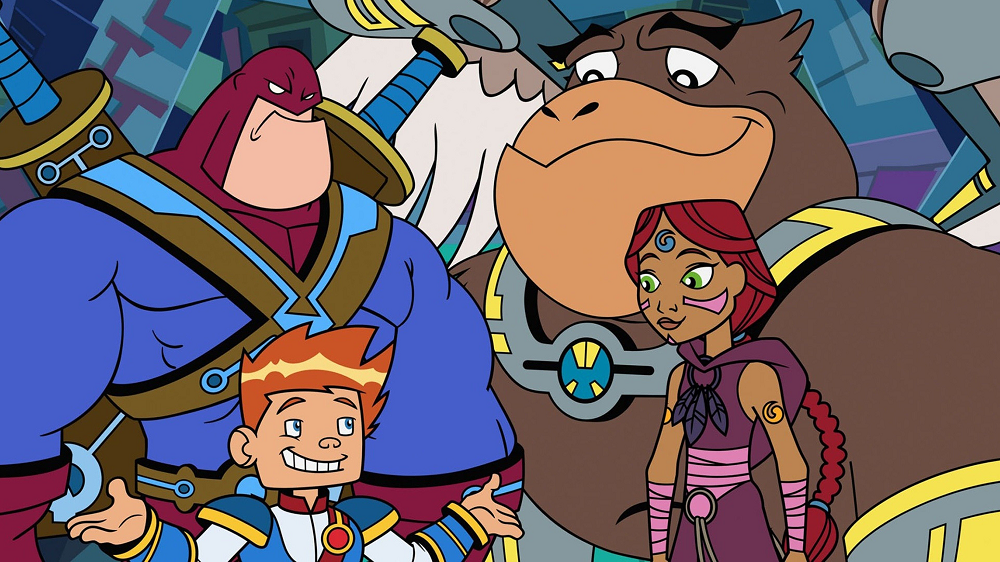
World of Quest (Kids WB): Originally a webcomic by Jason T Kruse, World of Quest was later compiled into a 120-page graphic novel, catching the attention of Cookie Jar Entertainment, a subsidiary of Canadian animation giant Nelvana, who thought it’s mixed of science-fiction and sword and sorcery perfect for a kid’s cartoon that might also attract an older audience. World of Quest is essentially a loving parody of all the things Kruse – a graduate of CalArts – enjoyed as a child himself, with Masters of the Universe firmly to the fore.

Quest – played by veteran Canadian voice actor Ron Pardo – is a musclebound warrior who was formerly assigned to look after Nestor, the baby Prince of Odyssia. Years later, Nestor arrives on his doorstep after the King and Queen have been captured, seeking his help in finding the Shatter Soul Sword and rescue them. Quest isn’t interested, but Nestor casts a spell of allegiance on him and the adventure begins, their party joined by sorceress Anna Maht, shapeshifter Way, cyborg Gatling, and thieving griffin Graer.

World of Quest, 2007-08 2

The main villain of the show is Lord Spite, a vaguely reptilian overlord who uses (mostly incompetent) underlings to prevent Quest and company from collecting the five swords of power needed to activate the Shatter Soul Sword. As the story progresses, we begin to learn more about the world of Odyssia and Quest’s past life, and by the end of season one they have both gained and lost the swords.

Debuting on March 15th 2008, World of Quest was the final show to begin a run on the Kids WB block, something the producers were aware of going in. Kids WB would therefore only commit to a first season of thirteen episodes, but Teletoon in Canada ordered double that, taking the story beyond where Kruse left it at the end of the webcomic. Teletoon ran the first thirteen from September to December 2008, and the back half from March 2009, and in the US, The CW picked up “season two” for a June 2009 debut. The newer stories continued the journey, but that was as far as things got, with episode twenty-six not bringing the story to a close. As the title character says at the end of the season, “This quest will never end!”

Skunk Fu! (Kids WB): Established in 1999, Irish animation studio Cartoon Saloon almost immediately announced their debut feature – The Secret of Kells – but didn’t begin work on the film until 2005, the intervening period spent taking commercial animation work to raise funds for their endeavour. The Secret of Kells would eventually premiere in February 2009 and earn numerous accolades, including an Oscar nomination for Best Animated Feature, losing out to Up.

While work was beginning on The Secret of Kells, the studio also started developing Skunk Fu!, a flash-animated TV series conceived by animator Aidan Harte and sales rep Hyun Ho Khang. Harte designed the characters and produced a showreel for exhibition at the 2003 European Cartoon Forum, an industry showcase held annually since 1990, where it was picked up by the BBC, Irish channel TG4, and Kids WB in the US.

Skunk-Fu, 2007-08

The show’s main character is Skunk, a ten-year-old skunk training to become a kung-fu master under Master Panda, and I’m sure you can guess what he is. Skunk is lazy and always looks for the easy way out, only to find the right way of doing things in the end. He was given to Panda by Heaven when Panda asked for help in defeating Dragon, formerly the guardian of the animals of the Valley but who turned against Heaven for not unreasonable reasons. Thus, Panda knows Skunk will be important but finds his patience tested along the way…

Debuting in September 2007, a full fifty-two-episode season was produced, each episode named “The Art of something,” with the somethings including Stickiness, Monkey Launching, Turtle Watching, the Nose Blow, and Art. There is no overarching story and the series ends in the same place it started, although a feature film was planned that would have told the whole story arc, later quietly dropped when Cartoon Saloon’s other features – they went on to create Song of the Sea, The Breadwinner, and Wolfwalkers, all of which were nominated for Best Animated Feature at the Oscars – took precedence and Harte left the studio to study classic sculpture in Italy.

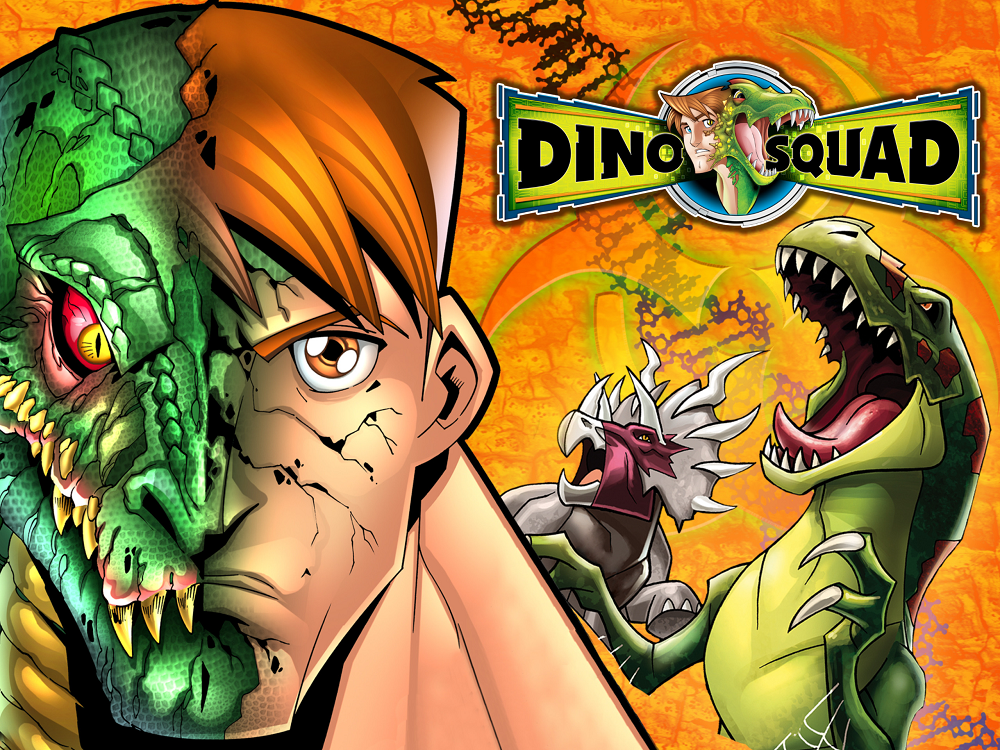
Dino Squad (CBS): It’s every kid’s dream to be able to turn into a dinosaur and, for thirty minutes on Saturday mornings in 2007, DIC Entertainment made it come true. Originally floated as I Was a High School Dinosaur, Dino Squad was developed by Jeffrey Scott, the man responsible for Hulk Hogan’s Rock ‘n’ Wrestling and Muppet Babies, aimed at delivering an environmental message along with the trademark DIC action.

Evil scientist Victor Veloci is one of two surviving dinosaurs, evolved into passing for human after surviving the asteroid that wiped out the rest of their kind. Through his Raptor Dyne company, he has made it his mission ever since to pollute the Earth to the point that it returns to how it was millions of years ago, allowing him to return dinosaurs as the dominant species, performing experiments on wildlife to devolve them back to their ancestral states.

Dino Squad, 2007-08

When five teenagers – Buzz, Caruso, Fiona, Max, and Roger – jump into a river to rescue stray dog Rump, they are bathed in chemicals that enable them to turn into dinosaurs and back. What’s more, their high school teacher Ms Moynihan is the other surviving evolved velociraptor and can communicate with them telepathically to aid them in their mission to stop Veloci!

Scott himself wrote five of the thirteen-episode first season, which began airing as part of CBS’s KEWLopolis block in November 2007, and ratings were good enough that the network ordered another thirteen episodes. They began airing online in August 2008, transferring to CBS a month later. It might have even come back for a third season but for DIC’s merger with Cookie Jar Entertainment in June 2008 and a subsequent decision to de-emphasise DIC programming in favour of Cookie Jar productions thereafter.

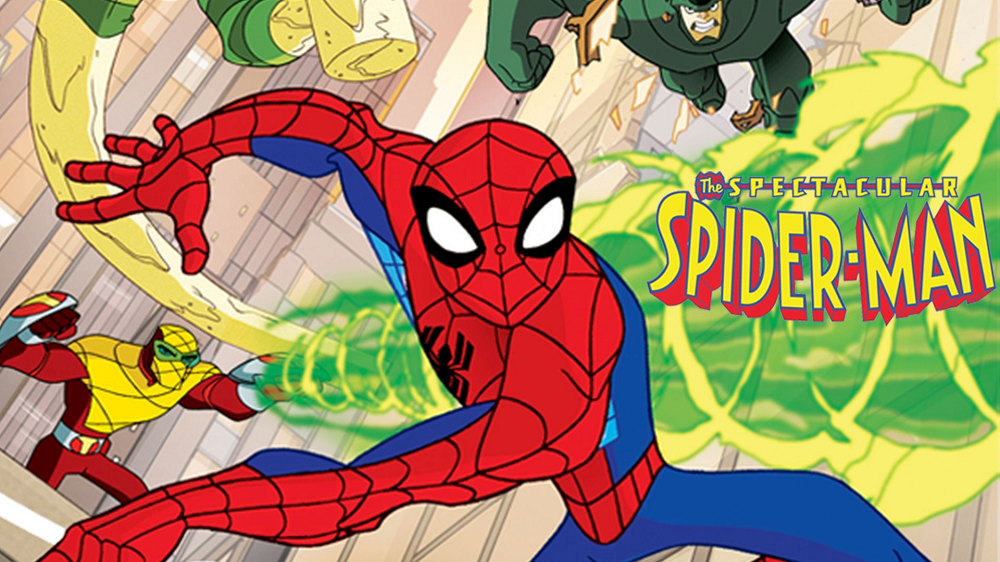
The Spectacular Spider-Man (Kids WB): The Spectacular Spider-Man was the seventh attempt to do an animated series based on Steve Ditko and Stan Lee’s famous wallcrawler, dating back to Ralph Bakshi’s 1967 show and taking in all manner of amazing friends along the way. Although it primarily drew from the original comics by Ditko, Lee, John Romita, and others, The Spectacular Spider-Man also took inspiration from the mammoth Ultimate Spider-Man run by Brian Michael Bendis and Mark Bagley, and from the three Sam Raimi movies starring Tobey Maguire.

The basic story set-up should be familiar by now, with high-schooler Peter Parker struggling to balance his ordinary life with that of a superhero. This involves caring for his Aunt May, negotiating the affections of Gwen Stacey and Mary Jane Watson, being best friends with Harry Osborn and Eddie Brock, avoiding the bullying of Flash Thompson, and earning side money by working as a photographer for J Jonah Jameson at The Daily Bugle!

Spectacular Spider-Man, 2007-08

Season one brought such supervillains as the Vulture, Electro, the Lizard, Shocker, the Sandman, the Rhino, Doctor Octopus, the Chameleon, and Black Cat, all working for sinister gangster Tombstone, with the arrival of the Green Goblin and an alien symbiote further complicating matters. In short, this was Spider-Man as a greatest hits package and was originally planned as a straight-to-DVD release by Sony Entertainment before it was also sold for TV broadcast as part of the Kids WB block on The CW.

Renewed for a second season, which transferred to Disney XD when Kids WB was wound down, producers Greg Weisman and Victor Cook introduced more iconic Spider-Man characters into the mix, including  Mysterio, Kraven the Hunter, the Tinkerer, Silver Sable, and Molten Man, and began planting seeds for season three, introducing the civilian identities of Carnage, the Hobgoblin, and the Jackal, with the clone saga on the slate as a future story.

Weisman wanted to tell a whole story over five seasons, but poor sales of the DVDs and less than hoped for ratings on its new home put a question mark over its future. In September 2009, Sony relinquished TV rights for Spider-Man to Marvel Entertainment, and the show was finally announced as cancelled in March 2010 when Disney, Marvel’s new owners, announced a new Spider-man cartoon, Ultimate Spider-Man, although the decision had been taken some months before. Ultimate Spider-Man eventually arrived in March 2012 and ran for five years before being replaced itself by another show, plain old Spider-Man.

Next time on The Telephemera Years: We’re off to 1991 for some excellent adventures!

Check out our other Telephemera articles:

The Telephemera Years: pre-1965 (part 1, 2, 3, 4)

The Telephemera Years: 1966 (part 1, 2, 3, 4)

The Telephemera Years: 1967 (part 1, 2, 3, 4)

The Telephemera Years: 1968 (part 1, 2, 3, 4)

The Telephemera Years: 1969 (part 1, 2, 3, 4)

The Telephemera Years: 1970 (part 1, 2, 3, 4)

The Telephemera Years: 1971 (part 1, 2, 3, 4)

The Telephemera Years: 1973 (part 1, 2, 3, 4)

The Telephemera Years: 1974 (part 1, 2, 3, 4, 5)

The Telephemera Years: 1975 (part 1, 2, 3, 4)

The Telphemera Years: 1976 (part 1, 2, 3, 4)

The Telephemera Years: 1977 (part 1, 2, 3, 4)

The Telephemera Years: 1978 (part 1, 2, 3, 4)

The Telephemera Years: 1980 (part 12, 3, 4)

The Telephemera Years: 1981 (part 1, 2, 3, 4)

The Telephemera Years: 1982 (part 1, 2, 3, 4)

The Telephemera Years: 1983 (part 1, 2, 3, 4)

The Telephemera Years: 1984 (part 1, 2, 3, 4)

The Telephemera Years: 1986 (part 1, 2, 3, 4)

The Telephemera Years: 1987 (part 1, 2, 3, 4)

The Telephemera Years: 1989 (part 1, 2, 3, 4)

The Telephemera Years: 1990 (part 1, 2, 3, 4)

The Telephemera Years: 1992 (part 1, 2, 3, 4)

The Telephemera Years: 1995 (part 12, 3, 4)

The Telephemera Years: 1997 (part 1, 2, 3, 4)

The Telephemera Years: 1998 (part 1, 2, 3, 4)

The Telephemera Years: 1999 (part 1, 2, 3, 4)

The Telephemera Years: 2000 (part 1, 2, 3, 4)

The Telephemera Years: 2002 (part 1, 2, 3, 4)

The Telephemera Years: 2003 (part 1, 2, 3, 4)

The Telephemera Years: 2005 (part 1, 2, 3, 4)

The Telephemera Years: 2006 (part 1, 2, 3, 4)

The Telephemera Years: 2007 (part 1, 2, 3)

The Telephemera Years: 2008 (part 1, 23, 4)

The Telephemera Years: O Canada! (part 1, 2, 3, 4)

Titans of Telephemera: Irwin Allen

Titans of Telephemera: Stephen J Cannell (part 1, 2, 3, 4)

Titans of Telephemera: DIC (part 1, 2)

Titans of Telephemera: Hanna-Barbera (part 1, 2, 3, 4, 5)

Titans of Telephemera: Kenneth Johnson

Titans of Telephemera: Sid & Marty Krofft

Titans of Telephemera: Glen A Larson (part 1, 2, 3, 4)
Titans of Telephemera: Quinn Martin (part 1, 2)

Titans of Telephemera: Ruby-Spears

Felicia Day • FELICIA DAY 3D

Creator, writer, singer and all-round talented type Felicia Day needs little introduction to STARBURST readers. She has worked on everything from Buffy The Vampire Slayer to Supernatural, and is even producing a musical version of her hit web series, The Guild.

We caught up with her to find out more about her miniatures and gaming project, Felicia Day 3D.

How did you end up working with Thangs.com?

It came about because I had been seeing so many wonderful works of art at conventions with fans and every time somebody walked up to me I would gasp and say where did you get that and turned out they had a 3D printed.  So I’d already been really intrigued for a long time.

I ran into Paul from Thangs.com at a convention in Indiana. Thangs is a website where you can search for models that you’re interested in, and they also have a sort of subscription service for artists and designers and things like that for people to support and download their work.

When I got to talking with him, I was grilling him on what printer I should get, so he sent me a printer, and he’s like You need to get in this now. Let’s work together and develop your own line of 3D prints. And here we are.

What was the first thing you made?

The first thing I made was a prefab thing from the bamboo Labs files, and it was a puzzle of a Tyrannosaurus Rex. I know now that I should have made a benchy first. I did make a benchy second. But I did it out of order because the tradition in the whole 3D printing world is to do a benchy, which is again preloaded into the Bamboo.

Which Printer are you using now?

So I use a Bamboo X1 Carbon, and yes, I don’t have extensive experience with other models. I have seen them and tried to play with them just as a hobbyist, but the Bamboo from what I hear and also what I’ve experienced it’s almost Plug and Play. It’s very, very easy, and it’s kind of making it much more accessible for people like me who are a little intimidated with the space to get into it in an easy way.

What sort of files to print can we find on your site?

Yeah, the wonderful thing is that Thangs is allowing me to collaborate with designers and artists to make the prints, and we work together to develop what we think is cool. And what I would personally want in my life. So I am not a 3D modeller at this point. I haven’t learned Blender or zBrush to get in there and Design.  I love learning things most of all, but for now, I’m working with these incredible designers. Three of them at this point, and we’re working on three different categories. One is toys that you can make for and with your kid. I’m working with a wonderful designer, Memetics3D, on that. We made this really cool spider and some cool dragons.

Is the second category TTRPG minis?

One of the first things I wanted to do was The Guild minis because I’ve never been able to take the guild into an RPG space physically.

 I’m working with this wonderful designer, Moonlight Minis Christine Van Patten, and she is astounding and how fast she works, but also how she just nails the style that I like, which is very artistic and flowy in a way, but also just embodies the characters in a great way. So we’re gonna be doing all of The Guild characters.

So does that mean we’ll have a chance to own your avatar?

You will be able to, and if you’d like to, maybe blow it up to life size. I’m not gonna judge you if you date it. Lastly, we have a category of jewellery,…

Isn’t jewellery tricky to do? 3D printed textiles are famously a bit hard to work with

I’m passionate about this, and I love good jewellery. I always have way too much of it, and I’m working with Kaizen 3D, this wonderful textile designer, with whom we made this really cool necklace that you could print on fabric that kind of floats on the skin.

We have a whole line of horoscope D20 kind of talismans that are necklaces as well. And we’re gonna be accelerating our output to be able to get all 12 horoscope signs out. And yes, so those are the three categories: jewellery for cosplay, minis and toys you can make with or for your kids.

Felicia Day 3D can be found on Thangs.com

THE TELEPHEMERA YEARS: 2007, part 3

Area 57, 2007-08

Ah, telephemera… those shows whose stay with us was tantalisingly brief, snatched away before their time, and sometimes with good cause. They hit the schedules alongside established shows, hoping for a long run, but it’s not always to be, and for every Street Hawk there’s two Manimals. But here at STARBURST we celebrate their existence and mourn their departure, drilling down into the new season’s entertainment with equal opportunities square eyes… these are The Telephemera Years!

2007-08

Reality TV was king of the small screen in 2007, with the top five slots in the ratings filled by American Idol and Dancing with the Stars, but drama of the scripted kind was still making an impact as CSI: Crime Scene Investigation, Desperate Housewives, Grey’s Anatomy, Heroes, House, and Lost were all still pulling in big viewing figures across the four main networks. Both Jericho and The Wire were entering their final seasons, after which one of them at least would enter the annals of TV classics, but it was a bad time for fans of animated genre fare, with The Batman, Ben 10, and Space Ghost Coast to Coast all beginning their final runs.

There were tons of new arrivals, of course, with Breaking Bad making drug dealing fun again, while Chuck, Gossip Girl, Pushing Daisies, and Reaper all debuted. The geeks of The Big Bang Theory made their bow, and it became cool to laugh at people getting hurt again when Wipeout hit our screens, but those were the shows that made it to air – what about the ones that fell at the final hurdle? This is the story of 2007’s unsold pilots…

Demons (CBS): Although for many he will always be Augustus Hill in Oz, it’s probably fair to say that Harold Perrineau has struggled to escape the role of Michael in Lost, to the extent that his latest turn in From has been sold by some as “Lost but in a town.” In 2007, when he was a year removed from the hit show and having recently failed to agree terms on a return, he was cast as Mitch, a priest who acts as a confidante to Ron Eldard’s Gus, an ex-Jesuit priest-psychologist who performs exorcisms.

Gus is the main character in Demons, but all the press concentrated on the involvement of Perrineau, despite Eldard’s résumé already including (admittedly middling) roles in Black Hawk Down, Sleepers, and Deep Impact by this point, although for many he was best remembered for a one-season turn on ER, something he and Perrineau no doubt bonded over on set. He was fresh off Blind Justice, a short-lived Steve Bocchco show about a blind policeman apparently inspired by seeing a line of blind men shuffle onto a stage.

Perrineau’s casting even took precedence over the fact that the show was created by Barbara Hall, responsible for Judging Amy and Joan of Arcadia, and that the pilot was directed by The Bodyguard‘s Mick Jackson. This may have been a portent because after a flurry of reports listing the show as a prospect for the Fall 2007 season, it was dropped like a stone by both CBS and those who report on such things.

Two years later, Philip Glenister made his post-Gene Hunt bow in ITV’s Demons, a completely different show that was primarily concerned with vampires, not demons, but for which the creators presumably held John Carpenter’s 1998 neo-Western horror in higher esteem than this failed pilot.

Area 57 (NBC): Mike Armstrong’s first big break came as part of the writing team on the MTV game show Remote Control before a series of other minor jobs lead a stint as head writer on The Carol Burnett Show, an unlikely gig for a writer with his finger seemingly on the pulse of what’s cool but everyone’s gotta make a living, right? A fair better fit was a much longer stay as head writer for The Late Late Show with Craig Ferguson and it was while working in that position that his sitcom pitch Area 57 was picked up by NBC for a pilot.

Presumably six doors down from Area 51, Area 57 is a secret US military base tasked with investigating alien incursions on Earth and home to an actual alien that they captured forty years before. Matthew Lillard plays Colonel Steven Isaac, over the moon to be given his latest assignment to look after the alien, only to find that he’s actually an annoying (and flatulent) jerk.

Area 57, 2007-08

Paul Reubens was well cast as The Alien (who is never named, not that it helped Gordon Shumway escape being called ALF), with support coming from Kelly Hu, Jane Lynch, and Bruce McGill as the base’s staff, who have been driven wacky by forty years with their charge. Like The Office and its ilk, it’s a single camera workplace comedy, albeit one with a plot that would seem a little outré for the Dunder and Mifflin building.

The pilot was in contention to join the 2007 Fall season line-up, but the network passed, despite a solid cast and unique premise. Well, unique if you completely forget the existence of ALF and, indeed, American Dad!, but that didn’t stop Nick Frost and Simon Pegg borrowing it for Paul four years later…

Marlowe (ABC): An attempt to bring Raymond Chandler’s Phillip Marlowe into the modern day, Marlowe starred Jason O’Mara, an Irish actor who’d been trying to break the US for half a decade. After securing a regular role in The Agency, he headed up 2006’s In Justice, which lasted just thirteen episodes before cancellation, and he was signed to a golden handcuffs deal by ABC and Touchstone TV.

His Marlowe is a very different beast to the original, even if the pilot follows a traditional Chandler plot as Marlowe is hired to follow a wealthy playboy his client suspects is having an affair with his wife only to discover the playboy’s dead body and the apparent murderer (Veronica Mars‘s and General Hospital‘s Jaime Ray Newman) screaming her innocence. She then comes to Marlowe for help and the plot – of course – thickens, bringing in a supporting cast which includes Adam (not F) Goldberg and Amanda Righetti.

Marlowe, 2007-08

Developed by former Disney president Sean Bailey, the pilot was written by Greg Pruss and Carol Wolper, who had both been in and around “the business” without assembling much in the way of credits, although Pruss wrote a rejected draft for Alien3 and Wolper did uncredited script revisions for 1995’s Bad Boys. Where their script – and Rob Bowman’s direction – misses in making the city of Los Angeles as much a star of the story as Marlowe.

ABC declined to take the show to series, but ABC retained the rights to the property and went back to the Chandler well six years later, hiring Castle creator Andrew Marlowe (no relation) to write and produce a pilot that didn’t come to fruition.

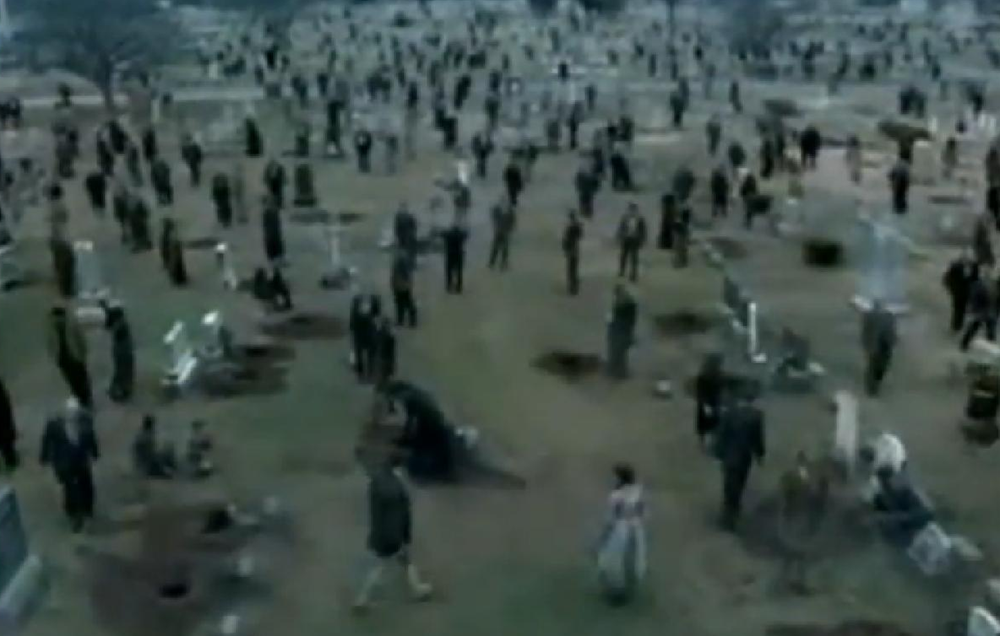
Babylon Fields (CBS): John Ajvide Lindqvist’s Låt den Rätte Komma in (known better to you, I, and all non-Swedish speaking peoples as Let the Right One In) became a sensation on publication in 2004, was turned into a film in 2008, and given the Hollywood treatment two years later as Let Me In. After a vampire story, his follow-up novel turned to zombies, presenting an entirely different take on the concept in Handling the Undead, published in Sweden in 2005. Handling the Undead revolved around the unexpected resurrection of thousands of the recently deceased who, instead of feasting on brains, attempt to get back to their ordinary lives.

Babylon Fields was the brainchild of Michael Atkinson, a film critic for The Village Voice, and Gerald Cuesta, brother of Six Feet Under and Dexter director Michael Cuesta, who also lends his talents to this pilot. Babylon Fields revolved around the unexpected resurrection of thousands of the recently deceased who, instead of feasting on brains, attempt to get back to their ordinary lives.

Babylon Fields, 2007-08

Now there are no truly original ideas in Hollywood, and certainly not by 2007, when just about every single angle had been picked over, but there was an amusing similarity between the two concepts that no doubt escaped the bigwigs at CBS (and probably everybody else outside Sweden, at least until they remake the 2024 film version of Lindqvist’s story in Hollywood in two years’ time). Besides, while Lindqvist was writing his book, Robin Campillo’s film Les Revenants was released in France, a movie that revolved around the unexpected resurrection of thousands of the recently deceased who, instead of feasting on brains, attempt to get back to their ordinary lives.

Regardless of its origins, it’s an interesting concept that attempts to give a human dimension to post-human life years before The Walking Dead came to TV with AMC. Ray Stevenson is decent as Carl Tiptree, a cop trying to hold his small town together in the wake of the returns, with support from Kathy Baker, David Patrick Kelly, and Amber Tamblyn, but CBS didn’t take the concept any further, allowing The Walking Dead to become the king of TV zombie shows (not that it’s a hotly contested title).

Next time on The Telephemera Years: TV for kids, some of whom were born in a year without a 1 at the front!

Check out our other Telephemera articles:

The Telephemera Years: pre-1965 (part 1, 2, 3, 4)

The Telephemera Years: 1966 (part 1, 2, 3, 4)

The Telephemera Years: 1967 (part 1, 2, 3, 4)

The Telephemera Years: 1968 (part 1, 2, 3, 4)

The Telephemera Years: 1969 (part 1, 2, 3, 4)

The Telephemera Years: 1970 (part 1, 2, 3, 4)

The Telephemera Years: 1971 (part 1, 2, 3, 4)

The Telephemera Years: 1973 (part 1, 2, 3, 4)

The Telephemera Years: 1974 (part 1, 2, 3, 4, 5)

The Telephemera Years: 1975 (part 1, 2, 3, 4)

The Telphemera Years: 1976 (part 1, 2, 3, 4)

The Telephemera Years: 1977 (part 1, 2, 3, 4)

The Telephemera Years: 1978 (part 1, 2, 3, 4)

The Telephemera Years: 1980 (part 12, 3, 4)

The Telephemera Years: 1981 (part 1, 2, 3, 4)

The Telephemera Years: 1982 (part 1, 2, 3, 4)

The Telephemera Years: 1983 (part 1, 2, 3, 4)

The Telephemera Years: 1984 (part 1, 2, 3, 4)

The Telephemera Years: 1986 (part 1, 2, 3, 4)

The Telephemera Years: 1987 (part 1, 2, 3, 4)

The Telephemera Years: 1989 (part 1, 2, 3, 4)

The Telephemera Years: 1990 (part 1, 2, 3, 4)

The Telephemera Years: 1992 (part 1, 2, 3, 4)

The Telephemera Years: 1995 (part 12, 3, 4)

The Telephemera Years: 1997 (part 1, 2, 3, 4)

The Telephemera Years: 1998 (part 1, 2, 3, 4)

The Telephemera Years: 1999 (part 1, 2, 3, 4)

The Telephemera Years: 2000 (part 1, 2, 3, 4)

The Telephemera Years: 2002 (part 1, 2, 3, 4)

The Telephemera Years: 2003 (part 1, 2, 3, 4)

The Telephemera Years: 2005 (part 1, 2, 3, 4)

The Telephemera Years: 2006 (part 1, 2, 3, 4)

The Telephemera Years: 2007 (part 1, 2)

The Telephemera Years: 2008 (part 1, 23, 4)

The Telephemera Years: O Canada! (part 1, 2, 3, 4)

Titans of Telephemera: Irwin Allen

Titans of Telephemera: Stephen J Cannell (part 1, 2, 3, 4)

Titans of Telephemera: DIC (part 1, 2)

Titans of Telephemera: Hanna-Barbera (part 1, 2, 3, 4, 5)

Titans of Telephemera: Kenneth Johnson

Titans of Telephemera: Sid & Marty Krofft

Titans of Telephemera: Glen A Larson (part 1, 2, 3, 4)
Titans of Telephemera: Quinn Martin (part 1, 2)

Titans of Telephemera: Ruby-Spears

Madeleine Roux • WHAT IF… LOKI WAS WORTHY? 

Madeleine Roux is the New York Times and USA Today bestselling author whose work includes Star Wars, World of Warcraft, and Dungeons & Dragons. Their new book, What If… Loki Was Worthy? features the Marvel Universe version of Loki in a multiverse adventure. We caught up with Madeleine to find out more…

STARBURST: How would you pitch What If… Loki Was Worthy?  to an ancient god of mischief?

Madeleine Roux: What a fabulous question! Wow, no pressure. Okay! What if you had an idea for the funniest prank of all time, and it completely blew up in your face? That would be bad, right? Well, it gets so much worse! What if your family was furious, and they exiled you to Buffalo, New York? I know, I know, what’s a Buffalo, New York, you ask? Don’t worry, you’ll find out soon enough. But don’t worry, there will be boxed wine, football, and a pet lizard who opens your heart to new experiences. Stick around, do enough work on yourself, and you might get the powers of the God of Thunder, some friends, and a cool new costume.

What If… Loki Was Worthy? also features Valkyrie. Where do they fit in?

Valkyrie is sort of the truth north of this novel. She starts out very confident in where she fits into things, and when Thor dies – not a spoiler! – she has to go through a major upheaval. Ragnarok is a major part of life for Asgardians, and when the validity of that cycle gets called into question, it triggers an obvious identity crisis for most of them, Valkyrie included. So, she’s asking some massive questions about her own destiny and her own future while also being assigned to babysit Loki on Earth. Where he is chaotic and cunning, she is brave, competent, and confident. They play off of each other well, even if Loki is constantly exasperating to her.

What was the toughest part of writing this book?

My older brother passed just before starting work on the book. It was an intense coincidence that Marvel wanted me to do a book about sibling loss right after I had experienced it. I couldn’t look away from the coincidence, so I dove in. It was a way to stay connected to my brother even after he was gone. I spent every workday thinking about him, about the way his absence affects my life, and it allowed me to explore some raw, real things through these characters. That was tough because there was no escaping the similarities, but it also brought me to some meaningful truths and some beautiful moments of transformation for Loki, Valkyrie, Tony, and Jane.

Why do you think Loki is so popular as a character?

I think heroes can be self-serious, and sometimes you want that, but there’s something seductive and exciting about a misfit. Loki is a flamboyant, bisexual trickster with a ton of swagger – he’s not a square, he’s got a well-developed sense of humour, and at the end of the day, he’s most interested in pursuing what amuses him. That lack of restraint scratches something in our lizard brains. I also think there’s a deeply relatable side to him – he’s the outcast of the family, the black sheep, and many of us can see ourselves in the way that dynamic plays out with his family.

Why do you think the Norse myths have endured?

I don’t think we can ignore the strong aesthetic component of their lasting influence. The imagery is iconic, grandiose, and inspiring, and I think it will always appeal to humans. There’s also something fascinating about blending real-world myth with superheroes, who are modern mythology.

What other part of the Marvel Universe would you like to explore?

I would absolutely love to do a She-Hulk novel or comic. As a powerlifter, she’s one of my inspirations!

What other projects would you like to work on?

I quite honestly get to do my dream jobs each day. I’ve published over twenty novels, and most of them are my own original IPs. Just getting to do that is a blessing.

What’s next for you?

The third in my middle-grade series for Dungeons & Dragons (Dungeon Academy) is releasing in May, and my second romance novel, Much Ado about Margaret, will be out this fall. I’ve also got an exciting young adult novel on the way in 2025, and I’m about to pitch my first epic fantasy series.

Loki or Thor?
Loki!

Cyborgs or Dinosaurs?
I’m a huge Horizon Zero Dawn nerd, so…both? But if pressed, dinosaurs.

Kittens or Puppies?
Puppies, I’ve got two of my own!

Truth or Beauty?
I’d argue you can’t have one without the other, but again, if pressed, truth.

WHAT IF… LOKI WAS WORTHY? is out now.

THE TELEPHEMERA YEARS: 2007, part 2

Eli Stone, 2007-08

Ah, telephemera… those shows whose stay with us was tantalisingly brief, snatched away before their time, and sometimes with good cause. They hit the schedules alongside established shows, hoping for a long run, but it’s not always to be, and for every Street Hawk there’s two Manimals. But here at STARBURST we celebrate their existence and mourn their departure, drilling down into the new season’s entertainment with equal opportunities square eyes… these are The Telephemera Years!

2007-08

Reality TV was king of the small screen in 2007, with the top five slots in the ratings filled by American Idol and Dancing with the Stars, but drama of the scripted kind was still making an impact as CSI: Crime Scene Investigation, Desperate Housewives, Grey’s Anatomy, Heroes, House, and Lost were all still pulling in big viewing figures across the four main networks. Both Jericho and The Wire were entering their final seasons, after which one of them at least would enter the annals of TV classics, but it was a bad time for fans of animated genre fare, with The Batman, Ben 10, and Space Ghost Coast to Coast all beginning their final runs.

There were tons of new arrivals, of course, with Breaking Bad making drug dealing fun again, while Chuck, Gossip Girl, Pushing Daisies, and Reaper all debuted. The geeks of The Big Bang Theory made their bow, and it became cool to laugh at people getting hurt again when Wipeout hit our screens, but those were the shows that everyone remembers – what about the ones that didn’t stick around long enough to gain the following they did/didn’t (delete where applicable) deserve? This is the story of more of 2007’s lesser lights…

Bionic Woman (NBC): The original Bionic Woman was a 1976 spin-off of The Six Million Dollar Man (which itself was an adaptation of Martin Caidin’s novel, Cyborg) and ran for three seasons, making a star out of model turned actress Lindsay Wagner. While updates had been discussed for a few years, with the Todd sisters attached as directors and Jennifer Aniston linked to the title role for a prospective USA Network production, NBC Universal announced in 2006 that they’d taken the project back and were looking at a fresh reboot, leaving little but the show name from the original, especially as their rights to Caidin’s novel had elapsed.

They ended up keeping a little more as former Eastender Michelle Ryan starred as Jaime Sommers, a bartender (rather than the tennis pro of the original) who is badly injured in a car accident and receives experimental cybernetic upgrades to her arm, leg, ear, and eye, as well as the very modern injection of nanobytes that enable her to heal faster. Needing to look after her young teenage sister and pay back the shadowy agency that provided her life-saving treatment, Sommers becomes an agent of the Berkut Group.

Bionic Woman, 2007-08

The Bionic Woman was Ryan’s first big role after leaving Eastenders, where she’d played Zoe Slater for five years. It was meant to be the launchpad to a Hollywood career, and she auditioned for the part of Vespa Lynd in Casino Royale that eventually went to Eva Green. The show was produced by David Eick, who’d worked with Ronald D Moore on the 2003 reboot of Battlestar Galactica, with Laeta Kalogridis, creator of the WB’s Birds of Prey series, coming on board as head writer.

From the off, though, the production hit choppy waters when the November 2007 strike by the Writers Guild of America forced a shutdown. All the finished episodes had been aired before the strike hit and there were rumours that The Bionic Woman was on the bubble for an early cancellation, with the main cast put on half pay during the dispute. The strike ended in February 2008, but production did not resume on the show, with Eick confirming a few weeks later that The Bionic Woman had been cancelled. Just eight episodes had been produced, with ratings tumbling throughout its run, and Ryan was soon back in the UK, where she found regular work on stage and TV even if her Hollywood dream didn’t come off.

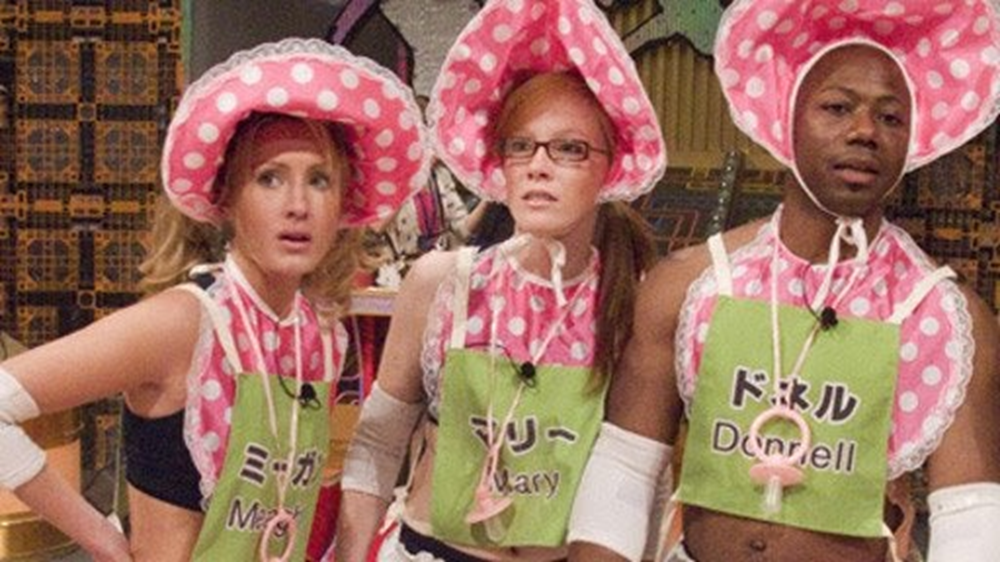
I Survived a Japanese Game Show (ABC): Danish producers David Sidebotham and Karsten Bartholin had a pan-Scandinavian hit in 2006 with Gay Army, a reality show that saw nine gay men sign up for military style training. Look, it was a (slightly) different time, okay? Their follow-up was undoubtedly less offensive to gay viewers but retained an air of “look at the funny people who are different to us!” by exploring the wacky world of Japanese game shows, hitherto the reserve of late-night chat show hosts and It’ll Be Alright on the Night­/TV’s Bloopers & Practical Jokes-style shows.

The concept for I Survived a Japanese Game Show, which began airing in June 2008, was simple: take an American, fly them to Japan, and put them through a series of humiliating trials in the name of entertainment, just like those funny Japanese people we saw on that clip show that time. To be fair, the Japanese do love this kind of thing, with the long-running Downtown no Gaki no Tsukai and Za Gaman putting youngsters and families through all sorts of trials in the name of entertainment, and so it made for ripe pickings.

I Survived a Japanese Game Show, 2007-08

The show was hosted by Rome Kanda, a Japanese comedian who moved to the US in 1999 and who poses as the host of the fictional game show Majide (a Japanese slang term that means “seriously?!?”). I Survived a Japanese Game Show begins with him surprising contestants in their homes and inviting them to come to Japan with him. While there, the show would depict on-camera and behind-the-scenes goings on – the contestants were expected to live traditional Japanese lives in a boarding house overseen by Mama-san – all with the dangling carrot of a cash prize totalling $250,000.

The show was sold to sixteen overseas markets, which helped it earn a second season despite lacklustre domestic ratings opposite both America’s Got Talent and Big Brother, this time with eight episodes rather than seven and an increase in the number of victims, erm, contestants. Ratings further declined and NBC declined to renew the show for a third season but by then Sidebotham and Bartholin has sold the concept to Greece, Norway, Sweden, Portugal, Brazil, and even Japan itself.

Moonlight (CBS): Moonlight creator Trevor Munson had just seen his first script – Lone Star State of Mind – made into a movie starring Joshua Jackson and Jaime King when he conjured the character Mick Angel, a private investigator turned into a vampire on his wedding night by his bride, Coraline, and who spends the next fifty years trying to live a good life, despite his curse, never feeding on women, children, or innocents. Initially proposed for a film starring Bruce Willis, the script instead landed at CBS, who optioned it for a TV deal and set Munson to work with Beauty and the Beast creator Ron Koslow.

Munson and Koslow retooled Angel into Mick St John, creating a fifteen-minute presentation pilot named Twilight in January 2007, which CBS greenlit for a full series. Retitled Moonlight and scheduled for a Fall 2007 debut, CBS attached Angel creator David Greenwalt as showrunner and cast Australian actor Alex O’Loughlin (then appearing in The Shield) as St John, backed by Veronica Mars’ Jason Dohring as Josef, St John’s 400-year-old vampire mentor, and with romantic intrigue in the shape of Sophia Myles’s Beth, a reporter who (unbeknownst to her) Mick rescued from kidnappers as a child and who becomes interested in his story.

Moonlight, 2007-08

Complicating matters is Coraline, who returns after being presumed dead for twenty years and claims to have a cure for vampirism, something Mick is very keen to obtain so he can go back to living a normal life. The political machinations of ancient vampires are as much a part of the story as the cases of the week, which almost always have a vampire angle to them. With a slow burn, the emphasis is very much on the performances of the principal cast, with Dohring in particularly charismatic form.

The show premiered on September 28th 2007, but only twelve of the original thirteen episode run had been finished before the writers’ strike forced production to halt. Once the strike was over, CBS announced that a further four episodes had been added to the production schedule, for a total of sixteen, but announced the show’s cancellation two weeks later. Attempts were made to find another network for the show, which ended on a cliffhanger that saw Mick and Beth admit their feelings for each other as a list of all the vampires in the city was leaked to the assistant District Attorney. It looked for a while like Syfy might take it on, but talks led to nothing, save for a repeat showing on the channel two years later.

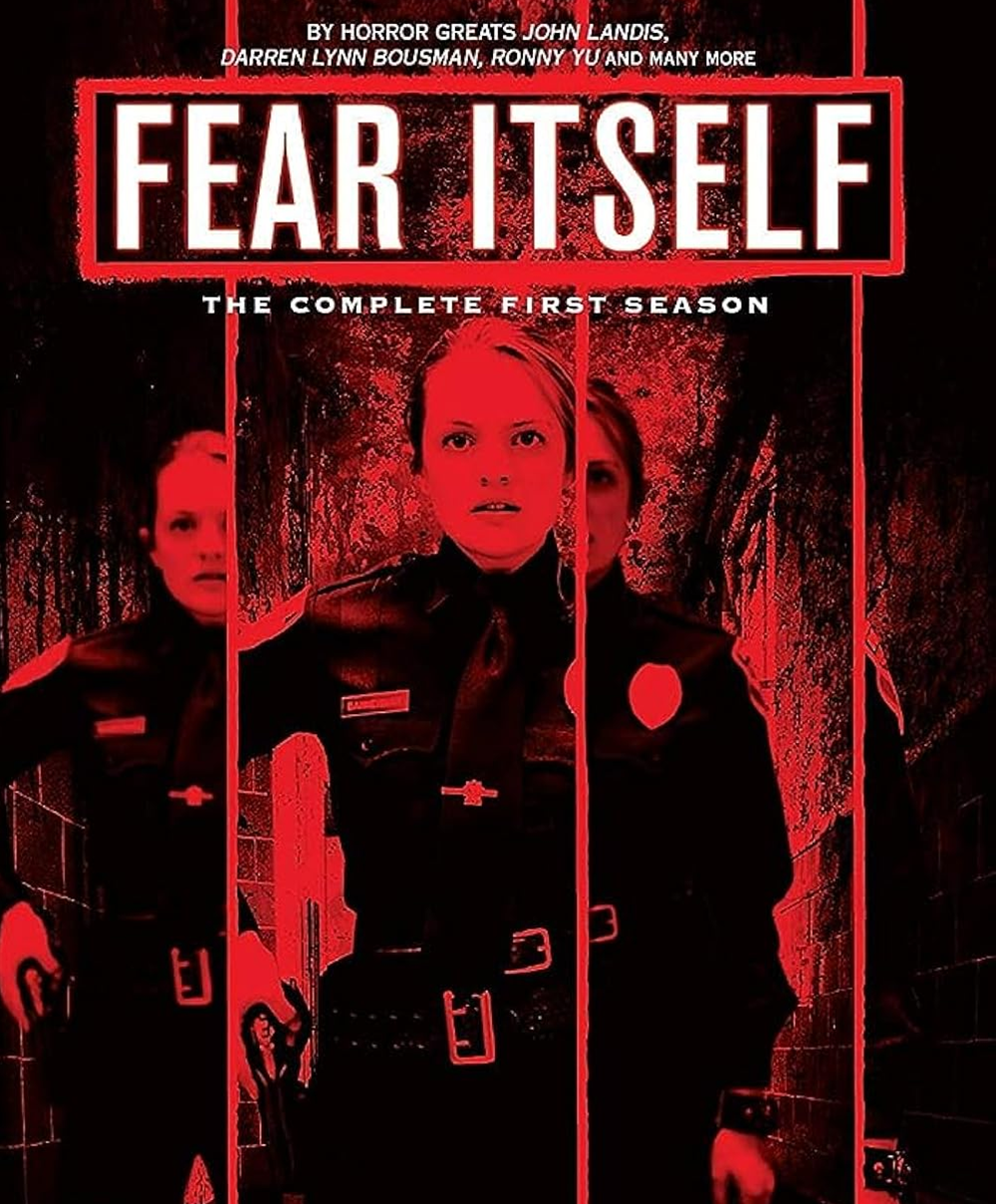
Fear Itself (NBC): A late-Spring replacement on Thursday nights for ER, Fear Itself was a horror and suspense anthology show named for the famous Franklin D Roosevelt quote that, “all we have to fear is fear itself.” Well, that and the monsters, serial killers, zombies, and werewolves that proliferate the series, with seasoned horror directors Stuart Gordon, John Landis, and Ronny Yu on board to provide the jump scares.

Fear Itself was the creation of Mick Garris, whose directorial debut had been Critters 2: The Main Course but more importantly had worked on Amazing Stories and Tales from the Crypt and was the man behind Showtime’s Masters of Horror anthology series that ran from 2005 to 2007. In many ways, Fear Itself could be considered a third season of that show, featuring scripts by Victor “Jeepers Creepers” Salva and Carnivalé creator Dan Knauf.

Fear Itself, 2007-08

The first episode – “The Sacrifice” – told the story of four criminals who are given harbour by three strange sisters in a snowbound fort and aired on June 5th 2008, attracting over five million viewers, just under what ER was doing in that timeslot. Subsequent episodes starred the likes of Eric Roberts, Colin Ferguson, Brandon Routh, and Doug Jones, but NBC’s coverage of the 2008 Olympic Games put the show on hiatus after its eighth episode, with a promise to return once the Olympics were done.

Come Thursday August 28th, though, and there was no sign of Fear Itself episode nine, its slot filled by re-runs until ER returned four weeks later. Five episodes remained unaired, and while NBC made no comment about the future of the series, it was clear from its absence from the Fall 2008 schedules that it could be considered cancelled. The full run did air in the UK and Australia in 2012, though, by which time Garris had moved on an adaptation of Stephen King’s Bag of Bones, before becoming a director-for-hire for teen supernatural dramas.

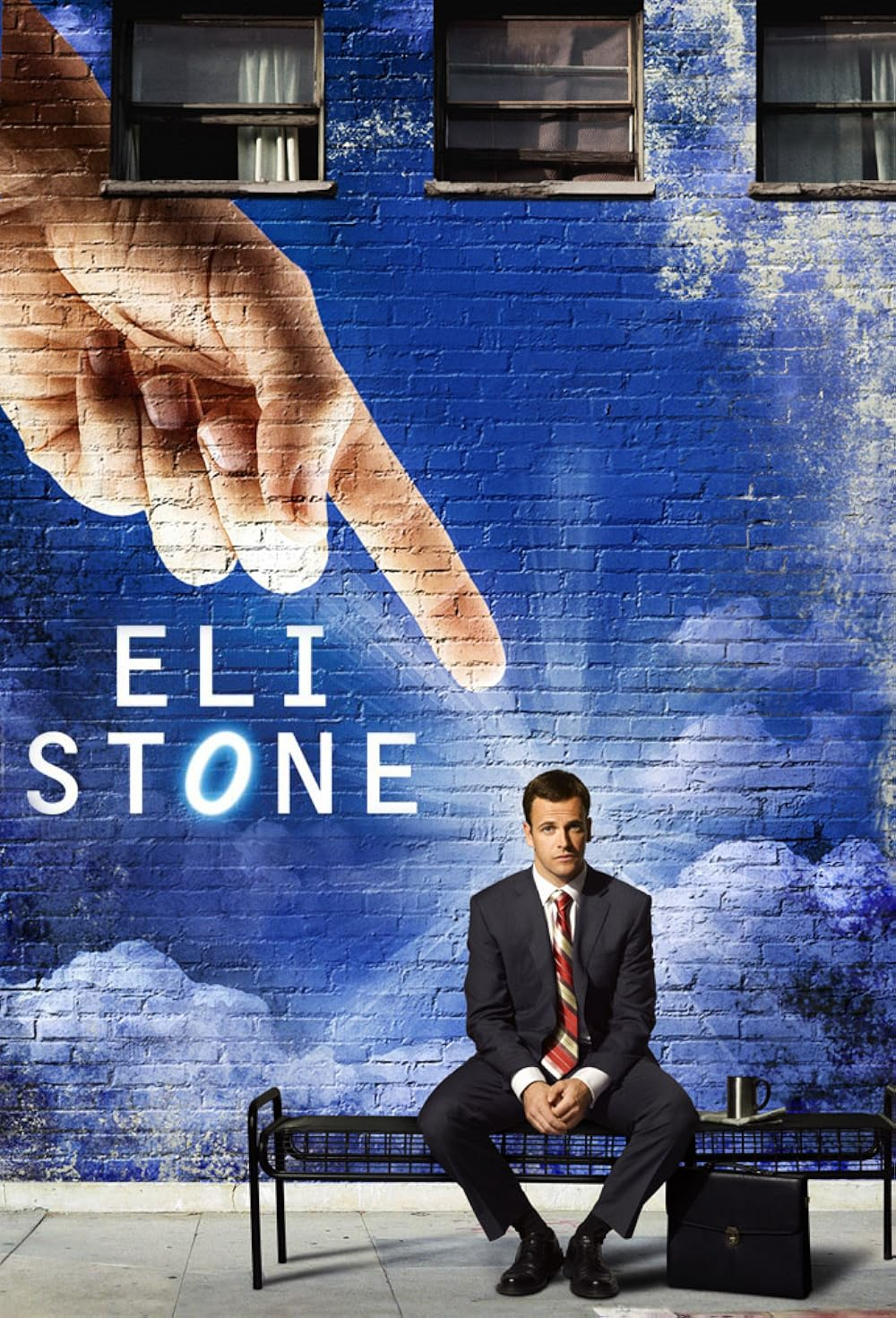
Eli Stone (ABC): It’s probably fair to say that there weren’t many shows like Eli Stone on the air in 2007, or indeed any other year. A musical, legal drama about man who suffers hallucinations that might predict the future, it wouldn’t be surprising to see Bryan Fuller’s name on the credits, but Eli Stone was created by Greg Berlanti and Mark Guggenheim, who years later would oversee the Arrowverse series of shows for The CW.

Johnny Lee Miller, whose last show Smith had lasted for just three episodes before being cancelled, was cast as the title character, who we discover has an inoperable brain aneurysm that causes his visions. Natasha Henstridge plays his ex-fiancée Taylor, also an attorney, who is determined to help Stone through his trials, and the cast is rounded out by Loretta Devine, Matt Letscher, James Saito, and Victor Garber, although the ensemble is much wider, deepening Eli Stone’s world.

Eli Stone, 2007-08

ABC ordered thirteen episodes as a mid-season replacement for Big Shots on Thursday nights, with a returning from hiatus Lost as its lead-in. Ratings were decent, if not spectacular, and the network announced the show’s renewal for a second season of thirteen episodes, beginning in October 2008. This was despite controversy surrounding its first episode, which presented the theory that autism was caused by vaccines as being not only credible, but legally compelling, forcing ABC to add a voiceover reiterating the fictional status of the show and a direction to the US government’s autism information service.

Moved to Tuesdays, with Dancing with the Stars as a lead-in, ratings fell for season two, fans of sequinned ballroom dancers seemingly not sticking around for an offbeat legal drama. After three episodes of the second season had aired, ABC announced its cancellation, opting to finish with episode nine on December 30th 2008 to clear the slate for a new arrival, burning off the final four episodes in late June and July 2009. Despite its lower ratings, fans rate season two as the better of the two, feeling that the show was just hitting its stride before it was yanked from the schedules.

Next time on The Telephemera Years: A crop of unsold pilots from 2007, with aliens, demons, and more!

Check out our other Telephemera articles:

The Telephemera Years: pre-1965 (part 1, 2, 3, 4)

The Telephemera Years: 1966 (part 1, 2, 3, 4)

The Telephemera Years: 1967 (part 1, 2, 3, 4)

The Telephemera Years: 1968 (part 1, 2, 3, 4)

The Telephemera Years: 1969 (part 1, 2, 3, 4)

The Telephemera Years: 1970 (part 1, 2, 3, 4)

The Telephemera Years: 1971 (part 1, 2, 3, 4)

The Telephemera Years: 1973 (part 1, 2, 3, 4)

The Telephemera Years: 1974 (part 1, 2, 3, 4, 5)

The Telephemera Years: 1975 (part 1, 2, 3, 4)

The Telphemera Years: 1976 (part 1, 2, 3, 4)

The Telephemera Years: 1977 (part 1, 2, 3, 4)

The Telephemera Years: 1978 (part 1, 2, 3, 4)

The Telephemera Years: 1980 (part 12, 3, 4)

The Telephemera Years: 1981 (part 1, 2, 3, 4)

The Telephemera Years: 1982 (part 1, 2, 3, 4)

The Telephemera Years: 1983 (part 1, 2, 3, 4)

The Telephemera Years: 1984 (part 1, 2, 3, 4)

The Telephemera Years: 1986 (part 1, 2, 3, 4)

The Telephemera Years: 1987 (part 1, 2, 3, 4)

The Telephemera Years: 1989 (part 1, 2, 3, 4)

The Telephemera Years: 1990 (part 1, 2, 3, 4)

The Telephemera Years: 1992 (part 1, 2, 3, 4)

The Telephemera Years: 1995 (part 12, 3, 4)

The Telephemera Years: 1997 (part 1, 2, 3, 4)

The Telephemera Years: 1998 (part 1, 2, 3, 4)

The Telephemera Years: 1999 (part 1, 2, 3, 4)

The Telephemera Years: 2000 (part 1, 2, 3, 4)

The Telephemera Years: 2002 (part 1, 2, 3, 4)

The Telephemera Years: 2003 (part 1, 2, 3, 4)

The Telephemera Years: 2005 (part 1, 2, 3, 4)

The Telephemera Years: 2006 (part 1, 2, 3, 4)

The Telephemera Years: 2007 (part 1)

The Telephemera Years: 2008 (part 1, 23, 4)

The Telephemera Years: O Canada! (part 1, 2, 3, 4)

Titans of Telephemera: Irwin Allen

Titans of Telephemera: Stephen J Cannell (part 1, 2, 3, 4)

Titans of Telephemera: DIC (part 1, 2)

Titans of Telephemera: Hanna-Barbera (part 1, 2, 3, 4, 5)

Titans of Telephemera: Kenneth Johnson

Titans of Telephemera: Sid & Marty Krofft

Titans of Telephemera: Glen A Larson (part 1, 2, 3, 4)
Titans of Telephemera: Quinn Martin (part 1, 2)

Titans of Telephemera: Ruby-Spears

Dan Osbaldeston • THE KEY OF DREAMS

Dan Osbaldeston

Dan Osbaldeston is a live interpreter, actor and performer best known for his work in interactive theatre and immersive works. He’s currently working with Lemon Difficult,  a critically acclaimed immersive experience company, on their  H.P. Lovecraft-inspired event, The Key of Dreams. We caught up with Dan to find out more…

STARBURST: How would you pitch The Key of Dreams to someone who’s really into costumes?

Dan Osbaldeston: Exploring a weird fiction mystery while in historical clothing sounds like great fun. Although there’s no requirement to attend Key of Dreams in costume, guests are perfectly welcome to dress for the occasion if they wish. Our previous offer, The Locksmith’s Dream, certainly saw many guests turn up in their 1920s finest or even just dessing for dinner. They plainly had a great time and looked great while doing so!

How did you get into The Key of Dreams?

I’m a live interpreter by trade, using costumed characters to help people better enjoy and understand a visit to a museum or historical site. My skills and networking have also led to involvement in many murder mystery treasure hunts and, since lockdown, online puzzle rooms. Live-action roleplay is another connection, of course. My LARP taste runs to vintage horror, which is obviously exactly the same well that The Key of Dreams is drawing from.

How is The Key of Dreams different from normal theatre?

Oh, I’m not going to get drawn into a discussion of what ‘normal theatre’ is! Where it differs from the theatre that most people might expect, however, is that there is no set script or stage directions. The guests aren’t so much an audience expected to sit in place and watch, but rather they are invited to participate, occupy, and explore the same space and world as the performers. Their input affects the way events unfold and can fundamentally change the stories and their outcome.

Why does horror work so well for this sort of event?

A suggestion of peril sets the heart beating a little faster and makes you more alert, with eyes and ears a little wider. You know it’s perfectly safe at one level, but your brain can still be tricked into releasing exciting chemicals. I think people ride rollercoasters or visit haunted house attractions for similar reasons – a sense of danger we know and trust is an illusion but feels thrilling nonetheless.

What was the most challenging part of the production?

It’s a very elaborate production, so I imagine everyone involved will have a different answer. For me, the most challenging part has been trying to get my head round the whole thing. Eventually, I realised I don’t have to know the exact ins and outs of what everyone else is doing, I just need to do my part right!

How do you prepare for a role like this?

There’s been a lot of reading material to get through – thank heavens for audio versions that I can put on while cooking or sewing, I say! For the most part, though, my preparation has been reminding myself that I’ve made a career out of being able to take a character brief and improvise appropriately with it. I can’t know exactly what the guests are going to ask or say or do, but that’s the joy (and terror!) of this sort of role.

Where do you find inspiration for the horror aspects of this role?

The Key of Dreams draws very much on the weird fiction of the early twentieth century (and a little earlier and later). H.P. Lovecraft is the big name there, of course, but we’re drawing on several other authors, as well as some original pieces written in their styles. The site itself is also an inspiration, of course. Treowen is a lovely old house in the Welsh Marches, very charming by daylight. But once night has fallen, it can feel very isolated from civilisation and the real world.

What’s next for you?

The Key of Dreams will run again, as will The Locksmith’s Dream. Other big features in my diary for the coming year include Open The Box Productions’ SOE: Resistance, a LARP exploring the work of the Special Operations Executive. I also hope to return to the Baltic for another voyage with Sailing4Adventure’s Demeter, a LARP set during Chapter 7 of Dracula.

What other projects would you love to be involved with?

Something set in Antarctica. Maybe with some Norwegians and a dog.

Dragons or Deathstars?

I have long wished for an orbital death ray.

Doctor Who or Doctor No?

Doctor Mabuse

Truth or Beauty?

Freedom, Love?

Booking for THE KEY OF DREAMS and THE LOCKSMITH’S KEY can be found here.


John Jackson Miller • STAR WARS: THE LIVING FORCE

Star Wars The Living Force Book Cover

John Jackson Miller is an American comic-book writer, novelist and commentator known for the Knights of the Old Republic and Knight Errant comic books and the Kenobi novel. His latest book, Star Wars: The Living Force, focuses on Qui-Gon Jinn, his apprentice Obi-Wan Kenobi, and the twelve members of the Jedi Council. We caught up with John to find out more…

STARBURST: What is the elevator pitch for The Living Force?

John Jackson Miller: Qui-Gon Jinn walks into the Jedi Council chamber and challenges the masters to get out of the building and find out what they’re missing about the galaxy. “Help one person.”

The Phantom Menace is 25 years young this year, did that inform the writing in anyway?

Certainly. The story is set a year before those events so Qui-Gon Jinn and Obi-Wan Kenobi have been working with one another for a good while. I determined that Qui-Gon would be one of the ones most likely to notice what would have been an undercurrent at this time: that the Republic and the Jedi are no longer serving the needs of people like they once did, setting up the conditions for the troubles to follow. And certainly, what we see of the Jedi Council in the movie and attendant prose from this time period gave me a lot to work with. Some of the characters we see are well-established, while others we’re getting to know for the first time.

The Star Wars series has a lot of authors creating work for it; how much negotiation is required to make the series fit together smoothly?

My editor, Tom Hoeler, kept me fully apprised of events in other books that might connect to mine – or provide opportunities for crossovers, as actually happened in the case of one character. Likewise, the Lucasfilm Story Group and fiction editor Jen Heddle communicated with us regularly to make sure everything fitted together and worked. I’m a veteran of the Knights of the Old Republic comics, the Kenobi novel, and the New Dawn novel among other things, so I have seen the process in a lot of different eras. Everyone’s been at this a long time and it’s a well-oiled machine.

The book does interesting things with the Jedi Council. Can you tell us more?

While we see some members of the Council in action in the films and in The Clone Wars series, this novel really takes a look at the body itself. What the members think the Jedi should be doing in the galaxy; what they think the Council should be doing within the Jedi Order. It turns out not all of them have the same view of these questions. Mace Windu answers Qui-Gon Jinn’s challenge by arranging for the Council to reconvene on Kwenn, a planet that was once a showpiece for the High Republic, but since then has seen better days. This gives everyone on the body a chance to get out and interact with the people that they’re supposed to protect. It also lets us see a lot of the members of the Council working together – and interacting, as friends and colleagues – in some new ways. There’s a lot of humour in the book, in addition to the adventure.

What part of the 
Star Wars universe would you like to explore next?


I’ve written in many different parts of the timeline over the years. The Original Trilogy remains a favourite of mine, but I also see a lot of places for new kinds of stories to be told elsewhere. It’s been a long time since I did a really extended storyline in something like a comics series; that could also be interesting to do again. Star Wars is rich with story opportunities, and I’m constantly finding angles I haven’t explored before.


If you could have a real working holocron, what would be in it?

All the books that I haven’t written yet. The Force can tell the future – maybe it can save me a little time on the next manuscript!

And if you could take one Star Wars thing and ensure that it would survive for thousands of years, what would it be?

Definitely the films – but also, if possible, something showing the context the films were released into. A New Hope on its own would be a treasure, but it’s a lot more fascinating if you can put it in its place in a Museum of 1977, to show how it changed society, filmmaking, and fandom. Because these pictures have that kind of lasting impact.

STAR WARS: THE LIVING FORCE is out now, and can be purchased at all good bookstores.

Ivan Caric • THE KEY OF DREAMS

Ivan Caric of lemondifficult.org

Ivan Caric is the Founder and Creative Director of Lemon Difficult,  a critically acclaimed immersive experience company that blends immersive theatre, overnight historic stay vacations, narrative puzzles and fine dining into something rather unique. We caught up with him to find out more about the H.P. Lovecraft-inspired event, The Key of Dreams…

STARBURST: How would you pitch The Key of Dreams to someone who really likes scary movies?

Ivan Caric: We don’t have jump-scares, but if you relish creeping dread, that growing realisation that things aren’t quite right and that they might spiral and get out of control, then you’ll be right at home. The concept of apophenia, the idea that everything is connected, from a thrown-away phrase to a carved gargoyle on the wall, and the growing realisation of how it fits together, is part of what I love in scary movies. Discovering the stories that happened at the house, why and where. Also, how the characters currently in the house relate to them, and what their goals are, and more importantly what will you do to affect these stories, that’s the magic of what we’re hoping people will experience. One of the touchstones for our experience is a M.R. James quote that I particularly like:

If any of [my stories] succeed in causing their readers to feel pleasantly uncomfortable when walking along a solitary road at nightfall, or sitting over a dying fire in the small hours, my purpose in writing them will have been attained.

Where did the idea for Lemon Difficult and The Key of Dreams come from?

After the lockdown horror of the past few years, a key part of what I wanted to do was to create joy and connections. To capture that spark of joy you get when you make an intuitive leap or a link. This could be the solution to a puzzle, or more likely when you link motives, people, places and objects together and finding that “Oh, I understand what that means now!” moment. Through simple systems, actors, diegetic props, soundscapes, an incredible location and great writing, I wanted to create an experience that feels hospitable and genuinely delights people and has no right way to experience it.

The experiences we produce are truly unique. We cheerfully embrace multiple genres, including immersive theatre, roleplaying, escape rooms, puzzles, and gourmet dining. As it is an overnight experience, there is time to soak up the atmosphere of the incredible 17th-century manor house and grounds. Guests have time to build relationships with the characters and the other guests in a way that you simply can’t do in other immersive shows. They can explore interlinked narratives, solve puzzles, learn about the characters in the house, and discover the growing horror of the things that have happened, all the while being gently drawn further and further in until, by the end, they’re as bought into the setting and the events as the characters themselves.

It’s a lovely venue; what is the site selection process?

We spent a long time looking at venues, most of which would have worked fine, each with its own advantages, but Treowen felt special straight away. It has a curious liminal quality, it is old and grand, but still feel curiously homely. It hasn’t been modernised, so you feel like you could be in the past. The oak panelled walls and Morris papered walls would have been identical fifty or a hundred years ago. At night, it is even more unworldly; the lights are dim, the floors and doors creak, and with the darkness encroaching around you, there is a feeling that you could be in a strange dream, that the walls between the waking world and the sleeping ones are thin and who knows what you might experience.

How different is The Key of Dreams from The Locksmith’s Dream?

We’ve learned a lot from The Locksmith’s Dream – in fact, it’s still running. However, one of the things we wanted to explore that the audience loved was their agency and their relationships with the characters. We have a couple of unique advantages in that we have a really high actor-to-guest ratio – 1 to 4 – which means that you really get to know the characters and develop strong opinions one way or the other. Secondly, we have time; the audience spends 24 hours in this amazing house (which is a character all of its own) with these strange characters, you will break bread with them, debate and argue with them, cajole them, scold them even. All of this means that when you make a decision to help them, trick them, or even betray them, it actually means something because you know them, and you have an idea of how your actions will affect them.

Why did you decide to start running events like this?

I worked in large telecom corporations for nearly twenty years; it is as dull as it sounds! Sadly, my dad died at the end of 2020 during lockdown, and like lots of people did, I reevaluated what I was doing, decided to pack in my job and try to create something that brings a bit of joy into the world. Gaming – board gaming, TTRPGs, and, of course, computer games – literature, weird fiction and theatre have been a source of comfort, joy and connection for me throughout my life. I began wondering if combining these in unusual and unexpected ways would help me create something a little magical.

Are immersive experiences the future of theatre?

‘Immersive’ is a much-overused word at the moment, which means that the word is a bit of a vague and shifting term. Does it mean that the audience has agency, that they are in a world that they can wander around, or one in which the inhabitants acknowledge their presence? There’s value in all of these, and they can be delightful in their own way. I don’t think that immersive experiences are the future as such, although we certainly will see many, many more and more of these sorts of experiences, I personally love art with a strong authorial voice; whether I agree or disagree with it, I want to feel that what I’m watching, reading or experiencing has something to say, an opinion or a position that I can care about one way or the other. This can be harder with an immersive experience where there is strong audience agency, where often it is a collaborative experience. In this case, your experience is mediated by what the other audience members do, which can be amazing, or less so. This is one of the things that we are experimenting with to make sure that audience members can act to enhance the experience for themselves and others through their actions without having to be reliant on it.

What’s the most important thing you should consider before signing up for The Key of Dreams?

Just come; you’ll have a great time! One of the unique aspects is that it’s designed to cater to a range of different audiences, from immersive theatre buffs to people who love stories, puzzles, and roleplaying. There is genuinely no right way to experience it. But it is quite an active experience. You’ll get more out of it by travelling around the house and grounds, so decent footwear is a must!

What is your favourite part of the production?

The show structure follows a similar path to many weird fiction stories. Everything is mostly normal when the guests arrive; ‘investigation’ leads to hints of weirdness; this is confirmed in the ‘descent’, which is followed by a section we call ‘the door opens’. This is when the full strangeness of the experience will be realised This is followed by the ‘aftermath’ the next day, a sort of a moral hangover and realisation of the consequence of their actions. I think my favourite part is ‘the door opens’; by this time, the guests will hopefully be fully bought into the world and be acting on instinct rather than pure calculation.

What other works would you like to adapt?

Daniel Knauf’s tragically cut-short Carnivale TV series would be a fabulous setting for an audience to experience: a creepy 1920s carnival with stories to interact with, games to play, and difficult moral decisions to make. So, if Daniel is reading this, I’d love to talk!

The second thing we’d love to do (and bear with me on this one) is a Lovecraftian Wind in the Willows, designed for families. The kids get to do creepy folk horror stuff outside, and the adults do proper occult investigations inside – while perhaps sipping a cocktail or two – and the two converge at the culmination of the experience. Cults led by Ratty, Mole, and Badger!

What’s next for you?
After the first three shows, I intend to sleep for a month. After I wake up, there are more Key of Dreams shows to plan, a shorter experience based on it to design – the idea being to be run it in a large city – an epistolary weird fiction subscription in the KoD world, and a collaboration on a boxed narrative puzzle experience with a fabulously talented and well-known game designer based in the states.

Doctor Who or Doctor No?
Doctor Who without a moment’s hesitation!

Dragons or Deathstars?
Deathstars, it’s the future, you know!

Truth or Beauty?
Truth is Beauty even if it sends you mad

Booking for THE KEY OF DREAMS and THE LOCKSMITH’S KEY can be found here.