STARBURST’S Greater Manchester Fringe Festival Picks 2025

Starburst has been covering the Greater Manchester Fringe since way back in 2012 with Robots of Death.   The festival, though small, has gone from strength to strength over the years, thanks to amazing creativity that can be found in Manchester.  The festival runs throughout the month of July. Let’s take a look at five shows STARBURST readers are sure to enjoy.

One Man Poe: The Tell-Tale Heart and The Pit and the Pendulum
Stephen Smith has taken his brilliant one-man show around the world. We reviewed it back in 2024 and enjoyed the energy and atmosphere that this performer brings to Poe’s classic horror stories. Well worth your time.  This show can also be found at the Hollywood Fringe and Edinburgh Festival Fringe.  

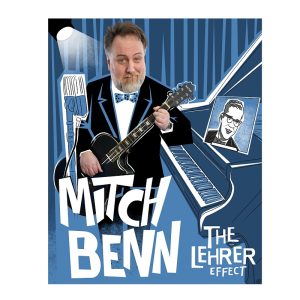
Mitch Benn: The Lehrer Effect
Comedy Legend and Fringe Veteran Mitch Benn returns, this time with a show that honours and homages the incredible Tom Lehrer. Mitch looks at Lehrer’s incredible body of iconic songs and honours them with some of his (also quite funny) tunes. Lehrer recently placed his entire catalogue in the public domain, so expect the odd  Mitch Benn-ified cover of a Lehrer classic. This show can also be found at the Edinburgh Festival Fringe.  

FOXDOG STUDIOS ROBO BINGO
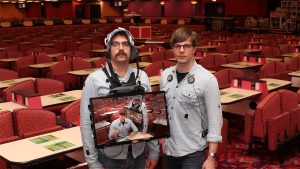
Foxdog Studios: Robo Bingo 2.0
The Foxdog Studios team have been doing multi-media theatre in a brilliantly funny way for years, and their bespoke wifi-based robo-nonsense is unique, clever and very funny. If you’ve not seen this show, check it out. This show can also be found at the Edinburgh Festival Fringe.  


The Invocation
Comedy is hard. Improv is hard. Horror is very tricky to do well. Luckily, Wigan-based group Casino Improv (probably) know what they’re doing. The Invocation is an anthology of improvised comedy horror skits inspired by the likes of The Substance, Midsommar and the works of Stephen King. 


The Digital Prometheus
A locked room murder mystery where the mind of the murder victim is trapped in a computer? Sounds like a brilliant set-up for a thrilling drama to us.

If you really want to, you can check out our previous coverage of the Greater Manchester Fringe for
2017, 2018, 2019, 2022, 2023 & 2024. You may even want to check out our picks for 2025 for other parts of the world, such as New YorkHollywood, Buxton and Brighton. 

You can find out more about the Greater Manchester Fringe here. 

STARBURST’S Buxton Fringe Festival Picks 2025

For decades now, The Buxton Fringe has brought fantastic shows to Derbyshire, England. This year’s Fringe runs from the 9th of July all the way to the 27th of July and tends to be the first step in many an artist’s fringe festival tour.  Let’s take a quick look at some shows that might appeal to STARBURST readers.

MJ Hibbet: Doctor Doom
MJ Hibbett is perhaps best known for his fun tunes about nerdy and geeky things, but he also claims to be the world’s leader on all things Doctor Doom.  Join MJ on a journey involving comic books, stats, and facts as we discover more about the world’s greatest super-villain. This show is also coming to the Camden Fringe.

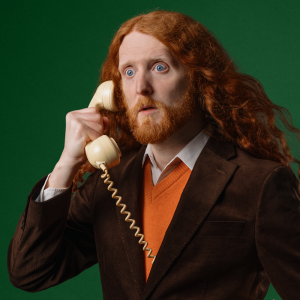
Alasdair Beckett-King: King of Crumbs
Ginger comedy whirlwind Alasdair Becket-King returns with a new show filled with the sort of highspeed silliness STARBURST readers love. Join the King of Crumbs on a bizarre and surely journey into the absurd.  This show is also coming to the Edinburgh Festival Fringe.


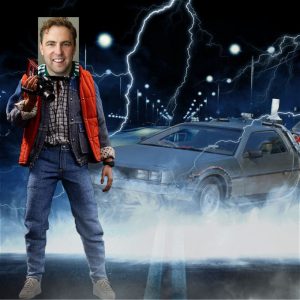
Dave Bibby: Hasta La Vista… Bibby!
Songs and sketches inspired by 80’s and 90’s era sci-fi movies such as Back to the Future and Terminator? Yes, please.  This one-man Hollywood blockbuster is also coming to the Edinburgh Festival Fringe and the Camden Fringe. 

Daniel Nicholas: Haunting in the Arcade
Described as Five Nights At Freddie’s meets Taskmaster, we accompany amateur ghostbuster Danny Nix on a journey into the unknown to rid a haunted arcade of ghouls and ghosts. Sounds frightfully fun to us.

Bloody Marvellous: A comedy Show About The Middle Ages
Super-Nerd Luke Connell takes us on a tour of the medieval world, exploring everything from mythic beasts to Eilmer the flying monk. Essential for fantasy and history fans alike. This show is also coming to the Edinburgh Festival Fringe, Durham Fringe and Greater Manchester Fringe.

If you’re really curious, check out our 2023 and 2024 Buxton Fringe coverage, and you may want to check out our picks for 2025 for other parts of the world, such as New York, Hollywood and Brighton. 
You can book for 2025 Buxton fringe shows
here

STARBURST’s Hollywood Fringe Picks For 2025

The 2025 Edinburgh Fringe happens this August, but Scotland isn’t the only place you can find Fringe Theatre. The Hollywood Fringe is, of course, in Los Angeles, USA; of course, a town filled with actors and creators would have its own fringe. The Hollywood Fringe runs from June 12th to the 29th. Let’s take a look at some shows likely to delight STARBURST readers.

Come. See. Saw.
Alex Walker presents an absurd character based comedy inspired by the infamous Billy The Doll from the SAW movies. Learn the secrets and untold ‘true’ story about the iconic doll, and have a good laugh in the process. This show is also coming the Edinburgh Fringe. 

The Lord of the Rings: The Fellowship of the Ring: Extended Edition: Part 3
Riley Smith returns with more nonsense inspired by Peter Jackson’s beloved Middle Earth movies. The hobbits have finally made it to the Prancing Pony! Will they meet the stranger called Strider? Will it go wrong? Will this series of shows ever end? Time will tell.

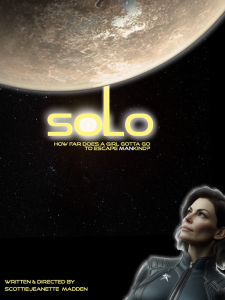
SOLO
This thoughtful tale about one-woman’s quest to be left alone (so much so that she volunteers for a deep space mission),  sounds like a powerful and clever take on the thorny issues of social collapse, misogyny and colonisation.  Just what a good sci-fi story is for. Join Command Jane Weigh as she has to deal with too much interference from men, even when thousands of miles from home.

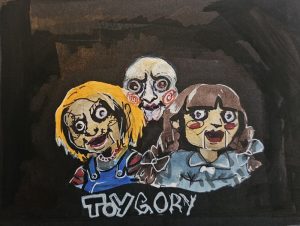
Toy Gory
More horror toy chaos, this time following a small band of spooky toys who just want to find a family they don’t end up accidentally murdering. They just want to be accepted, knives and all. Looks like perfect cheesy fun for STARBURST readers.

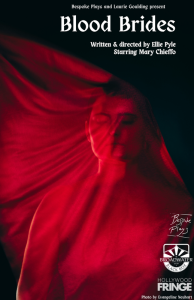
Blood Brides
This one-woman show explores and evokes the meaning and mythology behind the classic trope of powerful women who marry their husband’s murderer.  Dark and filled with content warnings, this is a deep exploration into myth and murder. Looks like a fascinating evening’s worth of theatre to us.

Venus Express
Join two astronauts, Tom and Jerry, as they journey to Mars to populate it just as a meteorite radically changes their plans. Comedy sci-fi theatre with a tongue-in-cheek premise and an utter disregard for science or common sense.

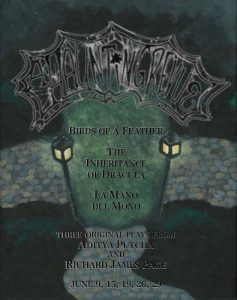
A Haunting Revue
Ninety minutes of anthology theatre centred around horror and sci-fi themes? Sounds like a great show to us.  Vampires, aliens and exotic curses form the basis of this spooky show, brought to you by North Hollywood’s upstart theatre company, J-P Theatre.

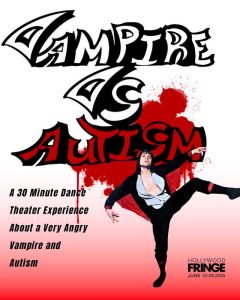
Vampire Vs. Autism
Finally, a show that asks the question “Have you ever seen a vampire with autism?” This 30 minute piece of physical theatre introduces audiences to an extremely frustrated member of the undead who has a lot to say (partially through the medium of dance) about the challenges of being true to themselves.

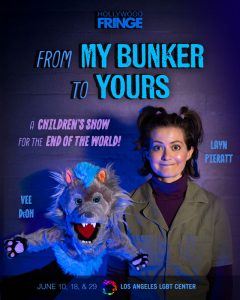
From My Bunker To Yours
Puppets. The apocalypse.  Children’s TV. Big, flashy musical numbers! Join Vee DeOh, and Layn Pieratt on a dark, whimsical journey into the end of the world as we know it.

The Show of Many Things 
Though Hollywood doesn’t have a shortage of D&D-inspired comedy improv shows, this one is also a fundraiser for the Black LA Relief & Recovery Fund, helping displaced residents of Altadena and Pasadena recover from the devastation of their communities after the LA wildfires, so come along and help them reach their critical goal.

If you’re curious, you can check out our picks for the 2023 and 2024 Hollywood Fringe, or check out our picks for 2025 for other parts of the world, such as New York, Buxton and Brighton. 

You can book for the Hollywood Fringe here; good luck to everyone involved, and stay safe!

THE TELEPHEMERA YEARS: 1993, part 3

The Elvira Show, 1993-94

Ah, telephemera… those shows whose stay with us was tantalisingly brief, snatched away before their time, and sometimes with good cause. They hit the schedules alongside established shows, hoping for a long run, but it’s not always to be, and for every Street Hawk there’s two Manimals. But here at STARBURST we celebrate their existence and mourn their departure, drilling down into the new season’s entertainment with equal opportunities square eyes… these are The Telephemera Years!

1993-94

The top ten shows at the end of the 1993-94 season looked very similar to those from 1992-93, with 60 Minutes retaining top spot for CBS, and top five placings for ABC’s Home Improvement and Roseanne. Coach, Monday Night Football, Murphy Brown, and the CBS Sunday Night Movie all kept their top ten slots, and there was an enforced change as US viewers had to get used to life without Cheers. The big new hit was Seinfeld, now in its fifth season and finally becoming the show about nothing that said everything to US audiences, forming a solid sitcom quartet with Mad About You, Wings, and new arrival Frasier, a Cheers spin-off, that commanded Thursday nights for the peacock network.

Elsewhere, David Letterman moved from NBC to CBS and The X-Files arrived on Fox, southern belle Brett Butler gave ABC a new hit in Grace Under Fire, and there was plenty of new genre fodder with Los & Clark: The New Adventures of Superman, seaQuest DSV, Duckman, and Weird Science all beginning their runs to more than make up for the loss of Star Trek: The Next Generation. But those were all shows that made it onto the regular schedule; what about the ones that fell at the final hurdle? This is the story of four unsold pilots from 1993…

1994 Baker Street: Sherlock Holmes Returns (CBS): By 1993, Kenneth Johnson’s once magic touch looked to be wearing off. Fox cancelled Alien Nation, a TV adaptation of the 1987 movie, after just one season in May 1990 and Johnson had no new project to move on to, a break in a prolific career that saw him write, direct, or produce hundreds of episodes of TV, including The Six Million Dollar Man, The Bionic Woman (which he created), the Incredible Hulk, and V. He took the time to develop a new concept, a reinvention of a classic hero for the modern age, something that had been tried recently without success but also without Johnson’s considerable eye for TV gold.

Despite several successful adaptations on British TV, Sherlock Holmes had been off US screens since 1955, despite several attempts to update the hero for a contemporary audience. The last of these, 1987’s The Return of Sherlock Holmes, saw the world’s great detective revived from cryogenic suspension to help a struggling detective solve crimes in modern day Boston. It fell at the pilot stage, but Johnson hoped to go one better, crafting something that may have had a similar starting point – Holmes is again freed from suspended animation, this time by an earthquake that strikes San Francisco – but also brought in descendants of the criminal mastermind Moriarty, and a new Baker Street irregulars, the street urchins that acted as the original Holmes’s eyes and ears in Victorian London.

1994 Baker Street - The Return of Sherlock Holmes, 1993-94

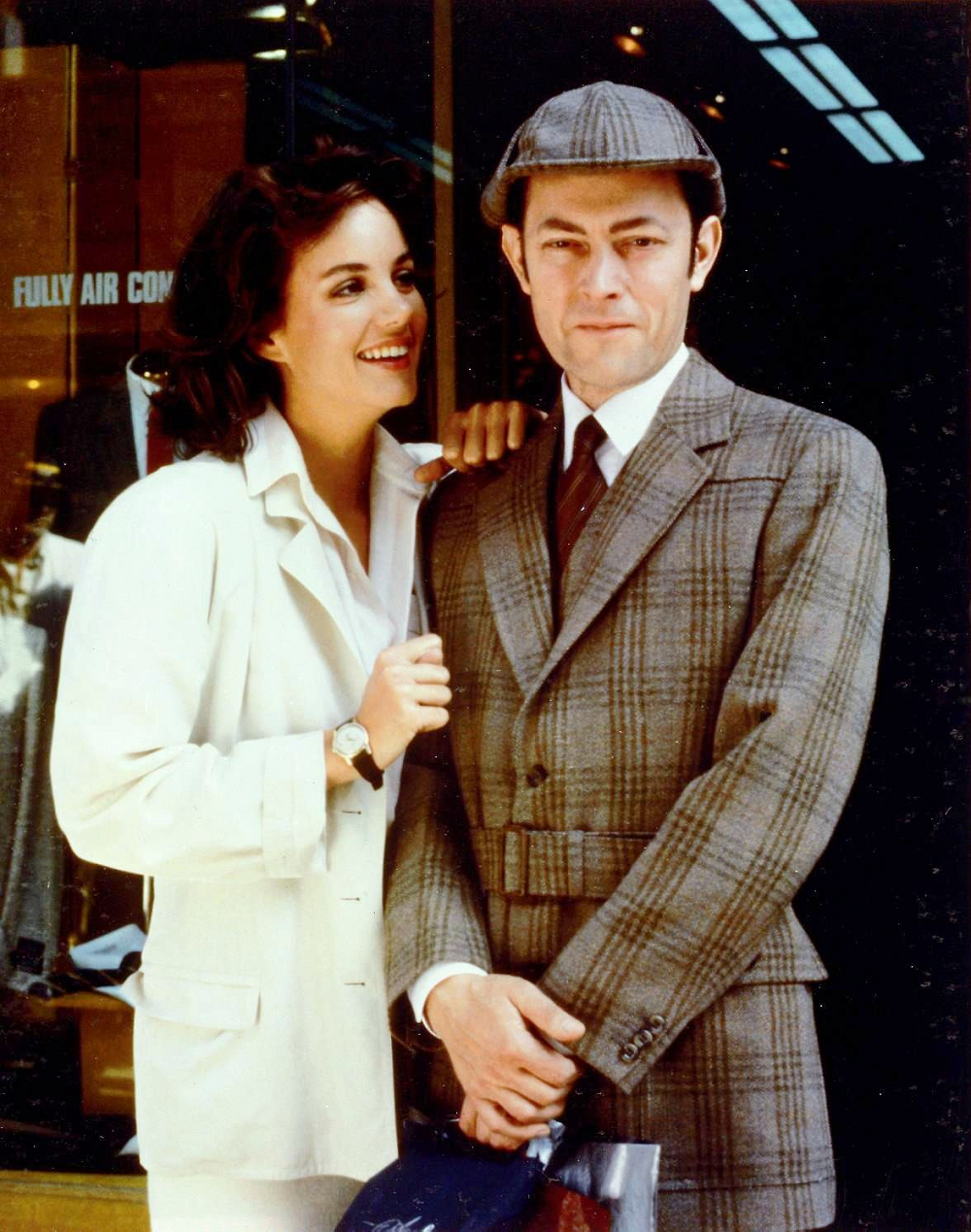
1994 Baker Street: Sherlock Holmes Returns found a home at CBS, who ordered a pilot based on Johnson’s script. Filmed mostly in Vancouver, Canada, the pilot was directed by Johnson and starred Anthony Higgins as the titular sleuth. In 1985, Higgins had played Moriarty in Barry Levinson’s Young Sherlock Holmes, making him the first actor since Orson Welles (who did it on radio) to play both roles. Alongside him in lieu of a Watson was Dr Amy Winslow, a medic who helps Holmes recover from his slumber and gives him a base for his operations at her home on Baker Street in San Francisco. Kim Delaney was in the running to play Winslow but CBS pushed for Hooperman‘s Debrah Farentino, with whom they had a deal.

The mystery afoot was a series of bizarre murders which, with the help of street punk Zapper (Mark Adair-Rios) and his gang, Holmes discovers were committed by James Moriarty Booth (Ken Pogue), and an ancient battle is on once more! Or not. CBS passed on the pilot but did show it – titled Sherlock Holmes Returns! In the Adventure of the Tiger’s Revenge – as a CBS Sunday Night Movie on September 12th 1993, opposite the pilot episodes of Los & Clark: The New Adventures of Superman on ABC and SeaQuest DSV on NBC, coming a distant third. Johnson – who, thanks to a change of management at Fox, was back working on a series of Alien Nation TV movies – later repurposed the script for a 2022 novel – Holmes Coming – with the 1990s setting updated to the 2020s.

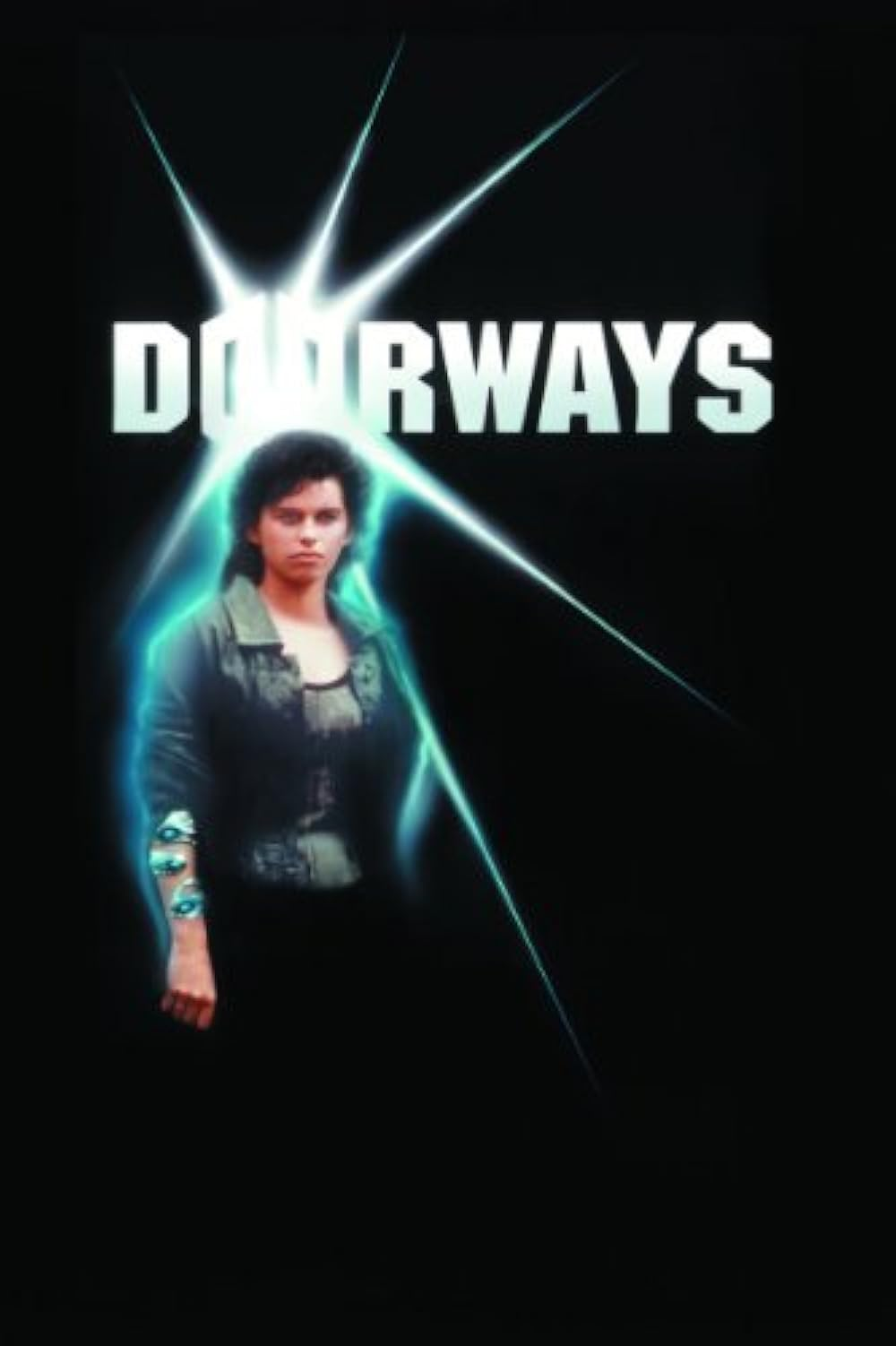
Doorways (ABC): George R R Martin started writing early, selling monster stories to other neighbourhood kids for pennies and crafting his first epics, fantasy stories based around his pet turtles. At High School, he became a comic book fan, particularly of the new line of Marvel Comics superheroes that began with Fantastic Four #1, and his letters appeared in many titles as expressed his fandom, which also later spread to writing fan fiction for fanzines, winning an award in 1965 for Best Fan Fiction for a story entitled “Powerman vs the Blue Barrier.” After graduating from Northwestern University’s School of Journalism, Martin set about becoming a professional writer, selling stories to various magazines. His first sale was “The Hero,” published in Galaxy magazine’s February 1971 issue.

A job administering chess tournaments at weekends allowed him to write throughout the week and he was nominated for both the Hugo and Nebula Awards  for “When Morning Comes Mistfall,” published in Analog magazine in 1973. Dying of the Light, his first novel, was published in 1976, just as his chess job came to an end and he took a position teaching at Clarke University. He went full time as a writer in 1979, a result of a re-evaluation of his life following the early death of a close friend, the first result of which was Windhaven, an adaptation of three of his own short stories into one novel-length story. Further novels and short story collections followed, and one of those stories – “Nightflyers” – was turned into a 1987 movie by Robert Jaffe. That same year, he began overseeing the Wild Cards series of short story collections, with stories by a variety of authors all set in the same alternate universe.

Martin also wrote for TV during the 1980s, submitting scripts for several episodes of The Twilight Zone and Beauty and the Beast, and in 1991 he met with both ABC and Fox about a script he’d written for a prospective series. Fox were interested but wanted time to consider the proposal and while they were thinking, ABC swooped in and agreed to make a pilot. Like Wild Cards, Doors (as it was then called) dealt in the business of alternate worlds, with the titular openings allowing travel between them, and the story begins with a mysterious woman called Cat appearing out of nowhere in the middle of a freeway, causing an accident in which she is injured. After she is taken to hospital and the scene is cleared, three more, cloaked individuals and a floating platform appear at the same location.

Doorways, 1993-94

Cat is removed from the hospital by the FBI, who escort her doctor, Thomas, to a secret facility where she is being held. They have discovered that the objects she is carrying are not of Earthly construction, but Thomas helps Cat escape, after which she tells him she is from a parallel Earth dominated by an alien being known as the Dark Lord, and that his agents are tracking her. She is able to move between parallel words by using the strange bracelet – the geosyncronator – that puzzled the FBI and, after a confrontation with the Dark Lord’s hunter, they escape to another Earth…

Martin spent much of 1991 polishing the script, with production beginning in early 1992. French actress Anne Le Guernec was cast as Cat, bringing a touch of otherworldliness to the role, but the producers first choice to play Thomas – George Newbern – was tied up filming a movie and wouldn’t be available until May. The decision was made to delay until Newbern was free, eventually joining a cast that also included Robocop‘s Kurtwood Smith as FBI agent Trager and Robert Knepper as Thane, agent of the Dark Lord. Hoyt Axton, Signy Coleman, and Carrie Ann Moss also signed on, with Peter Werner, who won an Academy Award in 1975 for Best Live-Action Short Film before moving primarily into TV, installed in the director’s chair.

Doorways, 1993-94

After viewing a rough cut of the pilot, ABC insisted on a change of name to Doorways, thinking Doors might become confused with Oliver Stone’s recent biopic of Jim Morrison, and ordered six more scripts, which Martin began working on with his co-executive producer Jim Crocker, former Twilight Zone staff writers Michael Cassutt and JD Feigelson, Strange Brew scripter Steve De Jarnatt, and Ed Zuckerman all involved. Two cuts of the pilot were made: a ninety-minute version to be shown as a TV movie to gauge interest in the concept, and a two-hour cut for the European market. ABC were reluctant to fund the expanded edit and eventually decided to pass on the show in favour of Lois & Clark: The New Adventures of Superman, reasoning that two shows relying on special effects would be one too many for their Fall 1993 budget.

After ABC made their decision, Martin went back to Fox, who viewed the pilot and the six new scripts. They, too, ultimately passed on the show, but in March 1995 they debuted a new show called Sliders, created by Tracy Tormé and Robert K Weiss from an original idea by Tormé. As soon as the new series launched, alternate history maven Evelyn C Leeper noted the similarities between the new series and Doorways, which had been screened by Martin around various science-fiction conventions after its rejection. Martin himself addressed the controversy after reports circulated that Tormé had applied for a writing position on Doorways if it went to series.

Martin confirmed that Tormé’s agent had been in contact, fishing for a job for his client and claiming that he’d read and liked the pilot script, but that their mutual friend Harlan Ellison had heard from Tormé that he knew nothing about it. Martin decided that if Ellison believed Tormé then that was good enough for him, but did say that the success of Sliders – which ran for five seasons – made it impossible for him to resurrect Doorways at another network. He did, however, adapt the pilot for a comic book series with IDW in 2010.

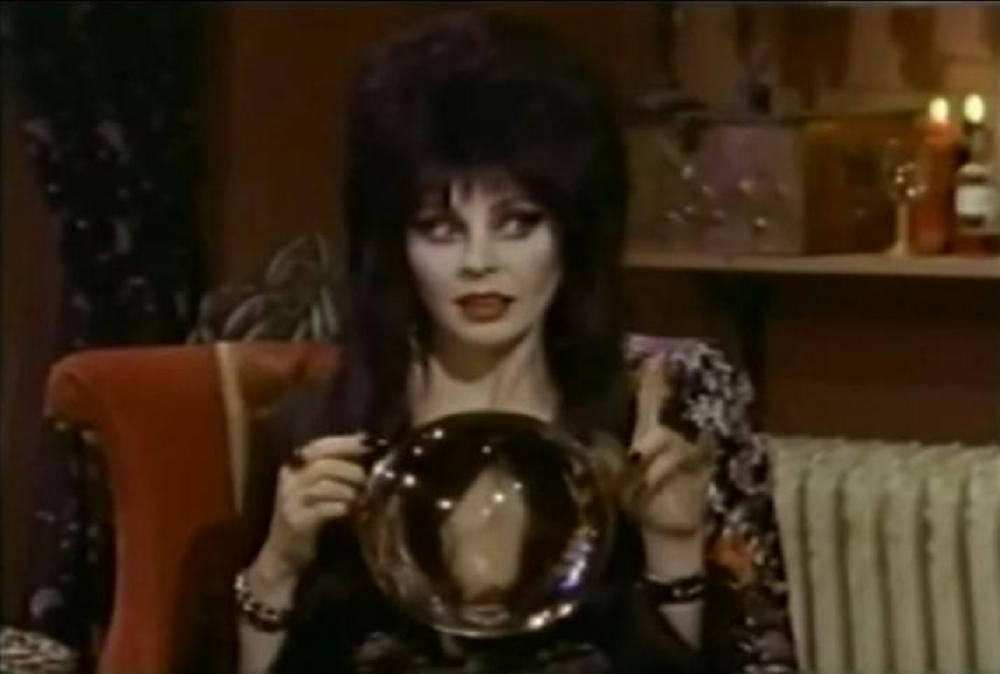
The Elvira Show (Fox): Hosted by the cadaverous Seymour, Fright Night was a showcase for low-budget horror and science-fiction B-movies that ran on KHJ-TV in Los Angeles from 1970. Seymour was briefly replaced in 1972 by Moona Lisa (Lisa Clark), but actor Larry Vincent returned to his most famous role until his death in 1975 from stomach cancer. The show continued with Robert Foster’s Grimsley afterwards but was a shadow of its former glory and it slipped into the night in 1979. Two years later, KHJ bosses wanted to revive the slot, hiring former horror host Maila Numi – who, in the 1950s, had raised pulses as the sultry Vampira – to helm the project, but Numi walked away when her choice for a new Vampira (Lola Falana) was vetoed by the channel. Instead, KHJ sent out a casting call, attracting former Las Vegas showgirl and nude pin-up Cassandra Peterson, who’d just narrowly missed out on the role of Ginger in the third Gilligan’s Island TV movie.

Impressing the show’s producers, Peterson won the role and pitched an idea that she base her look on Sharon Tate’s character in The Fearless Vampire Killers. When this was rejected, she worked with close friend and make-up artist Robert Redding to create what would become her signature look, including influences like traditional Japanese Kabuki make-up and the Ronettes’ bouffant hairstyles. Although Fright Night was still running on KHJ’s sister station in New York (without a host), the station decided to change the name of the show to Movie Macabre, or occasionally Movie Macabre with Elvira, the name Peterson and Redding chose for her new character.

Regardless of what film she was hosting, Elvira quickly became a sensation, her figure-hugging dress, ample cleavage, wisecracking asides, and self-deprecating, “Valley Girl” personality soon earning her a legion of fans. Comic books, trading cards, action figures, and more were available featuring the character, and on Halloween 1984 she hosted a six-hour special on MTV, with another four-hour special two years later, shortly after Movie Macabre ended its run. In 1988, NBC casting director Joel Thurm pitched an Elvira sitcom to network head Brandon Tartikoff, who expressed strong interest in the idea. Peterson, however, had her heart set on an Elvira movie, and Tartikoff instead made a deal for NBC to produce a film, with an option for sequels and a prime-time TV show if it was successful.

The Elvira Show, 1993-94

The script was written by Peterson, frequent writing partner John Paragon, and Sam Egan, who had impressed Peterson with an episode of The Fall Guy he wrote that she guest-starred in. Tartikoff wanted the film to be based on 1978 suburbia comedy Harper Valley PTA and Peterson, who had guest-starred in Pee Wee’s Big Adventure, thought Tim Burton would be a perfect director. However, with Burton tied up with Beetlejuice, Saturday Night Live‘s James Signorelli was brought in to helm the shoot. Elvira: Mistress of the Dark premiered in September 1988, the day after its distribution company went out of business, resulting in a reduction in the number of theatres it showed in, and a box office take someway short of its budget of $7.5 million.

Still, the movie hit the spot for fans of Elvira’s campy schlock, and she returned to hosting horror movies, hosting Elvira’s Thriller Theatre for Australia’s Network 10 and the Elvira’s Midnight Madness series of VHS tapes, as well as hosting Heavy Metal heaven for BBC2 in the UK, with guest appearances on WCW Wrestling, Saturday Night Live, and Totally Hidden Video keeping her in the public eye. Brandon Tartikoff left NBC in 1991 and plans to produce a sequel to Elvira: Mistress of the Dark hit a snag when Carolco Pictures went bankrupt but plans to make a sitcom resurfaced when a script by Peterson, Paragon, and long-time Saturday Night Live writer Anne Beatts made it to CBS executive Jeff Sagansky’s desk.

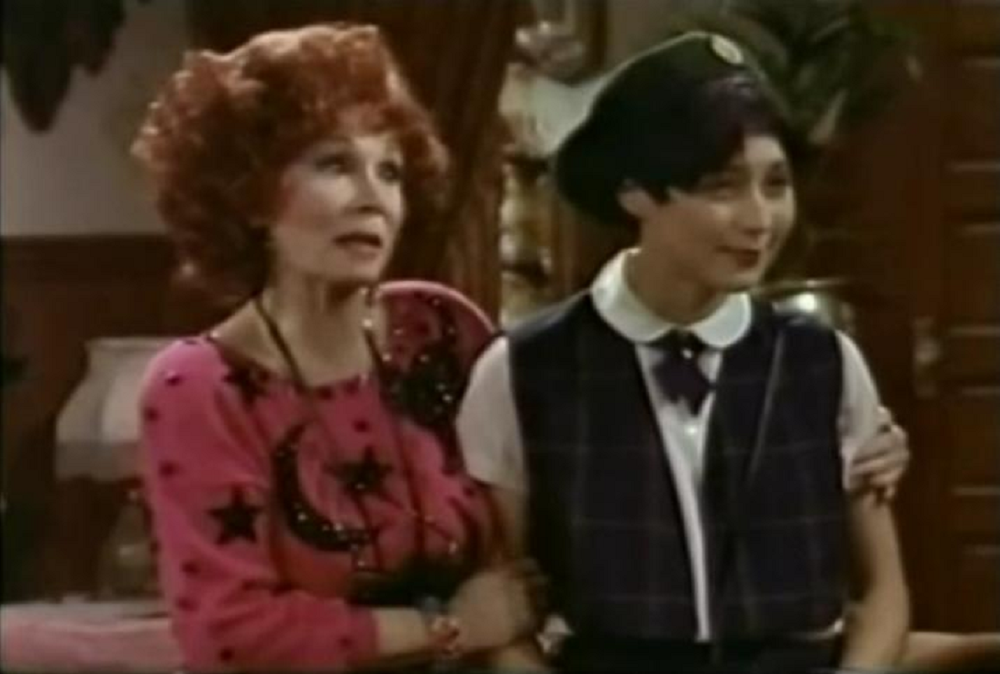
Sagansky greenlit a pilot, with sitcom veteran Peter Bonerz brought in to direct, and Soap‘s Katherine Helmond cast as Elvira’s Aunt Minvera, whose peaceful existence in the small town of Manhattan, Kansas, is upset when her niece arrives. Elvira’s efforts to blend in with the neighbours backfire spectacularly, especially when a pair of overzealous cops take an interest in her…

Officer: This is a bust!

Elvira (pointing at her cleavage): “No, this is a bust!”

The Elvira Show, 1993-94

Matters are further complicated by the arrival of a long-lost relative, Paige (Phoebe Augustine from Twin Peaks), who has been living in a convent since the death of her parents but may be about to come of age as a witch herself. Oh, and there’s a talking cat called Renfield (voiced by Paragon), and if this is all beginning to sound like Sabrina the Teenage Witch (which debuted on ABC three years later), you’re not the first to make that connection. Reaction to the pilot was strong, and Petersen was told the show “was in the can,” but it was killed when Sagansky fell ill and his boss, CBS president Howard Stringer, stepped in and was horrified at the risqué nature of the show, with Peterson writing in her memoir Yours Cruelly, Elvira, that he roared, “We can’t have tits like that on CBS!”

Once The Elvira Show was done, Peterson returned to a life of guest appearances and TV specials, also appearing in unusual 3-D movie Encounter in the Third Dimension in 1999, where Elvira becomes trapped between the second and third dimensions. She and then-husband Mark Pierson never gave up hope of making another Elvira movie and managed to attract financing to shoot Elvira’s Haunted Hills in Hungary in 2001. The movie, directed by Sam Irwin and written by Peterson and Paragon, was set in Transylvania in 1851 and featured Richard O’Brien and Mary Scheer. Premiering at the International Rocky Horror Fan Convention in June 2001, it was dedicated to the memory of the recently deceased Vincent Price and parodied Roger Corman’s Edgar Allan Poe films, bringing Elvira full circle to the films she was created to host two decades before.

Gloria Vane (NBC): Cambridge, Massachusetts, native Joe Keenan made a minor splash with his debut novel, Blue Heaven, in 1988, earning rave reviews in the likes of the Los Angeles Times and in gay newspapers all over the US. Putting on the Ritz followed in 1991 and Keenan also began work on a stage musical – The Times – with Brad Ross, which would earn the pair the Richard Rodgers Development Award from the American Academy and Institute of Arts and Letters. It was one of those reviews for Blue Heaven, though, that led to Keenan being given the opportunity to create a TV show, when Cheers writer David Lloyd was so intrigued by the Boston Globe’s description of the book’s “Wodehousian merriment” that he rushed out and bought a copy.

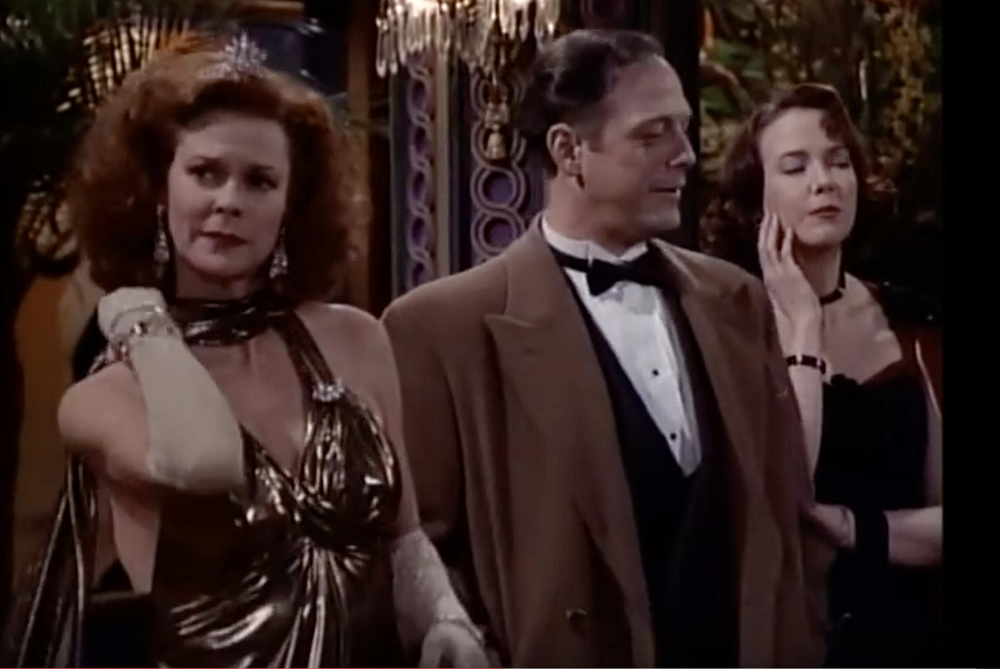
Lloyd, a Wodehouse devotee who owns first editions of many of the writer’s novels, loved the novel so much that he bought copies for all his friends, a list which included Glenn and Les Charles, co-creators of Cheers with James Burrows. The Charles brothers also loved the novel and invited Keenan to write a pilot for a new show. Interested in Hollywood’s faded glamour, Keenan wrote a comedy about an actress from the era of classical Hollywood cinema, except that for all her self-centred narcissism, Gloria Vane is stuck making B-movies. Worse still, her ex-husband – and date for the premiere of her latest film – reveals that his novel is being made into a film by Gloria’s studio.

Gloria Vane, 1993-94

Keenan, an out gay man who has lived with his partner since 1982, called the script “gay-sensible without being so gay we couldn’t get sponsors,” and has one of the characters answer, in reply to Gloria wondering what he’d be without her, “Heterosexual, probably.” JoBeth Williams, despite several movie roles probably still best known for the four years she spent on Guiding Light in the late 1970s, was perfect as Gloria, with the rest of the cast including Jerry Adler, Desperately Seeking Susan‘s Mark Blum, and Harriet Sansom Harris. James Burrows helmed the pilot, but it didn’t click with executives at NBC, who passed on taking the project to series.

Keenan was quickly snapped up and added to the writing crew for Frasier, the Cheers spin-off that debuted in September 1993, making his bow with season two’s “The Matchmaker” in October 1994, the first of two dozen he’d write. From season three to the end of season seven, he worked as a producer on the show, leaving to develop The Seven Roses with former Golden Girls and Frasier scripter Christopher Lloyd. A sitcom starring Brenda Blethyn as the recently widowed matriarch of an eccentric family who runs the titular inn, it failed at the pilot stage, and their next effort – Bram and Alice, which starred Alfred Molina and Traylor Howardwas cancelled after just four episodes. Keenan returned for Frasier’s final season and his next series with Lloyd – 2005’s Out of Practice – at least made a full season before they dissolved their partnership.

Next time on The Telephemera Years: What were the kids watching in 1993? Cadillacs, dinosaurs, kats, and whatever a Cro is!

Check out our other Telephemera articles:

The Telephemera Years: pre-1965 (part 1, 2, 3, 4)

The Telephemera Years: 1965 (part 1, 2, 3, 4)

The Telephemera Years: 1966 (part 1, 2, 3, 4)

The Telephemera Years: 1967 (part 1, 2, 3, 4)

The Telephemera Years: 1968 (part 1, 2, 3, 4)

The Telephemera Years: 1969 (part 1, 2, 3, 4)

The Telephemera Years: 1970 (part 1, 2, 3, 4)

The Telephemera Years: 1971 (part 1, 2, 3, 4)

The Telephemera Years: 1972 (part 1, 2, 3, 4)

The Telephemera Years: 1973 (part 1, 2, 3, 4)

The Telephemera Years: 1974 (part 1, 2, 3, 4, 5)

The Telephemera Years: 1975 (part 1, 2, 3, 4)

The Telephemera Years: 1976 (part 1, 2, 3, 4)

The Telephemera Years: 1977 (part 1, 2, 3, 4)

The Telephemera Years: 1978 (part 1, 2, 3, 4)

The Telephemera Years: 1979 (part 1, 2, 3, 4, 5, 6)

The Telephemera Years: 1980 (part 12, 3, 4)

The Telephemera Years: 1981 (part 1, 2, 3, 4)

The Telephemera Years: 1982 (part 1, 2, 3, 4)

The Telephemera Years: 1983 (part 1, 2, 3, 4)

The Telephemera Years: 1984 (part 1, 2, 3, 4)

The Telephemera years: 1985 (part 1, 2, 3, 4)

The Telephemera Years: 1986 (part 1, 2, 3, 4)

The Telephemera Years: 1987 (part 1, 2, 3, 4)

The Telephemera Years: 1988 (part 1, 2, 3, 4, 5)

The Telephemera Years: 1989 (part 1, 2, 3, 4)

The Telephemera Years: 1990 (part 1, 2, 3, 4)

The Telephemera Years: 1991 (part 1, 2, 3, 4)

The Telephemera Years: 1992 (part 1, 2, 3, 4)

The Telephemera Years: 1993 (part 1, 2)

The Telephemera Years: 1994 (part 1, 2, 3, 4)

The Telephemera Years: 1995 (part 12, 3, 4)

The Telephemera Years: 1996 (part 1, 2, 3, 4)

The Telephemera Years: 1997 (part 1, 2, 3, 4)

The Telephemera Years: 1998 (part 1, 2, 3, 4)

The Telephemera Years: 1999 (part 1, 2, 3, 4)

The Telephemera Years: 2000 (part 1, 2, 3, 4)

The Telephemera Years: 2001 (part 1, 2, 3, 4)

The Telephemera Years: 2002 (part 1, 2, 3, 4)

The Telephemera Years: 2003 (part 1, 2, 3, 4)

The Telephemera Years: 2004 (part 1, 2, 3, 4)

The Telephemera Years: 2005 (part 1, 2, 3, 4)

The Telephemera Years: 2006 (part 1, 2, 3, 4)

The Telephemera Years: 2007 (part 1, 2, 3, 4)

The Telephemera Years: 2008 (part 1, 23, 4)

The Telephemera Years: O Canada! (part 1, 2, 3, 4)

Titans of Telephemera: Irwin Allen

Titans of Telephemera: Stephen J Cannell (part 1, 2, 3, 4)

Titans of Telephemera: DIC (part 1, 2)

Titans of Telephemera: Filmation (part 1, 2)

Titans of Telephemera: Hanna-Barbera (part 1, 2, 3, 4, 5)

Titans of Telephemera: Kenneth Johnson

Titans of Telephemera: Sid & Marty Krofft

Titans of Telephemera: Glen A Larson (part 1, 2, 3, 4)

Titans of Telephemera: Quinn Martin (part 1, 2)

Titans of Telephemera: Rankin/Bass

Titans of Telephemera: Ruby-Spears

Titans of Telephemera: Aaron Spelling (part 1, 2, 3, 4)

Titans of Telephemera: Sunbow

THE TELEPHEMERA YEARS: 1993, part 2

The Adventures of Brisco County Jr, 1993-94

Ah, telephemera… those shows whose stay with us was tantalisingly brief, snatched away before their time, and sometimes with good cause. They hit the schedules alongside established shows, hoping for a long run, but it’s not always to be, and for every Street Hawk there’s two Manimals. But here at STARBURST we celebrate their existence and mourn their departure, drilling down into the new season’s entertainment with equal opportunities square eyes… these are The Telephemera Years!

1993-94

The top ten shows at the end of the 1993-94 season looked very similar to those from 1992-93, with 60 Minutes retaining top spot for CBS, and top five placings for ABC’s Home Improvement and Roseanne. Coach, Monday Night Football, Murphy Brown, and the CBS Sunday Night Movie all kept their top ten slots, and there was an enforced change as US viewers had to get used to life without Cheers. The big new hit was Seinfeld, now in its fifth season and finally becoming the show about nothing that said everything to US audiences, forming a solid sitcom quartet with Mad About You, Wings, and new arrival Frasier, a Cheers spin-off, that commanded Thursday nights for the peacock network.

Elsewhere, David Letterman moved from NBC to CBS and The X-Files arrived on Fox, southern belle Brett Butler gave ABC a new hit in Grace Under Fire, and there was plenty of new genre fodder with Los & Clark: The New Adventures of Superman, seaQuest DSV, Duckman, and Weird Science all beginning their runs to more than make up for the loss of Star Trek: The Next Generation. But those were all shows that people watched and remember (mostly) fondly; what about the ones that didn’t outstay their welcome? This is the story of four more of 1993’s been-and-gones…

Phenom (ABC): The great-great-granddaughter of George Washington Goethals, the man who built the Panama Canal, Angela Goethals began acting as a young child, earning her first professional role in 1986 at the age of nine when she understudied Sarah Michelle Gellar in the off-Broadway play The Widow Claire. Further stage roles led to her first film appearance alongside an also debuting Macauley Culkin in Rocket Gibraltar, followed quickly by Heartbreak Hotel, in which she played a young girl whose older brother kidnaps Elvis to cheer her up. In 1990, she teamed with Culkin again as his older sister Linnie in Home Alone but didn’t appear in the sequel. Instead, she took more theatre roles and a part in VI Warshawski, for which she was nominated for her third Young Artist Award as an orphaned teen seeking revenge for her murdered father.

Goethals also had some small roles on TV but in 1993 her big break came when she was cast as a teenage tennis phenomenon no doubt inspired by the headline grabbing 1990 debut of thirteen-year-old Jenifer Capriati, who made the semi-finals of the French Open in her first professional season. Phenom was the brainchild of Dick Blasucci, Marc Flanagan, and Sam Simon, an unlikely trio who’d first worked together on The Tracey Ullman Show for Fox, which Simon co-produced with James L Brooks. Blasucci had a background in Chicago improv theatre group The Second City, writing for all three of their TV shows between 1980 and 1984, while Flanagan had been hand-picked by Brooks after he saw Meryl Streep and Kevin Klein perform a sketch he wrote at a benefit.

Phenom, 1993-94

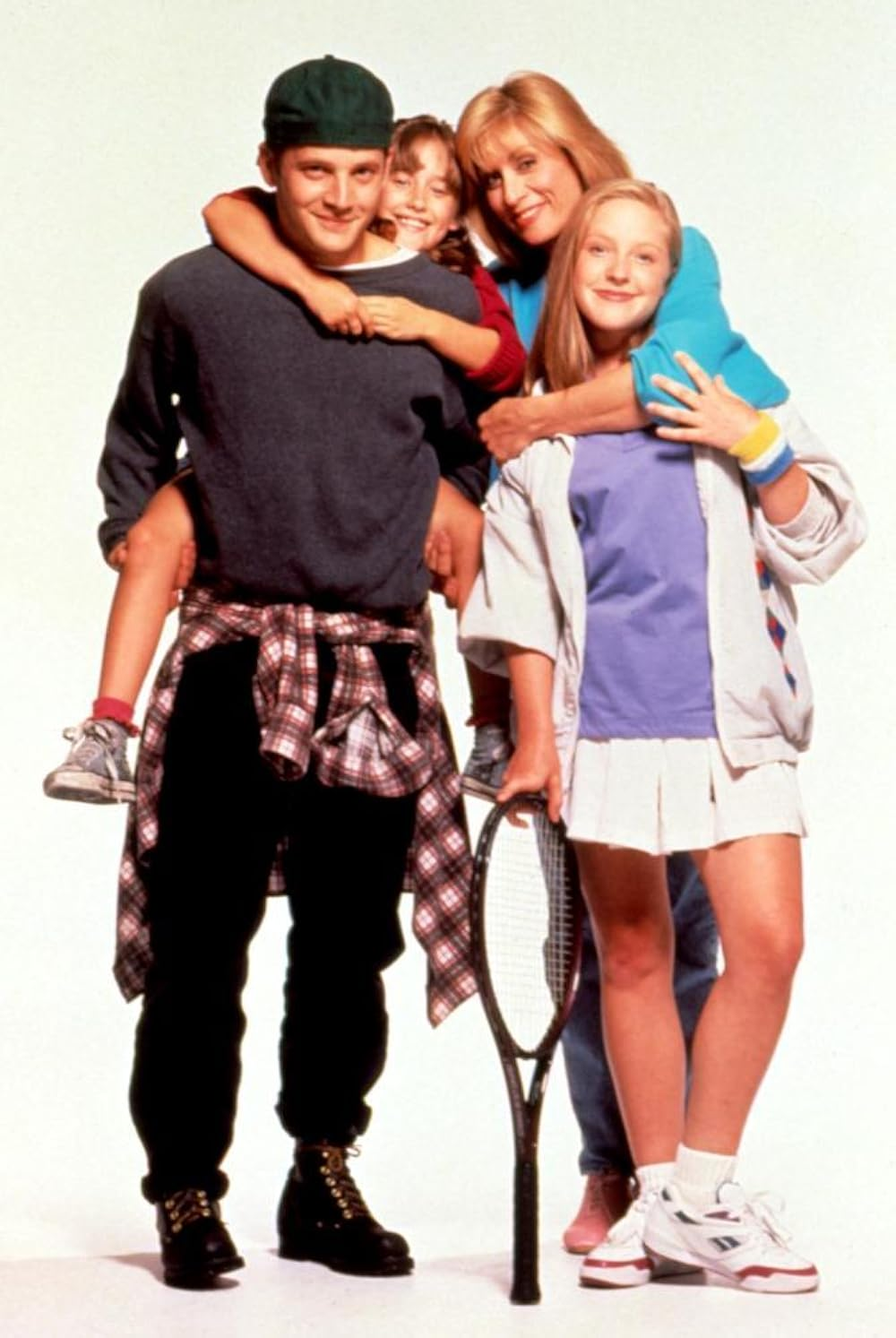
After The Tracey Ullman Show, Blasucci and another of the show’s writers, Joe Flaherty, worked on a pilot for CBS which was eventually picked up for a short run as Morton & Hayes, before he came back into Brooks and Simon’s orbit, teaming with Flanagan to write several episodes of sisters sitcom Sibs, which lasted for just one season on ABC. Blasucci and Flanagan’s partnership proved fruitful and two years later, they worked up Phenom with Simon, centred around fifteen-year-old Angela Doolan, who is trying to juggle the pressures of teenage life with a budding tennis career. Angela’s father has left the family to chase younger women, leaving her mother Dianne (Who’s the Boss?‘s Judith Light) to raise Angela, her older, slacker brother Brian (a showstealing Todd Louiso, clad entirely in earth tones), and tween Mary Margaret (Ashley Johnson from Growing Pains).

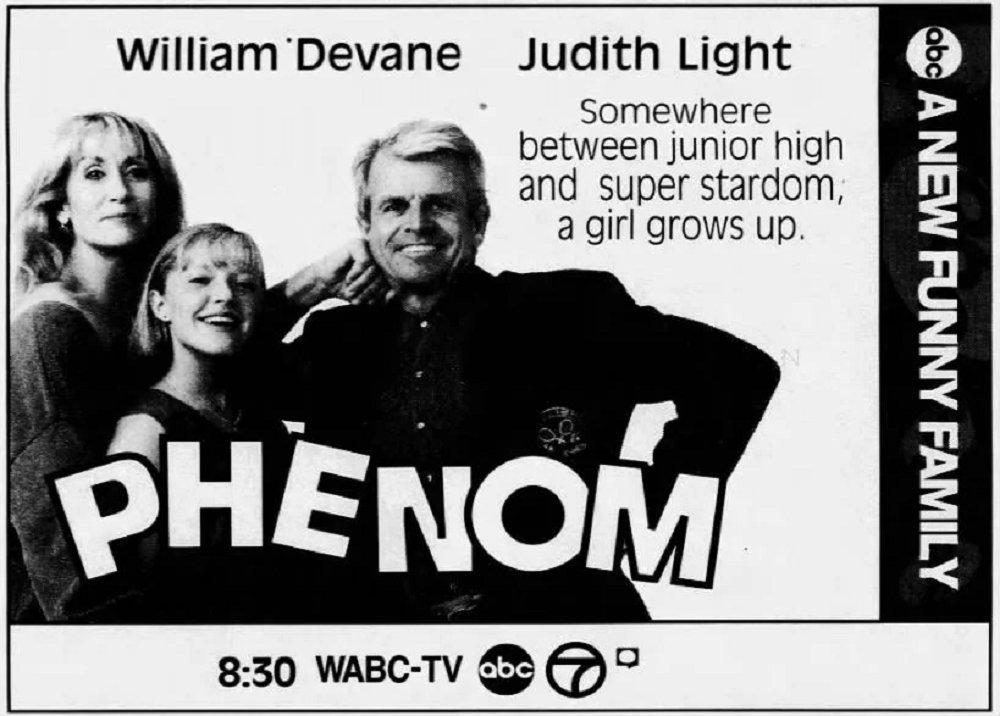
As the show starts, Angela is offered a place at a prestigious tennis academy run by demanding coach Lou Della Rosa. Della Rosa was played by William Devane, fresh off a ten-year run on Knots Landing, but he ended up uncredited after a row with the producers over whether he or Light would receive top billing resulted in him asking to have his name removed from the credits completely. The regular cast was completed by Another World‘s Jennifer Lien as Brian’s fiancé Roanne, and Randy Josselyn (from guardian angel sitcom Down to Earth) as Jesse, a teenage boy who competes with tennis for Angela’s affections.

Phenom, 1993-94

With a theme song sung by Carly Simon, Phenom debuted on ABC on September 14th 1993, joining NYPD Blue as part of a Tuesday night line-up with Full House, Roseanne, and Coach, all top ten shows the year before. It started cautiously, second in its timeslot to CBS reality hit Rescue: 911 on its opening night but built a solid audience as families settled in for an evening of comfortable sitcoms followed by Steven Bochco’s latest police procedural. Guest stars during the show’s run included George Burns, Dan Castellaneta, Kathleen Freeman, Ed McMahon, and Leave It To Beaver‘s Jerry Mathers, who stalks Brian after he gives his latest TV show a bad review. Real life sports stars Kareem Abdul-Jabbar, Vijay Amritaj, and Tracy Austin also appeared, with Austin also acting as tennis consultant for the show.

From a start of 11.3, ratings went as high as 15.1 but settled down at just under twenty-million viewers per show, a respectable draw which saw it finish twenty-seventh in the year end ratings list, ABC’s number twelve show, and rated ninth among young viewers. Unfortunately, it was seen as a drag on the network’s other Tuesday night offerings, unable to keep all of Full House’s audience and therefore reducing the through traffic to Roseanne. After discussions with Gracie Films about changing the direction of the show went nowhere, ABC cancelled Phenom in mid-May 1994, shortly after its final episode saw Angela torn between spending time with her friends and preparing for a tennis tournament. Brooks was not happy at the decision, issuing a statement that read, “I have no comment while I’m developing the muscle to lie about my reaction to what ABC did.” For the 1994-95 season, ABC replaced Phenom in the Tuesday night line-up with Me and the Boys, a sitcom set in a video store owned by a widower (Steve Harvey) who is bringing up three sons on his own. It was made by ABC themselves but fared no better, cancelled after nineteen episodes with an average rating that equalled that of Phenom but placed it higher – twentieth – in the year-end figures.

After Phenom, Goethals appeared in a revival of Picnic on Broadway and had a small role – as a teenage tennis star, natch – in Jerry Maguire, the 1996 Tom Cruise “show me the money!” hit that was produced by Brooks and Gracie Films, and which guest-starred Louiso in a role not dissimilar from his one as Brian (and one he perfected for High Fidelity in 2000). By the time the film was released, she was studying French at liberal arts college Vassar, graduating in 1999. After a clutch of roles in the early 2000s – including original Comedy Central movie Porn ‘n’ Chicken, time displacement sitcom Do Over and a recurring role on 24, she largely gave up acting in order to raise a family and now works as an audiobook narrator.

The Adventures of Brisco County Jr (Fox): Jeffrey Boam wanted to be in the movie business from the minute he saw Albert Finney in Tom Jones as a teenager, eventually enrolling as a graduate student at the UCLA School of Theater, Film, and Television where he intended to study directing. Unable to afford much in the way of film equipment, Boam did own a typewriter and directed his energies towards screenwriting, hoping to impress William Froug, a veteran TV writer teaching at the college. The two eventually collaborated on a screenplay called Johnny about infamous bank robber John Dillinger, only to discover that John Millius had beaten them to it. After finishing up at UCLA, Boam worked in film distribution for Paramount and 20th Century Fox, all the while writing screenplays with little success, at least until he was hired to write Straight Time by producer Ulu Grosbard, released in 1978 with Dustin Hoffman in the lead role.

His next project was an adaptation of Stephen King’s The Dead Zone, eschewing the novel’s parallel story structure into a shortened, simplified narrative. The script underwent considerable rewrites at director David Cronenberg’s insistence but won Boam acclaim for his writing, leading to a contract as a staff writer with Warner Bros, where he was tasked with polishing and rewriting scripts for high concept projects. Among the films Boam worked on were Inner Space, The Lost Boys, and Funny Farm, and he did uncredited work on Lethal Weapon, making Shane Black’s script less grim.

In 1987, Boam was brought in by Steven Spielberg to find common ground between clashing ideas he and George Lucas had about the third Indiana Jones movie. By this point, Boam had formed a partnership with another writer, Carlton Cuse, after being impressed with Cuse’s writing on the TV show Crime Story. Although he wasn’t credited, Cuse helped Boam develop what became Indiana Jones and the Last Crusade and both Lethal Weapon 2 and 3, and after forming Boam/Cuse Productions, they produced a pilot for a TV series based on The Witches of Eastwick for NBC, starring Julia Campbell, Catherine Mary Stewart, Ally Walker, and Michael Siberry, but the network ultimately passed on taking the pilot to series.

The Adventures of Brisco County Jr, 1993-94

After the success of Indiana Jones and the Last Crusade, Boam and Cuse were contacted by Bob Greenblatt, head of prime-time programming at the Fox network. Greenblatt wanted the pair to do a similar job for TV, something in the spirit of old adventure film serials, and while Cuse was doing his research he noticed that the serials mostly fell into two genres: Westerns and science-fiction. Combining the two seemed a natural step and Cuse and Boam went one further, structuring each episode as a series of mini serials, each with its own title and cliffhanger. Boam acted as executive producer, with Cuse taking the showrunner role, and the task of scripting the pilot – and distilling all of Boam and Cuse’s ideas – fell to David Simkins, best known for Adventures in Babysitting. Like Boam, Simkins had been under contract to Warner Bros, where he’d developed a series based on old adventure serials which didn’t get made but did bring him to the Boam and Cuse’s attention.

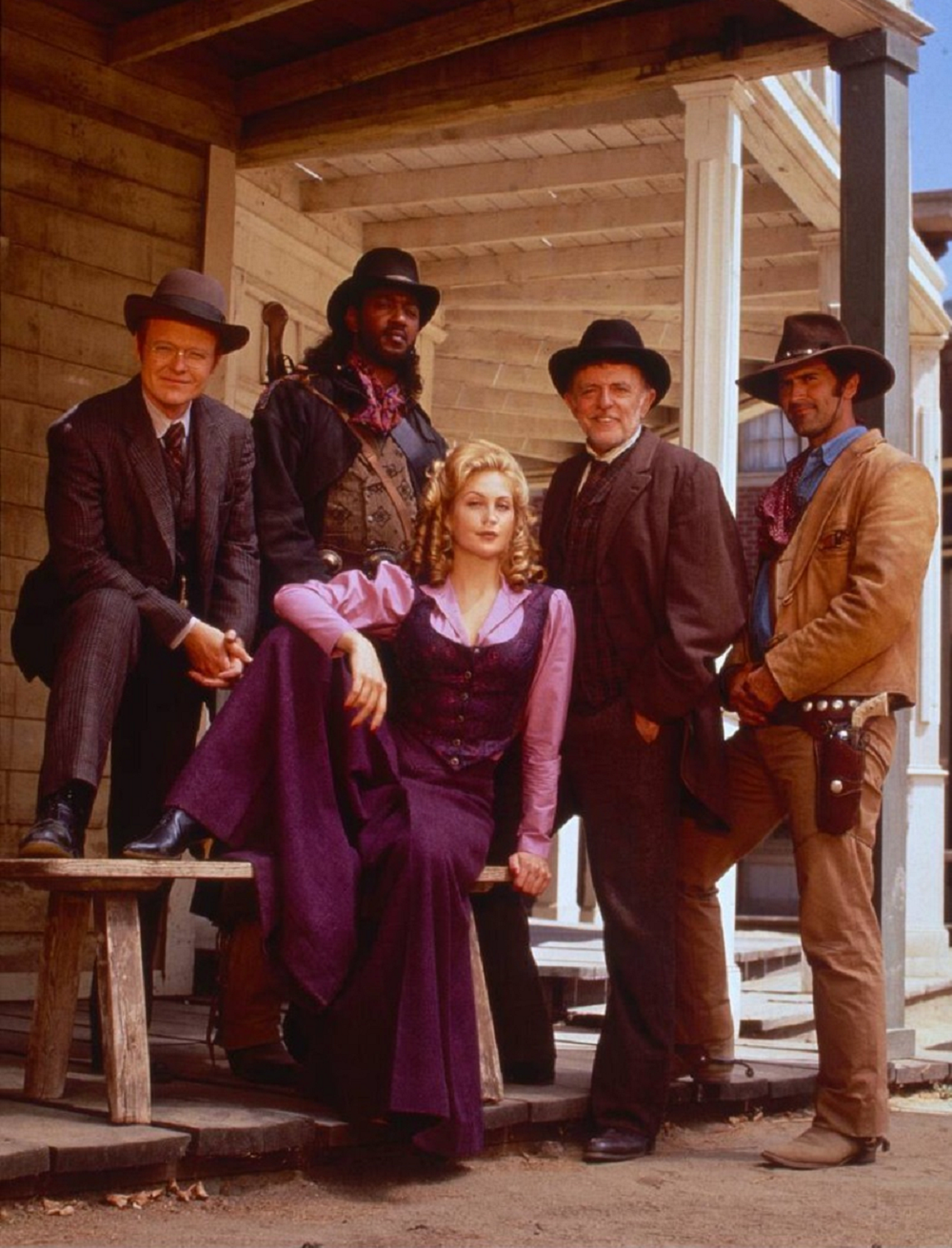
Although Simkins’s early efforts were too expensive to realise on film, a happy medium was struck between imagination and budget, with a dedication to cartoonish violence and an absolute dereliction of duty towards historical accuracy. The pilot introduced the basic premise: after famous lawman Brisco County is murdered by a gang led by the notorious bandit John Bly, a group of robber barons hires his son, a Harvard educated lawyer turned bounty hunter named Brisco County Jr, to bring the outlaw to justice.

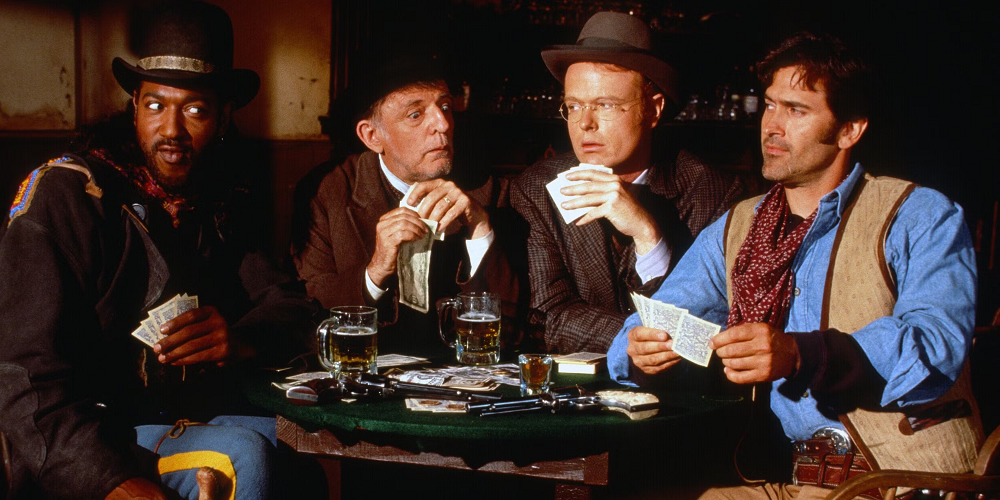
After a series of rigorous auditions, during which he was asked to provide he could handle the physical side of the role and responded by performing a standing flip, Evil Dead star Bruce Campbell was cast in the main role. Campbell started acting as a teenager, appearing in Super-8 movies he and his friends would make in high school. One of those friends, Sam Raimi, wrote a script initially titled Within the Woods, shot as a thirty-minute Super-8 film in 1978 as a way to attract investors for a feature version. Evil Dead arrived in 1981, with Campbell front and centre, and he retained the role in the remake/sequel Evil Dead II. He switched to play the bad guy in Maniac Cop but was back with the boomstick and chainsaw for Army of Darkness, the third film in the series, in 1992. His Brisco County Jr was accompanied by Socrates Poole (Christian Clemenson from Capital News), a lawyer in the service of Brisco’s employers, sent to ensure he does his job correctly (and lending a hand when possible).

The Adventures of Brisco County Jr, 1993-94

The two would often butt heads with Julius Carry’s Lord Bowler, a rival bounty hunter based on Lord Baltimore from the classic Butch Cassidy and the Sundance Kid, and the cast also included Kelly Rutherford (who impressed in auditions so much as sultry saloon singer Dixie Cousins that her character was turned from a one-off femme fatale into an ongoing love interest), John Astin as madcap inventor Professor Albert Wickwire, and Billy Drago as Bly, who turns out to be an outlaw from the distant future on the hunt for the Orb, a mysterious object that imbues its possessor with fantastic abilities. Across the first season, Brisco encountered indentured Chinese labourers with superhuman strength, a town inhabited only by women, a landbound pirate, and “motorised steel horses,” all in pursuit of Bly and informed by Wickwire’s predictions of “the coming thing,” technology that largely echoed future inventions.

The show was filmed at Laramie Street, one of the last remaining Western backlots and the same set used by Blazing Saddles, Cheyenne, and Maverick. By 1993 it was in poor health and the crew had to shoot around a skyscraper Warner Bros were erecting on a neighbouring lot. Shortly after The Adventures of Brisco County Jr finishing shooting there, the lot was torn down and replaced by a suburban backlot, much more use in a time when Westerns were few and far between.

The show debuted on August 27th 1993, leading off Fox’s Friday night line-up and beating what CBS and NBC offered up as competition. Expectations were high and Fox ordered a complete season before the first episode had aired, a rarity especially with genre shows. After two episodes it was joined by another new show, The X-Files, which took Brisco’s lead-in audience and added another few million viewers, despite network speculation that it would be too scary for family viewers. There were several occasions when Brisco outperformed The X-Files and ratings hovered around the 6.0 mark, respectable enough for a Friday at 8pm but ultimately putting it in Fox’s bottom five shows. As the season wore on, much of the sci-fi element that made the show unique was dropped – The Orb storyline was wrapped with episode twenty – but the crew leaned into it nonetheless.

The Adventures of Brisco County Jr, 1993-94

Chances of a second season were put at fifty-fifty, but in the end, the series saw out its twenty-seven-episode order and Fox confirmed the show’s cancellation in June, two weeks after the final episode aired without a hint of a finale, although all loose ends had been neatly tied up. It didn’t help that there was a campaign against the show led by a minor politician who reckoned it to be the most violent show on air, using an episode featuring a boxing match as an example and counting each punch thrown in the match as a separate act of violence. On an extra on the 2006 DVD boxset release, Cuse commented, “If the show could have survived into a second season, I think it could have ended up running for actually a long time. Some shows … stay on the air long enough to aggregate an audience. I think if circumstances had been different, Brisco could have had a much longer life.”

The end of The Adventures of Brisco County Jr also marked the end of Boam/Cuse Productions, but both men continued to work in film and TV. Boam’s next big thing was The Phantom in 1996, another thing which should have been a bigger hit than it turned out to be, but he fell ill shortly after, dying at just fifty-three-years-old from heart failure brought on by a rare lung disease.

Cuse moved on to oversee Fortune Hunter for Fox, before creating Nash Bridges and Martial Law at CBS. In 2004, he hooked up with Damon Lindelof, whose first break had come under Cuse on Nash Bridges, on a show created by JJ Abrams called Lost. Together they created a masterpiece of mystery box television, even if its ending did confuse some of the viewers who held on through six seasons of a purgatory drama few realised they were watching. He continues to work as a showrunner, on shows such as The Strain and Locke & Key, and last overseeing Netflix’s first medical drama, Pulse.

Acapulco HEAT (syndication): When Wes Craven moved from New York to Los Angeles in the wake of The Hills Have Eyes, his first project was Stranger in Our House, a TV movie more popularly known by the name under which it was given a theatrical release in Europe, Summer of Fear. The film was written by Glenn Benest and Max Keller, a pair of UCLA graduates, and produced by Keller and his wife Micheline, who was moving into film production after a career in law. Starring Linda Blair, Stranger in Our House received a mixed critical reception when it was aired on NBC on Halloween 1978, but the Kellers caught the bug and produced a series of TV movies and low budget features.

In 1991 Max became involved in the development of a new, syndicated Tarzan show, a co-production between US, French, and Mexican production companies, filmed on location in Mexico. Tarzán ran for three seasons and was joined in its last year by another co-production between Mexican company Balenciaga Productions, French network M6, French production house Les Films du Triangle Film Groupe, and the French government agency CNC, this time also including Max Keller & Micheline Keller Productions (later Keller Entertainment).

Acapulco HEAT, 1993-94

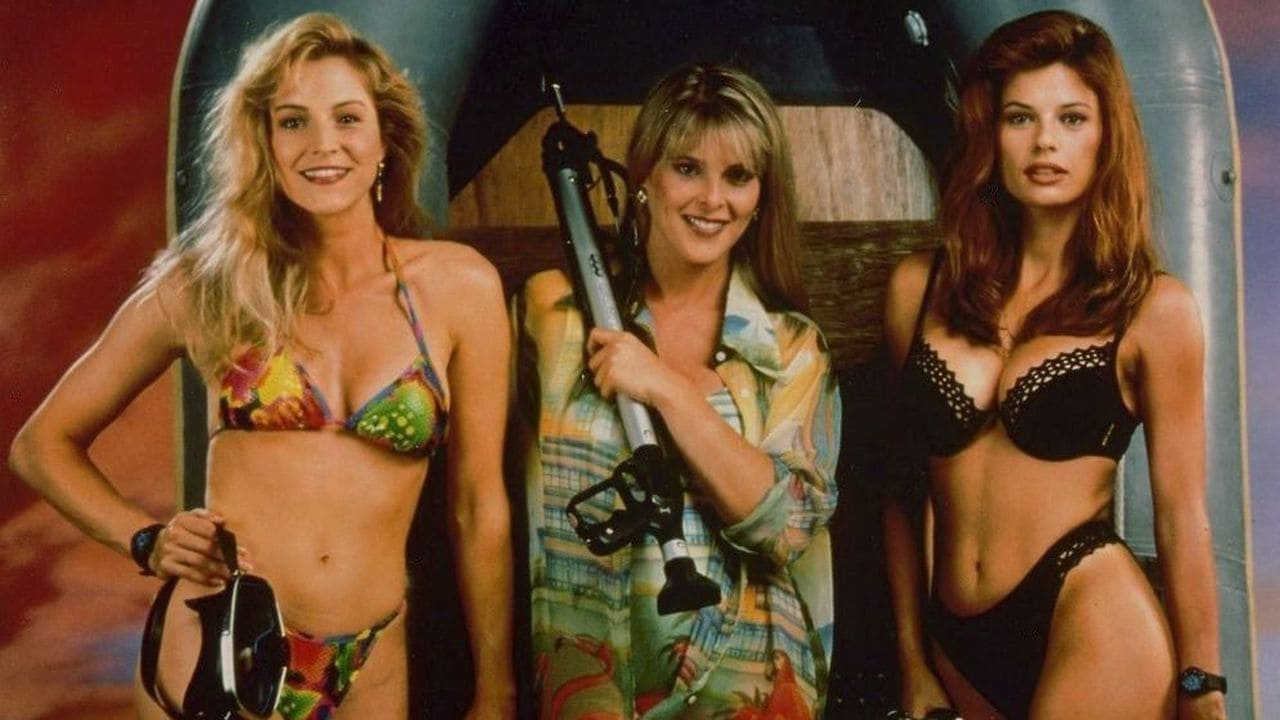
Acapulco HEAT was credited as created by the Kellers but the lion’s share of the scripting work on its first season was done by the trio of Daniel Fica, Molly Glenmore, and Steve Hayes. The HEAT of the title stood for Hemisphere Emergency Action Team, recruited by shadowy international agency C5 to fight terrorism and other cross-border crimes. Led by ex-CIA man Mike Savage (Irish actor Brendan Kelly) and MI6 agent Ashley Hunter-Cuddington (Dynasty‘s Catherine Oxenberry), the team receive their orders by videolink from the mysterious Mr Smith (Animal House‘s Dean Wormer, John Vernon) and operates out of an old Mayan temple. To undertake their missions in secret, the squad – which also includes French former cat burglar Cat Avery Pascal (ex-Playboy Playmate Alison Armitage), martial arts expert Tommy Chase (Michael Worth), ex-Navy SEAL Brett Richardson (Spencer Rochfort), computer genius Krissy Valentine (Holly Floria), and Mexican cop Marcos Chavez (Randy Vasquez) – posed as fashion models and photographers, living in a hotel whose owner was played by actual model (and seagull magnet) Fabio.

Debuting in syndication in September 1993, the HEAT team took down all manner of threats to international safety across twenty-two episodes, including assassins, nuclear blackmailers, white slavers, and drug lords. A second season was planned but the Kellers had trouble selling it into syndication and production was delayed until 1996, when another twenty-six episodes were produced, intended mostly for the international market. Only Armitage and Worth returned, joined by French model and actress Lydie Denier as former French spy Nicole Bernard, and American model and actress Christie Sauls as her computer expert protégé Joanna Barnes, this time as agents for hire. There was no third season, and the Kellers moved on to Conan the Adventurer, another co-production with Balenciaga, which ran for a single season in syndication from September 1997.

Dead at 21 (MTV): That MTV – Music Television – did not show music anymore became a popular trope towards the end of the twentieth century and, as with most of these things, there was a ring of truth to it. Between 1995 and 200, the station showed a third less music videos as the novelty of wall-to-wall video access wore off. Reality shows such as The Real World and Road Rules had joined game shows like Remote Control, Idiot Savants, and Singled Out, and animated shows including Liquid Television, Beavis and Butthead, and Æon Flux turned the network into a one-stop shop for cool tweens, teens, and twentysomethings. One area MTV was slow to move into, though, was scripted drama. Their core demographic was rarely a priority for the other networks, too, with failed experiments like TV 101 and The Outsiders offset against the occasional success story like 21 Jump Street.

All that changed in 1994 with the debut of Dead at 21 in July, although the network had begun showing the second season of Canadian band drama Catwalk in March, the first having been aired in syndication. Dead at 21 was created by Jon Sherman, a young writer who had been working on the Paramount lot while waiting for his big break. Through an agent friend, he got a meeting with MTV’s Tom Campbell, who listened to all his ideas and told him to go away and come back with more. Sherman would later say that he was too naïve to realise that the emphasis was on the first part of that statement and instead concentrated on the second, trying to work out what he could bring to the network that was different to what they already had.

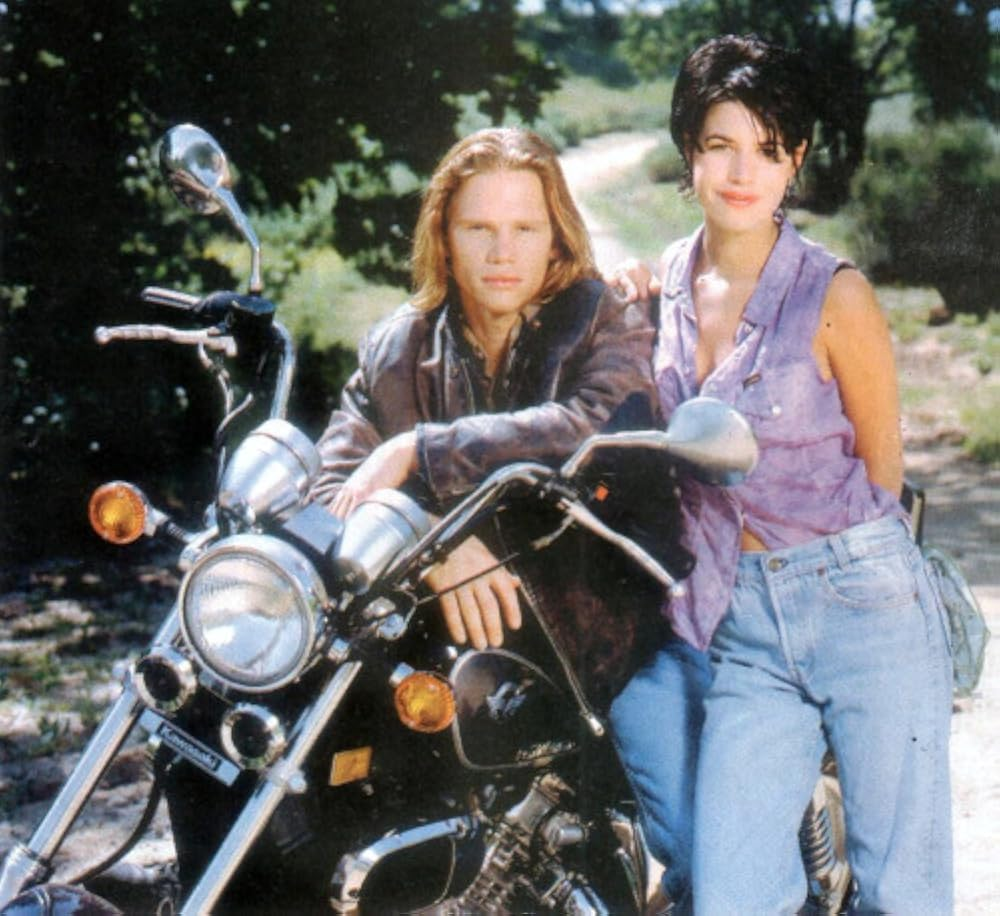
Inspired by a recent viewing of The Prisoner and by an article he read about the amount of the brain the average human uses, Sherman developed an action adventure drama, something MTV had never so much as touched before, centred on Ed Bellamy, a young man who discovers on his twentieth birthday that he has been the subject of a government experiment to harness that unused brain power through a microchip implant that has made him a genius, but that the implant has a shelf life that will kill him on his twenty-first birthday. Determined to find a way to survive beyond that date, Ed enlists the help of a girl he just met named Maria but is forced to go on the run as the government order the termination of the experiment and anyone involved in it.

Dead at 21, 1993-94

Other influences, such as the work of William Gibson and Sherman’s adolescent love for Dungeons & Dragons plated into the script, which Sherman delivered to his agent, but then – against her advice – took a job on a new PBS show, Bill Nye the Science Guy, relocating to Seattle to do so.  While he was working on Bill Nye, his script was given a polish by Beauty and the Beast and Doogie Howser, MD writer PK Simonds and met with Campbell’s approval, necessitating a call to Seattle and a demand Sherman quit his PBS job and return to LA.

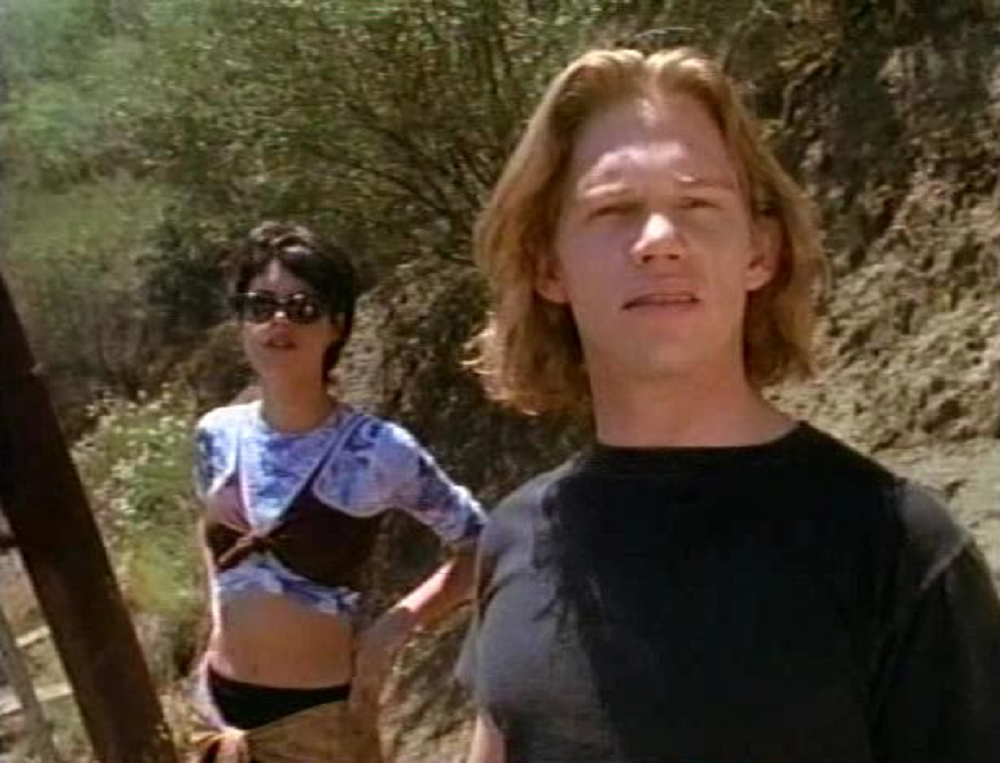
Jack Noseworthy from CBS sitcom Teech (and one of the kids in survival horror Alive) was cast as Ed, with Lisa Dean Ryan – who played Doogie Howser’s girlfriend Wanda for three years – signing on to play Maria, a girl who crashes Ed’s birthday party in the pilot. Another party crasher was Dan (Adam Scott in an early role), a fellow cybernaut who warns Ed of the oncoming danger, and that the government has sent Agent Winston (Whip Hubley from Top Gun, Russkies and Life Goes On) to take him out. Winston ends up killing Dan and the government pin his murder on Ed, leading to he and Maria fleeing for their lives as everything crashes around them.

Dead at 21, 1993-94

Rod Taylor, who had just finished two seasons on Super Force with his adult son Bruce, was brought in as showrunner, and his main task seemed to be ensuring that each show contained a sufficient amount of action and chase scenes that could be soundtracked by songs popular with MTV’s core audience. Among those featured on the soundtrack were Alice in Chains, Metallica, Nirvana, Radiohead, Sonic Youth, and Stone Temple Pilots. The action tacked through to a finale that saw Ed and Maria track down Dr Heisenberg, the man who created the “sib” program that Ed was part of, only to discover he was an imposter determined to make use of the virtual reality technology the implants allowed access to. As the episode came to an end, Maria was apparently killed, Winston realised he was working for the wrong side, and Ed and two other subjects were dying, their time up, only to get a glimpse of the real Dr Heidenberg and his daughter in the virtual reality cyberspace…

By this point, Sherman – who was part of a writing team that also included Simonds and Dr Giggles co-writer Manny Coto – had been largely sidelined by the Taylors, and the show would have continued without him if it had been renewed, his agent having found him a regular gig as story editor on Margaret Cho’s All-American Girl. As it was, the show was left to die – not at twenty-one, but after thirteen episodes – and has largely been forgotten, despite its place in MTV history. It would be five years before the network dipped its toe into the scripted drama pool again with Roland Joffé’s Undressed.

After All-American Girl, Sherman was hired as a producer on the first season of Sabrina, the Teenage Witch, and then did the same job of The Naked Truth and Encore, Encore, scripting a number of episodes for each show. His big break came when he was hired as a producer on Frasier in 1999, rising to executive producer two years later, a position he held through the end of the show in 2004, and has continued to work steadily since, notably on Royal Pains and American Princess.

Next time on The Telephemera Years: 1993’s unsold pilots, deerstalkered detectives and more cleavage than you can shake a stick at!

Check out our other Telephemera articles:

The Telephemera Years: pre-1965 (part 1, 2, 3, 4)

The Telephemera Years: 1965 (part 1, 2, 3, 4)

The Telephemera Years: 1966 (part 1, 2, 3, 4)

The Telephemera Years: 1967 (part 1, 2, 3, 4)

The Telephemera Years: 1968 (part 1, 2, 3, 4)

The Telephemera Years: 1969 (part 1, 2, 3, 4)

The Telephemera Years: 1970 (part 1, 2, 3, 4)

The Telephemera Years: 1971 (part 1, 2, 3, 4)

The Telephemera Years: 1972 (part 1, 2, 3, 4)

The Telephemera Years: 1973 (part 1, 2, 3, 4)

The Telephemera Years: 1974 (part 1, 2, 3, 4, 5)

The Telephemera Years: 1975 (part 1, 2, 3, 4)

The Telephemera Years: 1976 (part 1, 2, 3, 4)

The Telephemera Years: 1977 (part 1, 2, 3, 4)

The Telephemera Years: 1978 (part 1, 2, 3, 4)

The Telephemera Years: 1979 (part 1, 2, 3, 4, 5, 6)

The Telephemera Years: 1980 (part 12, 3, 4)

The Telephemera Years: 1981 (part 1, 2, 3, 4)

The Telephemera Years: 1982 (part 1, 2, 3, 4)

The Telephemera Years: 1983 (part 1, 2, 3, 4)

The Telephemera Years: 1984 (part 1, 2, 3, 4)

The Telephemera years: 1985 (part 1, 2, 3, 4)

The Telephemera Years: 1986 (part 1, 2, 3, 4)

The Telephemera Years: 1987 (part 1, 2, 3, 4)

The Telephemera Years: 1988 (part 1, 2, 3, 4, 5)

The Telephemera Years: 1989 (part 1, 2, 3, 4)

The Telephemera Years: 1990 (part 1, 2, 3, 4)

The Telephemera Years: 1991 (part 1, 2, 3, 4)

The Telephemera Years: 1992 (part 1, 2, 3, 4)

The Telephemera Years: 1993 (part 1)

The Telephemera Years: 1994 (part 1, 2, 3, 4)

The Telephemera Years: 1995 (part 12, 3, 4)

The Telephemera Years: 1996 (part 1, 2, 3, 4)

The Telephemera Years: 1997 (part 1, 2, 3, 4)

The Telephemera Years: 1998 (part 1, 2, 3, 4)

The Telephemera Years: 1999 (part 1, 2, 3, 4)

The Telephemera Years: 2000 (part 1, 2, 3, 4)

The Telephemera Years: 2001 (part 1, 2, 3, 4)

The Telephemera Years: 2002 (part 1, 2, 3, 4)

The Telephemera Years: 2003 (part 1, 2, 3, 4)

The Telephemera Years: 2004 (part 1, 2, 3, 4)

The Telephemera Years: 2005 (part 1, 2, 3, 4)

The Telephemera Years: 2006 (part 1, 2, 3, 4)

The Telephemera Years: 2007 (part 1, 2, 3, 4)

The Telephemera Years: 2008 (part 1, 23, 4)

The Telephemera Years: O Canada! (part 1, 2, 3, 4)

Titans of Telephemera: Irwin Allen

Titans of Telephemera: Stephen J Cannell (part 1, 2, 3, 4)

Titans of Telephemera: DIC (part 1, 2)

Titans of Telephemera: Filmation (part 1, 2)

Titans of Telephemera: Hanna-Barbera (part 1, 2, 3, 4, 5)

Titans of Telephemera: Kenneth Johnson

Titans of Telephemera: Sid & Marty Krofft

Titans of Telephemera: Glen A Larson (part 1, 2, 3, 4)

Titans of Telephemera: Quinn Martin (part 1, 2)

Titans of Telephemera: Rankin/Bass

Titans of Telephemera: Ruby-Spears

Titans of Telephemera: Aaron Spelling (part 1, 2, 3, 4)

Titans of Telephemera: Sunbow

THE TELEPHEMERA YEARS: 1993, part 1

The Critic, 1993-94

Ah, telephemera… those shows whose stay with us was tantalisingly brief, snatched away before their time, and sometimes with good cause. They hit the schedules alongside established shows, hoping for a long run, but it’s not always to be, and for every Street Hawk there’s two Manimals. But here at STARBURST we celebrate their existence and mourn their departure, drilling down into the new season’s entertainment with equal opportunities square eyes… these are The Telephemera Years!

1993-94

The top ten shows at the end of the 1993-94 season looked very similar to those from 1992-93, with 60 Minutes retaining top spot for CBS, and top five placings for ABC’s Home Improvement and Roseanne. Coach, Monday Night Football, Murphy Brown, and the CBS Sunday Night Movie all kept their top ten slots, and there was an enforced change as US viewers had to get used to life without Cheers. The big new hit was Seinfeld, now in its fifth season and finally becoming the show about nothing that said everything to US audiences, forming a solid sitcom quartet with Mad About You, Wings, and new arrival Frasier, a Cheers spin-off, that commanded Thursday nights for the peacock network.

Elsewhere, David Letterman moved from NBC to CBS and The X-Files arrived on Fox, southern belle Brett Butler gave ABC a new hit in Grace Under Fire, and there was plenty of new genre fodder with Los & Clark: The New Adventures of Superman, seaQuest DSV, Duckman, and Weird Science all beginning their runs to more than make up for the loss of Star Trek: The Next Generation. But those were all shows that people watched and remember (mostly) fondly; what about the ones that didn’t outstay their welcome? This is the story of four of 1993’s less-celebrated entries into the TV annals…

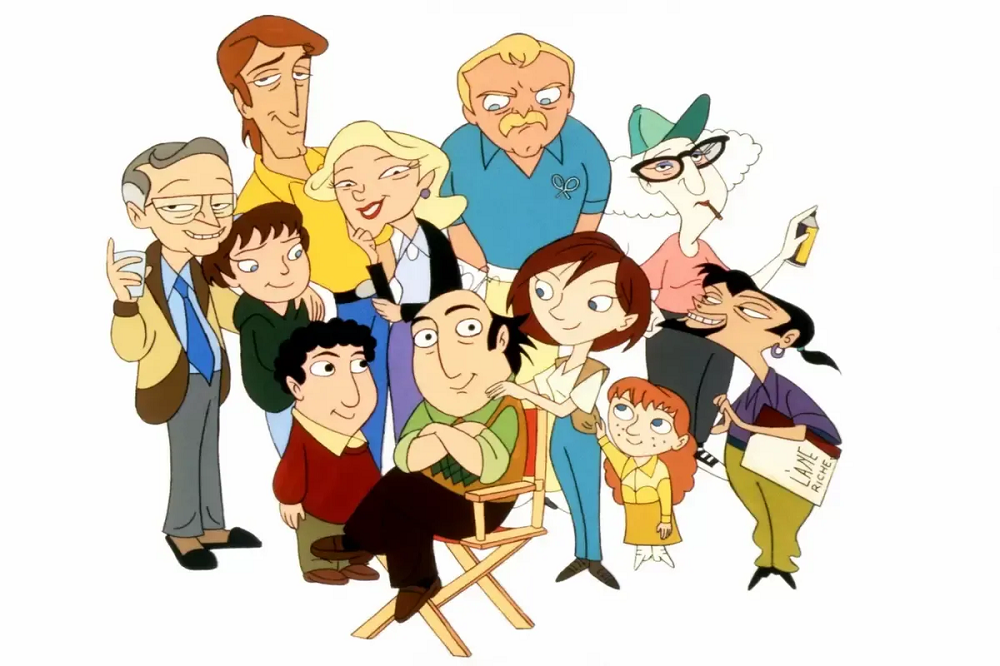
The Critic (ABC): Al Jean and Mike Reiss met at Harvard University, forming a wicked writing partnership with contributions to the Harvard Lampoon, leading to the pair being hired by the National Lampoon after graduation in 1981. As well as doing some joke writing for Airplane II: The Sequel, the duo began dabbling in writing for TV on the side, selling scripts to the TV version of 9 to 5 and the first season of eventual TV juggernaut Charles in Charge. Their first regular gig came as part of the writing team on HBO’s satirical sketch show Not Necessarily the News, with an engagement as joke writers for The Tonight Show starring Johnny Carson following soon after. Further sitcom work on Sledge Hammer!, ALF, and It’s Garry Shandling’s Show followed, and in 1989 they were hired as two of the first members of the writing team for The Simpsons, an animated spin-off from short segments on The Tracy Ullman Show that, it says here, became quite popular.

Jean and Reiss took over showrunner responsibilities on The Simpsons with season three, but after completing two seasons in the position, they were hired by the show’s production company Gracie Films to come up with ideas for new shows that Simpsons producer (and Gracie founder) James L Brooks could pitch to ABC. They had been asked previously by The Simpsons creator Matt Groening to develop a spin-off show for Krusty the Clown, imagining him as a single father living in New York who has an antagonistic relationship with his make-up lady and an eccentric boss based on CNN chief Ted Turner. Groening turned down the idea in favour of a live-action show starring Krusty’s voice actor Dan Castellaneta that ultimately went nowhere, but when Brooks suggested a show about a make-up lady on the Today Show, Jean and Reiss filled out the cast with other characters from that TV ecosphere and found they had more fun writing another cast member than the make-up lady, re-tooling their Krusty idea to centre on a TV film critic who faces a constant battle to keep his show on the air.
The Critic, 1993-94

After working with him on several episodes of The Simpsons, Jean and Reiss based their lead character on Jon Lovitz and approached him with a view to taking the role. Lovitz turned them down; in the wake of A League of Their Own, he was busy making three movies and could not commit to a regular filming schedule. Brooks suggested Martin Short as a replacement, but Jean and Reiss were adamant it had to be Lovitz, realising that if the show was animated rather than live-action, the actor could probably fit it into his schedule. They were right and Lovitz signed on to play Jay Sherman.

Once the show’s star was in place, Brooks took the show to ABC. In an interview with Cracked magazine, Reiss claims that Brooks had a deal where ABC could basically not say no to a twenty-two-episode run for any show he pitched, and yet they found a way to do just that. Negotiations pared the run down to just thirteen episodes and the rest of the cast were put in place, with Christine Cavanaugh as Jay’s slacker son Marty, Nancy Cartwright as Margo (using her natural voice as the biological daughter of Jay’s adoptive parents), Simpsons script supervisor Doris Grau as acerbic make-up lady Doris (a part especially written for her), and Charles Napier as boss Duke Phillips. Character designs were produced by Family Dog‘s David Cutler, Duckman creator Everett Peck, and Rich Moore and David Silverman from The Simpsons. Alongside Jean and Reiss, the writing team included a young Judd Apatow, In Living Color’s Steve Tompkins, and Late Night with David Letterman and Garry Shandling alums Tom Gammill and Max Pross. Greg the Bunny creator Steven Levitan, former Tonight Show joke writer Patric M Verrone, and former Simpsons scribe Jon Vitti were also on board, with former Letterman staffer Ken Keeler keeping things consistent as story editor.

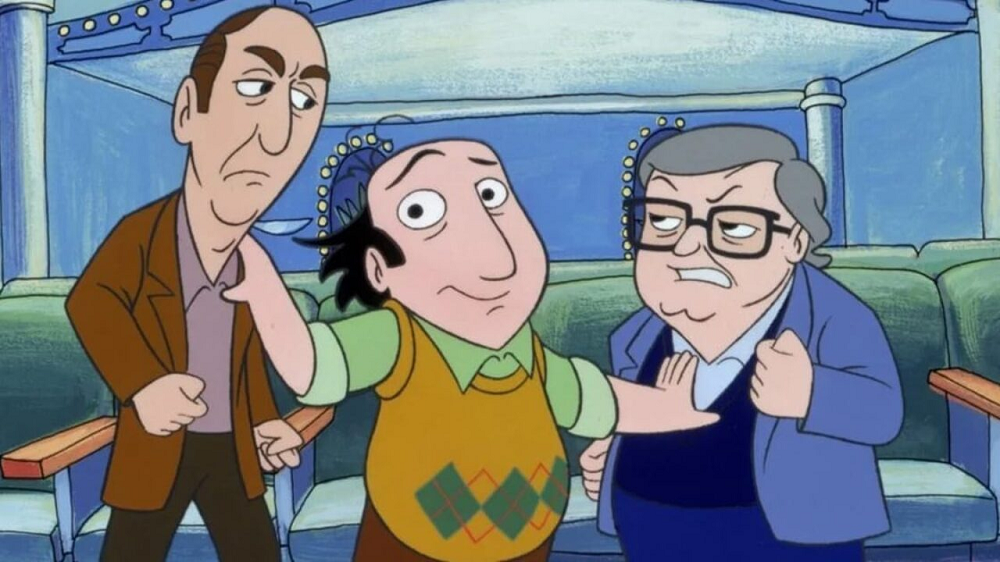
The Critic debuted on ABC on January 26th 1994 as a mid-season replacement in a tricky Wednesday night slot for the network. With top five shows Home Improvement and Grace Under Fire in the 8pm to 9pm slot, a good lead-in was vital, but Joe’s Life and George (starring George Foreman) had already been and gone by the time The Critic was given its chance. Among its guest stars were movie critics Gene Siskel and Roger Ebert, the only TV show they guest appeared in together, and The Critic was famously the only TV show they ever reviewed. Some sources describe The Critic as the first major non-family show animated sitcom to air in prime time, which quite frankly ignores a whole host of early prime-time cartoons before you even get to Top Cat (and Capitol Critters, which debuted on ABC two years earlier), but it was an unusual addition to the schedules, even with the pedigree that Brooks, Jean, and Reiss brought to it.
The Critic, 1993-94

The show posted a decent 15.5 rating for its premiere and reviews were great, but hate mail began to pour into the studio from those who tuned in early for Home Improvement and hated the show. Numbers gena to fall, dipping below 7.0 by episode five, and although things picked up the following week once the Winter Olympics had finished on NBC, the decision was made to put the show in hiatus. Its replacement, ABC’s fourth attempt at finding something that would stick, and the Ed Asner-starring Thunder Alley finally earned some decent ratings in that slot for the alphabet network. The balance of season one’s thirteen episodes was burned off in June and July, but Brooks convinced Fox – home of The Simpsons – to pick The Critic up for a second season, selling them on a premiere episode that would cross over with the network’s top-rated show and sweetening the deal by promising Jean and Reiss would write two episodes of their former show.

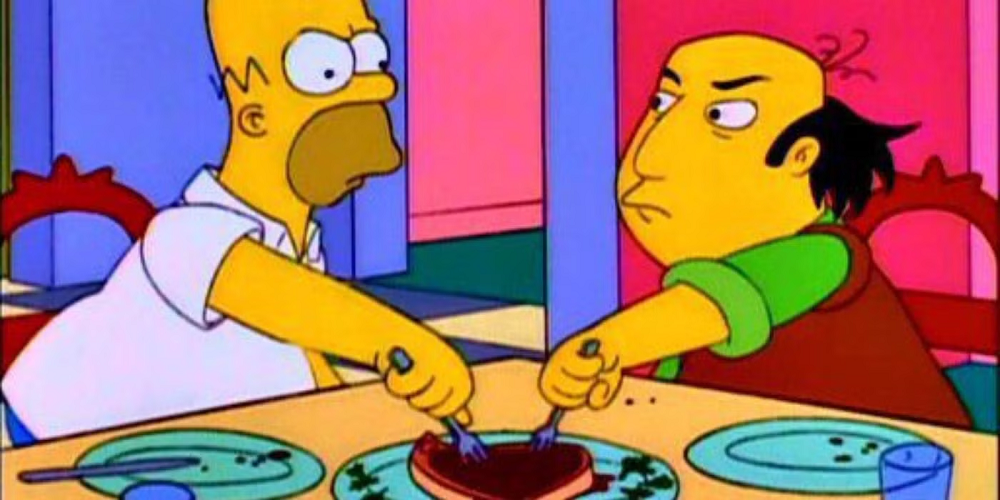
Season two of The Critic began on March 5th 1995 with the second part of that crossover with The Simpsons, which would act as its lead-in going forward. Groening was famously unimpressed with the crossover, which saw Sherman invited to judge a film festival instigated after Springfield is called “America’s worst city,” requesting his name be removed from the episode and calling it little more than a thirty-minute commercial for another show. Brooks hit back, pointing out that Groening was very happy to receive credit for other episodes of the show written and produced by Jean and Reiss, but Jean and Reiss themselves were stung by the criticism. The gambit paid off and the premiere scored an 8.4 rating, just half a point lower than its lead-in. Ratings did fall but remained respectable for a Fox show and work began on a third season, with nine scripts completed, but there was a change of management at Fox, with Sandy Grushow – who’d taken the network to seven days a week – departing in September 1995.

According to Reiss’s memoir of his time in television, 2018’s Springfield Confidential, Grushow’s replacement John Matoian hated The Critic and would call the creators after every show to let them know just how much he despised that week’s episode. Matoian dragged his feet, refusing to commit either way to renewing or cancelling the show, but eventually replaced it in the schedules with one of his own pet projects, House of Buggin’, leaving soon after to become President of HBO. UPN, which had launched in January 1995, were interested in taking The Critic but wanted to refocus the show on Marty and his school life, something Jean and Reiss were unwilling to do.
The Critic, 1993-94

As The Critic was coming to an end, Jean and Reiss signed a three-year deal with Disney to develop shows for ABC but the only one that made the air – 1997’s Teen Angel – was cancelled seventeen episodes into its run. They returned to work on The Simpsons but amicably dissolved their partnership, although they reunited in 2000 when Brooks asked them to create more episodes of The Critic for the internet. The ten three-minute webisodes were available on AtomFilms.com and Shockwave.com, and one – “Cast Away: The Legend of Bagger Vance” – allowed viewers to choose from two endings. The webisodes were later included on a DVD of the complete series.

Jean continued to write for Homer and company, and the pair co-wrote The Simpsons Movie together in 2007. Reiss acted as a consultant on The Simpsons and created Queer Duck, initially for Icebox.com and then for Showtime, as well as writing the screenplays for movies including Ice Age: Dawn of the Dinosaurs, Rio, and critics’ favourite, My Life in Ruins, but is now semi-retired. In March 2025, Jon Lovitz began an internet campaign calling for the show’s return, posting on X that he’d been trying for years to bring the show back and claiming Al Jean was now on board. As of this writing, Jay Sherman remains retired and, frankly, it stinks.

Viper (NBC): At first glance, it might seem that Knight Rider, which ran for four seasons on NBC from 1982, and Viper, a mid-season replacement on the network in January 1994, bear some similarities. In Knight Rider, David Hasselhoff played police detective Michael Arthur Long, near-fatally injured and given a new face and new identity as Michael Knight, working for the Foundation for Law and Government as its chief operative, driving a technologically enhanced Pontiac Firebird Trans Am known as Knight Industries Two Thousand, or KITT. In Viper, James McCaffrey played getaway driver Michael Payton, near-fatally injured and given new memories and a new identity as Joe Astor, working for the Viper Project as its top driver, the only one who can handle a technologically enhanced Dodge Viper RT/10 Roadster known as The Defender. One important difference, though, is that Viper was cancelled once before it aired, only to be given a reprieve because of the involvement of a major sponsor…

Viper was created by Danny Bilson and Paul DiMeo, who’d moved into TV to oversee the transfer of another comic book character, DC Comics’ The Flash, to CBS in 1990, doing the same thing for another DC character, Human Target, a year later on ABC. Both shows lasted just one season, with Human Target burned off during the Summer months, and they were looking for a follow-up project when Paramount Network Television engaged them to create a show that featured a Dodge Viper, part of a deal the studio had struck with the Chrysler corporation, with the show already sold to CBS for a Fall 1993 debut.

James McCaffrey, with just a handful of credits to his name, was cast in the lead role as Joe Astor, with Joe Nipote (whose biggest credit prior to the show was in sex comedy Meatballs II) as sidekick Franklin Waters. Capital News‘s William Russ played the big bad, Mr Townsend, the head of a crime group known only as The Outfit who have laid siege to the near-future Metro City, sparking the creation of the Viper Project, with the temperamental car souped up by wheelchair-bound genius Julian Wilkes (Dorian Harewood).
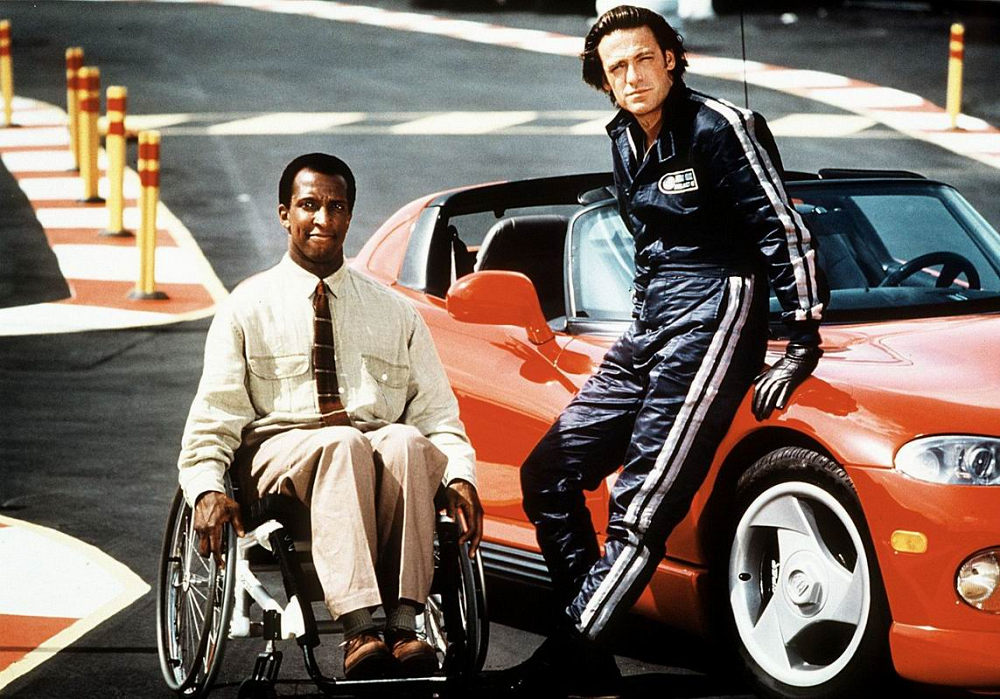
Viper, 1993-94

Just as filming was about to get underway in the Los Angeles area in early 1993, it was discovered that Stephen J Cannell was planning to call his new show Viper, in which Michael Dudikoff would play Robert “Scandal” Jackson, a former NAVY Seal gone AWOL who is near-fatally-injured and given a new face and a new chance at life, working for an undercover anti-crime agency as its chief operative, driving an AC Cobra that is, well, just a normal AC Cobra. Chrysler launched a lawsuit, leading to a delay in production on the Bilson and DiMeo show, with the outcome being that Cannell was forced to change the name of his show – and its fictional agency – to Cobra. Viper then hit another hiccup when CBS bosses declared the show too violent to air and cancelled it before a single episode had even been formally scheduled.

Production continued due to Chrysler’s backing – the company supplied fourteen custom Dodge Vipers for the show – and NBC picked it up as a mid-season replacement on Friday nights, replacing the cancelled Against the Grain which starred a pre-fame Ben Affleck. The show debuted, though, with a feature length pilot as an NBC Sunday Night Movie on January 2nd 1994, garnering a decent 15.3 rating, but once on Friday it began haemorrhaging viewers, eventually averaging a little over seven points. This time, even with Chrysler’s involvement, NBC decided to cancel the show, although there was no chance to tie the story up with any kind of resolution, especially the internal conflict between Astor and his memories as Michael Payton.
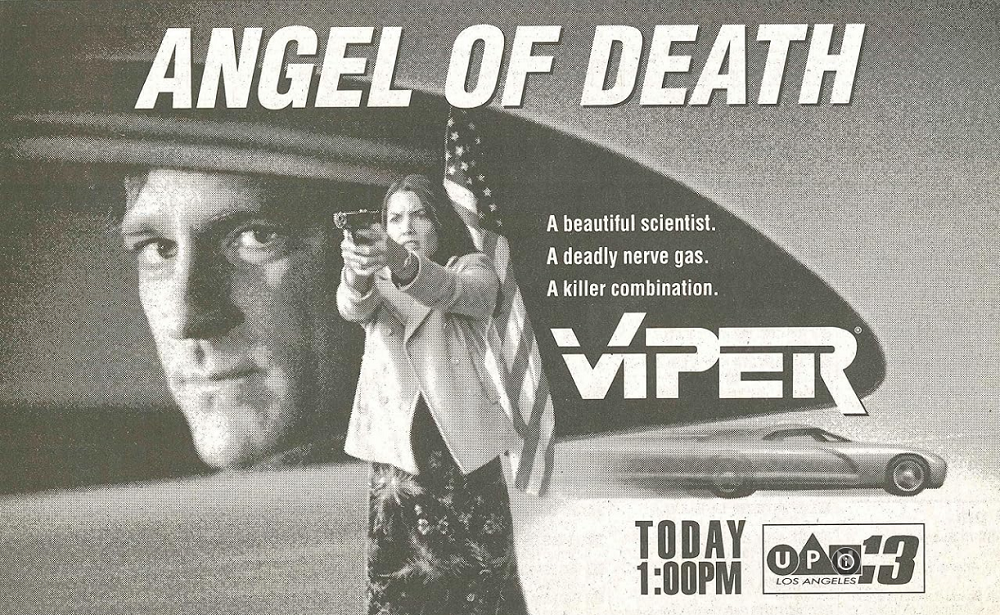
Viper, 1993-94

Chrysler and Paramount were determined to continue the show in some form and retooled it for the syndication market, using Paramount’s syndication unit as a distributor and the newly launched UPN network as a placeholder in markets where they could not sell the show to another channel. With Astor’s absence explained by his reassignment to deep undercover duties overseas, Jeff Kaake (from maverick cop drama Nasty Boys) was brought in as CIA man (and ace driver) Thomas Cole, heading up the resurrected Viper Project to combat the threat of a group of renegade ex-commandos led by Tim Thomerson’s Colonel Hanson Dekker. With mechanic Waters providing a soupçon of continuity, Cole was partnered with Metro City cop Cameron Westlake (Heather Medway, the future Mrs Danny Bilson) and aided by tech specialist Allie Farrow (newcomer Dawn Stern) in his new mission.

Season two – season one is now referred to by fans as “The Classic NBC Season” – debuted in September 1996 and did well enough that a third season, with multiple antagonists but no Dawn Stern – began a year later. In the season three finale, scripted by Danny Bilson’s father Bruce, the Viper Project is closed down, the Defender destroyed to keep it out of enemy hands, and Cole is reassigned to, yes, undercover work overseas.

Fans could have been forgiven for thinking that it was finally the end for Viper after several false finishes, but season four duly appeared in September 1997, this time with James McCaffrey back as Joe Astor, recalled from Europe to combat a crime wave that has arisen in the wake of the Viper Project’s dissolution. Working alongside Westlake, and with Dorian Harewood also back as Julian Wilkes, this time Astor drives a 1996 Cobalt Blue Metallic Dodge Viper GTS Coupe, tricked out to the same specifications as the original Defender. This time the story did come to a conclusion at the end of the season, neatly tying up not only the story of the Viper Project in all its incarnations, but also giving some kind of closure to the Joe Astor/Michael Payton conflict. By that point, Bilson and DiMeo were show running their next project, The Sentinel, for UPN, after which they would move seamlessly into videogames, working as creative executives for Electronic Arts and, later, THQ.

Fallen Angels (Showtime): William Horberg moved to Hollywood in 1986 with one intention: make movies based on the noir detective stories he’d secured the rights to back in Chicago. Still in his mid-twenties, and already having run a movie theatre, formed a company to distribute short films, and become a documentary producer, he had a slate of good stories by Nelson Algren, Chester Himes, and Mickey Spillane and just needed to find the right people to adapt them. Nothing came of a proposed movie adaptation of Algren’s short story collection Neon Wilderness, but his Mickey Spillane project found a home with producer Jonathan Demme and director George Armitage, with Fred Ward attached to star. That, too, fell through, but he secured an associate producer credit on Miami Blues – produced by Demme, directed by Armitage, and starring Ward – after he sold Ward on the novel by Charles Willeford it was based on.

Horberg did manage to sell Palace Pictures on an adaptation of Chester Himes’s A Rage in Harlem, which starred Gregory Hines and Forrest Whitaker, and in 1992 he followed a colleague from Paramount to Sydney Pollack’s Mirage Enterprises. It was there that he came back around to Mickey Spillane and, working with Steve Golin – whose Propaganda Films had just completed In Bed with Madonna – he developed Fallen Angels, a neo-noir anthology adapting classic hardboiled detective stories by some of the genre’s top writers, all set in a stylised Los Angeles sometime between the end of the Second World War and the assassination of John F Kennedy.
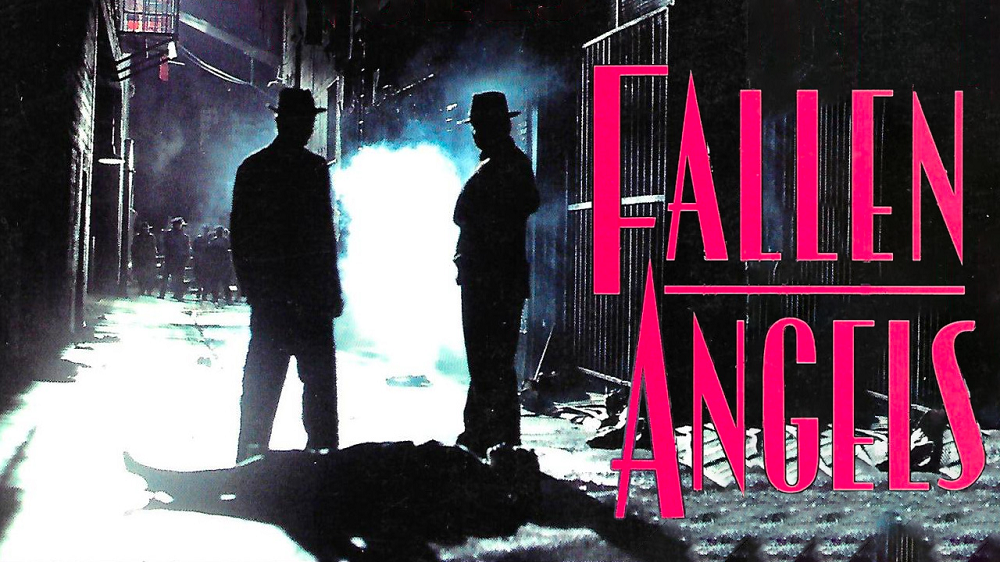
Fallen Angels, 1993-94

Although the Spillane stories were the catalyst for the project, none of his stories featured in the six-episode run, which found a home at Showcase for an August 1993 debut. Novelettes by William Campbell Gault, Raymond Chandler, Jonathan Craig, Jim Thompson, Cornell Woolrich, and James Ellroy were included, featuring a parade of vengeful flatfoots, recalcitrant molls, corrupt cops, and hopeless gamblers. With Pollack acting as executive producer and Propaganda’s name attached, Fallen Angels attracted some impressive talent, both behind and in front of the camera. Gary Oldman, Joe Mantegna, Isabella Rossellini, Laura Dern, Diane Lane, Gary Busey, and James Woods signed on to appear, with Rattle and Hum‘s Phil Joanou, Stephen Soderbergh, Jonathan Kaplan, first-timers Tom Hanks and Tom Cruise, and Alfonso Cuarón on his US debut completing the list of directors.

A book reprinting the stories adapted in the show and a soundtrack album – featuring torch songs by Billie Holliday and others – were released, and the run was successful enough that a second season was commissioned for 1995, this time of nine episodes. Again, the talent list was impressive, with Soderbergh, Kiefer Sutherland, Peter Bogdanovich, Michael Lehmann, Benicio del Toro, Miguel Ferrer, Darren McGavin, Christopher Lloyd, and Danny Glover all involved in adaptations of stories by Chandler, Woolrich, Dashiel Hammett, Walter Moseley, and – yes – Mickey Spillane. With a mixed reception from critics, no further series were forthcoming, although the show did enjoy some success in Europe, where it was known as Perfect Crimes.

TekWar (syndication): Killing time when filming on Star Trek V: The Final Frontier was held up by a Writer’s Guild of American strike in the Summer of 1988, William Shatner began sketching the plot of a movie that blended the science fiction of Star Trek with the police action of TJ Hooker. As the strike wore on, he wrote more and more until he had the outlines for a series of novels, the first of which – TekWar was published in October 1989. It’s now accepted that Ron Goulart, who wrote over a hundred pulp novels and film adaptations in the 1970s and 1980s, ghost-wrote the books, receiving an acknowledgment in the first for showing Shatner “the way into competing this novel.”

TekWar told the story of Jake Cardigan, a twenty-second-century cop who, as the novel opens, is framed for dealing Tek, an addictive drug that takes the form of a microchip and takes users to a dreamy, virtual reality world, of which Jake is a recovering user. Sentenced to fifteen years frozen in cryo-imprisonment, he is unfrozen after just four when Walt Bascom, the head of the Cosmos detective agency, offers him a deal: he’ll prove Jake’s innocence if he agrees to work for him, solving crimes related to Tek. Partnered with good-natured Sid Gomez, Jake hits the street in search of a missing scientist who may have developed an invention that could destroy the trade in Tek…

TekWar was a success and was followed by TekLords and TekLab in 1991, and Tek Vengeance and Tek Secret two years later, but Shatner had little luck selling an adaptation of the novels to movie studios, who felt that it would be too expensive to accurately replicate the twenty-second century of the books. It was with this in mind that Shatner, when approached by Marvel’s Epic Comics imprint about a comic book adaptation in 1992, insisted they set the story no more than fifty years in the future. TekWorld, written and drawn by Evan Skolnick and Lee Sullivan from Shatner’s original stories, was published in September 1992 and would eventually run for twenty-four issues before becoming a victim of Marvel’s financial woes in the mid-1990s.

TekWar, 1993-94

The comic book adaptation caught the eye of Atlantis Films, who made a deal with Shatner’s own production company Lemli Productions to create a TekWar TV show. Stephen Roloff, who done similar work on Friday the 13th: the Series, Maniac Mansion, and Beyond Reality, was given the responsibility of translating the world of the books to a television budget, and his pitch book ensured that Atlantis struck a deal with Universal for a series of four TV movies. The deal almost hit a hiccup when Universal insisted Shatner’s name be added to the title, with Shatner concerned that if the series was a failure he would bear the brunt of any criticism, but he eventually acquiesced and TekWar: The Movie premiered in syndication as part of Universal’s Action Pack series on January 17th 1994.

Greg Evigan, who made his name on Broadway before starring in BJ and the Bear on NBC between 1979 and 1981, was cast as Jake Cardigan, with former NFL draftee Eugene Clark his beat partner at Cosmos. Tori Higginson added some glamour as Beth Kittridge, an android replicant who shares the memories of the original Beth, the only witness to the murder of Jake’s original partner, while Catherine N Blythe played Walter Bascom’s indispensable assistant Centra, and Shatner himself signed on to play Bascom. Shatner also directed the first movie, which guest-starred Sheena Easton as WarBride, an old flame of Cardigan’s. It followed the plot of the original novel, with the three subsequent films – in February, March, and May 1994 – adapting books two to four in the series.
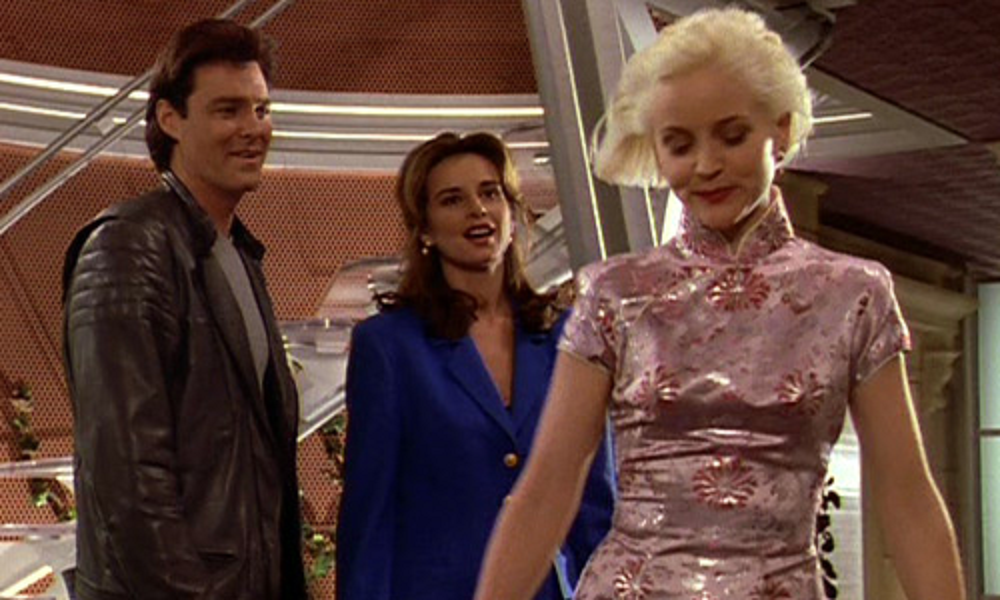
TekWar, 1993-94

Although they received average reviews from the critics, the TV movies were very successful in their syndicated markets, with some channels reporting up to a 44% increase in viewers on previous shows in that timeslot. It was especially popular in Canada, where it aired on CTV, and that network partnered with Universal to commission a series of eighteen, hour-long episodes from Atlantis for a December 1994 debut in Canada, a month after the publication of the sixth novel in the series, Tek Power. In the US, where Universal sold the show to the USA Network, season two of TekWar premiered on January 16th 1995 with an original story that detailed a tech-mogul’s plan to put the addictive element found in Tek into his music players.

The main cast remained the same for the ongoing series, although Catherine Blythe departed, to be replaced by Natalie Radford as Nina, and Maria Del Mar arrived as Sam Houston, a new, sexier partner for Jake. The season premiere scored the highest rating for a debut on basic cable and as the series went on, the world of 2044 – the TV show keeping the comic books’ fifty-year gap – was further explored. Shatner again directed the first episode (and the season finale), but ratings declined after the premiere, particularly in the US where the USA Network made the decision to cancel the show in July 1995 after fourteen episodes had aired. Due to an unusual simulcast agreement, CTV also pulled the show from the schedule, with the final four episodes left unaired.

Sci-Fi picked the show up for re-runs, beginning a complete series repeat in late 1995, just as the seventh novel in the series – TekMoney – was published, eventually airing the four unseen episodes in January 1996. CTV took the opportunity to air those episodes, too, meaning that both sides of the border enjoyed the finish of the season as it should have been in February 1996. Two more novels appeared following the finish of the TV show – TekKill in October 1996 and TekNet a year later – and there was an announcement of the development of an animated TV reboot in 2021 from Pure Imagination Studios, which would allow viewers to interact with the story, but nothing has been heard since.

Next time on The Telephemera Years: more of the 1993-94 season’s passing fads, including tennis prodigies and Harvard-educated bounty hunters…

Check out our other Telephemera articles:

The Telephemera Years: pre-1965 (part 1, 2, 3, 4)

The Telephemera Years: 1965 (part 1, 2, 3, 4)

The Telephemera Years: 1966 (part 1, 2, 3, 4)

The Telephemera Years: 1967 (part 1, 2, 3, 4)

The Telephemera Years: 1968 (part 1, 2, 3, 4)

The Telephemera Years: 1969 (part 1, 2, 3, 4)

The Telephemera Years: 1970 (part 1, 2, 3, 4)

The Telephemera Years: 1971 (part 1, 2, 3, 4)

The Telephemera Years: 1972 (part 1, 2, 3, 4)

The Telephemera Years: 1973 (part 1, 2, 3, 4)

The Telephemera Years: 1974 (part 1, 2, 3, 4, 5)

The Telephemera Years: 1975 (part 1, 2, 3, 4)

The Telephemera Years: 1976 (part 1, 2, 3, 4)

The Telephemera Years: 1977 (part 1, 2, 3, 4)

The Telephemera Years: 1978 (part 1, 2, 3, 4)

The Telephemera Years: 1979 (part 1, 2, 3, 4, 5, 6)

The Telephemera Years: 1980 (part 12, 3, 4)

The Telephemera Years: 1981 (part 1, 2, 3, 4)

The Telephemera Years: 1982 (part 1, 2, 3, 4)

The Telephemera Years: 1983 (part 1, 2, 3, 4)

The Telephemera Years: 1984 (part 1, 2, 3, 4)

The Telephemera years: 1985 (part 1, 2, 3, 4)

The Telephemera Years: 1986 (part 1, 2, 3, 4)

The Telephemera Years: 1987 (part 1, 2, 3, 4)

The Telephemera Years: 1988 (part 1, 2, 3, 4, 5)

The Telephemera Years: 1989 (part 1, 2, 3, 4)

The Telephemera Years: 1990 (part 1, 2, 3, 4)

The Telephemera Years: 1991 (part 1, 2, 3, 4)

The Telephemera Years: 1992 (part 1, 2, 3, 4)

The Telephemera Years: 1994 (part 1, 2, 3, 4)

The Telephemera Years: 1995 (part 12, 3, 4)

The Telephemera Years: 1996 (part 1, 2, 3, 4)

The Telephemera Years: 1997 (part 1, 2, 3, 4)

The Telephemera Years: 1998 (part 1, 2, 3, 4)

The Telephemera Years: 1999 (part 1, 2, 3, 4)

The Telephemera Years: 2000 (part 1, 2, 3, 4)

The Telephemera Years: 2001 (part 1, 2, 3, 4)

The Telephemera Years: 2002 (part 1, 2, 3, 4)

The Telephemera Years: 2003 (part 1, 2, 3, 4)

The Telephemera Years: 2004 (part 1, 2, 3, 4)

The Telephemera Years: 2005 (part 1, 2, 3, 4)

The Telephemera Years: 2006 (part 1, 2, 3, 4)

The Telephemera Years: 2007 (part 1, 2, 3, 4)

The Telephemera Years: 2008 (part 1, 23, 4)

The Telephemera Years: O Canada! (part 1, 2, 3, 4)

Titans of Telephemera: Irwin Allen

Titans of Telephemera: Stephen J Cannell (part 1, 2, 3, 4)

Titans of Telephemera: DIC (part 1, 2)

Titans of Telephemera: Filmation (part 1, 2)

Titans of Telephemera: Hanna-Barbera (part 1, 2, 3, 4, 5)

Titans of Telephemera: Kenneth Johnson

Titans of Telephemera: Sid & Marty Krofft

Titans of Telephemera: Glen A Larson (part 1, 2, 3, 4)

Titans of Telephemera: Quinn Martin (part 1, 2)

Titans of Telephemera: Rankin/Bass

Titans of Telephemera: Ruby-Spears

Titans of Telephemera: Aaron Spelling (part 1, 2, 3, 4)

Titans of Telephemera: Sunbow

Mattias Johnsson Haake • SYMBAROUM – CITY OF ETERNAL EUPHORIA

Mattias Johnsson Haake is a games designer and creator, best known for his work on the award-winning Dragonbane and Symbaroum TTRPGs. We caught up with him to find out more about Symbaroum – City of Eternal Euphoria, a new book for your Symbaroum campaign.

How would you pitch Symbaroum – City of Eternal Euphoria to your casual Game of Thrones fan?

Generally speaking, Symbaroum shares some similarities with Game of Thrones‘ political fantasy drama and human-centric societal structure, but the town of Agrella has no clear parallel in Westeros. Even if the analogy is far from spot-on, I’d rather compare the setting and story of the Agrella module to a cold war agent thriller in fantasy shrouding.

And how would you pitch it to a fan of the Symbaroum range?

I’d invite them to experience a different take on the main themes of Symbaroum. A few previously published adventures have also been set in urban areas, such as Wrath of the Warden and The Darkest Star, but this new book has even more focus on intrigue and faction play. It has a real cloak-and-dagger feel to it, without turning away from what is at the heart of Symbaroum.

What was the selection process for the artwork?

All art for the Agrella module was specifically commissioned, which is how we always do it. The writers are prompted to come up with a motif for every 8-10 pages of the manuscript; they write a description (sometimes including other images for inspiration), which is then forwarded to the artist. Of course, there is always a discussion about which motifs to choose, and sometimes the project lead (me, in this case) will step in to tweak or make changes. But as a rule, the designers and writers must decide what should be illustrated.

Is it possible for Symbaroum to get darker?

Haha, for sure! I would argue that there is quite a lot of light, joy, beauty, and pure intentions in the world of Symbaroum, even if they are mostly there to accentuate the darkness. It is a balancing act – if the setting grows too dark and serious, without contrasts, you will end up with something that feels only gray.

Does this setting work with the 5E rules set as well? Are the rules important to the atmosphere?

The Agrella module has not yet been converted to our 5e gameline, called Ruins of Symbaroum, but it probably will. The rules are important, even crucial when it comes to Symbaroum, as they highlight and gamify the core concepts of the setting: corruption, spiritual shadows and the sense of “real” danger. Both available rulesets (original Symbaroum and Ruins of Symbaroum 5e) are built to reflect said concepts, and playing in the setting without those elements would not be the same.

What is the biggest influence on the Symbaroum setting?

If I have to rank them, I would first and foremost say our world, as perceived by us designers, writers, and artists. Second would be the continuous adventure campaign for Swedish Drakar och Demoner (now Dragonbane) that me and my friends played in our youths. Honorary mentions should go to Game of Thrones, Princess Mononoke, and French sociologist Pierre Bourdieu.

Has social media ruined TTRPGs?

Not for me. On the contrary, I believe that the boom in roleplaying (and gaming in general) over the last decade owes a lot to social media.

What’s the toughest part of the creative process for you?

The finishing touches, no doubt. Having ideas and even penning them down in an orderly fashion is a pleasure, but the closer you come to the finish line, the closer you get to readying the print files, the tougher it gets – especially when it comes to 176-page adventure modules that must function as instruction manuals for thousands of gamemasters with different preferences, tastes, and backgrounds in gaming.

What other projects would you like to work on?

I am fortunate enough to work at Free League, meaning that I get to write and edit manuscripts inspired by a wide variety of genres – sci-fi, post-apocalypse, horror, magical realism, and different flavors of fantasy. Currently, what I long for the most is to start designing the new main setting for Symbaroum: the City States.

Simpsons or Futurama?

Lisa Simpson and Bender. That would be a show!

Dungeons or Dragons?

Easy: Forests and humans (the latter being my favorite monster).

Truth or Beauty?

Truth (as opposed to willful lies) is beautiful, and seems to grow rarer by the day.

Symbaroum – City Of Eternal Euphoria is out now!


Suyi Davies Okungbowa • BLACK PANTHER: THE INTERGALACTIC EMPIRE OF WAKANDA

Suyi Davies Okungbowa is an award-winning fantasy, science fiction and tie-in author. His works include Son of the Storm and the award winning Godhunter. He has also written tie-in books such as Stranger Things: Lucas on the Line and Minecraft: The Haven Trials. We caught up with him to find out more about his recent book, Black Panther: The Intergalactic Empire of Wakanda.


What’s the elevator pitch for Black Panther: The Intergalactic Empire of Wakanda?

Take a few misguided individuals from the most technologically advanced nation on earth. Shoot them into space, where their plans go awry and they’re forced to survive by starting a new colony that quickly turns into an intergalactic empire spanning various planets. Then, take a man – no, a legend, from the old world – who does not remember his own name, but whose coming awakens rumors of a saviour who will liberate all under the empire’s brutal rule. Slot that man into the rebellion. Put this in a blender. Mix.

Why should I read this book?
Why shouldn’t you? It’s the Ur-story, isn’t it? A legend, a prophecy, an oppressed social underclass under brutal rule. A promise of liberation via hard-fought wins. But there are two caveats. One is that every powerful institution, however benevolent its roots, possesses the same capacity for brutality and oppression – power corrupts, after all. And two, colonisation can happen anytime, anywhere, and by anyone. Wakanda may be an analogue for imagined possibilities for Afrodescendant peoples in our real world’s history beyond the suppression, minoritisation and marginalisation they have long suffered. But with power comes responsibility – wield it unwisely, and it could just as easily turn one into an oppressor.

What was exciting about writing a prose adaptation of an existing work?
Ta-Nehisi, for one. I could see how much thought he’d put into the work, the roots, drawing from both African and African-American history to build this larger-than-life intergalactic world. And of course, writing the interstices, the stories between the adaptations – it’s like threading a bracelet, see. What needs to happen here to take us from this point to that? It’s more than just filling in the gaps. It’s being in constant conversation with the writers, artists, worlds, lore, and characters that have come before you.

What advantage does prose have over sequential art?
I don’t know about advantages per se. I like to think each form offers opportunities the other does not – the question is how we make use of them. Working with prose as the sole medium offers, for instance, opportunities to communicate on multiple fronts. A carefully chosen turn of phrase, syntax, punctuation, for instance, may offer information, tone, history, emotion, etc, all at once. Literature can cut across time and space within the frame of a few words in a way still images can’t. However, I still learned a lot from looking at the images and digging deep, wondering: What are they thinking? How do they feel? And then seeking the words to capture that.

If you could sit one of the characters from the books down and have a word with them, who would it be and what would you say?
I liked spending time with Nakia. She’d once been a subject of the intergalactic empire – a perpetrator of its brutality, even – before switching over to the rebellion. Characters who switch allegiances interest me, because it means deconstruction (or propaganda, even) has been successful on some level. I’d like to ask: What was the moment you realised you couldn’t be this person anymore? How hard was it to leave behind everything you knew and loved and commit to something nebulous and potentially doomed?

Which character was the most fun or interesting to write?
That’ll be shared between Bast, Captain N’Yami and Emperor N’Jadaka. The amphibious Teku-Maza, in general, were the most interesting to write about, and N’Yami being the most prominent of them gave me some time to think about how they perceive themselves. Then, the uphill task of portraying the brutal emperor N’Jadaka as a gentle, family man – tyrants contain multitudes; who knew? And then, Bast as a brash and prideful goddess, forcing us to question the expected wisdom of gods. I enjoyed making a seemingly all-powerful deity squirm, asking the reader to reckon with the fallibility of gods.

What invention or special ability from the book would you want to have in the real world?
Teleportation. It’s dangerous, actually, for the human – you disintegrate someplace and re-form someplace else. One has to wonder if it’s the same person on the other side. In the book, the Manifold teleports relentlessly, as transport, as weapon. For the savings on transport alone, I’d love to have that, consequences be damned.

What’s the toughest part of the writing process for you?
Locking down the tone and voice of the work. Sometimes, it’s part of what first arrives, when the rest of the work is still being formed in the mind. Other times, you’ve gotta work at it. It’s the latter that’s hard, you know? Pinning down how you want the work to sound when you haven’t yet figured out the shape of the work itself. But we get there somehow, whatever the route. I sure did with this book, however circuitous the path.

What other projects would you like to work on?
Star Wars, probably. Huge fan of Andor and the Mandalorian lore. I could totally see myself working in that world.

Black Panther: The Intergalactic Empire of Wakanda Is out now.

Sam Riegel • CRITICAL ROLE – WILDEMOUNT WILDLINGS

Sam Riegel is best known for his work as a cast member on hit D&D show Critical Role. The voice actor is also well known for roles including Dontello in 2003’s Teenage Mutant Ninja Turtles and as Phoenix Wright in the Ace Attorney games. He’s also the Dungeon Master for Wildemount Wildlings, a short actual play Critical Role show set in a fantasy summer camp. We caught up with him to find out more.

How would you pitch Wildemount Wildlings to an Antarctic explorer who’s never seen D&D?
First, I’d say, come in, get out of the cold! Next I’d ask, what century are they from? Cos is this gonna require me explaining what computers are first…? But to answer your question – I’d say it’s a silly and sweet coming-of-age story about four down-on-their-luck would-be adventurers at a summer camp who are learning how to control their powers and be confident in themselves!

This game is inspired by a home game you ran for your kids. What similarities between the two games surprised you?
It’s amazing what out-of-the-box decisions the kids make in our home game. They’re always surprising me with the strange ways they tackle encounters. And I gotta say – even though we have adults playing kids in this miniseries, they really did some weird stuff. Especially Aleks – he captured the off-the-wall thinking of a kid brain. In the best possible way.

How much of your DM-ing is planning, and how much is pure chaos?
I plan a lot! Probably too much! But that’s what I need to do to feel confident enough to throw it all in the trash and let chaos reign. If I have three different plans, then I’m OK with a fourth way that I’m not ready for, cos I know I have backup plans galore.

In the past you said you wanted to play a brain in a jar, will we see that any time soon?
That’s my eternal backup character. Just a powerful wizard brain in a jar. Other people have to carry me around and feed me and stuff. It would be the perfect lazy man character. Maybe campaign four…

What was the process for picking the players? It’s an interesting collection of folk.
Marisha and Ashley were first on the list cos they talked about visiting the camp at the end of the Bells Hells campaign. And Brennan was an easy choice because of his extensive summer camp background. For the others – they’re just folks I’ve been dying to play with! My sister is brilliant and I’ve been searching for a way to get her on our channel. And Libe and Aleks are such talented voice actors, I knew they would shine.

Was it your idea to ask your sister to play, or did they ask? How did that conversation go?
Eden had never played D&D before, so I invited her and her family over to play at my house the week before we shot. Not only did she love it, but her son took to it with such excitement that he is now part of two campaigns!

How mindful of the lore did you have to be with this one?
Lore schmore! My main goal was to establish this camp as a platform for folks to run home games. It’s perfect for family or kid-centered campaigns and so I wanted to flesh it out for folks to be inspired.

If you were creating your own Scout organisation, what would be its first rule?
Wilde Out is a pretty great principle. Be a kid. Be wild. Be different. Rules are made to be broken.

What’s the best bit of advice you have for younger D&D Players?
Young players are sometimes scared of failure – they keep asking to reroll dice or bend the rules to succeed. So I’d advise them to embrace the failure. It’s a group game. If you fail, it’s a gift to your fellow players – now you’ve created a new problem they get to solve! Failure is the best gift to a table.

What’s next on your list of dream projects?
I’d love to run a serious campaign with intrigue and darkness and pathos and heartache. But I’ll probably just run a Fart Campaign or something instead.

You can find out more about Critical Role‘s show on Beacon.TV, and you can catch up with Wildemount Wildlings via Beacon.TV or YouTube.

THE TELEPHEMERA YEARS: 2004, part 4

Super Robot Monkey Team Hyperforce Go!, 2004-05

Ah, telephemera… those shows whose stay with us was tantalisingly brief, snatched away before their time, and sometimes with good cause. They hit the schedules alongside established shows, hoping for a long run, but it’s not always to be, and for every Street Hawk there’s two Manimals. But here at STARBURST we celebrate their existence and mourn their departure, drilling down into the new season’s entertainment with equal opportunities square eyes… these are The Telephemera Years!

2004-05

After finishing the 2003-04 season with just one show – perennial favourite Monday Night Football – in the top twenty rating shows, ABC hit back in Fall 2004 with a slate of new arrivals that took the US by storm. Crashing into the top ten were both Desperate Housewives and Grey’s Anatomy, while the buzz created by mystery box classic Lost saw twenty million viewers tune in for its finale. CBS still ruled the roost, however, with the juggernaut that was CSI: Crime Scene Investigation showing no signs of slowing down, backed by spin-off CSI: Miami, another police procedural in Without a Trace, and reality show Survivor. American Idol secured two places in the top three for Fox, while NBC continued to struggle, the days of Must See TV fading fast in the wake of Friends and Seinfeld ending; ER, its highest rating show, could claim only the number twelve spot.

There were plenty of new arrivals to keep the ABC blockbuster trio company, though, with Boston Legal doing well on ABC, CSI: New York joining the CBS CSI family, and Family Guy spin-off American Dad debuting on Fox. NBC tried out a spin-off of their own in Joey, which didn’t do well, but Medium and The Office were more successful. Offbeat detective action could be found on UPN as Veronica Mars sought to solve the mystery of her murdered classmate, HBO premiered both Deadwood and Entourage, and genre fans were well-catered for with The 4400 on the USA Network and Stargate Atlantis on Sci-Fi. Those were all shows for adults, though; what about ones aimed at (but not necessarily exclusively watched by) kids? This is the story of 2004’s new cartoons…

Super Robot Monkey Team Hyperforce Go! (Jetix on ABC Family): The glut of shows that arrived with the fragmentation of children’s television in the twenty-first century has meant that even some shows that lasted for years have failed to make the transfer from popular culture’s short to long term memory. A perfect example is Super Robot Monkey Team Hyperforce Go!, which lasted four seasons and over fifty episodes, but barely registers on the zeitgeist scale, despite its notable position as the first original programming created for Disney’s Jetix block. Jetix launched on ABC Family in February 2004 to compete with Cartoon Network’s Toonami strand as a showcase for superhero, anime, and adventure shows.

Although it wasn’t part of the Toonami block, Cartoon Network had a hit in the Summer of 2003 with Teen Titans, an anime-inspired cartoon based on DC Comics’ long-running adolescent superhero team. One the team behind teen Titans was Ciro Nieli, a graduate of Philadelphia’s University of the Arts who had joined Warner Bros. Animation in 2000, and alongside his work on Teen Titans, Nieli was developing his own show, which he pitched to Disney executives in 2003. Even more than Teen Titans, Super Robot Monkey Team Hyperforce Go! took its inspiration from classic anime such as Astro Boy and Speed Racer, but also added in elements of Star Trek, Star Wars, and the Super Sentai series. Nieli also brought in Lynne Naylor and Chris Reccardi, who had just finished up on Samurai Jack, alongside Darkwing Duck‘s Tad Stones and Gargoyles creator Greg Weisman.

Super Robot Monkey Team Hyperforce Go!, 2004-05

The show’s main protagonist is Chiro, a young boy who finds an abandoned giant robot while out exploring the overgrown outskirts of Shuggazoom City, close to The Zone of Wasted Years. Inside the robot, he finds and accidentally awakens five robotic monkeys, the process also imbuing him with the energy of the Power Primate, enabling him to transform into a stronger, braver fighter. With his new abilities, Chiro becomes the leader of the Super Robot Monkey Team Hyperforce, teaming with Antauri, Gibson, Nova, Otto, and Sparx to save Shuggazoom City from the evil Skeleton King, the very menace the Hyperforce was created to combat all those years ago.

With a voice cast that included Clancy Brown, Greg Cipes (Teen Titans’ Beast Boy), Corey Feldman, Spongebob Squarepants’s Tom Kenny, Kevin Michael Richardson, and Mark Hammill as the Skeleton King, Super Robot Monkey Team Hyperforce Go! debuted on September 18th 2004 with a thirteen-episode season that quickly won over critics and viewers. Further seasons – also of thirteen episodes each – arrived in February 2005, October 2005, and September 2006, and Nieli had plans for a fifth, but ratings and merchandise sales had declined to a point where Disney pulled the plug, despite season four ending on a terrific cliffhanger. Nieli, who went on to work on Avengers: Earth’s Mightiest Heroes and the 2012 Teenage Mutant Ninja Turtles reboot, has always stated his intention to complete the story, but there has been no news on that front since Cipes shared some shared pre-production sketches in June 2018.

Phil of the Future (Disney Channel): Douglas Tuber and Tim Maile met when they were both part of the writing team for Nickelodeon’s camp-based sitcom, Salute Your Shorts. It was Tuber’s first scriptwriting gig, but Maile had written for the USA Network’s Friday night talk show Camp Midnite and its predecessor What a Week before joining the Salute Your Shorts crew. Forming a writing partnership, the pair worked on Armageddon comedy Woops!, Herman’s Head, and Margaret Cho vehicle All-American Girl, where they also acted a producers. Life’s Work and child prodigy sitcom Smart Guy followed before they were given the job of shepherding Lizzie McGuire from its high concept creation to the show that appeared on the Disney Channel in January 2001.

Tuber and Maile stayed with the show until disagreements between Disney and star Hilary Duff brought it to and end after two seasons. Their work had not gone unnoticed, though, and they were given the chance to create their own show. Their brainstorming sessions were inspired by a song, Elvis Costello’s “Man Out of Time” from his 1982 album Imperial Bedroom, but rather than follow the song’s theme of a man running out of time, they focussed on a person being out of their time period. Further inspired by the Zager and Evans classic “In the Year 2525,” they came up with the idea of a family of time travellers from the far future stuck in our time.

Taking a lead from Disney’s other shows, the pilot script had a working title of Girl from the Future, but the channel felt they needed a show featuring a male lead. Disney also wanted to age the main character down from thirteen or fourteen to nine or ten, but Tuber and Maile stood firm, feeling that they’d already seen the perfect candidates to play their lead and his female best friend (who they knew from the start would turn out to be something more than that). Now titled Phil of the Future, the show centred around Phil Diffy (Raviv “Ricky” Ullman in his first starring role) and his younger sister Pim (a sparky Amy Bruckner), the children of Lloyd (Lizzie McGuire‘s Craig Anton) and Barbara Diffy (Lise Simms from The Young and the Restless), time travellers from the year 2121 who are stuck in modern day Los Angeles when their time machine breaks down.

Phil of the Future, 2004-05

The pilot (and some scenes in subsequent episodes that were cut) established that Barbara had an artificial body and would relax by removing her head, but after the beheading of journalist Daniel Pearl during the Gulf War, it was not overtly mentioned again. Other elements from the pilot, such as Pim’s aloof demeanour towards the “primitive” people of the twenty-first century, and Phil’s friendship with gal pal Keely (newcomer Aly Michalka) were retained, though, with the first episode of the series debuting on June 18th 2004 with the Diffy’s already integrated into the local community.

The show’s main antagonist was HG Wells High School Vice-Principal Neil Hackett (ER’s Dr Dustin Crenshaw, JP Manoux), who is convinced there is something strange about Phil and Pim, at first thinking they are aliens. Keeping their secret becomes even tougher for the family when they discover a caveman (also played by Manoux) stowed away on their time machine when they visited prehistoric times and they must pretend he is Phil’s uncle Curtis while he, too, learns to live in the modern day.

Phil of the Future, 2004-05

The show’s first season did well enough that it was renewed for a second, although Tuber and Maile were not involved save for directing the episode “It’s a Wonder-Phil Life,” and there were changes made to the supporting cast. Kelly’s best friend switched from rich girl Tia to English rose Via when the actress playing Tia (Brenda Song) was cast on The Suite Life of Zack & Cody, with Phil’s nerdy pal Seth switched out for laid-back Owen. Pim’s reluctant best friend Debbie (whose brain she swapped with that of a chicken in the pilot) was also gone, replaced by Li’l Danny Dawkins, and Spencer Locke came in as mean girl Candida as a replacement for her rival Bradley. A new member of staff was also added, in the shape of Joel Messerschmitt (Six Feet Under‘s Joel Brooks, who also plays Messerschmitt’s similarly moustachioed sister, Bettina).

Season two debuted on June 25th 2005 with an episode where Phil and Pim are forced to live in each other’s bodies for a day, and Phil and Keely grew gradually closer throughout the season until they finally admit their feelings for each other when they are voted Cutest Couple ahead of the school dance. Unfortunately, that coincides with Lloyd’s announcement that he has fixed the time machine – although it has been fixed for some time and he was reluctant to interrupt his family’s happy life in this time – and the two have a heartbreaking parting. Until that is, Phil returns for one last kiss and a promise he’ll wait for Keely (the logistics of which don’t bear thinking about); the family return to 2121, only realising too late that they’ve left Curtis behind.

Ratings were strong enough that Phil of the Future should have received a third season but Disney were faced with a choice between that and funding a new show, Hannah Montana, for Miley Cyrus. Hindsight reveals they made the right decision. Tuber and Maile continued to work together, creating Darcy’s Wild Life for Discovery Kids and developing an animated Famous Five series for Disney, as well as working as writer-producers on Jessie, Littlest Pet Shop: A World of Our Own, and Mira, Royal Detective, all for the Disney Channel. Of the cast, Ullman largely quit acting after appearing in sitcom Rita Rocks in 2009 and now plays music, while Bruckner also left the business behind for a career in law. Michalka formed a singing duo with younger sister AJ (also a Disney Channel star) and had leading roles in Hellcats and iZombie, but now restricts herself to guest roles as she raises her son.

Da Boom Crew (Kids WB): Although it’s commonplace for sitcoms and dramas on the adult schedules to be pulled from the air after just a handful of episodes have been shown, it’s very rare that a children’s show meets the same fate. It happened in 2004, though, and to a show from a creator with a solid pedigree to boot. Bruce W Smith graduated from the CalArts in 1981 and got his first job in animation working on the Garfield in the Rough TV special. He joined Disney, where he worked on Who Framed Roger Rabbit?, and was selected by writer Reginald Hudlin to direct an animated film aimed at a black audience, Bebe’s Kids. The movie, based on the stand-up comedy of Robin Harris, flopped but Smith co-directed the more successful Space Jam before returning to Disney, where he worked on Tarzan and The Emperor’s New Groove.

Smith’s experiences making Bebe’s Kids – and the general lack of animation aimed at black children – stuck with him and when he founded Jambalaya Studios in 1999 with a mission of bringing more “racially and ethnically” diverse animated projects to television, movies, and the internet. Its first project was The Proud Family, an animated sitcom for the Disney Channel that debuted in September 2001 and ran for sixty-two episodes, finishing with a TV movie in August 2005.

Da Boom Crew, 2004-05

In 2004, while working as a supervising animator on Disney’s Home on the Range, he developed a second show for Jambalaya and The WB with Texan brothers John Patrick and Stiles White. Da Boom Crew featured four orphans who create their own video game featuring heroes based on themselves fighting space terrorists. One day, while playing the game, a portal opens above the orphanage and sucks them into a fantasy world exactly like the one in their game. Finding themselves with the abilities of the characters they created, they must find the cartridges they used to store the game – now transformed into glowing, energy-filled “Boom Carts” – before they fall into the hands of emperor Zorch, who wants to extinguish all light in the universe.

With a voice cast that included Jordan Francis (who would later star in Camp Rock and its sequel), Melanie Tonello, Jascha Washington, Walter Borden as Zorch, and Morris Day from The Time as Zorch’s henchman Hedlok, Da Boom Crew debuted on September 11th 2004, one of two new shows on The WB’s Saturday morning block Kids WB alongside The Batman. A month later, viewers tuning in for episode five of the show were presented with a re-run of Pokémon instead. Smith doesn’t talk about the show in interviews and so popular wisdom has it that ratings and a negative audience reaction caused the cancellation, and the collapse of Jambalaya Studios, but when Cartoon Network – who had the rights in the UK – launched the show, a press release reported it was one of Kids WB’s biggest debuts in its timeslot. Whatever the truth, all thirteen episodes were shown in the UK and are available to stream on Tubi.

Hi Hi Puffy AmiYumi (Cartoon Network): Ami Onuki and Yumi Yoshimura were both struggling as solo artists within the Sony organisation when they met by chance at the label’s offices in Tokyo. Although Onuki had already recorded an album with another singer, Unicorn frontman Tamio Okuda, she requested that Sony pair her with Yoshimura, and Okuda stayed on to produce their first sessions, alongside friend and former Jellyfish frontman Andy Sturmer. Sturmer christened the pair PUFFY and their debut single – “Asia no Junshin” (“True Asia”) – was released in May 1996. It sparked a craze known as “PUFFY-mania,” with debut album AmiYumi hitting number three on the Japanese album charts when it was released two months later. They were a constant presence in the top twenty over the next two years and even had their own variety show, Papa Papa PUFFY, on TV Asahi, which ran for almost five years until March 2002.

They also started to look at breaking into the US market, making their debut at the SXSW Festival in 2000, after which they were served with a legal notice from attorneys representing Sean “Puffy” Combs. Changing their name to Puffy AmiYumi for the US, they embarked on a tour once Papa Papa PUFFY finished and were picked to record the theme tune to Cartoon Network’s animated Teen Titans series, written for them by Sturmer.

Teen Titans had been the brainchild of Cartoon Network vice-president Sam Register, who was a long-time fan of the DC Comics team. It was Register who chose Puffy AmiYumi to do the theme after seeing them perform in Japan and becoming a big fan. He decided to pitch a Puffy AmiYumi series to his bosses, ordering a pilot from Renegade Animation, a Californian studio who had been unsuccessful with two pitches of their own, but had impressed Register with their footage. Lynne Naylor – who also worked on The Powerpuff Girls and Foster’s Home for Imaginary Friends – provided character designs and Cartoon Network were happy enough with the pilot that a series was announced at the channel’s upfronts in February 2004.

Hi Hi Puffy AmiYumi, 2004-05

Although the band sang their own songs, which were interspersed throughout the action, Captain Planet and the Planeteers‘s Janice Kawaye and Grey DeLisle (Mandy in Billy & Mandy) provided the voices for Ami and Yumi on the show, with animation veteran (and one of those faces you know from guest-starring in everything) Keone Young voicing their manager Kaz. Additional voices were provided by Corey Burton, Nathan Carlson, and Rob Paulsen, and although the characters spoke English, their vocabulary was often sprinkled with Japanese words.

Hi Hi Puffy AmiYumi debuted on November 19th 2004, two weeks earlier than planned, and featured three short stories per episode. The first saw the pair have to deal with a contest winning fan who will not leave them alone, Ami become obsessed with collecting cereal toys, and Yumi hire a monkey to train her to become a ninja. Subsequent adventures featured goth vampires, a rival duo who are actual babies, lookalike robots on the rampage, a Yu-Gi-Oh! duel for the attentions of a boy, and a parody of Teen Titans, and the thirteen-episode series became a smash among the 6-11 demographic, producing double-digit increases in girls watching, and also becoming a cult hit amongst teenagers, Japanophiles, and fans of Puffy AmiYumi’s music. One segment went unaired, though, as it featured a giant wave and was due to air shortly after the tsunami that killed an estimated 227,898 people in fourteen countries across the Indian Ocean.

Hi Hi Puffy AmiYumi, 2004-05

Puffy AmiYumi’s eighth album, 59, had been released six months before the animated series hit, with work already underway on the follow-up. A second season of Hi Hi Puffy Amiyumi debuted on April 22nd 2005, again with three segments per episode, and this time the pair find an all-knowing Koi carp, Yumi enter a tofu-dog eating contest, Kaz throw a party without them, Ami get kidnapped by Bigfoot, and travel to the year 3,000, where the whole world is dedicated to them. Ratings were again good, especially with young girls, and the success of the cartoon led to other opportunities, with an appearance on Jimmy Kimmel Live! followed by their participation in the Macy’s Thanksgiving Parade, the first Japanese act to do so, with a float in the shape of the tour bus from the cartoon.

Cartoon Network renewed Hi Hi Puffy AmiYumi for a third season, which premiered on February 17th 2006 with an episode that has them go to camp, Yumi need a new guitar, and find the man who sold them the tour bus is living in its carburettor. In the middle of the season, ninth album Splurge was released, giving the band a number nine hit on the Billboard World Music Album Charts. It was the band’s first on the Kloon Music imprint rather than Epic, a result of a shake-up at Sony’s subsidiary labels, and another management shake-up was on the horizon in the US as Sam Register left the channel over disagreements about upcoming projects. This, along with Ben 10 and My Gym Partner’s a Monkey overtaking the show in the ratings, led to season three being the last for the girls, although the show never really ended as such, and we can presume their adventures continued off-screen.

Back in Japan, 2006 marked the tenth anniversary of the band’s formation and they were made goodwill ambassadors by the Japanese Ministry of Land, Infrastructure, Transport, and Tourism. A tenth album, Honeycreeper, was released in 2007, with Bring It! And Thank You following in 2009 and 2011, respectively, and the duo are still very much an ongoing project for Onuki and Yoshimura, although they haven’t released any since 2021’s THE PUFFY, their first album for Warner Music Japan. Issued as part of a twenty-fifth anniversary celebration, the festivities also saw a limited edition boxset of their previous albums released by Sony. Register returned to Cartoon Network in 2020 but is yet to greenlight a revival of his pet project, despite online campaigns for its return.

Next time on The Telephemera Years: we make our final stop, hitting 1993 where Shatner and Space Ghosts await…

Check out our other Telephemera articles:

The Telephemera Years: pre-1965 (part 1, 2, 3, 4)

The Telephemera Years: 1965 (part 1, 2, 3, 4)

The Telephemera Years: 1966 (part 1, 2, 3, 4)

The Telephemera Years: 1967 (part 1, 2, 3, 4)

The Telephemera Years: 1968 (part 1, 2, 3, 4)

The Telephemera Years: 1969 (part 1, 2, 3, 4)

The Telephemera Years: 1970 (part 1, 2, 3, 4)

The Telephemera Years: 1971 (part 1, 2, 3, 4)

The Telephemera Years: 1972 (part 1, 2, 3, 4)

The Telephemera Years: 1973 (part 1, 2, 3, 4)

The Telephemera Years: 1974 (part 1, 2, 3, 4, 5)

The Telephemera Years: 1975 (part 1, 2, 3, 4)

The Telephemera Years: 1976 (part 1, 2, 3, 4)

The Telephemera Years: 1977 (part 1, 2, 3, 4)

The Telephemera Years: 1978 (part 1, 2, 3, 4)

The Telephemera Years: 1979 (part 1, 2, 3, 4, 5, 6)

The Telephemera Years: 1980 (part 12, 3, 4)

The Telephemera Years: 1981 (part 1, 2, 3, 4)

The Telephemera Years: 1982 (part 1, 2, 3, 4)

The Telephemera Years: 1983 (part 1, 2, 3, 4)

The Telephemera Years: 1984 (part 1, 2, 3, 4)

The Telephemera years: 1985 (part 1, 2, 3, 4)

The Telephemera Years: 1986 (part 1, 2, 3, 4)

The Telephemera Years: 1987 (part 1, 2, 3, 4)

The Telephemera Years: 1988 (part 1, 2, 3, 4, 5)

The Telephemera Years: 1989 (part 1, 2, 3, 4)

The Telephemera Years: 1990 (part 1, 2, 3, 4)

The Telephemera Years: 1991 (part 1, 2, 3, 4)

The Telephemera Years: 1992 (part 1, 2, 3, 4)

The Telephemera Years: 1994 (part 1, 2, 3, 4)

The Telephemera Years: 1995 (part 12, 3, 4)

The Telephemera Years: 1996 (part 1, 2, 3, 4)

The Telephemera Years: 1997 (part 1, 2, 3, 4)

The Telephemera Years: 1998 (part 1, 2, 3, 4)

The Telephemera Years: 1999 (part 1, 2, 3, 4)

The Telephemera Years: 2000 (part 1, 2, 3, 4)

The Telephemera Years: 2001 (part 1, 2, 3, 4)

The Telephemera Years: 2002 (part 1, 2, 3, 4)

The Telephemera Years: 2003 (part 1, 2, 3, 4)

The Telephemera Years: 2004 (part 1, 2, 3)

The Telephemera Years: 2005 (part 1, 2, 3, 4)

The Telephemera Years: 2006 (part 1, 2, 3, 4)

The Telephemera Years: 2007 (part 1, 2, 3, 4)

The Telephemera Years: 2008 (part 1, 23, 4)

The Telephemera Years: O Canada! (part 1, 2, 3, 4)

Titans of Telephemera: Irwin Allen

Titans of Telephemera: Stephen J Cannell (part 1, 2, 3, 4)

Titans of Telephemera: DIC (part 1, 2)

Titans of Telephemera: Filmation (part 1, 2)

Titans of Telephemera: Hanna-Barbera (part 1, 2, 3, 4, 5)

Titans of Telephemera: Kenneth Johnson

Titans of Telephemera: Sid & Marty Krofft

Titans of Telephemera: Glen A Larson (part 1, 2, 3, 4)

Titans of Telephemera: Quinn Martin (part 1, 2)

Titans of Telephemera: Rankin/Bass

Titans of Telephemera: Ruby-Spears

Titans of Telephemera: Aaron Spelling (part 1, 2, 3, 4)

Titans of Telephemera: Sunbow