STARBURST’S Brighton Fringe Festival Picks 2025

The Brighton Fringe has been around since 2005 and is widely regarded as one of the UK’s most important arts festivals. Many of the shows here will go on to the Edinburgh Festival Fringe, and it’s a big part of the international Fringe calendar.

It is an open-access festival, meaning that anyone can put on a show (once they’ve registered and found a venue, of course).  It doesn’t get any public funding, and you can support it here.

Let’s take a look at shows that may appeal to the STARBURST reader.

Happily Never After
The Maydays are a world-renowned, award-winning improv comedy company based in Brighton.  Their dark and gothic comedy show Happily Never After makes a triumphant return to the Brighton Fringe this year. Drawing inspiration from the likes of Beetlejuice, The Gashlycrumb Tinies, The Addams Family and Lemony Snicket, this is a must-watch for anyone who likes their improv dark.

Robot Vacuum Fight Club
Marketed as “nothing like that Robot Wars”Robot Vacuum Fight Club invites audiences to select a knock-off Roomba and some weapons then pit their champions against similar machines. This will probably be used as damning evidence when the robot revolution comes, but boy, does it look fun.

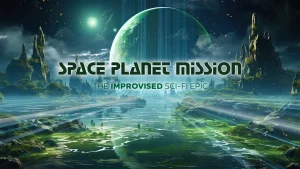
Space Planet Mission: The Improvised Sci-Fi Epic

More improv, but this time IN SPACE!  Well, set in space at least.  The Free Association improv team present a sci-fi epic of the likes you’ve never seen, and will never see again, as it’s improv. Science fiction improv is hard to do well, but if any can, it’s this team.


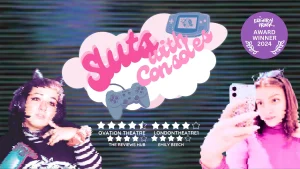
Sluts With Consoles

Inspired by real testimonies of women working in the gaming industry, check out this show from Dogmouth Theatre. Join Player One and Player Two on a comedic journey into video game fandom, the women who love video games, and the problems with a community that doesn’t know how to be nice to each other.

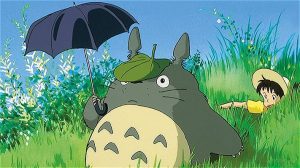
Ghibli Taste & Tales

Enter the world of Ghibli. Well, enter Blossoms Cocktail Bar, and enjoy an immersive mix of cinema and cuisines, as My Neighbour Totoro is transformed into a culinary experience. Combining a good movie with good food is always fun.

You can find all these shows and more at the Brighton Fringe 2025, which runs from May 2nd to June 1st.

THE TELEPHEMERA YEARS: 2004, part 3

Dark Shadows, 2004-05

Ah, telephemera… those shows whose stay with us was tantalisingly brief, snatched away before their time, and sometimes with good cause. They hit the schedules alongside established shows, hoping for a long run, but it’s not always to be, and for every Street Hawk there’s two Manimals. But here at STARBURST we celebrate their existence and mourn their departure, drilling down into the new season’s entertainment with equal opportunities square eyes… these are The Telephemera Years!

2004-05

After finishing the 2003-04 season with just one show – perennial favourite Monday Night Football – in the top twenty rating shows, ABC hit back in Fall 2004 with a slate of new arrivals that took the US by storm. Crashing into the top ten were both Desperate Housewives and Grey’s Anatomy, while the buzz created by mystery box classic Lost saw twenty million viewers tune in for its finale. CBS still ruled the roost, however, with the juggernaut that was CSI: Crime Scene Investigation showing no signs of slowing down, backed by spin-off CSI: Miami, another police procedural in Without a Trace, and reality show Survivor. American Idol secured two places in the top three for Fox, while NBC continued to struggle, the days of Must See TV fading fast in the wake of Friends and Seinfeld ending; ER, its highest rating show, could claim only the number twelve spot.

There were plenty of new arrivals to keep the ABC blockbuster trio company, though, with Boston Legal doing well on ABC, CSI: New York joining the CBS CSI family, and Family Guy spin-off American Dad debuting on Fox. NBC tried out a spin-off of their own in Joey, which didn’t do well, but Medium and The Office were more successful. Offbeat detective action could be found on UPN as Veronica Mars sought to solve the mystery of her murdered classmate, HBO premiered both Deadwood and Entourage, and genre fans were well-catered for with The 4400 on the USA Network and Stargate Atlantis on Sci-Fi. Those were all shows that secured a spot on the TV schedules, though; what about the ones that that failed at the final hurdle? This is the story of 2004’s unsold pilots…

Mister Ed (Fox): Drake Sather was a comedian’s comedian. As usual, this means that his act – beloved by fellow stand-ups and true connoisseurs of the form – did not carry over into mainstream success. Luckily, Sather also had a flair for writing jokes and got a job on Saturday Night Live for the 1992-93 season, also contributing to The Dennis Miller Show, a perfect fit for his acerbic wit. In 1994, he was nominated for an Emmy Award for his work on The Larry Sanders Show and two years later, as well joining the writing team for the second season of Newradio, he created the character of Derek Zoolander for Ben Stiller. First seen in a skit at the VH1 Fashion Awards, the name was a play on top model Mark Vanderloo, and the reaction to the first short film was enough that a second, set at the Zoolander University for models, was produced.

In 2000, with David Spade, Sather co-created Sammy, an animated sitcom for NBC. Despite character designs by Everett “Duckman“ Peck, and a cast that included Andy Dick, Janeane Garofalo, and Bob Odenkirk, the show was cancelled after just two of its thirteen episodes had aired, but Sather was busy working on a feature film starring Zoolander, released in November 2001. Initially, neither he nor Stiller were attached to the project, but common sense prevailed, and the movie was a critical success that also doubled its budget at the box office. It should have set Sather up for future success, but future projects stalled and a spell as a writer and producer on the Tom Cavanagh show Ed lasted for just one season.

Mister Ed, 2004-05

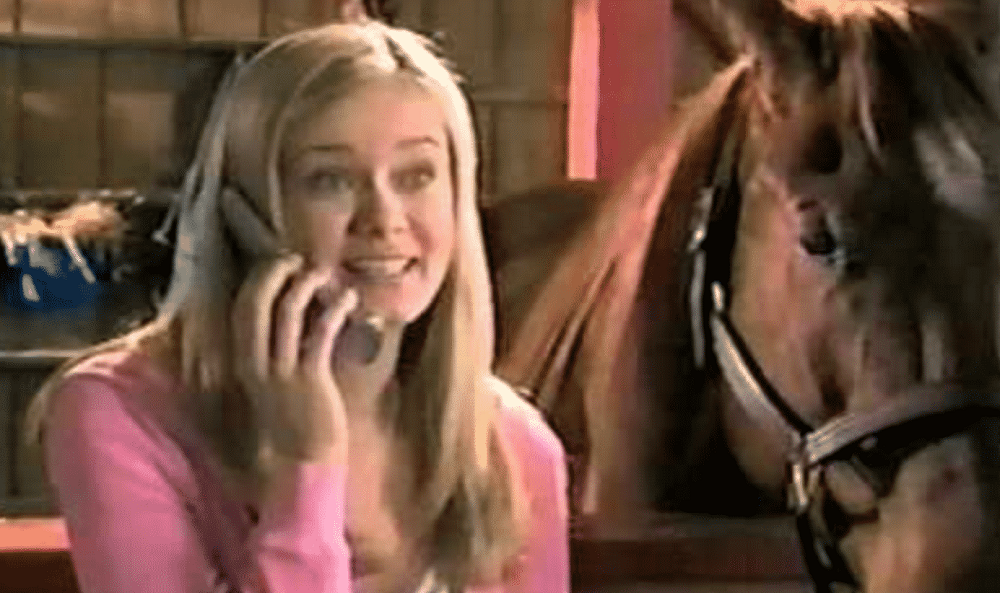
In 2004, Sather was hired by Neal H Moritz’s Original Film to write and produce a reboot of Mister Ed, the talking horse sitcom that ran for six seasons from October 1961. In the thirty-eight years that passed between the end of the original series and the revival, Allan Lane – the voice of Mister Ed – had died, and although Alan Young, who starred as Ed’s human pal Wilbur Post, was still working, he was eighty-five-years-old and probably past carrying a series. In their place came The Jeffersons’ Sherman Hemsley as Ed and David Alan Basche (from short-lived sitcoms Oh Grow Up! and Three Sisters) as Wilbur Pope, reverting back to the name used in the original 1961 pilot, which was titled Wilbur Pope and Mister Ed. Sherilyn Fenn completed the core cast as Wilbur’s wife, Carol.

The new pilot featured Ed and Wilbur’s first meeting, and a subplot about Wilbur’s daughter’s horrible boyfriend, but it was thin gruel. Sather told friends he was unhappy in his work and was only doing it for the money, which – alongside difficulties he was having in his marriage – probably led to his suicide by gunshot in March 2004. A comedian to the end, he apparently left joke-filled Post-It notes leading the way to his body. The project was cancelled in the wake of Sather’s suicide and Mister Ed has been silent silence.

Dark Shadows (The WB): After the failed revival of gothic soap opera Dark Shadows in 1991, creator Dan Curtis primarily worked as a director for hire with credits including 1992 sci-fi mini-series Intruders, a sequel to his 1975 horror anthology TV movie Trilogy of Terror, and romantic fantasy drama The Love Letter, which he completed just after his seventieth birthday. His most famous creation lived on in re-runs, with the Sci-Fi Channel re-running the entire show from 1992, its cult status only increasing year on year. In November 2003, TV Guide reported that Warner Bros had secured the rights to Dark Shadows, which had recently been the subject of a stage play written by Jamison Selby, the son of original series actor David. Selby’s play was turned into an audio drama, starring his father and released by MPI Home Video as Return to Collinwood, sparking a series of audio dramas from Big Finish, a company who built their name on doing the same for Doctor Who during its absence from TV (and carrying on after its revival).

That wasn’t the only revival of the series underway, though. Warner Bros tasked John Wells – showrunner on the first six seasons of ER, amongst other work – with producing a pilot for a Dark Shadows revival, with Wells working alongside Curtis to develop the show. With a budget of $6 million, Muriel’s Wedding director PJ Hogan was brought in to helm the project after original choice Rob Bowman dropped out late on, while Mark Verheiden – who’d made his name as a comic book writer in the 1980s before switching to TV, where he created Timecop and helped bring Smallville to the screen in 2001 – was on script duty.

Dark Shadows, 2004-05

Verheiden’s story kept the same beats as the original (and the 1991 revival), with Victoria Winters (The Sandlot‘s Marley Shelton) arriving at Collinswood to act as governess to troubled young David Collins (Alexander Gould, later the voice of clownfish Nemo). The family’s handyman, Willie Loomis (Matt Czuchry) accidentally revives the vampiric Barnabas Collins from the family’s tomb, who presents himself as a distant relative from England and begins to charm Victoria, who resembles his old love Josette. Played by Scottish actor Alec Newman (known primarily in the US for his turn as Paul Atreides in Sci-Fi’s Dune adaptations), Barnabas is bloodthirsty and haunted by his curse.

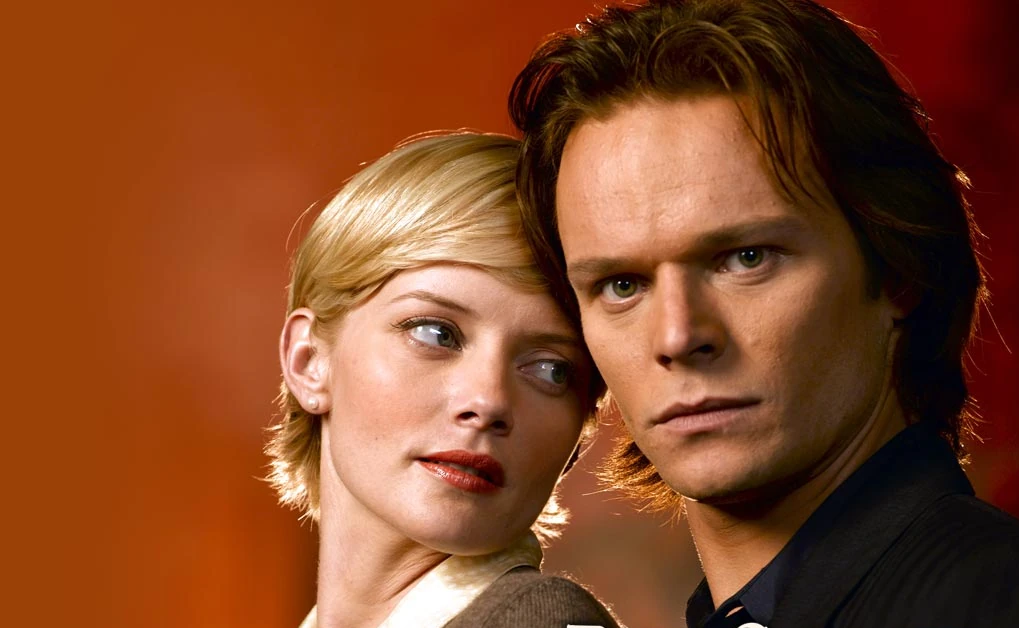
With a cast that also included Jessica Chastain, Martin Donovan, Kelly Hu, and Ivana Miličević as evil sorceress Angelique, the pilot crammed a season’s worth of intrigue into its one hour running time, but WB executives were unimpressed. Some reports have them cancelling Angel in anticipation of greenlighting Dark Shadows for the 2004-05 season, not wanting to have two vampire shows on the air at the same time, and the blame apparently fell on Hogan, whose direction did not make the most of Verheiden’s script. The pilot was later screened at the 2005 Dark Shadows Festival in Los Angeles and Dark Shadows would eventually return in movie form from Tim Burton in 2012.

Anonymous Rex (Fox): Eric Garcia majored in Film and Creative Writing at the University of Southern California with his sights clearly set on Hollywood. In 1999, he published his debut novel, Anonymous Rex, riding a wave of dinosaur fever that had begun with Steven Spielberg’s first Jurassic Park movie in 1993 and saw a sequel – The Lost World – arrive four years later. Anonymous Rex was a hard-boiled detective story with a twist: its protagonist, PI Vincent Rubio, is descended from a race of velociraptors that evolved into humanoid form over the millions of years since the dinosaurs escaped their extinction at the hands of that blasted meteor. Using hologram technology (which replaced previous forms of disguise such as rubber masks), Rubio blends into human society, working a beat alongside his partner Ernie, an evolved triceratops.

Two years after Anonymous Rex, Garcia published a prequel – Casual Rex – which confused some fans, the fact that it was set before the first book (and featured some characters who met their end in that story, including Ernie, whose murder Vincent solves in the first book) not made clear by the novel’s trade dressing. A third book – Hot and Sweaty Rex – would arrive in 2004, but by that time Garcia was already making waves in Hollywood, the rights to his third novel, 2002’s Matchstick Men, having been snapped up by Warner Brothers before it was even published. The resulting film, directed by Ridley Scott and starring Nicholas Cage, didn’t set the box office alight, but did well with the critics.

Anonymous Rex, 2004-05

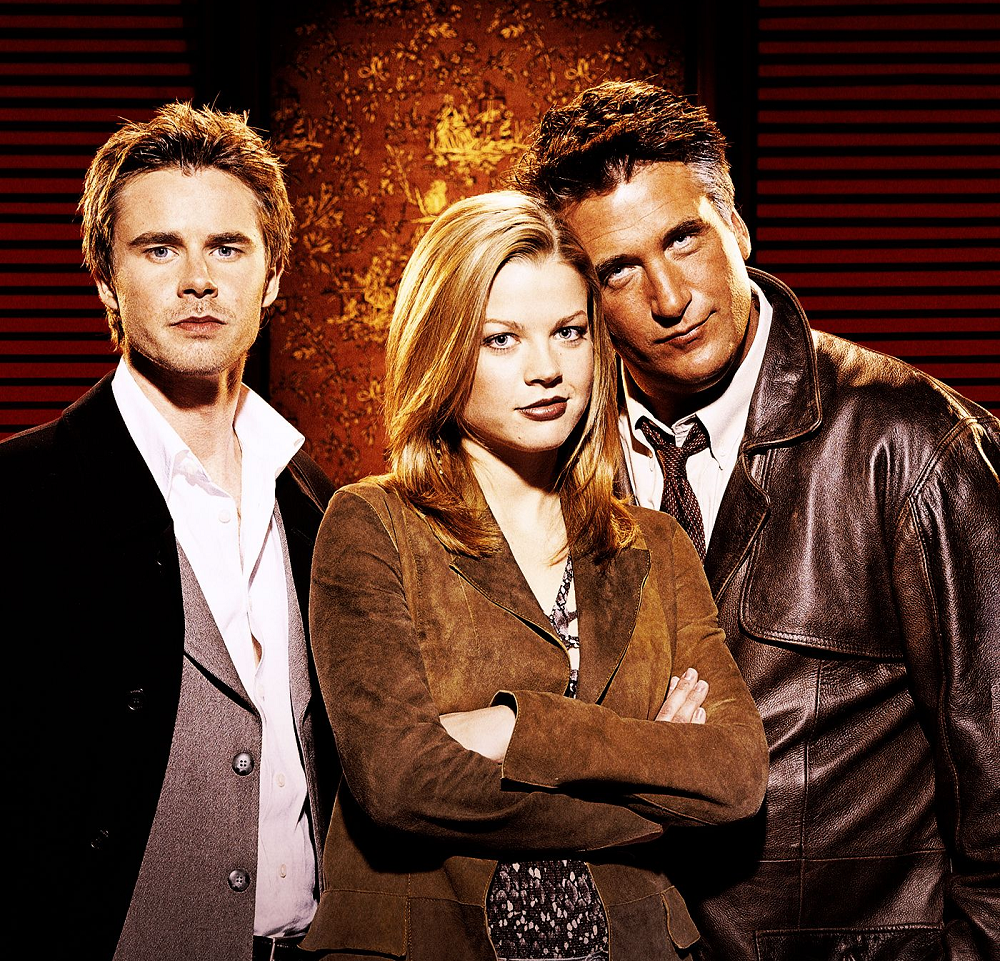
Amid all this, Fox optioned Garcia’s dinosaur detective series, ordering a pilot based on Casual Rex but keeping the Anonymous Rex name. Scriptwriter Joe Menosky, with a ton of experience on Hunter, Star Trek: The Next Generation, and Star Trek: Voyager, was given the job of bringing the novel to screen, with English director Julian Jarrold, a veteran of Coronation Street, given his first US engagement behind the camera. Vincent (Sam Trammell, last seen in Showtime’s Going to California) and Ernie (Homicide: Life on the Street‘s Daniel Baldwin) investigate the death of Ernie’s ex-girlfriend’s brother, which they soon realise is tied to a cult, the Voice of Progress. Going undercover, they join the cult and Vincent becomes intrigued by their message that the time for dinosaurs to stop hiding has arrived; unfortunately, the cult plans to accelerate this by unleashing feral dinosaurs on the human populace and taking control.

With support from Tamara Gorski, Isaac Hayes, and Faye Dunaway as a key figure in the dinosaur underground, the pilot skips along, with Trammel showing glimpses of the charisma True Blood fans would come to love as the conflicted Vincent, but reaction was tepid, and Fox passed on a series. Normally that’s the end of the story, but the Sci-Fi Channel showed the pilot in November 2004, with hopes that it could lead to a series there. It didn’t and the world of Anonymous Rex has been unexplored since, although Garcia recently scored a hit with Kaleidoscope for Netflix.

Dead Lawyers (Sci-Fi): Moving to Hollywood from Houston, Texas, to pursue a career in screenwriting, Sean Patrick Flanery was supporting himself by working at a TGI Fridays when he was spotted acting in a play and was cast in commercials. He made his film debut in A Tiger’s Tale in 1987 and scored his first big break as the titular hero in The Young Indiana Jones Chronicles, which ran for two seasons on ABC in 1992 and 1993. Further movie success in Powder and The Boondock Saints followed, with Flanery also taking time out of his acting schedule to compete in the Toyota Pro/Celebrity Race in Long Beach.

The turn of the millennium saw Flannery try to secure another regular TV role, but The Strip ­– where he starred as a former Los Vegas police detective turned Sin City casino troubleshooter – lasted just ten episodes before cancellation in 2000, and a pilot based on Wilbur Smith’s 1971 novel The Diamond Hunters failed to gain traction with syndication buyers. In 2002, Flanery appeared as politician Greg Stillson in a TV adaptation of Stephen King’s The Dead Zone, a role he’d return to periodically during the show’s six-season run, but 2004 saw him take the lead role in Dead Lawyers, a pilot for the Sci-Fi network written by Christopher Murphey, whose only previous work was 2001’s The Unsaid, a straight-to-DVD movie he wrote the story for.

Originally a DreamWorks production, but transferred to The Zanuck Company, formed as Zanuck/Brown in 1972 by Richard D Zanuck and David Brown (and responsible for such blockbusters as Jaws, The Sting, Cocoon, and Driving Miss Daisy), Dead Lawyers saw Flannery step into the shoes of Jimmy Quinn, an arrogant lawyer to the rich and famous who – in something of an echo of a trope from later isekai anime series – is hit by a bus. Upon reaching the afterlife, he is swiftly returned to Earth where he must atone for his past sins at a firm of similarly repentant attorneys headed by F Murray Abraham’s Thomas Whitelaw. Take enough pro bono cases for those who really need the help, and Jimmy might just make it back to Heaven…

Despite its good intentions (and the plus of having former music video director turned safe TV drama hand Paris Barclay behind the camera), Sci-Fi passed on the pilot and Flanery returned to earning an honest living starring in direct-to-video films, TV movies, and guest appearances and runs on the likes of The Bay and The Young and the Restless. Like Jimmy Quinn, though, Dead Lawyers was given another chance to live when Sony announced they were developing a pilot based on the concept in 2011, with a fresh script from Justified producers Graham Yost and Fred Golan, and Full House ‘s John Stamos attached to the starring role. It would have been Stamos’s first regular turn since leaving ER in 2009, but nothing more was heard after an initial blaze of publicity surrounding the project and he next turned in Glee.

Next time on The Telephemera Years: what 2004’s kids were settling down to watch, including super robot monkeys and future Phils…

Check out our other Telephemera articles:

The Telephemera Years: pre-1965 (part 1, 2, 3, 4)

The Telephemera Years: 1965 (part 1, 2, 3, 4)

The Telephemera Years: 1966 (part 1, 2, 3, 4)

The Telephemera Years: 1967 (part 1, 2, 3, 4)

The Telephemera Years: 1968 (part 1, 2, 3, 4)

The Telephemera Years: 1969 (part 1, 2, 3, 4)

The Telephemera Years: 1970 (part 1, 2, 3, 4)

The Telephemera Years: 1971 (part 1, 2, 3, 4)

The Telephemera Years: 1972 (part 1, 2, 3, 4)

The Telephemera Years: 1973 (part 1, 2, 3, 4)

The Telephemera Years: 1974 (part 1, 2, 3, 4, 5)

The Telephemera Years: 1975 (part 1, 2, 3, 4)

The Telephemera Years: 1976 (part 1, 2, 3, 4)

The Telephemera Years: 1977 (part 1, 2, 3, 4)

The Telephemera Years: 1978 (part 1, 2, 3, 4)

The Telephemera Years: 1979 (part 1, 2, 3, 4, 5, 6)

The Telephemera Years: 1980 (part 12, 3, 4)

The Telephemera Years: 1981 (part 1, 2, 3, 4)

The Telephemera Years: 1982 (part 1, 2, 3, 4)

The Telephemera Years: 1983 (part 1, 2, 3, 4)

The Telephemera Years: 1984 (part 1, 2, 3, 4)

The Telephemera years: 1985 (part 1, 2, 3, 4)

The Telephemera Years: 1986 (part 1, 2, 3, 4)

The Telephemera Years: 1987 (part 1, 2, 3, 4)

The Telephemera Years: 1988 (part 1, 2, 3, 4, 5)

The Telephemera Years: 1989 (part 1, 2, 3, 4)

The Telephemera Years: 1990 (part 1, 2, 3, 4)

The Telephemera Years: 1991 (part 1, 2, 3, 4)

The Telephemera Years: 1992 (part 1, 2, 3, 4)

The Telephemera Years: 1994 (part 1, 2, 3, 4)

The Telephemera Years: 1995 (part 12, 3, 4)

The Telephemera Years: 1996 (part 1, 2, 3, 4)

The Telephemera Years: 1997 (part 1, 2, 3, 4)

The Telephemera Years: 1998 (part 1, 2, 3, 4)

The Telephemera Years: 1999 (part 1, 2, 3, 4)

The Telephemera Years: 2000 (part 1, 2, 3, 4)

The Telephemera Years: 2001 (part 1, 2, 3, 4)

The Telephemera Years: 2002 (part 1, 2, 3, 4)

The Telephemera Years: 2003 (part 1, 2, 3, 4)

The Telephemera Years: 2004 (part 1, 2)

The Telephemera Years: 2005 (part 1, 2, 3, 4)

The Telephemera Years: 2006 (part 1, 2, 3, 4)

The Telephemera Years: 2007 (part 1, 2, 3, 4)

The Telephemera Years: 2008 (part 1, 23, 4)

The Telephemera Years: O Canada! (part 1, 2, 3, 4)

Titans of Telephemera: Irwin Allen

Titans of Telephemera: Stephen J Cannell (part 1, 2, 3, 4)

Titans of Telephemera: DIC (part 1, 2)

Titans of Telephemera: Filmation (part 1, 2)

Titans of Telephemera: Hanna-Barbera (part 1, 2, 3, 4, 5)

Titans of Telephemera: Kenneth Johnson

Titans of Telephemera: Sid & Marty Krofft

Titans of Telephemera: Glen A Larson (part 1, 2, 3, 4)

Titans of Telephemera: Quinn Martin (part 1, 2)

Titans of Telephemera: Rankin/Bass

Titans of Telephemera: Ruby-Spears

Titans of Telephemera: Aaron Spelling (part 1, 2, 3, 4)

Titans of Telephemera: Sunbow

THE TELEPHEMERA YEARS: 2004, part 2

Point Pleasant, 2004-05

Ah, telephemera… those shows whose stay with us was tantalisingly brief, snatched away before their time, and sometimes with good cause. They hit the schedules alongside established shows, hoping for a long run, but it’s not always to be, and for every Street Hawk there’s two Manimals. But here at STARBURST we celebrate their existence and mourn their departure, drilling down into the new season’s entertainment with equal opportunities square eyes… these are The Telephemera Years!

2004-05

After finishing the 2003-04 season with just one show – perennial favourite Monday Night Football – in the top twenty rating shows, ABC hit back in Fall 2004 with a slate of new arrivals that took the US by storm. Crashing into the top ten were both Desperate Housewives and Grey’s Anatomy, while the buzz created by mystery box classic Lost saw twenty million viewers tune in for its finale. CBS still ruled the roost, however, with the juggernaut that was CSI: Crime Scene Investigation showing no signs of slowing down, backed by spin-off CSI: Miami, another police procedural in Without a Trace, and reality show Survivor. American Idol secured two places in the top three for Fox, while NBC continued to struggle, the days of Must See TV fading fast in the wake of Friends and Seinfeld ending; ER, its highest rating show, could claim only the number twelve spot.

There were plenty of new arrivals to keep the ABC blockbuster trio company, though, with Boston Legal doing well on ABC, CSI: New York joining the CBS CSI family, and Family Guy spin-off American Dad debuting on Fox. NBC tried out a spin-off of their own in Joey, which didn’t do well, but Medium and The Office were more successful. Offbeat detective action could be found on UPN as Veronica Mars sought to solve the mystery of her murdered classmate, HBO premiered both Deadwood and Entourage, and genre fans were well-catered for with The 4400 on the USA Network and Stargate Atlantis on Sci-Fi. Those were all shows that made a lasting impression on viewers but what about those that came and went? This is the story of four more misses from the 2004-05 season…

Point Pleasant (Fox): In October 2003, Eliza Dushku had earned enough cachet playing rogue slayer Faith in Buffy the Vampire Slayer to be given her own show. That show was Tru Calling on Fox, a supernatural drama that saw medical student Tru Davies discover she can talk to the recently deceased and can relive their final day in an attempt to change the events that got them killed. Created by former Wonder Years and Dawson’s Creek scripter Jon Harmon Feldman, Tru Calling initially did encouraging ratings, especially given it aired opposite Survivor on ABC and the final season of Friends, and a second season was ordered, with production beginning in late Spring 2004. However, ratings tailed off alarmingly towards the end of its run and production was halted with just six episodes completed in October 2004.

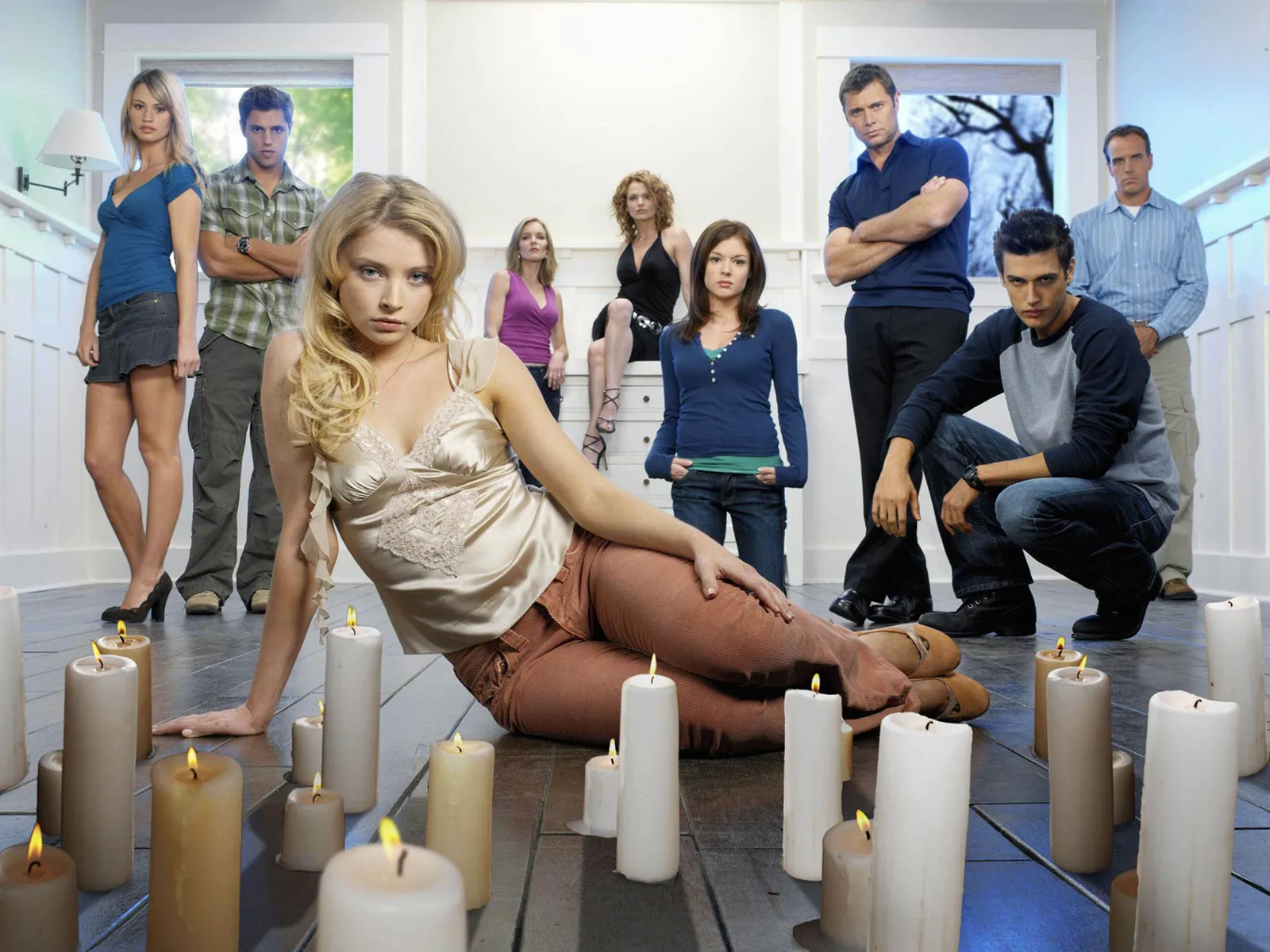
Three days after the plug was pulled on Tru Calling, Fox greenlit another Original Films show, Point Pleasant, created by John McLaughlin and Buffy producer Marti Nixon. Although none of the cast carried over, Point Pleasant began filming with much of the same crew that had worked on Tru Calling and was centred around the mystery of Christina, a young girl washed up on the shore at Point Pleasant, New Jersey, during a violent storm. Played by All My Children‘s Elisabeth Harnois, Christina is taken in by the local doctor (Richard Burgi) and becomes fast friends with his daughter, Judy (Guiding Light‘s Aubrey Dollar), but her arrival in Point Pleasant begins to have an affect on its populace, with tensions rising, emotions simmering, and strange accidents befalling anyone who crosses the teenager.

Point Pleasant, 2004-05

It seemed that Christina is the Antichrist and a battle for her soul breaks out between mysterious stranger (and half-demon) Lucas Boyd (Grant Show from Melrose Place) and the hunky lifeguard who first found her, Jesse Parker (Sam Page). Replacing cancelled Hawaiian hotel drama North Shore on Friday nights, with new sensation The OC as a lead-in, Point Pleasant debuted a day early on January 19th 2005 with over eleven million viewers drawn in by press describing the show as a cross between Peyton Place and The Omen, and by American Idol – shown immediately before it – airing in almost one in four American homes. Twenty-four hours later in its regular slot, episode two shed half that number and it settled down at around four million viewers, way below what Fox were hoping for.

After episode nine was pre-empted for the delayed results of the American Idol final on March 24th, Martin Nixon took to the show’s official message board to announce that Point Pleasant had been cancelled, with five episodes left in the can. Ironically, it would be replaced in the schedules by the unaired Tru Calling season two, but the final two episodes of the show did air in October 2005 to bring the story to something of a close, although it still ended with the town engulfed in an apocalyptic holocaust as Christina moved on. All thirteen episodes were later released on DVD.

Father of the Pride (NBC): Distracted from the spectacle unfolding in front of him as Siegfried & Roy preformed their famous big cat show at The Mirage in Las Vegas, Dreamworks co-founder Jeffrey Katzenberg wondered what life might be like for the lions featured in the show. “What must life be like from their point of view?” he told TV Guide. “Living in Las Vegas, trying to raise a family and earn a living. In animation, we look for those things — a way to look at our lives through a fantasy world. It allows us to take on subjects that are too difficult to do with real people.”

The result was Father of the Pride, a big budget animated sitcom for NBC that starred Larry, a clumsy yet good-natured overweight lion at the Bronx Zoo who, due to an accident of fortune, becomes the star of Siegfried & Roy’s show. Voiced by John Goodman, Larry is joined in Las Vegas by wife Kate (Cheryl Hines), teenage daughter Sierra (Danielle Harris), and son Hunter (Daryl Sabara), with an added complication that the lion he is replacing in the show is Kate’s father, Sarmoti (Carl Reiner). With a budget of $2 million per episode, the show was made with the full co-operation of Siegfried & Roy, who also appear in the show (albeit voiced by Julian Holloway and David Herman, respectively).

Father of the Pride, 2004-05

With co-creator Jonathan Goff heading up a writing team that included South Park‘s David R Goodman and Glasgow Phillips, Catdog‘s John Ross, and Jean Yu, the show went into development in Fall 2002 but was almost cancelled a year later when Roy Horn was attacked and almost killed by one of his tigers during a performance at The Mirage on October 3rd 2009, Horn’s fifty-ninth birthday. Katzenberg announced that the project would be abandoned if Horn did not survive but the performer recovered from his injuries in time for NBC to announce Father of the Pride as the centrepiece of its Fall 2004 line-up.

Early reviews were savage, with one describing the show as “too blue for kids, too dumb for grown-ups,” but it performed well on its debut on August 31st 2004, winning its timeslot. Audience reaction was generally positive, but advertisers were concerned about the adult nature of the show, which struck a tone nearer to South Park than the usual animated family fare, even that of cheeky Dreamworks hit Shrek. It didn’t help that NBC overpromoted the show, that it was frequently interrupted for updates on the 2004 Presidential election, and that episodes were aired out of order, but in the end, it was viewer apathy that did for Father of the Pride, one of the most expensive flops in TV history. After seven episodes, the show disappeared from the NBC line-up and didn’t return until late December, with four episodes shown in two weeks, and Katzenberg publicly said a second season was unlikely. In the end, NBC didn’t even air the entirety of the first, although all fifteen episodes were shown overseas.

Video Mods (MTV): Tony Shiff is a music video producer who, among thousands of promo clips, was the man behind that “cutting edge” computer animation in Def Leppard’s “Let’s Get Rocked.” He also did stuff that wasn’t rubbish, including full motion video capture work for Electronic Arts, and in 1998 he hooked up with MTV Head of Programming Alex Coletti, the man who steered Unplugged after its initial launch, earning three Emmy Award nominations in the process. The result was Revue, a sit-down interview show that featured the likes of Tori Amos, Lauryn Hill, and Ice Cube.

Three years later, Shiff met Kris Renkewitz, a former comic book artist at both Marvel and DC, and a designer on video games including Diablo II and 007: Tomorrow Never Dies. The pair began working on a videogame extension to Revue where the player could direct a music video for licensed artists; called DIReCTOR, it was picked up by Atari but became a victim of Atari’s acquisition by Infogrames. Their next project met a similar fate. GAMERS was a sitcom starring videogame characters, centred on their lives after “work,” and found a home with Kent Alterman at Comedy Central before he left to join New Line and the show was dropped.

Video Mods, 2004-05

Recalling his success with Coletti, Shiff pitched the show to MTV, showing the producer a video of characters from the BloodRayne videogame performing System of a Down’s “Chop Suey.” Shiff pointed out that studios were spending millions of dollars producing these games, only to do nothing with the characters afterwards, and Coletti was sold on the idea. Shiff and Coletti took the idea to MTV2 General Manager David Cohn, who bought the show – now reduced purely to music videos starring video game characters – as VideoMods. Electronic Arts sponsored a pilot, providing characters from Need for Speed, SSX3 and The Sims Bustin’ Out to go with songs from Outkast and Missy Elliott. Renkewitz completed the pilot in three weeks, working out of his garage studio, and it was enough of a success to earn the show a four-episode order.

Characters from NBA Street, Medal of Honor, Silent Hill, and Star Wars: Episode III appeared in new videos for songs by Beastie Boys, Blink 182, My Chemical Romance, and more, and although MTV were happy enough with the end results, Shiff felt their newly established Big Bear Entertainment studio needed a better deal to produce more, retaining a lawyer to renegotiate their deal. It turned out that MTV hated that lawyer and hired IBC Entertainment – headed up by former MTV staffer Frank Drucker – to produce a second season of three episodes, but ratings weren’t great and uncertainty over where to take the project once the novelty wore off led to just two being produced. In recent years, Shiff and Renkewitz have returned to the idea for two new games, Flashmobs and Supergroup, with the TikTok generation in mind, but there’s still a fond nostalgia for those Video Mods promos, even if – legally – they’re in rights limbo.

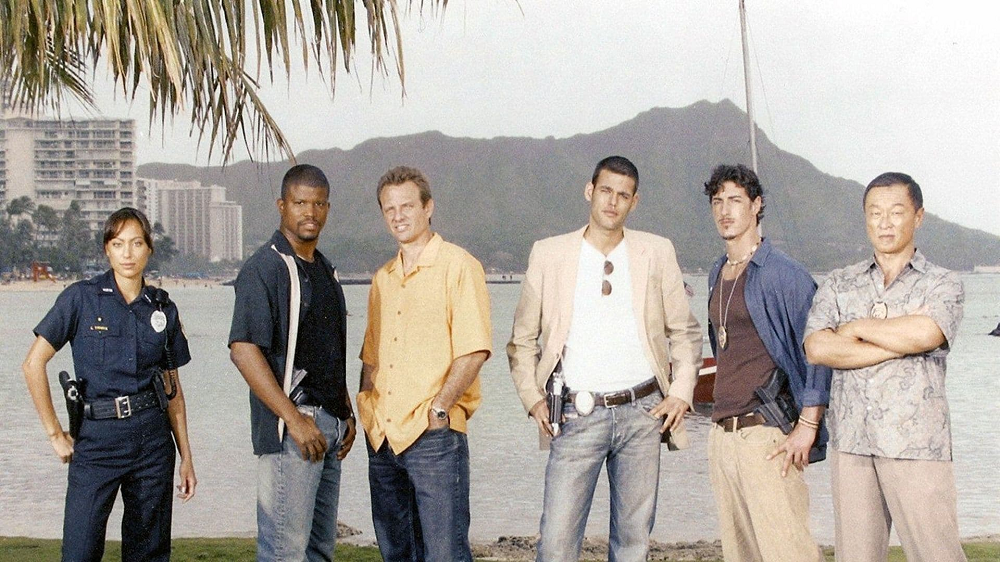
Hawaii (NBC): Originally titled Pearl City, named for a district of Honolulu, Hawaii hit screens on September 1st 2004 as one of NBC’s bright new hopes for the Fall 2004 season. Shot on location in the fiftieth state, it beat Lost – also shot in Hawaii – to air by three weeks, ensuring viewers would have plenty of opportunities to take in the verdant island paradise, although the show’s both being scheduled for Wednesdays at 8pm meant a choice between police procedural and whatever the hell Lost was for fans of the Aloha State.

Hawaii was created by Jeff Eastin, a former journalism student who got his break when Zalman King bought his script for Shadow Dancer. Although it was never made, it led to more work, with I Know What You Did Last Summer’s Neal H Moritz producing not only the Jamie Foxx-starring Held Up in 1999, but also selling Shasta McNasty – starring Jake Busey, Carmine Giovinazzo, and Dale Godboldo as the three members of the titular rap rock band – to UPN, which debuted in Fall 1999. Suddenly hot, Eastin wrote an early draft of Rush Hour 3 and was picked by James Cameron to write the script for True Lies 2, but the sequel was never made amid the changing world after 9/11 and star Arnold Schwarzenegger’s election as Governor of California.

Hawaii, 2004-05

Shasta McNasty was cancelled after one season, and a pilot for Shotgun Love Dolls wasn’t picked up to series, but that freed Eastin up to create Hawaii. Sold as a partial remake of Hawaii Five-O, it was the first project of the newly formed Jeff Eastin Productions, with Eastin working alongside experienced hands Terri Kopp and Wendy West as the show went into production. Cameron regular Michael Biehn stepped into Jack Lord’s shoes as Sean Harrison, a veteran detective on the Honolulu Metro Police Department partnered with a new arrival from Chicago played by ER’s Sherif Atkins. The pair worked on cases described as “uniquely Hawaiian” alongside a crew that also included Eric Balfour, Christopher Gains, Ivan Sergei, Aya Sumika, and Peter Navy Tuiasosopo, under the direction of Cary-Hiroyuki Tagawa’s Captain Harada.

“Hawaiian Justice” – the debut episode which saw Harrison and company race to discover the culprit behind a series of bizarre decapitations – did a 7.2 rating, winning its timeslot over a re-run of My Wife and Kids on ABC and the Latin Grammy Awards on CBS. It was down to third a week later but bounced back in week three to top the charts. Unfortunately, September 22nd brought Lost to ABC, destroying the competition, and Hawaii never recovered. After episode seven aired on October 6th, and with NBC having fallen to fourth place in the ratings in what was usually a three-horse race, Hawaii was put on hiatus, only to be officially cancelled two days later. An eighth episode had been completed but went unaired. Eastin later created White Collar and Graceland for the USA Network and is currently producing Britt Tobin’s streaming series Garbage People.

Next time on The Telephemera Years: 2004’s unsold pilots, including talking horses and humanoid dinosaurs…

Check out our other Telephemera articles:

The Telephemera Years: pre-1965 (part 1, 2, 3, 4)

The Telephemera Years: 1965 (part 1, 2, 3, 4)

The Telephemera Years: 1966 (part 1, 2, 3, 4)

The Telephemera Years: 1967 (part 1, 2, 3, 4)

The Telephemera Years: 1968 (part 1, 2, 3, 4)

The Telephemera Years: 1969 (part 1, 2, 3, 4)

The Telephemera Years: 1970 (part 1, 2, 3, 4)

The Telephemera Years: 1971 (part 1, 2, 3, 4)

The Telephemera Years: 1972 (part 1, 2, 3, 4)

The Telephemera Years: 1973 (part 1, 2, 3, 4)

The Telephemera Years: 1974 (part 1, 2, 3, 4, 5)

The Telephemera Years: 1975 (part 1, 2, 3, 4)

The Telephemera Years: 1976 (part 1, 2, 3, 4)

The Telephemera Years: 1977 (part 1, 2, 3, 4)

The Telephemera Years: 1978 (part 1, 2, 3, 4)

The Telephemera Years: 1979 (part 1, 2, 3, 4, 5, 6)

The Telephemera Years: 1980 (part 12, 3, 4)

The Telephemera Years: 1981 (part 1, 2, 3, 4)

The Telephemera Years: 1982 (part 1, 2, 3, 4)

The Telephemera Years: 1983 (part 1, 2, 3, 4)

The Telephemera Years: 1984 (part 1, 2, 3, 4)

The Telephemera years: 1985 (part 1, 2, 3, 4)

The Telephemera Years: 1986 (part 1, 2, 3, 4)

The Telephemera Years: 1987 (part 1, 2, 3, 4)

The Telephemera Years: 1988 (part 1, 2, 3, 4, 5)

The Telephemera Years: 1989 (part 1, 2, 3, 4)

The Telephemera Years: 1990 (part 1, 2, 3, 4)

The Telephemera Years: 1991 (part 1, 2, 3, 4)

The Telephemera Years: 1992 (part 1, 2, 3, 4)

The Telephemera Years: 1994 (part 1, 2, 3, 4)

The Telephemera Years: 1995 (part 12, 3, 4)

The Telephemera Years: 1996 (part 1, 2, 3, 4)

The Telephemera Years: 1997 (part 1, 2, 3, 4)

The Telephemera Years: 1998 (part 1, 2, 3, 4)

The Telephemera Years: 1999 (part 1, 2, 3, 4)

The Telephemera Years: 2000 (part 1, 2, 3, 4)

The Telephemera Years: 2001 (part 1, 2, 3, 4)

The Telephemera Years: 2002 (part 1, 2, 3, 4)

The Telephemera Years: 2003 (part 1, 2, 3, 4)

The Telephemera Years: 2004 (part 1)

The Telephemera Years: 2005 (part 1, 2, 3, 4)

The Telephemera Years: 2006 (part 1, 2, 3, 4)

The Telephemera Years: 2007 (part 1, 2, 3, 4)

The Telephemera Years: 2008 (part 1, 23, 4)

The Telephemera Years: O Canada! (part 1, 2, 3, 4)

Titans of Telephemera: Irwin Allen

Titans of Telephemera: Stephen J Cannell (part 1, 2, 3, 4)

Titans of Telephemera: DIC (part 1, 2)

Titans of Telephemera: Filmation (part 1, 2)

Titans of Telephemera: Hanna-Barbera (part 1, 2, 3, 4, 5)

Titans of Telephemera: Kenneth Johnson

Titans of Telephemera: Sid & Marty Krofft

Titans of Telephemera: Glen A Larson (part 1, 2, 3, 4)

Titans of Telephemera: Quinn Martin (part 1, 2)

Titans of Telephemera: Rankin/Bass

Titans of Telephemera: Ruby-Spears

Titans of Telephemera: Aaron Spelling (part 1, 2, 3, 4)

Titans of Telephemera: Sunbow

STARBURST’S MAY THE FOURTH STAR WARS GIFT GUIDE 2025

It’s May the Fourth,  which thanks to the magic of puns, means it’s a very special day for fans of Star Wars.  There are many Star Wars-themed things out there, let’s take a look at some of the latest merch from a galaxy far, far away.

The Black Series Imperial Death Trooper Electronic Helmet
The Storm Trooper Helmet is pretty iconic, and the jet-black Death Trooper helmets are even more so. A replica of the helmet we saw in ROGUE ONE,  this piece comes with sensor lights and chin lights to complete the moody look.

Sol LIGHTSABER Hilt, Star Wars: The Acolyte
You can’t have Star Wars without a lightsaber.  Master Jedi Sol (from The Acolyte) has a particularly cool look laser sword. This detailed recreation features sound effects and illuminates royal blue when you attach the appropriate blade. It even comes with its own rather neat case. See also Shin Hati’s and Baylan Skoll’s LIGHTSABER from Ashoka (which can be found here.)

212th Clone Trooper Premium Electronic Helmet, Star Wars
If you’ve seen the Clone Wars animated series, you’ll know that they are much cooler than your average Storm Trooper. This is another cool helmet to add to your collection, and if designed to be worn (it has padding). Includes real character phrases and voice-changing effects.

Star Wars: The Empire Strikes Back 45th Anniversary Mug
Treat yourself to a ‘Hoth’ drink with this Empire Strikes Back mug, which depicts the defence of Echo Base in all its bumpy glory.


Droid Factory Figure Set, Star Wars: The Book of Boba Fett
Love unusual droids? Who doesn’t? These four are from  Garsa’s Sanctuary in the Book of Boba Fett.  A drum-playing droid! A food serving Droid! A drink serving Droid! And more!


Mouse Droid MSE-6 Galactic Archive Series, Star Wars
Be honest, you’ve always wanted one of these things, just so you can pretend to be Chewbacca and yell at it. Of course, Disney has turned this into a full replica; they love mice! This is a remote-controlled toy with an LED light bar and many more fun features.


Hoth Ears Headband For Adults, Star Wars
 And speaking of the mouse, you get Star Wars Disney Land Ears now. These ones celebrate The Empire Strikes Back.

LEGO Luke Skywalker™ (Rebel Pilot)

A deformed collectable pop culture figure that you assemble yourself? One that if you get bored of, you can make into something else? An excellent choice.

STARBURST’S MAY THE FOURTH STAR WARS TOY GUIDE

We are always up for an excuse to share top tips about some of the incredible toys for geeks that you can get, and May the 4th (be with you) is as good a day as any to talk about HASBRO’s fantastic line of Star Wars Toys.

The Black Series The Ronin & R5-D56
Inspired by the incredible Star Wars Visions series, The Ronin and his trusty droid R5-D56 are amazingly articulated, rather lovely looking pieces designed to look as good in the box as they are on a special diorama on the shelf. The Ronin doesn’t actually fly (unless you fling it), but it’s so easy to pose it looks like it can.

The Vintage Collection X-Wing Pilot 4-Pack
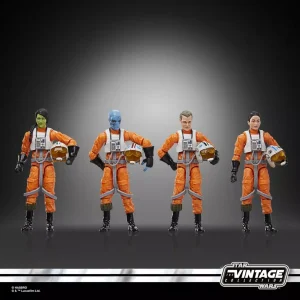
This collection of 3.75-inch action figures lets you fill out your roster of rebels with four brave X-Wing pilots.  With removable blasters and helmets, this team of heroes will look amazing in an X-Wing or in any Rebel base collection you can imagine.


 The Black Series Obi-Wan Kenobi (Padawan)
Young Obi-Wan Kenobi looks ready to take on a Sith Lord in this Black Series version of the heroic Jedi. Complete with Lightsaber and padawan braid.


The Black Series Star Wars: The Last Command 4-Pack
Honestly a bit of a weird set, but well worth it. This is a series of toys inspired by Star Wars Legends, specifically the comic book The Last Command. As such the set includes a post The Return of The Jedi Luke Skywalker, Luke’s clone (called Luuke, yes really), Luke Skywalker’s wife, Mara Jade, and renegade master, Joruus C’baoth, All in plastic toy form. Odd, but awesome.


The Black Series Osha Aniseya

Fresh from The Acolyte, this Osha Aniseya figure comes with four accessories, including a blaster and a removable backpack.


The Vintage Collection Enoch & Thrawn’s Night Troopers

Disney +’s Star Wars shows brought us many, many awesome Star Wars things, but few could have predicted Zombie Stormtroopers. These wonderfully creepy toys are brilliantly rendered.


The Black Series Rebel Trooper & Stormtrooper

Wonderfully articulated and extremely eye catching, the Rebel and Stormtrooper set is perfect for anyone planning on recreating the opening of Star Wars. Just add a Leia and a Darth Vader and about a dozen of these sets and you’ve got everything you need.


The Black Series Clone Trooper & Battle Droid

This lovely set includes one each of the ‘good guy’ and the ‘bad guy’. In this case, it is a Clone Trooper and a very sturdy Battle Droid. Fun fact: none of the Battle Droids ever found a clone trooper called Roger, despite their repeated attempts to call him out.

The Black Series Ahsoka Tano

Inspired by the TV series of the same name, this fully poseable action figure version of Ahsoka Tano is a must for completionists and fans. It’s a striking model, and it almost looks like it’s stepped off the screen.


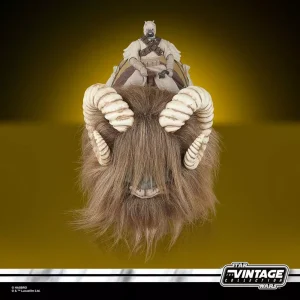
The Vintage Collection Bantha & Tusken Raider 2-Pack
This lovely fuzzy friend and his Tusken Raider rider companion come with really nice fur and lots of cool accessories and are presented in a ‘vintage’ style box, even though the toys of the 70s were never quite this cool. Don’t be ‘like a Bantha’, just own an actual Bantha!

THE TELEPHEMERA YEARS: 2004, part 1

Wonder Showzen, 2004-05

Ah, telephemera… those shows whose stay with us was tantalisingly brief, snatched away before their time, and sometimes with good cause. They hit the schedules alongside established shows, hoping for a long run, but it’s not always to be, and for every Street Hawk there’s two Manimals. But here at STARBURST we celebrate their existence and mourn their departure, drilling down into the new season’s entertainment with equal opportunities square eyes… these are The Telephemera Years!

2004-05

After finishing the 2003-04 season with just one show – perennial favourite Monday Night Football – in the top twenty rating shows, ABC hit back in Fall 2004 with a slate of new arrivals that took the US by storm. Crashing into the top ten were both Desperate Housewives and Grey’s Anatomy, while the buzz created by mystery box classic Lost saw twenty million viewers tune in for its finale. CBS still ruled the roost, however, with the juggernaut that was CSI: Crime Scene Investigation showing no signs of slowing down, backed by spin-off CSI: Miami, another police procedural in Without a Trace, and reality show Survivor. American Idol secured two places in the top three for Fox, while NBC continued to struggle, the days of Must See TV fading fast in the wake of Friends and Seinfeld ending; ER, its highest rating show, could claim only the number twelve spot.

There were plenty of new arrivals to keep the ABC blockbuster trio company, though, with Boston Legal doing well on ABC, CSI: New York joining the CBS CSI family, and Family Guy spin-off American Dad debuting on Fox. NBC tried out a spin-off of their own in Joey, which didn’t do well, but Medium and The Office were more successful. Offbeat detective action could be found on UPN as Veronica Mars sought to solve the mystery of her murdered classmate, HBO premiered both Deadwood and Entourage, and genre fans were well-catered for with The 4400 on the USA Network and Stargate Atlantis on Sci-Fi. Those were all shows that made a lasting impression on viewers but what about those that came and went? This is the story of four of 2004’s forgotten “classics”…

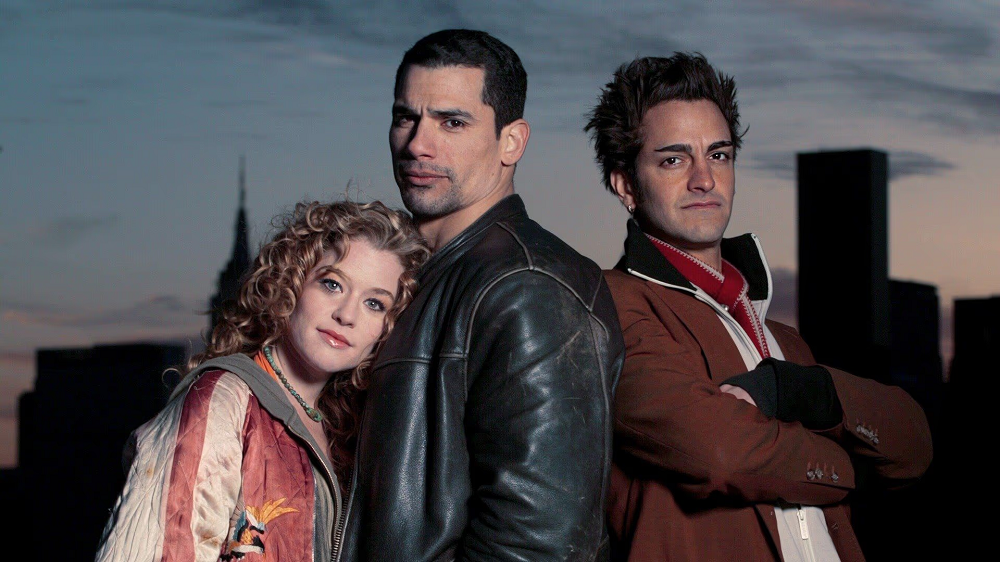
Jonny Zero (Fox): Like its protagonist, Jonny Zero creators R Scott Gemmill and Ken Sanzel must have felt that the odds were stacked against them. Not only did the Fox network put them in the Friday night death slot, when most young viewers – the target demographic for this “alternative detective” – are out on the town, but they also ran the episodes out of order, resulting in continuity gaffs that reached their apogee when a character died, only to appear alive and well two episodes later. It’s a shame, because their show was dripping with cool, a redemption story for the twenty-first century of a man rightly convicted for a crime he did commit but nevertheless trying to turn his life around.

Sanzel had created Fox show Lawless for former NFL player Brian Bosworth, a show that performed so poorly in the ratings that it was pulled from the air after just one episode. 1998’s The Replacement Killers, which starred Chow Yun Fat and Mira Sorvino, did better, and he was given the chance to direct Stephen Baldwin and Tia Carrere in Scar City the same year. His latest script showed promise and landed at John Wells Productions, but Dodge’s City had failed to get past the pilot stage in 1999 and audiences weren’t exactly clamouring to see Lou Diamond Phillips in 2002’s Lone Hero, so Wells brought in Gemmill, a trusty hand on two other Wells shows, ER and JAG.

Jonny Zero, 2004-05

Jonny Zero starred Franky G, a Puerto-Rican actor born Frank Gonzales who had made his screen debut in 2002 independent movie Manito. Roles in James Foley’s Confidence and The Italian Job remake followed, and Wells felt he had the charisma to carry his own show, starring as Jonny Calvo, a man released from prison after serving four years in Sing Sing for killing a man. Determined to go straight and prove his worth to his ex-wife (Tawny Cypress) and son, Calvo takes a job at a pirate-themed children’s restaurant. It’s there that he meets Random (rapper GQ) and the two start a private detective agency together, adding former stripper Velvet (Brennan Hesser) to their crew. Jonny is being courted by both his former boss Garrett and an FBI agent wanting him to turn informant; can he stay out of trouble and redeem himself by helping other people?

Jonny Zero debuted as a mid-season replacement in January 2005, already the fifth show in its slot as Fox struggled to compete in a changing television landscape. Gemmill scripted six of the thirteen-episode order, with contributions from Angel writer Mere Smith and 24‘s Virgil Williams, while Deep Impact and Pay It Forward‘s Mimi Leder directed four episodes. Jonny’s caseload involved missing babies, stolen Bar Mitzvah rewards, drive-by shootings of rappers, and solving the murder of his parole officer’s husband, with guest stars including Idris Elba Krysten Ritter, Gina Rodriguez, and Peta Wilson, but the show fared little better than any of the others in the Friday 9pm slot and was replaced by reality show Nanny 911.

Revelations (NBC): David Seltzer had form with the Apocalypse. In 1972, after starting his career as an uncredited scripter on Willy Wonka and the Chocolate Factory, he wrote The Hellstrom Chronicle, a pseudo-documentary that detailed the battle between man and insect for control of the planet presented by fictional scientist Dr Nils Hellstrom. The film won Best Documentary Feature at the 1972 Oscars and ensured Seltzer was the first man producer Harvey Bernhard thought of when he wanted a script featuring the rise of the Antichrist. The Omen took Seltzer a year to write but established the End of Days as a movie trope, a theme he returned to for 1997’s The Eighteenth Angel after winning accolades for his scripts for Lucas, Punchline, and Bird on a Wire, the first two of which he also directed.

In the wake of the Millennium, and what he considered the parlous state of the world, agent turned television producer Gavin Polone, who had scored hits with Curb Your Enthusiasm and Gilmore Girls, wanted a series that dealt with the end of the world as specified in the Biblical Book of Revelation. Polone had recently formed Pariah Television to handle new projects and engaged Seltzer to create what would become Revelations. The aftermath of the Apocalypse had become a hot topic in Christian circles and beyond after the publication of Left Behind in 1995, an apocalyptic novel written by Tim LaHaye and Jerry B Jenkins that turned into a popular series of books, but Revelations trod different territory, looking to forestall something Left Behind -and the Bible itself – saw as inevitable.

Revelations, 2004-05

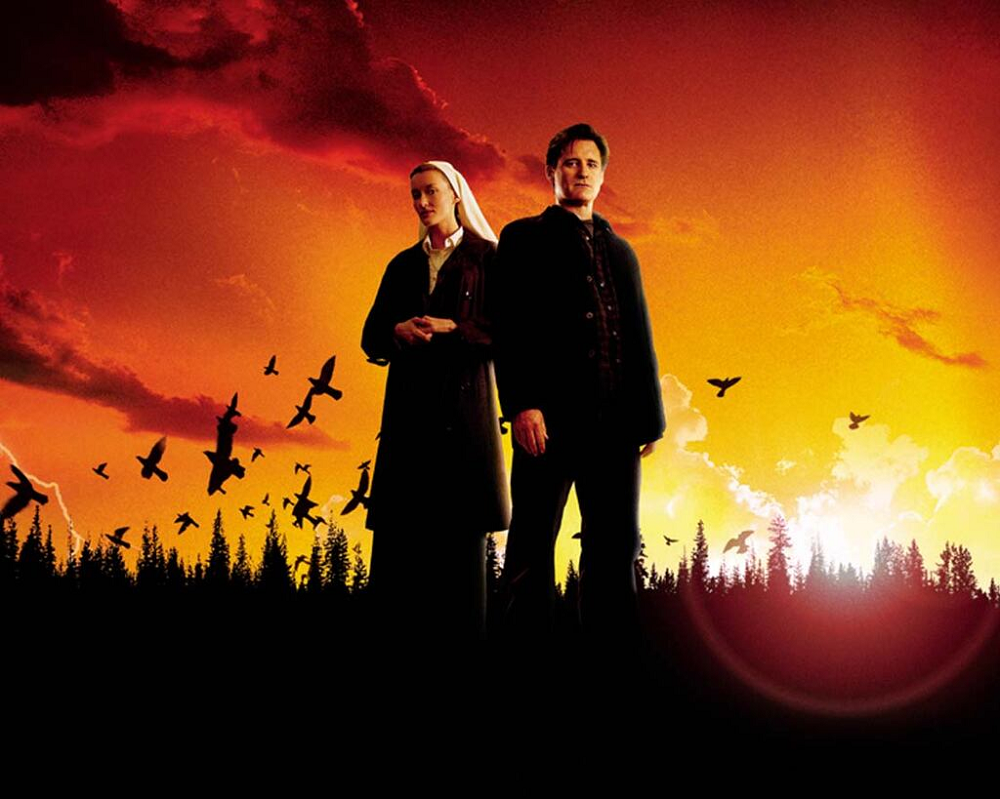
Bill Pullman played astrophysicist Dr Richard Massey, grief-stricken after the murder of his daughter at the hands of Satanist Isaiah Haden (Michael Massee), who he hunted down and brought to justice. Meanwhile, nun Josepha Montafiore (Natascha McElhone) is witness to prophecies spoken by a comatose girl that lead her to Massey and is tasked by the wealthy Catholic Elkind Foundation with recruiting him to unravel mysteries that could foretell the end of the world, racing against time to prevent Haden and his followers bringing it about.

Debuting on NBC on April 13th 2005 in a slot previously occupied by The West Wing, Revelations was billed as a six-episode miniseries, a return to the format made popular in the 1970s and 1980s by such series as Roots and North and South. Fifteen million viewers tuned in to the first episode, down to less than a week later. The finale was viewed by just over eight million and although the Apocalypse had been prevented for now, the series was left very much open for a second season, the Antichrist birthed from a goat and spirited away into the night. Seltzer, though, has always maintained it was intended to be one and done, and it became his last word on the Apolcaypse, with just 2011’s Cinema Verite – a fictionalized account of the production of 1973 proto-reality show An American Family – following before he retired from the business.

Wonder Showzen (MTV2): Quite why USA Network executives agreed to fund a pilot after viewing Vernon Chatman and John Lee’s eight-minute pitch reel for Kid’s Show in 1999 is anyone’s guess, but after just a few minutes viewing the resulting twisted puppet show produced by the pair, they quickly realised it was something that was not in keeping with the channel’s programming style (and this from a network that was airing WWF Raw). Instead, Chatman and Lee found a home at MTV2, the subject of a rebranding by owners Viacom, who were putting together an edgy programming block that would also contain Dirty Sanchez and Jackass spin-off Wildboyz.

Renamed Wonder Showzen, the new show debuted as part of Sic ‘Em Fridays on March 11th 2005. A satirical look at politics, religion, race, violence, sex, and popular culture, the idea had been distilling since Chatman and Lee were students in San Francisco in the early 1990s. Fond of pranks, the two imagined a show called Kid’s Show which would just be twenty minutes of people singing the show’s name over and over until the final credits rolled. After graduation, the two found themselves in New York, where Chatman was working on The Chris Rock Show and Lee had co-founded the arts collective PFFR with Alyson Levy.

After continuing their pranking ways on the people of New York, they realised that they could take things a step further if the perpetrators of the pranks were innocent, like children or puppets, finding great satisfaction in targeting their least favourite people, the city’s numerous doormen. Amassing some humorous footage, they edited it together into the pitch reel that impressed the USA Network, and when they were greenlit for a pilot, Levy pitched in, borrowing a book from the library on how the Jim Henson Workshop made the sets for The Muppet Show and Sesame Street. The result was presented to USA Network head Barry Diller who, Chatman told The Ringer in 2020, “got a few minutes into the tape, pressed Stop, and said, ‘Not only are we not doing this show, we’re not doing comedy anymore.’”

Wonder Showzen, 2004-05

As the 2000s rolled around, a tape of the pilot circulated amongst fans, landing up on MTV programmer Jesse Ignjatovic’s desk. Ignjatovic took it to Executive Vice-President Tom Calderone, who immediately recognised the spirit of Monty Python and Saturday Night Live in the show and ordered an eight-episode season. But only after changing the name of the show, wary that Kid’s Show would end up being conflated with Dora the Explorer or Sesame Street. Work began in earnest in Fall 2004, with PFFR member Jim Tozzi completing a core four for the show, who all pitched in on the various jobs needed to creative twenty-two minutes of television. Given a budget of $400,000 per episode, Chatman and Lee ensured they not only delivered on budget but also on time, figuring that they could get away with much more on screen if they were easy to deal with off it. Chatman voiced the show’s self-appointed host Chauncey and chief street interviewer Clarence, with Lee giving life to Wordsworth, the worm with an exposed brain, and “meat cretin” Him. Levy voiced lady monster Sthugar, while a gang of kids were corralled into asking adults awkward questions for the camera, sometimes dressed as Adolf Hitler.

The material varied only slightly from Chatman and Lee’s original pranks, putting members of the public on the spot and often earning their ire, with kicks, punches, and even knives being pulled a common response to their affrontery. Regular segments such as “Beat Kids,” “Funny/Not Funny,” “Horse Apples,” and “So Now You Know” appeared alongside the pranks, with special guests including Flavor Flav, Jon Glaser, and Amy Sedaris lining up to read inappropriate tales in “Story Time.”

Wonder Showzen, 2004-05

Even at a cool network like MTV, Wonder Showzen ran up against the standards and practices department, with one sketch featuring the letter W being shot and killed deemed too severe a reaction to the re-election of George W Bush in 2005. The show was given a TV-MA rating, meaning MTV – which recycled its programming frequently during the day – couldn’t show it during family viewing, but it nevertheless attracted a decent following, helped by rave reviews in newspapers and magazines, although The Catholic League was less impressed, and a Southern pastor allegedly devoted a whole sermon to denouncing the show.

A second season, again of eight episodes, arrived in March 2006 with – if anything – things turned up even further on the “what can we get away with?” scale. The first episode alone saw the letter P have liposuction, her unwanted fat gain sentience and fall in love with a pile of faeces, and a cartoon titled “Don’t Mock Gimps,” with successive instalments featuring a dim-witted character named Middle America, an episode-long sketch poking fun at both slavery and the Scopes monkey trial, a war with a bootleg version of the show, and a season finale that saw Clarence realise that compelling television does not exist and commit suicide by throwing himself into the Hudson River. Guests appearing in the second season included David Cross, Judah Friedlander, Zach Galifianakis, Amy Poehler, and alternative music icons Devendra Banhart, Will Oldham, and Corin Tucker.

Despite good DVD sales, Chatman and Lee had always thought a third season was unlikely and so it proved, with Tom Calderone’s sideways move to VH1 robbing them of their biggest advocate at the network. After pondering their next move, the PFFR crew began work on a CGI animated show about the dangers of spirituality called Xavier: Renegade Angel which debuted on [adult swim] in November 2007, also running for two seasons. In recent years they’ve resisted calls to bring back Wonder Showzen but acknowledge that its central themes of anti-capitalism and anti-racism will never go out of fashion. Although Tozzi left PFFR in 2009, the core trio of Chatman, Lee, and Levy continue to work together and most recently produced Teenage Euthanasia and the Ballmastrz: Rubicon special, both for [as].

Kojak (USA Network): Abby Mann won a Best Adapted Screenplay Oscar for Judgment at Nuremberg, a 1961 feature that originally aired as a TV movie in 1959. In 1973, Universal Television approached him to write a script based on the 1963 killing of two young women in New York that became known as the Career Girls Murders. Poor police work led to the arrest of a young black man, who confessed under pressure but whose innocence was proved when a separate team of detectives examined the case and found the real culprit, drug addict Richard Robles. Mann’s script was filmed as a TV movie titled The Marcus-Nelson Murders, in which Lieutenant Theo Kojak – played by Telly Savalas – absolves the young black suspect originally arrested for the killing of two white girls and apprehends the real suspect.

The Marcus-Nelson Murders aired on March 8th 1973 as part of NBC Saturday Night at the Movies and Kojak proved popular with audiences who were lapping up offbeat detectives. With his bald pate, ever present lollipop (to distract him from the temptation of smoking cigarettes), and hip patter, Kojak was as offbeat as they came, and a full series followed in October 1973, revitalising Savalas’s career and turning “who loves ya, baby?” into a proto meme. Kojak solved his final case in March 1978, although he did return for seven TV movies on ABC and CBS between 1985 and 1990 before finally hanging up his fedora.

Kojak, 2004-05

Nothing stays dead in TV for long and 2005 brought the return of the Greek American detective with the Polish name, this time at the hands of Tony Picirillo, an unlikely candidate having earned rave reviews for his debut play The 24th Day, a two-hander dealing with the AIDS crisis that was subsequently adapted by Picirillo himself into a movie starring James Marsden and Scott Speedman. Stepping into Savalas’s shoes for the USA Network revival was Ving Rhames, a former Broadway actor who’d made his big screen debut in Wes Craven’s The People Under the Stairs. After a star making turn as gangster Marsellus Wallace in Quentin Tarantino’s Pulp Fiction in 1994, he spent three seasons on ER before winning a Golden Globe as boxing promoter Don King in the 1998 biopic Don King: Only in America.

Unlike Savalas, Rhames’s Kojak was of mixed Polish and African American heritage but otherwise stayed true to the character, with a smooth skull and a liking for lollipops. His debut outing on March 25th 2005 saw him hunting down a serial killer who targeted single mother prostitutes, with subsequent cases involving a hostage crisis, a spree killer, and a bomber, assisted by a team including Chuck Shamata, Sybil Temtchine, and Michael Kelly’s Crocker, all overseen by Chazz Palminteri’s Captain Frank McNeil. Despite some nice touches and a charismatic turn by Rhames, the series received a mixed reception, with as many turned off by its grim, twenty-first century violence as appreciative of the contemporary update, and it was cancelled after just nine episodes had aired.

Next time on The Telephemera Years: more of 2004’s less-successful efforts, including small town mysteries and Five-O in Hawaii

Check out our other Telephemera articles:

The Telephemera Years: pre-1965 (part 1, 2, 3, 4)

The Telephemera Years: 1965 (part 1, 2, 3, 4)

The Telephemera Years: 1966 (part 1, 2, 3, 4)

The Telephemera Years: 1967 (part 1, 2, 3, 4)

The Telephemera Years: 1968 (part 1, 2, 3, 4)

The Telephemera Years: 1969 (part 1, 2, 3, 4)

The Telephemera Years: 1970 (part 1, 2, 3, 4)

The Telephemera Years: 1971 (part 1, 2, 3, 4)

The Telephemera Years: 1972 (part 1, 2, 3, 4)

The Telephemera Years: 1973 (part 1, 2, 3, 4)

The Telephemera Years: 1974 (part 1, 2, 3, 4, 5)

The Telephemera Years: 1975 (part 1, 2, 3, 4)

The Telephemera Years: 1976 (part 1, 2, 3, 4)

The Telephemera Years: 1977 (part 1, 2, 3, 4)

The Telephemera Years: 1978 (part 1, 2, 3, 4)

The Telephemera Years: 1979 (part 1, 2, 3, 4, 5, 6)

The Telephemera Years: 1980 (part 12, 3, 4)

The Telephemera Years: 1981 (part 1, 2, 3, 4)

The Telephemera Years: 1982 (part 1, 2, 3, 4)

The Telephemera Years: 1983 (part 1, 2, 3, 4)

The Telephemera Years: 1984 (part 1, 2, 3, 4)

The Telephemera years: 1985 (part 1, 2, 3, 4)

The Telephemera Years: 1986 (part 1, 2, 3, 4)

The Telephemera Years: 1987 (part 1, 2, 3, 4)

The Telephemera Years: 1988 (part 1, 2, 3, 4, 5)

The Telephemera Years: 1989 (part 1, 2, 3, 4)

The Telephemera Years: 1990 (part 1, 2, 3, 4)

The Telephemera Years: 1991 (part 1, 2, 3, 4)

The Telephemera Years: 1992 (part 1, 2, 3, 4)

The Telephemera Years: 1994 (part 1, 2, 3, 4)

The Telephemera Years: 1995 (part 12, 3, 4)

The Telephemera Years: 1996 (part 1, 2, 3, 4)

The Telephemera Years: 1997 (part 1, 2, 3, 4)

The Telephemera Years: 1998 (part 1, 2, 3, 4)

The Telephemera Years: 1999 (part 1, 2, 3, 4)

The Telephemera Years: 2000 (part 1, 2, 3, 4)

The Telephemera Years: 2001 (part 1, 2, 3, 4)

The Telephemera Years: 2002 (part 1, 2, 3, 4)

The Telephemera Years: 2003 (part 1, 2, 3, 4)

The Telephemera Years: 2005 (part 1, 2, 3, 4)

The Telephemera Years: 2006 (part 1, 2, 3, 4)

The Telephemera Years: 2007 (part 1, 2, 3, 4)

The Telephemera Years: 2008 (part 1, 23, 4)

The Telephemera Years: O Canada! (part 1, 2, 3, 4)

Titans of Telephemera: Irwin Allen

Titans of Telephemera: Stephen J Cannell (part 1, 2, 3, 4)

Titans of Telephemera: DIC (part 1, 2)

Titans of Telephemera: Filmation (part 1, 2)

Titans of Telephemera: Hanna-Barbera (part 1, 2, 3, 4, 5)

Titans of Telephemera: Kenneth Johnson

Titans of Telephemera: Sid & Marty Krofft

Titans of Telephemera: Glen A Larson (part 1, 2, 3, 4)

Titans of Telephemera: Quinn Martin (part 1, 2)

Titans of Telephemera: Rankin/Bass

Titans of Telephemera: Ruby-Spears

Titans of Telephemera: Aaron Spelling (part 1, 2, 3, 4)

Titans of Telephemera: Sunbow

THE TELEPHEMERA YEARS: 1972, part 4

The Amazing Chan and the Chan Clan, 1972-73

Ah, telephemera… those shows whose stay with us was tantalisingly brief, snatched away before their time, and sometimes with good cause. They hit the schedules alongside established shows, hoping for a long run, but it’s not always to be, and for every Street Hawk there’s two Manimals. But here at STARBURST we celebrate their existence and mourn their departure, drilling down into the new season’s entertainment with equal opportunities square eyes… these are The Telephemera Years!

1972-73

The 1972 season would turn out to be a disastrous one for ABC, with no shows in the top twelve, which was evenly shared between CBS and NBC. Marcus Welby, MD – which had been the number three show of the 1971-72 season – was their highest placing show, with their next best effort coming in at number seventeen. ABC did have two promising new shows making their bow in Kung Fu and The Streets of San Francisco, but it would be another few years before the Alphabet Network could hold its own in the race for ratings. The sitcom still ruled the roost, with All in the Family, and The Mary Tyler Moore Show all doing good business for CBS, alongside new arrivals Maude and Bridget Loves Bernie (which would end up having just a single season despite good ratings due to threat from the Jewish Defense League over its inter-faith couple).

For NBC, Sanford and Son was a strong number two to Archie Bunker in the ratings, while The NBC Sunday Mystery Movie – a “wheel” show with four rotating features – gave audiences another taste of Columbo, McCloud, and McMillan & Wife, alongside less popular newcomer Hec Ramsey. Other new arrivals included The Bob Newhart Show, M*A*S*H, and The Waltons, with Bonanza, Mission: Impossible, The Mod Squad, and Rowan and Martin’s Laugh-In all entering their final seasons. Those were all shows for grown-ups, though: what was on offer for the kids? This is the story of 1972’s new Saturday morning thrills…

Sealab 2020 (NBC): Hanna-Barbera’s first new adventure show since 1968’s The Adventures of Gulliver, Sealab 2020 was designed by Alex Toth, the latest in a line of productions the comic book legend worked on for the animation giants that began with 1966’s Space Ghost. The series was a reaction to the popularity of Jacques Cousteau, a former French naval officer turned oceanographer, whose undersea adventures had been captured on film since 1942, and who had signed a deal with ABC to present The Undersea World of Jacques Cousteau as a regular series from January 1968.

In the far future year of 2020, Captain Mike Murphy leads a team of 250 people, dedicated to exploring the oceans and protecting marine wildlife. From their Challenger Sea Mount base atop an underwater mountain, Murphy’s crew had to contend with everything the sea could throw at them, including giant squids, unexploded mines, malfunctioning nuclear submarines, and the overreach of Capitalism. With Toth’s designs and a cast that included veteran voice artist John Stephenson, The Wild Wild West’s Ross Martin, Hanna-Barbera’s teenage boy expert Jerry Dexter, and former child actress Ann Jillian, as well as Don Messick voicing a human for a change, Sealab 2020 should have been another in a long line of H-B classics, even accounting for the limited animation of the time, but there was just one problem: it was boring.
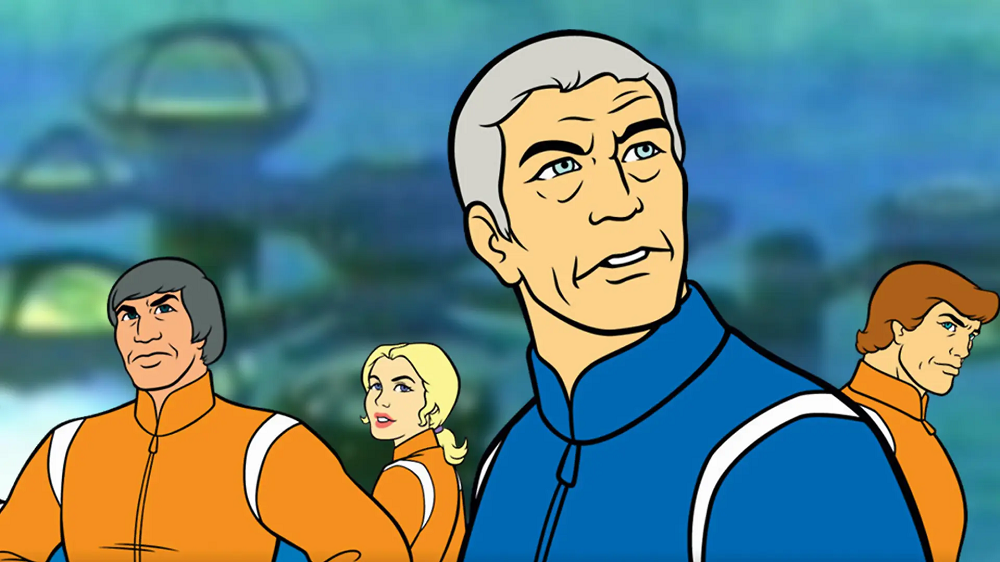
Sealab 2020, 1972-73

A lack of a definite antagonist and an over-earnest environmental message combined to make even man-eating sharks and a tsunami seem dull, and the series – which debuted on September 9th 1972 – was cut short two episodes before the end of its run, a rarity for Saturday morning cartoons. The dullness of the show was not lost on Adam Reed and Matt Thompson, two Cartoon Network employees tasked with viewing the entire series in the mid-1990s ahead of re-runs on the cable channel. Bored, they began riffing replacement comedic dialogue for the characters and pitched it to Cartoon Network, who turned it down because they didn’t think it was funny. They resigned their jobs shortly after, but not before stealing copies of the original Sealab 2020 footage.

Forming their own company, 70/30 Productions, Reed and Thompson set about recutting the footage and adding new plots and dialogue until they had something they thought was fit for broadcast. By this time, [adult swim] had launched and Reed and Thompson found a receptive audience for what they called Sealab 2021, which became [as]’s first “original” programming. Launching in December 2000, with Captain Murphy now an incompetent with a loose grip on reality and some original characters added, such as Dolphin Boy (who speaks only in dolphin noises) and Sharko, a half-human, half-shark child. Sealab 2021 launched alongside Aqua Teen Hunger Force, The Brak Show, and Harvey Birdman, Attorney at Law and established [as]’s cool credentials from the off, eventually running for fifty-two episodes across four seasons. Not bad for a show so dull that it even bored the easiest audience in television, the sugar-soaked Saturday morning crowd…

The Brady Kids/The Osmonds (ABC): A one-hour slot on Saturday mornings amid the usual cartoon fare, The ABC Saturday Superstar Movie was an attempt to the ABC Movie of the Week for kids. In a seventeen-episode run between September 1972 and January 1973, the showcase presented a mix of brand-new outings for established characters (such as Yogi Bear, Popeye, Daffy Duck, and the Banana Splits), the further adventures of literary heroes such as Robin Hood and Oliver Twist, and a series of cartoon adaptations of popular sitcoms, with That Girl, Gidget, and Bewitched given new life in animated form. Oh, and an episode featuring baseball legend Willie Mays, his guardian angel, and an orphaned girl.

The debut episode featured the young stars of another TV sitcom hit, The Brady Bunch. The story of a widowed father of three boys who marries a mother of three girls, the show earned twenty-eight million viewers in its first season on ABC, adding another ten million by the end of season three. Marshalled by Gilligan’s Island creator Sherwood Schwartz, the show made stars of its cast and launched a pop career for the six Brady siblings. The teen TV to pop star path was well-trodden, with The Monkees and The Partridge Family riding high in both the TV and pop charts, and The Archies – a fictional band consisting of characters from Archie Comics and featured in Filmation’s The Archie Show – had a number one record in 1969 with “Sugar, Sugar.”
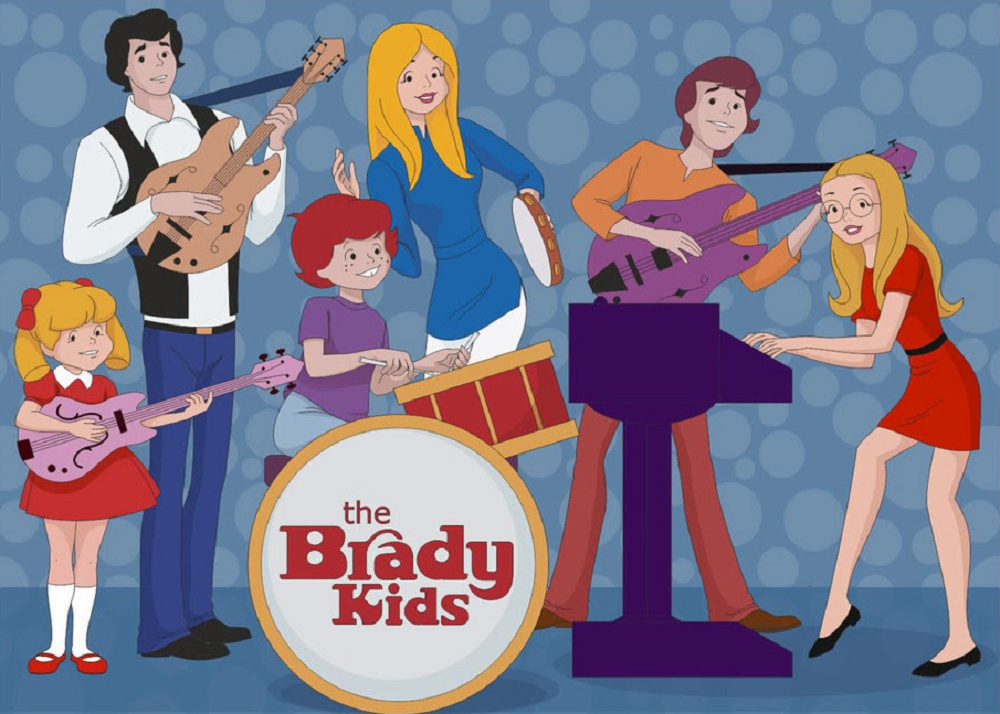
The Brady Kids, 1972-73

Eyeing similar crossover potential, Schwartz made a deal with Filmation to produce an animated show featuring his charges and their exploits as a pop band. Well-versed in Saturday morning fare by this point, Filmation co-founders Lou Scheimer and Norm Prescott used the pop gimmick to have the kids tour the world, without their parents and housekeeper Alice but accompanied by dog Mop Top (not Tiger as in the original show), landing on a mysterious island in “Jungle Bungle,” the hour-long opener that doubled as that ABC Saturday Superstar Movie premiere on September 9th 1972. In the episode, the kids encounter borderline racist pandas Ping and Pong, and a magical talking myna bird named Marlon, who all join the cast for subsequent episodes, where they encounter Superman and Lois Lane, Wonder Woman (in her TV debut), and the Lone Ranger in adventures that involve aliens, jewel thieves, the wizard Merlin, and the world’s wealthiest man (who does not give Nazi salutes, you’ll be pleased to hear).

The kids were voiced by the live-action cast, with F Troops‘s Larry Storch doing just about everything else. Each episode would contain a song taken from one of the The Brady Kids’ three studio albums, soundtracking Filmation’s usual limited animation (which also repurposed footage from previous Filmation shows, mostly The Archie Show). Schwartz saw the show as a chance to take the Brady Bunch to places that the live-action show could not, a similar tack taken by another new show in the Fall 1972 ABC line-up, The Osmonds.

Starring the Osmond Brothers, a troupe of Mormon entertainers from Ogden, Utah, who were discovered singing on Main Street in Disneyland in 1958, eventually appearing on the Disneyland After Dark TV show. This led to a regular slots on The Andy Williams Show and – when Williams took a break between 1967 and 1969 – The Jerry Lewis Show, after which they decided to switch from barbershop singing to bubblegum pop, launching a new recording career with MGM Records. It was this incarnation of The Osmonds – brothers Alan, Wayne, Merrill, Jay, Donny, and non-performing nuisance Jimmy – that would feature in the Saturday morning cartoon.

The Osmonds, 1972-73

Produced by Rankin/Bass, the set-up found the brothers installed as international goodwill ambassadors, travelling the world with their talking dog Fuji and biggest fan Hortense. The Osmonds travelled to China (where Western pop acts would be banned until Wham! Visited in 1985), London (where Jimmy is mistaken for a lookalike royal), Denmark (where Jimmy meets a mermaid), India (where Jimmy meets a genie), Australia (where a kangaroo falls in love with Jimmy), Ireland (where – yup – Jimmy is mistaken for a leprechaun), and even Transylvania, the latter of which is the only episode to feature sister Marie, who wouldn’t join the act until 1973. Each song featured two songs from the brothers as a group or solo, including Jimmy performing his UK number one single “Long Haired Lover from Liverpool.”

Both The Osmonds and The Brady Kids aired alongside a second season of The Jackson 5 on ABC (also produced by Rankin/Bass), completing a pop-oriented line-up that also included re-runs of The Monkees and two Sid and Marty Krofft shows, and led into American Bandstand. Seventeen episodes of both The Osmonds and The Brady Kids aired between September and December but plans for a special live-action wrap-up by The Osmonds fell through for Rankin/Bass. That was it for the pure-living rockers but The Brady Kids did well enough that Schwartz and Filmation agreed to do more, even though Schwartz – who had initially claimed that he wanted to be hands off but became increasingly involved with the show – had wanted to cut the experiment short.

Five more episodes would bring the show up to the minimum amount of episodes needed for syndication, but the young cast – who were also doing full-time work on The Brady Bunch itself – refused to continue doing double duty. Under threat of legal action, four of the kids agreed to return but Barry Williams and Maureen McCormack held out and Filmation – which had always been very much a family business – replaced them with Scheimer’s children, Lane and Erika. The second season saw the kids encounter robots, wizards, ghosts, and Australian pop star Rick Springfield in a backdoor pilot for his own animated show, Miracle Magic, which followed after The Brady Kids in the Fall 1973 line-up. Although the cartoon and the kids’ recording career finished in 1973, The Brady Bunch itself continued on until March 1974, and there were several attempts to return to the family, none of which enjoyed much success.

The Barkleys/The Houndcats (NBC): Best known for a series of animated shows based on the character they created for the title sequence of 1963’s The Pink Panther, DePatie-Freleng also produced a number of shows for NBC’s Saturday morning line-up from the mid-1960s, including The Super 6, Here Comes the Grump, and a show based on the 1967 movie version of Dr Dolittle. For Fall 1972, they presented the network with two new shows, both created by Scooby Doo! Where Are You? creators Joe Ruby and Ken Spears. Ruby and Spears had worked at Hanna-Barbera since 1959, working on Cattanooga Cats, Motormouse and Autocat, Help!… It’s the Hair Bear Bunch!, The Funky Phantom, and more, but after a request to become associate producers was rebuffed by the company, they decided to go freelance. They were still open to working with Hanna-Barbera, but their agent secured them that elusive associate producer gig at DePatie-Freleng, where they began work on their first projects for the studio.
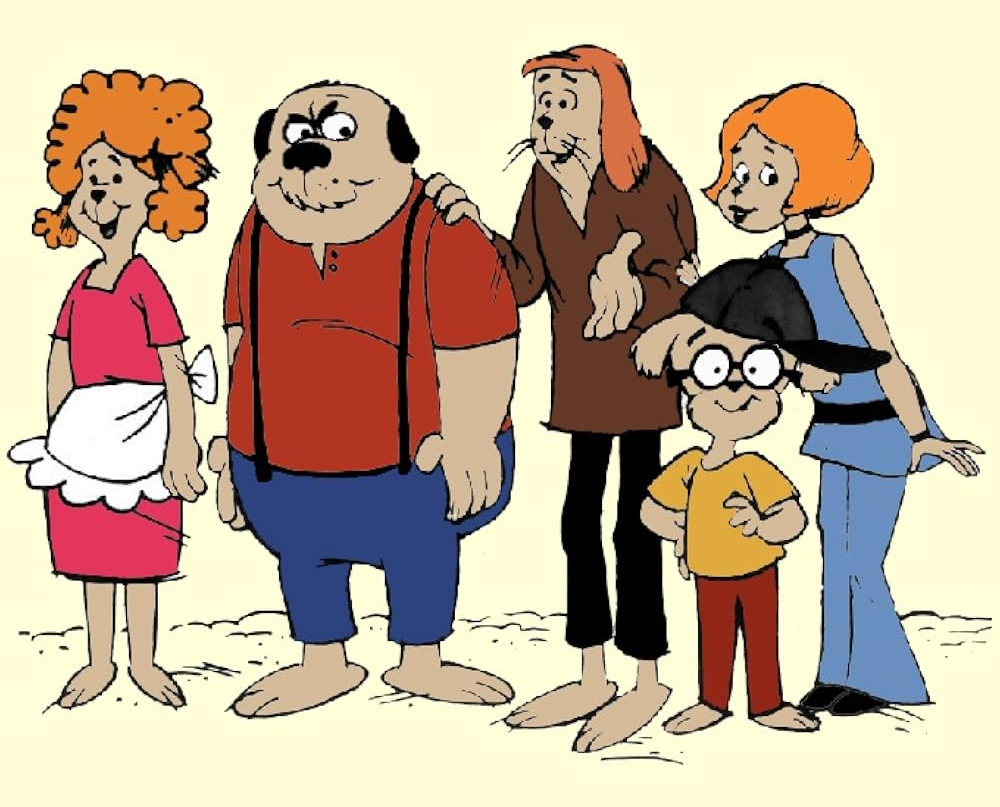
The Barkleys, 1972-73

The Barkleys was a take on All in the Family, itself an adaptation of British show Till Death us Do Part. Debuting as a mid-season replacement in January 1971, All in the Family was the number one show until it was knocked from its perch by Happy Days in 1976 as Americans could not get enough of lovable bigot Archie Bunker. His anthropomorphic replacement for Saturday mornings was humanoid dog Arnie Barkley, a short-tempered bus driver who refuses to admit when he is (frequently) wrong. The family was completed by sweet-natured wife Agnes, long-haired older son Roger, wilful daughter Terry, and young Chester. As with All in the Family, episodes revolved around Arnie’s hair-brained schemes to gain wealth or status, or his total misunderstanding of his children and the modern era.

The Houndcats, meanwhile, took inspiration from both Mission: Impossible and a short-lived 1971 CBS Western series called Bearcats that Ruby and Spears had written for. An anthropomorphic mix of cats and dogs operating in 1914 America, the titular agents were led by cool cat Stutz, and also included error-prone daredevil Dingdog, Old English sheepdog Muscle Mutt, master of disguise Putty Puss, and Rhubarb, a sombrero-wearing dog with a gadget-filled coat. The team were given their orders via gramophone from their unseen Chief, employing the Mission: Impossible gimmick of “this message will self-destruct,” an instruction that always takes the Houndcats by surprise.
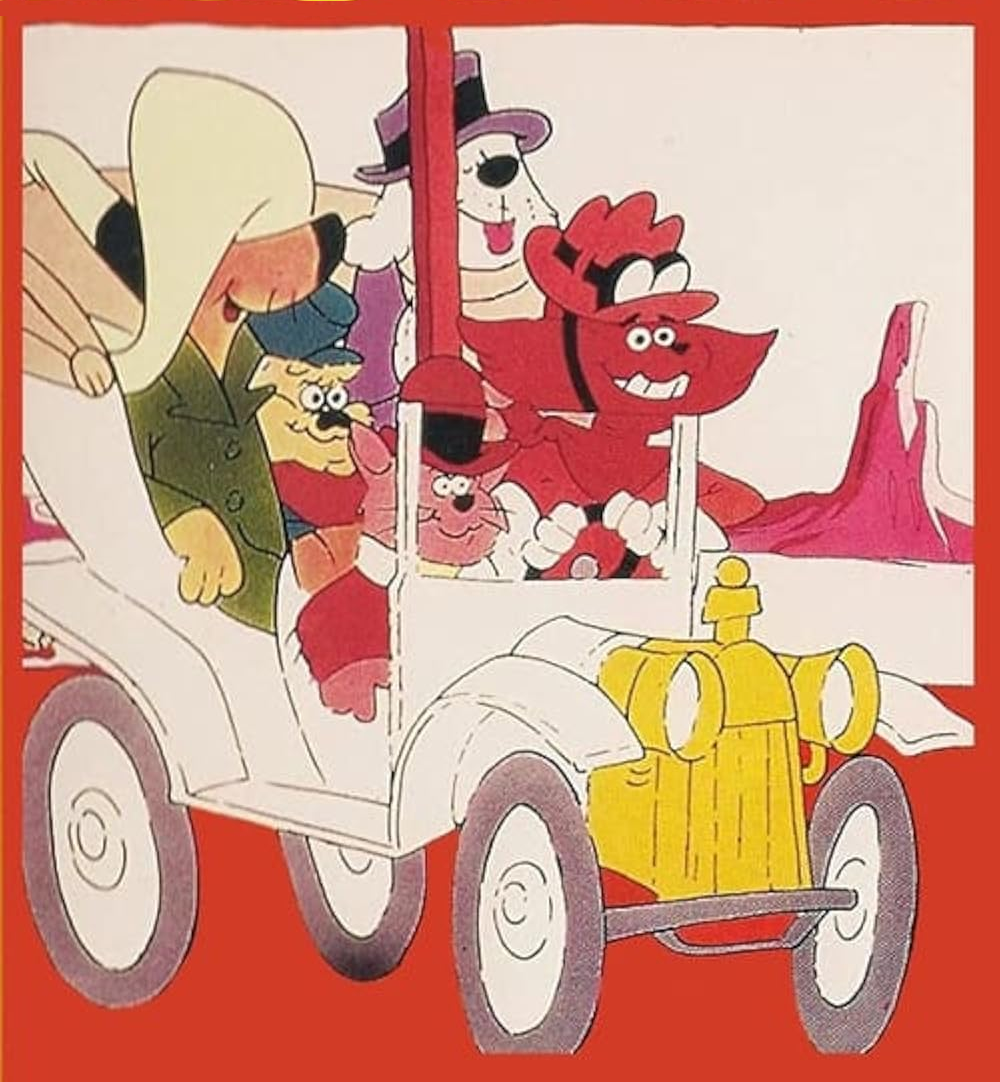
The Houndcats, 1972-73

Both shows debuted on September 9th 1972 and ran for thirteen weeks, with re-runs airing until the end of the 1972-73 season. Apparently, because Marvel Productions (who acquired DePatie-Freleng in 1981) failed to renew the copyright in time, both shows fell into the public domain in 2000-2001. Ruby and Spears continued to work at both DePatie-Freleng and Hanna-Barbera, creating Bailey’s Comets, Jabberjaw, and Dynomutt Dog Wonder, before former Fred Silverman – the man who’d commissioned Scooby-Doo! from Hanna-Barbera – poached them when he was named President of ABC Entertainment in 1975. Feeling that Hanna-Barbera had become complacent, Silverman oversaw the foundation of Ruby-Spears Productions in 1977, but that’s another story…

The Amazing Chan and the Chan Clan (CBS): Earl Derr Biggers was a former member of The Harvard Lampoon who worked as a journalist before writing his first novel, Seven Keys to Baldplate, in 1913. A bestseller, it was quickly adapted into a Broadway play by George M Cohan, who also starred in the 1917 film version, the first of seven adaptations of Biggers’s novel. In 1925, in need of a detective character for a novel he had been working on called The House Without a Key and inspired by the real-life Hawaiian policemen Chang Apana and Lee Fook, Biggers created Charlie Chan. Chan was not the book’s main character – he doesn’t speak until page eighty-two – but he does solve the case, the murder of a former Boston socialite in Honolulu. Chan returned a year later in The Chinese Parrot and was lauded as a welcome alternative to the negative Yellow Peril stereotypical depiction of Asians in Western media such as Fu Manchu.

1926 was also the year he first appeared on film, in a ten-part adaptation of The House without a Key that starred Japanese American actor George Kuwa as the Hawaiian Chinese Chan. Biggers wrote four more Charlie Chan novels, but it was film where the character took off as Japanese actor Kamiyama Sojin took the role for 1927’s The Chinese Parrot. In 1931, Warner Oland – A Swedish American actor who claimed some Mongolian ancestry and who had also previously played Fu Manchu – became the first man to play Chan in a title role in Charlie Chan Carries On, an adaptation of the fifth Biggers book. Over the next six years, Oland would play Chan in a further fifteen movies and was filming a seventeenth when he died from bronchial pneumonia in August 1938.  His last film – Charlie Chan at Ringside – was later reshot starring Peter Lorre as Mr Moto, the third in a series of films featuring John P Marquand’s Asian adventurer.
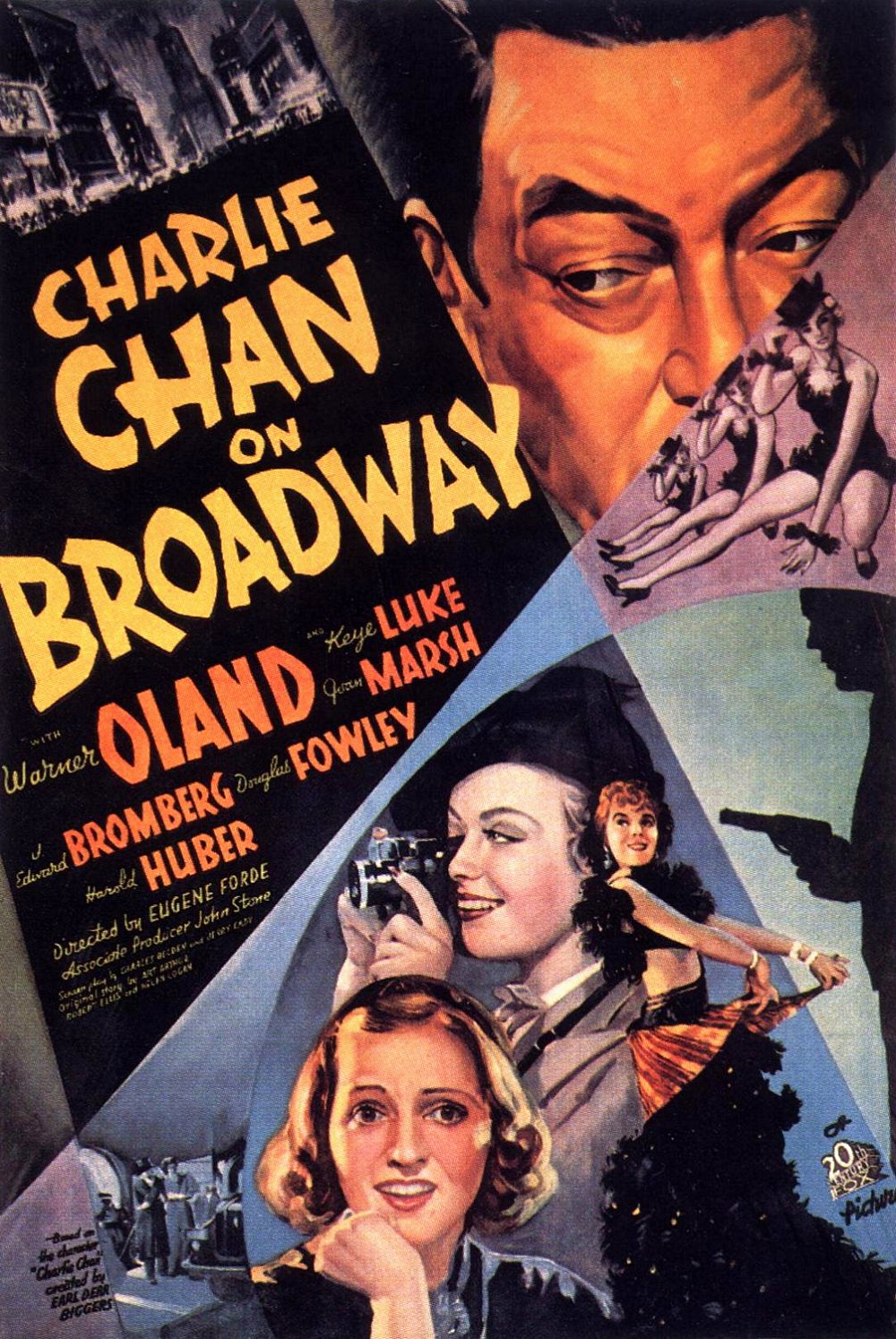
The Amazing Chan and the Chan Clan, 1972-73

The film series continued without Oland as Sidney Toler beat out thirty-three other actors to secure the role. Keye Luke, who’d played Chan’s Number One Son throughout the Oland years also departed, replaced by Number Two Son Jimmy (Sen Yung). Like Oland, Toler became ill towards the end of his tenure as Chan, finding enough strength to complete his twenty-second film as the detective, 1946’s The Trap, before he died in Febtruary 1947. The series continued for another six films with Roland Winters in the role, finishing with 1949’s Sky Dragon, with Luke returning as Number One Son for the final two films.

In 1956, The New Adventures of Charlie Chan debuted in syndication, a co-production between Television Programs of America and ITC Entertainment. Filmed and set in London, with J Carrol Naish and James Hong as Chan and his Number One Son, it did not do good ratings and was cancelled after one season, bringing Charlie Chan’s time in the American popular imagination to an end after thirty years, although he continued to appear in re-runs of the movies as TV expanded across the nation.

Fourteen years after the end of The New Adventures, and six years after he last appeared in a Dell comic book, The Return of Charlie Chan saw The Wild Wild West’s Ross Martin step into the detective’s shoes for a prospective pilot for ABC. The project never went any further (and the pilot remained unshown until 1979) but something was clearly in the air as CBS announced The Amazing Chan and the Chan Clan for their Fall 1972 Saturday morning slate, one of four new shows from Hanna-Barbera in the line-up, alongside The Flintstone Comedy Hour, Josie and the Pussycats in Outer Space, and The New Scooby-Doo Movies.
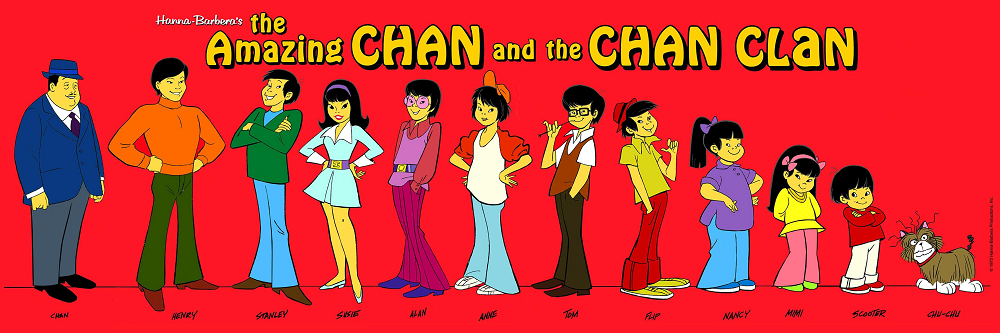
The Amazing Chan and the Chan Clan, 1972-73

Produced in Australia by Eric Porter Studios in association with Hanna-Barbera Australia, The Amazing Chan starred an Asian American actor in the title role for the first time since the Korean American EL Park played Chan in 1929’s Behind That Curtain. What’s more, Chan would be played by Keye Luke, linking the show with the classic series and meaning that Chan was to be played by an actor with Chinese roots for the very first time. Keye also became the first actor to portray Chan as speaking in full sentences rather than the limited vocabulary of the movie Chans.

The set up saw Chan and his ten children travel the world in the Chan Van, a vehicle specially built by the detective’s teenage genius son Alan that could disguise itself as other vehicles at the press of a button. As this is a Saturday morning cartoon, they are accompanied by a cute animal in the form of dog Chu Chu, and the children also play in a band – the Chan Clan of the title – that performs a song in each episode, written by The Monkees‘ Don Kirshner and performed by Ron Dante, who sang lead vocals on The Archies’ “Sugar Sugar” (and would also do the same for Spiderman: From Beyond the Grave, A Rockcomic in 1975).

Across sixteen episodes, the Chans recovered the stolen Crown Jewels, rescued a kidnapped baseball star, reveal the secret behind a talking statue, and track down a magician’s missing dog, but the show drew criticism from the Chinese Media Committee of Chinese for Affirmative Action, an advocacy group based in San Francisco, who would later sue the Federal Communications Commission over negative portrayals of Chinese Americans in American media. The show did run into some trouble regarding the thick accents of some of those initially cast as Chan’s children, resulting in a recasting (and subsequent redubbing of earlier episodes for re-runs) that gave Jodie Foster one of her first roles as Anne Chan, and it’s possible that both these issues resulted in the show being cancelled after one season, although few Saturday morning cartoons enjoyed a second outing. To date, The Amazing Chan and the Chan Clan stands as the detective’s last TV outing, with just one more film, the abysmal failure that was 1980’s Curse of the Dragon Master, starring Peter Ustinov.

Next time on The Telephemera Years: We’re off to 2004 to find… Kojak?!?

Check out our other Telephemera articles:

The Telephemera Years: pre-1965 (part 1, 2, 3, 4)

The Telephemera Years: 1965 (part 1, 2, 3, 4)

The Telephemera Years: 1966 (part 1, 2, 3, 4)

The Telephemera Years: 1967 (part 1, 2, 3, 4)

The Telephemera Years: 1968 (part 1, 2, 3, 4)

The Telephemera Years: 1969 (part 1, 2, 3, 4)

The Telephemera Years: 1970 (part 1, 2, 3, 4)

The Telephemera Years: 1971 (part 1, 2, 3, 4)

The Telephemera Years: 1972 (part 1, 2, 3)

The Telephemera Years: 1973 (part 1, 2, 3, 4)

The Telephemera Years: 1974 (part 1, 2, 3, 4, 5)

The Telephemera Years: 1975 (part 1, 2, 3, 4)

The Telephemera Years: 1976 (part 1, 2, 3, 4)

The Telephemera Years: 1977 (part 1, 2, 3, 4)

The Telephemera Years: 1978 (part 1, 2, 3, 4)

The Telephemera Years: 1979 (part 1, 2, 3, 4, 5, 6)

The Telephemera Years: 1980 (part 12, 3, 4)

The Telephemera Years: 1981 (part 1, 2, 3, 4)

The Telephemera Years: 1982 (part 1, 2, 3, 4)

The Telephemera Years: 1983 (part 1, 2, 3, 4)

The Telephemera Years: 1984 (part 1, 2, 3, 4)

The Telephemera years: 1985 (part 1, 2, 3, 4)

The Telephemera Years: 1986 (part 1, 2, 3, 4)

The Telephemera Years: 1987 (part 1, 2, 3, 4)

The Telephemera Years: 1988 (part 1, 2, 3, 4, 5)

The Telephemera Years: 1989 (part 1, 2, 3, 4)

The Telephemera Years: 1990 (part 1, 2, 3, 4)

The Telephemera Years: 1991 (part 1, 2, 3, 4)

The Telephemera Years: 1992 (part 1, 2, 3, 4)

The Telephemera Years: 1994 (part 1, 2, 3, 4)

The Telephemera Years: 1995 (part 12, 3, 4)

The Telephemera Years: 1996 (part 1, 2, 3, 4)

The Telephemera Years: 1997 (part 1, 2, 3, 4)

The Telephemera Years: 1998 (part 1, 2, 3, 4)

The Telephemera Years: 1999 (part 1, 2, 3, 4)

The Telephemera Years: 2000 (part 1, 2, 3, 4)

The Telephemera Years: 2001 (part 1, 2, 3, 4)

The Telephemera Years: 2002 (part 1, 2, 3, 4)

The Telephemera Years: 2003 (part 1, 2, 3, 4)

The Telephemera Years: 2005 (part 1, 2, 3, 4)

The Telephemera Years: 2006 (part 1, 2, 3, 4)

The Telephemera Years: 2007 (part 1, 2, 3, 4)

The Telephemera Years: 2008 (part 1, 23, 4)

The Telephemera Years: O Canada! (part 1, 2, 3, 4)

Titans of Telephemera: Irwin Allen

Titans of Telephemera: Stephen J Cannell (part 1, 2, 3, 4)

Titans of Telephemera: DIC (part 1, 2)

Titans of Telephemera: Filmation (part 1, 2)

Titans of Telephemera: Hanna-Barbera (part 1, 2, 3, 4, 5)

Titans of Telephemera: Kenneth Johnson

Titans of Telephemera: Sid & Marty Krofft

Titans of Telephemera: Glen A Larson (part 1, 2, 3, 4)

Titans of Telephemera: Quinn Martin (part 1, 2)

Titans of Telephemera: Rankin/Bass

Titans of Telephemera: Ruby-Spears

Titans of Telephemera: Aaron Spelling (part 1, 2, 3, 4)

Titans of Telephemera: Sunbow

THE TELEPHEMERA YEARS: 1972, part 3

The Eyes of Charles Sands, 1972-73

Ah, telephemera… those shows whose stay with us was tantalisingly brief, snatched away before their time, and sometimes with good cause. They hit the schedules alongside established shows, hoping for a long run, but it’s not always to be, and for every Street Hawk there’s two Manimals. But here at STARBURST we celebrate their existence and mourn their departure, drilling down into the new season’s entertainment with equal opportunities square eyes… these are The Telephemera Years!

1972-73

The 1972 season would turn out to be a disastrous one for ABC, with no shows in the top twelve, which was evenly shared between CBS and NBC. Marcus Welby, MD – which had been the number three show of the 1971-72 season – was their highest placing show, with their next best effort coming in at number seventeen. ABC did have two promising new shows making their bow in Kung Fu and The Streets of San Francisco, but it would be another few years before the Alphabet Network could hold its own in the race for ratings. The sitcom still ruled the roost, with All in the Family, and The Mary Tyler Moore Show all doing good business for CBS, alongside new arrivals Maude and Bridget Loves Bernie (which would end up having just a single season despite good ratings due to threat from the Jewish Defense League over its inter-faith couple).

For NBC, Sanford and Son was a strong number two to Archie Bunker in the ratings, while The NBC Sunday Mystery Movie – a “wheel” show with four rotating features – gave audiences another taste of Columbo, McCloud, and McMillan & Wife, alongside less popular newcomer Hec Ramsey. Other new arrivals included The Bob Newhart Show, M*A*S*H, and The Waltons, with Bonanza, Mission: Impossible, The Mod Squad, and Rowan and Martin’s Laugh-In all entering their final seasons. Those were all shows that made it to air, though: what about those that fell at the final hurdle? This is the story of 1972’s unsold pilots…

The Eyes Of Charles Sand (ABC): Born Charles F Myers in California in 1920 (and having his first short stories published under that name), Henry Farrell wrote his first novel – The Hostage – in 1959. It was adapted into a movie starring Don Kelly and Harry Dean Stanton in 1967, by which point Farrell had moved into screenwriting himself, scripting episodes of Bus Stop and Alfred Hitchcock Presents, as well as adapting his own unpublished story, “What Ever Happened to Cousin Charlotte?”, as Hush.. Hush, Sweet Charlotte alongside Lukas Heller. It was through Heller that Farrell earned his big break when the German screenwriter adapted Farrell’s 1960 novel Whatever Happened to Baby Jane? for Robert Aldrich in 1962, the movie earning five Academy Award nominations, including Best Actress for Bette Davis.

Farrell wrote his final novel, Sucha Gorgeous Kid Like Me, in 1967 but kept writing for the screen, delivering original scripts for What’s the Matter with Helen? and for TV movie The House That Would Not Die, as well as adapting more of his previous work, with 1970’s How Awful About Allan, starring Anthony Perkins, again produced as a TV movie for ABC. All were scripts for standalone productions, but Warner Bros Television producer Hugh Benson recognised the potential in another of Farrell’s unpublished short stories for a continuing series, selling ABC on a pilot for consideration for Fall 1972.

The Eyes of Charles Sands, 1972-73

The Eyes of Charles Sand starred Peter Haskell as the eponymous successful businessman who wakes from a nightmare, during which he saw his Uncle Edward rising from a coffin and beckoning to him. A phone call informs him that his uncle died during the night and Sands continues to have visions of his dead relative, confused as to their meaning until he is told by his aunt that he has inherited the family gift of “The Sight,” an ability to see premonitions. Approached by a beautiful young woman he saw at his uncle’s funeral (Sharon Farrell, no relation), Sands must use his gift to help her solve the mystery of her brother’s disappearance and possible death at the hands of her brother-in-law…

With backing from Joan Bennett, Bradford Dillman, Ivor Francis, Barbara Rush, and Adam West, and direction from TV veteran Reza Badiyi, The Eyes of Charles Sands premiered on Tuesday February 29th 1972 as an ABC Movie of the Week, a slot that did huge numbers for the Alphabet network. Its timing couldn’t have been worse, with ABC debuting the similarly premised The Sixth Sense a month earlier, and an ongoing strike by the Composers and Lyricists Guild of America resulting in no music score being credited. Unfortunately, Henry Mancini realised that the producers had used much of his soundtrack for 1967’s Wait Until Dark and sued, winning damages and possibly souring the network on the idea of a continuing show. Whatever the reason, the Eyes of Charles Sand wasn’t picked up and Farrell never wrote for the screen again, leaving behind an unfinished novel – A Piece of Clarisse – when he died in 2006.

Evil Roy Slade (NBC): Jerry Belson was a rookie scriptwriter working his first sitcom job on The Joey Bishop Show in 1964 when he was teamed with Garry Marshall, another young hopeful who’d broken into TV in New York on the Dick Paar Show before moving to Hollywood to work for Bishop. The two hit it off immediately and began a fruitful partnership that included scripts for Gomer Pyle USMC, I Spy, The Lucy Show, and The Dick van Dyke Show, before they created their first original show, 1967’s Hey, Landlord, which starred Will Hutchins as a man who inherits a New York brownstone from his uncle. Hey, Landlord lasted for just one season and the pair had little luck with their next project, a pilot titled Sheriff Who? Starring The Addams Family’s John Astin as ruthless outlaw Roy Slade, it was so named because it would feature a new Sheriff in each episode, the previous incumbent having been offed by Slade and his gang.

Belson and Marshall continued their partnership with their first movie – 1968’s How Sweet It Is, starring James Garner and Debbie Reynolds – and on anthology sitcom showcase Love, American Style, also churning out sensual adventure The Grasshopper and The Murdocks and the McClays, a Romeo and Juliet comedy set in the Appalachians. TV adaptations of Barefoot in the Park and (especially) The Odd Couple brought them success and the confidence to revisit earlier failures, opting to bring back Roy Slade in a more human guise than his previous outing.

Evil Roy Slade, 1972-73

Evil Roy Slade again starred Astin as the titular outlaw, but this time he was in love. The meanest villain in the West – as legend tells it, raised by buzzards (and a teddy bear) – had fallen for pretty schoolteacher Betsy Potter (the Perils of Pauline‘s Pamela Austin) and vowed to go straight. Of course, things are never so simple and railroad tycoon Nelson L Stool (Mickey Rooney) wants revenge for all the times Slade robbed his trains, hiring legendary singing lawman Marshall Bing Bell (Dick Shawn) to bring him to justice. The pilot was directed by regular Belton and Marshall collaborator Jerry Paris and came with a supporting cast that also included Edie Adams, Milton Berle, Dom DeLuise, and Henry Norman, airing as part of NBC’s World Premiere Movie showcase on February 18th 1972.

Despite critical praise, NBC passed on taking Evil Roy Slade to series, and Belson and Marshall dissolved their partnership. Belson had another project – 1973’s Cops – fail to get beyond the pilot stage and wrote beauty pageant social comedy Smile, which starred Bruce Dern and Barbara Feldon. Marshall, meanwhile, recast an episode of Love, American Style he wrote called Love and the Happy Days and managed to sell ABC on a series featuring the Cunninghams, a 1950s Milwaukee family, and their motorcycle riding lodger. Evil Roy Slade became something of a cult classic, especially in the advent of home video, and is still available on DVD for new audiences to fall in love with Astin’s rascal.

Madame Sin (ABC): Bette Davis earned the first of eleven Academy Award nominations as a write-in in 1934 for Of Human Bondage, winning the Best Actress award a year later for Dangerous, and again in 1938 for Jezebel, the role that really made her a star. By the 1950s, though, her career hit a serious decline, matched only by her troubled personal life, and it wasn’t until 1962’s Whatever Happened to Baby Jane?, when she played a demented former child star opposite Joan Crawford as her more successful sister, that she got things back on track. Dead Ringer and Hush… Hush, Sweet Charlotte (which was also written by Baby Jane author Henry Farrell) followed but things began to slide once more, and The Decorator, a sitcom she made for Aaron Spelling, got only as far as the pilot stage.

With Hollywood about to enter the savage cinema decade of the 1970s, Davis remained focussed on securing a weekly TV show and in 1972 she made two pilots with the hopes that one of them might stick. The Judge and Jake Wyler was written by Richard Levinson and William Link, co-creators of Columbo and Mannix (and later Murder, She Wrote), and starred Davis as Meredith Leland, an alcoholic former judge who runs a private detective agency with her ex-jailbird partner, played by Doug McClure. NBC decided against taking the show to series, and a further pilot featuring Judge Meredith – with Lee Grant in the role – was rejected by CBS a year later.

Madame Sin, 1972-73

The other pilot Davis made in 1972 was part of a deal that ITC Entertainment had with ABC to develop properties that could work on both sides of the Atlantic. Filmed on location in London and the Scottish Highlands, and at Pinewood Studios in London, Madame Sin starred Davis as the eponymous international crime maven, with a script by Barry Orringer and David Green, who also directed and would later adapt Godspell for the big screen. Robert Wagner played Anthony Lawrence, an ex-CIA agent abducted by Sin and taken to her headquarters in Scotland, where she demonstrates her latest technology. Showing him evidence that his partner (Catherine Schell) was killed on the orders of his superior, she recruits him into her organisation, but he later discovers it was a ruse and secretly plots against her.

By the end it is revealed that Madame Sin was one step ahead of him the whole time and, if it had been picked up as a series, Madame Sin would have been unusual (if not unique) in featuring a villain as its protagonist. Despite some decent scenery chewing by Denholm Elliott and Gordon Jackson, ABC passed, showing the pilot as a TV movie in January 1972, with a theatrical release in the UK following in April. Davis tried again a year later with Hello Mother, Goodbye, playing the unsupportive mother of an engineer launching his own mail-order company and thereafter settled into guest roles in both film and television, right up until her death in 1989.

Baffled (NBC): Post-Star Trek, Leonard Nimoy spent two seasons as a replacement for Martin Landau on Mission: Impossible, a show he had been strongly considered for the original cast before ultimately deciding to go with space bound adventures as Mr Spock. Once his stint with the Impossible Missions Force had ended, Nimoy made a Western with Yul Brynner (1971’s Catlow) and appeared in an episode of Rod Serling’s Night Gallery, but he clearly wanted to find a regular series of his own, one where he could be the star rather than the sidekick.

In 1972, that chance arose thanks to Norman Felton, a British-born producer domiciled in the US since he was a teenager, where he directed what is considered to be the first daily soap – These Are My Children – in 1949, and later developed the Man from UNCLE and Dr Kildare for NBC through his Arena Productions company. Felton and Arena had partnered with ITC Entertainment on Strange Report in 1969 and despite a disagreement over the second season of that show being filmed in the US (it wasn’t, bringing an early end to the show), they remained open to working together again. That chance arose with Baffled!, an inappropriately titled psychic powers yarn scripted by veteran TV writer Theodore Apstein, who had worked with Felton on The Eleventh Hour and Dr Kildare.

Baffled!, 1972-73

Apstein’s story centred around race car driver Tom Kovack (Nimoy), who – in the middle of a race – starts having psychic visions of a manor house, of a woman coming down the stairs, and of himself being pushed off a cliff. After crashing his car, he gives a post-race television interview which is witnessed by paranormal expert Michelle Brent (Susan Hampshire), who is just about the only one who believes his story of extra-sensory perception. They attempt to solve the mystery of his visions, a quest which leads them to a remote manor house on the English coast and a young American film star and her mother, all already very familiar to Kovack…

Nimoy’s Kovack is miles apart from his Spock, a laid-back playboy who favours emotion (and pretty women) over logic, and backing comes from Ray Brooks, Vera Miles, Rachel Roberts, and country singer Jewel Blanch. The whole thing is taken very seriously by all involved, even when it liberally borrows its denouement from Scooby-Doo, Where Are You!, but NBC weren’t convinced that the set-up was worthy of an ongoing series and passed.  Nimoy tried again a year later, starring alongside Henry Fonda and Larry Hagman in The Alpha Caper, a prospective pilot for a series called Crime for ABC, but that, too remained unsold, and he instead reprised his Mr Spock role in Star Trek: The Animated Series, as well as making his first steps into directing on another episode of Night Gallery. Baffled!, meanwhile, was aired as a TV movie on NBC in January 1973 and was given a theatrical release in the UK with a cut that runs ten minutes longer than the US version.

Next time on The Telephemera Years: Schoolhouses rock with 1972’s new kids’ shows!

Check out our other Telephemera articles:

The Telephemera Years: pre-1965 (part 1, 2, 3, 4)

The Telephemera Years: 1965 (part 1, 2, 3, 4)

The Telephemera Years: 1966 (part 1, 2, 3, 4)

The Telephemera Years: 1967 (part 1, 2, 3, 4)

The Telephemera Years: 1968 (part 1, 2, 3, 4)

The Telephemera Years: 1969 (part 1, 2, 3, 4)

The Telephemera Years: 1970 (part 1, 2, 3, 4)

The Telephemera Years: 1971 (part 1, 2, 3, 4)

The Telephemera Years: 1972 (part 1, 2)

The Telephemera Years: 1973 (part 1, 2, 3, 4)

The Telephemera Years: 1974 (part 1, 2, 3, 4, 5)

The Telephemera Years: 1975 (part 1, 2, 3, 4)

The Telephemera Years: 1976 (part 1, 2, 3, 4)

The Telephemera Years: 1977 (part 1, 2, 3, 4)

The Telephemera Years: 1978 (part 1, 2, 3, 4)

The Telephemera Years: 1979 (part 1, 2, 3, 4, 5, 6)

The Telephemera Years: 1980 (part 12, 3, 4)

The Telephemera Years: 1981 (part 1, 2, 3, 4)

The Telephemera Years: 1982 (part 1, 2, 3, 4)

The Telephemera Years: 1983 (part 1, 2, 3, 4)

The Telephemera Years: 1984 (part 1, 2, 3, 4)

The Telephemera years: 1985 (part 1, 2, 3, 4)

The Telephemera Years: 1986 (part 1, 2, 3, 4)

The Telephemera Years: 1987 (part 1, 2, 3, 4)

The Telephemera Years: 1988 (part 1, 2, 3, 4, 5)

The Telephemera Years: 1989 (part 1, 2, 3, 4)

The Telephemera Years: 1990 (part 1, 2, 3, 4)

The Telephemera Years: 1991 (part 1, 2, 3, 4)

The Telephemera Years: 1992 (part 1, 2, 3, 4)

The Telephemera Years: 1994 (part 1, 2, 3, 4)

The Telephemera Years: 1995 (part 12, 3, 4)

The Telephemera Years: 1996 (part 1, 2, 3, 4)

The Telephemera Years: 1997 (part 1, 2, 3, 4)

The Telephemera Years: 1998 (part 1, 2, 3, 4)

The Telephemera Years: 1999 (part 1, 2, 3, 4)

The Telephemera Years: 2000 (part 1, 2, 3, 4)

The Telephemera Years: 2001 (part 1, 2, 3, 4)

The Telephemera Years: 2002 (part 1, 2, 3, 4)

The Telephemera Years: 2003 (part 1, 2, 3, 4)

The Telephemera Years: 2005 (part 1, 2, 3, 4)

The Telephemera Years: 2006 (part 1, 2, 3, 4)

The Telephemera Years: 2007 (part 1, 2, 3, 4)

The Telephemera Years: 2008 (part 1, 23, 4)

The Telephemera Years: O Canada! (part 1, 2, 3, 4)

Titans of Telephemera: Irwin Allen

Titans of Telephemera: Stephen J Cannell (part 1, 2, 3, 4)

Titans of Telephemera: DIC (part 1, 2)

Titans of Telephemera: Filmation (part 1, 2)

Titans of Telephemera: Hanna-Barbera (part 1, 2, 3, 4, 5)

Titans of Telephemera: Kenneth Johnson

Titans of Telephemera: Sid & Marty Krofft

Titans of Telephemera: Glen A Larson (part 1, 2, 3, 4)

Titans of Telephemera: Quinn Martin (part 1, 2)

Titans of Telephemera: Rankin/Bass

Titans of Telephemera: Ruby-Spears

Titans of Telephemera: Aaron Spelling (part 1, 2, 3, 4)

Titans of Telephemera: Sunbow

STARBURST Easter Gift Guide 2025

We all know that Starburst readers love Easter Eggs, both the chocolate and movie kind. With the Holidays coming up, let’s take a quick look at all the wacky stuff you can give your loved ones.


Easter Themed Disney Plushies

What’s better than Mickey Mouse, Minnie Mouse or Stitch? Why Mickey Mouse or Stitch in a Bunny Rabbit costume? These utterly adorable plushies are surprisingly large at 45cm and incredibly fluffy and cute. Though the Stich one really does look like he’s up to some sort of special plan.

Minecraft Hold’Ems

Minecraft is the surprise hit of the Summer, with it literally becoming a cult hit of sorts among a certain age range. So what’s a better Easter gift than to have some sort of super creepy Minecraft creature to hold your mobile phone or game controller while you sleep?

Texas Hold It

And speaking of holding things,  Explosm (the folk behind the Cyanide and Happiness cartoons)  have made a card game about waiting to go to the toilet. And that isn’t in the spirit of a public holiday; we don’t know what is.

The Golden Easter Egg

 UK-based confectioner The Chocolate Smiths produces some lovely (and slightly wacky) chocolate gifts for this time of year. Their Hand Crafted Eggs are incredibly, but hurry, they’re in limited supply (you may want to pre-order for next year.)

Warhammer 40,000: Paints + Tools Set

If you’ve enjoyed an Easter in the UK, you know it can be wet and rainy. Perfect time to paint miniatures then, and this is a great gift for miniature collectors of all skill levels and styles.

LEGO Minifigure Space Mission

SPACESHIP! This 1,000-piece LEGO® jigsaw puzzle featuring the blue spaceman from LEGO is another good rainy-day gift!

Transformers Legacy United Dinobot Dinoking Multipack

Robots that turn into Robot Dinosaurs that combine to make one giant robot? Even if you aren’t into Transformers, this is clearly awesome.

Beadle and Grimm Mana Token Sets

Beadle and Grimm do some utterly lovely stuff. These very portable tins, stuffed full of useful tokens and counters for your favourite collectable card game, are a welcome gift at any time.

Robin Hood: Prince Of Thieves 4K Ultra HD

Is Robin Hood Prince of Thieves a movie you watch at Easter? Is it because one Summer, long ago, a certain Brian Adams song stayed in the charts so long that you associate it with changeable weather and long, hot days? Who can say? Anyway, this Arrow video version of the movie is definitive and looks nice.


THE TELEPHEMERA YEARS: 1972, part 2

Banyon, 1972-73

Ah, telephemera… those shows whose stay with us was tantalisingly brief, snatched away before their time, and sometimes with good cause. They hit the schedules alongside established shows, hoping for a long run, but it’s not always to be, and for every Street Hawk there’s two Manimals. But here at STARBURST we celebrate their existence and mourn their departure, drilling down into the new season’s entertainment with equal opportunities square eyes… these are The Telephemera Years!

1972-73

The 1972 season would turn out to be a disastrous one for ABC, with no shows in the top twelve, which was evenly shared between CBS and NBC. Marcus Welby, MD – which had been the number three show of the 1971-72 season – was their highest placing show, with their next best effort coming in at number seventeen. ABC did have two promising new shows making their bow in Kung Fu and The Streets of San Francisco, but it would be another few years before the Alphabet Network could hold its own in the race for ratings. The sitcom still ruled the roost, with All in the Family, and The Mary Tyler Moore Show all doing good business for CBS, alongside new arrivals Maude and Bridget Loves Bernie (which would end up having just a single season despite good ratings due to threat from the Jewish Defense League over its inter-faith couple).
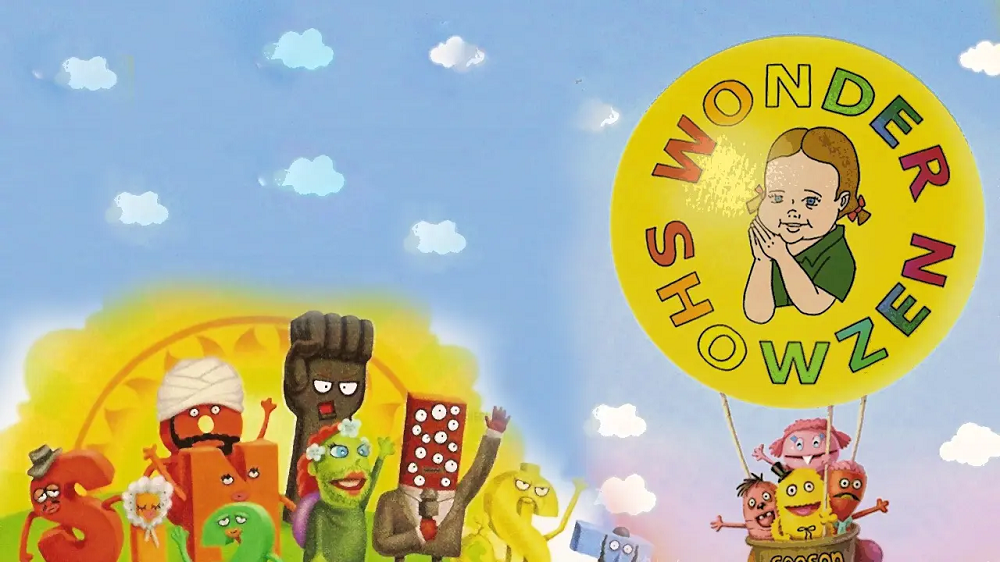
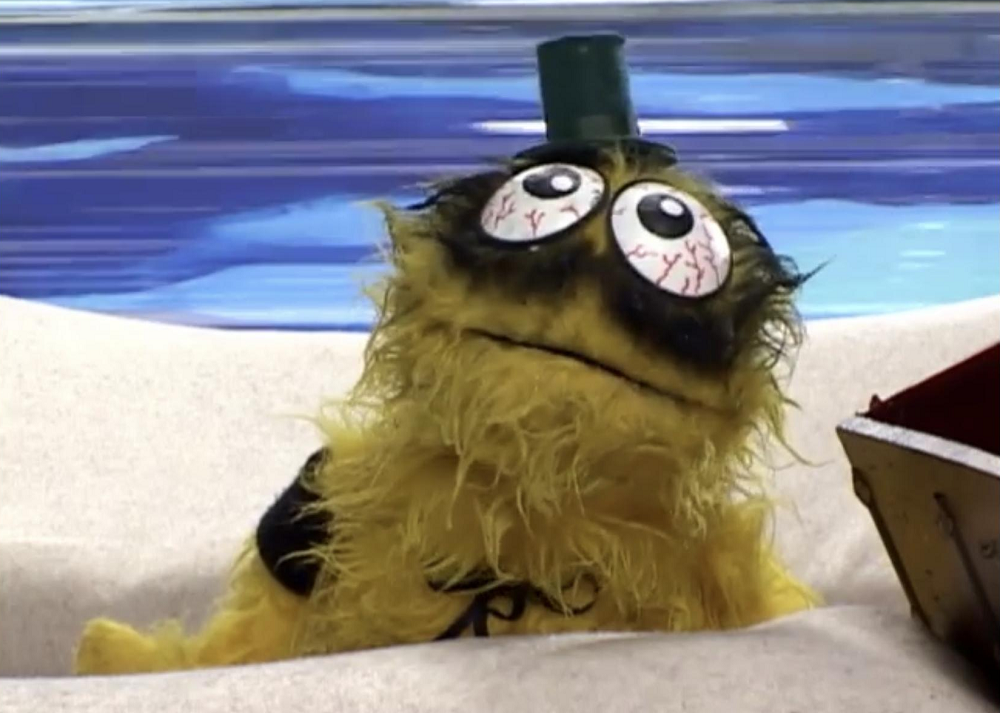
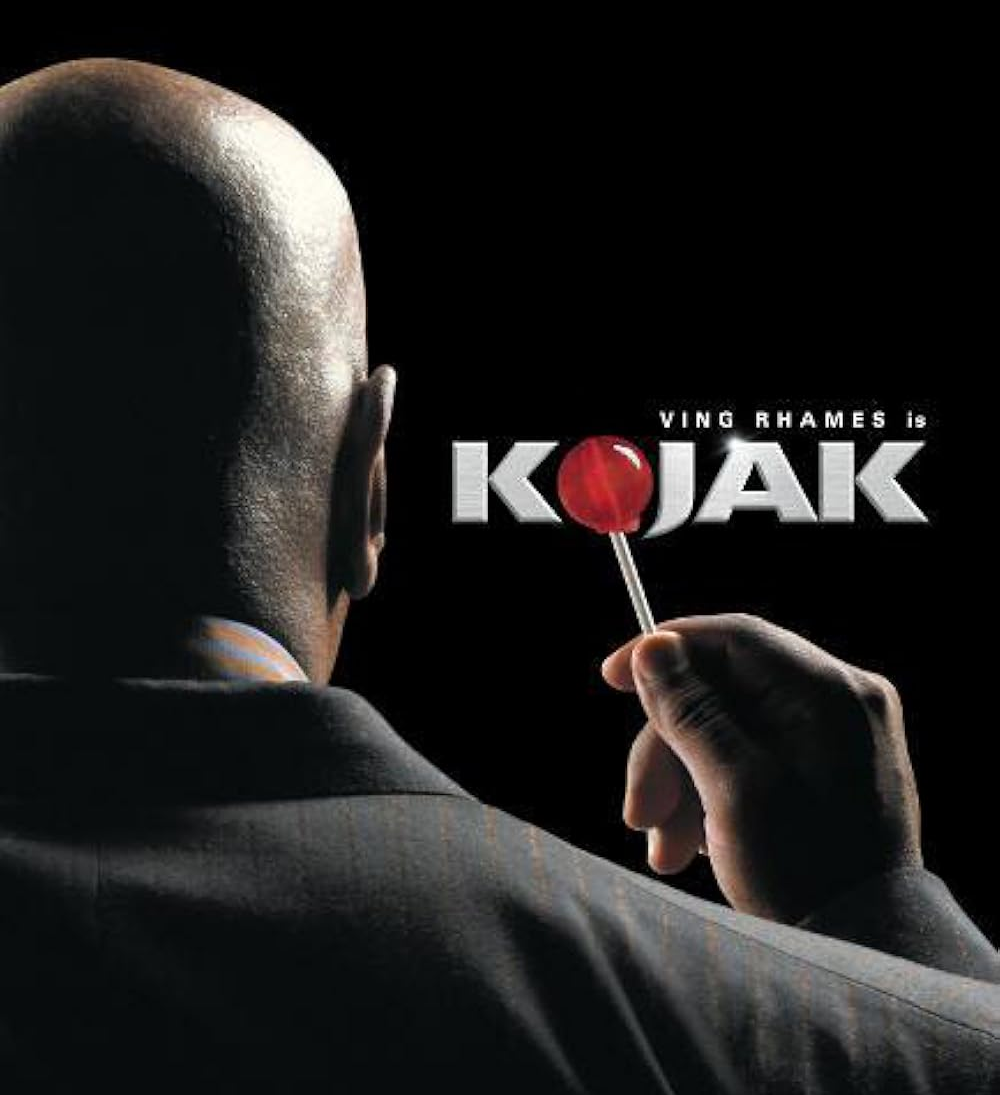
For NBC, Sanford and Son was a strong number two to Archie Bunker in the ratings, while The NBC Sunday Mystery Movie – a “wheel” show with four rotating features – gave audiences another taste of Columbo, McCloud, and McMillan & Wife, alongside less popular newcomer Hec Ramsey. Other new arrivals included The Bob Newhart Show, M*A*S*H, and The Waltons, with Bonanza, Mission: Impossible, The Mod Squad, and Rowan and Martin’s Laugh-In all entering their final seasons. Those were all shows that people remember, though: what about those that didn’t make such an impact? This is the story of more near-misses from the 1972-73 season…

Banyon (NBC): Ed Adamson was a veteran TV writer, working on dozens of shows, includingd Lassie, The Untouchables, The Outer Limits, Bonanza, and Rawhide. In March 1971, NBC aired a pilot he created as part of its NBC Monday Night at the Movies strand, starring Robert Forster as a rough but honest private eye working for $20 a day plus expenses in 1930s Los Angeles. A period piece designed to evoke the work of Dashiell Hammett and Mickey Spillane, Banyon was produced in-house by Richard Alan Simmons, and the network liked the movie enough to take it to series. Someone else who liked the pilot was Quinn Martin, who – after a decade of producing shows for ABC, and with a lengthy legal battle with them settled – was looking to work with other networks, scoring a hit right out of the gate with Cannon for CBS in 1971.

Martin had previous with the era and the genre, having birthed The Untouchables when he was at Desliu Studios and a string of detective shows after establishing QM Productions in 1960. NBC intended the show to debut as a mid-season replacement during the 1971-72 season, but the involvement of Martin resulted in Banyon becoming one of the network’s brightest hopes for Fall 1972. Forster signed on for his first TV series, which placed the Miles C Banyon’s offices in the same building as a secretary school run by Joan Blondell’s Peggy Revere. This gave Banyon access to Revere’s students, who he employed on a work experience basis to save spending money on a secretary of his own, as well as provide the audience with a different pretty girl each week, including a young Terri Garr.

Banyon, 1972-73

Alongside Blondell, the show’s other regulars included Banyon’s girlfriend Abby, a nightclub singer played by Julie Gregg, and world-weary LAPD detective Pete McNeil (Richard Jaeckel), but the case of the week formula allowed for plenty of guests, including Tom Bosley, Jack Klugman, John Saxon, and Dick van Patten. Besides the pilot, Adamson wrote another three episodes of the series, but died after three episodes had aired at the age of fifty-seven. Other scripters engaged by QM were Morton Fine, Barney Miller creator Theodore J Flicker, Mann Rubin, and Shane writer Jack Sher.

Banyon debuted on September 15th 1972 as part of a refreshed Friday night line-up for NBC and earned a strong opening rating of 30.0, a figure which would have seen it finish as the year’s number two show if it had kept up. Unfortunately, it didn’t. Critics panned the show, and it lost a third of its audience for the second episode a week later, eventually sinking to the bottom of the NBC ratings, with just five shows earning fewer viewers for the Peacock network. After fifteen episodes, NBC pulled the plug and Banyon joined hundreds of other TV detectives in the unemployment line. QM, though, had hedged their bets and provided a new show for ABC that season; The Streets of San Francisco fared much better.

The Men (ABC): Launching in September 1972, The Men was ABC’s response to the success of NBC’s popular “wheel” series The Bold Ones and The NBC Mystery Movie. Unlike the NBC shows, which were produced by Universal Television, the three shows making up The Men came from different production studios, with Universal pitching in here, too, alongside Metro-Goldwyn-Mayer Television and Warner Bros Television. The shows were united by the style of their protagonists, each a rugged loner working at arm’s length from their parent organisation. Debuting on September 21st 1972, occupying a Thursday night slot against reliable ratings winner Ironside on NBC, The Men had three spokes to its wheel, initially airing in a three-week rotation. It also had a killer theme, courtesy of Isaac Hayes, which reached number thirty-eight on the Billboard Hot 100.

First up to the plate was Universal’s offering, Jigsaw, which starred James Wainwright in his first regular role as an investigator for the California State Police Department’s Bureau of Missing Persons. Wainwright had come to acting late, securing his first guest roles in his late twenties before landing a recurring guest spot on Daniel Boone in 1970. His Lieutenant Frank Dain was dogged in his pursuit of his prey, bristling at regular police procedure and piecing together his cases like a puzzle, giving the show its name.

Created by Robert E Thompson, who was nominated for an Academy Award for his screenplay for They Shoot Horses, Don’t They?, the Jigsaw pilot had aired in March 1972 as part of The ABC Sunday Night Movie, with a story that opened with Dain waking up in the apartment of a murdered state official. Subsequent cases saw Dain hunt for a missing author, a missing priest, and a man with huge gambling losses, with the likes of Eileen Brennan, Jackie Coogan, and Pernell Roberts guesting. Episode five saw Dain fired from his job while under investigation for the murder of an ex-girlfriend, setting up shop as a private detective to find the killer, the show’s status quo thereafter.

The Men, 1972-73

A week after Jigsaw debuted, Assignment Vienna took its shot, again after a successful pilot movie earlier in the year. Then set in the Bavarian capital, Assignment Munich starred Roy Scheider as Jake Webster, the owner of Jakes’ Bar & Grill in the West German city. The bar was just a cover for Webster’s real reason for being in Munich, to hunt down foreign criminals and agents for a US intelligence agency that has something on him, something that if he doesn’t play ball will see him deported back to the US and jailed. Scheider opted not to return when the series – co-created by Eric Bercovici (who would later adapt James Clavell’s Shogun for TV) and Jerry Ludwig – was greenlit, with the location changed to Vienna to avoid the logistics of location filming while the 1972 Summer Olympics were going on in Munich.

Stepping into Scheider’s shoes was Robert Conrad, whose post-The Wild Wild West show The DA had been cancelled after fifteen episodes. Conrad was backed by Charles Cioffi (Richard Basehart in the pilot) as Major Bernard Caldwell, his agency handler, and by Anton Diffring (replacing Werner Klemperer) as Inspector Hoffman, Webster’s local police contact. Escaped criminals, smuggled microfilm, the Royal Crown of Bosnia, and a stolen emerald were among the objects of Jake’s attention, with Victor Buono, Leslie Nielsen, and Susan Strasberg among the guest stars pitching up at Webster’s establishment during the course of the series.

The Men, 1972-73

Arriving on October 5th was The Delphi Bureau, from the fertile imagination of Sam Rolfe, the creator of Have Gun – Will Travel and the man who shaped The Man from UNCLE from an initial idea by Norman Felton and Ian Fleming. Again, the pilot aired as a standalone TV movie, this time part of The ABC Monday Night Movie in April 1972, and starred Laurence Luckinbill as Glenn Garth Gregory, an operative of an obscure US government agency who uses his photographic memory to do research for the President. This is a cover, of course, and the agency really engages in counterespionage, with Gregory answering to Sybil van Lowreen (Anne Jeffreys, replacing the pilot’s Celeste Holm), who poses as a society hostess to throw off interest in her spying activities.

Each instalment of The Delphi Bureau was built around a limerick, revealed line by line as the adventure progressed, with Gregory utilising his eidetic memory to solve the mystery of the disappearance of an entire fleet of US Air Force planes, a Supreme Court nominee who is strangely being backed by one of his enemies, and a plot by a group of hippies to assassinate two dozen liberal leaders. As with Jigsaw and Assignment Vienna, guest stars including Richard Anderson, Bob Crane, and Roddy McDowall took their turns to intercede themselves into The Delphi Bureau’s business, and DC Fontana was among those contributing scripts to the show.

The Men struggled in the ratings, with an audience just a quarter of the combined viewing figures for Ironside and the CBS Thursday Night Movie, and in January 1973 the wheel was moved to Saturday nights, with Kung Fu making an immediate impact in its place. The move was used to try out a tweaked formula, with the three-weekly rotation largely abandoned in favour of giving each show a run of a few episodes before the next would do the same. Unfortunately, Saturday nights were ruled by a killer line-up on CBS that finished with The Carol Burnett Show at 10pm, directly opposite The Men (and the second hour of NBC Saturday Night at the Movies). On April 7th 1973, the final instalment went out, with a last outing for The Delphi Bureau completing a run of eight episodes for each spoke of the wheel. Although The Bold Ones also came to an end in May 1973, the Mystery Movie proved more enduring on NBC, lasting in one form or another until May 1978, although it was revived by Universal – ironically on ABC – in 1989.

Escape (NBC): Jack Webb was the master of the semi-documentary. Webb cut his teeth on Dragnet, a series he created for radio in 1949, where it ran for eight years. He also oversaw its transfer to TV in 1951 and played the lead role of Sergeant Joe Friday in a combined 590 episodes across the two mediums, returning in 1967 for almost another 100 outings. To make Dragnet, Webb established Mark VII Productions, also delivering several other hit shows for NBC including Adam-12, Emergency!, and Hec Ramsey. All of Webb’s shows attempted to present an accurate as possible depiction of the scenarios they inhabited, whether it be police work, that of the medical and rescue services, or even the early 1900s Wild West, and in 1973 he decided to apply the technique to an anthology series.

In Escape, the protagonists have one thing that unites them: they all need to escape the situations they’ve found themselves in. The series would have no recurring characters and each episode would present a fresh thrill, all supposedly based on true stories, and NBC were interested enough to order a trial run of four episodes, slotted in on Sunday nights while Rod Serling’s Night Gallery took a break. The series began on February 11th with “Hold Down,” a story set during World War II of a crippled submarine, stranded on the ocean floor, its captain knowing that a Japanese destroyer awaits anyone who can make it out alive. Ed Nelson led a cast that also included Christopher Cane, Ron Hayes, and Kip Niven, with Webb himself narrating each episode. A week later, “Render Safe” saw Bernie Hamilton as an alcoholic demolitions expert who wakes from a binge with the sudden realisation that a bomb he drew for a stranger who bought him drinks the night before (Norman Fell) will be used to blow up a ship at noon.

Escape, 1972-73

After a gap of five weeks, Escape returned for its third outing, the story of a nine-year-old boy and his baby sister, lost in California’s San Gabriel Mountains. “The Wilderness” starred Lee Montgomery, fresh from a turn as a dying child in the Oscar-nominated Pete and Tillie (and as the boy with the rat in Ben), trying to find his way home to worried parents Glenn Corbett and Marion Ross. The series finished a week later with “Walk South,” starring James Gregory as a US General who is blinded when he crashes behind enemy lines during the Korean War and must trust a North Korean girl (Charlene Wong) to lead him to safety.

The four episodes were re-run over the Summer and ratings were decent enough, eclipsing those for Night Gallery and for both Emergency! and Hec Ramsey, which was shown as part of The NBC Sunday Mystery Movie. Despite this, no further episodes emerged and Mark VII moved on to Chase – the first show created by future titan of telephemera Stephen J Cannell – and an animated, Saturday morning companion to Emergency!, Emergency +4, outsourced to Fred Calvert.

The New Bill Cosby Show (CBS): Starting out in the comedy clubs of Philadelphia and New York, Bill Cosby was hailed as one of the best new stand-up comedy talents of the 1960s, breaking through after an appearance on The Tonight Show in 1963. A recording contract with Warner Bros followed, resulting in a string of acclaimed comedy albums from 1963’s Bill Cosby is a Very Funny Fellow…Right! to Inside the Mind of Bill Cosby nine years later selling millions of copies. In 1965, Cosby became the first African American to star in weekly TV drama when he was cast alongside Robert Culp in I Spy, winning three consecutive Emmy Awards for his portrayal of Alexander “Scotty” Scott. After that show was cancelled, Cosby was given his own sitcom on NBC – The Bill Cosby Show, where he played physical education teacher Chet Kincaid – which lasted for two seasons, ending in March 1971 when ratings dipped below NBC’s threshold for renewal.

Still, Cosby remained immensely popular as a stand-up comedian and so CBS took a chance and gave him his own variety show, a format that was becoming less common as the 1960s became the 1970s, but which still brought ratings for the network’s two extant examples, The Carol Burnett Show and The Sonny & Cher Comedy Hour. With Rowan & Martin’s Laugh-In’s George Schlatter producing and an ensemble cast that included Foster Brooks (who brought his drunk act over from The Dean Martin Show), Mel Brooks collaborator Ronny Graham, variety show regular Ray Jessel, Don Rickles’ straight man Pat McCormick, and Here Come the Bride’s Susan Tolsky, The New Bill Cosby Show debuted on September 11th 1972 in a Monday night slot opposite NBC Monday Night at the Movies and a new season of ABC NFL Monday Night Football.

The New Bill Cosby Show, 1972-73

Each show was opened by a dance from Lola Falana, Cosby’s first hire for his new show, having known each other going back to their early years in Philadelphia nightclubs. Falana was a dancer and singer most associated with Sammy Davis Jr, who cast her in his 1964 Broadway musical Golden Boy and help launched her musical career on Frank Sinatra’s Reprise label. Known as Black Venus, in 1969 Falana made a conscious decision to break away from Davis, not wanting to be permanently thought of as “the little dancer with Sammy Davis Jr,” and posed for Playboy magazine. After Falana had introduced the show, regular sketches included “The Wife of the Week” and “The Dude,” with Cosby playing a man so cool he is unfazed by the madness going on around him.

Despite guest appearances from the likes of Harry Belafonte, Henry Fonda, Don Knotts, Sidney Poitier, Richard Pryor, and Peter Sellars, and killer music by Quincy Jones, The New Bill Cosby Show struggled against strong competition on rival networks and was cancelled after a single twenty-one-episode season, its finale airing on May 7th 1973. That would be Cosby’s final regular TV appearance for eleven years, until the launch of The Cosby Show in September 1984.

Next time on The Telephemera Years: Eyes, sins, race cars, and outlaws all feature in 1972’s unsold pilots!

Check out our other Telephemera articles:

The Telephemera Years: pre-1965 (part 1, 2, 3, 4)

The Telephemera Years: 1965 (part 1, 2, 3, 4)

The Telephemera Years: 1966 (part 1, 2, 3, 4)

The Telephemera Years: 1967 (part 1, 2, 3, 4)

The Telephemera Years: 1968 (part 1, 2, 3, 4)

The Telephemera Years: 1969 (part 1, 2, 3, 4)

The Telephemera Years: 1970 (part 1, 2, 3, 4)

The Telephemera Years: 1971 (part 1, 2, 3, 4)

The Telephemera Years: 1972 (part 1)

The Telephemera Years: 1973 (part 1, 2, 3, 4)

The Telephemera Years: 1974 (part 1, 2, 3, 4, 5)

The Telephemera Years: 1975 (part 1, 2, 3, 4)

The Telephemera Years: 1976 (part 1, 2, 3, 4)

The Telephemera Years: 1977 (part 1, 2, 3, 4)

The Telephemera Years: 1978 (part 1, 2, 3, 4)

The Telephemera Years: 1979 (part 1, 2, 3, 4, 5, 6)

The Telephemera Years: 1980 (part 12, 3, 4)

The Telephemera Years: 1981 (part 1, 2, 3, 4)

The Telephemera Years: 1982 (part 1, 2, 3, 4)

The Telephemera Years: 1983 (part 1, 2, 3, 4)

The Telephemera Years: 1984 (part 1, 2, 3, 4)

The Telephemera years: 1985 (part 1, 2, 3, 4)

The Telephemera Years: 1986 (part 1, 2, 3, 4)

The Telephemera Years: 1987 (part 1, 2, 3, 4)

The Telephemera Years: 1988 (part 1, 2, 3, 4, 5)

The Telephemera Years: 1989 (part 1, 2, 3, 4)

The Telephemera Years: 1990 (part 1, 2, 3, 4)

The Telephemera Years: 1991 (part 1, 2, 3, 4)

The Telephemera Years: 1992 (part 1, 2, 3, 4)

The Telephemera Years: 1994 (part 1, 2, 3, 4)

The Telephemera Years: 1995 (part 12, 3, 4)

The Telephemera Years: 1996 (part 1, 2, 3, 4)

The Telephemera Years: 1997 (part 1, 2, 3, 4)

The Telephemera Years: 1998 (part 1, 2, 3, 4)

The Telephemera Years: 1999 (part 1, 2, 3, 4)

The Telephemera Years: 2000 (part 1, 2, 3, 4)

The Telephemera Years: 2001 (part 1, 2, 3, 4)

The Telephemera Years: 2002 (part 1, 2, 3, 4)

The Telephemera Years: 2003 (part 1, 2, 3, 4)

The Telephemera Years: 2005 (part 1, 2, 3, 4)

The Telephemera Years: 2006 (part 1, 2, 3, 4)

The Telephemera Years: 2007 (part 1, 2, 3, 4)

The Telephemera Years: 2008 (part 1, 23, 4)

The Telephemera Years: O Canada! (part 1, 2, 3, 4)

Titans of Telephemera: Irwin Allen

Titans of Telephemera: Stephen J Cannell (part 1, 2, 3, 4)

Titans of Telephemera: DIC (part 1, 2)

Titans of Telephemera: Filmation (part 1, 2)

Titans of Telephemera: Hanna-Barbera (part 1, 2, 3, 4, 5)

Titans of Telephemera: Kenneth Johnson

Titans of Telephemera: Sid & Marty Krofft

Titans of Telephemera: Glen A Larson (part 1, 2, 3, 4)

Titans of Telephemera: Quinn Martin (part 1, 2)

Titans of Telephemera: Rankin/Bass

Titans of Telephemera: Ruby-Spears

Titans of Telephemera: Aaron Spelling (part 1, 2, 3, 4)

Titans of Telephemera: Sunbow