Ah, telephemera… those shows whose stay with us was tantalisingly brief, snatched away before their time, and sometimes with good cause. They hit the schedules alongside established shows, hoping for a long run, but it’s not always to be, and for every Street Hawk there’s two Manimals. But here at STARBURST we celebrate their existence and mourn their departure, drilling down into the new season’s entertainment with equal opportunities square eyes… these are The Telephemera Years!
1972-73
The 1972 season would turn out to be a disastrous one for ABC, with no shows in the top twelve, which was evenly shared between CBS and NBC. Marcus Welby, MD – which had been the number three show of the 1971-72 season – was their highest placing show, with their next best effort coming in at number seventeen. ABC did have two promising new shows making their bow in Kung Fu and The Streets of San Francisco, but it would be another few years before the Alphabet Network could hold its own in the race for ratings. The sitcom still ruled the roost, with All in the Family, and The Mary Tyler Moore Show all doing good business for CBS, alongside new arrivals Maude and Bridget Loves Bernie (which would end up having just a single season despite good ratings due to threat from the Jewish Defense League over its inter-faith couple).
For NBC, Sanford and Son was a strong number two to Archie Bunker in the ratings, while The NBC Sunday Mystery Movie – a “wheel” show with four rotating features – gave audiences another taste of Columbo, McCloud, and McMillan & Wife, alongside less popular newcomer Hec Ramsey. Other new arrivals included The Bob Newhart Show, M*A*S*H, and The Waltons, with Bonanza, Mission: Impossible, The Mod Squad, and Rowan and Martin’s Laugh-In all entering their final seasons. Those were all shows for grown-ups, though: what was on offer for the kids? This is the story of 1972’s new Saturday morning thrills…
Sealab 2020 (NBC): Hanna-Barbera’s first new adventure show since 1968’s The Adventures of Gulliver, Sealab 2020 was designed by Alex Toth, the latest in a line of productions the comic book legend worked on for the animation giants that began with 1966’s Space Ghost. The series was a reaction to the popularity of Jacques Cousteau, a former French naval officer turned oceanographer, whose undersea adventures had been captured on film since 1942, and who had signed a deal with ABC to present The Undersea World of Jacques Cousteau as a regular series from January 1968.
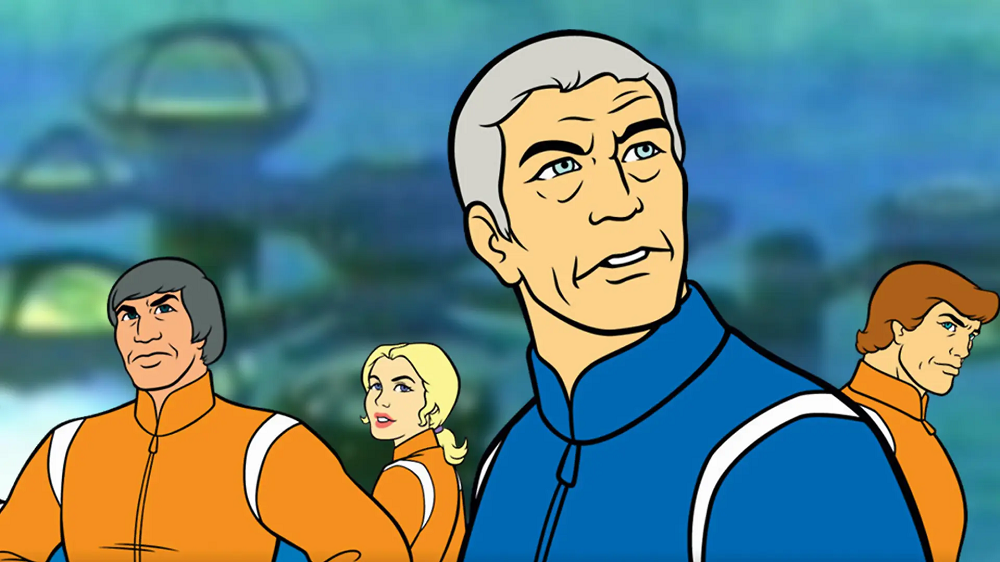
In the far future year of 2020, Captain Mike Murphy leads a team of 250 people, dedicated to exploring the oceans and protecting marine wildlife. From their Challenger Sea Mount base atop an underwater mountain, Murphy’s crew had to contend with everything the sea could throw at them, including giant squids, unexploded mines, malfunctioning nuclear submarines, and the overreach of Capitalism. With Toth’s designs and a cast that included veteran voice artist John Stephenson, The Wild Wild West’s Ross Martin, Hanna-Barbera’s teenage boy expert Jerry Dexter, and former child actress Ann Jillian, as well as Don Messick voicing a human for a change, Sealab 2020 should have been another in a long line of H-B classics, even accounting for the limited animation of the time, but there was just one problem: it was boring.
A lack of a definite antagonist and an over-earnest environmental message combined to make even man-eating sharks and a tsunami seem dull, and the series – which debuted on September 9th 1972 – was cut short two episodes before the end of its run, a rarity for Saturday morning cartoons. The dullness of the show was not lost on Adam Reed and Matt Thompson, two Cartoon Network employees tasked with viewing the entire series in the mid-1990s ahead of re-runs on the cable channel. Bored, they began riffing replacement comedic dialogue for the characters and pitched it to Cartoon Network, who turned it down because they didn’t think it was funny. They resigned their jobs shortly after, but not before stealing copies of the original Sealab 2020 footage.
Forming their own company, 70/30 Productions, Reed and Thompson set about recutting the footage and adding new plots and dialogue until they had something they thought was fit for broadcast. By this time, [adult swim] had launched and Reed and Thompson found a receptive audience for what they called Sealab 2021, which became [as]’s first “original” programming. Launching in December 2000, with Captain Murphy now an incompetent with a loose grip on reality and some original characters added, such as Dolphin Boy (who speaks only in dolphin noises) and Sharko, a half-human, half-shark child. Sealab 2021 launched alongside Aqua Teen Hunger Force, The Brak Show, and Harvey Birdman, Attorney at Law and established [as]’s cool credentials from the off, eventually running for fifty-two episodes across four seasons. Not bad for a show so dull that it even bored the easiest audience in television, the sugar-soaked Saturday morning crowd…
The Brady Kids/The Osmonds (ABC): A one-hour slot on Saturday mornings amid the usual cartoon fare, The ABC Saturday Superstar Movie was an attempt to the ABC Movie of the Week for kids. In a seventeen-episode run between September 1972 and January 1973, the showcase presented a mix of brand-new outings for established characters (such as Yogi Bear, Popeye, Daffy Duck, and the Banana Splits), the further adventures of literary heroes such as Robin Hood and Oliver Twist, and a series of cartoon adaptations of popular sitcoms, with That Girl, Gidget, and Bewitched given new life in animated form. Oh, and an episode featuring baseball legend Willie Mays, his guardian angel, and an orphaned girl.
The debut episode featured the young stars of another TV sitcom hit, The Brady Bunch. The story of a widowed father of three boys who marries a mother of three girls, the show earned twenty-eight million viewers in its first season on ABC, adding another ten million by the end of season three. Marshalled by Gilligan’s Island creator Sherwood Schwartz, the show made stars of its cast and launched a pop career for the six Brady siblings. The teen TV to pop star path was well-trodden, with The Monkees and The Partridge Family riding high in both the TV and pop charts, and The Archies – a fictional band consisting of characters from Archie Comics and featured in Filmation’s The Archie Show – had a number one record in 1969 with “Sugar, Sugar.”
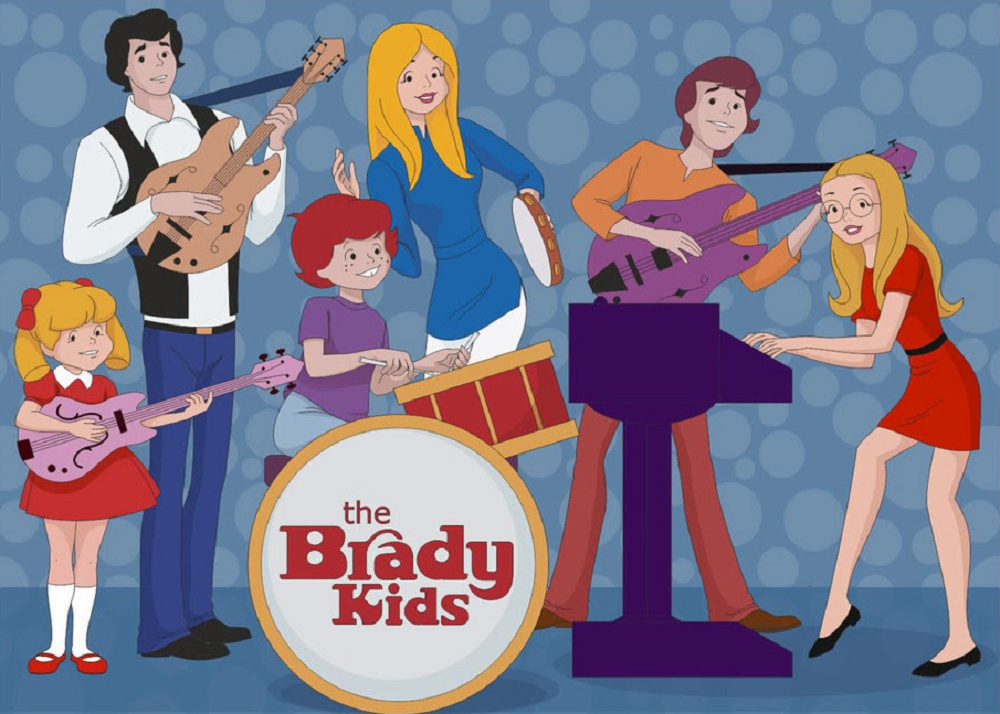
Eyeing similar crossover potential, Schwartz made a deal with Filmation to produce an animated show featuring his charges and their exploits as a pop band. Well-versed in Saturday morning fare by this point, Filmation co-founders Lou Scheimer and Norm Prescott used the pop gimmick to have the kids tour the world, without their parents and housekeeper Alice but accompanied by dog Mop Top (not Tiger as in the original show), landing on a mysterious island in “Jungle Bungle,” the hour-long opener that doubled as that ABC Saturday Superstar Movie premiere on September 9th 1972. In the episode, the kids encounter borderline racist pandas Ping and Pong, and a magical talking myna bird named Marlon, who all join the cast for subsequent episodes, where they encounter Superman and Lois Lane, Wonder Woman (in her TV debut), and the Lone Ranger in adventures that involve aliens, jewel thieves, the wizard Merlin, and the world’s wealthiest man (who does not give Nazi salutes, you’ll be pleased to hear).
The kids were voiced by the live-action cast, with F Troops‘s Larry Storch doing just about everything else. Each episode would contain a song taken from one of the The Brady Kids’ three studio albums, soundtracking Filmation’s usual limited animation (which also repurposed footage from previous Filmation shows, mostly The Archie Show). Schwartz saw the show as a chance to take the Brady Bunch to places that the live-action show could not, a similar tack taken by another new show in the Fall 1972 ABC line-up, The Osmonds.
Starring the Osmond Brothers, a troupe of Mormon entertainers from Ogden, Utah, who were discovered singing on Main Street in Disneyland in 1958, eventually appearing on the Disneyland After Dark TV show. This led to a regular slots on The Andy Williams Show and – when Williams took a break between 1967 and 1969 – The Jerry Lewis Show, after which they decided to switch from barbershop singing to bubblegum pop, launching a new recording career with MGM Records. It was this incarnation of The Osmonds – brothers Alan, Wayne, Merrill, Jay, Donny, and non-performing nuisance Jimmy – that would feature in the Saturday morning cartoon.

Produced by Rankin/Bass, the set-up found the brothers installed as international goodwill ambassadors, travelling the world with their talking dog Fuji and biggest fan Hortense. The Osmonds travelled to China (where Western pop acts would be banned until Wham! Visited in 1985), London (where Jimmy is mistaken for a lookalike royal), Denmark (where Jimmy meets a mermaid), India (where Jimmy meets a genie), Australia (where a kangaroo falls in love with Jimmy), Ireland (where – yup – Jimmy is mistaken for a leprechaun), and even Transylvania, the latter of which is the only episode to feature sister Marie, who wouldn’t join the act until 1973. Each song featured two songs from the brothers as a group or solo, including Jimmy performing his UK number one single “Long Haired Lover from Liverpool.”
Both The Osmonds and The Brady Kids aired alongside a second season of The Jackson 5 on ABC (also produced by Rankin/Bass), completing a pop-oriented line-up that also included re-runs of The Monkees and two Sid and Marty Krofft shows, and led into American Bandstand. Seventeen episodes of both The Osmonds and The Brady Kids aired between September and December but plans for a special live-action wrap-up by The Osmonds fell through for Rankin/Bass. That was it for the pure-living rockers but The Brady Kids did well enough that Schwartz and Filmation agreed to do more, even though Schwartz – who had initially claimed that he wanted to be hands off but became increasingly involved with the show – had wanted to cut the experiment short.
Five more episodes would bring the show up to the minimum amount of episodes needed for syndication, but the young cast – who were also doing full-time work on The Brady Bunch itself – refused to continue doing double duty. Under threat of legal action, four of the kids agreed to return but Barry Williams and Maureen McCormack held out and Filmation – which had always been very much a family business – replaced them with Scheimer’s children, Lane and Erika. The second season saw the kids encounter robots, wizards, ghosts, and Australian pop star Rick Springfield in a backdoor pilot for his own animated show, Miracle Magic, which followed after The Brady Kids in the Fall 1973 line-up. Although the cartoon and the kids’ recording career finished in 1973, The Brady Bunch itself continued on until March 1974, and there were several attempts to return to the family, none of which enjoyed much success.
The Barkleys/The Houndcats (NBC): Best known for a series of animated shows based on the character they created for the title sequence of 1963’s The Pink Panther, DePatie-Freleng also produced a number of shows for NBC’s Saturday morning line-up from the mid-1960s, including The Super 6, Here Comes the Grump, and a show based on the 1967 movie version of Dr Dolittle. For Fall 1972, they presented the network with two new shows, both created by Scooby Doo! Where Are You? creators Joe Ruby and Ken Spears. Ruby and Spears had worked at Hanna-Barbera since 1959, working on Cattanooga Cats, Motormouse and Autocat, Help!… It’s the Hair Bear Bunch!, The Funky Phantom, and more, but after a request to become associate producers was rebuffed by the company, they decided to go freelance. They were still open to working with Hanna-Barbera, but their agent secured them that elusive associate producer gig at DePatie-Freleng, where they began work on their first projects for the studio.
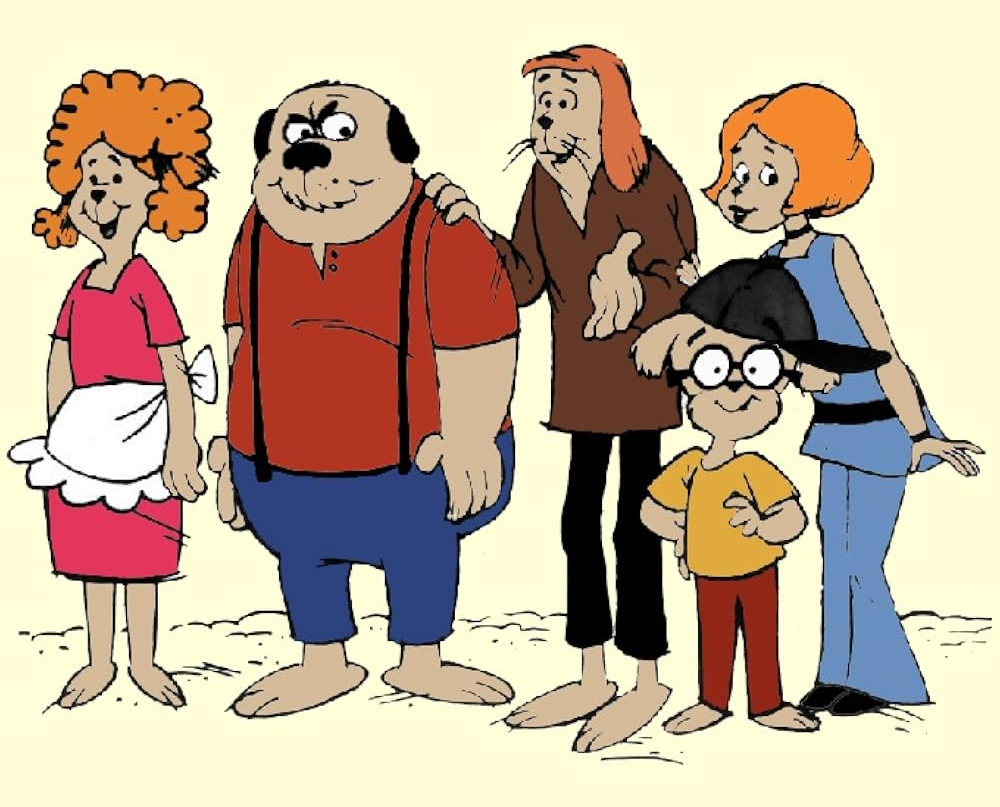
The Barkleys was a take on All in the Family, itself an adaptation of British show Till Death us Do Part. Debuting as a mid-season replacement in January 1971, All in the Family was the number one show until it was knocked from its perch by Happy Days in 1976 as Americans could not get enough of lovable bigot Archie Bunker. His anthropomorphic replacement for Saturday mornings was humanoid dog Arnie Barkley, a short-tempered bus driver who refuses to admit when he is (frequently) wrong. The family was completed by sweet-natured wife Agnes, long-haired older son Roger, wilful daughter Terry, and young Chester. As with All in the Family, episodes revolved around Arnie’s hair-brained schemes to gain wealth or status, or his total misunderstanding of his children and the modern era.
The Houndcats, meanwhile, took inspiration from both Mission: Impossible and a short-lived 1971 CBS Western series called Bearcats that Ruby and Spears had written for. An anthropomorphic mix of cats and dogs operating in 1914 America, the titular agents were led by cool cat Stutz, and also included error-prone daredevil Dingdog, Old English sheepdog Muscle Mutt, master of disguise Putty Puss, and Rhubarb, a sombrero-wearing dog with a gadget-filled coat. The team were given their orders via gramophone from their unseen Chief, employing the Mission: Impossible gimmick of “this message will self-destruct,” an instruction that always takes the Houndcats by surprise.
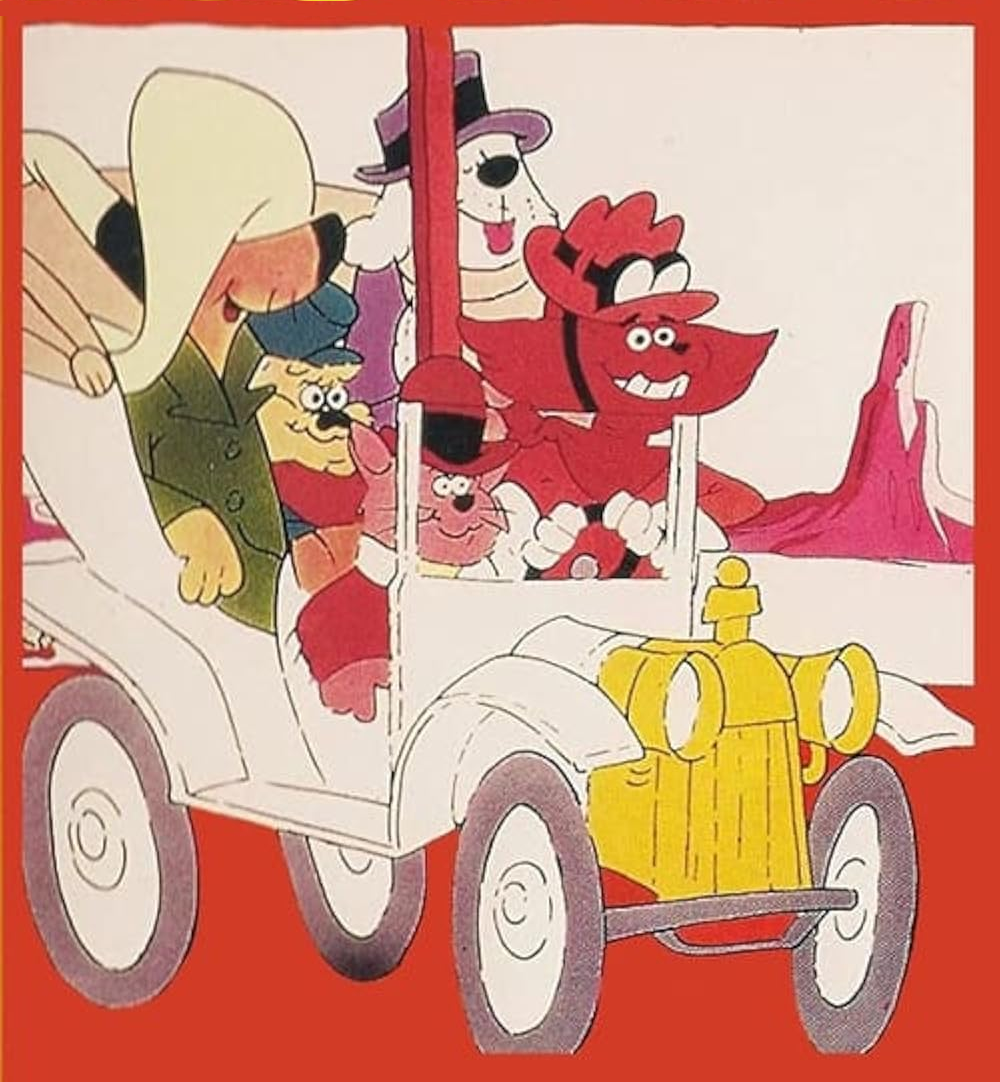
Both shows debuted on September 9th 1972 and ran for thirteen weeks, with re-runs airing until the end of the 1972-73 season. Apparently, because Marvel Productions (who acquired DePatie-Freleng in 1981) failed to renew the copyright in time, both shows fell into the public domain in 2000-2001. Ruby and Spears continued to work at both DePatie-Freleng and Hanna-Barbera, creating Bailey’s Comets, Jabberjaw, and Dynomutt Dog Wonder, before former Fred Silverman – the man who’d commissioned Scooby-Doo! from Hanna-Barbera – poached them when he was named President of ABC Entertainment in 1975. Feeling that Hanna-Barbera had become complacent, Silverman oversaw the foundation of Ruby-Spears Productions in 1977, but that’s another story…
The Amazing Chan and the Chan Clan (CBS): Earl Derr Biggers was a former member of The Harvard Lampoon who worked as a journalist before writing his first novel, Seven Keys to Baldplate, in 1913. A bestseller, it was quickly adapted into a Broadway play by George M Cohan, who also starred in the 1917 film version, the first of seven adaptations of Biggers’s novel. In 1925, in need of a detective character for a novel he had been working on called The House Without a Key and inspired by the real-life Hawaiian policemen Chang Apana and Lee Fook, Biggers created Charlie Chan. Chan was not the book’s main character – he doesn’t speak until page eighty-two – but he does solve the case, the murder of a former Boston socialite in Honolulu. Chan returned a year later in The Chinese Parrot and was lauded as a welcome alternative to the negative Yellow Peril stereotypical depiction of Asians in Western media such as Fu Manchu.
1926 was also the year he first appeared on film, in a ten-part adaptation of The House without a Key that starred Japanese American actor George Kuwa as the Hawaiian Chinese Chan. Biggers wrote four more Charlie Chan novels, but it was film where the character took off as Japanese actor Kamiyama Sojin took the role for 1927’s The Chinese Parrot. In 1931, Warner Oland – A Swedish American actor who claimed some Mongolian ancestry and who had also previously played Fu Manchu – became the first man to play Chan in a title role in Charlie Chan Carries On, an adaptation of the fifth Biggers book. Over the next six years, Oland would play Chan in a further fifteen movies and was filming a seventeenth when he died from bronchial pneumonia in August 1938. His last film – Charlie Chan at Ringside – was later reshot starring Peter Lorre as Mr Moto, the third in a series of films featuring John P Marquand’s Asian adventurer.
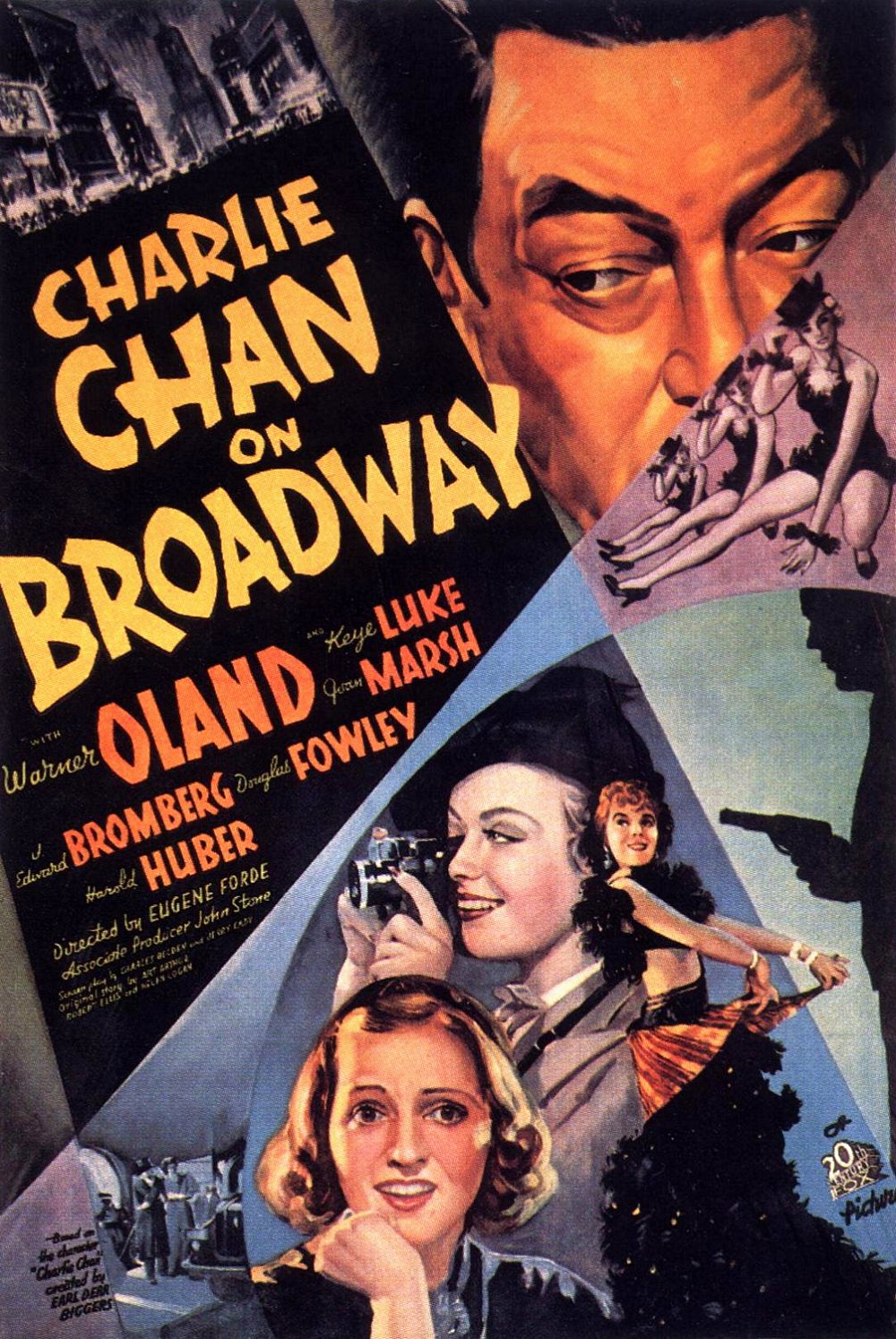
The film series continued without Oland as Sidney Toler beat out thirty-three other actors to secure the role. Keye Luke, who’d played Chan’s Number One Son throughout the Oland years also departed, replaced by Number Two Son Jimmy (Sen Yung). Like Oland, Toler became ill towards the end of his tenure as Chan, finding enough strength to complete his twenty-second film as the detective, 1946’s The Trap, before he died in Febtruary 1947. The series continued for another six films with Roland Winters in the role, finishing with 1949’s Sky Dragon, with Luke returning as Number One Son for the final two films.
In 1956, The New Adventures of Charlie Chan debuted in syndication, a co-production between Television Programs of America and ITC Entertainment. Filmed and set in London, with J Carrol Naish and James Hong as Chan and his Number One Son, it did not do good ratings and was cancelled after one season, bringing Charlie Chan’s time in the American popular imagination to an end after thirty years, although he continued to appear in re-runs of the movies as TV expanded across the nation.
Fourteen years after the end of The New Adventures, and six years after he last appeared in a Dell comic book, The Return of Charlie Chan saw The Wild Wild West’s Ross Martin step into the detective’s shoes for a prospective pilot for ABC. The project never went any further (and the pilot remained unshown until 1979) but something was clearly in the air as CBS announced The Amazing Chan and the Chan Clan for their Fall 1972 Saturday morning slate, one of four new shows from Hanna-Barbera in the line-up, alongside The Flintstone Comedy Hour, Josie and the Pussycats in Outer Space, and The New Scooby-Doo Movies.
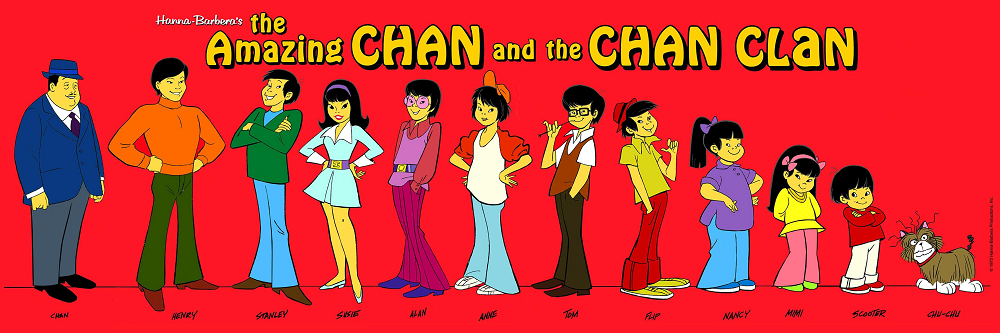
Produced in Australia by Eric Porter Studios in association with Hanna-Barbera Australia, The Amazing Chan starred an Asian American actor in the title role for the first time since the Korean American EL Park played Chan in 1929’s Behind That Curtain. What’s more, Chan would be played by Keye Luke, linking the show with the classic series and meaning that Chan was to be played by an actor with Chinese roots for the very first time. Keye also became the first actor to portray Chan as speaking in full sentences rather than the limited vocabulary of the movie Chans.
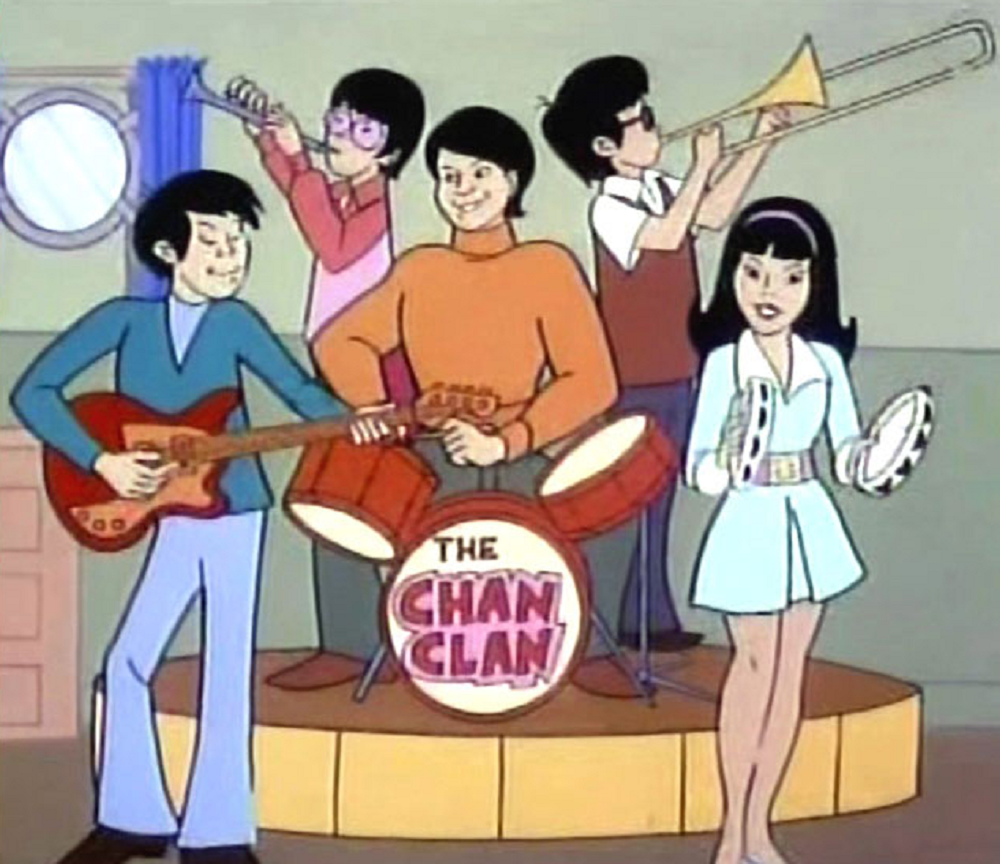
The set up saw Chan and his ten children travel the world in the Chan Van, a vehicle specially built by the detective’s teenage genius son Alan that could disguise itself as other vehicles at the press of a button. As this is a Saturday morning cartoon, they are accompanied by a cute animal in the form of dog Chu Chu, and the children also play in a band – the Chan Clan of the title – that performs a song in each episode, written by The Monkees‘ Don Kirshner and performed by Ron Dante, who sang lead vocals on The Archies’ “Sugar Sugar” (and would also do the same for Spiderman: From Beyond the Grave, A Rockcomic in 1975).
Across sixteen episodes, the Chans recovered the stolen Crown Jewels, rescued a kidnapped baseball star, reveal the secret behind a talking statue, and track down a magician’s missing dog, but the show drew criticism from the Chinese Media Committee of Chinese for Affirmative Action, an advocacy group based in San Francisco, who would later sue the Federal Communications Commission over negative portrayals of Chinese Americans in American media. The show did run into some trouble regarding the thick accents of some of those initially cast as Chan’s children, resulting in a recasting (and subsequent redubbing of earlier episodes for re-runs) that gave Jodie Foster one of her first roles as Anne Chan, and it’s possible that both these issues resulted in the show being cancelled after one season, although few Saturday morning cartoons enjoyed a second outing. To date, The Amazing Chan and the Chan Clan stands as the detective’s last TV outing, with just one more film, the abysmal failure that was 1980’s Curse of the Dragon Master, starring Peter Ustinov.
Next time on The Telephemera Years: We’re off to 2004 to find… Kojak?!?
Check out our other Telephemera articles:
The Telephemera Years: pre-1965 (part 1, 2, 3, 4)
The Telephemera Years: 1965 (part 1, 2, 3, 4)
The Telephemera Years: 1966 (part 1, 2, 3, 4)
The Telephemera Years: 1967 (part 1, 2, 3, 4)
The Telephemera Years: 1968 (part 1, 2, 3, 4)
The Telephemera Years: 1969 (part 1, 2, 3, 4)
The Telephemera Years: 1970 (part 1, 2, 3, 4)
The Telephemera Years: 1971 (part 1, 2, 3, 4)
The Telephemera Years: 1972 (part 1, 2, 3)
The Telephemera Years: 1973 (part 1, 2, 3, 4)
The Telephemera Years: 1974 (part 1, 2, 3, 4, 5)
The Telephemera Years: 1975 (part 1, 2, 3, 4)
The Telephemera Years: 1976 (part 1, 2, 3, 4)
The Telephemera Years: 1977 (part 1, 2, 3, 4)
The Telephemera Years: 1978 (part 1, 2, 3, 4)
The Telephemera Years: 1979 (part 1, 2, 3, 4, 5, 6)
The Telephemera Years: 1980 (part 1, 2, 3, 4)
The Telephemera Years: 1981 (part 1, 2, 3, 4)
The Telephemera Years: 1982 (part 1, 2, 3, 4)
The Telephemera Years: 1983 (part 1, 2, 3, 4)
The Telephemera Years: 1984 (part 1, 2, 3, 4)
The Telephemera years: 1985 (part 1, 2, 3, 4)
The Telephemera Years: 1986 (part 1, 2, 3, 4)
The Telephemera Years: 1987 (part 1, 2, 3, 4)
The Telephemera Years: 1988 (part 1, 2, 3, 4, 5)
The Telephemera Years: 1989 (part 1, 2, 3, 4)
The Telephemera Years: 1990 (part 1, 2, 3, 4)
The Telephemera Years: 1991 (part 1, 2, 3, 4)
The Telephemera Years: 1992 (part 1, 2, 3, 4)
The Telephemera Years: 1994 (part 1, 2, 3, 4)
The Telephemera Years: 1995 (part 1, 2, 3, 4)
The Telephemera Years: 1996 (part 1, 2, 3, 4)
The Telephemera Years: 1997 (part 1, 2, 3, 4)
The Telephemera Years: 1998 (part 1, 2, 3, 4)
The Telephemera Years: 1999 (part 1, 2, 3, 4)
The Telephemera Years: 2000 (part 1, 2, 3, 4)
The Telephemera Years: 2001 (part 1, 2, 3, 4)
The Telephemera Years: 2002 (part 1, 2, 3, 4)
The Telephemera Years: 2003 (part 1, 2, 3, 4)
The Telephemera Years: 2005 (part 1, 2, 3, 4)
The Telephemera Years: 2006 (part 1, 2, 3, 4)
The Telephemera Years: 2007 (part 1, 2, 3, 4)
The Telephemera Years: 2008 (part 1, 2, 3, 4)
The Telephemera Years: O Canada! (part 1, 2, 3, 4)
Titans of Telephemera: Irwin Allen
Titans of Telephemera: Stephen J Cannell (part 1, 2, 3, 4)
Titans of Telephemera: DIC (part 1, 2)
Titans of Telephemera: Filmation (part 1, 2)
Titans of Telephemera: Hanna-Barbera (part 1, 2, 3, 4, 5)
Titans of Telephemera: Kenneth Johnson
Titans of Telephemera: Sid & Marty Krofft
Titans of Telephemera: Glen A Larson (part 1, 2, 3, 4)
Titans of Telephemera: Quinn Martin (part 1, 2)
Titans of Telephemera: Rankin/Bass
Titans of Telephemera: Ruby-Spears