Unmasking the Malevolent Magic of Sweet Tooth in the Twisted Metal Series

Prepare to embark on a heart-pounding journey through the post-apocalyptic wasteland of the Twisted Metal series. This is a thrilling ride that has left fans, both old and new, on the edge of their seats. As we delve into this world of chaos, we’re not just excited about the heart-racing vehicular warfare and the enigmatic John Doe, portrayed brilliantly by Anthony Mackie. No, what truly sends shivers down our spines is the return of one of the most infamous villains in gaming – Sweet Tooth, or as we like to call him, the Malevolent Maestro of Mayhem.

Now, let’s peel back the layers and explore the enigma that is Sweet Tooth. But first, imagine a place where the twisted and the thrilling collide, a place where luck and terror intertwine – a place like Sugar Rush. Just as Sweet Tooth’s ice cream truck conceals a world of darkness within, Sugar Rush hides a world of thrilling entertainment behind its sweet facade. It’s the perfect pit stop between episodes, for fans looking to test their luck and immerse themselves in another action-packed game.

Twisted Metal is an action-comedy that’s about a guy from out of town who’s quite the motor-mouth. Inthe beginning of the series, we’re told he has to deliver a package across the country and cross dangerous terrain. A few of the obstacles he’ll face are road raged maniacs, vehicles that look like they came straight from Mad Max, and most dangerous of all: a clown driving an ice cream truck that seems too familiar.

As the series unfolds, we are slowly introduced to the main villain of the show, and it’s a character that promises to send chills down your spine. Behind the malevolent moniker lies a chilling tale of Needles Kane, once a harmless circus clown, who harbored a split personality. One side of him was content with the circus life, while the other longed for something darker, something more sinister. It was this dormant, malevolent persona that convinced Kane to fashion a mask, unleashing the nightmarish “Needles” personality and giving birth to the infamous Sweet Tooth.

The Twisted Icon: Symbolism of Sweet Tooth’s Ice Cream Truck

But why “Sweet Tooth,” you ask? Well, it’s all about the choice of wheels – a foreboding ice cream truck. In a world ravaged by chaos and vehicular warfare, an ice cream truck is an eerie choice of transport. Yet, it’s this macabre irony that adds an extra layer of horror to Sweet Tooth’s character. In the world of Twisted Metal, where appearances deceive and danger lurks around every corner, his ice cream truck serves as a chilling reminder that the sweetest treats often harbor the darkest secrets.The reasons behind the unsettling aura of ice cream trucks and clowns are multifaceted and intricate, just like the twisted world they inhabit:

Ice Cream Trucks: These vehicles seem innocent at first. But they were actually linked to horrifying tales of child abductions and kidnappings in the past. The haunty jingle you’ll hear can trick a kid into going outside their home, or even away from their parent’s watchful eyes. On top of that, these drivers are usually strangers to the children, building a sense of mystery and suspicion. The truck itself, especially if it bears the scars of age and neglect, These vehicles seem innocent. But they were actually linked to horrifying tales of child abductions and kidnappings in the past. Something that’s supposed to bring joy can actually embody something sinister.

Clowns: Some people have an irrational fear of clowns, which is called coulrophobia. This is a pretty common one that I’ve heard many times before as well. It’s likely because of how they look with their exaggerated features like bright red makeup and shoes that are way too big. They’re distorted appearance makes them look inhuman and occasionally monstrous, especially where reality often blurs into nightmarish illusions like circuses and carnivals —where they’re commonly associated with— giving us another reason to be creeped out by them

Sweet Tooth’s visage with its wicked grin and blazing hair, has become the embodiment of the Twisted Metal series. His malevolence is etched onto every game cover, solidifying his status as the franchise’s malevolent mascot. It’s a testament to the enduring allure of this character who continues to haunt the dreams of gamers, and now viewers as well.

Embracing the Carnage: A Twisted Debut and a Promising Future

As fans eagerly tuned in to the live-action adaptation, we were greeted with a faithful representation of our beloved game and its characters. Anthony Mackie’s embodiment of John Doe and Will Arnett’s spine-chilling voice work as Sweet Tooth received accolades for capturing the essence of our beloved franchise. The addition of new characters to the series was a stroke of genius, breathing fresh life into the universe we hold dear.

Warning: spoilers ahead! After the credits roll, we see Stu and Michael sitting on a peaceful beach, toasting hotdogs over an open fire. Still fresh in their minds is their escape from the clutches of Sweet Tooth. Suddenly, out of nowhere Sweet Tooth appears. Sword drawn ominously behind his back. However, he doesn’t do the gruesome deed in front of them. He snatches up Stu cowboy style and retreats back into the forest with him. Leaving us to ponder about Stu’s fate. Even though Sweet Tooth has clear murderous intentions towards everyone else he comes across, he opts to spare Stu’s life this time for some cryptic agenda involving his “S Brother.” The season finale leaves no room for questioning what role Sweet Tooth will play in Twisted Metal’s future, but his enigmatic connection between him and Stu promises that they have a long way to go before their shared narrative comes to an end.

The first season left us on the edge of our seats with a tantalizing cliffhanger, leaving us clamoring for more. Luckily for us, Anthony Mackie himself hinted at the likelihood of a second season, further igniting our fervor. It seems the world of Twisted Metal is set to expand even further, promising more vehicular mayhem and, of course, the menacing presence of Sweet Tooth. With each passing moment, our anticipation grows, and the prospect of diving deeper into this twisted universe becomes all the more exciting.

Felicia Day • THIRD EYE

felicia day

Actress, singer and creator Felicia Day needs little introduction, and has turned to hand to many cool things.  She has worked on everything from Buffy The Vampire Slayer to Supernatural. We caught up with her about her scripted podcast, Third Eye.

How would you pitch third eye to a beloved elderly relative?

Third Eye is a fantasy comedy television show in audio. It’s TV for your ears. It’s a fantasy comedy about a failed chosen one. And it is a TV show that happens to be audio.

Where did the idea for this project come from?

I actually pitched this as a television show. I wrote the pilot, and then I thought it was the most brilliant thing I’ve ever written, and I pitched as a television show. And unfortunately, Hollywood did not think that, I mean, they liked it, but they did not buy it.

And a couple of years went by, but I still couldn’t let go of the concept. I’ve written many things that have never seen the light of day, but this one really stuck with me. And so when I had a meeting with Audible I brought it up, and they were like, great, let us see the pilot. And they read, and they were like, great, go, go ahead and make this.

And I was like, well, it’s going to be 10 episodes. It’s going to be a lot of hours. They’re like, we want more hours. That’s fantastic. So it was right before COVID started, and it was something that I just had to start running.

I ran and wrote it all the way over COVID.

Why is the chosen one narrative so popular?

Joseph Campbell. His work definitely influenced a lot of narrative.  I know it was influential in creating Star Wars, and we have kind of a Chosen One narrative there. So I mean, it’s, it’s a very old concept. Joseph Campbell derives most of his theory from ancient Greek and ancient mythology.  But I think because the tropes of the Chosen One certainly were influenced by Star Wars being tied to it.

So we have this heroic, usually teen male who is just destined to win, and they win, and that’s what a lot of our fiction is about nowadays. And I wanted to kind of tear that apart and flip it on its head and see what happens when someone who is faded to win actually loses and screws everything up in the process.

Is this more a fantasy parody? What’s the unique draw of Third Eye?

I don’t know if I’d say it’s a parody. I would say that I’m rebelling against a lot of tropes. So as you said, the Chosen One is a very familiar trope, and I turned it on his head and said, what if that Chosen One is a loser that everyone hates, and how do you live with yourself the best friends of my main character, Laurel, who is the chosen one, or former chosen one, her best friends are a vampire and a fairy princess. And yes, the vampire is not your cliched vampire. He is a tubby, bald, no fanged, complaining, loser kind of vampire and her fairy best friend from school is a grifter and super lazy.

You said that this was originally a TV show page that became a radio drama. How did that change the production? Because obviously with radio drama, you have an almost infinite special effects budget.

Well, this was quite a special effects budget as well. When they told me it would take six months to finish the episodes, I just honestly was floored. But when we got into it, I realized, Oh, we’re making the triple A movie of audio drama or audio pieces. And so it really did take that long to not only edit all the voices in pick the best takes, but spent a month figuring out what a portal sounded like, or what a magical effect would be.

It really is an incredible cast. How did that come about?

I know a lot of people, so this was a lot of favours. I believe only two or three actors in the cast I didn’t know personally. One of the spectacular finds for me was London Hughes, who plays Sybil. She is so funny.

And I didn’t have I had an archetype for her. My friend Jonah Ray, who I’ve worked on with on many things, he’s the voice director, and when I described who I wanted for the part, he was like, oh, you know, I worked with this comedian many years ago through stand-up. And I looked up 30 seconds of her YouTube videos, and I was like, sold, please. Please, let her do it.

Mostly it was just me typically calling my friends, mostly, and saying, will you do this? Here’s the part. One part I wrote for a friend specifically, was Will Wheaton. He plays Robigus and he is an antagonist, but also has a lot of layers that come out over the 10 episodes. So I hope that people can feel that there’s camaraderie and chemistry between everyone, because, well, we’re all friends.

So what was the first day on set like?

So the first day at on set, we were still recording under COVID protocols, so it was actually a lot of planning that we had to do in order to get people and what actors we could get in to record together, even though they were in separate booths, but together, because for me, again, a lot of audio performances feel like they’re cut together later, and you don’t believe people are in the room together. That was really important to me.

And one of the reasons I picked my friend Jonah Ray to voice direct, because he worked with me on a show that’s very like low budget, but also freewheeling and an improvisational feeling to it.

Simpsons or Futurama,

Off.  You know, I remember seeing the very first Simpsons on the Tracy Ullman Show when I was like, six or seven, and I was in love with Bart. So I would have to say Simpsons.

Doctor, who or? Dr, no, oh.

Doctor Who, of course.

And finally, truth or beauty?

Oh, truth, truth. Because I’m from LA, I know you can buy beauty, I can’t find truth.

You can download the show here 


Susan Bonds and Alex Liu | THE ARKHAM ASYLUM FILES: PANIC IN GOTHAM CITY

Susan Bonds and Alex Liu are the CEO and CCO of 42 Entertainment, the world’s premier alternate reality game creators. They are best known for the Halo 2 tie-in I Love Bees,  the Nine Inch Nails ARG Year Zero (named after the album of the same name) and The Dark Knight tie-in, Why So Serious.

Their latest product is a Batman escape room experience in a box called The Arkham Asylum Files: Panic In Gotham City. We caught up with Susan and Alex to find out more…

STARBURST: What’s the pitch for The Arkham Asylum Files: Panic In Gotham City?

Susan Bonds: We’re actually following Harley Quinn, who is on the road to redemption herself. She is headed back to Arkham not as an inmate but this time as a therapist. So she got her old job back. And so, through her eyes, we actually open up the files of Arkham, and we get to explore the backstory. As you know, all of the roads go through Arkham at one time or another. So we get to explore who’s behind the latest crimewave in Arkham. But do it through the eyes of a therapist.

Alex Liu: Essentially, you’ve got the iconic Arkham Asylum,  which we know that many, many, many Batman villains have either been involved or have passed through those doors. It’s a revolving-door psychiatric hospital where our villains don’t always stay put. That gives us the world-building ability to see into all of the different villains in the Batman universe, whether they’re really well-known ones or some of the more comic-book-based ones. The Arkham Asylum Files essentially lets players dig through and learn about all of these iconic villains while there’s a major mystery unfolding within Gotham City itself.

The Arkham Asylum Files: Panic In Gotham City is a big box of toys that’s full of cool physical things. Why add the Augmented Reality aspect? Why does a board game need an app?

Susan: I think one of the things that it does is it unlocks digital assets, like live-action and animation. And as you know, when you’re watching those kinds of assets, you can really get connected to the characters and to emotions – you can see things happen dramatically. It gives you a lot of licence to take the idea of, “Hey, I’m playing a game with a lot of different pieces, I’m building a city, things are happening in the city”. You can overlay a lot of drama onto that by adding digital assets. The other thing that allows you to do is, you know, it allows you to immerse people deeper in the world. 

It’s like, yes, you can build a building and that can move the story forward. But augmented reality actually allows you to penetrate the ceiling of that building and see what’s happening inside. And I think that breaking that plane is really just putting someone closer. It’s almost like a TV series, but like you’re actually in it. There are a lot of things that you can do that are just below the surface or that are brought to life. You can read the police report and hear that someone has let all the animals loose from Gotham City Zoo. Or you could use your augmented reality app and search the city and actually find all those animals in different places around the city. It opens up a different type of experience for people. And what’s great about it is that unlike virtual reality, where you put yourself in an artificial environment, here, you’re seeing the physical environment, and you’re still getting the benefit of all this digital content overlaid on it.

Alex: We didn’t want just to create another murder mystery puzzle box. What we do is tell stories, right? So, the reason for AR is that we found that it helps us really do these things well. There are over 45 minutes of animated content and live-action content. When we go from beginning to end, the experience itself with all the puzzles is much longer. But there’s this full episode of television in that box that you’re actually watching and engaging with. Even though the main storylines really are about Harlequin or villains from Arkham and Batman, it’s all brought to you by the Joker.

What obstacles did you face when creating a Batman-style mystery game?

Susan: The world of Batman, as you know, is incredibly fast. And there’s been a lot of characters in the comics that haven’t really had their moment to shine. I think that one of the advantages of storytelling is that you can tell the backstory of somebody’s character in pretty creative ways. That creates empathy with the audience. 

I think that AR really brings a lot of opportunities and challenges you to think about the narrative differently. You know, because as you’re going through this experience, it’s essentially seven chapters. And you can either do each chapter at a time – it’s about the same time as a TV show – or you can binge it all as you do with your Netflix series on the weekend.

What was the biggest surprise that you had when you were playtesting this game?

Susan: What we knew going in was that there were going to be high expectations of the role of Batman. We’re targeting Batman fans and multiple generations of Batman fans, people who love mysteries and people who love escape rooms and board games. 

But when we were playtesting, a group that came to the top was parents, and especially moms. While their kids may have gone into their digital caves with their Switches, PlayStations, and Xbox, the parents couldn’t really keep up. Family Game Night is something that we all went through collectively over the past few years. And I think this is a great kind of solution for that, where it brings a lot of different skill sets together.

The Arkham Asylum Files: Panic In Gotham City can be ordered here.

THE TELEPHEMERA YEARS: 1974, part 3

Evel Knievel, 1974

Ah, telephemera… those shows whose stay with us was tantalisingly brief, snatched away before their time, and sometimes with good cause. They hit the schedules alongside established shows, hoping for a long run, but it’s not always to be, and for every Street Hawk there’s two Manimals. But here at STARBURST we celebrate their existence and mourn their departure, drilling down into the new season’s entertainment with equal opportunities square eyes… these are The Telephemera Years!

1974-75

The sitcom ruled the roost in 1974, with the top seven shows all falling under that heading, although the situation for the comedies ranged from a bigoted dad and his liberal children to urban Chicago, through a junkyard, an odd couple, and the never-ending Korean War. Those shows not looking for laughs but still finding an audience included The Waltons, Hawaii Five-O, and Kojak, with newcomers The Rockford Files, Little House on the Prairie, and Police Woman all delivering their own charms for NBC, which pretty much shared the viewing figures with CBS, ABC nowhere to be seen.

Kung Fu and the actual Odd Couple both started their final seasons for the alphabet network but they pinned their hopes on a trio of new arrivals in Baretta, Barney Miller, and Kolchak: The Night Stalker, all of which made either a commercial or critical impact for ABC. CBS introduced the world to The Jeffersons and Rhoda, with Petrocelli and Chico and the Man joining NBC’s already star-studded line-up, but what about those shows that didn’t even make it to series? This is the story of 1974’s unsold pilots…

The Muppet Show (ABC): Jim Henson’s “muppets” made their TV debut as far back as May 1955, when – as a freshman at the University of Maryland – he created Sam and Friends, a five-minute puppet show for local Washington station WRC-TV. Sam and Friends ran for six years until Henson left the station to sell his skills for commercials and variety shows. Forming Muppets Inc in New York in 1963, the puppeteer began assembling the team that would stay with him for the majority of his career, including Frank Oz, Jerry Juhl, and Jerry Nelson, amongst others.

Throughout the 1960s, Henson made appearances on talk shows, particularly using the character of Rowlf, who he’d created for a dog food commercial in 1962. His work caught the eye of Joan Ganz Cooney at the Children’s Television Workshop, who commissioned Sesame Street in 1969 for National Educational Television, the forerunner of the Public Broadcasting Service. While this was a huge success for both Muppets Inc and PBS, Henson and Oz became worried that they were becoming typecast as children’s performers and sought to expand their audience once more.

Planet Earth, 1974

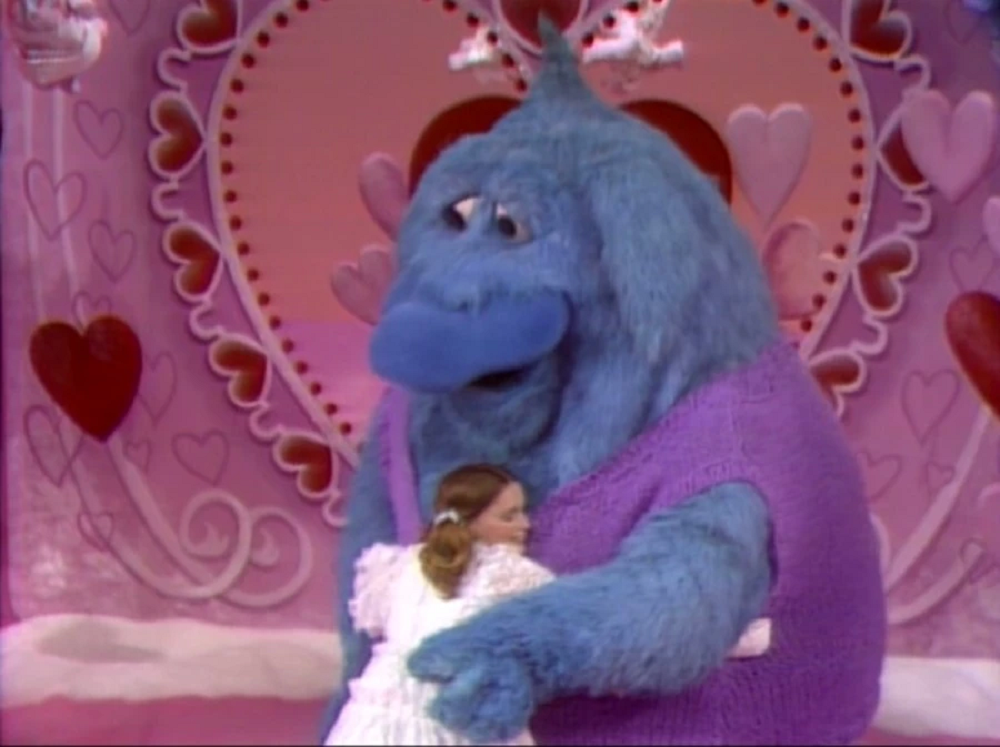
Created for ABC, The Muppets Valentine Show was a pilot for a proposed series for inclusion on the 1974-75 Fall schedule. Airing on January 30th 1974, the half-hour show featured a variety of muppets, with Kermit – who’d been used in commercials and as a roving reporter on Sesame Street – front and centre.

A true variety show, the pilot featured songs (Kermit sang “Froggy Went A Courtin’”), sketches, and a guest star in the shape of Mia Farrow. Ultimately – and after a second pilot, March 1975’s The Muppet Show: Sex and Violence – ABC passed but a British producer by the name of Lew Grade was interested. The rest, as they say, is Muppet history!

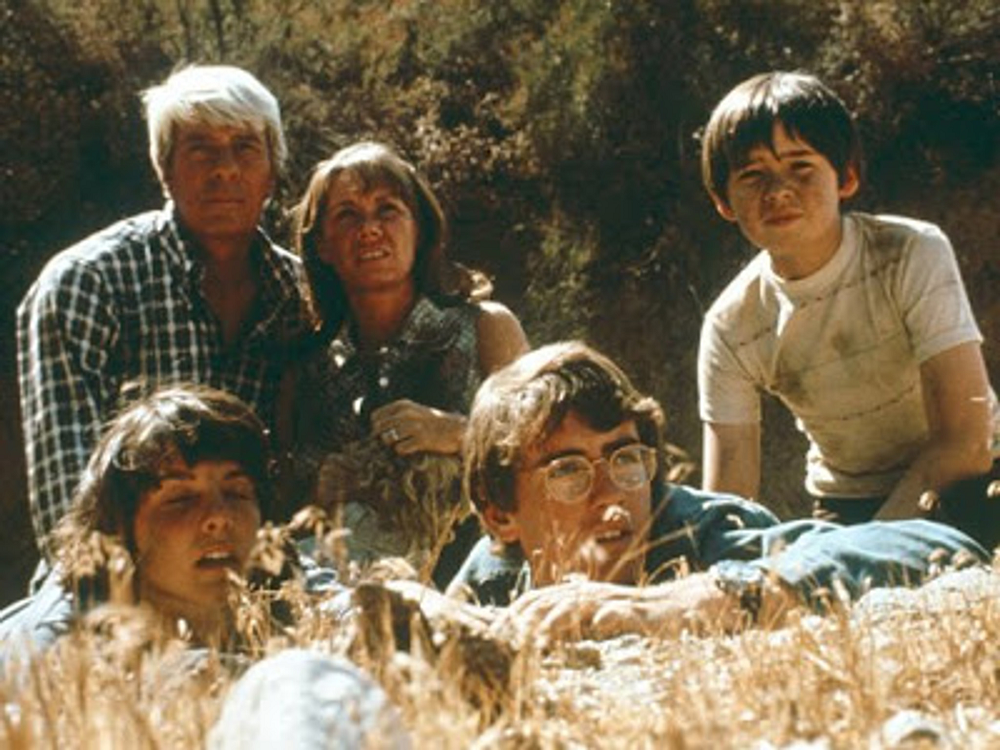
Where Have All the People Gone? (NBC): After finishing up on Mission: Impossible in 1973, Peter Graves starred in a number of pilots, trying to find one that could lead to regular work and perhaps a series as long running as the one that made his name. Call to Danger, Scream of the Wolf, and The Underground Man didn’t work out (although the latter became a full series, Archer, with Brian Keith in the title role), but there were high hopes for his latest pilot, a post-apocalyptic survival show.

Where Have All the People Gone? was scripted for TV by Lewis John Carlino and Samuel Stern (who would later write the screenplay for The Amityville Horror), from Carlino’s original story. As the pilot opens, Steven Anders (Graves) and his two teenage children return from a camping trip in the Sierra Nevada mountains, where they experienced an earthquake while deep in a cave. The first man they meet, a ranch hand, tells them that there was a bright light at the same time as the ‘quake, before falling ill and dissolving into a powder. Exploring the rest of the nearby town, the Anders family discover that everyone has turned to powder, although their clothes are untouched…

Where Have All The People Gone, 1974

Encountering other survivors on the way, they eventually make it back home to Malibu where they discover a note written by Anders’s wife – now also powder – explaining that a virus swept through civilisation after the solar flare and earthquake, but that some people have a natural resistance. Determined to survive, they set off for Northern California…

In a perfect world, Steven Anders and his family would have spent several seasons exploring this altered world, but NBC passed on the pilot, which ended up airing as a TV movie in October 1974 (and is viewable on YouTube). Instead, Graves drifted into cheap thrillers made in Europe and Australia, also turning his hand to TV disaster movies, making him perfect for Airplane, the spoof of the genre. It took him until 1988 to find another TV vehicle perfect for him, though, when Mission: Impossible was revived!

Men of the Dragon (ABC): From fifty years away, it’s impossible to believe just how popular kung-fu (the catch-all term used for all Asian martial arts at the time) was in the early 1970s. Once The Green Hornet’s sidekick, Bruce Lee became a bona fide star in his native USA, even if he did have to go to Hong Kong to get there. History can be cruel, however, and Lee was dead before his greatest film – Enter the Dragon ­– was released in August 1973.

We can’t be sure, then, whether Lee would have been happy or sad about the proliferation of kung-fu movies and TV shows (mostly starring non-Asian actors) that flooded the American market in the wake of The Big Boss – his first starring vehicle – changing the industry. He’d have probably allowed himself a wry smile, especially at the likes of Men of the Dragon, which (putting it politely) took inspiration from his oeuvre.

Men of the Dragon, 1974

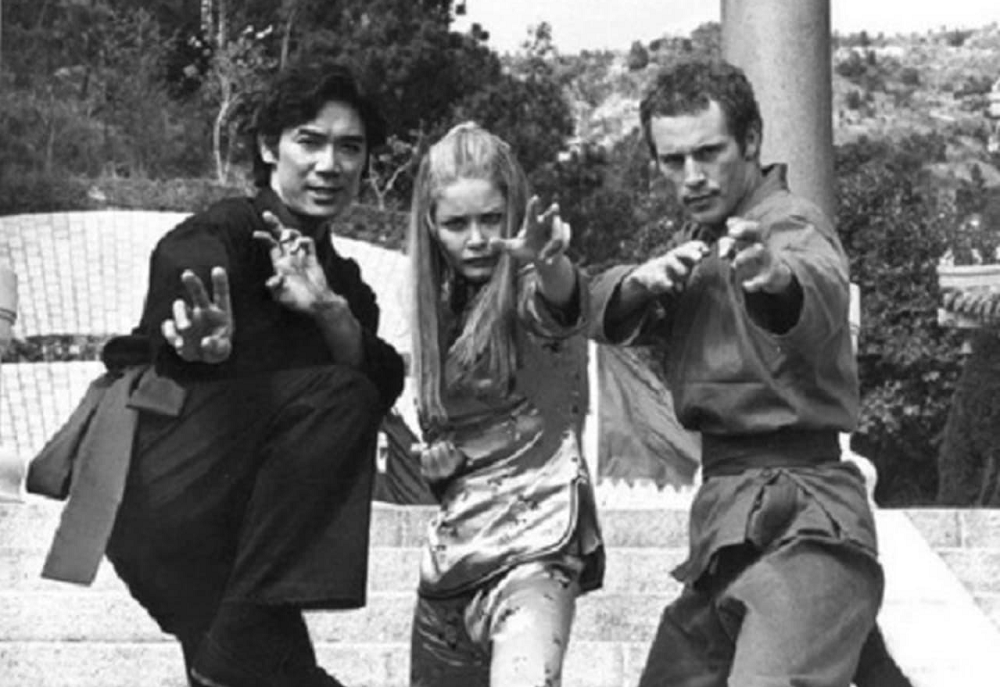
Men of the Dragon starred Jared Martin, Katie Saylor, and Japanese Canadian Robert Ito as three friends who had grown up in Hong Kong. Returning to the territory for old times’ sake, Saylor is kidnapped, and the boys have to fight all manner of kung-fu gangsters to get her back. Although Martin and Ito had decent résumés behind them, this was only Saylor’s second job (the first being 1973’s Invasion of the Bee Girls), but she gives a decent performance, even joining in with the chopsocky action in the final sequence.

Creator Denne Bart Petitclerc (who’d helmed Then Came Bronson five years earlier) intended the film to act as a pilot for a continuing series and ABC aired it as part of their ABC Wednesday Movie of the Week block on March 20th 1974, but the network subsequently passed, perhaps noticing that its own Kung Fu was coming to a close weeks later.

Evel Knievel (CBS): Robert “Evel” Knievel first appeared on national television in the US on March 18th 1968, shortly after recovering from breaking his pelvis, leg, hip, wrist, and both ankles, injuries he’d suffered when trying to jump the fountains at Caesar’s Palace in Las Vegas the previous December. Appearing on The Joey Bishop Show, Knievel’s unbelievable catalogue of injuries were rolled out as a badge of his extreme courage (and maybe some stupidity), leading to a surprisingly long career as a stunt cyclist, which included a jump over the quarter mile-wide Snake River Canyon in southern Idaho on the rocket-propelled Skycycle-X2.

Knievel was big money and would go on to perform in front of 90,000 people at Wembley Stadium in 1975 but as early as 1971 Hollywood had already taken notice. 1971’s Evel Knievel was a lightly fictionalised version of his life, with George Hamilton in the title role, which eventually made ten times its meagre budget, mostly through video rentals a decade later. This wasn’t the only project featuring the daredevil in production in the early 1970s, however…

Evel Knievel, 1974

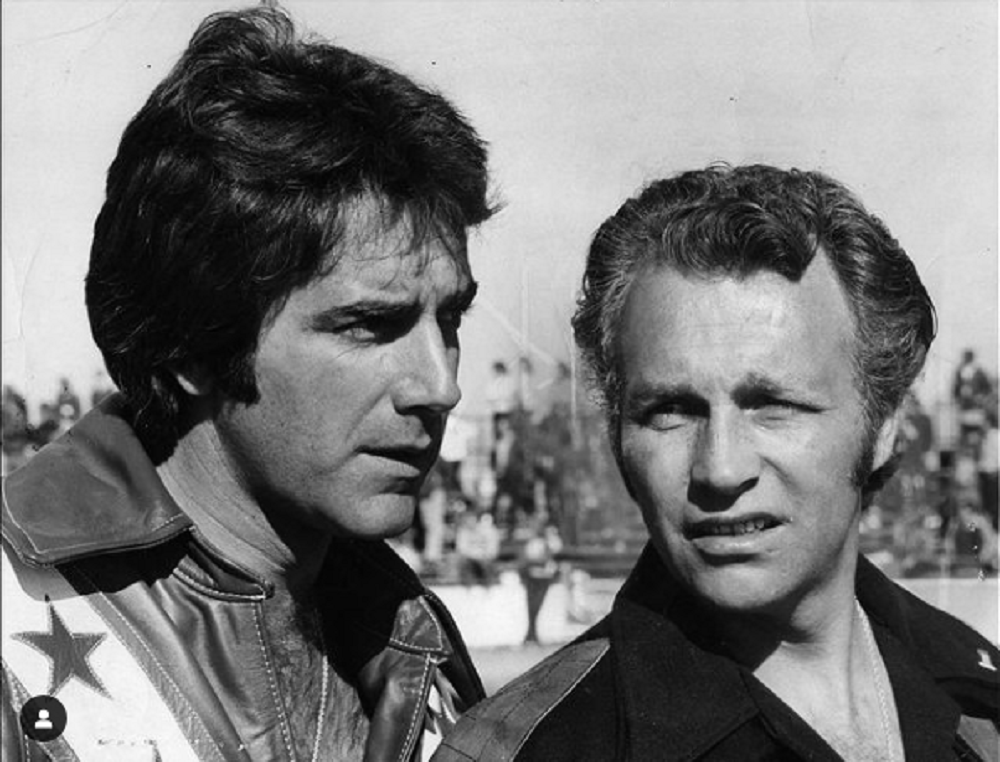
Richard Adams was a veteran scriptwriter whose final credit turned out to be 2000’s The Chippendales Murder. What he should be remembered for, however, is his treatment for Evel Knievel in 1974. In Adams’s script, which was filmed as a TV movie starring Sam Elliott as the eponymous stuntman, Knievel combined his daredevil activities with crimefighting, taking down a ne’er-do-well intent on spoiling his Battle of the Sexes jump-off with female stunt rider Tracy Butler (played by former Playboy model Karen Philipp).

Unfortunately, something was lacking either in Adams’s script or Elliott’s performance, and CBS declined to even air the half-hour pilot, let alone commission a series. In 1977, shortly before he announced his retirement after yet another failed jump (this time over a tank full of sharks), Knievel starred as himself in Viva Knievel!, an action feature full of his trademark stunts that a drug-addled former protégé, Leslie Nielsen’s crime boss, and a love interest in the shape Lauren Hutton. The film did badly at the box office, probably not helped by Knievel’s conviction later than year for attacking a former promoter with a baseball bat…

Next on The Telephemera Years: It’s a bumper crop from 1974 as we unearth even more unsold pilots!

Check out our other Telephemera articles:

The Telephemera Years: pre-1965 (part 1, 2, 3, 4)

The Telephemera Years: 1966 (part 1, 2, 3, 4)

The Telephemera Years: 1967 (part 1, 2, 3, 4)

The Telephemera Years: 1968 (part 1, 2, 3, 4)

The Telephemera Years: 1969 (part 1, 2, 3, 4)

The Telephemera Years: 1971 (part 1, 2, 3, 4)

The Telephemera Years: 1973 (part 1, 2, 3, 4)

The Telephemera Years: 1974 (part 1, 2)

The Telephemera Years: 1975 (part 1, 2, 3, 4)

The Telephemera Years: 1977 (part 1, 2, 3, 4)

The Telephemera Years: 1978 (part 1, 2, 3, 4)

The Telephemera Years: 1980 (part 12, 3, 4)

The Telephemera Years: 1982 (part 1, 2, 3, 4)

The Telephemera Years: 1983 (part 1, 2, 3, 4)

The Telephemera Years: 1984 (part 1, 2, 3, 4)

The Telephemera Years: 1986 (part 1, 2, 3, 4)

The Telephemera Years: 1987 (part 1, 2, 3, 4)

The Telephemera Years: 1989 (part 1, 2, 3, 4)

The Telephemera Years: 1990 (part 1, 2, 3, 4)

The Telephemera Years: 1992 (part 1, 2, 3, 4)

The Telephemera Years: 1995 (part 12, 3, 4)

The Telephemera Years: 1997 (part 1, 2, 3, 4)

The Telephemera Years: 1998 (part 1, 2, 3, 4)

The Telephemera Years: 2000 (part 1, 2, 3, 4)

The Telephemera Years: 2003 (part 1, 2, 3, 4)

The Telephemera Years: 2005 (part 1, 2, 3, 4)

The Telephemera Years: 2006 (part 1, 2, 3, 4)

The Telephemera Years: 2008 (part 1, 23, 4)

Titans of Telephemera: Irwin Allen

Titans of Telephemera: Stephen J Cannell (part 1, 2, 3, 4)

Titans of Telephemera: DIC (part 1, 2)

Titans of Telephemera: Hanna-Barbera (part 1, 2, 3, 4, 5)

Titans of Telephemera: Kenneth Johnson

Titans of Telephemera: Sid & Marty Krofft

Titans of Telephemera: Glen A Larson (part 1, 2, 3, 4)

Titans of Telephemera: Quinn Martin (part 1, 2)

Titans of Telephemera: Ruby-Spears

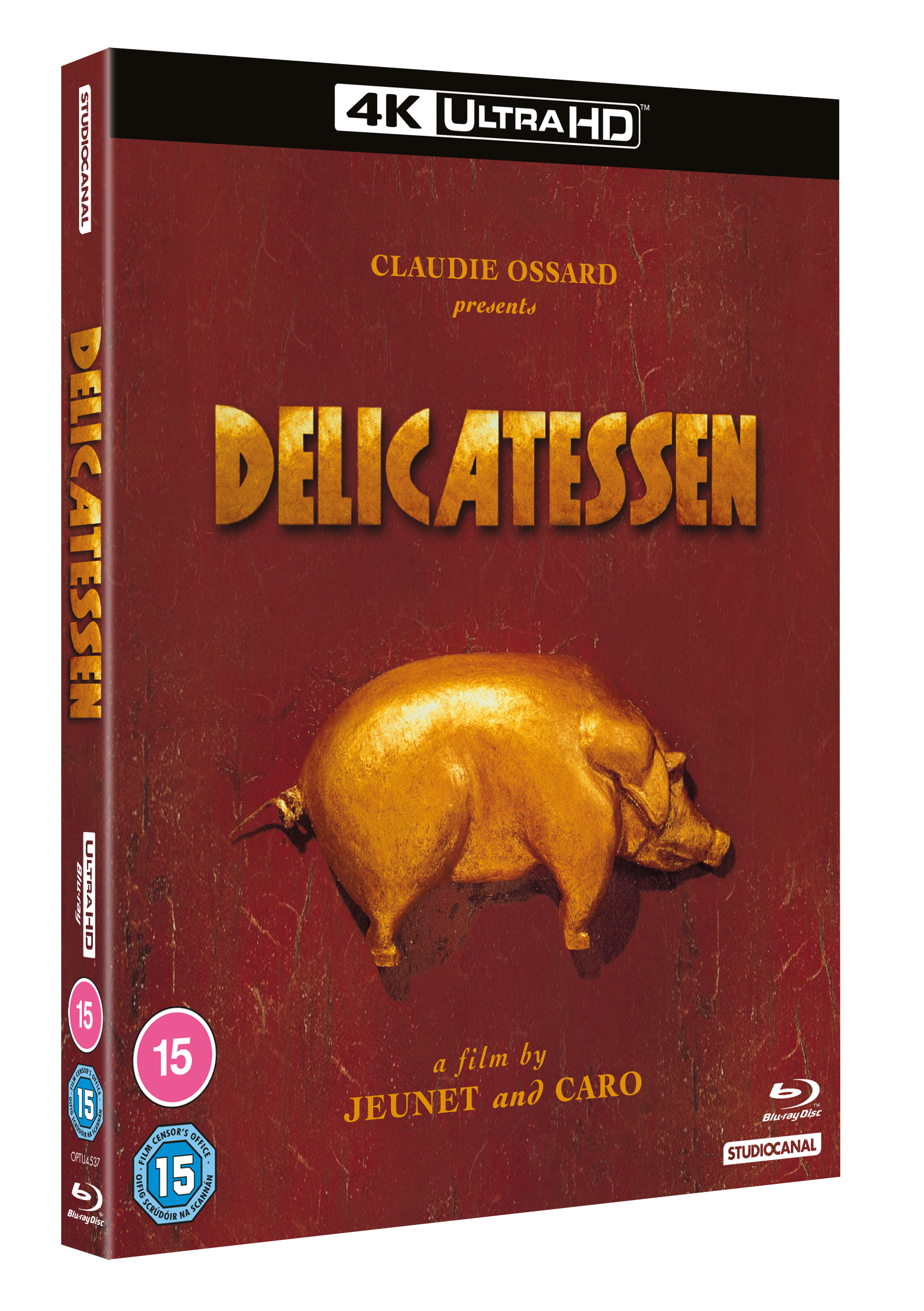
[ENDED] Win French Classic DELICATESSEN 4K UHD Blu-ray

The superb surreal dystopian horror comedy Delicatessen (1996) is getting a 4K UHD Blu-ray release from Studiocanal, and we have a copy to give away to one lucky reader. Just read on and enter below…

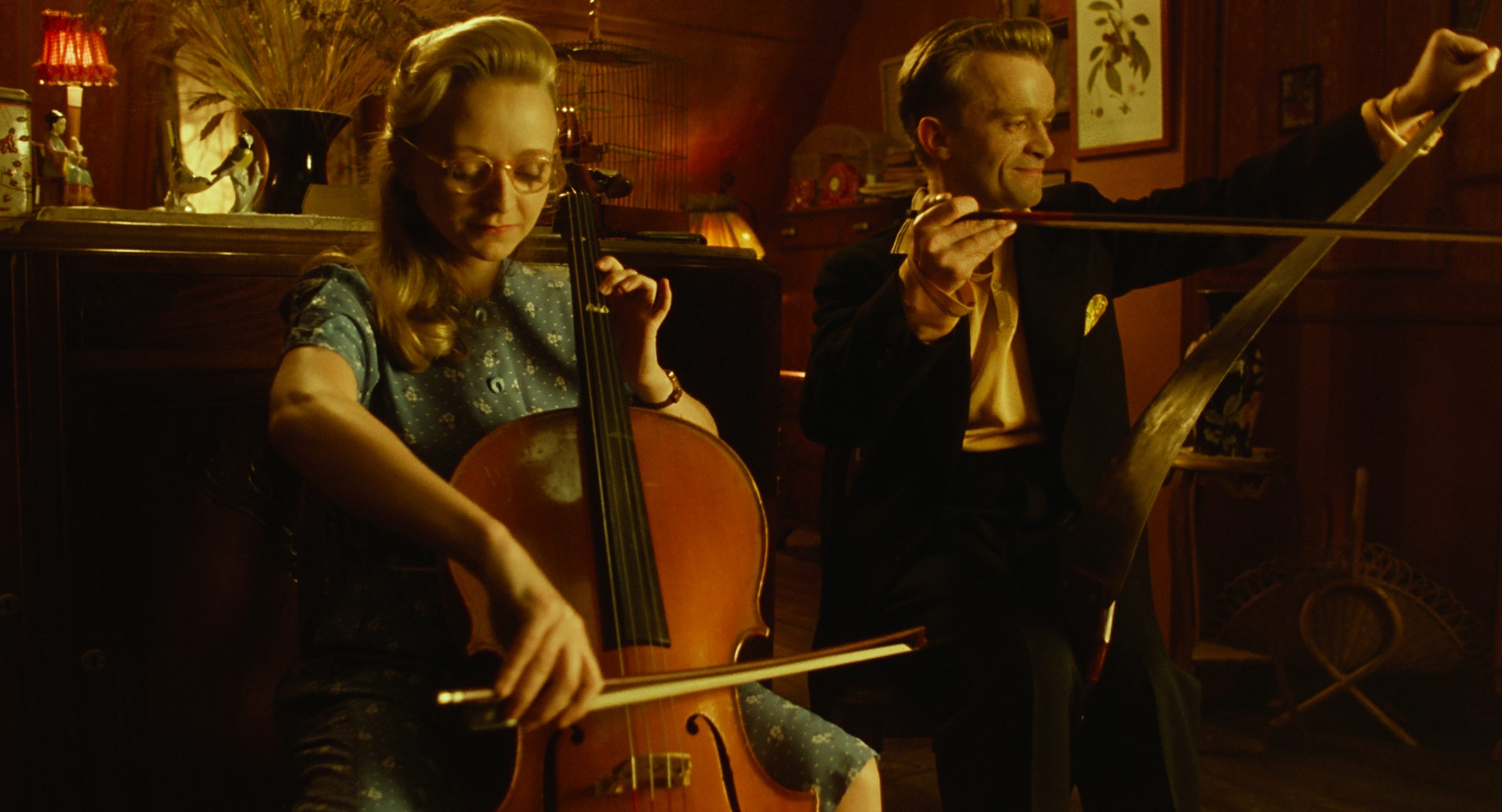
Directed by Jean-Pierre Jeunet and Marc Caro, Delicatessen is set in a distant, apocalyptic future, conventional society has reached a state of collapse. Grain is now used as currency, and meat has become a rare commodity. Meanwhile, an unemployed clown finds work as a maintenance man in a squalid apartment block situated above a butcher’s shop.

Having fallen in love with the owner’s daughter, he soon discovers the sinister truth behind the ominous landlord’s unsavoury intentions. Between blossoming romance and disappearing tenants, his only hope for survival could be the members of a subterranean militia of vegetarian freedom fighters. Or is it too late already?

With its iconic, surreal imagery, gallows humour, and its cast of warped characters, Delicatessen marked the breakthrough collaboration between celebrated directors Jean-Pierre Jeunet (Amélie) and Marc Caro (Dante 01). Equal parts horror, comedy and dystopian fantasia, Delicatessen is still one of the most original and influential films of its time.

Winner of two César Awards, for Best Debut and Best Screenplay, and nominated for the Best Foreign Film BAFTA, the film stars Dominique Pinon, who would go on to appear in Amélie and The City of Lost Children (as well as episodes of The Walking Dead: Daryl Dixon).

Co-director Jeunet went on to make the box office hit Alien: Resurrection (1997) and the sensational Amélie (2001), starring Audrey Tautou, nominated for five Oscars, winner of two BAFTAs and winner of four French Césars. He also made A Very Long Engagement with Tautou, which was nominated for two Oscars.

Included with Delicatessen:

Audio commentary with director Jean-Pierre Jeunet
Making of: Fine Cooked Pork Meats
Main Course Pieces
Jean-Pierre Jeunet Archive
Interview with Jeunet and Caro


a Rafflecopter giveaway

Delicatessen is released on 4K UHD Blu-ray on October 16th. You can pre-order it here.


The Netflix Conundrum: A Glance at Alternate Streaming Horizons

The ripple effects of the ongoing actors’ strike have brushed against Netflix’s shores, momentarily halting its plans to raise the subscription costs. According to a recent report by The Wall Street Journal, the streaming titan is biding its time till the storm of the strike settles, post which it aims to increase the price of its ad-free subscription. The anticipated price bump, although unspecified, is hinted to range between $1 to $2 a month, reminiscent of its past price ascensions. The price surge is said to unfurl initially in the U.S. and Canada, before rippling globally—a little pause for concern, especially for the budget-conscious customers.

Source: Unsplash

Online Alternatives

Welcome packages and trial periods offered by many streaming sites is hard to ignore. These introductory offers, reminiscent of the casino offers provided by Betfair, serve as a beacon for those interested in online entertainment.

Much like Betfair’s promotion strategy, which includes special casino promotions like a match deposit bonus, cashback, reload bonus, or free spins, streaming sites have offers ranging from discounted subscriptions to free trials, making the switch an enticing proposition.

Streaming Platforms

The bounty of streaming platforms, each with its unique offering, awaits the discerning viewer. Amazon Prime is a strong contender with its blend of original series, movies, and a trove of old classics. Its competitive pricing and an array of content make it a worthy alternative.

On the other hand, Disney+ Hotstar, although a platform with a family-centric content library, caters to a broader audience with its diverse genre offerings, transcending age brackets effortlessly. Then there’s Hulu, known for its up-to-date library of current-season episodes from major networks, available to stream soon after airing, along with their Hulu Originals, catering to those who like their content fresh off the airwaves.

Source: Unsplash

The likes of Apple TV+ and HBO Max too throw their hats in the ring with an enticing array of content that promises to keep the viewer glued. Original content on platforms like HBO Max extends an invitation to a realm of gritty, thought-provoking narratives. Apple TV+ is slowly carving a niche with its critically acclaimed series and films selection.

Each platform, with its distinct flavour, endeavours to offer lots of different streaming content, promising storytelling that goes beyond the conventional and ventures into the unexplored.

As the uncertainty looms over Netflix’s pricing model, the silver lining lies in the many available alternatives. Each streaming platform, with its unique content library and pricing structure, beckons the viewer to explore the vibrant tapestry of digital entertainment that lies beyond the familiar red and black logo of Netflix. A little exploration could unveil a viewing haven that aligns well with individual preferences and budget constraints in a world where choices are abundant.

Henrik Stelzer | METRO RIDERS

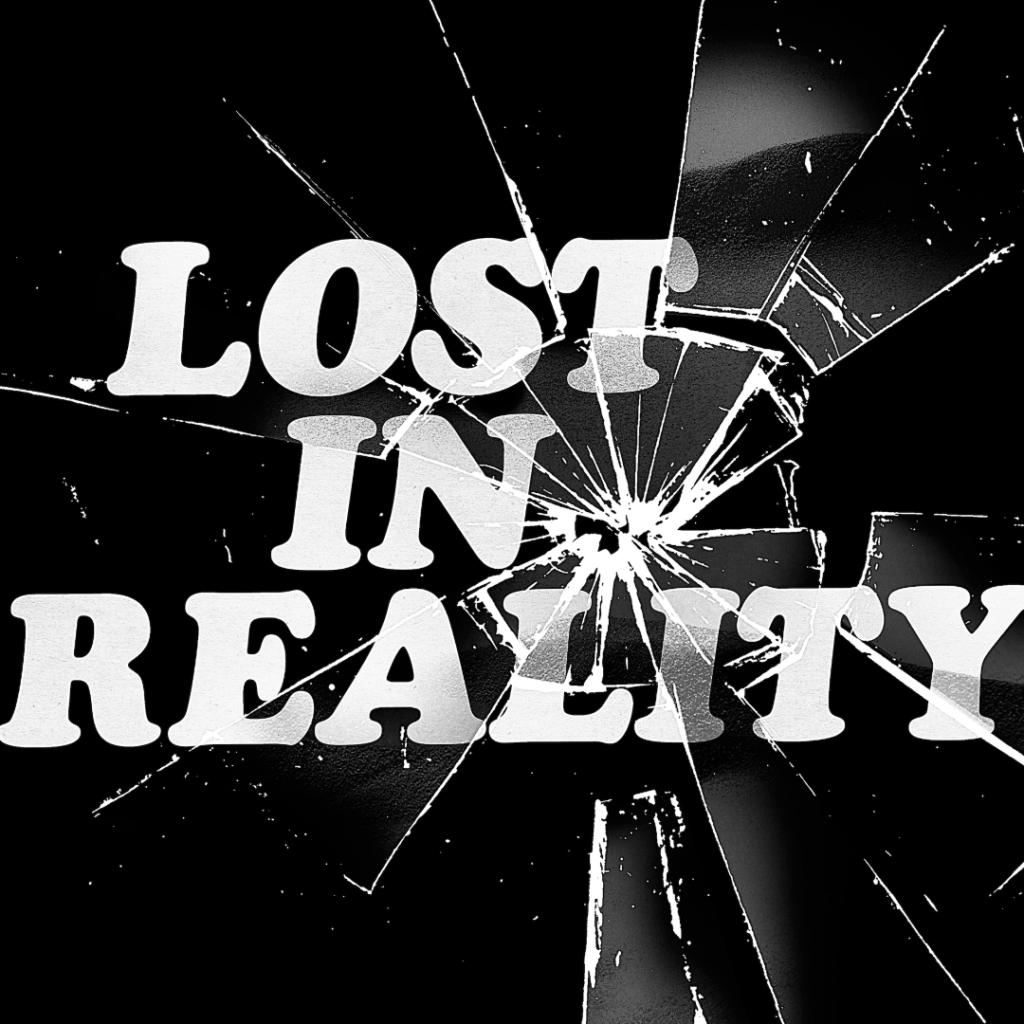
Metro Riders is the project of Stockholm’s Henrik Stelzer, who had always been obsessed with horror cinema – particularly the Italian horror films of the late ’70s and ’80s, as well as John Carpenter’s classics – and he does not hide the fact that he builds heavily on that vibe in his music. His sophomore release, Lost In Reality, came out last week, and the follow-up to his 2017 Europe By Night sees him taking the sound of Metro Riders further into the world of genre music while also crafting something wholly his own. We spoke with Henrik Stelzer about the evolution of Metro Riders…

STARBURST: So many cuts on Lost In Reality are named after films. Are you taking inspiration from the movies as a whole, or are you pulling from certain scenes?

Henrik Stelzer: There are definitely distinct references to both directors, movie titles and characters on Lost In Reality. But overall, I would say that Metro Riders is all about capturing a certain atmosphere.

Whether it’s from a certain scene from Zombi 2 (1979) or just a nostalgic take on experiencing a nearly broken VHS copy of some obscure horror movie from your local Blockbuster in the ’90s. The quality of my recordings and the cover design all become key elements to assist the consumers in placing themselves somewhere else.

On Europe By Night, you have a track named Bruno Mattei, and on Lost In Reality, you have a track named Lia Rousseau, after a character in Mattei’s Hell of the Living Dead. Why are you so attracted to Mattei’s work?

Bruno Mattei is often regarded as the Italian equivalent of Ed Wood in the horror genre. Similar to Ed Wood, Bruno gained notoriety for his frequent use of pre-existing footage, campy visual style, noticeable mistakes, subpar special effects, unconventional casting choices, peculiar storylines, and nonsensical dialogue.

What has always captivated me about Bruno is his unwavering determination to pursue his own ideas and artistic vision, regardless of the circumstances. Despite the limitations he faced, he managed to create something noteworthy and even enchanting if viewed through the right lens. In fact, I am so fascinated by his work that I may release an entire tribute album dedicated to Bruno in the future.

For me, music serves as a means of storytelling as well. Even without lyrics, the titles of musical compositions can serve as a fitting avenue to reference various aspects of our surroundings and pay homage to forgotten treasures.

What is your production methodology like to achieve this sense of age and distortion?

I don’t really have a specific method [laughs]. I rely on my sense of style and intuition to guide me. It took me some time to figure out different designs for the sounds, what equipment to acquire, how to distort them, and how to make them more interesting. However, the more I practised, the more captivating and improved the results became. Nowadays, I don’t panic as much. In the past, I had to depend on a particular tape recorder to achieve that distinctive tape-saturated sound. Nowadays, I know the old machines better and how to tame them for their pristine lo-fi qualities. Sometimes, some tracks took hours to fine-tune into the perfect tape-saturated sound, and sometimes, it was just there on the first take. I then usually let it rest for a day or two before coming back to it, only to realise, “What was I thinking?” And then I re-record again. [Laughs]

This album isn’t as drenched in tape hiss as your debut. What’s the rationale behind that decision?

I’m now more at ease using the obsolete reel-to-reel equipment in my studio. Some of the recordings on my previous album involved fewer takes and were more akin to live sessions rather than standard studio recordings. For me, that approach carried a certain level of risk as it did result in a higher level of noise in the final recordings.

The art for both albums has a certain library music feel. Who designs your covers, and is that what you’re aiming for?

I design the artwork myself; I believe it’s just as important for me to be a part of that process. I think the title credits of old Italian giallo and crime movies very much inspire a lot of the designs for Metro Riders. If you look at any of the titles from that time – like What Have They Done To Solange? for example – they were almost always designed using the typeface Eurostile. Something I was inspired by when doing the artwork for my previous album, Europe By Night, back in 2017.

When I was designing the artwork for Lost in Reality, I was looking into advertising typefaces of that time [’70s–’80s], and I ended up with a bag of references that I found searching old dusty X-rental logos and legal by-lines to the glass-breaking opening credits to Friday the 13th (1980). I always try to find inspiration close to where I want to position my music without being too obvious.

You can buy Henrik Stelzer’s Metro Riders music here

THE TELEPHEMERA YEARS: 1974, part 2

Planet of the Apes, 1974

Ah, telephemera… those shows whose stay with us was tantalisingly brief, snatched away before their time, and sometimes with good cause. They hit the schedules alongside established shows, hoping for a long run, but it’s not always to be, and for every Street Hawk there’s two Manimals. But here at STARBURST we celebrate their existence and mourn their departure, drilling down into the new season’s entertainment with equal opportunities square eyes… these are The Telephemera Years!

1974-75

The sitcom ruled the roost in 1974, with the top seven shows all falling under that heading, although the situation for the comedies ranged from a bigoted dad and his liberal children to urban Chicago, through a junkyard, an odd couple, and the never-ending Korean War. Those shows not looking for laughs but still finding an audience included The Waltons, Hawaii Five-O, and Kojak, with newcomers The Rockford Files, Little House on the Prairie, and Police Woman all delivering their own charms for NBC, which pretty much shared the viewing figures with CBS, ABC nowhere to be seen.

Kung Fu and the actual Odd Couple both started their final seasons for the alphabet network but they pinned their hopes on a trio of new arrivals in Baretta, Barney Miller, and Kolchak: The Night Stalker, all of which made either a commercial or critical impact for ABC. CBS introduced the world to The Jeffersons and Rhoda, with Petrocelli and Chico and the Man joining NBC’s already star-studded line-up, but what about those shows that didn’t trouble the Nielsen ratings? This is the story of four more Fall flops from 1974…

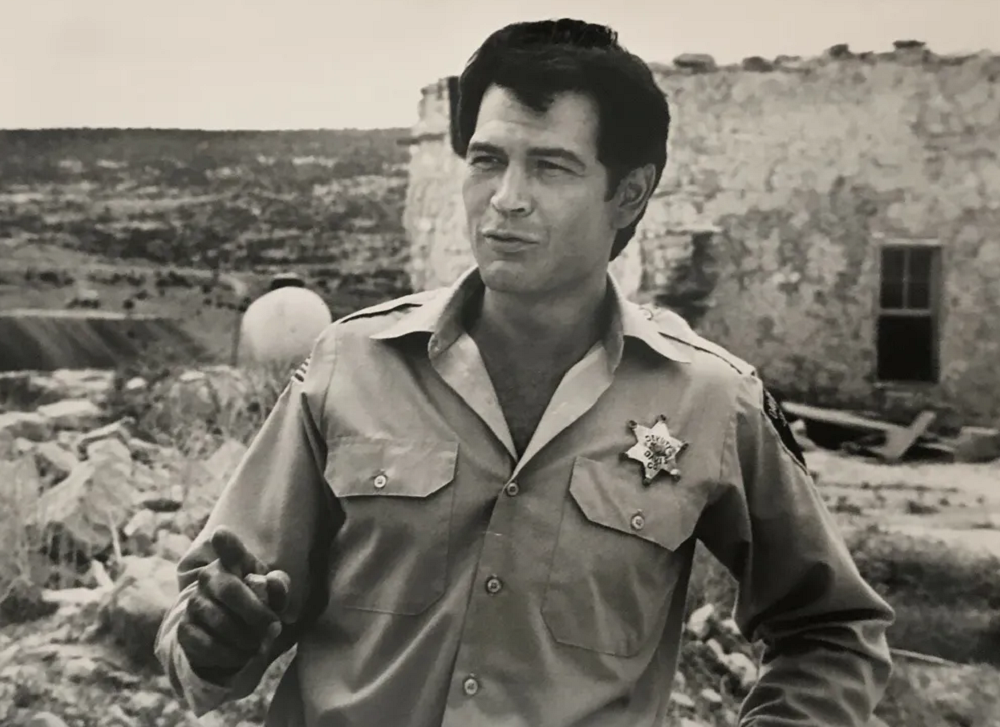
Nakia (ABC): As network executives scrambled to find a fresh take on the detective drama, Charles Larson of Columbia Pictures Television unearthed a diamond. Created by Christopher (son of Dalton) Trumbo and Michael Butler, who would later write Pale Rider for Clint Eastwood, Nakia features a Native American lawman, a deputy Sheriff in the fictional New Mexico town of Concord. And because there are absolutely no Native American actors – none, zero, zip, nada – the part of Nakia Parker went to Robert Forster, then most well-known for his starring role as 1930s detective Banyon.

Forster’s Nakia was torn between traditional and modern ways of doing things, as likely to turn up to a case on horseback as behind the wheel of his police issue pick-up truck. Despite the clumsy casting (and, really, Forster is very good in the role), Nakia was one of the first attempts to show the realities of twentieth century Native American life on TV, filmed largely on location around Albuquerque and not flinching from the challenges experienced by minorities at the time.

Nakia, 1974

Support for Forster came from stage veteran Arthur Kennedy and former MGM starlet Gloria DeHaven, and the show featured guest appearances from the likes of Linda Evans, George Nader, and Pernell Roberts, with former Miss World USA (and future Wonder Woman) Lynda Carter making her acting debut in one episode.

Still, Nakia faced tough competition in its Saturday night timeslot from The Carol Burnett Show and NBC Saturday Night at the Movies, and ABC pulled the plug after just thirteen episodes. After the cancellation, Forster appeared in several other pilots, and became a supporting actor in movies such as The Black Hole and Delta Force, while also headlining a series of B-movies that found friends in high places. He was David Lynch’s first choice to play Sheriff Harry Truman in Twin Peaks but had to turn down the role, and had a late career revival when Quentin Tarantino cast him in Jackie Brown.

Amy Prentiss (NBC): On September 15th 1971, NBC presented a new innovation. Titled The NBC Mystery Movie, each weekly, feature-length episode would showcase one of three fictional detectives. Because nothing is ever truly new, one of the rotating features – McCloud – had debuted a year before as part of a similar series, Four in One, and Columbo had featured in two pilot TV movies, but McMillan & Wife was a brand-new show for the newish series. A year later, a fourth feature – Hec Ramsey – was added to the rotation, along with the accompanying NBC Wednesday Night Mystery Movie, which did the same thing and included Banacek and Madigan amongst its revolving features.

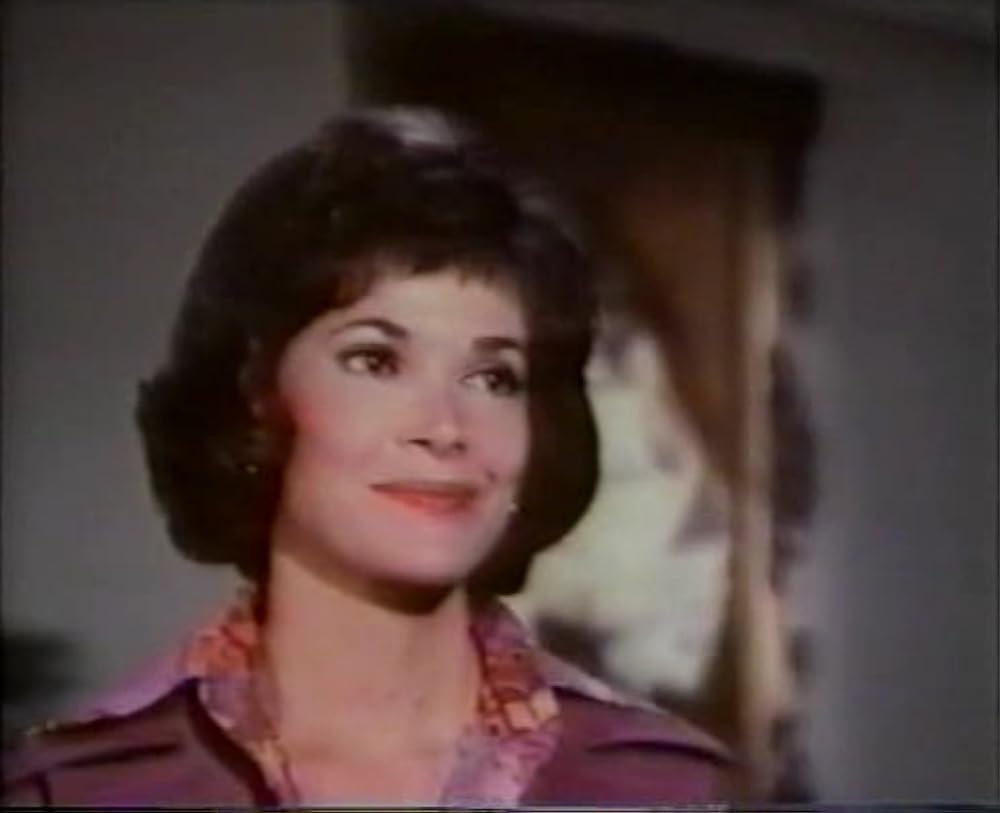
In 1974, despite moving to Tuesdays, the midweek version was cancelled and while Sundays remained the same, it was decided that Hec Ramsey had run its course. In its place came Amy Prentiss, a spin-off from Ironside, starring Play Misty for Me’s Jessica Walter as a widow and single mother who becomes the first female Chief of Detectives in San Francisco when the previous incumbent dies.

Amy Prentiss, 1974

In the first instalment of her own show, which debuted on December 1st 1974, Prentiss (played by) had to deal not only with a friend accused of murder, but also with a mad bomber threatening the city. Subsequent episodes involved dead party guests and renegade cops, but after just three turns at being The NBC Mystery Movie’s fourth, the show was put out to grass.

During its brief run, though, Amy Prentiss had guest appearances from William Shatner, Jamie Farr, and others, and a young Helen Hunt was cast as Prentiss’s pre-teen daughter. It also stood as a rare show created by a female writer, Francine Carroll, who later joined the writing staff on Days of Our Lives. McCoy, starring Tony Curtis as a good-hearted conman, took its place, only lasting for five episodes before stepping aside for a little show named Quincy, ME

Planet of the Apes (CBS): Based on Pierre Boulle’s 1963 novel La Planète des Singes, the 1968 movie Planet of the Apes was a blockbuster hit, making five times its budget at the box office and leading to four sequels over the next five years. Although Charlton Heston, star of the original film, did not return for any further outings, Roddy McDowall was an ever-present as evolved chimpanzee Cornelius, and prosthetic make-up artist John Chambers contributed to the full series, all of which were written by British screenwriter Paul Dehn.

Even before the first sequel movie had hit cinemas, discussions were underway to transfer the property to TV under the stewardship of Arthur P Jacobs, but a decision was made to delay the prospective show until after the fifth film, Battle for the Planet of the Apes (which told the origin story of how the apes overthrew man). In the intervening time, Jacobs died and the rights he held were sold to 20th Century Fox. In turn, they sold the TV rights for the first three films to CBS and showings of the movies did huge ratings for the channel.

Planet of the Apes, 1974

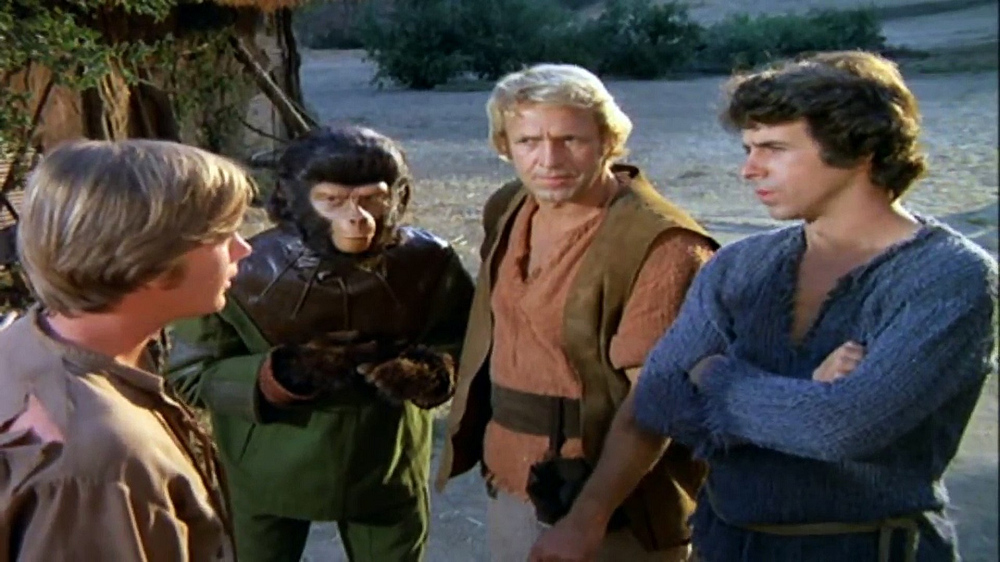
It was no surprise that CBS announced a new TV series that reimagined the original story as a launching point and then continued to tell all new stories, loosely based on Jacobs’ existing production plan. McDowall was convinced to reprise the role of Cornelius and with Chambers’s prosthetics still wowing audiences, hopes were high for the network’s first sci-fi hit since Lost in Space. Planet of the Apes premiered on September 13th 1974, retelling the story of the astronauts’ crash on what turns out to be a future Earth, with an initial order of fourteen episodes costing a cool $250,000 apiece.

It was CBS’s main weapon in its Friday night armoury but fared badly in the face of competition from Sanford and Son, Chico and the Man, and The Six Million Dollar Man, grabbing under fifteen million viewers in a slot where Good Times had been doing over twenty. CBS pulled the plug after just thirteen episodes had aired, and later attempted to recoup some of its losses by recutting ten of the episodes into five TV movies, extending the movie series to a ten-film affair. The show did return the following year but in animated form from DePatie-Freleng Enterprises and with no Roddy McDowall.

Kodiak (ABC): If you’ve read this far then you’ll be aware that the 1974 TV schedules were filled with detectives. There were detectives in wheelchairs and sleuths who were lawyers. Gumshoes who were (not) Chinese and Native American lawmen. There were even women policemen, so what in God’s name was left for ABC to plunder in search of the perfect detective show?

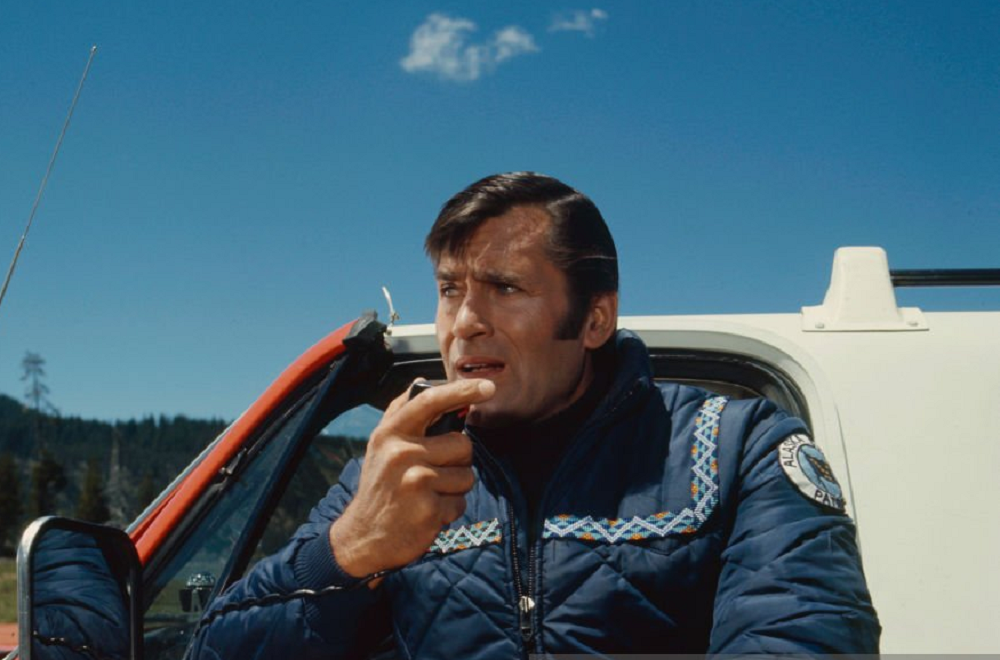
Cue Anthony Lawrence, a jobbing writer who had turned out scripts for Hawaii Five-O, amongst others. What if, thought Lawrence, it was Alaska instead of Hawaii? Producer Stanley Shpetner was interested, and Kodiak was born. Cast as Alaska State Trooper Cal “Kodiak” McKay was Clint Walker, who had spent eight years playing Cheyenne Bodie in the Western drama Cheyenne, with the decidedly non-Inuit Abner Biberman as his “Eskimo” sidekick, Abraham Lincoln Imhook.

Kodiak, 1974

It turns out that Alaska hides a lot of killers because each episode saw Kodiak chase one down, getting into wild snowmobile chases across the frozen tundra (filmed in Oregon). It also turns out that people aren’t really that interested in watching a laconic lawman hunt killers in the snow because after just four episodes, ABC quietly cancelled the show, viewing figures never rising above the ten million for the first week.

Alaska would have to wait for Northern Exposure to truly bring home the weirdness of a state which has a total population less than that of Leeds, despite being bigger than France. Kodiak does have one notable claim, however, in that it was the show that replaced The Brady Bunch in the ABC line-up after five seasons of family-smashing schmaltz.

Next on The Telephemera Years: 1974’s unsold pilots, including The Muppet Show?!?

Check out our other Telephemera articles:

The Telephemera Years: pre-1965 (part 1, 2, 3, 4)

The Telephemera Years: 1966 (part 1, 2, 3, 4)

The Telephemera Years: 1967 (part 1, 2, 3, 4)

The Telephemera Years: 1968 (part 1, 2, 3, 4)

The Telephemera Years: 1969 (part 1, 2, 3, 4)

The Telephemera Years: 1971 (part 1, 2, 3, 4)

The Telephemera Years: 1973 (part 1, 2, 3, 4)

The Telephemera Years: 1974 (part 1)

The Telephemera Years: 1975 (part 1, 2, 3, 4)

The Telephemera Years: 1977 (part 1, 2, 3, 4)

The Telephemera Years: 1978 (part 1, 2, 3, 4)

The Telephemera Years: 1980 (part 12, 3, 4)

The Telephemera Years: 1982 (part 1, 2, 3, 4)

The Telephemera Years: 1983 (part 1, 2, 3, 4)

The Telephemera Years: 1984 (part 1, 2, 3, 4)

The Telephemera Years: 1986 (part 1, 2, 3, 4)

The Telephemera Years: 1987 (part 1, 2, 3, 4)

The Telephemera Years: 1989 (part 1, 2, 3, 4)

The Telephemera Years: 1990 (part 1, 2, 3, 4)

The Telephemera Years: 1992 (part 1, 2, 3, 4)

The Telephemera Years: 1995 (part 12, 3, 4)

The Telephemera Years: 1997 (part 1, 2, 3, 4)

The Telephemera Years: 1998 (part 1, 2, 3, 4)

The Telephemera Years: 2000 (part 1, 2, 3, 4)

The Telephemera Years: 2003 (part 1, 2, 3, 4)

The Telephemera Years: 2005 (part 1, 2, 3, 4)

The Telephemera Years: 2006 (part 1, 2, 3, 4)

The Telephemera Years: 2008 (part 1, 23, 4)

Titans of Telephemera: Irwin Allen

Titans of Telephemera: Stephen J Cannell (part 1, 2, 3, 4)

Titans of Telephemera: DIC (part 1, 2)

Titans of Telephemera: Hanna-Barbera (part 1, 2, 3, 4, 5)

Titans of Telephemera: Kenneth Johnson

Titans of Telephemera: Sid & Marty Krofft

Titans of Telephemera: Glen A Larson (part 1, 2, 3, 4)

Titans of Telephemera: Quinn Martin (part 1, 2)

Titans of Telephemera: Ruby-Spears


THE TELEPHEMERA YEARS: 1974, part 1

SWAT, 1975

Ah, telephemera… those shows whose stay with us was tantalisingly brief, snatched away before their time, and sometimes with good cause. They hit the schedules alongside established shows, hoping for a long run, but it’s not always to be, and for every Street Hawk there’s two Manimals. But here at STARBURST we celebrate their existence and mourn their departure, drilling down into the new season’s entertainment with equal opportunities square eyes… these are The Telephemera Years!

1974-75

The sitcom ruled the roost in 1974, with the top seven shows all falling under that heading, although the situation for the comedies ranged from a bigoted dad and his liberal children to urban Chicago, through a junkyard, an odd couple, and the never-ending Korean War. Those shows not looking for laughs but still finding an audience included The Waltons, Hawaii Five-O, and Kojak, with newcomers The Rockford Files, Little House on the Prairie, and Police Woman all delivering their own charms for NBC, which pretty much shared the viewing figures with CBS, ABC nowhere to be seen.

Kung Fu and the actual Odd Couple both started their final seasons for the alphabet network but they pinned their hopes on a trio of new arrivals in Baretta, Barney Miller, and Kolchak: The Night Stalker, all of which made either a commercial or critical impact for ABC. CBS introduced the world to The Jeffersons and Rhoda, with Petrocelli and Chico and the Man joining NBC’s already star-studded line-up, but what about those shows that failed to make an impact on the readers of the TV Guide? This is the story of four underperforming shows from the 1974 season…

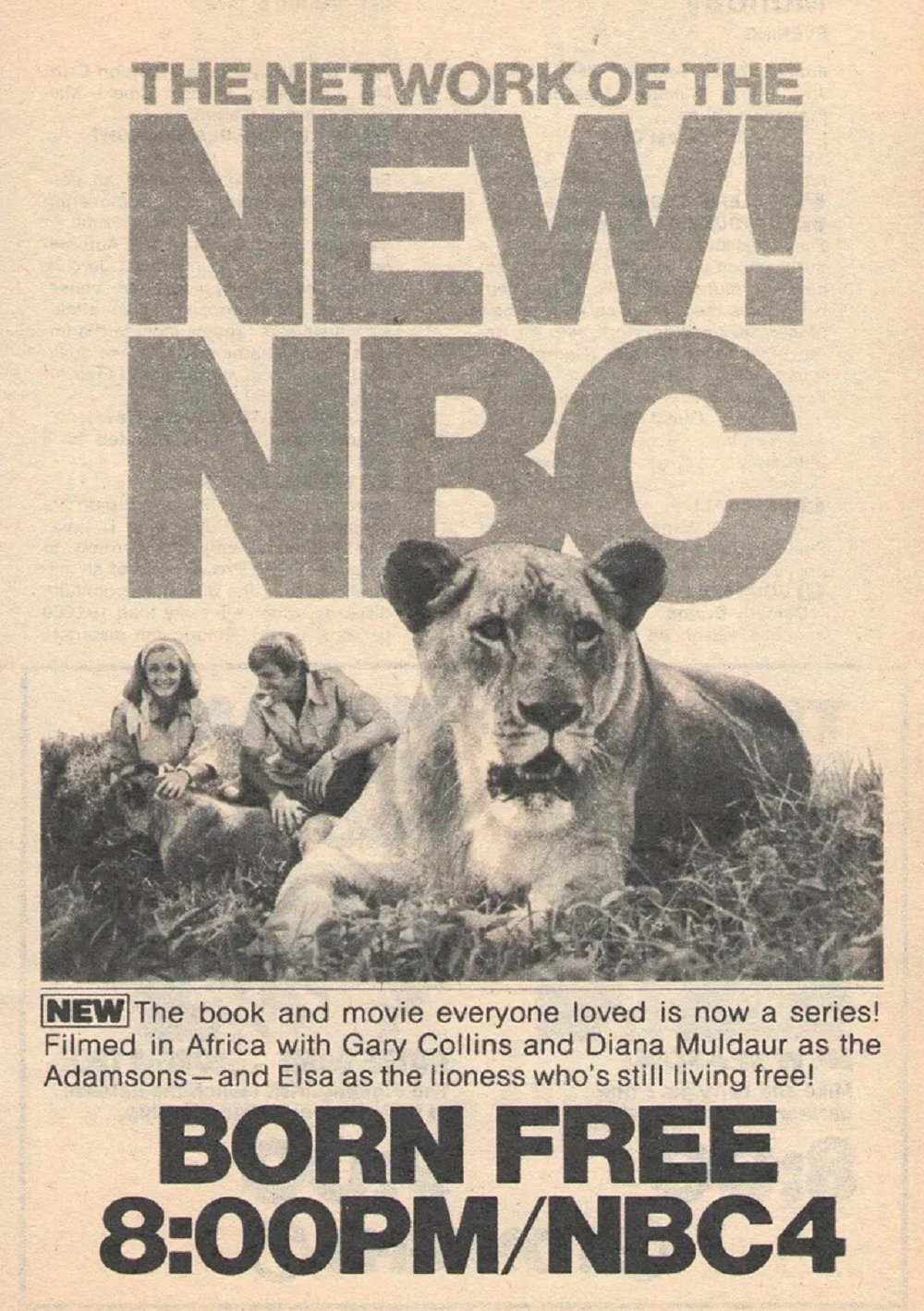
Born Free (NBC): It may seem strange that it took until 1974 for TV to create a spin-off of the 1966 movie (itself based on a 1960 book), but TV often works in waves, the wait attributable to the time it takes to move up the network hierarchy to the point you can greenlight your pet projects. This isn’t necessarily the case for Born Free, but the delay isn’t the strangest thing about the TV sequel…

No, paramount in terms of oddness – but completely understandable for narrative and merchandising purposes – was the decision to ret-con the ending of the movie, negating the message of the whole thing, in order to have the lion be the star. The lion was the star of the movie, too, but it ended with her being fully reintegrated in the wild, a success story for the efforts of George and Joy Adamson, and one based on a true story.

Born Free, 1974

When Born Free – the TV series – premiered on September 9th 1974, the Adamsons (played by Gary Collins and Diana Muldaur) were front and centre but so, too, was Elsa, now a tame lion living as one of the family. Filmed on location in East Africa, the show nevertheless stuck to its conservationist guns, with stories of repentant ivory poachers, sinister big game hunters, and awkward interactions with indigenous peoples, all neatly wrapped up in an hour-long episode.

Scheduled against ABC’s The Rookies (one of only two shows that network had in the top twenty) and Gunsmoke on CBS, Born Free failed to capture any kind of audience on Monday nights and was quietly sent off to a wildlife reserve, where it could play with other failed shows. Twenty-two years later, another attempt was made to bring the Adamsons story to TV but this time it they stripped the Adamsons themselves from the story, in favour of teenage saviours Jonathan Brandis and Ariana Richards. It, too, was taken out and shot.

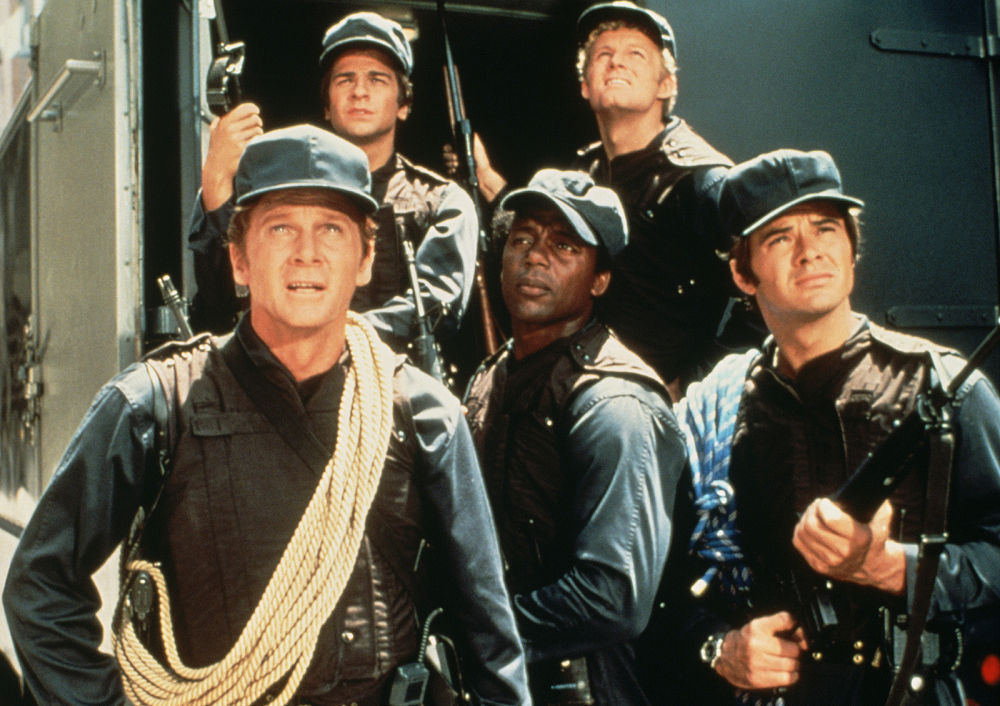
SWAT (ABC): One of the shows that did for Born Free – ABC’s The Rookies – was so popular that it spawned a spin-off of its own. SWAT – or Special Weapons and Tactics – was set in the police department of an unidentified Californian city, although filming – as with The Rookies – was done in and around Los Angeles.

First appearing in a two-part episode of The Rookies on February 17th 1975, the SWAT team began their own adventures a week later, occupying the slot previously held by The ABC Monday Night Movie and making a formidable two-hour block of extreme police action. With a tagline of, “When people are in trouble they call the Police… When the Police are in trouble they call… SWAT,” the team dived into cases involving stoolpigeons, a thinly-veiled Manson family, anti-basketball terrorists, and all manner of very exciting things!

SWAT, 1975

Led by Lt Dan “Hondo” Harrelson (veteran Steve Forrest), the squad also included Rod Perry, Mark Shera, and Robert Ulrich as the new kid on the block, recruited after the death of his partner at the hands of ambush killers and the audience’s way into the story. The show was an instant success, actually earning (slightly) more viewers than its parent show, and a second season was put on the schedule for September 1975.

In the face of criticism from the real-life LAPD SWAT team, both The Rookies and SWAT took a dive in the ratings, falling from eighteenth and fifteenth in 1974-75 to forty-first and seventyfirst a year later, and the decision was made to cancel both series. The Rookies enjoyed a second life in syndication but the double episode that acted as SWAT’s backdoor pilot wasn’t included, and it didn’t show up when the complete series was released on DVD. Neither were they included when SWAT got the DVD treatment and are now considered lost.

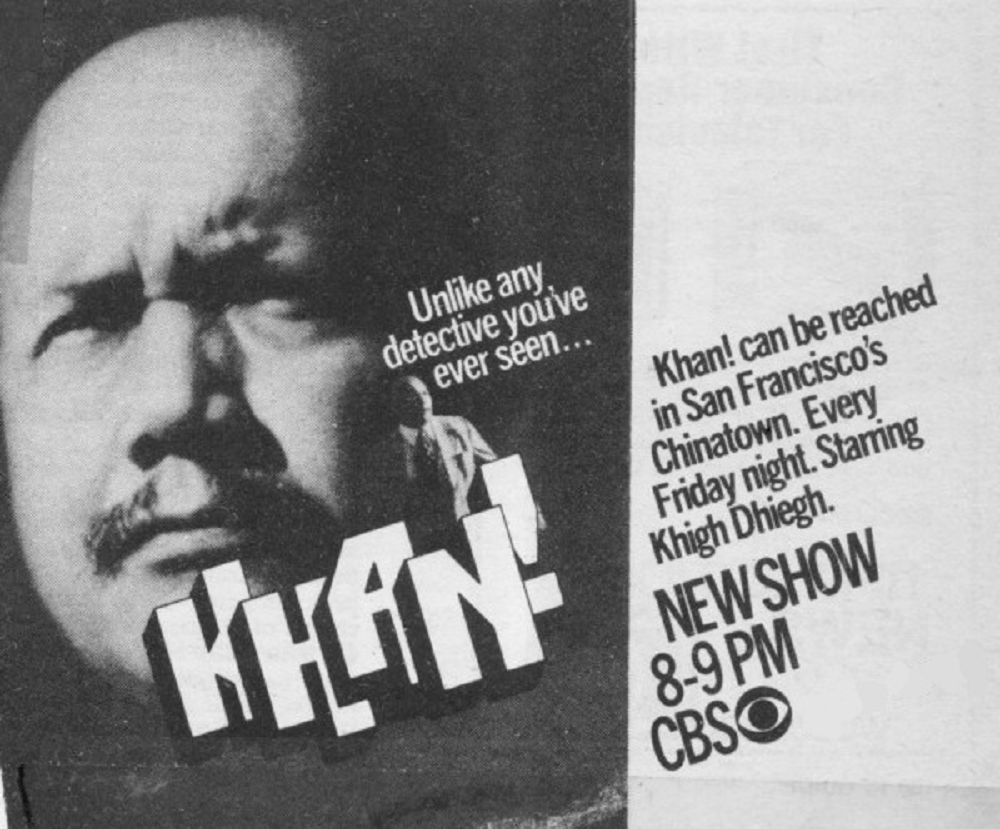
Khan! (CBS): In something that now seems like a stunt to promote that Khan! was a very different kind of police drama, its star refused an on-screen credit for his role, Khigh Dhiegh told the Chicago Tribune that, “we must remember it is not me, the individual, that is important. That is why I have told CBS I want no credits for the series. The goal is not to make any one person a star, but to create something that is good for all.”

It might have also had something to do with the fact that Dhiegh – born Kenneth Dickerson – was another in a long line of non-Asian actors to portray Asian detectives, going all the way back to Warner Oland in 1931’s Charlie Chan Carries On. Dhiegh regularly played Chinese and other Asian characters, including Wo Fat on Hawaii Five-O, and this drew criticism from Chinese American groups who were no doubt also upset that Khan’s son was played by a Korean American, although his daughter, at least, was played by Taiwanese transplant Irene Yah-Ling Sun.

Khan!, 1975

All this took away from the fact that Dhiegh was awful in his own right, his flat delivery betraying the exclamation point in the title, and that the cases seemed to solved without much input from the actual detective. Things had already gotten off to a bad start when pre-screenings of the first episode were so unfavourable that it was junked in favour of episode two going first, and after just one more episode had aired, CBS announced that the third would be the last, replacing it in the schedule with two sitcoms from its inventory.

The seven completed episodes – including that first outing – did get an airing in Australia (where racial sensibilities were and still are much different) a year later. Dhiegh’s career continued on – with credited roles as Attila the Hun, Wong, Colonel Chan, and Four Finger Wu – and completed his final TV movie in 1990. The steamy Forbidden Nights starred Melissa Gilbert as an American teacher falling for her Chinese student, but Dhiegh was there, chewing the scenery as Lu Ming in a cast of otherwise Asian American actors.

Archer (NBC): Although he was initially little more than a Philip Marlowe copy, Ross MacDonald’s Lew Archer developed into a character capable to carrying his own series of novels, with eighteen books released between his debut in 1949’s The Moving Target and 1976’s The Blue Hammer. In 1966, MacDonald’s detective appeared on film for the first time in Harper, with Paul Newman playing the renamed sleuth in an adaptation of that first novel by William Goldman.

Nine years later, Newman was back for more Harper action in The Drowning Pool, although original director Walter Hill jumped before Newman’s arrival citing studio interference in the more action-oriented direction he wanted to take the film. By this point, though, another adaptation of MacDonald’s work – this time using his detective’s intended name – had already been and gone, leaving nary a trace behind.

Archer, 1975

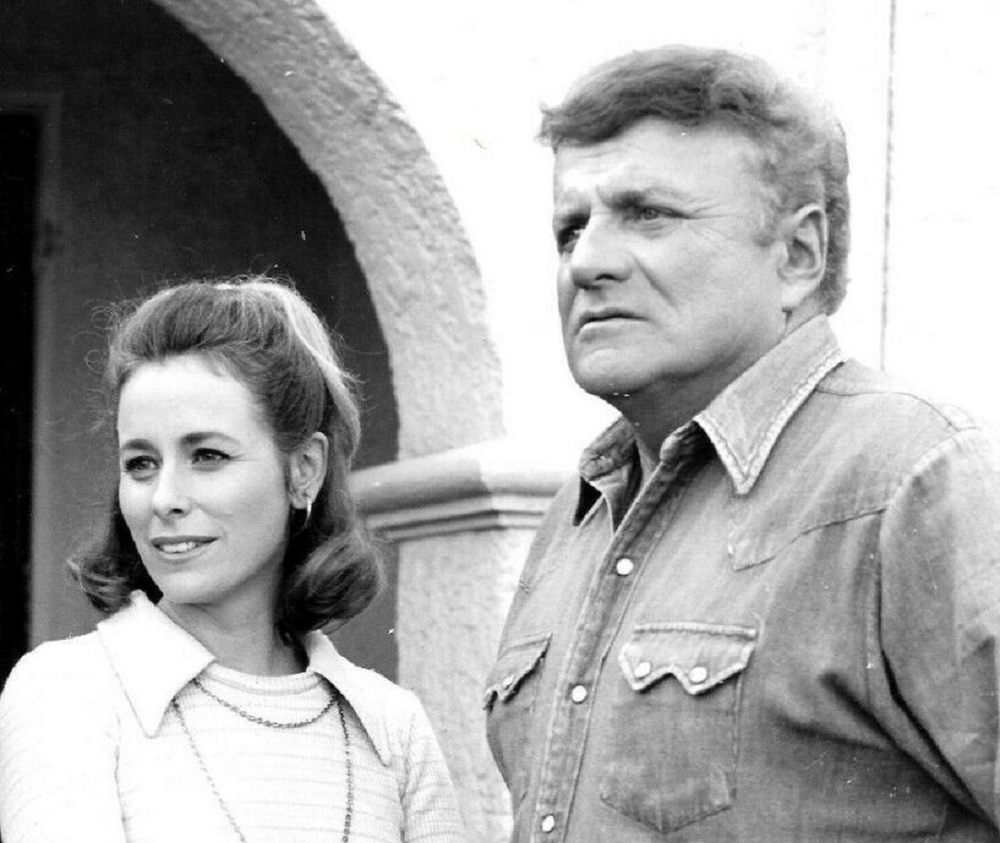
The Underground Man was a 1974 TV movie starring Peter Graves as Lew Archer, based on the 1971 novel of the same name. It did well enough that NBC took the pilot to series as a mid-season replacement in January 1975, although by this point Graves had opted out of the project. He was replaced by Brian Keith, fresh off cancelled sitcom The Brian Keith Show, who brought very little to the role, the dictionary definition of going through the motions and in stark contrast to Newman’s charismatic turn.

Archer made its debut on January 20th 1975, replacing the departing Ironside, and actually did better in the ratings than its predecessor, which was at the end of an eight-season run. That doesn’t mean that ratings were in any way decent, however, and the decision was to cancel the show after just two episodes had aired, the six completed episodes finishing their run on March 13th, when Archer was replaced by The Mac Davis Show, a country-tinged variety show. Archer has never been re-run and little remains of the show save for its title sequence and theme music from Jerry Goldsmith, which was released on vinyl by La-La Land Records in 2019.

Next on The Telephemera Years: More of 1974’s flop debuts, including a whole planet of apes!

Check out our other Telephemera articles:

The Telephemera Years: pre-1965 (part 1, 2, 3, 4)

The Telephemera Years: 1966 (part 1, 2, 3, 4)

The Telephemera Years: 1967 (part 1, 2, 3, 4)

The Telephemera Years: 1968 (part 1, 2, 3, 4)

The Telephemera Years: 1969 (part 1, 2, 3, 4)

The Telephemera Years: 1971 (part 1, 2, 3, 4)

The Telephemera Years: 1973 (part 1, 2, 3, 4)

The Telephemera Years: 1975 (part 1, 2, 3, 4)

The Telephemera Years: 1977 (part 1, 2, 3, 4)

The Telephemera Years: 1978 (part 1, 2, 3, 4)

The Telephemera Years: 1980 (part 12, 3, 4)

The Telephemera Years: 1982 (part 1, 2, 3, 4)

The Telephemera Years: 1983 (part 1, 2, 3, 4)

The Telephemera Years: 1984 (part 1, 2, 3, 4)

The Telephemera Years: 1986 (part 1, 2, 3, 4)

The Telephemera Years: 1987 (part 1, 2, 3, 4)

The Telephemera Years: 1989 (part 1, 2, 3, 4)

The Telephemera Years: 1990 (part 1, 2, 3, 4)

The Telephemera Years: 1992 (part 1, 2, 3, 4)

The Telephemera Years: 1995 (part 12, 3, 4)

The Telephemera Years: 1997 (part 1, 2, 3, 4)

The Telephemera Years: 1998 (part 1, 2, 3, 4)

The Telephemera Years: 2000 (part 1, 2, 3, 4)

The Telephemera Years: 2003 (part 1, 2, 3, 4)

The Telephemera Years: 2005 (part 1, 2, 3, 4)

The Telephemera Years: 2006 (part 1, 2, 3, 4)

The Telephemera Years: 2008 (part 1, 23, 4)

Titans of Telephemera: Irwin Allen

Titans of Telephemera: Stephen J Cannell (part 1, 2, 3, 4)

Titans of Telephemera: DIC (part 1, 2)

Titans of Telephemera: Hanna-Barbera (part 1, 2, 3, 4, 5)

Titans of Telephemera: Kenneth Johnson

Titans of Telephemera: Sid & Marty Krofft

Titans of Telephemera: Glen A Larson (part 1, 2, 3, 4)

Titans of Telephemera: Quinn Martin (part 1, 2)

Titans of Telephemera: Ruby-Spears


[ENDED] Win Pirate Adventure CUTTHROAT ISLAND on 4K UHD SteelBook

win cutthroat island

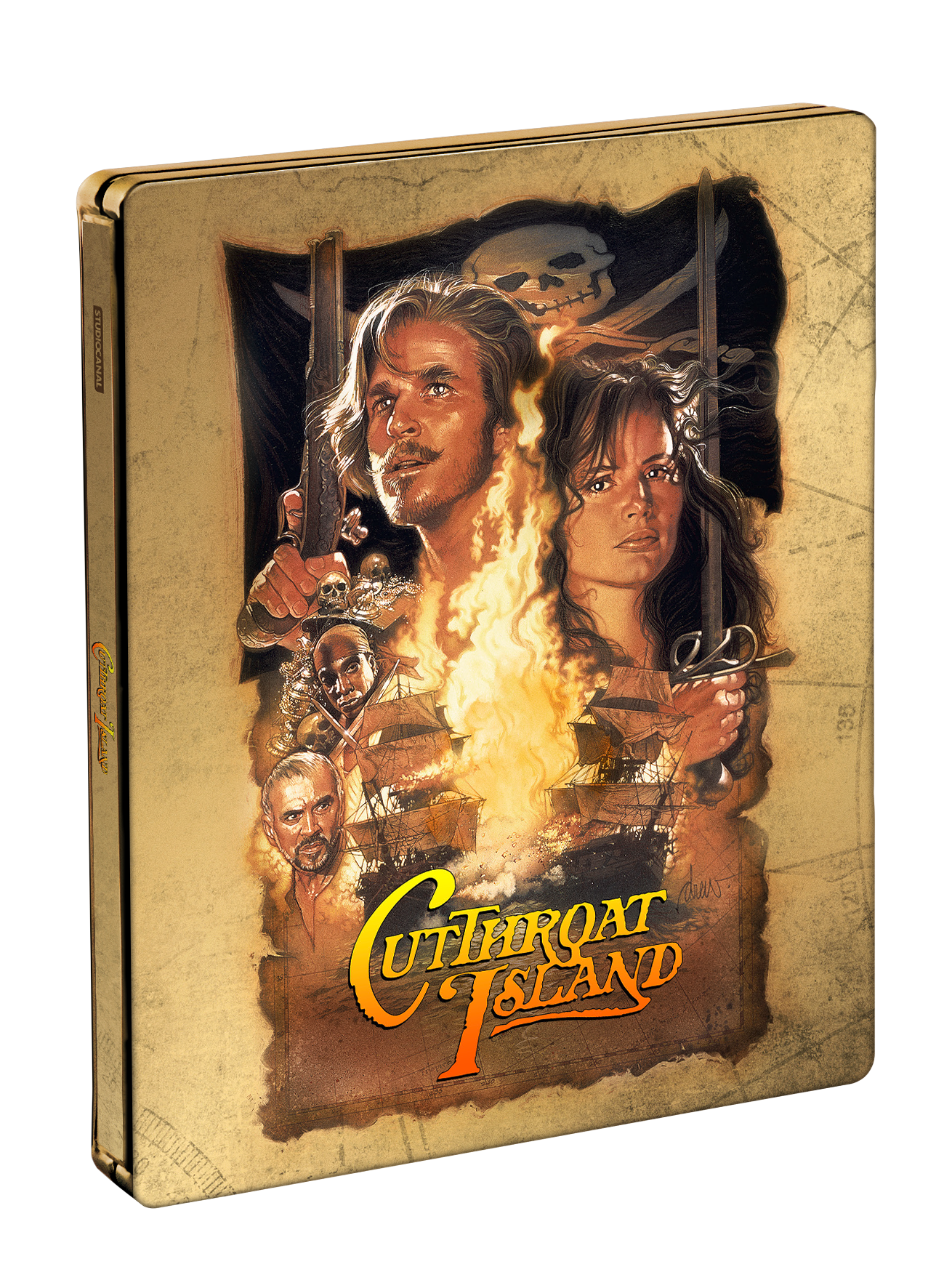
Shiver me, timbers! We have two copies of Renny Harlin’s fun pirate adventure Cutthroat Island on 4K UHD SteelBook from Studiocanal. Just read on and enter below…

Famous pirate’s daughter Morgan (Geena Davis) is on a quest for riches – she needs to get the remaining two parts of a map from her evil uncles, in order to find her dead father’s hidden treasure. Enlisting the help of a convicted thief (Matthew Modine), she straps on her cutlasses and takes to the high seas on a tempestuous journey – but villainous uncle Captain Dawg (Frank Langella) is in hot pursuit.

Finnish director Renny Harlin is responsible for Hollywood blockbusters Cliffhanger, Deep Blue Sea and Die Hard 2.

Included with Cutthroat Island:

On DVD

Commentary from director Renny Harlin

Original trailer

On Blu-Ray/UHD

NEW The Adventure of a Lifetime: Making Cutthroat Island

NEW Charting the Course: Creating Cutthroat Island

NEW Across the Bow: Editing Cutthroat Island

NEW Summon Your Courage: Scoring Cutthroat Island

NEW Ecce Pirate – a short film by Matthew Modine

Commentary from director Renny Harlin

Making of

Behind the scenes

Storyboards

Interviews

Original trailer

a Rafflecopter giveaway

Cutthroat Island is available to buy on 4K UHD Steelbook, 4K UHD, Blu-ray, DVD and Digital from September 18th and is available to order here.