THE TELEPHEMERA YEARS: 1974, part 5

Hong Kong Phooey, 1974

Ah, telephemera… those shows whose stay with us was tantalisingly brief, snatched away before their time, and sometimes with good cause. They hit the schedules alongside established shows, hoping for a long run, but it’s not always to be, and for every Street Hawk there’s two Manimals. But here at STARBURST we celebrate their existence and mourn their departure, drilling down into the new season’s entertainment with equal opportunities square eyes… these are The Telephemera Years!

1974-75

The sitcom ruled the roost in 1974, with the top seven shows all falling under that heading, although the situation for the comedies ranged from a bigoted dad and his liberal children to urban Chicago, through a junkyard, an odd couple, and the never-ending Korean War. Those shows not looking for laughs but still finding an audience included The Waltons, Hawaii Five-O, and Kojak, with newcomers The Rockford Files, Little House on the Prairie, and Police Woman all delivering their own charms for NBC, which pretty much shared the viewing figures with CBS, ABC nowhere to be seen.

Kung Fu and the actual Odd Couple both started their final seasons for the alphabet network but they pinned their hopes on a trio of new arrivals in Baretta, Barney Miller, and Kolchak: The Night Stalker, all of which made either a commercial or critical impact for ABC. CBS introduced the world to The Jeffersons and Rhoda, with Petrocelli and Chico and the Man joining NBC’s already star-studded line-up, but what about those shows that didn’t even make it to series? This is the story of 1974’s unsold pilots…

Hong Kong Phooey (ABC): Never shy of jumping on board a bandwagon, 1974 finally saw Hanna-Barbera climb aboard the kung-fu train with Hong Kong Phooey, the story of a mild-mannered janitor who transforms into a crime-fighting superhero with the aid of a filing cabinet and his trusty cat, Spot. Reading that back, Hong Kong Phooey sounds like a fever dream but it was just another day at the H-B offices…
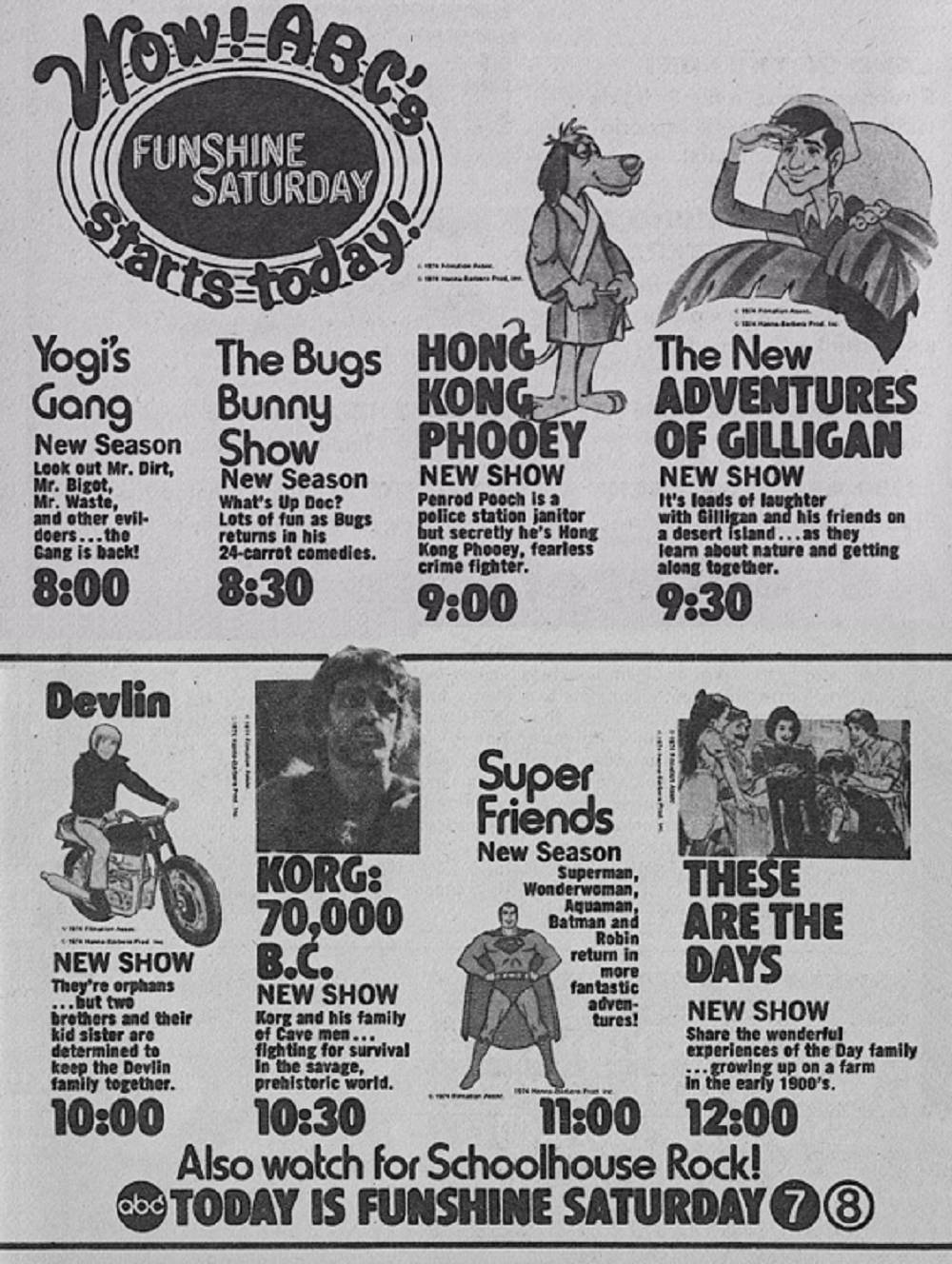
Hong Kong Phooey, 1974 2

Voicing both Penry and his costumed alter-ego was Scatman Crothers, a teenage musical prodigy who’d moved into the movies in the 1950s and had recently voiced Scat Cat in Disney’s The Aristocats. Crothers added cool to the character, especially in opposition to Joe E Ross’s Sgt Flint, Penry’s uptight boss at the police station he worked out of. Completing the crew were Kathy Gori as telephone operator Rosemary (who seemed to have something of a crush on the obviously non-human superhero) and Don Messick as the narrator and the “voice” of Spot.

Despite its considerable place in popular culture legend, Hong Kong Phooey lasted for just a single season of sixteen episodes, shown endlessly in re-runs. The character also popped up as a member of the Scooby Doobies in Laff-A-Lympics in 1977 and had seven issues of a comic book published by Charlton Publications. In 2009, it was reported that a movie adaptation was underway, with Eddie Murphy attached at one point, but all has gone quiet on that front, and Hong Kong Phooey is even yet to appear to in post-modern Hanna-Barbera uber show Jellystone!

Wheelie and the Chopper Bunch (NBC): If you created a mood board of the early 1970s, it’s likely that – alongside kung-fu, car chases, and Blaxploitation – you’d find motorbikes. As we’ve seen on countless occasion, Hanna-Barbera was always keen to reflect the zeitgeist on Saturday mornings and so Wheelie and the Chopper Bunch was born.
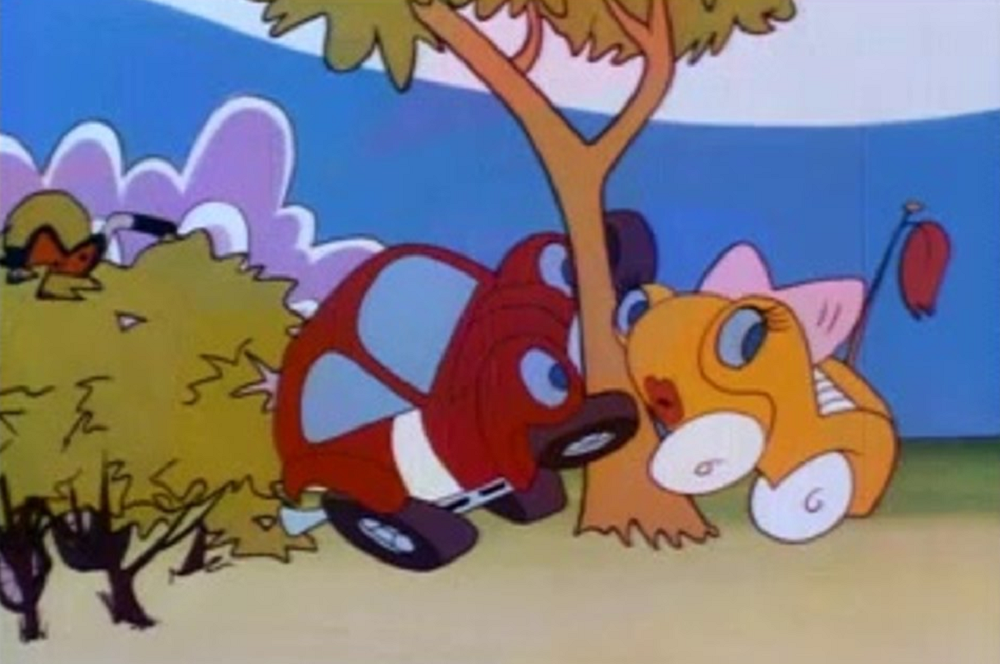
Wheelie and the Chopper Bunch. 1974

Wheelie, the hero of the piece, wasn’t a motorbike. Instead, he was an anthropomorphic stunt car, resembling (but legally distinct from) the Volkswagen Beetle that had starred in the Herbie series of Disney films from 1969 onwards. Each episode saw the evil Chopper Bunch – led by the Frank Welker-voiced Chopper and also including Revs, Hi-Riser, and Scrambles (voiced by animation legends Paul Winchell, Lennie Weinrib, and Don Messick) – scheme to run Wheelie off the road, their chief motivation being Chopper’s unrequited desire for Wheelie’s girlfriend, Rota Ree.

Throw in police car Captain Tuff and police motorbike Deputy Fishtail and you have a recipe for, well, thirteen episodes of a show which managed to bore children and upset adults with its depiction of motorcycles (and therefore motorcyclists) as violent ne’er-do-wells. Like, Hong Kong Phooey, Wheelie and the Chopper Bunch got seven issues of a Charlton comic book but have otherwise vanished from history, save for a cameo by Hi-Riser on Harvey Birdman, Attorney at Law and an appearance in Jellystone!

Korg: 70,000 BC (ABC): Hanna-Barbera didn’t just make cartoons, however, and their 1974 line-up also included Korg: 70,000 BC, an attempt to cash-in on the success of films like One Million Years BC and a general craze for pre-history through the books of Erich von Daniken and others. It arrived in September 1974 with the assistance of the American Museum of Natural History to assist with its accuracy, which at least ensured there would be no dinosaurs in this show, both a positive and a negative.
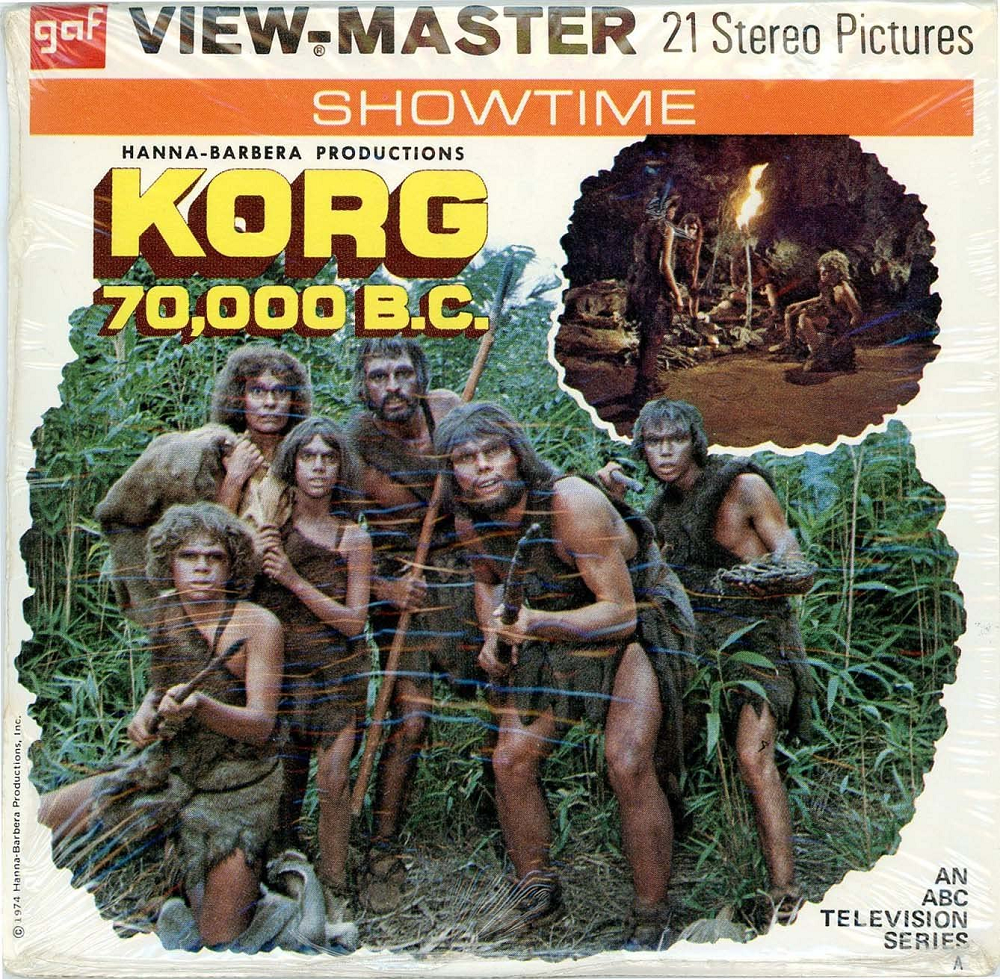
Korg 70000 BC, 1974

Each episode was set in the time period of its title and so the show featured no dialogue other than grunts, but Burgess Meredith was on hand to provide narration. Square-jawed Jim Maldina starred as Korg, his only regular role in a twenty-two-year acting career, with caveman, cavewoman and cavechild back-up from former Star Trek occasional Naomi Pollack, Bill Ewing, and Janelle Pransky.

The show was created by former Star Trek and future Space: 1999 producer Fred Freiburger, who also wrote two episodes and acted as creative consultant with Myles Wilder (who would go on to create McDuff the Talking Dog two years later, in case you need a measure of his credentials).

A typical show placed Korg and his family in some manner of peril, including curses, earthquakes, snakebites, and love trysts, but kids didn’t seem to have much time for any caveman show that didn’t have dinosaurs. After one season of nineteen episodes, Korg disappeared from the (pre)history books and the cast returned to occasional guest riles, if they were lucky.

Partridge Family 2200 AD (CBS): Another Hanna-Barbera show? Of course! This time, the animation workhorses turned their attention to The Partridge Family, the musical ABC sitcom which made a star of teen idol David Cassidy, and which had finished its five-season run the previous month. That wasn’t the original plan for the show, however, which was to feature an updated version of The Jetsons’ Elroy, now a teenager and working as an ace reporter in the future world of the 1960’s prime-time show.
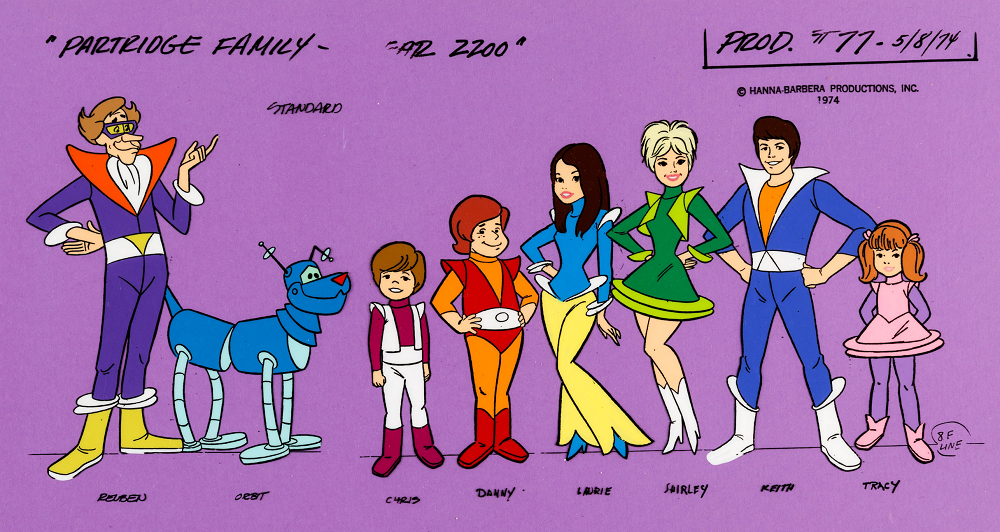
Partridge Family 2200AD, 1974


CBS rejected the idea but liked the future setting, plugging The Partridge Family (who had already appeared in animated form on Goober and the Ghost Chasers) into it and assembling most of the cast of the live-action show to voice their animated counterparts. The show’s main stars, Cassidy and Shirley Jones, were unavailable but Danny Bonaduce, Suzanne Crough, Susan Dey, and Brian Forster had nothing better on.

With Joan Gerber filling in as Shirley Partridge, there was no explanation as to how the Partridge Family came to find themselves over two-hundred years in the future, but they were now “galaxy-famous” and enjoyed the company of pals from Mars and Venus, as well as a robot dog. Over the course of sixteen episodes, the family got trapped in Texxxas (not as exciting as it sounds), saw their duplicates stolen from Madame Mussaud’s Wax Museum, and had to rescue their dog from a two-headed alien after he had become a quiz show sensation.

These Are the Days (ABC): If there was one thing that the kids of 1974 wanted, thought ABC executives, it was an animated show that resembled The Waltons, the desiccated biscuit of a show that had weirdly become a hit for the network in 1972. ABC turned to Hanna-Barbera (who else?), who delivered These Are the Days, a period piece set at the turn of the twentieth century in the Great Plains region.
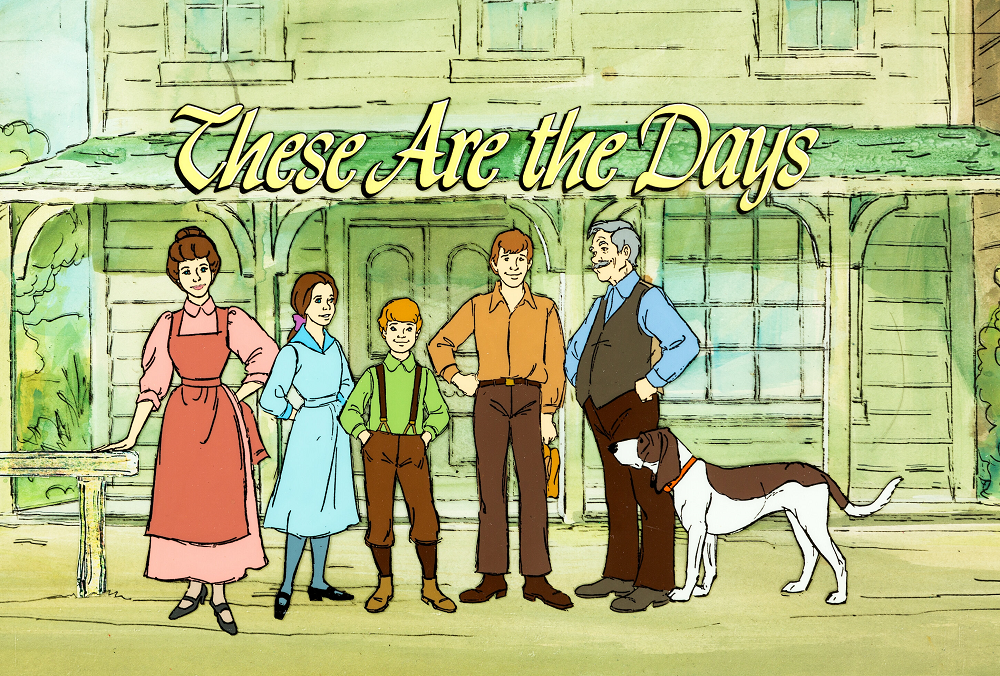
These Are The Days, 1974

A clever title, the show revolved around the Day family, headed up by widowed Martha (because kids love dads dying) and consisting of her three children and her father, the wacky inventor Jeff. Danny, the oldest of the Day brood and something of a tearaway, was voiced by a young Jackie Earl Haley, with Lost In Space’s June Lockhart as his mother, Henry Jones as Grandpa Day, and child actors Pamelyn Ferdin and Andrew Parks as the other Day children.

Despite sounding as appealing as a dose of cod liver oil to your average child, the show was warmly received by critics and parents’ groups, who liked its warm, fuzzy depiction of the past during a time when the US was gearing up for its two-hundredth birthday, unsure of just what it meant to be American anymore. Although the show has never been released on home video, you can view episodes on YouTube if you want to see a show that one reviewer called “too boring for children, too childish for adults.”

Valley of the Dinosaurs (CBS): Completing a clean sweep of Hanna-Barbera shows is Valley of the Dinosaurs, an animated depiction of the life of Stone Age man, only this time with dinosaurs and a family from the modern day. All this was explained away by the titular valley existing in a mysterious realm, to where the Butler family – scientist dad John, mum Kim, and their teenager children, Katie and Greg – are transported via cave and whirlpool, befriending a Neanderthal family and learning to live in harmony with their new surroundings.
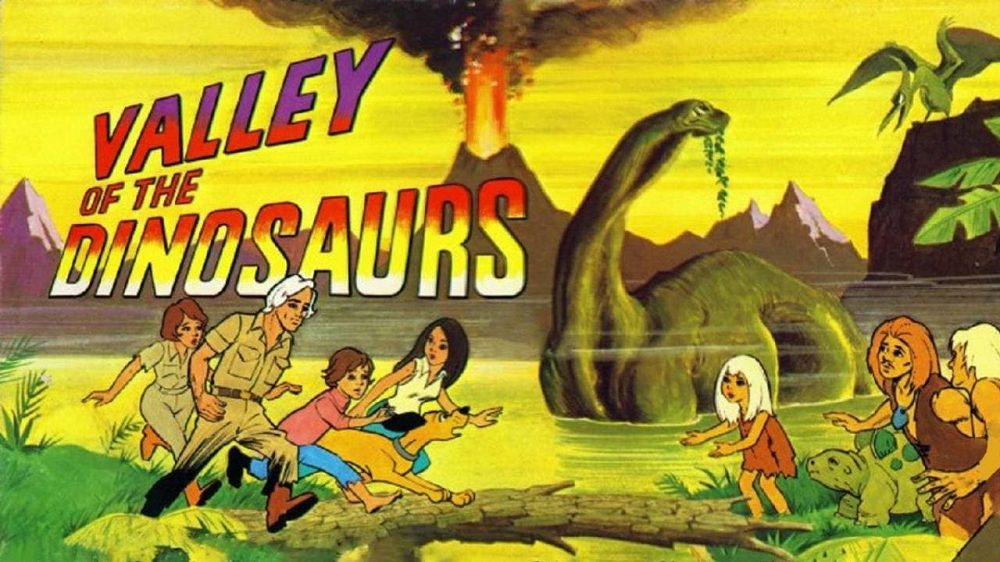
Valley of the Dinosaurs, 1974

Debuting on the same day as Land of the Lost, a live-action Sid and Marty Krofft production with a similar premise, Valley of the Dinosaurs saw the two families help each other to survive, with Gorok, Gara, Lok, and Tara lending their caveman skills to help the Butlers find their way home, while John and the crew introduce labour-saving devices to the Neanderthals, such as the wheel and the boat, probably affecting the future course of human evolution in an ugly way.

The voice cast included Mike Road (Race Bannon in Johnny Quest), The Six Million Dollar Man’s Alan Oppenheimer, Jackie Earl Haley, and Shannon Farnon, alongside a clearly in his element Frank Welker, who “voiced” Digger the dog and pet stegosaurus Glump, as well as teenage caveman Lok. As is the way with the vast majority of these shows, just a single season of sixteen episodes was produced, but Valley of the Dinosaurs got eleven issues of a comic book from Charlton, as well as a board game.

Next on The Telephemera Years: We’re off to 2002 where The Twilight Zone is waiting. Again.

Check out our other Telephemera articles:

The Telephemera Years: pre-1965 (part 1, 2, 3, 4)

The Telephemera Years: 1966 (part 1, 2, 3, 4)

The Telephemera Years: 1967 (part 1, 2, 3, 4)

The Telephemera Years: 1968 (part 1, 2, 3, 4)

The Telephemera Years: 1969 (part 1, 2, 3, 4)

The Telephemera Years: 1971 (part 1, 2, 3, 4)

The Telephemera Years: 1973 (part 1, 2, 3, 4)

The Telephemera Years: 1974 (part 1, 2, 3, 4)

The Telephemera Years: 1975 (part 1, 2, 3, 4)

The Telephemera Years: 1977 (part 1, 2, 3, 4)

The Telephemera Years: 1978 (part 1, 2, 3, 4)

The Telephemera Years: 1980 (part 12, 3, 4)

The Telephemera Years: 1982 (part 1, 2, 3, 4)

The Telephemera Years: 1983 (part 1, 2, 3, 4)

The Telephemera Years: 1984 (part 1, 2, 3, 4)

The Telephemera Years: 1986 (part 1, 2, 3, 4)

The Telephemera Years: 1987 (part 1, 2, 3, 4)

The Telephemera Years: 1989 (part 1, 2, 3, 4)

The Telephemera Years: 1990 (part 1, 2, 3, 4)

The Telephemera Years: 1992 (part 1, 2, 3, 4)

The Telephemera Years: 1995 (part 12, 3, 4)

The Telephemera Years: 1997 (part 1, 2, 3, 4)

The Telephemera Years: 1998 (part 1, 2, 3, 4)

The Telephemera Years: 2000 (part 1, 2, 3, 4)

The Telephemera Years: 2003 (part 1, 2, 3, 4)

The Telephemera Years: 2005 (part 1, 2, 3, 4)

The Telephemera Years: 2006 (part 1, 2, 3, 4)

The Telephemera Years: 2008 (part 1, 23, 4)

Titans of Telephemera: Irwin Allen

Titans of Telephemera: Stephen J Cannell (part 1, 2, 3, 4)

Titans of Telephemera: DIC (part 1, 2)

Titans of Telephemera: Hanna-Barbera (part 1, 2, 3, 4, 5)

Titans of Telephemera: Kenneth Johnson

Titans of Telephemera: Sid & Marty Krofft

Titans of Telephemera: Glen A Larson (part 1, 2, 3, 4)

Titans of Telephemera: Quinn Martin (part 1, 2)

Titans of Telephemera: Ruby-Spears

Dan Slott | DOCTOR WHO: ONCE UPON A TIME LORD

The Tenth Doctor rides a werewolf through a battle featuring his many enemies, in the cover art for Doctor Who: Once Upon a Time Lord.

Comic book writer Dan Slott is known for his long-running work on Spider-Man and for an Eisner-winning run on Silver Surfer inspired by a particular Time Lord.  With his new graphic novel, he’s finally getting to write for the original, you might say – the Doctor. We caught up with Dan to talk all things Who and find out what to expect from Once Upon a Time Lord.

STARBURST: So, Dan, you’re best known as a Marvel writer, but I hear you’re a massive Doctor Who fan?

Dan Slott: It is my favourite TV show of all time. Whenever there’s a convention, I ask, “Who’s going to be your guest from Doctor Who?” before I decide to do the convention or not. I don’t abuse my Spider-Man status for anything else really, other than Doctor Who.

When did you first get into Who?

I started watching in the seventies, on PBS. They would show whole adventures in one night, starting at 10 or 11. This was before VCRs, so once you started, you were going to watch an entire adventure all the way through, and that took amazing stamina for a small Whovian. So I started out at the beginning of Tom Baker’s era with chunks of episodes, because I kept falling asleep – but I’m pretty sure I made it all through Robot and Genesis of the Daleks.

And when I was a teenager, my family moved to the UK, and I was like, oh my God, I get to watch this for real now, the way it should be seen, serialised once a week. And I would go to Forbidden Planet and buy all the Target novelisations. I started with the First Doctor and An Unearthly Child and worked all the way through until I got to The Key to Time and I was all caught up.

And once the show relaunched in 2005, it was the greatest thing ever. Everything about it just got better.  There are all these very clever things they did – I love the psychic paper. The special effects were better. The idea that he was the last of the Time Lords was really good; it gave him that kind of fun Superman: Last Son of Krypton feel.

And how exciting is the new era of the show looking, right?

You get to have your cake and eat it too! We have the return of David Tennant, and by the end of the specials, we get Ncuti Gatwa as well. When this thing goes onto Disney Plus and people meet the Fifteenth Doctor, he is going to be the Doctor for people around the world on a level that I don’t think Doctor Who fandom has seen before.

So, let’s talk about your new comic. How did Once Upon a Time Lord come about?

This has been one of my greatest frustrations of my career. I’ve been writing comics for thirty years, and the last twenty I’ve been exclusive to Marvel. And whenever I’d pop back into the UK to visit friends or family or do a convention, the lovely people at Titan Comics would take me out to dinner and say, “We know you’re a huge Doctor Who fan, would you like to write some Doctor Who?” I’d be like, “I can’t, I’m exclusive to Marvel.” It was absolute torture, cos I would kill to write Doctor Who.

But there was a time when my contract was up for renegotiation, I had a surprising amount of leverage, and they went, “Fine, you can do one Doctor Who comic a year.” And I ran to Titan. I was like, “I can do one a year. They didn’t say how big it was. So let’s do a giant issue. Let’s do a graphic novel.”

There really is a lot packed into this book – a 48-page main strip with the Tenth Doctor and Martha, followed by a ‘backup’ strip with the Ninth Doctor and Rose. And this takes place across alien planets, Earth history, and even a strange hell-like dimension. How did you go about plotting all that and choosing what to throw in?

It all felt very surreal to me finally getting a chance. I was like a can of soda being shaken for thirty years. When I finally got to tell a Doctor Who story, I wasn’t going to hold anything back. All my Whovian love was going to go all over the page. What if this is the only one I ever get to do?

So this is a big story that encompasses so much of Who lore – classic and new. But hopefully, even though it’s a very overstuffed sandwich, it all flows well, and so if you’ve never read or seen any Doctor Who before, you can follow it. It’s very new reader-friendly.

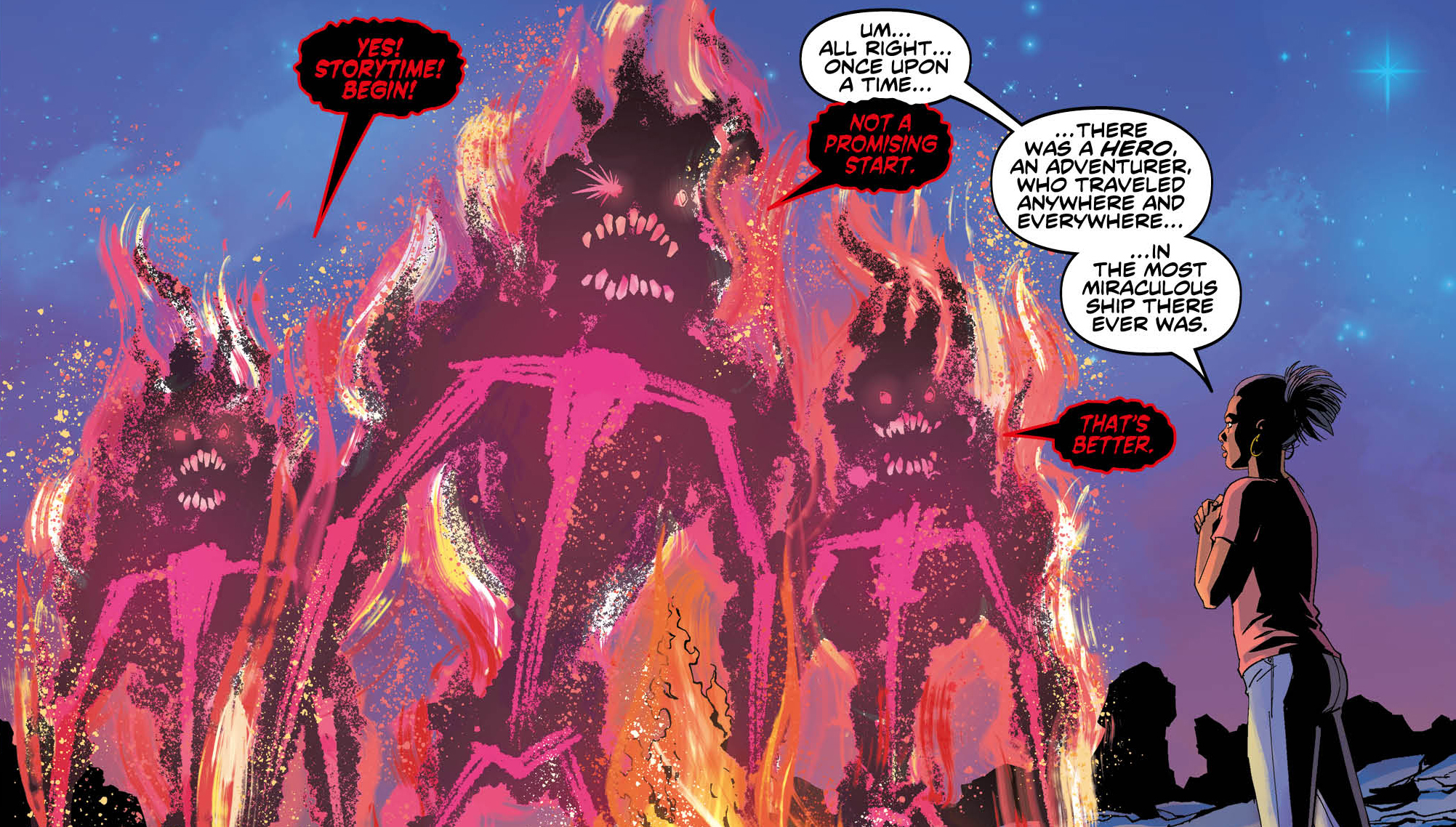
Artwork from Doctor Who Once Upon a Time Lord, in which Martha talks to the Pyromeths, aliens made of fire.

The main part of the comic is a series of adventures the Tenth Doctor goes on alone, and then there’s a framing story in which Martha tells these tales to the Pyromeths, aliens who feed on fiction. How did you decide to focus on the Tenth Doctor and Martha for this tale?

The main threat in this story is the storyteller’s dilemma, the Shahrazad problem. Something that every writer can relate to is that you have to keep telling stories, and if the next one isn’t as good as the last, you’re dead. That’s really what it feels like writing a comic book every month! So I wanted the companion who was the best storyteller, and that’s got to be Martha Jones, who walked the Earth telling stories of the Doctor.

So you’ve written for the Ninth and Tenth Doctors – how do you give each of the Doctors different voices?

The way I hear from talking to writers for the TV show is that they have a standard Doctor voice and they write the first season of any new Doctor like that. And inevitably, as the show progresses, mannerisms that are unique to that actor get folded in. The benefit I have is that all these seasons are already done, so I walk in with all these voices of these characters firmly set. And there are easy tricks – your allons-ys and your fantastics and your geronimos – things that, the minute you hear it, you’re going to hear the actor’s voice.

Can you talk about the three different artists who’ve illustrated the book?

The story with the Tenth Doctor and Martha has art by Christopher Jones, who has a longstanding history with Doctor Who and is amazing at likenesses, and Matthew Dow Smith, who has also been a legacy Doctor Who comic artist. Chris is the artist for the framing story, and Matthew is the artist for the stories within the story.

And the backup with the Ninth Doctor and Rose is being drawn by Mike Collins, who not only has the history of writing Doctor Who comics, he’s also a storyboard artist on the show. So he’s got some serious Who cred.

You’re slated to write two more Doctor Who graphic novels – was that always the plan, to do three?

I think once I do three, I can rest. There are many authors who just do their two or three episodes of the Doctor and then they leave. We’ve got all these big plans, so I hope this first one does really well, because boy, I want to do those two.

Doctor Who: Once Upon a Time Lord is released on November 7th from Titan Comics, via book shops, comic shops, and digital platforms.

And, buy STARBURST 484, available from November 30th, to read the extended version of this interview, in which Dan tells us about creating alien baddies the Pyromeths and his long-planned Doctor Who/Spider-Man crossover!

Emma Tammi | FIVE NIGHTS AT FREDDY’S

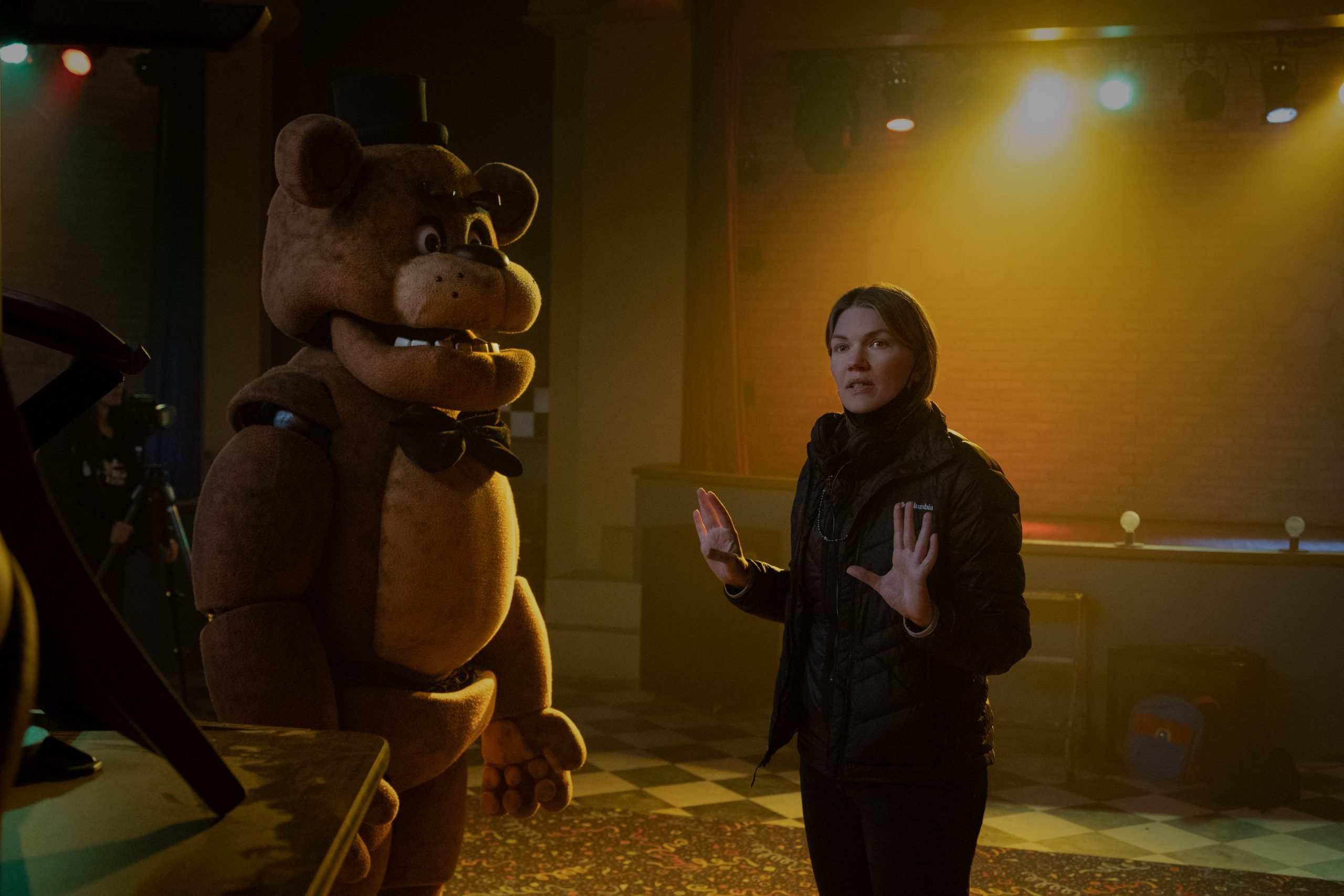
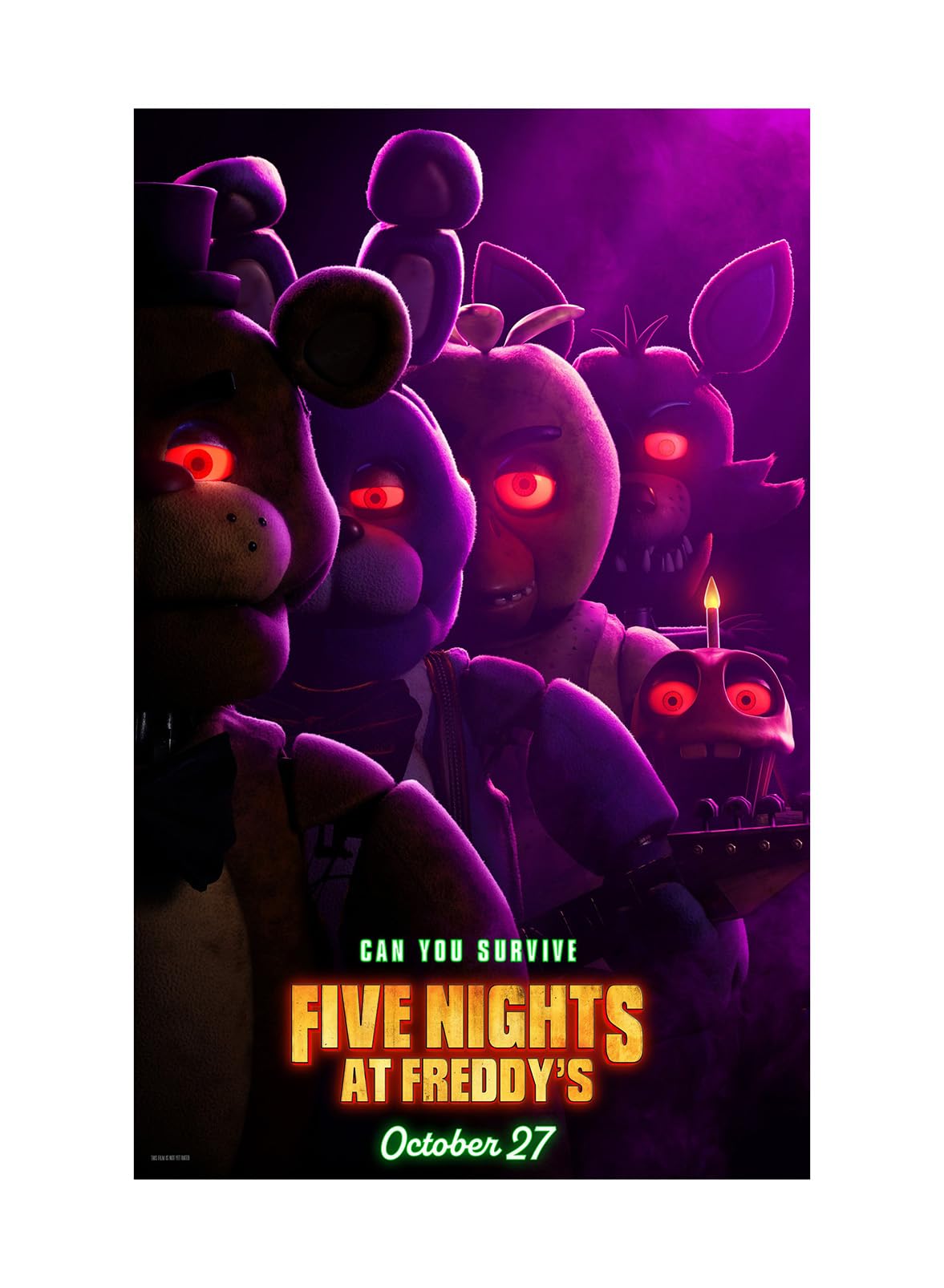
Ahead of the highly anticipated big-screen adaptation of Five Nights At Freddy’s, we had the pleasure of sitting down with director Emma Tammi to talk about all things animatronic!

STARBURST: The lore of FNaF is so interesting and deep and goes to some pretty crazy places, so it’s great to see a movie being made for new and old fans alike. How was the weight of that undertaking when you took the role as not only director but co-screenwriter as well?

Emma Tammi: Doing a pass on the script with Scott [Cawthon] and Seth Cutterbeck was the key part in nailing down the blueprint of how much lore to include and what other storylines that aren’t in the games to include and really find that balance to both satisfy the fans and create a dynamic film that can stand on its own two feet. In terms of finding that balance, Scott was a totally critical and crucial guide and adviser on if it should be included and if it was accurate to the source. And we really put our trust in him on that front, and by working together, we had the best script possible when moving into production. It was an amazing experience to work with him, especially at that stage of the process.

Scott is very prolific at keeping things under wraps, and his attention to detail is impeccable – how was it working with him in other stages of production?

He cares so deeply about the project and, of course, the franchise as a whole, and as a filmmaker, you have your producing partner, your department heads and your cast – a whole team of people who are giving 1000% of themselves to making the best possible movie that you can make – if you’re lucky, right? [laughs]

But as the filmmaker, on a cellular level, you care about it more than anyone and what made this one more interesting was the fact that I knew Scott cared about everything to do with this just as deeply as I did. And to have that level of an invested creative partner in this process is really an incredible experience. We were coming at it from different perspectives, and of course, playing different roles, but we were really respectful of each other and what each of us does best, and I think that made for an overall much better film at the end of it. I’m so grateful for that.

The FNaF fanbase is huge, and this is a massive project to undertake – what was it about this project in particular that drew you to it?

I kind of came at this from a reverse perspective, through the back door if you will, as I wasn’t familiar with the games or the amazing and passionate fanbase, which I’ve come to be a part of myself. It was actually Jason (Blum) who came to me with the idea for the project, and then I went and played all the games and read up on the world and the very expansive lore. Essentially, I came at it from a pure level. It started with “Here’s a script, here’s a story, here’s an idea”, and then I was able to help mould it with Scott and Seth into a great movie and utilise my specialities along with theirs. I’m so happy that my ideas were welcomed by Scott, and the fanbase has been so excited and supportive all along the way whenever any news drops or trailers are released. What I also love about this is that every single person involved in bringing the film to life has a connection to FNaF, be it them being a fan of the source material themselves or a relative being a fan of the games – so we all wanted to make the best movie possible, and everyone gave it their all, and I’m so pleased with how it turned out.

The film is full of Easter eggs and amazing set designs that bring the world of the game to life – but what were some of the challenges you faced during production to make the setting feel real and lived in?

I think the biggest challenge with prep and production is always a race against time, and with all of the departments and Scott, we were looking for opportunities every step of the way to pack in as many Easter eggs as possible and as many unique details that felt authentic to the FNaF world. We had so much material to pull from, which is incredible, and everyone was thinking of new ways of incorporating things that the fans would love. Our costume designer came up with the idea one day to print a frame from a mini-game on one of the character’s T-shirts. We were all so detail-orientated, and we had a phenomenal production designer. We added lots of new things, too, so we hope fans enjoy those as well.

The cast is absolutely stacked – you’ve got Matthew Lillard, Josh Hutcherson, Elizabeth Lail and the adorable Piper Rubio, along with, of course, Freddy and the gang. The Jim Henson Creature Shop did a phenomenal job with the animatronics. Were there any memorable moments on set with them?

Yes! The servos, which are the little engines that keep the animatronics moving, have a limited time in how long they can run without overheating – we had one day where, during a take, I heard someone say, “Foxy’s arm is on fire” so calmly, so we had to stop and put him out before we could get on with the show (laughs). Thankfully, that only happened once, so we were very lucky – the puppeteering team were amazing.

Five Nights At Freddy’s opens in UK cinemas on Wednesday, October 25th. 

Joe Lynch | SUITABLE FLESH

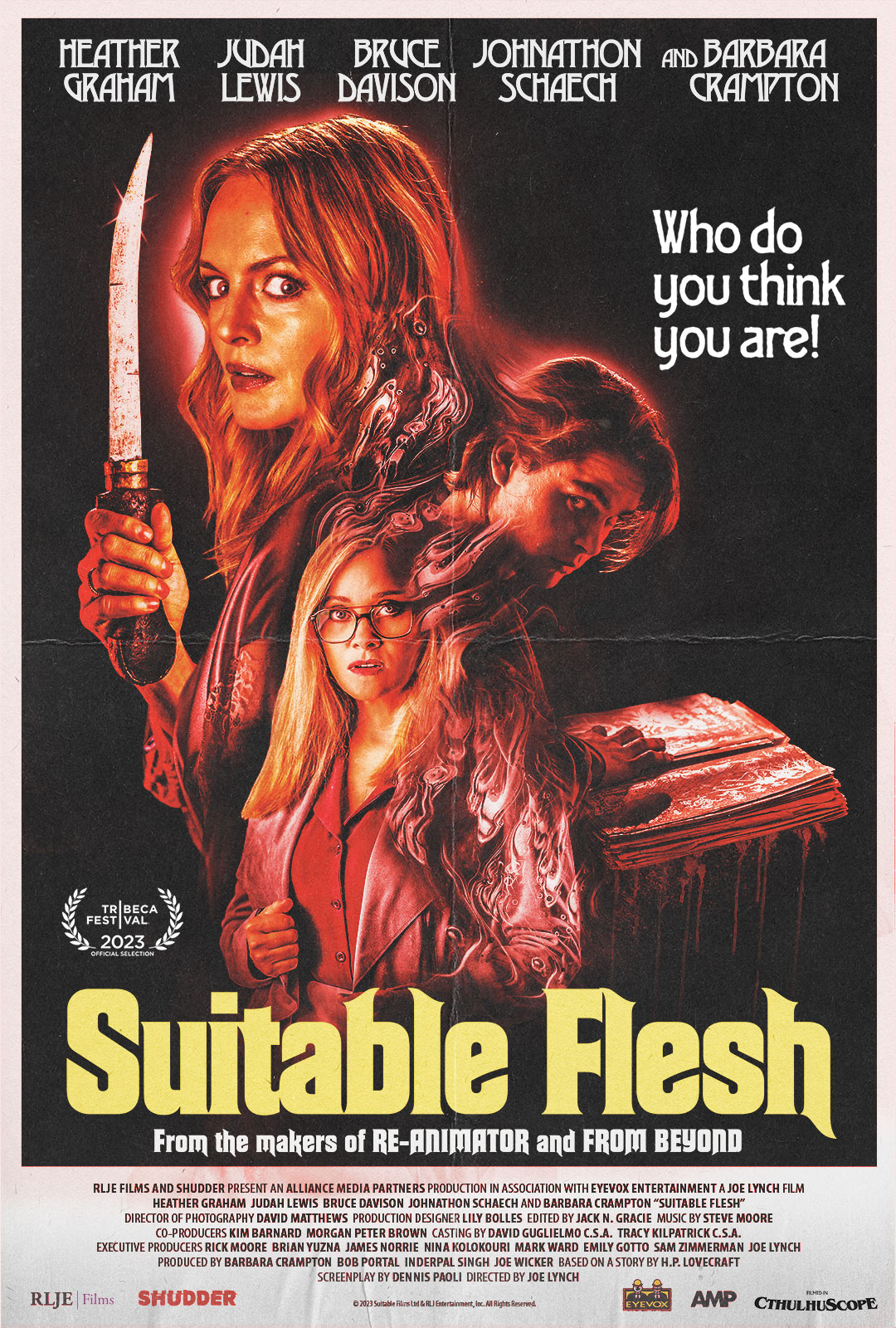
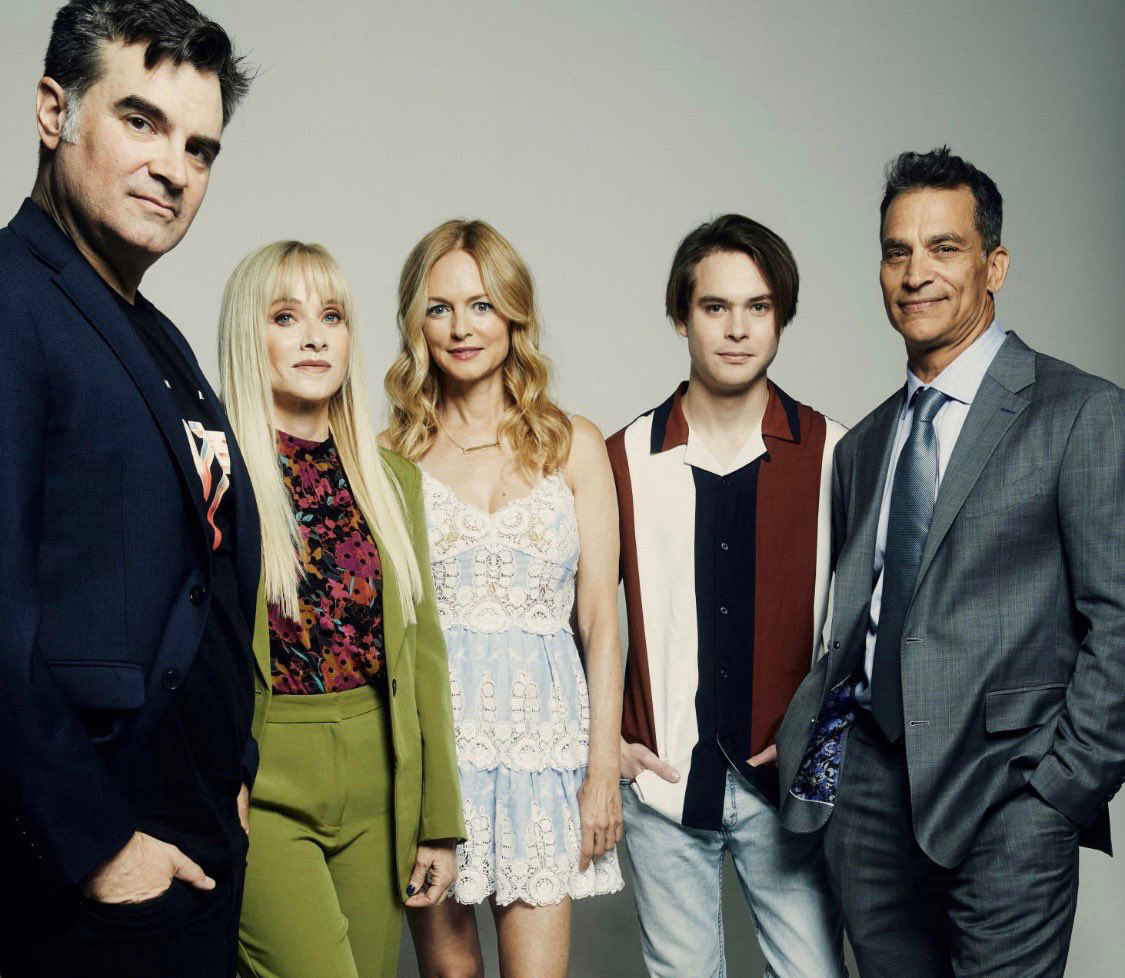
Ahead of the cinema and digital release of the body-switching H.P. Lovecraft adaptation Suitable Flesh, we caught up with director Joe Lynch to talk about tackling the superb and erotically charged horror movie…

STARBURST: How did you come to the film, and what was it like taking over the reins from Stuart Gordon when it comes to Lovecraft movies?

Joe Lynch: I had been a huge fan of Stuart’s, from Re-Animator to every single film that he’s made. He was definitely one of those filmmakers that I modelled myself after because he always took chances. He never did the same thing twice. Even when it came to Lovecraft. I had known that he was going to direct The Thing on the Doorstep, and as a fan, I was incredibly excited to see them get the band back together, but then he passed. So, colour me surprised when, six weeks into the pandemic, I got an email from Barbara Crampton saying, “Hey, we have this script. Would you be interested?” And immediately when I clicked on it, I saw The Thing on the Doorstep, written by Dennis Paoli, from a story by H.P. Lovecraft. I got both really excited but a little bit nervous because while it was exciting, and I knew the Lovecraft story, the way that it was written – and Dennis will be the first person to tell you – years ago. It just felt like it was a script that was of its time and not in a good way.

How so?

It felt like something that back in ’95, and you put Michael Douglas in one of the roles, you could have gotten away with that paradigm. With today’s point of view, I don’t think it would have flown or I think people would have rejected it. I went, “What if we changed the gender up and but not in a way that felt… again?” Do something that would really dig deep into the themes of what it would be like as an older professional woman in this situation, instead of it being an older, silver fox kind of guy, and then immediately everything became more exciting. Dennis and Barbara came back and said, “We dig this; let’s explore this a little bit more”. Three weeks later, we had a draft. And it wasn’t just them changing the names up, it was really getting under the skin of what this story would be like if we changed it up in a way that felt provocative and dangerous, sexy, and a little terrifying. That was where everything hit the ground running.

There’s also the gender flip with the relationship between Heather’s character and her on-screen husband (Johnathon Schaech) that’s interesting, as well as the fluidity of gender within the body-swapping of the characters.

Well, I’m glad that you brought up the word fluid because there are a lot of fluids in this movie! Not just fluids that are coming out of the body but sexual fluidity as well. That was something that I’ve been exploring a lot, even in my own personal life. I’ve been exploring those themes and what it means to be masculine. What it means to be heterosexual. What it means to be homosexual. What it means to be queer in film and life. There are so many different ways now that those kinds of points of view and those kinds of stories are being accepted more than ever. Once we were able to flip it, now instead of a femme fatale, I have Heather Graham. Now, instead of a doting wife, I have a shirtless Johnathon Schaech. Then, to be able to let Heather’s character play that Fred MacMurray character in a way was so much more exciting, not just from a story standpoint but from a sexual standpoint. That’s where we knew that sex was going to be a major component of the film. Thematically, it had to be there. It was our linchpin, and knowing that we’re now in a day and age in production – not that we weren’t before, or at least I wasn’t before – we have to make sure that there is a comfortability on set.

How did you handle the sex scenes?

I’ve done sex scenes before. I’d never done anything like this before, but I knew that it was such a huge component of the film. I wanted to make sure that every single department knew exactly what we were doing. I wanted to make sure that every cast member knew exactly where and how I was going to shoot it. Why I was shooting it that way. Thematically and stylistically, so that there were no surprises on set; the only surprise is that we’re going to be on set on those days with the chemistry between those two actors or three actors in certain cases! Our first day was the scene where we do Heather and Jonathan are having boring sex, and then Judah [Lewis] shows up in an active switch sort of situation. I had three actors in various degrees of undress. All laying there on the set, having a, you know, good time, but I made sure that they knew exactly what I was going to do using storyboards, using descriptions, so that none of them was uncomfortable. They were nervous in certain ways, but I took a lot of that out, and we closed the set. There was only me and the DP on set. It was just the actors and the playfulness that came out that made the scene so much sexier, especially when we do the little ‘flippity flop’ and then things become in her point of view or fantasy. There were things that they were doing that would have never come if I hadn’t explained so much about what we wanted to achieve. And once we did that, we allowed them to let the chemistry flow between them as naturally as possible.

There’s a very noir feel to the movie and visual tics that you don’t often see in films nowadays – big props to David Matthews, your DP – were there any particular films that you’ve looked at as reference?

Once I knew that we were going to be making the movie, I set my gears towards neo-noir and film noir mode. We watched a lot of movies, not just all the greats. You have Basic Instinct, and you have Body Heat, even stuff like Gilda and Double Indemnity, to try to get that film noir feel I wanted. I really wanted to recreate a subgenre and call it neo-erotica, like just the way that they in did the ‘90s. I wanted to bring some sex back into that because if you look at the way a lot of erotic thrillers in the ‘80s and ‘90s were filmed, they just cranked up the sexuality to 11. And that’s what I wanted to do here.

SUITABLE FLESH is in cinemas and VOD from October 27th. You can read our review here.

Starburst One of the Most Iconic Slot Games

top 3 online slots 2023

In the vast cosmos of online casino games, there’s a shining star that has consistently caught the eye of both seasoned gamblers and newcomers alike: Starburst. This online slot game, with its vibrant gem-themed visuals and thrilling gameplay, has secured its place as a staple in many online casinos. But what is it about Starburst that keeps players coming back for more? Let’s embark on a journey through this galactic gaming adventure.

Starburst transports players into outer space with its sparkling jewels set against a cosmic background. The graphics, though simple, are crisply designed, and the ethereal soundtrack complements the space theme perfectly, providing an immersive experience that captivates the senses.

Starburst strikes a balance between simplicity and entertainment. With 5 reels, 3 rows, and 10 pay-lines, the game is easy to grasp, especially for slot game beginners and you can play here at Jeffbet for free. Yet, it doesn’t compromise on the thrill factor, ensuring that even seasoned players find it engaging.

One of the standout features of Starburst is its expanding Starburst Wild. When these wilds appear on reels 2, 3, or 4, they expand to cover the entire reel, triggering a re-spin. This not only increases the chances of striking a winning combination but also adds a layer of excitement to every spin.

Unlike many traditional slot games that pay from left to right, Starburst offers a both-ways win feature. This means players can score winning combinations from both left to right and right to left, doubling the potential for pay-outs and upping the ante of each spin.

Starburst caters to a wide range of players, from those who prefer low stakes to high rollers. The flexible betting options ensure that players can adjust their wagers according to their comfort level, making the game appealing to a broad audience.

The popularity of Starburst is further solidified by its prominent presence in many leading online casinos. Often, it’s used as a flagship game for free spin promotions, indicating the industry’s trust and confidence in the game’s appeal.

Starburst’s enduring charm lies in its perfect blend of simplicity, engagement, and potential for big wins. Its vibrant theme, combined with exciting features like the both-ways win and expanding wilds, ensures that players are always on the edge of their seats, anticipating the next win. In the vast universe of online slot games, Starburst remains a luminous beacon, continually attracting and enchanting players with its interstellar allure.

In the era where smartphones are as ubiquitous as the air we breathe, every industry, including the casino world, has sought to optimize its services for mobile users. Mobile slots have burgeoned into an integral component of the online gambling landscape, offering players the liberty to spin the reels anytime, anywhere. Let’s journey through the intricacies that make mobile slots a contemporary favourite among slot aficionados.

The ascendancy of mobile slots is a testament to the synergy of technology and the innate human desire for entertainment and convenience. As technology continues to evolve, we can only anticipate that mobile slots will continue to adapt, offering more sophisticated, secure, and immersive experiences for players on the go. In a world where the pace of life is ever accelerating, the allure of mobile slots, with their combination of accessibility, variety, and innovation, is poised to captivate the next generation of slot enthusiasts.

The Hunger Games Movies Leaving Netflix UK Ahead of Prequel Release

In November 2023, Netflix UK will be removing 33 movies and shows from the platform. It’s a common occurrence, which cycles out released content that doesn’t show a long-term performance trend in certain geographic regions. Among them is The Hunger Games, a franchise that was all the rage a decade ago and is getting a prequel later in the year.


The Hunger Games & Streaming

Having been showcased on Netflix US earlier this year, The Hunger Games was available for about a month to celebrate the franchise’s ten-year anniversary. As a franchise, The Hunger Games pre-dates a lot of the streaming buzz that kicked off later in the decade. Now, more people are using the internet to source their entertainment than ever before, through streaming but also through older online industries like video-sharing websites or iGaming. While streaming emerged as a major player last decade, sites that host a live casino online were around back when The Hunger Games first came out and have grown since. Their continued growth shows a trend that people are moving online as the internet becomes the one-stop shop for entertainment. Since streaming isn’t time-sensitive, older franchises like The Hunger Games can and were added to the catalogue of movies available.


Netflix and other streaming services rode the trend of on-demand, internet-based entertainment. They became a monumental force that has started to rival and even cause upset to the traditional movie-making business. We saw this during the summer, with the writer’s strikes over residuals. Given all this context, it was inevitable that The Hunger Games would have its time to shine through streaming.


The Prequel & Future Plans

The Hunger Games’ stint on Netflix, which is to end on November 1st in the UK, may also be partly promotional in nature. On November 17th, The Hunger Games: The Ballad of Songbirds & Snakes is being released. The film tracks the origins of President Snow as a young man, long before he became the dictator seen in the mainline trilogy split into four films.

As the largest franchise in that list of 33 other IPs, and with a new film coming out, it’s likely that The Hunger Games’ removal is part of a pre-arranged agreement between distributor Lionsgate and Netflix’s UK division. If interest is renewed in the franchise after the prequel releases, it’d be a smart business move by Lionsgate to remove streamed alternatives if a bump in sales were to occur. Then, if buying interest dies down again, streaming remains a viable option to get both the legacy movies and their prequel in front of new audiences.

There are currently no plans to bring the new prequel film to streaming. In the past, Netflix competitors like Disney+ have brought Disney-produced movies to streaming much sooner than expected, even debuting much-anticipated movies through streaming when theatres weren’t available. They continue to do so through Disney+ Originals. Given Lionsgate’s previous collaborations with Netflix US and UK, there’s a high likelihood that the entire series will make its way to the streaming service in the future.

THE TELEPHEMERA YEARS: 1974, part 4

Wonder Woman, 1974

Ah, telephemera… those shows whose stay with us was tantalisingly brief, snatched away before their time, and sometimes with good cause. They hit the schedules alongside established shows, hoping for a long run, but it’s not always to be, and for every Street Hawk there’s two Manimals. But here at STARBURST we celebrate their existence and mourn their departure, drilling down into the new season’s entertainment with equal opportunities square eyes… these are The Telephemera Years!

1974-75

The sitcom ruled the roost in 1974, with the top seven shows all falling under that heading, although the situation for the comedies ranged from a bigoted dad and his liberal children to urban Chicago, through a junkyard, an odd couple, and the never-ending Korean War. Those shows not looking for laughs but still finding an audience included The Waltons, Hawaii Five-O, and Kojak, with newcomers The Rockford Files, Little House on the Prairie, and Police Woman all delivering their own charms for NBC, which pretty much shared the viewing figures with CBS, ABC nowhere to be seen.

Kung Fu and the actual Odd Couple both started their final seasons for the alphabet network but they pinned their hopes on a trio of new arrivals in Baretta, Barney Miller, and Kolchak: The Night Stalker, all of which made either a commercial or critical impact for ABC. CBS introduced the world to The Jeffersons and Rhoda, with Petrocelli and Chico and the Man joining NBC’s already star-studded line-up, but what about those shows that didn’t even make it to series? This is the story of four more of 1974’s unsold pilots…

Wonder Woman (ABC): The story of the creation of Wonder Woman, involving as it does the inventor of the lie detector and the throuple he was a part of, is a strange one that might be more well-known if she hadn’t been firmly relegated to a lower status than Batman and Superman for much of her existence. Those two heroes transcended comic books soon after their creation, featuring in radio and film serials, TV shows, and big-screen adventures, but Wonder Woman had to wait until former Miss World USA Lynda Carter donned the magic tiara for her first live-action appearance. Or did she..?

In 1974, John D F Black – associate producer on the first season of Star Trek and co-writer of the Shaft screenplay – wrote and produced a pilot for a proposed Wonder Woman TV show. Heavily influenced by the Star-Spangled Princess’s 1968 overhaul, when incoming editor Denny O’Neill reacted to falling sales by having Wonder Woman renounce her powers and instead study martial arts under the unfortunately named I-Ching. O’Neill’s revamp lasted for five years, during which Diana Prince resembled Emma Peel more than her previous superheroics.

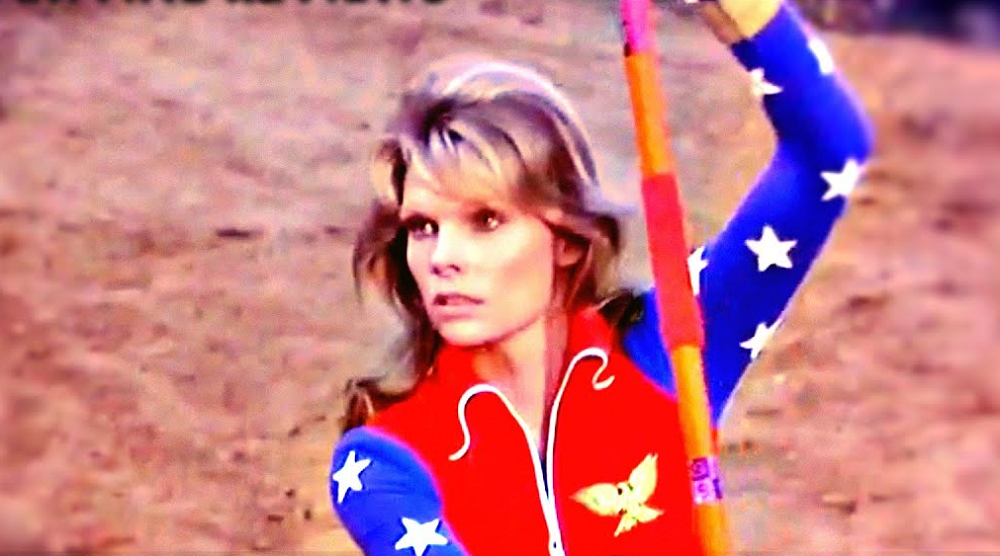
Wonder Woman, 1974

This was the version of the character that former tennis star Cathy Lee Crosby, wearing a fetching red and blue outfit that left everything to the imagination, portrayed in Black’s pilot film. The plot saw her pursue Ricardo Montalban’s Abner Smith and his cache of stolen secrets, overcoming the threats of Smith’s handsome (George, played by Andrew Prine) and ferocious (Anitra Ford as rogue Amazon Ahnjayla) assistants along the way.

By the time the pilot aired to ratings described in The Washington Post as “respectable but not exactly wondrous,” the comic book had returned to its status quo, a blow to the head restoring Wonder Woman’s previous abilities, and it was decided not to go forward with a series based on the spy era. Crosby did claim she was offered the role for what eventually became The New Original Wonder Woman in November 1975, but it’s hard to imagine anyone but Carter in the role now. Interestingly, as part of its Infinite Crisis storyline in 2006, DC Comics made the Crosby Wonder Woman part of its canon, giving her universe the designation Earth-462 where she shared space with Drusilla, Wonder Woman’s younger sister from the Lynda Carter series.

Vector (NBC): It usually took the networks a few years to catch up to what was hot, reacting to Hollywood’s own delayed adoption of tropes with a further delayed TV version of something that was (possibly only briefly) all the rage a few years before. When Michael Crichton wrote The Andromeda Strain as a novel in 1969, inspired by the threat of biological warfare as the Cold War continued and possibly by an outbreak of Marburg disease in 1967, the rights were immediately snapped up by Universal, who released their terrifying big-screen adaptation two years later.

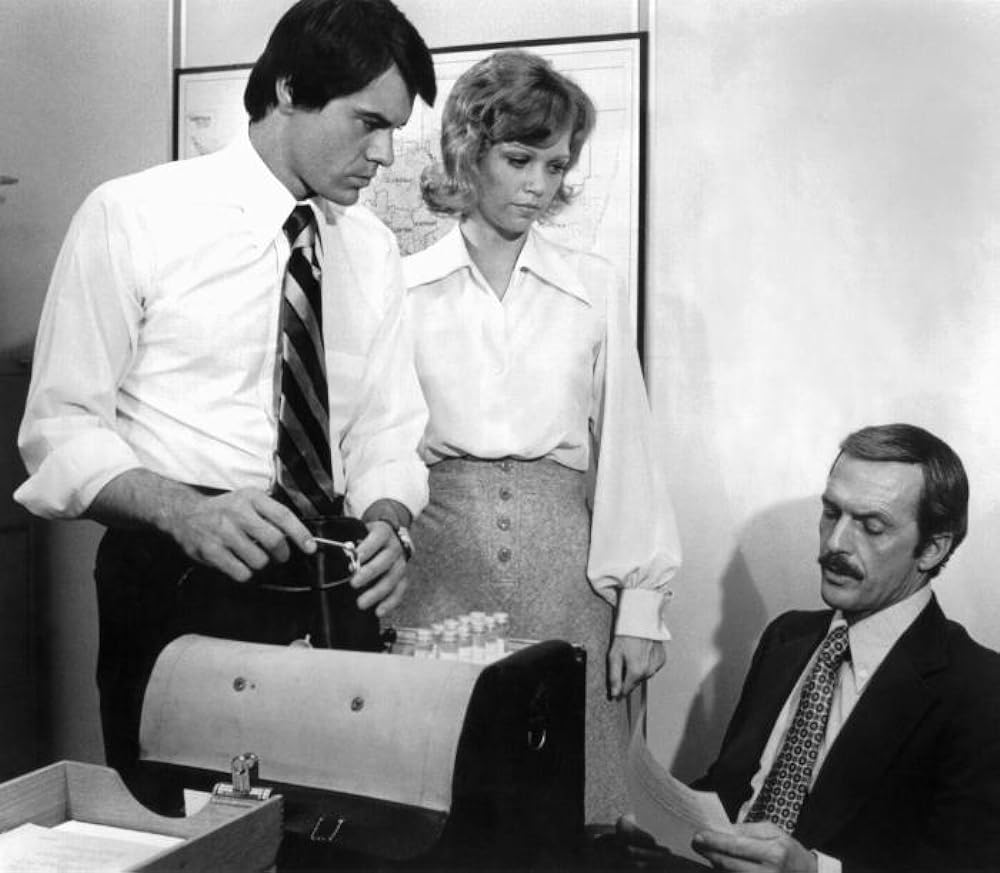
Vector was TV’s response to the disease disaster movie, written by Robert A Cinader and Preston Wood, who’d worked together on the Cinader-created Adam-12 and Emergency! Robert Urich and Maureen Reagan were cast as Dr William Nugent and Dr Christine Scofield, inspectors for the US Public Health Service with a remit to track down the source of mysterious ailments striking down members of the public.

The Specialists, 1975

After just a handful of TV guest appearances, Urich had just made a splash as a rookie cop alongside Clint Eastwood in Magnum Force, a role that would soon see him take a similar part in 1974’s hot new show, SWAT. When he made Vector, though, there were hopes that the chemistry between he and Reagan (daughter of the future US President and then Governor of California) would become the Mulder and Scully of 1974.

The pilot film, titled “The Specialists,” was produced by Jack Webb’s Mark VII Productions, the studio behind hit shows Adam-12, Emergency!, and Dragnet but struggling to find a new hit after the failure of The DA, O’Hara: US Treasury, and others in the early 1970s. NBC were interested in taking Vector to series but ultimately turned it down after Urich was signed by ABC for SWAT. They did, however, air the pilot as The Specialists in January 1975, part of NBC Monday Night at the Movies, but Mark VII’s search only grew more urgent as Adam-12 finished its run four months later.

Planet Earth (ABC): In 1973, Star Trek creator Gene Roddenberry failed to find to convince CBS to Genesis II, a pilot movie starring Alex Cord and Mariette Hartley, to series. The premise behind Genesis II was of a man thrown forward in time to a post-apocalyptic Earth, the result of a catastrophic Third World War. There, Dylan Hunt must try and rebuild his life amongst the descendants of the NASA scientists responsible for his journey through time, now known as PAX.

When CBS passed, Roddenberry returned to the project and retooled it for submission to ABC. In place of Alex Cord, John Saxon – fresh off starring in Enter the Dragon – was Dylan Hunt, who was now a native of the twenty-second century, a member of the science-based organisation PAX, dedicated to bringing peace and civilisation back to the planet. Several actors returned from Roddenberry’s earlier film, including Ted “Lurch” Cassidy, essentially playing the same character as before, and the basic threat remained the same, although the attacking mutants were now known as the Kreeg rather than the Tyranians.

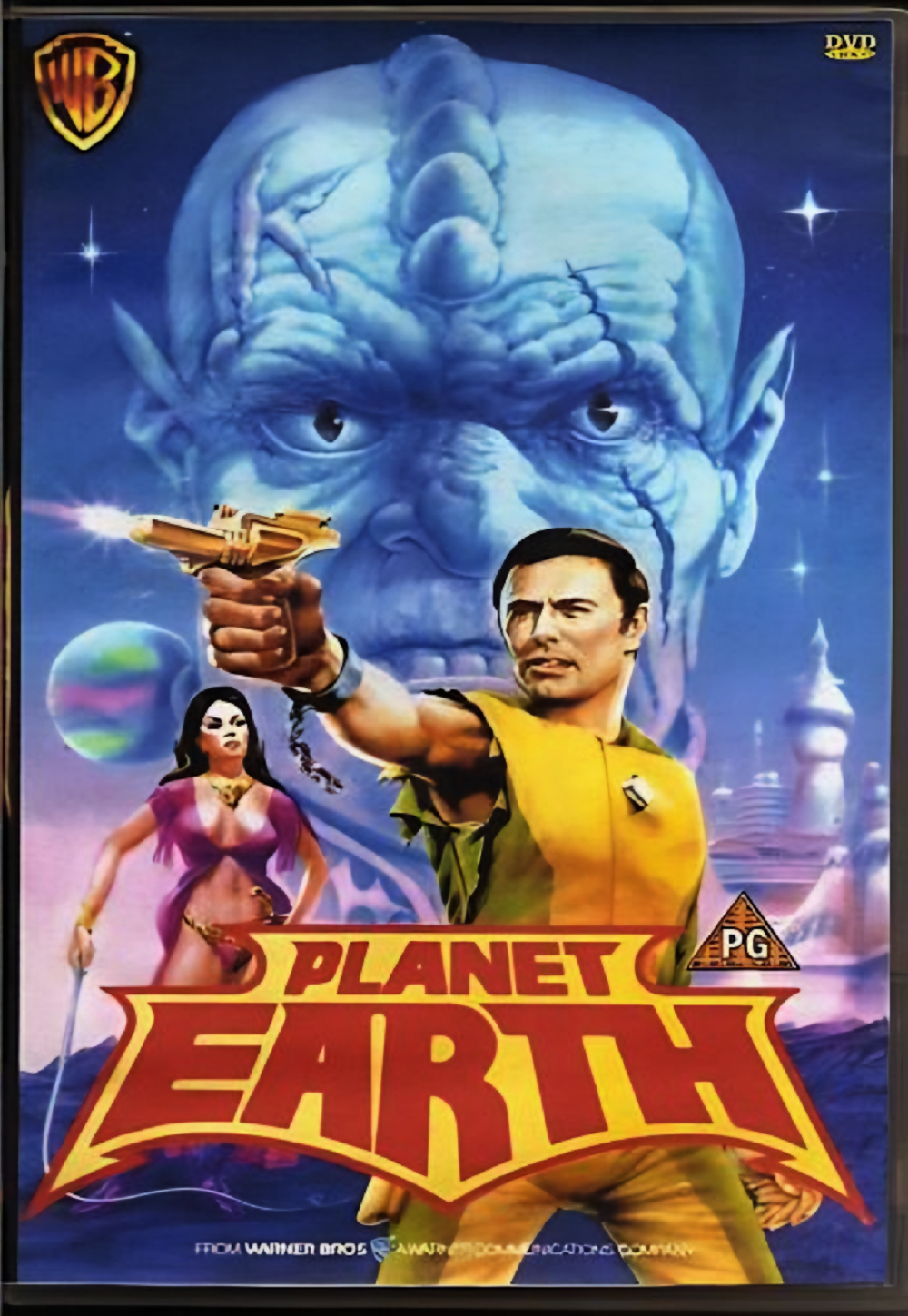
Planet Earth, 1974

Planet Earth also injects a touch of sexual politics into the mix, with the Amazon-like Confederacy of Ruth just the touch of a sensual man like Hunt away from giving up their dominatrix lifestyles, learning that they need men to defend them because 2133, it seems, is a terrible time to be alive. Saxon played Hunt as a Captain Kirk type, possibly at Roddenberry’s urging, but even this wasn’t enough to sell the pilot as an ongoing concern to ABC, who instead aired it as an ABC Tuesday Movie of the Week in April 1974.

Roddenberry wasn’t quite done with the concept, returning a year later with Strange New World, an odd mix of both pilots and some of Planet of the Apes, with John Saxon on board again. This time he was Captain Anthony Vico, but Roddenberry never gave up on a decent idea: Dylan Hunt would eventually be the protagonist of 2000’s Andromeda, played by man-baby Kevin Sorbo.

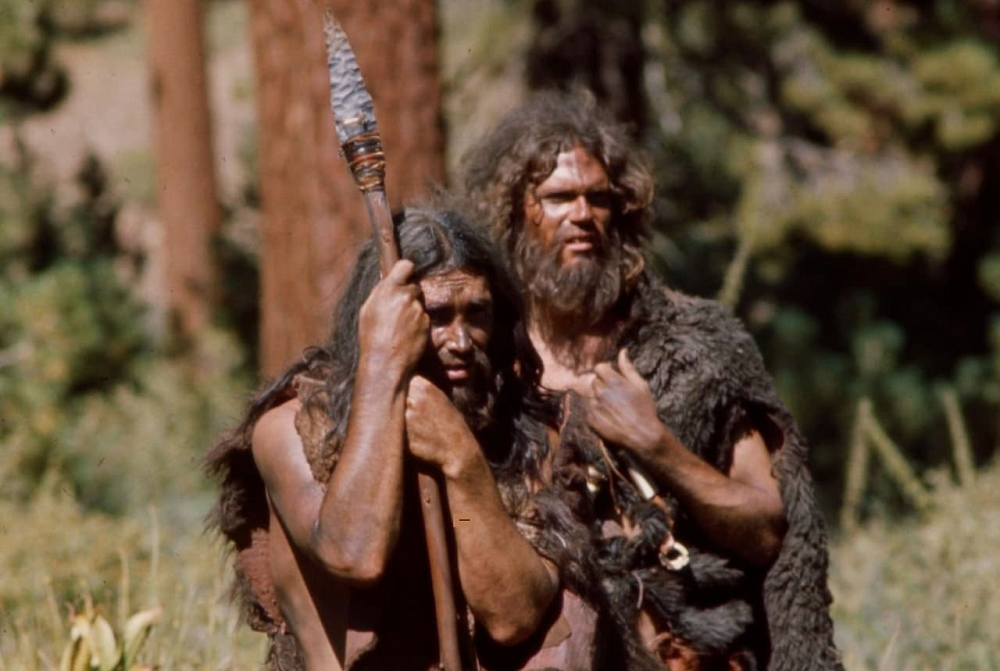
The Tribe (ABC): Not to be confused with the funk-soul group of the same name that released the album Ethnic Stew in 1974, The Tribe began life as a project simply named Cro-Magnon. Written by Lane Slate, a former documentary producer who had turned his hand to a series of off-beat screenplays, Cro-Magnon told the story of a tribe of mankind’s ancestors, locked in a battle with Neanderthal rivals for survival in prehistoric times.

Led by Victor French’s Mathis, these cavemen are a likeable lot and probably more advanced than they should be. They also speak English, which is forgivable since two hours of grunting would have been more at home in grindhouses in 1974 than on network TV, and show great affection for each other (although, again, not in the way that would have been more at home in grindhouses).

The Tribe, 1974

Almost plotless, director Richard A Colla presents the Cro-Magnons’ lives as a series of dangerous incidents, with encounters with those pesky evolutionary throwbacks and no small amount of dangerous wildlife featuring high on their daily schedule, probably the most scientifically accurate thing about the thing.

ABC passed on a full series of Cro-Magnon but did air the pilot as part of its ABC Wednesday Movie of the Week block in December 1974. Retitled The Tribe, the film is available to watch on YouTube if you fancy a bleak seventy-five minutes of hirsute peril but it’s unlikely that it was a career highlight for anyone involved. Slate kept at it, returning periodically with new projects that – like 1978’s Have Girls Will Travel and 1981’s Strike Force – made it to series, but he never again tried to make us fall in love with our ancestors.

Next on The Telephemera Years: The 1970s get really 1970s on Saturday mornings in 1974…

Check out our other Telephemera articles:

The Telephemera Years: pre-1965 (part 1, 2, 3, 4)

The Telephemera Years: 1966 (part 1, 2, 3, 4)

The Telephemera Years: 1967 (part 1, 2, 3, 4)

The Telephemera Years: 1968 (part 1, 2, 3, 4)

The Telephemera Years: 1969 (part 1, 2, 3, 4)

The Telephemera Years: 1971 (part 1, 2, 3, 4)

The Telephemera Years: 1973 (part 1, 2, 3, 4)

The Telephemera Years: 1974 (part 1, 2, 3)

The Telephemera Years: 1975 (part 1, 2, 3, 4)

The Telephemera Years: 1977 (part 1, 2, 3, 4)

The Telephemera Years: 1978 (part 1, 2, 3, 4)

The Telephemera Years: 1980 (part 12, 3, 4)

The Telephemera Years: 1982 (part 1, 2, 3, 4)

The Telephemera Years: 1983 (part 1, 2, 3, 4)

The Telephemera Years: 1984 (part 1, 2, 3, 4)

The Telephemera Years: 1986 (part 1, 2, 3, 4)

The Telephemera Years: 1987 (part 1, 2, 3, 4)

The Telephemera Years: 1989 (part 1, 2, 3, 4)

The Telephemera Years: 1990 (part 1, 2, 3, 4)

The Telephemera Years: 1992 (part 1, 2, 3, 4)

The Telephemera Years: 1995 (part 12, 3, 4)

The Telephemera Years: 1997 (part 1, 2, 3, 4)

The Telephemera Years: 1998 (part 1, 2, 3, 4)

The Telephemera Years: 2000 (part 1, 2, 3, 4)

The Telephemera Years: 2003 (part 1, 2, 3, 4)

The Telephemera Years: 2005 (part 1, 2, 3, 4)

The Telephemera Years: 2006 (part 1, 2, 3, 4)

The Telephemera Years: 2008 (part 1, 23, 4)

Titans of Telephemera: Irwin Allen

Titans of Telephemera: Stephen J Cannell (part 1, 2, 3, 4)

Titans of Telephemera: DIC (part 1, 2)

Titans of Telephemera: Hanna-Barbera (part 1, 2, 3, 4, 5)

Titans of Telephemera: Kenneth Johnson

Titans of Telephemera: Sid & Marty Krofft

Titans of Telephemera: Glen A Larson (part 1, 2, 3, 4)
Titans of Telephemera: Quinn Martin (part 1, 2)

Titans of Telephemera: Ruby-Spears

[ENDED] Win a Download Code for THE CALLER!

win the caller

Tense thriller The Caller, featuring a fantastic cast, hits digital platforms on October 23rd and we have a pair of iTunes vouchers for our lucky readers to download the film! Just watch the trailer, read on, and enter below… Be quick, though, as the contest only runs for a week!


This taut and tense thriller starts with a shocking, bloody prologue and doesn’t let up for ninety minutes. Sarah Alexandra Marks (Kill Kane) is terrific as Izzy, a young woman working remotely for a bank, who gets into an altercation with a cash-strapped customer called Caleb Baxter, played by Hollywood legend Eric Roberts (The Expendables). Baxter starts to harass Izzy over the phone, saying he will track her down. Worried he might well be able to do that through her social media profile, the increasingly jumpy and unnerved Izzy, house-sitting in an isolated bungalow, realises Caleb’s appalling threats might just become a brutal reality.

Marks is engaging and sympathetic as Izzy, while Roberts has the time of his life as the menacing Caleb Baxter; also featured in the cast are former Doctor Who Colin Baker, UK Scream Queen favourite Dani Thompson (Eating Miss Campbell) as Izzy’s bullying boss, and Amber Doig-Thorne (Winnie the Pooh: Blood and Honey). The debut feature from writer/director Richard Anthony Dunford, The Caller has won multiple awards at festivals including The Milan Gold Awards, Paradise Film Festival and the Mabig Film Festival.

Encompassing modern themes of the isolation of working from home, invasion of privacy in a social media world, as well as anonymous bullying and its repercussions, The Caller is an unsettling and tense debut from Dunford, delivering maximum chills and thrills from an ever more claustrophobic and creepy setting. If you enjoyed the recent, similarly themed Barbarian and Watcher then you’ll want to catch The Caller. Just make sure you turn off your phone while you’re watching.


SYNOPSIS:

Izzy, a young woman who works remotely as a customer service agent for a bank, agrees to house-sit for her uncle while he is abroad. Whilst working alone at this secluded house, she receives an unnerving phone call from a dissatisfied customer who is hellbent on terrorising her. Izzy grows increasingly paranoid from the harassment fearing that the sadistic caller’s threats may end up becoming a violent reality.

 
a Rafflecopter giveaway


THE CALLER is released digitally on October 23rd. Codes will be valid for 4 weeks following release.


[ENDED] Win THE GINGER SNAPS TRILOGY on Blu-ray!

Ginger Snaps is a landmark in feminist horror and now the seminal movie is set for a highly anticipated collector’s edition treatment from Second Sight Films. Helmed by John Fawcett (Orphan Black, Saving Hope), it offers a fresh take on the werewolf and coming-of-age genre, with heaps of gore and a lot of heart. The film will be released in a complete set with all three films as The Ginger Snaps Trilogy Limited-Edition Blu-ray Box Set, on October 30th, 2023 and we have a copy to give away to one lucky reader! Just read on and enter below…


The original film is set in the suburban Canadian town of Bailey Downs, where a series of dog killings piques the interest of a pair of outcast teens; sisters Brigitte (Emily Perkins, Supernatural) and Ginger (Katharine Isabelle, Freddy v Jason, American Mary) Fitzgerald. Then on the night of Ginger’s first period, she is savagely attacked by a wild creature but even though her injuries miraculously heal, she’s left with a newfound desire to devour… Brigitte must find a way to save her sister from her werewolf ways and with only 28 days to do so, can she stop the creature her sister has become in its tracks, or will they both succumb to the animalistic instincts?

Ginger Snaps 2: Unleashed from director Brett Sullivan, sees Brigitte wrestling with her own transformation, as she is forcefully put into rehab and must identify friend from foe, all the while battling a male werewolf who’s stalking her. Tatiana Maslany, (She-Hulk: Attorney at law) and Eric Johnson (Smallville) also star.

Ginger Snaps Back: The Beginning from director Grant Harvey, depicts the ancestors of Brigitte and Ginger Fitzgerald, in 19th century Canada. They must battle villagers and werewolves alike as accusations and attacks come at them from all sides. Can they make it out alive or will they succumb to a lycanthropic life?

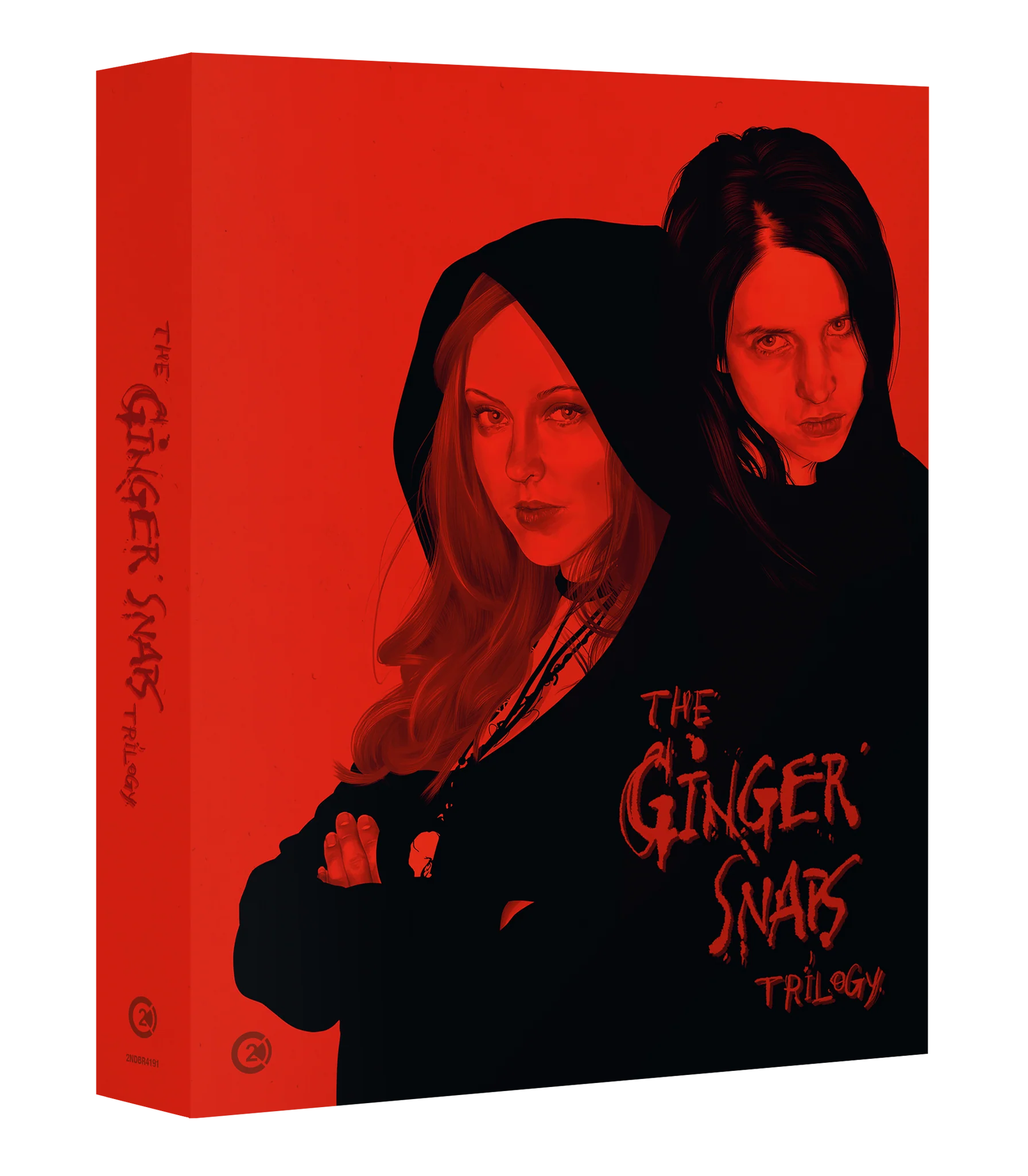
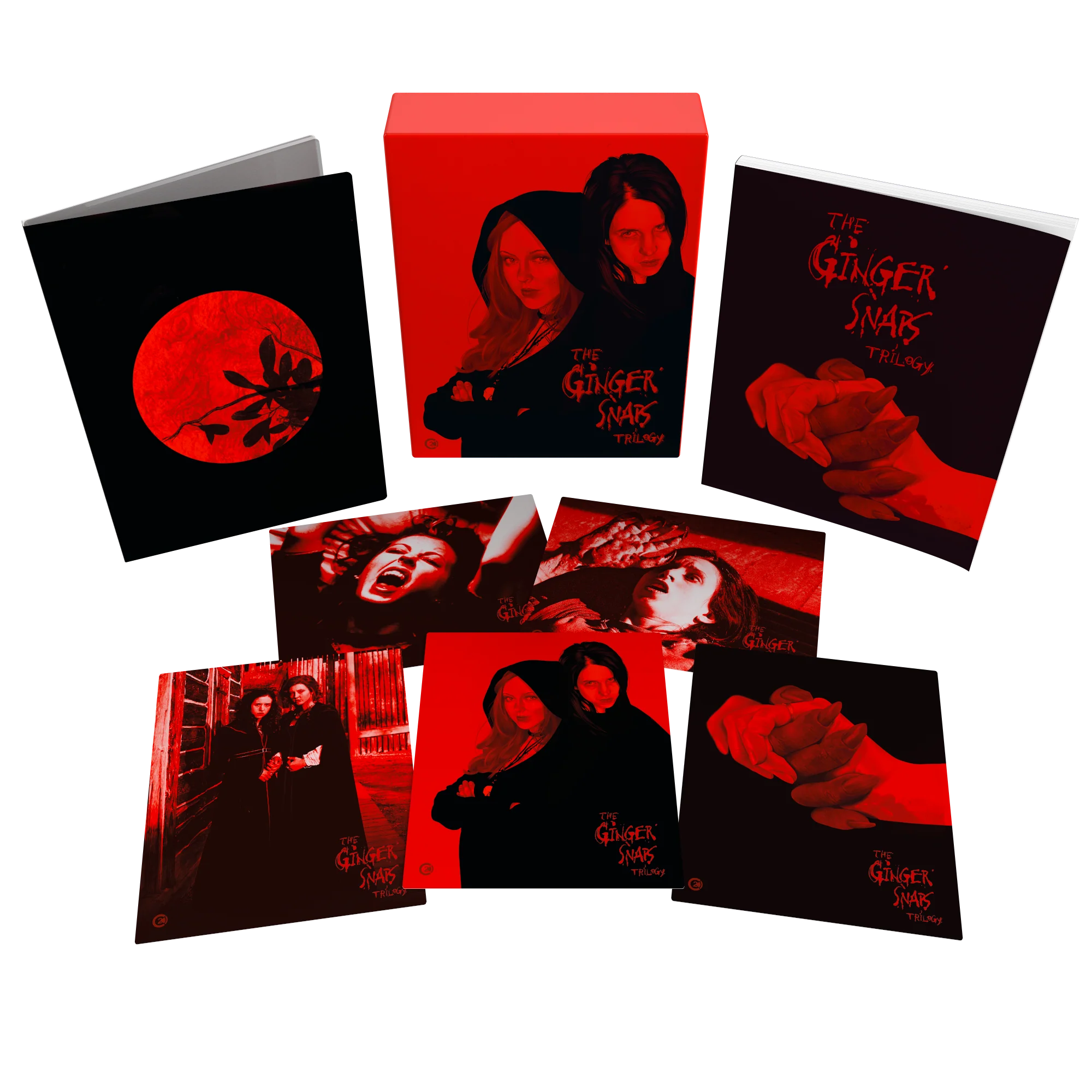
This beautifully presented box set of the trilogy, features a rigid slipcase with new artwork by Michael Dunbabin, and a 112-page book with new essays. There is also a litany of special features, including commentaries and new interviews plus a multitude of behind-the-scenes featurettes and more, making this set a must have for horror aficionados. Please see the full list of contents below.

Special Features

Ginger Snaps

  • New audio commentary by Mary Beth McAndrews and Terry Mesnard
  • Audio commentary with director John Fawcett
  • Audio commentary with writer Karen Walton
  • Canadian Uncanny: Stacey Abbott on Ginger Snaps
  • A Blood Red Moon: a new interview with director John Fawcett
  • What Are You Wereing?: a new interview with producer Steve Hoban
  • The Art of Horror: a new interview with Storyboard Artist Vincenzo Natali
  • Ginger Snaps: Blood, Teeth and Fur
  • Growing Pains: Puberty in Horror Films
  • The Making of Ginger Snaps
  • Cast Auditions and Rehearsals
  • Deleted scenes with optional director and writer commentaries
  • Production design work
  • Creation of the Beast
  • Trailers and TV Spots

Ginger Snaps 2: Unleashed

  • Audio commentary with director Brett Sullivan
  • Girl, Interrupted: a new interview with director Brett Sullivan
  • The Bloody Lunar Cycle: a new interview with writer Megan Martin
  • Behind the Scenes
  • Deleted scenes with optional director commentary
  • Audition tapes
  • Storyboards

Ginger Snaps Back: The Beginning

  • Audio commentary with director Grant Harvey
  • Snap!: A new interview with director Grant Harvey
  • Girls on Film: a new interview with producer Paula Devonshire
  • The Making of Ginger Snaps Back
  • Deleted scenes with optional director commentary
  • Grant Harvey’s Video Diaries

Limited Edition Contents

  • Rigid slipcase with new artwork by Michael Dunbabin
  • 112-page book with new essays by Meredith Borders, Kat Hughes, Dr Rachel Knightley, Mikel J Koven, Jolene Richardson, Zoë Rose Smith and Caelum Vatnsdal
  • 5 collectors’ art cards 

a Rafflecopter giveaway

THE GINGER SNAPS TRILOGY is available on Limited Edition Blu-ray from Second Sight Films on October 30th.


The Trader’s Bookshelf: Best Reads for Market Mastery

The world of trading is dynamic, and ever-evolving, and requires a sharp mind to navigate its tumultuous waters. From deciphering the subtle cues of market trends to mastering one’s psychological impulses, success in trading is a blend of technical skill, intuition, and continuous learning.

The online world is rich with seminars, courses, and insights. For example, binary traders have more chances of finding the most accurate binary options strategy on specialized websites. However, the internet can’t beat timeless trading books.

Books offer traders the distilled wisdom of the greats, insights into the psyche of the market, and strategies that stand the test of time. This post delves into some timeless reads every trader should have on their bookshelf, aiming to provide a holistic view of market mastery.

Understanding Market Psychology

The financial markets are not just a reflection of numbers, graphs, and data. They are, in essence, a reflection of collective human psychology. Fear, greed, hope, despair – the markets move on these emotions, and understanding them is crucial for every trader.

“Trading in the Zone” by Mark Douglas

This book is often regarded as the bible of trading psychology. Douglas delves deep into the mental and emotional challenges traders face and presents solutions to overcome them.

Key Takeaway: Trading is not just about strategy and numbers; it’s also about mindset. “Trading in the Zone” emphasizes the need to think in probabilities, letting go of the need to be right and developing a mindset that sees trading as a game of odds, not certainties.

“The Disciplined Trader” by Mark Douglas

Before “Trading in the Zone,” Douglas penned “The Disciplined Trader,” where he explores the psychological hurdles traders often face. He discusses the emotional pitfalls, fears, and mental barriers that traders encounter.

Key Takeaway: Discipline is not just about following a strategy rigorously; it’s about mastering one’s emotions and internal conflicts. Through various exercises and techniques, Douglas offers traders a path to develop a resilient and successful mindset.

Technical Analysis & Market Trends

In the vast sea of trading, the ability to read market trends and predict future movements using technical analysis can be likened to a sailor’s compass. These books shine a light on the intricate art of technical analysis, helping traders navigate the markets with greater confidence.

“Technical Analysis of the Financial Markets” by John J. Murphy

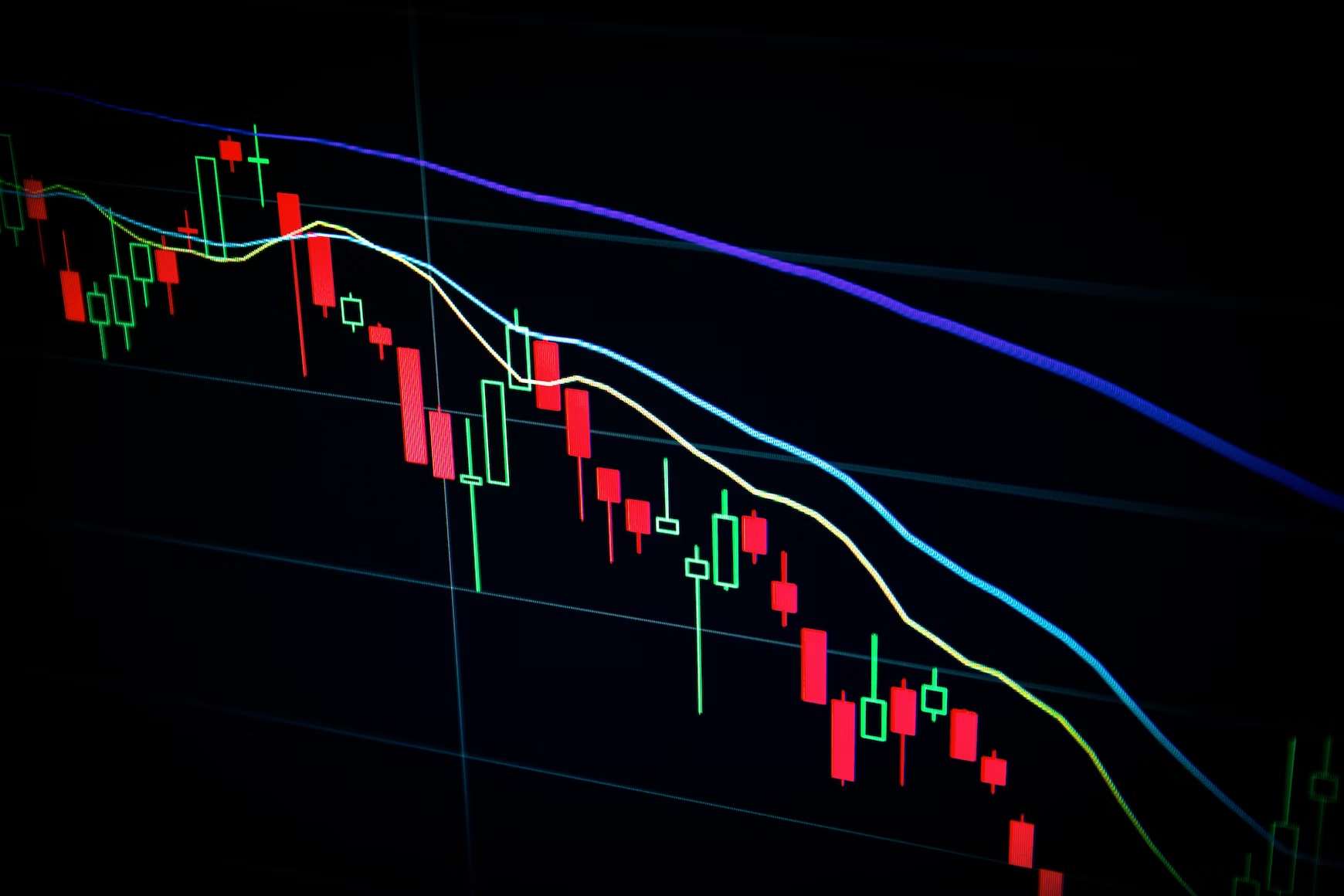
This comprehensive guide is a must-have for anyone delving into technical analysis. Murphy breaks down complex concepts, from basic chart patterns to intricate indicators and theories.

Key Takeaway: The market gives clues about its next move, and with the right tools and knowledge, a trader can decipher these signals. This book equips traders with the technical tools to read, understand, and act on these market cues.

“Trend Following: Learn to Make Millions in Up or Down Markets” by Michael W. Covel

Covel introduces readers to the world of trend-following trading strategies, showcasing how some traders have made millions by simply following market trends.

Key Takeaway: The market’s direction, whether up or down, can be profitable. The key lies in detecting the start of a trend, riding it, and knowing when to exit. Through real-life examples and case studies, Covel emphasizes the importance of a systematic, disciplined approach to capturing market trends.

Modern Insights: Quantitative & Algorithmic Trading

The financial markets are increasingly driven by technology. Today, sophisticated algorithms and quantitative models often determine market movements, making it imperative for traders to understand and leverage these tools.

“Quantitative Trading: How to Build Your Own Algorithmic Trading Business” by Ernie Chan

Ernie Chan demystifies the world of algorithmic trading, guiding readers on building and implementing their own quantitative models. He discusses the nuances of data analysis, backtesting, and system development.

Key Takeaway: In a world driven by data, understanding how to translate data into actionable trading strategies is invaluable. Chan emphasizes the significance of a systematic approach, thorough backtesting, and the importance of risk management in quantitative trading.

The Digital Age: Cryptocurrency & Binary Options

The digital age has brought about new forms of trading that were previously unimaginable. While cryptocurrencies seek to redefine our understanding of money and value, binary options offer a unique approach to trading based on a simple “yes or no” proposition.

“Cryptoassets: The Innovative Investor’s Guide to Bitcoin and Beyond” by Chris Burniske and Jack Tatar

This book offers a comprehensive analysis of various crypto assets and how they fit into an investor’s portfolio.

Key Takeaway: As the world of digital assets grows, understanding its nuances becomes crucial. Burniske and Tatar provide insights into valuing crypto assets, their potential risks, and rewards.

“Beat Binary Options: Winning Financial Betting Strategies for Today’s Markets” by Drew Kasch

Kasch offers a straightforward guide to understanding and profiting from binary options. He touches upon strategies, market analyses, and the psychology of trading binary options.

Key Takeaway: Binary options require a different approach than traditional trading. Kasch highlights the importance of discipline, a keen understanding of markets, and robust strategies to succeed in his domain.

As you curate your trader’s bookshelf, remember that each volume is more than just words; it’s a reservoir of wisdom, waiting to be tapped. Dive in, explore, and let these books guide your trading journey.