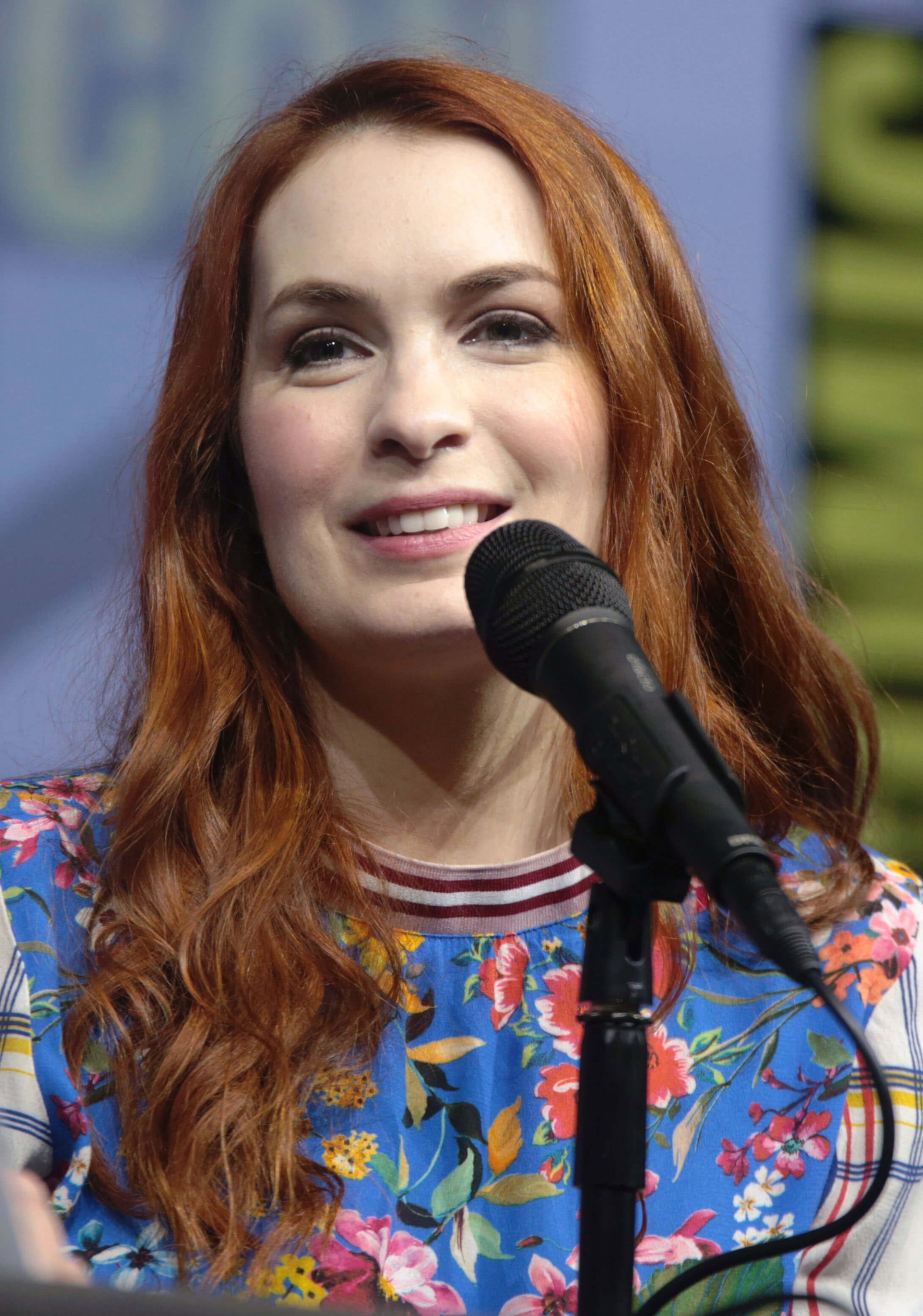
Actress, singer and creator Felicia Day needs little introduction, and has turned to hand to many cool things. She has worked on everything from Buffy The Vampire Slayer to Supernatural. We caught up with her about her scripted podcast, Third Eye.
How would you pitch third eye to a beloved elderly relative?
Third Eye is a fantasy comedy television show in audio. It’s TV for your ears. It’s a fantasy comedy about a failed chosen one. And it is a TV show that happens to be audio.
Where did the idea for this project come from?
I actually pitched this as a television show. I wrote the pilot, and then I thought it was the most brilliant thing I’ve ever written, and I pitched as a television show. And unfortunately, Hollywood did not think that, I mean, they liked it, but they did not buy it.
And a couple of years went by, but I still couldn’t let go of the concept. I’ve written many things that have never seen the light of day, but this one really stuck with me. And so when I had a meeting with Audible I brought it up, and they were like, great, let us see the pilot. And they read, and they were like, great, go, go ahead and make this.
And I was like, well, it’s going to be 10 episodes. It’s going to be a lot of hours. They’re like, we want more hours. That’s fantastic. So it was right before COVID started, and it was something that I just had to start running.
I ran and wrote it all the way over COVID.
Why is the chosen one narrative so popular?
Joseph Campbell. His work definitely influenced a lot of narrative. I know it was influential in creating Star Wars, and we have kind of a Chosen One narrative there. So I mean, it’s, it’s a very old concept. Joseph Campbell derives most of his theory from ancient Greek and ancient mythology. But I think because the tropes of the Chosen One certainly were influenced by Star Wars being tied to it.
So we have this heroic, usually teen male who is just destined to win, and they win, and that’s what a lot of our fiction is about nowadays. And I wanted to kind of tear that apart and flip it on its head and see what happens when someone who is faded to win actually loses and screws everything up in the process.
Is this more a fantasy parody? What’s the unique draw of Third Eye?
I don’t know if I’d say it’s a parody. I would say that I’m rebelling against a lot of tropes. So as you said, the Chosen One is a very familiar trope, and I turned it on his head and said, what if that Chosen One is a loser that everyone hates, and how do you live with yourself the best friends of my main character, Laurel, who is the chosen one, or former chosen one, her best friends are a vampire and a fairy princess. And yes, the vampire is not your cliched vampire. He is a tubby, bald, no fanged, complaining, loser kind of vampire and her fairy best friend from school is a grifter and super lazy.
You said that this was originally a TV show page that became a radio drama. How did that change the production? Because obviously with radio drama, you have an almost infinite special effects budget.
Well, this was quite a special effects budget as well. When they told me it would take six months to finish the episodes, I just honestly was floored. But when we got into it, I realized, Oh, we’re making the triple A movie of audio drama or audio pieces. And so it really did take that long to not only edit all the voices in pick the best takes, but spent a month figuring out what a portal sounded like, or what a magical effect would be.
It really is an incredible cast. How did that come about?
I know a lot of people, so this was a lot of favours. I believe only two or three actors in the cast I didn’t know personally. One of the spectacular finds for me was London Hughes, who plays Sybil. She is so funny.
And I didn’t have I had an archetype for her. My friend Jonah Ray, who I’ve worked on with on many things, he’s the voice director, and when I described who I wanted for the part, he was like, oh, you know, I worked with this comedian many years ago through stand-up. And I looked up 30 seconds of her YouTube videos, and I was like, sold, please. Please, let her do it.
Mostly it was just me typically calling my friends, mostly, and saying, will you do this? Here’s the part. One part I wrote for a friend specifically, was Will Wheaton. He plays Robigus and he is an antagonist, but also has a lot of layers that come out over the 10 episodes. So I hope that people can feel that there’s camaraderie and chemistry between everyone, because, well, we’re all friends.
So what was the first day on set like?
So the first day at on set, we were still recording under COVID protocols, so it was actually a lot of planning that we had to do in order to get people and what actors we could get in to record together, even though they were in separate booths, but together, because for me, again, a lot of audio performances feel like they’re cut together later, and you don’t believe people are in the room together. That was really important to me.
And one of the reasons I picked my friend Jonah Ray to voice direct, because he worked with me on a show that’s very like low budget, but also freewheeling and an improvisational feeling to it.
Simpsons or Futurama,
Off. You know, I remember seeing the very first Simpsons on the Tracy Ullman Show when I was like, six or seven, and I was in love with Bart. So I would have to say Simpsons.
Doctor, who or? Dr, no, oh.
Doctor Who, of course.
And finally, truth or beauty?
Oh, truth, truth. Because I’m from LA, I know you can buy beauty, I can’t find truth.
You can download the show here