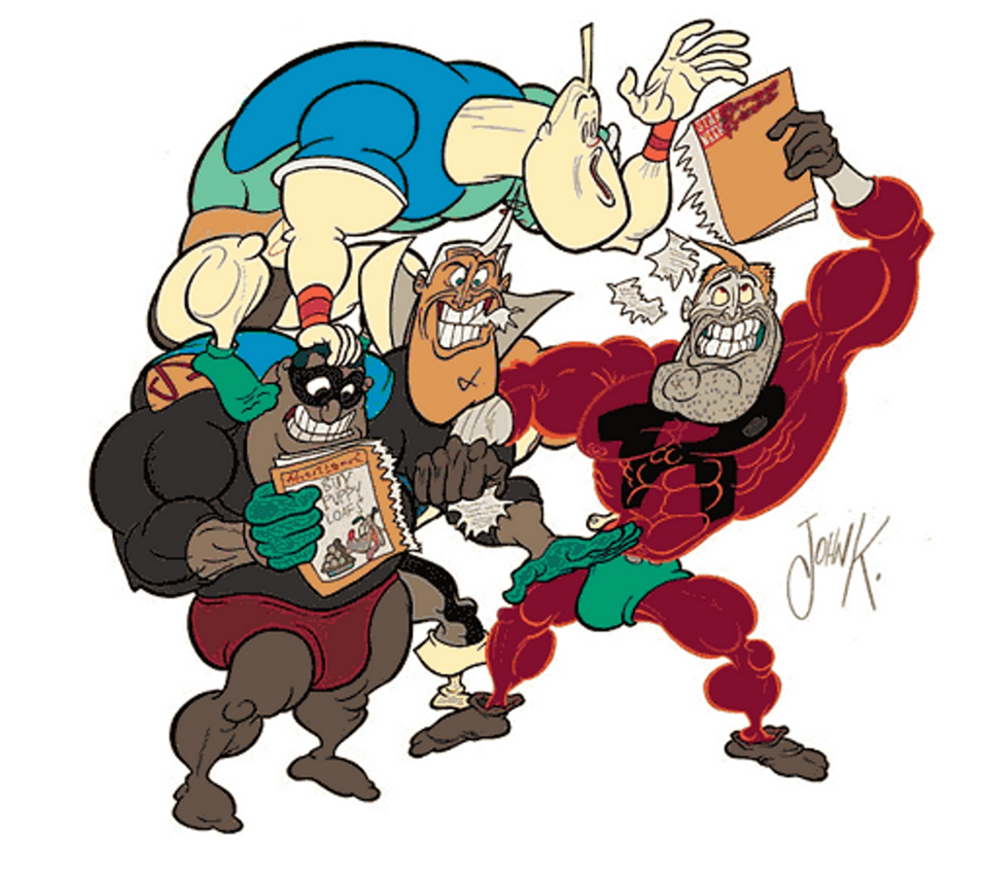
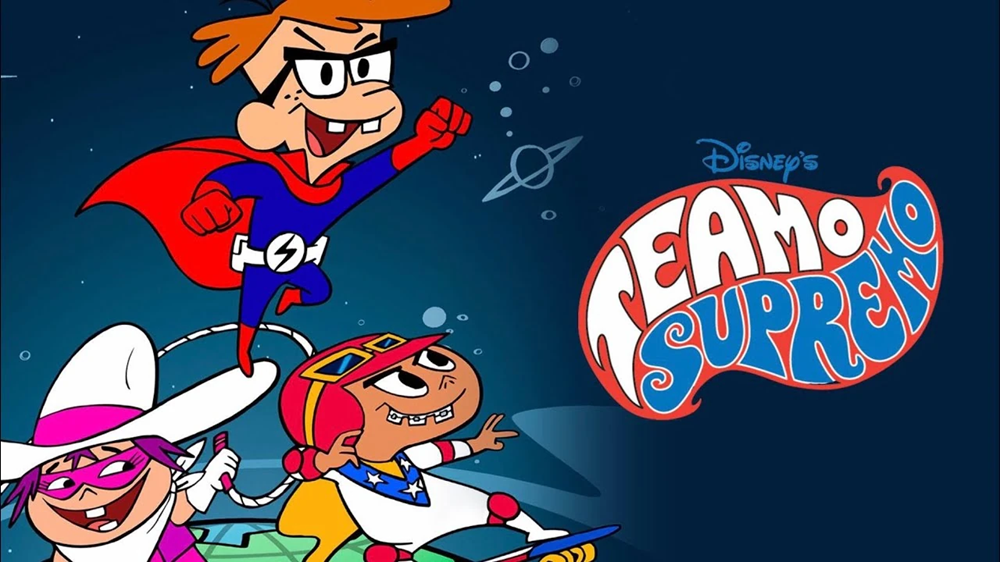
THE TELEPHEMERA YEARS: 1994 – PART 2

The Maxx, 1994-95

Ah, telephemera… those shows whose stay with us was tantalisingly brief, snatched away before their time, and sometimes with good cause. They hit the schedules alongside established shows, hoping for a long run, but it’s not always to be, and for every Street Hawk there’s two Manimals. But here at STARBURST we celebrate their existence and mourn their departure, drilling down into the new season’s entertainment with equal opportunities square eyes… these are The Telephemera Years!

1994-95

Other than perennial favourites 60 Minutes and Murder, She Wrote, the top ten ratings made poor reading for CBS in the 1994-95 season, but the network had high hopes for some of their new shows, especially sitcom Cybill – Cybill Shepherd’s return to TV after failing to translate her Moonlighting fame into movie success – and the mawkish Touched by an Angel. NBC still ruled the roost, with Seinfeld joined at the top of the ratings pile by new arrivals ER and Friends, completing an irresistible Must See TV block on Thursday nights with Mad About You. Sitcoms were also popular over at ABC, where Home Improvement, Grace Under Fire, and Roseanne all pitched up in the top ten.

Also making their bow in Fall 1994 were Party of Five on Fox and something called The Daily Show on Comedy Central, but it was genre fans who were treated best in terms of new arrivals, with Sliders (Fox), Star Trek: Voyager (UPN), and both Gargoyles and Hercules: The Legendary Journeys in syndication making it a banner year for fans of sci-fi and fantasy TV, even if they would be saying goodbye to the ground-breaking Batman: The Animated Series at the end of the year. Those were all shows that made an impact in the right way, though, but what about those that failed to land a punch or were just too damn weird for TV? This is the story of four more shows from 1994 that didn’t hang around…

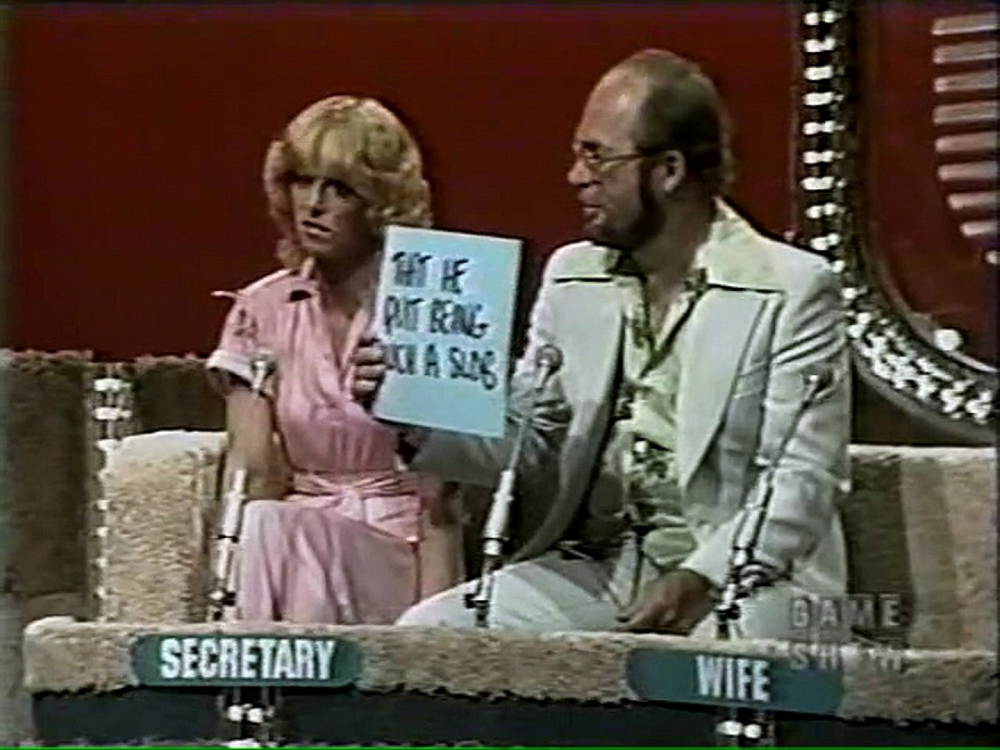
The George Wendt Show (CBS): The Second City Theatre on North Wells Street in Chicago, Illinois, is one of the most influential buildings in US TV. Since its inception in 1959, the improvised comedy troupe that calls the building home has produced a stunning amount of graduates, including Alan Alda, Dan Aykroyd, John Belushi, John Candy, Steve Carell, Stephen Colbert, Chris Farley, Tina Fey, Eugene Levy, Bill Murray, Mike Myers, Jordan Peele, Amy Poehler, Gilda Radner, and Harold Ramis. The Class of 1980 included Chicago native George Wendt, a man who’d turned up at the theatre one day hoping to join, only to be given a broom to sweep the stage. He eventually became a solid part of the ensemble, meeting his future wife Bernadette Birkett there.

Wendt headed to Hollywood to try and break into movies and TV, securing guest roles in episodes of Soap, Hart to Hart, and Taxi, and was cast in his first main role as Phys Ed teacher Gus Bertoia in school sitcom Making the Grade. Although Making the Grade was cancelled after just six episodes, Wendt caught the eye of James Burrows, Glen Charles, and Les Charles, who gave him the role of barfly Norm Peterson in their new Boston-set sitcom Cheers when it started its run in September 1982. Wendt spent eleven seasons occupying his bar-side seat (with Birkett supplying the voice of Norm’s never-seen wife, Vera), even making appearances on spin-offs The Tortellis and Frasier, but didn’t secure a regular role after the show ended in May 1993.
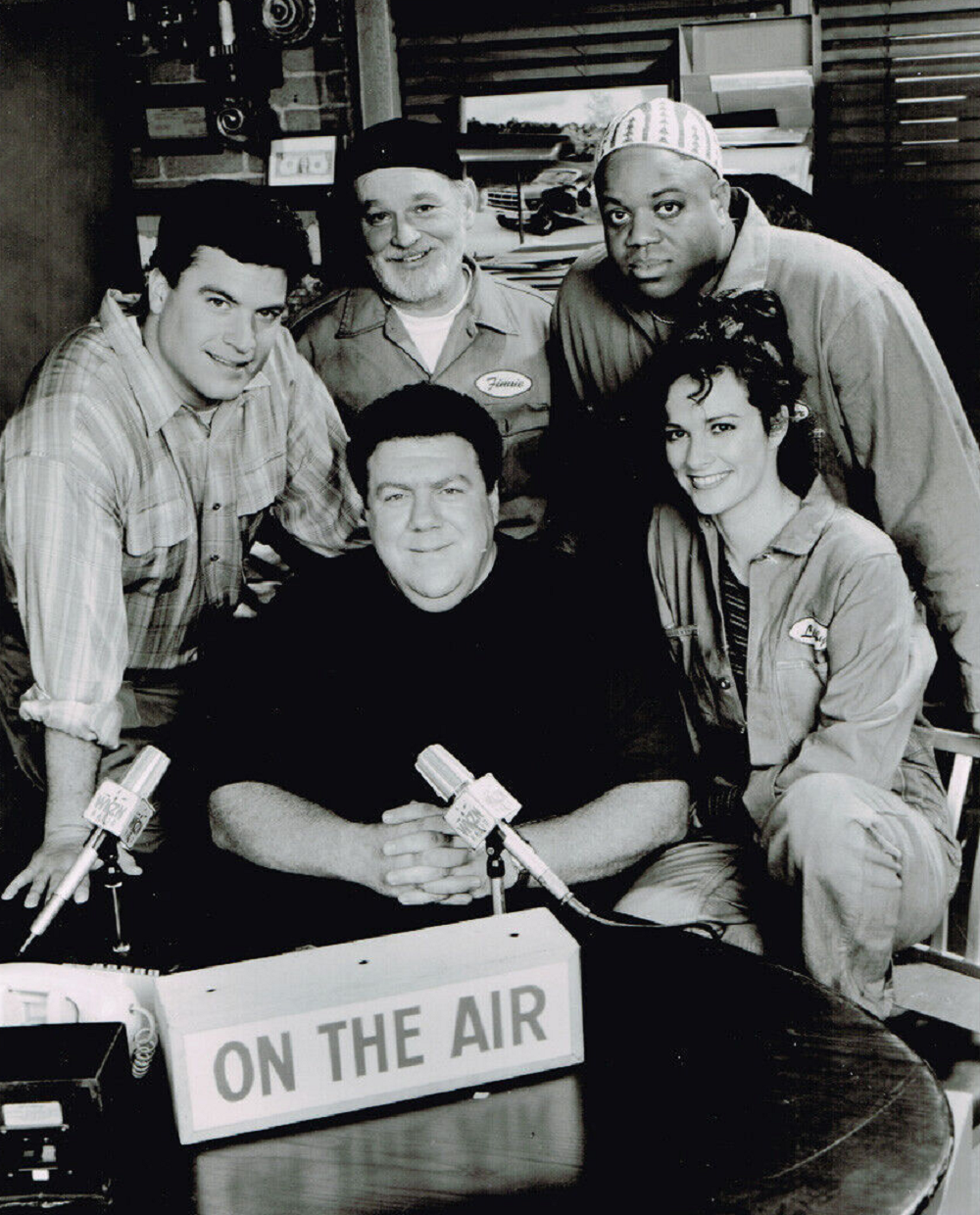
The George Wendt Show, 1994-95

That made him available for producers Lew Schneider and Peter Tolan when they needed a star for a sitcom they’d created based on popular NPR call-in show Car Talk. Starting on local Boston radio in 1977, Car Talk featured real-life brother mechanics Ray and Tom Magliozzi, giving advice to listeners with an infectious warmth and humour. Schneider and Tolan saw potential in a sitcom based on the brothers’ personalities and cast Wendt as Madison, Wisconsin, mechanic George Coleman in a show named to capitalise on Wendt’s post-Cheers cachet. Newcomer Pat Finn was recruited from Second City to play George’s younger brother Dan, and the set-up for the show saw the brothers operate their garage and host a radio call-in show titled Points and Plugs. Completing the cast were Fear of a Black Hat’s Mark Christopher Lawrence, former She-Wolf of London Kate Hodge, and Brian Doyle-Murray, brother of Bill and an alumnus of Saturday Night Live in his own right.

The George Wendt Show debuted on CBS in March 1995 in a Wednesday night slot CBS had been having trouble filling, although such was ABC’s domination of Wednesday nights that it really didn’t matter what the Tiffany network put up against it. Car Talk ran for thirty-five years, only ending when ill health forced the Magliozzi brothers into retirement, but Wendt and the Colemans were not so fortunate and just eight episodes of The George Wendt Show aired before CBS pulled the plug, leaving two completed episodes in the can.

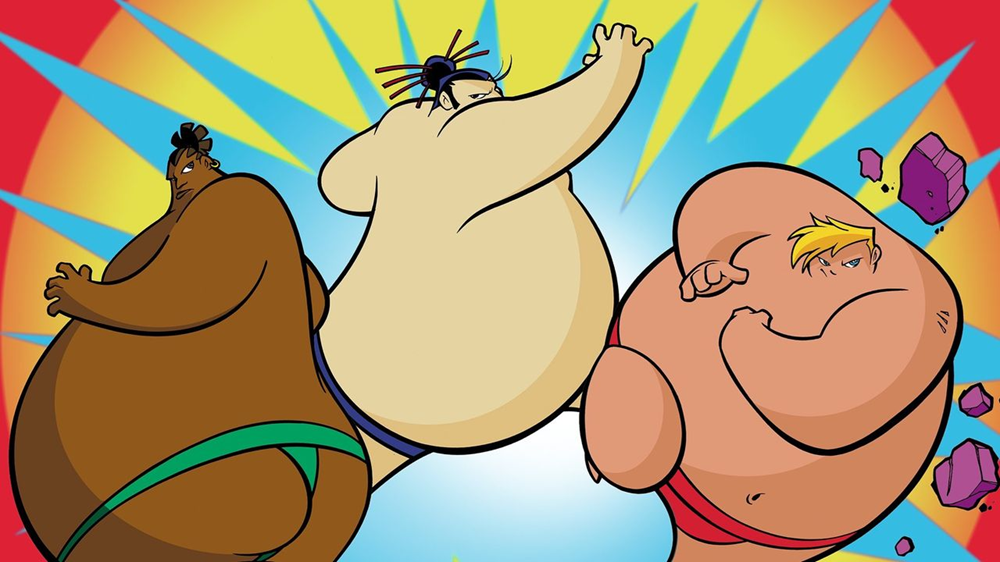
The Maxx (MTV): In 1992, seven prominent Marvel Comics artists left the company to establish their own publishing house, Image Comics. Offering creative freedom and, more importantly, ownership of their work that Marvel and rival DC Comics did not, the seven soon tempted others to make the jump, resulting in a wave of predominantly artist-led books. Michigan artist Sam Kieth, who enjoyed a rapid rise to fame in the early 1990s as an in-demand cover artist for Marvel Comics Presents, was one of the second wave of creators to take the Image offer, wisely recruiting scripter William Messner-Loebs (with whom he’d worked on the graphic novel Epicurus the Sage) to assist with plotting and dialogue.

The Maxx was based on one of Kieth’s earliest ideas for a comic of his own but progressed far beyond the 1980 concept for a killer rabbit named Max into a multi-layered story set across two worlds. In the regular world, which resembles our own, The Maxx was a homeless man but in the fantasy world of The Outback he is its greatest power, a huge humanoid rabbit who protects the Jungle Queen. In our world, the Jungle Queen is Julie, a social worker who frequently bails Maxx out of jail. We eventually learn that The Outback is a personalised environment created by trauma victims and a man named Mr Gone is able to access other people’s Outbacks, using his power to his own, twisted ends.
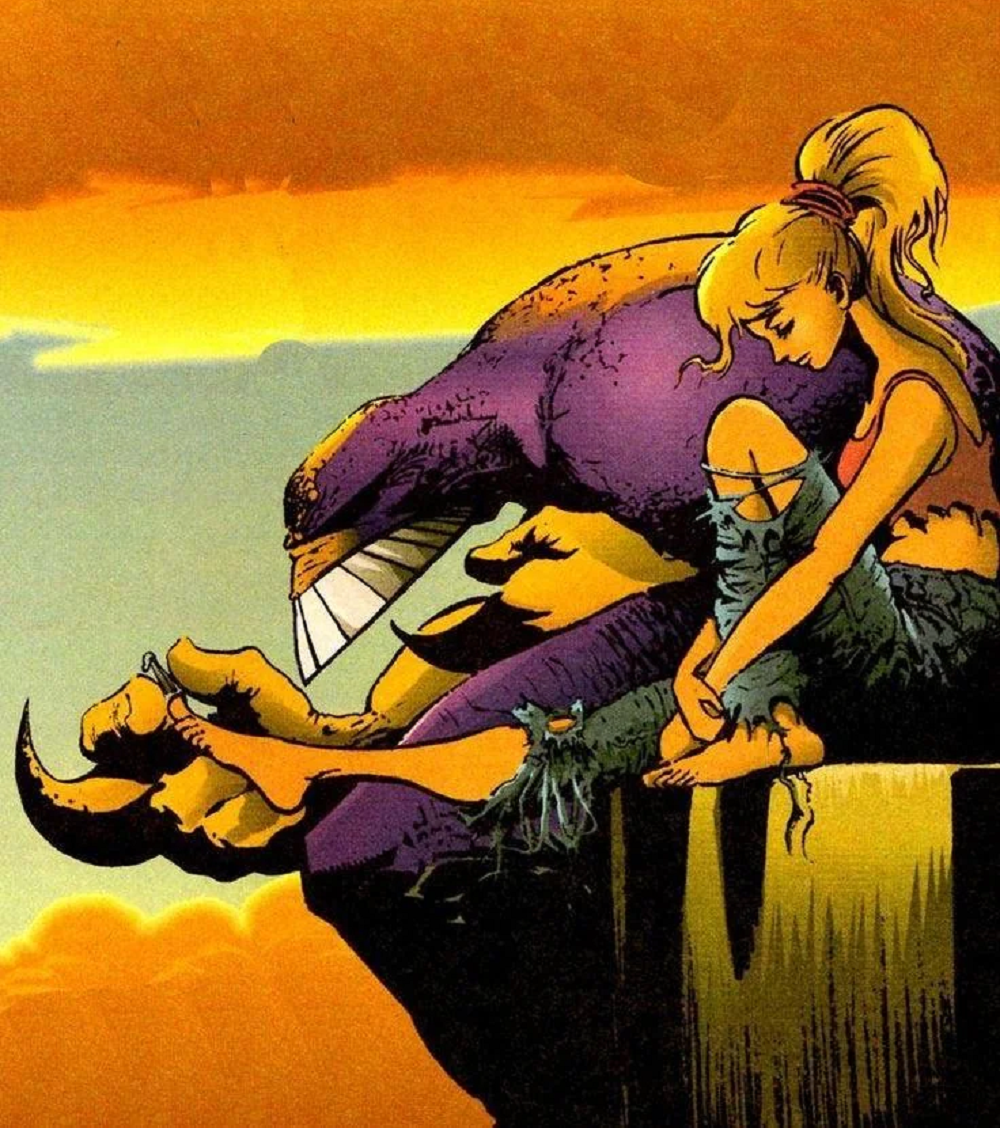
The Maxx, 1994-95

The Maxx lasted for thirty-five issues, published over a five-year period between March 1993 and August 1998, and one of its early fans was producer Abby Terkuhle, who had recently founded MTV Animation to handle production of the station’s runaway hit Beavis and Butt-Head. Securing the rights to adapt Kieth’s comic, Terkuhle planned to have it debut as one of two features in a new thirty-minute block entitled MTV’s Oddities, alongside Eric Fogel’s The Head. Each show would have one fifteen-minute episode per show, but it was decided to split the shows to enable The Maxx, in particular, to exist in its own space. The Head subsequently launched in thirty-minute bites in December 1994, with The Maxx following in April 1995.

Kieth and Messner-Loebs both participated in the adaptation, and – despite a limited budget – the cartoon stayed true to the spirit of the comic book, even if certain aspects were toned down for the anticipated adolescent audience. With each episode roughly adapting an issue of the comic book, the show soon burned through the available source material and although Keith was able to give them direction, certain important plots had yet to appear in the comic and so a somewhat ambivalent season conclusion was concocted, lest the network not commission a second. This turned out to be good planning since thirteen episodes was all The Maxx got, and although the comic book reached a different denouement in 1998, Kieth publicly declared his satisfaction with the cartoon’s ending, declaring that it allowed viewers to interpret their own fates for his characters.

The Watcher (UPN): It’s probably fair to say that, as a brand-new network, UPN hadn’t totally decided what it wanted to be when it arrived on TV screens in January 1995, despite a considerable number of man-hours and dollars spent on pre-launch branding and research. Thus, its opening line-up contained a variety of shows that seemingly sought to appeal to a wide range of viewers and tastes in a “throw shit at the wall and see what sticks” manner, but possibly – Star Trek: Voyager, which had a ready-made audience, aside – wound up falling dramatically between stools. This can surely be the only explanation for The Watcher, an anthology drama show set in Las Vegas that featured rump-enthusiast rapper Sir Mix-a-Lot as its titular, omniscient host.

Born Anthony L Ray, Sir Mix-a-Lot began rapping as a teenager in Seattle, releasing records on the Nastymix label he co-founded with local DJ Nasty Nes and businessman Ed Locke, occasionally gaining some success outside his home area but no big chart hits. In 1992, after signing with Def American Records, he released his third album Mack Daddy, and its lead single – a paean to the larger posteriored lady called “Baby Got Back” – went double platinum. Follow-up success eluded him, with “Sleepin’ Wit My Fonk” – the third single from the Chief Boot Knocka album that was released in 1994 – failing to chart, and so his presence as the all-seeing Watcher must have been a surprise to many, but clearly made sense to series creator Christopher Crowe.
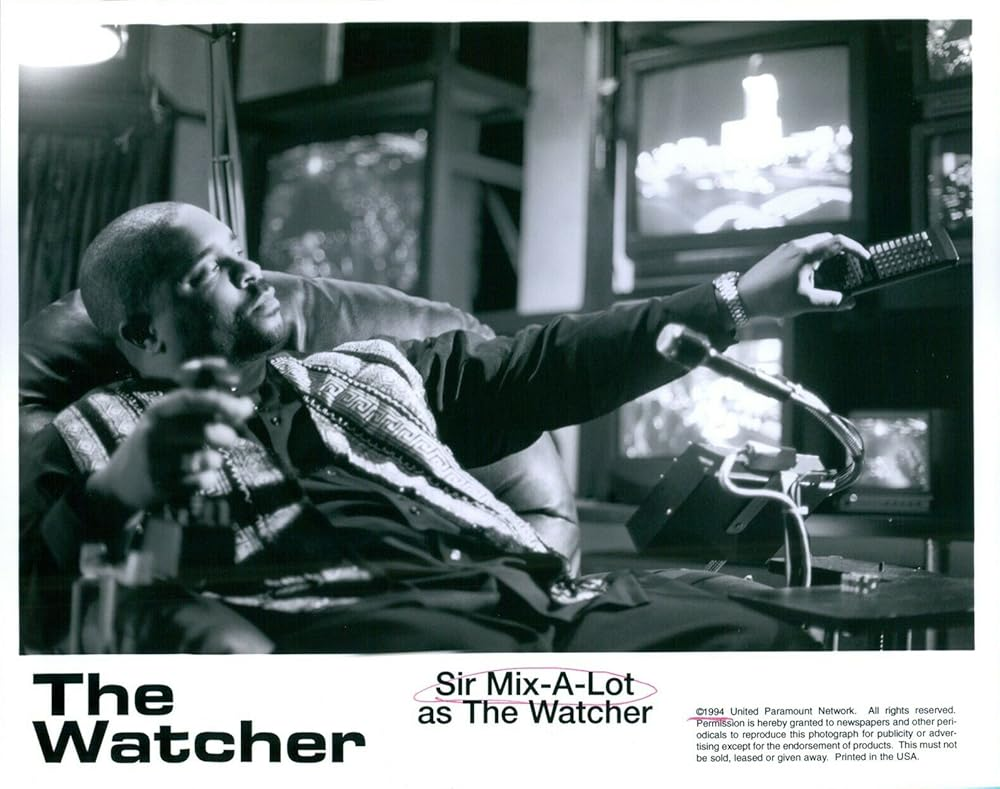
The Watcher, 1994-95

Crowe was a graphic designer turned writer who cut his teeth on Baretta, The Hardy Boys/Nancy Drew Mysteries, and BJ and the Bear, which he co-created with Glen A Larson. He based The Watcher in the Riviera Hotel, a cylindrical landmark building on the Las Vegas Strip that opened in 1955, backed by a consortium that included Harpo and Gummo Marx, as well as several renowned local gangsters. By 1993, the hotel was in financial trouble and a restructure of its ownership group sought to bring in new funds, licensing the name to The Watcher.

Other than Sir Mix-a-Lot, the only regular cast member was newcomer Bobbie Phillips as limo driver Lori Danforth, but the anthology formula allowed for plenty of guest appearances, even if the budget was somewhat lower than The Love Boat in its prime. The likes of Kathy Ireland, a young Freddie Prinze Jr, former ALF star Max Wright, and the band Cheap Trick – whose logo Crowe had designed while working for his father’s company out of college – all lined for The Watcher’s attentions, in episodes featuring gigolos, poisoners, and an Elvis lookalike competition. UPN launched on just Monday and Tuesday nights, with The Watcher given a 9pm slot (opposite Home Improvement and Frasier), but nothing the network did seemed to stick in its first year. Ahead of the Fall 1995 season, all UPN programming save for Star Trek: Voyager was cancelled, replaced by an all-new line-up that leaned more towards an African-American audience, although sadly without Sir Mix-a-Lot.

Earth 2 (NBC): Considering its origins as a top-down instruction from Steven Spielberg’s Amblin Entertainment to create, as writer Michael Duggan put it, “a Wagon Train in outer space,” there’s little about Earth 2 that is groundbreaking, except for the one thing it may never be remembered for. Not to be confused with Earth II (an unsold pilot from 1971), DC Comics alternative reality Earth-2, or the second album by Seattle drone kings Earth, Earth 2 was co-created from Amblin’s instructions by Duggan, Carol Flint, Mark Levin, and Billy Ray, writer-producers with credits between them that included LA Law, Miami Vice, The Wonder Years, and Bruce Willis thriller The Color of Night.

Seven years before the Eden Project opened the doors to its biodome, that name was also used for the central mission behind Earth 2’s concept: an expedition to find a suitable planet to house the remnants of humanity after our own Earth becomes uninhabitable. Although humanity is safely ensconced in orbiting space stations, a mysterious new disease referred to as “the syndrome” is affecting their children, apparently due to their lack of contact with Earth or an Earth-like planet. Despite the governing Council refusing to even acknowledge its existence, billionaire Devon Adair launches a mission to a planet labelled G889, twenty-two light years away in order to save eight-year-old son, Ulysses, who is stricken with the syndrome.
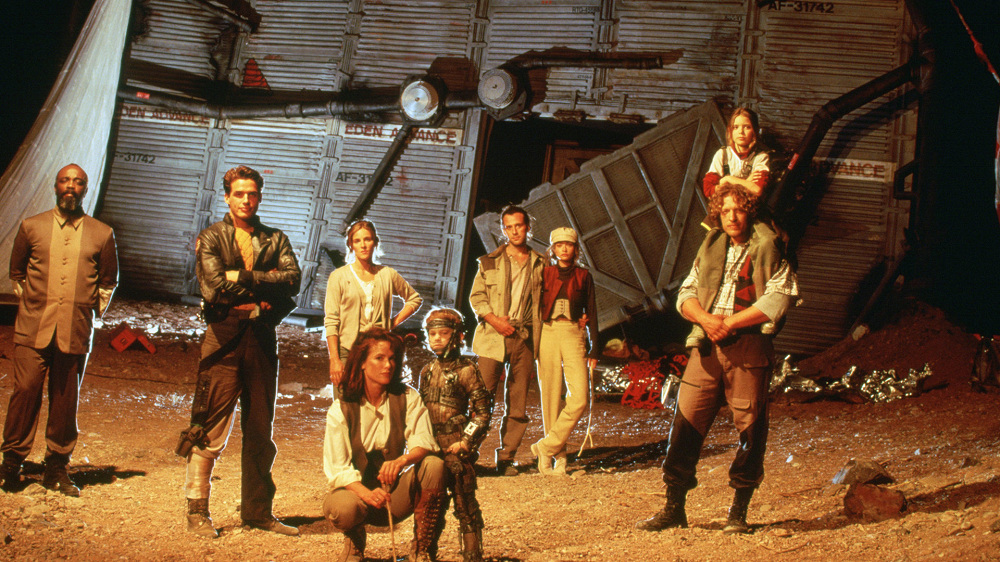
Earth 2, 1994-95

It’s here where Earth 2 differed from any other spacebound show before it in that Devon Adair – the de facto commander of the mission – is a woman. Earth 2 debuted two months before Star Trek: Voyager, but you’ll really see Adair listed ahead of Kathryn Janeway, a shame for former Hooperman star Debrah Farentino. Of course, even led by a woman, the mission goes awry almost immediately, sabotaged by conflicting interests in the Council, and the show becomes a story of a struggle to survive on the new planet, whose native occupants the Terrians are vital to its continued existence. Farentino is ably backed in the cast by Highlander’s Clancy Brown, Rebecca Gayheart, and Jessica Steen, with the likes of Tim Curry, Roy Dotrice, and Terry O’Quinn popping up in guest roles.

Earth 2 debuted with a double-length episode on Sunday November 6th 1994, paired with seaQuest DSV, another Amblin show entering its second season. Across its twenty-one episodes, the crew faced all manner of threats, from the sinister alien Grendlers, the deadly Kobas, what was left of an abandoned penal colony, and from within their own ranks, and there were plans laid for the show’s second season that saw a cured Ulysses begin to develop abilities similar to those possessed by the Terrians, which may have been part of the Council’s plan all along. Sadly, these threads were never picked up as NBC followed a move to replace Duggan as supervising producer with Gil Grant, who favoured some wholesale changes, by cancelling the show outright, citing lower than expected ratings. Despite a vocal fan campaign, Adair and company never did find New Pacifica.

Get Smart (Fox): Created by Mel Brooks and The Graduate co-writer Buck Henry, Get Smart rode the wave of the 1960s spy craze when it debuted in September 1965, three months before the fourth James Bond movie hit screens. Starring jobbing comedian Don Adams as Maxwell Smart, designated Agent 86 of CONTROL, a government agency dedicated to counterterrorism and, in particular, thwarting the schemes of KAOS. Adams’s Smart was clumsy and accident prone, yet he always managed to get the job done, helped by some equally inept enemy agents and an assortment of allies, including the beautiful Agent 99 (former model Barbara Feldon), all under the command of The Chief (Edward Platt). Get Smart lasted for five seasons on NBC (and latterly CBS), inspiring a movie return for Adams as Smart in 1980’s The Nude Bomb.

In 1989, Adams, Feldon, and several of the original series cast returned in ABC’s Get Smart, Again! In the made for TV movie, CONTROL had long been disbanded and Smart is working as a protocol officer. When KAOS threatens the world, he is reactivated as an agent and joins Agent 13, Hymie the Robot, and Agent 99 – now his wife – to thwart the KAOS plan to control the weather and keep people indoors. The reception garnered by the TV movie inspired plans for a series return for the Get Smart property, one which took five years to reach production, optioned by Fox. This made it the first TV show to air on all four major networks, although several shows had managed the earlier “big four” of ABC, CBS, NBC, and the DuMont Network.
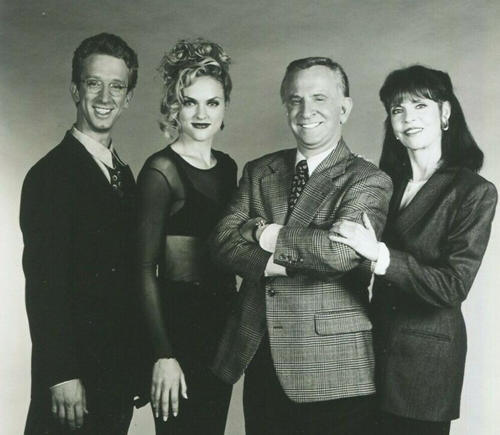
Get Smart, 1994-95

The reboot centred around Zachary Smart, CONTROL’s new star agent and the son of Maxwell Smart – now head of the agency – and Agent 99, now a congresswoman. The twin children of Smart and 99 had been introduced in the fifth season of the original show, although Zach’s twin does not appear in the reboot. Zach – played by comedian (and Second City graduate) Andy Dick – was a chip off the old block, as accident-prone and bumbling as his father, and he is assigned Agent 66 (model turned actress Elaine Hendrix) as a partner to help him through his endeavours. Joining the pair are Heather Morgan as Trudy, CONTROL’s dim-witted secretary, and Gabrielle Boni as master of disguise Agent 9.

The new series was overseen by writer/producers Michael J Di Gateano and Lawrence Gay, who’d worked together previously on the TV version of Ferris Bueller and redneck legal comedy Flesh ‘n’ Blood, as well as scripting Sinbad vehicle Houseguest. Debuting on Sunday nights on Fox in January 1995, as a lead-in for The Simpsons, the show was expected to score big with the nostalgia crowd and the slackers of Generation X, who were drawn to the simpler pop culture of the past in an ironic style. Whoever it reached, it wasn’t enough, and with just five million viewers per episode, Fox cancelled Get Smart after just seven episodes, by which time Dick was already filming NewsRadio.

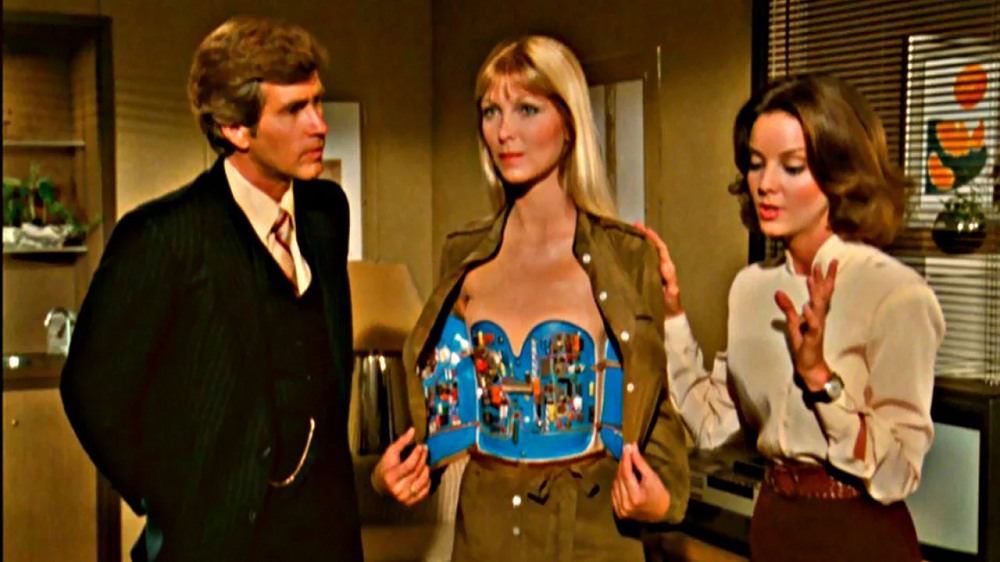
Next time on The Telephemera Years: 1994’s unsold pilots, including a bionic wedding and spacebound cops!

Check out our other Telephemera articles:

The Telephemera Years: pre-1965 (part 1, 2, 3, 4)

The Telephemera Years: 1966 (part 1, 2, 3, 4)

The Telephemera Years: 1967 (part 1, 2, 3, 4)

The Telephemera Years: 1968 (part 1, 2, 3, 4)

The Telephemera Years: 1969 (part 1, 2, 3, 4)

The Telephemera Years: 1970 (part 1, 2, 3, 4)

The Telephemera Years: 1971 (part 1, 2, 3, 4)

The Telephemera Years: 1973 (part 1, 2, 3, 4)

The Telephemera Years: 1974 (part 1, 2, 3, 4, 5)

The Telephemera Years: 1975 (part 1, 2, 3, 4)

The Telephemera Years: 1976 (part 1, 2, 3, 4)

The Telephemera Years: 1977 (part 1, 2, 3, 4)

The Telephemera Years: 1978 (part 1, 2, 3, 4)

The Telephemera Years: 1979 (part 1, 2, 3, 4, 5, 6)

The Telephemera Years: 1980 (part 12, 3, 4)

The Telephemera Years: 1981 (part 1, 2, 3, 4)

The Telephemera Years: 1982 (part 1, 2, 3, 4)

The Telephemera Years: 1983 (part 1, 2, 3, 4)

The Telephemera Years: 1984 (part 1, 2, 3, 4)

The Telephemera Years: 1986 (part 1, 2, 3, 4)

The Telephemera Years: 1987 (part 1, 2, 3, 4)

The Telephemera Years: 1989 (part 1, 2, 3, 4)

The Telephemera Years: 1990 (part 1, 2, 3, 4)

The Telephemera Years: 1991 (part 1, 2, 3, 4)

The Telephemera Years: 1992 (part 1, 2, 3, 4)

The Telephemera Years: 1994 (part 1)

The Telephemera Years: 1995 (part 12, 3, 4)

The Telephemera Years: 1997 (part 1, 2, 3, 4)

The Telephemera Years: 1998 (part 1, 2, 3, 4)

The Telephemera Years: 1999 (part 1, 2, 3, 4)

The Telephemera Years: 2000 (part 1, 2, 3, 4)

The Telephemera Years: 2001 (part 1, 2, 3, 4)

The Telephemera Years: 2002 (part 1, 2, 3, 4)

The Telephemera Years: 2003 (part 1, 2, 3, 4)

The Telephemera Years: 2005 (part 1, 2, 3, 4)

The Telephemera Years: 2006 (part 1, 2, 3, 4)

The Telephemera Years: 2007 (part 1, 2, 3, 4)

The Telephemera Years: 2008 (part 1, 23, 4)

The Telephemera Years: O Canada! (part 1, 2, 3, 4)

Titans of Telephemera: Irwin Allen

Titans of Telephemera: Stephen J Cannell (part 1, 2, 3, 4)

Titans of Telephemera: DIC (part 1, 2)

Titans of Telephemera: Filmation (part 1, 2)

Titans of Telephemera: Hanna-Barbera (part 1, 2, 3, 4, 5)

Titans of Telephemera: Kenneth Johnson

Titans of Telephemera: Sid & Marty Krofft

Titans of Telephemera: Glen A Larson (part 1, 2, 3, 4)

Titans of Telephemera: Quinn Martin (part 1, 2)

Titans of Telephemera: Rankin/Bass

Titans of Telephemera: Ruby-Spears

Titans of Telephemera: Sunbow

THE TELEPHEMERA YEARS: 1994 – PART 1

My So-Called Life, 1994-95

Ah, telephemera… those shows whose stay with us was tantalisingly brief, snatched away before their time, and sometimes with good cause. They hit the schedules alongside established shows, hoping for a long run, but it’s not always to be, and for every Street Hawk there’s two Manimals. But here at STARBURST we celebrate their existence and mourn their departure, drilling down into the new season’s entertainment with equal opportunities square eyes… these are The Telephemera Years!

1994-95

Other than perennial favourites 60 Minutes and Murder, She Wrote, the top ten ratings made poor reading for CBS in the 1994-95 season, but the network had high hopes for some of their new shows, especially sitcom Cybill – Cybill Shepherd’s return to TV after failing to translate her Moonlighting fame into movie success – and the mawkish Touched by an Angel. NBC still ruled the roost, with Seinfeld joined at the top of the ratings pile by new arrivals ER and Friends, completing an irresistible Must See TV block on Thursday nights with Mad About You. Sitcoms were also popular over at ABC, where Home Improvement, Grace Under Fire, and Roseanne all pitched up in the top ten.

Also making their bow in Fall 1994 were Party of Five on Fox and something called The Daily Show on Comedy Central, but it was genre fans who were treated best in terms of new arrivals, with Sliders (Fox), Star Trek: Voyager (UPN), and both Gargoyles and Hercules: The Legendary Journeys in syndication making it a banner year for fans of sci-fi and fantasy TV, even if they would be saying goodbye to the ground-breaking Batman: The Animated Series at the end of the year. Those were all shows that made an impact in the right way, though, but what about those that failed to land a punch or were just too damn weird for TV? This is the story of four shows from 1994 that missed the mark…

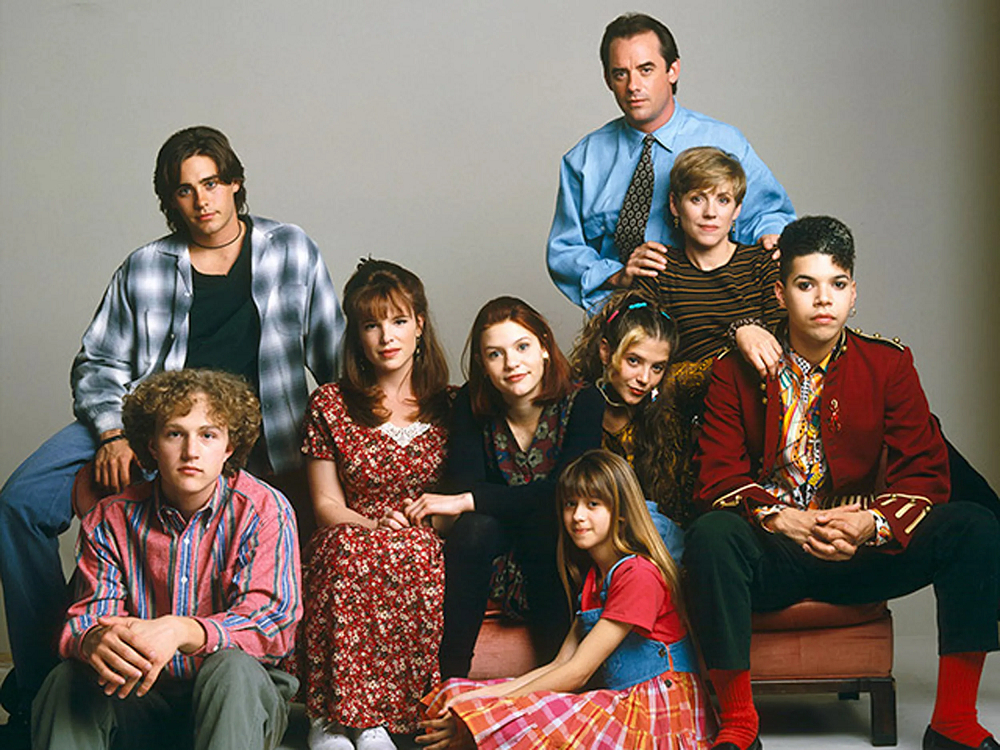
My So-Called Life (ABC): After years of striving on the New York improv comedy scene, Winnie Holzman finally got her big break in 1987 when Birds of Paradise, a musical she co-wrote years before at university, began an off-Broadway run. Unfortunately, the reviews were scathing, but Holzman moved to Los Angeles with actor husband Paul Dooley (who’d co-created The Electric Company in 1971 and was a regular guest star on TV sitcoms and dramas) and submitted a spec  script to thirtysomething after visiting her cinematographer brother on the show’s set. Holzman became a staff writer for the show, even appearing in one episode, and wrote for The Wonder Years.

thirtysomething co-creator Marshall Herskowitz had wanted to do a coming-of-age drama for some time, going so far as to unsuccessfully pitch a show called Secret/Seventeen to Showtime. Holzman, though, was taken by the idea of a “very personal, very internal” show about teenage life and – drawing on her own adolescent experiences – came up with her own “uncensored depiction of teenage life,” conducting research by talking to local teens. One of whom – the niece of a thirtysomething script co-ordinator – gave her name to the show’s main character, Angela, as well as a key phrase that would shape the whole concept: “boys have it so easy.”

My So-Called Life, 1994-95

With Herskowitz and thirtysomething co-creator Edward Zwick producing, ABC ordered a pilot to be filmed in April 1993, with newcomer Claire Danes grabbing the role of Angela after Alicia Silverstone came near, and debutant Wilson Cruz securing the part of Rickie, Angela’s sexually-ambiguous best friend. Jordan Catolano, Angela’s crush in the pilot, was played by Jared Leto, another rookie with just a handful of minor roles under his belt, and reaction to his performance – or at least his smouldering – was such that he was kept on for the subsequent series, which debuted on August 25th 1994 in a Thursday night slot against ratings juggernauts Mad About You and Friends on NBC. Despite the tough opposition, My So-Called Life earned a hardcore following from the outset, with storylines dealing with gun violence, underage drinking, homosexual experiences, teen pregnancy, and homelessness winning critical acclaim from TV reviewers and write-ups in teen magazines like Sassy.

ABC, though, didn’t seem to understand that there was a market for shows aimed at teenage girls and, despite a spirited campaign to save the show when the network announced its cancellation, the plug was pulled after just one season. A little over a year later, Danes starred in Romeo + Juliet and suddenly America realised it could market to teenage girls, with Buffy the Vampire Slayer debuting on UPN soon after, leading to a slew of shows that sought to portray the realities of teen life, with or without the threat of vampires. For a show with such a short existence, the impact of My So-Called Life was huge, making stars of Danes and Leto, influencing a generation of future TV shows, and making the 2013 list of the Writers Guild of America’s 101 Best Written TV Shows.

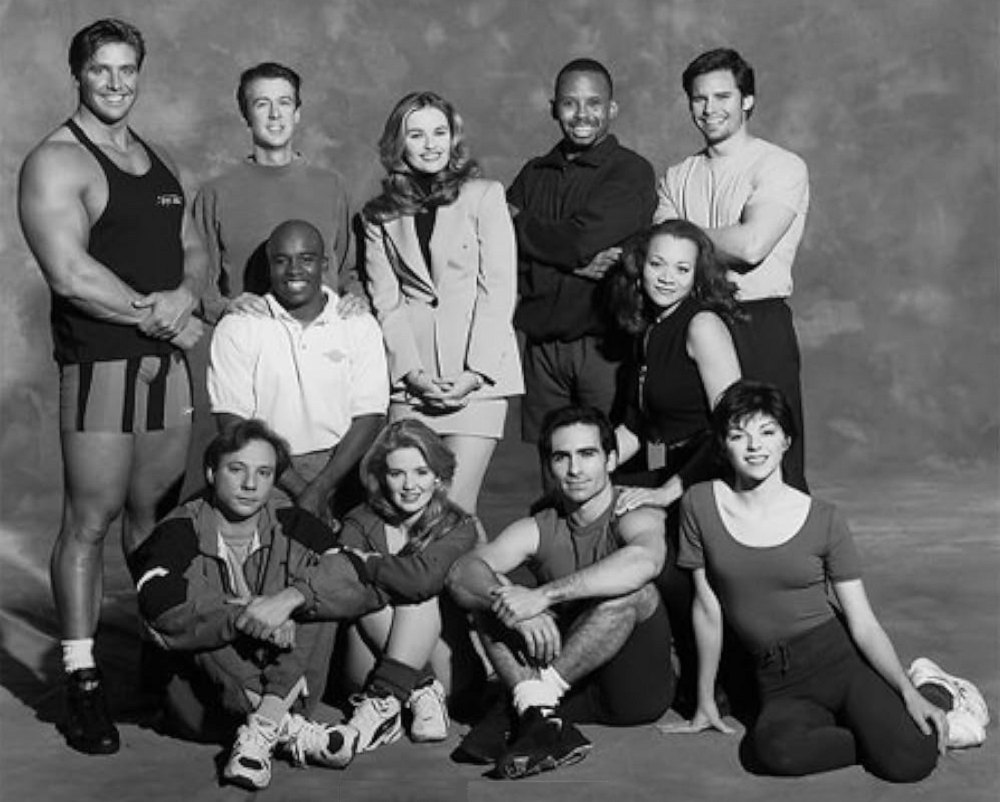
Muscle (The WB): In January 1995, The WB and UPN became the fifth and sixth networks to take to the air, nine years after Fox became the fourth, and forty-seven years after ABC broke CBS and NBC’s duopoly. The WB initially launched on Wednesday nights only, with a four-show attack led by The Wayan Bros, a sitcom starring Marlon and Shawn Wayans. Also in the line-up were family yukker The Parent ‘Hood, dysfunctional imaginary friend affair Unhappily Ever After, and Muscle, a soap opera parody starring Adam West.

Muscle was created by Rob LaZebnik, a Harvard graduate from a family of screenwriters, got his start on HBO’s satirical current affairs show Not Necessarily the News before moving onto Women in Prison (a soap opera parody set in a jail) and Empty Nest, where he also worked on the production staff. The latter was produced by Paul Junger Witt and Tony Thomas who also backed Muscle, adding it to a slate that included Blossom, The John Larroquette Show, and short-lived Dudley Moore outlet Daddy’s Girls. Although West was the big name, it was the death of his character – “Big” Jim Atkinson, founder of Survival Gyms – that kicked off the show, although he occasionally appeared in flashback in subsequent episodes.

Muscle, 1994-95

The real main character was Jim’s rebellious son Kent, played by Dan Gauthier, best known for Tour of Duty and Pauly Shore vehicle Son in Law. His relationship with his father was so poor that it Jim’s death appeared to be from a heart attack suffered when he discovered his trophy wife Jane in bed with Kent, but the revelation that Jim had been poisoned set Kent on a redemptive path to find the real killer, with Jane (Australian actress Shannon Kenny) – who inherited Survival Gyms on Jim’s death – the prime suspect! Other characters included Amy Pietz as Bronwyn Jones (Kent’s cousin and closeted lesbian newsreader), secretive gym employee Cleo (former As the World Turns star Wendy Benson), blackmailer Robert Bingham (Jerry “Teen Wolf“ Levine), and Alan Ruck as psychiatrist Dr Gold.

With more – and more ridiculous – storylines than you could shake a stick at, Muscle earned good reviews in Variety and other trade publications but struggled to find an audience who weren’t already getting their outlandish soap antics from the usual daily crop. The final episodes of the first season of all four new WB shows aired in late May, with Muscle – eager to flaunt its soap opera credentials – ending on a cliffhanger. Unfortunately, when The WB released its slate for Fall 1995, Muscle was the only one of the four missing, earning the dubious accolade of becoming the first show to be cancelled by the new network, replaced by ABC transplant Sister, Sister. LaZebnik moved on to create legal sitcom Common Law for ABC, which lasted only nine episodes, but would later find his groove on the staff of The Simpsons, where he has overseen almost four-hundred episodes as executive producer and written almost two dozen scripts of varying, late-stage Simpsons quality.

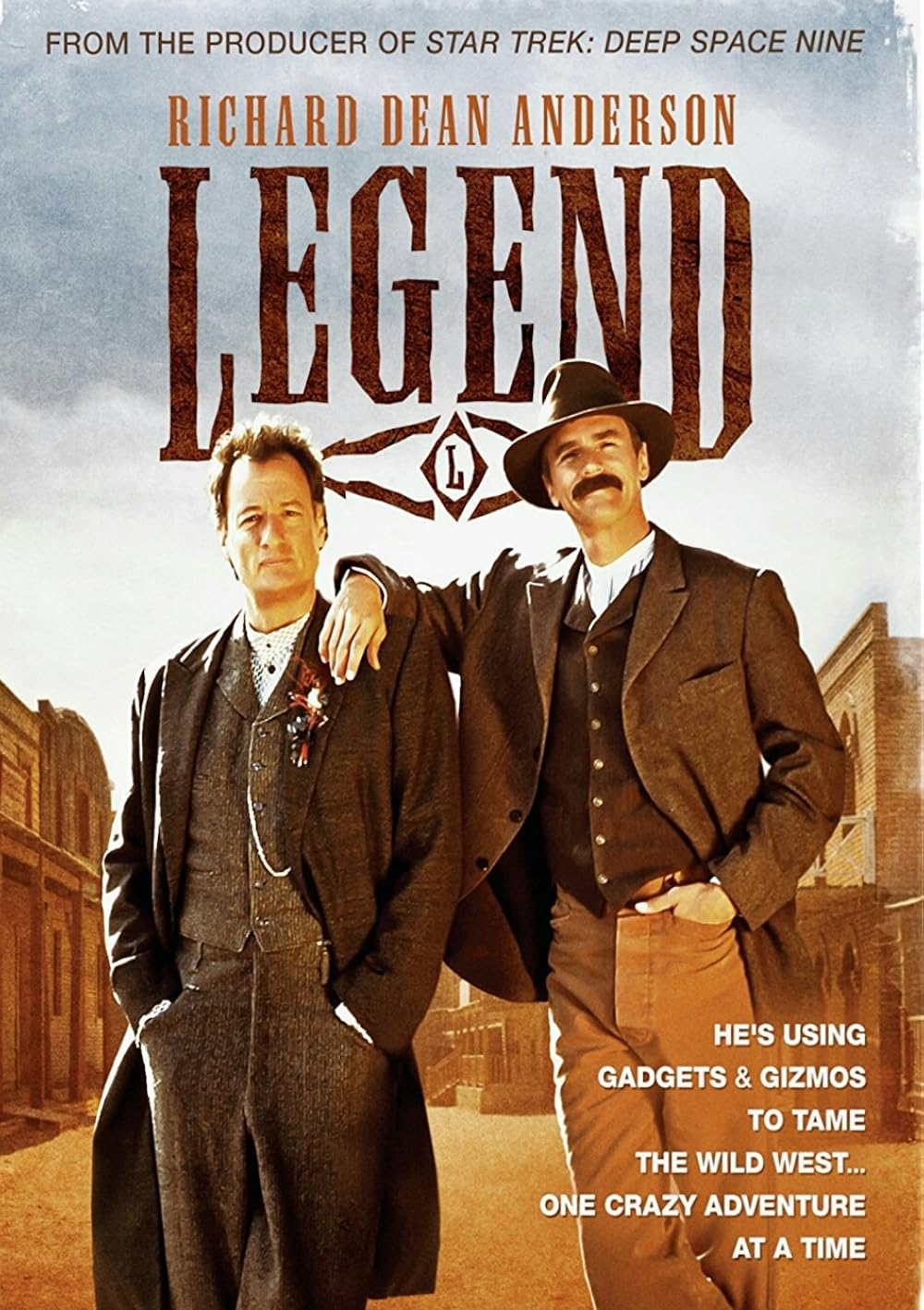
Legend (UPN): Like The WB, UPN – which stood for United Paramount Network, revealing its origins as a collaboration between cable conglomerate United Television and content provider Paramount Television – began with a limited schedule, initially operating on Monday and Tuesday nights. The network launched with a double helping of Star Trek: Voyager on Monday January 17th 1995, with its second hour given over to new comedies Platypus Man and Pig Sty a week later. Its Tuesday line-up began with Hawaiian detective show Marker and The Watcher (more about which in next week’s Telephemera Years), but from April 18th The Marker switched to 9pm while The Watcher was put on hiatus, the 8pm slot taken by new arrival Legend.

Bill Dial co-created the short-lived Codename: Foxfire and Legmen shows for NBC in the mid-1980s, the latter of which also had an episode scripted by Star Trek: Deep Space Nine creator Michael Piller. The two also worked on Simon & Simon, Sidekicks, and Deep Space Nine, formalising their partnership (although, at that point, they’d never actually written together) by forming Mike and Bill Productions. The new company’s first project was Legend, a science-fiction Western in the vein of Wild Wild West (and the recently departed The Adventures of Bisco County Jr). Legend starred Richard Dean Anderson – TV’s Macgyver – as Ernest Pratt, a gambling, womanizing, hard-drinking novelist in the San Francisco of the 1870s, getting rich and famous on the back of his most successful creation, the heroic Nicodemus Legend.


Legend, 1994-95

In the pilot episode, scripted by Dial and Piller, Pratt discovers that a man has been masquerading as Legend and that a warrant has been issued for his arrest. He tracks down the impersonator, eccentric inventor Janos Bartok (John de Lancie, Star Trek: The Next Generation’s Q), who has developed an array of gadgets based on those described by Pratt in his books that can make Legend’s heroic deeds the stuff of reality. Suffering from writer’s block and tempted by the urge to actually do some good with his life, Pratt agrees to become Legend for real, aided by the scientific genius of Bartok – a stand-in for Nikolai Tesla, to the extent that he, too, was an embittered rival of Thomas Edison – and his assistant, Huitzilopochtli Ramos (played by Mark Adair Rios).

Over the course of the first season’s twelve episodes (with a double-length opener), Legend protects immigrant farmers from unscrupulous landowners, thwarts the assassination of US President Ulysses S Grant, helps General Custer expose corruption in the War Department, and finds himself in the middle of a dispute between German hunters and the local Arapaho tribe. With guest stars including Stephanie Beacham, Alex Hyde-White, and Robert Englund, each episode brought some new fantastic case for the team, as well as testing Pratt’s resolve to act like the clean-living, noble Legend. Unfortunately, a change of management at the network resulting from lower-than-expected ratings for the station’s debut line-up resulted in the cancellation of everything other than Star Trek: Voyager, making Legend the stuff of it.

VR.5 (Fox): Although it had been used as early as 1938 to describe French avant-garde theatre, the term “virtual reality” was first used in a science-fiction context in Damien Broderick’s 1982 novel, The Judas Mandala. The concept was used to good effect in the likes of Tron and Christopher Walken starrer Brainstorm, but VR became big news in the late 1980s when VPL Research released the first commercial VR software, and exploded when Cyber God, a movie script inspired by VPL’s innovations, was Frankensteined with a decades-old Stephen King story about a gardening satyr to become Lawnmower Man. Two years later, on the back of the success of The X-Files, Fox entered the virtual reality game with VR.5, a show that would feature a virtual reality environment at the heart of a mysterious organisation known only as The Committee, which sets itself above world governments for – it claims – the good of mankind.

VR.5 was the brainchild of actress and rookie writer Jeannine Renshaw, but the idea went through multiple hands before it finally reached the screen, with the biggest contribution coming from Thania St John, an experienced writer and story editor with credits including Lois & Clark: The New Adventures of Superman, and original Fox shows 21 Jump Street and Booker. Former Fame star Lori Singer was cast as central character Sydney Bloom, a telephone operator who inherited a love of computers from her father, a computer scientist who was working on virtual reality before his death in a car accident that also claimed the life of her sister Samantha. David McCallum played Joseph Bloom in flashbacks, with Louise Fletcher – One Flew Over the Cuckoo’s Nest’s Nurse Ratched – as Sydney’s mother, Nora.

VR.5, 1994-95

In tinkering with her computers, Sydney accidentally discovers she can enter a virtual reality world where she can interact with other users. After using her new find to investigate a potential date and discovering that actions in this virtual world have real world repercussions, she is recruited by The Committee, receiving covert assignments from her handler, Frank Morgan (Will Hatton, replaced after four episodes by Anthony Head as Oliver Sampson). But how much does The Committee know about her father’s death and could he and Samantha still be alive somewhere in the virtual reality?

VR.5 debuted on March 10th 1995 as a mid-season replacement for the cancelled superhero show MANTIS, in a Friday night slot that led into The X-Files. With CBS offering Diagnosis: Murder and NBC in the middle of its eighth season of the Robert Stack presented Unsolved Mysteries, Fox hoped that VR.5 could pick up whatever “cool” audience wasn’t out partying on Friday nights, especially since the virtual reality effects put the cost of each episode at $1.5 million. In the end, the dense plotting lost all but a hardcore of viewers and, although the season ended on a cliffhanger with very little in the way of resolution, VR.5 was amongst those Fox shows not returning for Fall 1995, alongside The Critic, Dream On, and Fortune Hunter.

The Head (MTV): During his time at NYU’s Tisch School of Arts, animator Eric Fogel created Mutilator, Hero of the Wasteland, a short film described by one professor as being “inappropriate due to its violent conduct.” Despite that, Mutilator won the university’s award for Excellence in Animation and soon became a cult favourite as part of the touring Spike and Mike’s Sick and Twisted Festival of Animation. The film earned him a job at the newly established MTV Animation studio, created to produce Beavis and Butthead and develop new projects. One of these was The Head, Fogel’s follow-up to Mutilator, which aired in a segment entitled MTV’s Oddities in December 1994.

The Head revolves around Jim, a college student who wakes up to find his head has grown to gigantic proportions. A week later, a purple alien called Roy emerges and explains that he is using Jim’s head as a place to acclimatise to Earth’s atmosphere after arriving to save the planet from a rival alien named Gork. Roy has to reassemble his Anti-Invasion Machine and enlists Jim, along with a bunch of other people with unusual anomalies – including a landscaper who has a lawnmower blade stuck in his head (Ray), a pretty girl with a tail (Mona), a Russian who has a mouth in his chest (Ivan), a woman who looks like a rat (Raquel), a man with a fishbowl in his mouth (Earl), and a long-limbed former freak show performer named Chin – all led by the irritatingly normal Shane.

The Head, 1994-95

Fogel’s college pal Jason Candler voiced both Jim and Roy, with Fogel himself playing Ray and a variety of other Tisch friends and MTV staffers (none of them professional voice actors) filling out the cast. The first season consisted of thirteen fifteen-minute episodes, in which Jim’s crush Madeline is possessed by Gork and Roy gets mistaken for a California Raisin, all building to a climax in the final episode where Jim and Roy have to stop Gork’s invasion of Earth! Two episodes aired each week, with January 30th’s final episode being a double length affair, and the complete series was collected on a VHS entitled – spoilers! – The Head Saves the Earth.

MTV Oddities in April 1995 with The Maxx, but The Head would have to wait until February 1996 for its sophomore outing, by which time it had been extended to thirty-minutes per episode. After an opener in which the gang appear on a talk show and recap the events of the first season, Jim sells his soul to the Devil and its chaos from thereon in, with subsequent episodes featuring a love triangle between Ray, Raquel, and one of a pair of conjoined twins, Chin kidnapped back to China and forced to compete in an underground fighting ring, and the arrival of Roy’s brother, Mark. The second season missed the narrative momentum of the first and there was little clamour for a third, with Fogel already busy on his next MTV project – Celebrity Deathmatch – for the network’s Cartoon Sushi block.

Next time on The Telephemera Years: More of 1994’s less-remembered efforts, including George Wendt and The Maxx!

Check out our other Telephemera articles:

The Telephemera Years: pre-1965 (part 1, 2, 3, 4)

The Telephemera Years: 1966 (part 1, 2, 3, 4)

The Telephemera Years: 1967 (part 1, 2, 3, 4)

The Telephemera Years: 1968 (part 1, 2, 3, 4)

The Telephemera Years: 1969 (part 1, 2, 3, 4)

The Telephemera Years: 1970 (part 1, 2, 3, 4)

The Telephemera Years: 1971 (part 1, 2, 3, 4)

The Telephemera Years: 1973 (part 1, 2, 3, 4)

The Telephemera Years: 1974 (part 1, 2, 3, 4, 5)

The Telephemera Years: 1975 (part 1, 2, 3, 4)

The Telephemera Years: 1976 (part 1, 2, 3, 4)

The Telephemera Years: 1977 (part 1, 2, 3, 4)

The Telephemera Years: 1978 (part 1, 2, 3, 4)

The Telephemera Years: 1979 (part 1, 2, 3, 4, 5, 6)

The Telephemera Years: 1980 (part 12, 3, 4)

The Telephemera Years: 1981 (part 1, 2, 3, 4)

The Telephemera Years: 1982 (part 1, 2, 3, 4)

The Telephemera Years: 1983 (part 1, 2, 3, 4)

The Telephemera Years: 1984 (part 1, 2, 3, 4)

The Telephemera Years: 1986 (part 1, 2, 3, 4)

The Telephemera Years: 1987 (part 1, 2, 3, 4)

The Telephemera Years: 1989 (part 1, 2, 3, 4)

The Telephemera Years: 1990 (part 1, 2, 3, 4)

The Telephemera Years: 1991 (part 1, 2, 3, 4)

The Telephemera Years: 1992 (part 1, 2, 3, 4)

The Telephemera Years: 1995 (part 12, 3, 4)

The Telephemera Years: 1997 (part 1, 2, 3, 4)

The Telephemera Years: 1998 (part 1, 2, 3, 4)

The Telephemera Years: 1999 (part 1, 2, 3, 4)

The Telephemera Years: 2000 (part 1, 2, 3, 4)

The Telephemera Years: 2001 (part 1, 2, 3, 4)

The Telephemera Years: 2002 (part 1, 2, 3, 4)

The Telephemera Years: 2003 (part 1, 2, 3, 4)

The Telephemera Years: 2005 (part 1, 2, 3, 4)

The Telephemera Years: 2006 (part 1, 2, 3, 4)

The Telephemera Years: 2007 (part 1, 2, 3, 4)

The Telephemera Years: 2008 (part 1, 23, 4)

The Telephemera Years: O Canada! (part 1, 2, 3, 4)

Titans of Telephemera: Irwin Allen

Titans of Telephemera: Stephen J Cannell (part 1, 2, 3, 4)

Titans of Telephemera: DIC (part 1, 2)

Titans of Telephemera: Filmation (part 1, 2)

Titans of Telephemera: Hanna-Barbera (part 1, 2, 3, 4, 5)

Titans of Telephemera: Kenneth Johnson

Titans of Telephemera: Sid & Marty Krofft

Titans of Telephemera: Glen A Larson (part 1, 2, 3, 4)

Titans of Telephemera: Quinn Martin (part 1, 2)

Titans of Telephemera: Rankin/Bass
Titans of Telephemera: Ruby-Spears

Titans of Telephemera: Sunbow

THE TELEPHEMERA YEARS: 1979 – PART 6

The New Shmoo, 1979-80

Ah, telephemera… those shows whose stay with us was tantalisingly brief, snatched away before their time, and sometimes with good cause. They hit the schedules alongside established shows, hoping for a long run, but it’s not always to be, and for every Street Hawk there’s two Manimals. But here at STARBURST we celebrate their existence and mourn their departure, drilling down into the new season’s entertainment with equal opportunities square eyes… these are The Telephemera Years!

1979-80

Brand new for 1979, ABC’s That’s Incredible was became the third most watched show in 1979, completing a top three that also saw the alphabet network’s Three’s Company come in at number two, well behind the current affairs juggernaut of 60 Minutes. Otherwise, CBS dominated the ratings, even if it was saying goodbye to Hawaii Five-O. From Alice in fourth, down to the debuting Archie Bunker’s Place in eleventh (and taking in M*A*S*H, Dallas, and The Dukes of Hazzard, the Tiffany network was riding high, something that really could not be said for NBC, who had just three shows in the top twenty-five for the year and would soon bid farewell to old favourite The Rockford Files as it entered its final season.

There was no let up from CBS, either, with Flo, Dallas spin-off Knots Landing, M*A*S*H spin-off Trapper John MD, and the Salem’s Lot mini-series all arriving. ABC countered with Benson and Hart to Hart, while the peacock network pinned their hopes on The Facts of Life, The Misadventures of Lobo, and Buck Rogers in the 25th Century. For genre fans, Buck joined Fantasy Island, Mork & Mindy, Salvage-1, and The Incredible Hulk, but those were all shows supposedly for adults… What about the kids? This is the story of Saturday morning cartoons from the 1979 season…

The New Shmoo (NBC): An American institution, Li’l Abner debuted on August 13th 1934 and ran for forty-three years until the retirement of its creator, Al Capp, who was suffering from the emphysema that would kill him two years later. The daily comic strip satirically depicted the lives of a clan of hillbillies in the fictional Appalachian town of Dogpatch, using backwoods USA as a microcosm for the larger issues facing the nation. At its height, the strip was read by 70 million Americans, and syndicated in more than 900 newspapers. Although there was a 1959 movie adaptation (and a Broadway musical), Li’l Abner never made the jump to television, despite a pilot starring Sammy Jackson coming close in 1967, but on September 22nd 1979, weeks before Capp finally succumbed to his illness, one of its supporting cast did…

In August 1948, Capp introduced a race of beings known as the Shmoo, discovered by Abner Yokum when he ventures into the forbidden Valley of the Shmoon. Resembling living bowling pins, the Shmoo – who get their name from the lilting noise they make – have to be kept separated from humanity. “Becuz they is so bad?” asks Abner? “Because they’re so good!” their shepherd tells him! Shmoos, it turns out, are delicious and eager to be eaten. They reproduce asexually and live off nothing but oxygen and are so playful that children require no toys and adults stop watching television. The Shmoos were eventually – and horrifically – wiped out on the orders of “captain of industry” J Rockingham Fatback, but Abner secretly saved a pair, their lifespan extended beyond their allegory for greed. Capp later introduced other mythical creatures, but none quite had the impact of the Shmoo, who were briefly so popular that they replaced Mickey Mouse as the mascot for the US Treasury’s Children’s Savings Bond, and Shmoo clubs were set up all over America.

The New Shmoo, 1979-80

The New Shmoo was part of an NBC Saturday morning line-up that also included new arrivals Casper and the Angels, Fred and Barney meet the Thing, The New Adventures of Flash Gordon, and The Super Globetrotters. Shorn of his previous context, the Shmoo – voiced by industry legend Frank Welker – was joined by a group of teenagers, travelling around in their three-wheeler car. Billy Joe, Mickey, and Nita all worked for Mighty Mysteries Comics and their raison d’etre was mystery solving, continuing a tradition started by Scooby Doo and Mystery Inc and continued by The Funky Phantom, Captain Caveman, and many more.

At the beginning of December 1979, NBC reshuffled its Saturday morning pack, Frankensteining Fred and Barney Meet the Shmoo, a ninety-minute package featuring The New Fred and Barney Show (a revival of The Flintstones), The Thing (Marvel Comics’ rocky superhero in solo adventures), and The New Shmoo. As with the earlier Fred and Barney Meet the Thing, the characters did not interact outside of brief bumpers between segments, although the Shmoo would team up with Fred and Barney in the Bedrock Cops segment of The Flintstone Comedy Show a year later.

The Plastic Man Comedy/Adventure Show (ABC): One of hundreds of superheroes created during comic books’ Golden Age, Plastic Man stood out from the crowd thanks to the inventiveness of his creator, cartoonist Jack Cole. After starting out with Harry A Chesler’s studio, which sold completed comic strips to eager publishers, Cole wound up at Quality Comics a year later. There he assisted Will Eisner on The Spirit, a groundbreaking detective yarn that pushed the boundaries of what was possible in the nascent form, also creating his own Spirit clone – Midnight – for Quality’s Smash Comics.

In 1941, Quality launched Police Comics and, while Firebrand was the cover feature, Cole’s Plastic Man feature nestled in amongst the back-up features, alongside The Human Bomb, Phantom Lady, and The Mouthpiece. Firebrand and The Mouthpiece were soon replaced by The Spirit and Manhunter, but it was Plastic Man that was often cited as the book’s most popular character, the only one to appear in all 102 issues. Quality Comics ceased operations in 1956 and most of its characters were purchased by National Publications (now DC Comics). DC already had its own stretchable hero in The Elongated Man and so Plastic Man’s appearances were few and far between, save for a short run in 1966 (which was later retconned as being the son of the original).

Plastic Man, 1979-80

Perhaps that son was the one depicted in The Plastic Man Comedy/Adventure Show, the second show from Ruby-Spears Productions, a studio established by Joe Ruby and Ken Spears to compete with former employer Hanna-Barbera’s virtual monopoly on Saturday mornings. Plastic Man had almost been brought to screen in 1967 by Hal Seeger and an appearance in the 1967-68 Superman/Aquaman Hour of Adventure alongside fellow Quality alumni The Blackhawks was left on the cutting floor. He finally made his TV debut in a 1973 episode of Super Friends, but Ruby-Spears decided to put him front and centre – and in the title – of his own show.

The Plastic Man segments – in which solved mysteries with girlfriend Penny and sidekick Hula Hula – were just part of a wider, two-hour show that also featured Fangface and Fangpuss (which took the reluctant werewolf of 1978’s Fangface and gave him a similarly lycanthropic nephew), superhero and dog sidekick duo Mighty Man and Yukk, and Rickety Rocket, a talking rocket built by four black teenagers who solve mysteries in the future. The show was brought back for a second season in September 1980, which is where Baby Plas – Plastic Man and Penny having gotten married between seasons and issued – comes in, starring in his own adventures as well as those featuring the Plastic Family. For season two, the other segments were dropped, and the show switched to thirty minutes from the ninety minutes – Rickety Rocket having been ejected in January 1980 – that finished season one, renamed The Plastic Man/Baby Plas Super Comedy. Plastic Man has since become a more integrated part of the DC Universe, in comic books at least, although he is still waiting for his big return to TV…

Casper and the Angels (NBC): In 1984, Ghostbusters became a blockbuster hit after years of development, during which the proposed space setting was dropped in favour of a more urbane New York City. Perhaps Dan Aykroyd – who wrote the script as a follow-up project for he and John Belushi after the success of The Blues Brothers – had something buried in the back of his mind from the aftermath of another all-nighter, a technicolour Saturday morning glimpse into a world where ghosts and outer space came together in a way that also seemed to cash in on the popularity of Charlies’s Angels and CHiPs?

Casper the Friendly Ghost first appeared in a 1939 book, The Friendly Ghost, written by Seymour Reit and illustrated by Joe Oriolo, two Fleischer Studios staffers. Six years later, The Friendly Ghost was adapted as one of Paramount’s Noveltoons, with two original shorts following in 1948 and 1949. Casper embarked on his own Paramount series a year later, with Harvey Comics licensing the character for comic books in 1952 and later purchasing Casper outright in 1959, shortly after the final Casper the Friendly Ghost short. Speculated on The Simpsons to be the restless spirit of fellow Harvey Comics character Richie Rich, Casper’s four-colour exploits continued for thirty years in a succession of titles, until Harvey suspended publication of their comic book line in 1982. In that time, he also enjoyed some more animated adventures, this time on television, first in 1959 as part of Matty’s Funday Funnies on ABC (which aired the Paramount cartoons) and then in The New Casper Cartoon Show in 1963, also on ABC.

Casper and the Angels, 1979-80

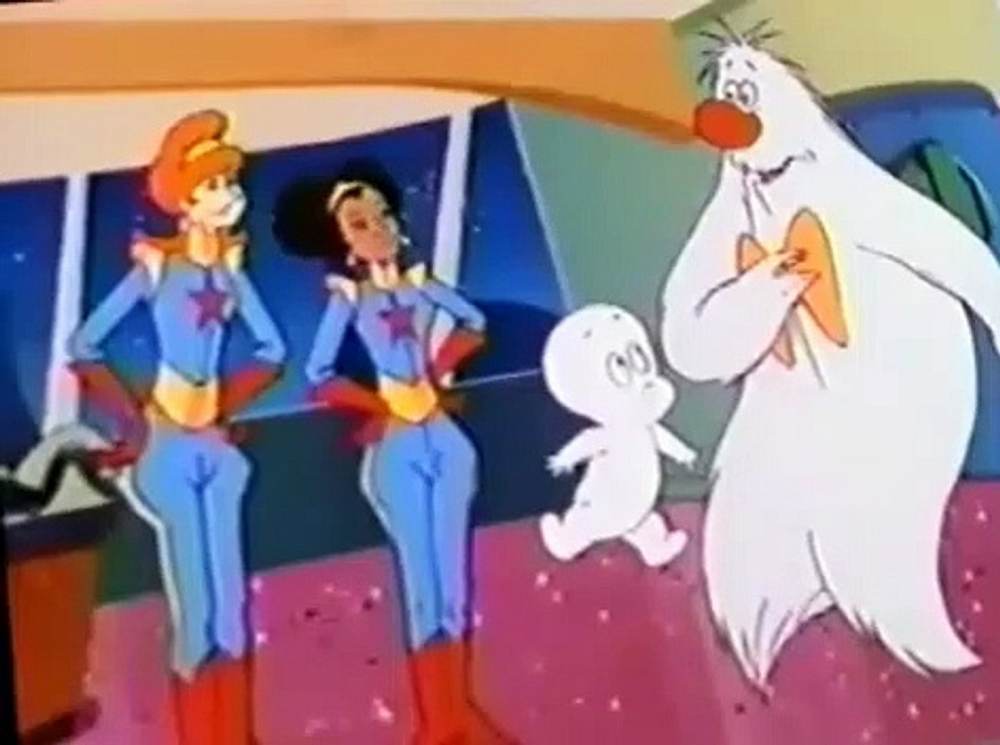
In 1979, Hanna-Barbera brought Casper back to screens as part of a revamped Saturday morning schedule on NBC. Created by William Hanna and Joseph Barbera, with a huge dollop of input from story editor Bob Ogle. Casper and the Angels saw him act as a guardian ghost to two female Space Patrol officers, helping them keep the “streets” of Space City safe in the far future year of 2179. As well as the short-tempered Maxi and ditzy Mini, thousand-year-old ghost Hairy Scary is also along for the ride, taking great pleasure in scaring the criminals of the future. Less welcome to see the friendly ghost are Nerdley and Mungo, two rival Space Patrol officers who try to hinder Maxi and Mini’s investigations, usually winding up on the rough end of their own machinations.

Thirteen episodes, with two stories per episode, were produced, in which the Casper and the girls put a stop to space hijackers, diamond smugglers, cat burglars, and art thieves. Two specials were also produced; Casper’s Halloween Special (in which Casper must stop Hairy Scary, Winnifred Witch, and Screech the Ghost upsetting trick or treaters) and Casper’s First Christmas, which guest-starred other Hanna-Barbera favourites, including Yogi Bear, Huckleberry Hound, and Snagglepuss. After that, though, Casper returned to the comic book, revived by Harvey under new owners into the new millennium and through a 1995 feature film starring Christina Ricci and Bill Pullman.

Spider-Woman (ABC): In 1964, in the pages of Avengers #9 by Stan Lee and Jack Kirby, Marvel Comics introduced a character called Wonder Man, something that did not go down well with their rivals across town at DC. Accused on infringing DC’s copyright on Wonder Woman, Marvel put the character into mothballs rather than face a lawsuit but were surprised when DC created the character of Power Girl in 1976, four years after Archie Goodwin and George Tuska created Power Man for Marvel. Realising that they really needed to lock down female equivalents of their male characters, lest DC (or someone else) do it again, Stan Lee ordered the creation of Spider-Woman, brought to life Marvel Spotlight #32 by Goodwin and Marie Severin. At least, that’s the way Lee tells it, and – for the vast majority of the last sixty-plus years – no-one dared say otherwise, the real story probably lost somewhere along the way in a mix of deliberate obfuscation and polite acquiescence to the Marvel founder.

Whatever the story behind her creation, Spider-Woman – as created by Goodwin, an actual spider evolved into a human woman – appeared again in Marvel Two-in-One, where writer Marv Wolfman and artist John Buscema presented a different origin story for Jessica Drew, involving the High Evolutionary and the terrorist group Hydra. Spun off into her own title, a succession of writers wove Jessica’s story over the next five years, seemingly ending with her death in the final issue, 1983’s #50. However, fan reaction was such that this was reversed almost immediately, leaving Spider-Woman powerless instead.

Spider-Woman, 1979-80

Two years after her debut in Marvel Spotlight, Spider-Woman was announced as the star of her own Saturday morning show on ABC, courtesy of DePatie-Freleng Enterprises. Founded in 1963 for ex-Warner Bros Cartoons employees David H DePatie and Fritz Freleng, the studio had entered the orbit of Marvel Comics a year earlier when DFE’s Lee Gunther worked out a deal to acquire the rights to The Fantastic Four. Hanna-Barbera were already preparing their own Fantastic Four show and a swift compromise was found by trading the rights to Godzilla, which DePatie-Freleng were scheduled to produce, for Marvel’s first family. Having completed a full season of The New Fantastic Four, DePatie-Freleng were the natural choices for Marvel’s next animated show.

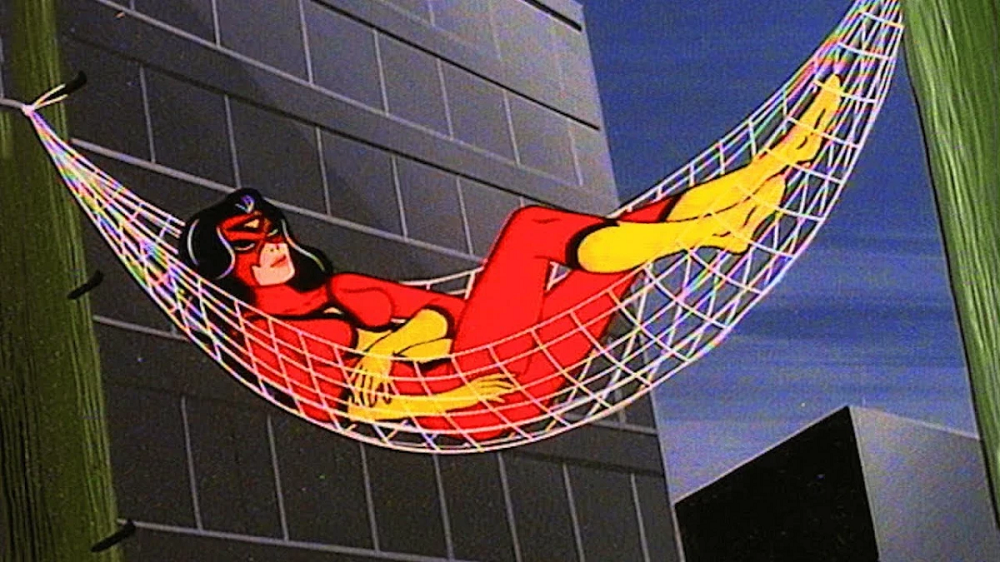
Spider-Woman debuted on September 22nd 1979 with some minor changes made from the comic books. Rather than work as a private investigator, Jessica Drew is the editor of Justice magazine, travelling the world with her nephew Billy and photographer Jeff Hunt. At the first sign of trouble, Jessica slips away and changes into Spider-Woman, borrowing the “spinning around” trope from Wonder Woman, using her spider-powers (which are more akin to Spider-Man’s than her comic book counterpart) to solve the case. Spider-Man himself made a guest appearance in the show and it was well-received, both critically and by fans. Still, as was the norm for the majority of shows, just one season was produced, with DePatie-Freleng sold wholesale to Marvel Animation shortly after.

Next time on The Telephemera Years: We’re off to 1994 for some virtual reality and teenage drama!

Check out our other Telephemera articles:

The Telephemera Years: pre-1965 (part 1, 2, 3, 4)

The Telephemera Years: 1966 (part 1, 2, 3, 4)

The Telephemera Years: 1967 (part 1, 2, 3, 4)

The Telephemera Years: 1968 (part 1, 2, 3, 4)

The Telephemera Years: 1969 (part 1, 2, 3, 4)

The Telephemera Years: 1970 (part 1, 2, 3, 4)

The Telephemera Years: 1971 (part 1, 2, 3, 4)

The Telephemera Years: 1973 (part 1, 2, 3, 4)

The Telephemera Years: 1974 (part 1, 2, 3, 4, 5)

The Telephemera Years: 1975 (part 1, 2, 3, 4)

The Telephemera Years: 1976 (part 1, 2, 3, 4)

The Telephemera Years: 1977 (part 1, 2, 3, 4)

The Telephemera Years: 1978 (part 1, 2, 3, 4)

The Telephemera Years: 1979 (part 1, 2, 3, 4, 5)

The Telephemera Years: 1980 (part 12, 3, 4)

The Telephemera Years: 1981 (part 1, 2, 3, 4)

The Telephemera Years: 1982 (part 1, 2, 3, 4)

The Telephemera Years: 1983 (part 1, 2, 3, 4)

The Telephemera Years: 1984 (part 1, 2, 3, 4)

The Telephemera Years: 1986 (part 1, 2, 3, 4)

The Telephemera Years: 1987 (part 1, 2, 3, 4)

The Telephemera Years: 1989 (part 1, 2, 3, 4)

The Telephemera Years: 1990 (part 1, 2, 3, 4)

The Telephemera Years: 1991 (part 1, 2, 3, 4)

The Telephemera Years: 1992 (part 1, 2, 3, 4)

The Telephemera Years: 1995 (part 12, 3, 4)

The Telephemera Years: 1997 (part 1, 2, 3, 4)

The Telephemera Years: 1998 (part 1, 2, 3, 4)

The Telephemera Years: 1999 (part 1, 2, 3, 4)

The Telephemera Years: 2000 (part 1, 2, 3, 4)

The Telephemera Years: 2001 (part 1, 2, 3, 4)

The Telephemera Years: 2002 (part 1, 2, 3, 4)

The Telephemera Years: 2003 (part 1, 2, 3, 4)

The Telephemera Years: 2005 (part 1, 2, 3, 4)

The Telephemera Years: 2006 (part 1, 2, 3, 4)

The Telephemera Years: 2007 (part 1, 2, 3, 4)

The Telephemera Years: 2008 (part 1, 23, 4)

The Telephemera Years: O Canada! (part 1, 2, 3, 4)

Titans of Telephemera: Irwin Allen

Titans of Telephemera: Stephen J Cannell (part 1, 2, 3, 4)

Titans of Telephemera: DIC (part 1, 2)

Titans of Telephemera: Filmation (part 1, 2)

Titans of Telephemera: Hanna-Barbera (part 1, 2, 3, 4, 5)

Titans of Telephemera: Kenneth Johnson

Titans of Telephemera: Sid & Marty Krofft

Titans of Telephemera: Glen A Larson (part 1, 2, 3, 4)

Titans of Telephemera: Quinn Martin (part 1, 2)

Titans of Telephemera: Rankin/Bass
Titans of Telephemera: Ruby-Spears

Titans of Telephemera: Sunbow

THE TELEPHEMERA YEARS: 1979 – PART 5

Vampire, 1979-80

Ah, telephemera… those shows whose stay with us was tantalisingly brief, snatched away before their time, and sometimes with good cause. They hit the schedules alongside established shows, hoping for a long run, but it’s not always to be, and for every Street Hawk there’s two Manimals. But here at STARBURST we celebrate their existence and mourn their departure, drilling down into the new season’s entertainment with equal opportunities square eyes… these are The Telephemera Years!

1979-80

Brand new for 1979, ABC’s That’s Incredible was became the third most watched show in 1979, completing a top three that also saw the alphabet network’s Three’s Company come in at number two, well behind the current affairs juggernaut of 60 Minutes. Otherwise, CBS dominated the ratings, even if it was saying goodbye to Hawaii Five-O. From Alice in fourth, down to the debuting Archie Bunker’s Place in eleventh (and taking in M*A*S*H, Dallas, and The Dukes of Hazzard, the Tiffany network was riding high, something that really could not be said for NBC, who had just three shows in the top twenty-five for the year and would soon bid farewell to old favourite The Rockford Files as it entered its final season.

There was no let up from CBS, either, with Flo, Dallas spin-off Knots Landing, M*A*S*H spin-off Trapper John MD, and the Salem’s Lot mini-series all arriving. ABC countered with Benson and Hart to Hart, while the peacock network pinned their hopes on The Facts of Life, The Misadventures of Lobo, and Buck Rogers in the 25th Century. For genre fans, Buck joined Fantasy Island, Mork & Mindy, Salvage-1, and The Incredible Hulk, but those were all shows that made it to air… What about the ones that fell at the final hurdle? This is the story of even more unsold pilots from the 1979 season…

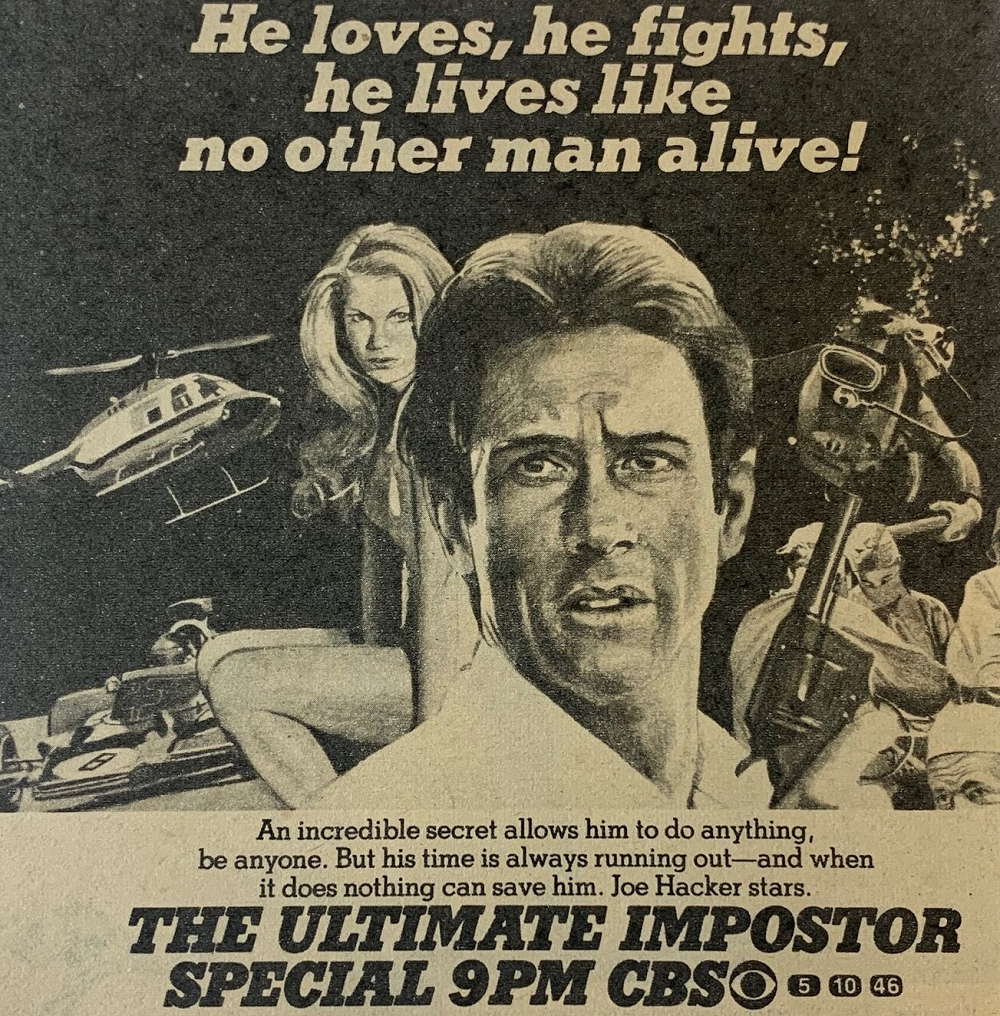
The Ultimate Impostor (CBS): The annals of TV history are filled with backdoor pilots, those episodes of an established TV show given over to concepts and characters with the intention of spinning them off into their own shows if the audience reaction is favourable enough. It’s rare, though, that such concepts get two bites of the cherry, but The Ultimate Impostor was either too good a premise (or at least too catchy a name) that it bucked the trend. The first “Ultimate Imposter” came as the twelfth episode of the fourth season of The Six Million Dollar Man, broadcast on January 2nd 1977, an episode directed by Paul Stanley and written by Lionel E Siegel and William T Zacha.

Topped and tailed by appearances from Steve Austin, the episode focussed on his friend Joe Patton, the subject of an experiment to transfer knowledge from a computer into a human brain. Using his acquired knowledge and abilities, Patton becomes the Office of Scientific Intelligence’s newest agent, but the process has hidden dangers that soon become apparent. The backdoor pilot didn’t pay off, and the episode marked the only appearance of Patton, as played by Stephen Marcht, who later became Gene Roddenberry’s first choice to play Jean-Luc Picard in Star Trek: The Next Generation before the role was given to Patrick Stewart,

The Ultimate Impostor, 1979-80

Two years later, Stanley, Siegel, and Zacha tried again, this time teaming up for a TV movie to act as pilot for a prospective series, The Six Million Dollar Man having finished its run the year before. This time, The Ultimate Impostor (with an O in place of an E) was Frank Monihan (Joseph Hacker), an American spy who is captured by the Commies and has his memory wiped clean. Returned to the boss Eugene Danziger (Tora! Tora! Tora!’s Keith Andes), Monihan is considered perfect for the experimental transfer of a volume of information from a computer in order to give him the knowledge and abilities to save a Russian defector from enemy agents. The only catch? The transfer last for just 72 hours, setting a fixed deadline for the rescue! Hacker was joined in the cast by Norman Burton as Soviet refusenik Papich, with Erin Gray (soon to set teenage hearts aflutter as Dr Wilma Deering in Buck Rogers in the 25th Century) as Monihan’s concerned girlfriend, Bucky, Macon McCalman as the scientist who performs the operation, and a debut for Rosalind Chao.

As with the earlier backdoor pilot, the network – this time CBS, rather than ABC – were not interested in taking the pilot to series, instead airing it in their Saturday CBS Movie slot on May 12th 1979. Both Siegel and Zacha continued to work in TV into the 1980s, although Zacha returned to his first love of acting, appearing in minor roles in shows such as CHiPs, Quincy, ME (which he also wrote for), The Greatest American Hero, and Hunter, while director Stanley helmed episodes of Knight Rider, Street Hawk, MacGyver, and Crazy Like a Fox before his retirement in 1987.

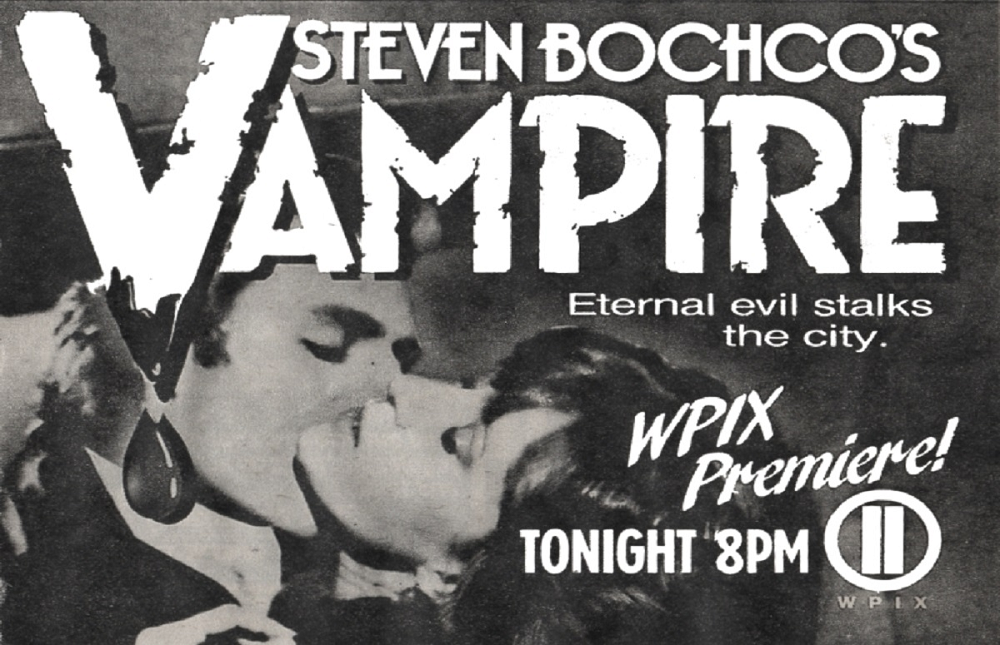
Vampire (ABC): Although the James Earl Jones-starring Paris was not the hit he’d hoped for, it was clear that signing up with MTM Enterprises was a solid move by Steven Bochco. The company, established by Mary Tyler Moore and her then-husband Grant Tinker, had promised to give Bochco the production opportunities he was unable to secure at Universal Television, where he’d worked on Columbo, Ironside, and other detective yarns. In development alongside Paris were two other shows, a medical drama called Operating Room and Vampire, a blend of detective drama and horror, the latter no doubt inspired by Stephen King’s ‘Salem’s Lot, a 1975 novel about vampiric murders in a small town sparked by the arrival of an Austrian antique dealer.

‘Salem’s Lot was itself turned into a TV mini-series starring David Soul and James Mason on CBS in November 1979, which probably didn’t do much for Vampire’s prospects of being picked up as a series, but ABC ordered a pilot for Bochco’s new project, which he wrote it with Michael Kozoll. Kozoll got his start on Kolchak, The Night Stalker, a proto-X-Files that began with a vampire yarn; he came into Bochco’s orbit on Delvecchio, also working on Richie Brockelman: Private Eye and Paris, and would go on to co-create Hill Street Blues with his mentor. Their script for Vampire was set in San Francisco, where wealthy architect John Rawlins attends a dedication ceremony for an old estate that it being turned into a church. As the crowd leaves, no-one notices that the shadow of the newly raised cross is burning the ground, smoke that materialises into a shadowy figure…

Vampire, 1979-80

This is Anton Voytek, a Hungarian prince who makes his public debut days later under the cover of arriving in the city to unearth a buried museum that once belonged to his family. Voytek’s arrival coincides with a series of brutal, vampiric murders, including Rawlins’s wife, Leslie. Seeking answers, Rawlins teams up with retired cop Harry Kilcoyne, who remembers the last time the city was struck by a spree of unsold murders, thirty years before. A wealthy architect out to avenge the murder of his trophy wife may have been an odd choice of protagonist, but Jason Miller had already earned supernatural sympathies as Father Damien Karras in The Exorcist, and his pairing with EG Marshall – one of the first graduates of Elia Kazan’s Actors Studio – paid decent dividends as they sought to combat Richard Lynch’s ancient evil.

TV veteran EW Swackhammer was brought in to direct, his record of shepherding two of every three pilots he directed to series an attractive prospect, and hopes were high that the show would join ABC’s Fall 1979 line-up as a rare TV horror outing. Unfortunately, the network passed, but showed the pilot as a TV movie in October 1979, beating ‘Salem’s Lot to air by a month. Mostly forgotten now, contemporary critics were generally complementary, with particular praise for the acting, and Lynch himself declared it his favourite role of a long career.

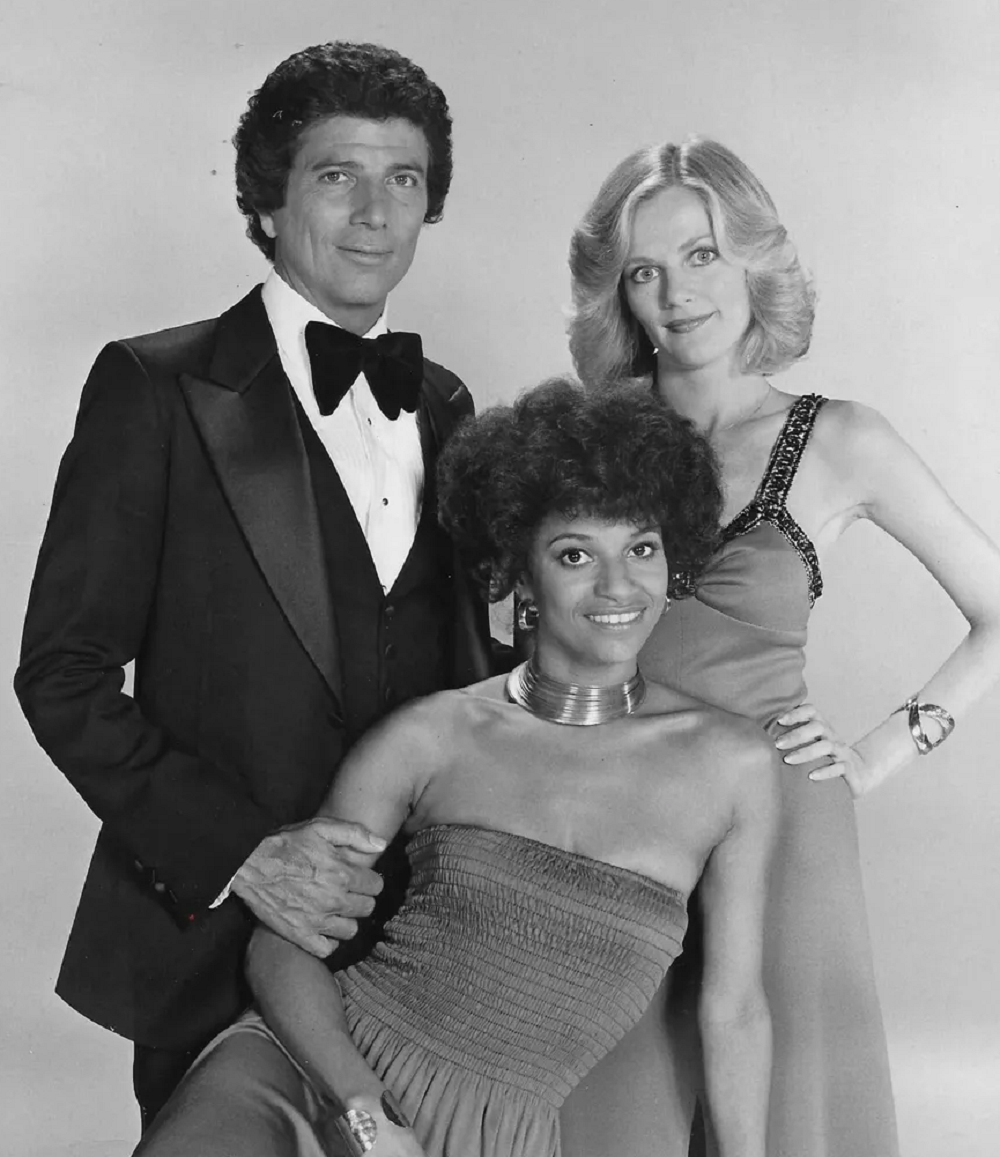
Ebony, Ivory and Jade (CBS): Ah, the ongoing search to find a fresh angle for the standard private detective drama! In 1979, the nets cast in deeper waters dredged up Ebony, Ivory and Jade, unrelated to the blaxploitation classic of three years earlier (and which would have made a good TV show itself, a mixed-race Charlie’s Angels two decades before Drew Barrymore, Lucy Liu, and Cameron Diaz took up that mantle). This Ebony, Ivory and Jade starred Bert Convy, a former minor league baseball player turned Broadway actor best known as a guest panellist on game shows such as The Match Game and What’s My Line? Convy played Mick Jade, a former tennis bum turned Las Vegas song and dance man, who moonlights as a private eye, possibly as part of some wider intelligence agency (the pilot isn’t clear on this).

To solve his cases, Jade teams up with two female dancers – Ebony and Ivory – played by future Fame taskmistress Debbie Allen and Martha Smith, a former Playboy Playmate of the Month who had just made her feature film debut as Babs Jensen in National Lampoon’s Animal House. This unorthodox set-up was the creation of Ann Beckett and Mike Farrell, or rather their pen names of Annie Scott and DB Cooper. Beckett received her first writing credit on an episode of Little House on the Prairie in 1975, before scripting several episodes of the Rich Man, Poor Man Book II adaptation. Farrell was better known to many as BJ Hunnicutt on M*A*S*H, a part he played from 1975 until the show’s much-watched finale in 1983.

Ebony, Ivory And Jade, 1979-80

Their script was given a polish by veteran British screenwriter Jimmy Sangster, who had written many of Hammer’s most vaunted horror films and produced the project for Ernie Frankel’s Frankel Productions, purveyors of such fine fare as Young Dan’l Boone and Nashville 99. CBS ordered a pilot, which was shot by John Llewellyn Moxey, a British director who worked on classic genre shows The Avengers, The Baron, and The Saint, before moving to the US and continuing his career with episodes of Mission Impossible, Hawaii Five-O, The Mod Squad, and Kung Fu, and the pilots for The Night Stalker and (perhaps most apposite) Charlie’s Angels. In the pilot, the trio have to go undercover to help Dr Adela Teba (Nina Foch), a Middle Eastern scientist, reach Washington DC with her cachet of secret formulas before assassins – led by Donald Moffet and Lucille Benson – can strike.

At some point, both singer Frankie Valli and comedian David Brenner pop up as themselves, but the whole thing makes about as much sense as you’d expect, even if the dialogue, direction, and individual performances are snappy. With plenty of potential for a series both set in Vegas and following this Ebony, Ivory, and Jade around, it was probably a surprise when CBS passed, showing the pilot as a TV movie in August 1979, right before the start of a new season in which it had every right to be a part of.

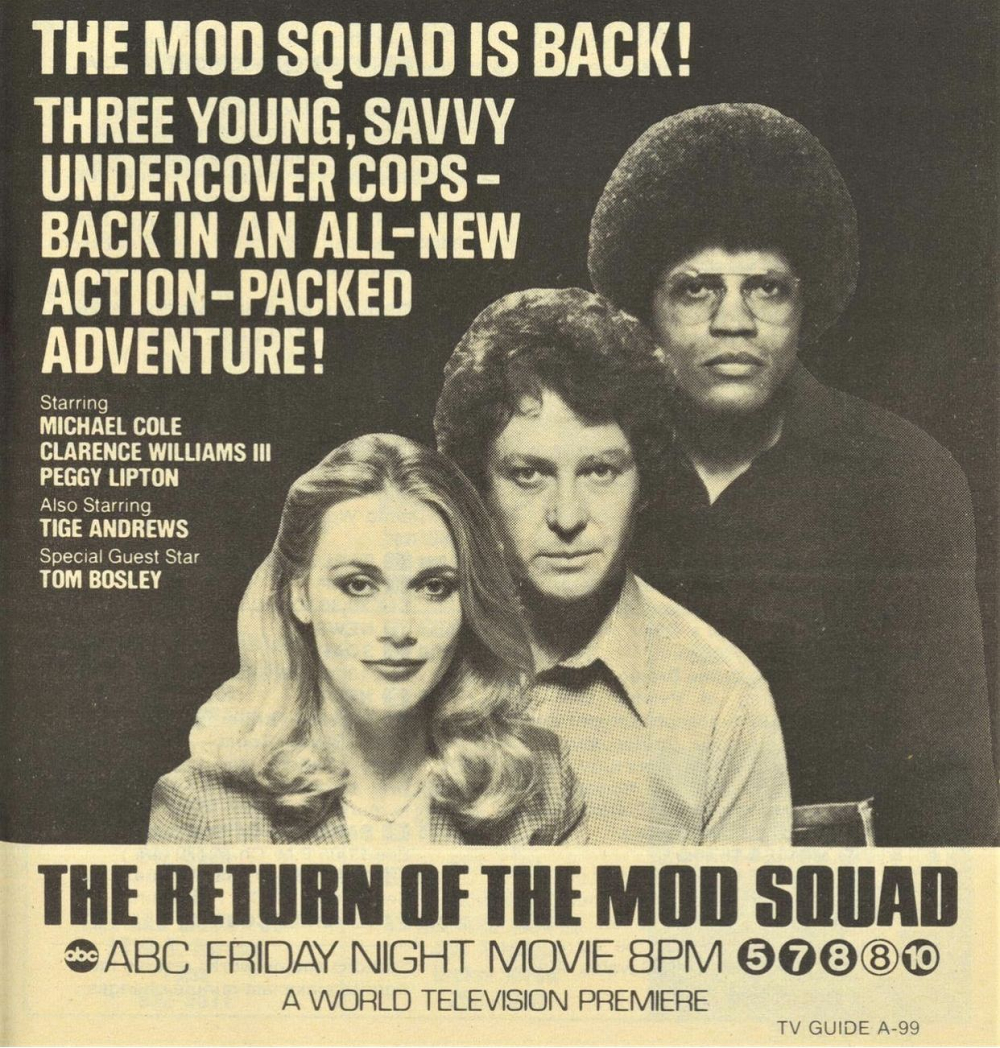
Return of the Mod Squad (ABC): Bursting onto television screens in September 1968, right as the rest of America was feeling the groove from the summer of love the year before, The Mod Squad was an attempt to cross counterculture cool with cop show conflict. Created by Buddy Ruskin, a former police officer who later became a private detective, The Mod Squad was based on his experiences working undercover on the narcotics squad of the Los Angeles Sheriffs department. Ruskin wrote the first pilot in 1960, at the tail end of the beatnik culture, but couldn’t sell it until 1968, right when the counterculture had swung back into vogue.

The Mod Squad went on to enjoy a five-season run, finally bowing out in March 1973. The core cast remained throughout, with Tige Andrews’s Captain Adam Greer overseeing a trio of young charges, offered a chance to work as undercover cops rather than face criminal charges. Rebellious rich kid Pete Cochran had turned on his family and was arrested for burning out a car, flower child Julie Barnes (former model Peggy Lipton) was picked up for vagrancy after running away from her prostitute mother’s home, and Lincoln Hayes (Clarence Williams III) had been involved in the Watts riots. In the hands of producers Aaron Spelling and Danny Thomas, the show became an instant hit, watched by over seventeen million viewers in its first season and a high of over twenty million in season three.

The Return of the Mod Squad, 1979-80

Once The Mod Squad ended, all three of its young principals had trouble finding regular work. Cole drifted and Williams mostly took to the stage, while Lipton married musician Quincy Jones and retired to raise a family. Their relative lack of stardom made them available in 1979 when Spelling decided to bring The Mod Squad back, detailing former actress Lynn Loring (who had moved into producing in the mid-1970s) with overseeing the project. Lipton said she did the pilot as a favour for Spelling, who also managed to tempt back Andrews to reprise the role of Captain Greer with a story that saw the (now not so) young trio reuniting to combat a threat to Greer’s life, a ploy to get them back together so one of their former enemies – played by Tom Bosley – can exact his revenge.

Return of the Mod Squad was aired on ABC on May 18th 1979 as an ABC Friday Night Movie, but with ratings less than hoped for – and Lipton’s reluctance to return to full-time acting, something she didn’t consider until Twin Peaks in 1989 – there were no further outings for the trio, despite Spelling hoping to bring the show back for the Fall 1979 season. Instead, The Mod Squad lay dormant, the butt of lazy jokes, until 1999, when indie director Scott Silver made his major studio debut with a remake, starring Claire Danes, Omar Epps, and Giovanni Ribisi. The movie bombed, falling short of its modest budget at the box office, and The Mod Squad returned to being purely the stuff of nostalgic yearnings.

Next time on The Telephemera Years: Finally, we move on from unsold pilots to what the kids were watching in 1979!

Check out our other Telephemera articles:

The Telephemera Years: pre-1965 (part 1, 2, 3, 4)

The Telephemera Years: 1966 (part 1, 2, 3, 4)

The Telephemera Years: 1967 (part 1, 2, 3, 4)

The Telephemera Years: 1968 (part 1, 2, 3, 4)

The Telephemera Years: 1969 (part 1, 2, 3, 4)

The Telephemera Years: 1970 (part 1, 2, 3, 4)

The Telephemera Years: 1971 (part 1, 2, 3, 4)

The Telephemera Years: 1973 (part 1, 2, 3, 4)

The Telephemera Years: 1974 (part 1, 2, 3, 4, 5)

The Telephemera Years: 1975 (part 1, 2, 3, 4)

The Telephemera Years: 1976 (part 1, 2, 3, 4)

The Telephemera Years: 1977 (part 1, 2, 3, 4)

The Telephemera Years: 1978 (part 1, 2, 3, 4)

The Telephemera Years: 1979 (part 1, 2, 3, 4)

The Telephemera Years: 1980 (part 12, 3, 4)

The Telephemera Years: 1981 (part 1, 2, 3, 4)

The Telephemera Years: 1982 (part 1, 2, 3, 4)

The Telephemera Years: 1983 (part 1, 2, 3, 4)

The Telephemera Years: 1984 (part 1, 2, 3, 4)

The Telephemera Years: 1986 (part 1, 2, 3, 4)

The Telephemera Years: 1987 (part 1, 2, 3, 4)

The Telephemera Years: 1989 (part 1, 2, 3, 4)

The Telephemera Years: 1990 (part 1, 2, 3, 4)

The Telephemera Years: 1991 (part 1, 2, 3, 4)

The Telephemera Years: 1992 (part 1, 2, 3, 4)

The Telephemera Years: 1995 (part 12, 3, 4)

The Telephemera Years: 1997 (part 1, 2, 3, 4)

The Telephemera Years: 1998 (part 1, 2, 3, 4)

The Telephemera Years: 1999 (part 1, 2, 3, 4)

The Telephemera Years: 2000 (part 1, 2, 3, 4)

The Telephemera Years: 2001 (part 1, 2, 3, 4)

The Telephemera Years: 2002 (part 1, 2, 3, 4)

The Telephemera Years: 2003 (part 1, 2, 3, 4)

The Telephemera Years: 2005 (part 1, 2, 3, 4)

The Telephemera Years: 2006 (part 1, 2, 3, 4)

The Telephemera Years: 2007 (part 1, 2, 3, 4)

The Telephemera Years: 2008 (part 1, 23, 4)

The Telephemera Years: O Canada! (part 1, 2, 3, 4)

Titans of Telephemera: Irwin Allen

Titans of Telephemera: Stephen J Cannell (part 1, 2, 3, 4)

Titans of Telephemera: DIC (part 1, 2)

Titans of Telephemera: Filmation (part 1, 2)

Titans of Telephemera: Hanna-Barbera (part 1, 2, 3, 4, 5)

Titans of Telephemera: Kenneth Johnson

Titans of Telephemera: Sid & Marty Krofft

Titans of Telephemera: Glen A Larson (part 1, 2, 3, 4)

Titans of Telephemera: Quinn Martin (part 1, 2)

Titans of Telephemera: Rankin/Bass
Titans of Telephemera: Ruby-Spears

Titans of Telephemera: Sunbow

THE TELEPHEMERA YEARS: 1979 – PART 4

Young Guy Christian, 1979-80

Ah, telephemera… those shows whose stay with us was tantalisingly brief, snatched away before their time, and sometimes with good cause. They hit the schedules alongside established shows, hoping for a long run, but it’s not always to be, and for every Street Hawk there’s two Manimals. But here at STARBURST we celebrate their existence and mourn their departure, drilling down into the new season’s entertainment with equal opportunities square eyes… these are The Telephemera Years!

1979-80

Brand new for 1979, ABC’s That’s Incredible was became the third most watched show in 1979, completing a top three that also saw the alphabet network’s Three’s Company come in at number two, well behind the current affairs juggernaut of 60 Minutes. Otherwise, CBS dominated the ratings, even if it was saying goodbye to Hawaii Five-O. From Alice in fourth, down to the debuting Archie Bunker’s Place in eleventh (and taking in M*A*S*H, Dallas, and The Dukes of Hazzard, the Tiffany network was riding high, something that really could not be said for NBC, who had just three shows in the top twenty-five for the year and would soon bid farewell to old favourite The Rockford Files as it entered its final season.

There was no let up from CBS, either, with Flo, Dallas spin-off Knots Landing, M*A*S*H spin-off Trapper John MD, and the Salem’s Lot mini-series all arriving. ABC countered with Benson and Hart to Hart, while the peacock network pinned their hopes on The Facts of Life, The Misadventures of Lobo, and Buck Rogers in the 25th Century. For genre fans, Buck joined Fantasy Island, Mork & Mindy, Salvage-1, and The Incredible Hulk, but those were all shows that made it to air… What about the ones that fell at the final hurdle? This is the story of four more unsold pilots from the 1979 season…

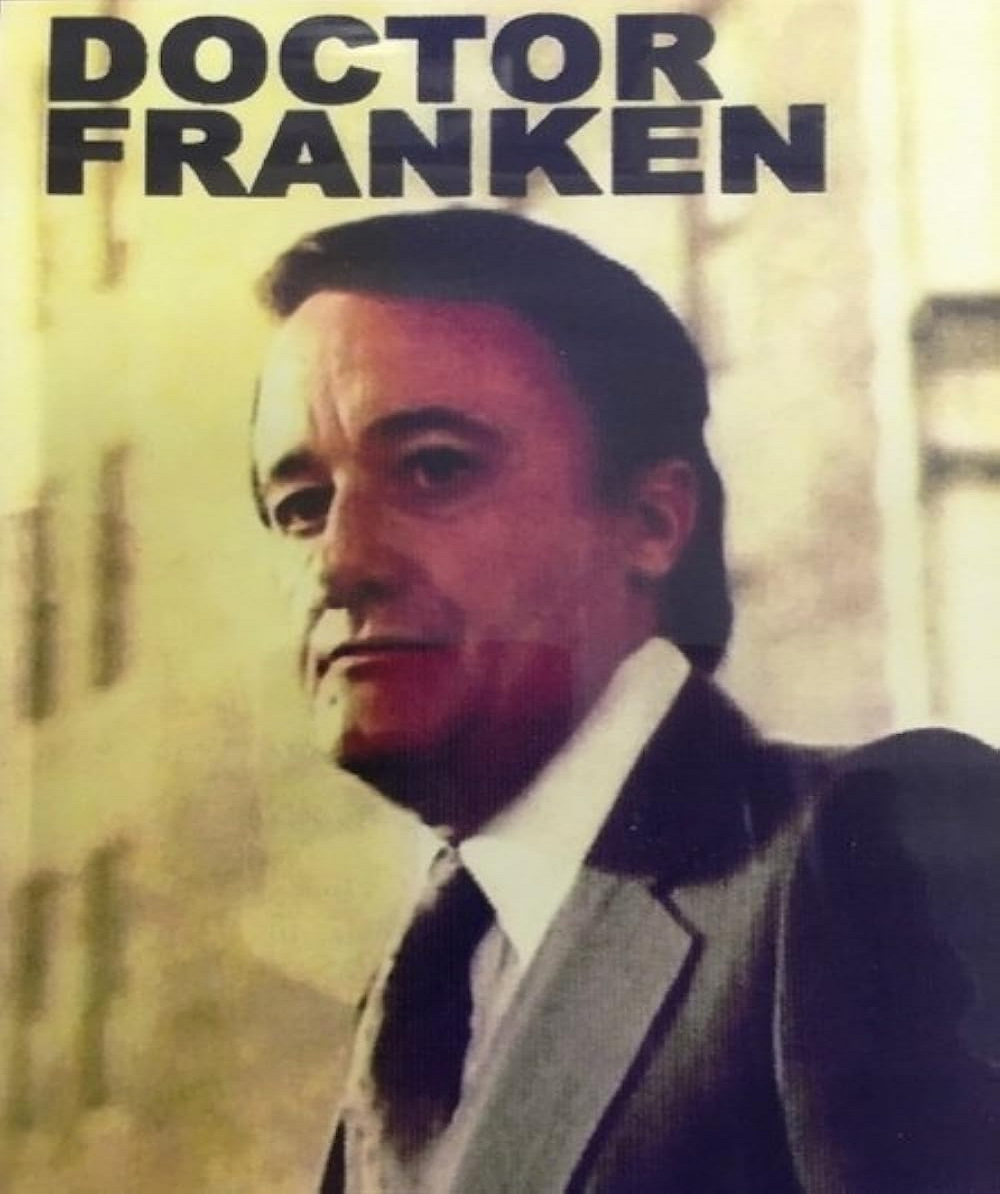
Doctor Franken (NBC): With a twist of fate, the short-lived Struck by Lightning may not have been the only 1979 TV show inspired by Mary Shelley’s 1818 novel Frankenstein, but rather than a whimsical sitcom (albeit one built around a possibly homicidal monster), Doctor Franken would have been very serious business indeed. Initially titled The Franken Project, the show was the brainchild of Jeff Lieberman, a writer-director who had made a sensational start to his career with 1976’s Squirm, a low-budget horror flick about electrically charged carnivorous earthworms. Lieberman followed that up with Blue Sunshine a year later, where a series of murder victims are linked by a batch of LSD they took a decade before.

His script for The Franken Project centred on Dr Arno Franken, a brilliant yet reckless surgeon at a New York hospital, who keeps a comatose “John Doe” patient alive in a secluded hospital room, periodically adding body parts and spare organs to prolong the patient’s life. After the hospital becomes suspicious, Franken moves the patient to the basement of his house, but it is discovered by a rival doctor, whose attempt to kill the experiment ends up with Doe revived and the doctor dead. With John Doe wandering the streets in search of the families of those whose body parts he inherited (and presumably righting wrongs as he goes), the scope for a wandering the Earth-style show is established, one with a very inhuman human angle.

Doctor Franken, 1979-80

The Franken Project was picked up by Titus Productions, a company founded by producers Herbert Brodkin and Robert Berger in 1965 and which had recently produced the Emmy Award winning mini-series Holocaust. Titus sold NBC on a pilot and Lieberman was hired to direct, with Robert Vaughn – who had just starred in the Colorado-specific mini-series The Centennial – cast as Franken. Joining Vaughn in the cast were Dark Shadows’ David Selby as the evil Dr Foster, Teri Garr (who’d appeared in Mel Brooks’s Young Frankenstein five years earlier) as the girlfriend of the man who gave the patient his eyes, and virtual unknown Robert Perrault as Doe himself. As the pilot neared completion, Berger and Brodkin began to voice concerns about Lieberman’s direction, eventually bringing in Holocaust director Marvin J Chomsky to oversee the completion of the project, for which he was given a co-director credit.

NBC wound up passing on taking The Franken Project to series but did seek to recoup their losses by airing the pilot as a TV movie, part of The Big Event – their renamed NBC Sunday Night Movie slot – in January 1980. It met with a generally favourable response, but the ship had sailed by then, with Vaughn extremely busy, Lieberman going back to his roots with slasher camp schlocker Just Before Dawn, and Titus Productions preparing for a sale to Taft Broadcasting, but not before trying pretty much the same thing again with 1981’s The Henderson Monster, starring Stephen Collins as a maverick scientist tinkering with DNA, only with more talking and Christine Lahti.

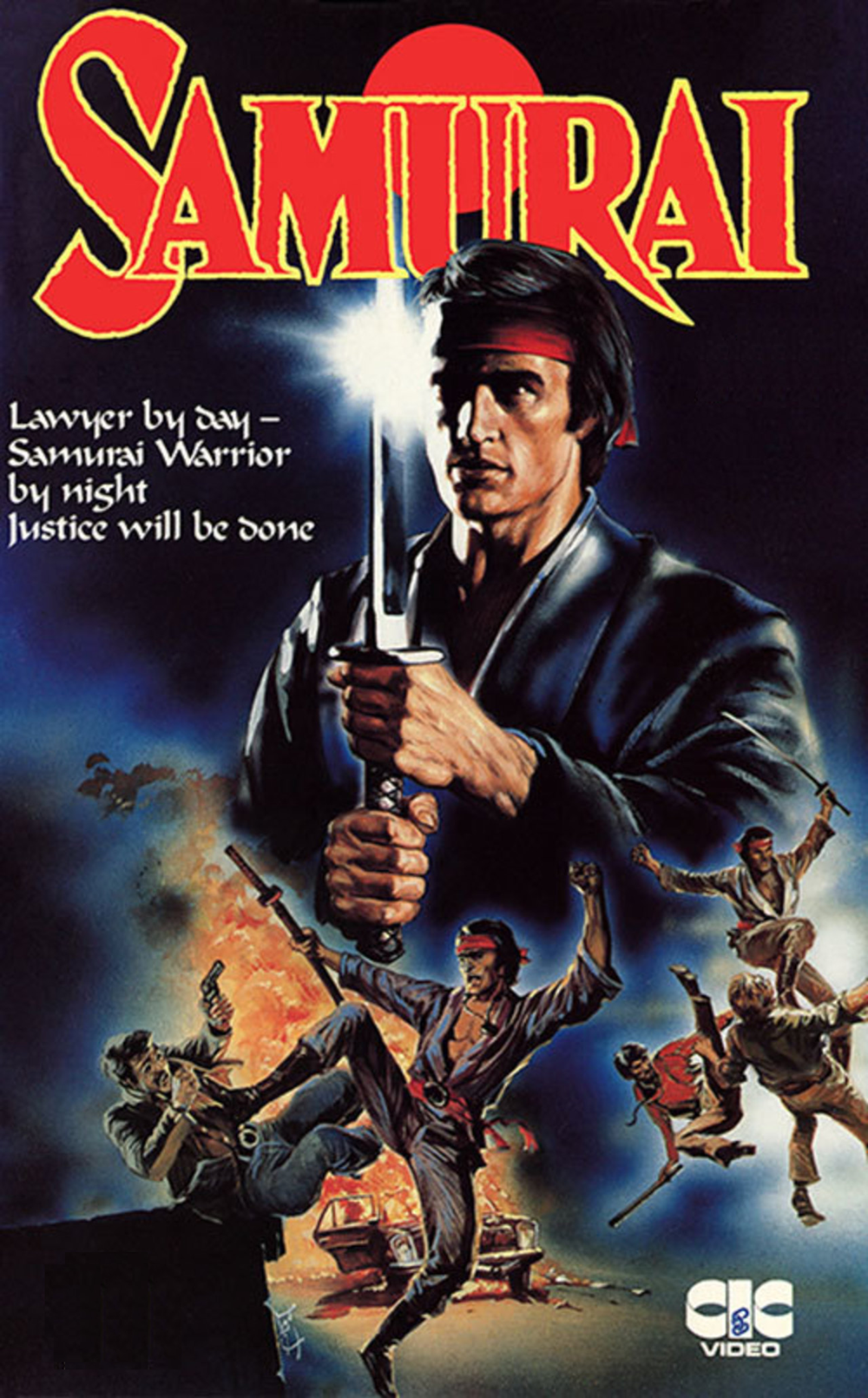
Samurai (ABC): The kung-fu craze that gripped the US in the early 1970s had largely subsided by 1975 when James Clavell reignited popular passion for the Orient with Shōgun, his bestselling novel about a 17th century Englishman who travelled to Japan and rose to high rank in the service of a shōgun, a military ruler appointed by the emperor. Although it was the third in Clavell’s series of novels set in feudal Japan, the novel became a sensation, selling six million copies by 1980, when it was adapted into a blockbuster TV mini-series starring Richard Chamberlain.

Beating Shōgun to air by a year would have been Samurai, created by Jerrold L Ludwig, a seasoned scriptwriter with credits for Hawaii Five-O, Police Story, Mission: Impossible, and more on his résumé. Since creating short-lived spy series Assignment: Vienna in 1972, Ludwig had written several unsold pilots, including Wheeler and Murdoch, The Log of the Black Pearl, and early Tom Selleck and Robert Ulrich project Bunco, often in conjunction with Eric Bercovici, who would go on to write… Shōgun. Ludwig’s concept for Samurai, however, was much nearer to the stories of the earlier kung fu craze, the story of Lee Cantrell, a young Asian American lawyer from San Francisco who prosecutes criminals by day and fights them at night, grabbing his gi and his samurai sword to dispense the justice the courts often cannot provide.

Samurai, 1979-80

Produced by Danny Thomas (The Mod Squad) and Fernando Lamas, and directed by Le Mans director Lee H Katzin (who’d also worked with Ludwig on Mission: Impossible), the pilot saw Cantrell do battle with a crazed businessman who has built an earthquake machine that could trigger the San Andreas fault and destroy California. Cast in the lead role was Joe Penny, an English-born actor with just a handful of roles under his belt, mostly as the best friend or sister’s boyfriend character, but who would go on to co-star in Stephen J Cannel’s Riptide and become Jake alongside William Conrad’s Fatman in the long-running eponymous series. Back-up came from a checklist of “what was he in?” actors, including James Shigeta as Cantrell’s mentor Takeo, Dana Elcar as District Attorney Boyd, and Norman Alden as Lieutenant di Nito, Cantrell’s friend on the force, while Charles Cloffi played Amory Bryson, the villain of the piece.

ABC were interested enough to order a pilot but rather than take it to series, they burned it off as TV movie in April 1979 in the hole in their schedules between Monday Night Football ending and the start of Monday Night Baseball. Richard Chamberlain and Shōgun would arrive fifteen months later, by which time Katzin had returned to Police Story and Ludwig was working on Jessica Novak, a series about a human-interest TV reporter that did get picked up by CBS, although only seven episodes aired before it was cancelled. Today’s FBI fared slightly better at nineteen episodes, but it was work for hire thereafter, including stint as a producer on MacGyver and Murder, She Wrote.

S*H*E (CBS): The release of Dr No in 1962 made James Bond a household name, launching a craze for spy films, TV shows, comic books, and novels that exploded in the mid-1960s. Dozens of movies were released each year, all featuring their own take on the debonair spy. A distaff version of the suave secret agent appeared a year later in the comic strip Modesty Blaise, although Honor Blackman’s Cathy Gale had slunk her way onto The Avengers in September 1962, with Emma Peel and Tara King following in her footsteps further into the 1960s. Modesty Blaise herself received a film adaptation in 1966, and The Girl from UNCLE enjoyed a solitary season that same year, but otherwise the vast majority of cinematic and televisual spies continued to be white males like Bond himself.

In 1974, Police Woman became the first hour-long TV police drama to feature a female main character and networks began scrambling for similar, XX-chromosome thrills. Ivan Goff and Ben Roberts created Charlie’s Angels for ABC in 1976, with the three principles veering from private detective to outright espionage work, and NBC’s The Bionic Woman was a very action-oriented female hero, but CBS wanted their own slice of the woman spy pie, which is where Richard Maibaum comes into – or rather, back into – the story. A prolific screenwriter either side of service in World War Two, Maibaum was hired to script Dr No alongside his friend Wolf Mankowitz. Their original script was rejected after they made Dr No a monkey and Mankowitz walked, but Maibaum submitted a second draft, filmed with further tweaks by Johanna Harwood and Berkely Mather.

SHE, 1979-80

Maibaum worked on most of the Bond films that followed, receiving sole writing credits for On Her Majesty’s Secret Service and Live and Let Die, and was one of many writers who contributed to the script for The Spy Who Loved Me in 1977. When the series producers decided to give Moonraker to Christopher Wood, Maibaum instead wrote his own spy script, one featuring a female version of 007 instead. Maibaum’s script for S*H*E: Security Hazards Expert was bought by Martin Bregman, a former night club agent who’d moved into movies with 1973’s Serpico, which he followed with Dog Day Afternoon in 1975 and The Next Man a year later.

Envisaging S*H*E as the first in a series of TV movies, or as the pilot for a weekly network show, Bregman went big on the cast, hiring Omar Sharif to play the villain of the piece, and bringing Anita Ekberg back to the screen for the first time in seven years. Bregman cast his then-wife Cornelia Sharpe in the lead role of Lavinia Kean, aka S*H*E, touring Europe to thwart the machinations of Sharif’s Italian blackmailer. Maibaum had already written a follow-up, but CBS – and the cinema-going audience when it was later released theatrically – were just not interested in a sexy female Bond. Instead, Maibaum returned to the real thing, working on every Bond film until his death in 1991.

Young Guy Christian (ABC): It’s quite possible – probable, even – that a few things might be omitted when Shelley Long talks of her long career in TV and movies, a career which exploded thanks to her role in Cheers as Diane and took in box office hits before returning to TV in Modern Family. After making her dramatic debut in an episode of The Love Boat in 1978, Long guested in an episode of family yarn Family a year later, and then appeared in a TV movie alongside Natalie Wood in The Cracker Family. If things had gone slightly differently, her next role might have been her first as a series regular, leaving her unavailable to for Cheers and altering the course of history as we know it. Of course, that would also have needed for Young Guy Christian to be actually funny, so it’s fair to say that the universe got this one right.

Young Guy Christian was created by Jerry Belson and Michael Leeson, two experienced scriptwriters who had first worked together on the TV version of The Odd Couple. Belson had broken into TV with his original writing partner Garry Marshall (who would go on to create Happy Days) and was one of several uncredited writers on Close Encounters of the Third Kind, while Leeson had written for The Partridge Family, Happy Days, and The Mary Tyler Moore Show and its spin-offs, Phyllis and Rhoda. The pair concocted a show whose title character, although ostensibly the hero of the piece, was an inept socialite, who bumbled his way through to a successful climax, thwarting the villain of the week with plenty of slapstick along the way.

Young Guy Christian, 1979-80

Starring as Guy Christian was Barry Bostwick, a fascinating character who started out as a part of a rock theatre troupe before the Ringling Brothers and Barnum and Bailey Circus hired him to be part of a clown-themed rock band called The Klowns. The Klowns produced just one minor Billboard hit – “Lady Love” – and Bostwick went into musical theatre, becoming the original Danny Zuko on Boradway in Grease. The Rocky Horror Picture Show (in which he played uptight Brad) followed, but Bostwick found it hard to secure major roles and went back to TV, appearing in an episode of Charlie’s Angels before being cast as Guy. Pat Morita – in between stints on Happy Days – co-starred as Professor Mishugi, with Long playing Mishugi’s daughter Mia, and the regular cast would have been rounded out by Richard Karron as Guy’s hulking android assistant, Junkman.

The thirty-minute pilot saw Guy tackle the evil Dr Gasss (played by Charles Tyner, Boss Higgins in Cool Hand Luke), who has kidnapped six Miss Planet contestants and will only agree to return them in return for the components to build a hydrogen bomb. Needless to say, after some smooching and plenty of misunderstandings, our hero succeeds in saving the day, but despite Junkman promising there would be plenty more catastrophes that would need their attention, Guy Christian was never called upon again.

Next time on The Telephemera Years: Yet more failed pilots! What was going on in 1979?!?

Check out our other Telephemera articles:

The Telephemera Years: pre-1965 (part 1, 2, 3, 4)

The Telephemera Years: 1966 (part 1, 2, 3, 4)

The Telephemera Years: 1967 (part 1, 2, 3, 4)

The Telephemera Years: 1968 (part 1, 2, 3, 4)

The Telephemera Years: 1969 (part 1, 2, 3, 4)

The Telephemera Years: 1970 (part 1, 2, 3, 4)

The Telephemera Years: 1971 (part 1, 2, 3, 4)

The Telephemera Years: 1973 (part 1, 2, 3, 4)

The Telephemera Years: 1974 (part 1, 2, 3, 4, 5)

The Telephemera Years: 1975 (part 1, 2, 3, 4)

The Telephemera Years: 1976 (part 1, 2, 3, 4)

The Telephemera Years: 1977 (part 1, 2, 3, 4)

The Telephemera Years: 1978 (part 1, 2, 3, 4)

The Telephemera Years: 1979 (part 1, 2, 3)

The Telephemera Years: 1980 (part 12, 3, 4)

The Telephemera Years: 1981 (part 1, 2, 3, 4)

The Telephemera Years: 1982 (part 1, 2, 3, 4)

The Telephemera Years: 1983 (part 1, 2, 3, 4)

The Telephemera Years: 1984 (part 1, 2, 3, 4)

The Telephemera Years: 1986 (part 1, 2, 3, 4)

The Telephemera Years: 1987 (part 1, 2, 3, 4)

The Telephemera Years: 1989 (part 1, 2, 3, 4)

The Telephemera Years: 1990 (part 1, 2, 3, 4)

The Telephemera Years: 1991 (part 1, 2, 3, 4)

The Telephemera Years: 1992 (part 1, 2, 3, 4)

The Telephemera Years: 1995 (part 12, 3, 4)

The Telephemera Years: 1997 (part 1, 2, 3, 4)

The Telephemera Years: 1998 (part 1, 2, 3, 4)

The Telephemera Years: 1999 (part 1, 2, 3, 4)

The Telephemera Years: 2000 (part 1, 2, 3, 4)

The Telephemera Years: 2001 (part 1, 2, 3, 4)

The Telephemera Years: 2002 (part 1, 2, 3, 4)

The Telephemera Years: 2003 (part 1, 2, 3, 4)

The Telephemera Years: 2005 (part 1, 2, 3, 4)

The Telephemera Years: 2006 (part 1, 2, 3, 4)

The Telephemera Years: 2007 (part 1, 2, 3, 4)

The Telephemera Years: 2008 (part 1, 23, 4)

The Telephemera Years: O Canada! (part 1, 2, 3, 4)

Titans of Telephemera: Irwin Allen

Titans of Telephemera: Stephen J Cannell (part 1, 2, 3, 4)

Titans of Telephemera: DIC (part 1, 2)

Titans of Telephemera: Filmation (part 1, 2)

Titans of Telephemera: Hanna-Barbera (part 1, 2, 3, 4, 5)

Titans of Telephemera: Kenneth Johnson

Titans of Telephemera: Sid & Marty Krofft

Titans of Telephemera: Glen A Larson (part 1, 2, 3, 4)

Titans of Telephemera: Quinn Martin (part 1, 2)

Titans of Telephemera: Rankin/Bass
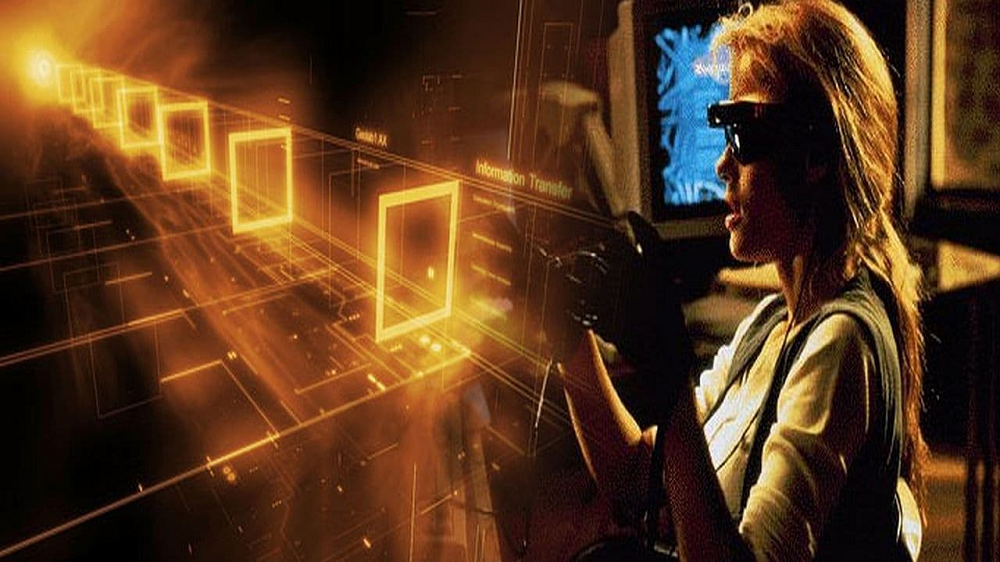
Titans of Telephemera: Ruby-Spears

Titans of Telephemera: Sunbow

Naruto – Netflix Adaptation Will It Match the Greatness of the Anime Version?

Anime has grown increasingly popular worldwide due to its unique animation styles, engaging storylines, and wide variety of genres that appeal to diverse audiences. Many anime series build immersive worlds with complex characters that viewers can connect with emotionally. The storytelling captures viewers’ imagination and interest across age groups. Visually striking artwork and action sequences also draw viewers in. Anime explores thought-provoking themes and concepts.

The global reach of anime distribution through internet streaming services has enabled more people to discover and access anime content, and anime’s blend of fantastical elements with relatable human stories and characters makes it an appealing medium of entertainment for a growing global audience.

Why Anime Fans Love Naruto

First debuting as a manga in 1999 and then adapted into an anime series in 2002, Naruto captured the hearts of millions of fans across the globe, with 1.7 billion global views. It has since become the most watched anime due to its coming-of-age storyline, which follows Naruto Uzumaki, an outcast ninja who dreams of becoming the leader of his village.

The anime version has a whole legion of online fans who relate to Naruto’s underdog struggle to gain respect. The creators have built an immersive ninja world with unique lore. Fans love Naruto’s determination and growth as well as the bonds he forms with friends like Sasuke Uchiha, and Naruto inspires viewers to believe in themselves and never give up on their dreams and values. Its themes of friendship, loyalty, and redemption resonate widely.

Given Naruto’s massive popularity and influence, it was exciting news when Netflix announced it would be adapting the anime into a live-action series. However, anime purists have expressed scepticism about whether the adaptation can truly capture the original’s magic.

Here we explore the challenges facing the Naruto Netflix adaptation and whether it can match the greatness of the anime.

Casting the Iconic Characters

One of the biggest challenges facing any live-action anime adaptation is casting the right actors to play the beloved characters. Naruto has an extensive cast of colourful, larger-than-life figures like Naruto Uzumaki, Sasuke Uchiha, and Sakura Haruno. Finding young actors who can convincingly portray these characters and match the connection the audience has formed with the anime versions will be crucial to the adaptation’s success.

The characters in Naruto start off as pre-teens, but the story soon jumps forward in time by several years. This will make it hard to use the same actors for the entire adaptation.

In addition, while appearance can be adapted through costumes and styling, the actors will need to capture the mannerisms and spirit of the anime characters. Poor casting choices could easily shatter the illusion for loyal Naruto fans.

Netflix will need to cast a talented set of young, relatively unknown actors who can grow into their roles across future seasons and age in a believable way. If Netflix takes its time to film successive seasons, the actors will age beyond the age of their characters, which is going to look jarring on-screen.

Adapting the Epic Ninja Battles

A huge part of Naruto’s appeal lies in its spectacular ninja fight sequences. With characters wielding magical abilities through Justus and summoning giant creatures into battle, the anime delivers fight scenes on a scale rarely seen on television. Adapting these Battles with practical effects could look cheap, while overdoing CGI risks losing the human drama.

Netflix must strike the right balance between practical stunt work and strategic use of effects. The live-action must capture the scale and intensity of the anime’s conflicts to satisfy Naruto fans craving awesome ninja brawls. The adaptation must keep audiences on the edge of their seats during the major battles.

Taking Cues from Online Gaming Development

Online games like Starburst integrate flashy graphics, sound effects, and live action video clips to grab and hold players’ attention in a vivid, stimulating environment. Vibrant colours, animations, and imagery based on popular movie and TV franchises transport players into immersive worlds. The energetic audiovisual experience triggers emotional responses and adrenaline rushes that engage players with gameplay. These modern multimedia effects create an entertaining escape that slots players find highly engaging and thrilling, which is something Netflix can take notes from.

Maintaining the Anime’s Light-hearted Vibe

While possessing plenty of serious drama, Naruto also stands out for its playfulness. Naruto’s mischievous nature, humorous supporting characters like Rock Lee and Kakashi, and occasional cartoonish moments all contribute to the anime’s lovably goofy charm. A live-action version runs the risk of losing this humour and heart in translation.

If the Netflix adaptation takes itself too seriously, it could come across as darker and less fun than the anime fans remember. The show will need to preserve Naruto’s sense of humour and find the right balance of comedy, drama, and action. Mainstream live action tends to shy away from the absurdity and exaggerated emotions of anime, so maintaining the spirit could prove challenging.

Streamlining the Dense Mythology and Backstory

With 700 manga chapters and over 700 anime episodes so far, Naruto has built up an incredibly dense mythology and backstory. An anime can afford to take its time doling out flashbacks and world-building, but a live-action show does not have this luxury. Netflix is going to have a difficult time streamlining and condensing the source material into a digestible format.

Key character backgrounds, the history of the ninja villages and major events like the Nine-Tailed Fox’s Attack cannot be skipped. However, the writers will need to find creative ways to weave the exposition into the main narrative more seamlessly. How they balance accessibility for new viewers versus satisfying hardcore fans will be a major issue.

Adapting such a beloved anime franchise into a live action series won’t be easy. However, if done right, a Naruto live-action series could become a massive hit that thrills both diehard fans and newcomers alike. Though matching the greatness of the iconic anime may ultimately prove impossible, the Netflix show still has the potential to tap into the adventure and charm of the Naruto universe in a fresh new format if handled with care. Many fans remain cautiously optimistic about Naruto’s chances on Netflix. But the proof will be in the actual quality of the adaptation when it finally debuts.

THE TELEPHEMERA YEARS: 1979 – PART 3

Captain America, 1979-80

Ah, telephemera… those shows whose stay with us was tantalisingly brief, snatched away before their time, and sometimes with good cause. They hit the schedules alongside established shows, hoping for a long run, but it’s not always to be, and for every Street Hawk there’s two Manimals. But here at STARBURST we celebrate their existence and mourn their departure, drilling down into the new season’s entertainment with equal opportunities square eyes… these are The Telephemera Years!

1979-80

Brand new for 1979, ABC’s That’s Incredible was became the third most watched show in 1979, completing a top three that also saw the alphabet network’s Three’s Company come in at number two, well behind the current affairs juggernaut of 60 Minutes. Otherwise, CBS dominated the ratings, even if it was saying goodbye to Hawaii Five-O. From Alice in fourth, down to the debuting Archie Bunker’s Place in eleventh (and taking in M*A*S*H, Dallas, and The Dukes of Hazzard, the Tiffany network was riding high, something that really could not be said for NBC, who had just three shows in the top twenty-five for the year and would soon bid farewell to old favourite The Rockford Files as it entered its final season.

There was no let up from CBS, either, with Flo, Dallas spin-off Knots Landing, M*A*S*H spin-off Trapper John MD, and the Salem’s Lot mini-series all arriving. ABC countered with Benson and Hart to Hart, while the peacock network pinned their hopes on The Facts of Life, The Misadventures of Lobo, and Buck Rogers in the 25th Century. For genre fans, Buck joined Fantasy Island, Mork & Mindy, Salvage-1, and The Incredible Hulk, but those were all shows that made it to air… What about the ones that fell at the final hurdle? This is the story of four unsold pilots from the 1979 season…

Earthbound (NBC): To say that Star Wars changed the Hollywood landscape would be a massive understatement as studios scrambled to grab their own piece of the sci-fi pie. Of course, with more limited budgets than their feature film brethren, TV producers had to lower their horizons, looking for more earthbound fare, literally in the case of NBC! Earthbound was written by Michael Fisher, a writer and producer who’d started his career scripting Westerns Bonanza and Gunsmoke, later working on Ironside, Starsky & Hutch (where he was also a story editor), and as supervising producer on the first three seasons of Fantasy Island.

His script caught the attention of Sunn Classic Pictures, a studio based in Park City, Utah, that had started life in 1971 as an offshoot of the Schick razor company. The company was largely owned and operated by practising Mormons (and had added a second N to its name to differentiate itself from a publisher of pornographic books), and usually employed a tactic known as “four-walling” for its movies, whereby it rented theatres to show its productions in order to keep the box office receipts. Sunn had previously enjoyed major success with The Life and Times of Grizzly Adams, selling a subsequent TV spin-off to NBC, but was more usually known for documentaries such as In Search of Noah’s Ark, ancient astronaut investigation The Outer Space Connection, and The Lincoln Conspiracy.


Earthbound, 1979-80

NBC were interested enough in Fisher’s mix of sci-fi and comedy that they greenlit a pilot, shot in April 1979 with In Search of Noah’s Ark director James L Conway behind the camera. NBC rejected this initial version but ordered a second pilot, which was filmed with an all-new cast, save for veteran actor Joseph Campanella. In Fisher’s script, a family of aliens and their green space monkey (which eats lightbulbs) is taken in by a kindly innkeeper after their spaceship crashes nearby. As the aliens help the innkeeper with their special abilities, he struggles to protect them from curious locals, all while a government agent (Campanella) keeps a careful watch, wary that the aliens may be able to mingle with human society undiscovered.

In the second go-round, musical film legend Burl Ives was cast as innkeeper Ned Anderson, with Todd Porter (who’d later appear in Whiz Kids) as Tommy, his orphaned grandson. The alien family was made up of parents Zef and Lara – played by Christopher Connelly (who’d starred alongside Jodie Foster in the short-lived TV sitcom version of Paper Moon) and My Three Sons‘ Meredith MacRae – and children Dalem (Marc “Jaws” Gilpin) and Teva (Elissa Leeds). John “Holmes & Yoyo“ Schuck and Stuart Pankin filled out the cast, with high hopes for a slot in the Fall 1979 schedule or, at the least, a thirteen-episode order as a mid-season replacement in January 1980. NBC passed once again, though, and the movie was shelved, only to be pulled out of storage by Taft International Pictures – who bought Sunn in July 1980 – for a limited theatrical release.

America 2100 (ABC): One of ABC’s big hits for the Fall 1978 season was Mork & Mindy, the spin-off from Happy Days starring Robin Williams and Pam Dawber as a wacky alien and the Colorado woman who takes him in. A sci-fi sitcom at number three in the ratings in its first year is astounding and the alphabet network were tempted to add another for 1979, one which took Washington Irving’s 160-year-old story Rip van Winkle and updated it for the space age (like Woody Allen’s Sleeper five years before). America 2100 was created by the screenwriting team of Lowell Ganz and Mark Rothman, who had first teamed up on the TV version of The Odd Couple, before creating proto-slacker sitcom Busting Loose.

Ganz and Rothman’s script was picked up by Arim Productions, a new company formed by Irma and Rocky Kalish, a husband-and-wife team who’d started out as joke writers for Dean Martin and Jerry Lewis on The Martin and Lewis Show on radio, staying with the pair when they moved to TV. The Kalishes later wrote for I Dream of Jeannie, My Three Sons, My Favorite Martian, The Flying Nun, and dozens more, moving into production in 1976 with Good Times, for which they also wrote. Irma and Rocky gave the America 2100 script a polish and sold it to Paramount Television, who ordered a thirty-minute pilot, shot in the spring of 1979.

America 2100, 1979-80

Jon Cutler (who was also cast in Chris Lemmon flop Brothers and Sisters) and newcomer Mark King played Chester Barnes and Phil Keese, a pair of struggling stand-up comedians who retire to their freezing motel room after another failed gig. Putting some warm milk on the stove and popping some sleeping pills, the pair are overcome by gas from the faulty stove and died, only for the overflowing foam from the milk to react with the cold air and harden around them, acting as a preservative. 120 years later, they are found scientists and revived using cell regeneration, waking up in a strange world controlled by a supercomputer named Max (voiced by sketch comic veteran Sid Caesar, fresh off playing Coach Calhoun in Grease), who rules from Newark, New Jersey, the future capital of the USA.

After voicing their disapproval at a system which places people in the jobs they will do at age six, the pair are placed in a zoo as specimens from ancient times, where they befriend Dr Karen Harland (played by Hollywood Squares regular Karen Valentine). Taking pity on the pair, Harland convinces Max that they should be released into her care, and that’s your set-up for a futuristic fish out of water yarn. Despite a decent performance by Caesar, ABC passed on the show in favour of Mork & Mindy, which was probably the right decision given how Robin Williams’s career turned out. The pilot was shown in July 1979, a fate which also met Arim Productions only other foray into TV production, the Shelley Long-starring Ghost of a Chance a year later.

Captain America (CBS): Made as part of the deal that saw Universal Television pick up the rights to twelve Marvel Comics characters, and which had already borne mixed fruit with the successful Incredible Hulk show and a not-so-successful Dr Strange pilot, Captain America actually marked a return to live-action for the character. A sensation when he was created by Joe Simon and Jack Kirby in 1940, punching out Adolf Hitler on the cover of Captain America Comics #1, Cap had starred in a 1944 film serial. The series was Republic Pictures’ most expensive to make, but the exploits of the Sentinel of Liberty – as played by Dick Purcell – were a box office hit.

Captain America disappeared from comic books in 1954 but was revived by Kirby and Stan Lee in 1962 in The Avengers, and he subsequently appeared in the limited animation TV show The Marvel Super Heroes in 1966. After an acclaimed comic book run by Steve Englehart and Sal Buscema in the mid-1970s, the character fell into the mid-tier of Marvel characters and the announcement of a possible TV show for Cap was met with some surprise. Veteran producer Allan Balter (the husband of actress Lana Wood and who had overseen production on The Six Million Dollar Man and the Shaft TV show) was handed the reins, and he set Kojak scripter Chester Krumholz to work on crafting a story.

Captain America, 1979-80

The set-up, later tweaked by Don Ingalls in his script for the pilot, saw former US Marine turned artist Steve Rogers (Reb Brown) travelling the US in a camper van, only to receive life-threatening injuries in an accident that may not have been so accidental. To save his life, Rogers is administered the Full Latent Ability Gain – or FLAG – serum, developed from his father’s blood; a former government agent, his father had been nicknamed Captain America due to his patriotic views of his father. With his new abilities, Rogers becomes a government agent himself, complete with a colourful costume inspired by a drawing he made based on his father’s tales of heroism in the 1940s. Furthermore, his van is kitted out with the latest tech, and he is given a state-of-the-art motorcycle to chase down those responsible for his “accident.”

Wearing a motorcycle helmet rather than his comic book cowl – a decision made at the behest of the California Highway Patrol, who refused to allow motorcycle stunts without one – Cap takes down the villain of the piece before he can detonate his neutron bomb. Reaction to the pilot, which – like Dr Strange – was shown as a Movie of the Week, was mixed and the decision was made to hold off on a possible series and instead film a second pilot (subtitled Death Too Soon), which was shown over two one-hour slots in November 1979. This time CBS made a definite decision, with chief executive Bill Paley ordering all superhero projects save for The Incredible Hulk to stop, not wanting the Tiffany network to become known as the Comic Book network.

Sgt TK Yu (NBC): Born in Eumseong in Japanese-ruled Korea in 1936, Yoon Jong-seung came to the US in 1962 on a Korean Navy scholarship to study at Ohio Wesleyan University. By 1964, he was performing stand-up comedy in clubs in New York, the start of a thirteen-year slog which finally paid off when Johnny Carson saw him perform in Santa Monica and invited him to appear as a guest on The Tonight Show. Yoon – who anglicised his name to Johnny Yune and became a US citizen in 1978 – became one of Carson’s most popular guests and began to earn small roles in sitcoms and dramas, including M*A*S*H and Kojak.

Hanna-Barbera’s Joseph Barbera was convinced Yune had the potential to carry his own show and tasked Terry Morse Jr – who had produced The Skatebirds, The Beasts Are on the Streets, and Kiss Meets the Phantom of the Park for the studio – with overseeing the production. Morse, the son of director Terry O Morse (who directed the American inserts into the first Godzilla movie), brought in former Rockford Files scripter Gordon T Dawson, who crafted a premise that played to both his and Yune’s strengths, and NBC ordered a pilot.

Sgt TK You, 1979-80

Sgt TK Yu starred Yune as the eponymous detective, a “black belt” (although in exactly what is never specified) Korean policeman on an exchange program. Directed by Hawaii Five-O‘s Paul Stanley, the pilot saw Yu investigating the disappearance of a pop singer played by Switchblade Sisters‘ Monica Gayle, which the LAPD put down to a publicity stunt. Convinced by a local gangster (John Colicos) who is in love with the missing singer that there is more to the case than first seems, Yu discovers she has been murdered and has to go undercover as a stand-up comedian in the clubs of Los Angeles. Not unusually for the time, the pilot – which also starred Marty Brill and John Lehne – was aired on January 24th 1979 as part of NBC Wednesday Night at the Movies and earned a decent reception. However, a repeat showing scheduled for April was pulled at the last minute, possibly signalling NBC had no interest in taking the project any further, and no subsequent series was forthcoming.

Although he remained one of Carson’s favourite guests, eventually making thirty-four appearances by the mid-1980s, Yune’s star soon faded, although he did achieve cult fame in the VHS era as the star of They Call Me Bruce? in 1982 and its 1987 sequel, They Still Call Me Bruce, as a chef whose resemblance to famous kung-fu star Bruce Lee (although Lee was Chinese and not Korean) leads to all manner of chop-socky hijinks. Yune later hosted The Johnny Yune Show, the first US-style talk show in South Korea, but the show only lasted for a year after Yune – a committed Republican – expressed fears over the independence of the South Korean media. Regaining his Korean citizenship in 2013, he died in California in March 2020 after suffering from dementia, leaving his body to medical science.

Next time on The Telephemera Years: More of 1979’s unsold pilots, a bumper year for creativity (if not hits…)

Check out our other Telephemera articles:

The Telephemera Years: pre-1965 (part 1, 2, 3, 4)

The Telephemera Years: 1966 (part 1, 2, 3, 4)

The Telephemera Years: 1967 (part 1, 2, 3, 4)

The Telephemera Years: 1968 (part 1, 2, 3, 4)

The Telephemera Years: 1969 (part 1, 2, 3, 4)

The Telephemera Years: 1970 (part 1, 2, 3, 4)

The Telephemera Years: 1971 (part 1, 2, 3, 4)

The Telephemera Years: 1973 (part 1, 2, 3, 4)

The Telephemera Years: 1974 (part 1, 2, 3, 4, 5)

The Telephemera Years: 1975 (part 1, 2, 3, 4)

The Telephemera Years: 1976 (part 1, 2, 3, 4)

The Telephemera Years: 1977 (part 1, 2, 3, 4)

The Telephemera Years: 1978 (part 1, 2, 3, 4)

The Telephemera Years: 1978 (part 1, 2)

The Telephemera Years: 1980 (part 12, 3, 4)

The Telephemera Years: 1981 (part 1, 2, 3, 4)

The Telephemera Years: 1982 (part 1, 2, 3, 4)

The Telephemera Years: 1983 (part 1, 2, 3, 4)

The Telephemera Years: 1984 (part 1, 2, 3, 4)

The Telephemera Years: 1986 (part 1, 2, 3, 4)

The Telephemera Years: 1987 (part 1, 2, 3, 4)

The Telephemera Years: 1989 (part 1, 2, 3, 4)

The Telephemera Years: 1990 (part 1, 2, 3, 4)

The Telephemera Years: 1991 (part 1, 2, 3, 4)

The Telephemera Years: 1992 (part 1, 2, 3, 4)

The Telephemera Years: 1995 (part 12, 3, 4)

The Telephemera Years: 1997 (part 1, 2, 3, 4)

The Telephemera Years: 1998 (part 1, 2, 3, 4)

The Telephemera Years: 1999 (part 1, 2, 3, 4)

The Telephemera Years: 2000 (part 1, 2, 3, 4)

The Telephemera Years: 2001 (part 1, 2, 3, 4)

The Telephemera Years: 2002 (part 1, 2, 3, 4)

The Telephemera Years: 2003 (part 1, 2, 3, 4)

The Telephemera Years: 2005 (part 1, 2, 3, 4)

The Telephemera Years: 2006 (part 1, 2, 3, 4)

The Telephemera Years: 2007 (part 1, 2, 3, 4)

The Telephemera Years: 2008 (part 1, 23, 4)

The Telephemera Years: O Canada! (part 1, 2, 3, 4)

Titans of Telephemera: Irwin Allen

Titans of Telephemera: Stephen J Cannell (part 1, 2, 3, 4)

Titans of Telephemera: DIC (part 1, 2)

Titans of Telephemera: Filmation (part 1, 2)

Titans of Telephemera: Hanna-Barbera (part 1, 2, 3, 4, 5)

Titans of Telephemera: Kenneth Johnson

Titans of Telephemera: Sid & Marty Krofft

Titans of Telephemera: Glen A Larson (part 1, 2, 3, 4)

Titans of Telephemera: Quinn Martin (part 1, 2)

Titans of Telephemera: Rankin/Bass
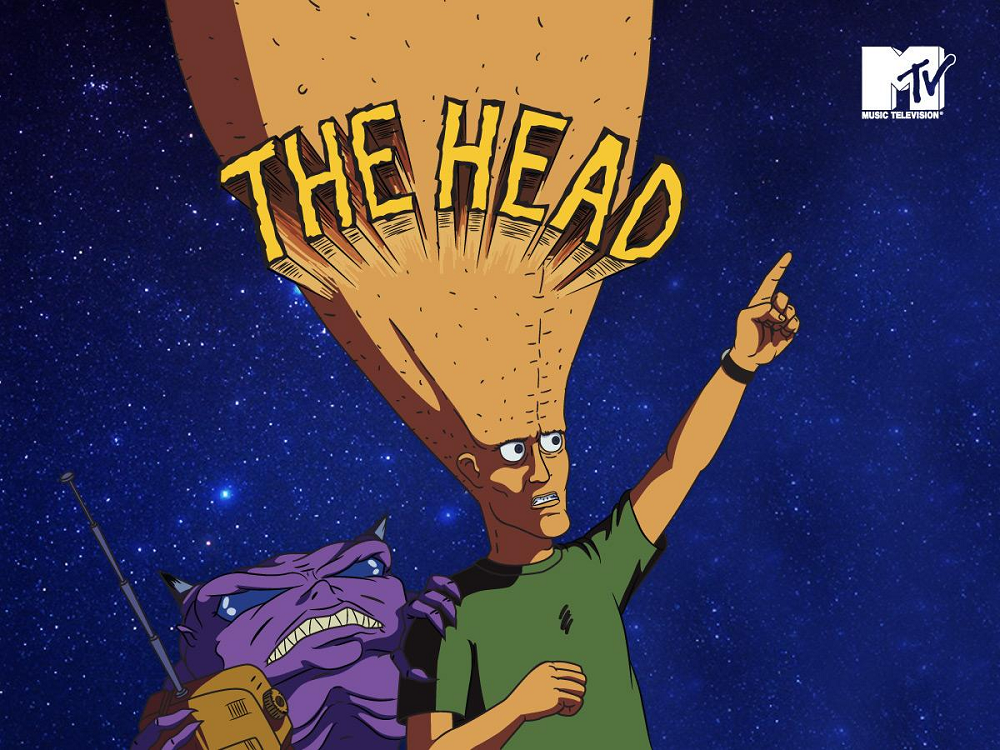
Titans of Telephemera: Ruby-Spears

Titans of Telephemera: Sunbow

THE TELEPHEMERA YEARS: 1979 – PART 2

Working Stiffs, 1979-80

Ah, telephemera… those shows whose stay with us was tantalisingly brief, snatched away before their time, and sometimes with good cause. They hit the schedules alongside established shows, hoping for a long run, but it’s not always to be, and for every Street Hawk there’s two Manimals. But here at STARBURST we celebrate their existence and mourn their departure, drilling down into the new season’s entertainment with equal opportunities square eyes… these are The Telephemera Years!

1979-80

Brand new for 1979, ABC’s That’s Incredible was became the third most watched show in 1979, completing a top three that also saw the alphabet network’s Three’s Company come in at number two, well behind the current affairs juggernaut of 60 Minutes. Otherwise, CBS dominated the ratings, even if it was saying goodbye to Hawaii Five-O. From Alice in fourth, down to the debuting Archie Bunker’s Place in eleventh (and taking in M*A*S*H, Dallas, and The Dukes of Hazzard, the Tiffany network was riding high, something that really could not be said for NBC, who had just three shows in the top twenty-five for the year and would soon bid farewell to old favourite The Rockford Files as it entered its final season.

There was no let up from CBS, either, with Flo, Dallas spin-off Knots Landing, M*A*S*H spin-off Trapper John MD, and the Salem’s Lot mini-series all arriving. ABC countered with Benson and Hart to Hart, while the peacock network pinned their hopes on The Facts of Life, The Misadventures of Lobo, and Buck Rogers in the 25th Century. For genre fans, Buck joined Fantasy Island, Mork & Mindy, Salvage-1, and The Incredible Hulk, but those were all shows that people remember… What about the ones that didn’t outstay their welcomes? This is the story of four more shows from the 1979 season that came and went…

Struck By Lightning (CBS): Heralded by the gravelly tones of Joe Cocker belting out “You Are So Beautiful,” Struck by Lightning debuted on CBS on September 19th 1979, part of a double bill with another new show, The Last Resort. Scheduled for Wednesdays in a slot that the network had found hard to fill since the heyday of Good Times and The Jeffersons, it was hoped that this curious comedic take on one of the oldest horror stories might finally prove to be the right show to go head-to-head with ABC’s Eight is Enough. Struck Lightning was the first production of The Fellows-Keegan Company, formed by Paramount vice-president of creative affairs Terry Keegan and producer Arthur Fellows. While at Paramount, Keegan had overseen the development of Happy Days, Laverne & Shirley, and the Shogun mini-series, while Fellows could count Cannon and The Streets of San Francisco on his production résumé.

Their new creation was a sequel of sorts to Mary Shelley’s Frankenstein, or at least subsequent film and TV interpretations of Shelley’s novel. Probably best known as Deputy Hendricks in the first two Jaws films, Jeffrey Kramer played Ted Stein, a science teacher who happens to be the last descendent of Dr Victor Frankenstein. Stein inherits an old New England inn, whose caretaker is a friendly (if occasionally homicidal) man named Frank. Ted soon learns that the inn is actually Castle Frankenstein, transplanted from Europe to Maine piece by piece by Ted’s grandfather. Furthermore, Frank (Western veteran Jack Elam) is the actual monster himself, and needs a serum to keep him alive, the secret formula of which Ted’s grandfather died without passing on.

Struck By Lightning, 1979-80

From such high concept beginnings, the show settled into its sitcom groove quite quickly, with the exasperated Ted trying to keep Frank’s existence a secret while also attempting to recreate his ancestor’s science experiments and dealing with the everyday problems of running an inn. The cast was rounded out by Millie Slavin (as Nora, who worked at the inn and expected to inherit it), Jeff Cotler (as her son, Brian), perennial guest star Bill Irwin (an almost permanent resident), and familiar face Richard Stahl as a realtor who stands to make a commission if Ted sells.

The debut episode earned around fifteen million viewers, an acceptable enough figure before factoring in that Real People on NBC was watched by more than twice that, and Eight is Enough had over forty million viewers. Coming a very distant third, Struck by Lightning was also savaged by critics, who found little to recommend the show, save for the performance of Elam. Things were no better in week two and although episode three saw a rise to eighteen million viewers, it was still far from the figure needed to ensure its survival. Both Struck By Lighting and The Last Resort were put on hiatus, replaced temporarily by movies, but although The Last Resort returned on a different day in December, Struck By Lightning never did, the slot given over to Young Maverick in its stead.

Paris (CBS): There would be a time when the prospect of James Earl Jones starring in a new Steven Bochco production would have sent millions of Americans scrambling to ensure their VCRs were set, lest they miss such a mouth-watering prospect, but that time clearly wasn’t Fall 1979. Paris was the first show Bochco created after joining MTM Enterprises, a company set up by Mary Tyler Moore and her then-husband Grant Tinker in 1969 to produce The Mary Tyler Moore Show for CBS. MTM had been behind The Bob Newhart Show and WKRP in Cincinnati, as well as Mary Tyler Moore Show spin-offs Rhoda, Phyllis, and Lou Grant, and Paris was its first police drama, a rare step away from the sitcom for the company.

Bochco had started out as a writer and later script editor on shows such as Ironside, Columbo, and McMillan & Wife for Universal Pictures, and he saw his switch to MTM as a way of moving more into the production side of TV. Bochco worked with veteran producer Edward de Blasio, who had just finished up on Police Woman, in developing Paris, with former NYPD detective Burton Armus also pitching in with scripts. The Paris of the title was Woody Paris, an LAPD captain in charge of a squad of rookie detectives who also moonlighted as a professor of criminology at a local college.

Paris, 1979-80

Cast in the role of Paris was James Earl Jones, a former soldier who turned to acting on leaving the military in 1953. Starting in New York theatre, Jones secured small roles in film and TV, including Lt Lothar Zogg in Dt Strangelove, and was part of the test runs for Sesame Street. Jones’s breakthrough role came in Claudine, for which he was nominated for a Golden Globe, and in 1977 was given the role that would define him for a generation, voicing Darth Vader in the Star Wars movies. Paris was his first starring role on TV, and he was joined by Cecilia Hart (his future wife), Jake Mitchell, Frank Ramirez, and Michael Warren as his young charges. Rounding out the cast were Hank Garrett as his superior, and Lee Chamberlain as Barbara Paris, Woody’s wife.

Despite a decent buzz and critical appraisal in the press, Paris was given a stinker of a timeslot, going out at 10pm on Saturday nights when half the country was out doing stuff and the other half just wanted to watch a movie. After low episodes for its first five episodes, the show took a break for a month and returned on Tuesdays, with ratings picking up accordingly. The damage was done, though, and just six more episodes were shown before CBS cancelled the show. Production had halted some weeks before and there were just two episodes left unshown, one of which would have been future Buffy the Vampire Slayer producer’s David Solomon first writing credit. Bochco wasn’t too concerned as he was already working on his next show, another police show called Hill Street Blues

Hot Hero Sandwich (NBC): Although Saturday morning cartoons (and syndicated re-runs thereof) took care of the vital children’s demographic for the network TV stations, it was often thought that they neglected those kids’ older brothers and sisters, expecting to latch onto teenage characters in their parents’ shows, such as Joanie and Chachi on Happy Days, the older children from eight is Enough, or the classroom clowns of Welcome Back, Kotter. Outside the odd after-school special, rarely was there a show made especially for teens, although NBC did try their hand in the mid-1970s with The Krofft Superstar Hour (later renamed The Bay City Rollers Show).

Bruce and Carole Hart were a husband-and-wife team who had written for the first season of Sesame Street, with Bruce penning the lyrics for the show’s iconic theme song, and Carole becoming the first female writer to be credited on the ground-breaking production. They left after that first season to work on other project, including the NBC Children’s Theatre and an adaptation of gender role challenging book Free to Be… You and Me. In 1979, they returned to TV with Hot Hero Sandwich, their attempt to do Saturday Night Live! for the adolescent crowd. Filmed on the same set as Lorne Michaels’s senior show, Hot Hero Sandwich featured a house band – The Hot Hero Band, put together by Mark Cunningham, who had worked with the Harts on rock ‘n’ roll movie Sooner or Later, and produced by Mountain’s Felix Pappalardi (who worked on the Cream album Disraeli Gears) – and a cast of young hopefuls.

Hot Hero Sandwich, 1979-80

Among the “hot heroes” were Matt McCoy, The Patty Duke Show’s Paul O’Keefe, newcomer Denny Dillon (who had made her debut in Saturday Night Fever two years earlier), and ABC Afterschool Special regular Vicky Dawson, and they engaged in a mix of comedy sketches, talk show segments, and American Bandstand-style musical performances, both by The Hot Hero Band and guest performers. Among those guesting on the show were Judy Blume, Levar Burton, Stockard Channing, Erik Estrada, Henry Fonda, Kareem Abdul Jabar, the Reverend Jesse Jackson, Joe Jackson, Bruce (now Caitlyn) Jenner, KISS, Leonard Nimoy, Olivia Newton John, Richard Pryor, Christopher Reeve, Sister Sledge, Barbara Walters, and Martin Luther King Jr’s widow, Coretta Scott King.

Hot Hero Sandwich was placed in a difficult spot, the buffer between NBC’s Saturday morning cartoon line-up and the start of NBC Sports, its second half clashing with American Bandstand itself on ABC. A tentative half-season was ordered, but it was soon clear that the show wasn’t working, parts of it too childish for older teens and other parts beyond the grasp of the younger viewers. Importantly, no viewer testing was done, which could have ironed out these issues beforehand, and there was little surprise when NBC pulled the plug, three episodes short of its promised thirteen-episode run. Ironically, NBC president Fred Silverman named Hot Hero Sandwich as one of several shows that demonstrated the network’s commitment to “informational children’s programming,” six days after the final episode aired in January 1980.

Working Stiffs (CBS): From an initial concept by Harry Colomby, Working Stiffs was the big new sitcom hope for the Fall 1979 season from Frog Productions and Huk Inc, development companies formed by sitcom veterans Bob Brunner (the man who came up with the name “Fonzie” for Happy Days) and Arthur Silver, another Happy Days veteran who had earlier created the short-lived spin-off Blansky’s Beauties. Brunner, Colomby, and two other Happy Days and Laverne & Shirley writers – David Duclon (who would go on to create both Punky Brewster and Silver Spoons) and Marc Sotkin – developed Colomby’s story of two brothers trying to work their way up – literally – in the world of business, starting as janitors in the basement of an office building owned by their uncle.

Cast in the roles of Ernie and Mike O’Rourke were James Belushi and Michael Keaton, two relative newcomers to the comedy industry. Belushi, whose brother John had shot to fame as one of the Not Ready for Prime-Time Players on Saturday Night Live and then hit the big screen in Animal House, was a graduate of Chicago’s famed Second City Players, while Keaton came through Pittsburgh local television – including portraying one of the Flying Zookeeni Brothers and working as a production assistant on Mr Rogers’ Neighborhood. Moving to Hollywood in 1977, Keaton got his big break as a regular on The Mary Tyler Moore Show, bringing him to the attention of Brunner and Silver.

Working Stiffs, 1979-80

With a pilot episode written by Sotkin and directed by Penny “Laverne” Marshall, Working Stiffs formed a double-bill of Frog-Huk productions with the TV adaptation of The Bad News Bears on Saturday nights, a problem night for CBS (and most networks, save for NBC, who scored some rare successes in that slot with a series of adventure shows including Emergency!, The Bionic Woman, and CHIPS). Still, it was hoped that the Happy Days magic would rub off on the show, with a cast completed by Alan Arbus (husband of famed photographer Diane), Val Bisoglio (Frank Manero Sr in Saturday Night Fever), and Lorna Patterson (later to be TV’s Private Benjamin).

Sadly, those viewers that weren’t tuning into the adventures of Jon and Ponch on CHIPS were swayed by the earthy charms of The Ropers on ABC, and so never got to see Belushi and Keaton in full flight, their chemistry succeeding where the deficiencies of the script left them marooned. The lack of viewers was a problem, but not one exclusive to Working Stiffs, and the entire CBS Saturday night line-up was put on hiatus in October 1979 while a reshuffle was considered, with just four episodes of Working Stiffs making it to air. Of the four shows given an unplanned break, only Paris and The Bad News Bears returned, but even a move to a different night ultimately didn’t save them from the axe. Keaton and Belushi, of course, went on to have pretty good careers, and Brunner would soon unearth both Diff’rent Strokes and Webster to assuage any post-Happy Days blues.

Next time on The Telephemera Years: 1979’s unsold pilots, including the Sentinel of Liberty and the America of the future!

Check out our other Telephemera articles:

The Telephemera Years: pre-1965 (part 1, 2, 3, 4)

The Telephemera Years: 1966 (part 1, 2, 3, 4)

The Telephemera Years: 1967 (part 1, 2, 3, 4)

The Telephemera Years: 1968 (part 1, 2, 3, 4)

The Telephemera Years: 1969 (part 1, 2, 3, 4)

The Telephemera Years: 1970 (part 1, 2, 3, 4)

The Telephemera Years: 1971 (part 1, 2, 3, 4)

The Telephemera Years: 1973 (part 1, 2, 3, 4)

The Telephemera Years: 1974 (part 1, 2, 3, 4, 5)

The Telephemera Years: 1975 (part 1, 2, 3, 4)

The Telephemera Years: 1976 (part 1, 2, 3, 4)

The Telephemera Years: 1977 (part 1, 2, 3, 4)

The Telephemera Years: 1978 (part 1, 2, 3, 4)

The Telephemera Years: 1978 (part 1)

The Telephemera Years: 1980 (part 12, 3, 4)

The Telephemera Years: 1981 (part 1, 2, 3, 4)

The Telephemera Years: 1982 (part 1, 2, 3, 4)

The Telephemera Years: 1983 (part 1, 2, 3, 4)

The Telephemera Years: 1984 (part 1, 2, 3, 4)

The Telephemera Years: 1986 (part 1, 2, 3, 4)

The Telephemera Years: 1987 (part 1, 2, 3, 4)

The Telephemera Years: 1989 (part 1, 2, 3, 4)

The Telephemera Years: 1990 (part 1, 2, 3, 4)

The Telephemera Years: 1991 (part 1, 2, 3, 4)

The Telephemera Years: 1992 (part 1, 2, 3, 4)

The Telephemera Years: 1995 (part 12, 3, 4)

The Telephemera Years: 1997 (part 1, 2, 3, 4)

The Telephemera Years: 1998 (part 1, 2, 3, 4)

The Telephemera Years: 1999 (part 1, 2, 3, 4)

The Telephemera Years: 2000 (part 1, 2, 3, 4)

The Telephemera Years: 2001 (part 1, 2, 3, 4)

The Telephemera Years: 2002 (part 1, 2, 3, 4)

The Telephemera Years: 2003 (part 1, 2, 3, 4)

The Telephemera Years: 2005 (part 1, 2, 3, 4)

The Telephemera Years: 2006 (part 1, 2, 3, 4)

The Telephemera Years: 2007 (part 1, 2, 3, 4)

The Telephemera Years: 2008 (part 1, 23, 4)

The Telephemera Years: O Canada! (part 1, 2, 3, 4)

Titans of Telephemera: Irwin Allen

Titans of Telephemera: Stephen J Cannell (part 1, 2, 3, 4)

Titans of Telephemera: DIC (part 1, 2)

Titans of Telephemera: Filmation (part 1, 2)

Titans of Telephemera: Hanna-Barbera (part 1, 2, 3, 4, 5)

Titans of Telephemera: Kenneth Johnson

Titans of Telephemera: Sid & Marty Krofft

Titans of Telephemera: Glen A Larson (part 1, 2, 3, 4)

Titans of Telephemera: Quinn Martin (part 1, 2)

Titans of Telephemera: Rankin/Bass

Titans of Telephemera: Ruby-Spears

Titans of Telephemera: Sunbow

THE TELEPHEMERA YEARS: 1979 – PART 1

Here's Boomer, 1979-80

Ah, telephemera… those shows whose stay with us was tantalisingly brief, snatched away before their time, and sometimes with good cause. They hit the schedules alongside established shows, hoping for a long run, but it’s not always to be, and for every Street Hawk there’s two Manimals. But here at STARBURST we celebrate their existence and mourn their departure, drilling down into the new season’s entertainment with equal opportunities square eyes… these are The Telephemera Years!

1979-80

Brand new for 1979, ABC’s That’s Incredible was became the third most watched show in 1979, completing a top three that also saw the alphabet network’s Three’s Company come in at number two, well behind the current affairs juggernaut of 60 Minutes. Otherwise, CBS dominated the ratings, even if it was saying goodbye to Hawaii Five-O. From Alice in fourth, down to the debuting Archie Bunker’s Place in eleventh (and taking in M*A*S*H, Dallas, and The Dukes of Hazzard, the Tiffany network was riding high, something that really could not be said for NBC, who had just three shows in the top twenty-five for the year and would soon bid farewell to old favourite The Rockford Files as it entered its final season.

There was no let up from CBS, either, with Flo, Dallas spin-off Knots Landing, M*A*S*H spin-off Trapper John MD, and the Salem’s Lot mini-series all arriving. ABC countered with Benson and Hart to Hart, while the peacock network pinned their hopes on The Facts of Life, The Misadventures of Lobo, and Buck Rogers in the 25th Century. For genre fans, Buck joined Fantasy Island, Mork & Mindy, Salvage-1, and The Incredible Hulk, but those were all shows that people remember… What about the ones that didn’t outstay their welcomes? This is the story of four shows from the 1979 season you may not remember…

Here’s Boomer (NBC): Of all the shows to earn a spin-off, The Red Hand Gang – a live-action Saturday morning show about a gang of crime-solving kids from D’Angelo-Bullock-Allen Productions that ran for just one season of twelve episodes in Fall 1977 – was probably never high on anyone’s list. The show had a breakout star, though, and – after he’d successfully starred in a Christmas move used as a backdoor pilot – Boomer the dog got a show of his own. His name wasn’t really Boomer, of course; Johnny the dog was a four-year-old mongrel rescued and trained by Ray Berwick, and the show was almost called Here’s Johnny, but for Johnny Carson’s famous catchphrase (that was borrowed by Jack Nicholson in The Shining).

After Christmas for Boomer did decent enough ratings for NBC in December 1979, a nine-part series was scheduled for March 1980 as a mid-season replacement for The Partridge Family’s Shirley Jones’s short-lived eponymous sitcom. Thematically, the show followed the “walking the Earth” formula used by the likes of Kung Fu and The Incredible Hulk, only with a nice dog doing the walking rather than Kwai Chang Caine or a massive green monster. It wasn’t a new idea, following in the pawprints of four Benji movies and coming six months after the arrival of The Littlest Hobo on CTV in Canada, which itself was based on a syndicated 1963 show.

Here's Boomer, 1979-80

A typical episode saw Boomer blow into town in time to help out a child, drunken adult, fellow dog, or family in need, before moving on at the end of the show to a fresh adventure. Given the nature of the show, Johnny was the only regular cast member, with a revolving door of guest stars each week, including early work for Rosanna Arquette, Scott Baio, Todd Bridges, and Michael J Fox, as well as the likes of Tom Bosley, Jonathan Frakes, Ken Kercheval, Roddy McDowall, and Harlem Globetrotter Meadowlark Lemon. The first series did well enough that a second Christmas special was filmed, this time with the twist that the audience would hear Boomer’s internal monologue, voiced by Jackie Cooper. “Boomer and Miss 21st Century” aired on December 7th 1980 and saw our hero foil a plot to fix a beauty contest, and there was some consideration given to keeping the audible thoughts gimmick, but when the second season arrived in October 1981, Boomer was silent once more.

Ten episodes were produced for season two, which moved to Sunday evenings, and – from the fourth episode on – doubled up with two episodes a week. Episodes eight and nine went out on November 8th 1981, after which… nothing. The tenth episode finally aired in July 1982 and that was it for Boomer, who went off to find his next mark. The Littlest Hobo fared slightly better, running for six seasons until March 1985, until he too reached the end of his leash. History does not record what happened to Johnny after Here’s Boomer, but he certainly earned his place in dog heaven.

Big Shamus, Little Shamus (CBS): The annals of TV history are full of failed TV shows, some of which made it to the end of their first season but most of which fell well short of that target. Rarely, though, does a show perform so badly from the outset that it fails to get beyond its second episode, but this is the story of one such calamitous enterprise. Big Shamus, Little Shamus was created by actress and writer Tracy Hotchner, not to be confused with the contemporaneous author of the same who wrote books on pregnancy.

Formerly married to Warner Bros executive Mark Rosenberg, Hotchner would go on to win a Raspberry award in 1981 for Worst Screenplay for Joan Crawford biopic Mommie Dearest. Her story outline for Big Shamus, Little Shamus – a father and son detective team at an Atlantic City casino – was taken by former Writers Guild of America West president Christopher Knopf, a veteran screenwriter who got his start in B-movies before becoming a go-to Western writer in the 1960s and who had latterly been writing unsold pilots and TV movies. Knopf shaped the show, introducing Brian Dennehy as Arnie Sutter – the Big Shamus of the title, “shamus” being slang for a detective.

Big Shamus, Little Shamus, 1979-80

Although he was already in his forties, Dennehy had only been in the business for a couple of years and Arnie was his first big role, the house detective for The Ansonia Hotel, a formerly illegal gambling den gone straight. You’d have thought that would make life easier for Sutter, but the legalisation brings in even more undesirables and even more problems, some of which he can only solve with the help of his teenage son – and Little Shamus – Max. Also part of their team are assistant manager Stephanie Marsh (Dark Shadows’s Kathryn Leigh Scott), receptionist Jerry Wilson (Ty Henderson), and Cynthia Sykes as Jingles Lodestar, an undercover security guard posing as a waitress, all working for hotel manager George Korman (George “Spaceballs” Wyner).

Heavily hyped in the pre-season advertising, the first episode aired on Saturday September 29th 1979 in a slot previously occupied by the CBS Movie, opposite The Love Boat on ABC and BJ and the Bear on NBC. Despite CBS’s dominance at the top of the ratings, the network also had the bottom five rating shows that week, of which Big Shamus, Little Shamus was bettered (worsed?) by only two shows, the Michael Keaton and Jim Belushi starring Working Stiffs and The Last Resort, an Animal House-style college sitcom. A week later, CBS enjoyed just four of the bottom five shows, but Big Shamus, Little Shamus was rock bottom and enough was enough.

Although nine episodes had been completed by that point, production was immediately halted as the show was yanked from the air, along with lead-ins Working Stiffs and The Bad News Bears, a spin-off from the Walter Matthau baseball movie (without Walter Matthau). The other seven episodes never got an airing, and little remains of those that did, a truly forgotten and unmissed show.

3’s a Crowd (syndication): If there was such a thing as a game show king, Chuck Barris would have a genuine claim to the throne. After breaking into TV on American Bandstand (with a sideline of writing and producing hit songs, such Freddy Cannon’s 1962 number three hit “Palisade’s Park”), Barris was put in charge of daytime programming at ABC, where he constantly butted heads with his superiors about the quality of the shows on offer. In 1965, he left ABC to set up Chuck Barris Productions, scoring a hit right out of the gate with The Dating Game and following that with The Newlywed Game, establishing his position as a game show maven.

Further hits, including Dream Girl of ’67 and The New Treasure Hunt followed, and in 1976 Barris stepped in front of the cameras to host The Gong Show, a talent show featuring some of the worst American showbiz had to offer, most of whom would be “gonged” off long before the end of their act. With the success of The Gong Show leading to revivals of The Dating Game and The Newlywed Game, it seemed like Barris could do no wrong, something he tested with the $1.98 Beauty Show in 1978, a post-modern satire of beauty contests that, on the surface at least, appeared to be a genuine – if low rent – competition.

3s a Crowd, 1979-80

A year later, Barris introduced his latest concept. 3’s a Crowd would take The Newlywed Game – on which couples had to demonstrate how much they’d learned about each other since their marriage – and put a wicked spin on it, introducing a third wheel, most often in the shape of the husband’s secretary. Thus, the crux of the show would be whether a man’s wife or his secretary knew him better, with the questions asked heavily skewed towards pointing out any potential infidelity. The first episode aired in syndication in September 1979, with daily episodes following after.

Reaction to the show was immediate and strong. With an emphasis on innuendo and a situation built to pit women against one another, both conservative groups and feminists railed against 3’s a Crowd, inundating local channels with their complaints. Still, the show remained on air through to February 1980 before enough was enough and it was replaced by another Barris show, Camouflage. One of the most vocal critics of the show was Jackie Autry, wife of Gene, and co-owner of KTLA in Los Angeles, where The Newlywed Game was produced. The Autrys wanted the show expelled from their studios, but it was cancelled – along with all of Barris’s shows – by the end of the year, anyway.

Barris took the negative reaction badly, revealing in his 1984 memoir Confessions of a Dangerous Mind that he retreated to his Malibu mansion for the best part of a year. Of course, he also revealed in that book – later made into a movie by George Clooney – that he’d been a CIA assassin in the 1960s and 1970s, so your mileage may vary on its accuracy…

Beyond Westworld (CBS): Michael Crichton’s writing career began while he still as student at Harvard Medical School, a series of pseudonymous novels helping to alleviate the tedium of his studies. Realising towards the end of his time at Harvard that medicine was not going to be his main career, Crichton began writing under his own name, penning The Andromeda Strain in 1969, a book which made him an immediate bestselling novelist and was adapted as a movie in 1971. Crichton always had his sets set higher than being a simple novelist and yearned to break into Hollywood himself; in 1972 he was given his first chance as a director on the TV movie Pursuit, adapted from Binary, a novel he wrote under the name Jack Lange.

Later that year, he met producer Paul N Lazarus III and the two began shopping around a script Crichton had written to all the major studios, on the understanding the writer would direct. Only Metro-Goldwyn-Mayer were interested and Westworld went into production at the back end of 1972 with a budget of $1.25 million. Yul Brynner – who took a pay cut to appear in the movie – starred as a lifelike robot employed at the eponymous theme park, where paying guests could relive the Old West experience. Of course, things go disastrously wrong, to the delight of a filmgoing audience that eventually brought in ten times the budget at the box office.

Westworld begat a sequel – Futureworld – in 1976, again produced by Lazarus after Crichton declined any involvement in the project. Lazarus concocted a basic story and hired Mayo Simon and George Schenck to write the screenplay, with only Brynner returning from the Westworld cast (and even then only in flashback and dream sequences). The film was a critical and commercial failure (although it did become the first American film to play in China), but that didn’t stop veteran producer Lou Shaw, who had co-created Quincy, ME with Glen A Larson, from preparing another tilt at the Westworld windmill, this time on TV.

Beyond Westworld, 1979-80

Beyond Westworld ignored Futureworld and set itself up as a straight sequel to the first film, although it did borrow the sequel’s idea for the Westworld robots to be used to replace important world figures. Jim McMullan’s Delos Corporation security chief John Moore was pitted against evil scientist Simon Quaid (James Wainwright), with an “android of the week” formula playing out over the series, presumably leading to a climactic showdown. I say “presumably” because Beyond Westworld – which debuted on March 5th 1980 – lasted just three episodes before CBS pulled the plug, the remaining two finished episodes remaining unseen other than in some overseas markets.

The concept fared far better when it was brought out of mothballs in 2016 by JJ Abrams, Lisa Joy, and Jonathan Nolan for HBO. The revamped show was set in 2050 and lasted for four seasons with an all-star cast including Evan Rachel Wood, Thandiwe Newton, Jeffrey Wright, and James Marsden, although none of them donned a bald cap.

Next time on The Telephemera Years: More of 1979’s lesser lights, including Frankenstein’s monster and a hot hero sandwich…

Check out our other Telephemera articles:

The Telephemera Years: pre-1965 (part 1, 2, 3, 4)

The Telephemera Years: 1966 (part 1, 2, 3, 4)

The Telephemera Years: 1967 (part 1, 2, 3, 4)

The Telephemera Years: 1968 (part 1, 2, 3, 4)

The Telephemera Years: 1969 (part 1, 2, 3, 4)

The Telephemera Years: 1970 (part 1, 2, 3, 4)

The Telephemera Years: 1971 (part 1, 2, 3, 4)

The Telephemera Years: 1973 (part 1, 2, 3, 4)

The Telephemera Years: 1974 (part 1, 2, 3, 4, 5)

The Telephemera Years: 1975 (part 1, 2, 3, 4)

The Telephemera Years: 1976 (part 1, 2, 3, 4)

The Telephemera Years: 1977 (part 1, 2, 3, 4)

The Telephemera Years: 1978 (part 1, 2, 3, 4)

The Telephemera Years: 1980 (part 12, 3, 4)

The Telephemera Years: 1981 (part 1, 2, 3, 4)

The Telephemera Years: 1982 (part 1, 2, 3, 4)

The Telephemera Years: 1983 (part 1, 2, 3, 4)

The Telephemera Years: 1984 (part 1, 2, 3, 4)

The Telephemera Years: 1986 (part 1, 2, 3, 4)

The Telephemera Years: 1987 (part 1, 2, 3, 4)

The Telephemera Years: 1989 (part 1, 2, 3, 4)

The Telephemera Years: 1990 (part 1, 2, 3, 4)

The Telephemera Years: 1991 (part 1, 2, 3, 4)

The Telephemera Years: 1992 (part 1, 2, 3, 4)

The Telephemera Years: 1995 (part 12, 3, 4)

The Telephemera Years: 1997 (part 1, 2, 3, 4)

The Telephemera Years: 1998 (part 1, 2, 3, 4)

The Telephemera Years: 1999 (part 1, 2, 3, 4)

The Telephemera Years: 2000 (part 1, 2, 3, 4)

The Telephemera Years: 2001 (part 1, 2, 3, 4)

The Telephemera Years: 2002 (part 1, 2, 3, 4)

The Telephemera Years: 2003 (part 1, 2, 3, 4)

The Telephemera Years: 2005 (part 1, 2, 3, 4)

The Telephemera Years: 2006 (part 1, 2, 3, 4)

The Telephemera Years: 2007 (part 1, 2, 3, 4)

The Telephemera Years: 2008 (part 1, 23, 4)

The Telephemera Years: O Canada! (part 1, 2, 3, 4)

Titans of Telephemera: Irwin Allen

Titans of Telephemera: Stephen J Cannell (part 1, 2, 3, 4)

Titans of Telephemera: DIC (part 1, 2)

Titans of Telephemera: Filmation (part 1, 2)

Titans of Telephemera: Hanna-Barbera (part 1, 2, 3, 4, 5)

Titans of Telephemera: Kenneth Johnson

Titans of Telephemera: Sid & Marty Krofft

Titans of Telephemera: Glen A Larson (part 1, 2, 3, 4)

Titans of Telephemera: Quinn Martin (part 1, 2)

Titans of Telephemera: Rankin/Bass
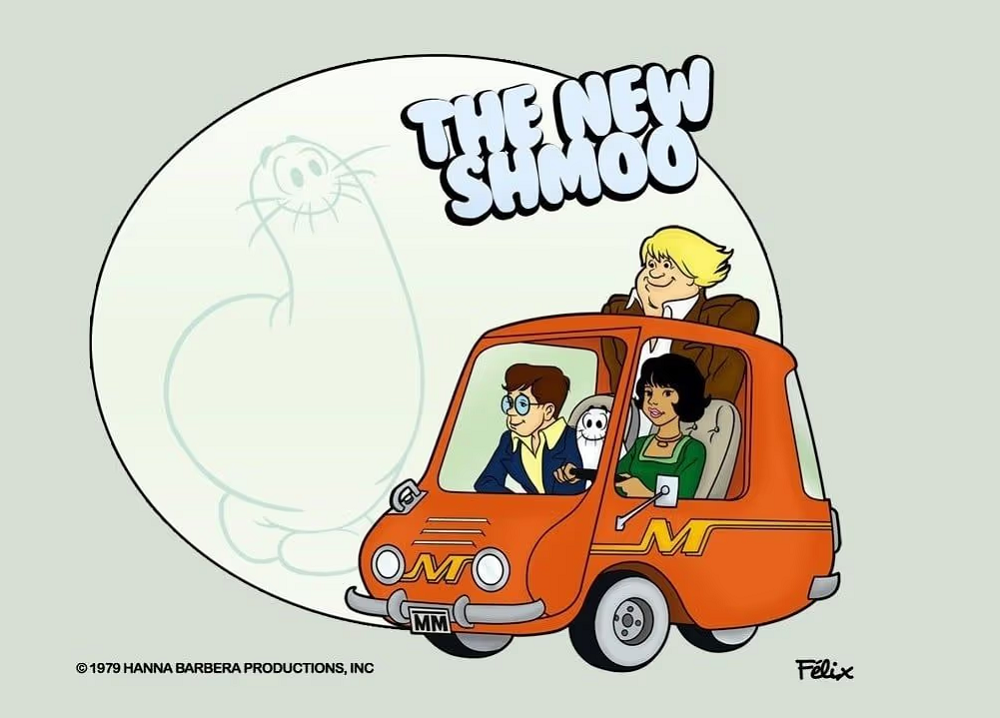
Titans of Telephemera: Ruby-Spears

Titans of Telephemera: Sunbow

THE TELEPHEMERA YEARS: 2001 – PART 4

The Ripping Friends, 2001-02

Ah, telephemera… those shows whose stay with us was tantalisingly brief, snatched away before their time, and sometimes with good cause. They hit the schedules alongside established shows, hoping for a long run, but it’s not always to be, and for every Street Hawk there’s two Manimals. But here at STARBURST we celebrate their existence and mourn their departure, drilling down into the new season’s entertainment with equal opportunities square eyes… these are The Telephemera Years!

2001-02

Although they were still experiencing difficulties finding the right show for their 8.30pm slot, NBC’s Must-See Thursdays continued to dominate the TV ratings in in 2001-02, with Friends and ER occupying two of the top three spots and Will & Grace and Just Shoot Me not far behind. Their chief competition came from CBS, whose CSI: Crime Scene Investigation was entering its second season and threatening to topple Friends from its perch. Monday Night Football was ABC’s sole top-rating show and the Alphabet network also said goodbye to two sitcom stalwarts when both Spin City and Dharma & Greg began their final runs in Fall 2001.

ABC did have JJ Abrams’s Alias and insane dating show The Bachelor on deck for the new season, though just two of a handful of notable new arrivals that also included 24, Scrubs, Six Feet Under, and Star Trek: Enterprise, while Buffy the Vampire Slayer moved from The WB to UPN for its sixth season. Genre fans were well served by new shows in 2001, with Roswell and Smallville coming on board, although The X-Files would reach the end of its conspiracy trail by May 2002. Those are all shows that were made for grown-ups, though; what about the aimed at the young and young at heart? This is the story of four of 2001’s new kids’ shows…

Super Duper Sumos (Nickleodeon): Sumo wrestling is an ancient Japanese martial art, dating back almost two thousand years to Yamato kingship period, with intricate traditions, a strict hierarchy, and an almost religious adherence by those who practice it. The respect it endears in Japan is almost completely contrasted by its image in popular western culture, where it is often reduced to fat blokes in their underpants, pushing each other around. Super Duper Sumos definitely falls into the latter category, despite being a co-production between DIC Entertainment and Korean studio Ameko (although the prospect of a long game revenge plan for the indignities the Japanese inflicted on the Koreans shouldn’t be ruled out).

Co-created by Vincent Nguyen and animation veteran Kevin O’Donnell (New Kids on the Block, Inspector Gadget, Jayce and the Wheeled Warriors, and more), the show was to be the first in a three-show deal between the studios, but ultimately was the only one produced. This wasn’t unusual for DIC projects at the time, with such gems as The Adventures of Who Wants to Be a Millionaire: The Animated Series and GI Gadget also not coming to fruition. The Super Duper Sumos were Booma, Kimo, and Mamoo, three sumo wrestling crimefighters who use their considerable bulk, unique special moves, and ability to Sumo Size to combat the forces of Bad Inc.

Super Duper Sumos, 2001-02

Afro-Caribbean Mamoo was the group’s unofficial leader, a sensitive soul who liked to cook and used the Sumo Squeeze to finish off his opponents. Kimo was the stereotypical Zen-like Asian sumo, able to vaguely see future events and fond of employing the Honorable Thunderball, Lastly, Booma was a surfer-type, obsessed with his massive backside and putting it to good use with his Gluteus Maximus special move. Aided by their friend Prima, each of the Sumos fights for a different part of their PHaT credo – peace, honour, and truth – that was taught to them by their sensei, Wisdom-san, who often appears in flashbacks. Each episode saw the trio deal with a fresh plot concocted by Bad Inc CEO Ms Mister and her minions, including BS, Dr Stinger, Ghengis Fangus, and the Evil Sumos (He of the Extra Arms, He of the Big Iron Chest, and He of the Third Butt Cheek).

Twenty-six episodes were produced, with the first – “Binky Did a Bad Thing,” about a forty-foot teddy bear created by Bad Inc for rampaging purposes – premiering on CBBC in the UK in September 2001 and turning up on Nickelodeon in the US in April 2002. A merchandise deal was signed with UK licensing company Martin Yaffe International that fell short of a toy line but did produce the usual range of tat, and Midway Games developed a videogame for the Game Boy Advance, although this wasn’t released until October 2003, way past the show’s initial run on Nick. There was no second season and Super Duper Sumos often pops up on lists of the worst cartoons ever made, finding no purchase with fans of either sumo wrestling, comedy action shows or butt humour.

The Nightmare Room (Kids WB): It might come as a surprise to the millions of children freaked out by his horror stories, but RL Stine’s first published work was written under the name Jovial Bob Stine while he was working for Scholastic Press, for whom he created the long-running magazine Bananas. In 1986, after writing several toy and cartoon tie-in books, Stine wrote his first book in what would become the Point Horror series, Blind Date, and followed it up with Twisted and The Babysitter as he eyed a new career giving older children and young adults the heebeejeebees, all the while working on puppet TV show Eureeka’s Castle for Nickelodeon.

Encouraged by the success of his other scary stories, Simon Pulse (a division of Simon & Schuster) gave Stine his own series of horror books set in the fictional town of Shadyside. The Fear Street series would eventually grow to encompass over a hundred books across several sub-series and sell over eighty million copies worldwide, but even that was nothing compared to what came next. In 1992, Scholastic published Welcome to Dead House, the first in Stine’s new Goosebumps series. To say Goosebumps became a sensation amongst school-age children would be a massive understatement, and at one point it was selling a million books a week. A TV series followed in 1995 and only increased the popularity of the books, although a TV movie based on Ghost of Fear Street failed to spark a series based on those books.

The Nightmare Room, 2001-02

In 2000, a new RL Stine book appeared from Harper Collins. Aimed at slightly older readers, Don’t Forget Me! was the first of a series of books to accompany a new TV series, The Nightmare Room. Developed by former Stephen J Cannell collaborator Paul Bernbaum, The Nightmare Room was based around common children’s fears, although quite what children produced fears such as being accused of being evil, being forgotten by your family, and being told that you will die in two days by your twin from a parallel world is another psychiatrist’s appointment book entirely. Seven of the thirteen-episode series were based on one of the thirteen Nightmare Room novels and the series was tied together by a narrator who was billed as “RL Stine” but was actually James Avery (Uncle Phil from The Fresh Prince of Bel-Air). The anthology series was not short of talent in starring roles, either, with the likes of Amanda Bynes, David Carradine, Kaley Cuoco, Robert Englund, Tippi Hedren, Shia LeBeouf, and Frankie Muniz all lining up to scare or be scared.

One of just two live-action shows to air on Kids WB, The Nightmare Room debuted on August 31st 2001, right before the US found itself in a collective nightmare room in the aftermath of the 9/11 attacks. Whether this was responsible for a turn away from less wholesome entertainment across the spectrum (but especially in children’s TV) is moot, but The Nightmare Room did not return for a second season, despite the ongoing popularity of RL Stine’s books.

The Ripping Friends (Fox Kids): In 2001, John Kricfalusi was ready for his big comeback. After exploding onto the animation scene with The Ren and Stimpy Show in 1991 (although students of the form were already aware of his work on Ralph Bakshi’s Mighty Mouse), the relationship between Kricfalusi and the Nickelodeon network had broken down, a result of missed deadlines and disagreements over the direction of the show. Nick terminated his contract in September 1992, just after the show’s second season had been completed, and it ran for a further three seasons in the hands of Kricfalusi’s Spümcø co-founder Bob Camp. After Ren and Stimpy, Kricfalusi made some shorts for Fred Seibert at Hanna-Barbera, directed the video for Björk’s “I Miss You” (which co-starred his creation, Jimmy the Idiot Boy), and produced what was billed as “the world’s first interactive web-based cartoon,” Weekend Pussy Hunt for MSN. He also began work on his next project, one that he had pitched to networks in the late 1980s, only to be told it was “too extreme.”

Ripping Friends was initially planned as a movie starring “the world’s manliest men,” but morphed into a TV series for Fox, one of two slated to debut in September 2000. The Heartaches – a cartoon about a girl band – never materialised but Ripping Friends would eventually be scheduled for Fall 2001 on Fox Kids. Very obviously a Spümcø concept, with character designs by Kricfalusi’s long-time collaborator Jim Smith, the Ripping Friends were four massively-muscular brothers – Chunk, Craig, Rip, and Slab Nuggett – who fought crime (or at least attempted to) from RIPCOT, the Really Impressive Prototype City Of (Next) Tuesday.

The Ripping Friends, 2001-02

The show immediately hit problems when original animation studio Red Rover couldn’t deliver on the simultaneously complicated yet poorly communicated instructions from Kricfalusi, who was unable to directly oversee production. Fox then chose Funbag Animation to produce the show, possibly unaware of bad feeling between Spümcø and Funbag. Funbag head John Shaw instructed his team to ignore Kricfalusi’s style guide, resulting in a meeting between the two that almost ended in fisticuffs and Kricfalusi banned from Funbag’s premises. The second half of the season bears more of Kricfalusi’s unique hallmarks, a result of his “experimental” remote tinkering from a nearby hotel, but Fox seemed to want a different show from the one they’d greenlighted, and an uneasy series of compromises seldom makes for outstanding television. At over $400,000 an episode, Ripping Friends was an expensive show to not get right and it was cancelled after just one season.

Kricfalusi returned with a new Ren and Stimpy show for Spike in 2003, but it lasted just for three episodes before the channel axed its entire animation line. Still, his work on the original show alone should have made him a strong candidate for any animation hall of fame, but his reputation was trashed when he was accused of inappropriate sexual activity with young assistants in 2018. He announced his retirement (“though not by choice”) from the animation industry two years later.

Teamo Supremo (ABC): The incredibly magnanimous Phil Walsh may have credited Disney executive Roy Price with the original idea for what became Teamo Supremo, but it’s likely that the show would never have happened without him and would certainly not have looked anything like the Jay Ward and Jack Kirby influenced treasure it became. Walsh was working on the Disney show Recess in 1998 when Price took him to dinner and told him about a show called Teamo Extremo that he’d been trying to get off the ground for three years. Having created a superhero character for Recess, Walsh told Price everything he thought he’d need to get the show off the ground but didn’t hear anything more about the project until 2000.

With the bare bones of a show still languishing near the bottom of the development schedule, Price again asked Walsh to step in, and he began reworking things before writing the pilot script again from scratch. Working with director Joe Horne, with whom he shared a similar pop-cultural upbringing, Walsh evolved the show into Teamo Supremo, the adventures of a trio of superheroes – Captain Crandall, Skate Lad, and Rope Girl – who protect their state from various evil threats, including dastardly supervillains Technor the Mechanized Man, Chopper Daddy, Helius Inflato, Mr Vague, Big Skull, and the Tim Curry-voiced Laser Pirate. Initially lacking superpowers, Crandall – or Cap – believed he was an alien from another planet, mostly because his skin turned purple when he was angry. His battle cry of “Buh-Za!” was echoed by Skate Lad’s “Chi-Ka!” and Rope Girl’s “Wuh-Pa!” as the state skateboarding champion and jump rope-wielding country girl fought alongside him.

Teamo Supremo, 2001-02

A first season of twenty-six episodes began airing on ABC’s Disney’s One Saturday Morning block in January 2002, where it did good ratings alongside Lizzie McGuire, Lloyd in Space, and Recess. The show returned for a second season in August 2002 as part of the renamed ABC Kids block, only for it to move to premium cable network Toon Disney eight episodes in to make way for Lilo & Stitch: The Series. Despite that, Teamo Supremo was renewed again for a third season, but just seven aired before the show was put on hiatus, the rest shown in Spring and Summer 2004 without fanfare.

The rough treatment meted out to Teamo Supremo didn’t stop after its cancellation. Although Toon Disney continued to repeat the show through to 2006, the show is not currently available on Disney+ and only the first two seasons can be found in their entirety on video sharing sites. With some of season three only available in Portuguese, three episodes are missing altogether, reinforcing Teamo Supremo‘s position as one of the most forgotten Disney shows, certainly of the twenty-first century. IMDB records no credits for Walsh after 2013 and reports his death in September 2020 at the age of just fifty-seven. If he’s remembered for little else, Teamo Supremo painted his superhero-flavoured childhood – something many of us can identify with – in appropriately lurid colour.

Next time on The Telephemera Years: We’re off to 1979 and Beyond Westworld!

Check out our other Telephemera articles:

The Telephemera Years: pre-1965 (part 1, 2, 3, 4)

The Telephemera Years: 1966 (part 1, 2, 3, 4)

The Telephemera Years: 1967 (part 1, 2, 3, 4)

The Telephemera Years: 1968 (part 1, 2, 3, 4)

The Telephemera Years: 1969 (part 1, 2, 3, 4)

The Telephemera Years: 1970 (part 1, 2, 3, 4)

The Telephemera Years: 1971 (part 1, 2, 3, 4)

The Telephemera Years: 1973 (part 1, 2, 3, 4)

The Telephemera Years: 1974 (part 1, 2, 3, 4, 5)

The Telephemera Years: 1975 (part 1, 2, 3, 4)

The Telephemera Years: 1976 (part 1, 2, 3, 4)

The Telephemera Years: 1977 (part 1, 2, 3, 4)

The Telephemera Years: 1978 (part 1, 2, 3, 4)

The Telephemera Years: 1980 (part 12, 3, 4)

The Telephemera Years: 1981 (part 1, 2, 3, 4)

The Telephemera Years: 1982 (part 1, 2, 3, 4)

The Telephemera Years: 1983 (part 1, 2, 3, 4)

The Telephemera Years: 1984 (part 1, 2, 3, 4)

The Telephemera Years: 1986 (part 1, 2, 3, 4)

The Telephemera Years: 1987 (part 1, 2, 3, 4)

The Telephemera Years: 1989 (part 1, 2, 3, 4)

The Telephemera Years: 1990 (part 1, 2, 3, 4)

The Telephemera Years: 1991 (part 1, 2, 3, 4)

The Telephemera Years: 1992 (part 1, 2, 3, 4)

The Telephemera Years: 1995 (part 12, 3, 4)

The Telephemera Years: 1997 (part 1, 2, 3, 4)

The Telephemera Years: 1998 (part 1, 2, 3, 4)

The Telephemera Years: 1999 (part 1, 2, 3, 4)

The Telephemera Years: 2000 (part 1, 2, 3, 4)

The Telephemera Years: 2001 (part 1, 2, 3)

The Telephemera Years: 2002 (part 1, 2, 3, 4)

The Telephemera Years: 2003 (part 1, 2, 3, 4)

The Telephemera Years: 2005 (part 1, 2, 3, 4)

The Telephemera Years: 2006 (part 1, 2, 3, 4)

The Telephemera Years: 2007 (part 1, 2, 3, 4)

The Telephemera Years: 2008 (part 1, 23, 4)

The Telephemera Years: O Canada! (part 1, 2, 3, 4)

Titans of Telephemera: Irwin Allen

Titans of Telephemera: Stephen J Cannell (part 1, 2, 3, 4)

Titans of Telephemera: DIC (part 1, 2)

Titans of Telephemera: Filmation (part 1, 2)

Titans of Telephemera: Hanna-Barbera (part 1, 2, 3, 4, 5)

Titans of Telephemera: Kenneth Johnson

Titans of Telephemera: Sid & Marty Krofft

Titans of Telephemera: Glen A Larson (part 1, 2, 3, 4)

Titans of Telephemera: Quinn Martin (part 1, 2)

Titans of Telephemera: Rankin/Bass
Titans of Telephemera: Ruby-Spears

Titans of Telephemera: Sunbow