THE TELEPHEMERA YEARS: 1988, part 1

Nearly Departed, 1988-89

Ah, telephemera… those shows whose stay with us was tantalisingly brief, snatched away before their time, and sometimes with good cause. They hit the schedules alongside established shows, hoping for a long run, but it’s not always to be, and for every Street Hawk there’s two Manimals. But here at STARBURST we celebrate their existence and mourn their departure, drilling down into the new season’s entertainment with equal opportunities square eyes… these are The Telephemera Years!

1988-89

It was tough time for anything that wasn’t a sitcom in the 1988-89 ratings, with thirty-minute yuckfests filling nine of the top eleven spots, several of them newcomers gatecrashing a party that had been going on for a number of years since the mid-1980s action show slump. Although his terrible sweaters are now far from the worse thing about him, Bill Cosby and his family ruled the roost, although fresh competition from the more blue-collar Roseanne was ready to push it close for the number one slot. The Cosby Show was one of six NBC sitcoms in that top eleven, the rest of the slots filled by Roseanne’s ABC compadres Who’s the Boss? and Anything But Love, with CBS supplying the only non-comedy shows in the list, the ever-dependable 60 Minutes and Murder, She Wrote.

The turn away from hour-long crime and action shows saw Moonlighting, Simon & Simon, The Equalizer, and Miami Vice all enter their final seasons as Fall 1988 rolled around, with the rebooted Twilight Zone and whatever the Hell Highway to Heaven was also coming to an end. In their places, there was fresh hope from Midnight Caller, Father Dowling Mysteries, and time travel show with a difference Quantum Leap, a rare genre arrival on a schedule all but shorn of such fare, although the furries still had ALF and Beauty & the Beast to keep them satisfied. Those were all shows that people remember, though: what about those that failed to make enough of an impact to enter the annals of TV history? This is the story of four of 1988’s lesser lights…

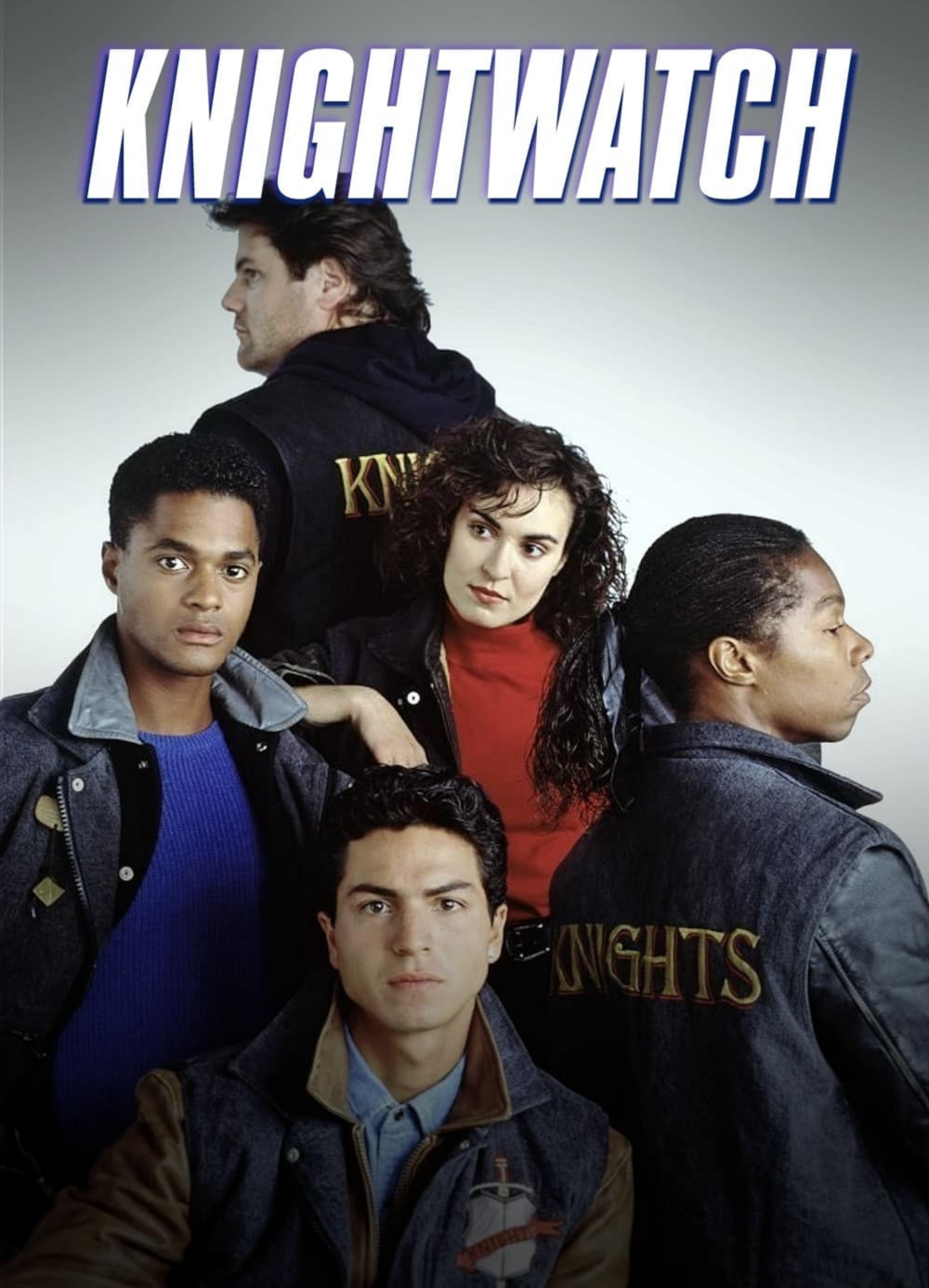
Knightwatch (ABC): Growing up, Kevin Rodney Sullivan wanted nothing more than to be an actor. In sixth grade, he and his entire class were hired to be extras in the Sidney Poitier film They Call Me Mr Tibbs! and at seventeen, he applied to prestigious performing arts school Juilliard in New York, where he was told he had talent but needed more experience. As he gained that experience, Sullivan realised that being black was always going to hinder his chances of securing major roles in the theatre and instead turned his attention to writing, arriving in Hollywood in 1977 looking to break into scriptwriting for movies and TV. While he waited for his big break, he took a few small roles in films such as More American Graffiti and Star Trek II: The Wrath of Khan, and in 1982 and 1983, he finally sold scripts to both Fame and Cagney & Lacey.

Further screenwriting success eluded him and he took a recurring role as Tommy on Happy Days, but was able to use his contacts at ABC to sell them on his idea for a new show based on the Guardian Angels, a quasi-paramilitary organisation founded in February 1979 by Curtis Sliwa, a night manager of a McDonalds in the Bronx, originally to combat crime and anti-social behaviour on the New York subway. Trained to perform citizen’s arrests, members were issued with a distinctive red beret and bomber jacket. It wasn’t long before the Angels began popping up in movies and TV, with 1981’s We’re Fighting Back, 1982’s Fighting Back, and 1983’s Vigilante meeting with varying levels of approval by Sliwa and his organisation.
Knightwatch, 1988-89

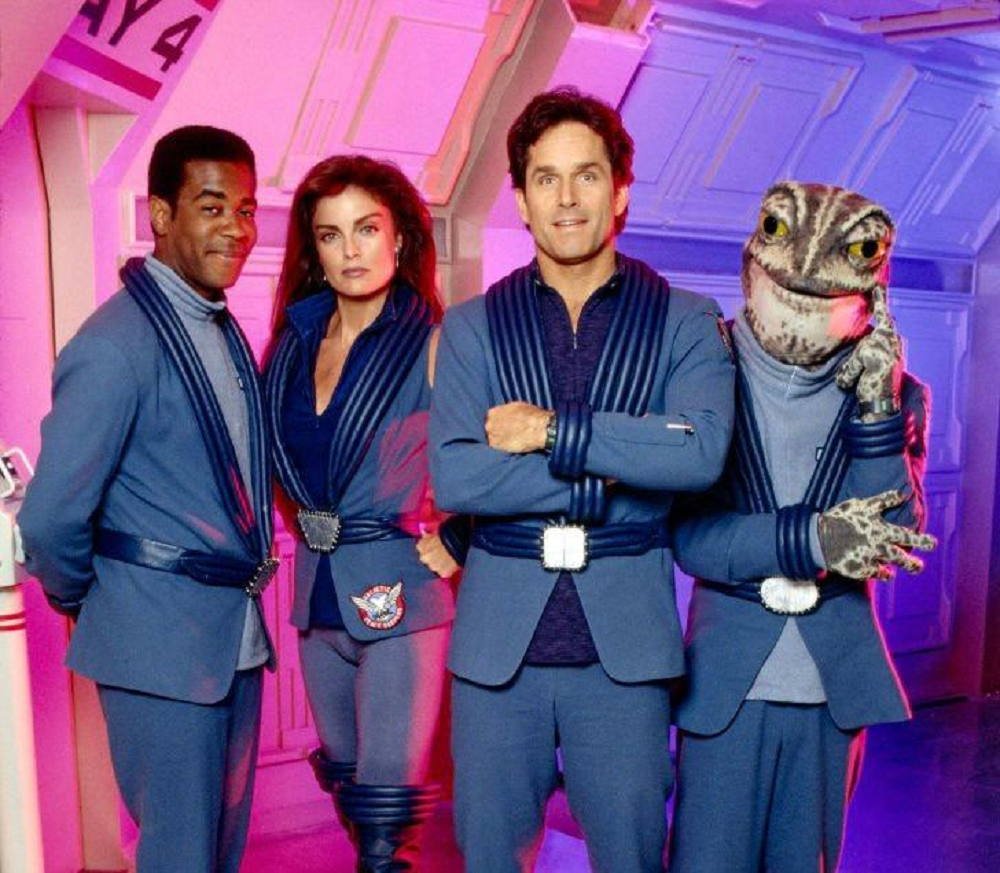
In Sullivan’s hands, the Angels became the Knights of the City, its membership drawn largely from former gang members under the guidance of the charismatic Tony Maldonado (newcomer Benjamin Bratt). Working alongside local law enforcement, the Knights were trained in unarmed combat in the basement of a church and were given just two directives: no excessive violence and no killing. Among the reformed gangbangers looking to make a difference in their neighbourhood were future Seaquest DSV commander Don Franklin, sex comedy regular Joshua Cadman, One Life to Live’s Ava Haddad, and a young Samantha Mathis, and things got off to a bad start in the pilot when two of the Knights broke the rules and had to be turned in by their comrades.

If things were shaky for the Knights, it was even worse for Knightwatch itself, failing to anchor any kind of position in the ratings under tough competition from new CBS current affairs show 48 Hours and NBC’s ratings juggernauts The Cosby Show and A Different World. Things may have different if Knightwatch‘s original role as a mid-season replacement had materialised, but the Writers Guild of America strike between March and August 1988 left networks scrambling for original programming, and after a delayed start in November, Knightwatch was off the air by mid-January; rather than cleaning up crime, it became just another victim of Bill Cosby.

Nearly Departed (NBC): Although Nearly Departed – which arrived on NBC in April 1989, sandwiched between ALF and Monday Night Football as part of a blockbuster line-up to start the week – was billed as an original creation by John Baskin and Roger Shulman, there’s no doubting that its DNA lay squarely in Thorne Smith’s 1926 novel Topper, the basis for the 1937 film of the same name. Topper starred Cary Grant and Constance Bennett as a pair of footloose-and-fancy-free ghosts who make it their mission to liven up the life of their stuck-in-a-rut friend, Roland Young’s Cosmo Topper. The movie was a box office smash and made a star out of Grant, his natural aptitude for screwball comedy on display at last.

Grant went on to star in Bringing Up Baby, His Girl Friday, and The Philadelphia Story, some of the most beloved romantic comedies of all time, but Topper wasn’t entirely forgotten as its star ascended. Young reprised his role in two Grant-less sequels, and in 1953, a TV adaptation starring Leo G Carroll, Robert Sterling, and Anne Jeffreys ran for two seasons. Furthermore, in the 1970s, pilots starring John Fink, Stephanie Powers, and Roddy McDowall, and Andrew Stevens, Kate Jackson, and Jack Warden went unsold in 1973 and 1979, respectively.
Nearly Departed, 1988-89

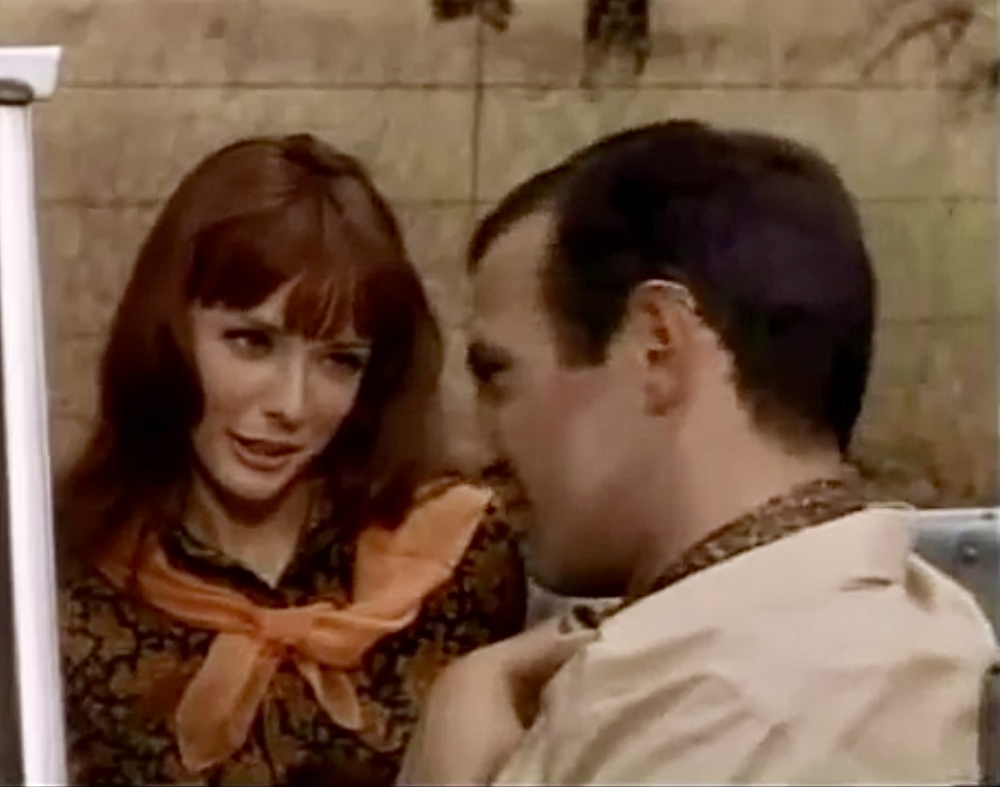
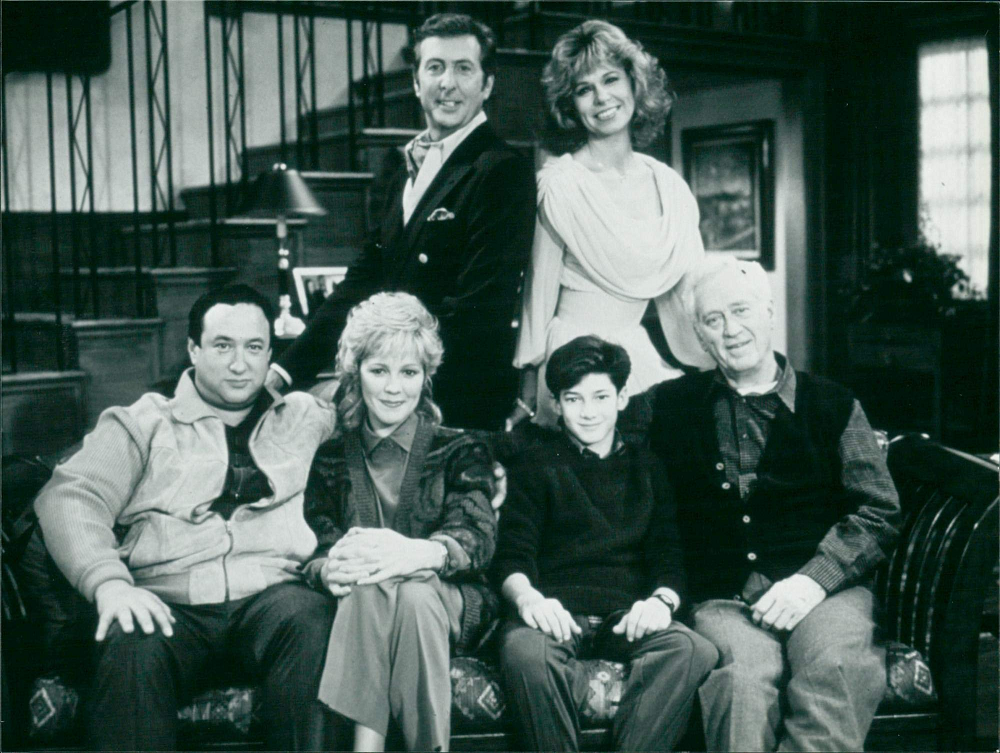
Baskin and Shulman had begun their writing partnership on Love, American Style in 1973, going on to work on Good Times, The Jeffersons, and Three’s Company, before creating Crazy Like a Fox in 1984. Their Nearly Departed saw Eric Idle and Benson‘s Caroline McWilliams star as Grant and Claire Pritchard, a professional couple who are killed in a rockslide. Returning to their old house as ghosts, they find a new family – the Dooleys – has moved in. Grandpa Jack (Henderson “As the World Turns“ Forsythe) is the only one who can see and hear the ghosts, and through him they strike a deal to stay in their former home in return for helping the family out.

Beetlejuice being a huge hit a year before won’t have hurt, of course, and Idle does his best to bring his ghost character to life, even doing a One Foot in the Grave-style song for the show’s opening theme. The friction between stuffy English professor Grant and Stuart Pankin’s Mike Dooley, a blue-collar plumber, formed the basis of many of the show’s jokes, despite one not being able to see the other, but the whole thing just didn’t come together in the way Topper – in any of its incarnations – had. After just four episodes, NBC yanked it from the schedule, with two completed episodes unshown, although the full slate aired in the UK. Idle returned to the UK to make Nuns on the Run with Robbie Coltrane but Baskin and Shulman were less fortunate. After the failure of Nearly Departed, the two worked on just two more shows as writer/producers, the James Garner starring Man of the People and All in the Family successor 704 Hauser Street, neither of which ignited the passions of TV audiences.

Dirty Dancing (CBS): If you’ve seen any wedding episode of You’ve Been Framed or America’s Funniest Home Videos, you’ll know that the climactic dance scene from Dirty Dancing has made its way into household familiarity, so bountiful are the spines that need realigning after couples fail to pull off the movie’s notorious run and lift manoeuvre. In fact, for a short period in the late 1980s, Dirty Dancing was ubiquitous, certainly amongst young women who dreamed that their own Johnny would rescue them from small town mundanity, and slightly older woman wishing he had. That is surely enough of an explanation as to why a movie that is perfectly self-contained, telling a coming-of-age story that will see a newly emancipated Baby go off to a liberal arts college at the end of her Summer romance, was turned into a TV show.

Dirty Dancing was a production of The Steve Tisch Company, whose founder had gotten his start at Columbia before striking out on his own for 1977’s Outlaw Blues, starring Peter Fonda and Susan Saint James. Risky Business, Emmy Award-winning TV Movie The Burning Bed, and Soul Man followed, and for Dirty Dancing Tisch turned to writers Barra Grant and Robert Rabinowitz to develop the show based on Eleanor Bergstein’s script for the original movie (which she had, in turn, based on her real life experiences growing up Summering in the Catskills).
Dirty Dancing, 1988-89

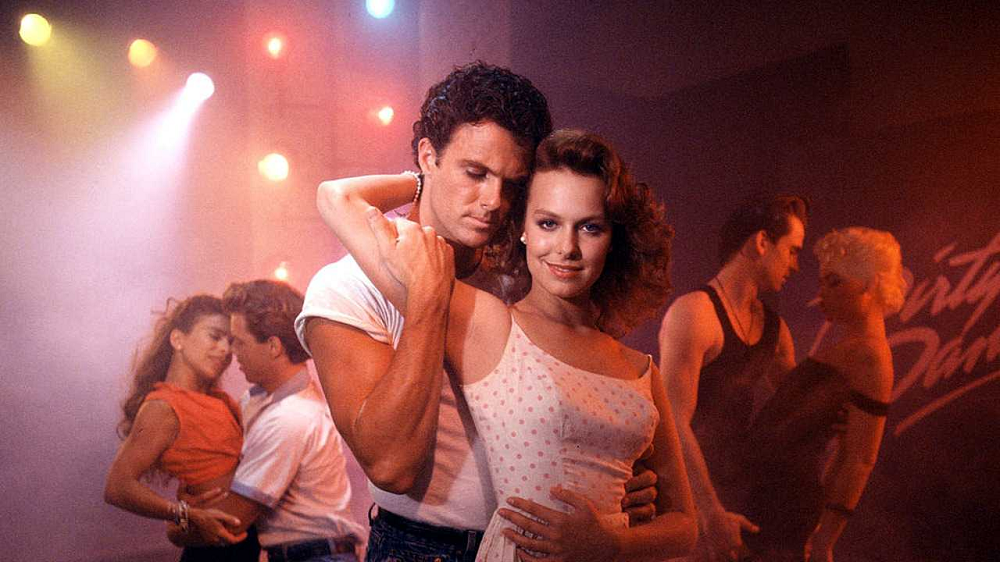
Having used her in Soul Man, Tisch himself cast Melora Hardin as Frances “Baby” Kellerman, a slightly changed character from the movie’s Frances Houseman. Instead of being a Summer guest at the Kellerman’s resort, she was no the daughter of the owner, but otherwise her story remained much the same. Patrick Cassidy – son of Shirley Jones and brother to David – stepped into Patrick Swayze’s shoes; ironically, Hardin had taken dance lessons as a thirteen-year-old from a pre-fame Swayze, and her continued studies gave her much more dancing experience than her character was supposed to have, something she found difficult in the show’s earlier episodes when baby was supposed to be a novice. The cast was rounded out by Paul Feig (who would go on to create Freaks and Geeks with Judd Apatow) as town nerd and comic relief Norman Bryant, Constance Marie as the sexually adventurous Penny, and M*A*S*H’s McLean Stevenson as Henry Kellerman, Baby’s father and owner of the resort.

With a full series to fill rather than a ninety-minute movie, events moved rather more slowly than they did between Swayze and Jennifer Grey, and there was no sign of Penny’s abortion subplot, but the series did attempt to address issues of the time, such as interracial relationships. Unfortunately, viewers never got to see the blossoming of Baby and Johnny’s relationship as the series was cancelled after eleven episodes, a twelfth completed episode going unaired. The show had debuted with 14.8 rating, decent enough for Saturday nights (when, stupidly, its target audience were probably at the movies), but was down to half that by the time the plug was pulled.

Something Is Out There (NBC): If Frank Lupo learned nothing else from his time working with both Glen A Larson and Stephen J Cannell, it was surely that, “if at first you don’t succeed, try, try again.” Both Larson and Cannell had their share of failures, with The Last Precinct – a sitcom he co-created with Lupo in 1986 – one of Cannell’s recent flops. So, when Werewolf – Lupo’s first foray into solo show development in July 1987 – was cancelled after just one season, the writer-producer was ready to try, try again, this time with a blockbuster mini-series originally titled Invader.

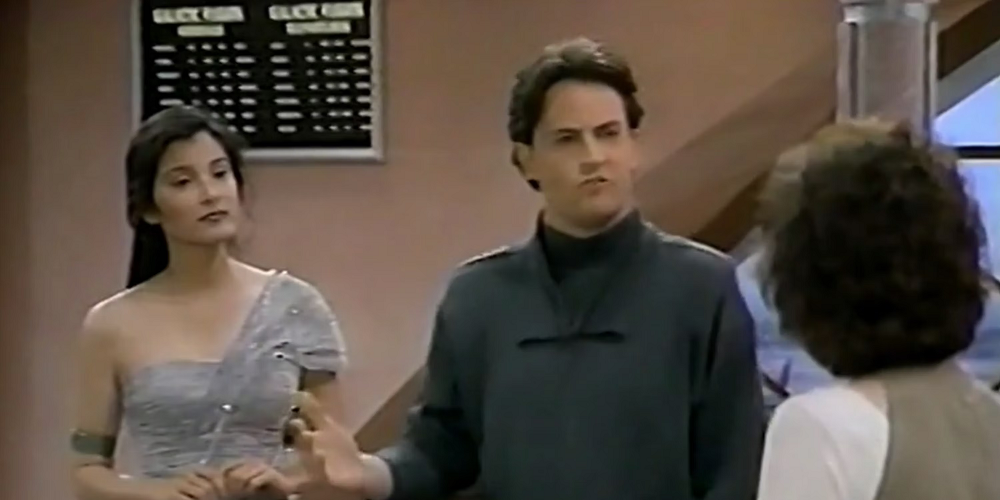
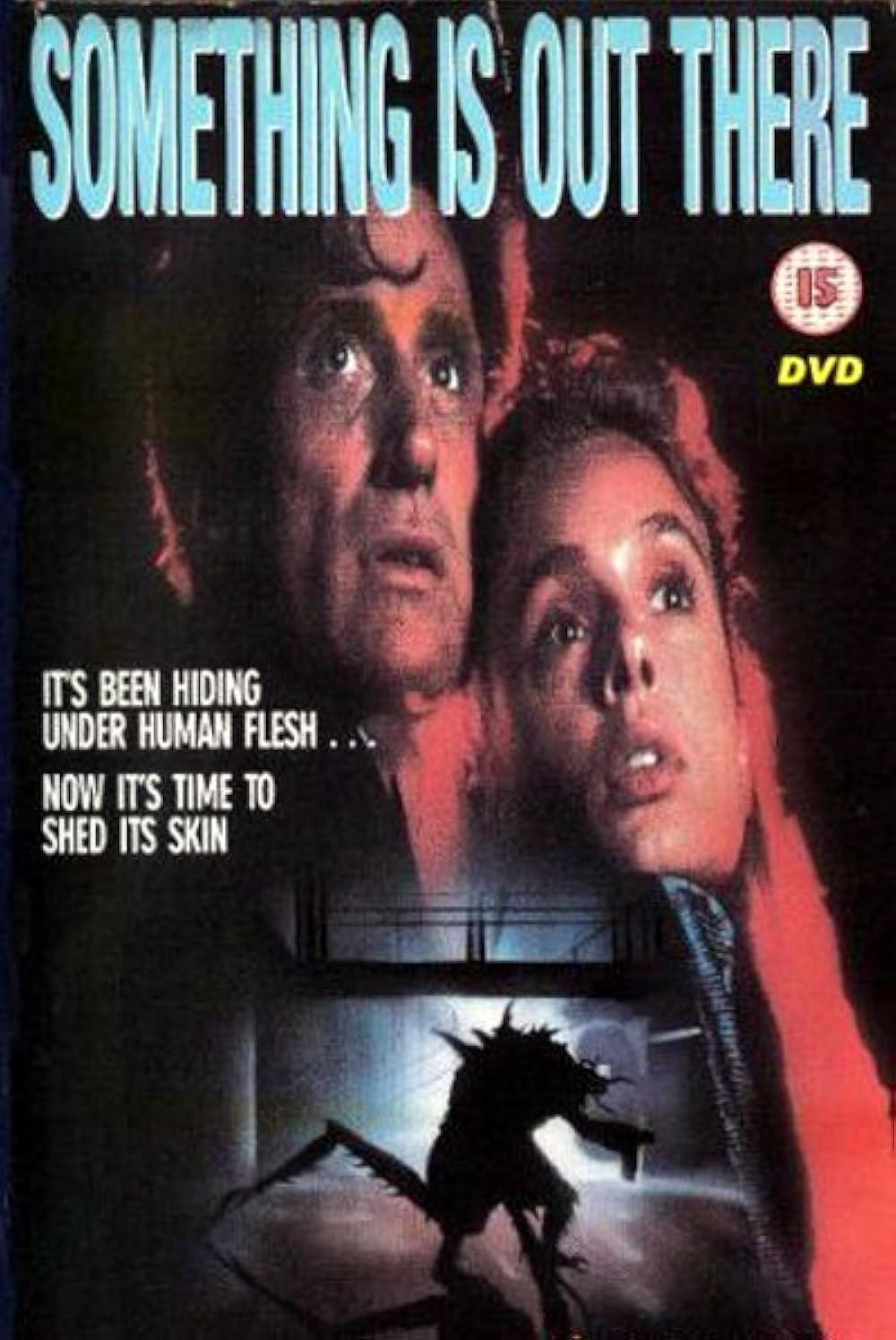
Handed a $7.5 million budget for the project, which enabled location shooting in Australia and the special effects talents of Rick Baker and John Dykstra, producing two feature length episodes that went out as Something Is Out There on consecutive nights in May 1988. Golden Raspberry Award winner Joe Cortese starred as Jack Breslin, a police detective investigating murders committed with seemingly impossible precision. After bringing in a woman seen at every crime scene, Breslin discovers that she is Ta’Ra, played by Maryam d’Abo, fresh off The Living Daylights. Ta’Ra is the medical officer from a prison ship that was passing Earth’s orbit and is also hunting the killer, an escaped alien xenomorph.
Something Is Out There, 1988-89

The mini-series did well in the ratings and NBC president Brandon Tartikoff announced it would become a series, ordering thirteen episodes to air as a mid-season replacement in the Spring of 1989. This is where Lupo hit a snag. From a lavish budget for just four hours of television, he was expected to produce an hour a week for a fraction of that, a purse that would not stretch to keeping Baker and Dykstra. Realising that he’d need to retool the concept a little, the weekly show focussed more on the relationship between Breslin and Ta’Ra, who had opted to leave the ship and stay on Earth. After all, critics hadn’t praised the chemistry between Cortese and d’Abo?

The switch to the human/alien leads was accompanied by a focus on Ta’Ra’s telepathic abilities, leading the show down a more paranormal and supernatural cul-de-sac, rather than the “alien of the week” the mini-series might have suggested. Six episodes into production, when the first episodes had begun to air in a slot opposite Dallas (even in 1988, a considerable ratings draw), Lupo realised his mistake, pulling the horse around and restoring a link to Ta’Ra’s prison ship and its occupants. The damage was done, though, and the show was cancelled after those first six episodes had aired, despite a switch to an earlier slot. Two further episodes had been completed but went unshown, although the Sci-Fi Channel did include them in a full run of the mini-series and the weekly show as part of its SCIFI World daytime block in 2000. Lupo, at least, had Hunter and Wiseguy, two shows he co-created with Cannell, to fall back on, although it would be five years before he managed to get another of solo creations to series.

Next time on The Telephemera Years: even more of 1988’s almosts, including impossible missions and more monsters than you can shake a stick at! 

Check out our other Telephemera articles:

The Telephemera Years: pre-1965 (part 1, 2, 3, 4)

The Telephemera Years: 1965 (part 1, 2, 3, 4)

The Telephemera Years: 1966 (part 1, 2, 3, 4)

The Telephemera Years: 1967 (part 1, 2, 3, 4)

The Telephemera Years: 1968 (part 1, 2, 3, 4)

The Telephemera Years: 1969 (part 1, 2, 3, 4)

The Telephemera Years: 1970 (part 1, 2, 3, 4)

The Telephemera Years: 1971 (part 1, 2, 3, 4)

The Telephemera Years: 1973 (part 1, 2, 3, 4)

The Telephemera Years: 1974 (part 1, 2, 3, 4, 5)

The Telephemera Years: 1975 (part 1, 2, 3, 4)

The Telephemera Years: 1976 (part 1, 2, 3, 4)

The Telephemera Years: 1977 (part 1, 2, 3, 4)

The Telephemera Years: 1978 (part 1, 2, 3, 4)

The Telephemera Years: 1979 (part 1, 2, 3, 4, 5, 6)

The Telephemera Years: 1980 (part 12, 3, 4)

The Telephemera Years: 1981 (part 1, 2, 3, 4)

The Telephemera Years: 1982 (part 1, 2, 3, 4)

The Telephemera Years: 1983 (part 1, 2, 3, 4)

The Telephemera Years: 1984 (part 1, 2, 3, 4)

The Telephemera Years: 1986 (part 1, 2, 3, 4)

The Telephemera Years: 1987 (part 1, 2, 3, 4)

The Telephemera Years: 1989 (part 1, 2, 3, 4)

The Telephemera Years: 1990 (part 1, 2, 3, 4)

The Telephemera Years: 1991 (part 1, 2, 3, 4)

The Telephemera Years: 1992 (part 1, 2, 3, 4)

The Telephemera Years: 1994 (part 1, 2, 3, 4)

The Telephemera Years: 1995 (part 12, 3, 4)

The Telephemera Years: 1997 (part 1, 2, 3, 4)

The Telephemera Years: 1998 (part 1, 2, 3, 4)

The Telephemera Years: 1999 (part 1, 2, 3, 4)

The Telephemera Years: 2000 (part 1, 2, 3, 4)

The Telephemera Years: 2001 (part 1, 2, 3, 4)

The Telephemera Years: 2002 (part 1, 2, 3, 4)

The Telephemera Years: 2003 (part 1, 2, 3, 4)

The Telephemera Years: 2005 (part 1, 2, 3, 4)

The Telephemera Years: 2006 (part 1, 2, 3, 4)

The Telephemera Years: 2007 (part 1, 2, 3, 4)

The Telephemera Years: 2008 (part 1, 23, 4)

The Telephemera Years: O Canada! (part 1, 2, 3, 4)

Titans of Telephemera: Irwin Allen

Titans of Telephemera: Stephen J Cannell (part 1, 2, 3, 4)

Titans of Telephemera: DIC (part 1, 2)

Titans of Telephemera: Filmation (part 1, 2)

Titans of Telephemera: Hanna-Barbera (part 1, 2, 3, 4, 5)

Titans of Telephemera: Kenneth Johnson

Titans of Telephemera: Sid & Marty Krofft

Titans of Telephemera: Glen A Larson (part 1, 2, 3, 4)

Titans of Telephemera: Quinn Martin (part 1, 2)

Titans of Telephemera: Rankin/Bass

Titans of Telephemera: Ruby-Spears

Titans of Telephemera: Sunbow

THE TELEPHEMERA YEARS: 1965, part 4

Atom Ant, 1965-66

Ah, telephemera… those shows whose stay with us was tantalisingly brief, snatched away before their time, and sometimes with good cause. They hit the schedules alongside established shows, hoping for a long run, but it’s not always to be, and for every Street Hawk there’s two Manimals. But here at STARBURST we celebrate their existence and mourn their departure, drilling down into the new season’s entertainment with equal opportunities square eyes… these are The Telephemera Years!

1965-66

Six years into its eventual fourteen-season run, Bonanza was the king of TV in the 1965-66 season with a massive 31.8 rating, four ratings points higher than its nearest rival – Gomer Pyle, USMC – but five points lower than the previous year. It was a downturn that would continue in 1966-67 and, aside from the adventures of the Cartwrights on the Ponderosa ranch, NBC did not enjoy the best of years, their second highest rating show coming in at twelfth, as wacky spy show Get Smart debuted. CBS had much better form across the board, with Gomer Pyle joined in the top ten by The Lucy Show, The Red Skelton Hour, The Andy Griffith Show, The Beverly Hillbillies, and new arrival Hogan’s Heroes, while ABC looked to Bewitched and new sensation Batman, two high rating genre shows in a fertile period for such fare.

Other notable shows making their debuts in the 1965-66 season included talking pig sitcom Green Acres, eventual soap juggernaut Days of Our Lives, quiz shows Supermarket Sweep and The Newlywed Game, and a clutch of new genre outings as The Wild Wild West, Lost in Space, and I Dream of Jeannie all made their bows. They joined The Addams Family, The Avengers, The Flintstones, Voyage to the Bottom of the Sea, The Munsters, My Favorite Martian, and The Man from UNCLE as America embraced the fantastic, but those were all shows for the grown-ups: what about their offspring? This is the story of 1965’s new kids’ TV shows…

Roger Ramjet (NBC): Although he worked at various New York animation studios in his twenties, Fred Crippen didn’t hit his stride until he joined the eastern arm of the United Pictures of America (or UPA) studio. UPA was formed in the wake of an exodus of staff from Walt Disney following industrial action in 1941 and they aimed to be markedly different than their former employer. Crippen worked on UPA’s first big hit, Mr Magoo, and then moved to Los Angeles, where he directed The Gerald McBoing Boing Show. Crippen hit out on his own in 1958, forming Pantomime Pictures, starting mostly with commercial clients and lending his talents to other studios, with credited work on 1964’s Linus the Lionhearted, a cereal mascot turned Saturday morning cartoon star.

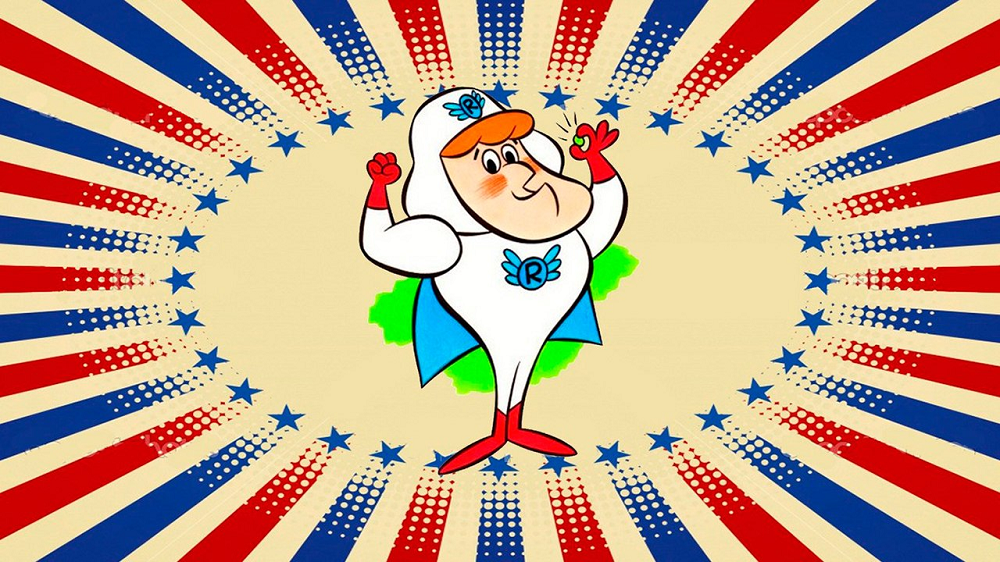
A year later and undoubtedly inspired by the success of Jay Ward’s anarchic The Adventures of Rocky and Bullwinkle and Friends, Crippen created Roger Ramjet, a proud American hero who defeats evil with the aid the American Eagle Squadron (and his PEP – proton energy power – pills). Incredibly subversive, Roger Ramjet was the first counter-culture cartoon, its five-minute episodes filled with jokes, like a page from MAD Magazine come to life. The show was unusual, too, in the way it was produced. Traditional productions began with rough animation, tightened after the soundtrack was recorded to match the visuals. For Roger Ramjet, the soundtrack came first, giving the animators space to not only match the dialogue but also fill the screen with the most random visual jokes and ephemera.

Roger Ramjet, 1965-66

Voiced by Gary Owens. in his first role of a career that would see him go on to voice Space Ghost and announce Rowan and Martin’s Laugh-In, Roger would be dispatched on missions from his hometown of Lompoc, California – “the town where nothing ever happens, and seldom does” – by General Brassbottom (Bob Arbogast). The voice cast also included David Ketchum, Dick Beals, and Joan Gerber. Roger’s arch enemy is Noodles Romanoff, the head of NASTY (the National Association of Spites, Traitors, and Yahoos). Although his PEP pills give him the power of “twenty atomic bombs,” Roger often finds himself captured, depending on the American Eagles – Yank, Doodle, Dan, and Dee – to rescue him. Other villains included Red Dog the Pirate, the Zsa Zsa Gabor-a-like Jacqueline Hyde, and the sexy Tequila Mockingbird, with all adventures neatly wrapped up within five minutes, topped and tailed by a Roger Ramjet-modified “Yankee Doodle Dandy.”

156 episodes were produced, aired between September 11th 1965 and 1969, during which time Crippen attempted to broaden his portfolio with The Joey Jingle Show, but the pilot went unsold; ironically, networks were really only buying superhero shows at the time. Post-Roger, Crippen produced animated segments for Sesame Street and continued to work in the industry into the 21st century, retiring in 2001 after his last job as a timing director on Godzilla: The Series. Following its first run on NBC, the series has been shown in syndication and overseas, and a DVD boxset was released in 2005.

Captain Fathom (syndication): Founded by Clark Haas Jr in 1957, Cambria Studios Productions is best known for its three shows created using the Syncro-Vox technique patented by Edwin “Ted” Gillette in 1952. Syncro-Vox took footage of moving lips and superimposed them over frames of animation, creating a (crude) illusion of a speaking mouth. Notoriously cheap, Gillette developed the technique to animate talking animals and by the late-1950s Gillette was a partner at Cambria, employing the technique on adventure serial Clutch Cargo, created by Haas and using very limited animation. 52 episodes of Clutch Cargo were broadcast in syndication in 1959 and 1960, and Syncro-Vox was next used on Space Angel, a show created by Dick Darley, who’d also created live-action ABC show Space Patrol in 1950 and directed the first episode of The Mickey Mouse Club.

As with Clutch Cargo, Space Angel used very limited animation but was an improvement on its predecessors due to the fact that the character designs – and many of the static images – were by comic book legend Alex Toth. Toth had moved to Los Angeles in 1956 while working for Dell Comics and Space Angel was his first work in the animation industry. The Space Angel of the title was astronaut Scott McCloud, who piloted the Starduster as an agent of the Earth Bureau of Investigation’s Interplanetary Space Force, he and his crew enjoying a 260-episode run between 1962 and 1964.

Captain Fathom, 1965-66

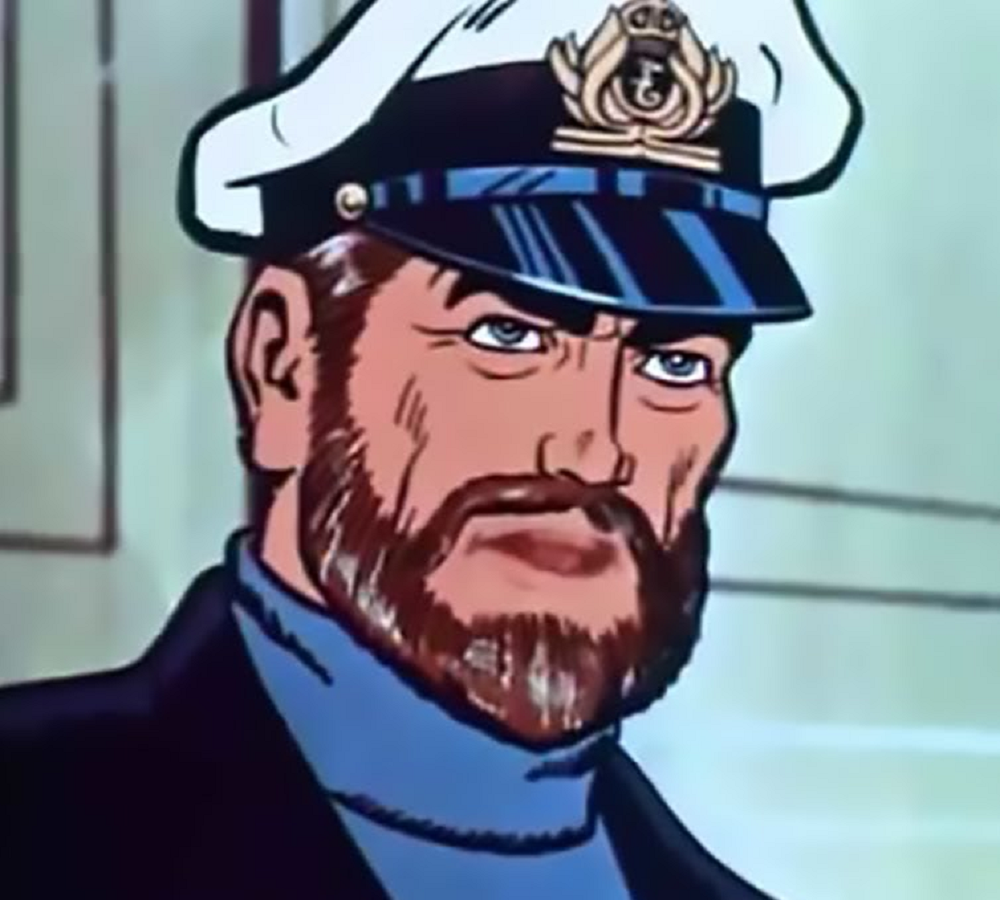
Cambria produced two new shows for 1965, but The New Stooges was traditionally animated, if still in a decidedly limited fashion. Toth stayed on to design Cambria’s next Syncro-Vox show, Captain Fathom, which debuted in Fall 1965 in syndication in the usual twin Cambria form, with 130 five-minute episodes, many of which could be combined into five-part serials to fill the usual thirty-minute programming slot or left as they were to become one segment of a variety block. The show featured Bill Fathom, captain of the submarine Argonaut and commanding a crew that included Cookie, Ronnie, Scotty, Miss Perkins, and a porpoise named Flip. He and his crew would sail the seven seas, encountering lost islands, ghost ships, supposedly extinct species, and pirates. Always pirates.

Captain Fathom was not a new idea; a pilot for a proposed live-action series had been made in 1955, starring Don Megowan as the titular submariner. The 1955 Captain Fathom was created by retired US Navy Rear Admiral Thomas M Dykers and German novelist Curt Siodmak, who’d fled Germany in 1934 to become a scriptwriter in London before moving to the US in 1937. Siodmark wrote the script for films including I Walked with a Zombie, The Beast with Five Fingers, and Bride of the Gorilla (which he also directed), and the story for Earth versus the Flying Saucers. Quite how Cambria came upon the 1955 pilot is unknown, but the two were explicitly linked by the bizarre Clutch and Friends in 2017, which featured the various nieces of Clutch Cargo introducing his adventures and those of his friends, including Bill Fathom.

Milton the Monster (ABC): Even though he’s far from a household name, no list of animation legends would be complete without the inclusion of Hal Seeger. Born in Brooklyn in 1917, he began his career working for the Fleischer brothers in the early 1940s, enjoying an interesting sideline writing the scripts for a series of musical films starring the likes of Cab Calloway and Dusty Fletcher. Seeger opened his own studio – Hal Seeger Productions – in the late 1950s, which enjoyed its first hit in 1962 when they produced an Out of the Inkwell revival, bringing silent era funny Koko the Klown into the 1960s. In 1964, a year after Warner Bros had shut down their own animation studio, Seeger was hired to produce new opening and closing animations for The Porky Pig Show, which re-used old Loony Tunes and Merrie Melodies cartoons for a Saturday morning crowd on ABC.

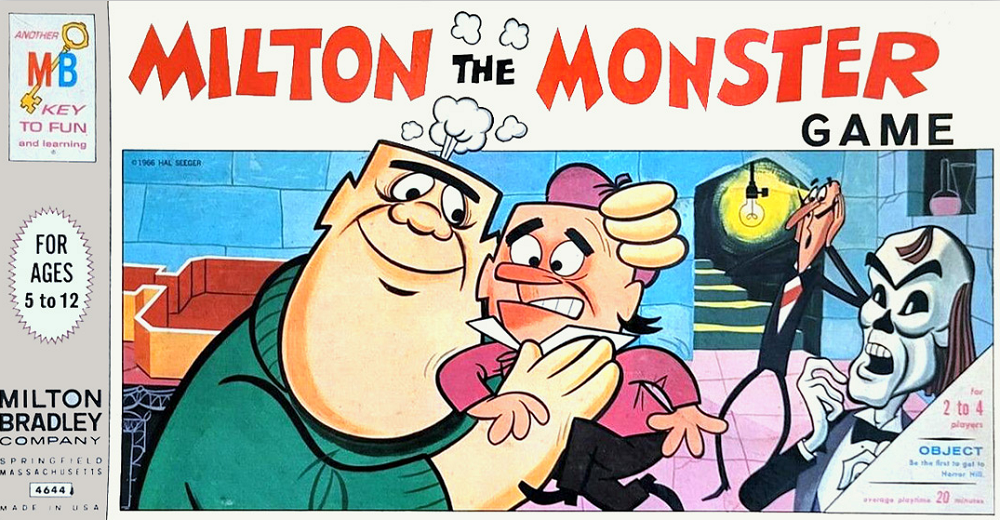
In October 1965, Hal Seeger Productions went one better and produced a full show for ABC. Created by Seeger’s wife, Beverly Arnold, Milton the Monster was a Frankenstein’s monster-like character, but one with a pleasant disposition due to his creator – mad scientists Professor Montgomery Weirdo – using too much “tincture of tenderness” in his production. Arnold also provided uncredited voice work, with the main roles of Milton and the Professor voiced by Bob McFadden (who also voiced Franken Berry in the General Mills cereal commercials and would later voice Snarf in Thundercats) and Dayton Allen (who had a storied career that included multiple roles on Howdy Doody, the voice of Deputy Dawg, and the man in the street on The Steve Allen Show).

Milton the Monster, 1965-66

Milton’s adventures – which also featured Igor-like sidekick Count Kook and fellow monsters Heebie, Jeebie, and Abercrombie the Zombie – were accompanied by several other shorts, chief amongst them being Fearless Fly. Similar to Hanna-Barbera’s Atom Ant, Fearless Fly was an insect superhero, his alter ego of Hiram the ordinary housefly ducking into a matchbox to change into his costume (a red sweater) and don his special eyeglasses, the source of his power. Allen voiced the Fly, and he would occasionally encounter Professor Weirdo as the two features crossed over. Cowboy detective Flukey Luke, Stuffy Durma the Millionaire Hobo, sly fox Muggy Doo, and bratty teenager Penny Penguin completed the line-up, with each episode featuring a Milton, a Fly, and one other, seemingly at random.

Twenty-six episodes were produced, which had a first run between October 1965 and April 1966, with re-runs staying in the Saturday morning schedules for the next two years, by which time Seeger’s most iconic show – the Batman-aping Batfink – had begun its run in syndication. After finishing Batfink, Seeger shuttered his studio, claiming the animation industry was a rat race and that he’d made six-figure losses during his time running the company. He was tempted back for just one more production – “Popeye Meets the Man Who Hated Laughter,” part of 1972’s The ABC Saturday Superstar Movie, a weekly showcase featuring characters from multiple shows, some of which acted as backdoor pilots.

The Atom Ant/Secret Squirrel Show (NBC): On Sunday September 12th 1965, The World of Secret Squirrel and Atom Ant introduced NBC viewers to two brand-new features from Hanna-Barbera, each designed to cash in on the dual superhero and spy craze that was all over TV and movie screens at the time.  The one-off show was followed three weeks later by the Saturday morning debuts of The Atom Ant Show and The Secret Squirrel Show, filling a one-hour block between re-runs of The Jetsons and season two of Underdog, which was eventually combined into The Atom Ant/Secret Squirrel Show during the Winter.

Originally voiced by The Andy Griffith Show‘s Howard Morris, and later by animation legend Don Messick, Atom Ant was the superhero half of the partnership, operating out of a converted anthill in the countryside, alerted to crimes by his supercomputer. With his local police force severely underfunded – they have two policemen and one dilapidated police car – Atom Ant is called upon to fight the likes of Ferocious Flea, Big Fats Dynamo, Professor von Gimmick, and others, all defeated following his catchphrase cry of, “Up and at ‘em, Atom Ant!” Atom Ant was companied in his half-hour of the block by two other features, The Hillbilly Bears and Precious Pupp. The former starred the Rugg family, good old southern folk who were always feuding with their neighbours, while Precious Pupp was an absolute menace, except to his beloved Granny Sweet, who carried him everywhere on her motorcycle.

Atom Ant, 1965-66

Secret Squirrel (voiced by the legendary Mel Blanc) was an agent of the International Sneaky Service, receiving orders from Paul Frees’s Double Q, and dispatched on missions with his sidekick, Morocco Mole (also voiced by Frees, but doing a Peter Lorre impersonation). Designated Agent 000, Secret Squirrel often went head-to-head with his archenemy, Goldfinger-parody Yellow Pinkie, but also clashed with the Masked Granny, Hi Spy, and others. As with Atom Ant, Secret Squirrel had two accompanying features in his half of the block. Paul Frees again voiced the title character in Squiddly Diddly, an aspiring musician always running afoul of Bubbleland’s Chief Winchley, while Jeanette van der Pyl brought life to Winsome Witch, a friendly but useless witch who uses the magic words, “Ippity-pippity-pow!” to cast her backfiring spells.

All six segments survived the Winter amalgamation and returned for a short run of new episodes in September 1966, taking each show up to twenty-six episodes, suitable for syndication. Both Atom Ant and Secret Squirrel also got the comic book treatment, with tie-in books published by Gold Key in October 1965 and July 1966, with back-up strips featuring their respective TV partners, and Secret Squirrel even got an LP record, titled Secret Squirrel and Morocco Mole, with four songs accompanying an adventure story. Past their original runs, the various characters from The Atom Ant/Secret Squirrel Show popped up in other Hanna-Barbera productions, most notably Harvey Birdman, Attorney at Law, where Secret Squirrel hires Harvey to get Morocco Mole out of Guantanamo Bay, and Atom Ant is accused of radioactive contamination.

Next time on The Telephemera Years: Something is out there and it’s 1988!

Check out our other Telephemera articles:

The Telephemera Years: pre-1965 (part 1, 2, 3, 4)

The Telephemera Years: 1965 (part 1, 2, 3)

The Telephemera Years: 1966 (part 1, 2, 3, 4)

The Telephemera Years: 1967 (part 1, 2, 3, 4)

The Telephemera Years: 1968 (part 1, 2, 3, 4)

The Telephemera Years: 1969 (part 1, 2, 3, 4)

The Telephemera Years: 1970 (part 1, 2, 3, 4)

The Telephemera Years: 1971 (part 1, 2, 3, 4)

The Telephemera Years: 1973 (part 1, 2, 3, 4)

The Telephemera Years: 1974 (part 1, 2, 3, 4, 5)

The Telephemera Years: 1975 (part 1, 2, 3, 4)

The Telephemera Years: 1976 (part 1, 2, 3, 4)

The Telephemera Years: 1977 (part 1, 2, 3, 4)

The Telephemera Years: 1978 (part 1, 2, 3, 4)

The Telephemera Years: 1979 (part 1, 2, 3, 4, 5, 6)

The Telephemera Years: 1980 (part 12, 3, 4)

The Telephemera Years: 1981 (part 1, 2, 3, 4)

The Telephemera Years: 1982 (part 1, 2, 3, 4)

The Telephemera Years: 1983 (part 1, 2, 3, 4)

The Telephemera Years: 1984 (part 1, 2, 3, 4)

The Telephemera Years: 1986 (part 1, 2, 3, 4)

The Telephemera Years: 1987 (part 1, 2, 3, 4)

The Telephemera Years: 1989 (part 1, 2, 3, 4)

The Telephemera Years: 1990 (part 1, 2, 3, 4)

The Telephemera Years: 1991 (part 1, 2, 3, 4)

The Telephemera Years: 1992 (part 1, 2, 3, 4)

The Telephemera Years: 1994 (part 1, 2, 3, 4)

The Telephemera Years: 1995 (part 12, 3, 4)

The Telephemera Years: 1997 (part 1, 2, 3, 4)

The Telephemera Years: 1998 (part 1, 2, 3, 4)

The Telephemera Years: 1999 (part 1, 2, 3, 4)

The Telephemera Years: 2000 (part 1, 2, 3, 4)

The Telephemera Years: 2001 (part 1, 2, 3, 4)

The Telephemera Years: 2002 (part 1, 2, 3, 4)

The Telephemera Years: 2003 (part 1, 2, 3, 4)

The Telephemera Years: 2005 (part 1, 2, 3, 4)

The Telephemera Years: 2006 (part 1, 2, 3, 4)

The Telephemera Years: 2007 (part 1, 2, 3, 4)

The Telephemera Years: 2008 (part 1, 23, 4)

The Telephemera Years: O Canada! (part 1, 2, 3, 4)

Titans of Telephemera: Irwin Allen

Titans of Telephemera: Stephen J Cannell (part 1, 2, 3, 4)

Titans of Telephemera: DIC (part 1, 2)

Titans of Telephemera: Filmation (part 1, 2)

Titans of Telephemera: Hanna-Barbera (part 1, 2, 3, 4, 5)

Titans of Telephemera: Kenneth Johnson

Titans of Telephemera: Sid & Marty Krofft

Titans of Telephemera: Glen A Larson (part 1, 2, 3, 4)

Titans of Telephemera: Quinn Martin (part 1, 2)

Titans of Telephemera: Rankin/Bass
Titans of Telephemera: Ruby-Spears

Titans of Telephemera: Sunbow

THE TELEPHEMERA YEARS: 1965, part 3

Hercules, 1965-66

Ah, telephemera… those shows whose stay with us was tantalisingly brief, snatched away before their time, and sometimes with good cause. They hit the schedules alongside established shows, hoping for a long run, but it’s not always to be, and for every Street Hawk there’s two Manimals. But here at STARBURST we celebrate their existence and mourn their departure, drilling down into the new season’s entertainment with equal opportunities square eyes… these are The Telephemera Years!

1965-66

Six years into its eventual fourteen-season run, Bonanza was the king of TV in the 1965-66 season with a massive 31.8 rating, four ratings points higher than its nearest rival – Gomer Pyle, USMC – but five points lower than the previous year. It was a downturn that would continue in 1966-67 and, aside from the adventures of the Cartwrights on the Ponderosa ranch, NBC did not enjoy the best of years, their second highest rating show coming in at twelfth, as wacky spy show Get Smart debuted. CBS had much better form across the board, with Gomer Pyle joined in the top ten by The Lucy Show, The Red Skelton Hour, The Andy Griffith Show, The Beverly Hillbillies, and new arrival Hogan’s Heroes, while ABC looked to Bewitched and new sensation Batman, two high rating genre shows in a fertile period for such fare.

Other notable shows making their debuts in the 1965-66 season included talking pig sitcom Green Acres, eventual soap juggernaut Days of Our Lives, quiz shows Supermarket Sweep and The Newlywed Game, and a clutch of new genre outings as The Wild Wild West, Lost in Space, and I Dream of Jeannie all made their bows. They joined The Addams Family, The Avengers, The Flintstones, Voyage to the Bottom of the Sea, The Munsters, My Favorite Martian, and The Man from UNCLE as America embraced the fantastic, but those were all shows that made their mark on the annals of TV history: what about those that didn’t make it past the pilot stage? This is the story of four unsold pilots…

Who Goes There? (CBS): The 1950s heralded a new era in American film, one where science fiction expanded into feature length movies rather than the serials of the 1930s and 1940s. Although many of these films were B-movies (a term which came to denote a genre rather than its original use of a supporting attraction), several broke through into the national consciousness, no doubt helped by the fact that they were all allegories for the fear of Communism, anyway. In 1953, Jack Arnold directed It Came from Outer Space, a film based on a script by Ray Bradbury, which doubled its budget at the box office and saw Barbara Rush win a Golden Globe for best newcomer. Arnold followed up with Creature from the Black Lagoon a year later, and 1957’s The Incredible Shrinking Man, after which he left the sci-fi genre, priced out of the market by cheap imitators.

After working in England on The Mouse That Roared, Arnold turned to TV, directing episodes of Peter Gunn and Mr Lucky, also turning his hand to comedy with Gilligan’s Island, where he was also executive producer. It was in this vein that he worked with scriptwriter George Beck to create Who Goes There?, a proposed sitcom for CBS that starred Pat Hingle as the ghost of Lieutenant Colonel George A Custer. Beck was a founder member of the Writers Guild of America West, with several successful films under his belt before he, too moved into TV in the 1950s.

Who Goes There, 1965-66

Hingle was an interesting choice for comic leading man, given his roots lay in the Actors Studio, where he enrolled in 1952. Hingle made his Broadway debut in End as a Man in 1953 and was uncredited as barman Jocko in Kazan’s On the Waterfront in 1954. He appeared in the original Broadway production of Cat on a Hot Tin Roof in 1955, and was originally cast in Richard Brooks’s Elmer Gantry, only to suffer an accident at his apartment building and Burt Lancaster ended up playing in the role. Hingle went back to the stage, making guest appearances in TV shows such as The Untouchables and The Twilight Zone, and the odd small film role before answering Arnold’s call.

Hingle’s ghostly Custer was accompanied by his Native American sidekick Running Dog (comedian Ben Blue) as they haunted a house that used to belong to one of his descendants, emerging from a painting to cause mischief for the new owners, the Woodly family. Dad Tom and mum Helen (Curtis Taylor and Lisa Gaye) are soon frustrated by their visitors, but children Liz and Larry (Kym “Gretl von Trapp” Karath and Randy Whipple) enjoy the hijinks. The pilot wasn’t one of those taken to series, but Whipple starred in one that was, My Mother the Car, and probably wishes he hadn’t. As for Arnold, he continued to direct films and TV into the 1980s, including a long stint on The Brady Bunch, but he never again returned the genre where he broke so much new ground.

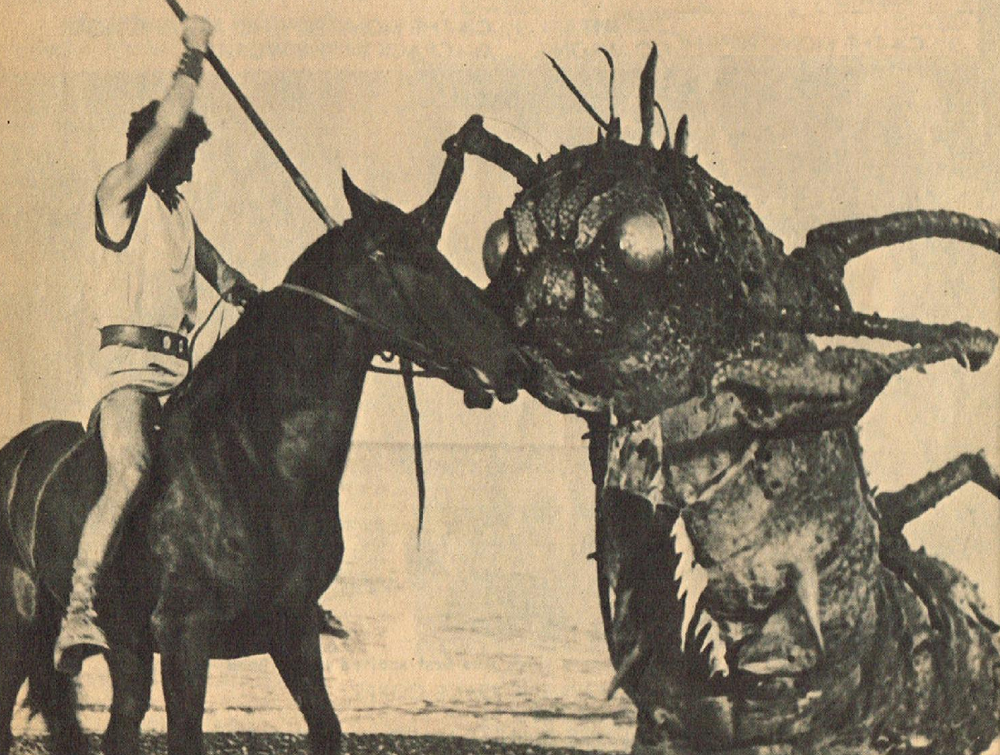
Hercules (ABC): While most were probably satisfied with whatever technicolour escapism was projected onto their drive-in screens, some 1965, moviegoers no doubt wondered why the latest “sword and sandal” (known in Italy as péplum) epic, Hercules and the Princess of Troy, came in at just forty-seven minutes long. There was a solid reason, but it probably wasn’t available to many outside Hollywood at the time, and that’s that the film was originally made as a pilot for a proposed Hercules TV series on ABC. As with many sword and sandal films, Hercules was an Italian and American co-production, a combination which would also result in the classic spaghetti westerns in the 1960s and shlock horror movies into the following decade.

Hercules was Joseph E Levine’s baby. A dressmaker turned restauranteur from Boaton, who married a dancer and opened a movie theatre in Connecticut, Levine founded Embassy Pictures in 1942, and the distributor hit the big time in 1956 when they bought the US rights to the Japanese film Godzilla, dubbing most of the footage into English and shooting new scenes with Raymond Burr. The re-titled Godzilla, King of the Monsters brought in over $1 million at the box office from a promotional outlay of less than half that, and he followed the formula with French film Attila in 1958. A year later, he imported an Italian movie titled Le Fatiche di Ercole (or The Labours of Hercules), which starred American bodybuilder turned actor Steve Reeves.

Hercules, 1965-66

Again re-dubbed and edited – the roar of the Cretan bull at the end of the movie was borrowed from Godzilla – the movie became a huge hit, earning over $5 million at the box office. Reeves had already made a sequel for the Italian market, which was duly bought by Embassy, and the studio also imported films by Federico Fellini and Ingmar Bergman in a most unlikely mix of art-house and low-budget action. Schlock was still their bread and butter, though, and – returning to their most valuable cash cow – Embassy sought to break into the TV market with a TV series starring Hercules.

Obviously, Reeves would have been the first choice for the role, but the star had significantly upped his fee after receiving injuries filming The Last Days of Pompeii for Sergio Leone in 1959 and would soon retire from acting. In his place came former lifeguard Gordon Scott, who had starred as Tarzan in six Sol Lesser productions in the previous decade before moving into the Italian péplum market. With director Albert Band helming a script by Larry Forrester and Ugo Liberatore, the Hercules pilot sees the legendary hero saving Diana Hyland’s Princess Diana and the city of Troy from a sea monster, but ABC were ultimately uninterested. Levine wasn’t a man who would waste a finished product, however, and the re-titled Hercules and the Princess of Troy (or Hercules versus the Sea Monster in some markets) was presented as a third film in the Hercules series, released theatrically as part of a double- or triple-bill.

Dream Wife (CBS): Second only to Bonanza in the 1964-65 Nielsen ratings, the debuting Bewitched worked its magic on the American public right out of the gate. Eventually running for eight seasons, the “suburban housewife is secretly a witch” sitcom broke new ground with its depiction of a woman as an active rather than passive character and may well have been an allegory about a having to pretend to be straight when you want to be gay and fabulous, but most viewers probably stuck around for the snappy dialogue and, well, have you seen Elizabeth Montgomery? With Bewitched such a hit for ABC, the rival networks scrambled to find their own magical love stories, with NBC’s I Dream of Jeannie debuting on September 18th 1965, two days after Bewitched season two began. CBS, though, didn’t have their own take on Samantha and Darrin’s domestic drama but that wasn’t for want of trying…

Stanley Chase was an aspiring writer with a passion for the theatre. After graduating from New York University, he produced an off-Broadway production of Kurt Weill and Bertolt Brecht’s Threepenny Opera which ran for an incredible 2,600 performances, launching the careers of actors such as Bea Arthur, Ed Asner, and Leonard Nimoy. Chase went on to produce several Broadway hits but moved to Los Angeles with ex-model wife Dorothy Rice, where he met screenwriter Robert Kaufman, a writer on The Bob Newhart Show, while Rice was making a cameo on the show.

Dream Wife, 1965-66

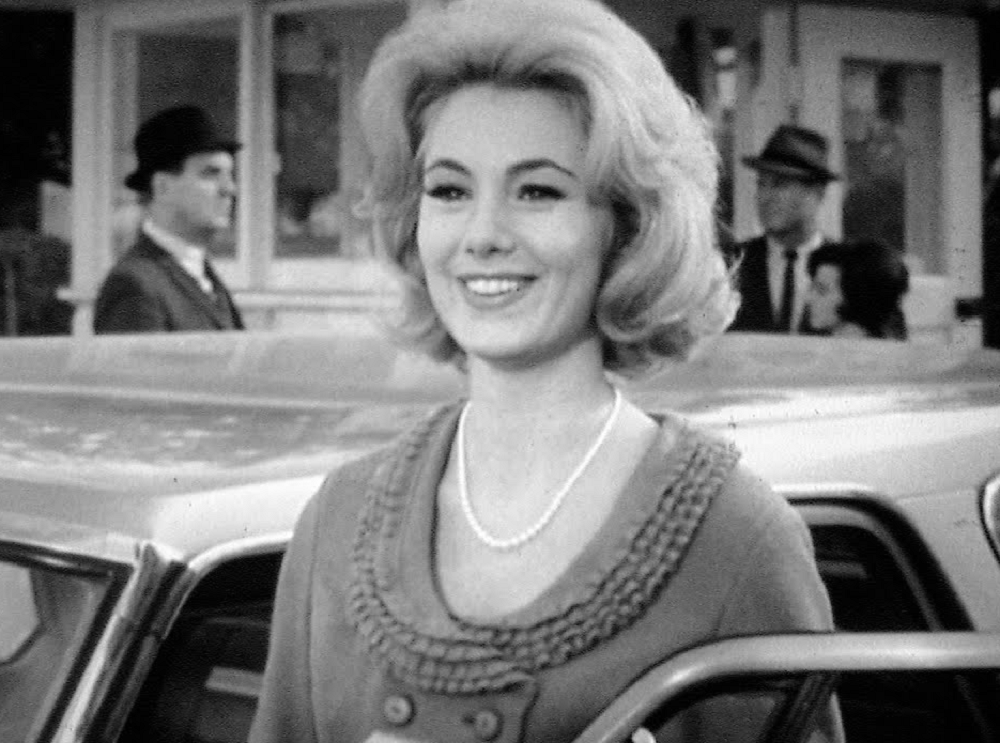
Inspired by the success of Bewitched, Chase and Kaufman cooked up a script about an ordinary housewife with a husband and young boy, who also happens to have psychic powers. Titled Happily Ever After, the script was picked up by MGM who sold CBS on a pilot. Shot at the MGM Studio, with actor turned director Don Taylor behind the camera, the pilot starred Shirley Jones, the first and only singer to have been under contract to Rodgers and Hammerstein in the mid-1950s, starring in Carousel and Oklahoma! and later winning an Oscar playing against her wholesome type in Elmer Gantry. A reliable leading lady in big screen romantic comedies, Happily Ever After was her chance to break out as a star in her own right.

Alongside Jones’s Lisa Michaels, Don May – who would go on to appear in a massive 2,769 episodes of long-running soap opera The Edge of Night – was cast as her husband, Paul, with Kelly Corcoran as their son, Tommy. They are unaware she has psychic powers, her secret known only to the wacky Professor De Pew (John Abbott), and her abilities are as liable to get her into kooky escapades as they are to prove useful, although they do eventually, of course. A change of title – to Dream Wife – was made ahead of the final presentation to CBS, and Hedda Hopper’s gossip column in the Los Angeles Times suggested a series had been greenlit for September 1965. By that point, though, Jones was pregnant with third son Ryan and Dream Wife remained a fantasy.

Steptoe And Son (NBC): Joseph Levine was the ultimate “fingers in pies” man, and as well as bringing Japanese monster movies, sword and sandal epics, and art-house classics to the USA, he was also almost responsible for the US version of Steptoe and Son, seven years before Redd Foxx and Demond Wilson opened their junkyard in Sanford and Son. The British show was spun out of an episode of Galton & Simpson’s Comedy Playhouse, a weekly showcase for writers Ray Galton and Alan Simpson after their association with Tony Hancock had ended and the comedian had moved to ATV. Episode four of the new series, which went out in January 1962, was titled “The Offer,” and featured the now familiar pair of old man Albert Steptoe and his son, Harold, who yearns to escape the junkyard life his father has seemingly trapped him in.

A claustrophobic and hilarious two-hander, “The Offer” led to a full series, which duly began in June 1962. Steptoe and Son eventually ran for eight seasons –from 1962 to 1965 and 1970 to 1974 – and became one a beloved British comedy institution, and it is a rarity in early British TV history that every single episode still exists. Until a few years ago, that wasn’t the case with the 1965 US version of the show, although some would argue that nothing of value was lost.

Steptoe And Son, 1965-66

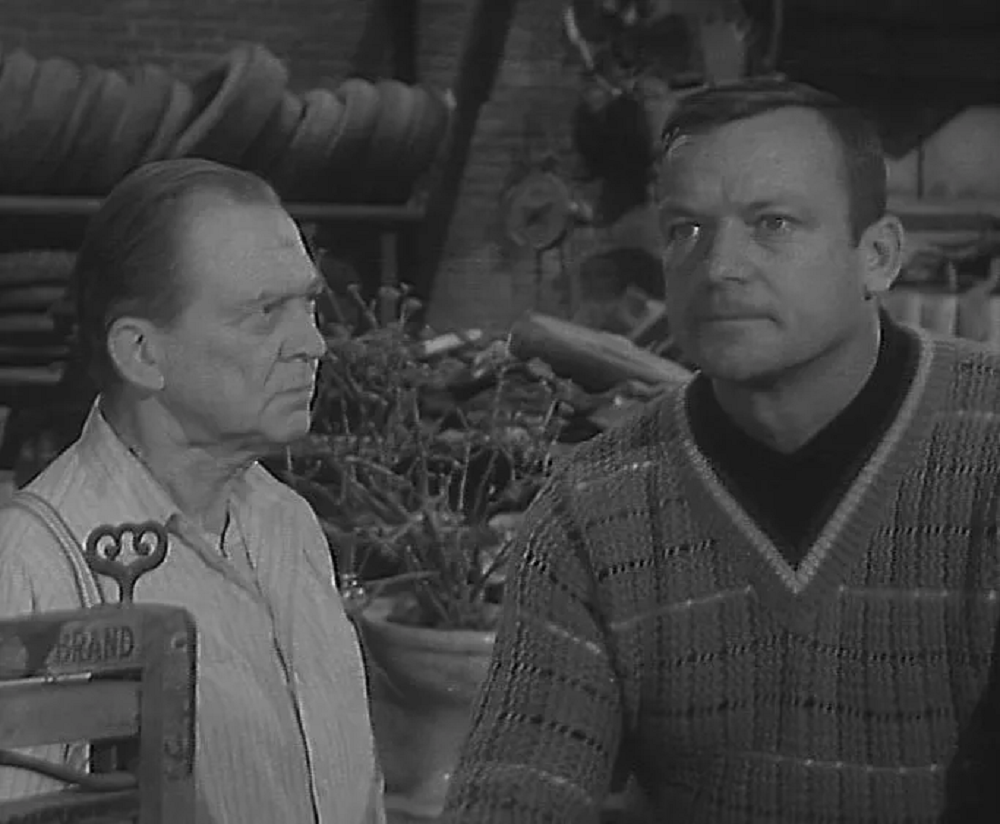
Having secured the rights to adapt “The Offer” as a pilot for NBC, Levine entrusted Phil Shuken – a reliable hand with multiple credits including The Beverley Hillbillies and The Real McCoys – with revising the screenplay. Screen veteran Lee Tracy, who began his film career in 1928 and almost derailed it five years later while filming in Mexico and allegedly urinated onto a military parade from his hotel balcony, was cast as the duplicitous Albert. Tracy had just been nominated for an Academy Award for his performance in The Best Man and so was quite a get for the production, but there was more of a question around their Harold, Aldo Ray, who’d only just returned to acting after a two-year break, his move to the UK in 1960 at the end of a prize contract with Columbia not panning out.

Whereas the original script was a two-hander, Tracy and Ray were joined in the pilot by guest stars including Jonathan Harris (about to star in Lost in Space) and future The Hills Have Eyes star Cordy Clark, and other differences saw Albert carousing with beatniks, and he manages to trick, rather than guilt, Harold into staying with him at the end of the show. The magic wasn’t there, though, and NBC passed on a series. It was to be Tracy’s last screen credit before his death three years later and it was thought the footage had been lost until it was discovered in Ray Galton’s basement, having been gifted to him by Levine in 1971. Subsequently cleaned up and released on DVD, what could have been is now available for all to see.

Next time on The Telephemera Years: Up and at ‘em? Saturday mornings in 1965!

Check out our other Telephemera articles:

The Telephemera Years: pre-1965 (part 1, 2, 3, 4)

The Telephemera Years: 1965 (part 1, 2)

The Telephemera Years: 1966 (part 1, 2, 3, 4)

The Telephemera Years: 1967 (part 1, 2, 3, 4)

The Telephemera Years: 1968 (part 1, 2, 3, 4)

The Telephemera Years: 1969 (part 1, 2, 3, 4)

The Telephemera Years: 1970 (part 1, 2, 3, 4)

The Telephemera Years: 1971 (part 1, 2, 3, 4)

The Telephemera Years: 1973 (part 1, 2, 3, 4)

The Telephemera Years: 1974 (part 1, 2, 3, 4, 5)

The Telephemera Years: 1975 (part 1, 2, 3, 4)

The Telephemera Years: 1976 (part 1, 2, 3, 4)

The Telephemera Years: 1977 (part 1, 2, 3, 4)

The Telephemera Years: 1978 (part 1, 2, 3, 4)

The Telephemera Years: 1979 (part 1, 2, 3, 4, 5, 6)

The Telephemera Years: 1980 (part 12, 3, 4)

The Telephemera Years: 1981 (part 1, 2, 3, 4)

The Telephemera Years: 1982 (part 1, 2, 3, 4)

The Telephemera Years: 1983 (part 1, 2, 3, 4)

The Telephemera Years: 1984 (part 1, 2, 3, 4)

The Telephemera Years: 1986 (part 1, 2, 3, 4)

The Telephemera Years: 1987 (part 1, 2, 3, 4)

The Telephemera Years: 1989 (part 1, 2, 3, 4)

The Telephemera Years: 1990 (part 1, 2, 3, 4)

The Telephemera Years: 1991 (part 1, 2, 3, 4)

The Telephemera Years: 1992 (part 1, 2, 3, 4)

The Telephemera Years: 1994 (part 1, 2, 3, 4)

The Telephemera Years: 1995 (part 12, 3, 4)

The Telephemera Years: 1997 (part 1, 2, 3, 4)

The Telephemera Years: 1998 (part 1, 2, 3, 4)

The Telephemera Years: 1999 (part 1, 2, 3, 4)

The Telephemera Years: 2000 (part 1, 2, 3, 4)

The Telephemera Years: 2001 (part 1, 2, 3, 4)

The Telephemera Years: 2002 (part 1, 2, 3, 4)

The Telephemera Years: 2003 (part 1, 2, 3, 4)

The Telephemera Years: 2005 (part 1, 2, 3, 4)

The Telephemera Years: 2006 (part 1, 2, 3, 4)

The Telephemera Years: 2007 (part 1, 2, 3, 4)

The Telephemera Years: 2008 (part 1, 23, 4)

The Telephemera Years: O Canada! (part 1, 2, 3, 4)

Titans of Telephemera: Irwin Allen

Titans of Telephemera: Stephen J Cannell (part 1, 2, 3, 4)

Titans of Telephemera: DIC (part 1, 2)

Titans of Telephemera: Filmation (part 1, 2)

Titans of Telephemera: Hanna-Barbera (part 1, 2, 3, 4, 5)

Titans of Telephemera: Kenneth Johnson

Titans of Telephemera: Sid & Marty Krofft

Titans of Telephemera: Glen A Larson (part 1, 2, 3, 4)

Titans of Telephemera: Quinn Martin (part 1, 2)

Titans of Telephemera: Rankin/Bass
Titans of Telephemera: Ruby-Spears

Titans of Telephemera: Sunbow

THE TELEPHEMERA YEARS: 1965, part 2

Honey West, 1965-66

Ah, telephemera… those shows whose stay with us was tantalisingly brief, snatched away before their time, and sometimes with good cause. They hit the schedules alongside established shows, hoping for a long run, but it’s not always to be, and for every Street Hawk there’s two Manimals. But here at STARBURST we celebrate their existence and mourn their departure, drilling down into the new season’s entertainment with equal opportunities square eyes… these are The Telephemera Years!

1965-66

Six years into its eventual fourteen-season run, Bonanza was the king of TV in the 1965-66 season with a massive 31.8 rating, four ratings points higher than its nearest rival – Gomer Pyle, USMC – but five points lower than the previous year. It was a downturn that would continue in 1966-67 and, aside from the adventures of the Cartwrights on the Ponderosa ranch, NBC did not enjoy the best of years, their second highest rating show coming in at twelfth, as wacky spy show Get Smart debuted. CBS had much better form across the board, with Gomer Pyle joined in the top ten by The Lucy Show, The Red Skelton Hour, The Andy Griffith Show, The Beverly Hillbillies, and new arrival Hogan’s Heroes, while ABC looked to Bewitched and new sensation Batman, two high rating genre shows in a fertile period for such fare.

Other notable shows making their debuts in the 1965-66 season included talking pig sitcom Green Acres, eventual soap juggernaut Days of Our Lives, quiz shows Supermarket Sweep and The Newlywed Game, and a clutch of new genre outings as The Wild Wild West, Lost in Space, and I Dream of Jeannie all made their bows. They joined The Addams Family, The Avengers, The Flintstones, Voyage to the Bottom of the Sea, The Munsters, My Favorite Martian, and The Man from UNCLE as America embraced the fantastic, but those were all shows that made their mark on the annals of TV history: what about those that didn’t stick around? This is the story of four more shows that didn’t outstay their welcomes…

Gidget (ABC): After fleeing Germany in 1933 when Nazis began removing Jewish credits from feature films, Czechoslovak screenwriter Frederick Kohner settled in Los Angeles, where he found work with Columbia Pictures. In the early 1950s, Kohner’s teenage daughter Kathy fell in with the local surfing crowd and the writer became fascinated by their subculture, penning a novel based on the scene, with the character of Franzie Hofner – dubbed Gidget, a portmanteau of “girl and “midget” – standing in for his daughter, guiding her father through the surfing world. Released as Gidget, The Little Girl with Big Ideas in 1957, the book was a success and Columbia bought the film rights for $50,000, of which Kohner gave 10% to Kathy.

Columbia released the first Gidget movie in 1959, starring Sandra Dee as an Americanised Francine Lawrence, drawn into surfing through an infatuation with James Darren’s Moondoggie. Columbia produced two sequels – Gidget Goes Hawaiian and Gidget Goes to Rome – but only James Darren was consistently cast, with Deborah Walley and Cindy Carol succeeding Dee. Although that was it for the films, Columbia’s TV production arm – Screen Gems – were keen to continue the series on television, recasting once again and bringing in Kohner as a consultant.

Gidget, 1965-66

The show reoriented the focus back onto the relationship between Gidget and her father, Russell, which had been at the forefront of the novel but sidelined for the movies. Cast as Gidget was Sally Field, an eighteen-year-old Californian fresh out of high school, who beat out seventy-five other girls for the role. Don Porter reprised the role of widowed Russell that he played in Gidget Goes to Rome, and with Gidget’s boyfriend Moondoggie away at Princeton University, the TV show can be taken as a fresh take on the novel or a sequel to the movies (although there are obvious timeline and character difficulties with that approach). Gidget’s romantic status certainly didn’t prevent her from chasing other boys in the course of the series, with guest stars including Richard Dreyfuss and Daniel J Travanti lining up as objects of her affection, and she would often break the fourth wall to explain what she’d learned from the episode to the audience at home, signing off with the Field-improvised, “toodles!”

Gidget debuted on Wednesday nights on September 15th 1965, where it struggled against strong opposition, and a move to Thursdays proved no better. ABC cancelled the show, but summer re-runs proved to be very popular and the network scrambled to find a new show for Field, resulting in 1967’s The Flying Nun. In 1969, ABC greenlit a pilot for a possible sequel series starring Karen Valentine, Gidget Grows Up, based on Kohner’s 1968 novel Gidget Goes to New York, and tried again in 1972 with Monie Ellis in Gidget Gets Married. Later that year, Hanna-Barbera made an animated TV feature – Gidget Makes the Wrong Connection – but it wouldn’t be until 1986’s The New Gidget, spun out of pilot movie Gidget’s Summer Reunion, that the character would make a regular return to TV.

The Trials of O’Brien (CBS): Early in his acting career, after a failed screen test, Peter Falk was told by Columbia Pictures boss Harry Cohn, “for the same price, I could get an actor with two eyes.” It was another setback for the actor, who lost his eye at three-years-old to restinoblastoma, but nevertheless became a star athlete in high school and served with the merchant navy when turned away by the marines. Having been rejected by the CIA, Falk took an office job, but began attending acting classes on the side, inveigling his way into a class taught by Eve La Galliene, who told him he should act full-time.

Falk found success on the stage, even acting on Broadway, and persevered in Hollywood, gaining small parts in movies and TV shows leading up to his breakout role in gangster flick Murder, Inc in 1960. Falk received an Oscar nomination for his performance and was cast by Frank Capra in Pocketful of Miracles, the director’s final film, for which the actor again received a nod from the Acacdemy. Further supporting roles in It’s a Mad, Mad, Mad, Mad World and Robin and the 7 Hoods added to his cachet and in 1965 he was cast in his first starring role on TV, as an over-the-top, Shakespeare-quoting lawyer in The Trials of O’Brien.

The Trials of O'Brien, 1965-66

The Trials of O’Brien was created by Gene Wang, a California lawyer who began writing scripts as a sideline to his legal work, lending his legal knowledge to the production of radio-to-TV transfer The Amazing Mr Malone in 1950. Subsequent work led him to Perry Mason, the 1957 TV adaptation of Stanley Erle Gardner’s literary lawyer, both as a story consultant and script writer on the first three seasons. After one-off scripting jobs on the likes of Dr Kildare and Adventures in Paradise, The Trials of O’Brien gave Wang the opportunity to do a series his way, and in Danny O’Brien he created a character that was likeable and despicable in equal measure.

Perfectly portrayed by Falk, O’Brien was often late on his alimony payments to his patient ex-wife (Joanna Barnes), brusque with his secretary Miss G (Elaine Stritch), and every bit as rumpled as the LAPD detective he would later make his signature role. Across twenty-two episodes – written by an assortment including George Bellak, future Colombo scribes Richard Alan Simmons and Robert van Scoyk, and Ironside’s Don Mankiewicz – O’Brien’s clients included heist artists, bookies, underground filmmakers, burlesque comedians, and an eccentric judge, all seemingly innocent of the charges brought against them, with guest stars including Alan Alda, Milton Berle, Britt Eklund, Buddy Hackett, Burgess Meredith, and Roger Moore. Falk certainly seemed to revel in the role, later claiming he enjoyed it more than Colombo. Despite that, the show failed to earn the ratings CBS were after and it was among fifteen shows cancelled by the network at the end of the season, including Perry Mason. Although Falk found much more fame in his later role, Wang never wrote for TV again.

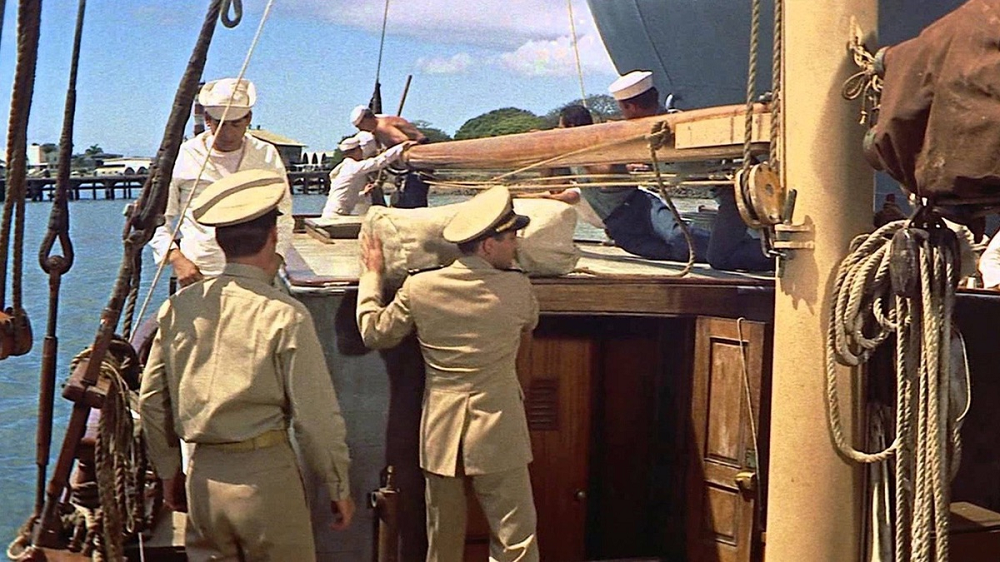
The Wackiest Ship in the Army (NBC): A flat-bottomed schooner that was originally topsail rigged but later also fitted with a diesel engine, the USS Echo began life as a cargo ship in her native New Zealand but was leased to the United States in 1942 to support the war effort against the Japanese in the Pacific. Sailing under a false Swiss flag, the age of the ship allowed it to slip under the attentions of the Japanese navy, supplying US Army outposts and Coastwatching stations until February 1944, when she was returned to New Zealand with a commendation from the Army. In 1956, the story of the Echo was featured in men’s adventure magazine Argosy in a story entitled “Big Fella Wash-Wash” by Marion Hargrove and Herb Carlson.

Inspired by the memories of Echo’s captain, Meredith “Rip” Riddle, the rights to Hargrove and Carlson’s article were acquired by Columbia Pictures a year later, engaging Herbert Margolis and William Raynor to write a screen story, which was later turned into a screenplay by Richard Murphy, who was also hired as director. Originally intended as a vehicle for Ernie Kovacs, who was unavailable when it came to make the film, The Wackiest Ship in the Army starred Jack Lemmon and teen singing sensation Ricky Nelson, and was released in December 1960, well-reviewed as an amusing farce.

The Wackiest Ship in the Army, 1965-66

The movie did well enough that, five years later, Screen Gems considered turning it into a TV series, ordering a pilot starring 12 Angry Men‘s Jack Warden and newcomer Gary Collins, and written and directed by Danny Arnold. Arnold’s treatment renamed the ship the USS Kiwi but sailed closer to the real-life story of the Echo, with Warden and Collins playing rival commanders, one in charge of the ship while she was ashore, and the other when she was at sea. Mike Kellin, who played the Chief Mate in the movie, was the only actor to make the transition, and the resulting pilot was sufficient for Screen Gems to order a series, sold to NBC for the Fall 1965 season. Twenty-eight further episodes were produced, with the crew not only having to deal with the Japanese but also double agents, native tribes, and pirates.

At an hour in length, with no laugh track, and with characters dying, the show sometimes sailed closer to an adventure drama rather than the comedy it was billed at, a world away from the hijinks Lemmon and company got up to on the big screen. That’s not to say The Wackiest Ship in the Army wasn’t funny, more that it resembled M*A*S*H rather than the exploits of Sgt Bilko on The Phil Silvers Show. It may be that US TV audiences were not quite ready for that kind of thing because The Wackiest Ship in the Army lasted just a single season. The real-life Echo returned to carrying cargo between Marlborough and Wellington, bridging the gap between the country’s South and North Islands, and served latterly as clubrooms and a museum before being broken up in 2015.

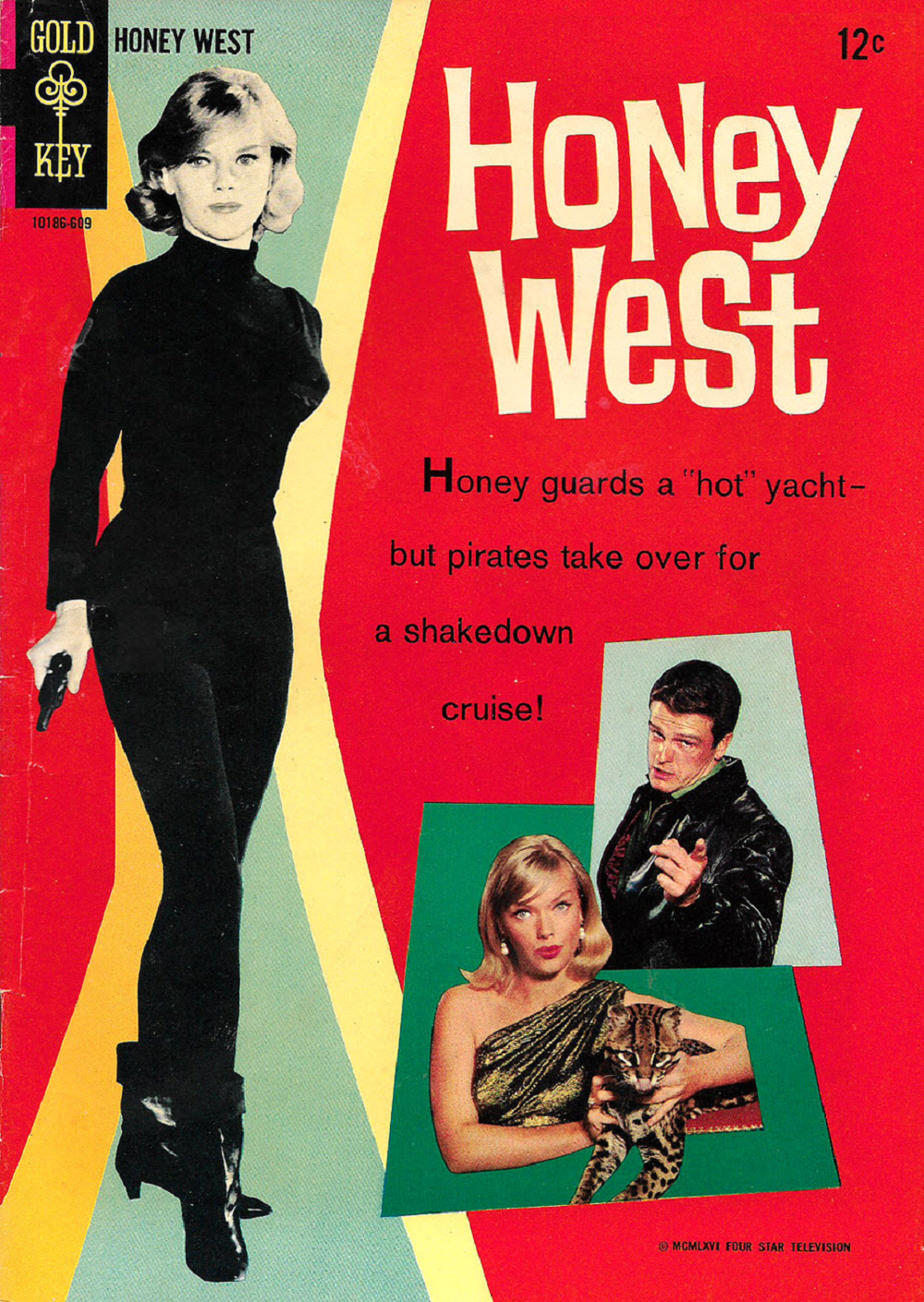
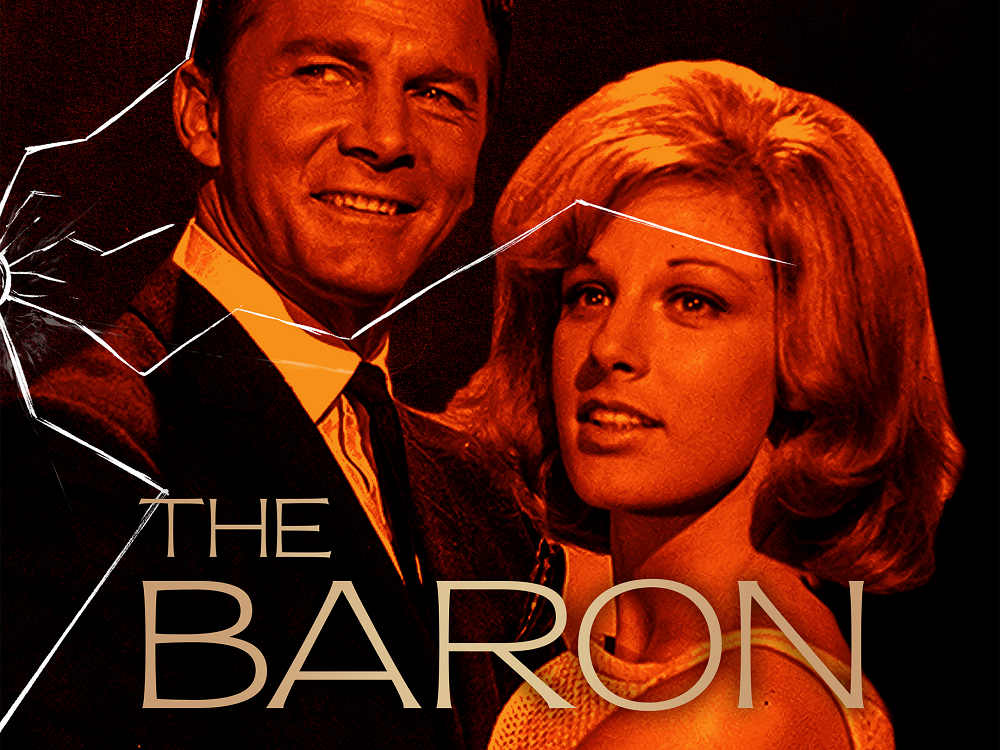
Honey West (ABC): One of the first female private detectives in popular fiction, Honey West first appeared in the 1957 novel This Girl for Hire, by husband-and-wife team Skip and Gloria Fickling, writing under the combined pseudonym GG Fickling. Gloria gave Skip credit for most of the writing, but noted she added a female point of view vital to the character, who her husband imagined as a cross between Mike Hammer and Marilyn Monroe. Following This Girl for Hire, West appeared in a further ten novels, with three spin-offs featuring side character Erik March published in the early 1960s.

In April 1965, Honey West appeared in an episode of Burke’s Law, a show starring Gene Barry as Amos Burke, a millionaire LAPD captain tasked with solving some of the most difficult murder cases in the City of Angels. In “Who Killed the Jackpot?”, Burke finds himself in a race to solve the murder of a wealthy banker with the glamorous private eye who was working for the victim, and the reaction to Anne Francis’s performance as West was positive enough that a Honey West series was commissioned on the strength of the backdoor pilot. The series was developed by Gwen Bagni and Paul Dubov, who also wrote “Who Killed the Jackpot?” and a third of the thirty first season episodes.

Honey West, 1965-66

Francis – who had shot to fame in 1955’s The Blackboard Jungle before appearing in Forbidden Planet the following year – was not producer Aaron Spelling’s first choice to play the character, but Honor Blackman turned down the role. Despite that, she was a great fit for the “private eyeful” (as she was referred to on more than one occasion) and earned her a Golden Globe for Best Actress, as well as an Emmy nomination in the same category. Her West has a pet ocelot named Bruce, and a partner/man-Friday named Sam Bolt. She is an expert in judo and has several James Bond-like gadgets, switching her wardrobe from revealing animal print dresses to a slick, black bodysuit she uses for sneaking around and the majority of her fight scenes.

Debuting on Friday nights from September 17th 1965, the series ran into tough competition from Gomer Pyle, USMC, the second-highest rating show across the whole schedule. This, coupled with the relative expense for filming such a slick, high action show, led to ABC making the decision to import The Avengers rather than continue with Honey West after its first season. The series is notable for a number of firsts, however, as it was the first network show to feature a titular female character (a decade after Annie Oakley did the same in syndication) and it was one of the first TV shows to refer to cocaine as “snow,” a popular street name for the drug at the time. A new Honey West novel and a new collection of short stories featuring the character were published in 2014 amid rumours of a film version starring Reese Witherspoon, but to date the girl remains for hire.

Next time on The Telephemera Years: What 1965 shows didn’t make it past the pilot stage?

Check out our other Telephemera articles:

The Telephemera Years: pre-1965 (part 1, 2, 3, 4)

The Telephemera Years: 1965 (part 1)

The Telephemera Years: 1966 (part 1, 2, 3, 4)

The Telephemera Years: 1967 (part 1, 2, 3, 4)

The Telephemera Years: 1968 (part 1, 2, 3, 4)

The Telephemera Years: 1969 (part 1, 2, 3, 4)

The Telephemera Years: 1970 (part 1, 2, 3, 4)

The Telephemera Years: 1971 (part 1, 2, 3, 4)

The Telephemera Years: 1973 (part 1, 2, 3, 4)

The Telephemera Years: 1974 (part 1, 2, 3, 4, 5)

The Telephemera Years: 1975 (part 1, 2, 3, 4)

The Telephemera Years: 1976 (part 1, 2, 3, 4)

The Telephemera Years: 1977 (part 1, 2, 3, 4)

The Telephemera Years: 1978 (part 1, 2, 3, 4)

The Telephemera Years: 1979 (part 1, 2, 3, 4, 5, 6)

The Telephemera Years: 1980 (part 12, 3, 4)

The Telephemera Years: 1981 (part 1, 2, 3, 4)

The Telephemera Years: 1982 (part 1, 2, 3, 4)

The Telephemera Years: 1983 (part 1, 2, 3, 4)

The Telephemera Years: 1984 (part 1, 2, 3, 4)

The Telephemera Years: 1986 (part 1, 2, 3, 4)

The Telephemera Years: 1987 (part 1, 2, 3, 4)

The Telephemera Years: 1989 (part 1, 2, 3, 4)

The Telephemera Years: 1990 (part 1, 2, 3, 4)

The Telephemera Years: 1991 (part 1, 2, 3, 4)

The Telephemera Years: 1992 (part 1, 2, 3, 4)

The Telephemera Years: 1994 (part 1, 2, 3, 4)

The Telephemera Years: 1995 (part 12, 3, 4)

The Telephemera Years: 1997 (part 1, 2, 3, 4)

The Telephemera Years: 1998 (part 1, 2, 3, 4)

The Telephemera Years: 1999 (part 1, 2, 3, 4)

The Telephemera Years: 2000 (part 1, 2, 3, 4)

The Telephemera Years: 2001 (part 1, 2, 3, 4)

The Telephemera Years: 2002 (part 1, 2, 3, 4)

The Telephemera Years: 2003 (part 1, 2, 3, 4)

The Telephemera Years: 2005 (part 1, 2, 3, 4)

The Telephemera Years: 2006 (part 1, 2, 3, 4)

The Telephemera Years: 2007 (part 1, 2, 3, 4)

The Telephemera Years: 2008 (part 1, 23, 4)

The Telephemera Years: O Canada! (part 1, 2, 3, 4)

Titans of Telephemera: Irwin Allen

Titans of Telephemera: Stephen J Cannell (part 1, 2, 3, 4)

Titans of Telephemera: DIC (part 1, 2)

Titans of Telephemera: Filmation (part 1, 2)

Titans of Telephemera: Hanna-Barbera (part 1, 2, 3, 4, 5)

Titans of Telephemera: Kenneth Johnson

Titans of Telephemera: Sid & Marty Krofft

Titans of Telephemera: Glen A Larson (part 1, 2, 3, 4)

Titans of Telephemera: Quinn Martin (part 1, 2)

Titans of Telephemera: Rankin/Bass
Titans of Telephemera: Ruby-Spears

Titans of Telephemera: Sunbow

Daniel Myrick & Eduardo Sánchez • THE BLAIR WITCH PROJECT

When released in 1999, no one could have predicted the cultural and cinematic impact The Blair Witch Project would have. While perhaps not the first found-footage film, it is undoubtedly the one that defines the genre, demonstrates how powerful the format can be, and opens doors for hundreds of ambitious filmmakers.

As Second Sight releases a new special edition Blu-ray for its 25th anniversary, we sat down with writers and directors Daniel Myrick and Eduardo Sánchez to discuss their film’s legacy, their relationship with it now, and where it all began….

STARBURST: Does it seem like 25 years have passed since you first released the film?

Eduardo: A lot has happened!

Daniel: It hits home sometimes when I see a grown adult say, ‘I was just a kid when your movie came out’. I’m like, oh, OK. It goes by so quickly.

The ’90s were an interesting time for horror, primarily with the post-slasher movement. What was the original genesis of the story against that backdrop?

Daniel: It sort of snuck up on us a little bit. Ed and I were big fans of the In Search Of series with Leonard Nimoy and pseudo-documentaries that were pretty popular in the late ’70s and early ’80s, like Legend of Boggy Creek and that sort of thing. So, we discovered in each other that we were fans of that genre of films. And we discussed how they had a certain interesting effect on the viewer, those documentary style films and photos. We wanted to try to capture that, something that was simple and straightforward and in that format. But we weren’t really sure how to go about doing so that would have that effect but still have a controllable narrative. Those old programmes were part of it, and we were discussing one time about coming across this old house in the woods, which you can imagine pretty clearly. You’re walking through the woods, it’s already dark, you have the single light of the camera, and you enter this old decrepit house. It’s really creepy when you describe it. So, that’s really the creative kernel of how we wanted to approach it and capture that primal essence it was invoking in us. At the time, a lot of movies had the pretext of being horror, but they weren’t really scary. They were self-reverential or big budget Hollywood films, but not really scaring us at the core level, not like The Exorcist or The Shining. So, we wanted to get back to that. And the documentary approach was something we thought we could exploit. We weren’t sure quite how we were going to do it, but that was really the genesis of our trajectory.

Eduardo: And it was definitely inspired by the fact that the discussion began with ‘What happened to scary horror movies?’ and what scares us. That’s how the weekend began, and we rented a bunch of videos the rest is history, I guess.

And a lot of films were based upon jump scares, not real fear…

Eduardo: They were fun. The movie that really started the discussion was Freddy’s Dead with Roseanne Barr and Tom Arnold. And it was a fun movie, but it wasn’t scary at all. It was just what was popular at the time. Like you said, we’d gone through the slasher phase, but people had kind of forgotten horror movies were meant to be scary.

For you, what is so scary about Blair Witch because you never really know what’s going on or what the characters are up against? They even say in the film that they suspect someone is messing with them.

Eduardo: This is something Dan and I discussed early on, too: camping and being lost in the woods is scary. I think one of the reasons the movie was successful all around the world is that people are simply scared of being lost in the woods. It’s like with Jaws, people have been in the water, and if they think there’s a shark, that’s a universal fear. The woods are a universal fear too, since we started being human. For us, it’s waking up at 2am and hearing a sound outside your tent, it’s probably a squirrel, but it sounds like a fucking bear or something. Dan and I are both Bigfoot fans, so is Sasquatch coming to visit me? Spending hours sitting in the dark and not being able to go to sleep as there might be something out there. I think that’s what drove the movie. It’s a first-person account of something horrific happening in the woods, and your imagination fills in the details and creates something much scarier than a filmmaker could show you. That’s the main reason it works.

It’s interesting to still be talking about Blair Witch today given how the genre has exploded, and perhaps been diluted somewhat. Did you have any idea what you had at the time?

Daniel: Not early on. Our expectations were like most filmmakers, trying to scrape together some money and make a movie. And we were hoping to get into a decent festival. By definition, it’s a very small film. We knew it was pretty experimental and we thought we have a pretty clever concept. Whenever we pitched it to people we got a positive reaction. But going into Sundance our hope was that we could sell it, make our money back and use it as a stepping stone to the next project. But it just kept building and building. And taking on a life of its own that we all felt along for the ride. So, before we knew it, Ed and I were in Cannes, and on this filmmaker panel with Ron Howard and Spike Lee, and we’re like ‘What the hell are we doing here?’ It just became surreal. A real eye-opening experience as to how the movie business works. We were just showing up at junkets and the more the press engaged with it the more the film took on its own energy. That was something to behold. To this day I’m still taken aback if I see Blair Witch referenced anywhere. We had no idea it would become so big and so ubiquitous throughout the world.

Eduardo: We’re just amazed by it. As Dan was saying, you have to be humble about it. The success was as surprising to us as it was to everyone else. The fact we’re still talking about it, it’s the gift that keeps on giving and while not all of it has been great, it’s defined my life, and a lot has come from it. And we get asked if we’re tired of talking about it but why would we be? I’m just amazed there’s so much interest. We say it all the time, we feel blessed to have been a part of what was a super collaborative film and try and keep it in check that this movie is doing what it’s doing. Just a small film that we never expected anything from.

You touched on this a little there, have you had a mixed relationship with Blair Witch over the years, perhaps with having so much success so early in your careers?

Daniel: Speaking for myself, I definitely felt that. Certainly, on the heels of Blair Witch, you’re like ‘What do we do next?’ You kind of burden yourself with a lot of that. But I always remind myself these are good problems to have. Nowadays, I’m pretty comfortable with the legacy of Blair Witch and feel fortunate and blessed to have been a part of it. It occupies a very warm place in my heart. That collaboration we did back in film school, you never have that again. That innocence you had back in those days that made Blair Witch happen; we didn’t know what we were doing. But there’s always that phase of how you live up to it.

Eduardo: Also, especially in our films after Blair Witch, there’s this thing of you want to use it because it’s the top thing on your resume, but also you need to say ‘This film’s not going to be Blair Witch. You understand that, right?’ Blair Witch is an anomaly.

There’s a scene that maybe you wouldn’t notice so much 25-years ago, but one that feels very prescient now. Josh turns the camera on Heather and says that he understands why she likes it so much, this separation from reality when you’re looking through the lens. Was that something that was scripted, improvised on the day, did you discuss that scene?

Daniel: We had talked about doing something along those lines as one of the biggest issues we were facing early in the process was ‘Why is the camera running?’ Especially on an intimate scene or something. Now everyone’s breaking out their cell phones but back then we had a dilemma. When the shit hits the fan why would they continue rolling? So, we were trying to come up with ways using Heather’s personality, and then maybe a survival journal, and Josh took that and embraced it. Being in that viewfinder is a protective space for Heather and by definition removes you from reality. It could be a safe space for her as a character, all with the purpose of convincing the audience why there is a reason to keep rolling. We weren’t sure if it was going to work, and there are some questionable moments.

Eduardo: There was this discussion with the actors when we first got to Maryland to just video everything. And I think we had talked about the photo-journalism thing, where if people are in a gunfight but they’re still filming. I remember I was allowed to video my sister having a c-section and when I was filming, I was like ‘This is amazing.’ But then watching the footage back I’m like ‘Oh my God!’ But Dan was right, that was our main problem. We were constantly putting notes in but then fighting against it with the characters arguing with each other about filming. We built it in there, but it’s always a struggle with found footage.

You have both revisited the format since. Do you think you would do so again as the genre always seems to reinvent itself with changing technology and so on?

Daniel: I enjoy the format. At the end of the day, it’s just a style choice. If you have a good story and so on, and the format lends itself to it, then it’s liberating and fun to shoot that way.

Eduardo: Yeah, Dan’s right. And it also limits you, as we said about the reasons for filming. I’ve been pitching a found footage movie and television show for a few months now, and we’re moving forward with that but in the early development stages. So yeah, it’s still very viable and why we’ve both come back and revisited it.

Second Sight releases THE BLAIR WITCH PROJECT on 4K UHD Limited Edition from November 11th. You can preorder here.

Jackson Cooper • AMERICAN GENRE FILM ARCHIVE

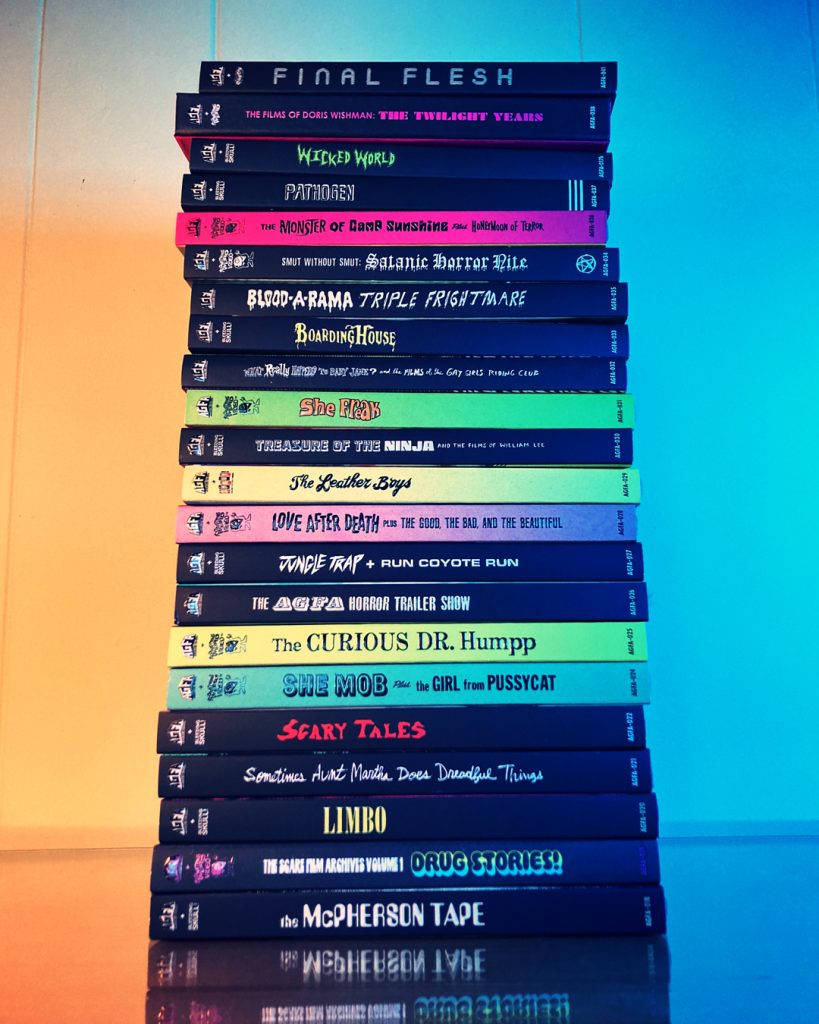
THE AMERICAN GENRE FILM ARCHIVE is “committed to preserving the legacy of genre films through our archival work, sharing these movies through our home video label, and promoting the power of genre through our theatrical distribution arm.” Over the course of their 15-year history, the organization has rescued lost films, restored forgotten classics, and become the foremost genre archive in the world. Be it distributing crisp digital prints of everything from ATOR, THE FIGHTING EAGLE to YOUR VICE IS A LOCKED ROOM AND ONLY I HAVE THE KEY or releasing deluxe Blu-rays of the works of Ruth Gordon and Ed Wood, among many other, AGFA is doing the work necessary to preserve genre films for the next generation and beyond. We spoke with AGFA’s Executive Director, JACKSON COOPER, about coming into the organization during their 15th anniversary, what they’ve done, and where they’re headed in the future…

STARBURST: You came into AGFA in the midst of its 15th anniversary – that’s a great time to get on board!

Jackson Cooper: Yeah, two months in, I think. It’s so thrilling. It’s an honor, of course, too, to be in this role and working with the board and the incredible staff. It’s just such a dream. To come into the 15th anniversary was also insane because I grew up with AGFA and so, to come in and be like, “Oh my gosh, it’s an anniversary year!”, it’s just so joyous to come in. It’s really exciting.

It has been amazing, as a fan of cult and genre cinema, to see the organization grow over the last decade and a half. Given how much it’s grown, how do you continue to do this on a manageable scale?

It’s a lot of trial, and I won’t say error, but opportunity. I think it’s a lot of stretching the gum to see how much we can expand and where our limits are, I should say, because we’re a very small staff. We are six people. It’s six now with me. Over the years, it was really driven by our love of these films first, and then it sort of evolved. It was the love and it was the the urgency of preserving films and saving these films because we love them, because the community loves them, and then over the years, it’s evolved really into even bigger mission work – the urgency of not just saving film, but saving the legacies of these filmmakers. People like Doris Wishman, people like the Something Weird catalogue, recognising that the world is changing where there’s so much available all the time that suddenly we are now the curators of the next generation and what they’re enjoying. It’s always been that, and I think what’s made it manageable, to be honest, has been the influx of such incredible companies who are our partners, like Severin and Vinegar Syndrome. Just people who are also doing the work has made it very manageable because we’re all doing our own thing, and we’re all talking to each other, so instead of us being like, “Oh, we’re the only genre film distributor,” we’re looking around and going like, “Severin’s putting this out. Cool. So we can do our thing and Vinegar Syndrome’s doing their thing.” It’s great. I think it’s been this evolution of this community, which has been really exciting.

AGFA’s Blu-ray releases. // photo courtesy AGFA

The interesting aspect of it is it’s not just holding on to these films so that they’re not lost, but putting them out there and as you said, reintroducing films. How does one organisation that’s only six people balance DCPS and Blu-rays, along with doing work for other companies, as well?

How do we manage it all? Well, we all have our own specialised thing that we all do. The question I get a lot is, “How do you curate your titles?” and I go like, “It really starts and ends with the team.” It really does, because we all not just have a connection to AGFA, but all of us on the team are programmers by trade, to be honest, or writers or film handlers, we have that not just personal connection with our love of it, but also that mindset of, “What do people want to see?” Also, just our finger on the pulse with things. But yeah, how do we balance all that? We have a lot of conversations as a team, which is great. A lot of communications. We balance it – it’s our business. I hate that it sounds so straightforward, but it’s amazing that this is our job every day, that we get to save these films and talk about it.

Our Blu-rays really stem from the team’s decision from our catalogue of avails: the libraries we have, like Something Weird, and the archival prints that aren’t owned by studios. What do we as a staff not think will be good, but also our work is unique from Severin and Vinegar Syndrome and those other labels because we’re a nonprofit. All of our work is grounded in mission work. It’s grounded in a mission to really elevate the stories of, specifically, marginalised filmmakers who used genre as a way of expressing their identity, and of celebrating outsider art. When we put that lens on curating the home video line, that’s sort of where we start, the home video line and our restorations. That changes the conversation from being, “What films need to be saved?” to being “What films need to be saved and what stories are they telling?” Or, “What is the story of this filmmaker and why is it important?” I always tell people we’re carving out a new film history because we’re protecting the legacies of these filmmakers by restoring them and then putting them out on Blu-ray.

For DCP creation and such, that’s really determined by our partner labels like Severin and Vinegar Syndrome. They distribute those on Blu-ray and then we distribute the theatrical rights to those. Any time they put something out, we get the theatrical rights and then promote those to our repertory cinema partners, our micro cinemas, so it’s almost like there’s two things happening all at the same time. This theatrical world, which is really led by our head of theatrical, Brett Burke, who’s phenomenal and. And then our restoration and home video line, which is very team-led. We have a great head of film restoration. We have a great creative director who helps manage those. So there’s always something happening, which is really exciting!

To that end, this year’s releases saw something like Amanda and the Alien. It’s a step outside what most folks might think of as releases, but upon watching it, it fits right in. You also restored Santa Claus Conquers the Martians. You’re putting together the uncut version of Love Goddesses of Blood Island, which has a very weird and involved release history. What was the journey of that last film like?

So, Love Goddesses, also known as Six She’s and a He, has had a very long, weathered history and, specifically, with this restoration, which we are extremely proud of, not just because it is, as you mentioned, a lost film. It was released on a DVD-R of one of the Something Weird prints a long time ago, but there was footage missing. There were minutes of the film missing, and allegedly, the only print that had that was in the Library of Congress and so, when we were doing the restoration, we reached out to the Library of Congress to grab the film prints and we found out that, in fact, it didn’t have the footage. It was still missing even from the Library of Congress print! Every print usually goes to the Library of Congress, of course, as a safe measure, copyright, things like that. The Library of Congress has quite a bit of film and prints of most movies that are made.

It was so funny – and I’ve been telling people that the film gods were on our side because – literally within a week of that conversation with the Library of Congress, the Harvard Film Archive had reached out to us about donating prints of genre films to us and on that list was Six She’s and a He. We’re going through the list and one of my team members was like, “Wait a minute. They have Love Goddesses of Blood Island, but under the original title Six She’s and a He!” So we write the Harvard Film Archive back and we go, “Oh my gosh, can you send us that print first? We want to look,” and that had the missing footage on it! We were able to – literally in the 11th hour of restoring it – put in the lost footage, thanks to this miracle that happened of the Harvard Film Archive. We also want to thank the Library of Congress because we used that print as well, but it’s crazy. That’s one of the reasons I love this job – because it’s a lot, it’s stressful, of course – but we have to have those conversations. When we got the Library of Congress’s print, we’re going to restore it, but it didn’t have the missing footage. Oh, darn. Okay. But then all of a sudden, a miracle like that happens!

It’s a kooky film. It’s a great underseen Blood Feast rip-off that’s going to be in a collection of Blood Feast Florida rip-offs! Florida-‘esque’ rip offs – they’re not all set in Florida, because we’re doing Undertaker and His Pals, which is California, but it’s like, “brightly-lit Blood Feast rip-offs,” we’re calling it. Yeah, Love Goddesses of Blood Island. We’re very proud of that restoration.

Given the sheer amount of material that must be in your archive, what are the challenges in making sure that everything remains intact. You do regular inspections and those sorts of things get posted to Instagram, but what are the unique challenges, especially when you’re talking about genre film, which traditionally haven’t been treated as well as it might’ve been?

No, you can say it – “Some of those prints are beat to shit.” I mean, it was called grindhouse for a reason, right? You know, it would just run until it run in the projector and until it was grinded up. How do we assess or how do we determine? We have very thorough notes of what’s in our archive from quite a bit ago. Our head of film restoration has handled a lot of the film and we had great film handlers before him and a restoration artist before him was also a film handler, so there’s a lot of physical inspection that went into place as the archive was being built up, which is great. Also, I think a challenge is that film, unless it’s preserved very well, and our archive is spread throughout several locations in Texas, not necessarily preserved in a way that is on the caliber of the Academy or Paramount, but it’s still doing well, but film fades fast. For us, it’s not just looking at the inspection reports to saying what is good, but also being like, “That was that inspection was done a few years ago so, what is it now? What do we have to get something on a scanner sooner rather than later?” We’re going through that process right now with just reassessing the collection. I think between all of us, there’s a shared knowledge of what films are in good tact and it’s not just the films we want to restore, but also the films that are just in our archive that we want to put out to theatrical distributors. It’s a constant race against the clock with what we do.

Old reels. // photo courtesy AGFA

Do conditions sometimes move things up in that production/release timeline in order to get them, as you said, on the scanner as soon as you can?

I will say there’s one project – I can’t say what it is, but there’s one project that we will be releasing that we may push up for that specific reason is because we’d been talking about it and then we assessed the materials and said, “Oh my gosh, we have to put that on the scanner sooner rather than later,” So, but, I mean, it’s twofold: either we can wait or we can put it on the scanner and that way, we have a file to work from for the restoration. But then, in terms of keeping that 35mm, we then have to make a decision where, obviously, will keep it in our archive, but we have to make sure that it’s saved and properly stored and treated well, so that if anybody wants that print to use, we can send it out. Otherwise, with the restoration, once it’s on the scanner and digitised, we work from there and we can actually strike a new print after the restoration is done. We can replace the vinegar syndromed print of this film with the new restoration. It’s constantly just needing to check the materials, talk with the people who donated or deposited the film prints themselves. With Something Weird, Lisa [Petrucci], who we work with, she knows those prints, and she knows the state of those prints pretty well, so we always go to her when we want to do something – “Do you remember how this print was? Let’s look at our inspection notes.” That’s been a lot of assessing the collection, but then also putting them on a scanner to digitise them so that, come time for us to restore something in our archive, it’s not beat up, but we already have a digital file to work from

The nature of preservation of any sort of thing, whether it’s books, or music, or film – especially in music, is that you run into what might be referred to as dead formats. Do you have to have machines that you keep running to be able to get them or is everything fairly much within the standard range?

S-VHS, we do have the capability to digitise that. Our gate on our scanner can do 16mm and 35mm so 8mm is something that we don’t really dabble with a lot, although we’re working on the restorations of the complete works of George Kuchar and so there’s quite a bit of 8mm that the Kuchar brothers used. We’re working with other partners who do have the capabilities to scan 8mm on that so I would say 8mm is probably just the one that we we have some trouble with, but there are other partners and archives that have that capability. We’re all one big community and ecosystem, so we’re always talking to each other. But yeah, S-VHS, VHS – we’ve digitised quite a bit of those, especially the Something Weird S-VHS, most recently for Hey, Folks, It’s Intermission Time. We digitised those directly from the masters themselves, which we have to take masters up. I would say 8mm is probably the thing that is our blind spot, but it’s also very unique among archives. A lot of a lot of state archives and government-funded archives, they have 8mm capabilities, but since that’s so rare for a filmmaker to have worked on, that’s not something that our scanner or gate has a capability on.

AGFA is finishing up their 15th anniversary. We’re towards the end of the year. What are the plans for AGFA going into 2025?

Well, one of the big things that we’ve learned about this year is that we’ve known that we’ve had such a great community of film fans, genre lovers, home video collectors, going into next year, one of the big things that we’re going to champion is we’re actually going back into the archive and going back into the collection. We’re going to be literally and figuratively going through the archive and the collection for a lot of stories in the collection, these journeys of filmmakers that we have yet to do. We want to connect the community with the collection; that’s what the next few years is going to be – really highlighting stories of the filmmakers, of the films themselves. Celebrating things like Something Weird. Celebrating the living filmmakers who are in our collection and archive, and really just helping the community understand that physical film is not going away. It will never go away. These filmmakers deserve to be championed. Protecting their legacies and then promoting the power of genre art movies for repertory cinemas and for local theatres who are screening these works.

I think movie theaters are having a moment right now. It’s both a moment of joy and celebration and also, a moment of crisis, but what’s been fascinating is that we’ve found that genre – in particular, horror – has actually been the thing that brings people back into a movie theater, as well as that repertory curiosity for older films, is a key for movie theatres bringing in new audiences; for bringing in younger audiences. It’s no longer the tentpole blockbusters. It’s actually the old thing. It’s actually the the classics. We have the theatrical rights to Donnie Darko, thanks to our friends at Arrow Video who put out that beautiful 4k restoration. And you know, Donnie Darko is always playing somewhere across the country, across the world, and as popular as that title is, it’s a real testament, I think, to the power of these films. That these films will never, ever fade or go away. We want to sort of lean into that.

We also just want to lean into the stories in our collection. Who’s in our collection? What are the BIPOC, queer, trans, feminist Asian, underrepresented filmmakers in our collection who are using or used genre as a way of expressing their identity? That’s sort of where we’re at right now and it’s really exciting. It’s a really exciting place to be!

More information about the AMERICAN GENRE FILM ARCHIVE and its work can be found at their website.

THE TELEPHEMERA YEARS: 1965, part 1

The Baron, 1965-66

Ah, telephemera… those shows whose stay with us was tantalisingly brief, snatched away before their time, and sometimes with good cause. They hit the schedules alongside established shows, hoping for a long run, but it’s not always to be, and for every Street Hawk there’s two Manimals. But here at STARBURST we celebrate their existence and mourn their departure, drilling down into the new season’s entertainment with equal opportunities square eyes… these are The Telephemera Years!

1965-66

Six years into its eventual fourteen-season run, Bonanza was the king of TV in the 1965-66 season with a massive 31.8 rating, four ratings points higher than its nearest rival – Gomer Pyle, USMC – but five points lower than the previous year. It was a downturn that would continue in 1966-67 and, aside from the adventures of the Cartwrights on the Ponderosa ranch, NBC did not enjoy the best of years, their second highest rating show coming in at twelfth, as wacky spy show Get Smart debuted. CBS had much better form across the board, with Gomer Pyle joined in the top ten by The Lucy Show, The Red Skelton Hour, The Andy Griffith Show, The Beverly Hillbillies, and new arrival Hogan’s Heroes, while ABC looked to Bewitched and new sensation Batman, two high rating genre shows in a fertile period for such fare.

Other notable shows making their debuts in the 1965-66 season included talking pig sitcom Green Acres, eventual soap juggernaut Days of Our Lives, quiz shows Supermarket Sweep and The Newlywed Game, and a clutch of new genre outings as The Wild Wild West, Lost in Space, and I Dream of Jeannie all made their bows. They joined The Addams Family, The Avengers, The Flintstones, Voyage to the Bottom of the Sea, The Munsters, My Favorite Martian, and The Man from UNCLE as America embraced the fantastic, but those were all shows that made their mark on the annals of TV history: what about those that didn’t stick around? This is the story of four of 1965’s less successful shows…

Paradise Bay (NBC): The first daytime TV soap opera on US TV was These Are My Children in 1949 and the genre quickly became a fixture of broadcast schedules, just as they had done on radio since before World War Two. Many long-running soaps – including Guiding Light (1952), As the World Turns (1956), General Hospital (1963), and Another World (1964) – made their bows during the formative years of the genre and almost all dealt with familiar situations and subject material, with relationships, family, and medical drama proving as popular with the bored housewife demographic on TV as they are in romance novels.

In September 1965, though, a soap with an unusual premise began airing on NBC, one of the first to air in colour and one centred around Jeff Morgan, the manager of local radio station KVPP (played by former stage actor Keith Andes, who had also starred in police corruption drama This Man Dawson), his wife Mary (Marion Ross, later to star in as Marion Cunningham in Happy Days), and their family. In the first episode, the body of a murdered teenage girl is washed up on the beach and identified as Sally Baxter, daughter of the local beauty shop owner, best friend of Jeff’s daughter Kitty (future voice of Scooby-Doo’s Daphne, Heather North), and steady girlfriend of the best friend of Jeff’s son, Fred. The investigation of Sally’s murder, by local police chief Tom White, and the subsequent trial of a possibly innocent man, were the seam that ran through Paradise Bay.

Paradise Bay, 1965-66

Other storylines involved Kitty’s yearning to join local rock band The Moonglows, Jeff’s clashes with Walter Montgomery, publisher of the Paradise Bay Journal, and the business rivalry between the rich Spauldings and the upstart Martinez family. Paradise Bay was created by Ted Corday, a producer on Guiding Light and As the World Turns, and he paired the show with another of his new creations, Morning Star, about a fashion designer who gets over the death of fiancé by moving from Connecticut to New York. Writing duties were farmed out to experienced hands John Monks Jr and Jerry D Lewis, but their removal in April 1966 prompted Andes to follow suit when he disliked the storylines their replacements – Manya Starr and Irving Vendig – came up with, with Jeff Morgan written out to follow a baseball team as a road reporter.

The show continued on without him but the West Side Story-style frisson between Duke Spaulding – freshly acquitted of Sally’s murder – and Rosita Martinez failed to ignite the passions of the viewers, who were beginning to tune in to another of Corday’s creations, Days of Our Lives, which began a run in November 1965 that continues to this day. Paradise Bay was axed in July 1966, falling just short of two-hundred episodes without solving the murder of young Sally Baxter. Andes later voiced the title character in Hanna-Barbera’s Saturday morning cartoon Birdman and the Galaxy Trio but found starring roles hard to come by, despite leading TV’s first murder mystery soap.

Blue Light (ABC): From French-Canadien stock, Robert Goulet grew up in Lawrence, Massachusetts, where his parents worked in the local mill. After the death of his father (who also moonlighted as a singer and professional wrestler) when Goulet was thirteen, the family moved to Alberta, Canada. There, the youngster earned himself a scholarship to The Royal Conservatory of Music in Toronto to study opera, although Goulet had an eye on television, making the semi-finals of the Canadian Broadcasting Company’s Pick the Stars competition in 1952 and eventually co-hosting Showcase for the channel between 1957 and 1959. Moving south of the border once more, Goulet took up musical theatre and was signed by Columbia Records, releasing his first album in 1962, the first of over sixty in a long career.

A career in Hollywood seemed almost inevitable and Goulet made his film debut in 1962, voicing the lead character in animated musical Gar Purr-ee, while also peppering the TV airwaves with guest appearances on Startime, The Patty Duke Show, The Red Skelton Show, and many other shows. Goulet had set up his own production company – Rogo Productions – with friend Norman Rosemont in 1962, first producing The Broadway of Lerner and Loewe and An Hour with Robert Goulet, but in 1966 they partnered with ABC for a trio of musical productions and a thirty-minute spy drama, Blue Light.

Blue Light, 1965-66

Created by Larry Cohen (would later move into directing with Black Ceasar, Maniac Cop, and more) and Walter Grauman, Blue Light’s premise had the US government place eighteen sleeper agents in Europe in anticipation of a war with Nazi Germany, an operation dubbed Codename: Blue Light. Goulet starred as David March, a journalist who has renounced his American citizenship and come to Germany to support the Nazi cause, writing and presenting Nazi propaganda. In reality, he is the last remaining Blue Light agent and is so deep undercover that – save for a few high-ranking US officials – the entire world believes him to be a traitor, the woman he loved killing herself because of it.

In weekly instalments, March must avoid discovery of his duplicity by the Nazis, evade capture by Allied forces unaware of his double agent status, and do the job he was sent to do and undermine the Nazi war effort, all while liaising with a French underground double agent who pretends to hate him while giving him vital aid! A violent show by the standards of the time, Blue Light earned Goulet critical plaudits for his performance, backed up by some top guest stars, but co-star Christine Carère was less well-reviewed and seen as the show’s weak link. Debuting on Wednesday nights in January 1966 in a spot vacated by Gidget’s move to Thursdays, Blue Light’s ratings did not match its good press and it was cancelled after seventeen episodes, with March still undercover in wartime Europe. The first four episodes of the show were joined together and released theatrically as I Deal in Danger, but Goulet returned to what he did best: singing.

Run For Your Life (NBC): The TV trope of a central character moving from town to town, helping out those he encounters along the way, has been a thing almost as long as TV itself, with the early 1960s bringing one of the most definitive examples of the genre in Route 66. Rarely are such sojourns prompted by as much urgency, however, as that of attorney Paul Bryan in September 1965’s Run For Your Life, whose travels and travails take place against a very final deadline. As played by Ben Gazzara, a member of The Actors Studio who became a star on Broadway before headlining proto-Law and Order show Arrest and Trial in 1963, Bryan is told he has no more than eighteen months to live and decides to fit thirty years of experiences in the time he has left.

Run For Your Life was created by Roy Huggins, a former member of the Communist Party USA who appeared before the House Un-American Activities Committee in 1952 and named other members working in Hollywood. Huggins was a staff writer at Columbia until 1955, when he moved into television with Warner Bros, creating 77 Sunset Strip and Maverick during his spell there. In 1960, he became vice-president in charge of television at 20th Century Fox where he created The Fugitive and shepherded Bus Stop and The Virginian to air.

Run For Your Life, 1965-66

A pilot for the show – “Rapture at Two-Forty” – appeared in season two of NBC’s drama anthology series Kraft Suspense Theatre, during which we see Bryan’s doctor give the attorney the unfortunate news that he is suffering from chronic myelogenous leukaemia, a disease chosen so as to be fatal but not particularly life-limiting, at least in its early terminal stages. In the subsequent series, this conversation is only heard in voiceover recap, but it sparks Bryan to travel to the French Riviera where he falls in love and partakes in risky pastimes. The pilot proved popular enough that Gazzara was contracted for a full series, with the frivolity of the pilot given over to peril-filled drama, encountering a deposed dictator at ski resort, becoming embroiled in a Cold War spy ring, and being arrested in a small town in just the first few episodes.

Run For Your Life was a hit with viewers and despite Paul Bryan’s sands of time constantly running out, it was renewed for a second season in September 1966, with a handy amnesia episode allowing viewers to catch up on his previous exploits as he regains his memories. The episodic nature of the show allowed for plenty of guest stars to appear, with the likes of Bobby Darin, Tippi Hedren, Howard Keel, Peter Lawford, Jack Palance, Gena Rowlands, Telly Savalas, and others all encountering Bryan along his journey, and a third season – which began in September 1967 – took the total number of episodes to eighty-six. In March 1968, six months past the doctor’s deadline, Run For Your Life finished its run but there was no tragic final scene, Bryan’s death presumably occurring off-screen.

The Baron (ABC): The Incorporated Television Company – much better known by its initialism, ITC – was formed in 1954 by talent agency boss Lew Grade, who formed a consortium to bid for one of the franchises available as part of the launch of the ITV network in the UK. Although ITC’s bid was rejected on the grounds of a conflict of interest due to Grade’s agent duties, ITC were allowed to join with one of the successful bidders – the Associated Broadcasting Development Company – to form Associated Television, or ATV, serving the Midland region (and London at the weekends). ITC’s bread and butter, though, was in programme production, with Grade’s favoured variety show format bringing Sunday Night at the London Palladium to air, and their flair for the dramatic proving particularly popular with transatlantic audiences.

Partnering with American producer Hannah Weinstein, the first ITC show to hit in both the UK and US was The Adventures of Robin Hood in 1956, and over the next decade ITC (and ATV Weekend) shows such as The Avengers, Danger Man and The Saint proved so popular with American audiences that ABC managing director Howard Thomas quipped that ITC was making shows for “Birmingham, Alabama, rather than Birmingham, England.” Later ITC hits would include The Prisoner, Department S, and Randall and Hopkirk (Deceased), all featuring British leads (as did their earlier hits), something that would seem counterintuitive for shows produced with an American market in mind. Despite their popularity, ITC’s US partner network, ABC, encouraged the company to produce a show with an American lead, and the result was The Baron.

The Baron, 1965-66

Based on a series of novels by John Creasey (written under the pseudonym Anthony Morton), The Baron starred Texan actor Steve Forrest, who relocated his family to London to take the role. Filmed at Elstree Studios in Hertfordshire, the show shared production (and a guest cast) with many of the other ITC shows of the time, although the locations in the show – given that the titular Baron, an undercover secret agent posing as antiques dealer John Mannering, travelled widely – were often exotic. Alongside Forrest in the main cast were Colin Gordon as agency head John Templeton-Green and Paul Ferris as his assistant, Marlowe, but due to pressure from ABC, the character of Marlowe was phased out in favour of Cordelia Winfield, a character from the first three episodes played by Sue Lloyd (best known for her later role as Barbara Hunter in Crossroads).

Across the series’ thirty episodes, The Baron thwarted kidnappers, aided freedom fighters, uncovers a germ warfare plot, settles the score between a former prisoner of war and the Japanese commander who was in charge of the camp he was interred in, and engaged in dozens of other escapades, all broadcast first on ABC, which began airing the show in January 1966, nine months before the UK. Indeed, by the time it went out on the ITV network, the show had been cancelled by its American broadcaster, ratings not matching the high excitement of the stories.

Next time on The Telephemera Years: More of 1965’s blink and you’ll miss ‘ems, including wacky ships, troublesome teens, and female cops!

Check out our other Telephemera articles:

The Telephemera Years: pre-1965 (part 1, 2, 3, 4)

The Telephemera Years: 1966 (part 1, 2, 3, 4)

The Telephemera Years: 1967 (part 1, 2, 3, 4)

The Telephemera Years: 1968 (part 1, 2, 3, 4)

The Telephemera Years: 1969 (part 1, 2, 3, 4)

The Telephemera Years: 1970 (part 1, 2, 3, 4)

The Telephemera Years: 1971 (part 1, 2, 3, 4)

The Telephemera Years: 1973 (part 1, 2, 3, 4)

The Telephemera Years: 1974 (part 1, 2, 3, 4, 5)

The Telephemera Years: 1975 (part 1, 2, 3, 4)

The Telephemera Years: 1976 (part 1, 2, 3, 4)

The Telephemera Years: 1977 (part 1, 2, 3, 4)

The Telephemera Years: 1978 (part 1, 2, 3, 4)

The Telephemera Years: 1979 (part 1, 2, 3, 4, 5, 6)

The Telephemera Years: 1980 (part 12, 3, 4)

The Telephemera Years: 1981 (part 1, 2, 3, 4)

The Telephemera Years: 1982 (part 1, 2, 3, 4)

The Telephemera Years: 1983 (part 1, 2, 3, 4)

The Telephemera Years: 1984 (part 1, 2, 3, 4)

The Telephemera Years: 1986 (part 1, 2, 3, 4)

The Telephemera Years: 1987 (part 1, 2, 3, 4)

The Telephemera Years: 1989 (part 1, 2, 3, 4)

The Telephemera Years: 1990 (part 1, 2, 3, 4)

The Telephemera Years: 1991 (part 1, 2, 3, 4)

The Telephemera Years: 1992 (part 1, 2, 3, 4)

The Telephemera Years: 1994 (part 1, 2, 3, 4)

The Telephemera Years: 1995 (part 12, 3, 4)

The Telephemera Years: 1997 (part 1, 2, 3, 4)

The Telephemera Years: 1998 (part 1, 2, 3, 4)

The Telephemera Years: 1999 (part 1, 2, 3, 4)

The Telephemera Years: 2000 (part 1, 2, 3, 4)

The Telephemera Years: 2001 (part 1, 2, 3, 4)

The Telephemera Years: 2002 (part 1, 2, 3, 4)

The Telephemera Years: 2003 (part 1, 2, 3, 4)

The Telephemera Years: 2005 (part 1, 2, 3, 4)

The Telephemera Years: 2006 (part 1, 2, 3, 4)

The Telephemera Years: 2007 (part 1, 2, 3, 4)

The Telephemera Years: 2008 (part 1, 23, 4)

The Telephemera Years: O Canada! (part 1, 2, 3, 4)

Titans of Telephemera: Irwin Allen

Titans of Telephemera: Stephen J Cannell (part 1, 2, 3, 4)

Titans of Telephemera: DIC (part 1, 2)

Titans of Telephemera: Filmation (part 1, 2)

Titans of Telephemera: Hanna-Barbera (part 1, 2, 3, 4, 5)

Titans of Telephemera: Kenneth Johnson

Titans of Telephemera: Sid & Marty Krofft

Titans of Telephemera: Glen A Larson (part 1, 2, 3, 4)

Titans of Telephemera: Quinn Martin (part 1, 2)

Titans of Telephemera: Rankin/Bass
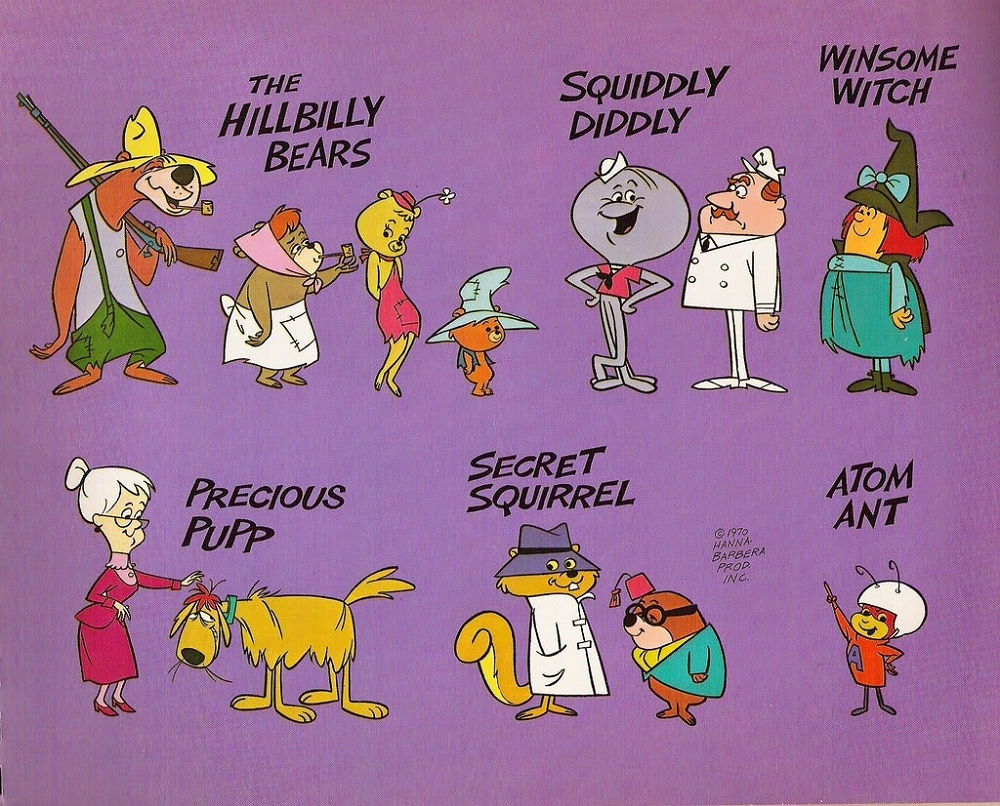
Titans of Telephemera: Ruby-Spears

Titans of Telephemera: Sunbow

THE TELEPHEMERA YEARS: 1994 – PART 4

ReBoot, 1994-95

Ah, telephemera… those shows whose stay with us was tantalisingly brief, snatched away before their time, and sometimes with good cause. They hit the schedules alongside established shows, hoping for a long run, but it’s not always to be, and for every Street Hawk there’s two Manimals. But here at STARBURST we celebrate their existence and mourn their departure, drilling down into the new season’s entertainment with equal opportunities square eyes… these are The Telephemera Years!

1994-95

Other than perennial favourites 60 Minutes and Murder, She Wrote, the top ten ratings made poor reading for CBS in the 1994-95 season, but the network had high hopes for some of their new shows, especially sitcom Cybill – Cybill Shepherd’s return to TV after failing to translate her Moonlighting fame into movie success – and the mawkish Touched by an Angel. NBC still ruled the roost, with Seinfeld joined at the top of the ratings pile by new arrivals ER and Friends, completing an irresistible Must See TV block on Thursday nights with Mad About You. Sitcoms were also popular over at ABC, where Home Improvement, Grace Under Fire, and Roseanne all pitched up in the top ten.

Also making their bow in Fall 1994 were Party of Five on Fox and something called The Daily Show on Comedy Central, but it was genre fans who were treated best in terms of new arrivals, with Sliders (Fox), Star Trek: Voyager (UPN), and both Gargoyles and Hercules: The Legendary Journeys in syndication making it a banner year for fans of sci-fi and fantasy TV, even if they would be saying goodbye to the ground-breaking Batman: The Animated Series at the end of the year. Those were all shows that adults (if not grown-ups) were watching, though: what about those aimed at a younger demographic? This is the story of 1994’s new kids’ shows…

Skeleton Warriors (CBS): Landmark Entertainment was created in 1980 with a mission to “create new forms of entertainment for an expanding global audience,” whatever that means. Founders Tony Christopher and Gary Goddard came from a theatrical production background, with Christopher formerly Vice President of Entertainment at DisneyWorld and DisneyLand, also working as theatrical director for Epcot. Goddard had a background in Hollywood, having written Tarzan the Ape Man in 1981, which starred Bo Derek as a voluptuous Jane, and was responsible for an uncredited rewrite of 1987’s Masters of the Universe movie, having produced a touring live stage show featuring He-Man and company.

That same year, Goddard created another TV show for Landmark in Captain Power, an attempt to create wholly owned characters for Landmark to exploit through stage shows, theme park rides, toys, and a syndicated cartoon. Twenty-two episodes of a cartoon were produced in association with Ventura Pictures, with a toyline produced by Mattel, but it was a short-lived affair that attracted criticism for its violence. That, coupled with troubles with syndication sales, put an end to the experiment after twenty-two episodes.

Skeleton Warriors, 1994-95

In 1994, inspired by a scene in the Conan the Barbarian live show at Universal Studios, where the titular hero fights skeletons, Goddard tried again, this time conceiving Skeleton Warriors. The property was again devised to be used for various income streams, including live shows, action figures, and an animated series, with Playmates Toys signing on early as a merchandising partner and Marvel Comics agreeing to produce a six-issue comic book adaptation. A thirteen-episode cartoon series was sold to CBS through Graz Entertainment, new to the market but already with credits including Conan the Adventurer, My Little Pony Tales, Stone Protectors, and X-Men on their books. The basic story told of warring powers on the distant planet of Luminaire, battling to take control of the Lightstar Crystal which powers the planet’s capital, Luminicity. The evil Baron Dark manages to seize one half of the crystal, with good King Justin grabbing the other. Dark’s half of the crystal turns him into a living skeleton and gives him the power to do the same to those with evil in their hearts, creating an army of – yes – skeleton warriors. Justin – renamed Lightstar – and his siblings Jennifer (Talyn) and Joshua (Grimskukll) are imbued with amazing powers, including light blasts, flight, and travelling through shadows. Under the guidance of Ursak the Guardian, the trio take the battle to Dark in the hope of reuniting the crystal and return Luminicity to its former glory.

Skeleton Warriors was one of a new breed of children’s cartoons that enjoyed an ongoing storyline. Furthermore, it had a definite ending, with appropriate room given for another chapter, should CBS be amenable to a second season, or a syndicator be willing to pick it up for an expanded run. Unfortunately, neither happened and Landmark abandoned the TV business, returning to what they knew best, producing award-winning productions and attractions for theme parks and touring shows based on established properties.

Tattooed Teenage Alien Fighters from Beverly Hills (USA Network): Jim Fisher and Jim Staahl were in the same Second City class as John Belushi, Brian Doyle-Murray, and Harold Ramis. While there, Fisher became part of the first national touring cast, became the first cast member to direct a show, and compiled the first list of Second City alumni. Upon graduation from the Chicago improv theatre, Fisher and Staahl formed a trio with Tino Insana named The Graduates, performing nationwide and on The Tonight Show. As a sideline, and playing off their experience writing sketches for the Second City TV and Big City Comedy shows, the two Jims began writing scripts, earning credits on Mork & Mindy, The Love Boat, Sledge Hammer!, and Charles in Charge, and in 1988 had 110 Lombard, a pilot for roommate comedy starring Mike Myers and Ryan Stiles, almost taken to series.

In 1994, a year after they wrote a lacklustre reboot movie of The Beverly Hillbillies starring Jim Varney, the pair tried their hand at a children’s show. Tattooed Teenage Alien Fighters from Beverly Hills was originally conceived as an adult sitcom, a parody of Teenage Mutant Ninja Turtles and other superhero shows, but the success of Mighty Morphin’ Power Rangers convinced Fisher and Staahl to retool their pitch, setting it in a Beverly Hills high school where four teenagers are chosen to receive special tattoos by a blobby alien named Nimbar.

Tattooed Teenage Alien Fighters from Beverly Hills, 1994-95

Nimbar is the Head Protector of the Power Portals and once failed to protect a world from the evil Emperor Gorganus and is adamant that Earth will not suffer the same fate. The special tattoos bestow combat abilities and weapons based on constellations, so cheerleader Laurie Foster becomes sword-bearer Scorpio, preppy Gordon Henley is Taurus the staff-wielder, poet Drew Vincent transforms into Centaurus with a trident and an axe, and brainiac Swinton Sawyer receives the mantle of Apollo and a double-bladed dagger. The teens are aided by Rick, a survivor of the world Nimbar was unable to save who wields the power of Orion when the situation requires it.

The four teens were played mostly by newcomers, although Leslie Danon (Laurie) had made small appearances in the likes of Charles in Charge and Doogie Howser, MD,  and Rugg Williams (Swinton) had a run in the Tv version of In the Heat of the Night, and their fight scenes were performed by masked stunt performers, enabling the teens to fight alien monsters like Ninjabot, Octodroid, Predaraptor, and Slaygar, and undergo the usual high school predicaments. Produced by DIC Productions, the live-action show debuted in October 1994, with forty episodes airing as part of the UPN Network’s USA Cartoon Express block. Unlike Power Rangers, there was no subsequent reinvention and new toyline for a second series and beyond; indeed, there was no toyline for the first, the extent of its merchandising stretching to a lunchbox and accompanying flask. After writing Here Come the Munsters in 1995, Fisher and Staahl continued to write children’s TV for another decade, before setting up their own scriptwriting consultancy.

ReBoot (ABC): First conceived in 1984 by British creative collective The Hub, it took a full decade for ReBoot to come to air. Produced entirely using computer animation, the team worked on the project until 1990, when the technology finally caught up with their creative ambitions and they were able to full explore 3D animation, although their groundbreaking development work had been seen as early as 1985 when two of The Hub – Ian Pearson and Gavin Blair – created the “Money for Nothing” video for Dire Straits. With design work from British comic book artist Brendan McCarthy, production began in earnest in 1991, although it would be another three years until the painstaking process, made possible by the Creative Environment software developed by Montreal studio Softimage, resulted in enough episodes to sell as a first season of thirteen episodes. By that point, they’d also tried the process out on a video for Def Leppard and formed Mainframe Entertainment as a production company, using that name for the environment in which the show took place.

ReBoot is centred around Bob, one of a number of Guardians – he is #452 – tasked with keeping the computer environment Mainframe safe, working with Phong, Mainframe’s COMMAND.COM. Bob, voiced by Michael Benyaer, is friends with diner owner Dot Matrix (veteran voice actor Kathleen Barr) and her younger brother Enzo (Paul Dobson), and it is this trio – and Enzo’s dog Frisket – that usually becomes embroiled in all sorts of misadventures, combatting the threat of order virus Megabyte, his sister Hexadecimal, and comedy henchmen Hack and Slash. Even before the first episode aired, the studio clashed with ABC’s Board of Standards and Practices, who considered their design for Dot to be overtly sexual and that certain scenes – despite taking place in a wholly computer-generated environment – could be easily imitated by young viewers.

ReBoot, 1994-95

Each episode of the first season was self-contained, save for a two-part finale, and – despite their constant interference – ABC renewed the show for a second season of ten episodes, which featured a story arc in its second half. This change came when they received news that ABC would not be ordering a third series and was intended to lead into a movie tying up the storylines, entitled Terabyte Rising. However, ReBoot’s Canadian broadcaster YTV were keen to continue with the show, and the plot for the movie was threaded throughout sixteen new episodes, after which the show was cancelled.

In 1999, though, Cartoon Network showed season three in the US, and then re-ran seasons one and two, leading to Mainframe producing two movies that continued the story for broadcast on YTV and release on DVD, later shown as eight episodes on Cartoon Network. The final episode ended on a cliffhanger, our heroes fugitives from Megabyte, who is now in control of the Mainframe. A reboot of ReBoot from Mainframe (now renamed Rainmaker) did appear on Netflix in 2018, but Bob and company were only minor characters, with the studio claiming nobody wanted the original show back.

Wild CATs (CBS): The mass defection of talent from Marvel Comics in 1992 to form Image Comics resulted in a first wave of comic books from the industry’s premier artists. Alongside Todd McFarlane’s Spawn, Erik Larsen’s Savage Dragon, and Rob Liefeld’s Youngblood was WildCATs, the work of former X-Men ­A-lister Jim Lee and scripted Brandon Choi. The book told of a generations-long war between two alien races, the Kherubim and the Daemonites, who have been continuing their battle on Earth, where the Kherubim – almost immortal, human looking beings with fantastic powers – have been breeding with the native populace, while the monstrous Daemonites use their powers of possession and mind control to take over business and government offices. As the war moves into its final phases, Kherubim noble Lord Emp – posing as owner of the Halo Corporation, Jacob Marlowe – organises a group of Kherubim, human, and half-breeds into his Covert Action Team (the CAT of the title) to combat the Daemonite threat.

Although its sales were eclipsed by those of Spawn, WildCATs was a popular addition to the comic racks, especially with Jim Lee’s cachet still riding high. During his time on X-Men, Lee had drawn the biggest selling comic book of the modern era, and such was the popularity of the X-Men at the time – due in no small part to the work of Lee and his Image compadres – that the comic had been adapted into a Saturday morning cartoon on Fox, with a line of action figures and an arcade game to accompany it, all using character designs created or refashioned by Lee.

Wild CATs, 1994-95

There was little surprise, then, that WildCATs was chosen to become the first Image comic book to be translated into a TV cartoon, beating Sam Kieth’s The Maxx to air by six months. CBS were looking for an addition to its Saturday morning line-up that might rival the success of X-Men, Batman: The Animated Series, and the upcoming Spider-Man, all wowing young viewers on Fox. Canadian animation studio Nelvana were chosen to partner with Lee’s Wildstorm Productions, and tasked industry veterans Bob Forward and David Wise with developing the show.

Forward and Wise made a number of changes, sanitising some of the more violent and sexual themes in the comic book (which wasn’t exactly R-rated in the first place but did have one of its main character, Voodoo, be an ex-stripper) to suit a Saturday morning network cartoon. The bulk of Lee’s story remained, the focus being the combat between the Kherubim and the Daemonites, and with Lee’s cool character designs intact, but beyond that, though, some cheap animation, poor voice acting, and hackneyed scripts did not score well with either the target audience or fans of the comic book, and it was widely derided. An accompanying toyline and video game were produced but the show was cancelled after just thirteen episodes; it was later parodied in the WildCATs comic book as MadDOGs when celebrated writer Alan Moore took over the title for a fourteen-issue run in 1995.

Next time on The Telephemera Years: It’s back to 1965, where Paradise Bay awaits…

Check out our other Telephemera articles:

The Telephemera Years: pre-1965 (part 1, 2, 3, 4)

The Telephemera Years: 1966 (part 1, 2, 3, 4)

The Telephemera Years: 1967 (part 1, 2, 3, 4)

The Telephemera Years: 1968 (part 1, 2, 3, 4)

The Telephemera Years: 1969 (part 1, 2, 3, 4)

The Telephemera Years: 1970 (part 1, 2, 3, 4)

The Telephemera Years: 1971 (part 1, 2, 3, 4)

The Telephemera Years: 1973 (part 1, 2, 3, 4)

The Telephemera Years: 1974 (part 1, 2, 3, 4, 5)

The Telephemera Years: 1975 (part 1, 2, 3, 4)

The Telephemera Years: 1976 (part 1, 2, 3, 4)

The Telephemera Years: 1977 (part 1, 2, 3, 4)

The Telephemera Years: 1978 (part 1, 2, 3, 4)

The Telephemera Years: 1979 (part 1, 2, 3, 4, 5, 6)

The Telephemera Years: 1980 (part 12, 3, 4)

The Telephemera Years: 1981 (part 1, 2, 3, 4)

The Telephemera Years: 1982 (part 1, 2, 3, 4)

The Telephemera Years: 1983 (part 1, 2, 3, 4)

The Telephemera Years: 1984 (part 1, 2, 3, 4)

The Telephemera Years: 1986 (part 1, 2, 3, 4)

The Telephemera Years: 1987 (part 1, 2, 3, 4)

The Telephemera Years: 1989 (part 1, 2, 3, 4)

The Telephemera Years: 1990 (part 1, 2, 3, 4)

The Telephemera Years: 1991 (part 1, 2, 3, 4)

The Telephemera Years: 1992 (part 1, 2, 3, 4)

The Telephemera Years: 1994 (part 1, 2, 3)

The Telephemera Years: 1995 (part 12, 3, 4)

The Telephemera Years: 1997 (part 1, 2, 3, 4)

The Telephemera Years: 1998 (part 1, 2, 3, 4)

The Telephemera Years: 1999 (part 1, 2, 3, 4)

The Telephemera Years: 2000 (part 1, 2, 3, 4)

The Telephemera Years: 2001 (part 1, 2, 3, 4)

The Telephemera Years: 2002 (part 1, 2, 3, 4)

The Telephemera Years: 2003 (part 1, 2, 3, 4)

The Telephemera Years: 2005 (part 1, 2, 3, 4)

The Telephemera Years: 2006 (part 1, 2, 3, 4)

The Telephemera Years: 2007 (part 1, 2, 3, 4)

The Telephemera Years: 2008 (part 1, 23, 4)

The Telephemera Years: O Canada! (part 1, 2, 3, 4)

Titans of Telephemera: Irwin Allen

Titans of Telephemera: Stephen J Cannell (part 1, 2, 3, 4)

Titans of Telephemera: DIC (part 1, 2)

Titans of Telephemera: Filmation (part 1, 2)

Titans of Telephemera: Hanna-Barbera (part 1, 2, 3, 4, 5)

Titans of Telephemera: Kenneth Johnson

Titans of Telephemera: Sid & Marty Krofft

Titans of Telephemera: Glen A Larson (part 1, 2, 3, 4)

Titans of Telephemera: Quinn Martin (part 1, 2)

Titans of Telephemera: Rankin/Bass

Titans of Telephemera: Ruby-Spears

Titans of Telephemera: Sunbow

STARBURST Halloween Gift Guide 2024

Slimer Ghostbusters Hasbro

It is heading towards the Spooky season, and now is a perfect time to grab some last-minute gifts and merchandise to enhance your haunted house as we enter the time of pumpkin spice and scary nonsense. Let’s take a quick look at some of the things you can trick or treat yourself or give to the little monsters in your life.


Stitch Halloween Candy Bowl 
What could be more Halloween than the gaping maw of a beloved Disney cartoon character? The Stitch Halloween Candy Bowl is an oversized ceramic bowl with the lovable Stitch posed as if he’s eaten all the sweeties. It’s a little heavy to carry around, but it’s perfect for displaying with a table full of treats.


The Traitors Card Game 
Social deduction games are inherently a little bit spooky, with names such as Werewolf or Blood on the Clock Tower. The Traitors Card Game brings the thrills, spills and paranoia of the hit TV show through the handy use of card-based prompts. It does have interactive elements, so you’ll need a smartphone, but it’s a perfect family-friendly game for the spooky season..


Raven Feature Shoulder Soft Toy  

How could anyone say no to their own pet spooky raven? This cool little shoulder-mounted toy can be attached to most costumes thanks to its magnetic plate. Give it a squeeze, and it’ll caw eerily, then do so again when unexpected.  It even has glowing eyes. It’s cute enough for everyone and scary in a silly way. Proper Halloween fun.


Ghostbusters Plasma Series Ectomobile (Anniversary Edition)
Who are you going to call? Hasbro, of course, for their limited edition Ghostbusters Ecto-One and accessories. The base set features just Slimer and the library ghost, but the bigger set features a whole team of Ghostbusters and equipment. Hasbro also does a cosplay-quality proton pack, as busting makes you feel good, apparently.


Mickey Mouse Halloween
Sure, all the kids are about Five Nights At Freddy these days, but there’s something haunted about the venerable Mickey Mouse. Dressed in orange, purple, and green for Halloween, the mouse is a fun gift for the youngsters in your life while just being odd enough to add to your Halloween display.


Warmies Halloween Collection 
Of course, the other thing about this time of year is that it is very cold, and sometimes, a hot water bottle isn’t the right call. Get warm by being chilled to the bone by Warmies’ adorable spooky ghost (which is actually a microwave-friendly toy that can be warmed up in your ping-oven). They do a whole range, including black cats and pumpkins.


The Haunted Mansion Plates

Ideal for Halloween parties or just for your average Goth wanting something different to hold their sandwiches, these plates feature characters from The Haunted Mansion theme park for all your slightly eerie needs.


Warner Bros: Pennywise Cable Guys
Perfect for those times when you’re watching a horror movie on your phone or tablet, Pennywise is one of the many Cable Guys Phone Holders out there. Sort of like Funko Pops, but more useful, these character-filled add a touch of horror to your work desk.

Cadaver
Described as the light-hearted game of raising the dead, this is a quick card game about gathering enough resources to create your own re-animated, Frakenstein-style monster. From Cheatwell Games, the same people who brought us  Zombie-Opoly, which is a bit like Monopoly, but with zombies.

Call of Cthullhu Starter Set 
Probably one of the best Table Top Roleplaying Game starter sets we’ve ever seen, begin your Halloween hols with some cosmic horror whith the elder god of all horror roleplaying games, Call of Cthullhu. Endlessly copied and parodied, there’s a reason why this game of creeping horror is a solid classic.

Wizkids D&D Mind Flayer Plaque
One for triumphant Baldur’s Gate Three players, this foam rubber and latex bust of a defeated Mindflayer is a perfect centre-piece for your Samhain hinks.  Or just as all year-round decoration for your gaming den.


The Thirteenth Floor: Volume 1
For all of those nostalgia fans out there, thrill at this reprint from the pages of 80’s British horror comic, Scream! Before Black Mirror there was MAX, a mad A.I. who loved to punish the wicked with ironic punishments. Weird horror from the past.

The Exorcist III Limited Edition 4K UHD
The Exorcist III is a hellish horror detective story that pairs thoughtful theological themes with scenes of sheer terror. This classic movie, presented in the highest possible quality, is an ideal gift for the ghoul in your life.


Dez Skinn Horror Jigsaw Puzzles
What could be more horrifying than a jigsaw puzzle for Halloween? Dez Skinn (who long-time readers might recognise) has produced a range of wonderfully ghoulish classic horror themed puzzles for the season.

THE TELEPHEMERA YEARS: 1994 – PART 3

Bionic Breakdown, 1994-95

Ah, telephemera… those shows whose stay with us was tantalisingly brief, snatched away before their time, and sometimes with good cause. They hit the schedules alongside established shows, hoping for a long run, but it’s not always to be, and for every Street Hawk there’s two Manimals. But here at STARBURST we celebrate their existence and mourn their departure, drilling down into the new season’s entertainment with equal opportunities square eyes… these are The Telephemera Years!

1994-95

Other than perennial favourites 60 Minutes and Murder, She Wrote, the top ten ratings made poor reading for CBS in the 1994-95 season, but the network had high hopes for some of their new shows, especially sitcom Cybill – Cybill Shepherd’s return to TV after failing to translate her Moonlighting fame into movie success – and the mawkish Touched by an Angel. NBC still ruled the roost, with Seinfeld joined at the top of the ratings pile by new arrivals ER and Friends, completing an irresistible Must See TV block on Thursday nights with Mad About You. Sitcoms were also popular over at ABC, where Home Improvement, Grace Under Fire, and Roseanne all pitched up in the top ten.

Also making their bow in Fall 1994 were Party of Five on Fox and something called The Daily Show on Comedy Central, but it was genre fans who were treated best in terms of new arrivals, with Sliders (Fox), Star Trek: Voyager (UPN), and both Gargoyles and Hercules: The Legendary Journeys in syndication making it a banner year for fans of sci-fi and fantasy TV, even if they would be saying goodbye to the ground-breaking Batman: The Animated Series at the end of the year. Those were all shows that made it to air, though: what about those that fell at the final hurdle? This is the story of 1994’s unsold pilots…

Bionic Breakdown (CBS): After thrilling viewers for much of the mid-1970s, both The Six Million Dollar Man and The Bionic Woman came to an end in Spring 1978, with Steve Austin teaming with Soviet agent Andreia to stop a terrorist stealing nuclear missiles, and Jaime Sommers on the run from her own government in a series of events resembling The Prisoner. Ratings for both shows had declined during their final seasons, and Lee Majors soon popped up as Colt Seavers on The Fall Guy. Lindsay Wagner didn’t fare quite as well, filming a number of pilots and the short-lived police drama Jessie, but both put their career-defining roles firmly behind them.

In 1986, Majors was vacationing with former Six Million Dollar Man colleague Richard Anderson (Oscar Goldman in both series) and a playfully improvised scene, reprising their old characters, led Anderson to contact Universal president Sidney Sheinberg, who greenlit a reunion movie, 1987’s The Return of the Six Million Dollar Man, which centred around Austin’s estranged son, Michael (Tom Schanley), who undergoes bionic enhancements of his own, and brought back Majors, Wagner, and Anderson to the bionic world. The film was supposed to kick off a series for Michael Austin, but the network declined going any further with it, as they did with 1989’s Bionic Showdown, which did the same for another newly enhanced character, Sandra Bullock’s Kate Mason.

Bionic Breakdown, 1994-95

In 1994 it was time to try again, and this time – rather than use the TV movie as a pilot for a show starring a new bionic character – it was decided that there was still mileage in the old ones. Titled Bionic Breakdown during production, the story centred around the failure of Jaime’s bionics, first noticed when she meets Steve, now her fiancé, to discuss their upcoming wedding. Once again, Majors, Wagner, and Anderson returned for the movie, but there was no sign of either Bullock (who had just starred in Speed) or Schanley (last seen in the less salubrious Hart to Hart Returns in 1993). Instead, Wings star Farrah Forke appeared as OSI agent Kimberley Harrison, who begs Sommers for help getting out of the agency, and Martin E Brooks reprised his role as Dr Rudy Wells, trying to get to the bottom of Jaime’s failing bionics.

During production, it became clear that CBS, who had reluctantly agreed to back the pilot after the success of the first two reunion pilots as standalone TV movies, were not interested in taking it to series again. Thus, Bionic Breakdown became Bionic Ever After?, a fitting finale for the characters of The Six Million Dollar Man and Bionic Woman universe. Aired as CBS Tuesday Movie in November 1994, Bionic Ever After? was the 29th best rated show that week, with over eighteen million viewers, even up against Home Improvement and Frasier. That was the last the world saw of the Bionic pair, save for a 2011 comic book series from Dynamite, which saw Kevin Smith re-use a script he’d had in development with Universal in 1995.

Island City (PTEN): Founded in 1969 by real estate developers Merv Adelson, Irwin Molasky, and television producer Lee Rich, Lorimar Television earned its first big hit with a 1971 TV movie based on Earl Hamner Jr’s The Homecoming. Aired on CBS over Christmas, the film acted as a pilot for the company’s first series, The Waltons, establishing Lorimar as a player on the TV production scene. The rest of the 1970s saw the company grow with Eight is Enough, Dallas, and Knots Landing all Lorimar productions, and the 1980s were no different, bringing Falcon Crest, Hunter, ALF, Valerie, Perfect Strangers, and People’s Court to screens.

Rich left the company in 1986 and two years later it was purchased by Warner Communications. Lorimar’s distribution arm was folded into Warner Bros Domestic Television Production, but the company continued to produce television until 1993, when it was absorbed into Warner Bros Television. Lorimar’s final three productions were all short-lived, with Time Trax, Getting By, and It Had To Be You all cancelled by the end of the 1994 season. Its final, final production, though, was a pilot for a proposed series for the newly established The WB network.

Island City, 1994-95

Island City was created by Jonathan Glassner, a screenwriter who had cut his teeth on episodes of Ohara, The Wizard, and Alfred Hitchock Presents, moving onto 21 Jump Street (where he also acted as producer) and Lorimar’s own Time Trax. Glassner’s script was set in a future where scientists develop a “fountain of youth” drug, only to find that when most people take it, they turn into barbaric mutants. The minority that is immune to this side-effect are huddled together in a walled city, while the rest roam the wasteland outside its gates. In an attempt to find out what went wrong and possibly reverse the drug’s effects, teams of soldiers and scientists venture out into the wasteland to bring back mutated subjects for testing.

It’s one of these missions going wrong that serves as the plot for the pilot and the spark for the series that would have followed it. Leading the expedition was Colonel Tom Valdoon, played by Kevin Conroy, best known then – and now – as the voice of Batman/Bruce Wayne in Batman: The Animated Series. Alongside Conroy, future Desperate Housewife Brenda Strong and Eric “Will and Grace“ McCormack featured, all  under the direction of Jorge Montesi, another Jump Street émigré. With Lorimar winding down, the pilot fell through the cracks but was picked up by the Prime Time Entertainment Network, a joint venture between Warner Bros and Chris-Craft Industries, a boat manufacturer that had become involved in TV distribution in the 1970s. Shown as a TV movie in March 1994, it polarised viewers who were either intrigued by its premise and mix of politics, science, and action, or turned off by the low budget effects and Montesi’s over-earnest direction. Lorimar went quietly into the night, but Glassner rebounded to bring Stargate SG1 to television in 1997, and latterly acted as executive producer on The Outpost.

LAX 2194 (ABC): Matthew Perry became a household name almost overnight when he was chosen to be one of the six Friends in NBC’s new Thursday night sitcom in September 1994. By the time the show finished its ten-season run in May 2004, Perry was on a staggering $1 million per episode, and was thought to have earned almost one hundred times that during his time on the show. It all could have been so very different, though, if a pilot he’d made for ABC had been picked up for series instead. That pilot, which also starred comedian Ryan Stiles and former model Kelly Hu, was one of the network’s big hopes for 1994 during a time they were enjoying so much success they could afford to take chances. And LAX 2194 was nothing if not a dice roll…

LAX 2194 was created by writer and producer Ken Estin, who won Emmys for his work on Taxi and The Tracy Ullman Show, the latter of which he co-created with the titular star. He also co-created the short-lived Leslie Nielsen sitcom Shaping Up with Sam Simon, had his hands all over Cheers spin-off The Tortellis, and wrote the screenplay for Beverly Hills Cop. His latest concept was a workplace comedy about baggage handlers at Los Angeles International Airport, with the twist that it was set in the future, where aliens were as likely to be the problematic passengers as human beings.

LAX 2194, 1994-95

Perry would later admit on Late Night with Seth Myers that he took the role because he had “no money,” and had told his agent, “You’ve got to get me a job, any job you can.” That job turned out to be LAX 2194, where he and Hu starred as baggage handlers, with Stiles cast as a robot customs agent, who struggles with human conventions and is at odds with his co-workers. Perry told Myers, “So I was wearing a futuristic shirt, and little people played the aliens. I had to sort out the aliens’ luggage and that was basically the show.” A pilot was shot, of which only a 54-second clip has ever surfaced, probably because an executive reportedly said that LAX 2194 was “the worst thing we’ve ever seen in our lives.”

This was fortunate for Perry, because a script for a show called Friends Like Us had been garnering huge amounts of buzz around Hollywood and, upon reading it, the actor realised he was perfect for the part of the wisecracking Chandler Bing. By the time he managed to get an audition, he’d read the script so many times he had it memorised, impressing producer Marta Kauffman enough to grab the final uncast role in the show, which soon dropped the Like Us from its title. Stiles was also fortunate, beginning a nine-year run on The Drew Carey Show a year later, while Hu went through a short stint on Sunset Beach before finding fame in Sammo Hung show Martial Law in 1998. LAX 2194, meanwhile, is lost to time.

Galaxy Beat (CBS): If LAX 2194 hadn’t been a pile of burning trash, it might have been joined in the Fall 1994 season by another sci-fi sitcom, one created by former Sledge Hammer! creator Alan Spencer after a string of unsold pilots made in the wake of his wacky cop show’s cancellation in 1988. Spencer – who had begun his TV writing career at just fifteen-years-old, and was only twenty-six when he created Sledge Hammer! for ABC – developed The Ghost Writer, starring Psycho’s Anthony Perkins a writer of horror novels which remained unsold, co-created The Nutt House with Mel Brooks (six of its eleven episodes aired on NBC before cancellation), and wrote and directed dark date comedy Hexed, which did well enough at the box office in a limited run but was panned by critics.

Returning to TV, Spencer was detailed by CBS to make an offbeat comedy, in the style of his earlier hit. Spencer was wary, given CBS had a record of not actually showing that kind of show, but came up with Galaxy Beat, a sitcom with former Trapper John, MD and Falcon Crest star Gregory Harrison as Dack Steelbrow, one of the best starship captains in the universe who has been assigned to the worst sector in the galaxy to fight evil aliens rather when he should have been given a promotion. On the verge of quitting, Steelbrow is persuaded by his new rag-tag crew to stay and do the job as the best way of showing his superiors what they’ve overlooked.

Galaxy Beat, 1994-95

Among the crew were ex-model Tracy Scoggins – formerly of The Colbys and who had just finished as Cat Grant in season one of Los and Clark: The New Adventures of Superman – as Sheila Fleckstein, Alex Désert (TV 101, The Flash, and The Heights)’s Larry Longspan, and fishlike alien Corporal Cod, voiced by former Planet of the Apes star Roddy McDowell, who this time left the long hours in the make-up chair to former NHL goaltender Don McLeod, who physically played the character. The thirty-minute pilot was directed by Star Trek: The Next Generation veteran Les Landau and cost $1.7 million to make, laden with special effects that wouldn’t have looked out of place in Landau’s alma mater.

The pilot tested well but, as Spencer feared, just wasn’t what CBS were looking for at the time. He reported that then head of the network, Peter Tortorici, said, “We’re really glad we made this pilot, but it’s just not for us.” Both Scoggins and Spencer stayed with sci-fi after Galaxy Beat wasn’t picked up to series, with the former starring in Babylon 5 and Spencer working up another pilot, this time with a more dramatic bent. Starring Julian Sands, The Tomorrow Man also failed to impress CBS, with Tortorici apparently asking for more jokes despite passing on a sci-fi comedy the year before. Its failure led Spencer to step away from TV and film production for a full decade, returning in 2007 with Crime Team!, co-created with Jim Abrahams.

Next time on The Telephemera Years: Tattooed teenagers and skeleton warriors? Must be 1994’s new kids’ shows!

Check out our other Telephemera articles:

The Telephemera Years: pre-1965 (part 1, 2, 3, 4)

The Telephemera Years: 1966 (part 1, 2, 3, 4)

The Telephemera Years: 1967 (part 1, 2, 3, 4)

The Telephemera Years: 1968 (part 1, 2, 3, 4)

The Telephemera Years: 1969 (part 1, 2, 3, 4)

The Telephemera Years: 1970 (part 1, 2, 3, 4)

The Telephemera Years: 1971 (part 1, 2, 3, 4)

The Telephemera Years: 1973 (part 1, 2, 3, 4)

The Telephemera Years: 1974 (part 1, 2, 3, 4, 5)

The Telephemera Years: 1975 (part 1, 2, 3, 4)

The Telephemera Years: 1976 (part 1, 2, 3, 4)

The Telephemera Years: 1977 (part 1, 2, 3, 4)

The Telephemera Years: 1978 (part 1, 2, 3, 4)

The Telephemera Years: 1979 (part 1, 2, 3, 4, 5, 6)

The Telephemera Years: 1980 (part 12, 3, 4)

The Telephemera Years: 1981 (part 1, 2, 3, 4)

The Telephemera Years: 1982 (part 1, 2, 3, 4)

The Telephemera Years: 1983 (part 1, 2, 3, 4)

The Telephemera Years: 1984 (part 1, 2, 3, 4)

The Telephemera Years: 1986 (part 1, 2, 3, 4)

The Telephemera Years: 1987 (part 1, 2, 3, 4)

The Telephemera Years: 1989 (part 1, 2, 3, 4)

The Telephemera Years: 1990 (part 1, 2, 3, 4)

The Telephemera Years: 1991 (part 1, 2, 3, 4)

The Telephemera Years: 1992 (part 1, 2, 3, 4)

The Telephemera Years: 1994 (part 1, 2)

The Telephemera Years: 1995 (part 12, 3, 4)

The Telephemera Years: 1997 (part 1, 2, 3, 4)

The Telephemera Years: 1998 (part 1, 2, 3, 4)

The Telephemera Years: 1999 (part 1, 2, 3, 4)

The Telephemera Years: 2000 (part 1, 2, 3, 4)

The Telephemera Years: 2001 (part 1, 2, 3, 4)

The Telephemera Years: 2002 (part 1, 2, 3, 4)

The Telephemera Years: 2003 (part 1, 2, 3, 4)

The Telephemera Years: 2005 (part 1, 2, 3, 4)

The Telephemera Years: 2006 (part 1, 2, 3, 4)

The Telephemera Years: 2007 (part 1, 2, 3, 4)

The Telephemera Years: 2008 (part 1, 23, 4)

The Telephemera Years: O Canada! (part 1, 2, 3, 4)

Titans of Telephemera: Irwin Allen

Titans of Telephemera: Stephen J Cannell (part 1, 2, 3, 4)

Titans of Telephemera: DIC (part 1, 2)

Titans of Telephemera: Filmation (part 1, 2)

Titans of Telephemera: Hanna-Barbera (part 1, 2, 3, 4, 5)

Titans of Telephemera: Kenneth Johnson

Titans of Telephemera: Sid & Marty Krofft

Titans of Telephemera: Glen A Larson (part 1, 2, 3, 4)

Titans of Telephemera: Quinn Martin (part 1, 2)

Titans of Telephemera: Rankin/Bass
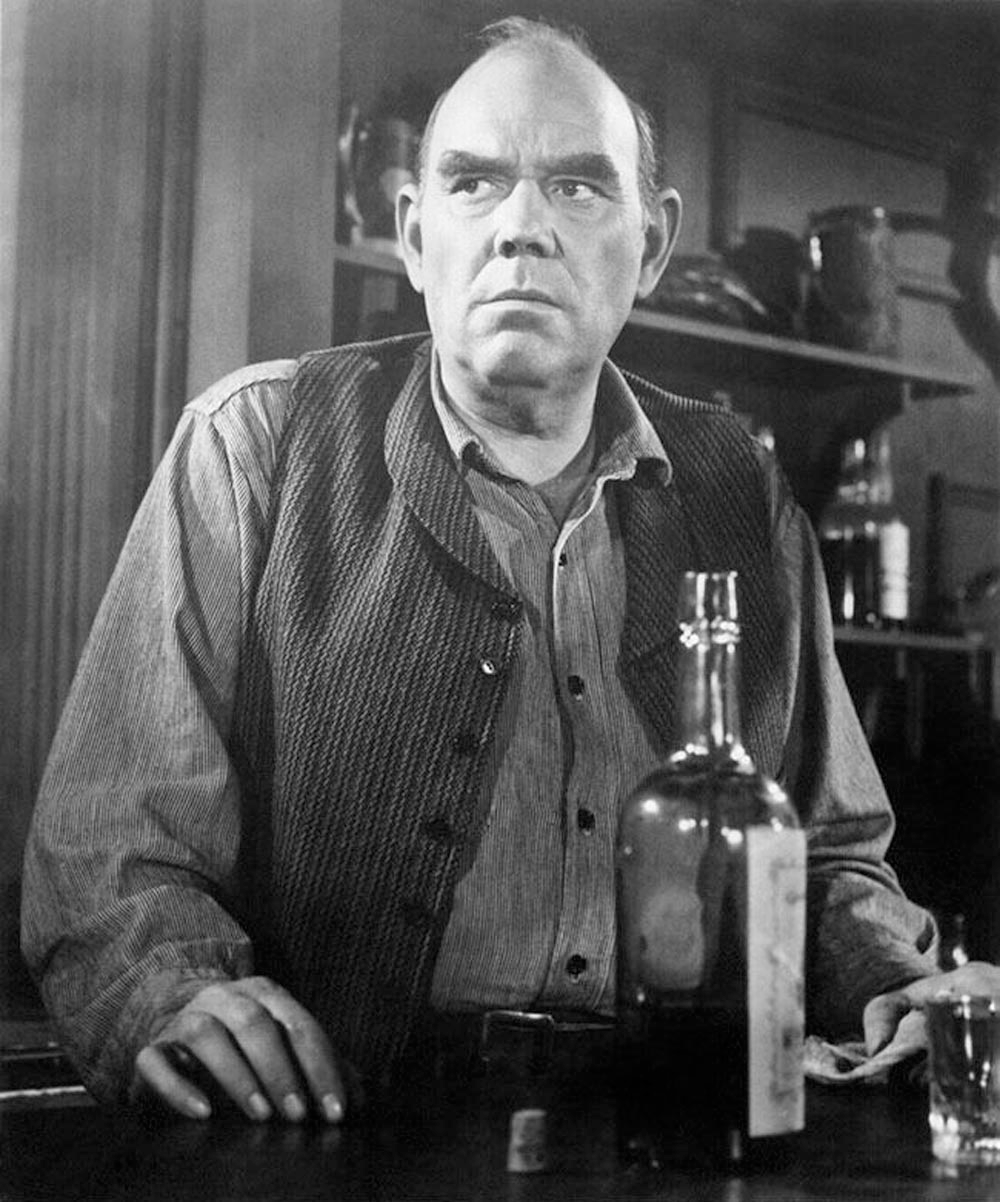
Titans of Telephemera: Ruby-Spears

Titans of Telephemera: Sunbow