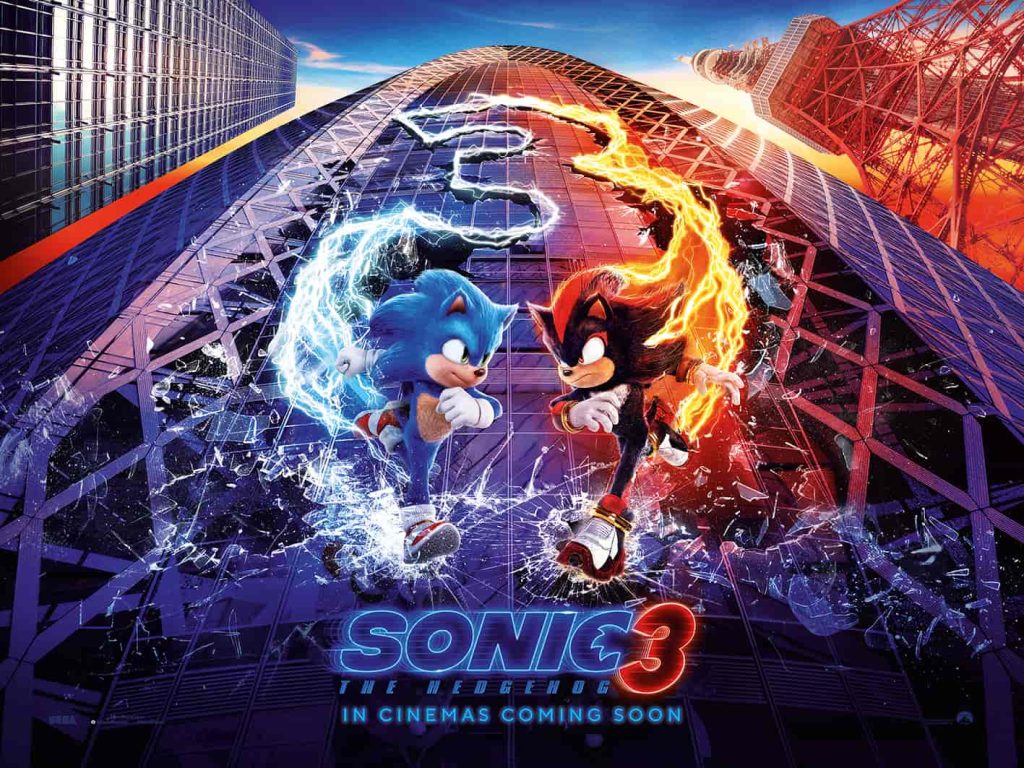
James Marsden • SONIC THE HEDGEHOG 3

From his quiet life as a sheriff in Green Hills to a battle-filled one after meeting Sonic, that also saw him become a fatherly figure, it’s been quite the journey for JAMES MARSDEN’s Tom Wachowski over the course of the last two movies. Ahead of the release of SONIC THE HEDGEHOG 3, we caught up with James to dig into the evolution of the family dynamic between the Wachowskis and Sonic, along with uncovering just some of the high-stake elements of the third instalment…

STARBURST: By the end of Sonic the Hedgehog 2, Tom and Sonic become a family; they really are like a father and son. What can you tell us about the dynamic between Tom, Maddie, and Sonic within this third chapter, and how it compares to what’s come before it?

James Marsden: In the first film Tom and Sonic are on a road trip, and it’s kind of a buddy action comedy. By the end of that movie, you see a father and son thing start to evolve. You remind the audience that this character, who has all of these great superpowers is still a kid, in an environment and in a world that is very foreign to him. He needs guidance, and support, and love. In the second film, you see some flavours of Superman in his Earth father dynamic there. I always found that interesting, because here’s this character that is capable of such great and incredible things who still has self-doubt. The normal things that any kid going through adolescence would be experiencing, and the need for a calming presence, and a support figure in Tom and Maddie. So, it’s evolved into a family, where Tom and Maddie are essentially his parents, and now they also become parents to an echidna and a fox! As playful and fun as it can be on paper, where you see these two parents that are parenting three colourful, animated creatures, you never get the sense that you just have to play it silly. There’s a human component to all of this, and a human element that shines through, and I think that’s one of the reasons why these movies have more depth. Not in a heavy-handed way, but I think there’s more dimension to them. In the third film, Sonic is really starting to build his confidence. He’s got his core group of friends, and he’s now met with a new adversary through Shadow, who’s quite a bit more powerful than he is. He’s having to learn to allow other people to come in and help as well. “You can’t do everything alone!” It’s almost like you’re witnessing him turn into a fully realised adult, with the constant support of love and guidance from his family.

Was there any new aspects that you really wanted to bring to the portrayal of Tom in this movie?

I never wanted to have Tom lose his sense of playfulness either. It’s fun to play the father who’s guiding Sonic and giving him sage advice about life and the world, but you don’t want the whole thing to be a lecture. You want to remind people of the first film as well, where these guys were just two buddies who were enjoying each other’s company. So you get to see some of that with Tom this time around. I think Sonic brought out the kid in Tom, and Tom is helping Sonic grow up into an adult. You get to see a little bit of that playfulness in the third film, with Tom again. There’s a moment where Tom and Maddie are starting to feel a little bit like “Alright, Sonic is good now, he’s on his own.” It’s a little bit empty nest, and they’re wondering, “What’s our purpose now?” But maybe they get to join forces and help out a little bit with some of the fun action pieces…

Talking a bit more about these movies as a trilogy, what else do you think Sonic the Hedgehog 3 contributes to the overall arc of the series?

With each film the scope grows. The scale of these movies continues to just multiply and become really universal with the places we travel. But I think the most important difference between this film and the last two, is that there’s a level of darkness to it; not to say that we’re going full on Batman Begins here, but the threat is more dangerous and it’s a lot more advanced. I think there are moments in this one where there maybe aren’t as many jokes being thrown out when the battle sequences begin; it’s like “Oh, there’s real peril here! This is real danger!” You’re dealing with a character who has a severe chip on his shoulder, and a sense of vengeance, and anger. Shadow is dealing with a loss from his past, and he’s let the sense of revenge and anger kind of drive him. Whereas Sonic had a similar occurrence when he was young, but he didn’t let that overtake him or define who he was. So, you have this character of Shadow who is very powerful, even more powerful than Sonic, who is driven with ill intent and real, extreme negative emotions. It’s a recipe for some trouble. The threat level is much higher, and much more real this time around, but I think the audience is ready for it!

SONIC THE HEDGEHOG 3 zooms into cinemas on December 21st

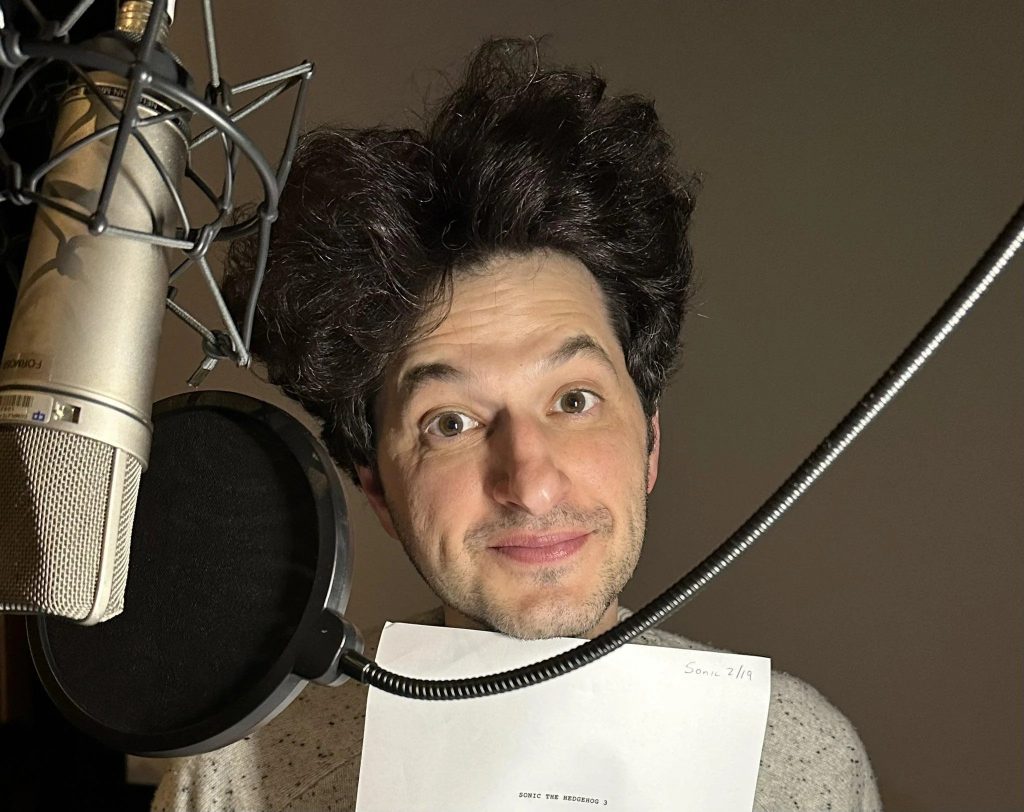
Ben Schwartz • SONIC THE HEDGEHOG 3

Sonic gained a family in the first movie, and then completely established himself as a superhero by the end of the second. With those roots now firmly planted, he’s going to use it as fuel for his showdown against fan favourite, Shadow in the SONIC THE HEDGEHOG 3! We momentarily manage to catch up with the voice behind the iconic speedster – BEN SCHWARTZ – to discuss family, villains, adventure, and everything else you can expect from the upcoming sequel…

STARBURST: By the end of the second movie, Sonic has gained close friends and a family. What can we expect from some of these dynamics this time around?

Ben Schwartz: It’s been so fun to watch Sonic grow! In the first movie, he was lonely, and he so desperately wanted friendship and a family, and then he got that in Tom and Maddie. In the second one he got real friends with Tails and then, ultimately, Knuckles. So I think you’re watching a kid grow up too. So it’s like, “Alright, he has a family now, but he is also a kid, so he can be a little rebellious sometimes, and not do what his parents say all of the time.” I think we are kind of growing with our audience as we go, which is really exciting. I love the idea that this movie has so much heart, and family, and caring, and teamwork. So I think we always try to keep that there, because if you cared, or invested in Sonic, then the laughs become even funnier, and the failures become even more heartbreaking.

It looks like Sonic is teaming up with Dr. Robotnik (Jim Carrey), how excited are you for fans to see that, and what does this new dynamic idea bring to the story?

One of the fun things about when you do enough movies, is you get to really explore different characters, like with teaming up. So the idea that there’s going to be two Jim Carreys in this movie, it’s going to be fun! And also, what does this look like for ‘Team Sonic’ – which is Sonic, Knuckles, and Tails – how are they gonna work as a team? What does that look like? Is Sonic pushing too hard to be the leader, is he trying to do everything himself? So, all of those relationships are great, and you’re never going to get a fight from me if we can have two Jim Carreys in a movie. I’m going to say yes, every time!

What does this third outing do for Sonic, like how does it add to his arc that has formed over the trilogy?

Well, he becomes supersonic at the end of the second movie, in that amazing sequence, which I love so much, but then he also learns that he can’t be that all of the time, so he gives The Master Emerald to somebody else. So I think with this one it is literally him learning how to be a leader, and him learning to rely on his friends, and to lean on them for help. I think a big theme in this movie is “You can’t do it all by yourself, it’s okay to ask for help”, which I think is a big thing for kids, and adults. It’s okay to ask for help, it’s okay to know when you can’t do something by yourself. So I think that’s the big theme in this one. And what does that mean for Knuckles and Tails, too? Being pushed to the side a little bit, when they feel like they should be out there with him.

Ben Schwartz

In the first movie there’s a brief moment where Sonic is watching Speed – how insane is it to have Keanu Reeves take on the role of Shadow? It seems like the films just keep getting bigger!

It’s so good! The ultimate life-form, and he crushes it. The animation on Shadow is great – everything got notched up! The fight sequences are more intense and beautiful, the CG is incredible. The backdrops are all around the world. It just feels like, “Alright, we did Sonic 2, what can we do with 3 to make it even bigger and better?” So we took it to the nth level! What’s going to happen if we get a fourth one of these?! It’s been amazing to watch how big the scope of all of these movies are getting. When people support us and see the films, we have more opportunities to go even bigger for the next one.

We read that Sonic Adventure 2 and Shadow the Hedgehog are an influence on this movie; can you elaborate on that? What themes or ideas from those particular games have found their way into this?

I think if you look at the trailer, first of all we see Shadow, second of all we see his teleportation, we see his bike, there is an Akira slide, which is not in Sonic Adventure 2, but it’s still very cool! You can even look at the locations in the trailer, and you’ll be like “Oh!” With the storylines, we play with a lot of different things in this. But I think if you’re going to do a Shadow story, you’d be hard-pressed not to start where the original, beautiful Shadow story started, with Sonic Adventure 2. So, you’re going to see a lot of Shadow, and a lot of story in there, and you’re going to see all of the action that brings. My hope is that there’s going to be a little bit of that music too. This movie is so cool, and if you’re a fan of Sonic Adventure 2, you’ll be very pleased with this film.

This is your third Sonic film with director Jeff Fowler, how has your creative collaboration grown or changed over that time?

He’s the best! He should get so much credit, because what he’s doing is so impossibly hard, he’s filming live-action people with no CG people there, then he’s doing the voice-over in CG, and he’s somehow putting all of the worlds together. He has to have such foresight when he’s doing live-action stuff, and understanding exactly where all of the action will be, and where all of the CG stuff is happening. We got so lucky that his first big thing was Sonic, because then we just get to keep him… until he’s sick of us! Him and I from the beginning were always really collaborative, he always lets me into the process, to give thoughts, think of ideas about how I can make my Sonic lines better, or thoughts on the movie in general. We had gotten so good at it that the amount of time it takes to do what we do is so much quicker, if it’s twenty recordings for the first one, and then for the next one it’s seventeen, this one is fourteen. We know it so well, and he also knows that I’m there whenever he needs me, If he needs me to come in and do one line, and it makes the movie point one percent better, I’m there in an instant. I care so much about the movie, he cares about the movie. All we are trying to do is make the best thing, so him and I can make a hundred more of these. I think the fans of the franchise know how lucky we are that we got him, because it’s not easy to make a successful video game movie, and he’s made two! My hope is that this third one will be even more successful and then we can make a fourth, because a fourth one would be bananas!

SONIC THE HEDGEHOG 3 zooms into cinemas on December 21st

STARBURST’s Christmas Gift Guide 2024

Still haven’t done all your Christmas Shopping? Haven’t made Santa’s Nice list this year and might have to go out and get some gifts for loved ones? Let’s see how STARBURST can help.

Mickey Mouse Icon Festive Wreath

Let your neighbours know it’s Christmas, and signal to Santa that you are ready to receive a visit from a flying bearded man. This decorative collection of baubles is fun and robust, and oh so, it’s Christmas.

Nerf LMTD Star Trek Starfleet Type 3 and Type 2 Phaser Blasters

Nerf meets Star Trek in what has to be one of the weirdest toy sets we’ve seen in a while. It’s two guns in one, it flashes in appropriate BORG-themed fashion, and it’s also really fun. Both rifle and phaser modes are fun, and they are packaged in a rather lovely way. An utterly fabulous gift.

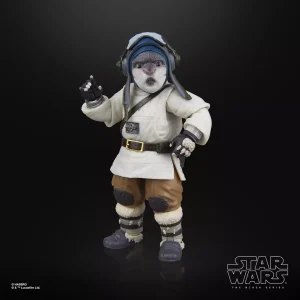
Star Wars The Black Series Bazil (Jedi Order Tracker)

Probably the best Star Wars character we’ve seen this year, Bazil, the beaver-like alien from The Acolyte, is now truly a Star Wars character because he has his own action figure. Sure, Hasbro can do you a Darth Vader or an Obi-Wan, but the cool kids know that Bazil is best.

Joe and Seph’s Popcorn

Joe and Seph have carved out a niche for themselves as the ultimate popcorn for movie lovers everywhere. Your local cinema probably serves a bag of their gourmet popcorn. Dive onto their site and take your pick of this unusual (but delicious) gift option. Who doesn’t like popcorn?

Wicked: The Story of Oz & the Wonderful Wizard: Replica Pop-Up

As (sort of) seen in the movie, this pop-up book is likely to delight old and new fans of both The Wizard of Oz and Wicked. See also the Wicked Advent Calendar, which is absolutely stuffed full of ephemera.

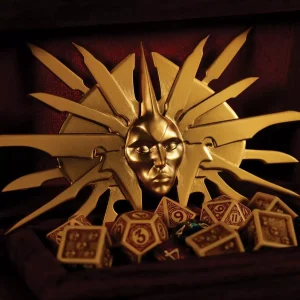
Limited Edition Lady of Pain Medallion

So the gag here is that the Lady of Pain is a powerful being from the Dungeons & Dragons multiverse that frowns on any act of worship. Doesn’t even like icons being made of her. So give this to a hardcore Planescape fan and watch them laugh.

Official Atari 3D Wall Art – Pong Collection

If you’re into retro gaming, chances are that you’ve got all the consoles and accessories that you need for your passion. Why not tell the world by putting a version of digital table tennis on your wall? Also great for

Mickey Mouse and Friends Festive Pyjamas

Nothing says Christmas more than deciding to stay indoors and wear your pyjamas. You might as well go for some festive-themed ones with everyone’s favourite corporate mascot.

Disney Store Arendelle Castle Playset, Frozen 2

Few parents can afford to give their children an entire castle for Christmas, though the Disney Store can help you get close with the Arendelle Castle Playset from Frozen 2. You may also want to check out the slightly more spooky Beast Kingdom Elsa Ice Palace.

Ichiraku Ramen shop

Playmobil have the ability to capture the best elements of a franchise or TV show. The Naruto Ramen shop might seem a little understated, but trust us, it is awesome

KITT

Knight Rider never fails to bring a smile to our faces, and Playmobil has done it again with KITT.

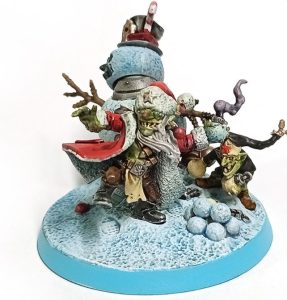
Da Red Gobbo’s A-bomb-enable Snowman

Warhammer’s very own Santa, Da Red Gobbo, is at it again with his bomb-laden snowman. A fan Christmas project for anyone who likes painting models.

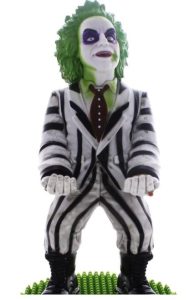
Warner Bros: Beetlejuice Cable Guys Original Controller and Phone Holder

Who doesn’t want a slightly creepy ghost guy guarding their mobile phone or gaming controller? And if you misplace it, you can say Beetlejuice three times. Nothing will happen, but it’s fun to do.

Magic: The Gathering Chandra Pyromancer’s Gauntlet

If you can’t say it with flowers, say it with fire. Or at least it’s the closest approximation (it’s mist and lights, so your library is safe).  Cosplay as everyone’s favourite fantasy pyromancer with this handy accessory.

Magic: The Gathering Foundations

Easily the most fun way to get into the world’s most addictive card game, Foundations does exactly what it says on the tin and will delight any fantasy fan.

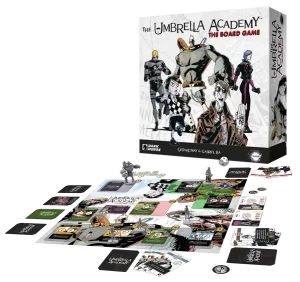
The Umbrella Academy: The Board Game

Mantic Games are the masters of creating a board game that feels like the franchise it’s based on (and they do very pretty models as well.)  This is the big box game you’re looking for to give to that superhero fan who’s also a little bit of a goth. Or just anyone with good taste in comic books and TV shows.


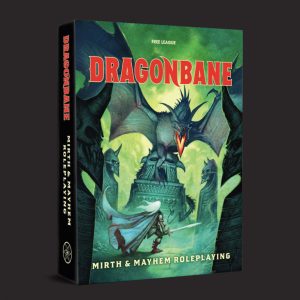
Dragonbane Roleplaying Starter Set

All the fun of fantasy roleplaying in one box. Dragonbane has everything you need to dive into the world of fantasy gaming, but with an old-school style twist that is sure to evoke nostalgia.

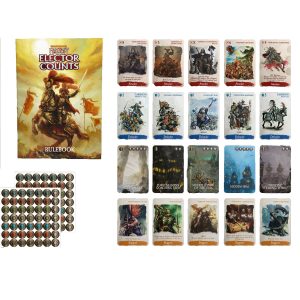
Warhammer Fantasy Roleplay: Elector Counts Card Game

A much better option than Monopoly, but with all the family dynamics. This cracking game of intrigue and civil war is well worth a look.

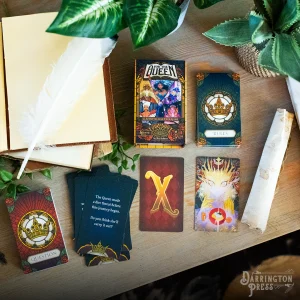
For The Queen

A slightly more dramatic take on a royal card game is For The Queen, a storytelling game that’s sure to get the entire family drawn into an epic shaggy dog story of love and betrayal. It pairs wonderfully with Elector Counts.


STARBURST’s Dungeons & Dragons Gift Guide 2024

It’s been a good long while since we’ve done a gift guide for Dungeons & Dragons, and the range has changed a lot in recent years. Let’s take a quick look at the world’s most popular roleplaying game and see what sort of goodies you can get for loved ones or even yourself.

First off, there’s the core game. D&D has a new edition, which, though fully compatible with the previous edition, is still well worth picking up.  The core book for D&D is the Player’s Handbook, and you’ll probably also want the Dungeon Master’s Guide. The Monster Manual (the third ‘core’ book, which is mostly a bestiary of monsters) is out next year.

This can also be picked up digitally on the DnD Beyond website, and they do bundles of physical and digital copies. (You may also want to consider a DnD Beyond Subscription, but they don’t do a default ‘gift’ package, so you’ll have to figure that out yourself.) Though if the Dungeon Master in your life mostly plays games digitally, you may also want to check out RollTwenty or Demiplane.

If you’ve got those, but you’re still after a scenario book or two, check out Quests from the Infinite Staircase, which takes six adventures from the last century and makes them suitable for modern tastes. Or, if you want a big, world-ending D&D campaign to kick off the New Year, check out Eve of Ruin.

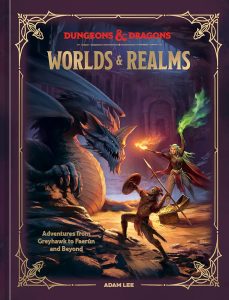
If they already have all the rule books they need, we heartily recommend the big books of lore out there. Worlds & Realms: Adventures from Greyhawk to Faerûn and Beyond is pretty much the ultimate guide to all the various stories from the multiple fantasy settings that make up D&D. It’s rules-free, just pure atmosphere and setting.  For something a lot less weighty, check out How Not To Get Eaten by Owl Bears, a kid-friendly guide to The Forgotten Realms and The Practically Complete Guide To Dragons, a similar child-appropriate book on dragons.

If you’re after a comprehensive history of the hobby, check out Lore & Legends: A Visual Celebration of the Fifth Edition of the World’s Greatest Roleplaying Game, which is more about the last ten years of the game and the people behind it, which has been full of surprises.

If you want something more historical, The Making of the Original Dungeons & Dragons 1970 – 1977 replicates early versions of the game with some historical guidance included. If you’re after something a little more academic, MIT Press has you covered. Fifty Years of Dungeons and Dragons is a collection of essays from some of the finest minds in the industry, and it’s pretty much a must-read for those seeking to understand why this game is so popular. Check out Jon Peterson’s Playing at the World (Second Edition), a comprehensive history of both Dungeons & Dragons and TTRPGs in general.

(And if those are your sort of thing, see also  Generation Decks: The Unofficial History of Gaming Phenomenon Magic: The Gathering by Titus Chalk. Yeah, it’s about Magic The Gathering rather than D&D, but it’s really fun to read.)

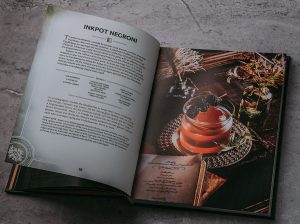
If entertaining guests is your thing, they are a comprehensive set of D&D-themed cookbooks, from recipe cards, world cuisine, and cocktail guides.  

If you have D&D playing friends who’ve recently become parents (or if you’re a parent yourself and you still need books on parenting to read), Shelly Mazzanoble’sHow To Dungeon Master Parenting is a great read.

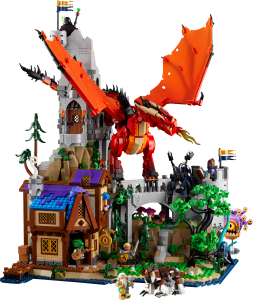
Speaking of things likely to amuse children and parents, 2024 saw LEGO of all people produce  D&D-themed mini-figs and sets. Best place to find it right now is your local toy shop rather than online, so good luck.

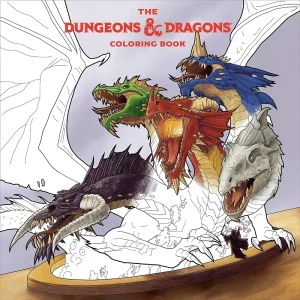
If you can’t find the LEGO, there’s an official Colouring Book. You can even buy a Mimic-themed box to store the coloured pencils. If you’re going cute, check out all the D&D-themed plush toys you can get from KidRobot. Our solid favourite is the plush Drizzt, which is brilliantly grumpy.

Finally, consider Wizkids, who will sell you a model of pretty much any D&D monster you could want, twice if it’s a dragon. From the Heroes of Baldur’s Gate to Tiamat. They also do some absolutely stunning action figures, from Strongheart to Zarak.

THE TELEPHEMERA YEARS: 1988, part 4

Incredible Hulk Returns, 1988-89

Ah, telephemera… those shows whose stay with us was tantalisingly brief, snatched away before their time, and sometimes with good cause. They hit the schedules alongside established shows, hoping for a long run, but it’s not always to be, and for every Street Hawk there’s two Manimals. But here at STARBURST we celebrate their existence and mourn their departure, drilling down into the new season’s entertainment with equal opportunities square eyes… these are The Telephemera Years!

1988-89

It was tough time for anything that wasn’t a sitcom in the 1988-89 ratings, with thirty-minute yuckfests filling nine of the top eleven spots, several of them newcomers gatecrashing a party that had been going on for a number of years since the mid-1980s action show slump. Although his terrible sweaters are now far from the worse thing about him, Bill Cosby and his family ruled the roost, although fresh competition from the more blue-collar Roseanne was ready to push it close for the number one slot. The Cosby Show was one of six NBC sitcoms in that top eleven, the rest of the slots filled by Roseanne’s ABC compadres Who’s the Boss? and Anything But Love, with CBS supplying the only non-comedy shows in the list, the ever-dependable 60 Minutes and Murder, She Wrote.

The turn away from hour-long crime and action shows saw Moonlighting, Simon & Simon, The Equalizer, and Miami Vice all enter their final seasons as Fall 1988 rolled around, with the rebooted Twilight Zone and whatever the Hell Highway to Heaven was also coming to an end. In their places, there was fresh hope from Midnight Caller, Father Dowling Mysteries, and time travel show with a difference Quantum Leap, a rare genre arrival on a schedule all but shorn of such fare, although the furries still had ALF and Beauty & the Beast to keep them satisfied. Those were all shows that got at least a small run, though: what about those that didn’t even make it to series? This is the story of 1988’s unsold pilots…

Badlands 2005 (ABC): Chances are that if anyone is talking about an Australian film director named George Miller, they’re thinking of the Mad Max director, but there was another George Miller, working at the same time, and forced to put his middle initial of T – for Turnbull – into his name to differentiate his work from that of the Witches of Eastwick and Lorenzo’s Oil man. George T Miller was born in Edinburgh, Scotland, but moved to Australia as a child, beginning his career at Crawford Productions, where he worked on popular TV shows such as Homicide, Division 4, Matlock Police, and The Sullivans. In 1982, he helmed his first feature, an adaptation of The Man from Snowy River, a beloved poem by Australian bush poet Banjo Patterson. Starring Kirk Douglas in dual roles, the film became the highest grossing Australian film of all time, putting Miller firmly on the map.

In 1985, Miller furthered his reputation with the mini-series Anzacs, and made his first Hollywood feature, The Aviator, which starred Christopher Reeve and Rosanna Arquette. According to Miller, he was offered Crocodile Dundee – which soon eclipsed The Man from Snowy River as the highest grossing Australian movie – but was unable to do it due to signing on for another film, one which then failed to enter production. Three more Australian features, including cult favourite Les Patterson Saves the World, brought Miller back to Hollywood and Badlands 2005, a pilot for an ABC series written by Reuben Leder. Leder got his start scripting films for his father, cult director Paul (including incredible Korean King Kong clone APE), and earned his first TV stripes as writer and story editor on The Incredible Hulk.

Badlands 2005, 1988-89

After a stint on Magnum, PI, Leder sold two scripts for potential series, with Badlands 2005 joined by Danger Down Under for NBC, which was to star Lee Majors as an American horse breeder living in Australia and raising three sons as a single father but didn’t get past the pilot stage. Badlands was right out of the other George Miller’s playbook, a post-apocalyptic tale of US Marshall and his cyborg partner, who are tasked with escorting two mail-order brides to a remote outpost, only to fall foul of the local bandit king.

The Adventures of Buckaroo Banzai and North and South’s Lewis Smith and Robocop’s Miguel Ferrer were cast as our heroes, sent on missions by their controller, a still four years from Basic Instinct Sharon Stone, at that point probably best known for Allan Quartermain and the Lost City of Gold and Police Academy 4: Citizens on Patrol. Had the project gone past the pilot stage, this would have been the core cast, alongside local colour provided by Mad Max’s Hugh Keays-Byrne and Gus Mercurio, a regular George T Miller collaborator. Ultimately, ABC opted against going to series, but Miller stayed in Hollywood to helm two more TV movies before landing The NeverEnding Story II: The Next Chapter, a rare note of interest in an otherwise solid, if unspectacular, career.

Out Of Time (NBC): Even in 1988, there was nothing new about Out of Time’s concept, the story of a lawman using time travel to hunt a criminal before he can do damage to the timestream. In November 1951, Roy Steffens created, wrote, and starred as Captain Z-Ro, safeguarding history from his remote laboratory in thinly disguised history lessons for children force-fed education with their entertainment. Low-budget 1966 time-spy adventure movies Cyborg 2087 and Dimension 5, Irwin Allen’s The Time Tunnel, and HG Wells versus Jack the Ripper in 1979 yarn Time After Time all trod similar ground, while the 1980s brought The Terminator and its imitators to the table. The previous year, Timestalkers had failed to make it past the pilot stage with a similar conceit at CBS, but NBC proceeded regardless, confident that Out of Time – from Hill Street Blues and V producer David Latt – had something a little different.

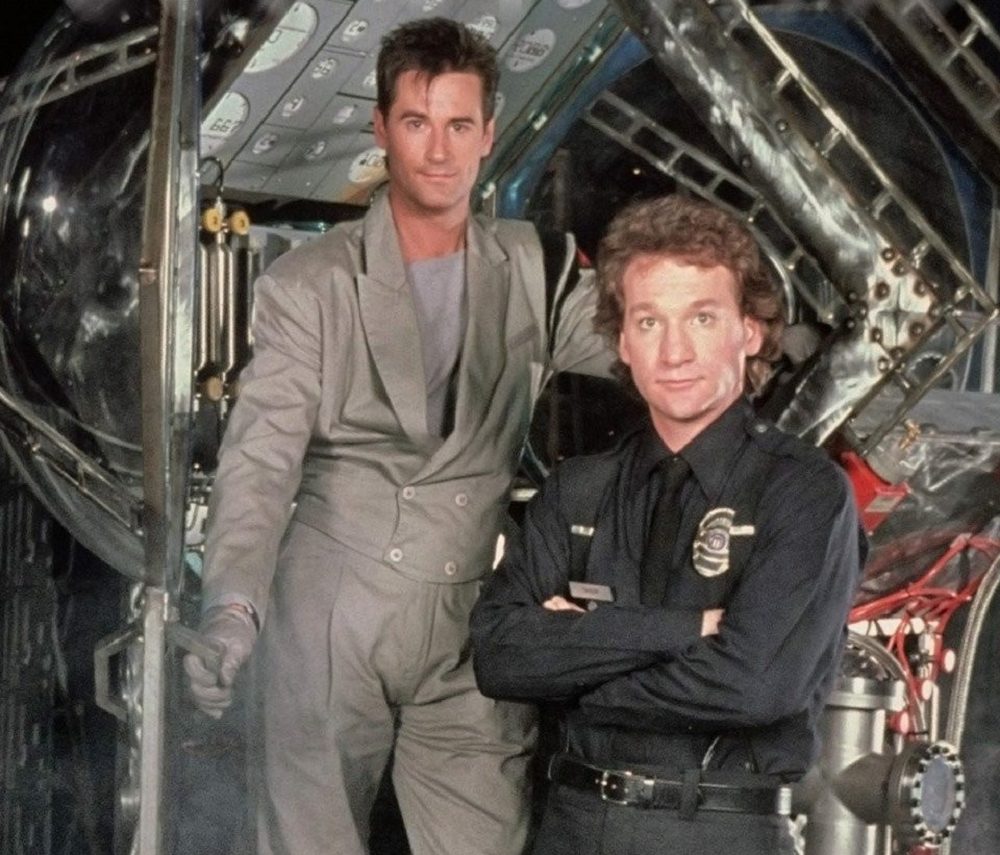
Re-Animator’s Bruce Abbott starred as Channing Taylor, a cop from the year 2088 who is suspended after allowing criminal Richard Marcus (pop star Adam Ant) to escape using a time machine invented by Taylor’s great-grandfather, Maxwell. Looking to put things right and theorising that Marcus might have gone after the inventor of the machine to prevent anyone following him, Taylor travels back to 1988, but finds that Maxwell isn’t quite the man so revered in the future; in fact, he really hasn’t gotten his act together at all, with Bill Maher – trying to make the transition from stand-up comedy to TV – playing the comedic foil for the uptight Abbott. To achieve his original objective, Taylor has to help shape his ancestor’s destiny and negotiate life in the twentieth century, with romantic distractions provided by My Sister Sam‘s Rebecca Schaeffer and Kristian Alfonso, who has appeared in over four-thousand episodes of Days of Our Lives as Hope Brady.

Out of Time, 1988-89

Out of Time was written by Briana Alan Lane, who before transitioning was known as Brian. Lane’s first work was on Remington Steele, first as a scripter and then as story editor, also selling scripts to Blue Thunder, Hunter, and MacGyver. Their first original script, Out of Time was polished by Kerry Lenhart and John J Sakmar, who worked alongside Lane on Remington Steele, and put in the hands of Robert Butler, a veteran director with over a hundred credits, including The Untouchables, The Fugitive, Batman, and Hill Street Blues.

Despite some decent turns by the principal cast (and a hammy Barbara Tarbuck as an evil scientist), NBC passed on the pilot but did show it as part of NBC Sunday Night at the Movies in July 1988 and it was subsequently released on VHS. Five years later, the Prime Time Entertainment Network – a joint venture between Warner Bros Domestic Television and Chris-Craft Industries – launched with three new shows, one of which was Time Trax, in which future cop Darien Lambert is sent back two-hundred years to 1993 to apprehend criminals who have escaped using time travel. Everything old soon becomes new again.

Jake’s Journey (CBS): It’s impossible to know what Graham Chapman’s early death from cancer in 1989 robbed the world of. The rest of the gang gradually found their niche after the end of Monty Python’s Flying Circus, whether it was directing fantasy films, touring the world for a series of BBC documentaries, singing the theme tune for a show about a man who doesn’t believe it, or becoming a cantankerous bore, but in the period between starring as Brian Cohen in Monty Python’s Life of Brian and his untimely demise, Chapman never seemed to find the right project. He made Yellowbeard in 1983, but the heart was torn out of the project when his friend Keith Moon – whose desire to play Long John Silver led Chapman to write the film – died before production could begin in 1978, and the long-delayed final production wound up being Marty Feldman’s final film after the comedian died of a heart attack shortly after filming.

Saturday Night Live producer Lorne Michaels attempted to get Chapman to star in his new show, The New Show, but Chapman passed, and the SNL-clone lasted for just one season. He became involved in the Dangerous Sports Club, pioneering the sport of bungee jumping, and undertook several tours of US colleges giving lectures about his time with the Pythons and the DSC, but wasn’t tempted to write anything new until he was offered the chance to script a contemporary remake of A Connecticut Yankee in King Arthur’s Court. Mark Twain’s novel had been adapted many times, most recently by Disney as Unidentified Flying Oddball, and although Chapman liked the story, he felt that the Middle Ages setting might prove restrictive in storytelling terms.

Jake’s Journey, 1988-89

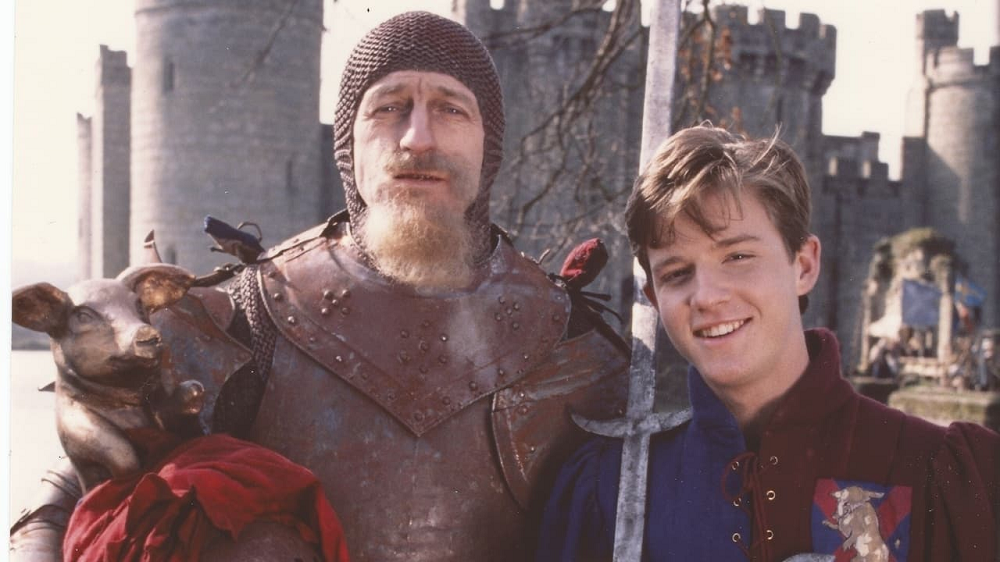
Instead, Chapman teamed with long-time partner David Sherlock and Andy Schatzberg to create Jake’s Journey, the not-terribly-imaginatively titled story of American teenager Jake Finley, whose family move from the US to the UK, where Jake has problems adjusting to his new environment. To add to his woes, Jake also occasionally finds himself in the Middle Ages, where Chapman himself starred as the eccentric knight Sir George, who needed Jake’s help on a quest. Chapman intended for Jake to encounter George at various periods in time, with a scene in the script also having them meet in 1939 Europe through whatever mysterious time travel mechanism would, presumably, eventually be explained.

CBS were interested and a pilot was filmed in England with newcomer Chris Young (soon to appear as young hacker Bryce in Max Headroom) as Jake and a cast that also included Peter Cook, Rik Mayall, Griff Rhys Jones, Alexei Sayle, and Gabrielle Anwar as both a medieval princess and Jake’s contemporary love interest. Behind the camera was Harold and Maude and Shampoo‘s Hal Ashby, and Chapman was excited about the project, but Ashby died from fast-spreading pancreatic cancer soon after completing the pilot, and Chapman himself died, also from cancer, within a year of the director, leaving a promising series – and the potential for so much more – unfinished.

The Incredible Hulk Returns (NBC): Debuting as a pair of pilot movies in November 1977, ahead of the launch of the series proper in March 1978, The Incredible Hulk enjoyed a five-season run on CBS, with bodybuilder Lou Ferrigno painted green and given a fright wig to play the jade giant, and Bill Bixby well-cast in the role of scientist David – neé Bruce – Banner. The Incredible Hulk was the first of a series of shows planned to showcase Marvel superheroes and was followed by pilot movies for Dr Strange and Captain America before CBS decided it didn’t want to become known as the superhero network. A truncated final season left nothing resolved and Bixby was keen on continuing the series, at one point contacting Nicholas Hammond – TV’s Spider-Man from the 1977-79 series, also on CBS – to gauge interest in a team-up movie between their respective heroes.

Bixby’s post-Incredible Hulk career included the one-season sitcom Goodnight Beantown and a move into directing, something he’d begun in earnest while his time as Banner was winding down. He also formed Bixby-Brandon Productions with agent Paul Brandon but never gave up on bringing the Hulk back to TV, eventually convincing NBC and New World Television – who at the time owned Marvel Comics – to back a TV movie that would be used as a backdoor pilot, not only for a possible Hulk revival but also to bring another of the House of Ideas’ favourite sons to TV. Although it seems odd when discussing a mythical figure that had been worshipped since the Iron Age, Thor was created by Jack Kirby, Larry Lieber, and Stan Lee in 1962, first appearing in anthology series Journey into Mystery before graduating to his own title in 1966, which has been published almost continuously since.

Incredible Hulk Returns, 1988-89

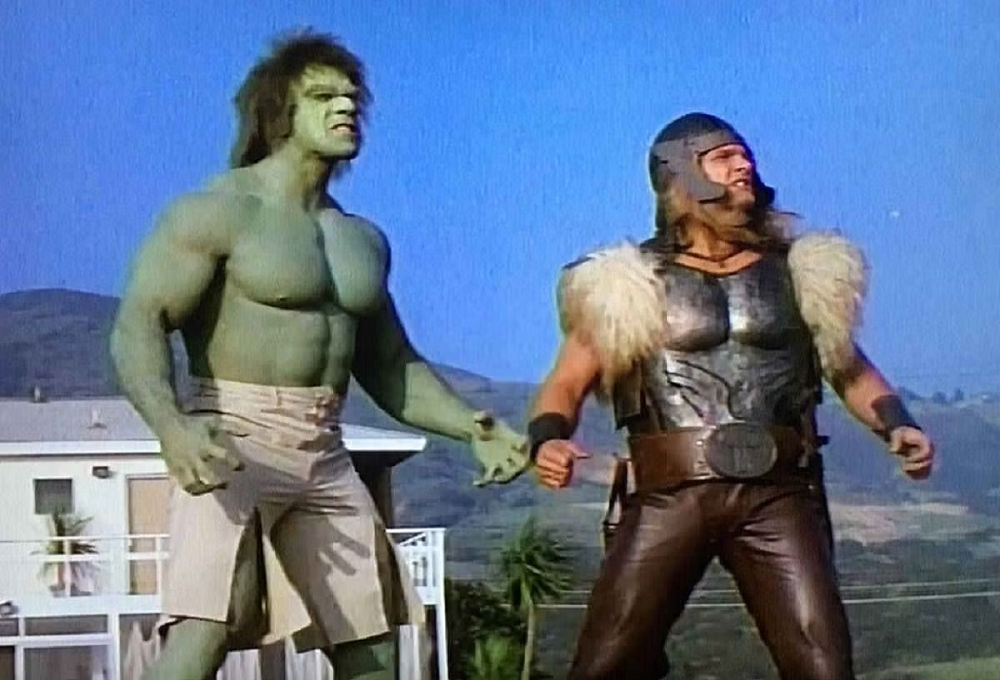
Thor had appeared on screen in the limited animation The Marvel Superheroes series in 1966, and guest-starred in other Marvel cartoons, but this would be his live-action debut. Newcomer Eric Allan Kramer was cast as the God of Thunder, with The Paper Chase’s Steve Levitt as his alter-ego Donald Blake, in this incarnation a former student of David Banner who seeks his help when he is possessed by the Norse god. Bixby and Ferrigno reprised their roles from the TV show, with Nicholas Corea – who directed twelve episodes of the classic series – returning to direct. Corea also wrote the script, which featured the usual clash of the titans ahead of their teaming up to stop mobster Jack LeBeau (Trancers’s Tim Thomerson) from stealing a Gamma Transponder that Banner hopes will cure him of his Jekyll and Hyde problem.

NBC aired The Incredible Hulk Returns as part of the NBC Sunday Night at the Movies series and it garnered high ratings, despite critics being less than kind and general scoffing from Marvel Comics fans. Although the network didn’t immediately order a series for either the Hulk or Thor, another TV movie was ordered for the following year, also acting as a double backdoor pilot, this time for blind crimefighter Daredevil.

Next time on The Telephemera Years: 1988’s new kids’ shows, including Ernest P Worrell, Clark Kent, and Ed Grimley!

Check out our other Telephemera articles:

The Telephemera Years: pre-1965 (part 1, 2, 3, 4)

The Telephemera Years: 1965 (part 1, 2, 3, 4)

The Telephemera Years: 1966 (part 1, 2, 3, 4)

The Telephemera Years: 1967 (part 1, 2, 3, 4)

The Telephemera Years: 1968 (part 1, 2, 3, 4)

The Telephemera Years: 1969 (part 1, 2, 3, 4)

The Telephemera Years: 1970 (part 1, 2, 3, 4)

The Telephemera Years: 1971 (part 1, 2, 3, 4)

The Telephemera Years: 1973 (part 1, 2, 3, 4)

The Telephemera Years: 1974 (part 1, 2, 3, 4, 5)

The Telephemera Years: 1975 (part 1, 2, 3, 4)

The Telephemera Years: 1976 (part 1, 2, 3, 4)

The Telephemera Years: 1977 (part 1, 2, 3, 4)

The Telephemera Years: 1978 (part 1, 2, 3, 4)

The Telephemera Years: 1979 (part 1, 2, 3, 4, 5, 6)

The Telephemera Years: 1980 (part 12, 3, 4)

The Telephemera Years: 1981 (part 1, 2, 3, 4)

The Telephemera Years: 1982 (part 1, 2, 3, 4)

The Telephemera Years: 1983 (part 1, 2, 3, 4)

The Telephemera Years: 1984 (part 1, 2, 3, 4)

The Telephemera Years: 1986 (part 1, 2, 3, 4)

The Telephemera Years: 1987 (part 1, 2, 3, 4)

The Telephemera Years: 1988 (part 1, 2, 3)

The Telephemera Years: 1989 (part 1, 2, 3, 4)

The Telephemera Years: 1990 (part 1, 2, 3, 4)

The Telephemera Years: 1991 (part 1, 2, 3, 4)

The Telephemera Years: 1992 (part 1, 2, 3, 4)

The Telephemera Years: 1994 (part 1, 2, 3, 4)

The Telephemera Years: 1995 (part 12, 3, 4)

The Telephemera Years: 1997 (part 1, 2, 3, 4)

The Telephemera Years: 1998 (part 1, 2, 3, 4)

The Telephemera Years: 1999 (part 1, 2, 3, 4)

The Telephemera Years: 2000 (part 1, 2, 3, 4)

The Telephemera Years: 2001 (part 1, 2, 3, 4)

The Telephemera Years: 2002 (part 1, 2, 3, 4)

The Telephemera Years: 2003 (part 1, 2, 3, 4)

The Telephemera Years: 2005 (part 1, 2, 3, 4)

The Telephemera Years: 2006 (part 1, 2, 3, 4)

The Telephemera Years: 2007 (part 1, 2, 3, 4)

The Telephemera Years: 2008 (part 1, 23, 4)

The Telephemera Years: O Canada! (part 1, 2, 3, 4)

Titans of Telephemera: Irwin Allen

Titans of Telephemera: Stephen J Cannell (part 1, 2, 3, 4)

Titans of Telephemera: DIC (part 1, 2)

Titans of Telephemera: Filmation (part 1, 2)

Titans of Telephemera: Hanna-Barbera (part 1, 2, 3, 4, 5)

Titans of Telephemera: Kenneth Johnson

Titans of Telephemera: Sid & Marty Krofft

Titans of Telephemera: Glen A Larson (part 1, 2, 3, 4)

Titans of Telephemera: Quinn Martin (part 1, 2)

Titans of Telephemera: Rankin/Bass

Titans of Telephemera: Ruby-Spears

Titans of Telephemera: Sunbow

THE TELEPHEMERA YEARS: 1988, part 3

The Jim Henson Hour, 1988-89

Ah, telephemera… those shows whose stay with us was tantalisingly brief, snatched away before their time, and sometimes with good cause. They hit the schedules alongside established shows, hoping for a long run, but it’s not always to be, and for every Street Hawk there’s two Manimals. But here at STARBURST we celebrate their existence and mourn their departure, drilling down into the new season’s entertainment with equal opportunities square eyes… these are The Telephemera Years!

1988-89

It was tough time for anything that wasn’t a sitcom in the 1988-89 ratings, with thirty-minute yuckfests filling nine of the top eleven spots, several of them newcomers gatecrashing a party that had been going on for a number of years since the mid-1980s action show slump. Although his terrible sweaters are now far from the worse thing about him, Bill Cosby and his family ruled the roost, although fresh competition from the more blue-collar Roseanne was ready to push it close for the number one slot. The Cosby Show was one of six NBC sitcoms in that top eleven, the rest of the slots filled by Roseanne’s ABC compadres Who’s the Boss? and Anything But Love, with CBS supplying the only non-comedy shows in the list, the ever-dependable 60 Minutes and Murder, She Wrote.

The turn away from hour-long crime and action shows saw Moonlighting, Simon & Simon, The Equalizer, and Miami Vice all enter their final seasons as Fall 1988 rolled around, with the rebooted Twilight Zone and whatever the Hell Highway to Heaven was also coming to an end. In their places, there was fresh hope from Midnight Caller, Father Dowling Mysteries, and time travel show with a difference Quantum Leap, a rare genre arrival on a schedule all but shorn of such fare, although the furries still had ALF and Beauty & the Beast to keep them satisfied. Those were all shows that people remember, though: what about those that failed to make enough of an impact to enter the annals of TV history? This is the story of four of 1988’s less impactful series…

Freddy’s Nightmares (syndication): “How do you solve a problem like Freddy?” That was the conundrum facing producers at New Line Television who were eager to cash in on the popularity of the A Nightmare on Elm Street series and, in particular, its antagonist Freddy Krueger. Played with delectable glee by Robert Englund, who’d previously been typecast as a nerdy type, Krueger exploded out of his cinematic constraints and became a genuine pop culture idol, earning his own theme park ride at Six Flags, a Marvel comic book magazine, a videogame for the Nintendo Entertainment System, and dozens of other unlicensed cash-ins. And, with 1987’s A Nightmare on Elm Street 3: Dream Warriors going gangbusters in theatres and A Nightmare on Elm Street 4: The Dream Master ready to go in August 1988, the next natural step was TV.

The problem facing New Line bosses – ignoring the child-murdering elephant in the room – was that any TV version of the films would cut through its cast at an alarming rate, with characters no sooner introduced than falling victim to Freddy’s bladed glove. This would have its merits, of course, but they instead decided to turn Freddy into that most American of institutions, the horror host. October 8th’s premiere episode – which was directed by Tobe Hooper – told of the arrest and trial and eventual release on a technicality of the human Mr Krueger. After that, Freddy – played, as usual, by Englund – would top and tail subsequent episodes, all of which would aim to have the feel of the movies, TV standards and practices notwithstanding.
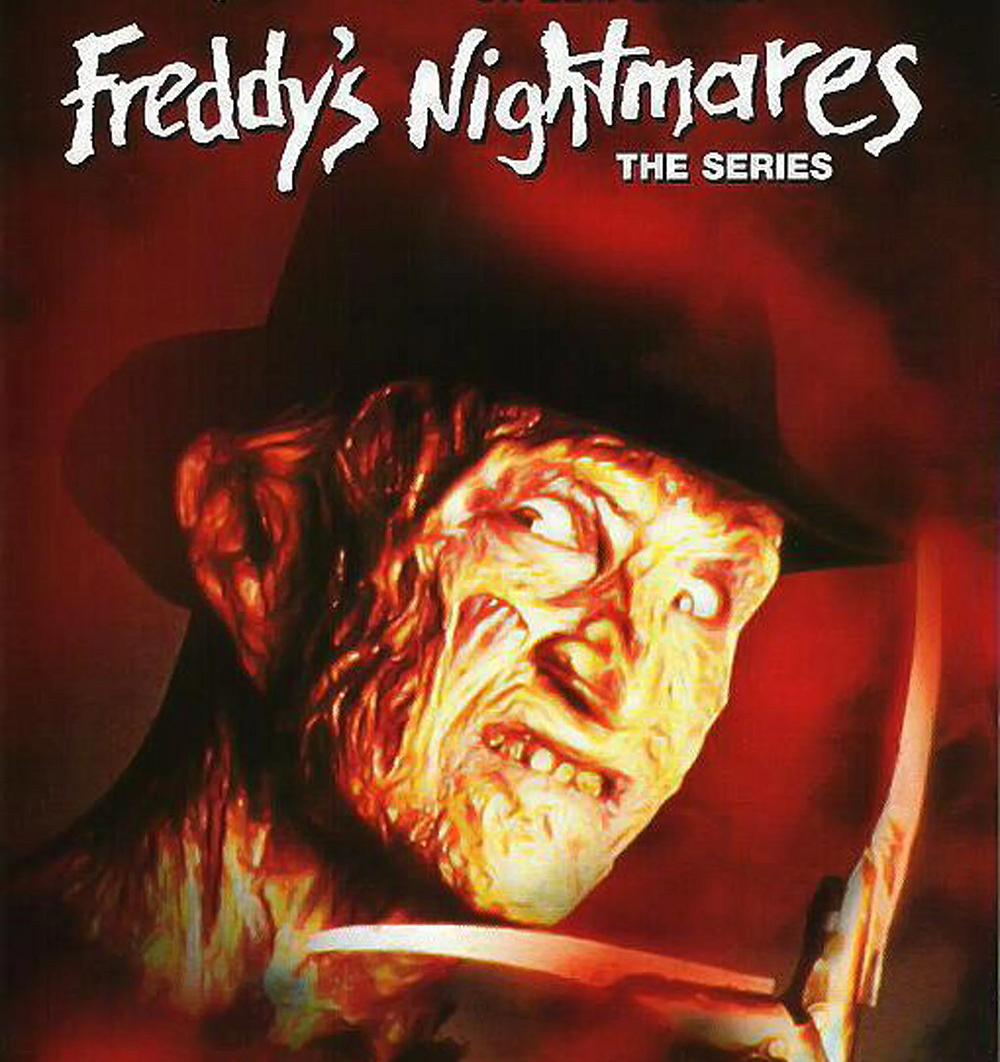
Freddy's Nightmares, 1988-89

A year earlier, Friday the 13th had been turned into a TV series without Jason Voorhees (and is generally considered canon, regardless), but this was the real deal. After the opening instalment, subsequent episodes introduced by ol’ scarred face featured two tales of misfortune, often linked, and almost always with a gruesome ending. Freddy himself popped up in a few episodes, with one being a direct sequel to the opener, focussing on the cops who messed up his original arrest. There were no other recurring characters and a host of guest stars made appearances, including Jeffrey Combs, Jeff Conaway, George Lazenby, and Susan Oliver in her final role.

The show also helped launched the careers of the likes of Mariska Hargitay, Lori Petty, Brad Pitt, and Pussycat Dolls founder Robin Antin, and did well enough in syndication that a second season launched in October 1989, opening with two stories that featured Freddy before settling into the same pattern as the first. Across its two seasons, Freddy’s Nightmares often found itself the subject of censorship through editing, with eight minutes removed from one episode for the most sensitive syndicated markets. As the second season came to a close, the received wisdom at New Line was that it was time to move on from Freddy, with a final instalment of the film series – Freddy’s Dead: The Final Nightmare – in pre-production, the decision was made to put an end to Freddy’s Nightmares, too.

The Jim Henson Hour (NBC): Although The Muppet Show ended its run in 1981, its cast members were still kept busy throughout the 1980s with their movie sideline, occasional TV specials, Kermit’s appearances on Sesame Street, and the animated adventures of their infant counterparts. Jim Henson Productions also produced The Dark Crystal and Labyrinth movies and had Fraggle Rock and The Story Teller on TV. All in all, it seemed there was more than enough Muppetry to go round, but can there ever be enough? Really?

On April 7th 1989, NBC aired Sesame Street… 20 Years and Still Counting in its tricky Fridays at 8pm slot. Hosted by Bill Cosby, the hour-long special celebrated two decades of Henson’s delightfully immortal educational programme and featured guests appearances from Placido Domingo and Ray Charles, who sings “It’s Not Easy Being Green.” A week later, in the same slot, The Jim Henson Hour premiered, bringing the puppeteer’s famous creations back to TV on a weekly basis for the first time in eight years. The show was split roughly into two halves, with the first taken up by MuppeTelevision, an updated version of The Muppet Show where the characters ran a TV station rather than a vaudeville theatre.
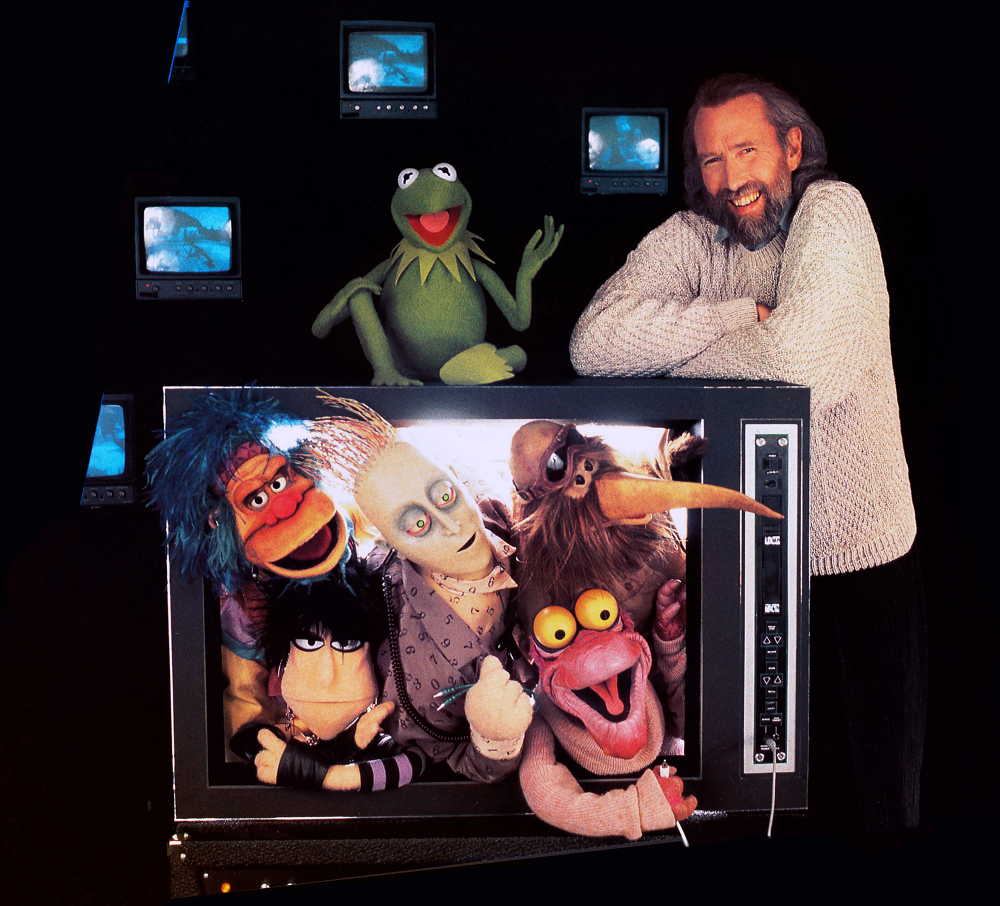
The Jim Henson Hour, 1988-89

MuppeTelevision would have a musical number and parodies of current movies and TV shows, alongside the usual sketches, and – as with The Muppet Show, each episode of MuppeTelevsion had a celebrity guest star, and the likes of Ted Danson, punk legend David Johansen (in his Buster Poindexter guise), kd lang, and Smokey Robinson queued up to submit themselves to the week’s tomfoolery. The second half of the show differed each week, with most weeks featuring a Henson-produced short film/backdoor pilot – Dog City, Lighthouse Island, Miss Piggy’s Hollywood, The Song of the Cloud Forest – or an unaired episode of The Story Teller. Once, the show forewent MuppeTelevision altogether, with the hour-long Monster Maker topped and tailed by Henson talking about the work of the Creature Shop.

Throughout its run, MuppeTelevision made light of low ratings, but it was a very real problem for The Jim Henson Show. By episode seven, ratings had tumbled from a decent 12.5 for the opener to 6.6, half of what Father Dowling Mysteries had averaged in that timeslot. The decision was made to cancel the show with episode nine (which, of course, saw a small ratings spike), leaving three already produced episodes on the shelf. Two of them were hour-long specials, showcasing Living with Dinosaurs (which had originally been made for ITV in the UK) and The Secrets of the Muppets. It had been a noble experiment but possibly too scattershot to retain a regular audience. Regardless, the Muppets were off TV again, although a new special – The Muppets at Disney World – would air on May 6th 1990. Ten days later, Henson died, and the next TV special was the heartbreaking The Muppets Celebrate Jim Henson in November. Fittingly, the special ended with Kermit promising “more Muppet stuff because that’s the way the boss would want it.”

TV 101 (CBS): Many of the shows that feature in The Telephemera Years have been completely forgotten, although reading about them may trigger long dormant memories of the odd episode. There are a few, however, that – for the small amount of people that saw them before they were cancelled, retain a place in the mind’s TV hall of fame, despite the wider world of TV fandom having little or no recollection, or even any idea that they existed in the first place. All of that is a long-winded way to say that TV 101 made an impact on those who saw it.

TV 101 starred Sam Robards as Kevin Keegan (yeah, I know), a newly divorced photojournalist who quits his job to return to his old high school and teach journalism. Rather than focus on stuffy old ink and newsprint, though, Keegan opts to prepare his class for the future of journalism by teaching them how to make television news reports, to be shown on the school’s CCTV system every morning and on the local cable access channel on Friday nights. Keegan is brought to the school by his old journalism teacher Emilie Walker (Bryn Thayer), with whom there is a frisson of sexual tension, and immediately butts heads with Leon Russom’s crusty old Principal Steadman.

TV 101 was created by Karl Schaefer, a young writer from Downey, California (where he attended a high school very much like the show’s Roosevelt High), who got his big break when a script he wrote for a romantic comedy called What I Did to the President’s Daughter was picked up by the Zucker brothers. The Airplane producers were impressed by Schafer’s inclusion of a pre-printed acceptance or rejection letter in the form of a kidnap note, and although the script was never filmed, it gave him a foot in the door at former NBC president Grant Tinker’s production company, GTG, where TV 101 was his very first project.
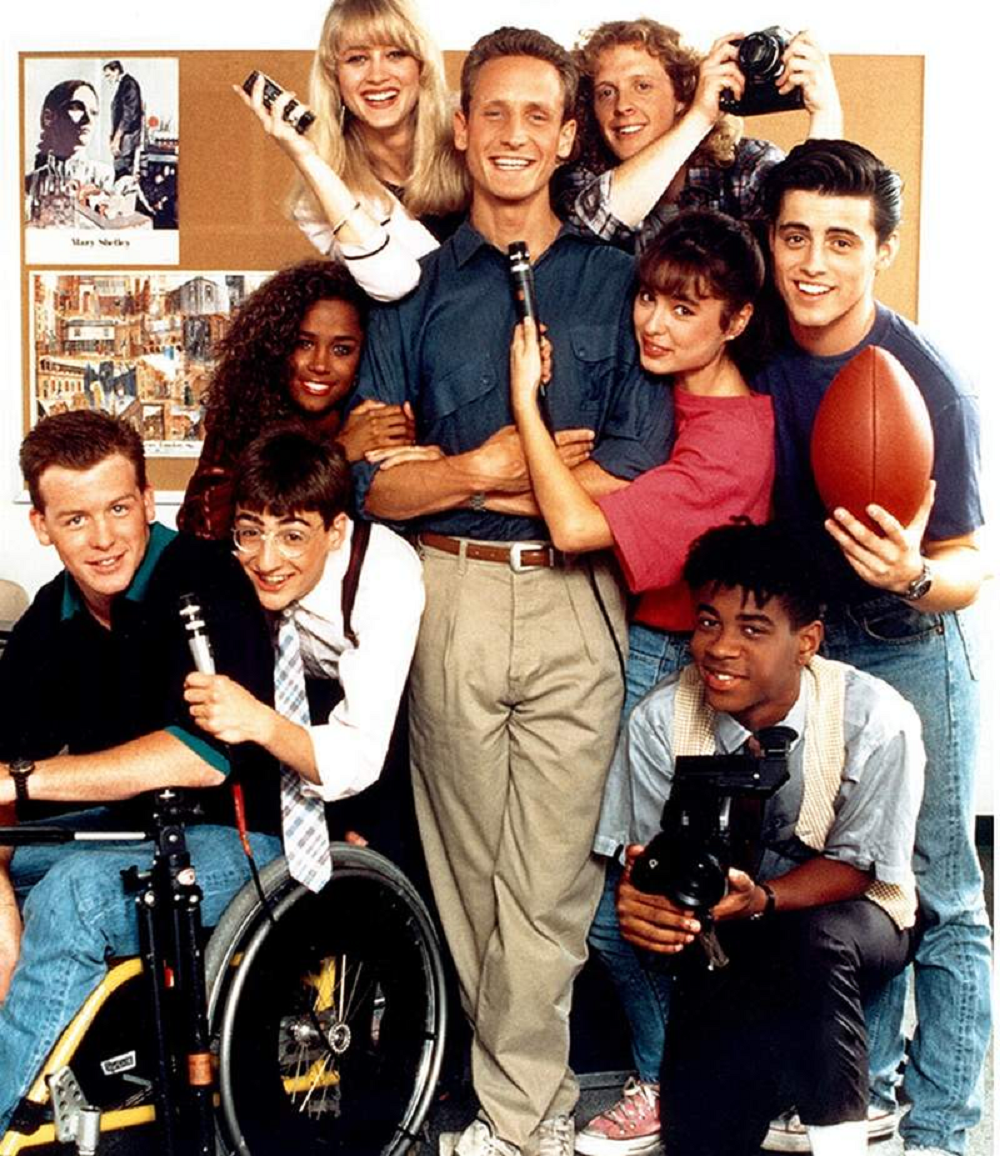
TV 101, 1988-89

GTG sold the show to CBS, who were looking to bring down the age of their average viewer by lining up a few shows that appealed to a younger demographic, hoping to ape the success Fox had with 21 Jump Street. While Murphy Brown and Almost Grown targeted twenty- and thirtysomethings, TV 101 went straight for the teen market, lining up a collection of promising young actors as Keegan’s young charges. Most notable amongst them now is Matt – then Matthew – LeBlanc as football jock Chuck Bender, looking to take an easy class to keep his grades up at the behest of his coach.

TV 101 was LeBlanc’s first role and probably the best-known youngsters at the time were Teri Polo, fresh off a stint on daytime soap Loving, where she starred alongside Luke Perry, and Mary B Ward, who collected a few guest roles since her 1986 debut on Playing for Keeps, including a stint on One Life to Live. They played head cheerleader Amanda Hampton and sparky Penny Lipton, always eager to please. They were joined by Andrew Cassese, playing to type as geek Sherman Fischer (and almost reprising his role of Wormser in the Revenge of the Nerds series), and a “not yet a right-wing lunatic” Stacey Dash, who had a few episodes of St Elsewhere under her belt and tried to be all enigmatic as Monique (“just Monique”).

The rest of the class was made up by relative or actual newcomers Alex Désert (streetwise wisecracker Holden Hines), Stewart Goddard (wheelchair-bound cartoonist Marty Voight), Monique Salcido (Latinx cipher Angela Hernandez), and Andrew White, whose Vance Checker is at the centre of the first episode’s plot, rejecting a life of dope and booze just in time to avoid being killed in a car crash. Vance’s redemption story also forms the crux of the kids’ first broadcast, which – after the principal bars its showing at school – goes out in full on cable access, a gambit Keegan knows will either see his programme shut down or given a green light.
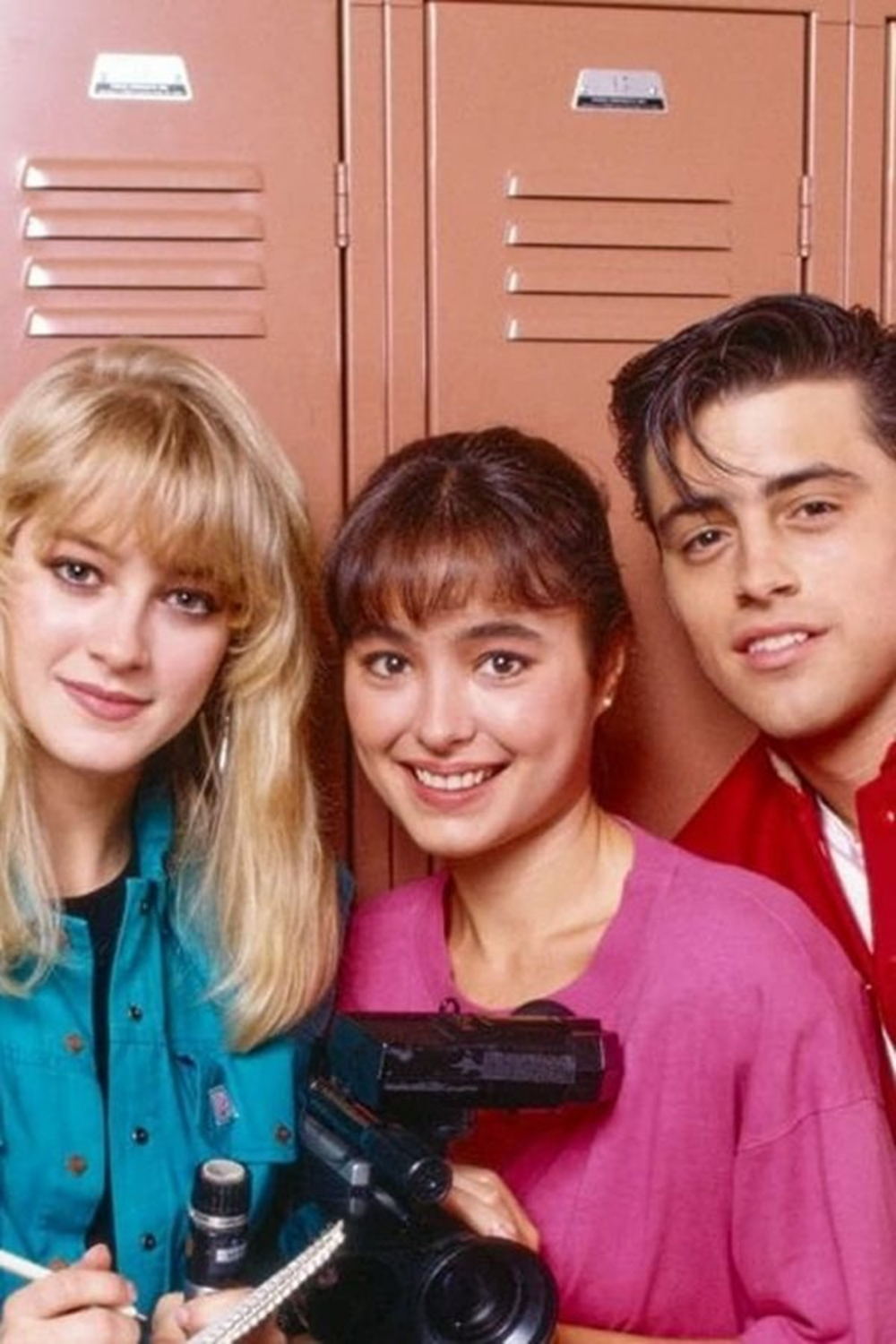
TV 101, 1988-89

Delays caused by the writers’ strike meant TV 101 debuted on November 29th, the last of the new Fall shows to hit the air. On Tuesdays at 8pm, it faced tough competition from Matlock on NBC, and both Who’s the Boss? and Roseanne on ABC; after just four episodes it was moved to Wednesdays where it faced the popular Unsolved Mysteries on NBC and ABC’s youth-oriented pair of Growing Pains and Head of the Class. It was while the show was on Wednesdays that it featured its most controversial storyline. First Love – a three-parter – saw Chuck get girlfriend Jamie pregnant, a storyline that eventually ended in her seeking an abortion.

The storyline met with furious opposition from the Right to Life League, who started a letter-writing campaign to urge local affiliates not to air the third part of the story. It was just the latest – although by far the most controversial – in a line of hot button topics that saw the young class deal with drubs, homelessness, graffiti, and an extraordinary storyline where undercover cop Sherilyn Fenn engages in a sexual relationship with Vance (and tempts him back to smoking dope) in order to catch a local drug dealer. At the time, sex between an older woman and a younger male wasn’t even illegal, and Fenn’s boss merely notes her “procedural errors.”

The controversy and lower than hoped for ratings brought about TV 101 cancellation, with just one more episode airing after the culmination of the abortion storyline (teenage steroid abuse, if you’re wondering). Four further episodes went unaired, although they were later shown overseas. Within a few years, shows such as Beverley Hills 90210 would run where TV 101 walked, and Kurt Schaefer bounced right back with his next effort, Eerie, Indiana, which he co-created with José Rivera. TV 101 has never been released on home media and, although many of the episodes can be found online, it is frustratingly incomplete; obviously this needs to be remedied, if only in a Friday night slot on cable access TV…

A Man Called Hawk (ABC): When novellist Robert B Parker created the tough, urbane private detective Spenser in 1973’s The Godwulf Manuscript, he struck gold. Parker wrote another thirty-nine Spenser novels before his death in 2010, and the series continued for a further ten books in the hands of Ace Atkins. Most people, though, know Parker’s work through the TV adaptation of his most famous character, which debuted on ABC in September 1985. With Robert Urich in the title role, the show was never a massive ratings success but developed enough of a following that, despite high costs associated with location filming, it lasted for three seasons before the axe fell.

It wasn’t all bad news for Spenser: For Hire fans, though, as ABC greenlit a spin-off, featuring a character introduced to the series as a respected rival working for mob boss King Powers whose moral centre eventually led him to switch sides. Hawk had made his first appearance in Parker’s 1976 novel Promised Land, the fourth in the Spenser series, subsequently adapted for the Spenser: For Hire’s pilot. Hawk was played with suave efficiency by Avery Brooks, who had earned rave reviews in his first TV performance as abolitionist Solomon Northrup in an episode of American Playhouse. Smartly dressed and with a unique code of ethics, Brooks’s Hawk was more than a match for Spenser, even as his associate, and the actor himself stated, “I never thought of myself as the sidekick… I’ve never been the side of anything. I just assumed that I was equal.”
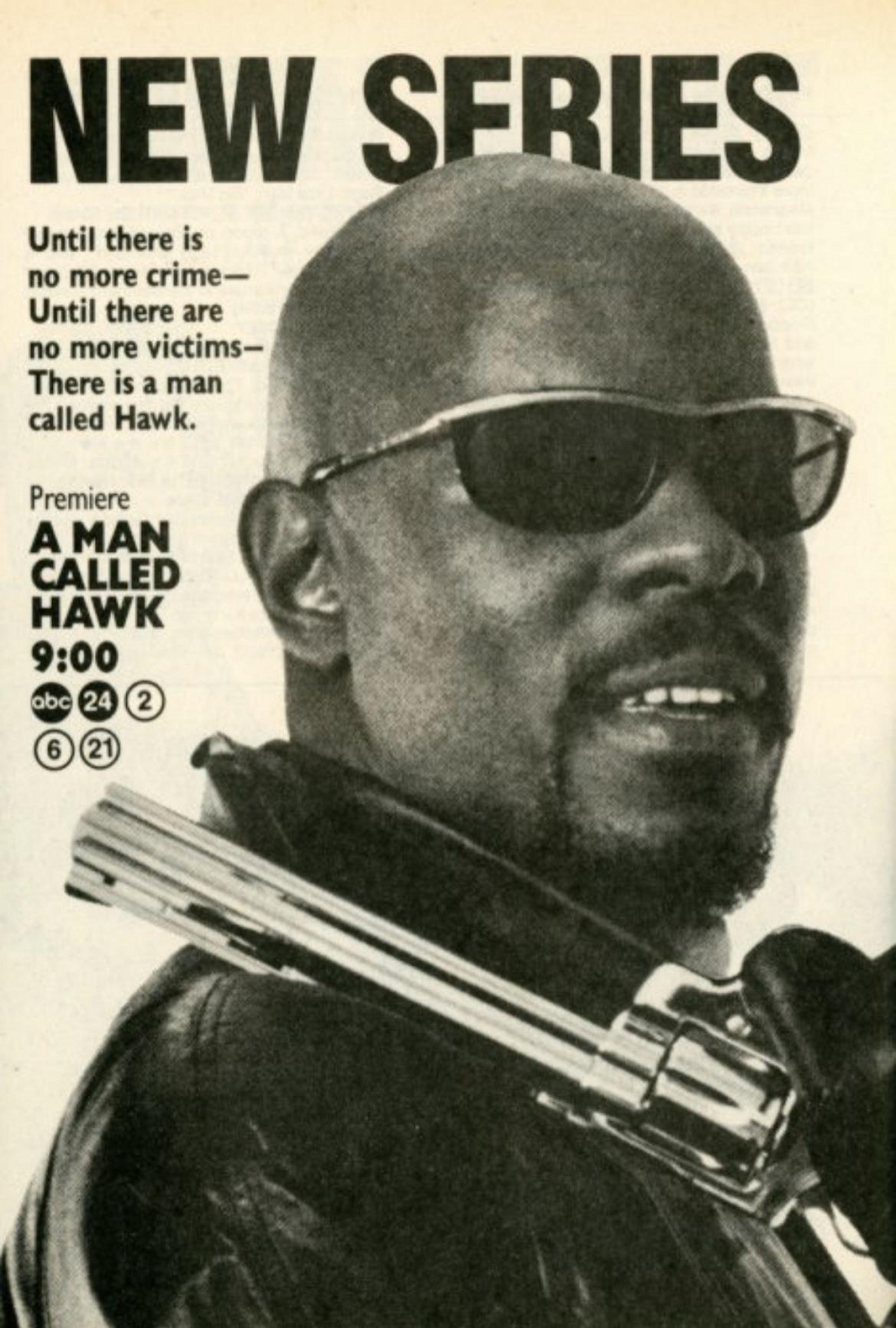
A Man Called Hawk, 1988-89

A Man Called Hawk debuted on January 28th 1989, with the revived Mission: Impossible as a lead-in as part of a new-look NBC Saturday night. As well as reprising the role of Hawk, Brooks also co-wrote the theme tune with jazz legends Stanley Clarke and Butch Morris. The first episode establishes Hawk’s new status quo, having moved back to Washington, DC, from the Boston setting of Spenser: For Hire. Still in the private detective/bodyguard/enforcer business, the first episode has Hawk trying to find an old Vietnam buddy who has turned killing machine before it’s too late.

Subsequent stories see him accused of a murder he didn’t commit, protecting a family targeted for kidnap, trying to take infected drugs off the streets, and saving his cousin who has become a mob target after his romancing a gangster’s moll, all with the aid of advice from Old Man, a father figure played by Moses Gunn. As a mid-season replacement, thirteen episodes were produced, averaging a rating of 8.5; this was just below ABC’s threshold for renewal and there was no second season. Both Brooks and Hawk were off-air for four years, until they both returned in a series of Spenser TV movies, by which time Brooks was also starring as Benjamin Sisko in Star Trek: Deep Space Nine. Both Hawk and Spenser have made sporadic returns to TV since, the last of which starred Mark Wahlberg as Spenser, a production criticised by Spenser himself in the final two Atkins novels.

Next time on The Telephemera Years: some of 1988’s unsold pilots, including the far future of 2005 and a returning Hulk!

Check out our other Telephemera articles:

The Telephemera Years: pre-1965 (part 1, 2, 3, 4)

The Telephemera Years: 1965 (part 1, 2, 3, 4)

The Telephemera Years: 1966 (part 1, 2, 3, 4)

The Telephemera Years: 1967 (part 1, 2, 3, 4)

The Telephemera Years: 1968 (part 1, 2, 3, 4)

The Telephemera Years: 1969 (part 1, 2, 3, 4)

The Telephemera Years: 1970 (part 1, 2, 3, 4)

The Telephemera Years: 1971 (part 1, 2, 3, 4)

The Telephemera Years: 1973 (part 1, 2, 3, 4)

The Telephemera Years: 1974 (part 1, 2, 3, 4, 5)

The Telephemera Years: 1975 (part 1, 2, 3, 4)

The Telephemera Years: 1976 (part 1, 2, 3, 4)

The Telephemera Years: 1977 (part 1, 2, 3, 4)

The Telephemera Years: 1978 (part 1, 2, 3, 4)

The Telephemera Years: 1979 (part 1, 2, 3, 4, 5, 6)

The Telephemera Years: 1980 (part 12, 3, 4)

The Telephemera Years: 1981 (part 1, 2, 3, 4)

The Telephemera Years: 1982 (part 1, 2, 3, 4)

The Telephemera Years: 1983 (part 1, 2, 3, 4)

The Telephemera Years: 1984 (part 1, 2, 3, 4)

The Telephemera Years: 1986 (part 1, 2, 3, 4)

The Telephemera Years: 1987 (part 1, 2, 3, 4)

The Telephemera Years: 1988 (part 1, 2)

The Telephemera Years: 1989 (part 1, 2, 3, 4)

The Telephemera Years: 1990 (part 1, 2, 3, 4)

The Telephemera Years: 1991 (part 1, 2, 3, 4)

The Telephemera Years: 1992 (part 1, 2, 3, 4)

The Telephemera Years: 1994 (part 1, 2, 3, 4)

The Telephemera Years: 1995 (part 12, 3, 4)

The Telephemera Years: 1997 (part 1, 2, 3, 4)

The Telephemera Years: 1998 (part 1, 2, 3, 4)

The Telephemera Years: 1999 (part 1, 2, 3, 4)

The Telephemera Years: 2000 (part 1, 2, 3, 4)

The Telephemera Years: 2001 (part 1, 2, 3, 4)

The Telephemera Years: 2002 (part 1, 2, 3, 4)

The Telephemera Years: 2003 (part 1, 2, 3, 4)

The Telephemera Years: 2005 (part 1, 2, 3, 4)

The Telephemera Years: 2006 (part 1, 2, 3, 4)

The Telephemera Years: 2007 (part 1, 2, 3, 4)

The Telephemera Years: 2008 (part 1, 23, 4)

The Telephemera Years: O Canada! (part 1, 2, 3, 4)

Titans of Telephemera: Irwin Allen

Titans of Telephemera: Stephen J Cannell (part 1, 2, 3, 4)

Titans of Telephemera: DIC (part 1, 2)

Titans of Telephemera: Filmation (part 1, 2)

Titans of Telephemera: Hanna-Barbera (part 1, 2, 3, 4, 5)

Titans of Telephemera: Kenneth Johnson

Titans of Telephemera: Sid & Marty Krofft

Titans of Telephemera: Glen A Larson (part 1, 2, 3, 4)

Titans of Telephemera: Quinn Martin (part 1, 2)

Titans of Telephemera: Rankin/Bass

Titans of Telephemera: Ruby-Spears

Titans of Telephemera: Sunbow

STARBURST Board Games Gift Guide 2024

Board games are huge these days, with sitting down with friends, family and sometimes even random strangers to roll dice and have fun becoming a regular thing. Over sixty-five thousand people attended the UK Games Expo this year, and the traditional board gaming juggernaut does not look like it will stop any time soon. With that in mind, let’s look at some of the board games you might want to pick up for the forthcoming winter season.

Talisman: The Magical Quest

Talisman is a classic sit-down and roll-dice fantasy board game that’s been around since the 1980s. Hasbro produced the 5th Edition of the game this year, streamlining the rules somewhat so it actually does take about 90 minutes to play. It’s a visually stunning game, and the new version comes with a pile of miniatures for each of the potential adventurers. Talisman plays more like the sort of board game older folk are used to as you roll dice and draw cards. It’s a handy introduction to games that seem like they have a lot of rules but are fine once they get going. A great family showpiece.

The Last of Us: Escape the Dark

Themeborne has been wowing gamers with its atmospheric and clever Escape the Dark series for years now. These fun, card-based adventure games weave dark stories of desperation and survival with very little effort. Their latest variant, out for Christmas, draws from Naughty Dog’s beloved The Last of Us series. A must-have gift for fans of horror. Or mushrooms.

Minecraft The Chess Set

Adapting video games into board games can be hard, and where does one start with Minecraft? Well, rather than just grabbing a load of LEGO, The Noble Collection has produced a Minecraft chess set. A perfect gift for someone who plays too much Minecraft and needs to stretch their gaming skills in a different direction.  

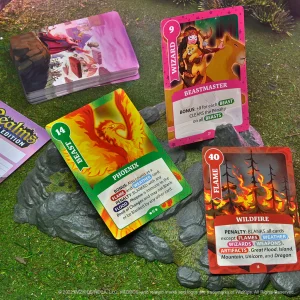
Fantasy Realms: Deluxe Edition

Fantasy Realms is a competitive world-building game. You create your realm one card at a time, adding monsters, heroes, curses and adventure as you go. Colourful, quick to learn and simple yet full of fun ideas, this is a great way to start an evening’s gaming.

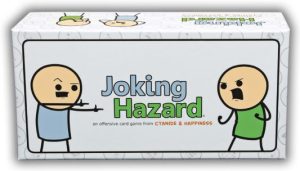
Joking Hazard

Joking Hazard is a fun card game aimed at adults. The aim is to make everyone laugh. The idea is that the cards are panels in the dark humour Cyanide & Happiness webcomic. It’s essentially a semi-random dark joke generator but a board game. It’s fun, but adults only on this one.

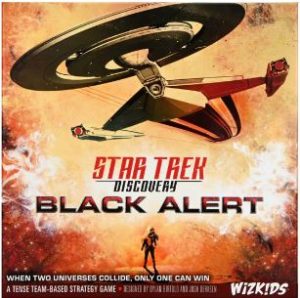
Star Trek Discovery: Black Alert

The crew of Discovery face off against their mirror universe counterparts in Black Alert. This is a Star Trek-themed action strategy game for either two or four players, as you try to outwit each other in order to control the ship. Rules-wise, it’s about as complicated as a Star Trek storyline, fun, and quick to play.

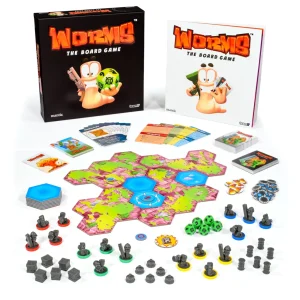
Worms

Worms The Board Game captures all the anarchy of the ’90s era video game, without needing to dig out your retro games console.  It’s produced by Mantic, so it’s that great combo of well-made models and gaming fun.

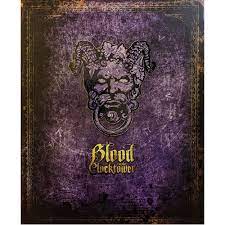
Blood on the Clock Tower

Blood on the Clock Tower is essentially a super refined, atmospheric and immersive variant of games like Mafia, Murder, or Werewolf. It’s a social deduction game in which you need to figure out who in the group is on the side of evil. Every round, one player is eliminated by the secret monster and his minions. The unique part of Blood on the Clock is that everyone has some sort of power that helps the players figure out what’s going on, and everyone has a good reason to lie. Designed for five to twenty players and one clever storyteller, it’s basically a fantasy-inspired reality TV show in a box. (Also, check out this example of play on YouTube )

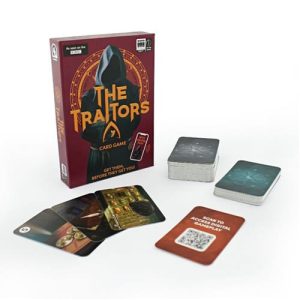
The Traitors Card Game 

Alternately, check out The Traitors card game, which is  a quick-to-play social deduction game that uses an app instead of a storyteller. Just in case you needed a portable Claudia Winkleman. See also Top Secret Briefs, another social deduction game from Ginger Fox, with a slightly less paranoid and more family-friendly theme.

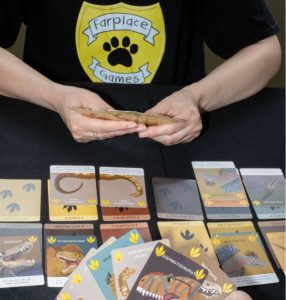
Dino Days

If you’re after something cute but quick, check out Dino Days from Farplace Games. It’s a quick little card game where you try and fill your ‘calendar’ with as many dinosaur-related things as possible, using careful placement of the cards in your hand. It also comes in other themes, such as fantasy dungeons, dogs, cats, space, and pirates.  

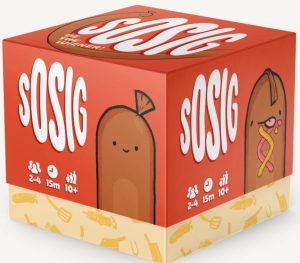
Sosig

Speaking of short but sweet, Sosig is a game in which you have to build the longest sausage you can using cards rather than a mincing machine. It’s one of those games in which your choices ruin other players’ plans. Frustrating family fun with added sausage puns.

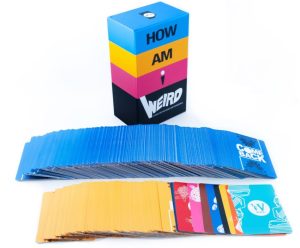
How Am I Weird

Winner of UKGE’s Best Party Game, How Am I Weird is a party game about breaking the ice through inappropriate behaviour. Basically, it’s a release valve for anxiety, as a brightly packaged card game.  See also Anger Smash From the people who brought us How Am I Weird, this is basically a fun social game with light teasing elements. Another socially acceptable way of calming folk down after a long day of arguing over the TV remote.

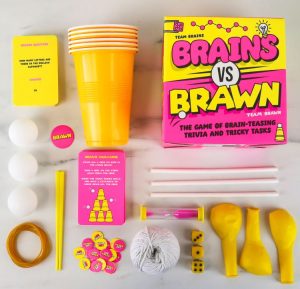
Brains vs Brawn

If you need something a bit more physical, Brains vs Brawn might do the trick, being basically a big box full of props for all sorts of silly tasks. Sort of like Chicken vs Hotdog, but without the innuendo. Speaking of tasks…

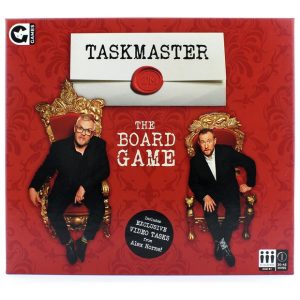
Taskmaster: The Official Board Game

Based on the hit TV show Taskmaster, this board game offers players a series of funny and bizarre tasks to complete, challenging their creativity and problem-solving skills.


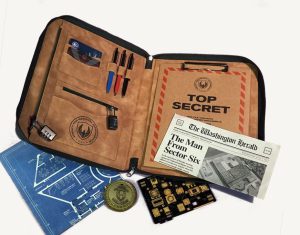
The Mystery Agency

If you’re looking for an escape room experience in a box, you can’t go far wrong with The Mystery Agency, who specialise in creating original and atmospheric mystery stories told through authentic objects and documents. We recently played their latest, The Man From Sector Six, and had an amazing time.

Zensu

And finally, for those of you looking for a chess-like game without having to think too hard about Chess,  , Zensu is a brilliant choice. Not quite as deep as Chess, with a logic puzzle element to it that makes it quick to learn and play.


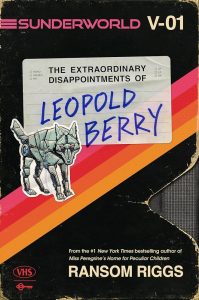
Ransom Riggs • SUNDERWORLD VOLUME ONE : THE EXTRAORDINARY DISAPPOINTMENTS OF LEOPOLD BERRY

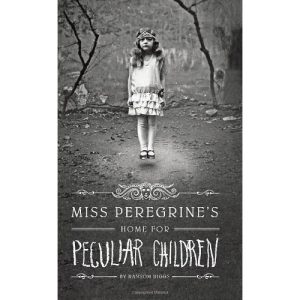
New York Times Bestselling Author Ransom Riggs is best known for his book Miss Peregrine’s Home for Peculiar Children, which inspired the 2016 fantasy movie of the same name. His latest novel, SUNDERWORLD, VOL. I: The Extraordinary Disappointments of Leopold Berry is out now. We caught up with him to find out more.

STARBURST: How would you pitch SUNDERWORLD, VOL. I: The Extraordinary Disappointments of Leopold Berry to a ghost that has just crawled out of your television?
I would tell him it’s Deadpool meets Stranger Things with magic… and kindly don’t eat my soul.

And how would you describe it to a fan of Buffy The Vampire Slayer?

I would tell said fan that it’s about a kid named Leopold who discovers, and becomes obsessed with, an obscure, super-cheesy ’90s fantasy show called Sunderworld that he discovers on unmarked VHS tapes among his dead mother’s things. He starts seeing bits of Sunder – a magical realm hidden under the skin of Los Angeles – intrude into his own world, his everyday Los Angeles, but comes to believe these visions are just a result of his emotional trauma. Years later, at seventeen, the hallucinatory visions return at the worst possible time on the worst possible day – and now he becomes certain they’re real. Sunder is in dire trouble, and he assumes it needs him because the show he loved was a classic ‘chosen one’ story about a kid just like him. When he gets there, though, he goes through the portal, discovers the world in full, and signs up for the chosen one test – it turns out that he’s painfully, embarrassingly wrong. But Leopold’s story, and his association with Sunder, doesn’t end there; it’s only just beginning. It’s just going to be very different than he dreamed it would.

How different has writing Sunderworld from Miss Peregrine’s Home for Peculiar Children?
Both series started from the point of analogue inspiration: Miss Peregrine from a collection of found vintage photos, and Underworld from an imagined collection of found VHS tapes. They are portal fantasies that use bits of media as mystery fuel, the spark that propels the protagonist toward both self-discovery and the discovery of another world. But the Peculiar books used real found photos – 50 or more in each – which I had to find, which was a whole job in itself, and then write them as seamlessly as possible into each novel. Loads of fun but also a very time-consuming challenge. Not having that creative constraint with Sunderworld freed me to write anything I could imagine, not just anything I could imagine and find a reasonably good vintage photo of (though sometimes the photos I found inspired bits of the story I never would’ve written, so it could be a creatively productive two-way street). So, it was easier in some ways. Set in Los Angeles, the beautiful and gross city I’ve grown to love over the last two decades, Sunderworld uses my favourite bits of old, obscure, nooks-and-crannies LA in much the same way that I used photos of old weirdos from the 19th century in Peculiar Children the strange all-night diners, bubbling tar pits, and fetid canals that lead nowhere all became characters.

Every project is unique; what were the new challenges with this book?

When I wrote Miss Peregrine, I didn’t know I was starting a series or if I’d be able to continue building out the world after that first book ended – so the world of the first novel is contained, really, to the little time-loop island where Miss P and the peculiar children live. I built out the world and its rules progressively over the course of four or five novels in the series. With Sunderworld I knew I was writing a series from the get-go, and I wanted to create the world in all its detailed glory – in my head, anyway – all at once. I spent a long time creating a world bible, complex rules, creatures and character indexes. But every time I sat down to write the book itself, I’d come up with something I liked better, find a reason to change the rules, etc. Finally, I just threw out the world bible and started following my instincts from page to page. I learned that I need to solidify the world as I write it, and to be just one or two steps ahead of Leopold as he discovers it.

It was also, strangely, a challenge to write about a city I know so well. The temptation to include a million details about LA that I find personally fascinating but wouldn’t have been particularly relevant to the story was huge! I had to cut so many in revisions. Still, Leopold’s best friend, Emmett, a teenager, happens to be a self-styled expert on weird LA history. Ahem. I hope that’s not stretching credibility too much.

Why has VHS made such a comeback?

I think everyone is exhausted by the noise and always-onness of the digital world, even young people. Perhaps especially young people. This happened with vinyl ten years ago. Now, I see teenagers wearing cassette walkmans. We all need a break, and media like VHS represent a slower, kinder-to-your-brain way of consuming media.

If you could take a single magical thing from the world of fiction and use it once in the modern day, what would it be and when?

Marty McFly’s DeLorean. I’d use it right before the world tips into unrecoverable chaos, which should be … oh, any day now!

Do genre labels matter?

I think they can be helpful for readers who are looking for a particular type of read and are happy to try out an author they’ve never heard of. But so many great books transcend or blend genre, so I’m not a fan of super strict genre labels. Miss Peregrine was called a horror novel for years, but it had only the slightest veneer of gothic horror. Like a tootsie pop, the inside was a candy gumball.

What one thing makes writing easier for you?

Espresso.


Should a good movie or TV adaptation resemble the source material in any way?

It should resemble it in some way, yes, or what was the point of adapting it? That said, I think adaptions can deviate from the source material in all sorts of ways that can end up making a better film. Film is such a different medium, and not all novels are particularly cinematic in their construction.

What books are you recommending to friends at the moment?

Right now, I’m reading and really enjoying Horror Movie by Paul Tremblay. I also like to be reading one Big Serious Thing, which I’ll pick up and put down over the course of months until I’m done, which at the moment is Les Miserables. It’s incredible, but you need about three months to get through it.

If you could rescue one work of art or media and have it survive until Earth’s sun dies, what would it be?

Birdemic.

What’s next for you?

Sunderworld, Vol II! 

Witches or Warlocks?

I’m still dealing with this ghost that crawled out of my TV, guys.

Mechanical Pandas or Cybernetic Racoons?

Pandas are enormous. I’m imagining some malevolent iteration of Beymax from Big Hero 6. Definitely the raccoon: smaller, potentially trappable.

Doctor Who or Doctor No?

Doctor No!

Truth or Beauty?

Oh man, we’re getting serious here. Truth, which I believe always beautiful if you open yourself fully to it. I don’t want to live surrounded by beautiful lies.

SUNDERWORLD, VOL. I: The Extraordinary Disappointments of Leopold Berry is out now from all good bookshops


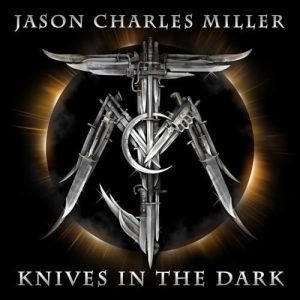
Jason Charles Miller • KNIVES IN THE DARK

JasonCharlesMillerPromotionalPhoto

Jason Charles Miller is an American musician, singer, voice actor and songwriter best known for his work with industrial rock band Godhead. He’s also one half of Rezodrone, a band that will be familiar to fans of Cyberpunk 2077We caught up with him to learn more about his new project, Knives In The Dark.

STARBURST: How would you pitch Knives in the Dark to a time-travelling vampire cowboy?
Jason Charles Miller: Well, the first thing I’d do is say, “Hey, don’t suck my blood, partner.” Then I’d tell him about the song Darkest Horse that actually references vampires in the second verse!  I’d also tell him about the song ‘Blood and Bone’ that mentions,,, well… blood!

And how would you pitch it to someone who loves playing D&D?

I’d tell them how the title track actually references several different chapters in The Fellowship of the Ring by J.R.R. Tolkien, and how Along for the Ride is about a bank heist gone wrong – TTRPGers love a good heist!

What was your favourite moment when creating Knives in the Dark?
There were so many!  One that comes to mind was when my two guitar players, Gary Joseph Potter Jr. and Allie Kay, worked on blazing duelling guitar solos on two different songs, Got Me on the Run and Along For the Ride. It was really quite fun seeing them come up with those different parts on the spot with producer Matt Hyde.  Another time was with one of our guest vocalists, Ellis Hall [Tower of Power], and what he brought to the table with his powerful vocals and silky smooth keyboard playing. Another time was collaborating with Cristina Vee, who I know from my voice-over career but who I had yet to get to sing on one of my songs, even though we sang a video game theme song together previously.

How is Knives in the Dark different from your other projects?
It’s the most cohesive and representative album of my career. It’s a culmination of all my influences and experiences, combined with an amazing collection of musicians to really bring it home!

How has your work on Starter Kit influenced this project?
I’d say the creativity of working on different role-playing games and figuring out how to teach them to other people is always mind-expanding.

What was the most challenging part of the production?
Time coordination! Matt Hyde is an in-demand producer who often works out of town, so we had to find creative ways to get everything done on time.

You’ve worked on some very cool projects for amazing franchises. Do you still have a ‘holy grail’ project, a thing that you’d love to create music for but haven’t yet? And if so, what is it?
Anything Lord of the Rings related! That’s a bucket list item for sure!

What was it like to be a Killer Klown?
Haha, it was a lot of fun but also a lot of hard work!  That game [Killer Klowns from Outer Space] has a ton of effort noises and weird klown noises that will really get you out of breath!

What’s next for you?
Next, I head to Saudi Arabia to sing in a series of orchestra concerts celebrating the music of Final Fantasy XIV. I sing four songs in the game, so I’m lucky enough to be asked to participate in these amazing concerts. So far, we’ve done them in England, China, South Korea, Vegas, and three in Japan.

Beholders or Beekeepers?
Beholders!

Dungeons or Dragons?
C’mon… you know the answer is BOTH!

Truth or Beauty?
In truth, there is beauty.

KNIVES IN THE DARK is Out Now


THE TELEPHEMERA YEARS: 1988, part 2

Mission Impossible, 1988-89

Ah, telephemera… those shows whose stay with us was tantalisingly brief, snatched away before their time, and sometimes with good cause. They hit the schedules alongside established shows, hoping for a long run, but it’s not always to be, and for every Street Hawk there’s two Manimals. But here at STARBURST we celebrate their existence and mourn their departure, drilling down into the new season’s entertainment with equal opportunities square eyes… these are The Telephemera Years!

1988-89

It was tough time for anything that wasn’t a sitcom in the 1988-89 ratings, with thirty-minute yuckfests filling nine of the top eleven spots, several of them newcomers gatecrashing a party that had been going on for a number of years since the mid-1980s action show slump. Although his terrible sweaters are now far from the worse thing about him, Bill Cosby and his family ruled the roost, although fresh competition from the more blue-collar Roseanne was ready to push it close for the number one slot. The Cosby Show was one of six NBC sitcoms in that top eleven, the rest of the slots filled by Roseanne’s ABC compadres Who’s the Boss? and Anything But Love, with CBS supplying the only non-comedy shows in the list, the ever-dependable 60 Minutes and Murder, She Wrote.

The turn away from hour-long crime and action shows saw Moonlighting, Simon & Simon, The Equalizer, and Miami Vice all enter their final seasons as Fall 1988 rolled around, with the rebooted Twilight Zone and whatever the Hell Highway to Heaven was also coming to an end. In their places, there was fresh hope from Midnight Caller, Father Dowling Mysteries, and time travel show with a difference Quantum Leap, a rare genre arrival on a schedule all but shorn of such fare, although the furries still had ALF and Beauty & the Beast to keep them satisfied. Those were all shows that people remember, though: what about those that failed to make enough of an impact to enter the annals of TV history? This is the story of four of 1988’s near-misses…

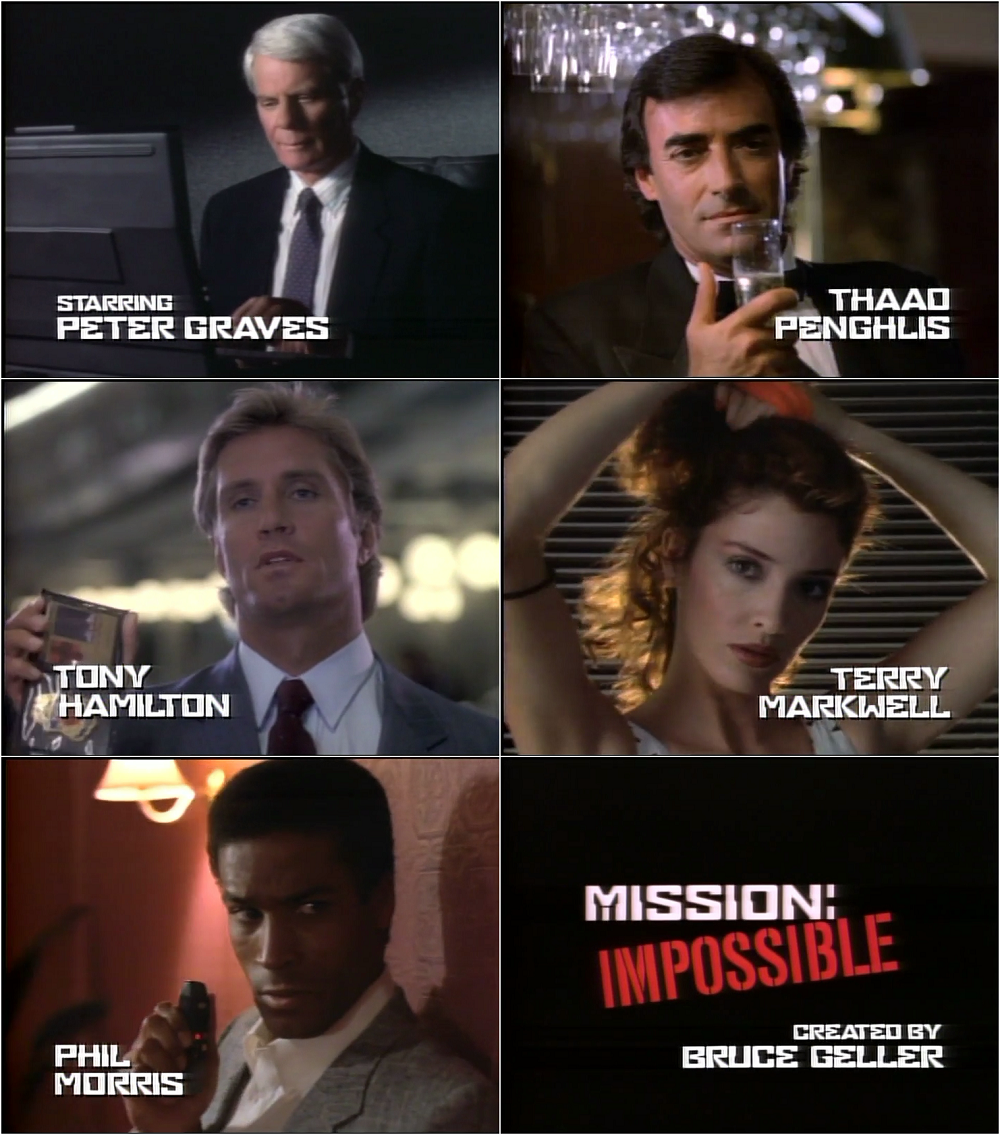
Mission: Impossible (ABC): As many a sneaky murderer has found, going up against Angela Lansbury is foolhardy, with Murder, She Wrote never dipping below thirteenth in the ratings in its twelve-season run on CBS. In the 1987-88 season, the show averaged over twenty million viewers, blowing away Sunday night competition on ABC which included Spenser: For Hire and Supercarrier, necessitating some serious thinking on behalf of the Alphabet Network if they were to chip away at Jessica Fletcher’s golden throne. For Fall 1988, though, ABC put its faith in an old CBS property and called Impossible Missions Force head Jim Phelps out of retirement to take it straight to the witch of Cabot Cove.

Mission: Impossible had originally run for seven seasons on CBS, from its September 1966 debut to a March 1973 cancellation, when producer Paramount realised it could make more money from syndicating old episodes than making new ones. There had been an attempt to bring it back in 1980 with the bulk of the original cast, but an inability to find the right storylines delayed the project until 1983, by which time it had become a one-off reunion movie, entitled Good Morning Mr Phelps. Spiralling cast costs eventually put paid to even that, but as industrial action by the Writers Guild of America in 1988 wore on, studios began to look what they had in their vaults, especially at Paramount, where Star Trek: The Next Generation used scripts from an aborted Star Trek revival.

Mission Impossible, 1988-89

Discovering several unused Mission: Impossible scripts, the decision was made to bring the show back as a cheap filler, with a new cast playing the old roles, but a new introduction sequence was written to bring Peter Graves’s Phelps out of retirement after his successor is killed, his first mission to track down the man that killed his protégé! Although Graves was the only member of the original cast to return, his new team featured the son of Barney Collier (Grant, played by The Young and the Restless‘s Phil Morris), as well as interior designer turned undercover agent Casey Randall (Terry Markwell), actor and disguise expert Nicholas Black (Thaao Penghlis), and strongman Max Harte (Anthony Hamilton).

That the latter two were based in Australia betrayed another cost-cutting secret, that the secries was shot Down Under to save money, using a mostly local crew. Although it didn’t make much of a dent in Murder, She Wrote’s ratings, Mission: Impossible did well enough to be moved to a better timeslot on Saturdays and was renewed for a second season. Halfway through season one, Casey Randall became the first agent in the history of the show to be killed in action, disavowed as promised afterwards, although mourned by the team. That mourning was soon felt by anyone who’d become attached to Phelps and his new team as a move to Thursdays, opposite The Cosby Show and A Different World, proved too impossible a mission and – cheap filler or not – it was cancelled after sixteen episodes of its second season.

Unsub (NBC): For many, and despite two number one singles in the 1970s with “Silver Lady” and “Don’t Give Up On Us,” David Soul will always be Ken Hutchinson, one half of funky crime fighting duo Starsky & Hutch. After the pair arrested their final perp, Soul appeared in palate-cleanser Salem’s Lot, but found post-S&H roles hard to come by and moved to the UK, where he co-hosted 6:55 Special with former Tiswas presenter Sally James. During this time, he continued to secure guest roles on US TV, even taking a leading role in Dallas-photocopy Yellow Rose in 1983, but it would be 1989 before he’d be afforded that opportunity again.

The chance came courtesy of titan of telephemera Stephen J Cannell, presently in a state of transition after building his own production facilities on Vancouver’s North Shore. Long-running mainstays The A-Team, Hardcastle and McCormack, and Riptide had all come to an end in 1986 and 1987, but the 1987-88 season saw the debut of four new Cannell shows, led by the edgy 21 Jump Street on Fox, all filmed at North Shore. Although two of the new shows, failed to catch the attention of the viewers, Cannell had another one in the works for the 1988-89 season, again produced in Vancouver.

Unsub, 1988-89

Unsub was the creation of David J Burke and Stephen Kronish. Burke had spent twenty years as a journalist before scripting the pilot and several episodes of Michael Mann’s short-lived Crime Story, while Kronish got his start on Alfred Hitchcock Presents. Cannell further developed their creation into the story of an elite FBI forensic team that investigates serial killers and other violent criminals, the “unsub” of the title standing for the as yet “unidentified subjects” of their investigations. Soul’s John Westley “Wes” Grayson led a team which also included M Emmet Walsh as old school cop Ned Platt, Adam-12’s Kent McCord as lab expert Alan McWhirter, and Richard Kind and Jennifer Hetrick as Jimmy Bello and Ann Madison, the Unsub team’s field investigators. From the off, the team investigated serial killers, creepy child predators, bombers, and someone strangling and castrating male victims, with a pre-Usual Suspects Kevin Spacey among the guest perpetrators.

NBC’s Fall 1988 line-up had launched with Cannell’s Sonny Spoon leading off a Friday night line-up, but when both Sonny Spoon and Something Is Out There were cancelled, Unsub was brought in to plug the gap, closing out the Peacock Network’s prime-time hours, with Miami Vice moving forward as a lead-in and Father Dowling Investigates the new opener. This put Unsub up against 20/20 on ABC and Falcon Crest on CBS, not exactly stellar competition but still enough to put a dent in its potential audience. By its sixth episode, viewing figures had dipped below thirteen million, and although it rallied slightly from that point, the decision was made to pull the plug after episode eight. If anything, with its focus on forensic science, Unsub was ahead of its time, as CSI and its various offshoots later proved.

Monsters (syndication): In July 1949, NBC adapted popular radio show Lights Out for TV, running for over three years and establishing a template for every horror and suspense anthology that followed. The Twilight Zone upped the game in 1959, with Tales of Mystery, The Outer Limits, and Night Gallery all capturing the imagination of the American public over the next decade with one-off stories of temptation, misadventure, retribution, and more, many with an O Henry style ending. The anthology largely went out of fashion in the 1970s, with just Quinn Martin’s Tales of the Unexpected and Fantasy Island the only major examples between the end of Night Gallery in 1970 and 1981’s short-lived Darkroom.

In 1983, with horror going mainstream after escaping its grubby 1970s ghetto, George A Romero decided to do a TV version of his tribute to the 1950s heyday of EC Comics, Creepshow. Rights issues prevented Romero directly transferring Creepshow to TV; in its stead came Tales from the Darkside, with stories by genre legends such as Clive Barker, Robert Bloch, Harlan Ellison, and Stephen King (who adapted his own short story, Sorry, Right Number, for the show) brought to life with some fantastic effects courtesy of a crew of hungry, young talents. Tales from the Darkside ran for four seasons (and a 1990 movie), finishing in July 1988.

Monsters, 1988-89

Executive producer Richard P Rubenstein, who founded Laurel Entertainment with Romero in the mid-1970s, was keen to continue the format, albeit with a tweak to acknowledge both the outstanding effects work done on Tales from the Darkside and the popularity of movie monsters such as Jason Voorhees, Michael Myers, and king of the hill, Freddy Krueger. Putting together a demo reel of the various effects-laden creatures from Tales from the Darkside, Rubenstein secured a partnership with Tribune Entertainment, one of the US’s foremost syndication companies. Monsters – as the show was aptly titled, concentrating entirely on horror rather than the mixed fantasy fare of Tales from the Darkside – made its bow on October 22nd 1988, its start delayed until the end of the writers’ strike.

Each episode featured a monster of the week in self-contained stories, with first season creatures including a children’s TV puppet gone rogue, a zombie boyfriend, a man-eating bed, and a vampire pool shark, all created by effects overseen by veteran make-up artist Dick Smith. The anthology format also allowed for guest appearances by a kaleidoscopic array of acting talent, including David McCallum, Tempestt Bledsoe, Linda Blair, Meat Loaf, Jeff Conaway, and Adrienne Barbeau, and the show was renewed for a second season. A third followed, for a total of seventy-two episodes, most of which were based on original stories by some of Hollywood’s top young writers (some of whom were also doing double duty on Saturday morning cartoons featuring monsters of a slightly less gruesome nature). The final episode was fittingly an adaptation of The Moving Finger, a story by Stephen King, who had scripted Creepshow for Romero and kicked off the whole shebang.
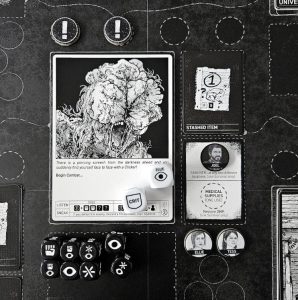
Police Story (ABC): The creation of former police officer Joseph Wambaugh, whose earlier novels based on his previous life had been turned into the movie The New Centurions and miniseries Blue Knight, Police Story was a long-running anthology series on NBC, with eighty-eight episodes airing between September 1973 and April 1977. Although the show revelled in its anthology format, there was one some common theme in that the protagonist was always an officer of the Los Angeles Police Department, although the exact branch of the LAPD differed from week to week. As such, there were some recurring characters, but the show was an exercise in a new style of police procedural, informed by Wambaugh’s time on the beat and info from the contacts he still enjoyed.

Episodes of Police Story were often used as backdoor pilots for potential new shows, with Angie Dickinson’s Police Woman making her first appearance in season one episode “The Gamble,” Joe Forrester spinning out of “The Return of Joe Forrester,” starring Lloyd Bridges, and David Cassidy vehicle Man Undercover starting life as one of a series of nine TV movies that followed the regular series between September 1977 and April 1980. In 1987, Police Story was brought out of mothballs for a one-off, four-hour story, “The Freeway Killings.” Angie Dickinson returned (although not as Suzanne “Pepper” Anderson), as did Tony Lo Bianco and Don Meredith, who’d each made five appearances in the original series.

Police Story, 1988-89

Although Police Story: The Freeway Killings didn’t spark an immediate revival for the anthology series, the one-off meant that it was fresh in the minds of Columbia Television Pictures when the writers’ strike left the networks scrabbling for new content. With almost a hundred Police Story scripts in the vault and no need for recurring characters, it was a simple decision to dust off some classic episodes and remake them, giving ABC five weeks of content until the strike was resolved and new shows could resume. The majority of the stories chosen were from the TV movie era of the show, although “Monster Manor” was based on the season four of the same name that had earlier starred Joe Santos as a cop who splits up with his wife and moves into a party house, attracting a lot of unwanted attention from the wrong sort of crowd.

This time around it was Clayton Rohner in the starring role, with others in the series featuring Lindsay Wagner as a vice cop who has difficulty dealing with her partner’s suicide, Jack Warden as a veteran Watch Commander, Ken Olin as a cop whose best friend is the victim of a cop killer, and Robert Conrad as a maverick officer framed for murder and sent to prison, with only ex-partner Benjamin Bratt and internal affairs man Ed O’Neill working to free him. Intended as a short-term replacement for the strike-delayed ABC Mystery Movie, the five episodes did their job and the first episode of the new series – a revival of Columbo – duly appeared on February 6th.

Next time on The Telephemera Years: even more of 1988’s forgotten treasures, including cuddly serial killers and Henson’s last hurrah…

Check out our other Telephemera articles:

The Telephemera Years: pre-1965 (part 1, 2, 3, 4)

The Telephemera Years: 1965 (part 1, 2, 3, 4)

The Telephemera Years: 1966 (part 1, 2, 3, 4)

The Telephemera Years: 1967 (part 1, 2, 3, 4)

The Telephemera Years: 1968 (part 1, 2, 3, 4)

The Telephemera Years: 1969 (part 1, 2, 3, 4)

The Telephemera Years: 1970 (part 1, 2, 3, 4)

The Telephemera Years: 1971 (part 1, 2, 3, 4)

The Telephemera Years: 1973 (part 1, 2, 3, 4)

The Telephemera Years: 1974 (part 1, 2, 3, 4, 5)

The Telephemera Years: 1975 (part 1, 2, 3, 4)

The Telephemera Years: 1976 (part 1, 2, 3, 4)

The Telephemera Years: 1977 (part 1, 2, 3, 4)

The Telephemera Years: 1978 (part 1, 2, 3, 4)

The Telephemera Years: 1979 (part 1, 2, 3, 4, 5, 6)

The Telephemera Years: 1980 (part 12, 3, 4)

The Telephemera Years: 1981 (part 1, 2, 3, 4)

The Telephemera Years: 1982 (part 1, 2, 3, 4)

The Telephemera Years: 1983 (part 1, 2, 3, 4)

The Telephemera Years: 1984 (part 1, 2, 3, 4)

The Telephemera Years: 1986 (part 1, 2, 3, 4)

The Telephemera Years: 1987 (part 1, 2, 3, 4)

The Telephemera Years: 1988 (part 1)

The Telephemera Years: 1989 (part 1, 2, 3, 4)

The Telephemera Years: 1990 (part 1, 2, 3, 4)

The Telephemera Years: 1991 (part 1, 2, 3, 4)

The Telephemera Years: 1992 (part 1, 2, 3, 4)

The Telephemera Years: 1994 (part 1, 2, 3, 4)

The Telephemera Years: 1995 (part 12, 3, 4)

The Telephemera Years: 1997 (part 1, 2, 3, 4)

The Telephemera Years: 1998 (part 1, 2, 3, 4)

The Telephemera Years: 1999 (part 1, 2, 3, 4)

The Telephemera Years: 2000 (part 1, 2, 3, 4)

The Telephemera Years: 2001 (part 1, 2, 3, 4)

The Telephemera Years: 2002 (part 1, 2, 3, 4)

The Telephemera Years: 2003 (part 1, 2, 3, 4)

The Telephemera Years: 2005 (part 1, 2, 3, 4)

The Telephemera Years: 2006 (part 1, 2, 3, 4)

The Telephemera Years: 2007 (part 1, 2, 3, 4)

The Telephemera Years: 2008 (part 1, 23, 4)

The Telephemera Years: O Canada! (part 1, 2, 3, 4)

Titans of Telephemera: Irwin Allen

Titans of Telephemera: Stephen J Cannell (part 1, 2, 3, 4)

Titans of Telephemera: DIC (part 1, 2)

Titans of Telephemera: Filmation (part 1, 2)

Titans of Telephemera: Hanna-Barbera (part 1, 2, 3, 4, 5)

Titans of Telephemera: Kenneth Johnson

Titans of Telephemera: Sid & Marty Krofft

Titans of Telephemera: Glen A Larson (part 1, 2, 3, 4)

Titans of Telephemera: Quinn Martin (part 1, 2)

Titans of Telephemera: Rankin/Bass

Titans of Telephemera: Ruby-Spears

Titans of Telephemera: Sunbow