Paul Foxcroft • QUESTING TIME

Paul Foxcroft is one of UK’s finest improv comedians and on-stage Dungeons and Dragons Dungeon Masters. He’s best known for the show  Questing Time, a comedy show that throws working comedians into a game of Dungeons & Dragons live on stage. It returns to the stage this year, starting at the Cultplex, Manchester from 17:00 on the 16th of February.

They’ve had acts like Nish Kumar, Sophie Duker, Ed Gamble, and even national treasure Sue Perkins join them in the past, and now they’re kicking off a new run of live gigs in Manchester. We caught up with creator, host and former Ted Lasso star Paul Foxcroft.

STARBURST: How would you pitch Questing Time to an elderly relative who really likes Taskmaster?
Paul Foxcroft: Hello! I’d start with “hello” because older people seem to respect that kind of thing. We take a panel of comedians and give them each a character to control in a story that we’re all making up at the same time. So it’s like the whole cast is on a team task, but the task is something like “Rescue a pig from goblins” – then the goblins, pig and almost everyone else are played by the host, who is me. 

I’m only asking this because you’re “elderly”, but did you vote for Brexit? Because if you did, you probably won’t like the show. 

And how would you pitch it to a fan of Critical Role?
It’s exactly* Critical Role; if Critical Role had fewer people who knew what they were doing and a fraction of the operational budget – we would make it work. We’re a comedy show first, so our stuff tends to sillier and dumber expressions of the game – from magic items like The Unstoppable Rod to the players misunderstanding some details and accidentally granting godhood to their pet owlbear. 

Oh, and I’m not Matt Mercer. I’m Paul Foxcroft. We’re profoundly different guys.

*This is a lie.

How did Questing Time happen?
I was in a critically acclaimed double act with the magnificent Cariad Lloyd, who needed a break in order to have a baby, but we had a lovely venue, and so Cariad suggested I try “That D&D thing I kept going on about”. So, the first Questing Time happened in the Summer of 2016 in a basement in London, and people liked it enough that we did it right up until the plague. Then we hopped online for two years, but in the immediate aftermath of COVID, the live comedy industry was not well… that and a lot of people who helped make the show happen had just moved on to other things. So, a break happened

How much has changed since that initial Edinburgh Fringe show?
Two main things. Three if you count the two Trump presidencies. 

First, so many more people are aware of D&D as a thing now. Even if they’re never played it. I put that down to things like Critical Role, and my good friends over at The Adventure Zone; but also shows like Stranger Things, the D&D Movie, and shows like Game of Thrones or Rings of Powerwhich have made a bunch of folks who didn’t think they liked fantasy… like fantasy.

Secondly, my approach to the show has evolved. I prepare a lot less for specific games but spend more time fleshing out the world. I sketch out an idea of what happens if the players don’t get involved, how things escalate… but then I largely wing it. That leaves more space for the players to do cool, interesting, weird stuff. Plus, when I did have a tight script, I wound up throwing most of it away – especially if we had Steve McNeil on the show. 

Why Dungeons and Dragons and not, Pathfinder or Fighting Fantasy?
have the most hours as both a DM and a player with D&D, so it’s probably the system and lore I’m most fluent with. It’s also the game that people who don’t play TTRPGs know, at least as a reference. In the same sense that people who don’t like sci-fi still know Star Trek and its tropes. They’re the Hoover of the industry. 

The other main reason? Advantage and Disadvantage. Eliminating the swarm of positive and negative modifiers that still pervade other systems and reducing them to “Just roll twice and ignore one of the dice” is such a game changer when you’re onboarding new folks. While it’s not the easiest system to teach, that takes a load off.

With that in mind, I’ve been playing a lot of the Alien RPG recently, and it is very good and really intuitive. So we might add that into the mix along with some other games I want to try with live audiences, things like; Monster of the Week, Slugblaster, Draw Steel (which I’ve done a bit of work on), Tales of the Valiant and literally anything by Rowan, Rook & Deckard. 

You’ve ran D&D for some of finest folk in both Comedy and TTRPGs; what’s next?
Well, I moved to Manchester. So tricking the finest folks in comedy and TTRPGs to move to Manchester is top of the list. But we’re not shy of excellent comics up north, so we’ve a great cast booked for our first shows in our new venue – Cultplex, which is a really cool space. 

Plus, we’ve got a bunch of podcast episodes in the edit at the moment, so getting that up and running is next. But I’m balancing that with teaching improv classes, doing a little work on and a very cool job in video games that I’m desperate to talk about, but literally can’t’. 

Is there such a thing as the ‘best edition of Dungeons and Dragons’?
Almost certainly, but I think for most people, it’s the edition that they started with. So I’ve got very fond memories of 3rd and 3.5which were my introduction to D&D, with all their weird modifiers and sprawling third party sourcebooks. Those games shaped my understanding of TTRPGs along with 2nd Edition World of Darkness stuff and the early Legend of the Five Rings books. I really like 5th for being more accessible and for letting me make a living; it’s a better system than 3rd Edition. But 3rd Edition Ravenloft was my first home.

How different is this from watching D&D on a livestream?
Well, heckles work better if you’re in the room. But also, there’s a different vibe when you’re all together in the room. As a show, we get a clear and immediate response from the crowd: laughter, gasps, applause, people shouting out rules suggestions… which hits less online because it comes in text form. Plus, if we’re live, we can do stuff that wouldn’t work online for any number of reasons. The biggest advantage as a performer is that we can make eye contact – which is so fundamental to my understanding of improvisation, theatre, and communication… that’s the thing that online play can’t replicate. 

As a downside, you can’t really do live shows in your pyjamas. We have to get dressed and go to a place, and that’s a hassle. 

What would your ideal line-up of players be?
A ludicrously difficult question to answer. I taped a pilot episode that got swallowed up by COVID and shelved indefinitely but that had a cast I’d have loved to play with for a season: Nish Kumar, Rachel Parris, James Acaster and Emma Sidi. They were such wonderful goofs. That said, I can’t really imagine Questing Time without Briony Redman & Richard Soames, who’ve done the show more than anyone other than me.

Where else can we see you?
Not a whole lot of places these days, I’m writing a lot at the minute. But I’m working on a secret thing that we’re absolutely talking about when the NDA lapses: teaching improv classes over at Improv North, trying to edit a podcast and setting up more shows up north. Oh, I’m in episode 7 of Ted Lasso. They can’t take that away from me. Unless they use AI. 

Simpsons or Futurama?
Futurama. 

Picard or Kirk?
Of those two? Picard. Kirk seems like he’d be fun to have a drink with, but the man’s a liability. Free choice? Sisko.

Truth or Beauty?
Truth.

You can find out more about Questing Time on their website here and book for the show here.

THE TELEPHEMERA YEARS: 1996, part 2

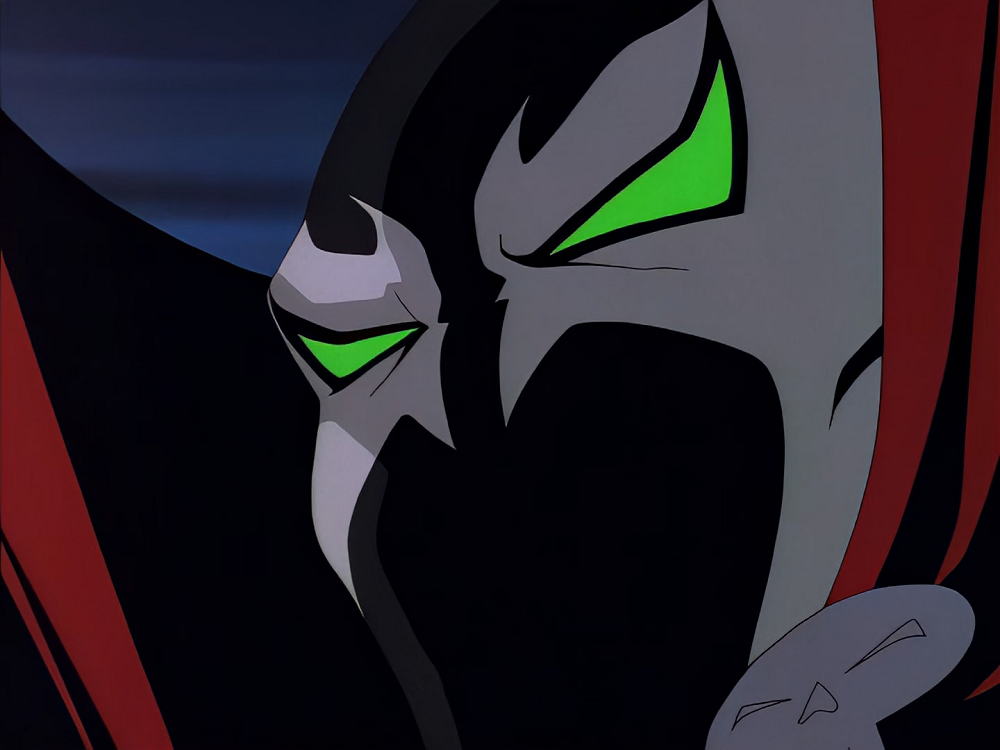
Todd McFarlane's Spawn, 1996-97

Ah, telephemera… those shows whose stay with us was tantalisingly brief, snatched away before their time, and sometimes with good cause. They hit the schedules alongside established shows, hoping for a long run, but it’s not always to be, and for every Street Hawk there’s two Manimals. But here at STARBURST we celebrate their existence and mourn their departure, drilling down into the new season’s entertainment with equal opportunities square eyes… these are The Telephemera Years!

1996-97

It was mostly business as usual at the top of the television ratings in 1996, with NBC continuing their domination, especially on Thursday nights where their Must See TV block accounted for six of the top eight shows, including debuts for the Brooke Shields-starring Suddenly Susan, The Naked Truth, Fired Up, and The Single Guy. Only ABC’s Monday Night Football spoiled a clean sweep, but there was more competition on other days, with Home Improvement and new arrival Spin City on Tuesdays giving ABC some non-sportsball success, and Sundays looking good for CBS with 60 Minutes and Touched by An Angel coming in at number eleven and twelve, respectively.

Other new shows making their bows on the Fall 1996 schedule included Cosby, Everybody Loves Raymond, Touched by An Angel spin-off Promised Land, Sabrina the Teenage Witch, and Early Edition and Dark Skies, two new genre shows making premiering on CBS and NBC, illustrating the impact The X-Files was having on the US TV market. The year would also see debuts for 7th Heaven, Buffy the Vampire Slayer, King of the Hill, Lexx, Millennium, and Mystery Science Theater 3000, but also see Family Matters, Lois & Clark: The New Adventures of Superman, Roseanne, Wings, and Renegade begin their final seasons. Those were all shows that left their mark on the wider TV viewing public, but what about those who didn’t stick around? This is the story of four more fly-by-nights…

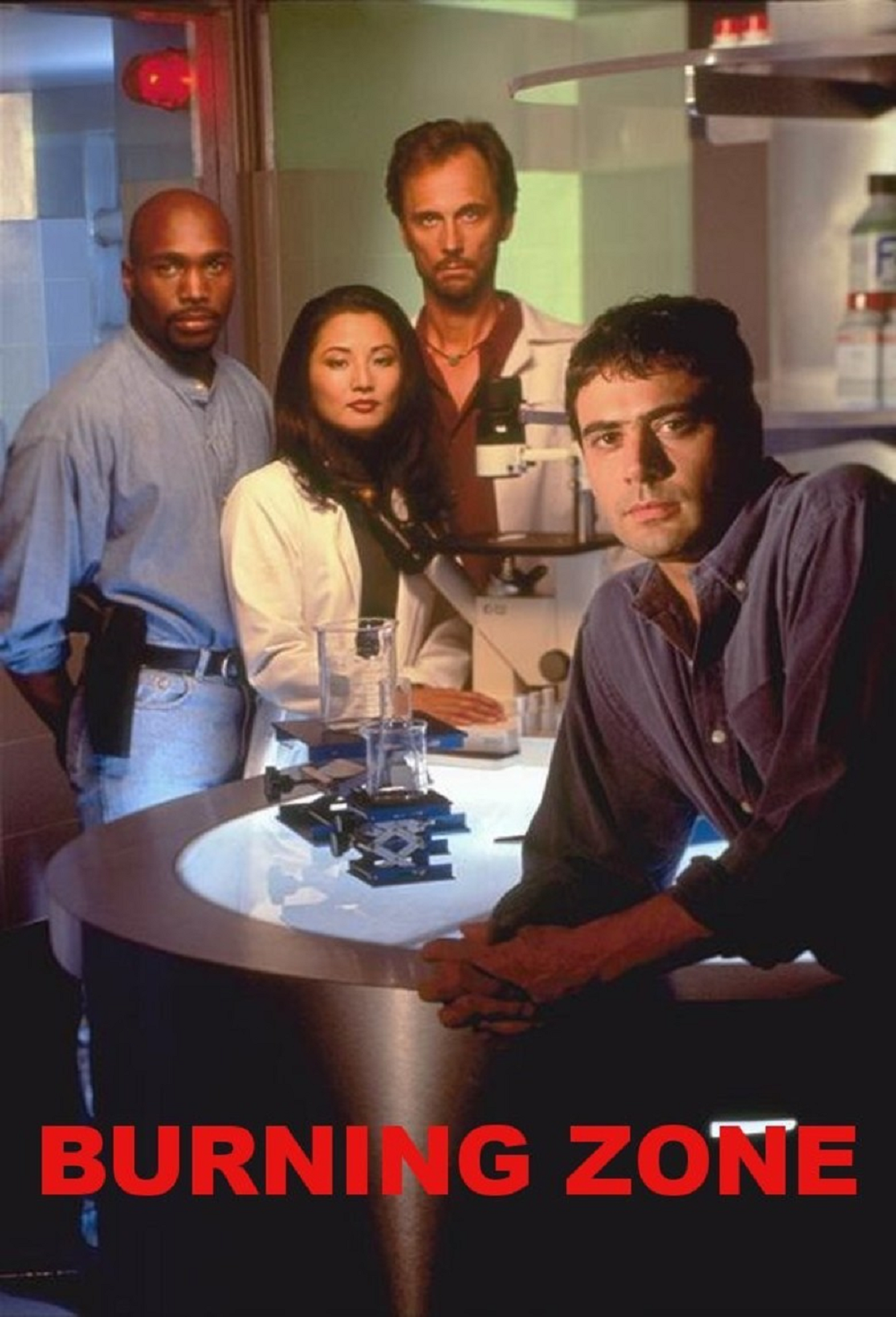
The Burning Zone (UPN): After spending four seasons as a producer on The Equalizer, for which he also wrote nineteen episodes, Coleman Luck co-created Gabriel’s Fire, detective show starring James Earl Jones that won three Emmy Awards, but he didn’t survive the show’s transformation into the more light-hearted Pros and Cons the following season. Luck next tried his hand with The 50-Minute Man, starring Kevin Pollack as a neurotic private eye who cases are recounted in weekly sessions with his psychiatrist, which both CBS and NBC passed on at the pilot stage, before joining superhero show MANTIS as an executive producer and scripter in 1994. A decorated Vietnam combat veteran, Luck was also a committed Christian, something he fed into The Burning Zone, which did get past the pilot stage to land at UPN for Fall 1996.

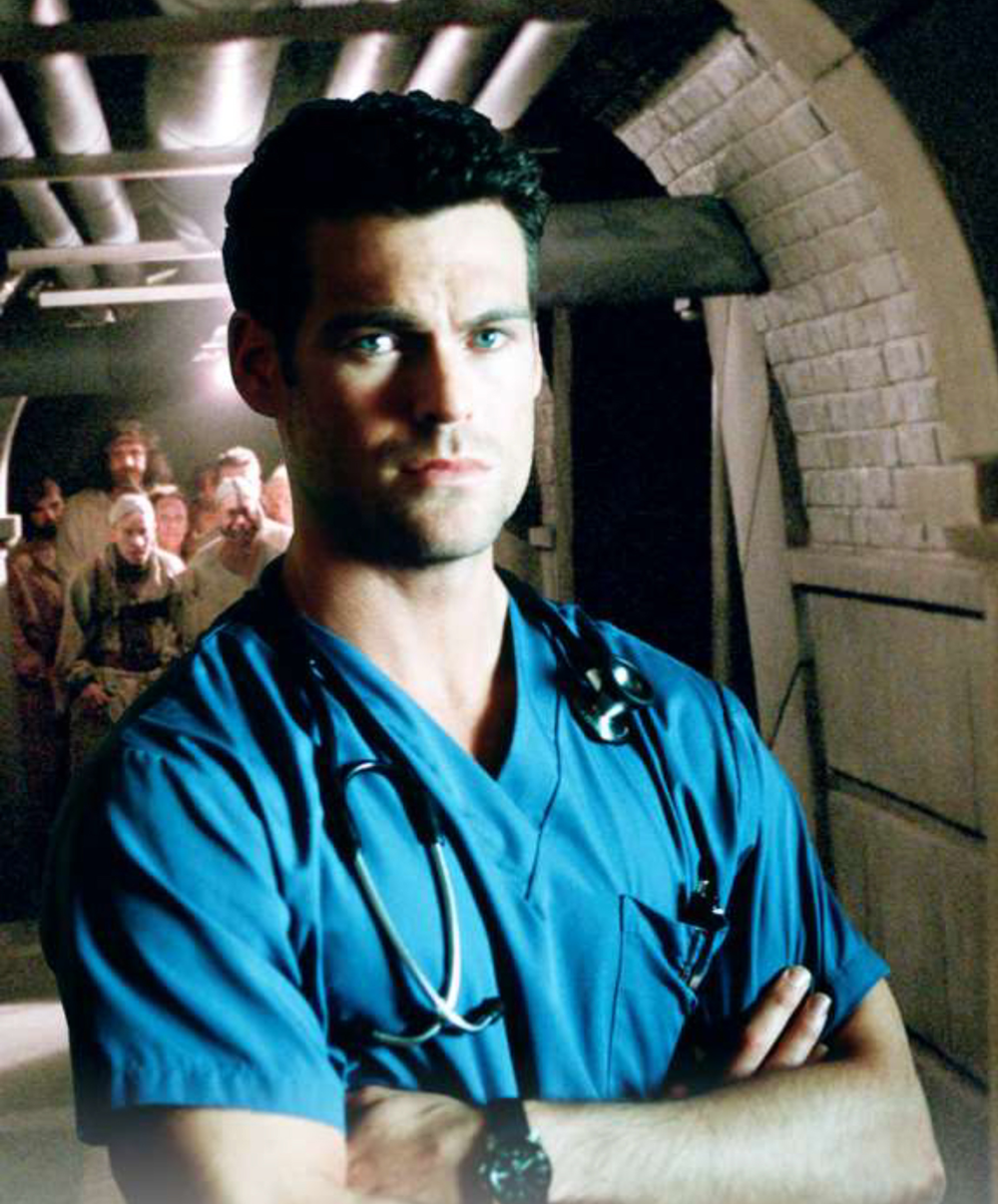
The Burning Zone starred smouldering newcomer Jeffrey Dean Morgan as Edward Marcase, a virologist who – as a child – survived an attack of Ebola virus that killed his parents, dedicating his life thereafter to the study and eradication of infectious diseases. Marcase joins a task force funded by the United States Government during a time known as the Plague Wars, when global pandemics are on the rise and science is struggling to cope with them. He is joined by former WHO pathologist Kimberly Shiroma (The Joy Luck Club‘s Tamlyn Tomita), Dr Daniel Cassan (Michael Harris), and security expert Michael Hailey (former NFL star James Black), who uses his CIA training to ensure the team work in safety.

The Burning Zone, 1996-97

From the off it’s clear that this is no ordinary medical drama. In the first episode, an archaeologist is infected with a 15,000-yer-old virus after opening an ancient tomb in Costa Rica and develops superhuman strength, a fever, and burning red eyes, with subsequent weeks bringing chemically induced mass suicides, an outbreak of violence at an annual religious festival, and the side effects of pharmaceutical testing that results in spontaneous human combustion. As well as using their scientific know-how, the power of prayer and a cleansing of the soul to cure viruses is front and centre, with Marcase attributing his childhood survival to mystical forces.

Ratings were never good and when the show went into an early Christmas break, changes were made to the cast and tone of the show.Morgan and Tomita were dropped, their characters hastily reassigned as of episode twelve, with Cassan promoted to lead protagonist alongside a new arrival, Bradford Tatum’s motorbike-riding maverick Dr Brian Taft. The show’s more spiritual and supernatural elements were phased out in favour of more traditional action-adventure fare – flesh-eating bacteria, military chemical leaks – but audiences were as resistant to the changes as many viruses are becoming to antibiotics and the show was put on hiatus again after episode fifteen, with production stopped on any new episodes. The remaining four episodes were shown in April and May 1997. Coleman Luck left TV after the failure of The Burning Zone and became a writer of religious books, finding that audience much more receptive.

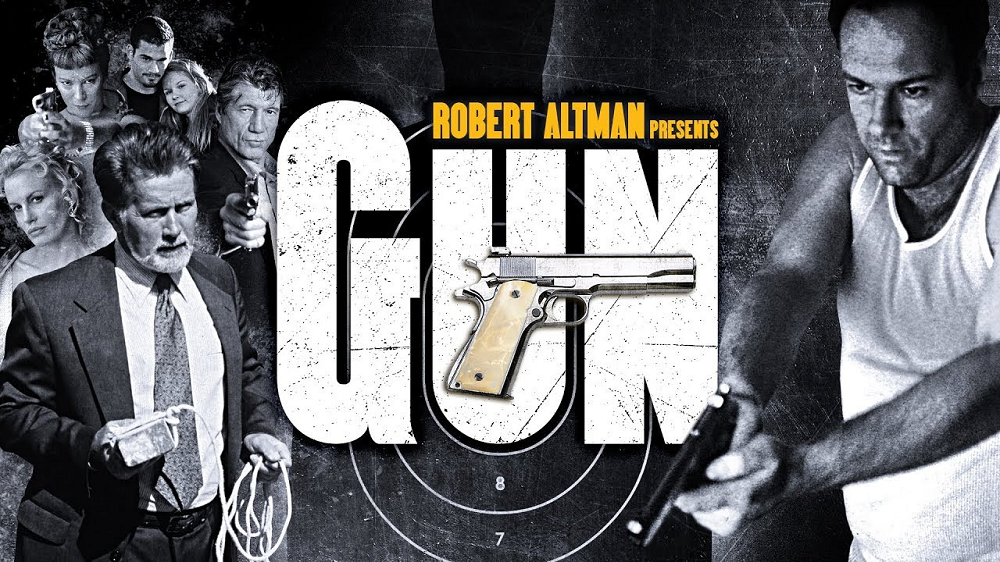
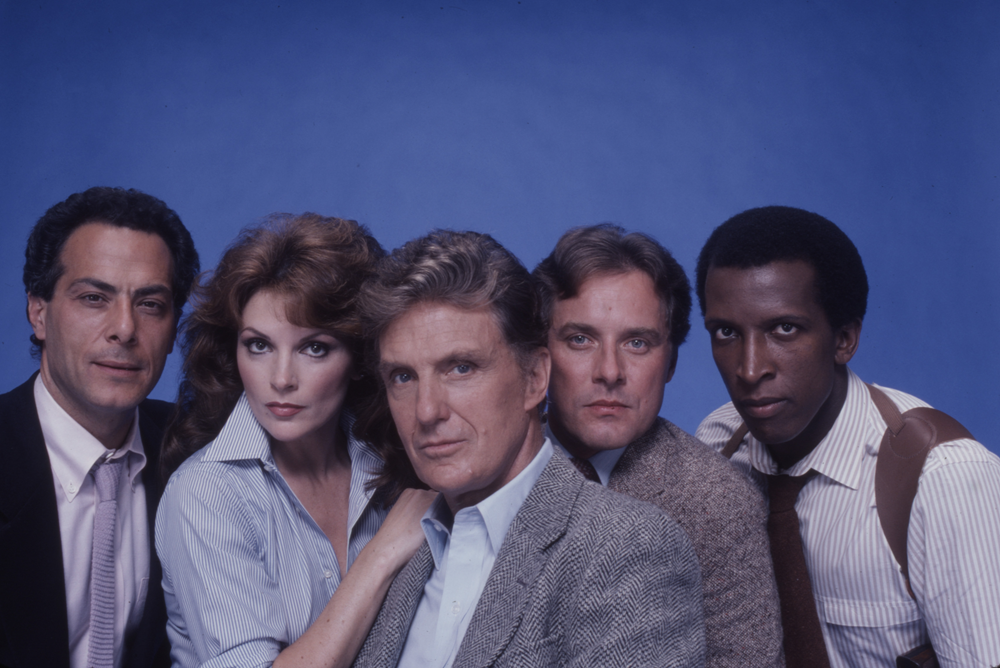
Gun (ABC): Although he’s much better known as a film director, Robert Altman’s early career was spent mostly in television. After finishing 1957’s youth panic movie The Delinquents, Altman directed over one-hundred episodes for shows such as Alfred Hitchcock Presents, Whirlybirds, and Bonanza before returning to the big screen with astronaut drama Countdown in 1968. He dabbled in TV again in the late 1980s, directing the Garry Trudeau-written political satire mini-series Tanner ’88, but the announcement of Gun in 1997 – with a “Robert Altman presents…” prefix – was a big thing indeed.

The genesis of the series, though, lay with James Sadwith, a jack of all trades who broke into television in 1982 when the very first script he wrote was made into a TV movie called Two of a Kind. Starring George Burns and Robbie Benson, the movie told the story of a young man with developmental difficulties and earned Benson a Golden Globes nomination for his performance. Tales of the Darkside gave Sadwith the chance to move behind the camera, directing two episodes he wrote for the horror anthology series, and he clocked up half a dozen more credits before cooking up the concept for Gun.

Gun was a show where the titular firearm – a pearl-handled 45 semi-automatic pistol – was the star, the six-episode series following the gun’s progress as it passed from owner to owner. This wasn’t a new idea; 1950’s Winchester ’73 featured the titular rifle moving through a succession of hands as James Stewart seeks retribution for the killing of his father, and The Gun – a TV movie from 1974, written by Columbo creators Richard Levinson and William Link – followed a similar premise and even inspired a hit single by country artists George Jones and Tammy Wynette two years later.

Gun, 1996-97

Although the gun was very much the central character of the series, the attraction came from the parade of star directors and big-name actors that lined up to take part, all brought together under Altman’s executive producer credit. Altman himself directed one episode, along with Sadwith, Glengarry Glen Ross’s James Foley, former thirtysomething star-turned-director Peter Horton, Yo! MTV Raps veteran Ted Demme, and Jeremiah Chechik, a former music video director who helmed Benny and Joon and National Lampoon’s Christmas Vacation. Among those turning out to appear in the series were Rosanna Arquette, Ed Begley Jr, Bud Cort, Kirsten Dunst, Carrie Fisher, James Gandolfini, Darryl Hannah, Randy Quaid, Martin Sheen, and Daniel Stern, as the gun caused mayhem and misery.

Gun debuted on April 12th 1997, but despite its pedigree, it rated poorly, ABC’s second lowest of the year with only Nancy Miller’s new coroner drama Leaving LA – with which it was paired on Saturday nights – faring worse. Sadwith did have plans for a continuation of the show, with the pistol’s history explored, hinting that it could have been present at some notable points in history. However, ABC – who had hopes that Gun might finally be the show to combat Walker, Texas Ranger on CBS – declined to go further.

Roar (Fox): Debuting in syndication in January 1995, the success of Hercules: The Legendary Journeys opened up a brand-new market for TV networks to exploit. Outside of the realm of the Saturday morning cartoon, fantasy had always been an ill-fit for television, the occasional short-lived show with hokey effects and make-up never able to match the magic of the movies or the genre’s preferred home, a doorstop-thick novel. Hercules (and Xena: Warrior Princess, which followed eight months later) showed it could be done, though, and there were a slew of shows looking to cash in, all looking to emulate Kevin Sorbo’s hunky shoulders and thankfully unknown political opinions.

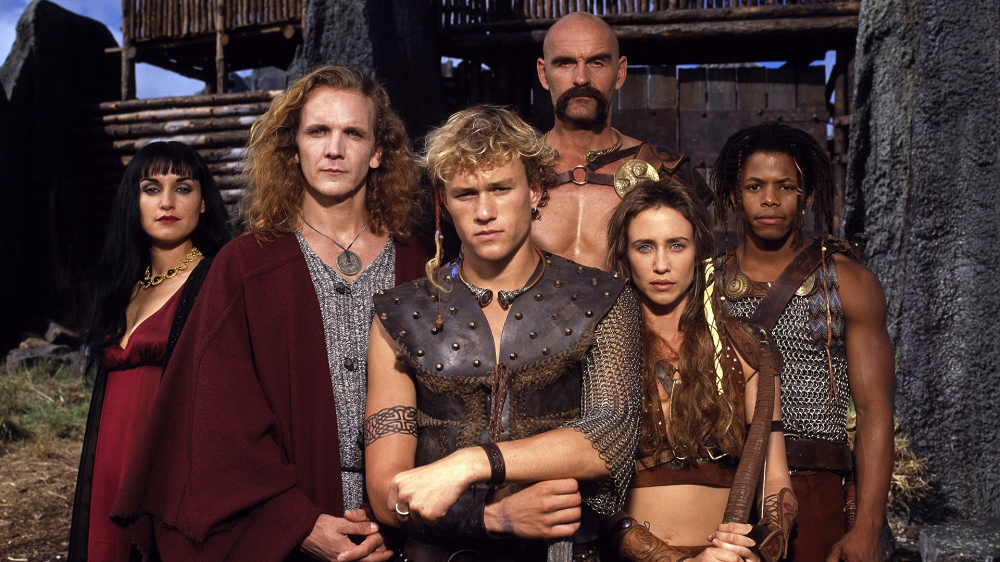
First to the gate was Roar, a fantasy adventure set in 400AD Ireland, where a young man must unite the Celtic tribes to rid the country of its Roman invaders. The show was created by American Gothic‘s Shaun Cassidy, son of Shirley Jones and half-brother of David, who was inspired by Thomas Cahill’s 1996 bestseller How the Irish Saved Civilisation. Cahill’s book was based around the arrival in Ireland of St Patrick, but Cassidy’s concept – developed with Beauty and the Beast creator Ron Koslow – focussed on Conor, a young, orphaned prince shown how to read the “roar” – the spirit of the animals, creatures, and very land of Ireland – by his mentor, the wizard Galen.

Roar, 1996-97

Conor (Heath Ledger, fresh off Home & Away) brings together a band of outcasts including Alonzo Greer’s teenage magician, Vera Farmiga’s former slave girl, and John Saint Ryan’s expert fighter, and together they fight the forces of Longinus (Sebastian Roché), a 400-year-old Roman Centurion cursed with immortality for using his spear to finish off Jesus on the cross, and the evil Queen Diana, the Romans’ proxy in the area. Filmed on location in Queensland, Australia, Roar may have based itself on historical record, but it didn’t take long for it to veer into sheer fantasy, with a liberal sprinkling of magic joined by a banshee, the Spear of Destiny, and possession by evil spirits, alongside a heap of Christian theology, Celtic mythology, and Druidism.

Roar debuted on July 14th 1997, in a Monday night slot that put it up against Buffy the Vampire Slayer. Unlike that show, and like both Hercules and Xena, Roar took itself very seriously indeed, with little of the playful humour that made its rivals so watchable. Still, the first episode drew a decent rating, with week two rising still more, thereafter settling into a respectable groove for its timeslot of around eight million viewers. Unfortunately, the show’s higher than usual costs, despite some economies being found by filming on location in Queensland, Australia, left Fox feeling they were not getting enough bang for their buck, and they pulled the show after eight episodes, airing the debuting Ally McBeal in its place (although it’s likely Roar would have been moved to accommodate that show, regardless). The remaining five episodes were eventually aired on Fox in 2000, but the full run did air in overseas markets.

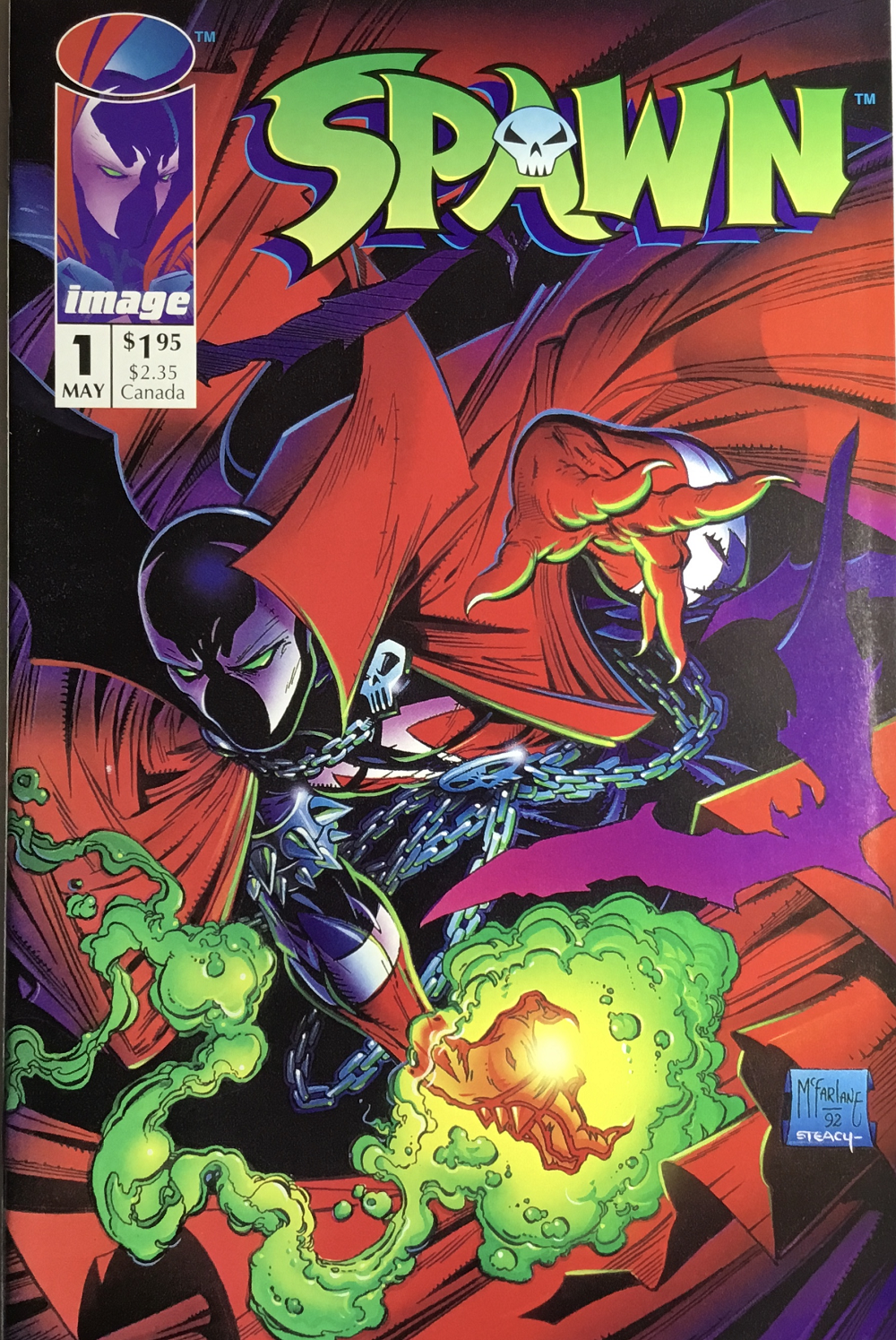
Todd McFarlane’s Spawn (HBO): Spawn was launched in May 1992 as part of the first wave of Image Comics, an artist-led, creator-owned breakaway from the big two of Marvel and DC. Created by million-selling Spider-Man artist Todd McFarlane, Al Simmons was a mercenary who died and went to Hell for his sins, only to be offered a deal by the demon Malebolgia. In exchange for agreeing to become a Hellspawn – Hell’s elite fighting troops – he would be resurrected and given the chance to see his wife, Wanda, again. Malebolgia’s deal was a tainted one and Simmons was returned to Earth five years after his death, with a severely scarred face, and only scattered memories of his previous life. Discovering that the more he uses his abilities in service of Hell, the sooner he will be returned to the Abyss, Spawn vows to use as little power as possible in a new crusade against evil.

Spawn was a sensation, with the first issue selling over 1.7 million copies, and it quickly became one of Image’s top titles. The dark undertones were part of its appeal but also worked against it when the animation studios came calling for fresh Saturday morning fodder, eager to cash in on the runaway success of the Image bandwagon. Jim Lee’s WildCATS was the first of the Image titles to make the transfer to animated adventures, debuting on CBS in October 1994, followed a year later by Erik Larsen’s Savage Dragon, which became part of the USA Network’s Cartoon Express block. In between, The Maxx had shown that it was possible to do a more adult-oriented comic book on TV when it became part of MTV’s Oddities strand in April 1995, with much of the animation based directly on Sam Kieth’s artwork.

In November 1996, HBO announced the formation of HBO Animation, headed up by Catherine Winder, who had produced the animated series Aeon Flux for MTV. The studio announced two projects for 1997: Ralph Bakshi’s Spicy City (pitched as a contemporary reading of 1930s pulp stories) and Todd McFarlane’s Spawn. Winder explained that they were drawn to Spawn by its visuals and its sophisticated and dramatic storyline, and McFarlane was assuaged at the pitch pitching when he asked if they would let him say “fuck” on the show, confident that if that was okay then “there’s one-hundred other things I could get away with, too.” Budgeting the show at a million dollars an episode, HBO contracted Japanese studio Madhouse – then probably best known for Wicked City and Ninja Scroll, but about to release Perfect Blue – to handle animation, with McFarlane himself working closely with scripter Alan B McElroy (who was also working on the Spawn live-action movie, in production at New Line) and directors Erik Radomski and John Hays to adapt the comic’s storylines for TV.

Todd McFarlane's Spawn, 1996-97

Todd McFarlane’s Spawn debuted on May 16th 1997, beating Spicy City to air by two months and thus becoming the first adult-oriented original animation on the cable network. Each episode was introduced by McFarlane, asking rhetorical questions of the viewer from a sinister-looking location in segments directed by Swingers director Doug Liman, who was a roommate of an HBO executive. The first season roughly adapted the first seven issues of the comic book and ended in July 1997, and the response to the show was generally favourable, although there were some for whom it was too dark and grim. A month later, the live-action movie was released and although it doubled it’s $40 million budget at the box office, critics were less kind, with even star Michael Jai White later claiming, “I have never said that I thought it was a good movie.”

The negative reaction to the movie overshadowed the HBO show somewhat but a second season arrived in May 1998, despite HBO and McFarlane having been served with a lawsuit by professional ice hockey player Tony Twist. McFarlane, a big sports fan, had named a character in the comic (later included in the animated series, but not the movie) after Twist, but that character was a gangster who ordered the kidnapping of children. Needless to say, Twist was less than happy about the association and later settled out of court for $5 million.

Todd McFarlane's Spawn, 1996-97

The second season picked up where the first left off, with Spawn deep into his battle with The Violator and corrupt agency boss Jason Wynn, again loosely following the plot of the comic books, with some narrative tweaks to fit the new format. The series continued to garner positive reviews and won an Emmy Award in 1999 for Outstanding Animation Program (Long Than One Hour), based on the first two seasons. There was little surprise, then, when a third season was announced, arriving in May 1999, but HBO Animation was running into interference from other areas of the network who came from a live-action background and both prioritised and tried to bring that mindset to Spawn.

The final episode of Spawn aired on May 28th 1999, the third season having been programmed over successive nights, and although there were plans for a fourth series, which would have seen avenging angel Angela play a bigger role, it did not materialise. Plans for a movie sequel were also quietly cancelled. The three seasons were each edited into a two-hour movie and released on VHS and DVD, later re-released as a full collection of all eighteen single episodes in 2007. In 2004, a sequel series was announced, with Keith David reprising his lead role, but ended up in production limbo, although David did get to voice Spawn again for the Mortal Kombat 11 videogame.

The comic book continues to be published monthly and although McFarlane stopped drawing it after the first three years, he continues to script the adventures of Al Simmons over thirty years after his first appearance. In 2021, he announced the creation of a TV production arm of his McFarlane Films company, with Sam and Twitch, focussing the detective pair from the pages of Spawn, on the slate.

Next time on The Telephemera Years: mutants and mayhem with 1996’s unsold pilots!

Check out our other Telephemera articles:

The Telephemera Years: pre-1965 (part 1, 2, 3, 4)

The Telephemera Years: 1965 (part 1, 2, 3, 4)

The Telephemera Years: 1966 (part 1, 2, 3, 4)

The Telephemera Years: 1967 (part 1, 2, 3, 4)

The Telephemera Years: 1968 (part 1, 2, 3, 4)

The Telephemera Years: 1969 (part 1, 2, 3, 4)

The Telephemera Years: 1970 (part 1, 2, 3, 4)

The Telephemera Years: 1971 (part 1, 2, 3, 4)

The Telephemera Years: 1973 (part 1, 2, 3, 4)

The Telephemera Years: 1974 (part 1, 2, 3, 4, 5)

The Telephemera Years: 1975 (part 1, 2, 3, 4)

The Telephemera Years: 1976 (part 1, 2, 3, 4)

The Telephemera Years: 1977 (part 1, 2, 3, 4)

The Telephemera Years: 1978 (part 1, 2, 3, 4)

The Telephemera Years: 1979 (part 1, 2, 3, 4, 5, 6)

The Telephemera Years: 1980 (part 12, 3, 4)

The Telephemera Years: 1981 (part 1, 2, 3, 4)

The Telephemera Years: 1982 (part 1, 2, 3, 4)

The Telephemera Years: 1983 (part 1, 2, 3, 4)

The Telephemera Years: 1984 (part 1, 2, 3, 4)

The Telephemera Years: 1986 (part 1, 2, 3, 4)

The Telephemera Years: 1987 (part 1, 2, 3, 4)

The Telephemera Years: 1988 (part 1, 2, 3, 4, 5)

The Telephemera Years: 1989 (part 1, 2, 3, 4)

The Telephemera Years: 1990 (part 1, 2, 3, 4)

The Telephemera Years: 1991 (part 1, 2, 3, 4)

The Telephemera Years: 1992 (part 1, 2, 3, 4)

The Telephemera Years: 1994 (part 1, 2, 3, 4)

The Telephemera Years: 1995 (part 12, 3, 4)

The Telephemera Years: 1996 (part 1)

The Telephemera Years: 1997 (part 1, 2, 3, 4)

The Telephemera Years: 1998 (part 1, 2, 3, 4)

The Telephemera Years: 1999 (part 1, 2, 3, 4)

The Telephemera Years: 2000 (part 1, 2, 3, 4)

The Telephemera Years: 2001 (part 1, 2, 3, 4)

The Telephemera Years: 2002 (part 1, 2, 3, 4)

The Telephemera Years: 2003 (part 1, 2, 3, 4)

The Telephemera Years: 2005 (part 1, 2, 3, 4)

The Telephemera Years: 2006 (part 1, 2, 3, 4)

The Telephemera Years: 2007 (part 1, 2, 3, 4)

The Telephemera Years: 2008 (part 1, 23, 4)

The Telephemera Years: O Canada! (part 1, 2, 3, 4)

Titans of Telephemera: Irwin Allen

Titans of Telephemera: Stephen J Cannell (part 1, 2, 3, 4)

Titans of Telephemera: DIC (part 1, 2)

Titans of Telephemera: Filmation (part 1, 2)

Titans of Telephemera: Hanna-Barbera (part 1, 2, 3, 4, 5)

Titans of Telephemera: Kenneth Johnson

Titans of Telephemera: Sid & Marty Krofft

Titans of Telephemera: Glen A Larson (part 1, 2, 3, 4)

Titans of Telephemera: Quinn Martin (part 1, 2)

Titans of Telephemera: Rankin/Bass

Titans of Telephemera: Ruby-Spears

Titans of Telephemera: Aaron Spelling (part 1, 2, 3, 4)

Titans of Telephemera: Sunbow

Starburst Valentine’s Day Gift Guide 2025

February is a pretty cold month, so it’s always a good idea to find that special someone to huddle for warmth with.  Valentine’s Day is a perfect excuse to let the love in your life know how you feel by giving them something quirky and well-thought-out. Of course, If you’re out of ideas for presents (and flowers just won’t do it), we have some suggestions below.

I Got Abducted by Aliens and Now I’m Trapped in a Rom-Com

Of course, you can always try to set the mood with a romance novel. Or a good SF book? Why not a bit of both with Kimberly Lemming’s comedy take on a story that may or may not resemble The Wizard of Oz, but with more robots and romance!

WARMIES Lobster

What’s more romantic than a 30-year-old reference to Ross and Rachel from the hit sitcom Friends?  Warmies do some amazing plushies that can also be microwaved to provide heat, and this lobster-shaped fellow is a great gift, though you may find yourself hankering for seafood.

Canal Toys Photo Creator Pop Colour Camera

Canal Toys offers a great range of light but useful gifts that are budget-friendly and fit well into any celebration. Their Pop Colour Camera is essentially a cheap and cheerful digital camera, perfect to include when giving something a bit less tangible, like a trip abroad or to a theme park.

LEGO Roses

If in doubt, say it with flowers. Or better yet, say it with flowers that don’t wilt and that you have to put together yourself. Everyone loves LEGO, though that also means you can say “I Love You” with a SPACESHIP!

Disney Store: Figaro and Cleo

You can rarely go wrong with a plush toy, impish kitten Figaro and flirty goldfish Cleo from Disney’s classic Pinocchio. Of course, you may want something more on the nose, so check out Mickey Mouse Valentine’s Day Small Soft Toy.

Stormtrooper Brew Love

There’s being thirsty, and then there’s needing a drink. Stormtrooper Space Craft Beer does a nice line in IPA in lovely presentation packs. Though not appropriate for everyone, it’s a good mix of ales combined with a classic retro sci-fi look that will delight many.

Nerf LMTD Star Trek Phaser Blasters

Who needs violins when you can have NERF violence? If getting chased around the house by someone flinging foam darts at you is your thing, this is a superb choice, as it’s also Star Trek-themed. Noisy, silly and splits into two NERF guns, it’s certainly a memorable gift.

Pathfinder Battles LESHY WINDOW BOX

And finally, why say it with flowers when you can say it with some adorable plant monsters? These beasties are for the Pathfinder TTRPG, but they’re cute enough for any occasion.

Whatever you choose, and whomever you choose to treat, look after yourself and have a lovely February.


THE TELEPHEMERA YEARS: 1996, part 1

Perversions of Science, 1996-97

Ah, telephemera… those shows whose stay with us was tantalisingly brief, snatched away before their time, and sometimes with good cause. They hit the schedules alongside established shows, hoping for a long run, but it’s not always to be, and for every Street Hawk there’s two Manimals. But here at STARBURST we celebrate their existence and mourn their departure, drilling down into the new season’s entertainment with equal opportunities square eyes… these are The Telephemera Years!

1996-97

It was mostly business as usual at the top of the television ratings in 1996, with NBC continuing their domination, especially on Thursday nights where their Must See TV block accounted for six of the top eight shows, including debuts for the Brooke Shields-starring Suddenly Susan, The Naked Truth, Fired Up, and The Single Guy. Only ABC’s Monday Night Football spoiled a clean sweep, but there was more competition on other days, with Home Improvement and new arrival Spin City on Tuesdays giving ABC some non-sportsball success, and Sundays looking good for CBS with 60 Minutes and Touched by An Angel coming in at number eleven and twelve, respectively.

Other new shows making their bows on the Fall 1996 schedule included Cosby, Everybody Loves Raymond, Touched by An Angel spin-off Promised Land, Sabrina the Teenage Witch, and Early Edition and Dark Skies, two new genre shows making premiering on CBS and NBC, illustrating the impact The X-Files was having on the US TV market. The year would also see debuts for 7th Heaven, Buffy the Vampire Slayer, King of the Hill, Lexx, Millennium, and Mystery Science Theater 3000, but also see Family Matters, Lois & Clark: The New Adventures of Superman, Roseanne, Wings, and Renegade begin their final seasons. Those were all shows that left their mark on the wider TV viewing public, but what about those who didn’t stick around? This is the story of four fleeting fancies…

Dark Skies (NBC): The effect that The X-Files had on mainstream TV cannot be overestimated. Almost overnight, networks scrambled to find their own version of the Fox show, focussing on the paranormal and conspiratorial elements of Chris Carter’s creation and too often neglecting to find charismatic leads with compelling chemistry. UPN were first out of the blocks with Nowhere Man in August 1995, the story of a man whose past has been erased as part of a massive conspiracy, with American Gothic following on CBS a month later, concentrating more on the supernatural side of things. UPN also had The Sentinel from March 1996, which at least brought a Mulder and Scully-like partnership to the table.

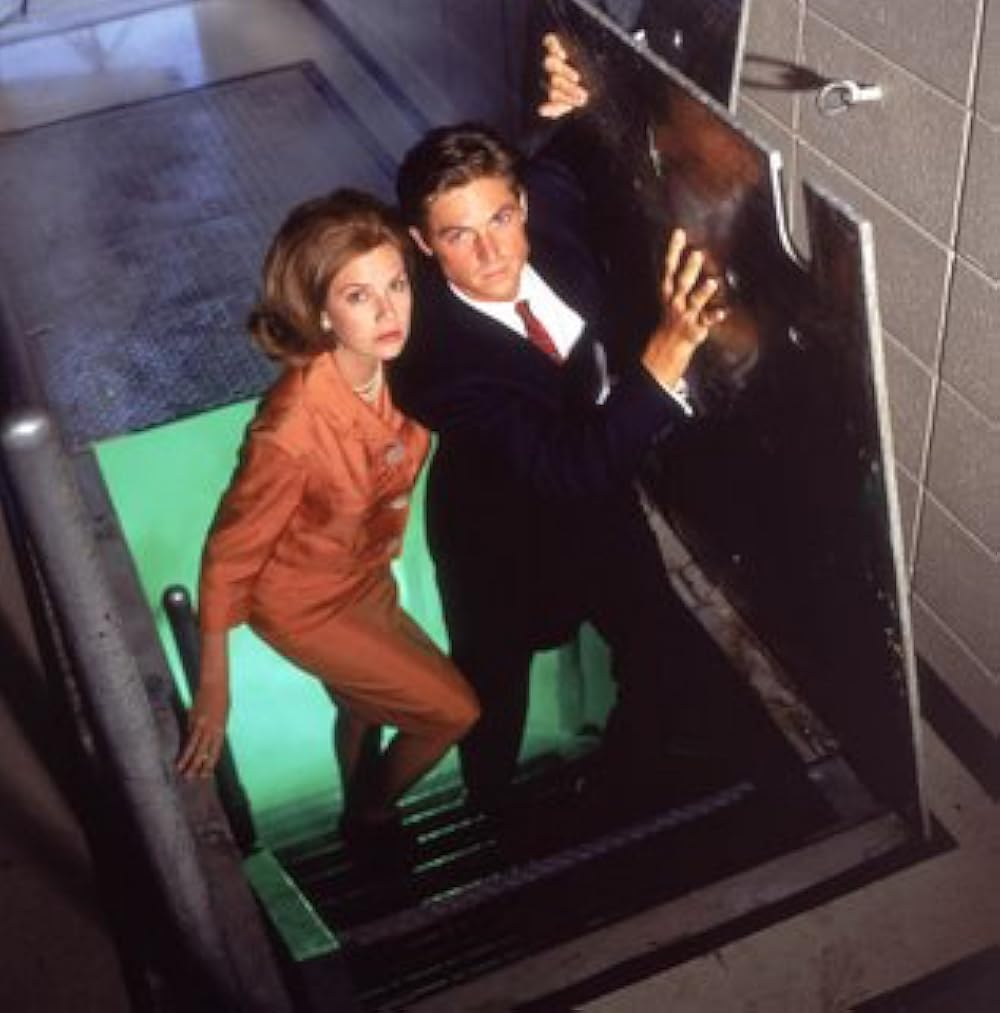
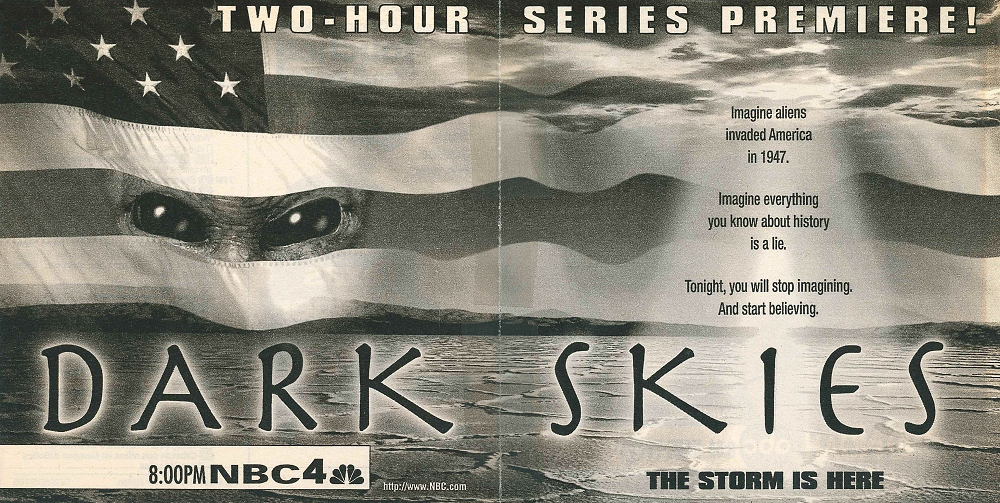
The inspiration for Dark Skies, which arrived as part of NBC’s Fall 1996 line-up, was obvious. Created by B-movie scripter Brent Friedman and Bryce Zabel, a former CNN correspondent who broke into screenwriting with Kay O’Brien, a short-lived medical drama on CBS in 1986, Dark Skies leaned heavily into both the conspiracy and paranormal angles that The X-Files made its stock in trade, but turned the dial up to eleven from the off. Set in the 1960s, the show starred Eric Close as John Loengard, an idealistic young Congressional aide who is assigned to Project Blue Book, the code name for a study of unidentified flying objects by the US air force. Project Blue Book was an actual thing, although the veracity of its findings – from either side of the “UFOs are real” debate – is up for debate. In Dark Skies, the agency behind Project Blue Book is Majestic 12, a shadowy cabal of scientists, US military, and politicians, and quickly Loengard – and his girlfriend Kim Sayers (Megan Ward) – are drawn deeper into the conspiracy to keep the existence of aliens a secret from the American people.

Dark Skies, 1996-97

Although both leads were not exactly newcomers, neither had any kind of TV success behind them, perfect to play the everyman and everywoman that become the last vanguard against the machinations of The Hive, a parasitic race of aliens who are secretly taking over our planet by controlling host bodies in positions of power and influence. Each episode jumps forward in time to match significant events in 1960s history and match them to Majestic 12 and The Hive’s machinations, such as episode two’s assassination of John F Kennedy and episode three’s use of music by The Beatles to carry subliminal messages. Friedman and Zabel planned the show to run for five seasons, covering 1960-1969, 1970 to 1976, 1977 to 1986, 1987 to 1999, and a grand finale which – by the time it aired – would take place in the present day.

Friedman and Zabel pitched the show to all three major networks, avoiding Fox because of the similarity to The X-Files, and hand-delivered series bibles wrapped in plain blown wrapping that came with a warning that, if opened, the contents were subject to the highest level of US government classification. Both CBS and NBC were interested, and NBC made the pair an offer, funding the show to the tune of $2 million per episode, necessary not only for the special effects required but also to ensure the period details were on point. Because the show was built around real events and real people, one quirk of the production process was Friedman and Zabel having to meet regularly with NBC’s lawyers to explain to them what was fictional and what they were presenting as fact.

Dark Skies, 1996-97

Real-life figures woven into the story included JFK and his family, FBI director J Edgar Hoover, LSD enthusiast Timothy Leary, Marilyn Monroe, Jim Morrison of The Doors, Colin Powell (then a Captain in the US Army), Gubernatorial hopeful Ronald Reagan, Nelson Rockefeller, space scientist Carl Sagan, and TV host Ed Sullivan, all either part of or subject to the overarching conspiracy. The show’s creators even claimed that they’d been approached by mysterious Men in Black, who had already seen the then-unaired pilot and asked them to include several details in the show.

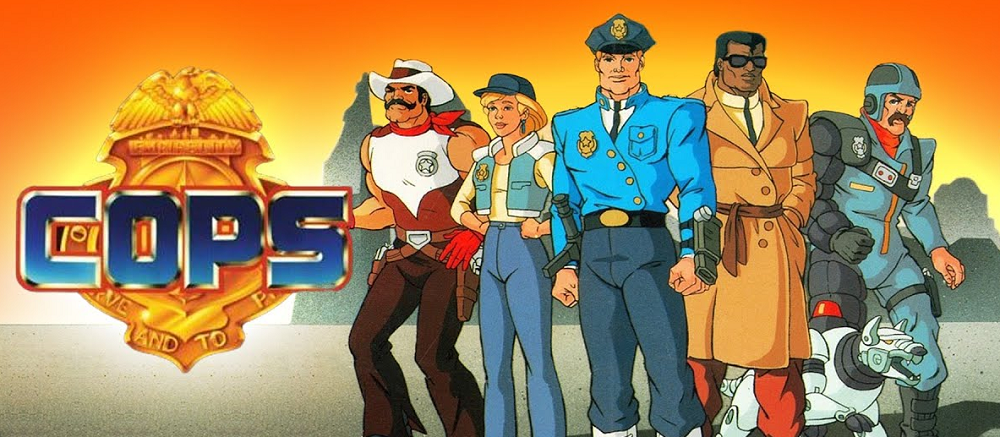
NBC scheduled the show for 8pm on Saturdays, opposite the debuting Second Noah on ABC, CBS’s Dr Quinn, Medicine Woman on CBS, and COPS on Fox, but also up against people going out to the cinema or sporting events. Probably the most-family friendly spot on the schedules, it was an ill-fit for a cerebral show with a touch of body horror, and it struggled for ratings from the outset. A late attempt to boost male interest by bringing in former Miss Illinois Jeri Ryan as a Soviet agent on loan to Majestic 12 and posing as Loengard’s partner Juliet Stuart didn’t pay off, and the series was cancelled after nineteen episodes, its story stranded in 1967 with Loengard still no closer to finding Kim or their child, born while she had been brainwashed by The Hive two years (and three episodes) earlier.

Dark Skies was the lowest rating of all NBC shows for 1996-97, but it had been subject to a series of pre-emptions, including nationally for the World Series and locally for college basketball and a Billy Graham revival, and those episodes were not repeated. In the end, its similarity to The X-Files – the major factor in it being greenlit in the first place – may have been its undoing, with viewers tuning in to find it was very much not that show, but unwilling to stick around and find out what it actually was. The show was a success overseas, perhaps with more sympathetic scheduling, but NBC paid the bills and NBC cancelled the show. Zabel took to the nascent internet to try and build support for bringing the show back, encouraging fans to write to network executives, but – as is possibly the case with the show itself – such a campaign was ahead of its time. There has always been a cult fanbase for the show, and a DVD of the full series – with a slew of extras, including a never-before-seen pitch reel for the second season – was released by Shout Factory in 2011.

Party Girl (Fox): A splash when it was shown as part of the Sundance Film Festival in January 1995, Daisy von Scherler Meyer’s Party Girl later became the first film with a scheduled American theatre release to premiere online, albeit with a limited, black and white only, broadcast to several hundred people on June 3rd that year. Starring Parker Posey and the director’s mother, Sasha von Scherler, Party Girl told the story of a woman who is arrested for organising an underground rave and who is bailed out by her librarian godmother, a condition of which is that she has to work at her godmother’s library to pay back the money. Co-written by Meyer and Harry Birckmayer (whose experience of the 90s gay club scene in New York proved invaluable when reconstructing those clubs for the film), Party Girl earned three-times its $150,000 budget on theatrical release and the film immediately became a cult classic among librarians, who saw themselves on screen without the traditional stereotypes for the first time.

A year later, a TV adaptation of Party Girl was announced as part of Fox’s line-up for Fall 1996, developed by Efrem Seeger, who’d earned his chops as a writer and producer on the likes of Dear John USA, Hangin’ with Mr Cooper, and The Fresh Prince of Bel-Air. Birckmayer and von Scherler Meyer weighed in on the pilot script and took executive producer credits alongside Seeger, with day-to-day production duties handed off to Jan Siegelman, who’d done the same job on short-lived Bronson Pinchot and Courtney Cox sitcom The Trouble with Larry. The writing team included Duet co=-creator Susan Seeger and a young Matthew Weiner, who would go on to create Mad Men.

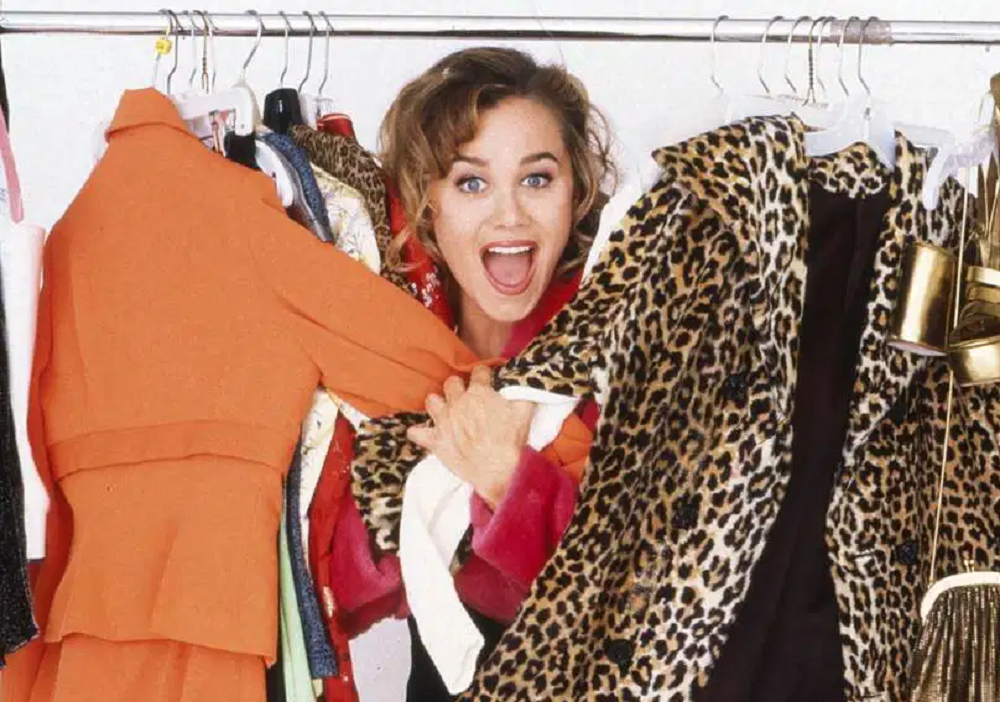
Party Girl, 1996-97

The show followed the same premise, with Christine Taylor, who had just played Marcia in The Brady Bunch Movie, as free-spirited party girl Mary, and Swoosie Kurtz – fresh off six seasons of sororal drama Sisters – coming to her rescue as godmother Judy. Taylor’s Mary is selfish and irresponsible, almost a different character to Posey’s wilfully naïve young thing using partying to fill a gap in her life left by the premature death of her mother, but this is a twenty-two-minute sitcom rather than an independent film, which also explains why Judy’s library is full of shushing clerks that can’t relate to their customers until Mary’s unorthodox manner brings a breakthrough.

With theme music written by Carole Bayer Sager and Oliver Lieber, and a strong supporting cast that included Merrin Dungey – later in King of Queens – as Judy’s uptight assistant, Wanda, and John Cameron Mitchel, who would go on to write, direct, and star in Hedwig and the Angry Inch, Party Girl debuted on September 9th 1996, paired with fellow newcomer Lush Life on Monday nights. Although the first episode did well, ratings were a disaster, losing almost half of lead-in Melrose Place’s audience, and both Party Girl and Lush Life were cancelled after just four episodes had aired, with two more produced but left on the shelf.

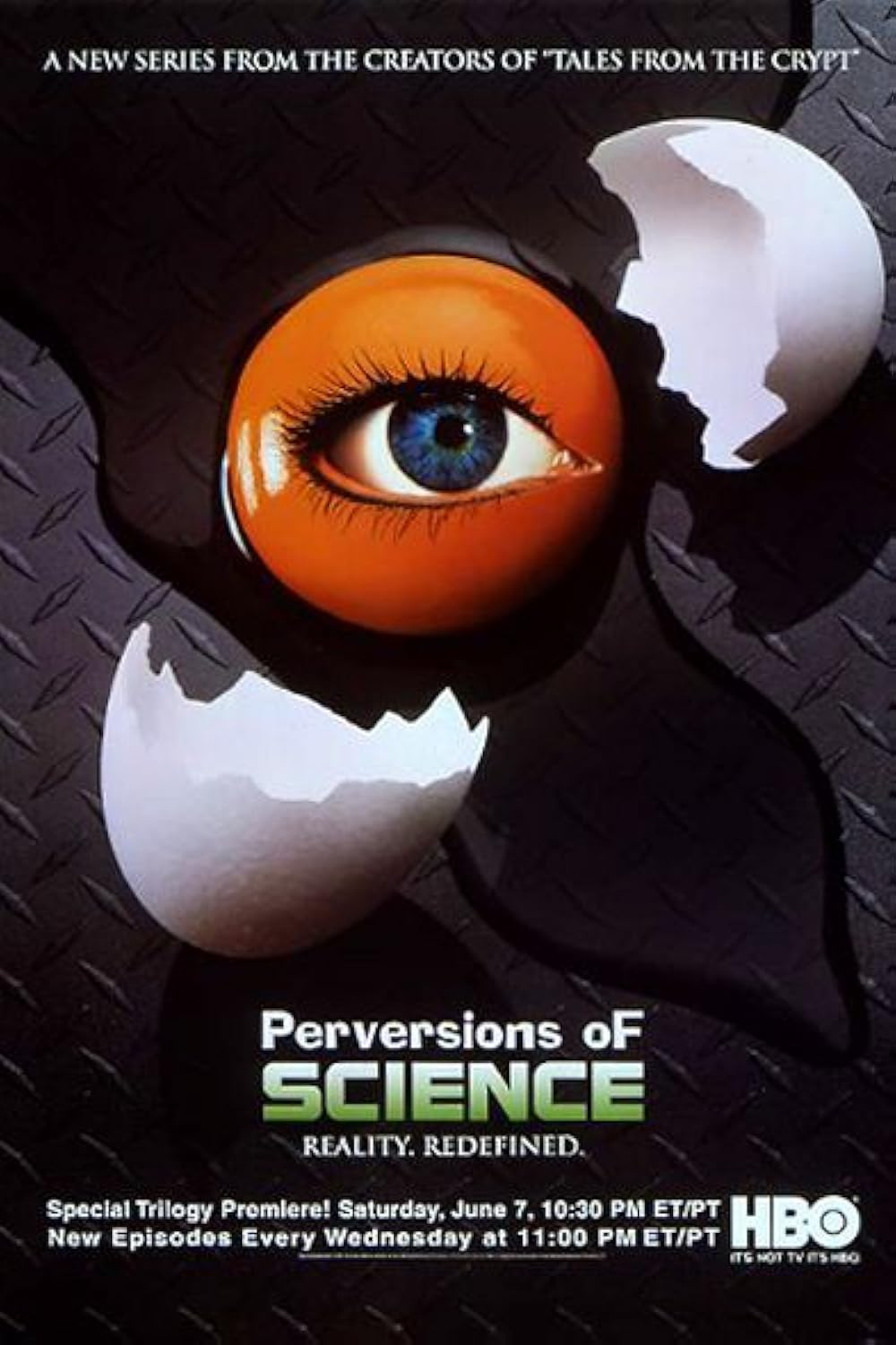
Perversions of Science (HBO): Tales from the Crypt, which adapted stories from the heyday of notorious 1950s publisher EC Comics, ran for seven seasons and a total of ninety-three episodes on premium cable channel HBO. Finishing its run in June 1996, the show eventually adapted stories from not only Tales from the Crypt but other EC titles including The Haunt of Fear, The Vault of Horror, and Shock SuspenStories, with each episode introduce by The Cryptkeeper, one of three EC comics hosts alongside The Old Witch and The Vaultkeeper. Although Tales from the Crypt had run its course, there was still an appetite at HBO for more of the same, and they tasked Gilbert Adler, who had produced not only the earlier EC adaptation but also Freddy’s Nightmares in syndication, with developing a new show based on EC’s science fiction library.

Two years earlier, Adler had worked with EC’s William Gaines on WEIRD World, an unsold pilot set at the Wilson Emory Institute for Research and Development, where experiments involving time travel, robotics, and other future science took place. This time, Gaines and Adler drew from stories published in EC’s Weird Fantasy, Weird Science, and Incredible Science Fiction comics, all introduced by a sweet Danny Elfman theme and by Chrome, a sexy robot who, with a press of her nipple, invites us to watch the episode through a portal in her right breast. Those are certainly words which I just typed.

Perversions of Science, 1996-97

As well as the EC Comics library, Perversions of Science drew on a cadre of renowned directors, with Walter Hill helming the first episode and the likes of William Shatner, Russel Mulcahy, Tobe Hooper, and even actor Sean Astin signing on for subsequent episodes, along with acting talent like Re-Animator‘s Jeffrey Combs, scream queen Heather Langenkamp, and Jason Lee. Stories featured included a man (Keith Carradine) who finds himself in another dream every time he awakens, another (Jeremy London) repeatedly driven to kill, only to be stopped by a bearded stranger each time, and a woman (Yancy Butler) who shapes her body into perfection before time travelling into the past. In traditional O Henry style, each fable comes with a twist ending that may seem obvious but is no less satisfying once it arrives, before Chrome again makes a sexy quip to send us home happy.

Debuting on June 7th 1997 with a three-episode blast, Perversions of Science ran for ten episodes, and HBO paid for advertising in Playboy and elsewhere, but it’s possible that the final season of Tales from the Crypt – which had been produced in England on a lower budget than previous seasons – left a sour impression on its potential audience, damaging potential ratings. When it came to decide which of HBO’s big budget original programming would come back for 1998, the channel opted to go with Oz, which had debuted as Perversions of Science was coming to the end of its run, and which was critically lauded in a way a science fiction anthology could never hope to be.

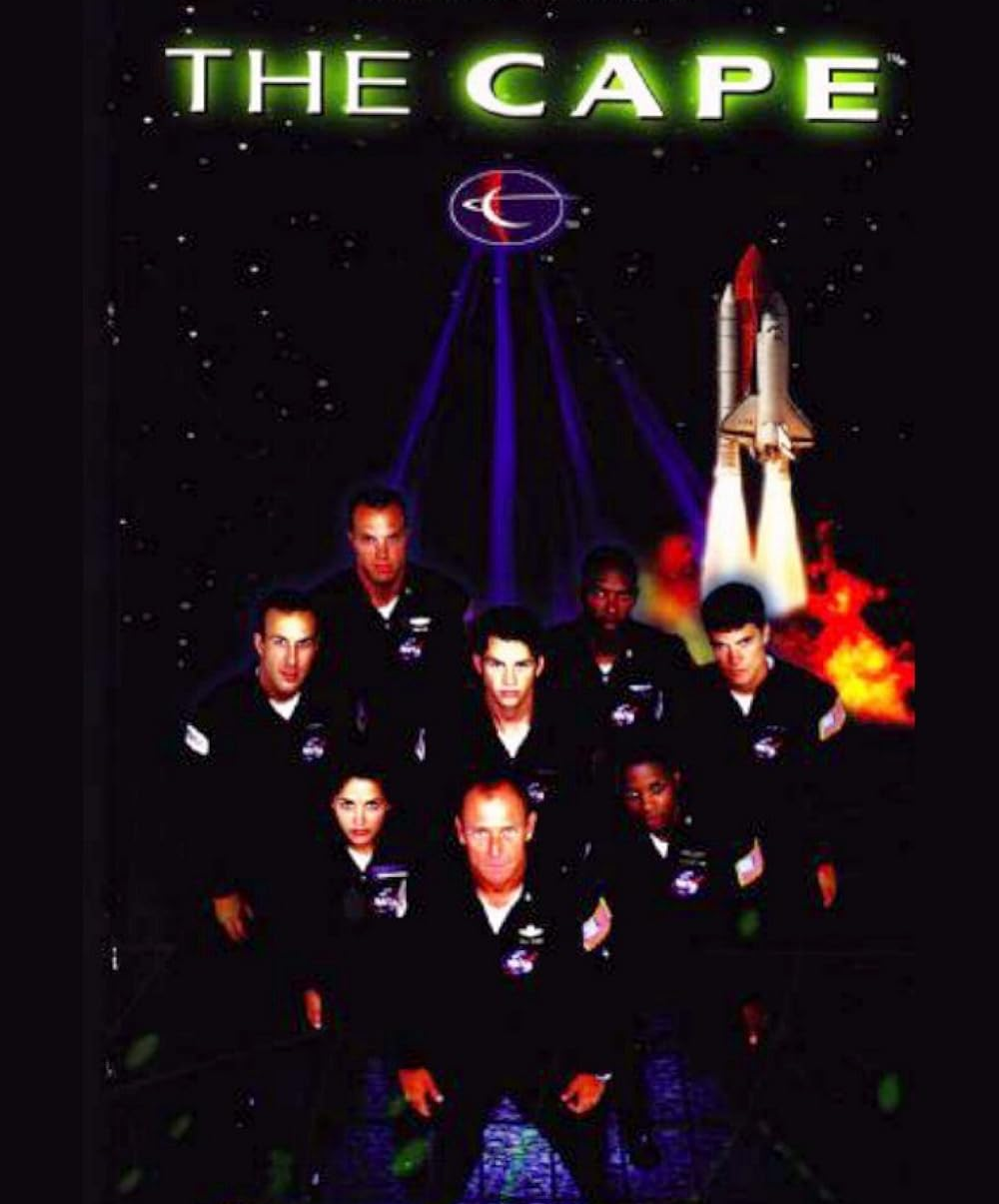
The Cape (syndication): On September 16th 1996, the Space Shuttle Atlantis set off on its seventeenth mission, the seventy-ninth overall, to carry supplies, equipment, and a change of crew to the space station Mir as part of the co-operative deal between NASA and the Russian Space Agency. The mission was a success, with astronaut Shannon Lucid swapping places with John Blaha for the return journey, returning to Cape Kennedy ten days after they left. One week before the Atlantis departed, a new show premiered in syndication, aiming to tell the stories of these brave men and women who ventured beyond our atmosphere, albeit in a heavily fictionalised manner.

The Cape was a co-production of MTM Enterprises and ZM Productions, a company formed in 1982 by George Zaloom and Les Mayfield, two UCLA film school pals who broke into the business by producing a documentary short demonstrating some of the techniques used to film 2010: The Year We Make Contact in 1984. With Zaloom leaning more towards production and Mayfield directing, their first feature hit was 1992’s Encino Man, also co-scripted by Mayfield, with Mayfield subsequently hired to direct Miracle on 34th Street. The Cape would be ZM’s first TV production, created by Zaloom and ZM’s head of TV development, Kary Antholis, and developed by Paris Qualles, who’d been nominated for an Emmy for his script for the HBO special The Tuskegee Airmen in 1995.

The Cape, 1996-97

Set at the Kennedy Space Center, The Cape focussed on the professional and private lives of a select group of astronauts training for – and executing – space shuttle missions. Leading the cast was Corbin Bernsen as Colonel Henry J “Bull” Eckert, the centre’s Director of Astronaut Training, and things get off to a hot start when he has to prepare his charges for a mission to prevent a spy satellite from de-orbiting. Support for Bernsen came from Adam Baldwin, former gridiron professional Bobby Hosea, and Murder One‘s Bobbie Phillips, and over the next few episodes the drama is ramped up, with accidents causing death and injury to those in the program, personal issues leak into space business, and Bull is considered for the position of Space Station Commander.

Storylines were, for the most part, as grounded as you could expect in a series about NASA astronauts (and Buzz Adlrin acted as a consultant), but there were occasional shifts into science fiction territory, such as the discovery of a thirty-year-old secret Soviet moon launch and vague hints of extra-terrestrial interference. The Cape debuted in syndication on September 9th 1996, with a feature length premiere leading to a two-part finale in May 1997, and won plaudits for its cinematography, effects, and music, the latter of which saw composers John Debney and Louis Febre win an Emmy Award in September 1997 for Outstanding Music Composition for a Series (Dramatic Underscore), and Debney nominated for Outstanding Main Title Theme Music. By that point, though, the show had been cancelled, a result of lower-than-expected ratings for a show which cost around $1 million an episode.

Next time on The Telephemera Years: more of 1996’s lesser-known efforts, including a Christian-tinged pandemic yarn!

Check out our other Telephemera articles:

The Telephemera Years: pre-1965 (part 1, 2, 3, 4)

The Telephemera Years: 1965 (part 1, 2, 3, 4)

The Telephemera Years: 1966 (part 1, 2, 3, 4)

The Telephemera Years: 1967 (part 1, 2, 3, 4)

The Telephemera Years: 1968 (part 1, 2, 3, 4)

The Telephemera Years: 1969 (part 1, 2, 3, 4)

The Telephemera Years: 1970 (part 1, 2, 3, 4)

The Telephemera Years: 1971 (part 1, 2, 3, 4)

The Telephemera Years: 1973 (part 1, 2, 3, 4)

The Telephemera Years: 1974 (part 1, 2, 3, 4, 5)

The Telephemera Years: 1975 (part 1, 2, 3, 4)

The Telephemera Years: 1976 (part 1, 2, 3, 4)

The Telephemera Years: 1977 (part 1, 2, 3, 4)

The Telephemera Years: 1978 (part 1, 2, 3, 4)

The Telephemera Years: 1979 (part 1, 2, 3, 4, 5, 6)

The Telephemera Years: 1980 (part 12, 3, 4)

The Telephemera Years: 1981 (part 1, 2, 3, 4)

The Telephemera Years: 1982 (part 1, 2, 3, 4)

The Telephemera Years: 1983 (part 1, 2, 3, 4)

The Telephemera Years: 1984 (part 1, 2, 3, 4)

The Telephemera Years: 1986 (part 1, 2, 3, 4)

The Telephemera Years: 1987 (part 1, 2, 3, 4)

The Telephemera Years: 1988 (part 1, 2, 3, 4, 5)

The Telephemera Years: 1989 (part 1, 2, 3, 4)

The Telephemera Years: 1990 (part 1, 2, 3, 4)

The Telephemera Years: 1991 (part 1, 2, 3, 4)

The Telephemera Years: 1992 (part 1, 2, 3, 4)

The Telephemera Years: 1994 (part 1, 2, 3, 4)

The Telephemera Years: 1995 (part 12, 3, 4)

The Telephemera Years: 1997 (part 1, 2, 3, 4)

The Telephemera Years: 1998 (part 1, 2, 3, 4)

The Telephemera Years: 1999 (part 1, 2, 3, 4)

The Telephemera Years: 2000 (part 1, 2, 3, 4)

The Telephemera Years: 2001 (part 1, 2, 3, 4)

The Telephemera Years: 2002 (part 1, 2, 3, 4)

The Telephemera Years: 2003 (part 1, 2, 3, 4)

The Telephemera Years: 2005 (part 1, 2, 3, 4)

The Telephemera Years: 2006 (part 1, 2, 3, 4)

The Telephemera Years: 2007 (part 1, 2, 3, 4)

The Telephemera Years: 2008 (part 1, 23, 4)

The Telephemera Years: O Canada! (part 1, 2, 3, 4)

Titans of Telephemera: Irwin Allen

Titans of Telephemera: Stephen J Cannell (part 1, 2, 3, 4)

Titans of Telephemera: DIC (part 1, 2)

Titans of Telephemera: Filmation (part 1, 2)

Titans of Telephemera: Hanna-Barbera (part 1, 2, 3, 4, 5)

Titans of Telephemera: Kenneth Johnson

Titans of Telephemera: Sid & Marty Krofft

Titans of Telephemera: Glen A Larson (part 1, 2, 3, 4)

Titans of Telephemera: Quinn Martin (part 1, 2)

Titans of Telephemera: Rankin/Bass

Titans of Telephemera: Ruby-Spears

Titans of Telephemera: Aaron Spelling (part 1, 2, 3, 4)

Titans of Telephemera: Sunbow

TITANS OF TELEPHEMERA: Aaron Spelling (part 4)

Robin's Hoods, 1994-95

Ah, telephemera… those shows whose stay with us was tantalisingly brief, snatched away before their time, and sometimes with good cause. Dedicated miners of this fecund seam begin to notice the same names cropping up, again and again, as if their whole career was based on a principle of throwing stuff at the wall and seeing what sticks. What’s more, it isn’t all one-season failures and unsold pilots, there’s genuine gold to be found amongst their hoards; these men are surely the Titans of Telephemera!

Aaron Spelling

For many people, Aaron Spelling’s legacy begins and ends with Dynasty. If that were all he achieved, he could rest on his laurels as one of US TV’s moguls, bringing glitz and glamour into the homes of millions in a decade when Capitalism took a firm hold on the world it has since refused to relinquish. Perhaps other might remember him for Beverly Hills, 90210 or recall that he was the man who shepherded Charlie’s Angels into the world, but that’s to ignore a five-decade career in television, as an actor, a scriptwriter, and producer, turning a frail Jewish boy from Dallas, Texas, into a name synonymous with American television.

Spelling’s TV career began as an actor in I Led Three Lives and Dragnet in 1953, but never rose above small guest roles and switched to scriptwriting in 1956, selling his first script to The Jane Wyman Show. That same year, he produced a pilot for a TV show based on the popular radio series Box 13, and began working for Four Star Television as producer for western series Zane Grey Theater and Johnny Ringo in 1959, the latter of which he also created. While at Four Star, he enjoyed his first big hit in Burke’s Law, which starred Gene Barry as a millionaire police captain and established the star guest formula he’d employ on many of his later shows.

In 1965, Spelling signed a deal with United Artists Television to form his own production company – Aaron Spelling Productions, and over the next thirty years would produce a slew of hit TV shows, including Starsky & Hutch, Charlies Angels, The Love Boat, Fantasy Island, Hart to Hart, Dynasty, TJ Hooker, and Beverly Hills, 90210. As we’ve seen there were also some flops along the way and that’s a pattern that will continue as we move in Spelling’s final decade as a producer…

Heaven Help Us (syndication, 1994): In August 1994, after thirty years of producing shows for other people’s networks, Aaron Spelling launched his own. Sort of. The Spelling Premiere Network was more a brand than a network per se, with its shows being sold to the syndication market as a suggested programming block, but the final destination of those shows being very much up to local programming directors. Having reaped the benefits of a largely female skewed audience throughout the latter part of his career, with the likes of The Love Boat, Dynasty, and Melrose Place all tilting heavily towards a distaff demographic, the Spelling Premiere Network had women in its sights, with its first two shows aimed squarely at the fairer sex. The syndication market was dominated by action shows and sitcoms, but Spelling put his money where his mouth was, financing the production of the shows himself at a cost of $1 million per episode.

The Spelling Premiere Network launched with two shows that reflected much of the producer’s previous output. Robin’s Hoods was a crime show with a heart, while Heaven Help Us added that twist of telefantasy – and a cast member – that made Fantasy Island such a hit. Ricardo Montalbán was the big name returning for Heaven Help Us, ten years after he’d welcomed the last guest to his magical paradise island. Montalbán had been in semi-retirement since a two-season stay on The Colbys had ended in 1987, pain from an old back injury worsening with age and necessitating surgery in 1993 that left him with limited mobility below the waist. Still, he brought a touch of class and flair to the show as Mr Shepherd, an angel attached to a newlywed couple who die in a plane crash as they set off on their honeymoon and who, thanks to a mix up in Heaven, must stay on Earth and earn their place in the afterlife, living in the phantom thirteenth floor of the hotel their plane crashed into.

Heaven Help Us, 1994-95

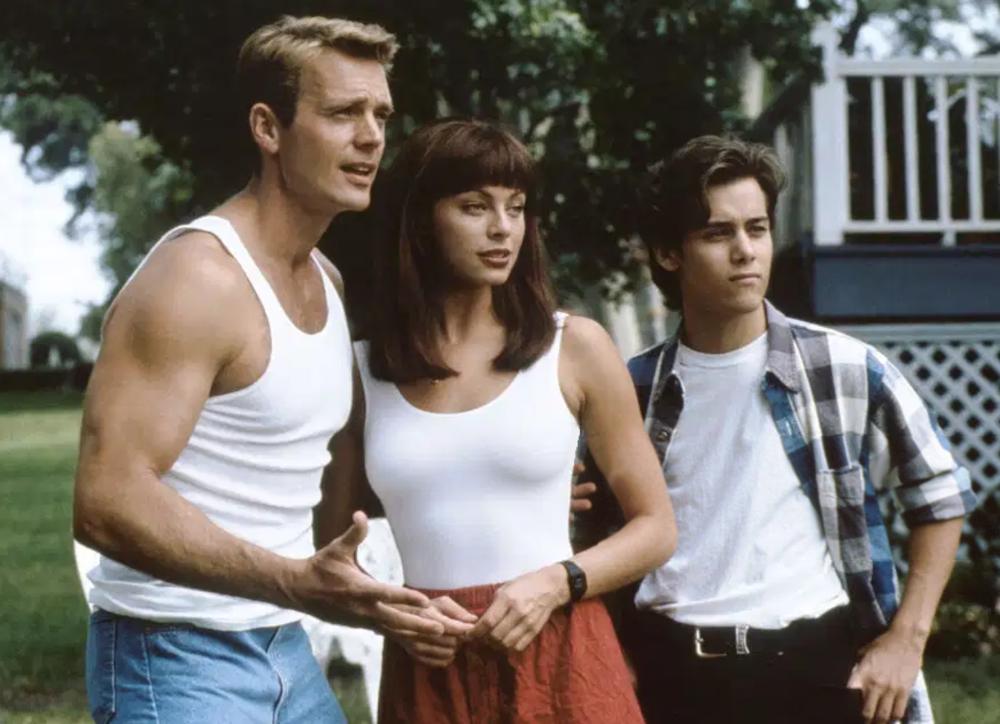
Joining Montalbán as newlyweds Doug and Lexy Monroe were former Dukes of Hazzard star John Schneider and Melinda Clarke, who made her acting debut on Days of Our Lives alongside her father, John, who spent almost forty years on the show. The trio were the only regular members of the cast as the Monroes were given a mission of the week, beginning with preventing Lexy’s parents from divorcing, Subsequent adventures saw them help a wealthy family with their communication problems, help clear a mechanic of the blame for the crash that claimed their lives, and pose as marriage counsellors to help a woman leave her abusive husband, all in the name of building up karma (or whatever the Christian equivalent is).

Heaven Help Us was created by William Blinn, who had created Starsky & Hutch for Spelling in 1975 and won an Emmy for his work on Roots. Although it bore some similarity to Highway to Heaven, which ran on NBC between 1984 and 1989, Blinn’s pilot script, which launched the show on August 25th 1994, was more comedic in tone, similar to the 1941 film Here Comes Mr Jordan, which had been remade in 1978 as Heaven Can Wait with Warren Beatty. This continued into the series but some inconsistent writing and the fact that the old Spelling formula of parading familiar guest stars – with a list including Tom Bosley, Soleil Moon Frye, Erin Gray, Dick van Patten, and Efrem Zimbalist Jr – seemed to be growing tired, meant the show never really developed an audience. Schneider and Clarke, despite decent chemistry, also fell someway short of the bar set by Cary Grant and Katherine Hepburn (or even Bruce Willis and Cybill Shepherd), and the Monroes never got to reap the rewards of their labours as Heaven Help Us was cancelled after thirteen episodes.

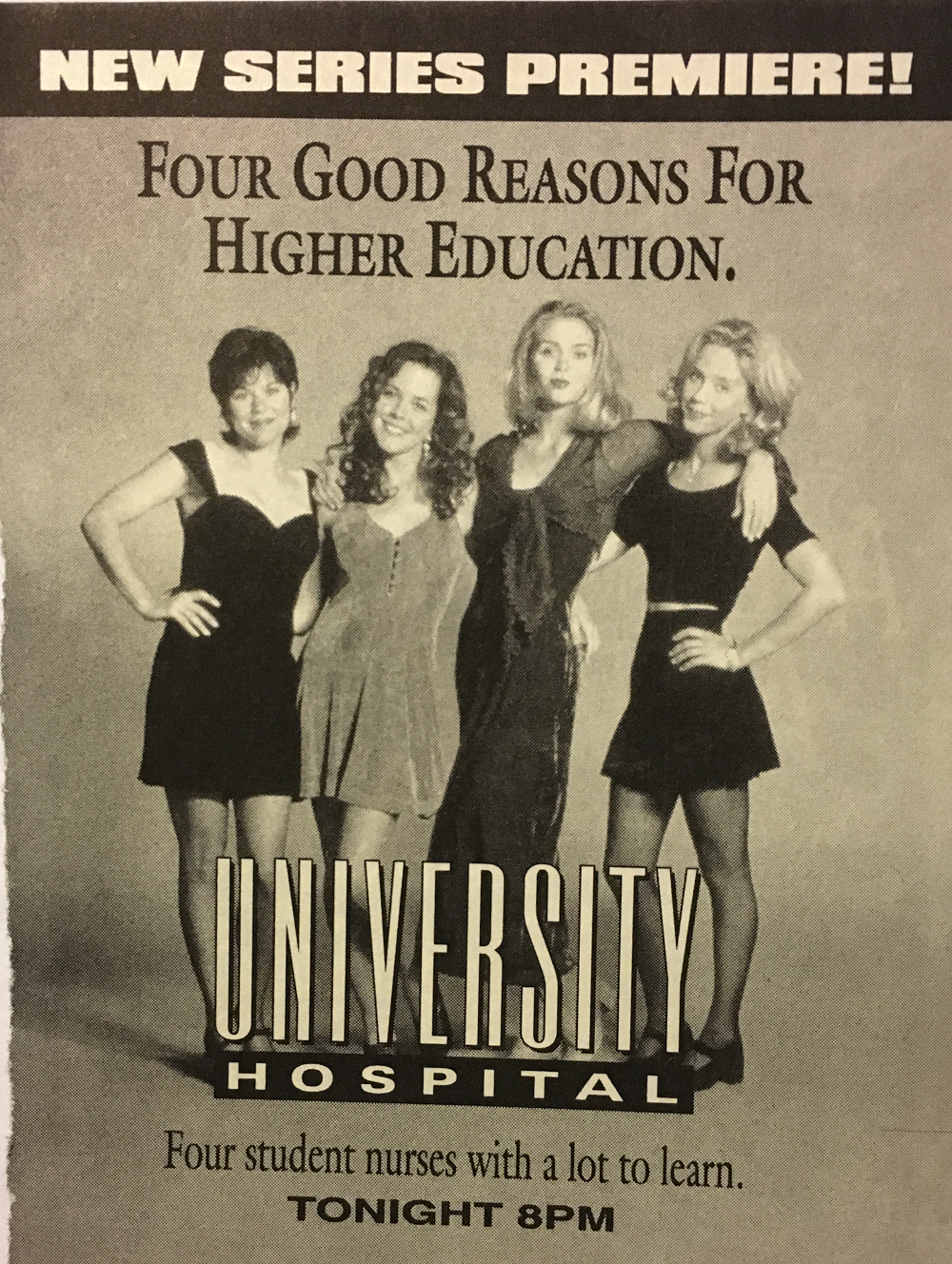
The cancellation was announced on November 21st, with two episodes left to run. It was accompanied by news that a new show, University Hospital, would pick up where it left off, filling out the remaining nine episodes of the twenty-two-episode order from the Spelling Premiere Network. Given time to get ahead in production, University Hospital debuted on January 16th and set out its stall early. Created by James L Conway (who worked with Spelling on Matt Houston and Hollywood Beat) and Joel J Feigenbaum, the show sought to mix social relevance with a sexy cast, led by Tony Award winning Broadway star Tonya Pinkins as Mary Jenkins, head nurse at the University Hospital in Seattle, who attempts to guide her students through tough times, both in their chosen career and their chaotic private lives.

Starring as the students were relative newcomers Rebecca Cross as naïve Montana girl Megan and Hilary Danner as runaway gangster’s moll Jamie, former model Hudson Leick (who would later play Callisto on Xena: Warrior Princess) as buxom man-chaser Tracy, and Another World‘s Alexandra Wilson as Sam, the latest in a long line of nurses in her family and struggling to cope with their expectations. In the first episode, Sam has to fight off an attempted date rape and the girls come together to ensure he never does it again, and the show goes off from there, with Jamie framed for stealing drugs, Megan posing nude for a famous painter, and Tracy hooking up with a mortician, the odd mixture of sex appeal and hot button issues never more keenly illustrated than by a scene where the girls discuss sexual harassment while sunbathing around a pool.

University Hospital, 1994-

University Hospital raced through its nine episodes, looking to mix the medical drama of NBC’s Thursday night smash ER with the beautiful young cast and social issues of 90210 and Melrose Place. There was even something of a crossover with the other Spelling Premier Network show, Robin’s Hoods, as Claire Yarlett’s Mac featured in both shows, but we never got to see the young nurses graduate as there was no second series as University Hospital joined Heaven Help Us on the scrap heap. But what of that other new show…?

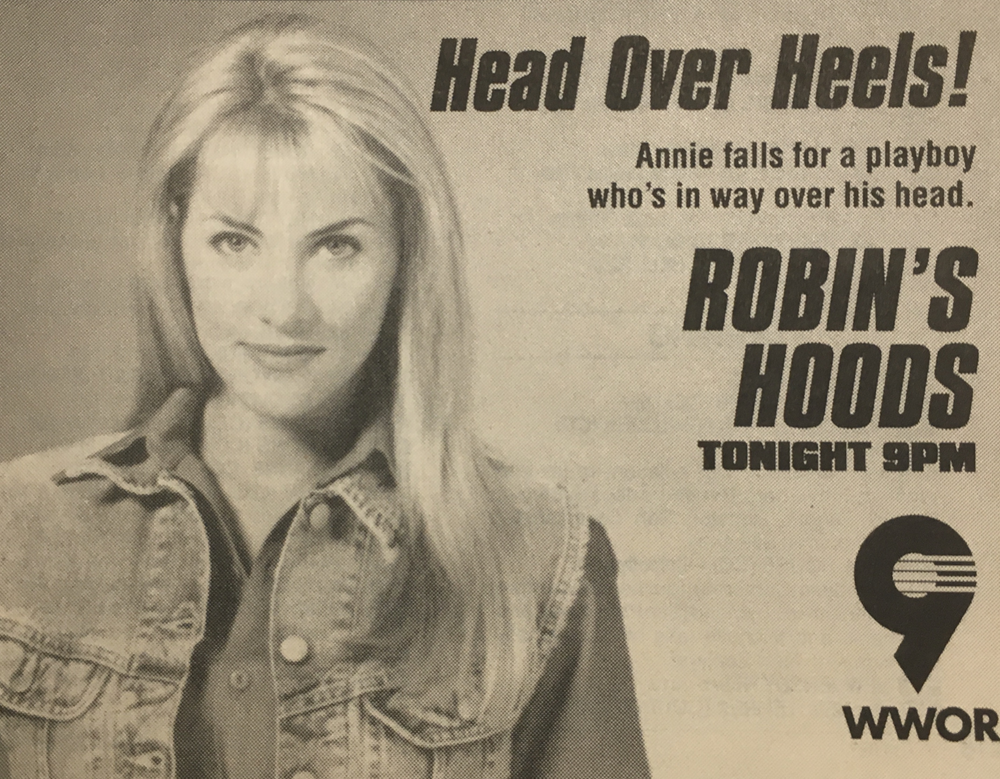
Robin’s Hoods (syndication, 1994): Robin’s Hoods was created by Marcia Basichis, Senior Vice-President of Spelling Television, and developed by Spelling himself, along with David Chisholm. Seeking to place an emphasis on strong female characters throughout. The show centred around Brett Robin, a prosecutor whose policeman husband is killed in the line of duty. After his death, she learns he had bought a bar staffed by parolees who wear an alarming amount of denim. Brett’s first instinct is to close the bar and send the staff back to jail, but after they help her solve her husband’s murder, she decides to keep it open, utilising their skills to help solve some of her tougher cases.

Leading woman Linda Purl had worked with Spelling on the unsold Dark Mansions pilot in 1986, shortly before earning a regular role on the first season of Matlock. A short spell on married spies show Under Cover followed in 1991, but despite plenty of pilots there were few regular series on her résumé. Purl fell pregnant shortly after filming began and lapsed into a part-time schedule in the second half of the show’s run, the pregnancy written into the storyline as her carrying her late husband’s child. When Purl’s pregnancy became too advanced, former teen heartthrob singer Rick Springfield was brought in as bar manager Nick Collins in her stead.

Robin's Hoods, 1994-95

The young offenders staffing Robin’s Nest included former Miss Hawaii Jennifer Campbell as burglar Annie, robber Maria (Cuban actress Mayte Vilán), and drug dealer Stacey, played by Julie McCullough, a former Playboy model who spent a season on Growing Pains before being fired after star Kirk Cameron’s conversion to Christianity. They were joined by fraudster Mac (The Colbys‘ Claire Yarlett) and token male Eddie, a nice guy with an aggravated assault conviction played by David Gail, who previously worked with Spelling on The Round Table and came from Beverly Hills, 90210.

Former 92010 story editor Chris Brancato kept the storylines interesting and varied, with Stacey witnessing a shooting in episode two, only to find that the police claim there was no such crime, and the whole gang helping an amnesiac (Married with Children’s David Faustino) piece together his past in their third outing. Baby-snatchers, murder mystery evenings with real murders, and stalkers all featured in subsequent cases, as well as plenty of romantic intrigue between Annie and Eddie, and then Stacey and Eddie, and between Mac and police detective Chris Carpenter (Dark Justice’s Ramy Zada). Thirteen episodes in, Maria was replaced by KT, a tough new parolee with her own shady past, played by Gretchen Palmer. It all came to a head in the season finale, when Nick’s ex-fiancée returned to claim him back at any cost and the love triangle between Stacey, Annie, and Eddie reaching a tragic conclusion. It was all set up for the show to return for a second season in Fall 1995, but that wasn’t to be as the Spelling Premiere Network was put into mothballs, a failed experiment to the tune of $5 million.

. . .

Despite the collapse of the Spelling Premiere Network, there little slowdown at Spelling Television, where a new take on The Mod Squad, one of Spelling’s most successful early productions, was sent to pilot. Crosstown Traffic was crafted by Roderick and Bruce A Taylor, a father and son team responsible for Otherworld and futuristic crimefighting show Super Force, with rapper Tone Loc the star name in charge of a trio of young, undercover cops played by Dalton James (who played Robert Urich’s son in the short-lived series Crossroads), comedian Aries Spears, and Chandra West, the first female lead in a Puppet Master film when she went toe to toe with Andre Toulon in Puppet Master 4 in 1993. Director George Hickenlooper called the pilot – in which the trio must stop a killer targeting real-life punk band The Muffs and which wasn’t picked up – “a dreadful experience,” and that he only took the job to get his Directors Guild card.

November 1995’s The Invaders was a mixed success, a four-hour mini-series shown over two days that sought to reboot the classic 1967 series, which had starred Roy Thinnes as David Vincent, seemingly the only man aware that aliens are slowly taking over the USA. Scott Bakula took lead duties for the mini-series, learning of the conspiracy from Vincent in jail and then trying to prevent the death of a presidential candidate, part of a wider plan to trigger an ecological disaster that might wipe out mankind. The Invaders was clearly intended to cash in on the success of The X-Files, and the mini-series was a taster for a full series, although whether Bakula would have been involved is uncertain. Regardless, Fox passed on a full series.

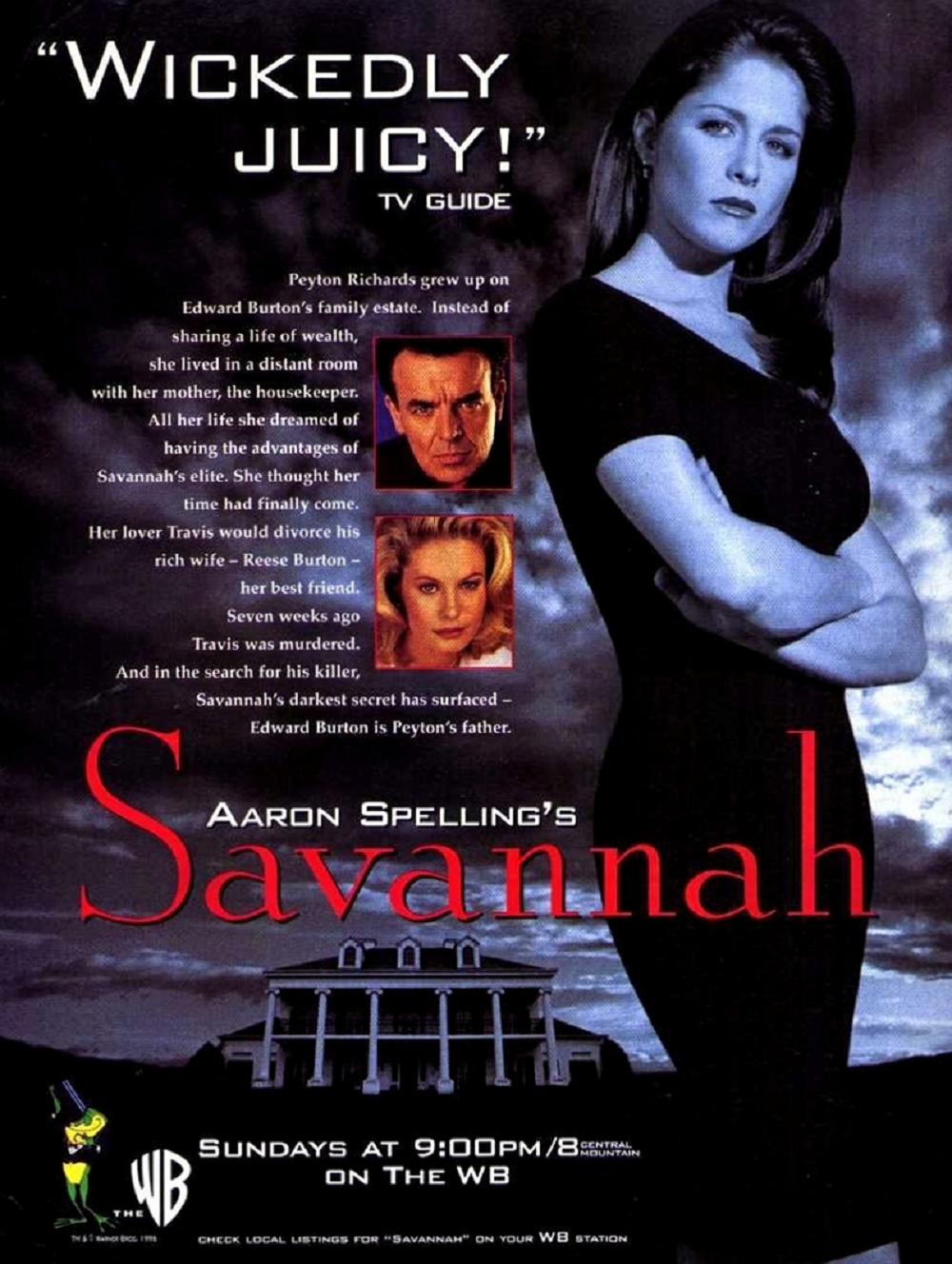
Spelling still had Beverly Hills, 90210 and Melrose Place on the Fox schedule but there were no new additions for the Fall 1995 schedule. Come January, though, The WB picked up Savannah as a mid-season replacement in a reshuffle of their Sunday night line-up, intending to use the female-centred drama as the lynchpin in their attempt to capture women viewers on a night dominated by movies and Fox’s male-oriented comedy offerings. It had echoes of the pitch for the Spelling Premiere Network, but the veteran producer had high hopes for the new show, calling it a “young Dynasty” and like “Gone with the Wind if it were done in 1996.” Savannah was the first series created by Constance M Burge, who had finally broken into screenwriting after years of trying when she joined the writing team for medical drama Medicine Ball in 1995.

Savannah, 1995-96

The show began with the return of Lane (Robyn Lively) to Savannah from New York, where she was working as a journalist. Intending to attend the wedding of her friend Reese (Shannon Sturges) to Travis, Lane discovers her inheritance has been stolen by the groom, who is secretly having an affair with another of their friends, the conniving Peyton (Blake Lively). When Travis turns up dead, the show becomes a whodunnit, with further intrigue provided by the reveal that Peyton is Reese’s illegitimate half-sister. Premiering with a two-hour pilot on January 21st 1996, Savannah became The WB’s most watched show and was renewed for a second season as soon as the first climaxed in April with the arrival of Travis’s identical twin brother.

As important as the show’s renewal for a second season was for Spelling’s extra-90210 fortunes, it also established a relationship between the producer and The WB, something which would reap rich dividends within a few years. Meanwhile, over on NBC, 90210 meets Romeo and Juliet drama Malibu Shores had been picked up in mid-season as JAG was moved to Wednesdays in March. Created by Meg Richman, the show starred Tony Lucca as a wealthy Malibu teen, with Keri Russell as his sweetheart from the wrong side of the tracks, but didn’t return after its ten-episode order was fulfilled. A similar fate met Kindred: The Embraced on Fox, despite it being given 90210 as a lead-in. Loosely based on the popular role-playing game Vampire: The Masquerade, Kindred starred C Thomas Howell as a San Francisco police officer discovering his city is riddled with vampires and aimed for the sexy gothic feel of Interview with the Vampire, 1994’s adaptation of Anne Rice’s seminal novel which starred Tom Cruise and Brad Pitt. Sadly, the fang crowd didn’t turn out in sufficient numbers, and Kindred was cancelled after seven episodes, leaving one unaired.

After the success of Savannah, The WB came back to Spelling Teleivsion for a new show to lead off their debut Monday night line-up. The network had originally launched with programming only on Wednesdays in January 1995, adding Sundays that Fall. Mondays were the new addition for Fall 1996 and The WB looked to start strongly by moving Savannah to the new night and pairing it with another Spelling show. In contrast to the twists and turns down in Georgia, 7th Heaven was just about as wholesome as it got, the story of Protestant minister Eric Camden (Tales of the Gold Monkey‘s Stephen Collins), his wife Annie (Catherine Hicks from Tucker’s Witch), and their five children in the small California town they call home. The show earned plaudits from the Parents Television Council and others for its strong Christian moral tone, the assorted offspring (later expanded to seven with the arrival of twins in season six) offered family-friendly solutions to the usual teenage woes.

The 7th HeavenSavannah two’fer did well for The WB through February 1997, when the latter reached the end of its twenty-two-episode second season. Ratings were still good but making the second season had been a troublesome experience and, given its intrinsically sequential nature, re-runs were hard to program, thus making its costs harder to justify. It was replaced in the schedules by a new show based on a 1992 movie starring Kristy Swanson as a vampire hunter, although she did not return for TV, the role instead going to former All My Children star Sarah Michelle Gellar.

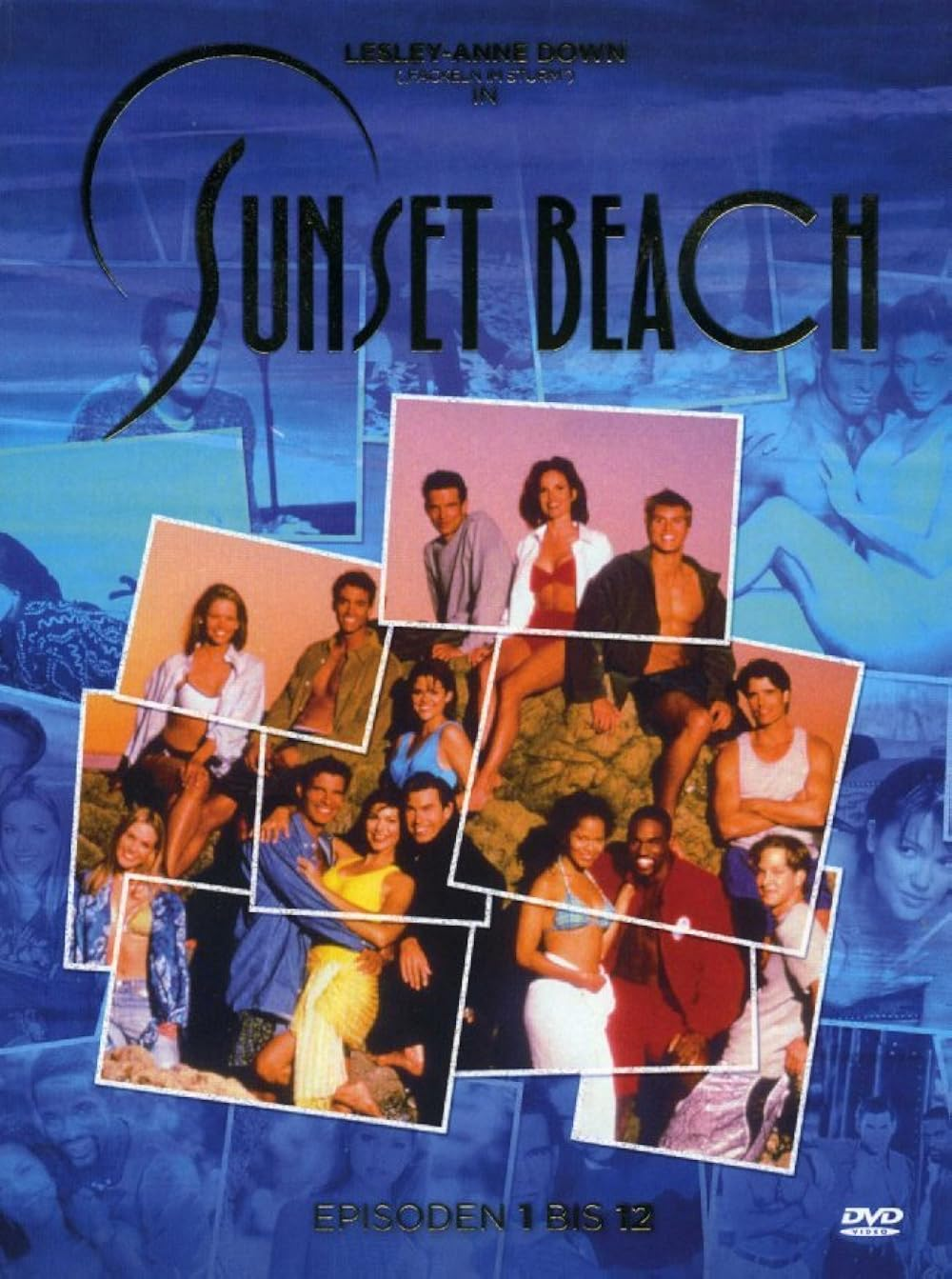
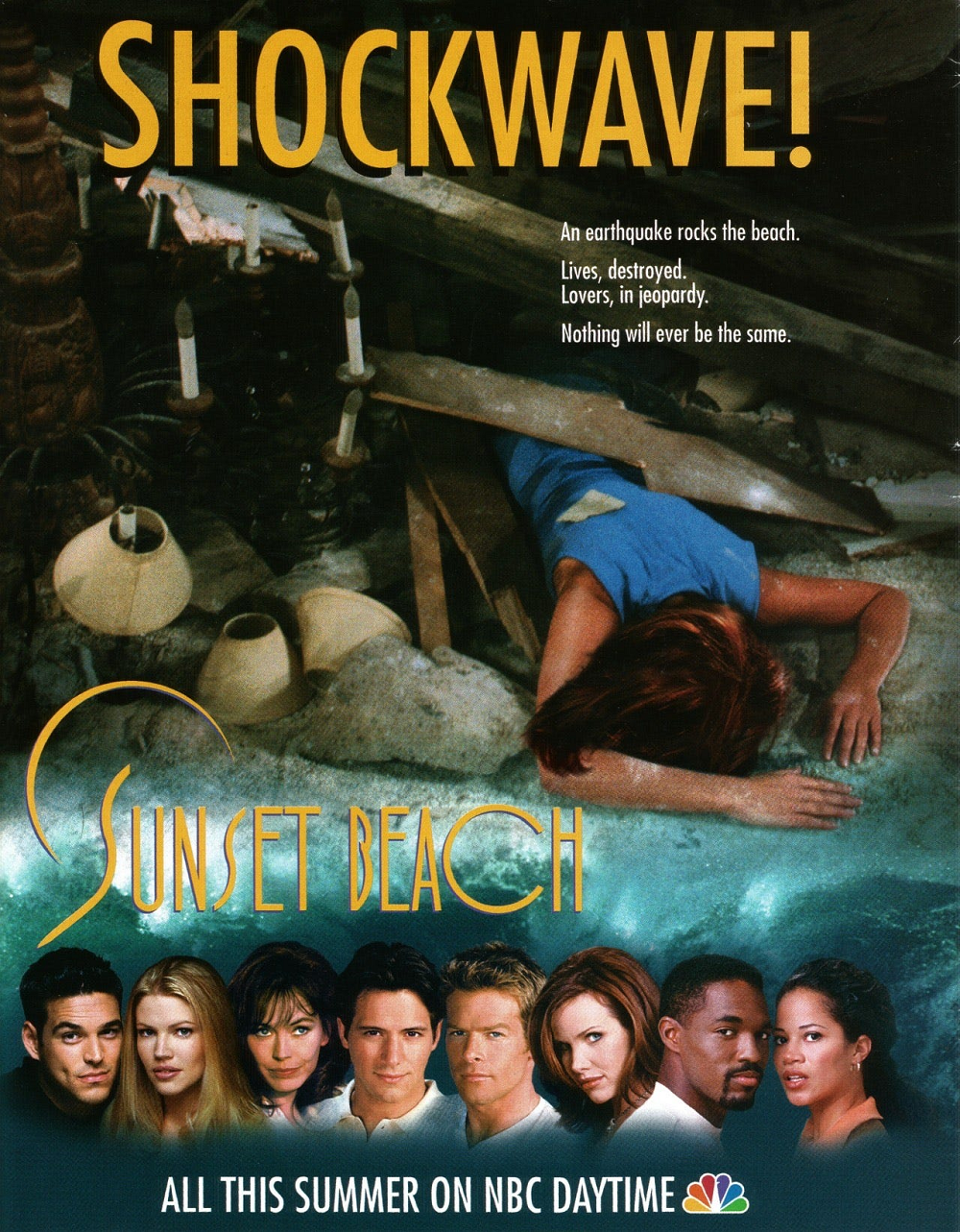
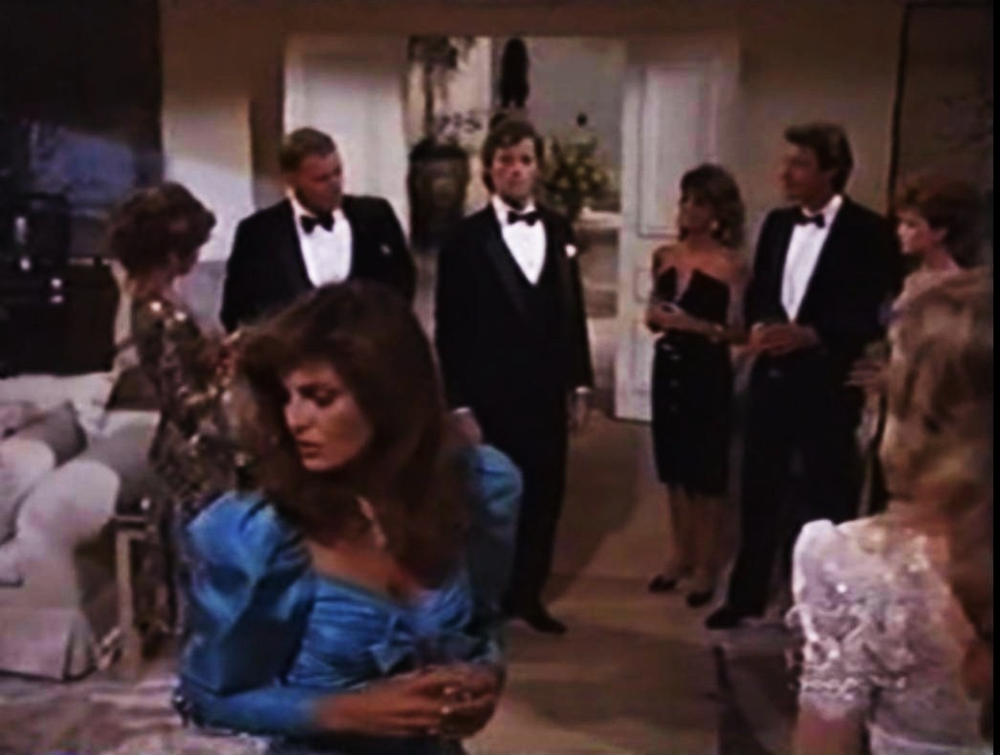
Sunset Beach (NBC, 1997): By the time Buffy the Vampire Slayer debuted on The WB, Spelling’s ambitious new project was underway on NBC. Sunset Beach saw Spelling produce a daily soap opera for the first time, forming a daytime subsidiary specially to do so. The new show would be NBC’s first new daytime soap since 1991’s Generations, and the producer turned to experienced hands to develop the concept. Josh Griffith, Robert Guza Jr, and Charles Pratt Jr met when all three worked together on Santa Barbara between 1988 and 1990, with Guza and Pratt reuniting to work with Spelling on both Melrose Place and Models Inc, while Griffith had just finished a five-year stint on One Life to Live. The trio had a remit to attract younger viewers to the show, NBC feeling that older viewers were already entrenched in their daytime viewing habits, and they did so by introducing modern twists like internet romances and heaps of outrageous storylines, at one point stranding the whole cast on “Terror Island,” where they were stalked by a masked killer.

Sunset Beach began with a cast of twenty-one contracted actors, among them British actress Lesley-Anne Down as alcoholic trophy wife Olivia Richards, former General Hospital and Knots Landing regular Sam Behrens as her husband Gregory, and Vanessa Dorman as their daughter, Caitlin (at least until she was replaced by Kam Heskin a year in). Leigh Taylor-Young, who’d made her acting debut on Peyton Place and had just finished up on Picket Fences, was coffee shop owner Elaine Stevens, with former Miss USA Laura Harring as her daughter Paula, who is dating hunky cop Ricardo Torres (ex- model Hank Cheyne), much to the chagrin of Eddie Connors, played by Peter Barton from the Burke’s Law reboot. Kelly Hu, another ex-model, played a young doctor, while newcomers Jason Winston George and Timothy Adams upped the eye-candy quota as the town lifeguard and his pal, another young medic.

Sunset Beach, 1996-97

At the centre of the show was Meg Cummings, played by Susan Ward (who had worked with Spelling on Malibu Shores and asked to play a “nice girl” role), who arrives from Kansas to find Ben Evans (Clive Robertson), a man she has been talking to over the internet. The course of true love never runs smooth, and Meg and Ben’s romance had to endure interference from Sarah Buxton’s Annie Douglas and Meg’s ex-fiancé Tim (Dax Griffin), the first time they made love being ruined by the fact that Ben thought Meg was his dead wife, being hunted by the murderer on Terror Island (who turned out to be Ben’s twin brother, Derek, who had been impersonating him for some time), and the arrival of Ben’s illegitimate son with Tess Marin (Tracey Melchior), who later teamed with his presumed-dead twin to kidnap almost the entire cast.

If Meg thought she had things bad, then Annie – characterised as a “top heavy scheming vixen” – could compete with her, escaping from the police by hiding in a coffin (which was then sent to the crematorium), stealing a baby, finding herself strapped to a rotating board while men threw knives at her, posting herself in a box to an office, later emerging from the filing cabinet, Hong Kong Phooey-style), and going to actual Hell, although some of her exploits were explained away as fantasy sequences. That baby she stole? It was Olivia’s, although Annie gave it Caitlin after Caitlin miscarried hers, both of them the result of dalliances with jewel thief Cole Deschanel (The Young and the Restless’s Eddie Cibrian), who would later steal a cursed jewel that aged the owners unless they wore them.

As if all that wasn’t bad enough, a voodoo-cursed mole wreaked havoc, half the cast were victims of an earthquake while the others – who were out at sea on a cruise – were hit by the resulting tsunami and underwent a Poseidon Adventure style disaster. A character came back from the dead by jumping out of a cake, another pulled the same trick to catch the bouquet at a wedding, and a turkey baster was employed to secretly impregnate a love rival! All this kicked off on January 6th 1997, with NBC incentivising local affiliates – who had control of their daytime schedule – to show it in a midday slot. While most acquiesced, some didn’t and a few never showed Sunset Beach at all. The network ordered a full year – 255 episodes – and although the show was the lowest rating of all the daytime soaps, with fewer than a third of The Young and the Restless’s viewers, it was renewed for a second year.

Sunset Beach, 1996-97

That second year turned into a third, but Sunset Beach never rose above an average of four million viewers, and the axe eventually fell in December 1999 after 755 episodes. Over in the UK, the show became a surprise hit for the new Channel 5 network, debuting in March 1997 as only the second daytime US soap to air on terrestrial TV in the UK (Santa Barbara was the first, bought by ITV in 1987 to compete with the success of Neighbours on the BBC). Channel 5 eventually showed the entire run and even offered to partially fund the costs of keeping the show in production (as they would later do with Neighbours), but NBC demurred. Still, 755 episodes is a good run, and the show will always be remembered for its wilder storylines, if not its production values, which – as with all daytime soaps – were subject to short cuts necessitated by deadlines. Much less successful – although playing to more viewers by dint of its prime-time scheduling, was Pacific Palisades, designed as a vehicle for former Baywatch beauty Erika Eleniak, who subsequently turned it down due to its racy content. With former Neighbours star Kimberley Davies in the lead role as a real estate agent in an upmarket Los Angeles suburb populated by young professionals, it lasted for just thirteen episodes from April to July 1997 on Fox, despite enjoying Beverly Hills, 90210 as a lead-in.

. . .

In Fall 1997, NBC passed on taking Odd Jobs, a neo-noir underworld project about a psychopath written by Quentin Tarantino’s pal Roger Avary and starring Patrick Dempsey, to series after ordering a two-hour pilot. More successful was Spelling’s latest dip into his back catalogue as UPN – like The WB, launched in January 1995 – added Love Boat: The Next Wave to its schedules in April 1998 as part of a Spring refresh for Monday nights. Developed by 7th Heaven creator Brenda Hampton and one of that show’s senior writers, Catherine LePard, the new show saw passengers board the Sun Princess, captained by Robert Urich’s retired Navy man Jim Kennedy. The crew also included Phil Morris, Corey Parker, Joan Severance, Stacey Travis, and Kyle Howard as Kennedy’s son, Danny, but – as with the original show – the emphasis was placed on the guest stars, with the six-episode run bringing Jessica Alba, Maxwell Caulfield, Shari Headley, Robyn Lively, Danica McKellar, Ricardo Montalban, Marion Ross, and Wil Wheaton on board to have their lives changed in a sexy and romantic way.

Love Boat: The Next Wave returned for a second season in October 1998, and with Beverly Hills, 90210 and Melrose Place on Fox, 7th Heaven on The WB, and Sunset Beach on NBC, the addition of two new Spelling Television shows to the network schedules resembled something of a return to the producer’s former glories. Buddy Faro, a private eye show with a twist from the pen of David Lynch collaborator Mark Frost, found a home on Friday nights on CBS, something of a free-for-all, viewers-wise, as no network could claim they controlled the dial. With Dennis Farina in the title role as a legendary detective who disappeared twenty years before, only to be brought out of retirement by Frank Whaley’s young hopeful, the show lasted for just eight episodes before low ratings brought about its cancellation with five more sitting on the shelf unaired.

A much better prospect, and another result of the relationship established between Spelling Television and The WB when Savannah hit the air in January 1996, was Charmed, created by Savannah’s Constance M Burge. Like that show, Charmed was centred on three strong female characters, this time sisters known as The Charmed Ones, witches with aa combined “Power of Three,” which they use to protect innocents from evil. Arriving just months after teen witch drama The Craft (with which it shared a theme song, a cover of The Smiths’ “How Soon Is Now?” by Love Spit Love), Charmed starred 90210’s Shannen Doherty, Holly Marie Combs from Picket Fences, and former Who’s the Boss? starlet Alyssa Milano as Prue, Piper, and Phoebe Halliwell, with support from Dorian Gregory and TW King as San Francisco police officers who give the girls assistance.

Naturally compared to Buffy the Vampire Slayer on Fox, the two ended the season on almost identical ratings, and Charmed was renewed for a second outing. Love Boat: The Next Wave’s sophomore season had not gone so well, despite not only featuring guest appearances from wrestler Bill Goldberg, C Thomas Howell, Rue McClanahan, and Jerry Springer (as himself), but also some of the cast of the original show in an episode titled “Reunion.” The reboot never gained the foothold the original had done on ABC, however, and was cancelled – along with three-quarters of UPN’s line-up – in May 1999. It left screens the same month as another Spelling show on The WB; paramedic drama Rescue 77 failed to gain much traction during its eight-episode run, despite the involvement of Highlander creator Gregory Widen.

Still, Spelling Television had the wind in their sails once more and presented two new pilots for Fall 1999. Safe Harbor was taken to series by The WB and placed on Monday nights with 7th Heaven to make a Spelling block, Furthermore, both shows were created by Brenda Hampton, who hoped to work her magic on the story of John Loring (Gregory Hamilton), a small-town sheriff trying to find out the truth behind his wife’s death and raise their three sons – played by Power Rangers All‘s Christopher Khayman Lee, Jeremy (now Jer Adrienne) Lelliott, and Jamie Williams –  and Chyler Leigh’s runaway, with only his eccentric mother (Rue McClanahan) for help. After failing to capitalise on its partnership with 7th Heaven, Safe Harbor moved to Sundays in late November, but ratings did not improve, and it was cancelled after just eight episodes.

Forbidden Island, 1999-2000

The other Spelling prospect for Fall 1999 didn’t even get as far as a full pilot but became the subject of speculation in the early years of the twenty-first century as a similar show became a smash hit. UPN were interested in Forbidden Island, another Mark Frost creation, assembling a cast that included Once a Thief‘s Victoria Pratt, Days of Our Lives’s Paul Kersey, and Cari Shayne, who enjoyed a five-year run on General Hospital in the first half of the decade, for filming in New Zealand, the results of which have never been seen as anything other than rough “rushes.” The thing that makes Forbidden Island notable, though, is that it is the story of a group of survivors of a plane crash on a mysterious Pacific Island, seemingly filled with supernatural threats.

Officially, Lost was the result of a request from ABC chairman Lloyd Braun for a drama that crossed successful reality shows Castaway and Survivor, and Spelling Television were initially involved in the project, with a Jeffrey Lieber script titled Nowhere the first fruits. Deciding to go in another direction, ABC hired JJ Abrams and Damon Lindelof to rewrite Lieber’s script, but Lieber is credited as a co-creator on Lost. Not so Mark Frost, whose 1999 concept bears a striking resemblance to the later show, with similar visual iconography, the concept of the survivors being selected for a purpose (or being dead in some kind of afterlife), and the island being in no recognisable part of the globe. An interesting coincidence, perhaps, but one to add to Lost’s collection of mystery boxes.

All Souls (UPN, 2001): By the turn of the millennium, Spelling’s fortunes had begun to wane once more. Melrose Place had ended a seven-season run in May 1999, with Sunset Beach following in December, and Beverly Hills, 90210 closing its doors after ten years in May 2000, leaving just two Spelling Television shows – 7th Heaven and Charmed – on air AT The WB. They were joined, at least for a short while, by Titans on NBC, a heady mix of romance and intrigue that told the story of aviation magnate Richard Williams (Perry King) and his pregnant young wife Heather (Yasmine Bleeth), who has been sleeping with Casper von Dien’s Chandler, unaware that he is Richard’s son (and a pilot to boot). Created by Charles Pratt Jr, one of the trio behind Sunset Beach, it was very much designed to do for prime-time what that show did for daytimes, but NBC pulled the plug after eleven episodes, despite the presence of Dallas’s Victoria Principal as Richard’s ex-wife (and Chandler’s mother).

Three years after they had partnered with the producer to resurrect The Love Boat, UPN could have played host to two new Spelling shows in Spring 2001 but decided against taking Stop at Nothing – which starred Scarlett Chorvat and Deborah Kellner as two beautiful undercover spies – to series, despite showing the pilot as a TV movie in July. They did take paranormal hospital drama All Souls, however, scheduling it on Tuesday nights where they hoped it might find an audience against sitcoms on ABC and NBC and reality shows on CBS, replacing UPN Night at the Movies. Created by Teenage Mutant Ninja Turtles III and Forbidden Island writer-director Stuart Gillard and Stephen Tolkin (who directed the 1990 Captain America movie that starred Matt Sallinger), All Souls was set in a haunted teaching hospital, where Dr Mitchell Grace (Grayson McCouch, one of the castaways on Forbidden Island), freshly graduated from medical school, begins working in the hopes it might bring him closer to his father, who died while working there as a janitor when he was a boy.

All Souls, 2001-02

Grace soon becomes aware of the facility’s spooky goings on, encountering both good and evil ghosts as he navigates the hallways, trying to solve that week’s new patient-based mystery, as well as discover just how his father died. Inspired by Lars von Trier’s The Kingdom (later remade in the US as Kingdom Hospital), All Souls makes full use of its various creators’ strengths, with Gillard directing all but one of its six-episode order, Spelling providing a touch of (albeit faded and distorted in places) glamour, and executive producer Mark Frost lending some of the trademark weirdness he developed working with David Lynch. Shot mostly on location in a functioning psychiatric hospital in Montréal, patients were often used as extras, alongside a cast that saw Daniel Cosgrove, Irma Hall, Adam Rodriguez, and Serena Scott Thomas joining McCouch.

All Souls premiered on April 17th 2001, with reality show Chains of Love (where a man or woman is chained to four members of the opposite sex over four consecutive nights) as a lead-in, it earned almost entirely positive reviews from critics but struggled to attract viewers, with its second episode rating lower than all three of the shows that occupied the slot the previous year, and just two thirds of what UPN Night at the Movies had been averaging. After one more episode, UPN put the show on hiatus, although many media commentators saw the writing on the wall. In late July, UPN re-ran the first three episodes of the show and then finished the run. There was no second season; Gillard concentrated on directing afterwards and Mark Frost didn’t work in TV again until the Twin Peaks reboot in 2017.

All Souls also marked the end of Aaron Spelling’s regular active participation in his shows. A keen pipe smoker for most of his life, he was diagnosed with oral cancer in 2001, and underwent successful surgery and after-treatment, but lessened his involvement at Spelling Entertainment. Company president Jonathan Levin took day-to-day control of the company, while E Duke Vincent – who had worked with Spelling since 1977’s The San Pedro Beach Bums – oversaw television production. Over the next four years, Spelling Television produced six short-lived shows – courtroom comedy drama Queens Supreme and Daniel Cerone’s baseball drama Clubhouse for CBS, Mexican drug trafficker yarn Kingpin for NBC, Summerland for The WB, crime drama Wanted for TNT, and 10-8: Officers on Duty for ABC, the first Spelling show to grace the alphabet network since HeartBeat in 1988 – and eight unsold pilots. In late 2005, the studio was folded into Paramount Television, its small staff moving across to Paramount’s headquarters.

Aaron Spelling

On June 18th 2006, Aaron Spelling suffered a stroke and died five days later at his estate in west Los Angeles. He had been suffering from Alzheimer’s disease, which was said to have contributed to his death. Two weeks earlier, he had reconciled with daughter Tori, the pair having not spoken for nine months due to a rift over her mother’s friendship with another man, which the pair always maintained was platonic, but Tori believed otherwise, further straining a maternal relationship that had been soured by So NoTORIous, a spoof autobiographical sitcom that starred Tori and cast Loni Anderson as a bitter alcoholic mother figure. After his death, Spelling Television became an in-name only production unit of CBS Studios and CBS owns Spelling’s back catalogue. The Spelling logo last appeared at the end of the credits for the final episode of 7th Heaven, which was cancelled in September 2007; Charmed finished a year earlier.

In recent years, Beverly Hills, 90210, Charlie’s Angels, Charmed, Dynasty, and Fantasy Island have all been rebooted, while Charlie’s Angels, Fantasy Island, and Starsky & Hutch got the big screen treatment, and The Real Love Boat took the classic show into the realm of scripted reality. Even two decades after his death, Aaron Spelling continues to exert a big influence on TV, a true Titan of Telephemera.

Next time on The Telephemera Years: It’s 1996 and NBC rules the roost to the extent that the other networks have all but given up, but what else is there on offer…

Check out our other Telephemera articles:

The Telephemera Years: pre-1965 (part 1, 2, 3, 4)

The Telephemera Years: 1965 (part 1, 2, 3, 4)

The Telephemera Years: 1966 (part 1, 2, 3, 4)

The Telephemera Years: 1967 (part 1, 2, 3, 4)

The Telephemera Years: 1968 (part 1, 2, 3, 4)

The Telephemera Years: 1969 (part 1, 2, 3, 4)

The Telephemera Years: 1970 (part 1, 2, 3, 4)

The Telephemera Years: 1971 (part 1, 2, 3, 4)

The Telephemera Years: 1973 (part 1, 2, 3, 4)

The Telephemera Years: 1974 (part 1, 2, 3, 4, 5)

The Telephemera Years: 1975 (part 1, 2, 3, 4)

The Telephemera Years: 1976 (part 1, 2, 3, 4)

The Telephemera Years: 1977 (part 1, 2, 3, 4)

The Telephemera Years: 1978 (part 1, 2, 3, 4)

The Telephemera Years: 1979 (part 1, 2, 3, 4, 5, 6)

The Telephemera Years: 1980 (part 12, 3, 4)

The Telephemera Years: 1981 (part 1, 2, 3, 4)

The Telephemera Years: 1982 (part 1, 2, 3, 4)

The Telephemera Years: 1983 (part 1, 2, 3, 4)

The Telephemera Years: 1984 (part 1, 2, 3, 4)

The Telephemera Years: 1986 (part 1, 2, 3, 4)

The Telephemera Years: 1987 (part 1, 2, 3, 4)

The Telephemera Years: 1988 (part 1, 2, 3, 4, 5)

The Telephemera Years: 1989 (part 1, 2, 3, 4)

The Telephemera Years: 1990 (part 1, 2, 3, 4)

The Telephemera Years: 1991 (part 1, 2, 3, 4)

The Telephemera Years: 1992 (part 1, 2, 3, 4)

The Telephemera Years: 1994 (part 1, 2, 3, 4)

The Telephemera Years: 1995 (part 12, 3, 4)

The Telephemera Years: 1997 (part 1, 2, 3, 4)

The Telephemera Years: 1998 (part 1, 2, 3, 4)

The Telephemera Years: 1999 (part 1, 2, 3, 4)

The Telephemera Years: 2000 (part 1, 2, 3, 4)

The Telephemera Years: 2001 (part 1, 2, 3, 4)

The Telephemera Years: 2002 (part 1, 2, 3, 4)

The Telephemera Years: 2003 (part 1, 2, 3, 4)

The Telephemera Years: 2005 (part 1, 2, 3, 4)

The Telephemera Years: 2006 (part 1, 2, 3, 4)

The Telephemera Years: 2007 (part 1, 2, 3, 4)

The Telephemera Years: 2008 (part 1, 23, 4)

The Telephemera Years: O Canada! (part 1, 2, 3, 4)

Titans of Telephemera: Irwin Allen

Titans of Telephemera: Stephen J Cannell (part 1, 2, 3, 4)

Titans of Telephemera: DIC (part 1, 2)

Titans of Telephemera: Filmation (part 1, 2)

Titans of Telephemera: Hanna-Barbera (part 1, 2, 3, 4, 5)

Titans of Telephemera: Kenneth Johnson

Titans of Telephemera: Sid & Marty Krofft

Titans of Telephemera: Glen A Larson (part 1, 2, 3, 4)

Titans of Telephemera: Quinn Martin (part 1, 2)

Titans of Telephemera: Rankin/Bass

Titans of Telephemera: Ruby-Spears

Titans of Telephemera: Aaron Spelling (part 1, 2, 3)

Titans of Telephemera: Sunbow

TITANS OF TELEPHEMERA: Aaron Spelling (part 3)

Hollywood Beat, 1985-86

Ah, telephemera… those shows whose stay with us was tantalisingly brief, snatched away before their time, and sometimes with good cause. Dedicated miners of this fecund seam begin to notice the same names cropping up, again and again, as if their whole career was based on a principle of throwing stuff at the wall and seeing what sticks. What’s more, it isn’t all one-season failures and unsold pilots, there’s genuine gold to be found amongst their hoards; these men are surely the Titans of Telephemera!

Aaron Spelling

For many people, Aaron Spelling’s legacy begins and ends with Dynasty. If that were all he achieved, he could rest on his laurels as one of US TV’s moguls, bringing glitz and glamour into the homes of millions in a decade when Capitalism took a firm hold on the world it has since refused to relinquish. Perhaps other might remember him for Beverly Hills, 90210 or recall that he was the man who shepherded Charlie’s Angels into the world, but that’s to ignore a five-decade career in television, as an actor, a scriptwriter, and producer, turning a frail Jewish boy from Dallas, Texas, into a name synonymous with American television.

Spelling’s TV career began as an actor in I Led Three Lives and Dragnet in 1953, but never rose above small guest roles and switched to scriptwriting in 1956, selling his first script to The Jane Wyman Show. That same year, he produced a pilot for a TV show based on the popular radio series Box 13, and began working for Four Star Television as producer for western series Zane Grey Theater and Johnny Ringo in 1959, the latter of which he also created. While at Four Star, he enjoyed his first big hit in Burke’s Law, which starred Gene Barry as a millionaire police captain and established the star guest formula he’d employ on many of his later shows.

In 1965, Spelling signed a deal with United Artists Television to form his own production company – Aaron Spelling Productions, and over the next twenty years Spelling would dozens of hit shows, finally hitting the number one spot with the glitz and glamour of Dynasty at the end of the 1984-85 season. While Dynasty spin-off The Colbys failed to set pulses racing when it debuted with a splash in November 1985, Spelling still had a good slice of the ABC prime-time line-up on his books, but could he adapt to a changing television market..?

Hollywood Beat (ABC, 1985): While The Colbys did well, but probably as well as hoped for, Aaron Spelling had one other new show debut in Fall 1985, one which attempted to show another side of Los Angeles, far away from the celebrity guest-filled fare and high-powered glamour he’d been peddling of late. Created by Henry Rosenbaum, whose credits included The Mod Squad and Sandra Dee-starring HP Lovecraft adaptation The Dunwich Horror, Hollywood Beat starred Jay Acovone and Jack Scalia as two undercover LAPD detectives working in a seedy part of town, their often oddball cases necessitating unusual disguises. With a theme song performed by Natalie Cole, Hollywood Beat premiered on September 21st 1985, leading off a new look Saturday night line-up for ABC that also included new Robert Wagner vehicle Lime Street.

Joining vietual newcomer Acovone and former professional baseball player Scalia in the cast were M*A*S*H‘s Edward Winter as their boss, Captain Biddle, and former NFL star John Matuszak, who’d gone into acting after winning his second Super Bowl with the Oakland Raiders in 1981. Now best remembered as Sloth in The Goonies, Matuszak played a former linebacker who is openly gay and willing to use his massive bulk to deter anyone who might have a problem with that. Also part of a network of offbeat friends and informants that helped the pair with their work were Ann Turkel’s bar owner Lita, newsstand operator Billy Night Eyes (Michael Horse), and Barbara Cason as a bag lady whose lowly status allowed her to go unnoticed by criminals.

Hollywood Beat was an obvious attempt to cash in on the success of Miami Vice, which had begun on NBC a year earlier, with cinematic direction and dramatic music. Scenes were soundtracked by recent pop hits, and directors working on multiple episodes of the show included Hangar 18’s James L Conway, Spelling regular Charles Picerni, and veteran British director Don Chaffey. In the 1960s, Chaffey helmed episodes of The Prisoner and The Avengers for Lew Grade, and directed Raquel Welch in One Million Years BC, before moving to the US, where he worked for Disney on Pete’s Dragon before falling in with Spelling, directing over fifty episodes on various productions between 1978 and 1985.
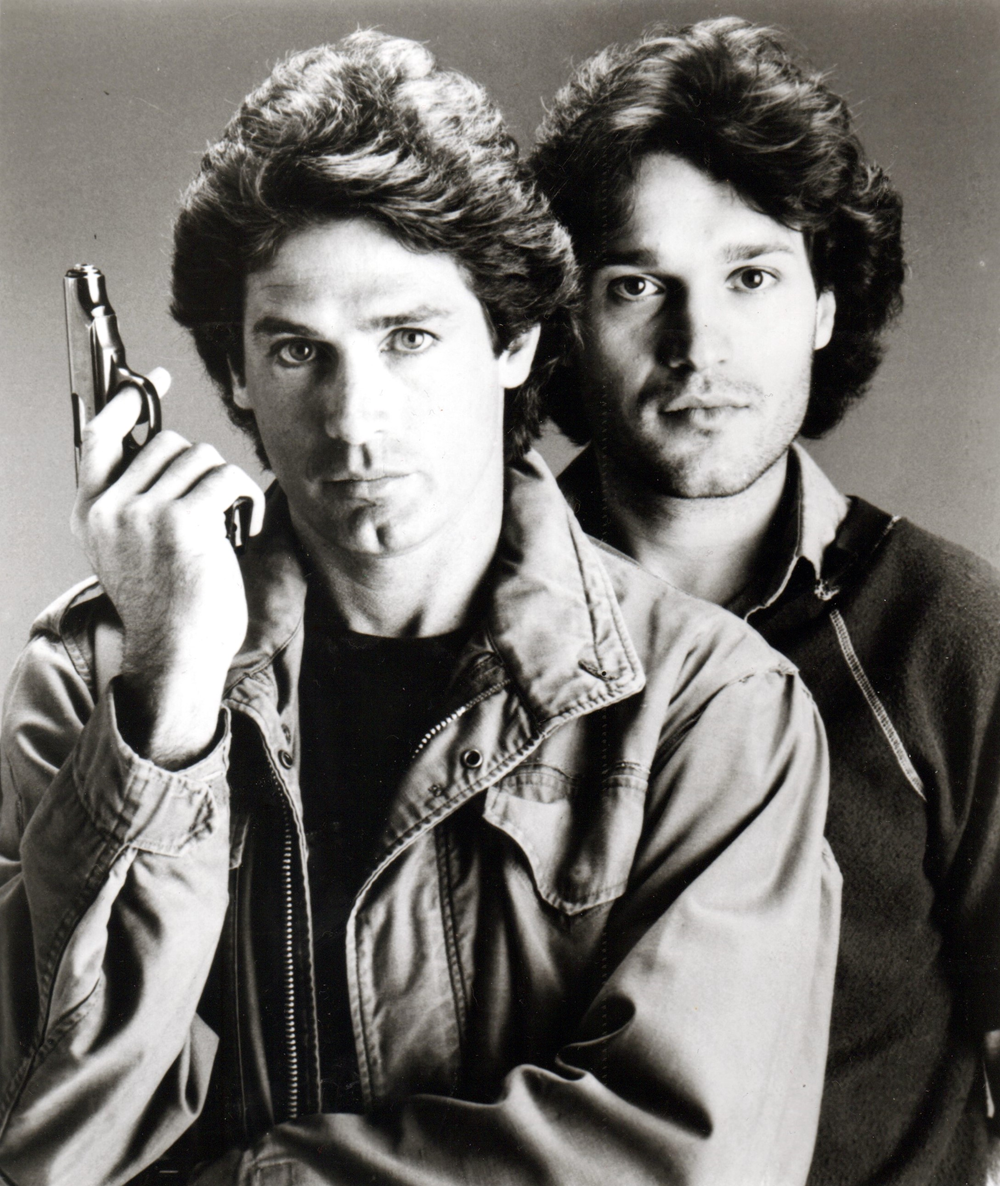
Hollywood Beat, 1985-86

While the crimes featured on Hollywood Beat – murders of street people and prostitutes, drug deals gone wrong, armed robberies – were grim and gritty, the show was also full of offbeat humour and an almost kitsch appeal, a blend which sometimes worked but often didn’t, a style clash that resulted in an uneven finished product which feel between stools. After just fourteen episodes, Hollywood Beat was cancelled, replaced by The Fall Guy, which itself was flailing in its final season. It would not be the final casualty of a disappointing year for Spelling, with both TJ Hooker and The Love Boat – which had sought to spice things up with a troupe of dancers called The Mermaids that included a young Teri Hatcher – both put out to pasture at the end of the season.

Life With Lucy (ABC, 1986): Aaron Spelling Productions carried just three shows over to the Fall 1986 TV season, their lowest contribution to the ABC line-up for some time. From its position as number one show in the 1984-85 ratings, Dynasty fell to sixth, losing three ratings points as a strong raft of NBC sitcoms stormed the top ten. The Colbys did not make the impact Spelling had hoped for, languishing in the mid-thirties, while Hotel also lost ground and viewers for its third season. To replenish his crop, Spelling produced three new pilots for ABC, a trio that recalled past hits (and not only from the producer’s own back catalogue). The inspiration behind Dark Mansions was obvious from its name, invoking Dan Curtis’s long-running supernatural soap opera Dark Shadows, but also bringing in some of the glitz and glamour of Dynasty. Linda Purl, best known as Fonzie’s girlfriend Ashley Pfister in season ten of Happy Days, played Shellane Victor, a writer who arrives at the Drake family’s sprawling Oregon estate, where she plans to interview matriarch Margaret (Joan Fontaine).

The Drake family – which also includes Michael York, Melissa Sue Anderson, Nicolette Sheridan, and Lois Chiles – immediately notice her resemblance to their deceased relative Yvette, who fell off a cliff in mysterious circumstances, and believe they are being haunted by her ghost. Written by Robert McCullough and husband-and-wife team Anthony and Nancy Lawrence, the pilot was shown as a TV movie in August 1986, but ABC passed on a series. That was also the fate met by Mr and Mrs Ryan, created by another husband-and-wife team, Bill and Jo La Mond, who produced Hotel for Spelling and wrote twenty episodes of Hart to Hart. It was the latter that provided the inspiration for this new show, with Robert Desiderio’s police detective falling in love with and marrying a wealthy socialite (an early role for Sharon Stone) who likes to “help” him with his cases, with often disastrous – and humorous – results as she proves something of a magnet for trouble.

The third Spelling pilot was more of a certain thing from the outset, featuring as it did the return of a beloved TV icon to the airwaves, twelve years after the end of her last weekly show. Lucille Ball had spent two decades treading the boards off and on Broadway, and endured several false starts in Hollywood, before landing a starring role as a wacky wife in CBS Radio’s My Favorite Husband in 1948. My Favorite Husband was a success on the radio and CBS wanted to make the transfer to TV, but Ball insisted that her real-life husband Desi Arnaz, a Cuban bandleader she’d met and married on the set of her RKO musical Too Many Girls in 1940. Ball and Arnaz formed Desilu Productions to develop the show for TV, but CBS passed on their pilot, thinking US audiences would not readily accept an interracial relationship between a redheaded white woman and a dark-skinned Latino.

Instead, Ball and Arnaz took their show on the road, with Ball playing a wacky housewife who wants to join her husband’s band, playing to packed houses all over the US. Chastened, CBS commissioned the show, now named I Love Lucy, which made its debut in October 1951 and was the third highest rating show that year. I Love Lucy hit number one in the ratings the following year, a position it occupied for four of the six seasons it was on the air, and it ended in May 1957 not because of declining ratings, but because the cast and crew were exhausted. They remained together to present occasional hour-long special under the umbrella of The Lucy-Desi Comedy Hour until 1960, when Ball and Arnaz’s marriage ended.

In 1962, after she’d bought out Arnaz’s half of Desilu Productions (which also produced The Untouchables amongst other shows), Ball returned to CBS with The Lucy Show, a weekly sitcom in which she played Lucy Carmichael, a widow with teenage children, who is also live-in landlord to tenant – and best friend – Viv (Vivian Vance, Ethel Mertz on I Love Lucy) and her young son. Created by Ball and a team of I Love Lucy writers including Bob Carroll Jr and Madelyn Davis, and scoring high ratings from the off, The Lucy Show remained a top ten show through to the 1965-66 season, when the format was first retooled and then completely abandoned to position Lucy Carmichael as a single woman working at a Los Angeles bank frequented by Hollywood stars, allowing for plenty of guests from Ball’s considerable rolodex to make appearances on the show. After six seasons, Ball felt she had enough episodes in the bank for syndication and decided to end the show, then only second in the ratings to The Andy Griffith Show. This power allowed her to call her shots for her next project when she insisted her teenage children – Lucie Arnaz and Desi Arnaz Jr – star alongside her in Here’s Lucy, together with longtime comedy partner Gale Gordon.
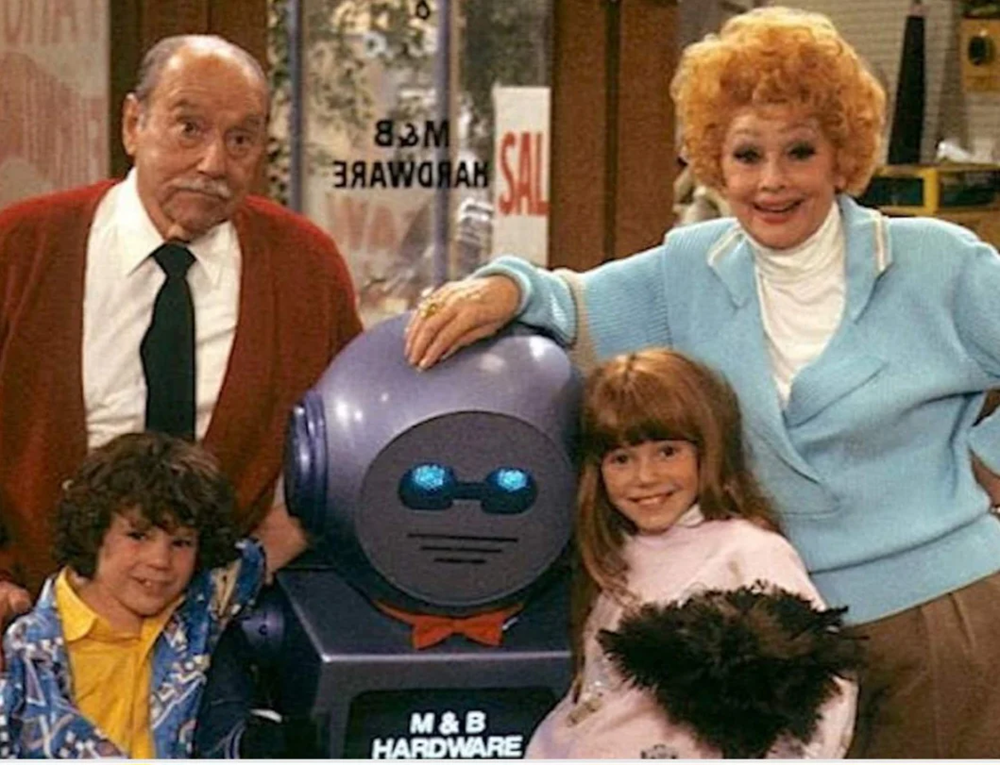
Life With Lucy, 1986-87

This time, Ball was Lucy Carter, another widow and mother to two teenage children (played by you know who), working for her brother-in-law (Gordon) at Carter’s Unique Talent Agency. The show was created by Bob O’Brien and Milt Josefsberg, and – while it wasn’t the instant success story of her earlier outings – scored well for CBS in its Monday night slot, even opposite number one show Rowan & Martin’s Laugh-In. By the end of the 1972-73 season, it slipped out of the top ten for the first time, possibly a result of Ball spending the entire season in a wheelchair, the result of breaking her leg in a skiing accident between seasons. The evergreen Lucy had finally been brought down to earth and with ratings dropping, she filmed a series finale for the end of season five. CBS president Fred Silverman, however, convinced Ball to return for a sixth season, although ratings further declined, and it was announced in February 1974 that Here’s Lucy would end a month later.

After devoting almost twenty-five years to TV, Ball made a movie, Mame, where she played a free-spirited aunt to an orphaned young boy in a decades-spanning bitter-sweet yarn. It wasn’t the success she hoped for, however, and she was tempted back to CBS for a series of TV specials, including 1975’s Lucy Gets Lucky and Lucy Calls the President in 1977. In 1980, after Silverman had moved to NBC, Ball signed a deal with the network to produce a series of sitcoms, the partnership cemented by a TV movie – Lucy Moves to NBC – in February 1980, which starred Gary Imhof as Silverman. In the end, only Bungle Abbey – a sitcom set in a monastery which she directed, and with Gale Gordon as one of the monks, alongside Charlie Callas and Anthony Alda – got even as far as the pilot stage. Subsequent attempts to engineer a return to TV were no more successful.
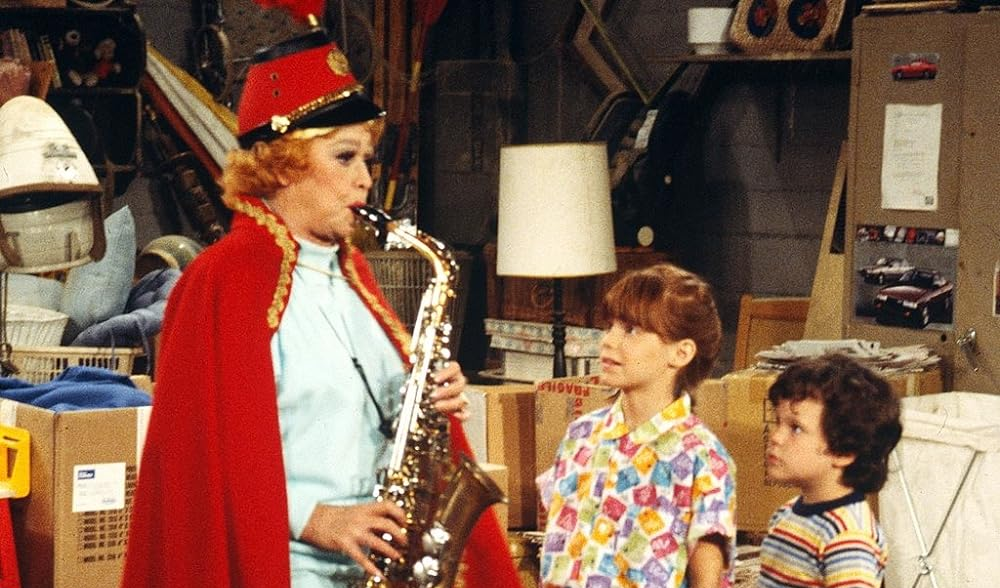
Life With Lucy, 1986-87

In the 1985-86 US TV ratings, Aaron Spelling’s Dynasty had been knocked off the number one spot by The Cosby Show, sparking a trend for shows that revitalised the careers of older stars that also brought Bea Arthur back to prominence in The Golden Girls and Angela Lansbury on Murder, She Wrote. ABC wanted a piece of the pie and turned to Spelling, who’d been trying to tempt Ball back to TV himself for some time. Working with Bob Carroll Jr and Madelyn Davis, they devised Life with Lucy, a familiar-sounding conceit that saw Ball star as Lucy Barker, a widow who inherits her late husband’s hardware store and must learn to get along with his business partner (played, of course, by Gale Gordon). What’s more, her daughter Margot (Jaws 2‘s Ann Dusenberry) is married to his son Ted (Larry Anderson, the original Knight Rider), and they all live together in one big house along with Margot and Ted’s children, Kevin and Becky, the latter played by future indie pop singer Jenny Lewis.

Debuting on Saturday nights in September 1986, Life with Lucy went up against The Facts of Life on NBC, with CBS opting to go with crime drama Downtown. Although the debut episode finished in the top third of shows aired that week, ratings declined sharply as viewers just didn’t take to Lucy Barker as they had Lucy Carter, Lucy Carmichael, and Lucy Ricardo, with Spelling opining that perhaps they were more worried for Ball’s health when she did her usual pratfalls rather than laughing. In the days leading up to the filming of the show’s thirteenth episode, NBC decided to cancel the show, but opted to wait until filming had concluded before breaking the news to Ball. Devastated at the failure, Ball never made another series, her TV appearances reduced to occasional game shows, awards ceremonies, or tributes. In May 1988, she suffered a heart attack and was often in poor health afterwards; less than a year later, she was hospitalised with chest pains and passed away on April 26th 1989 at seventy-seven-years-old.

. . .

Not only did Aaron Spelling Productions have to contend with the failure of Life with Lucy, but in March 1987, the plug was also pulled on The Colbys. From a disappointing 16.0 rating in its first season, the show’s sophomore outing lost another four points, tumbling to sixth-fourth in the final Nielsen rankings for the year. It wasn’t alone, as Hotel lost almost twenty percent of its viewership, and flagship show Dynasty again shed almost nine million viewers, with ABC falling well behind its rivals, especially NBC, which had five of the top seven shows, all sitcoms. Still, Spelling renewed his deal with ABC in August 1987 for another three years, although a non-exclusivity clause came into play, allowing the producer to sell shows to other networks as well as those made as part of his ABC deal.

As usual, Spelling prepared new shows for ABC, four of them for Fall 1987, but just one – drama HeartBeat, starring Laura Johnson, Kate Mulgrew, and Gail Strickland as the founders of a women’s medical clinic – made it through the pilot stage to appear on the schedules. Going unsold were Harry’s Hong Kong (featuring David Soul as an American private eye investigating the death of an old friend in the British colony), The Hope Division (Dorian Harewood’s black cop teams up with Mimi Kuzyk’s white cop to hunt a serial killer), and Free Spirit, a supernatural thriller which saw a newly widowed woman haunted by the ghost of her dead husband, who wants her to solve his murder.
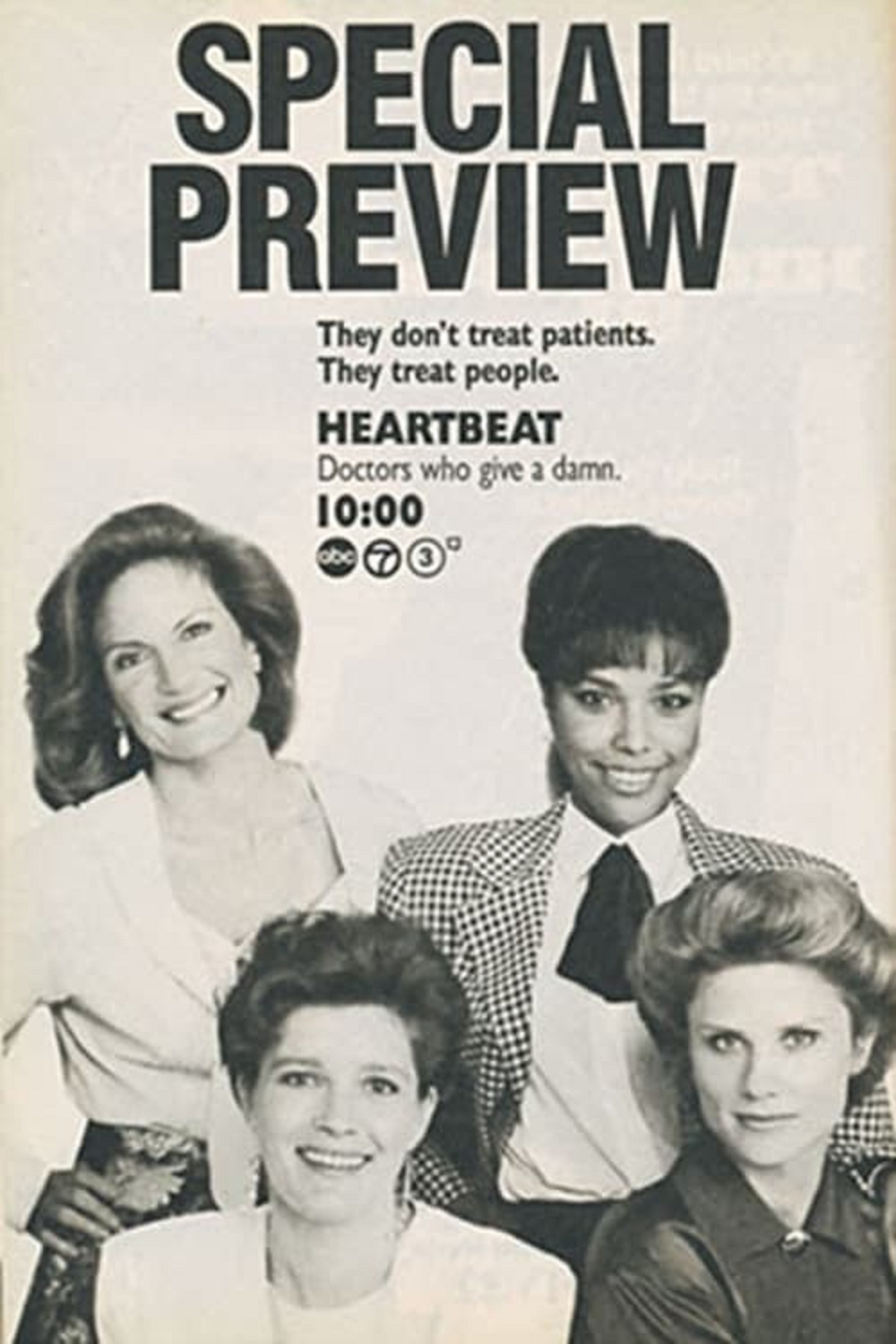
HeartBeat, 1987-88

HeartBeat ended the year as ABC’s fourteenth most popular show, nudging into the top fifty shows across all networks. In forty-first place was Dynasty, again losing viewers and falling behind Dallas-spin-off Knots Landing for the first time. Doing even worse was Hotel, which just scraped into the top one-hundred shows and was put out of its misery, the doors of the St Gregory locked after five seasons. More successful for ABC had been the switch to sitcoms in imitation of NBC’s domination of the ratings from the middle of the decade. Friday nights were now the network’s anchor night for comedies (which would be branded as TGIF – Thank God It’s Funny – from September 1989), and one of just two new Spelling pilots offered to ABC for Fall 1988 was intended to slot into that seam.

Divided We Stand starred Dempsey and Makepiece’s Michael Brandon and Kerrie Keane as divorced parents sharing parenting responsibilities for their young son (Seth Green), but ABC declined to take it to series. They also passed on The Loner, a project uniting Spelling with a most unlikely collaborator in The Driller Killer’s Abel Ferrara, who had directed two episodes of Miami Vice for Michael Mann in 1985, and the pilot for Mann’s follow-up show Crime Story a year later. Created by Larry Gross (who wrote both 48hrs and Streets of Fire for Walter Hill), The Loner starred John Terry – fresh off filming Full Metal Jacket – as an eccentric, wealthy cop who teams with Vanessa Bell Calloway to solve a jewel theft.

The failure of both pilots left Spelling with just two shows on ABC, something which hadn’t been seen since 1973, and worse still was to come. At the end of the 1988-89 season, both Dynasty and HeartBeat were cancelled as new Head of Entertainment, Bob Iger, wanted to refresh the network’s schedules. Hooperman, Moonlighting, and the Police Story reboot also fell before Iger’s axe, but the non-exclusivity clause in Spelling’s contract did at least allow him to sell a pilot to CBS – The Pretenders, starring Amanda Pays as an FBI agent teaming with the twin brother of her dead husband to solve his murder, later shown as part of CBS Summer Playhouse – and convince NBC to take Nightingales, a medical drama featuring Suzanne Pleshette as the supervisor of a group of student nurses.

With Roxann Dawson, Kristy Swanson, and Susan Walters among the young cast, Nightingales debuted as a mid-season replacement in January 1989, but lasted for just thirteen episodes, leaving Aaron Spelling with no shows on air for the first time since striking out on his own in 1965. TV movie Day One, telling the story of the Manhattan Project, was a critical and ratings success when it aired in March 1989, winning an Emmy for Outstanding Drama/Comedy Special, but neither Spelling Productions new shows for Fall 1989 were picked up, with ABC passing on San Berdoo – a detective show set in Palm Springs – and NBC declining to take Just Temporary to series.

Just Temporary, though, would enjoy another life. The pilot was written by Robin Schiff, based on Ladies Room, a play she wrote and performed in as part of a comedy troupe known as The Groundlings. Ladies Room starred Christie Mellor and Lisa Kudrow, two other members of The Groundlings, as Romy and Michelle, two roommates who think with one – mostly empty – mind. Mellor and Kudrow were brought in for the pilot, although they were renamed Torie and Nicole, and although NBC passed on the show, someone at Touchstone Pictures happened across Ladies Room and thought it could be the female version of Wayne’s World they were looking for. Schiff was initially reluctant to turn Ladies Room into a film, fearing it would be an ill fit, but later came up with the idea of her characters attending their high-school reunion, and Kudrow – by now one of the cast of Friends – reprised her role of Michelle alongside Mira Sorvino’s Romy in 1997’s Romy and Michelle’s High-School Reunion.

. . .

Back at Spelling Productions, there was a flurry of activity as Spelling Films International was formed to finance and distribute feature films, and two TV movies were produced, one of which was intended to serve as the final voyage of The Love Boat. Two new pilots were produced, one for ABC as part of Spelling’s contract with the network (which would not be renewed after its August 1990 expiration), and another for Fox. The ABC pilot, Just Life, featured former Dallas star Victoria Principal as a divorced mother of a teenage daughter trying to balance family life with her job as an investigator with the DA’s office, establishing its premise from the off as she sought to prove a young man innocent of the crime the police arrested him for.

ABC passed, but Fox were far more interested in Spelling’s other pilot for a show called Doing Time in Beverly Hills, later renamed to Class of Beverly Hills. Class of Beverly Hills was created by Darren Star, who wrote 1988’s wacky comedy Doin’ Time on Planet Earth, a film which has the distinction of making just $30,000 from a budget of $27 million, one of the last films produced by The Cannon Group. Star based his pilot script on his own experiences as a teenager in Maryland, transplanting them to Beverly Hills at the request of Spelling, who still sought glitz and glamour for his shows. The move was a key part to the show’s success as it allowed for the everyman characters of Brandon and Brenda Walsh (Jason Priestly and Shannon Doherty), two ordinary teens from Minnesota transplanted to a Beverly Hills high school full of rich kids, one of whom – after she auditioned under a false name – was played by Spelling’s daughter, Tori.
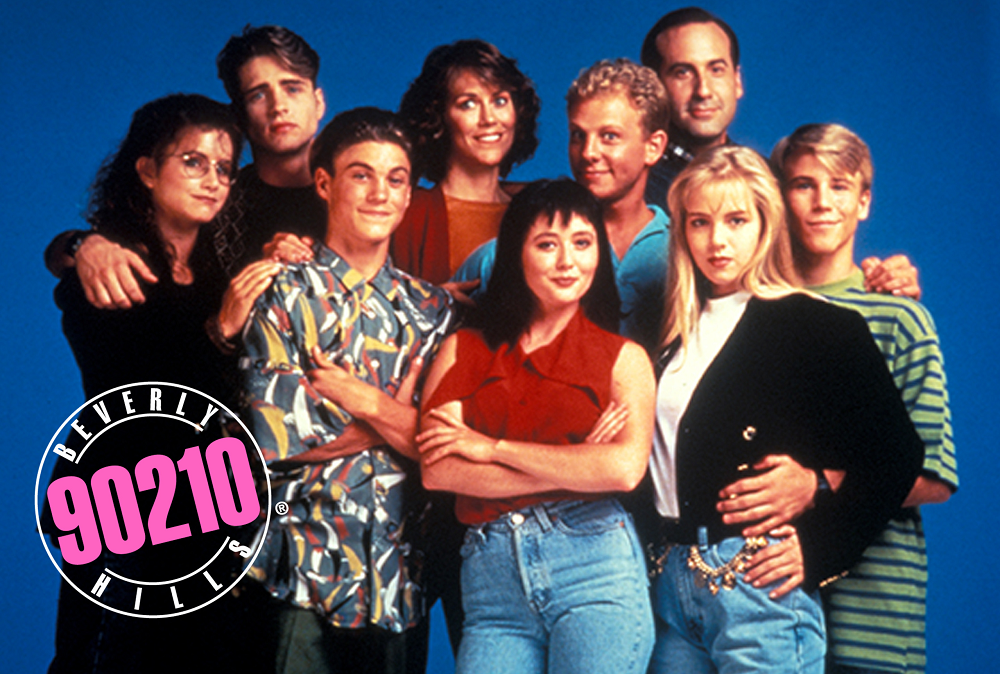
Beverly Hills 90210, 1990-91

Class of Beverly Hills debuted on October 4th 1990 under another new name: Beverly Hills, 90210. The show was part of Fox’s first ever Thursday night line-up, the network having previously only aired on weekends. Fox put in an order for the unusual amount of thirty episodes from Spelling, which proved to be the making of the show when, after struggling for ratings during the regular season, the extra episodes were shown in the Summer of 1991. Usually a dead time for TV viewing, the special “Summer season” of Beverly Hills, 90210 proved a ratings success, especially with teen viewers who would help elevate the show to a pop culture phenomenon and make stars of Priestly, Doherty, Luke Perry, and the rest. The show was such a success for Fox – cracking the top fifty alongside Married… with Children and The Simpsons – that they ordered a spin-off from Spelling, which he duly delivered as a mid-season replacement in July 1992, aiming at that new Summer viewing audience once more.

Melrose Place was another Darren Star creation, centred around the lives of twentysomethings living in a Los Angeles apartment complex. One of their number, Jake, had been introduced as a love interest for 90210’s Kelly, with Jennie Garth making several appearances in the new show to establish the continuity between the two. Although it was nowhere near the sensation of its parent show, Melrose Place earned a regular spot in the Thursday night schedules alongside 90210 and, while their horizons were perhaps a little lower than the heyday of Dynasty at number one in the ratings (and Spelling Productions delivering a quarter of ABC’s primetime line-up), Aaron Spelling had dragged himself back from the brink.

. . .

Although they now enjoyed two hit shows on the Fox network, Spelling Productions did not rest on their laurels ahead of the Fall 1992 season. Free of their commitment to produce content for ABC, they produced two new pilots for NBC, one of which – Back to the Streets of San Francisco – was a reboot of a popular 1970s show. Despite luring original series star Karl Malden back to solve the murder of his former partner (Michael Douglas was busy being flashed by Sharon Stone in Basic Instinct) and setting up a new status quo with Debrah Farentino and Conor O’Farrell as their successors on the SFPD homicide beat, NBC passed, feeling that the nostalgia for the old series couldn’t carry a new one.

NBC were interested in The Round Table, though, with David Bowie’s “Young Americans” chosen to underscore a show about a group of, well, young Americans who frequent the titular bar. All the main characters were involved in some aspect of the criminal process, whether as FBI agents, cops, or lawyers, and twentysomething viewers were expected to take to Stacy Haiduk, Erik King, Roxanne Biggs, and Tom Bresnahan as they had to Andrew Shue, Courtney Thorne Smith, Vanessa A Williams, and the rest on Melrose Place. Unfortunately, they didn’t, and The Round Table was pulled after five episodes, with another two left on the shelf.
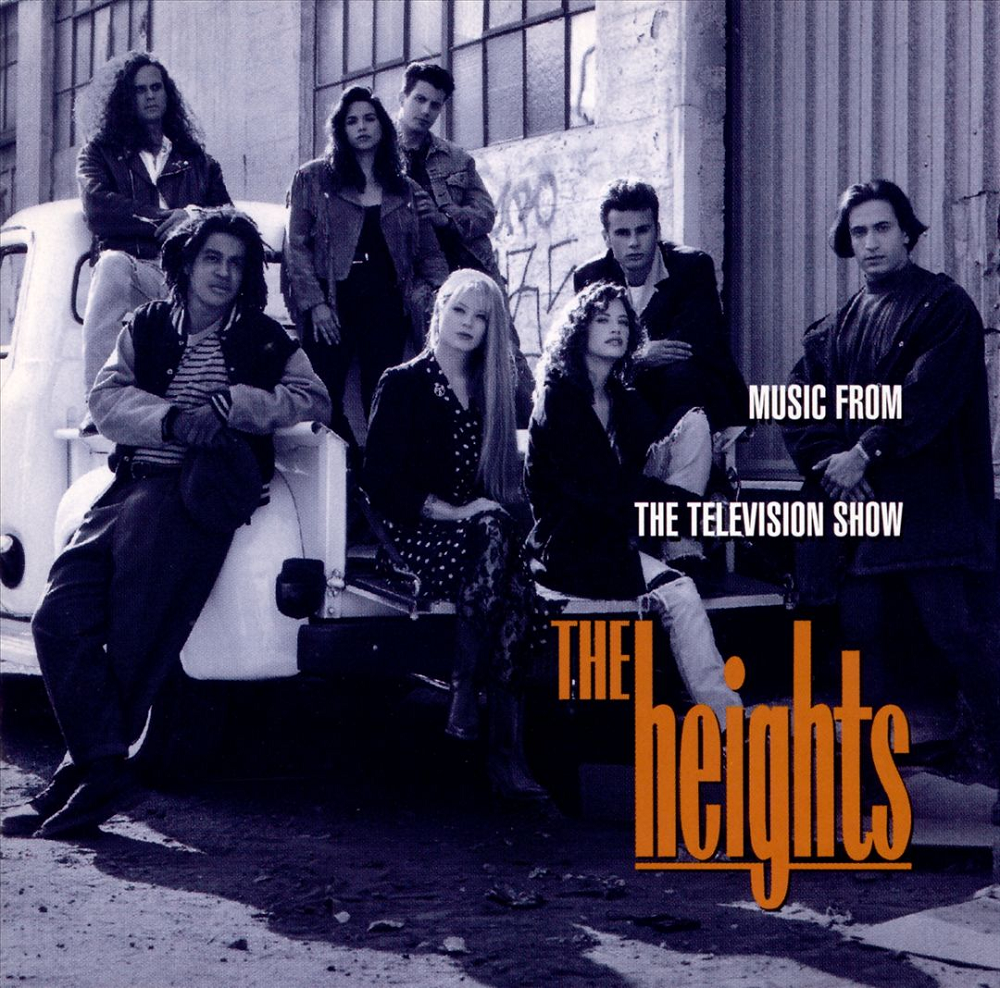
The Heights, 1992-93

On the back of Melrose Place and Beverly Hills, 90210, Fox were happy to accept another offering from Spelling and The Heights duly debuted on August 27th 1992 in a tough Thursday spot opposite the final season of Cheers and top thirty show Wings. Created by Erik Roth (whose Hearts are Wild was a short-lived mid-season replacement on CBS in January) and Tony Spiridakis, The Heights told the story of a fictional band – also called The Heights – led by singer-songwriter Alex (real-life actor-musician Jamie Walters, who also sang the theme song, “How Do You Talk to An Angel?”). Completing the band were singer JT (newcomer Shawn David Thompson), bassist Stan (TV 101’s Alex Désert), keyboard player Lenny (Zachary “Cop Rock” Throne), guitarist Hope (Charlotte Ross from Days of Our Lives), drummer Dizzy (Ken Marito), and saxophonist Rita (Alien Nation‘s Cheryl Pollak).

The show centred as much around the personal and family lives of the band members as their musical exploits, but it was hoped that the show might launch the septet as recording artists in their own right, with “How Do You Talk to An Angel?” released as a single and actually making it to number one in the Billboard Hot 100 on November 14th 1992. Unfortunately, TV ratings didn’t match record sales and follow-up single “I’m Still on Your Side” was pulled from the release schedules as Fox cancelled the show. Within two years, Roth would become one of Hollywood’s most in-demand scriptwriters after adapting Forrest Gump for Robert Zemeckis, while songwriter Steve Tyrell would do the same job for NBC’s Saturday morning live-action show California Dreams, which featured a similar premise.

2000 Malibu Road (CBS, 1992): On August 23rd 1992, an Aaron Spelling show premiered on CBS for the first time since The Smothers Brothers Show went off the air in April 1966. In truth, 2000 Malibu Road was a late-Summer burn-off, its six episodes intended to be the first of a long-running, weekly soap opera aimed at nineties women, with a big name cast and some bigger names involved behind the cameras, only for a dispute over rights between Spelling Productions and the Tiffany network to scupper the project in its infancy.

2000 Malibu Road was created by Terry Louise Fisher, a Chicago native who spent a decade as a lawyer in Los Angeles before quitting to pursue screenwriting. Fisher got her first break as a writer and producer on Cagney & Lacey in 1983, staying with the show until 1986, latterly as a creative consultant. By that point she had co-created her first hit, LA Law, with Steven Bochco, a mix of legal procedural, soap opera, and comedy that was unafraid to touch on hot button topics in its storylines. By the end of its second season, LA Law was the number thirteen show, a rare non-sitcom hit for NBC, but Fisher had found herself barred from the set when negotiations to take over Bochco’s Executive producer role failed and set in motion a lengthy legal battle.

Fisher and Bochco had also co-created Hooperman for ABC and Fisher had signed a three-year development deal with Walt Disney Entertainment, but the legal issues – which were settled in February 1988 – delayed further projects until two unsold pilots for NBC in 1990: Blue Bayou (starring Alfre Woodward as an LA district attorney who moves to New Orleans to be close to her son’s father, played by Mario van Peebles) and Bar Girls (Joanna Cassidy and Marcy Walker as a pair of mismatched lawyers struggling to keep their practice afloat). That gave Fisher the time to concoct 2000 Malibu Road, eagerly snapped up by Spelling Television, with Aaron Spelling acting as executive producer alongside Fisher, The Lost Boys director Joel Schumacher, and Spelling’s long-time collaborator E Duke Vincent.
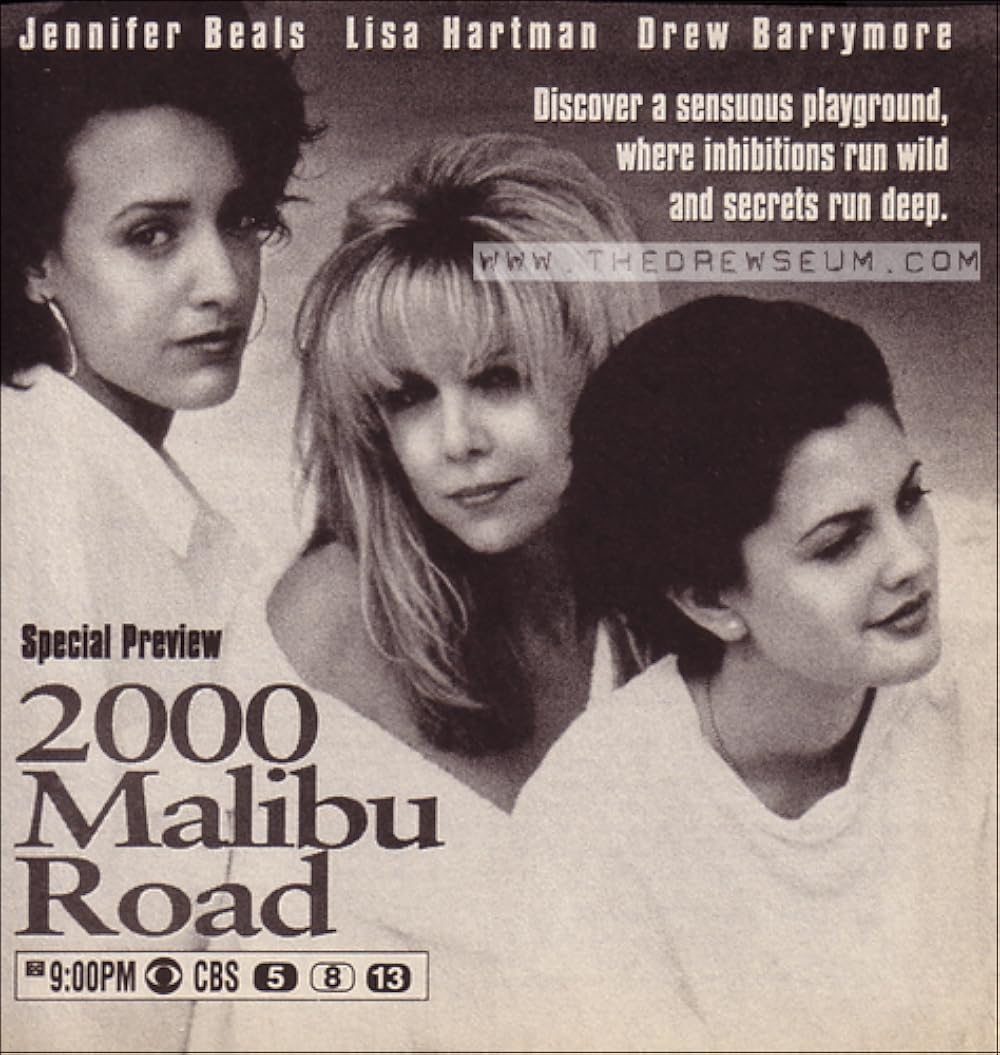
2000 Malibu Road, 1992-93

Schumacher was so taken by Fisher’s pilot script that he signed on to direct the show, and his presence was helpful in attracting Jennifer Beals, Drew Barrymore, Lisa Hartman, and Tuesday Knight to star as the four women who live together in a beach house at the titular address. Okay, so Beals’s career hadn’t exactly soared since she got her break as steelworker turned dancer Alex in Flashdance, and Knight was hardly a household name, but Barrymore was beginning her transition from child star in ET and Firestarter to bankable adult actor, and Hartman spent four years on Dallas spin-off Knots Landing, during which time she also released four albums. Hartman’s Jade O’Keefe was a former prostitute trying to escape that life and taking in lodgers to ensure she can afford to keep living in her beach house. Perry Quinn (Beals) was a young lawyer, eager to start a new life away from her past (a murdered fiancé and a drinking problem), while Lindsay Rule (Barrymore) was an aspiring actress looking for the right part, smothered by her manipulative sister Joy (Knight), who also acts as her agent.

The double-length pilot began with Jade breaking the news that she is quitting the call girl business to her best client, Hal (Robert Foxworth, the man who turned down the part of JR in Dallas), who reacts by trying to drown her. He is stopped by passing neighbour Eric (As the World Turns‘s Brian Bloom), but Jade decides to take one last client, anyway. After he arrives with a mystery woman and tries to kill her, Jade shoots him in the hand and then decides to take in roommates for safety, although you’d imagine she didn’t describe the last few hours to them as part of their induction. The girls arrive and Perry wastes no time reacquainting herself with an old friend, Roger (Michael T Weiss from Days of Our Lives), who is accused of rape, while Lindsay bumps into Eric, whose family are in showbiz and offer her a part in their latest production, much to Joy’s annoyance. Then Jade is arrested for a murder we know she didn’t commit, Eric quits his family’s show, Lindsay gets fired from it, Perry can’t find Roger, and Joy gets annoyed again.

It’s all heady stuff and Schumacher’s direction keeps it barrelling along at a breakneck pace, never letting up until the end of the sixth episode, a cliffhanger which leaves Perry raped and beaten in a stairwell by Roger, Hal (the only man who give Jade an alibi) shot dead by gangsters, and Joy struck by lightning after she finds out Lindsay and Eric are sleeping together. By that time, the project had come off the rails, the various production companies and CBS unable to come to an agreement over the show’s considerable costs and who would own the rights to what. With six episodes in the can, CBS decided to air the show as a stopgap before the new Fall 1992 season line-up debuted, with the two-hour pilot premiering on a Sunday night before the rest of the episodes aired on Wednesdays.

With few viewers ready for brand-new shows in late August, those who found it delighted in its kitsch pleasures and outrageous storylines, and perhaps if it had been a ratings smash, CBS may have been persuaded to get the band back together for more episodes. However, a quarter of the audience for the pilot didn’t return for subsequent episodes and 2000 Malibu Road was marked down as a very expensive flop. While Barrymore and Schumacher rebounded from the failure, Fisher wrote just two Cagney & Lacey reunion movies and saw Daughters of Eve – branded as the first international prime-time soap opera by star Sophia Loren and sponsored by Proctor & Gamble – fall at the pilot stage, despite an offer for Elizabeth Taylor to join the cast if it were greenlit.

. . .

Although Beverly Hills, 90210 continued to score good ratings for the Fox network, Melrose Place struggled a little in its first season, but was nevertheless renewed for a second outing by the network, with Heather Locklear promoted to series regular as her character Amanda Woodward bought and moved into the apartment building. Spelling Productions produced a pilot for another Fox show that Summer, but the network passed on Gulf City, a show about two undercover cops living in a Florida beach house with one of the cops’ sister. CBS, though, were much more receptive to a reboot of Burke’s Law, the show that made Spelling’s name back in the 1960s. Gene Barry was back as millionaire cop Amos Burke, now promoted to Deputy Police Chief, with The Young and the Restless and The Powers of Matthew Star‘s Peter Barton starring as his son, Peter, and doing the lion’s share of the actual crime-fighting.

The revival acknowledged the original’s 1960s roots with a wink, many of the guest stars having starred in similar shows from that time, with the likes of John Astin, Peter Graves, and Patrick Macnee lining up as suspects to be eliminated from the Burkes’ enquiries. Anne Francis reprised her Honey West character from another of Spelling’s 1960s shows, although she was referred to as Honey Best for rights reasons, and the regular cast also featured Dom DeLuise, Danny Kamekona, and Bever-Leigh Banfield. Arriving as a mid-season replacement in January 1994, Burke’s Law did well enough that it was renewed for a sconed half-season, but ratings for that – which aired between March and May 1995 – were disappointing and it was cancelled.
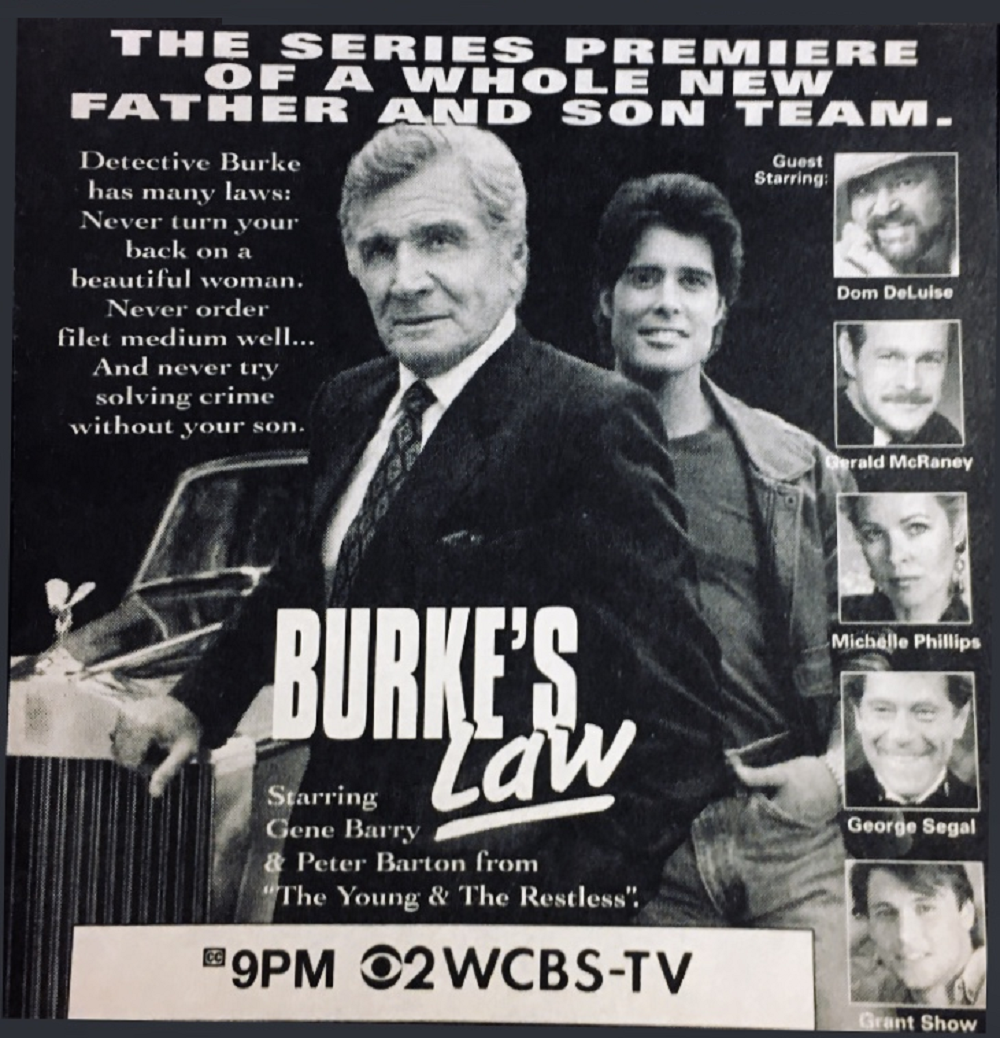
Burke's Law, 1993-94

In March 1994, NBC took the number of Spelling shows on the air up to four when they added Winnetka Road to the schedules while Sisters – which was set in Winnetka, Illinois, but was otherwise unconnected to the new show – took a break. Created by former Sesame Street writer John Byrum (whose script for the 1976 film Harry and Walter Go to New York was sold for a then-record amount), Winnetka Road had an ensemble cast led by Ed Begley Jr, Josh Brolin, Kristen Cloke, and Meg Tilly. They played a group of strangely interconnected people in a small Illinois town, but just five of the six episodes produced were aired before Sisters returned, the sixth remaining unshown. NBC also ordered a pilot for Love on the Run, Jim Cruickshank and James Orr’s show about a mercenary (Anthony Addabbo) who marries an heiress (Noelle Beck) and sets up an adventure travel business, but passed on a full series for Fall 1994.

That was the fate that also met Spelling’s next Fox prospect, with Green Dolphin Beat – written by former Hill Street Blues and Miami Vice scripter Robert Ward – remaining unsold, despite a pilot directed by Tommy Lee Wallace and starring John Wesley Shipp and Jeffrey D Sams as two cops fighting for their jobs while trying to solve the murder of a prostitute in a northwestern city.

Madman of the People (1994): Spelling productions did have two new shows on the Fall 1994 schedules, with Fox giving Melrose Place spin-off Models Inc an early debut in June in an attempt to echo the success of the Summer experiment that rocketed Beverly Hills, 90210 to one of Fox’s biggest shows. Starring Dallas’s Linda Gray as the head of an LA modelling agency (and also the mother of Heather Locklear’s Melrose Place character), it was hoped that the glitz and glamour of Spelling’s Dynasty heyday would mesh seamlessly with his successful 1990s efforts. Unfortunately, despite having 90210 as a lead-in, Models Inc failed to capture enough of an audience and was cancelled after a single, twenty-nine-episode season.

Spelling’s other new offering for 1994 was Madman of the People, a rare sitcom production that was slotted into the Must See TV block, as NBC had branded its popular Thursday night since Fall 1993. Space was made by moving Frasier and Wings to Tuesdays, and their spots were filled by a new show called Friends and Spelling’s new show, a vehicle for veteran character actor Dabney Coleman. Coleman had started acting after flunking out of law school in the 1950s and was soon contracted to Universal Television as a perennial guest star, finally landing his first regular role, as Marlo Thomas’s next-door neighbour in That Girl.
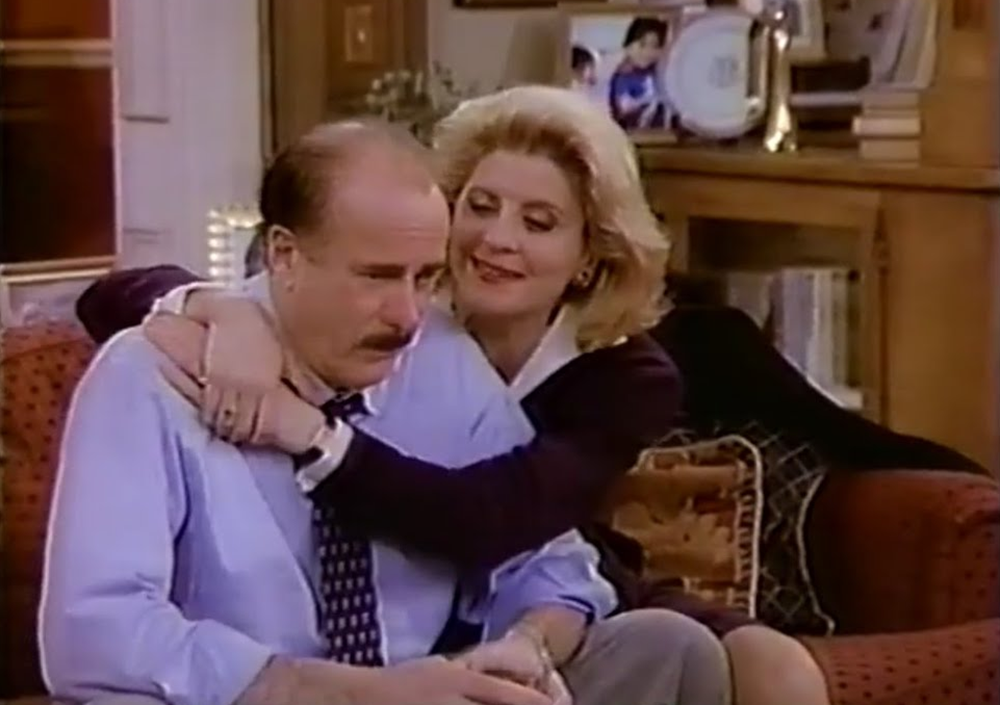
Madman of the People, 1994-95

Coleman’s star rose considerably when he played sexist boss Franklin Hart Jr in 9 to 5, establishing him as go-to comedic villain, a role he played in Tootsie, The Muppets Take Manhattan, and the 1987 movie version of Dragnet. Madman of the People found him as Jack “Madman” Buckner, an outspoken columnist for the fictional Your Times magazine. His column, sharing a name with the show, comes under threat when the magazine’s owners hire someone to bring Your Times into the 1990s – Buckner’s daughter, Meg (Cynthia Gibb)! Created by a team including Cheers creator James Burrows, veteran director Jim Drake, and actor John Ratzenberger, Madman of the People had a good pedigree, the show’s writing team having come from Night Court and Mad About You, with Burrows, Drake, Ratzenberger, and Roseanne’s Phillip Charles Mackenzie behind the camera.

Fitting well into the Thursday night line-up, it averaged twenty-two million viewers; the November 3rd episode was even a crossover of sorts with that evening’s Mad About You and Friends, with all three shows dealing with the after-effects of a blackout in New York. However, despite being NBC’s fifth highest-rating show (all of them on Thursday evenings), and the twelfth best rating show across all networks, Madman of the People was cancelled in January 1995 after just fourteen episodes, with another two episodes shelved until June. NBC cited the loss of over five million viewers from lead-in show Seinfeld and believed that was hampering ER at 10pm. They chose to shuffle their pack, moving Friends to 9.30pm and debuting Hope & Gloria at 8.30pm, leaving Madman of the People as one of the highest rating shows ever to be cancelled for ratings reasons.

Next time on Titans of Telephemera: The debut of the Spelling Premier Network and what Y2K has in store for Aaron Spelling…

Check out our other Telephemera articles:

The Telephemera Years: pre-1965 (part 1, 2, 3, 4)

The Telephemera Years: 1965 (part 1, 2, 3, 4)

The Telephemera Years: 1966 (part 1, 2, 3, 4)

The Telephemera Years: 1967 (part 1, 2, 3, 4)

The Telephemera Years: 1968 (part 1, 2, 3, 4)

The Telephemera Years: 1969 (part 1, 2, 3, 4)

The Telephemera Years: 1970 (part 1, 2, 3, 4)

The Telephemera Years: 1971 (part 1, 2, 3, 4)

The Telephemera Years: 1973 (part 1, 2, 3, 4)

The Telephemera Years: 1974 (part 1, 2, 3, 4, 5)

The Telephemera Years: 1975 (part 1, 2, 3, 4)

The Telephemera Years: 1976 (part 1, 2, 3, 4)

The Telephemera Years: 1977 (part 1, 2, 3, 4)

The Telephemera Years: 1978 (part 1, 2, 3, 4)

The Telephemera Years: 1979 (part 1, 2, 3, 4, 5, 6)

The Telephemera Years: 1980 (part 12, 3, 4)

The Telephemera Years: 1981 (part 1, 2, 3, 4)

The Telephemera Years: 1982 (part 1, 2, 3, 4)

The Telephemera Years: 1983 (part 1, 2, 3, 4)

The Telephemera Years: 1984 (part 1, 2, 3, 4)

The Telephemera Years: 1986 (part 1, 2, 3, 4)

The Telephemera Years: 1987 (part 1, 2, 3, 4)

The Telephemera Years: 1988 (part 1, 2, 3, 4, 5)

The Telephemera Years: 1989 (part 1, 2, 3, 4)

The Telephemera Years: 1990 (part 1, 2, 3, 4)

The Telephemera Years: 1991 (part 1, 2, 3, 4)

The Telephemera Years: 1992 (part 1, 2, 3, 4)

The Telephemera Years: 1994 (part 1, 2, 3, 4)

The Telephemera Years: 1995 (part 12, 3, 4)

The Telephemera Years: 1997 (part 1, 2, 3, 4)

The Telephemera Years: 1998 (part 1, 2, 3, 4)

The Telephemera Years: 1999 (part 1, 2, 3, 4)

The Telephemera Years: 2000 (part 1, 2, 3, 4)

The Telephemera Years: 2001 (part 1, 2, 3, 4)

The Telephemera Years: 2002 (part 1, 2, 3, 4)

The Telephemera Years: 2003 (part 1, 2, 3, 4)

The Telephemera Years: 2005 (part 1, 2, 3, 4)

The Telephemera Years: 2006 (part 1, 2, 3, 4)

The Telephemera Years: 2007 (part 1, 2, 3, 4)

The Telephemera Years: 2008 (part 1, 23, 4)

The Telephemera Years: O Canada! (part 1, 2, 3, 4)

Titans of Telephemera: Irwin Allen

Titans of Telephemera: Stephen J Cannell (part 1, 2, 3, 4)

Titans of Telephemera: DIC (part 1, 2)

Titans of Telephemera: Filmation (part 1, 2)

Titans of Telephemera: Hanna-Barbera (part 1, 2, 3, 4, 5)

Titans of Telephemera: Kenneth Johnson

Titans of Telephemera: Sid & Marty Krofft

Titans of Telephemera: Glen A Larson (part 1, 2, 3, 4)

Titans of Telephemera: Quinn Martin (part 1, 2)

Titans of Telephemera: Rankin/Bass

Titans of Telephemera: Ruby-Spears

Titans of Telephemera: Aaron Spelling (part 1, 2)

Titans of Telephemera: Sunbow

TITANS OF TELEPHEMERA: Aaron Spelling (part 2)

Hotel, 1983-84

Ah, telephemera… those shows whose stay with us was tantalisingly brief, snatched away before their time, and sometimes with good cause. Dedicated miners of this fecund seam begin to notice the same names cropping up, again and again, as if their whole career was based on a principle of throwing stuff at the wall and seeing what sticks. What’s more, it isn’t all one-season failures and unsold pilots, there’s genuine gold to be found amongst their hoards; these men are surely the Titans of Telephemera!

Aaron Spelling

For many people, Aaron Spelling’s legacy begins and ends with Dynasty. If that were all he achieved, he could rest on his laurels as one of US TV’s moguls, bringing glitz and glamour into the homes of millions in a decade when Capitalism took a firm hold on the world it has since refused to relinquish. Perhaps other might remember him for Beverly Hills, 90210 or recall that he was the man who shepherded Charlie’s Angels into the world, but that’s to ignore a five-decade career in television, as an actor, a scriptwriter, and producer, turning a frail Jewish boy from Dallas, Texas, into a name synonymous with American television.

Spelling’s TV career began as an actor in I Led Three Lives and Dragnet in 1953, but never rose above small guest roles and switched to scriptwriting in 1956, selling his first script to The Jane Wyman Show. That same year, he produced a pilot for a TV show based on the popular radio series Box 13, and began working for Four Star Television as producer for western series Zane Grey Theater and Johnny Ringo in 1959, the latter of which he also created. While at Four Star, he enjoyed his first big hit in Burke’s Law, which starred Gene Barry as a millionaire police captain and established the star guest formula he’d employ on many of his later shows.

In 1965, Spelling signed a deal with United Artists Television to form his own production company – Aaron Spelling Productions, and over the next fifteen years Spelling would produce over a hundred TV shows and TV movies. While he had his fair share of misses, both near and not so (and we covered The Return of the Mod Squad (1979) in a previous edition of The Telephemera Years), Spelling began a period of huge success in 1975 with Starsky & Hutch, followed by Charlies Angels (1976), Family (1976). The Love Boat (1977), Fantasy Island (1977), Vegas (1978), and Hart to Hart (1979). We left off last time as Dynasty arrived, ensuring Spelling’s name would remain in lights throughout the 1980s, but the next few years – while free of the usual STARBURST fare – make for very interesting reading and were far from plain sailing…

. . .

Aaron Spelling Productions ended the 1981-82 Nielsen ratings with three shows in the top twenty, and another two at thirty and thirty-one, but the failure of Strike Force left them still looking to shore up their line-up, which already provided almost a quarter of ABC’s primetime offerings. As ever, a slate of potential new shows for the Fall 1982 line-up reached the pilot stage, with ABC given the pick of five such offerings that made it that far. They passed on Massarati and the Brain, which starred Daniel Pilon as a billionaire private detective solving crimes with the help of genius nephew (played by Peter Billingsley, soon to appear as Ralphie in A Christmas Story) and on sitcom Scared Silly, a John Astin-directed affair that featured Donovan Scott and stand-up comedian Jeff Altman as a pair of paranormal investigators hired to rid a spooky mansion of its resident spirit, written by The Jerk’s Michael Elias and Head of the Class creator Rich Eustis. They also decided against a full series for The Wild Women of Chastity Gulch, an Old West comedy which even Donny Osmond and an appearance from Dynasty’s Joan Collins couldn’t save.

More successful was Matt Houston, a strange chimera of a show that really shouldn’t have worked but nonetheless found its supporters at ABC and an audience on Sunday nights. Created by Lawrence Gordon, a solid hand who had worked with Aaron Spelling since Burke’s Law in 1963 and created The New People for Spelling in 1969, Matt Houston starred Lee Horsley – fresh from appearing as Prince Talon in The Sword and the Sorceror – in the title role, a wealthy Texan oil magnate who uses his spare time to moonlight as a private detective in Los Angeles. Despite a premise that had all the hallmarks of being created by throwing darts at a dartboard, Horsley carried the show with panache, aided by a solid supporting cast (which included Buck Rogers in the 25th Century‘s Pamela Hensley as his lawyer sidekick) and a seemingly never-ending supply of murdered or robbed friends to provide casework.

Matt Houston, 1982-83

In March 1983, the six Spelling shows were joined by a seventh as At Ease, which ABC had reserved as a mid-season replacement, took over a spot vacated by The New Odd Couple on Friday nights. The updated version of Neil Simon’s classic sitcom had failed to find an audience, despite (and hopefully not because of) an intriguing switch to have black actors in the roles of Felix and Oscar. and was cancelled after eighteen episodes. At Ease was a rare thirty-minute sitcom production from Spelling, set on a US Army base and starring David Naughton from An American Werewolf in London and Jimmie “Good Times“ Walker as computer technicians looking for an easy life. Essentially The Phil Silvers Show’s Sgt Bilko set-up but with computers instead of the motor pool, At Ease was created by National Lampoon writer John Hughes, who within a year would have writing credits on National Lampoon’s Class Reunion, Mr Mom, and National Lampoon’s Vacation, and who would make his directorial debut with Sixteen Candles in 1984.

Running for fourteen episodes, At Ease was not renewed for a second season, despite Hughes’s advances elsewhere, but Spelling still finished the 1982-83 season with three shows rating in the top twenty. What’s more, Dynasty was now the number five show and The Love Boat climbed into the top ten on the back of its usual parade of celebrity guests, which in season six included such needle-movers as Milton Berle, Ernest Borgnine, Lorne Greene, Florence Henderson, Mickey Rooney, and Adam West, as well as the ubiquitous Joan Collins and Spelling’s daughter Tori (who’d made her debut in an episode of Vega$ in 1981 and would play a string of small roles in his shows until striking out on her own in 1987, with negligible success). It is possible, though, that The Love Boat‘s renaissance was purely down to episode twenty-five’s double-bill of Catherine Bach and Heather Thomas, which presumably broke both the ratings and the zippers of many adolescent boys.

1983 brought a new hit show in the shape of Hotel, based on Arthur Hailey’s 1965 novel of the same name, a staple of second-hand bookshops all over the English speaking world from the mid-1980s onwards. Hotel had been adapted into a 1967 film starring Rod Taylor as hotel manager Peter McDermott, but for Aaron Spelling’s TV version – developed by John Furia Jr and Barry Oringer – it was James Brolin in the hot seat, working under rich owner Victoria Cabot (Anne Baxter), a change from the novel’s Warren Trent. Hotel debuted on September 21st 1983 and became an instant hit, ending the year as the ninth most-watched show on US TV, using The Love Boat‘s guest star of the week formula to great effect. It was a welcome success for Spelling, who saw two other pilots – Shotting Stars, starring Billy Dee Williams and Parker Stephenson as two actors play private detectives who become private detectives for real when they are fired from their acting jobs, and hospital sitcom Venice Medical – fail to make it to series.

The success of Hotel was balanced out by a fall in viewing figures for The Love Boat, Matt Houston, Hart to Hart, and Fantasy Island (which had even jettisoned Hervé Villechaize’s Tattoo in an effort to turn things around). The latter two fell out of the top forty shows and were cancelled after three and seven seasons, respectively, but The Love Boat held on, still earning a 19.0 rating. TJ Hooker improved its position in the Nielsens to forty-one from fifty-three, while Dynasty flew even higher than before, adding almost two ratings points and beaten by only Dallas and 60 Minutes. With two shows out and only one show in, Spelling Productions lined up four new shows for ABC for Fall 1984. Velvet, an attempt to do a new version of Charlie’s Angels, starred Leah Ayres, Shari Belafonte, Mary-Margaret Humes, and Sheree J Wilson as four secret agents who worked undercover as aerobics instructors, but the network passed on taking it to series, perhaps wondering just how many scenarios would call for aerobics’ classes, even in the calisthenics-obsessed 1980s.

Glitter, 1984-85

Of the other three pilots, two were greenlit for Fall and Glitter debuted first, starring David Birney and Morgan Brittany as crusading journalists working for the eponymous entertainment magazine. With each episode focussing on a number of stories being investigated by the magazine’s staff of writers, there was ample room for guest appearances, a formula that experienced creators Art Baer, Ben Joelson, and Nancy Sackett knew Spelling would find appealing. Going head-to-head with Simon & Simon on CBS and both Cheers and Night Court on NBC, Glitter struggled to attract an audience from the outset and was pulled from the schedule after just three episodes for a rethink. It was moved to a relatively attractive slot on Tuesday nights in December, with no serious competition from the other networks, but despite guest appearances from the likes of Linda Evans, Erin Moran, Markie Post, and Ginger Rogers, it lasted just three more episodes before disappearing once more. The final eight produced episodes were shown in December 1985 over a period of two weeks.

Starting nine days after Glitter, in a Saturday night slot with both TJ Hooker and The Love Boat as its lead-ins, Finder of Lost Loves was co-created by Art Baer’s nice Jill, alongside Mary Hartman, Mary Hartman creator Gail Parent and Christopher Vane. Baer had written a string of episodes for The Love Boat and, again, the Spelling formula obviously rubbed off, with this new show also leaning heavy on famous (or at least semi-­famous) guest stars as the customers lining up to be reunited with former flames. Tony Franciosa starred as Cary Maxwell, a private detective who makes it his life’s work to play matchmaker after the death of his wife, with the help of Deborah Adair, fresh off a season on Dynasty, and Topper’s Anne Jeffreys. Tom Bosley, Kathy Lee Crosby, Buddy Ebsen, Leslie Nielsen, Dick Sargent, and Dick van Patten were among those seeking romantic assistance, but audiences were less keen and Franciosa’s agency was closed down after just one season.

With Glitter’s departure from the schedules in December 1984, another Spelling show was brought in as a mid-season replacement, this time one directly looking to take on Riptide, the NBC detective show that most appealed to those watching TV on Tuesdays at 9pm. From Strike Force creator Lane Slate, MacGruder and Loud was also looking to appeal to fans of Cagney & Lacey, CBS’s Monday night police procedural that also leaned heavy on the domestic dramas of its principals, Sharon Gless and Tyne Daly. John Getz and Kathryn Harrold starred as a married couple working together as LAPD detectives in a department where fraternisation between partners was strictly forbidden, and so the show was as much about them trying to keep their marriage a secret from their bosses as it was about the crimes they solved. Debuting right after Super Bowl XIX on January 20th 1985 before settling into its regular Tuesday slot, ratings tumbled from the off and there was no sign of the show once the Fall 1985 schedules were released, a fate which also met Matt Houston, finishing up in July 1985 after three seasons.

TJ Hooker, which despite William Shatner’s star power had often struggled for ratings, should have joined Finder of Lost Loves and Matt Houston on the chopping block in the summer of 1985, and its final episode even threw a Hail Mary – never followed up on – which saw Hooker move to Chicago to work undercover on a drugs case. ABC did cancel the show, but CBS stepped in, albeit with a much-reduced budget and no Adrian Zmed (who left to host syndicated music show Dance Fever). It marked the first time since 1968’s The Danny Thomas Hour that an Aaron Spelling production aired on a network other than ABC, although Spelling’s relationship with the network was far from over, with Dynasty now the number one rated show, beating Dallas for the first time to claim that honour. Hotel, too, was doing well, coming in at number eleven in the Nielsen rankings for the 1984-85 season, although The Love Boat – once the jewel in the Spelling crown – was languishing down in the mid-forties, dangerously near to the threshold for cancellation.

The Colbys, 1985-86

The ongoing success of Dynasty made a spin-off inevitable, and The Colbys – initially rather obviously billed as Dynasty II: The Colbys – duly arrived in November 1985, developed by Dynasty producers Eileen and Robert Pollock, the husband-and-wife team responsible for the introduction of Joan Collins as Alexis Carrington into the show, one of a series of moves the pair made that turned Dynasty’s fortunes around. The Colbys focussed on an offshoot of the Colby family based in California, with an amnesiac Fallon Carrington Colby returning from the dead to become the main link between the shows, although much of the drama was provided by Charlton Heston and Stephanie Beachum as the warring married couple at the head of the California clan. With California providing a much more opulent location than boring old Denver, it was expected that The Colbys would soon surpass its parent show and it was accordingly handed a much bigger budget, although its premiere episode – aired with Dynasty as its lead-in, rated slightly less than its more established “rival.”

The Colbys was just one of just two new Aaron Spelling shows to debut on ABC that Fall, with another – International Airport, – stalling at the pilot stage. ABC were not convinced by the potential of a show set in a busy airport (which would, of course, have allowed for Spelling’s requisite guest stars), despite the presence of Buck Rogers in the 25th Century‘s Gil Gerard, The Greatest American Hero’s Connie Sellecca, and Berlinda Tolbert from The Jeffersons among the airport’s staff. The pilot aired as a TV movie in May 1985.

Next time on Titans of Telephemera: What was Aaron Spelling’s other new show for 1985 and why did it fail? Also: Lucy!

Check out our other Telephemera articles:

The Telephemera Years: pre-1965 (part 1, 2, 3, 4)

The Telephemera Years: 1965 (part 1, 2, 3, 4)

The Telephemera Years: 1966 (part 1, 2, 3, 4)

The Telephemera Years: 1967 (part 1, 2, 3, 4)

The Telephemera Years: 1968 (part 1, 2, 3, 4)

The Telephemera Years: 1969 (part 1, 2, 3, 4)

The Telephemera Years: 1970 (part 1, 2, 3, 4)

The Telephemera Years: 1971 (part 1, 2, 3, 4)

The Telephemera Years: 1973 (part 1, 2, 3, 4)

The Telephemera Years: 1974 (part 1, 2, 3, 4, 5)

The Telephemera Years: 1975 (part 1, 2, 3, 4)

The Telephemera Years: 1976 (part 1, 2, 3, 4)

The Telephemera Years: 1977 (part 1, 2, 3, 4)

The Telephemera Years: 1978 (part 1, 2, 3, 4)

The Telephemera Years: 1979 (part 1, 2, 3, 4, 5, 6)

The Telephemera Years: 1980 (part 12, 3, 4)

The Telephemera Years: 1981 (part 1, 2, 3, 4)

The Telephemera Years: 1982 (part 1, 2, 3, 4)

The Telephemera Years: 1983 (part 1, 2, 3, 4)

The Telephemera Years: 1984 (part 1, 2, 3, 4)

The Telephemera Years: 1986 (part 1, 2, 3, 4)

The Telephemera Years: 1987 (part 1, 2, 3, 4)

The Telephemera Years: 1988 (part 1, 2, 3, 4, 5)

The Telephemera Years: 1989 (part 1, 2, 3, 4)

The Telephemera Years: 1990 (part 1, 2, 3, 4)

The Telephemera Years: 1991 (part 1, 2, 3, 4)

The Telephemera Years: 1992 (part 1, 2, 3, 4)

The Telephemera Years: 1994 (part 1, 2, 3, 4)

The Telephemera Years: 1995 (part 12, 3, 4)

The Telephemera Years: 1997 (part 1, 2, 3, 4)

The Telephemera Years: 1998 (part 1, 2, 3, 4)

The Telephemera Years: 1999 (part 1, 2, 3, 4)

The Telephemera Years: 2000 (part 1, 2, 3, 4)

The Telephemera Years: 2001 (part 1, 2, 3, 4)

The Telephemera Years: 2002 (part 1, 2, 3, 4)

The Telephemera Years: 2003 (part 1, 2, 3, 4)

The Telephemera Years: 2005 (part 1, 2, 3, 4)

The Telephemera Years: 2006 (part 1, 2, 3, 4)

The Telephemera Years: 2007 (part 1, 2, 3, 4)

The Telephemera Years: 2008 (part 1, 23, 4)

The Telephemera Years: O Canada! (part 1, 2, 3, 4)

Titans of Telephemera: Irwin Allen

Titans of Telephemera: Stephen J Cannell (part 1, 2, 3, 4)

Titans of Telephemera: DIC (part 1, 2)

Titans of Telephemera: Filmation (part 1, 2)

Titans of Telephemera: Hanna-Barbera (part 1, 2, 3, 4, 5)

Titans of Telephemera: Kenneth Johnson

Titans of Telephemera: Sid & Marty Krofft

Titans of Telephemera: Glen A Larson (part 1, 2, 3, 4)

Titans of Telephemera: Quinn Martin (part 1, 2)

Titans of Telephemera: Rankin/Bass

Titans of Telephemera: Ruby-Spears

Titans of Telephemera: Aaron Spelling (part 1)

Titans of Telephemera: Sunbow

TITANS OF TELEPHEMERA: Aaron Spelling (part 1)

Ah, telephemera… those shows whose stay with us was tantalisingly brief, snatched away before their time, and sometimes with good cause. Dedicated miners of this fecund seam begin to notice the same names cropping up, again and again, as if their whole career was based on a principle of throwing stuff at the wall and seeing what sticks. What’s more, it isn’t all one-season failures and unsold pilots, there’s genuine gold to be found amongst their hoards; these men are surely the Titans of Telephemera!

Aaron Spelling

For many people, Aaron Spelling’s legacy begins and ends with Dynasty. If that were all he achieved, he could still rest on his laurels as one of US TV’s moguls, bringing glitz and glamour into the homes of millions in a decade when Capitalism took a firm hold on the world, a hold it has since refused to relinquish. Perhaps other might remember him for Beverly Hills, 90210 or recall that he was the man who shepherded Charlie’s Angels into the world, but that’s to ignore a five-decade career in television – as an actor, a scriptwriter, and producer – which turned a frail Jewish boy from Dallas, Texas, into a name synonymous with American television.

Spelling’s TV career began as an actor in I Led Three Lives and Dragnet in 1953, but he never rose above small guest roles and switched to scriptwriting in 1956, selling his first script to The Jane Wyman Show. That same year, he produced a pilot for a TV show based on the popular radio series Box 13, and began working for Four Star Television as producer for western series Zane Grey Theater and Johnny Ringo in 1959, the latter of which he also created. While at Four Star, he enjoyed his first big hit when he created Burke’s Law, starring Gene Barry as a millionaire police captain, establishing the star guest formula he’d employ on many of his later shows, in this case forming a list of suspects for Burke to narrow down.

In 1965, Spelling signed a deal with United Artists Television to form his own production company – Aaron Spelling Productions – and over the next decade he would produce over seventy-five short-lived shows and TV movies, sometimes in association with comedian Danny Thomas or Screen Gems TV boss Leonard Goldberg. Many of his shows lasted for just a single season and, with the notable exceptions of 1968’s The Mod Squad and 1972’s The Rookies, Spelling’s record as a producer began to resemble a laundry list of failed pilots and cancelled shows. All that changed in April 1975 when a Spelling-Goldberg Production named Starsky & Hutch debuted on ABC, bringing a new type of cop show for a new decade as the long sixties faded away. Created by William Blinn, David Starsky and Ken Hutchinson were two brotherly beacons of hope in a savage city, Lalo Schifrin’s theme music and the squealing tyres of Starsky’s Ford Gran Torino announcing their arrival.

Starsky & Hutch was quickly followed by Charlie’s Angels in 1976 as women everywhere got the chance to do some vicarious ass-kicking through Ivan Goff and Ben Roberts’s show, while men got to admire the shapely figures and lustrous locks of Tom Bosley’s charges. A year later, The Love Boat embarked, turning Jeraldine Saunders’s tell-all book about her time as cruise hostess into a nine-year voyage full of star guest appearances and a weekly dose of romance and intrigue. It wasn’t all smooth sailing, though, and this is what happened next…

The San Pedro Beach Bums (ABC, 1977): After three pilot movies, The Love Boat finally set sail on Saturday nights on ABC in September 1977, taking the number of Aaron Spelling productions on the network to five. Starsky & Hutch, Charlie’s Angels, and Family had already established themselves, and there were great hopes that The Love Boat would do the same, and that another new show – The San Pedro Beach Bums – might strike a chord with a younger crowd looking for a hip, new sitcom to brighten their Monday evenings. As The San Pedro Bums, a feature-length pilot had aired on ABC in May 1977 and did well enough that the network greenlit a full series and scheduled it as the lead-in to Monday Night Football, considering the two a good fit.

Created by former Blue Angel pilot E Duke Vincent, who’d cut his producing teeth on Gomer Pyle, USMD and The Jim Nabors Hour before joining Spelling Productions, The San Pedro Beach Bums – Beach was added to the title after the pilot for fear that people might confuse it with a show about hobos – featured five young men who discover an abandoned houseboat in San Pedro, California. Renaming it Our Boat, they move in and use it as a base for their adventures, ridding the harbour of a gang of toughs and inveigling some local girls into their schemes. Vincent handed over producing duties to Earl Barrett and Simon Muntner for the series, and they landed a coup for the premiere in the form of a crossover with Charlie’s Angels as Kate Jackson, Cheryl Ladd, and Jacyln Smith appear as themselves to judge the Miss Harbor beauty contest.

San Pedro Beach Bums, 1977-78

A week later, former New York Giant Frank Gifford guest starred as the boys decided to teach a cheating football team how to play fair, as a tie-in with that night’s Cleveland Browns versus New England Patriots NFL game, and the hijinks continued from there, taking in stints as private eyes, lovelorn Soviet sailors, hidden thoroughbred horses, and more. The bums were largely newcomers to TV, led by Christopher Murney as Buddy, with Chris DeRose (a future International Peace Award winner for his work in animal rights) taking over the role of Boychick from the pilot’s Jeff Druce. Stuart Pankin as Stuf, Darryl McCullagh as Moose, and John Mark Robinson – who would go on to direct the video for The Pretender’s “Brass in Pocket,” “Redemption Song” by Bob Marley, and Tina Turner’s “What’s Love Got to Do with It?” – as Dancer.

Despite the tie-ins and the solid scheduling, The San Pedro Beach Bums failed to attract much of an audience, especially in the face of competition from Little House on the Prairie on NBC. After just ten episodes, ABC pulled the plug, with an eleventh episode in the can remaining unaired. None of the cast went on to do much else in TV, save for Kristoff St John – the gang’s pal Ralphie – who spent twenty-eight years on The Young and the Restless until his death in 2019.

Friends (ABC, 1979): Despite the failure of Kate Bliss and the Ticker Tape Kid – from William Bowers and Burt Kennedy, the team who made Support Your Local Sheriff!, and starring Suzanne Pleshette and Don MeredithAaron Spelling Productions did bring a new show to air in the 1978-79 season, although they had to settle for a mid-season replacement slot for Friends, created by writer Dan Wakefield. Wakefield, whose 1973 novel Starting Over had just been turned into a movie starring Burt Reynolds and Jill Clayburgh, had been involved with a previous TV production, James at 15, as creator and story editor, but had walked over a dispute about the character losing his virginity to a Swedish exchange student.

Wakefield’s involvement in Friends ended at writing the original screenplay, which was used for the pilot (subsequently slotted in as the series’ second episode). The set-up was innovative, a look at the lives of ordinary Americans through the eyes of three eleven-year-olds in southern California. Nancy (The Love Boat‘s Jill Whelan, whose poster adorned many a fifth grader’s wall), Pete (newcomer Charlie Aiken), and Randy (Jarrod Johnson, from Sid and Marty Krofft’s The Lost Saucer and fish-out-of-water sitcom Szysznyk)  are schoolfriends who come from different social and ethnic backgrounds, allowing the show to explore not only the trials and tribulations of adolescence, but also issues surrounding race and class in modern America.

Friends, 1979-80

Peer pressure, the generation gap, the nature of friendship, and school problems are touched on as the show slotted into a difficult Sunday night spot that had already been vacated by The Hardy Boys and The Osmond Family Hour as 60 Minutes and the Wonderful World of Disney hoovered up most of the available viewers. The show featured a strong supporting cast, with Janet MacLachlan, Karen Morrow, Dennis Redfield, Roger Robinson, and Andy Romano as the kids’ parents, and guest roles from Charles Lampkin, Anne Schedeen (later to star as Kate on ALF), and The Best of Everything‘s Patty McCormack. A smart, mature show about pre-teens was way ahead of its time, though, and ABC pulled it from the schedules after just five episodes were aired, using the slot for the remaining episodes of The Osmond Family Hour before trying again in the Fall with Mork & Mindy spin-off Out of the Blue.

The failure of Friends (although didn’t that title pop up a few years later?) and the departure of Starsky & Hutch from the schedules after five seasons still left Aaron Spelling Productions with five primetime shows on the Alphabet Network – Fantasy Island and Vegas having debuted the year before – and they had five pilots in contention for the Fall 1979 season. In the end, after the failure of Beach Patrol, The Power Within, and The Return of the Mod Squad, only Hart to Hart made it onto the new season roster, settling into a five-season run on Tuesday nights with Robert Wagner – who had invested in Charlie’s Angels four years earlier – and Stephanie Powers as its blockbuster stars.

BAD Cats (ABC, 1980): One of five new Aaron Spelling Productions pilots for the Fall 1979 season, BAD Cats failed to make the cut for a September start but wasn’t jettisoned altogether. Created by Los Angeles Times reporter Al Martinez, whose years on the crime beat informed his TV writing, breaking in with a script for a 1975 pilot, They Only Come Out at Night, which starred Jack Warden as a middle-aged homicide detective investigating a series of murders of elderly women. The pilot was based on Martinez’s book Jigsaw John, about John St John, an LAPD homicide detective who became the “caretaker” of the infamous Black Dahlia case and claimed to have solved sixty percent of the one-thousand cases he worked. They Only Come Out at Night was greenlit as Jigsaw John, a mid-season replacement in February 1976, but Martinez wasn’t involved in the subsequent series.

Martinez continued his day job at the LA Times, writing scripts for Bronk and Hawaii Five-O. He also began working up another pilot script, this time based on a police unit he’d encountered during his research for Jigsaw John. Titled BAD Cats, the unit dealt with car theft, the title an acronym reportedly standing for “Burglary Auto Detail, Commercial Auto Thefts,” which Martinez claimed was police slang for the actual unit, whose acronym was presumably less exciting. The script for BAD Cats landed on Aaron Spelling’s desk and Martinez was invited to a meeting at the producer’s Bel Air mansion which eventually led to the producer taking the script to pilot.

With Spelling’s involvement, ABC was the natural destination for the show and BAD Cats was given a thirteen-episode order as a mid-season replacement. In column written for LA Times in 2006, Martinez wrote, “we kept waiting for ‘Spelling’s magic,’ the twist and turns he gave otherwise mediocre ideas and inadequate scripts to bring them up to the quality of, say, Fantasy Island. What he did in my script was to delete all of the humour and humanity I had included and turn it into ninety minutes of car chases. It was without a doubt the worst project I had ever been involved in.” BAD Cats was placed in the hands of veteran producer Everett Chambers, who had worked on John Cassavetes short-lived Johnny Staccato series in the 1950s, with Asher Brauner (fresh off a stint on General Hospital) and newcomer Steve Hanks cast as Nick Donovan and Ocee James, two former race car drivers headhunted to join the BAD CATs squad by Vic Morrow’s Captain Eugene Nathan.

The spin – sometimes literally – was that they would use their superior driving skills to chase and apprehend car thieves, although their slaphappy style often meant forcing their prey off the road in spectacular fashion rather than bringing speedy chases to an orthodox climax. Their captain would publicly chastise them for their roughshod antics, but privately encourage them to keep getting results. They were occasionally joined by a third officer, Sam Jensen, played by another newcomer in Michelle Pfeiffer, a former Miss Orange County who made her acting debut two years before in an episode of Fantasy Island. The cast was rounded out by Sandford and Son‘s LaWanda Page as the owner of a bar the cops frequented, and Jimmie “Good Times” Walker as Rodney, a car thief trying to go straight who helps the boys with their cases.

BAD Cats, 1980-81

BAD Cats debuted on January 4th 1980, in an 8pm Friday slot vacated by Fantasy Island, which moved to Saturday nights to replace Hart to Hart, which moved to Tuesdays in place of the cancelled Lazarus Syndrome! The first episode, which had also served as the pilot, saw Nick and Ocee try to stop a gang smuggling gold out of the country, while their sophomore outing had them case a massage parlour suspected of being a front for a kidnapping ring. Episode three finally brought a car-based crime to investigate as Sam poses as a prostitute to catch a thief who stealing cars from sex workers, and she’s undercover again in episode four as a beauty pageant contestant after Nick – judging an earlier contest – is framed for possession of drugs.

By this point it was clear that whatever the show was supposed to be – The Dukes of Hazzard but with the cool kids as cops instead of outlaws? – just wasn’t working, and production of new episodes was halted. Two more episodes aired – criminals using big rig trucks and a threat to Sam’s life – before the show was pulled from the schedules, replaced by construction site comedy When the Whistle Blows (itself lasting just ten episodes). Four unaired episodes were left in the can, with one of them featuring Sam undercover again – this time as a cheerleader – because men. The cancellation came as welcome to news to those LAPD officers assigned to work security on the show, with reports that the actors would often “borrow” their work cars and pull over unsuspecting motorists between scenes.

Al Martinez continued to submit scripts to TV, more from a sense of wanting to master something he found difficult rather than any real desire to move beyond his regular gig at the LA Times. He sold his last script – a former football player turns cop – to Fred Silverman, who used it for an episode of Jake and the Fatman – and stayed with the Times until new management fired him in 2007 after thirty-eight years on staff, although public outcry led to him being rehired as a columnist before being finally let go in 2009. Of those who starred in BAD Cats, Brauner continued to act in small roles until quitting for good in 1992, Hanks quit in 1984 before re-emerging in 2012 and appearing in a host of small budget and Christian movies, while Morrow was killed while filming Twilight Zone: The Movie in 1982. And Pfeiffer? Well, more TV led to Grease 2 and Scarface, and eventually The Witches of Eastwick and major stardom. Those demeaning undercover jobs finally paid off.

. . .

Although Hart to Hart became an instant sensation, the failure of BAD Cats and the cancellation of Family – together with both Charlie’s Angels and Vega$ experiencing a drop in ratings during the 1979-80 season – left Aaron Spelling needed a new hit for Fall 1980. He had one in waiting in Dynasty, designed as a competitor for Dallas on CBS and originally titled Oil. The concept was brought to Spelling by Richard and Esther Shapiro, a husband-and-wife scriptwriting team with credits stretching back to 1962. Taking I, Claudius as their inspiration, they envisaged a multi-generational family drama, full of power, sin, lust, and backstabbing, but ultimately driven by love.

Delayed by the 1980 writers’ strike, and by the recasting of the lead role of Blake Carrington when George Peppard failed to get to grips with the character, Dynasty debuted on January 12th 1981 and immediately set tongues wagging. It was particularly popular among middle-aged women, who saw glamorous representations of themselves on screen, in stark contrast to Dallas’s too-often JR-centred storylines. The first season of fifteen episodes crashed into the top thirty Nielsen ratings at number twenty-eight, tying with Dallas spin-off Knots Landing, and gave Spelling four shows in that list, on par with 1979-80.

Apart from Dynasty, Spelling lined up four other pilots for ABC to choose from, with Waikiki starring Dack Rambo and Steve Marachuk as two private detectives operating out of a discotheque in Waikiki. Although ABC passed on a series, Tanya Roberts impressed Spelling enough that she was subsequently cast as Julie Rogers in Charlie’s Angels as a replacement for Shelley Hack’s departing Tiffany Welles. Casino was created by veteran scriptwriter Richard Carr, who came into Spelling’s orbit when he wrote two episodes for the third season of Charlie’s Angels. Inspired by Blake Edwards’s 1959 show Mr Lucky, Mike Connors – the former Mannix – starred as the owner of a floating casino and pleasure palace, its maiden voyage under attack from saboteurs in the pilot. It was imagined that Casino might have the same star guest of the week flavour as Love Boat and Fantasy Island, but it ultimately failed to leave port.

Waikiki, 1980-81

As it happened, the Fall 1980 season came with no new show from Aaron Spelling Productions on the schedules, although Charlie’s Angels, Fantasy Island, Hart to Hart, The Love Boat, and Vega$ accounted for almost a quarter of ABC’s primetime line-up. Come February and the network was looking to freshen up its Wednesday night programming, which had started the year with Eight is Enough, Taxi, and Soap leading into Vega$. Eight is Enough would move to Saturdays, with Taxi switching to Thursdays, and Soap eventually to Mondays, with Stephen J Cannell’s The Greatest American Hero leading off the new line-up, followed by Spelling’s Aloha Paradise, another of the four pilots presented to the network the previous year.

If the term didn’t have saucy connotations in certain parts of the world, Aloha Paradise could have been called The Love Hotel, so close did its premise shadow Spelling’s perennial leviathan. Created by Tom Greene, who had helped bring The Six Million Dollar Man to the screen in 1973, Aloha Paradise starred Hollywood legend Debbie Reynolds as Sydney Chase, the manager of the Paradise Village resort in Kona, Hawaii, who would welcome each week’s guest stars to the island paradise in hope of helping them find love. Those guests included Red Buttons, Joan Fontaine, Lorne Greene, Van Johnson, Pat Morita, Connie Stevens, and Jonathan Winters, but in the face of opposition from Diff’rent Strokes and The Facts of Life, it was cancelled after just eight episodes, with Reynolds scathing about both the quality of the scripts and the network’s commitment to the show.

By the end of the 1980-81 season, the axe did indeed fall on both Charlie’s Angels and Vega$, bowing out after five and three seasons, respectively. That left Spelling with just three shows on the air, but he bounced back with three more prospective pilots for ABC, of which only one– Sizzle, starring Loni Anderson in a prohibition era drama – failed to impress network schedulers. Of the other three, the standout candidate was The Protecors, a reworking of The Rookies, a Spelling Goldberg Production that aired on ABC between 1972 and 1976. Created by Rick Husky, who’d worked on The Rookies, it featured William Shatner as the mentor of a team of police academy graduates, three years – it must be noted – before Police Academy burst onto the big screen.

The Protectors impressed enough to be taken to series but was reworked to place more emphasis on Shatner’s character, with the show named TJ Hooker to reflect the change. Hooker was a Vietnam veteran turned plain clothes detective, who returns to uniform after his partner is killed in an attempt to make a real difference at street level. Premiering in March 1982, a short first season of five episodes worked out the kinks, with a full series following in September and bringing in Heather Locklear to star alongside Adrian Zmed as Hooker’s rookies.

Strike Force (ABC, 1981): By the time TJ Hooker reached screens, the other Spelling pilot taken to series was five months into its run. Having debuted in November 1981, Strike Force starred Robert Stack as Detective Captain Frank Murphy, the head of the SCPD’s special Strike Force unit. From 1959 to 1963, Stack starred as Eliot Ness in The Untouchables, but found difficulty securing a regular role afterwards, making a series of films in Europe before returning to US TV as Dan Farrell, one of three rotating leads (alongside Gene Barry and Tony Franciosa) in experimental wheel series The Name of the Game. A lawsuit brought against CBS in 1971 for misrepresenting his views on the Vietnam War in the documentary The Selling of the Pentagon didn’t help his career opportunities, but he landed the lead role in Most Wanted in 1976, a one-season series that saw him head a team of special investigators, echoing his role in The Untouchables.

Frank Murphy, too, had a touch of Eliot Ness to him, but the tone of Strike Force was altogether more hard-hitting, immediately sparking controversy with its liberal doses of on-screen violence. Creator Lane Slate, who had a string of TV movies and series credits – as well as short-lived CBS show The American Girls – on his résumé, sought to combine the violence with humour, and with a dose of humanity, exploring the personal lives of Murphy and his team. They included Dorian Harewood from Roots as Detective Sergeant Paul Strobber, the only married man on the team and Australian teen singing star Trisha Noble as Detective Sergeant Rosie Johnson, a curvaceous lady who joined the team after her husband went missing in Vietnam. Although he doesn’t notice it, Johnson is crazy about Richard Romanus’s Detective Lieutenant Charlie Gunzer, the team’s ladies’ man, whereas the rookie of the squad – Detective Sergeant Mark Osborne (Michael Goodwin) – would do anything to get a date with her. Their immediate superior, and Murphy’s close friend, is Deputy Police Commissioner Herbert Klein, played by Big John Little John‘s Herb Edelman.

Strike Force, 1981-82

Another Writers Guild of America strike – this time a dispute over pay TV and home video rates, and lasting from April to July 1981 – delayed the start of much of the new season’s offerings to November, and Strike Force made its bow on Friday nights on November 13th 1981, enjoying the unfortunate pleasure of first clashing with Dallas, and then with splashy new arrival Falcon Crest (which had Dallas as its lead-in). The pilot that had impressed ABC bosses (and had actually been shown in April 1981 as a standalone TV movie) was scheduled as its first episode to get viewers up to speed.

At one point called the second most violent show on American TV by pressure group the National Coalition on Television Violence (The Fall Guy was first), the adverse publicity actually worked in its favour at first, but the novelty soon wore off and few viewers stuck around for what was under the shock value. This was despite the series running the gamut of crimes, including murders (oh, so many murders), kidnappings, rapes, drugs, bombings, and mob violence throughout its run. Alongside the pilot, nineteen episodes were produced for the show’s first – and it turned out – only season. Of 105 shows that aired during the 1981-82 season, Strike Force came in at number seventy-five, well below the threshold for renewal. There was positive news for Aaron Spelling Productions, however, as TJ Hooker finished thirtieth, one place above Fantasy Island. Hart to Hart and The Love Boat were the fifteenth and sixteenth best-rated shows for the year, with Dynasty earning the number twenty spot, an average of over twenty-million households tuning in to see the latest squabbles between the Carringtons and the Colbys, no doubt boosted by the arrival of Joan Collins as the scheming Alexis Carrington. There was trouble on the horizon, though, as the Spelling Productions well of new hit shows appeared to be running dry…

Next time on Titans of Telephemera: More of Aaron Spelling’s lesser-known attempts at finding a new Dynasty!

Check out our other Telephemera articles:

The Telephemera Years: pre-1965 (part 1, 2, 3, 4)

The Telephemera Years: 1965 (part 1, 2, 3, 4)

The Telephemera Years: 1966 (part 1, 2, 3, 4)

The Telephemera Years: 1967 (part 1, 2, 3, 4)

The Telephemera Years: 1968 (part 1, 2, 3, 4)

The Telephemera Years: 1969 (part 1, 2, 3, 4)

The Telephemera Years: 1970 (part 1, 2, 3, 4)

The Telephemera Years: 1971 (part 1, 2, 3, 4)

The Telephemera Years: 1973 (part 1, 2, 3, 4)

The Telephemera Years: 1974 (part 1, 2, 3, 4, 5)

The Telephemera Years: 1975 (part 1, 2, 3, 4)

The Telephemera Years: 1976 (part 1, 2, 3, 4)

The Telephemera Years: 1977 (part 1, 2, 3, 4)

The Telephemera Years: 1978 (part 1, 2, 3, 4)

The Telephemera Years: 1979 (part 1, 2, 3, 4, 5, 6)

The Telephemera Years: 1980 (part 12, 3, 4)

The Telephemera Years: 1981 (part 1, 2, 3, 4)

The Telephemera Years: 1982 (part 1, 2, 3, 4)

The Telephemera Years: 1983 (part 1, 2, 3, 4)

The Telephemera Years: 1984 (part 1, 2, 3, 4)

The Telephemera Years: 1986 (part 1, 2, 3, 4)

The Telephemera Years: 1987 (part 1, 2, 3, 4)

The Telephemera Years: 1988 (part 1, 2, 3, 4, 5)

The Telephemera Years: 1989 (part 1, 2, 3, 4)

The Telephemera Years: 1990 (part 1, 2, 3, 4)

The Telephemera Years: 1991 (part 1, 2, 3, 4)

The Telephemera Years: 1992 (part 1, 2, 3, 4)

The Telephemera Years: 1994 (part 1, 2, 3, 4)

The Telephemera Years: 1995 (part 12, 3, 4)

The Telephemera Years: 1997 (part 1, 2, 3, 4)

The Telephemera Years: 1998 (part 1, 2, 3, 4)

The Telephemera Years: 1999 (part 1, 2, 3, 4)

The Telephemera Years: 2000 (part 1, 2, 3, 4)

The Telephemera Years: 2001 (part 1, 2, 3, 4)

The Telephemera Years: 2002 (part 1, 2, 3, 4)

The Telephemera Years: 2003 (part 1, 2, 3, 4)

The Telephemera Years: 2005 (part 1, 2, 3, 4)

The Telephemera Years: 2006 (part 1, 2, 3, 4)

The Telephemera Years: 2007 (part 1, 2, 3, 4)

The Telephemera Years: 2008 (part 1, 23, 4)

The Telephemera Years: O Canada! (part 1, 2, 3, 4)

Titans of Telephemera: Irwin Allen

Titans of Telephemera: Stephen J Cannell (part 1, 2, 3, 4)

Titans of Telephemera: DIC (part 1, 2)

Titans of Telephemera: Filmation (part 1, 2)

Titans of Telephemera: Hanna-Barbera (part 1, 2, 3, 4, 5)

Titans of Telephemera: Kenneth Johnson

Titans of Telephemera: Sid & Marty Krofft

Titans of Telephemera: Glen A Larson (part 1, 2, 3, 4)

Titans of Telephemera: Quinn Martin (part 1, 2)

Titans of Telephemera: Rankin/Bass

Titans of Telephemera: Ruby-Spears

Titans of Telephemera: Sunbow

THE TELEPHEMERA YEARS: 1988, part 5

Superman, 1988-89

Ah, telephemera… those shows whose stay with us was tantalisingly brief, snatched away before their time, and sometimes with good cause. They hit the schedules alongside established shows, hoping for a long run, but it’s not always to be, and for every Street Hawk there’s two Manimals. But here at STARBURST we celebrate their existence and mourn their departure, drilling down into the new season’s entertainment with equal opportunities square eyes… these are The Telephemera Years!

1988-89

It was tough time for anything that wasn’t a sitcom in the 1988-89 ratings, with thirty-minute yuckfests filling nine of the top eleven spots, several of them newcomers gatecrashing a party that had been going on for a number of years since the mid-1980s action show slump. Although his terrible sweaters are now far from the worse thing about him, Bill Cosby and his family ruled the roost, although fresh competition from the more blue-collar Roseanne was ready to push it close for the number one slot. The Cosby Show was one of six NBC sitcoms in that top eleven, the rest of the slots filled by Roseanne’s ABC compadres Who’s the Boss? and Anything But Love, with CBS supplying the only non-comedy shows in the list, the ever-dependable 60 Minutes and Murder, She Wrote.

The turn away from hour-long crime and action shows saw Moonlighting, Simon & Simon, The Equalizer, and Miami Vice all enter their final seasons as Fall 1988 rolled around, with the rebooted Twilight Zone and whatever the Hell Highway to Heaven was also coming to an end. In their places, there was fresh hope from Midnight Caller, Father Dowling Mysteries, and time travel show with a difference Quantum Leap, a rare genre arrival on a schedule all but shorn of such fare, although the furries still had ALF and Beauty & the Beast to keep them satisfied. Those were all shows that were aimed at adults: what about those that targeted their toy-hungry offspring? This is the story of four of 1998’s new kids’ shows…

Superman (CBS): It’s fairly doubtful that many of us had – or will have – an animated series produced for our fiftieth birthdays, but then it’s even more unlikely that Superman is reading this. Created by Jerry Siegel and Joe Schuster in 1938, and published continuously ever since by DC Comics, the last son of Krypton was the first superhero to reach his golden milestone, an anniversary celebrated with no small amount of publicity. To cash in on the buzz, Ruby-Spears Productions partnered with DC to produce a new Superman animated show, his first since 1968’s The Batman/Superman Hour, although the Man of Steel played a big part in several incarnations the Super Friends between 1973 and 1985.

Ruby-Spears hired Marv Wolfman to develop the show, reportedly impressed by work he’d done for a Superman parody on The Garbage Pail Kids, unaware that he’d been writing superhero comic books for twenty years, including a run writing Superman in Action Comics. Wolfman produced a series bible that skewed close to the 1978 movie incarnation of the character, aided by character designs from comic book veteran Gil Kane; the legendary Jack Kirby also worked on the show, his final work for Ruby-Spears after a decade at the company.

Superman, 1988-89

Over John Williams’s classic theme, each episode began with the narration from the 1952 syndicated live-action Adventures of Superman show, re-dubbed by Super Powers narrator Bill Woodson, before the week’s adventure unfolded. Across the series, Lex Luthor was a recurring menace, but there were also appearances by comic book villains General Zod, The Prankster, Shadow Thief, and Syrene, as well as newly created threats Bonechill, Catpain Wildsharkk, Cybron, Dr Morpheus, and Starrok. Essential elements of the Superman universe such as Lois Lane, Jimmy Olsen, and the Daily Planet also featured, as well as deeper dives STAR Labs, Suicide Slum, and Inspector Henderson, a character who first appeared in The Adventures of Superman radio show that ran from 1940 to 1951.

After the main segment of the show, The Superman Family Album took the last few minutes, bringing some important moments from Superman/Clark Kent’s early life, beginning with his discovery by Ma and Pa Kent and moving through his infancy, adolescence, first date with Lana Lang, graduation from high school, and the move to Metropolis. The segments were the idea of CBS vice-president of children’s programming Judy Price, who was initially dead set against bringing a superhero show into her Saturday morning line-up but was overruled by her bosses.

Overcoming some issues with CBS standards and practices, Wolfman and company brought a faithful version of the Man of Steel to screen, something others have struggled with before and since. Despite that, the show struggled in the ratings, not helped by an early slot in the CBS schedule when a younger audience preferred Winnie the Pooh or Gummi Bears on the other channels. This, coupled with high-licensing fees and the passing of the anniversary that sparked the revival, saw the show’s cancellation at the end of a thirteen-episode first season.

The Completely Mental Misadventures of Ed Grimley (NBC): Martin Short created Ed Grimley when he joined the improv comedy troupe Second City in Toronto, first performing the character as an unnamed parent in a school sketch. A hyperactive man-child with an ever-growing cowlick and an obsession with popular culture (and particularly Wheel of Fortune host Pat Sajak), Grimley soon became a part of SCTV‘s second season in 1982, debuting the character in a skit titled “The Nutty Lab Assistant.” In 1984, Short moved to Saturday Night Live, taking Grimley with him, and he appeared as the character in a Showtime special, Martin Short: Concert for the North Americas.

Short soon found success in Hollywood, starring as a reluctant hero in The Three Amigos alongside Steve Martin and Chevy Chase, and as a hypochondriac grocery clerk in Innerspace, and this inspired Hanna-Barbera to propose an animated series featuring his most famous character. Smurfs and Snorks producer Freddy Monnickendam oversaw the development of the show and he put together a writing team that included Short’s brother Michael, a Second City alumnus himself.

The Completely Mental Misadventures of Ed Grimley, 1988-89

Titled The Completely Mental Misadventures of Ed Grimley, the beef of the show saw Short voice Grimley in a series of mishaps that usually saw a mundane situation quickly turn into an outlandish one, such as episode one’s escalation from looking after his cousin’s horse-drawn handsome cab to riding the horse in a race, or an attempt to fix a leaky water heater wending with him stranded on a desert island and meeting an Amy Earheart analogue. Along with the Ed Grimley segments, Short also voiced one half of The Amazing Gustav Brothers, whose practical science lessons often went very wrong. The other Gustav brother was voiced by veteran comic actor Jonathan Winters (who also voiced Grimley’s landlord, Leo Freebus and had filled the role of Papa Smurf for Monnickendam), joining a cast that also included future Star Trek: Deep Space Nine crewman René Auberjonois, the ubiquitous Frank Welker, and Second City’s Andrea Martin, Catherine O’Hara, and Dave Thomas. Joe Flaherty, another ex-SCTVer, also appeared as Count Floyd, Grimley’s favourite television host, presenting a live-action scary story segment.

The Completely Mental Misadventures of Ed Grimley debuted on September 10th 1988, paired with 2 Hip 4 TV, an hour-long variety show set in a bowling alley and hosted by Colin Quinn and Ahmet Zappa, which included musical performances by cool young bands, part of an attempt to hold onto the Saturday morning audience as it aged. Thirteen episodes were produced but the mix of juvenile humour and enough nods for an older audience wasn’t enough to earn a second series, although that was at least six episodes more than 2 Hip 4 TV. Ed Grimley next showed up, in live-action form, in another Martin Short stand-up special on HBO, later marrying Miss Piggy on an episode of Muppets Tonight and appearing to die on an episode of Saturday Night Live, although guardian angel Chevy Chase brought him back to life and he continues to pop up here and there.

C.O.P.S. (syndication): Aware that their cash-cow GI Joe and Transformers action figure lines were beginning to wane after their mid-1980s peak, toy giant Hasbro were constantly searching for the next big thing, introducing Air Raiders, Army Ants, Battle Beasts, Inhumanoids, and Visionaries in a short period of time, all with varying levels of success but no real longevity. For its new line for 1988, Hasbro turned to Bart Sears, a recent graduate of the Joe Kubert School of Cartooning and Graphic Art, who had been working for the company in toy design, package art, and producing mini-comics that were given away free with action figures to explain the lore of their universes. Clearly inspired by the success of RoboCop (which had been the number one film at the box office on its opening weekend), Sears designed a range of characters for the C.O.P.S. N Crooks series with a tagline of “fighting crime in a future time” that would not only be realised in action figure form, but also receive the customary accompanying syndicated cartoon (and a comic book from DC Comics).

C.O.P.S. stood for the Central Organisation of Police Specialists, tasked with protecting Empire City from the C.R.O.O.K.S. (thankfully not given a backronym), gangsters led by the scheming Brandon “Big Boss” Babel. The C.O.P.S. are under the command of Baldwin P Vess, aka Bulletproof, an FBI Special Agent given a pair of cybernetic legs after a car crash caused by Big Boss left him hospitalised. Bulletproof recruits a cadre of from across the US, including tough Chicago cop Rex “Bowser” Pointer, former Texas sheriff Walker “Sundown” Calhoun, Susie “Mirage” Young from the San Francisco PD, and local second-in-command, PJ “Long Arm” O’Malley. The entire C.O.P.S. team is outfitted with hi-tech equipment to take the battle to the C.R.O.O.K.S., themselves augmented by inventions created by Big Boss’s chief scientist, Dr Badvibes.

COPS, 1988-89

Developed for TV by veteran scripter Bruce Shelly, the C.O.P.S. animated show – both the cartoon and the comic book dropped the “N Crooks” part of the name – was produced by DIC Animation City, who outsourced to Canadian studio Atkinson Film-Arts, best known for The Raccoons series of cartoons. It debuted in syndication on September 19th 1988 with the first of sixty-five episodes that began in media res, the battle between the C.O.P.S. and C.R.O.O.K.S. already underway. It wasn’t until a two-parter seven weeks later that the origin story was told, although – as with most syndicated shows – the episodes were designed to be shown in any order.

With each episode accompanied by a moral message imparted by one of the cast, the daily episodes aired through to December 1990. Re-runs continued afterwards and in 1993 it was re-titled Cyber C.O.P.S. and aired on CBS, with a USA Network showing it under its original title in 1995. Fifteen issues of the comic book and two series of action figures were eventually produced, but the toy line was not the hit Hasbro were looking for and the search for a new GI Joe went on.

Hey Vern, It’s Ernest! (CBS): Coming up through local theatre in Kentucky and Tennessee, Jim Varney made his first steps towards TV fame when he joined the cast of the Pop! Goes the Country, a weekly syndicated variety show that was filmed at Nashville’s Opryland, where Varney was a cast member. Further appearances on The Johnny Cash Show led to a part in the TV version of Operation Petticoat as Seaman “Doom & Gloom” Broom and various characters in the catastrophe that was the Pink Lady variety show on NBC during the Summer of 1980. Returning to Nashville, Varney was hired by advertising agency Carden & Cherry, with whom he created the rubber-faced, fast-talking, Southern-accented Ernest P Worrell, first appearing in a commercial to advertise the appearance of the Dallas Cowboy cheerleaders at a Bowling Green, Kentucky, amusement park.

Ernest became very popular, very quickly, appearing in campaigns for Coca-Cola, Chex, and Taco John’s, and Carden & Cherry founders John R Cherry III and Coke Sams received several offers from national companies wanting to use the character. Varney also created several other characters, mostly Ernest’s family and friends (including the unseen Vern) but also loud military man Sgt Glory. Seeing further potential in the characters, a direct-to-video special – Knowhutimean? Hey Vern, It’s My Family Album – was released in 1983, and two years later Ernest appeared in the film Dr Otto and the Riddle of the Gloom Beam.

Hey Vern, It's Ernest!, 1988-89

Varney continued to make commercials and personal appearances as Ernest, and the reaction to the character when he was introduced at the Indianapolis 500 so impressed Disney executives Michael Eisner and Jeffrey Katzenberg that they contacted Carden & Cherry with an offer to back an Ernest movie. Varney was initially reluctant, fearing that he’d be typecast as Ernest when he had wider ambitions, but filming began in Tennessee in September 1986, with a script written by Cherry and Sams, although Varney improvised much of his own dialogue. Ernest Goes to Camp made almost seven times its $3.5 million budget and a sequel – Ernest Saves Christmas – was immediately put into production, the first movie to be filmed at the Disney-MGM Studios in Orlando, Florida.

The Ernest character was particularly popular with children and a Saturday morning TV show seemed an obvious next step. Selling the show to CBS, Cherry’s Emshell Producer’s Group partnered with DIC Animation City to produce Hey Vern, It’s Ernest!, a live-action showcase for Varney’s characters that also used much of the cast of the various Ernest productions over the years, including Bill Byrge, Debi Derryberry, and Gailard Sartain. A zany sketch show, thirteen episodes were produced, earning Varney a Daytime Emmy, but there was no second season in the offing. Instead, it was back to movies, with another seven Ernest features released between 1990 and Varney’s untimely death from lung cancer in 1998. Despite playing Jed Clampett in the 1993 movie revival of The Beverly Hillbillies, and voicing Slinky Dog in the first two Toy Story movies, Varney never did escape his finest creation.

Next time on Titans of Telephemera: Aaron Spelling wasn’t just the Dynasty man!

Check out our other Telephemera articles:

The Telephemera Years: pre-1965 (part 1, 2, 3, 4)

The Telephemera Years: 1965 (part 1, 2, 3, 4)

The Telephemera Years: 1966 (part 1, 2, 3, 4)

The Telephemera Years: 1967 (part 1, 2, 3, 4)

The Telephemera Years: 1968 (part 1, 2, 3, 4)

The Telephemera Years: 1969 (part 1, 2, 3, 4)

The Telephemera Years: 1970 (part 1, 2, 3, 4)

The Telephemera Years: 1971 (part 1, 2, 3, 4)

The Telephemera Years: 1973 (part 1, 2, 3, 4)

The Telephemera Years: 1974 (part 1, 2, 3, 4, 5)

The Telephemera Years: 1975 (part 1, 2, 3, 4)

The Telephemera Years: 1976 (part 1, 2, 3, 4)

The Telephemera Years: 1977 (part 1, 2, 3, 4)

The Telephemera Years: 1978 (part 1, 2, 3, 4)

The Telephemera Years: 1979 (part 1, 2, 3, 4, 5, 6)

The Telephemera Years: 1980 (part 12, 3, 4)

The Telephemera Years: 1981 (part 1, 2, 3, 4)

The Telephemera Years: 1982 (part 1, 2, 3, 4)

The Telephemera Years: 1983 (part 1, 2, 3, 4)

The Telephemera Years: 1984 (part 1, 2, 3, 4)

The Telephemera Years: 1986 (part 1, 2, 3, 4)

The Telephemera Years: 1987 (part 1, 2, 3, 4)

The Telephemera Years: 1988 (part 1, 2, 3, 4)

The Telephemera Years: 1989 (part 1, 2, 3, 4)

The Telephemera Years: 1990 (part 1, 2, 3, 4)

The Telephemera Years: 1991 (part 1, 2, 3, 4)

The Telephemera Years: 1992 (part 1, 2, 3, 4)

The Telephemera Years: 1994 (part 1, 2, 3, 4)

The Telephemera Years: 1995 (part 12, 3, 4)

The Telephemera Years: 1997 (part 1, 2, 3, 4)

The Telephemera Years: 1998 (part 1, 2, 3, 4)

The Telephemera Years: 1999 (part 1, 2, 3, 4)

The Telephemera Years: 2000 (part 1, 2, 3, 4)

The Telephemera Years: 2001 (part 1, 2, 3, 4)

The Telephemera Years: 2002 (part 1, 2, 3, 4)

The Telephemera Years: 2003 (part 1, 2, 3, 4)

The Telephemera Years: 2005 (part 1, 2, 3, 4)

The Telephemera Years: 2006 (part 1, 2, 3, 4)

The Telephemera Years: 2007 (part 1, 2, 3, 4)

The Telephemera Years: 2008 (part 1, 23, 4)

The Telephemera Years: O Canada! (part 1, 2, 3, 4)

Titans of Telephemera: Irwin Allen

Titans of Telephemera: Stephen J Cannell (part 1, 2, 3, 4)

Titans of Telephemera: DIC (part 1, 2)

Titans of Telephemera: Filmation (part 1, 2)

Titans of Telephemera: Hanna-Barbera (part 1, 2, 3, 4, 5)

Titans of Telephemera: Kenneth Johnson

Titans of Telephemera: Sid & Marty Krofft

Titans of Telephemera: Glen A Larson (part 1, 2, 3, 4)

Titans of Telephemera: Quinn Martin (part 1, 2)

Titans of Telephemera: Rankin/Bass

Titans of Telephemera: Ruby-Spears

Titans of Telephemera: Sunbow

Tika Sumpter • SONIC THE HEDGEHOG 3

After living a lonely life on Earth at the beginning of the first movie, Sonic eventually stumbled upon the Wachowski family. They took him in and gave him the life he always dreamed of having. He finally found his place. Along with the dreaded arrival of Shadow in Green Hills, SONIC THE HEDGEHOG 3 is set to test that family dynamic more than ever before, and TIKA SUMPTER (Maddie Wachowski) is here to discuss that element with us…

STARBURST: What were your initial thoughts on doing a third Sonic the Hedgehog movie, and just how exciting is it to be part of such a great franchise?
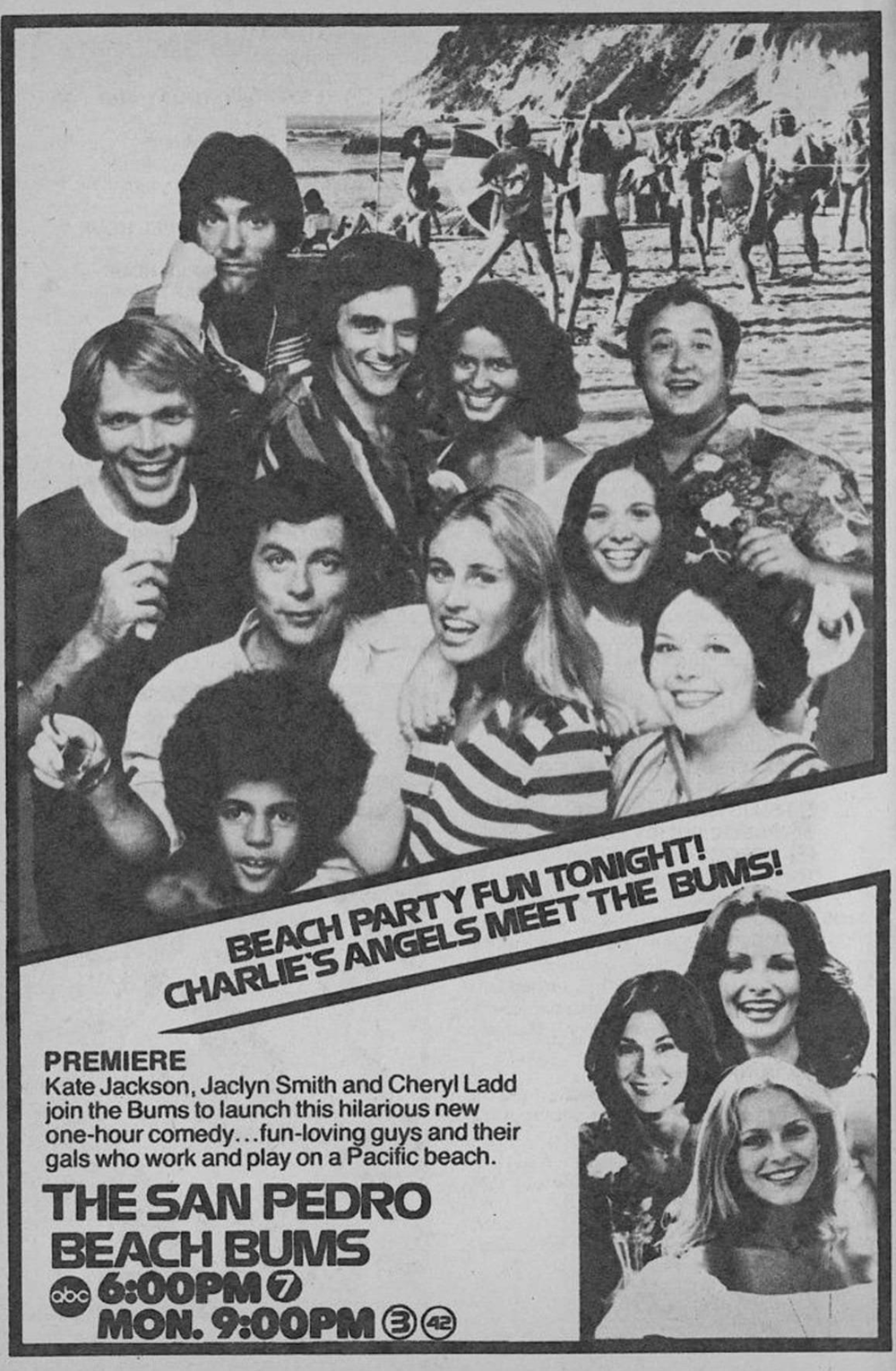
It’s a joy to be part of this franchise, because not only did I grow up on Sonic, it’s exciting to be a part of a world that we’ve expanded so much. So when we got the call to tell me that we were doing Sonic the Hedgehog 3 in London and beyond, I was thrilled! It’s exciting to be involved with it because of the fans as well; they’re probably the biggest reason as to why we’re so successful!

You also worked on the spin-off series Knuckles; how did that open up the creative process for Sonic the Hedgehog 3? Did it open the world up a bit more maybe?

Yeah! It did open up the world, because I feel like even my relationship with Knuckles is different than it is with Sonic and Tails. Knuckles is… a knucklehead! He doesn’t quite understand certain things, but I love him. He’s like a loveable character with a very strong personality. So I had to put my mum hat on a little bit more and try to give it to him straight. So yeah, the depth and the connection that Maddie has with all of the characters just expanded when they asked me to go and do the episode of Knuckles. I feel a deep connection with these characters. I feel very protective of them. I feel like they’re my own!

Maddie has put up with a lot: she got pushed off a roof in Sonic the Hedgehog, and she had her sister’s wedding ruined by Sonic in the sequel! However, she still remains calm overall. Can you elaborate on the evolution of Maddie and where we’ll find her in part 3?

Yeah, I think Maddie has grown in the sense of, first of all not understanding what Sonic was in the beginning, and being like “What are you doing? What’s happening? I need to help a hedgehog right now!” What I love about Maddie’s character is she’s evolved from being that person on the outside to really being inside of the family unit and the team. She’s down to go and stand up for all three of them at this point, and get her hands dirty a bit, really be a part of the plan. Like she’d say “Wait a second, let’s put our thinking caps on. Can we really execute this plan?” Or, “Guys sit down and stop messing up the house.” She can do two things, she’s amazing at home, but she’s also really cool when getting into the action. I love the duality of who she is. She’s a veterinarian really, that’s what she does, that’s what she went to school for, and she’s that in Green Hills. But she’s also part of this family unit of creatures that get into lots of trouble trying to save the world.

Yourself and James Marsden have captured a great back-and-forth over the two movies, is the chemistry similar off screen? What’s he like to work with?

I can’t say enough about James. I could say, “Meh, it was fine, it was okay”, or, “Yeah, no, it was cool.” But he was ‘so’ awesome to work with! Literally, with our relationship, as soon as we see each other, it just jumps back. We bicker with each other; we poke at each other. Who’s the Sonic or the Knuckles of the two? Who will get to lead, kind of thing. We just have a really good relationship with each other. We talk about everything, and we joke around a lot, and I think that comes off on-screen. Our bickering, our love, our heart. I just think that chemistry has shown because we just really ‘do’ get along.

Sonic goes from feeling alone in the first movie, to having a family by the second movie. So how fun was that progression to capture, and what do you think family means for Sonic in this third outing? Does it continue to shape the story?

I think we become like the parents who aren’t cool! And I do know how that feels in real life. With my eight-year-old, sometimes I’ll do a little dance, and she’s like “Stop, please!” I think Sonic has found his stride. He’s found his people. As parents we’re trying to figure out where we fit in anymore. We’ve got to do our own thing. So, I think Sonic feels like he’s got this, but his team isn’t so sure yet. So I think he’s figuring a lot of stuff out. He’s a cool kid. He’s happy, he has his siblings, as I like to call them, and so it’ll be fun to watch the world expand even more, in the sense of where they get to go, and what they get to do in this one.

When it comes to capturing scenes as an actress with Sonic, how has the technology evolved over the years with that? Has director Jeff Fowler changed that process much?

Jeff is amazing. I know this a really big film, but when I shoot with him, it almost feels like an indie movie when we’e there, because he makes everybody feel so included. Everybody is important; no matter what you do on that set everybody is important, and it feels that way. He doesn’t yell as a director. On set, I kept saying, “Do you hear that? It’s quiet! Nobody’s yelling at each other!” So with the progression of feeling like it was real, it went from a tennis ball to a 3D cutout of these characters. They made it feel real. But then it went to these amazing puppeteers, who had these huge heads of each character, their mouths moved, and they sounded like Sonic, and they sounded like Knuckles, and Tails, and Shadow, and so it felt even more real. So as every movie came, not only did you see the greatness on-screen, but because there were so many good technical situations happening behind the scenes, that made us feel even more real, you got much more out of what you saw. So, yeah, shout out to Jeff, and the whole production team for making it even better for us actors every time!

With these movies, they can jump from a comedic atmosphere to a serious moment quite easily, it’s very clever. What kind of tone and feel can fans expect from Sonic the Hedgehog 3?

You’re always going to get the heart and the humour. Sonic has cultural references, and that’s what makes it funny; there will be some things that’ll go over kids heads. Some people are older now, in the sense of how they grew with the franchise, so they’ll get some of the references. That’s where the goodness comes in on this film; it’s big and action-worthy, and it’s got adventure, but you have to have heart, and you have to have humour within it, it can’t just be one thing. That’s what makes it fun, and that’s what makes it for everybody. It’s ingredients that are perfectly formulated, to make this the success that it’s been!

SONIC THE HEDGEHOG 3 zooms into cinemas on December 21st