STARBURST Mother’s Day Gift Guide 2025

With Mother’s Day fast approaching (in the UK it’s March 30th, in the US you’ve till May 11th), let’s take a quick look at some gift ideas.

Lucky Figural Mug 101 Dalmatians

The Disney Store is always a reliable source of weird and wonderful things. Not only is the Lucky mug from 101 Dalmatians rather cute, but it’s also hilariously odd. Who doesn’t want to drink from the head of a puppy?


‘Mother of the Empire’ Ltd Ed. Hard Iced Tea Gift Pack

Yes, that’s a Stormtrooper dressed as Queen Victoria. Yes, it’s entirely a pun. Sci-Fi fans notoriously like a good drink, and those fine folk at Stormtrooper have produced a light, lemon-ish ale. The gift pack comes with a chalice-style glass, making it the Holy Grail of geek gifts.


Canal Toys Photo Creator Instant Camera

Canal Toys comes up with cheap and cheerful toys, mostly marketed at teens, but they’re fun for all their family. Their Photo Creator Instant Camera takes photos and prints them out on thermal paper. Pick up some sticker rolls for extra fun, which is perfect for making that Sunday meal memorable.

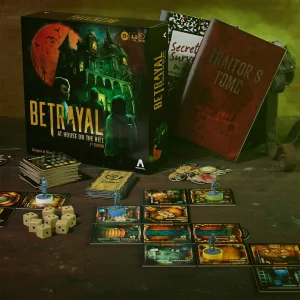
Betrayal at House on the Hill

For the spookier mums out there, you can’t go wrong with a classic spooky board game with a bit of back-stabbing. Monopoly meets The Traitors by way of Halloween in this classic horror-themed game, now in a shiny new edition.

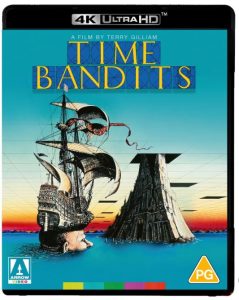
Time Bandits

And finally, rather than taking your Mother to go see a movie about Snow White, get her a classic Terry Gilliam movie. Everybody loves Time Bandits, yes?


THE TELEPHEMERA YEARS: 1985, part 4

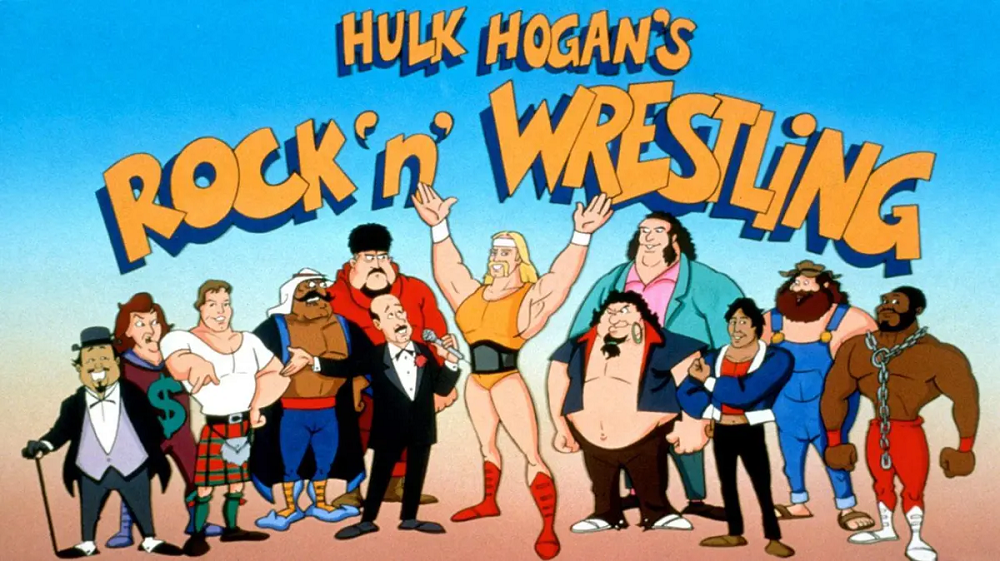
Hulk Hogan's Rock 'n' Wrestling, 1985-86

Ah, telephemera… those shows whose stay with us was tantalisingly brief, snatched away before their time, and sometimes with good cause. They hit the schedules alongside established shows, hoping for a long run, but it’s not always to be, and for every Street Hawk there’s two Manimals. But here at STARBURST we celebrate their existence and mourn their departure, drilling down into the new season’s entertainment with equal opportunities square eyes… these are The Telephemera Years!

1985-86

The NBC sitcom juggernaut kept on rolling into the Fall 1985 season, with The Cosby Show and Family Ties flying high, joined in the top ten by Cheers and new arrival The Golden Girls, with Night Court, You Again, and another new show in 227 finding spots in the top twenty. CBS put up the best opposition, with Jessica Fltcher nosing around in third, 60 Minutes telling the world about Live Aid in fourth, and perennial favourite Dallas beating out ABC’s Dynasty to sixth place. ABC were in transition, with Benson, The Fall Guy, Hardcastle and McCormack, and The Love Boat all entering their final seasons, although The Colbys, Growing Pains, MacGyver, and Perfect Strangers were all debuting on the alphabet network.

Over on CBS, new arrivals included The Equalizer and a reboot of The Twilight Zone, while NBC took Diff’rent Strokes from ABC to add to its sitcom line-up, and premiered Steven Spielberg’s Amazing Stories. It was once again another year of thin gruel for genre fans, though, with Knight Rider ending its run and only the earthbound angel drama of Highway to Heaven bringing anything in the way of paranormal drama to TV screens. Those were all shows for adults, though; what about Saturday morning diversions their sugar-soaked kids? This is the story of 1985’s new kids’ shows…

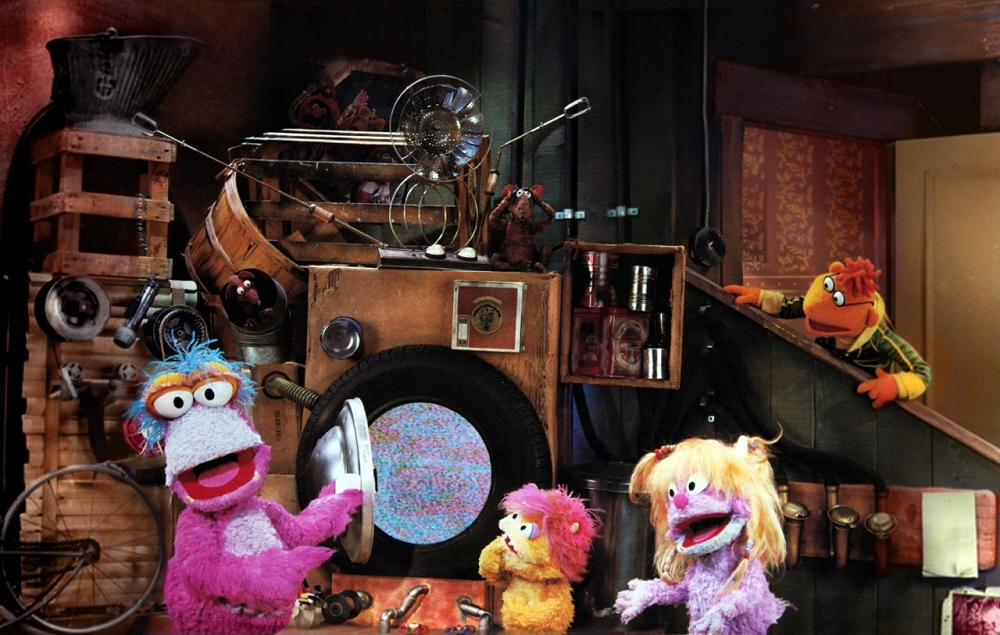
Little Muppet Monsters (CBS): The reinvention of The Muppets as their infant selves in 1984’s The Muppet Babies was a smash hit. Going up against The Mighty Orbots on ABC and NBC’s The Smurfs, the show ruled Saturday mornings, with one episode – “Gonzo’s Video Show” – shown as a prime-time special in December 1984. CBS were keen to take advantage of their golden goose and proposed extending their Saturday morning Muppet slot to an hour, approaching creator Jim Henson for ideas to fill the gap, who was excited by the possibility of telling stories that featured Muppets as neighbourhood kids using camcorders – which had started to proliferate, at least in suburbia – to make their own TV shows.

In his Red Book, a log of his creative activities he kept from 1965 until 1988, he wrote, “I think it’s going to change the whole way kids think about television. Before it’s always been something that kids were subject to or watched, but now they can participate in it, they can be part of that, they can manipulate it. And I think it’s a huge difference, and we’re going to see some results of this in about ten years when these kids grow up and start doing things in the medium.”

Little Muppet Monsters, 1985-86

Filtered through Henson’s unique mind, and with Diana Birkenfield overseeing the show at Henson Associates, the result was Little Muppet Monsters, produced – like Muppet Babies – in association with Marvel Productions. The set-up was simple, with three young Muppets – new creations Tug, Molly, and Boo – causing chaos, leading to Scooter banishing them to the basement. From there, they operate their own television station, broadcast to the rest of the Muppet house (and us at home). The show was a mixture of live-action and animation, with segments presented as their own unique shows, such as Gonzo’s Weirder Than Me, Muppet Sports Shorts, Fozzie’s Comedy Corner, and Kermit the Frog, Private Eye. There was even a return for Muppet Show segment Pigs in Space, this time in animated form.

The show debuted on September 14th 1985, but behind the scenes there were already issues as Marvel Productions were late delivering animated segments to go with those filmed by Henson Associates. For Henson’s part, the Muppet portions of the show were produced for the entire thirteen-episode run, but after three episodes had aired, the show was put on hiatus to give Marvel time to catch up. CBS aired re-runs of The Muppet Babies following new episodes of the same to fill out the Muppet hour, and unfortunately for Henson, these re-runs rated much higher than Little Muppet Monsters had, and the decision was made not to bring it back to the schedules. The Muppet Babies continued to thrive, running until November 1991 and receiving the reboot treatment in 2018, but the cast of Little Muppet Monsters were never seen on TV again, aside from an appearance in The Muppets: A Celebration of 30 Years to promote the show in January 1986, four months after it had been cancelled.

The 13 Ghosts of Scooby-Doo (ABC): Although he’s now the butt of jokes, it’s probably fair to say that the introduction of Scrappy-Doo to the Scooby-Doo franchise – created by animation and comic book legend Mark Evanier – saved the show. Ratings were at cancellation level and Hanna-Barbera felt that the Scooby-Doo formula was worn out by the mid-1970s. They sought to refresh it by not only introducing his annoying nephew but also marginalising the roles played by Daphne, Fred, and Velma from the cast for 1979’s Scooby-Doo and Scrappy-Doo, ultimately removing them altogether a year later. Daphne returned for 1983’s The New Scooby and Scrappy-Doo Show, with Fred and Velma back in the pack for 1984’s The New Scooby-Doo Mysteries, but it soon became clear to most that the problem was less with Scooby and Shaggy’s long-time associates than with the newest addition to the cast.

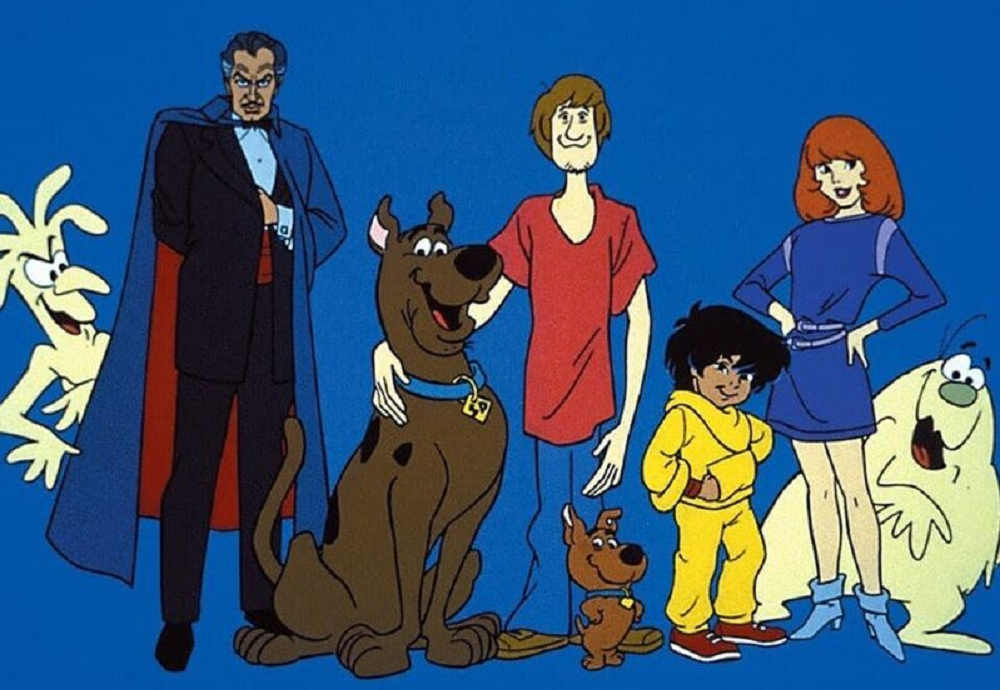
Hanna-Barbera, though, were seemingly still happy with Scrappy and the change of emphasis to actual supernatural threats rather than greedy businessmen in disguise that had accompanied him. Still, the series did need a refresh and under the guidance of producer Mitch Schauer, The 13 Ghosts of Scooby-Doo did one thing that had never before been attempted and introduced a season-long arc. Fred and Velma were once again discarded – their absence later retconned to reveal they were attending summer camp – and Scrappy was retained, although his abrasive nature was dialled down somewhat. Tom Ruegger, who would go on to helm Tony Toon Adventures and Animaniacs, brought a fresh energy to the show, with fourth-wall breaking asides to the audience.

The 13 Ghosts of Scooby-Doo, 1985-86

The set up saw the crew crash-land Daphne’s plane in the Himalayas, where Scooby and Shaggy are tricked by two ghosts into opening the Chest of Demons, freeing thirteen of the most terrifying ghosts and demons ever to walk the Earth. As only those who freed the spectres can be the ones to return them to their prison, the gang – with the addition of a new character in the shape of Film Flam, a young Tibetan con artist based on Short Round from Indiana Jones and the Temple of Doom – set off on a worldwide quest to recapture them before they can do too much damage. Assisting the team was a warlock named Vincent van Ghoul, who would contact them by crystal ball and who was voiced by horror legend Vincent Price.

Something wasn’t clicking with the viewers, though, and ABC pulled the show from the schedules, replacing it with re-runs of Laff-a-Lympics. At the time of the cancellation, only thirteen episodes had been completed, with just twelve of the thirteen ghosts recaptured, a cliffhanger that remained unresolved until the 2019 direct-to-video film Scooby-Doo! and the Curse of the 13th Ghost. Scooby and the gang would be absent from TV for three years until 1988’s A Pup Named Scooby-Doo, a prequel series which dispensed with Scrappy-Doo at last. He wouldn’t reappear until a cameo appearance in the live-action 2002 Scooby-Doo movie, becoming an object of fun and forever linked to New Coke.

Hulk Hogan’s Rock ‘n’ Wrestling (CBS): Vince McMahon Jr’s aggressive expansion of the northeast World Wrestling Federation into a nationwide endeavour claimed many victims along the way. Regional promotions that had served their populations well for decades were swept away in McMahon’s power grab, often by underhand means, but if nothing else, the proliferation of the WWF’s colourful, action-packed spectacle – with the help of Cyndi Lauper and MTV – made superstars of its major players, parlayed into merchandising aimed primarily at younger fans. One of those caught up in the wave of excitement was Andy Heyward, who also happened to be the head of DIC Enterprises, the newly established US arm of Jean Chalopin’s French animation studio, which had recently enjoyed hits with Inspector Gadget, The Littles, and Heathcliff.

Thinking that wrestlers such as Hulk Hogan and André the Giant were modern-day superheroes, Heyward approached McMahon with an idea to make a Saturday morning cartoon based around their adventures, something McMahon was only too willing to get involved with. Hueyward based the show around McMahon’s WWF Heavyweight Champion, Hulk Hogan, a larger than life – in both senses of the term – character who, even then, was already spinning of web of obfuscation about his origins, perfect for McMahon’s televised and touring circus. Born Terry Bollea in August 1953, Hogan claimed to have rejected an offer from Metallica to play bass in the band and to have suffered a deliberately broken leg on his way day at training to see if he was tough enough to return. His early days were spent on the Florida, Alabama, and Memphis circuits as Terry “The Hulk” Bollea, named for Marvel Comics’ bulky hero, before joining Vince McMahon Sr’s World-Wide Wrestling Federation in 1979.

Hulk Hogan's Rock 'n' Wrestling, 1985-86

It was McMahon Jr, then working for his father ahead of buying him out and dropping a W from the organisation’s name, that named him Hogan, also suggesting he should dye his hair red to make him look Irish; the WWWF thrived on such ethnic stereotypes, with hyphenated Americans making up much of the audience in their Northeastern base. Hogan stayed with the WWWF for two years before moving to the Midwestern focussed American Wrestling Association, largely because he accepted the role of Thunderlips in Rocky III against McMahon’s wishes. Hogan spent two years with the AWA, alternating his time there with tours of Japan for New Japan Pro-Wrestling, and when McMahon had eyes on taking the WWF nationwide, Hogan was the man he brought back to lead it.

His opposite number was “Rowdy” Roddy Piper, a kilt-wearing Scotsman (from Canada), and each led a band of heroic blue-eyes and dastardly villains made up from the WWF’s babyface and heel rosters as they stood in 1984 when the show went into production. Backing up Hogan were André, Junkyard Dog, manager Captain Lou Albano (who had appeared in the video for Lauper’s “Girls Just Wanna Have Fun”), Wendi Richter, Hillbilly Jim, Tito Santana, and Jimmy “Superfly” Snuka. Piper recruited The Iron Sheik, Nikolai Volkoff, The Fabulous Moolah, Big John Studd, and his own non-wrestler in the shape of the stereotypical Mr Fuji. Notable omissions included Hogan’s Wrestlemania opponent “Mr Wonderful” Paul Orndorff, Greg “The Hammer” Valentine, Brutus Beefcake, and Sgt Slaughter, who had left the WWF in December 1984 after a dispute over his inclusion in the GI Joe cartoon.

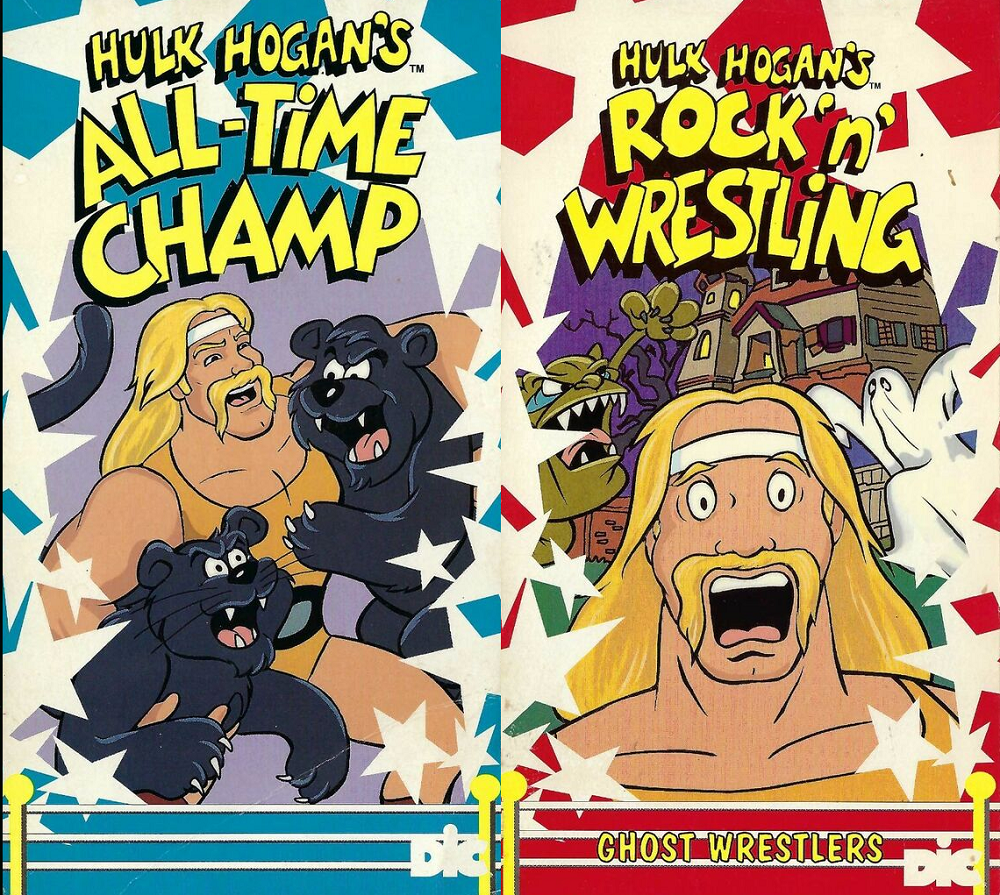
For a show called Hulk Hogan’s Rock ‘n’ Wrestling and featuring wrestlers from the World Wrestling Federation, there was precious little wrestling. Rather the two factions would come into direct conflict over a standard cartoon sitcom such as a car race or baseball game, or as part of wider stories that included an escaped gorilla, being transformed into children, and encountering an alien robot. The show began a thirteen-episode run on September 14th 1985, part of an all-new line-up that also included The Berenstain Bears, The Wuzzles, and Jim Henson’s Muppets, Babies & Monsters. Some episodes had two stories, while others had just one full-length adventure.

Hulk Hogan's Rock 'n' Wrestling, 1985-86

None of the wrestlers were voiced by their real-life counterparts, the WWF’s arduous road schedule given as the major reason, with Hogan voiced by newcomer Brad Garrett, who later go on to star as Robert Barrone in Everybody Loves Raymond. Other voice artists lending their talents to the show included Charles Adler, Lewi Arquette, and James Avery, although the wrestlers did get to appear in live-action segments produced for the show, including a music video shot to promote The Wrestling Album, an LP of songs recorded by the WWF roster.

The show did well enough that a second season, again of thirteen episodes that alternated between one and two stories per week, began on September 13th 1986. The cast remained the same, despite Snuka and Richter having left the WWF in June and November 1985, respectively, and Studd would follow them out of the door before his final appearance on the show. This time out, escapades included Albano finding an incompetent genie, the ladies entering a Miss Muscle contest, and the wrestlers joining a circus, while Snuka fell in love with a girl on a train, only for her to be kidnapped. That was probably a fate better than the one that met Nancy Argentino, the woman whose death in 1983 resulted in a manslaughter charge that McMahon helped his asset beat.

There was no third season, possibly because the cartoon could not keep pace with the WWF’s roster churn – Albano would be gone by November 1985 and the main-event scene included newcomers “Macho Man” Randy Savage, the Honky Tonk Man, and  Jake “The Snake” Roberts by Wrestlemania III in March 1987 – and also because McMahon didn’t need a Saturday morning cartoon to complete his dominance of the US wrestling scene, with just one serious rival remaining by the end of the 1980s. Hogan himself would jump to that rival – Ted Turner’s World Championship Wrestling – in 1993, but even they would be out of business by 2001, the end of a story less believable than any episode of Hulk Hogan’s Rock ‘n’ Wrestling.

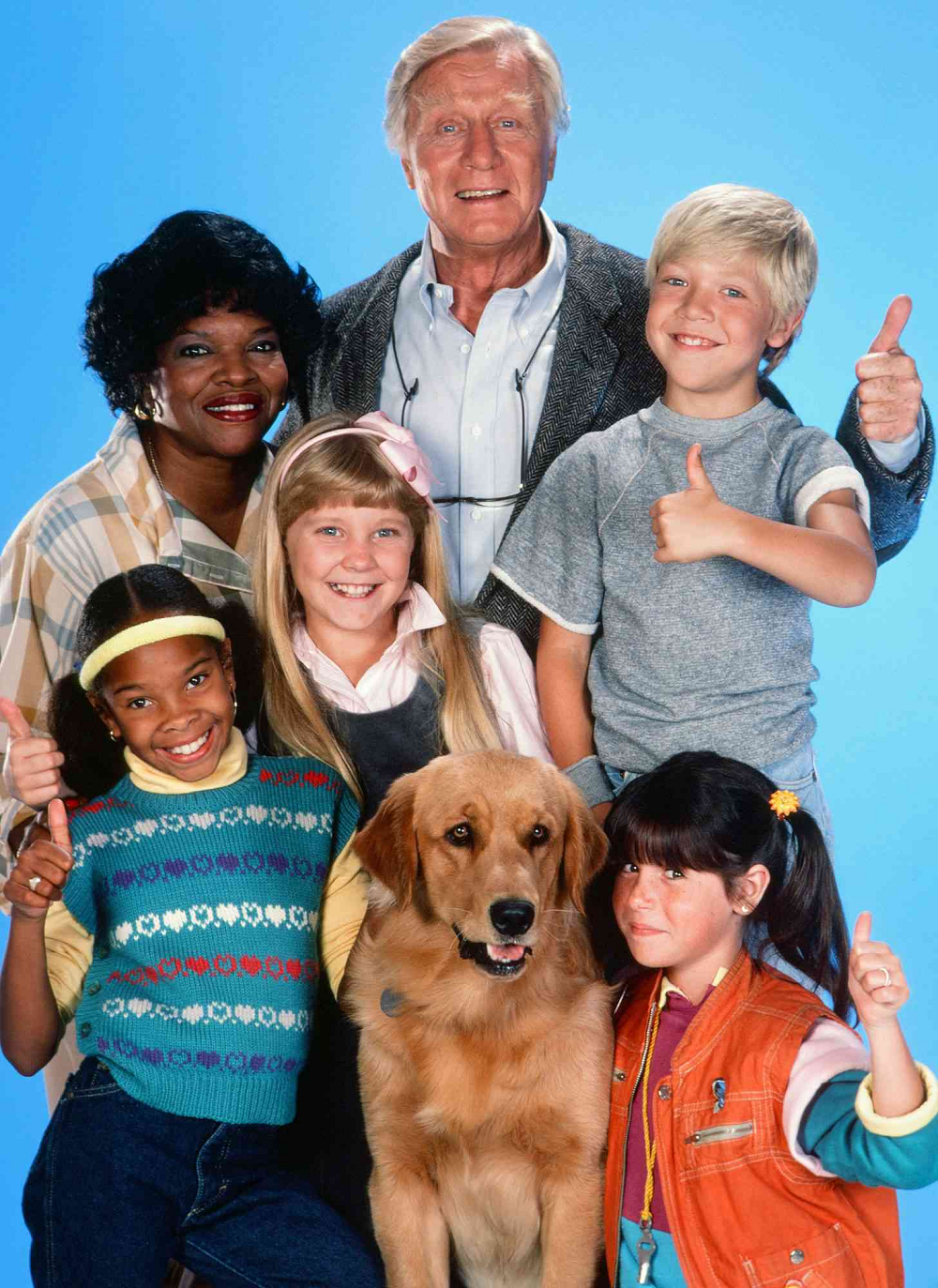
It’s Punky Brewster (NBC): After breaking in as a writer on the Tv adaptation of The Odd Couple, David W Duclon moved into production with The Jeffersons and Silver Spoons, but still kept his hand in as a scriptwriter, creating the short-lived Jim Belushi and Michael Keaton show Working Stiffs and Double Trouble starring twins Jean and Liz Sagal. In 1984, as part of Brandon Tartikoff’s refreshment of the struggling NBC network, he was tasked with coming up with a new sitcom, delivering a story of a girl abandoned by her parents who is found living in an abandoned warehouse and taken in by a kindly old man. Thinking back to an older tomboy he had a crush on at school, Tartikoff provided the name for both the character and the show, seeking permission from the real-life inspiration before it went to air, and Punky Brewster debuted on September 16th 1984.

With a feisty Soleil Moon Frye – who won the part over three-thousand other girls at auditions, including Melissa Joan Hart – in the title role, backed by George Gaynes – recently seen in Police Academy and Tootsie – as Henry, her surrogate father, the show was an instant hit in a comfortable Sunday evening slot. During the football season, it was scheduled straight after NFL action, with shorter episodes especially produced to air when games ran long. As well as her shaggy dog Brandon, Punky makes friends with neighbourhood kids Allen (newcomer Casey Ellison), spoiled rich girl Margaux (national tap-dancing champion Ami Foster, discovered on Star Search a year earlier), and Cherie Johnson, who lives across the hall with her grandmother, Betty (Susie Garrett). Duclon named Cherie for his niece, who later tried out for the role and won it, with the credits therefore reading “Cherie Johnson as Cherie Johnson.” Several of Punky’s teachers were also featured, including one – Mrs Rutledge – played by the girl who inspired Punky’s name, Peyton “Punky” Rutledge (neé Brewster).

It's Punky Brewster, 1985-86

A mark of the show’s success was that season one’s final episode, “Fenster Hall,” was used as backdoor pilot for a spin-off show set in the titular foster home, where Punky spent some time before her arrangement with Henry was finalised. The episode introduced a new character – TK Carter (a debuting Mike Fulton) – who would have been the main focus of the spin-off, but NBC ultimately decided against taking it to series. Punky Brewster was renewed for a second season, though, with Carter popping up as a recurring character, and the failure of Fenster Hall didn’t mean there’d be no extra-curricular Punky action for the 1985-86 season…

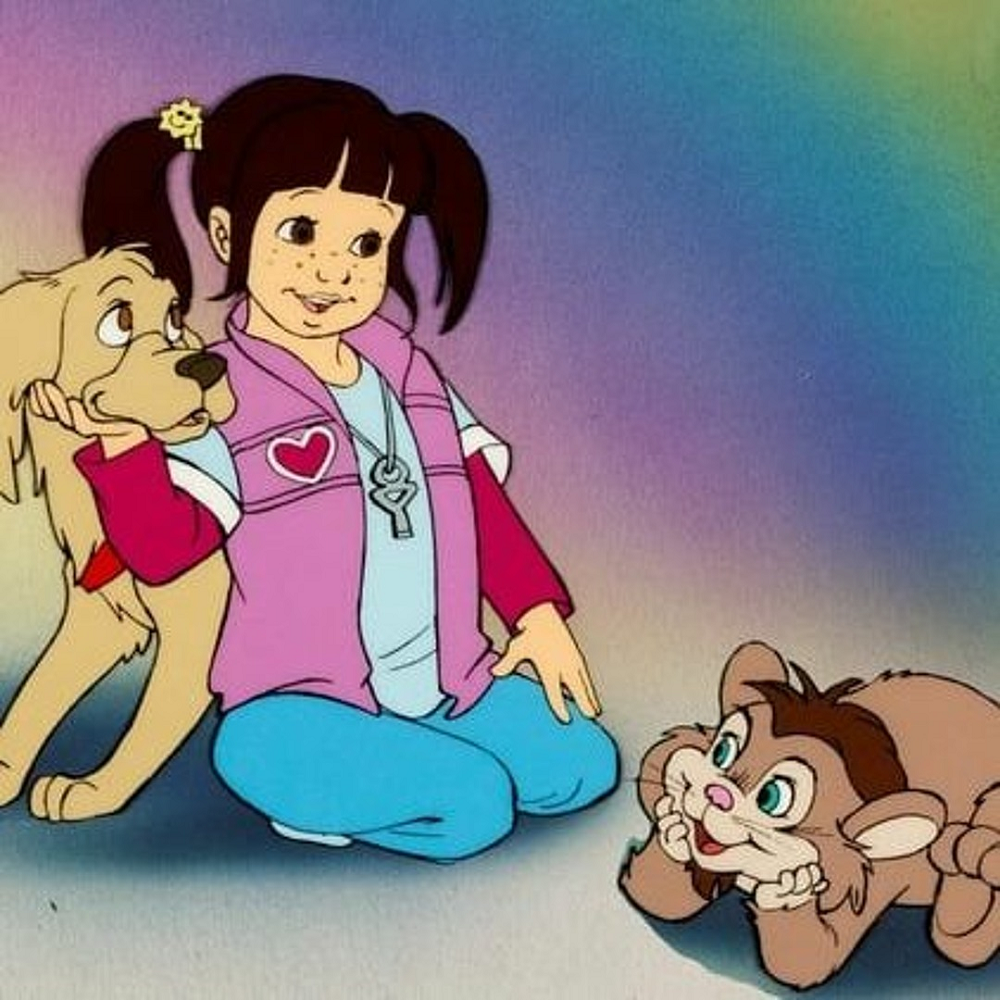
Already in development for a Fall 1985 debut was an animated spin-off, produced by Ruby-Spears Productions and developed by Cliff Ruby – son of Ruby-Spears founder Joe – and his wife, Elana Lesser. To all intents and purposes, It’s Punky Brewster was the same show as its live-action inspiration, with cast members Frye, Gaynes, Ellison, Foster, and Johnson providing the voices for their animated counterparts. Apart from, that is, the addition of Glomer, a “leprechaun gopher” (voiced by Frank Welker) who came from Chaundoon, the city at the end of the rainbow, and has magical powers.

With the help of Glomer’s magic, Punky and her friends are able to travel all over the world, and even through time, giving ample rein for scriptwriters to tell stories that see the gang meet a Pharaoh in ancient Egypt, travel to pre-urbanisation Chicago (not the most exciting premise, granted), and visit Chaundoon itself. Glomer’s magic is also responsible for giving Allen the abilities of an NFL quarterback, turning Henry into a statue of Julius Caesar, giving Brandon the gift of speech, and creating a bee with the ability to spell. In one episode, Glomer accidentally makes himself giant and Punky needs to find a way to shrink him down before the National Guard are deployed.

It's Punky Brewster, 1985-86

It’s Punky Brewster debuted on September 14th 1985, part of a Saturday morning line-up that also included Spider-Man and his Amazing Friends, Mr T, and another new arrival in Disney’s Adventures of the Gummi Bears. Writers working on the show included Sheryl Scarborough (who would later develop the New Kids on the Block cartoon) and Dianne Dixon and Cliff Roberts, who had done similar work on The Gary Coleman Show for Hanna-Barbera.

It’s Punk Brewster did well enough that it was renewed for a second season, which meant that it outlasted its parent show, which struggled for ratings in its second season against 60 Minutes on CBS, leading to Tartikoff reluctantly cancelling the show and its partner in the schedules, Silver Spoons. Both shows were eventually revived for syndication, although regulations of the time meant NBC could not be involved in their production and they were farmed out to Columbia Pictures Television. The revival came too late for the third season of Punk Brewster to begin airing as part of the Fall 1986 schedules, and so the animated show was the only way people could get their fix of the loveable tyke that year.

The second season, again with thirteen episodes, debuted on September 13th 1986, and this time Glomer’s magic – which didn’t always work as planned – saw Punky fostered out to a candy factory owner who uses children as slave labour, meet the Seven Dwarves, turned into a grown woman who has to get a job, and grant Allen his wish to have never been born. By the end of the season, nothing is resolved, therefore ensuring the episodes can be run in any order, and that was the last anyone saw of Glomer. Punky Brewster, meanwhile, returned in December 1987 with twenty-two episodes shown on consecutive weeknights, and a fourth and final season followed in April 1988. Frye would undergo some very public struggles with her adolescent body in the wake of the show’s cancellation but kept acting, securing a regular role in Sabrina the Teenage Witch in 2000, and eventually leading a Punky Brewster revival – in which Punky is now mother to a foster child of her own – in 2021.

Next time on The Telephemera Years: Back to 1972 and a US adaptation of a “beloved” UK show…

Check out our other Telephemera articles:

The Telephemera Years: pre-1965 (part 1, 2, 3, 4)

The Telephemera Years: 1965 (part 1, 2, 3, 4)

The Telephemera Years: 1966 (part 1, 2, 3, 4)

The Telephemera Years: 1967 (part 1, 2, 3, 4)

The Telephemera Years: 1968 (part 1, 2, 3, 4)

The Telephemera Years: 1969 (part 1, 2, 3, 4)

The Telephemera Years: 1970 (part 1, 2, 3, 4)

The Telephemera Years: 1971 (part 1, 2, 3, 4)

The Telephemera Years: 1973 (part 1, 2, 3, 4)

The Telephemera Years: 1974 (part 1, 2, 3, 4, 5)

The Telephemera Years: 1975 (part 1, 2, 3, 4)

The Telephemera Years: 1976 (part 1, 2, 3, 4)

The Telephemera Years: 1977 (part 1, 2, 3, 4)

The Telephemera Years: 1978 (part 1, 2, 3, 4)

The Telephemera Years: 1979 (part 1, 2, 3, 4, 5, 6)

The Telephemera Years: 1980 (part 12, 3, 4)

The Telephemera Years: 1981 (part 1, 2, 3, 4)

The Telephemera Years: 1982 (part 1, 2, 3, 4)

The Telephemera Years: 1983 (part 1, 2, 3, 4)

The Telephemera Years: 1984 (part 1, 2, 3, 4)

The Telephemera years: 1985 (part 1, 2, 3)

The Telephemera Years: 1986 (part 1, 2, 3, 4)

The Telephemera Years: 1987 (part 1, 2, 3, 4)

The Telephemera Years: 1988 (part 1, 2, 3, 4, 5)

The Telephemera Years: 1989 (part 1, 2, 3, 4)

The Telephemera Years: 1990 (part 1, 2, 3, 4)

The Telephemera Years: 1991 (part 1, 2, 3, 4)

The Telephemera Years: 1992 (part 1, 2, 3, 4)

The Telephemera Years: 1994 (part 1, 2, 3, 4)

The Telephemera Years: 1995 (part 12, 3, 4)

The Telephemera Years: 1996 (part 1, 2, 3, 4)

The Telephemera Years: 1997 (part 1, 2, 3, 4)

The Telephemera Years: 1998 (part 1, 2, 3, 4)

The Telephemera Years: 1999 (part 1, 2, 3, 4)

The Telephemera Years: 2000 (part 1, 2, 3, 4)

The Telephemera Years: 2001 (part 1, 2, 3, 4)

The Telephemera Years: 2002 (part 1, 2, 3, 4)

The Telephemera Years: 2003 (part 1, 2, 3, 4)

The Telephemera Years: 2005 (part 1, 2, 3, 4)

The Telephemera Years: 2006 (part 1, 2, 3, 4)

The Telephemera Years: 2007 (part 1, 2, 3, 4)

The Telephemera Years: 2008 (part 1, 23, 4)

The Telephemera Years: O Canada! (part 1, 2, 3, 4)

Titans of Telephemera: Irwin Allen

Titans of Telephemera: Stephen J Cannell (part 1, 2, 3, 4)

Titans of Telephemera: DIC (part 1, 2)

Titans of Telephemera: Filmation (part 1, 2)

Titans of Telephemera: Hanna-Barbera (part 1, 2, 3, 4, 5)

Titans of Telephemera: Kenneth Johnson

Titans of Telephemera: Sid & Marty Krofft

Titans of Telephemera: Glen A Larson (part 1, 2, 3, 4)

Titans of Telephemera: Quinn Martin (part 1, 2)

Titans of Telephemera: Rankin/Bass

Titans of Telephemera: Ruby-Spears

Titans of Telephemera: Aaron Spelling (part 1, 2, 3, 4)

Titans of Telephemera: Sunbow

Martin Gooch • Argh and the Quest for The Golden Dragon Skull

Martin Gooch is UK/US based indie film maker who is responsible for cult comedy movies such as The Search For Simon, Atomic Apocalypse and The Gatehouse. We caught up with him to learn about his latest project, a fantasy movie which is also an homage to 1980’s gaming, called Argh and the Quest for The Golden Dragon Skull. Ahead of it’s opening screening (details here), we caught up with him to find out more. 

How would you pitch Argh and the Quest for The Golden Dragon Skull to fans of the game Dungeons and Dragons?

It’s the first film to be entirely filmed using 25mm miniatures and with the blessing of John Blanche (Legendary Fantasy Artist and Games Workshop/Warhammer) featuring the godfather of gaming Sir Ian Livingstone. Written and Directed by a fan of D&D since 1982. Can’t get much more D&D than that!

And how would you pitch it to fans of Game of Thrones?

Less nudity. More laughs.

It’s an unusual idea for a movie, how did it come about?

I love fantasy (and SF) movies and always wanted to do one – but without a budget it is tough, especially as Argh is an epic quest with a cast of hundred! Impossible to do without a big budget but my creative itch must be scratched so I decided to make an epic fantasy film using my old D&D and Warhammer 25mm miniatures (most of them 30-40 years old!). I love Monty Python and The Holy Grail, which is one of my favourite films, and I think that when you have a low budget then comedy is more forgiving, so audiences are more likely to suspend their disbelief if something is funny. Like the LEGO movies, I think it’d be hard to do a totally serious movie about a tough issue with LEGO

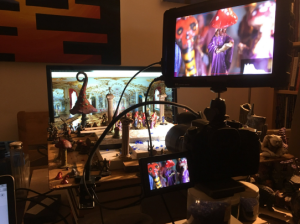
I bought a macro lens for my Lumix Camera and off I went. I wrote it first with the help of Brad Moore and Mark Felgate who helped with all the gags and general silliness. Then I filmed all the live action actors shots –  I actually made a short film to show the actors how to shoot their own shots, and got lots of them to shoot it themselves and send me the rushes. Then I edited the whole film just for dialogue – so there is a version of the film that just has actors talking heads – without any miniatures or VFX etc or music or sound design. I asked my friend Trevor Moore to help with the sound design and his work lifts the film up and it’s amazing how many audio jokes he put in which I think helped the movie immensely.

I shot the whole thing at home mostly on the dining room table. It was good fun building all the sets and painting (badly) all the minatures.

How can I see this movie?

We are having a special screening on the 25th of March in London – tickets might still be available then after that I am looking for a distribution option.

How can I help more people see this movie?

Spread the word! Mention Argh on the socials and then maybe if it gets a following a decent Sales Agent will take up the Quest!

Why did you make this movie?

I’ve been a film and Tv director for many years, but it’s very difficult to get work, everyone always wants a famous director and I’m just not that famous! I’d love to direct fantasy and SF film and TV but kept getting rejected as producers would say “Ah yes, but you haven’t actually directed a fantasy film…” which is nonsense as the genre is just the wrapper to performance and emotional connection is what is important, so I just thought I’d direct my own fantasy movie. And if you can’t go big go small. Without a huge budget I decided to shoot this using what I already had which was loads of miniatures and bits and bobs about my flat.

ARGH and the Quest for The Golden Dragon Skull Cast

What’s your favourite gag from the movie?

There are several running jokes. In the land of Mushroomia they use mushrooms as currency, then in the middle of the film, it’s bananas and then at the end it’s gone to pickled onions! This made me laugh a lot. When I was filming it at home I had to get a jar of pickled onions to put on all the miniatures like little hats, and of course under the lamps they all started to pong and dry out so I had to film all those scenes in one go which took about a day, but there was a vaguely pickled onion smell about the flat for a day or two…


Has AI ruined Fantasy?

Not yet. AI has many incredibly application in the medical world, cancer detection and many other areas, so it’s not all bad, But the genie is well out of the bottle. The danger is that AI gives those who are not creative the illusion that they are creative, but they are not.


What other projects would you like to work on? 

I have always wanted to direct Doctor Who, I was a shadow director on Kazaam! With Jodie Whittaker, and really felt I could direct Who to the next level. Now there is a D&D TV series on the way I dream of being involved with something like that – I’d gladly give the next ten year of my life to working on an awesome show. C’mon universe it’s not that big an ask.

I’m actively seeking the next project so open to new work.


What can you tell us about forthcoming work?

I have so many irons in the fire and spinning plates as they say, that I’m excited about any that don’t come crashing down or set the forge alight. I have a Short film in Post entitled Kafka’s Appraisal which was all shot on a volume stage in Manchester last year. It’s a two-hander starring Paul Ready and Alix Wilton Regan written by 2000AD scribe Kek W. Hope to have that finished soon.

I’ve been working on a novel entitled Whirled World which is complete and with my editors, hopefully this is the last draft and then see if there is any interest. I have also written a TV series called Agatha Mistress of Swords, starring fabulous actress Claira Amy Parr (who was in my previous feature film Darkheart Manor) and Carol Cleveland from Monty Python. The pilot has been made and, again, looking for production partners to take it to the next stage.

I’ve been working on an Indy  film entitled The Dragon Detective for a few years all about a man who believers Dragons exist and sets out to prove it. I’ve already shot some of it – so would love to find a producer to finish that – I can’t finish it on my own.

I have a serious SF TV Series entitled Breakaway Station which I am very passionate about and would love to see realised. Whilst Argh is a comedy and very silly, I am still a drama director and would love to tackle a serious SF. Actors and crew can work on all sorts of different genre films and TV, so why can’t a director explore different genres? Ridley Scott has tackled all sorts of genre’s as a director. I’m up for it.

Simpsons or Futurama?

When I was at “Film School” in Canterbury (UK) our Head of Department was named Phil Simpson, so he actually did a lecture with an episode of the Simpsons. It was probably the least boring lecture I was at. All the rest were incredibly dull about New German Cinema and other such movements that sadly, did not excite me.

So, Simpsons.

Deathstars or Dragons?

Tricky. Star Wars (A New Hope) is a near perfect movie IMHO. But then DragonSlayer with the arch dragon Verminthrax Pejorative was one of the greatest cinematic adventures I had as a child. I was in love with DragonSlayer for Decades. If the question is which would I like to direct then I would love to do a Star Wars movies/Series. But realistically I don’t think they are going to call, so maybe Dragons are more realistic (pun intended).


Truth or Beauty?

Hmm, Context would be good here!

I’m reminded of the old picture of a skull that from another angle looks like a lady at her dressing table in front of a mirror – all is vanity – it’s called I think. So ultimately truth is what we should all be seeking but isn’t it nice to gaze upon beauty once in a while?

THE TELEPHEMERA YEARS: 1985, part 3

The Covenant, 1985-86

Ah, telephemera… those shows whose stay with us was tantalisingly brief, snatched away before their time, and sometimes with good cause. They hit the schedules alongside established shows, hoping for a long run, but it’s not always to be, and for every Street Hawk there’s two Manimals. But here at STARBURST we celebrate their existence and mourn their departure, drilling down into the new season’s entertainment with equal opportunities square eyes… these are The Telephemera Years!

1985-86

The NBC sitcom juggernaut kept on rolling into the Fall 1985 season, with The Cosby Show and Family Ties flying high, joined in the top ten by Cheers and new arrival The Golden Girls, with Night Court, You Again, and another new show in 227 finding spots in the top twenty. CBS put up the best opposition, with Jessica Fltcher nosing around in third, 60 Minutes telling the world about Live Aid in fourth, and perennial favourite Dallas beating out ABC’s Dynasty to sixth place. ABC were in transition, with Benson, The Fall Guy, Hardcastle and McCormack, and The Love Boat all entering their final seasons, although The Colbys, Growing Pains, MacGyver, and Perfect Strangers were all debuting on the alphabet network.

Over on CBS, new arrivals included The Equalizer and a reboot of The Twilight Zone, while NBC took Diff’rent Strokes from ABC to add to its sitcom line-up, and premiered Steven Spielberg’s Amazing Stories. It was once again another year of thin gruel for genre fans, though, with Knight Rider ending its run and only the earthbound angel drama of Highway to Heaven bringing anything in the way of paranormal drama to TV screens. Those were all shows that made it to air, though; what about the shows that didn’t get their season order? This is the story of 1985’s unsold pilots…

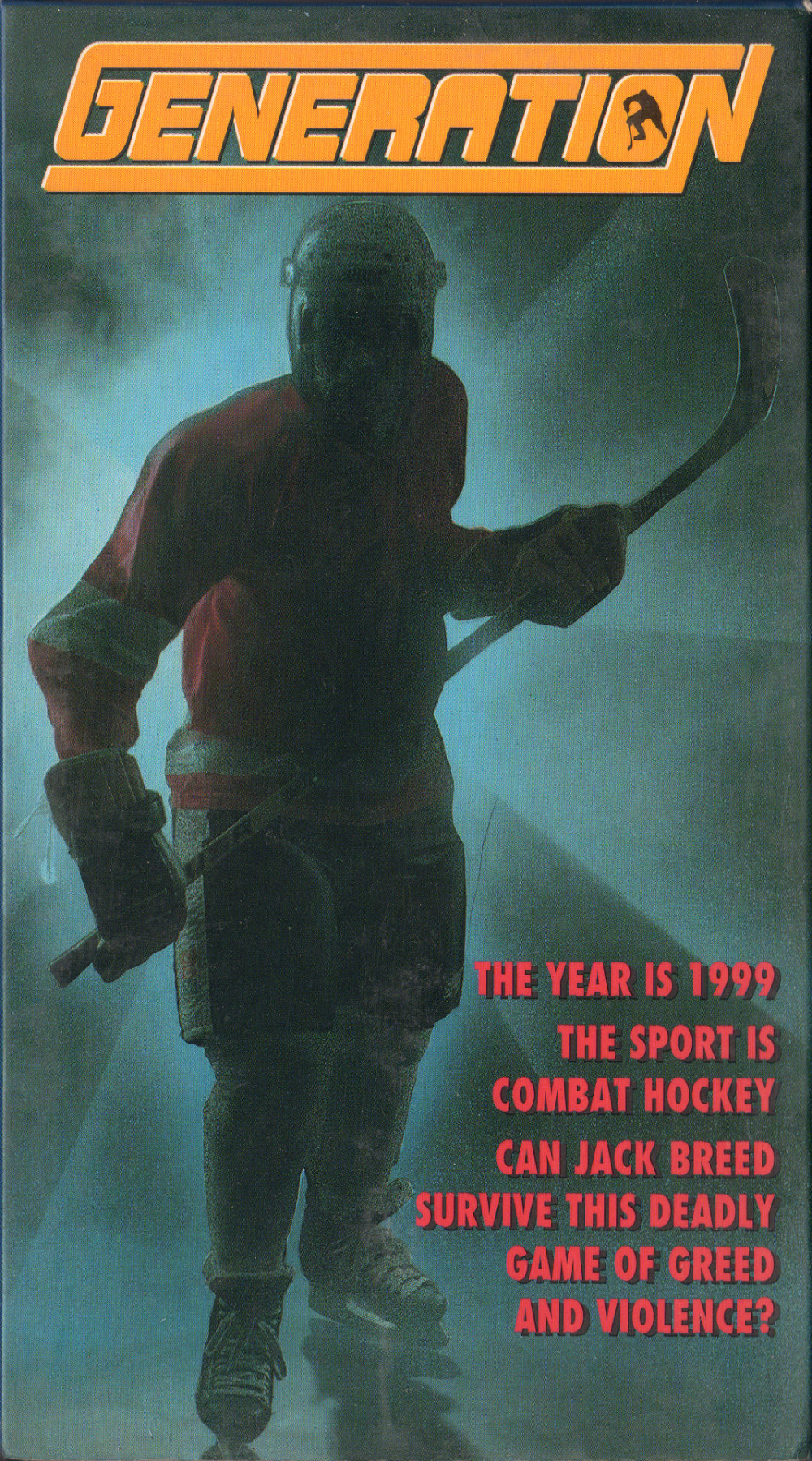
Generation (ABC): Set during the final week of the millennium, Generation takes the extended Breed family and projects what life in 1999 might be like, with not altogether accurate results. Created by Gerald di Pego, whose earlier works include the screenplay for Sharky’s Machine and the controversial 1974 Linda Blair movie Born Innocent, the pilot is essentially a depiction of a family falling apart ahead of a major reunion of the Great Eve, or the night before the year 2000. The pilot starred Westside Story’s Richard Beymer as Allan Breed, a man neglecting his wife and daughter in favour of a fast-tracked career as an engineer. Wife Kate (Tales of the Gold Monkey‘s Marta Dubois) is a social worker equally focussed on her work, although the gangs (armed with slingshots!) are preventing her from getting to the people she really needs to see in the inner city, and all this leaves  daughter Hel (Hannah Cutrona), a science prodigy who wants to be an astronaut, spending too much time on her own.

Allan’s brother, Jack (played by Drake Hogestyen from the short-lived TV version of Seven Brides for Seven Brothers), is a professional combat hockey player who is concerned that Allan’s invention of a powered armoured suit developed to help amputees will result in too many injuries if it is adapted the sport. He is eventually proved right when an enhanced player named Hockeyman is introduced, and the brothers must work together to overcome the issue. Meanwhile, sister Roma (Nashville’s Cristina Raines) is a doctor aboard a mobile surgical unit touring the crime-ridden streets of Los Angeles in search of patients and wants nothing to do with their father, Tom, much to the distress of their mother Ellen (Bert Remsen and Priscilla Pointer, respectively).

Generation, 1985-86

As an exercise in futurology, di Pego’s worldbuilding fares badly, and its unique selling point – the futuristic sport of combat hockey – is well-realised but underutilised and pales in comparison to the brutality of the likes of Rollerball or even the hard-hitting action of prison football in Sharky’s Machine. Still, the direction by British director Michael Tuchner (The Hunchback of Notre Dame), keeps things moving, if sometimes a little too fast, and you can’t help but feel that di Pego showed his hand too early.

Generation was di Pego’s second attempt at shepherding one of his creations to series, having failed to secure an order for 1984’s The Sheriff and the Astronaut. Produced in association with Embassy Television and the Finnegan-Pinchuk company, ABC were interested enough to greenlight a pilot but ultimately opted not to take it to series, although they did air the pilot as a TV movie in May 1985, where it garnered a measly 6.5 rating, even with CBS showing Caddyshack instead of Dallas, and a re-run of Miami Vice on NBC. Di Pego later delivered the scripts for two of the TV movies that revived The Incredible Hulk in the late 1980s, as well as the John Travolta superpowers flick Phenomenon (and its lesser-known 2002 sequel).

D5B – Steel Collar Man (CBS): In May 1980, Lorne Michaels left NBC for Paramount Pictures after failing to secure a deal to put his baby, Saturday Night Live, on hiatus for a year, or secure one of his favoured replacements to head up the show in his absence. Michaels was burned out and felt SNL suffered as a result, and his departure was accompanied by the resignation of the entire cast, including Jane Curtin, Bill Murray, Laraine Newman, and Gilda Radner. Michaels assumed that associate producer Jean Doumanian would join him at paramount and was surprised when she was named as SNL’s new executive producer.

Doumanian’s first task was to assemble an all-new cast and she introduced the world to Gilbert Gottfried, Gail Matthius, and Joe Piscopo, as well as a former newsreader and accordion player named Charles Rocket. Rocket had been part of the same Rhode Island underground scene that included David Byrne and Gus van Sant, and he was promoted as a cross between Chevy Chase and Bill Murray, something he himself declared during the first sketch of the new cast’s first show in November 1980. Rocket had a regular segment – The Rocket Report – and impersonated the likes of Ronald Reagan, David Rockefeller, and Prince Charles, as well as playing the character of Phil Lively, a game show host who took his work home with him. The new cast took some time to settle in, but the addition of a young Eddie Murphy boosted interest in the show, and Rocket’s bits were regarded as one of its strongest assets.

On February 21st 1981, SNL had Dallas’s Charlene Tilton as a special guest and Rocket flirted with her throughout, much to the (storyline) chagrin of his co-stars. After he is shot by an unknown sniper in a parody of the “Who shot JR?” storyline that had dominated that year’s news, Rocket is asked by Tilton how he feels and his reply of “Oh man, it’s the first time I’ve ever been shot in my life. I’d like to know who fuckin’ did it” sent the cast and audience into peals of laughter. NBC, however, were less than happy, even if the curse was uttered past “safe harbor” of 10pm. After taking a week to decide what to do, the network fired Doumanian and replaced her with Dick Ebersol, and his first move was to put the show on hiatus for a month. And then he fired Charles Rocket.

D5B - Steel Collar Man, 1985-86

To be fair, Rocket wasn’t the only one let go – Gottfried and Ann Risley were also given their marching papers – and by the time the show returned in October 1981, only Murphy and Piscopo remained from the Doumanian era. It was more than three years before Rocket returned to TV, as inventor Stanley Flynn opposite Chris Lemmon in The Outlaws, an ABC TV movie that aired in the Summer of 1984. Later that year, he starred in HBO’s short-lived news spoof series The Investigators, which gave early TV spots to Paul Reiser and Jerry Seinfeld, and made guest appearances on Hawaiian Heat, Remington Steele, and Hardcastle and McCormick. Another TV movie for ABC – California Girls – followed in the Summer of 1985, and he appeared as Richard Addison, brother of Bruce Willis’s David, in the season two opener of Moonlighting.

Regular TV work, though, was the goal, and he secured the starring role in a pilot for CBS ahead of the Fall 1985 season. The Steel Collar Man was written by Dave Thomas, one half of the Bob and Doug MacKenzie duo with Rick Moranis, and an alumnus of the Second City improv theatre’s Toronto arm. Thomas auditioned for Second City out of boredom while working in advertising and soon became one of the troupe’s most valued assets, starring in Second City TV from its beginnings on Canadian network Global through its graduation to CBC (and NBC in the US). Thomas also made the MacKenzie brothers movie Strange Brew, and then wrote and performed in The New Show, Lorne Michaels’s ill-fated attempt to a pre-recorded version of SNL which ran for just nine episodes in early 1983.

D5B - Steel Collar Man, 1985-86

In 1980, Thomas had recorded a special – From Cleveland – for CBS as part of the SCTV cast, and in one sketch he got into the ring between fights at a toughman contest to perform his Bob Hope impression. The crowd grew hostile and began throwing bottles at Thomas, with one of them hitting another member of the audience and sparking a riot. Thomas, thinking he could ride it out, kept his act up as 15,000 fans ran wild, and this impressed CBS President Harvey Shepherd, who remembered it when Thomas pitched his pilot to the network, personally giving it the greenlight and a $1 million budget.

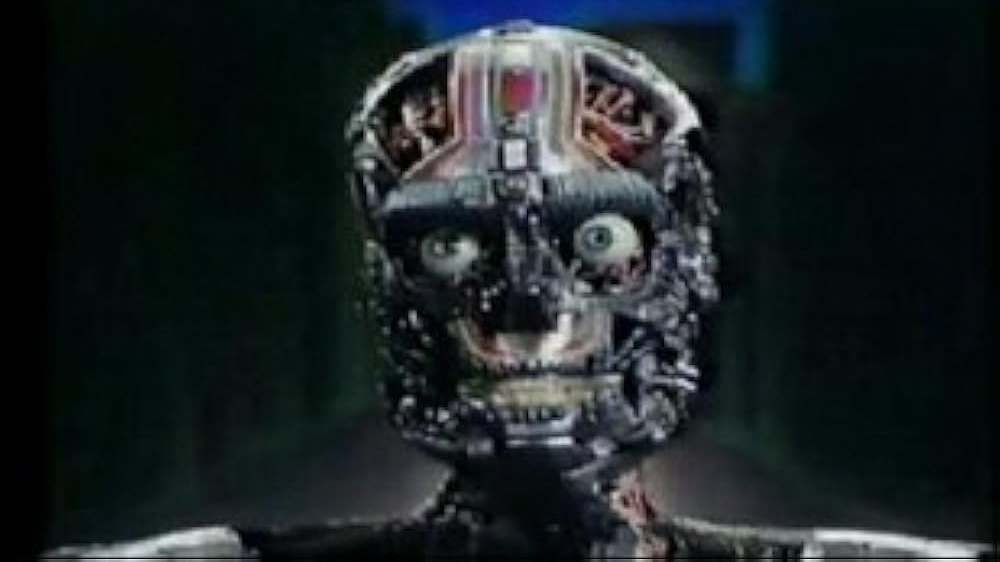
The Muppet Movie’s James Frawley was installed as director, with Stan Winston – fresh off The Terminator – handling the special effects. The story revolved around an android, given the designation D5B, who was created by the government as a weapon but who rebelled against his programming and went on the run. Charles Rocket was cast in the title role, delivering his lines in a deadpan monotone, playing opposite Hoyt Axton’s friendly trucker, who wants to help D5B get to Washington, DC, where he will make a plea for his continued existence to the President himself. Opposing them is Chuck Connors’s government agent, bringing a touch of the sinister to Thomas’s light-hearted script.

Despite Shepherd’s patronage, CBS passed on taking The Steel Collar Man to series but aired the pilot in August 1985, where it earned a 11.0 rating, beating all of ABC’s offerings on the night. After the pilot, Rocket would pop up as a guest star on various shows, occasionally enjoying shorts run on shows such as Max Headroom, Murphy’s Law, and Touched by an Angel, working steadily through to the mid-2000s. Away from the cameras, though, Rocket was clearly struggling; on October 7th 2005 he was found in a field he owned in Connecticut having bled to death from a cut throat.

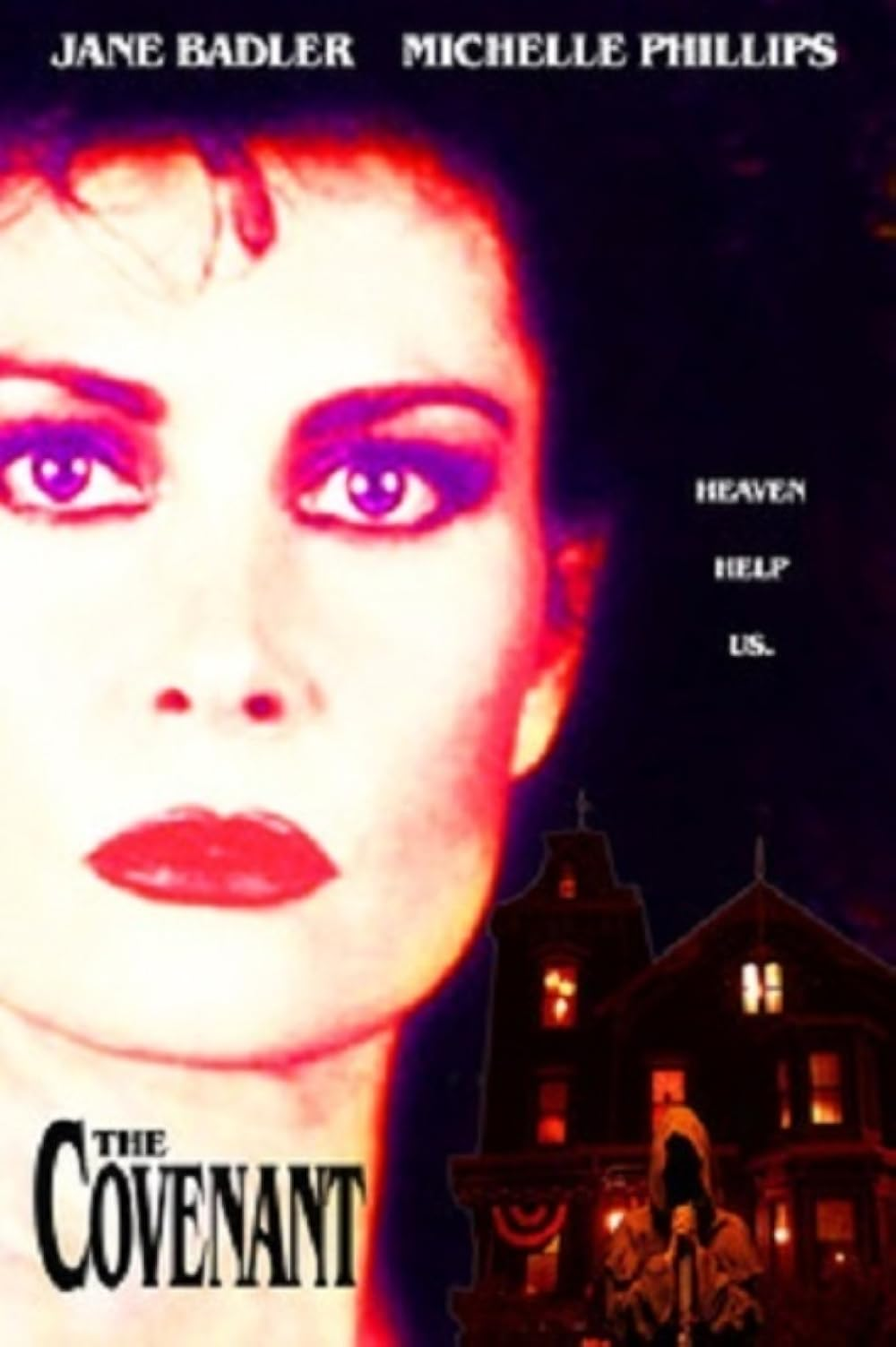
Covenant (NBC): Jane Badler set pulses racing (and probably sparked more than a few fetishes) as the rodent-snaffling alien Diana in V, rising from second-in-command to Supreme Commander by the time V: The Series hit screens in October 1984. A former Miss New Hampshire, Badler began acting after graduating from Northwestern University with a degree in drama, securing a regular role as Melinda Cramer on One Life to Live in 1978. After three years on the soap, she replaced Laurie Klatscher as Natalie Bell on long-running serial The Doctors, alongside Alec Baldwin (in his first role), and when NBC cancelled the soap, she auditioned for the role of Diana.

Creator Kenneth Johnson described the character as “a domineering dominatrix who is incredibly sexy, seductive and probably bisexual,” and Badler fit his description to a tee, although she claims she had to work on giving off an air of danger, something she achieved with aplomb. V catapulted her to stardom, the initial two-part mini-series shown on successive nights on NBC in May 1983 and blowing away its opposition on rival networks. V: The Final Battle followed a year later, this time in three instalments and again doing massive ratings, with the final part watched by over forty percent of those watching TV at the time. Although Johnson was against it, it was inevitable that a series would follow, and it debuted just five months later, with many of the cast returning for a regular dose of visitor versus resistance again. Ratings were half of those for the two mini-series and, despite its charms, it was cancelled after nineteen episodes, its story unresolved.

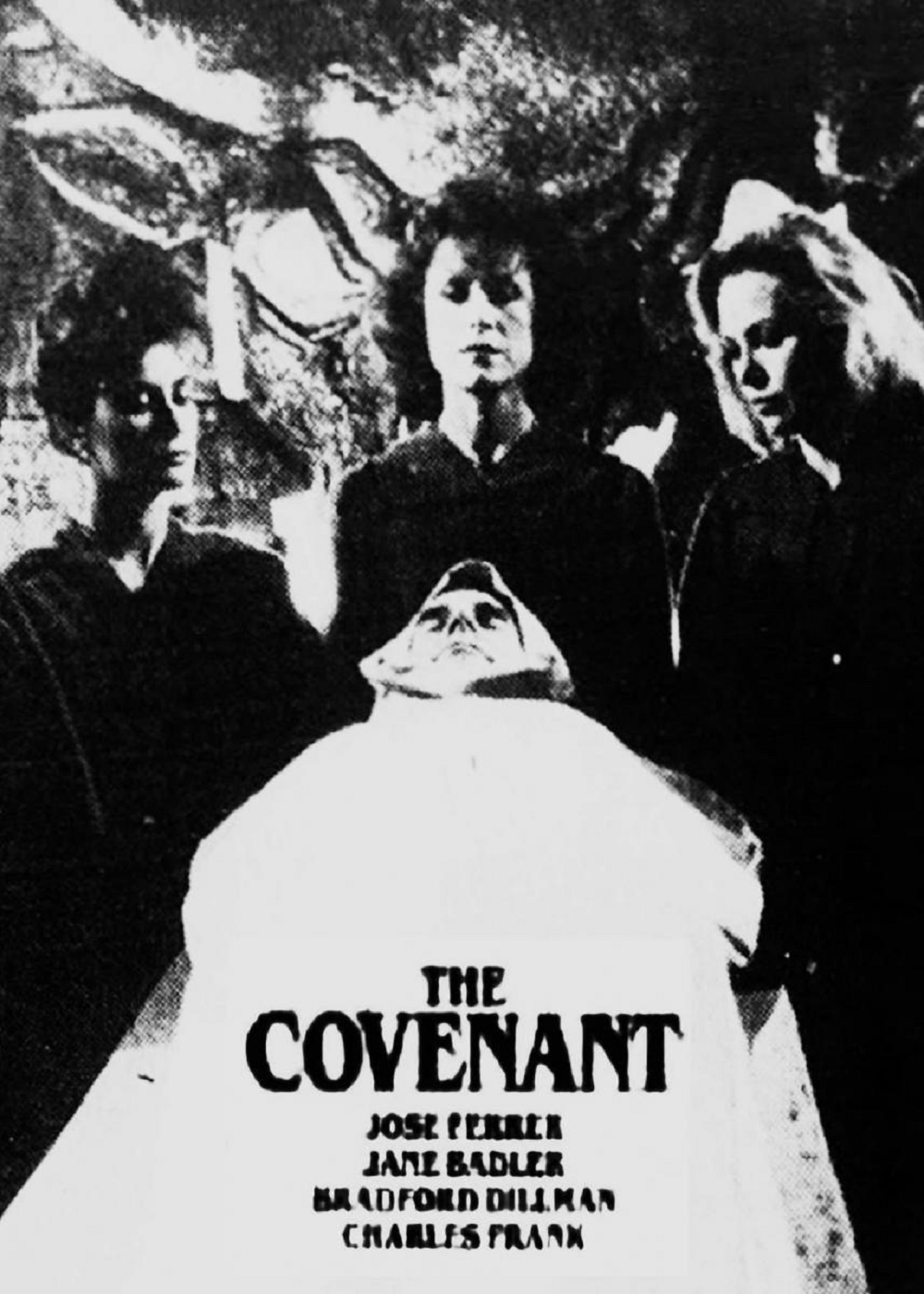
The Covenant, 1985-86

Badler remained under contract to NBC, who refused to release her to take a role in another blockbuster mini-series, North and South on ABC, and instead she was encouraged to take the lead role in The Covenant, a horror-tinged pilot created by JD Feigelson and Dan DiStefano. Feigelson had early success with Horror High, a 1973 feature that took the Strange Case of Dr Jeckyll and Mr Hyde and set it in a Texan high school. Ambrose Pierce adaptation One of the Missing followed in 1979 and two years later he pretty much invented the “killer scarecrow” genre with Dark Night of the Scarecrow, initially meant to be an independent horror feature but bought by CBS and made as a TV movie. DiStefano, meanwhile, was better known for his work on Saturday morning cartoons such as Sport Billy and The Biskitts, although he did make his writing debut on Sexcapade in Mexico, a grindhouse offering that was actually banned in Mexico and came with the tagline, “Will This Daughter Follow in the Footsteps of Her Nymphomaniac Mother?”

Directed by TV veteran Walter Grauman, The Covenant is the story of the Noble family, a powerful San Francisco elite who control the world’s banks and owe their wealth and influence to a pact they signed with the Devil. Heading up the family is Victor, a former confidante of Adolf Hitler played by José Ferrer, who is preparing his eighteen-year-old granddaughter, Angelica (Knot’s Landing‘s Whitney Kershaw) for a once in a century virginal blood sacrifice to take place in three years. Playing to type, Badler is Dana, Victor’s second wife who has machinations of her own and possesses supernatural powers, including the ability to set someone on fire. Oh, and Dana is also Victor’s niece; he murdered his brother to take his wife, and Dana then murdered her to take her husband!

The Covenant, 1985-86

Standing in the way of the Nobles are The Judges, an underground cabal led by Barry Morse’s Zachariah who have opposed the Nobles since biblical times, and Whitney’s mother, Dana’s twin sister Claire (Michelle Phillips of the Mamas and the Papas). The cast also includes Kevin Conroy (the voice of Batman in Batman: The Animated Series), Bradford Dillman, All My Children‘s Charles Frank, and a young Tia Carrere. The Covenant was produced by Michael Filerman, the man who suggested the title Dallas to series creator David Jacobs, and who produced its spin-off Knots Landing and the similarly glitzy Falcon Crest, and it had all the ingredients of an over-the-top, Dallas-style weekly soap. As they had done earlier that Summer with Code of Vengeance and Stingray, both of which did earn series, NBC tested the waters, airing the pilot as a TV movie in August 1985, where it was narrowly beaten by a re-run of Kate & Allie on CBS and another unsold pilot shown as a TV movie – Command 5 – on ABC. This wasn’t the result the network was looking for and they declined to take the show to series, prompting NBC president Brandon Tartikoff to reconsider the viability of finding a prime-time soap to rival Dallas and Dynasty. Feigelson, DiStefano, and Grauman would later reunite for 1990’s Nightmare on the 13th Floor, a TV movie about a travel journalist investigating the floor of a hotel walled up for a hundred years after a maniac killed its every inhabitant.

After The Covenant, Badler played a stern but sexy controller in The Highwayman and then reunited with Filerman on season six of Falcon Crest as the stern but sexy Meredith Braxton (who was originally written as the lesbian love interest of Jill Jacobsen’s Erin Jones, but changed to her sister on the insistence of stuffy old Jane Wyman), and then travelled to Australia to film the Mission: Impossible revival, in which she was only occasionally stern. Finding the country to her liking, Badler opted to stay in Australia after the show was cancelled, marrying businessman Stephen Harris and raising two children. She continued to act and finally fulfilled her compulsory obligation to appear in Neighbours in 2010, a year before she returned to play Diana in season two of the V reboot. Her character was completely rewritten to be an imprisoned ex-queen of the aliens who wishes for the visitors and the humans to live together in peace, putting her in opposition to her daughter, the current queen. Stern no more.

Northstar (ABC): Way before he developed Dexter for TV, back before even Suddenly Susan and Parker Lewis Can’t Lose, Clyde Phillips worked with his friend Daniel Grodnik on a script for a superhero story with a difference. Grodnik, who was primarily a producer, further developed the story and sold it to ABC, although both he and Phillips were given executive producer credits. ABC put Howard Lakin – son of Rita, one of the first female showrunners in American television and creator of The Rookies and Flamingo Road – in charge of the project and, after he gave the script a polish, Northstar was born.

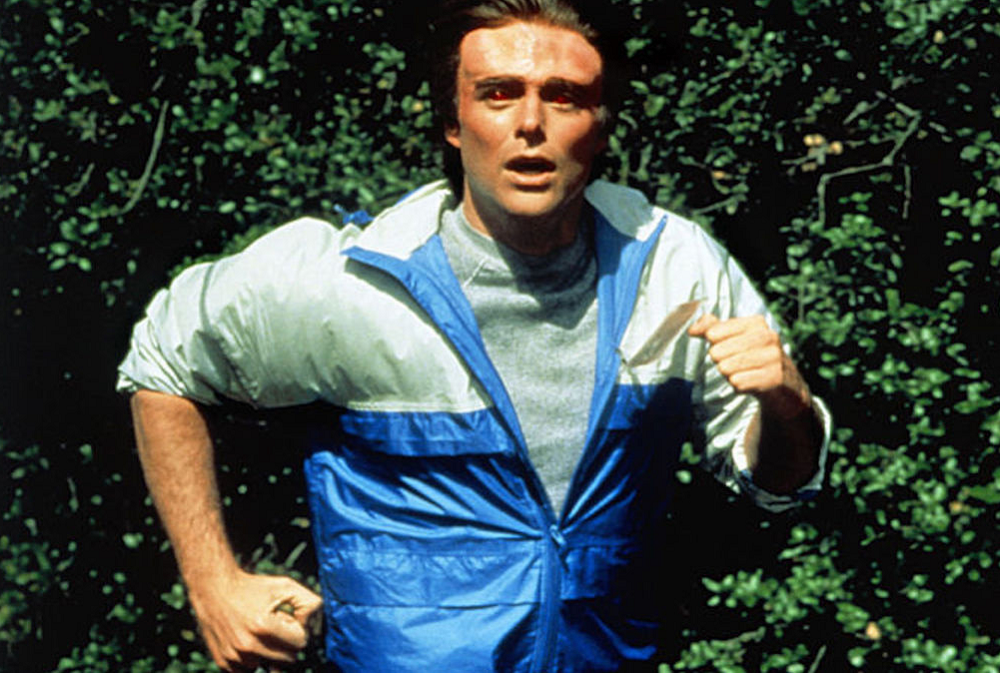
Northstar starred Greg Evigan as astronaut Jack North who, while attempting to photograph an eclipse during a spacewalk, is hit by mysterious cosmic radiation. When he returns to Earth, he finds that he has fantastic powers whenever his eyes are exposed to sunlight. However, too much exposure to sunlight will cause him to overheat, and so he must learn to control his abilities – and find a pair of sunglasses. Evigan had finished a four-season run on BJ and the Bear in May 1981 and was cast as one of three leads alongside Rod Taylor and Kirstie Alley in another Glen A Larson show, Masquerade, in 1983, but that show failed to set the ratings alight and was cancelled after thirteen episodes.

Northstar, 1985-86

He was joined in Northstar by Deborah Wakeham as Dr Alison Taylor, the scientist tasked with helping Jack get used to his newfound abilities, which are split into blue, yellow, and red levels. Corresponding to the colour his eyes turn when he is using them. Blue allows him to access any knowledge he’s ever had and easily acquire new knowledge, while yellow pushes his body far beyond normal limits, although it may erode his memories and shorten his life expectancy. Red is the most dangerous, risking brain damage or even death, and resulting in the need to stay in the shade for a while. Sowing seeds for future storylines, Dr Taylor’s husband is missing after an expedition in the Andes, but that doesn’t stop the sexual tension between the pair.

The whole thing is overseen by Mitchell Ryan’s General Even Marshall, but North’s first priority is to solve the mystery behind the death of his friend and fellow astronaut, Bill Harlow, even if he has to go against Marshall’s orders – and risk his life – to do it. Essentially a Six Million Dollar Man for the 1980s, but with added peril, Northstar didn’t get ABC executives excited, and it never progressed beyond the pilot stage. The pilot was burned off as an ABC Sunday Night Movie in August 1986, and September 1987 saw Evigan cast in the role most remember him for, as one of Nicole’s twin father figures alongside Paul Reiser in My Two Dads. As an interesting postscript, retro synthesiser outfit Dread Phallinoid imagined a world where Northstar was picked up as a series in Fall 1987, releasing an imaginary soundtrack on their Bandcamp page in July 2022.

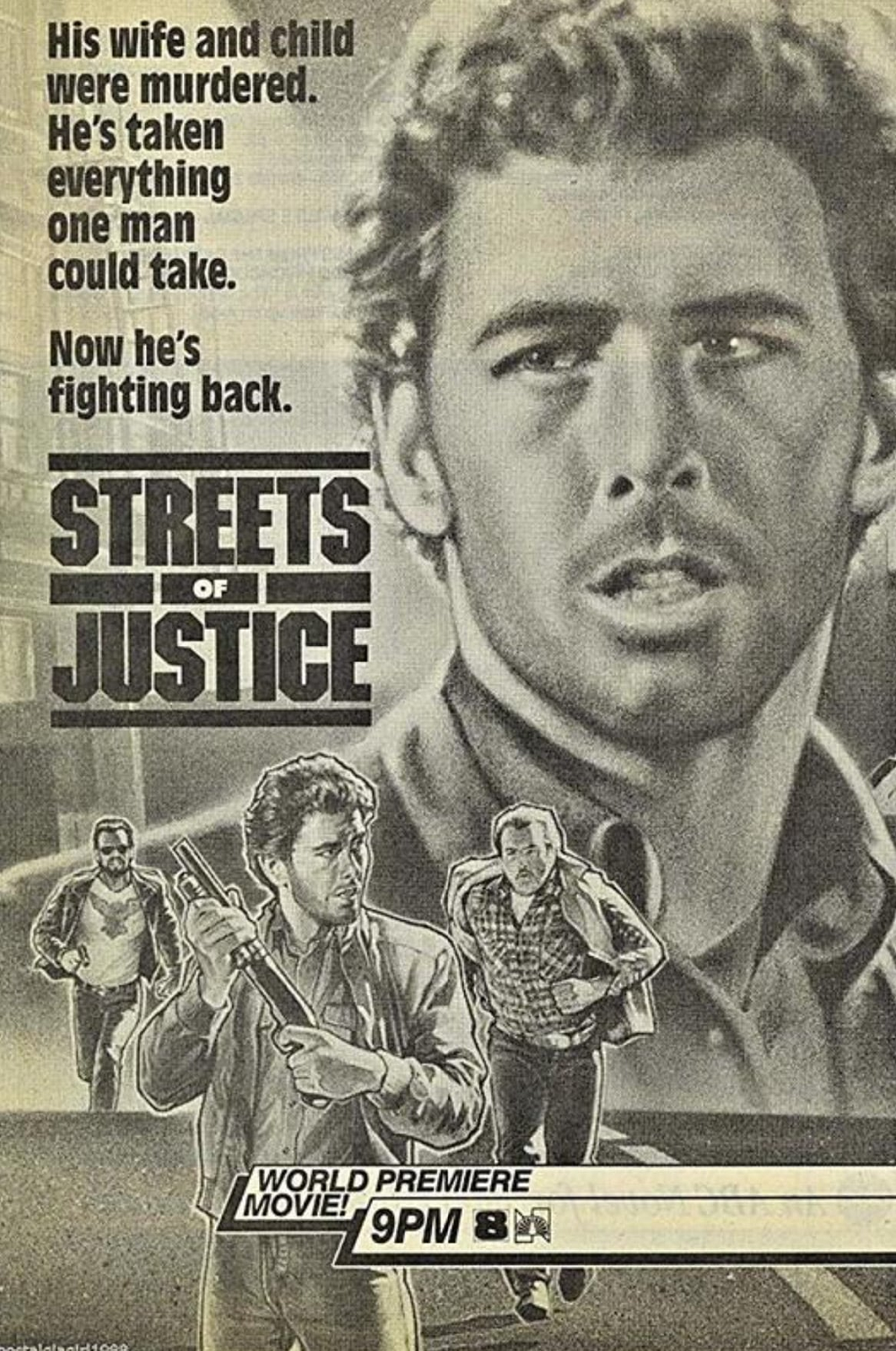
Streets Of Justice (NBC): Christopher Crowe’s first brush with stardom came while working at his father’s graphic arts company in Racine, Wisconsin. The young designer was a fan of a local band who were trying to make their way in the Wisconsin and Illinois club scene and visited them at noted Milwaukee dive Humpin’ Hanna’s to present them with a logo he’d designed. That logo – and the band – were soon plastered all over billboards and magazines across the US as Cheap Trick made it big, although Crowe never saw a penny off his creation, seeing it as a gift from one struggling artist to others.

By the time Cheap Trick released their self-titled debut album in 1977, Crowe was in Hollywood, where he was trying his hand as a screenwriter. He sold three scripts for the third season of Baretta secured a dual role as story editor and scriptwriter on The Hardy Boys/Nancy Drew Mysteries, and then got his first taste as a producer with 1978’s Sword of Justice. His big break arrived later that year when producer Glen A Larson picked up his original idea for a trucker and his chimpanzee pal, debuting in February 1979 as BJ and the Bear. Greg Evigan spent four seasons behind the wheel of Crowe’s eighteen-wheeler before the show was cancelled in May 1981, a retooling not enough to halt sliding ratings. Crowe moved over to anthology show Darkroom, again contributing scripts and working as a producer, and also wrote two feature films: 1981 dystopian future car yarn The Last Chase (for which he was credited as CR O’Christopher) and horror anthology Nightmares from 1983.

Streets of Justice, 1985-86

Having worked with NBC on both Sword of Justice and BJ and the Bear, he found the network receptive to a pilot script he wrote for a potential series that would cash in on the popularity of Michael Winner’s revenge flick Death Wish, which had enjoyed a new lease of life on the home video market, leading to two sequels making headlines in the press and a quick buck for producers Cannon Films. Streets of Justice saw the wife and son of blue collar auto-worker Hudson James murdered by a gang of out-of-control bikers when they take a turn into the wrong neighbourhood. After one of the four culprits walks away scot-free, James snaps and begins his own search for justice, living a double life as an after-dark vigilante.

Besides Footloose’s John Laughlin in the main role, the pilot also starred Lance Henrikson, Robert Loggia, Cristina Raines, and Jack Thibeau, with Crowe given his first chance to direct. Despite their obvious inspiration, a negative backlash to the bloodthirsty nature of the Death Wish movies didn’t help Streets of Justice’s chances of being taken to series, and NBC ultimately passed, with Crowe moving on to Alfred Hitchock Presents, where he wrote, directed, and acted as Executive Producer. The Streets of Justice pilot was eventually shown as a TV movie in November 1985 but paled in opposition to mini-series North and South on ABC.

Next time on The Telephemera Years: 1985’s hot new kids’ shows (and Hulk Hogan)…

Check out our other Telephemera articles:

The Telephemera Years: pre-1965 (part 1, 2, 3, 4)

The Telephemera Years: 1965 (part 1, 2, 3, 4)

The Telephemera Years: 1966 (part 1, 2, 3, 4)

The Telephemera Years: 1967 (part 1, 2, 3, 4)

The Telephemera Years: 1968 (part 1, 2, 3, 4)

The Telephemera Years: 1969 (part 1, 2, 3, 4)

The Telephemera Years: 1970 (part 1, 2, 3, 4)

The Telephemera Years: 1971 (part 1, 2, 3, 4)

The Telephemera Years: 1973 (part 1, 2, 3, 4)

The Telephemera Years: 1974 (part 1, 2, 3, 4, 5)

The Telephemera Years: 1975 (part 1, 2, 3, 4)

The Telephemera Years: 1976 (part 1, 2, 3, 4)

The Telephemera Years: 1977 (part 1, 2, 3, 4)

The Telephemera Years: 1978 (part 1, 2, 3, 4)

The Telephemera Years: 1979 (part 1, 2, 3, 4, 5, 6)

The Telephemera Years: 1980 (part 12, 3, 4)

The Telephemera Years: 1981 (part 1, 2, 3, 4)

The Telephemera Years: 1982 (part 1, 2, 3, 4)

The Telephemera Years: 1983 (part 1, 2, 3, 4)

The Telephemera Years: 1984 (part 1, 2, 3, 4)

The Telephemera years: 1985 (part 1, 2)

The Telephemera Years: 1986 (part 1, 2, 3, 4)

The Telephemera Years: 1987 (part 1, 2, 3, 4)

The Telephemera Years: 1988 (part 1, 2, 3, 4, 5)

The Telephemera Years: 1989 (part 1, 2, 3, 4)

The Telephemera Years: 1990 (part 1, 2, 3, 4)

The Telephemera Years: 1991 (part 1, 2, 3, 4)

The Telephemera Years: 1992 (part 1, 2, 3, 4)

The Telephemera Years: 1994 (part 1, 2, 3, 4)

The Telephemera Years: 1995 (part 12, 3, 4)

The Telephemera Years: 1996 (part 1, 2, 3, 4)

The Telephemera Years: 1997 (part 1, 2, 3, 4)

The Telephemera Years: 1998 (part 1, 2, 3, 4)

The Telephemera Years: 1999 (part 1, 2, 3, 4)

The Telephemera Years: 2000 (part 1, 2, 3, 4)

The Telephemera Years: 2001 (part 1, 2, 3, 4)

The Telephemera Years: 2002 (part 1, 2, 3, 4)

The Telephemera Years: 2003 (part 1, 2, 3, 4)

The Telephemera Years: 2005 (part 1, 2, 3, 4)

The Telephemera Years: 2006 (part 1, 2, 3, 4)

The Telephemera Years: 2007 (part 1, 2, 3, 4)

The Telephemera Years: 2008 (part 1, 23, 4)

The Telephemera Years: O Canada! (part 1, 2, 3, 4)

Titans of Telephemera: Irwin Allen

Titans of Telephemera: Stephen J Cannell (part 1, 2, 3, 4)

Titans of Telephemera: DIC (part 1, 2)

Titans of Telephemera: Filmation (part 1, 2)

Titans of Telephemera: Hanna-Barbera (part 1, 2, 3, 4, 5)

Titans of Telephemera: Kenneth Johnson

Titans of Telephemera: Sid & Marty Krofft

Titans of Telephemera: Glen A Larson (part 1, 2, 3, 4)

Titans of Telephemera: Quinn Martin (part 1, 2)

Titans of Telephemera: Rankin/Bass

Titans of Telephemera: Ruby-Spears

Titans of Telephemera: Aaron Spelling (part 1, 2, 3, 4)

Titans of Telephemera: Sunbow

STARBURST’s Recommendations for Seattle’s Hugo Awards

Dan Collins - DUNE! THE MUSICAL

2024 saw Worldcon come to Glasgow in the UK, which meant that a good number of STARBURST readers got to enjoy the delights of the World Science Fiction Society and the Hugo Awards Ceremony. The Hugos are the leading award for excellence in the field of science fiction and fantasy, mostly because they’re voted for and managed by super-dedicated fans. And though the Hugos have had their fair share of controversy, it’s still an honour to be nominated.

If you attended or supported Glasgow In 2024, or you’re going to this year’s Worldcon in Seattle, you can nominate candidates via the portal here. And if you’re not sure who to nominate for an award, here’s a list of STARBURST’s humble suggestions. (For the rest of us, this is just a fun list of stuff to check out.) It is by no means comprehensive (we’ve skipped some categories) and is mostly for fun.

Best Novel is the hottest award at the Nerd Prom that is the Hugo Awards.  Our recommendations include

Kaliane Bradley’s The Ministry of Time  –  A mind-bending story about defying history with some very current and crucial political undertones.

James S.A. Corey’s The Mercy of the Gods – A new space opera from the creators of The Expanse.

Adrian Tchaikovsky’s Alien Clay is a stunning satirical take on authoritarianism with a strong environmental message that is also a cracking read, and it is another strong showing from the author of Children of Time.

Best Novella helps showcase those odd works that aren’t quite novels but certainly aren’t short stories.

Wole Talabi’s Ganger from his collection, Convergence Problems, is an amazing piece of dystopian sci-fi that looks at individual freedoms in a new way.

Knicky L Abbott’s Tanglewood is a post-colonial gothic romance that breaks new ground whilst mining ancient stories for fresh ideas.

Best Series is a weird one, as it’s for large collections of books. We only have one recommendation here, and that’s because despite being a popular, long-running series, it’s simply never been considered for a Hugo in the past, despite its influence, scale of ambition and surprisingly sublime moments. Our recommendation is

The Horus Heresy by Dan Abnett, Graham McNeil, Aaron Dembski-Bowden, et al. Our example of qualifying work is, of course, the excellent The End and the Death III.

Best Graphic Story or Comic tends to get dominated by USA-based comics for some reason, and it’s a fiercely competitive category.

Kenneth Niemand Judge Dredd: A Penitent Man is a tale of corruption and revenge. As usual, despite being a Dredd story, he’s not the main character. A solid, hard-boiled story from some of the finest creators in comics today.

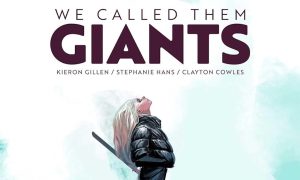
Kieron Gillen and Stephanie Hans We Called Them Giants is a gorgeous piece of work about how the world can end in so many different ways.

Best Dramatic Presentation, Long Form we only have one recommendation for this. Star Trek Prodigy is a great animated show that introduces Star Trek to younger audiences, who simply deserve all the love it can muster. Also features Ella Purnell, who is in everything that Starburst readers love.

Best Dramatic Presentation, Short Form is a broad category that is usually dominated by TV shows, which is a shame because it’s also intended for other sorts of short dramatic works. Our recommendations were both available to be enjoyed at 2024’s Worldcon in Glasgow.

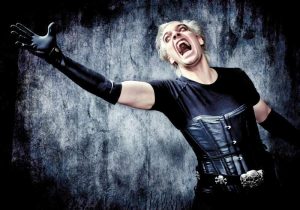
Dan Collins’s Dune! The Musical is a must-watch one-man show inspired by the novel Dune. And it is 100% the spirit of fandom. It’s a great show.

John Robertson’s The Dark Room has been around for a while, but John performed a special version for Worldcon audiences, making it eligible for a rocket. It’s wild, it’s imaginative and it’s deepy rooted in all things SF, it’s very much a thing that is beloved by SF types. This staple of fandom has been overlooked for too long; give it a nomination.

Best Game or Interactive Work This young category is mostly dominated by video games. So we’re going to recommend a genre-defying, escape room-like event called The Key of Dreams by Lemon Difficult, fantasy horror at its finest.

Best Fanzine Our recommendation? Alasdair Stuart’s The Full Lid. Nuff said.

Best Fancast Actual play TTRPGs have long been overlooked by Hugo Award voters, so we’re going to plug the extremely fan-friendly and rather funny Star Wars Force Majeure. Also, the STARBURST Radio Official Podcast is very good and eligible.

THE TELEPHEMERA YEARS: 1985, part 2

Misfits of Science, 1985-86

Ah, telephemera… those shows whose stay with us was tantalisingly brief, snatched away before their time, and sometimes with good cause. They hit the schedules alongside established shows, hoping for a long run, but it’s not always to be, and for every Street Hawk there’s two Manimals. But here at STARBURST we celebrate their existence and mourn their departure, drilling down into the new season’s entertainment with equal opportunities square eyes… these are The Telephemera Years!

1985-86

The NBC sitcom juggernaut kept on rolling into the Fall 1985 season, with The Cosby Show and Family Ties flying high, joined in the top ten by Cheers and new arrival The Golden Girls, with Night Court, You Again, and another new show in 227 finding spots in the top twenty. CBS put up the best opposition, with Jessica Fltcher nosing around in third, 60 Minutes telling the world about Live Aid in fourth, and perennial favourite Dallas beating out ABC’s Dynasty to sixth place. ABC were in transition, with Benson, The Fall Guy, Hardcastle and McCormack, and The Love Boat all entering their final seasons, although The Colbys, Growing Pains, MacGyver, and Perfect Strangers were all debuting on the alphabet network.

Over on CBS, new arrivals included The Equalizer and a reboot of The Twilight Zone, while NBC took Diff’rent Strokes from ABC to add to its sitcom line-up, and premiered Steven Spielberg’s Amazing Stories. It was once again another year of thin gruel for genre fans, though, with Knight Rider ending its run and only the earthbound angel drama of Highway to Heaven bringing anything in the way of paranormal drama to TV screens. Those were all shows that people talked about for mostly the right reasons, though; what about the less-remembered and outright failures? This is the story of four more unsuccess stories from 1985…

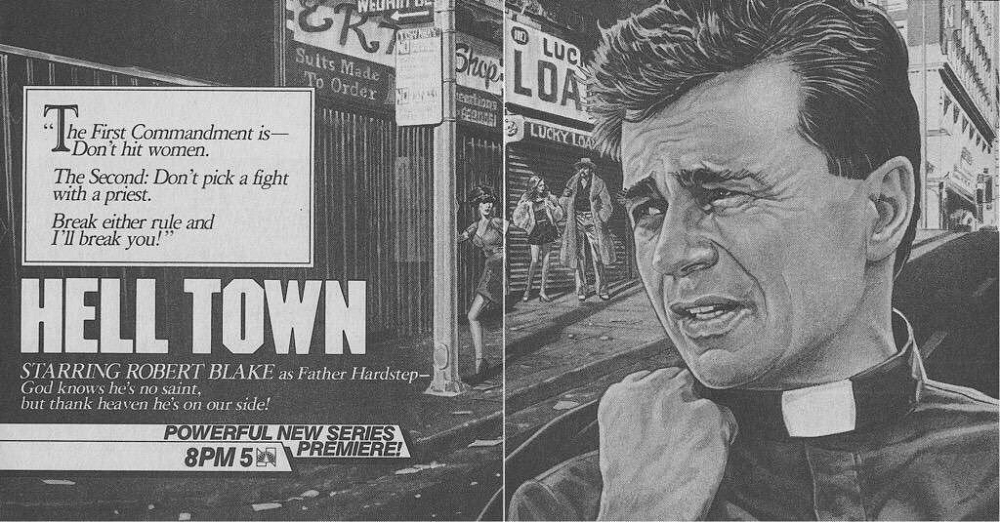
Hell Town (NBC): Someone at NBC must have been very pleased with themselves when the Fall 1985 schedules were released showing that Highway to Heaven would be followed by Hell Town, a new drama series starring Robert Blake. Actually, the two shows had more in common than it might have first seemed, with Blake playing a priest, spreading the word of the God that sent Michael Landon back to Earth to help out those in trouble. His priest – Father Noah “Hardstep” Rivers – was a different kind of priest, though, a former criminal who enjoyed billiards, his down-to-Earth approach was perfect for the crime-ridden neighbourhood in east Los Angeles that gave the show its name.

Blake began his career at the age of three, taking the stage alongside his siblings as The Three Little Hillbillies in an act overseen by his parents. His childhood was a nightmare, full of abuse from both parents, despite starring in forty Our Gang shorts as one of the Little Rascals between 1939 and 1944, and a series of other movies that continued after he left home at fourteen. In 1959, he turned down the role of Little Joe Cartwright in Bonanza that eventually went to Landon and continued to gain small roles in film and on TV until his breakout role as murderer Perry Smith in an adaptation of Truman Capote’s In Cold Blood in 1967.

It was Baretta, though, that made Blake a household name. Created by Stephen J Cannell, Tony Baretta was an unorthodox police detective and a master of disguise who spent four seasons keeping the streets of an unnamed fictional city safe, quipping catchphrases like “You can take dat to da bank” and “And dat’s the name of dat tune.” Blake earned an Emmy, a Golden Globe, and a People’s Choice award for his endeavours, and the show breached the top ten in the ratings for 1976-77’s third season, after which Blake announced that he’d only do one more, as per his contract, feeling he’d done all he could do with the character.

Hell Town, 1985-86

After Baretta ended, NBC poached Blake, giving him carte blanche with one of his own creations, private eye Joe Dancer. A modern take on the kind of rugged, hard-boiled flatfoot that made Humphrey Bogart famous, Dancer debuted in The Big Black Pill on January 29th 1981 as part of NBC Thursday Night at the Movies, returning in The Monkey Mission two months later. A third film, The Big Trade, was to follow, but ratings for the first two were less than they hoped for, and NBC shelved it, eventually airing it as an NBC Sunday Night Movie in June 1983 under the title Murder 1, Dancer 0.

Despite the failure of the Joe Dancer project, NBC were still keen to work with Blake, and chief executive Brandon Tartikoff himself handled negotiations. At the time, Blake was in talks to take the role of David Addison in a new show named Moonlighting, but he preferred to work on something he had a personal stake in, and the role was given to second choice Bruce Willis instead. Blake gave NBC Father Hardstep, like Dancer, created by Blake himself using the alias Lyman P Docker, a name Baretta occasionally used for undercover work. Blake co-wrote the script, originally called Father of Hell Town, with former Baretta scripter E Nick Alexander and Brian Cassidy, and it was something ABC had already passed on, but NBC agreed to take it to pilot. Nevertheless, Blake was initially downbeat about his chances of success because, as he said, “Never in the history of radio and television has there been a successful priest show.”

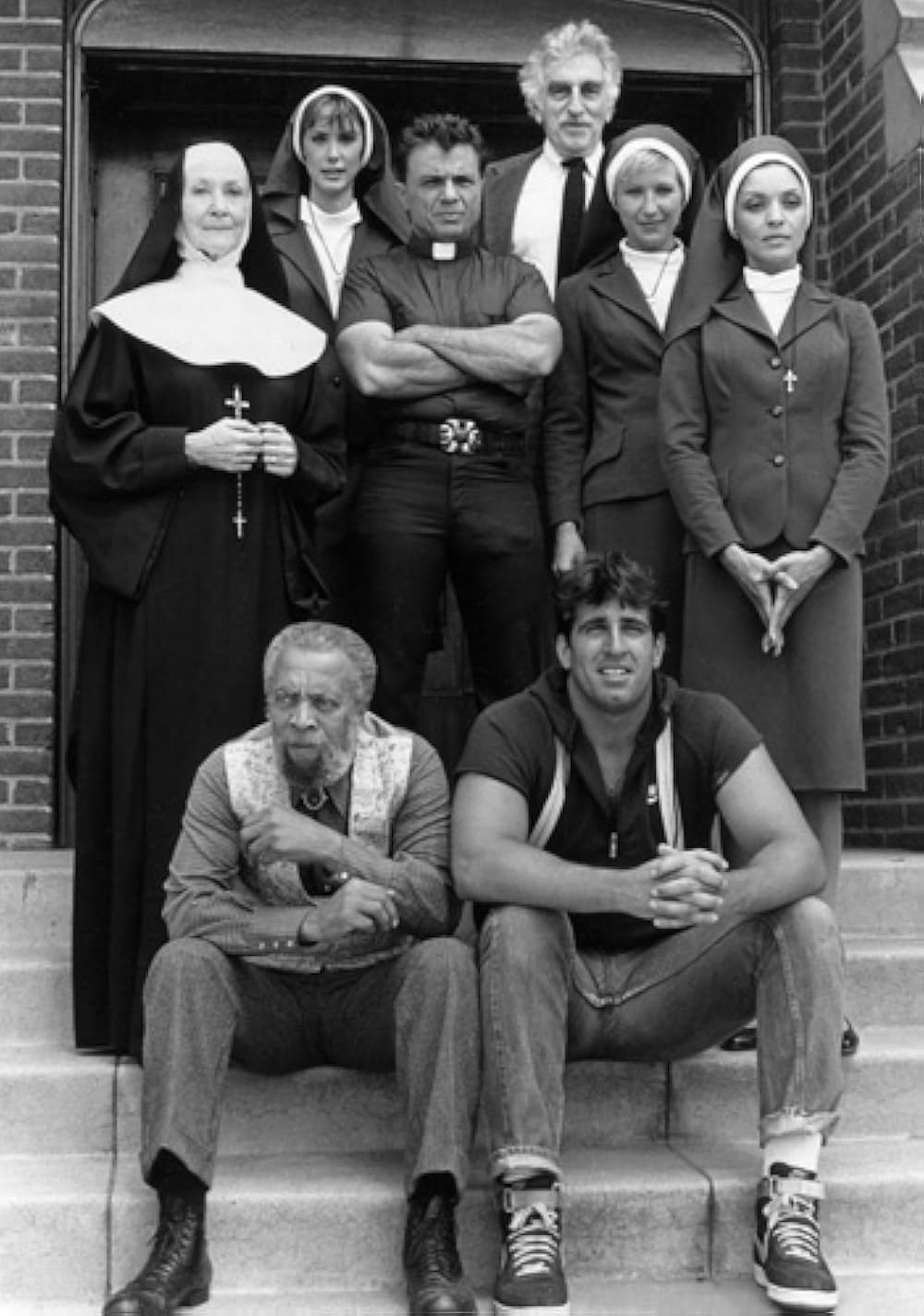
The movie was retitled Hell Town shortly before it was broadcast in March 1985, and established Hardstep as a man who wasn’t afraid to use his fists to ensure that the peace was kept in his parish, something perfectly illustrated by his motto of “sometimes the Lord is busy, so take a baseball bat with you.” Directed by Baretta’s Don Medford, the pilot also introduced Hell Town’s supporting cast of nuns and misfits, including Whitman Mayo’s One Ball, Jeff Corey’s Lawyer Sam, Tony Longo’s Stump, and Sister Indigo, played by Blaxploitation veteran Vonetta McGee. Up against Dynasty and Hotel, Hell Town did an 18.2 rating, beating the latter, and the success buoyed Blake, who – when offered a six-episode run – demanded twice that, arguing that it would take at least that long to overhaul Dynasty in the ratings!

Hell Town, 1985-86

With a theme song by Sammy Davis Jr, who had sung the theme for Baretta, Hell Town debuted on September 11th 1985, two weeks before Dynasty premiered its sixth season, with an episode dedicated to Hardstep’s efforts to help a prostitute reconcile with her jailbird mother, followed by the story of a miracle goat a week later. Unopposed, Hell Town easily won its timeslot in its first two weeks, but the return of Dynasty blew it out of the water and relegated it to a distant second place. In the ensuing weeks, as Hardstep prevented a gang war from escalating and helped one of his nuns overcome the trauma of a rape and unwanted pregnancy, the gap closed, and NBC were encouraged enough to extend the show’s initial twelve-episode order to sixteen.

Blake was suffering from a nervous breakdown, though, and was becoming increasingly difficult to work with. The decision was made to cancel the show on December 18th, leaving just one more episode to air a week later, in which One Ball made a deal with a ruthless gambler to raise the money for a child who needed a heart transplant. After Hell Town was cancelled, Blake entered a period of self-imposed exile from TV, only returning in 1993 to play John List in a TV movie, Judgment Day: The John List Story. He appeared in two more films – Money Train and Lost Highway – and spent the rest of his life embroiled in relationship turmoil, peaking with his 2005 acquittal on the charge of murdering his wife.

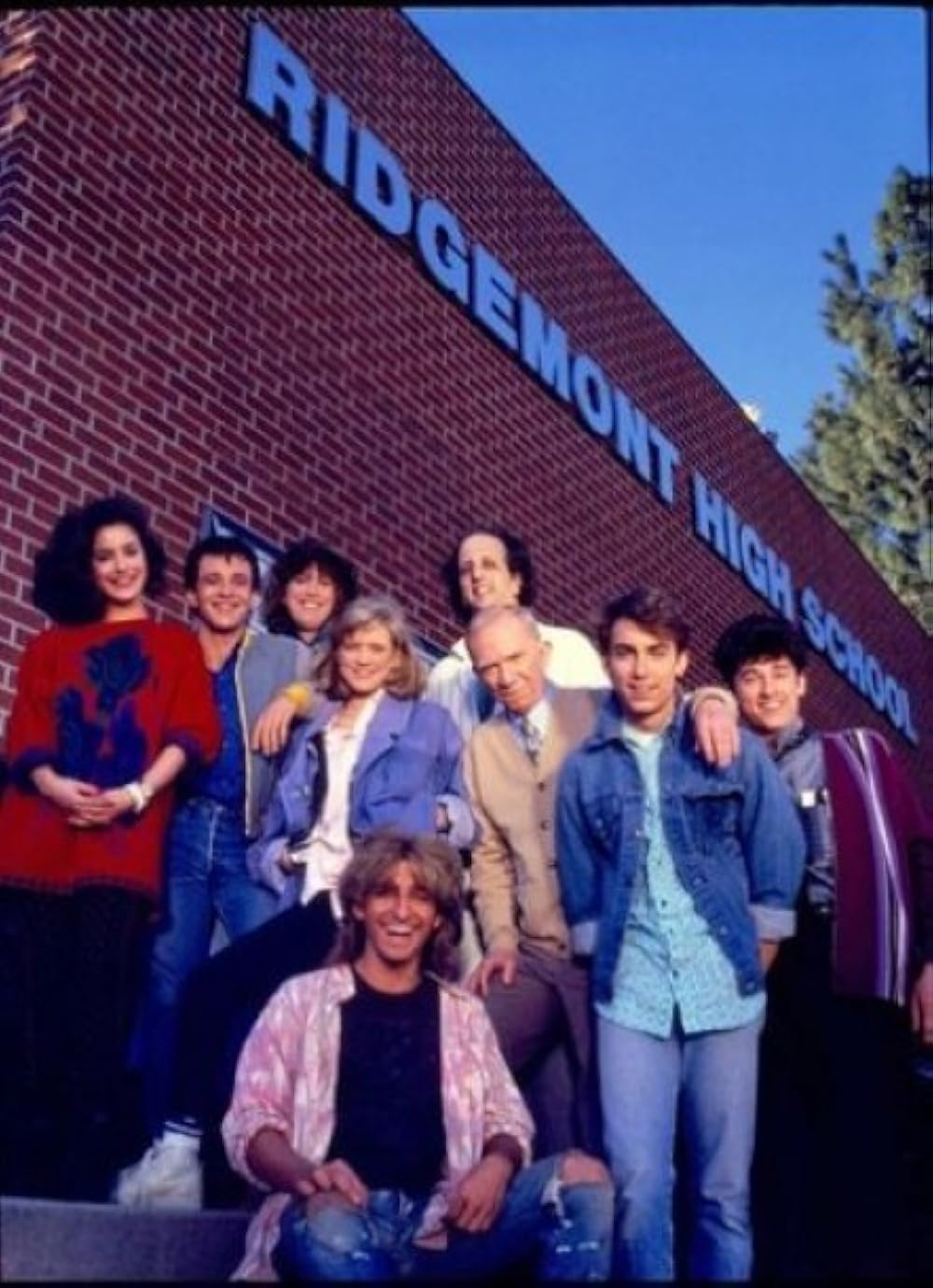
Fast Times (CBS): If you ever thought the plot of 21 Jump Street or Never Been Kissed – at heart the story of a twentysomething posing as a high school student to break a drugs ring/kiss teachers – was outrageous, you’ve never read about how Cameron Crowe wrote his debut novel, Fast Times at Ridgemont High. Crowe was an aspiring journalist who, after graduating early from high school, joined the staff of Rolling Stone magazine at the age of fifteen, soon enjoying a wild life interviewing – and partying with – some of the hottest bands of the mid-1970s. The story of that part of his life was fictionalised in the movie Always Famous, but when Rolling Stone moved offices from Los Angeles to New York, Crowe stayed behind, feeling that the excitement of rock journalism was wearing thin.

Instead, he decided to write a book about the modern high school experience, and particularly the parts he never got to experience due to his early graduation. Simon & Schuster were interested and so Crowe moved back with his parents in San Diego, enrolling at the local Clairemont High School under the name Dave Cameron. As the story unfolded in front of him, Crowe concentrated on six main tropes/characters: the hustler, the surfer dude, the hot girl, the nerd, and a middle-class brother and sister. Early on, he opted to leave himself out of the story, feeling that a pure tale of the American high school in the late 1970s stood on its own without his undercover angle.

Fast Times at Ridgemont High came out in 1981 and was already optioned for a movie before it hit bookstores. Universal recommended David Lynch, who had just finished The Elephant Man, as director, and Crowe met with the auteur, who passed despite liking the script. Instead, twenty-six-year-old Amy Heckerling, with just the short film Getting It Over With under her belt, was given the nod after Crowe was impressed with her knowledge of the novel, accepting her suggestions that several of the book’s scenes be added to the script.

Hell Town, 1985-86

With a cast that included Phoebe Cates, Jennifer Jason Leigh, Sean Penn, Judge Reinhold, and Ray Walston, and with Eric Stoltz and Forest Whitaker in early roles and Nic Cage (billed as Nicolas Coppola) making his film debut, Fast Times at Ridgemont High opened on August 13th 1982, but only after cuts had been made to secure an R rating after previously being given an X for sex scenes and full-frontal male nudity. The movie eventually grossed ten times its $5 million budget and although it was initially regarded as the latest in a line of teensploitation sex movies that included the likes of Porky’s and Meatballs, it has become something of a cult classic over time, with Penn’s Jeff Spicoli a slacker icon.

Fast Times at Ridgemont High was released on VHS in 1984, bringing it back into the zeitgeist and catching the attention of Universal Television and CBS. Eager to tap into the MTV generation, they commissioned a series based on the movie, with Crowe agreeing to act as a consultant. Heckerling was more involved; alongside The Sure Thing’s Jonathan Roberts, she acted as executive producer and shepherded the writing team, also signing on to direct the pilot. Four years on from the film’s release, the main cast had moved on, with Penn marrying Madonna and preparing to star with her in Shanghai Surprise, Reinhold hitting it big alongside Eddie Murphy in Beverly Hills Cop, and Cates fighting little monsters in Gremlins.

That meant an all-new cast of teens was needed, with Dean Cameron (who originally auditioned for the role of the wheeling and dealing Mike Damone in the movie) stepping into Penn’s shoes as Spicoli, newcomers James Nardini and Courtney Thorne-Smith as Brad and Stacy Hamilton, Back to the Future’s Claudia Wells as Stacy’s best friend Linda, Wallace Langham (credited as Wally Ward) as nerd Mark Ratner, and Patrick Dempsey in his first major role as Damone. Walston and Vincent Schiavelli did reprise their roles as teachers Mr Hand and Mr Vargas, and they were joined by a new character, Kit McDonald’s Miss Mellon, whose laissez-faire attitude resembled that of the original novel’s Mrs George. Moon Unit Zappa, who had just graduated high school herself, was hired to give insight into current teenage slang and fads, also appearing as Barbara, one of the wider cast of schoolkids.

Hell Town, 1985-86

A midseason replacement for the cancelled Mary (an ill-fated return to TV for Mary Tyler Moore after six years), Fast Times launched with a shorter title and a theme song written by Oingo Boingo, leading off Wednesday nights on CBS alongside fellow debutant Tough Cookies. Heckerling co-wrote and directed the first two episodes, with the pilot shown as episode two for some reason, and right from the off, the show’s major problem was apparent in that it couldn’t decide whether it was a continuation or reimagining of the original movie. Several scenes took events in the movie for granted, while others replayed them, and this – together with an attempt to make an R-rated film suitable for a family audience, fatally holed the show before it found its feet.

Well-beaten by Highway to Heaven over on NBC, and edged out by ABC’s MacGyver, the first episode came third in its timeslot, a position it never escaped. Just seven episodes of Fast Times were aired, and Fast Times and Tough Cookies disappeared from schedules at the end of April, replaced by news magazine show West 57th.  Unlike the movie, the TV show didn’t get to explain what happened to the kids after high school, although Crowe explored this territory himself in The Wild Life, his 1984 pseudo-sequel to Fast Times at Ridgemont High, which starred Penn’s brother Chris. Crowe would go on to direct Say Anything and Singles, both exploring the familiar territory of the complicated lives of teens and twentysomethings. Perhaps wary of his experience with Fast Times, he turned down the chance to adapt Singles as a TV show.

Canned Film Festival (syndication): The man behind Dr Pepper was not actually a doctor, or called Pepper, but in fact Texan pharmacist Charles Alderton, who gave his formula for a fruit-based drink that “aids digestion and restores vim, vigor, and vitality” to store owner Wade Morrison. It was Morrison who gave the drink its name in 1885, a year before Coca-Cola was introduced, and oversaw its nationwide distribution after a successful launch at the 1904 Louisiana Purchase Exhibition. Despite its early popularity, Dr Pepper soon fell way behind rivals Coca-Cola and Pepsi, and by the early 1980s the company was insolvent, prompting a group of investors to take the company private.

In an attempt to restore the brand’s fortunes, a new slogan – “Out of the Ordinary” – was introduced, accompanied by a series of commercials developed by the Young & Rubicam agency that featured a space cowboy and his alien sidekick seeking something different than a cola, and one that included the denizens of a small Japanese town offering Godzilla some Dr Pepper as an alternative to trashing their buildings. Young & Rubicam also came up with a new idea, one that – like all the best ideas – was based on an old concept. In the early years of radio and television, product and company sponsorship was common, with many shows even bearing the name of their patrons, and Young & Rubicam proposed that Dr Pepper sponsor a series of late-night syndicated broadcasts of cult films of the “so bad they’re good” kind.

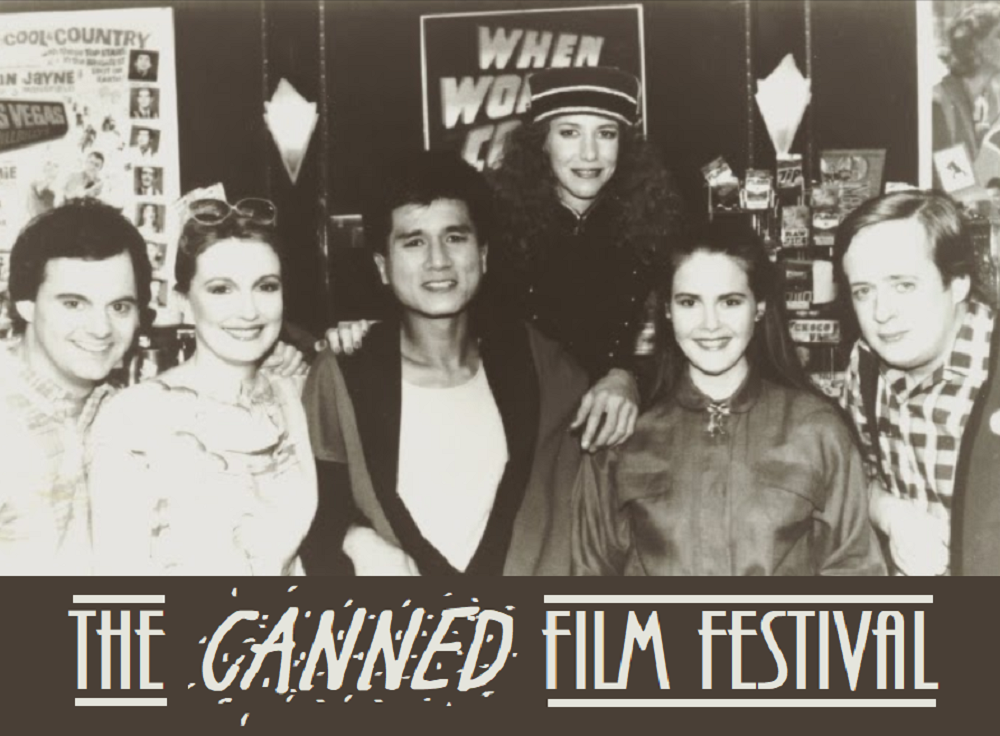
Canned Film Festival, 1985-86

The thirteen-part syndicated series, to be shown in the Summer of 1986, would be dubbed the Canned Film Festival (in honour of the more prestigious yearly affair held on the French Riviera) and feature legendary B-movies and drive-in favourites such as The Terror of Tiny Town, Santa Claus Conquers the Martians, They Saved Hitler’s Brain, Bride of the Monster, and The Slime People. What’s more, these features would be wrapped by comedy sketches set in an old movie theatre named The Ritz in the fictional town of Limekirk, Texas. It’s owner – and sole usherette – was played by Saturday Night Live’s Laraine Newman, and she both presented the movies and interacted with the theatre’s five patrons: Becky, Doris, Fitzy, newspaper film reviewer Jack, and the silent Chan. Sketches would top and tail the movies and also appear during commercial breaks, and were filmed in an actual disused theatre in Elizabeth, New Jersey.

Canned Film Festival aired in almost three-quarters of the country between June and September 1986, and plans were made for a second season, with the final episode credits asking viewers to submit suggestions for movies to be featured. However, a merger between Dr Pepper, Inc and the 7 Up Company in May 1986 put paid to future plans, although the arrival two years later of Mystery Science Theater 3000, which premiered on Minneapolis station KTMA-TV and featured many of the same movies, shows that the idea had legs, even if MST3K creator Joel Hodgson denies the show influenced his long running series.

Misfits of Science (NBC): When Brandon Tartikoff took over from Fred Silverman as president of entertainment at NBC in 1981, he was just thirty-two-years-old. He’d been at the network for five years, during which time it had fallen well behind ABC and CBS in the ratings, and his appointment was seen as a new brush sweeping through the station’s schedules. By 1984, Tartikoff was beginning to turn things around with a hands-on approach paying dividends in the form of The Cosby Show (developed after Tartikoff was impressed with Cosby’s guest-hosting of The Tonight Show) and Miami Vice (which stemmed from a memo Tartikoff wrote, headlined “MTV Cops”). A year later, Tartikoff’s creative juices were flowing again when he came up with the title Misfits of Science and a rough outline that suggested it be a Ghostbusters-inspired show that relies “on the National Enquirer for story ideas.”

After Stephen J Cannell passed on the assignment, James D Parriott was the man tasked with turning Tartikoff’s notes into a fleshed-out show, having worked under Kenneth Johnson on The Bionic Woman and The Incredible Hulk before being given the chance to helm his own show in 1982’s Voyagers!, a show that held its own when scheduled against 60 Minutes but which was cancelled when NBC decided to air a news show in that slot instead. Working with staff writer Donald Todd, Parriott crafted Tartikoff’s basic concept into a light-hearted superhero show set at the Humanidyne Institute, which specialises in human anomalies.

Misfits of Science, 1985-86

The titular misfits were led by Dr Billy Hayes, an eccentric young research scientist played by Dean Paul Martin, son of the famous actor and singer who had several minor hits as part of the trio Dino, Desi & Billy in the 1960s, before embarking on a professional tennis career. He moved into acting in 1979, playing a tennis pro opposite Ali McGraw in Players, for which he was nominated for a Golden Globe. Hayes and co-scientist Dr Elvin Lincoln (former professional basketball player Kevin Peter Hall), a very tall man who is able to shrink down to eleven inches tall thanks to hormonal treatments, are fired from Humanidyne when they protest against a decision to experiment on a man found still alive after fifty years frozen in ice.

They assemble a team of super-powered oddballs to stage a rescue, including newcomer Mark Thomas Miller as Johnny Bukowski, a rock star who developed electrical powers after being electrocuted on stage, and Gloria Dinallo, a troubled teen with telekinetic powers played by Courteney Cox, a year after she appeared in the Brian de Palma-directed video for Bruce Springsteen’s “Dancing in the Dark.” After successfully preventing Iceman (also known as Beef due to legal rumblings from Marvel Comics), Hayes and Ellison are reinstated under the direction of Max Wright’s Dick Stetmeyer, with the cast filled out by Diane Civita Cary as Miss Nance (the secretary who keeps everything running) and Jennifer Holmes as Jane Miller (Gloria’s probation officer and potential love interest for Billy). Both Holmes and Civita Cary worked with Parriott on Voyagers!, though he knew Civita Cary better as his wife.

Although Iceman only appeared in the double-length pilot, the gang retained the ice cream truck originally used for transporting him and embarked on a series of cases that included searching for buried Mayan treasure beneath Los Angeles, helping a primitive tribesman free the spirit of his dead child, and saving a scientist who is kidnapped by cocaine smugglers in the belief he can instruct dolphins to smuggle their wares. Throw in a trio of senior citizens given superpowers from irradiated hamburgers, a bionic government agent who accidentally loses the “nuclear football, ” and a clip show set in an alternate reality, and it’s clear that viewers were treated to a weekly dose of hyper-normal fun.

Writers on the show included Mark Jones (who would go on to write and direct the Leprechaun series of films), future Heroes creator Tim Kring, and Saturday Night Live’s Pam Norris, as well as a Parriott, Todd, and producer Morrie Ruvinsky, an unusually small team for a network show. They had to overcome obstacles such as Holmes’s unexpected pregnancy (her character is only filmed from the chest up in later episodes), hokey special effects, and a tough spot in the schedules. Misfits of Science was given a prime Friday night slot, sandwiched between Knight Rider and Miami Vice in an attempt to create a three-hour action block to counter ABC’s sitcoms and the glitzy soaps on offer at CBS. The two-hour pilot debuted on October 4th 1985, narrowly finishing behind Webster and Mr Belvedere in its first hour and losing heavily to Dallas in its second.

Misfits of Science, 1985-86

After a pre-emption for football, subsequent episodes did decent ratings, on a par with lead-in Knight Rider but against much tougher opposition. From the last week of December, the shows were switched, with Misfits of Science moving to 8pm, but its ratings did not improve, despite not having to go up against Dallas. The show was given an initial order of thirteen episodes and despite ratings remaining at pretty much the same level for its entire run, a level that would have seen any other show cancelled, it a stay of execution. When numbers dipped below a 12.0 rating, though, even Tartikoff’s patronage couldn’t prevent the axe falling after episode fifteen had aired, leaving one more finished adventure in the can.

The show was later released on DVD but only in Germany (where it is known as Die Spezialisten Unterwegs, or “the specialists on the go”) and France, although English audio is included on the German disc, as is the unaired final episode. After Misfits, Cox would later find fame on Friends, Wright would play host to cat-eating alien ALF, and Kevin Peter Hall would play both a bigfoot in Harry and the Hendersons and the Predator. He died in 1991 from AIDS-related illnesses, four years after Martin was killed while piloting an airplane as part of his service in the California National Guard.

Next time on The Telephemera Years: 1985’s unsold pilots, including supernatural soaps and overheating superheroes!

Check out our other Telephemera articles:

The Telephemera Years: pre-1965 (part 1, 2, 3, 4)

The Telephemera Years: 1965 (part 1, 2, 3, 4)

The Telephemera Years: 1966 (part 1, 2, 3, 4)

The Telephemera Years: 1967 (part 1, 2, 3, 4)

The Telephemera Years: 1968 (part 1, 2, 3, 4)

The Telephemera Years: 1969 (part 1, 2, 3, 4)

The Telephemera Years: 1970 (part 1, 2, 3, 4)

The Telephemera Years: 1971 (part 1, 2, 3, 4)

The Telephemera Years: 1973 (part 1, 2, 3, 4)

The Telephemera Years: 1974 (part 1, 2, 3, 4, 5)

The Telephemera Years: 1975 (part 1, 2, 3, 4)

The Telephemera Years: 1976 (part 1, 2, 3, 4)

The Telephemera Years: 1977 (part 1, 2, 3, 4)

The Telephemera Years: 1978 (part 1, 2, 3, 4)

The Telephemera Years: 1979 (part 1, 2, 3, 4, 5, 6)

The Telephemera Years: 1980 (part 12, 3, 4)

The Telephemera Years: 1981 (part 1, 2, 3, 4)

The Telephemera Years: 1982 (part 1, 2, 3, 4)

The Telephemera Years: 1983 (part 1, 2, 3, 4)

The Telephemera Years: 1984 (part 1, 2, 3, 4)

The Telephemera years: 1985 (part 1)

The Telephemera Years: 1986 (part 1, 2, 3, 4)

The Telephemera Years: 1987 (part 1, 2, 3, 4)

The Telephemera Years: 1988 (part 1, 2, 3, 4, 5)

The Telephemera Years: 1989 (part 1, 2, 3, 4)

The Telephemera Years: 1990 (part 1, 2, 3, 4)

The Telephemera Years: 1991 (part 1, 2, 3, 4)

The Telephemera Years: 1992 (part 1, 2, 3, 4)

The Telephemera Years: 1994 (part 1, 2, 3, 4)

The Telephemera Years: 1995 (part 12, 3, 4)

The Telephemera Years: 1996 (part 1, 2, 3, 4)

The Telephemera Years: 1997 (part 1, 2, 3, 4)

The Telephemera Years: 1998 (part 1, 2, 3, 4)

The Telephemera Years: 1999 (part 1, 2, 3, 4)

The Telephemera Years: 2000 (part 1, 2, 3, 4)

The Telephemera Years: 2001 (part 1, 2, 3, 4)

The Telephemera Years: 2002 (part 1, 2, 3, 4)

The Telephemera Years: 2003 (part 1, 2, 3, 4)

The Telephemera Years: 2005 (part 1, 2, 3, 4)

The Telephemera Years: 2006 (part 1, 2, 3, 4)

The Telephemera Years: 2007 (part 1, 2, 3, 4)

The Telephemera Years: 2008 (part 1, 23, 4)

The Telephemera Years: O Canada! (part 1, 2, 3, 4)

Titans of Telephemera: Irwin Allen

Titans of Telephemera: Stephen J Cannell (part 1, 2, 3, 4)

Titans of Telephemera: DIC (part 1, 2)

Titans of Telephemera: Filmation (part 1, 2)

Titans of Telephemera: Hanna-Barbera (part 1, 2, 3, 4, 5)

Titans of Telephemera: Kenneth Johnson

Titans of Telephemera: Sid & Marty Krofft

Titans of Telephemera: Glen A Larson (part 1, 2, 3, 4)

Titans of Telephemera: Quinn Martin (part 1, 2)

Titans of Telephemera: Rankin/Bass

Titans of Telephemera: Ruby-Spears

Titans of Telephemera: Aaron Spelling (part 1, 2, 3, 4)

Titans of Telephemera: Sunbow

THE TELEPHEMERA YEARS: 1985, part 1

Fortune Dane, 1985-86

Ah, telephemera… those shows whose stay with us was tantalisingly brief, snatched away before their time, and sometimes with good cause. They hit the schedules alongside established shows, hoping for a long run, but it’s not always to be, and for every Street Hawk there’s two Manimals. But here at STARBURST we celebrate their existence and mourn their departure, drilling down into the new season’s entertainment with equal opportunities square eyes… these are The Telephemera Years!

1985-86

The NBC sitcom juggernaut kept on rolling into the Fall 1985 season, with The Cosby Show and Family Ties flying high, joined in the top ten by Cheers and new arrival The Golden Girls, with Night Court, You Again, and another new show in 227 finding spots in the top twenty. CBS put up the best opposition, with Jessica Fltcher nosing around in third, 60 Minutes telling the world about Live Aid in fourth, and perennial favourite Dallas beating out ABC’s Dynasty to sixth place. ABC were in transition, with Benson, The Fall Guy, Hardcastle and McCormack, and The Love Boat all entering their final seasons, although The Colbys, Growing Pains, MacGyver, and Perfect Strangers were all debuting on the alphabet network.

Over on CBS, new arrivals included The Equalizer and a reboot of The Twilight Zone, while NBC took Diff’rent Strokes from ABC to add to its sitcom line-up, and premiered Steven Spielberg’s Amazing Stories. It was once again another year of thin gruel for genre fans, though, with Knight Rider ending its run and only the earthbound angel drama of Highway to Heaven bringing anything in the way of paranormal drama to TV screens. Those were all shows that people talked about for mostly the right reasons, though; what about the less remembered and outright failures? This is the story of four of 1985’s misfires…

Fortune Dane (ABC): Carl Weathers was a former NFL player with a most unremarkable career. Appearing in just eight games for the Oakland Raiders, Weathers failed to record any statistics and was released by coach John Madden for being “too sensitive.” As with many NFL washouts, Weathers headed north to the Canadian Football League, signing for three seasons with Vancouver’s BC Lions, attending college in the off-season and working as an extra on low budget blaxploitation films directed by his friend Arthur Marks, including Bucktown and Friday Foster. TV guest spots followed and in 1976, following an audition in which he criticised Sylvester Stallone’s acting, Weathers secured the role of Apollo Creed in Rocky, a movie written by and starring Stallone.

More movie roles – including Rocky II, III, and IV – followed, and in 1985 Weathers filmed a pilot for ABC for a series called Braker, in which he played a tough police detective saddled with rookie Joseph Bottoms, but ABC passed on taking it to series in favour of greenlighting another pilot he starred in, this time produced by his own Stormy Weathers productions company and crated by Ronald M Cohen. Fortune Dane saw Weathers star as a former athlete and ex-policeman working as special agent for the mayor of Bay City, a fictionalised amalgam of the San Francisco Bay area. In the pilot, Mayor Amanda Harding (Broadway veteran Penny Fuller) tasks Dane with stopping Sonny Landham’s hitman, who has killed nine people including Dane’s friend. Assistance comes from Daphne Ashbrook as Dane’s sidekick Speed, and former Andy Warhol muse Joe Dallesandro as the Mayor’s aide, Perfect Tommy.

Fortune Dane, 1985-86

Fortune Dane debuted as a mid-season replacement on February 15th 1986, occupying an unforgiving Saturday night slot already vacated by two other shows, insurance drama Lime Street and violent female cop show Lady Blue. NBC’s The Golden Girls and 227 had already dominated the timeslot but it was hoped that Weathers’ action credentials could mop up those viewers seeking more thrilling fare. Subsequent stories saw Dane tackle a drug ring linked to the mayor’s major fundraiser, become a bodyguard to a South American revolutionary seeking sanctuary, and face an FBI accusation over the disappearance of millions of dollars, but ratings were never great, starting out below what Lady Blue was averaging and consistently finishing behind The CBS Saturday Night Movie. Things rallied for episode six, which saw Dane and Perfect Tommy go undercover in a prison only for Tommy to get stabbed, but by then the decision had been made not to go any further with the series.

Weathers soon bounced back from the cancellation, appearing alongside Arnold Schwarzenegger in Predator, and then starring as the titular hero in the Joel Silver-produced Action Jackson, before returning to TV as Colonel Carl Brewster in Vietnam drama Tour of Duty and spending two seasons dispensing Street Justice in syndication. A long career – with as many misses as hits – followed, before he passed away in February 2024 from atherosclerotic cardiovascular disease at the age of seventy-six.

Stir Crazy (CBS): Scripted by novelist Bruce Jay Friedman, Stir Crazy was a 1980 movie that starred Richard Pryor and Gene Wilder as Harry and Skip, two odd-job men wrongly convicted as bank robbers. Directed by Sidney Poitier, the movie grossed $100 million at the box office, becoming the third highest grossing film of 1980, and Columbia Pictures’ third highest of all-time, behind only Close Encounters of the Third Kind and Kramer vs Kramer. It also made Pryor the first actor to earn $1 million for a role, although it was also during the making of Stir Crazy that he set himself on fire while freebasing cocaine, damaging his prospects for a quick follow-up.

Five years later, CBS announced that Stir Crazy would be part of an all-new Wednesday night line-up on CBS that also included The Equalizer, George Burns Comedy Week, and Charlie & Co, the network’s answer to The Cosby Show. Nobody from the movie was involved in the show, which was developed by Bob & Carol & Ted & Alice writer Larry Tucker and producer Larry Rosen, who formed Larry/Larry Productions in 1980.  Stir Crazy was their fourth attempt at a TV show after mixed success with Mr Merlin, Teachers Only, and Jennifer Slept Here, and they based the pilot on Friedman’s movie script, with Larry Riley (The Doctors) and newcomer Joe Guzaldo stepping into the shoes of Pryor and Wilder. However, rather than have their innocence proved by the arrest of the real bank robbers, as in the movie, the TV show saw them escape prison in order to find Crawford, the real culprit, pursued by fearsome prison officer Captain Betty.

Stir Crazy, 1985-86

Riley and Guzaldo were joined in the cast by Alice‘s Polly Holliday as Beatty and Royce D Applegate as Crawford, but the pilot tested poorly with CBS syndicators and the two were switched out for younger actors in the shape of Street Hawk‘s Jeanne Wilson and character actor Marc Silver from episode two onwards. There was no explanation to the viewers for the change as the pilot aired as filmed as the show’s first episode on September 18th 1985, with the new cast appearing a week later in a story which – in a call back to the movie – saw Harry and Skip travel to Washington DC where they dress as bunnies at a carnival. Further escapades had the pair searching for treasure on Native American land, working as repo men only to discover a dead body in the trunk of a car they repossess, and helping out Harry’s twin brother, a football star who is being pressured to throw a game by mob bosses.

Although the first episode did a respectable 14.4 rating, numbers fell sharply for episode two and recovered to a point where they were only a semi-distant third place behind ABC sand NBC’s offerings. After six episodes, Stir Crazy was put on hiatus, but no further episodes were produced and the remaining three were shown over the Christmas holidays. Larry/Larry Productions was dissolved soon after.

Blacke’s Magic (NBC): Although he was a respected veteran of the stage, having appeared in eleven major Broadway productions between 1956 and 1974, Hal Linden was largely untested in front of the cameras when he was cast in the lead role of Barney Miller, beginning an eight-season run as the Captain of the NYPD’s 12th Precinct in Greenwich Village. Linden earned seven Emmy Award and four Golden Globe nominations for his work on the show, and when it was ended by creator Danny Arnold in May 1982, Linden was wary of taking another regular TV role. Instead, he acted in TV movies I Do! I Do! and Starflight: The Plane That Couldn’t Land, turning down an offer to head up the cast of St Elsewhere without even looking at the script, so adamant was he that he needed a break.

By 1984, that wasn’t the case and Linden starred in Second Edition, a pilot for a CBS series created by former M*A*S*H head writer John Rappaport that wasn’t picked up for series. It did signify that Linden was available to for work again, though, and one role that caught his attention was that of Alexander Blacke, a magician who solves crimes that others find impossible to unravel. Linden said that he found the role interesting due to its difference to the purely reactive Miller, also noticing a hint of his beloved Broadway in the larger-than-life illusionist.

Blacke's Magic, 1985-86

Blacke’s Magic was created by Columbo’s Richard Levinson and William Link and developed by Peter S Fischer. The trio had already worked their magic on 1984’s big debut, Murder, She Wrote, and hopes were high that they could repeat the trick with their new show, especially with the addition of Harry Morgan to the cast after his reprisal of Colonel Sherman T Potter in AfterMASH had been cancelled after two seasons. Morgan played Blacke’s con-man father Leonard, who helped him in his crime solving efforts, and the pair were able to deduce the culprit – and the seemingly impossible method – behind such mysteries as a locked-casket murder, a disappearing statue, lights in the sky, and a plane that lands without anyone on board, even the pilot!

The series debuted on Sunday January 5th 1986 as a mid-season replacement for the cancelled Hell Town (which itself had replaced a struggling Airwolf, which was moved to Saturdays). Against a movie on ABC and Crazy Like a Fox on CBS (which had Murder, She Wrote as a lead-in), the first episode easily won its timeslot, but was then moved to Wednesdays where it faced tougher opposition from ABC’s Dynasty. Although it trailed the glitzy soap, it still beat out Crazy Like a Fox (which followed it to Wednesdays), and the first season of thirteen episodes finished with a decent 15.5 rating. With NBC riding so high in the ratings, however, that wasn’t enough to earn a second season, the one mystery Blacke couldn’t solve. Instead, Linden returned to Broadway in I’m Not Rappaport as a replacement for the departing Judd Hirsch.

George Burns Comedy Week (CBS): Although the history of TV is littered with anthology series, the vast majority of them were dramatic in nature. All three networks had pilot-burning showcases such as ABC’s Just for Laughs, Comedy Theater on NBC, and the CBS Summer Playhouse, but the first run comedy anthology was limited to Love, American Style, which nevertheless enjoyed its share of spin-off successes. For Fall 1985, CBS unveiled the George Burns Comedy Week, featuring the veteran star of radio, TV, and movies hosting a series of comedic presentations.

Burns had begun his TV career in 1950 when he and wife Gracie Allen transferred their successful CBS radio show to the small screen. The George Burns and Gracie Allen Show ran for eight years until Allen, suffering from heart trouble, retired. Burns carried on alone for another year, but the show didn’t work without her. In 1964, Burns began work on a new show, Wendy & Me, in which he played a fictionalised version of himself alongside Connie Stevens’s Wendy. Allen died shortly before the show began airing on ABC and it lasted only a single season, with Burns moving into production afterwards, although he would still perform on stage, wowing audiences with a sold-out season at Carnegie Hall.

In 1974, he was tempted out of retirement to appear in Neil Simon’s The Sunshine Boys as a replacement for his good friend Jack Benny, who passed away shortly before filming was scheduled to begin. He won an Academy Award for Best Supporting Actor, at eighty-years-old the oldest Oscar winner until Jessica Tandy usurped him in 1989. The Sunshine Boys was followed by Oh, God! in 1977, with Burns in the title role alongside John Denver’s supermarket manager turned prophet. He reprised the role in 1980’s Oh, God! Book II and Oh, God! You Devil! four years later in which he had a dual role as God and his evil counterpart. As part of the publicity for the third film, Burns appeared on the cover of Penthouse magazine with Vanessa Williams, who was nude inside alongside a debuting (and underage) Traci Lords.

George Burns Comedy Week, 1985-86

Burns consistently appeared on talk shows over the years, but George Burns Comedy Week would be the comedian’s first regular TV show for thirty years, even if his involvement was restricted to introducing the show and occasionally providing narration. Still, he was advertised as the oldest person – at eighty-nine – to star in a television series, and he was good value even in a reduced role. The show was executive produced by Carl Gottlieb and Steve Martin, through their 40 Share Productions company, who had first dipped their toes into TV with the Twilight Theater comedy showcase TV movies, also producing The Winds of Whoopee and The Jerk, Too, before embarking on their first series, 1984’s Domestic Life, which starred Martin Mull, a friend of Martin’s from his stand-up days. Mull played Martin Crane, an advice columnist at Seattle’s KMRT-TV who – as Burns had done in his TV days – would talk directly to the camera. If certain elements of that show sound familiar, Frasier’s David Angell was on the writing team.

Domestic Life ran for just six episodes on CBS, but Mull was brought back to be a part of Comedy Week, which would have a different comedic set-up each week. Some were obviously originally conceived to be sitcoms in their own right, while others were little more than extended sketches, and the involvement of Martin and Burns brought some big names to the table, with directors Neal Israel, John Korty, and John Landis signing on to helm scripts by Fast Times at Ridgemont High’s Amy Heckerling, Late Night with David Letterman and Saturday Night Live’s Andy Breckman, and a young David Simon.

The series launched on September 18th 1985 as part of a revamped Wednesday schedule that had previously relied on The CBS Wednesday Night Movie as an anchor. With CBS comfortably in third place on Wednesdays, it was hoped that the all-new line-up might tempt viewers away from Highway to Heaven, Dynasty, and Hotel on the other networks, and they went big for the opener, “The Dynamite Girl.” Written by Gottlieb and Martin, SCTV‘s Catherine O’Hara starred as a woman with an infinitely suggestible photographic memory who inveigles herself into a terrorist incident, much to the chagrin of Tim Matheson’s police lieutenant.

George Burns Comedy Week, 1985-86

Further episodes featured Eugene Levy as man reluctantly joining his new neighbours on a fishing trip, Joe Piscopo as a man declared legally dead but denied his life insurance pay-out, and Mull as one of four people in witness protection who are forced to live together as a family. Don Rickles and Don Knotts starred in “Disaster at Buzz Creek,” Telly Savalas was a mysterious big game hunter, Dave Thomas and Bronson Pinchot played a pair of cosmonauts stranded outside Las Vegas, and a cartoon producer (Howard Hessemann) is so sick of his beloved creations that he creates an episode where they are killed off.

Episode five, “The Couch,” featured Harvey Korman and Valerie Perrine as a couple trying to buy a wedding present for their daughter, and was eventually spun off into its own show, Leo & Liz in Beverly Hills, but perhaps the best remembered episode of George Burns Comedy Week was “Christmas Carol II: The Sequel.” Written and directed by Gottlieb, it starred Ed Begley Jr as a Tiny Tim who has grown up to resemble his father’s stone-hearted employer.

Although the show did a decent 14.5 rating for its premiere, numbers fell off afterwards, comfortably beaten by ABC’s Dynasty and NBC’s Hell Town, and obliterated on weeks when NBC showed baseball. Comedy Week was cancelled after thirteen episodes, its final outing starred Peter Bonerz and Michael McKean as two kidnappers who become exasperated with their hostage (Candice Azzara). Although he continued to make appearances on chat shows and variety performances, Burns never took another regular TV role and died in March 1996, two months past his hundredth birthday. He was buried alongside his beloved Gracie.

Next time on The Telephemera Years: more of 1985’s unsuccess stories, including that essential Fast Times at Ridgemont High adaptation!

Check out our other Telephemera articles:

The Telephemera Years: pre-1965 (part 1, 2, 3, 4)

The Telephemera Years: 1965 (part 1, 2, 3, 4)

The Telephemera Years: 1966 (part 1, 2, 3, 4)

The Telephemera Years: 1967 (part 1, 2, 3, 4)

The Telephemera Years: 1968 (part 1, 2, 3, 4)

The Telephemera Years: 1969 (part 1, 2, 3, 4)

The Telephemera Years: 1970 (part 1, 2, 3, 4)

The Telephemera Years: 1971 (part 1, 2, 3, 4)

The Telephemera Years: 1973 (part 1, 2, 3, 4)

The Telephemera Years: 1974 (part 1, 2, 3, 4, 5)

The Telephemera Years: 1975 (part 1, 2, 3, 4)

The Telephemera Years: 1976 (part 1, 2, 3, 4)

The Telephemera Years: 1977 (part 1, 2, 3, 4)

The Telephemera Years: 1978 (part 1, 2, 3, 4)

The Telephemera Years: 1979 (part 1, 2, 3, 4, 5, 6)

The Telephemera Years: 1980 (part 12, 3, 4)

The Telephemera Years: 1981 (part 1, 2, 3, 4)

The Telephemera Years: 1982 (part 1, 2, 3, 4)

The Telephemera Years: 1983 (part 1, 2, 3, 4)

The Telephemera Years: 1984 (part 1, 2, 3, 4)

The Telephemera Years: 1986 (part 1, 2, 3, 4)

The Telephemera Years: 1987 (part 1, 2, 3, 4)

The Telephemera Years: 1988 (part 1, 2, 3, 4, 5)

The Telephemera Years: 1989 (part 1, 2, 3, 4)

The Telephemera Years: 1990 (part 1, 2, 3, 4)

The Telephemera Years: 1991 (part 1, 2, 3, 4)

The Telephemera Years: 1992 (part 1, 2, 3, 4)

The Telephemera Years: 1994 (part 1, 2, 3, 4)

The Telephemera Years: 1995 (part 12, 3, 4)

The Telephemera Years: 1996 (part 1, 2, 3, 4)

The Telephemera Years: 1997 (part 1, 2, 3, 4)

The Telephemera Years: 1998 (part 1, 2, 3, 4)

The Telephemera Years: 1999 (part 1, 2, 3, 4)

The Telephemera Years: 2000 (part 1, 2, 3, 4)

The Telephemera Years: 2001 (part 1, 2, 3, 4)

The Telephemera Years: 2002 (part 1, 2, 3, 4)

The Telephemera Years: 2003 (part 1, 2, 3, 4)

The Telephemera Years: 2005 (part 1, 2, 3, 4)

The Telephemera Years: 2006 (part 1, 2, 3, 4)

The Telephemera Years: 2007 (part 1, 2, 3, 4)

The Telephemera Years: 2008 (part 1, 23, 4)

The Telephemera Years: O Canada! (part 1, 2, 3, 4)

Titans of Telephemera: Irwin Allen

Titans of Telephemera: Stephen J Cannell (part 1, 2, 3, 4)

Titans of Telephemera: DIC (part 1, 2)

Titans of Telephemera: Filmation (part 1, 2)

Titans of Telephemera: Hanna-Barbera (part 1, 2, 3, 4, 5)

Titans of Telephemera: Kenneth Johnson

Titans of Telephemera: Sid & Marty Krofft

Titans of Telephemera: Glen A Larson (part 1, 2, 3, 4)

Titans of Telephemera: Quinn Martin (part 1, 2)

Titans of Telephemera: Rankin/Bass

Titans of Telephemera: Ruby-Spears

Titans of Telephemera: Aaron Spelling (part 1, 2, 3, 4)

Titans of Telephemera: Sunbow

THE TELEPHEMERA YEARS: 1996, part 4

Big Bad Beetleborgs, 1996-97

Ah, telephemera… those shows whose stay with us was tantalisingly brief, snatched away before their time, and sometimes with good cause. They hit the schedules alongside established shows, hoping for a long run, but it’s not always to be, and for every Street Hawk there’s two Manimals. But here at STARBURST we celebrate their existence and mourn their departure, drilling down into the new season’s entertainment with equal opportunities square eyes… these are The Telephemera Years!

1996-97

It was mostly business as usual at the top of the television ratings in 1996, with NBC continuing their domination, especially on Thursday nights where their Must See TV block accounted for six of the top eight shows, including debuts for the Brooke Shields-starring Suddenly Susan, The Naked Truth, Fired Up, and The Single Guy. Only ABC’s Monday Night Football spoiled a clean sweep, but there was more competition on other days, with Home Improvement and new arrival Spin City on Tuesdays giving ABC some non-sportsball success, and Sundays looking good for CBS with 60 Minutes and Touched by An Angel coming in at number eleven and twelve, respectively.

Other new shows making their bows on the Fall 1996 schedule included Cosby, Everybody Loves Raymond, Touched by An Angel spin-off Promised Land, Sabrina the Teenage Witch, and Early Edition and Dark Skies, two new genre shows making premiering on CBS and NBC, illustrating the impact The X-Files was having on the US TV market. The year would also see debuts for 7th Heaven, Buffy the Vampire Slayer, King of the Hill, Lexx, Millennium, and Mystery Science Theater 3000, but also see Family Matters, Lois & Clark: The New Adventures of Superman, Roseanne, Wings, and Renegade begin their final seasons. Those were all shows aimed at the adults in the room, though: what about their TV-hungry offspring? This is the story of 1996’s new kids offerings…

Big Bad Beetleborgs (Fox): After the success of Mighty Morphin’ Power Rangers, it was inevitable that there would be imitators. First out of the gate were the syndicated and Tsuburaya-produced Superhuman Samurai Syber-Squad and DIC’s Tattooed Teenage Alien Fighters from Beverly Hills on the USA Network (which produced its own tokusatsu footage rather than repurpose Japanese stock), with Tsuburaya following up with Ultraman: The Ultimate Hero a year later. Saban themselves were quick to capitalise on the popularity of their initial hit, not only adopting Toei’ practice of reinventing the property through successive Super Sentai series, but also bringing VR Troopers (which used footage from three separate tokusatsu series – Metal Hero Series: Metalder, Spielban and Shaider) and Masked Rider (Kamen RiderBlack RX) to an eager American audience.

Although they had some slapstick comedy, all three of the Saban series had been dramatic adventure series, but the studio’s next Japanese transfer took things in a more comical direction, creating a sitcom environment, which nevertheless had the requisite fighting scenes. Big Bad Beetleborgs also used footage from the Metal Hero Series, a Toei tokusatsu that had begun on 1983 on TV Asahi and, in February 1995, morphed into Jūkō B-Fighter. That series saw three students at the Āsu Academia step up to fight the forces of the invading alien Jamahl Empire. Learning that Earth’s insects are already preparing to battle the Jamahl, the three – Takuta, Daisuku, and Rei – don suits of armour infused with the lifeforce of insects to become the B – for beetle – Fighters.

Big Bad Beetleborgs, 1996-97

Big Bad Beetleborgs ignored most of this set-up, having three American teenagers – Drew (Wesley Barker), his younger sister Jo (Shannon Chandler), and their best friend Roland (Herbie Baez) – entering a supposedly haunted house on a dare, only to discover it is inhabited by classic movie style monsters. While trying to escape, they accidentally release a seventh dimensional phantom with magical powers named Flabber (Billy Forester, wearing prosthetics that make him look like Jay Leno cosplaying as Liberace, although he was based on Elvis Presley). As a reward, Flabber grants them their wish to become their favourite comic book superheroes – the Big Bad Beetleborgs – but this brings the Beetleborgs’ archenemies, Vexor and the Magnavores, to life as well!

A fifty-three-episode first season debuted on Fox on September 7th 1996, airing on weekdays as part of the Fox Kids block. At the end of this run (during which Brittany Konarzewski replaced Chandler as Jo), they eventually defeated the Magnavores thanks to help from Art Fortunes, the comic book artist who created the Beetleborgs. However, Nukus – a new villain created by Fortunes for the comic – rose up to become the heroes’ main villain in a thirty-five-episode second season, which repurposed footage from the second B-Fighter show, B-Fighter Kabuto, and began on September 8th 1997. It was retitled Beetleborgs Metallix to reflect the change of source footage, but Saban opted not to continue the series into a third season, which would have drawn on B-Robo Kabutakku, the next in the Japanese series.

Project GeeKeR (CBS): After creating Earthworm Jim for Shiny Entertainment, and then seeing his character become the star of not only a best-selling videogame but also his own animated series on Kids WB,  Doug TenNapel didn’t rest on his laurels. Instead, he teamed with Doug Lansdale – the man who’d shepherded Earthworm Jim onto TV – to create a series of new properties, including videogames The Neverhood (and its sequel, Skullmonkeys) and Boombots, but also a concept for a new cartoon, sold to Sony Pictures’ animation division, Adelaide Productions.

The titular star of Project GeeKeR – which stood for Geno-Kinetic Research – is an artificial being capable of shapeshifting, created by Moloch Industries’ Dr Maston and intended to be used as a weapon. The evil Mister Moloch already owns most of the solar system, but is intent on gaining even more power, hence the creation of being with total control over its body, capable of eliminating all opposition to his dominance. Before he can be perfected, however, GKR is stolen by streetwise thief Lady MacBeth and her dinosaur assistant Noah, who believe they are snatching something they can sell on the black market. Upon discovering GKR, who – having not finished his development – is something of a halfwit with little control over his abilities, the pair decide they have to keep him safe from Moloch, who will stop at nothing to get his creation back.

Project Geeker, 1996-97

Former Animaniacs director and producer Audu Paden was put in charge of the project, with a voice cast featuring Ren & Stimpy’s Billy West as GKR, Cree Summer (Rugrats, Tiny Toon Adventures) as Lady MacBeth, and Brad Garrett (who would start a run as Robert in Everybody Loves Raymond the night before Project GeeKeR debuted) as Noah, with Mister Moloch voiced by Jim Cummings, the official voice of Winnie the Pooh since 1988. Across thirteen episodes, GKR, Lady MacBeth (who he called Becky), and Noah fought Moloch goons like Larry the Virus, the Junkers, and Sirena, finishing with a glimpse of a future where Moloch has gained control of GKR and won, steeling their resolve to undo it before it can happen.

At the end of the first season, Project GeeKeR was cancelled, along with the rest of CBS’s Saturday morning line-up. The network had been struggling in the ratings and decided to rebrand their Saturday morning output as Think CBS Kids, an all-educational line-up that satisfied a new directive from the FCC to carry three hours of children’s educational programming a week. It was hoped that Project GeeKeR might continue as part of the new block, but the FCC rejected an attempt to have the show reclassified as educational content. Think CBS Kids launched with Beakman’s World and three new shows: Judy Blume adaptation Fudge, The New Ghostwriter Mysteries, and Wheel 2000, a version of Wheel of Fortune for children. Due to low ratings, no new shows were produced after four months and from October 1998 the block was farmed out to Canadian animation studio Nelvana, who produced the CBS Kidshow.

Captain Simian & the Space Monkeys (syndication): Although it’s likely you don’t know his name, Gordon Bressack worked on some of the most beloved children’s cartoons of the late 1980s, 1990s, and early 2000s, winning Daytime Emmy Awards for his work on Pinky and the Brain and Animaniacs. Bressack broke in on The Snorks for Hanna-Barbera, contributing to ten episodes of the underwater Smurfs clone, and also scripted episodes of The 13 Ghosts of Scooby-Doo, Yogi’s Treasure Hunt, and Pound Puppies for the cartoon giants. In 1987, he secured a role as story editor on Bionic Six, a syndicated co-production between MCA TV and Japanese studio TMS Entertainment. Returning to scripting, he wrote for Duck Tales, The Smurfs, The Real Ghostbusters, and Tony Toon Adventures, he story-edited once more for season two of Mighty Max, but couldn’t let go of a concept he created in 1986.

Captain Simian & the Space Monkeys told the story of a chimpanzee named Charles, sent into space as part of the monkey-manned rocket experiments of the early 1960s, only to veer off course and be presumed lost by NASA. Charles had actually been discovered by the most intelligent race in the universe and given enhanced intelligence and technology to protect the universe from the threat of Lord Nebula. Half-human and half-black hole, Nebula’s ultimate plan was to become a full black hole and swallow up the known universe before remaking it in his image. Given the rank and name of Captain Simian, Charles assembles a team of primates from Earth to assist him on his mission, each undergoing a similar process that gives them boosted abilities alongside their natural ape and monkey skills.

Captain Simian & the Space Monkeys, 1996-97

To bring Captain Simian to TV, Bressack formed Monkeyshine Productions, working alongside Animaniacs colleague Gary Hartle and Rob Hudnut, his executive producer on Mighty Max, to develop the idea further. Hudnut, a former marketing director at Mattel, contracted UK manufacturer Bluebird – who also produced the Mighty Max toys – to produce a range of action figures, and a deal was signed with Hallmark Entertainment to finance the show. With animation and production covered by Epoch Ink and Toon Us In, Captain Simian and the Space Monkeys debuted in the UK on August 16th 1996, and in syndication three weeks later. Twenty-six episodes were produced, introducing the team and their adversaries, including Nebula’s henchman Rhesus 2 and Apax, and the all-knowing Mandrax (who is eventually revealed to be a future Charles).

Bluebird, in association with Mattel in the US, produced nine action figures and four vehicles, but although Captain Simian was well-regarded by critics and fans alike, there was no second season and it would be Monkeyshine’s only production before Bressack, Hartle, and Hudnut went their separate ways. Bressack died in 2017 after a long battle with ill health and was mainly eulogised for his work on Pinky and the Brain. As the only show he worked on from start to finish, though, Captain Simian should not be forgotten as a prime example of his contribution to the medium.

Siegfried & Roy: Masters of the Impossible (Fox): Although Siegfried & Roy are best known now for the 2003 incident which saw Roy attacked by one of their own tigers onstage, the performers were a byword for Las Vegas glamour during a time when the Nevada resort city was trying to rebrand itself as a family destination rather than the Sin City of years gone by. Siegfried Fischbacher and Uwe “Roy” Horn met on a cruise ship where Fischbacher was performing as a magician and asked Horn – a former zoo assistant working as a waiter – to join him as his assistant. They were eventually fired for bringing a live cheetah on board but expanded their act to include big cats and became popular on the European nightclub circuit. They were brought to Las Vegas in 1967, working their way to the top of the bill at the Tropicana Hotel before being poached by the New Frontier Hotel and Casino, where they starred in the Beyond Belief variety show, which they also toured worldwide.

In 1990, the duo moved to The Mirage, and although they made occasional appearances on variety and chat shows, they never made the transfer to TV that similar acts underwent. On February 19th 1996, though, those Fox Kids viewers who had failed to flick the switch after a re-run of the Batman: The Animated Series episode “Catwalk” were treated to the first of a four-episode series entitled Siegfried & Roy: Masters of the Impossible. Rather than translate the duo’s stage act for the small screen, however, this was an animated cartoon, set in the fantasy world of Sarmoti.

Siegfried & Roy, Masters of the Impossible, 1996-97

In the works for four years at DIC Entertainment, but shepherded over the line by Ron Myrick and Sean Roche, two recent arrivals at the studio (although both had considerable résumés at Hanna-Barbera and elsewhere), Masters of the Impossible cast Siegfried (voiced by newcomer Andrew Hawkes) as an illusionist and Roy (Jeff Bennett from Gargoyles, The Land Before Time, and tons more) a travelling animal trainer with a white tiger named Manticore. They meet in Sarmoti, where four demons – each personifying a deadly sin – have recently been released. Together, Siegfried and Roy must defeat the demons, one of whom has taken root in Manticore, and restore the peace and stability of the realm.

The story was told over four successive days, with our heroes travelling through the kingdom, meeting kings, evil giants, dragons, and more, and although the story is neatly wrapped up, Siegfried told the Las Vegas Sun that, “this is only the beginning.” Sadly, it was also the end as there were no more animated adventures for the magicians, who continued to be a big draw for visitors to Las Vegas, at least up until October 2003, when one of Roy’s tigers reacted badly to an ad lib, seizing him around the neck in its jaws and leaving the performer with spinal injuries that impacted him for the rest of his life. That tiger was Manticore, seemingly not totally exorcised of its demon…

Next time on The Telephemera Years: We’re zipping back to 1985, which may be the best year for pop music EVER but is also home to some forgotten TV classics!

Check out our other Telephemera articles:

The Telephemera Years: pre-1965 (part 1, 2, 3, 4)

The Telephemera Years: 1965 (part 1, 2, 3, 4)

The Telephemera Years: 1966 (part 1, 2, 3, 4)

The Telephemera Years: 1967 (part 1, 2, 3, 4)

The Telephemera Years: 1968 (part 1, 2, 3, 4)

The Telephemera Years: 1969 (part 1, 2, 3, 4)

The Telephemera Years: 1970 (part 1, 2, 3, 4)

The Telephemera Years: 1971 (part 1, 2, 3, 4)

The Telephemera Years: 1973 (part 1, 2, 3, 4)

The Telephemera Years: 1974 (part 1, 2, 3, 4, 5)

The Telephemera Years: 1975 (part 1, 2, 3, 4)

The Telephemera Years: 1976 (part 1, 2, 3, 4)

The Telephemera Years: 1977 (part 1, 2, 3, 4)

The Telephemera Years: 1978 (part 1, 2, 3, 4)

The Telephemera Years: 1979 (part 1, 2, 3, 4, 5, 6)

The Telephemera Years: 1980 (part 12, 3, 4)

The Telephemera Years: 1981 (part 1, 2, 3, 4)

The Telephemera Years: 1982 (part 1, 2, 3, 4)

The Telephemera Years: 1983 (part 1, 2, 3, 4)

The Telephemera Years: 1984 (part 1, 2, 3, 4)

The Telephemera Years: 1986 (part 1, 2, 3, 4)

The Telephemera Years: 1987 (part 1, 2, 3, 4)

The Telephemera Years: 1988 (part 1, 2, 3, 4, 5)

The Telephemera Years: 1989 (part 1, 2, 3, 4)

The Telephemera Years: 1990 (part 1, 2, 3, 4)

The Telephemera Years: 1991 (part 1, 2, 3, 4)

The Telephemera Years: 1992 (part 1, 2, 3, 4)

The Telephemera Years: 1994 (part 1, 2, 3, 4)

The Telephemera Years: 1995 (part 12, 3, 4)

The Telephemera Years: 1996 (part 1, 2, 3)

The Telephemera Years: 1997 (part 1, 2, 3, 4)

The Telephemera Years: 1998 (part 1, 2, 3, 4)

The Telephemera Years: 1999 (part 1, 2, 3, 4)

The Telephemera Years: 2000 (part 1, 2, 3, 4)

The Telephemera Years: 2001 (part 1, 2, 3, 4)

The Telephemera Years: 2002 (part 1, 2, 3, 4)

The Telephemera Years: 2003 (part 1, 2, 3, 4)

The Telephemera Years: 2005 (part 1, 2, 3, 4)

The Telephemera Years: 2006 (part 1, 2, 3, 4)

The Telephemera Years: 2007 (part 1, 2, 3, 4)

The Telephemera Years: 2008 (part 1, 23, 4)

The Telephemera Years: O Canada! (part 1, 2, 3, 4)

Titans of Telephemera: Irwin Allen

Titans of Telephemera: Stephen J Cannell (part 1, 2, 3, 4)

Titans of Telephemera: DIC (part 1, 2)

Titans of Telephemera: Filmation (part 1, 2)

Titans of Telephemera: Hanna-Barbera (part 1, 2, 3, 4, 5)

Titans of Telephemera: Kenneth Johnson

Titans of Telephemera: Sid & Marty Krofft

Titans of Telephemera: Glen A Larson (part 1, 2, 3, 4)

Titans of Telephemera: Quinn Martin (part 1, 2)

Titans of Telephemera: Rankin/Bass

Titans of Telephemera: Ruby-Spears

Titans of Telephemera: Aaron Spelling (part 1, 2, 3, 4)

Titans of Telephemera: Sunbow

THE TELEPHEMERA YEARS: 1996, part 3

Generation X, 1996-97

Ah, telephemera… those shows whose stay with us was tantalisingly brief, snatched away before their time, and sometimes with good cause. They hit the schedules alongside established shows, hoping for a long run, but it’s not always to be, and for every Street Hawk there’s two Manimals. But here at STARBURST we celebrate their existence and mourn their departure, drilling down into the new season’s entertainment with equal opportunities square eyes… these are The Telephemera Years!

1996-97

It was mostly business as usual at the top of the television ratings in 1996, with NBC continuing their domination, especially on Thursday nights where their Must See TV block accounted for six of the top eight shows, including debuts for the Brooke Shields-starring Suddenly Susan, The Naked Truth, Fired Up, and The Single Guy. Only ABC’s Monday Night Football spoiled a clean sweep, but there was more competition on other days, with Home Improvement and new arrival Spin City on Tuesdays giving ABC some non-sportsball success, and Sundays looking good for CBS with 60 Minutes and Touched by An Angel coming in at number eleven and twelve, respectively.

Other new shows making their bows on the Fall 1996 schedule included Cosby, Everybody Loves Raymond, Touched by An Angel spin-off Promised Land, Sabrina the Teenage Witch, and Early Edition and Dark Skies, two new genre shows making premiering on CBS and NBC, illustrating the impact The X-Files was having on the US TV market. The year would also see debuts for 7th Heaven, Buffy the Vampire Slayer, King of the Hill, Lexx, Millennium, and Mystery Science Theater 3000, but also see Family Matters, Lois & Clark: The New Adventures of Superman, Roseanne, Wings, and Renegade begin their final seasons. Those were all shows that actually made it to series, though; what about the ones that feel at the final hurdle? This is the story of 1996’s unsold pilots…

Star Command (UPN): Although Star Trek had gone off the air after three seasons in 1969, its mission to boldly go where no man had gone before continued in a series of novels published by Bantam Books and Random House. With the announcement of Star Trek: The Motion Picture in 1978, interest ramped up once more, and Simon & Schuster began publishing a line of Pocket Books that began with the official novelisation of the film and would number over a hundred by the millennium. Published in September 1984 as the nineteenth in a series known as Star Trek: The Original Series, The Tears of the Singers was the debut novel by former law practice worker Melinda M Snodgrass. Although Simon & Schuster had an approved list of authors to work from, Snodgrass was encouraged to submit the novel on spec by fellow writer Victor Milán, and her story – which unusually put Lieutenant Uhura front and centre – was accepted by editor David G Hartwell.

The Tears of the Singers led to Snodgrass signing with the Berkely Publishing Group for the Circuit trilogy, and to a job as a story editor on the second season of Star Trek: The Next Generation, for which she also wrote several scripts. Afterwards, she wrote episodes of LA Law, Canadian sci-fi show Beyond Reality, police procedural Reasonable Doubts, and the rebooted Outer Limits, as well as adapting Arthur C Clarke’s short story Breaking Strain as a TV movie called Trapped in Space. In 1994, a Snodgrass script that told of a battle between the unified and space-borne Democratic Republic of Earth and Cynosura, one of its earliest colony planets, over the possession of a newly discovered inhabitable planet was greenlit as a pilot by Paramount Television in association with German studio UFA Babelsberg.
Star Command, 1996-97

Star Command centred on the crew of The Surprise, a training ship carrying a class of graduating Star Corps cadets. Led by experienced Commanders Ridnaur (Chad Everett) and Ívarsdóttir (Morgan Fairchild), the cosmopolitan (and, of course, attractive) young crew included Jennifer Bransford, Chris Conrad, German actress Eva Habermann, Kelly Hu, Tembi Locke (fresh off a short run on Beverly Hills, 90210), Ivan Sergei, and The Boy Who Could Fly‘s Jay Underwood. Upon beginning its tour of duty in orbit around the planet Meraz, the Surprise is ambushed by a fleet of Cynosuran ships, barely escaping destruction. From there, the race to save the 25,000 Earth colonists on Meraz is on, with only The Surprise aware of the Cynosurans plan to exterminate them.

Completed by experienced TV director Jim Johnston after original director EW Swackhammer died during filming in December 1994, the resulting pilot sat on the shelf for a year before UPN aired it as a TV movie in March 1996, with the prospect of a full series if the pilot did well enough. Despite a rating on par with re-runs of Star Trek: Voyager, the cost of reassembling the cast and sets proved too much of a hurdle and Star Command never launched again.

Bermuda Triangle (ABC): After the failure of 1977’s The Fantastic Journey, the Bermuda Triangle – first mentioned in print in 1950 and given its name 14 years later in an article in Argosy magazine – all but disappeared from TV drama, despite several movies, documentaries, and Barry Manilow’s 1981 hit single continuing to keep the phenomenon in the public imagination. Still, something clearly lurked at the back of Elizabeth Bradley and Stephen McPherson’s minds when they penned the script for Bermuda Triangle as a pilot for a proposed series that would, as The Fantastic Journey had done before it, explore those trapped inside the titular polygon. McPherson and Bradley last script had been for 1988’s critical and commercial flop Cocoon: The Return, but it’s hard to believe it took them eight years to cook up the concept for Bermuda Triangle, given that it is basically the Swiss Family Robinson with a weird twist.

The family in question here are the Evermans, who charter the Tabula Rasa – literally, “blank slate” – for a Caribbean cruise. Father John (soap opera veteran Sam Behrens) is a neurosurgeon who would rather be working than spend time with his family, while mum Grace (Susanna Thompson), a GP, is much more family oriented. They, their children (Sam and Liane, played by David Gallagher and Lisa Jakub), and the boat’s captain (Michael Reilly Burke) are caught up in a mysterious storm which leaves them shipwrecked on an uncharted island, discovering they are among a group of over sixty people who have suffered similar fates.
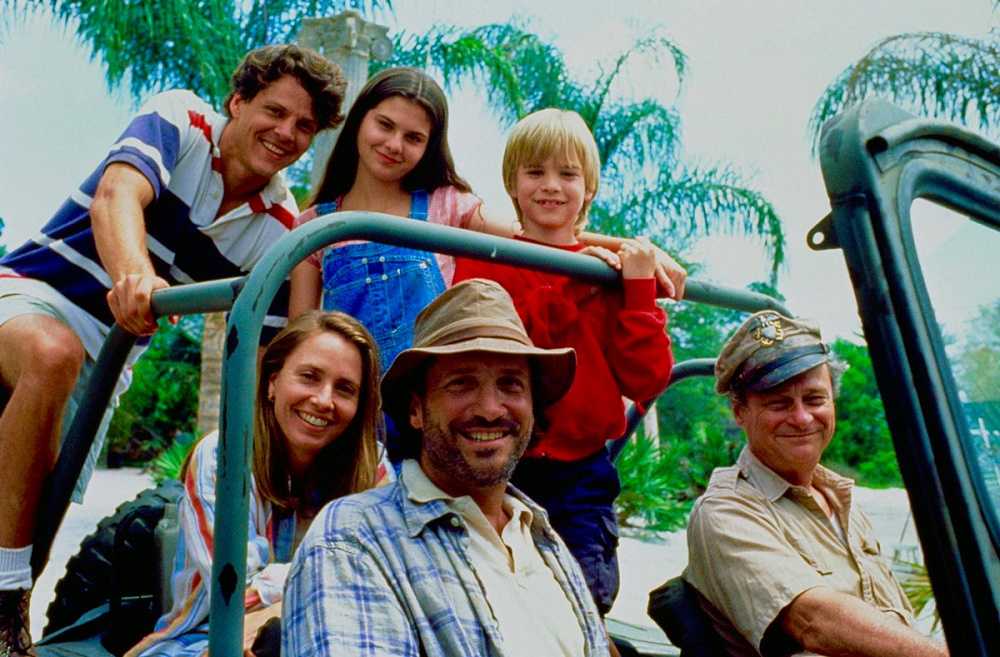
Bermuda Triangle, 1996-97

The castaways are led by Slick Beaumont (Jerry Hardin, Deep Throat in The X-Files), a US Army pilot who crashed in 1945 and still wears his uniform. Acting as a de facto mayor, he introduces the family to the rest of their new neighbours, including documentarian Amanda (a still mostly unknown Naomi Watts), pregnant couple Calvin (Dennis Neal) and Nora (Sandra Thigpen), and Cuban refugee Roberto. Slick mentions that there are natives on the island, but he hasn’t encountered them in the fifty years he’s been there. No such trouble for young Sam, who befriends native boy Mala, finding that Mala’s people have a cure for the diabetes that – thanks to a dwindling supply of insulin – has been a major plot point.

Liane, too, makes friends, with the island’s dolphins, with whom she swims and explores, and you can’t help but feel that most of the island’s inhabitants are perfectly happy where they are, despite a pretence – led mostly by John Everman, who wants to get back to his vital work – that they need to find a way home. They didn’t, because ABC saw no future in a full series, airing the pilot as Secrets of the Bermuda Triangle in April 1996. Behrens soon popped up in Aaron Spelling’s Sunset Beach, which had its own island subplot, and Gallagher started a long run in another Spelling show, 7th Heaven, while McPherson became president of ABC in 2004, resigning six years later in a sexual harassment scandal.

Generation X (Fox): With Chris Claremont and John Byrne at the helm, Uncanny X-Men became the biggest comic book of the early 1980s. Only Marv Wolfman and George Perez’s Teen Titans could rival it for sheer quality, drama, and characterisation, with healthy sales driven by such memorable storylines as “Days of Future Past” and the Dark Phoenix saga making the X-Men the coolest thing around. Of course, all this happened in the realm of comic books and comics fandom, with the mainstream at that point in one of its fallow periods when it came to superheroes. The days of Wonder Woman, The Incredible Hulk, and The Amazing Spider-Man on prime-time TV were gone and superheroes were once again the stuff of Saturday morning cartoons.

In 1982, Uncanny X-Men sparked a spin-off title, The New Mutants, focussing on the young students at Charles Xavier’s School for Gifted Youngsters, and a procession of limited series featuring the X-Men quickly followed, along with a third ongoing mutant title, X-Factor, in 1986. Byrne had long departed the title by this point, but a group of hot, young artists arrived to propel the X-Men into the 1990s, with the Jim Lee-illustrated X-Men companion becoming the best-selling comic book of all time when it debuted in 1991. Over in the junior corner, another of the bright young things, Rob Liefeld, had taken over The New Mutants, transforming it into X-Force and taking its storylines outside the confines of the Westchester Academy.

In 1992, Lee and Liefeld were part of an exodus of talent to form Image Comics, but both X-Men and Uncanny X-Men remained top selling titles and just about the only ones that could compete with Image titles such as Spawn, Gen 13, and Wetworks. In publishing, the best new thing is always the best old thing with a new spin on it and so Marvel took note of the ongoing popularity of their mutant titles and decided to revisit that first spin-off. Rather than use The New Mutants again, they decided to embrace the zeitgeist and borrow a term that beginning to be used to describe the generation of children born to the baby boomers – roughly those born between 1965 and 1980 – and taken from Douglas Coupland’s 1991 novel Generation X: Tales for an Accelerated Culture. Although Coupland’s timescales were off – he placed Generation X as having been born in the late 1950s and 1960s – the term soon became widespread and Coupland himself became a spokesman for this new group of (mostly) disaffected slackers.
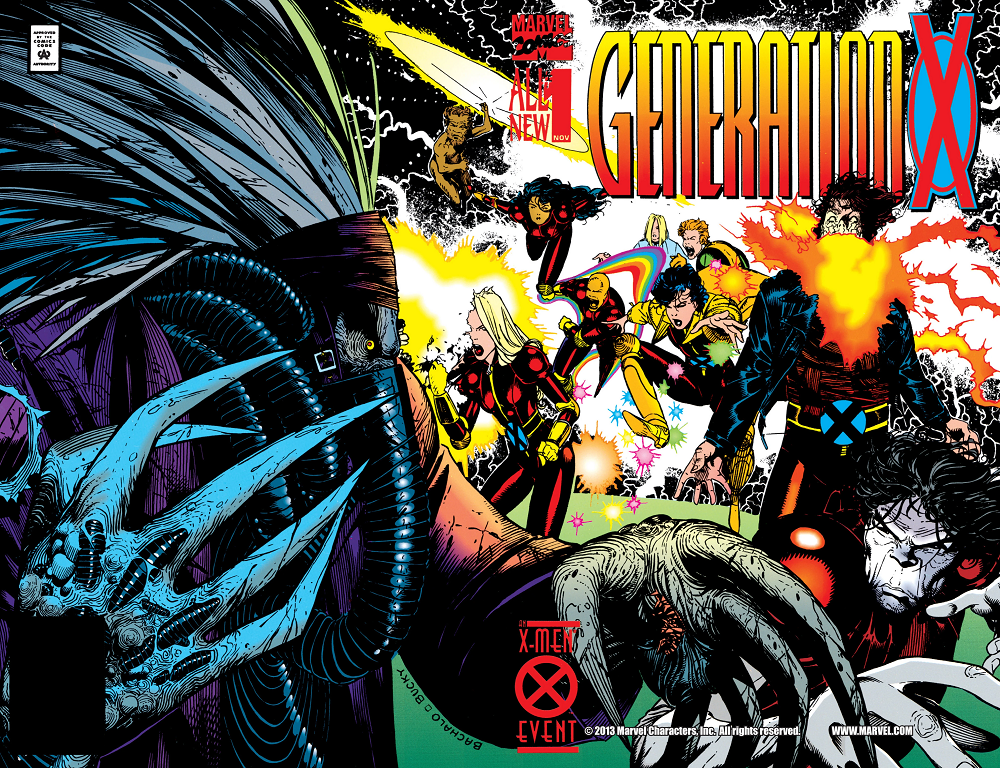
Generation X, 1996-97

Generation X was created by writer Scott Lobdell (who had taken over Uncanny X-Men when Claremont left Marvel) and artist Chris Bachalo, who assembled a mostly all-new cast of young mutants. Charles Xavier has reoriented his Westchester mansion as the Xavier Institute for Higher learning, with an all-adult student body, and instead entrusts the care of young mutants to reformed villain Emma Frost, a telepath who formerly ran the Massachusetts Academy as the White Queen of the Hellfire Club. Frost is assisted by Sean Cassidy, a former member of the X-Men as Banshee, and their intake includes Jubilation “Jubilee” Lee, a young member of the X-Men created by Claremont and Marc Silvestri in 1989, and Paige Guthrie (Husk), who has the power to shed her skin and reveal a new one underneath made of other organic and inorganic materials, and had been seen before as the sister of former New Mutant Cannonball.

The rest, though, were brand-new. Angelo Espinosa (Skin) was a former gang member who could stretch and form shapes from his malleable dermis, and as Synch, Everett Thomas could copy the powers of those nearby. British mutant Jonothon Starsmore – who called himself Chamber – was able to channel a furnace of psionic energy from his core but unfortunately blew half his face off the first time his powers manifested, while Monet St Croix (M) was a powerful superhuman with increased strength, the ability to fly, and with telepathic and telekinetic abilities. The core team were soon joined by Penance (Nicole and Claudette St Croix, fused into a being with razor sharp and diamond hard skin) and Mondo, a Samoan mutant who can absorb the properties of any material he comes into contact with.

With Lobdell giving them more of what they already liked on X-Men and Bachalo beginning to develop his innovative art style, mutant fans couldn’t get enough of this new team, and Generation X #1 was the seventh best-selling comic book of 1994, second only to X-Men #30 at Marvel. Readership fell off slightly in 1995, but the Age of Apocalypse tie-in Generation Next, which re-imagined the characters in an alternate world, was amongst the best-sellers in that crossover.
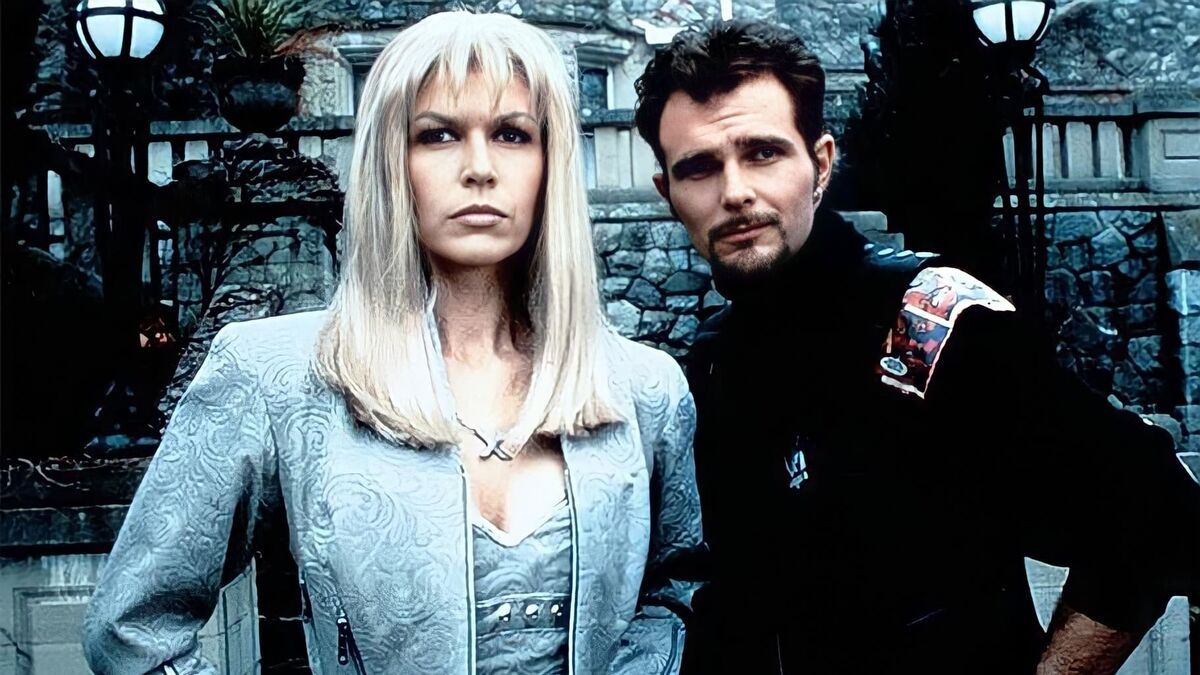
Generation X, 1996-97

Meanwhile, in Hollywood, the late 1980s saw an attempt to bring Marvel Comics characters to film and TV once more. A series of pilots were made in the hopes of rebooting The Incredible Hulk, low-budget theatrical releases starred The Punisher, and Captain America, and Spider-Man was stuck in development hell, the rights having been held by Roger Corman, Cannon Films, and Carolco, where James Cameron did considerable work on bringing the webslinger to the silver screen, only to see it collapse in a mess of litigation. The X-Men, meanwhile, were optioned to Orion Pictures in 1984, with Gerry Conway and Roy Thomas writing a screenplay, but it stalled due to the studio’s financial difficulties. As with Spider-Man, Carolco also had a tilt at the X-Men, with Kathryn Bigelow writing a treatment, but their bankruptcy in 1992 saw the rights revert back to Marvel once more.

Though film was proving a trickier deal to pull off, the X-Men did debut on TV as a Saturday morning cartoon on Fox in 1992. X-Men: The Animated Series drew on the comic book’s expansive lore and was an immediate hit, leading 20th Century Fox to pick up the rights to the property – and its spin-offs – for future film and TV projects. Work began on bringing the X-Men to the big screen, but the success of Generation X also brought that to the attention of the studio, who partnered with Marvel Films and New World Television to develop a potential TV show.

Having acted as showrunner for the second season of 21 Jump Street, where he also created spin-off Booker, Eric Blakeney was seen as the perfect man to bring Marvel’s latest group of young misfits to the screen. Blakeney saw the parallels between the properties, both featuring young people feeling uncomfortable in their skin, and crafted a script for a pilot which – if successful – would lead to a full series or at least a series of occasional TV movies. Changes had to be made, particularly to characters whose powers would not translate well to the effects available for a TV movie, even one with a considerable budget of $4 million. Chamber, Husk, and Synch were dropped, their powers simply too difficult to reproduce on screen, while Penance’s backstory was too involved for a first appearance. They were replaced by two new characters, Buff (who can make herself, well, buff) and the eyebeam emitting Refrax, with the suggestion that they could be added to the comic book at a later date.
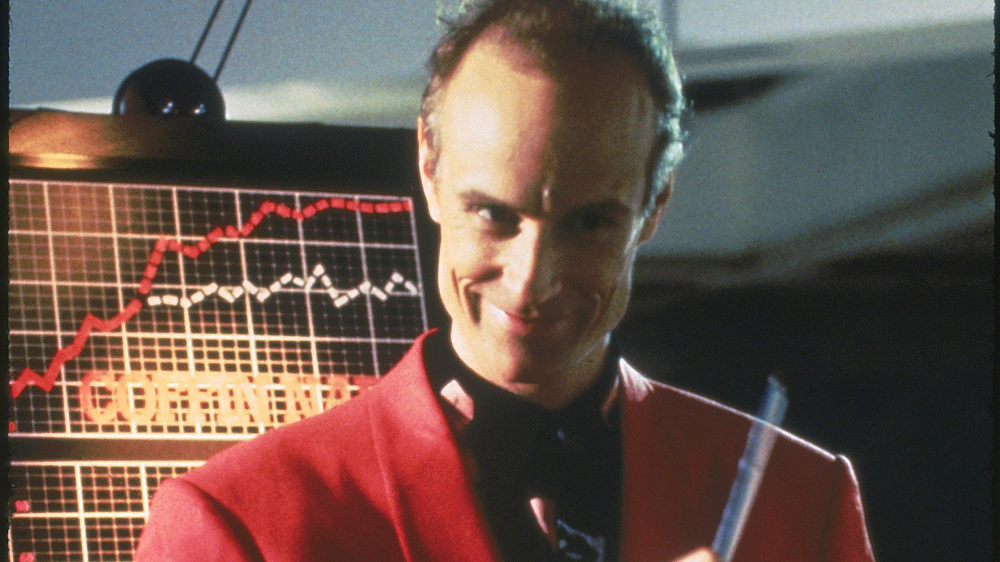
Generation X, 1996-97

Nightmare on Elm Street 2: Freddy’s Revenge’s Jack Sholder was installed as director and the task of assembling a cast began in earnest, with Max Headroom‘s Matt Frewer an early capture to play Dr Russel Tresh, the villain of the piece (and loosely based on comic book character Bolivar Trask). General Hospital‘s Finola Hughes and Jeremy Ratchford (who voiced Banshee on the Fox cartoon) came in as Emma Frost and Sean Cassidy, and they were joined by Amarilis (Sweet Valley High) as a non-psychic M, Heather McComb as Jubilee (although she was initially written as Dazzler), and Agustin Rodriguez as Skin, whose powers resembled those of The Fantastic Four‘s Reed Richards, but caused him great pain. A Different World‘s Bumper Robinson was Mondo, and Randall Slavin and newcomer Suzanne Davis grabbed the roles of Refrax and Buff, respectively. Filming began in the Vancouver area in mid-1995 and took less than a month; local landmark Hatley Castle was used as Xavier’s School and would subsequently stand in for the Westchester mansion in X2, X-Men: The Last Stand, X-Men: Days of Future Past, Deadpool, X-Men: Apocalypse, and Deadpool 2.

The film’s plot differs from the established comic book continuity, beginning with Jubilee manifesting her powers for the first time at a local arcade and being rescued from her predicament by Frost and Cassidy, who offer her sanctuary at their school, where she can learn to use her powers alongside her fellow mutants. At the school, Jubilee and Skin find their dreams haunted by Tresh, who is obsessed with harnessing the power of dreams and used to work with Frost before being dismissed for his unethical methods. He has invented a machine which will give him enormous psychic power and although Jubilee is able to escape, his hold over Skin pair grows. With the youngsters far from confident in their abilities, the race is on for Banshee to lead the rookie team to free Skin and stop Tresh.
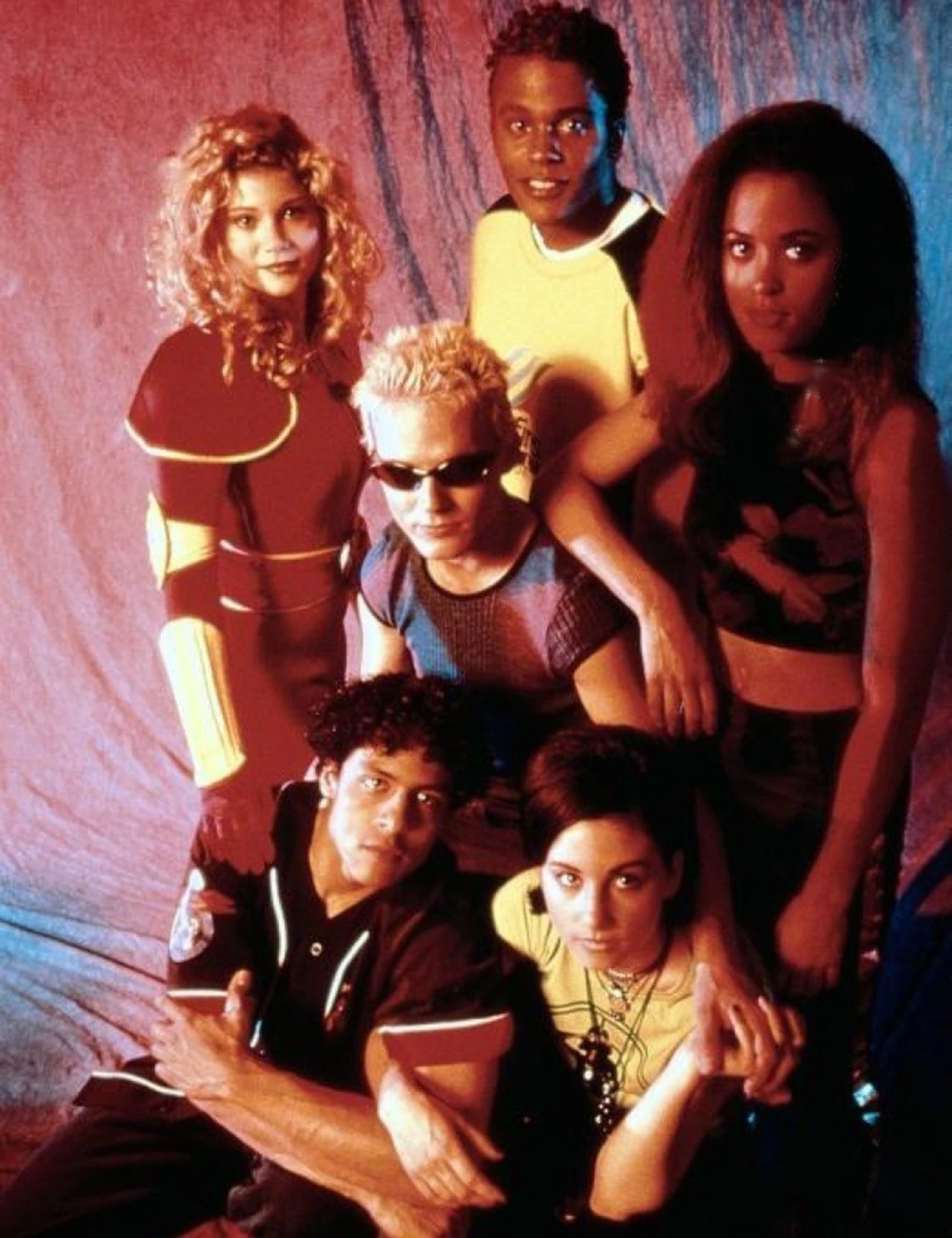
Generation X, 1996-97

Generation X debuted on Tuesday February 20th 1996 as part of Fox Night at the Movies, earning a 7.3 rating which was on a par with Fox’s second tier shows and the TV premieres of theatrical movies usually shown in the slot, and 78th of 108 shows broadcast that week. Fox had been hoping for ratings to match The X-Files, which regularly drew over twenty million viewers, and it was decided that the costs to produce a series would outweigh the potential benefits. The project was briefly resurrected in 1999 as a live-action show along the line of Mighty Morphin’ Power Rangers, mentioned in a Fox Kids upfront video sent to affiliates, but nothing more came of it. 2001’s Mutant X followed a similar group of young mutants, although they were not related to any existing Marvel characters.

As played by Kea Wong, Jubilee would make cameo appearances in X-Men, X-2, and X-Men: Apocalypse, and in X-Men: Days of Future Past, this time played by Lara Condor. She was initially supposed to play a bigger part, but her scenes were cut. Emma Frost was originally slated to be played by Sigourney Weaver in the third X-Men film, but after director Bryan Singer left the production, she was not carried over into Last Stand. A character named Emma, with similar abilities, appears in X-Men Origins: Wolverine, played by Tahnya Tozzi, but it would not be until 2011’s X-Men: First Class that a named White Queen – a member of the Hellfire Club – would arrive on screen, with January Jones originally intended to reprise the role in X-Men: Dark Phoenix but later cut from the script. As played by Caleb Landry Jones, Banshee would also appear in First Class, and is mentioned – along with Frost – as one of the mutants captured, experimented on, and killed in Days of Future Past. The rest of Generation X are yet to transfer to the big screen, but some did appear in the 2009 animated TV series Wolverine and the X-Men.

The mid-1990s was a tumultuous time for Marvel Comics, which went through a bankruptcy after several ill-advised moves into other sectors, but the X-Men family of titles remained consistent sellers for the company. Generation X was cancelled with #75 in 2001, its characters dispersed into other titles. Chamber and Husk joined the X-Men, while Jubilee and Skin tried to leave their superhero lives behind and move to Los Angeles. Synch died, and a devastated M returned to Europe to represent the X-Corporation, Xavier’s business arm. The ongoing and convoluted nature of the Marvel universe – and particularly its mutant wing – has subsequently seen Jubilee become both a vampire and an adoptive mother, Synch come back to life, Husk undergo a series of terrible life events, and Emma Frost marry Tony Stark. Even with all that going on, Refrax and Buff never joined the comic book universe.

Hollywood Confidential (UPN): Anthony Yerkovich broke into the screenwriting business in 1977 with two episodes of Starsky & Hutch, and then went on to work on Hart to Hart, emergency services yarn 240-Robert, and Fantasy Island. He landed at Hill Street Blues in 1981 as a story editor, also contributing six scripts for its first season, and then wrote two-thirds of seasons two and three, before being tasked by NBC executive Brandon Tartikoff with creating a show about “MTV cops.” In response, Yerkovich came up with Gold Coast, a pilot script about a pair of cops working the glamorous – but dangerous – streets and beaches of Miami. Later renamed Miami Vice, the show earned a mixed response early on, especially for its mix of violence and glamour, but it nestled into the top forty ratings for the year, second in its timeslot to CBS’s Falcon Crest.

Yerkovich handed control of Miami Vice over to producer Michael Mann after six episodes, and Mann has since become synonymous with the show, all but erasing the creator’s involvement in its development, even if he did win an Emmy for that pilot script. After Miami Vice, Yerkovich created Private Eye for NBC, a detective series set in 1950s LA with Michael Woods in the lead role as ex-cop Jack Cleary, out to solve his brother’s murder with the help of a young street hustler played by Josh Brolin. Despite having (an admittedly past its prime) Miami Vice as a lead-in, and some attractive cinematography and period design, the show struggled to attract an audience, not helped by a TV guide ad that declared it “not for sissies.” It was cancelled after just thirteen episodes and Yerkovich walked away from television for almost a decade.
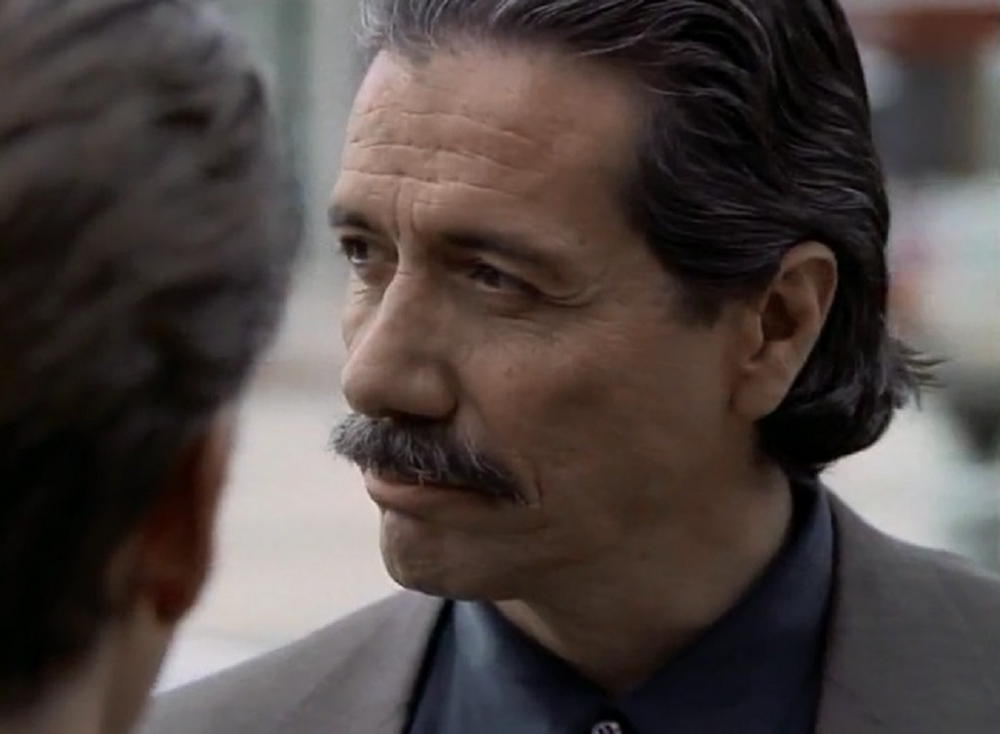
Hollywood Confidential, 1996-97

He returned in 1997 with a script that contrasted the glamour of Tinseltown with its seedy underbelly. Hollywood Confidential starred Edward James Olmos as Stan Navarro, a private eye whose agency caters to the Beverly Hills elite, dealing with situations they’d rather not were made public and thus beyond the remit of regular law enforcement. These unorthodox cases require an unusual approach and Navarro recruits a team of misfits, including Charlize Theron’s struggling actress, a former mob leg man (Rick Aiello), and ex-cops Dexter (Richard T Jones), Teresa (Angela Alvarado), and Mike (Brendan Kelly), the latter of whom was thrown off the force in both Chicago and Las Vegas for being too rough with suspects.

The pilot script saw Navarro and company attempt to aid a director on the rise looking to drop his young mistress and investigate the background of an acting coach before she signs with a studio, but UPN passed on a series, instead showing the pilot as TV movie in April 1997. Yerkovich tried again four years later with Big Apple, starring Ed O’Neill, which was cancelled after six episodes, but was never able to capture that lightning in a bottle again, finishing his career by re-joining Mann to executive produce the 2006 movie reboot of his most famous creation.

Secret Service Guy (Fox): In 1988, Tom Hanks and Judge Reinhold starred in two body swap movies. Hanks grew up fast in big-hearted comedy Big, while Reinhold swapped lives with eleven-year-old Fred Savage in the more peril-filled adventure Vice Versa. The actors had similar résumés and, if anything, Reinhold had slightly more cache, having co-starred alongside Eddie Murphy in two Beverly Hills Cop movies. Big was a huge success, earning almost ten times it’s $18 million budget, but Vice Versa flopped and Reinhold’s career nosedived while Hanks would win consecutive Best Actor Oscars for Philadelphia and Forrest Gump. What’s more, Reinhold’s early success had run away with him. “I was very demanding,” he later said, “(I) had an overblown image of who I was and got a reputation for being difficult. And rightfully so.”

With a series of supporting roles in big-screen films and as the lead in a string of direct-to-video and TV movies, Reinhold slowly rebuilt his reputation in the 1990s, if not his career. In 1994, he appeared as the “close talker” in an episode of Seinfeld, and in 1996 he was given the chance to star in a sitcom of his own for the first time. Secret Service Guy cast Reinhold as Steve Kessler, a security guard at the Lincoln Memorial who accidentally takes a bullet meant for the President and is given his dream job as a secret service agent as a reward. This is Spinal Tap’s Michael McKean played his boss, and support coming from Tremors‘s Finn Carter, Wendy Benson-Landes from gym sitcom soap Muscle, the Crew‘s David Burke, and Keith Diamond.
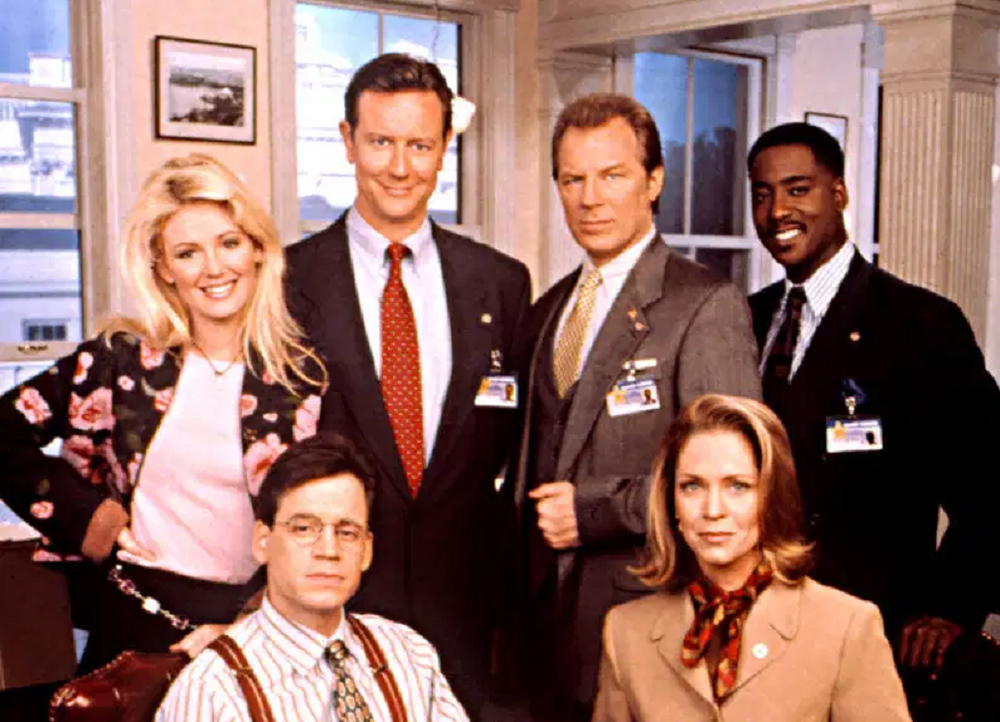
Secret Service Guy, 1996-97

Secret Service Guy was created by David Silverman, an experienced hand who – with regular writing partner Stephen Sustersic – started his career writing for sitcoms including The Jeffersons, One Day at a Time, and Alice. The pair also wrote for Tom Arnold, Drew Carey, Pee Wee Herman, Roseanne, and Bob Newhart, and worked as story editors on ALF and Aaahh!!! Real Monsters (which laid the groundwork for their later creation of The Wild Thornberrys for the Klasky-Csupo company. In 1995, they co-created Cleghorne! for former Saturday Night Live! cast member Ellen Cleghorne, among the first batch of original programming to appear on The WB network. Although Cleghorne! was cancelled after twelve episodes, Silverman was given the greenlight for Secret Service Guy, this time at Fox.

With a writing team that included George Beckerman, Adam I Lapidus, Tim Schlattman, Eric Shaw, and Rich Tabak, who brought experience of working on Dinosaurs, Head of the Class, and Roseanne to the table, Secret Service Guy was scheduled as a mid-season replacement in January 1997, alongside King of the Hill and Pauly Shore vehicle Pauly. A change of personnel at Fox Entertainment, however, saw an overhaul of their January schedules, and with six episodes already produced, the mid-season slot was withdrawn, and the plug was pulled on the show. Usually, these things reappear in late Summer, but Secret Service Guy was never shown. That wouldn’t have happened to Tom Hanks.

Next time on The Telephemera Years: 1996’s new kids’ shows, including (not) Jay Leno and tiger bait!

Check out our other Telephemera articles:

The Telephemera Years: pre-1965 (part 1, 2, 3, 4)

The Telephemera Years: 1965 (part 1, 2, 3, 4)

The Telephemera Years: 1966 (part 1, 2, 3, 4)

The Telephemera Years: 1967 (part 1, 2, 3, 4)

The Telephemera Years: 1968 (part 1, 2, 3, 4)

The Telephemera Years: 1969 (part 1, 2, 3, 4)

The Telephemera Years: 1970 (part 1, 2, 3, 4)

The Telephemera Years: 1971 (part 1, 2, 3, 4)

The Telephemera Years: 1973 (part 1, 2, 3, 4)

The Telephemera Years: 1974 (part 1, 2, 3, 4, 5)

The Telephemera Years: 1975 (part 1, 2, 3, 4)

The Telephemera Years: 1976 (part 1, 2, 3, 4)

The Telephemera Years: 1977 (part 1, 2, 3, 4)

The Telephemera Years: 1978 (part 1, 2, 3, 4)

The Telephemera Years: 1979 (part 1, 2, 3, 4, 5, 6)

The Telephemera Years: 1980 (part 12, 3, 4)

The Telephemera Years: 1981 (part 1, 2, 3, 4)

The Telephemera Years: 1982 (part 1, 2, 3, 4)

The Telephemera Years: 1983 (part 1, 2, 3, 4)

The Telephemera Years: 1984 (part 1, 2, 3, 4)

The Telephemera Years: 1986 (part 1, 2, 3, 4)

The Telephemera Years: 1987 (part 1, 2, 3, 4)

The Telephemera Years: 1988 (part 1, 2, 3, 4, 5)

The Telephemera Years: 1989 (part 1, 2, 3, 4)

The Telephemera Years: 1990 (part 1, 2, 3, 4)

The Telephemera Years: 1991 (part 1, 2, 3, 4)

The Telephemera Years: 1992 (part 1, 2, 3, 4)

The Telephemera Years: 1994 (part 1, 2, 3, 4)

The Telephemera Years: 1995 (part 12, 3, 4)

The Telephemera Years: 1996 (part 1, 2)

The Telephemera Years: 1997 (part 1, 2, 3, 4)

The Telephemera Years: 1998 (part 1, 2, 3, 4)

The Telephemera Years: 1999 (part 1, 2, 3, 4)

The Telephemera Years: 2000 (part 1, 2, 3, 4)

The Telephemera Years: 2001 (part 1, 2, 3, 4)

The Telephemera Years: 2002 (part 1, 2, 3, 4)

The Telephemera Years: 2003 (part 1, 2, 3, 4)

The Telephemera Years: 2005 (part 1, 2, 3, 4)

The Telephemera Years: 2006 (part 1, 2, 3, 4)

The Telephemera Years: 2007 (part 1, 2, 3, 4)

The Telephemera Years: 2008 (part 1, 23, 4)

The Telephemera Years: O Canada! (part 1, 2, 3, 4)

Titans of Telephemera: Irwin Allen

Titans of Telephemera: Stephen J Cannell (part 1, 2, 3, 4)

Titans of Telephemera: DIC (part 1, 2)

Titans of Telephemera: Filmation (part 1, 2)

Titans of Telephemera: Hanna-Barbera (part 1, 2, 3, 4, 5)

Titans of Telephemera: Kenneth Johnson

Titans of Telephemera: Sid & Marty Krofft

Titans of Telephemera: Glen A Larson (part 1, 2, 3, 4)

Titans of Telephemera: Quinn Martin (part 1, 2)

Titans of Telephemera: Rankin/Bass

Titans of Telephemera: Ruby-Spears

Titans of Telephemera: Aaron Spelling (part 1, 2, 3, 4)

Titans of Telephemera: Sunbow

Mat Bradley-Tschirgi • STAR TREK VIDEO GAMES: AN UNOFFICIAL GUIDE TO THE FINAL FRONTIER

Mat Bradley-Tschirgi is an American author best known for his books on pop culture, specifically video games and film. His latest book is Star Trek Video Games: An Unofficial Guide to the Final Frontier.

STARBURST: How would you pitch Star Trek Video Games: An Unofficial Guide to the Final Frontier to a younger relative who really likes Halo?
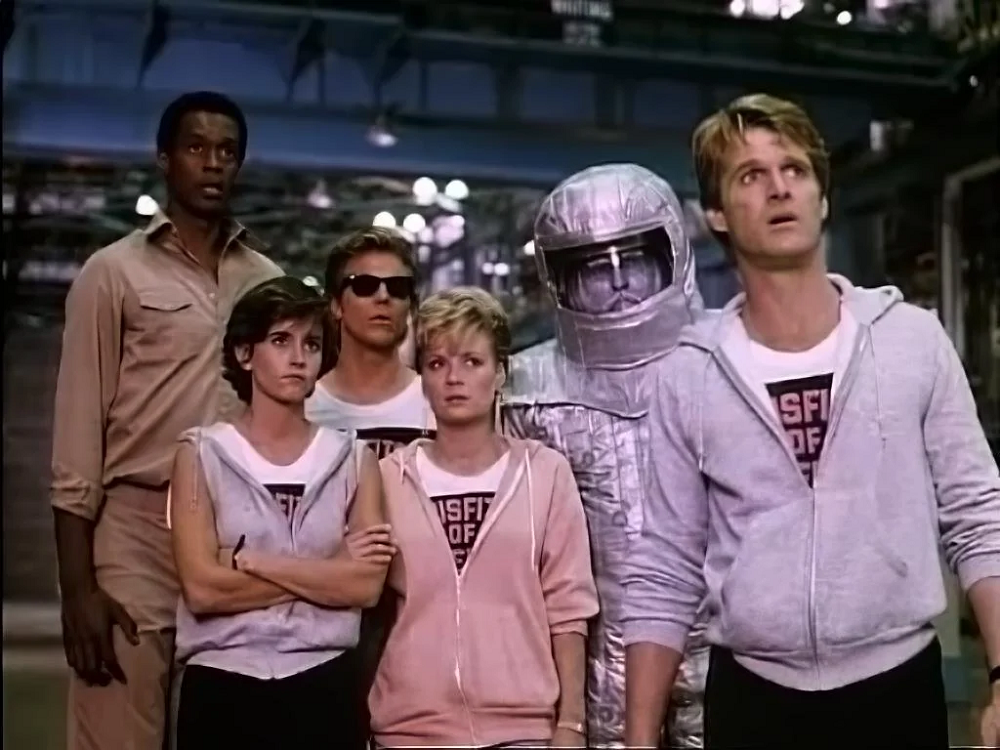
Mat Bradley-Tschirg: A long time ago, there were video games based on movies and TV shows. Star Trek had more video games than just about any movie or TV franchise, barring Star Wars. In fact, Halo takes a lot of inspiration from Star Trek, so by reading my book Star Trek Video Games, you can see how the older games inspired some of the plots and game mechanics later found in Halo, so it could be fun to connect the dots.

And how would you pitch it to a die-hard fan of Star Trek The Animated Series?
Star Trek: The Animated Series is a kind of underdog of all the Star Trek series. In my book, you can read about all sorts of video games based on Star Trek video games and movies, even the underdogs! While there hasn’t been a game solely based on The Animated Series, a few of the more modern games make reference to it. 

Why Star Trek Video Games?
A while back, the site Good Old Games made a handful of classic Star Trek PC games for sale. They must have done well because another wave of them were made available the next year or so. As I pondered their available catalogue, I wondered why so many of the Star Trek games went unreleased, which led me in a roundabout way to pitching Star Trek Video Games to White Owl Books.

What one thing defines a good Star Trek video game?
A good Star Trek video game focuses on the ship’s crew working together to achieve a common goal. It isn’t about sending swarms of ships to attack the Borg or shooting phasers at Klingons; it’s about the crew helping each other as a whole to complete a common goal and, ideally, having ethical dilemmas along the way. 

Why are there so many Star Trek-themed games?  What about games that don’t have the license but feel very Star Trek? Why are they so popular?
Star Trek is a series with a large variety of characters (human and alien), planets, and storylines, so there are a lot of rich scenarios that can be explored in video games. A lot of games that don’t have the licence can still feel very Star TrekMass Effect or Masters of Orion come to mind – because of the focus on exploration combined with quirky characters. 

What is the appeal of Star Trek? Why does it keep coming back?
Star Trek has so many different personalities among its crew members that it’s easy for everyone to have a favourite Star Trek character they can latch onto. The storylines tend to mirror the culture shifts and politics of when they were originally written, so they tend to be a product of their time, which is a large part of why fans keep coming back to the franchise.

Are all Trekkies also video game fans?
Not all Trekkies are video game fans, although most are probably aware of the video games in some fashion because of how long they’ve been around for!

What does your ideal Star Trek game look like?
The ideal Star Trek game is pretty close to one of the newer ones, Star Trek: Resurgence, because it combines piloting a ship in space, making ethical choices, solving puzzles, and interacting with your crew on the bridge. They did a great job balancing the action and stealth sequences to not be too difficult for those wanting to focus on the story! 

What book are you working on next?
I’m under non-disclosure agreements, so I can’t specifically reveal what I’m working on next. That being said, one of the books I am working on is focused on a popular video game franchise that mixes elements of fantasy and science fiction. 

Simpsons or Futurama?
I think The Simpsons is consistently a better show than Futurama, although Futurama is often more clever with its plots.

Picard or Kirk?
Kirk, but he was my first. It’s a bit like Saturday Night Live, your favourite crew tends to be whichever one you watched to begin with.

Truth or Beauty?
Truth, although it can be difficult to ascertain at times. The late producer Robert Evans put it best: “There are three sides to every story: Your side, my side, and the truth!”


You can order Star Trek Video Games: An Unofficial Guide to the Final Frontier here.