Ed Gamester | MYTHOS: RAGNAROK

Ed Gamester | MYTHOS: RAGNAROK

by Ed Fortune

Ed Gamester is an actor, stunt performer, and ex-professional wrestler who is also the writer, director, and producer of Mythos: Ragnarok, the tale of the Norse Gods told in the form of wrestling. We caught up with him to find out more about this amazing show.

STARBURST:  What’s the pitch for Mythos: Ragnarok?

Ed Gamester: It’s an adaptation of ancient myths, retold through a unique combination of storytelling, theatre and stage combat. It follows the struggle for power between the Norse Gods from the creation of the world to the final battle of Ragnarok, which makes it equally enjoyable for fans of the myths and those who are totally new to them. It’s also the only theatre show in the world performed by a cast of professional wrestlers and the only time their skills have ever been used in this context!

Why are we so fascinated with Norse Myth?

The Norse myths are in our blood! They’re there alongside countless other ancient cultures and mythologies, too, of course, but the Nordic myths are relatively well documented and recorded compared to other Northern European mythologies, which makes them easy to share and reference.

From runestones, Wagner, and Tolkien to Zeppelin, Marvel, and Gaiman, references to the stories and characters within Norse mythology are scattered throughout our culture in a way that makes the themes and characters easy to recognise and relate to.

Quite aside from all that, the Norse myths are great! They’re weird, dark, hilarious, violent, shocking and sexy: they deal with universal experiences in a way that is very human and easy to relate to, and that means they’re still fresh and exciting 1000 years later.

How long did it take to coordinate the fight scenes?

Wrestlers coordinate fight scenes differently to – in my opinion, more efficiently than – other fight performers. We speak a physical language that allows us to link ideas and movements together extremely quickly, which allows us to coordinate fights in minutes – or in some cases, not coordinate them at all. Wrestling is also a very expressive art form that requires more fluidity and freedom than the stringently-rehearsed stunts, stage combat and dancing that people are used to seeing on stage and screen.

That means although some choreography stays the same every night, other fights change. Some of them we make up as we go along! Everything in Mythos is a work in progress: I’m still developing this form of theatre, and it’s important that we keep tweaking and changing and developing with every show.

Why has wrestling lasted so long?

Because it’s real! People love to call wrestling fake because of the choreography and pre-determined outcomes, but compared to the camera angles, crash mats, retakes and CGI in films and TV, there will always be something fascinating about seeing people do these things in reality.

It’s like watching sports live compared to watching a recording the next day: there’s drama, intensity and danger to know that there is no filter between what is happening and what you’re seeing.

Of course, what we do in Mythos isn’t pure wrestling: there are no rules, there’s no referee, there’s not even a wrestling ring – it’s not a sport in any way, shape or form. Mythos uses the performance combat style of wrestling to do something totally new and unique, which wrestling fans seem to appreciate, and people who have no interest in wrestling seem to find much more palatable.

Why theatre?  What does theatre bring to this story that other formats don’t?

In live theatre, there can be a unity between the cast and the audience that is simply unachievable through a screen or the pages of a book. Whatever happens in that room happens to all of us – but only us – and it happens just once. It’s a very special way to tell any story, but particularly one as intense and physical as the struggle for power between Norse Gods!

At the end of the day, as fun as it can be to read or listen to a story about Thor fighting a giant, it’s much more exciting to cheer him on as it happens right in front of your eyes!

Of course, we’re not traditional actors, and our story isn’t a traditional play. When we perform, the audience shares in our excitement, fear and pain; we don’t hide it away in the wings or in the outtakes: it’s right there, dripping down our faces – because what we’re doing is surprisingly real.

Nobody knows what it feels like to be hit with the force of a neutron star, so when it happens to Marvel’s Thor, it’s difficult to care. By contrast, most people know (or can imagine) what it feels like to be punched in the face or slammed to the ground, so I think it’s fair to say everyone feels like they’re in it together with the actors in our show.

Why the Edinburgh Fringe?

I want to share my story and show off the talents of my astonishing cast with as many people as possible because I want to reignite their passion both for these ancient myths and for the art of professional wrestling, which so many people overlook.

When it comes to getting your work seen and appraised by as many people as possible, you can’t beat Edinburgh Fringe: it’s the biggest showcase of performing arts in the world and – as difficult as it is to perform there – it’s the best way to test and improve your work in real-time.

There are thousands of shows at the fringe. Why should STARBURST readers seek this out?

There is no other show like this in the world, let alone the Fringe. We’ve had everyone come through our doors, from mythology PhDs and WWE fanatics to people with no interest whatsoever in Vikings or wrestlers, and they’ve all come out grinning. In fact, don’t take my word for it – you can read their opinions about the show on our website: I’ve kept and published every review we’ve ever been given. With my hand on my heart, I can tell you I don’t believe you’ll find a more intense and rewarding 70 minutes in Edinburgh.
This is a return to the fringe for you. Will this show run and run?

I’d like to think so. These stories have captivated us for a millennium, so I hope my version will run for a few more years at least! I think it will because the response has been phenomenal: people can see how hard we’re working and how much it all means to us, so they’re supporting us as passionately as wrestling fans support those who work in that industry too.

I’m constantly astonished by the number of people who come back to see the show time and time again and the number of places they come from. We’ve had people fly from the USA, Czech Republic, South America – even from Australia to see the show in London!

When we arrived at Edinburgh Fringe 2022, we had done three shows. Arriving at Edinburgh Fringe 2023, we’ve done 56 shows. By the time we make it to Edinburgh Fringe 2024, we’ll have done something like 200. So I feel like we’re just getting started.

How would you describe your process?

My process is unconventional by virtue of my own ignorance. From script writing and producing to acting and directing, I have no formal training or education in any of the roles I’ve taken on to create Mythos, and I’m sure it shows. I’ve simply focused on creating a show that I would want to see myself in while making opportunities for other people that I would appreciate too.

What media are you currently enjoying?

I know this sounds ridiculous, but I don’t have the time. At the start of this year, I bought a load of video games and added all kinds of things to my watch lists in an attempt to force myself to take some downtime. Thus far, I’ve not got any further than watching an episode of Detectorists while I eat my dinner… One of these days, I’ll hire a producer to take on some of my work while I focus on performing my show, but for now, I spend around 16 hours per day making sure the show actually goes ahead.

How can we help?

The best way to help is to see our show and then simply tell people what you think. That’s what took us from having one person in the audience on our first night of Fringe last year to sell out the rest of our run.

Our show is a collective experience: the more people there, the higher the energy and the better it is for everybody. Yet because nobody has ever made a show like this before, it’s challenging to explain what it is and why people should come in the first place. That’s why it means the world to us when people who have seen our show tell other people about it and bring them along to see it too.

Where can we see the show?

You can catch us at 9.20pm every night at the Assembly Roxy Central. If that sounds like a lot of high-impact shows, you’d be right: we’ll be very sore for a long time afterwards!

You can book tickets for the Edinburgh Fringe show here. And learn more about the show here.


THE TELEPHEMERA YEARS: Pre-1965, part 3 – 1961-62

Cain's Hundred, 1961

Ah, telephemera… those shows whose stay with us was tantalisingly brief, snatched away before their time, and sometimes with good cause. They hit the schedules alongside established shows, hoping for a long run, but it’s not always to be, and for every Street Hawk there’s two Manimals. But here at STARBURST we celebrate their existence and mourn their departure, drilling down into the new season’s entertainment with equal opportunities square eyes… these are The Telephemera Years!

Pre-1965, part 3: 1961-62

There’s no concrete reason why The Telephemera Years begins in 1965, except for arbitrary reasons of available content and the more solid fixed point that is the great colour transference of that year, when it was announced that half of all network programming would be broadcast in colour from the Fall 1965 season. The years before we were gifted My Mother the Car, Lost in Space, and (eventually) Batman may look thinner in terms of genre programming but there were still those hardy souls doing pioneering work in the field of the strange and the fantastic.

So, while The Beverly Hillbillies, Bonanza, Gunsmoke, and Wagon Train dominated the ratings, less rustic thrills could still be found dotted across the schedules, right up to a 1964 Fall season which saw The Addams Family, Bewitched, Flipper, Gilligan’s Island, Jonny Quest, The Man from UNCLE, The Munsters, and Voyage to the Bottom of the Sea all make their TV debuts. So sit back, pop on your slippers and light up your pipe, have the little lady bring you a little treat, and see what the pre-1965 era has in store for us…

‘Way Out (1961, CBS): The legendary Jackie Gleason was, among many other things, a UFO enthusiast and so he must have allowed himself a wry smile when CBS opted to replace his cancelled show with this anthology series, leaning heavily into the worlds of horror, fantasy, and science-fiction. As well as presenting his own talk show, producer David Susskind was tasked with finding a replacement for The Jackie Gleason Show at short notice in March 1961 and created ‘Way Out in collaboration with Roald Dahl, then known mostly for short stories for adults published in American magazines rather than acerbic children’s tales.

Dahl was generous and offered only one of his own stories for adaptation (the series opener, “William and Mary”), preferring instead to shepherd TV writers into the job, with submissions from the likes of Elliott Baker and Sumner Locke Elliott, alongside an early offering from Larry Cohen. Dahl himself hosted the show in the manner of Rod Serling on The Twilight Zone, although he initially agreed only to host the first three episodes in order to earn enough to pay for surgery needed for one of his children; he enjoyed the job so much that he agreed to stay for the planned full run of twenty-six episodes.

'Way Out, 1961

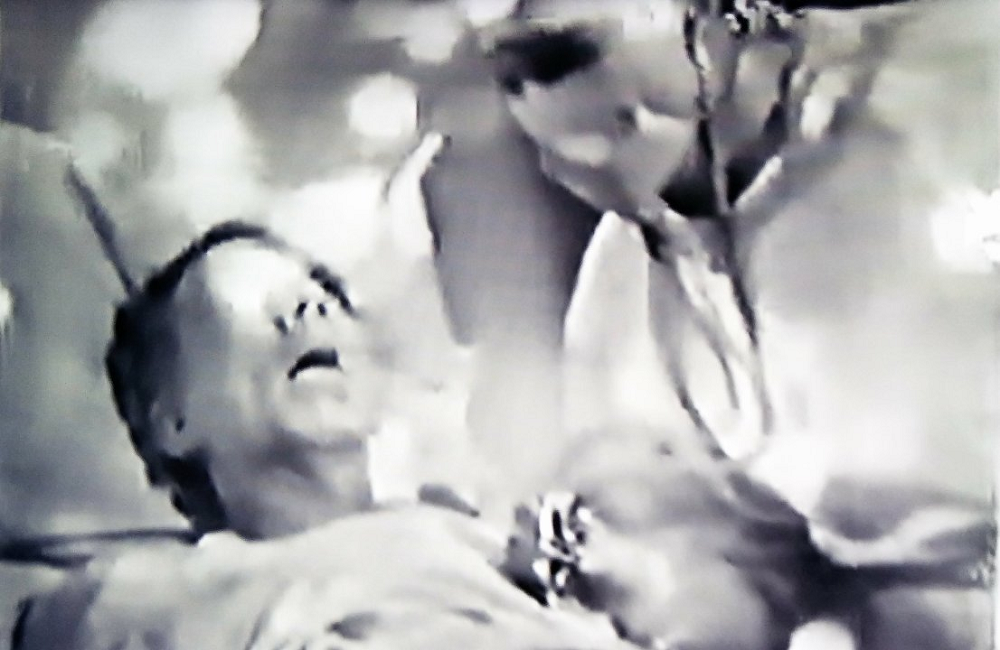
Among the stories presented by Dahl were “Dissolve to Black”, Irving Gaynor Neiman’s tale of a woman hired to play a murder victim for a TV show who finds the show becoming real, and Phil Reisman Jr’s “Soft Focus,” which starred Barry Morse as a man who finds half of his face has been erased. Morse was joined by a parade of character actors, including Constance Ford, Henry Jones, and Milton Selzer.

The show was sponsored by cigarette manufacturers Liggett and Myers, and as such featured many, many scenes of characters smoking, with Dahl himself smoking a cigarette during his introduction. The smoking was so blatant that complaints began flooding into local affiliates, accusing the network of leading their children astray (although over 40% of Americans were regular smokers), and the regional stations started to drop the show, resulting in a loss of income from the sponsor, whose contract stipulated certain levels of viewership. After fourteen episodes, income from the sponsor had fallen below the threshold needed to keep the show on air and so ‘Way Out was cancelled, its last episode going out on July 14th 1961.

Great Ghost Tales (1961, NBC): Hosted by plummy-accented radio announcer Frank Gallop, Great Ghost Tales was a Summer 1961 replacement for The Ford Show, a long-running variety showcase built around the prodigious talents of folk humourist Tennessee Ernie Ford (and was also sponsored by the Ford Motor company). The twenty-five-minute drama went out live each week, the last of its kind as the practice became increasingly rare as the 1950s turned into the 1960s, and as a result nothing but fond memories remain of the show.

The brainchild of young female producer Audrey Maas, who had cut her teeth as a story editor on NBC’s Kraft Television Theatre, Great Ghost Tales took classic stories by the likes of Algernon Blackwood, Edgar Allan Poe, and Saki, adapting them into studio-based teledramas, even if the story – such as the Canadian wilderness-set “The Wendigo” – would ordinarily require location shooting.

Great Ghost Tales, 1961

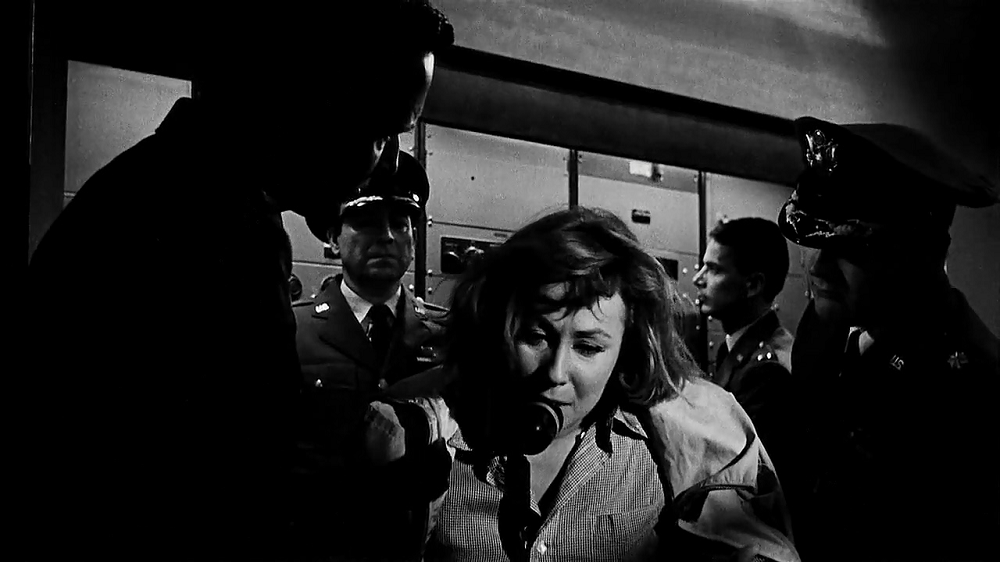
Debuting on July 6th 1961 with Poe’s “William Wilson” (the story of Robert Duvall’s titular drifter followed everywhere by a man who is his spitting image), Great Ghost Tales brought small dollops of fear to Summer Thursday nights, with subsequent terrors including monkey’s paws, compulsive singing, and a flesh-eating beast whose curse is transferred to whoever kills it. As well as Duvall, the show also gave roles to Walter Matthau, Richard Thomas, and future Oscar winner Lee Grant, with Daniel Petrie and Seymour Robbie among those taking their turns behind the camera.

Twelve episodes were produced, the last airing on September 21st 1961, and that was as much Great Ghost Tales as NBC could handle, replacing it on the schedule with domestic servant sitcom Hazel. After taking a career break in the mid-1960s, Maas returned to the business in 1974, producing Martin Scorsese’s Alice Doesn’t Live Here Anymore, and winning a Prime Time Emmy for shepherding TV mini-series Eleanor and Franklin onto the screen. That last award was posthumous as she sadly passed away in July 1975, at the age of thirty-eight.

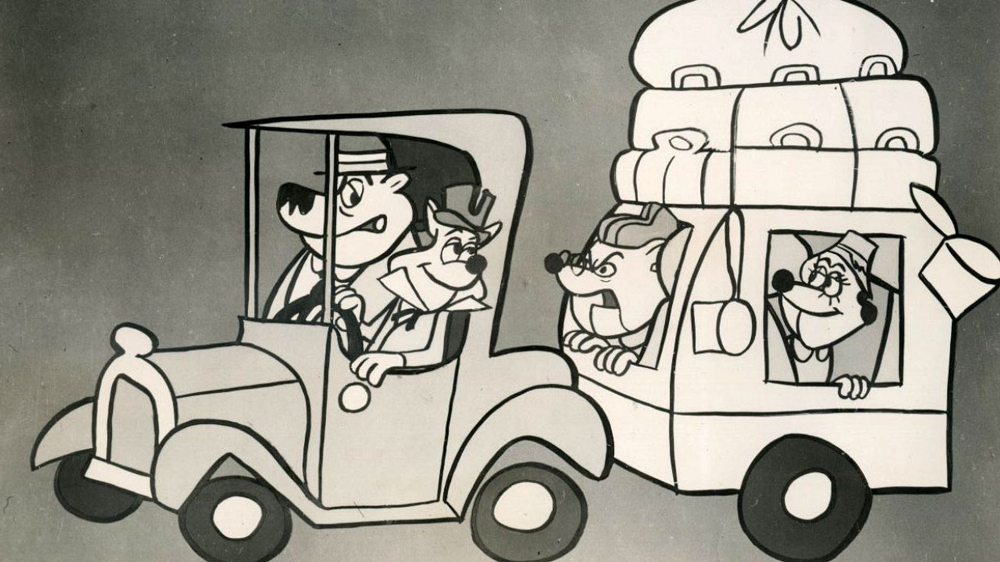
Calvin and the Colonel (1961, ABC): An animated adaptation of beloved radio comedy Amos ‘n’ Andy, this prime-time animated series from producers Joe Connelly and Bob Mosher (a team who would go on to create Leave It to Beaver and The Munsters) featured the radio show’s Freeman Gosden and Charles Correll as two friends forever chasing get rich quick schemes dreamt up by the useless Calvin, a bear voiced by Correll, while Gosden’s Colonel was nearer to the character of Kingfish, for whom he also provided the voice on the radio show.

Using anthropomorphic animals avoided the racial controversy that had brought down Amos ‘n’ Andy, a show voiced by two white men but featuring a predominantly (and caricatured) black cast of characters. Several of Connelly and Mosher’s scripts for Amos ‘n’ Andy were recycled for Calvin and the Colonel, which began its run on Tuesday nights in October 1961, sponsored by the Lever company, a former backer of Gosden and Correll’s radio antics.

Calvin and the Colonel, 1961

The animation was provided by Shull Bonsall’s TV Spots studio, who had previously brought Crusader Rabbit back to screens and would go on to produce a series of shorts based on George Herriman’s Krazy Kat strip for King features, and featured a laugh track, common to other adult animated shows of the time such as The Flintstones. Early episodes saw the pair become television delivery men, attend a costume ball, and try to make it in the movies, but ratings were low and the decision was made to cancel the show after just two months and six episodes.

However, the contract with Lever called for a certain number of episodes to be broadcast and so the remaining twenty episodes were shown on Saturday nights from January 1962. Two issues of a tie-in comic book were published by Dell Comics, and the show earned a second life in re-runs on Saturday mornings, where – as long as they were kept hopped up on sugary cereals – audiences were less discriminating.

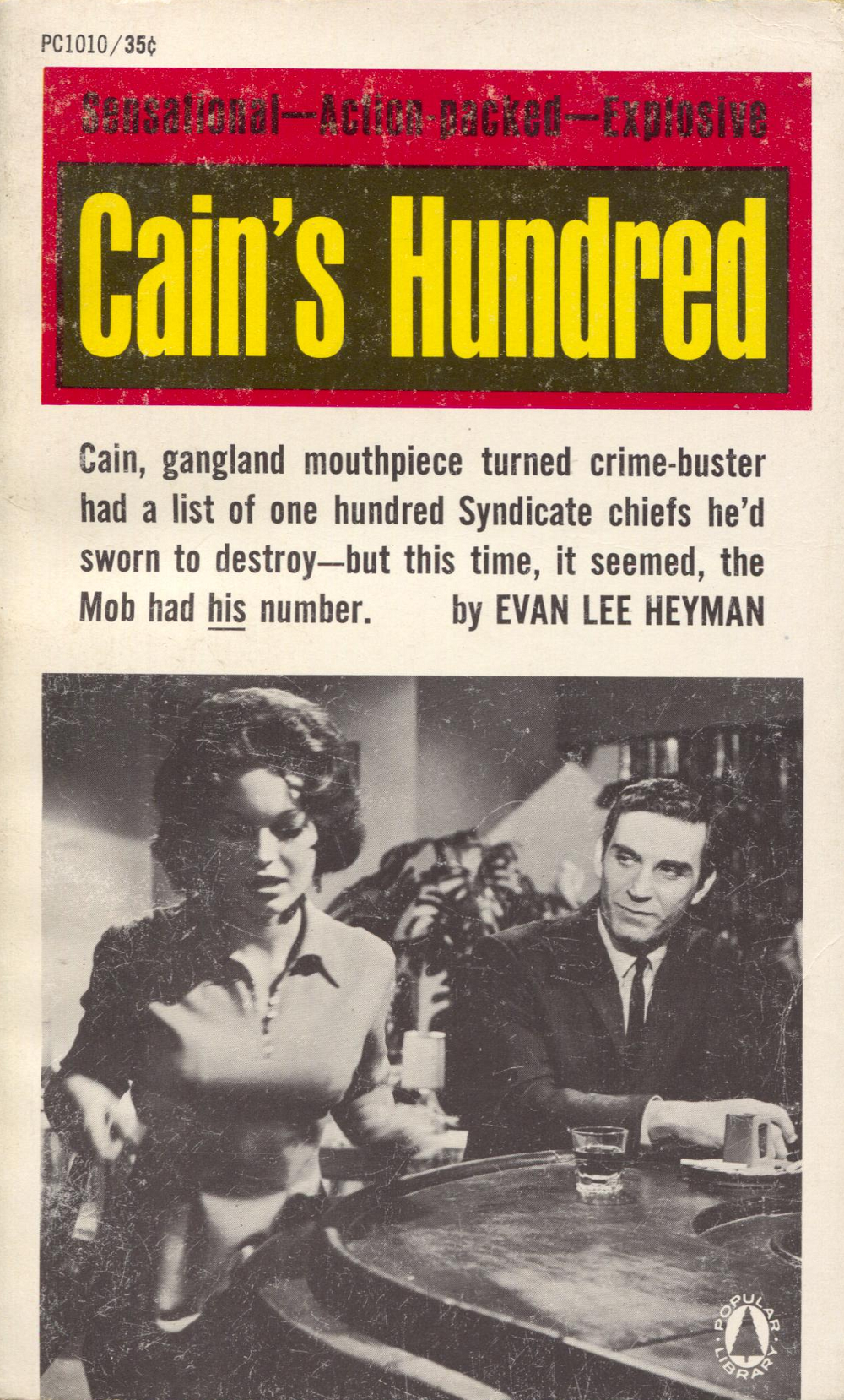
Cain’s Hundred (1961, NBC): Paul Monash was an award-winning scripter for TV shows such as Studio One and Schlitz Playhouse of Stars, and had just written and produced the pilot episodes of The Untouchables when NBC gave him room to create his own crime show, to be shown on Tuesday nights as part of a solid line-up that included Laramie and Alfred Hitchcock Presents…

Cain’s Hundred starred Peter Mark Richman in his first regular role as Nicholas Cain, a former underworld lawyer who tries to go straight after he gets engaged, much to the chagrin of his former employers. After a mob hit gone wrong kills his fiancée, Cain begins working for FBI, setting out to bring 100 criminals to justice in the name of revenge.

Cain's Hundred, 1961

For the pilot episode which established the series premise, Monash partnered with David Karp, a novelist who he’d worked with on The Untouchables, and Monash would employ many of his former show’s writers and guest actors on his new show, as well as turns from future stars Robert Culp, Gavin McLeod, and Telly Savalas, among others.

As it turned out, Cain got nowhere near his hundred, although an impressive thirty episodes were produced before NBC pulled the plug, his final case coming in May 1962 when he tried to help a reporter caught up in organised crime walk the same path he’d done. Monash went on to create Peyton Place, the first prime-time soap opera on US TV, and Judd for The Defense, before switching primarily to producer roles, adding Butch Cassidy and the Sundance Kid, Carrie, and Big Trouble in Little China to his already impressive résumé.

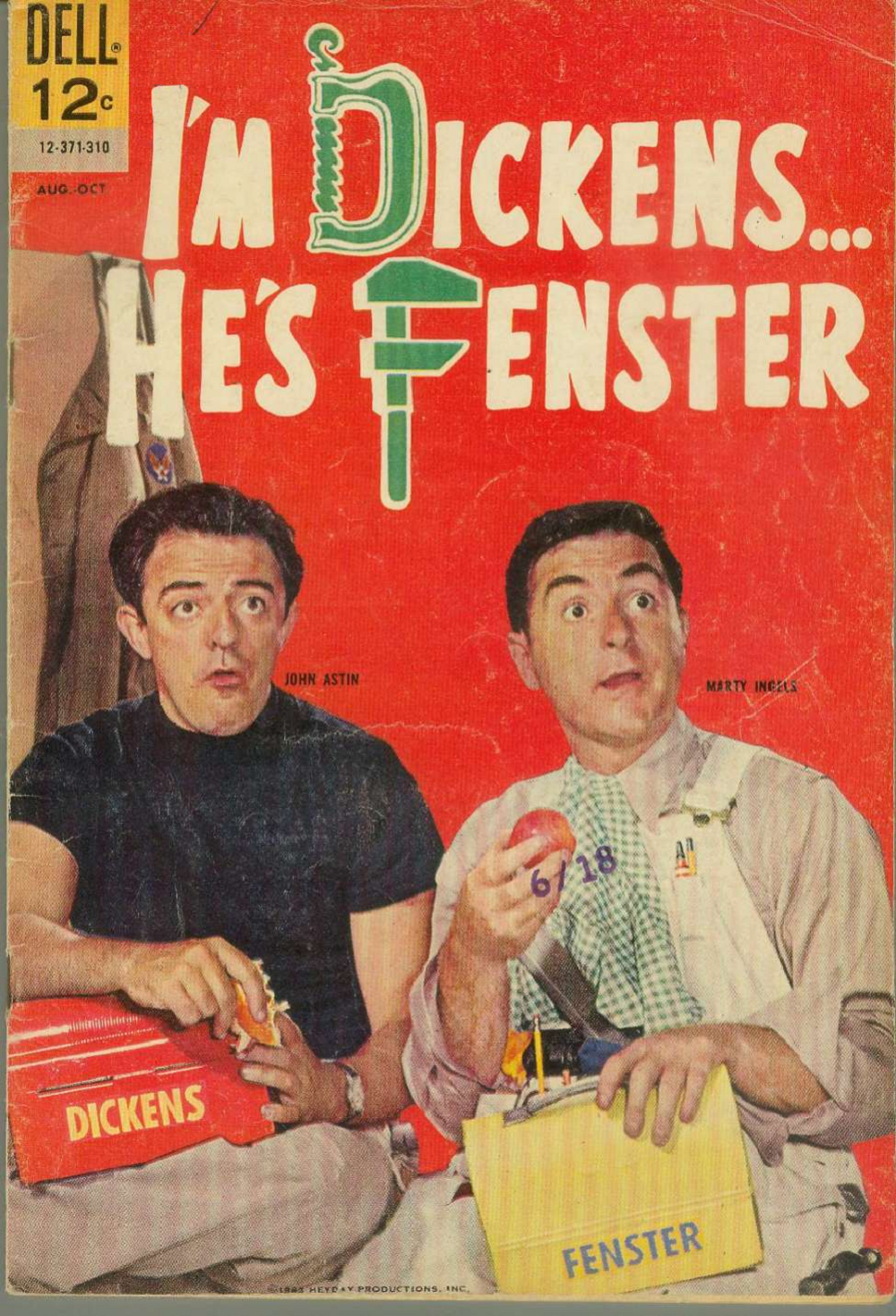
I’m Dickens, He’s Fenster (1962, ABC): Although he’s primarily known as Gomez Addams (or even The Riddler) for those genre TV fans in Generation X and after, John Astin had already turned heads in TV land before he donned the pinstriped suit and pencil moustache in 1964. After guest roles in top-rating shows such as Maverick, 77 Sunset Strip, and Ben Casey, Astin landed the role of Harry Dickens, one half of a pair of inept carpenters with Marty Ingels’s Arch Fenster.

Ingels had also started with guest roles before being given his first starring role alongside Astin, having popped up on The Phil Silvers Show, The Detectives, and The Dick van Dyke Show, and the two had immediate comical chemistry, bringing the mostly physical comedy of creator Leonard Stern to life. Stern – one of the men who created the Mad Libs game – made his name writing for Silvers, Abbott and Costello, and The Honeymooners, but I’m Dickens, He’s Fenster was his first solo effort, also acting as producer and (occasional) director on the show.

I'm Dickens, He's Fenster, 1962

ABC gave it a prime slot on Friday nights with The Flintstones as a lead-in, and the first episode aired on September 28th 1962, with Harry inveigling his way into a job as a foreman on a construction project. The supporting cast included Emmaline Henry as Dicken’s wife, Kate, a character who was notable for being the first wife on TV to have a job of her own (at a hospital), with a series of guest stars as Fenster’s latest girlfriend that included Yvonne Craig and Lee Merriwether.

Critical response to the show was positive, with some reviewers favourably comparing I’m Dickens, He’s Fenster to Laurel and Hardy. Indeed, Stern claimed that Stan Laurel wrote him a fan letter proclaiming the show as the only one he watched on TV. In terms of ratings, however, the show fared poorly against Route 66 on CBS and was cancelled after one season of thirty-two episodes. Ironically, by the time the completed episodes had finished airing, I’m Dickens, He’s Fenster was winning its timeslot but it was too late to bring back Astin and Ingels, who’d moved on to other things.

Next time on The Telephemera Years: Our final stop on this pre-1965 express checks in with Arrest and Trial, Astro Boy, and the only genre failure of the Fall 1964 season!

Check out our other Telephemera articles:

The Telephemera Years: pre-1965 (part 1, 2)

The Telephemera Years: 1966 (part 1, 2, 3, 4)

The Telephemera Years: 1967 (part 1, 2, 3, 4)

The Telephemera Years: 1968 (part 1, 2, 3, 4)

The Telephemera Years: 1969 (part 1, 2, 3, 4)

The Telephemera Years: 1971 (part 1, 2, 3, 4)

The Telephemera Years: 1973 (part 1, 2, 3, 4)

The Telephemera Years: 1975 (part 1, 2, 3, 4)

The Telephemera Years: 1977 (part 1, 2, 3, 4)

The Telephemera Years: 1978 (part 1, 2, 3, 4)

The Telephemera Years: 1980 (part 12, 3, 4)

The Telephemera Years: 1982 (part 1, 2, 3, 4)

The Telephemera Years: 1984 (part 1, 2, 3, 4)

The Telephemera Years: 1986 (part 1, 2, 3, 4)

The Telephemera Years: 1987 (part 1, 2, 3, 4)

The Telephemera Years: 1989 (part 1, 2, 3, 4)

The Telephemera Years: 1990 (part 1, 2, 3, 4)

The Telephemera Years: 1992 (part 1, 2, 3, 4)

The Telephemera Years: 1995 (part 12, 3, 4)

The Telephemera Years: 1997 (part 1, 2, 3, 4)

The Telephemera Years: 1998 (part 1, 2, 3, 4)

The Telephemera Years: 2000 (part 1, 2, 3, 4)

The Telephemera Years: 2003 (part 1, 2, 3, 4)

The Telephemera Years: 2005 (part 1, 2, 3, 4)

The Telephemera Years: 2006 (part 1, 2, 3, 4)

The Telephemera Years: 2008 (part 1, 23, 4)

Titans of Telephemera: Irwin Allen

Titans of Telephemera: Stephen J Cannell (part 1, 2, 3, 4)

Titans of Telephemera: DIC (part 1, 2)

Titans of Telephemera: Hanna-Barbera (part 1, 2, 3, 4, 5)

Titans of Telephemera: Kenneth Johnson

Titans of Telephemera: Sid & Marty Krofft

Titans of Telephemera: Glen A Larson (part 1, 2, 3, 4)

Titans of Telephemera: Quinn Martin (part 1, 2)

Titans of Telephemera: Ruby-Spears


Connor Ratliff | THE GEORGE LUCAS TALK SHOW / THE BARON AND THE JUNK DEALER

Connor Ratliff - THE GEORGE LUCAS TALK SHOW / THE BARON AND THE JUNK DEALER

by Ed Fortune

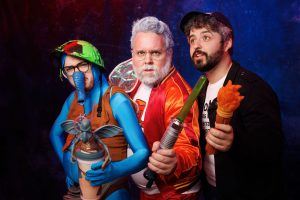
Occasional George Lucas impersonator Connor Ratliff is better known for being an actor, comedian and podcaster. He’s also one of the longtime performers at the Upright Citizens Brigade Theatre in New York. Film and TV credits include The Marvelous Mrs MaiselOrange Is The New BlackSearch Party, Mike Birbiglia’s feature film Don’t Think Twice and the upcoming Mean Girls movie musical. He happens to be the creator/host of the critically acclaimed, award-winning podcast Dead Eyes. We caught up with him to talk about the shows that are on at the Edinburgh Fringe this year.

STARBURST: What’s the pitch for The George Lucas Talk Show?

Connor Ratliff: Retired filmmaker George Lucas hosts a talk show alongside his CGI announcer/sidekick, Watto. Real guests being themselves! We’ve been doing this show for nearly a decade in NYC, and The New York Times has frequently told people to go see it because it’s funny.

It’s not your only show, though. If we enjoy that, what else can we see you in?

We’re doing the Talk Show once a week in Edinburgh – every Friday, late night – but the main show we are bringing is a George Lucas Talk Show Original Play called The Baron & The Junk Dealer. It’s a sci-fi tragicomedy that requires no additional context, though to some extent, it is “What if George and Watto did a serious play?” You don’t need to know who George and Watto are to enjoy it; their names are never mentioned even once.

I’ll also be doing four solo shows at the end of the month called GEORGE-prov: An Improvised Theatrical Experience.

Why are we so fascinated by Star Wars?
At the core of it, George Lucas created a modern fairy tale that resonated deeply with multiple generations. So, most of it as a cultural phenomenon is just people more or less enjoying it. But then you also have people who find it annoying to constantly have to hear about a thing that they never had any interest in. And there is also the small but loud faction of people who are furious because they think it somehow got ‘ruined’ by people making a few that they didn’t enjoy, which is basically like a bunch of middle-aged men yelling about how sugary cereal made for children doesn’t taste good to them anymore. But it’s hard to find someone who simply doesn’t have an opinion about Star Wars because it’s all over the place.

What is the best Star Wars movie?
I guess it depends what you mean by ‘best’. The easy answer for someone of my generation is The Empire Strikes Back because it deepened the characters and resonated as an ambitious movie for kids that had a mostly unhappy ending. I remember how that cliffhanger resonated in my 5-year-old mind for a couple of years, wondering what would come next. But in terms of writing and acting, a lot of the best Star Wars work has been done under Disney. That’s partly because they have done so much of it. If you take the first two trilogies and the Ewok movies and watch them back-to-back with things like The Last JediRogue One, and Andor, I think it’s difficult to argue that there hasn’t been a marked uptick in the quality of the acting and writing, overall. The two Lucas eras – the original trilogy and the prequels years – are more important in terms of impact. The first three movies are more significant in terms of film history, and the prequels more-or-less changed the way movies are made on a technical level.

Why Watto?
The short answer is that Griffin Newman had a take on the character that was hard to resist. Watto was one of the most problematic characters from the prequels, and Griffin knew how to play with that in a way that was perfect for the tone of the show.

Why theatre? What does theatre bring to this story that other formats don’t?
The live theatre experience is one thing that hasn’t been torn asunder by the digital streaming revolution. It can’t be pirated. You can’t do it on your phone. You literally have to be there. We usually put The George Lucas Talk Show up on our YouTube channel because we developed a live stream audience during lockdown, and we don’t want those fans to be totally left out now that we’re doing in-person shows again. But for the foreseeable future, I’d like The Baron & The Junk Dealer to be a thing that you have to experience in person.

Why the Edinburgh Fringe?
The Fringe has been on my bucket list for a while, and when I started writing The Baron & The Junk Dealer, I thought, “This might be the perfect thing to bring to Edinburgh.” It’s a weird play, and I felt like this is the place to bring something that is a little bit risky.

What else do you plan to do in Scotland?
I want to see a bunch of shows, but I’m also looking forward to developing a kind of daily routine. I lived in Liverpool and then London in the late ’90s/early ’00s, but I haven’t spent very much time in Scotland. I want to do some sightseeing. It depends on how much energy I have in the midst of doing 30 shows in 27 days with one day off.

There are thousands of shows at the fringe. Why should STARBURST readers seek this out?
Griffin and I both have a good track record on the comedy scene in NYC, and any time we’ve travelled with the show, it has gone over well. We did two sold-out shows in London last spring, and I think everybody who went to those would vouch for us. It’s a good time.

Should the Holiday Special be digitally remastered?
Of course! It’s the second Star Wars thing ever made, and that alone makes it an important piece of cinema history. Having said that, part of me thinks that it is more fun for it to remain a pirated thing, poorly recorded on VHS. I think cleaning it up to look brand new sort of cuts against its true nature. It’s a thing you’re not supposed to see.

Would any Star Wars painting be improved with a picture of Mr Spock inserted into it? Such as the iconic first issue of a now-famous science fiction magazine
I think Mr Spock would say that there needs to be a logical reason to insert him. My own criteria are much lower, and I think there should be a hidden Spock in as many Star Wars paintings as possible.

How would you describe your process?
I went to drama school and then later on trained as an improviser, so I think my process sort of feeds off those two disciplines. My foundation is character work, and that sort of dictated the kind of improv I do. With George Lucas, it’s easy to imagine what he wants in any given scenario. With my podcast, Dead Eyes, it was all about conveying a version of myself that had a singular goal and then looking to see the various ways I could make connections with other people that would tie in with that goal. Everything I do starts with a character.

What media are you currently enjoying?
Right now, I’m re-reading some old Disney comics by a man named Carl Barks, whose work I’ve been obsessed with since I was a child. I’m going to take another stab at reading Ulysses soon to see if I can finally get through it this time. I’m listening to a Miles Davis LP called Sorcerer, Elvis Costello’s The Boy Named If and Aimee Mann’s I’m With Stupid. I’m also listening to Billy Ray’s Strike Talk podcast.

Where can we see the shows?
The Baron and The Junk Dealer (Aug 2nd-24th) and GEORGE-prov (Aug 25th-28th) – will be at the Assembly Roxy Downstairs, and The George Lucas Talk Show will happen every Friday late night in August at Assembly George Square Studios, Studio 2. And, of course, 100s of hours of past shows can be found on The George Lucas Talk Show YouTube channel.

Connor Ratliff will present The George Lucas Talk Show at the Edinburgh Festival at Assembly George Square, 11.35pm on Fridays, 4th, 11th, 18th and 25th of August.

Connor Ratliff also stars in The Baron and The Junk Dealer, an original comic play about two fugitives stranded on a desolate planet (Assembly Roxy, 5.55pm August, 2nd – 24th not 15th) and George-Prov: An Improvised Theatrical Experience where “George Lucas” appears in the form of a digital avatar and delivers a one-person improv workshop like no other (Assembly Roxy, 5.55pm, August 25th – 28th)

The George Lucas Talk Show https://assemblyfestival.com/whats-on/the-george-lucas-talk-show,
George-Prov https://assemblyfestival.com/whats-on/george-prov-an-improvised-theatrical-experience ,
The Baron and the Junk Dealer
https://assemblyfestival.com/whats-on/the-baron-and-the-junk-dealer


Luke Thornborough | ALONE

Luke Thornborough | ALONE

by Ed Fortune

Luke Thornborough is based in Tāmaki Makaurau (Auckland, New Zealand). He’s a writer and director who works in film, theatre, and short documentaries. His show, ALONE has been touring for three years now around Australasia and has come to the Edinburgh Fringe for the first time this year. We caught up with him to find out more.

STARBURST: What’s the pitch for ALONE?

Luke Thornborough: ALONE is a one-room tense sci-fi drama that is set in the not-too-distant future. In the deep reaches of space, two scientists have made a potentially monumental discovery, but will they be able to make it count? Will their faith in science or an almighty allow them to hold the ship together long enough to bring this seed of life back to a dying planet? It is a suspenseful multi-award-winning production that has been described as a combination of “Interstellar meets Waiting for Godot”. Inspired heavily by Star Trek, ALONE is a philosophical look at the human condition and how much faith we have in our own survival.

Why science fiction?

Science fiction offers such an amazing opportunity for writers to explore what it is to be human. All our hopes, fears, ambitions and cruelties can be delved into in such a rich and diverse genre. However, I wanted it to feel grounded and real. I worked extensively with scientists from the University of Auckland to make sure that the world was as true to life as possible. We also based our set design on the industrial look and feel of films like Alien to try and demonstrate a resource-poor world and create a sense of analogue nostalgia that the audience could relate to.

Feminism, climate change, and David Bowie. That’s quite a combination. Do they blend well together, and was that a surprise?
I worked closely with the two lead actors – Courtney Bassett and Kat Glass – for about a four-month period, where they fed back on the script. Indeed, Courtney suggested the writing prompt that inspired the whole production. The feedback from these two amazing actors, as well as the feedback I got from read-throughs, really led the script to a theme of feminism. The strife of working in male-dominated fields – the Airforce and Scientific research – was evident in all the feedback and research and was very eye-opening for me. As for climate change… well, I feel that the more awareness and seriousness we give to conversations about climate change, the more likely we’ll band together as a species to avert it. It is something I’m deeply passionate about – and the inability of our modern time to truly put aside our differences in order to save our world is played out by our two heroes in ALONE. As for Bowie… well, who doesn’t love Bowie?

Why theatre? What does theatre bring to this story that other formats don’t?

The show plays out in real-time, and I have worked hard to try and make a truly immersive experience – I believe that theatre really offers a sense of realism to the science fiction genre that is not always achieved by film. There are no panning shots of the stars… or spaceships gliding over planets… but these two actors will show you what it is like to be trapped in a little tin can… and what that can do to a person.

Why the Edinburgh Fringe?

Edinburgh Fringe holds a special place for us New Zealanders! It’s a long way for us to go, and it represents somewhat of a Holy Grail for us as so many have gone on to break onto the world stage as a result of success at the festival. I was blown away when Assembly offered us a slot for us to put on our show!

How different is Scotland from New Zealand?

I’ve only been here a few days, but I’ve got to say Edinburgh is absolutely beautiful. The history and the architecture are just a world away from back home. Also, the people here are wonderfully friendly and have been incredibly helpful in helping our small group of Kiwis!

There are thousands of shows at the fringe. Why should STARBURST readers seek this out?

This is a play that we’ve been crafting over the last three years – always with the goal of pursuing greater realism and moving audiences. The performers know these roles inside out and show after show, they pour their hearts and souls into ALONE. It is a chance to see sci-fi done with thought and passion and with a true love for the genre.

What are you looking forward to at the fringe?

I’m looking forward to seeing as many shows as I can! I’ve never seen a festival of this size before, and I can’t wait to jump right in!

What media are you currently enjoying?

I’m a huge fan of Interstellar, Alien, Arrival, Dune, Ex_Machina, and anything that takes you to another world while asking you very real questions about yourself!

Where can we see the show?

Assembly George Square Studios, Studio One – Aug 4th -28th at 15:20 – https://assemblyfestival.com/whats-on/alone


STARBURST’s Ten Hot Edinburgh Fringe Shows 2023

DRAG QUEENS VS VAMPIRES

by Ed Fortune

With literally thousands of new shows on at the Edinburgh Fringe this year, the amount of choice can be overwhelming. We’ve already produced one list of shows returning to The Fringe, which can be found here. The team over at STARBURST Towers has painstakingly flipped through the various listings to select some great and geeky acts that are new to the Edinburgh Festival.
Here are some of STARBURST’s keenly anticipated Edinburgh Fringe show of 2023…

Drag Queens vs Vampires
Haus of Dench presents Drag Queens vs Vampires, a sequel of sort to their smash hit, Drag Queens vs Zombies. Join Kate Butch and Crudi Dench as they head to Transylvania for the Eurovision Song Contest, only to find themselves face to face with a mysterious Air BnB host who happens to be called Dracula. Expect singing, slaying and silliness.

Mario The Maker Magician
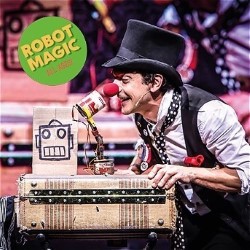
Robot magic! Mario The Maker Magician is a kid-friendly show about how science can unlock the imagination and be a source of joy and wonder to us all. Mario combines hand-made robots, puppet skills and magic to create something a little bit special. One to bring the kids to and keep them enchanted for an hour or so.

Alone
Aotearoa / New Zealand-based theatre company Dusty Room Productions have trekked all the way to Edinburgh to present Alone, an intelligent sci-fi drama about two scientists, far away in deep space, who discover something that could change humanity forever. But can they make it matter? Described as Waiting For Godot meets Interstellar, it sounds like excellent food for thought to us.

Dusk: A Bite-Size Love Story
Speaking of vampires, these are a bit more sparkly. Dusk: A Bite-Size Love Story is a 105-minute-long musical parody of Twilight, that vampire romance series that enthralled an entire generation and then drifted back into the shadows. Combining dance, drama and some belting musical numbers,  Dusk: A Bite-Size Love Story sounds like the musical parody that someone had to dare to do.

Photon StarBlaster and the Suicidal Spaceship
Science fiction has always been a useful lens through which to explore personal and social issues. You can load a lot of metaphor and meaning onto a story about a spaceship, and Photon Starblaster follows in this fine tradition with its story about a galactic agent trying to talk his spaceship out of its plan to self-destruct. Classic sci-fi as well as an exploration of childhood trauma and the impact of suicide.  

Hive

Weird fiction with queer themes that is also about Eldritch beings, lost homes, and mega-corporations? From the award-winning director, Susie MacDonald? Sounds great to us. Expect amazing lighting, sound design, and something very different from your usual fringe theatre experience.

Laser The BoyA Shark Ate My Penis: A History of Boys Like Me
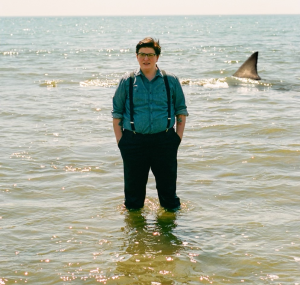
Laser Malena-Webber is best known for their work as one half of the brilliant geeky band, The Doubleclicks. His new show is a one-person musical about the history of trans men and his own transition. Laser presents the story of various trans men, including Samuel Bundy, whose story involved a robbery and a shark. Expect the sort of musical that stays with you for a long time after.

Renfield
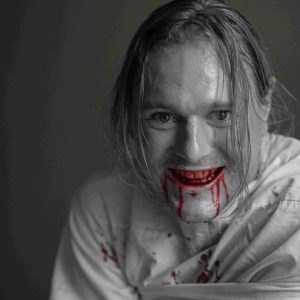
PBH’s Free Fringe tends to be a part of The Fringe that has some of the wilder, more unusual shows. Case in point is Renfield, a one-man show that charts the descent into madness of Dracula’s infamous lackey. Described as dark and disturbing, this one sounds pretty hard to resist if you’re a fan of classic horror.

The Extras Strike Back: A Musical Tribute to the Forgotten Heroes of Star Wars
Comedic takes on the ‘true story’ behind the Star Wars movies are always worth a look, and few have tried to combine parody with musical stylings in such a bold way. Expect a silly, cabaret-style parody of the world’s biggest sci-fi franchise and some very clever (and more than a little naughty) songs.

 
BATSU!
Based on Japan’s batsu game, a comedy style that involved ridiculous challenges, BATSU! brings this format to Scotland. If paintballs, a giant chicken and a lot of very American sweaty comedians running about like lunatics, check this one out.

And as a very special bonus:

 A Young Man Dressed as a Gorilla Dressed as an Old Man Sits Rocking in a Rocking Chair for 56 Minutes and Then Leaves… 14

For one night only (and completely free of charge), part fourteen of the epic fringe show, A Young Man Dressed as a Gorilla Dressed as an Old Man Sits Rocking in a Rocking Chair for 56 Minutes and Then Leaves. 

Those new to the Fringe may have concerns that the show is difficult to follow, having not seen the previous episodes of A Young Man Dressed as a Gorilla Dressed as an Old Man Sits Rocking in a Rocking Chair for 56 Minutes and Then Leaves. We’ve put this classic show in our hot new shows list to rest assured that A Young Man Dressed as a Gorilla Dressed as an Old Man Sits Rocking in a Rocking Chair for 56 Minutes and Then Leaves 14 will be every bit as fresh and exciting as A Young Man Dressed as a Gorilla Dressed as an Old Man Sits Rocking in a Rocking Chair for 56 Minutes and Then Leaves 3. Go see; you’ll never see a show of what it’s like again. Until perhaps A Young Man Dressed as a Gorilla Dressed as an Old Man Sits Rocking in a Rocking Chair for 56 Minutes and Then Leaves 15. 


 Don’t forget to check out our Fringe Survival Guide.

You may want to check out our previous guides from 2017, 2018, 2019, 2022, 2023, 2024 and 2025.

RESIDENT EVIL: DEATH ISLAND Cast Interview

resident evil dead island interviews

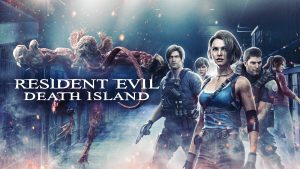
During the Los Angeles premiere of Resident Evil: Death Island, STARBURST virtually caught up with actors Nicole Tompkins (Jill Valentine), Stephanie Panisello (Claire Redfield) and Matthew Mercer (Leon S. Kennedy) to discuss this iconic meeting of gaming horror characters, how fun it was to see them isolated on the island of Alcatraz, what we can expect from Death Island’s main villain Dylan Blake, and much more…

**This interview took place before the writers’ and actors’ strike**

STARBURST: Death Island is set on Alcatraz; why do you think this particular location works so well for a Resident Evil story?

Matthew: It’s definitely a location of historical mystery and intensity. It’s one of those names when you say Alcatraz, it evokes like, “Oh, bad stuff has gone down there in the past”. Why not just make more bad stuff happen there?

Stephanie: Agreed. Also, with Alcatraz, once you’re in there, you can’t get out. I think that element of not being able to escape kind of adds that too. You’re just stuck in there; there’s no way out. There’s a reason why you’re on Alcatraz because you are the worst of the worst, but now what if you’re not the worst of the worst, and you’re there, and you can’t get out?

Nicole: There’s something ghostly about the island in general, so then when you put zombies in that space, it very much has an undead feeling.

We really enjoyed how Dylan Blake took us back to the Racoon City era. How would you describe this villain, and what do you think his brutal backstory brings to Death Island?

Nicole: I think it’s really personal, and I think that it’s really nice to have that tie-in. I think they do a really good job of giving you just enough to kind of empathise with why the villain is the way they are, and I always like stories like that. I like villains that have trauma or a back story that you kind of get a little piece of so you just relate a little bit more to “Oh, I see how hurt they are, I see why these choices are being made from pain”. I think it reflects everyone’s story, but Jill’s story a lot in some ways, because she is directly contending with “I’ve been through so much pain, and I’ve still chosen to fight the good fight” and so there’s like a nice direct contrast of, “Yeah, you know what it was hard, I was there too.”

Matthew: Yeah, there are 25 years of history to this franchise, and so the ability to come back to that period of time later and still tie emotional narratives, both with main characters and a villain, back to those initial periods of where this really began to begin and flourish, is kind of a cool, homecoming narratively.

And this version of the T-virus can travel via tiny little drones! How exciting has that terrifying idea been to work with, and what does this version of the classic virus bring to the Resident Evil timeline?

Matthew: That definitely brings a visceral bit of reality in an age in which we are all contemplating the moral implications of advancing technology, but that’s what good stories, and especially good horror stories, do. They make you look at the things that are happening in your real life and be like, “Hmm, why does this spook me?”

Stephanie: And I guess it does make sense, too, timeline-wise, because the franchise has been around for so long that even within the franchise, we’re going with the technology, the advancement of technology, and where that direction is going. Honestly, I don’t know, drone T-virus that can be specifically channelled to you or you or you… yeah!

Matthew: That’s kind of one of the underlying themes of every Resident Evil, while you think of viruses, and viruses being a thing of nature, you know, by our cultural history, the whole purpose of the franchise is that the villain is the arrogance of humanity. It’s the arrogance of a person trying to gain through defeating nature in a way, and the drawbacks that come with that, and so now the technology advancing, becoming part of it even further, just pushes that narrative in a dangerous and unexpected way.

The film shows Leon (Matthew) and Jill (Nicole) together for the first time in the whole of the Resident Evil timeline. How exciting was this concept for you to take on as actors, and what can fans expect from this dynamic on-screen?

Nicole: I was so stoked when I read the initial “Leon? Jill?”

Matthew: You texted me that day!

Nicole: I did! I was over the moon, I think the dynamic is really well scripted, I think they have a really good meeting of humour and seriousness and mutual respect, and I think all of those things that everyone has waited for and expected in that dynamic, I actually think it played out really well.

Matthew: I agree, there’s so much build-up to that sort of union, like so much build-up and expectation to it, that it’s like “There’s no pressure… it’s fine!” but no, it was a lot of fun to do.

Matthew, you worked on Resident Evil: Vendetta – how has the process of bringing an animated Resident Evil movie to life changed since then? Have you noticed any major changes in technology, or maybe just the creative process in general?

Matthew: The creative process hasn’t changed too much, it’s a pretty tried and true process, but I will say that the technology involved in visuals continues to advance to an incredible degree, where with each iteration, it just gets more and more photo-realistic, more and more wild. The animations, and the action, just continue the climb of what I think is possible and cool with these features. Our process, at least in my experience, working on it from my end, it evolves, and it’s easier in some ways, but the exponential change is just in the quality of the final product.

There’s actually a fair bit of humour in the Resident Evil timeline, and we noticed it once more with Death Island. Leon has some great one-liners, for example. What do you think we can expect from the balance between humour and terror in Death Island, and what does that combination bring to a horror movie like this?

Stephanie: You have to have the terror with comedy. The tension is so high that otherwise, you would just be uncomfortable and not enjoy it, so I feel like the humour lands and hits in the right places to allow you that release of “OK! Maybe we are going to be OK!” and I feel like it’s necessary, especially when all the characters are together for the first time like you need humour, you need those moments of that, and it also allows each character to shine within their own personalities. So like each person, each character has their own version of what would be funny or how they could be quippy about something. I think it’s like crucial.

Nicole: I think humour tells you a lot about where a character is at as well, so even in really hard circumstances, if the humour comes out cynical, or if it comes out playful, or if it comes out silly, you can kind of see sort of where they are in their mental state, and their ability to cope. So yeah, I always love the humour in Resident Evil in general. These movies specifically are very high action, there’s all of these horror elements, intense terror, but I think that the humour mixes with the action because our favourite action films of all time have so much humour.

Matthew: Also, it’s a very viable trauma response. When you are under that much pressure, as a person, you have to release that tension somehow, so either you break, or you joke, and that’s a subtlety relatable thing to the whole Resident Evil franchise.

No Resident Evil instalment is complete without terrifying monsters. Without giving away too many spoilers, what kind of monsters should viewers be ready for in Death Island?

Stephanie: I don’t want to spoil anything, but there might be a licker!

Matthew: That’s part of the fun of Resident Evil. It’s like, “What weird mutations, what terrifying fleshy beasts are going to be unveiled in this, and in what unique way can they gross us out and make it extremely frightening” and I think this film definitely goes “Alright, well, hold my beer!”

And we have to ask you all about the Avengers Assemble-type scene at the end of the movie, where you all team up together to take on the final boss. Is there anything you can tell us about how this sequence came together and why fans should be excited for this moment?

Stephanie: Nicole and I were talking right away; it was so beautiful. I think just that one scene where they’re all dodging the creature, and each one has their own specific special move of how they dodge it – I loved it. I feel like Claire did some Captain America-like twists! It was just so epic, and I’m super stoked about it, and I feel like for us, if we’re excited, we’re fans ourselves, right, so at the end of the day, it’s not just that we are the actors in this, we’re also fans, we also nerd out on all of this, so yeah, it’s really a genuine excitement about everyone together.

Nicole: I think it’s very hard sometimes because everyone has been asking for the team up for everyone to be together, but the second you have too many characters in one place, and you manage everyone having the right amount of time, contributing to the story, feeling narratively relevant, doing something that’s helpful useful or funny kind of in this space, I think they do a really good job of balancing everyone coming together, everyone’s got a purpose, everyone’s doing something, and that’s a challenge, and that’s a testament to good writing weaving. Here are all of the characters, and they’re not just here for the sake of being here.
Stephanie: Also seeing who teams up with who too, throughout it as well, because you’ll see moments of everyone together, but then you’ll see moments of who kind of gravitates to what character, so that’s kind of cool to see too. Which I think is super neat.

Other than the sequence we’ve just discussed, what was the most rewarding scene for each of you to work on in Death Island and why?

Nicole: For me, it’s got to be the Leon and Jill meet, it’s a great scene, and they – no spoilers – have some really cool action. I loved it, and I was so excited when I was reading those lines, and it was just really fun to do.

Matthew: Same thing! There’s that momentous moment of it actually occurring, Leon saying Jill’s name, and then watching the dynamic of them knowing so much about each other, convening on screen together. It was really fun and satisfying.

Stephanie: Mine was… I can’t give away anything, though, so it’s hard. There’s an emotional scene that I feel is so powerful because, specifically for Claire’s character and stuff too, it’s how she sees it, and what kind of choice she is willing to make, and how big that choice is, and then how everyone together kind of interacts within the decisions and stuff that’s happening, it’s so big, I’m sorry, but I love it. When you watch it, then you will know exactly what it is!

Now we’ve had Alcatraz; where in the world would you really like to see these classic characters take on next, and why?

Matthew: Cabo, get a vacation, relax! Have a great week, sharing margaritas. The beach episode of Resident Evil – that’s what I’m looking forward to.

Stephanie: I think a jungle or something, I think that would be pretty cool, as long as it’s the full team up, as I know we see like a bit of that in 5, but maybe they get off some boat, and then they crash into some jungle-type area, and they have to survive that. Maybe they start figuring out like a certain virus is naturally producing because of stuff coming in from the water. I don’t know; I’m making all of this up! There’ll be jungle creatures – everything’s morphing! And then maybe the fear is that some zoos are starting to bring these animals in, and the virus is like sitting inside of them, but it hasn’t fully developed yet, and then it’s going to show itself, and then we have an outbreak, anyway! There it is.

Nicole: Lickers swinging from the trees from their tongues!

Finally, why should STARBURST readers check out Death Island?

Nicole: Because we’re in it! And it’s Resident Evil; everyone unites, so get in there! I also think that it has something for everyone, it’s a joy, it’s playful, if you’re looking to have fun, then I think you will.

Matthew: Hell yeah! It’s definitely built for everybody who has been following the franchise for a long time. It’s a lot of moments you’ve been waiting for, we all had so much fun making it, and I think you’re going to have a lot of fun checking it out.

Stephanie: Yeah, there’s a little bit for everybody, and I think that the pure nostalgia, and desire for that, to see Jill and to find out what the heck has been going on this whole time! That’s worth it. And in this new reboot version of Resident Evil, to see the Redfield’s together again, too, I just think that there is so much. And then Leon, let’s just be fair; Leon is our ultimate favourite, and we can’t get enough of Leon. And now, to see them all together, why wouldn’t you want to? I don’t think that there’s anything to lose, honestly. You only have everything to gain.

For even more info on Resident Evil: Death Island, you can pick up the latest issue of STARBURST, as Stephanie discusses her character Claire Redfield in detail.

You can rent/buy Resident Evil: Death Island from digital platforms right now and Blu-ray and DVD from August 21st. 

Phoenicia Rogerson | HERC

Phoenicia Rogerson - HERC

by Ed Fortune

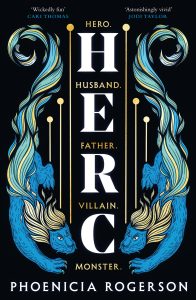
Phoenicia Rogerson is a London-based writer with a rather less checkered past than Hercules. Her debut novel, Herc, is the result of a lifelong infatuation with Greek mythology, and she is greatly enjoying being able to claim her book purchases are for work. We caught up with her to find out more.

STARBURST: How would you describe HERC to someone who doesn’t know much about mythology?

Phoenicia Rogerson: Herc is the story of what it would be like to have a superhero as your neighbour if you lived in ancient Greece and the superhero has no impulse control.

What was the hardest piece to write?

Iolaus’ chapter and then his speech after they meet Hippocoon were both really difficult for me. Without going into spoilers, I put off writing them for ages because I didn’t want the events in them to happen. I really love them now, but they hurt to write.

Apart from HERC, what’s your favourite version of Hercules in modern media?

I’d be lying if I said anything other than the Disney version!

Why Hercules?

It sounds facetious, but because he’s Hercules. He’s the first hero I could ever name, and there’s just so much about him in the Greek myths. Even now, there are stories about him that surprise me. The character just goes deeper and deeper, and I love unravelling that mystery.

Do you have other books planned in a similar vein?

Yes! Though the exact subject is still a secret for now…

Why have the Greek Myths lasted so long?
This answer could probably be a book by itself! There are a lot of factors, but what has always drawn me to them is how human everyone is, even the gods. They’re constantly making human mistakes, which means the myths are both comedy and tragedy, often all rolled up into one.

If you were writing the labours of Hercules to include one modern task, what would that task be?

Getting all the sand out of your house after you go to the beach. Even flooding the place wouldn’t have got Herc out of that one.

What character is the most fun to write?

I had so much fun with Eurystheus, especially in his letters with Augeas. In the first draft, those were about seventeen pages long because I didn’t want to stop writing them. After that, Iolaus is a close-run thing. I’m a big overthinker, whereas Iolaus just blurts things out sometimes, so I really enjoyed playing with that freedom.

Which character seriously needs to have a word with themselves?

Omphale, for sure. She’s very lonely, and she lies to herself so she doesn’t have to admit it.

What would you say the biggest influence on this book is?

I fell in love with Terry Pratchett’s work when I was a teenager. It was the first time I read books with that magical combination of humour, fantasy, and history, and I think knowing that it’s possibly influenced me a lot.

Which writers inspire you?

Basically, anyone who writes and has small children. I don’t know how they do it.

What tropes do you personally avoid the most?

I don’t think about tropes too much when I’m drafting, which means anything I say here is inevitably going to show up in the book, but I find any problem that could be solved by two people having an honest conversation super stressful to read. Now that I think about it, exactly that situation happens in Herc…

Is it easier to write queer fiction these days?

Herc is my debut, so I can’t really talk about how it’s been for anyone else. What I can say is that I’ve had a really lovely experience with people’s reactions to the queer elements in Herc. It’s something I worried about a lot when I was writing and querying, that there would be clap-back about the idea of a queer Hercules, but I’ve experienced some incredible support and enthusiasm about it. I’m really thankful for everyone before me who’s made that the landscape I’m working in today.

If we like this book, what other books do you recommend?

This runs the risk of just being a list of books I love! In the vein of mythology and retellings, I’d say Joanne Harris’ Gospel of Loki, Natalie Haynes’ Stone Blind, and Luna McNamara’s Psyche and Eros. More broadly, anything by Becky Chambers.

HERC comes out August 31st 2023, and can be pre-ordered now.

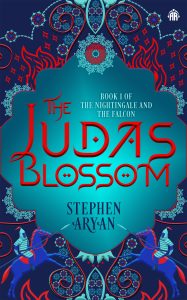
Stephen Aryan | THE JUDAS BLOSSOM

Stephen Aryan - THE JUDAS BLOSSOM

by Ed Fortune

Stephen Aryan is an award-winning fantasy author whose work includes the Quest for Heroes duology and the Age of Darkness and Age of Dread trilogies. We caught up with him to find out more about his new book, The Judas Blossom…

STARBURST: How would you pitch this book to someone who’s only read A Song of Ice and Fire?

Stephen Aryan: I would say that The Judas Blossom is similar, but only up to a point. It also has factions fighting for control, and there’s lots of politics, intrigue, espionage and battles. But the story is set on Earth, not a made-up world, and there are no dragons or direwolves. There is a fantastical element, but it’s not the focus of the story. This is about the expansion of the Mongol Empire as they attempt to conquer the whole world.

Why epic fantasy?
Fantasy is my favourite genre to read, so it was a natural fit for me to write it as well. Fantasy allows the author to tell any kind of story they want. It is an umbrella, and as long as a story contains certain elements, it will still be regarded as fantasy. I’ve written fantasy novels that were actually war stories, crime, horror, and supernatural.

Why multiple perspectives?
For this particular story, there were a lot of different aspects of the conflict that I wanted to explore. I’m telling the story from the perspective of both the conquerors and the people they are conquering. So, it would have been extremely limiting to do it from one point of view.

What is it about the Mongol Empire that fascinated us so?

I’m not particularly fascinated by them. Generally, I think any Empire that attempts to rule the whole world is an intriguing concept. Be it the Mongols, the Romans, or someone else. The idea of unifying every single country on every continent is both terrifying and intriguing. If, somehow, it were to happen (it won’t), what could the whole human race achieve if we were all moving in the same direction?

How sharply does this tale depart from history?

It doesn’t depart from it very much at all. All of the main events are real. Some of the characters are based on real people, but some are fictional. Some of the organisations and groups in the story are real. Some are not. Most of the time, I was dancing between the raindrops, and where there was a gap, I had more room to invent. The best example is Princess Kokochin. According to history, she came to Persia to marry a Khan, and three years later, she was dead. Not a lot is known about her. So there’s a big question mark, and that made me curious and intrigued. It also allowed me to create whatever I wanted.

How different is this book from your other work?

It’s very different because it’s set in 13th-century Persia, and this is my first time writing historical fantasy. Also, I’ve done big bombastic magic before [see the 6 Mage books], and The Judas Blossom is not that. There is something other, something fantastical, but it is only one facet of the story. It will not take over and become the whole of the story, as that would make it pure fantasy and not historical fantasy. No matter how much I change, I still want to make the story adhere to history, up to a certain point at least. So, you won’t suddenly see dragons in this series.

What character is the most fun to write?

That’s really difficult to answer. The most fun, or the most interesting character, is the one I’m working on right now for book 3. I have to find a way to relate and connect to all of them. I have to care about all of them as well so that I can make them feel as real as possible for the reader. That way, even if the audience doesn’t like a character, hopefully, they can understand their motives.

What was the hardest part to write?

Writing this whole book has been the biggest challenge of my writing career to date. Mixing fact and fiction together in a way that is hopefully seamless was the hardest thing. If someone is not familiar with this period of history, or even this part of the world, I don’t want them to be able to work out what I made up and what really happened. Writing a traditional fantasy novel requires a lot of imagination. This series required a lot of research because I can’t just invent some aspects of the story to make it fit.

Is it suitable for the squeamish?

Not really. The 13th century was an extremely turbulent period of history, with a lot of different factions fighting for power. There were a lot of violent conflicts, and the central core of the story in The Judas Blossom is about the Mongols attempting to create an empire that covers the whole world. So that involves a lot of destruction, sieges, politicking and back-stabbing.

What would you say the biggest influence on this book is?

The main tentpole events of the book are all historically accurate, up to a point at least. I changed some details to make the story flow in a more satisfying way for readers. So, history is the biggest influence on The Judas Blossom. While some people may be familiar with the Mongols, most stories focus on other parts of the world or other characters such as Kublai Khan. I wanted to set the story in the Ilkhanate, and more specifically, Persia, as most people do not know very much about the country and its history, which spans thousands of years. I also wanted to write about this part of the world because of my Persian heritage. Writing The Judas Blossom gave me a great excuse to do lots of research and add to my existing knowledge.

Which writers inspire you?

My early influences include Terry Brooks, David Eddings, Margaret Weis and Tracy Hickman, Ursula Le Guin, Tolkien, C.S Lewis, Frank Herbert, Stephen King, Dean Koontz, David Gemmell, Jim Butcher, Tad Williams and Robin Hobb. The list is long and gets longer all the time.

If we like this book, what other books do you recommend?

All of my other novels. There are eight of them. That should keep readers busy for a while as it will be a year until the second novel in The Nightingale and the Falcon trilogy is published in July 2024.

You can purchase The Judas Blossom here.
RUTHERFORD by Luxtress [Video Premiere + Q&A]

by Nick Spacek

Troma Entertainment alumnus Dylan Greenberg recently directed a sci-fi-themed video about the Rutherford Radium experiment for the artist Luxtress, an electro-pop artist who writes unorthodox but catchy pop songs about technology and late-stage capitalism. It’s the perfect mix of dance music and weird, low-budget sci-fi, and we’re proud to premiere it here, alongside a Q&A with both the artist and director…

STARBURST: Your video for “Haldol” had horror elements, much as the video for “Rutherford” has sci-fi elements. What’s the appeal of genre films for visuals?

Luxtress: I’m a huge horror and sci-fi film nerd. I think because of that I just naturally go in that direction with video. I think it’s sort of a gesture of appreciation for these genres and a way to make my own mini-film as well.

This track is way more poppy than anything you’ve done thus far. How’d you come to this sound?

Luxtress: I love music and playing around with different genres and sounds. I switch it up a lot to keep writing interesting and challenging for myself. I’ve written a lot of music over the years in various bands, most of which isn’t online. I decided a few years ago that as a solo artist I’d write and record whatever I felt like and not worry about a consistent sound.

How much of the concept for this video was yours, and how much was Dylan’s?

Luxtress: I remember I wanted a mad science lab vibe. The song was inspired by a certain scientist, among other things, so I explained this to Dylan who then came up with a lot of great ideas and went from there.
Why did you choose “Rutherford” as your next single?

Luxtress: I think it’s a fun song and I also thought it would make a great sci-fi-themed music video, which interested me. I was talking to Dylan about making a video for one of my unreleased songs a while back, and “Rutherford” seemed like the most logical and fun choice for us to base a video on.
How’d you come to work with Luxtress?

Dylan Greenberg: We met through the incredible Coney Island USA event Music of Curiosities when we both played a festival opening for The God Bombs. As solo music performers, we both like to make irreverent pop songs about obscure historical figures and inventors, so it was one of those odd, perfect coincidences that we met. I double as both a songwriter and a filmmaker so I was really excited when I got to work with Luxtress, who was very open to my bringing the sense of movement and performance I have from my own experience into this video. I definitely feel like both of us have very unique visions that blend well together.

What did your time with Troma bring to this video?

Dylan Greenberg: Troma taught me how to make a lot with a little, and certainly in the music video world that’s important. Unless you have a multi-million dollar budget, using your imagination is very important, and thankfully Luxtress and I were able to stretch our minds to turn a few props, some creative lighting and cinematography into an epic, dystopian story.

I definitely also think the concepts of radiation, poisoning and environmental pollution that I incorporated into the story were inspired by Troma. When one really pays attention to a Troma film, beneath the absurdist exterior is often a very profound message about the environment and the dangers of corporate irresponsibility at the expense of human life.

I was always struck by the disastrous health effects of radium being sold to people as, among many things, medicine, and was immediately drawn to this song when Luxtress brilliantly opens the lyrical story with this same concept.

Where was this shot?

Dylan Greenberg: The lab scenes were shot at my friend Kat Green’s studio! Kat is basically a mad scientist in real life, so she had a lot of these amazing props that worked great to create our surreal laboratory! For the factory scenes, we shot in Highbury Pub, which was generously opened up to us by my friend Adam Torkel! I realized that a bar counter works fantastic as a substitute for a conveyer belt [laughs], so with some clever use of backdrops, fog and good old-fashioned acting, a pub became a turn-of-century radium factory!

Find more music by LUXTRESS on Spotify, Apple Music, and Soundcloud

The Frightful Faces of Fear: 7 Terrifying Clowns That Still Haunt Our Nightmares

7 killer clowns

by Vicky Lawrence

Clowns, we all know them. Some love them. Some hate them. Some are so utterly terrified by them that the simple thought of grease paint sends shivers down their spines. But we all know about them. What some of you don’t know is that there is a week of celebration for everything clown-related in the first week of August – World Clown Week. As a tribute to the first recognized group of organised clowns, National Clown Week was written into law by President Richard Nixon on August 2nd, 1971, as a thank you to clowns for ‘creating the laughter of children and the sudden delight of a lonely man’. This grew from a national celebration in the US into a global celebration for all things clown. However, the visual portrayal of clowns has taken a swift turn away from their jolliness; they are now portrayed as terrifying, unnerving and even murderous. Even with the capitalisation of Ronald McDonald as the mascot for Mcdonald’s, the killer clown trope is very much alive and has caused mass fear, thanks to the likes of killer clown epidemics of 2016 and the serial killer John Wayne Gacy. And let’s be frank, we all know someone who is scared of clowns.

But why are clowns viewed as so terrifying?
Clowns aren’t inherently evil; they were there to bring joy and entertain; however, horror enjoys the power of the unknown and subverts the idea of what is beneath the surface. Clowns with their oversized costumes, their grease-painted faces and oversized shoes are the pinnacle of the uncanny valley – with the audience not knowing what is underneath the mask, true fear finds a home in the characters of clowns. They serve as a memory of innocence, with clowns being a staple part of children’s birthday parties, where they are to be ridiculed – Directors have used this and twisted it to bring true fear to the plate. What is worse than realising that something you used to believe in was a fun joke and entertaining that is now the epitome of pure fear with a chance of bloody murder?

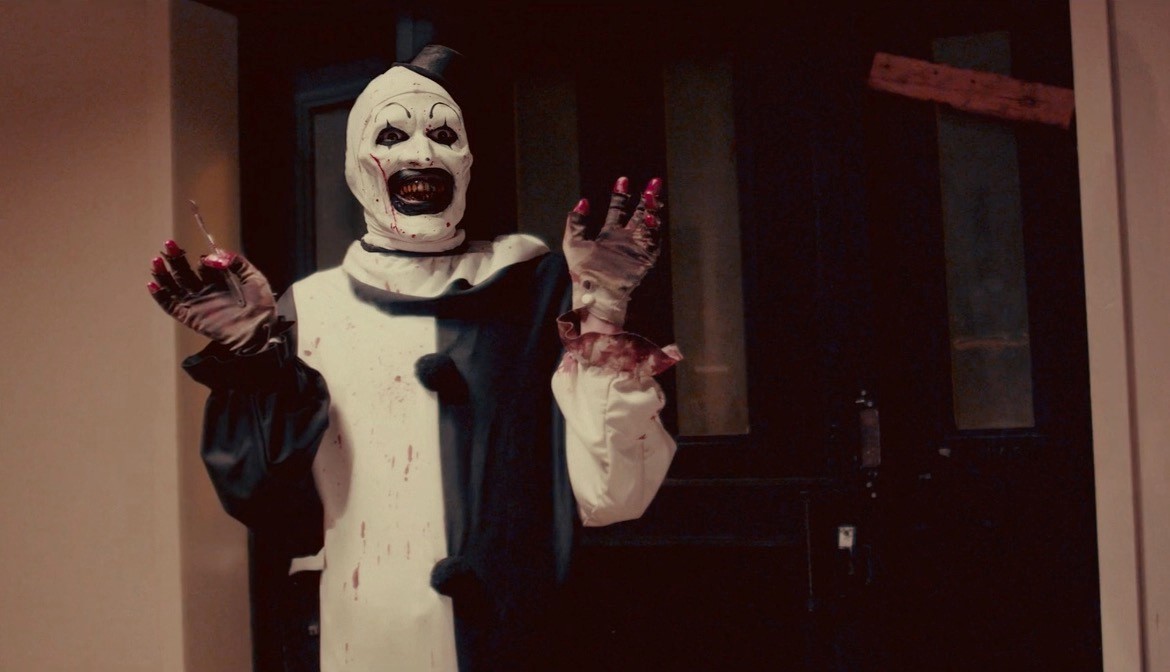
Clowns provide a useful template to stick in people’s minds; they are visually striking and stand for all of the aforementioned things. With the popularity of films like ‘IT’ and ‘Terrifier’, it is very clear that killer clowns aren’t going anywhere soon. So with that in mind, we felt that the best way to celebrate World Clown Week was to count down the most iconic clowns in horror, with one clown for each day of the week.

Without further ado, introducing the killer clowns that haunt your dreams…

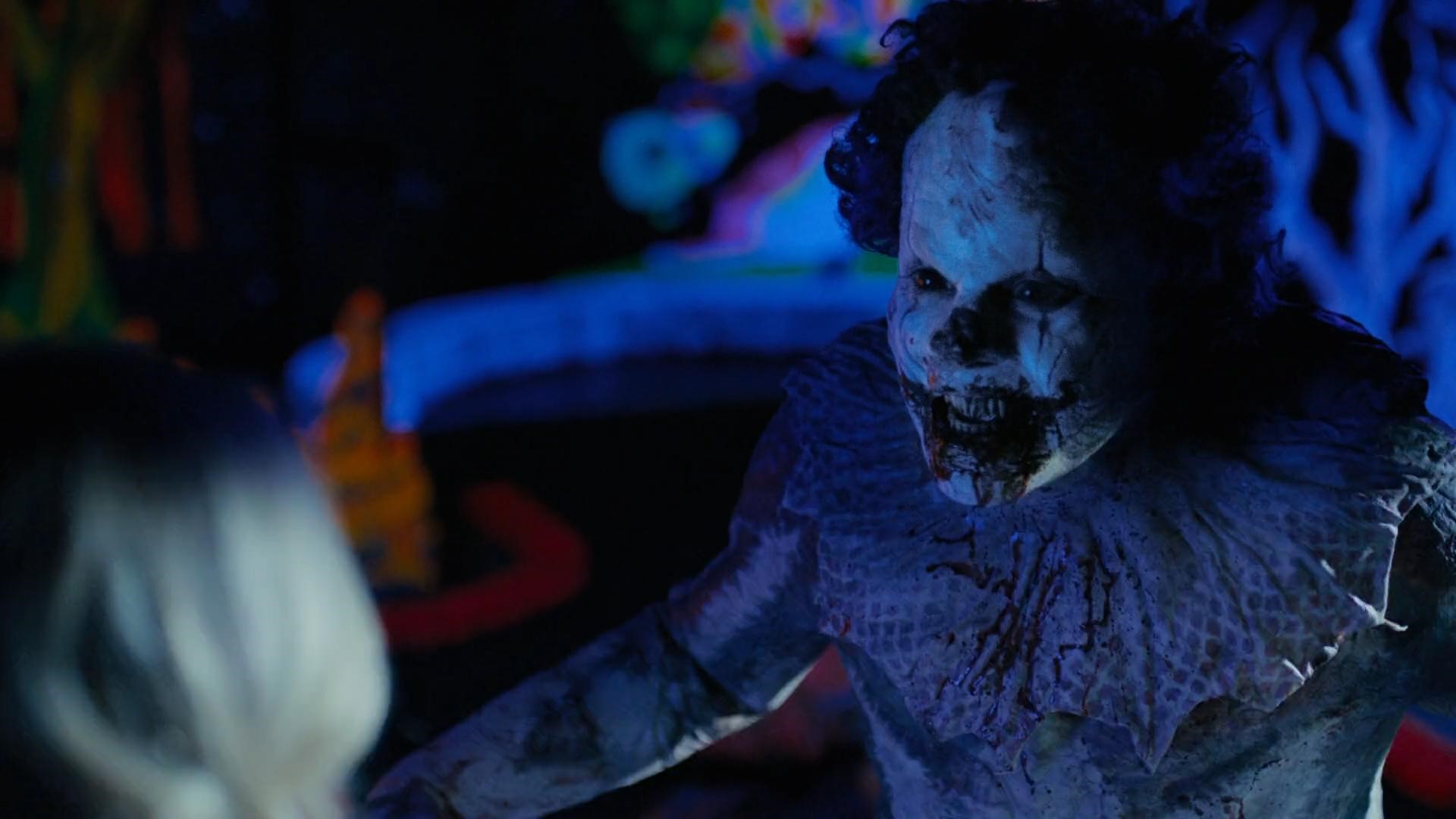
7) The Clöyne – Clown (2014)

Clown (2014)’  is about a father trying to make his son happy on his birthday when the party clown decides not to turn up. Finding an old clown costume in the basement, he takes on the role to make his son happy, but little does he know the evil that lurks behind the suit and the struggle there will be when he tries to take it off. This film is a supernatural slasher with body horror tropes; the Clöyne has a killer character design that will leave you haunted. Though not one of our most notable ones on the list, if you watch this film the image of Clöyne will be ingrained in your mind – he simply gets more ghastly. The Clöyne plays on those fears of innocence and the uncanny valley, a happy party clown that slowly turns into this monstrous, flesh-craving creature. The idea of the costume taking over creates the catalyst for this idea of the monster behind the mask and how clowns are, in fact, murderous and not to be trusted.

6) The Heads – 31 (2016)

To those of you who haven’t watched Rob Zombie’s ‘31’, you are missing out (I said what I said). ‘31’ is about 5 carnie workers who are captured to survive a murderous game of cat and mouse in a maze against these murderous clowns. The aim is to survive the 12 hours that the group are given, while an elite group places bets on their survival. When you think of clowns, you don’t initially think of the Heads (the murderers in the game). However, they are all twisted in their own little ways and very much do scream killer clowns. The Heads are very much different from one another, with 6 of them in total with different monikers, i.e. Doom Head (Richard Brake), Psycho Head (Lew Temple), Schizo Head (David Ury), etc. But they all bring to the audience this insight into the struggles of a psychotic killer clown’s state of mind, with Doom Head saying, ‘I’m not crazy; I’m in control!’. They very much portray this idea of a joyless and murderous clown; they aren’t camp or funny, they are utterly terrifying, further cemented by Doom Head saying, ‘Now, you may think you see a grease-painted performer sitting before you. But trust me – I’m not here to brighten your dismal day; I am here to end your miserable life’. They know they’re evil, they want blood and we don’t know what might be more terrifying than that.

5) Twisty – American Horror Story: Freak Show (2014)

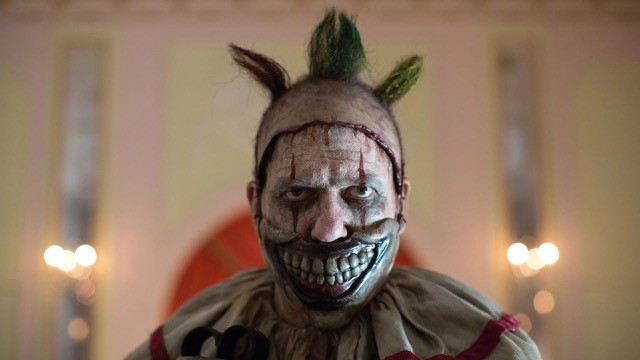
I’m sure people must’ve seen our boy in ‘American Horror Story: Freak Show’, but to those who don’t know Twisty, he is one of the “villains” in ‘AHS’ Freak Show’. A man who fell in love with clowning and simply wanted to entertain children, who had a vicious rumour made about him molesting children. Being forced to leave the circus and not finding work anywhere, a failed suicide attempt led to him donning his iconic half-mask to cover the damage caused. Mentioned in the series is his childhood, which lets the audience know he had been left with some form of brain damage due to being dropped at an early age, meaning his understanding of some social queues is quite limited. He begins to kidnap and murder people, as he doesn’t think he is doing anything wrong and simply wants to save the children from their strict parents. He fully believed that the children loved him but was fully oblivious to the fact that they were, in fact, terrified. It is clear to see that Twisty is a representation of the classic circus clown who simply wanted to entertain, but due to his limited social skills and the vindictive nature of the freaks, he turned evil/murderous. Though utterly terrifying, I have an incredible amount of love for Twisty – he is the product of a toxic environment, coupled with his trauma; he simply sees his actions as just. He says ‘I’m a good clown’ and he was (I will not hear otherwise). His image is ingrained in our minds, that classic costume, half-mask and grease paint, a worthy entry in our hall of fame.

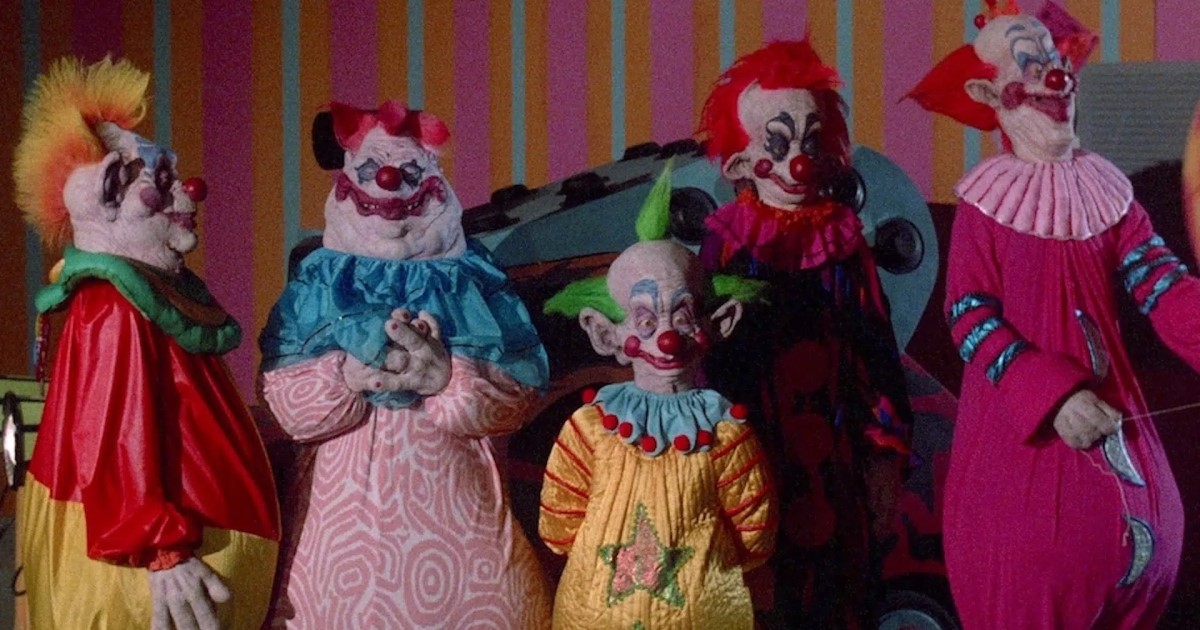
4) Killer Klowns from Outer Space – The Klowns (1988)

These aren’t any ordinary clowns. These are evil alien clowns. With their bright colours and exaggerated looks, not to mention their kooky weapons with the likes of popcorn/cotton candy guns, the Killer Klowns are, of course, the quintessential marriage of clown foolery and creepiness. This film is everything. It is cheesy and camp but still has that air of terror (even though it is hilarious throughout). The Killer Klowns bring the classic charm that circus clowns have always been connected with, with the public laughing at them and their shenanigans; however, it is clear that they have a murderous mindset with their hearts set on world domination. The Chiodo brothers can be thanked for, essentially, creating the fear of clowns in the ’80s by bringing these charismatic characters to the big screen. As we said, it is the perfect marriage of fun clownery and terror. With scenes like Shorty and his boxing gloves or Slim’s man-eating shadow puppetry, the Klowns really subvert this idea of clowns being fun with them being bloodthirsty alien lifeforms. ‘Killer Klowns from Outer Space’ is truly a horror-comedy but has very much solidified the killer clown trope in cinema. Not to mention their character design is one of the best I have ever seen – You can never miss these guys, and there is still the fear of being turned into a cotton candy cocoon to this day. If you have not seen the film, we won’t spoil anything for you. We will simply say treat yourself and watch it; it will forever be one of the best examples of killer clown tomfoolery.

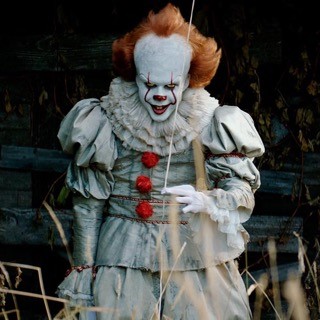
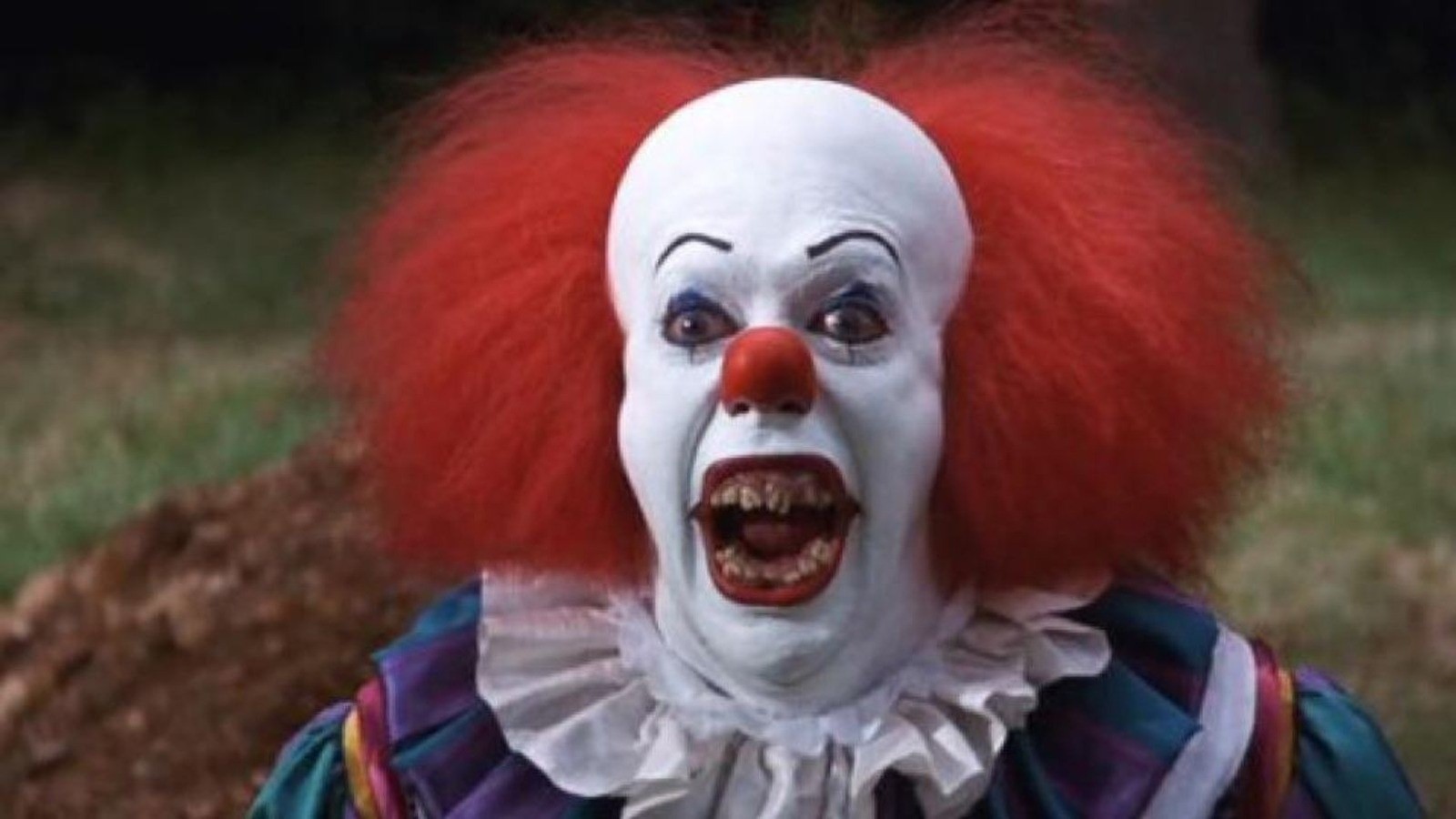
3) IT – Pennywise

What would a list of killer clowns be if it didn’t feature one of the icons, Pennywise? Everyone knows Pennywise. Whether it is from the original miniseries starring Tim Curry or the modern-day duo film with Bill Skarsgård, Pennywise’s look is as iconic as it gets. With the oversized costume, the classic white grease paint face and the red nose, he is the character that screams traditional clown. Pennywise is the epitome of the killer clown, with an insatiable hunger for children. He is what nightmares are made of. Taking this idea of the innocence of ‘Pennywise the dancing clown’, there to entertain children, and subverting it with the act of devouring you whole if you got too close. The president of the World Clown Association personally blamed Stephen King for his reputation of being a clown getting tainted, which simply shows the horror that Pennywise created amongst the public. While Tim Curry gives us this alluring camp charm in his rendition of Pennywise, we truly get the horror of him through Skarsgård’s rendition, with his jagged teeth and unnerving eyes – Pennywise will forever be notable thanks to them both.

2) House of 1000 Corpses/The Devil’s Rejects/3 from Hell – Captain Spaulding

‘What’s the matter, kid? Don’t ya like clowns?’ uttered the one and only Captain Spaulding, a serial killing clown with a love for fried chicken and vulgar insults. Played by the late and great Sid Haig, Spaulding had cemented himself in horror culture forever with his debut in Rob Zombie’s ‘House of 1000 Corpses’ as part of the Firefly family. Spaulding mixes vulgar comedy with murderous rage to come out as one of our top killer clowns. Thanks to his witty commentary and dialogue, he really does become a likeable character but can cut that short with the rage he has, allowing for the audience’s expectations to be played with. Visually, Spaulding is your classic state-fair clown, with his American flag clown suit and hat, his exaggerated grease paint makeup and his wide grin. He very much plays on the idea of the serial killer clowns that use their charm; he wants to entice the public to visit his gas station with fried chicken and a murder museum. Have your fun, check the museum but don’t anger him unless it might be the last piece of fried chicken you eat. Regardless of what film you catch Captain Spaulding in, you can always guarantee that he is going to steal the show.

1) Terrifier 1 + 2 – Art the Clown

Let’s be real. It was expected that I was going to crown Art as our most iconic horror clown, but even putting my personal love for Art aside, it’s clear that he is now reigning supreme, thanks to the insane amount of popularity ‘Terrifier 2’ received during its theatrical release. Art is our favourite supernatural silent clown that has an affinity for gnarly weapons and bloodshed; donning a mime-like costume, his tiny hat, a horn, oversized shoes, exaggerated makeup and, of course, the little black dot on his nose, he is the one that is the most different from the others on our list. Damien Leone’s (Director) character design of Art is still one of this writer’s favourites to this day; it’s nice to have a silent clown to really play into that unnerving feeling. Being a non-verbal taunter, Art makes up for it with his overly expressive movements and expressions, further cementing the unnerving and uncanny feeling you get while watching him. David Howard Thornton plays Art with such finesse and quality, as he draws inspiration from the likes of DC’s Joker and Charlie Chaplin to give his character more depth, not to mention his training as a mime, which is the reason for his polished performance. Leone has created a new slasher icon (something that has been lacking in the scene for a while) that will firmly be cemented in horror culture. No one can forget that wide grin and horn (or maybe the sunglasses?) – Art the Clown has shaken the world with his appearance in ‘Terrifier 2’ with Pennywise being dethroned as the modern-day killer clown. Art’s kills are on another level compared to anyone else on this list, and he strikes fear in most people (with some passing out in theatres with ‘Terrifier 2’s’ theatrical release). Our king of horror clowns, Art, will be remembered by the masses just like Jason Voorhees and Freddy Krueger have been; he is now part of the slasher icon family, and it is truly deserved.

Is this the end of the killer clown trope?

With the popularity of ‘Terrifier 2’ and the immense amount of merchandise for the likes of ‘IT’, we can see that the killer clown trope isn’t going away anytime soon. We know for a fact that we have a third ‘Terrifier’ film in the making, carrying on Art’s killer antics and the story of Sienna and Johnathan. We also have a “Meta Terrifier” film out this year called ‘Faceless After Dark’, following actress Jenna Kanell (Tara – Terrifier 1) as Bowie, who has found fame from a killer clown film and ends up having her own killer clown stalker. On top of this, we have a film adaptation of ‘Clown in a Cornfield’ of the book of the same name by Adam Cesare, about a killer clown mascot hellbent on killing the “rotten crop of kids” that live in Kettle Springs.

In short, it appears that we have a lot coming out in the next few years, with, of course, a multitude of low-budget clown flicks coming out as well. As mentioned before, clowns serve as a useful template for tangible terror that works on a global level, allowing directors to warp what was originally seen as entertainment into true horror. Clowns aren’t going anywhere. They’re here to stay forever and here to scare you half to death. From the first ever recognised ancestor of the modern clown, Joseph Grimaldi, to Art the Clown, history is full of clowns (killer or not), and it is something that serves as a cultural icon. So it is time to grab your grease paint, put on your best clown attire and celebrate our clown royalty.

Who is your favourite killer clown? And how will you be celebrating World Clown Week?