THE TELEPHEMERA YEARS: Pre-1965, part 2 – 1959-60

Johnny Staccato, 1959

Ah, telephemera… those shows whose stay with us was tantalisingly brief, snatched away before their time, and sometimes with good cause. They hit the schedules alongside established shows, hoping for a long run, but it’s not always to be, and for every Street Hawk there’s two Manimals. But here at STARBURST we celebrate their existence and mourn their departure, drilling down into the new season’s entertainment with equal opportunities square eyes… these are The Telephemera Years!

Pre-1965, part 2: 1959-60

There’s no concrete reason why The Telephemera Years begins in 1965, except for arbitrary reasons of available content and the more solid fixed point that is the great colour transference of that year, when it was announced that half of all network programming would be broadcast in colour from the Fall 1965 season. The years before we were gifted My Mother the Car, Lost in Space, and (eventually) Batman may look thinner in terms of genre programming but there were still those hardy souls doing pioneering work in the field of the strange and the fantastic.

So, while The Beverly Hillbillies, Bonanza, Gunsmoke, and Wagon Train dominated the ratings, less rustic thrills could still be found dotted across the schedules, right up to a 1964 Fall season which saw The Addams Family, Bewitched, Flipper, Gilligan’s Island, Jonny Quest, The Man from UNCLE, The Munsters, and Voyage to the Bottom of the Sea all make their TV debuts. So sit back, pop on your slippers and light up your pipe, have the little lady bring you a little treat, and see what the pre-1965 era has in store for us…

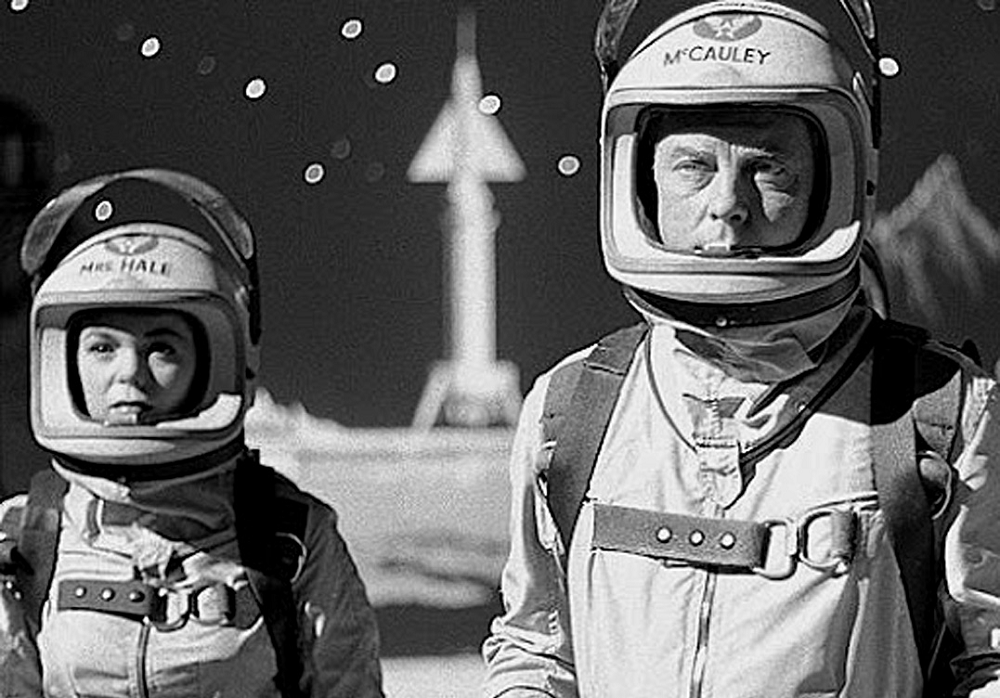
Men into Space (1959, CBS): Ziv Productions, who’d partnered with Ivan Tors to bring the syndicated Science Fiction Theatre into America’s living rooms in 1955, were back four years later with another tilt at the fantastic. Created by Lewis J Rachmill, best known for producing a series of Hopalong Cassidy Westerns but who also earned an Oscar nomination for Our Town in 9140, Men into Space was set at some unspecified point in the near future, just after man has landed on the Moon.

It’s always important to realise that these shows aired years before man actually went into space and so the efforts made by Rachmill and his team of writers to give some semblance of scientific accuracy to Colonel Edward McCauley’s exploration of space on behalf of the United States Air Force – NASA was only formed the year before and not widely publicly known – should be applauded. That’s not to say Men into Space’s vision of the future was in anyway prescient, and much of the staging was very late 1950s in design, but such retro-futuristic treats are few and far between now that we actually live in the (disappointing) future.
Men into Space, 1959

Starring as McCauley was William Lundigan, who had been a contracted talent at Universal, MGM, Warner Bros, and 20th Century Fox before moving into television. Unusually for a show with continuing storylines, McCauley was the only character that appeared in every episode, although Lundigan was ably backed by a reoccurring – if not regular – supporting cast, including former Howard Hughes ingénue Joyce Taylor and child actor Charles Herbert.

Thirty-eight episodes aired between September 1959 and September 1960, but the props used in the series had a much longer life, with miniature models turning up in episodes of The Outer Limits a few years later, and some recycled gimmicks were even used for a background movie shown during a scene in Midnight Cowboy. If Men into Space is remembered for anything – although one curious note is that in the UK it was shown in a children’s slot on the BBC later occupied by Doctor Who – it’s that it seemingly correctly predicted the development of space telescopes, orbital refuelling, and exo-species, although much of that can be put down to the writing team’s careful consideration of the science-fiction literature of the time.

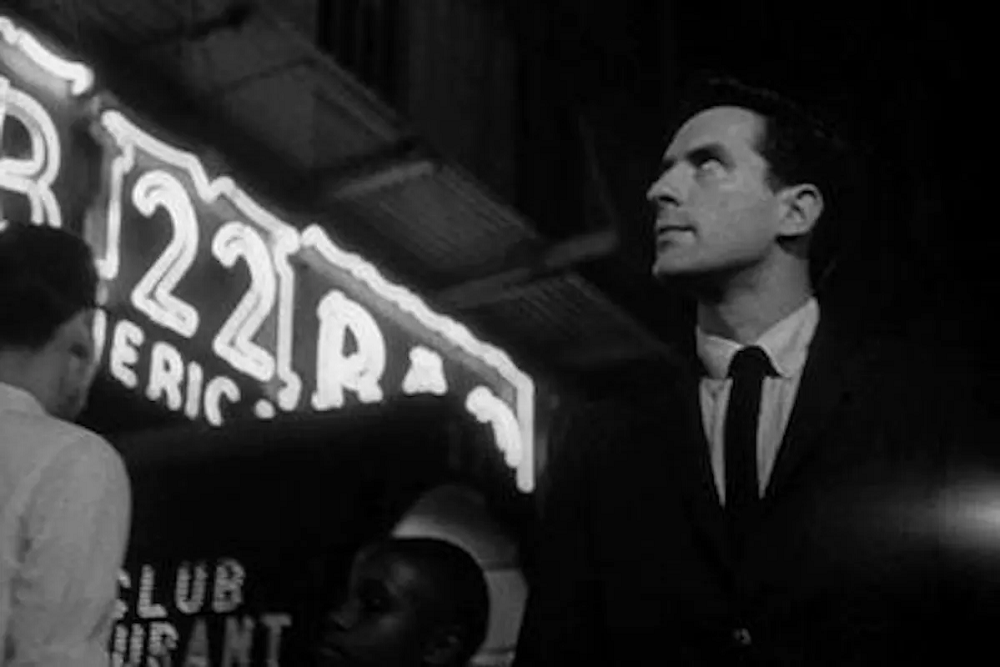
Johnny Staccato (1959, NBC): John Cassavetes needs no introduction to any serious student of film but even more casual adherents of the medium (and its small screen sibling) may have a passing familiarity with the man, albeit one sighted across the floor of a smoke-filled jazz club. Cassavetes was a man who took his acting extremely seriously – he succeeded in gaining a scholarship to the Method mecca Actors Studio, only to reject it on the grounds that Lee Strasberg had failed to notice he was improvising the whole time, rather than reading lines.

After spending his early career in the theatre and in guest roles on television, Cassavetes first big breaks came in The Night Holds Terror and Crime in the Streets, earning his first starring role in 1957’s Edge of the City. Briefly under contract to MGM, he threw himself into writing and directing his debut feature, Shadows, and two years away from acting dimmed his star in the eyes of Hollywood producers. With Shadows completed (and released to critical appraisal), he accepted an offer from NBC to star in a new crime drama set in the Greenwich Village jazz scene.
Johnny Staccato, 1959

In Johnny Staccato, Cassavetes played the eponymous private detective, a jazz pianist on the side, who defends the downtrodden denizens of the Beat Scene, facing down blackmailers, child traffickers, dishonest preachers, and sinister ventriloquists. Unhappy with the direction of the pilot episode, Cassavetes directed the second himself, eventually helming five of the Johnny Staccato’s twenty-seven episodes. Although his interjection set the series on the right path, the episodes Cassavetes directed himself are clearly a standard above and are rightly held in the same regard as his silver screen productions.

Cassavetes signed a five-year contract with NBC, but the network cancelled Johnny Staccato after a year, with wider audiences just not feeling the groove in the face of competition from more straightforward detective shows, rather than one which was brutally faithful to the scene it sought to portray. Instead, Cassavetes signed an acting deal with Paramount, taking the money he received from films such as The Killers and The Dirty Dozen as capital for a series of independent films that stretched through to 1986’s Big Trouble. Johnny Staccato later became a big hit on the BBC in the UK, and was repeated throughout the 1960s, 1970s, and 1980s, ensuring that Elmer Bernstein’s theme music triggers memories in several generations of curious TV viewers.

The Man and the Challenge (1959, NBC): The basic premise of The Man and the Challenge constantly put George Nader in danger and in that it does not differ from pretty much every action or adventure show ever produced. The unique selling point for this 1959 series – another Tors/Ziv collaboration – is that Nader’s Dr Glenn Barton volunteers to put in danger, and he does so for the betterment of science and the good old USA.

Barton works for the Institute of Human Factors, a government department devoted to testing the extreme of human endurance and the feasibility of man’s survival in both natural and artificial habitats. Of course, these well-designed and carefully planned experiments often go awry, forcing Barton and his team – often made up of special guest stars – to surpass their previous limits.
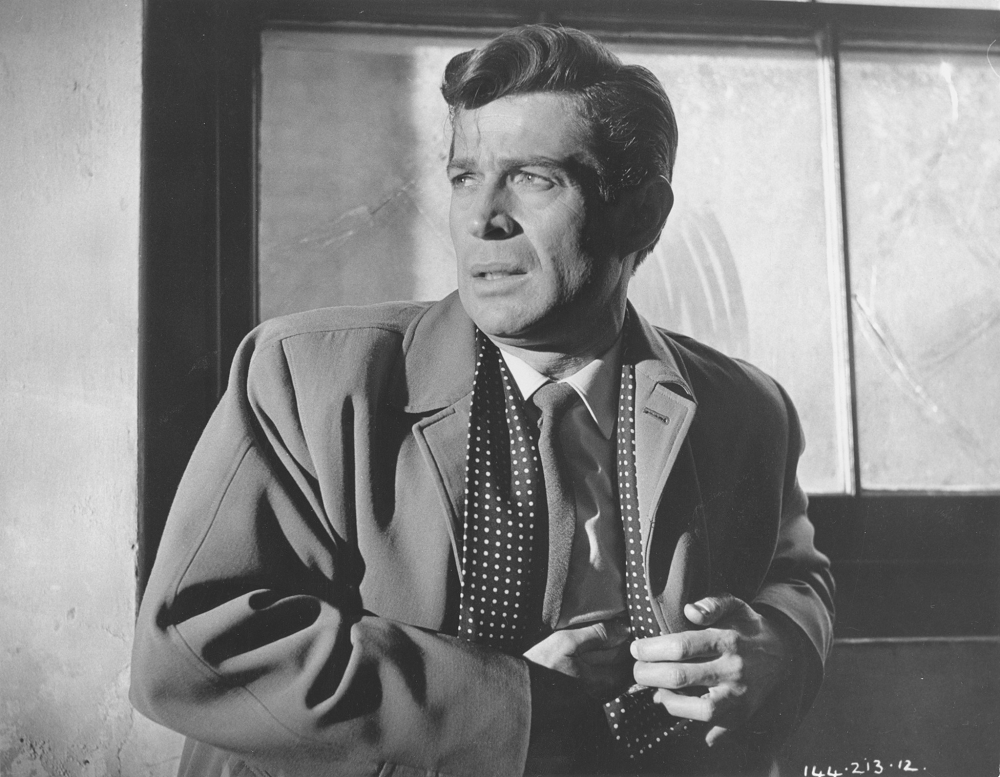
The Man and the Challenge, 1959

Over the course of thirty-six weekly episodes, Barton tests his team in the Arctic, deep underwater, and in a simulation of space, as well as helping those who have previously fallen victim to such high peril environments, and even finds time to test LSD on a firefighter. Guest stars including William Conrad, Myron Healey, and Fuzzy Knight queued up to fling themselves into peril, but the show endured even tough conditions in the schedule, going up against both Leave it to Beaver and Wanted: Dead or Alive.

NBC pulled the plug in June 1960, with re-runs airing in its slot through to September, when Pat Garrett and Billy the Kid drama The Tall Man replaced it on the Fall 1960 TV schedule. The series has never been released on home video but there are episodes on YouTube if you want to explore life through the eyes of a human crash test dummy…

The Tab Hunter Show (1960, NBC): Paul Morgan is a twenty-nine-year-old cartoonist whose daily strip – Bachelor at Large – details his various amorous adventures in swinging Malibu, California. The strip’s popularity with fans allows Morgan a degree of latitude in his relationship with his editor, who is often exasperated that the cartoonist’s hectic social life gets in the way of hitting deadlines, with housekeeper Thelma also wagging her finger at the constant stream of women passing through Morgan’s bachelor pad.

That’s the set-up for The Tab Hunter Show, a half-hour sitcom which debuted on NBC in September 1960 and starred, well, Tab Hunter. A former US Coast Guard (who lied about his age to enlist) from New York City, Hunter – born Arthur Kelm – had been given his stage name by agent Henry Willson, who specialised in hunky male actors and soon had Hunter making his name in a series of smouldering romantic adventures, including 1952’s Island of Desire and breakthrough wartime weepie Battle Cry. Newspaper reports of his scandalous private life (sold by Willson to keep stories about Rock Hudson’s sexuality out of the papers) only added to his appeal and it is reported that he received over fifty-thousand Valentines from women and girls in 1956. He would come out as a gay man in 2005.
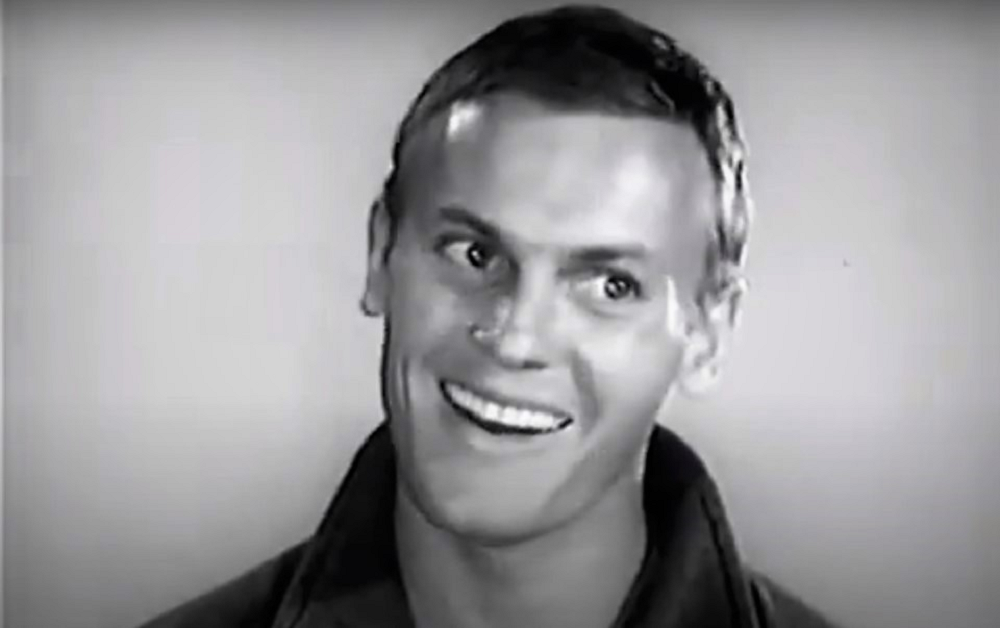
The Tab Hunter Show, 1960

Despite starring in the hit musical Damn Yankees, Hunter missed out on the role of Tony in West Side Story, prompting him to switch his focus to television, with NBC signing him up for his own show. The gentle, womanising humour of The Tab Hunter Show was part of NBC’s response to accusations that their shows were too violent, a four-hour Sunday night block of family-friendly entertainment which also included The Shirley Temple Show and National Velvet.

Although Hunter was accused of assaulting his dog by a neighbour shortly before its scheduled debut, The Tab Hunter Show premiered as planned on September 18th to mediocre reviews and moderate ratings. Among the women cartoonist Morgan cast his eye over were Mary Tyler-Moore, Elizabeth Montgomery, Gena Rowlands, and Tuesday Weld, but a certain section of the show’s fandom were no doubt drawn by Morgan’s stripwork, ghosted by Zeke Zekeley (famous, ironically, for ghosting another strip, George McManus’s Bringing Up Father). After just one season, NBC cancelled The Tab Hunter Show and the actor returned to the movies, starring opposite a string of beautiful women into the mid-1970s.

Next time on The Telephemera Years: We’re going way out to meet Cain, the Colonel, Dickens, and Fenster…

Check out our other Telephemera articles:

The Telephemera Years: pre-1965 (part 1)

The Telephemera Years: 1966 (part 1, 2, 3, 4)

The Telephemera Years: 1967 (part 1, 2, 3, 4)

The Telephemera Years: 1968 (part 1, 2, 3, 4)

The Telephemera Years: 1969 (part 1, 2, 3, 4)

The Telephemera Years: 1971 (part 1, 2, 3, 4)

The Telephemera Years: 1973 (part 1, 2, 3, 4)

The Telephemera Years: 1975 (part 1, 2, 3, 4)

The Telephemera Years: 1977 (part 1, 2, 3, 4)

The Telephemera Years: 1978 (part 1, 2, 3, 4)

The Telephemera Years: 1980 (part 12, 3, 4)

The Telephemera Years: 1982 (part 1, 2, 3, 4)

The Telephemera Years: 1984 (part 1, 2, 3, 4)

The Telephemera Years: 1986 (part 1, 2, 3, 4)

The Telephemera Years: 1987 (part 1, 2, 3, 4)

The Telephemera Years: 1989 (part 1, 2, 3, 4)

The Telephemera Years: 1990 (part 1, 2, 3, 4)

The Telephemera Years: 1992 (part 1, 2, 3, 4)

The Telephemera Years: 1995 (part 12, 3, 4)

The Telephemera Years: 1997 (part 1, 2, 3, 4)

The Telephemera Years: 1998 (part 1, 2, 3, 4)

The Telephemera Years: 2000 (part 1, 2, 3, 4)

The Telephemera Years: 2003 (part 1, 2, 3, 4)

The Telephemera Years: 2005 (part 1, 2, 3, 4)

The Telephemera Years: 2006 (part 1, 2, 3, 4)

The Telephemera Years: 2008 (part 1, 23, 4)

Titans of Telephemera: Irwin Allen

Titans of Telephemera: Stephen J Cannell (part 1, 2, 3, 4)

Titans of Telephemera: DIC (part 1, 2)

Titans of Telephemera: Hanna-Barbera (part 1, 2, 3, 4, 5)

Titans of Telephemera: Kenneth Johnson

Titans of Telephemera: Sid & Marty Krofft

Titans of Telephemera: Glen A Larson (part 1, 2, 3, 4)

Titans of Telephemera: Quinn Martin (part 1, 2)

Titans of Telephemera: Ruby-Spears

Yuval Adler | SYMPATHY FOR THE DEVIL

Yuval Adler | SYMPATHY FOR THE DEVIL

by Andrew Dex

When a character known as The Driver (Joel Kinnaman) attempts to park at the hospital for his pregnant partner, things quickly take a dark turn as a mysterious person, known only as The Passenger (Nicolas Cage) enters the back seat of his car with a weapon. Sympathy for the Devil sees The Driver being commanded around Las Vegas and beyond, and with a great dynamic between the two leads, we get an unpredictable watch! STARBURST talks with Sympathy for the Devil director Yuval Adler (The Secrets We Keep/Bethlehem) to find out how he got involved with the movie, what the main leads were like to work with, and how he went about capturing a tone that lives in transit…

STARBURST: Can you tell us about how you first got involved with Sympathy for the Devil and what it was like to work with its writer Luke Paradise?

Yuval Adler: It’s a strange story how this film came together. What happened was, after my first film, Bethlehem, came out like ten years ago, I had this moment in Hollywood where you read ten thousand scripts, but a lot of them were horrible. However, I did read two great scripts, Sympathy for the Devil, and another horror film. I pitched myself for both, I did a lot of work, but I didn’t get both of them because they’re not like Bethlehem, so I didn’t get them, that’s how it works. With Sympathy for the Devil, I remembered the script, and two–three years later, I was wondering if it got made. I looked on IMDb, and it was still not made. So I emailed the producer and became friendly with them, and they said that they were still working on it, it’s here, it’s there, this guy is attached, that guy is attached, it’s in development hell. Three years later, the same thing. Then the third time I asked, probably in 2021, they said that they lost the option, it all fell apart and went back to the writer. So I was like, “Really, interesting!”

So, I contacted Luke directly, and I said, “Look, I’m a director. You tried working with producers, they want to make the film, but there are also money constraints that I don’t have. I’ll make it for no money” I sold myself, and I got into it through my scare money. So at the end of 2021 or the beginning of 2022, I showed it to Alex Lebovici through my manager, who immediately loved it, and we decided to put it together. This can take many years, we were told Joel was available who I worked with, and Joel knew me, and he said “Let me read it” and he suddenly wanted to do it, and he had availability in August, and then Nic was available. It came together incredibly fast. Like a fairytale, it can sometimes take 10-20 years, but with this one, once I got it, it suddenly came together in a couple of months.

I worked with Luke on it; I’m a writer – that’s basically what I do – I get up in the morning and write, so I’m very sympathetic to writers, and I always keep them in the picture, and he was not so used to it, because with writers, sometimes once they get your script, they don’t care about you. I would send him stuff and say, “What do you think? Let’s do this?” and he was like, “I don’t know, but thank you for asking me!”

What do you like so much about working with Joel Kinnaman, and what did you want to see from The Driver?

With Joel, it’s a funny story because Joel came to The Secrets We Keep, and on that, we didn’t get along,  we had clashes on the set. To the point that in the middle of shooting, we had to go and have a coffee and straighten things up. Otherwise, we were in trouble. It’s funny because after that, we actually became friends, and we started to look for stuff to do together. So this film came, and he was on the top of our list when it came to who we wanted to offer The Driver role to. I could go to him directly and say it to him, but it came from the agent who told us about his availability in August. I already knew Joel, and I already had a rapport with him. My only worry was that Joel is kind of a strong character like he has such charisma, I didn’t want The Driver to feel like any way from somebody from The Suicide Squad. I wanted him to be like a substitute teacher, like a guy who disappears into it. It could be somebody that like Paul Giamatti would play, but Joel did it, he disappeared into this role, with his mannerisms, the way he was holding his body, everything. And then it kind of gives him the opportunity to make these big changes at the end and throughout the film. So that was the challenge for me, to have Joel kind of disappear into this very mundane, the existence of this very, kind of unremarkable guy. The one that we meet in the beginning.

Nicolas Cage is well-known for his energetic performances. How fun was it to work on an equally crazy character within your own movie, and what did he bring?

It was great; he immediately connected to the character of The Passenger. Our thought was that this character goes through a few phases, it’s much more thrillery and terrifying in the beginning, and he then becomes more of a Joker guy. He is terrifying, but he is funny, and then later on, there’s much more of an emotional thing going, but in a way, this transition between the three things and letting him go, in the sense that we already had a bunch of moments with dark humour, but to add to the humour, to push. With Nic, what would happen is that a lot of times, either we added stuff in rehearsal, and he comes up with tons of ideas all of the time, like a volcano, “Let’s try this, let’s say this” etc. Or on the set, you just don’t say cut, I learned that, I didn’t say cut, and he would go on, he would just try things. I would be behind the monitor just cracking up, he would say something and give you a look to confirm if it’s good, and I’d be like, “Yes, more!” and he would just go and do stuff that was funny. You would sit there, as his first audience in a way, just sitting there and reacting behind a monitor. So yeah, it was quite an experience. A lot of those funny moments were created on the set through improvisation and through his brilliant process of going off on his tangents.

And can you tell us about the filming process, especially when you captured those scenes in the car? How hard was that to shoot as a director and bring to life?

It’s a challenge because it’s a new technology, LED Volume technology, with all of those wrap-around screens of LED. It took us time to figure out how to work this. We were all new to it; even the studio that hosted us was new to it. We had 35 minutes in the car, which is a lot, and how do you connect what you see outside in the world with what you project in the studio and what you see with the car outside in the world? So we had to charter the whole drive, and then shoot plates for the whole drive, you know, with the car with eight cameras around, and then project it when the actors are inside, and then take a real car, drive outside, make all of the stuff that you see outside, the whole thing has to match. That was a huge technological challenge. It looks amazing compared to a blue screen. It’s all of these reflections and lights. Once you get it working, it allows you to shoot seven or eight pages a day, which is insane. It’s so fast because they are sitting, and it’s all working. However, to get it to work was incredibly difficult.

Sympathy for the Devil is out now in the US and screens at Pigeon Shrine FrightFest on August 27th.

STARBURST’s Favourite Acts Returning to The Fringe 2023

Favourite Acts Returning to The Fringe 2023

by Ed Fortune

STARBURST is gearing up for 2023’s Edinburgh Fringe Festival, the world’s largest celebration of arts and culture, which runs from August 4th all the way to the 28th this year. There are over 3000 separate shows available, some completely new and bizarre, and others are familiar faces that always delight.

Let’s take a look at our ten recommended shows returning to Edinburgh Fringe.   

Buffy Revamped
Since its 2022 arrival at the Edinburgh, Buffy Revamped has been delighting Buffy fans across the UK. Comedian Brendan Murphy takes on the role of Spike, who, over the course of about an hour, recaps all 144 episodes of the cult TV show, Buffy The Vampire Slayer, using a variety of props, wigs, and silly voices. Very funny and a lovely evening out. It’s well worth checking out whilst it’s in Edinburgh this year. This sort of show is the reason why STARBURST readers come back time and again to The Fringe.


How to Live a Jellicle Life: Life Lessons from the 2019 Hit Movie Musical CATS
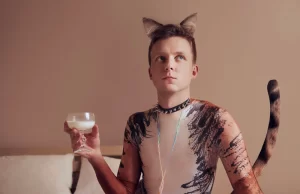
The Fringe is about unique experiences. The 2019 Hit Movie Musical CATS was certainly a unique experience, and How to Live a Jellicle Life is a unique take on this phenomenal Hollywood flop. It’s essentially a TED-style Talk on what went wrong with the film, presented by someone in West End musical CATS costume. Brilliantly funny and one for fans of movies. 

Jollyboat
Tommy and Ed Jolly are Jollyboat, two brothers who have wandered the Earth as performing musical pirates. Every single of their songs. Their unique blend of stand-up comedy, parody music, filking, and silliness runs from charming to utterly hilarious. Their songs tend to reference both pop music and all things geeky, so expect songs about Game of Thrones, Video Games, Batman, D&D, and much more. They have two shows this year; 10 Songs for Geeks and The Best of Jollyboat. Both are part of the PBH’s Free Fringe, which is ideal for budget-conscious fringe goers (though you’ll probably want to pick up some merch at the end.) 

robertson

The Dark Room
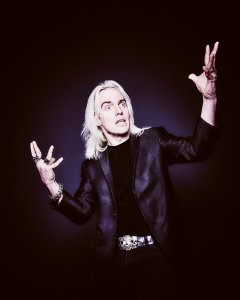
John Robertson’s The Dark Room is a rare thing; live improv with an international cult following. In this interactive show, John plays the role of The Guardian, an angry, shouty avatar that guides lucky audience members through a multiple-choice adventure. The task is simple; Find the Light Switch, find your family and then escape The Dark Room. It’s heavily inspired by ’80s-era text adventures and is a surreal and dark experience filled with endlessly quotable moments and very silly ideas. It’s also available in a Children’s Show format (John’s also a writer of books for kids), which is equally, if not more, anarchic. Unique and unforgettable.

Tom Crosbie Performing Nerd
Genius is a word that gets over-used these days, but in the case of Tom Crosbie, it absolutely applies. Tom is an entertainer who combines nerdy obsession with feats of mental fortitude, manual dexterity and charm. His previous show, Nerd’s Eye View, featured jaw-dropping Rubix Cube stunts and heart-warming wit, and he returns to Edinburgh with Actions Speak Louder Than Nerds. Expect new demonstrations of memory and skill wrapped up in some geeky loveliness. 

Any-Suggestions-Doctor_photo-by-steve-ullathorne-1

Any Suggestions Doctor?
Improv works best when they are lots of things for the comedians to riff on, and Doctor Who has been running for decades. Lewis Dunn and the Any Suggestions Doctor team embrace the absurdity of Doctor Who with as many arms as they can. Every show is different as it’s based on audience suggestions, with the crew changing roles every time. They are many themed improv shows at The Fringe every year, but this is certainly a highlight.

Stuntman_Photo Brian Hartley_5333_hi

Stuntman
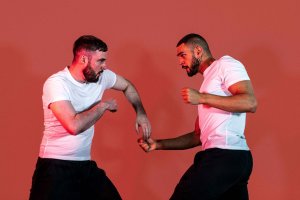
One of our favourite shows of last year’s fringe was Stuntman, a visually stunning blend of theatre and martial arts prowess. Many movie lovers take for granted the incredible feats of athleticism and violence that make such an important part of many action movies. Filled with eye-popping physical performances, Stuntman is a two-man show that explores both on and off-screen violence whilst being both tender and quite funny. Back for 2023’s Fringe. Catch it if you can.

The Man Who Thought He Knew Too Much
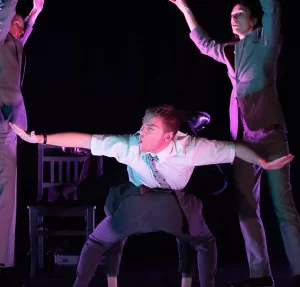
Speaking of physical theatre, The Man Who Thought He Knew Too Much returns to Edinburgh following last year’s sell-out show. Performed by the Lecoq-trained Voloz Collective, this is a Misson: Impossible-style Cold War thriller using minimal props. Every action scene is conveyed through dance-like movement. So a shoot-out on the roof of a speeding train is conveyed by the actors crawling across the stage (with added sound effects) and so on. It’s brilliantly done, combining clowning, dance and a love of action movies into one unique experience. 

Garry Starr: Greece Lightning
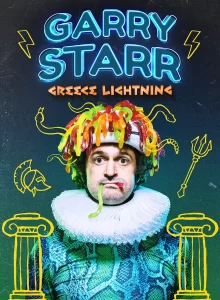
If clowning is your thing or just flat-out physical comedy, then we heartily recommend Garry Starr – Greece Lightning. This is a deeply silly show in which comedy genius and idiot, Garry Starr, attempts to save the world by explaining Greeky Myths. Badly. Hilariously. Featuring audience participation, the world’s cutest Cerberus, some comedy nudity and many, many puns, catch this show while you can.

007 Voices Of Bond
One of the things you should do during your busy fringe schedule is catch a concert. A change of pace is always welcome. 007 Voices of Bond brings classic Bond to Edinburgh, with some stellar and memorable performances of some of your favourite spy-fi tunes. Take the time to immerse yourself in a performance of some of the world’s best-known movie themes.

 Don’t forget to check out our Fringe Survival Guide.

Dan Collins – DUNE! THE MUSICAL

Dan Collins - DUNE! THE MUSICAL

by Ed Fortune

Dan Collins is a musician, storyteller, performer and lifelong fan of science fiction.  He’s also the genius behind DUNE! The Musical, which is coming to the Edinburgh Fringe this year following its excellent debut at this year’s CYMERA Festival, Scotland’s most exciting science fiction, fantasy and horror festival. We caught up with Dan to find out more about the show.

STARBURST: How would you pitch Dune! The Musical to someone who’s only heard of the movie?
Dan Collins: Dune! The Musical retells the story of the 1965 sci-fi epic by Frank Herbert. My show takes all the action and themes of the novel and distils them into one hour of musical storytelling. There are references to both David Lynch and Denis Villeneuve’s movies, and I even pay tribute to the Syfy channel miniseries – the best version, by the way -, but my show is not a parody. Make no mistake; you will laugh, but you may well cry too, it’s a challenging experience. Dune! The Musical features fifteen original songs that borrow from a range of influences and take the audience on a journey across the stars and deeper into themselves. It’s a trip!

Why a musical?
It started as a joke; all you have to do to make a musical is add an exclamation mark to a proper noun, for example, Oklahoma! and Oliver! I came up with the quip Dune! The Musical [accompanied by jazz hands] on a quiet afternoon whilst working a retail job, made me chuckle, so I wrote down some lyrics on a notepad. The song was daft and featured an interaction between the young protagonist Paul and his father, Duke Leto. It occurred to me that I could do a lot of exposition in a relatively brief piece without the info dump getting boring. Soon another song came to me, and another, and another. Before long, I had half a dozen songs that offered a basic form of the original idea. By this point, I had started reading the book a second time, taking notes as well as singing them.

How does one man with a guitar fit into the world of Dune?
In the show, I’ll be playing the role of Gurney Halleck; a fan-favourite character first introduced to readers as a troubadour-warrior. Gurney is a friend of the powerful Atreides family, who employ him for his unwavering loyalty and knife-fighting prowess but most of all for his singing and playing of the baliset, an instrument which fits the description of a Baroque Guitar. Incidentally, the baliset is first mentioned on page one! Thus far, Hollywood adaptations of Dune have presented Gurney Halleck as quite a stern figure like Patrick Stewart and Josh Brolin, but I read him as playful and funny, attributes he uses to deflect from the tragic past that haunts him. Gurney is present for much of the story of Dune, and in fact, the other characters in the novel frequently reference his in-universe musical works. I felt compelled to explore his perspective, and the more I played the more it worked.

Surely if you play with rhythm, you’ll attract the worm?
This was always a concern. The last thing we need is a sandworm showing up. Thankfully Scotland is damp enough to keep them away! They’re not awfully keen on water after all 😉

Why this show and why now?
There is an urgency to the creativity I experience; some things just have to be done. Simply put, the book spoke to me. Here is a story about facing fear, overcoming the odds and subverting expectations. Dune has inspired countless artists through the years by challenging them to wake up, question authority and think for themselves. I’d like to quote T.E. Lawrence, one of the real-world inspirations for the book;

“All men dream, but not equally. Those who dream by night in the dusty recesses of their minds wake up in the day to find it was vanity, but the dreamers of the day are dangerous men, for they may act their dreams with open eyes to make it possible.”

What is the appeal of the Edinburgh Fringe?
There’s nothing like it. I moved to Edinburgh in 2005, and at the age of 18 had never heard of the Edinburgh Fringe or festival. Over the years, I’ve got to know it as a busker, as a spectator and reviewer, and as a friend to actors, comedians and FOH. It’s always a blast! The city transforms for 3 weeks and becomes a fulcrum upon which the art world turns. The Edinburgh Fringe is a very open-minded festival, and over the years, I have seen some incredible performances in venues that range from castles to closets. Anything is possible at the Edinburgh Fringe!

Really, the entire book in one hour? How?
Yes, the whole book! In total, my show has just over 5000 words, including song lyrics. During the writing process, I had to make choices to omit certain subplots or scenes, as all adaptations do. There were some songs that didn’t make the final edit, even songs that I consider to be among my favourites. I had to be strict; unless they serve the plot, they have no place in the show! It was a challenge to work the story down into meaningful chunks without losing the essence. The secret to this feat lies in the magical ability of music to warp our perception of time and emotion.

Why theatre?  What does theatre bring to this story that other formats don’t?
Previous adaptations of Dune have tried to project the scale of Dune’s universe onto the silver screen with big effects, big stars and big budgets. Theatre is about bringing fire down from the mountain, taking the divine and making it human; it’s here at eye level that you and I can make a connection and share this story with all its pathos and absurdity. In the cinema, we sit back; my audience leans forward .

What other sci-fi stories do you really like?
I’m a long-time fan of the Hyperion cantos by Dan Simmons, particularly the first two books in the series. The scale of Simmons’ world-building and vision astounded me the first time I read it, and I enjoy the conclusion of the narrative so much that I’m currently listening to it again on audible. I also really like the classic sci-fi writer Arthur C. Clarke whose work straddles the scientific and the supernatural with expert precision; go read The Star.

There are thousands of shows at the fringe. Why should STARBURST readers seek this out?
If you’re a fan of Dune, you will love Dune! The Musical. It was written for you, and in fact, the more you know about the franchise, the more you’ll get from my show!

If you don’t know Dune that well, you will love Dune! The Musical. It was written to be accessible and enjoyable for everyone open to the experience!

Early audiences have loved the show, and after debuting it at the Cymera Science Fiction Festival, we’ve already been invited back next year. The songs will ring in your head for days, maybe weeks after and best of all; it’s part of the PBH Free Fringe, so you pay by donation.

Why wait for Villeneuve’s sequel? Come to Dune! The Musical and experience the story for yourself.

What was the hardest part to do?
I wrote the songs before the narration, and after settling on the tracklist, I started writing the speech that fills the gaps between the tunes. At this point, I was painfully aware of how much time remained to play with, and I calculated a words-per-minute goal to make sure all the key information was included in the allotted time. As they say, the value is in the edit, not the draft!

What’s your next project?
A little part of me wants to skip to book 4 of the Dune series, God Emperor of Dune, in the hope that James McAvoy will reprise his role as Leto II and join me on stage. I also like the idea of Cube! The Musical, but unfortunately, as far as I can tell, that film doesn’t have an oven-ready bard character for me to hijack. Whatever comes next, I’m open to the challenge, I feel I’ve learned so much with this project, and I can’t wait to see what’s around the corner!

Where can we see the show?
Dune! The Musical is playing from August 5th -27th – there are no shows on Monday and Tuesday, and Saturday 12th – at Slow Progress Records & Coffee at 53 Blackfriar’s Street. It’s right in the centre of Edinburgh, just off the Royal Mile, and the couple who run it are wonderful people!

Richard Vergez | BLOOD FEAST

Richard Vergez | BLOOD FEAST

by Nick Spacek

When Covid hit, many film festivals went virtual and have continued on in hybrid form over the last year or so as things have opened up. While that means you can check out films from the comfort of your own home, rather than queuing up outside a theatre and hoping for enough seats, the real treat of a genre festival isn’t just the cinema, but the various events which take place around them.

Panels, Q&As, performance pieces, and concerts are just a few of the things which make attending in person such a joy, to say nothing of riding in an elevator and discovering you’re standing next to one of your favourite actors. That’s why we wish we could hop a flight down to Fort Lauderdale and South Beach, Florida, for the ninth annual Popcorn Frights Film Festival, running August 10th – 20th.

While much of the fest’s viewing options will be offered virtually, worth making the trek is a 60th-anniversary screening of Herschell Gordon Lewis’ shot-in-Miami-Beach gore-fest masterpiece, Blood Feast, which will receive a one-night-only immersive presentation, thanks to a live original score performance by Miami artist Richard Vergez. We had to know how this came to be and what might come of it, so we spoke with Vergez about it.

His introduction to Lewis’ films came via Something Weird Video, says the musician…

“My buddy had a DVD compilation of all their trailers,” Vergez explains. “We used to have a Goth DJ night in Fort Lauderdale at this place called Roxanne’s and would play this stuff on the TVs in the bar. Since the volume on the TVs was turned off, whatever records we were spinning would kind of score the video imagery. Seeing some of the clips, there led me to seek out the original films, which in turn led me to Blood Feast.”

As to how this all came about?

“It was all Igor [Shteyrenberg, co-founder and co-director of Popcorn Frights]’s idea,” says Vergez. “He came to me with a few films to rescore, and Blood Feast is the one that stuck.”

Blood Feast does have an original score already present, so we were curious as to how one goes about rescoring a movie. We ask Vergez if it helped that, in this case, the original score was pretty minimal.

“I appreciate the fact that the score of the original is pretty minimal, with those rattling drums being the overall theme,” the musician continues, saying his aim in rescoring it will retain some of that minimal, pedestrian quality. “You won’t be hearing any epic arpeggios or crunchy beats. I like to keep the sound palette specific to that era, so expect some found percussion, twangy guitar, and campy organ sounds. It’s all about the atmosphere.”

And the atmosphere is definitely part of it because, as Vergez goes on to say that with all of his live scores, the structure is mainly improvised…

“So if it is performed again, it will be a different experience,” meaning this is a once-in-a-lifetime opportunity. Although, concludes Vergez, “If it goes over well, maybe Popcorn Frights will have me on again!”

Blood Feast screens at the Savor Cinema Fort Lauderdale on August 11th. You can book tickets here.

Jeff Richard | CULTS OF RUNEQUEST

Jeff Richard - CULTS OF RUNEQUEST

by Ed Fortune

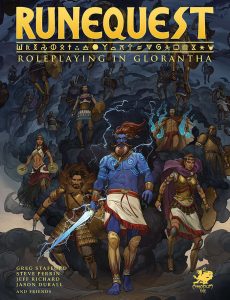
Jeff Richard is a Californian-born games designer who is also the Vice President and Creative Director for Chaosium. He is the lead author of the Guide to Glorantha, HeroQuest Glorantha, and RuneQuest: Roleplaying in Glorantha, as well as numerous other supplements and articles.  His latest books are  Cults of RuneQuest: The Lightbringers and Cults of RuneQuest: The Earth Goddess, both of which are keenly anticipated supplements to the classic RPG. We caught up with him to find out more…

STARBURST: What is Cults of Runequest?

The Cults of RuneQuest is a series of books detailing the mythology and the cults of the setting. Player characters join cults dedicated to a deity or hero – that’s how they get their magic! One’s cult is an important source of community, resources, and direction for most characters.

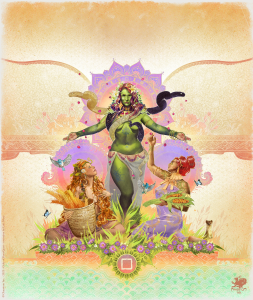
The first book released is the Prosopaedia – an encyclopedia of gods and heroes, followed shortly by the Lightbringers and the Earth Goddesses, which includes many of the most popular player character cults. After that comes a book of great personal interest for Greg Stafford and myself, the Mythology Book, which is an overview of the mythology of the setting. and in my opinion, one of the most unique things I have ever written or published. Then back to more cult books – The Lunar Way, Solar Gods, Darkness, Water, The Lords of Terror, The Horned Man and Spirits, and The Invisible God. There’s a lot there!

What does it add to the world of RuneQuest?
It greatly expands the setting and gives players far more options for magic, skills, and goals. Each cult can be equated to a Class (or even several) in D&D or a clan from Vampire the Masquerade. Each cult has its own understanding of the world, its own goals, its own place in society, etc.

Why is RuneQuest such a cult hit?

RuneQuest uses the Basic Roleplaying Game system – actually, it is the source of that rules system – just as Call of Cthulhu and Pendragon do.  It is both gritty and intuitive, using an easy-to-understand percentile system to determine success or failure. Combat is fast, exciting, visceral, and dangerous, which forces players to really think about the stakes involved. Characters have passions and Runes, which means every character is unique.

It encourages you to dive into the setting, its mythology and to make it yours. One moment you might be haggling with merchants over some bison and scraps of armour you managed to take, and the next moment, you are briefly wielding the power of a god. It is a game with one foot in the realm of gods and spirits and the other in the gritty (and often brutal) Bronze Age setting.

What makes Glorantha so different from all the other fantasy settings?

Glorantha is, in my opinion, the greatest fantasy setting, period. It is perhaps the only RPG that is built off the underpinnings of fantasy – mythology – and lets us explore myth while still having one foot in the gritty mortal world. It is a setting both broad and deep, and unlike most other fantasy settings, it is not derived from the Medieval West. It draws upon the ancient world, upon Gilgamesh, the Iliad and the Mahabharata, and upon Campbell, Leiber, and Zelazny, rather than the tropes of Tolkien and medieval Europe.

Why are TTRPGs so popular now?
I think the greater awareness of TTRPGs thanks to social media, actual play, and general popular culture has greatly changed the market for TTRPGs, but more importantly, I think TTRPGs are one of the few social pastimes where we all get to be active creators, rather than passive spectators and consumers of other peoples’ creations. They let us experience something that is not our own daily life – in a TTRPG, I can be a completely different person from that in daily life. And I think there is a great interest in both of those things, especially nowadays.

What was the most fun bit to do?
In the Cults series? For me, the most fun was actually the art process. I worked with several incredibly talented artists – Loic Muzy, Agathe Pite, Katrin Dirim, and Simeon Cogswell to put together the look and feel of these books. The art in these books looks utterly unlike anything in RPGs, and watching them bring my writing to life was incredible fun.

If I’ve been playing RuneQuest for decades, why do I need this book?

This is the long-promised take on all the cults you’ve been waiting for since Cults of Terror. Orlanth and all his sub-cults,  Ernalda, Babeester Gor, Eurmal, Maran Gor, Asrelia, Valind, Ygg – you name it, they are in there. Cults, sub-cults, associated deities, new Rune spells, myths, history, and so much more! You know you need these!

If I’m new to RuneQuest, what one piece of advice could you give me to make my first game more fun?

Start small. Start by learning the setting through play – and tie your character to a community such as a cult, a temple, a clan, or whatever. Your character will get involved in things great and small, and the setting will become yours.

And learn to negotiate or run away from many possible foes. If you try to fight everything in your way, you are going to end up dead. Although violence is always an option, there is always another way!

What’s next for RuneQuest?
Besides the Cults books, we’ve got a Guide to Dragon Pass, a GM book, a Sartar book, and a big campaign book on the way.

The excellent RuneQuest Starter Set can be found here, and you can find out more about the Cults series and RuneQuest in general here.

Noel Byrne | CASTING THE RUNES

casting the runes

by Ed Fortune

Noel Byrne is the co-artistic director and founder of Box Tale Soup, an inventive theatre company which combines classic literature and puppetry to bring fantastic shows to audiences. Founded in 2012 by Noel’s wife, Antonia, the company has a very strong and recognisable style. They are bringing the MR James ghost story Casting The Runes to the Edinburgh Fringe. We caught up with Noel to find out more.

STARBURST: How would you pitch Casting the Runes to someone new to the fringe?
Noel Byrne: It’s a classic ghost story, a supernatural thriller, but with a twist –  it features unique puppets alongside the actors, fantastic original music, and dance-like choreography with a transforming set. Don’t come alone, though – there are a few good scares too!

Why are we so fascinated with this sort of horror?
We like to be scared a little. We like something that gives us a thrill, and sets our heart racing and spine-tingling, but in a safe environment. So I think that’s a big part of it. You can watch or read a ghost story and get that sense of excitement, that fear, but all the while knowing you can close your eyes, shut the book if it gets too much! I also think there’s a fascination with the unknown, the possibility that there is something else out there that we don’t yet understand, and it’s fun to explore that in a good ghost story.

Why puppets?

As a company, we love working with puppets, and puppetry features in all our work in some form. Puppets are magical, instantly transportive, with an otherworldly quality that engages an audience’s imagination immediately. I love the fact that they allow us to show and do things that would otherwise be impossible on stage. For a ghost story, I think they’re perfect. Used in the right way,  puppets can seem unnerving and unnatural, and in a ghost story, where isolation is important, puppets can make an actor seem alone even when there are other characters onstage. I’m really proud of the puppets we’ve made for this show too, and I think our mysterious villain, Mr Karswell, is pretty intimidating!

What is it about MR James that keeps bringing us back?
Although the style is certainly of its time, his work is still very popular today, and there’s a good reason for that. He’s cited as an inspiration by so many of the horror writers who came after him, from  Lovecraft to Stephen King, so his influence runs right through the genre. When you read his stories, James’ gift for slowly, subtly building tension and creating this incredible atmosphere is immediately clear. Like any great ghost story, you can imagine people listening,  gathered around the fireside, silently drawing closer as the dread
increases. Some of the images he conjures really stick with you – his stories can haunt you, and that gives them a lasting appeal.

What does theatre bring to this story that other formats don’t?
Theatre is a great medium for a story like this because it gives you a  sense of presence and immediacy that you just don’t get from anything else – you’re there, and the story is unfolding live, right in front of you.  Are you safe in the audience? Perhaps, perhaps not… And the audience themselves add to the atmosphere – you can feel the tension growing in the room, hear the gasps or nervous laughter around you. Being there, in the same room as the action, sharing it with other people, that all heightens the experience of a story like Casting the Runes.

What makes the Edinburgh Fringe unique?
For starters, it’s the largest arts festival in the world by quite some margin, and if you’ve never been, I think it can be hard to imagine what that’s like. Venues everywhere, literally thousands of shows, some from all over the world. You could watch shows from 10 in the morning until 3am, and be constantly amazed by the breadth and variety of what you’ll find. If you’re performing or working there, it’s also great (if exhausting) that it goes on for the whole month. That length gives a rare chance for many shows to have a good run, really develop and grow, and it allows for word-of-mouth hits, unheard of shows that find an audience at the Fringe and take off – harder now, perhaps, but it still happens. Finally, the city itself is an incredible, beautiful and dramatic setting unlike anywhere else, and I don’t think you can overstate how important that is in giving the Fringe its unique character. I’ve visited Edinburgh so many times, but I still find it breathtaking.

Why should STARBURST readers seek this out?
If you like good theatre, I think you’ll enjoy this show. We’re really passionate about what we do. The company creates everything – script, puppets, music, set, costumes – and we really work hard to make it all the best it can be.If you like a ghost story, or a thriller, something that’ll have you on the edge of your seat, then I think you’ll love ‘Casting the Runes’. It’s spooky, tense, and pretty frightening at times. There’s no gore or violence, though – it’s definitely not that kind of horror. If you’re up for something a little bit different, I think the puppetry,  the transforming set, and the storytelling will really get your attention. People often tell us they’ve never seen anything quite like it!

Finally, if you’re a fan of classic horror movies, this should be right up your street! Films like The Haunting – 1963 version, of course, Drag Me To Hell [2009, loosely based on Casting the Runes], and naturally, Night of The Demon [1957] were part of our inspiration for the show, and in fact, there are even a few easter eggs to spot for those who really know the genre!

How would you describe your process?
Inventive, holistic, and respectful of the source material. When we start a new piece of work, we try not to limit ourselves and any idea, no matter how crazy, can be on the table, but we always return to the source material for inspiration and guidance. Then we work backwards from there, trying to find a way to get as close to that idea as reality will allow! Because we write the script, design and build puppets and sets, and create the music, it means that everything really can be connected and developed together in a complementary way. A lot of creation happens in rehearsal too, and we devise and rewrite as we go, with an emphasis on movement and flow – what’s happening onstage should always be engaging, and even the scene changes should be beautiful! As I said before, I think now we’ve developed a very strong, individual style, and I hope that’s part of what people enjoy. We’ve certainly found a supportive audience at the Fringe, and we’re very grateful to everyone that keeps coming back!

What media are you currently enjoying?
We listen to a lot of audiobooks while we’re making; over the last few months, we’ve really enjoyed Maggie O’Farrell’s Hamnet and I Am, I Am, I Am, Andrzej Sapkowski’s Witcher series = brilliantly read by Peter Kenny – and John Fairfax’s Benson and De Vere series. We’re late to the party, but we’ve been making our way through Succession, which is great. Severance was an incredible series that we watched earlier this year – a fantastic concept, really well executed. Andor was possibly the best Star Wars spin-off we’ve seen. On the movie front, Ruben Östlund’s Triangle of Sadness was great, and we really enjoyed Guardians of the Galaxy Vol.3. Music-wise, we’ve had some Agnes Obel, Massive Attack. We also love Voka Gentle – if you haven’t heard of them, you should check them out. I like something a bit heavier when I’m painting set though, so Nine Inch Nails, Rollins Band, and Mick Gordon have been on the headphones!

What are your plans after the Edinburgh Fringe?
After the festival, we’ll be taking Casting the Runes out on tour around the UK – if you can’t make the Fringe, you can check our website for upcoming tour dates. That will continue touring into Spring 2024, and in the meantime, we’ll also be doing some international performances of our previous show, Gulliver (available to watch online), and Christmas shows at the Stables, Milton Keynes and the Exchange, Twickenham. So we’re keeping pretty busy!

Casting the Runes can be found at the Pleasance Courtyard during the 2023 Edinburgh Fringe, and tickets can be booked here.

Best Movies on UFC Gambling You Must Watch

Top UFC Gambling Movies for Ultimate Thrills | Must-Watch UFC Picks!
by Ben Bradley

The Rise of UFC Gambling Movies: From The Gambler to The Champion

Lights, camera, action! Get ready to dive into a heart-pounding world of UFC gambling movies that will leave you on the edge of your seat, with thrilling UFC picks that add an extra layer of excitement. From high-stakes bets to pulse-pounding fights, these films offer an adrenaline-fueled cinematic experience like no other.

The Rise of UFC Gambling Movies

UFC gambling movies have seen a surge in popularity, captivating audiences with their gripping narratives and intense sporting action. These films not only showcase the thrill of sports betting but also provide an insight into the world of mixed martial arts (MMA) and the fighters who give their all in the octagon.

Best Movies on UFC Gambling

Here’s a curated list of the best movies that seamlessly blend the excitement of UFC gambling with riveting storytelling:

Grit and Glory: The Fighter’s Gamble

This film follows the journey of an up-and-coming MMA fighter who risks it all by betting on himself in a high-stakes UFC match. Witness the grit, determination, and adrenaline-fueled action in and out of the octagon.

Against All Odds: The Underdog’s Bet

In this heartwarming tale, an underdog fighter gets a shot at the UFC title. With long odds stacked against him, he finds unexpected support from an unlikely source—a seasoned gambler who places a life-changing bet on the fighter’s success.

Vegas Showdown: All or Nothing

Set in the glitzy world of Las Vegas, this movie revolves around a group of friends who embark on a wild UFC gambling spree. The stakes get higher, and friendships are tested as they venture into uncharted territory.

Risky Redemption: The Fighter’s Choice

A fallen MMA star seeks redemption both in the octagon and at the betting table. With the odds against him, he faces a difficult choice—play it safe or risk it all for a chance at greatness.

Gambling Glory: The Ultimate Showdown

In this action-packed movie, a legendary UFC fighter comes out of retirement for a final epic battle. As fans bet on the outcome, the fighter confronts personal demons and gives it his all for one last shot at glory.

Rolling the Dice: Fight Night Frenzy

Follow the adrenaline-pumping journey of a young gambler who discovers a hidden talent for predicting UFC outcomes. As he gains fame and fortune, he must navigate the treacherous waters of the gambling world.

The Adrenaline Rush of UFC Picks

UFC picks are not only thrilling for avid sports bettors but also present an opportunity for fans to engage more deeply with the sport. As the fighters step into the octagon, fans hold their breath, hoping their chosen fighter will come out victorious.

Exploring the Psychology of UFC Gambling

Delve into the psychology behind UFC gambling, where decisions are made based on fighters’ past performances, strategies, and current form. Discover the mindset of gamblers and how they approach their picks, making informed choices for maximum success.

Behind the Scenes: UFC Betting Strategies

Learn about the various UFC betting strategies employed by seasoned gamblers. 

  • Risk and Reward: Mastering Parlay Betting in UFC: Parlay betting is a popular UFC gambling strategy that involves combining multiple bets into one. Seasoned gamblers carefully select a series of fight outcomes and place them as a single wager. 

While the potential payout can be lucrative, each added bet increases the risk, making parlay betting a thrilling high-risk, high-reward tactic for those with a keen eye for fight predictions.

  • Straight Bets: Calculated Moves for Consistent Wins: Straight bets are the bread and butter of UFC betting strategies. In this approach, gamblers place a wager on a single fight outcome, such as picking the outright winner or predicting whether the match will end by knockout, submission, or decision. 

While straight bets offer more manageable risk, they can still deliver substantial rewards, making them a favored choice for gamblers seeking a steady and strategic approach.

  • The Underdog Advantage: Betting on UFC Upsets: Experienced gamblers know that upsets can happen even in the most one-sided UFC matches. Betting on underdogs, or fighters with less favorable odds, can lead to substantial payouts if they manage to secure a surprise victory. 

This strategy requires thorough research and analysis, as identifying potential underdog victories is a skill that separates successful gamblers from the rest. Embracing the underdog advantage can offer thrilling wins and keep the UFC betting experience full of surprises.

UFC Gambling and Hollywood: A Symbiotic Relationship

Explore the symbiotic relationship between UFC gambling and Hollywood, where films influence betting trends, and betting trends inspire new movie narratives. The crossover between the two worlds creates a captivating dynamic that keeps fans enthralled.

Step out of the Octagon: Lights, Camera, Adrenaline!

Fists clenched, hearts racing, and excitement lingering in the air—UFC gambling movies offer an unbeatable combination of adrenaline and entertainment. Whether you’re a sports betting enthusiast or a movie buff, these films will undoubtedly leave you craving for more heart-pounding action. So, grab some popcorn, find a cozy spot, and immerse yourself in the thrilling world of UFC gambling movies.


The Best MLB Gambling Movies Based In New York

Home Run Entertainment: The Best MLB Gambling Movies in New York
by Ben Bradley

Lights, Camera, Home Run!

The world of Major League Baseball (MLB) and gambling collide in the heart of New York, a city known for its passion for sports and love for cinema. In this article, we dive into the realm of MLB gambling movies that are set in the Big Apple, offering you a thrilling experience right from the comfort of your home. From iconic baseball moments to the excitement of MLB lines, these films deliver a captivating entertainment journey that will leave you on the edge of your seat.

Eight Men Out – The Black Sox Scandal

“Eight Men Out” takes us back to one of the darkest chapters in baseball history – the infamous Black Sox scandal. Set in the 1919 World Series, this film depicts the Chicago White Sox players’ betrayal as they deliberately lose the games to gain profits through illegal gambling. Witness the gripping portrayal of greed, loyalty, and the consequences of a tarnished sport.

Bang the Drum Slowly – Friendship and Sacrifice

In “Bang the Drum Slowly,” we explore the extraordinary bond between a star pitcher and his terminally ill catcher. As they navigate the highs and lows of the MLB season, their friendship shines through the challenges they face. This touching tale of camaraderie and sacrifice is bound to leave a lasting impact on your heart.

Moneyball – The Power of Data

Based on a true story, “Moneyball” showcases the revolutionary approach of the Oakland Athletics’ general manager, Billy Beane. Faced with budget constraints, Beane turns to statistical analysis to assemble a competitive team, challenging traditional baseball wisdom. 

Witness the transformation of the game as numbers and data take center stage in this thought-provoking film.

The Natural – A Tale of Redemption

“The Natural” is a classic MLB gambling movie that follows the journey of Roy Hobbs, a talented baseball player with a mysterious past. As he seeks redemption and a second chance at greatness, Hobbs’ unwavering determination and natural talent lead him to the pinnacle of success. 

This film captures the essence of hope and the magic of the game.

Fear Strikes Out – Battling Inner Demons

“Fear Strikes Out” delves into the poignant story of Jimmy Piersall, a talented outfielder whose struggle with mental illness threatens his baseball career. 

This emotionally charged film sheds light on the challenges athletes face off the field and emphasizes the importance of mental health in the competitive world of sports.

MLB Lines – The Thrill of Betting on Baseball

  • MLB lines offer exciting opportunities for sports enthusiasts to bet on their favorite teams and players.
  • Understanding odds, spreads, and over/under bets can add an extra layer of excitement to the game.
  • Analyzing team performance, player statistics, and historical data can help make informed betting decisions.
  • Live betting during the game allows fans to adjust their wagers based on the unfolding action on the field.
  • Responsible gambling is essential, and it’s crucial to set a budget and stick to it when engaging in MLB betting.

The Grand Finale of Entertainment

As the credits roll, these MLB gambling movies will leave you with a newfound appreciation for the sport of baseball and the thrill of gambling. From the historical scandals to heartwarming tales of friendship and redemption, each film offers a unique perspective on 

America’s favorite pastime. So, gather your popcorn and immerse yourself in the world of MLB through the lens of New York’s finest cinematic creations.


The Best NFL Movies Based on True Stories and Unforgettable Lines

Emotional Touchdown: The Best NFL Movies Based on True Stories and Unforgettable Lines
by Ben Bradley

Where Real Heroes and Iconic Lines Collide

The world of NFL has witnessed some of the most extraordinary moments both on and off the field. From incredible victories to heart-wrenching defeats, the league has been a breeding ground for inspirational stories that deserve to be immortalized on the silver screen. 

Join us on a riveting journey through the best NFL movies that beautifully capture the essence of true stories, unforgettable lines, and the drama of the NFL lines that will evoke emotions like never before.

Invincible

Based on the true story of Vince Papale, a bartender turned NFL player, “Invincible” narrates a tale of perseverance and determination that defied all odds. Witness how Papale’s unyielding spirit earned him a spot in the Philadelphia Eagles and how his journey inspired millions around the world. This heartwarming film showcases the power of believing in oneself, leaving audiences motivated and uplifted.

Remember the Titans 

“Remember the Titans” is a classic sports film that transcends the boundaries of football, delving into themes of racial integration and unity. Based on the true story of a newly appointed African-American coach and a white coach struggling to come together amidst racial tensions, this movie teaches us the importance of teamwork and the strength of standing together in the face of adversity.

The Blind Side

A remarkable story that tugs at heartstrings, “The Blind Side” revolves around Michael Oher, a homeless and traumatized boy who finds a new life and purpose when adopted by a loving family. As he overcomes his obstacles and emerges as a star offensive tackle, this film showcases the power of compassion and the impact one person can make in transforming someone’s life.

Friday Night Lights 

“Friday Night Lights” takes us to the high-stakes world of high school football, where a team’s quest for victory unites an entire community. Based on a true story, this movie highlights the trials and tribulations of the Permian High School Panthers as they battle personal challenges and strive for gridiron glory. The film’s emotional depth and authentic portrayal of the sport make it an all-time favorite.

Any Given Sunday 

Oliver Stone’s “Any Given Sunday” provides an unfiltered and intense look into the ruthless world of professional football. This gripping drama follows the Miami Sharks and their coach’s struggle to maintain success while facing internal conflicts and external pressures. The movie captures the grit, glory, and sacrifice that come with the game, leaving audiences in awe of the players’ dedication.

Rudy

“Rudy” is an inspiring underdog tale based on the true story of Rudy Ruettiger, a small-town boy with big dreams of playing for the Notre Dame Fighting Irish. Against all odds, Rudy overcomes his physical limitations and works tirelessly to earn a spot on the team. This heartfelt film not only celebrates the triumph of the human spirit but also showcases the passion and dedication that make football an unforgettable sport.

The Express

“The Express” tells the powerful story of Ernie Davis, the first African-American to win the Heisman Trophy. Set against the backdrop of racial tensions in the 1960s, this movie explores Davis’s journey to becoming a football legend and the impact he had on breaking down racial barriers in the sport. With its profound themes of courage, equality, and perseverance, “The Express” leaves a lasting impression on all who watch it.

We Are Marshall

“We Are Marshall” is a poignant and moving film based on the true story of the Marshall University football team’s tragic plane crash that claimed the lives of players, coaches, and staff. The movie chronicles the team’s journey to rebuild and honor the memories of those lost. Through the pain and grief, “We Are Marshall” demonstrates the strength of a community coming together and the unifying power of sports.

Unforgettable NFL Lines

  • “I am a champion. I will conquer what has not been conquered. Defeat will not be in my creed.”
  • “Success is not something you pursue. It’s something you become.”
  • “The inches we need are everywhere around us.”

A Touchdown of Emotions 

These remarkable NFL movies based on true stories bring forth the triumphs and struggles of real-life heroes, inspiring millions worldwide. From stories of perseverance and unity to tales of compassion and dedication, these films offer a unique glimpse into the world of football and the human spirit.

As you witness the unforgettable lines etched in cinematic history, you’ll be moved to cheer for these extraordinary individuals who remind us that with determination and heart, anything is possible.