The Edinburgh Fringe 2023 Survival Guide

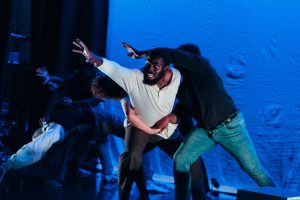
EFFS - Virgin Money Street Events - Credit David Montieth-Hodge 2019

By Anne-Louise Fortune

With shows such as The Dark Room, Buffy Revamped, and The Society For New Cuisine coming to the 2023 Edinburgh Fringe, there’s plenty for STARBURST Readers to do in Scotland this August. Here’s some handy survival tips for anyone looking to indulge in the world’s largest performance arts festival.

The Edinburgh Festivals are massive, sprawling events that take over the city each August. There’s a lot to see, a lot to do, and not a lot of time to do it all. It can feel frantic, and be exhausting. Whilst there are lots of Festivals happening, the biggest in terms of numbers is The Fringe. Here then are some tips to help you cope, physically, and emotionally, with four weeks when the population of Edinburgh swells to 2.7 million people, all of whom are trying to see the Next Big Thing. 

It’s a marathon, not a sprint!

However long you’re in the city, whether it’s a long weekend or the whole month, you can expect to do a lot of walking. There is also no way to avoid the hills that form the core of the city – irrespective of where any particular journey starts and ends; it’s a peculiarity that there will always be an uphill section. Therefore, your choice of footwear should absolutely favour comfort and support over style. Don’t worry that you’ll be conspicuous – other people will be making similar choices. Choose wisely – your feet will thank you. 

Food, glorious food!

If you’re lucky, you’ll be in accommodation that includes a Full Scottish Breakfast, and you should take the opportunity to fill up on lorne sausage, links and haggis each morning. Don’t worry about the calories, you’ll burn them all off on those hills! 

If you’re on a budget, the various small city-centre branches of supermarkets, with their sandwich and salad bundle deals will provide a good selection at wallet-friendly prices. 

If you’re in a hurry, then the street vendors in the walk between Bristo and George Squares will have hot, tasty food in your hands in minutes, and, along with the permanent take-away outlets on Forrest Road, they stay open until the early hours for when you need something to nibble on when just left a late show.

EFFS - Josephine - Credit David Montieth-Hodge 2019

Pass the highlighters!

The Fringe Festival programme, available both online and in printed form, is a behemoth that lists all the events taking place, and for some people, going through this, working out what shows appeal, and then drawing up a detailed, cross-referenced, multi-coloured spreadsheet setting out what they’re going to see, when and where, occupies a large amount of each June and July. 

Whilst this is completely valid, and in many ways a good idea, it’s probably best not to overplan. Consider leaving some time free every day, just to sit down and relax, or to see a show you haven’t considered, that is getting ‘buzz’. The Fringe Festival app is promising a new feature this year where you shake your phone, and the app suggests a show near you starting soon that has tickets available. This is a great way to discover shows you’d never otherwise have seen, and who knows, you might find yourself watching the next ‘Fleabag’. 

Small is beautiful!

There’s a tendency to focus time and attention on the venues located on the Royal Mile, and around the University, where the ‘Big Four’ venue operators all have a presence. But there is so much more to the Fringe. Slightly further out, especially around the edges of the central areas, are lots of smaller venues, including those run by The Free Fringe. 

It’s in these often overlooked corners of the city that emerging performers hone their skills, and you might just see a really great show that you get to tell your friends about. Word of mouth is invaluable for these smaller shows, so if you find something you love, pay it forward and tell the world about it on your socials.

And now for something completely different!

The focus of the Fringe has become the stand-up comedy shows. Whilst these are great, and encompass the whole range of funny stuff, from character work to rapid-fire one-liners, and everything in between, there are also offerings from a huge range of other art forms. 

The Fringe (and the International Festival) both encompass theatre, dance and music, but perhaps one of the lesser known aspects of the Fringe are the events and exhibitions. From cookery demonstrations, to ceramic and sculpture displays, there are quirky and perhaps unexpected experiences on offer across the city. 

Taking some time away from the crowds is probably a good idea, and doing something different is what the Fringe is all about, so don’t neglect those deep pink or dark green edged pages in the programme when you’ve got your highlighters out!
EFFS - Freeman - Credit Andrew Downie 2018

 I want it all!

Finally, try not to worry about not seeing this year’s award winners – it’s becoming more common for shows to have a longer lifespan, so if you miss it this year, it might well come back next year, or be staged in London, or in one of the many other fringe festivals happening throughout the UK and internationally. 

We’ve done the maths, and you can probably see no more than 5% of the shows that form a part of the Fringe – and even then we think you’d be exhausted a week in. FOMO (‘Fear of Missing Out’) is very real at the Fringe, but you cannot possibly see every show, and we’d urge you to focus on the great shows you did see, rather than worrying about those you didn’t. 

Find out more about the Edinburgh Fringe at  edfringe.com.

Boo Cook | VOID RUNNERS

by Ed Fortune

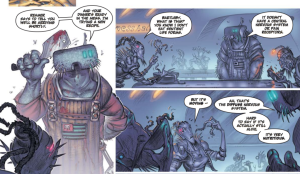
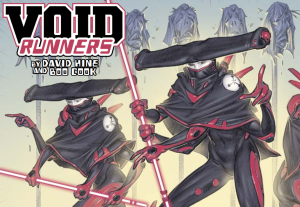
BOO COOK is a British comic book artist, best known for his work on ABC Warriors, Judge Dredd, and Elephantman. His latest work is VOID RUNNERS for 2000 AD, in collaboration with David Hine. We caught up with Boo to find out more…

STARBURST: What’s the pitch for Void Runners?

Boo Cook: Something along the lines of Moby Dick meets Dune in space on a bus driven By Ken Kesey and Tim Leary. On acid!

Why psychedelic sci-fi?

Sci-fi has been hardwired into my brain since my very earliest memories plus i guess you could say that a period of self shamanism in my youth had a profound and prolonged effect on the way i think and approach life. All this coupled with a schooling in comics over the years from the likes of Brendan Mccarthy, Moebius, Shaky Kane, Druillet, and Frank Quitely etc has meant that I have a deep yearning to create comics that encapsulate all that stuff. And who better to do that with than the uk’s most psychedelic man, Dave Hine.

How much does void runners owe to the 1960s?

Dave would probably answer this better than me as I wasn’t around… But certainly, the exploits of the heavy hitters of the lsd explosion in america around the summer of love have a strong bearing on events in void runners. There’s strict control from despotic overlords, there’s widespread distribution of mind-expanding drugs, there’s the promise of new freedoms. But as with the ’60s void runners towards the end of series one starts to question those freedoms in deeper detail and how they affect the bigger picture – it may not all end up sweetness and light…

What’s your favourite moment of chaos in the story?

I think my favourite moment of chaos in the story so far is the big bang sequence in part 6. The protagonist captain shikari has ingested a heroic dose of Kali’s dust – the mind expanding drug grown inside the body-minds of planet sized space jellyfish called pleroma. The sequence starts with the void before time then expands outward from the big bang spawning an infinite myriad of consciousness and creatures which populate the universe and through enlightenment and despair the cycle continues again… Great fun to draw.

What’s the ‘most’ fun to write?

Well Dave’s the writer but there’s a fair bit of strange alien cuneiform writing cropping up amongst the art which was indeed fun to write.

Is it for the squeamish?

I think the squeamish will have no problem with this strip for the most part. Quite often any moments of violence are quickly subverted by shikari’s ‘cosmic take’ on life which tends to put things such as horror and death into a profound reverse spin.

Which bit is going to make the readers grin the most?

When David asked me to draw a massive space anus inside the brain of the Pleroma and have the crew climb inside the glutinous rectum to recover hoards of Kali’s dust I knew we’d be onto a winner, or at least a grinner. The page got quite a lot of interest online, more than any other things i posted lately and the original page sold in a flash. It has since become known as the ‘Spanus’.

How does it compare to other 2000AD strips? Is it closer to Dredd, Ace Trucking co, Shakara, or something else?

I’d say it’s definitely less Dredd and more Ace/Shakara. There’s even some of the irrelevance of DR and qQinch and a smidge of an early Nemesis vibe to it – lots of aliens, lots of oppression!

What would you say the biggest influence on this book is?

I’ll go out on a limb here and say possibly LSD?

Which creators inspire you?

I mentioned above some of the creators which really formed my early art brain. I also should definitely mention artists such as Roger Dean, Chris Foss, Tim White – all artists who were really kicking it in the 80’s when my art brain was forming… Other creators of note would have to include David Lynch, Panos Cosmatos, Jodowrosky, Gaspar Noe, Philip K Dick, Iain M Banks, Robert E Howard, Killing Joke, Can, Pere Ubu, Beak>, yes… I could go on.

What tropes do you personally avoid the most?

Personally I try to avoid the trope of cold hard reality if I can – with my creativity and probably in general. It’s much more difficult than psychedelic space fantasy and much less fun.

If you could preserve one work of art, and have that last forever, what would it be?

Good question! Possibly ‘The Great Day Of His Wrath’ Painted By John Martin in 1851-3…. Or maybe Episode 8 of Twin Peaks: The Return… Vitamin C by Can…. Again I could go on for hours here!

If we like this book, what other books do you recommend?

I would definitely recommend Kosmik Musik by Ben Wheatley and Joe Currie – it’s sci-fi, it’s psychedleic, it’s hilarious and ingenious. On top of that it has a soundtrack by BEAK>. Only a fool would ignore this…

VOID RUNNERS can be found in current issues of 2000 AD. You can find out more about the Galaxy’s Greatest Comic here. 


David Hine – VOID RUNNERS

by Ed Fortune

David Hine is a British comic book writer and artist, best known for his work on Bulletproof Coffin and Silent War. His latest work is Void Runners for 2000 AD, in collaboration with Boo Cook. We caught up with David to find out more.


STARBURST: What’s the pitch
 for Void Runners?

David Hine: Do you want the tag line, the log line or the elevator pitch? We originally went with ‘Moby Dick meets Dune’ but it could equally have been ‘Star Trek meets Jason and the Argonauts’. Boo Cook and I put together a pitch package for 2000AD with a breakdown of the story and beautiful character and concept sketches by Boo. The story is basically this: Humanity has spread through the universe, mingling with other alien species and cultures to form a Federation of states that is dominated by a priest élite, known as Ankorites, whose mystic visions give them the authority to rule. These visions are dependent on a psychedelic drug found only inside the Pleroma – massive creatures who roam through space, feeding on unimaginably large quantities of irradiated space dust, which they turn into a psychedelic substance known as Kali’s Dust. The Pleroma are hunted by Void Runners, and our heroes are the crew of the Nautilus, whose captain, Shikari, has ‘accidentally’ ingested a fair bit of Dust. Her private agenda is to share her resultant enlightenment with the rest of the crew and ultimately with every sentient creature in the universe.

Why psychedelic sci-fi?

I began reading science-fiction during my formative years and encountered psychedelics at key moments in my life. Putting the two together seemed like the obvious thing to do. Also Boo asked me if I fancied pitching a psychedelic sci-fi story to 2000AD. Boo had done a fabulous cover for an issue of Richard Starkings’ comic book ‘Elephantmen’, which I had written and drawn. We had also been following one another on Instagram, where we were both posting a lot of trippy images. We clearly had similar tastes and we met up at the Lawless Judge Dredd Convention in Bristol to thrash out the concept.


How much does Void Runners owe to the 1960s?
Percentage-wise, about 90%. I grew up in the 60s. I watched the first transmission of Dr Who in 1963, shortly after my parents bought our first TV. I had never encountered science-fiction before that and the concept of Time And Relative Dimensions In Space really did blow my mind. I got hooked on science-fiction, particularly Ray Bradbury and the British New Wave writers from New Worlds magazine – Michael Moorcock, Brian Aldiss and JG Ballard. The whole culture of the sixties was transformative. My older brother was bringing weird stuff into the house, The Mothers of Invention, Captain Beefheart, Moondog and Hawkwind on vinyl and also underground magazines like Oz, international Times, Frendz and the underground comics of Robert Crumb, Vaugh Bodé, Gilbert Shelton and Greg Irons. These were mind-expanding times and it all culminated with Ken Kesey’s Magic Bus trip across the U.S.A. turning on the nation with acid. Void Runners is going to be our Magic Bus trip through space.

What’s your favourite moment of chaos in the story?

There’s a moment when Moondog blasts some Dust into Shikari’s nostrils in imitation of a ceremony performed by Amazonian Shamen. The ensuing scene melted the pages of my copy of 2000 AD.

What’s the most fun to write?

The interactions between Shikari and Moondog are always enjoyable to write. Shikari is a totally anarchic hedonist and Moondog appears to be a miserable old grouch whose life’s work is to keep her under control. They actually adore one other and I love writing their interactions.

Is it for the squeamish?

There’s a scene where Shikari and Moondog strip off to wriggle through the slimy intestines of a giant Pleroma, a kind of space-roaming jellyfish. It’s going to be yucky or sexy, depending on your taste.

Which bit is going to make the readers grin the most?

There’s a scene where Shikari and Moondog strip off to wriggle through the slimy intestines of a giant Pleroma…

How does it compare to other 2000 AD strips? Is it closer to Dredd, Ace Trucking Co, Shakara, or something else?

I’m embarrassed to admit that I have never read ‘Shakara.’ I haven’t been a regular reader of 2000AD since about issue 1000, which is ages ago now. I should know it because I love Henry Flint’s art and Robbie Morrison’s writing. I had a quick look at it online and it looks closer to our story than the Ace Trucking Co. Dredd is a very different. He’s dour and humourless. Shikari and her crew are all about having a good time and finding enlightenment. I can’t imagine Dredd being interested in either of those activities, except to bust the perpetrators.

What would you say the biggest influence on this book is?

Kesey’s concept of taking a travelling circus across American with the ambition to create a bloodless revolution of the mind was anarchic and fun but also a very serious ambition. It influenced a lot of science fiction writers like Robert Silverberg and it has become part of history. I don’t think we could have created Void Runners without the Magic Bus. I guess we were all influenced by the French comics that came out of that era too, Moebius above all, but also Caza and Druillet.

Which creators inspire you?

There isn’t really a short answer to that. I have read a lot of books and comics, many thousands, and all of them have inspired me to some extent, but at the top of the list right now I would have to put William Burroughs as a writer, Moebius and José Munoz as artists, Charles Burns as a writer/artist. I am also very inspired by my collaborations with Mark Stafford and Shaky Kane and more recently with Boo on ‘Void Runner.’ Nothing is more stimulating than working with uniquely talented artists.

What tropes do you personally avoid the most?

I don’t really think about avoiding tropes. You use the motifs and imagery that are most appropriate to the theme of your story. Having said that, I did reach a point where I realised that I should probably stop using the Zombie Apocalypse as a metaphor for the breakdown of the social order. I’ve done it four times and that’s probably three times too many. In my defence I would have to say that three of them were work for hire on existing concepts: ‘The FVZA’ for Radical, ‘The Night of the Living Dead’ for Avatar and one that I can’t talk about that stalled before publication, based on a computer game. The only one that I stand behind 100% is the ‘Hateful Dead’ episode of ‘The Bulletproof Coffin’ with Shaky Kane. Living dead Vietnam Vets on a rampage through time. That was class.

If you could preserve one work of art, and have that last forever, what would it be?

It’s a toss-up between ‘The Bulletproof Coffin’ and ‘Void Runners.’ But apart from that, Part 8 of David Lynch’s third season of Twin Peaks. As a standalone piece, it’s the greatest moving-image work of art ever created. An absolute masterpiece.

If we like this book, what other books do you recommend?

I don’t know if these are necessarily similar to ‘Void Runners’ but I do like ‘Saga’ by Brian K Vaughan and Fiona Staples, ‘The New World’ by Ales Kot, Tradd Moore and Heather Moore, and ‘Upgrade Soul’ by Ezra Clayton Daniels. And Did I mention ‘The Bulletproof Coffin’?

Void Runners can be found in current issues of 2000 AD. You can find out more about the Galaxy’s Greatest Comic here. 

THE TELEPHEMERA YEARS: Pre-1965, part 1 – 1949-57

Captain Video and His Video Rangers, 1949

Ah, telephemera… those shows whose stay with us was tantalisingly brief, snatched away before their time, and sometimes with good cause. They hit the schedules alongside established shows, hoping for a long run, but it’s not always to be, and for every Street Hawk there’s two Manimals. But here at STARBURST we celebrate their existence and mourn their departure, drilling down into the new season’s entertainment with equal opportunities square eyes… these are The Telephemera Years!

Pre-1965, part 1: 1949-57

There’s no concrete reason why The Telephemera Years begins in 1965, except for arbitrary reasons of available content and the more solid fixed point that is the great colour transference of that year, when it was announced that half of all network programming would be broadcast in colour from the Fall 1965 season. The years before we were gifted My Mother the Car, Lost in Space, and (eventually) Batman may look thinner in terms of genre programming but there were still those hardy souls doing pioneering work in the field of the strange and the fantastic.

So, while The Beverly Hillbillies, Bonanza, Gunsmoke, and Wagon Train dominated the ratings, less rustic thrills could still be found dotted across the schedules, right up to a 1964 Fall season which saw The Addams Family, Bewitched, Flipper, Gilligan’s Island, Jonny Quest, The Man from UNCLE, The Munsters, and Voyage to the Bottom of the Sea all make their TV debuts. So sit back, pop on your slippers and light up your pipe, have the little lady bring you a little treat, and see what the pre-1965 era has in store for us…

Captain Video and His Video Rangers (1949, DuMont): Although there had been one-off productions on several US channels and on the BBC in the UK, Captain Video and His Video Rangers was the first science-fiction TV series to continue a story, from its premiere episode on June 27th 1949 right up to its finale, almost six years later. Producers James Caddigan and Larry Menkin created the show for the DuMont Network, the first challenger to the big three of NBC, ABC, and CBS (although ABC and CBS preceded it by only a year).

Set in Earth’s distant future in the year 2254, the Video Rangers were a courageous band of enlisted men under the direction of Captain Video himself (originally played by Broadway actor Richard Coogan, and subsequently by radio’s Green Hornet, Al Hodge). As was the fashion of the time, Video had a teen sidekick, confusingly named The Video Ranger, played throughout the series by Don Hastings (who would go on to play Dr Bob Hughes for over fifty years on As the World Turns).
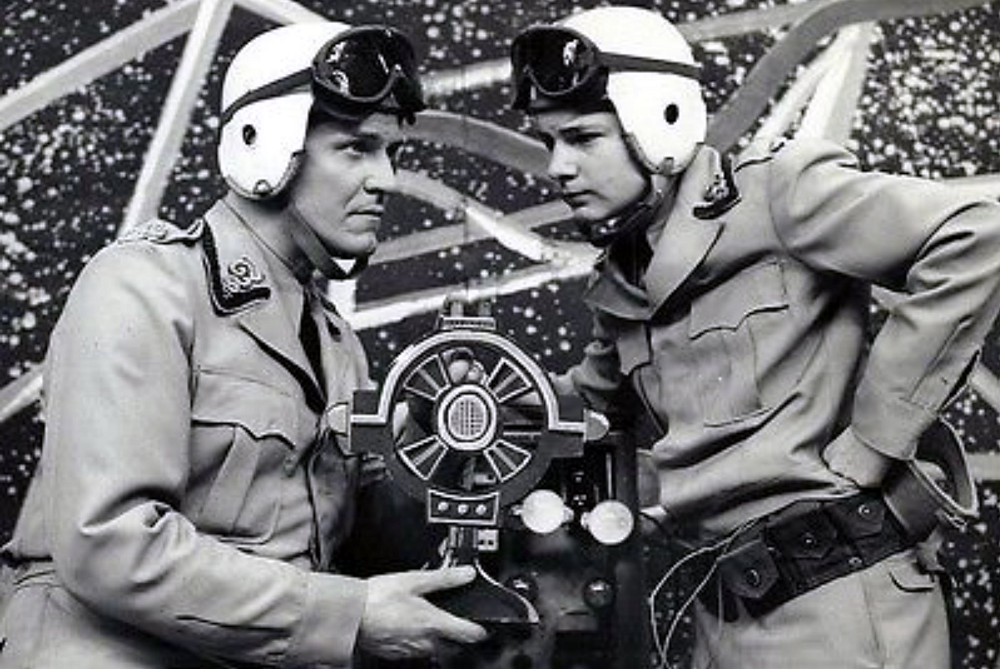
Captain Video and His Video Rangers, 1949

Over the course of an estimated 1,537 episodes (exact records are difficult to compile and almost all of the shows are lost to history as actual recordings, with just twenty-four surviving in the UCLA Film and Television Archive), Captain Video kept Earth safe from such threats as Dr Pauli, the “yellow peril” of Hing Foo Sung, and alien Nargola (played by Ernest Borgnine in his first screen role. Stories were originally written in-house by Caddigan’s writing team and were largely earthbound, but the arrival of Buck Rogers on ABC led to Captain Video heading into space, with episodes written by a who’s who of science-fiction, including Isaac Asimov and Arthur C Clarke.

At its peak, Captain Video and His Video Rangers attracted audiences of 3.5million but by April 1955 its viewing figures did not justify its costs, especially for an ailing network like DuMont (which would follow Captain Video into the abyss just sixteen months later). A syndicated animated series later saw Hodge reprise his role as the Captain, but the show has slipped out of the popular imagination of both the US and sci-fi TV worlds, with little in the way of nostalgia for a once-pioneering show. Coogan and Hodge (who died penniless in 1979 after spending the last four years of his life living in a hotel) may not have had glittering Hollywood careers but they were the first space heroes for a generation of TV viewers and deserve to be remembered for that, eternally.

Tales of Tomorrow (1951, ABC): Imagine a time when the Science Fiction League of America was not only a thing but a thing that wielded enough power and influence to get a TV show made. That in itself may seem like science-fiction, but Tales of Tomorrow stands as a testament to such things. The truth is a little more nuanced – the SFLoA may have actually been created at the urging of TV producer George F Foley Jr in imitation of the longstanding Science Fiction League to throw weight behind his programme pitch – but the guiding hands behind the show were SFLoA members Mort Abrahams and Theodore Sturgeon.

Foley and his ABC colleague Richard Gordon struck a deal with the SFLoA whereby they could choose from over two-thousand stories written by its members, adapting them for weekly Friday night episodes for an audience of eager sci-fi fans. The first episode – “Verdict from Space” – was adapted from Sturgeon’s “The Sky Was Full of Ships,” first published in Thrilling Wonder Stories in 1947, and aired on August 3rd 1951, starring Lon McAllister and Marlon Brandt.
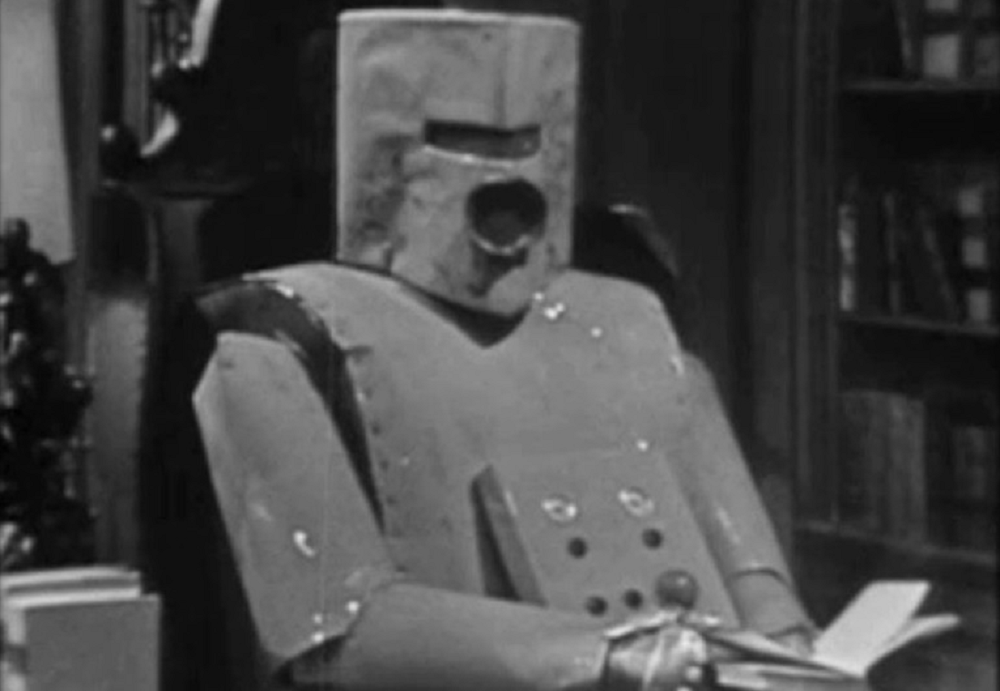
Tales of Tomorrow, 1951

Subsequent episodes in the shows eighty-five week run included stories by Ray Bradbury, Arthur C Clarke, Frederik Pohl, and even HG Wells, with star turns from the likes of Boris Karloff, Leslie Nielsen, and Rod Steiger. A radio show ran alongside, although it was nowhere near as successful as the TV show and lasted for just fifteen weeks, coming off air just as its parent show was nearing the end of its run.

No reason was given for the cancellation of Tales of Tomorrow but it’s likely that the tastes of decision makers at ABC shifted slightly, resulting in its quiet demise. Most of the episodes that still exist are now considered to be in the public domain, as is the radio show, and can be found on video sharing sites and on several DVD releases. In many ways, Tales of Tomorrow was the proto-Twilight Zone (which adapted more than a few of the same stories) and was incredibly well-regarded in its day, even if it has been forgotten by future generations of sci-fi fans.

Science Fiction Theatre (1955, syndicated): Two years after Tales of Tomorrow finished its run on ABC, another anthology series debuted in syndication, its eventual fate pretty much equalling that of its inspiration. Science Fiction Theatre was created by Hungarian émigré Ivan Tors, a former playwright who moved into film and TV when he arrived in the US in 1939, specialising in producing family-friendly fantasy and adventure yarns.

For Science Fiction Theatre, Tors partnered with Frederick Ziv to sell the show to regional TV stations as a package of thirty-nine episodes, to be aired weekly over a nine-month season. Different channels scheduled the show on different times and days, but the first episode premiered on April 9th 1955, and featured the story of a test pilot who claims he encounters something mysterious on a supersonic flight.
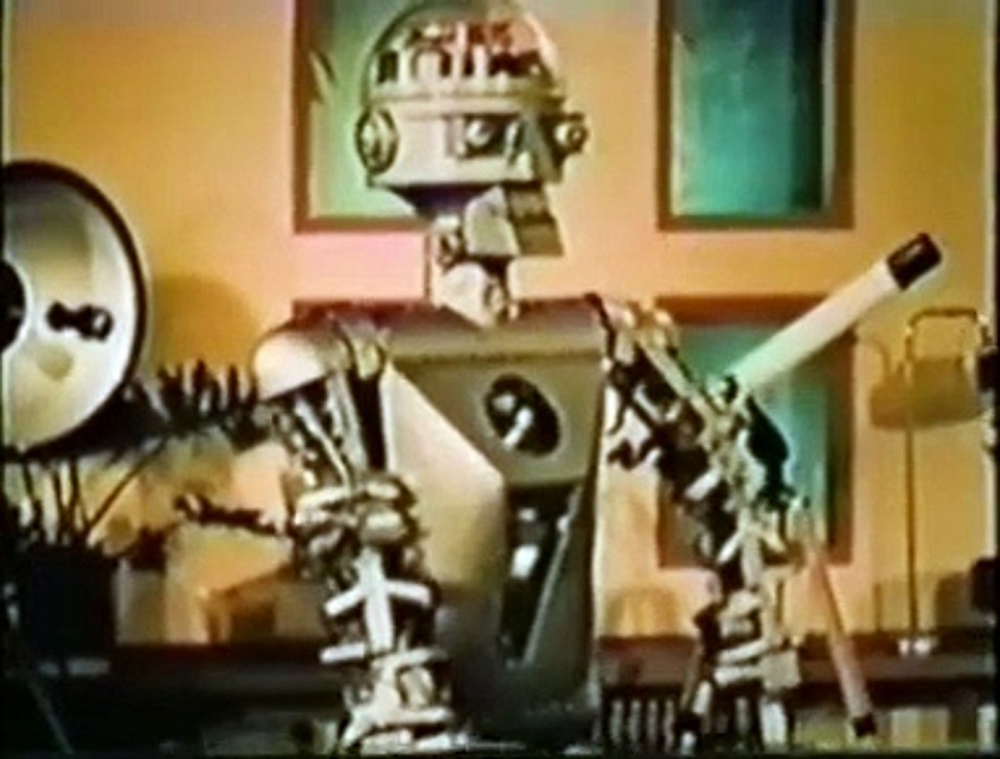
Science Fiction Theatre, 1955

From a story by Tors, “Beyond” starred William Lundigan and was introduced by radio host Truman Bradley, who would remain a constant presence throughout the first season’s thirty-nine episode run, which would see the likes of Gene Barry, DeForest Kelley, and Vincent Price all step onto the Science Fiction Theatre stage. The first season was shot on colour film, but budgetary constraints forced a switch to black and white for a second season (also of thirty-nine episodes), along with more of an ensemble cast which included Rachel Ames, Michael Fox, and Arthur Franz.

There was no third season of Science Fiction Theatre, with Tors moving on to less fantastic fare, eventually developing Flipper, Daktari, and Gentle Ben for TV, as well as overseeing the underwater footage for Thunderball. The complete Science Fiction Theatre was released on DVD in 2015 but fans complained that the transfer was too dark, leaving nighttime scenes almost unwatchable. It’s on YouTube if you want to check it out yourself, and there’s a certain thrill to be had in experiencing such cheap and schlocky TV filler.

Colonel Bleep (1957, syndicated): In 1945, the first explosion of an atomic bomb had unseen consequences. Across the galaxy, denizens of the planet Futura are alarmed at man’s recklessness and despatch Colonel Bleep, an alien with a triangular head and a slender body, to investigate. Bleep’s arrival on Earth coincides with the awakening of Scratch, a hibernating Stone Age man, and Bleep soon commissions the innocent caveman as his deputy, also enlisting Squeak, a cowboy hat-wearing puppet.

Created by Robert D Buchanan and Jack Schleh, two staffers at the Soundac animation studio in Miami, Colonel Bleep premiered in syndication on September 21st 1957. Episodes were drawn from a variety of formulas, including training episodes (Scratch learning from Bleep), travelogues (the crew visiting foreign countries, as well as other planets), and conflicts with extraterrestrial threats also drawn to Earth by man’s tinkering with atomic power.
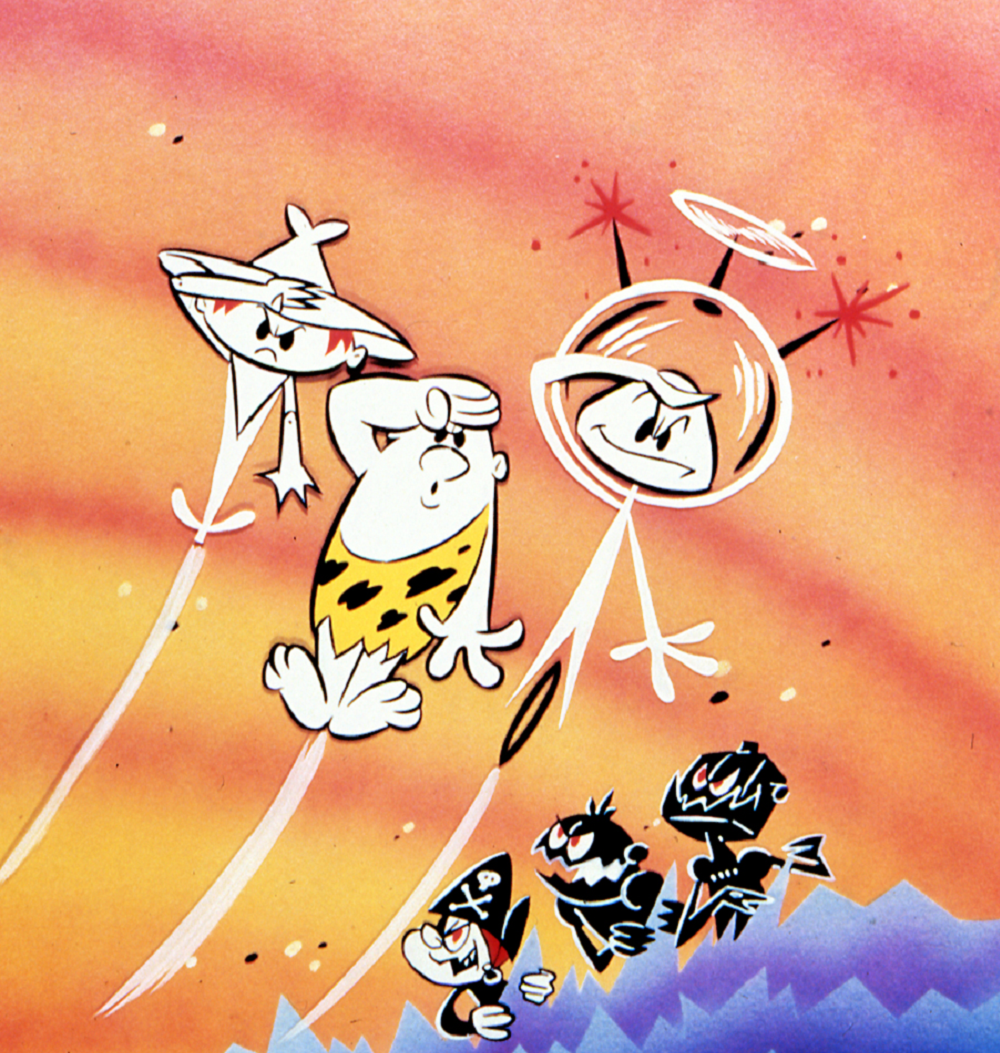
Colonel Bleep, 1957

The show was produced, as were most cartoons of the time, with extremely limited animation and were narrated by local (to Miami) newscaster Noah Tyler, who also provided voices for character when called upon. Schleh directed every one of the one-hundred episodes produced, which were written by Buchanan and Schleh to result in a cheap to make – and therefore cheap to sell – series. Syndicated episodes were shown over a three-year period before Buchanan and Schleh moved on to fitness cartoon The Mighty Mister Titan.

Considering its position as one of the first animated sci-fi series, Colonel Bleep is all but forgotten today but is fondly regarded by those who do stumble across it. Only forty-four episodes still exist, with nothing remaining of its production materials after Soundac closed in 1971 and all its assets were stolen from a removal van. Those episodes that survived can be found on YouTube and are cited as one of the main inspirations for The Ren & Stimpy Show; that’s evident in the animation style but also in the mood of the piece, a slightly sidewards and anarchic look at humanity through a distorted lens.

Next time on The Telephemera Years: We’re straddling the cusp of the 1960s with spacemen, groovy detectives, and womanising cartoonists!

Check out our other Telephemera articles:

The Telephemera Years: 1966 (part 1, 2, 3, 4)

The Telephemera Years: 1967 (part 1, 2, 3, 4)

The Telephemera Years: 1968 (part 1, 2, 3, 4)

The Telephemera Years: 1969 (part 1, 2, 3, 4)

The Telephemera Years: 1971 (part 1, 2, 3, 4)

The Telephemera Years: 1973 (part 1, 2, 3, 4)

The Telephemera Years: 1975 (part 1, 2, 3, 4)

The Telephemera Years: 1977 (part 1, 2, 3, 4)

The Telephemera Years: 1978 (part 1, 2, 3, 4)

The Telephemera Years: 1980 (part 12, 3, 4)

The Telephemera Years: 1982 (part 1, 2, 3, 4)

The Telephemera Years: 1984 (part 1, 2, 3, 4)

The Telephemera Years: 1986 (part 1, 2, 3, 4)

The Telephemera Years: 1987 (part 1, 2, 3, 4)

The Telephemera Years: 1989 (part 1, 2, 3, 4)

The Telephemera Years: 1990 (part 1, 2, 3, 4)

The Telephemera Years: 1992 (part 1, 2, 3, 4)

The Telephemera Years: 1995 (part 12, 3, 4)

The Telephemera Years: 1997 (part 1, 2, 3, 4)

The Telephemera Years: 1998 (part 1, 2, 3, 4)

The Telephemera Years: 2000 (part 1, 2, 3, 4)

The Telephemera Years: 2003 (part 1, 2, 3, 4)

The Telephemera Years: 2005 (part 1, 2, 3, 4)

The Telephemera Years: 2006 (part 1, 2, 3, 4)

The Telephemera Years: 2008 (part 1, 23, 4)

Titans of Telephemera: Irwin Allen

Titans of Telephemera: Stephen J Cannell (part 1, 2, 3, 4)

Titans of Telephemera: DIC (part 1, 2)

Titans of Telephemera: Hanna-Barbera (part 1, 2, 3, 4, 5)

Titans of Telephemera: Kenneth Johnson

Titans of Telephemera: Sid & Marty Krofft

Titans of Telephemera: Glen A Larson (part 1, 2, 3, 4)

Titans of Telephemera: Quinn Martin (part 1, 2)

Titans of Telephemera: Ruby-Spears

Five GAME OF THRONES Characters Who Deserve their Own Spin-Off (more than Jon Snow!)

by Lola Heys

We’re sure you’ll all know by now that Jon Snow is getting his own spinoff series, titled SNOW, set after the events of GAME OF THRONES, once he has rejoined the Night’s Watch and headed back north of the Wall. But why just him? (Besides the fact that Kit Harington was the one to pitch the show in the first place, of course!) George R R Martin’s rich world of A SONG OF ICE AND FIRE is full of fascinating characters, and while they didn’t all live to see the end of the main story, there are surely plenty who we’d love to see a bit more of. So without further ado, here are five more GAME OF THRONES characters who deserve their own series…


Yara Greyjoy

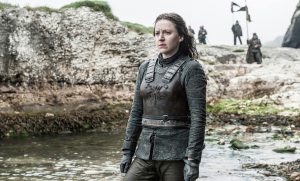
The last living Greyjoy by the end of the series, Yara never truly stopped being loyal to Daenerys even after her death, which places her at odds with most of the other remaining characters. Now the rightful ruler of the Ironborn, Yara would be an interesting figure to follow for a story of her own, not least because she hails from an area of Westeros we admittedly know little about beyond their traditions of reaving, roving, raiding, and raping. Even then, with her loyalty to her deceased queen in mind, Yara would be like to go about changing these traditions of the Iron Islands. The story of her leadership could be an interesting one to explore.


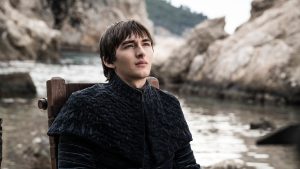
King Bran the Broken

As far as spin-offs go, this would probably be the closest to a direct continuation of Game of Thrones. Now that he’s king, Bran faces fixing the mess that has been left of Westeros in the wake of the War of the Five Kings and the Great War. Also, because of his new position as, well y’know, king, a show focusing on him would do well to encapsulate the continuing stories of fan-favourites who stuck around with him in King’s Landing (anyone else interested to see how Bronn’s top-priority plans to rebuild the city’s brothels are coming along?). Anyone involved in the Game of Thrones fandom will know that Bran’s appointment as the new King of the Six Kingdoms was controversial, but maybe with his own show then he’ll have the chance to show that he truly is worthy of the crown.


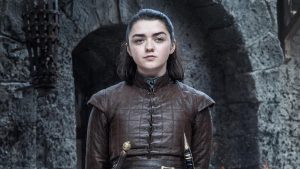
Arya Stark

With no names left to cross off of her ‘kill list’, Arya Stark ended the series setting sail to find what lies “west of Westeros”. And that was that. That was that… I mean, come on HBO, did you not think at all that now everybody wants to know what else is out there? This would be a great series to delve deeper into Arya’s character now that she doesn’t have revenge as her driving force, and also to explore hitherto unknown parts of the fascinating world that George R R Martin has crafted so superbly over the past few decades.


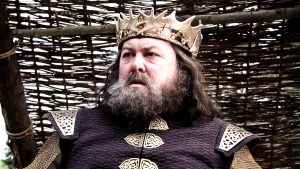
Robert Baratheon

“But he’s dead, mate!” I know, but hear us out on this. Robert’s rebellion is a topic that comes up a lot in Game of Thrones, having occurred sixteen years prior to the main story and being the reason why Robert Baratheon was king in the first place. But outside of the brief flashbacks in Season 7 as we find out more about Jon Snow’s past, we see precious little of the events that took place during the rebellion and it would be a shame not to go deeper into an event that still has so much to unpack. A prequel certainly seems in order here, methinks…


Salladhor Saan

Who? That’s exactly the problem. Appearing only three times in the show, Salladhor Saan is the Lysene pirate and friend of Davos Seaworth who the knight originally approached for help with taking King’s Landing. After a second meeting in Braavos in Season 4, Saan disappeared from the show completely. This is such a shame because he was a brilliantly charismatic character who fans would definitely want to spend more time with. He’s a sellsail, a pirating mercenary operating in the Narrow Sea between the Free Cities and Westeros, and I could see a show with him at its centre being an intriguing, swashbuckling, Our Flag Means Death sort of situation.

GAME OF THRONES can currently to streamed in the UK via NowTV

Jamaal Avery Jr and Michael Olson | STAR WARS: YOUNG JEDI ADVENTURES

by Mark Newbold

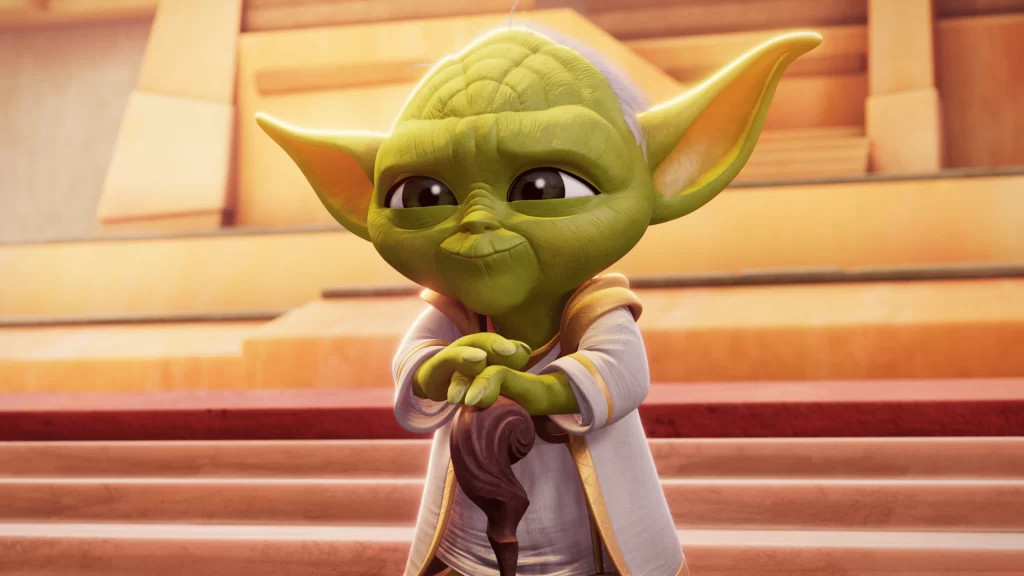
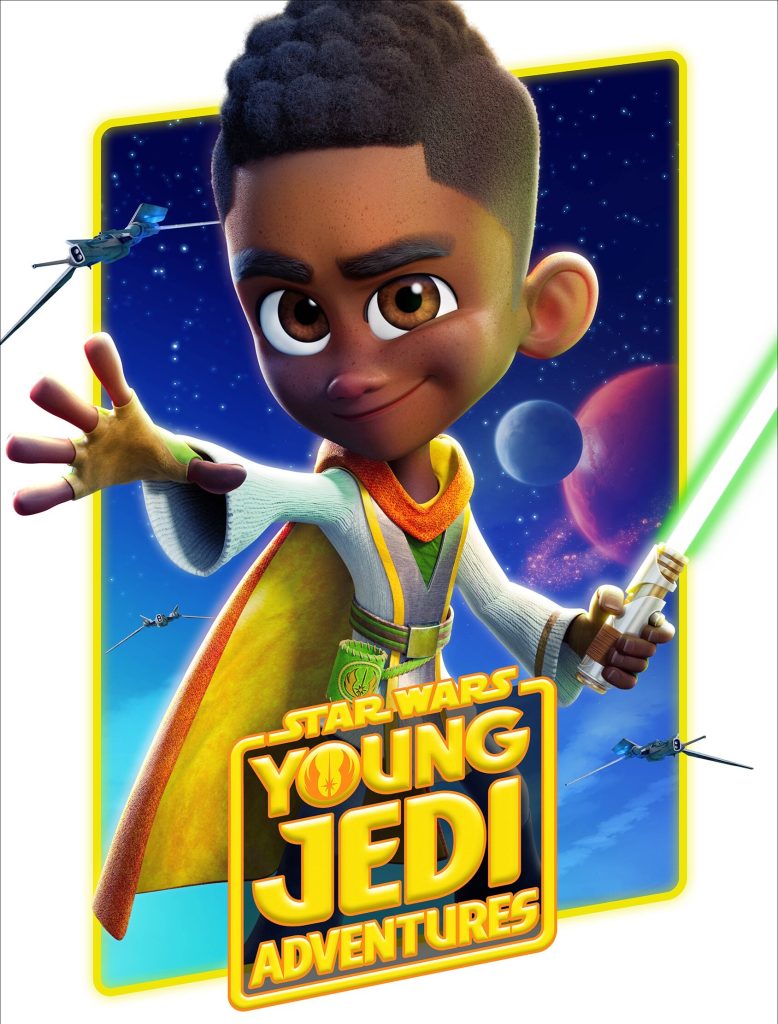
Designed with a younger audience in mind, YOUNG JEDI ADVENTURES is an energetic, fun, light-hearted series that shows a very different side of STAR WARS. Just in time for its second round of episodes dropping on Disney+ soon, we caught up with voice actor JAMAAL AVERY JR and co-creator MICHAEL OLSON to talk about the show….

STARBURST: Jamaal, how did you get the role, and how did you feel when you knew you’d been cast as Jedi youngling Kai Brightstar?

Jamaal Avery Jr: I was really excited to get the role of Kai. They told me I had it, and I was like, ‘What, that’s awesome!’ And then when I found out it was Star Wars, I didn’t believe them [laughs]!

Michael, was the show being developed before the general public heard about The High Republic?

Michael Olson: At the time we cast Jamaal, I’m not sure even the first Phase One book [Light of the Jedi] had come out, so he probably wasn’t aware that initiative was coming out, but I do recall me, him, and his parents had a really nice conversation and being able to say ‘hey buddy, you get to be the lead in a Star Wars show, buckle up. Little kids are going to pretend to be you!’ Even last night, my son was in bed reading the Young Jedi Adventures book, holding a green lightsaber which he was using to light up the bedroom because he’s scared of the dark and calling himself Kai Brightstar. It was really sweet, and that’s because of Jamaal. He gave such an incredible performance and embodied this character so well that kids are falling in love with him.

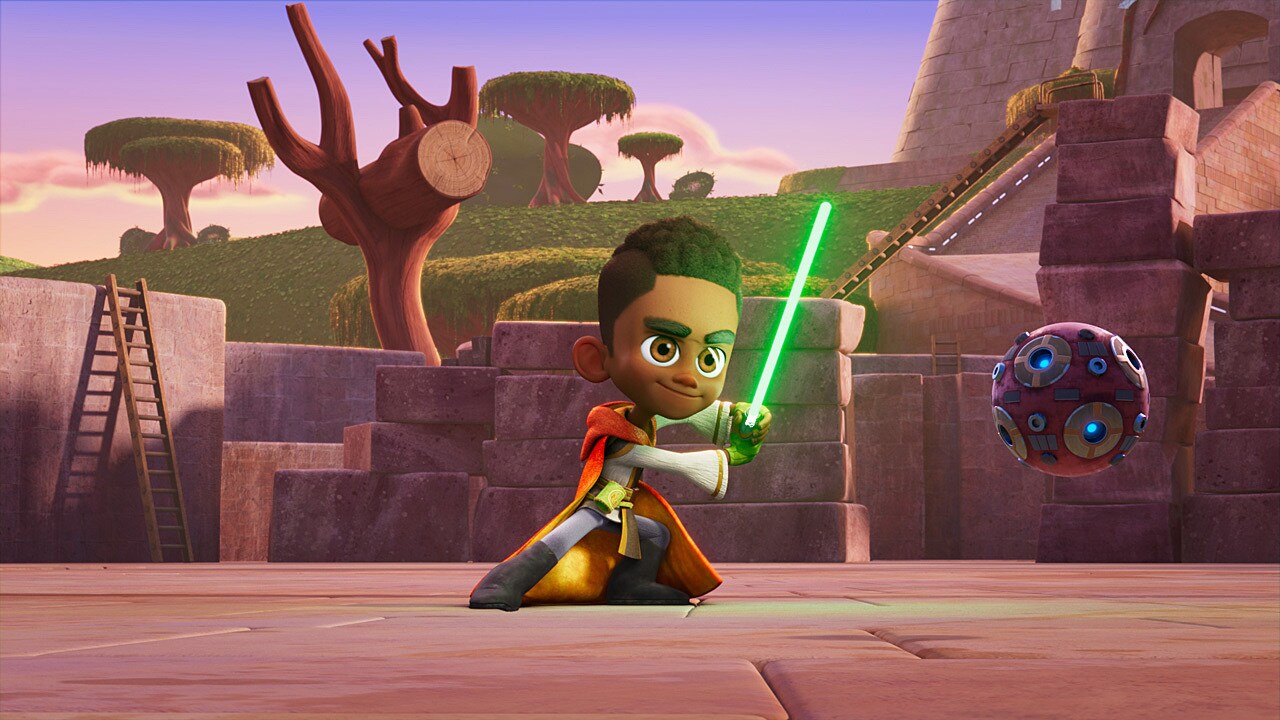
Not everybody gets to have Yoda’s very own training lightsaber; what a cool moment for any character to have!

JAJr: That was really cool. When I read the script, I was like, ‘Did he just get Yoda’s lightsaber?’ I had to read it back a couple of times. When you see Master Yoda fighting, that lightsaber’s been through a lot!

Have you seen any of the Hasbro figures that have been released for Young Jedi Adventures, and if so, what do you think of them?

JAJr: I think the character design is really spot on. I was thinking of getting some. I was reading the book and thought, ‘We should get some of the figures,’ so now I’m begging my dad, ‘Can we get some?’

Michael, as the show develops and the concepts come together, how intertwined is Young Jedi Adventures into the wider story, and are there considerations for what you’re doing?

MO: So this show definitely takes place during The High Republic, and one of the things that was really important for us was to place it in its own little corner of the galaxy a little bit farther away from some of the tragic events that are happening in the High Republic. Thankfully these Jedi kids are, for the most part, unaware of the grander galaxy-wide things that are happening, but James Waugh [producer] has mentioned in interviews that we have a few tie-ins here and there with the High Republic, so we will see some High Republic characters and maybe some locations as well.

Jamaal, from Season One, what’s been the most interesting and exciting thing that’s happened so far?

JAJr: I can’t really choose just one, but it’s between the episode where Kai Brightstar and Master Zia Zanna go on a mission, and Kai learns more about Master Zia when she was younger. Fighting is not the only thing that Jedi do. I also really liked when the Jedi first meet the pirates, I think that interaction was really cool and fun. I was watching it back with one of my friends from school, and he thought they were based on our own movement and actions, and I said no, I can’t do a backflip.

MO: You need to work on that, man!

Michael, as the show develops, we get to meet new characters, and one of those has been the pilot Nash Durango and her droid RJ-83. Is the hope over time to grow from this core group of characters and to other locations away from Tenoo?

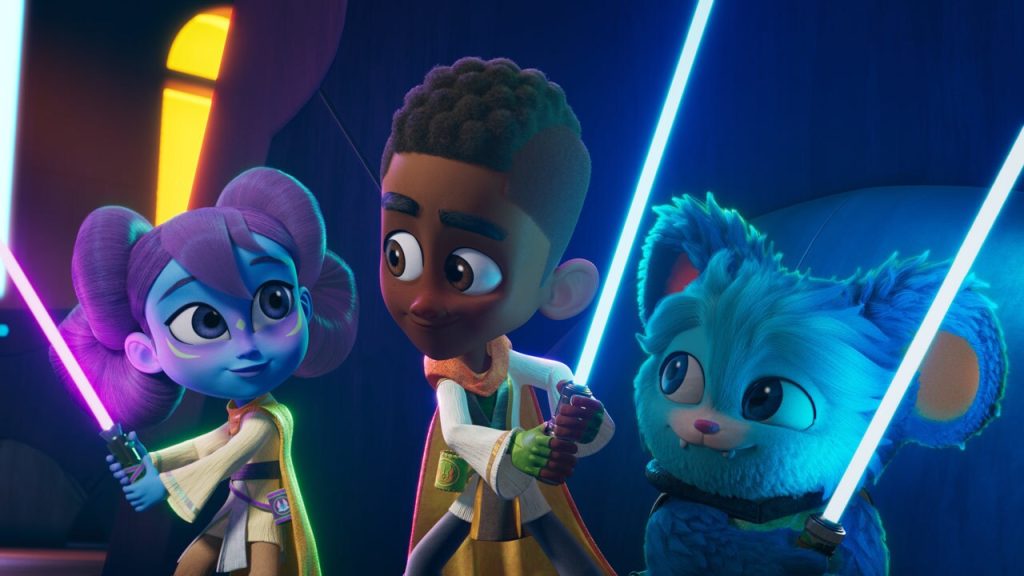
MO: The lead of the show is Kai Brightstar, and he will always be the anchor and centre of the show, and secondarily, we’ve got Nubs and Nash to round that out, but we will certainly get to know new characters and younglings as they’re introduced to the temple as well as dastardly bad guys who become part of the world. There are definitely more relationships to be built. Kai gets to be involved with some of our secondary characters, which will lead to some interesting payoffs down the line, but the show is really focused on these core four characters.

Hopefully, down the line, there will be more ancillary products being released, so are you happy for other avenues to tell stories set during the era of Young Jedi Adventures?

MO: Oh, yeah, I’m so thrilled. I grew up playing with Star Wars action figures, and they were always second-hand or hand-me-downs from cousins or whatever, so that was primarily how I engaged with Star Wars. We had one VHS copy of it, which I could only watch at certain times, so I’m thrilled with the idea that there are action figures and toys so that kids can make up their own stories and extend their experience with our show because that’s what I did when I was a kid. In terms of the books, I love that stuff. My son is reading the latest book, well, I’m reading it to him at night. I love that the show gets to exist within the Star Wars ecosystem, so to speak. Jamaal mentioned the Young Jedi video games on Disney Now, so that’s part of the fun, seeing the toys, the books, and the video games; I’m here for it all and excited that people want to take these characters in different avenues.

Jamaal, now you’re a lead actor in a Star Wars project; how has it been telling your friends now that it’s ‘out there’?

JAJr: Yeah, I had to explain to a couple of my friends that it’s before anything in Star Wars. They asked, ‘do you get to fight Darth Vader?’ [Laughs]

You can’t do a Star Wars animated project without Dee Bradley Baker being involved somehow…

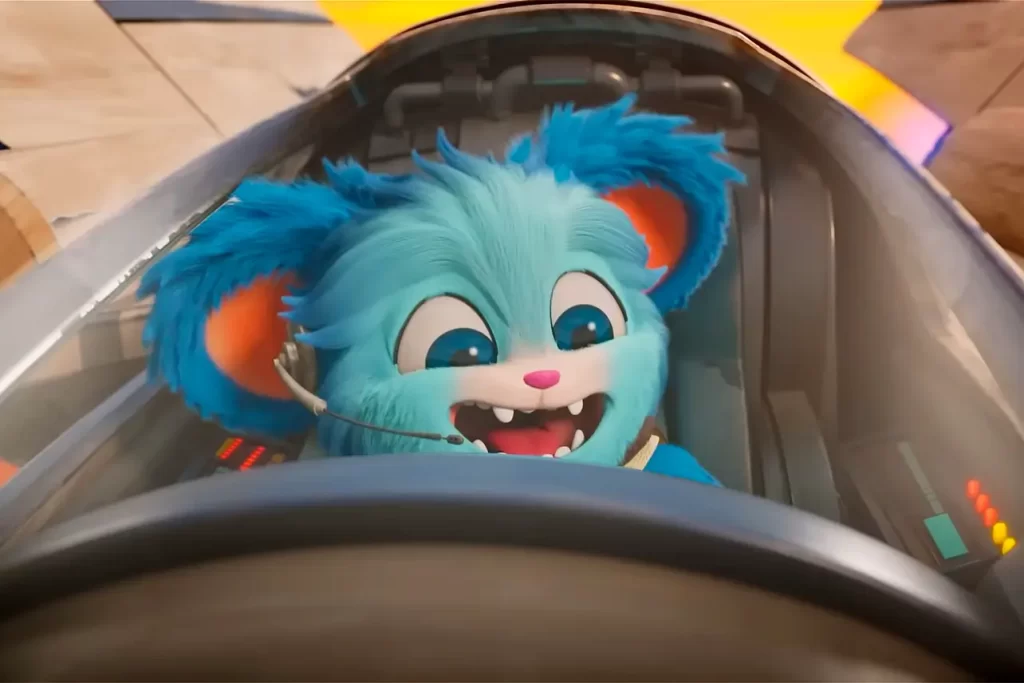
MO: Oh man, I love Dee Bradley Baker. I’ve worked with him on a number of projects in the past, so when I was coming up with the character of Nubs, he was the first and only person I was thinking of to play him. When he came in that first day, he asked a bunch of really insightful questions. He’s an actor’s actor, an incredible voice actor who can do all sorts of crazy sounds, but a true actor who really dug into who Nubs is and what motivates him and then went to town. That voice came out of him, and we were all ‘yes!’ That was the first thing that he did, we didn’t even have to change it, and it was perfect. He’s such a gift to work with, such a kind person, an incredible actor and a Star Wars legend, so I’m thrilled he got to be a part of our show.

Nubs, what a character. People seem to be latching onto him; he’s cute and cool and gets into a lot of mischief in the show. We’ve got Grogu in The Mandalorian and BB-8 in the Sequel trilogy, amongst many other such characters, so are you guys ready to ride the Nubs rollercoaster?

MO: Nubs Nation all the way! He’s been a lot of fun. When it’s really clicking for the audience across all age ranges, there’s usually a character in Star Wars that every person in each age range identifies with, and little kids might really see themselves in Nubs because he is expressing those big emotions and wears his heart on his sleeve like so many young kids do. I have two kids under three years old, and they gravitate to him and laugh when he comes on screen, so getting to see that has been really fulfilling, and I’m excited to see where this character goes. We’ve got some wild things planned for him, and I think the fans are going to be delighted.

As the show moves on, is the intention to see the characters grow?

MO: The challenge with this kind of show is that we’re making it for a very specific audience. We definitely want to invite parents and older kids to watch, but truly my North Star for who this show is made hasn’t changed, so we will definitely see our characters grow and hopefully get to the point where we see them make their lightsabers and do their challenges on Ilum, but for the foreseeable future the goal is to keep these characters a bit more evergreen and evolve the show through the kind of stories that we’re telling and exploring the galaxy and meeting new villains.

We may be a few centuries before Ilum becomes Starkiller Base, but we do have the opportunity to see some of the trials and training a Jedi goes through. Jamaal, are there any of those trials that you’re looking forward to performing as an actor?

JAJr: I’m looking forward to all of them, but I’m most excited about performing the scene – if they do – where they go to Ilum and get their Kyber Crystals to build their lightsabers. I’d be really excited to do that, which seems like fun.

Jamaal Avery Jr

The music is wonderful. Michael, do you have any involvement with that?

MO: Oh yeah, 100%. We went through a very rigorous process of finding our composer, and we landed on Matthew Margeson, who is an immense talent and who has such respect for John Williams’ work. It’s been fun watching him step into those shoes, and he did a phenomenal job. We meet with him every other week as we’re spotting different episodes and referencing all kinds of movies, not just Star Wars movies. We usually land on some John Williams movie because it seems like he composed the score for nearly every movie of my childhood. It’s been a true, true pleasure for me. We recorded the opening theme with a live orchestra in Vienna. Unfortunately, I couldn’t be there, so it was over Zoom, but man, that was an experience. Several dozen musicians playing the theme song for our show, and it sounded incredible, and Matthew did an incredible job of getting great performances from everybody.

Jamaal, of all the merchandise that you could possibly have your character become, what would you like to see Kai turned into?

JAJr: This is really funny, but [laughs] I would love to see Kai on a bedsheet! I’d go to sleep with my character on.

MO: I’ll feel like we’ve arrived when we have Kai Brightstar on diapers!

Episodes 1-6 of STAR WARS: YOUNG JEDI ADVENTURES’ debut season are available to stream on Disney+, with a new set of six being released via the platform on August 2nd!

Josh Winning – BURN THE NEGATIVE

Joh Winning Burn The Negative Cover

by Ed Fortune

Josh Winning is the senior film writer at Radio Times as well as a nostalgia nut, book/film lover and author of The Shadow Glass, and co-host of the movie podcast Torn Stubs. His new book, Burn The Negative,  is about a series of murders on the set of a horror-themed TV show. We caught up with him to find out more.

STARBURST: How would you describe Burn the Negative to a fan of the Scream movies?

Josh Winning: It’s sort of like if Gale Weathers visited the set of a Stab movie, and found herself getting drawn into a fresh spate of killings. Which I guess is kind of the plot of Scream 3, so maybe I’d just say, “It’s a bit like Scream 3, but different.”

Why Horror?

I’ve always been drawn to horror. As a teenager, I read Point Horror and Christopher Pike, and I grew up watching those great, gloriously weird ’80s fantasy films like The Dark Crystal and The NeverEnding Story, which came with their own scary elements (Skeksis! The Nothing!). Horror has the best characters, the best villains, and the best concepts.

Why LA?

Clearly, it’s the heartland of movies. This is a town entirely focused on one industry, and that industry is obsessed with stories. But it’s also a cutthroat environment where nobody’s livelihood is ever safe, paranoia runs rampant, and horror can easily spill into real life. It’s the perfect setting for a horror story.

What was the hardest piece to write?

The beginning of the second act. This is the part where weird stuff is happening, and Laura is trying to get her head around it. Navigating her mental state as history begins to repeat itself was a fun challenge because I really had to step into the shoes of a person who’s been through some heavy stuff and figure out just how she’d react.

What’s the most fun to write?

I loved writing Laura’s first visit to the guesthouse set. As a film journalist, I have been lucky enough to visit a number of sound stages where amazing sets have been constructed. It’s always awe-inspiring, and I loved writing that setup from Laura’s perspective – she’s somebody who left Hollywood and movie sets behind a long time ago and would rather be anywhere but there.

Is it for the squeamish?

I’d say there are some grisly moments in Burn the Negative that hint at some horrific occurrences, but this isn’t a massively gory book. I was more interested in evoking a spooky, paranoid atmosphere.

Is the horror genre simply the crime/thriller genre but supernatural? Or is there more to it than that?

I think there is more to it than that. Horror digs into the darkness in a different way from the crime/thriller genre, and not all horror is supernatural. It is very different ‘to thrill’ than it is ‘to horrify’, which I think is where the line could be drawn. Horror wants to horrify you and also explore horrific things, whereas horrific things can happen in thrillers, but that isn’t the focus.

Do you have other books planned in a similar vein?

Yes, I’m drafting my second horror book with Putnam, which also uses pop culture and Hollywood as a springboard. It’s very different to Burn the Negative, though, with different movies as inspiration. I’m excited for people to read it in the summer of 2024!

Is horror more accessible as a genre these days?

There’s more of it, which certainly makes it easier to find! Horror is really booming, particularly in the book world, which means there’s a horror for everybody. It’s such a fantastic time to be a horror reader, as there’s so much to choose from depending on your mood. I personally hop between Paul Tremblay, Ally Wilkes, Riley Sager and Catriona Ward, as they all deliver something very different, but always in the horror space.

Why are we so fascinated with gruesome death?
Morbid curiosity! That’s definitely a part of why slasher films are so popular. We’re curious about what it would be like to die in these horrific ways – and horror films give us the opportunity to experience that without actually having to experience it – thank goodness!

What character is the most fun to write?

I loved writing Yvonne Lincoln, the Hollywood screenwriter who is in jail for the murder of her husband – although she claims that the movie villain, the Needle Man was really responsible. I love a jaded, world-weary character, as it’s so freeing to write somebody who just doesn’t give a shit and makes no effort to make anybody around them feel comfortable.

Which character seriously needs to have a word with themselves?

Mike! In Burn the Negative, he’s Laura’s ex-boyfriend and current boss at Zeppelin magazine. He’s still not over the end of their relationship, even though it’s clear that Laura doesn’t feel the same way. He deserves better!

What would you say the biggest influence on this book is?

Various 90s horror movies, but in particular Candyman. I love that as an example of a really classy grown-up slasher film and one where you’re never quite sure if the monster is all in Helen’s mind or if he is a reality. That, to me, is a fascinating set-up, and one that I tried to pay tribute to with Burn the Negative.

Which writers inspire you?

Any writer who manages to finish writing a book! My big go-to authors are Riley Sager, CJ Tudor, and Taylor Jenkins Reid. They have such a firm grasp of character, pace and plot. I find their ability to write gripping novels hugely inspiring.

What tropes do you personally avoid the most?

I tend to embrace tropes because they really lend themselves to reinvention. I would say that the only ones that really jump out at me as total no-nos are “the black character dies first” and “if you have sex, you die”. They’re so outdated, and you can have more fun playing with other tropes.

If you could preserve one work of art and have that last forever, what would it be?

Labyrinth, the Jim Henson movie. It was such an important film for me growing up, and it continues to be. If I could preserve it for future generations until the end of time, I would.

If we like this book, what other books do you recommend?

Definitely check out Harrow Lake by Kat Ellis, which is a great horror novel about the daughter of a horror film director. If you’re looking for an edgy female lead, give Maeve Fly by CJ Leede a whirl – spoiler warning: it is very dark but very good! And if you like the mixed media elements of Burn the Negative, A Head Full of Ghosts by Paul Tremblay has some great articles slotted in amid the plot.

Burn The Negative is out now.

Emma Lister – INSOMNIAC’S FABLE

Emma Lister

by Ed Fortune

Created by ballet dancer Emma Lister and contemporary circus artist Sakari Männistö, Insomniac’s Fable is a surreal dreamscape with evocative choreography by Ludovic Ondiviela and images created by Angela Annesley from her woodcuts. We caught up with Emma to find out more…

STARBURST: What is Insomniac’s Fable?

Emma Lister: It’s the merging of juggling and dance to tell a loose story with big set pieces, eclectic music and a healthy dose of surrealism.

How would you explain it to someone unfamiliar with performance art?

I think it was theatre/film director Sam Mendes who said of the semi-recent craze for 3D movies…I paraphrase here…”What’s the point? Theatre is already in 3D”.

No dialogue?

Nope!

Why this story in this format?

We made our own story, but it slyly references a lot of tropes of rom-coms and dramas… boy meets girl kind of stuff. We aren’t trying to compare or contrast ballet and juggling in terms of the format. Those were just the tools we had. If we were opera singers, we would have sung it.

What should we expect?

Juggling balls, juggling rings, juggling clubs, an enormous wolf, pirouettes, several costume changes, falling snow… and one blonde wig.

What was the hardest thing to do?

There’s always one section in any piece that is the hardest to get right – that you’re never quite satisfied with, that doesn’t sit well with the next scene, or what have you. It’s like you’re digging a tunnel, and you’re just in darkness. In this piece, it’s a dance with juggling balls to some techno music, the first big scene. I wasn’t really happy with it til now, I think we cracked it! We dug through to the other side!

How does this compare to your other work?

Our work always has elements of story, circus, dance and film references…but never an interval, so have loo break before we start.

What’s the appeal to readers of STARBURST?

It’s on at 11am. You can have a little lie-in, have a nice coffee at one of Edinburgh’s many fine coffee establishments, rock up to see our show and be out in time to see four more.

What media are you currently enjoying?

I’m a big podcast fan recently, I’ve liked:

The Turning: Room of Mirrors (dance)

You Must Remember This (movies)

The Bechdel Cast (movies)

You’re Wrong About (movies)

and The Rest is Politics, I find soothing. It’s two people from ‘opposite’ political ‘sides’ having a civilised conversation.

What are your plans after the Edinburgh Fringe?

I actually have a podcast myself called MOVERS SHAKERS MAKERS. It’s about performing arts and dance…I’ve got a miniseries coming up about the use of ballet in horror movies.

Insomaniac’s Fable is running at the Summerhall through out the Edinburgh Fringe, check listings for dates and times.


THE TELEPHEMERA YEARS: 1998 – PART 4

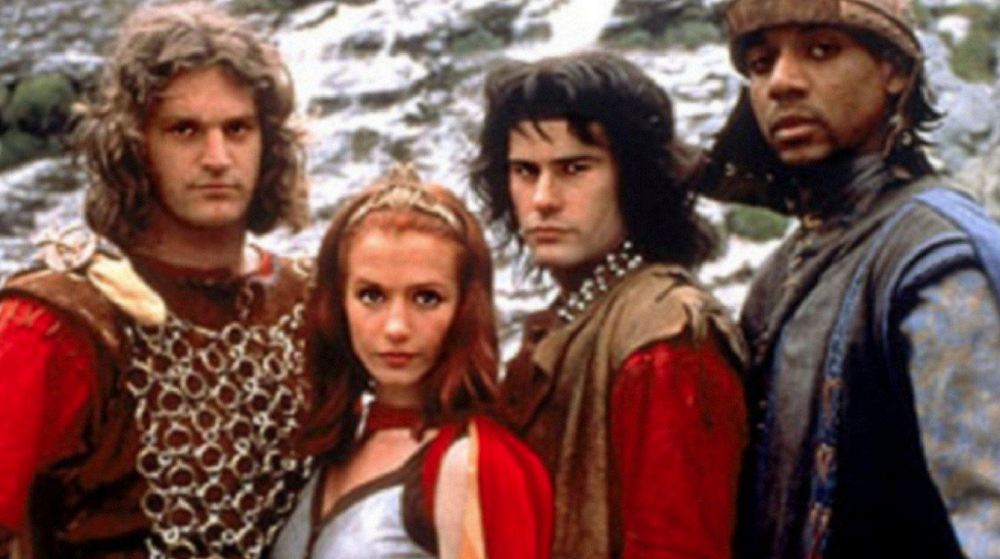
Mystic Knights of Tir Na Nog, 1998

Ah, telephemera… those shows whose stay with us was tantalisingly brief, snatched away before their time, and sometimes with good cause. They hit the schedules alongside established shows, hoping for a long run, but it’s not always to be, and for every Street Hawk there’s two Manimals. But here at STARBURST we celebrate their existence and mourn their departure, drilling down into the new season’s entertainment with equal opportunities square eyes… these are The Telephemera Years!

1998-99

Back in the last millennium, there was this thing called Must See TV, where NBC put ALL the best shows in one three-hour block and dominated the lives of everyone with a television. Friends, new Christina Applegate vehicle Jesse, Frasier, Veronica’s Closet, and ER were all the TV you needed, although the usual news and football was also on offer for anyone not tickled by NBC’s powerhouse line-up. Jesse wasn’t the only new show that NBC threw at viewers; they also had Will & Grace tucked in their back pocket. The other big new arrivals were over on HBO and Fox, where Sex and the City, Family Guy, and Futurama all hit the screens for the first time.

There were plenty of shows going the other way, with Home Improvement, Due South, Homicide: Life on the Street, Mad About You, and Baywatch entering their final runs, and genre fans had particular cause to feel aggrieved as the axe was about to fall on Millennium, Star Trek: Deep Space Nine, and Hercules: The Legendary Journeys, with only Third Wave and Farscape on the docket to replace them. That was what the adults were watching, anyway, but the young – and young at heart! – had some interesting diversions of their own…

Mystic Knights of Tir Na Nog (Fox): By 1998, Saban Entertainment were flushed with the success of Mighty Morphin’ Power Rangers and its lesser siblings, Big Bad Beetleborgs, VR Troopers, and Masked Rider). Deciding to branch out into producing their own live-action footage, rather than the imported Japanese fight scenes that had been cut into American teen drama for its other shows, they developed a brand new show for the 1998 Fox Kids line-up.

Dipping into Irish mythology, Haim Saban came up with Mystic Knights of Tir na Nog, five young people entrusted with superhuman weapons and abilities who are fighting to free their unnamed island from the clutches of evil Queen Maeve. Each episode sees the young friends come under attack from Maeve and her monsters of the week in pretty much a retread of every other Saban show you’ve ever seen, but more Irish

Mystic Knights of Tir Na Nog, 1998

Actually filmed in Ireland, with an Irish and British cast of mostly newcomers, the first episode – “Legend of the Ancient Scroll” – aired on September 12th 1999 and seemed to strike a chord with Saban’s usual audience, helped along by a range of action figures produced by Bandai. Over fifty episodes, the first season unfolded to add friends and foes to the cast, ending with a titanic clash between mystic knight Rohan and Queen Maeve that sees – SPOILER! – good triumph over evil.

A second series, entitled Mystic Knights: Blood and Thunder, was planned but Saban felt the ratings didn’t justify the increased expense of producing the show wholesale and instead used its budget for more Power Rangers fare. Most of the cast are still working but only Lisa Dwan – Princess Deirdrie – has gone on to have anything resembling a successful career, starring both series of the BBC drama Top Boy.

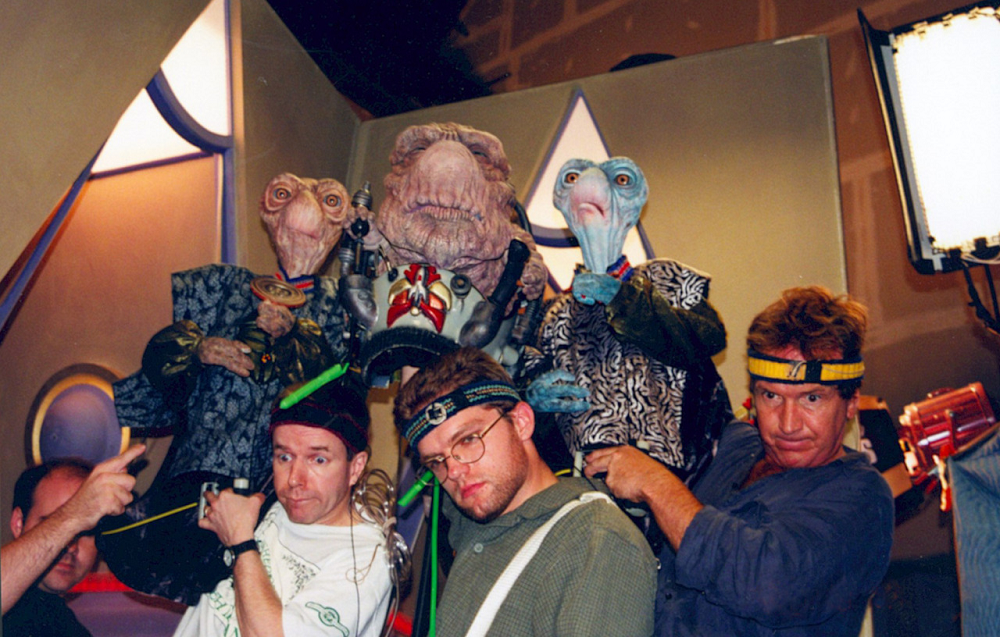
Brats of the Lost Nebula (The WB): Created by Ninja Turtles: The Next Mutation staff writer Dan Clark, Brats of the Lost Nebula became one of only two live-action shows to air on Kids’ WB when it premiered on October 10th 1998. Produced in association with The Jim Henson Company, the show featured a mix of puppetry and computer animation that was innovative at the time and rarely seen since.

The titular Brats were five children, orphaned by war on their home planets and thrust together in a search for the rest of their peoples, all the while trying to avoid the attentions of The Shock, an evil force of invaders from another galaxy. Clark served as executive producer, along with Brian Henson and Henson Company President Margaret Loesch, who had just stepped down from running Fox Kids.

Brats of the Lost Nebula, 1998

Their combined pedigree earned Brats of the Lost Nebula a thirteen-episode order from The WB but the network were less than enthused with the results and removed the show from the schedules after just three episodes, although Canadian partner YTV did air the entire run through to January 1999. The WB were adamant they hadn’t cancelled the show but it did not return during the 1998-99 season, and there was no sign of it for Fall 1999.

Clark was reported to have been working on a direct-to-video sequel to the show in 2002 but nothing ever came of it. He later created Los Luchadores for Fox Kids, and Team Smithereen for Disney XD, and is currently working on FriendZSpace for Apple TV.

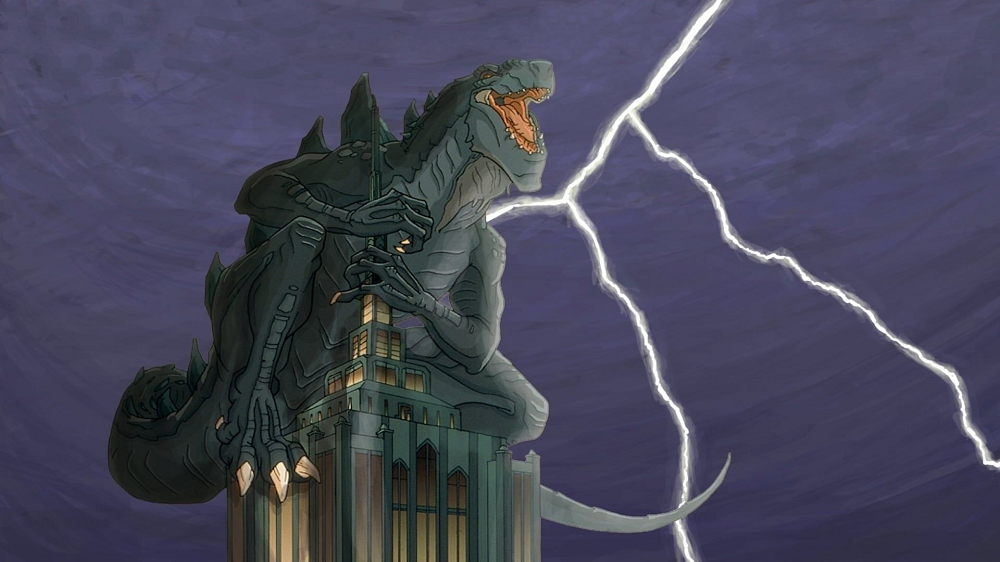
Godzilla: The Series (Fox): Although it was officially a sequel to Roland Emmerich’s 1998 movie, Godzilla: The Series also took inspiration from the 1978 Hanna-Barbera cartoon series, presenting a giant monster that was a friend to mankind and – in particular – one young man. Rather than Pete Darien and the crew of the Calico, this Godzilla “imprinted” on intrepid scientist Dr Nick Tatopoulos (voiced by Beverly Hills 90210’s Ian Ziering), following him and his crew around as they sought to mitigate the damage caused by monsters hatching all over the world.

The series was developed by former NBC executive Jeff Kline and Richard Raynis, who won six Emmys for his work on The Simpsons, and the two had previously worked on other film to TV transfers such as Jumanji and Men in Black. Their vision for Godzilla was one more faithful to the original movies than Emmerich’s treatment, which had been derided by fans of the property and has subsequently been banished to non-canonical status.

Godzilla, 1998

Their Godzilla always seems to know when Nick is in danger and is willing to fight the monsters on behalf of mankind, having no living relatives of his own species. He tussles with such kaiju as giant squids, mutant worms, robotic insects, and even Quetzalcoatl itself, created either a result of ecological disasters or by the sinister forces of Nick’s old college roommate Cameron Winter and his evil allies, including the alien Leviathans.

The first season of Godzilla: The Series premiered on September 12th 1998 and did well enough that Fox commissioned a second series. However, the show was caught up in the ongoing battle for supremacy between Pokemon and Digimon, often finding itself tossed around the schedules for late-programmed Digimon marathons, and two of its forty episodes went unaired in first run due to this kind of messing around. Still, the show retains a solid fandom, although subsequent anime returns to the world of the big green monster have eclipsed its legacy.

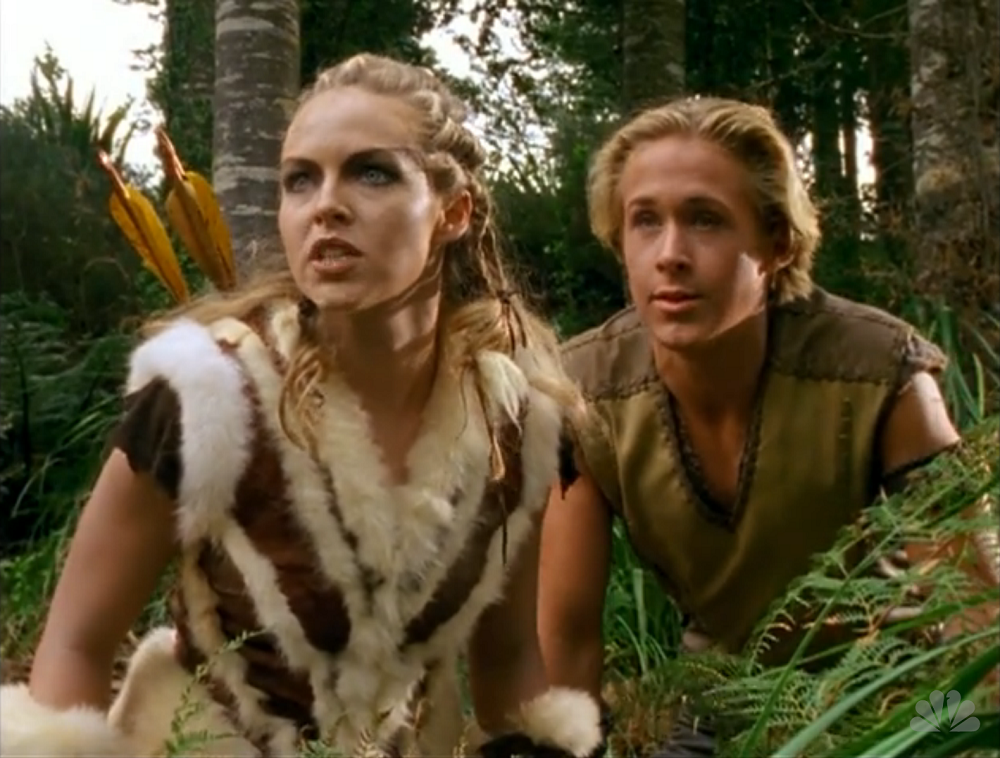
Young Hercules (Fox): From sequels to prequels and Young Hercules, being the adventures of the titular demigod before he became Kevin Sorbo (and before Sorbo became the reactionary right-winger reduced to starring in Christian movies). The focus of the series was Hercules’s entrance into the Cheiron Academy run by Nathaniel Lees’s friendly centaur, where he befriends future sidekick Iolaus and future Argonaut-wrangler Jason.

A pilot was shot with Ian Bohen, who had appeared as the young Hercules in flashback scenes featured in Hercules: The Legendary Journeys, but he was replaced early on in production for the full series by a seventeen-year-old Ryan Gosling, who had recently graduated from The Mickey Mouse Club to Nickleodeon shows as Are You Afraid of the Dark? and Goosebumps. Gosling trained with Sifu Wong, the same martial-arts trainer who’d taught Sorbo and Lucy Lawless to screen fight, and moved to New Zealand to film the show, which had special effects prepared by Wellington studio Weta.

Young Hercules, 1998

Weta left the project soon after, preferring to work with Peter Jackson on his Lord of the Rings trilogy, as did many of the crew and background actors used on the show. Still, production continued and saw Hercules encounter the whims of the gods for the first time, finding himself a pawn in the ongoing battle between his uncles, aunts, and half-siblings.

Fifty episodes were produced, airing on weekdays at 4.30pm as part of the Fox Kids block, with some weeks including Saturday mornings to add six new weekly episodes to the already-airing Hercules and Xena: Warrior Princess shows. Ratings were strong – it was Fox’s second highest rating live-action kids show behind Power Rangers  – but it was an expensive show to produce and wasn’t renewed for a second season. Gosling, of course, went on to have a huge career in Hollywood and would probably rather Young Hercules stayed off his résumé, but he can rest assured that – if things get Sorbo tough – there’s a lifetime of appearances at comic cons waiting for him…

Next time on The Telephemera Years: We go waaay back to the years before the great colour transition of 1965…

Check out our other Telephemera articles:

The Telephemera Years: 1966 (part 1, 2, 3, 4)

The Telephemera Years: 1967 (part 1, 2, 3, 4)

The Telephemera Years: 1968 (part 1, 2, 3, 4)

The Telephemera Years: 1969 (part 1, 2, 3, 4)

The Telephemera Years: 1971 (part 1, 2, 3, 4)

The Telephemera Years: 1973 (part 1, 2, 3, 4)

The Telephemera Years: 1975 (part 1, 2, 3, 4)

The Telephemera Years: 1977 (part 1, 2, 3, 4)

The Telephemera Years: 1978 (part 1, 2, 3, 4)

The Telephemera Years: 1980 (part 12, 3, 4)

The Telephemera Years: 1982 (part 1, 2, 3, 4)

The Telephemera Years: 1984 (part 1, 2, 3, 4)

The Telephemera Years: 1986 (part 1, 2, 3, 4)

The Telephemera Years: 1987 (part 1, 2, 3, 4)

The Telephemera Years: 1989 (part 1, 2, 3, 4)

The Telephemera Years: 1990 (part 1, 2, 3, 4)

The Telephemera Years: 1992 (part 1, 2, 3, 4)

The Telephemera Years: 1995 (part 12, 3, 4)

The Telephemera Years: 1997 (part 1, 2, 3, 4)

The Telephemera Years: 1998 (part 1, 2, 3)

The Telephemera Years: 2000 (part 1, 2, 3, 4)

The Telephemera Years: 2003 (part 1, 2, 3, 4)

The Telephemera Years: 2005 (part 1, 2, 3, 4)

The Telephemera Years: 2006 (part 1, 2, 3, 4)

The Telephemera Years: 2008 (part 1, 23, 4)

Titans of Telephemera: Irwin Allen

Titans of Telephemera: Stephen J Cannell (part 1, 2, 3, 4)

Titans of Telephemera: DIC (part 1, 2)

Titans of Telephemera: Hanna-Barbera (part 1, 2, 3, 4, 5)

Titans of Telephemera: Kenneth Johnson

Titans of Telephemera: Sid & Marty Krofft

Titans of Telephemera: Glen A Larson (part 1, 2, 3, 4)

Titans of Telephemera: Quinn Martin (part 1, 2)

Titans of Telephemera: Ruby-Spears

Neil Marshall | THE LAIR

by Andrew Dex

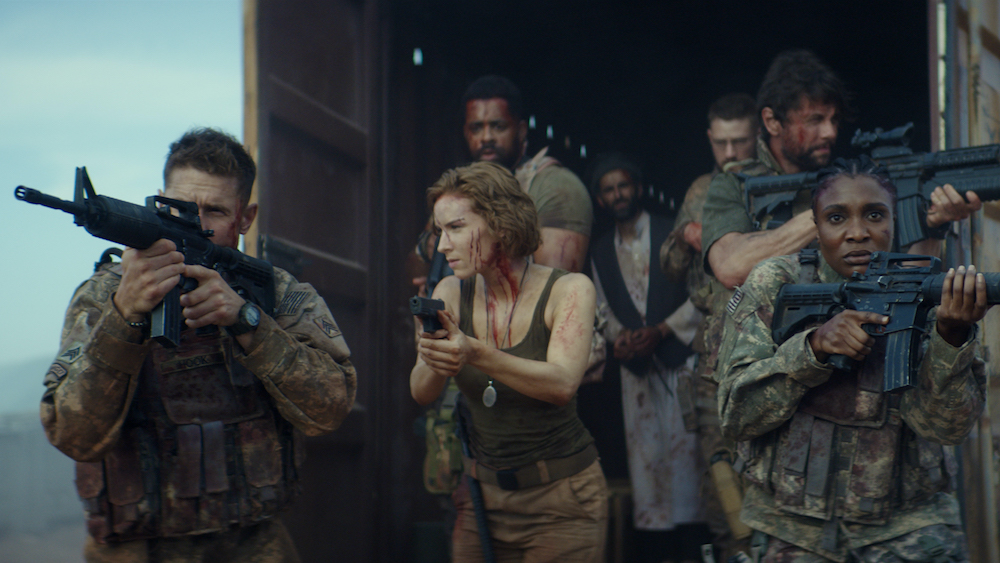
After a successful decade in the TV realm, taking on huge projects such as Game of Thrones and Lost In Space, director/writer Neil Marshall has now fully returned to the movie format, to bring us some more of his classic horror style! Collaborating with actress/writer Charlotte Kirk (The Reckoning) once more, Neil is back with The Lair, a monster-filled movie based in Afghanistan. Confirmed by Neil as a distant cousin to Dog Soldiers, The Lair sees Neil amp up on gore, action, and gallows humour like one-liners…

STARBURST: This is your latest collaboration with Charlotte Kirk. Can you tell us about how you first started working together and how this then led to the creation of The Lair? 

Neil Marshall: I guess we first started working together when we were just literally sitting around talking about ideas, stories we’d like to tell, films we’d like to make, and things like that. The first one that originated was actually the film that we did last year, a film called Duchess, which we’ve shot, but it hasn’t come out yet. Then after that, we wrote The Reckoning, and then we wrote The Lair. That came about basically because of COVID. At the time, we were stuck in LA, and a friend of mine approached me and said, “I know some friends who have a house in the desert; maybe we could put a little crew together and shoot something around this house in the desert? Would you fancy that?” And that came and went very quickly. It was a nice idea, but it never happened. But something stuck in my head like, “Well, during COVID, maybe we could shoot something in the desert? Maybe it could be like about some home invasion or something like that!” As always happens with me, what started out to be a very low-budget, simple idea of like a home invasion in the desert, suddenly became, “Oh, it’s in Afghanistan, and it’s Aliens! There are underground complexes!” I started throwing in ideas from other scripts that I had had for ages about this underground lair and stuff like that. Bit by bit, it just expanded into this B-movie, war movie, alien movie thing. So yeah, that’s how it came about.

Can you tell us about what Charlotte brought to The Lair as Capt Kate Sinclair, and what kind of military training she had to do for the part?

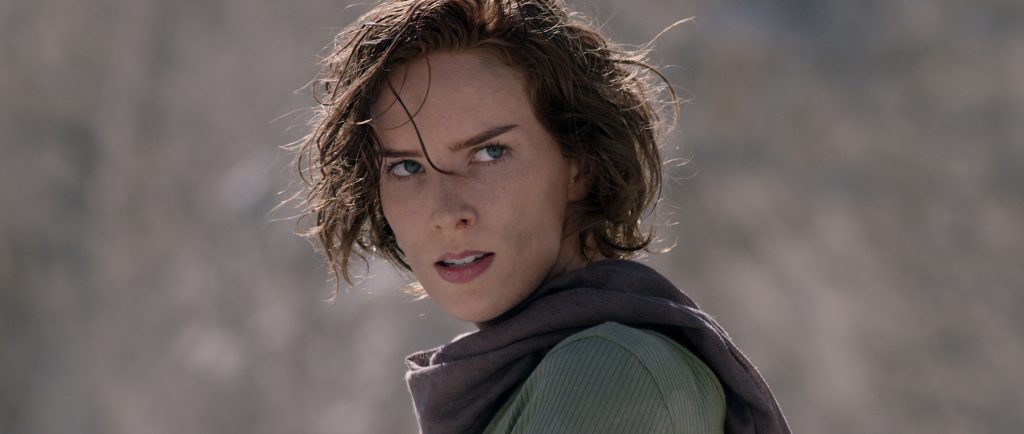
I was trying to get her to go up in a tornado, but we didn’t manage to arrange that, but otherwise, we found an RAF pilot who she did a lot of research with. She interviewed, talked to, and got a sense of the language and the whole vibe of the thing through that. Then we did a lot of action training for the film, fight training, and weapons training which is the main thing, because, as I discovered when making it, because it’s an all-British cast, not many British actors have experience handling firearms. You go to the States, and like every actor, at some point, has done a cop show, or a movie, or something like that. They’ve all handled firearms at some point. Over here it’s a lot less prominent in the industry, in some cases, it was an actor’s first time even seeing a firearm, let alone even handling one. So we had to go through some rigorous training with all of them, through like a boot camp of military training, and weapons training, and stuff. Charlotte did all of that as well. Obviously, she cut off all of her hair, stuff that actors do for their roles. Just to give a different look from The Reckoning and things like that. She really got 100% into the role.

The start of the movie instantly felt like The Thing, with the music and the way it was shot. Can you tell us about the movies that inspired The Lair, and maybe how you wanted the overall tone to feel for the viewer?

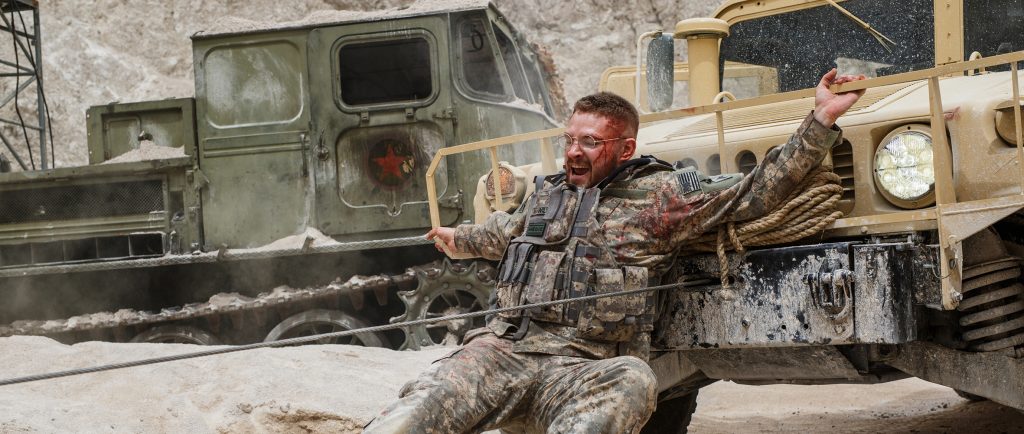
The overall tone I wanted to feel like a classic B-movie, I grew up with those great B-movies like Alligator, and later on, things like Anaconda and stuff like that. They’re great monster movies, but they’re just meant to be entertaining. They’re not striving for any kind of pretensions at all, they’re just meant to be fun and entertaining, and I love those kinds of movies. I thought that I just wanted to make a full-on B-movie, with monsters, and soldiers, and larger-than-life characters, with things like that in it. So that was kind of the origin of it. Then obviously, I’m inspired by movies like The Thing, certainly. Both versions. The original, and the Carpenter one, obviously the Carpenter one, is a lot darker and more serious, but the first one is like a classic B-movie in its own right. And Aliens, anything with soldiers, so, and I call it a distance cousin to Dog Soldiers because it kind of exists in a similar universe, with soldiers fighting monsters, it has that kind of vibe to it. So that was the thing. I wanted to make something that was just fun. My previous film, The Reckoning, had got bogged down in maybe being a little bit too serious, trying to tell a worthy story. I think it does tell a worthy story, but after doing that, I was like, “No, I just want to have some fun and give the audience some fun, let’s explode some heads and do lots of fights and explosions, and stuff like that.”

Neil Marshall | THE LAIR

In a similar vein to say, Aliens, where you’ve got Hudson and his humour-filled one-liners, there’s a similar feel with The Lair! How do you balance outrageous one-liners like that with a plot that is actually, truly terrifying?

I think the lines only work if they come from the character. Like, they have to emerge from the character because Hudson was that guy. So anything he said makes sense for his character, so it’s the same for this, and it’s the same for Dog Soldiers, and it’s the same for everything. It’s like, the best kind of humour in these situations emerges from character, and I find that people under extreme duress, and extreme pressure, sometimes their sense of humour inherently shows through it. It’s gallows humour, it’s trench humour, which I really love, and it’s a very kind of British thing as well. But yeah, that kind of gallows humour. I think it’s really funny. And then giving some of the best lines to the least obvious candidate, the Afghan freedom fighter guy who is like cracking some of the most choice lines.

Great! So can you tell us about how the look of the Ravagers originally came together, and what did you really want to see from them on-screen?

Teeth! Mostly. Yeah, I kind of wanted to. You take away things like eyes and stuff like that and just leave, essentially, teeth. They’re alien, so you don’t really know how they see or sense things around them. It’s like, “Let’s just leave that to the imagination”, and I thought, well “Let’s give them a kind of built-in body armour of, like, skin that’s as thick and as tough as Kevlar; we can shoot them a few times, and they’re going to get up, and come back again.” So there are a lot of elements behind the design process, like when the guys would design the whole thing, I was like, “Can we do this, can we do that?” There’s a specific phobia called trypophobia, a fear of textures that have lots of holes in them. You’ll see it online; it’s like certain textures that have lots of holes in them. People have a real phobia of it, and it makes them want to vomit. So I thought, how could we apply that to the creatures, so their face came from a thing, where it’s just like, loads of holes, and things come out of the holes, and stuff like that. So the design idea there was if they look so repulsive, then some people will have a physical reaction to it, so that’s pretty good.

You’ve always been a huge fan of practical effects. That is quite clear from the projects you’ve worked on. So, we have to ask, what do you love the most about working that way, and what has practical effects brought to The Lair?

It’s just that ability to have the creature in the room with you when you’re filming it, and interacting with the actors, interacting with the light, interacting with the dust, and the dirt, debris and god knows what else is flying around on set, and you get happy accidents. You get things happening that if you contrived it in CGI, then everything would be perfect. Whereas you get happy accidents of things bumping into things, reactions to things. Which I love about practical effects. It holds up on camera because it is there, it’s not faked in any way, and so I just kind of used the same technique that Guillermo does on his movies, where you do like 90% practical, and then enhance that practical with some CGI stuff, be it like blinks, eye movements, things like that. In my case, it was with the mouths, I wanted the mouth to open wider than it possibly could, so we did a few CG shots, where we extended the jaw and put an extra set of teeth in there and things like that. But those are the only kind of CG enhancements to something I’ve done practically on set. The other thing is, I don’t know how many ravagers you thought there were in the film, but we only had two suits. One hero suit and one backup suit. So we managed just to do editing, and a couple of visual effects duplication shots, to make it look like there were a lot more. When you find out that James Cameron only had eight Alien suits for Aliens, it’s like, right, you can work wonders!

You put this movie together in Budapest. Can you elaborate on what it was like to work there and how you went about making it feel like the middle of Afghanistan?

That’s the thing, you wouldn’t look at it and go, “Oh, that’s Budapest.” We just worked in Budapest on The Reckoning, so we knew the infrastructure there, and we knew there was a good kind of tax credit and incentive to go there. I was dubious at first because I was like, “Why aren’t we going to Morocco, or why aren’t we going to Jordan or somewhere like that.” They were just too expensive at the end of the day, so we went out to Budapest, I was a bit cynical, and we started doing a tour of all of the major quarries near Budapest. Outside of town, we found these really massive quarries, and in the summertime there, it was like 40 degrees heat anyway, so we had the sunshine, we had the heat, and we had the dust and the quarries, and then just with some very clever visual effects, set extensions were added into the surrounding desert for the shots that needed it. I mean, the actual fort, we built that on top of a hill, next to a quarry. It was surrounded by green fields and things like that. In the movie, we managed to make the few shots that you can see in its situation. We replaced all of that with desert. These visual effects guys are phenomenal. I don’t even ask how they do it, but if it looks good, I’ll take it!

What was that particular scene when the team are examining the Ravager like to work on, and is there anything special you did to capture it?

I don’t know if I’ve seen many films like that, but at some point, I just thought, “Wouldn’t it be awesome if this Ravager that was there with its guts hanging out, suddenly woke up, and attacks them, right when you least expect it.” So I thought that would be a lot of fun, and then when we shot it, we ran it several times, it was absolutely hilarious, that moment when it gets up, and everybody is running, diving, bumping into each other, screaming, and shouting. You’ve got somebody trying to hit it and blow it up, stuff like that. We ran that as a master shot from a few different angles. Each time it just got more and more hysterical and hilarious. I wanted that energy in the film; I wanted that, from going into a very quiet scene, as you said, this is one that very much is a homage to The Thing, like the autopsy scene, where they’re pulling its guts out, and all of this stuff, they think “It can’t be alive now” and then boom, it suddenly comes alive.

And going on from that, and this might be a tough question, but what was your personal favourite scene to put together in The Lair, and why?

Well, I do like the scene we just spoke about. It was a lot of fun. I kind of liked the madness in the elevator at the end because it was an idea I actually conceived of for The Descent: Part 2, which got rejected for budget reasons or whatever. So I kept this idea in the back of my pocket of being stuck in an elevator that is hooked up to the winch on a car, and then the elevator gets stuck, and it drags the car into the elevator shaft, and everything is kicking off in the elevator before the car crashes down the elevator shaft, and I thought that that was a lot of fun. I just like that idea of like lots of different things going on, and one thing leads to another, leads to another, etc.

You and Charlotte have a couple more movies coming up together. At this point, is there anything you can tell us about these upcoming projects?

So yeah, we shot Duchess last summer, it’s all finished, and it played in Cannes. We’re just looking for a distributor on that one at the moment, that’s a violent gangster movie, and then we’ve just finished filming a thriller out in Malta. It’s like a slasher movie, an erotic thriller kind of thing. So we’ve only just finished filming that, and we are editing that at the moment.

THE LAIR comes to Blu-ray, DVD, and digital on July 17th