by Andrew Dex
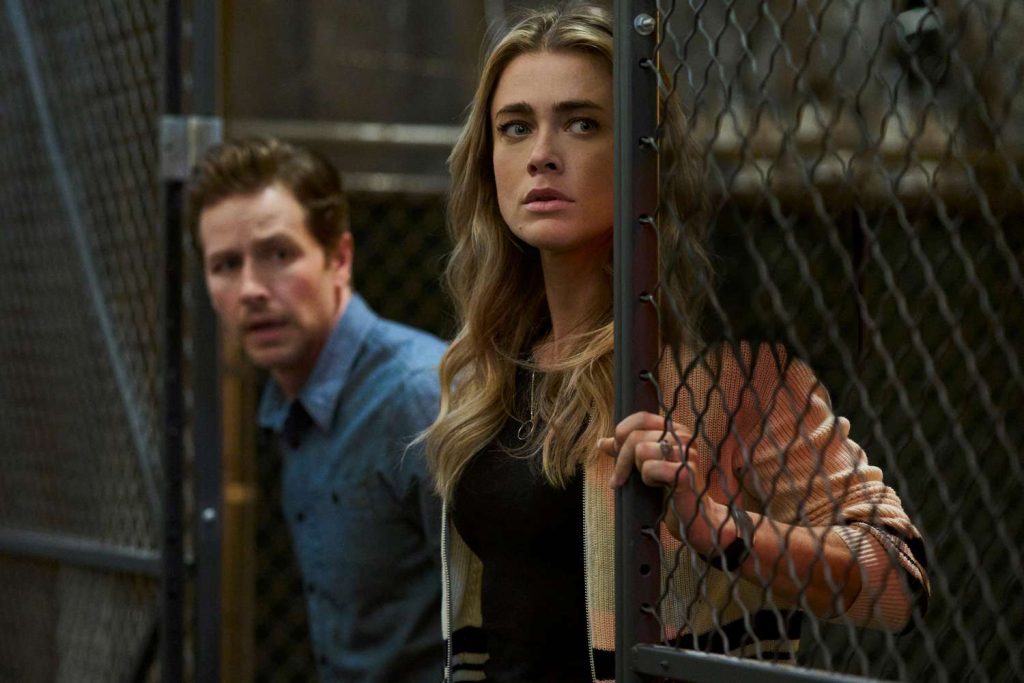
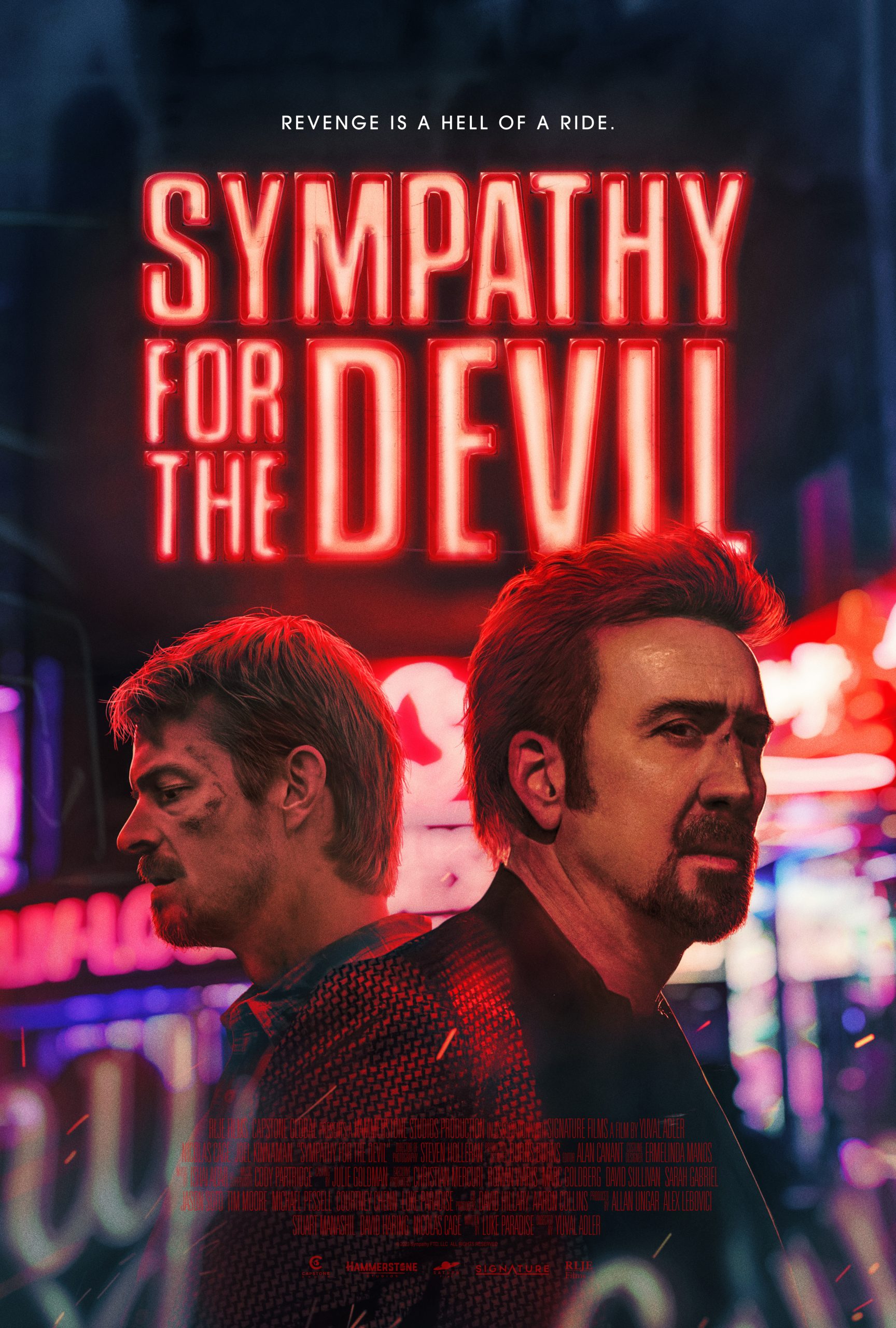
When a character known as The Driver (Joel Kinnaman) attempts to park at the hospital for his pregnant partner, things quickly take a dark turn as a mysterious person, known only as The Passenger (Nicolas Cage) enters the back seat of his car with a weapon. Sympathy for the Devil sees The Driver being commanded around Las Vegas and beyond, and with a great dynamic between the two leads, we get an unpredictable watch! STARBURST talks with Sympathy for the Devil director Yuval Adler (The Secrets We Keep/Bethlehem) to find out how he got involved with the movie, what the main leads were like to work with, and how he went about capturing a tone that lives in transit…
STARBURST: Can you tell us about how you first got involved with Sympathy for the Devil and what it was like to work with its writer Luke Paradise?
Yuval Adler: It’s a strange story how this film came together. What happened was, after my first film, Bethlehem, came out like ten years ago, I had this moment in Hollywood where you read ten thousand scripts, but a lot of them were horrible. However, I did read two great scripts, Sympathy for the Devil, and another horror film. I pitched myself for both, I did a lot of work, but I didn’t get both of them because they’re not like Bethlehem, so I didn’t get them, that’s how it works. With Sympathy for the Devil, I remembered the script, and two–three years later, I was wondering if it got made. I looked on IMDb, and it was still not made. So I emailed the producer and became friendly with them, and they said that they were still working on it, it’s here, it’s there, this guy is attached, that guy is attached, it’s in development hell. Three years later, the same thing. Then the third time I asked, probably in 2021, they said that they lost the option, it all fell apart and went back to the writer. So I was like, “Really, interesting!”
So, I contacted Luke directly, and I said, “Look, I’m a director. You tried working with producers, they want to make the film, but there are also money constraints that I don’t have. I’ll make it for no money” I sold myself, and I got into it through my scare money. So at the end of 2021 or the beginning of 2022, I showed it to Alex Lebovici through my manager, who immediately loved it, and we decided to put it together. This can take many years, we were told Joel was available who I worked with, and Joel knew me, and he said “Let me read it” and he suddenly wanted to do it, and he had availability in August, and then Nic was available. It came together incredibly fast. Like a fairytale, it can sometimes take 10-20 years, but with this one, once I got it, it suddenly came together in a couple of months.
I worked with Luke on it; I’m a writer – that’s basically what I do – I get up in the morning and write, so I’m very sympathetic to writers, and I always keep them in the picture, and he was not so used to it, because with writers, sometimes once they get your script, they don’t care about you. I would send him stuff and say, “What do you think? Let’s do this?” and he was like, “I don’t know, but thank you for asking me!”

What do you like so much about working with Joel Kinnaman, and what did you want to see from The Driver?
With Joel, it’s a funny story because Joel came to The Secrets We Keep, and on that, we didn’t get along, we had clashes on the set. To the point that in the middle of shooting, we had to go and have a coffee and straighten things up. Otherwise, we were in trouble. It’s funny because after that, we actually became friends, and we started to look for stuff to do together. So this film came, and he was on the top of our list when it came to who we wanted to offer The Driver role to. I could go to him directly and say it to him, but it came from the agent who told us about his availability in August. I already knew Joel, and I already had a rapport with him. My only worry was that Joel is kind of a strong character like he has such charisma, I didn’t want The Driver to feel like any way from somebody from The Suicide Squad. I wanted him to be like a substitute teacher, like a guy who disappears into it. It could be somebody that like Paul Giamatti would play, but Joel did it, he disappeared into this role, with his mannerisms, the way he was holding his body, everything. And then it kind of gives him the opportunity to make these big changes at the end and throughout the film. So that was the challenge for me, to have Joel kind of disappear into this very mundane, the existence of this very, kind of unremarkable guy. The one that we meet in the beginning.
Nicolas Cage is well-known for his energetic performances. How fun was it to work on an equally crazy character within your own movie, and what did he bring?
It was great; he immediately connected to the character of The Passenger. Our thought was that this character goes through a few phases, it’s much more thrillery and terrifying in the beginning, and he then becomes more of a Joker guy. He is terrifying, but he is funny, and then later on, there’s much more of an emotional thing going, but in a way, this transition between the three things and letting him go, in the sense that we already had a bunch of moments with dark humour, but to add to the humour, to push. With Nic, what would happen is that a lot of times, either we added stuff in rehearsal, and he comes up with tons of ideas all of the time, like a volcano, “Let’s try this, let’s say this” etc. Or on the set, you just don’t say cut, I learned that, I didn’t say cut, and he would go on, he would just try things. I would be behind the monitor just cracking up, he would say something and give you a look to confirm if it’s good, and I’d be like, “Yes, more!” and he would just go and do stuff that was funny. You would sit there, as his first audience in a way, just sitting there and reacting behind a monitor. So yeah, it was quite an experience. A lot of those funny moments were created on the set through improvisation and through his brilliant process of going off on his tangents.

And can you tell us about the filming process, especially when you captured those scenes in the car? How hard was that to shoot as a director and bring to life?
It’s a challenge because it’s a new technology, LED Volume technology, with all of those wrap-around screens of LED. It took us time to figure out how to work this. We were all new to it; even the studio that hosted us was new to it. We had 35 minutes in the car, which is a lot, and how do you connect what you see outside in the world with what you project in the studio and what you see with the car outside in the world? So we had to charter the whole drive, and then shoot plates for the whole drive, you know, with the car with eight cameras around, and then project it when the actors are inside, and then take a real car, drive outside, make all of the stuff that you see outside, the whole thing has to match. That was a huge technological challenge. It looks amazing compared to a blue screen. It’s all of these reflections and lights. Once you get it working, it allows you to shoot seven or eight pages a day, which is insane. It’s so fast because they are sitting, and it’s all working. However, to get it to work was incredibly difficult.
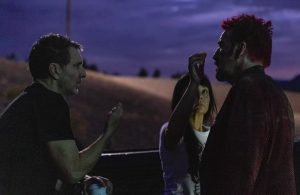
Sympathy for the Devil is out now in the US and screens at Pigeon Shrine FrightFest on August 27th.