A Taste for THE DEVIL’S CANDY

devil's candy

Australian director Sean Byrne might only have two feature films to his name, but it’s certainly a matter of quality over quantity. His 2009 debut The Loved Ones is Ozploitation at its finest. Making able use of a single location, the story of a spurned young woman seeking revenge on the classmate who turned down her prom invite is a potent mix of physical violence and mental manipulation that still manages to shock a decade after its release. That said, The Loved Ones has a sense of humor that one might not be clued into at first. The film’s poster – with Lola (Robin McLeavy) in a prom dress and paper crown, holding a portable drill – seems to indicate that this is more torture than humour, but there are undoubtedly some laugh out loud moments in Byrne’s script, with the audience gasping just as much at the absurdity of the situation as they are the brutality. Thus, when Byrne’s follow-up, The Devil’s Candy, finally saw wide release in early 2017, audiences thought they were ready for it.

They weren’t.

That’s not to say the response to The Devil’s Candy wasn’t positive, because it certainly was, but while The Loved Ones was a pastel palette, soundtracked with candy floss pop songs, The Devil’s Candy is a blood-red satanic heavy metal nightmare. Just a glimpse at some of the musical acts playing in the background and foreground of the film is a who’s who of classic headbanging jams: Metallica, Slayer, Pantera, Ghost, Sunn O))), and Machine Head, to name but a few.

Maybe it’s because Byrne’s film played festivals and then ended up heading to VOD, without much of a big theatrical push, but the surprising thing about The Devil’s Candy is how much of a proto-Mandy the film is. Certainly, the soundtrack plays a big part in the comparison, as Sunn O)))’s Stephen O’Malley played guitar on the Mandy score, and the work by musician Vivek Maddala in the opening scene is sure to ring familiar to anyone who’s played Jóhann Jóhannsson’s score for Panos Cosmatos’ 2018 film.

The respective plots for The Devil’s Candy and Mandy differ substantially in the details, but a short gloss of the plot of each reveals similarities. For example, the official plot summary for Byrne’s film from IFC Midnight is as follows:

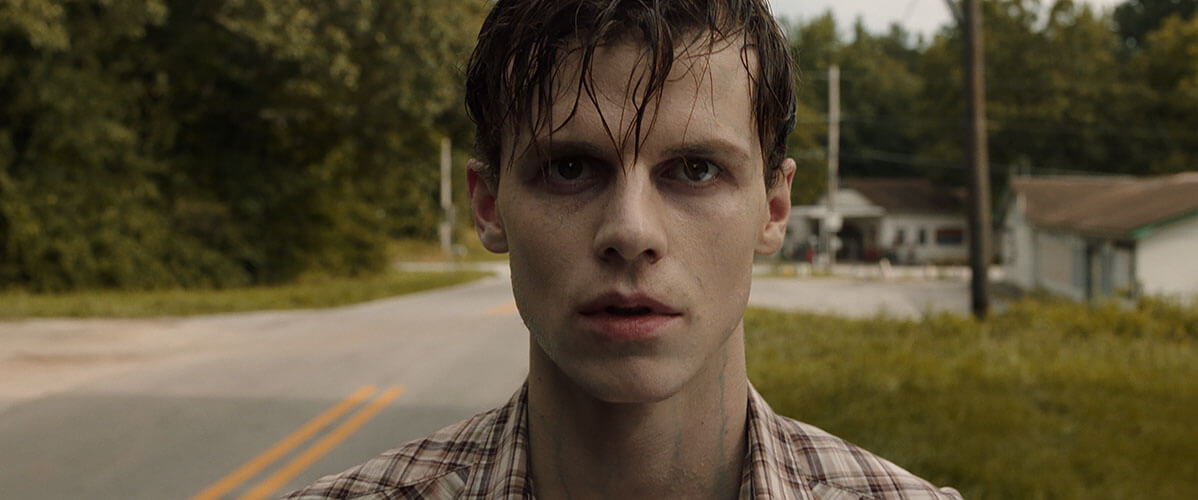
A not-so-average family wrestles with Satan in a house from hell in this heavy metal-charged shocker from the director of The Loved Ones. Diehard metalhead and struggling artist Jesse (Ethan Embry) moves with his wife (Shiri Appleby) and daughter (Kiara Glasco) to a middle-of-nowhere Texas town, unaware that the new house they got for an unbelievable deal comes with a grisly history. Disturbing demonic goings-on culminate with the appearance of Ray (The Walking Dead’s Pruitt Taylor Vince). He’s the home’s former resident, and he’s here to do the Devil’s bidding.

Let’s see: there’s artistry, a mysterious man invading the home located out in the middle of nowhere and attacking a loved one, revenge, big doomy metal riffs, and a lot of red light, fire, and evil imagery which may or may not be hallucinations. That’s certainly something. However, while the plot of Mandy is about one person’s love for another, The Devil’s Candy is definitely a more multifaceted film. In Cosmatos’ movie, Red (Nicolas Cage) has a pleasant existence, his girlfriend Mandy (Andrea Riseborough) is murdered by Jeremiah Sand’s (Linus Roache) Children of the New Dawn, and then he goes on a revenging rampage. There’s a lot of psychedelic imagery, but it’s otherwise a pretty straightforward revenge film.

For The Devil’s Candy, however, there’s Jesse’s attempt to make a living as an artist, which requires doing butterflies on a field for a bank, when he really wants to be accepted by Leonard (Tony Amendola), the owner of an Austin art gallery named Belial. It’s only when Jesse and his family move into the house where Ray murdered both of his parents after hearing the voice of someone only known as ‘Him’ that Jesse’s art transforms into something more.

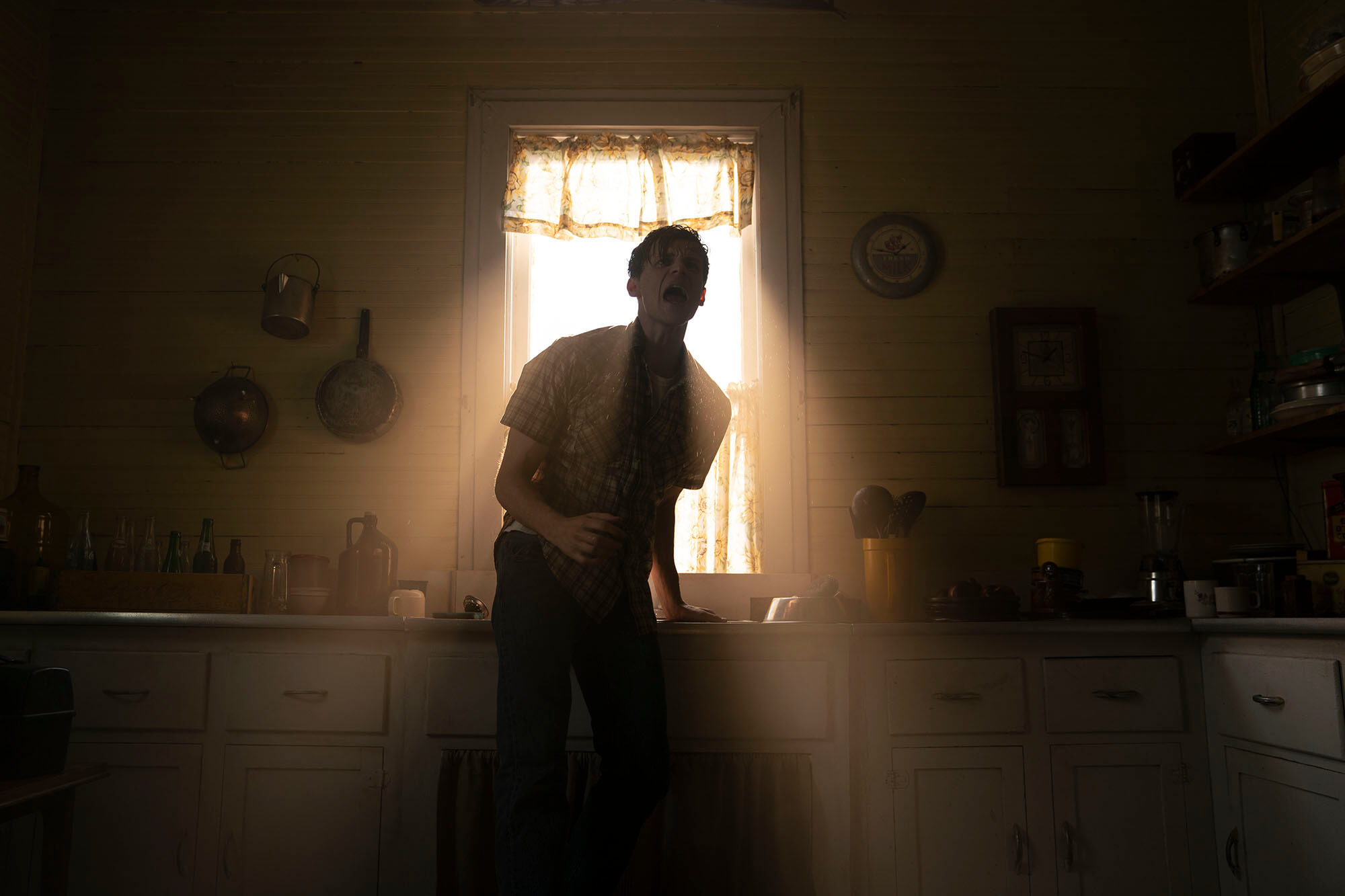
Possibly Jesse is hearing voices – maybe it’s Him, perhaps it’s madness, maybe it’s the visions of the children Ray is murdering and burying in suitcases in the woods, but there’s something going on. When Jesse’s daughter, Zooey (Kiara Glasco), is kidnapped by Ray, who then attacks their home after Zooey escapes, it becomes a fight for survival amongst the flames.

In an effort to make sense of it all, we reached out to Jesse himself, the actor Ethan Embry, who was kind enough to talk about his vision of The Devil’s Candy, and some of the behind-the-scenes decisions that went on. He was pretty clear about how the location of where The Devil’s Candy was filmed had an influence over the making of Sean Byrne’s movie. “You have the major cities of Texas – Houston, Dallas, Austin, and San Antonio – and then, as soon as you get out of those, the vibe, the legal system – everything – changes,” Embry explained. “And we were just a few miles outside of Travis County, which is where Austin is, and it was completely different. It changes quickly, there.

It effected more on the production side than it did for Embry’s role as Jesse, however. The film was shot under the name Babylon, due to the fundamentalist nature of the area in which it was being made. “You go, ‘We’re making a movie, and it’s called The Devil’s Candy,’ you’re going to get some resistance and people are going to want to read it,” offers the actor with a laugh. After some discussion regarding the many, many tattoos Embry sports as Jesse, wherein the actor said that a good number of ‘biker-looking’ ones were his (although the spine tattoo from next to lower back had to be applied every day), we get into the nitty gritty of the film’s plot. Depending on how one views The Devil’s Candy, it can either be seen as madness borne out of a location, or it could be actual devils and demons wreaking havoc. Either way, Satan never makes a physical appearance. “I would talk to Sean a lot about that while we were doing that,” Embry says of his initial impression of the storyline. “I was like, ‘I still don’t know if you’re saying Satan’s real or if I’m crazy and if Ray is crazy,’ and Sean would say, ‘Yeah, do that, because I like that tone.’

Byrne would go on to point out to Embry that, when Jesse discovers the children, whose agonised faces he’s been painting, buried in suitcases that obviously meant something spoke to Embry’s character. That was a real, concrete connection, and that’s Byrne’s interpretation, but Embry leans more to the take that Jesse and Ray were just crazy. “That’s what I believe, but then, you do have that thing, where the buried kids were crying out to me and I find their buried bodies,” Embry admits, however. “Then the Lord parts the clouds and I cry with the infusion of the Holy Spirit.” Embry continues, saying that while he doesn’t know what our beliefs might be, his are that religion is just a really strong mental conviction: “I’ve felt what people say is the Holy Spirit flowing through you, and what it probably was is just a flush of chemicals imbalanced in my brain.” It’s similar to the idea of Jerusalem Syndrome, wherein people visit the Holy Land and become convinced that they’re the new embodiment of Christ, and therefore God’s chosen prophet on Earth. When Embry hears about it, he’s right there. “I bet it feels really good,” exclaims the actor. “I bet it feels really good; imagine feeling that you’re chosen. Like, fuck – of course you’re going to have to tell everyone.

However, for the most part, Embry’s portrayal of Jesse was borne out of a desire to make his character someone who was real. Metal is a big part of Embry raising his son, so he wanted to show some of that non-satanic version of the metal crowd. Unlike films such as Deathgasm, wherein metalheads have a certain Bill and Ted comically exaggerated aspect to them, he wanted Jesse to normalise ‘that metal guy’. “Family man, regular dude, loves his daughter – he just loves metal,” Embry explains. “It’s kind of what I was in my 20s. My son, when he was a baby, he would only sleep when I put him the car seat in the back of the Chevy Suburban and drove around listening to Master of Puppets. The metal aspect and the father/daughter relationship is what made me really excited about it, because I always wrote, ‘It’s a love story’ on my pages. It’s not a horror movie, it’s not a metal movie – it’s a fucking love story between a dad and his daughter.

THE DEVIL’S CANDY is on Horror Channel May 20th at 9pm, tune in via Sky 317, Virgin 149, Freeview 68, Freesat 138.

Darren Lynn Bousman | SPIRAL

Behind the Scenes of Spiral: From the Book of Saw still featuring director Darren Lynn Bousman, Chris Rock, and Samuel L. Jackson

Ahead of the highly-anticipated release of Spiral: From the Book of Saw,  now the ninth instalment in the cult horror franchise, STARBURST spoke with veteran Saw director Darren Lynn Bousman about returning to the series, working closely with Chris Rock, bidding farewell to Jigsaw, and how Spiral takes the series in a new direction.

Watch our interview with director Darren Lynn Bousman below:

Read our review of Spiral: From The Book Of Sawreleasing on May 14th in the US, and May 17th in UK cinemas. You can also watch our interviews with Spiral stars Marisol Nichols and Max Minghella.

Max Minghella | SPIRAL

Chris Rock and Max Minghella in Spiral: From the Book of Saw

Ahead of the highly-anticipated release of Spiral: From the Book of Saw,  now the ninth instalment in the cult horror franchise, STARBURST spoke with star Max Minghella (A Handmaid’s Tale, The Social Network) about his role as rookie detective William Schenk, starring opposite Chris Rock, and how Spiral marks a new chapter for the Saw series as we know it.

Watch our interview with Max Minghella below:

Read our review of Spiral: From The Book Of Sawreleasing on May 14th in the US, and May 17th in UK cinemas. You can also watch our interviews with Marisol Nichols and director Darren Lynn Bousman.

Marisol Nichols | SPIRAL

Riverdale star Marisol Nichols as Captain Angie Garza in Spiral: From The Book Of Saw

Ahead of the highly-anticipated release of Spiral: From the Book of Saw,  now the ninth instalment in the cult horror franchise, STARBURST spoke with actress Marisol Nichols (Riverdale, 24, Teen Wolf) about her starring role as police captain Angie Garza, working with Chris Rock, her love of the Saw franchise and of course, her favourite trap!

Watch our interview with Marisol Nichols below:

Read our review of Spiral: From The Book Of Saw, releasing on May 14th in the US, and May 17th in UK cinemas. You can also watch our interviews with Spiral’s Max Minghella and director Darren Lynn Bousman.

THE TELEPHEMERA YEARS: 1990 – PART 2

telephemera 1990

Ah, telephemera… those shows whose stay with us was tantalisingly brief, snatched away before their time, and sometimes with good cause. They hit the schedules alongside established shows, hoping for a long run, but it’s not always to be, and for every Street Hawk there’s two Manimals. But here at STARBURST we celebrate their existence and mourn their departure, drilling down into the new season’s entertainment with equal opportunities square eyes… these are The Telephemera Years!

1990-91

The turn of a decade is never a neat, arbitrary thing, and the flavour of the previous decade can bleed into the new one for quite some time. So when we’re looking at the TV of the 1990-91 US TV season, we’re really experiencing the bottom of the 1980s barrel, and in some cases it shows! Still, the 1990 schedules were full of clever, engaging shows like Twin Peaks, Northern Exposure, Quantum Leap, and The Simpsons, alongside more traditional fare such as MacGyver, Jake & The Fatman, Hunter, and Midnight Caller.

New shows hitting the schedules that stayed around a while included Dinosaurs, Beverly Hills 90210, The Fresh Prince of Bel-Air, and Law and Order, while comic books came to the small screen with The Flash and the Teenage Mutant Ninja Turtles cartoon that made Eastman and Laird millionaires. We looked last time at the magnificent failures of Cop Rock and Uncle Buck, but the misses of the 1990 didn’t end there…

E.A.R.T.H. Force (CBS): The twentieth anniversary of Earth Day in 1990 was a signal that environmentalism was back on the agenda, and television jumped right in with a bevy of projects that reflected the concerns of the time. The animated Captain Planet lives long in the memory but what of the live-action E.A.R.T.H. Force, starring the erstwhile Buck Rogers, Gil Gerard?

Chopper Squad’s Robert Coleby plays Frederick Winter, a dying millionaire who establishes the Earth Alert Research Tactical Headquarters, and brings together a team of scientists to prevent environmental disasters, headed by Gerard’s Dr John Harding, and dubbing them E.A.R.T.H. Force. Along for the ride were Joanna Pacula, Clayton Rohner, and Robert Knepper, and the show was filmed in Queensland, Australia.

1990 telephemera earth force

Bursting onto screens with a two-hour pilot on Saturdays at 9pm, opposite NBC’s Golden Girls and Empty Nest, and with only the Vietnam War drama China Beach as non-comedy competition, but audiences were not impressed with the heavy-handed messaging or the bad writing, bad directing, and bad acting on offer.

It also didn’t help that many of the prime-time advertisers were the very people the show was targeting as eco-criminals, and all this resulted in E.A.R.T.H. Force being yanked off the air after just three weeks, with three completed episodes going unaired (although some foreign markets did air the full run).

Gabriel’s Fire (ABC): Inspired by the same real-life event that’s depicted in the Oscar-nominated Judas and the Black Messiah, Gabriel’s Fire saw James Earl Jones as a former policeman, released after serving twenty years for the murder of a fellow police officer. Jones’s Gabriel Bird shot his colleague to prevent the killing of a defenceless mother and child during a police raid that was being used as a pretence for the assassination of the leader of a militant Black Nationalist organisation.

1990 telephemera gabriel's fire

Back on the street, Bird starts working as a private detective, hired by the lawyer who helped to free him, working to help those wronged by the justice system. Jones was superb in the role, and earned an Emmy Award for his work, with Madge Sinclair also getting the Best Supporting Actress for her part as the owner of the café Bird works out of.

Ratings, however, did not match the critical acclaim, struggling against the number one rated show Cheers and the superhero action of The Flash, and ABC decided to retool the show for the 1991-92 season, retitling it Pros & Cons and giving it a more light-hearted feel. Moved an hour forward in the schedules, it fared no better than the original show, and was quietly cancelled after its initial episode order had been filled.

Those who recall the show remember it fondly but it has never been released on DVD, although you can catch the pilot on YouTube. It was rare to see James Earl Jones get to flex his considerable acting muscles outside of a voice role, and he wouldn’t commit to another ongoing series outside of narrating 3rd Rock from the Sun, preferring instead to lend his dulcet tones to a procession of guest roles.

Ferris Bueller (NBC): Ferris Bueller’s Day Off was a huge hit for John Hughes in 1986, with teens all over the world wanting to be, or wanting to be with, the titular hooky-playing hero. Given television’s willingness to cash in on a successful movie property – officially or “in tribute” – it’s surprising, then, that it took four years for Matthew Broderick’s career-making bad boy to hit the air.

The series purported to be the “true” adventures of Ferris Bueller, with Charlie Schlatter in the title role bemoaning the movie that had been made of his life, even destroying a life-size cardboard model of Broderick with a chainsaw. John Hughes was not involved in the production of the show, and none of the movie’s cast returned for TV, with the main roles filled by Brandon Douglas (Cameron), Ami Dolenz (Sloane), and a young Jennifer Aniston as sister Jeannie.

1990 telephemera ferris bueller

Ratings were initially strong, with The Fresh Prince of Bel-Air as a lead-in, but sharply declined, and it wasn’t helped by the presence of Parker Lewis Can’t Lose on Fox, which also took inspiration from John Hughes’s movie but without the baggage of having to live up to its heights. Parker Lewis lasted for three seasons, and even cheekily named the main character’s girlfriend Annie Sloan, while Ferris Bueller was cancelled after just thirteen episodes, replaced in the schedules by Blossom.

You can’t escape the feeling that Ferris Bueller was only brought to TV because of Parker Lewis, and it shows with a charismatic cast producing less than the sum of their abilities. It is available on DVD but there’s nothing much to see here, as with 1990’s other John Hughes adaptation Uncle Buck; far better is Weird Science, which took nine years to come to TV in 1994.

Under Cover (ABC): Regular readers of this column will have had their fill of spies, with every new show in 1966 seemingly either about secret agents or superheroes, but by 1990 the airwaves were not so full of James Bond or U.N.C.L.E. knock-offs, and Under Cover actually looked novel.

The story of a married couple who both happened to work for a US intelligence agency, Under Cover starred Linda Purl and Anthony John Denision as the Del’Amicos, who try to balance the demands of their jobs with raising two children in suburbia. With back-up from Jonathan Rhys-Davies and Josef Sommer, as their Q and M, respectively, the pair were tasked with keeping their roles secret from their children, who often suspected they were up to no good.

1990 telephemera undercover

Created by former soldier William Broyles Jr (who would later write Cast Away for Tom Hanks), who scripted a TV movie opener to lead into a full series as a mid-season replacement for his own China Beach, the show was badly hit by the outbreak of hostilities in Iraq. A pair of episodes centred around the Del’Amicos infiltrating the country were scrapped, and the second episode was pre-empted by the start of the Gulf War itself.

Audiences preferred to watch either the CBS Saturday movie, or chuckle along with the gentle comedy of Golden Girls on NBC, and Under Cover wasn’t renewed at the end of its thirteen-episode run. The show isn’t available on DVD, and there’s nothing beyond the title sequence on YouTube, but in many ways it can be seen as the precursor to successful shows like The Americans. I mean, there are many other ways in which it is not, but still.

Next time on The Telephemera Years… the 1990 shows that didn’t make it to air, including flatulent bulldogs and comic book adventures!

Check out our other Telephemera articles:

The Telephemera Years: 1966 (part 1, 2, 3, 4)

The Telephemera Years: 1968 (part 1, 2, 3, 4)

The Telephemera Years: 1969 (part 1, 2, 3, 4)

The Telephemera Years: 1971 (part 1, 2, 3, 4)

The Telephemera Years: 1973 (part 1, 2, 3, 4)

The Telephemera Years: 1975 (part 1, 2, 3, 4)

The Telephemera Years: 1977 (part 1, 2, 3, 4)

The Telephemera Years: 1980 (part 12, 3, 4)

The Telephemera Years: 1982 (part 1, 2, 3, 4)

The Telephemera Years: 1984 (part 1, 2, 3, 4)

The Telephemera Years: 1986 (part 1, 2, 3, 4)

The Telephemera Years: 1987 (part 1, 2, 3, 4)

The Telephemera Years: 1990 (part 1, 2, 3, 4)

The Telephemera Years: 1992 (part 1, 2, 3, 4)

The Telephemera Years: 1995 (part 12, 3, 4)

The Telephemera Years: 1997 (part 1, 2, 3, 4)

The Telephemera Years: 2000 (part 1, 2, 3, 4)

The Telephemera Years: 2003 (part 1, 2, 3, 4)

The Telephemera Years: 2005 (part 1, 2, 3, 4)

The Telephemera Years: 2008 (part 1, 23, 4)

Titans of Telephemera: Irwin Allen

Titans of Telephemera: Stephen J Cannell (part 1, 2, 3, 4)

Titans of Telephemera: Hanna-Barbera (part 1, 2, 3, 4, 5)

Titans of Telephemera: Kenneth Johnson

Titans of Telephemera: Glen A Larson (part 1, 2, 3, 4)

Titans of Telephemera: Quinn Martin (part 1, 2)

Ryan Kruger | FRIED BARRY

Ryan Kruger is the writer and director of Fried Barry, the grotesque new alien invasion-cum-body horror flick currently taking Shudder by storm. Set on the streets of South Africa and featuring the breakout performance of Gary Green as the titular Barry, this weird, grubby, psychedelic little genre movie is destined for cult appreciation around the globe.

But just who, or what, is a Fried Barry? Thankfully, we had someone on hand to help dissect all things Barry – the man who created him, Ryan Kruger.

RYAN KRUGER: Fried Barry is a trip. It’s a road movie without a car, but Barry is the car. The story is easy and simple; it’s about a junkie that gets abducted by aliens and spat out onto the streets of Cape Town, and the alien takes his body for a joyride. The film is designed to be an experience and make you feel as if you’re going on this trip with Barry. It’s meant to feel disjointed – that’s the style of it. You have to sit back with an open mind and have fun, otherwise you are going to have a bad trip. The film shows the darker side of humanity, and that it’s society that is crazy. By the end of it, you should feel like taking a shower.

STARBURST: The film started out as a short piece about a junkie on a trip in a derelict building. When – and how – did that begin to evolve into a feature film?

Fried Barry was born out of total frustration where I was in my life at the time. I’ve always wanted to make a feature and I’ve come close many times, but never worked out. At the time, I really went through a hard patch. I had something wrong with my kidney; I had an operation, got sepsis, and nearly died. My cat had cancer, I lost my girlfriend at the time and went into a bad dark hole of depression. It was game over for me. But then I said to myself, what is the number one thing I’ve always wanted to do? It was to make a movie.  I had so many other scripts I could have chosen to do, but when this idea hit me, I got excited. I hadn’t seen this film before. It just felt right, and was the right one to do, where I could get super creative. When you make your first film, of course it has to be good, but that’s an understatement – it has to be the best film you have ever made. Otherwise, what the hell are you doing? I wanted to make a cult-style film, which I would have liked when I was a kid growing up. This film saved my life in so many ways, so I am grateful for those dark times even though it was the worst time of my life. Otherwise, I wouldn’t be talking to you right now. Oh, and I saved my cat. He’s my little sidekick.

How did you approach writing and plotting the film, given its largely performance-driven nature and relative lack of conventional narrative?

It’s funny how everything turned out. From getting the idea in 3 days, I wrote a brief scene breakdown. And then I rang my co-producer and said “I am making a film next month”. He asked me, “Why do we have to shoot next month?” He didn’t know how depressed I was. I just said “because if we don’t shoot next month, it’s never going to happen, and I can’t wait anymore.” A month later, we were shooting the first block of filming. So as we were filming, I was writing more parts as we went along and coming up with new ideas. Sometimes I was writing the dialogue from one location to the next in the car on scrap pieces of paper. I didn’t want anything set in stone with the film, so if I had new ideas on the day we could do it and that’s where a lot of the magic happened. Instead of sitting on ideas for long periods of time.

There are shades of Trainspotting, Starman, early Peter Jackson, and even ET to the film. Who and what were you influenced by when making Fried Barry?

I am very much an 80s kid, I love all 80s films – they were the best.  There were many 70s, 80s and 90s film references in this film. ET for sure, and Starman, and the 90s film Bad Boy Bubby. I mixed them all up and added different spices, and put my own slant on it. There are a lot of Easter eggs in this film.

Gary Green is fantastic in the title role. How did he come to be your Fried Barry?

After the success of the short film, I couldn’t have anybody else playing Barry. But when the idea came to me, I knew straight away how I was going to shoot it and how it would work. Gary was amazing – I love his look. Nobody looks like him. He’s got such good presence.

So much of the film is reliant on Barry/Gary’s physical contortions, facial expressions, and movement. To what extent were these choreographed – or improvised?

This was a major thing for me, as the movie is reliant on this character. And if I didn’t get it right, the movie would fall. So I had to work with Gary very closely. I based the character and story around him to make it work. It was such a perfect combination to mould it around him, so I could get exactly what I wanted from him.

Did Green have any input into Barry’s character or actions as the film progressed?

Because Gary isn’t a trained actor, I really had to take the reins with him or it wouldn’t work. So before we started shooting, I told him the basic story and that was it. He didn’t know anything we were filming each day until 30mins before. I knew he would over-think stuff, and I didn’t want him to try over-analyse things or try to prep stuff, as then it would take me longer to get what I wanted from him. So I needed that clean slate every day to work with. I did do a lot of improv with other actors in the movie. But Gary was the only one that didn’t, as it was high risk and time during filming. The funny thing was that his character mimics the people he meets through out the film. And when it came to directing, I would say off-camera “copy my face, now do this face” and he was mimicking me the whole time. I was editing each scene in my head, so I knew what I needed to hit all those comedic points. But Gary was amazing and worked so hard. And nobody could have played this part but him. He was an extra before this, but now he clearly is an actor and that face is just amazing. I love characters and am so proud of him. It’s a great underdog story.

The film is set on the streets of Cape Town, utilizing many bars, businesses and nightclubs. How were these scenes shot?

We actually shot the film over a year and a half – and only 28 days in total. We did get permits for every scene on the streets. There were a lot of bars and clubs that we had good connections with, luckily. But because of the style of the film, we had so many (locations) which was insane – and such a huge cast. But I promise you, Cape Town is a very beautiful place. I just made it look like hell. And we see the darker side of it. I may have ruined Cape Town tourism.

How has the film been received in South Africa?

Well that is still yet to come for the release here. But it did play at a few festivals here, and the response was great.

South Africa is very conservative. And I have struggled a lot in my career to do what I want to do. But since I didn’t have to listen to anyone for a change and we were doing it ourselves, I could make the film how I wanted to make it.

What is the film industry like in South Africa?

The South African film industry is still very small here. But it’s growing super fast and there’s great stuff starting to come out of SA. Most films that get made here are comedies and dramas and historical films about South Africa, but things have been starting to change, even in the past year. There are a few horror and genre films out here. One is Broken Darkness – a great film and talented director. But Fried Barry is defiantly its own beast, and the first of its kind to come out of SA, which I am really happy about.

Barry’s sexcapades; gory fight sequences; drug-fuelled nightmares and dreamscapes; Fried Barry is a riot. Did the shoot itself reflect this, or was it a relatively sedate experience?

It was a great experience – we all had so much fun. When you’re making films with your friends, it can only be a good time. There were hard scenes to film and late nights and time restrictions but we made everything work and put in the time. I actually love working under pressure. It makes my brain tick faster.

From gore to alien spaceships, the film looks great. There’s even a flying sequence! Was there anything you would have liked to include but didn’t have the budget for?

The will always be things I would change or add. I want to do as much in-camera effects as possible. But we also had the great VFX artist Blake Prinsloo. The great thing about filming over a long period of time is that I could see what i had and still needed. At one point, there was going to be a heist he gets mixed up in. Which was great but, it didn’t need it. It was very important to have more heart and character with his wife. I realized how important his wife (Chanelle de Jager) was to the story, and the character development to Barry.

What’s next for you?

I have a few scripts and different genre movies. I may be possibly shooting another film in August, but let’s see. Keep a look out for an 8-part experimental series called RIP, coming soon.

Finally… after all this talk of alien bodysnatchers and flying saucers – do you believe in life on other planets?

100 percent. That’s a long conversation, but they’ve been around for a while. It’s impossible for there to be just us.

Barrys may live among us.

FRIED BARRY is out now, currently streaming on Shudder in the UK.


Five Films to Check Out on Horror Channel This Week – 100521

horror week

While we wait for the weather to pick up, there’s even more chances to catch some  great films and TV shows on Horror Channel each week. Here are some of our picks for the next seven days:

Tuesday May 11th, 8pm – Extant

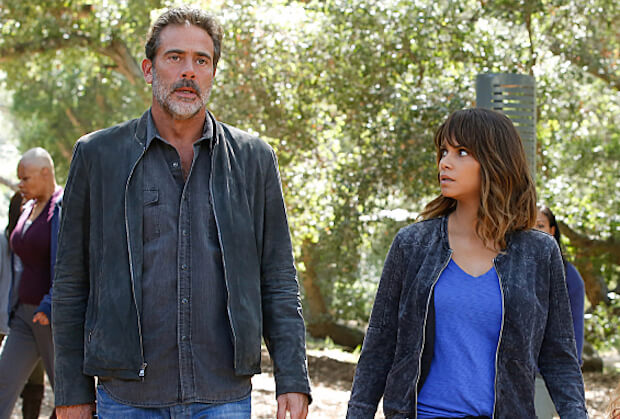
This high concept sci-fi series is well worth checking out. Halle Berry stars as an astronaut who returns from space pregnant and to find her husband has developed a life-like android child. Check out our interview with the show’s creator Mickey Fisher here.

Wednesday May 12th, 9pm – The Final Girls (2015)

While attending a screening honouring her mother, a famous scream queen, a teenager (Taissa Farmiga) and her pals escape a fire in the cinema by cutting their way through the screen. By doing so, they become part of the movie. A cracking meta horror with plenty of laughs along with the frights.

Thursday May 13th, 9pm – The Pact

A very impressive debut feature from Nicholas McCarthy, it has a creepy house, faces coming through the wallpaper, and Casper Van Dien as a world-weary cop. Effective scares and a decent story, too.

Friday May 14th, 4pm – The Body Stealers (1969)

Classic British chills as paratroopers disappear mid-air. A great cast – George Sanders (Village of the Damned), Maurice Evans (Dr Zaius himself!), and Patrick Allen (whose voice became more famous than he was) – and a spaceship repurposed from Daleks’ Invasion Earth 2150 A.D. make it unmissable.

Saturday May 15th, 9pm – Paranormal Activity (2007)

One of the highest grossing films ever compared to budget. Using the found footage style, this tale of a couple experiencing a haunting in their home is very effective and still has the power to get under your skin. The film kicks off Supernatural Week on Horror Channel, so there are plenty of spooky movies to look forward to!

Tune into Horror Channel on Sky 317, Virgin 149, Freeview 68, Freesat 138.

Lochlyn Munro | INITIATION

initiation

Canadian actor Lochlyn Munro is a familiar sight to genre fans, most notably for his recent role as Hal Cooper–aka revenging serial killer the Black Hood–on the CW series, Riverdale. His newest role is chancellor Bruce Van Horn in the new college slasher, Initiation, from director John Berardo where, “during a university’s pledge week, the carefree partying turns deadly serious when a star athlete is found impaled in his dorm. The murder ignites a spree of sinister social-media messages, sweeping the students and police into a race against time to uncover the truth behind the school’s dark secrets…and the horrifying meaning of a recurring symbol: a single exclamation mark.”

It’s a fun inversion of a lot of slasher tropes, and Munro seems to have a blast playing his take on the “crusty college dean” trope, so it was a real pleasure to speak with the actor by phone about the new film and his genre history.

STARBURST: One of the things that struck us upon watching Initiation was the fact that you and Jon Huertas and Bart Johnson–all the adults in the movie–also have experience in teen dramas.

Lochlyn Munro: Yeah, I know, right? It’s funny because when I did the movie Dance Flick for the Wayans brothers, I actually going for a slight parody of Bart’s character from High School Musical. It’s kind of funny that I’ve done that a couple of times because during Riverdale, Skeet [Ulrich] and I used to always joke that I also did a parody of his Scream movie character [in Scary Movie]. I have a way of doing that. I just like to parody other people’s lives, you know?

Going all the way back to when you got your start as a young actor yourself, you were on 21 Jump Street. What’s it like now, playing the dad on Riverdale, as you mentioned, or in this film, the crusty chancellor?

I remember a moment specifically during our first table read of Riverdale for the pilot. Luke [Perry] and I have known each other for a lot of years and we looked across the table at each other and just kind of laughed at it. All these young good looking kids are on the show and that we used to be able to date all those young good looking kids, and now we’re their fathers. The tides change, you know, but now it’s a lot of fun.

I was just really really humbled that John [Berardo, co-writer/director] and Brian [Frager, co-writer] wanted me to play this character in their film. I had a great time. I love this: really enthusiastic, fun, smart young filmmakers. It was a very exciting time for them to get this off the ground and I was really lucky to be part of it.

You’ve gotten to do a lot of really interesting sort of genre stuff over the course of your career. Is that something to which you’re attracted or are those the roles that just happened to come your way as a result of doing some of that early on, like Nightmare Cafe or Highlander?

Oh my gosh, you remembered all that stuff?

We love Nightmare Cafe.

That was interesting, that show. I guess I just love movies. I love stories. And whether they be comedic, whether they be horror films, whether they be really interesting and dramatic films, I guess it just comes down to being able to create characters and great stories.

Again, even though Scary Movie was sort of a parody on horror films, you still had to sort of play it real because then all the situations around it work, whereas if you make fun of them, then the audience sees sort of a fakeness to it. I played Greg in Scary Movie as real as I could to create that character and that, I believe, is where the comedy came from. I’ve been very fortunate to be able to do horror, comedy, and serious dramas. I’m really lucky that I’ve been able to tackle each genre.

What specifically attracted you to Initiation? Had you seen John’s short film, Dembanger, before you read the script?

No, I hadn’t seen his short. I was aware of the project when the casting person, Ricki Maslar, who was casting the film has always been a really good friend of mine, phoned me up and said, “Hey, would you be interested in coming on board with this stuff? You know, it’s a smaller movie, but I think that the filmmakers are really cool and I think you would enjoy it.”

I was fully on board because, one–I adore her, so anytime she asks me to do anything, I’m always on board because she’s got great taste. And once I met the guys–again just really passionate, smart, young filmmakers, and, and I loved being part of it. I thought that story was great. They shot it in a way that they created suspense, they created questions, and then they pulled no punches. Just a ton of great classic film beats, you know? It was pretty easy for me to say, “Yeah!”

The only thing I have a hard time with is that, every time I do a horror film, I forget that it’s always scarier at night and I suck at night shoots, man. I just have such a hard time. My internal clock doesn’t work that way very well.

What’s really interesting about the film is the message that it has and the way it sort of flips the traditional slasher script. It reminds us of old Italian Giallo movies: dude in the mask, stalking people with a lot of interesting interpersonal drama. What specifically did you like about the character of the chancellor? He’s a little weaselly.

Yes, yes. I think a lot of the reasons for that are, in a sense, I always felt that Van Horn was always balancing humanity and business. He had a responsibility to protect the students, which to me personally would have been first and foremost, but he also felt like he had a responsibility to protect the integrity of the school and what that brings to his school, whether it be hefty donations from the well-to-do.

Did he do all the right things? I’d say no, but he was trying to balance everything that he felt that he could and I think that that was a great approach to create that character, because it also created suspense for the audience, wondering how involved is Van Horn in this whole situation?

We have to ask: did you go to college yourself?

During my college years, I actually played in a hockey league in Canada called the Western Hockey League. I did do a bit of college for one year. I actually was taking classes because I wanted to. I was interested in forensics and stuff like that, so I took a couple of psychology courses and whatnot, and it’s kind of interesting because I think that that also lent its hand to creating characters and in the film world, as well.

I can honestly tell you, I do wish that I had a four-year college experience. I think that would have been amazing. I’m hoping that that’s what my daughter and my son can now achieve and experience.

That’s fantastic that you studied forensics, given the number of cops you’ve played over the years. That just seems like such a perfect background detail that we’re so happy to know.

Isn’t that weird? It’s so fun, the cop roles and stuff like that. I’ve never made a conscious effort to them to just play cops, but they come my way a lot. You can say I’ve played a detective many times in my career. A lot of people do talk about that and I think, “Well, I guess the reason being is that there’s just so many storylines involved with the law,” you know? They’re endless. You just pick up the newspaper and go through the newspaper. That’s probably how they do Law & Order: every day, one of the writers or the showrunners read the New York Times and create stories out of what they’re reading.

Saban Films will be releasing INITIATION in theaters, on-demand, and on digital May 7th.

Mickey Fisher | EXTANT

extant mickey

The hit sci-fi thriller series Extant is heading to Horror Channel, so we caught up with Mickey Fisher, the writer of the show to find out about the story, having his first show made by Steven Spielberg’s Amblin Studios and the writers’ room…

STARBURST: Could you tell us what the premise of Extant is?

Mickey Fisher: The show is about an astronaut named Molly Woods who goes to space on a solo mission she’s up there for a little over a year. When she comes back home, she makes this shocking discovery that somehow, miraculously, she is carrying a child. Her husband John is the designer of this revolutionary, entirely lifelike version of androids he called humanichs, and he has created a child called Ethan, who has become their son. So really the show is about the existence now of these three different life forms; the title Extant is the opposite of extinct and so it really is about all of us vying for survival, now that these three life forms are put into conflict.

Like a survival of the fittest?

Yeah, exactly. What was really interesting when I created the show was there are all these questions about artificial intelligence and lifelike androids, and science fiction has a long, rich history of these kinds of stories. About robots turning on us, and ultimately leading to our destruction. But the story that I wanted to tell is could they ultimately be our salvation and how do we get there? If we’re being threatened by this new entity that attacks us via our physiology, through what makes us human; through our hopes, dreams, and emotions. Then maybe the only thing that’s going to be able to save us is a being that isn’t capable of being manipulated that way because they’re a synthetic being. But in order for them to be invested in our survival, we have to form a connection to them. So that is the story between Molly and her son Ethan throughout the course of the first season and the second season is an evolution of that.

There’s an interesting story on how you got the script made, wasn’t there?

Yeah! I was kind of one of those proverbial 20-year overnight success stories. I actually was going to be an actor. I studied musical theatre the Conservatory of Music in Cincinnati. While I was there I started writing. And for the next 20 years after I left college, I was acting in shows and I was writing and making my own films. Writing a tonne of scripts and nothing was quite working, although I just kept at it. Then I eventually moved to Los Angeles when I was in my late 30s. I knew maybe like two people who were working in Hollywood, but nobody that I could really send my scripts to and nobody who could really do anything with it.

So I entered the TrackingB TV Pilot Contest. I had written this pilot for Extant, and I didn’t really know anybody I could send it to, so I thought well maybe if I win this contest, it’ll help get some notoriety. I didn’t win the contest, I was in second place, but the prize is that they try to put it in the hands of people who can do something with the script. I got a call from the guy who runs the contest and he said, ‘You’re going to start getting emails from agents and managers and people like that who are interested in meeting with you’. So I got a call from a manager on Saturday, and he said ‘look I think I can change your life with this script, there are no guarantees because the business is crazy but I think you really have something here’, and then by Monday, he starts sending it around, and my script went viral in Hollywood. About two weeks later, I was signed with this agency WME. And the very next day they said, ‘hey this crazy story about aliens and robots, let’s send it to the guy who does that better than anybody, let’s send it to Steven Spielberg’. And so I was totally freaking out because, again, I didn’t know anybody in Hollywood and the fact that guy might even see my name on a piece of paper on his desk was insane to me. They sent it to Amblin, his company, and they really liked it, so the next thing I heard was, ‘Hey, there’s this filmmaker named Steven Spielberg, and he really liked your script, they want to they want to make the series’. So yeah, I went from not knowing anybody to having a meeting and Amblin Television. And then we brought a showrunner on board, Greg Walker, and he and I developed the pitch more with Amblin, and it went straight to series at CBS. We kind of leapfrogged the whole process that generally happens when you’re making a television show, which is, you go pitch the idea, they have you write the pilot script, they make the pilot, and then they decide if they want to make the series.

We got a call saying that Halle Berry is interested in playing the lead. As if the Spielberg part of it wasn’t crazy enough they’re like ‘hey, Halle Berry thinks this is great’. And at that point, you just say yes!

And you have to be as cool as you can…

Exactly. That is very difficult for me because eight years later, I’m still like a kid in the candy store when I get to meet cool people. I’m still such a fan of movies and television, that when I run into people who make the stuff that I love, I can’t help but be an eight-year-old kid.

Was Spielberg hands-on with the series?

He was very much hands on in that first season, He was very instrumental in helping to shape the design of the show, as well as key casting decisions. When it came to casting the kid, Pierce Gagnon, who played Ethan, the humanichs child, he was very instrumental in that. Gagnan had been in the movie Looper, and when he came in he was the character that I had envisioned.

There’s a day Steven came to the set, when we were shooting the pilot, which was super fun, and we were shooting at Culver Studios, which doesn’t even exist anymore they’ve torn it down, but the stage we were shooting on. We’re shooting our pilot we have all of our key, oh sorry, It’s my dogs go crazy. We built a lot of our standing sets there, we built the main house and built the space station stuff. So when Mr Spielberg came to visit, we were all standing around talking to him and Steven’s looking around, he’s like ‘yeah this is the stage where we shot E.T., the spaceship was like right over there’. So we had a bit of that providence in that we were actually shooting on the stages where he dropped some excellent stuff.

So were you on set for the whole shoot?

I was on set for a lot of it. I wrote four episodes that first season, and as you know, it was my first job in television, so during the course of the pilot, I was on set with the showrunner for most of that. I was on set to produce my episodes, and I spent a lot of time on set for the finale of the first season that I wrote. It was directed by a guy named Miguel Sapochnik, who directed a tonne of the huge Game of Thrones episodes. I only wrote two episodes in the second season and I spent a little less time on set then, but I would still go over there just to be part of it and hang around and see what the cast and crew were doing and also because I think, for the crew, it’s kind of nice to you know to be there to say thank you to the people who are making the show happen on a day to day basis.

Jeffrey Dean Morgan joins the cast in Season Two


Did you feel a bit possessive of the product that you’d created, and see others come to write for it?

I was in the writers’ room when I wasn’t on set helping to fashion those stories, and giving input and curating. The fact is TV production is very much a village kind of effort. It’s incredibly collaborative because the way the production works is when somebody is writing an episode, there’s another episode in production, and there’s another episode that’s in post-production. And so there are all these different episodes in different stages – all these plates in the air. You really need this huge team of people to make it happen. One of the first things I had to learn coming in was to let go of things a bit. Unless you’re a super control freak, you really can’t control every part of the process and so it was a little difficult at times not to go, ‘I wouldn’t necessarily write it like that’. I have to give this writer their space in their room to make it their own if the show is going to be a success. There are writers who have very different life experiences than I have, and they’re going to bring something very different to it, and the show is going to be better for that. And so I tried to remind myself of that as often as possible.

Was writing for TV much different than writing a film for yourself?

One of the first things I learnt is that TV is very much like an office job, it’s like office hours, 9.30 to 5.30. You’re in a room with seven or eight other people if you’re a drama or maybe if you’re in a comedy room that can be much larger. And you’re just talking about the story, all day long, talking about the characters, and it’s really fun but mentally exhausting. Then at a certain point, you know you’re all coming up with the story together and at a certain point, a writer takes that episode and then they’ll write an outline and then they’ll go write the script. And then there’s a lot of rounds of revision between the studio and the network and then you get to the cast and the producers. And so it’s very much like a team sport.

I think writing a film – I have yet to have a film that’s actually produced yet out here, but I’ve made my own – is a bit more solitary. It’s what I do out here in my office right now when I’m not on a show. So when I’m out here, it’s just me and the dog, and I’m left to my own devices. That can be great sometimes but also there are plenty of times when I get stuck where I wish I had seven other really smart people that I could turn to them and go ‘what should I do here?’ [laughs].

Extant is coming to Horror Channel in the UK, which will be the first time it’s been on a free-to-air channel over here, how does that feel?

I’m thrilled! I was so excited when I got the email about this because, Extant is still alive out there in the world and people are still watching it. The nature of this business is that you make these things, and then they exist for a period of time and you move on, and the fact that they exist now on certain streaming platforms and stuff like that is great, but it’s still not accessible to everybody. And so the fact that it’s airing there and that it’s accessible to everybody is really exciting and I love the fact that there may be young people who are going to tune into it for the first time who’d never even heard about it the first time around, and that will be an all-new story to them.

Finally, what’s next for you?

Right now I’m working on a pilot for Netflix. I’m the showrunner and co-creating a pilot for it. It’s an adaptation of a novel called Firekeeper’s Daughter by Angeline Boulley. It’s being produced by the Obama’s production company Higher Ground. We’re just now in the pilot writing phase, so I’m doing that, and then working on some new pitches and trying to get the next ball up the hill!

Extant begins on Horror Channel on May 11th and screens weeknights at 8pm.

Tune in on Sky 317, Virgin 149, Freeview 68, Freesat 138.

THE TELEPHEMERA YEARS: 1990 – PART 1

Ah, telephemera… those shows whose stay with us was tantalisingly brief, snatched away before their time, and sometimes with good cause. They hit the schedules alongside established shows, hoping for a long run, but it’s not always to be, and for every Street Hawk there’s two Manimals. But here at STARBURST we celebrate their existence and mourn their departure, drilling down into the new season’s entertainment with equal opportunities square eyes… these are The Telephemera Years!

1990-91

The turn of a decade is never a neat, arbitrary thing, and the flavour of the previous decade can bleed into the new one for quite some time. So when we’re looking at the TV of the 1990-91 US TV season, we’re really experiencing the bottom of the 1980s barrel, and in some cases it shows! Still, the 1990 schedules were full of clever, engaging shows like Twin Peaks, Northern Exposure, Quantum Leap, and The Simpsons, alongside more traditional fare such as MacGyver, Jake & The Fatman, Hunter, and Midnight Caller.

New shows hitting the schedules that stayed around a while included Dinosaurs, Beverly Hills 90210, The Fresh Prince of Bel-Air, and Law and Order, while comic books came to the small screen with The Flash and the Teenage Mutant Ninja Turtles cartoon that made Eastman and Laird millionaires. But what of the shows that debuted in 1990 that didn’t hang around? These are the misses of 1990…

Cop Rock (ABC): Steven Bochco had experienced a spectacular 1980s, with Hill Street Blues, LA Law, Doogie Howser MD, and even Hooperman all performing well in the ratings, and with only the misfire that was Bay City Blues in the negative column, hopes were high for his latest project, a return to the police genre with Hill Street alumnus Barbara Bosson and a cast of hungry young unknowns.

1990 telephemera cop rock

Cop Rock, however, was a very different prospect to Bochco’s earlier police show, partly because – like LA Law – it was set in California, but mostly because it was a musical. Focussing on the work of the LAPD, a typical episode would present the traditional police procedural but with the cast breaking into song and dance routines at opportune moments, and a line-up of suspects would bemoan racial profiling in a tuneful style.

The songs were written by Mike Post, a member of Randy Newman’s band (and Newman himself provided the award-winning theme song), and viewers who tuned in for the season premiere, on Wednesdays at 10pm with only the final season of Hunter as any serious competition, didn’t quite know what to make of it. Even crossovers with Bochco’s other shows couldn’t save the show, and it was cancelled almost as soon as it had begun; Bochco was given enough warning that he could make the eleventh and final episode a farewell, with the crew joining the cast in character-breaking final song.

Bochco bounced back three years later with NYPD Blue, but Cop Rock has gone down in history as one of the worst TV shows of all time, which is perhaps a little unfair. It has gained cult appreciation after repeats on VH1 and other channels (the BBC showed it in the UK a year after the US), and a DVD of the entire series was released in 2016 by Shout! Factory.

Top of the Heap (Fox): Spin-off shows are a tricky affair and for every Mork & Mindy or Frasier there’s half a dozen shows like Joey, The Tortellis, and AfterM*A*S*H. Fox had scored a massive hit with Married… with Children in the spring of 1987, and by 1990 it had cracked the Nielsen ratings top fifty, despite the Fox network being just four years old. Ratings were especially good in the prized 18-49 demographic, and Fox spied an opportunity to cash in on that popularity with a spin-off show featuring an ex-boyfriend of Kelly Bundy, Vinnie Verducci.

1990 telephemera top of the heap

Verducci (played by a pre-Friends Matt LeBlanc) had been introduced in the March 17th 1991 episode of Married… with the spin-off already in the works, and he subsequently appeared in two further episodes, one of which was used as a backdoor pilot for the new show, and itself called “Top of the Heap.” Vinnie was joined by his father Charlie, a grifter always on the look-out for a get-rich-quick scheme, and the cast was filled out by Joey Lauren Adams, Rita Moreno, and Leslie Jordan.

Christina Applegate and David Faustino made occasional appearances to keep the ties between Top of the Heap and its parent show apparent, but the magic wasn’t there and it lasted just seven episodes before being cancelled in May 1991. A year later, LeBlanc was back as Vinnie Verducci in Vinnie & Bobby, with Robert Torti as his new roommate, and an all-new cast (aside from Adams, who returned as jailbait temptress Mona), again lasting just seven episodes.

Two further spin-offs from Married… with Children were attempted – Radio Free Trumaine and the Friends spoof Enemies – again using episodes of the main show as backdoor pilots, but neither made it to series, and Married…with Children itself was cancelled in 1997. Despite the success of the main show, without its principals – and particularly the star of the show, Ed O’Neill’s Al Bundy – there just wasn’t the appeal, something which the producers of many spin-offs have found. This is particularly true of TV versions of feature films…

Uncle Buck (CBS): John Candy was a very funny man. One of a number of huge comedy stars that broke out in the early-1980s, he was a huge part of what made Planes, Trains & Automobiles and Brewster’s Millions so good, and almost single-handedly carried Summer Rental and Who’s Harry Crumb? to middling commercial success.

1990 telephemera uncle buck

In 1989, he starred as the titular Uncle Buck, a mess of a man left in charge of his nephew and nieces after their parents go out of town, and the film was a massive success, earning $80 million at the box office, and so the decision was made to recreate the magic for television, debuting on Monday evenings at 8pm on CBS.

There was just one problem and that was no John Candy. In his place was Kevin Meaney, a stand-up comedian who bore a passing resemblance to Candy and who had broken out on The Tonight Show with Johnny Carson in the mid-1980s, and despite his best efforts he was doomed to fail. It didn’t help that the cute kid from the movie was no longer played by Macauley Culkin, and indeed none of the movie’s cast returned for the TV show, not least the children’s parents, who were said to have been killed in a car crash.

After two months of struggling against NBC’s The Fresh Prince of Bel-Air, the show was moved to Friday evenings, but fared no better in the ratings and was cancelled after only sixteen of the twenty-two episode run had aired. There has been no DVD release but you can find the episode on video streaming sites, should be so inclined.

Dark Shadows (NBC): Beginning in June 1966, and running for five years, Dark Shadows was a very different kind of soap opera, focussing on the life and loves of the Collins family, an old New England dynasty who were beset by all manner of strange occurrences. Ratings jumped ten months into the show’s run with the arrival of Barnabas Collins, a 175-year old vampire in search of his lost love Josette. Dark Shadows was popular enough to spawn a tie-in comic book from Gold Key, and even had a year-long run as a syndicated newspaper strip.

1990 telephemera dark shadows

After it had finished its run, creator Dan Curtis spurned several invitations to bring the show back but was finally convinced by NBC head Brandon Tarkitoff to resurrect Barnabas Collins for a four-episode mini-series, to be aired in January 1991. Curtis returned to his old scripts but found that they were wholly unsuitable for the 1990s, and so compressed the storylines leading to the arrival of the vampire in Collinsport, Maine, but kept the same basic plot points.

Replacing Jonathan Frid in the starring role was Ben Cross, a British actor whose career had failed to take off after Chariots of Fire, with Joanna Going in the dual roles of Josette Du Prés and Victoria Winters, as the story was split between 1790 and the present day. Jean Simmons, Roy Thinnes, Lysette Anthony, and an early turn by Joseph Gordon-Levitt filled out the cast, and they all continued in their roles when the show was extended to a full series, running on from the final episode of the mini-series on Friday evenings on NBC.

Ratings for the mini-series were great, earning a twenty-two share for the first three episodes, but it was beset by pre-emptions following the outbreak of the Gulf War and the twelfth episode ranked sixty-fourth from eighty-three shows that week. When the cancellation was announced, seven thousand fans wrote to NBC in complaint, but there was to be no reprieve.

Dark Shadows did return in 2012, with Johnny Depp as Barnabas on the big screen, and an audiobook series has been a massive success, with over fifty instalments released to date, and you can pick up a complete set of the original series on one-hundred and thirty-one DVDs. The 1991 reboot was released on DVD, but with a parade of errors, and in the eyes of many fans it has been erased from existence, like a vampire stepping into the sun…

Next time on The Telephemera Years… more misses from 1990, including earnest environmentalism and husband and wife spies!

Check out our other Telephemera articles:

The Telephemera Years: 1966 (part 1, 2, 3, 4)

The Telephemera Years: 1968 (part 1, 2, 3, 4)

The Telephemera Years: 1969 (part 1, 2, 3, 4)

The Telephemera Years: 1971 (part 1, 2, 3, 4)

The Telephemera Years: 1973 (part 1, 2, 3, 4)

The Telephemera Years: 1975 (part 1, 2, 3, 4)

The Telephemera Years: 1977 (part 1, 2, 3, 4)

The Telephemera Years: 1980 (part 12, 3, 4)

The Telephemera Years: 1982 (part 1, 2, 3, 4)

The Telephemera Years: 1984 (part 1, 2, 3, 4)

The Telephemera Years: 1986 (part 1, 2, 3, 4)

The Telephemera Years: 1987 (part 1, 2, 3, 4)

The Telephemera Years: 1990 (part 1, 2, 3, 4)

The Telephemera Years: 1992 (part 1, 2, 3, 4)

The Telephemera Years: 1995 (part 12, 3, 4)

The Telephemera Years: 1997 (part 1, 2, 3, 4)

The Telephemera Years: 2000 (part 1, 2, 3, 4)

The Telephemera Years: 2003 (part 1, 2, 3, 4)

The Telephemera Years: 2005 (part 1, 2, 3, 4)

The Telephemera Years: 2008 (part 1, 23, 4)

Titans of Telephemera: Irwin Allen

Titans of Telephemera: Stephen J Cannell (part 1, 2, 3, 4)

Titans of Telephemera: Hanna-Barbera (part 1, 2, 3, 4, 5)

Titans of Telephemera: Kenneth Johnson
Titans of Telephemera: Glen A Larson (part 1, 2, 3, 4)
Titans of Telephemera: Quinn Martin (part 1, 2)