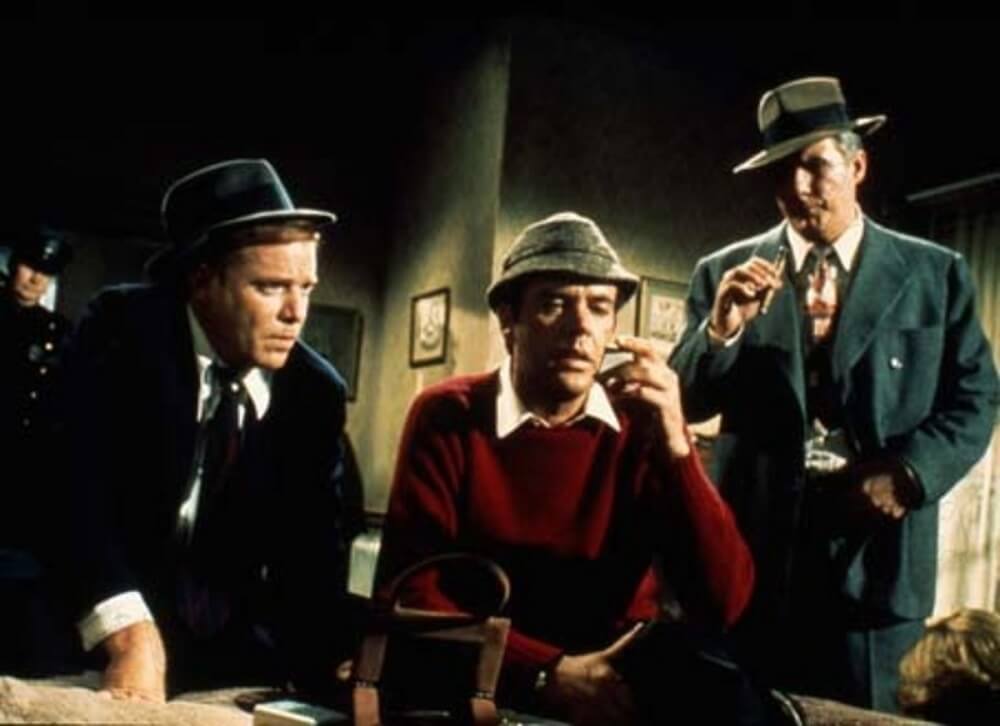
Jon Boorstin | THE PARALLAX VIEW

paralax boorstin

In early May, Cinema Paradiso Recordings presented the first-ever vinyl pressing of Michael Small’s score for the 1974 political thriller The Parallax View. Notably, the new reissue features the complete audio introduction to the ‘Parallax Test’, one of the film’s most striking set pieces, To secure that audio, the company needed to secure permission from whomever voiced it, but the mysterious voice was unknown until Cinema Paradiso reached out to writer and producer Jon Boorstin who at the time, worked as director Alan Pakula’s assistant.

It was Boorstin who revealed that the dialogue was spoken by director Pakula himself, a fact little-known for nearly 50 years. Thus, we reached out to speak with Boorstin about his work on the film and this new vinyl release of the score.

STARBURST: Working as the assistant on the film – what did that entail for you, in terms of your involvement in the creation of this film?

Jon Boorstin: I was getting paid a $50 a week as AFI intern and I was watching Gordon Willis shooting, who just shot The Godfather and they wanted him to now shoot The Godfather of political thrillers. As the intern, you sit around and you learn. You’re supposed to watch, but you have no responsibilities, which is a difficult thing to be on a movie set because everyone’s standing around and they have a lot of responsibility and they’re very proud of what they do, so you’re just watching them watch what’s going on and that creates a certain amount of, say, aloofness on their part.

I had trouble breaking in, getting people’s attention, until Gordon Willis decided that I was a good, careful watcher and he befriended me a little bit and then I became part of the camera crew and helped. I could watch with them. We were up in Seattle and the first the thing we did together was we went to see Deep Throat. That was just in the theaters. This is before video, of course. So it was interesting to watch Gordon watch Deep Throat because you see, he was learning something from what he was going to use, if not in our movie and the next movie.

I was completely innocent about that, but I loved documentary films, so I had an experience with filmmaking on a much simpler level. It was a fascinating experience and it opened my eyes to what Hollywood could do, but it was also actually famously chaotic. Gordon ended up saying that it was the most chaotic movie he’d ever worked on because it was shot during the writer’s strike.

That must have been hard…

They were rewriting the movie and they had half a script! That will generally create chaos. The script supervisor, for instance, will give the scenes ‘X’ numbers, which meant she didn’t know where they would go on in the movie, which can confuse everybody, including the editor.

In spite of all that, the movie came together pretty well, and it has a life. Pakula had this gift, he actually thrived on chaos and pulled it together and found it, partly because the movie itself was about disorientation and being lost and the paranoia. We were living through it in our own way. They would sit around – sometimes for hours – during the morning while the thing was being rewritten and then they would shoot it. They couldn’t stop shooting because Warren Beatty was on pay or play, which meant they had to pay him no matter what. He wouldn’t let them delay and rewrite the script. He said, “Well, we’re shooting now,” so they had to shoot it while he was available and were around him, which they did anyway.

The whole chaos behind it does seem like it fuels the mad energy. It is a film that really never stops.

Yes, one thing that Gordon Willis realised that was the only way that movie would work because it wasn’t structured well enough or strong enough to stand up if you stopped and waited and thought about things too long. There’s something that Hitchcock called refrigerator logic, which is: you get up in the middle of the night and you go to the refrigerator for a glass of milk, and you say, “You know, why didn’t she just call the cops?” Hitchcock’s answer was, “Well, if she called the cops, it wouldn’t have been a movie,” so it was a little bit of that going on in this movie too. Nonetheless, it has the momentum and what Alan had the great ability to do was create a kind of zeitgeist. He captured a feeling that was in the air. That was very important and, and oddly enough really, really resonates today. Remember, this is early ’70s. This is a very paranoid time. John F. Kennedy had been killed. his brother had been killed. Martin Luther King had been killed. Freddie Hampton had been killed. Malcolm X had been killed, and there was never really a good explanation of why these people did it. You never felt you really understood the real story.

There’s a scene where Warren Beatty opens a drawer in the dead Sheriff’s house and he sees in it, the application for the Parallax Corporation and that’s going to start the whole plot going, because he tries to join that as a killer. While we were shooting that scene of him, seeing that set, we were watching Richard Nixon with this big stack of blue folders, which are the transcripts of his tapes, saying “I am not a crook” on TV. That was the environment we were working in with Alan. What Alan managed to do was find a way of taking the feelings we had there and making them about something that was fantastical enough and fictional enough that we could give ourselves up to those emotions without being crushed by them.

That was one of the things we were going to ask but you just addressed it very well: the idea of filming a movie about political assassinations coming after a decade where there were so many. We hadn’t even thought about the idea that you’re shooting it in another politically-fraught environment and what that might bring to it.

What we were describing was really wacky, when you think about it, but also very real and Alan was very conscious of that. He didn’t want to make it political in the sense of being left wing or right wing. If you notice, one of the people who’s assassinated in the beginning could have been a John Lindsay, a liberal mayor type guy who’s up on the Seattle tower, but then the guy was shot at the end is a sort of Southern cracker, Texas redneck guy. The implication here is the Parallax Corporation doesn’t have politics. It’ll just kill whoever they want to kill. They’re there to do their job and they do it well, so there’s this brooding thing outside this organising and running our lives in spite of ourselves which is it what it felt like at the time.

They just put out the vinyl of the score and Michael Small had a great option for music, because what you’re trying to do is convey a kind of a certain kind of thing, you know? It’s a complicated emotion because – don’t forget, this was at the end of Vietnam. We were living through the disaster of Vietnam and we were going from being weak before Vietnam. We were telling ourselves that Americans were the heroes from World War II and such, but with Vietnam, we were facing a higher reality and it was a great nostalgia for those good those days when we used to be the good guys and a dread of what we saw was coming. We wanted reassurance we could never get in the real world, so we watched this paranoid fantasy that we knew wasn’t true and felt the emotions that we didn’t allow ourselves to feel in real life to wash over us in the movie and Michael Small evoked those remarkably.

Michael Small’s filmography is so reflective of those sorts of things. He does these movies that have ambiguous endings, like The Parallax View and The Stepford Wives or have this certain sort of moral paranoia to them, like Marathon Man or The China Syndrome. Even Walter Hill’s The Driver is very much that sort of same thing with The Parallax View where it’s about, one man on his own, beset on all sides.

And that sense of unresolved panic that you could evoke. I personally think that he did a beautiful job on all of those, but I think that his masterpiece was the three minute so-called ‘test sequence’ in this movie. The Parallax View has something that a composer almost never gets. There’s a movie within a movie in The Parallax View where Warren Beatty’s trying to convince them he’s an assassin and they give him this test. The test they give him – as we did it, was, he sits down and he puts his hands down and they read his galvanic responses while he’s been watching a series of images, which is scored and has no dialogue. This is Michael Small’s chance to write a three and a half minute paranoid paean to the glories of America and the need to kill people to preserve it. This is what he ended up doing and it’s an amazing piece because it captures both the nostalgia for what a wonderful place America is and all this terrific potential, but also the mind of the assassin, he feels frustrated and angry and deprived and this has been taken away from him and he has to get it back and he has to get the people who kept him from having it. Michael caught that all beautifully. And, of course, the point of the movie is that Warren Beatty really has a mentality of an assassin. I mean, he passes the test. That investigative reporters, which is what Warren Beatty’s playing, have a kind of a similar mentality of ‘take no prisoners’ and ‘get to the bottom of it’ and unreasonableness and assertiveness that these killers have. The movie is really about that odd kinship and it doesn’t demonise the killer. It makes him a kind of a victim.

Michael Small essentially gets to do his own take on that very famous scene from A Clockwork Orange where Malcolm McDowell’s Alex gets his eyes stuck open with all the scenes of violence set to Beethoven, but he gets to do his own music for that.

The thing is, if you look at those two together, there’s a big difference, but at the same time, it was the same sort of gestalt. If you look at Kubrick’s, you’re watching it through Malcolm McDowell’s eyes. In other words, you watch some of the movie and then you cut back. It’s McDowell’s reaction with his eyelids propped open and what’s important isn’t the movie itself. It’s what it’s doing to him, but what Alan decided to do wasn’t that at all. He decided, “I’m going to make the audience Malcolm McDowell.” You are going to sit there and you were going to take this test and you are going to see that you maybe are going to think, “I’m an assassin too,” because you’re going to have the actual emotion of sitting through this whole test, and the driver for that was Michael Small’s score. It creates those emotions in you, just the music does, but of course, the pictures ratchet that up.

It certainly does.

That’s the difference and that’s why this was the key moment in the movie. This is what saved the movie from being a confusing half ass thriller because there’s this bedrock experience there that holds it together. Interestingly enough, when the script was being written, this wasn’t in the script. What was in the script was a scene in which Warren Beatty goes to a bar. He doesn’t know he’s being tested and there’s a bartender there and there’s a little cute little kitten on the end of the bar and everyone’s playing with it. The bartender takes his bottle and he smashes the kitten’s back and throws the kitten away. And then you look: “How’s Warren Beatty going to react to this violence?” Well, nobody liked that. Let’s not kill a kitten and use that as a test. But they didn’t know what to do, so we had this big hole in the movie. So Alan shot this thing with Warren Beatty where he sits in the chair, and he looks at this amazing screen, and that was it. We shot him looking, but not having any reactions, just a blank stare, looking at the screen. In post-production, we made this little three and a half minute movie that we stuck in there. We didn’t cut back and forth to one. There’s no Warren Beatty at all in the whole movie. You would see him sit down, you see the movie, and then he gets up. That’s a very daring thing to do. This is where Alan had the real nerve. He often made movies where he didn’t know how they were going to end and he put himself in that corner and then pulled something out like that.

2021 has been a very good year for The Parallax View. It received a Criterion release in February and now it’s got this soundtrack release a couple of months later. What’s it been like for you, seeing the renewed interest in this film, 47 years on?

I have a strange relationship to it, as you can imagine, because it’s what got me into the movie business. You know that moment when he discovers the Parallax application, and Warren Beatty pulls open the drawer? That’s actually not him pulling open the drawer. That’s me pulling it open. The drawer is another secret. He wasn’t there. We needed a hand model to shoot the closeup. The rest of me doesn’t look like Warren Beatty, but my hands looked like Warren Beatty, so that worked and that’s me. So I have this personal feeling. I still get $10 a year for that from the Actor’s Guild.  The thing is, this is a time that’s eerily similar. We’re at another moment where we don’t know what’s happening. Things seem to be spinning out of control. The whole democratic process seems to be at risk and we don’t know what’s happening or what’s going to happen next. So people seem to be looking at this movie and finding the same kind of reassurance now that we found in it.

The Parallax View soundtrack is out now on limited edition vinyl from Cinema Paradiso Recordings.

[ENDED] Win ONE ARMED BOXER from Eureka Classics on Blu-ray

one armed win

We’ve teamed up with Eureka entertainment to give 3 lucky readers a chance to win the kung-fu classic One Armed Boxer on Blu-ray. Just read on, watch the trailer, and enter below…

Eureka Entertainment’s release ONE ARMED BOXER is a bold and relentless kung-fu extravaganza, presented on Blu-ray (a worldwide debut of this brand-new restoration on home video) as part of the Eureka Classics range from May 24th, 2021. The first print run of 2000 copies will feature a Limited-Edition O-card Slipcase, Collector’s Booklet and Reversible Poster.
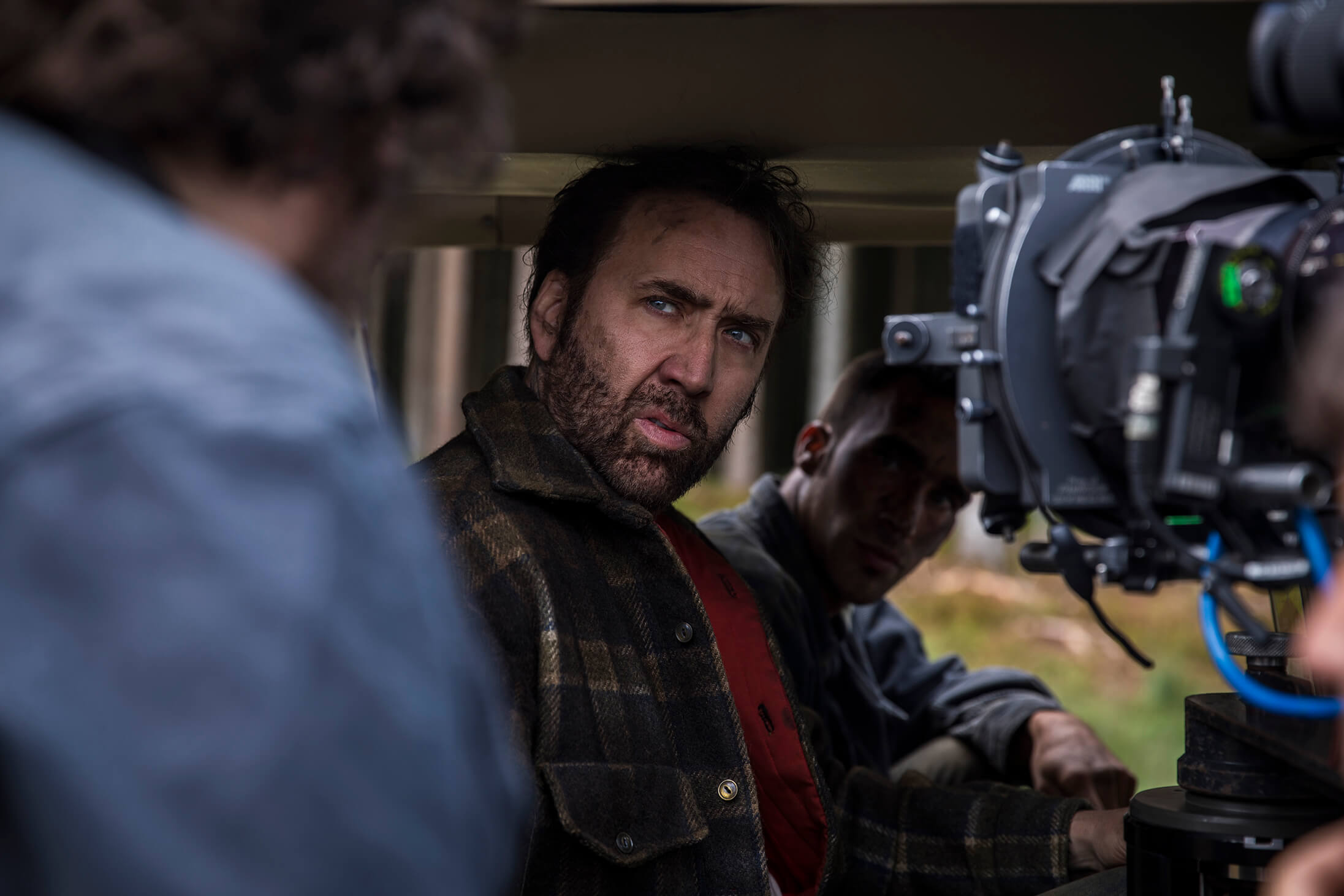
Jimmy Wang Yu (One-Armed Swordsman, Master of the Flying Guillotine) stars as Yu Tien Lung, a top martial artist who after incurring the wrath of a local gang leader, is attacked by a team of deadly mercenaries and has his right arm violently severed. Yu Tien soon trains his remaining arm to be stronger than ever, and goes on a rip-roaring rampage of revenge!

Featuring a multitude of unique and inventive fight scenes against opponents from around the world including Japanese and Okinawan karate experts, Tibetan monks, Thai kick-boxers, and Indian Yoga experts, One Armed Boxer is one of the most influential and exciting martial arts films of the ‘70s. Eureka Classics is proud to present the worldwide debut of a brand-new restoration from the original film elements on Blu-ray.

a Rafflecopter giveaway

ONE ARMED BOXER, a spectacular, action-packed grind house flick, is OUT NOW on Blu-ray and can be purchased here https://amzn.to/3emJA2u

The Devil Went Down to Connecticut

devil made

With The Conjuring: The Devil Made Me Do It set to terrify audiences, STARBURST takes a haunting look at the true story of the trial of Arne Cheyenne Johnson and the involvement of Ed and Lorraine Warren that inspired the next instalment of the top-rated horror franchise.

Court cases involving potential manslaughter and murders have been a thing for hundreds and hundreds of years. Motives cited include alcohol-fuelled, revenge, jealousy, and countless others. Until one fateful case in 1981, demonic possession had never been used as the reason behind a soul committing such a crime. That is what makes this particular trial surrounding the manslaughter of Alan Bono by Arne Cheyenne Johnson such a famous case, not just because of possession, but because the world-renowned Warren’s were involved too.

In 1980, Debbie Glatzel and her boyfriend, Arne Johnson, relocated into a property acquired and renovated by her mother Judy and her 11-year-old brother David. Soon after moving into the house, David began to claim that an older man regularly appeared, pushing him and would utter a phrase claiming that he would cause harm to him and his family if they didn’t leave the land.

Within the next few days, David had night terrors and began growling like an animal, laughing uncontrollably, and exhibited other strange behaviours that appeared otherworldly. His mother, Judy, went on record saying that David would regularly wake up screaming about a man with deep black eyes, jagged teeth, and hoofs like that of a deer, telling him to “beware”.

After his night terrors transferred to the day where David would begin to see an older man in a plaid shirt and blue jeans, mysterious scratches and bruises started to appear over the young boy’s body from an unknown source. With these events putting a strain on the family, Judy called in the assistance of the Catholic Church to bless the home. Twelve days after David began to exhibit this strange behaviour, she also invited Ed and Lorraine Warren, the self-proclaimed paranormal investigators, into the house to assist with the exorcism of the 11-year-old.

The Real Ed and Lorraine Warren

The late Lorraine Warren was quoted in her interview with People Magazine and said that “While Ed interviewed the boy, I saw a black, misty form next to him, which told me we were dealing with something of a negative nature. Soon the child was complaining that invisible hands were choking him, and there were red marks on him. He said that he had the feeling of being hit. David would be doodling, and he’d be concentrating, then he’d look up, and it was no longer a little 11-year-old boy.

During the exorcism of David, the boy began to growl and hiss aggressively, articulate in tongues and chant passages from the Bible and the 1667 poem, Paradise Lost by John Milton. Throughout these events, the Warrens would witness David levitating. At one point, he ceased breathing before demonstrating precognition relating to the murder that his sister’s boyfriend would commit just a few short months later.

After the exorcisms concluded, Ed Warren announced that after asking David for the demon’s name inside him, the young boy declared that forty-three demons were residing within. The Warrens took this information to the Brookfield Police in October 1980, warning them that this situation had quickly become incredibly dangerous. During this time, at least one family member would remain awake at night to comfort and protect David whilst he would endure spasms and convulsions. One night, Arne Johnson mocked the demon and demanded that it possess him instead and, according to Ed Warren, was quoted as saying, “Take me on, leave my little buddy alone”.

The following events, which eyewitnesses did not document, deem that after a few days of Johnson declaring that the demon took control of him, he was attacked. The demon would commandeer his car, forcing him to collide with a tree, leaving Johnson unharmed. This account came directly from Arne himself. He stated that this was his last encounter with the entity in a lucid state before making eye contact with it at the well and becoming possessed fully – all of this going against the Warrens’ warning of not returning to the cursed house.

The real  Arne Johnson (centre, in cuffs)

Debbie’s younger brother’s condition continued to worsen, so she, along with Arne, decided to move out of her mother’s house and find a new home. She met landlord Alan Bono, who also gave her a kennel job as a dog groomer. Soon after, Arne began to exhibit the same behaviour as David and Debbie feared the worse: Arne was also possessed. Johnson would fall into a trance, begin to growl, and then have no memory of it afterwards.

Fast forward to the fateful day of February 16th, 1981. That morning, Johnson called in sick to his job at the Wright Tree Service and then, later that day, met with Debbie, her sister Wanda and her nine-year-old cousin Mary at the Kennels. The four of them, along with Bono, ventured to a local bar where the landlord bought everyone lunch and began to drink heavily. After returning to the kennels whilst intoxicated, Bono grabbed hold of Mary and would not let her go. Johnson demanded that Bono release the young girl and then, as detailed in official police reports, began to growl and wielded a five-inch pocket knife and proceeded to stab Bono repeatedly.

Alan Bono died several hours later.

Johnson was found by police approximately two miles away from the crime scene. He was then held at the Bridgeport Correctional Center on bail of over $125,000. It was the first murder to have been committed in the history of Brookfield.

The media soon caught wind of this event, partly because Lorraine Warren had contacted the Brookfield police the day after the murder, insisting that Arne was possessed and that their agents had announced that various forms of media were in the works about the case, including a movie. Martin Minella served as Johnson’s lawyer during the case, dubbed the ‘Demon Murder Trial’ and received calls from all over the world to assist with the trial; Minella had planned to fly in specialists from Europe to help prove his defence. However, none of this mattered. Although Minella used possession as a reason for the crime, the presiding judge Robert Callahan rejected this notion due to lack of evidence and unscientific to allow this testimony.

Arne Cheyenne Johnson was convicted on November 24th, 1981, of first-degree manslaughter and was sentenced to 10-20 years in jail. However, he only served five as he was let out early on good behaviour.

Since the tragic and spooky events of 1981 in Brookfield, Connecticut, various books and television shows have been dedicated to the case. David Glatzel and his relatives have tried to distance themselves from everything that happened and even sued the authors of various books for violating their privacy. The murder of Alan Bono has now been given the Hollywood treatment with The Conjuring: The Devil Made Me Do It. Needless to say, this whole story is fascinating and, whether you believe in spirits or the devil or you think it’s all a lie, the next instalment of The Conjuring franchise is shaping up to be terrifying.

The Conjuring: The Devil Made Me Do It hits UK cinemas on May 28th.

Find Out the Best STAR WARS Planets to Live On

It’s something we think we’ve all thought at some point: which of the billions of diverse planets in the galaxy far, far away, would be the best make our home?

From the scorched desert of Tatooine to the bustling capital of Coruscant, the Star Wars universe is home to a fantastic array of cultures and homes that would be interesting to settle down in.

According to an interview carried out by Betway casino with Star Wars expert Matt Hudson, the co-host of the Star Wars Sessions podcast, here’s a definitive list of the best places to live and a handy infographic to summerise….

BESPIN

Matt Hudson: Bespin is a massive ball of gas, basically with Cloud City at the top, which is the hospitable area. It’s all very white; very sterile and clinical. The administrator, Lando Calrissian, rules well and it seems like there’s a decent quality of life, even if it doesn’t look particularly lively. There’s not an awful lot there, so if you want to go to the pub or a bar or club – I didn’t see any. Everybody keeps to themselves and looks like they just live to work. I’d call it more of a retirement home than the most exciting place to live.

Rating: 7/10

CORUSCANT

MH: There’s a vibe of a city that doesn’t sleep as we know there are plenty of bars and clubs there. There’s an urban culture too, almost the equivalent of Brick Lane in the East End when you go down a few levels. On the other side of it, though, it’s a massive city, which isn’t for everybody. There doesn’t seem to be any way to chill as everything appears to  be on the go the whole time. There’s also a clear class system; with over 1000 levels, the further down you go, it’s like descending into Hell. So if you’re rich, you’re in luck, otherwise it’s not the best place to reside.”

Rating: 6/10

ENDOR

MH: One for the nature lovers. You can get plenty of exercise running through the forest and climbing. Plus there’s the notoriety of being the planet that the second Death Star blew up over. There’s nothing there apart from trees and Ewoks, so I think it’s a safe place to live – no one’s going to try to take over the planet. The downside is those Ewoks, as they will murder you in cold blood. They’re vicious little things.

Rating: 8/10

HOTH

MH: Hoth would be a beautiful place to go skiing! If you have scientific interest, Hoth’s caves are brimming with possibilities, with different species, bugs, and bacteria. If you don’t, it’s cold – it’s an ice planet, and the wampas, like the one that attacked Luke Skywalker, are the apex predator, so you’re already second on the food chain. I see no reason why you’d ever want to live on Hoth.

Rating: 1/10

NABOO

MH: A planet of culture, Naboo boasts beautiful scenery. They’ve got the countryside, the meadows, the lakes, the waterfalls, the animals. The planet’s monarchy seem to love their citizens. Everything just seems chill in Naboo. I think the Gungans would be alright, they add a bit of flavour and give that cosmopolitan, diverse feel. However, the price of a pint would be quite overpriced. You’re not getting away with anything under a fiver in Naboo. A bit like London. The fact it’s the home planet of Emperor Palpatine himself might put people off, but I think the look and vibe of the place completely overshadows that, so I give it full marks.

Rating: 10/10

TATOOINE

MH: I think this is the Star Wars planet. If you’re on Tatooine, it’s a hard life, but immensely satisfying. Just like in a human farmer’s life, you reap what you sow, so if you really work hard you can make a decent life there. If you’re into your nightlife, the cantinas get a bit rowdy. The locals might kill you just for looking at them the wrong way. There’s also the two suns, which could be a blessing and a curse. Just look how it aged Obi-Wan Kenobi. So I think you’d have to have tough skin – literally and figuratively – to both withstand the weather and also the locals.

Rating: 5/10

ALDERAAN

MH: Alderaan was seen as the most beautiful, desirable planet in the galaxy. Like Naboo, it was known for rolling hills, mountains, waterfalls and the people were the most hospitable, generous, kind folk that you’d want to meet. It’s like New Zealand with sci-fi buildings, which to me is perfection. However, it did get blown up. So pre-explosion, it’s full marks, but as we saw, once the Empire gets wind that it’s the unofficial home of the Rebel Alliance, you’ve got no hope, so it’s off the cards now.

Rating: 10/10 (pre-explosion), 0/10 (post-explosion)

MUSTAFAR

MH: Mustafar was a lava planet, a molten hellscape. While it didn’t look quite as bad when we saw it in Rogue One, it still isn’t great. While it’s nice and hot and you’d have the place to yourself, you have to remember that Darth Vader’s castle is there, and if he’s in for the weekend, you’re pretty much dead. You’ve got more chance of surviving for longer on Hoth than Mustafar, when it comes to the heat, I think.

Rating: 0/10

DAGOBAH

MH: To me, Dagobah would be like going to the Amazon – you know the risks when you go there but would you live in the Amazon? No, but I’d certainly visit. It’s a remote planet and there’s not an awful lot of places to live, but if Yoda could make a hut, I’m sure I could as well. There’s a decent amount of species that you could cook up if you get hungry. Yoda survived there for long enough and he’s not exactly the biggest fella. On the downside, it’s strong with the dark side of the Force, so you may be tempted, or just get eaten by a big water dragon. I’m not too keen on the snakes everywhere either.

Rating: 6/10

KASHYYYK

MH: There are plenty of beaches to relax on if you want a bit of peace and quiet by the sea, and it looks lovely. If you have good relations with the resident Wookiees, you’re going to have decent lodgings as they’re strong craftsmen and carpenters. However, if you get on their bad side, you’ve got an entire planet of hairy, 8ft tall, creatures that will tear you to pieces. Other than that, I think Kashyyyk could be pretty cool to live on, just try to ignore the massive spiders and huge slugs. I think the pros outweigh the cons, though.

Rating: 7/10

THE VERDICT: NABOO

5 Ways to Use Your Smartphones

Smartphones in the modern world certainly live up to their name. Gone are the days that phones do simply that, call people! Today phones have several functions, and most people own one. Phone boxes are disappearing, and the smartphone has become an indispensable part of life. So, what can you do with this small mobile device?

Diary

One of the reasons people panic if they think they’ve misplaced their phones is the organizational role it plays in everyday life. Smart functions are integrated into most models, and you can find a diary & notebook to plan the week. Smartphones connect to your homes’ internet and use mobile data and a 4/5G connection when out, so you are always connected. Many people use downloadable apps for their emails so they can access important communications on the go.

Games

The online gaming industry has grown immensely in recent years, and most games are available in mobile format.  There are thousands of online games for every taste, and it’s not uncommon to see fingers working at the rate of knots amongst commuters. So, if you enjoy the buzz of gambling some pennies, you could try your luck at mobile casino Canada for a thrilling flutter and a touch of healthy competition. You can set up a free account and see what they have to offer.

Online banking

Perhaps one of the most convenient additions to smartphone functions is the ability to perform banking tasks. In the past, most banking required a trip to the local provider, which can pose a challenge to the full-time worker. Now you can set up an app, go through appropriate security, and you’re all set. You can transfer money, set up direct debits, receive money and even pay for purchases in a shop with the phone. A great time-saving option for a busy person. Another advantage to the switch to digital service is that banks don’t need to invest money in keeping branches open, which means more money in the pot for higher interest rates making it a mutually beneficial option for customers and bank owners.

Entertainment

Back in the non-digital day, you could only watch TV via a set in the corner of your living room, and even then, there was limited choice. Now you can watch thousands of channels from any mobile device you choose. In addition, you can download popular movie platforms such as Netflix and watch on-demand programs whenever and wherever you like. You can also invest in a gadget that plugs into a monitor, and you can cast movies from your phone app to the screen! Amazing huh!

Fitness

If you are a fitness enthusiast, many smartphones have inbuilt features allowing you to track your movements. They can count steps, give heart rate information, and sleep analysis. In addition, you can track distances that you run/walk and sync with a variety of apps to help reach your fitness goals. As if these innovative phone features weren’t enough, you can also buy smartwatches that you connect to your phone with more convenience and tons of extra features.

Modern technology is remarkable, and it’s staggering to consider how much has changed in the last 30 years. So, it’s important to embrace the change and utilize new and convenient ways of doing things.

THE TELEPHEMERA YEARS: 1990 – PART 3

Ah, telephemera… those shows whose stay with us was tantalisingly brief, snatched away before their time, and sometimes with good cause. They hit the schedules alongside established shows, hoping for a long run, but it’s not always to be, and for every Knight Rider there’s two Street Hawks. But here at STARBURST we celebrate their existence and mourn their departure, drilling down into the new season’s entertainment with equal opportunities square eyes… these are The Telephemera Years!

1990-91

The turn of a decade is never a neat, arbitrary thing, and the flavour of the previous decade can bleed into the new one for quite some time. So when we’re looking at the TV of the 1990-91 US TV season, we’re really experiencing the bottom of the 1980s barrel, and in some cases it shows! Still, the 1990 schedules were full of clever, engaging shows like Twin Peaks, Northern Exposure, Quantum Leap, and The Simpsons, alongside more traditional fare such as MacGyver, Jake & The Fatman, Hunter, and Midnight Caller.

New shows hitting the schedules that stayed around a while included Dinosaurs, Beverly Hills 90210, The Fresh Prince of Bel-Air, and Law and Order, while comic books came to the small screen with The Flash and the Teenage Mutant Ninja Turtles cartoon that made Eastman and Laird millionaires. Not every show lined up for the season made it to air, however, with many a promising series falling before the final hurdle. These are the unsold pilots of 1990…

Archie: To Riverdale and Back Again (NBC): For those who grew up outside North America, it’s impossible to overstate the cultural ubiquity of Archie Andrews and his gang, stars of various comic book publications from Archie Comics since 1941. The adventures of Archie, Jughead, Betty, and Veronica have thrilled kids in America for generations, and even had a number one hit single with “Sugar Sugar” in 1969.

Archie did receive the Saturday morning cartoon treatment in 1968 but there’s always been a sense that those who grew up on Archie but then grew out of his four-colour adventures might be a fertile audience for a more adult take on the property. This was eventually realised with Riverdale in 2015 but there was an earlier attempt to age the product which just didn’t take, despite an interesting premise and a solid cast.

1990 telephemera archie

DiC Entertainment, a French-American company best known for animated shows like Inspector Gadget, handled the production, and set the show in the modern-day, where an adult Archie Andrews is now a successful lawyer, engaged to his fiancée Pam. Ahead of his wedding he returns to Riverdale for a high school reunion, meeting the old gang at Pop Tate’s diner. With much of the charm of the comics built around the dilemma of whether to date Betty or Veronica, Archie soon discovers his old feelings, and the girls – with a crummy boyfriend and four-times divorced, respectively – resume the chase of the redheaded romeo.

Intended for a full series on NBC for the Fall 1990 season, the network passed, and the pilot was instead shown as part of Sunday Night at the Movies on May 6th 1990, finishing a disappointing fifty-first in the ratings for that week. A comic book adaptation was produced by Archie Comics, and it was later released on VHS, but has never seen the inside of a DVD case. It can be viewed on YouTube if you are curious to see an early performance from Lauren Holly, or B-movie director Billy Corben as Jughead’s son.

Oh, No! Not THEM! (Fox): There are some TV ideas that are so bad that you wonder how anyone involved with them wasn’t immediately blacklisted from Hollywood, but David Mirkin – the writer and director behind Oh NO! Not THEM! – not only got Fox to air two seasons of the show he was working on at the same time, Get A Life!, but also went on to executive produce and showrun for The Simpsons and direct Romy & Michele’s High School Reunion.

In very simple terms, Oh No! Not THEM! was a remake of The Young Ones, and even brought Nigel Planer across to the US to reprise his role as Neil. Because there’s a massive disconnect when it comes to transplanting most shows across the Atlantic, they decided to put more focus on the show’s most boring character, Mike, and amalgamate Rick and Vyv in to the singular Adrian, played by Jackie Earle Haley.

Louis Mustillo was well-cast as Alexei Sayle’s replacement landlord, and the English punk band GBH (then a good decade past their prime) were brought in as musical guests, but the pilot missed the target by such a wide mark that it has never seen the light of day, not even a single frame, with only the surreal, animated title sequence ever making it to YouTube.

1990 telephemera young ones

When discussing US remakes of successful British shows, Red Dwarf’s Robert Llewelyn said that Planer had told him that the making of the show was the most miserable time of his life, that they had turned The Young Ones into “a sort of grubby Benny Hill Show,” and that he was hugely relieved when Fox passed on the pilot and released him from his contract.

Plymouth (ABC): With $8million provided by ABC, Disney, and Italian broadcaster Rai Uno for the pilot alone, and with Lockheed on board as technical consultants, hopes were high that Plymouth – from MacGyver creator Lee David Zlotoff – would be the first big sci-fi hit of the 1990s.

When the town of Plymouth, Oregon, is irreparably contaminated by radiation, the corporation responsible offers the evacuated residents a chance to become the first permanent residents on the Moon, where they have established a mining operation extracting helium. Five years later, the final tranche of Plymouth residents lands on the new colony, where they discover that one of their number is pregnant. This raises questions as to how the first baby born on the Moon will be raised, and whether they will ever be able to return to Earth…

1990 telephemera plymouth

It’s hardly Star Wars but there’s a charm to this tale of small-town life transplanted to outer space, and Dale Midkiff (who would later star in Time Trax) and St Elsewhere veteran Cindy Pickett are good value as the lead couple in a strong ensemble cast, but it was just too much of a slow burn for ABC, who passed on the pilot, killing the project and leaving it sitting unwanted in the vault for a year.

In May 1991, the feature-length pilot was given an airing as part of ABC’s Sunday Night Movie slot and there were plans to air it theatrically in Europe, but nothing came of them and it has never been released on home video, although you can find it on YouTube. Zlotoff returned to MacGyver, which has periodically remerged to keep him in work since its 1986 debut.

Poochinski (NBC): It’s a shame that there wasn’t a 1970s retro craze happening in 1990 because Poochinski, starring Peter Boyle as a murdered police detective who is resurrected as a flatulent bulldog, has that decade written all over it. Created by David Kirschner and Lon Diamond (who would have more success with the Ferris Bueller-aping Parker Lewis Can’t Lose), Boyle’s Stanley Poochinski adopts a stray dog and earns the ire of his partner by bringing it along on cases.

1990 telephemera poochinski

Although the aptly-named Poochinski is a terrible policeman (and George Newbern’s Detective McKay should feel a sense of relief at being freed from his burden), when he is killed in the line of duty McKay agrees to pair up with the talking dog he finds at Poochinski’s grave to solve the murder.

Boyle’s considerable comedic talents are wasted as the bulldog, appearing through a mix of static models (which nevertheless cost a fortune) and barely-cooperative animal actors, and despite some good stuff from comedian Brian Haley and the charismatic Amy Yasbeck, it’s not hard to see why NBC passed on a full series of this, the Holmes and Yoyo of its day.

The channel did air it in the Summer of 1990 in its regular Monday night sitcom slot, but the Fall line-up included Blossom and The Fresh Prince of Bel-Air rather than a farting dog, and at this distance it’s hard to disagree with NBC head Brandon Tartikoff on that decision.

Next: What new shows did the kids of 1990 thrill to on Saturday mornings?!? Why, swamp creatures, time-traveling idiots, and killer tomatoes, of course!

Check out our other Telephemera articles:

The Telephemera Years: 1966 (part 1, 2, 3, 4)

The Telephemera Years: 1968 (part 1, 2, 3, 4)

The Telephemera Years: 1969 (part 1, 2, 3, 4)

The Telephemera Years: 1971 (part 1, 2, 3, 4)

The Telephemera Years: 1973 (part 1, 2, 3, 4)

The Telephemera Years: 1975 (part 1, 2, 3, 4)

The Telephemera Years: 1977 (part 1, 2, 3, 4)

The Telephemera Years: 1980 (part 12, 3, 4)

The Telephemera Years: 1982 (part 1, 2, 3, 4)

The Telephemera Years: 1984 (part 1, 2, 3, 4)

The Telephemera Years: 1986 (part 1, 2, 3, 4)

The Telephemera Years: 1987 (part 1, 2, 3, 4)

The Telephemera Years: 1990 (part 1, 2, 3, 4)

The Telephemera Years: 1992 (part 1, 2, 3, 4)

The Telephemera Years: 1995 (part 12, 3, 4)

The Telephemera Years: 1997 (part 1, 2, 3, 4)

The Telephemera Years: 2000 (part 1, 2, 3, 4)

The Telephemera Years: 2003 (part 1, 2, 3, 4)

The Telephemera Years: 2005 (part 1, 2, 3, 4)

The Telephemera Years: 2008 (part 1, 23, 4)

Titans of Telephemera: Irwin Allen

Titans of Telephemera: Stephen J Cannell (part 1, 2, 3, 4)

Titans of Telephemera: Hanna-Barbera (part 1, 2, 3, 4, 5)

Titans of Telephemera: Kenneth Johnson

Titans of Telephemera: Glen A Larson (part 1, 2, 3, 4)

Titans of Telephemera: Quinn Martin (part 1, 2)

Simon Barrett | SEANCE

seance

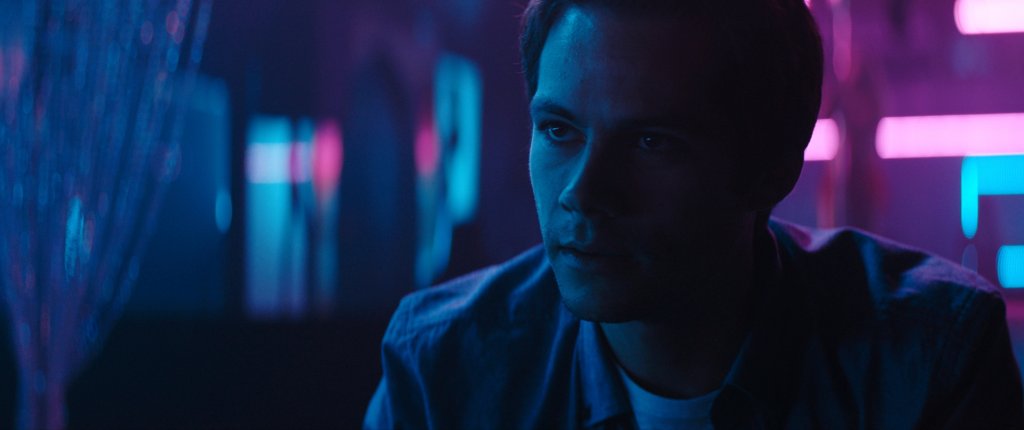
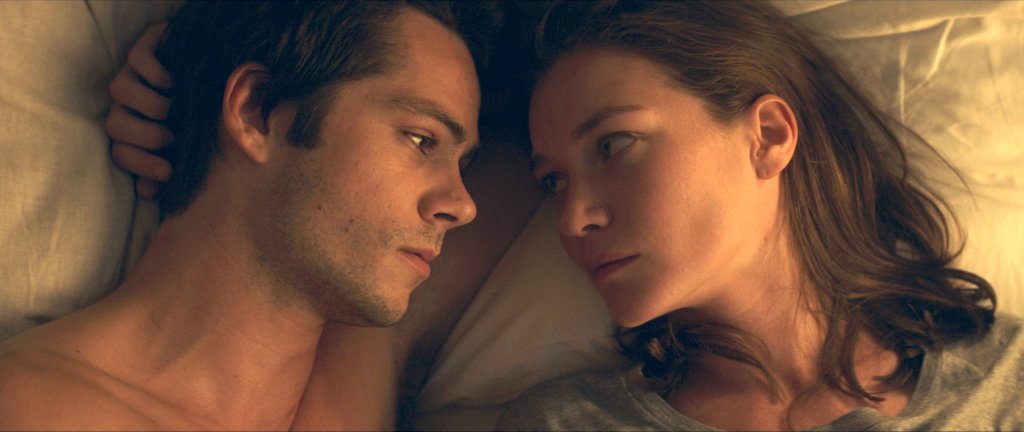
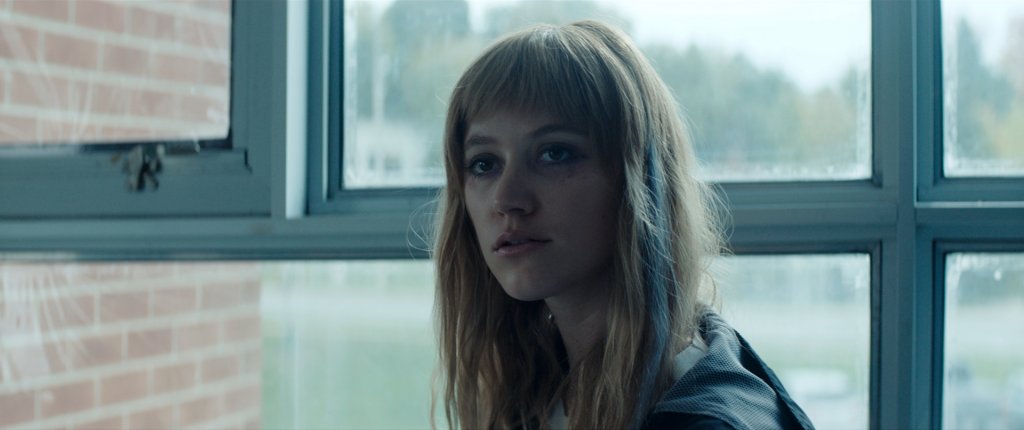
Writer Simon Barrett has been the scribe behind such genre faves as home-invasion thriller You’re Next, action-slasher The Guest, and the reboot/sequel Blair Witch, frequently collaborating with director Adam Wingard. However, Barrett’s latest script is also one he’s directed. Seance marks the writer’s feature-length directorial debut, and sees Camille Meadows (Suki Waterhouse), the new girl at the prestigious Edelvine Academy for Girls, dealing with some terrible things when, soon after her arrival, six girls invite her to join them in a late-night ritual, calling forth the spirit of a dead former student who reportedly haunts their halls. But before morning, one of the girls is dead, leaving the others wondering what they may have awakened.

It’s a blast and a half, and Seance balances haunted house scares with moments of tenderness and introspection. We spoke with writer-director Barrett about his new film and the process of putting it all together…

STARBURST: One of the things we love about what you’ve done with this movie, in terms of promotion, is the Twitter thread where you go through all of the various influences behind it. Smack dab there in the middle is The House On Sorority Row. That made us really excited to watch Seance.

Simon Barrett: The House On Sorority Row – there’s a reason I put that in the first ten of that list. I mean, the reason I started posting that list on Twitter is because I feel like, in all these interviews, a fairly common go-to question’s the direct inspirations. I think it’s especially because with films like You’re Next and The Guest, Adam [Wingard] and I – clearly we’re referencing films in ways that maybe weren’t totally obvious. Like, I’m not sure if people realize that the arc of the butterfly knife in The Guest is exactly the same as the arc of the butterfly knife in Face-Off until Adam and I were announced doing a Face-Off sequel. Then I think people went back to The Guest, like, “Oh, they just completely have a story arc from Face-Off just lifted into the film.” And it’s not an easy story to lift, ’cause it’s a pretty strange series of events, but they’re in there in both movies, ’cause I love Face-Off so much.

With Seance, people watch it and it’s so clearly working in this genre between murder-mystery and slasher that we would traditionally think of as the Giallo space that I wanted to be clear that I’m not just influenced by “good” movies – you know, the acknowledged classics or whatever. Suspiria is not going to appear on that list because the truth is I wasn’t very influenced by Suspiria ’cause it’s an impossible film to imitate. Either version of Suspiria is an impossible film to imitate, especially on a low budget. However, House On Sorority Row was itself a fairly low budget film that has a wonderful narrative and approach to its character and is an extraordinarily clever, well-made movie with great setups and payoffs that made a huge impression on me as a kid and, as an adult, I revisited on Blu-ray and was just like, “I love this movie. I want to do something like this.”

Seance

Among other things, Seance is what I guess you’d call a “prank-based slasher film” where the inciting incident is a juvenile prank gone wrong, to a certain extent. Nobody really understands how it went wrong or what happened and it’s about figuring that out. A lot of those are kind of lousy, but then you have your Terror Train, which is amazing. There’s a lot in that genre that I love, but I think House On Sorority Row – and, to a slightly lesser extent, its 2009 remake – both do an excellent job of putting you in this reality where everyone is just kind of lying to each other all the time, and then it just gets more kind of crazy from there. I just think those scripts for The House On Sorority Row and even its remake are both really underrated murder mysteries that hold up under a microscope, way better than most acknowledged murder mysteries. If you actually look at what those narratives are doing, they work better than a lot of what’s out there.

A couple of years ago, we got to talk to Cal Everett, who’s the frontman for the band 4 Out of 5 Doctors, who are the party band in The House On Sorority Row, and it turns out he’s a huge horror fan.

Their music really helps that film. The fact that the band in that movie is actually pretty fun – Bloody New Year‘s another film that actually has a pretty good band incongruously in a slasher film – and the movie’s aged really well because of that. Hopefully, it’s the same for Sicker Man’s music for Seance – it’s the kind of thing that people still enjoy 20 years from now.

The way that Sicker Man’s score goes from being score to being diegetic music coming out of people’s headphones and stuff is seamless and works so well. Watching the movie and reading all the credits, we were full-on just like sitting at the computer, head-nodding as that last song plays out because it is such a banger. How did you come to know the music of Tobias Vethake, but also end up using it in such an interesting and novel way within the film itself?

You know, the funny thing about being a first-time feature director making an independent movie that’s financed by sales companies: no-one’s really looking over your shoulder, telling you creatively what to do, so you can make these weird, impulsive decisions that, in some cases, turn out disastrous and in some cases, turn out just utterly perfect. I was just, with Sicker Man, a fan. I really discovered him through my filmmaker pal E.L. Katz, who did the last season of Channel Zero and Cheap Thrills and stuff. He had an album by the hip hop artist Serengeti that Sicker Man did the beats for called Doctor My Own Patience that we were listening to one night and I went out and bought the vinyl. I mean, I love Serengeti. I had all his early stuff, but this was such an interesting, sad album. It’s one of the saddest hip hop albums I’ve probably ever heard. It’s just about being depressed and relationships not working. And I was like, “Who did this music? It’s so strange,” and I looked up Sicker Man and I started getting into more of his music and I realized that his big thing was he did a lot of theatre scores. It was just a lot of weird experimental compositions for German theatre productions, and I was just like, “Well, that’s perfect. If he’s doing German theatre productions, he’ll be interested in working with me,” so I sent him a Facebook message and I just said, “Hey, you know, I’m a big fan of Sicker Man and I’m doing this movie and I kind of want a Brian Eno soundtrack.” I sent him a track from The Jacket that Brian and Roger Eno did and he was just like, “Okay, here’s some tracks. I’m interested in this project. Here’s some sample tracks,” and literally just sent me the Seance score, about seven tracks. And I was like, “Yeah, this is amazing. We’re going to hire you. We don’t really have any money,” but he was like, “Oh, it’s fine. I’m happy to be involved.” He was just so good-natured throughout the whole thing, but what he gave me was the ability to play those tracks to the cast and actually have them in my ears when I was going to set in the morning and stuff.

seance

How Adam and I always used to work – I mean, now we’re working in a more direct way on some of these bigger projects – but the way it used to work, back in the day, was Adam would have no idea what I was writing. When we were kind of coming up with our next projects, he’d be sending me music just being like, “I want to use this track, so make sure you’re writing something that can support that tone,” and Sicker Man gave me that straight out of the gate. I was like, “I want something beautiful that’s kind of the theme between these two characters and their connection.” I knew I was going to be doing the thing with the headphones where, when the audience is really with Suki’s character, we hear things the way she hears them but when we’re outside and she’s opening up a little, we hear things more from Helena – Ella-Rae’s perspective. I was working with the sound mixing team I had from You’re Next to The Guest to Blair Witch. Jeff Pitts is our sound editor. He’s won an Emmy. I just knew they’d be able to pull that off. It was just a weird thing where Sicker Man sent me these tracks and I was just like, “This is my favourite music. Let’s work together forever,” and he was just like, “Okay.” He’s already written, by the way, all the needle drop music that I’m using in my V/H/S ’94 segments. I literally just went to Tobias again and I was just like, “I’m doing another thing: here’s what I need,” and he sent me seven tracks and I was like, “Okay, this is perfect,” and then I was able to play them for my crew and cast on set and say, “This is what she’s going to be listening to,” and direct that way.

I hope to collaborate with him for the rest of my career. I feel like when we did The Guest, I feel like Survive, who ended up doing the Stranger Things score, was kind of a similar situation where an artist people maybe weren’t totally aware of just kind of blows up in a big way because they find kind of the right project that really allows people to understand their style, and I’m hoping that’s what happens here but, as far as I can tell, Tobias borderline doesn’t care. I mean, he’s happy and he likes work, but I don’t think he is really necessarily looking to do more film scores. I mean, maybe he is, but I think he’s just such a prolific talented artist that I can barely keep up with all his projects. He’s released three albums, like while we were finishing Seance and you know, he’s kind of unstoppable. Anyone reading this, just like look up Sicker Man on Bandcamp or some other ethical place.

seance

Speaking of people on the rise, as the lead, Camille, you’ve got Suki Waterhouse, as well as Madisen Beaty, who was just stellar in The Clovehitch Killer.

That’s why I cast her. Madisen Beaty is a genius and, truly, one of the best things about Madisen is she’s kind of a director herself, so she really thinks about scenes in a story-based way. She’s not afraid to look ridiculous or appear foolish if it’s what the scene needs. She really is like one of those just true zero-ego actors and randomly, so is Suki Waterhouse who, as far as I can tell, is absolutely happy when she is just utterly covered in fake blood in the midst of a fight scene and completely exhausted.

It feels like that’s when she really gets in her zone. I was randomly at the world premiere of The Bad Batch because Adam and I were kind of friendly with Ana Lily [Amirpour], who directed that movie. I’m just kind of a fan of her. I really loved A Girl Walks Home Alone at Night. So, I was at the Toronto premiere of The Bad Batch and was there when Suki got up on stage with Jason Momoa and I was like, “Oh, this person’s really kind of cool and interesting.” Then, when she was proposed for Seance, I was just kinda like, “Well, I don’t know how that’s going to work. She’s this famous model and we’re going off and making this movie where her character just takes damage for 90 minutes straight.” Then I sat down with Suki and realized that she’s as introspective and strange a person as anyone I’d met. I know a lot of other people, ’cause I’m a paranormal investigator. I do martial arts. I make horror movies, but Suki and I just instantly got along. I was just like, “Oh, I totally get all the ways in which you have a dry sense of humour and stuff.”

I was just really confident that she could do this. I think, you know, for me, it was just I was just kind of amazed that she trusted me enough to let me kind of direct this sort of hard-boiled performance that I was trying to get, because I think it’s sometimes hard for an actor to be kind of told to do very little, to really play everything very small. I think Billy Bob Thornton in The Man Who Wasn’t There, it was a very interesting performance, just how little he’s doing and how little physical movement and expression he uses to get a feeling across. I was interested in working in that mode. I was thinking more like Gabriel Byrne in Miller’s Crossing you know, with Suki. She really trusted me and was willing to experiment with that, from take to take. I’m really thrilled. I have a cool cast.

seance

With Madisen, I’d seen Once Upon A Time In Hollywood and I thought it was a masterpiece but you can’t judge someone on their performance in a hundred million dollar Tarantino film. But you can judge someone off something like The Clovehitch Killer, which doesn’t look like it cost that much more than Seance. The fact that she is doing such nuanced work in that role, in that film, let me know that this was a really serious performer who I could really trust and relate to. I feel like I directed Madisen the least. I changed a bunch of blocking and camera movement and stuff, and with Madisen, I was just like, “Just do what you’re doing!”

RLJE Films and Shudder will release SEANCE in US theatres, On Demand, and digital on May 21st. 

Amy Manson | THE NEVERS

amy manson

STARBURST was lucky enough to talk with AMY MANSON – one of the stars of HBO’s Victorian/steampunk/superhero mash-up THE NEVERS, now available in the UK via Sky Atlantic and/or NOW. We discussed the female-centred series, Princess Diana, and the horror legend that is Pumpkinhead…

STARBURST: How would you describe The Nevers?

Amy Manson: It’s an amalgamation of so many genres – it goes from dark humour to steampunk to fantasy and I think that is going to keep everyone on their toes. It is about a group of ordinary women affected by something extraordinary, set in Victorian London. They are known as ‘the Touched’, which has different factions, and it’s how the Touched interacts with different sections of Victorian London, with the special abilities they have been given.

What attracted you to the series?

Definitely Joss [Whedon] and the script. When I went for the audition I had all these ideas and interpretations of what the scene was and Joss said, ‘no it’s none of those, I just made it up to see what you would do’. We didn’t get the full script until we all signed on but Joss laid out all the ideas that were in his head for each character.

So there was an element of secrecy even in the making?

Very much so.

nevers

Would you describe it as a feminist series; does it have feminist elements?

Yes, I think so. I think Joss is great at writing for women. Not only women are ‘Touched’, but you find out why certain people are ‘Touched’. For me, talking from my personal experience – Maladie is on a mission to dismantle the patriarchy. She is just one faction of ‘The Touched’ whereas the rest are just trying to survive and figuring things out as they go.

Your character Maladie is described as being unstable and in charge of a band of renegades, what else can you tell us about her?

You understand her story within the first couple of episodes and how she becomes the head of this faction of the Touched and why they are all fighting for her. As her name suggests, she is a slight lunatic; wayward, anything goes. You figure out there are a few threads that come into play and change her trajectory, to explain why she is doing what she’s doing. Fighting for a good cause, or is she!? [Laughs]

Intriguing! Was it a physical role for you?

Absolutely! We went for a month’s prep prior to shooting with the stunt team, training every day. The challenge was putting the dialogue on top of that. Especially with Maladie’s dialogue, at first, you might think ‘what the hell is she on about?’, but it will become apparent, so dealing with that and then the stunts on top was a challenge.

Was it difficult doing the stunts in full Victorian costume? The Nevers stands apart in this aspect. Victorian fighting women is not something we have seen too much of, if at all?

Definitely. There were great stunt girls, but the stunt team relied on us a lot, which was lovely. I would pair off with Laura [Donnelly, who plays Touched member Amalia True] and we would go through routines. I don’t know how we would have done this in pandemic time. We managed to film the first four episodes prior to the pandemic. Maladie is always going to rub shoulders with anyone who gets in her path.

You are a big advocate of good mental health and have raised funds for the charity Heads Together. Do you think Meghan Markle has helped or hindered the cause by speaking out, especially considering The Duke and Duchess of Cambridge are patrons of Heads Together?

I started working for the charity because my cousin, who is in the air force, his Mother committed suicide 13 years ago and none of us would have known. He was a big advocate of Heads Together. Any discussion on mental health can only be positive. None of us know what she is going through, the weight on her shoulders must be huge. I have just finished filming my section of Spencer, about Princess Diana, and the parallels between my character; Ann Boleyn. Stephen Knight, who wrote the script and writes phenomenally for Peaky Blinders, really delves into her psyche and the emotions of what she was going through at that time, what she was told to wear by the monarchy, it talks about Bulimia but also her psyche, so having just finished that film, you don’t know what is going on behind closed doors. Who do you go to in these times? Diana had nobody to offload to.

We were going to ask you about Spencer, so you play the historical Anne Boleyn?

Yeah, it is based around Diana’s last Christmas at Sandringham before the divorce and there is a book called The Rise and Fall of Anne Boleyn, which is sitting in Diana’s room, and she is reading this book that has parallels between her and Anne’s experiences. Anne then comes back as a vision or apparition and is kind of goading Diana [played by Kristen Stewart] – challenging her, making her think in different ways. It’s shot beautifully by Seamus McGarvey, who was the DOP on two episodes of The Nevers. Two beautiful things I have been involved in!

Is Spencer coming out this year?

November, I don’t think anybody knows that, so there you go.

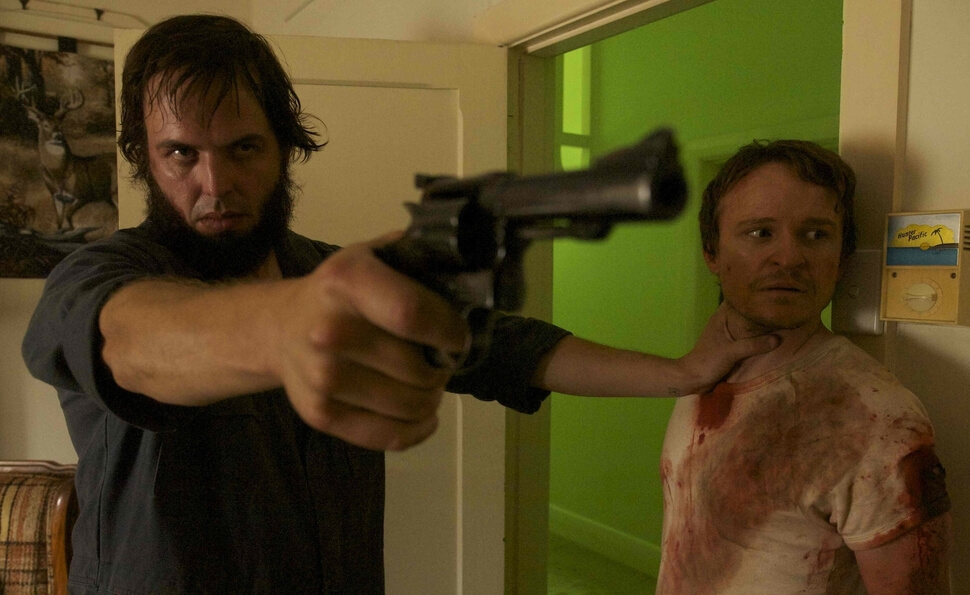
Exclusive! Here at STARBURST we love our horror films and we wanted to ask you about your first film role, which was Pumpkinhead 4: Blood Feud. What was the experience like?

Yeah, when I arrived there I met Lance Henriksen and he was quite standoffish at first. I was the newbie fresh out of drama school. I read lines to him off camera and it was a really emotional scene, then I started crying, he started crying and gave me a massive hug afterwards, so it was like a rite of passage. A few of us went for dinner that night, I didn’t realise what a big deal he was and how great he was. That was the start of my Pumpkinhead journey. I threw myself in, you have to ask yourself ‘what is your truth?’ I loved it, and relished every moment on set.

Brilliant. Would you like to do any more horror in the future?

Definitely! I did a film called Estranged, maybe more of a psychological thriller, and the director Adam Levine has sent me a script to read, it’s a bit like The Descent. So I will read it and let you know!

All episodes of THE NEVERS are now available in the UK courtesy of Sky Atlantic and NOW

Five Films to Check Out on Horror Channel This Week – 170521

horror 170521

As we enter another stage of opening up following the lockdown, there are still plenty of great films and TV shows on Horror Channel each week. Here are some of our picks for the next seven days:

Tuesday May 18th, 9pm – Flatliners (1990)

Often overlooked, this is a great piece of psychological terror. Directed by the late Joel Schumacher (The Lost Boys) and starring Kiefer Sutherland, Kevin Bacon, and Julia Roberts, it follows a group of medical students who try to discover the answer to the question: what do we feel when we’re dead?

Wednesday May 19th, 9pm – The Quiet Ones (2014)

There’s an interesting premise to this entry into Horror Channel’s Supernatural Week; a professor (Jared Harris) attempts to prove that poltergeists and other entities are caused by the person’s psyche rather than genuine ghosts.

Thursday May 20th, 9pm – The Devil’s Candy (2015)

A fun heavy metal horror directed by Sean Byrne (The Lovely Ones). You can read more about this movie in our feature here.

Saturday May 22nd, 9pm – It Follows (2014)

One of the most successful horror films of the past decade starring the brilliant Maika Monroe. A young woman finds herself being stalked by a shapeshifting entity after her first sexual encounter.

Sunday May 23rd, 10.55pm – Eat Locals (2007)

A fun, star-studded affair directed by Lock Stock and Two Smoking Barrels’ Jason Flemyng. An ancient group of vampires meet up like they do every fifty years, and the villagers will be on the menu. With Freema Agyeman (Doctor Who), Charlie Cox (Daredevil), Mackensie Crook (Worzel Gummidge), and a gun-toting Annette Crosbie (One Foot in the Grave). You can check out our interview with Jason Flemyng here.

Tune into Horror Channel on Sky 317, Virgin 149, Freeview 68, Freesat 138.

[ENDED] Win DINO KING: JOURNEY TO FIRE MOUNTAIN on DVD

win dino king

We’ve teamed up with Dazzler Media to give 3 lucky winners a chance to grab Dino King: Journey to Fire Mountain on DVD. The animated film is suitable for all the family, so just read on and enter the competition below!

An action-packed family adventure that combines the realism of Walking With Dinosaurs with the heart of Finding Nemo. Speckles, a ferocious tarbosaurus and his young son junior, mourning the loss of their family in an epic battle, roam the lands in search of food, adventure and peace. Under the watchful eye of his dad, Junior is growing up healthy and strong, but with an overconfidence thanks to his young age. After one encounter results in Junior being kidnapped, Speckles embarks on an adventure to the ends of earth to find his son. Encountering friend and foe, ally and enemy, Speckles will stop at nothing and will take on all corners to save his offspring.

a Rafflecopter giveaway

Dazzler Media presents Dino King: Journey to Fire Mountain on DVD and Digital from May 24th.