Jed Shepherd | GHOSTS

ghosts

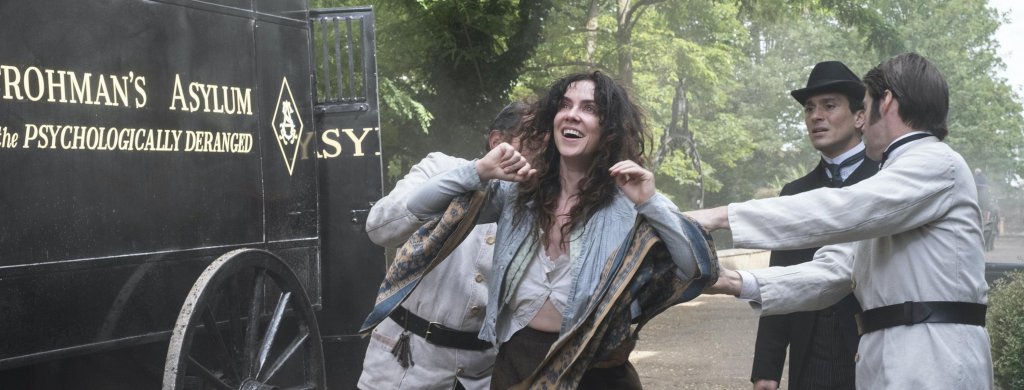
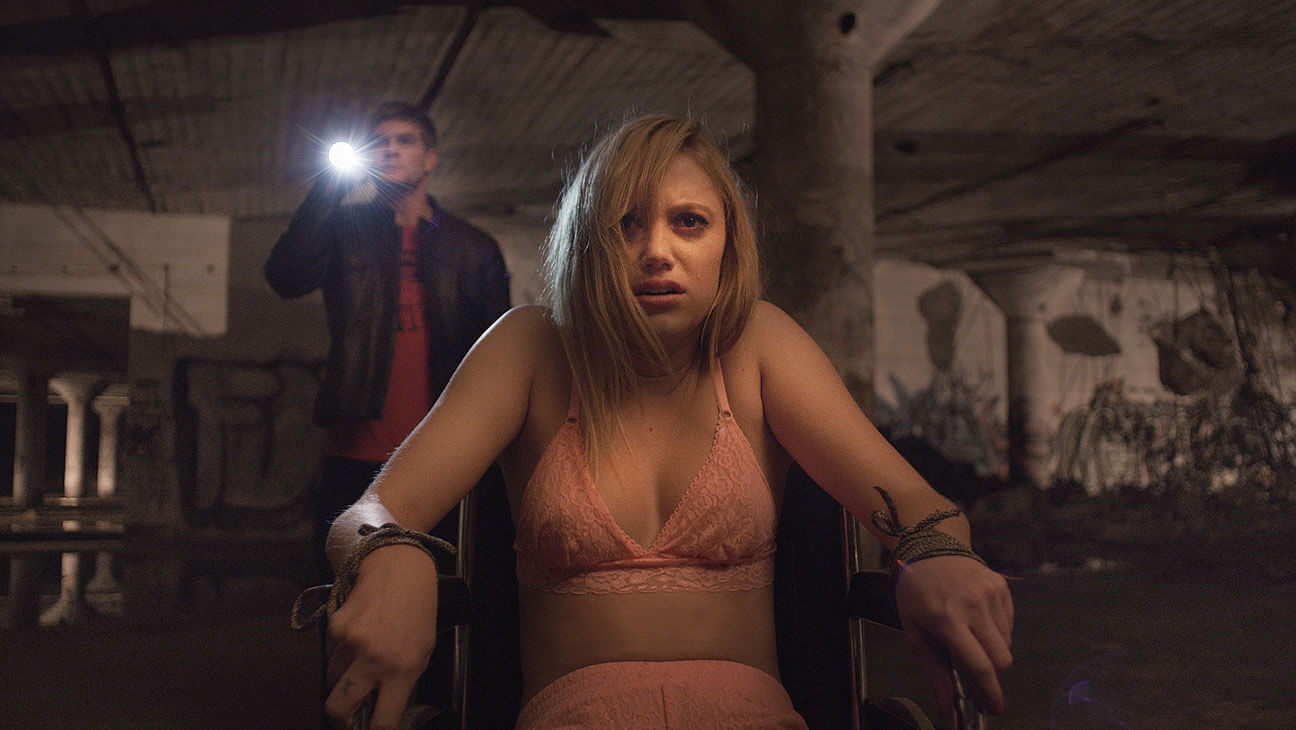
In 2020, screenwriter Jed Shepherd burst onto the scene with one of the most talked-about horror movies in the last ten years, HOST (read our five-star review here). This year, Jed is developing a fascinating successor in the form of GHOSTS, a full-motion horror video game in partnership with Visible Games & Limited Run Games. Head to its Kickstarter page to learn more about the fascinating project, and watch our new interview with its award-winning creator below…

Matthew Modine | WRONG TURN

modine

Matthew Modine is one of his generation’s most versatile and popular actors. Having worked with revered directors such as Christopher Nolan (The Dark Night Rises) and Oliver Stone (Any Given Sunday), he is recognisable to modern audiences as the manipulative Dr Brenner in Stranger Things. Yet despite a long and varied career, his most notable role will always be as Private Joker in Stanley Kubrick’s Full Metal Jacket.

Matthew recently took some time to talk to STARBURST about the new horror film Wrong Turn, that career and, of course, that film.

STARBURST: Are you a horror fan?

Matthew Modine: Yes and no. I got very damaged at an early age. My father was a drive-in theatre manager and I saw, from the projection booth as I wasn’t allowed out into the theatre, Night of the Living Dead. In a way, seeing the movie without sound, with just the noise of the projector running next to me, it was more terrifying. And the blood in black and white. It becomes more magnified in a way. And just as I was getting over that movie, I saw The Exorcist, which damaged me all through high school. It’s funny how they hang on or linger in the back of your mind, when you go down into a basement or something, they rush back into you.

Which leads into Wrong Turn. Perhaps we don’t understand it fully over here because of the difference in size between the UK and America, but the idea that there could be people living out in the vast woods of West Virginia, that fear being modern and relevant.

Not only is it possible, but I think there are people living in the backwoods of the some of the Appalachian states that have no contact at all outside the world in which they live. We filmed the movie in Ohio, and it’s incredibly rural. I made two movies there over the last couple of years, and I went into a small town, and people were waving the Southern Cross flag, which is pre-Civil War. There are some really backward people in the United States, so in my mind there’s no question this film could be real.

When reading about you two things comes up: firstly, Full Metal Jacket and we’ll come back to that, but also the roles you’ve turned down. Not to linger on those specifically, how do you choose your roles? Is there a process?

It’s changed over the years. I studied with a lady called Stella Adler at the Stella Adler Studio of Acting in New York City and she had come from a generation of political theatre, Chekhov and Arthur Miller, and the plays they wrote often had great political content. Doing the right thing and being a moral person. She infused within me the notion that when you are projected upon the big screen or come into people’s homes on the television, the things that you do and the things that you say will have an impact on those people’s lives. You can influence people like Fox News does in America. It’s a very detrimental news source because it’s filled with untruth and propaganda. It was like I didn’t learn anything until I left school. I was invited to go to the Berlin Film Festival and while I was there, I was invited to go to East Berlin. Americans aren’t really taught about the Second World War. We know the British were our Allies but if you study American history of the war you discover that the Brits and the Americans were responsible for winning the war. The French and the Italians had nothing to do with it. And the Russians had zero to do with the war. So, when I went to East Berlin and I went to a monument to the millions of Russians who died fighting the Nazis that was eye-opening because I’d never been taught that. I was 21 years old and I never knew that. Then I met these Russian soldiers who spoke English, and we swapped cigarettes and pins, and I realised these kids were no different than my brother Mark who had participated in the Vietnam War. I was taught that Russians were evil and wanted to destroy the world. The whole thing changed me. So, when I came back and the script that was waiting for me was Top Gun, I read it and thought it was a propaganda piece. That it was perpetuating this myth that the Russians were an evil empire who wanted to destroy the Earth.

With Wrong Turn, you have The Foundation separating themselves off from society, predicting the downfall of America, which is strangely topical. The killing and the torturing aside, would you say then this is a view shared by a lot of Americans right now, to distance themselves from the marketed truth?

Yeah. The interesting thing that America is asking itself now, if we compare the attacks of 9/11, is Donald Trump like Osama bin Laden? He led this insurrection, he inspired people to attack the United States Capitol. How is one act of foreign terrorism different to domestic terrorism?

That’s interesting because your character in the film is an everyman, fighting against this powerful sect to protect his family. Did that then seem relevant to you right now?

[Laughs] You choose films for different reasons at different times. I’m a father with a daughter of similar age to Charlotte Vega, who plays my daughter in the film. I certainly understood it. More importantly, Liam Neeson is possibly my best actor friend and the one thing I don’t have in the movie is a great line like him. ‘I will find you…I will kill you…’ [Laughs]

Did you campaign for one?

I wanted one! The one thing I did get to do, without spoiling the movie, is to dispatch one of the baddies. In the script, it was my daughter saving my life. I said to the director you got to give it to the dad. All these dad’s that are watching the movie, feeling emasculated by these horrible people, you got to give them a moment where they defended their honour.

You’d earned the right by that point.

Absolutely. I’d done a movie with John Schlesinger, with Michael Keaton and Melanie Griffith called Pacific Heights. I think the movie would have made a load more money if at the end when Michael Keaton fell on the spikes, if he’d started to pull himself off, and I’d reached up from where I was below him and pulled him back down on to them. Because he’s shot me, he’s beaten me with a golf club, he’s ruined my life, he’s destroyed my apartment. The audience really wanted my character Drake Goodman to get one back at him.

It sounds like you need some more action in your films.

[Laughs] As I told you, my dad was a drive-in theatre manager and we loved those type of films. I can practically quote all of Clint Eastwood’s films. They’re fun, fantasy movies and every actor would probably be lying if they said they wouldn’t like an Eastwood role, or to get a line like Arnie.

We have to mention Full Metal Jacket, and I’m sure you’ve been asked pretty much every question there is. What do you think of the film now compared to when you made it, given everything you said and how life changes?

It’s extraordinary to be a part of a project that is as relevant today as it was when it came out. There’s no expiration date on Full Metal Jacket. So many things are ‘80s movies, or ‘90s movies. Full Metal Jacket’s not like that. Kubrick and I had that conversation while making the movie. Films should be like great pieces of music. I could put on a Beatles song from ‘62 or ‘68 and they’re just good songs. I’ve done about 90 movies now and everyone has the same equipment, cameras and so on. Some film directors are able to take that equipment and create something multi-dimensional; which is interesting and compelling, and some people take it and make one-dimensional, boring crap. I haven’t figured out why sometimes it works. Why did Stranger Things become the global phenomena it is? Who knows?

As a moral person then, and given what you’ve talked about, how do you feel about the future of filmmaking and generally in these unprecedented times? And emerging from the Trump Era?

You have to remain optimistic and hopeful. I just drove across America because the airports are a disaster right now. It’s fascinating because there are so many different Americas. If you live in California or New York you have a certain perspective of what America is, but when you get outside into Pennsylvania or Georgia or Virginia or Texas, they’re very different with different values. What’s important in California and New York such as environmentalism and improving the world, outside of those states people don’t care. They’re just trying to make ends meet and get by. They often call them the flyover states. It’s important to remember we share this world with people who have different wants and desires and ambitions. But the most important thing, and going back to the start of our conversation, is getting outside the United States and realising the Russians are not bad people. As soon as we can give people education and help them understand that we all share similar desires the better we’ll be and the more we’ll understand the world.

A perfect place to finish. Finally, congratulations on the film.

Thank you. It’s got some good scares!

Signature Entertainment releases Wrong Turn on digital platforms to rent from February 26th and DVD/Blu-ray on May 3rd. You can read our review here.

Five Films to Check Out on Horror Channel This Week – 030521

horror 030421

Spring is in the air and there are plenty of great films and TV shows to watch on Horror Channel each week. Here are some of our favourites for the next seven days:

Tuesday May 4th, 1pm – Monster! (1999)

This is a fun meta creature feature that involves a movie monster that appears in real life every three years in the town the films were made. Directed by the late John Lafia (Child’s Play 2) and featuring the much-missed M. Emmet Walsh.

Wednesday May 5th, 9pm – Reborn (2015)

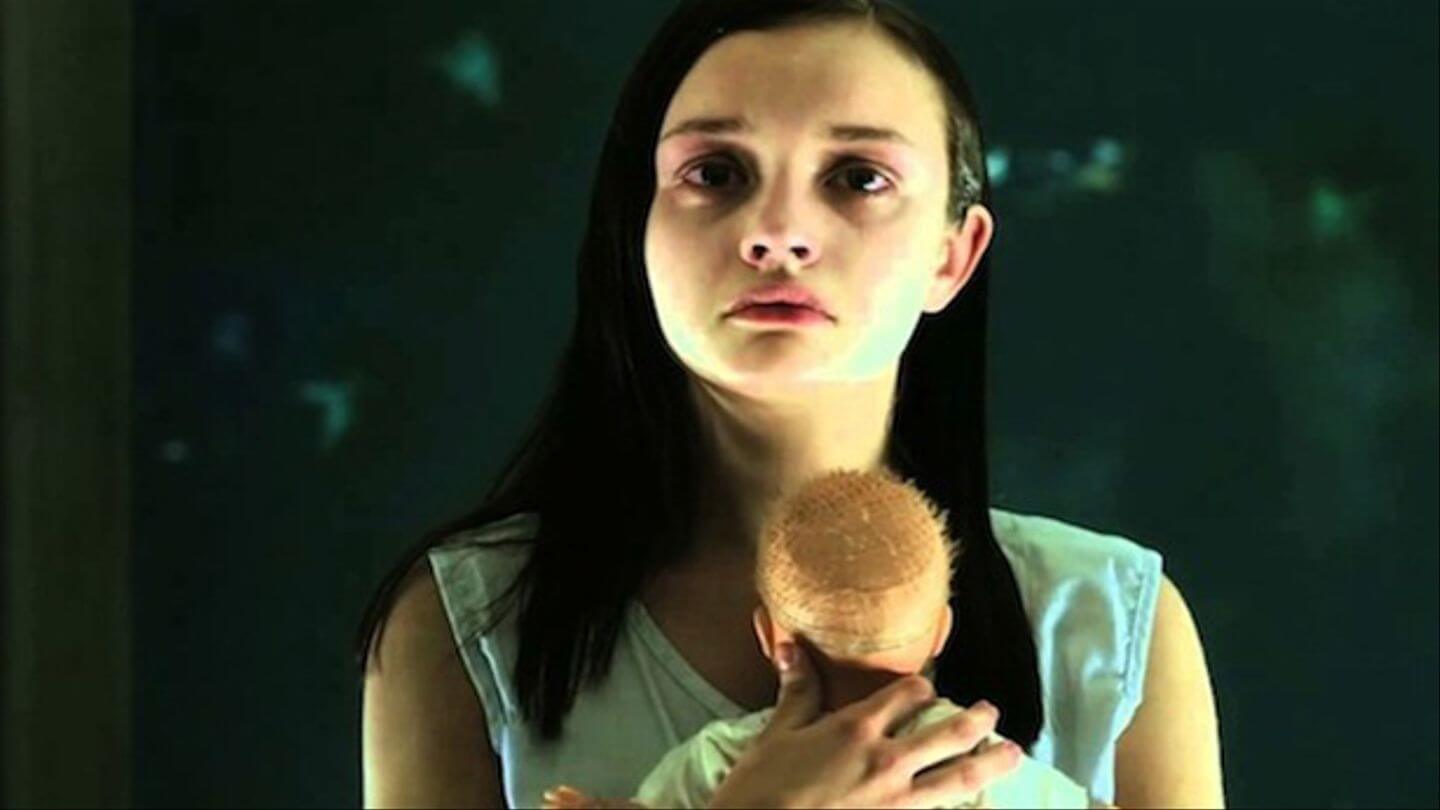
A morgue attendant raises a baby that was thought dead but revived by a freak electrical charge. Things go wrong when she turns 16 and attempts to find her mother. Directed by Julian Richards (The Last Horror Movie) and starring Tess Stern and Barbara Crampton.

Friday May 7th, 8am The Time Tunnel ‘Rendezvous with Yesterday’

A great reason to get up early as the classic ‘60s series begins another run from the very beginning in this weekday morning slot. This opening episode sees our heroes on board the Titanic, one day before the tragic incident with an iceberg. Michael Rennie guests as the Captain and keep your eyes peeled for a young Dennis Hopper as one of the passengers.

Saturday May 8th, 9pm – The Super (2017)

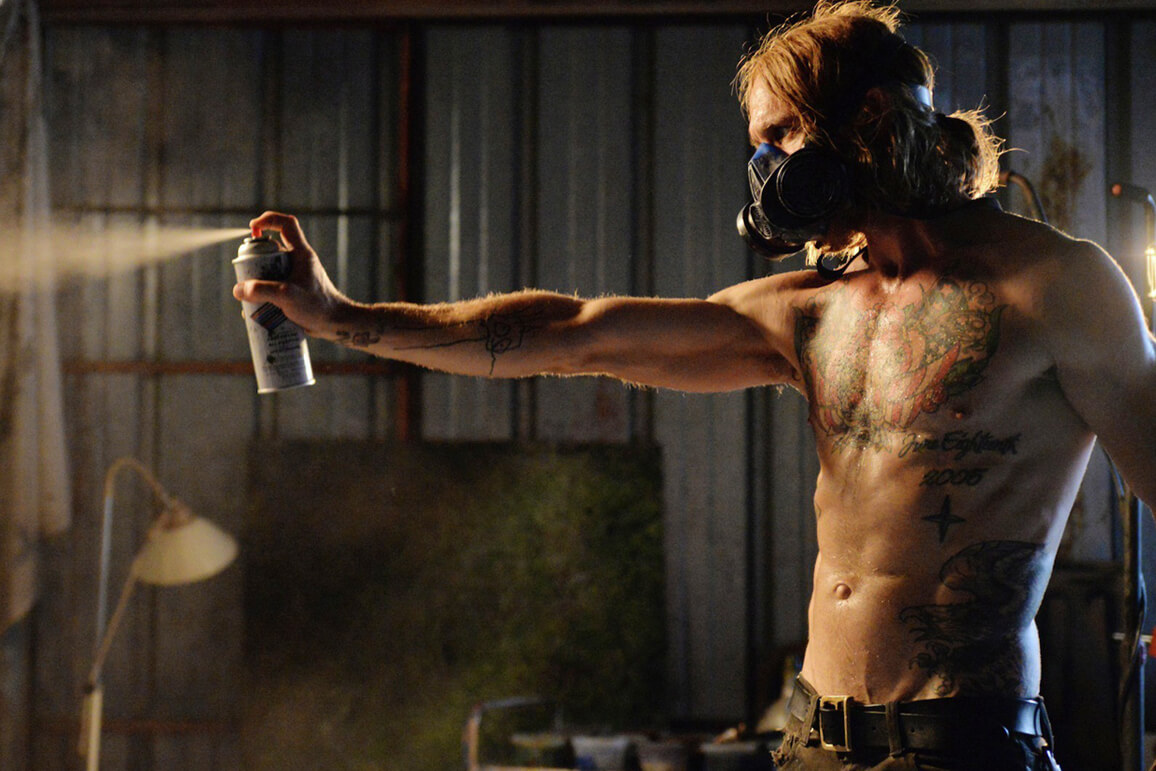
Patrick Flueger (The 4400) stars as the ex-cop who works as a superintendent of three apartment blocks who begins to suspect his co-super (Val Kilmer) of being involved in several disappearances. Kilmer is as charismatic as he’s ever been in this exciting, twisted thriller.

Sunday May 9th, 9pm – The Vault (2017)

James Franco is the assistant manager of a bank that’s being robbed by a desperate group. When he directs them to the basement vault, things start getting very strange and going very wrong.

Tune into Horror Channel on Sky 317, Virgin 149, Freeview 68, Freesat 138.

Jeffrey Wright | NO TIME TO DIE

After making his debut as Bond ally Felix Leiter in 2006’s groundbreaking CASINO ROYALE, JEFFREY WRIGHT now returns to the character for the third time, the first actor to do so. STARBURST talks with him to reflect back on his experience as this iconic character, while finding out what we can expect from the highly anticipated NO TIME TO DIE…

STARBURST: You’re a huge fan of how Jack Lord portrayed Felix Leiter in Dr. No; why do you think that his take on the role was so special to you? 

Jeffrey Wright: He was just so magnetic and slick. As well, he was my first introduction to Felix. He is the first footstep that I discovered as I was in the woods looking for the character myself.

When originally preparing for the role in Casino Royale, how much influence did you take from Jack Lord’s approach, and overall how did you yourself go about getting ready to play Felix? 

I don’t think I really reached out to his portrayal in that way, aside from asking if I could wear sunglasses at the poker table. Beyond that, it was just about trying to be as absolutely cold and cool as humanly possible, which is what the Bond audience will generally ask for. Also, I tried to create Felix in relationship to Daniel’s Bond. Daniel brought a new type of legitimacy and authenticity to the character. We pushed the storytelling and the franchise into new territory. One of the things that was important for me was to emphasise the glamour less, which maybe Lord for example represented, and focus, to a larger extent, on this being a guy that the audience can absolutely picture in their head, laying incognito inside some intensely seedy, but necessary environment. Being functioning, and surviving, and being adept. Getting the job done. So yeah, we live within the same franchise, but to some extent, it’s inside a different world.

Quantum of Solace was the last time you appeared in the James Bond universe. What was it like to actually be back on a Bond set after some time away? How were those first couple of days on No Time to Die?

It was like being back in the band for the new tour! It’s like we’d taken a couple of tours off, and we were now back at it. It was great! We didn’t miss a beat or a note. The first days were down in Jamaica, and it just felt great to be back. I had forgotten how much I enjoyed working with Daniel, and how much I enjoyed being on a Bond set, which is a really welcoming, obviously demanding set, but at the same time, it has a real laid back, humble energy about it. The expectation is that everyone knows what they’re doing, does it well, and is given space to do that. As well, the Bond franchise is a family business. What audiences might under-appreciate is that there’s a real sense of warmth about the whole affair. It just felt like I belonged to that moment.

This is your third time playing Felix, so when it comes to the character’s story arc, did No Time To Die feel like a full circle acting experience, especially as this is Daniel Craig’s last film as James Bond? 

Well, as it’s Daniel’s last, I was certainly looking forward to the invitation of coming back, to round out Felix’s time with him. I don’t know if we came full circle, but we definitely keep extending the line. From Casino Royale into this one, there’s obviously a continuation to the story that’s being told.

You’re the only person to play Felix for the third time; did that fact have any sort of effect or even add pressure?

It’s hard not to be aware of any of this when you spend any time on social media! I didn’t think about that for one second while being on set, because you just don’t have any time or space to be thinking about things like that. You’re pretty much focused on the job at hand. On a Bond set, at times, if you’re not focused on the here and now, you can end up being pretty jacked up real quick if you’re not careful! It’s like when I used to play sports at school, they’d say “Boys, don’t bring your newspaper clippings to the field! Those articles praising you, don’t bring them inside the huddle!” That’s how you get disappointed really quick.

Director Cary Joji Fukunaga has worked on a diverse list of projects; what was he like to work with on No Time To Die?

Well, Cary has a very quiet energy on set really. He’s clear, he is in the moment, and he adapts as necessary. He’s also multi-tasking at times in ways, which I noticed, that were really remarkable. He would be filming a scene with us, and there’s another second unit scene that’s happening with a couple of hundred characters. So he’d be watching that unfold on a series of monitors, as he is watching the scene that we are filming on another set of monitors! He was juggling a lot of plates, but he was doing that with a great deal of clarity and vision, self assuredness, and a sense of ease. He’s a great collaborator.

No Time To Die doesn’t pull from Ian Fleming’s work directly, which has only been done a couple of times. Can you tell us how you think the returning writers, along with the addition of Scott Z. Burns and Phoebe Waller-Bridge, have approached the script, and how you personally think they’ve made it stand out? 

What audiences appreciate about the Bond films is that they’re fantastical, but at the same time they’re grounded in a contemporary way. They are relevant, but at the same time escapist. I think that this film is a continuation of that. With it being Daniel’s last film, it was shaped in such a way that’s befitting of that. Within the canon of Bond films, I think for several reasons, those included, it’s going to have a creative space.

Ultra-tough question time… What has been the most rewarding scene to do while playing Felix Leiter over the course of three films, and why?

In Casino Royale, that encounter with Bond on the stairs in which Felix reveals himself. Because it was at that point where the character – for me, and for audiences – worked. If that happened at the beginning of the journey, then it’s a good thing! So I’d probably say that one. It was in many ways the introduction of Felix in this new body. Fans really dug it, and it was also a turning point within the course of that story.

Straying away from Bond for just a moment, our readers would never forgive us if we didn’t mention WestworldWith such a complex production, how do you find working with so many different directors? Are there any that you’ve learnt more from?

Well, I don’t know if I could quantify it like that, as we have a raft of really talented directors. I learn from each of them in different ways. Jonah’s [Jonathan Nolan] directorial hand flies over most of the work that we do, and he is a fascinating person to work with. There are thousands of moving parts within Westworld, happening over multiple timelines, and happening in multiple zip codes, even just out in say, Los Angeles, at any given time. There are thousands of people who are collaborating, conspiring to make this show happen. So, as you must expect, shit happens, on multiple timelines, as we are working. I’ve never once seen him – and there are things we are not even aware of that are affecting production – publicly dismayed. I’ve only ever seen him try to take whatever challenges or surprises that come his way, and convert them into assets for the process. It really is remarkable. Not only the quality of leadership and directing, it also speaks to a way he glides through life. He’s a wonderful leader in that way.

Finally, and coming back to Bond, how would you say No Time to Die stands out above the rest?

Lashana Lynch is in it! I was watching the trailer, and she is seriously balling in this. There’s more Felix, too. And it’s Daniel Craig’s last appearance in the greatest film franchise that has ever been done. You’ve got to get in there and see what that’s about!

NO TIME TO DIE is scheduled for release on September 30th, 2021.

[This interview was originally published in STARBURST issue 470, March 2020.]


Rob McElhenney & Co. | MYTHIC QUEST: RAVEN’S BANQUET

mythic quest cast

When it comes to Apple TV+’s original comedy content, everyone is talking about Ted Lasso – and rightly so. Ted Lasso is wonderful. Arguably even better, however, and far less well-known, is another of their comedy offerings: Mystic Quest: Raven’s Banquet.

Almost seemingly in reaction to Glenn Howerton “leaving” It’s Always Sunny in Philadelphia after its thirteen season so that he could headline NBC’s A.P. Bio, Rob McElhenny, Charlie Day and Megan Ganz – also of It’s Always Sunny in Philadelphia fame – launched their own comedy side-project: a sitcom set in the production offices of an MMORPG.

We sat down with two of the show’s creators, Rob McElhenney and Megan Ganz, as well as stars Charlotte Nicdao, Ashly Burch, Jessie Ennis, Danny Pudi, and Oscar-winner F. Murray Abraham for a chat about bringing the show back in these tumultuous latter-days of COVID-19.

Jessie: I feel a great sense of pride knowing that we get to bring this kind of joy to other people.

Danny: I would say the same. For me, personally, in my own life, I’ve leaned into comedy as a healing mechanism and comedy’s always been a wonderful tool for me to understand the world and my place in it, so particularly in this time period – to be able to create with people that you love – I felt very grateful for that. That we were able to work on a show that could tap into what a lot of people are feeling in this moment, was really just lovely.

The show’s first season was solid stuff, but it was inarguably bolstered by a hastily-assembled pandemic special, akin to similar offerings from the likes of Parks and Recreation, 30 Rock and even South Park.

Whereas the other shows arguably fell victim to doing half an hour of jokes about making TV over Zoom, Mythic Quest fully explored the human emotion currently at stake and gave us something not just timely but remarkably poignant and truly emotionally cathartic.

It seemingly set the tone for the show’s second season, which largely throws away the show’s comedy of cynicism in favour of giving us something more optimistic and with a surprisingly tender streak.

Rob: The biggest inspiration was putting the pandemic behind us. We wanted to make sure we were doing a show that was looking toward an optimistic future. We recognised that a return to normalcy is not going to happen soon, it’s not going to happen easily, but we felt that by the time this is going to air that people are going to be ready to put COVID behind us.

Ashly: I know from my own life, when there’s a trauma or a tragedy, it’s really difficult in the moment but it can actually lead to a tremendous amount of gratitude and hope if you’re able to move through it and process it. This is our attempt – our funny, goofy, high-concept attempt – to help people process this idea of going back to life as normal. We’re going to move past it and even if dark days come again, there’s always going to be moments to celebrate and to have hope and have light.

Charlotte: Ultimately, it’s a celebration of hope, which I think is sorely needed at the moment.

Perhaps the single most surprising things about Season Two, however, is the way that F. Murray Abraham’s character – the washed-up, sci-fi author C.W. Longbottom – forms its emotional backbone. Those familiar with the show’s first season will no doubt be shocked to discover that the alcoholic braggart takes centre stage for a couple of this season’s standout episodes and – amazingly – provides the show with a startling degree of tear-jerking emotional resonance.

F. Murray: First of all, thank you for that compliment. I like those two episodes too, very much. I think that it gave me an opportunity to do everything: I was able to make people laugh and cry and make myself laugh and cry.

Megan: I think it’s a very hopeful story that, at any age – at any point in your life – you can decide to make the decision to try something new and stretch yourself and make mistakes and fall on yourself, but that is what living is.

F, Murray: You were able to see a real human being, which I think is one of the key aspects of this series. Each character is real – is a human being. There’s a great sense of humanity here, but I think that everybody dearly loves C.W. I like him. I want to be his friend. I want to hang out with him. I’m having such a great time with this show. It’s just a sheer pleasure… and they pay me!

Megan: When we were looking for an actor for C.W., we said to our casting director, Jeanne McCarthy, “We’re looking for an ‘F. Murray Abraham type’. Obviously we can’t get him but someone like that” and she came back to us and said “What about F. Murray Abraham?” We were like “Oh yeah, right. Like he’d ever…” The casting of Murray was beyond our wildest dreams so we tried to make the second season rise to the level of actor that we had.

F. Murray: Oh!

Megan: He’s blushing now.

Mythic Quest’s creator and star Rob McElhenney recently made headlines for buying Wrexham FC with friend, Ryan Reynolds. Despite his interest in British football and the Apple TV connection, don’t expect him to turn up on Ted Lasso anytime soon.

Rob: What’s Ted Lasso? I’m not aware of Ted… Ted Lasso? Is that a television program? Look, we spend enough time working on Mythic Quest and we don’t need to help out a small, little thing – what is it? Ted Lasso? That sounds silly. What’s that about?

A new Mythic Quest special, Everlight is available on Apple TV+ now and Season Two (featuring a truly magnificent pair of C.W. Longbottom episodes) will be released in its entirety on May 7th.

[ENDED] Win KARLOFF AT COLUMBIA on Eureka! Classics Blu-ray

karloff win

We’ve teamed up with Eureka Entertainment to give three lucky readers a chance to win the fantastic set Karloff at Columbia. Just read on enter below…

KARLOFF AT COLUMBIA, features six films comprising the entirety of the horror icon’s filmic output for Columbia Pictures. To be presented as a Limited-Edition Blu-ray [featuring an O-card Slipcase & Collector’s Booklet (3000 copies ONLY)] in their worldwide debut as a part of the Eureka Classics range from May 3rd. 

One of the most recognisable faces in horror, Boris Karloff (or simply ‘KARLOFF’, as he was often billed) has been described as “to the horror movie what Fred Astaire was to the musical”. Presented here are the six films he made for Columbia Pictures, a collaboration which produced some of Karloff’s finest acting roles.

In The Black Room, Karloff takes on a dual role as twin brothers in 19th century Europe. One of the twins inherits the family castle and suddenly the local women start disappearing…

The Man They Could Not HangThe Man With Nine LivesBefore I Hang, and The Devil Commands form the “Mad Doctor” cycle, a thematically linked series of films where Karloff always plays a doctor whose obsessions inevitably lead them to murder!

And finally, The Boogie Man Will Get You is a delightful parody of the “Mad Doctor” films, starring both Karloff and Peter Lorre.


Eureka Classics is proud to present all six films in their worldwide debut on Blu-ray, this release is also the first time they have been available on home video in the UK.

a Rafflecopter giveaway

KARLOFF AT COLUMBIA, a collection of essential films from horror icon, Boris Karloff, is out now on Blu-ray and can be purchased here https://amzn.to/36VMsPt   read our review here.

THE TELEPHEMERA YEARS: 1966 – PART 4

TELEPHEMERA 1966

Ah, telephemera… those shows whose stay with us was tantalisingly brief, snatched away before their time, and sometimes with good cause. They hit the schedules alongside established shows, hoping for a long run, but it’s not always to be, and for every Knight Rider there’s two Street Hawks. But here at STARBURST we celebrate their existence and mourn their departure, drilling down into the new season’s entertainment with equal opportunities square eyes… these are The Telephemera Years!

1966-67

From a base of just nine percent in 1950, television ownership in the United States had grown to ninety-three percent by 1966, and while the denizens of the United Kingdom were celebrating a World Cup win, American families were sitting down to a new season of their favourite shows. Returning from the 1965-66 season were the Irwin Allen shows Voyage to the Bottom of the Sea and Lost in Space, while Batman was grooving his way to ridding Gotham City of crime. The Man from U.N.C.L.E. and Get Smart went undercover to roots out spies, and just what will Samantha do next on Bewitched?

Joining the schedules for the new season were the surreal adventures of The Monkees, Quinn Martin’s alien drama The Invaders, more superheroics in the shape of The Green Hornet, and another Irwin Allen show, as The Time Tunnel opened its portal. Oh, and a little show called Star Trek began its run on NBC. While adults and children may have thrilled to some of the campy fun on offer, the networks also offered a slate of programming especially for younger viewers, with the Banana Splits, Rocky and Bullwinkle, Underdog, Atom Ant, and Secret Squirrel the big hits of the time. But what of those children’s shows that didn’t linger long in the collective memory…

The King Kong Show (ABC): A co-production between American studio Rankin/Bass and the Japanese animators at Toei, The King Kong Show ran for three seasons from 1966 but hasn’t left quite the mark that the later Hanna-Barbera Godzilla cartoon did, with or without Godzooky.

With character designs by infamous EC Comics artist Jack Davis, The King Kong Show’s main feature saw the giant ape befriending the Bond family, who were worldwide adventurers, with Kong acting as a protector of humanity. As was often the way, there was a back-up feature entitled Tom of T.H.U.M.B., parodying the spy craze of the time, which saw a secret agent reduced to just three inches tall.

The first eight episodes are available on DVD through Sony, but you’ll have to trawl video sharing sites for the rest, including the debut of Mechani-Kong, the not-at-all MechaGodzilla-inspired robot ape.

Frankenstein Jr & The Impossibles (CBS): One of Hanna-Barbera’s lesser-remembered shows, Frankenstein Jr & The Impossibles detailed the separate adventures of the titular heroes, a friendly robot and a bunch of superheroes, respectively. Frankenstein Jr, voiced by The Addams Family’s Lurch, Ted Cassidy, helped boy scientist Buzz Conroy fight crime and monsters, and appeared in between two helpings of The Impossibles.

That group were the trio of Multi-Man, Fluid Man, and Coil Man, who posed as a Beatles-esque band in between receiving assignments from their handler, Big D. The Impossibles were initially called The Incredibles, but the name was changed late on in production, and utilised the considerable voice talents of Paul Frees, Hal Smith, and Don Messick.

Just eighteen episodes of Frankenstein Jr & The Impossibles aired between September 1966 and January 1967, although the Frankenstein Jr portions were resurrected in the mid-1970s for a run with Space Ghost, and a single issue of a comic book was released by Gold Key as a tie-in. The complete series is available from the Warner Archive Collection.

The Super 6 (NBC): From DePatie-Freleng Enterprises, who had hit big on their departure from Warner Brothers with the Pink Panther cartoons, The Super 6 was another attempt to cash in on the Batman craze, with the spoof superhero group working as heroes for hire for Super Services Inc.

Consisting of Elevator Man, Granite Man, Magneto Man, Super Bwoing, Super Scuba, and Captain Zammo (who had originally been called Captain Whammo until the Wham-O toy company threatened legal action), The Super 6received their orders from the ill-tempered Super Chief, and two adventures aired, split by the whacky The Brothers Matzoriley.

This featured a three-headed set of Siamese triplets, one of which was Chinese, glorying in the names Weft, Wight, and Wong, voiced by Daws Butler, and Paul Frees, and doesn’t fare well in more enlightened times. Nevertheless, the entire The Super 6 series, including The Brothers Matzoriley, is available on DVD and, really, what else are you going to do with your time?

Space Ghost & Dino Boy (CBS): Yeah, yeah, I know you all know Space Ghost, especially if you tuned in to his later post-modern adventures on Space Ghost: Coast to Coast, but hands up who remembers Dino Boy? For a year, from September 1966 to September 1967, the two features were paired on Saturday mornings, occasionally under the more inclusive Space Ghost & Dino Boy name, but more commonly under just Space Ghost.

Dino Boy in the Lost Valley featured a young lad named Todd, who parachutes out of a crashing plane only to land in a mysterious South American valley, where dinosaurs and cavemen roam, alongside strange creatures that surely never existed in our pre-history.

Todd, who was voiced by Johnny Carson (no relation) and was soon dubbed Dino Boy by his caveboy friend Ugh, tried to survive in this new dangerous world, and by the end of his eighteen-episode run (the final two episodes of the twenty-episode series were pure Space Ghost affairs) he was no nearer reuniting with his parents, and presumably still wanders the Lost Valley. The complete series, with the Space Ghost and Dino Boy in the Lost Valley segments, was released by Warner Bros in 2007.

Cool McCool (NBC): Created by Batman creator Bob Kane, Cool McCool was a riff on Get Smart, featuring a trenchcoated spy who more often than not solved his cases despite his sheer comic ineptitude. Directed by the mysterious Number One – whose face was never glimpsed, Dr Claw style – McCool would foil the schemes of such villains as The Rattler, Dr Madcap, and Jack-in-the-Box, all while trying to avoid the amorous attentions of Friday, Number One’s frumpy secretary.

In between two Cool McCool adventures was a Komedy Kops segment, featuring the secret agent’s father, Harry, who was a beat cop in his youth and no more suited for that role than his son was for spying, even with the help of his brother Tom and Dick.

Produced in Australia for King Features, twenty episodes aired between September 1966 and January 1967, Bob McFadden voiced both McCools, patterning him after Jack Benny, with Chuck McCann providing just about every other voice on the show. You can see their work on DVD, even in the UK where the show never aired on TV.

The Mighty Heroes (CBS): You’d think CBS would be satisfied with the superhero adventures of The Impossibles on Saturday mornings, but that’s because you’re not living in the middle of Batman-fever, and so the existence of The Mighty Heroes actually makes perfect sense. Created by Ralph Bakshi, three years before starting work on Fritz the Cat, The Mighty Heroes detailed the adventures of the five costumed protectors of the city of Good Haven, who were as clumsy as they were formidable.

Consisting of Cuckoo Man, Diaper Man, Rope Man, Strong Man, and Tornado Man, The Mighty Heroes were summoned by fireworks whenever the city needed help to escape the clutches of such villains as The Ghost Monster, The Frog, The Shrinker, or The Enlarger. While the quintet would initially make a mess of things, they’d always come good by the end of the episode.

Originally introduced as a segment on The Mighty Mouse Playhouse, The Mighty Heroes was given its own slot, with a classic Mighty Mouse cartoon sandwiched in between the two halves of the Heroes’ adventure. Most of the voices were provided by Lionel Wilson and Herschel Bernardi (who also provided the Jolly Green Giant’s “ho, ho, ho!”), and twenty episodes were produced, before Bakshi left Terrytoons to work on Spider-Man.

Next time on the Telephemera Years… 1990!

Further STARBURST Reading:

THE TELEPHEMERA YEARS: 1966 – PART 1

THE TELEPHEMERA YEARS: 1966 – PART 2

THE TELEPHEMERA YEARS: 1966 – PART 3

Matt Bomer | JUSTICE SOCIETY: WORLD WAR II

Getty Images. Justice Society: World War II star Matt Bomer voices Barry Allen/The Flash

Since his acting debut in 2000, Matt Bomer has had a very successful and wildly varied career. Shooting to global recognition as con-artist turned FBI criminal informant Neal Caffrey in White Collar, he went on to star in Ryan Murphy’s cult series American Horror Story and The Normal Heart (for which Bomer won a Golden Globe), Steven Soderbergh’s Magic Mike, Amazon’s historical drama The Last Tycoon, crime-mystery The Sinner, the popular sitcom Will & Grace, and is currently portraying as Larry Trainor/Negative Man in the DC Universe series Doom Patrol.

Now the voice of Barry Allen/The Flash in DC Universe’s Justice Society: World War II, Matt Bomer speaks with STARBURST Magazine about his kids’ influence in selecting his roles, his love for voice acting, and which other superhero he’d like to add to his acting repertoire.

STARBURST: Taking into consideration the many spoilers, how would you describe Justice Society: World War II?

Matt Bomer: Gosh, it’s really hard to describe without spoilers! It’s maybe easier to describe Barry’s arc – not that I want to make everything about Barry, but I can do that without spoilers. He’s someone whose mind is in a million places, who’s trying to be a hundred things for a hundred different people, who’s racing around and can’t be present for the folks in his life. And it’s only by being thrust into this extraordinary circumstance where he meets the Justice Society, and sees their relationships and what they’re fighting for, and collaborates with them, that he’s able to really appreciate and be present in his own life in a way that he wasn’t before.

justice society world war 2 barry allen the flash fighting nazis

What was it that attracted you to this role specifically?

Matt Bomer: Well, you know, I always blame my children, but that’s really just a cop out [laughs]. It’s for me as well. I mean, these characters have been iconic for me as long as I can remember. The Flash in particular was a big hit in our home, especially with our oldest son, who was the Flash for one or two years for Halloween, and has always loved to run and be fast; he’s into sports now. It’s a character he’s always loved. And one of our kids is also a huge DC fan. As soon as he’s done with his homework tonight, we’re going to watch the Snyder cut together [this interview took place the day of Zack Snyder’s Justice League release]. So getting to have a great creative experience with characters that I have loved and getting to watch it for the first time with one of our sons who loves these characters as well… you don’t always get to do that as an actor.

And it’s a great role! I loved the arc the character went on and I loved his sense of humour, and his rhythms that were really specific to him and were different from what I’ve been able to do with other roles, like Superman (Bomer voiced the title role in Superman: Unbound) and Larry. It was challenging and intriguing, I love the story and I think there’s a romantic aspect to it that I particularly loved and, yeah, it’s kind of a no-brainer.

It’s a good time for your son to be obsessed with The Flash right now, what with so many iterations of the character existing simultaneously, right now.

Matt Bomer: Yeah, it’s pretty wild!

And you’ve been involved in the superhero genre for a while, having voiced Superman and working currently on Doom Patrol. What do you enjoy most about the genre, that keeps you coming back?

Matt Bomer: Typically, the characters are really well-rounded. And they’re each really specific in how they came to have their powers, how they came to be where they are, what their relationship is to those powers, what they feel their particular responsibilities are to society – those are all wildly different. So, even though I guess they could all be classified as superheroes, they’re extraordinarily different roles, and their circumstances are all wildly different. I don’t view it as doing another comic book character. I really just view it as an actor, and just looking at the circumstances that a particular character is experiencing and dealing with themselves.

Matt Bomer voices The Flash and Barry Allen in DC Universe Justice Society: World War 2

It’s such a massive genre. You look at your role in Doom Patrol and then your role in Justice Society, and they have practically nothing in common.

Matt Bomer: I mean, they couldn’t be more different. If this genre continues to afford roles that are so nuanced, and well-written, then you can count me in!

If you could pick any other superhero to play in the future, who would you go for?

Matt Bomer: Gosh, that’s a tough one. You know, there’s so many iconic ones that I could list that are off the cuff. One of the roles I really loved in this piece and that I didn’t know at all, is Hourman. I thought he was such an interesting character, and I thought his powers and how fallible they are, and how human they are, made him really relatable. I don’t know, it was a really interesting character to me.

Justice Society does bring in a number of characters that aren’t all that well known, which is always exciting.

Matt Bomer: And I wasn’t really familiar with the Justice Society in general, other than just peripherally. So getting to meet a lot of these characters was really fresh and new for me, and I thought they were given such great life by this cast of actors.

Absolutely. And you’ve obviously done voice acting before, but what do you most enjoy about it versus live action?

Matt Bomer: You know, in many ways, they’re not that different. You’re approaching the work and the text in the same way, but there is a lack of vanity in them, in that you don’t go through hair and makeup, and you’re exploring and finding a lot of that character in the booth with these incredible creatives – Butch Lukic and Wes Gleason were really instrumental in getting everyone on the same page.

And you also have to let go of a certain sense of self-consciousness and vanity in general, because oh my God [laughs], I don’t know that I’ve ever left one of these recording sessions – particularly after we record fight sequences and things – where I haven’t been sweaty and red-faced, panting for breath! Everybody thinks it’s really easy work, but it is work.

Justice Society: World War II

You know, I love that I don’t have to think about how I look or how I’m perceived, and can really just focus on finding the rhythms and cadences of this particular character. I just love voice acting. And obviously, I’ve gotten to do it for some time now, and I’ve loved that creative process. You can’t rely on a lot of physical or behavioural cues that you get used to when you’re on set and in person. Instead, you really have to find different registers and nuances of speech pattern, and rhythms that are unique to whoever you’re playing. I think that’s a fun challenge as an actor.

And what are you most excited for fans to see with Justice Society?

Matt Bomer: A lot of things, honestly. I think the animation style is gorgeous. I already had high expectations and they were still vastly exceeded when I saw it, starting with the credit sequence which has this amazing noir feel. And there’s this great patina to the world that Barry finds himself in when he encounters the Justice League, which I love, versus the world we initially find him in.

I think there’s that aspect of things, and there’s also the action sequences – which I’ve always loved in these films – that are incredible. I also found a lot of moments that were really moving, particularly with the romantic aspect between Wonder Woman and Steve, moments which I think long-time fans of these characters are going to love.

Justice Society: World War II is available on Digital from April 27th. You can also read our interviews with Wonder Woman actress Stana Katic, Hawkman actor Omid Abtahi, and Hourman actor Matt Mercer.

Five Films to Check Out on Horror Channel This Week – 270421

horror 2504

Every week, there are plenty of great films and TV shows to watch on Horror Channel. Here are some of our favourites for the next seven days:

Tuesday April 27th, 11pm – Burying the Ex (2014)

A fun zombie comedy directed by the legendary Joe Dante (The Howling) and starring the late Anton Yelchin (Star Trek) and Ashley Greene (Twilight). The moral of the film is be careful what you wish for when a downtrodden geek is forever haunted by his zombiefied girlfriend.

Wednesday April 28th, 9pm – Bite (2015)

A woman is bitten by an insect while in Costa Rica and undergoes a horrific mutation. Directed by Chad Archibald, whose I’ll Take Your Dead did well on the festival circuit and who produced recent hits The Oak Room and Vicious Fun.

Thursday April 29th, 11pm Nude Nuns with Big Guns (2010)

This modern-day nunsploitation might not have the charm of the classics but has enough over the top action and sleazy goings-on to keep fans of the subgenre happy.

Saturday May 1st, 10.50pm – Shed of the Dead (2019)

Horror legends Bill Moseley, Michael Berrymen, Kane Hodder, and Emily Booth feature in this comedy-horror. The lead cast, Spencer Brown, Lauren Socha, and Ewen MacIntosh are just as much of a draw as the dead take over a sleepy village and an allotment.

Sunday May 2nd, 1pm – 8.20pm – The Stand (2013)

The four-part 1994 miniseries version of Stephen King’s novel in one binge-watch Sunday marathon. Directed by Mick Garris, it’s an all-star affair with Gary Sinise, Miguel Ferrer, Rob Lowe, Molly Ringwald, and Ed Harris amongst others gracing the screen. King wrote the adaptation, and also pops up briefly, so keep your eyes peeled!

Tune into Horror Channel on Sky 317, Virgin 149, Freeview 68, Freesat 138.

Matt Mercer | JUSTICE SOCIETY: WORLD WAR II

Matt Mercer’s voice acting career has been long and diverse, with credits including the likes of Attack on Titan, Thundercats, Marvel’s Spider-Man and Resident Evil Damnation.  He’s also the voice of McCree in Overwatch amongst many other video game roles. Mercer is also one of the world’s most well-known Dungeons and Dragons Dungeon Masters as he is the host of cult smash, Critical Role In Justice Society: World War Two, Matt is the voice of Rex Tyler, aka HourMan. We caught up with him to find out more.

Starburst: How would you describe Justice Society: World War II?

Matt Mercer: This story is kind of an alternate take on the Golden Age superhero era during the World War Two time period. So without going to much in to the story it deals with modern day Barry Allen discovering the speed force and going back in time to Golden Age DC and encountering the Justice Society of America. One of the heroes he meets is the character I play, HourMan, a bad-ass scientist who developed a particular kind of pharmaceutical system, something called Miraclo, that for an hour makes him superstrong and basically on parr with all, the great superheroes around him but just for that hour, otherwise he’s a regular dude, is trying to survive.

Starburst: How would you pitch the cartoon to your grandmother?

Matt Mercer: Hey, back in World War Two how would it have been if we had a bunch of awesome, colorful superheroes that were just beating the crap out of Nazis and I got to be one. It would be the quickest way  I could describe it to her. *laughs*

Starburst: How familiar were you with Rex Tyler, HourMan before you did this movie?

Matt Mercer:  I was familiar with some of the more modern day versions. I knew about him but didn’t have an extensive knowledge of his presence in the Golden Age of comics. So it was really fun to kind of dive in and do the research and discover this aspect of the old school comic era that I wasn’t quite as familiar with and kind of build a character and performance off of that. So it was a really fun exercise and it is always fun to go into a job and have an element of discovery. And even for me, at least, deepening your nerd cred.

Starburst: How do you create a voice for a character like Rex Tyler?

Matt Mercer:  For me, it involves kind of imagining what the other characters around him sound like in my head, and then finding a unique imprint for him and trying to think what would make him stand out and make me feel like he belongs uniquely amongst this menagerie of larger than life characters and in finding a place of an honest point of connection between myself and him.
So it largely starts with my natural voice and then I begin to kind of push and tweak and add aspects that I feel kind of best represent the character where he is emotionally, where and how he is driven and kind of let those things like texture and volume intensity come together. It all creates a unique imprint that is kind of an offshoot of my natural voice, which still feels natural to me and still feels casual. Keeping it kind of natural and more human in order to ground it. I talk to myself a lot when I’m doing this so it was just an externsion of that process. I’m a weirdo. *laughs*

HourMan

Starburst: If you got to choose one of the less well known heroes from the DC Comics, who would it be?

Matt Mercer:  Oh, man, that’s a good question. I would. I’m going old school, where do I go? I mean, it’s a little more recent, but there’s the Gog and Magog story line from about a decade or so ago and I don’t know, I ‘d like to voice both Gog and Magog and just kind of make it cool, with a weird duality. I’d also like to voice Mister Mxyzptlk, he’s a fun kooky character that pulls away from the classic hero, it would be fun to do odd little sprite like character of chaos and weirdness. He’s not so much little known but he’d be a lot of fun.

Starburst: You’re also famous for long running D&D stream, Critical Role. If you got to be the Dungeon Master for a bunch of DC characters, who would you want around that table?

Matt Mercer:  I mean really, any of them. But Green Lantern would be awesome. A person with the power to turn their imagination into reality would be a real asset to the table. I think Wonder Woman would be an awesome person to have to be that kind of front- line protector for the rest of them and they’d be a bad-ass and a driving force. I wouldn’t put Superman in their, he’d be a little too powerful. And Batman would be a pain in the butt at the table because he’d be telling everyone else what to do. They would focus too much on the rules and would fight me on the rules, so no to Batman. Barry Allen would just be fun, he’s a fun guy to hang out with so I’d definetly want him, does it have to be all heroes?

Starburst: Not at all, would you have some villains as well?

Matt Mercer:  Oh then I’d pull from Gotham at that point. I think Joker would be a little to intense at the table and probably break the game and make everyone uncomfortable. The Riddler would be fun because then he could go ahead and actually find his way through all the puzzles that really confuse all the other players, so I’d go with the Riddler.

Starburst: What are your favorite DC comics, which are the ones that would inspire you to do gigs like this?

Matt Mercer:  Oh, man, I really like a lot of the DC Universe, but I would say in my my core heart should squarely in Gotham since growing up. But even though I just said I wouldn’t play with Batman, I think it has to be the atmosphere of Gotham and the rogues gallery. I really like the unique kind of all shades of grey that a lot of the characters have, the heroes, antihero and villains. So that universe really has a huge part of my love. Rex Tyler is amongst all the bigger heroes, one of the more human and complicated figures. Based on his history and what his power set is as well. Definetly Gotham would be my biggest inspiration.

Starburst: How can we expect to hear your dulcet tones in a Warner Brothers production sometime soon?

Matt Mercer:  I certainly hope so. That’s really up to Warner Brothers but I’d love to come back and do this sort of thing again.


Starburst: Critical Role is huge right now; how does that affect gigs like this? Is it seamless or is there a jump between your voice work and the work you do on the Critical Role show?

Matt Mercer: It’s a challenge when it comes to scheduling, I’ll tell you that. I’m a little more picky and choosy with the projects, which is a wonderful place to be, you know, after being a starving actor for a large part of my life and saying yes to everything it’s nice to be at a point now where I can be a little more choosy with the projects that come my way. But it is challenging, just trying to schedule it all together and make sure that I’m able to facilitate the project that I’m inspires to be a part of so. But beyond that, the one of the things that I was just getting lost in the imagination and trying to tell a story that began with the collaboration of many other people. So I’m really enjoying the way the two things fit together very well.

Justice Society: World War II is available on digital from April 27th. You can also read our interviews with Stana Katic , who plays Wonder Woman, Matt Bomer who plays The Flash, and Omid Abtahi who plays Hawkman.