Stana Katic | JUSTICE SOCIETY: WORLD WAR II

Stana Katic for Absentia

Best known for her lead roles in television series Castle and Absentia, Stana Katic has her latest turn as Wonder Woman in the upcoming Justice Society: World War II. Having previously lent her voice to Lois Lane in 2013’s Superman: Unbound – which also co-starred Matt Bomer, who voices Barry Allen/The Flash in Justice Society – Katic rejoins the DC Universe Movies as another iconic comic book heroine.

Ahead of this latest DC release, STARBURST spoke with Stana Katic about Justice Society, finding Diana’s voice, and what being Wonder Woman means to her.

Justice Society World War II in DC Universe Animated Movies, starring Matt Bomer and Stana Katic

How would you describe Justice Society: World War II?

Stana Katic: This movie is like watching a feature film from the 1940s; it just has this beautiful vintage vibe. The artists behind it did a really lovely job of bringing that World War II feel to the forefront, so I think it’s a nice piece of animated art.

What attracted you to this project and the role of Wonder Woman?

Gary [Miereanu], Butch Lukic, and Wes Gleason were kind enough to offer me the role, and for me to be able to be a part of that team and to play in their world for a while, that was a no-brainer. I’ve been a fan of Butch’s work since Batman: The Animated Series, I’ve worked with Gary in the past, and Wes is just a dream to voice for. That was part and parcel of the decision and then, of course, Wonder Woman is such an iconic character! Getting to participate in that legacy in a small way was a gift.

Like you say, Wonder Woman has a long history and has had a number of iterations. What direction did you have in mind for this version of the character?

Butch and Wes were clear on wanting to honour Wonder Woman’s mythology by having her have an accent. And they offered a range within which they felt that this character’s accent could fall. I think that for me it was really interesting, because I had the task of imagining what one of these Scythian, Illyrian, Grecian warrior women might sound like today.

I got to do a deep dive and figure out the geography of where the Amazon’s history is founded, and it’s something I’ve been interested in in the past. I’ve read books on the origins of the Amazon mythology like the one by Jeannine Davis-Kimball [Warrior Women: An Archaeologist’s Search for History’s Hidden Heroines], and then it was just a matter of playing around with that, figuring out what the character might sound like.

I was also working in Bulgaria at the time when we recorded the first session, and it’s believed that the Amazon culture started somewhere near the Black Sea. So that was easy to grab at. And for me also, it was a matter of adding a touch of my grandmother’s voice, who survived World War II. So, you know, small shout-out to my girl!

What did you love most about your character arc in Justice Society?

She’s one of the leadership elements of the Justice Society at this stage, and being faced with a threat as damning as the Nazis is all-encompassing. And while there’s a sincere and deep affection and love between her and Steve Trevor, it’s something that she doesn’t necessarily allow herself time for because she’s so committed to her mission. I think that there’s a huge learning curve in being able to balance saving the world and living her life.

Justice Society World War II in DC Universe Animated Movies, starring Stana Katic as Diana Prince and Wonder Woman

And this isn’t the first time you’ve done voice acting. What do you enjoy most about it that you don’t get in live action?

You know, it’s like performing but you’re not able to rely on gestures in any way, other than to help create that sound. I’m a fan of comics, I’m a fan of animated artwork, I’ve been exposed to it and watched it since I was really, really young. So to be able to jump in and play a character in that world feels like something that I’ve been practicing for since I was four.

And then the other factor for me is, in the interim of this pandemic my house was sort of ground zero for a lot of nieces and nephews. And so, other than studying permaculture, I was taking care of little children. And you know, things happen, and I had to take my niece to the emergency room. And while we were there, I could tell that she was nervous. And so, I just randomly started playing her Wonder Woman clips from the different films and TV shows, and it truly boosted her spirits. It gave her a tremendous amount of confidence to face what we were facing in that moment, and I was especially touched by how much seeing a young Wonder Woman empowered her

So, we have our own Wonder Woman’s salute, and we’ve had it since long before she saw or knew anything about the Amazons; and that day, it become our own kind of physical battle cry. To know that we’re participating in a story that has the potential to embolden and empower people, and especially young girls, that’s just a real treat for me.

Having played iconic heroines like Lois Lane and now Wonder Woman, what would be your next dream role?

Honestly, I’m just game to play in this world – period. I would do anything, especially with this team. It’s so much fun to play and explore, and sort of be in this sandbox, that they could ask me for anything and it would be an automatic “yes”.

Stana Katic is Wonder Woman in Justice Society: World War II, releasing April 27th. You can read our interview with Matt Bomer, who plays The FlashOmid Abtahi, who plays Hawkman, and Matt Mercer, who plays Hourman.


Main image credit: Sebastien Nogier/Shutterstock

THE TELEPHEMERA YEARS: 1966 – PART 3

silver springs

Ah, telephemera… those shows whose stay with us was tantalisingly brief, snatched away before their time, and sometimes with good cause. They hit the schedules alongside established shows, hoping for a long run, but it’s not always to be, and for every Knight Rider there’s two Street Hawks. But here at STARBURST we celebrate their existence and mourn their departure, drilling down into the new season’s entertainment with equal opportunities square eyes… these are The Telephemera Years!

1966-67

From a base of just nine percent in 1950, television ownership in the United States had grown to ninety-three percent by 1966, and while the denizens of the United Kingdom were celebrating a World Cup win, American families were sitting down to a new season of their favourite shows. Returning from the 1965-66 season were the Irwin Allen shows Voyage to the Bottom of the Sea and Lost in Space, while Batman was grooving his way to ridding Gotham City of crime. The Man from U.N.C.L.E. and Get Smart went undercover to roots out spies, and just what will Samantha do next on Bewitched?

Joining the schedules for the new season were the surreal adventures of The Monkees, Quinn Martin’s alien drama The Invaders, more superheroics in the shape of The Green Hornet, and another Irwin Allen show, as The Time Tunnel opened its portal. Oh, and a little show called Star Trek began its run on NBC. But what of the shows that didn’t quite make it to air, leaving tantalising glimpses of what could have been in the shape of unsold pilots…

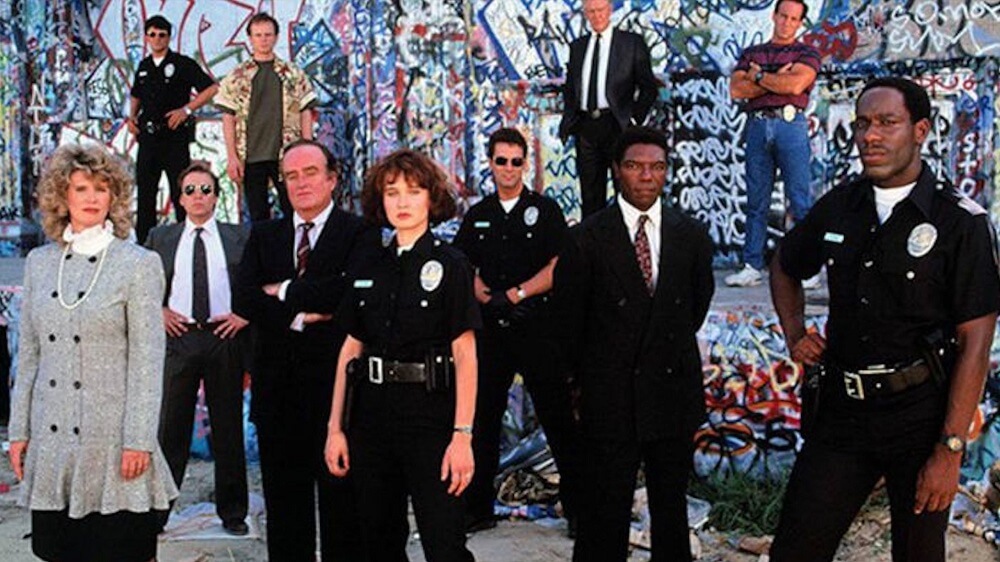
Police Story (NBC): In 1964, Gene Roddenberry altered the concept he had for a mixed-race US Marines drama into a science fiction show, and called it Assignment: Earth, before shopping it around to networks. MGM liked it but not enough to take it to series, and so he pitched it to Desilu Productions, the company started by Lucille Ball and Desi Arnaz, but which had been under Ball’s sole control since 1960. Desilu hired Roddenberry as a producer, where he filmed pilots for Assignment: Earth, another show called Yankee Gunfighter, and an urban crime show called Police Story.

Keeping the inter-racial themes of his previous pitches, Roddenberry cast Steve Inhat, Rafer Johnson, and Gary Clark as three cops who work on special assignments for the police commissioner, played by veteran character actor Malachi Thorne. They were to handle only the toughest and most sensitive cases, and in the pilot – which began shooting amid the Watts Riots in Los Angeles – featured the gang on the hunt for a shotgun killer, with possible political motives.

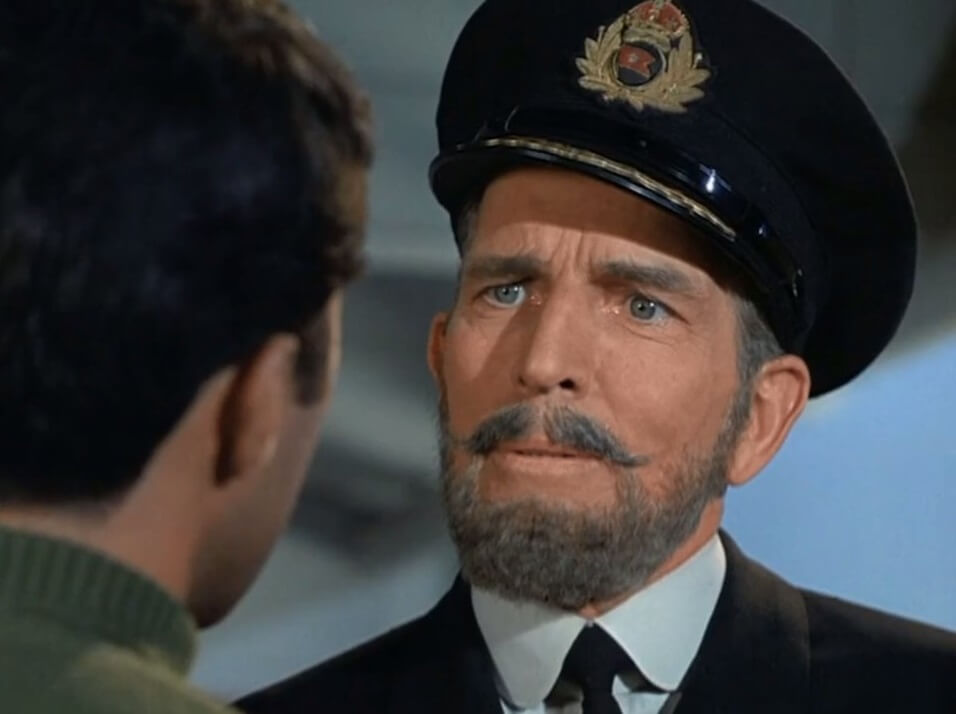
Malachi Thorne

The show wasn’t picked up for series, but the pilot aired as a TV movie in September 1967, by which point Assignment: Earth – which had eventually been renamed Star Trek and greenlit by NBC after Desilu took over production – was preparing its second season. DeForest Kelly and Grace Lee Whitney, who appeared in the pilot, found roles on the new space show, and Roddenberry secured his place in television history. He later used the name of Gary Clark’s character in Police Story – Questor – for a 1970s pilot about a superhuman robot.

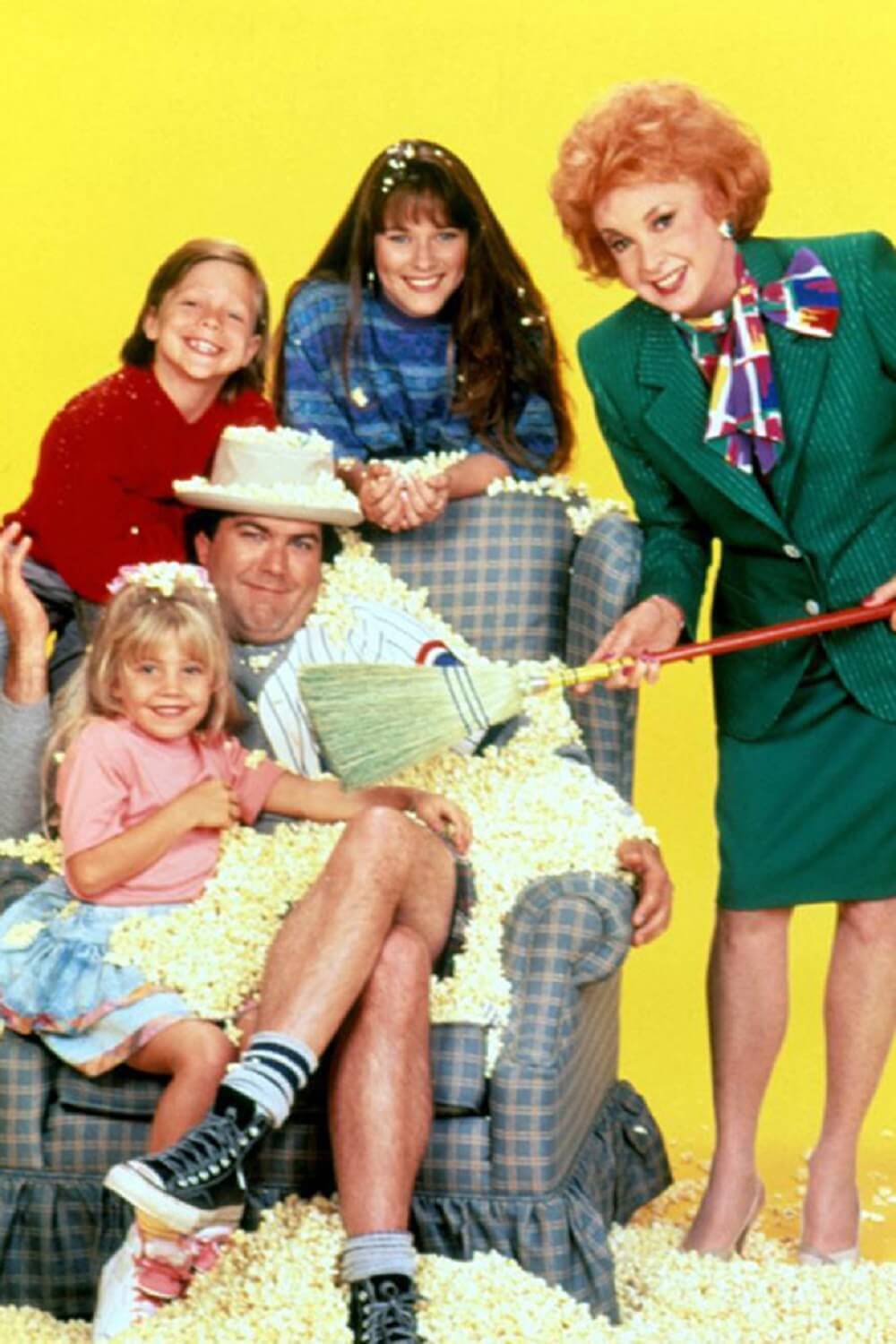
We’ll Take Manhattan (NBC): Primarily known as a producer of health and hygiene consumables, Proctor & Gamble began sponsoring radio programmes, and when television launched they widened their remit to actually producing shows. Beginning with The Guiding Light in 1952, P&G traditionally made soap operas, but occasionally dipped their toe into other waters, and in 1966 they paired with animation studio Hanna-Barbera for a live-action sitcom.

Dwayne Hickman

We’ll Take Manhattan starred Dwayne Hickman, who’d become a beloved guest in America homes as Dobie Gillis, as Lucas Greystone, a naïve lawyer hired by a tribe of Native Americans, headed by the 140-year old Chief Irontail. Although Manhattan was sold to the Dutch by the Indian tribe resident on the island, it turns out that they weren’t the rightful owners, and Irontail’s tribe want their land back.

Also starring Ben Blue and Allan Melvin, an eventual series would have pitted Irontail against Walter Woolf King’s Harrison Conroy, who also claimed ownership to the land and wanted to build Conroy Towers, with Greystone caught in the middle. As it was, NBC declined to order a full series, and aired the pilot on April 30th 1967, and Hickman’s next project – Missy’s Men – fared no better.

Nightwatch (CBS): Aired as part of the CBS series Premiere which, in the summer of 1968, packaged eleven unsold pilots as a drama anthology, Walk in the Night was written, produced, and directed by Robert Altman, for consideration for the 1966-67 TV season. Altman, whose debut feature The Delinquents had brought him to the attention of Alfred Hitchcock and subsequently led to a position as an in-demand TV director, filmed the pilot entirely at night, on location in Chicago.

Carrol O’Connor

Carrol O’Connor (who go on to star in the similarly-named In the Heat of the Night) and Owen Kerr starred as a pair of private eyes in the employ of GLIB (the Great Lakes Interstate Bureau), hired to find a Swedish crewman who has jumped ship in Chicago. There’s just one wrinkle – the sailor doesn’t know that his suitcase contains a bomb that will explode in a few hours!

The project had begun life as a proposal for a feature film called Chicago, Chicago, but Altman was finding it difficult to make the transition from the small screen to the silver screen. Instead, and now retitled Nightwatch, the pilot was considered for a possible series by CBS but lost out to Mission: Impossible. Ironically, the first episode of Premiere, airing two weeks before Walk in the Night, was Call to Danger, the original pilot for Mission: Impossible, which had been retooled by Desilu Productions before making it to series in 1966.

Silver Springs (ABC): In 1953, and having made seven feature films starring the intrepid collie, MGM sold the rights to Lassie to TV producer Robert Maxwell (not to be confused with the fat Czech), who had made his name working on The Adventures of Superman. Maxwell brought Lassie to TV for a nineteen-year run, repeating the formula in 1960 with National Velvet, based on the 1944 Elizabeth Taylor movie.

In 1966, with Flipper having brought the Florida coastline to the nation’s attention, Maxwell made a pitch for a piece of that pie, tasking Bill Berg and Rik Vollaerts with coming up with a show that made the most of its location. They came up with Silver Springs, set in the eponymous coastal town, and starring Kevin Brodie as Mike Malone, a young boy living with his parents and grandfather who discovers a mermaid, played by Jerri Lynn Fraser, who followed a school of fish into Florida waters and now can’t find her way home.

Jerri Lynn Fraser

Teen actor Brodie had just broken out with The Night of the Grizzly, and Jerri Lynn Frazer had starred in the 1962 popsploitation flick Two Tickets to Paris, and hopes were high that their screen chemistry could make this another Bewitched-style hit, but ABC passed on a series, and the pilot finally aired – under the title Mike and the Mermaid – as part of the network’s Off to See the Wizard anthology series in January 1968. Fraser had already given up acting by the time the pilot aired, but Brodie went on to produce and direct after his acting career dried up, with 1999’s Dog of Flanders his greatest accomplishment.

Stranded (NBC): Lost before J.J. Abrams was even born, Stranded told the story of the survivors of an airplane crash in the Andes, forced to create their own society until they could be rescued by the outside world. Starring Peter Graves and Leonard Nimoy, the survivors encounter hostile natives and a mysterious past acquaintance of Graves’s big game hunter Ben Barstow, as they also try to fight off divisions from within their own number.

Peter Graves

Created by Frank Price, who would resurrect the concept for 1969’s The Lost Flight and another Stranded in 1976, Universal Television put big money into the pilot, but NBC declined to pick it up as a series, preferring instead to import The Saint from the UK, making a star of Roger Moore in the process.

Graves and Nimoy quickly jumped ship to Mission: Impossible and Star Trek, respectively, and rather than show the pilot as a TV movie, as was usually the way with such things, Universal sought to recoup their losses by filming an additional forty minutes of footage and releasing it theatrically as Valley of Mystery. The new footage was an ill-fit with the existing pilot, and the movie seems to come to an end before inexplicably restarting once more, and critical – and commercial – success eluded them.

Frank Price eventually became head of Universal Television and is credited with creating the mini-series format, but is probably best known as the president of Columbia Pictures, where he greenlit Academy Award-winning films such as Kramer vs Kramer, Tootsie, and Gandhi.

Next time on The Telephemera Years… we take a look at what the kids were watching while gulping down bowls of sugary cereal!

Further STARBURST Reading:

THE TELEPHEMERA YEARS: 1966 – PART 1

THE TELEPHEMERA YEARS: 1966 – PART 2

Omid Abtahi | JUSTICE SOCIETY: WORLD WAR II

Omid Abtahi

Known for playing Homes in The Hunger Games franchise, Dr Pershing in The Mandalorian, and Salim in American Gods, actor Omid Abtahi has played a long list of diverse and exciting characters, but he has never played a superhero, until now! As Hawkman, he is part of Justice Society: World War II, a new DC animation that throws iconic characters into an emotional, time travelling story, with a classic war torn setting as its backdrop. STARBURST talks with Omid to uncover how he approached portraying Hawkman, and MUCH more!

STARBURST: This is the first animated superhero film that you’ve been a part of, so how exciting was that for you, and how did it compare overall to the voice acting projects that you’ve done before?

Omid Abtahi: I was very excited about it because, whether on screen or as a voice over, I’ve never played a superhero before, and as an actor I never anticipated playing a superhero. So just to have this opportunity was very special. It wasn’t too different to the voice over work that I’ve done before, because specifically with this project and this character, I had worked with the casting director Wes Gleason before on another project. The reason that he had me in mind for Justice Society: World War II was because of this prior project that we’d worked on. So when I got the offer for this, I was like “What do you have in mind, Wes?” and he said “What you did on that other project, let’s go ahead and bring a lot of that into this. I thought it was this deep, brooding, thoughtful character. So let’s apply it to Hawkman.” So, I was able to use that as a jumping-on point into a world that I wasn’t very familiar with going into it.

Justice Society II

Hawkman has an extensive history, going all the way back to the 1940s. How much research did you do beforehand, and how did you approach putting your own spin on this classic character?

I knew who Hawkman was from growing up, and from the comics that I did read, I remembered him. He was very memorable, just because it’s a guy with wings. I wouldn’t call myself educated by any means. I went on the Internet and watched videos, and I started reading about him. I have to be honest, it was very overwhelming, and it was rather confusing. The more I read about him, the more confused I got, because he had so many different backgrounds, iterations. I even tried to watch a cartoon with him in, but I turned it off after three seconds because somebody else’s voice got in my head. That’s something that I didn’t find helpful. My main takeaway for Hawkman was that this is a man who has lived many lives, and he has access to those lives. He is deep, thoughtful, and powerful. I just wanted to bring that kind of wisdom to this character first and foremost.

The World War II setting seems to capture how we see superheroes in a unique and gritty way, what did you personally find the most interesting about playing a superhero within this historic time?

I’m a huge sucker for history, so I love that this took place in the past. I also love the animation choices that they had for this project. It’s cool to live in that world, but it didn’t really effect how I approached the character necessarily.

Justice Society: World War II has its fair share of emotional moments, especially for Hawkman. Is there a scene that really stood out to you when you worked on the film?

100%. There are two major scenes with Hawkman and Black Canary, where they’re able to take a breath in all of the action, and there’s this moment for them to have a really deep conversation over the span of two minutes. It was those two big scenes that I really gravitated towards. I was able to place who Hawkman was from those two scenes. Especially the last scene, which I’m afraid to talk about!

Hawkman can be calm and collected, but then switch to angry within a heartbeat. He gives a good balance to the Justice Society team. What do you think that he brought to this film in particular?

He is very much the quiet, brooding type. He talks very little, but when he talks it means something. A lot of the other characters are very expressive, and they vocalise their feelings. Hawkman just seems to be less like them. So I think that he brought a different dynamic to this ensemble piece. So when he speaks, people listen.

This film can stand on its own, as in you don’t have to know too much about DC beforehand to get to the story. Would you agree with that? The fact that it could appeal to a wide audience, instead of being just restricted to die-hard DC fans?

Yeah, because to be honest with you, I don’t have a huge knowledge of DC or Marvel. I was able to just read the script and enjoy it for what it was. I could lose myself, and immerse myself in that world straight away. So I guess I’m a living example of that.

Finally, why should STARBURST readers check out Justice Society: World War II?

It’s a fun movie. At the end of the day, it’s just a really good time. There’s definitely some touching moments in there. If you’re looking to be entertained for two hours, then this is that movie for you.


Justice Society: World War II is available on digital from April 27th. You can read our interview with Matt Bomer, who plays The FlashStana Katic , who plays Wonder Woman, and Matt Mercer, who plays HourMan, here

(Main image by Gage Skidmore)

[ENDED] Win Exorcism Horror THE SEVENTH DAY on DVD

seventh day win

We’ve teamed up with Dazzler Media to give three lucky readers a chance to win a copy of The Seventh Day on DVD.

In this fresh and terrifying new horror, a renowned exorcist teams up with a rookie for his first day of training. As they plunge deeper into hell on earth, the lines between good and evil blur, and their own demons emerge.

From the mind of acclaimed new horror writer-director Justin P. Lange (The Dark), The Seventh Day stars Guy Pearce (Prometheus), Vadhir Derbez (Sense8), Keith David (They Live) and Stephen Lang (VFW).

a Rafflecopter giveaway

Dazzler Media presents The Seventh Day on DVD & Digital from April 26th.

Five Films to Check Out on Horror Channel This Week – 190421

horror 190421

As always, there are plenty of great films and TV shows to watch on Horror Channel each week. Here are some of our favourites for the next seven days:

Tuesday April 20th, 10.50pm – The Brood (1979)

David Cronenberg’s classic body horror with a slice of sci-fi sees a doctor (Oliver Reed) treat a woman (Samantha Eggar) for her mental illness while some brutal murders take place locally. Cult actor Art Hindle plays the husband and there’s plenty of creepy goings-on.

Wednesday April 21st, 9pm – Mary Shelley’s Frankenstein (1994)

Directed by Kenneth Branagh and co-written by Frank Darabont, this faithful adaptation of Mary Shelley’s Gothic novel stars Branagh as the doctor who creates life from parts of dead bodies stitched together. Robert De Niro makes the role of the creation his own.

Thursday April 22nd, 9pm The Frighteners (1996)

A superb comedy-horror from a pre-Middle-earth Peter Jackson, which stars Michael J. Fox as a psychic who uses the ghosts he’s befriended to make money out of people. Until the spirit of an executed serial killer plans another murder spree. John Astin (Gomez Addams in the ‘60s TV series), Dee Wallace Stone (The Howling), Jeffrey Combs (Re-Animator), R. Lee Ermey (pretty much reprising his role from Full Metal Jacket), and Jake Busey (Starship Troopers) make up the perfect cast. Unmissable.

Saturday April 24th, 9pm – Odd Thomas (2013)

Quirky adaptation of Dean Koontz’s best-seller. The late Anton Yelchin plays the titular character with Willem Defoe as the police chief who’s aware of his ability to see the dead. Written and directed by Stephen Sommers, who gave us the CGI overload of The Mummy and Van Helsing, but don’t let that put you off.

Sunday April 25th, 10am – 3pm – Star Trek: Enterprise

Back-to-back episodes of the first new Trek series of the new millennium. Scott Bakula is Jonathan Archer, son of the man who developed the Warp 5 engine, and captain of Enterprise NX-01. As a prequel to the Original Series, it shows the development of the Federation. Apart from the still-bobbins theme song, it’s a cracking entry into the franchise. The episodes screened will be from the end of the third season, with the fourth starting the following Tuesday evening.

Tune into Horror Channel on Sky 317, Virgin 149, Freeview 68, Freesat 138.

[ENDED] Win AUSTIN POWERS: INTERNATIONAL MAN OF MYSTERY Special Edition Blu-ray

austin win

We’ve teamed up with Kaleidoscope to give two lucky readers a chance to win the new Special Edition Blu-ray of the classic cult comedy Austin Powers: International Man of Mystery. Just read on, watch the trailer, and enter the competition below…

In 1967, fashion photographer by day and super-agent by night Austin Powers (Mike Myers, Wayne’s World) is on the verge of catching his arch-nemesis, Dr. Evil (also Myers), when the latter has himself cryogenically frozen. Following suit, Powers unthaws thirty years later in the ’90s to find Evil threatening the world once more. Can Powers recover from his culture shock in time to battle his old foe? With the help of sexy sidekick Vanessa Kensington (Elizabeth Hurley), he just might.

Featuring a huge ensemble cast including Will Ferrell, Seth Green, Carrie Fisher, Christian Slater, Priscilla Presley and Burt Bacharach, this hilarious and iconic spy movie parody, written by and starring Mike Myers, is undeniably groovy, baby!

BLU-RAY SPECIAL FEATURES

– Austin & Vanessa Character Featurette

– B-Roll

– TV Spots and Clips

– Character Soundbites

– Ming Tea “BBC” Music Video


a Rafflecopter giveaway

Austin Powers: International Man of Mystery is out on special edition Blu-ray April 19th from Kaleidoscope. Order now: https://amzn.to/2PZh39k

[ENDED] Win A DISCOVERY OF WITCHES – Season Two on Blu-ray

discovery win

We’ve teamed up with Dazzler Media to give two lucky readers a chance to win Season Two of the SKY original series A Discovery of Witches on Blu-ray. Just read on and enter below…

The brand new second season of A Discovery of Witches sees Diana and Matthew hiding in time, now in the fascinating and treacherous world of Elizabethan London. Here they must find a powerful witch to help Diana master her magic and search for the elusive Book of Life. In the present day, however, their enemies have not forgotten them.

Based on Shadow of the Night, the second book in author Deborah Harkness’ best-selling All Souls trilogy, A Discover of Witches is back for an unmissable, fantasy-filled and thrilling new season.


a Rafflecopter giveaway

A Discovery of Witches – Season Two is out now. You can buy it here: https://amzn.to/32evYPr

THE TELEPHEMERA YEARS: 1966 – PART 2

Ah, telephemera… those shows whose stay with us was tantalisingly brief, snatched away before their time, and sometimes with good cause. They hit the schedules alongside established shows, hoping for a long run, but it’s not always to be, and for every Knight Rider there’s two Street Hawks. But here at STARBURST we celebrate their existence and mourn their departure, drilling down into the new season’s entertainment with equal opportunities square eyes… these are The Telephemera Years!

1966-67

From a base of just nine percent in 1950, television ownership in the United States had grown to ninety-three percent by 1966, and while the denizens of the United Kingdom were celebrating a World Cup win, American families were sitting down to a new season of their favourite shows. Returning from the 1965-66 season were the Irwin Allen shows Voyage to the Bottom of the Sea and Lost in Space, while Batman was grooving his way to ridding Gotham City of crime. The Man from U.N.C.L.E. and Get Smart went undercover to roots out spies, and just what will Samantha do next on Bewitched?

Joining the schedules for the new season were the surreal adventures of The Monkees, Quinn Martin’s alien drama The Invaders, more superheroics in the shape of The Green Hornet, and another Irwin Allen show, as The Time Tunnel opened its portal. Oh, and a little show called Star Trek began its run on NBC. But what of the shows that made it to air but didn’t linger in the collective memory? These are the misses of 1966…

The Girl from U.N.C.L.E. (NBC): Introduced in a backdoor pilot in The Man from U.N.C.L.E.’s fifth season, April Dancer – her name suggested by James Bond creator Ian Fleming, who was working as a consultant for the show – was an American spy who specialised in undercover missions, alongside her British partner, Mark Slate.

In the introductory episode, the pair were played by Mary Ann Mobley and Norman Fell, but for the series – which aired on Tuesday at 7.30pm – the roles were filled by Stephanie Powers and Noel Harrison, the son of Rex. Powers had made an impact as a young girl in trouble in various film productions, and these skills were put to good use as Dancer often acted as bait for the bad guys, while Slate did the heavy work.

The show desperately wanted to be the hip younger sister to its parent series, and TV Guide reported that Powers was allotted $1000 per episode for “the latest mod fashions from Swinging London’s Carnaby Street.” Despite several crossover episodes with The Man from U.N.C.L.E., The Girl… failed to get a grip on its timeslot, with was dominated by the lion-botherers of Daktari, and was cancelled after just one season of twenty-nine episodes.

Several tie-in novels and a five-issue comic book series from Gold Key were produced, and the series is available on DVD, but is rarely spoken of when memories of The Man from U.N.C.L.E. are dragged up. Powers, of course, went on to play Robert Wagner’s unmurdered wife in Hart to Hart, and Noel Harrison returned to his first love of music, having a huge hit with the haunting “Windmills of Your Mind” in 1968.

The Man Who Never Was (ABC): Just as the campy superhero fun of Batman-inspired several copycat shows on rival networks, CBS and ABC both scrambled for a rival to NBC’s The Man from U.N.C.L.E. The Man Who Never Was was developed by John Newland, who had directed and hosted the supernatural anthology series One Step Beyond for the network from 1958-61, and featured Robert Lansing as spy Peter Murphy.

When the series begins, Murphy is on assignment in Europe, and encounters playboy millionaire Mark Wainwright, who is his exact double (and also played by Lansing). Enemy agents kill Wainwright, thinking he is Murphy, and Murphy adopts Wainwright’s identity, using his newfound wealth to aid him on his missions.

There was the slight wrinkle that Wainwright was married, and although his wife Eva immediately realises that Murphy is not her husband, she plays along because Murphy is kinder than her abusive ex. The two eventually fall in love, and he proposes in the show’s final episode, pledging to retire from the spy business.

Despite the clever premise, ratings were not good (especially against the talking pig on Green Acres), and the decision was made to cancel the show, allowing them to wrap things up neatly. Two feature films – Danger Has Two Faces and The Spy with the Perfect Cover – were later created by stitching episodes of the show together, both with the same beginning and end but with different stories filling out the plot.

T.H.E. Cat (NBC): The conveniently-named Thomas Hewitt Edward Cat is a reformed thief who operates out of a bar named Casa del Gato on San Francisco’s waterfront, taking cases from those denied justice by other means. Played by Robert Loggia, The Cat, as he was obviously known, was a former cat burglar (and circus performer of Gypsy heritage) who used martial arts skills to solve crimes and protect the needy, and he exploded onto television screens on Friday nights at 9.30pm.

The actor was proficient in several disciplines, with black belts in karate and jiu-jitsu, but sought help from Bruce Lee – who was working on The Green Hornet as Kato – with fight choreography. Loggia, who had played a character called The Cat before in the western series The Nine Lives of Elfego Baca, was joined by a cavalcade of guest stars, with the likes of James Whitmore, Robert Duvall, William Daniels, Cesar Romero, Henry Darrow, Susan Oliver, and Victor Buono popping up, often in different roles.

With a stylish musical score by Lalo Schifrin, the feel of the show attracted a strong teenage audience, and has since become a cult hit on both sides of the Atlantic (it aired in several ITV regions in the UK), but it did not warrant renewal for the 1967-68 season and was ended after twenty-six half-hour episodes.

The concept was revived in 1968 for ABC’s It Takes a Thief, which starred Robert Wagner, and Robert Loggia went on to carve out a solid career in Hollywood, appearing in blockbusters like An Officer and a Gentleman, Scarface, and Big, returning to TV for the occasional regular role on crime shows like Mancuso, FBI. The series has never been released on DVD but most episodes can be found on video sharing sites.

Hawk (ABC): Slightly ahead of its time, Hawk starred Burt Reynolds, fresh off Gunsmoke, as John Hawk, a full-blooded Native American NYPD detective working the night shift. Reynolds, who was part-Cherokee, wanted to portray Hawk as a policeman who happened to be Iroquois, rather than the caricature of Native Americans seen on screen to that point (and to which Reynolds himself had added to in both Gunsmoke and Navajo Joe).

Nevertheless, Hawk was on the receiving end of some racism from his colleagues and the criminals they caught, and the show didn’t shy away from racial themes which went beyond Native Americans and included the plight of urban African-Americans. Hawk was hostile, bristling and ready for action, and it made for an intense action show, perfect for its 10pm Thursday slot.

Unfortunately, audiences didn’t agree, and although early ratings were good they soon fell off a cliff, and the show was cancelled after just twelve episodes had been completed, despite ABC’s contract calling for seventeen. Despite swearing he’d never play a cop on TV again, Reynolds returned to the police for Quinn Martin’s Dan August in 1970, but again the offbeat show failed to gain much of an audience.

Off the back of Dan August, Reynolds was offered – and turned down – the role of James Bond after Sean Connery quit, and then hit big with Deliverance in 1972. This brought Hawk back to screens in re-runs in 1976, and it occasionally pops up on classic TV stations, although it has never been released on DVD.

Cops, spies, and superheroes ruled the roost on US TV in the mid-1960s, and that was just the shows that made it to air. Next time on The Telephemera Years, we’ll take a look at a handful of shows that should have been given full series, but never made it past the pilot stage…

Further STARBURST Reading:

THE TELEPHEMERA YEARS: 1966 – PART 1

Five Films to Check Out on Horror Channel This Week – 120421

horror picks

We’re at the first stage of opening the country back up, but there are still plenty of great films and TV shows to watch on Horror Channel each week. Here are some of our favourites this week:

Tuesday April 13th, 9pm – Bad Samaritan (2018)

Former Doctor Who David Tennant shows a darker side to his range with this tale of a parking valet (Robert Sheehan) who has a side-line as a burglar. Things get nasty when he discovers a kidnapped woman in the house of one of his rich victims.

Wednesday April 14th, 9pm – Lake Placid (1999)

The first – and best – of the franchise in which a large crocodile causes mayhem in a picturesque lake in Maine. It’s written by TV legend David E. Kelley and has a weighty cast including Bill Pullman, Bridget Fonda, Brendan Gleeson, and Betty White.

Friday April 16th, 1pm Sharknado (2013)

Here’s where it all started! Mockbuster champs The Asylum captured the world’s imagination with their so-bad-they’re-good series of shark-based disaster movies. Tara Reid (of course) and John Heard are amongst the cast doing battle against CGI great whites.

Saturday April 17th, 12.50am – Road Games (2015)

Not to be confused with the 1981 Australian shocker, this one sees a British hitchhiker who has lost his luggage and his girlfriend trying to get home. He teams up with a female French drifter for safety when she tells him there’s a serial killer who prowls the area. This impressive chiller also features horror royalty Barbara Crampton.

Sunday April 18th, 9pm – The Innkeepers (2011)

Ti West (House of the Devil) wrote and directed this superbly creepy ghost story. Two employees are working their last shift at the Yankee Pendlar Inn before it closes and hope to capture proof of the alleged supernatural goings-on. It features a fantastic cast, too: the underappreciated Sara Paxton and Pat Healy, and Top Gun star Kelly McGillis.

Tune into Horror Channel on Sky 317, Virgin 149, Freeview 68, Freesat 138.

I BLAME SOCIETY: MAKING A GOOD MURDERER

blame Gillian

Gillian Wallace Horvat speaks to STARBURST’s Rich Cross about her new independent feminist horror film I BLAME SOCIETY…

“The original title for the film was actually I, Murderer because that was the title of the short documentary that this film grew out of,” explains writer-director Gillian Wallace Horvat of her new indie-horror. “When I was asked to come up with another title, I Blame Society came to mind. It’s a good title for our film in the sense that it expresses… the energy that the film has of just rage and vitriol.”

I Blame Society is a combination of horror, satire, and scathing social critique which follows the increasingly questionable choices of a frustrated female film director – played by Wallace Horvat. “She is struggling to get her first feature made,” Wallace Horvat explains. “She’s had some successful shorts, but she’s just having trouble with people believing that… they should give her a million dollars to make a first feature.”

The gatekeepers of the industry seem reluctant to give female filmmakers equal opportunities. “All the while she’s watching that same level of scrutiny not be levelled at her male peers,” she says. When her manager drops her and her boyfriend acts “like he doesn’t believe in her”, this would-be auteur reaches a pivotal decision and takes a fateful step.

She revives a long-abandoned documentary project that was “based on a compliment that she would ‘make a good murderer’,” and decides to finish the film by “actually killing people.” It’s not that her character is motivated by blood-lust, Wallace Horvat insists. It’s a determination to prove to others that “she is competent and talented and worthy of validation.”

Some of the frustration that her character experiences is autobiographical. “There’s a lot of the film that is drawn from my life,” she says, “But I also am not unique. There are lots of female filmmakers out there who face barriers to entry that male filmmakers don’t.”

One of the elements of I Blame Society that makes the film stand out amongst its horror contemporaries is its focus on female agency and the attention it affords to the perspectives of women. There’s obviously “the conceit that it’s a female character who is filming herself”, but this is also a movie with a female Director and female Director of Photography. “It’s very front-to-back a female gaze,” she affirms.

Wallace Horvat embraces the idea that hers is a feminist horror film. “I’m totally okay with it,” she says. “I think that we’ve moved past the point as a society where ‘feminist’ as a slur. So it’s totally fine with me.”

Not that there’s anything earnest or dry about the themes of I Blame Society. “We’re actually showing that films that have subversive ideology are effective entertainment,” Wallace Horvat says. “They are just as funny or gross or hot, or whatever.” Done well, movies with a social and political message “can be effective as films too.”

Key to the success of I Blame Society is the challenge that the lead character’s behaviour poses for the audience watching. “She is not there for you to unthinkingly live through her choices. But I do encourage people to feel a catharsis and feel a release from some of her actions.”

Wallace Horvat concedes that there’s no simple fix that would make the film industry more receptive to the work of women artists. “I can only express my frustration and try and get people to empathise and feel where I’m coming from,” she says. But if audiences respond to this film and it’s successful “then it guides by example – providing an antithesis to the kind of films that… the current male gatekeepers are asking for from women.” New and different types of female film that “feel personal and problematic.”

“We don’t talk enough about the cleansing power of anger and the cleansing power of rage to, to precipitate changes,” she continues. “To de-normalise things that we’ve taken for granted and have just become conditioned to… we need to get angry again. ‘Make America angry again.’ That’s what I’m running on.”

I Blame Society is released on April 19th. You can read our review here, and watch the full interview below: