THE TELEPHEMERA YEARS: 1966 – PART 1

Ah, telephemera… those shows whose stay with us was tantalisingly brief, snatched away before their time, and sometimes with good cause. They hit the schedules alongside established shows, hoping for a long run, but it’s not always to be, and for every Knight Rider there’s two Street Hawks. But here at STARBURST we celebrate their existence and mourn their departure, drilling down into the new season’s entertainment with equal opportunities square eyes… these are The Telephemera Years!

1966-67

From a base of just nine percent in 1950, television ownership in the United States had grown to ninety-three percent by 1966, and while the denizens of the United Kingdom were celebrating a World Cup win, American families were sitting down to a new season of their favourite shows. Returning from the 1965-66 season were the Irwin Allen shows Voyage to the Bottom of the Sea and Lost in Space, while Batman was grooving his way to ridding Gotham City of crime. The Man from U.N.C.L.E. and Get Smart went undercover to roots out spies, and just what will Samantha do next on Bewitched?

Joining the schedules for the new season were the surreal adventures of The Monkees, Quinn Martin’s alien drama The Invaders, more superheroics in the shape of The Green Hornet, and another Irwin Allen show, as The Time Tunnel opened its portal. Oh, and a little show called Star Trek began its run on NBC. But what of the shows that made it to air but didn’t linger in the collective memory? These are the misses of 1966…

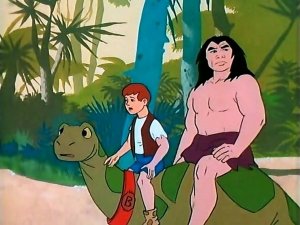
It’s About Time (CBS): A jobbing writer on such shows as My Favourite Martian, Sherwood Schwartz had a hit right out of the gate in 1964 when his first original creation, Gilligan’s Island, scored big ratings for CBS. With two seasons of Gilligan under his belt, Schwartz again dipped into his box of tricks in 1966 for It’s About Time, which took the stranded concept of his first show and stretched it back to pre-historic times.

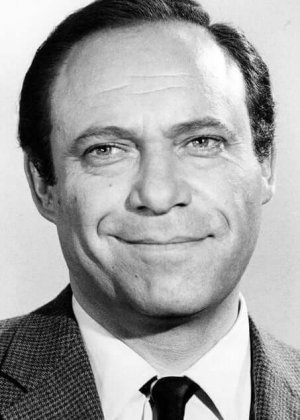
Frank Aletter (who was married to Batman’s Catwoman, Lee Merriweather) and Jack Mullaney played two astronauts who, while attempting to travel faster than the speed of light, are hurled back to the Stone Age, where they are taken in by a friendly caveman family. The Phil Silvers’ Show and Car 54: Where Are You?’s Joe E Ross and character actress Imogene Coca were Gronk and Shag, the adults of the family, who had two teenage children, and comic relief often came from the cave tribe’s chief, called Boss, and his right-hand man Clon (who was played by former professional wrestler Mike Mazurki).

Using music and sets created for Gilligan’s Island, It’s About Time was given a lead-in by Lassie, and appeared on a strong Sunday night line-up for CBS, but competition from Voyage to the Bottom of the Sea and Walt Disney’s World of Color, saw ratings tumble after a strong opening stretch. After eighteen episodes, and when audiences had expressed a dislike for the primitive setting, Schwartz turned the show on its head, bringing the astronauts – and their caveman hosts – back to the modern day, where the ridiculousness of everyday twentieth century life was lampooned.

Ratings did not improve, and the show was cancelled after its first season of twenty-six episodes had been completed, and with Gilligan also finishing at the end of the 1966-67 season, Schwartz went back to the drawing board and created The Brady Bunch. A tie-in comic book was released by Gold Key, but fared no better than the show, and didn’t last beyond its first issue. The series’ concept would later be revisited for the Pauly Shore vehicle Encino Man in 1992.

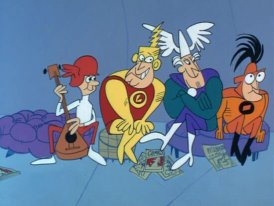
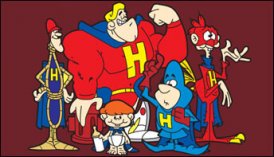
Mr Terrific (CBS): Taking its cue from the DC Comics’ superhero Hourman – but most importantly from the runaway ABC hit BatmanMr Terrific told the story of Stanley Beamish, the proverbial mild-mannered everyman, who popped a pill to become the titular superhero, but only for an hour at a time!

Created by Creature from the Black Lagoon director Jack Arnold, Mr Terrific originally starred Mr Ed’s Wilbur, Alan Young, who filmed a pilot but declined to appear in the ongoing series when it was greenlit as a mid-season replacement in January 1967. In his place, Stephen Strimpell – who Arnold had directed in an episode of Run, Buddy, Run – starred as the gas station attendant who moonlighted for a shady government agency, The Bureau of Secret Projects, and only because he was the only one who the pills worked on.

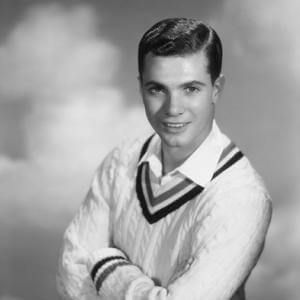
Much of the humour of the show resulted from Terrific’s powers expiring at inconvenient moments and the game cast – including Dick Gautier and John McGiver – tried their best with some weak material, which (without the cultural cache of almost thirty years of DC Comics and various film and radio serials afforded to Batman) failed to find a target, especially up against I Dream of Jeannie.

Seventeen episodes aired before it was cancelled at the end of the season, and although four of the episodes were edited together to create a movie – The Pill Caper, again hoping to emulate the success of Batman – it soon disappeared from America’s collective cultural memory. It had a little more success in Europe, where it aired on some ITV regions in 1969, and especially in Germany, where the show is available on DVD, titled Immer wenn er Pillen nahm (“Whenever He Took Pills”), and has both English and German soundtracks.

Captain Nice (NBC): At the same as CBS were trying to emulate Batman with Mr Terrific, NBC began airing their own camp superhero show as a mid-season replacement, following on from Mr Terrific on Monday nights. Captain Nice starred William “KITT” Daniels as Carter Nash, a mild-mannered (what else?) police scientist who discovered a secret formula that granted him superpowers.

Upon drinking the concoction for the first time, an explosion shredded his clothes, leaving him stood in his long underwear with a torn shirt resembling a cape. His belt – adorned with his initials, CN, inexplicably remained, however, and when a passer-by asked what his superhero name was, Nash improvised and came up with Captain Nice.


Captain Nice eventually adopted a costume sewn by his domineering mother (Alice Ghostley, who would go on to find success as Esmerelda in Bewitched), who encouraged him into a career of clumsy crime-fighting, often alongside his unsuspecting police colleagues, including meter maid Candy Kane, who had a secret crush on him.

Created by Get Smart! co-creator Buck Henry, the series ran for sixteen episodes until May 1967, but did not return for the 1967-68 season. Ratings were not good, although this was not helped by the show running against both The Rat Patrol and top-five staple The Lucy Show, and the addition of the Batman-esque The Green Hornet to schedules. The show did get an airing late night on Comedy Central in the 1990s, and was released on DVD in Germany, but only in German and with some episodes heavily-edited.

Coronet Blue (CBS): An early work by exploitation and horror cinema’s Larry Cohen, Coronet Blue was one of those shows that needed multiple years to tell its full story, but was cancelled before its initial run of thirteen episodes had finished airing in the spring of 1967.

By May 1967, Cohen already had one show on the air, and The Invaders was doing well, despite being opposite The Red Skelton Hour, so hopes were high for his second concept, which had actually been filmed – and shelved in 1965. Coronet Blue starred newcomer Frank Converse as Michael Alden, a man who has lost his memory and has to piece his life together from a series of mysterious clues, framed around a vision of a nightclub, The Blue Coronet.

Cohen’s vision for the show would have seen Alden revealed to have been a Russian spy, deep undercover, who had decided to defect and was targeted for assassination by his handlers. After surviving being dumped in the river by a group he calls The Greybeards, Alden goes on the run in search of the truth and in fear for his life.

Coronet Blue attracted a decent following, becoming something of a cult favourite, and would probably have returned for a sophomore outing, but Converse had begun appearing in NYPD on ABC and didn’t want to return to the role of Alden. Only eleven of the show’s episodes aired, due to pre-emptions, but the complete run was released on DVD in 2007, and you can find it on video-sharing sites.

Join us again next time for a look at more forgotten genre shows from the 1966-67 US TV season, including distaff spies and cat burglars…

[ENDED] Win a Fantastic PAINTBALL MASSACRE Film Prop and DVD Bundle

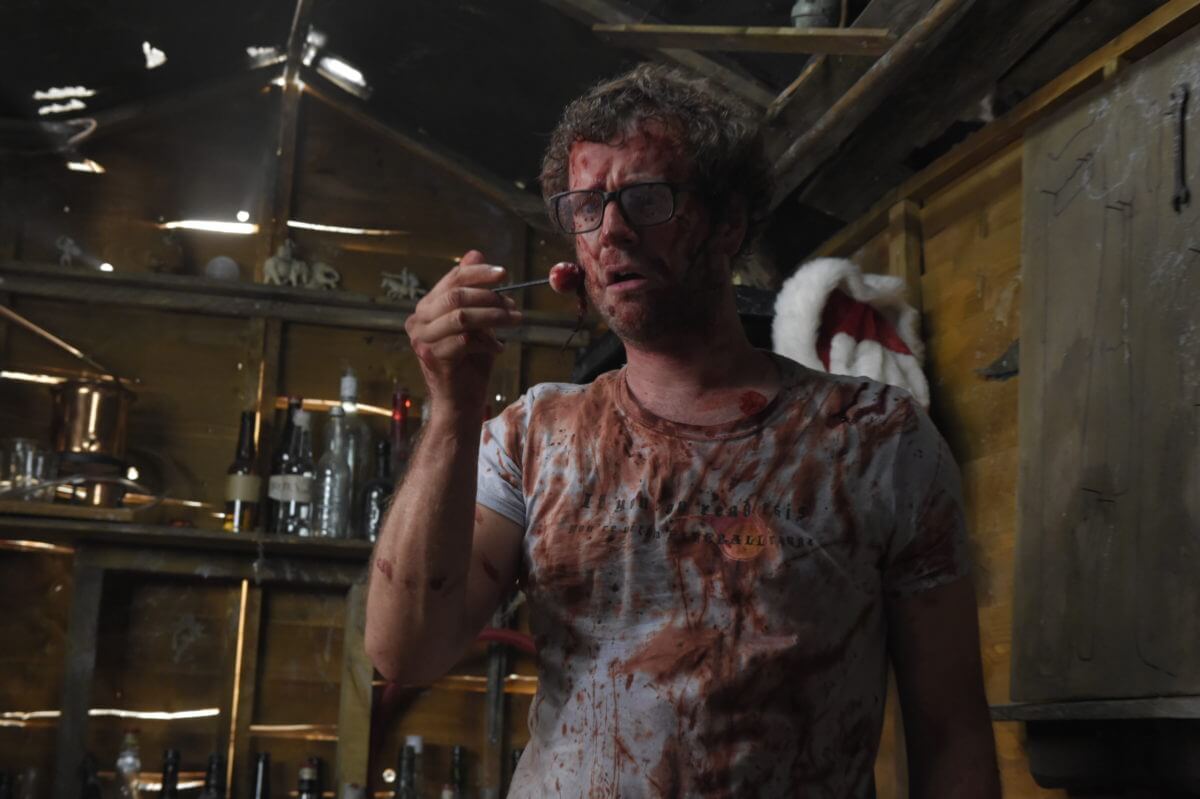
The fabulous people behind the new horror film Paintball Massacre have given us an amazing bundle featuring the movie on DVD, some screen-worn props, and a book by the film’s writer. Just read on and enter below…

The prize consists of:

* Paintball Massacre DVD

* Paintball Mask signed by the cast

* Blue Wristbands worn in the film

* “Library of Lost Souls” book written by Paintball Massacre writer Chris Regan.


Synopsis:

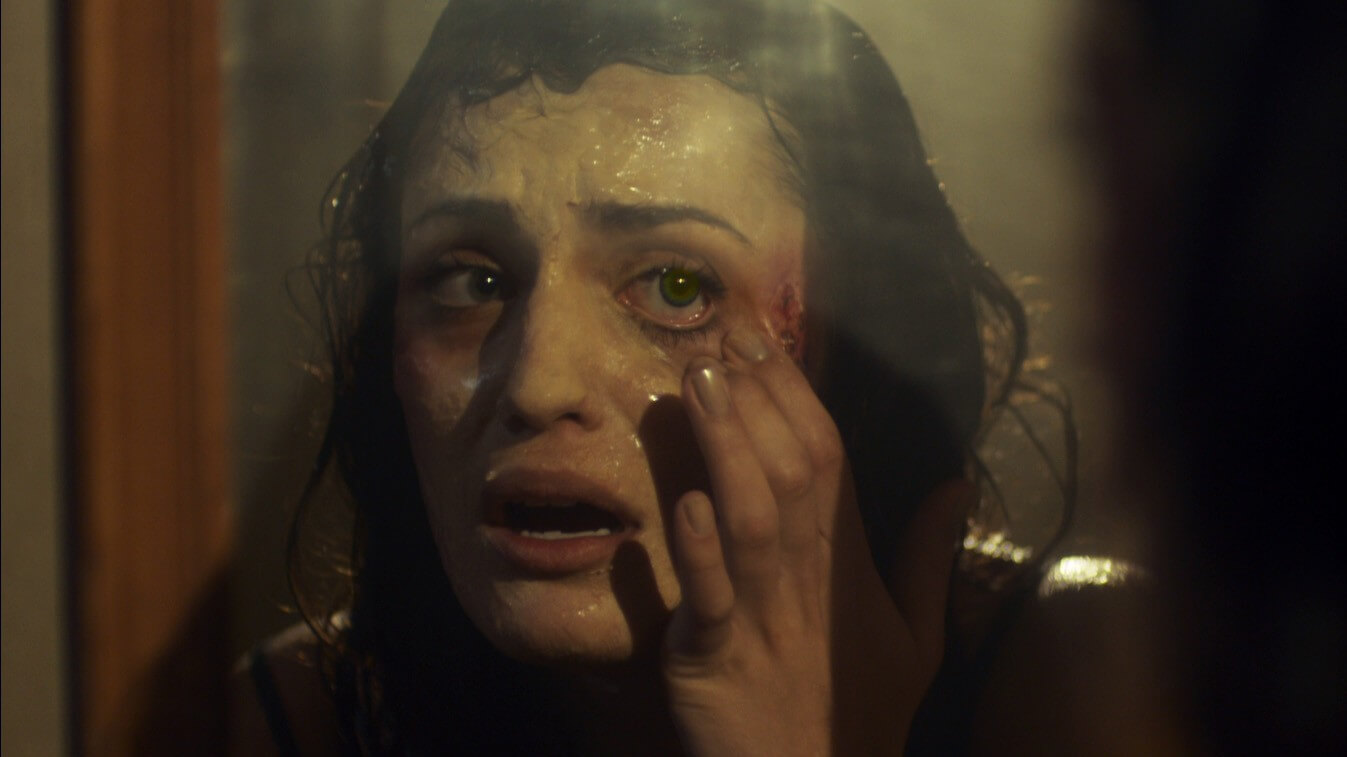
Old school friends go on a paintball trip, miles away from civilization. Things go horribly wrong when they discover a cold-blooded masked killer is among them. Now they must fight to survive their school reunion.

a Rafflecopter giveaway

Paintball Massacre is available now on DVD and Digital from ASDA, HMV, Amazon, Prime Video, iTunes, and Sky Store from 4Digital Media.

[ENDED] Win Fantasy Adventure GEORGE AND THE DRAGON on DVD

george dragon

We’ve teamed up with Kaleidoscope Home Entertainment to giveaway three copies of the 2004 fantasy adventure film George and the Dragon on DVD. Just read on, watch the trailer, and enter below…

Synopsis:

In 12th century England the handsome and noble knight, George, has left the Crusades behind to pursue a peaceful life on his own piece of land. However, in order to obtain his land from the ruling King Edgaar, he must first help find the King’s daughter, Princess Lunna, who has mysteriously disappeared.

When Lunna is found, not kidnapped but guarding an abandoned dragon egg, George determines to return the princess and the egg to the king… but first he’ll have to avoid both Lunna’s determined fiancé, and the kingdom’s last surviving dragon.

A legendary fantasy adventure starring Golden Globe® Nominee Patrick Swayze (Dirty Dancing, Ghost), Golden Globe® Nominee James Purefoy (Rome, The Following, Fisherman’s Friends), Academy Award® Nominee Michael Clarke Duncan (The Green Mile, Sin City, Armegeddon) and Golden Globe® Nominee Piper Perabo (Coyote Ugly, The Prestige).


a Rafflecopter giveaway


George and the Dragon is on DVD and Digital April 12th. Pre-order: https://amzn.to/3dJD3Nh

BOOK WORMHOLE: JONATHAN STRANGE & MR NORRELL – VOLUME III

When I finished Volume II, I was so sure that this novel would end in some epic battle, be it Norrell v. Strange or Norrell and Strange v. the gentleman with the thistle-down hair, and I imagined sitting down to write this review and spending most of the time gloating over how right I was. I have, after all, spent three months reading and analyzing this book within an inch of its papery life.

I was right…if the word “right” looks startlingly like the word “wrong”.

My great fallacy, I think, is that for all that this is a book published in the twenty-first century, I forgot the fact that it is written about—and like—a book from the 19th century. Massive climactic battles are not a hallmark of fiction from the era. Instead it’s introspection, and while I can’t deny that I am a tad disappointed that there was no huge fight as I had long assumed there would be, it doesn’t make me love the novel any less.

And oh do I love this novel.

When we last left off, Strange had gone to war and Norrell had squirreled away more magical books and then, having diverged so much from the opinions of his teacher, Strange abandoned his position as a pupil under Norrell’s tutelage. All the while, the enchantments that had ensnared Stephen Black and Lady Pole wound themselves tighter, and Arabella Strange, poor, sweet, loved Arabella, became the prey of the gentleman with the thistle-down hair. In Volume III we see the aftermath of the gentleman’s attentions to Mrs Strange in the havoc it wreaks with her husband. I’ve discussed Arabella and Strange’s relationship before, how typically 19th century it is all distance and decorum. Neither reader nor other characters could believe that Strange cared anything for his wife at all. Suffice it to say that Volume III does everything to dispel this notion, and does it with such skill that my heart ached for them. And how can’t it, with lines like: “‘There is an ache here.’ [Strange] tapped his heart. ‘And something hot and hard inside here.’ He tapped his forehead. ‘But half an hour’s conversation with Arabella would put both right, I am sure.’” Strange’s loss is written so wonderfully that it is able to do what all good literature should do: elicit a visceral reaction from its readers. Clarke uses both words and plot to accomplish this, because it’s not just that Arabella is gone and Strange is distraught, it’s how Strange communicates his distress that makes it so powerful. The above passage is sad, but it’s made even more so in context: Strange has been trying to purposely make himself go mad in order to better perform magic and to, ultimately, summon a faerie. At this moment, he is so mad that he thinks he’s Norrell’s friend Lascelles! As far as he’s concerned, he’s another person altogether, and yet he still thinks about his wife, and her absence is felt so acutely that it’s physical. This technique makes Strange’s narrative a powerful one, and gives weight to both his actions and to other character’s reactions to it.

It is this relationship that has always been one of the defining differences between Norrell and Strange, a difference that is made even more clear after she falls to the gentleman with the thistle-down hair. In fact, I would go so far as to say that Strange’s relationship with Arabella pretty much sums up his and Norrell’s differences of character. Strange is emotional, youthful (in every sense of the word), bold and open-minded; Norrell is unemotional, old, cruel, and close-minded. Norrell says early on in the novel that magicians have no business being married, as it only serves as a distraction from what is most important: learning magic. Emotional attachments are useless to Norrell, which becomes more and more obvious as the novel progresses, and horribly so. You would think that after having such a loyal, caring person like Childermas as a companion (while technically a servant, Childermass hardly holds to the role), Norrell would have some attachment to him. You would think that Norrell would care when he gets hurt and would trust his advice and, generally, not act like such an ungrateful jackass. But Norrell doesn’t have an attachment to anything except his books, and this sterility of emotion is detrimental to him. People need social interaction, and until he moved to London it appears that Norrell received little of that. A decade later, his improved (although still limited) social interaction appears to have done nothing for him. For all that Norrell is extremely manipulative, he’s not the best judge of people, taking what they say at face value and never considering that maybe, with some people, he shouldn’t. This sterility of emotion is not only what keeps Norrell from growing as a character, but it also keeps him from growing as a magician. Norrell is certain that marriage—emotional attachment—is a weakness, but it is while married and thus steeped in a heavily emotional relationship that Strange makes some amazing magical discoveries. He truly becomes, I think, the Greatest Magician of Their Age, and not because he’s studied hard and conned the competition, but because he loves, and no matter what love is more powerful than intellect.

It is this love which completes the comparison of Strange to Merlin that Clarke began in Volume II, when the Duke of Wellington gave Strange the nickname of Merlin when they were fighting in Spain. In many versions of Arthurian myth, Merlin’s death is always tied to a woman: Nimuë (aka Viviane, or the Lady of the Lake, depending on the work). According to the myth, Nimuë seduces Merlin and uses an enchantment (often times magic that Merlin has taught her himself) to trap him in a tree, a stone, or a cave. Sometimes she is willfully malicious, sometimes contrite, and it’s the latter that links most closely with Arabella, the novel’s Nimuë figure. Like Merlin, Strange finds himself put under an enchantment, with Arabella as an indirect cause as she doesn’t perform the enchantment herself. In fact, she doesn’t perform any magic, nor does any other woman. A female magician is mentioned in having existed in the novel’s past, and we are told that some women do take an interest in magic after Norrell and Strange resuscitate English magic (one such woman appears at the end of the novel), but of the primary women in the novel, Arabella Strange and Lady Pole and (in Volume III) Flora and Aunt Greysteel, none of them show any interest in practicing magic themselves. However, in a way this does tie Arabella closer to her Arthurian counterpart: Nimuë’s exposure to magic in some versions is through Merlin, who teaches her magic; similarly Arabella’s exposure to magic is through her husband, the Merlin figure of the novel. Arabella’s not having performed the enchantment turns her into a more sympathetic character than Nimuë, who even in her contrition still cursed Merlin by her own hand. It is also what makes Arabella and Strange’s relationship even more tragic, especially when you take into account that this was Merlin’s death.

I’ll leave it to you, readers, to find out for yourselves whether or not this was Strange’s death as well.

Overall, this is a fantastic novel. Clarke has made her alternate history incredibly rich, so much so that despite three reviews I have barely scratched the surface. The plot is well-crafted, everything interconnected and no character forgotten. From my own experience writing prose, I know how difficult it can be keeping track of a large cast, and I am extremely impressed that she is able to do so with such skill. The characters are also well-rounded, complex and flawed and wonderfully human. They feel so real sometimes, and as I said previously it is a hallmark of good fiction when a writer is able to elicit a visceral reaction from their readers. There were times when characters—particularly Norrell—frustrated me so much that I swore out loud and had to suppress the urge to toss the book across the room. There were also times, in the third volume especially, when I could feel myself hovering on the edge of tears and in fact did end up crying, so very heartsick. I know some might think it silly to get so wound up by fictional characters, but isn’t that what storytelling is supposed to do? For centuries it has been a tool used to inspire, to comfort, to warn, to make someone laugh; to have the message within the story resonate so much with its audience that they will go away with the desire to apply its teachings to their lives and to the world around them. This is why stories last so long, why thousands of years later we are still reading The Iliad and why Shakespeare plays still sell out theatre seats: stories leave an impression on our souls.

Of course, it’s not a perfect novel. I don’t think those exist, even with the Pulitzer Prize winners. Clarke’s use of antiquated spelling such as “chuse” instead of “choose” and “shewed” instead of “showed” in order to more firmly place the novel as something belonging to the 19th century still, even after a thousand pages, continued to trip me up. They are used far too sparingly, I think, allowing you no chance to grow accustomed to them, and instead of pulling me deeper into the narrative every rare occasion that I saw them only served to violently eject me from the text and remind me that that’s all it was—words. It made the novel appear self-conscious, and frankly I think the book would have been better served if she had stuck with the modern spellings that she uses for the other 99% of the novel.

What also proved frustrating were the footnotes. I’ve said before that the footnotes can be appreciated in hindsight. They make Clarke’s alternate history richer, more fleshed out and real, but there were many times when I was speeding through the action and suddenly there was a footnote, interrupting my momentum and keeping me from the building narrative, sometimes for pages, and I know much swearing occurred. As a writer, I can understand why Clarke uses them; she has spent so much time constructing a detailed world and doesn’t want to see her hard work go to waste, and the book is so much a history text that footnotes serve to emphasize and support this structure. As a reader, however, for all the more wonderful things that the footnotes taught me about the novel’s universe, the fact that it kept distracting me from the narrative I was most invested in proved so annoying that there were times when I considered ignoring the footnotes altogether.

I didn’t, and as I said, in hindsight I know that was a good thing to do.

Quite a while ago, reviews and reviews ago, I commented on the presence of genre fiction outside of the genre fiction sections in bookshops. Books like Slaughterhouse Five and 1984 aren’t in the same department as Terry Pratchett, regardless of the presence of dystopian futures and time travel which link them. Jonathan Strange & Mr Norrell, for all that it is clearly fantasy, was found months ago among the literary fiction, in the same section of Waterstone’s as Margaret Atwood and Angela Carter. When I purchased it I wondered why it was there, and even after reading it I’m still wondering. Is it because it’s an alternate history—alternate historical fiction—and as other works of historical fiction are shelved outside of the genre fiction area, Clarke’s novel went the same way? Is it because it was shortlisted for an award (the Whitbread First Novel Award)? But then that assumes that genre fiction is only literary when it is award-winning, and many sci-fi and fantasy books have won Hugo Awards (among others); is it, then, only non-genre fiction awards that make it literary? It sounds incredibly snobbish to assume that just because it was acknowledged by something open to works of multiple genres that Clarke’s book has been somehow…elevated. Because that implies, erroneously, that genre fiction is less important than literary fiction, and I’m sure you know now how little I believe that. To be honest, I can’t think of a good reason why Jonathan Strange & Mr Norrell wasn’t with the rest of the fantasy novels, but I doubt that it was a quirk of the bookshop staff.

I wholeheartedly recommend this book. It is intricately and carefully constructed, so much so that you can see how much effort the author put into it. The characters are real and the plot is engaging, and for all of its flaws it is a worthwhile read. It’s a commitment of course, due to its length and depth, but like many things it’s worth the time you decide to give it.

And with all of the bits I’ve left out, aren’t you just dying to find out the rest of the story?

[Article originally published in October 2011]

Five Films to Check Out on Horror Channel This Week – 050421

horror channel hellraiser

Easter is done with for another year and we’re full to the gizzards with chocolate, but there are still plenty of treats to watch on Horror Channel each week. Here are some of our favourites this week:

mechashark

Tuesday April 6th, 1pm – Megashark vs Mechashark (2014)

The pairing of Godzilla and King Kong has quite rightly got everyone excited at the moment, but that was just a primer for this main attraction bout. OK, not really, but however ridiculous these films by The Asylum are, they sure are fun.

hellraiser

Wednesday April 7th, 10.15pm – Hellraiser (1987)

Written and directed by Clive Barker, this seminal classic features some gut-wrenching special effects and some unforgettable performances and characters. Doug Bradley’s Pinhead entered the world of classic movie monsters and the Lament Configuration puzzle box is still a must-have replica collectable.

hatchet

Friday April 9th, 9pm Hatchet (2006)

Adam Green’s superb slasher introduced the world to Victor Crowley (played by the legendary Kane Hodder). Full of sickening gore effects and wry humour, it’s a modern classic.

galactica

Saturday April 10th, 11am – 3pm – Battlestar Galactica

Missed the show when it screens during the week? Catch up with an omnibus screening on Saturday! You’ve no excuse now.

outcast

Sunday April 11th, 9pm – Outcast (2010)

Familiar TV actor James Nesbitt gets to show his horror chops in Colm McCarthy’s supernatural tale of a woman Game of Thrones’ Kate Dickie) attempts to protect her son from the evil Cathal (Nesbitt). Is he also behind the mysterious killings that are happening locally?

Tune into Horror Channel on Sky 317, Virgin 149, Freeview 68, Freesat 138.

[ENDE] Win WAKE OF DEATH Starring Jean-Claude Van Damme on Blu-ray

wake death win

We’ve teamed up with Kaleidoscope Home Entertainment to give three readers a chance to win classic Jean-Claude Van Damme film Wake of Death. Just read on, watch the exclusive clip from the film, and enter below!


REVENGE WAS ALL HE HAD LEFT

Martial arts legend Jean-Claude Van Damme (Bloodsport, Kickboxer) takes on a deadly gang of Triad gangsters with explosive results in the action-packed, hard-hitting Wake of Death!

Ex-mob enforcer Ben Archer (Van Damme) is ready to give up his life of crime and settle down to family life. But when his wife, Cynthia, attempts to help a Chinese refugee girl and brings her into their home, a new war is inadvertently triggered.

Discovering his wife brutally murdered and their son missing without a trace, Ben joins forces with his old underworld friends once again, embarking on a bloody vendetta to punish the Chinese Triad gang responsible…

A pulse-pounding, gritty revenge thriller packed with explosive action and starring action superstar Jean-Claude Van Damme, Simon Yam (Ip Man) and Philip Tan (Showdown in Little Tokyo), Wake of Death is essential, must-see JCVD!

BLU-RAY SPECIAL FEATURES

Limited run – 3,000 copies

Exclusive A3 Poster

Original Making Of Featurette

HD 1080 Colour

5.1 DTS-HD MA Soundtrack

a Rafflecopter giveaway

Kaleidoscope Entertainment presents Wake of Death on Special Edition Blu-ray, DVD and Digital April 5th

THE FANTABULOUS HISTORY OF ONE HARLEY QUINN

harley quinn

With a third live-action appearance coming soon in THE SUICIDE SQUAD, it’s a perfect time to look back at the development of the character who has taken the comic book world and geekdom in general by storm…

Harley Quinn, formally known as Dr Harleen Frances Quinzel, one of the DC Universe’s most popular characters is the fourth pillar behind Superman, Batman, and Wonder Woman, according to DC co-publisher and chief creative officer Jim Lee. Not bad for a character who arrived 50 years into the Batman lore and was purely intended as a light-hearted respite to the purple-suited Joker’s evil antics.

These days, you can’t go to a convention or fancy dress party without bumping into a Margot Robbie-esque Harley sporting a baseball bat and coloured pigtails (apparently 2016’s most popular costume in the UK and US thanks to Suicide Squad) and get ready for girl power group Halloween costumes as Gotham’s queen is set to return with her girl gang of rogues in Birds of Prey (And the Fantabulous Emancipation of One Harley Quinn) in February. With a new Harley Quinn animated series having debuted last November, it’s about time we took a look at the history of this insanely (sorry) popular character.

Harley was first introduced in 1992 in the TV show Batman: The Animated Series as a sidekick to the Joker, as voiced by Mark Hamill. In the episode Joker’s Favor, Harley appears in her classic red and black jester getup with diamond patches and painted white face, underscored by Gotham City’s black paper ‘dark deco’ art style. We immediately get a sense of Harley’s devotion to the Clown Prince of Crime as she acts as his cheerleader, whistling, applauding, and rallying up his henchmen to cheer him on.

Animator and comic creator Paul Dini, who co-created Harley (or was ‘partially responsible for’ her as his Twitter bio confesses) and co-produced The Animated Series with Bruce Timm, recalled to STARBURST how the initial idea to have a female sidekick for the Joker came about: “While I was writing the episode Joker’s Favor, I felt the idea of Joker terrorising a helpless victim was rather dark, so I wanted to inject some light moments in there. I had to play Joker fairly straight to make his menace pay off – he was chillingly realised by Mark Hamill, by the way – but I thought a funny henchperson might solve the problem. I decided to add a girl to Joker’s gang and make her a wisecracking gun moll type. In my head, she sounded like my friend Arleen Sorkin, who plays that kind of character extremely well, and Andrea Romano added her to our supporting cast. Wrap it all up in Bruce Timm’s impish design and the rest just fell into place.

It was an unlikely scene from US soap opera Days of Our Lives (which Dini saw on a VHS tape while sick at home one day) in which Sorkin, before she voiced the character, appeared in a strange dream sequence wearing a jester costume that inspired much of Harley’s look. Although initially intended as a walk-on character, Harley was actually a bit of a scene-stealer as she stormed into a Gotham City police dinner, blonde hair, blue eyes, donning a borrowed police uniform and wheeling in a huge cake that’s actually filled with nerve gas at the request of the Joker, who plans to assassinate Commissioner Gordon. She’s got no time for being reduced to a stereotype either, as we learn when a cop calls her ‘sugar’ and asks if she wants to read his rights (eugh). In the quick-witted, high-pitched Brooklyn accented fashion that the character would become known for, Harley bites back “You have the right to remain silent!” and boots him in the shin.

When I saw the way Harley played in finished animation, with Bruce’s design, my dialogue, Arleen’s voice, and the character’s playful staging and direction, I knew she’d be engaging to the first wave of fans at least,” Dini added. “As it turned out, Harley was the breakout character that went onto redefine the norm of the world around them, like Snoopy in Peanuts, or Uncle Scrooge in Donald Duck.

As predicted, Harley quickly became a hit with fans and soon began starring in The Batman Adventures comic series, later earning a place in the primary DC Batman comic canon. In 2001, she finally got her own comic book series, simply titled Harley Quinn, but it was short-lived, running for only 38 issues. Yet Dini says he knew early on that Harley, with her more playful sense of insanity, was meant for much more.

The moment I felt Harley really took off, and this was long before her first episode aired, was in the year before, while we were still creating the series,” Dini told us. “The directors really liked her in the early scripts, and they felt she added something fun to Batman’s grim world. Having a character who plays the role of jester in an otherwise serious drama always works and soon all the directors wanted at least one episode out of the run that featured Harley. I thought if the crew likes her, she will probably score with the audience, too.

Though Harley did have a few brief appearances on TV, it wasn’t until two years after her debut that we got to learn of her origins in the single-issue comic Mad Love. The same story would also be later used in 1999 in an episode of The New Batman Adventures, in which Dr Harleen Quinzel, a psychiatrist at Gotham’s Arkham Asylum, gets herself assigned to treat the Joker, then an Arkham patient, who manipulates and seduces her. She is compelled by his fabricated tales of childhood woe, sees him as a tortured soul who just wants to make the world laugh, and falls madly in love with him (mad being the operative word). Eventually, she helps him escape and becomes his lover and sidekick, recreating herself as the deranged Harley Quinn we know today. The issue was such a success it ended up winning an Eisner (the Oscars of the comic book world). It’s also worth noting that during the DC ‘New 52’ revamp in 2011, Harley was given a slightly different backstory in which the Joker, on escaping from Arkham, pushes her into a chemical pool in a twisted attempt to have her prove her love, bleaching her skin white like his in the process.

The relationship is one of the most famous in comic book history but hardly a love story to reminisce over with the grandkids. While Harley would do just about anything for the Joker and calls him by pet names like “Mistah J” and “Puddin’”, he is abusive, manipulative and cruel towards her. “I found the Joker’s psyche disturbing, his dementia alarming – and his charm irresistible! What can I tell ya? The guy just did it for me,” Harley recounts in Suicide Squad. Some people just really like bad guys, we guess. When Harley tries to kill Batman, the Joker kicks her out of a window, and all is fixed with flowers and a get well note signed ‘J’. Even turning her into a constellation isn’t as romantic as it sounds; in Emperor Joker, fuelled with limitless powers, he kills Harley and makes a cosmic mural of her face. At one point, when the Joker realises he actually has real feelings for Harley and is becoming distracted from his ambitions (his obsession with Batman), he tries to send her off to space in a rocket – commitment issues much? Despite the extremity of these scenarios, it’s often the more subtle and painfully life-like examples of abusive behaviour, most likely lost on the TV show’s young audience, like Joker dismissing Harley’s romantic advances (“Don’t ya wanna rev up your Harley?”) that encapsulate the harrowingly realistic dynamic between the two. That said, the Joker can, at times, be protective of Harley – look too long at her in the wrong way, and he might just skin you alive, as a Gotham strip club owner learned in the 2008 Joker graphic novel.

Conversely, it was one of those merciless acts that eventually led Harley to Poison Ivy when the rocket designed to send her to oblivion crashed down into Robinson Park. Ivy takes Harley under her wing, injecting her with a plant-based toxic antidote that increases her strength and abilities, and they team up to defeat the Joker and Batman together. In Gotham City Sirens, the two join forces with Catwoman, though it isn’t long before Harley’s back under the Joker’s spell when an attempt to kill him ends up with her releasing him from Arkham – again. Outside of the Joker, Ivy is one of Harley’s most significant allies, backing her up in several attempts to take down the Joker, and became a love interest in later series.

Over the years, we’ve seen Harley pair up with several characters across several storylines, including Power Girl and Deadshot, even partnering up with Batman to take down the Joker before having a change of heart. In 2011, during a stint in Belle Reve Prison, she was eventually enlisted by Amanda Waller into the Suicide Squad, to carry out high-risk missions.

Harley’s gone through a few style evolutions in her time. There was the New 52, in which her look was a little edgier but featured a similar colour palette with half black, half red costume and hairstyle. Away from comics, Harley underwent a complete overhaul in Rocksteady Studios’ Batman: Arkham Asylum video game, in which her look is a nurse costume crossed with black and purple thigh-high boots and barely-there corset. This transformation was severe but arrived at a time when Harley’s popularity had begun to fade and so it catapulted her to a much wider audience. Over time, she continued to be given a more revealing style, most evident in her Suicide Squad debut, before going back to a more palatable aesthetic in the 2013 solo series, with a revamp by creators Amanda Conner and Jimmy Palmiotti, in which you’re more likely to see Harley channelling her aggression into things like roller derby. There is then, of course, Robbie’s now-iconic Suicide Squad appearance featuring a bomber jacket, fishnets, tattoos, and red and blue hot pants.

Aside from costume, Harley’s also got some badass weapons in her arsenal, the first being her intelligence. She has a PhD in psychology from Gotham University, a field she is said to have pursued to understand her dysfunctional family. She’s also an expert gymnast, a talent that earned her a scholarship at said university and comes in pretty handy during combat. In her box of tricks, there’s her weapon of choice the oversized mallet, which was first used in The New Batman Adventures, the pop gun with a giant barrel, boxing glove gun, baseball bat… there are many, mainly gag-themed weapons – oh, and not forgetting her pet hyenas. Fun fact: apparently when filming wrapped up on the Suicide Squad movie, Warner Brothers and DC Comics gifted Harley Quinn Smith, daughter of Kevin Smith, with the very bat that was used by Robbie on set.

Harley meets her fate in Batman Beyond: Return of the Joker, a sequel to The New Batman Adventures, during a fight with Batgirl, which ends with them both hanging off the edge of a mineshaft. As Batgirl tries to help, Harley’s sleeve tears and she seemingly falls to her death. That ending felt a little too grim for the beloved character so, in the episode’s conclusion, we fast forward years later and meet two young girls named the Dee Dee twins who are revealed to be Harley’s granddaughters – miraculously, she had survived the fall. The scene shows Harley bailing the twins out of City Jail, so it’s not quite the perfect fairy tale ending, but certainly a more fitting one for the Queen of Gotham.

But Harley very much lives on. In her current self-titled comic, she’s tearing up Coney Island in the DC Universe Rebirth world, and its creators Conner and Palmietto are set to return this month with a four-issue sequel, Harley Quinn and the Birds of Prey. On screen, it’s hard to believe David Ayer’s Suicide Squad movie was the first portrayal of Harley in a live-action film, with Robbie making an effortless job of stealing the spotlight from Jared Leto’s divisive gangster Joker, though the part did very nearly go to either Madonna or Courtney Love back in 1998 in the cancelled Batman & Robin sequel, Batman Unchained. There was, however, a brief TV series based on the Birds of Prey comics and a recent character in Fox’s Gotham TV show named Ecco who carried many Harley-like traits. Now, she’s Joker-free in the upcoming Birds of Prey movie, trading him in for a girl gang of superheroes: Black Canary, Huntress, Cassandra Cain, and Renee Montoya. In the meantime, she’s also striking out on her own via DC’s streaming service, voiced by Kaley Cuoco, for a new adult-oriented animated series that Cuoco says is “completely out of control”.

As Harley herself puts it best: “Bring it, bitch!”

***

THE SUICIDE SQUAD is scheduled for release August, 2021

[This article was originally published in STARBURST issue 469, February 2020.]


Golden Age Fiends – The Horror Classics

Horror classic

It’s a sad fact that nowadays people don’t tend to watch black and white films. They are rarely shown on terrestrial TV and some genuine cinematic classics are at risk of being forgotten forever. Fortunately, we think differently and are always more than happy to bang the drum for the good old days. It’s also timely that Horror Channel is devoting a day to the granddaddies of fear when they play five superb Universal titles back to back.

dracula 1931

In 1931, talkies were still in their infancy. Carl Laemmle, owner of Universal Pictures, had earlier hit it big at the box office with The Phantom of the Opera, starring Lon Chaney as the deformed composer living under the Paris Opera House. Laemmle didn’t like horror, though. The grotesqueness appalled him. His son, however, saw the financial benefit such films brought. Carl Laemmle, Jr had taken over the studio in 1928 when his father gifted it to him as his 21st birthday present. That makes those socks you got look a little lame, doesn’t it? Eschewing his pop’s advice, Laemmle Jr set about producing a series of films that changed cinema. The first release would be an adaptation of Bram Stoker’s Dracula. Or, to be completely factual, a version of the 1927 stage play written by Hamilton Deane and John L. Balderson. The person who would inhabit the Transylvanian castle would be the same man who starred in the Broadway production, Hungarian-born Bela Lugosi. He wasn’t the first choice; that honour would have gone to Lon Chaney, but he passed away a month before production started in August 1930. Joining Lugosi on the big screen would be his stage co-star Edward Van Sloan, who reprised the role of Van Helsing. The director was Tod Browning, who had made several hit films with Chaney and would later helm the outsider masterpiece Freaks.

The story the play used took some liberties with Stoker’s text, so instead of Johnathan Harker being sent to get the Count to sign some property papers, it’s Renfield, played here in wonderfully maniacal fashion by Dwight Frye. He becomes the disciple of Dracula and is a highlight of the film. When the drama transplants to London, the Count takes a shine to Mina (Helen Chandler), fiancé to the now relegated in plot John Harker (David Manners).

While the film is full of amazing atmospheric moments – everything that takes place in Transylvania is beautifully shot and stunningly Gothic – it fails to thrill as much as it should because it sticks so closely to the stage script. Opening on Valentine’s Day, 1931, it was indeed the ‘strangest passion the world has ever known’. Modern audiences may find it lacking – most notably in music, save for the opening use of Tchaikovsky’s Swan Lake and a moment at the opera, there’s no incidental music or cues – but it’s a landmark and important film that we think has stood the test of time. Just remember, although Christopher Lee may be regarded as the definitive Dracula, whenever we do an impression, it’s always Lugosi’s voice we mimic. Interestingly, a separate version was made for Spanish-speaking audiences. This was not just a dub, the whole film was re-shot during the night with a different crew and actors.

frankenstein 1931

That didn’t happen for Universal’s next foray into literary horror. Mary Shelley’s Frankenstein had been a monster hit since it was published in 1823. British-born James Whale was given the task of directing the movie. Taking the mammoth book down to its bare essentials, Robert Florey wrote a tight script that meant the film could be made in time and on budget. Fellow Brit Colin Clive grabbed the role of the doctor obsessed with playing God, while under the superb and unmatched makeup of Jack Pierce was Boris Karloff, who had become known for playing the role of the ‘heavy’ in films such as Howard Hawks’ The Criminal Code (1931). The part of Fritz, the hunchbacked lab assistant who provides the brain of a psychopathic killer instead of that of a genius, went to Dwight Frye, solidifying his place in horror history.

Clive’s portrayal of Frankenstein is nervy and edgy, but it’s Karloff who dominates the movie. Conveying more emotion in a glance of his heavily-laden eyes than the entire cast put together, you can’t help but feel pity for this creature that has been dragged into being. Remember, kids: the title refers to the doctor and he was the real monster.

Even the most shocking moment of the film – the drowning by the monster of little Maria – can be viewed as sympathetic. The creature just wants to play and doesn’t understand that the little girl won’t float like the flowers. His distraught expression reveals his own surprise. It’s a scene that still has the power to disturb today. It was so shocking when it was first released, it was cut from the film. It was only reinstated decades later.

Frankenstein is full of iconic imagery; from the graveyard with its skeleton statue watching eerily over the doctor and Fritz as they are digging up the corpse to the doctor’s laboratory, equipment from which was re-used numerous times in films for years after (including Mel Brooks’ loving spoof Young Frankenstein in 1974).

mummy 1932

The discovery of Tutankhamun’s tomb and the alleged curse, 1932’s The Mummy saw Karloff return as the titular monster. Although not the most dynamic of creatures, he’s still an imposing visage under Pierce’s makeup. It’s a shame that the story has Karloff’s resurrected High Priest Imhotep appear as a regular man for the majority of the story. The discovery of the mummy and its revival (via the sacred Scroll of Thoh) is a memorable and superb moment. The main plot has Imhotep (walking amongst the living under the guise of Ardath Bey) convinced that Zita Johann’s character is the reincarnation of his lost love, Anck-es-en-Amon. Imhotep was put to death for attempting to resurrect her centuries earlier, something we see in a gruesome flashback. The plot is almost a carbon copy of Dracula, but with Karloff’s gorgeous lisping voice reciting the dialogue, it’s easy to overlook the similarities. The resurrection of the mummy – as well as providing sufficient chills – gives us a brilliantly demented Bramwell Fletcher, driven mad by seeing the dead come back to life, cackling “He went for a little walk”.

wolf man 1943

Another actor synonymous with Universal Monsters is Lon Chaney, Jr. Following in the footsteps of his legendary father, Lon had already established himself as a strong performer, particularly playing the slow-witted Lennie in the adaptation of John Steinbeck’s Of Mice and Men (1939). In The Wolf Man (1941), he gets the chance to show a different range. As Lawrence Talbot, cursed from a bite to change into a werewolf at the full moon, he’s a tragic and pitiful character. Once transformed, of course, he’s a hairy and terrifying creature. The wolf that attacked him was – in human form – none other than Bela Lugosi, here playing a fortune-teller named Bela. His gypsy mother, Maleva (an amazing performance from Maria Ouspenskaya), warns Talbot that he has the werewolf’s curse: “Even a man who is pure in heart. And says his prayers by night. May become a wolf when the wolfbane blooms. And the autumn moon is bright”. A famous quote, and one that you’d expect to come from folklore, but no – this was from the imagination of Curt Siodmak, the screenwriter who created the mythology of the wolf man and made it as classical as Dracula and Frankenstein. Claude Rains plays Talbot Snr, returning to horror following his lead appearance in The Invisible Man (who is nowhere to be seen in this TV marathon). Way ahead of its time in tone and effects, The Wolf Man is just as influential as any of the other monster movies.

creature black lagoon 1954

As America and the world came to terms with a new life following World War II, and cinema was looking to the stars for thrills, Universal embraced a different kind of monster in 1954, in Creature from the Black Lagoon. The Gill-man was a classic monster design. Played by two actors, Ben Chapman on land and Ricou Browning when underwater, he’s another sympathetic creation. Like King Kong, he just finds forbidden love in a misunderstanding world. The object of his affection is Julie Adams, who is tagging along on an expedition with her boyfriend. We know it’s not nice to steal someone’s beloved, but we don’t condone harpooning the offender!
Creature was shot in 3D by Jack Arnold, who also made the sci-fi communist paranoia-influenced It Came from Outer Space and Tarantula, which preyed on the fears of atomic radiation. While it came after the Golden Age of Universal, Gill-man still gets his place in the line-up of their classic monsters. Instantly recognisable and often imitated (most recently in Guillermo del Toro’s The Shape of Water), he’s a character that has endured as much as the others.

You shouldn’t be afraid of watching black and white horror flicks. They may not be as fast-paced or flashy as the modern terrors you’re used to, but what they lack in song-filled soundtracks and gore-drenched jump scares, they make up in atmosphere and an otherworldly quality that you just don’t get anymore.

The Classic Horror Marathon can be seen on Horror Channel on April 3rd. A Classic Sci-Fi Marathon is on April 4th. Tune in on Sky 317, Virgin 149, Freeview 68, Freesat 138.

TITANS OF TELEPHEMERA: STEPHEN J CANNELL – PART 4

titans

Ah, telephemera… those shows whose stay with us was tantalisingly brief, snatched away before their time, and sometimes with good cause. Dedicated miners of this fecund seam begin to notice the same names cropping up, again and again, as if their whole career was based on a principle of throwing stuff at the wall and seeing what sticks. What’s more, it isn’t all one-season failures and unsold pilots, there’s genuine gold to be found amongst their hoards; these men are surely the Titans of Telephemera!

STEPHEN J CANNELL

From Baretta in 1975, Stephen J Cannell delivered a series of hits that was paralleled only by his fellow titans Glen A Larson and Aaron Spelling, but he also had his fair share of flops and one-season wonders. And that was the shows that made it to a full season! Alongside those were a handful of projects that the networks were interested in, but failed to pick up after an initial film had been made. This is the story of Cannell’s unsold pilots of the 1980s…

Nightside (1980, ABC): It’s very rare that the giants of popular culture work together – you can count on one hand the amount of times Madonna, Prince, and Michael Jackson worked together, for instance – but when it was announced that Stephen J Cannell and Glen A Larson were working on a show together, expectations must have been very high indeed. Even by 1980, Cannell and Larson had carved out a reputation for themselves as to go-to men for exciting, hour-long dramas, and the announcement of Nightside was met with whetted appetites.

The show followed the adventures of those working LA’s streets after dark, focussing on Doug McClure’s veteran cop, who combines his time flirting with his call dispatcher and showing the ropes to his rookie partner. McClure, hot off the B-movie successes of The Land That Time Forgot and Warlords of Atlantis, is obviously the star here but he’s backed up by a solid bunch of journeymen filling out the cast, including world’s ugliest man, Vincent Schiavelli.

Director Bernard L Kowalski keeps the tone light, with a bunch of prank-pulling college kids on the eve of a big football game becoming the bane of McClure’s existence, and it’s decent stuff for the most part. It was surprising, then, that ABC failed to pick it up for a full series, airing the pilot as a TV movie opposite the 1980 Tony Awards in June of that year.

The real reason behind the show’s failure may lie in the fact that, according to Cannell, he and Larson just didn’t mesh. “He makes his shows and I make mine,” he said of the project, and the two never worked together again, although they did, of course, share many actors and – some would say – basic plots throughout their careers.

Brothers-in-Law (1985, ABC): By 1985, Cannell was on a roll; The A-Team, Hardcastle and McCormick, Riptide, and The Greatest American Hero were all airing in prime time, and even his less successful shows at least made it to series, even if they weren’t returning for a sophomore outing. It must have been a shock, then, when Brothers-in-Law– pitched to ABC for the 1985 Fall season – became the first flop for Stephen J Cannell Productions.

The show has a decent premise: TK Kenny (Mac Davis) is a highway patrolman who is married to the daughter of shady businessman Winston Goodhue, but when he seeks a divorce Goodhue has him fired from the police force and stops him seeing his son. Mickey Gubiacci (Joseph Cortese) is also married to one of Goodhue’s daughters, and works as a trucker for Goodhue’s haulage firm. He is arrested while delivering some illegal goods for Goodhue, who convinces his daughter to dump the trucker. Kenny and Gubiacci, who don’t like each other and have nothing in common except their exes – decide to pair up to form a detective agency, vowing to take down Winston Goodhue if it’s the last the thing they do.

Robert Culp chews the scenery delightfully as Goodhue, and it’s a pleasure as always to see John Saxon pop up, but if anything there’s too much going on here, and the fact that Goodhue’s daughters are also twins was no doubt planned for some hijinks down the line. ABC, who already had Hardcastle and McCormick, The Fall Guy, and Moonlighting on air, and would debut Spenser: For Hire and MacGyver that Fall instead of another Cannell show.

Destination America (1987, ABC): A Stephen J Cannell Productions creation, Destination America was realised for the screen by writer Patrick Hasburgh, who had co-created Hardcastle and McCormick with Cannell in 1983, and scripted a third of that series’s episodes, along with a handful of The A-Team and The Greatest American Hero.

Hasburgh’s concept centred on the unlikely-named Corbet St James V (played by St Elsewhere regular Bruce Greenwood) who, after falling out with his father after the death of his younger brother, opts for a life in the wilderness, occasionally popping into small towns to top up his supplies. On one such trip he encounters an abused woman whose husband has stolen her truck, and while attempting to help her out of her situation he learns that his father has been murdered.

St James becomes the chief suspect, but revealing that he was with the woman would put her at risk, so he goes on the run to try and catch his father’s killer in a curious mix of The Fugitive and The Littlest Hobo. Rip Torn plays Corbet St James IV, and it may just be the fact that he died in the pilot and thus would not appear in an ongoing series that doomed this project, because Rip Torn, man.

ABC declined to pick up the show for a full series, but did air it as TV movie in April 1987, by which time Hasburgh was busy co-creating 21 Jump Street with Cannell. He would try several projects under his own Patrick Hasburgh Productions umbrella in the early-1990s, without much success, and moved on to scripting episodes of Seaquest DSV, which he also produced.

Thunderboat Row (1989, ABC): Although the telefantasy era was in its dying days by the back end of the 1980s, ABC still looked to Cannell for a blockbuster prime time drama that could take on the NBC line-up of LA Law, In the Heat of the Night, and Cannell’s own Hunter. He came back with Thunderboat Row, the story of a team of law enforcement agents working together to take down drug smugglers in Los Angeles.

Cannell’s script has wealthy powerboat designer Ben Bishop, played by Chad Everett, become worried that his boats are being used to smuggle drugs into the US, and so he uses his influence to create the River Intelligence Unit, pulling in staff from the various interested police and government agencies. Also along for the ride is a former powerboat racer who had been unwittingly used by drug kingpin Tom Rampy, who now uses his skills for good in a set-up that stretches credibility so far it could burst.

Surprisingly, it is based on the true story of powerboat legend Don Aronow, whose journey from boat racing and design to law enforcement was detailed in the book Speed Kills by Arthur J Harris, which was later turned into a movie starring John Travolta. Cannell, though, had no such stars, and while his young cast – which included the promising Ash Adams and Rob Estes, as well as Freddie Simpson, who would appear in A League of their Own before vanishing from Hollywood – is game, the plot is, once again, over-complicated and reliant on how thrilling you consider powerboats to be; Hulk Hogan would later star in the boat-themed action show Thunder in Paradise, and the concept would be most brilliantly realised in The Simpsons, parodied as Knightboat.

Cannell still had plenty in his locker, despite the failure of Thunderboat Row, and would enjoy success in the early-1990s with The Commish, Silk Stalkings, and Renegade, before turning his attention to writing novels in 1995, although he continued to executive produce revivals of his earlier projects. Stephen J Cannell and Glen A Larson were truly titans of telephemera, fecund minds from which half-remembered shows poured forth, but for our next dive into that most precious of TV resources we’re going to take a trip in time; join us for The Telephemera Years!

Related Reading from STARBURST:

TITANS OF TELEPHEMERA: STEPHEN J CANNELL – PART 1

TITANS OF TELEPHEMERA: STEPHEN J CANNELL – PART 2

TITANS OF TELEPHEMERA: STEPHEN J CANNELL – PART 3

TITANS OF TELEPHEMERA: GLEN A LARSON – PART 1

TITANS OF TELEPHEMERA: GLEN A LARSON – PART 2

TITANS OF TELEPHEMERA: GLEN A LARSON – PART 3

TITANS OF TELEPHEMERA: GLEN A LARSON – PART 4

The Best Gambling Films

Planning a movie night and don’t know what to watch? Maybe you are just a movie fan looking for a great film? Well, you are in the right place! Gambling offers great film material because you never know what the outcome of a bet is, and movies can play with that tension to create amazing stories. The films on this list show audiences cool gambling storylines but they also contain complex characters, interesting plots, and unexpected turns.

So, if you want your friends to compliment your pick at the next movie night, and refine your gambling film taste, keep reading.

Enjoy more than just blackjack with Casino 

Casino is considered one of Robert DeNiro’s and Martin Scorsese’s best films, so you really can’t go wrong with it. This movie has all the tension of a high stakes Blackjack game, with a solid emotional and personal story to tell. In addition to DeNiro, you’ll also enjoy the performance of other A-list actors like Sharon Stone, Joe Pesci, and James Woods.

Why you should watch it:

  • It’s a perfectly paced film that uses its highs and lows to keep you interested
  • The cast consists of talented actors
  • Martin Scorsese is one of the best directors alive
  • When it comes to gambling cinema this is a true classic

Go to the casino with the Ocean’s Trilogy

This trilogy is a great homage to casinos taking viewers from Vegas to Montecarlo to explore the gambling world. Ocean’s gives audiences a behind-the-scenes look at how casinos run. While the first in the series stands out as the most solid, the whole set of all three movies is entertaining to watch. To summarize, the Ocean’s trilogy has it all: suspense, witty humor, constant action, an amazing cast, and unexpected plot twists.

Why you should watch it

  • The star-studded cast: George Clooney, Brad Pitt, and Julia Roberts
  • It hits all the spots a blockbuster film should
  • You get a behind the scenes look at casinos

The original Ocean’s Eleven

The original Ocean’s Eleven was the inspiration for the whole series and it’s a great movie on its own, so you should definitely give it a shot.

Why you should watch it: Great performances by the original rat pack

  • It’s fun and full of action
  • An iconic film from its time

If you want sports and laughter choose Bookies

This 2003 film follows four college friends who turn an amateur Sports Betting gig into a business. The story starts off in a lighthearted and relatable way but as the business grows, things take a dramatic turn. The friends run into trouble after making it big and have to solve certain issues quickly, resulting in a very entertaining film. Bookies balances humor, drama, and action almost perfectly.

Why you should watch it:

  • It a humorous take on gambling
  • The performances feel genuine and real
  • It doesn’t drag on, just 88 minutes long.

Want more titles to add to your gambling movie list?

  1. Lock, Stock, and Two Smoking Barrels
  2. High Roller: The Stu Ungar Story
  3. Cool Hand Luke
  4. Casino Royale (part of the James Bond 007 series)
  5. Fear and Loathing in Las Vegas

Why these are worth a watch?

  • They show new perspectives to the gambling film genre
  • All these films offer a good mix of classic and modern filmmaking
  • They all have all achieved critical acclaim


(Main image source: https://unsplash.com/photos/q8P8YoR6erg)