[ENDED] Win Italian Classic SILENT ACTION on Blu-ray

win silent action

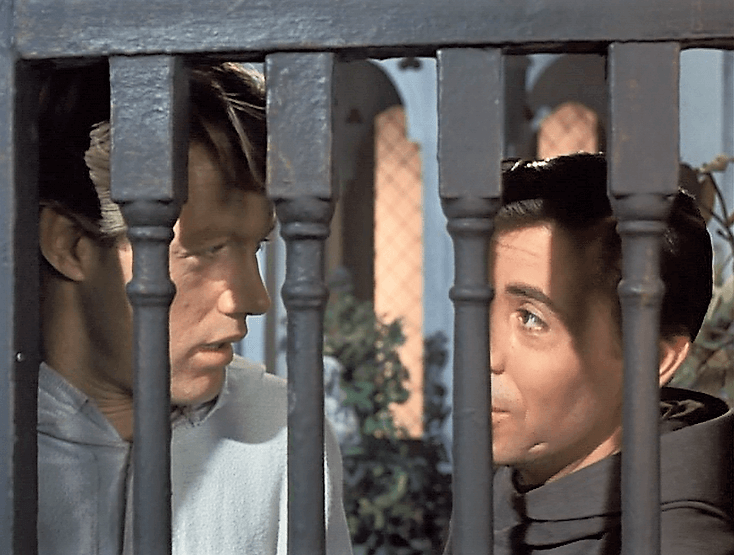
We’ve teamed up with Fractured Visions to give two lucky readers a chance to win the Italian classic Silent Action on Blu-ray. Simply read on and enter below:

Strap yourself in for hard-hitting action this March with Silent Action, the explosive and provocative crime saga from Sergio Martino, the legendary Italian filmmaker behind giallo classics Torso, The Strange Vice of Mrs Wardh, and All the Colours of the Dark.

When high-ranking military officials turn up dead, all from apparent suicides or suspicious accidents, it’s down to Inspector Giorgio Solmi (Luc Merenda, The Violent Professionals) to find out what’s happened to them. Aided by Captain Mario Sperli (Tomas Milian, Almost Human), the two men soon find themselves in the midst of a deadly political scandal that threatens to bring Rome to its knees.

Making its global HD debut, Fractured Visions is proud to present Silent Action (aka The Police Accuse: The Secret Service Kill), a bold and uncompromising take on a startling true story, lovingly restored and featuring a host of new bonus material.

Special Features

2K Restoration from the Original Camera Negative

Original Italian Mono Audio with newly translated English subtitles

Newly Remastered English Mono Audio

Audio Commentary on Eurocrime fandom by Filmmaker Mike Malloy

The Age of Lead: 1970s Italy

Directing the Strategy: An interview with Director Sergio Martino

Luc Unleashed: An interview with Actor Luc Merenda

Sergio and I: An interview with Composer Luciano Michelini

Archival interview with Luc Merenda

Archival featurette: The Milian Connection

Limited Edition Contents (3,000 units)

Collector’s edition slipcase

Original Soundtrack CD

Special Collector’s Booklet with new essays by Eugenio Ercolani and Francesco

Massaccesi

a Rafflecopter giveaway

Fractured Visions presents Silent Action on Blu-ray 29 March: https://www.fracvis.co.uk/

@FracVis #SilentAction

[ENDED] Win WRONG TURN (2021) on Blu-ray

wrong turn win

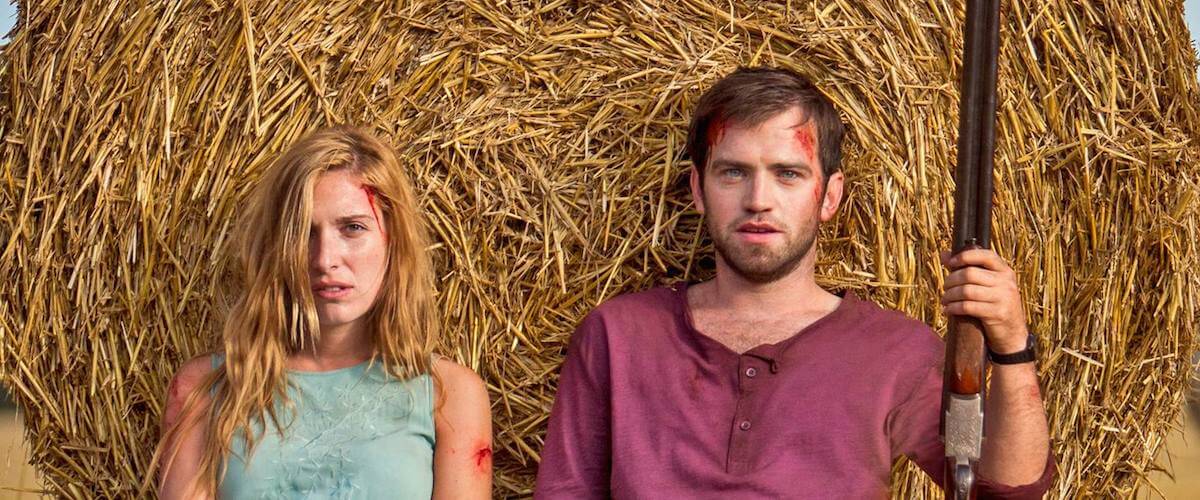
We’ve teamed up with Signature Entertainment to give three lucky readers a chance to win the 2021 film WRONG TURN on Blu-ray. Just read on and enter below!

Synopsis:

A chaotic fight for survival befalls a group of friends on the Appalachian Trail in this iconic franchise reboot from the original creator Alan B. McElroy. When a dream trip turns into a nightmare, one group of friends finds themselves at the mercy of an urban legend – The Foundation. As a freak accident drives the group deeper into the mountains, they find themselves succumbing one by one to hunting traps large enough to take out anyone that dares venture off the beaten path.

The group soon realises they are not alone and what happens next escalates into a gruesome game of survival, as those who called the mountain home respond to this outside threat with their own swift and brutal justice. Starring Matthew Modine (Stranger Things) and rising star Emma Dumont (The Gifted). Directed by award-winning director Mike P. Nelson (The Domestics) and written by Alan B. McElroy (Halloween 4: The Return of Michael Myers). Wrong Turn is produced by Robert Kulzer (Resident Evil: Extinction)

Blu-Ray and DVD Extras:

Audio Commentary with Director Mike P. Nelson

Monsters Among Us: Making Wrong Turn

Deleted and Extended Scenes

a Rafflecopter giveaway

Signature Entertainment presents Wrong Turn (2021) on Blu-Ray and DVD May 3rd


[ENDED] Win MEATBALL MACHINE on Blu-ray!

meatball win

We’ve teamed up with Terracotta to give five lucky readers a chance to win a copy of MEATBALL MACHINE, the crazy Japanese cyberpunk biomechanical splatter film, on Blu-ray. Just read on and enter below!

Synopsis:

Aliens are invading the Earth and inserting themselves into humans, turning them into slave cyborgs, hosts for the parasitic alien life forms. When Sachiko is infected and transformed, it’s up to her lover Yoji, who himself is already half-infected, to save her with his new-found mutated state and deadly weapons growing out from his body.

a Rafflecopter giveaway

MEATBALL MACHINE will be available on special edition Blu-ray from April 12th

BOOK WORMHOLE: THE CASTLE OF OTRANTO

“Good writers borrow from other writers. Great writers steal from them outright.” So says Aaron Sorkin, writer and creator of The West Wing, and while that programme doesn’t have much to do with the genre fiction I’ve been reading (although there was a lovely episode subplot involving a Star Trek pin), the quote itself is completely applicable to Horace Walpole’s famous novel. And not because Walpole plagiarized.

            No matter what you write, no matter the topic or the plot or the characterization, every writer is inspired by those who came before them. Some, like James Joyce, take that inspiration to great heights, reworking previous works of literature as he did in his novel Ulysses, which was a retelling of Homer’s The Odyssey. Others take a quieter attitude, turns of phrase and small plot points a mere echo of the work that inspired them. That’s not what Walpole has done here. Instead, his work has acted as an inspiration for dozens of other writers, even those who have never heard of The Castle of Otranto before.

            The Castle of Otranto was first published in 1764 (500 copies on December 24, to be exact), and for the most part has been in print ever since. The subtitle of the first edition was “A Story”, but in later editions that changed to “A Gothic Story”, an indication of Walpole’s work having heralded a new genre: gothic fiction. The online Encyclopedia Britannica defines gothic fiction as “pseudomedieval fiction having a prevailing atmosphere of mystery and terror”, which is very true of Walpole’s novel, which is set in the time of princes and armor-clad knights.  Gothic fiction also contains supernatural elements, such as ghosts, which while seen in previous works (such as Shakespeare’s Hamlet) becomes something completely different when combined with such staples of modern day horror fiction as haunted houses, gloomy castles, and characters under curses. Gothic fiction fascinated many of the time period, resulting in a revival of gothic architecture and the birth of many classic works of literature. I would go so far as to say that it’s probably one of the most influential works of genre fiction, or at least one of the works that had the most influence on genre fiction. It is because of Walpole’s novel and gothic fiction that we have Mary Shelley’s Frankenstein and John William Polidori’s The Vampyre. Frankenstein, with a plot based heavily in the scientific realm instead of on the sorcery of The Castle of Otranto, has been said by some to be the first science fiction novel. In that vein, without Walpole’s book we wouldn’t have the works of HG Wells and Jules Verne, works which lead to George Orwell and Isaac Asimov; Douglas Adams and Philip K Dick; Star Wars and Star Trek and Doctor Who.

            A world without the Doctor scarcely bares thinking about.

            Polidori’s novel, in turn, paved the way for a heavy tradition of vampire fiction, most notably in the late 1800s with Bram Stoker’s Dracula. Dracula has spawned decades of vampire fiction (and helped Transylvanian tourism), and while vampires in the twenty-first century are a far cry from their gothic ancestors (the less said about Twilight the better) they still have a rich and fascinating literary and cinematic history. Gothic fiction also touched more mainstream (I hesitate to use the word “literary”) works. One of Charles Dickens’ most famous books, whose adaptations, be they faithful or filled with Muppets, are watched every year by thousands of people, and is a ghost story. Emily Brontë’s Wuthering Heights not only has many gothic themes, but also has elements of plot that are extremely similar to The Castle of Otranto. Henry James’ The Turn of the Screw is a classic gothic horror story, and the works of Edgar Allen Poe are steeped in the gothic tradition.

            Modern fiction and cinema haven’t abandoned gothic fiction, even though it’s been over two hundred years since Walpole’s book was first published. Every vampire and demon on our screens, every alien and ghost, every tortured soul and Saw sequel is connected to this one book, which is frankly magnificent. But then, as I said previously, every work of literature is connected in some way to the ones that came before it. The presence of ghosts in the novel isn’t a new idea or a happy coincidence; Shakespeare used ghosts (as well as faeries, witches, and other supernatural beings) in his work, and before him there were the ghost-like creatures in The Iliad and the ghost in Aeschylus’ Oresteia and ghosts in works across the globe, as like tales about dragons every culture contains ghost stories. Literature where characters discover long lost relatives, which contain arranged marriages, and where nobles are disguised as peasants and priests were also present before Walpole’s time. In fact, as I read the novel I was reminded rather heavily of A Winter’s Tale, which I read over the holidays last year. The thematic devices that Walpole uses aren’t new, but at the time of publication the way he used them most certainly was. Its uniqueness is, in part, what must have driven many to read it, and although there are better works out there, at least in my opinion, it’s a testament to its originality that no matter how many people pluck things from it The Castle of Otranto is still published today.

            While its history is fascinating, it’s the novel itself I’m sure you readers are most concerned with. I must admit that I had difficulty getting into it. The last time I read something from the eighteenth century was years ago when I was studying for my undergraduate degree, and in recent months I haven’t ventured farther than the twentieth century. Consequently, I found it a very dense text, and I mean that both literally and metaphorically. The novel’s language is noticeably antiquated, although still comprehensible once you get into it. There are many thee’s and thou’s in the dialogue, and the prose itself reminds me heavily of Jane Austen. The layout of the text, however, is what I had most difficulty with, which when paired with the language is probably why I found it troubling. The only paragraph breaks are those that separate ideas (as paragraph breaks are supposed to do), but that’s it. There are no breaks for dialogue. It’s all squished together without any quotation marks and it takes keen concentration, especially when you first start reading, to decipher which bits of text are dialogue and who is speaking. After a while, I did find myself getting into a rhythm and my reading becoming easier, but heaven forbid I get up to pee because once you step out of that rhythm it does take effort to get it back again. Losing your place also becomes extremely problematic when you have to navigate through great blocks of text in order to find the exact word you left off at.

            Some of this is, of course, personal preference. I am someone who likes clear dialogue tags and the type of page layout that we’ve been using since the Victorian Era. It’s probably why I spent so much time in Victorian Lit classes.

            As for the story itself, it’s a good one, although something that modern eyes will likely find rather familiar. The novel opens with Manfred, prince of Otranto, preparing to marry off his sickly son Conrad to Isabella in the hopes of keeping his family’s hold on his kingdom secure. Of course, the marriage doesn’t go to plan and Manfred’s actions post-botched wedding end up with himself and his castle being beset by ghosts and supernatural omens. There is much secret plotting and misunderstandings which make the story very reminiscent of Shakespeare for me. The story on its own is good, but I found it was a more fascinating read when it was combined with my knowledge of the literature that followed it. It was so interesting to see phrases like “[h]er blood curdled” knowing that they were used before they became such clichéd phrases. So was taking note of how much the plot surrounding Mandfred, Conrad and Isabella mirrored the one that formed around Heathcliff, Linton and Cathy in Wuthering Heights. There are other moments like that throughout the novel, where you see what it has given to the works that have come after it. Sometimes I wondered what reading the novel would have been like without this knowledge—what it was like for the people in eighteenth century Britain who had never seen something quite so extraordinary before. Those phrases that make us roll our eyes or, if you’re an editor, get out a big red pen must have been chilling when they first appeared. The Castle of Otranto is one of those novels that, unfortunately, kept me continually aware that it was a novel, that it was something I could critique and could relate to other works instead of enjoying purely for its own sake. It’s like that for many reasons, its text structure and style and its connectedness to other writing which, for the last bit, isn’t its fault, at least not entirely. I could have worked harder to separate it in my mind, to put my entire focus on the story, but with the struggle I was having with the text I found it nigh on impossible.

            Maybe on a second read I’ll have better luck.

            As this is a column that reviews genre fiction, I think it’s about time I start talking more about the ghosts, and the giant pieces of armor, and the prophecy that really is the catalyst for every action Manfred takes. I know I said in a previous review that, especially after over a decade of prophecy-steeped storyline in the form of Harry Potter, that it’s a rather tired literary device. It’s been used for centuries, but it seems so overused now. At the time, however, it was both a classic idea and a fresh one. Oversaturation wasn’t a problem when the mediums for expression were limited, and two hundred years ago people didn’t have to contend with prophecies in the books they read and the television they watched and the films they went to see. In any case, prophecy is used rather wonderfully in the novel, acting as a motivation for each of Manfred’s actions, even the ones that preceded the action we the reader get to see at the start of the novel. The prophecy is why Manfred is having his fifteen-year-old son get married, why after the wedding fails he is driven to more desperate acts making those around him completely miserable. The supernatural is used as both a tool of the prophecy, thwarting Manfred’s attempt at circumventing it, and as a warning to Manfred to stop what he’s doing and let the prophecy unfold. The ghosts and animated portraits aren’t just there to make the story scarier or to make it different from the other novels of the time. They serve a purpose, much like the supernatural does in Hamlet and Macbeth. They are even more striking—and even more useful—when the entirety of the first edition’s title page, as well as the introduction, is taken into account.

“From the original Italian of Onuphrio Muralto, Canon at the Church of St Nicholas at Otranto”, it reads, sighting this work not as something created by Walpole but rather as a found text. Walpole explains why he did this in the preface to the second edition, saying that he thought that the novel would be more readily accepted if it was believed to have some foundation in reality, i.e. if the novel was actually an account of real events. What Walpole wanted to do was have supernatural elements be reacted to realistically, which at the time wasn’t the fashion in literature. “An improbable event never fails to be attended by an absurd dialogue” he says of romantic stories, and because that was the norm he felt it prudent to fake the novel’s origins. In doing so, in having characters react in realistic, human ways, he has, and the novel even more striking, both to me and to the novel’s original audience, and it is very likely another way in which The Castle of Otranto inspired other writers. I would even go so far as to say that it influenced film as well. After all, when one artistic medium becomes more realistic it’s only logical that others will follow. I admit, it’s a stretch, because emotional realism in film (and on stage) started becoming popular years and years after it became popular in literature. Nevertheless, I like to think there’s a connection.

All in all, it’s a rich text. It’s short, which given my struggles with it is probably for the best, but it doesn’t leave you bereft. There is so much to think about with this novel, and while it can be difficult at times and needs great focus, I think for those of you who want to see one of the birthplaces of genre fiction it is well worth a read.

            And for all of us hoping to become great writers, it’s good to know where to steal from.

[Article originally published in November 2011]

Henry Lloyd-Hughes & Royce Pierreson | THE IRREGULARS

Royce Pierreson

STARBUST catches up with Henry Lloyd-Hughes and Royce Pierreson, Sherlock Holmes and Dr Watson respectively in the new Netflix series The Irregulars at the recent round-table…

STARBURST: The dynamic of Holmes and Watson is always going to be key. Did you put a lot of thought into how you would play that as their relationship is fundamental to the central story?

Royce Pierreson: I don’t think we really thought about how we would build the relationship. It’s often about how you react to the other person and luckily, Henry and I get on very well. It felt natural. It was so much our dynamic, whatever fits at that moment. Actors can get confused. What if I get to set and I don’t feel like I did when I rehearsed it? If you’ve done your work whatever will be there is there. These characters are also living through you, so you have to let them use whatever you’re feeling, otherwise you just get two people talking at each other. It was great to work with Henry and it’s great to see our Holmes and Watson come across so well.

Henry Lloyd-Hughes: If you’re reading the scripts you encounter the Watson character much earlier so I’m getting a sense of the mood and the atmos around this guy. Obviously, Royce brought that from day one. On our first day together Royce had a line ‘Do you see me?’ and there is so much wrapped up in that. There is so much meaning and import, but it’s just the one line. We’re trying to navigate all the subtext and all the history in there. You have all these ideas but on the day you just have to react simply and truthfully. You can’t play 150 years of history every day.

What was your reaction when you read the scripts and what did you think of your characters?

RP: You shoot in blocks so you get a couple of episodes at a time, but they’re always re-writing. You don’t get that much information but what you need you get from the director and the writers, and they develop it also through you. It’s a collaboration.

HLH: I agree. I think that people who are not actors can underestimate how much can change. You’re hoping that something you do in early episodes doesn’t result in you being written into a corner later on (laughs). Sometimes when you get to a table read you’ve only had the script for 48 hours so your character might have taken a great leap. It’s rare to know exactly where your character goes from the beginning.

The show is pretty scary at times so how are you guys at handling scary things? Are you fans of the genre?

RP: I’m a scaredy-cat. I can’t really watch horror films and I don’t like being scared. Filming is different. I didn’t have too many interactions with scary things in the show like some of the others. But filming is just a process and the elements don’t come together until the end.

HLH: I’m the same. I almost had a heart attack this morning as my wife came into the bathroom while I was having a shower and I didn’t hear her coming. I don’t mind making it but I’ll be hiding behind the sofa in real life.

You’ve both worked on programs with lots of CGI and sets but here you have a lot of real locations. How much of a difference does that make?

HLH: I think it makes a huge difference. Sets are always amazing and there’s always an advantage that you’re not going to get rained on. But the luxury of being able to walk in one room, then down a corridor that’s a real corridor in an old house, and then into another room that’s still in the world of the character; I don’t think you can put a price on that.

RP: I agree. I’ve never met an actor who prefers working without it that with it.

Obviously this is an original piece of work but did you feel any pressure playing these characters?

HLH: Oftentimes as an actor, you’re thrown in at the deep-end with little notice so there was really time to read up on everything Arthur Conan Doyle wrote. Also, we knew this version of Victorian London with all the supernatural elements, I couldn’t really picture any of the previous incarnations. It felt very different.

RP: Whoever has played Watson before doesn’t really inform me. To me, Watson was really just a name so I started to play around with the character and that he was a traveller. He’s a chancer who just ends up in situations. I wanted the accent to be slightly miss-matched to the man, so I was trying to find this strange balance which gave me different layers to the character.

The Irregulars is on Netflix now. Read another part of the round table interviews here and check out our review here.

Thaddea Graham, Darci Shaw & Harrison Osterfield | THE IRREGULARS

Thaddea Graham

STARBURST had a round-table chat with a trio of the stars of Netflix’s The Irregulars, Thaddea Graham (Bea), Darci Shaw (Jessie) and Harrison Osterfield (Leopold) to talk about the show…

STARBURST: There isn’t a great deal about the Irregulars in the Conan Doyle books or culturally so were you given any particular pointers or sources to draw from for your characters?

Thaddea Graham: For me, Tom [Bidwell, writer and creator] has written such a rich world and the relationships are so strong and prevalent it’s so easy to buy into. It’s worlds away from my world but the elements are so easy to relate to; the sisterly bond, choosing your family and protecting people. Tom has given us a gift.

Harrison Osterfield: I agree. The fact he has been able to create this world from four or five lines in the original books is an amazing feat and we treated the scripts as our bible. I was quite lucky as Prince Leopold was a factual person so it was interesting to see where Tom drew him from and to research what he was like and what was said about him.

Darci Shaw: For rehearsals, we had Tom in the room so we were able to ask him questions about anything. He’s been living with these characters for so long so it was amazing to sit down with him and go into them in so much detail.

What was the most surprising thing you learnt from those conversations?

DS: I asked a lot about Jessie and her relationships with her mum and with Bea, which is such a strong bond that was important to get it across on screen. And also about them going to the workhouse when they were younger and how they got out of that. We wanted to fill in the gaps as you don’t meet them until they’re teenagers. It was fun inventing the backstory.

TG: Billy, Jessie and Bea had been through all that so when they talk about the workhouse they know exactly what they mean. We thought that Spike joined the gang a little later. So it was good for us as actors to know what the characters knew as they’d lived together.

HO: Tom was also only a text away if we had any questions. For Leo’s perspective, I wanted to know what drew him to the Irregulars and what made him stick around. He was obviously looking for friendship and love and felt valued in bringing something to the team.

For Darci, you had a lot of the scary scenes. How did you find that and then trying to switch off after filming?

DS: We had such a safe environment on set and everyone was so attentive in making sure I was okay. They built these tunnels and I had such fun with it. I was burning a lot of energy running around so every night as soon as my head hit the pillow I was out for the count.

For Thaddea and Harrison, love and relationships are huge themes throughout. You two get the romance which is in contrast to what Darci as Jessie is going through.

HO: It’s interesting as there are all these dark, supernatural things going on and at the same time you’re trying to chat up the girl of your dreams. The relationship they have is very strong and from the off they notice there are some qualities they like in each other. I think it’s exploring that and being a teenager in love but there are a lot of other circumstances and they realise love isn’t easy.

TG: I love that’s there’s that depth to the relationship. It’s these two people connecting on an emotional level and they say things in each other that that person sees as a weakness. They really help each other and I think that’s lovely.

What do you think you brought of yourselves to the characters?

DS: It’s funny as originally I read for Bea and then on the train home I was asked to look at Jessie. I’m not sure. I think it just fell into place and I can’t imagine it being any other way. I’ve loved playing with all Jessie’s different sides and I had a lot of fun. And the nightmares added an interesting side to her.

TG: It’s really strange to think about it. I was cast and then I did a chemistry test with Harrison and he seemed to have the essence of Leo. The entire cast is really well cast.

HO: A big thing for Leo is finding his feet outside the palace and I was quite a shy kid growing up and I wanted to bring some of that to the role.

A lot of themes feel very timely. Could you talk about that a little?

DS: The writing and the speech is very modern, we all speak like teenagers now which makes them relatable. And obviously there is a contrast as Holmes and Watson speak very differently and it shows the difference in age and time.

TG: Some of the big themes like grief are very prevalent at the moment. Seeing that represented on screen and seeing the characters deal with it in different ways is interesting. I think it can make you feel less alone and validated in a way if you see characters going through what you are and it’s so important. And themes like friendship and love are universal and are never going away.

HO: With the language, one of the main assets of the show is to break boundaries. The choices in that and the music as well allows people to connect with the show.

Harrison, you get to dress up a little and go to a fancy palace while else is in the slums. How nice was that?

HO: We all stayed in the same apartment building and these guys would come home and they’d filmed in this damp sewer and alleyway, and I’d been filming in this huge ballroom with lots of extras. So that was tough!

The Irregulars is on Netflix now. Read another part of the round table interviews here and check out our review here.

Jojo Macari & McKell David | THE IRREGULARS

irregulars

In the first of three round table interviews, STARBURST caught up with Jojo Macari (Billy) and McKell David (Spike) from the new Netflix show The Irregulars

STARBURST: In a less well-written show, your characters could possibly have become comic sidekicks but you have lots to do as part of the collective. How important was that?

Jojo Macari: I think the gang dynamic might be the most important thing. I know in casting it was super important to get it right between the characters and us as people. Ultimately, we’re upping sticks and moving to Liverpool for a year or so, so you have to get on. I honestly couldn’t have asked for a more amazing group of people and I love all the guys so much. I think the dynamic is important as there’s something relatable in each of the characters. If someone was just relating to Jessie then I might see the sidekick think more but I feel we bring elements that no other characters do, as everyone does, and that’s really important.

McKell David: Yeah. Just to add on to that, what’s interesting about The Irregulars is that because we’ve taken them out of the 20th Century and slapped them in Victorian London it can be difficult to see. Billy and Spike are kids from Hackney or Peckham, from broken homes or deprived areas and are trying to stick together to get to the other side. I think Billy and Spike’s chemistry adds a different layer to the show.

What did you find to be the biggest challenges in playing your roles?

MD: I think, for me, every role is a new challenge that you welcome. It’s about challenging yourself to produce your best work. I look at actors as performance athletes as there aren’t many jobs where you have to stress your mind and your body quite as much.

JM: I was chatting to someone the other day who said that creativity is at its best when you’re slightly pushing yourself and I think that with every role that’s what you should be doing. Slightly further each time. So you’re never comfy; comfy is boring. In terms of Billy, he has a lot of emotional depth and trauma that isn’t necessarily on the surface and dealing with that is what makes the character Otherwise he’s just the muscle or the grumpy guy. But then also, when I read the script for the first time, it said ‘Billy enters. He’s ripped.’ And I thought, I’m not ripped. So then I thought let’s hit the gym [laughs]. That was a challenge. That was the first time I’ve had to do that.

You mentioned the stresses, so how easy do you find it to switch off after high adrenaline days?

MD: Everyone is different but for me you have to put yourself into places you don’t want to put yourself. And it makes you learn about yourself. Every role has done that for me. You have to see the differences between the character and yourself. Hanging out with the rest of the guys certainly helps.

JM: I totally agree. It’s all about the gang and that keeps you sane.

McKell, it seems like your character Spike is the voice of the audience at times, would you agree?

MD: Definitely. And that’s a credit to the writing. Spike is the straight thinker in the gang. He doesn’t really understand why they’re risking they’re lives early on for someone they don’t know. He’s more street smart than the other members, you know. He can see when someone is being manipulated and he gets very worried about that.

There is a lot going on in the show, a mix of genres and themes. If you were going to sum it up how would you describe The Irregulars?

JM: I think it’s a supernatural thriller, set in the Sherlock Holmes universe, which revolves around the dynamic of young people with a tough upbringing. And that is a very niche genre! [Laughs] I’m sticking with that!

The show feels timely. Were there themes you could relate to?

MD: Because we’re in this Victorian world, it’s easy to forget who the kids are but they’re orphans. It’s about these kids being true to who they are and not looked at as weird. I hope The Irregulars can make people look at things from a different angle.

JM: There are some heavy topics. We talk about grief and looking after yourself mentally. And that’s something that’s being talked about more than ever before for young people and it’s great that the show tackles this head on. And it never becomes overwhelming or too sad. Those subjects are dealt with in a good way which I think is cool.

The Irregulars is on Netflix now. Read another part of the round table interviews here and check out our review here.

[ENDED] Win KINGSGLAIVE on 4K Ultra HD

kingsglaive win

We’ve teamed up with Sony Pictures Home Entertainment to give away five copies of KINGSGLAIVE on 4K Ultra HD. To be in with a chance, just read on and enter below…

Starring the voice talents of Aaron Paul (Breaking Bad) , Lena Headey (Game of Thrones)  and Sean Bean (The Lord of the Rings Trilogy), KINGSGLAIVE is available for the first time on 4K Ultra HD on March 29th.


Synopsis

The magical kingdom of Lucis is home to the sacred Crystal, and the menacing empire of Niflheim is determined to steal it. King Regis of Lucis (Sean Bean) commands an elite force of soldiers called the Kingsglaive. Wielding their king’s magic, Nyx (Aaron Paul) and his fellow soldiers fight to protect Lucis. As the overwhelming military might of the empire bears down, King Regis is faced with an impossible ultimatum—to marry his son, Prince Noctis, to Princess Lunafreya of Tenebrae (Lena Headey), captive of Niflheim, and surrender his lands to the empire’s rule. Although the king concedes, it becomes clear that the empire will stop at nothing to achieve their devious goals, with only the Kingsglaive standing between them and world domination. Based on the iconic game, which has sold nearly 9 million copies worldwide since its launch.


BONUS MATERIALS ON BLU-RAY™


A Way with Words: Epic and Intimate Vocals: Aaron Paul, Lena Headey, Sean Bean – along with the filmmakers—reveal the process of creating the vocals for this film

Fit for the Kingsglaive: Building the World: An in-depth exploration of imagining and designing the one-of-a-kind world of this film

To Capture the Kingsglaive: The Process: Explore the intricate process of capturing the physical performances at the heart of this computer-generated film

Emotive Music: Scoring the Kingsglaive: Learn about the creation of the truly innovative and impactful score

a Rafflecopter giveaway

KINGSGLAIVE is released on 4K Ultra HD for the first time on March 29th from Sony Pictures Home Entertainment.


The Top Gaming Genres Today

The gaming industry is nothing if not innovative and the last five years have seen a significant degree of creativity and new development from the gaming sector. Gaming is now one of the most successful and profitable sectors of the entertainment industry and is looking to eclipse the film industry in the next 10 to 20 years, which is quite a leap from the days of Pac-Man and Donkey Kong.

Over the course of the last five years in particular, the gaming industry’s competitive landscape, player base and market trends have shifted, and now a number of previously neglected gaming genres have experienced a resurgence in popularity. Below are a few of the most popular and successful gaming genres that have risen through the ranks during the last few years.

Action games

The action game genre has always been popular – these games are exhilarating and fun, and they provide a challenge for players’ reaction times, reflexes and coordination. As a result of this genre being so popular for so long, production companies have recently been able to innovate and create new types of action games for fans to try.

The Battle Royale action game type has become especially popular over the last few years and is now one of the best-selling game categories around the world. The gameplay involves several different combatants fighting with one another until only one team, or fighter, is left. Games such as Call of Duty Warzone and PlayerUnknown’s Battlegrounds (otherwise known as PUBG) all fall under this category.

Along with Battle Royale games, survival games such as Resident Evil have become extremely popular. These games are set in an inhospitable, frightening, environments that players need to navigate through while performing tasks and going on missions. This is a popular genre with a diverse range of titles, and these games are ideal for players who enjoy strategy and challenge over direct combat games.

Online casino games

If you are not already a gambler, the presence of online casino games in this list may surprise you. However, the online casino industry has grown significantly over the course of the last few years and market researchers are predicting that online casinos could overtake their brick-and-mortar counterparts in popularity and revenue within the next 10 years. The games – especially online slots – that are offered by online casinos are increasingly well designed and feature cutting-edge graphics, animation and audio effects.

Online casino games are fun to play and visually arresting, and on top of this, players can take home winnings that can be fairly considerable if a progressive jackpot is involved. As the online casino industry continues to expand, it is likely that we will see more games developed by the major production companies and by smaller, niche producers. Online casinos will be able to offer gamblers even bigger, more comprehensive games libraries, and gamblers will have the chance to try hundreds of different games before settling on their favourites.

Simulation games

Simulation games are another genre that has really taken off during the last few years. These games are designed to simulate real-world experiences, tasks and work, and are extremely popular around the world.

Some simulation games involve simulations of being a bus driver, flying a plane or trucking across country. The games may sound specialized, but you should really try playing them before you dismiss them outright – many players have found that these simulation games are restful and entertaining, and help to develop concentration and focus skills.

There are other simulation games that allow players to simulate a human’s life and give the player control over a character’s interactions, activities and social experiences. There is a reason why the Sims games have been popular for decades – they are great fun! There are also games featuring virtual pets or specific activities such as sports, construction and management.

Massively Multiplayer Online games

Massively Multiplayer Online games, or MMO games, combine several gaming genres into one. These games allow thousands of different players from around the world to play a game on the same server. MMO game players can interact with one another, form teams or compete to try to achieve a goal before anyone else. MMO games are a genre of social gaming that we are likely to see more of in the future as increasing numbers of people become interested in social gaming, streaming and spectator gaming. You can be sure that this is one genre to watch in the next five years.

TITANS OF TELEPHEMERA: STEPHEN J CANNELL – PART 3

Ah, telephemera… those shows whose stay with us was tantalisingly brief, snatched away before their time, and sometimes with good cause. Dedicated miners of this fecund seam begin to notice the same names cropping up, again and again, as if their whole career was based on a principle of throwing stuff at the wall and seeing what sticks. What’s more, it isn’t all one-season failures and unsold pilots, there’s genuine gold to be found amongst their hoards; these men are surely the Titans of Telephemera!

STEPHEN J CANNELL

From Baretta in 1975, Stephen J Cannell delivered a series of hits that was paralleled only by his fellow titans Glen A Larson and Aaron Spelling, but he also had his fair share of flops and one-season wonders. And that was the shows that made it to a full season! Alongside those were a handful of projects that the networks were interested in, but failed to pick up after an initial film had been made. This is the story of Cannell’s unsold pilots: first up, the 1970s…

Dr Scorpion (1978, ABC): Co-created with Nick Mancuso, with whom he’d later work on Stingray, Dr Scorpion is the result of ABC requesting that Cannell develop a James Bond-style show for Mancuso, who network executives believed was the next big thing. Cannell thought Mancuso was all wrong for the role, but it was Mancuso’s input that led to former secret agent John Shackleford – aka “Shack” – suffering from a heightened state of paranoia, turning this into something more than a Bond clone.

Filmed in Hawaii, the pilot finds Shack working as a marine biologist, having escaped from the world of espionage, but the death of one of his friends draws him back into the game, and into the clutches of the sinister Dr Scorpion! Played with over-the-top glee by Roscoe Lee Browne (the voice of Box in Logan’s Run), Scorpion intends to steal all of the world’s nuclear missiles and if it all sounds a bit like Dr No then you’re clearly on the right tropical island.

ABC rejected the pilot for being too violent, with TV audiences clearly not ready for such a straight adaptation of the “savage cinema” which had sent the early-1970s wild, and Cannell and Mancuso brought aspects of the back story to Stingray seven years later.

The Gypsy Warriors (1978, CBS): Having grown fond of working with James Whitmore Jr and Tom Selleck when they appeared in guest slots on The Rockford Files, Cannell developed this show especially for them, hoping to take advantage of their considerable talents. The pair played American espionage agents – Shelly and Ted – working undercover in World War II Europe, who undertake unusual missions, and the pilot finds them disguised as traveling gypsies.

Shelly and Ted learn that the Nazis are developing a deadly virus, known as The Satan Bug, to be used on allied troops and, with the help of some of the gypsy folk they have befriended while living amongst them, they set out to prevent the pathogen being deployed. Whitmore and Selleck have good chemistry, and the latter is in good form, showing the promise that he’d later fulfil in Glen A Larson’s Magnum, PI.

CBS declined to pick up the show for a full run, but aired the pilot as a TV movie, and you can find it on YouTube. Whitmore would work with Cannell again on Tenspeed and Brownshoe, The Greatest American Hero, Hardcastle and McCormick, and Hunter, and would even show up on a pair of Magnum episodes, a year apart, as different characters.

Boston and Kilbride (1979, CBS): Retitled The Chinese Typewriter when it was aired as a TV movie in March 1979, Boston and Kilbride was a CBS pilot by Stepjen J Cannell for a series starring James Whitmore Jr and Tom Selleck. In case you think you’re re-reading the last entry, Cannell really liked Whitmore and Selleck’s chemistry, and came up with this concept to try and get them the show he thought they deserved.

Selleck’s Tom Boston is a former military weapons expert who teams up with Whitmore’s Jim Kilbride, a computer whiz working for a think tank, and the pair take on dangerous missions for the highest bidder. The pilot finds them tasked with stealing an airplane from a rogue South American country, and has the usual Cannell tropes of car chases, gun fights, and mild flirting with one-dimensional female characters.

Parts of the pilot (which is available on YouTube for the curious) were filmed in Hawaii, at the estate later used for Magnum, PI, but CBS again passed on the project and within a year Selleck had signed on for that career-making show. Cannell, with only The Rockford Files still airing, moved on to the next pilot…

The Night Rider (1979, ABC): A rare period piece from Cannell, The Night Rider features David Selby as Lord Thomas Earl, a New Orleans aristocrat by day who moonlights (literally) as the eponymous masked crimefighter. Yes, this is Zorro by any other name, but with Louisiana standing in for Mexico.

Cannell surrounds Selby with a decent cast to support The Night Rider’s search for the men who murdered his family to steal their silver mine, with a young Kim Cattrall and TV veteran Percy Rodrigues putting in the work, although Pernell Roberts is every bit the worst Bonanza brother once again.

ABC passed on the series, although CBS would bring the actual Zorro back to screens two years later with a short animated series, but Cannell ploughed on regardless, coming up with even more ideas for all three networks, and next time we’ll look at those 1980s projects, which include the only Cannell/Larson joint…

Related Reading from STARBURST:

TITANS OF TELEPHEMERA: STEPHEN J CANNELL – PART 1

TITANS OF TELEPHEMERA: STEPHEN J CANNELL – PART 2

TITANS OF TELEPHEMERA: GLEN A LARSON – PART 1

TITANS OF TELEPHEMERA: GLEN A LARSON – PART 2

TITANS OF TELEPHEMERA: GLEN A LARSON – PART 3

TITANS OF TELEPHEMERA: GLEN A LARSON – PART 4