Lewis Dunn: ANY SUGGESTIONS DOCTOR

Any Suggestions Doctor is a hilarious Doctor Who themed improv show currently touring across the UK.  More information about their tour can be found on their website, Anysuggestionsimprov.co.uk. We caught up with expert improviser Lewis Dunn to find out more about the show.

What is Any Suggestions Doctor? How would you describe it to someone who has never been to a theatre?

Any Suggestions, Doctor? is an improvised parody of Doctor Who, essentially meaning that we take your suggestions and make up an entirely new episode of Doctor Who (albeit one that’s perhaps a bit sillier than normal). It’s part action horror sci-fi romp and part high wire comedy act, in which half the joy is the wonders of the universe and the other half is the thrill of watching us make something up by the seat of our pants.

Why Doctor Who?

The easy answer is that we’re all huge fans and love the show, but actually there’s more to it than that. The fact is that Doctor Who and Improv work REALLY well together, given that the show can go anywhere, with anyone, at any time. That’s just a hugely exciting thing to invite an audience to do. Even without the fun of Doctor Who’s characters and monsters it’s already a fantastic premise for an improv show; that it’s built on top of some of our favourite sci-fi stories and characters is a massive bonus.

Why Improv?

We’ve been together as improv performers for over a decade, and it’s a type of performance that just fills you with joy and adrenaline. There’s something both magical and hysterical about making up a story in front of an audience that cannot be replicated. It’s like doing actual magic, pulling together a thrilling twist that you had no idea was coming until you said it, or telling a hilarious joke that also makes the story even more exciting. It’s like jumping out of a plane only to learn you can fly.

What’s the biggest challenge facing improv comedy today?

It’s fair to say that improv works much, much better with live audiences in the room. The return to “live” is really the best thing that can happen to improv, and the past few years have made doing that nigh on impossible. Getting people in to see improv completely changes their view on it and being able to tour again helps us enormously with that.

A lot of shows seem to have moved to Twitch during the pandemic, have you been tempted to make the switch?

We did think about it, but improv over Twitch lacks the immediacy and intimacy of a live show. If we could get an audience in and do it maybe there’s something to an almost “live TV” format but doing it to an empty room would make the show a lot less fun and ultimately undermine the point of it. It’s not just about doing a fun Doctor Who Parody, it’s about doing something completely new with an audience that requested it.

What are your favourite Doctor Who characters to be?

There’s no shortage of incredibly fun villains (at some point we’ve all played the Master, who is a fantastic excuse to go very arch and cackle manically for a good 5 minutes) but really, the best character is The Doctor. Given that anyone in the cast can play them we’ve all had to step up and grab the sonic screwdriver at some point we’ve learned that we each play the character very differently. Some of us play an avuncular, sensible but twinkly eyed adventurer, while others become a sexy, cheeky hero. The Doctor is the smartest person in the room, or potentially the stupidest. Either way it’s all about charisma, and each of us gets a great opportunity every so often to save the day, even if that does involve sometimes getting a bit timey-wimey to cover up a few plot holes.

If this wasn’t a Doctor Who themed show, what would it be instead?

Unlicensed Sci-Fi Time Travel Adventures. No, but really we have discussed what else we could do, and there are some ideas floating about in the fifth dimension, beyond that which is known to man… I shan’t say any more.

What’s the best Doctor Who episode? Why? What’s the worst? Why?

This question is a trap. I will say (and this is just me, do not hold the cast to this) my favourite is Heaven Sent, because I love a really crazy situation that makes no sense slowly coming together and revealing itself, and for worst I’ll say The Edge of Destruction, because I have had arguments that went that sour that quickly over something that simple and it was stressful to relive.

Is the genre world more accessible these days?

Absolutely, the highest grossing film of all time is a sci-fi adventure film, and the second highest a time travelling sci-fi fantasy super hero film that requires 19 films of context to finish. I think genre is kinda like flavour, or colour, fundamentally the story that lies underneath is usually something very human or emotional, and genre just adds spice to these ideas.

Which comedians inspire you?

I think each of us has our own major inspiration, so a quick list would probably be: Matt Lucas, John Finnemore, Rebecca Front, Tash Demetriou, John Mulaney, Pippa Evans, Rachel Parris, Fry & Laurie, and just for pure energy, Aunty Donna.

What tropes / gags do you personally avoid the most?

We made a vow to never get meta about Doctor Who itself. We can refer to the show we’re doing (i.e. comment on how a performer’s accent has drifted), but no bringing up the old TV sets, no references to CGI or the actors who play the characters. We must draw a hard line that we are in the fictional world of Doctor Who, and if we break that connection the whole thing loses its stakes. Every Dalek is a threat, every planet scale disaster a tragedy.

How would you describe your process?

We practice. A lot. Our Director, Charles Deane, does a lot of improv theory and lessons with us, honing our spontaneous storytelling skills. Crucially, it’s not about establishing a formula or structure that we recreate each time, it’s about reacting in the moment and building a story organically. There’s a finesse to being funny without undermining the world you’ve built, and on that thin line is where our show works.

Simpsons or Futurama?

The Simpsons is funnier, but Futurama knew when to quit, eventually.

Tigers or Spiders?

Tigers. I have arachnophobia.

Goths or Visigoths?

Visigoths, everyone likes an underdog.

Daleks or Weeping Angels?

Daleks are a lot more fun to play on stage. Playing the Weeping Angels is a nightmare, it’s incredibly hard to get the entire audience to look away.

Truth or Beauty?

Beauty, as if we were bound to truth there wouldn’t be much of a show.

Online game genres that are still popular 10 years on

online games popular

The gaming scene has been going on for decades. There are now so many different games and different genres of games available to those that are interested in them, as well as different ways to play. Once upon a time, you had to have a computer to be able to play games, then you had to have a certain console to play specific games. Now you can pretty much download most to your cell phone and enjoy them on the move. As long as you have an internet signal – you have a game.

This makes all areas of life more enjoyable, from the commute to work or waiting for your food order to arrive, to waiting for your other half to get ready for that night out that you have been planning for the last month, yet still, it seems, they are not prepared for.

‘Match three’ games

In fact, there seems to be an abundance of the three-piece matching games now available to be played and enjoyed by those that really like this sort of game. There seem to be two main differences within this field of gaming. One offers a storyline that runs alongside the actual act of matching three or more pieces, such as Homescapes or Lily’s Garden. This is where you’re matching three puzzles that will progress you through the story, and you will help the main character do tasks like repair and renovate a mansion or landscape a garden.

Whereas others, like Candy Crush, will just have you moving through the levels and completing as many of the puzzles as possible.

Sports games

Although there may not be so many people wanting to actively join in playing sports, there are plenty that sees themselves in a manager role, sorting players out, hiring and firing, and working out tactics for on-the-pitch play. This is why sports games are so popular and are still gaining more and more fans every day.

With the more modern sports games getting closer and closer to reality, you may find that playing these types of games actually enhances your enjoyment of the physical game itself. Turning to online sites to find out the ipl cup rate could actually give you a heads up on which games to watch in order to improve your own tactics as a club manager.

Town or city building games

There is plenty of town, city, or even civilization-building games available to those that like to feel that they are totally in charge and need their little AI people to worship them and carry out their bidding without question.

In these games, you are generally making your town, city, or civilization work and building it up from being a little farm to a full-blown, thriving community. Obviously, there are games that take this one step further, and you can go forth and conquer your neighbour’s territories in order to keep your own realm evolving and growing.

This may not be for everyone, which is probably why there is also the gentler approach of just looking after your own people and fulfilling orders while making their surroundings more pleasant and attractive.


Five Films to Check Out on Horror Channel This Week – 140322

horror channel

We have some more great picks from what’s on this week on Horror Channel….


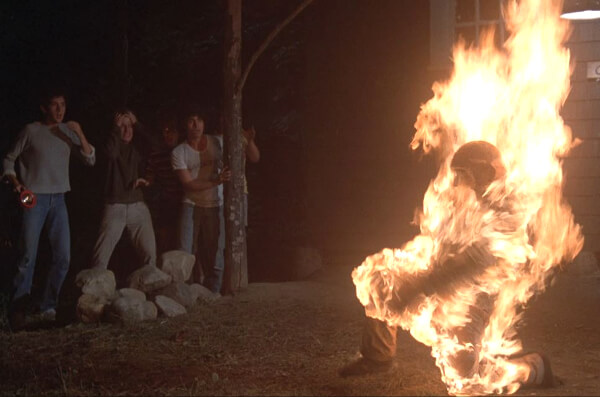
Monday March 14th, 11pm – The Burning (1981)

A fantastic, iconic slasher from the golden age of video nasties as a horribly scarred groundskeeper returns to get revenge on the campers who maimed him. A great synth score by Rick Wakeman and appearances from Holly Hunter, Fisher Stevens, and Jason Alexander makes it a must-see.


Wednesday March 16th, 9pm – Evil Dead II (1987)

Sam Raimi’s sequel-cum-remake of his fantastic debut is as gruesome as the first but is also riotously funny. Bruce Campbell cements his legendary Ash character perfectly. Groovy!


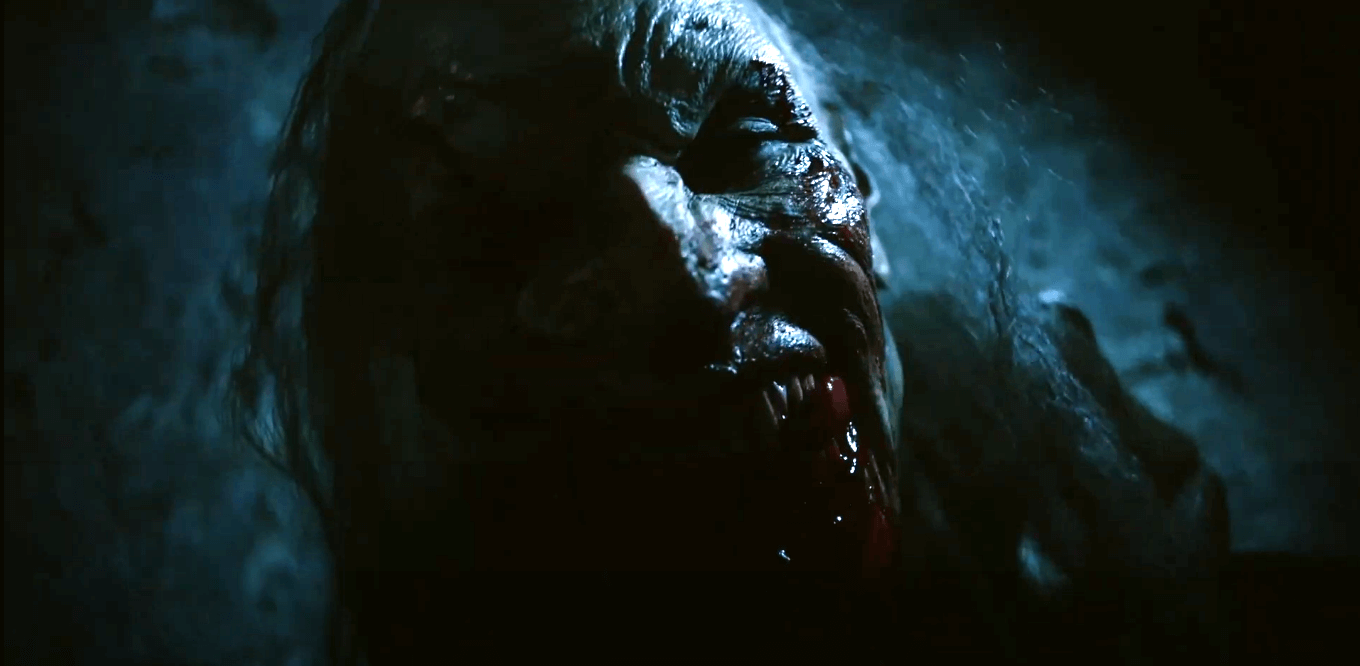
Friday  March 18th, 10.55pm Castle Freak (2020)

A remake of the 1995 Stuart Gordon shocker, this Barbara Crampton-produced film draws a little more inspiration from H.G. Lovecraft than the original.


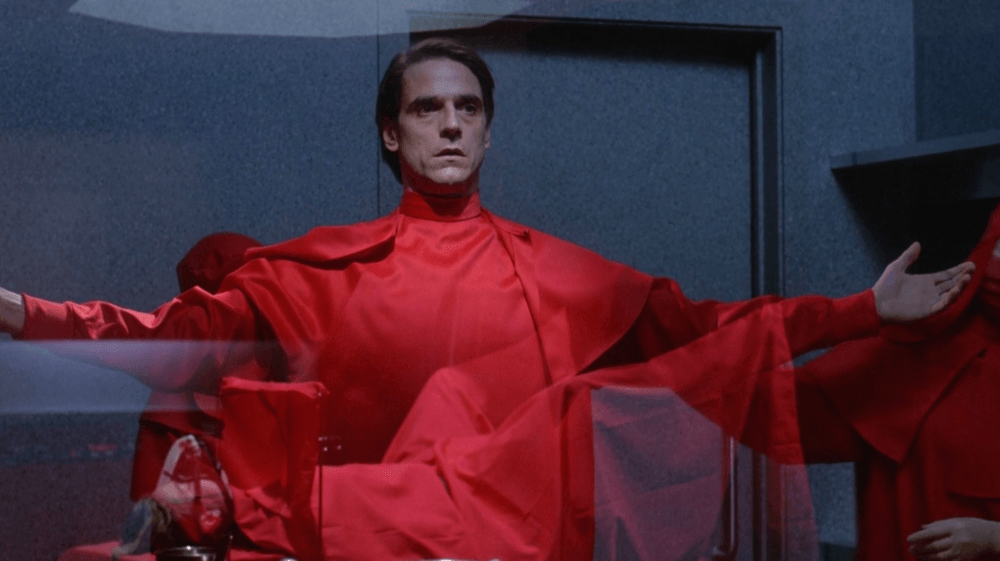
Saturday March 19th, 10.45pm – Dead Ringers (1988)

Jeremy Irons plays identical twins who both work as gynaecologists in David Cronenberg’s superb body horror. Geneviève Bujold is the woman who tears them apart.


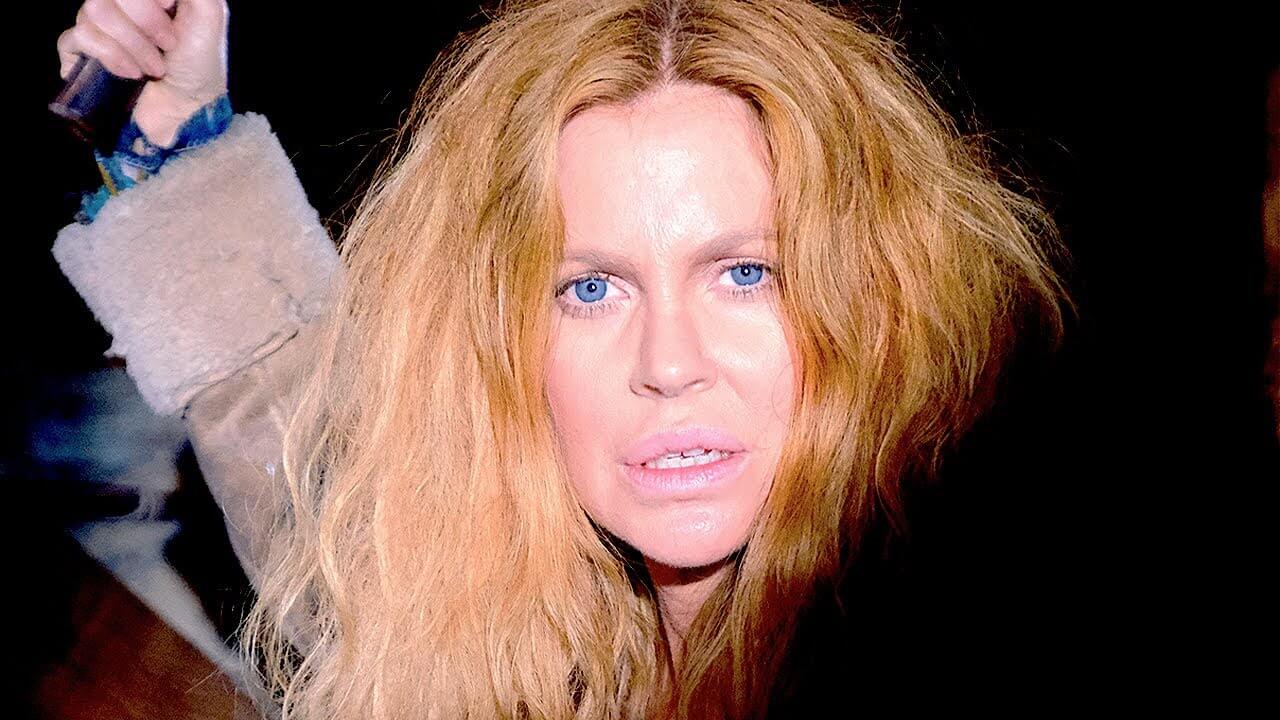
Sunday March 20th, 9pm – Paradise Cove (2018)

A homeless woman terrorises a couple who hope to renovate a beach house. American Beauty/Pie’s Mena Suvari stars alongside Todd Grinnell.

Tune into Horror Channel on Sky 317, Virgin 149, Freeview 69, Freesat 138.

On the Set of AWAIT FURTHER INSTRUCTIONS

await further instructions

STARBURST goes on location in Yorkshire for an exciting new film starring the legendary DAVID BRADLEY. Want to know more? AWAIT FURTHER INSTRUCTIONS…

On the outskirts of a tiny village just outside of York is a hidden gem; a film studio in which the Editors of this esteemed magazine have been granted a visit to catch a day’s filming on a new sci-fi/horror thriller, entitled Await Further Instructions. GSP Studios has seen all manner of productions over recent times and has a fascinating history of its own. Formally a pig farm, it was turned into an acting college before the passing of the owner, and its renovation to the glorious facility it is today. It has a dedicated green screen wall, but that’s not in use for this movie. Instead, there’s a stunningly split-level recreation of a normal, terraced family home. It’s this location that the majority of the film will take place, and as we walk around the set; we can already feel a sense of tension and claustrophobia.

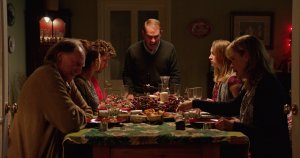
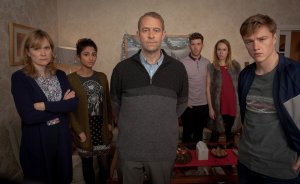
The film in question is the brainchild of writer Gavin Williams, who gained great praise for his short film Sleepworking when it toured the festivals in 2014. With a talented director, Johnny Kevorkian (The Disappeared) and an equally brilliant cast – headed by veteran actor David Bradley (Game of Thrones, The Strain, and Harry Potter) – it’s clear the film is going to be something special. But what of the plot? Short of giving away too many secrets, the movie takes place over a tense Christmas in the Milgram household, where their estranged son, Nick (Sam Gittens), has brought his girlfriend, Annji (Neeja Naik), for the Yuletide get-together. Family tensions flair and old wounds are opened as it’s clear there’s something wrong with the domestic unit. Father Tony (Grant Masters) struggles with his emotions as he tries to keep things under control while Grandad (Bradley) displays what can only be called old-time values and ignorance when it comes to accepting Annji.

await further instructions

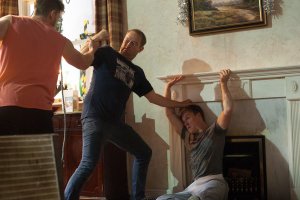
As the young couple prepare to make an early getaway from the strife on Christmas morning, they find they are trapped inside the house by a mysterious black substance. It has sealed the doors and the windows. They have no idea what’s going on. Nuclear war? Terrorist attack? Prank? The already overwrought situation descends even further into panic and anger. Hoping for answers, they turn on the television – but there’s no signal; the only thing they can get on there is a simple written, portentous, message: stay indoors and await further instructions.

After being shown around the impressive set, we settle down and manage to grab some time with the people involved. Director Johnny Kevorkian’s enthusiasm for the story is infectious as he tells us why he chose it as his second feature film, “For me, it’s because it was so different to the usual stuff that comes across my desk. It’s a character story about a broken family, and then you’ve got the sci-fi element on top of that, and then we go into the horror territory as well.

await further instructions
There’s certainly an influence of classic genre tales at play here, and Johnny is honest, “I’m a big ‘80s horror/sci-fi fan so films like The Thing and Alien, where it’s an ensemble piece with people’s nerves jangled.” He goes on to explain how that scenario relates to this film, “You have the first incident in the film, and you think ‘where did this come from?’ It’s so sudden. It just continues from there; things escalate far worse than you could ever imagine. I thought that was just brilliant. You just don’t know what has sealed them inside the house.
Writer Gavin Williams explained to us how the idea for the story came to him, “I actually know almost to the half hour when I got the idea. It was New Year’s Eve, travelling home 2007/8 with my then girlfriend, listening to an album – Boxer by The National – I’d bought her for Christmas. There’s a track on it called Apartment Story. A lyric set off the idea – something like ‘Stay indoors until somebody finds you. Do whatever the TV tells you’ and my little writer brain lit up with a spark. If you’re a screenwriter and want films to be made, you have to find ways to contain them or do them in a manageable way. I instantly had this idea about people who are trapped, and just have this little window of information that they’re being given in the form of instructions through a TV.” The story also has parallels to the way people rely on the television and Internet to form opinions and access information, as Gavin explains, “It’s that power that the media has; nebulous authority. Society’s so complex now. ‘Experts’ have differing opinions – who do you believe?” This translates with the movie and how the characters react, “It’s very much a story about authority on all sorts of levels, and the media and control and those sorts of things. Right at the start, I knew it was a horror and dark science fiction idea and had to be about a family, levels of authority and these relationships.

And it’s this family dynamic that will cause a lot of the turmoil in the early stages of the film, and make the latter part even more difficult, as Grant Masters, who plays the father, explains, “Tony is damaged right from the start. You find out in the first act why he’s like that. He’s got a very uncomfortable and disturbing childhood history. His past has caught up with him emotionally, and these events take place and force them to come up.” The inter-family squabbles make the situation worse, “There’s a lot of social power plays taking place throughout. They can’t get out of the house; it’s sealed up. It’s like a pressure cooker, they’re in there, there’s nothing you can do, and you’re just going to have to take it.

await further instructions

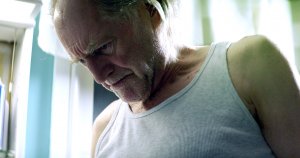
The key reason Grant’s character Tony is so messed up is having to grow up in the shadow of his father, played by David Bradley. The highly-respected actor gave us an insight into his role, “He’s the grandfather of this dysfunctional family, and he’s quite unforgiving, he doesn’t empathise with anyone else. He’s got a damaged son, who he’s ridiculed since day one. He calls him squelcher, probably because the kid wet the bed when he was ill, and got the hell beat out of him by dad. It reminds me of that Philip Larking poem: ‘They fuck you up your mum and dad, they may not mean to, but they do. They fill you with the faults they had, and add some extra, just for you.’ I think the grandfather’s behaved like this towards his own children because that’s what he suffered.” Hearing the instantly recognisable voice of the actor recite the poem is a ‘hairs on the back of the neck’ moment and makes us all the more excited about seeing the final film. David continues, “The fact that in his career he was a military policeman, it says a lot that he chose a profession that was very much about control. And that’s how he sees himself – if you don’t keep kids down, they’ll get one over on you – or anybody for that matter. So he’s got this harsh view of the world. That’s his way of staying on top of things. By having the power and control over his family.

await further instructions
David clearly has a handle on the character as he tells us, “He can sense that his turn is coming as he gets older and older, he’ll start to lose his physical powers. I suspect he was quite a streetfighter in his day; physical and that’s what interests me rather than someone saying ‘oh he’s a bad bugger, he’s evil’ because that’s making a judgement. As soon as you start making a judgement about a character it becomes one dimensional that’s all it becomes about. If you think about why they do what they do; what they want, then you see a more human side. Everybody’s like that; we’re all capable of having an off day. But every day for Grandad seems to be an off day! He can be quite ruthless; I suspect it comes from a deeply rooted fear of being overpowered or being outwitted.

One of the early conflicts in the film is the son Nick’s girlfriend, Annji. A quick-witted paramedic, she is the voice of reason, even though that in itself causes more conflict within the family. Played by Neeja Naik, Annji is very much the audience’s ‘in’ to the situation, “She’s definitely a fish out of water. There are points at which things get so bad, she lets go of that to try to be accepted, but she’s never disrespectful in any way. She’s still just trying to do the right thing by everybody; pretty much the whole way through, even when she doesn’t agree with actions that certain characters are taking.
Grandad finds it hard to accept Annji, which makes him an almost villainous figure, as David explains, “He’s not a well-educated man, he’s racist, homophobic; but if you can find some kind of reason for these things, there’s a chance you can make him more human, which is what people want to see.
await further instructions
However, there’s something humorous about him, which is important to keep the story grounded, as Gavin explains, “There is a lot of dark humour in the script that’s intentional to give that balance against how monstrous and terrifying it can become. But it was really important; we’re not a comedy by any means, but a certain sense of lightness.” David agrees, “The director’s allowing the occasional bits of grim humour to creep into the story. It’s sort of tragi-comic in a sense. Take Grandad, he’s monstrous, but some of the expressions he comes out with or the way he puts people down are kind of grim humour, and I like that. I like characters who’ve got some kind of comic energy, no matter how bad they are or what they do. I love stepping into his shoes, in more ways than one.

The climax of the movie promises to be a spectacular explosion of visual effects in the vein of early David Cronenberg, and everyone involved was glad to hear that as far as possible, physical props and prosthetics will be used, with just the occasional digital enhancement. Johnny teases us, “We have a massive amount of VFX, lots of things that go on in the end that will just be ‘wow’. There’s a hell of a lot of practical effects, which is great; lots of physical elements to it. We have a lot of animatronics.” It’s something Gavin appreciates as a writer, “With practical effects, it all comes back to truth, for an actor to have something there in the world, treat it like a real event is so important. You can see it in the performance. It is more of a challenge to do things practically, but it’s absolutely the right thing to do because an audience feels that engagement, you just can’t fake that. Computer effects can do amazing things, but if there’s nothing there, the connection isn’t there.

Actor Sam Gittens, who plays Nick, is equally enthused by the thought of filming the climax, “When you get to the special effects, it’s like a whole different thing. It’s more like playtime! You get to see some very talented people do some beautiful stuff.” Neeja teases the finale even more, “Johnny showed us the stuff we’d got, and it was amazing.

Our appetites well and truly whetted, we hoped to get a sneaky look at what they had planned, but like all professionals, they were tight-lipped and kept spoilers out of our way. Which, to be fair, is just how it should be.

AWAIT FURTHER INSTRUCTIONS screens on Horror Channel on March 12th.

For more information, head over to http://www.horrorchannel.co.uk

Tune in on Sky 317, Virgin 149, Freeview 69, Freesat 138.

FOLLOWERS – Exclusive Clip and Cast Interview

followers interview

The comedy-horror film Followers hits cinemas on March 18th, and we were lucky enough to catch up with the four main cast members Harry Jarvis, Daniel Cahill, Erin Austen, and Loreece Harrison, who tell us about working on the movie as well as share their memories of the writer/director Marcus Harben, who sadly passed away after the film was completed. 

Preceding the interview is an exclusive clip from the movie.


FOLLOWERS is in cinemas from Fri March 18th http://www.followersthemovie.co.uk/ You can read our review here.


A Conversation with Samantha Shannon & London Shah

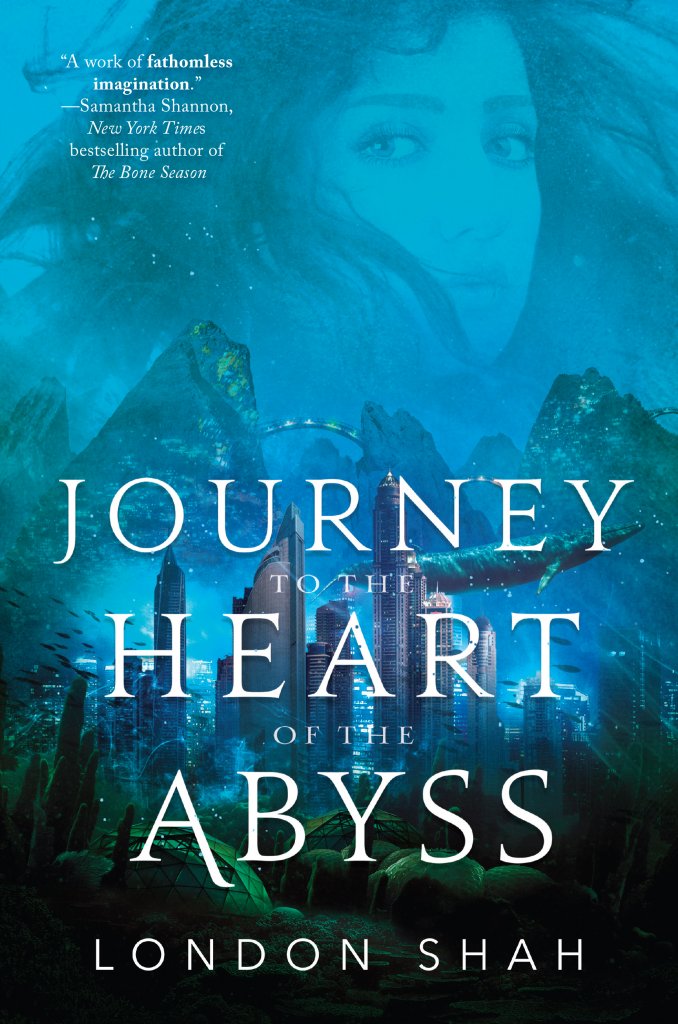
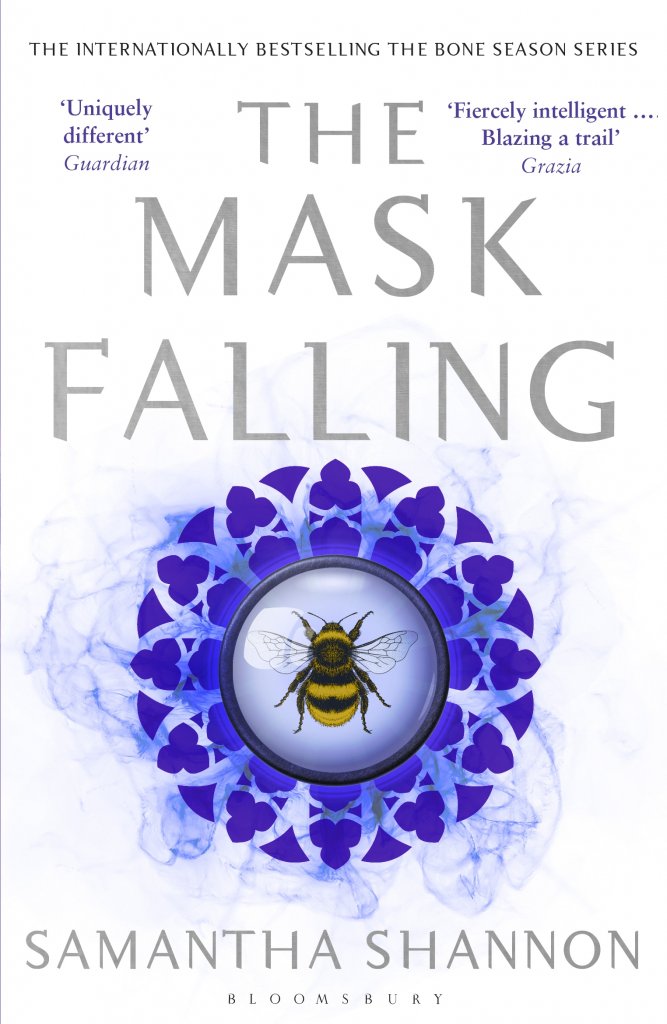
Samantha Shannon is best known for her critically acclaimed novel The Priory of the Orange Tree. Her new book, The Mask Falling  is out now  via  Bloomsbury Publishing.  London Shah is the creative force responsible for the  Light the Abyss duology, out now via Little Brown Young Readers.

The two caught up with each to discuss the heady world of writing (and also talk a bit about their new books), Starburst has been lucky enough to present the chat for your Friday reading pleasure. 


Samantha: London, it’s lovely to be able to chat about your wonderful Light the Abyss duology. To begin, could you tell everyone what the series is about?

London: Thanks, Samantha, I’m so excited to be chatting with you like this! The Light the Abyss series began with The Light at the Bottom of the World and concluded recently with Journey to the Heart of the Abyss. It’s a Young Adult science fiction story set in the year 2099, when the world is submerged a thousand feet beneath the ocean’s surface.

In Book 1, our protagonist, sixteen-year-old Leyla McQueen, is on a quest to find her missing father. When she’s picked to participate in the prestigious annual London Submersible Marathon, she spies her chance to help him—the Prime Minister grants the champion their heart’s desire. Except the marathon doesn’t go to plan, and soon Leyla is forced to leave the safety of London and venture out into wilder waters for the first time in her life. As she navigates her own submarine through the unfathomable depths of Britain, battling both the oppressive authorities and the dangers of the deep, she discovers a world drowning in lies…


Samantha: I almost forgot how much happened in Light—it’s such a rollercoaster. How about the second book?

London: Abyss continues Leyla’s journey, taking her deeper and farther in every way, and all too soon her life is shockingly altered forever. Through twists and turns, she finally learns the full startling and devastating truth—about herself, her past, the boy who’s won her heart, and about their world. And she discovers exactly who and what the real threat to everyone is.

Samantha: The story is very well-executed; I could rarely predict what would happen next. Even more impressive in that it’s your debut series. What first inspired you to write about a flooded world?

London: It truly means so much to me that you think so, thank you. The beauty and surrealism of the setting are definitely what inspired me. I was fascinated—obsessed, actually: How might our world look if we all lived deep underwater? If our current world was very much still recognisable (as opposed to some unfamiliar fantasy setting) but we now existed on the seabed… City lights, submersibles zooming past, the shadows of submarines hovering way above, sea creatures drifting by and slipping in and out of ruins, and the rippled glow from homes that marked our existence. Imagine! I first started fantasising about such a world in my early teens.
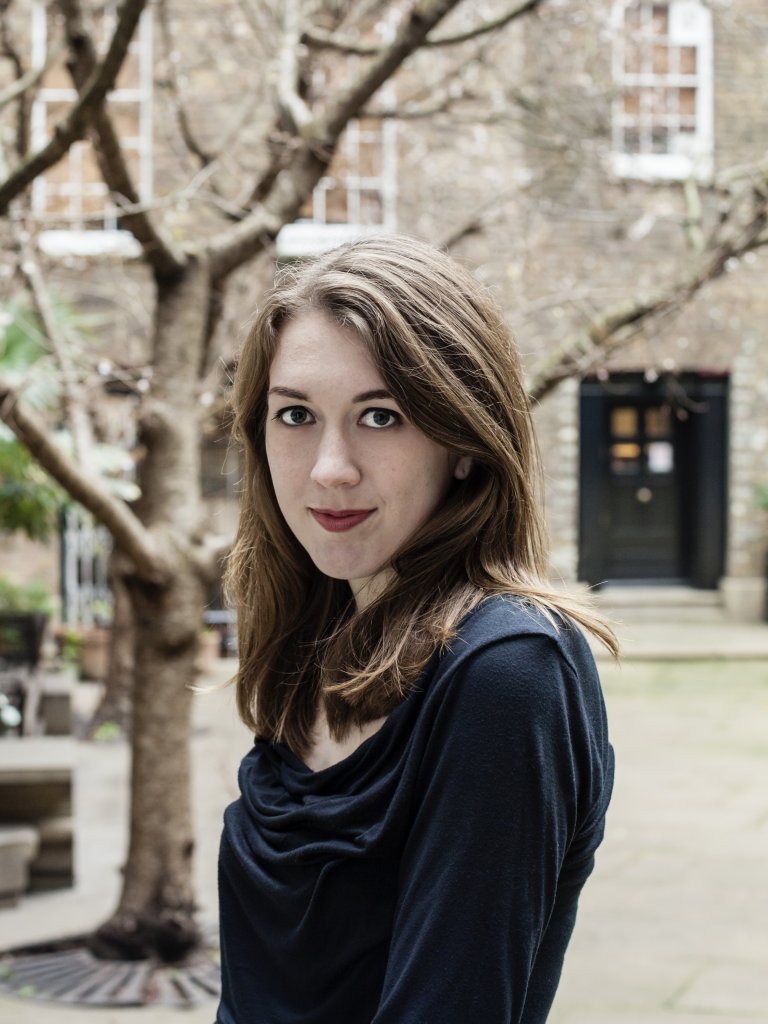
Samantha Shannon

Samantha: I’m not surprised the concept has stayed with you for years. Even as someone with a fear of the sea, I found it captivating.

London: That’s amazing; it’s always very encouraging to hear that from folk who have a fear of the sea, so thank you. I’m deeply honoured you’re a Light the Abyss fan. Yes, the sight of anything underwater, whether shipwreck, a person, ruins, or even boring infrastructure—it really didn’t matter what—always stirred such wonder and curiosity and would send me drifting off into my fantasy every time. I never envisioned any watertight domes; I wanted to still feel at home in my submerged world, a society as aesthetically close as possible to how we live here and now, except we were deep underwater. I’d especially see this submerged existence when looking out of a window. In all the years between that initial inspiration and my finally deciding to try and bring the vision in my head to life, the dream never waned, growing only more urgent and vivid with time.

Samantha: I love it when a setting is so real in your imagination that you can almost throw a mental switch and transpose it over the real world. I often get that when I’m walking through a city; I transfigure it into a Bone Season-style citadel in my head, and visualise it like a second layer of reality.

London: Yes, exactly that. And visualising any city Bone Season-style appears such a thrilling notion; I can only imagine how deeply exciting that experience always is for you! One of the things that struck me instantly as I began reading the series is that it has the most elaborate worldbuilding I’ve ever read. I’d really love to know when in the process the various layers came to you. The complexity of each one is inspiring—the level of creativity involved, and the attention to their construction: Scion London, the clairvoyants (all the different types and their abilities!), the many varied histories, your linguistical choices, and so on. All these are mind-bogglingly detailed (and I haven’t even touched on the beloved characters!) But then you also create a powerful other-worldly race in the Rephaim, and plant them in a secret Oxford…The skill involved with orchestrating it all blows my mind. As a reader, it’s incredibly exciting to stumble upon such an original, rich, and complex world. So please, enlighten me: Did you create each of these layers before drafting a single word, or did any of them come to you as you wrote? (If it’s the latter then you’re just not even human…)

Samantha: I’m so happy you’re a Bone Season fan. I did have most of the rough layers in my head from an early stage. I’m fortunate to have an excellent memory when it comes to my creations, so I don’t find it difficult to hold big, intricate worlds in my head. That allows me to stratify without losing track. (The Bone Season could probably have been two separate books, but I blended two large ideas into one, which is part of why it has so many delicate moving parts.) Having said that, I didn’t have every detail perfected from the beginning, and my ideas for the series have changed and developed over the ten years I’ve been working on it so far. To use a macabre analogy: I try to have the skeleton laid out from the beginning, but the flesh gathers on the bone as I work. I’ve been enriching each part of the Bone Season universe as I go, and my research often sparks fresh ideas. Scion Paris only took a firm shape when I started work on The Mask Falling, for example, as I was doing closer research on the city.

London: That’s amazing. And our processes are similar! I had the series skeleton, but by the time it came to drafting Abyss, I’d changed and developed several of my initial ideas for how I’d flesh it out. I remain in awe at how you manage to carry it all in your head, wow.

Samantha: On the subject of research, you clearly put a great deal of care into yours. The science of your books feels watertight (there I go with the puns again), and you often share intriguing facts about the ocean. How did you go about nailing down the details of a society forced deep underwater?

London: Coming from yourself, that’s a huge compliment, thank you. The Virgo in me meant approaching the research methodically. I started at the very beginning, focussing on here and now, and went through everything chronologically. I worked hard to understand, and to try and predict, how we might approach the sudden news of impending worldwide flooding; a disaster so catastrophic it would leave any survivors submerged deep beneath the waves. The challenges posed by such a drastically different environment would be pervasive and every aspect of society would need examining.

Before embarking upon any research, I thought long and hard about our current world and all the many ways—big and small—in which things would be done differently if it were water surrounding us instead of air. And then of course it’s one thing to reimagine the world, but if it hadn’t always been like that then there is even more to reckon with. I wondered if we could ever let go of the world as we currently knew it, and I had to consider how such a challenge might affect our psyche. And so my underwater world’s relationship with the pre-floods world required careful examination.
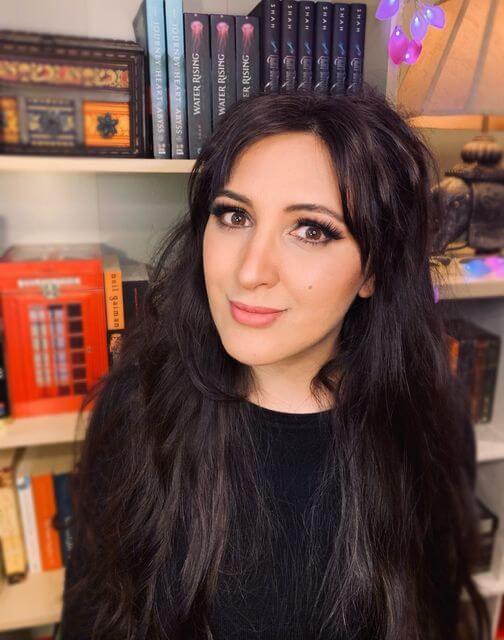
London Shah

Samantha: Of course. This is one of many reasons I admire sci-fi authors—you’re working within the realm of possibility, trying to predict how scientifically conceivable events would play out, unlike me, in my safe fantasy bubble. That must come with a degree of expectation that you’ll be accurate and precise, to the best of your ability. Theoretically, after all, the events of The Light at the Bottom of the World could happen.

London: Yes, exactly. And of course there’s no precedent for transformation on such a scale for humanity, so I had to seriously consider how such change could potentially impact our wellbeing. I came to the conclusion it wouldn’t be improbable for us to collectively suffer from some sort of malaise. The “seasickness” in my story-world is born specifically out of the people’s relationship to the submerged environment they’ve been thrust into. How would we adapt to this strange and overwhelming new world we found ourselves in? Would we, could we, change? And if not, how might our inability to move on alter our society at large? Suddenly that long-standing utopic underwater vision was becoming more real by the day, and as beautiful and thrilling as it was, it brought with it endless questions—so much to consider before I ever got around to plot. I read books on oceanography, spent countless hours on scientific websites and forums that discussed and predicted future technologies, watched as many deep-sea programmes as possible, chatted with marine biologists and oceanographers, and discussed specific scientific ideas with research scientists, and companies designing and manufacturing deep-sea vehicles. I even managed to persuade the CEO of a leading submersibles manufacturer to provide me with a mini tutorial via Skype; we covered all the basics of driving a submersible!

Samantha: That’s amazing.

London: I know, I got so lucky! And hopefully one day I’ll get to put those driving instructions to use for real; it’d be one of my earliest and long-standing dreams come true. I’m sure you’d agree, Samantha, when I say reimagining the world can be deeply challenging. You need to remain passionate, open-minded, and patient throughout. There were days when I’d wonder if I’d ever get around to writing the actual story.

Samantha: Absolutely. At some point, you have to decide you’ve done enough initial preparation and at least make a start on the book, or you’ll end up writing an encyclopaedia before you ever get to the novel. You can always continue to strengthen the foundations as you go, which I find to be the most efficient approach. I can do targeted research to answer specific questions that crop up during the writing process, which stops me falling down a rabbit hole.

London: I really should hang these words near my desk. So very true, especially about it being the most efficient approach! Those pesky rabbit holes aside, every bit of research is worthwhile. It might not make it into the story—most of it doesn’t, in fact—but it will inform you, and a more informed you makes wiser choices for your world. And the end result, when you sit back and observe your fully functioning world, is so gratifying. The knowledge that no place like it existed until you created it. It’s such a thrilling feeling! And you know for certain then that all the hours, all the many months spent researching, were more than worth it.


Samantha: There really is nothing like that feeling—standing back, taking a deep breath, and seeing what you made.


London: It’s the best. And now, because your own level of research for worldbuilding stuns me, I must know, Samantha: What part of the process is your favourite? If I had to guess, I’d have difficulty choosing between you delving into the history behind something, or exploring the language elements for your story? By the way, I’m left perpetually in awe by just how much thought and effort you put into utilising language in your storyworld. I especially loved your reinterpretation of words! If you could pick only one, what aspect of research gives you the most pleasure?

Samantha: You know me well! You’re right: historical and linguistic research are two of my favourite stages of the process. I’d say I narrowly prefer historical research—for all my adventuring through the realms of language, I often feel out of my depth in the shadow of master linguists like Tolkien. But I do get a lot of joy from creating names. (For those who don’t know, in The Priory of the Orange Tree I generally build character and place names from fragments of archaic, hypothetical and extinct languages, e.g. Gothic and Old English.) I also enjoy threading elements of reality into a fantastical setting, working out why and how historical events and situations might have occurred in a mirror universe.

London: See, this is what I mean…The sheer dedication in your approach to every aspect of research is just mind-blowing. I’m always awed by how you navigate and master so many complex parts. And I agree about placing real-world details into a fantastical setting—analysing them from (usually) such a vastly different perspective is always so exciting.
Samantha: It is. Going back to your research for a moment—you often share intriguing facts about the ocean. What’s your favourite sea creature and why?

London: The blue whale. Everything about it blows my mind. I’d lose all sense if I were ever on a boat and spotted one. I can’t imagine a scenario where I’m blessed enough to be near one, and I stay onboard. I’m jumping in. Imagine if we could hold onto one and go explore the depths of the world like that…The biggest animal ever known to exist on Earth (larger even than any dinosaur!) It can grow up to 33 meters long and can weigh up to 200 tonnes. Its tongue alone weighs about as much as an elephant. Its heartbeat can be heard from up to 3 miles away. And no natural predators, wow. It’s also the loudest creature; blue whales can communicate with another whale up to 1000 miles away…Imagine shouting from London, UK and someone in Belgrade, Serbia can hear you! An animal that size, and yet it feeds simply on plankton?! Wow, they’re remarkable. Such elegant creatures, leading their peaceful, quiet, and modest lives. How blessed we are to live in a time when the planet carries such a species in its watery belly. It never fails to astound me that they’re here with us today.

Samantha: They are beautiful. I remember being awestruck by the model in the National History Museum when I was little.

London: Same! It took my breath away when I first saw it. I’d like to know what you’d choose if you could have any one of the animals featured in your books, as a pet? While your dragons are definitely spectacular, my favourite creature from your works is the splendid ichneumon from The Priory of the Orange Tree.

Samantha: I’d find it hard to choose between them—a dragon would be the equivalent of a private jet—but ichneumons are lovely. I’ve been able to spend more time with them in the prequel to Priory. They imprint on the first person to feed them solid food, and will follow their imprintee anywhere. They can be cuddly, like giant teddy bears, but will also defend their pack and their imprintee to the death. They’re also calm and blunt in a way that can be quite funny.

London: I want my own ichneumon more than ever now. And yes, a dragon would be a very powerful creature to have on your side!

Samantha: What’s your favourite thing about the underwater world you created in the duology?

London: Interesting question…I think what’s most heartening for me about the Light the Abyss world is the fact that despite the added factors of research and plot, and their respective challenging journeys, I managed to stay true to my original decades-old feelings about such an environment. How even when the ideas took a dystopian turn as I brought the underwater society to life, I remained faithful to my teen fantasy of a magical and surreal submerged world. There’s control and terror, pain and confusion, and yet the setting beats with my teen heart, with all the awe and endless curiosity I’ve always had for this world. I love how the emotional aspect of it is almost a time-capsule; it feels like a part of my teen self, complete with the ceaseless wonder and fearful anticipations of that age. Everything I’ve always been fascinated and terrified of when envisioning us existing in the deep, flowed into the story. I was finally able to fully realise those sensations, explore the visions that had forever stirred such strong reactions in me. And that’s my favourite thing about the world I’ve created—I feel I never lost what inspired me in the first place and compelled me all these years since to keep the dream alive.

Samantha: I love how passionate you are about it. It shines all the way through the story.

London: Thank you! If you asked me what I love most about the Bone Season series, I’d have a very hard time choosing. But I have, with great difficulty, narrowed it down. There’s the scope (the sheer layers you added will never fail to astound), Paige and Arcturus (my favourite pairing of any book ever), and this strange and yet utterly believable London you presented to us. And so I can’t not ask you the same question, specifically regarding the Bone Season series, please. Urban fantasy is the sub-genre that excites me the most, and everything in this series is endlessly thrilling to me. So I’m really intrigued: What’s your favourite thing about the entire Bone Season world?

Samantha: Thank you. I’ll start with the caveat that not all of the Bone Season world is of my own creation; often I’m drawing from real or former places, or from myth, so I can’t take credit for inventing them. In fact, the series is a broad reimagining of the Greek tale of Prometheus and Pandora, which is an element of it I love—I’m trying to use the myth in subtle ways a reader might not expect. Another part I’m looking forward to exploring in more depth is the Netherworld, which we haven’t seen in the books yet, and acts as both a cradle and a melting pot of human myth. I’m looking forward to exploring it—in Book 6, perhaps. But most of all I love developing the relationship between Paige and Arcturus. I’ve always been fascinated by the thought of a complex bond between an immortal and a mortal that unfolds over a few years, and what challenges, pitfalls and joys that would bring, especially when there is no solution to one of them having a fleeting life. I put a lot of thought into where their thoughts and actions would be similar or different, where they would butt heads and where they would find common ground. It’s such a privilege to be able to interrogate that subject, and follow these characters, across seven instalments.

London: Ooh, I’m really looking forward to a closer look at the Netherworld. It sounds riveting! My mind’s throwing up all kinds of scenarios now. Yay, I’m thrilled you picked dear Paige and Arcturus as your favourite part of the Bone Season world. What a fascinating and endearing pair. I’d follow them anywhere. Ack, anytime you speak about the series, it just makes me really impatient for the next instalment!

Samantha: I’ve loved following your characters, too—Leyla, Ari, Oscar, Hashem, and, of course, Jojo. Leyla is such a resilient and hopeful protagonist. When did she first come to you?

London: Leyla came to me the moment I realised I was going to write the story. Her nature was instant and nothing changed there during the entire process. However, Leyla was originally Lola! I hadn’t intended to write a South-Asian Muslim protagonist; it just never presented itself to me as an option and I’d always assumed my main character would be white and non-Muslim. It wasn’t until I joined the Twitter writing community and was exposed to the conversations around diversity that were taking place specifically in the YA sector of publishing, that I slowly began to realise I didn’t have to write a white main character. And still I took baby steps…Lola became Leyla and I naively decided she would be biracial—Pashtun and English. The hesitance to have her fully Pashtun came from what I’d always read myself, solely due to what was available on the shelves of bookshops and libraries—most especially in SFF. The UK publishing industry is leagues behind the US when it comes to accepting POC leads in SFF.

Samantha: Yes—the more strides the US side of the industry makes, the more glaring the UK’s failure to publish (and, crucially, support) authors of colour is shown to be in comparison. The statistics are appalling.

London: It’s definitely a depressing reality, one that’s impossible for a POC creator who writes SFF to ignore…Once I began following the conversations around diversifying our bookshelves to provide wider and more authentic representation, I went constantly back and forth in my head about whether to have my protagonist white, biracial, or fully ethnically Pashtun. I knew the story’s reception would be very different if I went with the latter, especially in the UK (and this was proven true during my querying process, when I had to turn to US agents), but knowing the chance to represent Pashtuns was there, I couldn’t not grab it. Somebody has to take those first tentative steps, and just as so many of my fellow writers have done with their own respective marginalised identities, I looked beyond how I suspected the story might be received by the industry, to what it would mean for teen readers. And that is how Lola became Leyla, an ethnically Pashtun teen girl born to Pashtun parents. Her nature never changed; that was cemented from her inception.
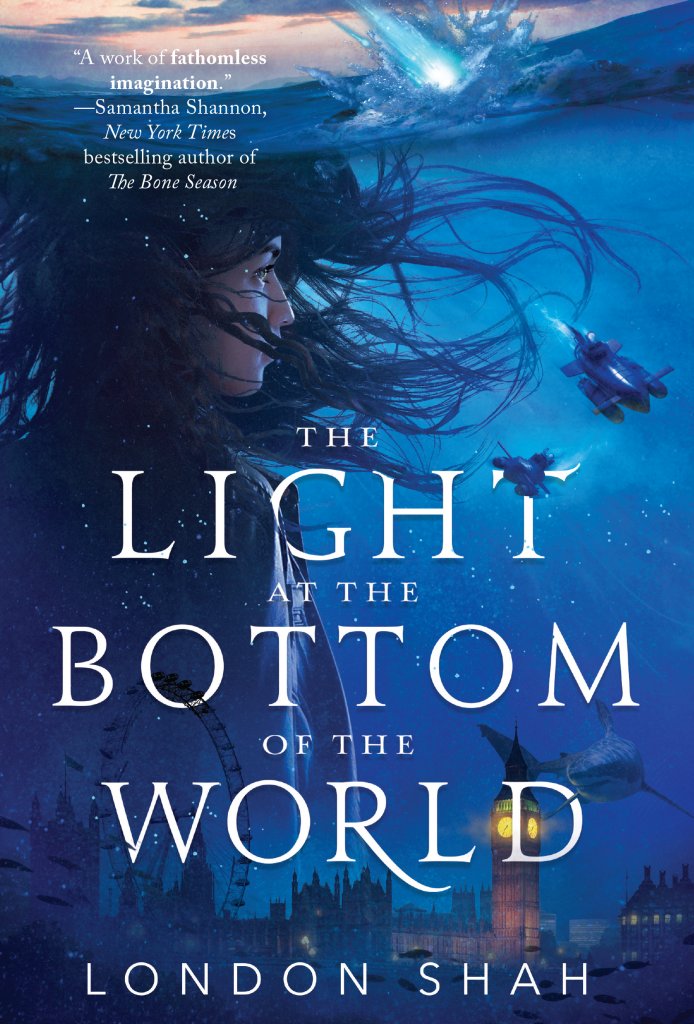
Samantha: I’m really glad you felt able to take that step, and it was wonderful that you dedicated The Light at the Bottom of the World to Pathan readers. I hope a UK publisher will pick the books up soon—they’re missing out on the brilliance of Leyla McQueen. What do you love most about her?

London: Thank you. There’s so much to adore about Leyla. I’m especially moved by how open she is to change, a trait all the more admirable considering her relatively sheltered upbringing. I don’t want to potentially spoil things for the reader, so I’ll just say the Leyla we meet at the beginning of the story is, in some respects, very different to who she is by the end of the series. Her determination to see things as they really are, and to allow those truths to change her outlook on life, enable her to grow and move forward. This is one of the things I love most about her.

Samantha: Me, too. Often in this genre you understandably see quite hardened, suspicious characters, but Leyla’s candour and optimism are refreshing qualities in a dystopian world.

London: I’m so happy you think so. Actually, I saw a lot of Leyla in Paige! (Similarly, I saw a lot of Ari—a main character in book one, for those who haven’t yet read it—in Arcturus.) It was a constant thought as I read the Bone Season books. Paige and Arcturus many times struck me as older and more mature versions of Leyla and Ari. Leyla and Paige are both selfless, grounded, vulnerable, strong, trusting to a fault, earnest, determined, difficult to keep down, and can’t walk away from a bad situation without trying to help. Arcturus and Ari are both sincere. They’re protective of the ones they love but not in an overbearing way, always remaining considerate, gentle, and fully accepting of them. So it’s no surprise I fell in love with both Paige and Arcturus. I’d love to know how Arcturus Mesarthim (my favourite fictional male ever) came to you? And whether anything major about him changed between his inception and the final version of book one?

Samantha: I agree! Paige does share all those qualities with Leyla—she tries to learn and grow from her experiences, too—and Ari is such a sweetheart. He’s exactly the sort of gentle male lead I strive to write, who doesn’t smother his love interest. There’s a bit of background to my passion for that sort of character, which also happens to answer your question. Arcturus went through an enormous change between inception and The Bone Season. I created the earliest version of him, a sort of proto-Arcturus, for my unpublished first novel, Aurora. The love interest in Aurora resembled the present Arcturus physically and shared a name with him, but he was jealous and possessive and angry, because when I was a teenager I’d absorbed the harmful idea that men were supposed to dominate women, and that jealousy in relationships was sexy. Essentially, I thought toxic masculinity was the ideal.

London: Ugh yes…I think we’ve all been there. We were sold the idea so extensively, and for so long, it’s no wonder it was acceptable to us, and felt completely normal.

Samantha: Yes, reading back on it is disquieting—it couldn’t be more at odds with who I am now, and I often worry about how close I might have come to a dangerous relationship. When I finally broke free of that mindset, I decided to rebuild Warden into a character who was the opposite of his original incarnation, almost a rebuke to him: gentle, solicitous, never possessive, allowing Paige to thrive, supporting her without clipping her wings. So I really appreciate Ari, on a personal level. I love gentle men in fiction.

London: Aw, you rescued him in a way (is it disturbing that I’m suddenly jealous?) And hard same: There’s nothing quite like kindness in a person, to endear us to them. Human tenderness is so beautiful to witness, and can be such a captivating trait in men.

Samantha: Who is your favourite secondary character in the series?

London: Oh, that has to be Leyla’s Navigator, Oscar Wilde, her submarine’s onboard AI. I’ve always loved the real Oscar Wilde, so he was the perfect choice for Navigator. Oscar’s character allowed me also to indulge in one of my favourite things—juxtaposing two very different aesthetics. His old-fashioned manner is wonderfully surreal and refreshing in a submarine at the bottom of the world in 2099. As per the real personality, his character is very loving but when irked we see a subtle snarky tone, and I had great fun with him. I can picture him on board the Kabul (Leyla’s submarine) as clearly as if the scene were before me now.

Samantha: He was such an unexpected addition to the story, and I agree that his style was a great counterweight to the cold, sleek aesthetic you often see in futuristic sci-fi. (I tried to do something similar with the clairvoyant leaders in London, giving them a bit of panache.) Of course, your series as a whole warns us against too much nostalgia—specifically the toxic variety, where the romanticisation of the past is used to stifle the present and future—but to me, Oscar is a sign that it is possible to remember our history without it keeping us from moving forward.

London: Yes, Leyla choosing a person from the past was a deliberate choice. There is nothing wrong with nostalgia, of course; it’s only when it becomes toxic that it poses a problem. Leyla remains very respectful of the past and those gone before her. She just refuses to lose herself trying to relive a bygone time. I really love her relationship with Oscar. In hindsight, I can see that I gave him a family. I wanted him to have a safe place; somewhere he was loved and respected. It pains me greatly how the real man was treated. There’s such a forlorn look about him in pictures, a dull sadness in his gaze, and it’s heart-breaking. I think that’s also why I gave my own Oscar as much agency as I could without taking from Leyla’s. I didn’t want an intelligence that merely took orders. The real man himself was never about that. Speaking of characters we adore, if you could spend the day with only one character from the Bone Season series, who would it be, and why?

Samantha: Oh, Arcturus, unquestionably. I had to fall in love with him myself so that Paige could. He’s the character who’s been in my head the longest, since I was fifteen. That’s half my life. I’d give anything to spend a day chatting about books or going to the theatre with him or listening to him play music. If I could pick one of yours, it would be Leyla­—I’d like some of her positivity!

London: Aw, she’d love you! And I’m afraid there’s just no conceivable scenario in which Arcturus is visiting you for the day and I don’t make a random—purely coincidental!—appearance. We must obey the laws of the universe.

Samantha: He’d be delighted to meet you. It seems appropriate for my final question to be about the big finale of Journey to the Heart of the Abyss, which was pulse-pounding. Do you enjoy writing action and battle scenes? (I really don’t, but you’re very good at it!)

London: Wow, thank you. And I’m always very surprised to hear you don’t enjoy creating your action scenes so much—they’re spectacular! That entire scrimmage scene in The Mime Order (reader, you might want to look away now if you haven’t yet read it!) when Paige fights various others to determine the next Underlord/Underqueen, really sparked. That’s one of my favourite action scenes ever; I felt every blow and was quite exhausted by the end!

Samantha: Thank you—that means a lot. I’m pleased with the result, but I hated every second of writing it.

London: Well, you’d never know! If I could pick only one type of scene I love most, I think it would be the quieter, more reflective ones. Those moments that require the organising and processing of emotions and facts, the subsequent journey to deeper understanding, and then determining the character’s next move as a result. But yes, I actually do enjoy writing the action and battle scenes due to their structural nature. The main sequences involved provide me with a clearer map for the scene.

Samantha: I can’t wait to read more of both kinds of scenes from you.

London: Thank you. As a huge fan of your work, I strongly feel the very best way to bring this chat to a close is by you honouring us all with a titbit regarding TBS5. The people demand a Samantha Shannon exclusive on the next instalment of the Bone Season series…Pleeeease.


Samantha: Ha, okay. I feel dreadful after that cliffhanger! I really can’t say much at this stage, but each Bone Season book is its own genre, and so far this is shaping up to be the roadtrip book. It’s the first book in the second arc of the series, larger in scope than any of the previous instalments. Paige travels further than she ever has, decides on her place in the war against Scion, and finds herself a long way out of her comfort zone. She’s also about to face her most formidable opponent yet. Some old friends return to the series at this point, along with some interesting new characters, and I’m inching closer to the big secrets at the heart of The Bone Season, which is very exciting.

London: Oh my gosh. A roadtrip…And larger in scope than the others (how’s that even possible?!) I now feel compelled to utter a little pre-emptive, “Poor Paige”. And big secrets…I’m so excited! Having a poor memory is sometimes a blessing, and I’m really looking forward to my re-read of books 1-4 in time for the fifth instalment. Thank you so much for sharing that with us. It’s been so great chatting with you, Samantha, and discussing the Light the Abyss series with you. I’ve enjoyed it tremendously. And of course, getting to delve a little deeper into your brilliant work—such a privilege. Please take care of Paige and Arcturus!

Samantha: I’ve loved this chat so much, too! Congratulations on such a groundbreaking and fascinating duology, London—you’ve worked so hard on it, and I can’t wait for more readers to join Leyla, Oscar and the rest of your intrepid heroes on the Kabul. The abyss is waiting . . .



THE BATMAN 2022 Characters — What’s Old and What’s New

The batman 2 022

This year’s release of The Batman sees a dramatically different version of the caped crusader on the silver screen, but is it an improvement?

Robert Pattinson (who shall hereafter and forevermore be known as #Battinson has taken on the Dark Knight’s cape and title, adding more than a dash of what Esquire delightfully called “gritty camp.”

A new type of Batman?

Pattinson, of Twilight and The Lighthouse fame, brings a decent amount of complexity and depth to billionaire playboy Bruce Wayne, something we’ve come to expect from this eminently brooding character.

While Christian Bale’s portrayal of the Batman was dark, at times heavy, and very masculine, he was the perfect fit for Christopher Nolan’s cinematography style in the Dark Knight era. The 2022 version of the Batman, on the other hand, will see Pattinson bringing a grungier, emo, an almost effeminate new side to our favourite DC Comics hero.

It could be the right call for this generation of Batman fans and fans to-be. The film taps into a current Gen Z zeitgeist that bears much resemblance to the one shared among 90s ‘scene’ kids, while still retaining the comic book-esque flavour and cinematography style fans have come to love.

As the Guardian succinctly puts it, it’s in the way Pattinson sweeps his “his greasy, Kurt Cobain-style curtains out of his eyes.” Not to mention the moody soundtrack, which includes Nirvana’s ‘Something in the Way.’

Most of us have a favourite version of Batman, the same way we might prefer Sean Connery over Daniel Craig in James Bond. For those who grew up watching Adam West or Michael Keating, Pattinson is unlikely to hit the mark. But for those who formed their impression of the character based on Bale’s work, Pattinson’s efforts will feel closer to home.

It’s not so much that we’re seeing a new Batman, but a reworked version of Bale’s character — one that’s largely to be expected given the difference between Nolan and The Batman director, Matt Reeves’ style.

A lot has been said about Ben Affleck’s portrayal so, we won’t go over that here. But, it’s safe to say two things: it wasn’t entirely Zack Snyder’sfault, and Pattinson is a strong improvement.

Villainy rehashed

Cat masks (or hats) off to Zoë Kravitz who plays Catwoman in this film. Her version is brilliant, bratty, and just the right amount of bodacious for the cocktail waitress cum cat burglar, Selina Kyle.

As with previous films, there’s a hint of sexual chemistry between Batman and Catwoman, and the film taps on that as the dynamic duo work together to help find Selina’s missing girlfriend.

Kravitz’s Catwoman is a breath of fresh air and as many commentators have noted, her rendition is much closer to the comic book version of the character that we’ve grown to adore. . Less overtly sexual than Halle Berry or Michelle Pfeiffer’s version, yet still sexy and feminine, Kravitz has imbued Catwoman with a budding, almost innocent anti-heroism that’s refreshing to see.

Catwoman isn’t the only villain who makes an appearance in this three-hour-long epic, though. We see the return of the Penguin played by Colin Farrell(does the man ever miss?), a tough role for any actor to take on after Danny DeVito’s masterful portrayal in 1992’s Batman Returns. If you were hoping for another character raised by actual birds, you’re sadly out of luck as this version is a sleazy underground boss with a rather large nose.

Key among the villains, though, is the Riddler, who takes on the mantle of prime antagonist as a sadistic serial killer. Paul Dano’s portrayal of the Riddler’s alter ego, Edward Nashton, as a creepy, lone-wolf that’s unassuming and hard to pin down gives the film some much-needed oomph. Indeed, hiding in plain sight is a theme common in any Batman comic and Batman villains, as this infographic on the subject shows, it’s often hard to know whether the ‘real’ version is the one in the costume or not.

The Batman, 2022 is now playing in cinemas. So far, the 2 hour and 55minute long film has garnered a respectable 85% from critics on Rotten Tomatoes and an 8.6 on IMDb. Yes, it may ramble more than we’d like, and the plot could be much tighter, but in terms of sheer bleak Gothic noir, the film hits all the right notes.

Morgan Owen | THE GIRL WITH NO SOUL

The Girl With No Soul is Morgan Owen’s debut novel. We caught up with her to find out more. 


What is The Girl With No Soul about? How would you describe it to a beloved elderly relative?

Some of my beloved elderly relatives are already keen readers, so I told them that the book is set in a world where the soul can be seen and judged by the authority. It’s about a girl who is trying to piece herself back together after a traumatic event she can’t remember. She meets a young scholar who assists her with unravelling this mystery but of course, he has some secrets of his own.

Why Young Adult fiction?

When I hear a high concept synopsis that stops me in my tracks, it’s almost always YA these days. YA is very immersive and immediate. There’s also something about a coming-of-age story that is universally appealing too. I think it speaks to the part of us that’s still trying to find our place in the world, no matter how old we are. Also, teenagers are incredibly astute and ferocious readers so I aspire to impress them at all times.


Is this a horror story? What would make it a horror story?

I saw a tweet recently that said something like, horror can be divided into two categories: “oh no, not that guy again” and “the real monster was our psychological trauma”. The Girl With No Soul is somewhere in the latter category. Memories come to life as spectres and shadows move of their own accord. It’s about the horrible things that humans are capable of and the monsters that live in our heads, so there’s potential for a horror, but I wasn’t trying to frighten readers so much as make them question reality.


What character is the most fun to write?

My protagonist Iris is both the most painful and the most fun to write. When we first meet her, she’s a thief of sentimental treasures who lives vicariously through other people’s memories. She has no past, her identity is fragmented and she’s not in touch with her emotions, but when a big feeling hits her out of nowhere, she’s more than willing to lean into it. She’s experiencing things as if for the first time again and that’s really exciting to play around with.


Which character seriously needs to have word with themselves?
Evander, my love interest. He has some issues he’s not dealing with and he’s allowing them to define him. He’s lost in his own feelings and isn’t really seeing things clearly. But he’s doing his best! I like a love interest who has a complex inner world of their own going on. He definitely has that, though you could argue that he takes it a little bit too far.


If The Girl With No Soul had to be set in another world, what world would you choose?

The world of TGWNS uses psychometry or the ‘science of the soul’, but it’s viewed more like magic. The setting is gothic, almost steampunk, so I’d set it in a futuristic world instead. I’d see how this technology would’ve developed over time and what modern governments would do about those with extrasensory abilities. Maybe it would be a cyberpunk society, and the Order would be a corporation instead. Can’t go wrong with cyberpunk.


How would it change the story?

TGWNS already has some sci-fi elements like memory removal and advanced mass surveillance, so the heart of the story would be the same and it would play out in much the same fashion, but the media would be a more powerful force. We’d probably have people exposing their neighbours’ souls’ flaws online, instead of reporting them to the Inspectors.


Is the genre world more accessible these days?

I think so. There are lots of exciting, diverse voices emerging in science fiction and fantasy but there are still important conversations about accessibility to be had. There are still barriers to publication. Making a genre more accessible vastly benefits the reader. More diverse authors means more unique experiences and inspirations to shape new stories, so we should all encourage that.


Which writers inspire you?

Big question. Sticking with SFF: Margaret Atwood, Malorie Blackman, Susanna Clarke, Suzanne Collins, Rick Riordan, Ursula Le Guin, Octavia Butler, Angela Carter, Neil Gaiman, Lauren James, Philip Pullman, Lois Lowry, Laini Taylor, Leigh Bardugo, Douglas Adams, Nnedi Okorafor, Samantha Shannon and other people I’ll kick myself later for not remembering. But I get a lot of inspiration from other genres and even other mediums, including children’s cartoons and video games.


What tropes do you personally avoid the most?

I think a good story can take almost any trope and reinvent it, though I’m always drawn to inverted tropes. I avoid anything that I feel is harmful, such as ‘bury your gays’, but in general, I think tropes can be a useful narrative tool. Readers have seen enemies to lovers and the chosen one done countless times, but hugely popular stories still employ them successfully, especially when they tweak them for a surprise. I particularly like redeemed villain/corrupted hero arcs.


How would you describe your process?

Chaotic! I’m in awe of those writers who have a whiteboard or an extensive system of colour-coded sticky notes that they never deviate from. I always set out with a neat, elaborate chapter plan but then my characters take me by the hand and lead me wherever they like. Sometimes an idea just doesn’t work on the page, so I think it’s important to give yourself a little room to improvise.


Simpsons or Futurama?

Futurama. I love all things animated, and the early episodes of the Simpsons are among the best television ever made, but being a fan of retrofuturism and comedy aliens, Futurama just hits a rare spot. The world is so sharply observed and imaginative. Doctor Zoidberg has always been my favourite character, and always will be.

Tigers or Spiders?

Tigers give off majestic vibes. They’re supremely powerful beings. But there are a lot of spiders, everywhere, all of the time. I think they’re probably watching us, judging us, making notes. We should probably be nicer to them. I’ll say spiders.


Goths or Visigoths?

Goths. Sunshine is overrated. I’ll wear a coat on the warmest of days just out of pure spite.


Truth or Beauty?

Truth. As the Countess in my book would say, there’s nothing more important than the truth in a world built on lies. We’ve seen how mistruths can shape world politics and the future of civilisation in real time. So as much as I appreciate beautiful things, I’ll take the ugly truth in the hope that we can learn from it somehow.

Girl With No Soul is out now via all good bookshops via Scholastic. Morgan Owen can be found on twitter at @morganowenya

THE TELEPHEMERA YEARS: 1977 – PART 1

telephemera years 1977 man from atlantis duffy

Ah, telephemera… those shows whose stay with us was tantalisingly brief, snatched away before their time, and sometimes with good cause. They hit the schedules alongside established shows, hoping for a long run, but it’s not always to be, and for every Street Hawk there’s two Manimals. But here at STARBURST we celebrate their existence and mourn their departure, drilling down into the new season’s entertainment with equal opportunities square eyes… these are The Telephemera Years!

1977-78

Garry Marshall ruled the roost in 1977, with Happy Days and its spin-off Laverne & Shirley occupying the top two slots in the Nielsen ratings for ABC. The Alphabet Network also had the number three and four shows as Three’s Company and the top ten’s sole action-adventure series Charlie’s Angels completed a good year for Fred Silverman’s company. It got even better when it came to new shows – Soap, The Love Boat, and Fantasy Island were all massive hits for the group, whose only real competition came from CBS.

The Eye’s perennial ratings juggernaut 60 Minutes was still doing blockbuster business and they unveiled a new Texas oil drama named Dallas in their new season line-up, joining Marvel Comics inspired shows The Incredible Hulk and The Amazing Spider-Man. NBC could only offer CHiPs in return, continuing a dark run for the Peacock. In addition to the Marvel shows, there was no shortage of new telefantasy on the screen, even if The Six Million Dollar Man and The Bionic Woman were entering their final seasons, but as we will soon see little of it stuck around. This is the story of four of 1977’s TV failures…

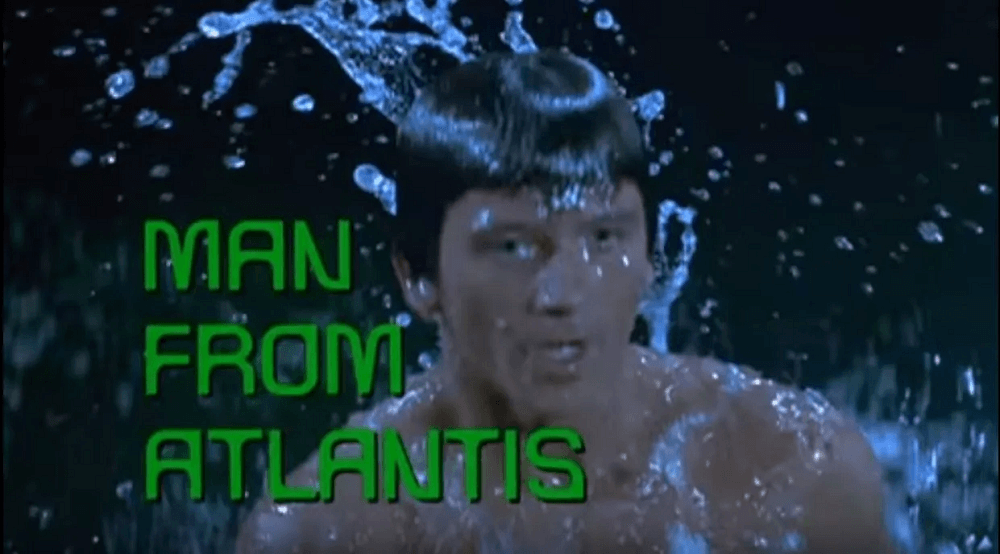
Man from Atlantis (NBC): With Spider-Man and The Hulk making their TV bows over on CBS, you’d be forgiven for thinking that they were joined by another Marvel hero, The Sub-Mariner, over on NBC as The Man from Atlantis arrived on US TV screens on September 22nd 1977. In fact, the show was an original creation from Mayo Simon and Herbert F Solow and the weekly instalments followed on from four TV movies which had aired between March and June which were enough of a success that a full series was greenlit.

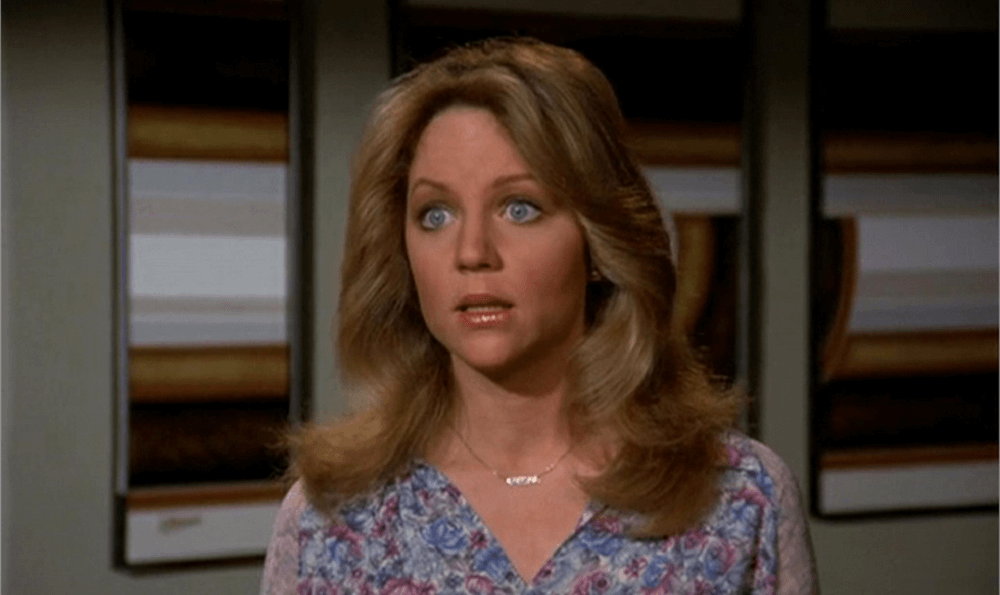
Patrick Duffy played Mark Harris, the name given to an amnesiac man washed up on a beach after a storm, a man who has webbed hands, gills instead of lungs, and who can swim to a depth of seven miles. Naturally, the US military seeks to take advantage of his skills but luckily, he has kindly scientist Dr Elizabeth Merrill (Belinda J Montgomery) to act as his conscience.

telephemera years 1977 man from atlantis duffy

Duffy was a charismatic newcomer with just a handful of screen credits to his name, perfect to be moulded into this new superhero, and he acquits himself well in his first starring role. The scripts – which involved ancient civilisations, time travel, and mischievous imps at their most fantastic – were often boring and there’s only so much mileage you can get out of a man swimming like a dolphin (although kids all over the UK, where it beat Dr Who in the ratings – raced to copy that style at their next visit to the public baths).

Nine episodes aired before the show was quietly pulled from the schedules – where it had been opposed by top ten shows on both rival networks – and the final four completed episodes aired in Spring 1978. Duffy went on to secure a role in Dallas and Man from Atlantis enjoyed more of a post-cancellation life than most, at least in the minds of impressionable children. Warner Bros released the complete series (including the four TV movies) on DVD in 2011 and in 2016 Patrick Duffy himself wrote a sequel novel which answered many of the questions raised by Mark Harris and his mysterious origins.

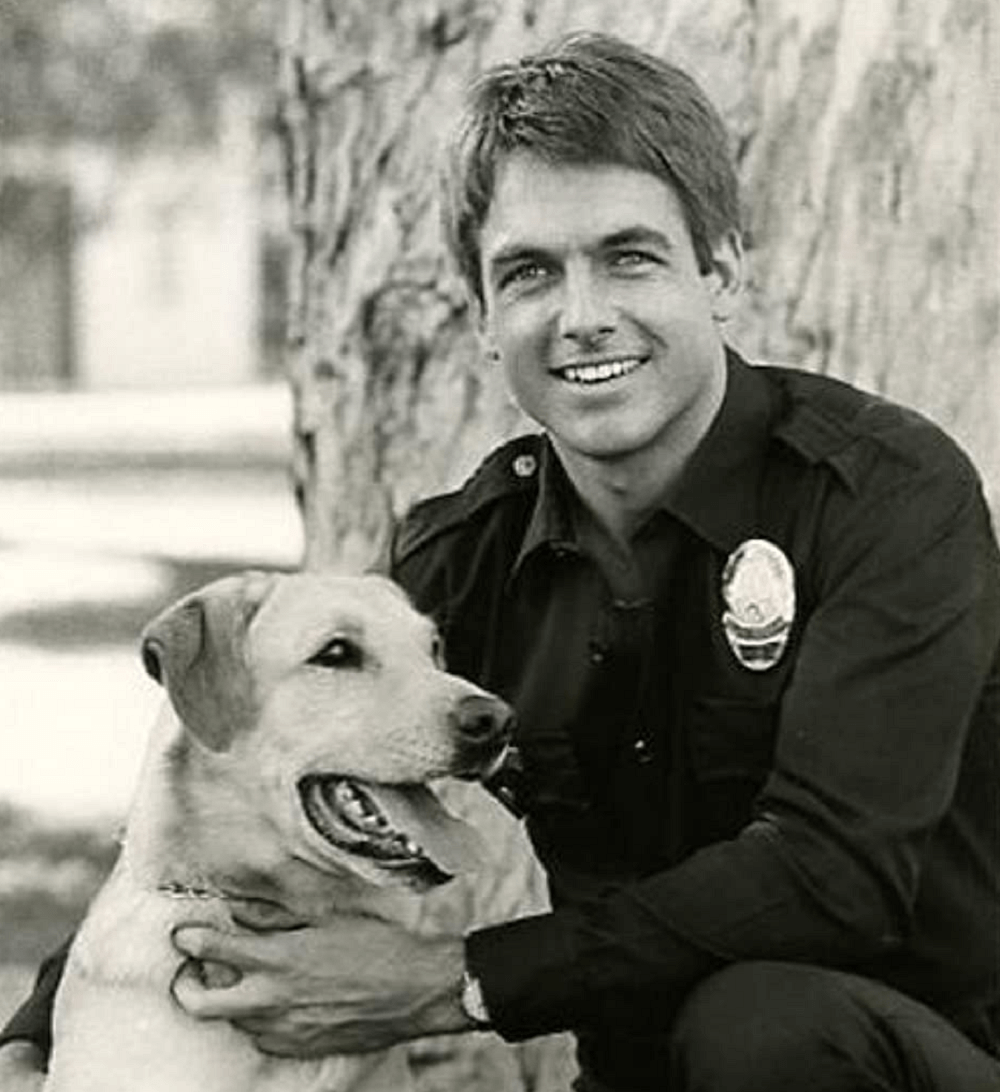
Sam (CBS): Jack Webb was responsible for some of TV’s greatest hits, with Dragnet, Adam-12, and Emergency! all enjoying multi-year runs, but his latest brainchild was something else. Sam was a dog and not just any dog, he was a specially trained police dog belonging to handler Mike Breen (Mark Harmon in his first feature role).

Each week Sam would help his master solve crimes by using his canine capabilities to prevent bombers, drug smugglers, and kidnappers, and there was even time for our daring doggy to be wrongly accused of shooting a suspect, and prevent an infected monkey doing an Outbreak. Harmon was personable, and the dog was lovely, but the show was as hampered by its timing as its limited appeal.

telephemera years 1977 sam

Between June 1976 and July 1977, a man named David Berkowitz committed a series of murders, mocking police with cryptic notes before his eventual capture in New York City. Berkowitz claimed to be receiving instructions to carry out the crimes from a demon which manifested in the form of his neighbour’s dog, a black Labrador. His neighbour’s name? Sam. Okay, maybe TV’s Sam was the actual dog, and he was a yellow Labrador rather than a black one, but it can’t have made for pleasant viewing for the people of New York – the country’s biggest market – when the show began airing in March 1978.

Sam lasted for just six weeks before CBS cancelled the show, and it has never been released on home video. There’s not even a clip of it on YouTube, even in retrospectives of Mark Harmon’s career, and it was a sad way for Jack Webb to go out; Sam was the last production from his Mark VII production company before his death in 1982 from a heart attack.

Tabitha (ABC): Not everything ABC touched turned to gold in 1977 and Tabitha, a spin-off of a show that had finished airing five years before, was a perfect illustration of how to get it wrong. Recording star Lisa Hartman starred as the eponymous heroine, the grown-up daughter of Samantha and Darrin Stephens from the 1964-72 smash Bewitched.

Tabitha inherited her mother’s magical powers and a typical episode found her embroiled in supernatural troubles, getting in the way of her everyday life as a production assistant at her brother Adam’s TV company. In the twice-filmed pilot (the first of which had Bewitched’s Tabitha, Liberty Williams in the starring role), Adam also had magical powers, but he was made human for the series and acted much as Dicks York and Sargent had in the original show, disapproving of his sister’s spellbinding.

telephemera years 1977 tabitha bewitched

Robert Urich played Tabitha’s love interest, but the central cast just didn’t have the vitality of the original and moving the setting to cosmopolitan Los Angeles undid the charm of the small-town setting of Bewitched. It didn’t help that neither Sargent or Elizabeth Montgomery made an appearance and the only connection to the parent show was the previously unmentioned aunt Minerva.

The first episode of Tabitha aired in September 1977 and was immediately pre-empted by seasons two of Barney Miller spin-off Fish, which aired seven episodes in the Saturday timeslot before moving to Mondays, after which the rest of the initial run of Tabitha was broadcast. That entailed just ten further episodes, the last airing in January 1978 after which re-runs were put in its place. Sony released the complete series (with both unseen pilots) on DVD and there are plenty of episodes available on YouTube should you want a bit of magic in your life…

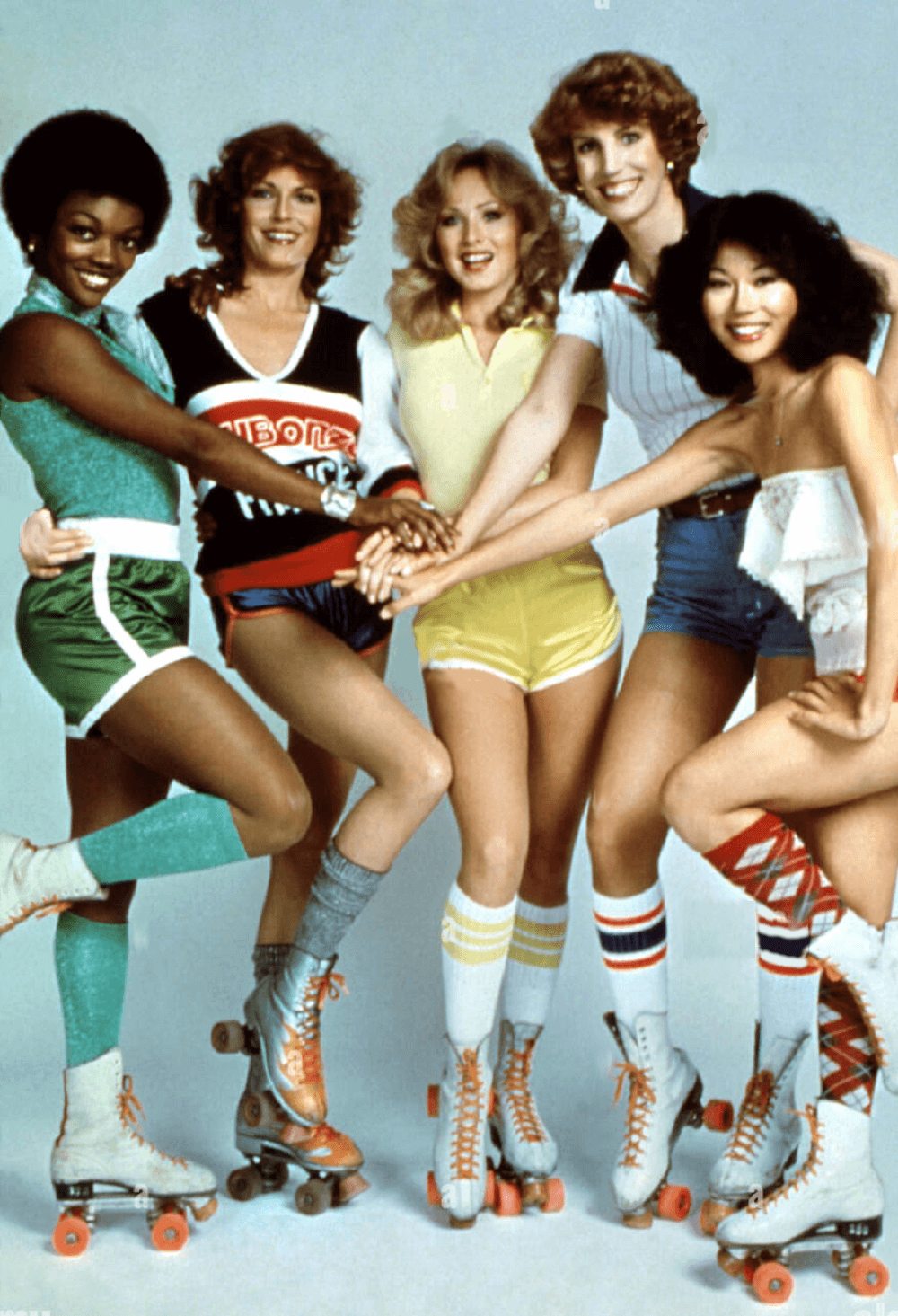
The Roller Girls (NBC): From its origins as an endurance event in the 1920s to the development of the combat team sport that became a fixture on TV in the 1950s, roller derby was just one of the many exciting spectacles laid out for American audiences in the heyday of public entertainment. Waning in popularity by the mid-1960s, the sport had a revival in the 70s, and NBC decided to ride that wave with their new sitcom for Spring 1978.

The Roller Girls featured the fictional Pittsburghs Pitts, an all-girl team of spunky skaters who are pitched into a battle of the sexes in their very first episode. Created by James Komack, a producer on The Courtship of Eddie’s Father and Chico and the Man, the show took the typical trope of a bunch of misfits learning to work and live together and injected the thrill of roller derby.

telephemera years 1977 roller girls

The team consisted of Mongo (the 6’ 2” Rhonda Bates, playing very much her usual Southern tomboy type), JB (broadway dancer Candy Brown), the nerdy Books (future replicant Joanna Cassidy), Pipeline (Marilyn Tokuda), and Honey Bee (October 1978’s Playboy Playmate of the Month). They were managed by Don Mitchell, played by Terry Kiser (Bernie from Weekend at Bernie’s) and subsequent storylines saw the team try to find a date for Mongo, Honey Bee get threatened with being traded to a rival team, and a flashback to how they came together.

Unfortunately, the mid-1970s revivals of roller derby never really took hold and although the cast of mostly newcomers had much to recommend them, audiences just weren’t interested in the antics of a bunch of tough female skaters. Just four episodes aired before the axe fell in May 1978 and it’s a show that is largely forgotten to history, with just a few clips surviving on YouTube, including the ace opening credits.

Next on The Telephemera Years: Aliens, the far future, and wild boys!

Check out our other Telephemera articles:

The Telephemera Years: 1966 (part 1, 2, 3, 4)

The Telephemera Years: 1968 (part 1, 2, 3, 4)

The Telephemera Years: 1969 (part 1, 2, 3, 4)

The Telephemera Years: 1971 (part 1, 2, 3, 4)

The Telephemera Years: 1973 (part 1, 2, 3, 4)

The Telephemera Years: 1975 (part 1, 2, 3, 4)

The Telephemera Years: 1977 (part 1, 2, 3, 4)

The Telephemera Years: 1980 (part 12, 3, 4)

The Telephemera Years: 1982 (part 1, 2, 3, 4)

The Telephemera Years: 1984 (part 1, 2, 3, 4)

The Telephemera Years: 1986 (part 1, 2, 3, 4)

The Telephemera Years: 1987 (part 1, 2, 3, 4)

The Telephemera Years: 1990 (part 1, 2, 3, 4)

The Telephemera Years: 1992 (part 1, 2, 3, 4)

The Telephemera Years: 1995 (part 12, 3, 4)

The Telephemera Years: 1997 (part 1, 2, 3, 4)

The Telephemera Years: 2000 (part 1, 2, 3, 4)

The Telephemera Years: 2003 (part 1, 2, 3, 4)

The Telephemera Years: 2005 (part 1, 2, 3, 4)

The Telephemera Years: 2008 (part 1, 23, 4)

Titans of Telephemera: Irwin Allen

Titans of Telephemera: Stephen J Cannell (part 1, 2, 3, 4)

Titans of Telephemera: Hanna-Barbera (part 1, 2, 3, 4, 5)

Titans of Telephemera: Kenneth Johnson

Titans of Telephemera: Glen A Larson (part 1, 2, 3, 4)

Titans of Telephemera: Quinn Martin (part 1, 2)

[ENDED] Win a CLIFFORD THE BIG RED DOG Bundle!

win clifford

CLIFFORD THE BIG RED DOG bounds home!

Enter for a chance to win a CLIFFORD THE BIG RED DOG prize bundle!

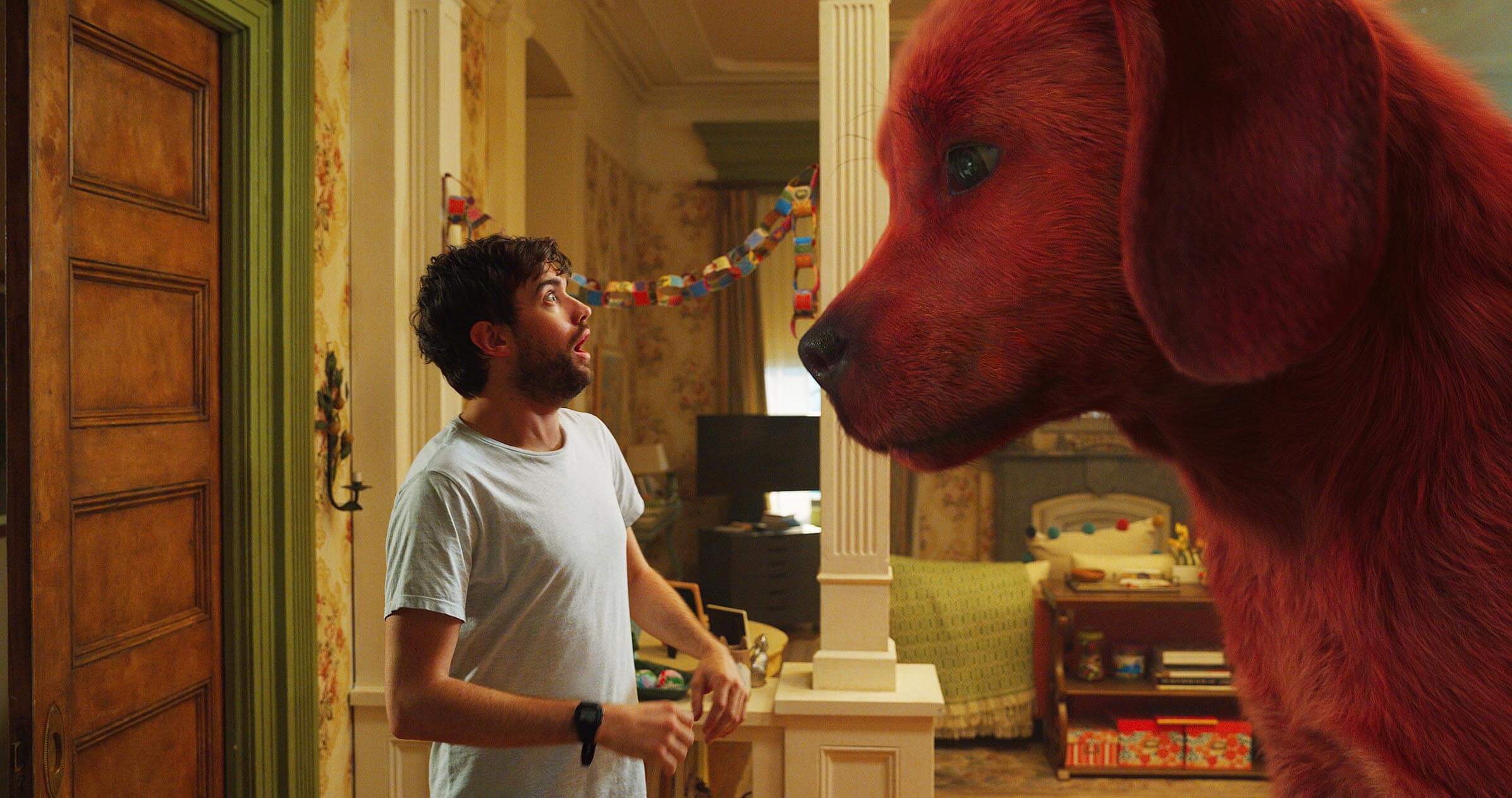
Movie nights at home just got a whole lot BIGGER! CLIFFORD THE BIG RED DOG starring Jack Whitehall is available now to Download & Keep and is unleashed on Blu-ray™ and DVD on Monday, March 14th with exclusive, never before seen bonus content!  To celebrate the home media release, we’re giving away a CLIFFORD THE BIG RED DOG prize bundle containing a copy of the film on Blu-ray™, an adorable Clifford plush toy from Posh Paws and a copy of Clifford the Big Red Dog: The Movie Graphic Novel to one lucky winner! Just read on and enter below…

When Emily discovers her little red puppy named Clifford has grown ten feet overnight, she turns to her eccentric Uncle Casey for help. But when an evil scientist tries to capture the larger-than-life playful pup, it takes the entire neighbourhood to hide Clifford as they race across the city. Get ready for the incredible, laugh-out-loud comedy adventure that is BIG fun for the entire family! Enter now for a chance to win!

The Download & Keep, Blu-ray™ and DVD release of CLIFFORD THE BIG RED DOG features supersized and fun-filled bonus content, including a behind-the-scenes tour with the cast, a closer look at the puppeteers who helped bring Clifford to life, an exploration of Clifford’s beginning with creator Norman Bridwell, hilarious tips for caring for a giant dog, and deleted scenes not seen in cinemas!

CLIFFORD THE BIG RED DOG: Download & Keep*, Blu-ray™ and DVD Bonus Content

  • Part of the Pack— Get a behind-the-scenes look at Clifford’s big movie with interviews from cast and crew.
  • Acting is for the Dogs—There’s more to Clifford than meets the eye: meet the puppeteers who brought the giant red pup to life!
  • The Magic of Bridwell – See where Clifford’s big adventure began from creator Norman Bridwell’s early drawings for the beloved Scholastic book series to Clifford’s worldwide fame.
  • Tips & Tricks for Taking Care of a 10-Foot Dog – Get hilarious tips on how to take care of a giant dog!
  • Deleted Scenes

a Rafflecopter giveaway

CLIFFORD THE BIG RED DOG is available on digital to Download & Keep now and on DVD and Blu-ray™ from March 14th