Kara Wang | THE CALM BEYOND

kara wong calm beyond

When a world-destroying storm hits Hong Kong, Asha (Kara Wang) is stripped from the life she once knew and forced to live out her days scrounging for scarce supplies, whilst hiding from vicious enemies. All hope for the future seems lost until the arrival of Hei Hei (Sarinna Boggs) changes everything. STARBURST talks with Kara to uncover everything you need to know about THE CALM BEYOND,  a distressed, post-apocalyptic story!

STARBURST: At the start of the movie, it’s just your character Asha. What were those scenes by yourself like to do, and how did you go about bringing the frustration of her situation to the screen?

Kara Wang: When people ask me about the film, I always say that it’s a cross between Castaway and Waterworld with elements of Mad Max in there. Obviously, the parts you’re talking about at the very beginning are like Castaway, where it is just me, in this building, by myself, no other characters to play off of. It was a really great experience, and I had an amazing crew there to support me. Because I had worked with Joshua Wong before, I considered him as such a dear friend of mine, I know where the story of Asha, and where the character of Asha was born from, which was his first experience with cancer. So it was a really, really cool experience, to be able to talk to him, pick his brain, and talk about these themes of trauma, guilt, isolation, and grief. Those were the things that I really wanted to make sure that I brought justice to when I was exploring her arc and the development of this character.

When Asha listens to her radio, she flicks past a channel that is looking for survivors. How would describe your character when we first meet her? Is she not that hopeful for a better future?

Absolutely, I think it comes out later in the film when Hei Hei comes into her life where she’s like “I’ve tried going out there before, and it’s dangerous out there” So it’s clear that she has, at some point during her isolation ventured out into the world, and gave it a go, but it obviously didn’t go well, and from that one attempt she’s been discouraged. I think one of the themes of the film that is highlighted so beautifully is this difference between surviving and living, they’re two very different things. At the very beginning of the film, when we meet Asha you see that she is just surviving. She is just coasting day to day with her life, and I think it’s something that most people can relate to. That we’ve probably all done at some point in our lives, where we are living day by day and coasting, but maybe not necessarily in a good way, it’s very stagnant. What is the difference between surviving and actually living; living to your fullest potential and living life for different purposes in your life, and feeling like you’re actually living your life? It’s very interesting, we shot this film in 2019, pre-COVID, and now it’s coming out post-COVID, and obviously, when we shot it we had no idea of the shitstorm that was heading our way for two years, and it’s very interesting because I always think about if I had shot this film now, how different it would be. I feel like the world collectively has had this universal experience, of dealing with isolation, trauma, and grief, that we didn’t have two years ago. So I think that this film will hit audiences a little differently than if it had come out two years ago.
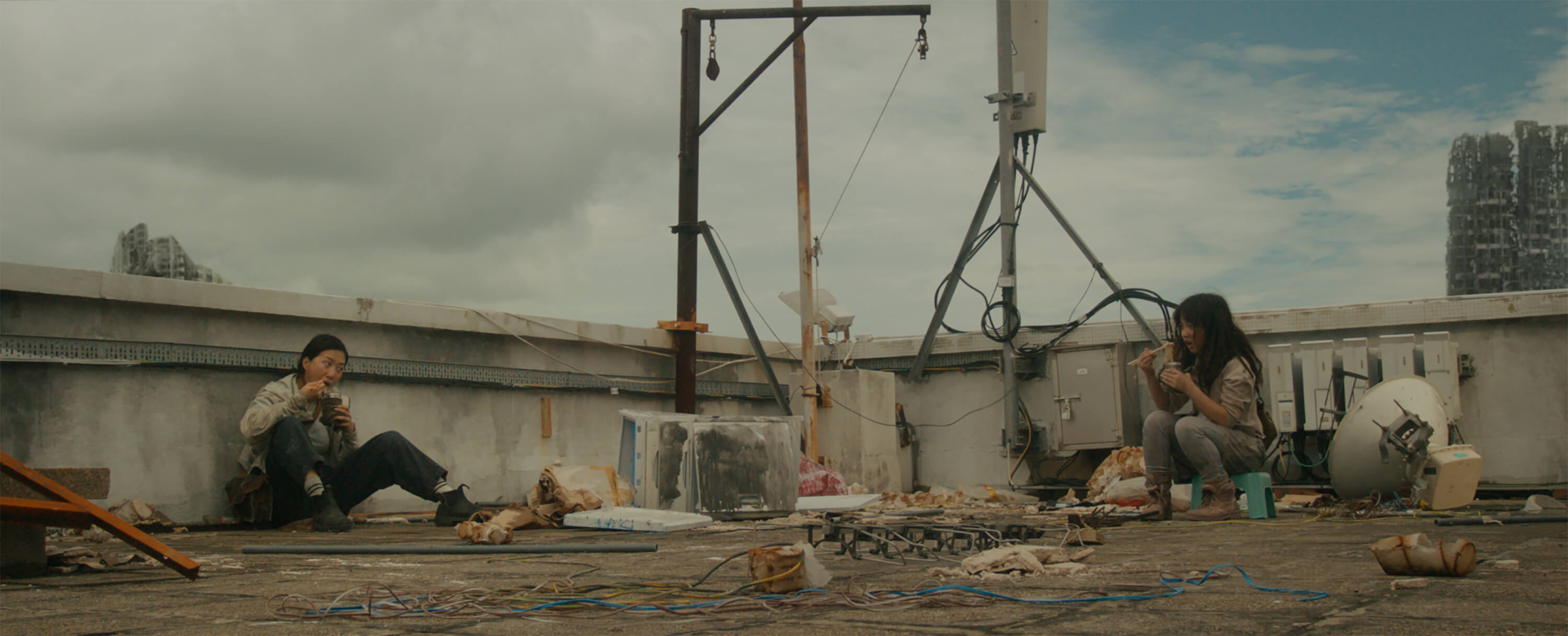
Things start to change when Hei Hei enters the movie. Can you tell us about what Sarinna Boggs was like to work with, and what she brought to the dynamic between both of your characters on screen?

Sarinna was absolutely incredible. She was eight years old when we shot this film, and it was her very first feature film role. It’s hard for adults to memorise lines, and be natural on camera, let alone for a child. It’s like, “What was I doing when I was eight years old? I was not doing this!” I was so impressed with Sarinna and her professionalism, and how she brought that childlike innocence and her instincts to her character. That is what most directors want when they cast child actors, they just want them to be them. That’s always the note, “What would you do here?” It was so helpful to me as an actor and also for my character because I feel like that big sister instinct naturally took over. As well as the feeling of wanting to take care of her, take care of her as Sarinna the actor, but to also take care of her as Hei Hei the character. When Asha finally decides to take her in, in the beginning, it’s very much like “Oh, I’m saving this little girl” but I think as the film progresses, it’s very clear that in a lot of ways it’s Hei Hei who’s saved Asha’s life. She’s brought this hope and purpose back into this girl’s life. When she has been so tied to grief, trauma, guilt, and isolation for so long. It was a great experience, Sarinna was wonderful to work with, and I was really happy to be there for her first feature film role.

In the movie, there are a lot of backstory sequences about Asha, with her friends and family. What do you think those backstories brought to the story in the present day?

I thought that the story reveals itself so brilliantly, because obviously, we start with Asha in the present day, but then as the flashbacks come, and they’re cut in-between these very bleak scenes of the present, it contrasted it so well. Because it would be so bleak, and then you go back to the past, and you would see how Asha was this vibrant person with family and friends. I thought that it just played that contrast really well. I thought that it was also wonderful to see the world before and to see the present-day world. Because once again it’s that idea of what is living versus surviving. She’s currently surviving in the present, but she used to be living for lack of a better word, with all of these things that also seem so menial, like taking selfies, eating fries, going shopping, talking about hiding her boyfriend from her parents. So when it flashes back to the present day it can seem so “Wow those things were so petty, and here I am trying to survive” but also, are those things petty? Those are the little things that make up the fabric of living your life.
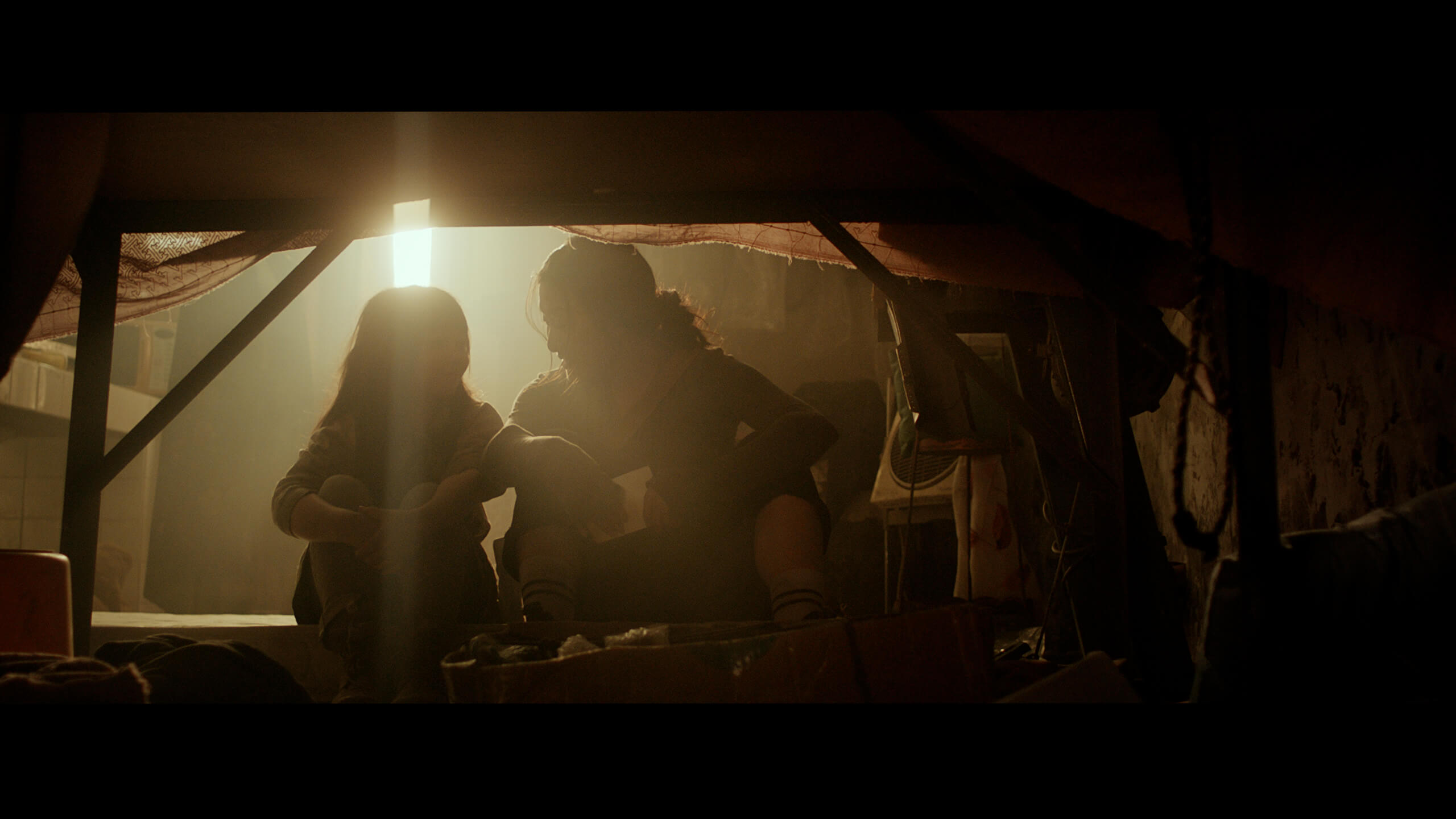
We felt like the unresolved issues with Asha’s family really shaped who Asha is, and how she interacts with those she meets within the movie. Would you agree with that?

Yeah, I absolutely do. I think the flashbacks of her with her family, linking back up to the present and you see how there’s actually a physical tie to her grief, how she can’t leave this apartment for a lot of reasons, because she’s made this home for herself to survive. But also I think in a lot of ways, she’s tied to that grief physically. There’s a comfort in that grief. There’s the comfort of knowing her parents are there, but also the guilt that keeps her there. It does definitely shape who she is, and how she deals with the characters that come into her life. Even Hei Hei, what does Hei Hei represent? Hei Hei brings up so many layers of grief and trauma, and guilt from her own sister, not being able to save her own sister, and all of these feelings that she has suppressed for so long because she has just been trying to survive.

Your character gets redemption for not saving her own sister at the end of the movie. What was that gory fight sequence like to film, and what else do you personally think it brings to your character’s story arc?

The action scenes at the end were actually so fun to shoot. I got to do all of my own stunts for the film, which was very exciting. It’s something that I hadn’t had the opportunity to do, and I had a great stunt team there to support me, to make sure I was safe and taking care of my body, and taking care of myself. Those scenes were very fun to shoot. They were very physically exhausting, but it was just a great opportunity to be able to shoot something so physical. When it comes to the character arc, as you said, it is a redemption. For so long she has been stagnant and chosen to hide, instead of taking action, and Hei Hei is one of the reasons that drive her to be able to finally make these choices. She has something to live for and fight for. I think it was definitely a monumental moment for Asha’s character, to choose to fight, instead of to hide, because for so long that’s all she did to survive, and finally, it’s like “Oh, there are actually other choices, we just have to choose to make them”

Going on from that, can you elaborate on what it was like to work with Joshua Wong, and what do you think his vision really brought to the movie? Also, we were very sorry to hear about his passing.

Yeah, Josh was so amazing, he, unfortunately, passed away on Christmas Day, 2020. I had worked with him on a short film before he approached me for this feature, so I kind of knew his directing style already, and Josh was just a ball of light. He was always cracking jokes on set, and very collaborative. For this particular project, he was very open to my take on the character, if there were certain lines that I wanted to change, which didn’t feel natural. He was just like the energizer bunny! I have no idea how that man had so much energy. Especially as adults now. I do like three things in a day and it’s like “I’m exhausted” I was so driven by his passion, he was a very, very passionate person, and he was also very driven. If he wanted to get something done, he would get it done. I saw that in the everyday work that we did, but also in the grand scheme and scope of things. He would put his mind to something, and he would get it done. I would really say that he brought the light to every day of work, he was so considerate and so thoughtful. I went on a meal plan for this film because I wanted to make sure that I looked a certain way for the world, and Joshua was also on a full 30 plan, so he would cook all of my meals, along with his, and he made sure he was part of my intermittent fasting schedule, to the smallest, minute details. These are the things that people don’t get to see, but how considerate and thoughtful he was. Nothing was too much of a nuisance for him. Every detail was important, and nothing was ever a problem. He would just handle it, and he’d handle it while telling his jokes. It was great.

The sets were brilliant and extremely detailed. Can you tell us what they were like to work within?

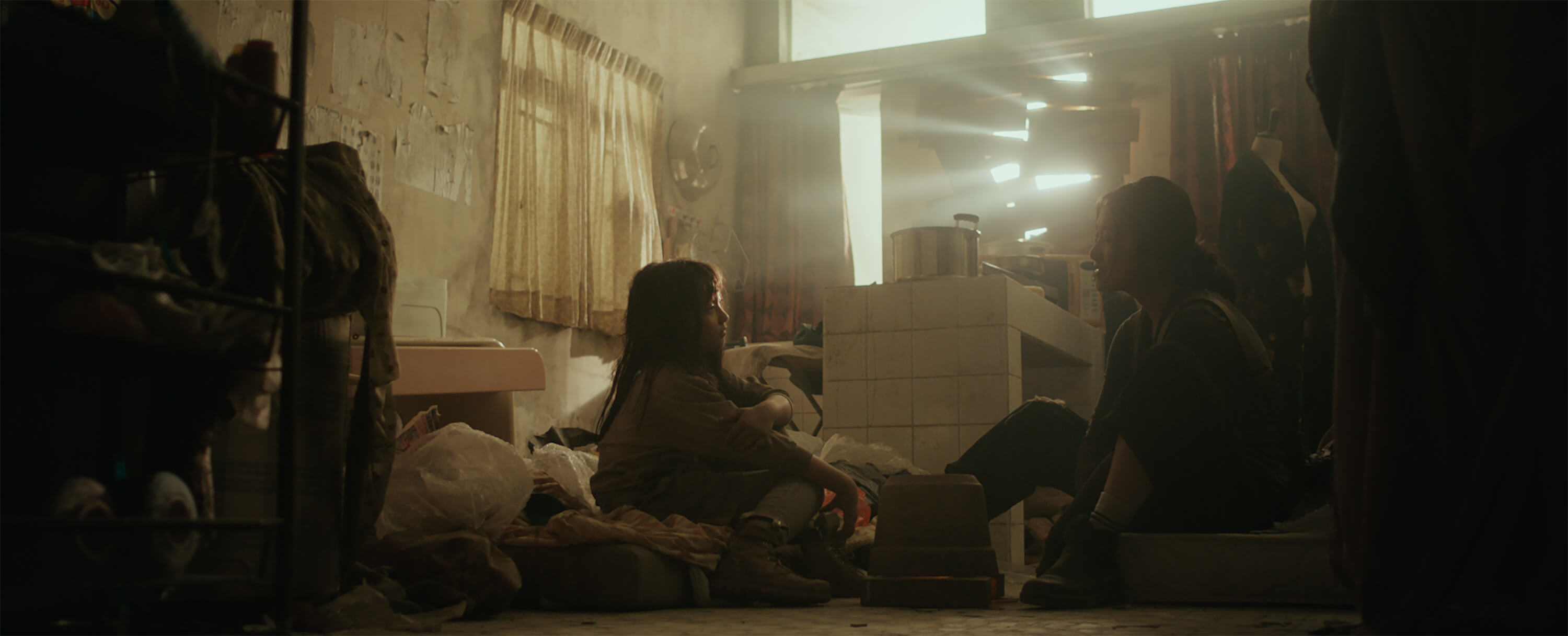
The sets were so incredible!. I shot in the various rooms every day for a month, and I would still discover new things about them, 30 days down. They rented out a warehouse, that had a couple of floors, including the roof where we shot, and they basically built the set from the bottom up. We had an incredible Hong Kong set designer, art director, production designer, and they had a theme for every room. As you saw, there was a music room, there were flats, there were apartments there, there was like a seamstress room. Thematically, the rooms were wonderful, I don’t know how they make something look like distressed so artistically. You go in these rooms, and it looks like someone went through them with a tornado, but everything was placed there with purpose and intention. It was such a treat, and so helpful for me when I was shooting as well. Because when I was shooting, there were cameras and lights everywhere, but also, it’s so easy to immerse myself in the world because of the environment. So, in a lot of ways, the set was another character in the film.
We were curious to know, what was the huge storm flood sequence like to work on, and how long did it take to come together?

The flood obviously came later in VFX, but this scene once again speaks to Joshua’s character. All of those extras in that scene were Joshua’s friends. He literally made a call and said “I need people to run down the street tonight, can people come through?” and there were like 150 people! I have no idea how he got all of these people to come and volunteer their time. You know how it is on sets, it’s not a two-hour little hold on your time, they were there all night. It’s because Joshua is so generous as a person, normally in his everyday life, so I wasn’t surprised when he made the call, and so many people showed up. We did shoot that scene in just one night, it was a very long night. I remember that day it rained in Hong Kong, and sometimes the weather there is very unpredictable. It wasn’t supposed to rain, but it rained, and obviously, they had already planned to shoot this massive scene with 100s of extras, and it rained and we didn’t know if we were going to be able to shoot, because they didn’t know if it was going to be safe, with so many people running down the street, now that the street was wet. I remember the cameras went up, Joshua talked to everybody and made sure that they were safe, and had practised running on the pavement, and made sure that nobody was slipping. However, it was actually a blessing in disguise, because when I think we saw the shot, the lights were reflecting off the wet cement, so it actually added another layer that I don’t think the shot would have looked the way that it did if it hadn’t rained. Everybody was just so professional, it was awesome. When you’re shooting scenes like that, and you’re running with like 50 people behind you, you do not need to act terrified. I was like “Holy shit, I better run, because there are 50 people behind me, and this is a stampede”. I will also say that I got my steps in that night, running up those stairs, it was a lot! But hey, my calves got a good workout that day.

If we haven’t already covered it, is there anything else that you would really want the viewer to take away, or learn from watching The Calm Beyond?

I think at the end of the film, what I would love the audience to walk away with is a sense of hope. Now that I have re-watched the film in the times that we’re in, the film definitely hits differently. Because the world has a universal understanding of some of these themes because we are going through this pandemic together. But all of us have various storms that hit our lives, from small storms to larger storms, but it is about the calm beyond those storms. I do believe that the message of the film at the end is that things will always pass, and we always have choices to choose how we move forward from these storms, and there will be a calm beyond the storm that we can look forward to. So I do think that that’s sort of a sense of what I would love the audience to walk away with.

The Calm Beyond is available on digital outlets now.

Five Films to Check Out on Horror Channel This Week – 070322

horror picks

We have some more great picks from what’s on this week on Horror Channel….

Monday March 7th, 11am – Sinbad Double Bill

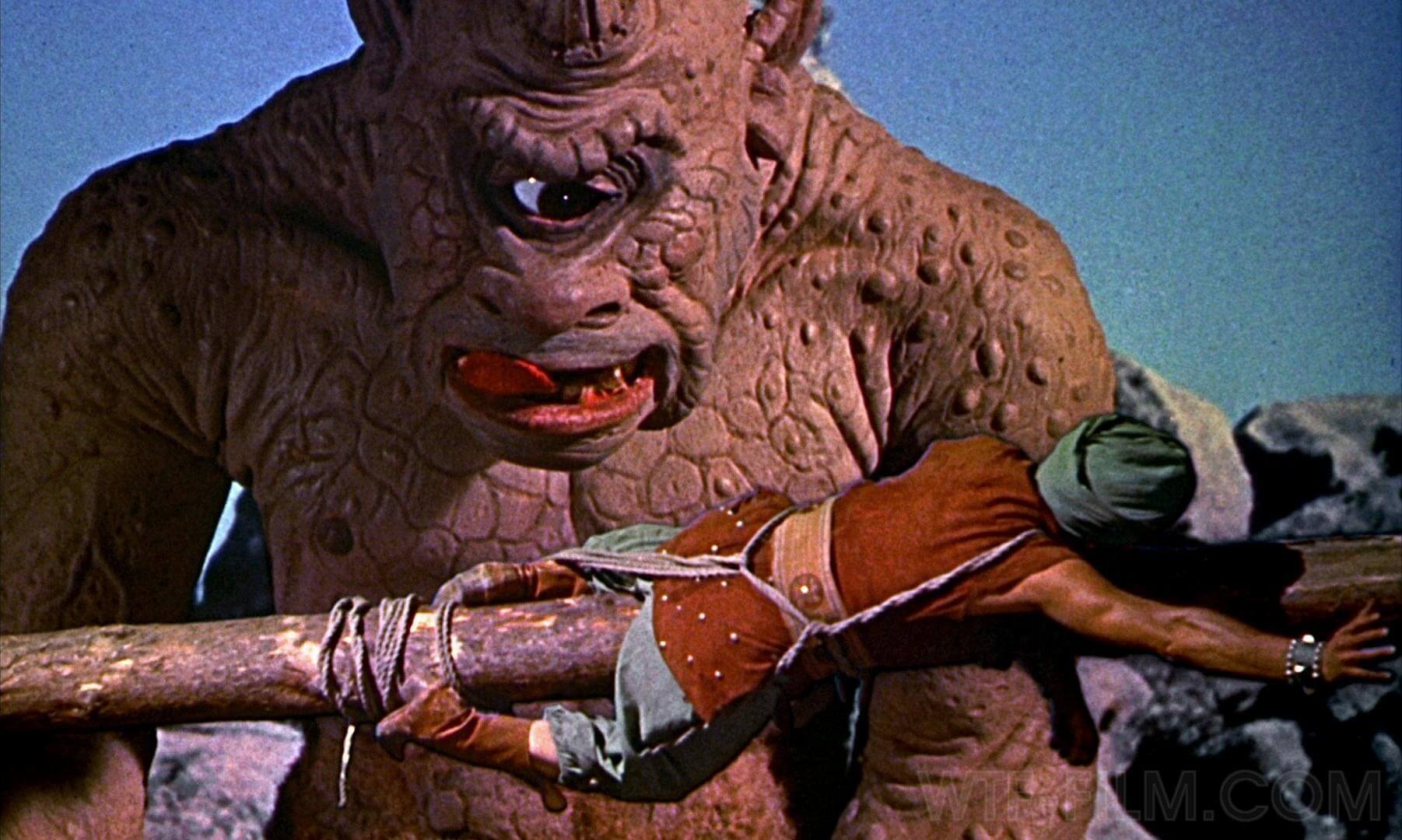
Classic Swashbuckling entertainment with two helpings of Sinbad adventures that highlight the amazing stop-motion effects work of Ray Harryhausen. Starting with The 7th Voyage of Sinbad (1958), in which Kerwin Matthews stars as the hero facing off against the cyclops amongst other terrifying foes. This is followed by the last of the trilogy, Sinbad and the Eye of the Tiger (1977), which features The Duke’s son Patrick Wayne in the lead role and the Second Doctor, Patrick Troughton, who plays the alchemist who aids our hero. Unmissable fun.

Wednesday March 9th, 9pm – The Stakelander (2016)

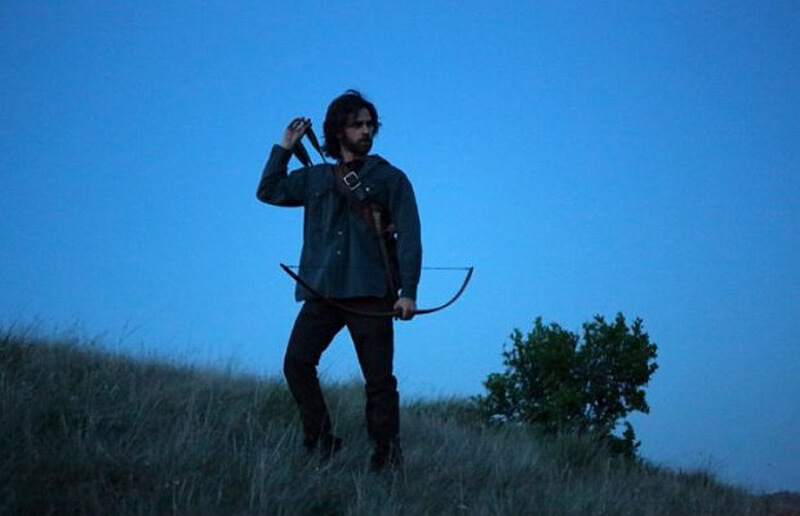
A sequel to the 2010 film Stake Land, this is a post-apocalyptic nightmare with vampires, cannibals, and cults.

Thursday March 10th, 6pm The Prisoner

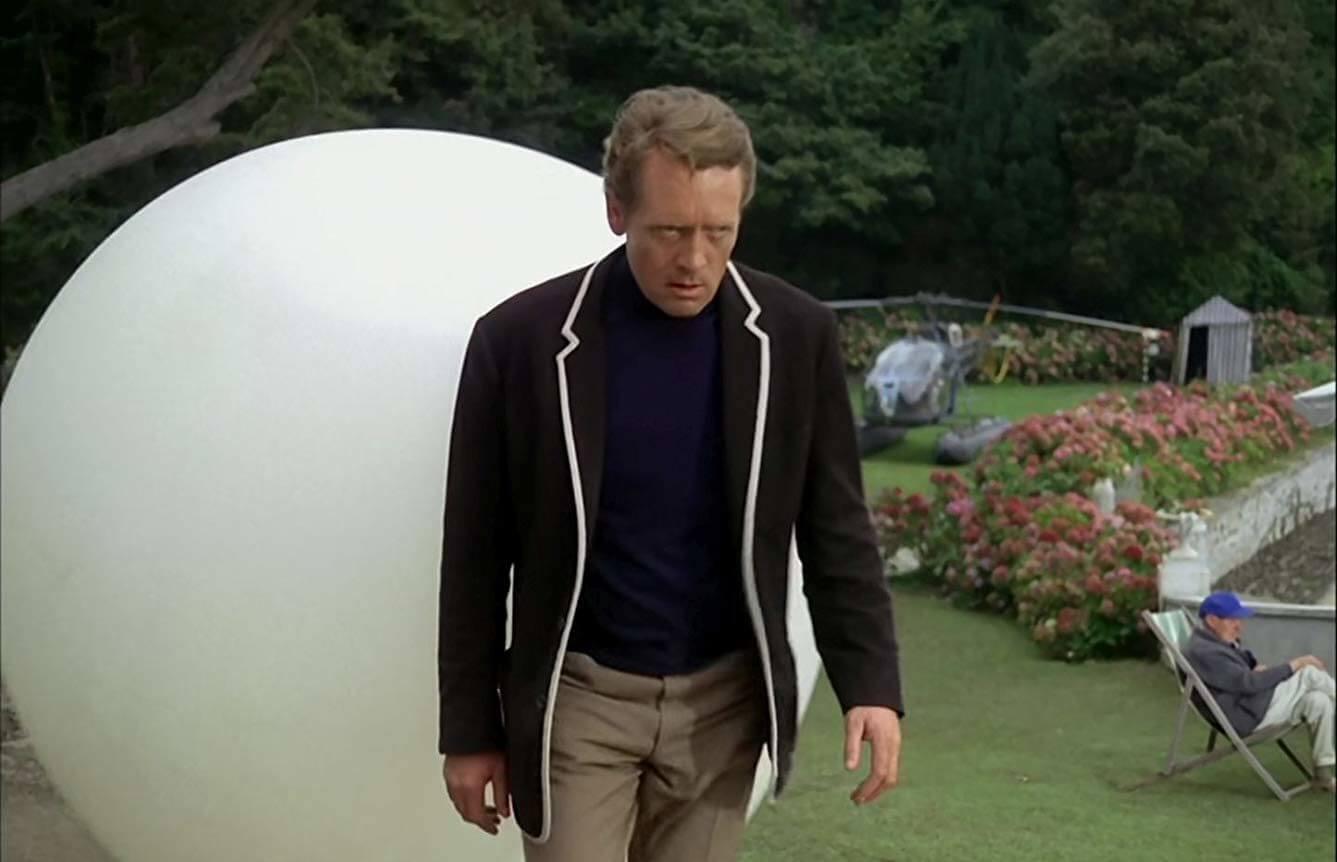
The classic ‘60s series finally lands on Horror Channel so a whole new audience can revel in its genius (or scratch their heads in puzzlement). Patrick McGoohan is the secret agent who is kidnapped to ‘The Village’ when he tries to resign. (Also screens at 10am weekdays with a Saturday omnibus.)

Friday March 11th, 10.35pm – A Good Woman is Hard to Find (2019)

Sarah Bolger plays the titular lady who’s forced into desperate and deadly measures when her husband is killed in cold blood. A local thug decides to hide some stolen money at her flat dragging her into a spiral of nastiness. A superb thriller.

Saturday March 12th, 9pm – Await Further Instructions (2018)

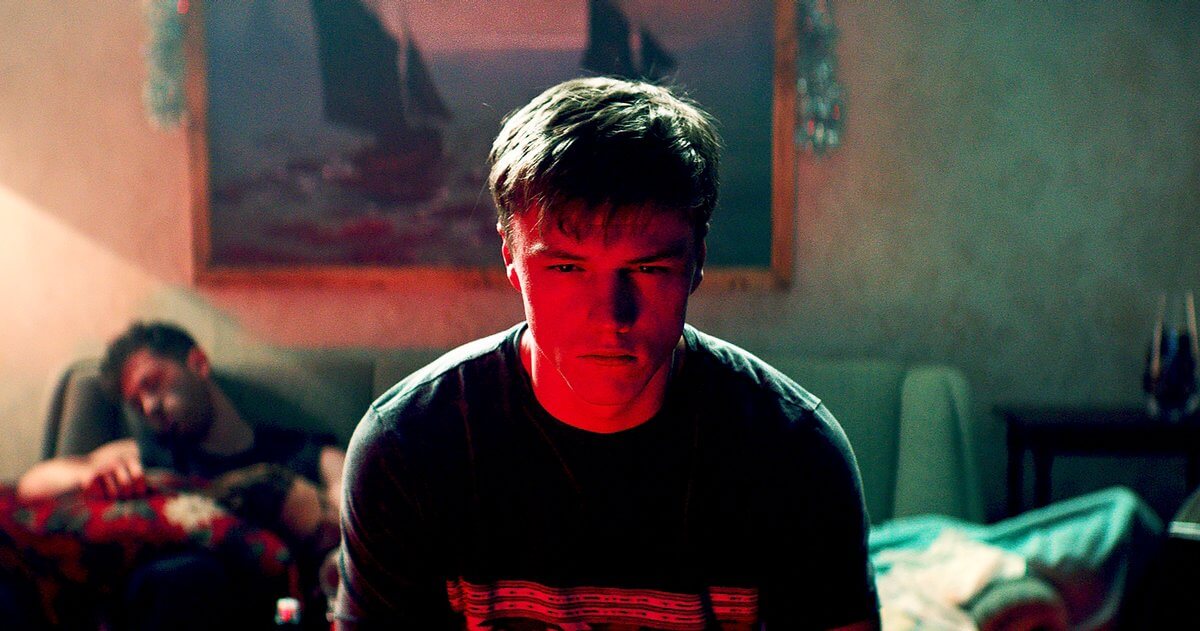
A family’s Christmas goes from awkward to horrifying in this impressive sci-fi horror. Directed by the late Johnny Kevorkian and starring Sam Gittins and David Bradley, this is a seasonal shocker that’s worth a watch at any time of year.  You can read our report from the set of the film here.

Tune into Horror Channel on Sky 317, Virgin 149, Freeview 69, Freesat 138.

THE TELEPHEMERA YEARS: 1992 – PART 4

telephemera years 1992 Wild West COW-boys of Moo Mesa

Ah, telephemera… those shows whose stay with us was tantalisingly brief, snatched away before their time, and sometimes with good cause. They hit the schedules alongside established shows, hoping for a long run, but it’s not always to be, and for every Street Hawk there’s two Manimals. But here at STARBURST we celebrate their existence and mourn their departure, drilling down into the new season’s entertainment with equal opportunities square eyes… these are The Telephemera Years!

1992-93

60 Minutes may have held onto the number one spot in the Nielsen ratings for the 1992-93 season but the sitcom was still the king of the schedules, with Roseanne, Home Improvement, and Murphy Brown riding high and Coach, Cheers, and Full House not far behind. The season’s biggest debut show was Hangin’ With Mr Cooper, a teen-centred sitcom focussed on a high school basketball coach, and fellow debutant Mad About You would soon join find its audience, along with a young show named Seinfeld.

More dramatic fare was on offer from Murder, She Wrote, still inexplicably popular after nine seasons, and there was a strong first season for Dr Quinn, Medicine Woman, but the appearance of Northern Exposure at number eleven in the ratings raised some cheer for those who liked their shows a little bit weird. Otherwise, it was thin gruel for genre fans with just Quantum Leap, Dinosaurs, Herman’s Head, and a limp Young Indiana Jones Chronicles on the network schedule, although Batman: The Animated Series did begin its run on Fox, joined by genre-adjacent shows Picket Fences and Walker, Texas Ranger on CBS. This is all well and good for the adults in the room (who shouldn’t have been watching Batman but were) but there’s a whole other story for the big kids’ shows of 1992…

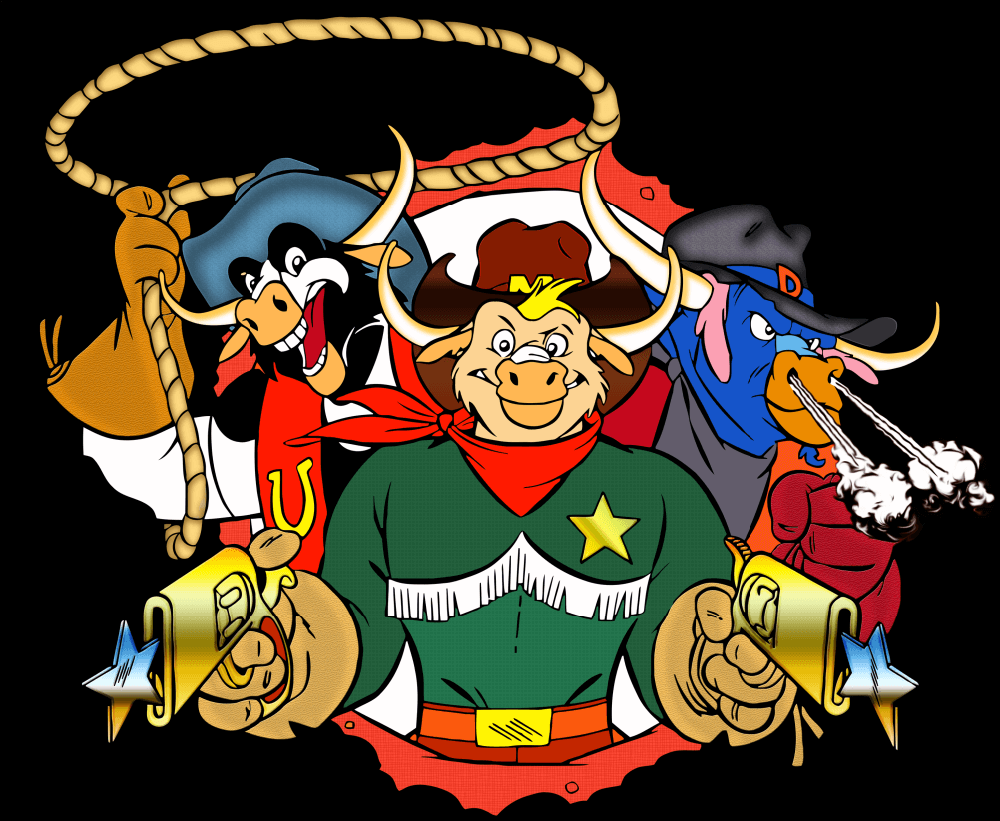
Wild West COW-Boys of Moo Mesa (ABC): Teenage Mutant Ninja Turtles was big business in the early 1990s, with every scrap of fabric or plastic adorned with their image, shouting “cowabunga!” to anyone that cared to look at it. With Playmates shipping toys by the caseload and a successful cartoon airing in syndication, it should come as no surprise that the other animation studios were scrambling for their own piece of the anthropomorphic pie, exploring the realms of just what could be heroically turned into a human-shaped action fighter.

DIC Entertainment, a French American studio founded by Jean Chalopin, and responsible for Inspector Gadget and The Real Ghostbusters, had a false start with the videogame property Battletoads but then had more success with the strange story of an Old West era herd of cows turned into a whole society of battling bovines.

telephemera years 1992 Wild West COW-boys of Moo Mesa

Wild West COW-Boys of Moo Mesa was created by Ryan Brown, who had already left his mark on the Turtles world by providing the pencils for Archie Comics’ TMNT title when it launched in 1988. Brown’s concept saw an irradiated meteor – or “cow-met” – strike a herd of grazing cows, creating an area secluded by a strange cloud and turning the animals into “bovipomorphic” creatures. The cows used what they knew of life in the Wild West to inspire their new community, filling the roles of white hats and black hats (and everything in between), although the gaps in their knowledge resulted in a few strange anomalies.

The show debuted on ABC on September 12th 1992, with a first season of thirteen episodes that introduced lawman Marshall Moo Montana and his arch-nemesis Sheriff Terrorbull, a corrupt official who worked for the dastardly Mayor Bulloney. The first season was enough of a success that a further thirteen episodes were ordered, airing from September 11th 1993. A line of toys was produced by Hasbro, similar to Playmates’ TMNT assortment, and Konami released an arcade videogame, but it’s fair to say that cows didn’t have quite the same appeal as their turtle brothers.

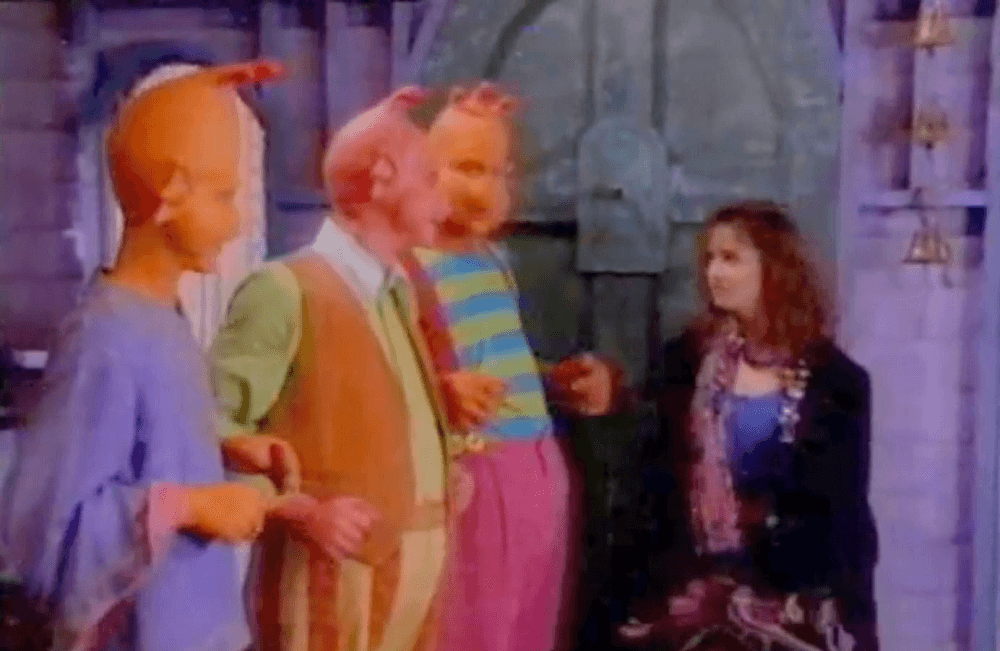
The Amazing Live Sea Monkeys (CBS): The Sea Monkeys have an incredible history that stretches back to 1957, created by a Nazi-sympathising Jewish entrepreneur to fleece gullible young Americans out of their hard-earned Grit money, but they underwent a renaissance in 1992 thanks to comedian Howie Mandel.

Mandel saw his daughter’s glee at receiving a set of the miniscule brine shrimp, dollar signs flashing before his eyes. “This could be bigger than the Ninja Turtles,” he declared and contracted the award-winning special effects experts the Chiodo Brothers to make a set of costumes for the characters.

telephemera years 1992 The Amazing Live Sea Monkeys

Their appearance inspired by promotional art for the creatures developed by comic book artist Joe Orlando, Mandel’s Sea Monkeys were Dave, Bill, and Aquarius, enlarged to human size by the Professor (Mandel himself) and attempting to navigate the difficulties of human life. Befriending their neighbours, the Brentwoods, each Sea Monkey had a unique quirk; Bill was afraid of bearded men, Dave could not resist polka music, and Aquarius could not keep a secret.

Eleven episodes were produced, aired at noon and aimed at a slightly older demographic than the rest of the Saturday morning fare, but American youth was not as captivated by the tiny aquatic animals as they had been a generation before and it quietly slipped into the night. There are some episodes on YouTube though, available without having to send away a money order.

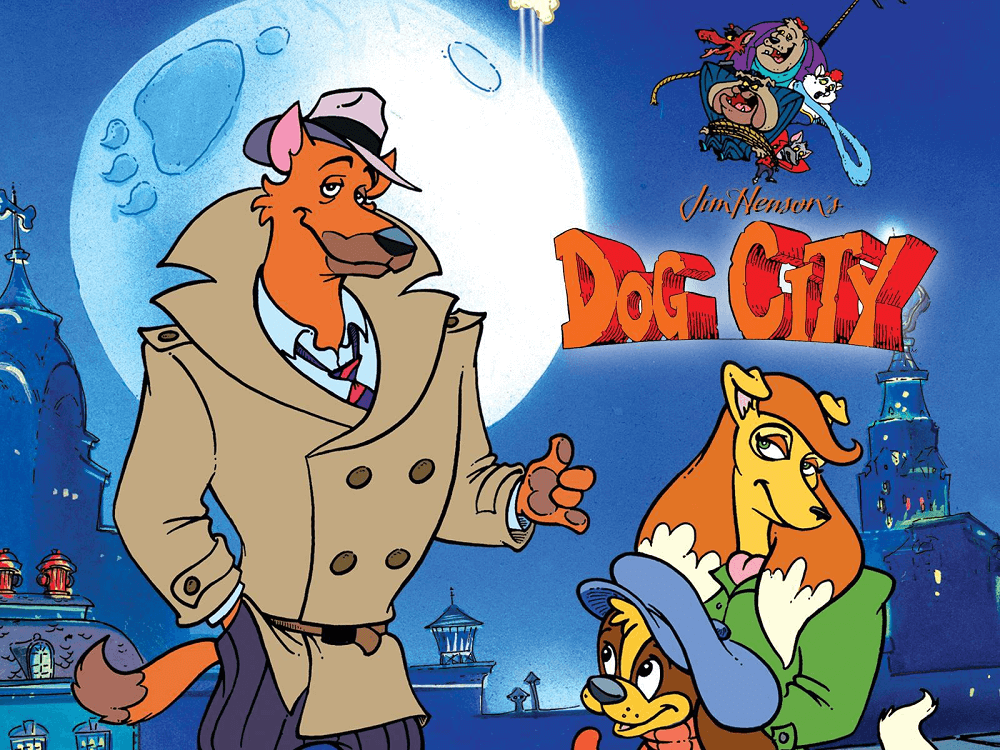
Dog City (Fox): Originally a live-action, puppet-filled episode of The Jim Henson Hour in 1989, Dog City was revived in 1992 as a weekly show, produced by Jim Henson Productions and the Nelvana animation studio, in association with a cadre of international television partners. With the live-action parts replaced by animation, Dog City premiered on Fox Kids on September 26th 1992, kicking off a Saturday morning block that also featured X-Men and Eek! the Cat.

The original show revolved around Ace Yu, a German shepherd who was adopted at birth by Pekingese parents, and his love interest Collen Barker. Ace has inherited a restaurant from his uncle Harry, which pits him against Bugsy Them (his puppet performed by Jim Henson himself), a bulldog mob boss, and his underlings Mad Dog, Scruffy, and Laughing Boy.

For the series, Ace Yu became Ace Hart, a private investigator who starred in a cartoon animated by Eliot Shag, a German Shepherd using the same puppet as Yu from the original show, with the cast of characters in his cartoons inspired by the residents of his building, including his next-door neighbour Colleen, on whom he had a big crush. As the series progressed other cartoons that Eliot was working on made their way into the show, allowing Dog City to parody other genres, including the superhero Watchdog.

telephemera years 1992 dog city henson

Three seasons – thirty-one episodes in all – were produced between 1992 and 1994, yet Dog City remains one of Jim Henson’s hidden gems, all but forgotten to the hardy few who got up early enough to enjoy its numerous charms on Saturday mornings. The show aired once on Channel 4 in the UK and there has never been a DVD release, although there are some clips available on YouTube. Henson may have died shortly after the original episode aired but Dog City has his spirit running through it, and this charming little show deserves a wider audience.

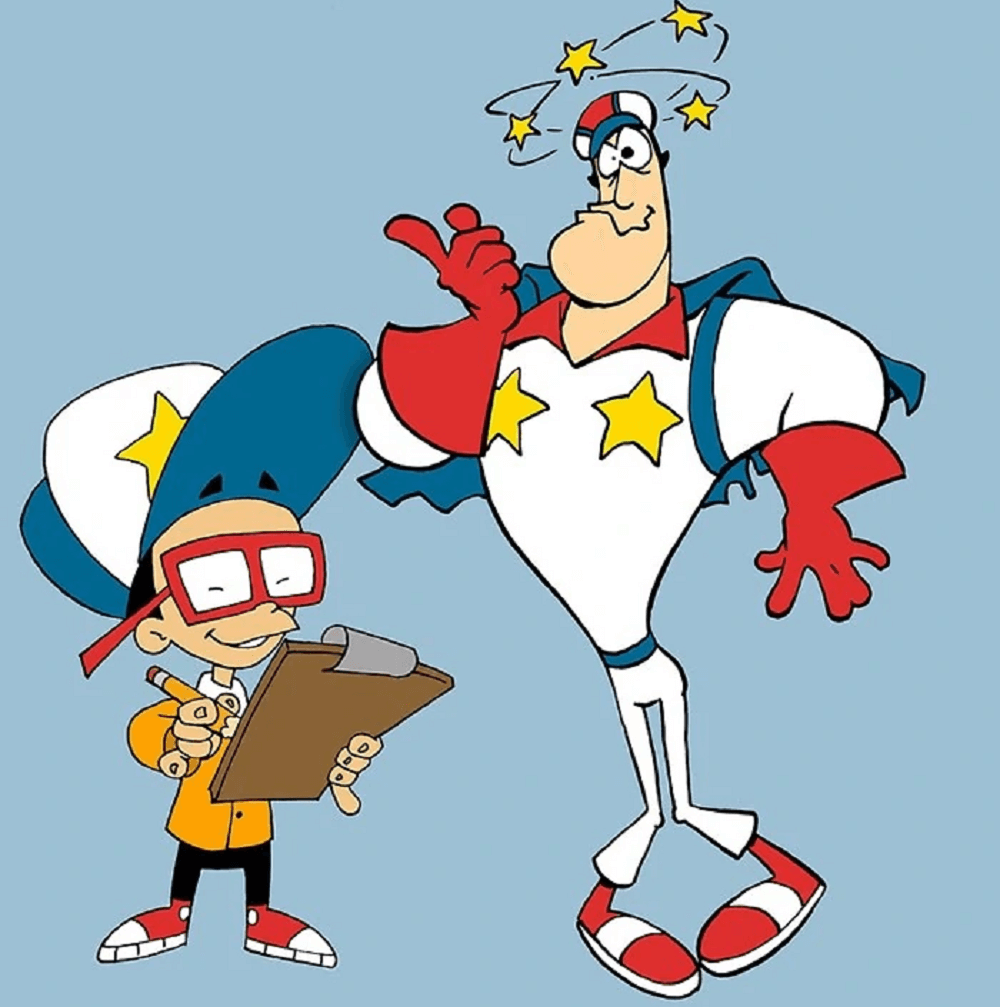
Super Dave: Daredevil for Hire (Fox): Bob Einstein was a living, breathing curiosity. A writer who got his start on – and later won awards for – The Smothers Brothers Comedy Hour, Einstein developed a bumbling daredevil character called Super Dave for a Canadian variety show hosted by John Byner, taking it with him when Byner also began hosting Bizarre for CTV in 1980. Super Dave became a frequent guest on Late Night with David Letterman and eventually earned his own show, which ran in Canada on GTV from 1987 to 1991.

Bruce and Reed Shelly – a pair of brothers working for DIC Entertainment with a slew of animation credits to their names – approached Einstein with the idea of turning Super Dave into a cartoon character, with episodes topped and tailed by live-action segments featuring Einstein as Dave and Art Irizawa as Fuji Hakayito, his Japanese assistant.

telephemera years 1992 Super Dave

Dubbed Super Dave: Daredevil for Hire, Einstein and Irizawa also provided the voices for their animated counterparts, which saw the duo get into scrapes at the Super Bowl, in space, and in the White House, all with plenty of bungled stunts and lots of “new pain!” The series was well-received, although halfway through the show’s run on Fox, pressure from Asian-American protest groups forced Irizawa to redub his dialogue into a less stereotypical accent.

Just one series was produced, although a special – The Super Dave Superbowl of Knowledge – aired in January 1994, and Einstein returned to appearing as Super Dave on various live-action specials and game shows, including an outing on Total Nonstop Action Wrestling’s Impact! in November 2009. Einstein retired the character in 2013, and sadly passed away in 2019 from cancer, having entered a new phase of his career with roles on Curb Your Enthusiasm and Arrested Development.

King Arthur and the Knights of Justice (syndication): Jean Chalopin founded DIC Entertainment in 1971 and developed shows such as Ulysses 31, The Mysterious Cities of Gold, and Jayce and the Wheeled Warriors before selling the company in 1987. He formed another studio – C&D, or Créativité et Développement – and continued to produce animation through his American affiliate Jetlag Productions.

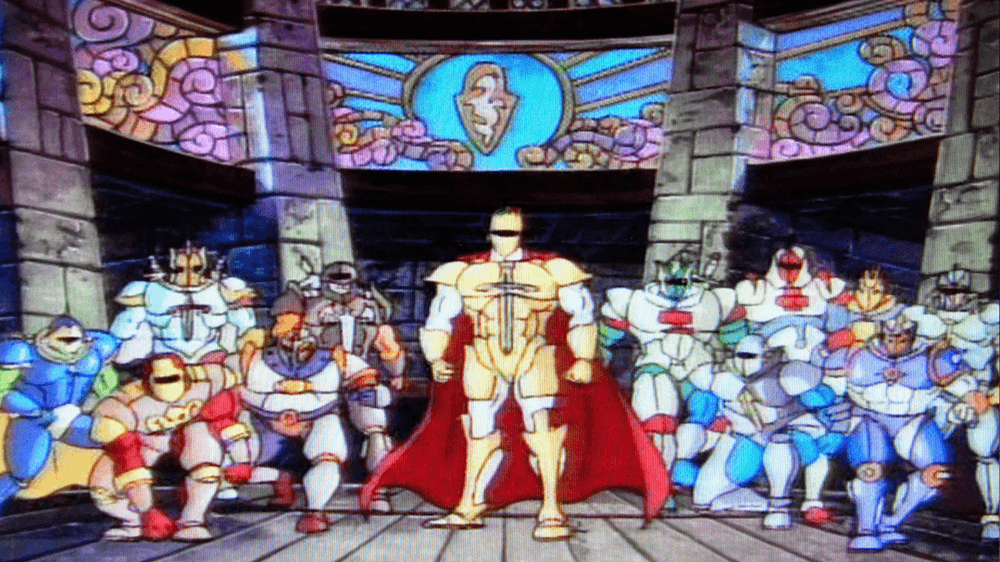
In 1992, in association with Golden Films and Bohbot Entertainment, Chalopin created King Arthur and the Knights of Justice, an animated series that mixed the myths of Camelot with the modern day. With Arthur and his knights trapped by Morgana Le Fay, Merlin is forced to find a replacement for his king, settling on New York Knights football quarterback Arthur King as the best candidate and charging Arthur and his teammates with freeing the true king, Merlin brings them back in time to fight the forces of Morgana.

telephemera years 1992 King Arthur and the Knights of Justice

With a banging theme tune by Shuki Levy, King Arthur and the Knights of Justice had an ongoing storyline, told over two seasons of thirteen episodes each, during which each side gained their victories before ending without a resolution as the show was not renewed for a third season.

A selection of toys from Mattel, and a comic book from Marvel, accompanied the show, and a videogame which did provide an ending where – SPOILERS! – Arthur and his knights defeat Morgana and return the true King Arthur to the throne. Fondly remembered and largely holding up even after almost thirty years, the series was released on DVD and did stream for a short while on Netflix.

Next on The Telephemera Years: It’s time to go back to 1977, where witches, aquamen, and UFOs await!

Check out our other Telephemera articles:

The Telephemera Years: 1966 (part 1, 2, 3, 4)

The Telephemera Years: 1968 (part 1, 2, 3, 4)

The Telephemera Years: 1969 (part 1, 2, 3, 4)

The Telephemera Years: 1971 (part 1, 2, 3, 4)

The Telephemera Years: 1973 (part 1, 2, 3, 4)

The Telephemera Years: 1975 (part 1, 2, 3, 4)

The Telephemera Years: 1977 (part 1, 2, 3, 4)

The Telephemera Years: 1980 (part 12, 3, 4)

The Telephemera Years: 1982 (part 1, 2, 3, 4)

The Telephemera Years: 1984 (part 1, 2, 3, 4)

The Telephemera Years: 1986 (part 1, 2, 3, 4)

The Telephemera Years: 1987 (part 1, 2, 3, 4)

The Telephemera Years: 1990 (part 1, 2, 3, 4)

The Telephemera Years: 1992 (part 1, 2, 3, 4)

The Telephemera Years: 1995 (part 12, 3, 4)

The Telephemera Years: 1997 (part 1, 2, 3, 4)

The Telephemera Years: 2000 (part 1, 2, 3, 4)

The Telephemera Years: 2003 (part 1, 2, 3, 4)

The Telephemera Years: 2005 (part 1, 2, 3, 4)

The Telephemera Years: 2008 (part 1, 23, 4)

Titans of Telephemera: Irwin Allen

Titans of Telephemera: Stephen J Cannell (part 1, 2, 3, 4)

Titans of Telephemera: Hanna-Barbera (part 1, 2, 3, 4, 5)

Titans of Telephemera: Kenneth Johnson

Titans of Telephemera: Glen A Larson (part 1, 2, 3, 4)

Titans of Telephemera: Quinn Martin (part 1, 2)

Five Films to Check Out on Horror Channel This Week – 280222

hc picks

As we move into March (already?!), we have some more great picks from what’s on Horror Channel….

Tuesday March 1st, 9pm – The Young Cannibals (2019)

A demon feasts on people who inadvertently eat human flesh. This fun British movie was filmed in Wales and boasts some good effects and a creature that isn’t CGI!

Thursday March 3rd, 11.05pm – Sleepwalkers (1992)

Written for the screen by Stephen King (as opposed to being adapted from a novel), this features a pair of shapeshifting energy vampires (no, not like Colin Robinson!). Directed by Mick Garris, and starring Twin Peaks’ Mädchen Amick and Alice Krige (recently seen in Netflix’s Texas Chainsaw Massacre), this is pure ‘90s schlock horror!

Friday March 4th, 9pm Highlander (1986)

An immortal Scottish swordsman with a French accent (Christopher Lambert) learns how to face his biggest foe with the help of a Spanish immortal with a Scottish accent (Sean Connery). Seriously, though, this is a classic. Directed by Russell Mulcahy (Razerback). There can be only one!

Saturday March 5th, 9pm – Prey (2019)

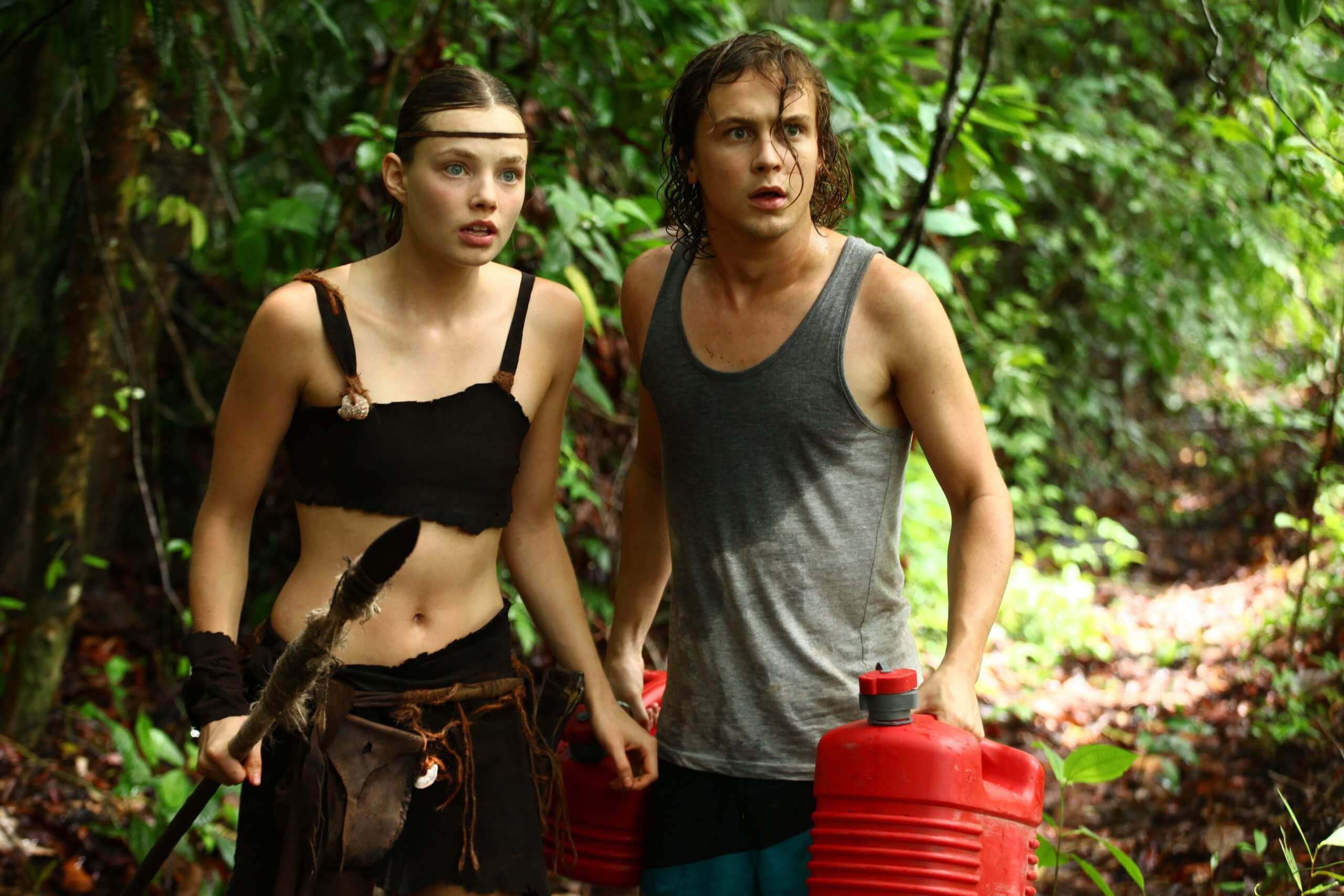
Logan Miller (Escape Room) stars in this film from the director of the Maniac remake, Franck Kahalfoun. A miscreant is put on an island to rehabilitate but discovers something rather threatening.

Sunday March 6th, 9pm – Wired Shut (2021)

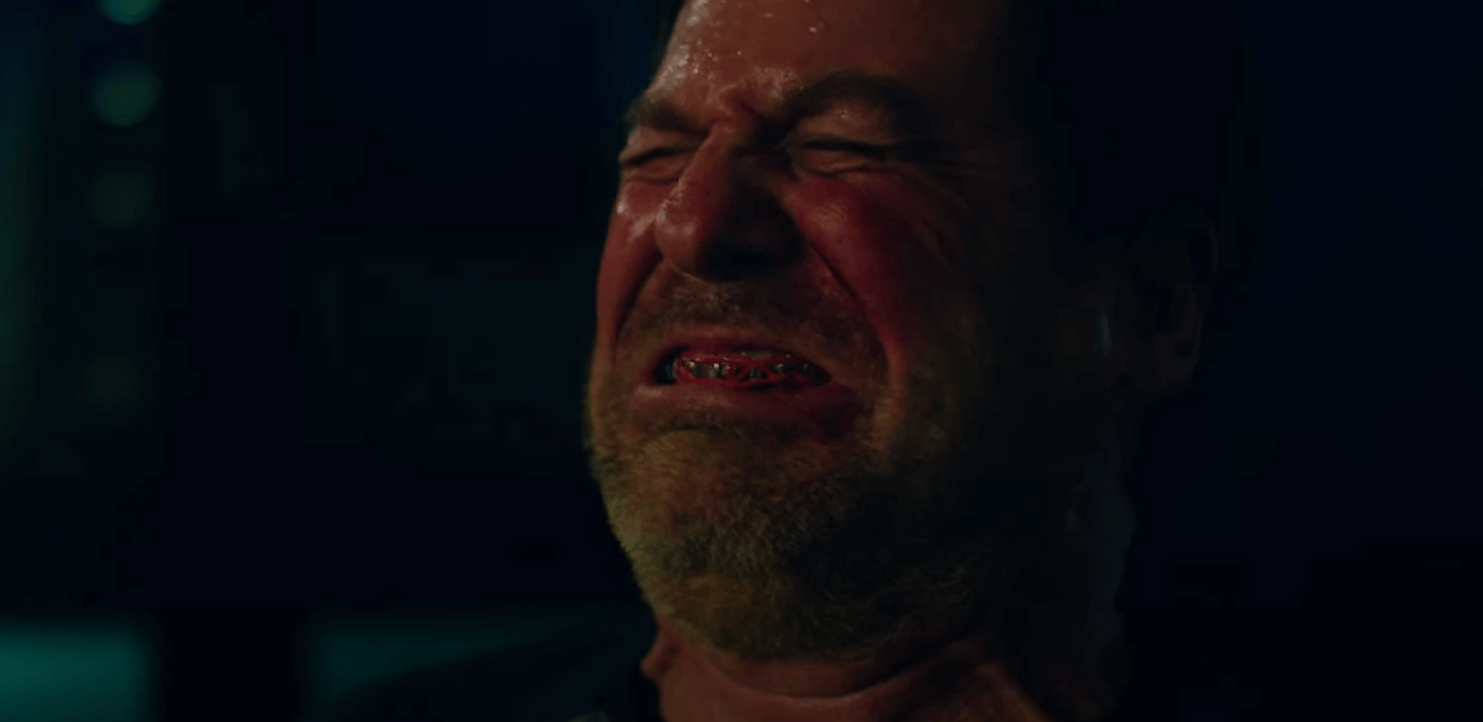
A writer is recovering from surgery on his jaw when he receives a visit from his daughter that becomes lethal.

Tune into Horror Channel on Sky 317, Virgin 149, Freeview 69, Freesat 138.

Paul Hyett | PERIPHERAL

We caught up with director Paul Hyett to discuss his latest movie Peripheral ahead of its Horror Channel screening…

STARBURST: Peripheral is a bit of a departure from your other films, what drew you to the project?

Paul Hyett: I always try to do something different with each film. Originally, the producer, Craig Tuohy called me up and we had a meeting. He said I’ve got this script: one girl in a room, one location, about a computer that’s kind of taking over. I thought something on that pitch is not where I want to go, you know, I had just done Howl, which had big effects and I was looking for a bigger budget and bigger challenge. He said just read the script, and I was like wow, this is like a really well written, really interesting movie – like a comment on the way we live, social media, celebrity obsessiveness, but also about the struggle that an artist has. I’ve had that all my life in my previous career in prosthetics, you always try to do something and everyone says you’re a commercial artist, you got to do this, do this first, and do that first. And you always compromise and now directing, I’m seeing that as well. Sometimes I get great producers that say just do what you want to do. Other times you’ve got execs that said oh can you cast this person or that person, or what about if you change the ending, and such. So when I got the script to Peripheral, I was bidding for American movies and I suddenly felt what the character of Bobbi was feeling. And I thought I can relate, I understand her struggles. I understand it all and it would actually be nice to make a really interesting comment on everything from Britain to the artists’ struggle. Essentially obsessiveness and stalking. It just really touched me. So, I thought you know something, I don’t, I don’t care that it’s just one person to blame because I just got, I had to get that out of my brain and just concentrate on a really interesting story.

There’s more than one person in it, of course. Fortunately, so you’ve got a great cast in there again.

Yeah, absolutely. It was lovely to work with Hannah [Arterton] before and I kind of knew that it was going to be a brutal four weeks shoot. It was such a layered character and you know we didn’t have much prep, and I mean, we saw, probably 100 girls. And, you know, there are some really great actresses. But we had a kind of shorthand where we worked together before and we knew each other. So many labels work really fast because there just wasn’t that much time to develop a character, and if I had to solve actors that I had to work too much with, you know, you’re constantly putting all your energy into one person and be aware that this film had to be very visually interesting, you got one room. Rosie [Day] is always wonderful. She came in and she did her stuff and she was as brilliant as she always was. And it was really great to work with Jenny Seagrove, we had chats about The Guardian. She was totally into it, and she liked it and Tom Conti was great to work with. Connor Byrne was great, he played the installer and has so much dialogue. He came in and he nailed it. There was a lot of chat about what the installer should look like, should it be like a geeky guy with glasses? I liked the idea that it was someone intimidating; someone who looked threatening but was actually the complete artist, and he would come in and he would talk about Stephen King and these great writers, and it was lovely because that was my way of saying don’t judge a book by its cover. And Elliot [James Langridge], who played Bobbi’s ex-boyfriend was brilliant he did it with a little bit of Jack Sparrow from Pirates of the Carribean and I would never have thought of that. So yeah, I was just really lucky to have a good bunch of actors.

Were there any influences for the visual style?

In the back of my head was Videodrome, I love that film, but I didn’t want to go for that dirty, grainy, style, I wanted to give it its own look. I kind of wanted a sort of Cronenberg-esque tinge. The director of photography, Peter Taylor, was Ridley Scott’s camera operator of choice and worked on Gravity, Gladiator and stuff, and we talked a lot about how we should do this and give it its own personality. It’s hard when you’ve got one person in one location in one room, trying to give it a weird look.

What was the hardest part of filming?

To be honest with you, it’s my easiest shoot to date. I think the hardest thing was trying to get the emotional level of Bobbi right. It had to be a complete descent. She has such a character journey; her arc, she goes through a massive change of self-realisation. It was working with Hannah to make sure all those beats hit on the right level in emotional tone. Out of all my films, that character Bobbi had to be perfect in that what you’re feeling with her, what we’re seeing on screen. So that I think, for me, was the biggest challenge – just making sure the emotional beats were right.

The time between filming and release has meant that the technology has almost caught up to the film.

Yeah – that’s the great thing about it, it’s more relevant now than it was three years ago, sometimes it’s the other way round. You know, why are people so obsessed with celebrity? What is it, do people want to live those lives? I was horrified to read that most kids, when asked what they want to do, replied they want to be a celebrity. They don’t want to be nurses or a doctor or a cardiac surgeon, lawyers or architects, all these amazing jobs. They want to get up onto X-Factor, they want to be famous and they want to have Instagram followers and YouTube followers, I just think, really?

It’s interesting seeing it when we’ve all been on lockdown…

Yeah, it’s like she’s pretty much locked down as well, with that claustrophobic feeling.

We think people will relate to that! Do you miss doing the makeup?

I put down my makeup brush in 2012. And I made that decision to step away. Do I miss it? Not really. I mean, sometimes I miss sculpting, and, but to be honest with you, I’ve started to do more trying to build up my skills on pre-vis on the computer – I get my creative fixes, you know, there’s a part of me that sometimes misses the banter in the workshop with the other guys and your chatting away and sculpting and talking about life. Directing’s a very solitary life because you’re at home you work, and you got to film, great social, and then back in the edit room with one person and back to your house with no one. I had a great 20-year career, but it’s finished, I put it aside and I’m much happier where I am.

So what’s next for you?

I’ve got two films in development one that was very close to going. One is called Unnatural Selection. It’s very much a sleepy, New England horror set in Cape Cod. We went out there and reccied it was great. It’s basically about a late-night, sort of trashy TV show about conspiracy theories, you know, flat-Earthers, anti-vaxxers come in and talk. There’s a host and they try to debunk stuff and one day, a mysterious man walks in and he claims to be a fallen angel. He’s deeply charismatic, manipulative, extremely intelligent, and he starts talking about stuff that only historians will know and more and more they think is this guy for real? Later on, his agenda comes and it’s very dark and nihilistic – I won’t go any further!

I have another one called The Black Site, which is the second part of my war trilogy, which I started with The Seasoning House. That’s about an intelligence officer who gets back from Iraq, it was a particularly brutal tour and she’s got a traumatic injury, and she’s at home trying to revert back to civilian life in the UK, and she’s having these horrible, bizarre, and violent hallucinations and she puts it down to her PTSD, but as they get worse and worse and she starts to worry about her own sanity and that she could hurt her own family. So she goes into regression hypnotherapy, and that opens up all these memories that she just doesn’t remember actually happening, and the deeper they go, the darker they go. Basically, she worked at a black ops interrogation site – a black site – and she goes on this journey to find out what really happened. And obviously, it doesn’t go well.

Well, we hope things start opening up in the production side of things.

I kept thinking maybe I should really get out of the camera and shoot all those empty supermarkets and empty roads, if I had a nice RED camera I would have!

Peripheral screens on Horror Channel on April 20th. 

Paul Hyett on the set of Peripheral with Hannah Arterton.

Five Things to Know About the Newly Released 2022 True/False Film Festival Lineup

true false

For those not familiar with it, the True/False festival is one of the most important in the world in terms of presenting new documentaries to the audience. The name stands for creating content that is in the realm of showing the truth or clearing out something false that has spread through the land. It’s without a doubt of great importance also to newcomers in this genre, since they are able to present their work to the world, and many times also receive contributions to continue their work.

With tremendous growth in recent years, the documentary film industry is on track to become one of the leading contenders on streaming platforms. Whether it’s focusing on the lives and works of specific people or uncovering the stories of some of the worst “monsters” in Earth’s history, there’s always something new to learn, and that’s what makes these films so exciting.

Some previous examples, such as 2010’s “Senna,” which depicted the life of the Brazilian Formula 1 racing driver, set the bar quite high and paved the way for a new generation of documentary filmmakers. With great editing and excellent music, this film showed with great precision the life of a very relevant character not only in Brazil, but also in the world, since by 1990, he was one of the most important people on Earth. Produced by Eric Fellner and Tim Bevan, it won multiple awards, including two BAFTA awards for “Edition” and “Best Documentary”.

There are examples in terms of more “modest” productions, like the one of “Honeyland”, a fascinating documentary that explores the lives of Macedonian bee keepers. Following them almost 24/7, the directors Ljubomir Stefanov and Tamara Kotevska created a great film that has the ability to “transport” the audience to the lives of those men that collect in the “traditional way” and their relationships with their very fragile hives.

The True/False film festival

They’ve set the date for this year’s festival from the 3rd to the 6th of March, and the news is that this year it will be held again in the historical downtown Columbia settings. Since the pandemic, the festival was moved to an outdoor venue in the area close to Stephens Lake Park, but as the restrictions are slowly lifted thanks to vaccines and other treatments, it returns to its original setting.

One of the most important things to know about this festival is that its spirit is mostly cooperative since it allows people to contribute via the True/Life fund, which helps young and newcomers to create their own projects. It’s one of the festival’s most important initiatives because even when the indie directors have the support of some big studios, it isn’t enough to cover the costs of creating such art. Sometimes their work includes using stock photos as backgrounds, or even resorting to stock footage to complete their projects, but still, their hearts and great ideas compensate for those economical shortcomings.

Since filmmaking is really expensive, having a helping hand is fundamental for every producer and director, especially when it’s a film from an emerging country or a crucial matter that needs to be known by the community, like the work done by Jeff Orlowski in the impressive documentary “Chasing Ice”. For years, they’ve filmed the glaciers and shown the world how bad climate change is for the Earth, creating a masterpiece that should be played in schools to generate conscience about what is going on in the world.

In second place, this film festival has a very important rooster of premieres that generates a great atmosphere for Indies to show their work and receive, in most cases, great feedback, either to improve their work, or to gain the courage to continue expanding it. This creates a great environment that makes True/False a must-have for all documentary filmmakers, no matter their support, or even if they are renowned or not.

This year’s lineup has some great additions, like “2nd Chance,” a film that explores the bizarre life of armor creator Richard Davis, who used to shoot himself several times to promote his products. There’s also a piece by director Juan González, called “Caballerango,” which explores the deep grief of a Mexican rural community after the loss of one of its young horse wranglers. There are many more who want to show their work at this festival, so it’s a great opportunity to see some of the best indie directors’ work.

Funding the arts

The third thing to know is that this festival has a charitable fund called “True Life,” which sponsors a film. This year’s choice is “The Territory”, a film that explores the lives of the indigenous surveillance teams in the Brazilian Amazons, which check on the lives of a tribe called the “Uru-eu-wau-wau”. It’s a mixture of rich environments to film in, with a great courageous story that follows the day-to-day life of these fundamental workers in that great jungle.

Another big reason for participating in this festival is that every year the directors return to this kind of “holy place” where they find themselves at home. It’s a great place to get to meet some of them, and maybe have a little chat. In particular, for those young directors that want to present their ideas and maybe also find a producer interested in a new and revolutionary film.

Finally, but not less importantly, the premieres included in this festival are amongst the best one can ever find, particularly in the documentary film industry. Since the film review process is very strict, sometimes that amount of work in taking details into consideration has great results. There’s more than one reason to swing by this festival, check out one of its streams online, and enjoy some of the best films the documentary industry has to offer.

Main image: Noom Peerapong

The Gains and Losses of Online Film Festivals

online festivals

The outbreak of COVID-19 in 2020 was one of the most significant since the apparition of the Spanish Flu in the 1920s. But in a more globalized world, where the chances of spreading a disease via an airplane are much more likely since the number of flights at the beginning of the last century was almost nonexistent, One way or another, millions of new flights connecting almost the whole civilized world, hardly any human on Earth was able to avoid the new Sars-Cov-2 virus. One way or another, their lives were affected by this disease.

And of course, the film industry wasn’t immune to this either, with thousands of cancellations in terms of festivals, presentations, and, of course, a lot of problems on the film sets. Hundreds of films, including some high-budget behemoths, were forced to halt production or work with a slew of protocols in the midst of a pandemic, with the death toll from COVID-19 approaching one million in places like the United States (one of the world’s largest film producers).

In this context of uncertainty and cancellations, most of the festivals (including the Oscars) suffered greatly in a scenario where the restrictions and medical problems continued to rise. Also, the appearance of new variations of the disease complicated even further the possibility of setting the scenario for any kind of festival, concerts, or any kind of event that would congregate thousands in the same spot.

Even the famous and classic Cannes Festival was suspended due to the pandemic and forced to be postponed till 2021. This was a big hit, not only for the actors and those behind the cameras, but also for the film producers, who found themselves without one of the best markets for their films. This is due to the fact that Cannes was almost always used as a platform to sell new movies, ideas, and even present promising actors to directors or producers.

The downslope of the film industry

One of the main problems that the producers encountered were the inability to film in certain locations, the express restrictions on large groups of people, and, of course, the downfall of most economies and the violent collapse of most of the international markets. The first month of 2020 was the worst for the industry in a very long time, particularly for low-budget studios that were forced to abandon their projects, or in the worst cases, close their businesses.

But not everything was a tragedy for films and series. The fact that most of the world was quarantined was a good thing for producers that found an opportunity in this great crisis. The online audience for the streaming platforms Netflix, Amazon, and HBO was the highest in their history, marking new records in terms of audience.

This opened new doors for young directors and producers who found in this new audience a great market to present their products, like the famous series “The Squid Game”, which almost came out of nowhere and was an incredible hit. Also, The Mandalorian, created by Disney, used this increase in streaming traffic to their advantage, presenting a very polished product to a hungry audience that adopted it as their own almost immediately.

Also for Indie producers, the pandemic was a chance to shine with their own projects, most of them created with the help of stock footage and a mix of amateurish scenes, that ended in great (mainly short) films that shocked most audiences. This is because as the great Andréi Tarkovsky once said, “Cinema is a mosaic made with time”, meaning that if the director and the writer have a good idea, the film will be a success, no matter the budget or technical issues they might find along the way.

Online festivals

One of the main advantages of having the festivals in the online format is that millions of people could attend them without the repercussions of such a massive attendance in a COVID scenario. With the technology available today, most festivals could be held online without any problems, in particular those that need to play a movie for juries to decide. Of course, the awards could also be sent via mail and the recipients could deliver their speeches remotely.

Another advantage is the enormous reductions in terms of costs, since creating an online meeting, even for that many people, isn’t remotely as expensive as setting up a place to receive thousands of assistants. This allowed for many independent and low-budget festivals to exist, via the Internet, giving awards to those “indie” producers that, with a lot of effort and heart, were able to create some masterpieces even in the middle of a pandemic.

Of course, there are some downsides to these kinds of festivals, and that is the emotion and colour some of the most renowned award-giving festivals have. Like, for example, the Oscars and the red carpet, and, of course, the already mentioned Cannes, have a special magic and magnetism that invites most of the most renowned actors and directors to be there.

Eventually, the restrictions and problems associated with COVID-19 will be a part of the past since vaccination and other medical treatments are increasing in efficacy and soon this disease will be a part of normal life as many others are. However, there is a lesson to be learned from the pandemic, and that is one of the possibilities, particularly for Indies and young producers who saw this as a great opportunity to shine and create their own festivals. Perhaps in the near future, those creators will grow and open their own sector of the industry, as well as their own festivals, most likely online.


Main image: Felix Mooneeram

THE TELEPHEMERA YEARS: 1992 – PART 3

telephemera years 1992 steel justice robosaurus

Ah, telephemera… those shows whose stay with us was tantalisingly brief, snatched away before their time, and sometimes with good cause. They hit the schedules alongside established shows, hoping for a long run, but it’s not always to be, and for every Street Hawk there’s two Manimals. But here at STARBURST we celebrate their existence and mourn their departure, drilling down into the new season’s entertainment with equal opportunities square eyes… these are The Telephemera Years!

1992-93

60 Minutes may have held onto the number one spot in the Nielsen ratings for the 1992-93 season but the sitcom was still the king of the schedules, with Roseanne, Home Improvement, and Murphy Brown riding high and Coach, Cheers, and Full House not far behind. The season’s biggest debut show was Hangin’ With Mr Cooper, a teen-centred sitcom focussed on a high school basketball coach, and fellow debutant Mad About You would soon join find its audience, along with a young show named Seinfeld.

More dramatic fare was on offer from Murder, She Wrote, still inexplicably popular after nine seasons, and there was a strong first season for Dr Quinn, Medicine Woman, but the appearance of Northern Exposure at number eleven in the ratings raised some cheer for those who liked their shows a little bit weird. Otherwise, it was thin gruel for genre fans with just Quantum Leap, Dinosaurs, Herman’s Head, and a limp Young Indiana Jones Chronicles on the network schedule, although Batman: The Animated Series did begin its run on Fox, joined by genre-adjacent shows Picket Fences and Walker, Texas Ranger on CBS. These are the shows that made it onto the schedules and created enough of a stir to stick around but what of those shows that failed to get past the idea stage? This is the story of 1992’s unsold pilots…

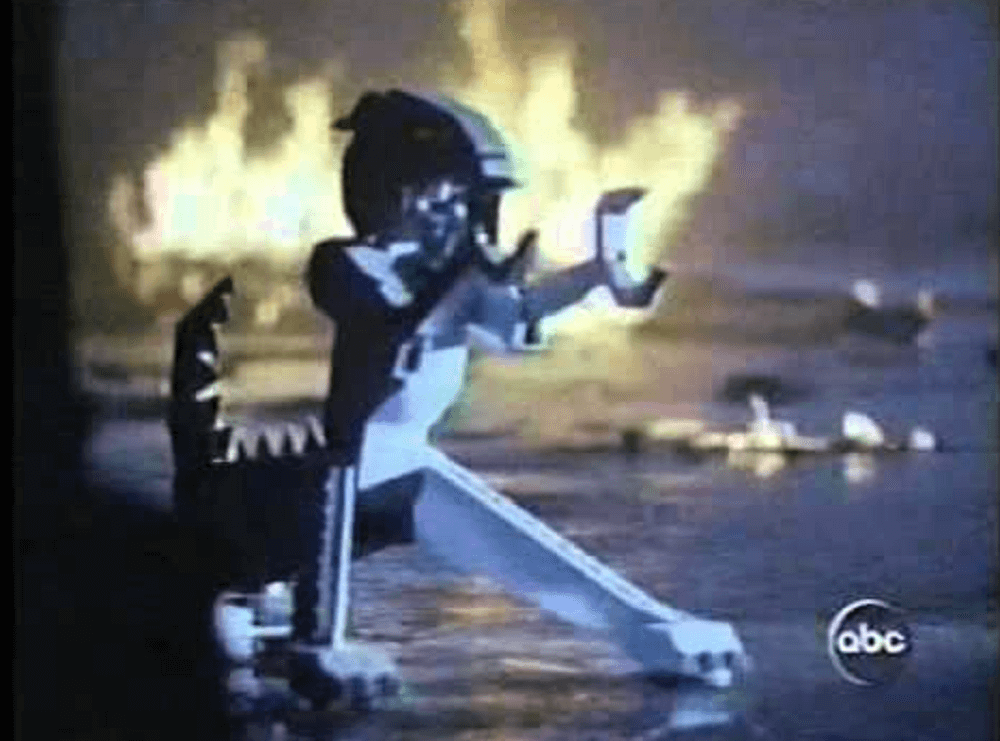
Steel Justice (NBC): Hands up if you like dinosaurs. Hands up if you like robots. Hands up if you want a show about a crime-fighting robot dinosaur… Yes, that’s the conceit of Steel Justice, a proposed series for the 1992-93 season on NBC that somehow didn’t get past the pilot stage, despite the support of executives who were spellbound by the real-life Robosaurus that toured arenas across America.

Steel Justice was the creation of Christopher Crowe, the creator of BJ and the Bear. Obviously a fan of unusual partnerships, Crowe had JA Preston – who appeared as the judge who had to decide if people could handle the truth in A Few Good Men that Summer – as David Nash, an undercover cop in a dystopian world who is able to turn his small toy dinosaur into a fire-breathing machine of vengeance!

telephemera years 1992 steel justice robosaurus

Nash was tipped off to his fantastic ability by Jeremiah, a time-traveller who reveals that similar gifts were used in the past to create Stonehenge and the Trojan Horse. That the dinosaur is all that he has left of his son, exploded by a rocket launcher in the show’s origin story, adds pathos but who needs emotion when THERE’S A DINOSAUR THAT EATS CARS?!?

Sadly, the network couldn’t see what a golden concept they had and passed on a full series, releasing the pilot as a standalone TV movie in April 1992. Yes, the execution of the idea was not well done and, yes, the script, acting, special effects, and everything else could be described as “inconsistent” but who cares? It’s a GIANT ROBOT DINOSAUR and it’s on YouTube.

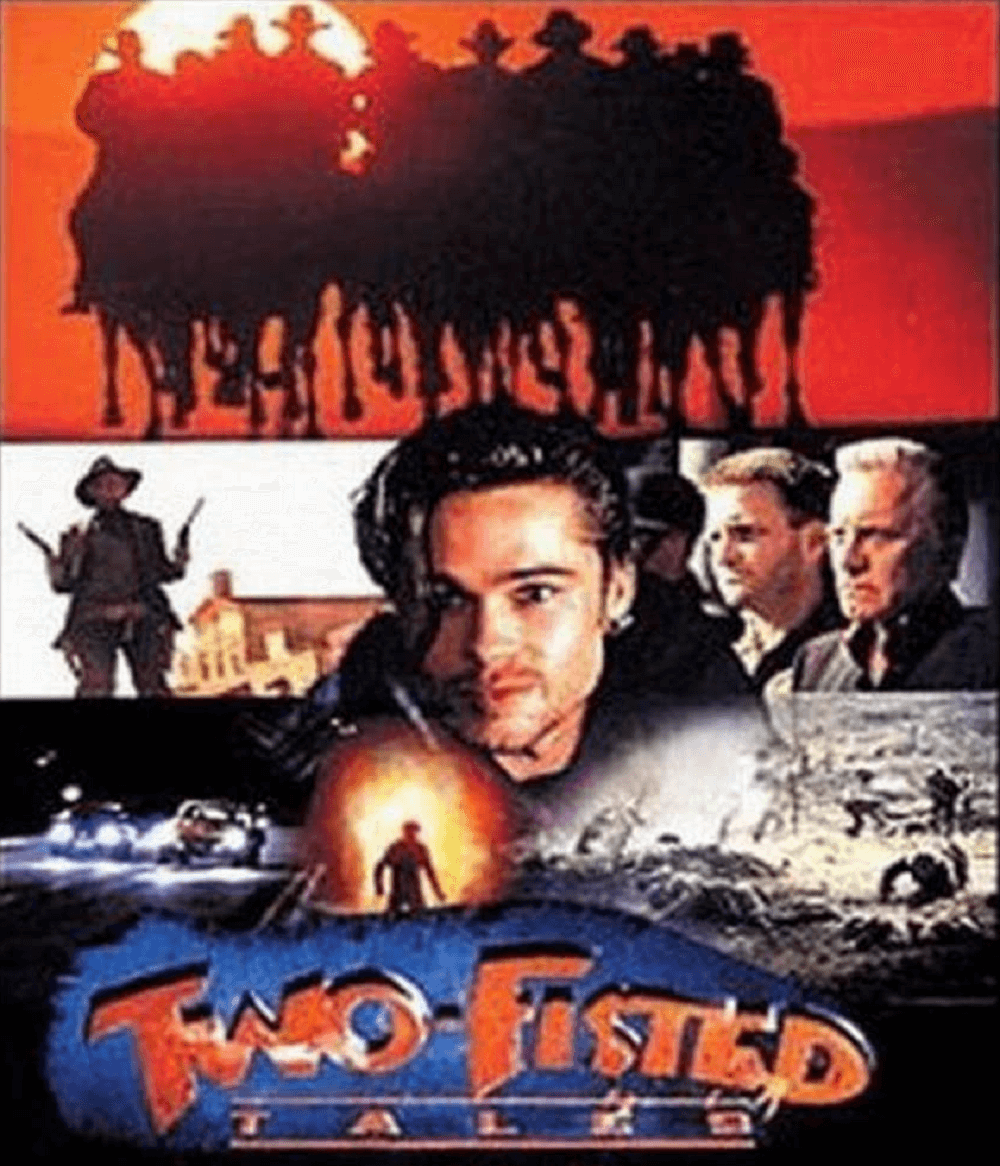
Two-Fisted Tales (Fox): Two-Fisted Tales was a war-themed anthology comic book put out by EC Comics in the 1950s, edited by the legendary Harvey Kurtzman and notable for it’s strong anti-war themes and “sting in the tail” endings. Selling heavily on the back of America’s involvement in the Korean War, the end of that conflict saw a decline in interest in war comics, and Two-Fisted Tales breathed its last after twenty-four issues, with 1954’s #41 (don’t ask).

In 1991, inspired by the success of HBO’s Tales from The Crypt (itself loosely based on an EC comic book from the 1950s), producers Joel Silver, Richard Donner, and Robert Zemeckis developed their own anthology concept, borrowing the title of Kurtzman’s comic but little else. Their Two-Fisted Tales was presented by ghostly gunfighter Mr Rush, played by William Sadler (Death in Bill & Ted’s Bogus Journey), who introduced each tale with a wry quip.

telephemera years 1992 two-fisted tales

Three segments were prepared for the pilot film, with varying degrees of connection to the EC source material; “Showdown” (written by Frank Darabont) took its title from a story in Two-Fisted Tales #37 but nothing else, and “King of the Road” (which starred Brad Pitt) was an entirely original piece, but “Yellow” was adapted from a story in Shock SuspenStories #1. Zemeckis, Donner, and Child’s Play creator Tom Holland each helmed a segment and the pilot aired in January 1992 in the lucrative spot reserved for COPS.

Unfortunately, it gained little traction and no full series was forthcoming. “Showdown” and “King of the Road” later turned up as segments on Tales from the Crypt, but that show had already adapted “Yellow” and so left it on the shelf. The TV movie was never released on home video, but you can check it out on YouTube if you’re in need of some two-fisted fun.

Battletoads (syndication): It’s nigh on impossible to explain just how big Teenage Mutant Ninja Turtles was in the early 1990s but suffice to say that every TV network, comic book company, games designer, and toy maker were after a copycat hit that could divert some of that sweet, sweet turtle money into their coffers. From Biker Mice from Mars to the Wild West COW-Boys of Moo Mesa, anthropomorphic animal heroes were in, baby!

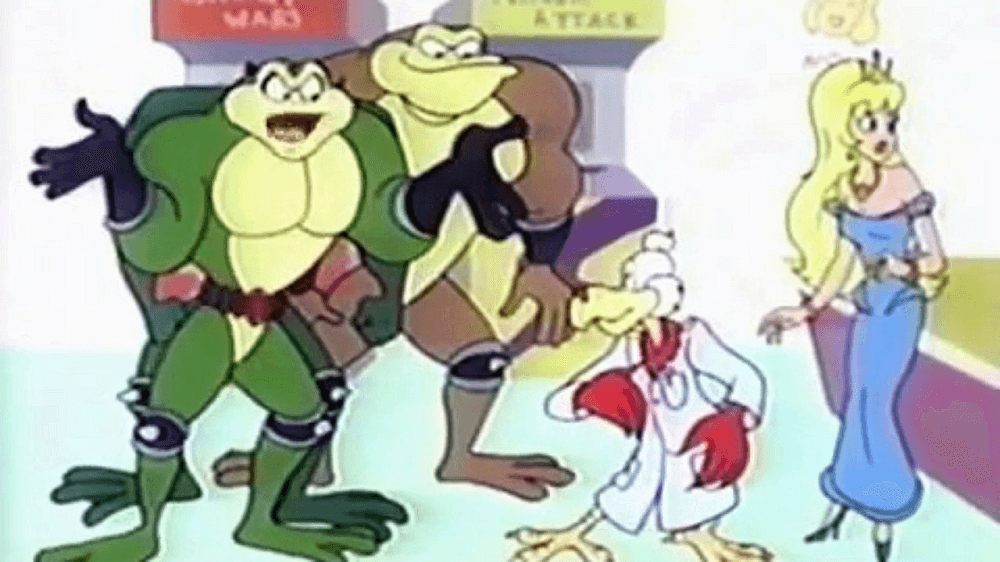
Seeking to carve themselves a slice of the pie, French American animation studio DIC Entertainment drew inspiration from a videogame produced for the Nintendo Entertainment System by Rare in 1991. Rash, Zatz, and Pimple were three kung-fu fighting frogs on a mission to rescue Princess Angelica from the Dark Queen, punching and kicking their way to victory (or not – the game was notably difficult).

telephemera years 1992 battletoads

The cartoon acts as a prequel to the game, with the three principals recast as high school students – Dave, Morgan, and George – with the ability to turn into the Battletoads, using their newfound abilities to protect Angelica and their mentor, Professor T Bird. The heroes rush into action against the Dark Queen and her minion, General Slaughter, with a battle cry of “Let’s get warty!” but even a decent voice acting cast couldn’t save it from being absolutely terrible.

The pilot was given an airing in syndication on Thanksgiving 1992 and released on VHS tape in 1994 in an attempt to cash in on the game’s sequel, Battletoads in Battlemaniacs, but it is rightly considered as one of the worst examples of a genre which also includes SWAT Kats, Stone Protectors, and Street Sharks.

Darkman (Fox): A paean to the Universal Studios horror films of the 1930s, filtered through a dark superhero aesthetic, Darkman was a modest success for Sam Raimi in 1990, becoming a cult hit and spawning two direct-to-video sequels in 1995 and 1996, although Liam Neeson had been replaced in the title role by Arnold Vosloo.

Neeson was also absent from the 1992 television adaptation, prepared for Fox by Universal and largely retelling the events of the first film. Christopher Bowen suited up as Peyton Westlake, the brilliant scientist seeking revenge on those who disfigured him and left him for dead in an explosion that killed his wife (a notable change from the movie, where Frances McDormand played a very much alive Julie).

telephemera years 1992 darkman

A thirty-minute pilot was filmed, which ended with a costumed Westlake on the run from the police but determined to bring justice to his crooked city, and even included some fight scenes from the movie to cut down on costs. Larry Drake returned as villain Durant and the project was helmed by Brian Grant, a director mostly known for music videos including “Private Dancer” by Tina Turner and Olivia Newton John’s “Physical.”

Given Batman Returns was a huge box office success in the Summer of 1992, and that Raimi had a hit of his with Army of Darkness that year, it’s hard to see why Fox passed on Darkman, although it’s possible that the pilot – which was never aired and is lost to time – may have just been bad.

Red Dwarf (NBC): Of all the attempted transfer from British TV to its US counterpart, one show is spoken of in hushed tones. Not because the transplant was a blockbuster success – like Three’s Company or All in the Family – but because it has almost become a byword for how not to do it, likely to be joined in time by American versions of The Inbetweeners and The IT Crowd.

Red Dwarf was created in 1988, spun out of a sketch on the radio comedy show Son of Cliché by its authors Rob Grant and Doug Naylor, and to recap its basic plot would seem to be redundant, given the high esteem the show is held in by fans of comedy, sci-fi, and comedy sci-fi. Suffice to say, the mix of ridiculous humour and “last man alive” pathos was ripe for the picking and the Americans wanted their own version, shorn of the very Englishness that probably made the show such a delight in the first instance.

telephemera years 1992 red dwarf dwarfing usa

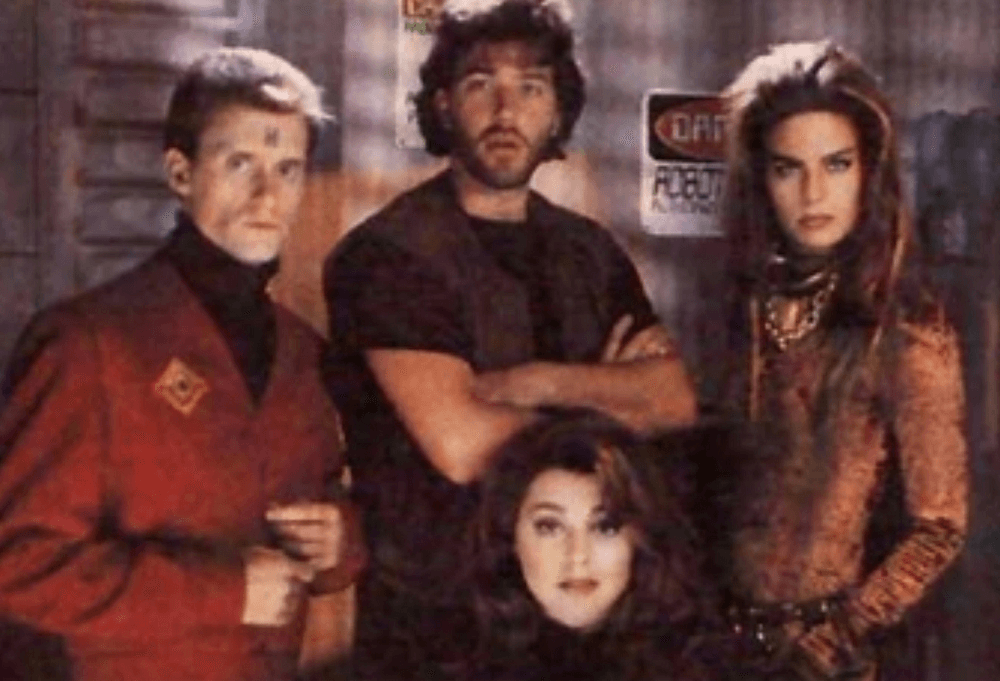
Robert Llewelyn was the sole member of the original cast retained for the US transplant, where he was joined by sitcom guest artist Craig Bierko as Lister, Whit Stilman regular Chris Eigeman as Rimmer, and stage actor Hinton Battle as Cat. Jane Leeves, a British actress who’d starred in the two-season wonder Throb in 1986 (and who would go on to be the beloved Daphne in Frasier) was Holly, the ship’s computer, and a pilot directed by Jeffrey Melman was filmed in early 1992.

The network were unhappy with the results but dedicated enough to the project to order a second pilot, with Cat and Rimmer recast. Cat was now a white woman, turning the half-ethnic British cast into an all-white affair, and Chris Barrie turned down the chance to reprise his role as Rimmer, with the part going to newcomer Anthony Fusco. The results were still not what NBC wanted from such a high-profile project – the original had aired, and gained a cult following, on PBS – and they cancelled the series without airing either version of the pilot.

A mini documentary, entitled Dwarfing USA, was included on the DVD boxset of the original show’s fifth season, and features clips from the first pilot, with the thoughts of Llewelyn and Naylor, who tells a story of having to completely rewriting the script overnight only for it to be rejected in the morning. Those fortunate enough to have seen the completed pilots describe them as just plain wrong, and although Red Dwarf returned a number of times from 1999 onwards, the promise of an American version remains unfulfilled.

Next on The Telephemera Years: Kids’ TV from 1992, including COW-boys, sea monkeys, and dog cities…

Check out our other Telephemera articles:

The Telephemera Years: 1966 (part 1, 2, 3, 4)

The Telephemera Years: 1968 (part 1, 2, 3, 4)

The Telephemera Years: 1969 (part 1, 2, 3, 4)

The Telephemera Years: 1971 (part 1, 2, 3, 4)

The Telephemera Years: 1973 (part 1, 2, 3, 4)

The Telephemera Years: 1975 (part 1, 2, 3, 4)

The Telephemera Years: 1977 (part 1, 2, 3, 4)

The Telephemera Years: 1980 (part 12, 3, 4)

The Telephemera Years: 1982 (part 1, 2, 3, 4)

The Telephemera Years: 1984 (part 1, 2, 3, 4)

The Telephemera Years: 1986 (part 1, 2, 3, 4)

The Telephemera Years: 1987 (part 1, 2, 3, 4)

The Telephemera Years: 1990 (part 1, 2, 3, 4)

The Telephemera Years: 1992 (part 1, 2, 3, 4)

The Telephemera Years: 1995 (part 12, 3, 4)

The Telephemera Years: 1997 (part 1, 2, 3, 4)

The Telephemera Years: 2000 (part 1, 2, 3, 4)

The Telephemera Years: 2003 (part 1, 2, 3, 4)

The Telephemera Years: 2005 (part 1, 2, 3, 4)

The Telephemera Years: 2008 (part 1, 23, 4)

Titans of Telephemera: Irwin Allen

Titans of Telephemera: Stephen J Cannell (part 1, 2, 3, 4)

Titans of Telephemera: Hanna-Barbera (part 1, 2, 3, 4, 5)

Titans of Telephemera: Kenneth Johnson

Titans of Telephemera: Glen A Larson (part 1, 2, 3, 4)

Titans of Telephemera: Quinn Martin (part 1, 2)

[ENDED] Win Hilarious Horror SWEETIE, YOU WON’T BELIEVE IT

SWEETIE, YOU WON’T BELIEVE IT

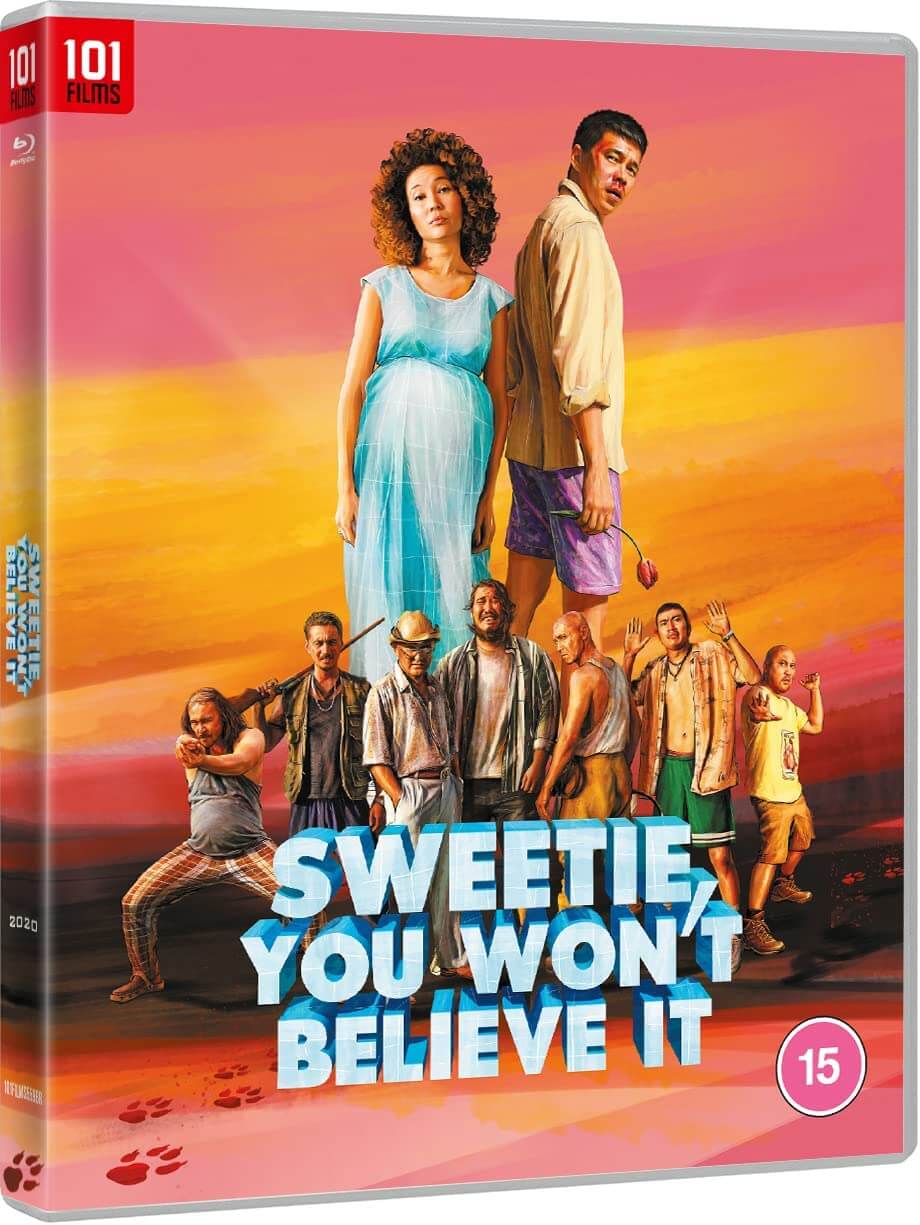
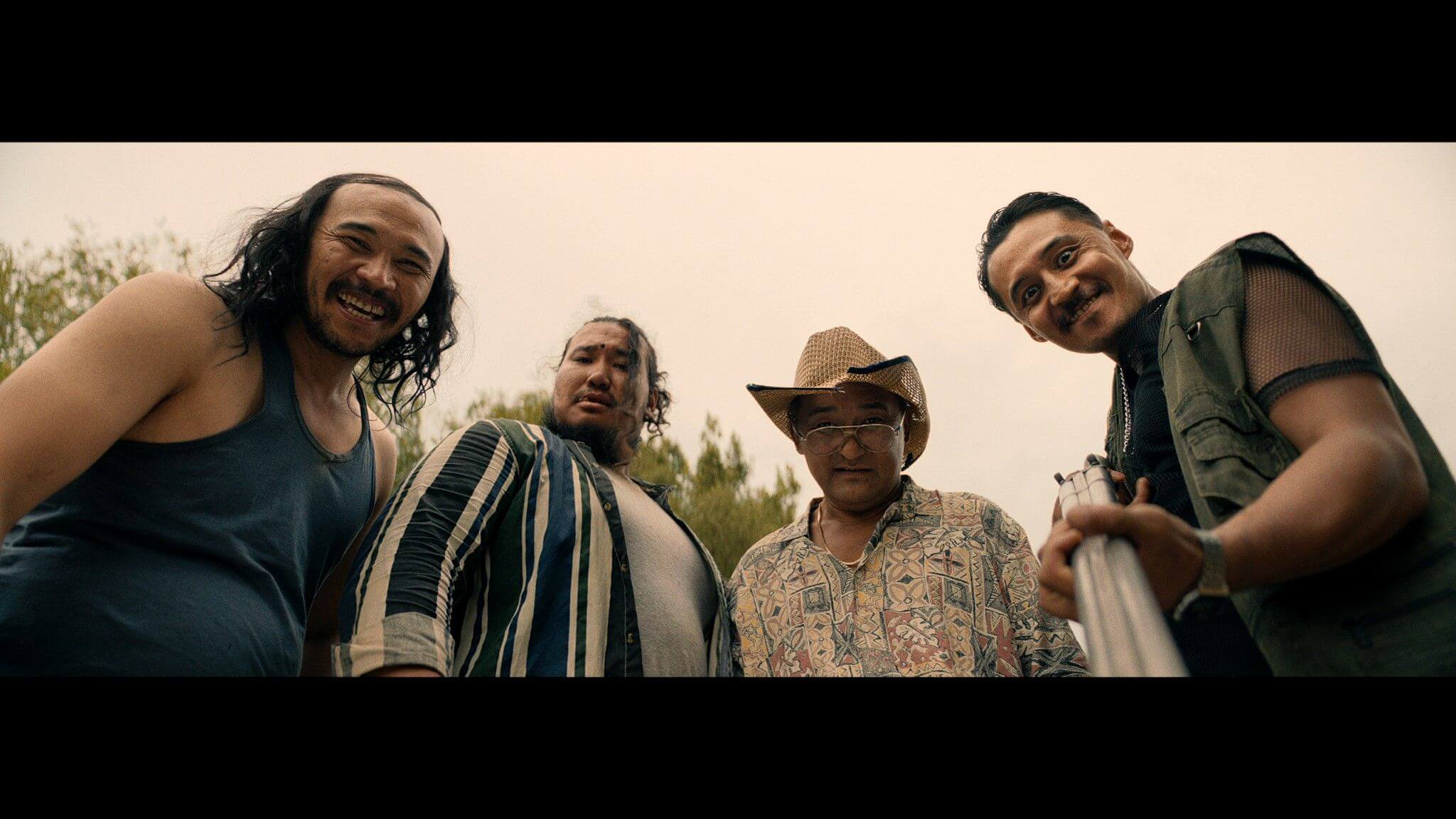
We’ve got two copies of the superb Kazakh horror-comedy Sweetie, You Won’t Believe It on Blu-ray to celebrate its release on disc and digital from 101 Films. Just read on and enter below for your chance to win!

Lauded as the breakout favourite on its premiere, this hysterical killer Kazakhstan thriller from director Yernar Nurgarliyev brings us head-rolling laughter and a bucket load of gore.

Bickering husband and wife Dastan (Daniar Alshinov) and Zhanna (Asel Kaliyeva) are expecting their first child and Dastan is desperate to get away for one last weekend of fun before the baby arrives and he must finally settle down. He rounds up his two best pals for a boys’ weekend of fishing and fun, but little do they know their plan for a chilled trip to the lake is about to turn into mad and deadly mayhem.

After accidentally witnessing a murder by a group of thugs, the three friends are suddenly on the run to escape their violent clutches and then things turn even wilder. With a mysterious one-eyed man out for blood and a desperate wannabe bride and her pushy father in the mix, the body count starts to rise. Never mind fishing, will Dastan make it out alive and get to the hospital in time for the birth of his baby?

Filled with copious amounts of blood, sweat and tears of laughter Sweetie, You Won’t Believe It is madcap mayhem and unapologetically brutal – you really won’t believe it.

a Rafflecopter giveaway

101 Films present Sweetie, You Won’t Believe It on Blu-ray and digital now. Read our review here.
 

Five Films to Check Out on Horror Channel This Week – 210222

horror picks

You won’t be stuck for things to watch this week as we have some more great picks from what’s on Horror Channel….

Tuesday February 22th, 10.45pm – Universal Soldier (1992)

Classic sci-fi action from director Roland Emmerich and starring Jean-Claude Van Damme as the deceased soldier brought back to life by military scientists to become a hybrid cyborg-human. His killer is also on the scene in the shape of Dolph Lundgren. Unmissable fun.

Wednesday February 23rd, 9pm – Office Uprising (2018)

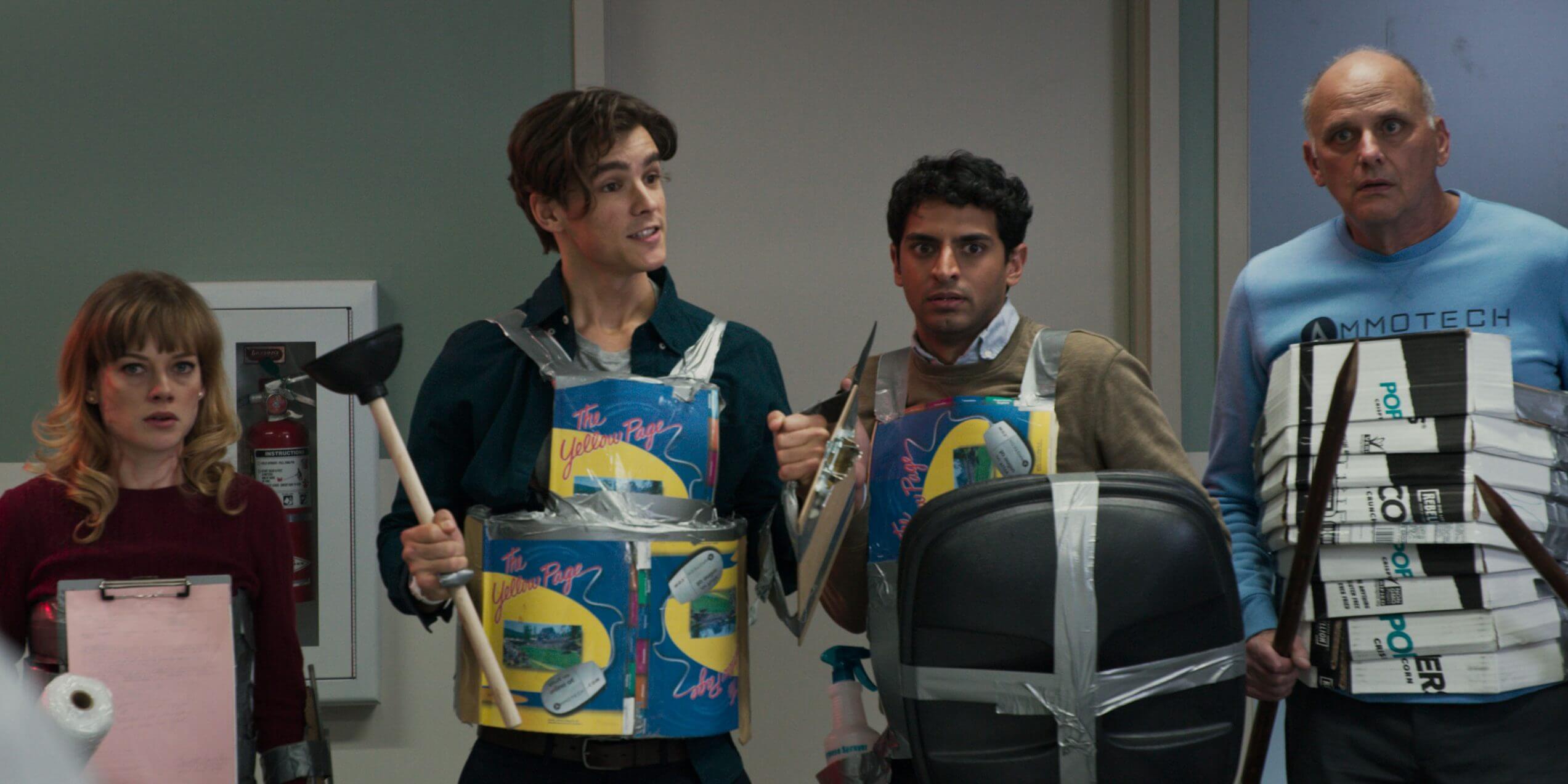
This horror-comedy is set in a humdrum office, where an experimental energy drink turns the workers into homicidal crazies. A handful of people attempt to survive the onslaught.

Friday February 25th, 11.05pm Peripheral (2018)

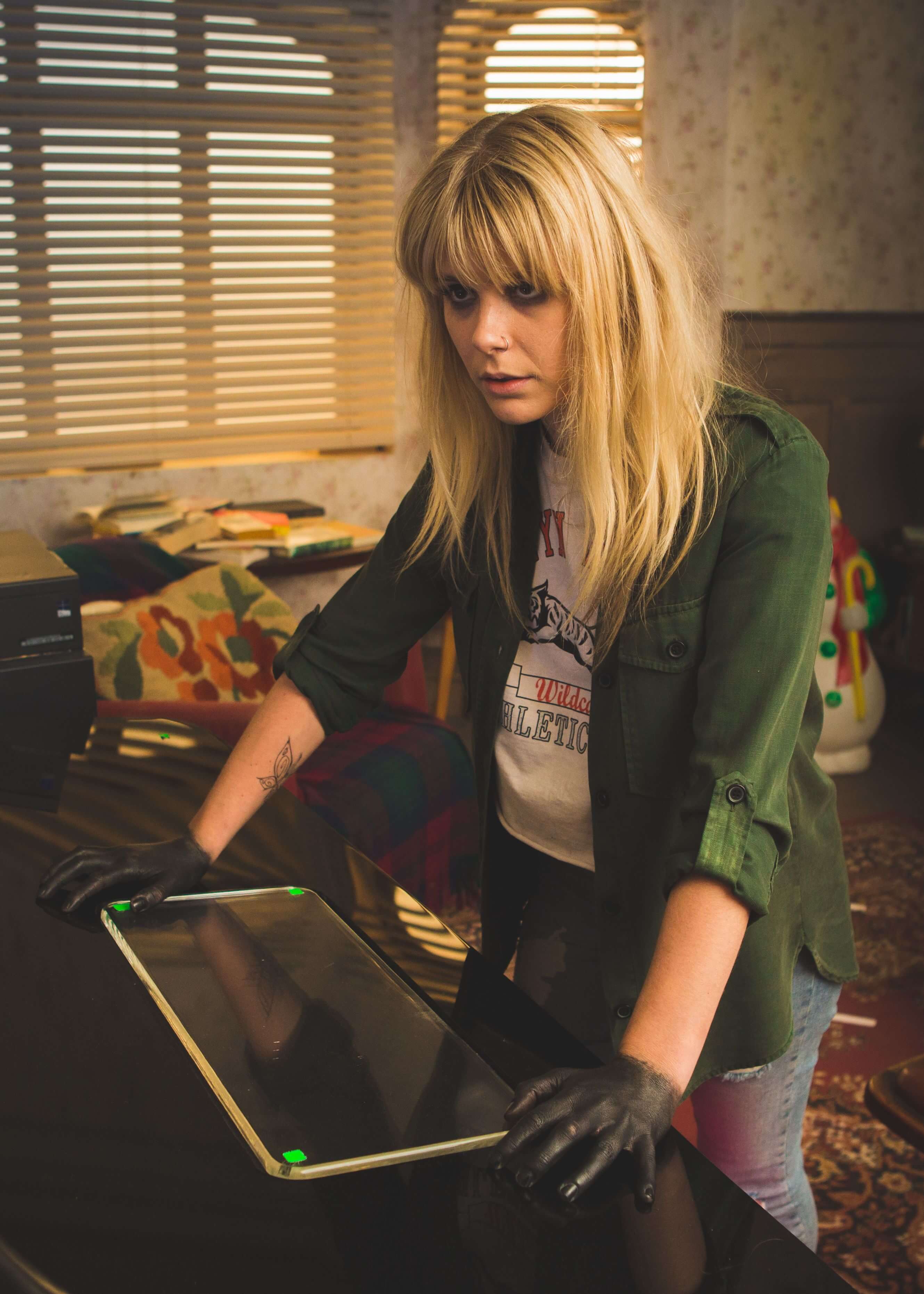
A writer struggling for inspiration is forced to use state-of-the-art equipment to complete her next novel. Hannah Arterton stars in this Cronenberg-esque movie from Paul Hyett (Howl).

Saturday February 26th, 9pm – Zombeavers (2014)

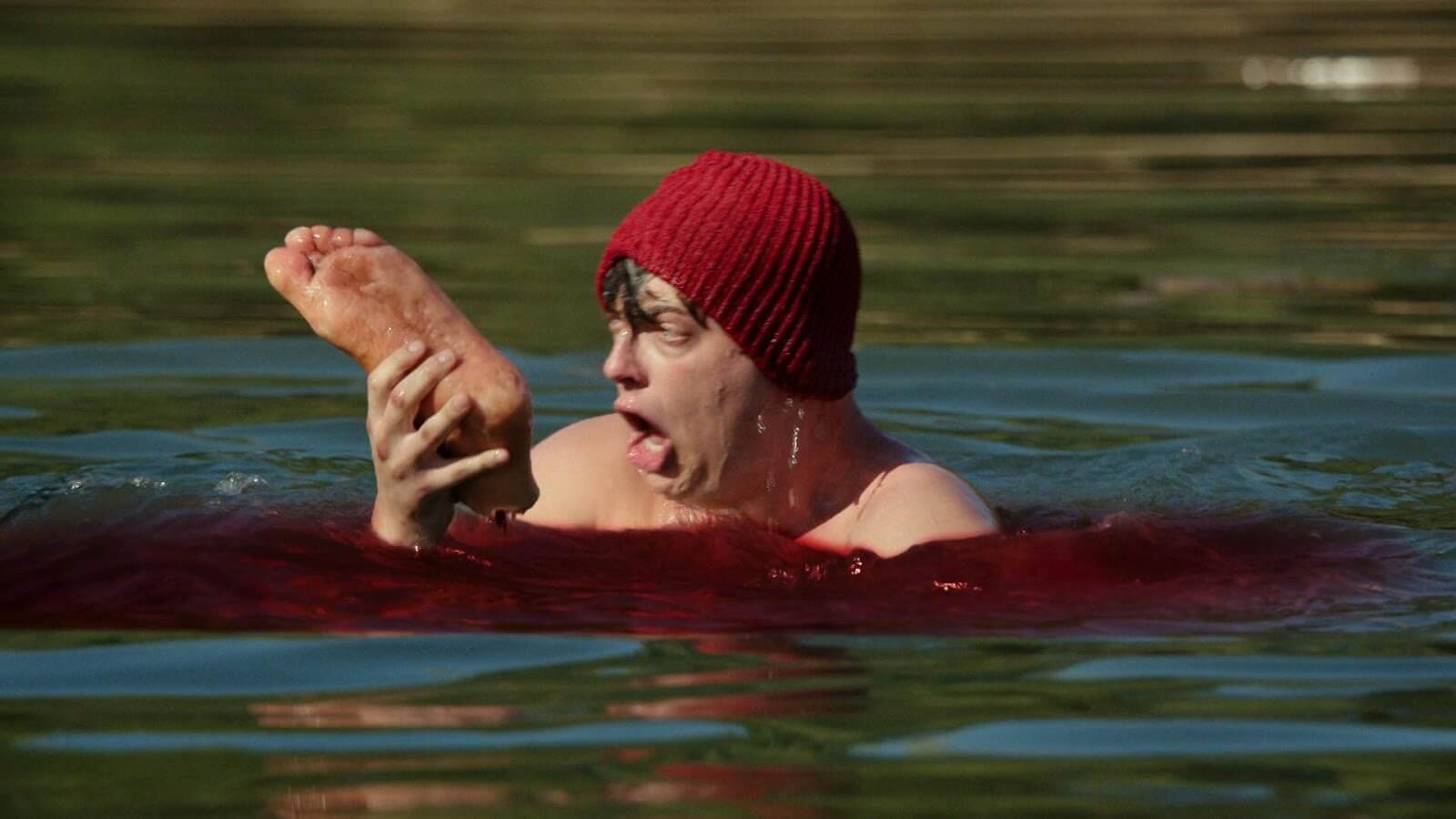
Spring break doesn’t go well for a group of teens when they become the victims of zombified beavers. Yes, really. You know it’ll be fun if nothing else.

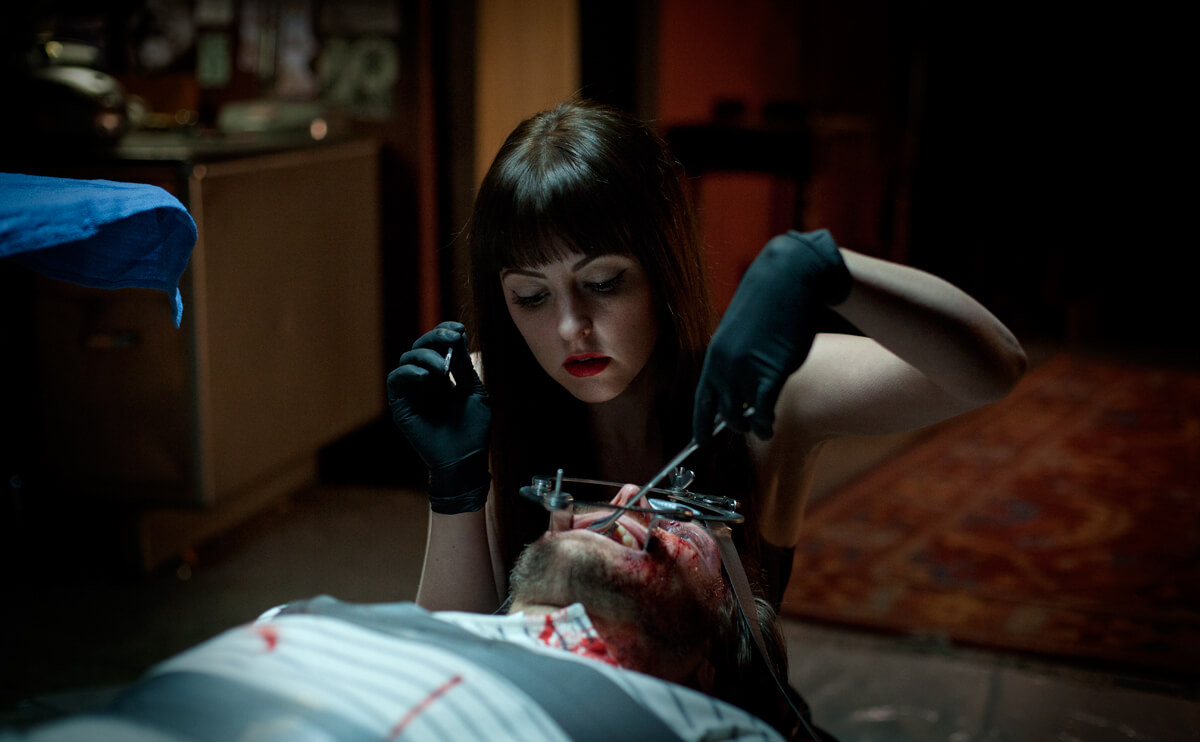
Sunday February 27th, 9pm – American Mary (2012)

Brilliantly gory body modification horror in this festival hit from Canada’s Soska Sisters. Stars Katherine Isabelle and Tristen Risk.

Tune into Horror Channel on Sky 317, Virgin 149, Freeview 69, Freesat 138.