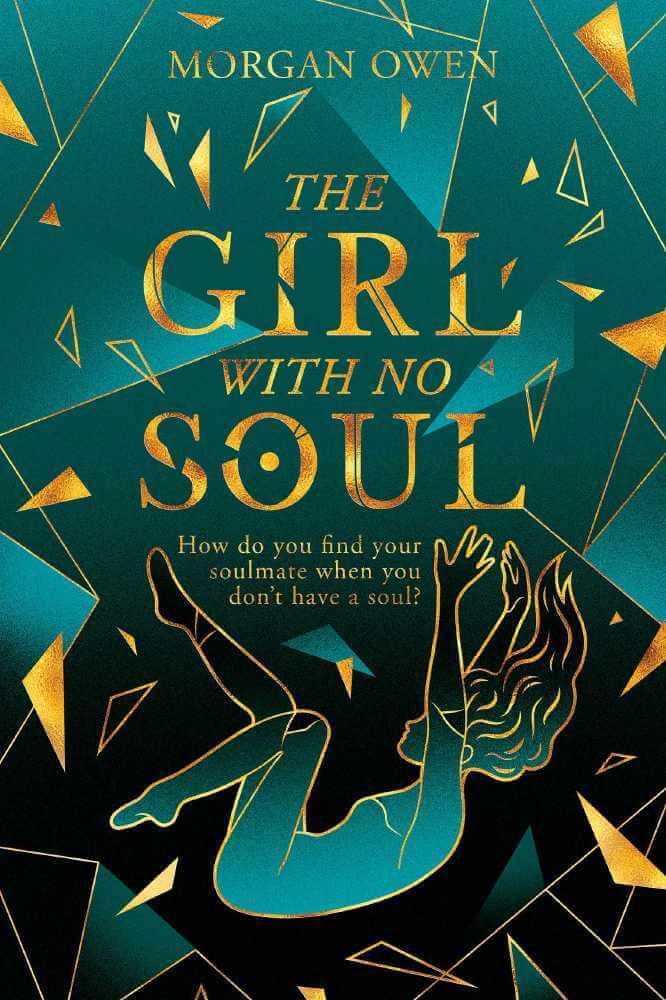
The Girl With No Soul is Morgan Owen’s debut novel. We caught up with her to find out more.
What is The Girl With No Soul about? How would you describe it to a beloved elderly relative?
Some of my beloved elderly relatives are already keen readers, so I told them that the book is set in a world where the soul can be seen and judged by the authority. It’s about a girl who is trying to piece herself back together after a traumatic event she can’t remember. She meets a young scholar who assists her with unravelling this mystery but of course, he has some secrets of his own.
Why Young Adult fiction?
When I hear a high concept synopsis that stops me in my tracks, it’s almost always YA these days. YA is very immersive and immediate. There’s also something about a coming-of-age story that is universally appealing too. I think it speaks to the part of us that’s still trying to find our place in the world, no matter how old we are. Also, teenagers are incredibly astute and ferocious readers so I aspire to impress them at all times.
Is this a horror story? What would make it a horror story?
I saw a tweet recently that said something like, horror can be divided into two categories: “oh no, not that guy again” and “the real monster was our psychological trauma”. The Girl With No Soul is somewhere in the latter category. Memories come to life as spectres and shadows move of their own accord. It’s about the horrible things that humans are capable of and the monsters that live in our heads, so there’s potential for a horror, but I wasn’t trying to frighten readers so much as make them question reality.
What character is the most fun to write?
My protagonist Iris is both the most painful and the most fun to write. When we first meet her, she’s a thief of sentimental treasures who lives vicariously through other people’s memories. She has no past, her identity is fragmented and she’s not in touch with her emotions, but when a big feeling hits her out of nowhere, she’s more than willing to lean into it. She’s experiencing things as if for the first time again and that’s really exciting to play around with.

Which character seriously needs to have word with themselves?
Evander, my love interest. He has some issues he’s not dealing with and he’s allowing them to define him. He’s lost in his own feelings and isn’t really seeing things clearly. But he’s doing his best! I like a love interest who has a complex inner world of their own going on. He definitely has that, though you could argue that he takes it a little bit too far.
If The Girl With No Soul had to be set in another world, what world would you choose?
The world of TGWNS uses psychometry or the ‘science of the soul’, but it’s viewed more like magic. The setting is gothic, almost steampunk, so I’d set it in a futuristic world instead. I’d see how this technology would’ve developed over time and what modern governments would do about those with extrasensory abilities. Maybe it would be a cyberpunk society, and the Order would be a corporation instead. Can’t go wrong with cyberpunk.
How would it change the story?
TGWNS already has some sci-fi elements like memory removal and advanced mass surveillance, so the heart of the story would be the same and it would play out in much the same fashion, but the media would be a more powerful force. We’d probably have people exposing their neighbours’ souls’ flaws online, instead of reporting them to the Inspectors.
Is the genre world more accessible these days?
I think so. There are lots of exciting, diverse voices emerging in science fiction and fantasy but there are still important conversations about accessibility to be had. There are still barriers to publication. Making a genre more accessible vastly benefits the reader. More diverse authors means more unique experiences and inspirations to shape new stories, so we should all encourage that.
Which writers inspire you?
Big question. Sticking with SFF: Margaret Atwood, Malorie Blackman, Susanna Clarke, Suzanne Collins, Rick Riordan, Ursula Le Guin, Octavia Butler, Angela Carter, Neil Gaiman, Lauren James, Philip Pullman, Lois Lowry, Laini Taylor, Leigh Bardugo, Douglas Adams, Nnedi Okorafor, Samantha Shannon and other people I’ll kick myself later for not remembering. But I get a lot of inspiration from other genres and even other mediums, including children’s cartoons and video games.
What tropes do you personally avoid the most?
I think a good story can take almost any trope and reinvent it, though I’m always drawn to inverted tropes. I avoid anything that I feel is harmful, such as ‘bury your gays’, but in general, I think tropes can be a useful narrative tool. Readers have seen enemies to lovers and the chosen one done countless times, but hugely popular stories still employ them successfully, especially when they tweak them for a surprise. I particularly like redeemed villain/corrupted hero arcs.
How would you describe your process?
Chaotic! I’m in awe of those writers who have a whiteboard or an extensive system of colour-coded sticky notes that they never deviate from. I always set out with a neat, elaborate chapter plan but then my characters take me by the hand and lead me wherever they like. Sometimes an idea just doesn’t work on the page, so I think it’s important to give yourself a little room to improvise.
Simpsons or Futurama?
Futurama. I love all things animated, and the early episodes of the Simpsons are among the best television ever made, but being a fan of retrofuturism and comedy aliens, Futurama just hits a rare spot. The world is so sharply observed and imaginative. Doctor Zoidberg has always been my favourite character, and always will be.
Tigers or Spiders?
Tigers give off majestic vibes. They’re supremely powerful beings. But there are a lot of spiders, everywhere, all of the time. I think they’re probably watching us, judging us, making notes. We should probably be nicer to them. I’ll say spiders.
Goths or Visigoths?
Goths. Sunshine is overrated. I’ll wear a coat on the warmest of days just out of pure spite.
Truth or Beauty?
Truth. As the Countess in my book would say, there’s nothing more important than the truth in a world built on lies. We’ve seen how mistruths can shape world politics and the future of civilisation in real time. So as much as I appreciate beautiful things, I’ll take the ugly truth in the hope that we can learn from it somehow.
Girl With No Soul is out now via all good bookshops via Scholastic. Morgan Owen can be found on twitter at @morganowenya