Ah, telephemera… those shows whose stay with us was tantalisingly brief, snatched away before their time, and sometimes with good cause. They hit the schedules alongside established shows, hoping for a long run, but it’s not always to be, and for every Street Hawk there’s two Manimals. But here at STARBURST we celebrate their existence and mourn their departure, drilling down into the new season’s entertainment with equal opportunities square eyes… these are The Telephemera Years!
1993-94
The top ten shows at the end of the 1993-94 season looked very similar to those from 1992-93, with 60 Minutes retaining top spot for CBS, and top five placings for ABC’s Home Improvement and Roseanne. Coach, Monday Night Football, Murphy Brown, and the CBS Sunday Night Movie all kept their top ten slots, and there was an enforced change as US viewers had to get used to life without Cheers. The big new hit was Seinfeld, now in its fifth season and finally becoming the show about nothing that said everything to US audiences, forming a solid sitcom quartet with Mad About You, Wings, and new arrival Frasier, a Cheers spin-off, that commanded Thursday nights for the peacock network.
Elsewhere, David Letterman moved from NBC to CBS, The X-Files arrived on Fox, southern belle Brett Butler gave ABC a new hit in Grace Under Fire, and there was plenty of new genre fodder with Lois & Clark: The New Adventures of Superman, seaQuest DSV, Duckman, and Weird Science all beginning their runs to more than make up for the loss of Star Trek: The Next Generation. But those were all shows made for grown-ups; what were their offspring tuned to in Fall 1993? This is the story of the season’s new Saturday morning offerings…
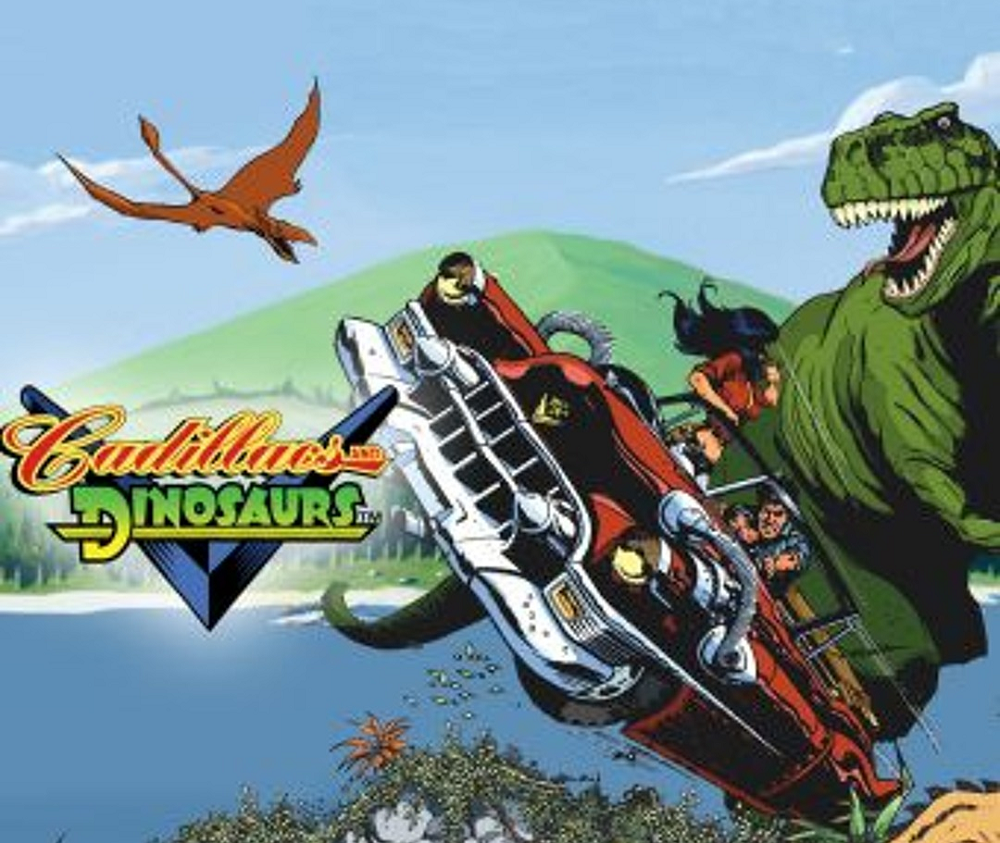
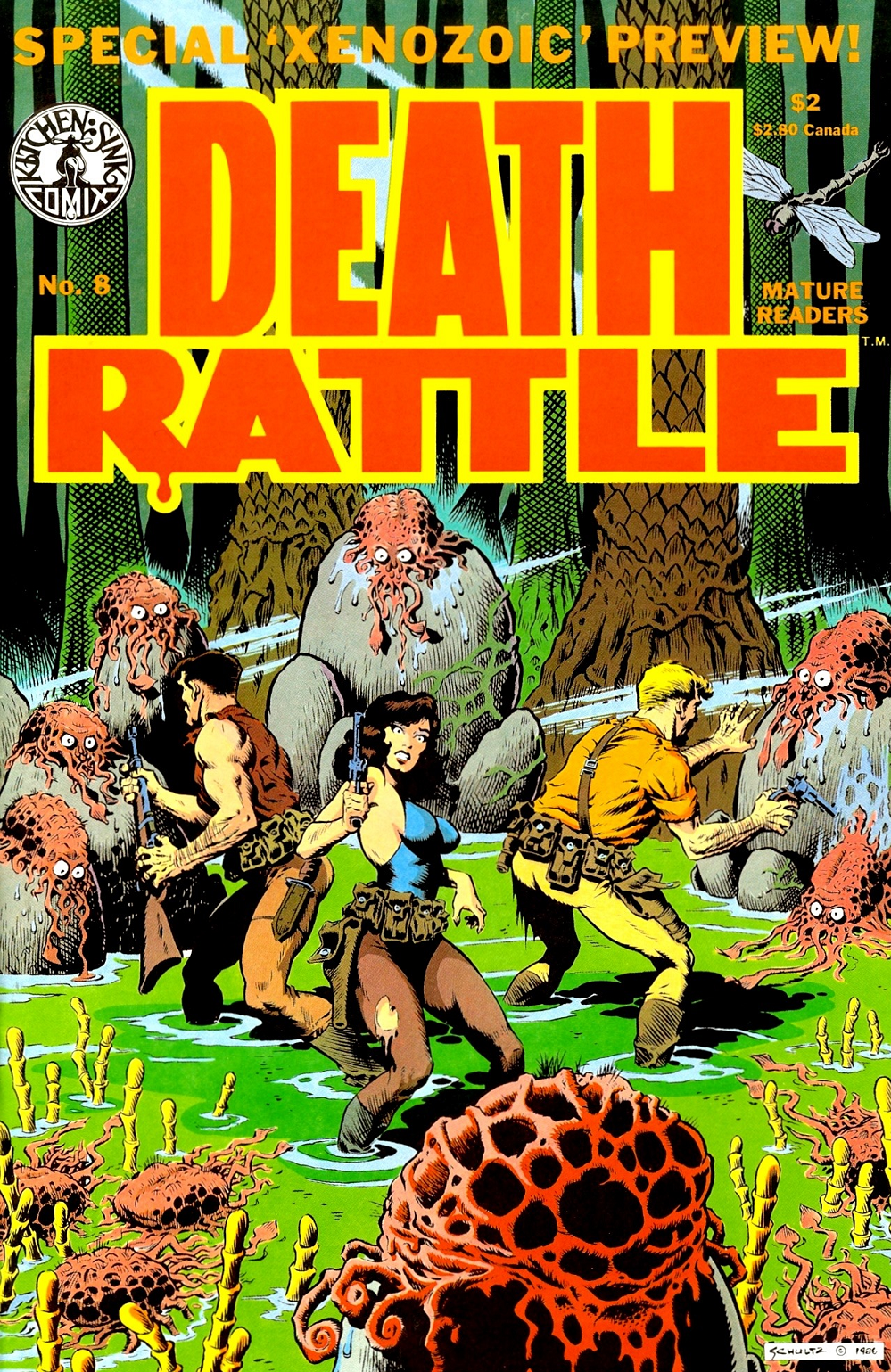
Cadillacs and Dinosaurs (CBS): After graduating from Kutztown University of Pennsylvania in 1977 with a Fine Arts degree in painting, Mark Schultz worked a series of dead-end jobs while he worked out what he wanted to do with his life. Inspiration struck in 1980 when he discovered the burgeoning independent comics scene that had been sparked by publishers such as Aardvark-Vanaheim, Fantagraphics, and Kitchen Sink Press. A comics fan from his youth, Schultz was particularly interested in the EC Comics of the 1950s, adapting his art style to match classic artists of that period. In January 1987, Schultz’s work appeared in Marvel Comics’ Savage Sword of Conan #132, where he inked over pencils by Val Semeiks for a back-up story, but that was a one-off work for the major publisher, much of his time since his decision to go into comic books having been spent working on his own title, Xenozoic Tales. The first story featuring the Xenozoic Tales characters appeared in Death Rattle #8, an anthology title published by Kitchen Sink in December 1986. Two months later, Xenozoic Tales #1 arrived from the same company, with further issues following initially on a bi-monthly schedule but then erratically as time wore on, with the final issue in the series – #14 – released in October 1996.
The black and white comic featured the adventures of mechanic Jack Tenrec and scientist Hannah Dundee, two of an extant population of humankind that emerges after spending 500 years underground in bunkers following a cataclysmic crisis that struck in the 1990s. The world they return to has changed, rewilded, and is now populated by previously extinct dinosaurs and mammals. Dubbed the Xenozoic Era, humanity’s remnants have gathered in isolated cities who distrust one another, and Hannah is an ambassador from the city of Wasoon (the old Washington, DC) to Jack’s City in the Sea. Jack is looked to as a leader by the people of the city, more than the Governors that oversee them, and he is also friendly with the Grith, a race of evolved humanoid dinosaurs with whom he communicates telepathically. it’s a world full of danger and adventure, and Schultz’s beautifully detailed artwork made it a pleasure to visit.
The series was a critical hit from the off, winning both Harvey (named for EC Comics legend Harvey Kurtzman) and Eisner (in honour of graphic pioneer Will Eisner) awards, and attracted the attention of Galaxy Films, who thought the concept perfect to adapt as a live-action movie but first suggested building up the franchise with merchandise, toys, video games, and an animated series. Galaxy also suggested a change of name, focusing on a tagline under the Xenozoic Tales logo on issue two of the series that read, “Cadillacs and Dinosaurs”.
After securing permission from General Motors, who owned the Cadillac trademark, it was under this name that Marvel Comics began reprinting the series in colour under their Epic Comics banner, a six-issue run from November 1990 to April 1991 that brought the series to more mainstream attention. It was also the name for a video game produced in Japan by Capcom, the company behind the legendary Street Fighter series. Released in arcades in both the US and Japan (where it was titled Cadillacs Kyōryū Shinseiki), the game was popular with players and critics, and whetted the appetite for what came next…
One of those involved in developing the video game was screenwriter Stephen E de Souza. After cutting his teeth as a story editor for the likes of The Six-Million Dollar Man and The Hardy Boys Mysteries, he worked as a producer on Knight Rider and created The Powers of Matthew Star. In the 1980s, he became known as a writer of action films, working on 48hrs, Commando, The Running Man, Die Hard, and more, and while preparing to make the 1994 Street Fighter adaptation, he did some other work for Capcom, including Cadillacs and Dinosaurs.

Impressed by the concept, de Souza secured the TV rights to the property and engaged Canadian animation studio Nelvana to produce a thirteen-episode series, with CBS ready to add it to their Saturday morning line-up for Fall 1993. The series followed the storyline of the comic books, although Jack’s tempestuous character was toned down somewhat and he was positioned as the leader of the Mechanics, a band of freedom fighters dedicated to overthrowing the corrupt rule of Governor Wilhelmina Scharnhorst. As in the comic book, the Terhune clan of vicious poachers are also on hand to threaten Jack and Hannah, but at least they have Hermes, their trusty allosaurus pet, to protect them.
Cadillacs and Dinosaurs debuted on September 18th 1993 as part of a CBS Saturday morning line-up that included fellow new arrivals Marupilami, the All-New Dennis the Menace, and Beakman’s World. The first episode was written by de Souza, with a team including animation veteran David Wise (who wrote five episodes) and comic book writers Marty Pasko and Marv Wolfman scripting the rest of the series. Critics liked the show, but it wasn’t renewed at the end of its first season, a disappointing if not uncommon end to Jack Tenrec’s TV adventures. There was an accompanying line of action figures produced by Tyco and a second video game – Cadillacs and Dinosaurs: The Second Cataclysm – was released in June 1994 for the Sega CD, with some of the programming done by a young programmer named Elon Musk.
Schultz returned to (slowly) producing issues of Xenozoic Tales, but in February 1994 a Cadillacs and Dinosaurs comic book from Topps Comics was released, written mostly by Roy Thomas and illustrated by a variety of artists across its six-issue run. In 2004, Schultz took over as writer and artist on the long-running Prince Valiant newspaper comic strip, and he still writes the strip today, although Thomas Yeates took over as artist in 2012. There have been periodic but as yet unfulfilled promises to continue Xenozoic Tales in the years since it went on “hiatus,” and a 2015 prose novel – Flesk – appeared to provide a backstory to the cataclysm.
Exosquad (syndication): Jay Segal had a colourful career even before he was made an executive vice-president at Hanna-Barbera in 1982. An uncredited script doctor on the first Star Wars movie, he spent time in Japan working with Tōei on the script for Legend of the Super Galaxy, a movie spin-off from the TV anime of Shōtarō Ishinomori’s celebrated manga Cyborg 009. While he was there, he worked with Tsuburaya Productions on Ultraman: The Jupiter Effect, the first attempt to produce an Ultraman movie specifically for a US audience, announced in May 1980 as having a $10,000,000 budget and to be shot at a series of locations across the US including New York City, Washington, DC, the Houston Space Centre, and the Grand Canyon.
The Jupiter Project failed to get beyond pre-production and Segal took that position at Hanna-Barbera, where he worked on The New Scooby and Scrappy-Doo Show, Shirt Tales, The Biskitts, and The Smurfs before taking the story editor role on Super Friends: The Legendary Super Powers Show, the sixth incarnation of the long-running DC Comics cartoon. In 1983, he was creative supervisor for a new project at Hanna-Barbera, a tie-in with toy company Tonka, who had bought the rights to a line called MachineRobo from Japanese toy company Popy. Tonka wanted to replicate the success Hasbro had in turning Takara Toys’ Micro Change and Diaclone lines into Transformers, and developed GoBots, sentient robots from the planet GoBotron warring on Earth.
Although it is still preferred by some to its competitor, GoBots never achieved the popularity of Transformers (and, ironically, Tonka’s properties now reside with Hasbro after a series of mergers), and – after scripting feature film spin-off GoBots: Battle of the Rock Lords in 1986 – Segal was given the chance to create his own show for Hanna-Barbera. Co-created with Kelly Ward, who was part of Segal’s team on GoBots (and played Putzie in Grease), Wildfire was a fantasy adventure yarn that debited in September 1986 and ran for thirteen episodes.
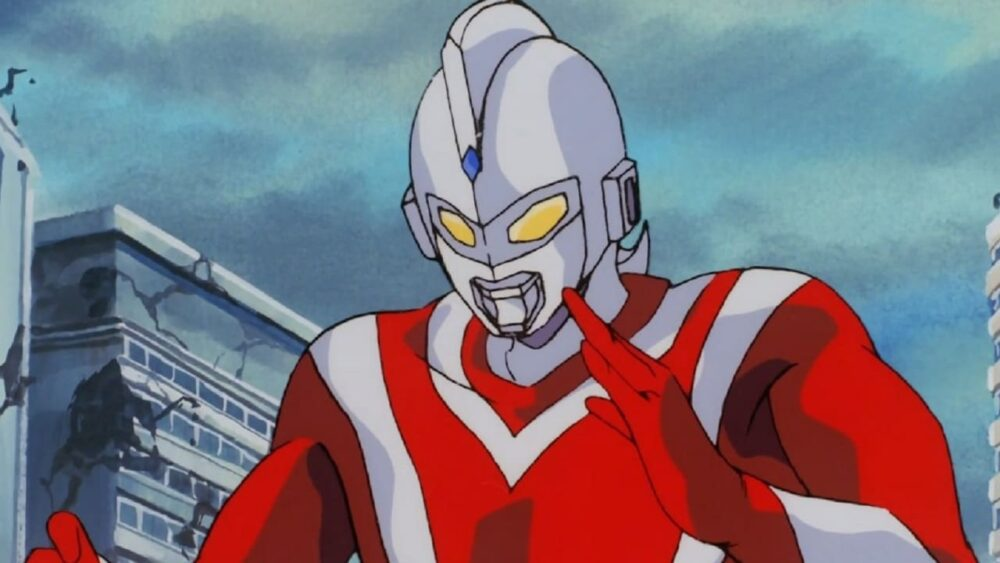
His next job was another toy tie-in, Kenner’s Sky Commanders, which Segal developed from the bare bones of the toy line, and in 1987 he came full circle, brought in to consult on a new co-production between Hanna-Barbera and Tsuburaya, a second attempt to do Ultraman and the first time an American studio had partnered with Tsuburaya to produce a film based on the famous Japanese superhero. 1987’s Ultraman: The Adventure Begins used much of Segal’s script from the 1980 non-starter but was a fully animated affair. It was intended as a pilot for a possible series but released theatrically in both Japan and the US, where it performed poorly. Segal had been unhappy with changes made to his script during production and insisted his name did not appear on the final product, the script instead credited to John Eric Seward, a pseudonym taken from Bram Stoker’s Dracula.
Segal continued his work at Hanna-Barbera, supervising The Completely Mental Misadventures of Ed Grimley, The Further Adventures of SuperTed, a Hägar the Horrible special, Fantastic Max, and Midnight Patrol: Adventures in the Dream Zone, as well as an unsold pilot for an animated Rodney Dangerfield series called Where’s Rodney?, but in 1990 he moved to Universal where he became the head of Family Entertainment. Less hands on than he had been at Hanna-Barbera, one of his first moves was to establish Universal Cartoon Studios, which debuted in September 1991 with an animated series based on Back to the Future.
Still a writer at heart, he resumed work on a project he’d begun while still at Hanna-Barbera but that had been shelved while he got his feet under the table at Universal. Informed by his time in Japan, it was a “giant robot” series originally titled Exoforce but when Segal made a deal with toy company Playmates to produce a toy line based on the show, trademark conflicts forced a change of name to Exosquad. The bare bones of Segal’s concept went through several hands, including Mark Hoffmeier and Eric Lewald, who worked with Segal on GoBots, Wildfire, and Sky Commanders, and both were given co-creator credits alongside Segal. A chunk of the design, world building, and the feel of the show, though, was down to Will Meugniot, a former comic book artist working in animation since 1978 when he joined Hanna-Barbera as a story director. and story editor Mark Edens, who had developed X-Men: The Animated Series for Fox alongside Lewald.
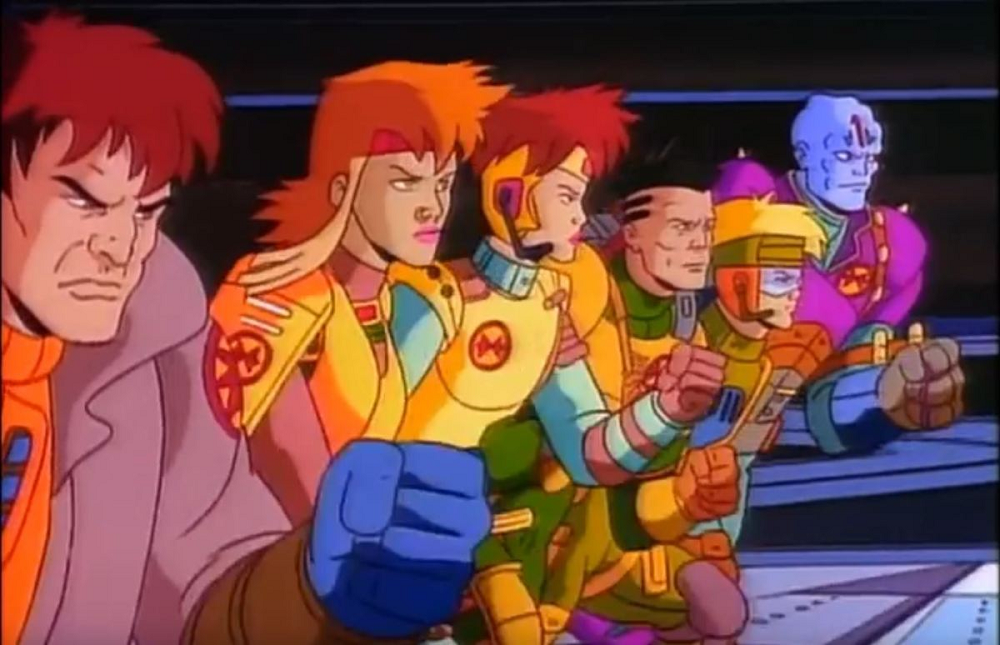
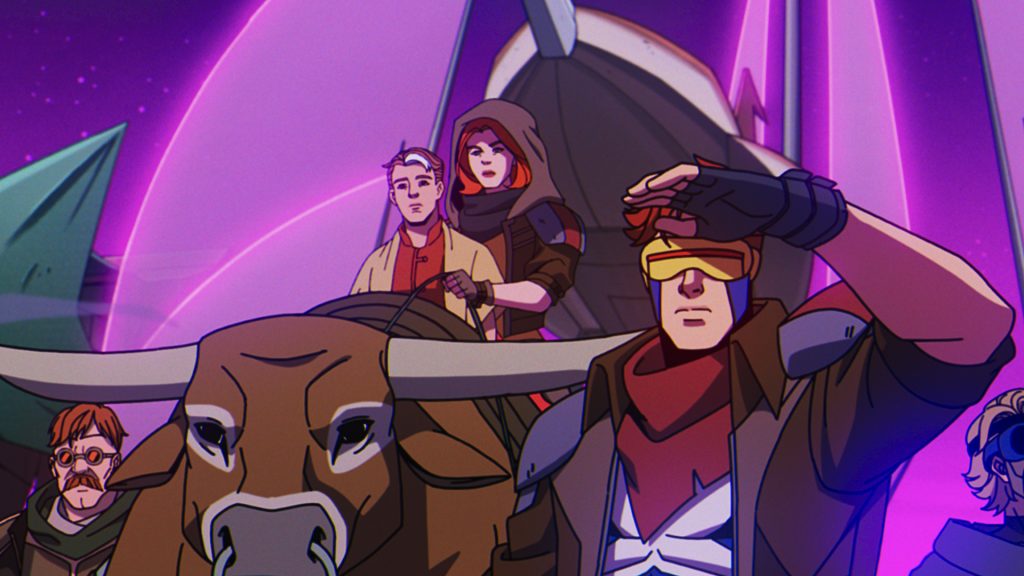
Exosquad takes place between the years 2119 and 2121, a time when humanity has escaped the confines of Earth to terraform Mars and Venus. The three planets form a tripartite “Homeworlds” for the Terrans, but not everybody is on board with this new status quo, and Pirate Clans – exiled to the Outer Planets – continually raid Terran ships. As the series starts, the Earth Congress finally reaches its limit and dispatches the entire Exofleet to the Outer Planets to deal with the threat of the Pirate Clans and this is the signal for an uprising by the Neosapiens, a race of artificially engineered beings used in the colonisation of Mars and Venus. A previous uprising fifty years earlier had been put down brutally, but the Neosapiens had bided their time and waited for the perfect opportunity.
With a cast of dozens, the show largely concentrated on the exploits of Able Squad, an elite, unisex, multi-racial eight-person unit that pilot Exoframes, powered exoskeletons in the mecha tradition found in manga and anime such as Mazinger, Mobile Suit Gundam, and Cyborg 009. Led by Lieutenant JT Marsh (voiced by Robby Benson, who had starred as the Beast in Disney’s Beauty and the Beast), and also including Nara Burns (Lisa Ann Beley), Alec DeLeon (John Payne), and Marsala (Gary Chalk), they find themselves at odds with the rest of the Exofleet and its commander, Captain Marcus (Richard Newman, who also does double duty as Neosapien Governor General Phaeton). However, Able Squad may just be the Terrans’ best hope of stopping the Neosapiens, but only if they can bring both the Pirate Clans and the Earthbound Resistance led by former Security Force misfit Sean Napier (Payne again) onside…
The first, thirteen-episode season of Exosquad premiered on September 18th 1993, syndicated both on Sundays and as the sole offering of the weekday afternoon Universal Family Network, a concept introduced to combat The Disney Afternoon. It built an impressive audience, especially when paired with Monster Force, an action-adventure show developed by Marv Wolfman that featured the original Universal monsters as agents, on Sunday mornings, and Universal were only too pleased to order a second season, this time of thirty-nine episodes, with new episodes beginning on weekdays from September 29th 1994.
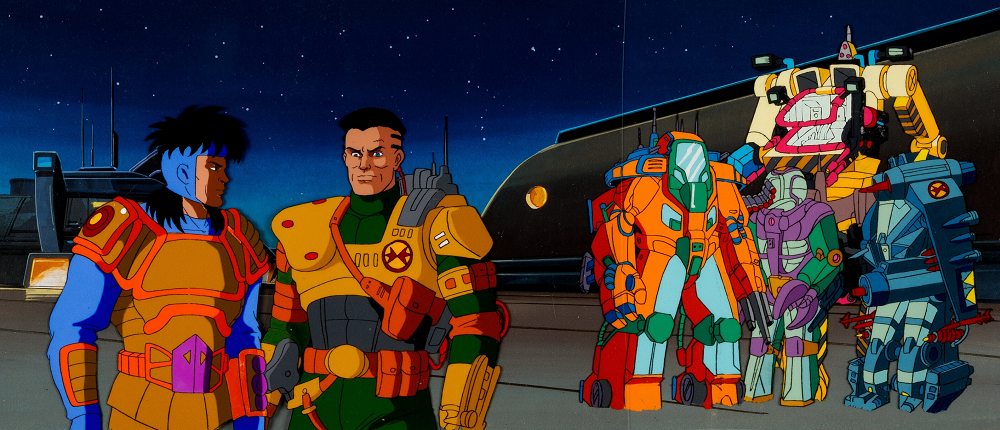
The show’s return was accompanied by a third series of action figures from Playmates, joining the first two waves that had begun appearing in toy stores in late 1993. With 3¾ inch figures packaged with their Exoframes, the young and young-at-heart could recreate the show’s action at home, something they could also do with a Sega Genesis videogame released in 1995. A one-off comic book tie in was also published by Topps in January 1994. Season two of Exosquad finished with the death of Phaeton and the end of the Neosapien uprising but dangled a tantalising thread as mysterious aliens attacked the Outer Planets. Ratings had dwindled, with many local affiliates choosing to air the show in the early hours due to its mature content, but there were hopes that it might continue and some sources report that work had begun on the first episode of the third season, as well as a possible spin-off show that Segal had given the working title of ExoPirates .
In the end, neither came to fruition, and nor did a direct-to-video feature film tying up loose ends. The toy line continued through to 1996, eventually encompassing six series and over forty figures and vehicles, but sales fell off without a TV show to drive them. While Segal remained at Universal there was always the hope that he could bring the show back but a restructure after the company was bought by Seagram in 1995 saw him step away from his role there a year later. Initially working as a consultant for companies including former Universal chief Sid Sheinberg’s Bubble Factory and children’s entertainment software company Cloud 9, he later joined Amnesty International’s media department as an executive director.
Three decades after its cancellation, Exosquad retains a strong fandom who are chomping at the bit for a revival. Universal retain the rights and although DVDs are long out of print (and only contained season one), it was one of the initial offerings on NBCUniversal’s Peacock streaming service when it debuted in July 2020. Its themes of human expansion into the solar system, an underclass of workers, and a small band trying to keep a fragile peace would find later find expression in The Expanse, a 2015 series based on the novels by James S A Corey that ran for six seasons on Syfy.
SWAT Kats: The Radical Squadron (Cartoon Network): Jacks of all trades, Christian and Yvon Tremblay began their creative careers in the basement of their parents’ home in Montreal, Canada. Self-taught in drawing, sculpting, and animation, they formed their own graphic design company. The brothers were working on a set of sleepwear designs when Yvon remarked that one of Christian’s characters looked like a fighter pilot. This set them off on a blur of creativity, adding more characters to the set along a jet plane theme, anthropomorphised cats matching the likes of the USAF’s F-14 Tomcat (and any number of previous Grumman planes). Contacting Hanna-Barbera’s development group, they were invited to Los Angeles to pitch their show, impressing executives to the point that Hanna-Barbera President Fred Seibert called an ”incredible presentation” that “we couldn’t say no to.”
Although they had some animation training, the brothers were not animators by any stretch of the imagination and so Hanna-Barbera put them together with experienced producer Davis Doi, story editor Glenn Leopold, character designer Lance Falk, and director Robert Alvarez. The Tremblays moved to Los Angeles and work began on turning the brothers’ initial concept into a workable, screen-ready thing that was sent to studios in Japan and Taiwan for animation. Out went the initial plan for the show’s two heroes to be called Chuck and Yeager, in honour of the first man to exceed the speed of sound, replaced by Jake “Razor” Clawson (voiced by Barry Gordon, Donatello in Teenage Mutant Ninja Turtles) and Chance “T-Bone” Furlong (Charlie Adler), former operatives of Megakat City’s paramilitary law enforcement agency The Enforcers until they were discharged for disobeying the orders of self-serving Enforcer Commander Feral (played by the voice of Space Ghost, Gary Owens).
Now working at a salvage yard, the pair use spare parts to build their own fighter jet, the Turbokat, and use it to patrol Megakat City as the SWAT Kats, vigilantes protecting the city from the likes of criminal mastermind Dark Kat (Brock Peters), twisted genius Doctor Viper (industry veteran Frank Welker), undead sorcerer Pastmaster (Keene Curtis), and a troupe of robot gangsters known as the Metallikats. Their allies included the hapless Mayor Manx (Jim “Winnie the Pooh” Cummings) and his clued-up deputy Callie Briggs (Animaniacs‘ Tress MacNeille), who would alert the Kats to danger but still did not know their secret identities, while Commander Feral was antagonistic to their activities, often threatening to arrest them on sight.
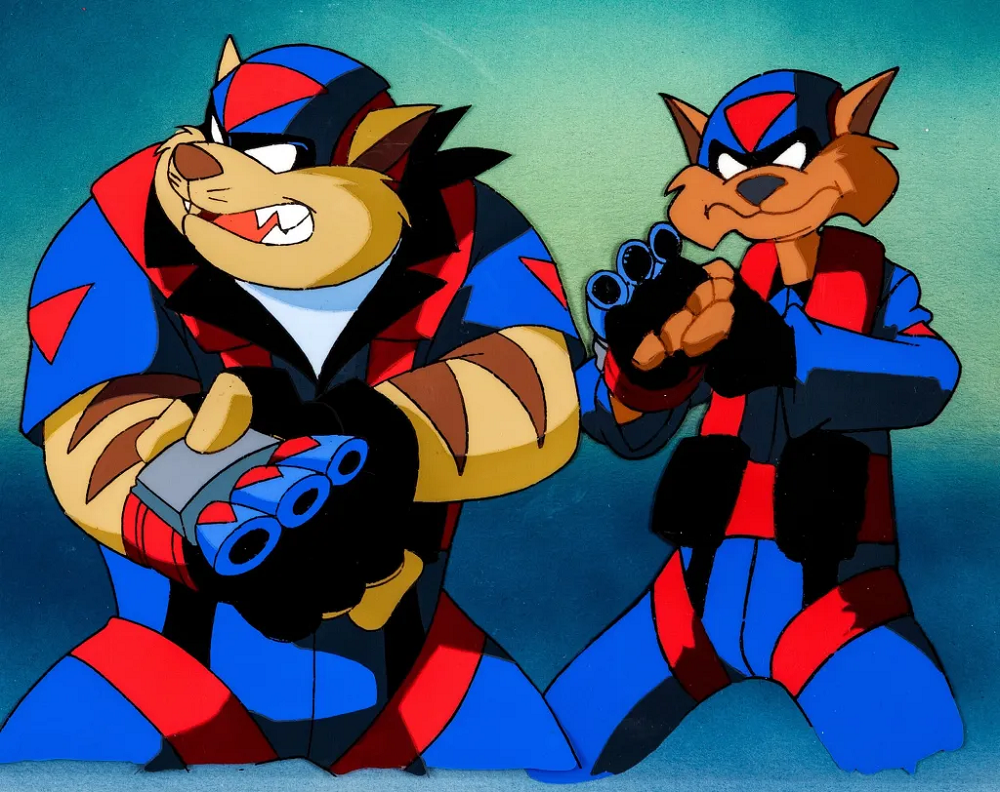
SWAT Kats: The Radical Squadron debuted on Cartoon Network on September 11th 1993, with new episodes airing weekly through December 4th. Their origin story was told in episode three and across a first season of thirteen episodes – all directed by Alvarez, with scripts mostly from Leopold and Falk – they kept the city safe, even warding off the threat of their deadliest enemies teaming up in the season finale at the behest of new arch-nemesis MadKat (Roddy McDowall).
With interest at a high from syndicated markets for the Fall of 1994, a second season of SWAT Kats was ordered, debuting on September 10th 1994. There was a new addition to the cast in the shape of Lieutenant Felina Feral (newcomer Lori Alan, later Pearl Krabs in Spongebob Squarepants), the niece of Commander Feral, who openly works with Razor and T-Bone knowing that she is too good an agent for her uncle to fire (and that her father wouldn’t let him hear the end of it if he did). New adversaries such as Mutilator and Turmoil appeared but there was also turmoil behind the scenes as Cartoon Network owner Ted Turner made it known that he thought modern cartoons, including some of those on his network, were too violent, and that he’d prefer it if the likes of Scooby Doo and The Flintstones occupied his airtime.
The second season was cut short after just twelve episodes, someway short of its series order, with three more episodes almost complete and a further four in the early concept stages. For years it was thought that Turner directly cancelled SWAT Kats himself, and Falk himself said as much in a 2009 interview, but the Tremblays later said Turner was on board with their show and that his ire was directed more at shows like Beavis and Butthead, which featured easily copied violence. SWAT Kats was merely collateral damage, Turner’s edict affecting merchandising deals for the cartoon, with executives wanting to ensure that the tie-ins were age appropriate. The delay in getting toys and other merchandise on shelves affected the amount of money the show was bringing in versus how much it was costing to produce.
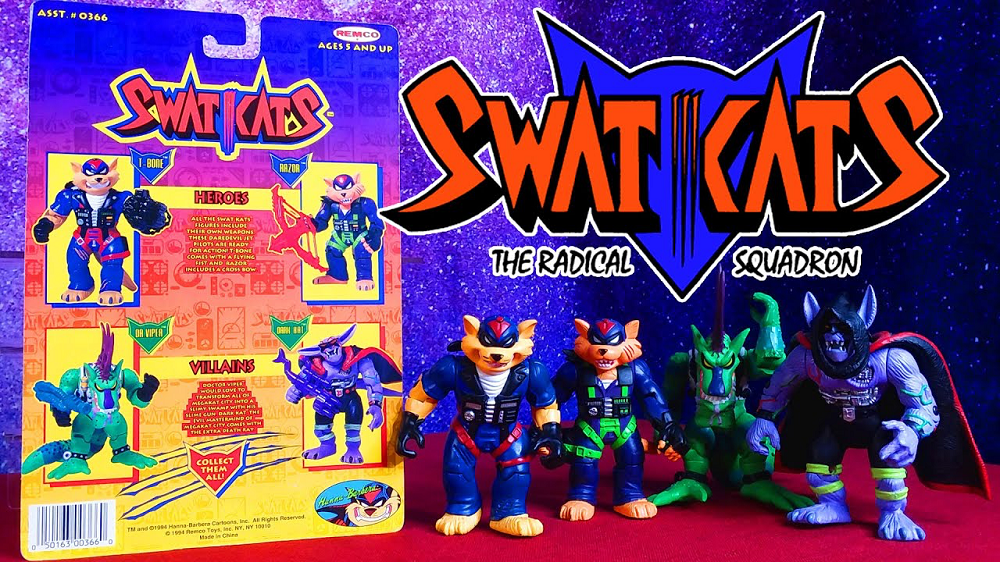
The final episode of the show premiered on Christmas Eve 1994, a day before kids across America unwrapped the action figures produced by Remco that accompanied the show’s second season. A one-off, clip-show special that was created to fulfil syndication obligations aired in January 1995, and a videogame for the Super NES was released in August that year, but that was it for SWAT Kats, with the Hanna-Barbera crew moving on to Cow & Chicken, I Am Weasel, and The Real Adventures of Johnny Quest, while the Tremblays began work on their next project. Mega Babies, a trio of mutant babies who fight off evil, was a co-production of Quebec studio Cinégroupe and Landmark Entertainment which debuted in October 1999 on Teletoon in Canada and the Fox Family Channel in the US.
In July 2015, the Tremblays made an announcement that they were Kickstarting a SWAT Kats revival, seeking various amounts for concept art, production samples, and other stages, right up to a full, seventy-minute movie. In the end they crowdfunded enough for a two-minute trailer which they first shopped to Warner Bros, who expressed interest but ultimately passed. In 2020, Christian Tremblay updated the campaign with a positive message explaining delays in the project, and – as of 2022 – SWAT Kats Revolution was reported to be in pre-production at Toonz Media Group in India, with X-Men Evolution writer Greg Johnson working with Christian Tremblay on the scripts.
Cro (ABC): Although they are known mostly for Sesame Street (and indeed are now called the Sesame Workshop), the Children’s Television Workshop were responsible for a string of other series beginning with 1971’s The Electric Factory, all designed to educate and entertain generations of children glued to their TVs. The 1980s brought 3-2-1 Contact, Square Television, and Mathnet, along with Encyclopedia, a co-production with premium cable service HBO developed by the Workshop’s for-profit arm, Distinguished Productions, Inc. In 1993 they began working on a show for ABC that was partially funded by the National Science Foundation, an independent agency funded by the US government. Designed to introduce basic scientific concepts in the fields of physics and mechanical engineering, the show was co-produced by Film Roman, an animation studio founded in 1984 by industry veteran Phil Roman which had recently hit paydirt with The Simpsons.
Cro featured the exploits of the titular caveboy and his pal, a woolly mammoth named Phil. When scientist Dr C and her assistant Mike travel to the Arctic, they discover Phil frozen in ice and, upon revival, he tells them of his adventures in the Ice Age with Cro. When situations in the modern era invoke principles of physics or engineering, Phil relates a story from his past where Cro encountered and solved a similar problem. Taking inspiration from David Macauley’s book How Things Work and developed by Mark Zaslove, who also developed The New Adventures of Winnie the Pooh and created TaleSpin for Disney, Cro’s name came from the Occitan word for cave. Occitan was a language spoken in southwest France, an area rich with palaeontological discoveries, and also a nod to his status as a Cro-Magnon who lives with a tribe of Neanderthals.

Cro debuted on September 18th 1993, leading off a line-up that also introduced the animated adventures of Sonic the Hedgehog, Tales of the Cryptkeeper, and CityKids to the ABC Saturday morning schedule. Jim Cumming provided the voice of Phil, with Doogie Howser, MD’s Max Casella as Cro and Cumming, Ruth Buzzi, and Frank Welker voicing the Neanderthals. Peril came in the shape of a pack of dire wolves led by Big Red (Charlie Adler) and yellow-eyed Smilodon Selene (Jane Singer). With competition from Marsupilami on CBS and Jim Henson’s Dog City on Fox, Cro regularly won its timeslot and was renewed for a second season beginning in September 1994, where it easily outrated CBS’s The Little Mermaid and Dog City once more.
A move to a noon timeslot saw ratings improve further but despite that, ABC cancelled the show after eight episodes of its second season with no explanation, although the fact they replaced it with an animated adaptation of Dumb and Dumber probably speaks volumes. In response, the Children’s Television Workshop began the process of creating their own network, free from the whims of the majors, which would eventually result in the debut of Noggin in February 1999, co-founded with MTV Networks and with re-runs of Cro a foundation of its schedule.
Next time on The Telephemera Years: Nothing, nada, zilch! An empty void, the result of the completion of our journey through forty-three-plus years of TV fluff! Thanks for reading!
Check out our other Telephemera articles:
The Telephemera Years: pre-1965 (part 1, 2, 3, 4)
The Telephemera Years: 1965 (part 1, 2, 3, 4)
The Telephemera Years: 1966 (part 1, 2, 3, 4)
The Telephemera Years: 1967 (part 1, 2, 3, 4)
The Telephemera Years: 1968 (part 1, 2, 3, 4)
The Telephemera Years: 1969 (part 1, 2, 3, 4)
The Telephemera Years: 1970 (part 1, 2, 3, 4)
The Telephemera Years: 1971 (part 1, 2, 3, 4)
The Telephemera Years: 1972 (part 1, 2, 3, 4)
The Telephemera Years: 1973 (part 1, 2, 3, 4)
The Telephemera Years: 1974 (part 1, 2, 3, 4, 5)
The Telephemera Years: 1975 (part 1, 2, 3, 4)
The Telephemera Years: 1976 (part 1, 2, 3, 4)
The Telephemera Years: 1977 (part 1, 2, 3, 4)
The Telephemera Years: 1978 (part 1, 2, 3, 4)
The Telephemera Years: 1979 (part 1, 2, 3, 4, 5, 6)
The Telephemera Years: 1980 (part 1, 2, 3, 4)
The Telephemera Years: 1981 (part 1, 2, 3, 4)
The Telephemera Years: 1982 (part 1, 2, 3, 4)
The Telephemera Years: 1983 (part 1, 2, 3, 4)
The Telephemera Years: 1984 (part 1, 2, 3, 4)
The Telephemera years: 1985 (part 1, 2, 3, 4)
The Telephemera Years: 1986 (part 1, 2, 3, 4)
The Telephemera Years: 1987 (part 1, 2, 3, 4)
The Telephemera Years: 1988 (part 1, 2, 3, 4, 5)
The Telephemera Years: 1989 (part 1, 2, 3, 4)
The Telephemera Years: 1990 (part 1, 2, 3, 4)
The Telephemera Years: 1991 (part 1, 2, 3, 4)
The Telephemera Years: 1992 (part 1, 2, 3, 4)
The Telephemera Years: 1993 (part 1, 2, 3)
The Telephemera Years: 1994 (part 1, 2, 3, 4)
The Telephemera Years: 1995 (part 1, 2, 3, 4)
The Telephemera Years: 1996 (part 1, 2, 3, 4)
The Telephemera Years: 1997 (part 1, 2, 3, 4)
The Telephemera Years: 1998 (part 1, 2, 3, 4)
The Telephemera Years: 1999 (part 1, 2, 3, 4)
The Telephemera Years: 2000 (part 1, 2, 3, 4)
The Telephemera Years: 2001 (part 1, 2, 3, 4)
The Telephemera Years: 2002 (part 1, 2, 3, 4)
The Telephemera Years: 2003 (part 1, 2, 3, 4)
The Telephemera Years: 2004 (part 1, 2, 3, 4)
The Telephemera Years: 2005 (part 1, 2, 3, 4)
The Telephemera Years: 2006 (part 1, 2, 3, 4)
The Telephemera Years: 2007 (part 1, 2, 3, 4)
The Telephemera Years: 2008 (part 1, 2, 3, 4)
The Telephemera Years: O Canada! (part 1, 2, 3, 4)
Titans of Telephemera: Irwin Allen
Titans of Telephemera: Stephen J Cannell (part 1, 2, 3, 4)
Titans of Telephemera: DIC (part 1, 2)
Titans of Telephemera: Filmation (part 1, 2)
Titans of Telephemera: Hanna-Barbera (part 1, 2, 3, 4, 5)
Titans of Telephemera: Kenneth Johnson
Titans of Telephemera: Sid & Marty Krofft
Titans of Telephemera: Glen A Larson (part 1, 2, 3, 4)
Titans of Telephemera: Quinn Martin (part 1, 2)
Titans of Telephemera: Rankin/Bass
Titans of Telephemera: Ruby-Spears