Ah, telephemera… those shows whose stay with us was tantalisingly brief, snatched away before their time, and sometimes with good cause. They hit the schedules alongside established shows, hoping for a long run, but it’s not always to be, and for every Street Hawk there’s two Manimals. But here at STARBURST we celebrate their existence and mourn their departure, drilling down into the new season’s entertainment with equal opportunities square eyes… these are The Telephemera Years!
1993-94
The top ten shows at the end of the 1993-94 season looked very similar to those from 1992-93, with 60 Minutes retaining top spot for CBS, and top five placings for ABC’s Home Improvement and Roseanne. Coach, Monday Night Football, Murphy Brown, and the CBS Sunday Night Movie all kept their top ten slots, and there was an enforced change as US viewers had to get used to life without Cheers. The big new hit was Seinfeld, now in its fifth season and finally becoming the show about nothing that said everything to US audiences, forming a solid sitcom quartet with Mad About You, Wings, and new arrival Frasier, a Cheers spin-off, that commanded Thursday nights for the peacock network.
Elsewhere, David Letterman moved from NBC to CBS and The X-Files arrived on Fox, southern belle Brett Butler gave ABC a new hit in Grace Under Fire, and there was plenty of new genre fodder with Los & Clark: The New Adventures of Superman, seaQuest DSV, Duckman, and Weird Science all beginning their runs to more than make up for the loss of Star Trek: The Next Generation. But those were all shows that made it onto the regular schedule; what about the ones that fell at the final hurdle? This is the story of four unsold pilots from 1993…
1994 Baker Street: Sherlock Holmes Returns (CBS): By 1993, Kenneth Johnson’s once magic touch looked to be wearing off. Fox cancelled Alien Nation, a TV adaptation of the 1987 movie, after just one season in May 1990 and Johnson had no new project to move on to, a break in a prolific career that saw him write, direct, or produce hundreds of episodes of TV, including The Six Million Dollar Man, The Bionic Woman (which he created), the Incredible Hulk, and V. He took the time to develop a new concept, a reinvention of a classic hero for the modern age, something that had been tried recently without success but also without Johnson’s considerable eye for TV gold.
Despite several successful adaptations on British TV, Sherlock Holmes had been off US screens since 1955, despite several attempts to update the hero for a contemporary audience. The last of these, 1987’s The Return of Sherlock Holmes, saw the world’s great detective revived from cryogenic suspension to help a struggling detective solve crimes in modern day Boston. It fell at the pilot stage, but Johnson hoped to go one better, crafting something that may have had a similar starting point – Holmes is again freed from suspended animation, this time by an earthquake that strikes San Francisco – but also brought in descendants of the criminal mastermind Moriarty, and a new Baker Street irregulars, the street urchins that acted as the original Holmes’s eyes and ears in Victorian London.
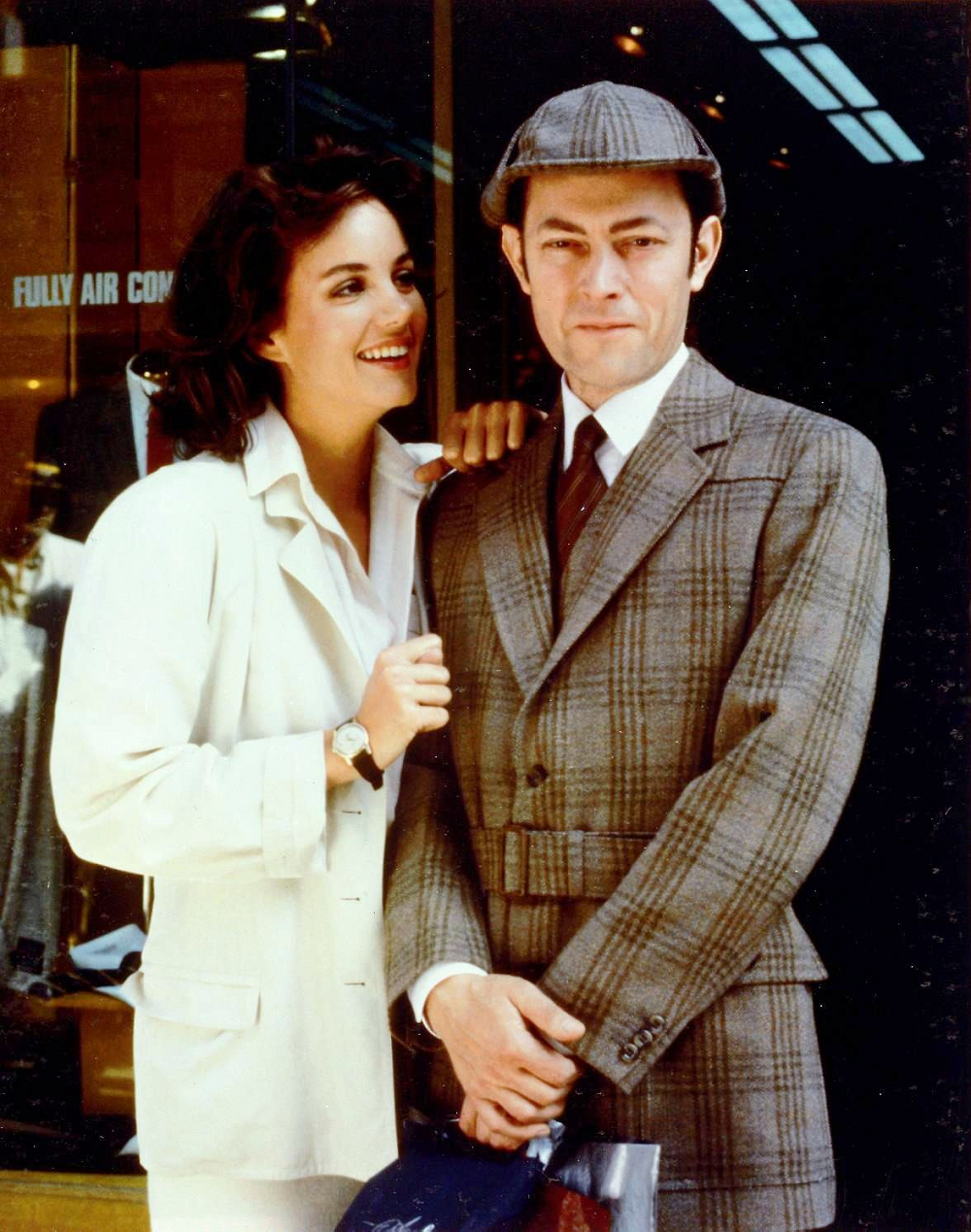
1994 Baker Street: Sherlock Holmes Returns found a home at CBS, who ordered a pilot based on Johnson’s script. Filmed mostly in Vancouver, Canada, the pilot was directed by Johnson and starred Anthony Higgins as the titular sleuth. In 1985, Higgins had played Moriarty in Barry Levinson’s Young Sherlock Holmes, making him the first actor since Orson Welles (who did it on radio) to play both roles. Alongside him in lieu of a Watson was Dr Amy Winslow, a medic who helps Holmes recover from his slumber and gives him a base for his operations at her home on Baker Street in San Francisco. Kim Delaney was in the running to play Winslow but CBS pushed for Hooperman‘s Debrah Farentino, with whom they had a deal.
The mystery afoot was a series of bizarre murders which, with the help of street punk Zapper (Mark Adair-Rios) and his gang, Holmes discovers were committed by James Moriarty Booth (Ken Pogue), and an ancient battle is on once more! Or not. CBS passed on the pilot but did show it – titled Sherlock Holmes Returns! In the Adventure of the Tiger’s Revenge – as a CBS Sunday Night Movie on September 12th 1993, opposite the pilot episodes of Los & Clark: The New Adventures of Superman on ABC and SeaQuest DSV on NBC, coming a distant third. Johnson – who, thanks to a change of management at Fox, was back working on a series of Alien Nation TV movies – later repurposed the script for a 2022 novel – Holmes Coming – with the 1990s setting updated to the 2020s.
Doorways (ABC): George R R Martin started writing early, selling monster stories to other neighbourhood kids for pennies and crafting his first epics, fantasy stories based around his pet turtles. At High School, he became a comic book fan, particularly of the new line of Marvel Comics superheroes that began with Fantastic Four #1, and his letters appeared in many titles as expressed his fandom, which also later spread to writing fan fiction for fanzines, winning an award in 1965 for Best Fan Fiction for a story entitled “Powerman vs the Blue Barrier.” After graduating from Northwestern University’s School of Journalism, Martin set about becoming a professional writer, selling stories to various magazines. His first sale was “The Hero,” published in Galaxy magazine’s February 1971 issue.
A job administering chess tournaments at weekends allowed him to write throughout the week and he was nominated for both the Hugo and Nebula Awards for “When Morning Comes Mistfall,” published in Analog magazine in 1973. Dying of the Light, his first novel, was published in 1976, just as his chess job came to an end and he took a position teaching at Clarke University. He went full time as a writer in 1979, a result of a re-evaluation of his life following the early death of a close friend, the first result of which was Windhaven, an adaptation of three of his own short stories into one novel-length story. Further novels and short story collections followed, and one of those stories – “Nightflyers” – was turned into a 1987 movie by Robert Jaffe. That same year, he began overseeing the Wild Cards series of short story collections, with stories by a variety of authors all set in the same alternate universe.
Martin also wrote for TV during the 1980s, submitting scripts for several episodes of The Twilight Zone and Beauty and the Beast, and in 1991 he met with both ABC and Fox about a script he’d written for a prospective series. Fox were interested but wanted time to consider the proposal and while they were thinking, ABC swooped in and agreed to make a pilot. Like Wild Cards, Doors (as it was then called) dealt in the business of alternate worlds, with the titular openings allowing travel between them, and the story begins with a mysterious woman called Cat appearing out of nowhere in the middle of a freeway, causing an accident in which she is injured. After she is taken to hospital and the scene is cleared, three more, cloaked individuals and a floating platform appear at the same location.
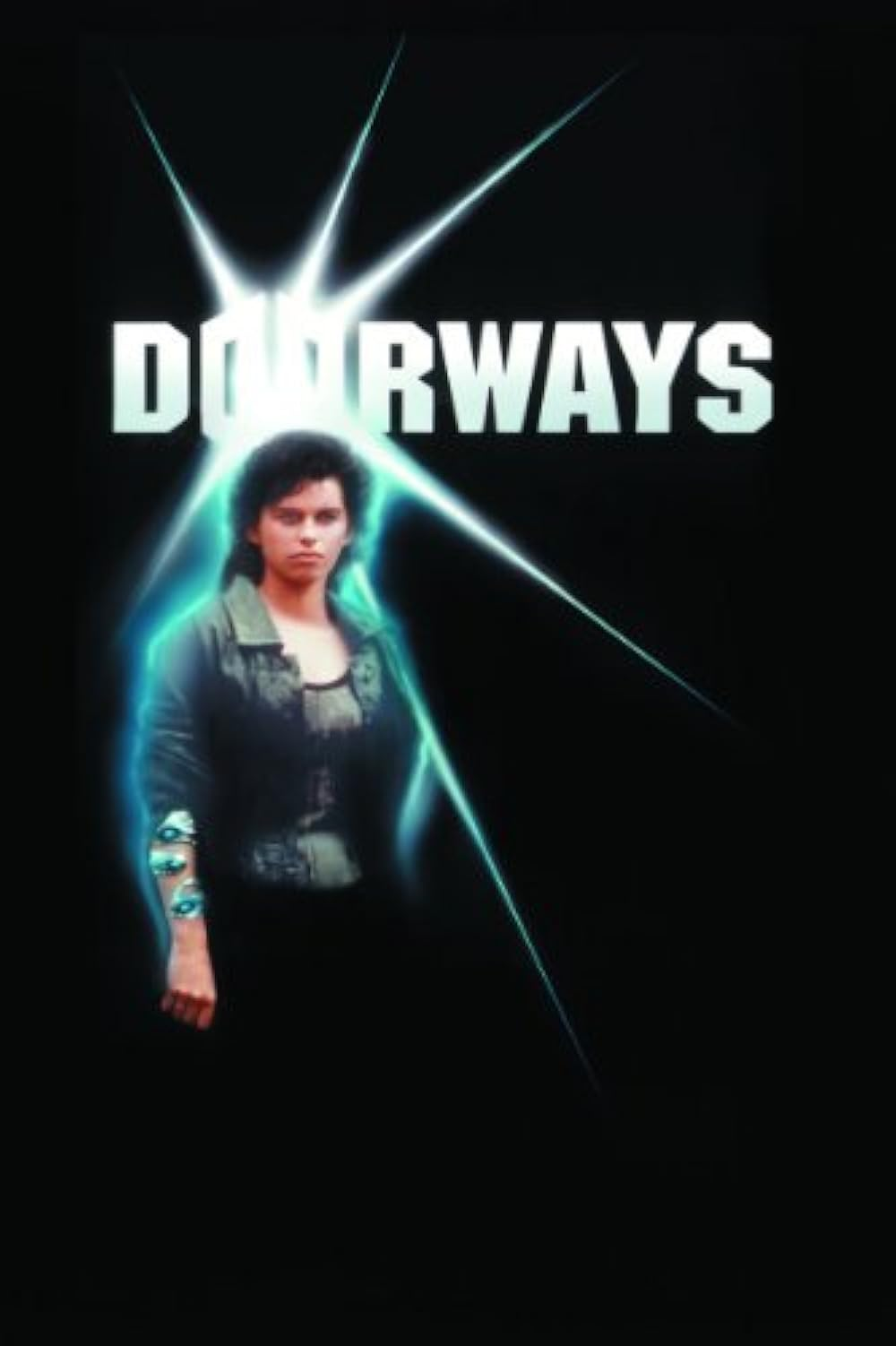
Cat is removed from the hospital by the FBI, who escort her doctor, Thomas, to a secret facility where she is being held. They have discovered that the objects she is carrying are not of Earthly construction, but Thomas helps Cat escape, after which she tells him she is from a parallel Earth dominated by an alien being known as the Dark Lord, and that his agents are tracking her. She is able to move between parallel words by using the strange bracelet – the geosyncronator – that puzzled the FBI and, after a confrontation with the Dark Lord’s hunter, they escape to another Earth…
Martin spent much of 1991 polishing the script, with production beginning in early 1992. French actress Anne Le Guernec was cast as Cat, bringing a touch of otherworldliness to the role, but the producers first choice to play Thomas – George Newbern – was tied up filming a movie and wouldn’t be available until May. The decision was made to delay until Newbern was free, eventually joining a cast that also included Robocop‘s Kurtwood Smith as FBI agent Trager and Robert Knepper as Thane, agent of the Dark Lord. Hoyt Axton, Signy Coleman, and Carrie Ann Moss also signed on, with Peter Werner, who won an Academy Award in 1975 for Best Live-Action Short Film before moving primarily into TV, installed in the director’s chair.

After viewing a rough cut of the pilot, ABC insisted on a change of name to Doorways, thinking Doors might become confused with Oliver Stone’s recent biopic of Jim Morrison, and ordered six more scripts, which Martin began working on with his co-executive producer Jim Crocker, former Twilight Zone staff writers Michael Cassutt and JD Feigelson, Strange Brew scripter Steve De Jarnatt, and Ed Zuckerman all involved. Two cuts of the pilot were made: a ninety-minute version to be shown as a TV movie to gauge interest in the concept, and a two-hour cut for the European market. ABC were reluctant to fund the expanded edit and eventually decided to pass on the show in favour of Lois & Clark: The New Adventures of Superman, reasoning that two shows relying on special effects would be one too many for their Fall 1993 budget.
After ABC made their decision, Martin went back to Fox, who viewed the pilot and the six new scripts. They, too, ultimately passed on the show, but in March 1995 they debuted a new show called Sliders, created by Tracy Tormé and Robert K Weiss from an original idea by Tormé. As soon as the new series launched, alternate history maven Evelyn C Leeper noted the similarities between the new series and Doorways, which had been screened by Martin around various science-fiction conventions after its rejection. Martin himself addressed the controversy after reports circulated that Tormé had applied for a writing position on Doorways if it went to series.
Martin confirmed that Tormé’s agent had been in contact, fishing for a job for his client and claiming that he’d read and liked the pilot script, but that their mutual friend Harlan Ellison had heard from Tormé that he knew nothing about it. Martin decided that if Ellison believed Tormé then that was good enough for him, but did say that the success of Sliders – which ran for five seasons – made it impossible for him to resurrect Doorways at another network. He did, however, adapt the pilot for a comic book series with IDW in 2010.
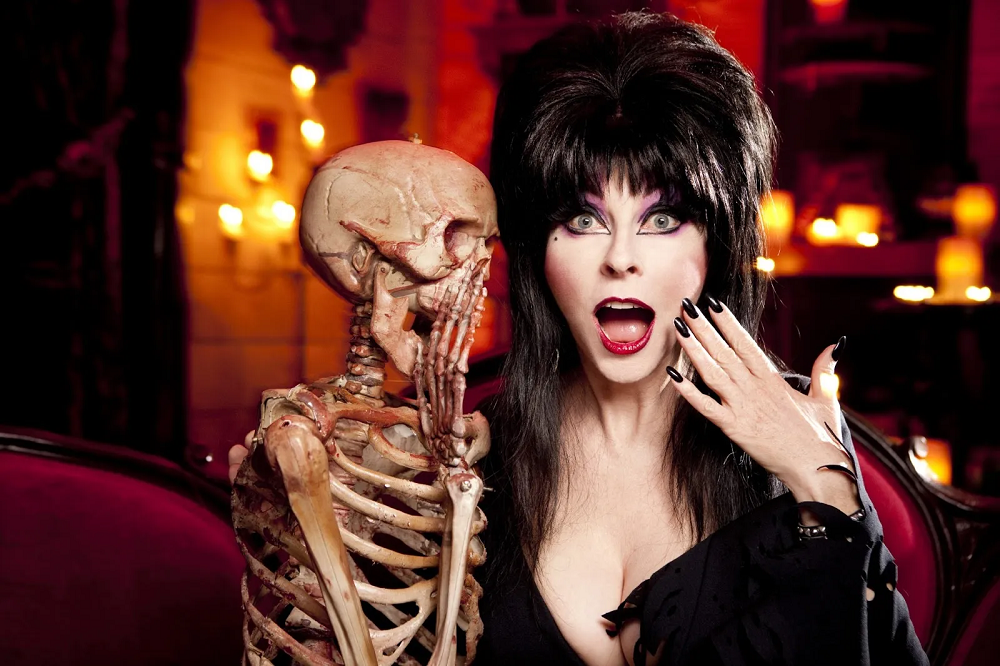
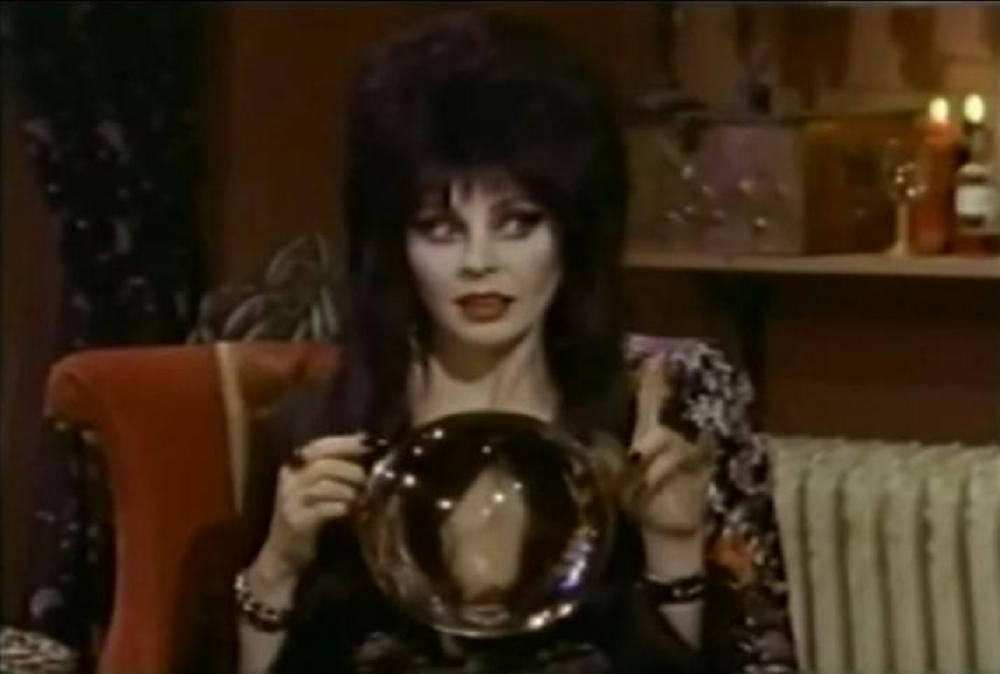
The Elvira Show (Fox): Hosted by the cadaverous Seymour, Fright Night was a showcase for low-budget horror and science-fiction B-movies that ran on KHJ-TV in Los Angeles from 1970. Seymour was briefly replaced in 1972 by Moona Lisa (Lisa Clark), but actor Larry Vincent returned to his most famous role until his death in 1975 from stomach cancer. The show continued with Robert Foster’s Grimsley afterwards but was a shadow of its former glory and it slipped into the night in 1979. Two years later, KHJ bosses wanted to revive the slot, hiring former horror host Maila Numi – who, in the 1950s, had raised pulses as the sultry Vampira – to helm the project, but Numi walked away when her choice for a new Vampira (Lola Falana) was vetoed by the channel. Instead, KHJ sent out a casting call, attracting former Las Vegas showgirl and nude pin-up Cassandra Peterson, who’d just narrowly missed out on the role of Ginger in the third Gilligan’s Island TV movie.
Impressing the show’s producers, Peterson won the role and pitched an idea that she base her look on Sharon Tate’s character in The Fearless Vampire Killers. When this was rejected, she worked with close friend and make-up artist Robert Redding to create what would become her signature look, including influences like traditional Japanese Kabuki make-up and the Ronettes’ bouffant hairstyles. Although Fright Night was still running on KHJ’s sister station in New York (without a host), the station decided to change the name of the show to Movie Macabre, or occasionally Movie Macabre with Elvira, the name Peterson and Redding chose for her new character.
Regardless of what film she was hosting, Elvira quickly became a sensation, her figure-hugging dress, ample cleavage, wisecracking asides, and self-deprecating, “Valley Girl” personality soon earning her a legion of fans. Comic books, trading cards, action figures, and more were available featuring the character, and on Halloween 1984 she hosted a six-hour special on MTV, with another four-hour special two years later, shortly after Movie Macabre ended its run. In 1988, NBC casting director Joel Thurm pitched an Elvira sitcom to network head Brandon Tartikoff, who expressed strong interest in the idea. Peterson, however, had her heart set on an Elvira movie, and Tartikoff instead made a deal for NBC to produce a film, with an option for sequels and a prime-time TV show if it was successful.
The script was written by Peterson, frequent writing partner John Paragon, and Sam Egan, who had impressed Peterson with an episode of The Fall Guy he wrote that she guest-starred in. Tartikoff wanted the film to be based on 1978 suburbia comedy Harper Valley PTA and Peterson, who had guest-starred in Pee Wee’s Big Adventure, thought Tim Burton would be a perfect director. However, with Burton tied up with Beetlejuice, Saturday Night Live‘s James Signorelli was brought in to helm the shoot. Elvira: Mistress of the Dark premiered in September 1988, the day after its distribution company went out of business, resulting in a reduction in the number of theatres it showed in, and a box office take someway short of its budget of $7.5 million.
Still, the movie hit the spot for fans of Elvira’s campy schlock, and she returned to hosting horror movies, hosting Elvira’s Thriller Theatre for Australia’s Network 10 and the Elvira’s Midnight Madness series of VHS tapes, as well as hosting Heavy Metal heaven for BBC2 in the UK, with guest appearances on WCW Wrestling, Saturday Night Live, and Totally Hidden Video keeping her in the public eye. Brandon Tartikoff left NBC in 1991 and plans to produce a sequel to Elvira: Mistress of the Dark hit a snag when Carolco Pictures went bankrupt but plans to make a sitcom resurfaced when a script by Peterson, Paragon, and long-time Saturday Night Live writer Anne Beatts made it to CBS executive Jeff Sagansky’s desk.
Sagansky greenlit a pilot, with sitcom veteran Peter Bonerz brought in to direct, and Soap‘s Katherine Helmond cast as Elvira’s Aunt Minvera, whose peaceful existence in the small town of Manhattan, Kansas, is upset when her niece arrives. Elvira’s efforts to blend in with the neighbours backfire spectacularly, especially when a pair of overzealous cops take an interest in her…
Officer: This is a bust!
Elvira (pointing at her cleavage): “No, this is a bust!”
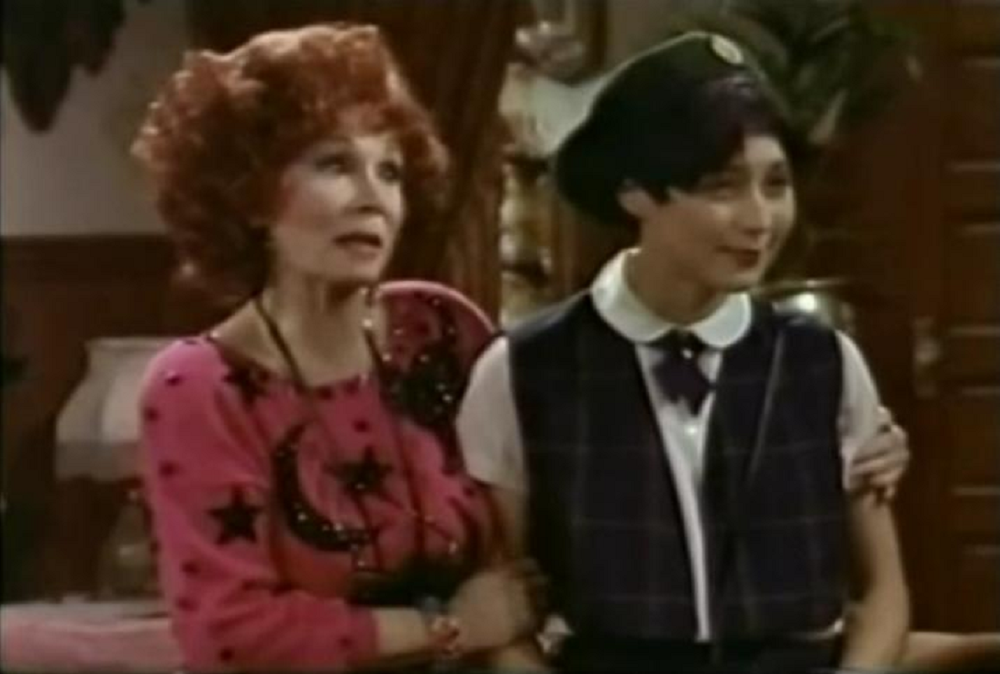
Matters are further complicated by the arrival of a long-lost relative, Paige (Phoebe Augustine from Twin Peaks), who has been living in a convent since the death of her parents but may be about to come of age as a witch herself. Oh, and there’s a talking cat called Renfield (voiced by Paragon), and if this is all beginning to sound like Sabrina the Teenage Witch (which debuted on ABC three years later), you’re not the first to make that connection. Reaction to the pilot was strong, and Petersen was told the show “was in the can,” but it was killed when Sagansky fell ill and his boss, CBS president Howard Stringer, stepped in and was horrified at the risqué nature of the show, with Peterson writing in her memoir Yours Cruelly, Elvira, that he roared, “We can’t have tits like that on CBS!”
Once The Elvira Show was done, Peterson returned to a life of guest appearances and TV specials, also appearing in unusual 3-D movie Encounter in the Third Dimension in 1999, where Elvira becomes trapped between the second and third dimensions. She and then-husband Mark Pierson never gave up hope of making another Elvira movie and managed to attract financing to shoot Elvira’s Haunted Hills in Hungary in 2001. The movie, directed by Sam Irwin and written by Peterson and Paragon, was set in Transylvania in 1851 and featured Richard O’Brien and Mary Scheer. Premiering at the International Rocky Horror Fan Convention in June 2001, it was dedicated to the memory of the recently deceased Vincent Price and parodied Roger Corman’s Edgar Allan Poe films, bringing Elvira full circle to the films she was created to host two decades before.
Gloria Vane (NBC): Cambridge, Massachusetts, native Joe Keenan made a minor splash with his debut novel, Blue Heaven, in 1988, earning rave reviews in the likes of the Los Angeles Times and in gay newspapers all over the US. Putting on the Ritz followed in 1991 and Keenan also began work on a stage musical – The Times – with Brad Ross, which would earn the pair the Richard Rodgers Development Award from the American Academy and Institute of Arts and Letters. It was one of those reviews for Blue Heaven, though, that led to Keenan being given the opportunity to create a TV show, when Cheers writer David Lloyd was so intrigued by the Boston Globe’s description of the book’s “Wodehousian merriment” that he rushed out and bought a copy.
Lloyd, a Wodehouse devotee who owns first editions of many of the writer’s novels, loved the novel so much that he bought copies for all his friends, a list which included Glenn and Les Charles, co-creators of Cheers with James Burrows. The Charles brothers also loved the novel and invited Keenan to write a pilot for a new show. Interested in Hollywood’s faded glamour, Keenan wrote a comedy about an actress from the era of classical Hollywood cinema, except that for all her self-centred narcissism, Gloria Vane is stuck making B-movies. Worse still, her ex-husband – and date for the premiere of her latest film – reveals that his novel is being made into a film by Gloria’s studio.
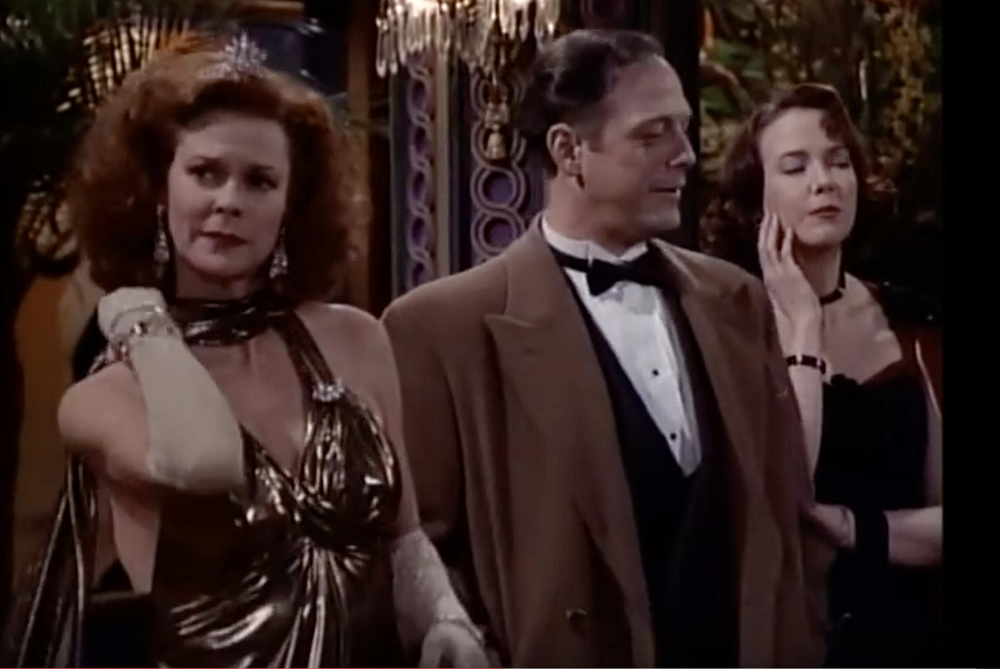
Keenan, an out gay man who has lived with his partner since 1982, called the script “gay-sensible without being so gay we couldn’t get sponsors,” and has one of the characters answer, in reply to Gloria wondering what he’d be without her, “Heterosexual, probably.” JoBeth Williams, despite several movie roles probably still best known for the four years she spent on Guiding Light in the late 1970s, was perfect as Gloria, with the rest of the cast including Jerry Adler, Desperately Seeking Susan‘s Mark Blum, and Harriet Sansom Harris. James Burrows helmed the pilot, but it didn’t click with executives at NBC, who passed on taking the project to series.
Keenan was quickly snapped up and added to the writing crew for Frasier, the Cheers spin-off that debuted in September 1993, making his bow with season two’s “The Matchmaker” in October 1994, the first of two dozen he’d write. From season three to the end of season seven, he worked as a producer on the show, leaving to develop The Seven Roses with former Golden Girls and Frasier scripter Christopher Lloyd. A sitcom starring Brenda Blethyn as the recently widowed matriarch of an eccentric family who runs the titular inn, it failed at the pilot stage, and their next effort – Bram and Alice, which starred Alfred Molina and Traylor Howard – was cancelled after just four episodes. Keenan returned for Frasier’s final season and his next series with Lloyd – 2005’s Out of Practice – at least made a full season before they dissolved their partnership.
Next time on The Telephemera Years: What were the kids watching in 1993? Cadillacs, dinosaurs, kats, and whatever a Cro is!
Check out our other Telephemera articles:
The Telephemera Years: pre-1965 (part 1, 2, 3, 4)
The Telephemera Years: 1965 (part 1, 2, 3, 4)
The Telephemera Years: 1966 (part 1, 2, 3, 4)
The Telephemera Years: 1967 (part 1, 2, 3, 4)
The Telephemera Years: 1968 (part 1, 2, 3, 4)
The Telephemera Years: 1969 (part 1, 2, 3, 4)
The Telephemera Years: 1970 (part 1, 2, 3, 4)
The Telephemera Years: 1971 (part 1, 2, 3, 4)
The Telephemera Years: 1972 (part 1, 2, 3, 4)
The Telephemera Years: 1973 (part 1, 2, 3, 4)
The Telephemera Years: 1974 (part 1, 2, 3, 4, 5)
The Telephemera Years: 1975 (part 1, 2, 3, 4)
The Telephemera Years: 1976 (part 1, 2, 3, 4)
The Telephemera Years: 1977 (part 1, 2, 3, 4)
The Telephemera Years: 1978 (part 1, 2, 3, 4)
The Telephemera Years: 1979 (part 1, 2, 3, 4, 5, 6)
The Telephemera Years: 1980 (part 1, 2, 3, 4)
The Telephemera Years: 1981 (part 1, 2, 3, 4)
The Telephemera Years: 1982 (part 1, 2, 3, 4)
The Telephemera Years: 1983 (part 1, 2, 3, 4)
The Telephemera Years: 1984 (part 1, 2, 3, 4)
The Telephemera years: 1985 (part 1, 2, 3, 4)
The Telephemera Years: 1986 (part 1, 2, 3, 4)
The Telephemera Years: 1987 (part 1, 2, 3, 4)
The Telephemera Years: 1988 (part 1, 2, 3, 4, 5)
The Telephemera Years: 1989 (part 1, 2, 3, 4)
The Telephemera Years: 1990 (part 1, 2, 3, 4)
The Telephemera Years: 1991 (part 1, 2, 3, 4)
The Telephemera Years: 1992 (part 1, 2, 3, 4)
The Telephemera Years: 1993 (part 1, 2)
The Telephemera Years: 1994 (part 1, 2, 3, 4)
The Telephemera Years: 1995 (part 1, 2, 3, 4)
The Telephemera Years: 1996 (part 1, 2, 3, 4)
The Telephemera Years: 1997 (part 1, 2, 3, 4)
The Telephemera Years: 1998 (part 1, 2, 3, 4)
The Telephemera Years: 1999 (part 1, 2, 3, 4)
The Telephemera Years: 2000 (part 1, 2, 3, 4)
The Telephemera Years: 2001 (part 1, 2, 3, 4)
The Telephemera Years: 2002 (part 1, 2, 3, 4)
The Telephemera Years: 2003 (part 1, 2, 3, 4)
The Telephemera Years: 2004 (part 1, 2, 3, 4)
The Telephemera Years: 2005 (part 1, 2, 3, 4)
The Telephemera Years: 2006 (part 1, 2, 3, 4)
The Telephemera Years: 2007 (part 1, 2, 3, 4)
The Telephemera Years: 2008 (part 1, 2, 3, 4)
The Telephemera Years: O Canada! (part 1, 2, 3, 4)
Titans of Telephemera: Irwin Allen
Titans of Telephemera: Stephen J Cannell (part 1, 2, 3, 4)
Titans of Telephemera: DIC (part 1, 2)
Titans of Telephemera: Filmation (part 1, 2)
Titans of Telephemera: Hanna-Barbera (part 1, 2, 3, 4, 5)
Titans of Telephemera: Kenneth Johnson
Titans of Telephemera: Sid & Marty Krofft
Titans of Telephemera: Glen A Larson (part 1, 2, 3, 4)
Titans of Telephemera: Quinn Martin (part 1, 2)
Titans of Telephemera: Rankin/Bass
Titans of Telephemera: Ruby-Spears