David Gordon Green | HALLOWEEN KILLS

Michael Myers in Laurie Strode's burning house in Halloween Kills Halloween Ends trilogy

Writer-director David Gordon Green returns to the Halloween franchise with Halloween Kills, the second instalment in his planned trilogy of films. After Laurie Strode (Jamie Lee Curtis), her daughter Karen (Judy Greer), and her granddaughter Allyson (Andi Matichak) leave Michael Myers caged in the basement of Laurie’s burning house, Michael survives and manages to free himself. With Laurie gravely injured, the people of Haddonfield take it upon themselves to band together and hunt the monster terrorising their town.

Ahead of its release, STARBURST spoke with David Gordon Green about returning to the franchise, collaborating with John Carpenter, upping the story’s stakes and the action, and Halloween Kills’ contemporary relevance.
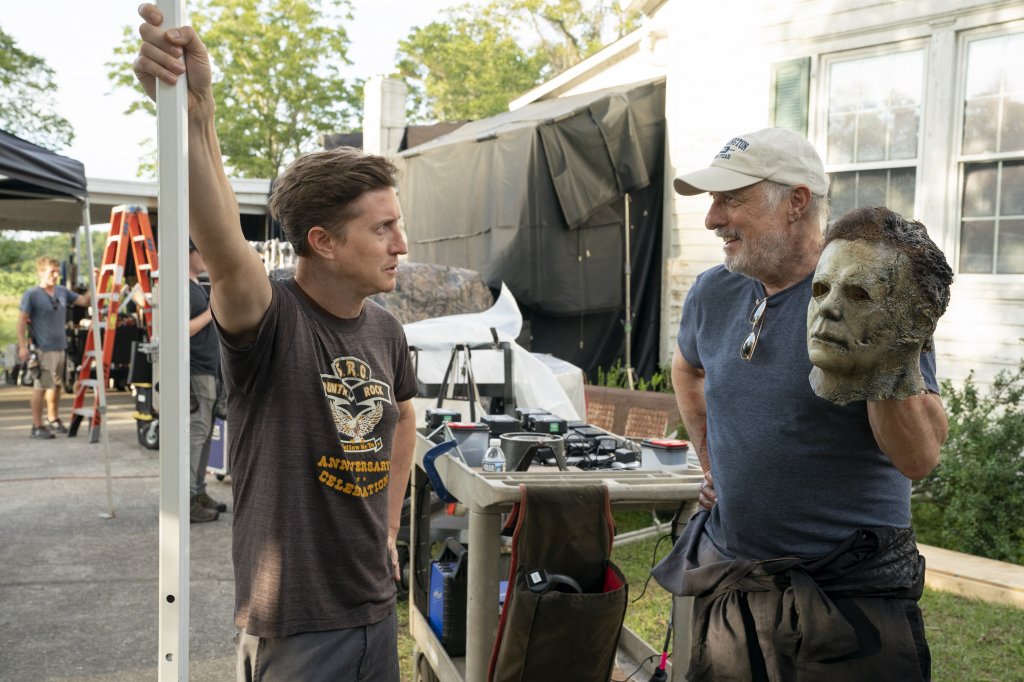
David Gordon Green behind the scenes of Halloween Kills

This is now your second venture into the horror genre, following on from Halloween. What did you learn then, that you applied directing Halloween Kills?

David Gordon Green: I learned that what works about Halloween is its simplicity. And if we learned anything from the 2018 version, it’s that bringing together Michael and Laurie in that kind of confrontation between good and evil is what makes it so compelling. And then I ignored all of that and we turned that simplicity into a complex ensemble of chaos, and took the theme of fear as it relates to that intimate connection between Laurie and Michael, and we spun it out to permeate the entire community of Haddonfield!

Speaking on that broadening scope though, Halloween Kills is admittedly less intimate than its predecessor. How do you balance keeping the soul of the original, which is a very domestic piece of violence, with the need to expand the story and keep things from feeling repetitive?  

David Gordon Green: What you’re asking is actually an impossible task. The only think that I could say is that you have to do – or at least, what myself and my co-writers Danny McBride and Scott Teems do – is write from a place of love and appreciation, where we are honouring John Carpenter and Debra Hill’s characters and using them as a springboard to expand that world’s mythology.

And I’m just really lucky to have John Carpenter and Jamie Lee Curtis along for the ride. They’re not just consultants on the film – Jamie, she’s my very close friend and collaborator in this character, and John is a wonderful collaborator for the score as well as being the godfather of the screenplay, making sure that we don’t fuck it up too much. That’s a really amazing way to be able to work.

I sent John the latest draft of Halloween Ends two nights ago, and hopefully soon I’ll have some notes from him. And I’m always excited about that: sometimes it’s a curveball, other times it’s an inspiration. And I’m looking forward to the continuation of those relationships. To some degree, they’re why I wanted to make movies in the first place, and to get in the ring with your heroes is understandably amazing.
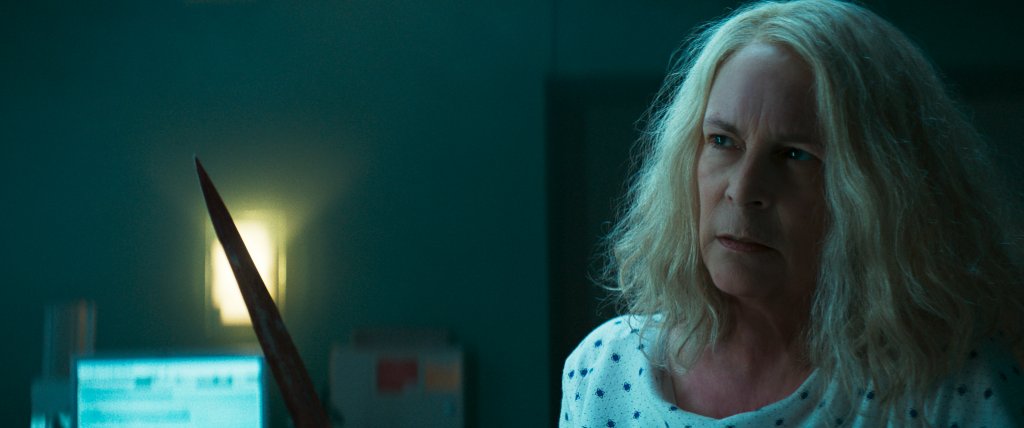
Jamie Lee Curtis as Laurie Strode in Halloween Kills

If you’re still finalising Halloween Kills now, you must have been relieved when plans were scrapped to film both films back-to-back.

David Gordon Green: I mean, I’ll still be finalising the story when I’m sound mixing. I’m a very open person, always evolving the story, always out to better what’s there. I’m very glad I didn’t do two movies at once because that would be exhausting – and these movies are exhilarating.

Part of the continuity established between Halloween and Halloween Kills is the intergenerational tensions between Laurie, Karen, and Allyson. Why was it important to keep that thread throughout?

David Gordon Green: Well, it’s one of the classic narrative momentums to find characters that we love, that have different objectives and different psychologies, and therefore have different approaches. They disagree, they butt heads, there’s conflict, and then it’s about how do we resolve that and come together, how do we join forces and overcome evil?

Would it be fair to say that Halloween Kills also sets up Allyson to take up that fight, almost as though she is taking on her grandmother’s mantle?

David Gordon Green: Yeah. And I think, if there’s one thing that Laurie has taught her daughter and granddaughter, it’s how to be a survivor. There is a strength of character there between those three generations of women and I love to study that, I love to challenge that and expand on that. And putting Laurie and Karen and Allyson to the next task is always a thrill to write and even when we’re writing it, we don’t know where it’s gonna go and we don’t know who’s gonna live or die.

By its very nature, this is a heavy film. But an interesting bit of levity comes from the dynamic between the characters of Big John and Little John [Scott MacArthur and Michael McDonald, respectively]. What was their role in bringing some tonal balance to Halloween Kills?

David Gordon Green: So, there’s nothing comedically written about Big John and Little John. But these are characters that come and go relatively quickly, without a whole lot of time to develop – I wrote both those roles for these specific actors. Michael and Scott are friends of mine and I just thought their chemistry would be interesting. I knew their beautiful humanity and that we could find a very unexpected journey to take these two characters on. Those were the days on set where I would be glowing with smiles, just because their sensitivity and sense of humour on set is really wonderful. And you know, there’s not any jokes or anything other than some wiseass conversations that they have. They like to sit around, smoke weed, watch Minnie and Moskowitz, and I think there’s just a pleasure we get from seeing characters be this affectionate.
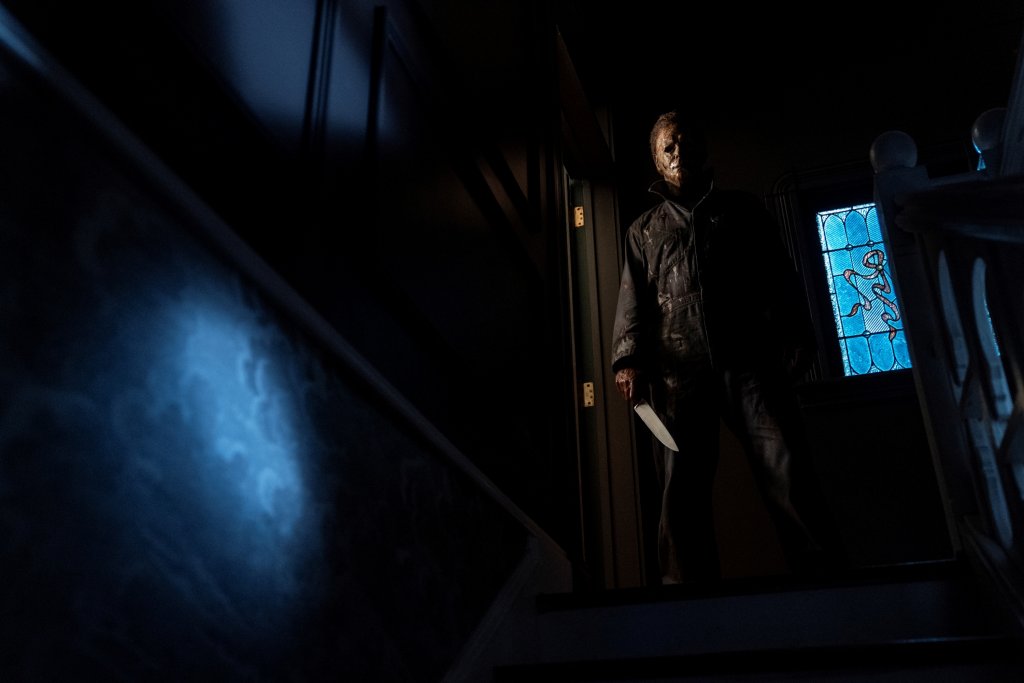
Halloween Kills sees Michael Myers return, directed by David Gordon Green

I guess part of the comedy comes from the slightly absurd, mundane nature of their conversations being set against the escalating violence happening around them.

David Gordon Green: Yeah, they walk on set and everything immediately feels light, and lifted up. They’re great.

Speaking of those characters, they reside in what was the Myers house. What was the importance of revisiting that location?

David Gordon Green: There was nothing important. It was just selfish geek pleasure. But then at the same time, it serves as an engine for Michael – I do feel like in our 2018 storyline, it’s important to have something that drives him from A to B. And for us to be able to understand how important his home is to him, that it’s serving as a beacon… to see the house’s significance as it was to him in 1978, has value. But selfishly, I just wanted to walk into that house and hang out.

As a director, you can just do whatever.

David Gordon Green: I try! I try, until people yell at me. And then I don’t.

You’ve said before that Halloween Kills is about how fear spreads virally. Could you expand on that a little?

David Gordon Green: I mean that it’s one thing to look into the face of someone who tried to do you harm and that brings you anxiety, and you’re afraid of; it’s another thing to wake up the next day and tell someone what happened, and then them have anxiety for you. And then it’s another thing for that person to go and tell the community about what happened to you, and to tell them that we should all be afraid and on guard.

And the way that it’s communicated will be either represented or misrepresented. It can be very helpful and effective – and I hope good word of mouth spreads virally about Halloween Kills, that everyone and their mother goes and enjoys the show with some popcorn. But sometimes, the drawback to that is that people can say things that aren’t necessarily true, and then an evolution of the telephone game starts to happen. Misunderstanding happens and conflict is created.

It seems a very prescient theme to be exploring.

David Gordon Green: Exactly. It is strange that we made the movie two years ago, and yet it seems more relevant now than when we were filming it.

That’s the sign of good social horror, I think.

David Gordon Green: I like that!
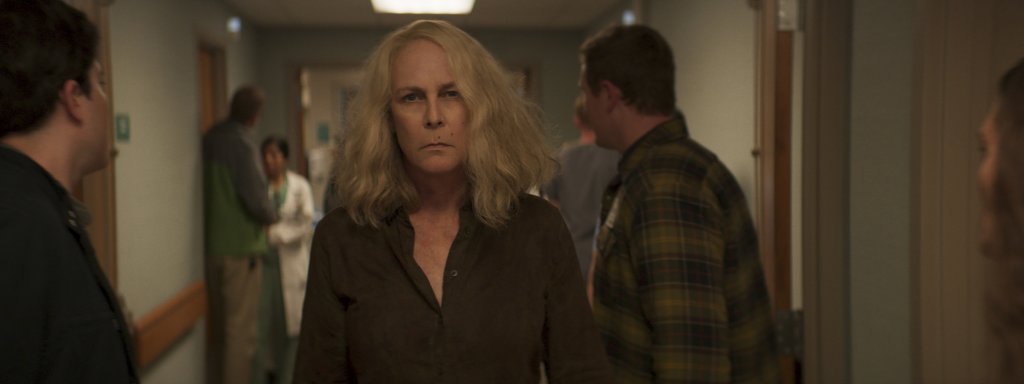
Jamie Lee Curtis as Laurie Strode in Halloween Kills

And because this is a lot bigger and conflict involves the whole town, and you also explore this mob mentality, were you at all worried about losing that very intimate brand of horror which you get from a one-on-one, prey versus predator dynamic? How did you ensure it didn’t become an out-and-out action flick?

David Gordon Green: It’s a good point. Then, I think to some degree it did become out-and-out action [laughs]. Again, there’s several things I had in mind when I envisioned this movie: I said I didn’t want it to be gory, and I said I didn’t want it to be funny, and I said I didn’t want it to be an action movie. Yet in a lot of ways, it is all three of those things. So I tried to engineer a sense of tension, but there’s not many quiet scenes in this movie.

There are a few cat-and-mouse stalking situations, like Michael chasing Lindsey [Kyle Richards] through the woods or Big John and Little John looking for someone in their house. But there are very few moments of two people in a room talking, and there’s very little in terms of the traditional, domestic slasher movie clichés. It’s a bigger, more aggressive movie with more momentum, and I think at a point, the action genre does step into the slasher movie. I think that’s okay – I don’t know, I haven’t really studied what an audience brings to this movie yet. I’ve seen it with a crowd twice now, and I’ve really enjoyed watching two very different audiences go through that. But I feel like as I get to know the movie and as it’s unleashed and released, we’ll get to learn more about our movie and its effectiveness or lack of effectiveness, and it’ll be something to think about for the next one.
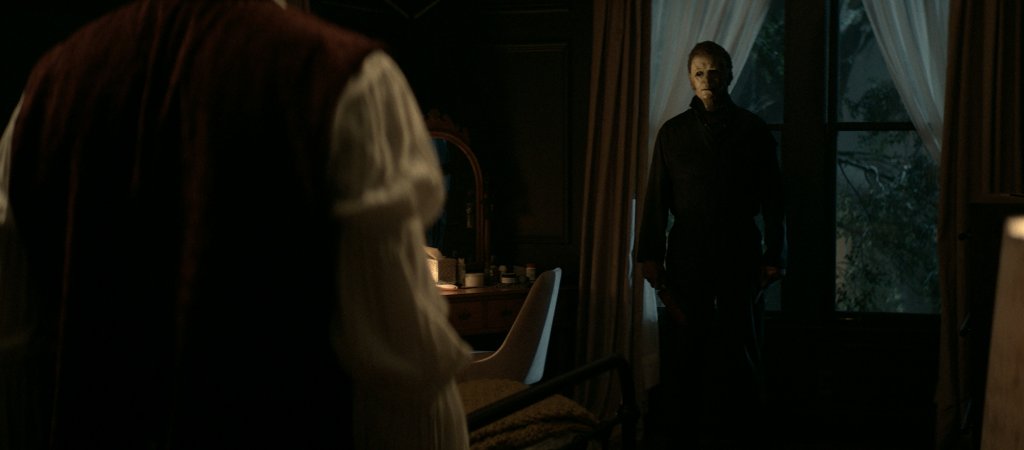
Michael Myers or The Shape in David Gordon Green's Halloween Kills 2021

In fairness, the mob becomes another source of terror that almost rivals the fear Michael Myers elicits when on screen. How did you make those two sources of violence and horror feel different from one another, so as to avoid a pile-on of indistinct scary scenes?

David Gordon Green: It is a parallel action to some degree of those two approaches to terror, and it is a big of a pile-on… I don’t know. To me, the mob mentality is horrific and equally, it’s tragic. There’s a line that Sheriff Barker [Omar Dorsey] has where he says, “now he’s turning us into monsters.” And I believe that’s one of the great dangers of our culture today – when we find a collective with a common mindset, very often it’s a wonderful, supportive, celebratory congregation.

Yet other times, when people feed off of each other and that tribal mentality does start to permeate, and particularly when something happens that supercharges a crowd, it can be really dangerous and really scary. And even sitting on production, standing in the hallway at that hospital, being stampeded by people that were there – in theory between “action” and “cut”, we were just going to be documenting the flow of bodies in this abstract sea of people. But when you say “cut”, they would be so electrified that it took a long time before it went quiet again. With every take, it would take minutes to get that adrenaline under control and come back down.

Just as a last question, I recall your co-writer Danny McBride saying ahead of Halloween’s release that the two of you didn’t want to turn Michael Myers into some supernatural being that couldn’t be killed. Yet in this one it does feel like you lean into suggestions of an otherworldly evil in this villain. Did you feel you had to compromise on that as part of heightening the scale of the film, or does it also work to highlight how shared fear feeds into an abstraction of evil?

David Gordon Green: The answer is both of those things. I do feel like Michael is a human form that can be killed. I do feel like he is extremely resilient and doesn’t feel pain, perhaps, like you and I would feel pain. But I also feel like he, as the shark in Jaws has, transcended. It’s like keeping millions of people out of ocean waters… I think Michael Myers has transcended from mortal man and into this cosmic status, to scare the fuck out of people around the world every night.

Halloween Kills releases in cinemas October 15th. 


Matilda Lutz | ZONE 414

matilda lutz zone 414

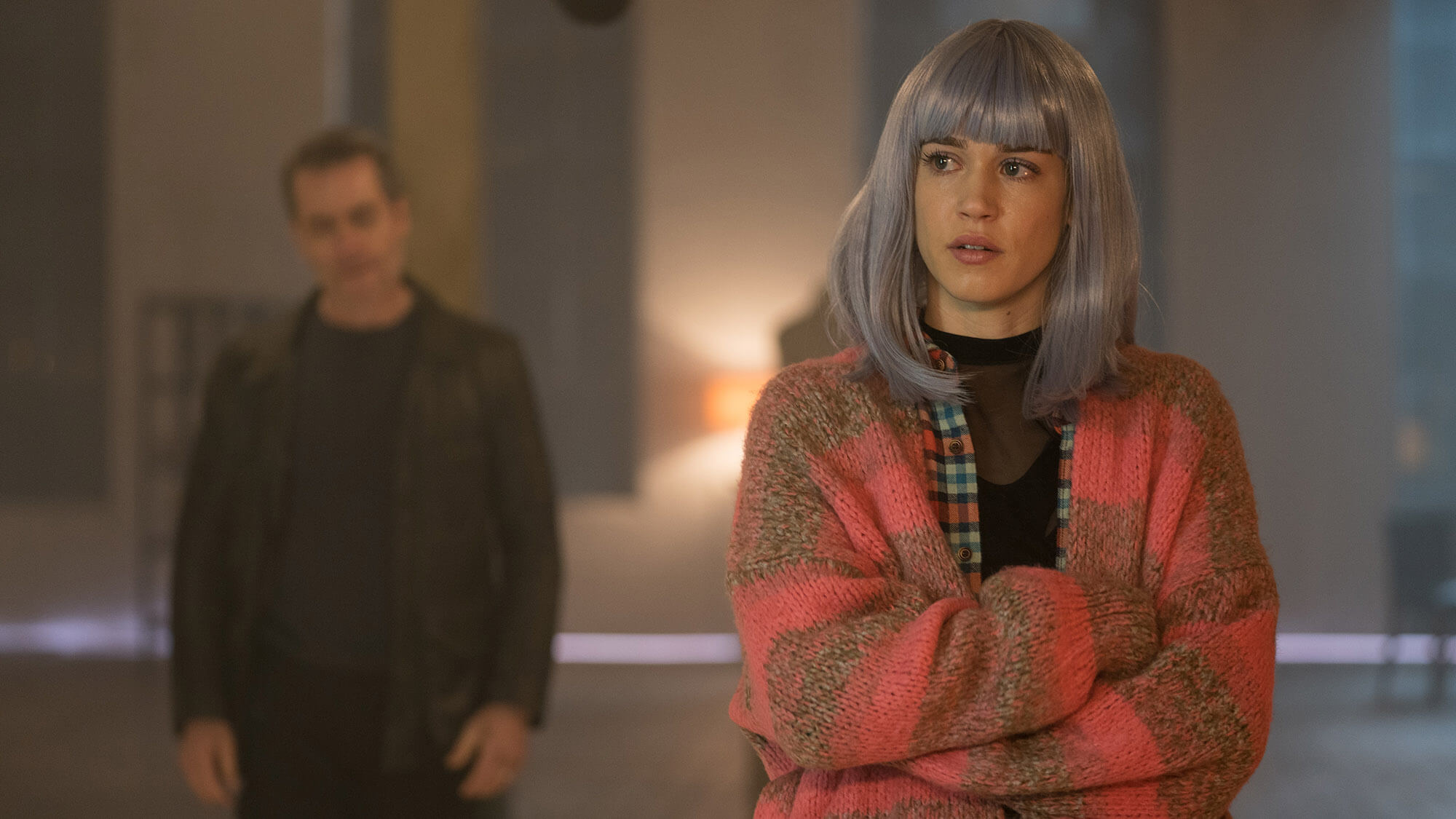
From a human hunting mission in Revenge, to a terrifying outing in A Classic Horror Story, Matilda Lutz is no stranger to playing characters that have to survive in a savage environment, and now, as AI creation Jane she is taking on something just as brutal in the gritty, cyberpunk-infused Zone 414. Alongside retired detective David Carmichael (Guy Pearce), they descend into the heart of the ‘City of Robots’ to find a famous missing person, and as the duo attempt to piece together this disappearance, they also try to answer crucial questions about themselves. We caught up with Matilda to find out all about her time as Jane, and what scares her the most about this deranged, yet very realistic idea!

STARBURST: Let’s talk about Jane; she seems sad and depressed, and maybe, just wants to know what it feels like to have a human relationship. How would you describe the characteristics of Jane?

Matilda Lutz: She wants to leave the city of robots. That’s her main goal. She wants to leave this dark, weird, and classist world. She’s struggling at the same time with the fact that she has emotions. She feels things, even though when she’s not programmed to feel. So that’s her struggle, understanding if she is human or not. That was pretty much what went into creating the character. I wanted her to always have a feeling that you’re not really sure if she’s human or not. That went from, when I started researching about Jane, I basically found out that there are real accounts with digital influencers that I had no idea about. Real influencers; with real agents; that make real money. They’re singing and going shopping, and going to fashion shows. Because of society today where you have all of these people putting filters on, Photoshop, all these kind of really pampered, beautiful worlds. Then you see this, and you’re like “Wow”. It’s almost like the world is flipping, androids are becoming human, and humans are becoming more robotic, in a way, and perfect physically. And the world they live in is perfect. It seems like there are no problems. So that’s what I wanted to bring to her. The fact that she’s a robot wanting to be a human, and she herself doesn’t know if she is or not.

Zone 414 itself reminded us of Blade Runner, with that noir-cyberpunk type of style. How would you describe Zone 414, and what attracted you to working in this world?

I like the fact that it’s scary. It’s a scary world because we are getting to a place where I hope it’s not going to get any further. I wouldn’t want to live in a city of robots. It’s scary. That’s what attracted me. The fact that we could explore that subject in these scenes. When I heard that Guy Pearce was playing David Carmichael, to me it was a dream come true. I’m a big fan of his. I really wanted to work with him, and then Andrew Baird had a very strong visual point of view of the film. That’s what attracted me to the project.

What would you say really scares you the most about the idea of Zone 414? Like, if this millionaire’s playground was real, and on Earth right now, what would worry you the most about it?

Well, first of all, you’re not able to recognise if robots are robots, or if humans are humans. That’s scary. I really got scared when I saw these accounts. Some of the videos and pictures that I was looking at, I knew that it was fake because they told me it was a fake influencer. Not because I could see it, so that’s scary. Then the fact that humans get to a point where they need android companionship, because they are so lonely and so disconnected from the world and themselves, that they need to go to a city and pay a robot to have companionship. That’s pretty scary to me.

There’s a great scene where you really get stuck into David’s past and David tries to figure out what Jane really wants. What was this scene in particular like to work on, and how important do you think it is for showing the relationship between the two?

That’s the first scene we shot, without rehearsal. That was scary in a way for me. The first days on set are always scary because you’re getting to know everyone and you’re still feeling the vibe. I met Guy for the read a few days before, but we didn’t really know each other. I think it’s a very important scene, it’s the scene where Jane uses her programme to hit David, and at the same time, she gets caught in her own game. Where she is using something to hit him, but at the same time, she knows that he is the one who can possibly take her out of Zone 414. So she feels trapped in the situation. She’s trying her best to get out of the City of Robots because her first option was that she thought the client was going to buy her out, and when she’s checking in they tell her “No, the client doesn’t want to see you anymore. He’s satisfied.” She thought it was her shot to get out. She starts realising in her apartment when David first arrives that he might have feelings for her, he might care for her. That’s what hits her first. It hits her, like if she was human, that someone can care for her, besides wanting what they want. She knows that David isn’t there for her, she knows that David is there for Melissa, and at the same time he is showing care for Jane and wanting to help her. So that’s the double thing. She sees David wanting to help her, but at the same time she is using her programme to hit him in certain ways, like talking about his wife, and she puts music on in the hotel room that’s meaningful to David. In that scene she starts talking about his past.

As you go through Zone 414, you meet a lot of interesting but damaged characters. So other than Guy Pearce as David, is there another actor that you really enjoyed working opposite?

Jonathan Aris – he is amazing! I loved working with him. He is such a gentle professional; a very detailed actor. The hard part of my scene with him was staying still and not blinking an eye but still feeling, because he says, “I know you can feel me”. So, that was a technically hard scene. I could feel fear, I was scared of his voice, and the way he was moving. That to me was a really strong scene for myself as well. You see Jane stopping because of a controller, but at the same time it’s like what happens when you are in a position of psychological or physical harassment, whatever the violence is when you’re surprised by it, and you don’t expect it, that’s kind of like what your body does. You freeze, you don’t know what to say or do. You don’t feel like leaving, you feel guilty. That to me was showing how that really happens. It’s almost like you’re frozen. She’s frozen because she’s an android, but that’s what really happens sometimes. So that to me was really strong emotionally.

Finally, why should STARBURST readers check out Zone 414?

I hope you have fun watching it! I hope we connect more to the world and ourselves, and we stop being on our phones.

Zone 414 is available on digital download now. Read our review here.

THE TELEPHEMERA YEARS: 2008 – PART 3

telephemera 2008 virtuality

Ah, telephemera… those shows whose stay with us was tantalisingly brief, snatched away before their time, and sometimes with good cause. They hit the schedules alongside established shows, hoping for a long run, but it’s not always to be, and for every Knight Rider there’s two Street Hawks. But here at STARBURST we celebrate their existence and mourn their departure, drilling down into the new season’s entertainment with equal opportunities square eyes… these are The Telephemera Years!

2008-09

With Lost about to start its fifth season, and despite Heroes spluttering into its third and final run, 2008 was a golden time for fans of genre TV, with Pushing Daisies, Ghost Whisperer, Reaper, Smallville, Supernatural, and Medium all coming back for the Fall TV season. Sure, American Idol and Dancing with the Stars dominated the ratings, and the various CSIs ensured that crime procedural fans were never short of a mystery to solve, but the various science-fiction and fantasy shows (along with genre-adjacent fare like The Big Bang Theory, Prison Break, Chuck, and Family Guy) kept freaks and geeks glued to their TV sets all year long.

2008 also saw some intriguing new shows like JJ Abrams’s Fringe and the wonderful Parks and Recreation make their debuts, both of which would enjoy multi-year runs and varying degrees of critical acclaim, but there were also shows that never got the chance to find their audience, cancelled before they’d even been shown to the public. This is the story of 2008’s unsold pilots…

Spaced (Fox): In 2007, having just completed the middle part of the Cornetto trilogy and with his name attached to a big screen adaptation of the comic book hit Scott Pilgrim, Edgar Wright was hot stuff in Hollywood. Having initially made his name with the Channel 4 sitcom Spaced in 1999, the natural step for Fox was to remake the show for an American audience…

telephemera spaced 2008

Wright had been approached about a transatlantic transfer soon after Spaced had become a hit but had shrugged off interest because he felt that the show’s central conceit – people living small lives in suburban London, acting out bits of their favourite Hollywood films – would not make any sense on American TV, where they’d have to lose the swearing and drugs, and Mike’s obsession with guns wouldn’t be anything  strange.

Regardless, Fox brought in McG to executive produce the show and hired Will & Grace veteran Adam Barr to retool the script, completely sidelining Wright and original series writers Simon Pegg and Jessica Stephenson. Worse, in promoting the project, they focussed on Wright and Pegg, due to their involvement in Shaun of the Dead and Hot Fuzz, ignoring Stephenson’s role in creating the show.

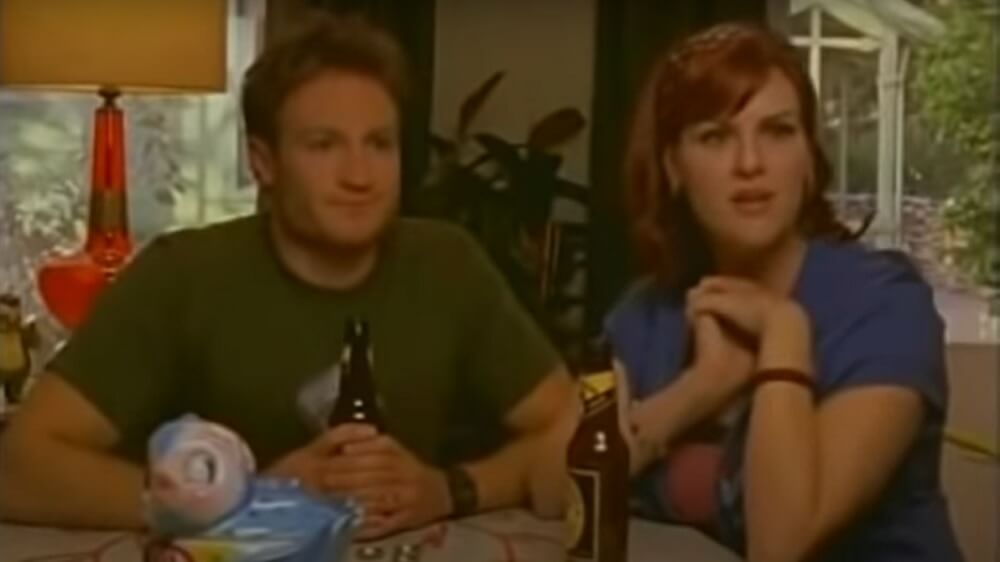
A pilot episode was produced, with The Librarians’ Josh Lawson as Ben and Sara Rue as Apryl, the strangers posing as a married couple in order to rent an apartment, but it was soon clear that it would not work as a series, just as Wright had predicted all those years before. You can see clips from the pilot on YouTube, and it’s worth a look if only to see what a mess they made of it, before going back to your DVD boxset of the original.

The Oaks (Fox): In a reversal of the usual formula, The Oaks was an original US idea for a show which failed to get beyond a pilot episode but which was taken over to the UK and resulted in two full series, Marchlands and Lightfields.

Created by Desperate Housewives writer-producer David Schulner, The Oaks was the story of a house, told in three different time periods from 1968 to 2008, and the restless spirit that haunts the families that live there in a series of interconnected stories. With hidden secrets and resentments adding mystery to the house’s unsettling air, The Oaks would have played out its story across time and in a deeply-involving manner.

Unfortunately, Fox didn’t see the potential in the premise and opted not to pick up the pilot for a full series, shelving the project entirely with the pilot going unseen. Undeterred, Schulner sold the concept to ITV in the UK in 2011, with a Swiss remake following in 2015, and the full story played out in the Yorkshire of 1944, 1975, and 2012, the mystery of a young girl’s death finally revealed.

Virtuality (Fox): If nothing else, Fox could never be accused of not taking a punt on new projects, and in greenlighting a pilot for a new series from Battlestar Galactica remake’s Ronald D Moore – with Peter Berg on board as director – they must have been pretty confident they had a hit on their hands.

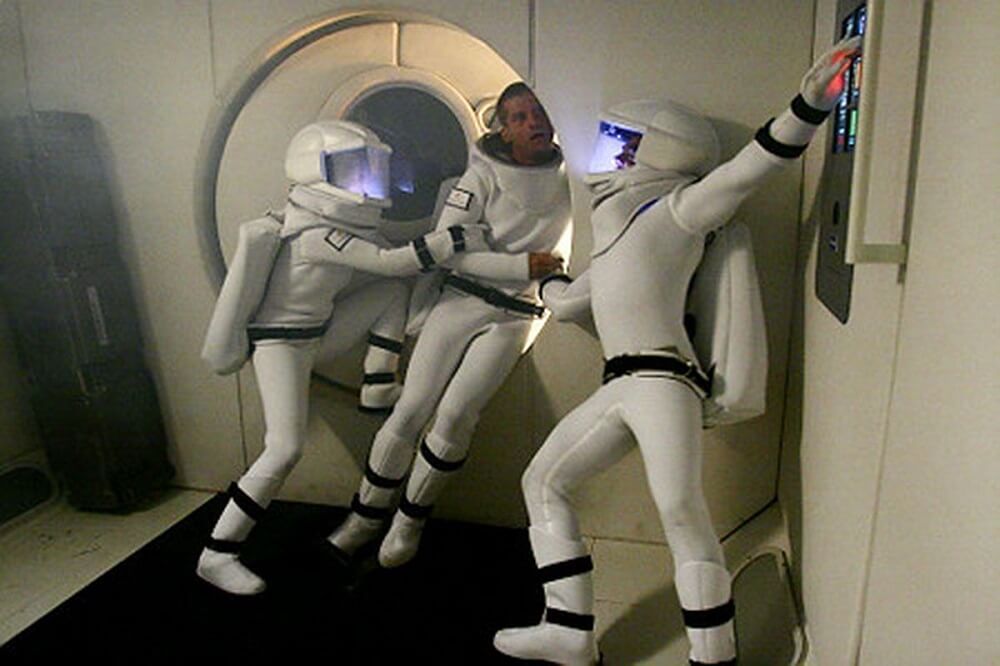
Virtuality told the story of the crew of the Phaeton, a ship searching for a hospitable planet after Earth becomes uninhabitable, only for their virtual reality entertainment system to go haywire, threatening the mission and injecting a mystery man into their midst…

telephemera 2008 virtuality

With a pre-Thrones Nikolaj Coster-Waldau starring as Commander Frank Pike, a nod to the Star Trek franchise Moore and co-writer Michael Taylor had cut their teeth on, the pilot puts all the pieces in place for the ultimate capsule show, but Fox declined to take it to series, instead airing the pilot as a TV movie in June 2009.

Virtuality was the first in a series of failed projects for Moore and it wasn’t until Outlander in 2014 that he managed to recreate the success of his Battlestar franchise, enjoying a multi-year run for the time-traveling bodice-ripper which is about to enter its sixth season on Starz.

Pretty/Handsome (FX): Six years before the success of Transparent, FX attempted to bring a show about a transgender parent to the air, with Joseph Fiennes in the starring role as Bob Fitzpayne, a father of two who realises he needs to come out as a transwoman.

telephemera 2008 pretty/handsome

Created by Ryan Murphy, who had touched on transgender issues in his cosmetic surgery drama Nip/Tuck, Pretty/Handsome was optioned for a pilot after FX were impressed with Murphy’s original script, entitled 4oz (the average weight of a removed penis), and while gender issues are at the heart of the story it’s a well-rounded take on what was becoming a hot button topic, told with sensitivity and humour.

Unfortunately for Murphy, FX didn’t believe that advertisers would back a show with such a divisive subject  and he was forced to come up with another new project, creating a little-known show called Glee in an attempt to make the most family-friendly show he could imagine. Pretty/Handsome aired as a TV movie in June 2008 but it doesn’t seem to be available anywhere. With Murphy inking a deal with Netflix, it might be time to revisit this old project…

Next time on The Telephemera Years: What were the kids watching in 2008? Why, Speed Racer and Batman, just like their parents…

Check out our other Telephemera articles:

The Telephemera Years: 1966 (part 1, 2, 3, 4)

The Telephemera Years: 1968 (part 1, 2, 3, 4)

The Telephemera Years: 1969 (part 1, 2, 3, 4)

The Telephemera Years: 1971 (part 1, 2, 3, 4)

The Telephemera Years: 1973 (part 1, 2, 3, 4)

The Telephemera Years: 1975 (part 1, 2, 3, 4)

The Telephemera Years: 1977 (part 1, 2, 3, 4)

The Telephemera Years: 1980 (part 12, 3, 4)

The Telephemera Years: 1982 (part 1, 2, 3, 4)

The Telephemera Years: 1984 (part 1, 2, 3, 4)

The Telephemera Years: 1986 (part 1, 2, 3, 4)

The Telephemera Years: 1987 (part 1, 2, 3, 4)

The Telephemera Years: 1990 (part 1, 2, 3, 4)

The Telephemera Years: 1992 (part 1, 2, 3, 4)

The Telephemera Years: 1995 (part 12, 3, 4)

The Telephemera Years: 1997 (part 1, 2, 3, 4)

The Telephemera Years: 2000 (part 1, 2, 3, 4)

The Telephemera Years: 2003 (part 1, 2, 3, 4)

The Telephemera Years: 2005 (part 1, 2, 3, 4)

The Telephemera Years: 2008 (part 1, 23, 4)

Titans of Telephemera: Irwin Allen

Titans of Telephemera: Stephen J Cannell (part 1, 2, 3, 4)

Titans of Telephemera: Hanna-Barbera (part 1, 2, 3, 4, 5)

Titans of Telephemera: Kenneth Johnson

Titans of Telephemera: Glen A Larson (part 1, 2, 3, 4)

Titans of Telephemera: Quinn Martin (part 1, 2)

FOUNDATION: Lee Pace, Jared Harris, David S. Goyer & More On Adapting Asimov’s Sci-Fi Epic

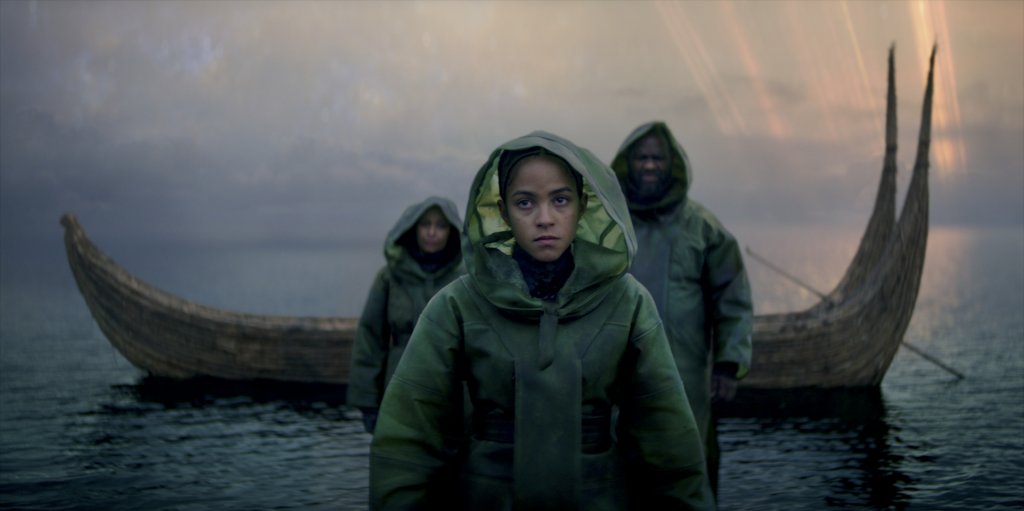
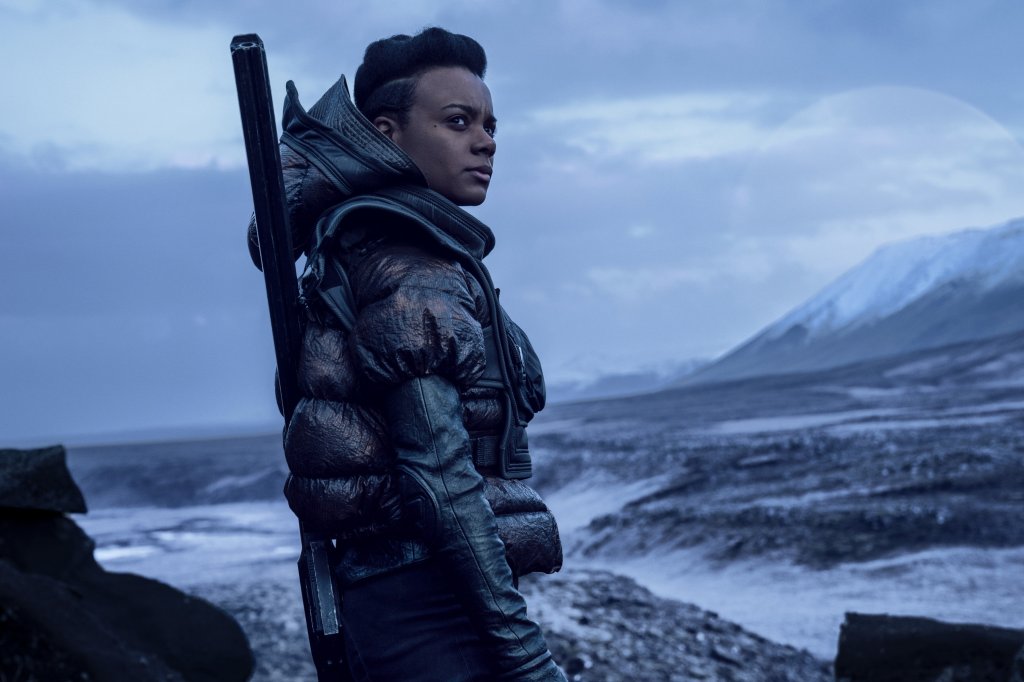
Leah Harvey as Salvor in Isaac Asimov's Foundation

David S. Goyer attempts a feat that has long been thought impossible: to adapt Isaac Asimov’s monumental Foundation series into a visual medium. The audacity of such a project should be enough to warrant praise but, almost unbelievably, Goyer pulls it off with an assured flourish.

The premise of Foundation is that, in the waning days of a future Galactic Empire, mathematician Hari Seldon develops a theory of psychohistory, a mathematical sociology. Using statistical laws of mass action, Seldon can essentially predict the future of civilisation. He foresees the imminent fall of the Empire, followed by a Dark Age lasting 30,000 years. Although the Empire’s fall cannot be stopped, Seldon suggests a plan by which “the onrushing mass of events must be deflected just a little” to eventually limit this Dark Age of humanity to a mere millennium. It involves the creation of the Foundations: two groups of scientists and engineers settled at opposite ends of the galaxy, whose mission it is to preserve the spirit of science and civilisation in a compendium of all human knowledge. These so-called Encyclopaedia Galactica would then become the cornerstones of a Second Galactic Empire.

From the breath-taking cinematography and the show’s unwavering loyalty to the spirit of the novels, to its top tier cast and agile writing spanning planets and generations, there’s as much to respect about Foundation as there is to love.

Lou Llobell as Gael in Foundation

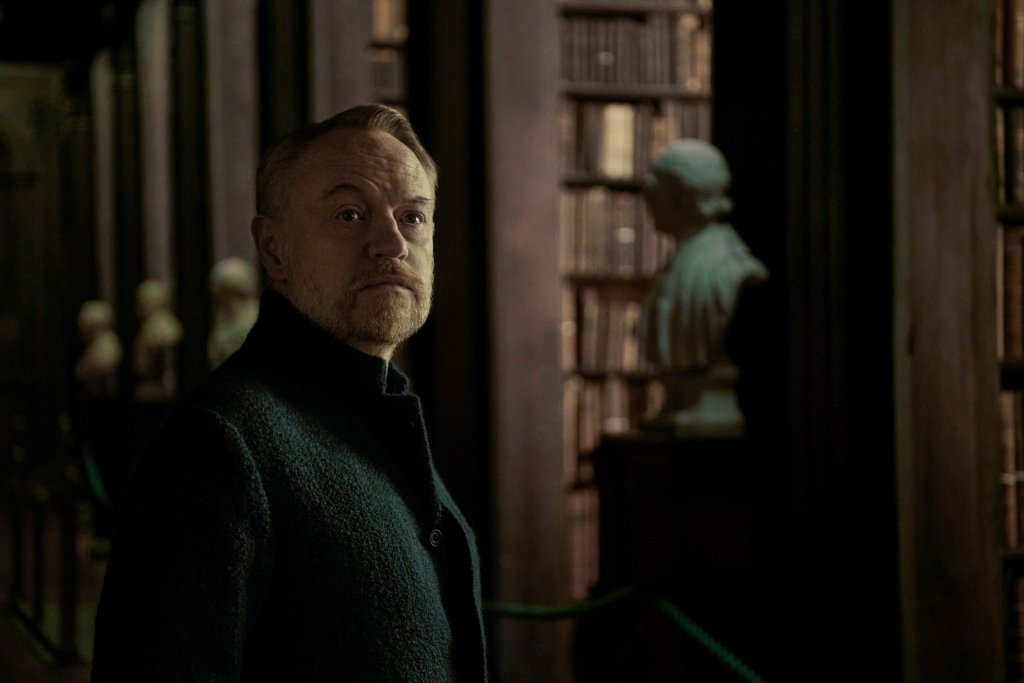
STARBURST had the pleasure to speak with the people who made the series possible: David S. Goyer, writer extraordinaire (you can thank him for the Blade trilogy, Christopher Nolan’s Dark Knight trilogy and Man of Steel, to name but a handful), Lee Pace (The Hobbit, Guardians of the Galaxy, The Fall) who plays the Emperor Brother Day, Jared Harris (Chernobyl, The Terror, Mad Men) as  psychohistorian Hari Seldon, and relative newcomers Lou Llobell (Voyagers) and Leah Harvey, who bring to life Gaal Dornick and Salvor Hardin, respectively.

“Of course, there were sacred cows,” states Goyer. “I had to identify the core elements that make Foundation, the core characters, the themes; and I presented those to the Asimov estate to make sure we were on the same page.” Robyn Asimov, Isaac Asimov’s daughter, serves as executive producer on the show. “Any cursory reader of the books will understand that it could never be a line-for-line adaptation,” Goyer continues. “A lot of the books are about philosophy, about ideas, dialectics, and most of the action happens off-screen or in between sentences. And as this is a visual media medium, of course, we were going to dramatise those events.”

Expectedly, considering the novels’ stature in the science fiction canon, this isn’t the first time that studios have tried to adapt Foundation to film or television. Those who tried though, failed; Goyer’s series is the first time we will see Asimov’s epic saga adapted to the screen. “I think one of the differences between this attempt and prior attempts is that most of the prior attempts were movies,” the showrunner muses. “I myself was offered the opportunity to adapt Foundation twice before in my career, but I passed on it because I didn’t feel it could be condensed into two and a half hours, or even three films. Yet with the advent of these big, novelistic shows that we’re seeing on streaming, the medium and the audience have now evolved to a place where an adaptation of Foundation is possible.”

Jared Harris praises the ways in which Goyer balances Foundation’s grand ideas with its softer, character-driven moments. “It’s fantastically well structured and he’s dealing with some really big ideas; one on hand, something like the first scene can be as mundane as introducing a character and on the other, you have in mind these giant ideas and themes… those are fun things to play with.”

“The scale was always going to be big,” says Goyer. “It is intergalactic, but it’s also very intimate. For me the key was always grounding it in emotion. For every scene, whether we’re in the writers’ room or on set rehearsing, I wanted to make sure that if we strip away the spaceships, the robots, the nanotechnology, that the scenes still work as pure dramas.”

Leah Harvey as Salvor in Foundation series

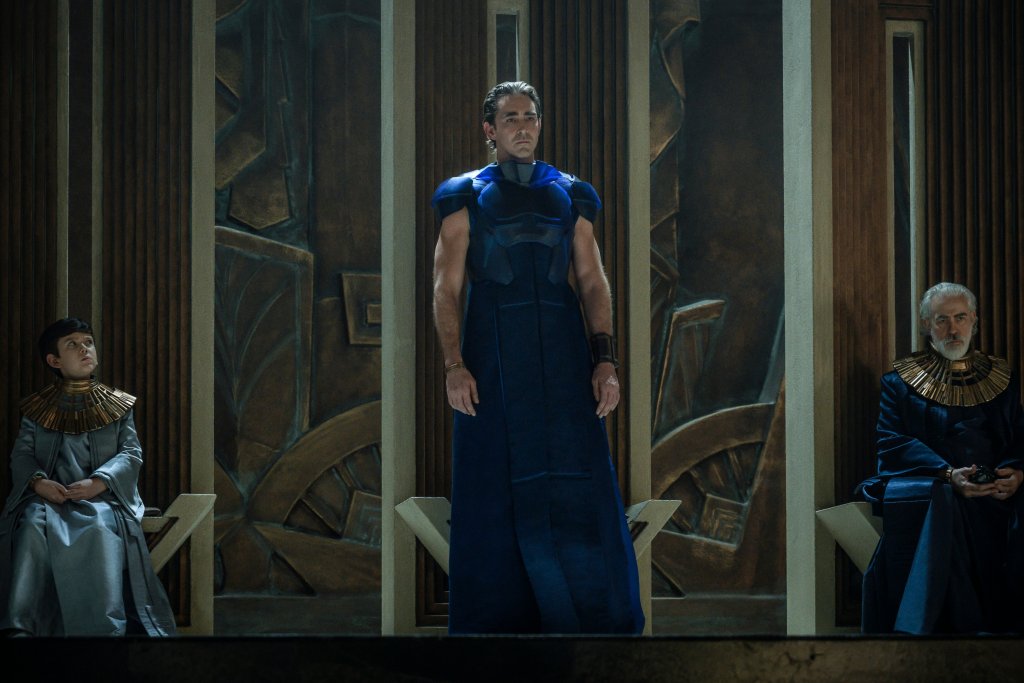
Even as Foundation stays loyal to Asimov’s story and ideas, adapting the tomes to television involved a number of narrative changes. For one, the inclusion of a wholly new character (or three): the Emperor Cleon, so little seen or discussed in the series, is here replaced with a genetic dynasty. Clones of the Emperor who rule as one individual for millennia and who call themselves Brothers Dawn, Day, and Dusk – played from youngest to oldest by Cooper Carter, Cassian Bilton, Lee Pace and Terrence Mann. Goyer explains that “because the show is so anthological, we needed to find a way for some of these characters to last over the course of 1000 years – and that’s what led me to the genetic dynasty.”

“In the books, Hari Seldon predicts the fall of the Empire,” he continues. “It’s an empire that’s existed on 10,000 worlds for over 10,000 years. They’re powerful, they’re resistant to change, they’re rigid. So, I tried to think, ‘What would be the purest expression of that theme?’ One man cloning himself over and over again and imposing his ego upon an entire galaxy. And that was a plot device that then led me to all sorts of wonderful character moments with the Cleon’s, because the show is also about legacy. They’re all desperate to individuate and to leave their mark on the galaxy, and the tragedy of them is that they’re all living in the shadow of Cleon the First. So even though they’re monsters, that plot device allowed us to tell stories that make it possible for the audience to empathise with them.”

Even the grandest themes can be made relatable when centred on complex, human characters. As Lee Pace says, “what I think is so interesting about this riddle posed about inherited power, is not the office of a God that [the Brothers] hold. It’s these individuals who are approaching it, and I think about it very much like how an actor approaches a role. I think, there’s Day looking at Dawn, who is the youngest of the dynasty, and Day is telling him: ‘These are the lines, this is the blocking, these are the costumes you’ll wear. It is imperative for the safety of the galaxy that you are exactly like me, that you believe what I believe, that you are an identical copy of me.’ And I believe Day looks at Dusk, the outgoing Emperor, and thinks, ‘You’ve made a lot of mistakes here. And now that I’ve got the power, I’m going to do it right. I’m going to be stronger, I’m going to be braver, I’m going to be distinguished among this line of clones.’ And that’s the contrary idea. When the fantasy is that they’re the same person. You see it in the first episode, when Hari Seldon delivers his mathematical certainty that the Empire will fall and all three of these Emperors respond in very different ways.”

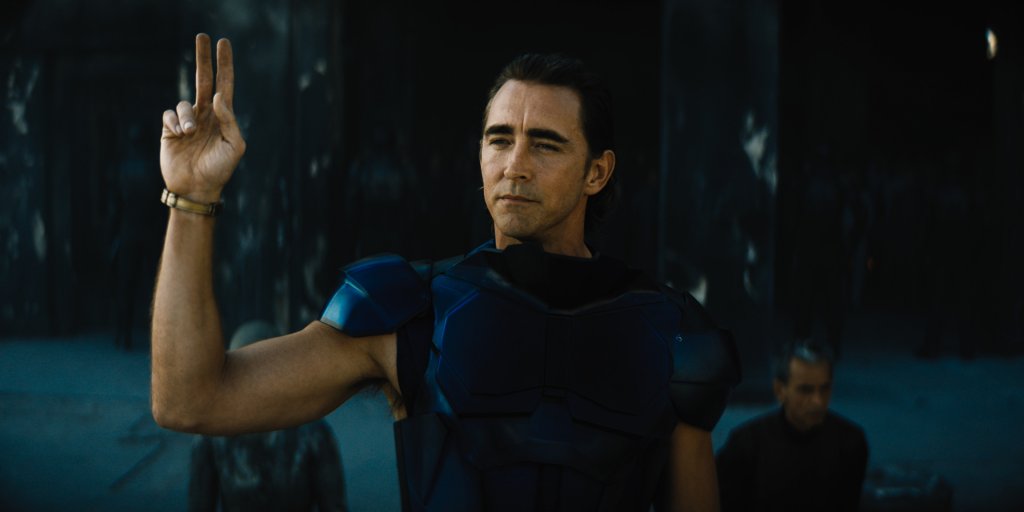
Lee Pace as Brother Day in Foundation series

“What was hard was the idea of sharing a role with other actors and figuring out how we could find a commonality between us,” Pace continues. “We’d play this game where we would physically mirror each other, try to catch each other’s cadence, copy gestures, etc. But when it really becomes interesting is finding how these characters are different, because I believe what the story teases out is not only their individuality – and maybe these are the same thing – but their humanity. There’s an individual sentience that they start to discover. The fantasy is that they are a God that lives forever, that they are one person, when in fact they’re human beings who will live and die. It’s yet another riddle; this show is about everything and nothing. It’s about the biggest thing, and the smallest thing. It’s about what it means to be human, how do you react to change, how do you grapple with the power you hold?”

It’s all part of an unspoken mantra for Foundation: the key to the story is for viewers to feel for and relate to the characters, for those figures to be fallible and fragile. For example, one of the things Harris wanted to address was “how to avoid there being a reliance on using the character as a mouthpiece for his theory, or as an expositional device. I wanted to figure out a way to make the character seem human, seem real and fully fleshed, and have stakes in the moment. You’re playing a character who supposedly knows how everything will turn out. There’s nothing at stake for someone like that, so I discussed with David in great detail what Hari Seldon knew and what he didn’t. I was more interested in what he didn’t know, because that’s where the character is fallible and vulnerable.”

The other way in which the series updates Foundation is by changing the genders of some of its key characters. Asimov, despite being a master of speculative science fiction, still had a mostly all-male cast of characters, so for the show, Gaal and Salvor were written as women. When Leah Harvey was asked how this changed their approach to the character of Salvor (though they first auditioned for Gaal, Harvey revealed), they responded: “It’s interesting because I guess that being non-binary, I see gender as something that’s nothing and everything at the same time. I’ve had experiences playing characters in Shakespeare who are typically male, and my experience doing that is that it doesn’t really change anything. Playing a man or playing a woman, what does that even mean? In my mind, I’m playing a character who has a vision for themselves, has aspirations, fears, goals, has loves and hates. And that’s what character is.”

Alfred Enoch and Lou Llobell in Apple Series Foundation from David S. Goyer

“The writers created this character who’s really three-dimensional, who has been pulled from the books and made modern, who has been made so that she represents people all over the world,” they continue. “And I get the opportunity to put that across in my own way. I’m excited for people to meet Salvor.”

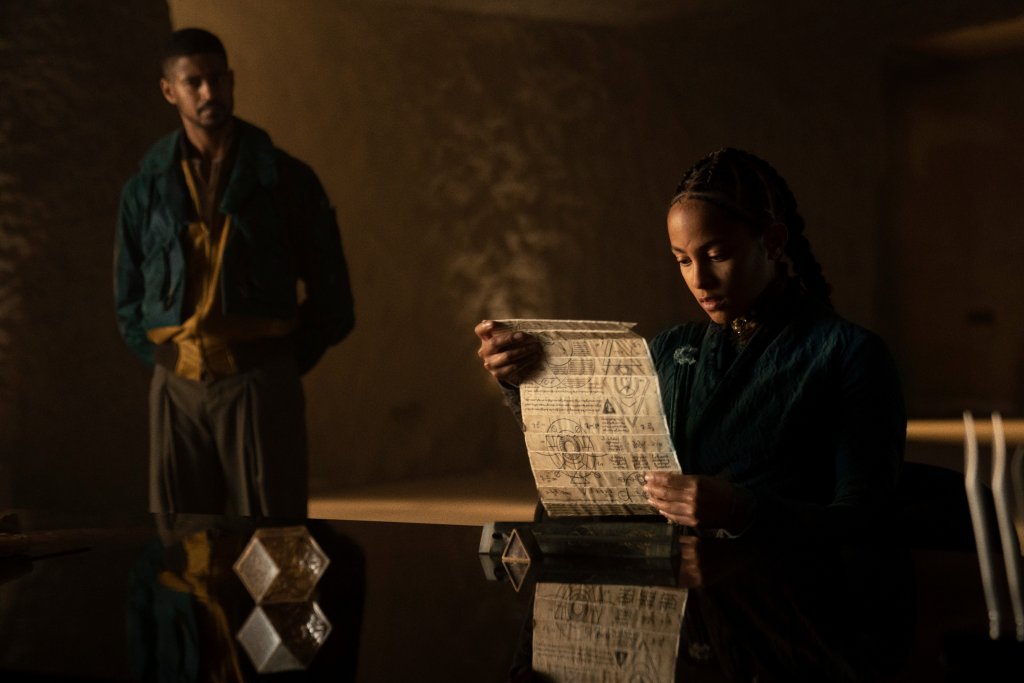
Meanwhile, Gaal is the character through whom the audience discovers the world of Foundation. Acting as an anchor amidst the vertiginous world-building, Llobell explains that her character fulfils a similar role as many iconic fantasy heroes: “Harry in Harry Potter gets thrown into a world he knows nothing about, and then has to deal with everything that comes with it. Gaal has the same journey, Frodo from The Lord of the Rings is kind of the same. I didn’t particularly think about them when I created this character but, looking in hindsight, it’s pretty cool that Gaal is amongst these characters.”

“How often do you get a character who experiences so much, and really has to delve into seeing who she is, finding out who she is and discovering parts of herself that she probably had no idea existed?” Llobell questions. “She comes from a tiny rural planet on the outskirts of the galaxy and all of a sudden, gets thrown into the hustle and bustle of Trantor, and meeting Hari and all these new, fascinating people. She throws herself into it and she’s open to a lot, and is still hopeful about the future, which is such a joy to experience.” All this undoubtedly makes Gaal the perfect chronicler character, in the books as in the show. “She is thrown into this whirlwind of a story, and she goes with it because she believes in the math. The truth is what drives her… Ultimately, she’s driven and pretty amazing. She goes on such a huge journey, but it’s one that’s relatable.”

That hope Gaal sustains is crucial to buoying a story in which the collapse of civilisation is inevitable. “I think her ability to trust so easily is a strength of hers, but it also gets her heart broken so many times. Just like the amount of hope she has – it’s a good thing overall, but it’s also to her own detriment,” states Lloubell. According to Harris, Gaal and Hari Seldon have that in common. “I don’t see him as tragic,” the actor explains. “I see him as hopeful. I see him as somebody who’s prepared to make sacrifices to achieve his goal but, in the end, it’s a hopeful prospect because he perceived a way of surviving.”

Jared Harris as Hari Seldon in Isaac Asimov's Foundation series

With science fiction so far removed from our reality, particularly for larger-than-life characters such as Hari Seldon and the Emperor, Harris and Lee Pace both found it important to source inspiration from real life. “I’m playing a series of men who, for a certain time in their lives, inherit the role of the Emperor of the galaxy,” says Pace. “Which is this absurd idea that one person could have control over the entire Milky Way Galaxy and have power of life and death over trillions of people, to control which planets prosper, which ones suffer. So, when approaching a character so absurdly abstract, I wanted to do some research to ground it – doing research is one of my favourite things that I get to do as an actor. Obviously, I looked at the Roman emperors that inspired Isaac Asimov to write this story, but I also looked at the Chinese dynasties, at the Incas for whom Emperors were basically Gods. I had a really great read of Kapuściński’s book “The Emperor” about the last emperor of Ethiopia, Haile Selassie. I found him particularly interesting.”

Harris, of course, is no stranger to bringing complex figures to the screen. “When you’re working on shows like Chernobyl or The Crown, you obviously have a historical record that you can access that can help you ground yourself in the reality of the story, and give you references to the character,” he explains. “With something like this, it’s a much more obviously imaginative process, but you still need references. To try to figure out Hari Seldon’s mindset, I went and did a lot of research into past scientists, men and women who made breakthrough discoveries. And the thing I realised was that on some level, they probably had huge egos and high opinions of themselves, but it’s also possible that they found their intellect isolating. There weren’t many people who could understand what they understood, which led me to understand what a rare thing Gaal represents for Hari: he finally has someone who understands him and can speak his language.”

Even something as seemingly outlandish as psychohistory, Harris found ways to tether it to reality: “One of the things I was considering when thinking of how to treat the proposition of psychohistory, and that made it very easy to accept, was what Cambridge Analytica have done. They’ve taken massive sets of data and crunched it, and they’ve been able to predict or manipulate the behaviour of individuals with it. That doesn’t seem to me like such a giant jump from what Hari Seldon was proposing.”

Lee Pace as Brother Day in Foundation

Beyond Foundation’s characters working as points of contact for the viewer though, there’s also a lot to explore and relate to thematically. As Pace sees it, “one of the opportunities you get with speculative fiction is that we can explore the experience of humanity outside the context of Earth in the 21st century. These are characters who are in the far, distant future on planets you couldn’t see even on the clearest night, and yet it’s about us. It’s about us right here and now. We examine what it means to be human, what the cycles are that we continually find ourselves in, our relationship to change and to power. What does math quantify? It can count the minutes, but can it record everything between those minutes, or does spirituality better answer those questions? What we’re attempting with Foundation is to open an investigation and bring the audience on the journey with us… I think this gives us the opportunity to engage in a discussion of our collective values without the triggers that put us in those circular discussions we always seem to find ourselves in, in the contemporary world.”

Harris’ view is perhaps more cynical. Speaking about Seldon, explains that “the character is another one in a long line of scientists who’ve made discoveries that were inconvenient to the power structure, and who would rather they shut up or disappear. That seems to be a familiar story in the human story. It’s depressing that this fact is a truism: that we continually ignore the advice of people who spend their life studying something, who are able to give us heads up. We make it very difficult for them to succeed, I guess because we’re afraid of the truth and would rather ignore it until it becomes impossible to ignore. It does feel like, as a race of people, we have this 11th hour habit where we wait until the last possible moment to do something.”

Still, even with the cyclical nature of histories, Goyer still believes there’s hope to be found. “The whole point of Foundation is that history repeats itself, that humanity is cyclical, and that a lot of the challenges that are confronting us now are not unique. They’re challenges that humanity has faced before. And so, I’d like to believe that we could learn from some of our past mistakes, and that was Asimov’s hope. I think the world could use a message like Foundation right now.”

Foundation begins streaming on Apple TV+ on September 24th. Read our review of the first two episodes.

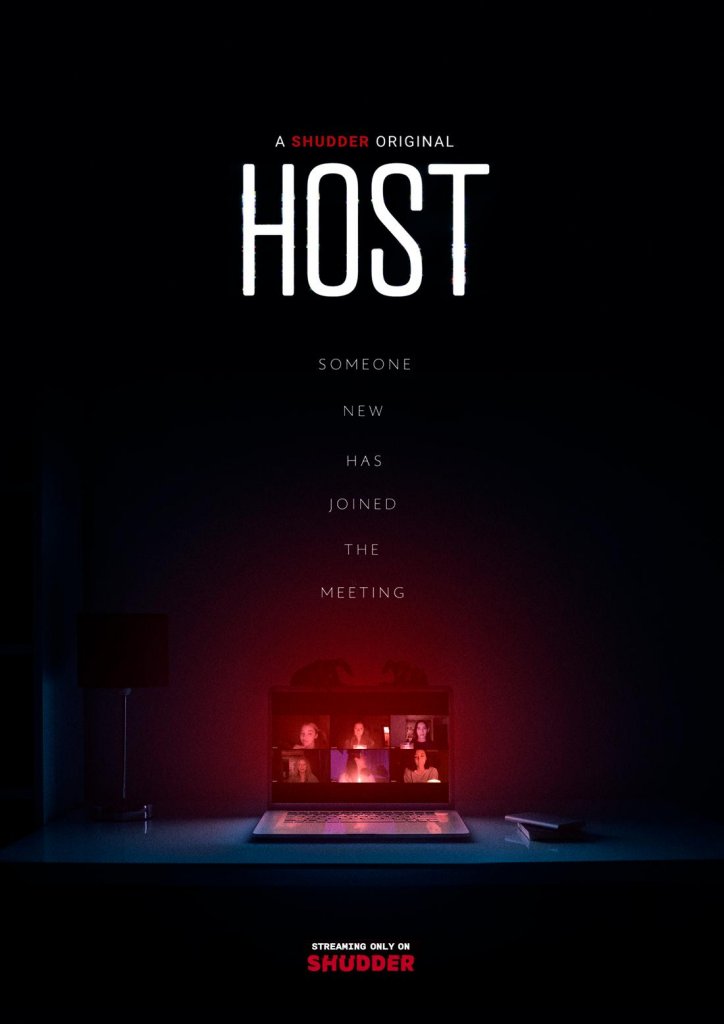
HOST Star HALEY BISHOP Spills the Beans on Zoom Horror Flick

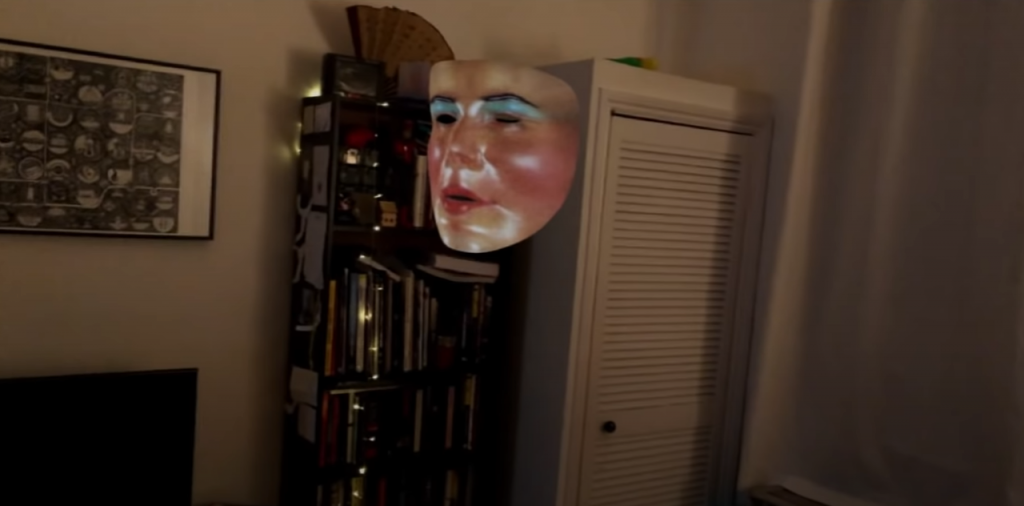
host star haley bishop

To mark the film’s one-year anniversary, STARBURST caught up with the lead actor of 2020’s most revolutionary horror film…

If you’d told Haley Bishop at the beginning of 2020 that there’d be a global pandemic which would shut down nearly the entire world, that she’d end up making a movie entirely over a computer with some of her best friends, and that that movie would go onto be one of the most critically lauded of the year, she’d probably have laughed in your face. And yet, that’s exactly what happened.

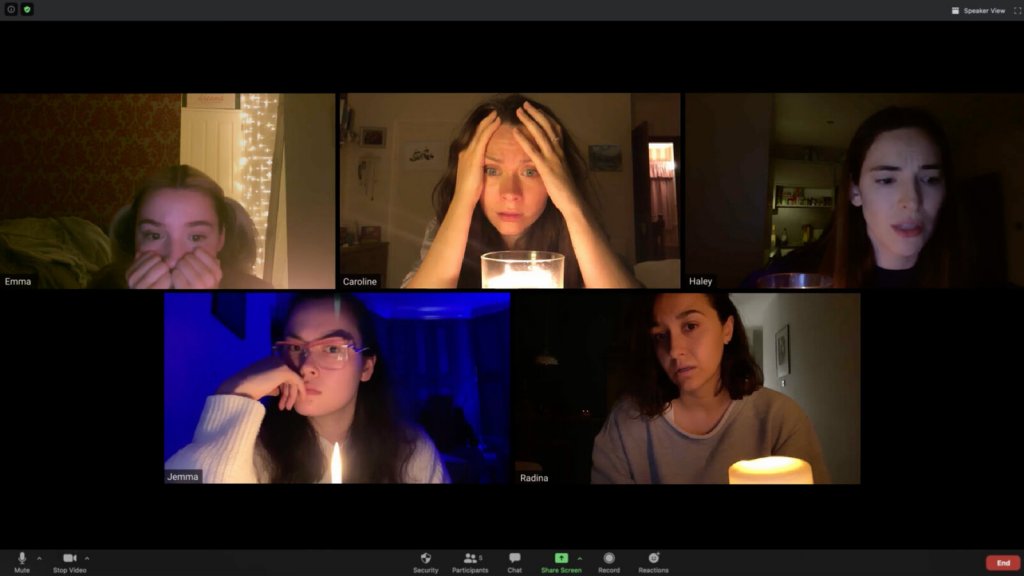
Released on Shudder last summer, Rob Savage’s Host tells the story of a group of friends (led by Haley, with all actors playing fictionalised versions of themselves) stuck in lockdown who hold a séance over Zoom instead of their usual quizzes. But things quickly go awry when the spirit the group invites into their meeting turns out to be malignant, and starts picking off the group one by one…

When Haley speaks to STARBURST in early June, it thankfully isn’t over Zoom. She’s taken some time out of her busy filming schedule to speak to us over the phone, and is only too happy to spill all her insider info about Host.

A natural chemistry

One year on from the film’s release, Haley remains “very proud” of the work done on Host. “I wasn’t a massive horror fan before shooting Host,” she says, “because I get scared very easily, and just watching it, it’s still scary to me.” She certainly isn’t alone: earlier this year Host made our list of ‘Ten Essential Shudder Originals & Exclusives’ because of how terrifying it is, and it’s one of only a handful of genre movies to have been given a stunning Blu-ray release by Second Sight. We honestly can’t give it enough praise – but what was it like to make a whole film entirely over Zoom?

“So strange!” Haley admits. “We were lucky in the sense that I’ve known Rob Savage for about six years now since we did [the short film] Dawn of the Deaf, and so there’s a nice shorthand there. So that was interesting, because it is weird, not having somebody there in the space to come and have a chat and whatnot. But then [again], being on Zoom, for [Rob] as a director, opened up all these possibilities, because we would run long takes as we were filming. And because we were on Zoom, we could use the chat function where Rob could then send us little messages, or lines to say, or notes as we were going along. And because there are quite a few of us on the screen at one time, it was okay for us to … take a second, read what he had written to us, and then implement the note or the lines.”

So how did that impact the way Host was filmed day-to-day? “It actually made us do really long takes because he couldn’t direct us without actually having to stop what we were doing: when you do the scene [virtually], you just kind of do everything simultaneously. It wasn’t as hard as we all thought it was going to be. Like I said, our own personal relationship and shorthand we have with him were really helpful.”

That shorthand, Haley feels, was an essential factor in both aiding the shoot and making the film as good as it could possibly be. “I definitely don’t think Host would have been made, and turned out as well as it did, had there not been the friendship between everybody involved,” she says – and she means everybody. The five main women of the film are all friends in real life, and have all worked with Rob before; the group have also known producers Jed Sheperd and Douglas Cox for years, and even VFX supervisor Steven Bray is a friend.

This is something that “made the whole process really collaborative, because we all trust each other as artists,” which “gave us real freedom to play.” This was especially useful in selling to the audience the idea of a group of friends who care about each other in such a short space of time (the film clocks in at a tight 56 minutes). “The friendships,” Haley says, “would have been a lot more of a struggle had we not just been used to improvising and messing around with each other for the years leading up [to Host].”

Haley isn’t the only one who feels this way: her co-stars absolutely agree with her. Speaking to Second Sight for the aforementioned Blu-ray, Emma Webb, Radina Drandova and Caroline Ward all feel that getting to work with a group of friends was one of the most exciting aspects of making the film, and Edward Linard (who was the only member of the core cast not to be part of that pre-existing friendship group) notes that “it was fun to just bounce off each other and roll with it, and I think it shows throughout the film – the chemistry and the conversations all feel so natural.”

Where we’re going, we don’t need … scripts

These pre-existing relationships also allowed for a lot of improvisation during filming – something that worked hugely in the cast’s favour, as they didn’t have a script: only an outline of each act. As Haley explains, “Jed and Rob and Gemma [Hurley, co-writer] wrote a beautiful treatment for us that said, ‘Okay, your character starts at point A, and then by the end of the scene, they’re at point B.’”

This meant that basically every line of dialogue in the movie is some level of improv: Edward notes that Rob would give the group notes in-between takes to dial up certain aspects of conversation or emotions, which resulted in the girls mercilessly laying into Jinny (Teddy’s on-screen girlfriend) prior to her appearance in the film, but while she was still present on the Zoom call. Thankfully, everything was taken in good spirits (pun intended).

Those good spirits were certainly needed on set, as it turns out none of the cast were aware of the specifics of anyone else’s death. Haley explains this was a deliberate move on Rob’s part, as he “redacted all the deaths in the treatment … so we could all have more authentic reactions to them when they happened.” Yikes – if you thought it was scary watching all those deaths play out in the final film, just imagine what it was like being there to shoot them!

Strangely enough, Haley agrees with STARBURST about which deaths we found the scariest: Caroline’s demise she describes as “terrible,” because “she’s so sweet and lovely,” while the deaths of Radina and her boyfriend Alan are the most shocking, she feels. “When Alan drops from the ceiling,” she says, “that throws me every time. I’m always like, ‘I know it’s coming!’ but it’s just such a shock.” Caroline, if you remember, disappears for a little while so only her virtual background is visible, before her bloody face is repeatedly slammed into her laptop in the film’s most brutal and visceral scare (Caroline also says that flinging herself at her laptop repeatedly was “the most exercise I’ve done in months!”). Radina, meanwhile, is searching for Alan, who’s gone missing, only to find him when he drops from the ceiling right behind her with a clatter, and the demon that’s haunting the group hunts Radina down before she can escape her flat.

Speaking of stunts, all the stuntwork in Host was planned out in the reverse order to a usual film, due to the Covid situation. Rob and co worked closely with Lucky 13 Action to figure out what stunts were actually possible, and then wrote the story and deaths around what they could physically do. When filming Alan and Radina’s death scene, this resulted in Lucky 13’s Nathaniel Marten being hung from the ceiling for an increasingly long period of time as the dialogue before the drop became longer and longer.

Watching the final film, you’d have no idea how much VFX work went into it: according to Haley there are 65 different VFX shots scattered throughout the movie, which VFX supervisor Steve Bray says is down to there being more stunts than usual in a film of this sort. Much of his team’s work, he says, was removing rigging and wires from the background, in order to “make the shots feel more organic.”

In need of a friend

That the film feels so organic is said by many, including us here at STARBURST, to be one of its greatest strengths – and all involved are quick to agree. Producer Jed Sheperd feels that the best part of the film is the core performances, while Rob is quick to admit that “this project wouldn’t have been able to happen if we couldn’t have put that much trust in the actors.”

Haley modestly agrees, but also feels there’s an element of relatability that really sells the core cast as friends. “These girls were doing all the same things that everyone else was doing,” she explains, “so you find that, even though we don’t get a ton of backstory and find out a lot about them, individually, they’re very relatable characters.” She also points out that the usual criticism levelled at found-footage movies (the age-old ‘why are they still filming this?’) doesn’t really apply to Host.

“That’s the only way we’ve been communicating with anybody – what are they gonna do, run out to an empty, scary street?” she laughs. “I think there’s this believability that they would have stayed on Zoom with each other and tried to help and stay connected, because that’s the only way the world was staying connected at the time, and I think that resonated a lot with fans.”

Given how isolated everyone is throughout the movie, one of the film’s strangest moments comes not from a demonic scare, but from seeing more than one person on-screen at once. When Jemma hikes it over to Haley’s flat at the end of the movie (a real-world possibility, as the two live very close to each other), it’s the only time we see anyone from the group interact in person – an odd experience both for the audience and the actors.

Haley explains that it was “very weird seeing each other for the first time after … almost two months since we’d seen any friends. And it was even weirder, because it was at a time when you just couldn’t hug anybody, [so] we had to be really careful with Covid and be masked up and stay six feet apart.” Though social distancing rules meant the two couldn’t “goof off” together like they would on a normal set, it was still nice for each of them to see a friend – even if Haley had to rip her kitchen apart with fishing wire to do so.

Host 2: Electric Boogaloo?

Speaking of the film’s final scene, Haley has a theory behind the ending – and even an idea for a possible sequel. She notes that we never actually see Haley or Jemma die like we do the other characters, because the Zoom meeting cuts out right as the demon jumps at the pair. Here at STARBURST, we’d taken that to mean the demon had killed them – but Haley has a much better idea.

“I like to think that we were somehow able to fight off the demon, or we wake up and don’t know what happened, but somehow we’ve survived,” she explains with a tangible excitement. “Then maybe we can go on living our lives, and all of a sudden we’re starting to be haunted again in another way, and we have to refight the demon eventually. I hope that Jemma and I go on to live long, prosperous lives,” she laughs.

So is Host 2: Cruise Control on the cards then? Not anytime soon, sadly: the success of the first film has meant that Rob Savage is now a very busy man. He’s currently in the middle of a three-picture deal with Blumhouse (the excellent minds behind the likes of Get Out, The Invisible Man, and the latest slew of Halloween films), and he also has projects in the works with StudioCanal and genre legend Sam Raimi.

Even so, Haley is keen for a sequel at some point in the future. “I hope we do [it] eventually,” she tells us, “just because I’m curious [to see] what happens to my character, but I think it might be another year or so before that’s even a possibility with [Rob’s] schedule.” There’s also the issue of the ongoing easing (or total lack of) Covid-19 restrictions in the UK – will audiences want to watch another film set on Zoom during a pandemic when they’re all back out in the real world? Haley isn’t too sure.

It’s hard to strike that balance, she explains: “Do [audiences] really want to watch a sequel that’s on a Zoom screen again? [Or] are we now all thirsty for proper films [with] props and costumes, and, you know, the creating of the world?” Still, Haley is never one to say never – and given how huge the original was, we can’t imagine Shudder would say no to a follow-up a year or two down the road.

From hosts to ghosts

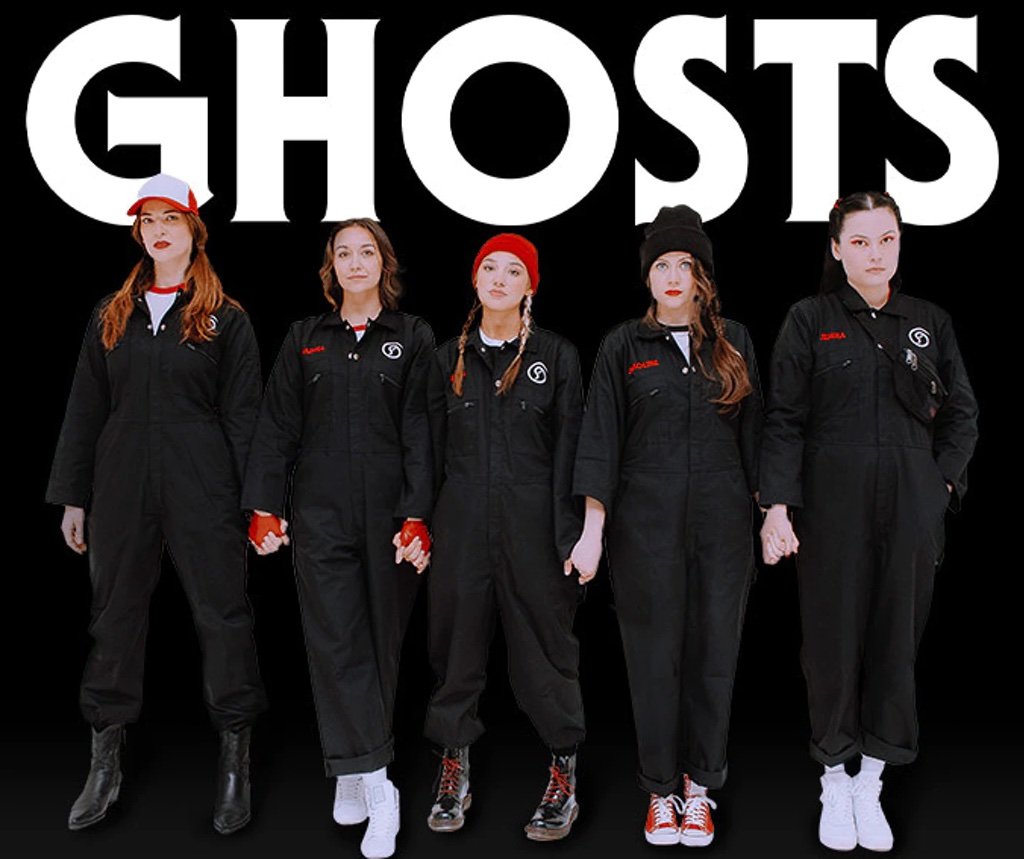
In the more immediate future is the gang’s next project: a live-action videogame by the name of Ghosts. Though not part of the “Host Cinematic Universe” (as Haley puts it), the Host girls are reuniting with Jed Sheperd for the horror game that sees them playing what Haley describes as “little ghost hunters” in a haunted house facing off against an entity known as the Long Lady.

Due for release on consoles in February next year, it’s something of a gamble for the team: the idea of a live-action videogame was popular in the 1990s but has dropped off since, and current rumour has it that the game will only be playable at certain times during the night. This doesn’t bother Haley, though: perhaps with the success of Host, there’s evidence of an appetite among horror fans for movies and games that do things differently.

“It’s exciting,” she says, and “should be another new way of building something – we just like to keep reinventing the wheel, I guess!” You can say that again, Haley.

HOST is available now on Shudder and Blu-ray, while GHOSTS is scheduled for release in February 2022

William Bulter | TAWDRY TALES

william butler

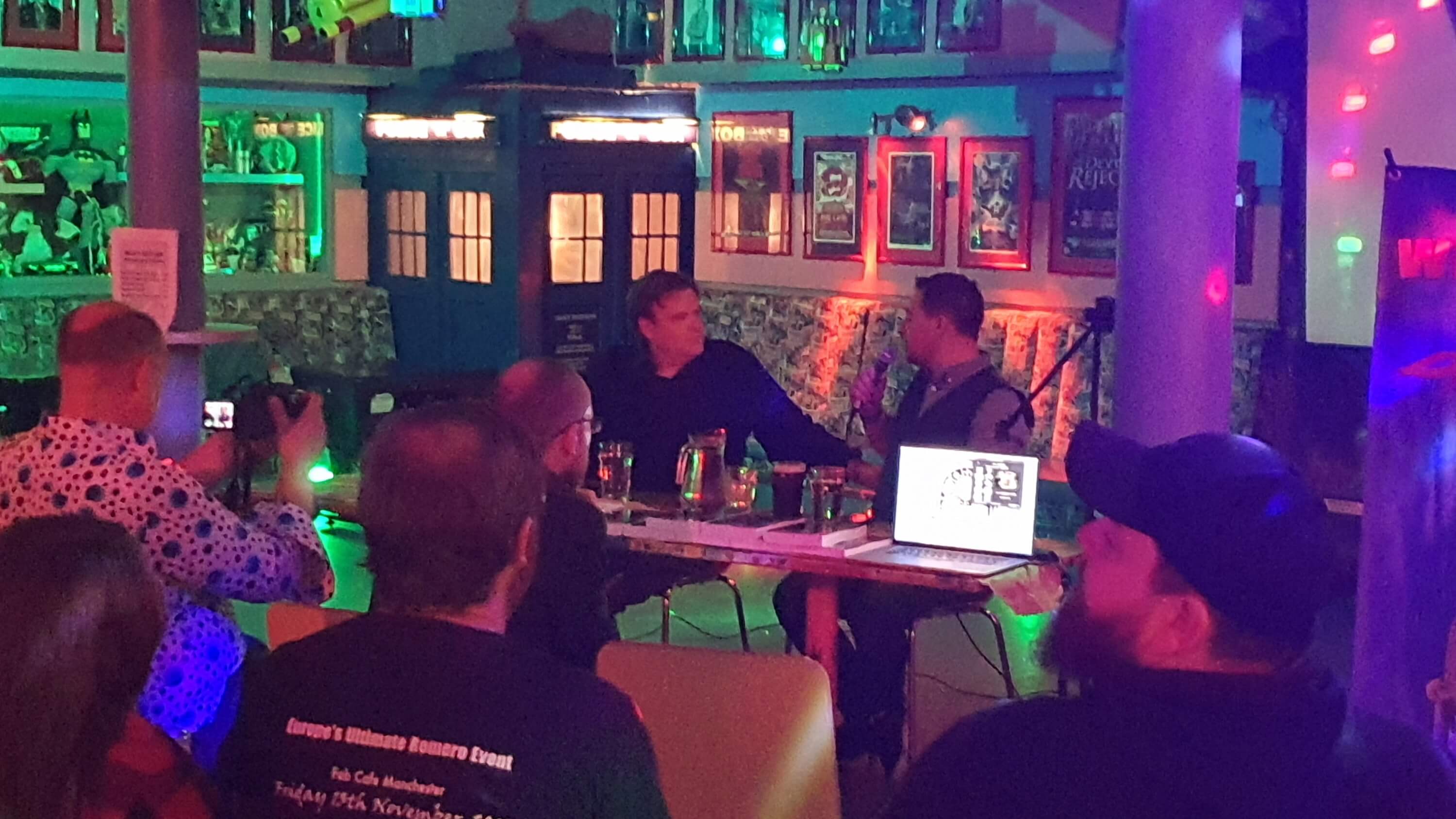
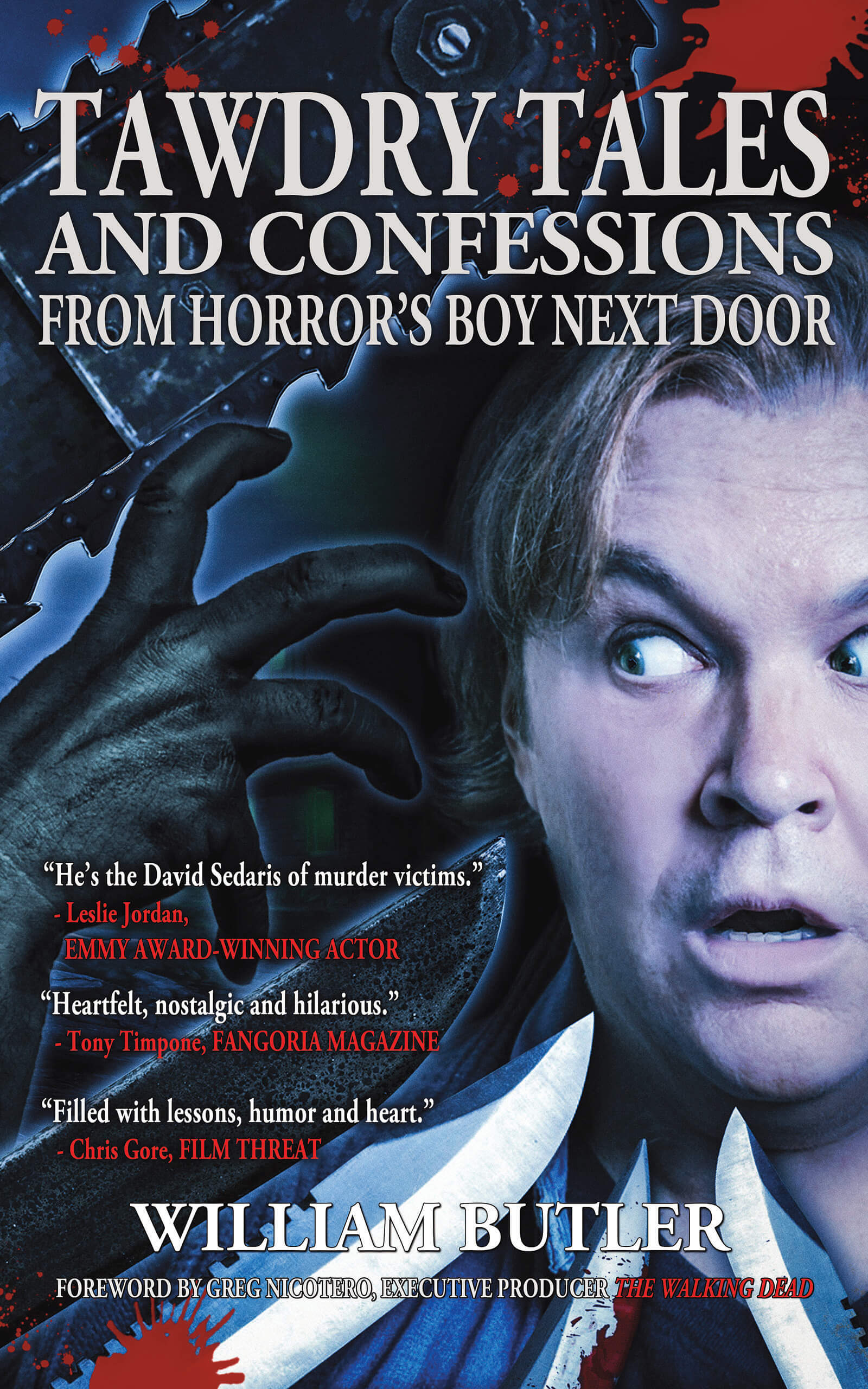
Cult film star William Butler has faced off against Jason, Freddy, Leatherface, Ghoulies, and zombies and has written and directed numerous films over the years. He’s just published a book of his exploits entitled Tawdry Tales and Confessions from Horror’s Boy Next Door. We caught up with him at Manchester’s FAB Café to discuss his career and why he wanted to write his story…

STARBURST: How did you start in the business?

William Butler: Well, my parents worked for Barnum and Bailey Circus and the carnival and fair circuit, so I was around show business. We did catering for all of those companies like The Ice Capades when I was little, so I was around showbiz from a very young age. I was absolutely mesmerised by how important the people seemed. How exhausted they could be, but then when it came time to turn it on, I was always mesmerised when it became showtime how much energy they had. Then I started doing theatre when I was a little kid. When I was around 17, I decided to take the gamble and move to Los Angeles, and my first break was sweeping the floors in John Vulich’s Makeup Effects Lab. He did Troll, Re-Animator, and From Beyond, so I worked on all those films as a slime jockey, painting slime on all the hand puppets. Before I knew it, I lived in Rome for five years, working for Empire Pictures. I became friends with Charles Band, and he’s like, “What do you want to do with yourself” I said, “I want to become an actor”. So Charles and John Buechler shoved me in that direction. Not that I even knew what I was doing, but they, they sort of did and, and that’s how I got started and bridged the gap from painting special effects and sliming special effects to performing on camera for about 14 years before I switched to writing and directing.

Just being on the set of things like From Beyond and Army of Darkness must have been incredible.

I just saw Ken Foree at the Texas Frightmare, and we looked at each other like, “We’re the luckiest people on the planet”. Not only was I working with Stuart Gordon, who ended up being like a mentor and one of my closest friends, but we’re working on a film that we can tell was good while we were making it. We still to this day don’t think life has ever been that good because when Charlie Band had lots of money, he didn’t spare any expense. So we moved to Rome, and he put us in the best hotel and paid for it and paid for the catering, and here we are, these dumb 20-year-olds that love horror films. It was an amazing time. By that time Army of Darkness came along, I was acting. So I agreed to help paint the skeletons because I wanted to see Patty Tallman, who was playing the Witch, and the big pit set, which was a real pit, believe it or not! So yeah, I cheated, and I was like, “Oh yeah, I’ll paint skeletons for you”. I just wanted to go and hang out on that one. I am the luckiest horror film geek in the world because I watched the first Friday the 13th at the drive-in, and then I ended up being in one! It seems impossible for some farm boy from Fresno to crack the code somehow! I think there’s something to be said about the law of attraction – I willed it to happen.

You’re probably the only person who’s been on-screen with all the significant horror icons: Freddy, Leatherface, Jason, and zombies!

Yeah, and some of the cheaper icons as well, like the Ghoulies and the Watchers! The only thing I’m waiting for is for someone to invite me to have Michael Myers kill me, and then that’s it, I’ll have the whole collection!

William Butler at FAB Cafe, Manchester

What was it like working on Tom Savini’s Night of the Living Dead?

It was incredible. Viggo Mortensen and I were roommates at the time, and Viggo was doing Young Guns 2. So I went to New Mexico with Viggo and his little newborn baby – his wife at the time was a rock star, and she was on tour – so he took the baby to New Mexico, and I was going to watch the baby while he was filming and then next thing you know I was also in the movie! So, while we were filming the movie, I got this call from John Vulich. He said, “I just read the script for Night of the Living Dead, and there’s a part in it that you’re perfect for. I was like, “Oh wow, but I’m going to be here for a couple of months.” He asked if I had my camcorder. Tom Savini had seen my picture and saw that I had been in one of the Chainsaw Massacre movies, and he thinks I might be good. So they sent the script through the mail, then Viggo directed me in my audition tape, and we sent it to Tom. Then Tom called me and said, “Actually, I think you’re good for this”. I just kept thinking I’d never get it. And then, by the time we went back to LA, my agent called me and said, “They want to book you, and they want you to go to Pittsburgh”. I was very intimidated by Tom Savini and very, very intimidated by Tony Todd, who is such a great actor. I was just so happy to make it past day two. I thought, “Well, they’re going to fire me!” I had to do that six-page monologue that goes on and on, right when I come up from the basement – on my first day. George Romero was sitting close to me, like three and a half feet away on an apple box, watching me and all I was thinking was, “He’s going to fire me when I’m done”. But he gave me the thumbs up, so I thought, “Okay, I guess I’m doing a good job.” You know, the older I get, I appreciate the work that I did when I was younger, there are always things that you think you can do better but the older I get. At the time, I thought it was the ugliest person in the room; well, I wasn’t ugly. Why didn’t anyone tell me? I also thought I was a horrible actor, but I wasn’t. I was just as good as anybody else. I guess it comes with age.

Do you get imposter syndrome then?

Yes! Trust me; I’m having it right now and having it on this tour. I just said it last night! The older you get, when it comes to appreciating how much I starved myself and how much I worked out and changed my whole life to try to fit into that category of the boy next door, and that was not an easy task for me. I’m very proud of all the work that I do. Now I’m happy to be a lazy, fat, old writer, director. You know, you’re a writer, it’s like, “Yeah well, I’m a writer; I’m fucking brilliant, you can’t take that away from me, it’s the one thing I absolutely love”. Seriously, when I was an actor, I was starving for 14 years because you have to. Even then, they tell you to lose more weight.  I love being a writer and filmmaker because they can’t take your writing ability away from you. They can take your career away if you’re an actor; if you get fat and don’t think you should be fat, you can be a 100-year-old man as long as you’re still writing; you get better and better.


How did you move into writing and directing?

I had been starring in movies like one after the other as the lead. And then I started to realise that I had been in all the horror franchises, which I loved and was very proud of, but Hollywood did not know what to do with me because they were like, “Well, he’s the horror guy”. So I thought what I’d do was shift gears. I will have these roles in TV shows and movies called under five, which is you do five lines and under. And I said I would do under-fives in anything but horror films. So I got a lot of auditions for TV shows and sitcoms, where there were five or fewer lines. I loved acting so much, and I worked very, very hard to become an actor. But my whole life, I’d been a writer. I’ve been writing for National Lampoon magazine before it started sucking. So I thought I was willing to bet somebody would let me direct a horror film because I know at the very, very least what not to do. I remember I was auditioning for Murphy Brown, and the casting director was horrible, and she cut me off in the middle of an audition; she snapped her fingers and took a phone call. And then she slammed the phone down and was like, “go ahead”. And I said, “I think I’m done with this whole thing”. So I walked across the Warner Brothers lot and called my parents, and I said, “Would you be terribly upset if I started writing and directing instead of acting?”, My parents were like, “We’ve been waiting 15 years for you to say that!”

How did you come to write a book?

Well, I do a lot of comedy shows in Los Angeles – or I did before the plague hit. All I was doing was reading from my diaries, and they were pathetic. I was talking about being in love, talking about being addicted to drugs, all sorts. One day I was sitting at home, and the company behind Alamo Drafthouse instant messaged me: “Hi, we were at your show on Wednesday night, and we were wondering if you would be interested in writing a book”. I said, “Who in the hell wants to read a book by William Butler?” They’re like, “We think your stories are hilarious”. Well, they are hilarious, but I don’t think enough people in my middle-shelf-of-fame that I achieved will care. They said, “We’ve already done the numbers, and we know that every bookstore in America – at least in their genre section – will carry three or four books, and that’s enough to sell 20,000 books, and that’s what we need to do”. So okay! They gave me an advance, and I think that initially, they wanted it to be very fluff, just for each movie that I did, but as I started writing, I just loved it. I love it more than anything I’ve ever done. I purged every horrible, awful truth about myself, about the career, about some of the people I’ve worked with, and I have to say out of my 35 years in entertainment, it’s by far the most satisfying thing that I ever did. So then my book went to number one in the category of Film and Television when it came out. I can’t believe it. It’s insane.

What have you got lined up next?

I’m so excited. Well, I just did Baby Oopsie Parts One and Two for Charlie Band under protest. I did not want to do it! But he made it part of my deal for this new thing I will tell you about. I tried every trick in the book to get him not to let me do it. I said, “I want the lead leading lady to be 500 pounds”, and he’s like, “Okay”, “I want a whole new, fully-articulated puppet that’s like nothing that you’ve ever seen”. “Okay, we’ll pay for it” “Goddammit!” So then I wrote this crazy movie inspired by a TV movie called, The Girl Most Likely To with Stockard Channing.

We know it, yeah.

When she was fat, and everyone was mean to her. Then she’s in an accident and gets plastic surgery and gets pretty. Then she kills every one. I thought if we get some housewife type who everyone’s picking on, she’s a doll hoarder, and she restores one doll, and then the doll starts killing everyone and eventually, she starts liking it. Well, it turned out really funny I’m incredibly proud of it, which is hilarious because I did not want to be doing it while I was doing it. So, it turned out great, and now we’re doing four more of them. That allowed me to do this other thing that I’m doing right now, which I’m so proud of. So, as you know, I worked on From Beyond. Charlie asked, “What do you want to do?” I said, “I want to do something that’s from the Empire days. It’s pretty ballsy, but can we do something that’s inspired by the Resonator, the machine in From Beyond?” He cried, “You are asking for it! The fans are going to kill you!” So I wrote this TV series called The Resonator Miskatonic U. We did two episodes, and it was the highest rating thing that Full Moon Features have ever done. We made a beautiful Resonator. At the beginning of the episode, we made it very clear that Stuart Gordon inspired it; it’s not trying to rip him off. So while I’m here in England, I’m going to write four more episodes, and in writer language you as you know, that means a one half of one episode, and they’ll have a lot of coffee when they get home and write four episodes in a weekend.

I’m also on tour promoting this book, which is the proudest thing ever; I’m so happy that when I die, this book will be left behind because if anyone reads it, it will tell you, number one: that absolutely anything can happen. I am the last person on earth who should have gone around the world three times, star in movies, been skinny, been rich, been fat, been poor, slept in his car, slept in a $3 million house. I have tasted it all, and I’m so glad to have left that in the book to inspire anybody else that has just thought, “Well, could I try it? I don’t know?” The answer is yes; you should absolutely try it. Yeah, and all you have to do is know that it’s possible and make it possible.

William Butler’s UK book tour concludes at The Phoenix Artists Club in London on September 26th. You can order the book here.

Jacob Chase | COME PLAY

To celebrate the recent VOD release of the horror film Come Play, we sat down with writer/director Jacob Chase to talk about the legend of Larry and adapting his short film into a feature.

STARBURST: Congratulations on the film. This is a feature-length version of your short film LARRY from 2017.

JACOB CHASE: Thank you so much. Yes, I shot the short film and had no idea it would become a feature film – I feel very lucky that I got to make this.

Did you at least have a plan to eventually make it into a feature?

It sort of evolved naturally – I made the short to prove I could make something suspenseful and get together with my friends to make another short – I happened to have this monster costume in my garage from a haunted house I used to run.

When you’re making a short film, you’re trying to do it as cheaply as possible so the costume came in handy [laughs]. Of course, I look up to those filmmakers who’ve taken the leap from short to feature in the past like Andy Muschetti with Mama and David F. Sandberg with Lights Out – but never in my wildest dreams did I think it would happen to me. I focused on making a cool short and luckily people responded to it and I got the opportunity to expand it.

Let’s talk about Larry himself – obviously, the design was based on the monster costume you had, but how did he evolve when going from short to feature?

Creating the monster started as something I made with foam and latex, etc, including me on stilts walking around scaring people for the short – so for the feature I wanted to keep a similar silhouette so as the creature evolved, Larry evolved too and it was important to me that he wasn’t just a creepy monster but was also someone who was pained and lonely in their internal psyche – so I developed the look with the Jim Henson Creature Shop who ultimately made Larry.

I always wanted him to be a practical monster because I love practical effects, especially in horror movies as it really lends itself to making you more afraid because its really there but also I was going to be working with young actors so giving them something to act off of to get genuine reactions. It was an incredible challenge but awesome to watch all the puppeteers work with the creature on set. A brilliant team effort.

We mentioned how Larry is more than just a monster, he’s also a physical representation of loneliness amongst other things (we really connected with that), was that core narrative always the plan to adapt?

Yes, it’s certainly expanded in the feature but I do think the seeds of that idea are planted in the short. I set the short in this parking lot with a simple guy working as an attendant as that is a job that seems really lonely – I’ve never had that job but I’ve often thought that it seems lonely so that connection between the character and Larry has always been there.

I was very much inspired by Frankenstein – a monster who people are afraid of but he’s just trying to find his place in the world. I wanted Larry to be something that people would be scared of and also empathise with and I think we achieved that from his mythology, the way he interacts with characters and the sound design.

Larry interacts with the world through technology, specifically the Tablet that Oliver, the lead character, owns. How was it bringing that relatable realism to life with the cast?

I think modern horror movies are using whatever is around us to scare you and what may have been in the past a VHS tape is now a phone or tablet – for me, it was wanting to get the technology out of the way as quickly as possible and making it primarily about the monster.

I would do things like shoot a scene through the device so that we would forget we were in the tablet world and instead be in the monster looking out. I think all three stars, Ahzy, Gillian and John, all really embraced this wonderful mixture of technology and the practical monster. We all use our devices all the time so I don’t think we can say ‘technology is bad’, but it can also be used for good [laughs] – a very helpful communication device, in the terms of Oliver within the story, but it can also be used to spread hate and evil – we all connected to that on a human level.

COME PLAY is out now on VOD the UK and US.

Joe Abercrombie: The Wisdom of Crowds

Joe Abercrombie has been described as the Lord of Grim Dark fiction; His iconic First Law trilogy set the tone for darker fantasy novels and his award-winning, wildly popular work has been lauded across the world for it’s gritty sensibility and entertaning style.  His latest book, The Wisdom of Crowds, completes the Age of Madness trilogy, the latest series of books set in the world of First Law.  You can read an extract of it here. We caught up with him whilst he was on tour promoting the book to find out more.

Starburst: The Wisdom of crowds is the final bit of the age of madness. How would you introduce it to someone new to your work?

Joe Abercrombie: Well, it’s an epic fantasy, I suppose is one way of putting it. It’s a huge sweep of love and war. It’s a time of change. It’s a kind of fantasy that’s influenced by the industrial revolution very much. So it takes place in a in a rapidly changing world where money and industry are becoming the new powers. And this kind of new breed of investor and inventor who is taking the place of the old ways of magic and superstition up to a point.

Something like that. It’s a big story with lots of characters, and you know, it kind of follows my same, you know, the same approach to found itself used in the past, which is really a focus on the characters, on the on the action, on sort of rich vein of dark humor and a subtle, cynical revisionist approach to the material, I guess.

Starburst: It’s a follow-on of sorts from the First Law books. Why did you decide to put that world through the industrial revolution?

Joe Abercrombie: I think I’ve always been a bit frustrated by the way the fantasy world seemed kind of pickled in vinegar.

They seem like they’re worlds that don’t change these medieval sandboxes where you’ve had knights and wizards for thousands of years and things are in a kind of an artificial status. I don’t feel very real. You know, the conflicts, the great wars that they focus on are, you know, sometimes seem to grow out of these battles between good and evil. Dome sort of abstract idea of good and evil.

Whereas in the real world conflicts and wars grow out of these big tectonic shifts in culture and economics and technology. And I want us to try and have a world that reflected that, that felt like it was moving and shifting and endlessly changing despite the best efforts of the wizards and kings who would like to keep things as they are. So in the First Law, you know, although it was a slightly more medieval or Renaissance feel that these books, it was nonetheless a time of the kind of growth of the merchant class where money and commerce becoming the new power that was eclipsing kind of traditional aristocratic feudal power.

And so the natural next step, but the next big kind of social eruption was the Industrial Revolution.I felt it was a natural way to go, but an early industrial revolution, more water wheels and steam trains.

Just naturally, a lot of low-key drama flows out of that setting. The contrast between rich and poor, the conflict between new and old. So natural tension continues between various different strata of society and therefore the different characters who come from those different parts.

Starburst: This series is written with multiple Points of View from various characters. Why that approach, and why do you torture them so much?

Joe: Well, I’ll talk to them so much, because that’s obviously how you talk to the reader, through the characters and their attachment to the characters, that’s how you get the emotions of the reader.

As a reader I want to be shocked and to feel things. And so, you know, if the characters skate through, if you don’t have any fear for the characters, if you don’t have any attachment to the characters, you can’t get that effect on the reader, which is which is what you’re going for.

Where do they come from?  They’re sort designed at the start of the process, when I’m planning. You know, what do I need in my cast, to do to tell the story. I wrote books with a very male cast, originally. And so over time, I’ve tried to have a kind of more diverse cast in terms of, you know, gender and a range of ages and types and backgrounds.

So there are seven central points of view now. Three of them are women. Some are from very low in the social pecking order, some from very high. One is a kind of a ruthless socialite business woman which is the sort character you don’t often see in fantasy. You know, whereas there’s also a young warrior who is in a way very much the classic sort character you’d expect to see, but hopefully a a slightly different take on that archetype.

I select a range.  I mean, it’s also a well-established world that’s been around a while, so there’s a lot of baggage. There are a lot of old characters about, you know, came through earlier books and so many of the characters in this series of children, all kind of proteges of the older generation.

So naturally, they take on some of the characteristics of those people that came before. And that was quite an interesting aspect to this for me was, you know, how the new generation would reflect some of the characteristics, if not all of the old. But a lot of it is just simply what happens when you sit down to write, you know, until you until you really start writing for the from a character’s point of view, I find you don’t really understand what they’re like, what works, how they relate to other characters.

When you start writing that hopefully the magic happens and they start to really take on a personality and a voice generally are ironic, quite neutral way originally. Initially they’re all relatively similar. And then over time, their voices kind of define a little bit. I got to work out what works for them. What approaches to the writing might make them feel distinct and individual, and the aim is always to try and get the prose, and the writing feel is reflective of their personality as I can, so that hopefully every point of view feels nice and distinct in the way that it reads.

Starburst: The pacing is quite steady throughout in your work; it’s very smoothly done and it’s always a pleasure to read; what’s your process, how do we get from the first draft to the very polished final product?

Joe: I mean, it’s developed over time, I think, and I’ve certainly got better at it. My first book was notorious for not much happening and being a bit of a character study without an obvious plot. And I think over time, I’ve got better at that pace.

The first thing I’ll do, I guess, is break a project down into parts. So for me the whole trilogy is nine different parts. Each book being broken into three and then to try and give each of those three parts, you know, a structure of its own so that there’s some big event happening that goes in some of the characters and other small dramas.

And perhaps for one character there is, that big climax  halfway through. So there is always generally something big going on somewhere. You know, it can be the focus of a section while other things might be building up in another area. So I’m kind of on the on the big scale trying to plan it so that there’s always you’re always building up to something or coming down to something else. You’re not just sitting there turning the wheels, you know?

And then when it comes to kind of writing in each chapter, I suppose I’m again trying to give it up to some level of shape and some level of forward motion out of it. Adam Neville the horror write said that “he aims for life and death on every page.” And that was a bit high concept for me. But a slap in the face on every page has been the lesson I’ve tried to take from it. You know, every page should have something exciting or surprising or a great gag or, you know, a piece of crunch and action. So that, you know, you never look at the page and think, “Oh, this is just getting me from this page to that page.” There’s always hopefully something happening, you know?

And a lot of it again, is revision. You know, for me, I’m not. The writer works a lot in the revision. So I’m always, you know, revising and chiseling away and trying to take anything that’s not essential or make every line that little bit more arresting or better crafted or quicker or sharper.

Starburst: You have a background in of a media, is that has that influenced your revision process or is it a totally different system?

Joe: Yeah, I mean, I was TV editor for a long time. And it’s not the same in many ways, the TV’s are much more group activity, if you like.

But it’s there is also a great deal in common. I think, you know, some of those some of those skills of pacing, of a rhythm of the moment you come into a scene and the moment you get out of what’s essential to show and what you can not show and when you use dialogue and when to use action.

 When you use those kind of skills, I think definitely are a lot being added to about, you know, how you pace things and when I can come in and out of things and the value of cutting stuff down and keeping to the essentials.

You know, I’ve watched a lot of producers work on scripts and in scripting for documentary. That is where you’re trying to really reduce to the absolute minimum number of words that the picture’s also certainly learn a lot about trying to boil things down and keep things brief. So vital experience altogether, I think probably.

Starburst: If you were to take one of your works  to be converted into a Broadway musical and what work would you pick and what would you expect to be the big scene?

Joe: Oh Heroes, certainly. Because it was a giant story about a three day battle with varied characters ranging from kind of psychopaths to backstabbing cowards to, you know, young boys looking forward, bright eyed to a glorious future.

I think you’d have a nice range of different styles that could be reflected in the in the song. You know, I wanted to have a hip hop approach. One more of a classical musical belting out the tunes.

And of course, one character is cursed with an extremely high voice, which you find very embarrassing for that, too. I think its song could be fascinating and culminate in a giant dance number is the armies clash. I think that would work perfectly. In fact, I may start later on today.

Starburst:
And what would you call it?

Joe:
Well, I don’t know. I’m trying to think of something that has h sound that can make heroes. Maybe just the heroes, huh? Here I was on Broadway. I can’t thank the West End heroes of the West End.

Starburst: So. What’s next?

Well, that’s a good question. I’m going to be, you know, there’s obviously a fair bit of two or three weeks till the third book comes out and then there’ll be a fair bit of promotion and stuff to do.

So it’ll be back to events such as the in-person in bookshops for the first time in a couple of years. So we did stuff the first book, obviously, which came out not long before the pandemic. The second was right in the middle of things, so it was purely virtual for that. So there’ll be some touring, some bookshops and festivals and some of that kind, which will be really interesting to go back into.

And then I’m in the midst of writing something else, but I’m kind of taking my time a little bit with that. The plan with these books, you know, I obviously spent quite a lot time doing a draft of all three before the first one was published with the idea of being and I could I could tie them up relatively quickly and make sure they published relatively fast. So it’s been quite a quite quick turnaround on the last three years with three books coming out. And so the next thing will probably take some time to to kind of percolate through and ferment on my mind. I’ve written, I’ve written, you know, a chunk of a draft, so we’ll see what that what, what comes of. It’s a it’s a new world thing, slightly different tone, still fantasy.

The offer of a perhaps a slightly ridiculous and more more ridiculous and comic kind than The First Law has been, while still being quite withering and cynical in other ways.

You can grab a copy of Joe’s latest book via this LINK.

Luke Kirby | NO MAN OF GOD

luke kirby

No Man of God is based on the book written by Bill Hagmaier, an FBI agent who struck up a relationship with serial killer Ted Bundy while the latter was on death row. Actor Luke Kirby plays the notorious murderer opposite Elijah Wood. We caught up with him to discuss the role…

STARBURST: What was it that attracted you to the role?

Luke Kirby: Honestly not much. More than anything I felt a sort of repulsion, because of the nature it. One does wonder about the potential for things like this to be made overly salacious or sensationalised. There’s clearly a market for this kind of stuff that can exist in the realm of the ghoulish, but given that this is about a real history, there’s a delicacy that I feel needs to be dealt with. And so when I read the script, it read very smoothly and had a swiftness to it that was appealing, but I still felt a reluctance to get involved. Then after meeting Amber Seeley, our director, she and I were able to have a great meeting. It was a day before New York went into lockdown, I happened to be in Los Angeles, so we were able to meet. I got to shed all of my hesitations and fears with her and it turned out that she shared some of them and had a really fantastic take on how to deal with this material in a way that was clearly driven by intrigue to the story, but also felt like she was going to address some of the other feelings that we had alongside it, and try to figure out how to parallel those forces together. So it was just a matter of adopting her as an authority and following her wherever she demanded we go.

What sort of preparation did you do for the role?

There’s obviously a lot of footage of this guy. You know he was clearly somebody who had an appetite for the camera and was an early arbiter of self-promotion and seems to fancy himself a bit of a strange celebrity and clearly loved the malleability of optics. He’d love to try to manipulate them as much as he could so that was the best research that I could do in terms of any mannerisms or the physicality of those things that can inform the early stages of things. Then there were numerous documentaries, and Bill’s book has some appeal because of their relationship. But it was a matter of how much I could consume or stomach in a day’s work. We were in lockdown and I came out to Los Angeles to shoot the film was put into a two-week quarantine, so I really didn’t have much else to do so I just went into a dark room every day and came back out dismayed lacking in appetite, and went on to the next day.

Was it hard to shake the character after the day’s filming?

These things do loom for the duration of the work. But I feel like if you’re doing things safely and responsibly, they don’t loom in a way that’s detrimental or damaging. Thankfully, I had my wife alongside me and she has a wonderful sense of humour and we were able to observe the absurdity of the whole thing. While we were there, there were wildfires around the corner from us, so Los Angeles was filled with smoke and with Covid, everywhere we looked seemed to ring ‘End of Days’. That kind of alarm and we couldn’t help but laugh that this was how we were choosing to spend the time: invested in this kind of this person who reaped so much havoc and was so monstrous towards other people. So yeah, little degrees of humour helped and then when we finished it, in some ways it really confirmed that this man was gone and any sort of shadow that that lurked at the bedroom door for the duration of the shoot was gone.

What was Elijah like to work with?

Awesome. He’s also a tremendous actor and a great dance partner. He also carries a great sense of humour. When you’re doing something like this, looking into something that has so many opportunities for repulsion, you want to balance it out, he was just a great, fun person to be around.

What was it like working under the Covid restrictions?

In some ways, I think we were granted a bit of a gift because of the size of the show. It was a small crew and small cast. All of my stuff was shot in one room. So it made a lot of the protocols easy to follow. And because we’re such a small group of people, it made it easier in terms of testing and stuff. It was one of the first things that were shot in LA, so it really felt like an experiment. For us, I think more than anything, it just satisfied an itch that had been present and increasing over the four months prior, because we’d all been living much more restrictively under the mandates of the lockdown and so it was the first time we got to be around people aside from our family in months. It was just a joy to be around new people and get to get to know them and ask them questions about what they liked and what is life like where you live, like that kind of thing. It was very fun and I think in some ways informed the story, certainly from my perspective, of a man living in isolation, just delighting in the opportunity to be with someone who felt like they were going to listen to them.

Did you read Bill’s book before going into the role?

No, I didn’t read anything Bill has written but I spoke with him over the phone a couple of times and he was a great resource. A very kind and generous man. It informed a couple of things: just being able to hear the voice of somebody who was present for the life that we’re trying to make real just affirmed a humanity that I wouldn’t have otherwise been sure was there. It also was great to have him as a resource for making sure everything that we were doing was authentic. There were aspects of the script I think that on the page felt sort of overzealous, but Bill was there to kind of say that was what happened.

Why do you think that serial killers have a cult following and some people idolise these idiots?

I don’t know what that’s about. I sometimes wonder about its relationship to the doldrums of reality. I wonder about the yearning that we may have to feel more excited when more endangered in life. I know that whenever I absorb that kind of story or material, like if I’m watching a true-crime TV show or something, taking the dog out for a walk always feels a little more precarious than it would have otherwise. I think it awakens something kind of old, an old sensation of what it is to be awake to the danger. But in terms of the personality stuff and the celebrity aspect of it, that’s a real peculiarity. I just don’t know, I find it a little odd but you know, hero-worship of any kind is odd; celebrity of any kind is really peculiar.

You played Lenny Bruce recently as well [in the Amazon series The Marvelous Mrs Maisel]. Was there a difference in your approach with the two characters?

While they’re obviously very different, they share a thing that there were real men with books written about them and all that sort of stuff. The biggest difference for me is where I felt if I had any responsibility at all, which was with Lenny. My biggest concern was that we would do anything that would hurt his daughter, and she came on as a support. She has been been very supportive about the work that we’ve done and with this movie, I didn’t really feel that kind of responsibility to any legacy, because it’s not really a legacy, It’s a wake of destruction. I didn’t have that concern; I had other concerns, obviously because there are people who are still reeling from loss as a result of this person, and that’s a conflict that I still live with.

101 Films present No Man of God on digital platforms from September 13th. You can read our review here and our interview with director Amber Sealey here.

Amber Sealey | NO MAN OF GOD

amber sealey

Fresh from the UK premiere at this year’s FightFest, the superb film No Man of God is heading to digital platforms. We caught up with the director, Amber Sealey, to find out about the film that looks at the relationship between FBI agent Bill Hagmaier (Elijah Wood) and mass murderer Ted Bundy (Luke Kirby).

STARBURST: What was it that made you want to make a film about Bill Hagmaier’s book?

Amber Sealey: Well, the script existed before I came on, and SpectreVision, the production company, already knew the story they wanted to tell because it was a part of Bundy’s life that hadn’t really been told before. How Bill Hagmaier related to Bundy in there, you know the whole forming of their friendship and we felt like Bill’s life story had never really been told. From my side of it, I just felt like this was a perspective that I hadn’t seen on the Bundy story before and it was a way of both looking at Bundy and looking at Bill and also looking at our own interest in this kind of film and this kind of story.

Bill was an executive producer on the film; how hands-on was he during the production?

He wasn’t hands-on, but he was very involved in terms of giving us information. He was a wonderful resource and a friend, and he was there to give information and support. He was very much like “this is not my world. This is not my business. You guys go and do what you do and want to do”, and so he was really great. So, in that sense, he was the best subject, because he didn’t put in place any demands. He gave us his recordings, photos, and videos and I had so many long phone calls with him, so he was just really like a great resource and friend.

What were those tapes like to listen to?

Not fun. There’s a lot of them; each time Bill and Bundy would sit down, they were talking for two to three hours at a time. It was hard to listen to. It was obviously really interesting, I felt like it was just really raw. You’re getting to know Bill and Bundy so much from those recordings, both how they are professionally and personally. It was interesting but I wouldn’t call it pleasant.

We can imagine. How did you go manage to cleanse your system afterwards as it must be something hard to listen to?

Wow, good question. I should have maybe done some lighting of candles or things. I think that the thing that was cleansing was that at the end of each day, I was coming home to my kids and my husband and our home and that was very cleansing. I think because our industry had shut down because of the pandemic for the six months before we got to film – we were originally in prep when we got shut down – and the fact that we were getting to be up and filming again was really life-affirming for many of us when we came together on set. That was the first time that we had all been with anyone else outside of our homes in like six or eight months. We were feeling like our industry might survive, so that was a nice counterbalance to the subject matter of the film. The subject matter was so painful and so dark and atrocious, so we have this other side of it.

Your film is probably the only one that doesn’t glamorise Bundy, you allow the horrendous things to come out of his own mouth rather than show them. You’ve got Luke Kirby, who is a very handsome man yet it still shows him as a monster. How intense were those scenes to film?

Yeah, it was certainly emotionally intense for all of us. It was really important to me from the beginning that it was not about recreating his crimes. I have no interest in seeing that and that’s been done before, and I didn’t see the purpose of it. I think it was really important to me to show how I saw him when I listened to his tapes and I watched the videos that are out there of him. I see a deeply insecure, really narcissistic guy and certainly as you say, you know, Luke is a good-looking person and people always say Bundy’s good looking, but I find him just average looking. I think Luke is certainly more handsome than Bundy is! But Luke is such a good actor that I still wanted to cast him. We tried to ugly him up a little bit so you know, we couldn’t maybe make him as unattractive as Bundy was. I was not at all interested in glorifying Bundy or making him appear as a kind of rock star, sexy super-smart charismatic guy like some have done. I don’t see that, I see him as average intelligence, I see him as really desperate to please. He wants everyone to like him. He’s always trying to perform for whatever room he’s in. So that’s who I saw when I did the research and that was really important to the writer as well. Luckily, Luke could still tap into that insecurity and desperation and portray that really well.

What was the biggest challenge during filming?

Probably the pandemic. I was like ‘no one’s going to die on my watch!’ When you’re the director, and for the producers as well I feel this but we all feel like, you know, it is our job to keep everybody safe and I was not down with anyone getting sick. We worked really hard to ensure everybody’s safety. We stopped filming every 15 minutes and we re-ventilated the room so we only picked locations that had both ingress and egress to flush out the air. We also had an amazing health and safety manager and we hired air specialists; we just constantly made sure we had fresh air in any location, and we had everything outside that we could possibly have outside. We were really strict about all the health and safety measures, and I’m really proud of it, no positive cases. This was before vaccines, it was eight months into the pandemic. So that was the thing that scared me the most honestly, you always care so much about your cast and crew and keeping them safe. At the same time, we had crazy wildfires out here in California where we were filming. So the air was really in danger, both in terms of the air quality from the fires and also the pandemic so that was intense

That must have taken up a lot of the budget too.

It did, for sure. Now people understand that that’s going to take up something like 30% of your budget, which will be spent on testing and PPI. That’s just the new reality of filmmaking but for us it was we were a really low budget film so we certainly had to make some different creative choices, because we had a lot less money to spend on the production. So even though it was maybe a bummer that we couldn’t have more cars in the background or something in a scene that if it meant we could properly test everyone and properly mask everyone, then it was worth it.

You’ve touched on this slightly but what were Luke and Elijah like to work with?

So great, I just can’t say enough good stuff about them. I love the two of them. They’re both so just kind, humble, smart, and talented and I’m not making this up, they’re just wonderful, wonderful people, really good guys.

Why is it do you think people are fascinated by serial killers?

I think it’s a bunch of different things. It can both be healthy and unhealthy that we’re interested in serial killers, I think it’s unhealthy that we know Ted Bundy’s name and we don’t know the names of all his victims. It’s unhealthy that we put so much time and focus and attention on him certainly and I’m as guilty of it as the next person because I also made a movie about him. So that’s unhealthy. On the other hand, I do like to think that there is something at the core of our interest in serial killers. It’s like when you’re driving on the freeway and you see a car accident and you turn to look. I think that interest in turning to look comes from a place of worry and concern about other humans, I think we’re going “Oh no, what happened to them?” I don’t think we’re looking going, “Oh, I hope I get to see something really gory”. I think we’re thinking we hope it doesn’t happen to us. So it comes from a place of concern about other people. And I think being interested in serial killers, is connected to that. And I also think we like to feel love and sadness and fear, and horror films or serial killer films make us feel fear and feeling those things sometimes make us feel really alive. It’s a human thing to want that emotion and to want to be entertained in that way. One thing I was trying to do with this film was point out that we have this interest in this person and it’s curious that someone could be so evil, and we want to understand so hopefully, it doesn’t happen again. And at the same time, we hope that interest in him will just die down, and we can start making films about other more interesting people. I’m also really trying to point the camera back at us and say why are we interested in these people and why are we looking at him so much and not looking at the victims or not looking at the woman in the room, what does it feel like for her? She’s the one who knows what it’s like to walk down a dark alley and hear footsteps behind her and get scared; half the story is hers.

How easy was it to go from acting to directing?

It was easy for me, it was a seamless long process. I was living in England at the time and I was acting and was really inspired by the Dogme 95 films that were happening in Europe, and I just wanted to make a no-budget movie with my friends and that’s what I did. I acted in it my first two films, and so it was kind of an organic process. And as I became more and more of a director, the acting sort of fell away. I mean, acting is my first love, I’ll always love it. If friends ask me to be in things, I’ll happily do it but I don’t audition or pursue acting in the way that I used to.

101 Films present No Man of God on digital platforms from September 13th. You can read our review here and our interview with actor Luke Kirby here.