Harry Bromley Davenport | XTRO

harry xtro

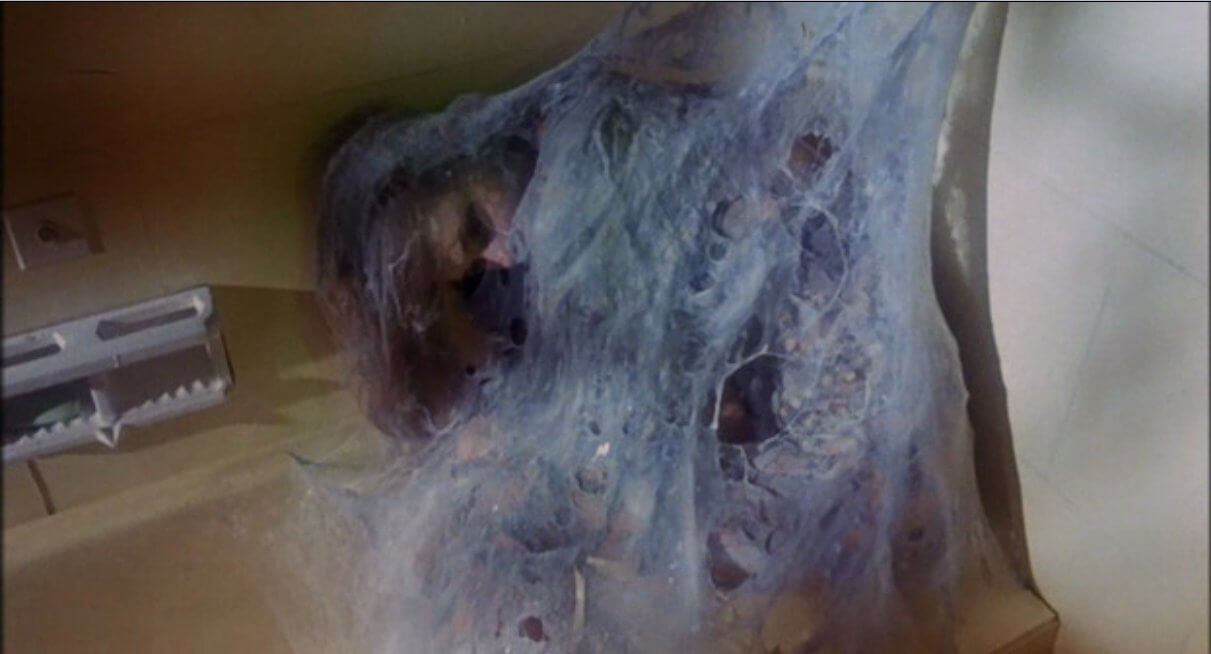
Since its release in December 1982, the science fiction horror film Xtro has alternately shocked, astonished, and disgusted viewers. Looking at the film’s rather bog-standard story, one would never guess: Sam Phillips has a mysterious disappearance, seemingly by alien abduction, and just as mysteriously reappears three years later. However, it’s the way the film chooses to depict Phillips’ reappearance and various other plot points that result in Xtro‘s still-notorious reputation. The film’s mix of gore and outrageously bizarre set-pieces still have the ability to make one’s jaw draw drop a full 35 years later, especially the infamous scene of Phillips’ rebirth. Considering the violence, nudity, and unrelentingly dark tone of Xtro, it’s surprising that it managed to avoid inclusion on the infamous British Board of Film Classification’s video nasties list. Anyone who saw it during the ’80s VHS boom was marked for life by Xtro, and it’s gained even greater infamy in the digital age. Viewers finally got their chance to see the film as director Harry Bromley Davenport intended when the movie hit Blu-ray from Second Sight Films. Ahead of the Horror Channel screening of eighties cult favourite Xtro, we caught up with the director HARRY BROMLEY DAVENPORT to talk about the restoration, the film’s enduring legacy, and more…

STARBURST: How did you come to be part of the restoration for the Xtro Blu-ray release?

Harry Bromley Davenport: Some people in black suits came to my door, and they burst in, and they hit me over the head. They persuaded me that it would be in my best interest to cooperate, so I did, because I wanted to have another go at redeeming myself from the awfulness of the film, and I thought maybe I could help just a little bit by re-lighting it, which you know, you can do digitally.

So, I redid all the colour timing. They gave me a simply terrible inter-positive, you know, and it had dust and shit and scratches and all sorts of crap on it. I cleaned all that crap off, digitally, and then I just started again. Redid all the colouring and I made the whole film much darker because it originally looked like it was shot in a fish and chip shop. Not because of Johnny Metcalf – who was a lovely fellow – the DP, but we had so little time.

Don’t forget, it was a union crew. They worked from nine in the morning until five in the afternoon, and you had to beg for overtime – which we couldn’t afford, anyway. So, a lot of the time, you just don’t have time to relight. On the first Xtro, I was trying to be a good boy, because it was the first union film, the first film with a proper crew, and all that sort of stuff that I’d directed, so I was very loathed to complain about anything or assert myself to the front office, because I was so glad we had the money for the fucking film that I thought, ‘I’d better play my cards right and not get fired.’ So, I compromised too much.
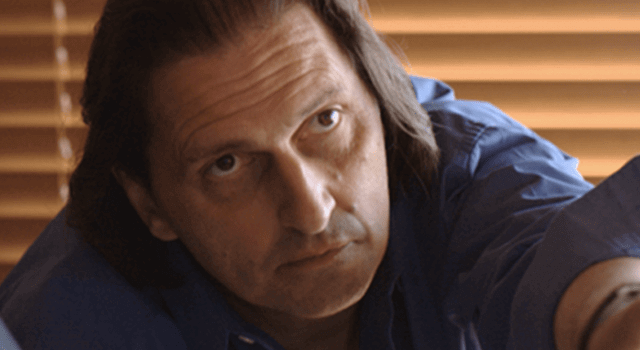
Harry Bromley Davenport

Having now looked at and paid so much close attention to the film during the restoration, are there any things that stand out in your mind from the original shoot? On the re-watch, we were struck by how early you show the creature, and how often it makes its appearance, which is very contrary to many of Xtro‘s contemporaries.

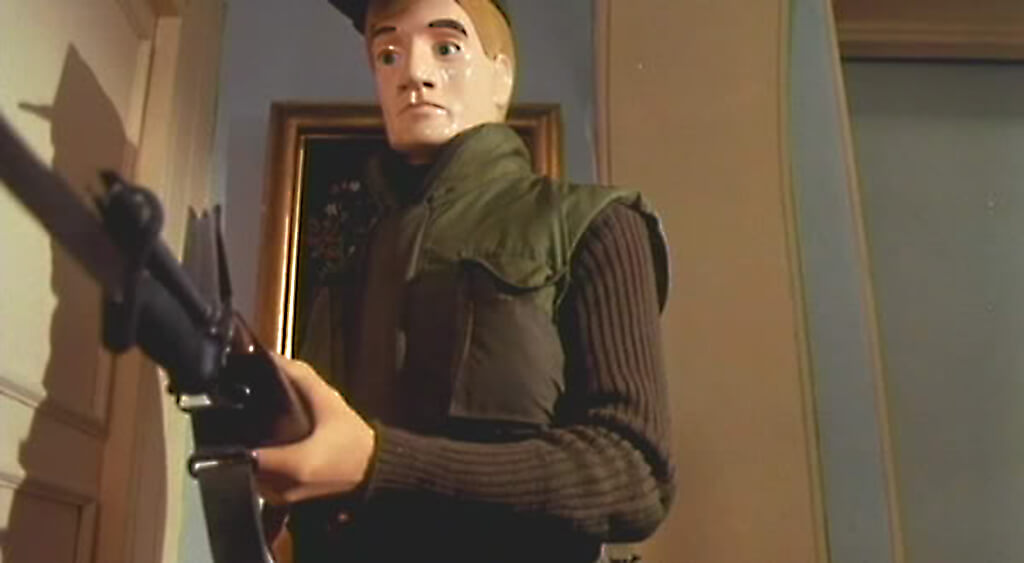
And to have a couple of lingering wide shots of it, too. That was quite intentional, and for precisely the reason you mentioned: people just want to have a glimpse of it, because it’s usually more frightening that way. You think of the movie Alien, and you don’t really see much of the monster at all. Even in the end, when you see it full-form, you can’t really see it, because it’s this whale colour grey against black. For the majority of the film, though, you don’t see it. I thought it was very effective, and I thought it was a wonderful film, but it was intentional [in our case] because of the market.

The kind of punters who went to these films in New York – they want to know what the monster looks like. That’s what they want to know. If we showed the monster, they would either laugh at it, or they would become engaged – but then they would wait for the next time the monster appeared because at least it would get their attention. I think that’s why you see a lot of it, right away. It’s a difficult thing because you don’t want to give it away right away. It’s like a stripper taking off all of her clothes, and then putting them back on.
In addition to the monster from outer space aspect, Xtro has a lot of domestic relationships, such as father and son and husband and wife. Was it important to have that part of the film?

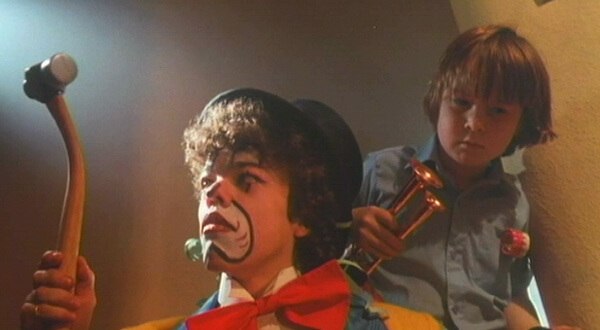
They still battle to continue their domestic lives, don’t they? They still battle to make it all go right again, as it was before. They’re trying to patch it up, you remember – setting up this soap opera situation? We were taking it all very seriously, so there was no snickering by the actors when they had terrible lines to say.

And there were some pretty terrible lines, like “I came from another world.” Ho, ho – Jesus Christ, how are you going to say that? Well, you get away with it when you have stage-trained actors who have been on stage, in front of a live fucking audience, alright? That’s who we had – we had that type of actor, with that type of accent, and that type of performance. It’s toned theatrical. It’s not casual. We had these actors who were taking it very seriously, I’m happy to say because otherwise, we wouldn’t have gotten away with the film.

Looking back on it, I think that they did it well. It’s that sort of Shakespearean delivery, if you will, combined with the fact that it’s absolutely ridiculous – the situation is absolutely absurd, as you’ve got panthers jumping out and parrots and snakes and aliens and this and that and people doing disgusting things to each other – and on top of all that, you’ve got these actors who are talking as if they’re on stage at the Old Vic. People have said that it’s got this sort of strange atmosphere, and I think it’s because of that.
What stands out, visually, to you?

Looking at it for six months, doing the restoration, really made me look at it again, and I started to understand that this really is an odd film. I won’t literally compare it to the first Phantasm, but that comes to mind. You see, it didn’t really explain anything at all if I remember. Odd things happen, and they got away with it.

By the way, I resent anyone saying that we were a reaction to E.T. or something. I hadn’t seen it, I had no idea. It always irritates me when people say I’ve made the ‘anti-E.T.‘ Fuck off and die, you know? You’ve got a child and a monster, and that’s it. With E.T., you have a cuddly monster, and then you’ve got a child – it’s very silly.

You also provided the soundtrack to the film. Was doing the score yourself a matter of budgetary necessity?

No, I wanted to do it. I didn’t want some dope coming in and putting his score on my film, thank you very fucking much. I knew what they’d do: they’d do a Hammer score, and take library music off old 78s, and say, ‘That’s good enough!’ [imitates The Phantom of the Opera score] No, I wanted to do it. At the time, I didn’t think I’d done very well, and then I went back to it, and I thought, ‘Ah, Jesus – it’s just these whining synthesisers.’ Not really my finest hour.

When we were doing the restoration thing, I thought it’s really not as bad as I thought it was. And the film wasn’t as bad as I thought it was. It had this strange, surreal feeling. I don’t know why – the contradiction between the setting and the actors was unexpected, but I don’t understand it, really.

Xtro screens on Horror Channel on November 26th. Tune in on Sky 317, Virgin 149, Freeview 68, Freesat 138.
 

Holly Rose Swinyard – A GUIDE TO FILM AND TV COSPLAY

A guide to Film and TV Cosplay

Holly Rose Swinyard is an accomplished pop-culture journalist and commentator. She’s also responsible for the UK’s top cosplay magazine, The Cosplay Journal. Her latest book, A Guide to Film and TV Cosplay is a detailed account of the cosplay hobby, detailing it’s history and practice. It’s an essential read for anyone looking to get into cosplay. We caught up with Holly to find out more.


Who is A Guide to Television and Film Cosplay for?

Oh, everybody! Anyone who is interested in cosplay, even if your in the early days of getting a sparkle of curiosity about the hobby or have been a lifelong crafter with a hundred costumes under your belt, I’d hope that there would be something to be learned from the book for each and every person who picks it up. Though that’s probably the case for all books!
I think even if you aren’t a big cosplay fan but like pop culture or costume in some way that there’s something in there for you too, I tried to make it as open and inviting as possible. It’s a hobby with so many facets it’s impossible to aim it at any single group in my experience, so why not try and talk to as many people as possible.

How did you get into Cosplay yourself?

Oh golly, that was many moons ago! When I started being interested in pop culture there was really only MCM London (we called it Expo then, ah the old days) but Waterstones bookshops were running these evening events about manga, in conjunction with TokyoPop, that had mini cosplay competitions. I, aged about 14, headed along to one of these and fell in love. All the costumes were amazing, I literally felt like I’d found my tribe seeing what everyone had created. I started chatting with a few folks about my age and they asked me to go to comic con in London with them, and I somehow convinced my parents this was ok, made a costume and went! And the rest of history I guess. I’m still friends with a lot of those folks today, and I still love cosplay just as much as I did on that first day.


Cosplay has been around for quite a long time; why has it become so popular now?

The internet. I think that’s the biggest reason, but technology in general. You can do more, share more, make more now than you ever could. Social media has made celebrities out of cosplayers, just look at Tiktok, the app owes a lot of its early success to cosplayers using it as a platform for their work, as well as Instagram and Twitter which have really allowed people a huge audience to show their work to. Add in the fact that people have access to more materials, more technology (3-D printing and thermoplastics have utterly changed the game for armour and props work), and it’s much more affordable. That and there being a convention almost every weekend so you have a physical space to show off your builds and get pictures, well it’s the perfect storm for cosplay to gain popularity.


What would you say the easiest costumes to make are?

I’m not sure anything is “easy” because it depends on your skill level. Cosplay is about always learning something new, people love leveling up what they can do with each build. Plus each skill is very different from the last; you might pick up sewing easily but struggle with resin casting (I know I do) or love making digital models for 3-D prints but be terrified of hand embroidery. There’s no one thing that’s harder than anything else, just different.
But if you’re just starting out and want to make a cosplay for yourself without having to buy, and learning how to use, a sewing machine or trying your hand at foam armour, then I’d try costumes that use pre-made pieces or more general clothing items which you can modify with paint or a bit of sewing or similar.


What’s the most difficult cosplay challenge you’ve faced?

Personally, I have really struggled getting to grips with foam/thermoplastics. I lean heavily into sewing and for some reason it has been a nightmare trying to learn armour and props work. But I’m getting there! Just got to keep trying!


What are the most popular characters and why?

There’s always the flavour of the season, as with anything. When I started cosplaying everything was Naruto and Kingdom Hearts, then it was Homestuck – you couldn’t move for grey, painted trolls for a few years – and now it’s superheroes and Dungeons and Dragons.

There’s always a lot of Harley Quinns, Spidermen and Deadpools around but with more and more characters appearing the movies and comics people are branching off more. And of course Star Wars will always be present. Who doesn’t love seeing Darth Vader flanked by stormtroopers walking through the con?

As for why they are popular? I don’t really know. I guess it’s the question of why anything is popular. These things hit something in people, find something inside them that chimes with that character and their story. I think the fact that many of the characters that are popular have been part of pop culture for decades, becoming enduring images of stories we love, tells us that people love them. So why not express that love by dressing up as them?

What does the world need to know about Cosplay?
That above everything else, all the likes and the social media hype and the photoshoots and even the costumes themselves, it’s about love. Yeah that’s cheesy but it’s true. People do this because they unashamedly love the characters, the stories, they mean something to each and every person who cosplays. And whether that love is because that story taught you something, or you saw yourself for the first time, or it helped you through hard, dark times in your life, or maybe it just really made you laugh, whatever it is it’s singular and important.

And no, not every single costume you do is going to be so meaningful, sometimes it’s just because it’s really pretty, but at the core of the hobby there is that love.
Wow, that got away with me a bit!

What’s the most important thing you should do at a convention?

Buddy system. Don’t lose your friends and know where to meet up if you do. Cons have the worst phone signal and very few charging points.


Has the community changed as fan culture has grown?

Yeah, it has. There’s definitely more consumption of cosplay from people who don’t do it, which puts pressure on people to create more or put out more content, which is unhealthy for any artform or creative hobby. But there’s also more shared advice, online groups, tutorial videos and the like for people to use for their costumes and learning. Like I said before the internet has allowed for a lot more interaction in cosplay and that can be good or bad.

As a community I feel the core has stayed the same, but there’s just more folks doing it now so that will always mean things a touch different. It’s no longer a small group where everyone knows everyone, but that’s the case with all fan culture.

If you could change one thing about the hobby, what would it be?

Oof, that’s a toughy. I’d definitely get rid of the pressure to make new things all the time, that can be very hard to deal with, and I think I’d like people to put health in all forms above the hobby. It can be all engrossing sometimes and people push themselves too hard. Look after yourselves, please.


How do you deal with costume crunch?

It’s been a while since I have crunched (New York Comic Con 2019 to exact) and that’s partly due to the pandemonium that we’re having but also because, as I said, I form it was doing no good for my health, physically or mentally.
I made a rule with myself that if I can’t have something finished three days before the event it is for then I have to stop and wear something else. I’ll pick that costume up again and finish it for another event. There are always other events.
I mean, I say this, I’ll probably break my own rule on multiple occasions now that conventions are back! It’s the thought that counts.

And some silly quick fire questions:

Deathstars or Dragons?

GAH! Depends on the day? Right now, er, Deathstar?

Deadpool or Spider-Man?

Spider-Man, but Miles Morales

Doctor Who or Doctor No?

This is really hard! Doctor Who.

Simpsons or Futurama?

Neither? Is that a crime? I really like Disenchanted, does that count?

Truth or Beauty?

Oh but The Truth Shall Make Ye Fret!

A Guide to Film and TV Cosplay by Holly Swinyard, published by Pen & Sword Books, is available now.

Buy it from AmazonUK  | Buy it from Waterstones | Buy it direct from Pen & Sword Books.

Brad Wright : STARGATE AI

Brad Wright  is a Canadian television producer and screenwriter. He is best known as the co-creator of the television series Stargate SG-1 , Stargate Atlantis  and Stargate Universe. We caught up with him to find out more about his latest project, Stargate AI.

How did the Stargate AI project come about?

I have been working with The Companion for about a year, writing essays and doing a podcast.  (It’s a fabulous app and I think they’re onto something big!) They asked me at one point if I would be interested in hosting a reunion or read-through with some of the Stargate cast.   I thought it was a great idea to do a read-through, but what material could we use?    I had written a new pilot for MGM, but the pandemic and subsequent sale of MGM to Amazon put anything like that on hold.

I have always been interested in AI.   Travelers, my most recent series that ran 3 seasons on Netflix, was very much about the relationship between humans and AI.   So I thought, what if we got an AI to “read” the hundreds of hours of Stargate scripts, then wrote something new? The guys at The Companion loved the idea and we put it out there to see if any experts in AI would put up their hand.

Laurence Moroney, the lead AI advocate at Google, (whom I had met years ago when I was working on SGU) volunteered to create a state-of-the-art AI program to write scenes for us.  He started from scratch, creating models for each of the characters we wanted to involve.   I suggested we go with the Stargate “scientists” Carter, Daniel, McKay and Dr Keller.   Laurence spent months creating new programs and building clusters of AIs to do the work and the resulting scenes are enlightening and entertaining.   Sometimes hilarious.

How would you describe it to a beloved relative who isn’t into sci-fi? 

It’s like we said to our phones: “Hey google, write scenes for Stargate.”

Are you concerned that script-writers will be out of a job? 

In a word, no.   AI isn’t really anywhere near replacing human writers.  There is no actual mind there to create the goals and intentions necessary to create story and drama.   But as a science experiment it’s fascinating.  It was also a great way to get several members of our old band back together.

Will the plot involve Replicators? Isn’t this the sort of thing they’d do? 

Ha!   No.   That doesn’t mean an AI couldn’t write a scene about replicators.

How much does working with an AI feel like you’re living in a sci-fi world of your own devising? 

I’m always living in a sci-fi world.

What’s been the biggest challenge so far? 

Laurence had the biggest challenge.   He spent hours creating the models and even wrote a program that allowed the AI clusters to access and interpret the scripts.  And of course The Companion had to put it all together!  For me it’s just been fun.

Is there a plan to get the AI to write some episodes of Wormhole X-Treme? What would you imagine that would be like?

One of the reasons this project is unique is that there is so much material for the AI to use as the basis for its scripts.   Daniel, Carter, McKay and Dr Keller said thousands of words which the AI could draw upon.    Wormhole Extreme had very little dialogue in comparison, so practically it would be more difficult.   AI has no imagination to extrapolate more episodes.

As fans, how can we help bring about another Stargate series? 

I am sure MGM will do something, especially now that they’re owned by Amazon.   Keep the flame burning!   My goal in doing this was to remind MGM and Amazon that there is still a fandom out there for the characters in the SG-1, Atlantis and SGU universe.

Will we ever return to Stargate Universe? 

As a continuation of the original series, I think that’s unlikely.   But I do hope if Stargate continues in the future, we learn what happened to Destiny.   I don’t think our team would just leave them stranded.

What would you pick, Truth or Beauty? 

Door number three.

The Stargate AI reunion read-through video is available on The Companion from November 23rd. You can sign up for a membership here: https://bit.ly/3kt64RJ 


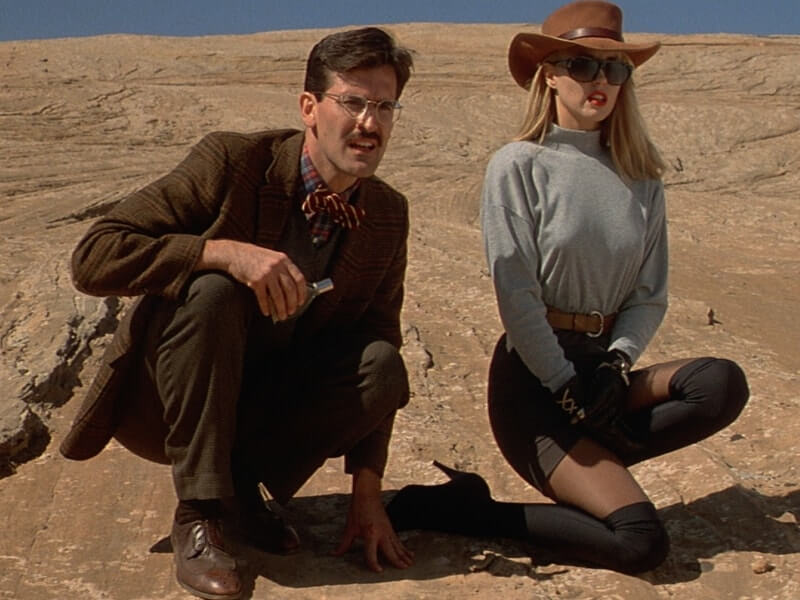
Anthony Hickox | SUNDOWN: THE VAMPIRE IN RETREAT

hickox sundown

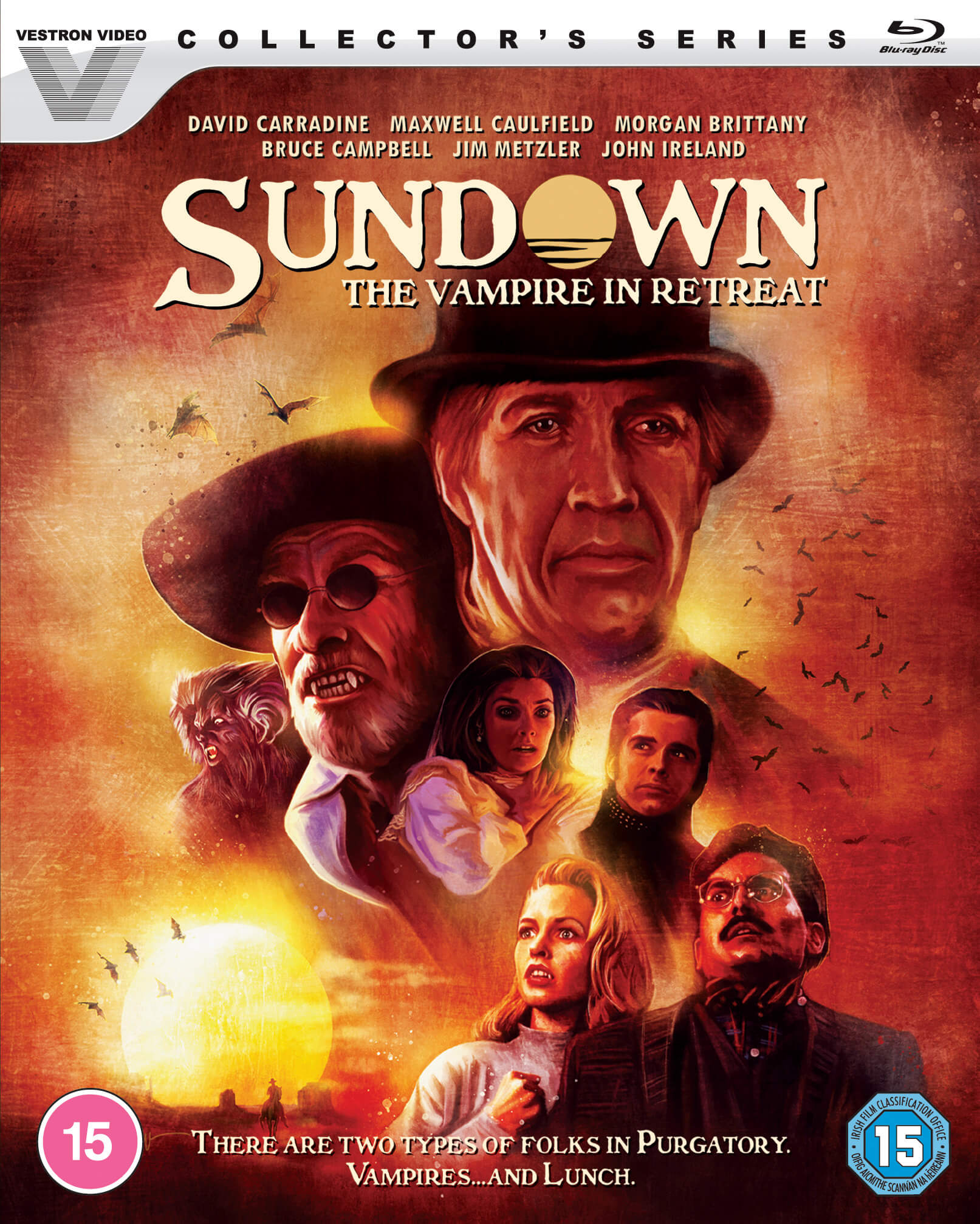
As eighties cult classic Sundown: The Vampire in Retreat is being released on Blu-ray as part of the Vestron Collector’s Series, we took the opportunity to chat to director Anthony Hickox about the movie as well as Hellraiser III and the Waxwork films.

 STARBURST: Thanks for taking the time for speaking to us, Anthony.

Anthony Hickox: No problem, I love your magazine. I’ve been on the cover for Hellraiser 3, me and Terry Farrell. I’ve got that framed on my wall in L.A.

Was the western genre a favourite of yours growing up as we note that you dedicated the film to your father, the director Douglas Hickox?

Yeah, cos Dad was a huge John Ford fan. He did the only John Wayne movie that was shot out of the US and so I love the genre. I’m more of a Spaghetti Western fan, but when you look back at the Ford westerns, they were amazing. I tried to copy that look with Sundown. I grew up watching Hammer movies from my staircase as my dad would watch them on ITV!

Sundown seems to have a real mashup of genres in there, did you struggle at any point to try and keep a clear vision when making the film?

Well, I co-wrote it and the original script was less western and more hillbillies living in a town and I added the cowboys. I love doing that, I did it in Full Eclipse, which was werewolves and cops. I like to mix up genres. And yes, I wanted to make a western, like with Hellraiser 3, I wanted to make a war movie.

The songs on the soundtrack seem a strange fit for a vampire western. What was the reasoning behind those song choices?

I was heavily involved in those choices. The producer was Dan Ireland, who became a director and sadly died of AIDS, who was obsessed by songs – he put It’s My Party at the end of Waxwork, which I thought was great – and was involved and I loved his choices.

To me, Earth Angel was about the female vampire being buried and coming back to life as an Earth Angel. The composer Richard Stone also did the soundtrack for Animaniacs so we had fun with it. He is also the orchestrator for John Williams. It was a bit over the top, but why not?

Wooden bullets, Bruce Campbell as Van Helsing, sunblock that helps vampires survive, so many pieces are crazy, how fun was it to make the film?

It was just a crazy idea and I was amazed they let me make it. Only Dan Ireland would’ve done it and it’s a shame it didn’t get released. There’s a funny story about that; we went to the premiere of Earth Girls Are Easy and the company [Vestron Video] were in deep shit at that point and he said “Your movie is going to come out as our next release as long as this movie is a hit” And I sat in the premiere going “oh, my god. This movie is never coming out!” Vestron collapsed after Earth Girls and that’s why it got a really shit release, even on video. It just got thrown out there by the people that bankrupted the company.

Were you given the green light for Sundown on the back of Waxwork?

Yes. They sent me the original script and I just loved it. It wasn’t as funny, but it was a great idea. It was the strength of Waxwork and Dan Ireland that started my career. But going back to the vampire stuff, it was great and I really wanted David Carradine to be suddenly forgiven by God, which, to me, was the clincher of the vampire lore, when Dracula gets forgiven.

What would you have done differently, looking back?

Yes, the production design was just not where I saw it. I don’t want to insult him, but it was very funny because one day we turned up and the two exteriors looked like paper-mâché fronts, which they are, and the end had blown them both down. So, yeah, the production design is the only thing I’d like to do again. I would make it much more steampunk, with those Victorian outfits that Carradine wears; that’s my only little regret, but I love the movie. We had so much fun making it – having a black Jamaican sheriff was brilliant, it’s just very funny to me, with my dumb sense of humour.

Can you give us a behind the scenes tale that you haven’t told before?

Yes! We were shooting the bridge scene where both armies come together on the bridge. So we shoot David Carradine’s side and then turn to the other side – as it’s night, you have to shoot one side and then light the other side – and all the horsemen charge in and I look at one of the extras – they have real guns that they bought from their homes as they were real cowboys, by the way, – and I recognise one of them. It was Carradine. He had gone around, changed into a bad guy costume, got a horse and came charging in. He was literally playing both sides with a bottle of whiskey in his pocket. I said “What the fuck are you doing?” and he said, “I was bored”. Absolutely true story and he was such a nice man. I used him in a pilot for Martial Law and in Waxwork II: Lost in Time.

And Bruce Campbell is a great guy. I remember we sat on a rock in Utah at night – it was summer, which was terrible for night-time hours – and it was a full moon and we smoked a joint together. That’s my memory of Bruce Campbell and every time I see him he asks where the $5 I owe him is!

Sundown was the second release in a cracking run of form between Waxwork all the way to Full Eclipse. All horror films seem to want to inject a bit of fun into the genre. Why haven’t we seen more from you in horror?

The problem was after Full Eclipse, which was an action movie, people started to offer me these $10m action movies, which was a lot of money and I just drifted into that low budget Steven Seagal world, which I wish I hadn’t. I’m back in horror now with a movie I just made in China called Infamous 6 and I’m doing a horror film next called Zombie Bride, which is Weekend at Bernie’s with a zombie, so I’m getting back into it. The problem was, in those days the agents were saying that doing these action movies was going to make me a lot of money, and it did. They were guiding me away, they didn’t want me to be the horror guy. It’s the story of my career which, looking back, was a mistake because I could have carried on doing horror because I love the genre as you can see by Waxwork.

Waxwork is a staff favourite at the magazine.

Well, then you’re going to be VERY happy. Waxwork 3 is happening! It’s not a remake, but thirty years later. It’s a very funny script. It took me decades to get the rights. And just for you, you’ll love this, Jean-Claude Van Damme is playing Jack the Ripper! It’s going to be full of B-movie stars.

We understand you’re currently in Bucharest – what are you working on?

I had to find a place to lockdown with COVID, and I married a Romanian. I didn’t know it would be for two years! One thing about Bucharest is that it never closed. You had to wear a mask inside but you could always sit outside and eat and it seemed like the best bet as LA was a mess, nothing was open. It’s my European base and thank god I can write!

I’m also doing a Federico Fellini bio with Danny Huston playing Fellini, so it’s been good for me to have fewer distractions. It’s a true story about four years of Fellini’s life told by his assistant, it’s very interesting. It’s called The Beautiful Confusion. We should be shooting it now in Rome, but COVID has stopped that. Unless you’re Tim Burton, who’s here doing Wednesday, and you can afford to shut down for ten days, it’s so difficult to survive on a $10m budget. They’ve just shot the Django TV series here, so the big stuff is still shooting.

Sundown: The Vampire in Retreat is released on Blu-ray as part of the Vestron Collector’s Series on November 15th. 


Nicolas Pesce | PIERCING

nicolas piercing

Writer/director NICOLAS PESCE follows up his extraordinary horror film debut THE EYES OF MY MOTHER with a second twisted tale in PIERCING. We probe the acclaimed filmmaker to find out what attracted him to the project, his stylistic influences, miniatures, and more …

STARBURST: For those who haven’t read Ryū Murakami’s novel on which the film is based, how would you best describe the central concept?

Nicolas Pesce: It’s mainly about a guy who’s a new father with a newborn and he’s feeling tempted to harm his child, so to quell those murderous instincts he plans to carry out what he thinks is the perfect murder of a prostitute. But when the young woman arrives at his door, she has much more nefarious intentions for him than he has anticipated. So you get a twisted cat and mouse game that is also a romantic comedy of sorts.

What was it about the source material that made you want to adapt it?

My first movie [The Eyes of My Mother] was a very specific type of film – it was black and white, subtitled, very bleak – and I was looking for something that would allow me to stay in my wheelhouse with dark subject matter but was also a bit playful and fun. I look at South Korean filmmakers like Bong Joon-Ho and Takashi Miike who have such a great sense of humour while also dealing with some pretty dark stuff and I love the playful quality they bring to it because you’re not sure if you’re meant to be laughing or not. So when I read Piercing I found all of those qualities in the novel and it definitely felt right up my alley.

horror five

Had you read any of Murakami’s material before?

Yeah I have, I first discovered him through [Takashi] Miike when he adapted Audition, and when I read that book I absolutely fell in love with the way he writes. He definitely makes it easy to translate to film by writing in the present tense, just like a screenplay, which I’ve found with a lot of Japanese novels. A guy named Ralph McCarthy does the translations for Murakami, so I read Audition, In the Miso Soup, Almost Transparent Blue and loved every single one but when I came to Piercing it seemed that this one was more universal than his other stories which feel uniquely Japanese. Piercing is about two deeply damaged people who are trying to work out their psychological problems and happen to find each other and realise that they may be able to help each other sort their shit out however twisted and weird that process might be. It’s definitely a morality tale and we wanted to strip the movie of place and time because to me it was less about taking a Japanese story and setting it in America and more about telling the universal story of these two characters.

It’s safe to say you’ve expertly drawn a lot of inspiration from the likes of Lynch, Cronenberg and most prominently Dario Argento – the score in particular invoked emotions that I experienced in Suspiria. Was that stylist choice made when you were reading the source material and is that how you imagined it in your head?

As far as Lynch and Cronenberg go, those are two of my favourite filmmakers, they come with me on everything I do – manipulating mood in abstract ways is something I love to do. For Argento, one of the most interesting cross cultural things about the source material is the novel is very much Murakami as a Japanese author poking fun at the American psycho-sexual thriller of the ‘90s – especially when he calls out Basic Instinct – and not being a Japanese filmmaker I wanted to find my association, and I found that Murakami to Basic Instinct is what I am to Giallo movies. My point of reference were films such as The Bird with the Crystal Plumage, Tenebrae, and Deep Red, and it’s funny because Suspiria is the most popular of the genre but I think most others don’t look like that – they don’t have the colours that it does – but you get the great Goblin score. Giallo movies found a way to take fashion, architecture, decor design, fine art, furniture and make it not just an aesthetic choice, but made it a character itself that directly impacted the human characters. But also the style of music is definitely unique to that pocket of cinema. Sixty piece orchestras were unfortunately too expensive for us, so we went with something a little more Giallo inspired that added that extra level of detail.

We loved the choice to embrace a ‘70s aesthetic. On top of that, the fact that the buildings and outside world look like they’re in a graphic novel, it really captures the essence that this is an isolated incident and any one of those windows could be holding a dark secret like we see on screen. Was that also something you envisioned when reading Murakami’s work?

Totally, I think that one of the really interesting things about Tokyo is how densely packed it is, and one of the things that Murakami talks about a lot is how Japanese culture in public is superficial and refined and yet they have this very seedy underbelly of subcultures in there as well that isn’t traditionally seen as Japanese – but really behind closed doors they could be doing weird sex shit. So for me, first of all we wanted the world to feel artificial and poke fun at the artificial world. I saw these photos by a photographer called Michael Wolfe who I believe is a Brit living in Hong Kong, he takes these photos of real high rise buildings that look fake. We were shooting the movie on stages in New York City and we were looking around for buildings to shoot that look like the photos, but it didn’t feel right in New York. So we built a whole city out of miniatures – every time you see the buildings in the background of the outside world, each of them is only three feet tall. We had an amazing miniature artist named Laurie Nix who did everything, and what’s funny is she does way more photorealistic stuff and we had to tell her to make it look more fake! Also the fact that you don’t see any other characters makes it feel more isolated too.

Christopher Abbott and Mia Wasikowska both give incredible performances, especially Christopher who captured the quintessential spirit of the likes of Norman Bates in parts. When adapting the screenplay, were those the two actors you had in mind from the start?

Christopher, yes, Mia, no. The role was always written for Chris – I’ve been friends with him for years – in real life he’s a pretty boy, but I wanted to give him a role that was more like Patrick Bateman. Also, he’s a very quiet person that can look like so much is going on in his head and that’s exactly what our main character needed to have. Very reserved but you see the gears spinning. For Mia, she was originally cast as the wife role but our actress who was playing Jackie suffered an injury shooting another project and because we were under a schedule I had to ask Mia to step in and she jumped at the opportunity because to be fair, the character in the book suited Mia a lot better. It was quite the massive jump between playing a completely different character and after shooting the film I now can’t see anyone else but Mia playing the role. What she did was tremendous and I was lucky to have her be a part of it.

At just 80 minutes the film is one of the shorter horrors thrillers on the market, but you certainly manage to make it always feel relentless in the unease and tension. How did you achieve that?

I have no attention span when I comes to watching movies – if it’s over two hours it’s tough to get me to see it. When I saw Denis Villeneuve’s Enemy and it was 82 minutes I was blown away! I also like withholding a lot, so when it’s 80 minutes long it’s easier to keep the film moving and make sure that people don’t get bored and also leave them with pieces to put together. There’s a lot of backstory in the novel that we show in very quick little bursts that don’t give you much insight in the case of the novel, but in the case of the movie, it really works!

Piercing screens on Horror Channel on November 5th. Find out more at horrorchannel.co.uk. Freeview 68, Freesat 138, Sky 317, Virgin 149

Scott Cooper | ANTLERS

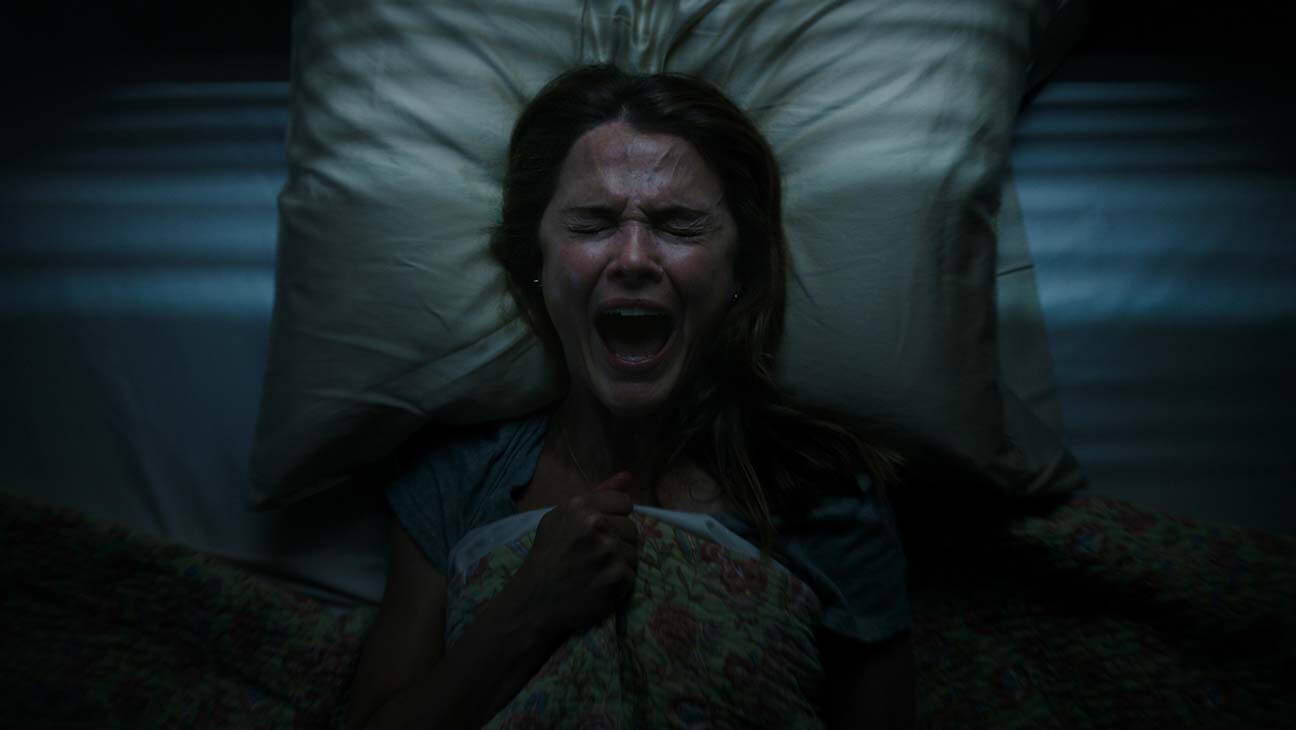
SCOTT COOPER INTERVIEW - ANTLERS

Scott Cooper is an American director, writer and producer. His latest film Antlers is perhaps a departure from his previous works including Hostiles and Black Mass, being a fantasy horror involving the mythical Wendigo. Scott took some time to talk with STARBURST about bringing the creature to life, working in different genres, and his dark sensibilities.

STARBURST: It’s been a strange 18 months since Antlers was originally due for release…

Scott Cooper: Yes, and I’m so thankful that we’re finally releasing it into the cinemas as I believe horror should be experienced communally.

Your films have a grandeur to them; the visuals being just as important as the story you’re telling.

The atmosphere, the location, how I place the actors in the frame. And in this particular film, we shot on a large format camera. This is a story about a young boy with very big problems and the way I placed him in the frame is best experienced on that giant screen. All very deliberate.

A lot of your films are grounded, often in a not altogether pleasant reality. And there is a sense of that here with the decaying town. But Antlers is a fantasy horror. Was that a change for you, a challenge against your instincts?

I think the great danger for a filmmaker is in doing safe work; continuing to make the same film over and over. I have no interest in that. That’s why I made a musical drama with Jeff Bridges, a rust-belt drama with Christian Bale and Casey Affleck. It’s why I made a gangster film with Johnny Depp and Benedict Cumberbatch. It’s why I made a western with Christian Bale. And now this. I always like to be in an uncomfortable space as a filmmaker. I also know that this is my first immersion into the supernatural, but I wanted it to feel very grounded. So, I looked at another filmmaker who I greatly admire and who has been a mentor for me over the years, and that’s William Friedkin. And if you look at, say, the French Connection. And then he makes a film like The Exorcist, which also deals with family grief and the supernatural. But what’s so scary about the film as a parent is that it’s played so realistically. So, I ask myself ‘how can I use that as a barometer?’ Or Kubrick’s The Shining? Or Ridley Scott’s Alien? Or Nicolas Roeg’s Don’t Look Now? All that deals with the supernatural in a very grounded environment. And I would not have made this film if it wasn’t for Guillermo del Toro. Firstly, he approached me and said ‘Scott, your last three films have been horror films, and nobody knows it. Would you consider directing a horror film?’ And I said yes. I love the genre. Some of my earliest remembrances are of seeing films I shouldn’t be seeing at a young age with my older brother. It’s another challenge for me. But I wanted to hold up, as I’ve kind of done in my previous films, a dark mirror to the fears and anxieties we’re facing as Americans. And we’re facing a lot of them. How do I do that? And also merging with the supernatural. And because Guillermo is the foremost monster and creature creator, I knew that he would be able to help me in the execution, of the practical production of the Wendigo. Also, in terms of making that feel as haunting and realistic as possible. But for me, the scariest things are some of the themes that run through it: the generational trauma, familial abuse and addiction crisis. Our maltreatment of Native Americans. All of those things course through my other work. Let’s be honest, Guillermo and I are very different filmmakers, our sensibilities are very different. It’s a miracle that any of this works. But I’m very proud of the film, and I think it’s another step in my maturation as a filmmaker.

Having watched your earlier films there was a question over whether when the time came, would Antlers move into true fantasy, or would there be something else going on. Your other films do deal with human darkness. With what you’ve done here was it then about being respectful of the myths and beliefs of the native people?

As you can see in Hostiles, Native American people and causes are very important to me. I worked with Native American advisors on that film and certainly here. As a white, Anglo-Saxon protestant telling a story that deals with indigenous folklore, it was critical that I looked to experts. Chris Eyre, who was also a consultant on Hostiles, worked with me here. But so did Grace Dillon, who is a professor at Portland State University, and she is the foremost authority on the Wendigo in North America and has written extensively on it. So, from my screenplay to the creation of our creature, all through shooting and post-production, she was incredibly generous with her time and expertise. And I would never have made the film without Guillermo and someone like Grace Dillon to guide me through what this folklore means to indigenous cultures. It was a real challenge.

That’s interesting because the Wendigo doesn’t have a great deal of descriptive clarity.

According to Professor Dillon, the Wendigo manifests itself in many different ways, but first and foremost it’s a spirit. It’s a very antlered creature that has deer-like qualities. And we wanted to pay homage to that antlered creature for sure. But we chose to make our Wendigo represent the destruction of our natural resources, so it felt like it was born out of a mine, out of iron and ore and coal. Which is what the exoskeleton looks like and has embers and a glowing heart. But it also represents the destruction of our bodies through addiction. And it represents greed, and greed doesn’t have to be voracious about money but can be about natural resources and about narcotics. About taking something from someone else, that doesn’t belong to you. And that can emerge in familial abuse, which we realise through Keri Russell and Jesse Plemons’ characters. That we see through the abuse Lukas has endured. That all courses through in a very subtle way, but also reminds us that the Wendigo lives in all of us. That pain and misery run through everybody and eventually it will come out. You can’t escape it.

That’s interesting because when you watch your films, you get the sense there is a lot of guilt, suffering, dark souls. Is that something that appears naturally when you’re writing or is it something you seek out?

It’s everything you just expressed. One of my tenets as a filmmaker is that, if I can see myself in my work others will see themselves. As opposed to going to therapy, as I probably should, I tend to put it into my work. Or I tend to put it into my characters or my scenarios. The great musician Eddie Vedder, who wrote some music for Out of the Furnace, said that if you don’t write that stuff down it’ll just eat you up, and that’s true. So, I put it into my films and that’s therapeutic for me. My films can be divisive as they deal with some tough subject matter. Not everyone is willing or open to exploring that, and I’m completely fine with that. A legendary American director who shall remain nameless said to me that ‘if everyone likes your film it’s probably not very good.’

That’s interesting because, and forgive me, but Black Mass felt like the lesser of your films because perhaps there was less of you in there. Because you were dealing with a true story. With Antlers, you can go anywhere. And to get the performance from the child actors, when they have to convey so much horror.

I have had children in all my films apart from Out of the Furnace. Including my own kids who are in Hostiles. I’m quite familiar with child actors. But I never use ones who have acting coaches and agents. I have no interest in those kids because they don’t take direction, they’re camera ready, I want kids who feel like they’ve experienced some life. I want kids who can convey non-verbally, who have a rich interior life. And Jeremy Thomas and young Sawyer Jones absolutely do that. They’re shouldering the burden at too young of an age. As a young boy who lives by duty and self-preservation. In dealing with these dark themes, doing a film with a 7-year-old and a 12-year-old was incredibly challenging, as I had to constantly remind them this is a big sandbox we’re playing in, this is all make-believe. They were in dark attics, in cold dark mines, and faced with a big Wendigo. Themes that are too big for any child to deal with. And they give such heart-wrenching performances. For me, it’s as good as anything I’ve seen this year. Because it isn’t acting.

Antlers probably has the best character survival rate for your films; you do kill a lot of your cast off. Not to spoil other films, but the end of Hostiles is bold and dramatic and dark. There is a dark sensibility.

And I’m a generally light guy so I don’t know where that comes from! But I will say that from the philosopher Thomas Hobbes, there is a Hobbesian viewpoint in my films where life is nasty, brutish and short.

It’s definitely short! We wanted to speak about the Wendigo. It looks like there was a lot of in-camera effects, and presumably, there is an influence from Guillermo. Was that difficult to do on set as much is in darkness?

It was tough because it’s also a big creature. Dorian Kingi was the actor inside the Wendigo and it was heavy and laborious to move, so it was largely practical but with some CGI enhancement. I don’t have a lot of experience, but visual effects have come a long way and assimilating the two was quite successful. For someone who has never had that in their films this kept me up at night, to make it look a real as everything around it.

You’ve said before you have a script you want to make, The Pale Blue Eye?

I’m making it now. It surrounds a series of murders at a military academy with a young cadet who would later become renowned as Edgar Allan Poe. And as a Virginian, with a lot of Poe literature around me growing up, I’ve always been fascinated by him. And he is the godfather of crime and horror fiction.

Antlers is out now in cinemas.

Pedro Bromfman | FAR CRY 6

pedro far cry 6

Composer Pedro Bromfman is best known for his collaborations with directors José Padilha and Alex Winter, but his work on the score for the latest instalment in the long-running Far Cry series, Far Cry 6, will likely bring his musical talents to an even-broader audience. The first-person shooter takes place on the island of Yara, wherein the player must attempt to help topple a dictatorship, in the role of a guerilla fighter. The game’s vast landscape and multiple regions allowed Bromfman to really branch out and explore, so it was a joy to speak with the composer about his work on the game.

STARBURST: This is the sixth instalment in a series that’s been going on for so long – nearly 17 years. Even though all of the instalments are very different and unique, did you explore any of those before working on this game?

Pedro Bromfman: Not at all. I mean, I had heard about the franchise. I knew what Far Cry is, and I have a PS4 and I have an X-Box and I do play some games – especially the ones I’m working on or that I worked on – but I’m not a gamer per se. I didn’t grow up as a gamer. I had never played Far Cry and I purposefully decided I didn’t want to be influenced and I didn’t really want to hear what musically other composers had done.

This is such a different world from all the other Far Crys. I mean, it takes place in a Caribbean island. The setting is so different and the music we wanted to do was so different that I didn’t even want to go back and be influenced at all. The good thing about this is that I was brought in so early that most of the missions hadn’t even been thought out or hadn’t been developed and there was no music at all – referenced music – that was sent me. It was really a blank slate that we were able to figure out what the music needed to be. I wanted to have as, as little influence as possible, as far as other melodies, other themes that have been used in Far Cry – other sounds and things – to be able to just start from scratch as if it’s something new, even though it is part of however many years it’s been going on for.

In addition to your score, there is an entire soundtrack of other music that’s part of this world. How involved were you with that or did that work to influence you at all?

There were some references that were sent back to me. Our concept of the whole thing is my part of the music – which is probably three and a half hours of music for the game – my side is what tells the story, the narrative of Yara and the characters and the character themes and the cinematics and the main missions that were specifically scored to sound a certain way.

It’s basically the sound that brings the player into the game. The sounds that the players are listening to, but that the Yarans aren’t aware of. Then, there’s all this other music, like street music from like street bands throughout the game, music that they listen to on the radio, ome of the regime music that are like the national anthem and all the military marches that people are listening to on the streets constantly. This is the diegetic music. This is music that the Yarans are listening to. My music is like the subconscious of the whole thing, of the island.

But what happened is, when we were creating this sounds early on, like I said, we worked on the themes and there was no other music we listened to or anything else. I think I was the first one putting music to Yara, but as we evolved, there were bands being brought in. There’s a band in the game that’s called Máximas Matanzas and it’s a hip hop group. As they were making some of the music, Eduardo [Vaisman, audio director] would feed me some of that music too, because we wanted the central region to be more urban-influenced and have some hip hop elements. So I was listening to some of that music, just to get ideas and see what I could incorporate to make that whole region sound cohesive and borrow elements from other music that they’d be listening to in that region. But other than that, there’s very little back and forth between the different parts of the music.

I was really working with the main themes and the character themes and trying to develop what the sound of each character and the sound of each region. We have three main regions: Eastern, the central, and the Western region. We try to really treat each region – while having a cohesive sound for the score – but have each region really stand out on its own.

Then, you’d be able to tell musically when you’re listening to something – that you’d be able to feel which region you’re in, just from listening to the music in the background, in each mission and things like that. That’s what we tried to do. I think some of my score, you feel it more than you actually are singing along to it, although there are some iconic melodies and some beautiful pieces that stand out.


Talking to other composers who’ve worked on games, they say the hardest part when you’re playing a game is that you’re immersed in this world sometimes for literally 24 or 48 hours, depending on how many replays or missions you do, so the real challenge is creating music that people can hear over and over and over again. As you’re trying to work your way through certain areas,you might die and then come back and you’re going to be hearing this music a couple of times. What is that challenge like for for you and did it help to have done a couple of games prior to Far Cry 6?

Yes, I think so. I think that the mechanics of writing for games – some aspects of it are very different from working in film and TV. I think not only working on games, but also working on series that goes on for several episodes – so it’s like 10 hours – it’s more like a game. You’re able to have an arc, you have a lot more characters, you’re able to give more melodies to each character. That’s definitely, definitely an important plus that has helped me do it.

I think there’s a few things to unpack from what you talked about: you have the cinematics, which is the area of a video game that’s very similar to working on TV or a movie, right? I think in this game, you’ll have probably an hour and a half of cinematics or two hours of cinematics, altogether. I think I scored 50 minutes or so of cinema, so it’s almost a film within a game with all the backstories.

When you’re scoring a cinematic, they give me an edited version that’s usually locked and I know it’s always going to play that way, so when I do the music we know where the music needs to come in ,where it needs to grow, what it needs to say. When it comes out, every time a player plays the game, it’s going to play that same way, but then when you’re in the open world and when you’re dealing with missions is what is when what you talked about comes into play.

A player can play stealth mode through the whole mission and not really disturb all of the enemies and make them all come after you, so that’s only going to trigger one specific piece of music. Or ,you can go into full combat right away and have 30 people shooting at you. How do you make these things interesting? ‘Cause they can take two minutes or less skilled player can take 10 minutes.

It’s all about being able to create loops, bubble pieces, but also divided into stems or different tracks that, stacked on one another, vary the intensity and also to give variation, when a new element comes in that you haven’t heard in the first two minutes. Then that element becomes the part of the music and then another element drops out and another element comes in, trying to create interesting music that the player can play for for 12 minutes without being bored and saying, “It’s just the same thing over and over again.”

The expanded Far Cry 6: Complete Music is out this week from Ubisoft.

Shamier Anderson | INVASION

shamier anderson invasion

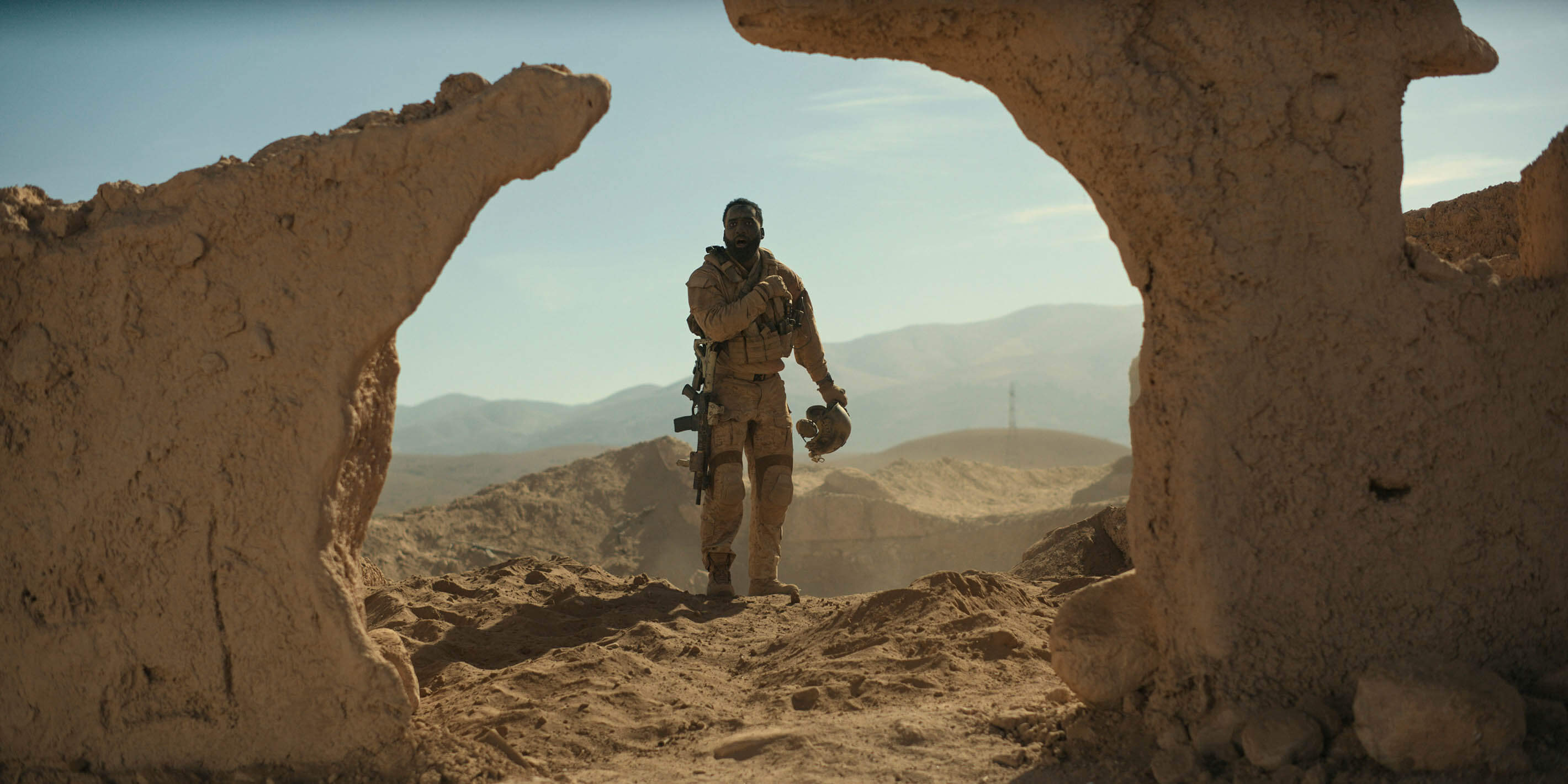
From H.G. Wells’ initial story, to Steven Spielberg’s major motion picture, to Howard Overman’s recent vision, it’s clear that audiences can’t get enough of the exhilarating War of the Worlds setting! This week, and under the title of Invasion, Apple TV will add to this diverse, legendary anthology with their modern twist on this classic Sci-Fi narrative! Told through complex characters based all over the world, this is a relentless retelling perfectly suited for a TV series format. Holding up the decorated navy seal segment as Trevante Cole in Afghanistan is Shamier Anderson (Stowaway/Awake/John Wick: Chapter 4)! STARBURST talks with the man himself to discuss the characteristics of Trevante, what Invasion was like to be a part of, and MUCH more!”


STARBURST: How familiar were you with the sci-fi story of The War of the Worlds before entering the project? Do you have any memories of it?

Shamier Anderson: Yeah, I was young when the Tom Cruise movie came out, but I was definitely familiar. Obviously, Tom Cruise is a legend. I’d be lying to you if I said that I did not watch that movie 1001 times before getting this job. It’s cool.

How would you describe your character Trevante Cole to someone that hasn’t seen the show, and how would you say that he fits into the show altogether?

Trevante is somebody who is very complex. He is a Navy Seal, and a decorated military veteran.  He has been in Special Forces for a very long time. He has a very complex past, a rich past, and he is from Florida. Not to give away too many spoilers, but this is a coming of age story for him. He starts to understand himself as this show evolves. It’s important to say that there’s a parallel and similarity with mankind, when something happens to us, that’s when we start to wake up to certain things. Certain things are awakened. We see that in Trevante’s journey in this series. Regardless of the sci-fi, extra-terrestrial elements, regardless of if you like Navy Seal/Military movies or not, this is a human experience that you get to feel through Trevante’s lens, and that’s what made me fall in love with him, and this character.

The characters in the show are based all over the world, so other than an alien invasion, what would you say really connects them all? Is there something in particular that they all have in common?

Something in particular that they all have in common is fear, let’s start with that. Everybody is scared of what’s going on. I think it’s clear as day that everybody is in fear of what is going on, but there’s also a wanting for love and understanding. I think that’s something that we see throughout. Everything is rooted in love, even down to the kid’s storyline. Billy Barratt’s character wanted to be liked. I think that’s something that’s a very interesting through-line that makes this story palatable, universal to those who may not be familiar to this genre.

Also, by having the story told from multiple locations all across the globe, what do you think that does for the show itself? We got a sense of realism from it being told this way.

Yeah! One of my favourite films is Babel by Alejandro G. Iñárritu, I love that film; I think it’s incredible. Along with Crash as well, and the different perspectives. I love those types of films, they get me excited. By doing this approach the creators at Apple TV have brought marketability to the show. They’ve been able to go into different territories. I love that they are unapologetic, I love that in the Japanese storyline; we’re just with the Japanese folks. We’re in their world, with their culture, and their language. When we’re in London we hear their rhetoric, their slang. When you’re with Trevante, with his seals, and his buddies, you’re in that shorthand. You get to see, from a fly on the wall point of view, the audience so to speak, gets to be immersed in these different perspectives throughout the series. Which also opens up our mind as the viewer, to be able to see that we are a lot more connected than we think. We are not so different, despite, race, creed, language, and those types of things. I love stories and shows like that, as it really offers another perspective outside of your own.

With a combination of modern warfare and The War of the Worlds influences, I was wondering what kind of research you did when it came to approaching your character?

I did a lot of research. A lot, more than you know! I actually went to school for criminology. I wanted to be a police officer at one point in time before I got the acting bug. So law enforcement, and understanding policy, those things were really fascinating to me growing up. So I just had an interest already, at the forefront, approaching this part. But I had to understand the nuances of playing somebody in Special Forces. It was important for me to work with a gentlemen by the name of Remi Adeleke, who is an ex-Navy Seal, and an incredible human being. He has an incredible story. He was brought on board, and he put me through boot camp, from the training, to the psychophysical aspect, to just being a Seal, and what it meant to be a Seal. That was really important to me, in my process. As we got to set, I wanted to maintain a lot of that training, so I would be up earlier before everybody else, I would be on set before everybody else, I’d be working out; I’d be sleeping in the desert. I’d be doing all of these things that would inform my character, and help me with the process. All of it was rooted in anxiety to be honest, it wasn’t me trying to be pretentious, or trying to be like this ‘actory’ person, it was just, I didn’t want to fuck up. So to speak. So that was where that came from, but also, giving the role justice and understanding that this is important to a lot of people, who serve currently today.

anderson invasion

At this point audiences have seen a few versions of The War of the Worlds. Can you elaborate a bit more on what else makes Invasion stand out from what has come before it?

We pay respects, and we give respects to those incredible films, because they’re all singular in their approach, and I don’t think it’s even a conversation as they’re in their own lane. However, I think what makes Invasion different is this ensemble. I think this ensemble is different, and the fact that we’re telling the story in 2021. The fact that I’m a part of this ensemble cast, which I’m really proud of, being a Canadian boy from Toronto, which is really cool. But I think understanding the younger perspective, which I think is really cool, I’m a big fan of Billy and India, and that storyline. I just think that there are a lot of elements in this version of The War of the Worlds. Everyone may think it’s the same thing, but it’s definitely its own beast. This version offers a fresher perspective.

Also, what were Simon Kinberg and David Weil like to collaborate with, and what do you think they have brought to Invasion overall?

Those two guys are titans! I definitely felt like a fly in a cup of milk, with those two beasts. To be able to work with those two is just like, “Wow!” Andrew Baldwin, our show-runner, who is on the ground, he was the ultimate collaborator. I mean, I’ve shot a lot of films and TV shows, and this one takes the cake when it comes to the collaborative aspect of this show. Allowing me to bring my nuances, ingredients to this guy, along with supporting their ideas, and them supporting mine, it was just amazing. I look forward to hopefully doing more Invasion with them, or more shows with them. This was one of the best experiences in my life, truly.

Obviously you worked on Stowaway recently as well, so I did want to ask, what do you enjoy so much about working in a sci-fi setting/story?

I just love the green screens! Ha, no, it just happened to be that way. I don’t seek these things out, and say that they have to be sci-fi. I just like great stories that are entertaining with great actors, that’s just pretty much it. If something happens next week, and it’s like “Hey, we’re doing this comedy that makes sense!” then I’ll do the comedy. If sci-fi makes sense for the next ten years, then let’s do some sci-fi. However, for me, it’s just great stories. I just love great stories.

Invasion is currently streaming on AppleTV+.


Simon Kinberg | INVASION

SIMON KINBERG IINVASION

Simon Kinberg is a British-American filmmaker who has been involved in some of the most notable films of the 21st century including The Martian and the X-Men film franchise. Now, he has turned his talents to the small screen in creating, writing and producing Invasion for AppleTV+. The show tells the story of an alien attack through the eyes of various people around the world.

Simon took some time to discuss Invasion, science fiction, and what really keeps him up at night…

STARBURST: Throughout your career, you’ve worked largely in science fiction. What do you think it is about the genre that keeps audiences engaged, and also keeps you coming back for more?

Simon Kinberg: For me, I know that it’s two things. Firstly, science fiction offers an opportunity to explore really deep, complex characters, themes and issues within the delivery mechanism of something incredibly entertaining. There’s a Trojan Horse aspect of science fiction where you get to smuggle in these really interesting and nuanced characters, or maybe political issues while the audience is being entertained. The other aspect of science fiction for me, and this is true for almost everyone, is the question of what do we not know? It’s something that obsesses me, and at least interests everyone. What do we not know about the afterlife? What do we not know about space? What do we not know about other lifeforms? What do we not know about other dimensions we can’t see yet? What do we not know about the 90% of our brains that we’re not yet using, but maybe will evolve into using? How is it that only a few hundred years ago we thought Earth was the centre of the universe or galaxy? How is it that we thought the Earth itself was flat? All of the leaps in science that have happened over a short expanse of time, and even shorter when you think about what’s happened in the last year or two in terms of our DNA, or iPhones, or the Internet. I just think that ‘what’s next?’ and ‘what do we not know?’ are the types of questions that keep me up at night and keep people thinking, and I think to create the need for faith and religion, and all that keeps us safe in an unknowable universe and existence.

Given what you’re talking about there, about the unknowable, how much of a challenge is it to base a show like Invasion in reality?

It’s always a challenge to maintain realism in science fiction, whether it was when making The Martian or The X-Men movies. And it is a challenge with Invasion. The way to do it is to make it feel that its happening to real people, to create characters that are nuanced and flawed and vulnerable the way we all are. And to maintain the personal crises that are going on in their lives throughout the story; to not veer the story into becoming about the aliens. The story is about real people dealing with something unknowable in a relatable way. When you do that, I think you draw the audience in, caring about characters and have them thinking ‘that’s what I would do’ if this was happening to them. And watching what happened tragically over the past year and a half made me feel that is true to humanity, that we do struggle with the unknown and it is a magnifying glass on what is the best and the worst in our natures.

It’s interesting you mention The Martian as with that film there is the constant threat that he’s on an ‘alien world’ and at any time, anything could be disastrous. With Invasion, Earth should be safer, and yet there is a real sense of dread and terror building. How do you balance the horror and sci-fi elements across a whole series without fully tipping over into one or the other?

It’s a very tricky balance to not tip over into science fiction and alien genre horror, but to maintain the sense that the terror is out there, and its building, and that there are mysterious, unknowable things that slowly become more knowable. And yet maintaining new mysteries; as you discover one thing something new pops up. That’s part of the fun of writing in a genre and in science fiction specifically. You want to constantly draw the audience in to try and figure out what the mystery is, and once they figure it out it leads to a deeper and more complex mystery. And so, when I look at the television shows that were inspiring to me, it’s shows like Lost that ran extremely well for many episodes and many seasons. You cared about the characters, and you were drawn into the mystery. That’s what I’ve really tried to do with Invasion, to have characters you’re drawn in by and to have the terror and the mystery of what’s happening to the world be experienced in the first person through these characters. As opposed to the third-person perspective where there’s a huge mega-shot of an alien ship blowing up global landmarks. And if it was to be a huge alien ship blowing up a global landmark it would be experienced how you or I would experience it. Which is likely we wouldn’t be there. We would be seeing it on television.

To conclude, we wanted to ask you about H.G. Wells’ War of the Worlds, and that you were inspired by the Orson Welles radio play. Given that there have been two recent television versions of the book, and while this isn’t directly one there are obvious nods, what did you want to bring to Invasion that was distinct and different?

I love H. G. Wells’ novel, and I was inspired by the radio play, but more from the effect of the radio play. The realism that he created with that, the reality he created with that, was so effective that many, many people believed it was an actual newscast. I know people watching the show will know that it’s fiction, but I wanted to create that same sense of reality as much as I could. For me, from any iteration of War of the Worlds, that was the biggest inspiration. That way that Orson Welles was able to create a sense of real terror and real truth at the same time, and that it moved people in a way that was more than watching at arm’s length. I wanted to draw people into this show in the same way he did with that play.

Invasion starts on AppleTV+ on October 22nd. 

Edi Gathegi |THE HARDER THEY FALL

Edi Gathegi harder fall

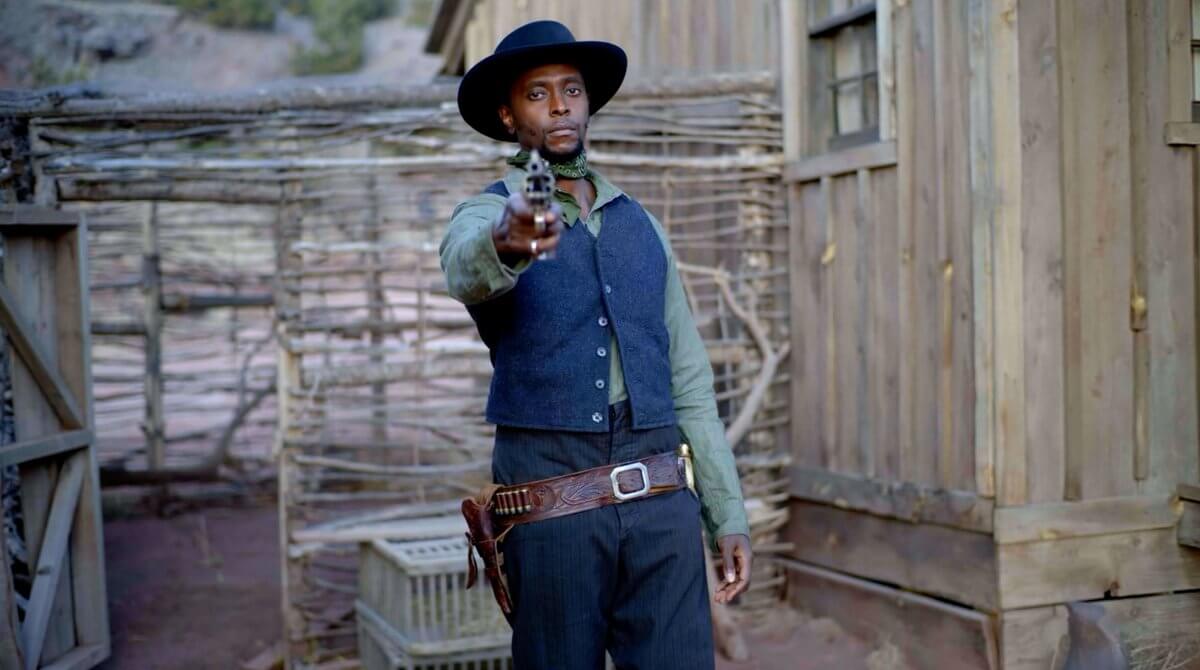
Fast-paced, action-packed, and stacked with a long list of legendary actors, The Harder They Fall, and shake up what we can expect from the Western genre going forward. Holding up the guise of Bill Pickett is none other than Edi Gathegi (X-Men: First Class), who is here to tell STARBURST everything you need to know about this re-purposed take on a classic character and what being a part of a refreshing Western like this means to him!

STARBURST: What originally attracted you to playing the character of Bill Pickett?

Edi Gathegi: I was really interested in an all-black Western, and it’s the most obvious aspect of the script.

Bill Pickett was a real-life cowboy, so I was wondering how much research you did into his life before filming, and also, how did you go about bringing your own approach to playing him?

The wonderful thing is with this film, it has a lot of characters that are real historical figures, but they’ve been repurposed for the telling of our tale. So what that gives us the opportunity to do as artists is to merge a creation with people who really existed. So, that was a lot of fun. Blending the two. Because of the shutdown, we had a lot of time to live in this world. We got shut down for several months, so the research just kept going. I read everything that there was and that I could get my hands on Bill Pickett and the time period. That’s always fun, it’s always a great advantage when you have time to dig in before you get to the acting bits, and actually get on set.

This version of Bill Pickett has been described as “hot-tempered”, but for you, how would you say that he compares overall to the original Bill?

There are many different accounts of who Bill Pickett was, and how he was. “Hot Tempered” is true, but there are a lot of hot-tempered people in this film, who are all outlaws. I would say that among them, I might be the cooler head that prevails! There’s a lot of energy, and Bill Pickett is sort of the eyes. He watches over the group. Makes sure that everybody is safe, and well taken care of. He is “Hot Tempered” but that’s just because we all have heat inside of us.

Were you a fan of Westerns growing up at all? If so, what particular memories do you have of this huge movie franchise?

I can’t say that Westerns are my favourite genre, but because of my involvement in this project, I learned to gain a much stronger appreciation for the Western genre. I think part of that has to do with the fact that I never saw myself in Westerns. People of colour have been erased from that area of storytelling. That’s why I am so grateful for a movie like this existing so that the younger version of me can actually look up to this and say “Yeah, I know we were there!” We are finally getting to see it being represented on the screen.

From Idris Elba through to Regina King on the “bad guy” crew, what was it like to work opposite these actors on the “good guy” crew, and what do you think they brought to the movie?

The film is about the good guys pitted up against the bad guys. We are all outlaws, but there’s the protagonist and the antagonist. So we didn’t work a lot with the bad guys, but they were there. I had this idea that I didn’t want to interact with the bad guys at all because they’re the bad guys and I wanted to stay in my zone. The actors are so talented, so cool, and so humble. And so gracious, that you can’t help but like them, and you like them in the movie too! Their mission isn’t altogether outlandish, there’s a lot of merit to what they’re trying to do. Even as a bad guy crew!

Also, with so many great actors involved, for you, was there someone in particular that you just really enjoyed the chance to finally collaborate with on-screen?

I didn’t have any scenes up close with Regina, but I have been a fan of hers for as long as I can remember, she’s just equally a beautiful person as she is an artist. LaKeith Stanfield, he and I shared a couple of moments on screen but got close off-camera. I think he is a very special young artist. RJ Cyler is my little brother. I think that our off-camera relationship translates to on-camera. He is going to be a brother for life.

Leading on from this, what was director Jeymes Samuel like to work with, and what do you think that he has brought to this western in particular?

Well, this whole project came from his head, and he has lived with it for perhaps a decade. I say this all the time, but when somebody has that clear a vision for their own baby, you just trust them. It doesn’t make sense to not trust the person who has put it all together. So my job as an actor was to just get out of the way and help him tell his story.

Do you know anything about how the look/costume design for this particular Bill Pickett came together? If the crew were focused on any certain ideas when creating him maybe?

I love limitations and we are limited in a Western genre. It takes place in the late 1800s, so there’s only going to be certain things that are available to you. So that’s obviously a very specific place to start from. I know that they didn’t want to overlap character looks. I know that colour was a big conversation, where you can have pops of colour. The idea was that the film was going to be highly stylised and have a beautiful pallet. It was about what colour pops in Bill’s wardrobe, and we sort of landed on the colour that is represented in Bill’s book. So when you read Bill Pickett’s book, that yellow that I fell in love with, ultimately made it into the movie, and I was very happy about that.

You’ve worked in a Western setting before, Justified being just one example, so for you as an actor, what do you enjoy the most about being in this gritty world?

Horses! These majestic beasts are so elegant and powerful. Every actor says that they can ride a horse on their resume, every actor can juggle, speak 100 languages. How much of that is true? I know that I had horseback riding on my resume before I actually rode a horse. So now that I can actually say that I can ride a horse. I love the cowboy camp, learning how to ride a horse, and learning how to shoot the Winchester rifle. That part of the process was a joy and a gift.

Also, going on from that, how would you say that this Western in particular compares to any others before it? What makes it stand out on its own?

My ambivalence towards Westerns is rooted somewhat in the fact that they are very slow-moving. The pace of a Western is perhaps not for everybody. This is a Western for the 21st century. It’s got energy, and tremendous violence, but the violence is justified because of the time period. It’s energetic, and it has some of the best actors working.

There’s a bit of a Quentin Tarantino feel to the trailer. Would you say that that is a fair comparison? And also, what other influences do you think have been channelled into this movie?

I believe that the director is a big fan of cinema, so there are a lot of influences, and drawing off great filmmakers. There are moments in the movie where I go “That’s totally Tarantino!” and I just think that it’s a love letter to Westerns, to black people, and to history that has been forgotten. It’s a love letter to creativity because it is real characters are re-purposed in a made-up story. So this movie is a love letter to all of those elements. A couple of the original cast members had to pull out due to COVID, and the filming schedule also suffered a slight delay, so for you as an actor, what was it like to actually work on a major movie through an unpredictable time like this?

I refer to it as the sword of Damocles hanging over our heads. At any given moment you don’t know if Netflix is going to call a meeting and say “Everybody go home, nobody is getting paid, we’ve been shut down” In one respect it was very difficult emotionally because you just didn’t know if we were going to be able to finish telling this story, and share it with the world. But, we did it, and that’s a miracle as far as I can tell. We made the movie during a pandemic, and Netflix lead the charge. We were one of the first big movies that shot during a pandemic and they did everything right. We were testing all of the time, practically every day. They had all of the safety measures in place. I would say just the fact that this movie exists, and that we shot it during that time is miraculous.

Tough question time. Looking back on the movie, what was the most rewarding scene for you to be a part of as an actor, and why?

We shot the opening scene, that introduces Bill Pickett and Jim Beckwourth, their first scene essentially, we shot last. We arrived in New Mexico in February, and we wrapped in December. So we were there pretty much a better part of a year, minus the shutdown. So shooting the introduction to the character after almost a year was cathartic in a way. There’s a lot of emotion, and you’re just carrying the need to tell this story, or to get this story started that whole time. I believe that there’s that spiritual energy/DNA that you’re carrying through the whole process. That scene was special. You had to hold that scene with you from the beginning because in chronological order this scene has already happened, but we don’t actually get to shoot it until the end. That scene is my favourite of Bill Pickett’s.

The Harder They Fall is in cinemas from October 22nd and hits Netflix on November 3rd.