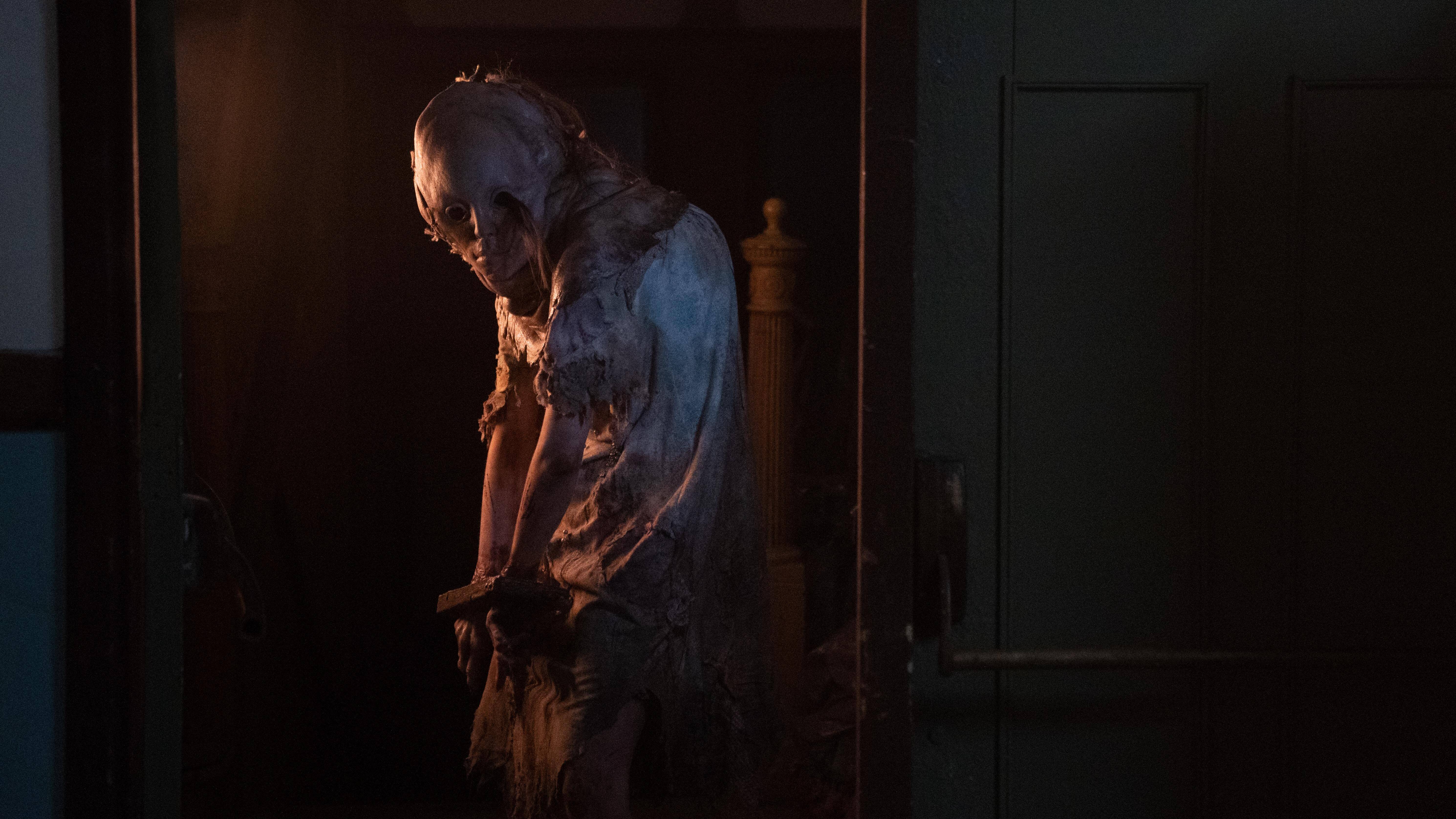
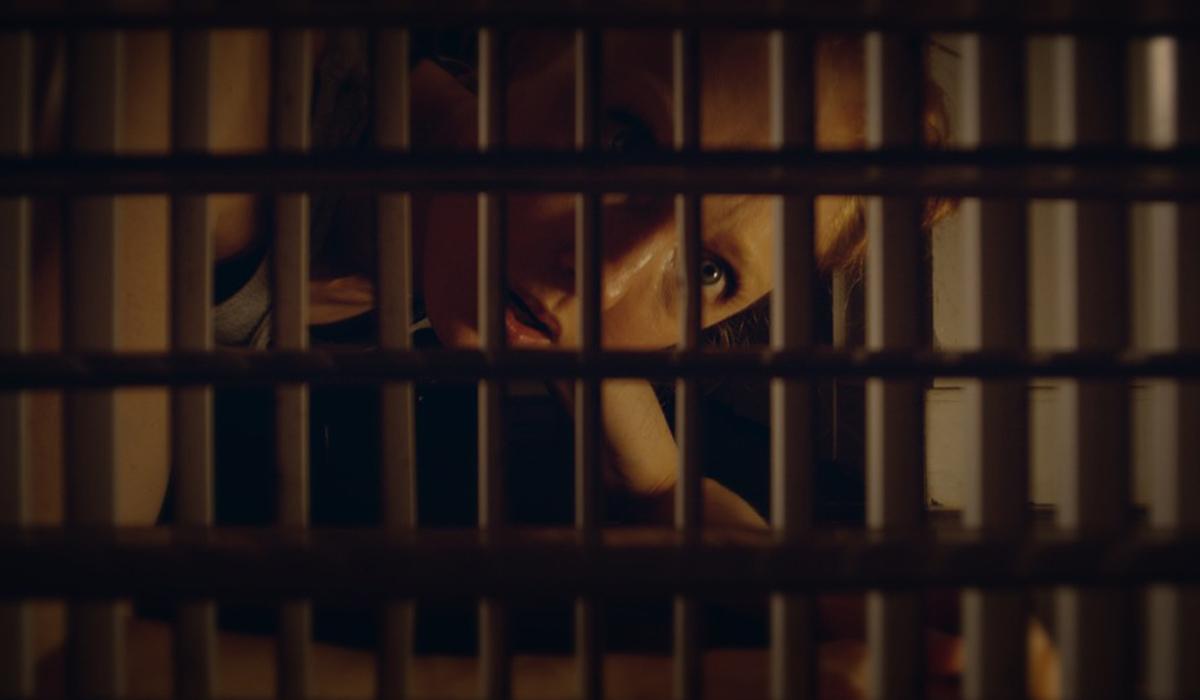
Emily Bennett & Justin Brooks | ALONE WITH YOU

emily bennett alone

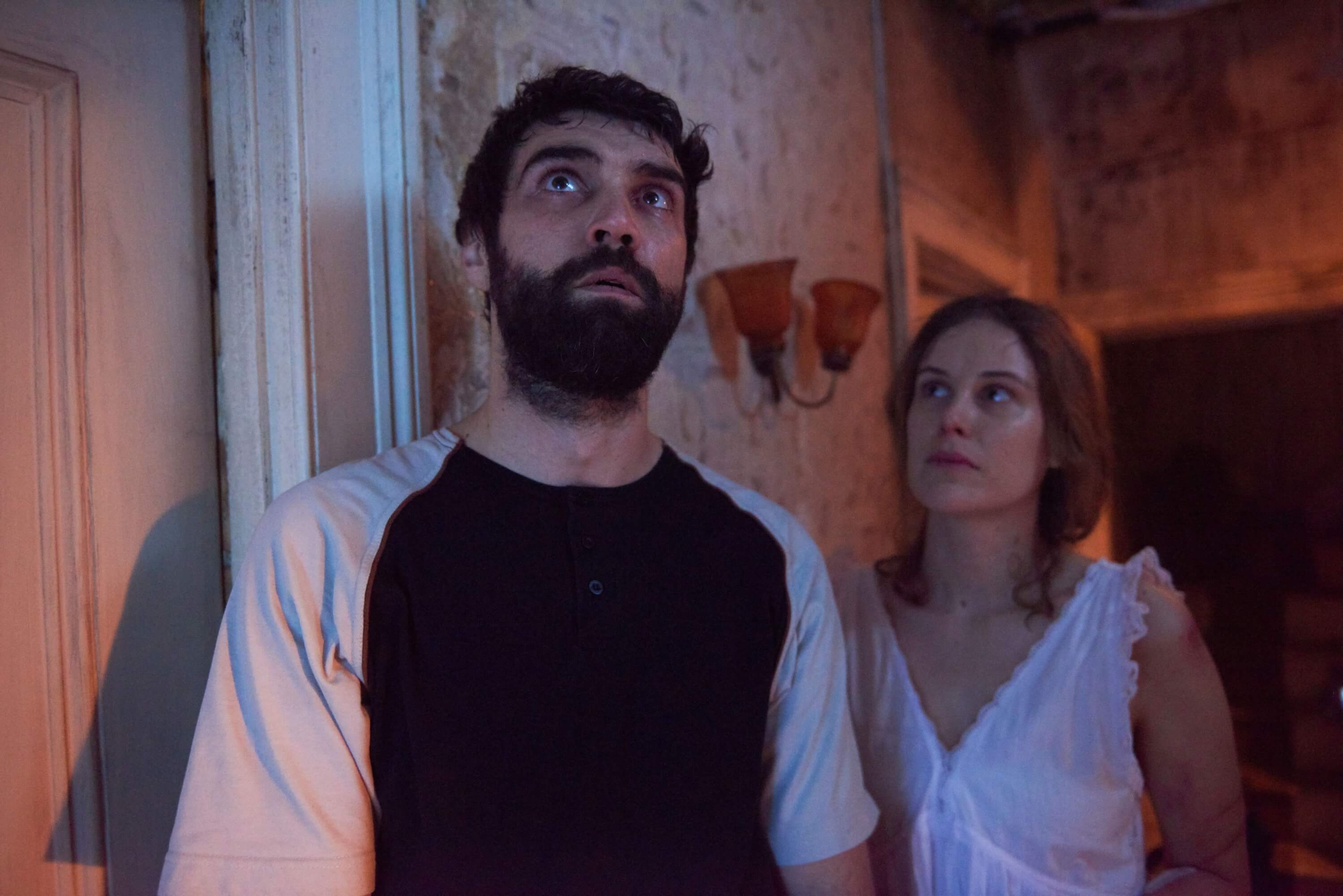
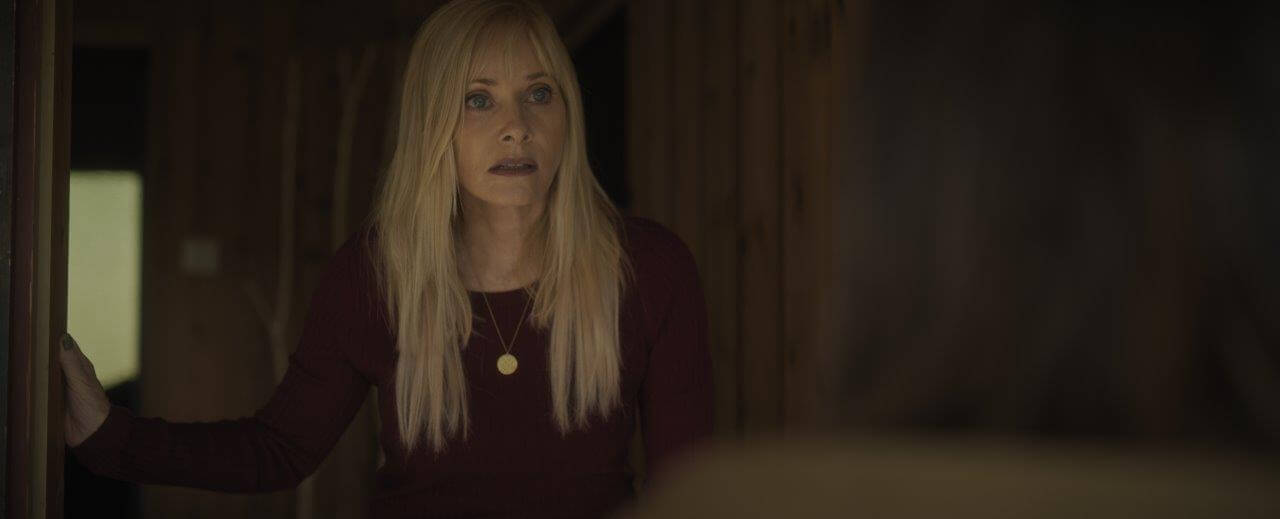
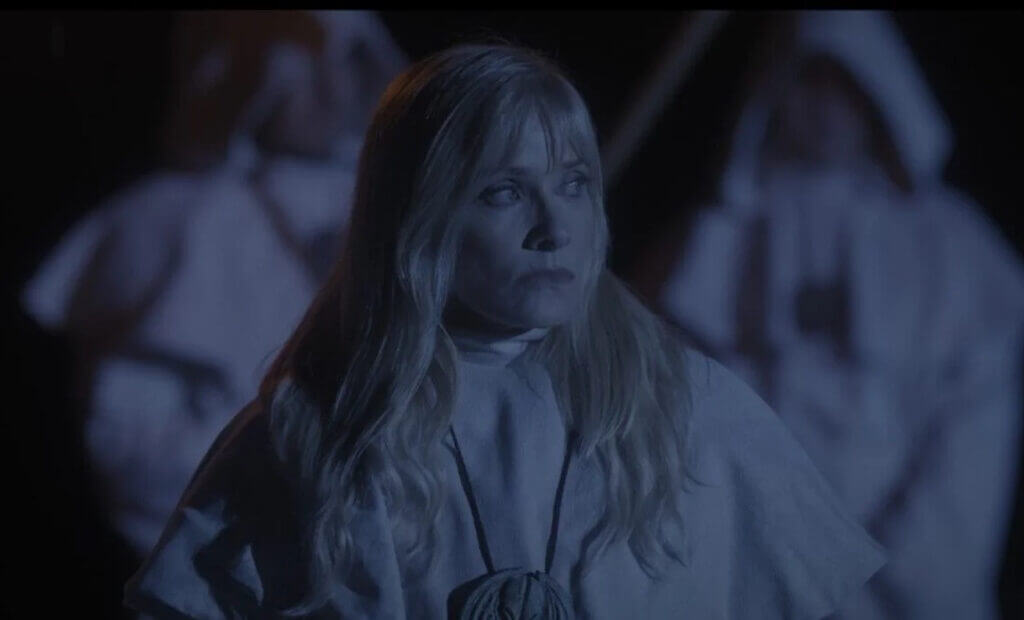
Ahead of the Black Sunday Film Festival screening of Alone With You, we caught up with writer/directors Emily Bennett (who also stars) and Justin Brooks to find out more about the tense, psychological horror movie…

STARBURST: What was the inspiration for the story?

Emily Bennett: The inspiration really came from a short film Justin wrote a while back called A Closed Door.

Justin Brooks: Yeah, while the initial premise came from the short, the story really unfolded with the creation of our main character Charlie. Something created entirely by Emily and me together. The short had an entirely different main character.

How would you describe the film to someone going in cold?

EB: The film is a twisted love story. It’s about a romantic evening turning into a nightmare. And it’s about the horrors we can experience when we give ourselves completely to another person, the horrors of losing our identities and our grip with reality.

What’s the dynamic with your directing/writing partnership?

EB: It’s pretty effortless once we get cooking. We usually wrestle with a concept for a while before committing to actually writing. But the writing process usually goes pretty quickly. I’ll start writing around 5am every morning – yes, I know, I’m insane! – and Justin will pick up around midday and continue. We’re able to generate lots of material this way. Then we’ll discuss the pages, the characters, and the dialogue. Sometimes we’ll block out scenes together, just to see if they make sense. We shotlist and storyboard together. And then on set, we’ll sometimes have different opinions of how a shot should look. But it’s rarely an argument. It’s more of a logic puzzle – What is the best way to tell the story? Story is king. And as long as we’re serving the story, we know we’re on the right track. And, of course, with my background as an actor and Justin’s background as a cinematographer, we each have our specialities that we bring to the working relationship. It’s a pretty great dynamic.

JB: The question ‘why’ comes up a lot. Emily and I always keep ourselves in check and don’t ever allow ourselves to make choices that don’t directly support the story. It’s easy to do something because ‘it’s cool’ but in a film like this, that could get confusing and misdirect. Our characters need to feel real and driven by purpose. So the question ‘why?’ is pretty important. We find new ways to work together every day and it’s important for us to always work toward a common language. Emily has spent a lot of time working through gear and cameras to better understand the technical language of shooting and I have spent just as much time researching the language of acting. We’re able to lean on one another for our specialities, but we always want to have a common language and understanding.
Emily, what was the hardest part of acting in the film as it seems very intense?

EB: The hardest parts for me were the phone and video conversations because I had no scene partners in them. I acted only with a green screen and the memory of our actors’ performances in my head. Trusting myself to create my side of those scenes in a grounded and realistic way was quite difficult, but Justin helped me gauge each take and we found the scenes in the edit. It seemed like magic when everything cut together.

Justin, are you not tempted to come out from behind the camera and act?

JB: Not a chance. I love actors. I love the way their mind works around character and motivation. I love to dance with an actor behind my camera and I’m an extremely empathetic director. But some art, I just like to appreciate. I’ll never stop trying to educate myself in the acting process because I think it’s important for the director to speak every language on set, but I’m quite comfortable behind the camera.

What was it like working with Barbara Crampton?

EB: A delight. She’s a legend for good reason. But I wasn’t prepared for just how kind she is. You think someone with the kind of career and pedigree of Barbara Crampton might seem a little removed. But she was so generous with her time, rehearsing with us, setting up the camera we sent her, doing her own hair and makeup… It was an absolute pleasure to work with her and I’d do it again in a heartbeat.

JB: I’ve sadly been in the situation where a ‘known’ actor shows up on set, goes through the motions, and gets out of there as quickly as possible. This couldn’t be further from the truth with Barbara. She really does give a great deal of thought and care to the parts she takes. And the film is better for it. It was wonderful to hear her thoughts on the script and the character. Through those conversations, she was able to really make it hers. She really made the character three dimensional. Barbara’s kindness and care toward the project were unbelievable and I can’t wait to work with her again.
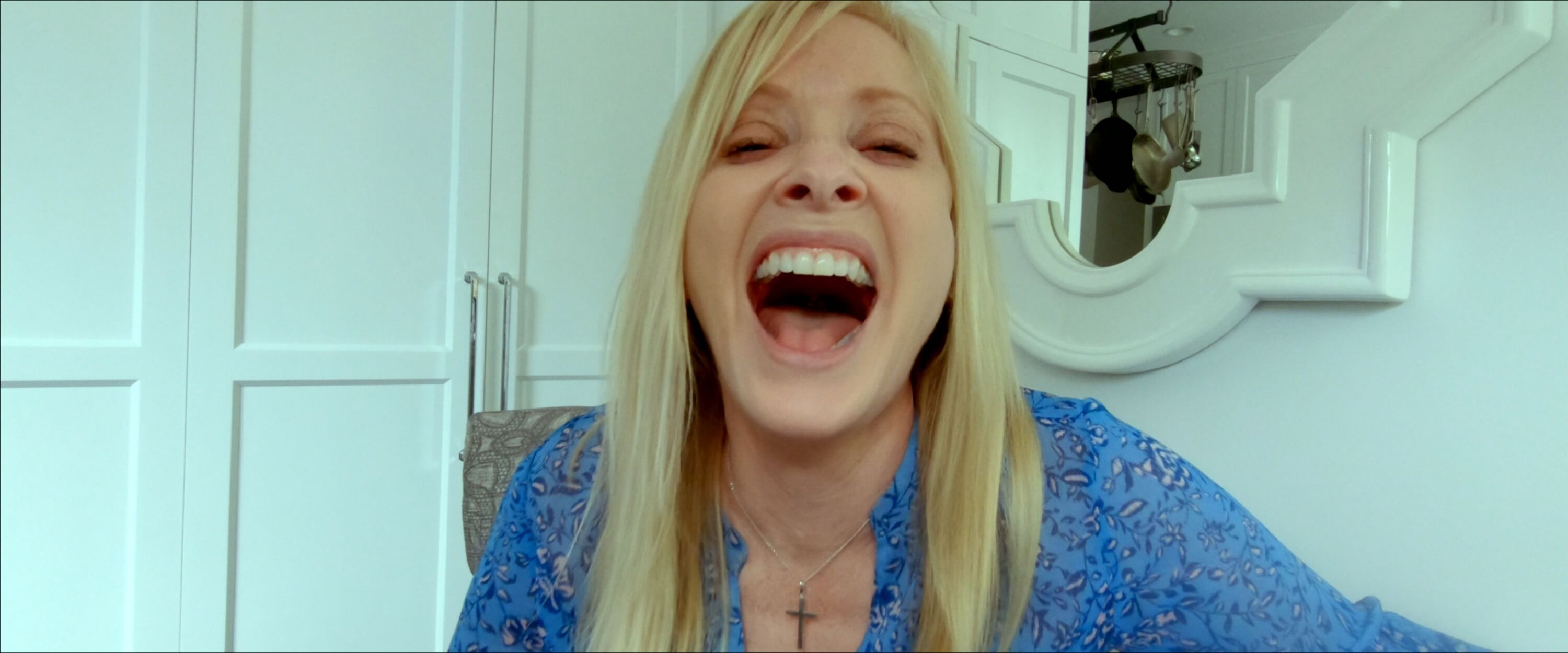
We’ve seen a lot of films making use of Skype-type technology to include more cast members during the pandemic, yet you’ve made it seem natural as opposed to out of necessity – was there anything that you were restricted from doing that you’d like to have done?

EB: It would have been great to have the walls of the apartment fall down and crumble around Charlie in the end so that she’s immediately on the beach. And I would have loved to have an AC for Justin so that we could have attempted some grander camera moves. But that’s just me being greedy. Honestly, this film was made exactly the way it needed to be made, and I love it. Our next film will have a different set of rules and we can’t wait to tell that story in a completely different way.

JB: Sometimes it’s a blessing when the shark doesn’t work. Restrictions make us more creative and push us out of our comfort zones. I feel like the film largely feels tight and claustrophobic because that’s how it was made. You feel every bit of our anxiety on that screen. I guess I wouldn’t have minded an extra crew member or two.

There are a few well-timed jump scares in the film, but was it seems important for you to lean more to the psychological rather than simple shocks, is that the case?

EB:  Absolutely. Our keyword in developing this story/film was ‘dread’. We wanted this film to instil a sense of creeping dread that ultimately builds into anxiety and panic. Jump scares are fun, don’t get me wrong, but audiences don’t really remember jump scares. They remember how the film made them feel. And we want the audience to walk away from this film feeling pretty shaken.

JB: Emily said it. Jump scares are fun. But to me, they’re seldom scary. The films that really stick with me are the ones that had me clutching my chest for an hour and a half. The ones that don’t let you breathe until the film is over. We always want our films to carry a sense of dread throughout. If we can make you jump out of your seat once or twice while still doing that, all the better.

The film has had a good run at film festivals, and plays at the Black Sunday festival in London this month, is there anything you would like to say to the British fans before they watch the film?

EB: I wish I could be there! I lived in London for over three years and it’s one of my favourite cities in the world. My dear friend Jess Regan – a fellow RADA grad and a brilliant actor in her own right – is attending in my stead. Playing Black Sunday is a huge honour and I can’t wait to attend in person once the world opens up a bit more. To the audiences attending the screening of Alone With You, I want to say: thank you for your time and consideration. I hope you enjoy the nightmare.

JB: Emily and I truly wish we could be there. We both have such a love for London and it means the absolute world to us to be included. There are so many amazing horror films at the festival and we’re proud to be counted among them.

What are you working on next?

EB: Justin and I have another feature film ready to go called Kept. It’s a small cast, a modern Gothic story that will be shot in upstate NY. I won’t star in this one, though I may make a cameo. We have the same amazing producers attached and we can’t wait to bring this film to life. I also have a few solo projects setting up right now. All horror and psychological thrillers. American financing is always a tricky game since we don’t get government funding, but I hope to share some definitive news on one or a few projects very soon.

JB: Emily and I also both have short films being released on the ALTER platform this spring. Both were shot as preparation for Alone With You and are a fun example of what we make when not directing together. Emily’s film is called Bed and mine is Pains.

Alone With You screens at the Black Sunday Film Festival, which takes place in London on January 29th and 30th. The last few tickets are available here.

Alone With You is also in US theatres on February 4th, 2022 and On-Demand, Digital and DVD in the US on February 8th, 2022.
Romola Garai | AMULET

ROMOLA GARAI

Romola Garai is a British actor known for Atonement, Emma, and Amazing Grace. Her impressive directorial début Amulet premiered at the Sundance film festival 2020 and is now set for release in the UK. Romola sat down with STARBURST to discuss directing her first feature, mythology and where the film’s themes came from.

STARBURST: How does it feel to be talking about Amulet again after almost two years?

Romola Garai: Yeah, my film has been in Covid isolation, so it’s been a while. On the one hand, it’s amazing because I was worried like a lot of people who made their debut films in 2019, that it would never come out and all that work would be for nought. But also, I think it’s great because I now have some real distance from the film, and I can talk about it a bit more intelligently and I can see it as a piece of work much more clearly than I could at Sundance when I’d only recently finished the film and it felt impossibly close. I’m sure that if you’re more experienced as a filmmaker you get better, and your eye becomes more attuned.

Coming from an acting background, did you feel that gave you a different focus, having seen many directors working?

It definitely does. It feels a slightly arrogant thing to say but I think I was good at directing the actors. I mean, I certainly directed them in a way that I would wish to be directed. To be collaborative. We didn’t have a lot of time, but we had plenty of rehearsals and dialogue and they were incredibly influential in influencing how I saw the script and how the characters were realised on screen. It felt like an accepting and collegiate atmosphere. When it came to the look of the film, I’d storyboarded with our DP. Laura [Bellingham], but I let her line up the shots and I wasn’t controlling about that. Your background, whether in front or behind the camera informs what kind of director you are and that was definitely true of me.

Horror can be a gateway for new directors who set out with a list of genre conventions to tick off, whether that’s to be scary or gory or atmospheric. But Amulet is built on character and that can sometimes be missing in horror. Was that something you were conscious of?

Yeah, it slots into a heritage of character-driven work. Having said that, the characters in the film are somewhat cyphers; there are two we don’t know much about at all for important reasons. Some of the references were European horror films like Trouble Every Day and Possession, films that are existing in a space where the horror that’s there is about disquiet and unease, and those films often dip in and out at times quite uncomfortably of different types of horror. There’s body horror, jump scares and the supernatural. And hopefully, our film has quite an uplifting ending as well. I’m comfortable working in a place that feels quite contrary or deliberately provocative (laughs).

You mention the ending and it’s interesting you use the word ‘uplifting’. The film does take some turns that you don’t expect so, with that ending, did you consider pulling back or were you committed to where you wanted to go?

I think when I wrote the script, and then when people read it, I did get a few ‘I can’t comment on it’. When I was asking for notes some people were like ‘I cannot watch or imagine this so I cannot give you feedback’. I was aware that some of the ideas people found offensive or quite extreme. But when I was making it, the parts of the film that I found the easiest were the ending sections and the parts where it ramps up. Because those were the parts that were fixed in my mind. Also, those sequences, because the special effects were pre-planned and the only controllable set was the attic in which a lot of the ending takes place, a lot of the resources and planning were poured into those sections. The scenes where there were just two people talking were often harder to direct as we’d just arrive on set and had to decide how it would play out.

You have strong themes of masculinity, relationships, and also consequence and forgiveness. But it also seems that every time there is a new female director there’s a discussion as to whether there is a feminist element or not.

I think it’s quite pertinent to my film! [laughs] I think the problem is that there’s no official definition of feminism. It means very different things to different people, especially at the moment. And it’s always in flux as a political ideology but I’m always a fully paid-up member so am happy to have that attached to my work. And even if I wasn’t it would be hard to argue my film doesn’t have a political motive or bent. [laughs]

With the mythology you’re created, did you question yourself at all as to whether you’d seen this somewhere before, because it does feel different?

I’ve not written a script in the way I wrote this film. I’ve written several screenplays before, in lots of different genres including a ghost story. And then it was suggested to me that as I like horror I should try and write a horror film. I had a gap in my diary, so I did, and I just sat down and wrote it. So, what you have is a lot of the subliminal things that were going around in my mind at the time, such as birth and transformation, and forgiveness as you say. And also faith. I think I’m someone who would quite like to have faith but as it’s been used so much to oppress women it’s very hard to pay up to any organised religion. So, there’s a bit of that. And the idea of there being some kind of alternate mythology that would act on the part of women and offer them some sort of existential justice. It’s a piece of revenge fantasy you can indulge in to right some of the wrongs in the world.

What you say about faith is interesting, as the film begins with that as a theme, which then changes and is largely dismissed as the plot develops.

I understand the importance and value of faith in our secular times where we just shop and are lonely. But for women, it’s been used almost exclusively as an engine of oppression. I think in the film there is the Catholic mythology, which is usurped by something greater. The idea of forgiveness and how that is framed in Catholicism is represented by a female figure, that being their function, and not ever to be full of rage and anger. And that being usurped by an older mythology, a pre-Christian idea that you might have to pay for your sins and that being exemplified in a female god.

Amulet is an incredibly impressive debut film. Is this where you see yourself going forward, being behind the camera now and is there more horror to come?

I have other horror scripts, but I have a lot in many genres. Being an actor, I’ve worked with lots of different creatives and as a viewer, I enjoy lots of different things. I have an inclination towards the dark, so many of my scripts have that if not necessarily horror. I love acting, and would never not want to do it, but I love having this as well. Ideally, I’d like to have it all! [laughs]


Amulet is in cinemas on January 28th. You can read our review here

Gareth Coker | HALO INFINITE

Gareth Coker

Composer and two-time SXSW Gaming Award for Excellence in Score winner Gareth Coker is best known for his work on the Moon Studios games Ori and the Blind Forest and Ori and the Will of the Wisps, as well as his score for ARK: Survival Evolved, but it is with his latest work for 343 Industries that the British-born, Los Angeles-based Ivor Novello award-winning composer comes to his widest audience. With Halo Infinite, Coker’s music now reaches a massive audience.

Building on the classic music created for the long-running first-person shooter franchise by Martin O’Donnell and Michael Salvatori, Coker’s music for Halo Infinite takes familiar themes and motifs and recontextualises them within the latest instalment. It’s a big set of shoes to fill, but Coker was definitely up to the job. We spoke with him about his work on the game and how it relates to what has come before.

STARBURST: Halo Infinite is a huge deal…

Gareth Coker: Yes. I remember when I first got contacted about it. It was sometime in 2019, through email and they didn’t name the project, but then in the email signature, I’m thinking, “343 Industries? Well, they only make one game,” so I kind of knew what it was. Interestingly, the music supervisor picked me out – most people will think, “Because of this success on Ori, you’ve got picked to do Halo.” It’s actually because of my work on Ark: Survival Evolved. That’s how the music supervisor discovered my work and then became familiar with Ori. The reason why Ark came up was because it relies a lot on tribal percussion, which obviously is a big feature of Halo soundtracks past and present because it’s included in this one.

There was some overlap between Ark’s approach to percussion and then Halo. And then, of course, he went into my other work and saw that I could do emotional stuff. I do the creating worlds with music kind of thing, so I got asked to audition for it, and well, here we are, one Halo game later.

Well, the interesting thing about Ark is that you’re also working on the sequel to that. We’re curious if some of the things you learned doing Halo Infinite have let you learn how to work on Ark II. There’s a lengthy musical history for Halo that you have to kind of work within, but also create something new. Is that work similar to what you’re doing for Ark, too? How did working within these two decades of music teach you things?

There’s a fundamental difference between the two projects. I’ll get into that in a sec, but I think one thing about Halo and working on it is – I didn’t create the musical IP. I didn’t establish the musical brand, the musical sound – that’s Marty [O’Donnell] and Michael [Salvatori], and then all the other composers subsequently built on, on their work. Working on Halo, I was thinking, “All right, it’s time to go to Halo music” – whatever that means.

It’s going back and studying all of the old material, figuring out what works, what doesn’t, and – more importantly – going back and playing the old games, figuring out what works, and why it works – why do people like this so much? – and then seeing how much of that applies to Halo Infinite.

I like to think we struck a good balance between respecting all of the work that has come in the past, because here’s the thing: with Halo’s music, there are pieces of music from the older games which you just expect. You expect to hear the monk’s theme. Like if you don’t put the monk’s theme in the main menu, you’re done. You might as well stop right now. You’ve got to put it in the menu.

The famous action motif, the [sings the Halo main theme]: if you don’t put that in, what are you doing? You’ve got to put it in. And there are other fragments of themes as well that we’ve put in. I like to think what we’ve done is we’ve taken those themes, done our own spin on them, but also combined them with some of the newer themes in the game.

The best examples from my own contributions to the soundtrack – if you see the Halo presentation last year where Escharum was presented as Master Chief’s main antagonist in this game, I combined Escharum’s theme and the low basses with the Halo monk’s theme, but written for orchestra on top. That’s just a simple example of fusing two themes together. The other example is from closer to the end of the game and it’s a track called “Judgment,” and that combines my theme for the Endless – really, the Harbinger – and also the action/Master Chief motif.

We get to take the old themes, but the sound we end up with is very new. It’s all about combining those two. I was only able to do that once I studied enough of the old material and felt confident working with it.

I liken it to learning a language: at first, you have no idea what’s going on but, at least in the case of Western languages, you can read the alphabets. You can have a rough idea of what it might sound like, but you’ve got to become familiar with it for the reading, the writing, the listening and speaking. The more you do of it, the more fluent you get, and once I became fluent in what I call Halo’s musical language, it became easier to write with it.

Now, getting back to the original part of your question and how does this differentiate from Ark? Well, the difference is, I created the musical language for Ark, and I created the musical language for Ori and the Blind Forest, which meant when I did the sequel to Ori, I wanted to do what I’m doing with the sequel to Ark.

I’m already familiar with everything, so I feel like I am just building upon what I’ve already created. And especially in the case of Ark II, I definitely don’t feel like I’ve run out of places to go. Even though we’ve been to a lot of places, there’s suddenly more places I can take the music. I don’t know if they’ll ever make another Ori game, but I feel like I could probably say more in that world if I needed to, but it helps because I created the musical language.

I feel like that that’s the main difference between the two. I think it’s easier to work on something that I created. Marty and Michael did how many sequels? I mean, Halo one, two and three and ODST and Reach. It’s a lot, right? Because it’s easier to create the music language. I think one of the challenges all composers who have followed Marty and Michael is, you’ve got to learn the language. You’ve just got to.

Good luck to the composer following John Williams, when Star Wars 10 inevitably comes out. That’s what we’re talking about here. You’ve got to go and respect the original material. You’ve got to do that before you do anything else. You’ve got to learn that and once you’ve learned that, then you have the platform to expand on it because you’re building that expansion on a foundation of knowledge that is synergistic to the IP, in this case.

In addition to what has come before and those tribal drum elements like that, there’s a real sense, listening to the score for Halo Infinite, of Aaron Copland’s “Fanfare for the Common Man.” It just had that sort of rising dramatic brass aspect to it. What were some of the other influences that you had, in addition to the work that’s come before on the series itself?

Well, I think one thing that came up is that Halo is not a dark, gritty action game. One of the things that is common between all three composers working on the project – myself, Curtis Schweitzer, and Joel Corelitz – and this is a literal quote from the music supervisor, he said, “We are not afraid to use a major chord.”

Because there is a lot of that. A lot of action scores are very dour, very dark, minor, gritty. But the thing is – when Chief arrives on the battlefield, people look to him and it’s a moment of hope. He is a beacon of hope and we wanted to put that into music and the Copland analogy is interesting. It’s a lot of major chords in that piece. It’s not just the major chords. It really was the feeling of hope.

So, it’s less about targeting certain influences. It’s like, “What can we do to make sure that when the player is playing as Chief, you’re seeing the world through the eyes of Chief?” When you’re playing through the game, other people react to Chief in a positive way. And you know, even the Grunts and the people fighting Chief, they see him as a challenge, but it’s a fun challenge.

Here’s the thing: the enemy in the game, the Banished? They’ve been winning for a while. It’s not been a challenge for them for quite a while and they’re all a mercenary group, so they’re actually kind of excited for a real challenge. I think the game would have a very different tone if it was just one of these dour, typical action scores – which have their place, but that place is not Halo.

The rising brass figures is another common thing that comes up. I look at the famous action theme. It’s up an octave up and up a ninth, and then up a tenth. That’s a big leap for those instruments, by the way. It’s not easy to record. The Monk’s theme. What does it do first? It rises. This all goes back to a musical vocabulary that has been established. You might think that it’s just rising brass, but yeah, you’ve still got to do it and you have still got to make it work in the context of the game, because if you overdo it, it doesn’t make you feel as much. A lot of it’s not just about the content. A lot of it is also about where it’s placed and when it occurs in the game as well.

By the time this music is done, you’ve heard it dozens, if not hundreds of times, but then you also have to realise that as the player is playing through the game, they’re going to hear it dozens, if not hundreds of times, as well. We imagine there’s a certain level of work that goes into it in order to make this music as energetic and entertaining the 20th time as the second.

That’s a very interesting topic and it’s quite a deep one where there are kind of two schools of thought. But it also does depend on the game. I’m in a position where I can talk about both ends of the spectrum here. Halo has this intelligent music system that does all kinds of dynamic adaptive playback based on the threat level of the current situation that you were in. So it can kind of recompose music on the fly based on all of the recordings that we’ve got already.

This is the thing – when you’re playing a game because you’re an active participant, the brain can only process so much information, so when you’re playing through, can you actually process all of the music that is happening in addition to the sound effects, the dialogue? Oh, and the visuals, and by the way, pressing all of the controllers. It’s a lot for your brain to process.

I like to look through the comments. I know I shouldn’t, but I like to look through the comments of how people are enjoying – or not – my work. And even though Will of the Wisp doesn’t have an intelligent music playback system, it does have really long tracks. Each environment, like the shortest loop, is four minutes and you’re really not in an area for a super-long time. It’s rare that you’ll be in an environment long enough that you’ll hear something more than four or five times.

You might end before hearing another piece of music, even if that’s just a stinger, but the thing is you’re walking through the environment, you’re doing all of this other stuff, and your brain knows the music is there, but it’s not processing every single note of the melody. It might poke out at a certain moment when you’re doing nothing.

But when are you actually doing nothing in a video game? You’re not and, really, the definition of doing nothing is literally just walking from left to right. That’s a moment where yeah, you can actually have the music be more prominent, but then, when you’re fighting, your brain isn’t going to be processing all of the musical notes because you’re processing everything else that is going on on-screen.

Repetition is kind of a dirty word amongst the game music community, but I don’t believe it is. It’s only repetition if the content is bad, and the player wouldn’t want to listen to it anymore. And bad music is just bad music.

Now, how do we define the music? That’s another whole thing, which I won’t get into, but if your music is fitting for the general scene and mood of the moment, then it can work over a long period of time without much adjustment now, or is a very different game in terms of a game compared to Halo, because of scale. You might fight one Grunt, or you might be fighting a hundred and so the reason that dynamic music exists is you can’t have the same piece of combat music for one Grunt versus a hundred, so it kind of grows and expands and shrinks as the combat goes.

Whereas, Ori? We don’t actually use combat music, except when you have to kill an enemy or something to progress and that’s actually very rare in the game. You can go throughout the game, for the most part, being a pacifist. The only time in Will of the Wisp when you have actual combat music is the mini-bosses and boss fight and chases, and that’s it. The rest of it, you’re in and out of combat so quick, there wasn’t any point in having combat music. It’d be too much for the brain to process.

One day, I am going to do a PhD on brain activity during games and how music affects that. Not there yet. I’ve still got music I want to write, but I think we’ve all played games when you just feel like you’re at one with the game. Most people call it the flow state and your brain isn’t really paying attention to anything in particular, but you are so perfectly engrossed that you just feel connected.

Getting back to your question – it’s like the music can play a lot if it’s being composed with every scene in mind. It’s a very tricky one to navigate though, because it changes for every single game. Some games do need the repetition because when you return to a certain area, it’s welcoming to hear that same piece of music again, but in some games, you might never return to certain areas, and you’ve got to make the most of that music while you’re listening to it.

It depends on the needs of the game, how you reuse the music. It just needs to be done intelligently, and that just requires planning and foresight from whoever was working on it. It’s not like a film where you’re just playing from A to B the whole time, and you kind of know where the start is, where the middle is, where the end is.

I feel like when I am working on a game, I’m working on a jigsaw puzzle, but I don’t have the reference, which is obviously really hard, but the more of it you fill in, the more obvious it becomes. It’s just really hard at the beginning to map things out but, as that map gets bigger, it’s like, “Oh yeah, I can use this piece of music here and then I don’t use it here. I do use it here.”

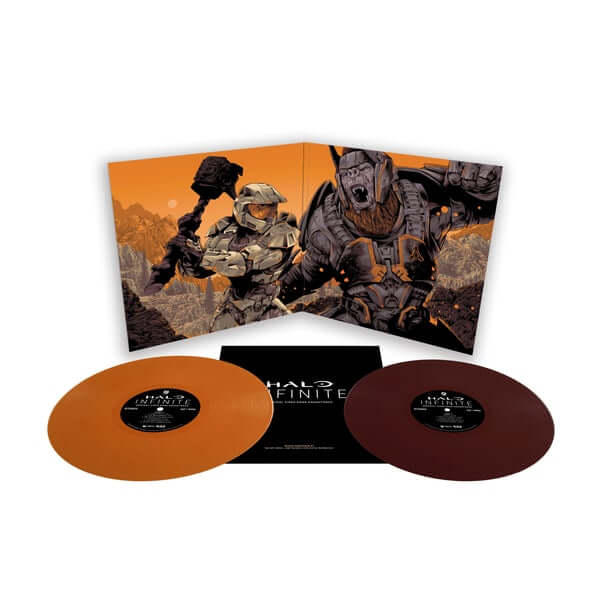
HALO INFINITE is out now, and Gareth Coker’s score is available digitally from Skill Tree Records and on double vinyl LP from Mondo.

John McPhail | ANNA AND THE APOCALYPSE

John McPhail anna

Genre mashup ANNA AND THE APOCALYPSE gained its reputation on the film festival circuit. Since its release, it’s become a firm cult favourite. As it makes its UK TV debut on Horror Channel on Christmas Day, we revisit our chat with director John McPhail…

STARBURST: The concept of a zombie horror comedy Christmas musical is a wonderfully crazy one. How did it come about?

John McPhail: It was originally the brainchild of Ryan McHenry, who wrote and directed a short film called Zombie Musical. He was watching High School Musical and thought ‘the only thing that would make this better was if Zac Efron got eaten by zombies,’ and it evolved from there. The short went on to win a BAFTA and had a feature commissioned by Black Camel. Then Alan McDonald came on board as a writer. Unfortunately, Ryan passed away a few years later. [McHenry died in 2015 of osteosarcoma at the age of 27].

How did you become involved in the production?

Producers Nicholas Crum and Naysun Alae-Carew were at the Glasgow Film Festival looking for a director for Anna and the Apocalypse. They spoke to horror filmmakers and musical people but weren’t finding the right balance. My first feature – the romantic comedy coming of age film Where Do We Go From Here? – was playing at the festival and after seeing it and loving the character and heart in it, they decided that was what they wanted.

How much of the completed film is Ryan’s own vision?

I believe that every director’s a different storyteller. We speak differently, and our brains work differently. I’m a very visual director, for example. I couldn’t say if he’d have made it the way I did, but I think it’s definitely my stamp on it. This is the style I went with, and it’s my cast, my team, and my jokes in there. The musical boys, Roddy Hart and Tommy Reilly – that’s their songs. As well as that, there are things that Ryan loved all strewn through it. There are so much of so many people involved all over it.

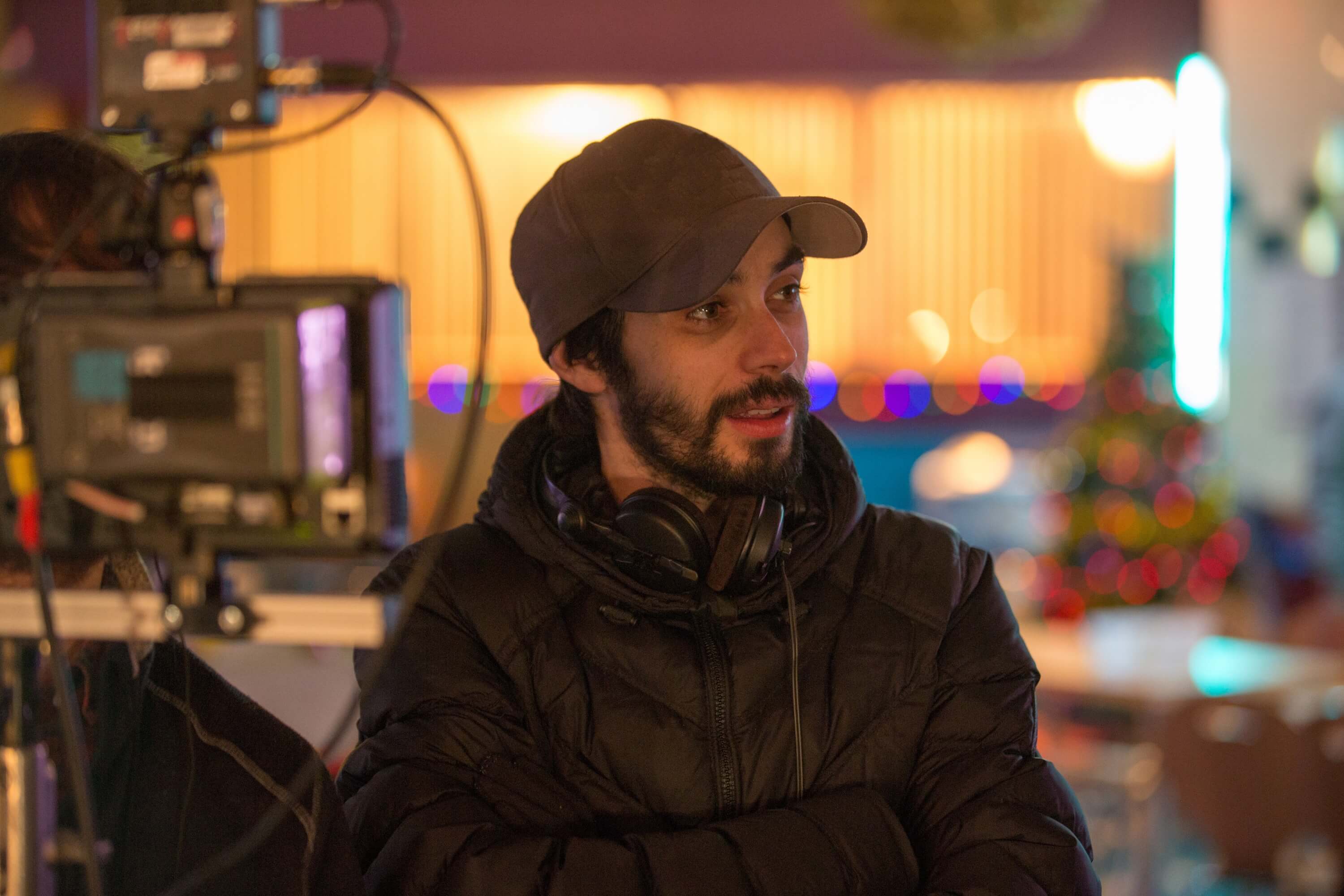
Director John McPhail on the set of Anna and the Apocalypse.


About those songs, how did you decide where they would fit into the story?

There were blank spots in the script for specific moments where the songs were going to happen. When I arrived, there were maybe five songs in different stages, with some further along than others. We never just wanted to break into song because there hadn’t been one in 15 minutes, it always had to serve the purpose of the story and push the characters forward. My two composers are just amazing, wonderful musicians, and I think they’ve done a fantastic job.

When you were first casting the film, how did it all come together?

When I started, there were over 150 casting tapes, and after looking at them all with the producers, we decided there were about 20 kids we wanted to see. We went down to London and pretty much found them all there at that one casting session. There were only two who weren’t on the sheets that I had brought to the table. First was Marli Siu, who plays Lisa, who I really wanted to see after I’d seen her in a play up in Dundee where she was just fabulous. The only other person we didn’t find from that casting process was Malcolm Cumming, who plays John. It was a case of finding the right actor who had that energy, and I wanted him to be that little firework that popped off. It took us a while to find him, but I’m so glad we waited, there’s nobody else I could have wanted to play that role.

Was it difficult to maintain a balance between the various genre aspects?

It’s a tricky balance in making sure that in each scene we know where we came from and where we’re going to so that we weren’t just adding in silly jokes because we didn’t have one on that page. Alan poured over the script, and we worked really closely together in the beginning when I first started, right up to filming. Even when we were shooting, I wanted him as my on-set writer so that if I needed a joke or a line, he was right there.

I wanted the film to break into acts, so the first act was a zany teen comedy, making sure it’s bright and breezy and fun, taking the time to get to know the characters so you can laugh with them and see their teenage angst. That way when we start with the second act with the horror-comedy aspect, you know them and notice their little quirks, and they become three-dimensional characters and not just the 2D caricatures we kind of hope you thought they were in the beginning. Once we get to the third act of outright horror, you’re scared for them and worried for them, but we wanted to make sure that we still had fun in there, so even then there were bits of humour and physical jokes that we’d sneak in.

We often find that human aspect missing in horror films. Too often you have characters that you don’t care about, and so you’re not invested in whether they live or die.

I agree 100%. You want to love your characters because otherwise there’s no joy in it. You just think ‘I don’t care if you die, in fact, I’m glad if you die. Hurry up and kill them, Jason!’ I’m a big believer that if you can make people laugh you can make them cry and I always feel that comedy is the best way to get people onside with a character because if you’re laughing with them, you think ‘don’t you die, you’re funny. I’ve been enjoying watching you, don’t you go anywhere.’ I would hope that’s something audiences get.


What made you decide to go with practical effects rather than CGI gore?

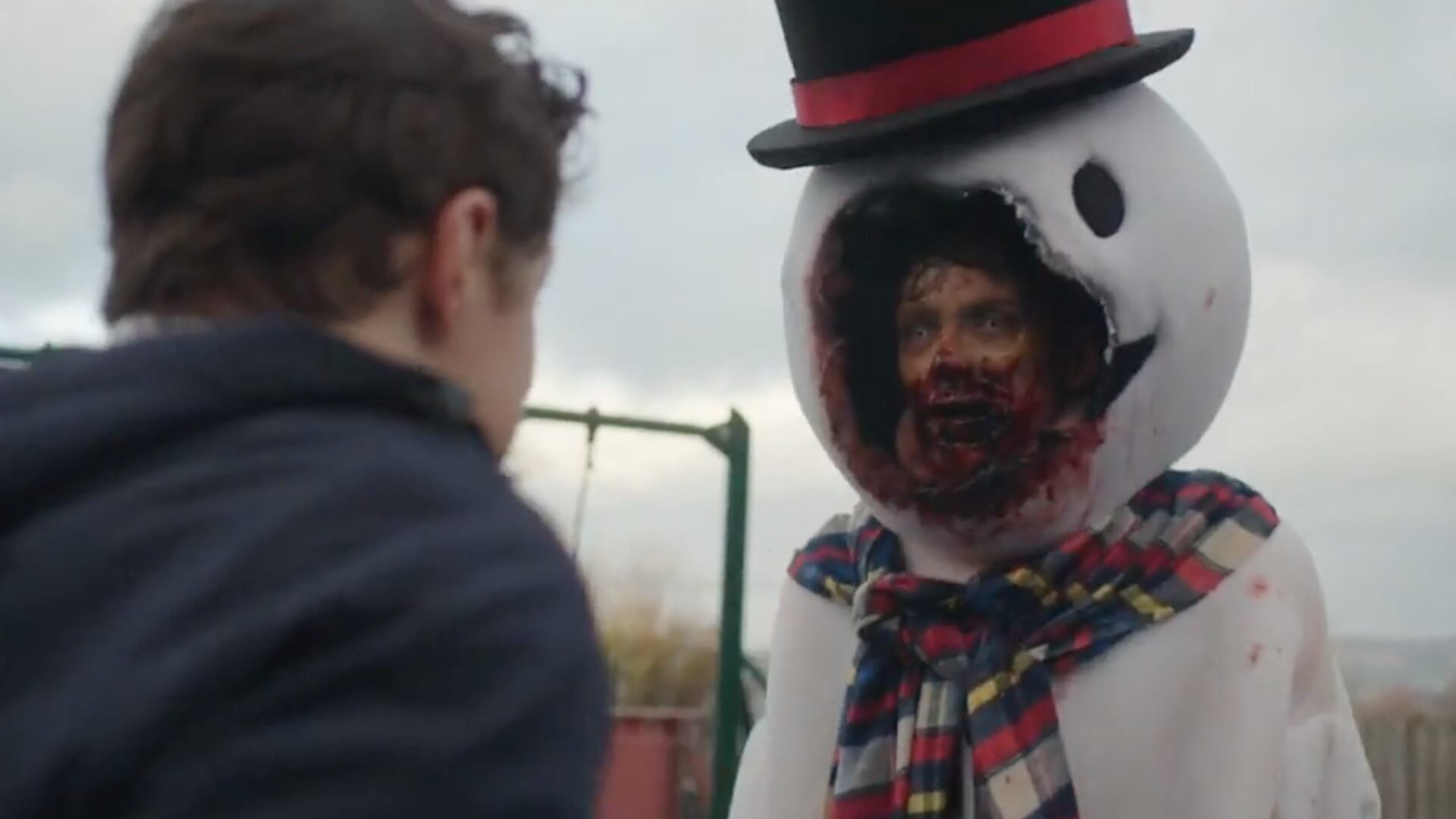
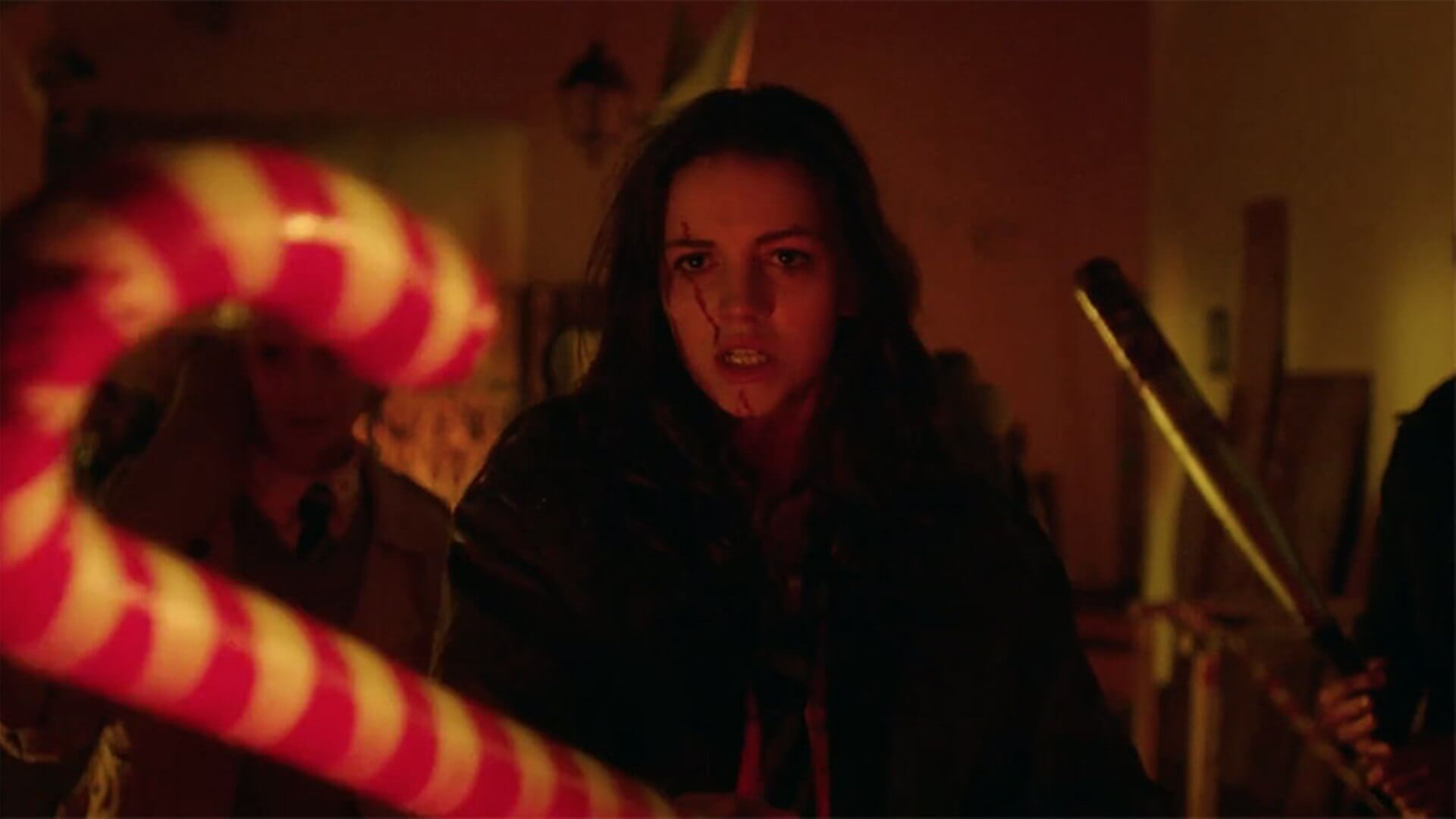
Being a horror fan myself, I know there are certain boxes horror fans want to be ticked. If you’re going to do horror, you want to see some blood and gore, and we wanted to break out the gore in specific areas and make sure we did it properly, with practical effects topped up with a little CGI. Even things like the head crush with the bowling balls or the snowman getting his head lopped off; everything was to be done for real. We just thought ‘we’re making a horror movie, we need to break out the gore and we need to have a bit of fun.’

Were there any difficulties in filming the more complex aspects, such as the fight sequences and the singing and dancing scenes?

My fight director is a woman called EmmaClaire Brightlyn. I cast her in my very first short film as my leading lady, so I’ve worked with her before, and we’ve got a really good relationship, and I trust her implicitly. My choreographer Sarah Swire – who also plays Steph in the film – is an amazing mover and shaker, she’s this ball of energy all the time. She was in Canada when we were in prep, and there were days when she’d be working in a coffee shop and taking a Skype call with me dancing at her.

When we were on set, everybody was just such a professional, and the background supporting actors were just so on it. I think Hollywood Ending, which is an elaborate song and dance number in the school canteen, was probably one of the things I was terrified about but it just went so smoothly. We had full tables of stuff but needed them clear so people could get up and dance on them, so Sarah got the dancers to build this into their routine, picking up their trays and shifting them between tables as they moved. My stand-bys and art team were going “We don’t have to do anything. They’re picking up and resetting the scene every time. We’ll just stand here and let us know if you need to move a bit of cardboard”.

We’re sure everyone’s been saying this, but the film reminded us a lot of the Buffy the Vampire Slayer episode Once More With Feeling. Did you take any specific inspiration from it?

Alan is the biggest Buffy fan you’ll ever meet, so there were a lot of nods to that. I’m not – I’ve seen the odd episode and that musical one – but I’m not a big geeky person, and I don’t really watch TV shows; it’s usually films for me.

As well as the cross-genre aspects, there’s also a strong theme of the need for human connection, particularly during tragedies. Did you feel this was important to emphasise?

I think that at the time Ryan passed, the script took a darker turn, when Nick, Naysun, Roddy, Tommy, and Alan were dealing with the loss of a pal. To lose a friend is hard, even in your twenties, and it’s something you think about growing up and as a teenager, especially if you lose a friend or your grandparents pass away. We wanted to make sure we got across a big theme of kids dealing with death. As you say, there is that need for connection, and this is highlighted in one song about how we’re so far into our machines and devices that when a tragedy strikes you want that human connection. Not just a pick up the phone connection, but actually going to see each other and spending time with your friends. I hope that’s what audiences take away from the film.


Anna and the Apocalypse has its UK TV premiere on Horror Channel on Christmas Day.

For more information, head over to http://www.horrorchannel.co.uk

Tune in on Sky 317, Virgin 149, Freeview 68, Freesat 138.


Barbara Crampton | SACRIFICE

barbara crampton sacrifice

Horror legend Barbara Crampton needs no introduction to STARBURST readers, and we jumped at the chance of catching up with her ahead of the UK TV premiere of the film Sacrifice, which debuts on Horror Channel this December. We quizzed Barbara on Lovecraft, Norway, and being a producer…

STARBURST: What drew you to Sacrifice?

Barbara Crampton: I first got an email from Sean Knopp, who’s one of the producers. He and I worked on Replace [2017]. I feel like, in the independent horror scene, you tend to work on movies with your friends a lot, so he reached out to me and said, “We’re doing this movie. We don’t have all the financing yet, we’ll probably do it in a year or so. Would you be interested in reading it as we have a part in mind for you?” I said, Yes, I’ll read it. He said it was kind of Lovecraftian, although it wasn’t really based on any particular story from H.P. and it’s a little bit of a pagan horror story. So I read it and I thought my part was great and really thought the story was interesting and I didn’t know at the time that we were going to be shooting in Norway. When they finally did get the financing together and said, “Oh, we’re gonna shoot this Norway”. I was like, I’m totally in. send me the plane ticket, I’m there! It really started because of my relationship with Sean and my friendship with him. And he’s moved into producing as well as myself. I’ve moved into producing and acting and so I always want to look at things that my friends are working on. That’s how it all began.

And what was it like shooting in Norway?

Ah, it was pretty amazing. I’d never been to Norway, it’s gorgeous. You don’t know where the water begins and the land starts, because there are all these different fjords and there are bodies of water with these mountainous landmasses that are seemingly growing out of the water. And then on top of the mountains, there’s water that’s coming down the side of them and filling up the fjords and it’s really incredible, really beautiful. There are a few dotted little towns where we were, but no real major, big, big cities, and it’s so full of nature and I think it was a perfect spot for a movie like this.

Sacrifice

As you said, it touches on the pagan as well, are you a fan of folk horror?

Yeah, I like folk horror; The Wicker Man is one of my favourite movies of all time and Midsommar came out a couple of years ago, which was another riff on folk horror. I think in times of strife and uncertainty, folk horror is really big, because you’re trying to make sense of your world and understand it and it’s hard to understand what’s going on in society, especially today. There’s a lot of anger and frustration in the world right now, more so than ever before, also because of the pandemic. Movies like this grapple with the human condition and try to find your place in the world. I think folklores are making a comeback. People take solace in the journeys that they see on screen while trying to understand life and the human condition.

What were Tor Mian and Andy Collier like to work for as directors?

They’re so funny together. They both have a great sense of humour. And there’s a lot in the script even though things that happen are horrible. They worked really well together. Andy was more on the camera side of things, he was our DP and Tor was working with the actors more but after we would shoot a scene, they would both confer: “What did you think of that, Andy?” “I thought it was good too”. “That was pretty good, but maybe we should try this or maybe we should try that”. They’d confer and then say, “Okay, let’s do one more take”. They got along great together and were of the same mind and kept us all laughing, so we had a very good time together.

How did you approach your part since you’ve essentially got two roles in this in the film?

Well, in the first part of the movie I’m working under pretence trying to find out some more information and being sort of the Constable of the town. But is that really who I am? Not really. I don’t want to give things away but because there’ll be people that haven’t seen the movie, but I’m the head of something and I think for my character, I had to be steeped very much in the society of the community of where we were, and who we are. We shot the movie in Norway, so for me, I felt like I had to be the most Norwegian of anybody there. I hired a Norwegian language teacher, she was an instructor at the Scandinavian School of San Francisco and she came over to my house for about eight weeks, once a week. And we would work on the dialogue a little bit and we talked about Norway a lot. I said that I want to have a really thick Norwegian accent, I want to be more Norwegian than anybody because I’m the head of the whole thing. I actually use some accent on certain words that an old-timer would use. That was important to me, to hold on to the traditions of our community and where we were and just be really steeped in this society, as unforgiving as our society was to everyone else that comes in contact with us, and people from the island and Ludovic [Hughes] and Sophie [Stevens], the two actors who played the two main parts, to welcome them to the community but also showcase the difference in who we were on the island to who they were coming from the outside.

As you mentioned earlier, this film has a Lovecraftian element. Do you feel you get offered a lot of the Lovecraft type films because of your past history?

Yeah, I guess it was because of the first movie I worked on with Stuart Gordon, Re-Animator. I did a few adaptations with him. And then I did one short called The Evil Clergyman based on an H.P. Lovecraft story, which Charles Band directed. I do keep getting offered these types of roles, but I think there’s more of an interest in Lovecraft than ever before. A lot of other people have also adapted his stories for the screen. I just helped produce a movie that is going to be announced soon, which has the Lovecraftian feel to it, but it is really based on any particular Lovecraft story. I also have in development another movie that looks like we’re going to go into production next year of an actual Lovecraft story. Lovecraft keeps following me around or I keep following Lovecraft around, I don’t know! It’s just I do love his stories. I love the atmosphere and the dread, and the energy that they seem to provoke in a viewer. I think that his writing is really particularly inspiring lots of different horror stories. So whether it’s a true adaptation or whether it’s something that is Lovecraftian feel, a lot of people more so than ever are using his stories to tell their stories.

What was your favourite part of filming Sacrifice?

I have to say, I really enjoyed any of my scenes working with Sophie. As the lead character in the film, I think she was particularly great as Emma Pickman. She’s a very naturalistic actor. I think Ludovic Hughes was also good at as her husband, but Sophie had to carry the film. She really connected to a deep part of her own fear and humanity in her characterisation, and to me, it’s just really thrilling to work with other really good actors. I feel like those two were particularly good. I hope she gets many more roles after this because I think she’s really good. I think working with the other actors is usually my go-to and connecting with them. That’s what it’s all about for me as an actor – making a connection with another performer and I feel like I really connected to her and really loved working with her.

So you’d be open to working with her again?

Oh my gosh, yes! In fact, we were talking about shooting something recently with another company. I work a lot now with AMP films, who produced Jacob’s Wife and we’re developing some movies together. And there’s a movie that we were thinking, “Oh, we’ll shoot this in Eastern Europe”. And I said, “Well, we have to get some people from England. I know a few people”. And she was one of the ones that I thought of in particular.

horror picks

Sacrifice is screening on Horror Channel in the UK, what would you say to people who were channel hopping to get them to watch?

First of all, I want to say I love Horror Channel, they’ve been very supportive of me and loving towards me and showed a lot of my movies. I would say this is a movie about a family and a longing for one’s self and looking for identity and your place in the world. That’s kind of a question that we all grapple with throughout our whole life, I think it’s an ongoing, eternal question. I think the movie is scary and tense, and has beautiful, beautiful landscapes and photography and is also a fun movie. Sort of! In a strange way! But anymore into horror will know what I’m talking about, something that’s scary is also fun. So I hope people enjoy it.

And what’s next for you?

I have a couple of movies coming out next year. One that did well on the festival circuit, called King Knight.

We’ve seen it, as it played FrightFest, and it’s brilliant.

Yes! I play Matthew Gray Gubler’s mother. That’s coming out, I think in February, so the wider audience will get to see that soon. I don’t get to do comedy very often – like a straight comedy – and this is more of that. I appreciated being a part of that film. Ricky Bates, Jr. is the director and a writer that I’m a big fan of his and I became good friends with him. I really loved working with him. And then there’s another movie that I did Alone With You, where it played a girl’s Mom, it’s very more of an arthouse horror film. It’s really interesting, beautifully shot during the COVID pandemic and the filmmakers shot it mostly in their apartment, and then I did a Zoom with them. And I was the camera person! They sent me a camera through the mail, and I had to set that up and be my own DP, sound person, makeup artist, and actor. That’s something coming out very soon as well. Then as a producer with AMP Films, I’m in development on a couple of movies that we’re hoping to shoot this coming year so you’ll know more about that later. But I’m always looking for stuff, always out there reading material. Since I became a producer, I really love developing stories and matching scripts with directors and other actors. So I’m really enjoying this later phase of my career moving into producing

Do you prefer producing rather than go into directing?

I don’t think I’ll move into directing. If I could direct a short, maybe I would consider that, but I feel like my personality is much more like a dabbler. And if you’re directing a movie, you really have to be with that one film for a year or two really. Probably two years developing it and then shooting it and everything, then going on the film fest circuit with it and I prefer to divide my time among a few different projects as a producer and also I love acting. I have really fallen in love with acting again. In this latter part of my career, I’ve gotten so many really great roles and I want to continue being able to do that. So I think the producing and the acting is really the place for me right now.

SACRIFICE has its UK TV premiere on Horror Channel on December 12th. You can read our interview with directors Tor Mian and Andy Collier here.

For more information, head over to http://www.horrorchannel.co.uk

Tune in on Sky 317, Virgin 149, Freeview 68, Freesat 138.


Stefan Wesolowski | WOLF

Stefan Wesołowski

Composer Stefan Wesolowski’s work for Nathalie Biancheri’s Wolf is a stunning score, “inspired by the beauty and complexity of nature itself and the desire of staying true to oneself,” which winds itself all the way through the film itself. We spoke with Wesolowski about his score for Wolf, in which Jacob (George MacKay), “believing he is a wolf trapped in a human body, eats, sleeps, and lives like a wolf – much to the shock of his family. When he’s sent to a clinic, Jacob and his animal-bound peers are forced to undergo increasingly extreme forms of ‘curative’ therapies. However, once he meets the mysterious Wildcat (Lily-Rose Depp), and as their friendship blossoms into an undeniable infatuation, Jacob is faced with a challenge: will he renounce his true self for love?”

STARBURST: Where in the production process did you come in and start working on the score?

Stefan Wesolowski: Well, it was at the very beginning, even before shooting. It took quite a long time to actually start composing the score. First, we talked a lot on the ideas for the sound, sharing playlists, etc. and just before the shooting was scheduled, COVID restrictions destroyed all plans. We had to wait and wait until it was possible to continue working on the film. But when the crew finally started shooting in Ireland, I started working on the score. It was simultaneous work. I received new scenes every day, plunging deeper and deeper into the story and the whole aesthetic of the picture, trying a lot of different things to find a perfect way to illustrate with music.

For a film that relies so much on visuals rather than a lot of dialogue, what are the challenges for you as a composer?

I think the challenges are always the same. The score should help the story grow, and I believe every story has its own needs. For a film like Wolf, which is very ambiguous, it was clear for me that I should find a musical language dedicated only to this story. Something that would pulsate together with the blood in the character’s veins and sway with the branches.

Wolf walks this interesting line between drama and nature film in terms of its visuals. Were there any particular genre-specific boxes you were trying to tick?

No, definitely not. My goal was the opposite – I was trying to escape from the genre-specific boxes and find my own way to illustrate this story, as I believed that is exactly what this story needed.

Did your experience in scoring documentaries lend any help to working on Wolf?

I think every experience in scoring is helpful, but every film I work on, no matter if it’s a documentary or feature film, finds me naked and unarmed. Every film is a whole new journey for me. My craftsmanship as a composer is growing, my skills are growing, and it is definitely helpful. But I never know what to expect, how my brain and my spirit will handle with every new story. I’m always excited and always a bit scared.

How does one balance the musical mix of synths and traditional acoustic instruments?

Of course, there are some facts about the instruments which are good to know when you try to mix them. One of the major facts is that you should be careful with crossing the frequencies. You want everything to be heard, the mix should sound clear. But at the end one of the things that gives you a possibility to find your sound is breaking the rules. It’s always worth experimenting and trying new things.

What are you working on next?

There is a Netflix original animated series called “Kayko and Kokosh” which is a lot of fun and something completely different. It has just been released worldwide. There are also some feature titles coming soon, but it’s too early to talk about it.

Wolf is out now from Focus Features.

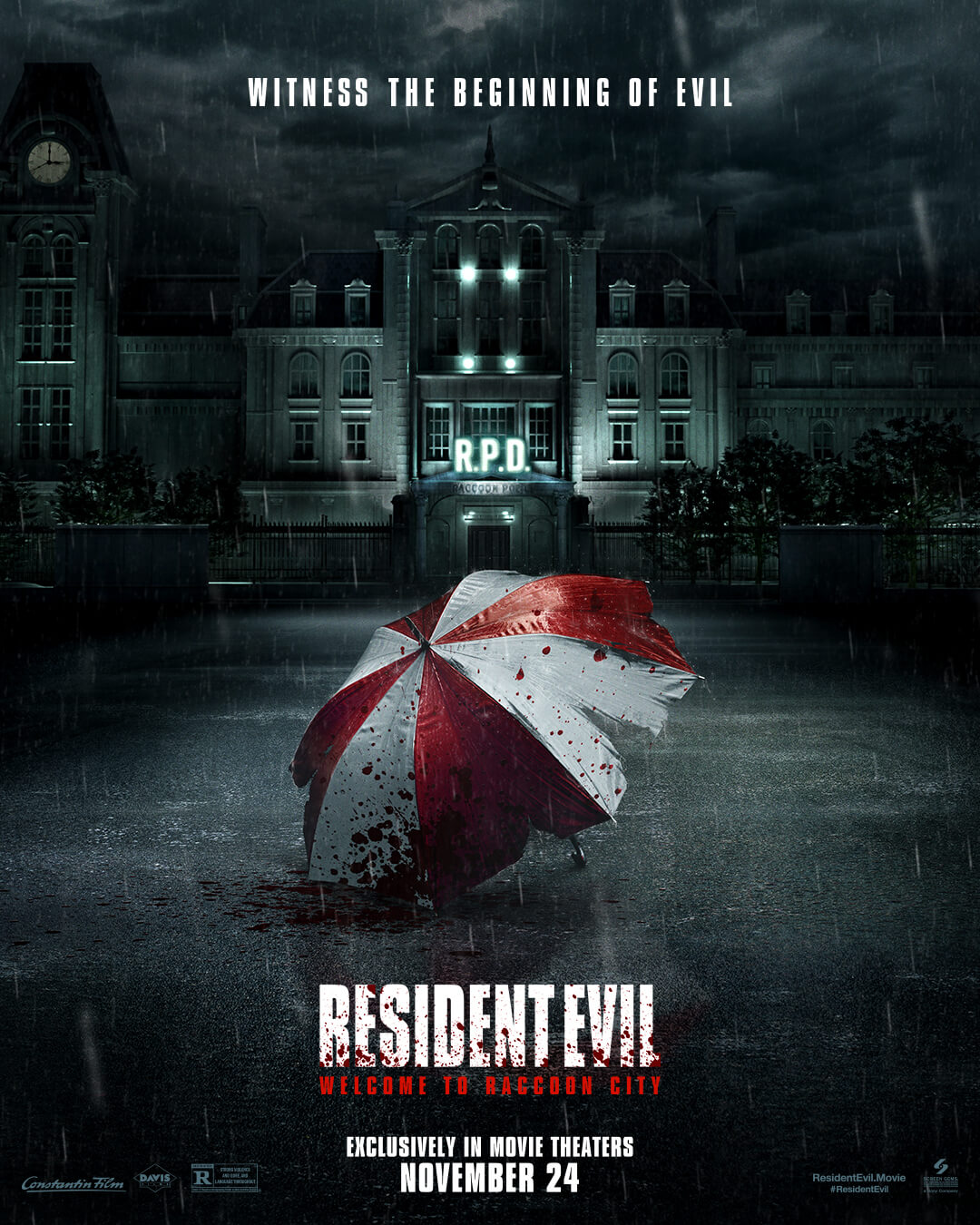
Johannes Roberts | RESIDENT EVIL: WELCOME TO RACCOON CITY

johannes resident evil

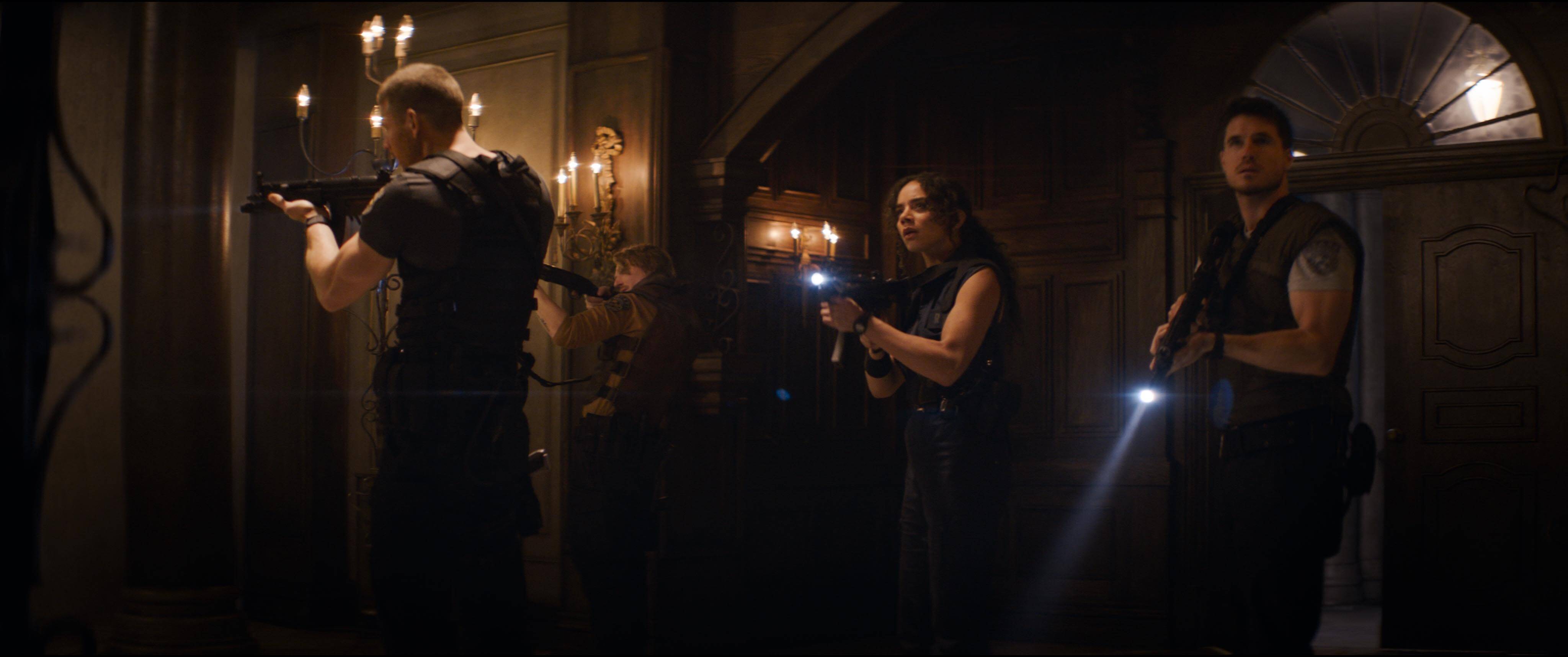
After the dust settled on six movies of zombie action mayhem in 2016, the time arrived for a fresh cinematic approach to begin. Honouring the legacy of the games with iconic throwback scenes, detailed costume design and sets, this new era comes under the title of Resident Evil: Welcome to Raccoon City! STARBURST talks with director and writer Johannes Roberts (47 Meters Down, The Strangers: Prey at Night) to uncover how he approached merging the first two instalments into one story, his lifelong love for the games, and just what it was like to create within those legendary Resident Evil locations!

STARBURST: How did the initial idea come together for this movie, and how did you also want to make it different to anything Resident Evil fans have witnessed before?

Johannes Roberts: The real key for this was just to go back to the games. I’m a huge gamer. We wanted to go back to the first and second games and do a horror movie. It was a completely different thing, it was just starting over again, and telling a scary story. Just falling in love with the games once more.

We must ask, were you a fan of the Resident Evil games before you got involved with this movie, and if so, what memories do you have from playing the games?

Yeah, I started playing the games as a student. I really got in to them, in terms of they were really in love with the same kind of horror movies that I was in love with. I really responded, and connected with them. I just had a lifelong affiliation and attachment to the games, and then when the reboot of the second game came out, it just kind of blew my mind. That game was so important to me.

When you first started working on the screenplay, was there a particular moment where you realised that what you were working on was going to look really awesome on the big screen?

There were certain things that were hugely exciting, like writing the police station and the mansion. Knowing that we were going to build those, was very exciting. Then there were scenes like the gun flash fire sequence in the movie where it was like “That’s going to be awesome!” There was quite a lot of fun zombie action moments. I was like “This is going to be great!”

What were the challenges behind merging the first two games into one film, and what were your influences for achieving this approach?

It was pretty tricky, because there are so many characters, and it’s quite a big ensemble piece. Obviously, they are all canon characters. So it was a little tricky to give everybody their own space, airtime, and individuality. But I sort of really used Assault on Precinct 13 as a benchmark, and approached it almost like a Western, with all of the characters coming together. It just felt right.

You see a lot of classic Resident Evil shots in the trailer alone, the biggest one maybe being the zombie turning its head right from the start of Resident Evil 1! Was that one of the main goals for the movie, to have a more fan-service approach, especially for the fans of the Resident Evil games?

It was! I’m a big fan, so I very much wanted these moments in there, and I was having a huge amount of fun putting them in there. So I really hoped people would dig it.

The Resident Evil games are known for its scary as hell gameplay. When you open a door to a room, you can just hear a zombie in the distance, out of sight. It’s disturbing. As a director who has worked in horror before, how did you go about capturing some of that feeling from the games within the movie?

I really tried to lean into that open the door, who knows what’s in there feeling. We went quite retro with the sound design as well. So you would just hear zombies in the distance. We really tried to play with what’s off screen.

You’ve created amazing versions of the police station and the mansion! How did you go about bringing those detailed sets to life, and for you as a director what was it like to just be really submerged in those classic Resident Evil locations?

It was a lot of fun as a geek, to walk onto the sets of the game. We built them from the blueprints that we got from Capcom, and we worked hand in hand with them to make this as faithful as possible. We really tried to match the games perfectly at times. It’s a proper nerd’s delight.


Capcom is obviously top secret, can you elaborate on what were they like to collaborate with?

They were really fun. It’s so weird, I guess I just assumed that they’d be like Umbrella – this faceless corporation. In fact, they’re nerds, geeks, and they just got super excited. It was really fun.

Each character within the Resident Evil realm is legendary, and each one could probably have their own movie. How did you go about displaying the legacy of so many classic characters within the movie?

It’s tricky, I tried to tell a small-town story of this dying American town. Setting the iconic characters within that, in an almost Deer Hunter way. You had Jill [Hannah John-Kamen], Wesker [Tom Hopper], and Chris [Robbie Amell] as these small-town people, who’d never left home. Then you’ve got Claire [Kaya Scodelario] coming into town, a drifter. It was fun, and like I said it was tricky to give them their own airspace. However, it was a lot of fun to try to bring them to life.

As well as the sets, the actual costume design overall has a video game style to it! Can you tell us about how you personally wanted the characters to look and come across on-screen?

I tried to keep it faithful to the games, but I tried not to make it too cartoony. It was a difficult balance to achieve. I wanted to make them feel real, but also it’s a hyper real story.

Also, leading on from that, were there any other elements from the games that you were really excited to bring to the big-screen, which we maybe haven’t discussed just yet?

I really enjoyed bringing the monsters to the screen. Having Lisa Trevor [Marina Mazepa] for the first time in one of the movies. Having the Licker, and all of the other creatures. It was fun to have some of the side characters like Chief Irons [Donal Logue] and William Birkin [Neal McDonough], and to really go and have fun with them. To let them chew the scenery a bit.

You’ve worked on some really cool horrors in the past. From The Strangers: Prey at Night to 47 Meters Down. Was there anything you learnt from putting those movies together that you applied to Resident Evil?

Just building atmosphere. Keeping it dark and scary. I really wanted to embrace the communal horror experience of sitting in a dark room with a group of people, who are jumping and screaming. It was all about having a fun roller coaster ride.

Tough question time. As you yourself are a fan of the games, and as we’ve said, some of the shots are clearly pulled right out of the games, what was your favourite moment that you got to put into this movie, and why?

I loved doing the turnaround zombie, because it was just so iconic. Oddly the most awe-struck I was when making this was just standing on the police station set, just being there. I was like “Wow, this is the game!” It was really fun. So yeah, some of those moments were just really cool. I felt like this was exactly what I wanted to achieve.

Finally, why should STARBURST readers check out Resident Evil: Welcome to Raccoon City?

It’s just a great fun ride, a scary ride that’s just so totally in love with the games and John Carpenter movies. It’s a proper old school ‘70s horror.

Resident Evil: Welcome to Raccoon City is in cinemas from December 3rd.


johannes resident evil

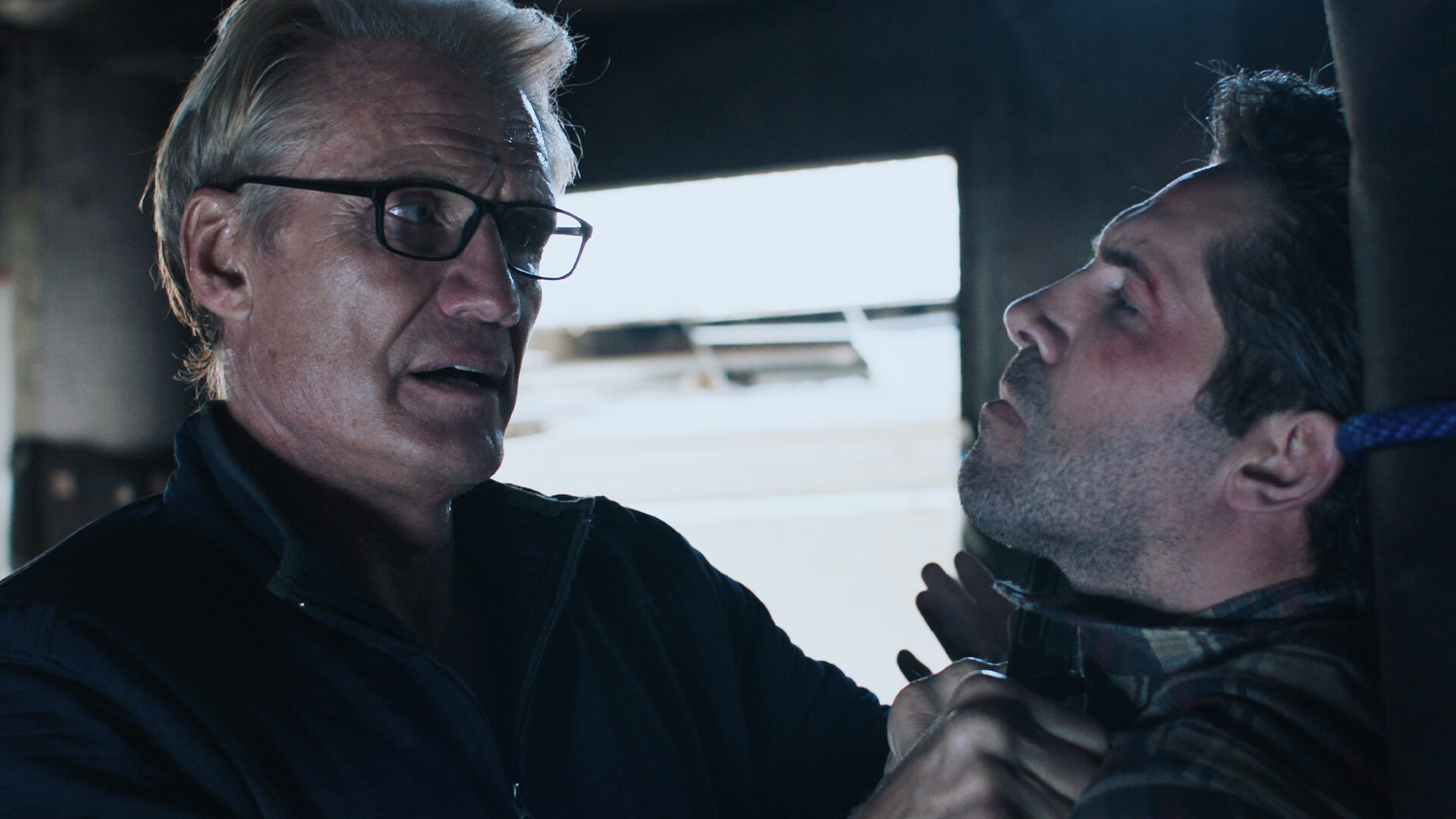
Dolph Lundgren & Scott Adkins | CASTLE FALLS

scott dolph castle falls

STARBURST had the absolute pleasure of speaking with two action screen legends, who both can’t stop producing films. We spoke with them about their recent collaboration Castle Falls, their work ethic and, of course, Rocky IV’s Sico the Robot!

STARBURST:  Both of you are very hardworking, and speeding up if anything! You have a combined 10 movies coming out in 2022. How do you do it, is it just work ethic?

Scott Adkins: Greedy!

Dolph Lundgren: Divorce! [Laughs]… well It’s a combination of things

SA: I love to work, man. I’ve been in the business for 20 years. For the first 10 years, it was really hard to get a job and I spent months not working. So when things kicked off for me, I just want to keep working. I love my job.

You guys have worked together a lot, this is your fourth film together. Watching Castle Falls, there is a bromance going on. Do you enjoy working together?

DL: Ummm no, we love working together

SA: [Laughs] He had to think about it…

DL: Part of the whole concept is, I knew Scott was easy to work with, and he’s a great fighter and he can help with the fights. I had such a tough schedule, 17 days to do a feature in Alabama. Some of that comes across on screen, I like the fact we don’t start out as friends, we start as enemies, so there is an arc to it.


Did you also direct the fight scenes as well?

DL: Scott handled most of the fight scenes and I supervised. Scott choreographed with his operator and edited the fight scenes as well, so he was in there. 

Did you have any influences as a director, there was a little Steven Soderbergh feel, with the split scenes, and even some Tarantino, with people’s names appearing on screen?

DL: No, you’re right, there are some directors I really like, and you pick things up from films you like. I’m trying to do character-driven action movies now, like this one. I guess Clint Eastwood is someone I looked up to, he keeps things simple and his movies are entertaining and fun, but with a lot of depth. He manages to do both. For instance in Unforgiven when he rides into town and Morgan Freeman is dead, and it hits you, fuck! This is serious shit! He walks into the bar and goes; ‘who’s the fella that owns this shit hole?’ And then he blows away the bartender and you have to smile at that. That’s the one thing I want to do next time, mix the action and drama. It’s difficult. My favourite part is working with the actors and their characters.

What were your influences for this film, it has some similarities with the French parkour film District 13, in terms of fighting on a building, about to be blown up?

SA: I’ve seen that film but I don’t think that influenced it. The first thing that I thought of when I read the script was Trespass made in the ‘90s. There are a lot of influences but wrapped up in a different way.

DL: As a director, you also try things out. I’m not directing Aquaman for Warner Brothers, where they expect to make a billion dollars or you’ve fucked it up. So I can use split-screen, try things out, no one is going to argue. There is a certain freedom to making these kinds of movies. It’s not fun to do Aquaman, it’s interesting but there’s a lot of pressure from above. I don’t know how James Wan [Aquaman’s director] does it.

Is it right you have a fifth film coming out together? [Scott and Dolph looked confused] Section Eight?

SA: Oh yeah! [Smiles] forgot about that

DL: I filmed my section separately so I didn’t know about it. Who do you play Scott?

SA: [Laughs] I am… I can’t think at the moment. The assassin at the end [covering his mouth, as he doesn’t want to give away the ending].

[The film about a former soldier being recruited by a shadowy government agency, is out next year]

Is it right Scott, that you are going to be in John Wick 4?

SA: Yes, filmed that in Berlin last summer. I’m a big fan of all the John Wick movies and Chad Stahelski, the director. I first met him on The Expendables 2 actually, those films are great, I am a big fan, so it’s a great honour to be involved.

Well, we can’t wait for that one. Dolph, the most important question for you is – how did you feel about Paulie’s robot being cut out of the Rocky IV director’s cut? [The odd robot butler known as Sico, was jettisoned from Stallone’s recent new cut]

DL: Oh shit, I thought he was going to cut out Brigitte Nielsen, but he kept her in! [Eruption of laughter from all involved]

Castle Falls will be available in cinemas, on-demand, and digital on December 3 rd in the US  and December 20th for digital in the UK, as well as Blu-ray/DVD on January 10th. 

TJ Klune – UNDER THE WHISPERING DOOR

TJ KLUNE is a Lambda Literary Award-winning author (Into This River I Drown). His novels include the Green Creek series, The House on the Cerulean Sea and The Exrtaordinaries. We caught up with him to talk about his latest book, Under the Whispering Door, which is out now.

How would you pitch Under the Whispering Door to a visitor from another world?

Under the Whispering Door is about what it means to be human, the good and the bad, the ugly and the beautiful. We are a messy species who sometimes needs direction in order for us to do the right thing.

And what’s the pitch for the rest of us?

Under the Whispering Door is a comedy about grief. It follows a not-so very nice man named Wallace, who is a high-powered attorney with everything at his fingertips. And then he dies. But it’s not the ending that he expects, but the beginning of something else entirely. At his poorly-attended funeral, he meets a woman who calls herself a Reaper. She takes him to a teashop run by a man named Hugo, who also happens to be a Ferryman, the man whose job it is to help souls cross over. But Wallace—being Wallace—decides he’s not ready to see what comes next, and decides to stay in the tea shop and learn how to become a better person.

How different is it from your other work?

While it does have my sense of humor and my love of the found family trope, this novel is different for me given how deeply personal it is. Grief is something everyone experiences at one point or another, but we all go through the process differently. I wanted to find a universal approach to talk about mortality and what awaits us all.

Why do we keep telling stories about the underworld and the passage to it?

I think it’s because of how unknown it is. No one—at least no one living—can say with any certainty what happens when we close our eyes for the last time. As long as there has been life, there has been death. Every culture on earth has their own beliefs and customs when it comes to death and dying, and I think we continue to tell stories about it because it gives us a sense of hope and calm that we might not otherwise feel. People tend to fear what they don’t understand, and death is the great unknown.

What character is the most fun to write?

Desdemona Tripplethorne. Though her page time is limited, having her interact with the main core characters was a delight. I love how full of herself she is, and how she thinks she understands the concept of death. She uses it to her advantage with her seances, and it was gratifying to see her get her comeuppance through Wallace and Nelson.

Then, toward the end of the novel, we get to see a different side of Desdemona, brief though it may be. Like with the other characters, there’s more to Desdemona than how she presents herself.

Which character seriously needs to have a word with themselves?

That’s easy—the main character, Wallace. He is an absolute jerk at the start of the novel, and there were a couple of times when even I wanted to reach into the pages and slap him upside the back of his head. Though he does go through a redemption arc, those first few chapters show what kind of an awful man he was.

What would you say the biggest influence on this book is?

Dicken’s A Christmas Carol. Everyone knows Scrooge, and how he’s shown how terrible he is by the three spirits who visit him. At the end, a switch flips in him, and suddenly, he becomes a good person. While Dicken’s is a master for a reason, I still was struck by the thought that I wished we could see Scrooge putting in the work to becoming a better person, rather than just have an about-face at the end of the story. That was my jumping off point—to have a man like Scrooge die, and not have the power to change any part of the life he led.

Is the genre world more accessible these days?

I think so, but I believe we still have work ahead of us. More and more marginalized voices are being lifted up these days—and rightly so—but adult literature still has a ways to go before it matches the level of inclusivity and diversity found in Young Adult and Middle Grade. We need to give these creators the exact same chance that others have typically gotten in the past.

Why do we still tell ghost stories?

It goes back to the idea of the unknown, and what we don’t understand. I think we’re so hardwired to believe that this can’t be our only go around in this existence, so we try and find ways for humanity to continue on, even when our hearts stop. Ghost stories—both spooky and not—are tales for us to try and come to terms with mortality.

Which writers inspire you?

Diana Wynn Jones, particularly her novel Howl’s Moving Castle. Terry Pratchett. Stephen King. Neil Gaiman. Becky Chambers. Stephen Graham Jones. Jack Townsend. Robert McCammon. Wilson Rawls.

What tropes do you personally avoid the most?

Anything having to do with queer suffering, such as “bury your gays” or “fridging/hiding lesbians”. Though I think there is room for all kinds of stories, I also tend to avoid queer trauma as a plot point or story motivator. I also am of the mind that homophobia doesn’t need to play a part in every story involving queer characters. We get it—homophobic people exist. They don’t need to have a role in every book where queer people are present.

How would you describe your process?

Chaotic, but in such a way that I feel comfortable. I usually have outlines for every story I write that are thousands of words long in their own right. While outlines provide me with a roadmap to follow, I also go a bit overboard with them by including things that will never make it into the book.

For example, for most major characters, I write complete backgrounds on them, including little details such as what their favorite food is, or what kind of movies they like to watch or what kind of books they like to read. Stuff like this might not make it into the book, but I write it out anyway because it helps me to embody the characters better. If I know everything I can about them, it helps me to craft their arc in a way that feels organic. It might be a bit more work in the end, but it ensures I’m telling the story to the best of my ability.

Kester Grant – COURT OF MIRACLES

Kester Grant is a British fantasy writer whose new book, The Court of Miracles, has been very well received by fans and critics. We caught up with her to find out more about this debut novel, which can be ordered from here.

So what is Court of Miracles about? How would you describe it to a beloved elderly relative?

The Court of Miracles is a reimagining of Victor Hugo’s Les Misérables, and a fierce feminist alternate historical adventure romp. The story centers on young cat burglar Eponine “Nina” Thénardier’s desperate quest to save her sister from a vicious human trafficker. She must navigate the violent criminal underworld of The Miracle Court; governed by Guild Lords who live by an unforgiving moral code. It’s set between the dangerous streets of Paris- with famine, disease, and growing rebellion- and the glittering royal court of King Louis XVI.

My favourite review said that it was like Scott Lynch and Leigh Bardugo teamed up to rewrite Les Mis.

Or, if I was explaining it to my grandmother; it’s that musical in which everyone dies, but with more sisterhood and crime, and none of that awful Marius Pontmercy.

Why Les Misérable?

A childhood obsession with the book, musical and films…. 36 years of having to relive Eponine taking a bullet for that useless waste of space that is Marius Pontmercy. One day, I just snapped.

What character is the most fun to write?

Enjolras St Juste: he’s so all-consumingly obsessed with revolution that he is a joy to write.

Although there’s something quite freeing in writing the main villain; Kaplan “The Tiger” Lord of the Guild of Flesh. Is it weird to enjoy writing the bad guy? Interestingly, I don’t like writing Thénardier, the other main baddie, so perhaps it’s down to the Tiger having a compellingly tragic backstory (not that it condones any of his actions), compared to Thénardier who is just vile for no reason whatsoever…

Which character seriously needs to have word with themselves?

Sadly, the characters that would most benefit from a talking-to would probably congratulate themselves on their own wickedness.

That said, I think the Lords of the Miracle Court need someone to point out that allowing a human trafficker to deceive and betray his way into their fold is not in accordance with the law that governs their criminal underworld. Eponine is that challenging voice.

If Court of Miracles had to be set in another world, what world would you choose? 

I think The Court of Miracles would do quite well as a huge space opera with guilds the size of planets. Or as an imperial court intrigue in the Wuxiq vein.

How would it change the story?

The space opera setting would scale the story upwards allowing for a more multi-planetary or, should I say, galaxy level of story. Although that would have required many more side plots and characters and I was already pushing the upper limit.

Is the genre world more accessible these days?

I do think the genre world is more accessible these days, thanks to successful storytelling in the realms of film and television; Lord of the Rings, Harry Potter, Star Wars, Game of Thrones… Non-genre readers have come to realize that they are attracted to the universality of themes in genre stories. A good example is the rollicking success of The Mandalorian.

How does magic change a society?

I purposefully employed tropes and techniques common to fantasy world-building. My aim was to create a world that is rich, detailed, lush, and feels a little strange. But there are no actual magical or supernatural elements in the Court Miracles, aside from the fact that it is an alternate history branching off after a failed French revolution.

Which writers inspire you?

One of my biggest inspirations is the Discworld novels from my hero, Terry Pratchett. Although the court of miracles also pulls from a lot of classical sources, including Victor Hugo’s other great work Notre Dame de Paris and Kipling’s Jungle Book.

What tropes do you personally avoid the most?

The Court of Miracles provided an opportunity to surgically remove the parts of Les Mis that most annoy me. For instance, the love triangle between Eponine, Cosette, and Marius. And the fact that most female characters in the story have little agency, other than inspiring the main male protagonists. My Eponine and Cosette are far too busy trying to rescue each other from very bad people with very bad intentions to sit around squabbling over a boy they’ve just met.

How would you describe your process?

The Court of Miracles was my debut novel. The idea came to me in a flash and the world started to build itself instantly. My ideas tend to multiply and expand out into series, sequels, prequels, and side stories before I’ve even set pen to paper. I have very bad world-builders disease.

As a historical novel, it involved a lot of research which, while fun, can become a deep rabbit hole. At some point, you need to stop yourself and just get on with the writing.

I write like a screenwriter- all action and dialogue with zero description- probably because I hate reading descriptions. I forced myself to do a descriptive pass in which I wrangled the fewest words possible to build a backdrop to the scene. I then did a last pass for world-building in which I delved into the habits, traditions and language of the Miracle Court to build a more layered, authentic feel.

The Court of Miracles by Kester Grant (HarperCollins) was shortlisted for the 2021 Goldsboro Books Glass Bell Award.