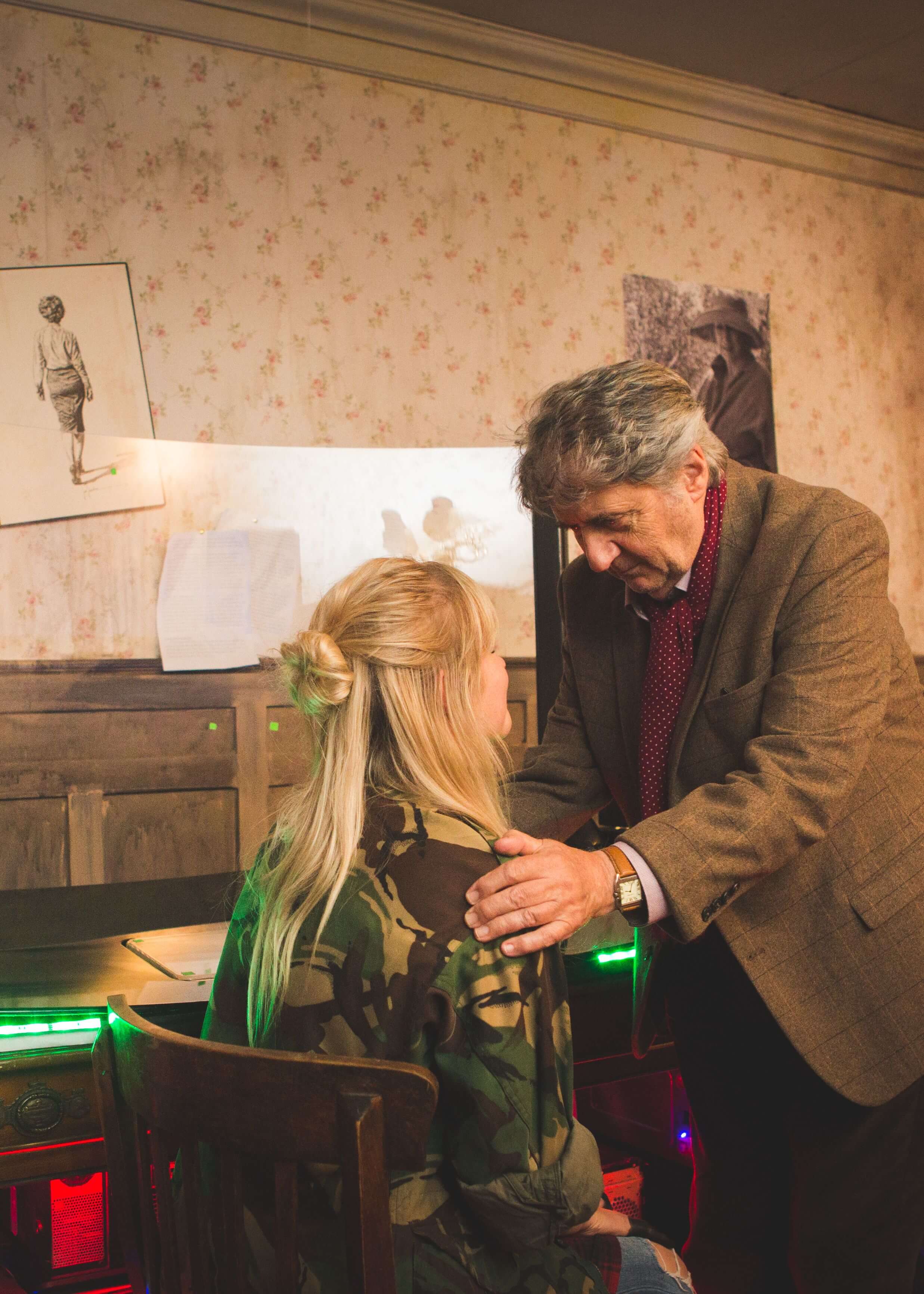
A Conversation with Samantha Shannon & London Shah

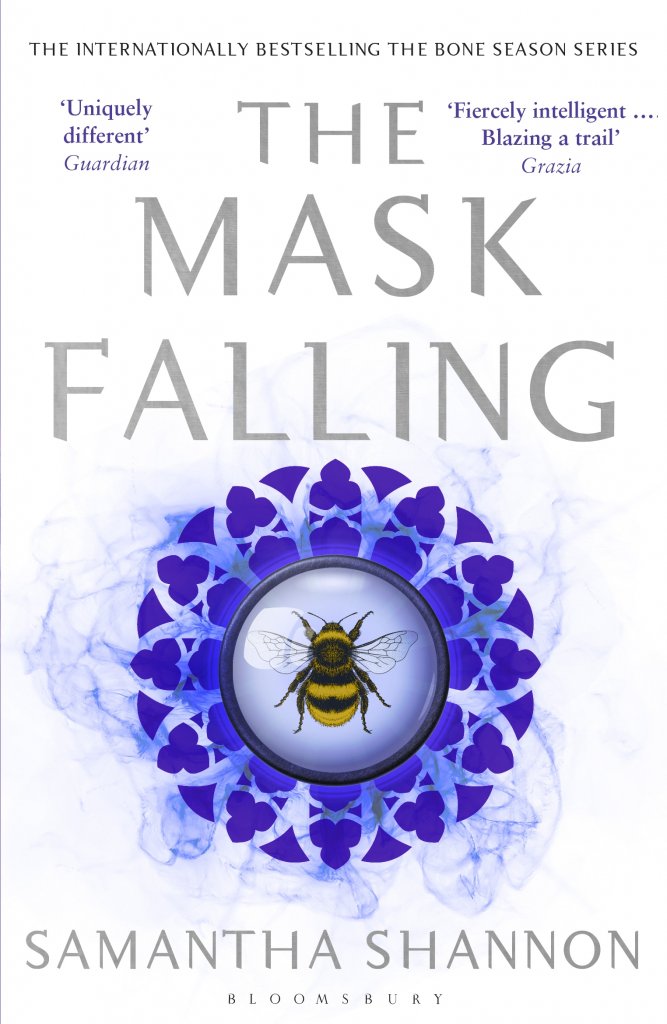
Samantha Shannon is best known for her critically acclaimed novel The Priory of the Orange Tree. Her new book, The Mask Falling  is out now  via  Bloomsbury Publishing.  London Shah is the creative force responsible for the  Light the Abyss duology, out now via Little Brown Young Readers.

The two caught up with each to discuss the heady world of writing (and also talk a bit about their new books), Starburst has been lucky enough to present the chat for your Friday reading pleasure. 


Samantha: London, it’s lovely to be able to chat about your wonderful Light the Abyss duology. To begin, could you tell everyone what the series is about?

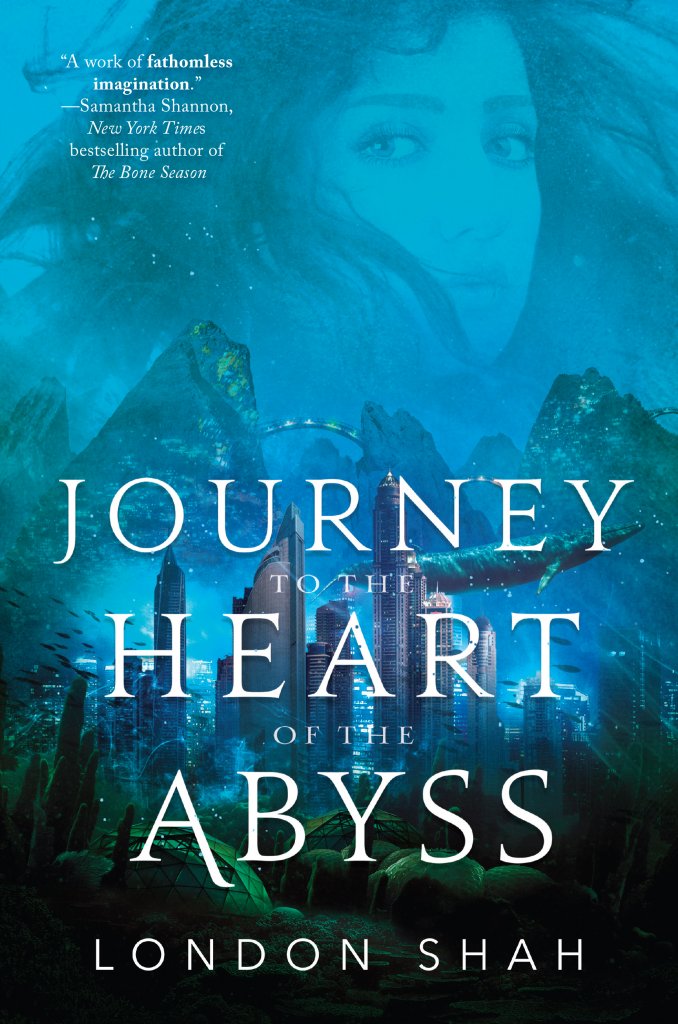
London: Thanks, Samantha, I’m so excited to be chatting with you like this! The Light the Abyss series began with The Light at the Bottom of the World and concluded recently with Journey to the Heart of the Abyss. It’s a Young Adult science fiction story set in the year 2099, when the world is submerged a thousand feet beneath the ocean’s surface.

In Book 1, our protagonist, sixteen-year-old Leyla McQueen, is on a quest to find her missing father. When she’s picked to participate in the prestigious annual London Submersible Marathon, she spies her chance to help him—the Prime Minister grants the champion their heart’s desire. Except the marathon doesn’t go to plan, and soon Leyla is forced to leave the safety of London and venture out into wilder waters for the first time in her life. As she navigates her own submarine through the unfathomable depths of Britain, battling both the oppressive authorities and the dangers of the deep, she discovers a world drowning in lies…


Samantha: I almost forgot how much happened in Light—it’s such a rollercoaster. How about the second book?

London: Abyss continues Leyla’s journey, taking her deeper and farther in every way, and all too soon her life is shockingly altered forever. Through twists and turns, she finally learns the full startling and devastating truth—about herself, her past, the boy who’s won her heart, and about their world. And she discovers exactly who and what the real threat to everyone is.

Samantha: The story is very well-executed; I could rarely predict what would happen next. Even more impressive in that it’s your debut series. What first inspired you to write about a flooded world?

London: It truly means so much to me that you think so, thank you. The beauty and surrealism of the setting are definitely what inspired me. I was fascinated—obsessed, actually: How might our world look if we all lived deep underwater? If our current world was very much still recognisable (as opposed to some unfamiliar fantasy setting) but we now existed on the seabed… City lights, submersibles zooming past, the shadows of submarines hovering way above, sea creatures drifting by and slipping in and out of ruins, and the rippled glow from homes that marked our existence. Imagine! I first started fantasising about such a world in my early teens.
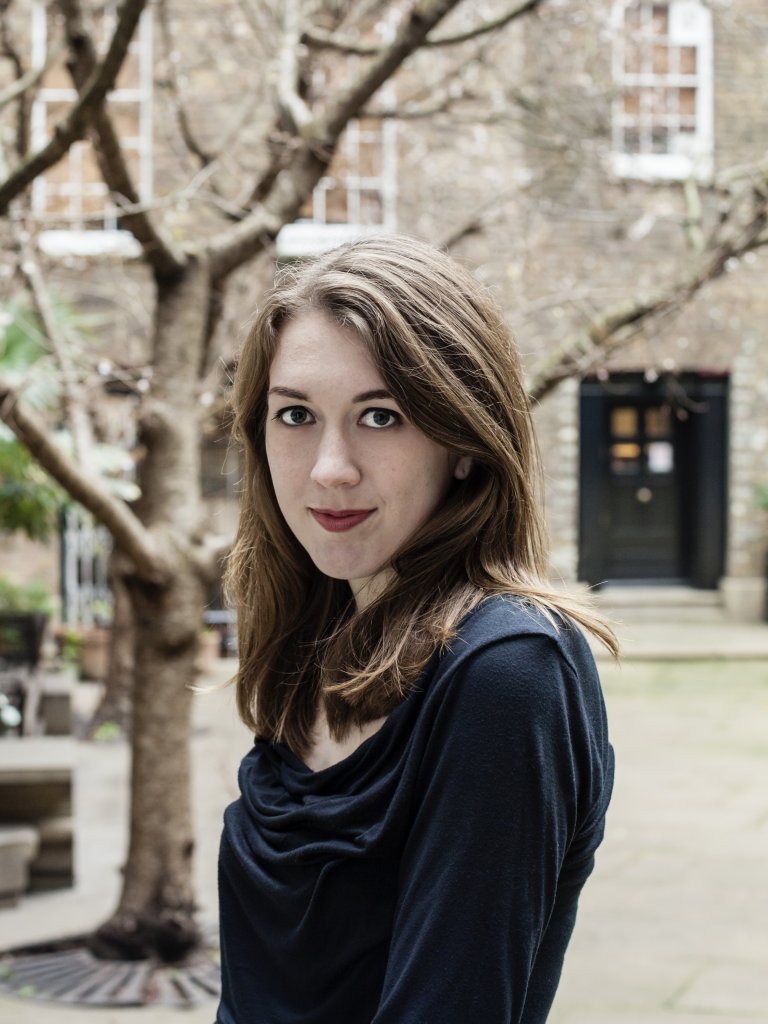
Samantha Shannon

Samantha: I’m not surprised the concept has stayed with you for years. Even as someone with a fear of the sea, I found it captivating.

London: That’s amazing; it’s always very encouraging to hear that from folk who have a fear of the sea, so thank you. I’m deeply honoured you’re a Light the Abyss fan. Yes, the sight of anything underwater, whether shipwreck, a person, ruins, or even boring infrastructure—it really didn’t matter what—always stirred such wonder and curiosity and would send me drifting off into my fantasy every time. I never envisioned any watertight domes; I wanted to still feel at home in my submerged world, a society as aesthetically close as possible to how we live here and now, except we were deep underwater. I’d especially see this submerged existence when looking out of a window. In all the years between that initial inspiration and my finally deciding to try and bring the vision in my head to life, the dream never waned, growing only more urgent and vivid with time.

Samantha: I love it when a setting is so real in your imagination that you can almost throw a mental switch and transpose it over the real world. I often get that when I’m walking through a city; I transfigure it into a Bone Season-style citadel in my head, and visualise it like a second layer of reality.

London: Yes, exactly that. And visualising any city Bone Season-style appears such a thrilling notion; I can only imagine how deeply exciting that experience always is for you! One of the things that struck me instantly as I began reading the series is that it has the most elaborate worldbuilding I’ve ever read. I’d really love to know when in the process the various layers came to you. The complexity of each one is inspiring—the level of creativity involved, and the attention to their construction: Scion London, the clairvoyants (all the different types and their abilities!), the many varied histories, your linguistical choices, and so on. All these are mind-bogglingly detailed (and I haven’t even touched on the beloved characters!) But then you also create a powerful other-worldly race in the Rephaim, and plant them in a secret Oxford…The skill involved with orchestrating it all blows my mind. As a reader, it’s incredibly exciting to stumble upon such an original, rich, and complex world. So please, enlighten me: Did you create each of these layers before drafting a single word, or did any of them come to you as you wrote? (If it’s the latter then you’re just not even human…)

Samantha: I’m so happy you’re a Bone Season fan. I did have most of the rough layers in my head from an early stage. I’m fortunate to have an excellent memory when it comes to my creations, so I don’t find it difficult to hold big, intricate worlds in my head. That allows me to stratify without losing track. (The Bone Season could probably have been two separate books, but I blended two large ideas into one, which is part of why it has so many delicate moving parts.) Having said that, I didn’t have every detail perfected from the beginning, and my ideas for the series have changed and developed over the ten years I’ve been working on it so far. To use a macabre analogy: I try to have the skeleton laid out from the beginning, but the flesh gathers on the bone as I work. I’ve been enriching each part of the Bone Season universe as I go, and my research often sparks fresh ideas. Scion Paris only took a firm shape when I started work on The Mask Falling, for example, as I was doing closer research on the city.

London: That’s amazing. And our processes are similar! I had the series skeleton, but by the time it came to drafting Abyss, I’d changed and developed several of my initial ideas for how I’d flesh it out. I remain in awe at how you manage to carry it all in your head, wow.

Samantha: On the subject of research, you clearly put a great deal of care into yours. The science of your books feels watertight (there I go with the puns again), and you often share intriguing facts about the ocean. How did you go about nailing down the details of a society forced deep underwater?

London: Coming from yourself, that’s a huge compliment, thank you. The Virgo in me meant approaching the research methodically. I started at the very beginning, focussing on here and now, and went through everything chronologically. I worked hard to understand, and to try and predict, how we might approach the sudden news of impending worldwide flooding; a disaster so catastrophic it would leave any survivors submerged deep beneath the waves. The challenges posed by such a drastically different environment would be pervasive and every aspect of society would need examining.

Before embarking upon any research, I thought long and hard about our current world and all the many ways—big and small—in which things would be done differently if it were water surrounding us instead of air. And then of course it’s one thing to reimagine the world, but if it hadn’t always been like that then there is even more to reckon with. I wondered if we could ever let go of the world as we currently knew it, and I had to consider how such a challenge might affect our psyche. And so my underwater world’s relationship with the pre-floods world required careful examination.
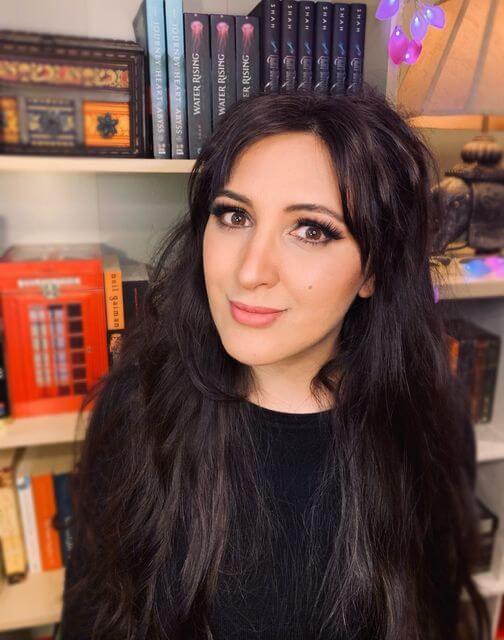
London Shah

Samantha: Of course. This is one of many reasons I admire sci-fi authors—you’re working within the realm of possibility, trying to predict how scientifically conceivable events would play out, unlike me, in my safe fantasy bubble. That must come with a degree of expectation that you’ll be accurate and precise, to the best of your ability. Theoretically, after all, the events of The Light at the Bottom of the World could happen.

London: Yes, exactly. And of course there’s no precedent for transformation on such a scale for humanity, so I had to seriously consider how such change could potentially impact our wellbeing. I came to the conclusion it wouldn’t be improbable for us to collectively suffer from some sort of malaise. The “seasickness” in my story-world is born specifically out of the people’s relationship to the submerged environment they’ve been thrust into. How would we adapt to this strange and overwhelming new world we found ourselves in? Would we, could we, change? And if not, how might our inability to move on alter our society at large? Suddenly that long-standing utopic underwater vision was becoming more real by the day, and as beautiful and thrilling as it was, it brought with it endless questions—so much to consider before I ever got around to plot. I read books on oceanography, spent countless hours on scientific websites and forums that discussed and predicted future technologies, watched as many deep-sea programmes as possible, chatted with marine biologists and oceanographers, and discussed specific scientific ideas with research scientists, and companies designing and manufacturing deep-sea vehicles. I even managed to persuade the CEO of a leading submersibles manufacturer to provide me with a mini tutorial via Skype; we covered all the basics of driving a submersible!

Samantha: That’s amazing.

London: I know, I got so lucky! And hopefully one day I’ll get to put those driving instructions to use for real; it’d be one of my earliest and long-standing dreams come true. I’m sure you’d agree, Samantha, when I say reimagining the world can be deeply challenging. You need to remain passionate, open-minded, and patient throughout. There were days when I’d wonder if I’d ever get around to writing the actual story.

Samantha: Absolutely. At some point, you have to decide you’ve done enough initial preparation and at least make a start on the book, or you’ll end up writing an encyclopaedia before you ever get to the novel. You can always continue to strengthen the foundations as you go, which I find to be the most efficient approach. I can do targeted research to answer specific questions that crop up during the writing process, which stops me falling down a rabbit hole.

London: I really should hang these words near my desk. So very true, especially about it being the most efficient approach! Those pesky rabbit holes aside, every bit of research is worthwhile. It might not make it into the story—most of it doesn’t, in fact—but it will inform you, and a more informed you makes wiser choices for your world. And the end result, when you sit back and observe your fully functioning world, is so gratifying. The knowledge that no place like it existed until you created it. It’s such a thrilling feeling! And you know for certain then that all the hours, all the many months spent researching, were more than worth it.


Samantha: There really is nothing like that feeling—standing back, taking a deep breath, and seeing what you made.


London: It’s the best. And now, because your own level of research for worldbuilding stuns me, I must know, Samantha: What part of the process is your favourite? If I had to guess, I’d have difficulty choosing between you delving into the history behind something, or exploring the language elements for your story? By the way, I’m left perpetually in awe by just how much thought and effort you put into utilising language in your storyworld. I especially loved your reinterpretation of words! If you could pick only one, what aspect of research gives you the most pleasure?

Samantha: You know me well! You’re right: historical and linguistic research are two of my favourite stages of the process. I’d say I narrowly prefer historical research—for all my adventuring through the realms of language, I often feel out of my depth in the shadow of master linguists like Tolkien. But I do get a lot of joy from creating names. (For those who don’t know, in The Priory of the Orange Tree I generally build character and place names from fragments of archaic, hypothetical and extinct languages, e.g. Gothic and Old English.) I also enjoy threading elements of reality into a fantastical setting, working out why and how historical events and situations might have occurred in a mirror universe.

London: See, this is what I mean…The sheer dedication in your approach to every aspect of research is just mind-blowing. I’m always awed by how you navigate and master so many complex parts. And I agree about placing real-world details into a fantastical setting—analysing them from (usually) such a vastly different perspective is always so exciting.
Samantha: It is. Going back to your research for a moment—you often share intriguing facts about the ocean. What’s your favourite sea creature and why?

London: The blue whale. Everything about it blows my mind. I’d lose all sense if I were ever on a boat and spotted one. I can’t imagine a scenario where I’m blessed enough to be near one, and I stay onboard. I’m jumping in. Imagine if we could hold onto one and go explore the depths of the world like that…The biggest animal ever known to exist on Earth (larger even than any dinosaur!) It can grow up to 33 meters long and can weigh up to 200 tonnes. Its tongue alone weighs about as much as an elephant. Its heartbeat can be heard from up to 3 miles away. And no natural predators, wow. It’s also the loudest creature; blue whales can communicate with another whale up to 1000 miles away…Imagine shouting from London, UK and someone in Belgrade, Serbia can hear you! An animal that size, and yet it feeds simply on plankton?! Wow, they’re remarkable. Such elegant creatures, leading their peaceful, quiet, and modest lives. How blessed we are to live in a time when the planet carries such a species in its watery belly. It never fails to astound me that they’re here with us today.

Samantha: They are beautiful. I remember being awestruck by the model in the National History Museum when I was little.

London: Same! It took my breath away when I first saw it. I’d like to know what you’d choose if you could have any one of the animals featured in your books, as a pet? While your dragons are definitely spectacular, my favourite creature from your works is the splendid ichneumon from The Priory of the Orange Tree.

Samantha: I’d find it hard to choose between them—a dragon would be the equivalent of a private jet—but ichneumons are lovely. I’ve been able to spend more time with them in the prequel to Priory. They imprint on the first person to feed them solid food, and will follow their imprintee anywhere. They can be cuddly, like giant teddy bears, but will also defend their pack and their imprintee to the death. They’re also calm and blunt in a way that can be quite funny.

London: I want my own ichneumon more than ever now. And yes, a dragon would be a very powerful creature to have on your side!

Samantha: What’s your favourite thing about the underwater world you created in the duology?

London: Interesting question…I think what’s most heartening for me about the Light the Abyss world is the fact that despite the added factors of research and plot, and their respective challenging journeys, I managed to stay true to my original decades-old feelings about such an environment. How even when the ideas took a dystopian turn as I brought the underwater society to life, I remained faithful to my teen fantasy of a magical and surreal submerged world. There’s control and terror, pain and confusion, and yet the setting beats with my teen heart, with all the awe and endless curiosity I’ve always had for this world. I love how the emotional aspect of it is almost a time-capsule; it feels like a part of my teen self, complete with the ceaseless wonder and fearful anticipations of that age. Everything I’ve always been fascinated and terrified of when envisioning us existing in the deep, flowed into the story. I was finally able to fully realise those sensations, explore the visions that had forever stirred such strong reactions in me. And that’s my favourite thing about the world I’ve created—I feel I never lost what inspired me in the first place and compelled me all these years since to keep the dream alive.

Samantha: I love how passionate you are about it. It shines all the way through the story.

London: Thank you! If you asked me what I love most about the Bone Season series, I’d have a very hard time choosing. But I have, with great difficulty, narrowed it down. There’s the scope (the sheer layers you added will never fail to astound), Paige and Arcturus (my favourite pairing of any book ever), and this strange and yet utterly believable London you presented to us. And so I can’t not ask you the same question, specifically regarding the Bone Season series, please. Urban fantasy is the sub-genre that excites me the most, and everything in this series is endlessly thrilling to me. So I’m really intrigued: What’s your favourite thing about the entire Bone Season world?

Samantha: Thank you. I’ll start with the caveat that not all of the Bone Season world is of my own creation; often I’m drawing from real or former places, or from myth, so I can’t take credit for inventing them. In fact, the series is a broad reimagining of the Greek tale of Prometheus and Pandora, which is an element of it I love—I’m trying to use the myth in subtle ways a reader might not expect. Another part I’m looking forward to exploring in more depth is the Netherworld, which we haven’t seen in the books yet, and acts as both a cradle and a melting pot of human myth. I’m looking forward to exploring it—in Book 6, perhaps. But most of all I love developing the relationship between Paige and Arcturus. I’ve always been fascinated by the thought of a complex bond between an immortal and a mortal that unfolds over a few years, and what challenges, pitfalls and joys that would bring, especially when there is no solution to one of them having a fleeting life. I put a lot of thought into where their thoughts and actions would be similar or different, where they would butt heads and where they would find common ground. It’s such a privilege to be able to interrogate that subject, and follow these characters, across seven instalments.

London: Ooh, I’m really looking forward to a closer look at the Netherworld. It sounds riveting! My mind’s throwing up all kinds of scenarios now. Yay, I’m thrilled you picked dear Paige and Arcturus as your favourite part of the Bone Season world. What a fascinating and endearing pair. I’d follow them anywhere. Ack, anytime you speak about the series, it just makes me really impatient for the next instalment!

Samantha: I’ve loved following your characters, too—Leyla, Ari, Oscar, Hashem, and, of course, Jojo. Leyla is such a resilient and hopeful protagonist. When did she first come to you?

London: Leyla came to me the moment I realised I was going to write the story. Her nature was instant and nothing changed there during the entire process. However, Leyla was originally Lola! I hadn’t intended to write a South-Asian Muslim protagonist; it just never presented itself to me as an option and I’d always assumed my main character would be white and non-Muslim. It wasn’t until I joined the Twitter writing community and was exposed to the conversations around diversity that were taking place specifically in the YA sector of publishing, that I slowly began to realise I didn’t have to write a white main character. And still I took baby steps…Lola became Leyla and I naively decided she would be biracial—Pashtun and English. The hesitance to have her fully Pashtun came from what I’d always read myself, solely due to what was available on the shelves of bookshops and libraries—most especially in SFF. The UK publishing industry is leagues behind the US when it comes to accepting POC leads in SFF.

Samantha: Yes—the more strides the US side of the industry makes, the more glaring the UK’s failure to publish (and, crucially, support) authors of colour is shown to be in comparison. The statistics are appalling.

London: It’s definitely a depressing reality, one that’s impossible for a POC creator who writes SFF to ignore…Once I began following the conversations around diversifying our bookshelves to provide wider and more authentic representation, I went constantly back and forth in my head about whether to have my protagonist white, biracial, or fully ethnically Pashtun. I knew the story’s reception would be very different if I went with the latter, especially in the UK (and this was proven true during my querying process, when I had to turn to US agents), but knowing the chance to represent Pashtuns was there, I couldn’t not grab it. Somebody has to take those first tentative steps, and just as so many of my fellow writers have done with their own respective marginalised identities, I looked beyond how I suspected the story might be received by the industry, to what it would mean for teen readers. And that is how Lola became Leyla, an ethnically Pashtun teen girl born to Pashtun parents. Her nature never changed; that was cemented from her inception.
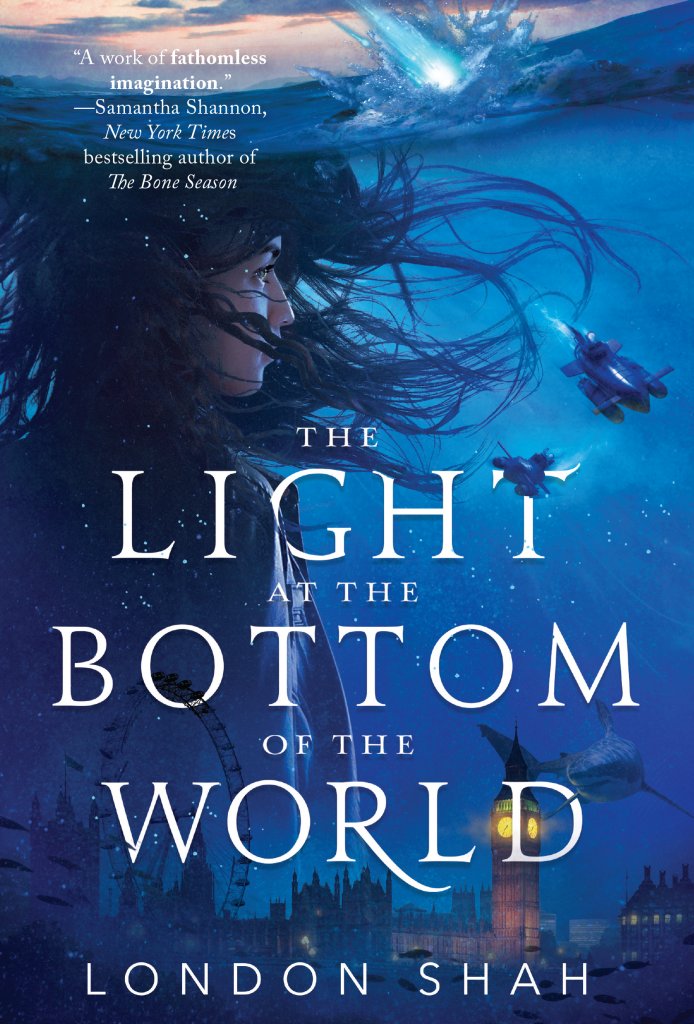
Samantha: I’m really glad you felt able to take that step, and it was wonderful that you dedicated The Light at the Bottom of the World to Pathan readers. I hope a UK publisher will pick the books up soon—they’re missing out on the brilliance of Leyla McQueen. What do you love most about her?

London: Thank you. There’s so much to adore about Leyla. I’m especially moved by how open she is to change, a trait all the more admirable considering her relatively sheltered upbringing. I don’t want to potentially spoil things for the reader, so I’ll just say the Leyla we meet at the beginning of the story is, in some respects, very different to who she is by the end of the series. Her determination to see things as they really are, and to allow those truths to change her outlook on life, enable her to grow and move forward. This is one of the things I love most about her.

Samantha: Me, too. Often in this genre you understandably see quite hardened, suspicious characters, but Leyla’s candour and optimism are refreshing qualities in a dystopian world.

London: I’m so happy you think so. Actually, I saw a lot of Leyla in Paige! (Similarly, I saw a lot of Ari—a main character in book one, for those who haven’t yet read it—in Arcturus.) It was a constant thought as I read the Bone Season books. Paige and Arcturus many times struck me as older and more mature versions of Leyla and Ari. Leyla and Paige are both selfless, grounded, vulnerable, strong, trusting to a fault, earnest, determined, difficult to keep down, and can’t walk away from a bad situation without trying to help. Arcturus and Ari are both sincere. They’re protective of the ones they love but not in an overbearing way, always remaining considerate, gentle, and fully accepting of them. So it’s no surprise I fell in love with both Paige and Arcturus. I’d love to know how Arcturus Mesarthim (my favourite fictional male ever) came to you? And whether anything major about him changed between his inception and the final version of book one?

Samantha: I agree! Paige does share all those qualities with Leyla—she tries to learn and grow from her experiences, too—and Ari is such a sweetheart. He’s exactly the sort of gentle male lead I strive to write, who doesn’t smother his love interest. There’s a bit of background to my passion for that sort of character, which also happens to answer your question. Arcturus went through an enormous change between inception and The Bone Season. I created the earliest version of him, a sort of proto-Arcturus, for my unpublished first novel, Aurora. The love interest in Aurora resembled the present Arcturus physically and shared a name with him, but he was jealous and possessive and angry, because when I was a teenager I’d absorbed the harmful idea that men were supposed to dominate women, and that jealousy in relationships was sexy. Essentially, I thought toxic masculinity was the ideal.

London: Ugh yes…I think we’ve all been there. We were sold the idea so extensively, and for so long, it’s no wonder it was acceptable to us, and felt completely normal.

Samantha: Yes, reading back on it is disquieting—it couldn’t be more at odds with who I am now, and I often worry about how close I might have come to a dangerous relationship. When I finally broke free of that mindset, I decided to rebuild Warden into a character who was the opposite of his original incarnation, almost a rebuke to him: gentle, solicitous, never possessive, allowing Paige to thrive, supporting her without clipping her wings. So I really appreciate Ari, on a personal level. I love gentle men in fiction.

London: Aw, you rescued him in a way (is it disturbing that I’m suddenly jealous?) And hard same: There’s nothing quite like kindness in a person, to endear us to them. Human tenderness is so beautiful to witness, and can be such a captivating trait in men.

Samantha: Who is your favourite secondary character in the series?

London: Oh, that has to be Leyla’s Navigator, Oscar Wilde, her submarine’s onboard AI. I’ve always loved the real Oscar Wilde, so he was the perfect choice for Navigator. Oscar’s character allowed me also to indulge in one of my favourite things—juxtaposing two very different aesthetics. His old-fashioned manner is wonderfully surreal and refreshing in a submarine at the bottom of the world in 2099. As per the real personality, his character is very loving but when irked we see a subtle snarky tone, and I had great fun with him. I can picture him on board the Kabul (Leyla’s submarine) as clearly as if the scene were before me now.

Samantha: He was such an unexpected addition to the story, and I agree that his style was a great counterweight to the cold, sleek aesthetic you often see in futuristic sci-fi. (I tried to do something similar with the clairvoyant leaders in London, giving them a bit of panache.) Of course, your series as a whole warns us against too much nostalgia—specifically the toxic variety, where the romanticisation of the past is used to stifle the present and future—but to me, Oscar is a sign that it is possible to remember our history without it keeping us from moving forward.

London: Yes, Leyla choosing a person from the past was a deliberate choice. There is nothing wrong with nostalgia, of course; it’s only when it becomes toxic that it poses a problem. Leyla remains very respectful of the past and those gone before her. She just refuses to lose herself trying to relive a bygone time. I really love her relationship with Oscar. In hindsight, I can see that I gave him a family. I wanted him to have a safe place; somewhere he was loved and respected. It pains me greatly how the real man was treated. There’s such a forlorn look about him in pictures, a dull sadness in his gaze, and it’s heart-breaking. I think that’s also why I gave my own Oscar as much agency as I could without taking from Leyla’s. I didn’t want an intelligence that merely took orders. The real man himself was never about that. Speaking of characters we adore, if you could spend the day with only one character from the Bone Season series, who would it be, and why?

Samantha: Oh, Arcturus, unquestionably. I had to fall in love with him myself so that Paige could. He’s the character who’s been in my head the longest, since I was fifteen. That’s half my life. I’d give anything to spend a day chatting about books or going to the theatre with him or listening to him play music. If I could pick one of yours, it would be Leyla­—I’d like some of her positivity!

London: Aw, she’d love you! And I’m afraid there’s just no conceivable scenario in which Arcturus is visiting you for the day and I don’t make a random—purely coincidental!—appearance. We must obey the laws of the universe.

Samantha: He’d be delighted to meet you. It seems appropriate for my final question to be about the big finale of Journey to the Heart of the Abyss, which was pulse-pounding. Do you enjoy writing action and battle scenes? (I really don’t, but you’re very good at it!)

London: Wow, thank you. And I’m always very surprised to hear you don’t enjoy creating your action scenes so much—they’re spectacular! That entire scrimmage scene in The Mime Order (reader, you might want to look away now if you haven’t yet read it!) when Paige fights various others to determine the next Underlord/Underqueen, really sparked. That’s one of my favourite action scenes ever; I felt every blow and was quite exhausted by the end!

Samantha: Thank you—that means a lot. I’m pleased with the result, but I hated every second of writing it.

London: Well, you’d never know! If I could pick only one type of scene I love most, I think it would be the quieter, more reflective ones. Those moments that require the organising and processing of emotions and facts, the subsequent journey to deeper understanding, and then determining the character’s next move as a result. But yes, I actually do enjoy writing the action and battle scenes due to their structural nature. The main sequences involved provide me with a clearer map for the scene.

Samantha: I can’t wait to read more of both kinds of scenes from you.

London: Thank you. As a huge fan of your work, I strongly feel the very best way to bring this chat to a close is by you honouring us all with a titbit regarding TBS5. The people demand a Samantha Shannon exclusive on the next instalment of the Bone Season series…Pleeeease.


Samantha: Ha, okay. I feel dreadful after that cliffhanger! I really can’t say much at this stage, but each Bone Season book is its own genre, and so far this is shaping up to be the roadtrip book. It’s the first book in the second arc of the series, larger in scope than any of the previous instalments. Paige travels further than she ever has, decides on her place in the war against Scion, and finds herself a long way out of her comfort zone. She’s also about to face her most formidable opponent yet. Some old friends return to the series at this point, along with some interesting new characters, and I’m inching closer to the big secrets at the heart of The Bone Season, which is very exciting.

London: Oh my gosh. A roadtrip…And larger in scope than the others (how’s that even possible?!) I now feel compelled to utter a little pre-emptive, “Poor Paige”. And big secrets…I’m so excited! Having a poor memory is sometimes a blessing, and I’m really looking forward to my re-read of books 1-4 in time for the fifth instalment. Thank you so much for sharing that with us. It’s been so great chatting with you, Samantha, and discussing the Light the Abyss series with you. I’ve enjoyed it tremendously. And of course, getting to delve a little deeper into your brilliant work—such a privilege. Please take care of Paige and Arcturus!

Samantha: I’ve loved this chat so much, too! Congratulations on such a groundbreaking and fascinating duology, London—you’ve worked so hard on it, and I can’t wait for more readers to join Leyla, Oscar and the rest of your intrepid heroes on the Kabul. The abyss is waiting . . .


Morgan Owen | THE GIRL WITH NO SOUL

The Girl With No Soul is Morgan Owen’s debut novel. We caught up with her to find out more. 


What is The Girl With No Soul about? How would you describe it to a beloved elderly relative?

Some of my beloved elderly relatives are already keen readers, so I told them that the book is set in a world where the soul can be seen and judged by the authority. It’s about a girl who is trying to piece herself back together after a traumatic event she can’t remember. She meets a young scholar who assists her with unravelling this mystery but of course, he has some secrets of his own.

Why Young Adult fiction?

When I hear a high concept synopsis that stops me in my tracks, it’s almost always YA these days. YA is very immersive and immediate. There’s also something about a coming-of-age story that is universally appealing too. I think it speaks to the part of us that’s still trying to find our place in the world, no matter how old we are. Also, teenagers are incredibly astute and ferocious readers so I aspire to impress them at all times.


Is this a horror story? What would make it a horror story?

I saw a tweet recently that said something like, horror can be divided into two categories: “oh no, not that guy again” and “the real monster was our psychological trauma”. The Girl With No Soul is somewhere in the latter category. Memories come to life as spectres and shadows move of their own accord. It’s about the horrible things that humans are capable of and the monsters that live in our heads, so there’s potential for a horror, but I wasn’t trying to frighten readers so much as make them question reality.


What character is the most fun to write?

My protagonist Iris is both the most painful and the most fun to write. When we first meet her, she’s a thief of sentimental treasures who lives vicariously through other people’s memories. She has no past, her identity is fragmented and she’s not in touch with her emotions, but when a big feeling hits her out of nowhere, she’s more than willing to lean into it. She’s experiencing things as if for the first time again and that’s really exciting to play around with.


Which character seriously needs to have word with themselves?
Evander, my love interest. He has some issues he’s not dealing with and he’s allowing them to define him. He’s lost in his own feelings and isn’t really seeing things clearly. But he’s doing his best! I like a love interest who has a complex inner world of their own going on. He definitely has that, though you could argue that he takes it a little bit too far.


If The Girl With No Soul had to be set in another world, what world would you choose?

The world of TGWNS uses psychometry or the ‘science of the soul’, but it’s viewed more like magic. The setting is gothic, almost steampunk, so I’d set it in a futuristic world instead. I’d see how this technology would’ve developed over time and what modern governments would do about those with extrasensory abilities. Maybe it would be a cyberpunk society, and the Order would be a corporation instead. Can’t go wrong with cyberpunk.


How would it change the story?

TGWNS already has some sci-fi elements like memory removal and advanced mass surveillance, so the heart of the story would be the same and it would play out in much the same fashion, but the media would be a more powerful force. We’d probably have people exposing their neighbours’ souls’ flaws online, instead of reporting them to the Inspectors.


Is the genre world more accessible these days?

I think so. There are lots of exciting, diverse voices emerging in science fiction and fantasy but there are still important conversations about accessibility to be had. There are still barriers to publication. Making a genre more accessible vastly benefits the reader. More diverse authors means more unique experiences and inspirations to shape new stories, so we should all encourage that.


Which writers inspire you?

Big question. Sticking with SFF: Margaret Atwood, Malorie Blackman, Susanna Clarke, Suzanne Collins, Rick Riordan, Ursula Le Guin, Octavia Butler, Angela Carter, Neil Gaiman, Lauren James, Philip Pullman, Lois Lowry, Laini Taylor, Leigh Bardugo, Douglas Adams, Nnedi Okorafor, Samantha Shannon and other people I’ll kick myself later for not remembering. But I get a lot of inspiration from other genres and even other mediums, including children’s cartoons and video games.


What tropes do you personally avoid the most?

I think a good story can take almost any trope and reinvent it, though I’m always drawn to inverted tropes. I avoid anything that I feel is harmful, such as ‘bury your gays’, but in general, I think tropes can be a useful narrative tool. Readers have seen enemies to lovers and the chosen one done countless times, but hugely popular stories still employ them successfully, especially when they tweak them for a surprise. I particularly like redeemed villain/corrupted hero arcs.


How would you describe your process?

Chaotic! I’m in awe of those writers who have a whiteboard or an extensive system of colour-coded sticky notes that they never deviate from. I always set out with a neat, elaborate chapter plan but then my characters take me by the hand and lead me wherever they like. Sometimes an idea just doesn’t work on the page, so I think it’s important to give yourself a little room to improvise.


Simpsons or Futurama?

Futurama. I love all things animated, and the early episodes of the Simpsons are among the best television ever made, but being a fan of retrofuturism and comedy aliens, Futurama just hits a rare spot. The world is so sharply observed and imaginative. Doctor Zoidberg has always been my favourite character, and always will be.

Tigers or Spiders?

Tigers give off majestic vibes. They’re supremely powerful beings. But there are a lot of spiders, everywhere, all of the time. I think they’re probably watching us, judging us, making notes. We should probably be nicer to them. I’ll say spiders.


Goths or Visigoths?

Goths. Sunshine is overrated. I’ll wear a coat on the warmest of days just out of pure spite.


Truth or Beauty?

Truth. As the Countess in my book would say, there’s nothing more important than the truth in a world built on lies. We’ve seen how mistruths can shape world politics and the future of civilisation in real time. So as much as I appreciate beautiful things, I’ll take the ugly truth in the hope that we can learn from it somehow.

Girl With No Soul is out now via all good bookshops via Scholastic. Morgan Owen can be found on twitter at @morganowenya

Kara Wang | THE CALM BEYOND

kara wong calm beyond

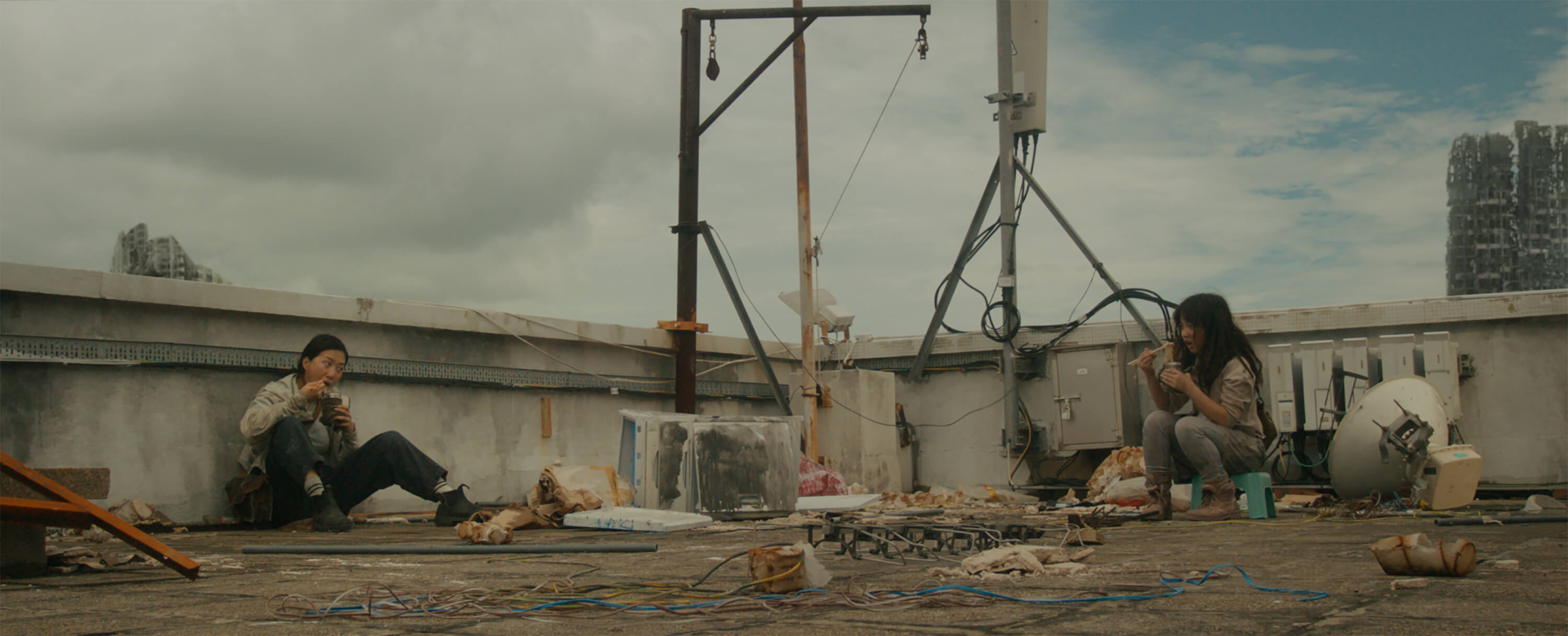
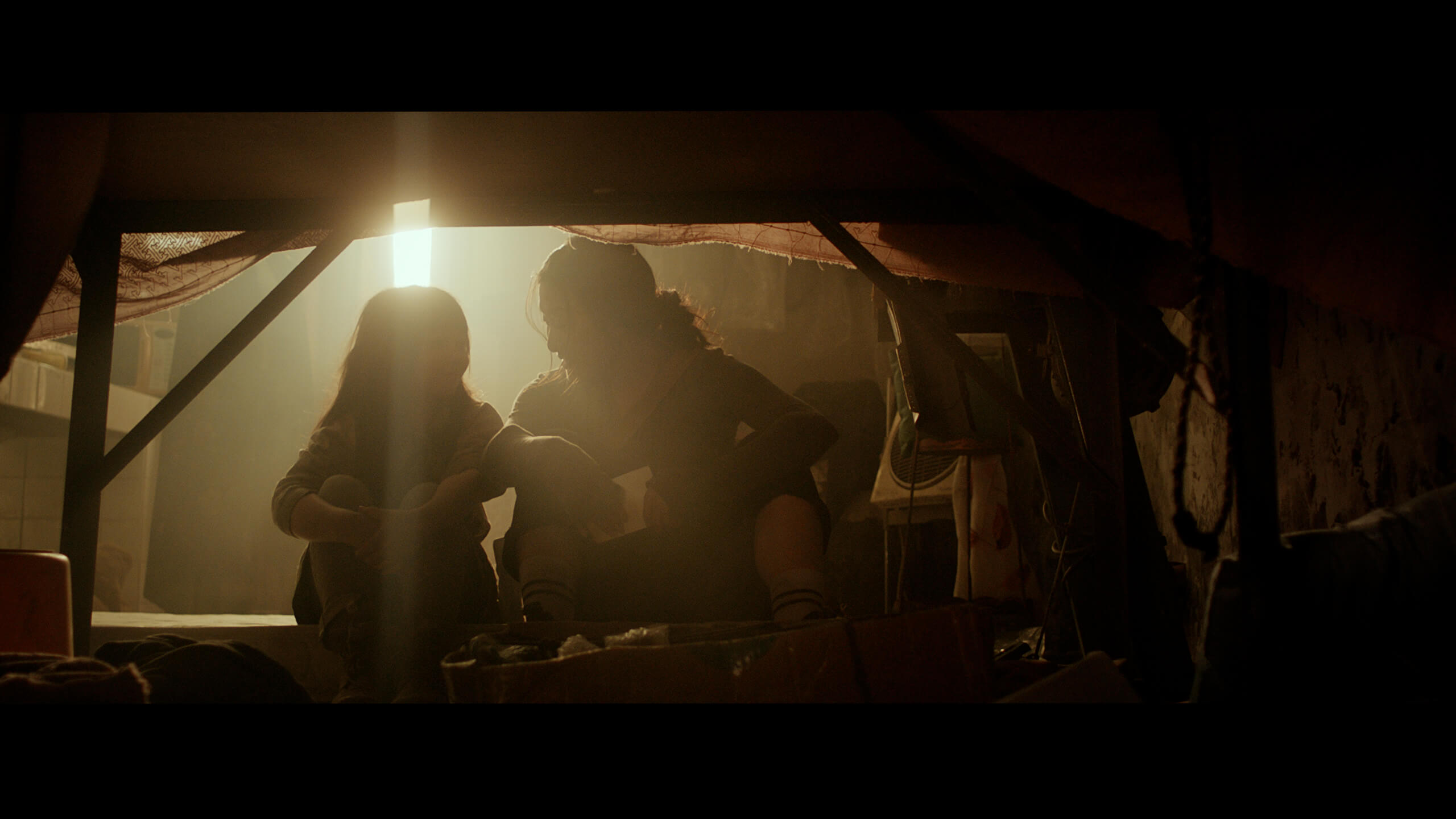
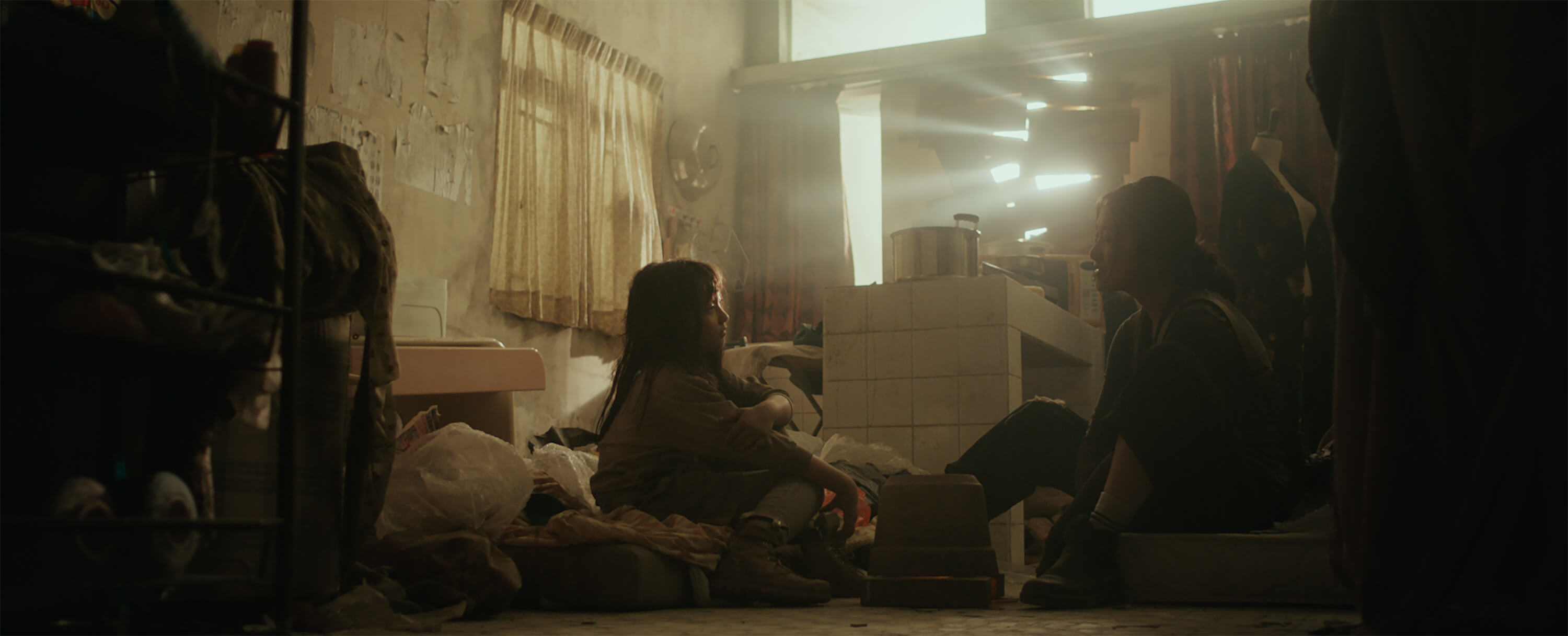
When a world-destroying storm hits Hong Kong, Asha (Kara Wang) is stripped from the life she once knew and forced to live out her days scrounging for scarce supplies, whilst hiding from vicious enemies. All hope for the future seems lost until the arrival of Hei Hei (Sarinna Boggs) changes everything. STARBURST talks with Kara to uncover everything you need to know about THE CALM BEYOND,  a distressed, post-apocalyptic story!

STARBURST: At the start of the movie, it’s just your character Asha. What were those scenes by yourself like to do, and how did you go about bringing the frustration of her situation to the screen?

Kara Wang: When people ask me about the film, I always say that it’s a cross between Castaway and Waterworld with elements of Mad Max in there. Obviously, the parts you’re talking about at the very beginning are like Castaway, where it is just me, in this building, by myself, no other characters to play off of. It was a really great experience, and I had an amazing crew there to support me. Because I had worked with Joshua Wong before, I considered him as such a dear friend of mine, I know where the story of Asha, and where the character of Asha was born from, which was his first experience with cancer. So it was a really, really cool experience, to be able to talk to him, pick his brain, and talk about these themes of trauma, guilt, isolation, and grief. Those were the things that I really wanted to make sure that I brought justice to when I was exploring her arc and the development of this character.

When Asha listens to her radio, she flicks past a channel that is looking for survivors. How would describe your character when we first meet her? Is she not that hopeful for a better future?

Absolutely, I think it comes out later in the film when Hei Hei comes into her life where she’s like “I’ve tried going out there before, and it’s dangerous out there” So it’s clear that she has, at some point during her isolation ventured out into the world, and gave it a go, but it obviously didn’t go well, and from that one attempt she’s been discouraged. I think one of the themes of the film that is highlighted so beautifully is this difference between surviving and living, they’re two very different things. At the very beginning of the film, when we meet Asha you see that she is just surviving. She is just coasting day to day with her life, and I think it’s something that most people can relate to. That we’ve probably all done at some point in our lives, where we are living day by day and coasting, but maybe not necessarily in a good way, it’s very stagnant. What is the difference between surviving and actually living; living to your fullest potential and living life for different purposes in your life, and feeling like you’re actually living your life? It’s very interesting, we shot this film in 2019, pre-COVID, and now it’s coming out post-COVID, and obviously, when we shot it we had no idea of the shitstorm that was heading our way for two years, and it’s very interesting because I always think about if I had shot this film now, how different it would be. I feel like the world collectively has had this universal experience, of dealing with isolation, trauma, and grief, that we didn’t have two years ago. So I think that this film will hit audiences a little differently than if it had come out two years ago.

Things start to change when Hei Hei enters the movie. Can you tell us about what Sarinna Boggs was like to work with, and what she brought to the dynamic between both of your characters on screen?

Sarinna was absolutely incredible. She was eight years old when we shot this film, and it was her very first feature film role. It’s hard for adults to memorise lines, and be natural on camera, let alone for a child. It’s like, “What was I doing when I was eight years old? I was not doing this!” I was so impressed with Sarinna and her professionalism, and how she brought that childlike innocence and her instincts to her character. That is what most directors want when they cast child actors, they just want them to be them. That’s always the note, “What would you do here?” It was so helpful to me as an actor and also for my character because I feel like that big sister instinct naturally took over. As well as the feeling of wanting to take care of her, take care of her as Sarinna the actor, but to also take care of her as Hei Hei the character. When Asha finally decides to take her in, in the beginning, it’s very much like “Oh, I’m saving this little girl” but I think as the film progresses, it’s very clear that in a lot of ways it’s Hei Hei who’s saved Asha’s life. She’s brought this hope and purpose back into this girl’s life. When she has been so tied to grief, trauma, guilt, and isolation for so long. It was a great experience, Sarinna was wonderful to work with, and I was really happy to be there for her first feature film role.

In the movie, there are a lot of backstory sequences about Asha, with her friends and family. What do you think those backstories brought to the story in the present day?

I thought that the story reveals itself so brilliantly, because obviously, we start with Asha in the present day, but then as the flashbacks come, and they’re cut in-between these very bleak scenes of the present, it contrasted it so well. Because it would be so bleak, and then you go back to the past, and you would see how Asha was this vibrant person with family and friends. I thought that it just played that contrast really well. I thought that it was also wonderful to see the world before and to see the present-day world. Because once again it’s that idea of what is living versus surviving. She’s currently surviving in the present, but she used to be living for lack of a better word, with all of these things that also seem so menial, like taking selfies, eating fries, going shopping, talking about hiding her boyfriend from her parents. So when it flashes back to the present day it can seem so “Wow those things were so petty, and here I am trying to survive” but also, are those things petty? Those are the little things that make up the fabric of living your life.

We felt like the unresolved issues with Asha’s family really shaped who Asha is, and how she interacts with those she meets within the movie. Would you agree with that?

Yeah, I absolutely do. I think the flashbacks of her with her family, linking back up to the present and you see how there’s actually a physical tie to her grief, how she can’t leave this apartment for a lot of reasons, because she’s made this home for herself to survive. But also I think in a lot of ways, she’s tied to that grief physically. There’s a comfort in that grief. There’s the comfort of knowing her parents are there, but also the guilt that keeps her there. It does definitely shape who she is, and how she deals with the characters that come into her life. Even Hei Hei, what does Hei Hei represent? Hei Hei brings up so many layers of grief and trauma, and guilt from her own sister, not being able to save her own sister, and all of these feelings that she has suppressed for so long because she has just been trying to survive.

Your character gets redemption for not saving her own sister at the end of the movie. What was that gory fight sequence like to film, and what else do you personally think it brings to your character’s story arc?

The action scenes at the end were actually so fun to shoot. I got to do all of my own stunts for the film, which was very exciting. It’s something that I hadn’t had the opportunity to do, and I had a great stunt team there to support me, to make sure I was safe and taking care of my body, and taking care of myself. Those scenes were very fun to shoot. They were very physically exhausting, but it was just a great opportunity to be able to shoot something so physical. When it comes to the character arc, as you said, it is a redemption. For so long she has been stagnant and chosen to hide, instead of taking action, and Hei Hei is one of the reasons that drive her to be able to finally make these choices. She has something to live for and fight for. I think it was definitely a monumental moment for Asha’s character, to choose to fight, instead of to hide, because for so long that’s all she did to survive, and finally, it’s like “Oh, there are actually other choices, we just have to choose to make them”

Going on from that, can you elaborate on what it was like to work with Joshua Wong, and what do you think his vision really brought to the movie? Also, we were very sorry to hear about his passing.

Yeah, Josh was so amazing, he, unfortunately, passed away on Christmas Day, 2020. I had worked with him on a short film before he approached me for this feature, so I kind of knew his directing style already, and Josh was just a ball of light. He was always cracking jokes on set, and very collaborative. For this particular project, he was very open to my take on the character, if there were certain lines that I wanted to change, which didn’t feel natural. He was just like the energizer bunny! I have no idea how that man had so much energy. Especially as adults now. I do like three things in a day and it’s like “I’m exhausted” I was so driven by his passion, he was a very, very passionate person, and he was also very driven. If he wanted to get something done, he would get it done. I saw that in the everyday work that we did, but also in the grand scheme and scope of things. He would put his mind to something, and he would get it done. I would really say that he brought the light to every day of work, he was so considerate and so thoughtful. I went on a meal plan for this film because I wanted to make sure that I looked a certain way for the world, and Joshua was also on a full 30 plan, so he would cook all of my meals, along with his, and he made sure he was part of my intermittent fasting schedule, to the smallest, minute details. These are the things that people don’t get to see, but how considerate and thoughtful he was. Nothing was too much of a nuisance for him. Every detail was important, and nothing was ever a problem. He would just handle it, and he’d handle it while telling his jokes. It was great.

The sets were brilliant and extremely detailed. Can you tell us what they were like to work within?

The sets were so incredible!. I shot in the various rooms every day for a month, and I would still discover new things about them, 30 days down. They rented out a warehouse, that had a couple of floors, including the roof where we shot, and they basically built the set from the bottom up. We had an incredible Hong Kong set designer, art director, production designer, and they had a theme for every room. As you saw, there was a music room, there were flats, there were apartments there, there was like a seamstress room. Thematically, the rooms were wonderful, I don’t know how they make something look like distressed so artistically. You go in these rooms, and it looks like someone went through them with a tornado, but everything was placed there with purpose and intention. It was such a treat, and so helpful for me when I was shooting as well. Because when I was shooting, there were cameras and lights everywhere, but also, it’s so easy to immerse myself in the world because of the environment. So, in a lot of ways, the set was another character in the film.

We were curious to know, what was the huge storm flood sequence like to work on, and how long did it take to come together?

The flood obviously came later in VFX, but this scene once again speaks to Joshua’s character. All of those extras in that scene were Joshua’s friends. He literally made a call and said “I need people to run down the street tonight, can people come through?” and there were like 150 people! I have no idea how he got all of these people to come and volunteer their time. You know how it is on sets, it’s not a two-hour little hold on your time, they were there all night. It’s because Joshua is so generous as a person, normally in his everyday life, so I wasn’t surprised when he made the call, and so many people showed up. We did shoot that scene in just one night, it was a very long night. I remember that day it rained in Hong Kong, and sometimes the weather there is very unpredictable. It wasn’t supposed to rain, but it rained, and obviously, they had already planned to shoot this massive scene with 100s of extras, and it rained and we didn’t know if we were going to be able to shoot, because they didn’t know if it was going to be safe, with so many people running down the street, now that the street was wet. I remember the cameras went up, Joshua talked to everybody and made sure that they were safe, and had practised running on the pavement, and made sure that nobody was slipping. However, it was actually a blessing in disguise, because when I think we saw the shot, the lights were reflecting off the wet cement, so it actually added another layer that I don’t think the shot would have looked the way that it did if it hadn’t rained. Everybody was just so professional, it was awesome. When you’re shooting scenes like that, and you’re running with like 50 people behind you, you do not need to act terrified. I was like “Holy shit, I better run, because there are 50 people behind me, and this is a stampede”. I will also say that I got my steps in that night, running up those stairs, it was a lot! But hey, my calves got a good workout that day.

If we haven’t already covered it, is there anything else that you would really want the viewer to take away, or learn from watching The Calm Beyond?

I think at the end of the film, what I would love the audience to walk away with is a sense of hope. Now that I have re-watched the film in the times that we’re in, the film definitely hits differently. Because the world has a universal understanding of some of these themes because we are going through this pandemic together. But all of us have various storms that hit our lives, from small storms to larger storms, but it is about the calm beyond those storms. I do believe that the message of the film at the end is that things will always pass, and we always have choices to choose how we move forward from these storms, and there will be a calm beyond the storm that we can look forward to. So I do think that that’s sort of a sense of what I would love the audience to walk away with.

The Calm Beyond is available on digital outlets now.

Paul Hyett | PERIPHERAL

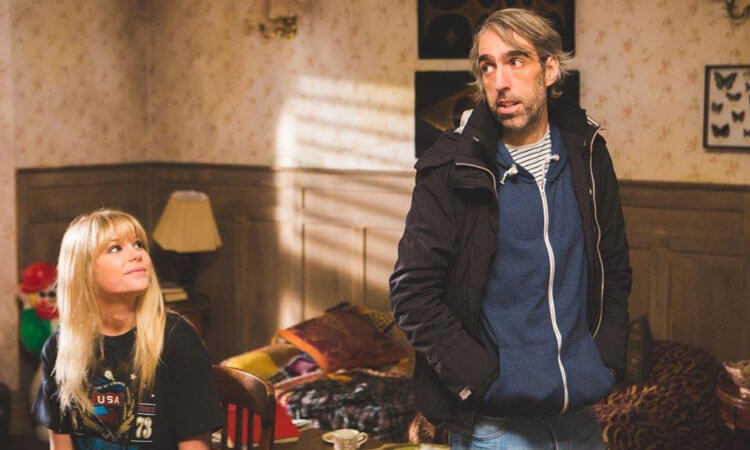
We caught up with director Paul Hyett to discuss his latest movie Peripheral ahead of its Horror Channel screening…

STARBURST: Peripheral is a bit of a departure from your other films, what drew you to the project?

Paul Hyett: I always try to do something different with each film. Originally, the producer, Craig Tuohy called me up and we had a meeting. He said I’ve got this script: one girl in a room, one location, about a computer that’s kind of taking over. I thought something on that pitch is not where I want to go, you know, I had just done Howl, which had big effects and I was looking for a bigger budget and bigger challenge. He said just read the script, and I was like wow, this is like a really well written, really interesting movie – like a comment on the way we live, social media, celebrity obsessiveness, but also about the struggle that an artist has. I’ve had that all my life in my previous career in prosthetics, you always try to do something and everyone says you’re a commercial artist, you got to do this, do this first, and do that first. And you always compromise and now directing, I’m seeing that as well. Sometimes I get great producers that say just do what you want to do. Other times you’ve got execs that said oh can you cast this person or that person, or what about if you change the ending, and such. So when I got the script to Peripheral, I was bidding for American movies and I suddenly felt what the character of Bobbi was feeling. And I thought I can relate, I understand her struggles. I understand it all and it would actually be nice to make a really interesting comment on everything from Britain to the artists’ struggle. Essentially obsessiveness and stalking. It just really touched me. So, I thought you know something, I don’t, I don’t care that it’s just one person to blame because I just got, I had to get that out of my brain and just concentrate on a really interesting story.

There’s more than one person in it, of course. Fortunately, so you’ve got a great cast in there again.

Yeah, absolutely. It was lovely to work with Hannah [Arterton] before and I kind of knew that it was going to be a brutal four weeks shoot. It was such a layered character and you know we didn’t have much prep, and I mean, we saw, probably 100 girls. And, you know, there are some really great actresses. But we had a kind of shorthand where we worked together before and we knew each other. So many labels work really fast because there just wasn’t that much time to develop a character, and if I had to solve actors that I had to work too much with, you know, you’re constantly putting all your energy into one person and be aware that this film had to be very visually interesting, you got one room. Rosie [Day] is always wonderful. She came in and she did her stuff and she was as brilliant as she always was. And it was really great to work with Jenny Seagrove, we had chats about The Guardian. She was totally into it, and she liked it and Tom Conti was great to work with. Connor Byrne was great, he played the installer and has so much dialogue. He came in and he nailed it. There was a lot of chat about what the installer should look like, should it be like a geeky guy with glasses? I liked the idea that it was someone intimidating; someone who looked threatening but was actually the complete artist, and he would come in and he would talk about Stephen King and these great writers, and it was lovely because that was my way of saying don’t judge a book by its cover. And Elliot [James Langridge], who played Bobbi’s ex-boyfriend was brilliant he did it with a little bit of Jack Sparrow from Pirates of the Carribean and I would never have thought of that. So yeah, I was just really lucky to have a good bunch of actors.

Were there any influences for the visual style?

In the back of my head was Videodrome, I love that film, but I didn’t want to go for that dirty, grainy, style, I wanted to give it its own look. I kind of wanted a sort of Cronenberg-esque tinge. The director of photography, Peter Taylor, was Ridley Scott’s camera operator of choice and worked on Gravity, Gladiator and stuff, and we talked a lot about how we should do this and give it its own personality. It’s hard when you’ve got one person in one location in one room, trying to give it a weird look.

What was the hardest part of filming?

To be honest with you, it’s my easiest shoot to date. I think the hardest thing was trying to get the emotional level of Bobbi right. It had to be a complete descent. She has such a character journey; her arc, she goes through a massive change of self-realisation. It was working with Hannah to make sure all those beats hit on the right level in emotional tone. Out of all my films, that character Bobbi had to be perfect in that what you’re feeling with her, what we’re seeing on screen. So that I think, for me, was the biggest challenge – just making sure the emotional beats were right.

The time between filming and release has meant that the technology has almost caught up to the film.

Yeah – that’s the great thing about it, it’s more relevant now than it was three years ago, sometimes it’s the other way round. You know, why are people so obsessed with celebrity? What is it, do people want to live those lives? I was horrified to read that most kids, when asked what they want to do, replied they want to be a celebrity. They don’t want to be nurses or a doctor or a cardiac surgeon, lawyers or architects, all these amazing jobs. They want to get up onto X-Factor, they want to be famous and they want to have Instagram followers and YouTube followers, I just think, really?

It’s interesting seeing it when we’ve all been on lockdown…

Yeah, it’s like she’s pretty much locked down as well, with that claustrophobic feeling.

We think people will relate to that! Do you miss doing the makeup?

I put down my makeup brush in 2012. And I made that decision to step away. Do I miss it? Not really. I mean, sometimes I miss sculpting, and, but to be honest with you, I’ve started to do more trying to build up my skills on pre-vis on the computer – I get my creative fixes, you know, there’s a part of me that sometimes misses the banter in the workshop with the other guys and your chatting away and sculpting and talking about life. Directing’s a very solitary life because you’re at home you work, and you got to film, great social, and then back in the edit room with one person and back to your house with no one. I had a great 20-year career, but it’s finished, I put it aside and I’m much happier where I am.

So what’s next for you?

I’ve got two films in development one that was very close to going. One is called Unnatural Selection. It’s very much a sleepy, New England horror set in Cape Cod. We went out there and reccied it was great. It’s basically about a late-night, sort of trashy TV show about conspiracy theories, you know, flat-Earthers, anti-vaxxers come in and talk. There’s a host and they try to debunk stuff and one day, a mysterious man walks in and he claims to be a fallen angel. He’s deeply charismatic, manipulative, extremely intelligent, and he starts talking about stuff that only historians will know and more and more they think is this guy for real? Later on, his agenda comes and it’s very dark and nihilistic – I won’t go any further!

I have another one called The Black Site, which is the second part of my war trilogy, which I started with The Seasoning House. That’s about an intelligence officer who gets back from Iraq, it was a particularly brutal tour and she’s got a traumatic injury, and she’s at home trying to revert back to civilian life in the UK, and she’s having these horrible, bizarre, and violent hallucinations and she puts it down to her PTSD, but as they get worse and worse and she starts to worry about her own sanity and that she could hurt her own family. So she goes into regression hypnotherapy, and that opens up all these memories that she just doesn’t remember actually happening, and the deeper they go, the darker they go. Basically, she worked at a black ops interrogation site – a black site – and she goes on this journey to find out what really happened. And obviously, it doesn’t go well.

Well, we hope things start opening up in the production side of things.

I kept thinking maybe I should really get out of the camera and shoot all those empty supermarkets and empty roads, if I had a nice RED camera I would have!

Peripheral screens on Horror Channel on April 20th. 

Paul Hyett on the set of Peripheral with Hannah Arterton.

C. K. McDonnell | THIS CHARMING MAN

C. K. MCDONNELL

C. K. McDonnell is an Irish writer and comedian living in Manchester. This Charming Man is the second novel in The Stranger Times series, an urban comic fantasy detailing the investigations of a team of journalists into the weirder side of Mancunian life. C. K. took some time out to sit down with us to discuss where his inspiration comes from, his process, and writing about fashion.

STARBURST: Reading your books, and reading about you, you get a sense that there are bits of your personality in your characters, although we’re not sure that’s a compliment.

C. K. McDonnell: [laughs] Yeah, I think there probably is. You sort of have to, as you’re in a room on your own. If you’re not using yourself then what are you using? I use bits and pieces from people I know as well, and its generally people I like. Villains are easier to write in some ways as they’re more fun. For the people in the office, you have to be more rounded but for a villain, you can just go ‘crazy batshit’ and it works. The best thing in my writing is dialogue and character comes from dialogue for me. So, there will always be a bit from your speech patterns in there. I also think my books are warm which you need for a series. Put it this way, in crime books there’s always a ‘twisty twisty’ ending you’ll never see coming. That’s always the tag line. For me, reading, you want to find out what happens to the people and so you need to care about them, otherwise it’s an exercise in futility. Until you have the people you don’t have anything.

I’m an enormous Terry Pratchett fan. But I defy you to point out the Discworld book that had the shocking ending you never saw coming. Because that’s not what he did.

How do you structure your books, then, if the ending itself is almost secondary?

The story structure is very important. I have on the wall beside me, the third book in the series all mapped out on cards. This Charming Man has two distinct stories that intersect in places. It’s not so much the ending but you have to keep things going and there is a lot of plate spinning. I literally have them all colour coded. So, I can see if there’s not enough green, or if I need to balance the story there. But I agree – if anyone is waiting for the shock ending it’s not really what I do. I think there’s a danger you could just end up using cheap tricks and so on.

Would you say you’re like Max Brooks say, who plans more than he writes or more organic like Ian Rankin who often simply runs with an idea?

Ian Rankin is amazing. I remember a video of him talking about the process. And he says he gets to a point in the book where he thinks he has to stop, and it isn’t working. So, he goes and talks to his wife and tells her he’s going to bin it. And she’s ‘you’re 60,000 words in, and this happens every time’. It’s amazing when you see an all-time great like that.

I’m sort of like an honest planner and pantser, which is a phrase writer’s use. I think when you’re getting into a series with multiple characters you kind of have to plan it out a bit more just because there are a lot of plates to spin and make sure you have enough story for everyone. With the next book, I’ve probably planned more than I ever have before. Not really sure why. I sort of always have the corners, and I need to know where I’m going for the first four or five chapters. And then I might stick up a couple more cards, so I know I need to come back to that. I’m sort of a weird mix where I’m maybe planning a few chapters ahead all the time. As long as when I go to bed at night, I know what I’m writing the next morning, I’m fine. As long as I don’t run out of track, I’m okay, but I’m maybe laying track in front of the train all the time.

Does that become more difficult as with each book you’re adding more to the mythology, as there are elements in This Charming Man that remain unresolved?

And to be honest, I keep picking things up like that. Without giving too much away there were things in the writing of This Charming Man which I thought were interesting, and I wasn’t planning to keep, but are now another plate to spin. Stella, for example. I knew early doors there was something in her history and I was working it through in the process of writing, so now I have a much firmer idea where things are going. I think you end up opening certain loops, and you have to be fair to the reader so when you open something you have to close some too.

I have rough ideas for things, but the plan can change. No plan for a book has ever survived the actual writing. I have a podcast series where I’ve written loads of short stories that happen in The Stranger Times world and it’s really just me figuring out the world. I’m still discovering things. The great thing with fantasy is you can keep building out, there’s so much mythology you can use. And my books exist in a world where all films and books exist, such as vampires and zombies, so that’s fun to play with.

Reading your books you sense similarities with a writer like Neil Gaiman perhaps, of another world within our world. Is it important for you to ground your novels in reality, providing some familiarity?

I think it is, because when something is amazing it’s amazing in the context you see it. If you go to a fireworks display and they’re all going off, then it’s nice and everything. But if you wake up at night and one goes off over your head that’s much more amazing. If you’re in the real-world things become more magical. It’s ordinary people reacting to amazing things, it gives great context and adds a fun element.

Because a lot of humour comes from your characters and their interactions. Do you find dialogue easy to write?

Dialogue is always the easiest thing to write for me. It’s the most fun. If you want to tell the reader something, then have two people have an argument about it. What I’m bad at, and I probably shouldn’t point this out in interviews, is describing architecture. When I do, it’s just like someone trying to describe a building. My wife’s my first reader, and something she pointed out was that I hardly ever point out what someone is wearing. And it’s because, frankly, I don’t care about that. I only ever wear shorts and T-shirts. I went out the other day and I had to dig out a pair of jeans just so I looked like a grown-up. So, because of that, I don’t put it in my writing. And instead of trying to fix the things I’m not good at I stick to things that I am.

Have you always been a fan of fantasy, as we recall a magazine called The Fortean Times…?

(Holds up a pile of magazines) The idea for The Stranger Times comes from The Fortean Times. Oddly, the original idea was a sitcom, about a decade ago. I liked the idea of a small, local newspaper reporting weird news. And I’ve looked and couldn’t find the script. Then one day, I woke up thinking about it. And as I walked to my office in Manchester I was still thinking and by the time I got there, I was running to find a pad and pen as I had all these ideas.

I’ve always been a fan in the sense of reading books and watching television. But the newspaper element was always appealing. And then if you start thinking about some of that stuff being real. Newspaper first, then this is the world we’re off into.

This Charming Man is out now. You can read our review here.

Kevin Kiner | PEACEMAKER

kevin kiner

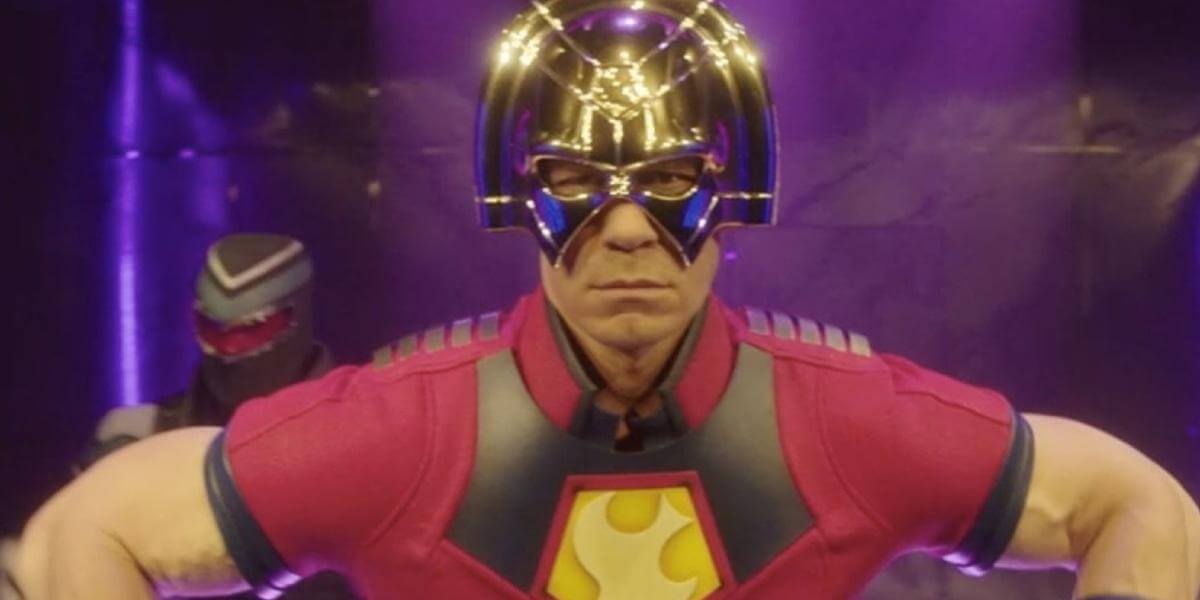
The HBO Max series, Peacemaker, the spin-off from director James Gunn’s The Suicide Squad has become a massive hit for the streaming service, and not a small amount of its popularity comes from its deft use of music. However, while much as been made of the series’ use of under-the-radar or forgotten rock ‘n’ roll and hair metal, composer Kevin Kiner’s work on the series, alongside Clint Mansell, helps set the tone for a show which is by turns outrageous, violent, and surprisingly introspective and thoughtful.

Ahead of this week’s Peacemaker series finale, we spoke with Kiner about his work on the series, as well as his past compositions for the Star Wars and DC universes.

STARBURST: Given your work on both episodic TV and history of weird films, it seems like this is a perfect fit for you. Did it feel like that when you were first approached?

Kevin Kiner: Yeah, in a way, you’re exactly right. I have done weird things like Freaked and Tremors and also a lot of superhero stuff, with Titans and Doom Patrol and even going back to Superboy – way back in the ’80s, I was doing that. Yeah. It felt like a really great fit.

Hair metal is a very important part of Peacemaker‘s storyline. Were the heavy guitars of the score determined from the beginning?

That was a big discussion with James and Clint [Mansell] and myself. I’m not a hair metal aficionado at all, but one of my good friends is Fred Coury, who’s the drummer for Cinderella. He actually played on the soundtrack. He’s all over episode two and other places. I am a little older. I grew up on Led Zeppelin, mostly, and maybe Black Sabbath and even Uriah Heep.

It’s not the same as Led Zeppelin or Sabbath or whatever, but that’s the roots and really, it’s so easy to get there once it’s in you. That’s where it comes from, hair metal. It’s a very easy transition from what I grew up with and even Van Halen or Hanoi Rocks – I mean, the roots are all in the old days.

James Gunn is very much noted for his use of needle drops in his projects. Is that something you have to take into consideration when you’re composing your score?

Again, it was a discussion from the very beginning of how much of the score was going to reflect the needle drops. James Gunn’s knowledge of bands and music is encyclopedic, so he started talking about these things. He started sending us playlists. The entire score, as the show evolves, becomes more orchestral, although the drums are still there – all the way in through episode eight – but not all the time, and the heavy guitars are, are there too, but it becomes more of a hybrid as the drama and the action escalates.

But early on, we really did want to incorporate that sound and I mean, I’m so into it, because, I just loved it. I’m a guitarist and it was so much fun playing. Every kid goes into Guitar Center and starts to get all shreddy and stuff, but nobody really gets to do that for a living. It’s very rare to just be able to shred and, and man – I mean, it’s a guitar player’s dream, right?

Getting to let your inner Steve Vai or Yngwie Malmsteen freak flag fly seems as though it’s a lot of fun.

Yeah, it really was. I mean, gosh – again, I sit around and play those licks all the time and I played them in bands when I was in high school but you very seldom get to do that for a living.

Working with a previously extant property is nothing new for you, obviously. How do you approach the challenges of creating new music which fits within an existing milieu?

Each one is kind of case by case. When I started on Star Wars, George Lucas specifically didn’t want to overuse the John Williams themes. In fact, he didn’t want to use them very much at all, but the style still had to say Star Wars and it still had to come from the Williams well – the way he is, his motifs work and his orchestration, his sensibility.

I studied that a lot, you know, and it was a much bigger challenge for me, studying John Williams. That took way more years than Peacemaker, which was just like, “Oh, I got this.” I didn’t have to really study anything. I just turned it up to 11 and, and, and broke the windows out.

What’s interesting about this is, as you’ve mentioned several times, you collaborated on this score with Clint Mansell, which is a very interesting pairing. Were you excited to collaborate with Clint on the score for Peacemaker?

Clint and I’ve been working together for five or six years now. We started on Titans and went to Doom Patrol and we’re still doing those shows. The collaboration with Clint is – I mean, he is such an interesting writer and he comes from such an outside perspective. That’s what I really dig about working with him, is because he has ideas that nobody else has. You can see from his songs and you can hear it from his soundtracks. I mean, it’s, “Where did that come from?” It’s a different way of looking at the world and hearing things.

Having said that, he really has an encyclopedic knowledge of music and stuff. He knew way more about the ’80s and early ’90s hair metal than I did, and the bands and stuff like that, and their origins and where they were going. It wasn’t difficult at all. Clint’s really into electronics as am I and so, early on in Titans, that became part of the thing: again, the orchestra is still there because it’s superheroes, but it’s really a very heavy electronic score.

That was the concept, especially in Doom Patrol and we brought some of that to Peacemaker. It’s not just hair metal. There’s a lot of electronics going on throughout the score, as well. I think that’s the one thing Clint and I really brought to the property that pushed us in a new direction.

What are the challenges for you as a composer on a streaming series such as Peacemaker, when it’s a mini-series, as opposed to an ongoing series like Titans or Doom Patrol?

Well, first of all, I don’t know that Peacemaker is not continuing. I actually think it might. I don’t actually have any information, but I sort of assumed that it might. I imagine that depends on James Gunn and what he wants to do with it.

But you know, Peacemaker was just like a long movie. It was like an eight-hour movie or it may be a seven-hour running time or something like that and we had quite a lot of time to do it. It was a comfortable schedule. They gave us an orchestra and we got to really do what we wanted. The feedback from James was really positive and when he had notes, they were super intelligible and we understood why he wanted it to change in certain areas from what we’d done. It was one of the most delightful experiences in my career, really.

I mean, you know, Clone Wars was a fantastic experience as well. It’s very seldom when you start to really connect with somebody and you are able to kind of speak in shorthand and deliver what they’re looking for. That was my experience on Peacemaker.

Part of composing is coming up with themes and motifs. Were you mildly bummed you didn’t get to create an opening theme, given the use of Wig Wam’s “Do You Wanna Taste It” or it was just like, “I can’t compete with that”?

That’s one of the greatest openings in the history of television. I defy anybody to find a better one. I mean, it’s up there with any great opening ever and especially in comedic terms. So no, I wasn’t bummed at all. And, and you know, we did get to write a theme and it’s a pretty strong theme, which plays throughout the show. Once we saw that, I’m like, “Holy crap.” It was so fun and I still watch that.

Peacemaker is now streaming in the US on HBO Max.

On the Set of G-LOC

g-loc set

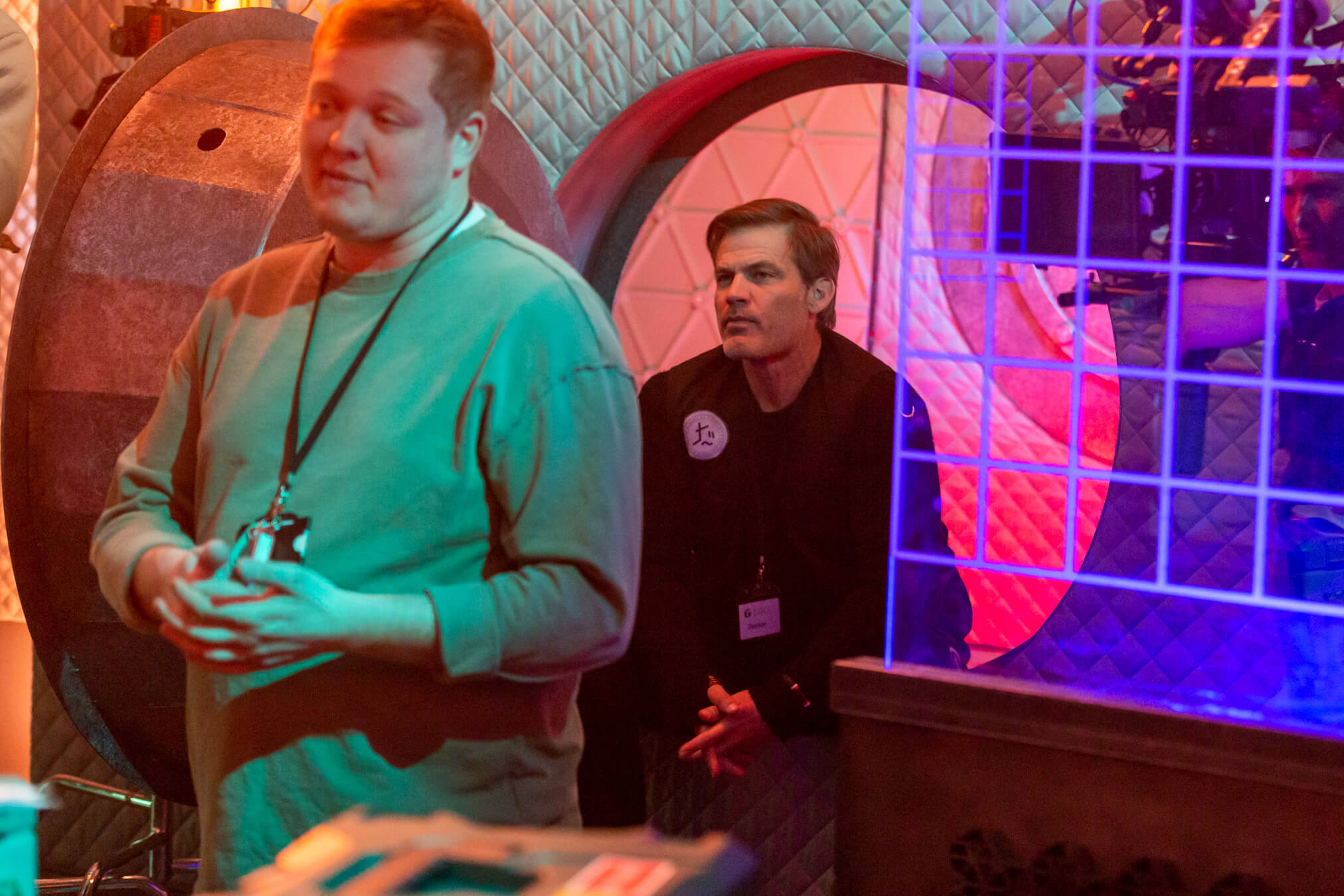
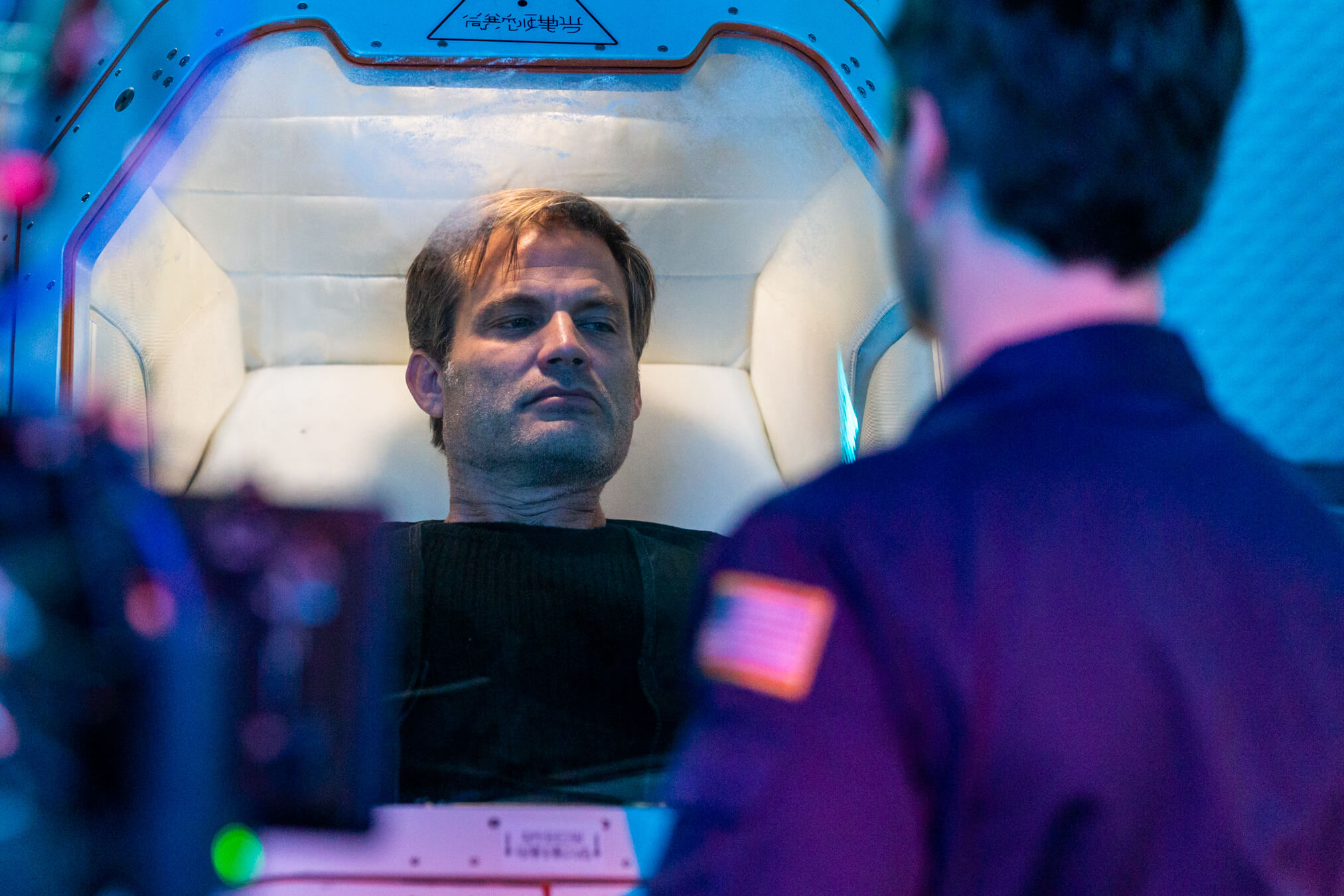
STARBURST reports from the set of G-LOC, from director TOM PATON, which is currently screening on Horror Channel. We caught up with him and the cast, including CASPER VAN DIEN, to find out what to expect…

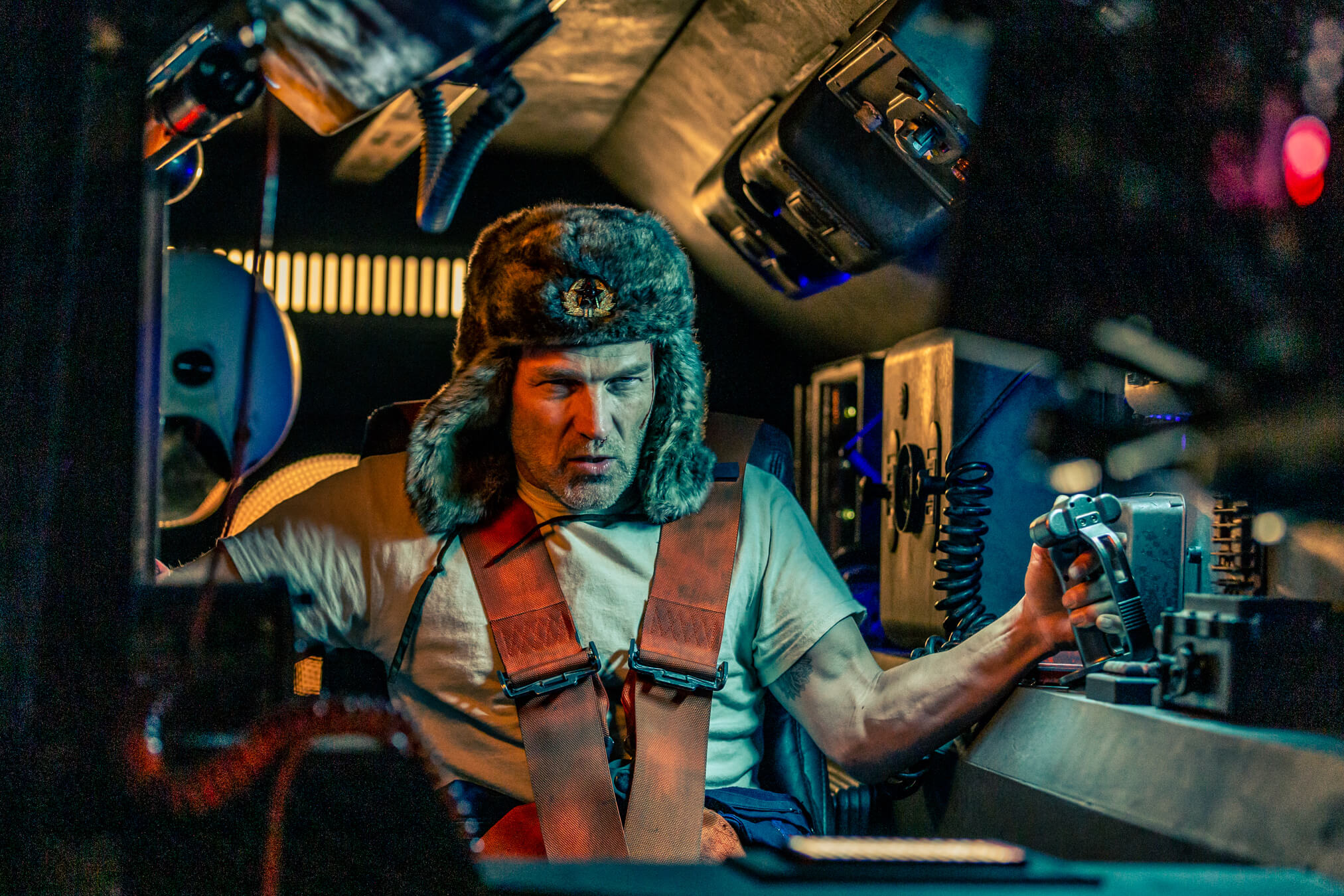
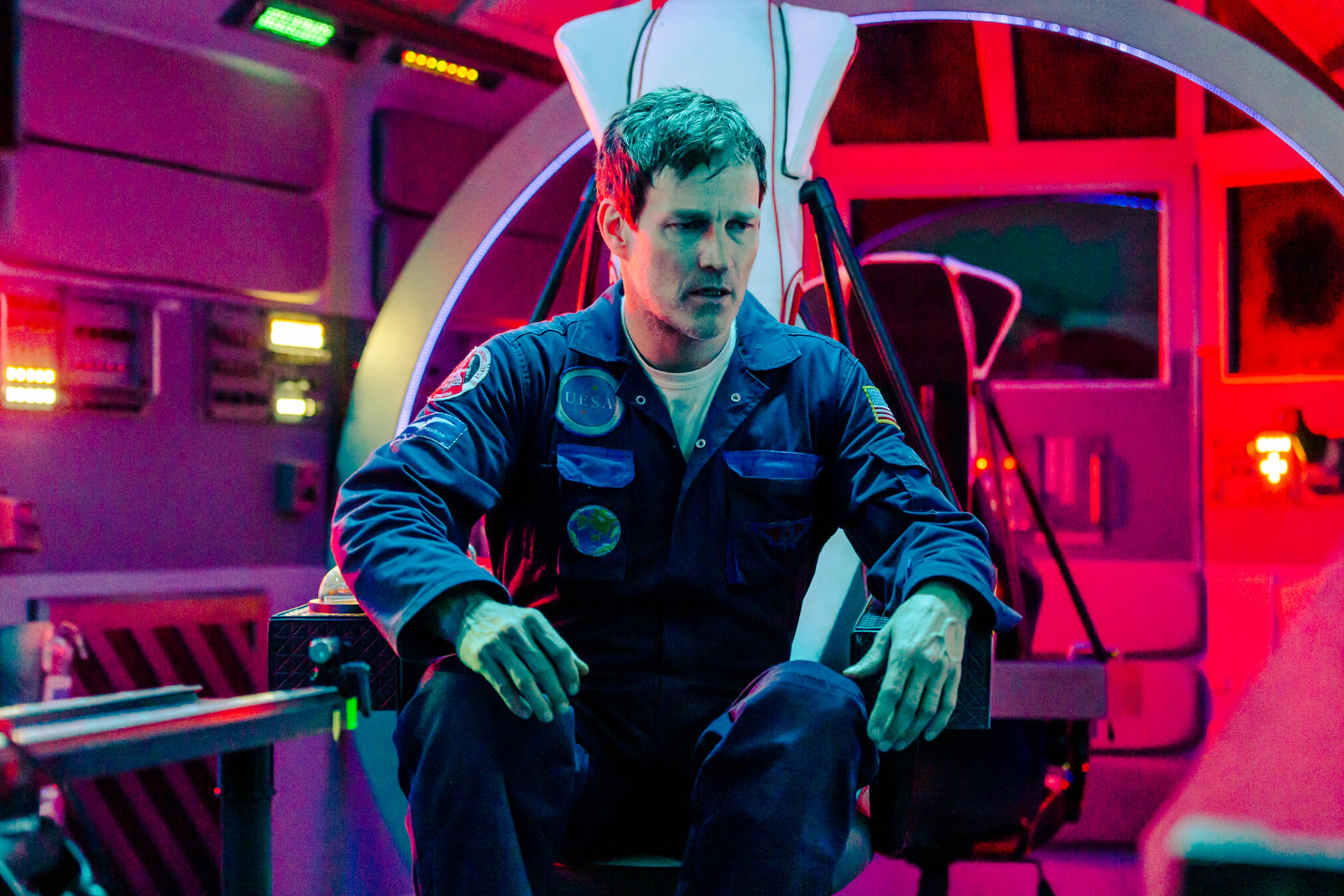
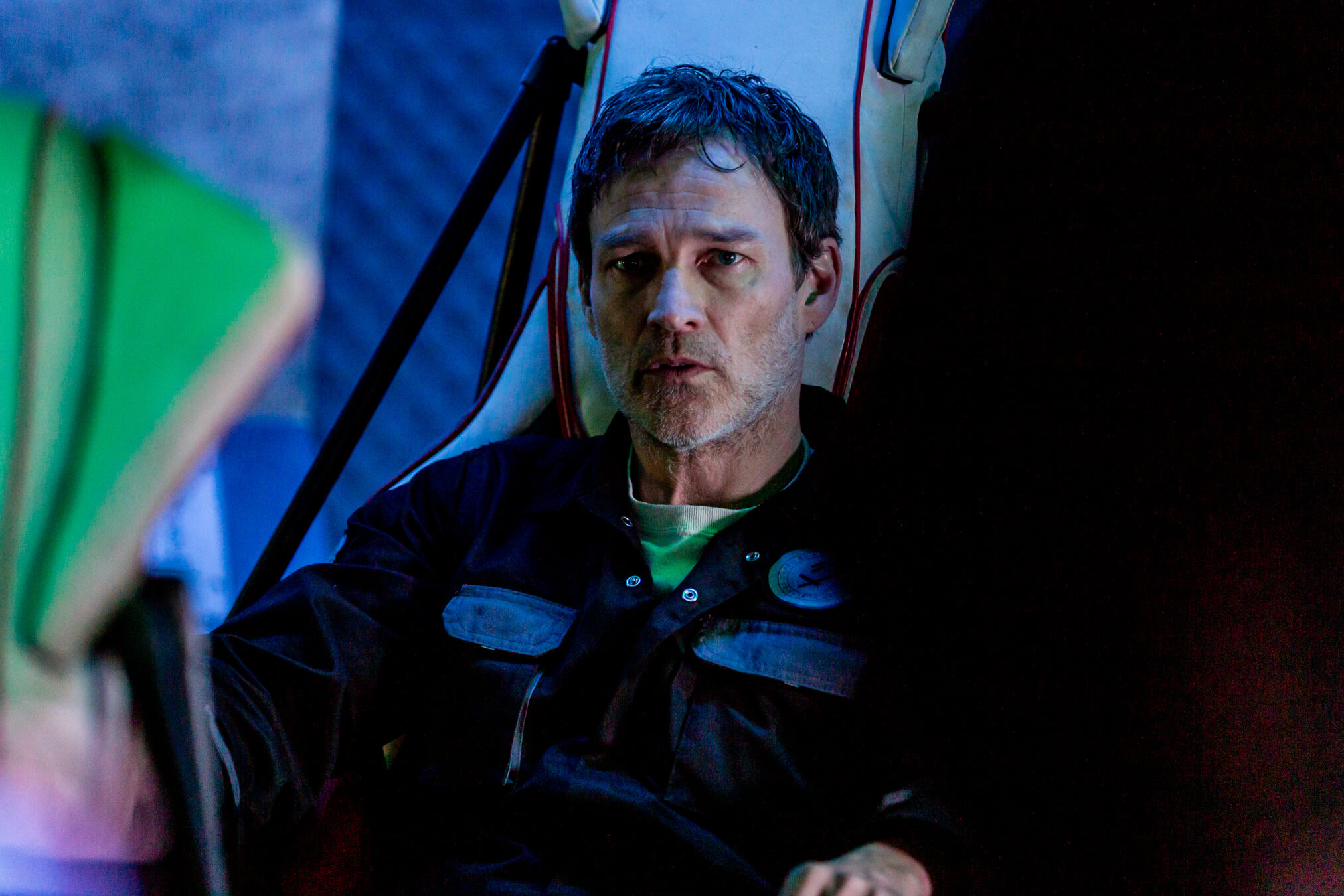
We ventured into the wilds of deepest darkest Yorkshire to take a look at the set of G-LOC, the latest genre movie from one of STARBURST’s favourite directors, Tom Paton. This time around, it’s an actual studio, rather than an adapted forest or improvised battlefield. This is because G-LOC is a movie about space and spacecraft. G-LOC is a piece of classic science fiction, using the fantastic and forward-looking to tell stories about the modern-day. Set in a distant future, G-Loc is the story of Bran (True Blood’s Stephen Moyer), a man who is fleeing the dying Earth to make a new home of the distant human colony of Rhea. Alas, they are not open to the sudden rush of refugees coming to their world.

The set designer’s office is plastered with photographs taken from real-world space stations. Though G-LOC is set quite far in the future, the aesthetic is meant to be one that’s lived in. The Rheans prefer more mechanical and cruder approaches to technology, so the entire ethos behind the set design is to make the whole thing lived. The office is littered with tiny models of the set and countless rejected ideas. The set designers have spent hours poring over old archive footage of the Space Race, and are cleared inspired by the MIR and SkyLab, but more towards the end of those station’s lifespan.

The set is busy; one small area is a full spaceship console, complete with switches, pilots chair and the like. It looks amazing once the lights are turned on. Another set is a generic control room, one that has been redressed more than once throughout filming. Finally, we make it to a classic sci-fi corridor. Actors Casper Van Dien and Tala Gouveia are gearing up for a day of action-heavy filming in the claustrophobic sci-fi corridor that makes up much of the movie’s set.

We caught up with director Tom Paton to learn more about where the idea for the movie came from: “I was looking at the whole Venezuelan crisis, and I watched the documentary about this family that was travelling from Venezuela and how they were full of all these better life dreams that we’re going to be there waiting for them. And when they get to the American border, they weren’t allowed in. So they spend three years in this detention camp in horrible conditions. All these people with their hopes and dreams ripped away from them. And then you look at the world today with Trump and Brexit, and I wanted to tell a story that reflected our times. I wanted to take a fantasy film and make it relevant to now.

So, G-Loc is about that.” Paton continues, “In this movie, Earth is heading toward a second Ice Age, and suddenly this gate pops up in space and on the other side is a habitable world called Rhea. But one year on Earth is 18 years on Rhea. People from Earth are migrating through, but by the time Stephen Moyer’s character tries to get to Rhea, settlers have been there for hundreds of years. And they don’t want any more refugees.

Tom describes Moyer as a “phenomenally powerful actor.” He continues “You know, you write these things, and they sound good on the page. But when you hear them coming out of somebody of his calibre, he elevates the material and is really, really impressive.

It’s a fantastic cast; Casper Van Dien is perhaps best known for his role as Johnny Rico in Starship Troopers. In G-Loc, he plays Decker, part of the crew of the ship bringing supplies to the Earth refugee camp. We caught up with him in his trailer, still as energetic and sparkly-eyed as he was back in the Johnny Rico days. We asked him what kept bringing him back to sci-fi. “I’ve done a lot of work, including many westerns and I’ve made enough of movies for a lifetime, but I keep coming back to sci-fi – I just love sci-fi films. I think early on people associated me with Johnny Rico, and that’s okay, I like working in the industry. I just recently had a small part in Alita Battle Angel, and it was a lot of fun to do that. And that was because of Starship Troopers.

Casper continues, “I read Starship Troopers as a kid. I went to military school and grew up in a military family, so it was one of the books everyone around me liked to read. And I watched a lot of propaganda films and war films. And I just enjoyed them. The Starship Troopers is an amazing book, but the script was completely different. When I read the script, I was like, ‘wow, I thought I’d missed something from the book’, but it was all the genius of Ed Neumeier and Verhoeven. But it’s not just their satire alone, Robert A. Heinlein’s sense of humour is still there. I think a lot of Americans missed the satire when it first came out.” The actor smiles, “One of the things that I like about that movie is that people on the far right in America and people on the far left love it. And they love it because they think it’s their film. And, you know, it’s quite interesting to have both sides like it, but I like that they can have a discussion and say why it’s theirs. And I think that it’s better to have films that bring people to table being able to have a conversation.” The parallel to his latest film is clear “That was one of the things that appealed with G-LOC. I liked working with Tom, he’s great. I would love to work with him again. I know that he’s just a film buff and he’s passionate and young is exciting. He’s you know, it’s awesome to be on set with him. And I think he’s got a huge career ahead of him.

Mike Beckingham is no stranger to readers of STARBURST, with credits including Tom Paton movies such as Black Site and Redwood. G-LOC sees Mike take on a different sort of role. “I play the role of Edison, Bran’s computer. It was fun to do but challenging because I’m only a voice.” Edison is also the movie’s comic relief of sorts; a rather self-centred AI that provides sarcastic commentary throughout the film. As usual, Mike is modest about his talents; despite a lack of a physical presence, the charisma of the character shines through.

The other main character is Osha, a native of Rhea. She’s played by Tala Gouveia, best known for her work on kids sci-fi shows such as Thunderbirds and Scream Street. We asked what she thought of the character. “She has to fight quite a lot of big guys. She’s very scrappy. She’s sarcastic – funny hopefully! She’s written very well, and I love sarcastic characters.” The movie puts Tala through her paces, “there’s a lot of big, exciting action, and it’s my first time doing my own stunts, so that was a fun challenge, which I’m really enjoying.

Of course, Tom Paton is better known for creating horror and action movies. We asked him why he felt this story needed to be sci-fi. “Telling current stories is the point of science fiction, at least it is to me. It’s it takes the world as we know it and repackages it into something different. For those of us that are politically engaged anyway, we understand what they’re doing. But there’s this great trick in basic sci-fi. Things like the Battlestar Galactica take somebody on a Friday night who wants to enjoy themselves. And the next day, they’ll feel like they’ve changed their opinion on something, but can’t quite understand why they did it. And it was because sci-fi makes it the right size, gets them to ingest it in a way that they find palatable, rather than feeling like you’re being told off or lectured. And I think that’s kind of was the whole thing about this script was making a movie that feels entertaining – like you’re having a good time while you’re watching it. But hopefully, you’ll come away from it and think about the message as well.

G-Loc screens on Horror Channel on Friday, February 11th at 4pm and the following day at 8am. 

Article originally published in STARBURST Magazine, Issue number 474

Elizabeth Gillies | CATWOMAN: HUNTED

Elizabeth Gillies voices Catwoman Hunted, still from Dynasty

With 80 years of history at her back, Catwoman headlines her own animated movie for the very first time in Catwoman: Hunted. Directed by Shinsuke Terasawa, the anime-style film follows Selina Kyle’s attempt to steal a priceless emerald, a heist which puts her squarely in the crosshairs of a powerful consortium of villains, Interpol, and Batwoman. Starring Elizabeth Gillies in the titular role and Stephanie Beatriz as Kate Kane, Hunted is a stylish and contemporary look at one of DC’s most famous characters.

Ahead of the film’s release, STARBURST had the pleasure of speaking with Catwoman herself, Elizabeth Gillies, about putting her own stamp on such an iconic character.

What was on your mind when you first approached the role of Selina Kyle?

Elizabeth Gillies: I made sure to do my research before I started. I watched everything from Julie Newmar and Eartha Kitt from the Batman series, all the way to some of the animated 90s stuff. And then, the Catwoman that I grew up with and gravitated most towards was Michelle Pfeiffer’s Catwoman. That ended up being my biggest influence when it came to putting my stamp on it. But I did make sure to pay attention to the script and how it differs from all previous Catwoman stories. I think I put my own spin on it, and I’m happy with how it came out. It was such a fun script. I don’t think we’ve seen Catwoman quite like this before.

What was it about Michelle Pfeiffer’s iteration that resonated with you?

Elizabeth Gillies: I loved the journey that her character goes on, I loved how she was able to play so many different sides to Catwoman, and just how interesting and electric, and strong she was. And I loved her voice. I’m a big Michelle Pfeiffer fan and I just felt that movie was so fun.

To me, she really embodied who Catwoman was, even though everyone’s done their own thing. Though I have to say, watching the old ones, Eartha Kitt was pretty extraordinary. The through line between all these women is that they’re confident, strong, sexy, badass women. And funny, too, which I think is important.

It feels like that humour and the way Catwoman plays with her sexuality really defined your spin on the character.

Elizabeth Gillies: Yeah, I think that those are two things that I have played a lot with in my career, with characters that I’ve played. I identified with that side of Catwoman. This film has a noir spin on it, with a really interesting jazz score, and it’s just a story told in a different way. I’d be lying if I said that I didn’t put a little bit of Old Hollywood in there; it gave me the opportunity to play around and take it in a new direction while keeping all of Catwoman’s most famous traits.

You put on this almost Mae West-esque voice that really adds to the feel of the film.

Elizabeth Gillies: Mae West was actually one of the people I was thinking of when I was voicing her, so thank you.

Aside from the character’s iconic status, what drew you most to the script?

Elizabeth Gillies: I was so excited to do anything in the DC world. I’ve been a fan for a long time. And I was honoured that they asked me to voice Catwoman’s first feature that was entirely her own. It was a big opportunity for me in that way, just because I honour and respect this community so much, and the legacy that it holds. That immediately drew me in. Then the script was really interesting, and dynamic and fun. There are so many Easter eggs, so many villains that pop up, so many surprises that fans will be super excited for.

Interview with writer Greg Weisman about Catwoman: Hunted starring Elizabeth Gillies and Stephanie Beatriz

Another aspect of the film that feels completely new is the developing relationship between Catwoman and Batwoman. What were you most excited for in their dynamic?

Elizabeth Gillies: I was really excited when I read the script and saw how they were really delving into their relationship. The two have such an interesting dynamic; although Catwoman uses her sexuality to manipulate others in a very cavalier way, she has a thing with Batwoman. There’s something there that intrigues her, and she likes to press her buttons. There’s something more there than the usual games.

We do get a couple scenes in this film where we really see them get close and we definitely play with more mature tones, which is exciting and cool.

And Batwoman does really bring out Catwoman’s softer side, which must have been interesting for you to play.

Elizabeth Gillies: Definitely. With a character as raw and archetypal as Catwoman, it’s nice to see her have those quieter, more vulnerable moments when she lets down her walls. We get to see those different sides to her.

Greg Weissman floated the possibility of a sequel or maybe even a trilogy. If that were to happen, what aspects of the character would you really like to explore further?

Elizabeth Gillies: I’d like to see her in a whole new world, a whole new environment. I’d like to see her interact with new people, maybe even Batman. I’d be very down to do another film, I had so much fun. I love animation and the script is wonderful. Sky’s the limit, and I would love to do another one. I hope the fans love it.

You mention bringing Batman in, in the future. Why was it important that he be left out of the first film?

Elizabeth Gillies: I feel like she’s always had this connection to him, and maybe stood in his shadow. I think that giving her an animated movie of her own and letting her tell her story, and for her to be the focus was good. She didn’t need to be anybody’s sidekick, and if we did bring someone else in to be her foil, then it was going to be a woman. It’s a strong, female-led film, and I love it.

When you were first approached, were you surprised to learn that this was the first time Catwoman was getting her own animated movie?

Elizabeth Gillies: Yeah, the first in 80 years. I was very surprised and thought that maybe I’d read it wrong, so I went and checked. I don’t really understand it. She’s so beloved and such a famous character with such a huge fan based, so I was really surprised. On the other hand, I’m happy to do it!

Catwoman: Hunted releases on Blu-Ray and DVD February 7th, and on Digital Download February 8th. 

Read our interview with Catwoman: Hunted writer Greg Weisman here. 

Greg Weisman | CATWOMAN: HUNTED

Interview with writer Greg Weisman about Catwoman: Hunted starring Elizabeth Gillies and Stephanie Beatriz

Though her character’s history spans 80 years, Catwoman: Hunted is the first time that the DC antiheroine is headlining her own animated movie. Directed by Shinsuke Terasawa, the anime-style film follows Selina Kyle’s attempt to steal a priceless emerald, a heist which puts her squarely in the crosshairs of a powerful consortium of villains, Interpol, and Batwoman. Starring Elizabeth Gillies in the titular role and Stephanie Beatriz as Kate Kane, Hunted is a stylish and contemporary look at one of DC’s most iconic characters.

Ahead of the film’s release, STARBURST had the pleasure of speaking with Catwoman: Hunted writer Greg Weisman about bringing such a complex character to the screen.

What were your initial thoughts and ideas when approaching the screenplay?

Greg Weisman: I knew that Warner Brothers and DC wanted to do an anime-style film, because they’d just had success with a Batman movie in anime style. And so, I thought about what might work well in anime for Catwoman.

I’m a big fan of the Miyazaki film, Lupin III: The Castle of Cagliostro – I’d watched it many times some years ago and made sure I didn’t rewatch it prior to writing Hunted because I didn’t want it to be overwhelmed by it. I wanted to pay homage to it.

How much does the animation style influence the screenplay?

Greg Weisman: I like to think that I write visually, so I tried to visualise what would wind up on screen. And I have to say, they did a magnificent job. Things like car chases and fights work particularly well with that style. I love how it turned out, they really knocked it out of the park.

The Selina Kyle in Hunted is very much her own character, but were there any comic books or previous performances from the character that you referred to?

Greg Weisman: I think my job when I adapt any character – and I’ve adapted a lot of DC characters over the years – is to try and get down to the essence of the character. And someone like Catwoman has 80 years with a history behind her, she’s been played on screen by a bunch of different actresses… but it’s not my job to choose one previous version to work from, it’s to get down to the core of who I think Catwoman is. It’s to establish what’s essential and archetypal about her character and go from there.

With 80 years of continuity behind her, there are hundreds of artists and writers and editors, and actors who have influenced the character. Characters build up detritus, and my job is to cut through all that and get down to the essence of the character. If I do my job right, by the time this version gets on screen then people will say “this is classic Catwoman” and simultaneously think, “I’ve never seen a Catwoman like this”.

That’s the goal: to make it feel classic but contemporary, iconic but fresh. And Elizabeth Gillies just did a magnificent job bringing Selina to life. From my standpoint, Elizabeth is my forever Catwoman.

Interview with writer Greg Weisman about Catwoman: Hunted starring Elizabeth Gillies and Stephanie Beatriz

You talk about distilling the essence of Catwoman, so how would you describe her?

Greg Weisman: On the one hand, the contrast that I find fascinating in her is that she’s wearing this mask that is light-hearted, easy-going, very difficult to ruffle. Even when things get very dire, she seems to still be enjoying herself. But all of that masks of much more serious purpose, one that matters to her. And what I was trying to bring out in this film is that 90% of the time, what you’re seeing is that mask of lightness. Then every once in a while, that darkness creeps through, this deeper purpose.

And another way you seem to bring out that contrast is by pitting Selina against Kate Kane, aka Batwoman. How did you develop that relationship between the two characters?

Greg Weisman: What’s great about that Kate Kane is that, again, there’s tremendous stylistic contrast. Selina is light and airy, Kate is serious, military, and pragmatic. They’re both funny, but Selina favours that bedroom type of comedy, whereas Kate has a very dry wit.

And so stylistically, whether they’re in opposition or are working as partners, they couldn’t be further apart. Yet by the end of the film, you realise that their ultimate goals are actually quite similar. They’re not nearly as different as they would like to believe.

Meanwhile, you also decided to keep Batman at bay in this film. Was that to ensure focus was kept on Catwoman?

Greg Weisman: Right from the start, we said, “no Batman in the movie.” But we’re not going to pretend Batman didn’t exist, so you do feel his presence loom in moments here and there; but we didn’t want him in the film at all. My feeling was that he’s such a titanic character that if you put him on screen, then no matter what you do, the audience risks seeing Catwoman as his foil, or his antagonist, or his love interest.

It becomes about their relationship – which, let me just say, I’m fascinated by – but we wanted this movie to be about Selina. So, the decision was to keep him out and let her shine independently of him. This is her own story.

We heard there might be plans for a trilogy. Do you have any ideas at this stage?

Greg Weisman: I have very specific ideas. I don’t know that this trilogy is going to happen, it’s all very blue-sky thinking. We’ll see how this movie does, and if it does well then that’s a discussion we can have. I have a plan for two more films and I’d love to make them, but we’re not there yet.

Catwoman: Hunted releases on Blu-Ray and DVD February 7th, and on Digital Download February 8th.

Mamoru Hosoda | BELLE

Following on from his Academy Award Nomination for his previous film MIRAI, Mamoru Hosoda brings us a truly unique and special take on Beauty and the Beast in his latest masterpiece, BELLE. We here at STARBURST had the special privilege of sitting down with Hosoda-san to discuss the film, the importance of strong female characters and key selling points of great music in film.

STARBURST: A massive congratulations on the film. It’s a stunning story and is beautifully told. You truly deserve all the recognition that you are receiving.

MAMORU HOSODA: Thank you so much. That truly means the world to me that people are reacting this way.

You draw a lot of inspiration from the story of Beauty and the Beast in this film whilst blending it with a very relatable and emotional human narrative. When did the idea for this begin?

The idea really came about when I started wondering what would happen if I set that classic story in the online world – that was about 3 years ago. So, I’d always wanted to do my version of that story ever since I started in the industry 30 years ago, but I never knew quite how I’d do it until the online idea came to me a few years back.

The lead character Suzu is such an interesting protagonist. How important was it to have a lead that was flawed with infinite potential in order to connect with audiences?

I’ve always thought that society is unfair. With Suzu for example, she is in the corner of her classroom at high school and if you just saw her without knowing her, you may think that she was a serious, gloomy girl maybe, but inside she’s so different – people are quick to judge based on appearance. But in this online world, this is where you get to see another version of her, what’s hidden inside and it’s not until you get to that world that it reveals itself – she’s no longer that girl in the corner and I wanted to show in the film that there are a lot of people like that.

How important to you are great female characters in Anime?

The protagonists in films generally must overcome difficulties so you need a strong character in order for them to make it to the end of the film. Women’s rights are very much a big topic right now, but I’ve always preferred a strong female character and I’ve always believed that women are strong, so I think it’s normal to have independent female characters in film. I think that the way that society has treated women as being weaker or unjustly condescended, even today, is something we’re still facing so my characters don’t give up. I think that a lot of people still have a feudal mindset towards female characters. Society and values need to change and when it’s the norm to have strong female protagonists then we will have achieved equality.

Obviously, BELLE was made during a unique time in the world. How was it as a creative, pulling together with people from all over the world to bring your vision to life?

The film was obviously made during the pandemic, all the design was done too but because of the situation we were in, it was normal for remote meetings so it was easy to meet with artists from all over – Jin-Kim in LA for example. I think if it wasn’t for this situation, the resulting film may have been very different too. The restrictions somehow tallied quite nicely with the subject matter of the film – it gives it that real timely feeling.

The real world is hand-drawn animation, and the world of “U” is 3D computer animation – was that always the plan from the beginning in order to differentiate the two worlds?

That was always the plan, yes. I don’t know of any other films in Japan or the US that have done this before and split hand-drawn and CG along conceptual lines – in animation anyway. The use of the different techniques definitely works with the content.

The music in this film is absolutely spellbinding – how was the creative process of getting an important thing like music right as it is such an integral part of the film?

I always wanted music to be at the centre of the film – initially I wanted to make it a musical as Disney’s version is – but I didn’t know how to write a musical [laughs]. In the US, animation is almost instantly a musical – it’s like breathing for them. For Japanese people, it’s very difficult to do that, incorporating music. In the end, this is how we managed to do it and it is so gratifying to hear everyone say how much they loved the music. The last song in particular was so important.

Your previous film MIRAI told a fantastical story through the eyes of a child that a lot of us can relate to in our past. Would you say that BELLE is an important story for our future as technology and our reliance on it evolves?

I think you’re right; I think the film shows that we all live in the real world and online world simultaneously. I can’t think of many other films that show it that way. Usually, the internet is shown as a fantasy world with a conflict between that and the real world – but there isn’t in this. We need to be able to live in both at the same time. People often say to me that the internet is a bad place, but I don’t think that to be entirely true – so I tried to show the internet in a more positive light and that both worlds can work in harmony because we need to learn to live in both as time moves on.

BELLE is released in UK cinemas on Friday February 4th 2022. Tickets can be found here. Thanks to Anime Limited and Fetch Publicity for the opportunity to speak to Mamoru Hosoda.