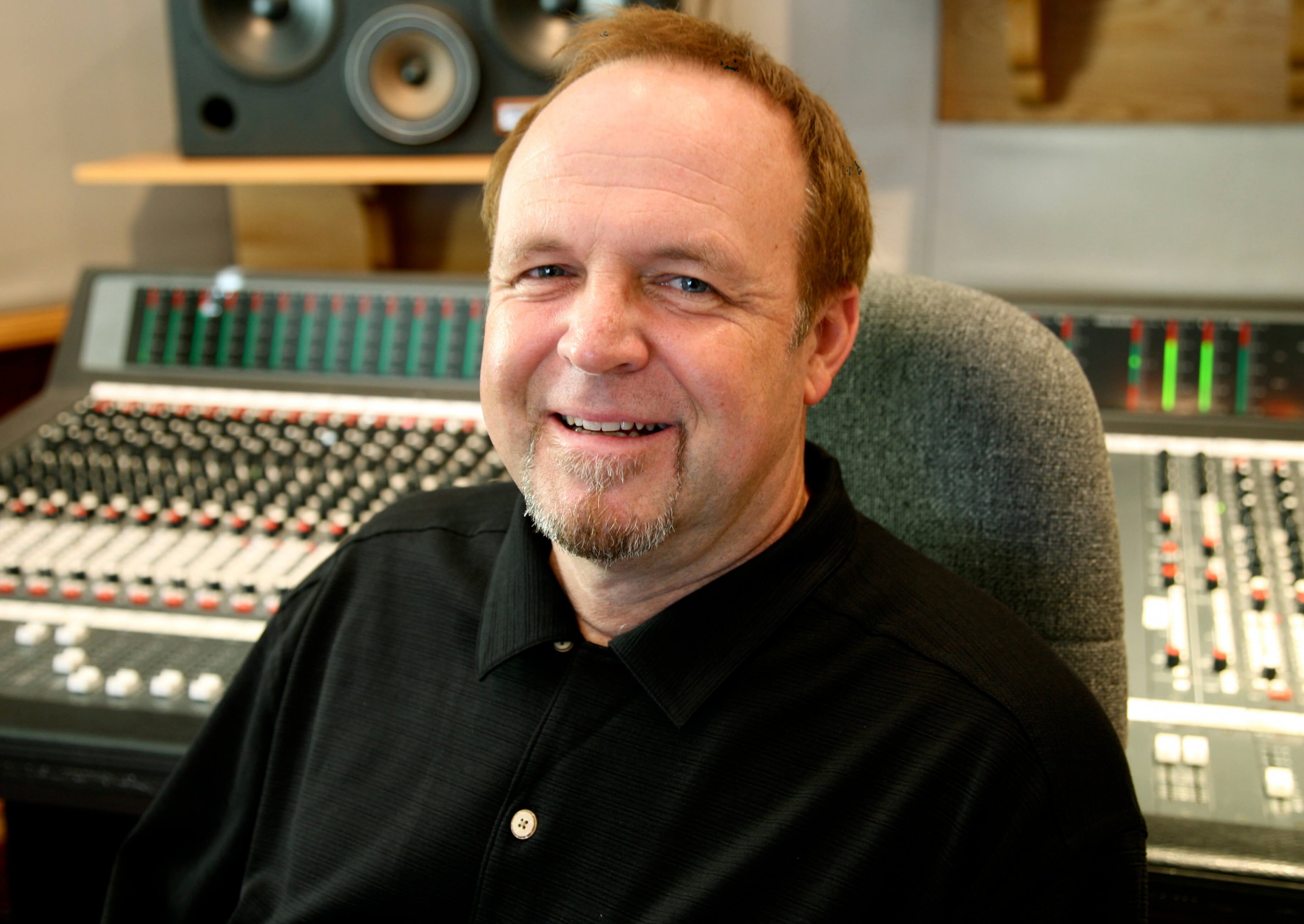
The HBO Max series, Peacemaker, the spin-off from director James Gunn’s The Suicide Squad has become a massive hit for the streaming service, and not a small amount of its popularity comes from its deft use of music. However, while much as been made of the series’ use of under-the-radar or forgotten rock ‘n’ roll and hair metal, composer Kevin Kiner’s work on the series, alongside Clint Mansell, helps set the tone for a show which is by turns outrageous, violent, and surprisingly introspective and thoughtful.
Ahead of this week’s Peacemaker series finale, we spoke with Kiner about his work on the series, as well as his past compositions for the Star Wars and DC universes.
STARBURST: Given your work on both episodic TV and history of weird films, it seems like this is a perfect fit for you. Did it feel like that when you were first approached?
Kevin Kiner: Yeah, in a way, you’re exactly right. I have done weird things like Freaked and Tremors and also a lot of superhero stuff, with Titans and Doom Patrol and even going back to Superboy – way back in the ’80s, I was doing that. Yeah. It felt like a really great fit.
Hair metal is a very important part of Peacemaker‘s storyline. Were the heavy guitars of the score determined from the beginning?
That was a big discussion with James and Clint [Mansell] and myself. I’m not a hair metal aficionado at all, but one of my good friends is Fred Coury, who’s the drummer for Cinderella. He actually played on the soundtrack. He’s all over episode two and other places. I am a little older. I grew up on Led Zeppelin, mostly, and maybe Black Sabbath and even Uriah Heep.
It’s not the same as Led Zeppelin or Sabbath or whatever, but that’s the roots and really, it’s so easy to get there once it’s in you. That’s where it comes from, hair metal. It’s a very easy transition from what I grew up with and even Van Halen or Hanoi Rocks – I mean, the roots are all in the old days.
James Gunn is very much noted for his use of needle drops in his projects. Is that something you have to take into consideration when you’re composing your score?
Again, it was a discussion from the very beginning of how much of the score was going to reflect the needle drops. James Gunn’s knowledge of bands and music is encyclopedic, so he started talking about these things. He started sending us playlists. The entire score, as the show evolves, becomes more orchestral, although the drums are still there – all the way in through episode eight – but not all the time, and the heavy guitars are, are there too, but it becomes more of a hybrid as the drama and the action escalates.
But early on, we really did want to incorporate that sound and I mean, I’m so into it, because, I just loved it. I’m a guitarist and it was so much fun playing. Every kid goes into Guitar Center and starts to get all shreddy and stuff, but nobody really gets to do that for a living. It’s very rare to just be able to shred and, and man – I mean, it’s a guitar player’s dream, right?
Getting to let your inner Steve Vai or Yngwie Malmsteen freak flag fly seems as though it’s a lot of fun.
Yeah, it really was. I mean, gosh – again, I sit around and play those licks all the time and I played them in bands when I was in high school but you very seldom get to do that for a living.
Working with a previously extant property is nothing new for you, obviously. How do you approach the challenges of creating new music which fits within an existing milieu?
Each one is kind of case by case. When I started on Star Wars, George Lucas specifically didn’t want to overuse the John Williams themes. In fact, he didn’t want to use them very much at all, but the style still had to say Star Wars and it still had to come from the Williams well – the way he is, his motifs work and his orchestration, his sensibility.
I studied that a lot, you know, and it was a much bigger challenge for me, studying John Williams. That took way more years than Peacemaker, which was just like, “Oh, I got this.” I didn’t have to really study anything. I just turned it up to 11 and, and, and broke the windows out.
What’s interesting about this is, as you’ve mentioned several times, you collaborated on this score with Clint Mansell, which is a very interesting pairing. Were you excited to collaborate with Clint on the score for Peacemaker?
Clint and I’ve been working together for five or six years now. We started on Titans and went to Doom Patrol and we’re still doing those shows. The collaboration with Clint is – I mean, he is such an interesting writer and he comes from such an outside perspective. That’s what I really dig about working with him, is because he has ideas that nobody else has. You can see from his songs and you can hear it from his soundtracks. I mean, it’s, “Where did that come from?” It’s a different way of looking at the world and hearing things.
Having said that, he really has an encyclopedic knowledge of music and stuff. He knew way more about the ’80s and early ’90s hair metal than I did, and the bands and stuff like that, and their origins and where they were going. It wasn’t difficult at all. Clint’s really into electronics as am I and so, early on in Titans, that became part of the thing: again, the orchestra is still there because it’s superheroes, but it’s really a very heavy electronic score.
That was the concept, especially in Doom Patrol and we brought some of that to Peacemaker. It’s not just hair metal. There’s a lot of electronics going on throughout the score, as well. I think that’s the one thing Clint and I really brought to the property that pushed us in a new direction.
What are the challenges for you as a composer on a streaming series such as Peacemaker, when it’s a mini-series, as opposed to an ongoing series like Titans or Doom Patrol?
Well, first of all, I don’t know that Peacemaker is not continuing. I actually think it might. I don’t actually have any information, but I sort of assumed that it might. I imagine that depends on James Gunn and what he wants to do with it.
But you know, Peacemaker was just like a long movie. It was like an eight-hour movie or it may be a seven-hour running time or something like that and we had quite a lot of time to do it. It was a comfortable schedule. They gave us an orchestra and we got to really do what we wanted. The feedback from James was really positive and when he had notes, they were super intelligible and we understood why he wanted it to change in certain areas from what we’d done. It was one of the most delightful experiences in my career, really.
I mean, you know, Clone Wars was a fantastic experience as well. It’s very seldom when you start to really connect with somebody and you are able to kind of speak in shorthand and deliver what they’re looking for. That was my experience on Peacemaker.
Part of composing is coming up with themes and motifs. Were you mildly bummed you didn’t get to create an opening theme, given the use of Wig Wam’s “Do You Wanna Taste It” or it was just like, “I can’t compete with that”?
That’s one of the greatest openings in the history of television. I defy anybody to find a better one. I mean, it’s up there with any great opening ever and especially in comedic terms. So no, I wasn’t bummed at all. And, and you know, we did get to write a theme and it’s a pretty strong theme, which plays throughout the show. Once we saw that, I’m like, “Holy crap.” It was so fun and I still watch that.
Peacemaker is now streaming in the US on HBO Max.