Shed of the Dead with Emily Booth

Edgar Wright has a lot to answer for; by pitting Simon Pegg and Nick Frost against the living dead, he opened the floodgates to a marauding horde of shuffling flesh-eating films. Many were not worth the ground they climbed out of, but some deserve more than a swift blow to the head. Despite the too-close-for-comfort title, Shed of the Dead is firmly in the latter category. There’s much more to Drew Cunningham’s 2019 comedy-horror than a cheap cash-in.

Headlined by Spencer Brown (Nathan Barley) and Lauren Socha (Misfits), playing mismatched husband and wife Trevor and Bobbi, it featured a supporting cast of well-known faces. Horror royalty Michael Berryman (The Hills Have Eyes), Bill Mosely (The Devil’s Rejects), Kane Hodder (Hatchet), and Emily Booth (Cradle of Fear) all appear and deliver some fantastic moments. There is also some brilliant narration provided by the unmistakable dulcet tones of Brian Blessed.

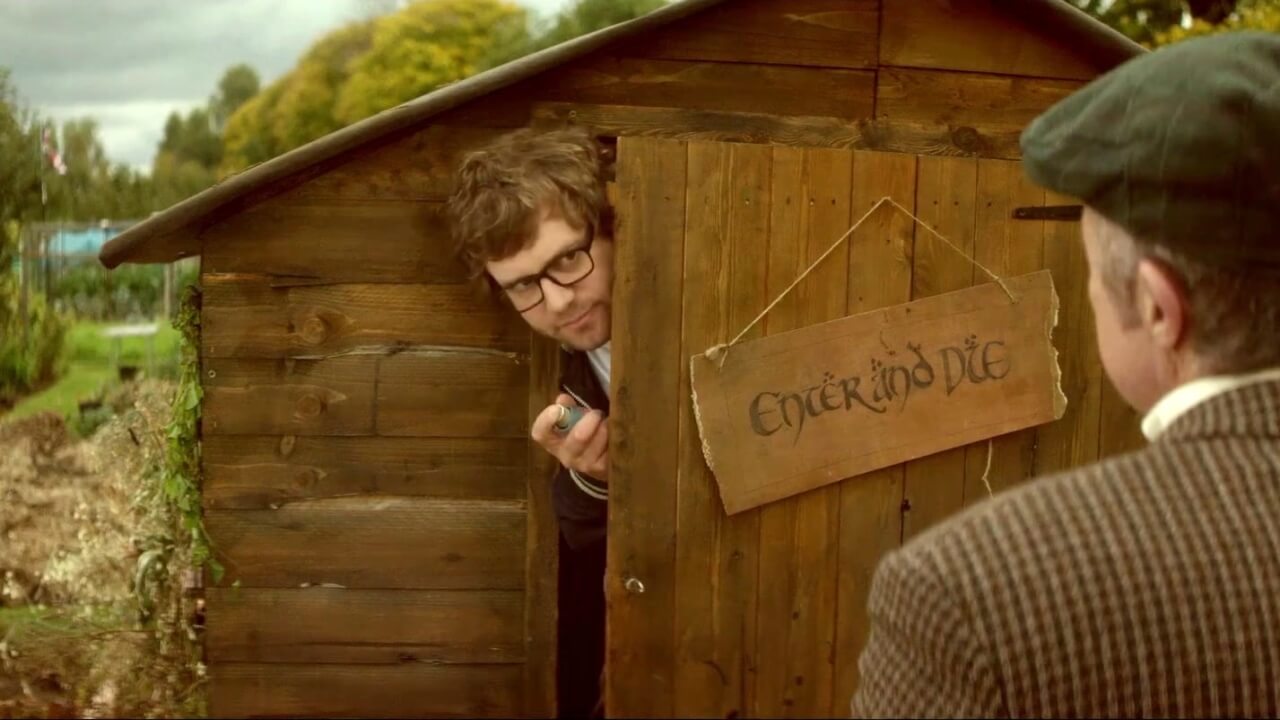
Ewan MacIntosh – deadpan-faced Keith in the UK version of The Office – plays Graham, Trevor’s best mate and fellow gamer. Trevor spends all his time in his shed on an allotment, although he has no interest in growing veg. Instead, he is brewing bootleg vodka and painting his board game figures. These two have a fun line in banter, and there are several cutaway Warhammer-style fantasy sequences in which Trevor and Graham become their sword-wielding alter egos. You’d think this would hold them in good stead when it comes to the inevitable zombie apocalypse. However, in the real world, Trevor is a downtrodden, henpecked, weak (hinted at by being often seen puffing on an inhaler – a bugbear of ours as they never actually use the medication right!) sort. So when the shit goes down, he’s less equipped to cope than most. Trevor and Graham do attempt to do the right thing, however, as they head back to ‘save’ the women.

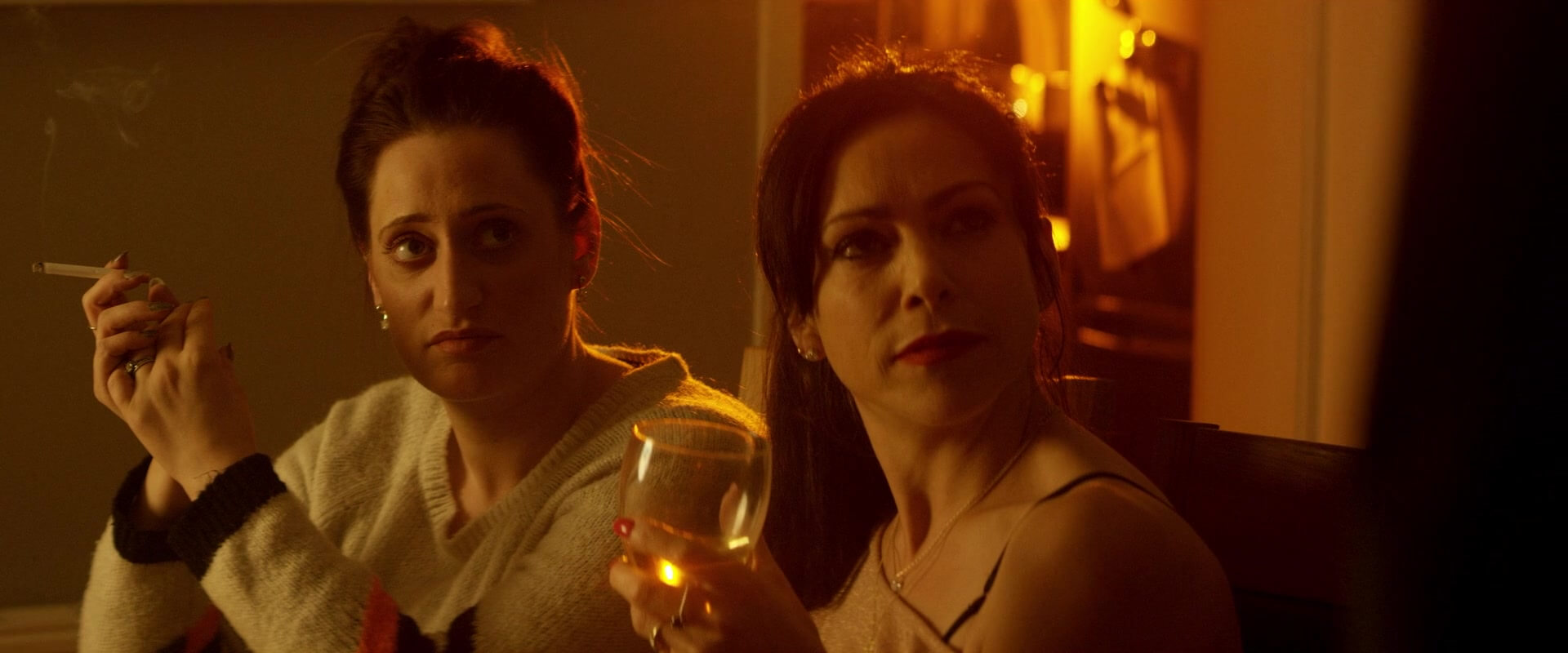
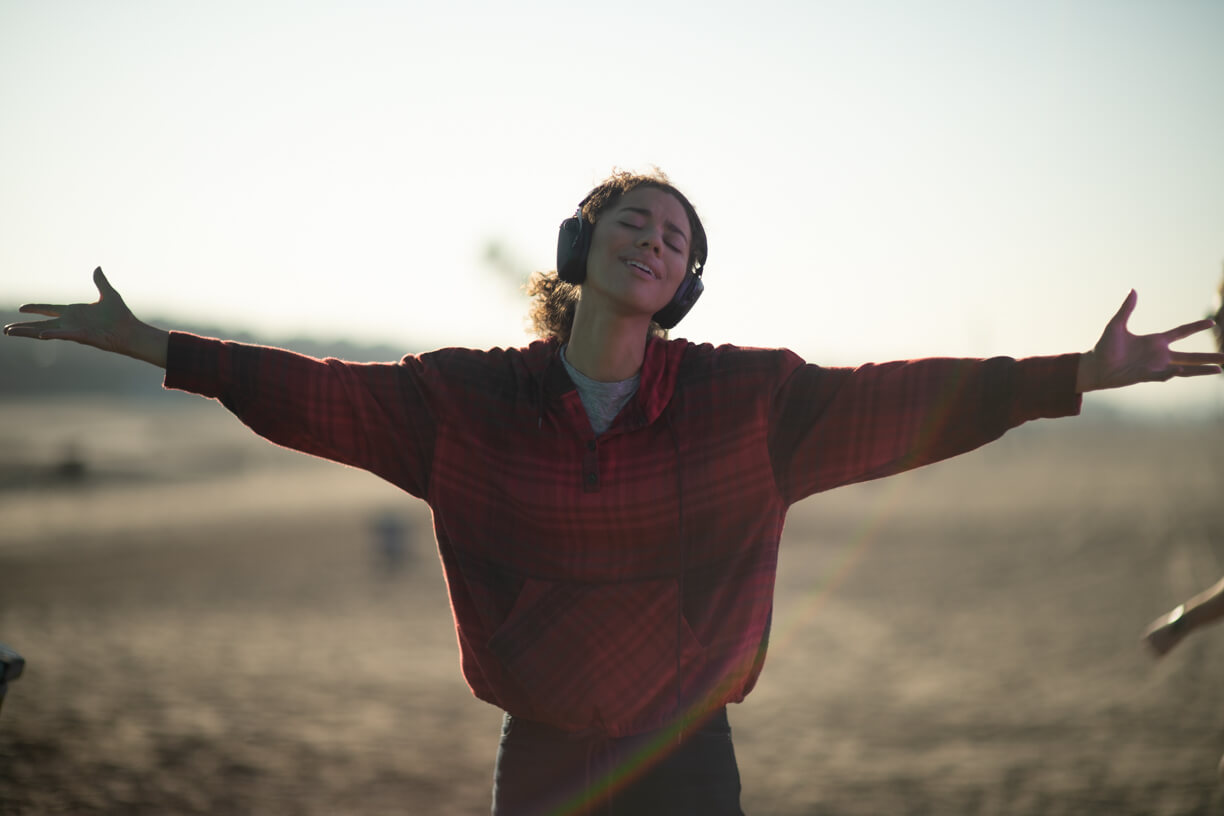
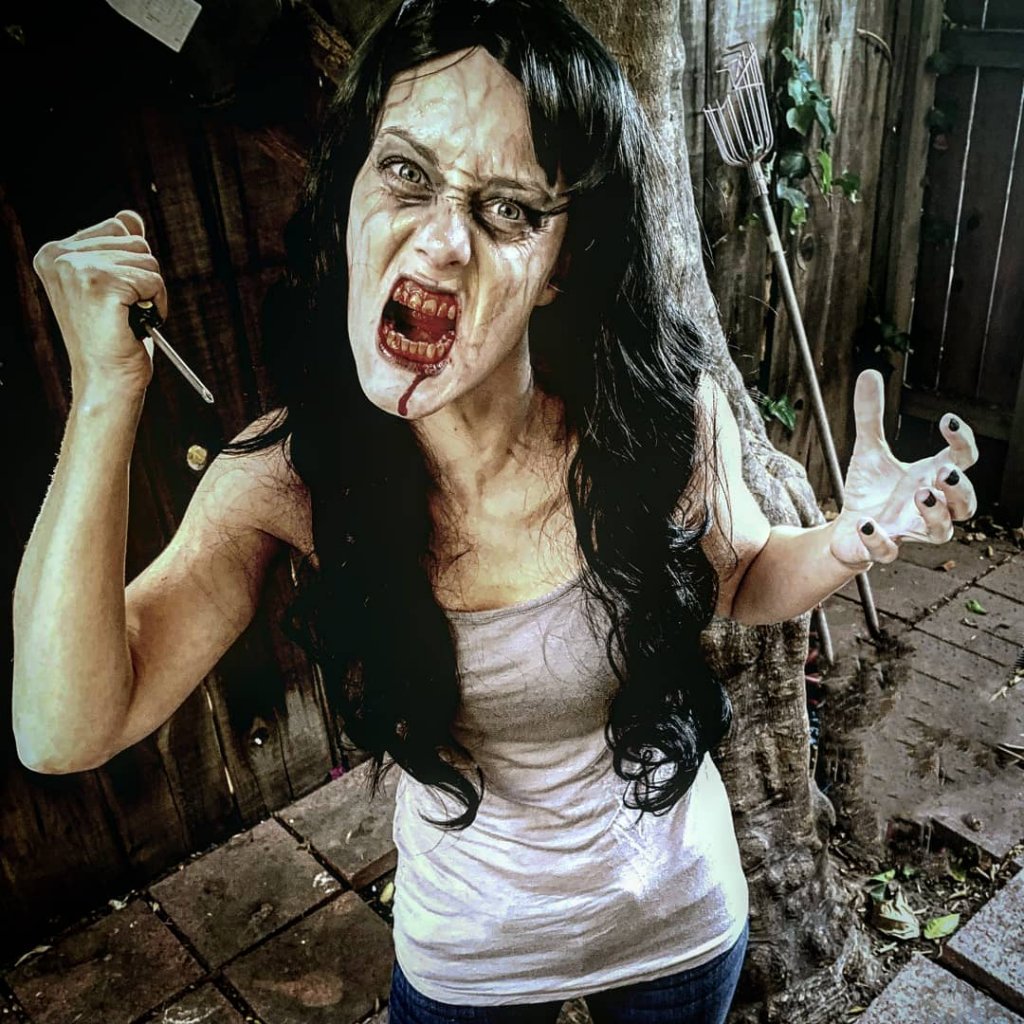
British horror icon Emily Booth plays a fun role as Bobbi’s co-worker at a salon, Harriet. We spoke to her about the film, and the first thing we had to ask was about the scene in which she rode Michael Berryman like a horse. Literally. “I was a little bit apprehensive,” she tells us “but he was an absolute gentleman and game for anything.” As well as having to have Emily his back, Berryman wore leather shorts and a cropped string vest, along with horse ears and a tail (which was attached to a butt plug, but the director didn’t insist on him wearing that, thankfully). “I couldn’t believe how game he was for anything,” Emily reveals, “He must be 70 plus, and he had a really bad back. So he was on his hands and knees, and there’s me on his back, balancing! I’m wearing these riding boots; I’m trying to shuffle along and try not to put my weight on his back. I felt guilty as he’s a legend. I was really surprised how game he was for it.” It wasn’t all stressful, though: “It was a lot of fun, and we got to improvise it. The director Drew just said ‘go on – do your thing’ so we made a lot of stuff up, like the bit about the safe word.

Emily’s character, as you can probably guess, offers more than just haircuts and makeovers. Graham is particularly infatuated with her, going to some quite disgusting measures to ‘be close’ to her. It turns out fine in the end, albeit not the way he envisaged. Working with Ewan was something Emily was looking forward to, having been in touch with The Office actor even before the part came up; “I really liked our twisted zombification-cum-cannibalism-cum-death-scene,” she told us. “I enjoyed the scenes where I’m slowly transforming into a zombie. I had a lot of fun with that because I wanted to slow it down and almost make it an emphatic sort of scene.” Elaborating, Emily said: “I kind of feel was sorry for her, she’s just left, and her friend doesn’t really give a shit about her. Everyone’s laughing and being casual about her turning into a zombie. I guess she sees Graham as her only salvation, but then it turned into this cannibalism. There is that little switch, where we sort of kiss, and it turns into this violent kiss where I pull his tongue out.” This is where Emily was in her element: “I just really enjoy working with the gore, spitting out bits of tongue or human entrails – I just find it fun and amusing.” Laughing as she tells us, it’s obvious the horror fan in Emily is coming out. “Because it was quite a slow turn, I was sitting on the edge of the bath for ages and Drew was just laughing at me. I think because I’m all cross-eyed and dying, and they’re all having a chat and ignoring me.

While Emily’s face wound is a reasonably simple makeup job, she does relish filming those types of scenes: “Behind the scenes, there’s a makeup person with a huge mug of gloopy blood, which is basically treacle and food colouring, things like that, they have to be thick, and it can’t be too runny. And they whack an absolute load in your mouth, and you have to pretend you haven’t got any in your mouth until the moment where you have to throw it up and goo it out. Emily continues, giggling: “So that’s always quite fun, but it plays havoc on your teeth, I think because it is just pure sugar. I always like that moment when it all – bleugh – dribbles out of your mouth really slowly. That’s always fun!

Harriet’s death scene was a clincher for Emily accepting the role, however. “I only agreed to play the part if they changed the entire way I died,” she tells us. “I didn’t like the tone of her death in the original script, so they rewrote it for me, so I respected that about Drew.

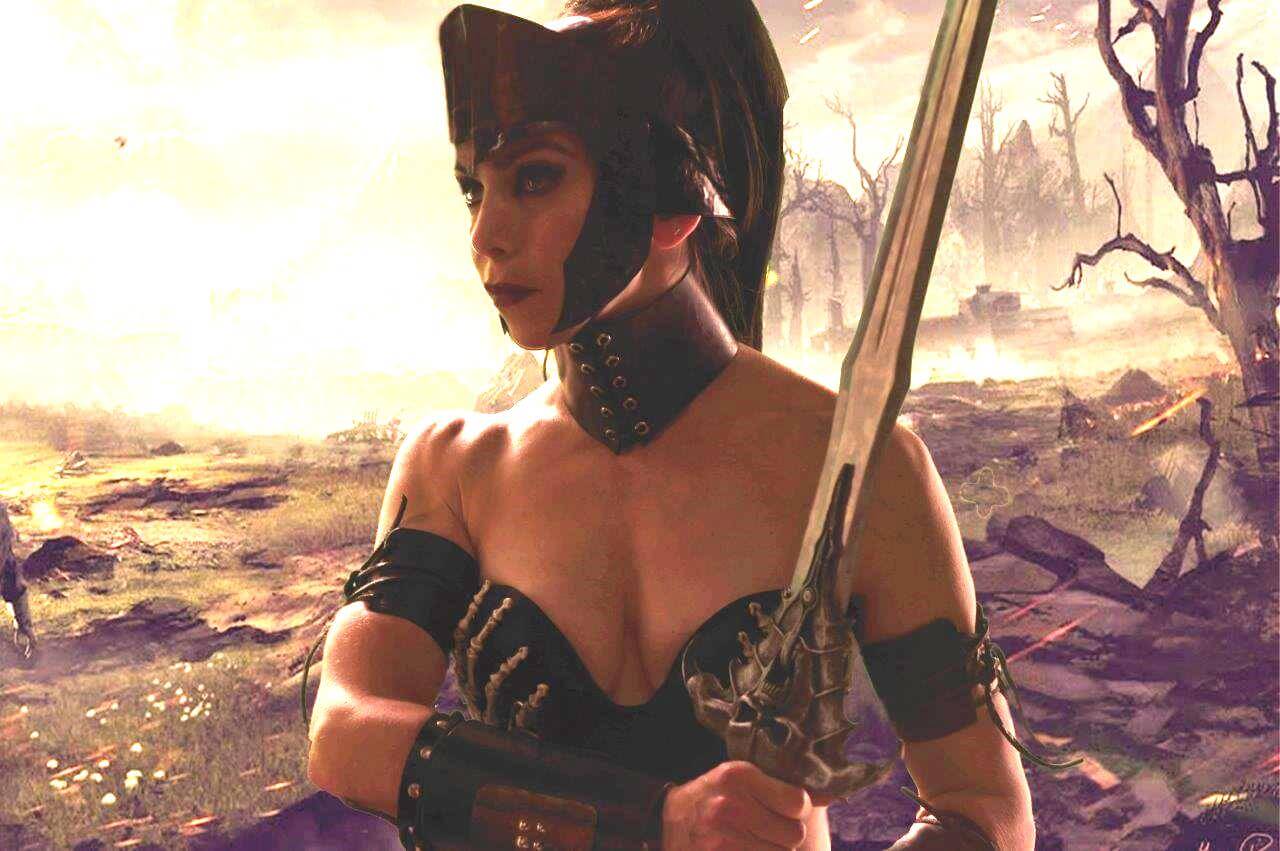
As we mentioned, there are occasional make-believe elements in which the characters are reimagined as their gaming personas. With Graham having the hots for Harriet, it made sense that she’d be part of his LARP fantasy. “That’s another reason I liked the film,” Emily continues, “because I thought there couldn’t be many films where you’re your character and then you get to go into fantasyland and play a manifestation of whatever your RPG character would be.” It wasn’t just portraying a different element to the character Emily enjoyed, “I really loved the costume, but my baby was about eleven months old at that time, and I’d just finished breastfeeding, and they were trying to get this bra to fit me because my boobs kept changing size and it was really heavy because of the bones sewed onto the bra, but I loved doing Moana, I would have liked more from her.

As star-studded as Shed of the Dead is, it never loses its very British soul and humour. Forget expectations of Pegg and Frost and meet another very relatable pair with unusual quirks. And plenty of flesh-eating zombies, of course.

SHED OF THE DEAD screens on Horror Channel. Sky 317, Virgin 149, Freeview 70, Freesat 138. The short film SELKIE, which was co-written and stars Emily Booth is available to view on YouTube.

Tony Jaa | MONSTER HUNTER

tony jaa

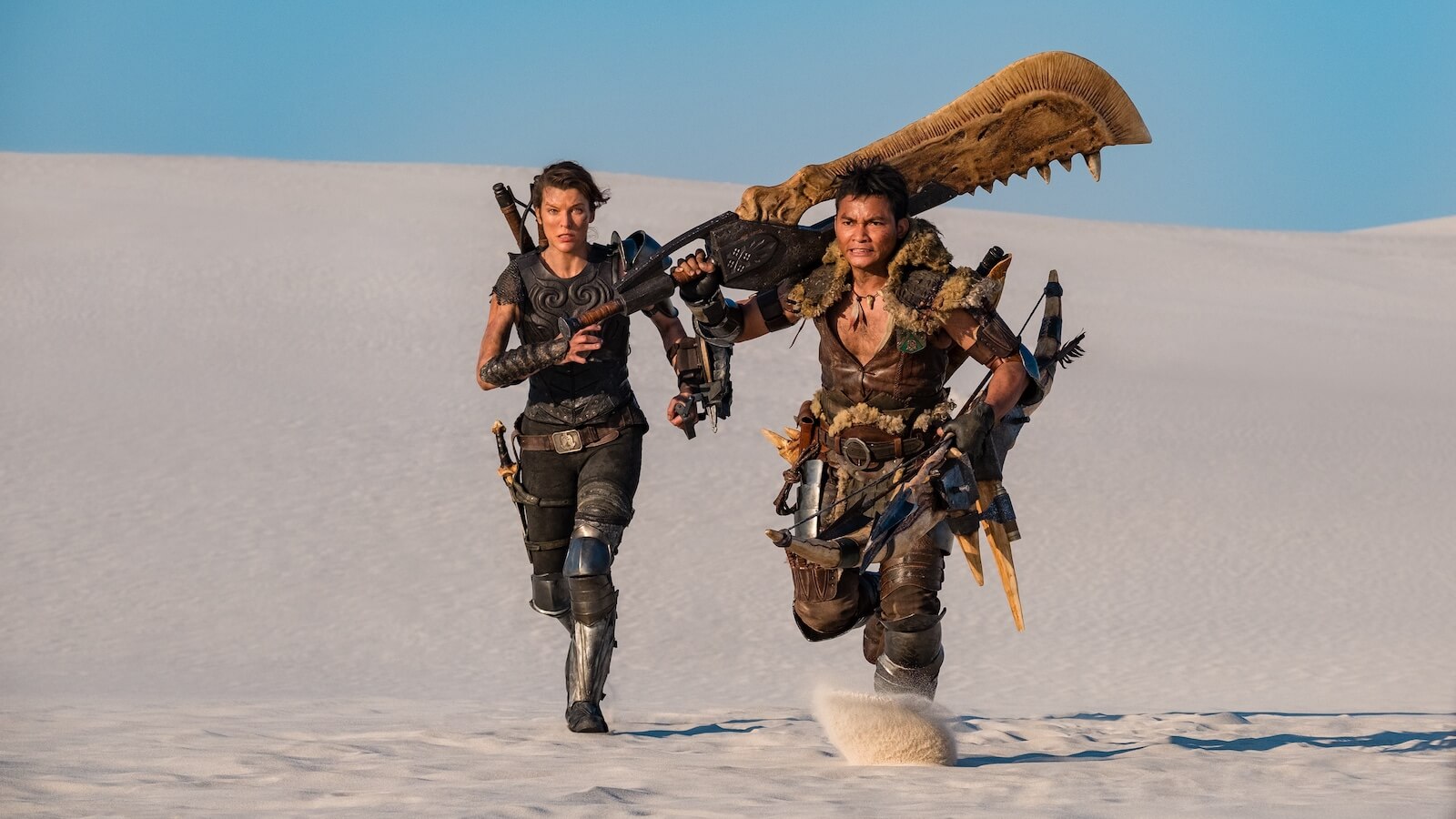
Actor Tony Jaa is known for killer action sequences in the Ong-Bak trilogy, and for causing havoc in the seventh Fast & Furious instalment, and his latest big-screen adventure comes in the form of Monster Hunter. Directed by Paul W. S. Anderson (Resident Evil, Event Horizon), this video game adaptation sees Tony as the mysterious Hunter, alongside Artemis (Milla Jovovich) as they both try to navigate the monster-infested world that they are trapped in! STARBURST catches up with Tony to find out what this action-filled blockbuster was like to work on, and much more…

STARBURST: How did you initially get involved with Monster Hunter, and what attracted you to the role of Hunter?

Tony Jaa: My manager and my agent told me about the film, I thought the idea of adapting the game to a live-action movie was a good one. When I heard Paul was directing, I was very excited.

How would you describe Hunter, to someone who was unfamiliar with the movie?

You must remember Hunter is from a different world. He is a man who has lost his family and his mission in life is to destroy the monsters that were responsible for this.

What did you like the most about working in this video game world? 

I liked the idea of going into a fantasy world. It’s fun and anything is possible.

What do you remember the most about your first day on set, filming Monster Hunter?

I had never been to South Africa before and it was a different and exciting environment for me. The sets were very impressive, I remember thinking “This is going to be fun”, and it was.

Monster Hunter was filmed all over the world, can you elaborate on what that was like, and how the filming process compared to anything else that you had worked on before?

I have filmed in a number of different countries. What was rather unique on this film was the part we filmed in Namibia. It looked like a movie set from another planet, but it was not a set, it was real.

What was it like to work within your costume design? Carrying those huge weapons!

The weapons were really cool, but they were also really heavy. I guess you could say every time I ran with the weapons I got a good workout!

What was Milla Jovovich like to work with, and what do you think she brought to the dynamic between Hunter and Artemis?

Milla was amazing. She is great to work with, wonderful personality and sense of humour. We got along very well. We worked together practising our action scenes, and she really does those very well.

monster hunter

In the film, there is a language barrier between Hunter and Artemis, how interesting was that for you to work on and what do you think it brings to Monster Hunter?

I think it gave a good break for some humour and showed how alien the situation was to both characters. It also forced them to find a way to form a bond.

What was Paul W.S. Anderson like to work with?

Paul is great to work with, his attention to detail is wow! He explains what he wants very clearly, and he has a strong creative vision.

What was your most memorable scene to work on, and why?

I think my fight scene with Milla was my most memorable scene. We really spent time working together on this and got to know each other well. I think that ultimately shows on screen.

Finally, why should STARBURST readers check out Monster Hunter?

Because if they don’t I will hunt them!

MONSTER HUNTER is available to download and keep from September 6th, and to rent on digital, on 4K Ultra HD™, Blu-ray™ and DVD on September 20th.

Alex Noyer | SOUND OF VIOLENCE

alex noyer

With Sound of Violence having just had its UK premiere at Arrow Video FrightFest and hitting Blu-ray and DVD this week, we caught up with writer/director Alex Noyer to talk about the film that bombards all the senses…

STARBURST: Sound of Violence started life as a short, Conductor. Was it always the plan to expand it?

Alex Noyer: Firstly, the short was purely meant to be a short. I just finished and delivered this huge music documentary called 808, and I was exhausted with my documentary career. I needed a new challenge, and my wife told me to get into horror movies because that’s my lifelong passion. And long story short, I was developing a few movies, and I had a lightbulb moment. I was reminiscing about the documentary, which is about the Roland TR 808 drum machine. And I thought, ‘I need to kill somebody with a drum machine’. So then the idea of Conductor came up and very quickly came together. My producing partner Hannu Aukia and I shot it in March 2018, and then we started touring it. The response from festivals was crazy, and I was developing something else at the time. The questions I was getting about Alexis [the character in the short] really got me thinking, so I wrote her backstory. It was potentially going to be another short, but the writing was coming out of me. Because there is a good idea, it just kind of planted a seed and organically continued.

So it developed quite quickly?

I went to Canada in May 2019 and received a lot of interest, so I returned and rewrote the script, so I broke down the script completely and rewrote it in four days. Of course, there’s still some tweaking on how we shot, but that version that I wrote got us the rest of the way to greenlight the movie. The film’s first draft was written in January 2019, and we shot the movie in October 2019. I hope every movie development I have goes like that; the next one will probably take five years to get off the ground!

Did you research the medical condition synaesthesia?

Yes, I think it’s important that people are held accountable for how they write topics like that and try to bring authenticity to it. If it only takes us to research, then we have no excuse to try to get it wrong, and so I researched, and we consulted. As far as hearing loss and how to address the fact that she’s not deaf, she lost her hearing. So how do we address that? Well, never use the word deaf. Okay, no problem. The way we use sign language, the fact that she’s quite clumsy about it, and she speaks at the same time because she lost her hearing, so she was speaking. I never felt the consultation was any way of a hindrance or slowed us down. In fact, it made the writing more effective because it came out like ‘this is how it must be’. Then with synaesthesia, it’s fascinating; it’s called a condition, but I call it an ability because the idea of it being able to see and experience sound is next-level stuff. I realised that synaesthesia is something that is very individualised. There’s no one way to picture it.

You do a good job of putting it on screen, though…

Again, through research, I realised that we could really craft synaesthesia for Alexis, and, perhaps from my Nordic origins, I thought of the Northern Lights; to kind of float. I knew I couldn’t just have blue blues and greens; I needed to have something a little bit more psychedelic, so we expanded it, and some of them needed to be a bit fiery; we needed to be able to create the sense of the harshness of certain sounds. I hope you can hear how much fun it was to craft this. The research was never a hindrance, just all inspiration; like the murders, I tried everything I could. I was like a mad scientist trying to piece things together.

That brings us to the murders. There’s one scene – which we won’t spoiler – in the studio that features a great surprise.

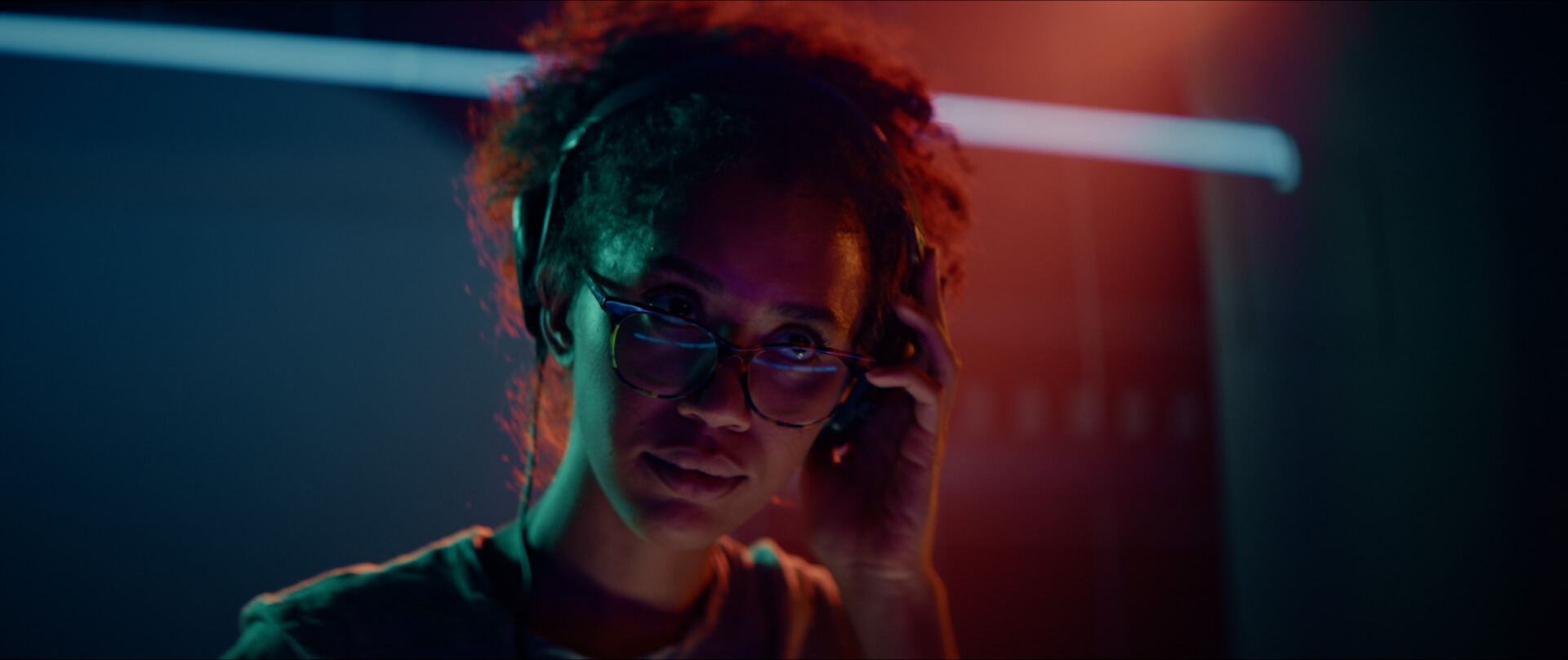
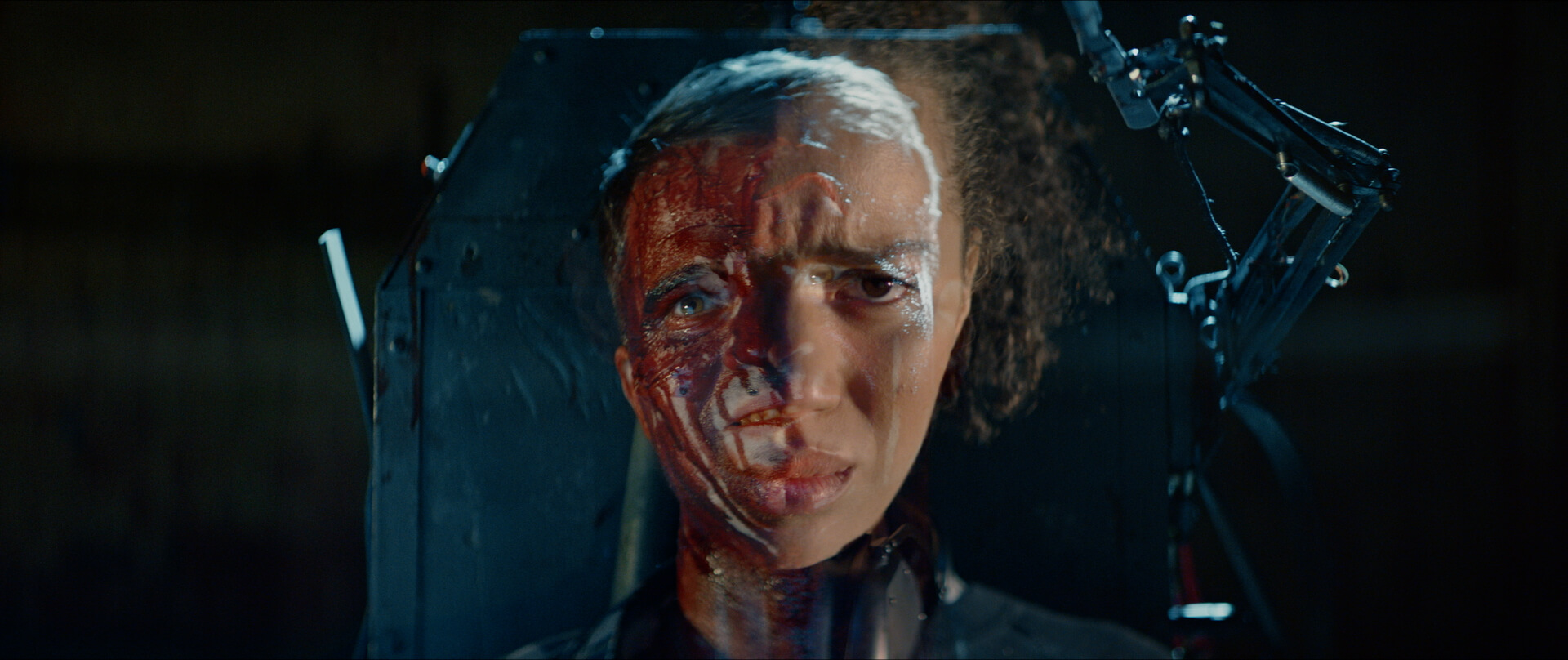
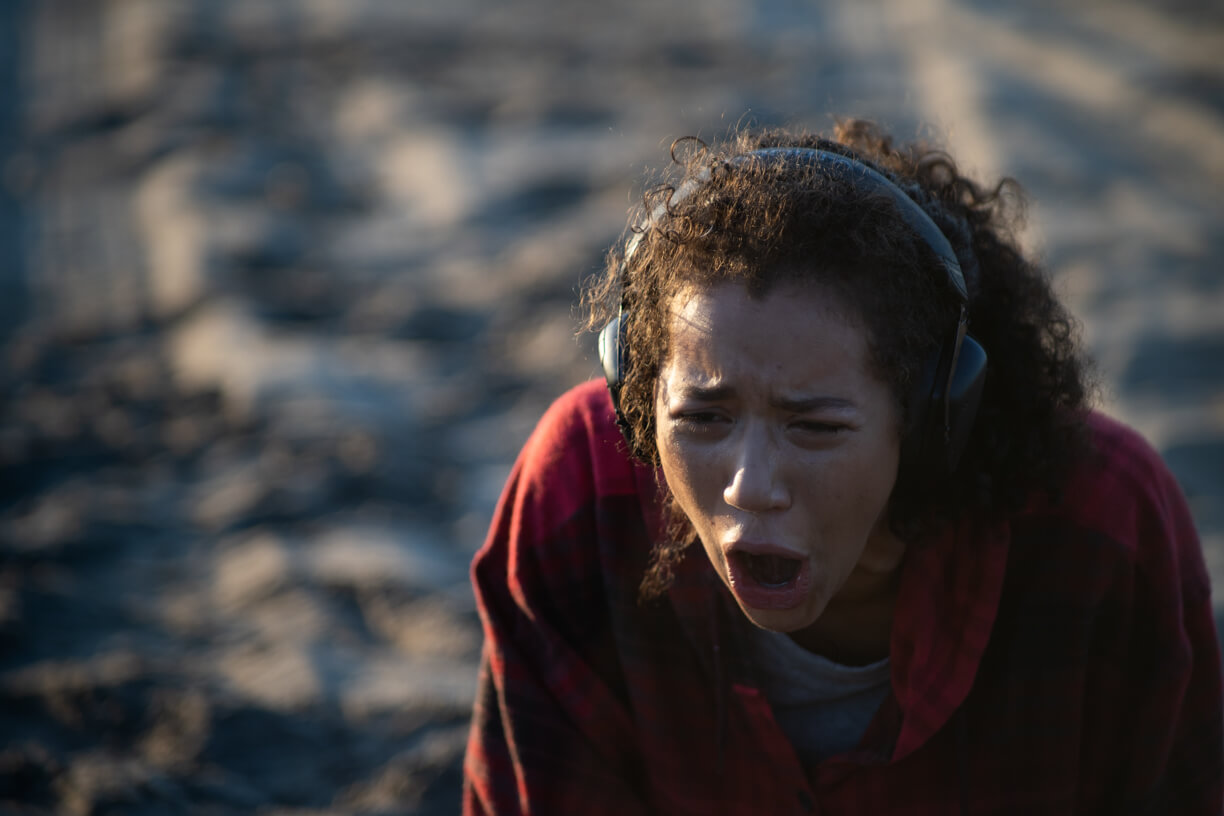
Yeah, that’s a great effect. It’s a great shock as well, but you get a bit of a giggle out of it, and you’re supposed to. That scene is a pivotal moment in the movie because it’s a pivotal moment for Alexis where she’s like, “that’s it”. Especially because of the classroom event, it’s like all bets are off. And, because of the person as well in the booth! This is the moment where we take the handbrake off. It’s funny that you mentioned it because I love that scene as it’s the film’s turning point. And also, as far as the audience, this is the moment where some are like, “What are you doing? How dare you!” And I’m like, “I know!” After that, there’s an emotional crescendo, but we needed that moment of relief, and you have the comedic effect, which is very much on point. Some people have said what movie is that you are making? You keep shifting your tone, and I say, “Are you realising what psychological rollercoaster this is for Alexis? The dread, the lightness and the catharsis she’s going through. It’s going in every direction”. With the amazing performance of Jasmin [Savoy Brown], it all comes across. Look at her eyes; she acts with her eyes and brings so much to it, and all those moments are there, not just from my choice of writing. She brings them, and the climax of that studio scene sees her reaction and tells me it doesn’t feel like she got it. I don’t even want to think about how the movie would be without Jasmin. She is a force to be reckoned with, and I can’t wait to see Scream. I hope she has a prominent role in the movie because she’s great. If we did this movie today, I probably would not get her in any of my films, so I’m very lucky.

What was the casting process like?

We had an amazing casting director called Amey René, and she’s the one who suggested Jasmin. I was like, “Oh my god, this is such a good idea”. I loved The Leftovers, and she stood out to me, so I immediately wanted her. Then we met, and that was it, I had met Alexis! When it came to the role of her friend Marie, we looked at various options, but I always had an eye on Lili [Simmons], but she wasn’t going to be available, so I had to look again. Lili then became available. Okay, this is amazing. And James Jagger is one of those actors that I had in mind to work with for a while, and so when I was crafting the role of Duke, I remember he’s one of the people I had in mind. He read the script and came in and took on the role. When we met him, he admitted that he was mad at me as far as the ending, and I was like, “This is great because you should be!” We really hit it off, and this was helped by the fact that we support the same football teams – we’re both Arsenal fans.

What was it like directing your first feature?

It was daunting. Then once we got going, I was really great. The good thing is I surrounded myself with amazing people. My cinematographer, Daphne [Qin Wu], is fantastic. My producing partner, Hannu, has worked with me on the short, so he knows my process. He knows what I’m going to drive him nuts with! What he always said is that the one thing I know is I know what I want. And I’m very clear about what I want. And therefore, my focus is always on performance. I never touched a camera. I’m all about performance because I surrounded myself with such a great team. My blood wizard Robert Bravo, who did the practical effects, and Gillian Chance, the production designer, know me because most of them worked with me on the short. So there was a really strong bond. We often say that the director is the least qualified on set, and that’s because we’re surrounded by amazing specialists, who we should trust the abilities of, and we have to explain clearly what we want. Then let leave it to them to come back with solutions. This was a 20-day shoot – fast, fast, fast – but I’m so proud of how we delivered it, and it’s so exciting.

What about the gallery scene – that’s a really shocking moment…

Did you flick your fingers during it? [Laughs] I can tell you when we shot it, Hannu got a bit queasy! I was behind the wall watching my monitor, and there was this echo in the gallery, so I was shouting my instructions, and I have a pretty deep voice, so that was echoing over the room! The scene was quite intense for everybody to watch, so occasionally, there was a little bit of chatter, and they would hear me, “silence!” It was a crazy thing to shoot and a tricky one as well to craft. It seems extremely simple, but he’s actually, you know, we had to do with local audience boy we had to really figure out the mechanism. I’m the son of an artist, and I grew up in the art world, so the idea of shooting a horror scene in the gallery was amazing. I would say it’s the most giallo scene of the movie; the contrast, the colours, the way we were shooting it upward and everything. It doesn’t start as such, and that you know we’re quite level where we’re in that crowd, but then as soon as we’re on the main attraction, you see how we lowered up. Plus, we have Tara [Elizabeth Cho], the harpist; this was her first role in a feature film. She was first brought on because of her musical skills, but she really owned it, and I need to praise her because she did a fantastic job and was relentless. She was like, “No, no, no, I’m good”. She was tireless and kept going and again. I can’t say anything because I don’t want to spoil it, but it’s a pretty intense scene to shoot and the craft of Robert Bravo to make it work. Again going back to surrounding myself with specialists, Robert Bravo had my back; he knows that I’m a stickler for how practical effects have to look; I’m a stickler for how blood looks. He knows me very well. He knows that I am never rude or anything, but there’s one thing I will not go with is blood that doesn’t look the way I want it to; we’re talking flow, luminescence, colour, everything, and he gets me. That’s why I call in my blood wizard! The first award our short won was for the special effects, and he deserves it completely, absolutely.

Were there scenes that you wanted to film that you couldn’t?

I wrote a few other murders. One was initially in the ending, and it was just too big. It was completely out of sync with the balance of the film. Budget-wise, I think it would have been way too expensive. So maybe it’s something that I’ll bring back if somebody is crazy enough to let me do a sequel. In my research about instruments and about what crazy things I could do with them, a few things could have happened. I’m very happy with the selection, though, and the ones that we cut would have just affected the balance of the film, so I wanted to keep everything very human-scaled

What’s next for you?

There are two things I’m working on. I’m writing a horror movie that is a Nordic-based story. That’s going to be something that I’m writing and directing, and I’m in talks with a couple of studios, so let’s see. I’ve also been approached to direct a PG-13 horror movie, which my daughters are very happy about. Yeah, because they can’t see Sound of Violence. I never stop, and I’ve had a couple of other conversations about interesting things, and who knows, maybe one day there’ll be a sequel to Sound of Violence.

Sound of Violence is on Blu-ray and DVD now from Dazzler Media. You can read our review here.

Joe Abercrombie – Wisdom of Crowds Exclusive Excerpt

Fans of grim-dark fantasy know that Joe Abercrombie is the finest writer in the field. His latest novel, The Wisdom of Crowds completes The Age of Madness series and we’ve been able to bring you an extract of this new exciting novel ahead of release.

You can pre-order the novel: here, and if you’re lucky enough to live in Scotland, you catch a live interview courtesy of the Cymera Festival here. If you’re not in Scotland, don’t worry, the event will be live-streamed, you can find out more details via the link.

You can find out everything about Joe’s work on his website,  joeabercrombie.com and follow him on twitter @LordGrimDark, and find out about future books from Gollancz via @gollancz


Change

‘You must confess,’ said Pike. ‘It’s impressive.’

‘I must,’ said Vick. And she wasn’t easily impressed.

The People’s Army might have lacked discipline, equipment and supplies, but there was no arguing with its scale. It stretched off, clogging the road in the valley bottom and straggling up the soggy slopes on both sides, until it was lost in the drizzly distance.

There might’ve been ten thousand when they set out from Valbeck. A couple of regiments of ex-soldiers had formed the bright spearhead, gleaming with new-forged gifts from Savine dan Brock’s foundries. But order soon gave way to ragged chaos. Mill workers and foundry workers, dye-women and laundry-women, cobblers and cutlers, butchers and butlers, dancing more than marching to old work songs and drums made from cookpots. A largely good-natured riot.

Vick had half-expected, half-hoped that they’d melt away as they slogged across the muddy country in worsening weather, but their numbers had quickly swelled. In came labourers, smallholders and farmers with scythes and pitchforks – which caused some concern – and with flour and hams – which caused some celebration. In came gangs of beggars and gangs of orphans. In came soldiers, deserted from who knew what lost battalions.

In came dealers, whores and demagogues, dishing up husk, fucks and political theory in tents by roadways trampled into bogs. There was no arguing with its enthusiasm, either. At night, the fires went on for miles, folk drawing dew-dusted blankets tight against the autumn chill, blurting out their smoking dreams and desires, talking bright-eyed of change. The Great Change, come at last. Vick had no idea how far back that sodden column went now. No idea how many Breakers and Burners were part of it. Miles of men, women and children, slogging through the mud towards Adua. Towards a better tomorrow. Vick had her doubts, of course. But all that hope. A flood of the damn stuff. No matter how jaded you were, you couldn’t help but be moved by it. Or maybe she wasn’t quite so jaded as she’d always told herself.

Vick had learned in the camps that you stand with the winners. It had been her golden rule ever since. But in the camps, and in all the years since she left them, she’d never doubted who the winners were. The men in charge. The Inquisition, the Closed Council, the Arch Lector. Looking down on that unruly mass of humanity, fixed on changing the world, she wasn’t so sure who the winners would be. She wasn’t sure what the sides were, even. If Leo dan Brock had beaten Orso, there might have been a new king, new faces in the Closed Council, new arses in the big chairs, but things would’ve stayed much the same. If this lot beat Orso, who knew what came next? All the old certainties were crumbling, and she was left wondering whether they’d ever been certainties at all, or just fools’ assumptions.

In Starikland, during the rebellion, Vick had felt an earthquake. The ground had trembled, books had dropped from shelves, a chimney had fallen into the street outside. Not for long, but for long enough, she’d felt the terror of knowing all she’d counted on as solid could in a moment shake itself apart.

Now she had that feeling again, but she knew the quake had only just begun. How long would the world shiver? What would still be standing when it stopped?

‘I notice you are still with us, Sister Victarine.’ Pike clicked his tongue and nudged his mount down the slope, towards the head of the bedraggled column.

Vick had a strong instinct not to follow. But she did. ‘I’m still with you.’

‘So you are a convert to our cause?’

There was a hopeful piece of her that wanted to believe this could be Sibalt’s dreams of a better world coming true and was desperate to see it happen. There was a nervous piece of her that smelled blood coming and wanted to cut out that night and run for the Far Country. There was a calculating piece that reckoned the only way to control a mad horse is from the saddle, and the danger of keeping your grip might be less than the danger of letting go.

She looked sideways at Pike. In truth, she was still trying to work out what their cause really was. In truth, she reckoned there was a different cause for every one of those little dots in the People’s Army. But this was no time for the truth. When is? ‘I’d be a fool to say I’m not at all convinced.’

‘And if you said you were entirely convinced, I would be a fool to believe you.’

‘Since neither of us is a fool . . . let’s just say maybe.’

‘Oh, we are all fools. But I enjoy a good maybe.’ Pike showed no sign of enjoyment or of anything else. ‘Absolutes are never to be trusted.’ Vick doubted the two leaders of the Great Change riding towards them across the grassy slope would have agreed.

‘Brother Pike!’ called Risinau, with a cheery wave of one plump hand.

‘Sister Victarine!’

Risinau worried Vick. The one-time Superior of Valbeck was considered a deep thinker, but far as she could tell he was an idiot’s notion of a genius, his ideas a maze with nothing at the centre, heavy on the righteous society to come but light as air on the route they’d take to get there. The pockets of his jacket bulged with papers. Scrawled theories, manifestos, proclamations. Speeches he whined out to eager throngs whenever the People’s Army halted. Vick didn’t like the way the crowd greeted his flowery appeals for reason with shaken weapons and howls of approving fury.

She never saw more damage done than by folk acting on high principle. But Judge worried Vick a lot more. She wore a rusty old breastplate rattling with stolen chains over a ball gown crusted with chips of cracked crystal, but she sat her saddle astride not aside so the flounce of tattered petticoats was gathered up around her thighs, her muddy bare feet shoved into battered cavalry stirrups. Her face was like a bag of daggers, lean jaw angrily clenched, black eyes angrily narrowed, her usually flaming crest of hair turned brown by the rain and plastered wetly down one side of her skull. Principles only interested her as an excuse for mayhem. When her Burners had taken the courthouse in Valbeck, her jury had found no one innocent and the one sentence she’d given was death.

If Risinau was forever gazing up, no thought for the wreckage he was stepping through, Judge was glaring down, trying to trample everything she could. And Pike? There were no clues on the ex-Arch Lector’s burned mask of a face. Who could say what Brother Pike was after?

Vick nodded towards grime-streaked Adua, its pall of smoke inching irresistibly closer. ‘What happens when we get there?’ ‘Change,’ said Risinau, smug as a rooster. ‘The Great Change.’

‘From what, to what?’

‘I am not blessed with the Long Eye, Sister Victarine.’ Risinau giggled at the thought. ‘From the pupa alone it is hard to know what kind of butterfly might emerge to greet the dawn. But change.’ He wagged a thick finger at her. ‘Of that you can be sure! A new Union, built from high ideals!’

‘The world doesn’t need changing,’ grunted Judge, black eyes fixed on the capital. ‘It needs burning.’

Vick wouldn’t have trusted either one of them to herd pigs, let alone to herd the dreams of millions into a new future. She kept her face blank, of course, but Pike must have caught some hint of her feelings. ‘You appear to have doubts.’

‘I’ve never seen the world change quickly,’ said Vick. ‘If I’ve seen it change at all.’

‘I begin to think Sibalt liked you so because you were his opposite.’ Risinau laid a playful hand on her shoulder. ‘You are such a cynic, Sister!’

Vick shrugged him off. ‘I think I’ve earned it.’

‘After a childhood stolen in the camps,’ said Pike, ‘and a career of making friends to betray for Arch Lector Glokta, how could you be otherwise? But one can be too cynical. You will see.’

Vick had to admit she’d been expecting the Great Change to collapse long before now. For Judge and Risinau to move past bickering to tearing each other apart, for the fragile coalition of Breakers and Burners, moderates and extremists, to shred into factions, for the resolve of the People’s Army to dissolve in the wet weather. Or, for that matter, for Lord Marshal Rucksted’s cavalry to crest every hill she saw and carve the ragged multitude to pieces.

But Risinau and Judge continued to tolerate each other and the King’s Own made no appearance. Even now, as the rain slacked off and they marched into the ill-planned, ill-drained, ill-smelling maze of shacks outside the walls of the capital, water spattering from the broken gutters and into the muddy lanes below. Maybe Orso’s forces had been fought out against Leo dan Brock. Maybe there were other uprisings to deal with. Maybe these strange times had stretched their loyalties in so many directions they hardly knew who to fight for any more. Vick knew how they felt as the sun showed through, and she caught her first glimpse of the gates of Adua.

For a moment, she wondered whether Tallow was in the city. Fretted that he might be in danger. Then she realised how foolish it was to worry over one person in the midst of all this. What could she do for him, anyway? What could anyone do for anyone?

Risinau nervously eyed the damp-streaked battlements. ‘It might be wise to take a cautious approach. Deploy our cannon and, er—’

Judge gave a great snort of disgust, dug her bare heels into her horse’s flanks and rode forwards.

‘One cannot fault her courage,’ said Pike.

‘Just her sanity.’ Vick was rather hoping for a shower of arrows, but it never came. Judge trotted on towards the walls, chin scornfully raised, in eerie silence.

‘You inside!’ she screamed, reining in before the gate. ‘Soldiers of the Union! Men of Adua!’ She stood in her stirrups, pointing back at the horde crawling up the soggy road towards the capital. ‘This is the People’s Army, and it’s come to set the people free! We only need to know one thing from you lot!’ She held high one clawing finger. ‘Are you with the people . . . or against ’em?’

Her horse shied, and she ripped at the reins and dragged it around in a tight circle, that finger still extended, while the thunder of thousands upon thousands of tramping feet grew steadily louder. Vick flinched at an echoing clatter from behind the gates, then a slit of light showed between the two doors and, with a creaking of hinges in need of oil, they swung slowly open. A soldier leaned from the parapet, grinning madly and waving his hat.

‘We’re with ’em!’ he bellowed. ‘The Great Change!’

Judge tossed her head, and dragged her horse from the road, and with an impatient flick of her arm beckoned the People’s Army forwards.

‘Fuck the king!’ screeched that lone soldier, to a wave of laughter fromthe oncoming Breakers, and he took his life in his hands by shinning up the wet flagpole to tear down the standard above the gatehouse.

The High King’s banner, which had flown over the walls of Adua for centuries. The golden sun of the Union, given to Harod the Great as his emblem by Bayaz himself. The flag folk had knelt to, prayed to, sworn their loyalty to . . . came fluttering down to lie in the puddle-pocked road before the gate.

‘The world can change, Sister Victarine.’ Pike raised one hairless brow at Vick. ‘Just watch.’ And he clicked his tongue and rode on towards the open gates.

So it was with almost over-heavy symbolism that the People’s Army marched into Adua, trampling the flag of the past into the mud.

The Wisdom Of The Crowds is available from 18th September and pre-orders can be made by clicking here.

Andrew Lee Potts | 400 BULLETS

potts 400 bullets

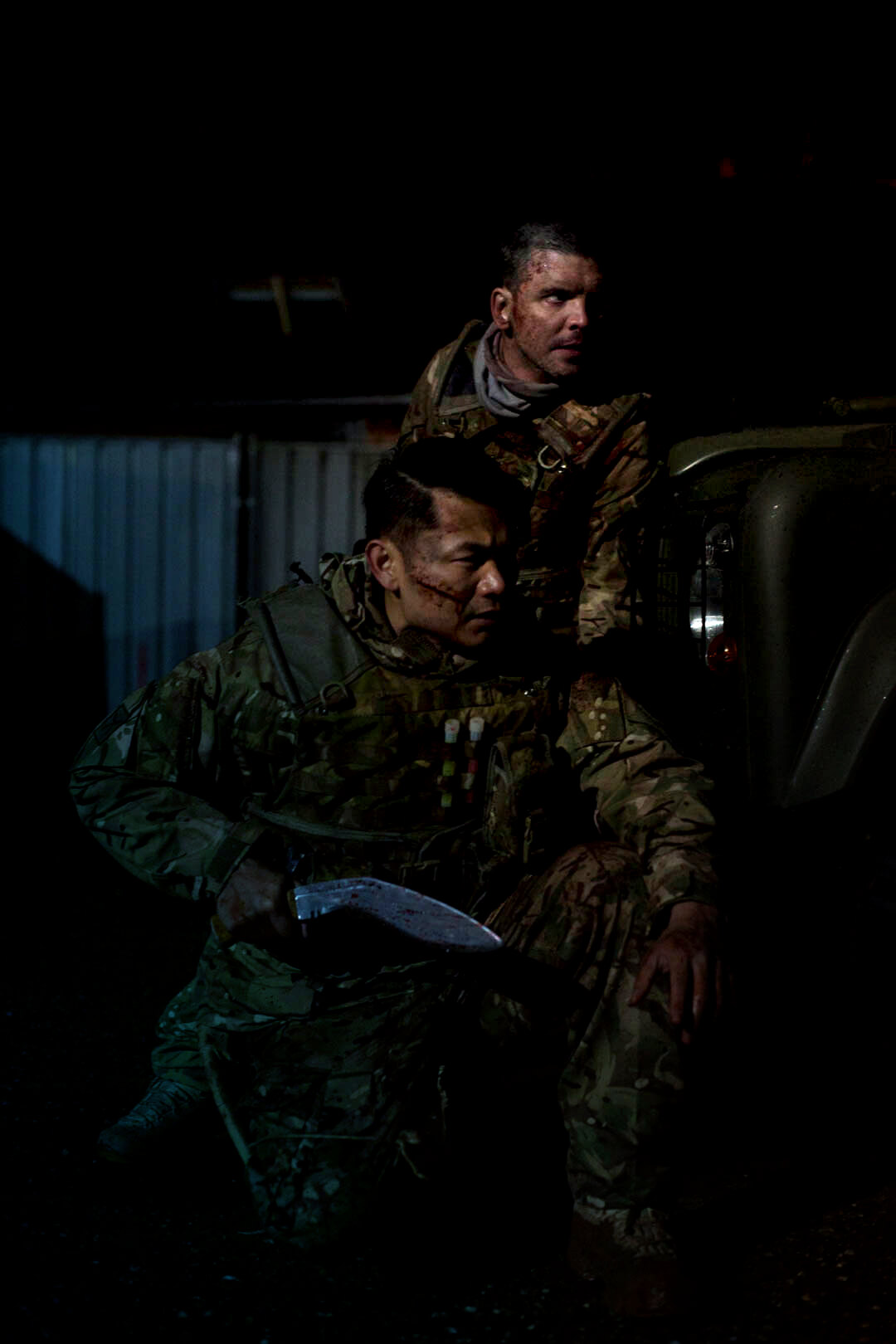
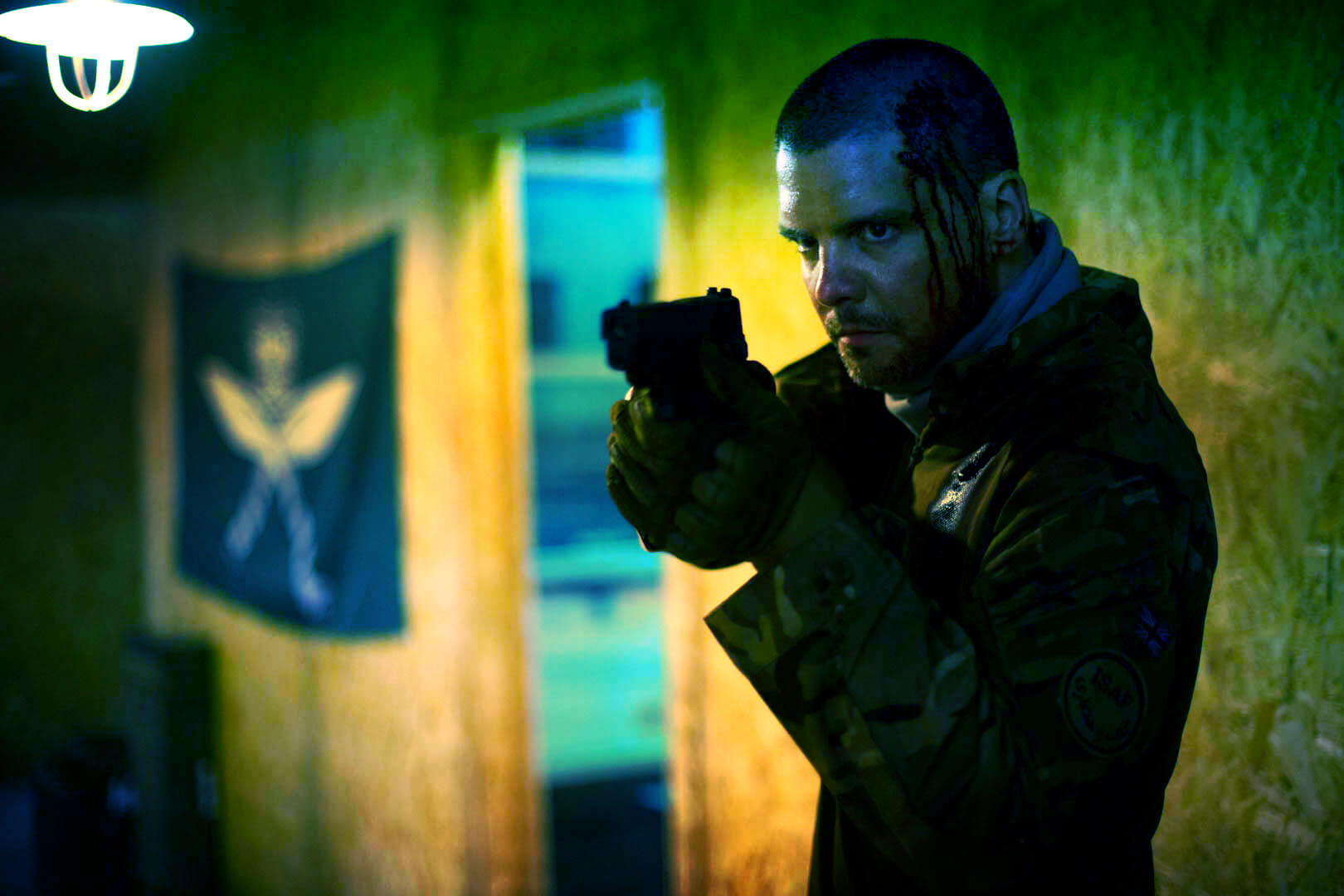
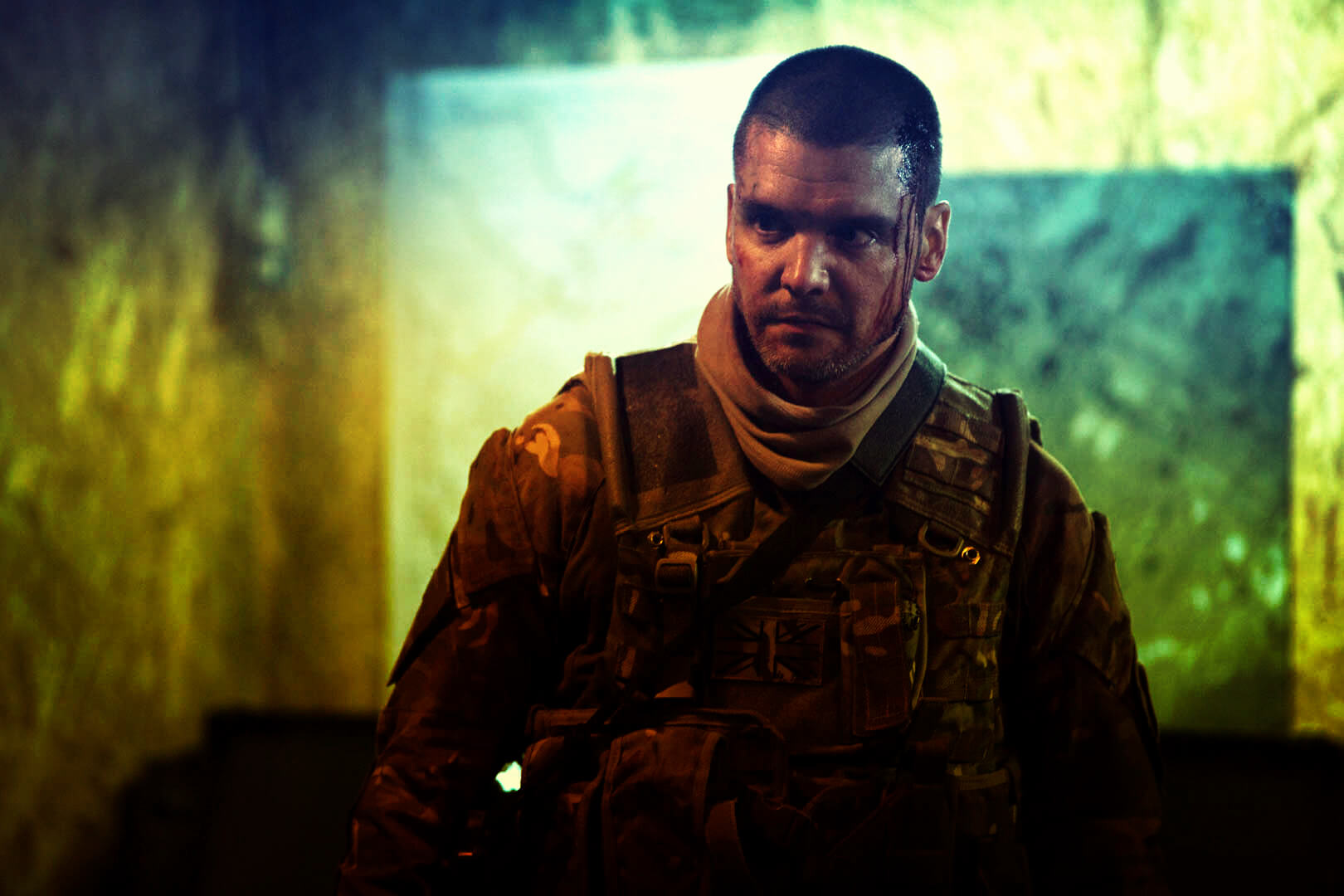
400 Bullets is the latest film from writer/director Tom Paton and stars Andrew Lee Potts (Primeval) as Noah a soldier and Jean-Paul Ly (Nightshooters) as the Gurkha Rana, respectively, who are stationed in Afghanistan, fighting to keep some missile guidance chips from falling into the wrong hands. We caught up with the former to find out more about the film and get an exclusive reveal of something to come…

STARBURST: This is quite a departure for you – what prep did you have to do?

Andrew Lee Potts: Oh God! I didn’t really do any, it happened so quickly. I shaved my head, went up and talked to Tom at the studio, and that’s about it. He told me what we were planning to do and before I knew it, I was shooting it. We had a stunt coordinator, Spencer Collings, who’s a military advisor, but taught me exactly the right way to hold the gun and make it realistic. He wouldn’t let us do it Hollywood style, everything’s close and tight to the body. It’s all really efficient and you know he’s really into it.

So was it physically demanding?

Oh yeah! The physical side of it was. I was used to a lot of physicality, in the work that I’ve done previously, but this was brutal. We did mostly night shoots and I used to text Tom in a morning with pictures of all my new bruises! My body was covered in bruises. I’m not even joking, bruises like you can’t even imagine. So I used to do like a daily update of how you were harming your actor [Laughs].

My first day was the fight scene where I get stabbed in the shoulder and he bust my nose. Literally straight off the bat, in the in the first take and my nose is gushing! So it was all fun and games.

What was it like working with Jean-Paul Ly?

JP is just amazing, he’s such a lovely dude as well. He helped me a lot with the fight stuff and the way to shoot it. I don’t think you’ll find anybody who’ll say he’s not a nice dude. He was so caring and amazingly focused on his job. And when he just switched it on and he did his stuff, you have all the men in the room mesmerised by it. He had to tone it down a little bit, because he’s capable of so much more. But we had to keep it as real as we could, with a Gurkha skill set in stone.

What was the shoot like?

It was freezing, it was December, and we were shooting outside, all at night. So it was a slog but the crew was amazing. It was one of the most favourite jobs that I’ve ever been on because everybody was just gunning for it, they were loving it.

How was Tom as a director?

I loved working with Tom. I knew of Tom’s work and he knew of mine. And when we met each other we saw there’s a lot of similarities within us; we recognise that we appreciate each other’s skillset and each other’s talent. It was a really good partnership in that sense.

There is a great message about honour in the film…

Yeah, it was massively important. That’s what I love about the character Bartlet [played by James Warren], he’s a bad guy for sure, but there’s a scene where he’s speaking to Rana [Ly’s character] about his disbelief in the system and how it chews you up and spits you out. There’s a lot of truth and relevance in that and you kind of start to go ‘I see your point’ and that’s why I think the film works so well.

The other thing that’s really important is the story of the Gurkhas, because it’s hardly being done on film. They’re amazing soldiers, they’re so committed to helped us so much.

Your character Noah starts off really cold, a proper hard-nut soldier, but as Noah gets to know Rana we notice a few of your trademark banter and comedy quips coming into it.

[Laughs] I wasn’t allowed to do very much. It was a balancing act because there was a few bits where I wanted to go a bit further, I think my first ad lib was in the bit where Rana touches me to get a bullet out, and I say ‘your hands are cold’. Tom let me go so far and then he reined me back in.

What’s next for you?

I’ve written my first movie, which is called Divided and Tom has come on board to produce it. It’s a sci-fi heist, Black Mirror-type story. We were just so close to start pre-production on it, and then COVID happened. It’s fine, though, things are still in place. We weren’t going to shoot it until the summer anyway. We have Tom and the finances in place, so we should be okay.

I can also reveal that you haven’t seen the last of Noah and Rana. The character’s gained the trust of each other and respect. Going forward with a sequel, it’s exciting to see how far they push that.

400 Bullets is available in the US on digital and DVD/Blu-ray from March 2nd – a UK release is TBC. Check out our review here. You can find out more about Andrew’s work at www.keychainproductions.co.uk and director Tom Paton at www.tompatonfilm.com.

andrew lee potts 400 bullets

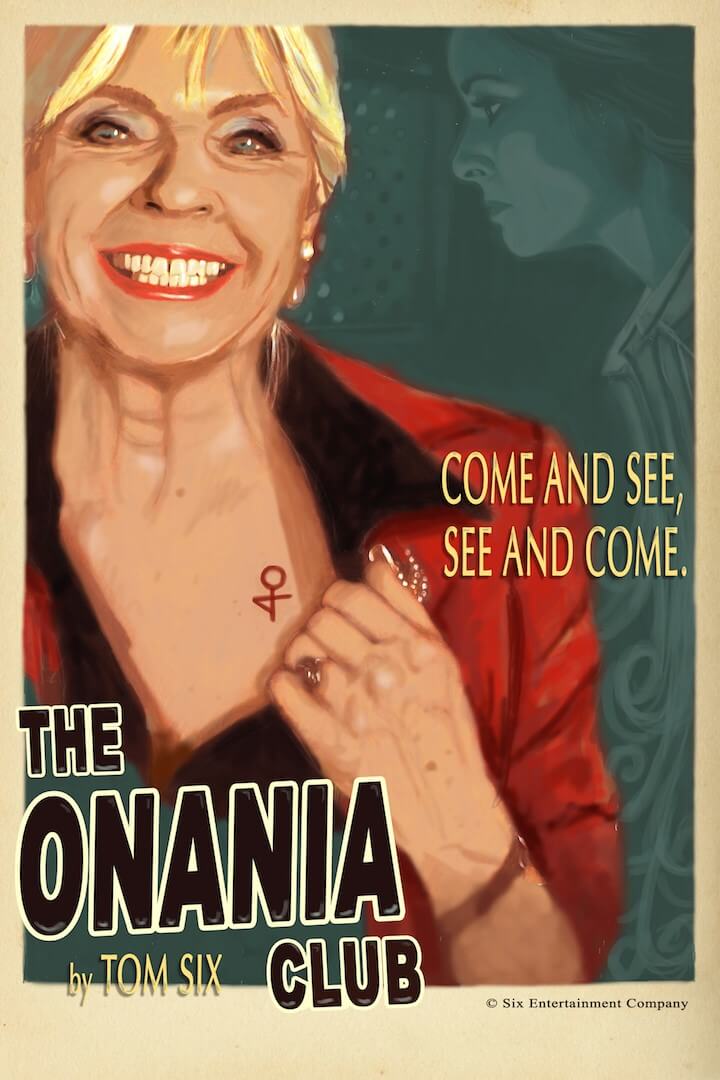
Tom Six | THE ONANIA CLUB

tom six onania

It’s been over a year since selected members of the press were given a chance to see Tom Six’s The Onania Club. While many other films were delayed in that time due to the global pandemic, Six’s film has fallen foul of the distributors who don’t want to risk putting out what they think is a movie that is too controversial. With The Human Centipede series behind him, has Tom Six gone too far? We caught up with him to find out what’s going on…

STARBURST: What was the inspiration for The Onania Club?

Tom Six: The Onania Club is a very dark satire about the fucked-up world we live in today and combines three huge fascinations of mine. First: human psychology and what the philosopher Schopenhauer called the evilest human emotion, schadenfreude [taking pleasure in the misery of others]. In The Onania Club, I made the ‘taking pleasure’ sexual; literally getting off on the misery of others. Secondly: dictators and the evil elites throughout history. I combined the elites with schadenfreude. The rich elites getting off on the common (wo)man. And third: film noir films from the ‘40s and ‘50s. The nihilism, style, and the femme fatales. I chose a group of elite women because women rule the world. The power of the pussy is unparalleled. Like The Human Centipede films, The Onania Club combines a very strong basic concept with social commentary layers. From easy recognizable, to deep and hidden, and to Easter eggs. The film has a lot of subliminal messages too, from one frame images to other tricks I won’t spoil.

Despite the impression some people have, we feel the film is less ‘offensive for the sake of being offensive’ and has a valid point to make about society – that people have become so desensitised to violence and suffering that they actively seek more to gain pleasure. Is there a worry that this applies to film fans too?

Reality is far more offensive than fiction will ever be and because of the Internet, we see more misery than ever before from all over the world. Videos of real torture, breaking news stories of disasters. A celebrity’s cancer story is placed in the entertainment section. We all can’t seem to get enough of it. Although the value of shock is very powerful, I am not actively trying to shock. It just comes naturally with the subjects of my films. The Onania Club takes on conspiracy theories, the hypocrisy of religion, child abuse, racism, obsession with celebrities, medical experiments, etc. The film is a real debate starter. Believe it or not, all the shocking scenes in the film are based on real-life events. It is not my sick mind, it is the sick world that I am showing and I put up a mirror to society. I want to bring back danger to cinema and not make it so easy to swallow. It will make people uncomfortable, but that is not my problem. I would be lying if said that I do not enjoy that discomfort, though.

The film has been ready for some time now, what has been the problem getting distribution?

The truth is that no serious distributor in the Western world wants to release The Onania Club. I just can’t believe that after the pop culture status success of The Human Centipede, they all just turned their back on me. They come up with all kinds of false lies like “the market has changed”, outright censorship like “we don’t think your film is suitable for our audiences” to totally ignoring it. In today’s overly sensitised world, distributors have a huge fear of being cancelled or critiqued and are so afraid to offend that they take the road of least resistance, which is basically choosing child-safe mediocrity and remakes above challenging and original content. 90% of movies that are being made are just mediocre noise. I think that if we do not stop that trend, it will be the death of provocative cinema and its creators. Top critics all over the world called The Onania Club a masterpiece, test audiences went wild after seeing it and fans are begging me every day to release it. It is mind-blowing. The same thing happened with first The Human Centipede, at first distributors told me that nobody in the world would want to see something like that and promised me it would never see the light of day. I proved them all wrong. I know the visionary fuck what I am doing!

Could it be that the distributors didn’t bother to watch the film – or didn’t ‘get it’?

Some are so arrogant they don’t even bother to watch my film because they already have a pre-biased idea of a ‘Tom Six film’, others just do not get it and don’t understand satire. I know The Onania Club will be debated, enjoyed or hated for decades to come. It will have longevity and reach a huge audience.

There are films that are more explicit still being released, do you feel the distributors are just afraid of you?

These films are explicit in a different way, a more acceptable way. I dare to travel to unexplored territories and show how evil mankind really can be, which can be very uncomfortable. To this day I get so many death threats for making The Human Centipede trilogy, people want me in jail or in a mental institution. While others have The Human Centipede tattoos or write extensive university papers about it. It inspired so many other artists, it entered the world of sports, media, politics and has become pop culture. The Onania Club will have that effect too.

Is there hypocrisy and snobbery in the film world? For example, if The Onania Club had been made in a foreign language or by a ‘respected’ director, would it have been treated differently? When a film like Pasolini’s Salò is held in high regard while yours is suppressed is crazy. 

I bet if Lars von Trier, Jordan Peele, or the late Pasolini would have made this film, it would be the most talked-about film in Cannes for sure and the film elites would be falling over each other to tell the world what a visionary director he is. I am a unique and visionary filmmaker and I say that with confidence. How many filmmakers are left that are 100% uncompromising and bring subversiveness and danger to cinema? Who are not afraid to take huge risks and cross boundaries? The film elites pretend to be ‘disgusted’ by my work and rather applaud child safe movies, but secretly they are the biggest perverts behind closed doors and I know my work is a great topic at their Hollywood private dinner parties.

We feel there’s been a step back in society over the past few years, and the Covid pandemic and Brexit here in the UK has brought out the worst in some people, which to us highlights some of the points you make in the film. Has the world gotten even nastier than The Onania Club?

Covid exposes the true character of mankind. People who wondered how WW2 could happen are now turning into Nazi’s who want to take away your freedom and report people who think differently. At the same time, there are people intentionally exposing others to Covid and hope to make them sick. Concerning the world’s elites, you immediately see them taking on more power and privileges and enriching themselves more in this time of misery. They even tell you from their luxury vacation homes on tropical islands only reachable by private jets that you should cancel your holiday plans for the safety of others. Mankind is corrupt and evil and that will never change.

What do you say to the people who think that you just make sick films?

People are entitled to their opinions. I don’t mind. Some only see the ‘sickness’ of the films and call it dumb, while the smart ones see the social commentary. I understand that people are disgusted by the idea of being attached mouth to anus, but to me, the main theme of The Human Centipede part 1 is the God-complex of doctors. Part 2 is about child abuse and part 3 is about the American prison system. After the release of The Human Centipede 2, I was asked to participate in an extensive psychological test by medical students. In short, I was diagnosed with hyperfantasia, being a ‘chronic out-of-the-box thinker’ and burdened with a 157 IQ.

What have you got planned for the future?

If The Onania Club does not get a decent release, then no investor will ever give me money for a new movie again. So basically, my whole career depends on it because I have a spine and will never adapt to making mass-pleasing, safe remakes and mediocre dull cinema. Life is too short when you have a unique talent for coming up with so many original film ideas. I literally live for making films and am totally obsessed. I don’t have kids, I consider my movies my children and I fight like a lion for them. Life to me has no meaning if I cannot continue making movies. To me, this is a fight to the death. If a smart and visionary distributor wakes up and releases The Onania Club, I’ll immediately start shooting a movie called Enjoy, another pitch-black satire and I’ve written over 10 very original and challenging films, which will definitely have the world talking.

Find out more about Tom Six and his films at https://www.sixentertainmentcompany.com/

Our review of The Onania Club is here. Who knows when the film will be released? Share your frustration at not being able to see it by Tweeting #releasetheonaniaclub

Neill Blomkamp | DEMONIC

Demonic Neill Blomkamp Interview

Returning with his first feature film since 2015’s Chappie, Neill Blomkamp was swapped science fiction for horror with his latest movie Demonic. Best known as the director behind the sensational District 9 and the Matt Damon-led blockbuster Elysium, Blomkamp produced his latest film during the midst of the current COVID-19 pandemic. Starring Carly Pope, Terry Chen, and Chris William Martin, Demonic follows a young woman who unleashes malevolent forces when a decades-old tension between her and her mother is revisited. A possession horror that also makes use of virtual reality and a game engine, the first trailer for Blomkamp’s new film was released earlier this month. Ahead of the film’s official premiere, Blomkamp sat down with STARBURST to talk about the challenges he encountered making this film, how the concept first came to him, and what other projects he has on the horizon.  

STARBURST: Your latest film was shot during the COVID-19 pandemic. What challenges did this present, especially for a body possession horror film?

Neill Blomkamp: We shot the film relatively early during our process of learning how to deal with COVID-19. I think if you were to shoot something now, the SAG [Screen Actors Guild] and DGA [Directors Guild of America] rules on how everything works would be more clarified than they were when we shot Demonic. It was early on and we were receiving different information from different people. So we had to figure out how to manage all of that, what the rules were, and how they worked. It probably slowed us down ever so slightly, but other than that there was no real difference. You just soldier on. 

This is your first out-and-out horror film, but all of your previous films (particularly District 9) have in some way involved bodily modification or change and the way this impacts a character’s sense of their own humanity. Is this a subject matter that particularly interests you?

I don’t know! I think the more films that you direct – maybe it’s the same for authors as well – there’s kind of a ‘psychiatrist’s couch’ element to it where you’re learning about yourself in some way. I know that I find the idea of body horror incredibly captivating, but I don’t really know why. I’m not entirely sure. And in Demonic it is definitely nowhere near as pronounced as in District 9. It is more about the psychology of what is a dream and not a dream, and where this character stands in the world at a given moment. But body horror is in there. It is definitely there. It’s just toned down a bit. 

You mentioned the psychiatrist’s couch, did you learn anything about yourself and the way you like to make films while filming Demonic, especially given how different it is from what you have made in the past?

I think that difference was a little more conscious and controlled than that. The film really had one single goal, which was to try and make audiences feel a sense of dread throughout the whole movie. That’s really all I was trying to do, and every decision we made worked backwards from that goal; the way the shots were composed, the way the camera moves, the selection with the score. Even the edit pace – everything was just trying to be slower and create this sense of brooding dread the whole time. That’s not a ‘psychiatrist’s couch’ situation. That’s a conscious, intellectually aware choice.

How long have you wanted to make a possession horror like this? And what influences did you draw on, if any? You have previously talked about your respect for DIY-style films like The Blair Witch Project and Paranormal Activity

Those films were massively inspirational in the sense that filmmakers went out and shot something on a very low budget and got a very visceral response from the audience. I would say that is how they were inspirational [to me] – not in terms of content. Demonic is kind of a weird movie that way. It’s very hard for me to actually point at references. I’m not sure what the references are, because it is so much more a case of all these different building blocks that we were assembling based on what we had access to during the beginning of the pandemic. An example is the cemetery in the third act at the end of the film. That was a location that we were able to access and we definitely wanted to use it, so we asked ourselves ‘how do we write that in?’ Filming Demonic was this reverse engineering process of putting everything together. The volumetric capture stuff, the VR stuff, and doing all of that inside a game engine… that was also a priority. So we thought ‘okay well if we know we have that, and we know we have this, and we know that all of these elements are coming together.’ The film almost percolated out of those elements. It wasn’t really a case of watching something and thinking ‘I want to use that, I want to use that, and I want to use that.’ So it’s super hard for me to point to references. 

So it sounds like to an extent you were making the most out of the technology and the settings that you had to hand, given the situation. 

Yeah exactly. It was highly, highly different to any other film that I have worked on before in the sense that everything had stopped and the world was figuring out the pandemic. There’s a whole lot of interesting shooting locations out here [in British Columbia] that are reflected in the movie. So we had access to them. The movie also started out as being entirely self-financed, and then AGC Studios came in and gave us more money. So we then gathered together and figured out how to do this, and asked ourselves what cool elements we wanted to put into it. That process is very different to sitting down and writing a screenplay that will reverse engineer the production and the budget back into it. Demonic was the other way around. 

How long had you been sitting on the concept of a film like this? How far back did the idea first come to you?

The only things that predated the pandemic that I can remember with Demonic were the idea of something to do with virtual reality and using volumetric capture. I knew that I wanted to do that. And if you look at Blair Witch it is just filmmakers going out and shooting stuff in the woods, so we thought ‘let’s go shoot some stuff in the woods.’ That’s really all I can remember existing before the pandemic. When you merge something like that with demonic possession… it’s a weird Venn diagram kind of overlap between science fiction and horror, I think in an interesting way. That was really the seed of it, and then you work backwards and incorporate the sets and the concepts that you want to put in there.

Did the cast rise to the story and the challenges presented by the pandemic? How was it to work with them on this film?

For sure. I loved working with all of the actors on this film. Particularly Carly, who was a real collaborator and team member. She was a really great asset to the whole movie. I had a super good time working with everyone. The cast needed to be the right kind of talented actors that could work under the pressure of a low budget environment, mixed with the pandemic restrictions. And they were awesome. It was a good shoot. 

What are your hopes for future projects after Demonic? Is body horror or horror in general something that you could see yourself returning to?

Working in this subgenre of horror is very interesting to me. I’m less interested in ‘gore horror’ but possession horror I like. So I could definitely see myself coming back to the genre for sure. 

Why is ‘gore horror’ less interesting to you?

It’s hard to put your finger on it exactly. I think that the supernatural and psychological part of horror is interesting because it’s more subtle and it operates on a different level. There’s something gratuitous about gore that for me personally I just don’t really resonate with. [With gore] I’m not sure exactly what the film is trying to tell me. So it’s just a personal thing. 

Was there anything about making a film like this, which is so different to what you have made in the past, that presented particular creative challenges?

The one thing that was radically different for me was just how low the budget was, compared to the other stuff that I have done. That was a symptom of just gathering a bunch of people together and basically self-financing it, and doing something while we were still figuring out what the pandemic was going to do to the rest of the film industry. That was the largest affecting factor. Having said that, filmmaking is very scalable. Once you establish what the budget is… the day to day stuff isn’t really that different. You just have radically less time and visual effects, radically less stunts, or your shoot days are not as numerous. But the actual day and the way it goes is standard filmmaking. 

Do you have anything else on the immediate horizon after Demonic? I know you have another project lined up called Inferno

There’s a science fiction film that I am writing right now that is most interesting to me, and that I would love to make. But the script isn’t done yet. Inferno is still moving forward; it’s just under a different structure. It’s going to take more time to put together so it’s just percolating right now. Theoretically, though, this other film that I am working on would be before Inferno anyway. 

Signature Entertainment’s Demonic opens ArrowVideo FrightFest on August 26th and is at UK Cinemas, Premium Digital on August 27th and Blu-ray & DVD on October 25th. You can watch the first trailer for the film here.

Aaron LaPlante | RESIDENT EVIL VILLAGE

aaron laplante resident evil village

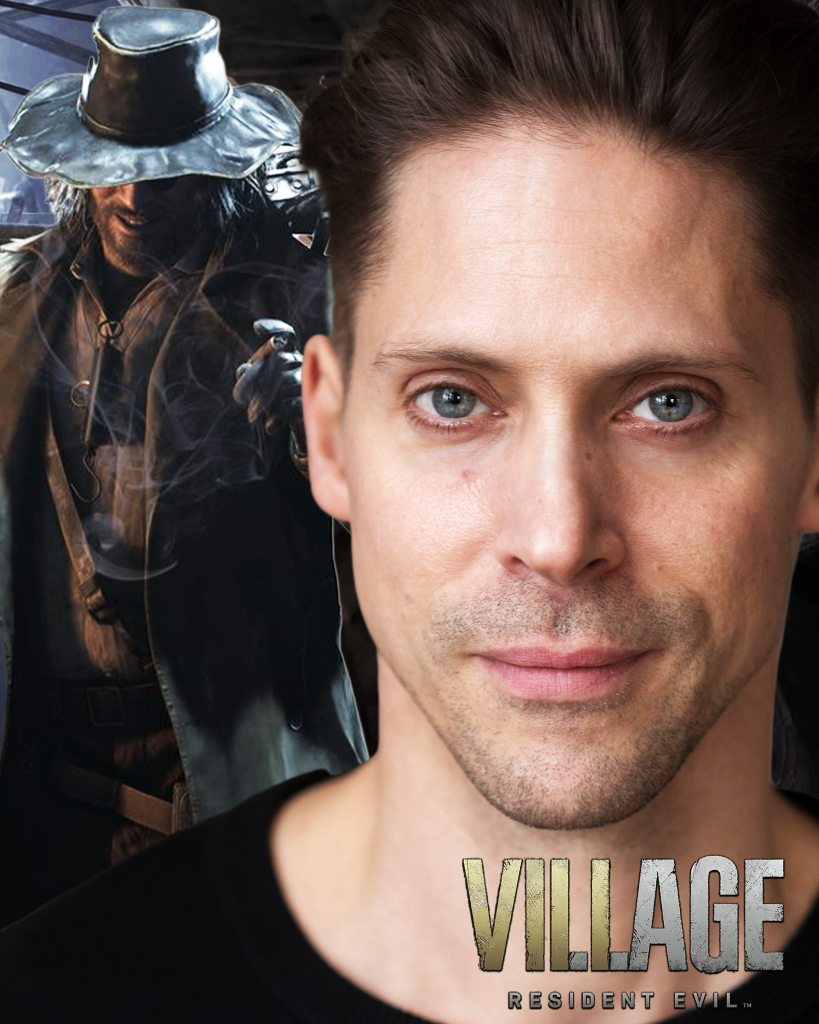
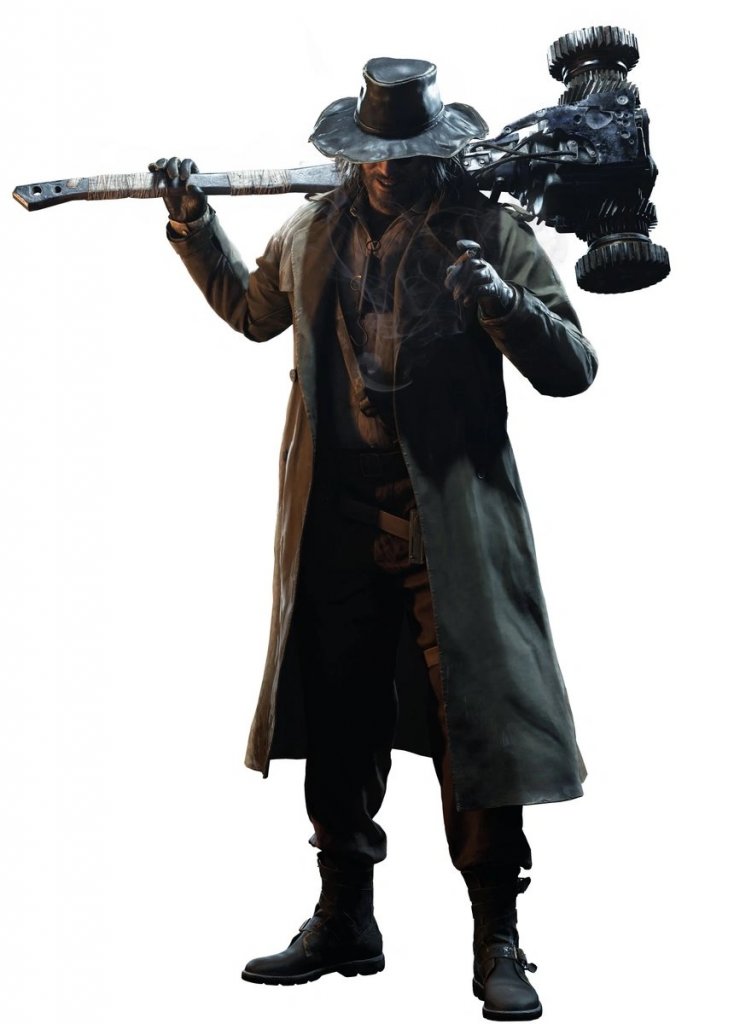
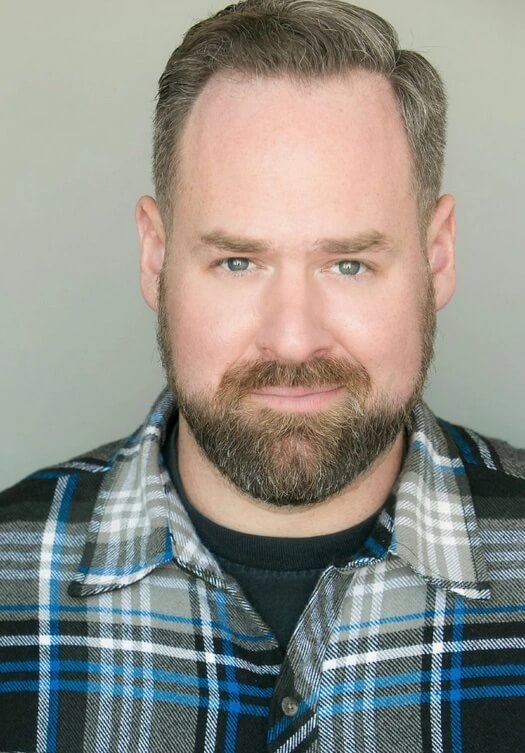
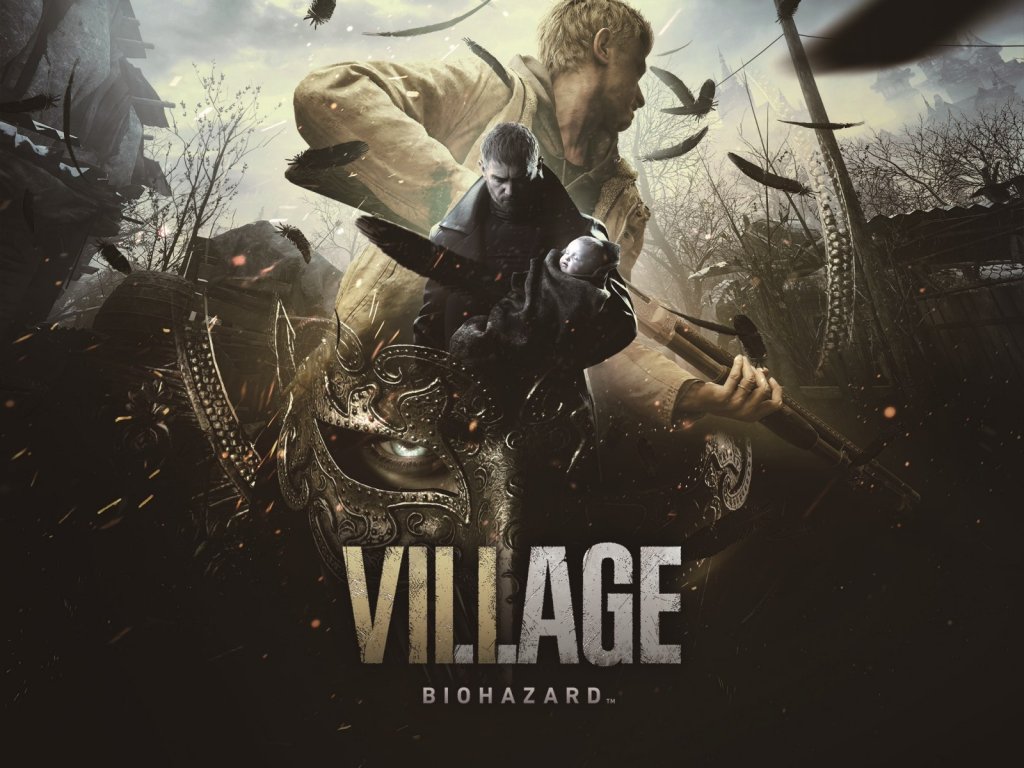
Aaron LaPlante has worked his way up through the voice-over world in the last decade, and some of his most notable projects include HOTEL TRANSYLVANIA and PRIMAL. After keeping in contact with his good friend Sara Coates (RESIDENT EVIL 7: BIOHAZARD), he got the chance to be involved with RESIDENT EVIL VILLAGE as The Duke! With an ecstatic response from fans, this character has gone on to become much more than just a merchant in the game, he is Ethan’s bridge between the majority of what you witness. STARBURST catches up with Aaron to find out all about this mysterious, yet fantastic character!

STARBURST: You’ve done a lot of voice acting over the last decade, however, How did you first get involved with it?

Aaron LaPlante: The very beginning I think for any voice actor is an instinct thing. When you’re a kid, and you’re in class, and your teacher has a strange voice, your instinct is to go into the lunchroom with your friends and pretend to do their accent, you’ll say “Hey are you going to finish that cinnamon roll!” for their benefit to make them laugh. Once you find out that that’s going to make them laugh, it sticks with you for the rest of your life. Then as I got older, and became an actor. Every actor usually has a favourite thing that they focus on. For me, it was the sound of a character’s voice, it didn’t matter what character I was playing I always put a lot of emphasis on the sound of their voice, and try to make it different. So when I came out to Los Angeles, just like anything, you are trying to get involved in any way that you can. It just so happens that I got involved with a group of kids from Chicago that were starting a sketch comedy group, and when you do like a half-hour sketch comedy show you play about six different characters, but you play them one after the other. To differentiate between the characters, you’ve got to give them each a distinct sounding voice. So doing that for years made me known in a very small circle as a guy that could do different voices. One of my friends was working on a project, and the casting director asked if they knew anybody, he said “I know this guy Aaron who has kind of a distinct speaking voice, but he also does voices”. So I went and met her, it was one of those Hollywood meetings where you don’t know what the project is about, and you don’t know why you are there. You’re just like “Okay, we’re here!” So I talked to this voice-over casting director at Sony Pictures Animation, her name is Mary Hidalgo, she’s one of the most notable casting directors in the history of animation, and I was lucky enough to meet with her. It was supposed to be like a 15-minute thing, and it wound up being a two-hour odyssey, it may as well have been a therapy session! We just hung out and talked. She told me about the business, and I told her about my hopes to be involved with the business. Then, that was kind of it.
Aaron Laplante

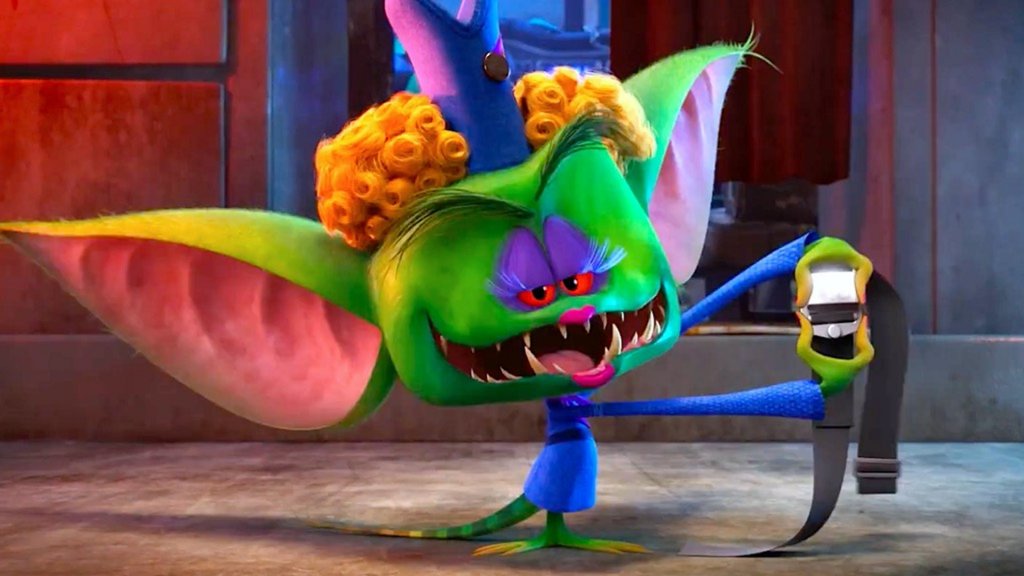
Then about a month later, she contacted me and said that Sony was working on a Popeye movie, and would I be able to do scratch for Bluto. I didn’t know what scratch meant, and I came to find out that for the pre-production process of an animated feature, they need voice actors to come in and do the voices of the characters to serve the storyboards. For all of the pre-production meetings with the executives. Story meetings etc. So, you’d record the part, and then eventually your voice would get scrapped. They would bring in a famous actor to do it. So I thought whatever, this is the chance to be able to do this. So I auditioned for that, and I put my own spin on it. The director that was doing it just so happened to be Genndy Tartakovsky, who is notable for Dexter’s Laboratory, Samurai Jack, helped with The Powerpuff Girls, the original Clone Wars cartoon, and so many others. So that was just a really lucky break, because I didn’t really know what I was doing, I just did what I thought I was supposed to do. It just so happened to be what he wanted me to do. I think that he kind of liked working with me, because I’ve worked on everything that he has done since that time. Popeye didn’t go anywhere, unfortunately. But he did Hotel Transylvania, so I was doing those. So you’ve got that avenue, and then over here, I’ve got a friend who got a job as a low-level engineer at a place called Studiopolis that does a lot of dubbing for Anime, and he suggested me there for years and years. Finally, there was a show that had a bunch of monster sounds. It could potentially ruin an actor’s voice, but I went in there and went for it. For every session that I would do, there would be one or two characters that talked, and he let me do those characters. Then finally after a while, they said “Who did that voice?” and then people would say “Oh that’s Aaron” so I did that as well. It’s kind of like once I started doing the work, and talking about doing the work, people in my life that were involved one way or another sort of came into the mix. In a nutshell, that’s how I got in!
Hotel Transylvania

Jumping forward to more recently, how did you then get on board with Resident Evil Village?

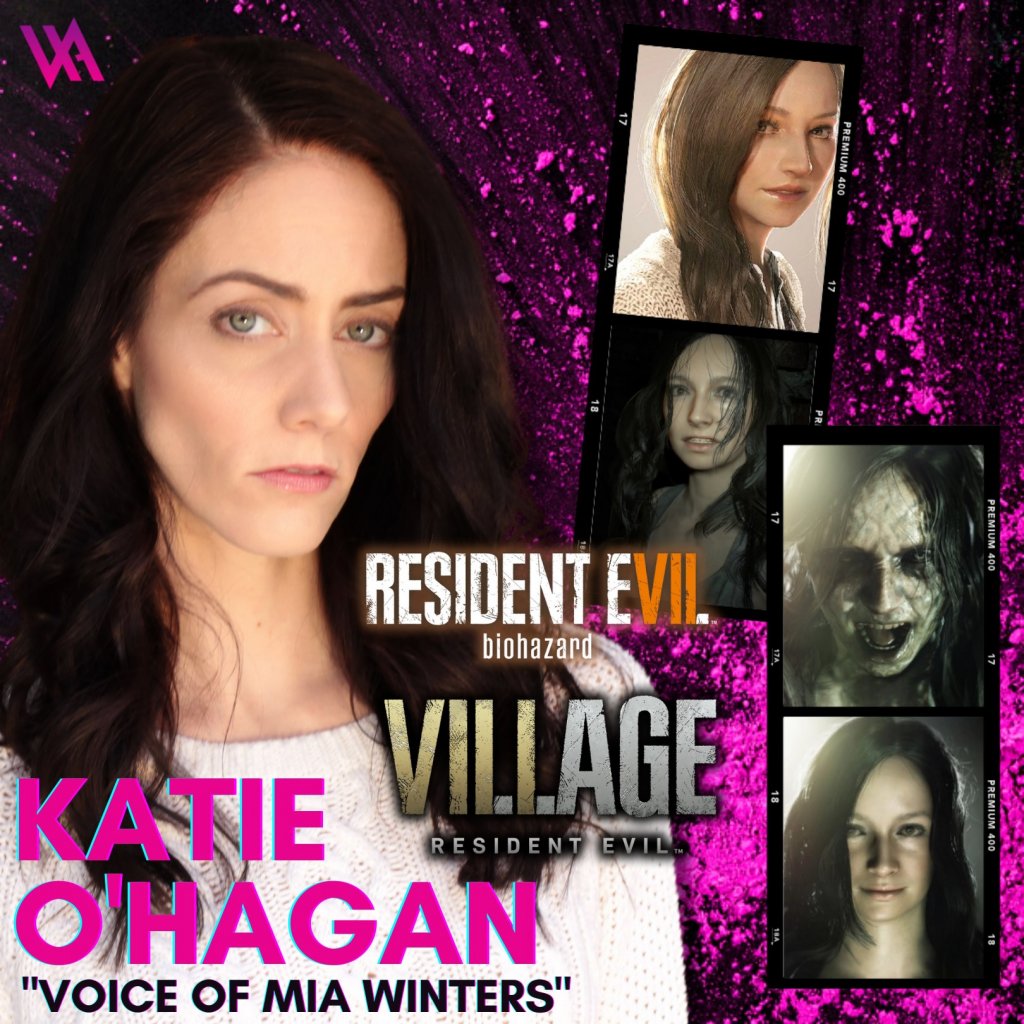
When people move out here to Los Angeles, you focus on one thing, and your friends focus on other things. Then you are all doing your own things! Then, if enough time passes, before you know it you almost circle back together, and you get to work together. In this instance, this goes all the way back to high school when I was a senior, I was in a French class with a girl named Sara Coates. If you’re familiar with the Resident Evil universe then you’ll know that she played Marguerite Baker in Resident Evil 7. She was a friend of mine back then, and she’s a little bit younger than me. I got out of school, and we both went in our own directions. We kept up and checked in on each other. I lived in Seattle and so did she, then I moved down here to Los Angeles, then I feel like five or six years later she moved down here. We would keep in contact here and there, and hang out, but then I didn’t really hear from her for a while, and then Resident Evil 7 came out, and I found out she was in it. I was like “Oh my God, that’s absolutely incredible.” She was excited, and then a few years went by after that, and then I get a call from her, and she says “Hey, I’m helping out with casting on a project, would you want to come and audition?” Towards the beginning of the game, where there’s that old guy with the gun, and then the Lycans pull him out through the ceiling, who only has one part. The part I auditioned for was not that scene, but something like that, some old woodcutter in a shed. I did this crazy voice, and then afterwards Sara said “Well, you didn’t get that part” and I was like “That’s OK! Thanks anyway, I’m used to that, I audition all of the time and don’t get the part” but she said “They’re saving you for a bigger part” and I was like “Oh, well that’s never happened to me before, but, OK!” A month or so went by and I got another audition, and I went in there and did that one. That went really well, so I went in and did another one, except this time, they focused a lot on telling me about the physicality. Not a lot of people realise with these games, that when you audition for them they don’t give you the script that’s going to end up in it, because they are so secretive. So they write a dummy script that doesn’t really have much to do with the game, but it has sort of a sense of what the character might be. At the time they told me that he had a thick Eastern European accent, and a really gravelly voice. I also saw a picture of the character I was playing, and he was really big. So I did my accent for that, and then in the second audition they said “Move around a lot, get some cigar ash on you, and go woah, or whatever.” So I auditioned that way, then a couple of months later they told me that I got the part. The funny thing is, not even for a second did I know that it was to do with anything Resident Evil, I just thought that it was for some random game that she was working on. Later I asked, like “What is this for?” and they were like “It’s for Resident Evil Village dude!” Right when they said that, I was immediately transported back 25 years to when I was in 7th grade, playing the game with my friends at a sleepover, and it scared the hell out of us. So it was full circle in a lot of ways.

How excited were you when you found out you were playing The Duke, and how did the voice come together?

There was excitement for sure, but there was also a lot of anxiety. That’s another thing that I want people to know about these games, because they are so secretive, they tell you what you are doing, but it’s like you are going into it a little bit blind. Maybe for a bigger character, they’d give them a bit more information about the script, but for me, when we went to the table reading they had still not decided what they wanted The Duke to be. So I didn’t have any lines to read at the table read. In fact, Neil Newbon who plays Heisenberg was in England, so I did his lines, to kind of fill in. So after the table read I was going home like “Well, I don’t really know what this character is going to be!” I’ve played games before that have merchants, and I imagined that he would be in some centralised location, and that he would sell you some stuff, and I’ll probably just say the same things over and over again, like, “Well, that’s a good choice!”. The reason why they took so long is because they took The Duke a step further, they said “Yeah, he is going to be situated in this one area, outside of the village, but when you got all the stressful, and scary parts of the game when you are fighting the four lords, he will show up there to.” So I think they were still trying to work that out. So before going in there, I had no idea. I sort of knew what my voice was going to sound like, but when I got in there to record the very first line “I’ve been waiting for you Mr. Winters, anyone who is anyone has heard of the likes of you” they progressed my voice from an Eastern European accent, into something more light, and lilting, almost as if he has a British accent, without having a British accent. We worked on it. What’s funny is, the very first day, the first things that we recorded for the most part, were for when you are playing the game and you buy something, he comments on what you bought. You are fixing up your weapons, and he says “Weapons Modifications? I can do them for a small fee” The voice is very much different, and less lower down than it is in the cut scenes. The reason why is because that was the first stuff that I recorded. So as we went on in the game, and as I settled into the voice a little bit more “That’s when this thing came out” – the voice of The Duke.

In true Capcom style, there’s not a lot of backstory to this character. However, for you, how would you describe him to a gamer?

I think I would say if they’re a gamer, you’ve got the relationship with him that you do with most merchants in most games. However, I do think that they took The Duke a little bit of a step further. They made him extra helpful to you. At the same time, they also made his personality kind of mysterious. So you rely on The Duke a lot, but you don’t know if you can trust him. Those are some of the greatest characters in history. These anti-heroes. Ones that you always expect, right until the last moment, to turn on you. Especially in the Resident Evil universe. It’s supposed to be scary, you’re supposed to feel alone, kind of bleak. In Resident Evil 7, there’s like no help to be had, when you’re wandering around the house, maybe the phone will ring and you’ll pick it up and there will be some mysterious woman saying “Go to the trailer outside!” or whatever, but that’s about it. In a sentence I would say that The Duke provides the player with a level of relief that they’ve never had in a Resident Evil game. That’s why people love The Duke so much! It’s something that I didn’t account for. A lot of the other characters are different, cooler, scarier, dangerous. Those characters are right for the cos-players, people doing fan art. Whereas people’s enthusiasm for The Duke is something a bit more personal, it’s not so much visual. I’m not seeing a lot of fan art of The Duke, and certainly no one dressing up like The Duke. So yeah, I would say that he is a familiar fixture, but he is a very unique take on a familiar fixture.

Comic cons are extremely creative, so I have no doubt that someone will be dressing up as The Duke in the not too distant future!

Yeah! I challenge readers of this article to do a Duke cosplay! I’ve been doing this for a while, and most of the parts that I do, the project itself goes out there, and it’s a big part, but I’m normally just a small part of it. So none of the attention ever gets turned towards me, which is fine for me. Like Hotel Transylvania, those movies go all over the world. I’m doing Primal right now, which is a masterpiece in the animation world. There’s no dialogue so they don’t have to dub it in any language, it’s all over the world too. It’s about the animation, and it’s not about me. So the fact that fans are paying attention to me, or that there’s any attention on me at all, is something that I’m not used to. However, I’m starting to embrace the fact that I’m doing for people what so many people have done for me, and that is to contribute to something that I can nerd out about. It’s really meaningful. So the anxiety I feel about the sudden attention is suddenly cast aside as I know people are getting such a kick out of this game. It makes me feel good.

Do you know anything about how Capcom put the look for The Duke together, and maybe, what their influences were with that?

I wish so much that I could tell you, but I really don’t know. I will say one thing, and it’s what they pride themselves on, which is an intense attention to detail, and also as much realism as they can get. Even just walking around the Village, and how it all looks medieval. As far as The Duke goes, I will say that when I first saw a picture of him he still had the suit, and the enormous belly that hung over. Swelled feet. His face was a little bit more grotesque, he was bald, I only saw a brief picture, but it looked like he had some growths on his face. However, I think that they very intelligently decided to make him more cherub-like, because that ended up being the function, that he is just this kind, nice, helpful, friend along the way, that you don’t know if he is going to turn on you. This is just me speculating, but at one point they might have had a plan for him to turn on Ethan, and then maybe they were like “No, it’s more important for him to be a friend to Ethan.”
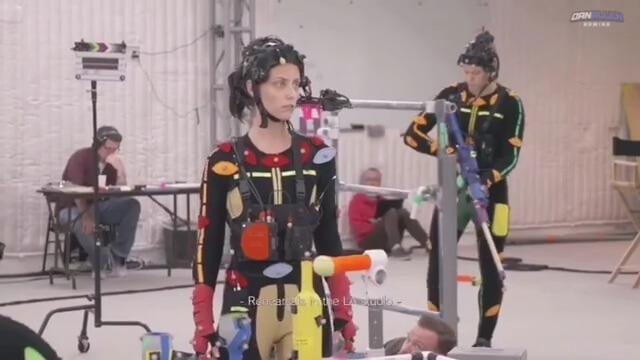
There was no Motion Capture for The Duke, and a lot of people do ask me about that. Though I wish I could have taken part in that, The Duke is so big that they didn’t have any need for it. I was only sometimes there to deliver lines to some of the actors and help out in that way. When you’re standing next to The Duke, and neither of you say anything, he makes little sounds, he coughs and yawns. While I was recording those sounds I was able to look at footage of The Duke and follow his movements, similar to how I do the character on Primal. So I got a chance to see it. His design didn’t really change that much from that point, after what I saw. I thought I’d see that, and then maybe he’d look a little different when I played the game, but it stayed pretty much the same. Obviously, there is a lot more detail that went into it. Everybody gets excited about the voice actors, and that’s great, I get excited about voice actors as well, but I encourage anyone to find some behind-the-scenes footage of what they do at Capcom. How they design stuff is just absolutely beyond me. I sincerely hope that they come out with a book or something like that. There’s some footage on YouTube where you can see the Motion Capture process. It’s amazing what they do.

Like we discussed, Capcom is obviously known for keeping plot backgrounds a mystery, which works well, because some of the greatest characters ever made in game, TV, film, are the ones that we know very little about. As a viewer, you gravitate towards that mystery, you want to know more, but you also don’t. When Ethan attempts to ask who The Duke is, he simply replies “I’m not sure even I can tell you that!”. So, how important is it to have this perfect level of mystery for a character, and do you have any theories about his background of your own?

That’s another thing that’s been really neat. These games come out, and people are excited about playing them, and then they complete them. They make mods and stuff, but what’s amazing is the amount of creativity that comes out of it. Whether it be people making mods, or writing their own fan fiction, or putting out videos that discuss theories about The Duke, and where he came from, what he is all about. Any time anyone asks me where I think The Duke came from, I just reference all of those videos, because there’s no way that I could be as creative as them. It’s incredible. There are little clues, like that moment when Ethan is in the back of his carriage, and he looks down and you see that sigil you think “Was The Duke a lord, and then he turned good?” And I sometimes wonder if he is psychic somehow, does he have psychic ability because he knows where to be, wherever Ethan needs him. Any time he talks to Ethan, he gives him advice. As much as he seems mysterious, I also try to add in that he knows Ethan is going to succeed, and that he is being kind of playful. That’s what I thought about when I was doing it. As if he was kind of psychic.

We must ask, who came up with the throwback line for Resident Evil 4, “What’re ya buying? Ha! Just something an old friend of mine used to say,” and what do you think that it brought to the game?

I wasn’t familiar with Resident Evil 4, I’d never played it, but I was aware that there was a merchant in the game. I had talked to one of the producers and asked if there’s ever been a merchant in the Resident Evil universe, and she said yes. So I went back and looked at some videos of it. When I recorded this game, instead of looking at a script that has dialogue, and also paragraphs describing the scenes, it was an excel spreadsheet with sentences on it. You go in there, and you read the sentences, and they have to give you context for pretty much everything you’re saying. We’re going through, and then at the end it said “What are you buying? Just something an old friend of mine used to say” Right before I said that line, one of the producers Rosanna said “Okay Aaron, that is a throwback to Resident Evil 4” and she kind of explained it to me. So I did it. What was neat was, when I said “What are you buying?” I didn’t do this intentionally, but it sounds like The Duke is doing an impression of that merchant. He’s trying to do an impression of his friend the merchant. So then I recorded it, and then forgot about it. As the game has come out, it’s another thing that people just get super stoked over, which I love.

In the game, how essential/important do you think he is for Ethan, and the game player? When it sort of comes to bridging the gap between the player, and well really, the rest of the game? The bosses?

I think he is super important. Playing other games with other merchants, you imagine the function to only be practical, you need to buy weapons, you need to buy ammunition, supplies. You don’t really tend to get too much advice from a merchant. It’s usually just like “Here’s a thing, buy this, buy that, sell this, or whatever” but with Resident Evil – and I am sure there are other games that do this – it sort of takes it a step further. Instead of it just being practical, it almost becomes like emotional support, because people have told me as much. Personally, when I was in Heisenberg’s factory, that was the most stressful part of the game for me. Some of that stuff really upset me, I was like “Oh my god!” There was one point in that where you come around the corner and you see The Duke, and I felt that wave of relief. I thought it was just a feeling that I was having, and as the days have gone on, and I’ve become aware of what people think of The Duke, I’ve realised that I’m not the only one that felt that way about him.
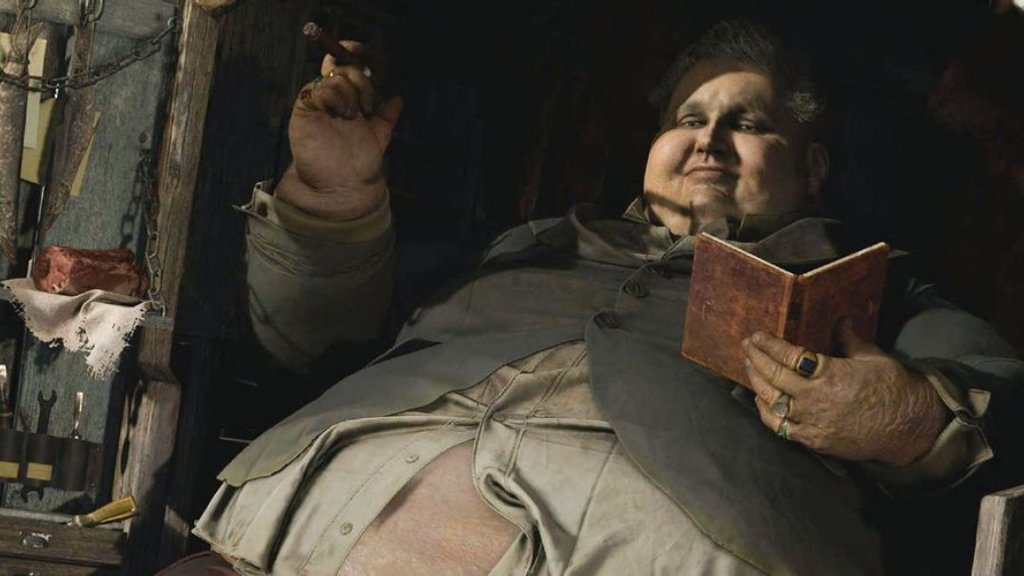
You can play it once, and go back through again and make your relationship with The Duke different. For instance, when I played it through for the first time, I didn’t ever have The Duke cook me any meals. I didn’t know how that worked, so I just didn’t do it. And then the first time I played it through, people don’t believe me, and this is 100% true, I went through the entire Castle Dimitrescu part without seeing The Duke. The room is right off the four statues, I just never went into that room. Which I just didn’t realise. Some games lead you in a specific direction, if you try to go off the path, or if you get confused like I do constantly, they’ll sort of help you along. With Resident Evil, there’s some really cool stuff, and if you didn’t see it, well that’s your bad. You go back and play it again, and you get to have a whole new experience. I’m in the process of playing it through again, and you can bet that every chicken and pig I see I kill. I’m getting the benefit of The Duke’s recipes, and he is saying stuff that I never heard on the first run-through because I just didn’t engage with him too much. Frankly, after a while, the game is so stressful that I forgot that The Duke was me, I took to him like anyone else.

Talking about Ethan, and if possible, can you tell us a bit about what it was like to work with Todd Soley?

It was great! I only got to work with him for one day, and it was the scene when he wakes up in the carriage. So while we were doing it on the Motion Capture stage, a lot of people have probably seen this behind-the-scenes video, he is in a suit, and he is on an apparatus. I couldn’t for the life of me explain how this technology works, and I’m not even going to try, but I’ll set the scene for you. We are on a sound stage, actually right down the street from my place here in Venice Beach. He is up there doing the thing, and he’s got the cameras all working, and then I was off to the side, sitting in a chair, and at a certain point I would say “At last, he awakes” giving him the pep talk, then we have this conversation until he finally jumps out of the carriage. That was the only time that I was helping him out, and he is great. He has been doing this stuff for a while, so he doesn’t really approach it from a very actor standpoint, where he is like “Okay guys, give me a second” which is great, because it’s not how I work either. I don’t subscribe to that style of acting. He just gets in there and does it, and it was great. Unfortunately, our work together was brief so I didn’t get a chance to work with him too much, but yeah, it was a lot of fun to do that. As fun as this game was to work on, my next goal is to maybe get a chance to put on one of those suits, and actually interact with some of the other actors. I did a signing recently with other cast members, and it was the first time that I met them.

So, looking back on working on the game overall, is there a maybe particular scene that stands out to you as being highly rewarding to work on?

I’ll admit this to everyone, I watch this scene over again because I’m proud of my performance in it. So it’s when The Duke lays it out, and he talks about the four lords. He goes through them one by one. When we recorded that, obviously not all of the animation was done, but some of it was. When he is talking about the four lords, these pictures flash, and you can see Heisenberg’s Factory, Donna Beneviento’s house, and you can kind of see a bit of the lagoon for Moreau, but they sort of keep that a secret, and then, of course, the castle. I watched that montage, and then I would talk about Donna Beneviento and pause for a second, and wait for the next thing to flash on the screen. So it was all basically done in one take. I’m sure that they cut it up, and used took parts from different takes, and put it together. However, kind of telling the story, and setting the stage, that was my favourite part to do. After a while when you are sitting in the booth going “Oh, that’s nice! You have enough money for that one? Oh, you can’t afford that one?” Those are fun and everything, to do the variety. But to take that voice, and that character, and setting the stage for the game, that was my favourite for sure.
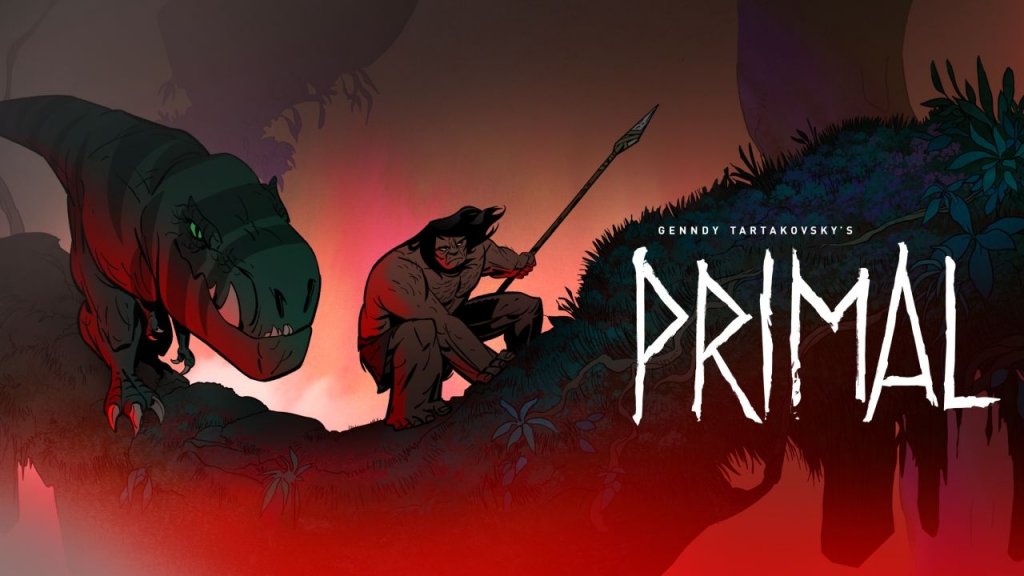
What else can we expect to see from you in 2021 as an actor?

The show I do for Cartoon Network is called Primal, that one, there are ten episodes of it, and we are now doing a whole another ten, another series. A lot of it I can’t really talk about. So yeah, you can look out for Primal, and there’s going to be some movies coming up. Hotel Transylvania: Transformania is coming up pretty soon, and I play the gremlins in that. Then there’s a lot Anime, Naruto, things like that. I would say that Primal is the most anticipated by me, and other people. Hopefully there will be a lot more coming up, because this game was a home run for my career, but the bases were loaded. It’s Resident Evil. Now, all I’m thinking about is trying to get back on base. So that I can round them again. That’s the life of a voice actor, you do one thing, and you’re like “That’s great” but then you think, “What are we doing next” Primal is an ongoing thing. It’s an amazing show, if anybody hasn’t seen it, check it out, it’s really cool.

For more from AARON LAPLANTE, check out his TwitterInstagram, and StreamilyRESIDENT EVIL VILLAGE is available on Xbox One, Xbox Series X, PlayStation 4, and PC.

Read our other RESIDENT EVIL VILLAGE interviews here:
Neil Newbon | RESIDENT EVIL VILLAGE

After focusing on TV and film at the start of his acting career, NEIL NEWBON decided to take on the voice acting/performance capture side of it over the last decade, and at this point, he has well over 100 titles in that field. Fans of the games will remember his work as Nemesis and Nikolai in the RESIDENT EVIL 3 remake, and in VILLAGE he returns as one of Mother Miranda’s subjects, Heisenberg. Although this character may initially come across as well, a bit crazy, players will go on to discover that there’s much more to Heisenberg than meets the eye. STARBURST catches up with Neil to discuss his character’s evolution in the game, the full story to how that awesome voice with a little bit of Nicolas Cage influence within it came together, and why RESIDENT EVIL BIOHAZARD and RESIDENT EVIL VILLAGE work so well together!

STARBURST: How did you first get involved with acting?

Neil Newbon: I was always a storyteller, I was always a role player, storyteller as a kid, I was obsessed with stories, and I used to read ferociously. As I got older my mother introduced me to theatre, and plays. She used to take me to Stratford Upon Avon to see Shakespeare, she was always encouraging me to look at the arts. I did a bit of ballet when I was a kid, I was always artistically lead in terms of my taste, I was always quite intrigued by stories and performance. I was lucky enough to be accepted into the National Youth Theatre in London, with the now sadly passed Edward Wilson who was an extraordinary human being. I also joined the Central Television Workshop, which was run by Colin Edwards in Birmingham – it’s now run by Tim Smith – and started doing some plays, and early dramas with them. Through those two institutions as a kid, I realised that I had a passion for acting. I understood and loved performance. That was my introduction to it. I was then very lucky that through the National Youth Theatre I got spotted by an agent when I was about 19, I turned professional, technically when I was about 20. I did two gigs before in my teenage years. However, I’m also quite academic, so I promised my parents that I’d finish my A-Levels, even though all I wanted to do was run away to London. I stayed in Birmingham where I’m from, and finished school. I realised that acting was my vocation, that I knew that’s what I was going to be doing for the rest of my life if I was lucky enough to get work. It just meant that suddenly I had a lot of pressure off. Academia became a fun sort of interest for me, as opposed to I absolutely need these grades, to go to university, to get this job, have this house, etc. For me, at around the age of 16, it was like “Great, I’m on my way already” because I knew what I really wanted to do.

You then, in maybe more recent years, decided to jump further into voice acting, how did this happen, and what do you love so much about this type of acting?

I trained for about ten years whilst I was working with Giles Foreman Centre for Acting. I also developed my voice at RADA. I was very lucky that I have, what people have told me, quite a mailable voice. It’s got a good quality to it. In 2010, like with most actors I was struggling, not with work, I was getting work regularly. I was struggling with the financial side of it, because there just wasn’t that much money in what I was doing, it was a lot of indie films, great, really interesting projects, but you’ve got to eat. So I suddenly realised that I’m a gamer, I’ve been a gamer all of my life, I love games, actors do voiceovers in games, why am I not doing that? So I started to explore this possibility in about 2008, and through that I found information about Motion Capture/Performance Capture. I found an article in, I think, PC Gamer, about voice-over. Right at the bottom corner was a picture of someone in a Motion Capture suit, I looked at it and went, “Wow, that’s like theatre and film. That’s amazing!” It made instant sense to me. So the voice-over, and Motion Capture side for me, both happened around the same time. I was lucky enough to get on a few gigs, I did Lego Minifigures World, playing Swashbuckler, and Caveman – the only time I managed to get a Birmingham accent into a game, I’m still trying to do that!. I also worked on Funcom’s The Secret World, the original version of it, and then we revamped it for The Secret World Legends, which is out at the moment. And I also did my first MoCap gig. So yeah, that’s how I started off getting into voice over for games, and then I was lucky enough to get a voice-over agent as well, who are amazing, called Lip Service, whom I adore, and I’ve been with them since I started doing voice over, or just thereafter.

For my first Motion Capture game I got an audition, and I think I even sent in a DVD of my showreel, because I’m pretty sure the online stuff didn’t really work that well at that point, back in 2009. Brian Mitchell and Stacey Boisselle saw my acting reel, and also my ridiculous list of physical skills that I picked up along the way, because I’m just a geek and I thought that archery was cool. I found myself in an audition room with them, for Ghost Recon Future Soldier with Ubisoft, and I got it! I got to play 30K in that game, as well as a whole bunch of multi-role stuff. That was it, I was suddenly doing voice work and Motion Capture in games. My whole career took this really interesting diversion. I was still doing TV and film at the same time, but suddenly I was allowed to do character work, constant character work in this side of the industry where there aren’t that many actors, especially Motion Capture. I now do short workshops in Motion Capture, nothing too crazy, but a couple of days workshop to help people get a leg up in Motion Capture, to understand it. To demystify it as a strange experience, because it’s a technical skill, and it’s a new craft of acting. It’s been a trip, and I think at this point I have over 100 titles in voice-over, and performance capture, MoCap so far. In ten-eleven years, that’s pretty interesting. With voice-over work, performance capture and MoCap, it allowed me to do everything, but it allowed me to become the actor that I always knew that I was, the one who I was struggling to show, which is a character actor. When you have a certain look, you get typecast very strongly, which is not a bad thing, but for somebody like me, it was frustrating because I’m a character actor. So to not be able to do that, was creatively frustrating. So all of that said “We can take your face off, you don’t need that anymore” I can play anyone.

Going back to before your involvement with Resident Evil 3. How much did you know about the franchise already, and do you maybe have any memories from playing the games?

It’s quite widely known that I am a terrible Resident Evil player. I am shockingly bad at those games. Me and Resident Evil quit on amicable terms back in the ’90s after Resident Evil 3, where I failed to get past even halfway through the game. I was like “You know what, we’re done!” I remember sitting on the floor on the flat I used to have with a PS1, I was just like “This is not my game, but it’s OK! Why don’t we just be friends?” The first game I ever completed in the series – with a lot of guidance – was the Resident Evil 3 remake last year. I love them, and I think the games are amazing. The world is really cool. It’s like the ultimate action, horror, genre. It’s zombies, excitement, strong characters. I really like it.

How did you end up becoming involved with Resident Evil Village?

I was lucky enough to of worked with Steve Kniebihly a few times now, we met on Planet of The Apes Last Frontier, which by the way, is not a game, it’s a TV Miniseries, and I wish that they’d publicize it as that, because it’s not a game. If you haven’t checked it out, it’s on the PS4. It’s really worth your time. The acting is amazing, the story/writing is brilliant. It’s just not a game, so don’t go in with that mentality. It’s just an interactive TV series. Anyway, I met Steve on that, and it was incredible, since then we’ve become great friends. He is one of my best friends. So when he went out to Japan on this project that he was doing, he invited me to audition for that, we’d already done two games before this point, but I always audition, nothing is for free. So he invited me to LA to audition for RE 3, which I got, which was amazing, and then when he knew that he was doing Village, he again asked me to audition for it. He knows that I’m a multi-role character actor. So there is no danger of me repeating my performance in that way, as I can stretch to a very different kind of character, and be pretty much hidden in that character. So yeah, he asked me to audition for Resident Evil Village. I didn’t know what it was at the time, none of us knew, but I had my suspicions a little bit. I did a self-tape casting in a very dingy hotel, somewhere in the South of England, which I thought was really fitting, because it was like this horrible hotel, the walls were peeling, the doors were creaking, I thought “This is brilliant, it’s like a set!” So I did one tape, and I don’t think I did more than that. Because Capcom and I also have a relationship with past work, I think once they saw the tape, obviously they understood my work anyway, and Steve and I had worked together so much, I think that was kind of it. It was more like “Yeah we can see him doing this, so let’s make the offer to him” Which I was very grateful, and humbled by. That they had that confidence in me.

Karl Heisenberg

When did you find out that you were playing Heisenberg, and what was the audition process like?

They told me I was playing Heisenberg when they had cast everybody for their particular roles. That’s when I knew that I was going to be playing Heisenberg. I think that I auditioned for four or five different roles. I did suspect that one of them was Chris Redfield, and I remember doing the audition thinking “I’m pretty sure that this is Chris Redfield, there is no way on God’s green earth that they are going to give me that role!” It’s just not happening. I’m the antagonist. The audition process is important to me. I have very rarely been offered roles without an audition. I think that’s important, regardless of your relationship with a team or director, or your standing in the industry, whichever part you are from. I think auditioning is really important. You might have an idea that somebody works in a role, but until you have that experience with them, you might get it wrong. It’s good for actors not to have hubris about that. That’s your work, to audition, and show your work. If you get the gig, then it’s kind of a bonus really. I play for free, but my time is very valuable.

What attracted you to playing the character Heisenberg, and how did you approach playing him and creating his voice?

Initially, I had a very different idea about what Heisenberg would look like, so for me, the only accent was Trans Atlantic, I had in my head, this image of Cary Grant, using references like Jimmy Stewart, I don’t know how Nicolas Cage got in there, but he did. Deep down it’s the sort of mania of him. You can’t play emotions as an actor, you play actions. You should never play archetypes. You should always try and colour your characters with all kinds of different interesting aspects that are suitable to the character. Like a lot of actors, I often look at real people. To see what their rhythms are like. Anything to break up my own rhythm. Anything to stop my own habits from coming through, can only help me to serve the character better. So I had this very strong idea that he was going to be smoking jacket, looking a little bit like Hugh Hefner, Cary Grant, weird connections like that, with Nicolas Cage in that. Obviously Capcom like the take. They thought it was a little loose, very distracted, but very intense as well. When I came to actually shoot it, they were like “This is what Heisenberg looks like” I was like “Wow, that is completely the polar opposite to what I had in my head” That was really interesting for me as an actor. To do the opposite, and the less obvious thing. So I love the fact that Capcom went with my take, and he looks like that. It was genius. It also made sense. With immortality, your ambitions get bigger and bigger, you’re going to get bored because you’re going to live forever. So I dig the fact that they are all going to get bored at some point. These eccentricities and the mad things that they do is a way for them not to kill themselves.

How would you say that Heisenberg compares to Mother Miranda’s other subjects? What makes him different/stand out?

The word villain is an interesting one, because it’s a way of putting the boss guys, and the good guys into sections. For me I never feel like I play a villain, I just play a character who is doing what they’re doing. I don’t judge them with morality, because that’s the audience’s job. Heisenberg is interesting, because he is like the only one who doesn’t want to be in the family any more. For him, it was like “This is a terrible mistake”. It’s like the genie in the bottle scenario, he’s got all of this power, but he is trapped, in this Village. At the behest of Mother Miranda. So I think for him he has got this interesting motivation, in that, he genuinely wants out. **Spoiler** he tries to make a deal with Ethan, and that’s interesting because it feels like he genuinely means it. For that moment in time, he is not thinking about betraying him, I could have seen a scenario where they would of done it together, and he would of literally just kicked Ethan out, and gone “Awh, thanks very much! Are you still here?” So he is then no longer a villain so to speak, he is more of an anti-hero, while still being villainous, which I really like! So yeah, Heisenberg’s motivation is very different, he has a real need for freedom, to get out. So in that way, he is very similar to Ethan, they are both sort of trapped in the circumstance. I also like the fact that Steve let me do a very counter opposite delivery. Fundamentally it’s Steve and Capcom’s choice at the end of day, with the vision. They allowed me to bring some of my approach to it with the character. All of the characters are so different to each other, which is really important for the player.

Can you tell us a bit about the Motion Capture process for this game? What was it like to work with, and what particular memories do you have from being on set, putting Resident Evil Village together?

It was great, I travel extensively, I spend a lot of time in America, as well as the rest of the world. So it was great to be out in Sony Studios Santa Monica with everybody. I was filming a whole bunch of games simultaneously. I was doing work in Hungary, Los Angeles, Japan, it was like crisscrossing the world, which was incredible. It was great, we have challenging days, because we always do. It was very effective in terms of the planning, and the execution of it. All of the actors were prepped on time, and it was really fun. I’ve been doing this a long time now, so to step into a Motion Capture volume, regardless of where it is in the world, it is all familiar to me. It’s great to work with new actors, and actors that I have worked with before. Jeff Schine and Nicole Tompkins. I did a lot of days on that shoot. I got to play multiple characters like Lycans, I was part of the wolf pack. So I got to play with lots of different actors, and be in lots of different types of scenarios. Which is exciting. So for me, it was a wonderful experience. The Sony Santa Monica technical crew specialists there are amazing. It’s like an airport lounge, it’s a beautiful Motion Capture studio. It even has a sister studio, because there are two of them in one building. The people there are amazing, they are a really good crew. This is the interesting thing about MoCap and performance capture, you don’t get so many heavy egos, with TV and film sometimes you can get little situations that are a little out of hand, and it can be quite heavy. It can be very very stressful. You do have your challenges with Motion Capture, but I do find it a lot more relaxed. Everybody mucked in together. The suit itself is a leveller, it levels everybody, you can be like an A-List actor, but you still ain’t going to look good in that MoCap suit. You are still going to be a little bit exposed. We are still going to be able to see most of the contours of your body. So everybody just reverts back to the crafts first, like, “Why did they become an actor in the first place?” to tell stories. That’s what that suit does, it brings everybody to the same place. Everybody is equal in that sense. For me, this is my point of view. Actually, if you do multi-role stuff, you may have more time on set, and do more work, than maybe the A-List actor who is carrying the show. So for me, multi-role work in the performance capture volume is amazing. Just being around talented people, and a creative environment. It makes you just feel so happy. I love working in the volume, it’s my home.

It’s a real ensemble experience. The cast and crew are all together, the crew are just as important as the cast, and you are working together to make a performance. The specialist crew will often help the actors with understanding the volume if they’ve never been there before, or they might tweak things. Sometimes actually you can allow space to help the specialists with what they need, in terms of the animation. Sometimes you have to, because there is no way around it. For instance, when we are using the HMC (Head Mounted Cameras) and the hats, I can touch the hat but I can’t put anything in front of the camera. All these different limitations, and freedoms, the relationship between the actors and the specialist is super important, you have to be respectful, and you have to be collaborative. You have to work together to make this performance work, because it is so technical. That’s sort of what we teach at my Motion Capture class, it’s what I try to promote, it’s a new acting technique, and it requires a lot of technical knowledge in regards to how these things should work. You can be very free in these things, but there are a lot of constraints, that come with it. That you don’t get with TV and film. Likewise in MoCap/Performance capture you can spend more time acting in one day, than you will ever do in any other medium. You can be shooting for ten hours a day, and working for nine of those, as an actor in the volume, with a set change of five minutes. A whole new set change, epic level set change. It’s great.

Nikolai Zinoviev

Tough question time. In both Resident Evil Village and Resident Evil 3 you got to play a “villain”. However, for you, and if you can, how would you say Heisenberg compares to Nikolai? What are their key differences?

I think the two characters are quite different. Obviously, their roles are as antagonists, or the villains of the piece. Along with Nemesis, who I also played. They are very different characters. Nikolai is a mercenary through and through, he is highly skilled, highly motivated, but singularly motivated on money. He is born to battle. He feels most comfortable in a war-zone. Whereas shopping at a local 7/11 makes him feel excruciatingly painful. Normal life freaks him out, he thinks money doesn’t buy you happiness, but it does buy you a plane, which will take you to an island that you own. That’s what happiness is to him. He wants money, means, a comfortable life, because most of his own life has been a shit show. He is a tenacious survivor, he is almost amoral, he thinks “This team has to die for me to get this” cool I’ll do that. It’s very cut and thrust, but it doesn’t mean that he can’t have fun along the way. That’s the interesting thing about Nikolai. Heisenberg shares that, and that’s the similarity between them, of owning their fun in what they do. I imagine Heisenberg saying “If you can’t have a little fun, then what’s the point in immortality” That’s probably one trait that they do share with each other. Heisenberg isn’t really interested in accusation of money, it’s not about that, it’s about the creation, pushing reality in a way that nobody would dare do. He is kind of a Frankenstein character in that way, he is quite happy to put a propeller on somebody’s head to see what happens! He is a natural tinkerer, so he is more of a creator, whereas Nikolai is a destructor, Nikolai takes money, life, data, just rips it all out for himself. Whereas Heisenberg isn’t motivated like that. He is very much “I want to make this!”, he wants to create, and see what happens. Ultimately, he wants to be left alone in that. He doesn’t want to have to deal with people, he just wants to create in his factory. I think they both want world domination, but I have a feeling that Heisenberg would never conquer the world, because he would keep procrastinating over designs, he’d be like “This is amazing! Now what, I’ll do something else!” He will constantly be making new stuff, and he will just never get round to world domination. Ethan & Chris Redfield had nothing to worry about, because we all know that in 100 years’ time, Heisenberg is still going to be there, tinkering away. On his to-do list “Must conquer world! One day!” So for me, they were quite different characters, but they did have a thread of similarity. It’s interesting being an actor, because I like to change accent, physicality, to break myself up so you can’t see so much of myself in there. Ultimately it is my instrument, my soul, whatever you want to call it. My ability, my talent, my craft work all goes into these characters. So there’s always going to be a thread through all of them.

The main thing for the actor is to give the audience something they don’t expect, or that they haven’t seen before maybe. It’s important to try and hide yourself, because the more you know about me, and my personal life, then the less you may think about the character. So if someone is a supporter of my work, and it’s very flattering if they are, and who I am and where I am from. They may have a moment where the character does something, but they would think that the actor wouldn’t do that, or doesn’t like that. For me that’s like damaging the immersion of that character. So, I’m pretty private, and I think that that’s the best way to be as an actor. The character takes foreground, I want the character to be at the front of the work, and the actor should be like “Yes, this is me, but you don’t know too much about my life, because this character is way more important”

For those gamers that haven’t done so just yet, why should they play Resident Evil Village?

You should play every Resident Evil! It’s a brilliant franchise. You should play Resident Evil 7 first, because it’s a really scary game, and that obviously leads into Resident Evil Village. You can get them as a duo pack on most formats, so do that! You should play them because it’s an action-horror, it’s adrenaline-filled, heart racing, and (In the voice of Heisenberg) “It has some pretty good actors in it as well I’d say!” The whole cast is a delight and is just amazing to watch. It’s just a really wild ride. If you play 7 and 8 together, they are very different, 7 is terrifying! It’s like Alien and Aliens, I think that’s a great comparison. Village is a great experience, especially if you’ve played 7. Village for me, felt like it was payback time. You destroyed my life, so this is kind of like, Ethan gearing up. Which is very empowering for players. The games work together well for the evolution of the story.

What else can we expect to see from you as an actor in 2021?

I’m currently still working on Baldur’s Gate 3, I play Astarion in that, one of the companions who is just such a good character to play, I’m having a hoot. That’s a continuing project. There is an animated film that I can’t talk about, it’s either coming out at the end of this year, or probably next year because of the pandemic pushing everything back. I’ve done some action directing, on an animated film. I also did a historical docu-drama, which is I think, also coming out this year. There’s lots of stuff like that! None of which I can mention. There’s lots of stuff bubbling away, but I am always open for work. I’m a workaholic. If anybody wants to contact me, then you are most welcome to do so!

For more from NEIL NEWBON, check out his TwitterInstagram, Streamily, official website, and visit www.performancecapturedproductions.comRESIDENT EVIL VILLAGE is available on Xbox One, Xbox Series X, PlayStation 4, and PC.

Read our other RESIDENT EVIL VILLAGE interviews here:

Katie O’Hagan | RESIDENT EVIL VILLAGE

Most fans familiar with the gaming franchise will remember Mia franticly chainsawing her way towards them in RESIDENT EVIL BIOHAZARD! It was a terrifying moment, which reminded the players why they fell in love with RESIDENT EVIL in the first place. With VILLAGE, actor KATIE O’ HAGAN has returned as Mia, and in this instalment, we get much more depth and backstory to the character! STARBURST finds out all about her time working on RESIDENT EVIL VILLAGE, whilst also looking back on the now-classic BIOHAZARD…

STARBURST: How excited were you when you found out that Mia was coming back in Village, and that she is now an integral part of the Resident Evil fan community?

Katie O’Hagan: With Mia, there’s something about her that I always loved. With 7 I was so hopeful that they wouldn’t kill her off, you just never really knew, because I never knew the full story. You always got it in pieces. So I was very happy when 7 ended and she wasn’t completely dead, but at the same time, you don’t know if the next game or games down the line will bring back characters. You just never know, you always hope. If you’re not dead you at least have a little bit better of a chance. So, when I got the phone call for 8, I was ecstatic. Just knowing that they wanted to bring her back, which then meant that there was something about this character that they liked, which they wanted to expand upon, and grow. I definitely did not think that when I accepted this role in 2015 that it would have become this, but I am very grateful for all of it, and it has been so much fun.

What do you remember the most from your first day back on set playing Mia in Resident Evil Village?

My first day was actually that opening scene with the trailer, that kind of left everybody questioning what was real. If they did Mia wrong or not. So my first day on set was that scene, and that was the only part of the script that I got. I thought that they killed Mia off. I didn’t know originally. So I went in to shoot that day, and I was very excited because I got to see Todd Soley (Ethan), who I hadn’t seen in a few years, so that was really exciting to get to re-connect with him and work with him again, and then meet a couple of the new actors that I had never worked with, and it was the first time that I got to meet the director. That was really cool. This was all pre-covid. I actually got to be around people! I think on a lunch break, Todd and I were chatting, and I said “I’m just so bummed that they did Mia like that, they just killed her off so quickly.” Todd kind of looked at me, and was like “You don’t know do you?” and I was like “Know what? What do you mean?” Because I missed the table read, so everybody else knew the majority of the story, and I did not. So I had to find out that day that there was more to Mia than meets the eye. So that was really fun.

Leading on from that, how did the Motion Capture process compare this time around? Were there any changes with the technology, or the process in general since you worked on Biohazard?

I’d say that the biggest differences that I noticed were the helmet and the face cameras. As a woman with long hair, they definitely made them a bit more comfortable. If you’re doing Motion Capture, and you have long hair, you’ll want it up in a ponytail, out of the way. In 7 there were a lot of times where I had to try to have a low pigtail, get it out of the way so that I could fit the helmet on with the camera. They have these new helmets with a patch in the back so that your ponytail can stick out of it! As silly as it sounds, that was one of the most exciting things for me. I don’t know the technical side, I am sure things have advanced incredibly since 2015, but that’s a side that I’m still learning about, and I think it’s amazing. I really don’t know a ton about it, so I answer this question from the actor side, the comfortability of what they’re putting us in, and how that’s advanced. There was a lot less of having to deal with stuff on your face this time around. Just having a helmet and a camera, versus 2015, where I had face markers half of the time, so about 160 little dots all over my face. All of these drawings on my face. So that’s how it started, and then it shifted to a helmet with a camera. It kept progressing. So it was like a helmet with a camera but they still had to draw stuff on you, and then it became the helmet with the camera, and you just get to be you! I was like “Oh, there’s so much less that I have to worry about” A makeup person doesn’t have to be drawing things all over me. So for me, those were the biggest things that I noticed.

I think a lot of people remember Mia coming straight at them with crazed eyes and a chainsaw in Resident Evil Biohazard! However, in this one, it feels like we get to see much more of who she really is. So how exciting was it for you to explore this character’s background further, and to just give her more depth in Village?

I was so excited. I absolutely loved 7. I loved getting to play the crazy, and the confusion, that whole side. The biggest thing with 8, was that it was such a different side to Mia. It was really cool because you got to see more of the family element, her with Ethan, how she wanted to fight for her family, and just how much she truly loves Ethan. In 7…you question it! She did a lot of terrible stuff, that created what happened in 7. She was very selfish, and then in 8 I feel like this selfishness had faded, she grew up a lot, and she cared more about this family, Ethan, Rose. So when I got the script, and I got to see how in-depth Mia gets to be as an actor that was really exciting. With 7 it was just OK, over the top! It wasn’t as in-depth emotionally, it was just like “Possessed, scared, possessed, scared” This time I got to be a real human, and give those emotions. My goal was to make the gamers, and the fans feel something. It seems like I did it, I mean, I cried at the end, and I heard that other people have to.

Talking about the actual voice of Mia, how did that originally come together, and how would you say that it’s progressed/changed over the two games?

The voice just came out at the audition. I first auditioned back in 2014, and it was the possessed version. That was where it started, all of the possessed and crazy, and then from there it was basically like “Tone it down, can you be normal” For her voice, a lot of people see that her normal voice is very similar to my own voice, it’s a little different, but it’s very similar. Possessed definitely different, but no, I didn’t have to do any crazy accents. I got to just focus on the acting part of it, and just let the voice come. With Mia, it was a lot of the caring, contemplation, and the family, and that’s just kind of what I built on for everything. The voice just kind of came with the scenes. The moment I read the scenes, I knew what was going to come out. I knew that voice. It made it so much easier because they are such emotional scenes. You get a lot of flashbacks in 8, but when you do get Mia’s “scene scenes”, they are so emotional. So I just came out with it. I’m sure a lot of the actors will say this, but when you’re doing motion capture, you just throw yourself into it. You have to because you are in a spandex suit with a helmet, camera, and tons of people around you. Your props are just bars and tennis balls. You have to use so much imagination. I’ve been doing this character for so many years now, that she’s just there. She just pops out!

Can you tell us about what Todd Soley was like to work with this time around, and how you think the dynamic between Mia and Ethan has grown/changed over Resident Evil 7 and 8?

Jumping back in with Todd was like no time had passed, which was really great. I had seen him once or twice since 7, at other events and things. So when I found out Mia was coming back, I did find out right away that Mia and Ethan are coming back, they are married, and they now have a daughter. That was exciting. They said you and Todd are going to be the only ones that know this is Resident Evil Village right away. So a lot of people that were new to the franchise didn’t know right away that they were working on a Resident Evil game. So I felt a little special, like “I’m not clueless this time! I know, I can’t say anything, but I at least know!”. With Todd, it’s like seeing an old friend who you haven’t seen in a while, and you just jump back into it. That was great, and it reminded me of how well we worked together, it was just fun to do that.

Katie O’Hagan

When it comes to Mia and Ethan, you get such a different side of Ethan in Resident Evil Village, you get this whole new, more expanded character. I feel like you really get some depth with him in this game. So it was fun to see him get to do that. Then within the family dynamic, seeing what’s going on, and how far they’ve come in the three years since he found her. I always joke that in those three years, besides having a kid, I’m sure that a lot of couples therapy happened. He went through a lot with her. So I really hope that they went to couples therapy. Even if it was Umbrella couples therapy, just therapy! She chainsawed his hand off, that’s something that you are not going to forget very easily.

Also, going on from that, what do you think it brings to the game by not showing Ethan’s face, and for you playing Mia, do you feel like this brought more pressure, as the focus really is much more so, on the characters around him?

It didn’t feel like there’s pressure on myself. With 7 being in VR, it seemed like they wanted the players to feel like they were Ethan. So if you have a face connected with the character, it’s harder for me to feel like I’m that person when I’m playing because it is, it’s all first-person, except for a few cut scenes here and there. I always felt like I liked that, and I know there are some people that don’t like it, but I always thought that it was cool, because it gives you the chance to become the hero. You’re the one doing this. You’re the one fighting all of these molded. Trying to save everyone. So I get why they did that. In 8 it’s not VR but I think they stuck with the idea that they had in 7 because you still feel like you’re the character, but it also gives that intrigue of “What’s going on, why do we still not fully see him? What’s really happening?” Capcom sticks to ideas like that so that they can have their twists and turns. They can trick you into thinking something, and then all of a sudden it’s like “Nope! Over here! You thought we were going this way, but actually, this is the truth”.

Neil Newbon (Heisenberg) described Resident Evil 7 and 8 as Alien and Aliens. With Resident Evil 7 being straight-up scary, and with 8 being a little bit more action-heavy at times. But for yourself, how would you say that the two games compare to each other?

Neil nailed it with that, in 7 they wanted the scares, they wanted to bring back that horror, and they went for it. I love horror, so it was very exciting to be a part of that, but then they did get feedback saying that it was too scary. In 8 it’s like, they still wanted the horror, but they toned it back a little bit, there are of course fans that like 4,5,6, which are a bit more shoot ’em up, just grab some machine guns and start blowing things sky-high. So I feel like 8 kept with the horror, bringing that back, but they also wanted to give something for the people who liked 4,5,6. They let fans have the chance to do a bit of everything. I think that’s smart because you can’t please everyone, but at the same time, it’s so awesome to be able to get that mix of everything. It keeps it fresh because Resident Evil wouldn’t be 25 years old if they were doing the same thing every single game. They keep it fresh, and they keep people on their toes. It’s really smart how they linked them, but you can let go. At the same time, you have to remember that Ethan and I are supposed to be just normal people in 7 that got mixed up in all of this. In the three years between 7 and 8, you do find out that Ethan now has tactical training. Mia has some sort of training. So I think that’s why it made sense for them to do a bit more of that fighting.

Going back to 7 a little bit again here, I was wondering if there was anything you learned from working on that game, that you actually carried through to the creative process of Village?

7 was my first time doing Motion Capture and voice over, so I think that everything I learned within 7, being comfortable in the space, taking the direction, how to be comfortable with my body, and how to move it, because it’s so important in Motion Capture that you really know your body, and physically what you do. Before this, I did a lot of theatre, I was very wacky, and you don’t always know what your body is doing. So I had to kind of remember and keep track. So I learned all of that in 7, so when 8 came along, I feel like getting into character, and getting back on the stage was so much easier. There wasn’t a worry, and there wasn’t time needed to process everything. It was just go there, and then the moment I put on the Motion Capture suit I was like “Here we go, I’m ready!”

Okay, so tough question time. Looking back on Resident Evil Village, what would you say was the most memorable scene for you to work on as Mia, and why?

There are a lot of really good scenes. I have two favourites. Probably – spoiler – the scene where Chris Redfield finds the real Mia. I loved that scene, she’s weak again, so it gives you that vibe of 7 again where she’s been captured and imprisoned for who knows how long. Chris shows up, and he’s like “We’ve found her! Bye!” He is about to leave her there. So I always thought that scene was really fun to do. The way I get to snap, and give that mum voice of “What are you doing! You can’t leave me here! Are you insane?” I really liked that, and it felt like the first time where you really got emotion from Mia. You get little bits with the flashbacks of her and Ethan, but when she yells at Chris asking him “Where is my husband? Where is my daughter? You promised that this wouldn’t happen, we trusted you!” It’s gut-wrenching when you hear her saying that because it is. She was already screwed by this company in 7, and then, it’s happening again. There’s something, you feel it in your chest when she says that to him. I loved doing that scene, because not only was it slightly comical, when Chris is like “Hey, what’s up! I’m going back over here”, it then goes on to become very serious, and real. So I really really liked doing that scene.

For those that for some reason haven’t played Resident Evil Village yet, why should they check it out?

I think we already pinpointed what Capcom does best, which are the twists and turns, so if you haven’t played 8, not only are you getting the horror Resident Evil that you know from the past, but now you are also getting a kind of Tim Burton feel, fairytale story from it, or Brother’s Grimm. When you think of classic fairytales, pre-Disney, that’s the type of fairytale you are getting. Village of Shadows, it’s to teach you a lesson, there are things to be learned. You get to meet so many more and different characters in this one. Which is amazing. There are so many boss fights, again, the twists and turns, Capcom tells you one thing, but you’ve got to keep playing to see where it’s going to go, because it never goes, where you think it’s going to go. So! If you don’t play, you won’t know. Everybody is going to talk about it at the water cooler, and you are going to be like “Wait, what?” It’s going to be like Game of Thrones all over again. You’ve just got to do it. Get in there, play it, so you can then talk also instead of plugging your ears going “No don’t spoil it!”

What else can we expect to see from you as an actress in 2021!?

With COVID it’s been a little bit slower, but the world is opening back up, which is amazing. It’s very exciting. I’m working on a little project that we can’t talk about just yet. Just working on voice-over things, like usual. Auditioning every day, which is just fun, fun, fun. The biggest thing is to just follow my social media, where I’m all about giving a heads up to people when something is coming out, once they finally give you that checkmark of “You’re allowed to talk about this!” I’m just excited to let people know as the year progresses what is coming up, and then also right now, it’s all very RE Village related. I have a Streamily page, and I do live autograph signings, which has been so much fun, since cons went away for so long. The virtual cons have been really cool, to get to interact with fans. I hope to be this year, going to actual cons, and meeting people in person finally. So that’s what I’m looking forward to the most, being able to meet people in person. The RE fans are just AMAZING, I’ve never felt such love. It’s so cool, and it’s such an honour. I look forward to being able to give back. Going to these cons, meeting people, talking to them, and answering their questions. I’m very excited. Right now, until that happens, www.streamily.com/KatieOhagan is the place to go to see what’s available for live signings.

For more from KATIE O’HAGAN, check out his Twitter @KatieoActs, and Instagram @KatieActs. RESIDENT EVIL VILLAGE is available on Xbox One, Xbox Series X, PlayStation 4, and PC.

Read our other RESIDENT EVIL VILLAGE interviews here: