The Whys and Wherefores of Marvel’s WHAT IF…?

why what if

What If…? follows hot on the heels of the phenomenal success of Marvel Studios’ first three live-action series for the Disney + streaming service. But in a creative volte face typical of a creative powerhouse that rarely delivers quite what the audience might expect for its next project, What If…? is a powerful animated series that builds upon the MCU’s recent introduction of the concept of the ‘Multiverse’ and asks the audience to ponder what might have happened if certain decisions taken in the history of the movies and shows released so far had been a little different, creating other Universes full of familiar characters in unfamiliar guises. The series takes its inspiration from the Marvel Comics title launched in 1977 but this is no cheap Saturday morning kids’ cartoon series quickly thrown into the mix to keep the audience entertained until the next feature film or live-action series. What If…? is packed with delightful and startling reimaginings of all our Marvel favourites, many of them voiced by the original actors from the films and TV shows themselves. At a recent online press event for the series, some of the new show’s major players – actor Jeffrey Wright (The Watcher),  executive producer Brad Winderbaum, director Brian Andrews, and head writer A.C. Bradley assembled, Avengers-style, to discuss what’s in store in Marvel Studios’ most unlikely new offering…

To be honest, the series came from a stroke of inspiration I had on the drive home from work one day,” says the show’s executive producer Brad Winderbaum. “I found myself on my driveway just texting with Kevin Feige (Marvel Studios President) back and forth about what this show could be. By the next day, the wheels were in motion and we were on our way to making this thing!

It quickly became apparent that What If..? was ideally suited for the animation process. “It was obvious from the beginning that it needed to be animated because of all the locations and sets and characters and elements from the MCU that we were going to revisit,” said Winderbaum. “It had to be in a medium that would allow us the infinite scope of whatever we could conceive for the show.

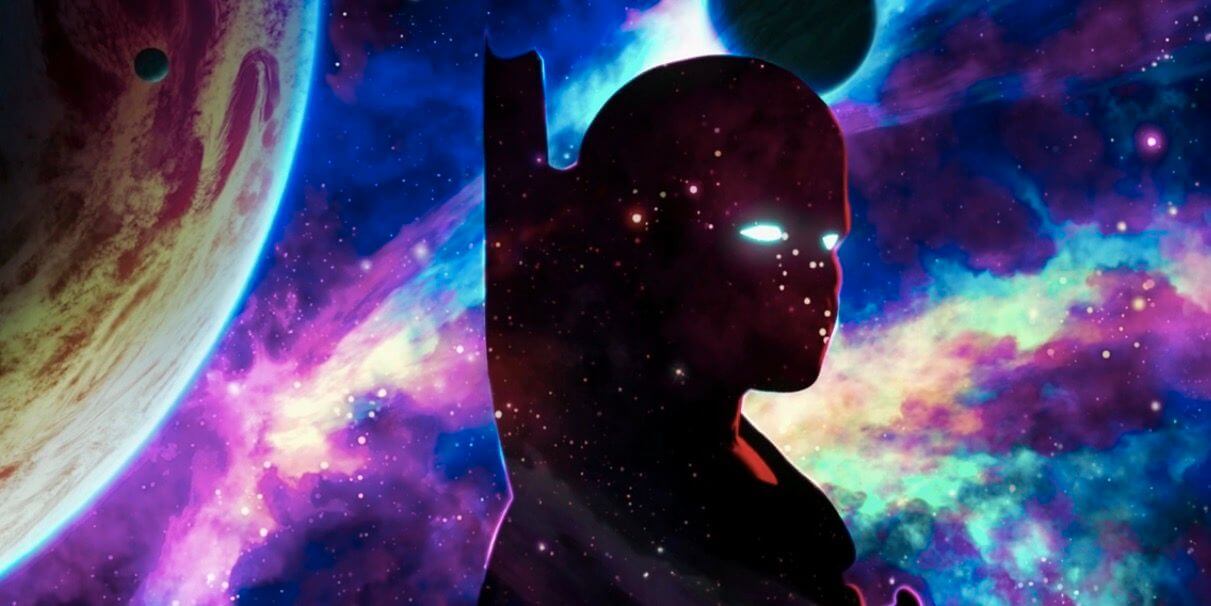
The series revolves around the character of The Watcher who introduces the audience to the concept of the Multiverse and the idea of the characters the audience is used to be becoming something entirely different on the whim of a momentary change of destiny that creates a variation to the MCU world we know and love.

The Watcher is described in his first appearance in Marvel Comics in 1963 as the most dramatic being in all the known Universe!” explains actor Jeffrey Wright who gives voice to this omniscient being who spends his time observing and compiling knowledge on the machinations of the Universe without interfering in events. “He’s a fairly dramatic, powerful guy overseeing the entire MCU and the entire multiverse. He plays a sort of Rod Serling role, narrating the introductions into the stories. In some ways he’s the biggest Marvel fan in the Universe, watching everything that transpires and dealing with the temptation to actually involve himself but at the same time living vicariously through these characters and these stories and this mythology and just taking it all. He’s also probably got the biggest cable bill you can imagine!

It was clearly important that What If..? is presented as an anthology show, as director Brian Andrews explains. “I think that was important to all of us, right from the beginning and talking to Brad about it. It’s an anthology show just like The Twilight Zone back in the day in that you never know what you’re going to get. You might get an episode that’s a comedy, you might get an episode that’s kind of dramatic and serious, really emotional and full of action. We all love cinema in all its genres and this show gave us the opportunity to apply a little taste of the variety of genres into the MCU; we can go a little bit darker, we can even go a little bit funnier. That type of variety was written into the comic book itself…what if this, what if that? Things can be so different, so weird, it really just opens the floodgates so that we can do whatever we want to and it was really exhilarating to be able to play it that way. It’s like being handed the keys to the Porsche and being told to have fun and promising not to crash it – hopefully!

Ultimately, it fell to writer A.C. Bradley to come up with strong, original ideas to power the series and take the characters in unexpected new directions. “To be honest, when it came to creating an episode and figuring out the story of What If..? the last thing we actually thought about was the ‘what if?’ I think we all looked for what was the heart behind the hero. How do we get behind the shield, for example, what’s a part of the story that we haven’t told before? These characters are iconic, we recognise their silhouettes, we recognise their taglines. But what’s important is how we connect to them so it was all about finding new ways to connect to Peggy Carter, to Thor, to Doctor Strange. Luckily we have the Watcher as our guide because he, too, is looking for a connection. Character was really what drove it all and then we figured out the ‘what if?’ element.

Jeffrey Wright takes up the point about the Watcher’s place in the What If…? scheme of things. “I think he is, in some ways, defined by his need for connection. It’s his life’s passion to observe and connect with them and their heroism and their flaws. In some regard, without them he’s nothing. He adores them, he is compelled by them and in a way it gives his life purpose and meaning. As I think about these characters and what they have come to represent, I think that those of us who watch them are like the Watcher. The passion behind the fans’ connection to these characters has the same level of trust, understanding and hope imbued into them in a way that they may not have found outside this mythology, particularly now in this upturned world where trust is difficult to hold on to and to place in any particular individual. We can always place our trust in these characters.

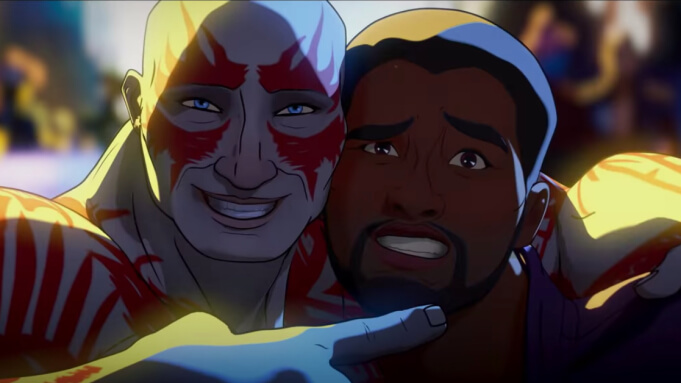
Episode Two of the series sees Chadwick Boseman reprise his role as T’Challa who is, thanks to a quirk of fate, now Star-Lord rather than Chris Pratt’s Peter Quill. “When it came to actually figure out this episode it was over two years ago and obviously Chadwick was still with us,” explains SA.C. Bradley. “one came about because we had a poster with all the characters in the writers’ room and we realised that T’Challa and Peter Quill are the same age, close enough. So in our story, Yondu takes the wrong kid – and what other nine-year-old kid was running around the MCU at that time? – and if Yondu gets a bit lost he could end up in Wakanda and of course to him, all humans look alike. That’s where that one started from, leading us to find the other side of the hero, which is the whole point of the show.

It’s certainly one of the most imaginative and poignant episodes of What If..? as the late Chadwick Boseman gives his final performance as the noble T’Challa… but this is a very different T’Challa to the Wakandan warrior fans first met back in Captain America: Civil War who went on to star in his own box office smash solo movie, Black Panther. Working with Chadwick certainly left its mark on the show’s creatives. “It was amazing to be able to work with him,” says Brian Andrews. “We only had a short time with him because our episodes are so short compared to those who got to enjoy his presence on Black Panther or even on Civil War. We had him for a brief moment to do our thing and we’re so grateful for it. I think he may have been one of the first actors to sign on and say “Oh yeah, I’m gonna do that voice” and we were so excited because we really wanted to work with Chadwick and we just loved Black Panther. It was great to hear him talk about it because he was so excited to play this version of T’Challa because it was so different, it was a version of him being able to play the king but the king without the mantle of royalty and all the things that go with it. It was a completely different spin and he could lighten it up, he could get to be a little more jokey and he was really excited to bring that flavour to T’Challa and bring it to the audience. He really wanted to do the recording like a play, reading the scene descriptions in between and really built it out because that was how he was trained and that was what he was comfortable with and wanted to do. It was so much fun being able to do that because basically, we got to read lines with Chadwick Boseman! It was amazing and of course, none of us knew what he was going through at the time.

I actually met Chadwick for the first time at ComiCon,” recalls Jeffrey Wright. ”It was in the bathroom as he was just about to introduce the Black Panther film and I was there with Westworld. We had a really wonderful exchange and he said some wonderful things. Then we’d run into each other here and there and we were, in fact, supposed to do Ma Rainey’s Black Bottom together but I couldn’t do it because I was tied up with another film, unfortunately. So it was a lovely surprise to find that we would have the opportunity to at least be in the same space with him on What If..? and with this being the last performance we’ll get from him I find it very moving. What we all discovered was that the kind of mythic quality he brought to these performances paled in many ways to the mythic quality that was his life in terms of the way he was going about his work with grace, dignity, and power. I was really pleased to be able to spend a little bit of time with him on this show.

He was a  real hero,” adds Brian Andrews. “Working on the show, finalising it in post-production, we were doing the score and he had already passed. We knew we had to make sure nothing went wrong with this episode because it’s his last so we had to make sure that everything in it can honour what he brought to the table, honour the character and, of course, honour Chadwick too.

One of the great delights in making the show was the opportunity to work with so many of the legendary actors from the MCU who were more than happy to return to provide voice-overs for their iconic characters.

It really was amazing working with everyone,” says Brian Andrews. “It was truly incredible. I think part of the choice of who to bring back came out of our writers’ room and the who-what stories we wanted to tell and who would be in those stories. And then availability became the issue because everyone’s really busy and everyone’s got a lot of really amazing things going on! So trying to wrangle the schedules to get people involved was tough but we were able to get so many back, it’s been fantastic. It’s like we have a front-row seat to awesomeness! They come in and we get to work with these amazing people who are already familiar with their characters and have done so much in the MCU proper with those characters. They get to play with us and they get to do it in a slightly different medium. What’s extra fun is that I perceive a general genuine happiness for them to be able to riff on those characters a bit and they would really start getting into it as it’s a little bit of a spin-off from what they originally did so they get to play it a bit differently. It’s very freeing for them, it’s fun and it’s open. I think the audience will appreciate that too.

With around thirty ideas mooted for the series and only ten making it to the screen for this season, it’s clear that there’s still plenty of exploration to do of this fascinating new corner of the Marvel Universe. “Obviously we wish we could have made thirty episodes but we were only greenlit for ten!” explains Brad Winderbaum. “But we are fortunate enough to be exploring some of those ideas in our second season. But the world has changed and the fictional Marvel Universe has changed so new ideas are always bubbling forth too and new stories and new opportunities to tell new stories constantly come about.

What If?… launches on Disney+ on August 11th. 


Corin Hardy | GANGS OF LONDON

corin hardy

We were lucky enough to prise director Corin Hardy away from a sweltering 30-degree editing suite to talk about his work on the SKY Atlantic series Gangs of London.

STARBURST: You’re known more for horror, your directional debut was The Hollow in 2015 and you made The Nun in 2018, so what attracted you to Gangs of London? Does it have horror elements, would you say?

Corin Hardy: Well, first of all, what attracted me to Gangs of London own was my friend Gareth Evans. I had been an admirer of his for some time, and the stars aligned, as they sometimes do, they bring together people with mutual love, in this case, genre movies, horror and action movies. When I was making The Crow, I contacted him about making an action film. Gareth asked if I would do an episode. I always wondered what my TV show would be. Something with a certain ambition and visual aesthetic, I was wasn’t planning on it being a grounded crime show like this. So I thought I would dive in, ended up doing three episodes, then four and the final one, and now doing Season 2. I actually got a lot out of it, it was an enlightening experience. A challenge, you know, to be out of my comfort zone, but I think that’s a good thing to be out of our confront zone.

Episode 3 has got the amazing ‘Traveller Sequence’ [an extended shoot out in a traveller encampment]. Is it just budget that makes that possible for a TV show, what once would only be possible in a feature film?

It’s a good question, it’s not just budget, even though Gangs does have a decent budget. When you hire Gareth you need to be able to show the kind of action sequences he demands, honed while doing The Raid in Indonesia. Luckily, we were able to run riot and bring these extraordinary setpieces into the show, it wasn’t everything but a key factor. You have a mix of emotional crime drama and heavy genre elements of horror, western and war, taking you on a visceral ride that is cinematic. The challenge was: can we bring cinema to TV, where every episode is like a feature film. The ‘Traveller site Massacre’, as it has become known, was one of those prolonged intense sequences. You can’t stumble across pulling that off, it takes months of planning, choreographing, pre-vis, shoot, cut, edit, and change before you even film it. Yes, you need a budget but you need the love and commitment that I, Xavier, and Gareth have to pull it off. None of us wanted to do a regular British crime show. 

Was it the most challenging scene to shoot then?

I think for me there was a lot of challenges. Some of the arts of filmmaking that people don’t talk about are the more mundane ones, to do with scheduling, locations, it’s all prep. I do a lot of storyboards and floorplans. You have to nail everything. That was certainly one of the most epic sequences. The alleyway sequence in Episode 4, is a moment where you think Sean [played by Joe Cole] is going to take control and is almost a compliment to the Traveller Sequence. We decided to do a one-shot, so we a very on the ground with him, to feel the emotions. We just went absolutely crazy, you go into a different zone when you are so focused and striving for something new and bold.

Can you tell us anything about Season 2?

Corin: I can’t tell you anything about the story, but I have just finished shooting the first two episodes and I can tell you it was exciting and exhausting in equal measures. We want to continue the same excitement as Season 1, but up it. We didn’t want to repeat ourselves but also wanted to make sure it has the same DNA, the story continues straight from the first one. People need to be prepared.

Gangs of London is now available on DVD and Blu-ray.

Xavier Gens | GANGS OF LONDON

xavier gens

STARBURST had the privilege to speak with French director Xavier Gens about his work on the powerful SKY Atlantic series Gangs of London, his love of genre cinema, and why violence can be fun…

STARBURST: Xavier, hi. So how did you get involved in Gangs of London?

Xavier Gens: I got involved because I know Gareth Evans very well. He phoned me up and asked if I wanted to be involved. I said yes before reading the material because I love Gareth’s work and I think it was a real opportunity to do something together. When we start shooting and prep, it was a real pleasure to understand his process and to go through the steps with him. A real pleasure and I really enjoy it. 

Was it always planned that you would do three episodes?

Yes, when you do a TV show it’s divided into blocks. So Gareth did the pilot and the Episode 5 craziness [an epic standalone episode featuring a siege on a farmhouse by Danish Special forces]. Gareth knew what action scenes he wanted and would be in charge of the biggest ones of the show, based on this I was in charge of block 4. This is better for the actors, as you do a whole story block with them. 

Gangs of London feels very cinematic, at the start of Episode 6, it beautifully transitions from a doll in the river up to the two actors on a bridge. Does making TV feel more like making a film now?

Completely, it is like directing a movie. You accept someone else’s world and this is Gareth’s universe. He asked me to direct three hours of his show, which was fantastic. We try to tell a story for each one-hour episode, let’s say it’s three hours of storytelling, we try to make as much as we can from it. When he asked me to direct Episode 6, I wasn’t surprised, because it’s the episode where torture is involved, very gory! [Laughs] Thanks, man, I know what you think about me!

That leads us on to violence. You are known for violent movies and Gangs of London is very violent. What attracts you to violence and why do you think audiences like it?

I will quote Quentin Tarantino when he was asked the same question – because it’s fucking fun! [Laughs] No, it’s not because we love violence, but we love genre movies. When you’re doing a genre movie, you have to commit to this and give the audience what they want, and it’s fucking fun! (Laughs) I think Gangs of London reflects the need to satisfy the audience. 

Reflecting on your most controversial film, Frontier(s), part of the so-called ‘New French Extremity’ movement. It’s insane but great. What was the inspiration behind it?

Frontier(s) is a love letter to genre movies. It is more like a French spoof of The Texas Chain Saw Massacre and The Descent. I wanted to do a film that was a concentration of all my favourite movies. It’s a movie you can see in different degrees. One is a survival and the other is a love letter to Tobe Hooper [director of The Texas Chain Saw Massacre]. Also, it’s a love letter from France to American genre cinema. 

Was Frontier(s) difficult to film, as there are so many elements involved?

It was super difficult, as it was an independent film with not much money. We shot in 35mm as that was important to me, so we could get a grainy feel that wasn’t possible on digital, and push the actor to extreme limits.

[Laughs] You put her through a lot! So Gangs of London was shot digitally?

Yes, that’s right. In fact, Matt [Flannery], the director of photography was doing interesting things, so I called the DP from Frontier(s) Laurent Bares and we stuck closely to his style. The only little thing we changed was we put a little bit of light in the eyes. I would say that’s the only difference between my episodes and the others. A tiny detail but an important one. The French touch.

And we hear there is a Season 2?

Yes, Corin [Hardy] is filming that now.

Are you involved?

I am helping out with the second unit at the moment.

And finally, do you have any other projects in the pipeline?

Yes. I am supposed to be shooting an action film in France and Thailand at the end of the year. I’m pretty excited about it. I can’t say too much as you never know what you can do in the current climate. Fingers crossed and if it works, I’ll tell you exactly what it is.

Gangs of London is now available on DVD and Blu-ray.

Jesse Pimentel | RESIDENT EVIL VILLAGE

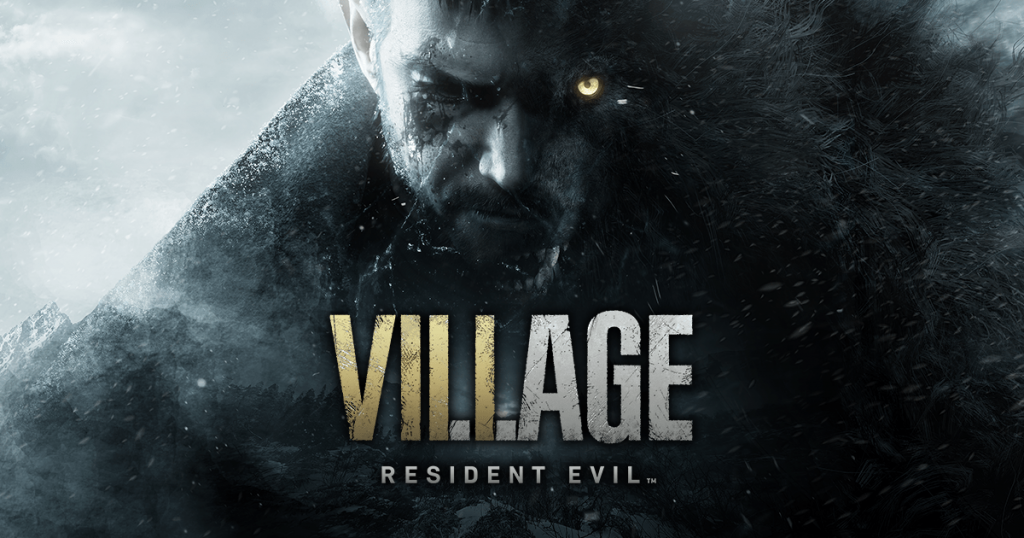
resident evil village

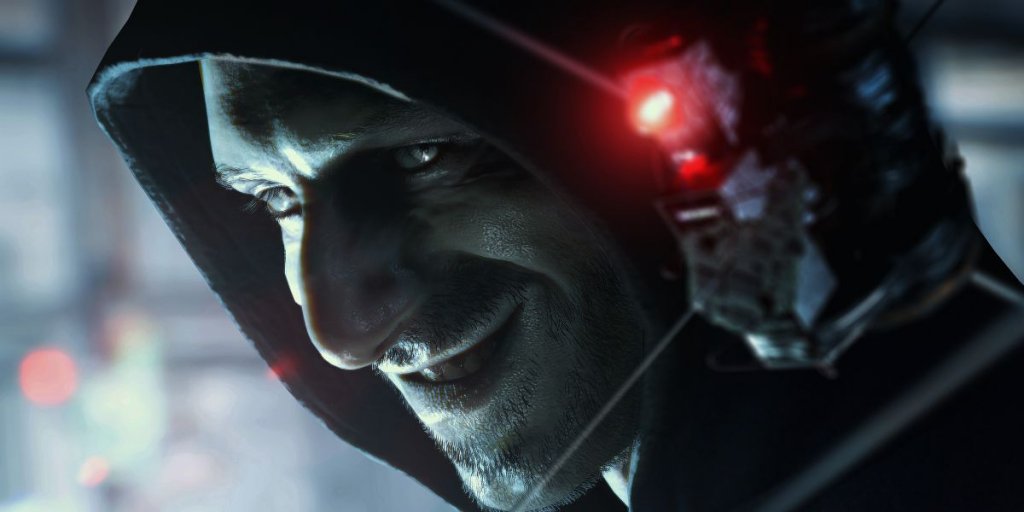
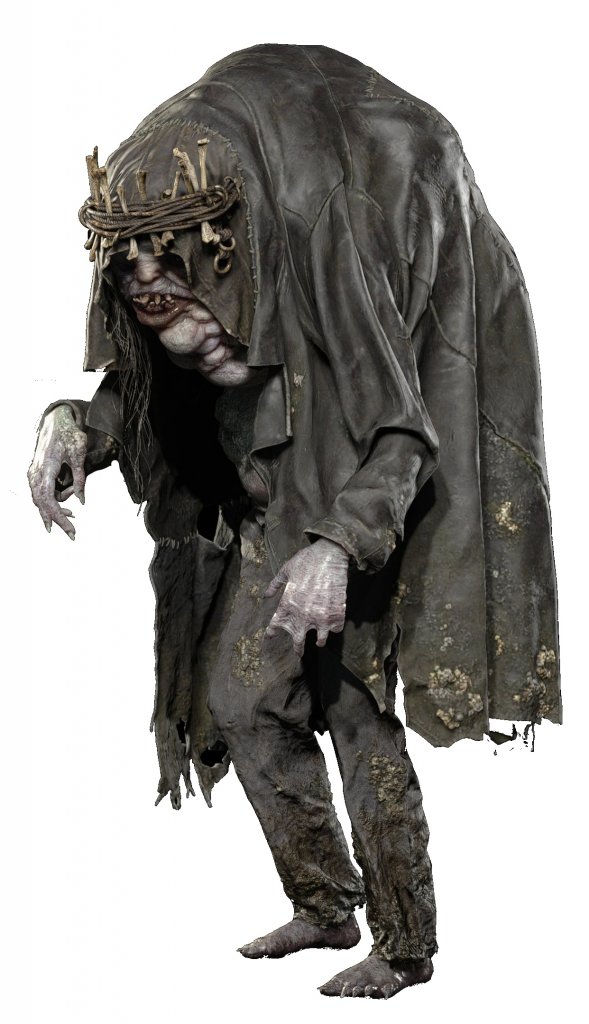
For those that played RESIDENT EVIL BIOHAZARD, you will most certainly remember the maniac Lucas Baker, who, throughout it played numerous mind tricks and messed-up games on Ethan. Portrayed by JESSE PIMENTEL, the actor returns in RESIDENT EVIL VILLAGE to play Salvatore Moreau. Although some may see this character as a villain, there’s actually a much more human side to Moreau that will make you feel sorry for even having to fight him! STARBURST talks with Jesse to discuss Motion Capture, the Igor-like influences behind Moreau, and much more…

STARBURST: Going back a little, how did you initially get involved with Resident Evil?

Jessie Pimental: I’m just a journeyman actor. I moved out to Los Angeles, and started to pursue the acting career. I’m from California originally, the San Francisco Bay Area, and I live in New York now, but that’s a different story. I auditioned for everything, I didn’t have an agent, or a manager I would just submit myself. This is a good thing for actors to know. I submitted myself to every Casting Network, Actors Access, Backstage opportunity. I just happened to come across one that was Code Name Harawata. I didn’t know what it was. They said “Hey, can you come in tomorrow, and read” They sent me the script, and it was like this Southern, serial killer thing. From what I could understand it was some Japanese video game prototype that they were making, I wasn’t sure. They called it Code Name Harawata. I just thought it was a random gig, like I said I didn’t have an agent or a manager, so getting an audition on something big normally comes through an agency, but they expanded their search out to everyone, because I guess that they were looking for other actors. New blood, such as myself. So I showed up to the audition, not knowing what it was. Got the callback, and I booked the job. I worked on the project for two and a half years before I even knew it was Resident Evil! We signed NDA’s for all of these things, and they’re pretty good at keeping these things under wrap. Since I didn’t regularly play video games, I wasn’t privy to Raccoon City, Umbrella etc. I thought that it was going to be some regional game in Japan. Until I saw the trailer!

Looking back on that game, what did you enjoy the most about playing Lucas Baker?

It was a character that was generally in my wheelhouse. As any actor, I guess they want to play roles. You get into acting and you often find that you are relegated to playing a version of yourself. You do all of this work as an actor, you show up, and they say “Just be you, don’t worry about all of the work you did, just be you”. In the case of Lucas that was like a ‘real’ acting character. So to be in my mid-twenties, and to get handed a character for a big franchise that was also not me just playing myself, but something that I got to craft, and build, that was awesome. It was awesome getting to play something like that. I always saw myself as a character actor, so to speak. So you kind of want to navigate your career off of where you think you are going to work. To have my first couple gigs be in the Resident Evil franchise, as video game villains that are contrastingly different, it felt like my intuition was telling me correctly what kind of actor that I am. I get to do these rangy characters.

Lucas Baker

Also, why do you personally think that the game has become such a huge hit with gamers?

From what I interpret, they were plateaued a little bit. Resident Evil Biohazard took people by surprise. I think fans were thinking that Capcom was going to double down on some of the other stuff that they were doing, it was still going to be a little cheesy, or whatever. I don’t want to be too insulting though. Resident Evil has this Texas Chainsaw Massacre feel to it. Even though it’s a big game, it has this small feel to it as well. With one little location, and you are haunted throughout the game. So Resident Evil 7 was more like a plot to a horror movie than anything else. “Man looking for his wife, ends up being hunted by a psychotic family in the swamps”. So, when people played it, they really appreciated how Capcom read the tea leaves. They adjusted. There are big fans of these games, and when they get lip service, they are like “What the hell?”. However, when they reboot these franchises, Marvel is a good example, when they put people in charge that are just phenomenal, who know how to tell good stories while also serving the fans, that’s what they did in Resident Evil 7. With Resident Evil Village, it was like 7 threw the ball up, and Village slammed it home. When Resident Evil 7 came out, people were like “Damn, these guys, they’ve got something new going on, and they are re-inventing themselves.” Then, when Resident Evil Village came out, people felt like “Okay, this approach is here to stay!”

OK! Jumping forward a bit, how did you then end up coming back for Resident Evil Village?

I guess they liked me after I did Lucas! They called me one day, and they said, “Hey Jesse, we’ve got this part, it’s kind of crazy, it’s a little out there, but we think you’re the right man for it”. So, the producer Rosanna Sun, is the person Capcom hired to run it. She is a great person. Once Rosanna finds you, she likes to work with the same people. She’ll throw stuff your way, and she’ll make sure you get a chance to stretch yourself. She hit me up with this role and said, “This is going to be a crazy one”. She said that she wanted me to watch The Name of the Rose – Ron Perlman’s character as a point of reference. She throws you places to go for research. She really appreciates the actor’s process. I looked at that part of Moreau and built something around it. It turned out to be right, and to work for them. So, they gave me this part to.

What excited you the most about getting the role of Salvatore Moreau?

Again, same as Lucas, here I am! Validation I guess. Acting is interesting, because at some point validation or vanity has to come into it. When I was a kid, I found out I was good at acting, and people applauded me for it, and it made me feel validated. From there on out, I thought that this was who I was supposed to be. Every time I get these parts, where it’s like “I know the kind of actor I am, I know what I’m capable of.” So, every time someone throws a character at you that is more of a challenge than, like I said before, being yourself, and it’s more them saying that they can trust me to do something in such a big franchise, it’s always an honour, and it’s something I want to make sure I’m really burning the midnight oil for. So playing Moreau was great. To follow up playing Lucas with that, with them both being back-to-back roles in the franchise, it’s pretty cool!

Salvatore Moreau

How did Capcom put the look for Salvatore together, and what were their influences/inspirations for the character?

I know that The Name of the Rose was one of them, because Rosanna told me that. So obviously she got that from somewhere. It went through a few different iterations, because they will book you, and still change the story up. That’s really smart; you don’t have to lock the script two years in advance if you come up with a better idea. When I first got it, it was very much like The Name of the Rose, Ron Perlman’s character is similar to Egor. So I knew that I was playing a character like that, who was dedicated to Mother Miranda. I actually thought that I was a good guy at first. I thought that I was someone who showed up to help Ethan, but was already mutated. I don’t know if I misinterpreted that wrong, or if they changed it. Finally, they ended up with the reservoir, and the fish, and the water. The next thing I know I’m a fish-man, which came later into the part. First I was Egor, and then it progressed. With the name Moreau you could tell that they were looking for an animal hybrid type character. Like The Island of Dr. Moreau. It was a book, and then they made a movie of it with Marlon Brando, and Val Kilmer. That was famously horrible, even though it was trippy. It was about a doctor who makes hybrid animal humans. So, they were trying to do that a little bit with Moreau.

Moreau feels like an outsider compared to Mother Miranda’s other subjects, however, how would you personally describe him, or say that he differs from the others?

Another reason why I really loved him versus playing a Lucas Baker was that Lucas Baker was all bad! From the beginning we knew that if Lucas Baker wasn’t infected, that he was still going to be a murderer. He’s messed up. However, Moreau isn’t, he was a victim of circumstance. He grew up in a village, and that village was decimated, and there was a supernatural entity that he fell in love with. He wanted to serve Miranda, over time he became the monster that he was, but he was originally a school teacher. Within him, there is a man, who’s not a bad guy, but more a victim of circumstance. So being able to play that on the inside, he gives you this sympathetic feel for him. It’s almost like, you’ve got to kill him, but it’s reluctant because he is a poor guy. He is a hostage in his own right. You can see it when you fight him in the end. All of a sudden you see the body of the man on the inside of the fish, that you’re actually targeting. That’s the thing that you have to shoot to win. He’s a man, that’s really what he is, and that’s his life. So having that, that’s always going to make you play the character better, if there are different layers in there.

Talking about Motion Capture itself, were there any major changes with how it all came together compared to 7? A different studio, a different approach, team maybe?
The technology gets better every time. They have cameras everywhere. In Resident Evil 7, Todd Soley who plays Ethan he would wear a helmet with a camera on it, for us to reference. So we were always talking into the camera. So I show up in Village, and we’re all acting, I’m looking at Ethan and I’m talking to him, and it finally dawns on me about halfway into the workday “Wait a minute, you’re not wearing a head camera, who am I talking to? How are they referencing this.” The team looks at me like I’m an idiot, like “You don’t have to do that anymore! They pick it up, 360 degrees, you don’t even have to wear a headcam.” Since they’re picking it up, they can literally figure it out based on the coordinates of where Todd is. It’s crazy. It’s always really cool to see this technology develop.

Jesse Pimentel

Moreau was a shot in the dark, we kind of felt like there was a guiding light with Lucas Baker, there were some obvious things, like a Joker vibe. Moreau was like “What are we going to do with this guy?” So playing him in the Motion Capture, at first I wore a big suit, then I didn’t have to wear it once I learned how to walk like him. I wanted something that would restrict my movement, so that I could walk like him. The physicality of Moreau was very difficult. It was a strenuous thing, so I thought that I might as well wear something to force me into it. When we were shooting, I didn’t want to give myself a chance to straighten my back out, so I wore that suit. Then it got to a point where the suit in itself was restricting my movements for certain angles that we needed. I worked on the character enough, so I could then take the suit off.

What was the most rewarding scene that you did in Resident Evil Village?

Definitely the scene where Moreau comes out of the water, and says to Ethan “You’re trapped, the exit is underwater.” In this scene we got this really great close up of Moreau, which was a very deliberate action on my part. I wanted to make sure that the timing had me come up to his face, and say it. So I was really close to Ethan. I really dropped into the character, and Todd and I had a great time shooting that scene. Then seeing it translate onto the screen, you’re like “Wow!”. There’s this communication between the editors, the video game developers, and the actor too, where they all knew that that close-up was a moment. It’s weird, because I knew what I was going for, and these video game developers were able to watch my performance and literally translate it onto the character. It’s me, but it’s not me. They could do whatever they want with the footage. They could edit it so that I never even look into the camera in that scene. They got that moment, and they understood the close up. The intention behind it. So it was like this seamless process. Where my intention literally translated onto screen, as if there might as well not have been any Motion Capture there. That was a true acting moment. It made it through, and the acting was intentional on my part. So that’s definitely my favourite.

For those that haven’t played it yet, why should they play Resident Evil Village?

It’s a massive franchise that’s doing right by their fans. That’s something that is very valued nowadays. It’s a crazy game. It’s very immersive, and it definitely takes you on a wild ride. You’ll play it for a few hours, and you’ll step outside and you’ll feel like you’re transferring into a different world. That’s one of my favourite things about video games. It’s an enthralling story, with great acting, and great people. Like I said, Rosanna Sun was great. Everyone that runs Capcom are all so kind and sweet, they come from Japan and we always have to have an interpreter. They are the nicest people, and they are such fans of our work while we are doing it. It’s so validating. From the top down, there isn’t a bad egg in the bunch. It’s a good story, and a good company to support. A good group of people, trying to do their best.

What else can we expect to see from you as an actor in 2021?

Because of COVID things shut down, so I am just doing a lot of auditions right now. We’re still in pre-production stage, but I’m producing/writing a TV pilot, that should be out by the end of the year. Besides that, I have a couple of scripts that I’m writing that we are going to produce. Nowadays, if you’re an actor, creator, you can’t just sit around and wait for someone to give you a part, because we can all make movies at this point. I really switched it over, instead of burning the midnight oil trying to get parts – and COVID was a big part of this – I just thought that I’d like to create my own content from now on. Auditions will come, parts will come. When Resident Evil 9 comes, they can always call me. They can throw whatever else they’ve got at me. So yeah, in the meantime, I’ve got a couple of projects, but it’s a little premature to talk about them.

For more from JESSE PIMENTEL, check out his Twitter @PimentelJessie, and Instagram @PimentalJessie. RESIDENT EVIL VILLAGE is available on Xbox One, Xbox Series X, PlayStation 4, and PC.

Read our other RESIDENT EVIL VILLAGE interviews here:

Andi Norris | RESIDENT EVIL VILLAGE

andi norris

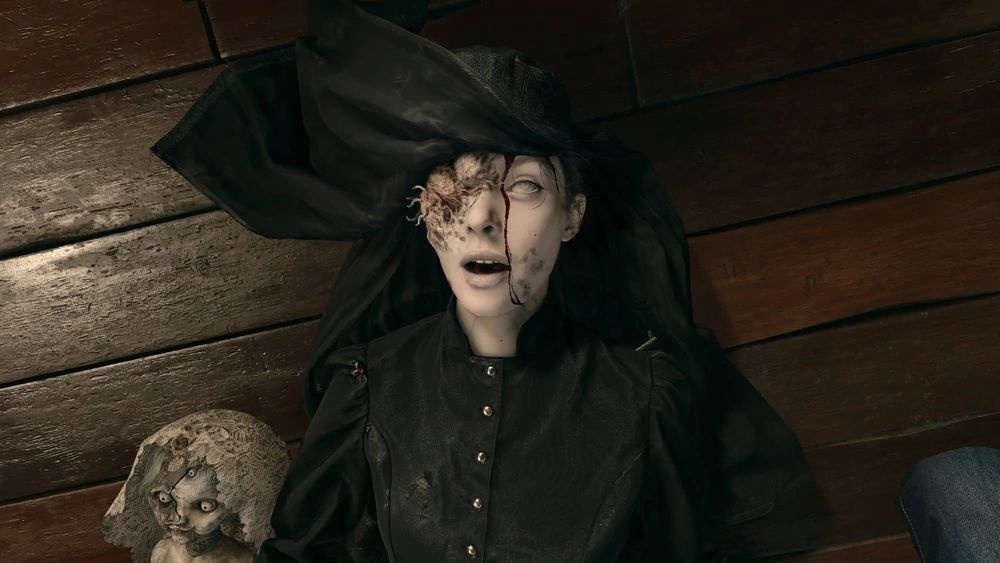
Although the early trailers for RESIDENT EVIL VILLAGE had us believe that Lady Dimitrescu was the main villain fans would have to defeat, once we played the game we quickly learned that there are actually a stack of boss fights. All of these characters add something special to the game, and without giving too much away if you haven’t played it yet, House Beneviento is possibly the most nightmare-inducing section of it all! It was a great pleasure, then, to actually get to speak to the actor responsible for bringing Donna Beneviento to life, ANDI NORRIS…

STARBURST: How did you first get involved with acting?

Andi Norris: Well, it all started when I was a child playing dress up. I kid, but also, it’s true. I knew from my first children’s theatre production when I was five that I wanted to be an actor for the rest of my life. I imagined myself in a number of other careers – and I have had a number of other careers along the way – but ultimately, I’ve always been an actor. Acting meant that I could have all of those careers for a moment in time, for a story. After children’s theatre, it was making up little plays with my friends at recess and performing them for the class – yes, I was definitely the coolest kid in school [laughs] – to auditioning and performing in the local community college plays, to being cast in every production in high school, to studying it in college, to moving to LA, and here we are!

Jumping forward a little bit, how did you then go on to get involved with Resident Evil Village?

My good friend Sara Coates – you may have heard of her? – brought me in. We knew each other when we both lived in Seattle. She was already working in the RE franchise, noticed from social media that I was working regularly in Motion Capture, and let me know about the audition. I didn’t have any clue what it was for until after the first table read!

Andi Norris

How much did you know about Resident Evil before that audition? Were you a fan of the games at all?

Honestly, before the audition, all I knew was the movies. I hadn’t played any of the games and I wasn’t familiar with the lore past that.

When you found out you were playing Donna Beneviento, was there anything in particular that excited you the most about playing her?

Her loneliness and isolation. I’m often cast as really tough or really quirky characters, so this was a great, and challenging, exploration for me. I identify a lot with Donna. I’ve been through debilitating fear of being seen, being judged. I’ve gone through long periods of time in isolation, obsessively reading, building things, talking to myself… It can be a painful place to live, but it’s often also a kind of a reassuring pain. Like pressing on a bruise.

What do you remember the most about your first day on set?

How much fun it was to play with the rest of the cast. My first day on set was the big scene with all the lords. I’d only just met everyone at the table read; no one knew what anyone else’s character was like yet. It was just a fun day of play and exploration! But through all the fun and interesting things that happened that day, I will never ever, ever forget seeing Angie’s butt wiggle for the first time. Genius.

Let’s talk Motion Capture. What was that like to do for Resident Evil Village, and is there a scene that stands out to you as being particularly rewarding to work on?

Well, I talked about the first scene with the lords. That was just such a rewarding day playing with everyone for the first time! But also the day we shot the cut scene for Chris’ Wolf Pack, and I played Tundra. That was a really fun day, too! My good friend Dove made a strong choice with his character to be kind of a bravado man, carrying his rifle over his shoulder all nonchalant like. He would swing around randomly and the rifle would be right in my face and I’d duck out of reflex. This happened All. Day. Long. By the end of the day, my quads were on fire! Obviously, none of that is in the game, it’s far too comedic, but it is a fun memory I have of that day.

Can you elaborate on what you think Motion Capture brings to a game like Resident Evil Village?

As opposed to keyframe animation for games? For the most part Motion Capture brings more realism, more relatability to the characters in a game like Resident Evil Village. We might not think about the person behind the movement of a character while we’re playing, and that’s a good thing really! The player should be so swept up in the game that it’s just real for them. That takes making the uncanny valley as small as possible. You can achieve some truly brilliant things through strictly keyframing, but capturing a human creating a character is always going to bring to life more realism.

Also, how would you say that this Motion Capture process compares to what you’ve done before in this style of work?

This is the first time I’ve also done the VO for a character in Motion Capture – for Tundra. In my experience working in this part of the industry, I’ve built the physicality of a character, performed the performance capture, sometimes some of the stunts as well, and then someone else comes in and does the voice acting. That’s really common in games, and I’m not sure that’s something a lot of people know. It can take a good handful of people to build a single character’s performance! And that’s not including all the animators, directors, technicians, and everyone else working behind the camera!

For many it seems that the Donna Beneviento section of the game was the scariest, however, for you, how would you say that part of the game compares to the rest of Resident Evil Village overall?

I’ve only just beaten the Beneviento house! No spoilers!!! BUT – shameless plug – you can find out my answer to this as you watch my gameplay over on my Twitch channel [twitch.tv/andiawesome]. End shameless plug [laughs].

For gamers that haven’t played Resident Evil Village just yet, why should they check it out, and what can they expect?

They should check it out because it’s a stunningly beautiful game with a heart wrenching story, characters that will really stick with you on a deep level, and, ya know, a jump scare here and there.

What else can we expect to see from you in 2021?

Oh boy, I wish I could really dive in and answer this question, but everything I recently worked on and am currently working on is under NDA – I will say that there are some VERY squeeable projects coming up! Rest assured that you will certainly hear about them from me online as soon as I’m able to talk about them!

For more from ANDI NORRIS, check out her Twitter @Andi_Norris, Instagram @Andi_Norris, Twitch andiawesome, and Streamily AndiNorris. RESIDENT EVIL VILLAGE is available on Xbox One, Xbox Series X, PlayStation 4, and PC.

For our interview with Maggie Robertson, the actor behind Lady Dimitrescu herself, visit our other RESIDENT EVIL VILLAGE feature here.

Gavin Rothery | ARCHIVE

Gavin Rothery

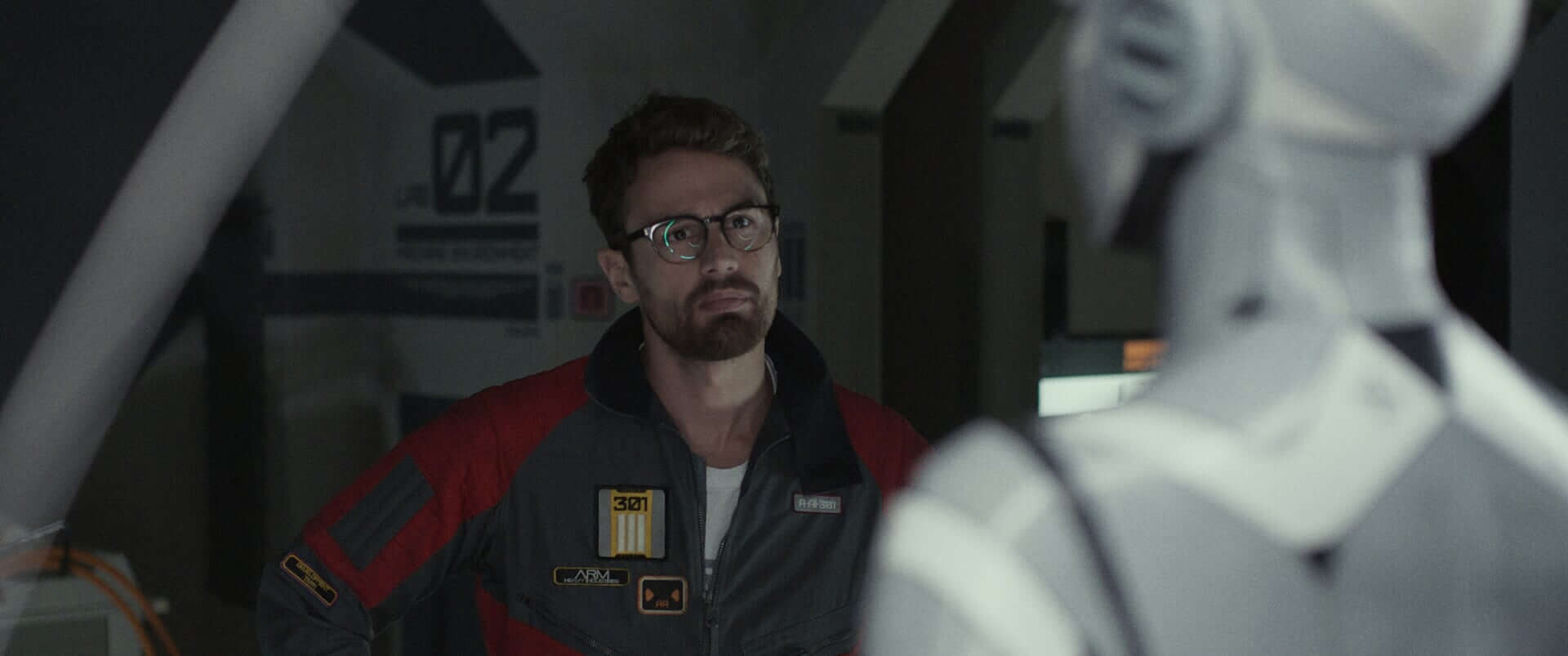
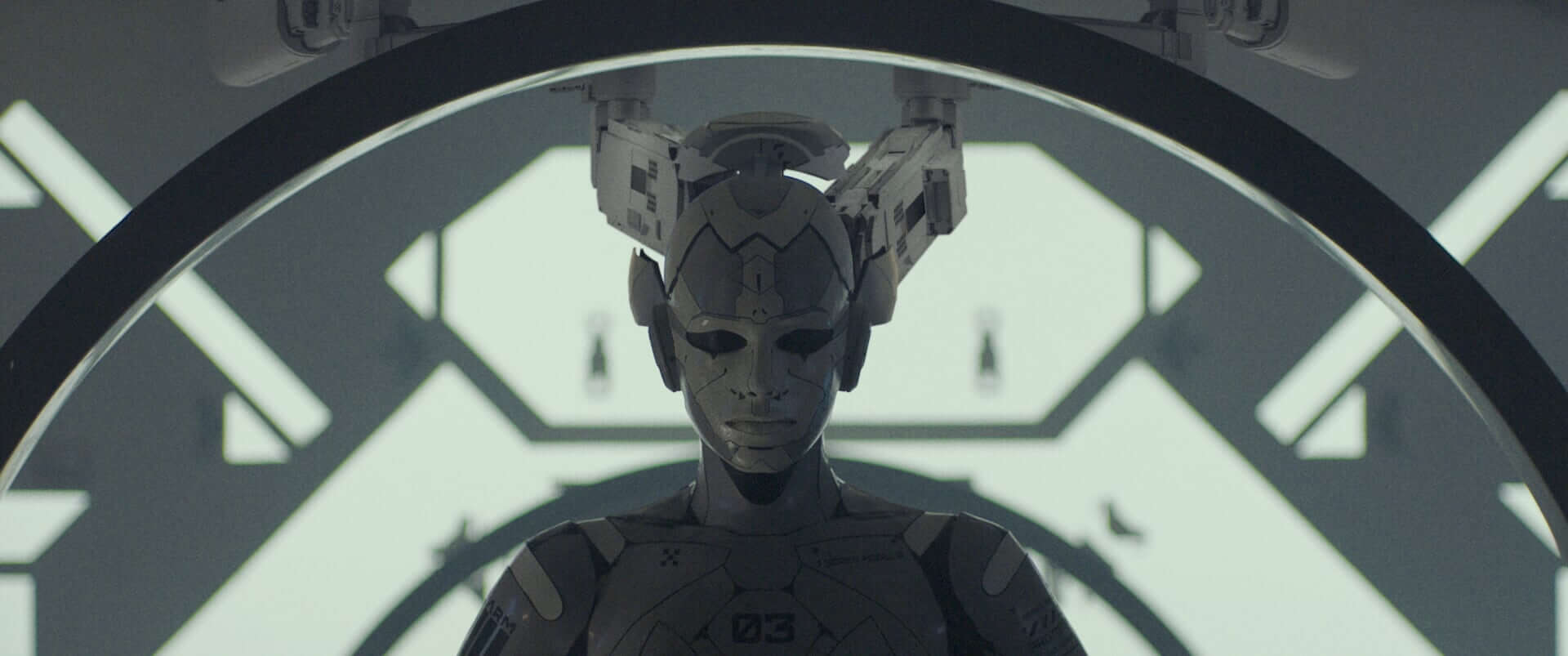
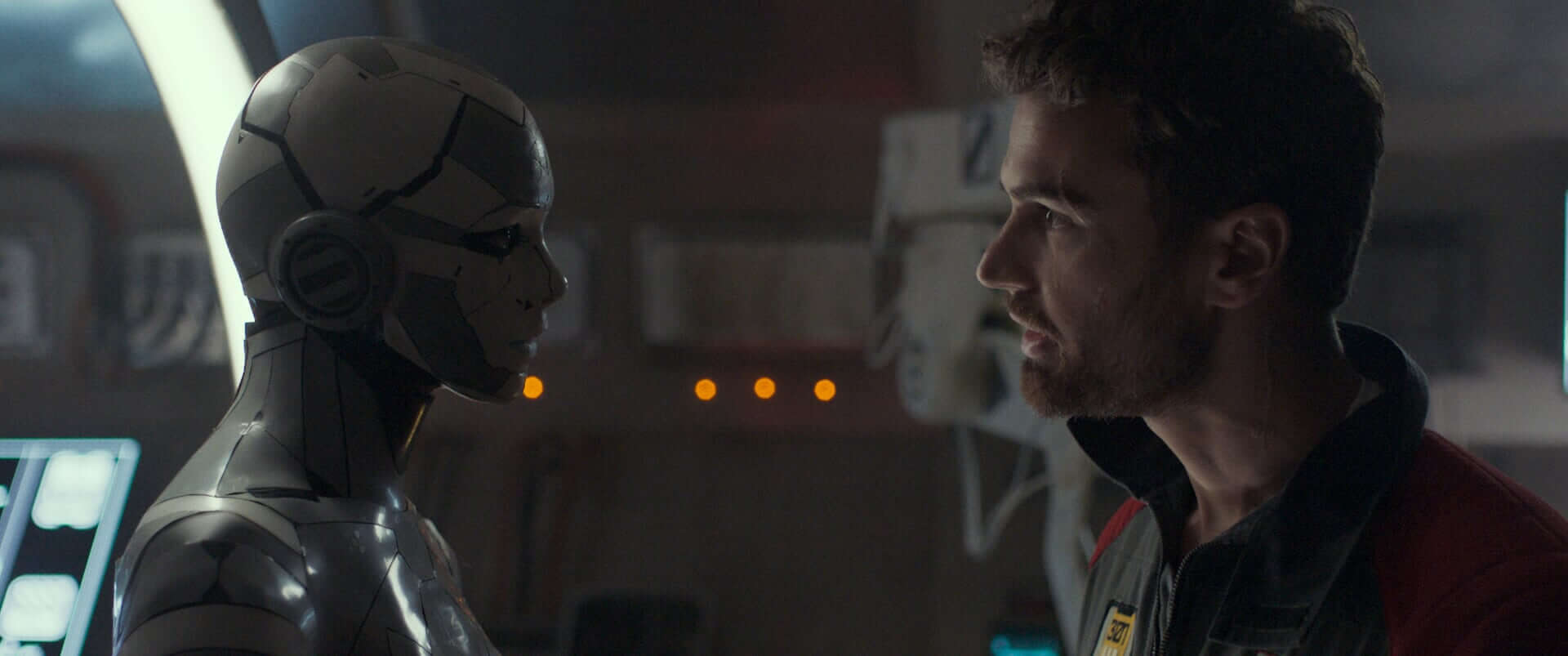
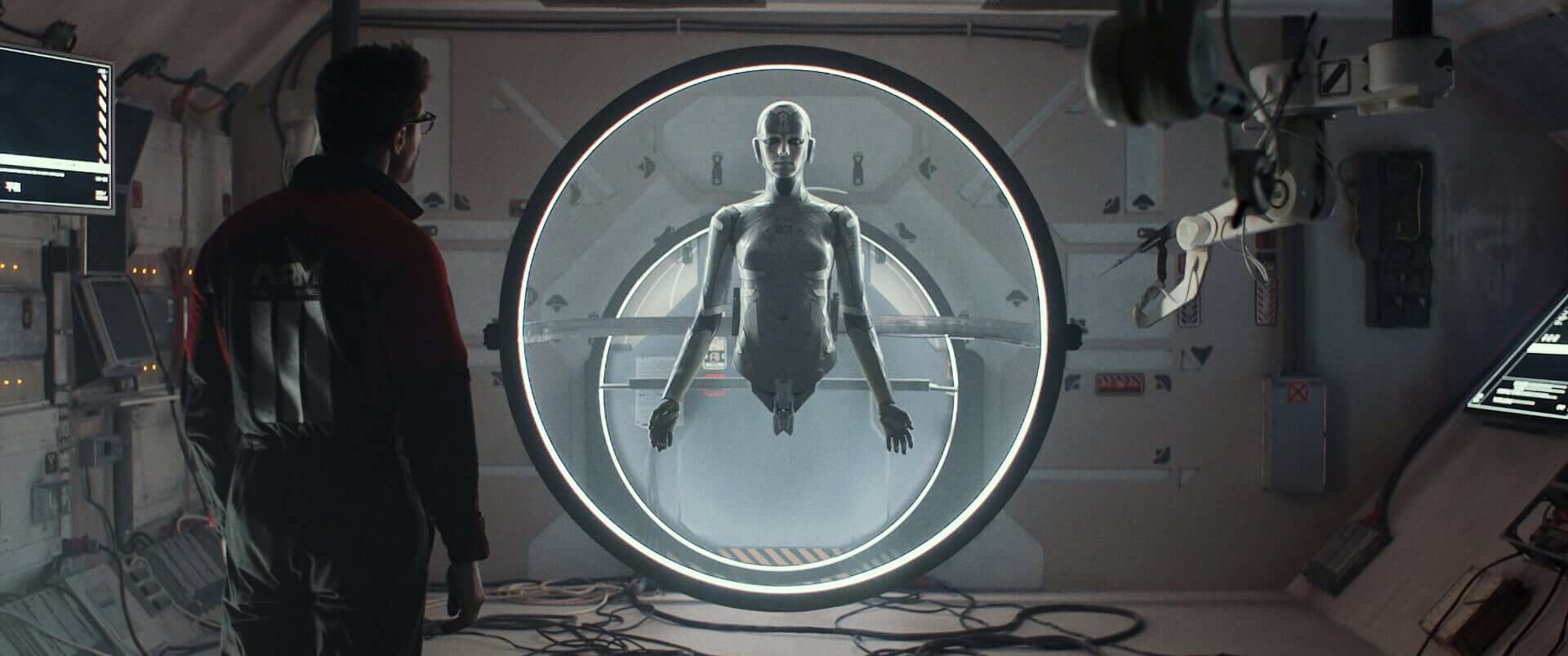
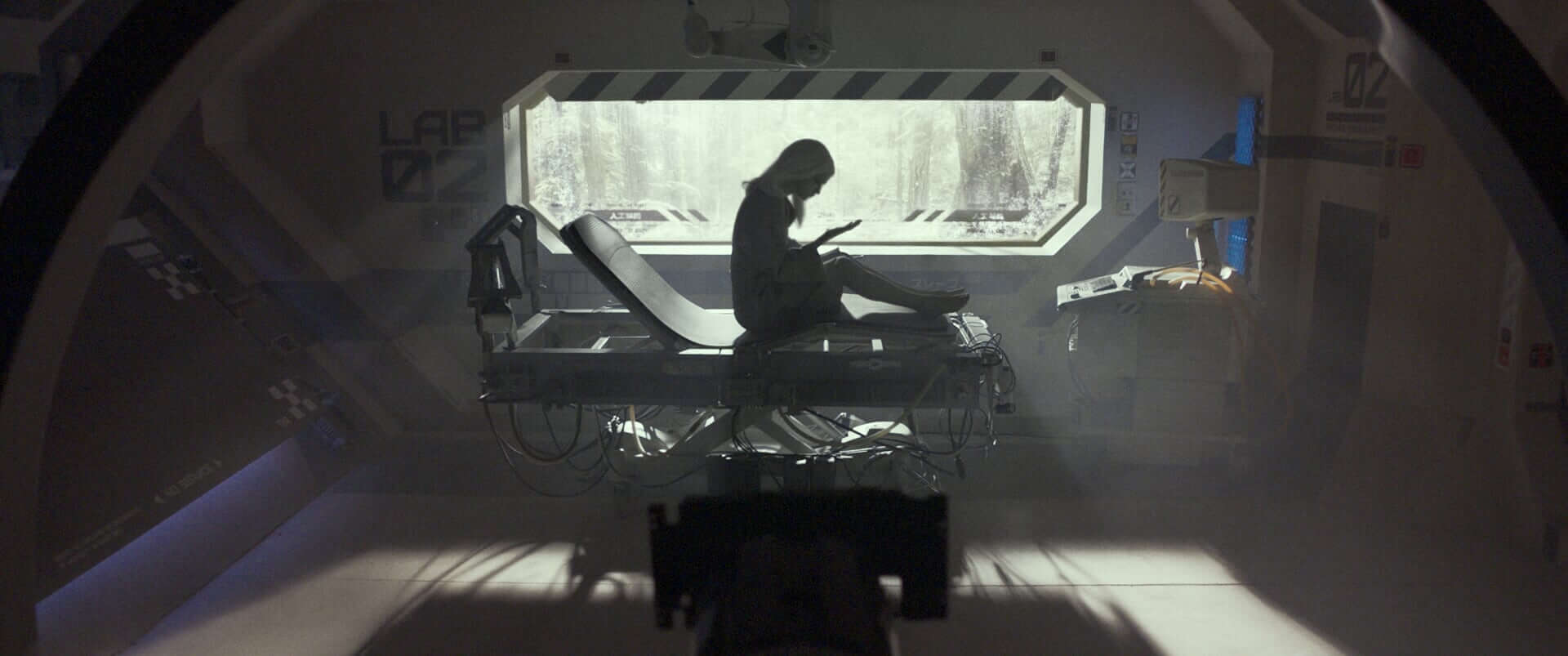
After working on the sci-fi hit Moon, director/writer Gavin Rothery went on to channel his creative experience from that into the foundations of his next idea, Archive. Based around engineer George Almore (Theo Jones), who is on his own secret mission as he tries to create a human-like robot, this isolated story located in freezing cold conditions is more emotional than you might expect. STARBURST talks with Gavin to reveal the journey behind his directorial début, and much more…

STARBURST: After you came up with the idea for Archive in 2011, how did you go about getting a team together to support it, and how long did that journey take before you could actually start filming it?

Gavin Rothery: Well it felt like it took about two-and-a-half-thousand years. It actually didn’t, but it did feel like it took a long time. When you do these things, you have your sort of key allies that you work with. I’ve been working with my producer, Philip Herd since roughly 2012. It took a long time for this film to come together because I tried not to write it. I spent about four or five years working with other writers, and it wasn’t coming out the way it needed to. So I ended up taking the reins and writing it myself. Over that period, there was a lot of meetings. Myself and Phil have production meetings every other week. So what we did was, we took it upon ourselves to find the best burger in London, every time we’d try a different place. So we hopped all over London to find the best burger, whilst we were putting the film together. We were like the core team in the middle, all the way through. It wasn’t until 2016, when we snagged Theo James, and pulled him into our orbit. That was the thing that enabled the film to happen. Once we got Theo in, it meant that we could secure finance, so we could look at a calendar and decide when we were going to shoot. We could book somewhere. It’s like climbing a mountain, you’re trying to get your axe pick in, so that you can get your second pick in, so you can climb. That first pick was Theo in 2016.

Was it always the plan to be the director on this movie?

Yeah! I wrote this film to direct it. It’s the first thing that I’ve written. I am a writer now, but not in the sense that I write scripts for other people. My background is in art, and I worked in the games industry for about 25 years. My background is concept art, and game production art, which then led to the effects.

You’re known for working on Moon, was there anything that you learnt from putting that movie together that you went on to apply to Archive?

Everything! The whole approach for Archive was me basically re-doing what I did on Moon. Moon came from myself and Duncan Jones. We lived together for ten years, and we were trying to make a sci-fi film. That whole film was just the pair of us coming up with ideas, whilst living in a flat in London, trying to think about what would be cool, and what we could do. So, when we got to make Moon, the whole process was just me and him talking about things. It manifested from that. We had a couple of false starts, and it took us ten years to get it done. The intention was always to move in together, and try to make a sci-fi film. I was on the art side, and he was on the directing side. Everything just got really mashed up when we started working together. With the production process for Moon, we had such a tight budget. It’s OK me going to design sets and stuff on the computer, but I’ve got to be able to make sure that that stuff is legit, real. Affordable for our budget. The plan that I came up with for how to approach Moon was that we’ll build a physical set, then we’ve got it, we can shoot anywhere inside that and it’s all fine. It’s a big physical space, we can move the camera anywhere, and it’s all good. A huge problem that we don’t need to worry about. It was always going to be miniatures because we couldn’t afford CGI. So we just designed a bunch of vehicles and got them built as miniatures. We’d enhance them with CGI, hoping they’d look as good as full CGI models would. Miniatures cost a fraction of the price. Just to give you an idea of that, the whole budget for Moon ended up being just under two and a half million pounds, the cheapest quote we got for the effects was nine and a half million pounds, just for the effects. So it was immediately out as an option, it had to be miniature models. The complete budget for the model build was like seventy thousand pounds.

In a similar way to Moon, Archive has that isolated feel about it, what do you love about working with characters that are living in that setting?

It just gives a really nice tone. When I look back at the sci-fi that I really love, films like Silent Running, sci-fi always takes this melancholy lonely tone, really nicely. When you’re telling human stories, there’s a bit of space to get into that kind of isolation vibe, which really suits science fiction. Especially when you’re trying to do something that’s got somewhat of a vintage vibe to it, with a close and personal character story. There’s something about people living with robots that I just find fascinating.

A lot of the sets in Archive are visually incredible, can you tell us about what they were like to put together, and of course, just how fun they were for you to work on as a director?

I just designed it all on my computer and passed it over to some chippies and they built it. Straightforward! It’s all just painted wood with vinyl graphics stuck on it. The trick is selling the illusion. I found the things that sell it for me are making it feel like it’s powered, having lights around the place, screens that have electricity in them. Also, there’ll be doors; on Archive, they were a big thing. When we did Moon it broke my heart that we couldn’t have moving doors, and so with Archive, I was like “I’m having big sliding sci-fi doors” They were a real staple. The set was designed around those doors because I knew that they’d look really cool on screen.

There’s a scene where one of the J units is out in the snow, and then there’s another moment where one is at the bottom of a huge waterfall. Can you tell us about what those big and bulky prototypes were like to work with, and were there any moments filming with them that were particularly challenging to do?

Yeah, those suits were hard to wear. It wasn’t particularly challenging for me as I didn’t have to put them on! We had a Hungarian performer called Timea Maday Kinga inside J2, and she was a former Cirque du Soleil performer. I’ve never seen anyone so bendy. It was incredible, she could fold her body up into a little cube. She’d be stretching out before she put the suit on, and I walked past her thinking she was a bag on the side of the set – because everyone walks onto set and drops their bag. Then she started moving when I walked past, and she spoke to me, I was like “What the hell, hi Timea!” It was really weird, you hear about people being flexible, but I’ve never seen anyone do anything quite like that. She was literally a cube. I couldn’t see any skin, her head was tucked in; she was wearing a black bodysuit, which she wore inside the costume. It was amazing. That suit weighed about three times as much as her body, so moving in that was difficult. The costumes were meant to be lighter than they were, but when we got into the practicalities of building them, they had to be built quite quickly. So we had to take a few shortcuts in the fabrication, which meant that we weren’t able to take all the measurements that we were originally hoping to have. They were hard to wear, but we got through it. As a director, it was cool to be around them; seeing them alive on set.

Talking about the prototypes, how important was it to have that sort of evolution of robots to show George’s work overall? And what do you think that that brought to the film?

When I was writing it the intention was to write a family, so I wrote it as that. I thought if I then just put a robot there after it should hopefully have a lot of character about it. So I wasn’t writing about robots. From the story, I was relying on people to take a couple of jumps along with George’s journey. The intention was that he was saving his engineering energy for J3 because she was the one that needed to look realistic. So J1 and J2 are really all about the brains, he is doing bare minimal work on them to develop the brains, to get to the next one. Until he feels like he is in a good place, and he can finally release all of his energies into the physical form of J3. So there was a little bit of a jump there, where J1 and J2 are boxy machines, and J3 is Stacy Martin! She looks a lot like Stacy Martin, it’s strange.

Going on from that, Stacy Martin’s character Jules gets to act as her past self, a prototype, and a voice in the background? So can you tell us what she was like to work with?

It was really hard for Stacy. What I found with an actor is if they engage with the material and script, they love it when the work is hard, because ultimately, actors just want to show off. They’re emotion-seeking creatures and they just want to bring it large. It was really hard for Stacy, but she just grabbed hold of it with both hands and went for it. You can see that on screen. The makeup was hard, it was four and a half hours on, and two and half hours off. The days when we were filming J3, she had a hard time, she was in a really stinky mood when she came out of makeup, but she was using that emotion to fuel her performance. You’re allowed to be angry, use that. She was creeping the crew out because she had the prosthetics on her face, and couldn’t really emote, smile, etc. – it was all with her eyes. She was just blanked face, staring at people a lot of the time. Freaking them out.

Stacy also suffered in really strange ways. The methodology of her acting, and the way that she brings her energy to the performance, is that she won’t complain. As a director, I’ve always got to make sure that everyone is OK, I’m always saying “If you’re uncomfortable with anything going on here we’ve got to talk about it”. In Hungary, where we were shooting was very cold; an hour outside of Budapest in the countryside. It was -10 Celsius outside, very, very cold. We were in a warehouse because we couldn’t find a studio, all the production studios out there are booked by Netflix and Amazon making the TV shows. They’ll block book the sets for five years, leave the sets standing and keep making shows. So everybody is shooting in warehouses! You’re lucky if you can get a good warehouse. We were in an unheated warehouse, -10 on the inside as well. We were trying to do what we could with Stacy, but it was terribly cold. When we were shooting the car crash flashback, she had loads of fake blood on her. I didn’t realise this at the time, because she didn’t tell me, but the fake blood froze her hand to the front of the car. She was only in it for like ten minutes. We were trying to get in and out of it as quick as we could because it was so cold, and that part was shot outside. She told me afterwards, and I said “You should of told me, we could of stopped it” and she was like “No, we’re here to shoot a film, and we’re going to shoot this film.” She’s a complete trooper.

How did you end up working with Theo James, and what did you enjoy the most about working with him?

It was a nightmare to work with Theo! He is a bad-tempered individual, a very violent man. Obviously, that’s not true, Theo is an absolute gem. It’s tricky because I should hate him really, he is super talented, handsome, smart, but I love him to bits. He is so cool, a really nice guy, and dead funny. I found this quite a lot with actors really, a good actor, for some reason, just tends to be really funny. When you hang around with them for a bit, and you get a repartee going with each other, they tend to be that way. Theo and Stacy were just really funny. They were cracking us up when we were shooting, which is great because it’s a tight shoot, and there was a lot of pressure. It’s good to have that. Theo brought so much to this character. I needed someone who I felt was believably smart. Putting somebody in this role, I’m expecting people to go along with him, creating these genius robots, which was one side of it. The other side was that I also needed somebody that I felt could have enough of an ego about themselves, to believe that they could pull this off. That’s the real crux of it. It’s not him being able to do it, it’s believing that he was able to do it, and you saw that with Theo.

We’ve got to ask you about that insane ending. Was that always the plan from day one, or did it just evolve over time?

No, it was always the plan. Whenever I’m putting a story together I like to know where I’m going. There are different ways of creating stories. Some people when they’re writing they’ll come up with characters, or a situation, roll with it and see where it goes. My kind of route into it, when I’m making a story, is that I’ll have some kind of compelling thing that I want the story to be about, then I’ll kind of come up with a set-up that’s going to kick things off. Then I’ll figure out where it’s going. Then once I’ve got that, I find that you can really go all over the place with the creative journey in the middle.

Finally, why should STARBURST readers check out Archive?

It’s got thrills, spills, robots, cool cars, handsome scientists. What more do you want from a film? We’ve got Red Alert sequences with loads of flashing lights, cool futuristic dropship aircraft. Metaphysical preponderance on post-death experience. Where society might be going, corporations might be going. It’s all there! Get on the train!

ARCHIVE is available on Blu-ray and DVD from July 12th. You can read our review here.

Luke Sparke | OCCUPATION RAINFALL

luke sparke

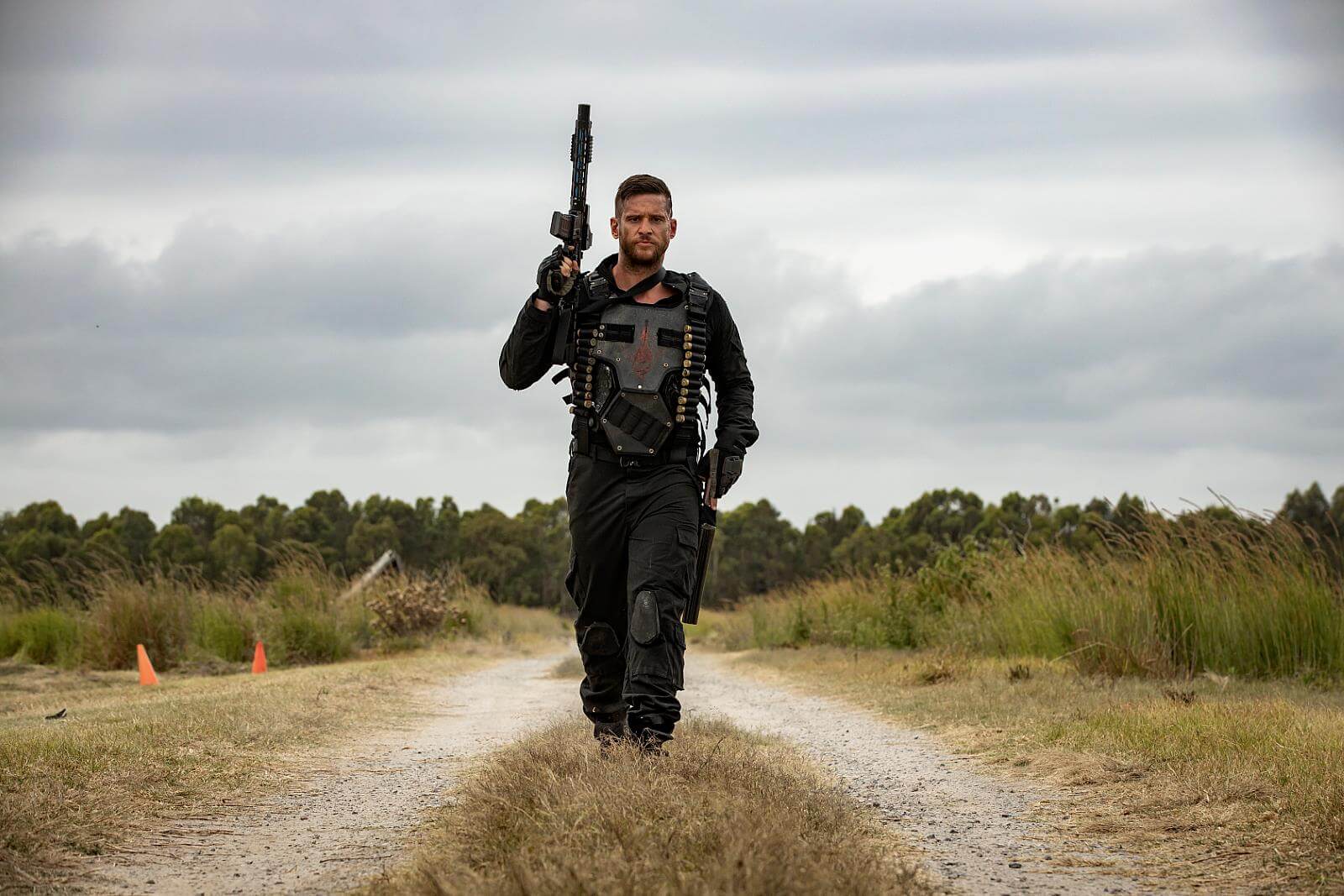
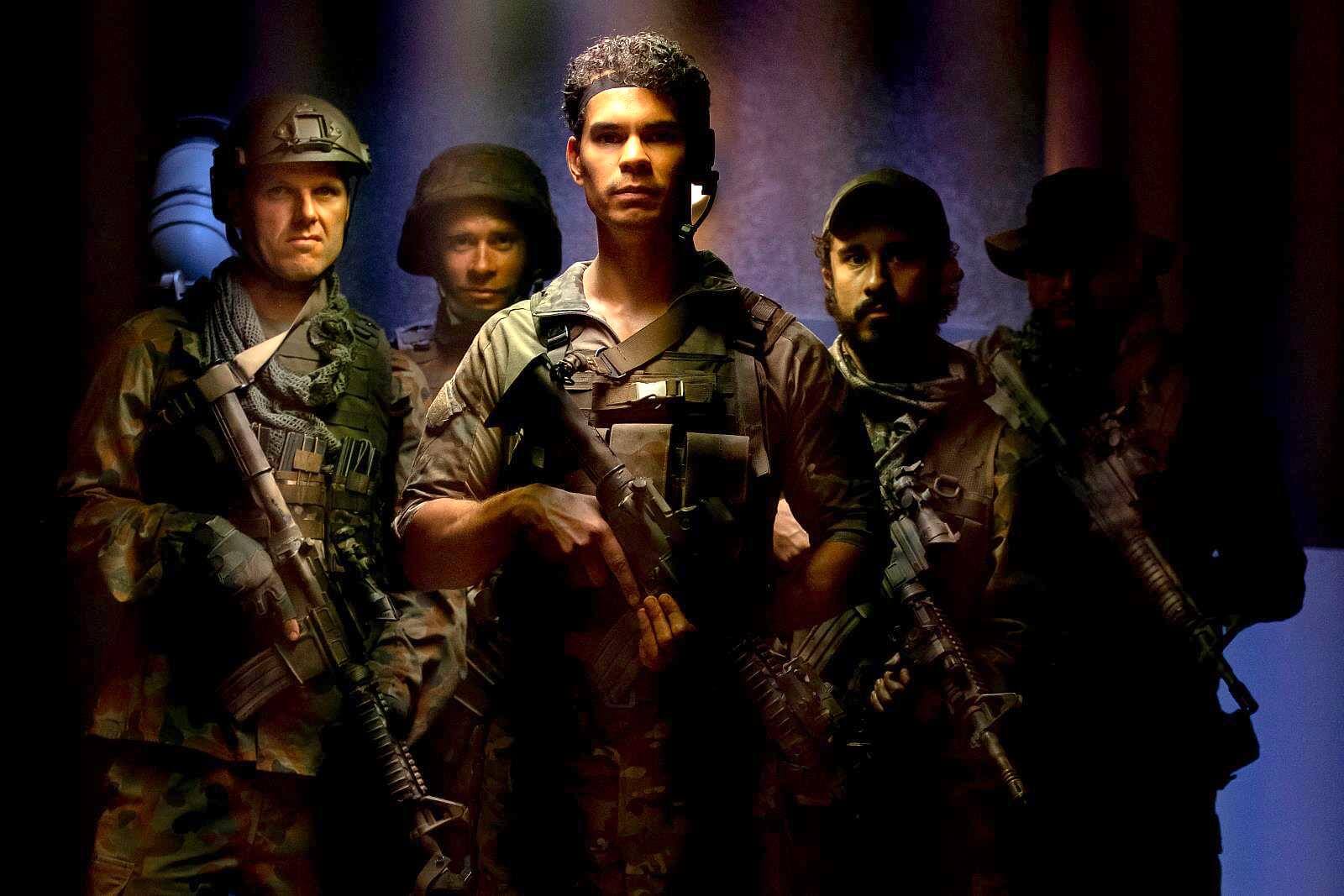
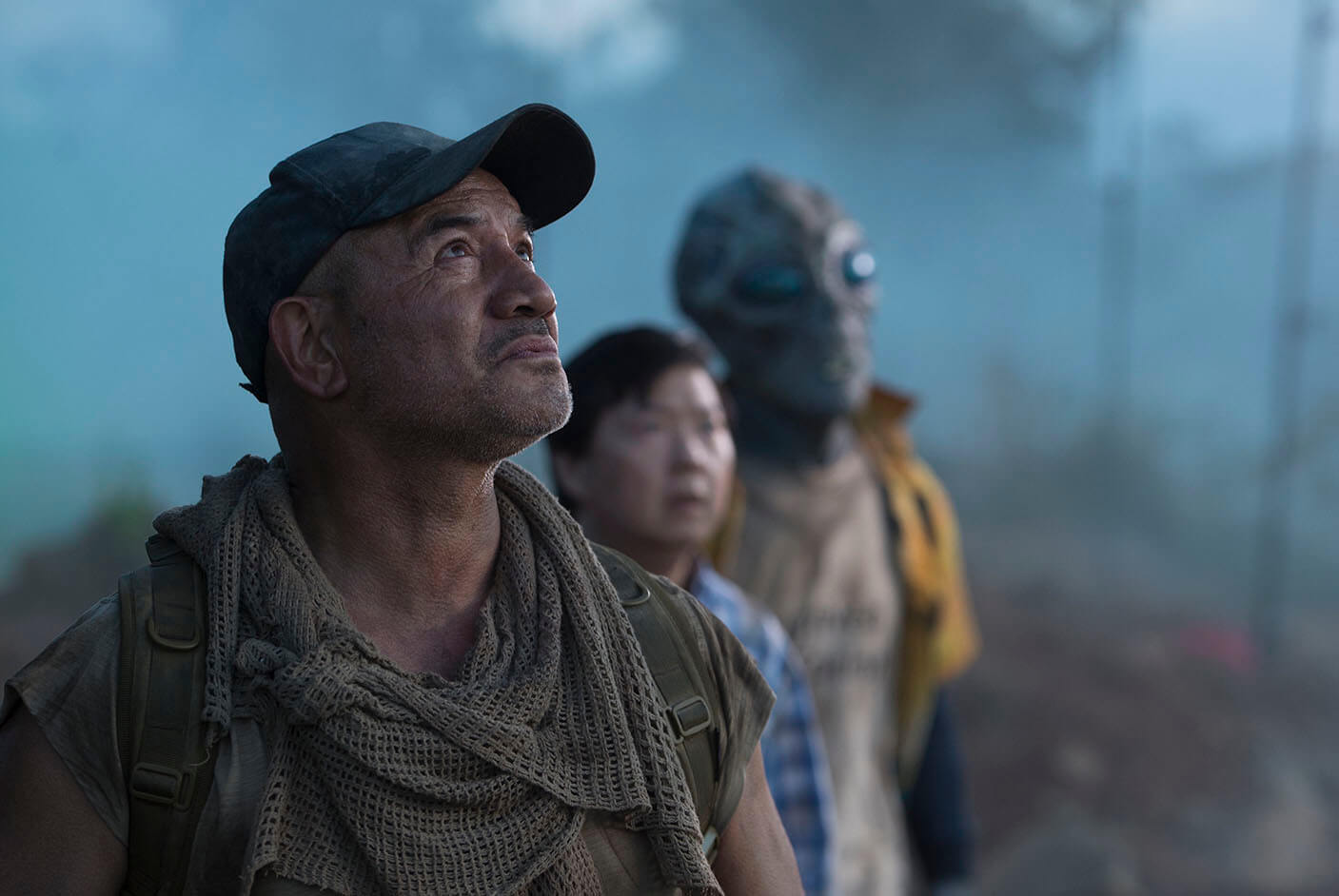
With the release of the Australian sci-fi alien invasion film Occupation Rainfall, we caught up with writer/director Luke Sparke to find out more about it…

STARBURST: When you made Occupation in 2018, was it always the plan to do a follow-up? 

Luke Sparke: Not straight away. It was supposed to be one and done for me, something to keep us busy making films in between larger projects I was working on. It wasn’t really until I got into the editing process and there were a few key scenes I was really interested in. Namely, the alien’s backstory, human interaction with them and what it means to have ‘invaders’ come looking for a new home. I thought that was all really interesting, then got to work dreaming up the sequel and had it written before the first one came out. When I wrote Rainfall, I had to deep dive into the alien culture, history, and all that which was really fun.

How would you pitch the film to STARBURST readers? 

A roller coaster ride through an alien invasion set Down Under!

 You had a much bigger budget for this film, what was your mindset going into filming? 

Yeah. On Occupation, it started out very small and grew as cast members like Temuera, Bruce Spence, Jac Mackenzie, and Charles Mesure started to join. I had to run by the seat of my pants and come up with a way to make it as big as I could on a small budget.

I sat down with the team from day one on Rainfall and said I have a story in mind that’s huge and it’s going to be big. So we got to work to come up with ways to make that happen. It took a while to get the right team together, which is a major part of something like this. One way we had to achieve it was cutting the film up into ‘filming blocks’, which means we filmed for a few weeks in 2018, then a big break, then again in 2019, then some more pick ups after that.

All the while we were working on the post-production. I was working with my pre-viz artist to come up with the action scenes and look dev of everything. I was coming up with ideas up until the very last months before delivery – adding in vistas or adding in different aliens in the background to build the word.

 What challenges did you have when making Occupation: Rainfall? 

The big challenge was just the sheer scope that I wanted in this film. Daily questions of “how can we achieve that?” People out here were convinced that it just wasn’t possible to do for an independent film. Not everything I wanted came across, the Sydney escape sequence was even bigger again, with command ships levelling buildings, but I always save ideas for down the road.

The other challenge was the filming blocks being cut up and the continuity that came with that. Some actors were only on one block but had to talk to an actor on another block, which we used green screen and VFX for. Others we had to shoot with stand-ins. There’s a scene in there where the two major shooting blocks come together and there are reserve shots of the cast that are a year apart. It’s all very much about problem-solving.

 Was it important to you to have a female character upfront in the film? 

It was. Obviously, females can be just as strong as their male counterparts, but they also bring other qualities and not just the mother or maternal instinct. I think a different mindset, a way to look at the world. But even in this post-alien invasion world, our main character comes up against, what could be perceived as, misogynist male egos.

There are lots of themes throughout the film but I’m not one to politicise my work, people have reached out to me and commented on various themes like the female characters but also themes of invasion, war crimes, and some more. If people see that in there, great. But it’s also just a fun film. The two producers are also female, so I know it was very important to them to have the characters upfront. 

Temuera Morrison returned for the second film too, was it filmed before he appeared in The Mandalorian? If so, did you know about it? As a Star Wars fan, how did you manage not to geek out? 

It was filmed before all of that, especially his part. It’s crazy to think as an indie film, I’ve slogged away at this for four years and in that time, Boba Fett has come back around. Tem is as big a Star Wars fan like most of us and we would always chat about it, Battlefront 2, action figures, etc. He actually gifted me a Mandalorian jacket from a Star Wars celebration event, signed by him, Jeremy Bulloch, and Daniel Logan – the three Fetts! It’s an amazing piece for my collection. I’ve been collecting Star Wars since I was a little kid in the ‘80s.

I heard about Season Two with him back as Boba about six months before it aired and shared some emails with him. I was super excited about it, absolutely giddy. So I knew it was coming when I saw the first episode and the sixth episode – but man, it was still awesome to watch! I was like everyone else, smiling from ear to ear – and I cried at the season finale when Luke appeared!


 The film has great production values, what was the reaction of those in the Australian film industry? Do you think it will open the doors for more ambitious sci-fi movies? 

Thanks! I remember coming out of the red carpet premiere on the Gold Coast over here, and people seemed shell shocked. It took a minute for people to have a drink then start talking about it. We played it in a huge cinema with Dolby Atmos and it was this unrelenting bombastic experience. There was lots of praise from our film industry peers, ‘how did you do that’ questions and whatnot. The American release has been great, opening in the top 10 VOD charts over there really helped and solidified the film with a fan base and also networks, distributors, and buyers. We’ve had a lot of offers come our way, which is great for the franchise.

I hope it opens the door for more ambitious films like this. We’re a small industry down here, but it would be great to see a yearly output of at least one good film in every genre and see it get the attention it deserves.

What’s next for you? 

I’m working on a TV pilot for a book series that we are going to adapt into a TV series, it’s huge and extremely exciting to be working on it.

Off the success of the rollout of Rainfall, I’m going to finish the story of these characters as well. The script is done and we’re in early development of the next chapter. I’m excited to show audiences where I’m taking this. I’ve had it all planned out since writing Rainfall. We are also in talks now with comic books and more material to expand the world, which is amazing and humbling from the worldwide rollout.

Signature Entertainment presents Occupation Rainfall in Cinemas and on Digital from July 9th.

A Blu-ray and DVD release follows on September 13th. You can read our review here.


Mark Webber & Teresa Palmer on THE PLACE OF NO WORDS

place of no words

We join writer/director/actor Mark Webber (Scott Pilgrim vs the World) and actor/writer/producer Teresa Palmer (A Discovery of Witches) to talk about their new collaboration, the heart-rending fantasy film The Place of No Words, out this week on DVD and Digital, and reviewed here.

Official Synopsis:

“Where do we go when we die?”

A question by 3-year-old Bodhi Palmer sets a real family on an imaginative adventure that explores how we cope with dying and the love, laughter, and pain we can find within it. Bodhi starring alongside his actual mother and father (Mark Webber and Teresa Palmer), give rare tour-de-force performances. Told through both the eyes of a father and his young son the story moves between the authentic real world and a fantasy realm filled with mythical creatures and remarkable circumstances.”

Official Trailer:


Ash Zukerman, Darrell Brett-Gibson, and Gillian Jacobs | FEAR STREET

Gillian Jacobs fear street

With Netflix’s Fear Street trilogy, writer-director Leigh Janiak created a new vision for the world conjured up by the series of young adult horror novels from writer R.L. Stine and shot three films at once to create a wholly unique universe. It’s a massive undertaking and one that has had horror fans champing at the bit to see since the films were first announced several years ago. The first film of the series, Fear Street Part 1: 1994, is available now on Netflix, and we spoke with three of the series’ stars – Ashley Zukerman (Sheriff Nick Goode), Darrell Britt-Gibson (Martin), and Gillian Jacobs (C. Berman) – about bringing Fear Street to the screen.

STARBURST: Gillian and Ashley, you get to have this thing in the second movie, where there are your younger selves. When working on the film, did you interact with the actors playing your younger selves and did that inform your performances?

Gillian Jacobs: Sadly, no. That sounds like a much better way to go about things, and it would have been much more professional of me, but sadly, I never got to meet my younger self.

Ash Zukerman: The crossover was so small, but I think it was for the better, as well, because I think the characters that Gillian and I play are stuck back in the ’70s, so it was important that they actually just lived the life of those kids, whatever that was. It was important that it was isolated under that. These characters went on a 20-year journey between those two things, and it’s important that they’re different. I think. The work we did was definitely to think about and to inhabit those events, but I think it was important that they are what they are.

Darrell and Gillian, what I find interesting is you were the two of the few actors who don’t play multiple characters. How did that affect how you moved through the story?

Darrell Brett-Gibson: For me, what’s so interesting about playing Martin is because I don’t play multiple people. I feel like he’s experiencing what’s happening the way an audience would experience what’s happening in the film because he only has what he knows of it. Everybody else has sort of a history and an understanding of what’s predated whatever’s happened. So for Martin, it’s sort of like he gets thrown into something, and it’s just as the audience is – like, “What are we doing, Martin?” I don’t know what we’re doing. So it was also easier not having to play 12 different people.

Gillian Jacobs: For me, it meant that I came and went from filming more and other people were there for the entirety of the three film shoots. I don’t know why I only played one character, but I was lucky and happy to be playing the character I was.

What was it like shooting an entire trilogy at once, as opposed to just one film? These are three feature films, and while all of you have worked in television, one has to imagine a film shoot is different from episodic television.

Darrell Brett-Gibson: It’s really cool because I think that the momentum and the energy that you’re all producing with each other stays consistent, as opposed to doing the film and then coming back two years later, or a year later, or whatever it may be and doing another one. By doing it all together, there’s a collective energy. I think that you could lose some of that when you cut it off and come back to do it again. Just doing it straight through; I actually really enjoyed it. I hope that every film I do now, just five of them in a row.

Ash Zukerman: Yeah, that’s true. And then there’s not a sense of self-awareness in between the films that everything we were doing was raw. So as Daryl said, the energy did maintain for the entire shoot.

Director Leigh Janiak was familiar with the books from when she was growing up. Were you all familiar with them at all? And if so, did you go back and reread any before you started work on this project?

Darrell Brett-Gibson: Never heard of them.

Gillian Jacobs: I definitely had read a lot of R.L. Stine as a kid – Fear StreetGoosebumps. I didn’t go back and reread them. It felt like that inspired this trilogy, but it was also its own thing, so I don’t know if there would have been literal one-to-one for any of the books for what we’re doing with this. I didn’t go back and reread the books, but now you’re making me feel like I should. As I say that, I can picture myself in the room in the house I grew up in, where I used to read books. I feel like I’m right back there,

Ash Zukerman: I think when you read these books, you can go right back there. I didn’t read Fear Street as a kid, but I read Goosebumps. I tried reading Fear Street, but I was, I think, a little too young when I tried, and then I just never went back. I read one or two – one and a half, I think – before we started shooting, just to understand.

I think, as Gillian said, these are really an extrapolation of those books that this takes that world and puts it in 2021. So this is a 2021 lens of that world. But I think what it did show me is just how the writers were thinking about it and how the story moved and the freedom it has to move between time and the energy and the heartbeat of it.

Darrell, going back to what you had said about being the audience surrogate in this – what appealed to us about this is just like, “Oh my God, they’re making Fear Street movies!” – but as an audience surrogate in the film, what appealed to you about the script when you first read it and attracted you to these three films?

Darrell Brett-Gibson: One was getting to speak to Leigh. I mean, you, you speak to her for five minutes, and you’re like, “Whatever you want to do, let’s do that,” ’cause she’s just so dope. She just knows exactly what she wants. She’s going to get what she wants. It hasn’t been said enough that she directed three whole feature films back to back to back and wrote three feature films back to back. It’s truly like, I honestly don’t know if we can give some type of award for that. I don’t know what it is. I’m going to mould something together for her because I just think it’s truly an incredible feat. Speaking to her, I was in, you know? I loved the scripts, but getting to meet her and knowing that she’s the mind behind the scripts was a no-brainer.

Fear Street Part 1: 1994 is available on Netflix now, Fear Street Part 2: 1978 follows on July 9, and the series concludes with Fear Street Part 3: 1666 releasing globally on Netflix on July 16. More information can be found here.

Elizabeth Mitchell | WITCH HUNT

Elizabeth Mitchell as Martha Goode and Abigail Cowen as Fiona in Elle Callahan feminist supernatural thriller Witch Hunt

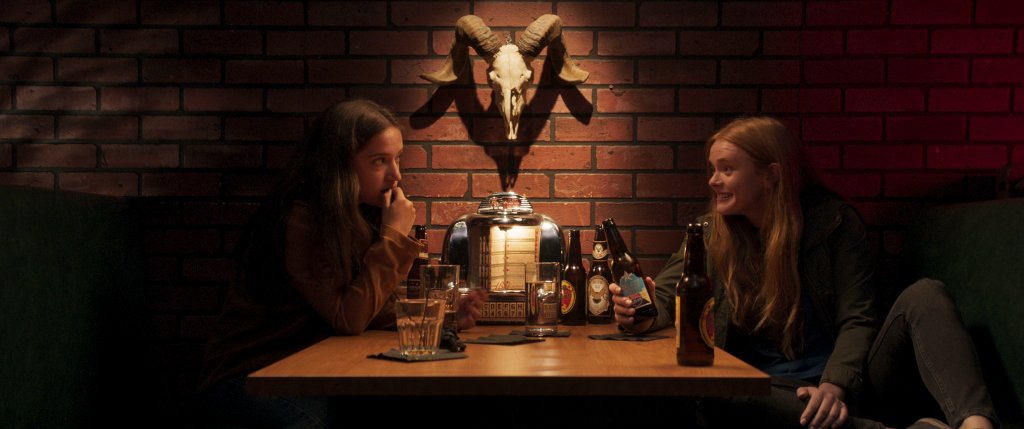
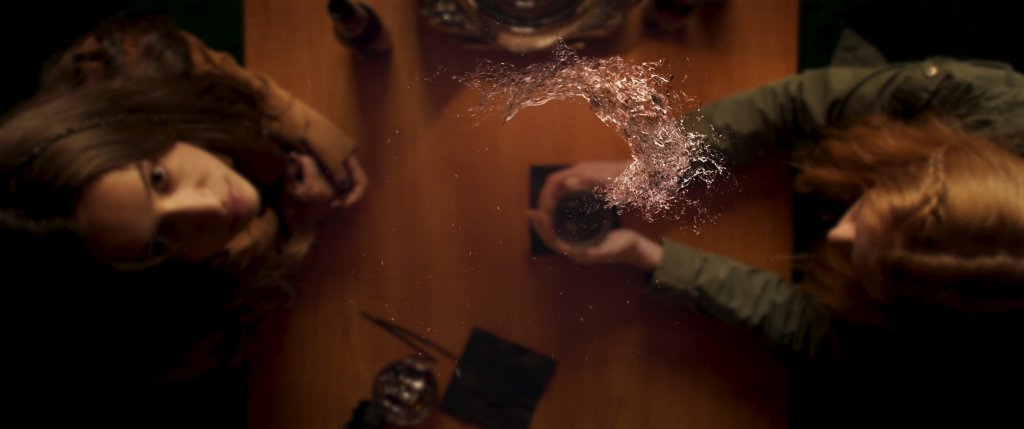
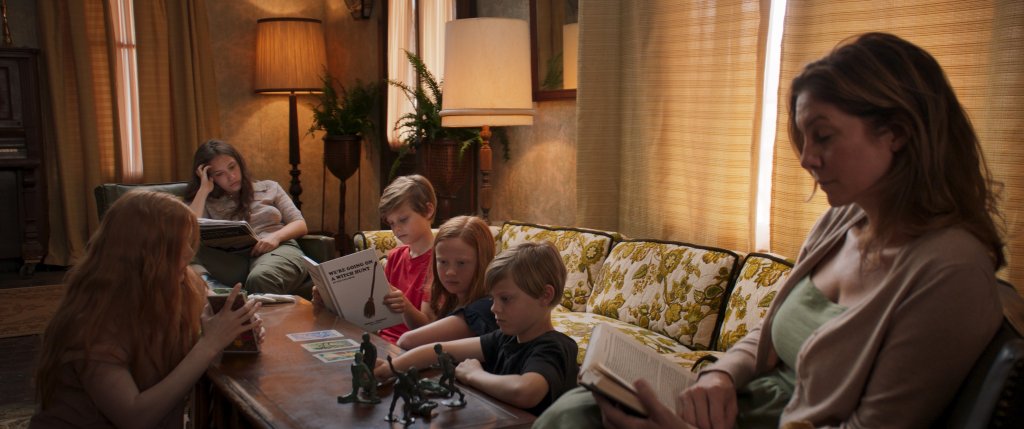
Elizabeth Mitchell stars as Martha Goode in Elle Callahan’s sophomore feature film, Witch Hunt. Also starring Gideon Adlon (The Craft: Legacy, Blockers) and Abigail Cowen (The Chilling Adventures of Sabrina, Fate: The Winx Saga), Witch Hunt is set in a modern America where witches are real, and witchcraft is illegal. Claire (Adlon) is a sheltered teenager whose mother (Mitchell) is part of an underground movement in charge of smuggling women accused of witchcraft across the southern border, to asylum in Mexico. When the witch hunters find their way to their door, Claire is forced to confront her own prejudices and risk it all for the two young witches (Cowen, Echo Campbell) under their care.

Ahead of the release of Witch Hunt, STARBURST spoke with renowned Lost and Revolution actress Elizabeth Mitchell about working with women, the film’s political relevance, and who she considers to be today’s heroes.

Gideon Adlon as Claire and Abigail Cowen as Fiona in Witch Hunt, 2020 SXSW

First off, how did you come to be involved in this project?

Elizabeth Mitchell: About four years ago, I realised that I had worked with very few female directors. I wasn’t sure why, but the realisation made me start to actively seek them out. So I think the initial draw was that Elle was directing, and I had heard so many incredible things about her. And I really liked the script – it’s going to sound strange, but I liked the softness of it. I felt like it approached the genre in a particularly female way, and I liked that. I thought all the characters were really interesting, and I thought the parallels it drew with what’s happening in our world now were pretty precise. And then I heard Gideon was doing it, and I was basically all in. I think she’s incredible.

She’s brilliant. You mention this softness that attracted you, and I feel a lot of that comes from the mother-daughter relationship between Martha and Claire. And there’s not much in the way of exposition, so how did you go about building that depth?

Elizabeth Mitchell: It was so easy with Gideon. From the minute I met her, I had that feeling of wanting to protect her, wanting her to be everything that she could be. She brings that out. She is an incredibly creative, kind, and talented woman. So that relationship came about really quickly for us. I think creating the tension between them was probably where we did the most work. She’s so easy to love that that was the hard part [laughs]. We had to work out the obstacles to explain why they can’t connect, why they’re not on the same page, and where the friction comes from.

So that aspect had collaborative elements?

Elizabeth Mitchell: Yes! As we went through the days and through what we were doing, we would create that tension and craft their relationship together. The fun thing about an independent film is that everyone comes in with so many amazing ideas, and then you marry those ideas together and find something you didn’t even know would happen. A lot of the reactions and such that ended up in the movie were riffing off of what was there. Elle let us do that and I thought that was really exciting. She is an incredibly insightful filmmaker and a real joy to work with.

You mentioned not getting to work with many female directors – what did you find was different about the feeling on set and the way the production developed?

Elizabeth Mitchell: I think “inclusive” is the word that I would probably use. It felt different, less like a hierarchy; it felt like we were all working together for exactly what we wanted, and it was very nurturing. Well into the night, we would all have huge conversations about our lives, about how it feels to be women in this business, the different things we had gone through.

You mentioned collaboration, which I think is spot on. And Elle is very kind, of course, but she’s also powerful: she knows exactly what she wants, but she’s not rolling over anybody to get it. She is precise about what she needs, and I think that direction makes things easier for us as actors and easier for the crew, because there’s a definite leader. Yet at the same time, she absolutely welcomes creative input, and anything that might make the shot better. It was a really fun collaboration for us, out in the middle of the desert [laughs]. We had a great time!

And you got to shoot in that amazing house that’s got some horror history [the location is also where Annabelle: Creation was filmed].

Elizabeth Mitchell: Oh my gosh, and all the bats [laughs]! Has anyone told you about the bats?

Witch Hunt by writer director Elle Callahan

I heard about the bats, it sounded like they were a fun supporting cast [the house was inhabited by its fair share of bats, to the point that a bat wrangler had to be brought in].

Elizabeth Mitchell: It was! You know, as actors we try so hard not to be in our heads. We try to just be reactive creatures, and I think that having the possibility that a bat might fly into your face at any moment definitely changed the dynamic.

I’m sure it also helped establish the ambience.

Elizabeth Mitchell: It really did! It definitely had that creaky feeling to it. And of course, it’s in the middle of nowhere and it’s so disconnected – generators are brought in for electricity, the whole thing is really odd and dusty, and quiet, and it was really something. I took 8 million pictures there because everything had such a cool vibe to it [laughs].

Beyond that, what did you find most intriguing about Witch Hunt’s concept when you first read the script? Politically, it does feel very appropriate to the times.

Elizabeth Mitchell: It really is. There has been such a rebirth in understanding a woman’s path through the world, and I feel like this was such an interesting take on our rights as women, our freedoms as women. What can be taken away from us, what we are sometimes allowed to have by people who are not women. I think that this film really spelled out – almost in a Handmaid’s Tale kind of way – the fear there is towards powerful women. And it shows what can happen in a patriarchal society when women’s power, women’s magic, is regulated or contained. That’s probably what I found to be so interesting about it.

There must also have been some level of catharsis in playing this role, especially since you were filming during the Trump presidency.

Elizabeth Mitchell: There was, and it was something we all talked about. There are some really fierce women in this movie, Gideon being one of them. It’s fun being on her Instagram because she is such a passionate and intelligent activist, and I felt like she was just the perfect choice for this role. I loved that part of it.

And what did you find most interesting about your character, Martha?

Elizabeth Mitchell: I love strong mama bears. I so often play sociopaths and women on the verge, it was really nice playing someone that I felt was a little bit more like me. I loved this softness in her, but I also loved her strength. She is quietly doing the right thing and not calling any attention to herself, she doesn’t defend herself, nor does she say, “Hey, look at me and all this good stuff I’m doing!”. She’s a chameleon dedicated to what she thinks is best, and I loved that. I also really enjoyed playing all the different colours that you have to present in order to hide in plain sight. One of my favourite scenes is when Martha is questioned by a neighbour. I found that to be so interesting, questioning how do we blend in when we are absolutely opposed to the person that we’re trying to blend in with?

In that respect, there are obviously many historical echoes to Nazi Germany, or as far back as the Underground Railroad which resembles the smuggling network that Martha is a part of. Did you do much in the way of historical research, to better understand the thoughts and motives of those persons?

Elizabeth Mitchell: You know, I did do a fair bit. I’m an avid book reader and I am captivated – and have been since I was really young – by the heroes of the Underground Railroad, and every single person who has hidden the oppressed and guided people towards freedom. And you’d love to think that you’re going to be that person, but going against the flow is a lot harder than it seems in the abstract. Those people are true heroes to me, people that I look to. So yes, I did a fair bit of reading, but I had also steeped myself in that sort of research in my early 20s because I was so curious to understand what a hero meant to me.

Gideon Adlon stars in Elle Callahan supernatural witch drama Witch Hunt

What do you think that role looks like today? Beyond historical references, Witch Hunt also reflects the Black Lives Matter movement and issues of immigration, so what does that kind of hero look like today?

Elizabeth Mitchell: I think it’s very difficult to speak your truth, especially with so many trolls online. There’s the fear of saying the wrong thing, the possibility that you will then have a whole group of people who are offended and who come after you. I’m still fascinated by all our heroes. Gideon is one of mine, for sure! That girl is fearless. It’s the most incredible thing to me, to watch how she navigates the world. She lives fully in her truth, and I think she’s really something special.

I do think it is challenging to be the hero in today’s world. And I’m always amazed at how many brave and vibrant women – and for me, that’s who I tend to watch – who have come forward and stated their truth. I navigate that every day; I’m always drawn to heroes, to the strong, to the outspoken. I do think it’s challenging in this day and age to speak your truth.

Do you believe that’s particularly the case for people with substantial platforms, like actors and entertainers?

Elizabeth Mitchell: I’m relatively new to social media, so my experience has been so lovely. It’s such a small audience and they’re all so kind and amazing, but I’ll go on some of my friends’ Instagram’s and I will see horrific trolling, all based on small statements of their truth. I do think there’s an intense responsibility, but I’m also amazed that people continue to say what they mean and use their platform for good, especially when the backlash is so horrific.

As I said, I’m pretty new to it. I just avoided it because I lead a very quiet life – not because it’s not intriguing to me, but I just spend a lot more time in the garden than I do on my phone. But I am very amazed at the bravery of Gideon and many actors like her with huge platforms, who continue to be brave and put themselves out there. I suppose I would count them as my heroes. Ruby Rose is another one – I’m absolutely nuts about her. And every time there’s any kind of backlash, I’m always on there like, “I’ll send her a DM to say that I’m here, and not to worry.” [laughs] They’re amazing women.

It’s those mama bear instincts coming through.

Elizabeth Mitchell: They always do. I mean, I grew up in a pretty matriarchal society, which my dad would freely admit to. He loves strong women. I have a lot of sisters and a lot of female cousins, and I’m nuts about all of them! I love women. I want them to feel supported and like they can do anything in the world that they want to. I was certainly not brought up thinking there were any limits for me. It was only when I got out in the world that I realised that that was possibly the norm in the worlds.

And so, when Witch Hunt finally comes out, what are you hoping people take away from it? I ask because I have a feeling your answer follows a similar vein.

Elizabeth Mitchell: I always hope with movies that they provide people a little bit of catharsis, but I also want them to gain strength from it. I think that movies were such great teachers for me in my teen years, and in my 20s. And I would hope that every person walking away from it will feel empowered to do the things that they need to do, that they’re called to do and that they think are right. That’s my hope. Wouldn’t that be fun [laughs]! But I also want people to feel entertained, and I want them to get that shiver and those goosebumps which Elle is so good at giving us. I suppose I want people to come away feeling entertained and empowered. How’s that?

Perfect! And it’s also great because as well as the history it honours, there’s also all kinds of throwbacks to cinematic works like Thelma & Louise, which helps Witch Hunt to feel like part of a feminist film lineage.

Elizabeth Mitchell: Yes, I completely agree! It has that element of fun but also of that fearless femininity. I love it!

Elizabeth Mitchell in Witch Hunt

And as we wrap up, do you have any projects that you’re seeking to pursue in the near future, or any upcoming releases you’re excited to share?

Elizabeth Mitchell: Oh, I do! It’s been a really busy year for me. I realise it wasn’t the same for everybody, so I have a certain measure of guilt about that. I did a really lovely show, the second season of Outer Banks, and I’m playing a character that I’m excited for people to meet. I can’t say anything about it except that she’s a true piece of work and I got to do some real film school stuff, which I loved [laughs]. You know, where you get to do all these things that are outside your norm? That was really fun. And right now I’m playing a vampire in a show called First Kill. I’m really loving that, and also can’t say anything else [laughs]. You know how it is with these shows!

And there’s one that I did in Canada, a movie called When Time Got Louder. It’s really powerful and pretty wonderful, about a family dealing with autism. And then Queen Bees is out now, in which I got to play opposite Ellen Burstyn, and Ann-Margret, and James Caan, and that was one of those career goal things where you pinch yourself! I actually went to the theatre to see that one a few days ago because, when does that ever happen? I got to share a screen with Ellen Burstyn! It was amazing and I loved every second of it. There’s another one that I feel I’m missing, but I feel like that’s enough [laughs].

You weren’t joking when you said you’d been busy!

Elizabeth Mitchell: I know! I am proud of the work we were all able to do.

Signature Entertainment presents Witch Hunt on DVD and Digital Platforms 5th July.