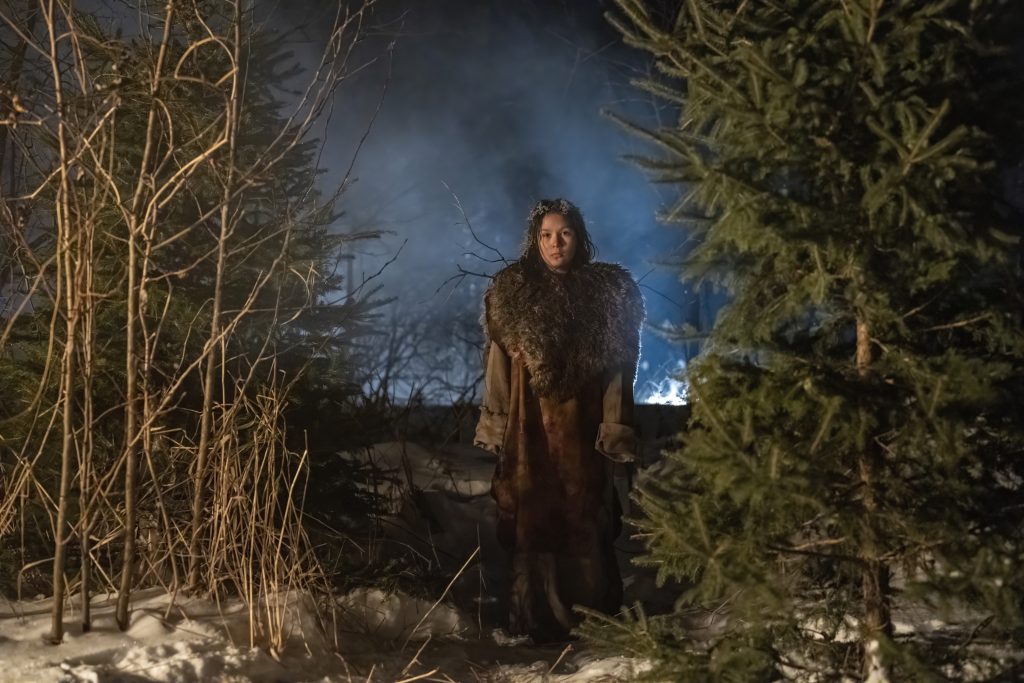
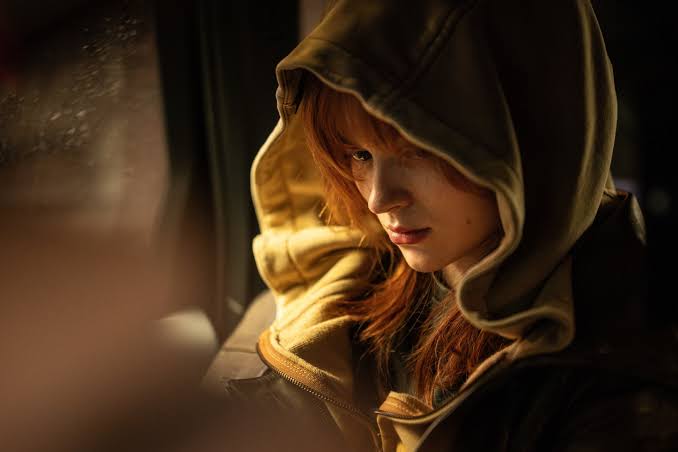
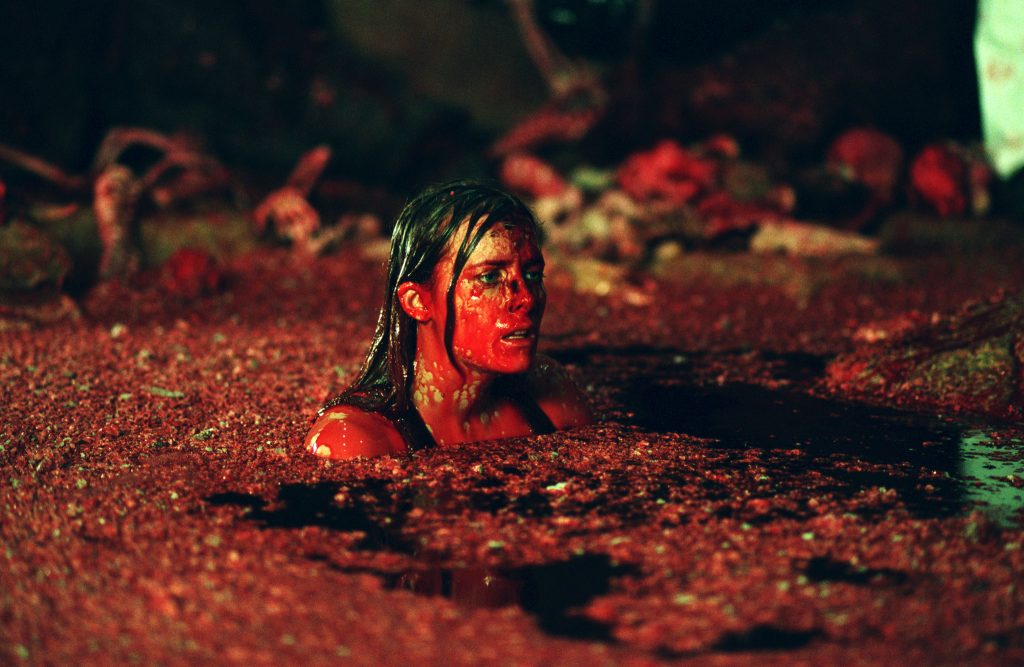
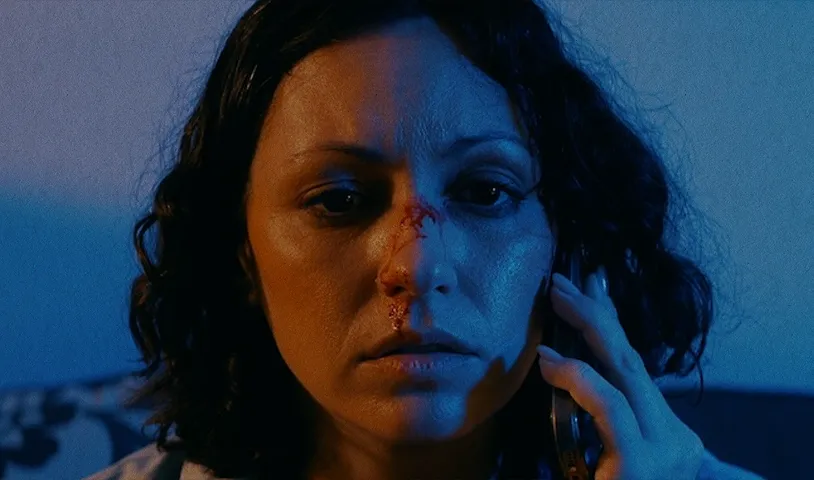
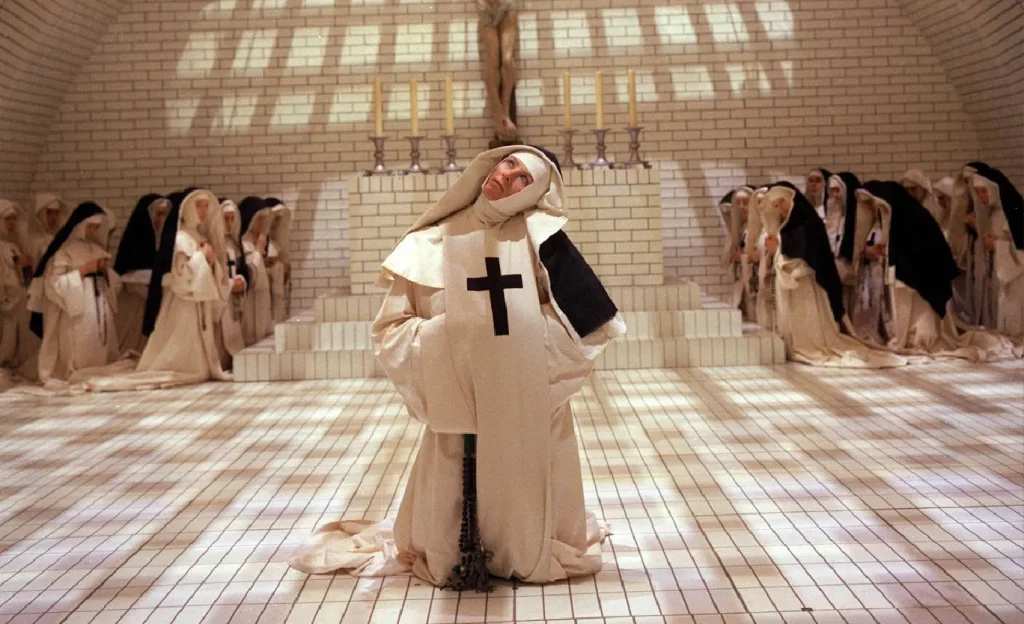
With Netflix’s Fear Street trilogy, writer-director Leigh Janiak created a new vision for the world conjured up by the series of young adult horror novels from writer R.L. Stine and shot three films at once to create a wholly unique universe. It’s a massive undertaking and one that has had horror fans champing at the bit to see since the films were first announced several years ago. The first film of the series, Fear Street Part 1: 1994, is available now on Netflix, and we spoke with three of the series’ stars – Ashley Zukerman (Sheriff Nick Goode), Darrell Britt-Gibson (Martin), and Gillian Jacobs (C. Berman) – about bringing Fear Street to the screen.
STARBURST: Gillian and Ashley, you get to have this thing in the second movie, where there are your younger selves. When working on the film, did you interact with the actors playing your younger selves and did that inform your performances?
Gillian Jacobs: Sadly, no. That sounds like a much better way to go about things, and it would have been much more professional of me, but sadly, I never got to meet my younger self.
Ash Zukerman: The crossover was so small, but I think it was for the better, as well, because I think the characters that Gillian and I play are stuck back in the ’70s, so it was important that they actually just lived the life of those kids, whatever that was. It was important that it was isolated under that. These characters went on a 20-year journey between those two things, and it’s important that they’re different. I think. The work we did was definitely to think about and to inhabit those events, but I think it was important that they are what they are.
Darrell and Gillian, what I find interesting is you were the two of the few actors who don’t play multiple characters. How did that affect how you moved through the story?
Darrell Brett-Gibson: For me, what’s so interesting about playing Martin is because I don’t play multiple people. I feel like he’s experiencing what’s happening the way an audience would experience what’s happening in the film because he only has what he knows of it. Everybody else has sort of a history and an understanding of what’s predated whatever’s happened. So for Martin, it’s sort of like he gets thrown into something, and it’s just as the audience is – like, “What are we doing, Martin?” I don’t know what we’re doing. So it was also easier not having to play 12 different people.
Gillian Jacobs: For me, it meant that I came and went from filming more and other people were there for the entirety of the three film shoots. I don’t know why I only played one character, but I was lucky and happy to be playing the character I was.
What was it like shooting an entire trilogy at once, as opposed to just one film? These are three feature films, and while all of you have worked in television, one has to imagine a film shoot is different from episodic television.
Darrell Brett-Gibson: It’s really cool because I think that the momentum and the energy that you’re all producing with each other stays consistent, as opposed to doing the film and then coming back two years later, or a year later, or whatever it may be and doing another one. By doing it all together, there’s a collective energy. I think that you could lose some of that when you cut it off and come back to do it again. Just doing it straight through; I actually really enjoyed it. I hope that every film I do now, just five of them in a row.
Ash Zukerman: Yeah, that’s true. And then there’s not a sense of self-awareness in between the films that everything we were doing was raw. So as Daryl said, the energy did maintain for the entire shoot.
Director Leigh Janiak was familiar with the books from when she was growing up. Were you all familiar with them at all? And if so, did you go back and reread any before you started work on this project?
Darrell Brett-Gibson: Never heard of them.
Gillian Jacobs: I definitely had read a lot of R.L. Stine as a kid – Fear Street, Goosebumps. I didn’t go back and reread them. It felt like that inspired this trilogy, but it was also its own thing, so I don’t know if there would have been literal one-to-one for any of the books for what we’re doing with this. I didn’t go back and reread the books, but now you’re making me feel like I should. As I say that, I can picture myself in the room in the house I grew up in, where I used to read books. I feel like I’m right back there,
Ash Zukerman: I think when you read these books, you can go right back there. I didn’t read Fear Street as a kid, but I read Goosebumps. I tried reading Fear Street, but I was, I think, a little too young when I tried, and then I just never went back. I read one or two – one and a half, I think – before we started shooting, just to understand.
I think, as Gillian said, these are really an extrapolation of those books that this takes that world and puts it in 2021. So this is a 2021 lens of that world. But I think what it did show me is just how the writers were thinking about it and how the story moved and the freedom it has to move between time and the energy and the heartbeat of it.
Darrell, going back to what you had said about being the audience surrogate in this – what appealed to us about this is just like, “Oh my God, they’re making Fear Street movies!” – but as an audience surrogate in the film, what appealed to you about the script when you first read it and attracted you to these three films?
Darrell Brett-Gibson: One was getting to speak to Leigh. I mean, you, you speak to her for five minutes, and you’re like, “Whatever you want to do, let’s do that,” ’cause she’s just so dope. She just knows exactly what she wants. She’s going to get what she wants. It hasn’t been said enough that she directed three whole feature films back to back to back and wrote three feature films back to back. It’s truly like, I honestly don’t know if we can give some type of award for that. I don’t know what it is. I’m going to mould something together for her because I just think it’s truly an incredible feat. Speaking to her, I was in, you know? I loved the scripts, but getting to meet her and knowing that she’s the mind behind the scripts was a no-brainer.
Fear Street Part 1: 1994 is available on Netflix now, Fear Street Part 2: 1978 follows on July 9, and the series concludes with Fear Street Part 3: 1666 releasing globally on Netflix on July 16. More information can be found here.