Vanessa Harryhausen | RAY HARRYHAUSEN: TITAN OF CINEMA

vanessa harryhausen

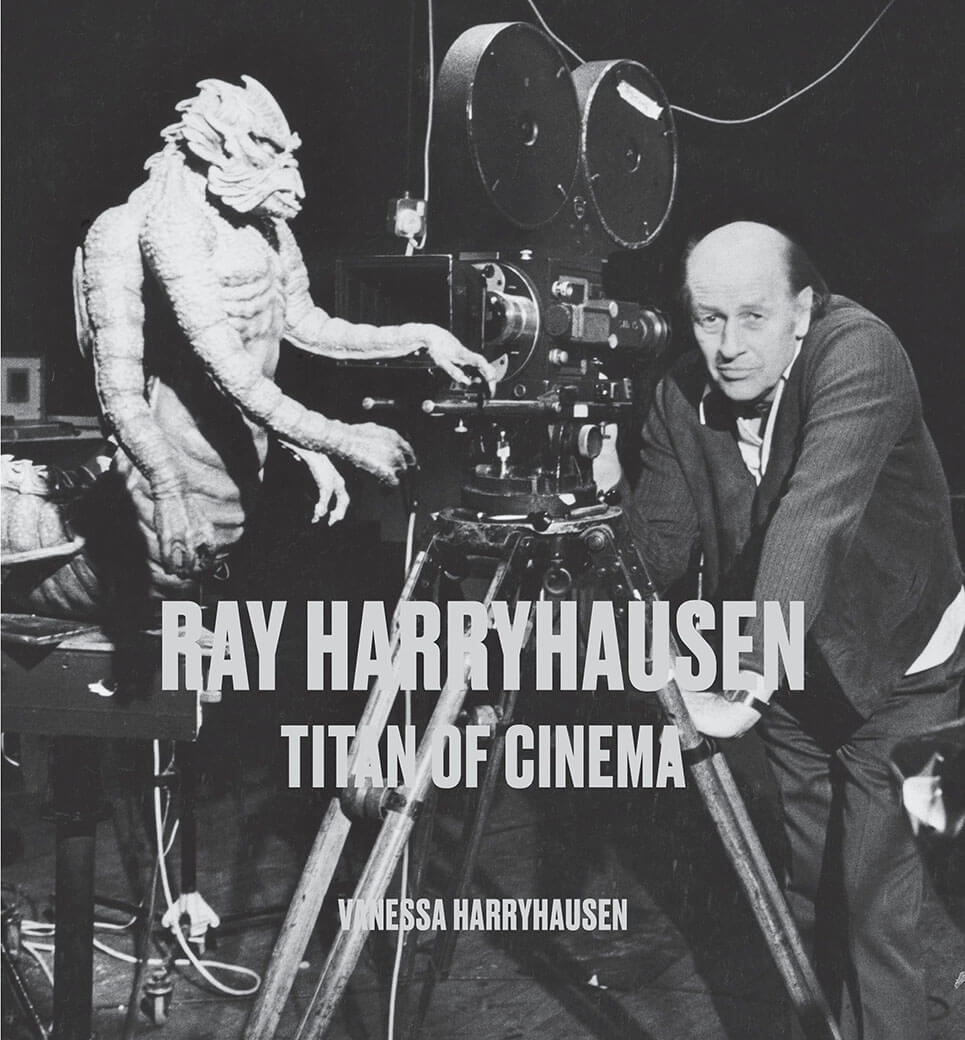
When it comes to stop-motion effects on the big screen, Ray Harryhausen was the master. His creatures were always the stars of the movies they were part of, and the adoration of film fans hasn’t waned at all. The largest display of his work is currently on display at the Scottish National Gallery of Modern Art. We caught up with Ray’s daughter Vanessa to talk about the Titan of Cinema exhibition.

STARBURST: When you started going through your father’s work for the new exhibition, did you find anything that surprised you?

Vanessa Harryhausen: There was a lot of things; sketches on the back of lots of things. He had dozens and dozens of sketchbooks, some of them I brought back from America when he asked me to go and check the garage out there to see if he had anything worthwhile bringing over because he couldn’t remember. So everything that you look at, you have to double-check, especially with sketchbooks or notes, and then we’ve got several little storage boxes where we have bits of material. We were trying to figure out what these were, whether they were part of something or he was playing around, experimenting with the ball and socket things. You never know what you find, and we’re still discovering stuff, so I always say it’s like Christmas when you go into one of his boxes, you don’t know what you’ll find, and it’s always a pleasant surprise. We found an armature, and it was Talos’ hand. We found just a basic skeletal thing that dad had been tinkering around with. Or you might find the odd foot or leg or something, and we’d go ‘I wonder what that was for?’ So it’s great fun discovering all these things.

What can people expect from the exhibition?

People know dad from his films, so I really wanted to get over with the museum his incredible artistic skills. His beautiful pictures and sketches to his basic pencil things that you see in the exhibition, the very basic stuff he did when he was 17. There’s one of a gorilla, and there’s one of a skeleton, and I wanted that to be put in for our youngsters to understand that you’ve got to start somewhere. You know, he didn’t just suddenly produce all these beautiful films; he had to really work at it. So it’s about his art, and all his techniques and what influenced him. It’s a good collection of all sorts, and, of course, his models are there.

John Landis did the dialogue track for when you’re walking around; he’s very enthusiastic. At the end of the exhibition, there’s a green screen where you can fight with the harpies or the hydra. You’ve got all the sound effects, so you’re this little person with all these creatures. I could spend hours there, honestly, because I had great fun.

There’s a reason why the exhibition is in Scotland that harks back to your mother’s family, isn’t there?

Yeah, many people ask what the link between an American and the Scottish was, and it’s because my mom was a great, great, great-granddaughter of David Livingstone the Explorer. Dad was very enamoured with Livingstone’s story of going through Africa. As you’re coming in, there’s a sculpture of Livingstone being attacked by a lion in the exhibition. So yeah, he had that commission by Gareth Knowles at Blantyre, which is just between Glasgow and Edinburgh; there’s a David Livingstone exhibition there. So that’s the connection between the Scottish and the American; we’ve got some history on my mom’s side, which is lovely.

What was it like also working on the book that accompanies the exhibition?

Terrifying! I’ve never written a book in my life, and everyone kept saying, ‘oh, you should do something to commemorate your dad’. I was like, ‘Where do I begin?’ I always promised I wouldn’t because it was a standing joke with Daddy that you’re not going to write anything about me when I’m dead, are you? So I’d go ‘No dad’. Ray Harryhausen: The Titan of Cinema is a collection of different stories, a little look into our home life and some funny moments. There are also some of his dear friends talking about dad’s influence and doing things with him. There are some lovely early models that some people have seen, some they haven’t. I think your blue snake lady is in it too. There are some sad bits too at the end of the book, but it’s a celebration.

You said it was daunting going into writing the book, but would you be interested in doing another one if they asked you?

Well, I could, we wrote way more in the chapters, but obviously, the publishers had to narrow it down to 100 items, so if I had to do another book. I’ve got a good start because some stories still haven’t been told. I don’t know; it was quite stressful and emotional writing. Happy emotional.

Ray Harryhausen: Titan of Cinema is at the Scottish National Gallery Of Modern Art in Edinburgh until February 20th, 2022. You can find out more here and book to see the exhibition in person or via a virtual exhibition experience. Find out more about the Ray and Diana Harryhausen Foundation here.

Main Image by Mark Mawston.


Leigh Janiak | FEAR STREET

Leigh Janiak fear street

With the Fear Street trilogy for Netflix, writer-director Leigh Janiak not only created a new vision for the world conjured up by the series of young adult horror novels from writer R.L. Stine but also shot three films at once to create a wholly unique universe. It’s a massive undertaking and one that has had horror fans champing at the bit to see since the films were first announced several years ago. Ahead of the first film of the series, Fear Street Part 1: 1994, hitting Netflix today, we spoke with Janiak about bringing Fear Street to the screen.

STARBURST: What is necessary to build a trilogy all at once. Where do you begin or what’s your starting point?

Leigh Janiak: [laughs] I think your starting point is blissful ignorance, I would say. And then, a really amazing team of people that are all of our brains working at once, trying to stay creative, trying to be engaged in this like mammoth task. I think we all had a little bit of kind of blissful ignorance of like, “Yeah, of course, this is just like doing a series.”

I don’t know. There was something very exciting about doing this thing, which hasn’t been done very much – if at all – and also reminding ourselves, “We are telling one story,” too. Keeping in mind that thing was important, but yeah – a lot of blissful ignorance.

It seems like you started with putting visual clues and building everything right from the start. That opening scene has some nods to the books right there and hints are being sewn from the very beginning.

Yeah, totally. That was something I’m glad that you noticed. I’m happy about that. That’s good to know. Definitely: there was a lot of time spent on like, “How can we start weaving this stuff in very early? Where can we add it later?” It existed as far as little Easter eggs that narratively would hold more weight when we got later into the movies. Then, also kind of visually, as we were shooting, we were able to revisit frames, revisit spaces and places and have those echoes. We called them “echoes” as we were shooting. It was very much part of the experiment and the fun of making the three movies was finding ways to do that.

The fact that you used the word “’fun’ is perfect because one of the things that’s so fun about Fear Street is that it is just so jam-packed with music. Where did that idea come from?

For me, I think that whenever I’m coming on to a new project, I make a playlist and that’s the easiest way for me to start really living what I want the movie to feel like. With Fear Street, it was the same thing: I made playlists very early on when I was first pitching the project to my producers and to the studio, then that playlist continued to grow. I had one for each movie, and then I shared that with the cast, with the crew.

It was always kind of a way to remind ourselves of “this is the era, this is the tone. This is what it feels like to live in the ’90s with this grunge or this gangster rap” or whatever it may be. In the ’70s, it was a good, healthy dose of disco and then also Buzzcocks and Bowie and everything. I was super important, super important.

It was also one of the things I think I was the most nervous and scared about because I wrote Bowie into the script. Having Bowie and Nirvana in the script and to have it crafted around this moment and then just have all of our fingers crossed that we’re going to get the support that we need on the backend to actually include these songs was huge. Netflix was amazing for that. They all understood and they really backed us up and gave me everything that we needed and we wanted for the movies.

The series is all about building its own mythology, but then you’ve got this series of books that has its own sort of mythology. How do you make it to where you’re paying homage to R.L. Stine’s past work, but also creating something new?

That was a challenge for me because I was a huge fan of the books as a teenager and so I kind of knew that they’re – first of all, there are hundreds of them – but there’s not really a unifying mythology across the books. There are certain things that repeat obviously: Shadyside is the unifying thing of the world of Fear Street and Fear Street itself is a character in these books, and there’s the Goode family and there’s the Fier family and all of these things exist, but part of the fun of the books, I think, is the fact that the universe does seem infinite. Anything kind of crazy can happen in them.

Our challenge was, “How do we create something that feels complete and satisfying across these three movies?” and what we ended up doing was kind of, yes, reinventing a mythology that’s specific to our story, but then trying to preserve the spirit of the books which I loved so much, which was a little bit of subversive edge around it and also fun, more than anything else.

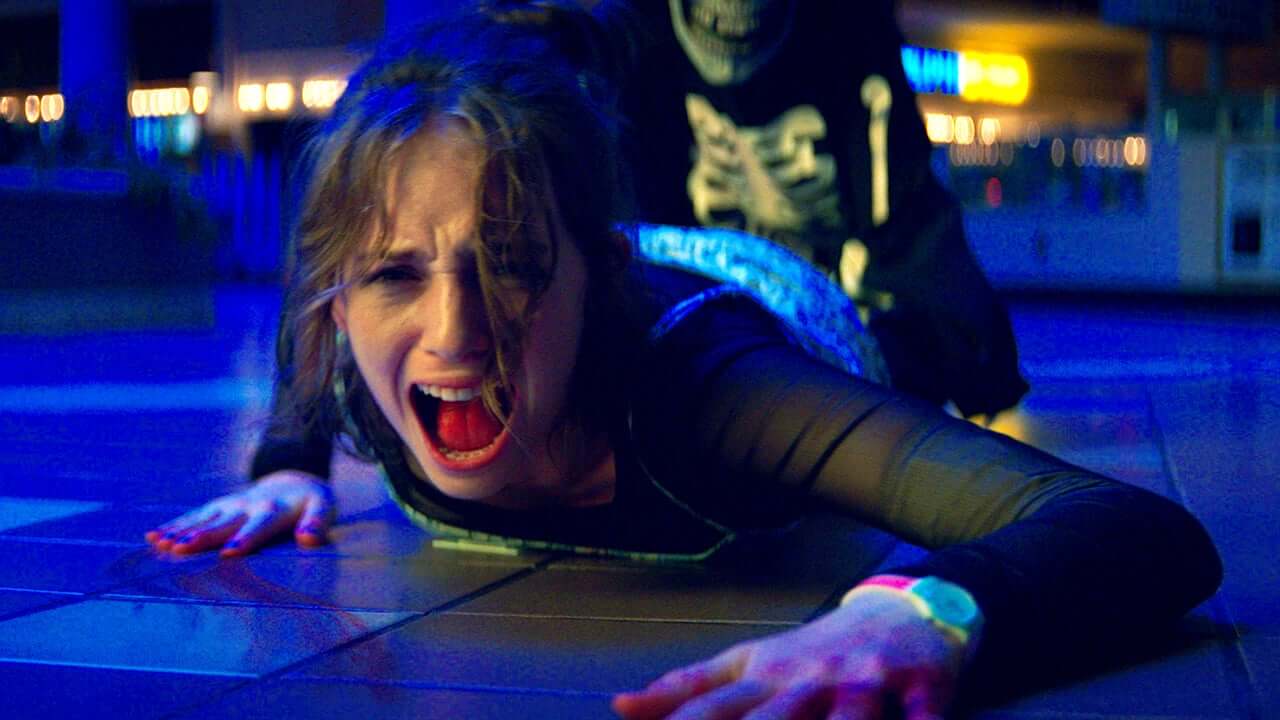
Speaking of subversive edge – because this is the opening scene and it’s not really spoiling anything for anybody – you kill Maya Hawke in the mall.

Yes, I do.

Was that something along the lines of, “Hey, Netflix, will you let us do it?”

Totally. 100%. And my husband [Ross Duffer] is actually one of the co-creators of Stranger Things, so there was a lot going on in that scene.

That’s a meta in-joke, right there.

We were obviously paying homage to Scream and Drew Barrymore and the amazing opening of that movie, and then there was a lot of other things going on, too. [laughs]

That adds a third layer because you directed a couple of episodes of the Scream series for MTV. What’s it like as a director, working with these already extant properties, but coming about it in a new way?

Yeah. I mean, Scream was interesting that, because obviously, I was stepping into that as an episodic director, so it wasn’t a world that I was creating, but even when I was doing those, it was about looking for ways that we could pay the respect that those, that those movies deserve and then also try to keep them new and fresh.

With Fear Street, it was the same thing with the books. I wanted to make sure that we were sending a proper love letter to them and then also, to the films of that era, which I was a huge fan of as a moviegoer. The conversation was, “How do we do this and not just make it nostalgia? How do we warrant and justify making three movies?”

For me, that came back to the characters and being able to craft the three movies around characters that normally haven’t had their day in the sun and haven’t had a chance to be protagonists or heroes. It’s not often that you have a young black queer woman that’s leading three horror movies. She’d usually be dead before the movie even started, so that was a cool opportunity for me to balance doing the thing and then also making it new.

With the Fear Street trilogy, you’ve gotten to do your Wes Craven movie and your ’70s Carpenter movie, and you got to make a Dave Eggers folk horror movie. Now that you’ve gotten to do these three things, what’s next for you?

Well, what’s next practically is that I’m going to go and shoot a couple of episodes of The Staircase with my friend Antonio Campos which is also very horrific, but very horrific in the real world, based on a terrible event that happened in reality. As far as slashers and things like that? I don’t know. I’m excited about kind of the opportunities that the Fear Street universe holds. I’m really interested in a ’50s Night of the Hunter-esque kind of a slasher thing, so that is something that I’m also thinking about a lot.

Fear Street Part 1: 1994 releases globally on Netflix on July 2nd, Fear Street Part 2: 1978 follows on July 9th, and the series concludes with Fear Street Part 3: 1666 releasing globally on Netflix on July 16th. More information can be found here.

Osei Essed | AMEND: THE FIGHT FOR AMERICA

amend

Osei Essed’s score for Amend: The Fight for America, the Netflix series about the 14th Amendment to the United States Constitution, immediately evokes a sense of history in its use of Americana elements, while weaving in and out of a series of powerful pop song needle drops which demonstrate just how important this amendment was to the fight for equal rights in America. Speaking with Essed, one gets a sense of just how thoughtfully the composer approached scoring this landmark six-part series.

STARBURST: Amend starts with Sharon Jones’ version of This Land Is Your Land, but what was your starting point for working on the documentary miniseries?

Osei Essed: I spent a bunch of time out in LA working on the series before anything was shot with the actors. So many of the interviews with our expert guests were already shot, but all of the creative non-conventional elements had yet to be created.

I went out to LA and I spent a few months out there sort of just talking and making some music and trying to find a way to tell the story that would feel fresh and contemporary, but at the same time, American in that way that early sort of 20th century orchestral music does or American folk music does

Those animated segments and the really stylized readings and recitations of the people involved in the fight for the 14th Amendment: how does that affect what you do, as opposed to talking heads, which are the de rigueur approach to most documentaries?

It required being able to switch voices quickly. And that’s tricky, no matter what, to do that because there were just these rapid cuts, which doesn’t happen a lot in work that I do – where you’re moving from moment to moment and each moment is its own encapsulated moment that requires its own supporting musical voice. I had to find a voice for it for each of those moments, but that’s somehow connected as a single thing.

Did it help you that there is a really good amount of popular music in the documentary to have something to go into or come out of?

I wouldn’t say it helped so much. I mean, it definitely placed limitations on the kinds of music I would place between sections or that I would have to create so, in that sense, I guess it was helpful that there were some limitations, but I think whenever you’re moving in and out of cues that you didn’t create – or in between them – finding the thing that connects them, when there are very few breaths, it is a challenge. And so that there was a really joyful challenge.

In a fictional narrative film, there’s a little bit more room, but the idea that, in a documentary, if there’s no music playing, it’s somebody talking is a fascinating observation. There’s constant sound throughout, basically.

There are lots of ways to approach it. I think there are some vérité documentaries where there are moments given to just the world of the film outside of music and letting those diegetic sounds take over. There’s a pleasure in that and those breaths are purposeful in that kind of filmmaking, but often that’s not the case.

When you were working on the score for Amend, were you considering certain themes or motifs for the various themes and motifs that go throughout the documentary? When they’re talking about Bull Connor or Andrew Johnson, your score gets darker.

Finding a way to voice new villains and the heroes was definitely a big, big part of it and then figuring out what corollaries existed between our heroes for each episode, for each part of the story, and how to connect them felt as if it was all a piece – in that it was observing some rules of composition – was definitely something we thought about.

Talking about the heroes and villains of each piece: many of the reviews have pointed to the Love episode as being the one that really encompasses a lot of different ideas, and so it ends up being a very particularly impactful part of the miniseries. When you’re talking about love, in that context, it’s a very hopeful, but also very sad, pendulum swing back and forth. How do you approach something like that, as it’s so deeply personal?

It’s interesting because I think that, for that storytelling, there was a longer cue in that episode. There were more real moments. I think a lot of the other episodes are dynamic in a way that that Love actually isn’t, even though that episode does encapsulate so much of what’s being fought for. I think what it does so effectively is it does bring this idea to a very personal level that hopefully resonates with everyone, so I think we’ve given a little bit more space there. It was easier to tell that story and really dive into what needed to be done in terms of the music.

One of the most triumphant parts of that documentary is Bree Newsome on the flagpole at the South Carolina state capitol. It must have been a really hard thing to score because you’re scoring a very triumphant, fist in the air, successful thing, but then you immediately have to go into what happened to Reverend Pinckney. That must be a very delicate transition for you as a composer.

For that one, fortunately, I’d had some training with the earlier episodes as well, ’cause there’s a lot of those very useful and triumphant moments that are then undercut almost immediately by the reaction to the advances made in the name of freedom and, and in the name of what it means to be a citizen in this country. I think that’s something that comes back and forth through the entire series: from the very outset, we get an inch there and then we’ll get pulled back in. It’s like every time you think, “All right, great, this is it,” it’s like, “Oh, well, no, actually this is not it at all.

How did you originally become involved with Amend? You’ve done quite a few other documentaries in the past, but how did you come to work on this particular project?

I came to the project through Adam Weber, who was a producer and a friend, and he had worked with the score executive producer, Dan Romer, and when conceiving of the idea, Adam and I – being friends – also were able to just talk about it a little bit and went through a few interviews with his team and with the various parties involved with Westbrook – which was Overbrook at the time – and found our direction. It helped that I’d done quite a bit of documentary before and that I made some music that seemed to fit into where they were hoping to take the voice for Amend.

What for you is the appeal of scoring documentaries? Speaking with other composers, be it documentary or action or horror sci-fi or whatever, it seems that there is at least a grain of personal interest in it, to begin with, but it also seems like one project usually begets another.

I think largely that’s what it is. I’m happy to tell all kinds of stories, whether it’s documentary or narrative stories and whether they’re immigrant stories or American stories. I’m grateful for the opportunity to tell good stories with good storytellers. In terms of working in docs, that’s really what happened – I worked with one person, then another and it has grown into this wonderful thing where there are quite a few amazing documentaries being made and I get to work on some of them.

Is there a bit of an emotional toll that documentaries take, especially given the rather serious themes of a lot of the stuff you’ve worked on?

Yeah, absolutely. It can really be pretty, pretty heavy, I think, to walk around with a lot of these ideas in your head, thinking about the world from the perspective of many of these stories. I think what helps to sort of ameliorate that is thinking of the stories as a way to help heal wounds and as a way to help give voice to the voiceless and make the world hopefully stronger or more aware that way. It feels like you’re doing good, in a way, if you can tell the story well, so there’s something to be gained there.

In Amend, the tone is very serious but lightened with a sense of, “What the hell?!” where you have Randall Park or Larry Wilmore. Wilmore’s commentary walks the perfect line between this is absurd that this is still going on, while still recognising the seriousness of it all. And I think that’s like where he sort of finds the absurdity in it, but I really quite enjoyed it and I thought your, your music really lent a lot to it.

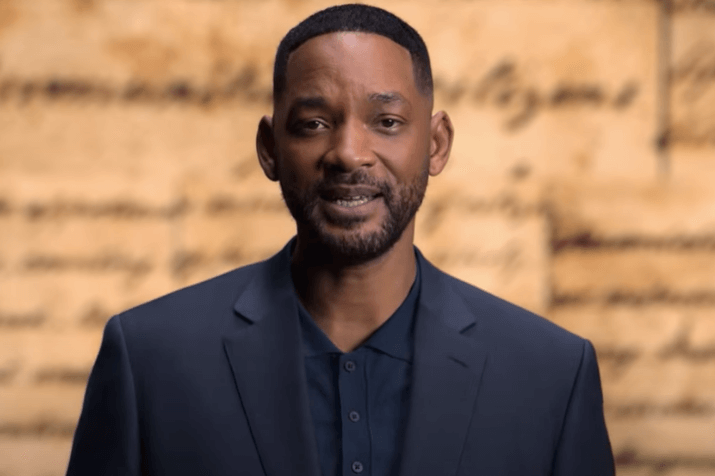
With Larry Wilmore and Will Smith, between the two of them, they really do help to lighten a little bit of the heaviness, but along with that, you have these stylized, recitations, which I think allow you to view it at a bit of a remove. It feels creative and feels a little bit exciting almost, and it feels like it’s action and it feels like it’s happening in the moment.

I think that makes this particular series really exciting and the approach to the music – as well as every other part of it – is just that it is forward-looking and it tries to make it feel as if there are stakes. Very often, when we’re thinking about history, talking about history, it seems so far removed – “It’s the past, how can it really affect us?” – but the way that the story was told made it feel immediate and made it feel as if you could have a reaction and should have a reaction and, perhaps, maybe you could even do something about history, which is an interesting thing, you know?

Nevermind the fact that I feel like so many of us – or at least for myself – I did not know very much about the 14th amendment so that felt fresh to have this thing that’s so important and the story of it is being told in this very immediate way, so I felt like I could engage with it in a way that I might not otherwise.

Absolutely. Seeing Graham Greene pop up in anything brings an almost immediate level of joy: ‘Oh, he’s in it? It’s going to be good’.

There’s just some really wonderful moments and appearances throughout. I remember, I was scoring one day and – my family watches Fresh Off the Boat. We’ve watched it twice because my eldest son is just a big fan. He’s eight now and we’ve watched the series twice in the last year and a half or so. He comes upstairs. He said, “Oh my God, it’s Louis! It’s Randall Park on the screen!” And he was like, “All right, right on,” so my kid feels like he wants to be engaged and there’s something great about that.

Amend: The Fight for America is now streaming on Netflix.

Maggie Robertson | RESIDENT EVIL VILLAGE

resident evil village

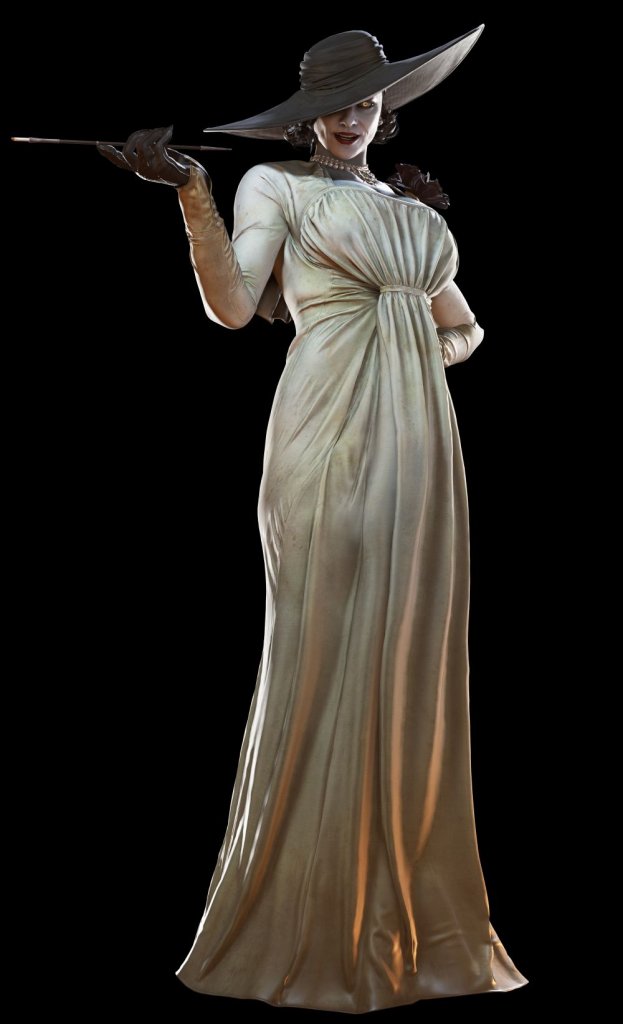
If you’re a gamer, then you would have surely seen numerous posts about Lady Dimitrescu over the last handful of months. This maniacal, towering character – and mother to three – has already become iconic in the RESIDENT EVIL franchise. As you attempt to escape her claws and entitled voice in the labyrinth that is otherwise known as Castle Dimitrescu, you’ll soon discover why. MAGGIE ROBERTSON talks with STARBURST to reveal how the voice came together, what it was like to work on RESIDENT EVIL VILLAGE, and why she thinks the game has become an instant classic…

How did you first get involved with acting?

I fell into it, similar to Resident Evil. I was in high school and a friend of mine wanted to audition for the school play. She didn’t want to do it alone, so she asked me to audition with her as a favour, and then I ended up getting cast, and she did not. The reason why I stayed an actor is because I was always one of those kids that didn’t know what she wanted to do, because in fact I had a wide variety of interests. I didn’t know how to pick just one. What I love about acting is that it allowed me to do it all. Acting is unique in that it stimulates your mind and body. It’s a full-body experience, and I’ve never experienced anything like that.

And with Resident Evil Village, how did you get involved with that particular project?

From there, I kept acting, went to college for theatre, then was acting professionally at the regional theatre in Washington, D.C. Then from there I decided to go off to grad school, I moved to London to get my Masters degree in Classical Acting from LAMDA. I was doing a whole lot of Shakespeare, and I love Shakespeare so much. Then from there I moved to Los Angeles in 2019 right after I graduated, and I booked this job that same year. I think it was about six months after I moved to LA, which is absolutely insane!

Maggie Robertson

Were you a fan of Resident Evil before working on Village? If so, what are your memories from this legendary gaming franchise?

No, I was not a gamer growing up, so I had never played the games before. However, even I had heard of Resident Evil the franchise, because it’s so massive. So, once I figured out what game I was in, I was aware of how big this would be. But nothing could have prepared me for what actually happened afterward. I knew it was going to be a big deal, but I never knew it would be this big!

Lady Dimitrescu is terrifying, and she has a great back story. However, for you, what did you find the most interesting about the character?

I love playing villains generally, because I am crazy, and I love playing crazy people! But I love Lady Dimitrescu because she really is such a vibe. Capcom has done such a great job in creating a really visually striking and interesting character. Even before she opens her mouth, you look at her, and there’s a very clear character presented in front of you, which I think is really cool. So, the first time I saw a visual for her, I was like “idea, idea, idea” in the sense that I was inspired immediately by what I could bring to this character. I love her because she is incredibly dynamic and multifaceted. She is this regal, graceful, delicate, composed person. Underneath she is dominated by her emotions. She cares very deeply about what people think, and how she is perceived. That’s why when Mother Maranda picks Heisenberg over her, that cuts deep actually. So I love that, I think it’s important to see them as human beings and empathise with your characters. You can’t judge a villain if you’re playing them. You have to be able to flesh them out and make them real. So she has all of these different layers. She is refined, but also still has this real potential for violence and danger. She’s powerful. I like all of that, and I love that she is a mother. I can’t get over the fact that she is a mum. I think that is so special. She is an incredibly loyal person, and she fights so hard to protect the people that she cares about. She’s probably one of those people that it takes a lot of work to get into her inner circle, to be considered family to her. However, once you are, you are there for life, and she will never turn her back on you. I love that, I’m biased, but I love her. She feels like a friend.

Lady Dimitrescu

How did the actual voice for Lady Dimitrescu come together, and what was that like to work on with Capcom?

It’s interesting, a lot of what I did in the final performance was what I brought into the initial audition. So that’s kind of cool. When I was thinking about the voice, what I really wanted to bring, is that she has this deep sense of pride, superiority. She considers herself as a class above the people around her, and so I wanted to make sure that that came through in her voice, and that she had this kind of arch, elevated quality of speaking, and that’s what landed me in this sort of mid-Atlantic/trans-Atlantic accent, that’s neither American or British. I wasn’t consciously thinking, “I’m going to do a mid-Atlantic accent” I was thinking about all of these different character aspects of her, and that just naturally lead me to fit more inside of that dialect. That’s how I landed on that, I wanted to make sure that she was elevated, heightened, and had this kind of elite-quality of speaking to her voice.

What do you remember the most about seeing this character on screen with your own voice for the first time? How rewarding was that experience?

I was kind of lucky, they had shown me one of my final scenes before the game even came out. So I was able to see it, and just ooh and aah appropriately at all of the right times. It is definitely bizarre to hear your voice and see certain movement qualities that are yours but to not have your face on it. It’s interesting, navigating that. On the whole, I’d say that I actually enjoy it. What it means is that I have that degree of separation. So when I watch the final performance, I’m not thinking critically as an actor about how I can make it better. I’m able to just sit there and enjoy and watch as a fan. I find it very freeing, because I can enjoy and celebrate it. In fact, I think this performance, this game, this character, has taken on a true life of its own. She very much feels like something much bigger than me now. Now that the game has been released, I’ve let her go into the world and let her flourish, and blossom into the person that she is today. That’s super cool, because with everything that fans are bringing to their fan art, they’re adding layers, and deepening this character. So it does feel like she is becoming a thing of her own right now. I really like that, I think it’s great.

Leading on from that, what do you remember the most about your first day on set for Resident Evil Village?

The first day on set was so cool! You’re in the Velcro space suit as I like to call it. It’s certainly magical and so surreal. That was the first time that it felt real to me, like “I know I booked this major job, and now I’m doing it”. So that was really cool, and you’re working at this fabulous studio. On the first day you’re like “Okay, I’ve never done this before, so I really hope you can pull this off, let’s see, hope it works”. So there is that pressure on your first day. All in all the cast and the crew, everyone that I interacted with were so welcoming, and understanding, and willing to break things down for me if I didn’t know technically what was happening or what I needed to do in a particular moment. The first scene we did was actually the big family scene in the game, and so in that scene, I say Dimitrescu about five hundred times, because I guess she loves the sound of her own name? Loves to say it. I never heard how to pronounce it, and I never received the official pronunciation until I arrived on set that day. It certainly took a minute to get my mouth around all of those letters and whatnot. I was so nervous about messing it up and ruining all of these takes! So in-between each take, I would literally be in the corner, chanting to myself like a crazy person, “Dimitrescu, Dimitrescu, Dimitrescu”. So that’s how I spent my first day in the volume!

Can you tell us about what the Motion Capture technology was like to work with on this game in particular, and what do you think that this type of acting process has brought to Resident Evil Village?

Motion Capture is really cool, and there is so much mo-cap magic that you can do, which I had never known before. There are certain things that you don’t realise. I can only speak from an actor’s perspective because I don’t necessarily know all of the technical components that go into things. One of the things that I didn’t realise is that you’re wearing this helmet, which has a face camera right in front of you. So even if I was moving around, there would always be an object directly in front of my gaze. Sometimes I felt like I was going a little cross-eyed because there was always something directly in front of me that was pulling my eye. The flip side of that is that you can’t put anything in front of that face camera that would interfere with your facial capture. Things like applying the lipstick had to happen on the outside of the camera. Or sucking Ethan’s blood, I had to be miming that. I couldn’t actually connect to his arm. So all of these things are interesting. You have to be aware of where cameras are, and how the data is being captured so that you don’t accidentally cross your arms, and cover up a marker that’s on your chest, because that data won’t be read. So there’s little technical adjustments that you as an actor have to make, and understand, in order to have the best performance capture. In terms of how it impacted the game, there’s something really special about human connection. You’ll never be able to replace the human being in acting, because we are automatically, subconsciously, picking up on so many gestures, mannerisms, inflections as a human being, that you just don’t get otherwise. So I certainly think that it’s impacted the game positively. The people are able to bring so much more to these characters, because they are responding instinctively, and they’re interacting with each other. Vibing off of each other. Something that Heisenberg does then gives me an idea to do something else, that maybe wouldn’t have existed otherwise, had that person not been right in front of me, whom I was interacting with. You can’t replace live humans!

What were the actresses that played your daughters, Bela (Bekka Prewitt), Cassandra (Jeanette Maus), and Daniela (Nicole Tompkins), like to work with, and how do you think that they helped shape the gameplay in Castle Dimitrescu?

First of all, they were fabulous. I feel very lucky that they are my family in this game, and that I am now getting to spend so much time with them. They did such a great job. With the daughters, the trap that you can fall into is making them all the same, and they do have a lot of similarities, but what I think is so genius about the performance is that, and I think Bekka Prewitt talked about this in one of her interviews, they actually sat down and thought very consciously about who each of them were, and how to differentiate them. Bela the eldest is more of that, she wants to be in charge, she wants to be the leader. She is a bit of a teacher’s pet I guess for mum. Then you have Cassandra, who is the middle child. She’s a bit more sadistic, wild, and untamed. Then you have Daniela, the youngest, who just wants attention and love. All of that comes through in their performances in a really cool way. It was such a blast working with them on set, and you could see it coming to life when we were doing our scenes together. So much maniacal laughter, it was amazing.

Resident Evil Village has been an instant hit with both fans and critics. However, for you, looking at the game, why do you think it’s become just so well received already?

Capcom have created a world that is so incredibly detailed. It’s visually stunning. Part of the reason why the game has had this continued success for so long – we’ve sold over four million copies at this point – is that when you are playing the game, you’re not just interested in the characters, you are also invested in the world. Players are just wanting to stick around in the castle, or other areas of the game, and just explore, because there is just so much detail there. There’s always something new to discover. So that’s what I think is super special. They’ve done a great job as well with the characters, making each of them visually striking, and unique. Bryce Dallas Howard talks about this in The Mandalorian documentary on Disney+ about how every character in the Star Wars franchise has a silhouette, and you can see them from a distance, and you know who that character is. Capcom have done a similar thing with these characters, where each of them is a silhouette. Each of them is very visually unique, and striking, and tells a story. You know who they are as a character, even by just looking at them. In terms of why the game – even before release – was popping off like crazy, taking over the internet, that has a lot to do with it. You look at them, and you are already in a world. You are already taken and transported into this vibe, which is what I call it. Lady Dimitrescu is a vibe! So that’s really cool. Once you get into the game, you then have these characters that are really dynamic, multifaceted, and interesting. If they were just visually striking, then it would have only gone so far. The fact that once you get in there, and you have these characters who emotionally are interesting and dynamic, that’s what keeps you there, that’s the longevity.

Tough question time: what was your most memorable moment from playing Lady Dimitrescu and why?

It’s got to be the table flip. That was a dream come true moment for me, because who doesn’t want to go to work, and get to be told that they will flip a table? I was like “Really? Okay!”. That was a fun scene for me, and it was also interesting because you have to be careful not to hit important cameras and tech. All of that stuff that is super-duper expensive. We had to be careful about where it landed, and how hard I could throw. People were off-screen, ready to catch it, just in case it went awry. I definitely had a lot of fun, probably too much fun. They were like “You need to calm down Maggie, we’ve got it!” I said, “Okay, okay, I’ll chill!”

What else can we expect to see from you as an actress in 2021?

No projects that I can talk about just yet, but mostly on the horizon are these Streamily signings that I’m doing with a lot of the other Resident Evil people. I’ve got some individual prints up on my shop at www.streamily.com/MaggieRobertson or you can go to www.streamily.com/residentevil. So I’ve got those individual prints there, and then we are also doing a house Dimitrescu trio signing with myself, Bekka, and Nicole. Then we’re doing a little special doodle for Jeanette on there as well. That’s my main thing at the moment. I’m all Resident Evil, all of the time. It’s pretty great!

For more from MAGGIE ROBERTSON, check out her Twitter @maggiethebard and Instagram @maggiethebard. RESIDENT EVIL VILLAGE is available on Xbox One, Xbox Series X, PlayStation 4, and PC.

Tim Sheridan | BATMAN: THE LONG HALLOWEEN

Batman: The Long Halloween Part One, Batman leaping through Gotham city

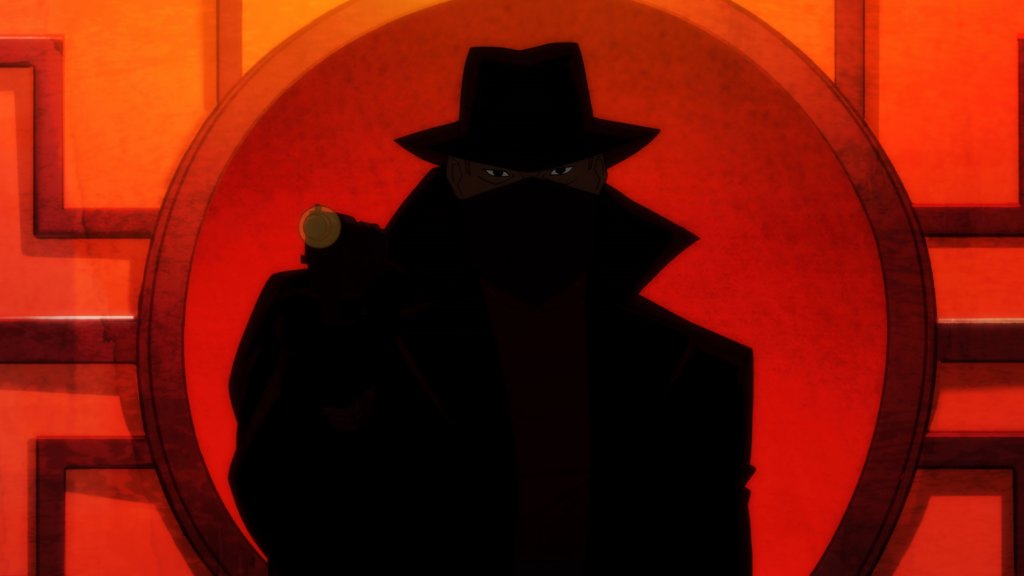
From Jeph Loeb and Tim Sale’s pivotal story, screenwriter Tim Sheridan adapts the iconic mid-1990s DC story The Long Halloween into a two-part animated feature, directed by Chris Palmer. Batman: The Long Halloween Parts One and Two begin as a brutal murder forces an alliance between Gotham’s young vigilante and two of the city’s few, non-corrupt lawmen (Police Captain James Gordon and District Attorney Harvey Dent) to take down crime boss Carmine Falcone, aka The Roman, and uncover the identity of a mysterious Holiday killer.

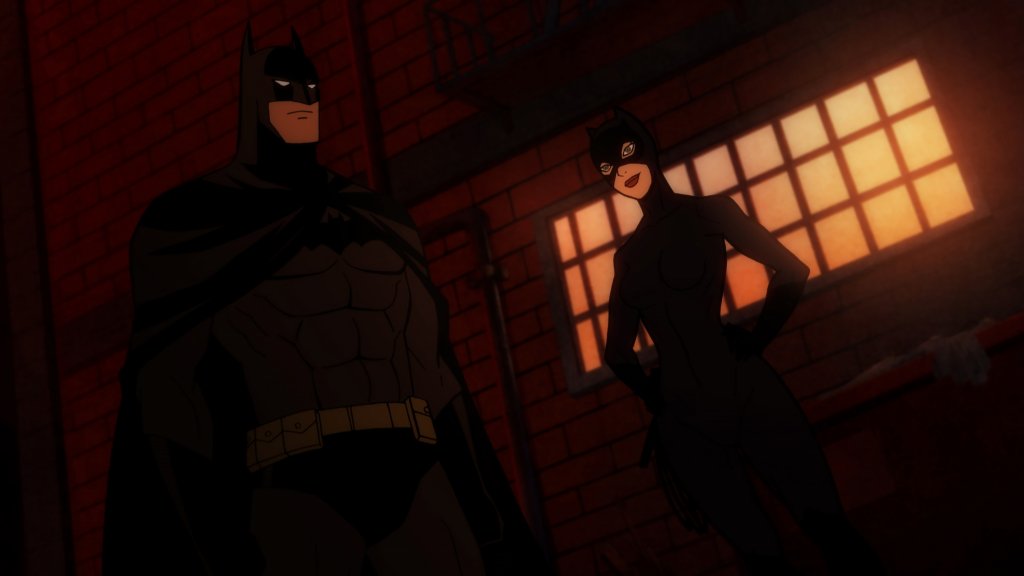
With an all-star voice cast that includes Supernatural and The Boys’ Jensen Ackles as Batman, Naya Rivera as Catwoman/Selina Kyle in her last film role, as well as Josh Duhamel, Jack Quaid, Titus Welliver, Troy Baker, Billy Burke, and David Dastmalchian, this highly-anticipated feature is sure to delight fans of the comics. STARBURST spoke with Sheridan about Batman’s early days, his journey to becoming the greatest detective, and how one navigates adapting a beloved comic book to the screen.

Jensen Ackles as Batman in Gotham City, The Long Halloween

STARBURST: The Long Halloween is an iconic storyline in the Batman mythology. In your opinion, what is the significance of that arc to Batman’s overarching narrative?

Tim Sheridan: Butch Lukic, our executive producer, Jim Krieg and I, the first thing we talked about was that this book was a sort of Batman: Year Two. And we were coming in after a long cycle of movies from James Tucker, and getting to do something new. We felt like the Year Two element was incredibly important to the legacy of Batman, and it was something we should really home in on in the film.

Specifically, we call Batman the world’s greatest detective, but there was a time when he wasn’t. And I feel like this story, which plays out over the course of a year, exposes Batman’s early weaknesses as a detective. We address it in the movie from the perspective that he hadn’t expected that being a detective would be part of the job. So The Long Halloween gives us an opportunity to fill in that blank. That’s important to the Batman legacy.

It’s a learning curve. And a lot of people who mostly know Batman from the films probably don’t think of him first as a detective. They think of him as a guy with money and gadgets, so it’s interesting to introduce the detective element here.

Tim Sheridan: Yeah, we don’t see it in movies a lot. In the comics, you have a long time to play out those detective stories, which is something you don’t necessarily have time for in a movie. So the fact that we were able to make two movies for The Long Halloween gave us more ground to explore some of that, and to explore what it means for Batman to be in the early stages of his crime-fighting career.

In that vein, how closely did you stick to the comic series canon? I imagine there’s some temptation to change certain elements in order to surprise fans, but there’s also an expectation that you’ll be completely faithful to the source material.

Tim Sheridan: For us, the guiding star was to be as faithful as we can be. Now, “faithful” can mean different things. I think some people will hear “faithful” and think this should be a one-for-one adaptation of the comic book. But that’s not something you can do; a movie is a whole different thing. But being faithful to the scenes, the story, and the ideas put forth – that’s paramount.

The Holiday killer in Batman: The Long Halloween from DC Animations

We stick to the way things play out plot-wise in the book, just with slight variations to make sure it works cinematically. We had to streamline some stuff in order to let the real story shine, because there’s a lot of red herrings and stuff that happens in the book. And that’s great when you’re reading a monthly issue because it keeps you guessing, but we were worried that people were going to be too far ahead of the story – especially fans who know the book really well – and we wanted you to be able to enjoy the experience of watching the story play out in a slightly different way.

So, we did look for opportunities to surprise long-time fans who know this story inside and out, and I think what we came up with makes sense, is a surprise, and helps to get to the meat of this story. If you’re missing something you love from the book, my opinion is to pick up the book again! It’s always there, and I hope that this movie is seen as a celebration of the book and only enriches people’s love for the original material.

Since, like you said, this isn’t a play-by-play replica of the comic, what does your retelling add to the story?

Tim Sheridan: It’s impossible to do a play-by-play replica when you have something as good as The Long Halloween. The comics are an exercise in economic storytelling, and not just in terms of what Tim Sale does with light and shadow, which I think he uses to great effect to punctuate important moments, but just in terms of the actual narrative. With comic books in general, we fill in a lot of the story by reading between panels. We can’t really bring that to life because everyone has their own version of what’s happening between the lines. But what we can do is look for moments that the book implies happened off-screen and, if there’s a need for it and it would help the story along in some way, then we include it. The idea was to be additive, not subtractive or trying to replace something for the sake of it. Everything we did was in service of the greater story.

Beyond the obvious, did you draw from any other sources for inspiration?

Tim Sheridan: In terms of a script, we knew that this was a Detective Noir. That was Butch’s guiding principle as we went into it. I was all for that, and then the more I thought about it, the more I realised the Detective Noir elements are mostly visual ones – so it was actually the artists’ and animators’ department. I just focused on telling the best cinematic version of The Long Halloween that I could tell on the page. And I think that, as someone who had nothing to do with the artwork, it’s an great achievement. When people watch this, I hope they appreciate the richness and levelling up of the animation and the visual storytelling.

Jensen Ackles as Batman and Naya Rivera as Catwoman in Batman: The Long Halloween Part One

The opening sequence going through Gotham and climbing up into Falcone’s office, is particularly stunning.

Tim Sheridan: That scene was one that haunted me more than anything when we started the process. I wanted people to know, from the moment this movie starts, that they’re in good hands and amongst people who love the book and want to be as faithful as can be. So the first scene is almost a word for word adaptation of the first sequence in the book. It’s a great microcosm of the whole movie, too. We moved one line, added one line, but only in order to do it in a way that was cinematic – that’s how we approached the whole movie. It’s painful, but the tweaks are necessary to make it a good cinematic experience.

But that scene also sets the tone for everything, for the whole emotional journey Batman embarks on. I’m really happy and proud of the way it came out, and hopefully people will agree.

When we spoke last year, you were releasing Superman: Man of Tomorrow, and you talked about the many reasons why you love Superman and what made him the right hero for the time. So now, why don’t you tell us what you love most about Batman?

Tim Sheridan: First of all, what I love most about it is Jensen Ackles. He was born to play this role [laughs]. But to answer your question seriously and in terms of the character, I think that – certainly in movies – we are often presented with a very dark version of the Dark Knight. I mean, it’s there in the name… but I grew up studying Shakespeare, and to me there’s so much of Hamlet in the character of Batman. The tragedy that he’s gone through is massive and this movie doesn’t just touch on his parents being murdered; it explores the story of his parents and their relationship to Gotham City, and in that there’s something about what his own relationship to Gotham is. There’s more tragedy there to mine in order to get a better understanding of who Batman is, and who Bruce Wayne is.

The opportunity to see someone who has risen out of great tragedy to do great things is at the core not only of who Batman is, but also who Superman is. That’s why I love hero stories. The best hero stories are about people who grow to become heroes out of great and terrible tragedy. That’s something which we get to see in The Long Halloween from a slightly different angle. We see it in even more focus in this movie than we might have seen in the book.

Batman: The Long Halloween Part 1 is available on DVD, Blu-ray™ & Blu-ray™ steelbook June 21st and on Digital June 22nd.

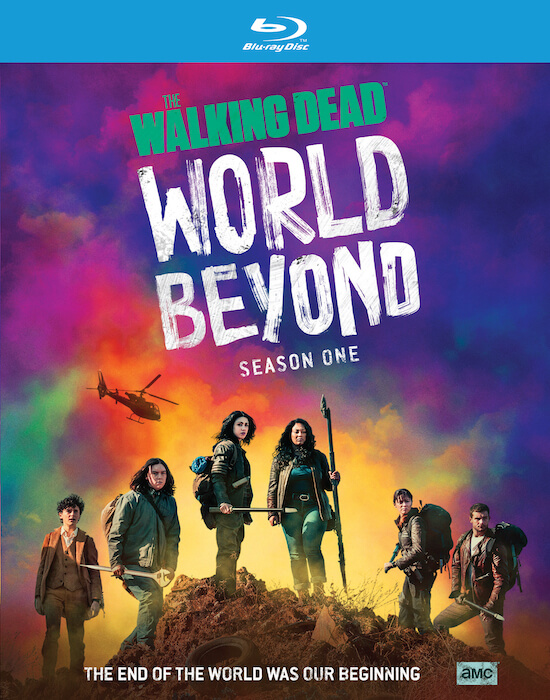
Nico Tortorella | THE WALKING DEAD: WORLD BEYOND

nico

“When The Walking Dead premiered 12 years ago I was an avid fan,” actor Nico Tortorella recounts. “And then I got an audition for Fear the Walking Dead and didn’t get the job so then refused to watch it! Then this show came around.”

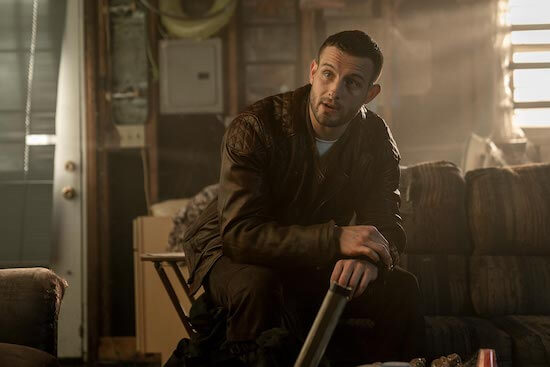
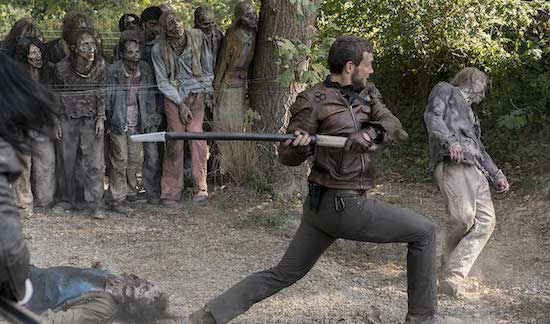
The show Nico is referring to is The Walking Dead: World Beyond, the latest spin-off to emerge from the Walking Dead universe. Whereas Fear jumped off at the very beginning, World Beyond leaps ahead of time and picks up the story 10 years after the zombie outbreak, lining up roughly with main series’ timeline. What is markedly different, however, is that the series showcases the shadowy Civic Republic front and centre as the seeming villains who will stop at nothing to ensure a brighter future for mankind. In addition, the show’s main protagonists are for the most part, just kids. It’s here that Nico’s character, Felix, comes in. A big-brother of sorts to the two main female protagonists, its their task to ensure everyone stays alive as they make their way across country.

“It was definitely a little daunting to step into a massive universe,” Nico admits as they talk during a break in shooting the show’s upcoming second season. “I really had to make the decision to commit, and to understand that I’m a tiny piece of a puzzle that’s massive.” No stranger to committing, Tortorella is probably best known to audiences as Josh on the long-running series Younger which has just reached its seventh, and final, year. They’ve also been part of one of Hollywood’s biggest horror film franchises thanks to a role in the last Scream outing. “Obviously Scream isn’t in the same genre as The Walking Dead but I’m used to blood and guts so I was comfortable there.”

Without doubt, one of World Beyond’s greatest accomplishments is in its remit to world build, allowing us, for the first time, to see behind the curtain of the Civic Republic. Predictably, it raises the question of potential crossovers with characters from the other shows, and perhaps the one we all want to see most. “A Rick Grimes/Felix moment? Come on!” Nico laughs. “They would fuck up some shit. I’m there for it. Felix has been mentoring everyone else, I think it would be a cool dynamic for Rick to mentor Felix.”

It is perhaps Felix’s mentoring that endears the audience to the character most initially, although as the first season progresses we are allowed to see the more intimate areas of their life. What transpires is a touching love story that is almost surprising in its fulfillment as Nico’s grounded portrayal of Felix is worlds apart from what is often seen to be a stereotypical queer character on screen.

“That was a decision from the get,” Tortorella elaborates. “Scott [Gimple] and Matt [Negrete] were really open to the idea. I tend to use my normal life to break down stereotypes so that’s how I try to approach characters. Felix’s sexuality is just a part of who they are and honestly that’s just a wealth of experience. I think, post-apocalypse, priorities shift and the only thing that you’re truly fighting for is your life.”

With seven years of Younger, almost two seasons of World Beyond and a series of eclectic appearances on shows such as Ru Paul’s Celebrity Drag Race and the US version of Just Tattoo of Us – “I saw some shit that I’d never imagined. I learned more about the human experience doing that show than anything I’ve ever worked on” – it seems there’s no stopping Nico Tortorella. Although, for now, they feel like it might be a good time to take stock.

“For the first time in seven/eight years I’m actually like, totally available,” Nico laughs. “I don’t have anything in the books. I’m kind of in the space where I’m re-prioritising exactly what I want to be doing and figuring out what the next step is. I’m taking my time and I’m going to be a little bit pickier but I’m excited for the future.”

As for the future of the Walking Dead universe, it would appear that it will only go from strength to strength. “Just wait until you see the second.” Tortorella teases. “The first season was super intimate right? The second season is much, much bigger.”

RLJE Films will release THE WALKING DEAD: WORLD BEYOND – SEASON 1 on DVD/Blu-ray on June 15, 2021

Ben Wheatley and Reece Shearsmith | IN THE EARTH

in earth

The latest film from Ben Wheatley, IN THE EARTH sees a scientist and a park scout (Joel Fry and Ellora Torchia) venture deep into an unusually fertile woods. Here they encounter not only mysterious hermit Zach (Reece Shearsmith), but also the forest itself coming to life around them. Filmed last summer, the movie takes place against the familiar backdrop of a disastrous pandemic. STARBURST caught up with Wheatley and Shearsmith to find out more…

STARBURST: Several movies have shown up in the past year about the struggle of being locked inside, but In the Earth made us terrified to go outside. How did this idea for a different take on the pandemic era develop?

Ben Wheatley: I started writing within a week of the actual lockdown, to try and make some sense of what was going on. I found myself having a bit of a freak out, which I’m sure lots of people did; you know, you just kind of go, I can’t work it out, because it’s all so unique, it’s never happened before. It seemed to be getting exponentially worse every four or five days. It’s when they released that thing and went, “oh, we’re gonna be locked down for a year,” everyone went: “a year, that’s mad.” And if they’d have said in two weeks’ time, “and now we’ve organised a set of games where you have to fight for food,” you’d have gone, “oh yeah, OK, that seems reasonable, the way things are changing.”

So I sat down, and I started writing this thing, and part of it was projecting into the future to be a bit more optimistic that we were gonna get out of it. And then I started looking at stuff online, and all the VOD movies up until that point all felt suddenly really out of date. Anything that had a crowd in it seemed really bizarre. All the movies I have made have been about a reaction to the current situation – Colin Burstead’s the same, Kill List is the same. And I thought, I need to make something that encapsulates the nowness of what’s going on.

There are some familiar pandemic-era sights in the film – characters wearing masks and sanitising – and references to current events in the dialogue, but it feels like background detail rather than being overbearing. That must have been a difficult balance to hit.

Wheatley: Well, it’s to do with the idea of horror as metaphor. There’s no point making a film directly about what happened to us, because we all understand exactly what it is. The redelivering of the news of the pandemic back to the population – it’s like, we’ve just lived through it, you know, so it’s not important.

But the idea that you would ignore the fact that everyone had lived through it seemed to be strange to me. That’s a current thinking – some dramas are coming out that don’t even mention it. It’s almost like they’re in a divergent timeline where it never happened. I think that’s very, very strange. It’s infantilising – it’s all too nasty to think about, so we’ll never think about it again.

But if you look at historical events like 9/11, the Second World War, or Vietnam, you have to come to terms with these things eventually, and it has to come back into the culture. So I was like, well, this is happening, but also, other stories are happening at the same time.

And Reece, what did you think when you saw Ben’s script?

Reece Shearsmith: I was really thrilled to be asked to do it, because it got me out the house! It felt like we were going back to a great experience that we had together when we filmed A Field in England, which was all outside and we filmed it in two weeks, in order, in a field. This was in the woods, and it felt an interesting jumping off point from the pandemic, where you go somewhere where you think it’s not going to get you. Zach, my character, has gone off grid into the woods, where there’s no people, to escape it.

And yet we get this essay on science and nature and how humans tell themselves a story to convince themselves that there’s reason and meaning behind the things that are happening. Zach has got a very definite story in his head about what’s happening and why it’s happening, and then we meet the counterpoint to him, Doctor Wendle, who’s the science version. 
In the Earth Reece Shearsmith

What was the on-set experience like? Did the safety measures affect the way you told the story?

Wheatley: I’ve made four or five movies that are at this scale, so it wasn’t any different really from those productions, except for the PPE, which we were all worried about, but turned out to be nothing. I was a bit like, “I don’t want to wear a mask”, but then after a day, I didn’t even notice I’d got a mask on, it was fine. And then the rest of it was just a lot more handwashing.

Shearsmith: There’s always more people than you think – even when there’s three of us in the tent, there’s twenty-five people outside, so it did feel like normal filming in one way. But then in another way, it was sort of extraordinary that we knew no one else was doing this now – we were the first that crept out into the world and were capturing this thing.

And it was strange to be mirroring the story in the fact that all the crew had PPE on, masks and gloves and everything. It was a bit odd, a bit alien, because you didn’t have that normal connection that you have with people on set, and everyone was being careful, socially distanced. But we were tested every day and it was probably the safest it had ever been at that point, because it was low in the community in August. So we felt fine, but it was just a real thrill; it felt like a ray of hope that it was possible to make a film.

Reece, you’ve worked with Ben a few times now. What is it about his films that keeps you coming back?

Shearsmith: He always tells really great, interesting stories, and uses the palette that he has to tell a story in a way you might not have seen before. In a way, he’s similar to what we try to do with our TV show, Inside No. 9, which is to use the tools of how to tell a story, and not just tell a story, but to stretch the very medium itself to its limits in how you present your story.

A Field in England did that, at the end when he went into this psychedelic trip with the editing. And then we get this film, where again he’s using light and sound front and centre as part of your experience. I can’t wait to see it in a cinema, because I’m sure it’ll be a real onslaught on the senses.

We get some more of that psychedelic style of editing in In the Earth. How do you approach putting these sequences together, Ben?

Wheatley: A lot of that stuff is about the communication with the creature in the woods. I figure that the creature doesn’t communicate in a standard way. It doesn’t appreciate time in the same way that we do. And what would communication between an alien and a human be like?

And in the nuts and bolts of it, the creature thinks in a recursive, circular way about time, but humans don’t, so what you get within those psychedelic moments is the recursive animations that Cyriak Harris did, but also the film is kind of blitzed and reversed and passed backwards and forwards within itself, and then there’s rhythms within that which are more like music in the way of motifs. So there’s a logic to it, but it’s a kind of logic that’s not explained. So you can see there’s a pattern there, but as a human you can’t understand it… on purpose.

A large part of the experience of watching the film relates to that editing and to Clint Mansell’s score. When you’re on set, Reece, do you have any idea what the finished film will be like?

Shearsmith: Ben has got it all in his head, and it’s not by accident that anything is there. Because he’s an editor and he edits it himself, we’d film a day and he’d go back to his hotel room and edit the day’s work. He was editing as we went, so he’d be very on top of what we needed if we needed to go back and do anything else. He’s very sure of the story he wants to tell and how to tell it.

He does another great thing, which is he plays in music. So these big speakers were brought in and this big ambient music was playing. Your life is suddenly scored, and you feel like you get another level of performance that you might not get if that wasn’t there.

So there were a lot of great anchor points that give you clues into how it’s gonna actually feel watching it. It’s that weird thing of, it’s written, then it’s filmed, then you hoover up the bits you need, and it’s all reconstructed again in the edit, but he manages to blur that feeling of how it’s gonna actually be by bringing some of that end result to the actual field.

The film is set to be released in cinemas this month. With restrictions slowly easing, how confident are you about releasing your film this way?

Wheatley: If the last year and a half has taught me anything, it’s: don’t expect anything. We will see what we will see. Everything seems to be OK at the moment in terms of the release patterns, but… I just dunno.

The thing is, I haven’t seen the film yet in the cinema with an audience. It’s a very bizarre situation. It had a general release in the States, and people went out to see it there, so that was good. I hope people get the chance to see it in the cinema.

Would you be confident going to a cinema to see it, Reece?

Shearsmith: I think I would. I suspect it would still be socially distanced and there’ll be gaps in the seats, but I would happily go in with a mask on and watch a film. I’d love to think that people will be confident enough to go and see it in a full cinema. I’m not sure whether people would do that yet, but I’m very excited to see it on the big screen. But I’m daring to think it’s gonna be all right.

IN THE EARTH is in cinemas 18th June, with advanced previews on 17th June.


The Soska Sisters | RABID

soskas rabid

After taking the horror world by storm, The Soska Sisters, Jen and Sylvia, have made their mark on the genre while staying staunchly independent. They’ve become a powerful force in horror as their take on the David Cronenberg classic Rabid shows. We caught up with them to discuss the remake…


STARBURST: What was it that drew you to the Cronenberg classic?

Sylvia: we got an email and it literally said ‘do you want to remake David Cronenberg’s Rabid?’ I looked at Jen and said ‘did you see this?’

Jen: It was really early in the morning and the sun was just coming up and I thought ‘this is a sign’.

Sylvia: We did an interview the next day with these guys on Skype and they say they usually do religious movies and then they did a religious horror movie. They bought this script thinking it was about rabid dogs. That is until they presented the script to David Cronenberg, who let them know it was not! They asked him to be a producer but because of the script he didn’t want to be a part of it. So they Googled Cronenberg, and our names popped up.

Jen: He’s one of our greatest influences. We said yes…

Sylvia: …but the script was a little kooky…

Jen: I never say page one rewrite but I said I’m going to change the beginning, the ending, and switch the genders. I’m going to move the kills about and tweak the dialogue. And they said, ‘that’s a page one rewrite’ and no one likes to hear that! We ended up rewriting it 29 times!

Blimey! That must have gone down well…

Silvia: [Laughs] Yeah! So they asked us to explain what Cronenberg means – and it’s very complicated, very sexual.

Jen: I said thank god it’s not David Lynch as I couldn’t tell you what the movie’s about! [Laughs]

Sylvia: We explained it to them, and they said ‘how about you guys handle the creative and we’ll handle the money side’, which is the only way to do it for us.

Jen: We tried to explain what Transhumanism is and their eyes glazed over!

Sylvia: I’m traditionally not a fan of remakes, so we had to do something to respect David and to try to impress him.

Jen: And a lot of the fans don’t like them either, they get turned off by the idea of it. They usually end up saying ‘you’ve disrespected the original!’

Sylvia: But some people might not have seen his films, so we had to give it a go.

They’ll miss a lot of references if they don’t know Cronenberg…

Jen: There could be an Easter egg director’s commentary track. The biggest fans will be like ‘oh – there’s that – and that…’  The film is really a celebration of Cronenberg. There’s also five years of unanswered rage since American Mary.

There’s a lot of parallels between American Mary and Rabid

Sylvia: Absolutely! But Cronenberg’s original Rabid was so advanced. He anticipated stem cell manipulation.

Another person who influences the film is William Burroughs, when did you become aware of him?

Jen: It was through watching Naked Lunch. We found out he was David’s favourite author and now he’s mine – alongside Chuck Palahniuk.

Sylvia: We even have Burroughs in the film, as a voice on the radio.

We spotted that…

Sylvia: Yay! [Laughs] And he’s talking about vampires – I was so happy when we found that. I think you’ll get it better over here, as no one reads in America!

There’s a very obvious Dead Ringers reference in there – that seems to be the perfect film for you two…

Jen: Absolutely! We want to get the rights to do a Dead Ringers TV series, but gender-switch the roles. We need to get the Olsen twins to do it if we manage it!

Sylvia: If not, we’ll have to do it [Laughs]

Watch this space, then?

Jen & Sylvia: [Laughs] Definitely!

RABID has its network premiere on Horror Channel on Saturday, June 12th at 9pm. 

Feature image: (c) Julie Edwards

Tom Holkenborg (Junkie XL) | JUSTICE LEAGUE

junkie xl justice

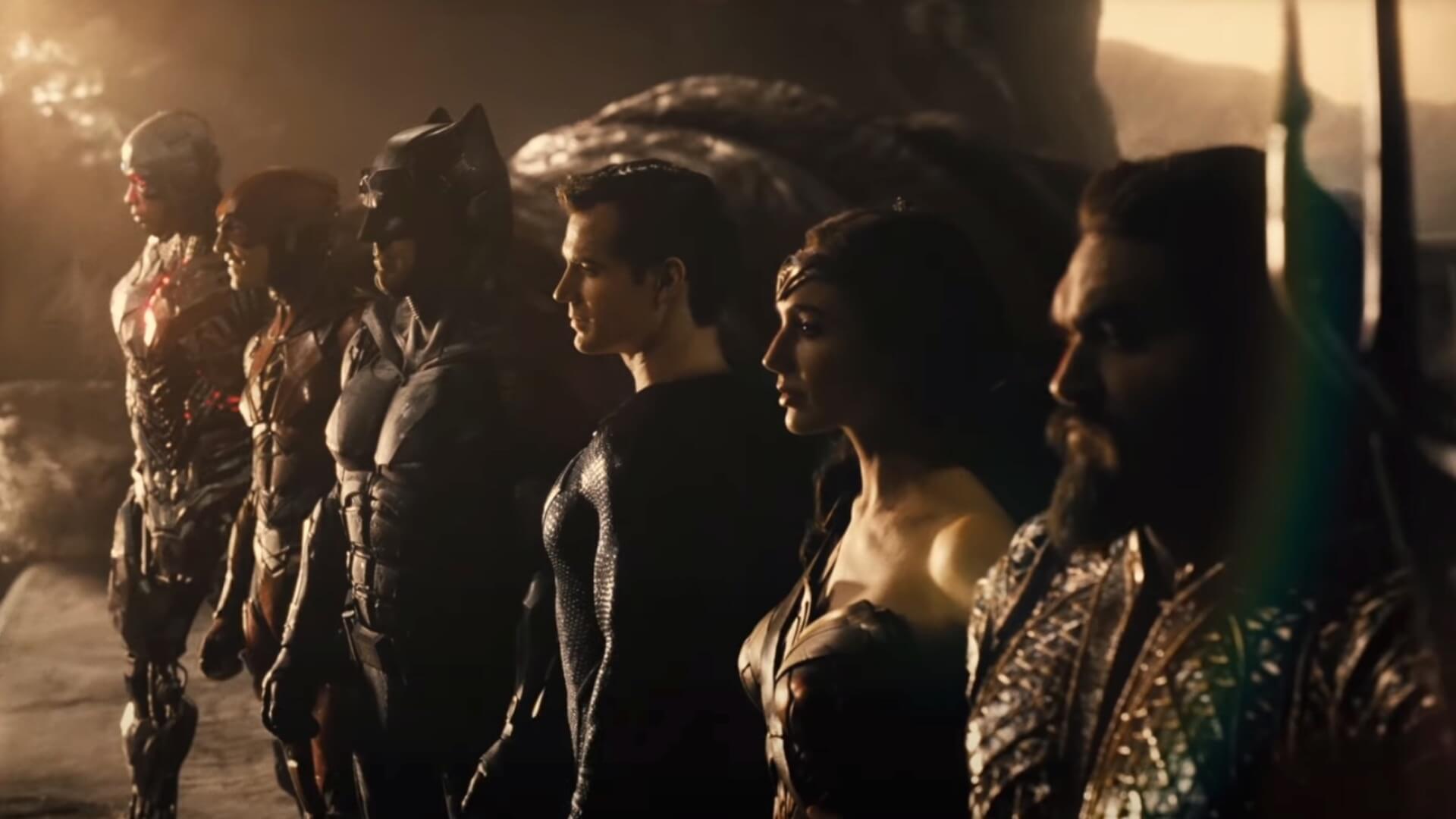
STARBURST caught up with Tom Holkenborg, aka Junkie XL, to chat about Justice League, Zack Snyder, Danny Elfman, Mad Max, Blade, The Prodigy, going from remixing Elvis to scoring movies, and even the Netherlands’ chances at Euro 2020.

I have a set list of questions about Justice League, but before I can ask anything, a friendly and talkative Tom spots my surname is ‘Anderson’ and asks if I’ve seen The Matrix. We talk about the upcoming sequel and I ask if the Wachowskis possibly approached him to do the score.

JXL: They had a really specific idea about what they wanted and how they wanted it and that’s the person they approached, but I’m not sure if it’s known yet so I won’t say anything.

[According to IMDb.com, Tommy Twyker has signed on and Johnny Klimek has been speculated.]

STARBURST: Your late ’90s electronic sound would have been perfect…

It happens a lot in franchise movies where a new movie is seen in the light of day of the old ones. I dealt with that on the other end of things with Mad Max where everyone did not expect Fury Road the way that it was, and also nobody expected the music to be so frantic and over the top as it was. The previous ones were done by classical composers.

It was intense! But it suited the movie perfectly.

You have to look at what the movie is, right? For instance, if you analyse Justice League, Danny Elfman’s music from the ‘80s, for Tim Burton, wouldn’t fit the score of this one. Or the original John Williams Superman theme, which is an absolutely brilliant theme. But it’s tongue-in-cheek, which made sense in the late ‘70s when Superman was made. But play the original score of Williams against the final act of Justice League and you’re going to start laughing, it turns the movie into a comedy.

For Deadpool, you said you used distinctive 1980s instruments and sounds to time-stamp that. As you said, certain sounds from 20-30 years ago aren’t taken as seriously now…

Exactly…

You’ve been scoring movies for over 20 years now, how has your sound changed?

The first movie I worked on was in 1998 (Siberia), but I wasn’t a film composer back in the day. I was a touring artist under the name Junkie XL and I was doing electronic festivals. It wasn’t until 2013 when I did my first movie on my own here in Hollywood. It’s a relatively short time period – eight years. In the case of Deadpool, you nailed it on the head. When Miami Vice came out in 1984, it was the coolest show on the planet. It was dark, it was serious. Watch it now and you’re going to fall off your couch laughing.

We first heard of you as a musician when you remixed Elvis Presley’s A Little Less Conversation in 2002. But you’d been touring with bands such as The Prodigy in the 1990s. How did you go from that to movies?

The Prodigy was an amazing band. I saw their show in the early ‘90s when they were super-rave. Then it crossed over more. 1996/1997 was when my first album came out and it was an interesting year in electronic music as you had the crossover into alternative guitar music. Chemical Brothers, Prodigy, Underworld. The festivals in those days – I played Reading and V Festival – you would go to the main stage and during the day it was Radiohead, The Verve, Oasis and then at night, Chemical Brothers, Prodigy, Underworld. It was fucking insane. A year or two later it started drifting apart again. And even within dance music, crossover acts were not that appreciated in the trance world, the club world. It was a completely different audience.

Did you have any idea that would go into movies? Did you just want to be a DJ/musician, or did you have aspirations for movies? One of your songs [Dealing with the Roster] appeared on the Blade (1998) soundtrack…

The Blade soundtrack was the trigger. Because at that point it was just from one of my albums and they used it in the movie and I was like ‘holy shit, my music is in the picture’! And then I got interested. After the Elvis remix in 2002, I decided to move to LA to investigate. It was a very gradual process, it wasn’t ‘from now on I’m going to be doing this’. Also, I had to pay the fucking rent!

The Elvis remix became the anthem of the World Cup, it was being played around the world. How was it suddenly becoming a popular culture icon?

I ‘performed’ – as it’s all playback – on one of the very last Top of the Pops on the BBC, and no-one can ever take that away from me. That was one of my major achievements in my life. I was on Top of the Pops – what the fuck!!

So they didn’t let you do it live? I remember Moby appearing [playing Go in 1991] and none of his deck cables were plugged in and he had to pretend…

It was such a high-brow programme that everything needed to be tight. It wasn’t like Jools Holland where you can all have fun together. It was tight and choreographed.

You mentioned you worked on Mad Max: Fury Road before and we believe you’re working on Furiosa [the Fury Road prequel set for 2023] too?

Technically that’s not been confirmed as the movie hasn’t even started filming yet. So you never know what can go wrong!

You’re possibly going to be working with George Miller again, and you’ve worked with Zack Snyder a few times before. What is it like working with a director more than once, how does the communication and relationship develop?

It’s really great. Technically, Justice League was movie number six with Snyder so you know exactly what the person is all about. You know you can trust each other. Also, you’re involved in the process so early on. Even when it’s just a weird idea – ‘I want to make this movie in six years.’ ‘Oh, it sounds great!’ you know, then six years later it’s like, ‘boom, there it is’!

zack justice

So do you stay in touch with Zack quite a lot?

Yeah, you just stay in touch. A couple of months ago, I had a long Skype call with Peter Jackson just to catch up. The last time we worked together was 2018 or something, but you stay in touch, it’s like ‘hey, what’s going on’. And especially when Covid started; you communicate in a different way with your friends, right? You Skype way more, you call way more. A similar thing happened with directors because everybody in the world was sitting at home. It’s pretty cool. Especially the fact that you’re able to start earlier makes it special – it’s less ‘here’s the movie, do your trick, and give it back’, it’s more back and forth, and that’s really great.

I’m working with George [Miller] right now on a smaller movie – Three Thousand Years of Longing – and I have already written two of the most important pieces of music for the film before he started shooting.

On your YouTube channel you have ‘Studio Time’ where you show people how you work. Do you often write music before the film?

Yeah, I do that quite a lot. It’s an infrastructural nightmare, it means that you have to devote time writing music for a film you haven’t seen, and then you go away, work on a different movie. The movie can take up to a year or year and a half, and then you come back and it’s like ‘so, what have we got?’

Do you know the theme of the scene the music is going to be used in, or do you have to alter it to fit?

I always get the complete movie. The director is expecting me to shape the music entirely to what the story has become. Basically, the music that I write beforehand is a sketch. It’s like, you’re a writer, you have a great idea for a book and you’re sitting in the pub with your friends, you say ‘give me a napkin’ and you write it down and put it in your pocket.  Then later you have time to work on a book and you’re like ‘oh shit, what did I write down?’

You talk about coming back to a movie later; when Zack Snyder stepped down from Justice League, you stepped down as well. And you mentioned Danny Elfman. Did you listen to his score?

No. I’m not going to mention anything about it because Zack has already spoken about it, but the whole atmosphere surrounding his departure wasn’t a great time. So, for me to watch what Justice League became, with a different composer – what’s the point? I’m not going to find any joy in it. When the project got booted up again, I was happy that I didn’t, so I wasn’t influenced by it. Let’s make no mistake – Danny Elfman is an absolutely brilliant composer. I have so much respect for him, and I didn’t want anything weird emotionally by watching the movie.

What did you think about the massive social media outpouring regarding ‘releasing the Snyder Cut’?

It wasn’t like a night and day switch. It was in the making, let’s put it that way. I talked with him about it. The closest thing I heard that this actually could happen was in 2019 when he asked ‘what would it take to finish your work.’ That’s when I thought, ‘ah this actually could turn into reality’, and then several months later, there was the green light.

Did you go back to the score you’d already been working on or did you start afresh?

I started completely from scratch, because of what I said about us leaving the project in 2017, it was not a great time. But also, it shone a light on the music I’d made since. When I listened to that again, I was like ‘meh’. And, I felt that in the last four years I had grown so much as a composer. I felt that the power of the fans had made this release possible and so I owed it to them to do the absolute best that I had in me. What I did in 2017 was the best that I had in me then.

What do you think the next 10 to 20 years will look – or sound – like for film soundtracks?

It’s very hard to predict. There are stylistic approaches that could be different. We’re also talking about the development of artificial intelligence, auto-composing and things like that. Incredible things will happen in 20 years, I know that for a fact. If I had a crystal ball, I would tell you ‘Mr. Anderson, this is what the world’s gonna look like in 10 years,’ and I’m going to be a fucking idiot because I have no idea!

Is there any film you wish you could have scored? And what is your favourite film score?

I usually don’t answer this question and I’ll tell you why. What my favourite film is, is like the candy of the week. This week it’s The Matrix. Next week it’s The Godfather. The week after that it’s The Magnificent Seven. The reason why I’m not saying ‘I wish I could have scored that movie’ is it puts a smokescreen over what the composer did for that movie, and it’s a bit of false arrogance. I could say ‘I wish I had scored Blade Runner’ and people would say to me, where do you get the fucking arrogance to think you could even replace the guy? It creates a false impression. I feel super blessed with the directors I have worked with, from Peter Jackson to James Cameron, Robert Rodriguez, George Miller, Zack Snyder, Tim Miller, and so I’m the last person on the planet to wish for anything!

We don’t know if you’re a football fan – but as mentioned, your Elvis remix was a World Cup anthem – the Euros are coming up, do you think the Netherlands have a good chance?

No.

No?

I’m a massive soccer fan. Holland are playing a friendly match tonight [they drew 2-2 with Scotland]. Holland blew it in 2010, 2014. Even in 2018, it wasn’t strong. 2010 and 2014 should have happened. Now there’s a lot of young, inexperienced guys. I’m not a fan of the coach [Frank de Boer]. I read he was called the worst coach in English soccer history [de Boer was sacked after five games in charge of Crystal Place, losing four games and winning one]. So that guy is leading the Dutch team, so go figure.

Zack Snyder’s Justice League is available now on digital download, 4K UHD, Blu-rayTM, DVD and Limited Edition Steelbook. Our review of Zack Snyder’s Justice League is here. Check out Junkie XL’s YouTube channel here.


Christopher MacBride | FLASHBACK

Dylan O'Brien as Fred in Flashback directed by Christopher MacBride

Dylan O’Brien stars as Fred Fitzell, a man on the precipice of adulthood. With a new corporate job, a long-time girlfriend (Hannah Gross) pressuring him to define their future, and an ailing mother, Fred’s whole life is upended when a chance encounter triggers terrifying flashbacks to his high school years. As he attempts to piece together these fragmented recollections and figure out what is real, his mind begins to unravel. Past, present, and future collide in Christopher MacBride’s sophomore feature Flashback (formerly The Education of Fredrick Fitzell), which also stars Maika Monroe (It Follows), Hannah Gross (Joker, Mindhunter), and Emory Cohen (Brooklyn, The OA).

STARBURST spoke with writer-director Christopher MacBride about the nature of time and perception, the series of unfortunate events that plagued the film’s production, and the incredible force that is Dylan O’Brien.
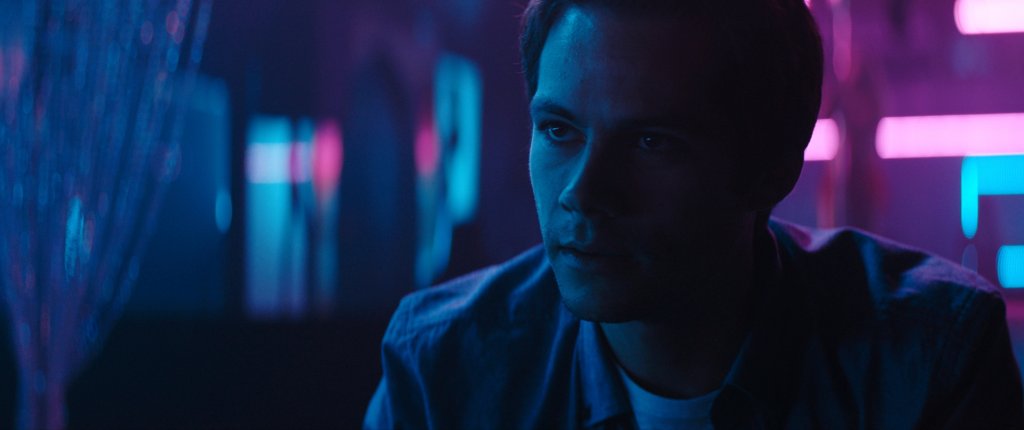
Dylan O'Brien in Flashback, previously The Education of Fredrick Fitzell

You must be very excited to finally have this film release, after the virtual premiere at Sitges Film Festivals, and theatres being shut.

MacBride: I’m so looking forward to people seeing it. In my mind, my dream way that this film would be experienced is for people to know nothing about it and just stumble into it by accident at 3 in the morning. Like, “What’s this movie with Dylan O’Brien?” and just not being ready for it. Those are some of my best film experiences when I was 14 or 15, finding a weird Fellini film in the middle of the night and having my mind blown. I hope that’s what happens with this movie.

Then in the morning, you’re not quite sure how much of it was real [laughs].

MacBride: You don’t know how true that is. I’ve had so many weird experiences like that! I don’t sleep very well; I’m an insomniac, so I have a lot of memories of finding weird black and white films in the middle of the night, and them mixing with my dreams and sort of waking up and being completely unsure of what part was the movie and what part was my dream.

In that vein, where did the idea for Flashback come from? Because that too has a very trippy, disorientating storyline.

MacBride: It was script I wrote a long time ago. It was really one of the first screenplays I ever wrote, and it went through a really strange process in my mind. When I was really young, like 20 or something like that, I wrote my first script. It was a crazy, 300-page manifesto of madness. It wasn’t even a real movie; it was just every idea I’d ever had for a movie just stuffed into these 300 pages. And then that script ended up spiralling out into different scripts, as I learned how to write. And one of the scripts it spiralled off into was Flashback.

The genesis of it was a couple of different things that all melded together, but the underlying essence was this concept that our perception of time as a linear thing – there’s a future, a past, and a present – and that this idea is something we’re taught when we’re very young. It’s an education that’s forced upon us by our parents. One of the very first things we learn in our formative first few months is how to align our existence and our thinking with our parents’. And one of the things that we learn is consequence, and consequence is only taught to you by an understanding of past and future: “If you do X, Y will happen. If you touch the hot stove, you will be burned.”

And that knowledge is dependent on an understanding of future and past. It was something that I was interested in, just the concept that along with colour and shape, and language, and these primal things we learned, we are also taught to perceive time in a certain way. And I also thought about, if you could cleanse your system of those things and experience time as it’s meant to be experienced, what would that be like? It was this very esoteric, philosophical sort of concept that I then had to work hard to find a narrative to wrap around that. It became this high school student named Fred who takes this drug that cleanses him of his education about how time is supposed to be perceived.
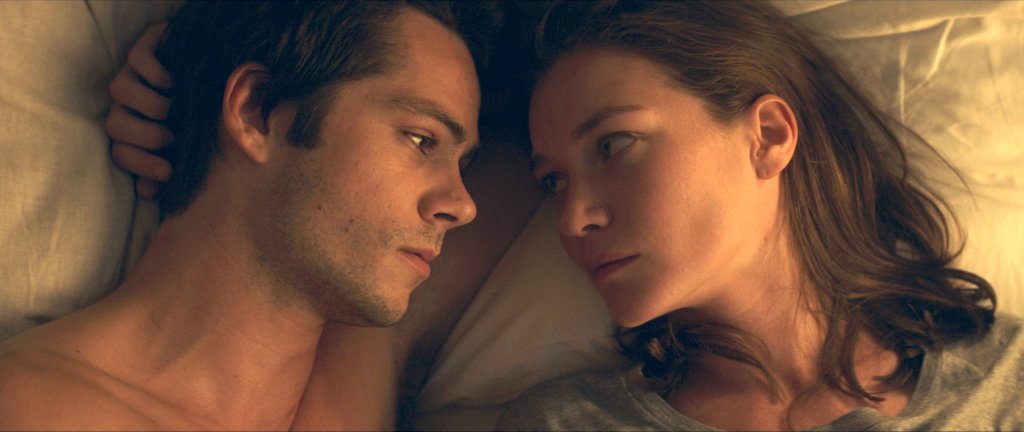
Dylan O'Brien and Hannah Gross as Fredrick Fitzell and Karen in Flashback

What made this transitional time between your young adult years and the passage into “proper” adulthood the right anchor for a story about time and consequence?

MacBride: I think that was probably to do with my own personal situation. When I wrote the script, I was just in that place where you’re officially becoming an adult in a weird way; where you’re taking on a real job, deciding if you’re going to buy a place to move into, deciding whether you’re going to commit to your partner, that sort of grown up thing that you put off – or at least I put off – for as long as you can. And then you’re faced with this moment of realisation that, “Oh God, I’m a real grown up now.”

I think that’s the moment when many people become overcome with a sense of nostalgia for their younger years. And when we would talk about it, Dylan O’Brien would refer to it as the quarter life crisis. That time when you hit 30 and you start realising that this is real and thinking about how far you’ve come, and how long-ago high school was, thinking about this whole other person you used to be. And then what I did – and what the character does – is that in lieu of facing the future as an adult, you go into the past and latch onto it. That just became the most logical thing for this character, that Fred didn’t want to grow up and face being an adult, so he latches onto this mystery from high school and tries to find out what happened to this missing girl by tracking down his old high school friends. It seemed to be the cleanest anchor for this story.

Is that feeling of a quarter life crisis something that you and Dylan O’Brien connected over?

MacBride: Absolutely, yeah. I’m a bit older than Dylan, but he definitely identified with that. When I first sent out the script to producers and sort of put it out into the world, I told people, “This is a really strange script. I don’t know if it will get funding, I don’t know if it’s makeable.” And I was really surprised how quickly actors in particular responded to it. And Dylan was the first one who immediately identified with the character. He did zero in on that feeling of taking stock of where you are in your life. There are these signposts in life and turning 30 is one of them, right? When life slaps you in the face and reminds you that you’re getting older, and are you doing what you’re supposed to be doing? He definitely identified with that.

At what point in the creative process did you realise that Dylan O’Brien was the person for the job?

MacBride: There were a couple of different moments that I remember very vividly. First of all, he responded to it right away. Sometimes you send these things out to so many actors and you just go through so many, and Dylan was super early in the process. I knew immediately that, in a lot of superficial ways, he had the right look about him that I knew he’d be able to pull off being 30 and also being in high school.

And then once I knew he was interested, I watched everything he had done, and I could see that he was a real actor. He knew how to create characters, he knew how to create parameters for those characters, I could see all the tools were there. And then meeting him and talking about the script with him, I felt really good because he got it; he totally understood the character. And as you said, it’s a very complicated, sort of surreal film. So, imagine reading the script when you don’t have the visuals, it’s even more complicated. It’s not something that everybody could understand, let alone identify with. So just the fact that he got it gave me a lot of confidence.

But I still wasn’t 100% sure; and the weekend before we started shooting, I was hit with this panic. I thought, “Oh God, what if Dylan is terrible?” [laughs]. It was completely illogical, but I just worry about everything. We’d put so much work and time and money into it, and it hit me that if he can’t pull this off, it’s all for nothing.

But I remember the moment exactly… It was the very first set we did, the first scene, first shot, and I called action on the first rehearsal. And as soon as the word “action” came out of my mouth, I just saw Dylan’s entire body language change, and he transformed into Freddie. It was just instant relief for me.
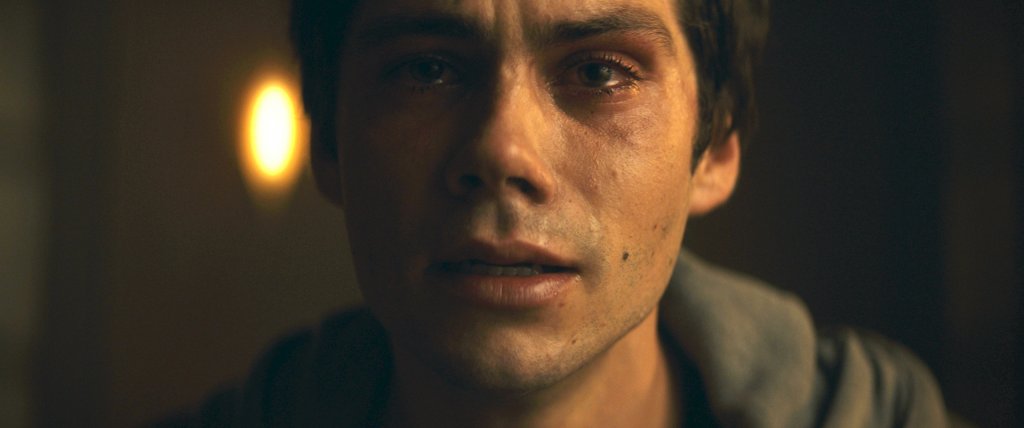
Dylan O'Brien as Fred in Flashback directed by Christopher MacBride

And it turned out that, if there’s one thing that I never worried about during the making of this film, it was him. He surpassed my expectations every single day, every single scene. It’s one of the things I’m most excited about for people to finally see this movie, is just for them to see how good he is. He’s never really done a movie like this, and he absolutely pulls it off and goes to so many different, very emotional places. I was incredibly impressed by him, and I know the movie wouldn’t have worked without Dylan.

And it’s my understanding that Flashback had quite a complicated road to production, right? What were the biggest obstacles?

MacBride: I would say that the road to production was complicated, but it was mostly the regular kind of complication. You know, finding financing, having to replace an actor who dropped out at the last second, those kinds of things happen a lot. What was unique to this film though, was the actual production. We had just about every problem you can imagine. Again, all films have problems, it’s normal, but we really had them. We would lose locations the day before we were supposed to shoot there, and we’d be using our lunch breaks to drive out and scout new locations for that same day. We just had every issue you could possibly have.

There’s a scene where Dylan is in the bathtub with Karen, played by Hannah [Gross], and when we were shooting that scene, there was some special effects person who had to make the bubbles in the bathtub. You’d think that’s a very simple, straightforward thing – but they put the wrong stuff in the bath and basically poisoned them! Both Dylan and Hannah had a bad reaction to it. Just things like that, every day there was something.

And we had people on the crew who had done 50 movies, and even they were like, “I’ve never seen this much bad luck!”. It was a constant battle but again, thank God for Dylan. If Dylan hadn’t been as dedicated and as good as he was, it literally wouldn’t have gotten done. It’s not just something nice to say – he saved our butts a hundred times.

Flashback is a strange film because it’s an independent film yet is very special effects-heavy in certain places. And that’s an unusual combination because it’s super hard to have a lot of special effects with a budget this small. So we had to get creative in post-production, because we ended up with about a tenth of the budget we needed for special effects; we had to reimagine so many scenes that were meant to play out a different way, but that we couldn’t afford. We just had to get creative, which extended post-production and the edits. Just a real domino effect of things going wrong.
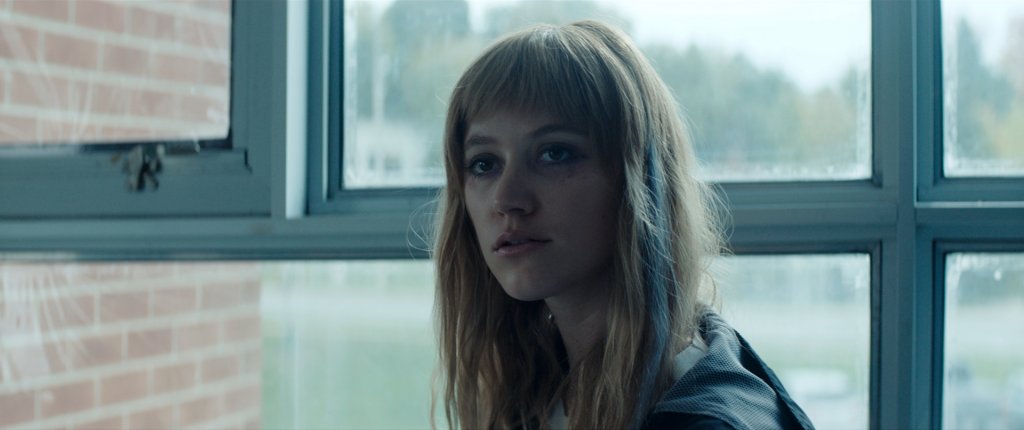
Maika Monroe in Flashback, formerly The Education of Fredrick Fitzell

And it’s funny, I forget about it. It’s like my wife says about giving birth: you forget how bad it is once you see the baby. But then someone reminds you, and you remember just how terrible and painful labour is. Just you speaking about this right now has reminded me how painful it was [laughs]. It was a tough, tough movie to pull up.

It’s so funny you say that because, from an outsider’s perspective and just watching the movie, you’d never guess that there was compromise or last-minute changes. It all seems very deliberate.

MacBride: Good, that’s good to hear. I found that even when I had a scene where what I intended when I wrote the script wasn’t going to work, I felt like I was always able to get the same point across another way. It’s a cliché but it was a lesson for me: it’s really all about the narrative and being clever with the editing. And who knows, maybe it’s better this way than it would have been if we’d had more money.

What were some of your inspirations in terms of the visual storytelling? I imagine a lot of the concepts in the script are difficult to translate onto the screen.

MacBride: Anything by David Lynch is a big influence for me. His style of storytelling, his embrace of surreality, and the fact that he doesn’t need to explain everything in his films – I really admire that and wish I could stay true to that the way he does. He has this insane discipline about not talking about his films or explaining them, and I don’t know how he does it. But he has this quote, “life doesn’t give you an explanation at the end, so why do people expect movies to do that?” And why can’t we accept a movie experience that befuddles us and makes us feel strange things that we don’t totally understand? That’s art, that’s what abstraction is. I always found that inspiring.

When I was reading the script and editing, deciding how much of the concept to explain and how much to leave to the audience, I would think of Lynch and try to have his restraint. I’d remind myself that I don’t need to explain every little thing that’s happening, that I can just let the audience go with it and experience it, and either enjoy the parts where they are confused and sucked down a rabbit hole or react violently and hate it.
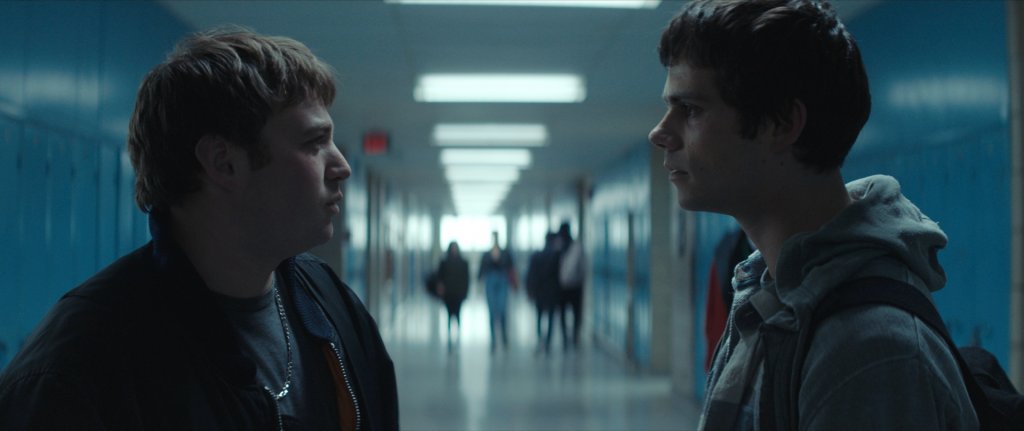
Emory Cohen and Dylan O'Brien in Flashback

It’s like Alfred Hitchcock’s Psycho – it’s obviously a classic but it’s hilarious how in the last ten minutes, it’s like everyone sits down and explains what just happened in the movie. I do tend to like things that are more surreal; I mentioned Fellini, who was a huge influence on me, and Gaspar Noé, Darren Aronofsky, Lars von Trier, just people who make things that don’t necessarily fit into exact genres. Those are the kinds of experiences I like, when you go to a movie, and you don’t know exactly what’s going to happen just from the look of the poster.

Speaking of posters and marketing, your film got a rename – how do you feel about The Education of Fredrick Fitzell versus Flashback?

MacBride: I always sort of knew that the title was going to get changed by somebody, just because it’s very wordy and doesn’t really roll off the tongue. And then there was a lot of discussion with our distributor about what the new name should be, and after a lot of back and forth, we compromised on Flashback, which I’m still getting used to. It kind of feels like a pretend title for the film [laughs].

But it’s appropriate and it makes sense, with the flashbacks that happen in the film. I get it. But it’s a strange thing when you work so long on something so personal and then the film marketing machine starts changing things, that can be a really ‘that’s my child out there that you’re messing around with’ sort of feeling [laughs]. Again though, that’s every movie. They all go through this.

And lastly, I don’t know if you’ll remember but you did an interview with STARBURST back in 2013 for The Conspiracy, and you said that whatever you do in the future, you just don’t want to repeat yourself. Does that still hold true?

With every film I want to create an individual world and then go into that world. So yeah, I just don’t want to repeat myself and keep creating worlds I guess.

MacBride: Wow. Yeah, I think so! I definitely don’t remember saying that, but I must have. It’s something I always think about with different projects, that’s my one guiding light. I’ve never wanted to make the same film twice, or even anything close to the same film twice, or maybe even the same genre twice! It’s hard because the film industry wants you to keep doing the same thing over and over again. Like, you’re the guy who does trippy drug movies? Let’s send him more trippy drug scripts. There’s been many times when I’ve had to tell people that I’m never going to do another movie about conspiracy theories, or time travelling drugs, so please stop sending me that stuff.

I say this now but watch, two years from now I’ll be doing Flashback 6.

Vertigo Releasing presents Flashback on digital platforms June 4th, 2021.