Panos Cosmatos | MANDY

panos mandy

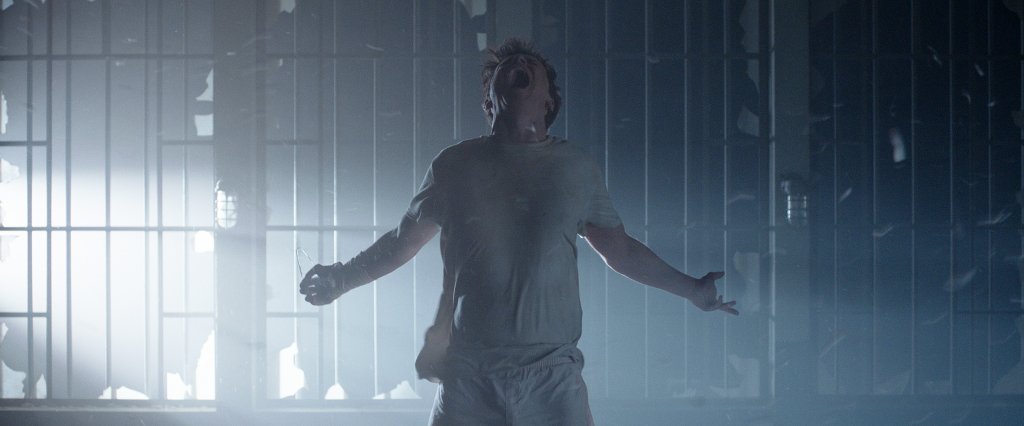
What lies beyond the black rainbow? To answer that, you need to experience MANDY, the long-awaited new movie from visionary writer/director PANOS COSMATOS. Get ready for love, rage and Nicolas Cage…

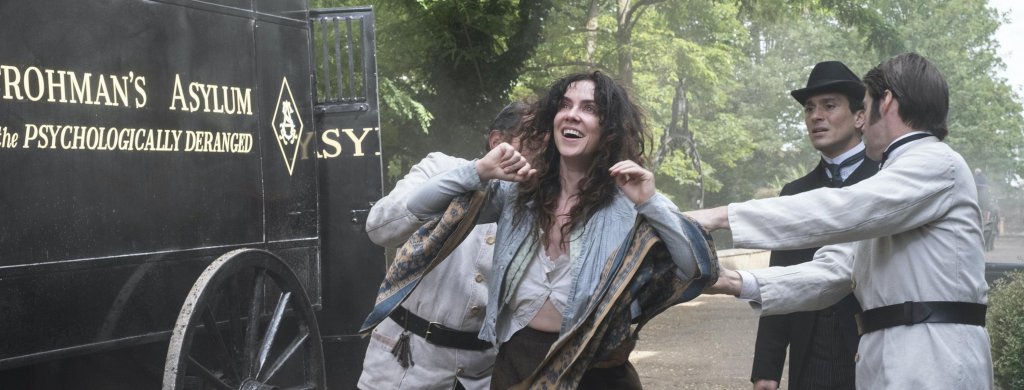
Eight years on from his acclaimed debut feature Beyond the Black Rainbow, writer and director Panos Cosmatos returns to the 1980s video rental store of his fervent imagination with a follow-up that is bigger, bolder and equally defiant of categorisation. It’s the story of Red Miller (Nicolas Cage), an introverted lumberjack living the peaceful country life with his girlfriend Mandy (Andrea Riseborough). Their idyll is cut savagely short by the arrival of a cult group led by the lizardly Jeremiah Sand (Linus Roache), a man with friends in multi-dimensional places. From here on in, Mandy is nothing short of an audio-visual assault on the senses – a mind-bending tale of revenge and redemption across landscape of dark fantasy, intense action and full-blown horror. We got the low-down on the film from the Italian-Canadian auteur…

STARBURST: It’s interesting that you’ve chosen a particular era – specifically 1983 – for both of your films, Beyond the Black Rainbow and now Mandy. What were you up to that year we wonder?

Panos Cosmatos: In 1983, I was sitting on the carpet watching Masters of the Universe or just playing in front of the television. For me, 1983 is almost like a blank canvass where anything was possible. It’s sort of a signifier for the mythical realm of all those imaginary films that you haven’t been allowed to see.

How did the concept for Mandy come about?

Well, originally, after my father (prolific action director George Pan Cosmatos) died, I ended up watching all of the Death Wish films in one sitting. And when you watch all or a series of films in a row, it gives you a lot of time and creates a sense of meditation almost where you’re floating through and around what you’re seeing and you reflect on what it is, what makes it work, what’s interesting about it. I started to draw up this idea of making a revenge film that revolved as much around the avenger as it did around the person being avenged, and their essence and presence that had been lost in his life. Not in a religious way, but how their memory would inform the psychic landscape of the avenger and have it be almost like a concept album or a song about that person.

Mandy initially feels like it’s in the same unviverse as Beyond the Black Rainbow, but it develops onto on much bigger emotional canvas…

I started writing it the same time as I was working on Beyond the Black Rainbow and, in retrospect, I realise that I was sort of channelling two different things. Looking back, Black Rainbow was kind of about supressing my grief and my feelings about the loss of my parents and dealing with that. I think I started to write Mandy almost as an antidote to give myself a more cathartic, outward manifestation for these feelings.
Nicolas Cage gives an astonishing performance as Red Miller, your avenger. How did you find working with him?

He’s an extremely methodical, thoughtful actor and he’s hyper-aware of what he’s doing in each scene and how to modulate that. He felt like a friend to me, like someone who really understood where I was coming from creatively. He was able to manifest these ideas I had in my head in an incredible way. It was joyful to work with him.

One of the most striking things about Cage’s performance is how exposed and raw it is – we’re talking Nic Roeg territory. At times you almost want to look away from screen, but you can’t…

Yeah, I wanted to explore the outer realms of what Cage can bring as a performer because he has the ability to go into almost Dada-esque regions while at the same time being the most fragile human being.

Is it true you first had Cage in mind to play Jeremiah Sand, the villain?

Originally, I was leaning towards casting Red quite a bit younger and casting Jeremiah quite old. Not that Nicolas Cage is very old, but I knew he could play quite a bit older or he could play younger and he feels to me like he looks ten years younger in this film. But I was very in love with this idea of him playing Sand opposite and actor in his late-20s or early-30s. Over the course of trying to get this film made, this was the theme that was intriguing to me. So when I went to meet him, I thought we were going to talk about him playing Sand, and he said “I really want play Red Miller”. From my perspective it was like, well, whatever, forget it… it was nice to talk to him. A few weeks later, I had a dream where I was watching Mandy and it starred Nicolas Cage and it was undeniable how amazing it was, or how amazing he was in the part in my dream! So, I woke up and it was like, the gods have spoken and told me that I was wrong. My id had refuted my thesis! [laughs]
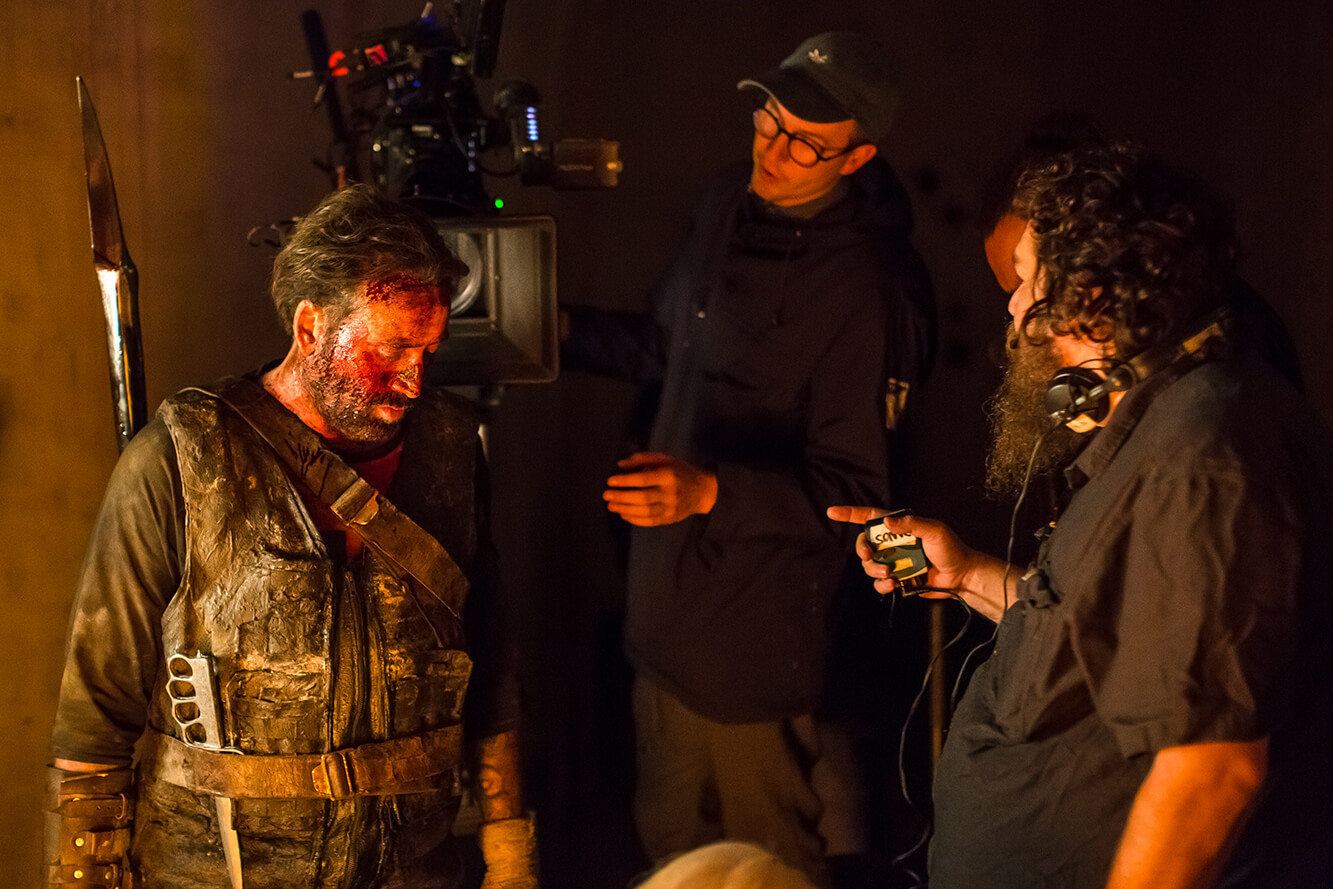
Having switched Cage to the hero role, you then cast Linus Roache as the villain, Jeremiah Sand, who is a wannabe shaman, cult-leader, and frustrated pop star. Basically, the kind of guy you meet at a party and try to stay the hell away from – but on a demonic scale of assholedom. Is he someone you’ve previously encountered perhaps?

I’ve met someone like him many, many times [laughs]. Especially on the west coast of North America, the landscape is teeming with Jeremiah Sands. I’ve been exposed to people like him my whole life so it was really a matter of drawing on all that.

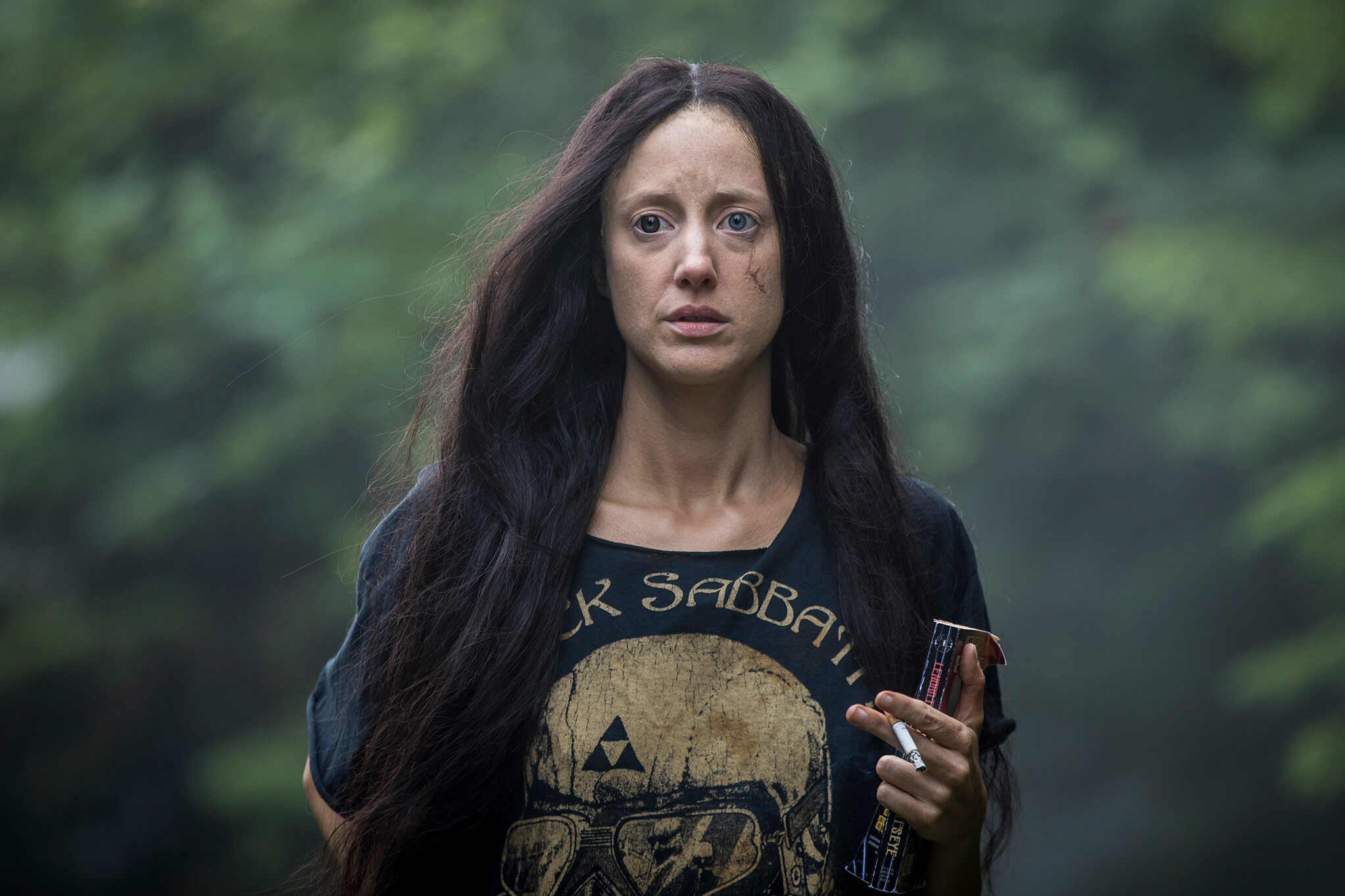
Andrea Riseborough is mesmeric as the title character Mandy Bloom, Red Miller’s free-spirited girlfriend and the object of Sand’s desire. How did you pitch the character to her?

She was my first choice to play the part, I just thought she was this amazing chameleon. But again, I felt insecure and thought she wouldn’t want to play the role. From afar, I viewed her as this sort of very Shakespearean actor or something. It turned out that she had seen Black Rainbow and was looking to work with me. I basically told her two stories from my childhood about women I had encountered when I was nine years old. One of them was at a carnival that would come to our town. She was a woman in a booth who would sell Velcro wallets. She had long black hair and wore wire-rim glasses and a Judas Priest T-shirt. In the process of buying this wallet, in a very juvenile way, I just kind of fell in love with her.

The other woman I encountered in my teenage years where my friends and I were cruising some place or other. They wanted to buy weed and we went to a strange apartment complex. We went into this woman’s place and she was freebasing cocaine and drawing these incredible images of unicorns and barbarians and dragons in amazing detail – she’d covered her walls with them. And again, she had long black hair and wire rim glasses and was wearing a heavy metal t-shirt. So when I was writing Mandy, those two people were at the back of mind all the time.
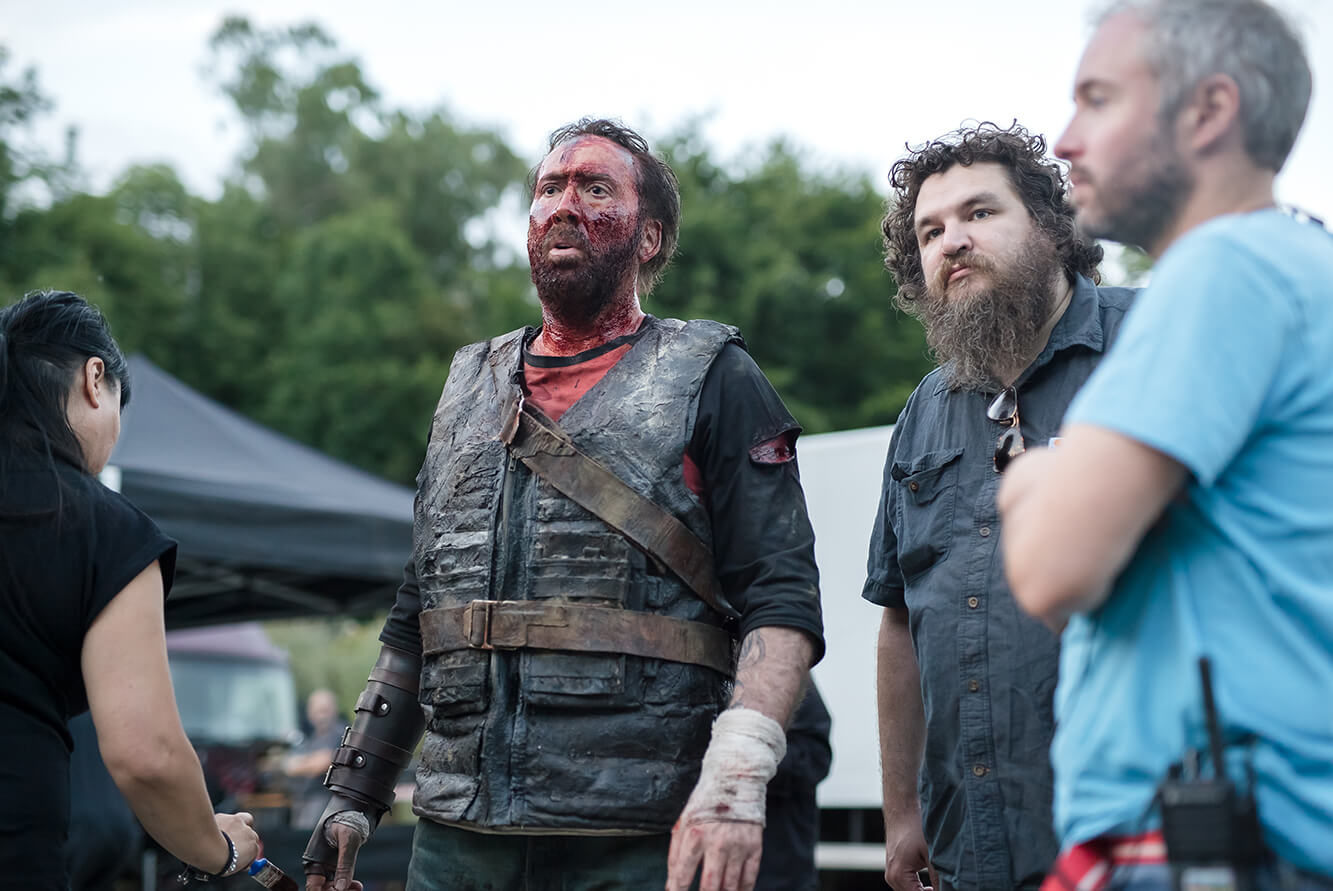
The visuals on Mandy are more fantastical and stylised than your last film. Was this always the intention?

I just wanted to follow my instincts; on Black Rainbow, I was a lot more rigorous about finding reference points for colour palettes and tones and then sticking to them. On this film, we experimented on the fly. I felt more comfortable doing that having had the experience of making Black Rainbow. But it’s is a pace thing, it’s about having your goal and sticking to it whatever the circumstances may be.

On that subject of pace, the second half of Mandy is like a rollercoaster of action and horror sequences. Did you lose much of what you shot in the final edit?

Our schedule and budget on this were extremely tight so there wasn’t really a lot of room for shooting extraneous stuff, but there were two sequences that were quite lengthy that we shot in their entirety that were excised because they just felt like they were slowing the film down. I wish, in retrospect, that I’d just cut those out at the script stage, but it’s kind of hard to know for sure whether something will be integral or not. But given how tight our schedule was, we really could have used that extra day and a half!

The animation sequences in Mandy add an unexpected dimension to the story. What kind of effect on the audience were you aiming for?

I wanted the animation to bring to mind a feeling in the film that was almost joyful in that way animation can be, because it’s a more outward expulsion of these feelings in the story that it can manifest and link together, of these various different talons and forms.

You also rather wonderfully mess with our expectations about how and where a movie’s title should appear!

Yeah, I became kind of obsessed with this idea of pushing the title card as deep into the film as I possibly could!
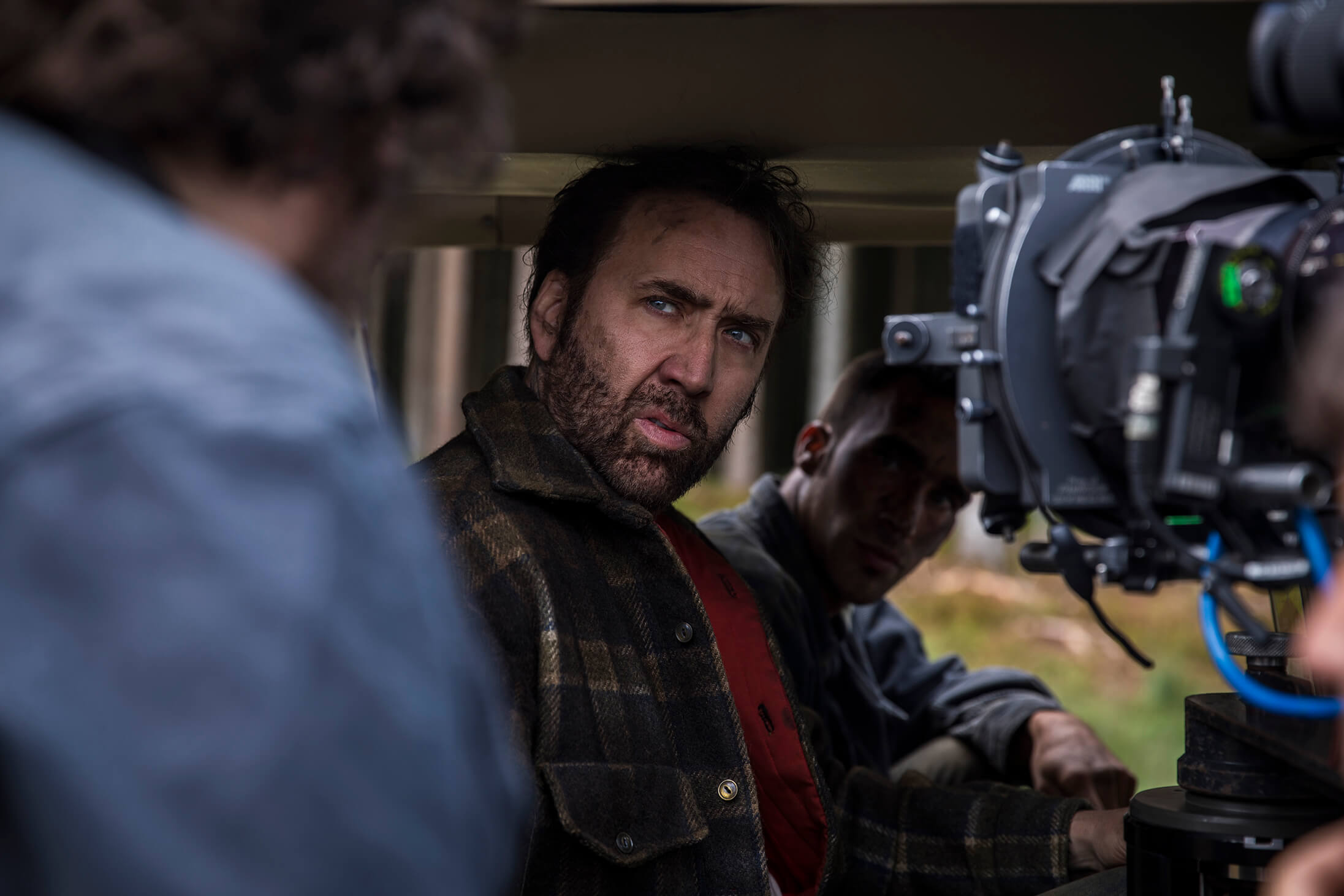
You may have broken the record. It looks like you went mostly practical for the effects, which is a joy to see in this age of over-egged CGI. One that really stands out involves a body burning alive in a sleeping bag. It’s scarily real – how was it achieved?

Yeah, it’s mostly practical effects, absolutely. That effect essentially was an armature with cables attached to it inside of a sleeping bag that was puppeted.

The late Jóhann Jóhannsson provides a cacophonous musical score that is an essential part of Mandy. How was your collaboration with him?

I really think he was kind of a kindred spirit in a way. I didn’t even think of him to score it because I admired him from afar but thought he was out of my league, or he would have no interest in something like Mandy. But, again, it turned out he was Black Rainbow fan and came to us and asked about my next thing. Then talking to him, I realised he was an Icelandic metal-head as well being this incredibly nuanced, brilliant composer. Over the course of working with him, I really felt like I’d found this connection. I was really looking forward to working with again many times.

What’s next for you, or is it too early to say?

I can’t say for sure yet, it’s sort of brewing in the background and I’m waiting to see which idea will grab a hold of me say it doesn’t want to be ignored!

Mandy is out now on limted edition Blu-ray from Dazzler Media. Read our review of the film here.

THE CONJURING 3 Cast and Creators On THE DEVIL MADE ME DO IT

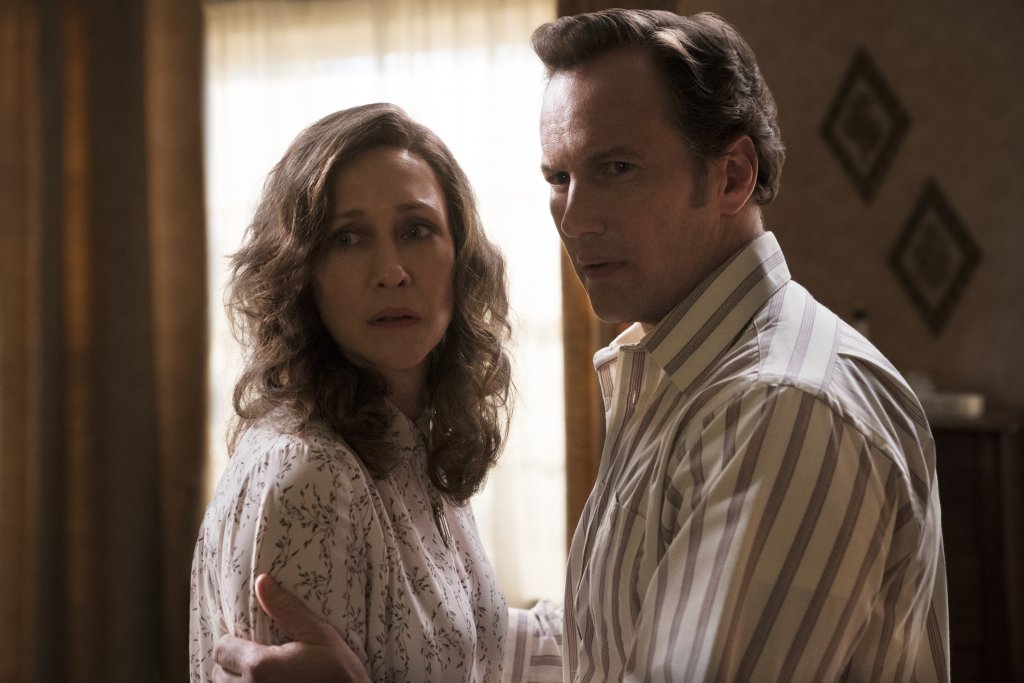
Vera Farmiga as Lorraine Warren in The Conjuring 3: The Devil Made Me Do It

Ahead of the highly anticipated release of The Conjuring 3: The Devil Made Me Do It, STARBURST was invited to a press conference with the cast and crew behind the top-rated horror franchise. The latest instalment takes a look at the true story of the trial of Arne Cheyenne Johnson, and Ed and Lorraine Warren’s involvement in the infamous case.

Stars Vera Farmiga, Patrick Wilson, and Ruairi O’Connor are joined by director Michael Chaves, producer Peter Safran, and franchise creator James Wan to answer questions on what makes this the darkest film of the franchise, the challenges they faced, and what audiences can expect from The Conjuring 3.

The Devil Made Me Do It breaks from the haunted house tradition which has so far defined the series. Director Michael Chaves explains that “for any franchise to stay fresh, there needs to be invention and reinvention. We wanted to tell a Conjuring story in a way that we hadn’t seen before.” As such, the decision was made to keep this as “more of a supernatural thriller, where we’re taking the Warrens on the road.”

“The great thing about the procedural is that you’re going into different environments and working with different people. It’s taking you outside the comfort zones. At this point in their careers and in our experience of the Warrens, the haunted house has become a comfortable setting,” Chaves states. “This gives us an opportunity to take them into places that we haven’t seen.”

Vera Farmiga and Patrick Wilson star in the third Conjuring film, The Conjuring: The Devil Made Me Do It

This film has also been marketed as the darkest entry yet, which Peter Safran explains is due to it being “a true story that involves a murder. There’s a real victim in this case, it’s not just a family being terrorised by something unholy. That inherently makes this the darkest of the movies… Prior to this, we’d only seen bad things happened to a dog and some birds, so this was different.”

And because it was so dark, Patrick Wilson stresses the importance of leaning into the love and positivity elements of the Warrens’ story. “When you centre the love between Ed and Lorraine, it frees you up to go as dark as you want in the other aspects,” the actor explains. “We don’t go halfway with either; if you’re going to have these terrifying scares, then we want to have the most full-of-love moments that you can get. And it does get very operatic.”

The Warrens are “the personification of love,” agrees Vera Farmiga. “For me, it is more of a love story than it is a horror story, and that’s what makes it so unique and successful. And not only do the Warrens love each other, but they also have a lot of love for the work they do… And for the people that they help, that selflessness and that compassion is something holy and special, that makes it that makes it digestible and beautiful.”

Ed and Lorraine “become the through-line between all these films, and that’s one thing that sets us apart from other horror franchises,” Wilson continues. “You’re following the good guys instead of the villain.”

James Wan explained how this all fed into the essence of the franchise, and of his own filmmaking ethos: “I want to tell the stories that I want to watch as an audience… it’s telling stories with characters that people can relate to.” Filmmaking to Wan “is about creating characters that are beloved and real. The more grounded you make it, the more you can play into the scares and horror scenes.”

Still from the latest Conjuring film, The Devil Made Me Do It

The Conjuring 3 also introduces Ruari O’Connor as the central figure of Arne Johnson. As the series newcomer, O’Connor explains that coming to the film was “a huge challenge for me, because I’m very scientifically minded and very cynical. I remember talking to Vera on set a lot and she has this really warm openness to there maybe being some kind of paranormal, or something beyond. She’s just kind of playful with it,” he recalls. “And we’d be talking about little spooky things that happened throughout the filming of The Conjuring and other films as well. And I was just wishing that I would get some kind of spooky event that would just like bait me into it, but unfortunately it didn’t happen!”

This is the first of the Conjuring films to move into the beloved ‘80s era, which lent The Devil Made Me Do It a particularly interesting quality. Chaves explains that seeing Ed and Lorraine working alongside detectives and police departments is “something we hadn’t been able to explore before.” But it was interesting because the ‘80s were a time “when a lot of psychics and clairvoyants were working with police departments – so much so that the Department of Justice actually issued a handbook in 1989 to formalise rules on working with psychics. The other thing in the 80s was the dawn of the Satanic Panic… there’s a lot of cool textural things that play in the backdrop of this movie.”

The Conjuring 3 certainly delves deeper than ever before into Lorraine Warren’s supernatural abilities. Farmiga explains that this film “delves deeper into her gifts and abilities as a psychic. This time around, through the nature of their detective work, her ability gets put to the test… we see other aspects of her clairvoyancy, different types of cognition like precognition, retrocognition, remote viewing, not only the telepathy and clairvoyance. And she’s able to do what she does because she has [Ed’s] support.”

The Conjuring 3: The Devil Made Me Do It is out now in cinemas.

Louder Than Words – A QUIET PLACE: PART II Interview

quiet place II

[This article was originally published in STARBURST #471]

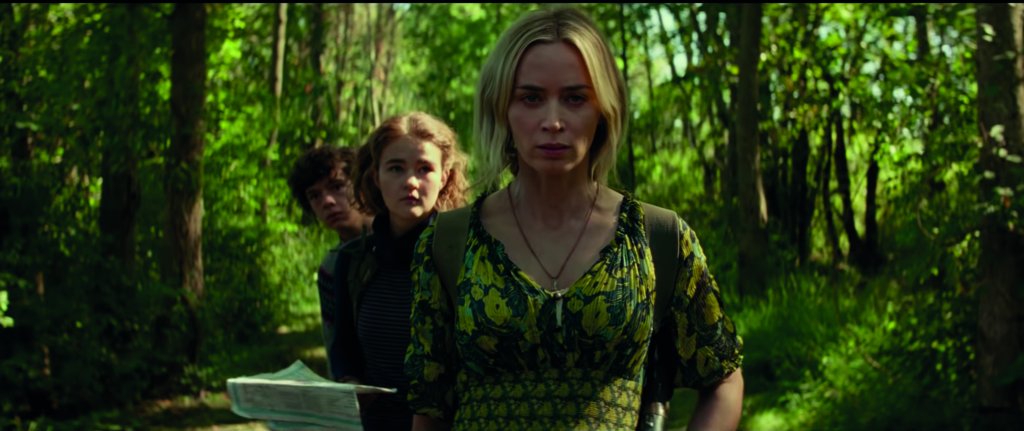
With an original silent horror movie idea – inspired by Alien and the work of M. Night Shyamalan – filmmakers BRYAN WOODS and SCOTT BECK went on to create one of the most refreshingly original scripts of recent years, A QUIET PLACE. With the eagerly awaited A QUIET PLACE: PART II finally hitting cinemas after a long delay, we reflect with the duo on the destined journey from page to screen, while going into larger detail about how John Krasinski and Emily Blunt helped flesh out the franchise-to-be…

STARBURST: How did the idea for A Quiet Place come about? 

Scott Beck: Back when Bryan and I were in college – this was probably about 2007 – we were watching a lot of silent movies, such as Charlie Chaplin and the French filmmaker Jacques Tati. They astounded us with their command of storytelling without really having to say anything. So, for the longest time, Bryan and I kept going back and forth, wondering if we could make a silent movie, but in a modern-day context. Over the years we started coming up with ideas – what if it was one part Alien, or one-part Jaws, or The Man Who Knew Too Much – just trying to bring in all of our love of suspense, horror, and sci-fi into the idea that ultimately became A Quiet Place. We reacted against it at first, because it was a gimmick idea. We quickly formed the fact that it needed to be based in emotion. Steep in this whole conundrum of this family going through something very tragic. That would be the backbone of the story.

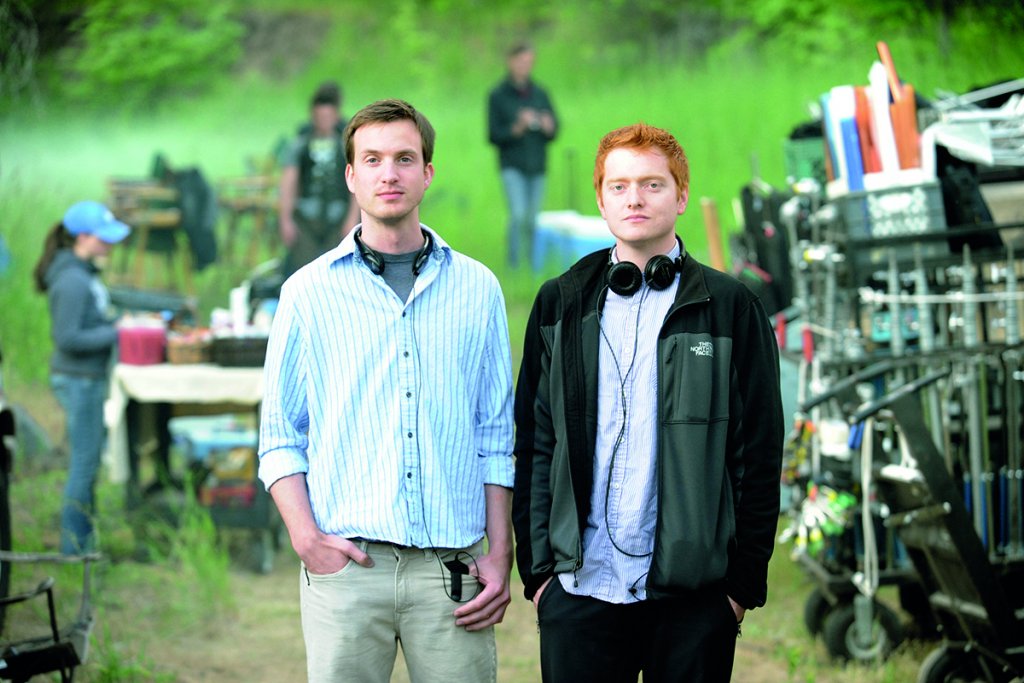
Bryan Woods and Scott Beck

It’s common to hear about how long it can take for a script to make it to the screen, if at all. With a limited dialogue script like this, what was the journey to the big screen like, and were there any hurdles that you had to overcome? 

Bryan Woods: It was a weird one. So Scott was describing the gestation process, but when we finally decided that we wanted to make it as a movie, we wrote the script fairly fast. It was a four or five-month process at most. When we were writing it, we were getting excited about the idea. So we would kind of, off the cuff, pitch it to different studio executives, or producers that we knew. Or even other filmmakers. Every time we pitched the idea – “You make a sound, you die”; “there’s a family in this barn, with aliens living outside” – people would look at us like we were crazy! So we started to get really self-conscious, thinking that the script wasn’t going to sell. We were getting a little nervous about it. So, as we were writing the script, we decided that in order to capture what we wanted, what our vision of the film was, which was this kind of cool modern-day silent film, we needed to take some big swings on the page. So, the script that we wrote ended up having a lot of images in it. It ended up playing with the format in a very unique way. So when our agents finally took it to the marketplace, it actually sold immediately. Paramount snatched it up, and Michael Bay immediately came on to produce. It was an extremely fast process. That really blew our minds, because we just weren’t sure. We have written a lot of movies that have taken years to get made, and we’ve written a lot of movies that have taken years to sell, or to convince people that it was the right thing. With this one, it happened surprisingly quickly once it was finished.

Stephen King said that this film is all about the silence. First off, congrats on getting a compliment from King, and also, would you agree with that? Would you say that the silence is truly what makes the film thrive? 

Scott: For us, it was always about the silence, but at the same time, it was about the sound design in general. Sound design is at the tip of our mind, any time when we’re writing a script. A Quiet Place was the amalgamation of our love for that, and what we try to gun towards every time we are writing something. We knew that silence would hold the audience in suspense if everybody did their job right. At the same time, you also can’t beat that dead horse over and over again. You have to be able to build to that point, where you suck all of the sound out. So writing the script was a process of us describing what the sound would be like by the visual gimmick on the page. So if there’s a really loud sound, then we would put one word on a single page by itself. Basically saying, “This is a loud sound!” Then as things got quieter and quieter, we would shrink the font. We try to give all of our creative collaborators some sort of skeleton to work from, as they begin to flush that out through pre and post-production.

You submitted the script with the idea of John Krasinski being involved. Why do you think he was so perfect for A Quiet Place

Bryan: It was crazy, we set it up with Paramount and sold it with no attachments whatsoever. Then once the studio was in, it got sent to John just to star in it. I think what made him connect to it so much was that John and Emily had just had their second child, weeks before reading the script. So he was in that state of mind of being a parent. Obviously, the script is so steeped in that world of, “What does it mean to be a father?”; “how do you protect your children in a world like this?” He just connected to it so deeply, and Emily as well. When we got the phone call from our agent saying that John had read the script, and that he loved it, and that he had passed it over to Emily, and she read it and loved it, we were very shocked and confused. Excited and nervous. Just all of those feelings that you feel when a project comes together like that. We are very proud of what they created.

The chemistry between John and Emily on screen is brilliant. Can you tell us what Emily Blunt brought to the film, and why you think that she’s the perfect Evelyn Abbott?

Scott: What’s funny about that is, when we sold the script, or before anyone was attached, our producers were like “Just tell us who you’d like to see in this role?” We were way too embarrassed to say Emily Blunt because she’s one of the best actors working today, so we thought that we would never get her. Part of that is that she hadn’t done horror at all. We didn’t know if she would do it. What’s so perfect about her is that she’s operated so well in these incredibly strong roles. Looking at her roles in Sicario and Edge of Tomorrow alone, she just nails bringing a human quality to it, but also this essence of badass, which is something that we felt worked so perfectly with what we were gunning towards with the script. Then you are always getting elevated by the actors and their brilliant decisions on set. One of the things that wasn’t scripted, or necessarily intended, was when she’s teaching Noah Jupe and she’s signing. She’s very softly also uttering the words that she’s saying. For Bryan and I, watching that on the big screen, there’s something unintended, but also incredibly beautiful about the way that she brings that to life through her own instincts.

The fact that she is pregnant seems like a harsh concept in this particular world. However, it also suggests a potentially positive future for the family. Can you tell us about what that idea was like to work on in this setting, and what you think it added?

Scott: In terms of her pregnancy, to a certain degree of what you’re saying, that was planned because there ‘is’ a hope for the future. That narrative thread also evolved throughout the scriptwriting process. Originally in the early draft of the script, the pregnancy actually happened before the invasion occurred. Now you have to deal with the fact that you are pregnant. As the drafts have evolved and as John got involved, the intent of that was more that they made a deliberate choice, because of the tragedy that they suffered in their life, of losing a kid, that they wanted to live more than just for survival. They wanted to live so that there was some future that could evolve from their family.

When you watch the film, what stands out to you as the most rewarding moment? Something that was just so true to your script, or maybe, something entirely different to that?

Scott: The first time we saw the movie, it was actually in rough shape, meaning that the special effects were only 40% there, and the sound design wasn’t fully done yet. That was a crazy screening because we watched it, and we were like, “I don’t know if the storytelling is there?” and as the screenwriters, that’s our fault. We were thinking, “Did we really mess up the storytelling!” A few weeks later, and with the post-production on this film being really quick, the sound designers knocked it out of the park. Industrial Light & Magic had hustled to get it done in time. So, when we watched it again, that journey became so much more tangible. That’s ultimately the film that everyone else saw.

Bryan: Yeah, it’s kind of a reminder that sound design, and music, and the effects, are also storytelling devices. When those elements are not finished, the story is not complete. Another big difference was with the ending, as it was slightly different. The ending in the script had a bit more of an emotional resolution. They shot elements of that during production. But John had the idea of chopping it off with that shotgun moment. That was really powerful to see, and just wondering how that would play with the audience was something interesting to think about as well.

There was a rumour before its release that the film was nearly adopted into the Cloverfield world… 

Scott: Well, to directly address what that rumour was referring to, it was when we were writing the script we had a meeting about another project at Paramount Pictures. They, of course, asked what we were working on, so we kind of teased A Quiet Place, saying that it was this totally silent movie about a family on a farm. This was right before 10 Cloverfield Lane came out. They had this glazed look in their eyes, wondering if it sounded too commercial; they didn’t know if it was going to fit in a world where we already have this Cloverfield movie that takes place in a remote location with just a few people, with creatures just outside. Cloverfield was very exciting when it first came out in 2008. It was something brand new, and it was teasing something in the most subtle way. It just got you excited to see it. Those are the movies that Bryan and I flock towards. Of course we love the franchises, and we do adore sequels – we can’t wait for the next Mission: Impossible movie! As filmmakers, writers, directors, and producers, the content that we enjoy putting out in the world is the stuff that would excite us when we are in the audience. For us, being original is of paramount importance.

Bryan: When we grew up, we came of age as filmmakers in 1999 where it was the year of every great original movie ever! You had films such as The Sixth SenseMagnoliaAmerican Beauty, and it feels like right now studios are mostly making comic book movies, sequels and remakes. So, our dream for A Quiet Place was that it would be a splash of something fresh. A return to those years that we are nostalgic for.

Scott: I think that with the world of A Quiet Place, we always hope that it feels like a slice of The Twilight Zone, which to us is the godfather TV show of the entire sci-fi universe. For us, we hope that A Quiet Place and its sequel provoke lots of questions and inspire debate. After you watch the movie, you can sit around with your friends and talk about it for hours. To us, that’s the mark of a fun movie!

<iframe width=”560″ height=”315″ src=”https://www.youtube.com/embed/XEMwSdne6UE” frameborder=”0″ allow=”accelerometer; autoplay; clipboard-write; encrypted-media; gyroscope; picture-in-picture” allowfullscreen></iframe>

James D’Arcy | THE PHILOSOPHERS

James D'Arcy

James D’Arcy (Agent Carter, Broadchurch, Dunkirk) stars as philosophy teacher Mr. Zimit in John Huddles’ 2013 sci-fi psychological thriller After the Dark, re-released this month as The Philosophers. The film sees Mr. Zimit challenge his class of twenty soon-to-be graduates with thought experiments, in which he posits an oncoming atomic apocalypse.

There is a bunker to shelter them for a year, but the bunker can only sustain ten of them and whoever survives must reboot the human race. In a series of imagined scenarios, The Philosophers poses questions about morality, individual worth, responsibility, and what values define humanity.  STARBURST spoke with D’Arcy about the enduring relevance of the film eight years on, philosophy, and his personal ambitions for the future.

James D'Arcy leads the cast of The Philosophers, retitled from After the Dark

It’s been around eight years since The Philosophers first came out, so it must be weird doing press for it when it’s so far behind you.

James D’Arcy: It is a little bit weird, but I’m really happy. I don’t quite know exactly how the rerelease came about, but I can only imagine it’s because the film has had some sort of life and has generated enough interest that they now feel it can be released in a wider way, which is great! I’m very happy in that regard.

Do you have any kind of feeling about the retitle, from After the Dark to The Philosophers?

James D’Arcy: It was always called The Philosophers when we made it. So actually, After the Dark was its own retitle and I never thought it was a very good one.

It’s a film that asks its share of big existential questions, so here’s one for you: since its release, we collectively have gone through many points of dramatic social, cultural, economic, and political transformations. It’s a little out there, but do you think 2021’s landscape has changed the way you interpret the film?  

James D’Arcy: I think a lot of what the film talks about involves some very old philosophical ideas. So I don’t see that they’re likely to change now… obviously we are in a very turbulent period in the world’s history, but I don’t think that things Plato said are suddenly going to be made obsolete because of that.

It is a big question, and it does feel a little bit like I’m trying to squeeze a square peg into a round hole [laughs]. The film is what it is, it’s a sci-fi thriller. And if you glean anything from it that helps interpret current day events, then that’s great. And if you don’t, then that’s also great. It stands on its own in that regard.

And obviously, it wasn’t made with 2021 in mind because one thing John Huddles can’t do is see into the future. Although having said that, I now remember that every time we got on a plane, John would wear a mask. I used to laugh at him for it, but maybe he could see into the future…

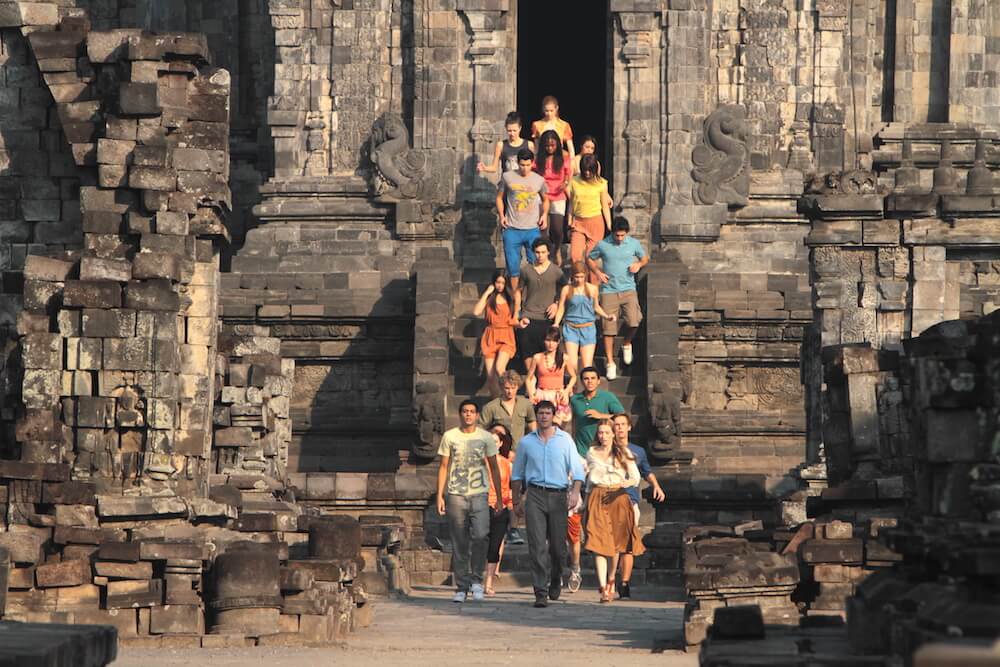
The Philosophers, shot in various historical sites in Indonesia

What was it that attracted you to the script when you first read it?

James D’Arcy: It’s not often you read a film that has such intellectual aspirations. It is unashamedly wordy and cerebral in places, and it does open up discussion of some very big ideas. The only other person really who tries to do that – I think – is Christopher Nolan, but Christopher Nolan also has a $250 million budget so he can frame it around some very big action sequences. In this case, it’s a much smaller budget film and it just had an idea that it wanted to explore.

It didn’t hurt that the places we had to go to, to explore it were probably three of the most extraordinary places I’ve ever seen in my entire life. And they did send me a lookbook when they sent the scripts, and I remember looking at the pictures first and thinking, “Oh my God, please let this script be accepted, because I’m so desperate to see those places.” [The Philosophers was filmed in multiple sites across Indonesia.]

Did you have any specific challenges with how you approached the character, seeing as he’s the closest thing to a villain the film has?

James D’Arcy: I’ve only seen the film once and that was quite a long time ago. And if I’m being really honest with you, I haven’t seen all of it. I don’t ever really watch anything that I do, so it’s nothing to do with this film, it’s just that it’s preferable for me not to. But we did shoot this sequence at the beginning that I think would have led you even further down the path of thinking this guy’s a villain. It was right at the beginning of the film, and I noticed that John had cut it. He definitely did not want for the audience to feel that way, certainly at the beginning. And he’s certainly an ambiguous character at best, but I don’t know what the takeaway is, or how you’re meant to feel about Mr. Zimit.

What was the scene?

James D’Arcy: It wasn’t a whole scene, it was just a sequence where he’s about to start the thought experiment, and he goes behind the blackboard and has this moment of difficulty, which I think if it had been kept in the film would have immediately raised some red flags. And I think the fact that John took that out perhaps delayed that moment for a while.

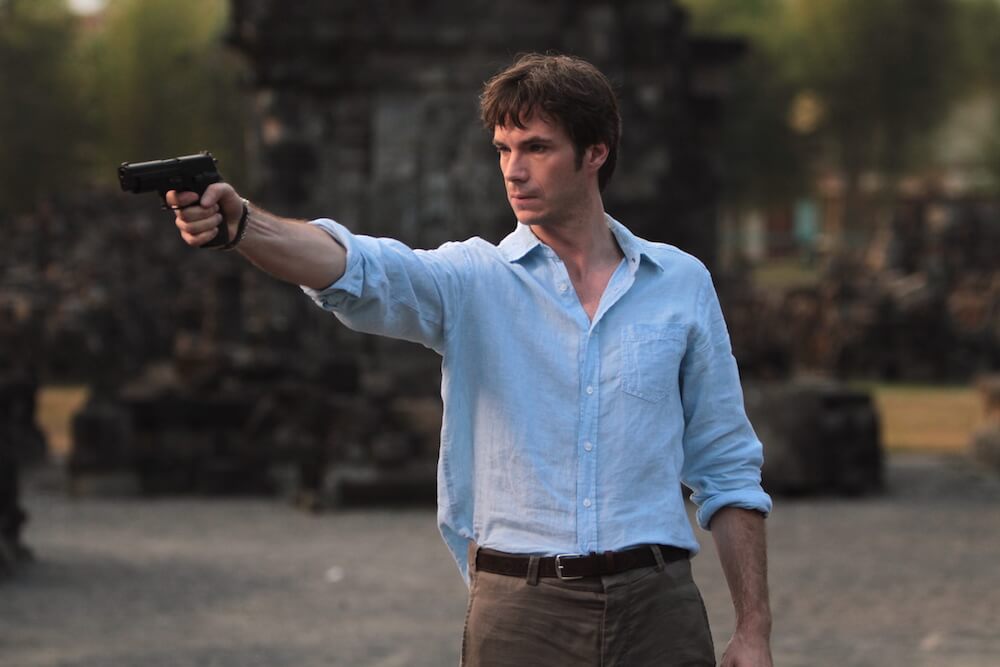
James D'Arcy as Mr. Zimit in The Philosophers

Did you do any kind of deeper research into the philosophical subjects broached, or were you happy just going off the script?

James D’Arcy: Honestly, that is a never-ending cavern of research. And I seem to remember that from when they cast me in the film to shooting, there wasn’t a great deal of time. My approach was to mainly use John, the writer-director, as my source of knowledge. And actually, I thought it was important that the movie stood on its own – and that’s not to dismiss research and all the rest, but I didn’t want to colour anything we talked about in the film with a bunch of information that wasn’t directly relevant. There was enough going on anyway, you don’t need to bring thousands of other things into the subtext. I just wanted it to be clear and simple whenever we could. And as you said, there are some really big ideas in there that are hard to wrap your head around, so I also didn’t want to clutter in any way.

Did reflecting on those ideas change the way you thought about the whole science versus arts debate? [One of the questions the film essentially poses is, in order to reboot the human race, do you save the scientists or the artists?]

James D’Arcy: I’m an artist, so I obviously disagree with Mr. Zimit very early on. I understand his point of view, but I still wouldn’t do what he did. So, it didn’t change my opinion of what I think is valuable and important. I was more on the students’ side.

And looking to the future, do you have any dream roles you’d love to take on?

James D’Arcy: I directed a film the year before last [Made in Italy], and that was a very enjoyable experience. I’d be happy to get an opportunity to do that again. In terms of acting, the thing that I love most about acting is that each role is so different, and I’ve been very lucky in that I’ve gotten to play quite a wide variety of parts. It’s constantly new and exciting, and I wouldn’t want that to change. I’d like to keep playing roles that I find interesting.

The Philosophers is out now on digital platforms including iTunes, Amazon and Sky Store.

Jon Boorstin | THE PARALLAX VIEW

paralax boorstin

In early May, Cinema Paradiso Recordings presented the first-ever vinyl pressing of Michael Small’s score for the 1974 political thriller The Parallax View. Notably, the new reissue features the complete audio introduction to the ‘Parallax Test’, one of the film’s most striking set pieces, To secure that audio, the company needed to secure permission from whomever voiced it, but the mysterious voice was unknown until Cinema Paradiso reached out to writer and producer Jon Boorstin who at the time, worked as director Alan Pakula’s assistant.

It was Boorstin who revealed that the dialogue was spoken by director Pakula himself, a fact little-known for nearly 50 years. Thus, we reached out to speak with Boorstin about his work on the film and this new vinyl release of the score.

STARBURST: Working as the assistant on the film – what did that entail for you, in terms of your involvement in the creation of this film?

Jon Boorstin: I was getting paid a $50 a week as AFI intern and I was watching Gordon Willis shooting, who just shot The Godfather and they wanted him to now shoot The Godfather of political thrillers. As the intern, you sit around and you learn. You’re supposed to watch, but you have no responsibilities, which is a difficult thing to be on a movie set because everyone’s standing around and they have a lot of responsibility and they’re very proud of what they do, so you’re just watching them watch what’s going on and that creates a certain amount of, say, aloofness on their part.

I had trouble breaking in, getting people’s attention, until Gordon Willis decided that I was a good, careful watcher and he befriended me a little bit and then I became part of the camera crew and helped. I could watch with them. We were up in Seattle and the first the thing we did together was we went to see Deep Throat. That was just in the theaters. This is before video, of course. So it was interesting to watch Gordon watch Deep Throat because you see, he was learning something from what he was going to use, if not in our movie and the next movie.

I was completely innocent about that, but I loved documentary films, so I had an experience with filmmaking on a much simpler level. It was a fascinating experience and it opened my eyes to what Hollywood could do, but it was also actually famously chaotic. Gordon ended up saying that it was the most chaotic movie he’d ever worked on because it was shot during the writer’s strike.

That must have been hard…

They were rewriting the movie and they had half a script! That will generally create chaos. The script supervisor, for instance, will give the scenes ‘X’ numbers, which meant she didn’t know where they would go on in the movie, which can confuse everybody, including the editor.

In spite of all that, the movie came together pretty well, and it has a life. Pakula had this gift, he actually thrived on chaos and pulled it together and found it, partly because the movie itself was about disorientation and being lost and the paranoia. We were living through it in our own way. They would sit around – sometimes for hours – during the morning while the thing was being rewritten and then they would shoot it. They couldn’t stop shooting because Warren Beatty was on pay or play, which meant they had to pay him no matter what. He wouldn’t let them delay and rewrite the script. He said, “Well, we’re shooting now,” so they had to shoot it while he was available and were around him, which they did anyway.

The whole chaos behind it does seem like it fuels the mad energy. It is a film that really never stops.

Yes, one thing that Gordon Willis realised that was the only way that movie would work because it wasn’t structured well enough or strong enough to stand up if you stopped and waited and thought about things too long. There’s something that Hitchcock called refrigerator logic, which is: you get up in the middle of the night and you go to the refrigerator for a glass of milk, and you say, “You know, why didn’t she just call the cops?” Hitchcock’s answer was, “Well, if she called the cops, it wouldn’t have been a movie,” so it was a little bit of that going on in this movie too. Nonetheless, it has the momentum and what Alan had the great ability to do was create a kind of zeitgeist. He captured a feeling that was in the air. That was very important and, and oddly enough really, really resonates today. Remember, this is early ’70s. This is a very paranoid time. John F. Kennedy had been killed. his brother had been killed. Martin Luther King had been killed. Freddie Hampton had been killed. Malcolm X had been killed, and there was never really a good explanation of why these people did it. You never felt you really understood the real story.

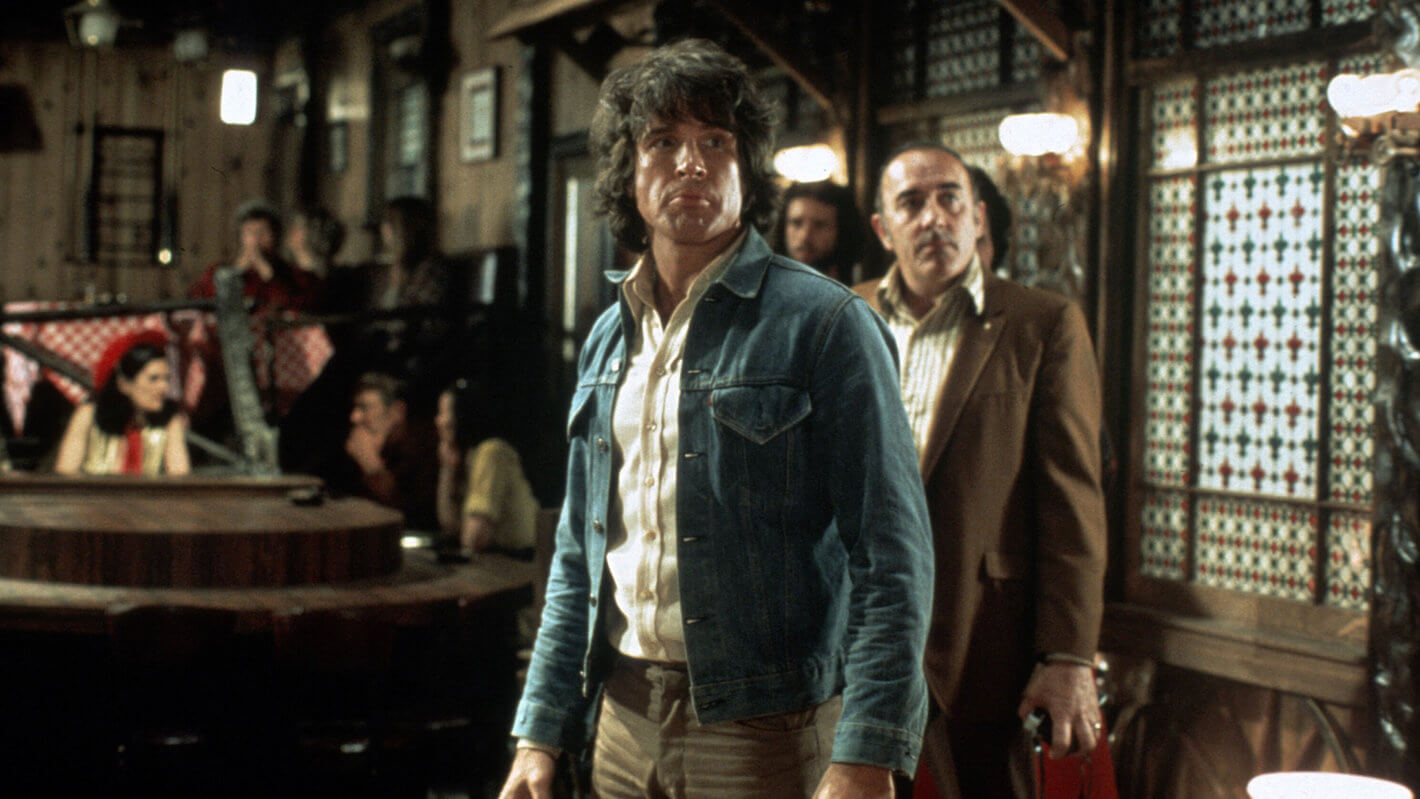
There’s a scene where Warren Beatty opens a drawer in the dead Sheriff’s house and he sees in it, the application for the Parallax Corporation and that’s going to start the whole plot going, because he tries to join that as a killer. While we were shooting that scene of him, seeing that set, we were watching Richard Nixon with this big stack of blue folders, which are the transcripts of his tapes, saying “I am not a crook” on TV. That was the environment we were working in with Alan. What Alan managed to do was find a way of taking the feelings we had there and making them about something that was fantastical enough and fictional enough that we could give ourselves up to those emotions without being crushed by them.

That was one of the things we were going to ask but you just addressed it very well: the idea of filming a movie about political assassinations coming after a decade where there were so many. We hadn’t even thought about the idea that you’re shooting it in another politically-fraught environment and what that might bring to it.

What we were describing was really wacky, when you think about it, but also very real and Alan was very conscious of that. He didn’t want to make it political in the sense of being left wing or right wing. If you notice, one of the people who’s assassinated in the beginning could have been a John Lindsay, a liberal mayor type guy who’s up on the Seattle tower, but then the guy was shot at the end is a sort of Southern cracker, Texas redneck guy. The implication here is the Parallax Corporation doesn’t have politics. It’ll just kill whoever they want to kill. They’re there to do their job and they do it well, so there’s this brooding thing outside this organising and running our lives in spite of ourselves which is it what it felt like at the time.

They just put out the vinyl of the score and Michael Small had a great option for music, because what you’re trying to do is convey a kind of a certain kind of thing, you know? It’s a complicated emotion because – don’t forget, this was at the end of Vietnam. We were living through the disaster of Vietnam and we were going from being weak before Vietnam. We were telling ourselves that Americans were the heroes from World War II and such, but with Vietnam, we were facing a higher reality and it was a great nostalgia for those good those days when we used to be the good guys and a dread of what we saw was coming. We wanted reassurance we could never get in the real world, so we watched this paranoid fantasy that we knew wasn’t true and felt the emotions that we didn’t allow ourselves to feel in real life to wash over us in the movie and Michael Small evoked those remarkably.

Michael Small’s filmography is so reflective of those sorts of things. He does these movies that have ambiguous endings, like The Parallax View and The Stepford Wives or have this certain sort of moral paranoia to them, like Marathon Man or The China Syndrome. Even Walter Hill’s The Driver is very much that sort of same thing with The Parallax View where it’s about, one man on his own, beset on all sides.

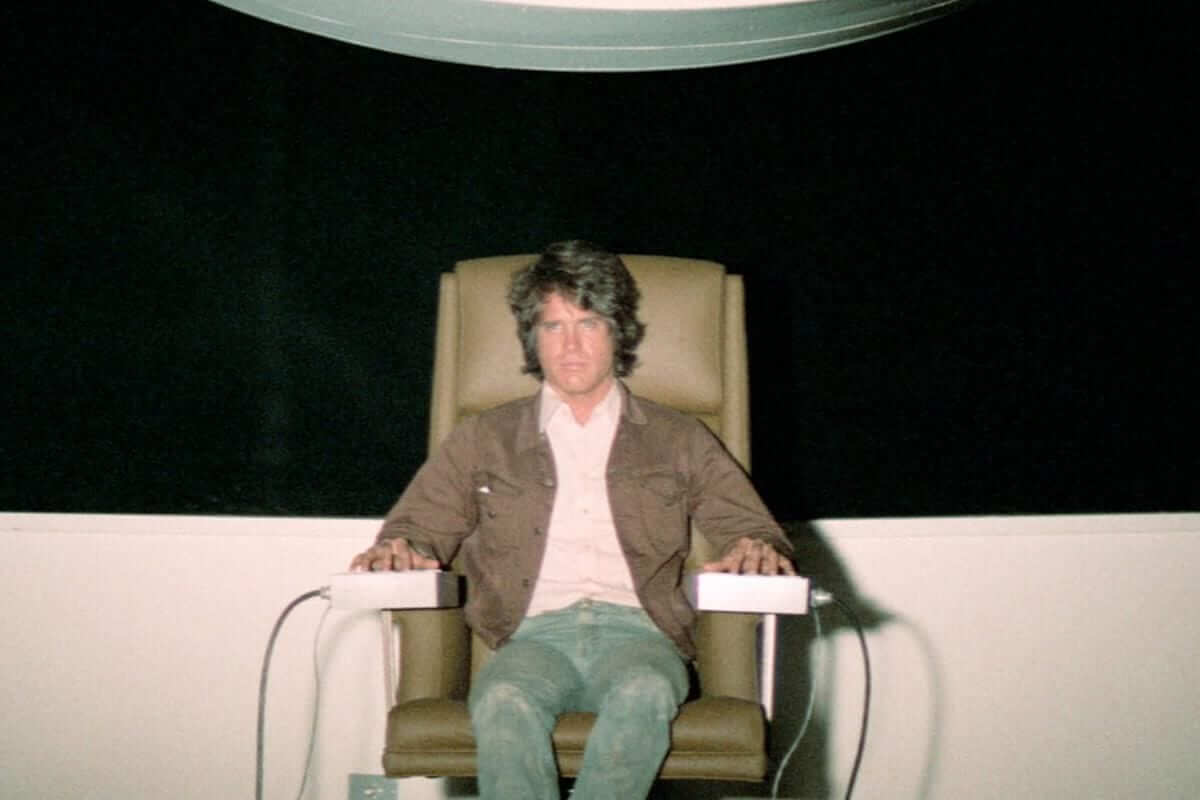
And that sense of unresolved panic that you could evoke. I personally think that he did a beautiful job on all of those, but I think that his masterpiece was the three minute so-called ‘test sequence’ in this movie. The Parallax View has something that a composer almost never gets. There’s a movie within a movie in The Parallax View where Warren Beatty’s trying to convince them he’s an assassin and they give him this test. The test they give him – as we did it, was, he sits down and he puts his hands down and they read his galvanic responses while he’s been watching a series of images, which is scored and has no dialogue. This is Michael Small’s chance to write a three and a half minute paranoid paean to the glories of America and the need to kill people to preserve it. This is what he ended up doing and it’s an amazing piece because it captures both the nostalgia for what a wonderful place America is and all this terrific potential, but also the mind of the assassin, he feels frustrated and angry and deprived and this has been taken away from him and he has to get it back and he has to get the people who kept him from having it. Michael caught that all beautifully. And, of course, the point of the movie is that Warren Beatty really has a mentality of an assassin. I mean, he passes the test. That investigative reporters, which is what Warren Beatty’s playing, have a kind of a similar mentality of ‘take no prisoners’ and ‘get to the bottom of it’ and unreasonableness and assertiveness that these killers have. The movie is really about that odd kinship and it doesn’t demonise the killer. It makes him a kind of a victim.

Michael Small essentially gets to do his own take on that very famous scene from A Clockwork Orange where Malcolm McDowell’s Alex gets his eyes stuck open with all the scenes of violence set to Beethoven, but he gets to do his own music for that.

The thing is, if you look at those two together, there’s a big difference, but at the same time, it was the same sort of gestalt. If you look at Kubrick’s, you’re watching it through Malcolm McDowell’s eyes. In other words, you watch some of the movie and then you cut back. It’s McDowell’s reaction with his eyelids propped open and what’s important isn’t the movie itself. It’s what it’s doing to him, but what Alan decided to do wasn’t that at all. He decided, “I’m going to make the audience Malcolm McDowell.” You are going to sit there and you were going to take this test and you are going to see that you maybe are going to think, “I’m an assassin too,” because you’re going to have the actual emotion of sitting through this whole test, and the driver for that was Michael Small’s score. It creates those emotions in you, just the music does, but of course, the pictures ratchet that up.

It certainly does.

That’s the difference and that’s why this was the key moment in the movie. This is what saved the movie from being a confusing half ass thriller because there’s this bedrock experience there that holds it together. Interestingly enough, when the script was being written, this wasn’t in the script. What was in the script was a scene in which Warren Beatty goes to a bar. He doesn’t know he’s being tested and there’s a bartender there and there’s a little cute little kitten on the end of the bar and everyone’s playing with it. The bartender takes his bottle and he smashes the kitten’s back and throws the kitten away. And then you look: “How’s Warren Beatty going to react to this violence?” Well, nobody liked that. Let’s not kill a kitten and use that as a test. But they didn’t know what to do, so we had this big hole in the movie. So Alan shot this thing with Warren Beatty where he sits in the chair, and he looks at this amazing screen, and that was it. We shot him looking, but not having any reactions, just a blank stare, looking at the screen. In post-production, we made this little three and a half minute movie that we stuck in there. We didn’t cut back and forth to one. There’s no Warren Beatty at all in the whole movie. You would see him sit down, you see the movie, and then he gets up. That’s a very daring thing to do. This is where Alan had the real nerve. He often made movies where he didn’t know how they were going to end and he put himself in that corner and then pulled something out like that.

2021 has been a very good year for The Parallax View. It received a Criterion release in February and now it’s got this soundtrack release a couple of months later. What’s it been like for you, seeing the renewed interest in this film, 47 years on?

I have a strange relationship to it, as you can imagine, because it’s what got me into the movie business. You know that moment when he discovers the Parallax application, and Warren Beatty pulls open the drawer? That’s actually not him pulling open the drawer. That’s me pulling it open. The drawer is another secret. He wasn’t there. We needed a hand model to shoot the closeup. The rest of me doesn’t look like Warren Beatty, but my hands looked like Warren Beatty, so that worked and that’s me. So I have this personal feeling. I still get $10 a year for that from the Actor’s Guild.  The thing is, this is a time that’s eerily similar. We’re at another moment where we don’t know what’s happening. Things seem to be spinning out of control. The whole democratic process seems to be at risk and we don’t know what’s happening or what’s going to happen next. So people seem to be looking at this movie and finding the same kind of reassurance now that we found in it.

The Parallax View soundtrack is out now on limited edition vinyl from Cinema Paradiso Recordings.

Simon Barrett | SEANCE

seance

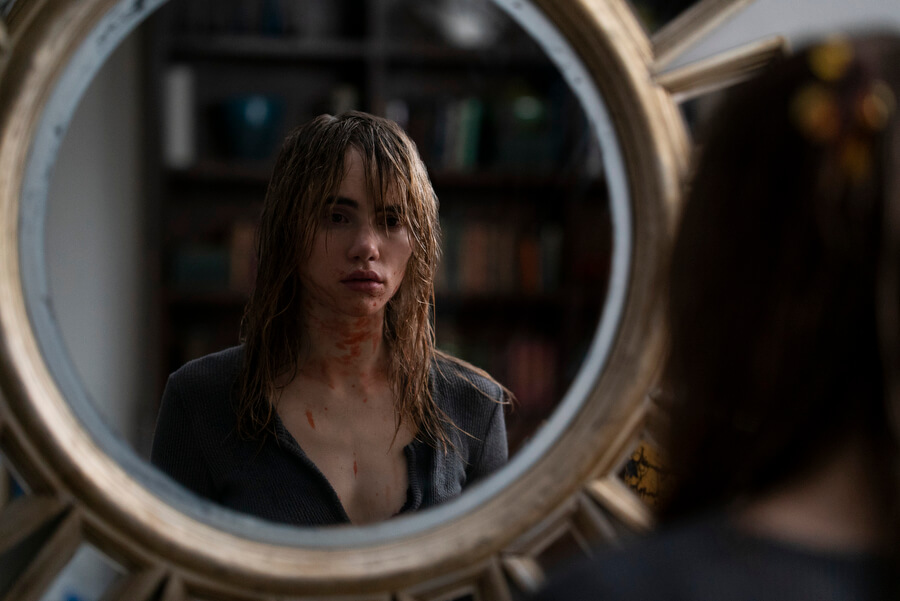
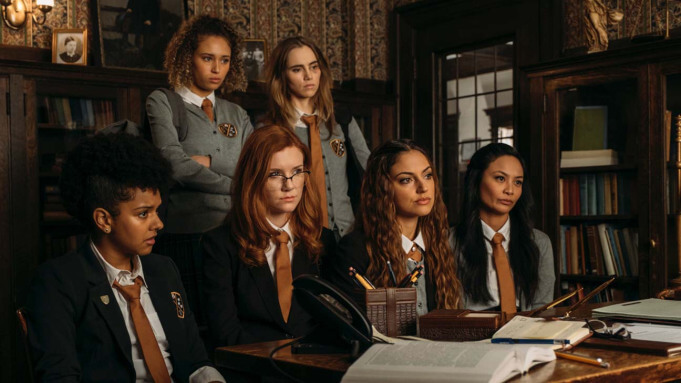
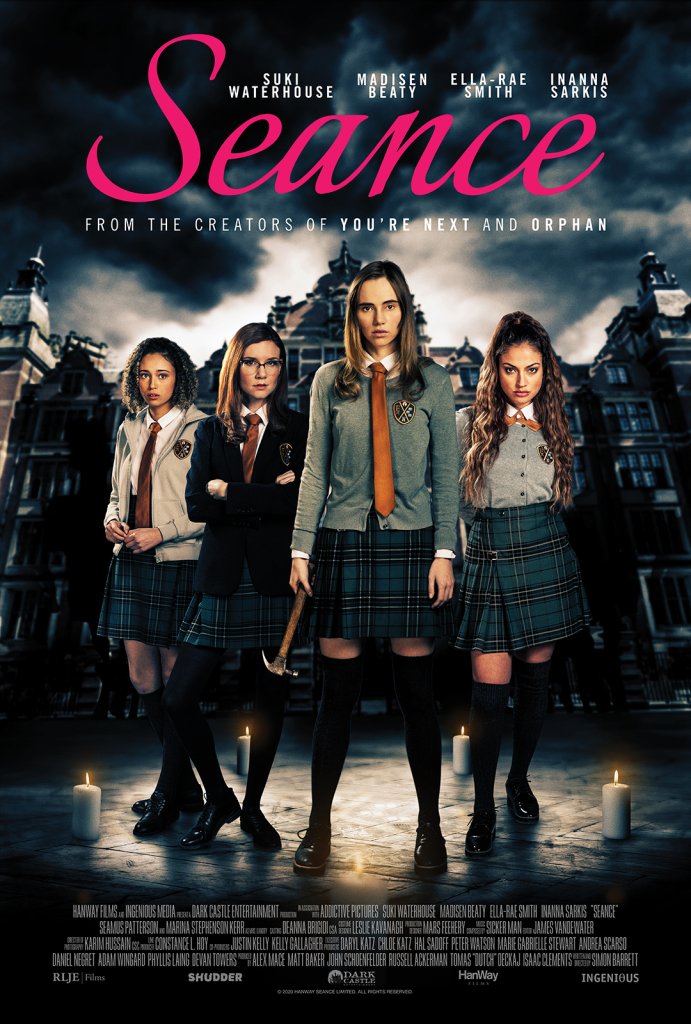
Writer Simon Barrett has been the scribe behind such genre faves as home-invasion thriller You’re Next, action-slasher The Guest, and the reboot/sequel Blair Witch, frequently collaborating with director Adam Wingard. However, Barrett’s latest script is also one he’s directed. Seance marks the writer’s feature-length directorial debut, and sees Camille Meadows (Suki Waterhouse), the new girl at the prestigious Edelvine Academy for Girls, dealing with some terrible things when, soon after her arrival, six girls invite her to join them in a late-night ritual, calling forth the spirit of a dead former student who reportedly haunts their halls. But before morning, one of the girls is dead, leaving the others wondering what they may have awakened.

It’s a blast and a half, and Seance balances haunted house scares with moments of tenderness and introspection. We spoke with writer-director Barrett about his new film and the process of putting it all together…

STARBURST: One of the things we love about what you’ve done with this movie, in terms of promotion, is the Twitter thread where you go through all of the various influences behind it. Smack dab there in the middle is The House On Sorority Row. That made us really excited to watch Seance.

Simon Barrett: The House On Sorority Row – there’s a reason I put that in the first ten of that list. I mean, the reason I started posting that list on Twitter is because I feel like, in all these interviews, a fairly common go-to question’s the direct inspirations. I think it’s especially because with films like You’re Next and The Guest, Adam [Wingard] and I – clearly we’re referencing films in ways that maybe weren’t totally obvious. Like, I’m not sure if people realize that the arc of the butterfly knife in The Guest is exactly the same as the arc of the butterfly knife in Face-Off until Adam and I were announced doing a Face-Off sequel. Then I think people went back to The Guest, like, “Oh, they just completely have a story arc from Face-Off just lifted into the film.” And it’s not an easy story to lift, ’cause it’s a pretty strange series of events, but they’re in there in both movies, ’cause I love Face-Off so much.

With Seance, people watch it and it’s so clearly working in this genre between murder-mystery and slasher that we would traditionally think of as the Giallo space that I wanted to be clear that I’m not just influenced by “good” movies – you know, the acknowledged classics or whatever. Suspiria is not going to appear on that list because the truth is I wasn’t very influenced by Suspiria ’cause it’s an impossible film to imitate. Either version of Suspiria is an impossible film to imitate, especially on a low budget. However, House On Sorority Row was itself a fairly low budget film that has a wonderful narrative and approach to its character and is an extraordinarily clever, well-made movie with great setups and payoffs that made a huge impression on me as a kid and, as an adult, I revisited on Blu-ray and was just like, “I love this movie. I want to do something like this.”

Seance

Among other things, Seance is what I guess you’d call a “prank-based slasher film” where the inciting incident is a juvenile prank gone wrong, to a certain extent. Nobody really understands how it went wrong or what happened and it’s about figuring that out. A lot of those are kind of lousy, but then you have your Terror Train, which is amazing. There’s a lot in that genre that I love, but I think House On Sorority Row – and, to a slightly lesser extent, its 2009 remake – both do an excellent job of putting you in this reality where everyone is just kind of lying to each other all the time, and then it just gets more kind of crazy from there. I just think those scripts for The House On Sorority Row and even its remake are both really underrated murder mysteries that hold up under a microscope, way better than most acknowledged murder mysteries. If you actually look at what those narratives are doing, they work better than a lot of what’s out there.

A couple of years ago, we got to talk to Cal Everett, who’s the frontman for the band 4 Out of 5 Doctors, who are the party band in The House On Sorority Row, and it turns out he’s a huge horror fan.

Their music really helps that film. The fact that the band in that movie is actually pretty fun – Bloody New Year‘s another film that actually has a pretty good band incongruously in a slasher film – and the movie’s aged really well because of that. Hopefully, it’s the same for Sicker Man’s music for Seance – it’s the kind of thing that people still enjoy 20 years from now.

The way that Sicker Man’s score goes from being score to being diegetic music coming out of people’s headphones and stuff is seamless and works so well. Watching the movie and reading all the credits, we were full-on just like sitting at the computer, head-nodding as that last song plays out because it is such a banger. How did you come to know the music of Tobias Vethake, but also end up using it in such an interesting and novel way within the film itself?

You know, the funny thing about being a first-time feature director making an independent movie that’s financed by sales companies: no-one’s really looking over your shoulder, telling you creatively what to do, so you can make these weird, impulsive decisions that, in some cases, turn out disastrous and in some cases, turn out just utterly perfect. I was just, with Sicker Man, a fan. I really discovered him through my filmmaker pal E.L. Katz, who did the last season of Channel Zero and Cheap Thrills and stuff. He had an album by the hip hop artist Serengeti that Sicker Man did the beats for called Doctor My Own Patience that we were listening to one night and I went out and bought the vinyl. I mean, I love Serengeti. I had all his early stuff, but this was such an interesting, sad album. It’s one of the saddest hip hop albums I’ve probably ever heard. It’s just about being depressed and relationships not working. And I was like, “Who did this music? It’s so strange,” and I looked up Sicker Man and I started getting into more of his music and I realized that his big thing was he did a lot of theatre scores. It was just a lot of weird experimental compositions for German theatre productions, and I was just like, “Well, that’s perfect. If he’s doing German theatre productions, he’ll be interested in working with me,” so I sent him a Facebook message and I just said, “Hey, you know, I’m a big fan of Sicker Man and I’m doing this movie and I kind of want a Brian Eno soundtrack.” I sent him a track from The Jacket that Brian and Roger Eno did and he was just like, “Okay, here’s some tracks. I’m interested in this project. Here’s some sample tracks,” and literally just sent me the Seance score, about seven tracks. And I was like, “Yeah, this is amazing. We’re going to hire you. We don’t really have any money,” but he was like, “Oh, it’s fine. I’m happy to be involved.” He was just so good-natured throughout the whole thing, but what he gave me was the ability to play those tracks to the cast and actually have them in my ears when I was going to set in the morning and stuff.

seance

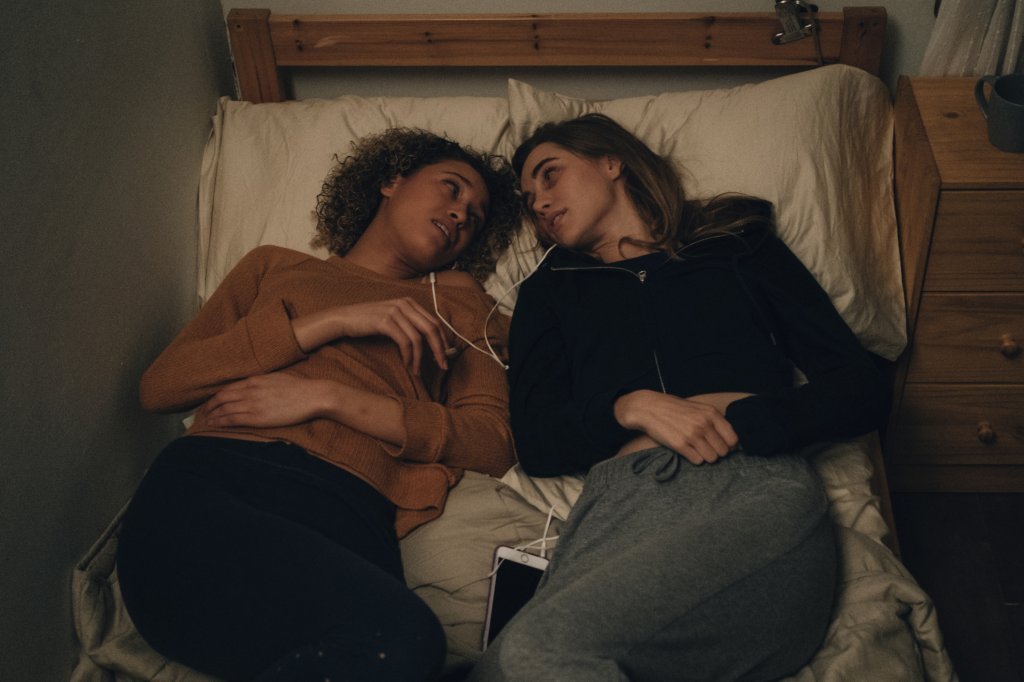
How Adam and I always used to work – I mean, now we’re working in a more direct way on some of these bigger projects – but the way it used to work, back in the day, was Adam would have no idea what I was writing. When we were kind of coming up with our next projects, he’d be sending me music just being like, “I want to use this track, so make sure you’re writing something that can support that tone,” and Sicker Man gave me that straight out of the gate. I was like, “I want something beautiful that’s kind of the theme between these two characters and their connection.” I knew I was going to be doing the thing with the headphones where, when the audience is really with Suki’s character, we hear things the way she hears them but when we’re outside and she’s opening up a little, we hear things more from Helena – Ella-Rae’s perspective. I was working with the sound mixing team I had from You’re Next to The Guest to Blair Witch. Jeff Pitts is our sound editor. He’s won an Emmy. I just knew they’d be able to pull that off. It was just a weird thing where Sicker Man sent me these tracks and I was just like, “This is my favourite music. Let’s work together forever,” and he was just like, “Okay.” He’s already written, by the way, all the needle drop music that I’m using in my V/H/S ’94 segments. I literally just went to Tobias again and I was just like, “I’m doing another thing: here’s what I need,” and he sent me seven tracks and I was like, “Okay, this is perfect,” and then I was able to play them for my crew and cast on set and say, “This is what she’s going to be listening to,” and direct that way.

I hope to collaborate with him for the rest of my career. I feel like when we did The Guest, I feel like Survive, who ended up doing the Stranger Things score, was kind of a similar situation where an artist people maybe weren’t totally aware of just kind of blows up in a big way because they find kind of the right project that really allows people to understand their style, and I’m hoping that’s what happens here but, as far as I can tell, Tobias borderline doesn’t care. I mean, he’s happy and he likes work, but I don’t think he is really necessarily looking to do more film scores. I mean, maybe he is, but I think he’s just such a prolific talented artist that I can barely keep up with all his projects. He’s released three albums, like while we were finishing Seance and you know, he’s kind of unstoppable. Anyone reading this, just like look up Sicker Man on Bandcamp or some other ethical place.

seance

Speaking of people on the rise, as the lead, Camille, you’ve got Suki Waterhouse, as well as Madisen Beaty, who was just stellar in The Clovehitch Killer.

That’s why I cast her. Madisen Beaty is a genius and, truly, one of the best things about Madisen is she’s kind of a director herself, so she really thinks about scenes in a story-based way. She’s not afraid to look ridiculous or appear foolish if it’s what the scene needs. She really is like one of those just true zero-ego actors and randomly, so is Suki Waterhouse who, as far as I can tell, is absolutely happy when she is just utterly covered in fake blood in the midst of a fight scene and completely exhausted.

It feels like that’s when she really gets in her zone. I was randomly at the world premiere of The Bad Batch because Adam and I were kind of friendly with Ana Lily [Amirpour], who directed that movie. I’m just kind of a fan of her. I really loved A Girl Walks Home Alone at Night. So, I was at the Toronto premiere of The Bad Batch and was there when Suki got up on stage with Jason Momoa and I was like, “Oh, this person’s really kind of cool and interesting.” Then, when she was proposed for Seance, I was just kinda like, “Well, I don’t know how that’s going to work. She’s this famous model and we’re going off and making this movie where her character just takes damage for 90 minutes straight.” Then I sat down with Suki and realized that she’s as introspective and strange a person as anyone I’d met. I know a lot of other people, ’cause I’m a paranormal investigator. I do martial arts. I make horror movies, but Suki and I just instantly got along. I was just like, “Oh, I totally get all the ways in which you have a dry sense of humour and stuff.”

I was just really confident that she could do this. I think, you know, for me, it was just I was just kind of amazed that she trusted me enough to let me kind of direct this sort of hard-boiled performance that I was trying to get, because I think it’s sometimes hard for an actor to be kind of told to do very little, to really play everything very small. I think Billy Bob Thornton in The Man Who Wasn’t There, it was a very interesting performance, just how little he’s doing and how little physical movement and expression he uses to get a feeling across. I was interested in working in that mode. I was thinking more like Gabriel Byrne in Miller’s Crossing you know, with Suki. She really trusted me and was willing to experiment with that, from take to take. I’m really thrilled. I have a cool cast.

seance

With Madisen, I’d seen Once Upon A Time In Hollywood and I thought it was a masterpiece but you can’t judge someone on their performance in a hundred million dollar Tarantino film. But you can judge someone off something like The Clovehitch Killer, which doesn’t look like it cost that much more than Seance. The fact that she is doing such nuanced work in that role, in that film, let me know that this was a really serious performer who I could really trust and relate to. I feel like I directed Madisen the least. I changed a bunch of blocking and camera movement and stuff, and with Madisen, I was just like, “Just do what you’re doing!”

RLJE Films and Shudder will release SEANCE in US theatres, On Demand, and digital on May 21st. 

Amy Manson | THE NEVERS

amy manson

STARBURST was lucky enough to talk with AMY MANSON – one of the stars of HBO’s Victorian/steampunk/superhero mash-up THE NEVERS, now available in the UK via Sky Atlantic and/or NOW. We discussed the female-centred series, Princess Diana, and the horror legend that is Pumpkinhead…

STARBURST: How would you describe The Nevers?

Amy Manson: It’s an amalgamation of so many genres – it goes from dark humour to steampunk to fantasy and I think that is going to keep everyone on their toes. It is about a group of ordinary women affected by something extraordinary, set in Victorian London. They are known as ‘the Touched’, which has different factions, and it’s how the Touched interacts with different sections of Victorian London, with the special abilities they have been given.

What attracted you to the series?

Definitely Joss [Whedon] and the script. When I went for the audition I had all these ideas and interpretations of what the scene was and Joss said, ‘no it’s none of those, I just made it up to see what you would do’. We didn’t get the full script until we all signed on but Joss laid out all the ideas that were in his head for each character.

So there was an element of secrecy even in the making?

Very much so.

nevers

Would you describe it as a feminist series; does it have feminist elements?

Yes, I think so. I think Joss is great at writing for women. Not only women are ‘Touched’, but you find out why certain people are ‘Touched’. For me, talking from my personal experience – Maladie is on a mission to dismantle the patriarchy. She is just one faction of ‘The Touched’ whereas the rest are just trying to survive and figuring things out as they go.

Your character Maladie is described as being unstable and in charge of a band of renegades, what else can you tell us about her?

You understand her story within the first couple of episodes and how she becomes the head of this faction of the Touched and why they are all fighting for her. As her name suggests, she is a slight lunatic; wayward, anything goes. You figure out there are a few threads that come into play and change her trajectory, to explain why she is doing what she’s doing. Fighting for a good cause, or is she!? [Laughs]

Intriguing! Was it a physical role for you?

Absolutely! We went for a month’s prep prior to shooting with the stunt team, training every day. The challenge was putting the dialogue on top of that. Especially with Maladie’s dialogue, at first, you might think ‘what the hell is she on about?’, but it will become apparent, so dealing with that and then the stunts on top was a challenge.

Was it difficult doing the stunts in full Victorian costume? The Nevers stands apart in this aspect. Victorian fighting women is not something we have seen too much of, if at all?

Definitely. There were great stunt girls, but the stunt team relied on us a lot, which was lovely. I would pair off with Laura [Donnelly, who plays Touched member Amalia True] and we would go through routines. I don’t know how we would have done this in pandemic time. We managed to film the first four episodes prior to the pandemic. Maladie is always going to rub shoulders with anyone who gets in her path.

You are a big advocate of good mental health and have raised funds for the charity Heads Together. Do you think Meghan Markle has helped or hindered the cause by speaking out, especially considering The Duke and Duchess of Cambridge are patrons of Heads Together?

I started working for the charity because my cousin, who is in the air force, his Mother committed suicide 13 years ago and none of us would have known. He was a big advocate of Heads Together. Any discussion on mental health can only be positive. None of us know what she is going through, the weight on her shoulders must be huge. I have just finished filming my section of Spencer, about Princess Diana, and the parallels between my character; Ann Boleyn. Stephen Knight, who wrote the script and writes phenomenally for Peaky Blinders, really delves into her psyche and the emotions of what she was going through at that time, what she was told to wear by the monarchy, it talks about Bulimia but also her psyche, so having just finished that film, you don’t know what is going on behind closed doors. Who do you go to in these times? Diana had nobody to offload to.

We were going to ask you about Spencer, so you play the historical Anne Boleyn?

Yeah, it is based around Diana’s last Christmas at Sandringham before the divorce and there is a book called The Rise and Fall of Anne Boleyn, which is sitting in Diana’s room, and she is reading this book that has parallels between her and Anne’s experiences. Anne then comes back as a vision or apparition and is kind of goading Diana [played by Kristen Stewart] – challenging her, making her think in different ways. It’s shot beautifully by Seamus McGarvey, who was the DOP on two episodes of The Nevers. Two beautiful things I have been involved in!

Is Spencer coming out this year?

November, I don’t think anybody knows that, so there you go.

Exclusive! Here at STARBURST we love our horror films and we wanted to ask you about your first film role, which was Pumpkinhead 4: Blood Feud. What was the experience like?

Yeah, when I arrived there I met Lance Henriksen and he was quite standoffish at first. I was the newbie fresh out of drama school. I read lines to him off camera and it was a really emotional scene, then I started crying, he started crying and gave me a massive hug afterwards, so it was like a rite of passage. A few of us went for dinner that night, I didn’t realise what a big deal he was and how great he was. That was the start of my Pumpkinhead journey. I threw myself in, you have to ask yourself ‘what is your truth?’ I loved it, and relished every moment on set.

Brilliant. Would you like to do any more horror in the future?

Definitely! I did a film called Estranged, maybe more of a psychological thriller, and the director Adam Levine has sent me a script to read, it’s a bit like The Descent. So I will read it and let you know!

All episodes of THE NEVERS are now available in the UK courtesy of Sky Atlantic and NOW

Darren Lynn Bousman | SPIRAL

Behind the Scenes of Spiral: From the Book of Saw still featuring director Darren Lynn Bousman, Chris Rock, and Samuel L. Jackson

Ahead of the highly-anticipated release of Spiral: From the Book of Saw,  now the ninth instalment in the cult horror franchise, STARBURST spoke with veteran Saw director Darren Lynn Bousman about returning to the series, working closely with Chris Rock, bidding farewell to Jigsaw, and how Spiral takes the series in a new direction.

Watch our interview with director Darren Lynn Bousman below:

Read our review of Spiral: From The Book Of Sawreleasing on May 14th in the US, and May 17th in UK cinemas. You can also watch our interviews with Spiral stars Marisol Nichols and Max Minghella.

Max Minghella | SPIRAL

Chris Rock and Max Minghella in Spiral: From the Book of Saw

Ahead of the highly-anticipated release of Spiral: From the Book of Saw,  now the ninth instalment in the cult horror franchise, STARBURST spoke with star Max Minghella (A Handmaid’s Tale, The Social Network) about his role as rookie detective William Schenk, starring opposite Chris Rock, and how Spiral marks a new chapter for the Saw series as we know it.

Watch our interview with Max Minghella below:

Read our review of Spiral: From The Book Of Sawreleasing on May 14th in the US, and May 17th in UK cinemas. You can also watch our interviews with Marisol Nichols and director Darren Lynn Bousman.

Marisol Nichols | SPIRAL

Riverdale star Marisol Nichols as Captain Angie Garza in Spiral: From The Book Of Saw

Ahead of the highly-anticipated release of Spiral: From the Book of Saw,  now the ninth instalment in the cult horror franchise, STARBURST spoke with actress Marisol Nichols (Riverdale, 24, Teen Wolf) about her starring role as police captain Angie Garza, working with Chris Rock, her love of the Saw franchise and of course, her favourite trap!

Watch our interview with Marisol Nichols below:

Read our review of Spiral: From The Book Of Saw, releasing on May 14th in the US, and May 17th in UK cinemas. You can also watch our interviews with Spiral’s Max Minghella and director Darren Lynn Bousman.