Ryan Kruger | FRIED BARRY

Ryan Kruger is the writer and director of Fried Barry, the grotesque new alien invasion-cum-body horror flick currently taking Shudder by storm. Set on the streets of South Africa and featuring the breakout performance of Gary Green as the titular Barry, this weird, grubby, psychedelic little genre movie is destined for cult appreciation around the globe.

But just who, or what, is a Fried Barry? Thankfully, we had someone on hand to help dissect all things Barry – the man who created him, Ryan Kruger.

RYAN KRUGER: Fried Barry is a trip. It’s a road movie without a car, but Barry is the car. The story is easy and simple; it’s about a junkie that gets abducted by aliens and spat out onto the streets of Cape Town, and the alien takes his body for a joyride. The film is designed to be an experience and make you feel as if you’re going on this trip with Barry. It’s meant to feel disjointed – that’s the style of it. You have to sit back with an open mind and have fun, otherwise you are going to have a bad trip. The film shows the darker side of humanity, and that it’s society that is crazy. By the end of it, you should feel like taking a shower.

STARBURST: The film started out as a short piece about a junkie on a trip in a derelict building. When – and how – did that begin to evolve into a feature film?

Fried Barry was born out of total frustration where I was in my life at the time. I’ve always wanted to make a feature and I’ve come close many times, but never worked out. At the time, I really went through a hard patch. I had something wrong with my kidney; I had an operation, got sepsis, and nearly died. My cat had cancer, I lost my girlfriend at the time and went into a bad dark hole of depression. It was game over for me. But then I said to myself, what is the number one thing I’ve always wanted to do? It was to make a movie.  I had so many other scripts I could have chosen to do, but when this idea hit me, I got excited. I hadn’t seen this film before. It just felt right, and was the right one to do, where I could get super creative. When you make your first film, of course it has to be good, but that’s an understatement – it has to be the best film you have ever made. Otherwise, what the hell are you doing? I wanted to make a cult-style film, which I would have liked when I was a kid growing up. This film saved my life in so many ways, so I am grateful for those dark times even though it was the worst time of my life. Otherwise, I wouldn’t be talking to you right now. Oh, and I saved my cat. He’s my little sidekick.

How did you approach writing and plotting the film, given its largely performance-driven nature and relative lack of conventional narrative?

It’s funny how everything turned out. From getting the idea in 3 days, I wrote a brief scene breakdown. And then I rang my co-producer and said “I am making a film next month”. He asked me, “Why do we have to shoot next month?” He didn’t know how depressed I was. I just said “because if we don’t shoot next month, it’s never going to happen, and I can’t wait anymore.” A month later, we were shooting the first block of filming. So as we were filming, I was writing more parts as we went along and coming up with new ideas. Sometimes I was writing the dialogue from one location to the next in the car on scrap pieces of paper. I didn’t want anything set in stone with the film, so if I had new ideas on the day we could do it and that’s where a lot of the magic happened. Instead of sitting on ideas for long periods of time.

There are shades of Trainspotting, Starman, early Peter Jackson, and even ET to the film. Who and what were you influenced by when making Fried Barry?

I am very much an 80s kid, I love all 80s films – they were the best.  There were many 70s, 80s and 90s film references in this film. ET for sure, and Starman, and the 90s film Bad Boy Bubby. I mixed them all up and added different spices, and put my own slant on it. There are a lot of Easter eggs in this film.

Gary Green is fantastic in the title role. How did he come to be your Fried Barry?

After the success of the short film, I couldn’t have anybody else playing Barry. But when the idea came to me, I knew straight away how I was going to shoot it and how it would work. Gary was amazing – I love his look. Nobody looks like him. He’s got such good presence.

So much of the film is reliant on Barry/Gary’s physical contortions, facial expressions, and movement. To what extent were these choreographed – or improvised?

This was a major thing for me, as the movie is reliant on this character. And if I didn’t get it right, the movie would fall. So I had to work with Gary very closely. I based the character and story around him to make it work. It was such a perfect combination to mould it around him, so I could get exactly what I wanted from him.
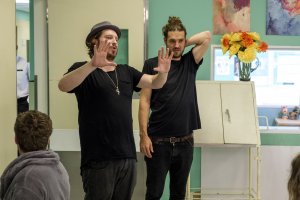
Did Green have any input into Barry’s character or actions as the film progressed?

Because Gary isn’t a trained actor, I really had to take the reins with him or it wouldn’t work. So before we started shooting, I told him the basic story and that was it. He didn’t know anything we were filming each day until 30mins before. I knew he would over-think stuff, and I didn’t want him to try over-analyse things or try to prep stuff, as then it would take me longer to get what I wanted from him. So I needed that clean slate every day to work with. I did do a lot of improv with other actors in the movie. But Gary was the only one that didn’t, as it was high risk and time during filming. The funny thing was that his character mimics the people he meets through out the film. And when it came to directing, I would say off-camera “copy my face, now do this face” and he was mimicking me the whole time. I was editing each scene in my head, so I knew what I needed to hit all those comedic points. But Gary was amazing and worked so hard. And nobody could have played this part but him. He was an extra before this, but now he clearly is an actor and that face is just amazing. I love characters and am so proud of him. It’s a great underdog story.

The film is set on the streets of Cape Town, utilizing many bars, businesses and nightclubs. How were these scenes shot?

We actually shot the film over a year and a half – and only 28 days in total. We did get permits for every scene on the streets. There were a lot of bars and clubs that we had good connections with, luckily. But because of the style of the film, we had so many (locations) which was insane – and such a huge cast. But I promise you, Cape Town is a very beautiful place. I just made it look like hell. And we see the darker side of it. I may have ruined Cape Town tourism.

How has the film been received in South Africa?

Well that is still yet to come for the release here. But it did play at a few festivals here, and the response was great.

South Africa is very conservative. And I have struggled a lot in my career to do what I want to do. But since I didn’t have to listen to anyone for a change and we were doing it ourselves, I could make the film how I wanted to make it.

What is the film industry like in South Africa?

The South African film industry is still very small here. But it’s growing super fast and there’s great stuff starting to come out of SA. Most films that get made here are comedies and dramas and historical films about South Africa, but things have been starting to change, even in the past year. There are a few horror and genre films out here. One is Broken Darkness – a great film and talented director. But Fried Barry is defiantly its own beast, and the first of its kind to come out of SA, which I am really happy about.

Barry’s sexcapades; gory fight sequences; drug-fuelled nightmares and dreamscapes; Fried Barry is a riot. Did the shoot itself reflect this, or was it a relatively sedate experience?

It was a great experience – we all had so much fun. When you’re making films with your friends, it can only be a good time. There were hard scenes to film and late nights and time restrictions but we made everything work and put in the time. I actually love working under pressure. It makes my brain tick faster.

From gore to alien spaceships, the film looks great. There’s even a flying sequence! Was there anything you would have liked to include but didn’t have the budget for?

The will always be things I would change or add. I want to do as much in-camera effects as possible. But we also had the great VFX artist Blake Prinsloo. The great thing about filming over a long period of time is that I could see what i had and still needed. At one point, there was going to be a heist he gets mixed up in. Which was great but, it didn’t need it. It was very important to have more heart and character with his wife. I realized how important his wife (Chanelle de Jager) was to the story, and the character development to Barry.

What’s next for you?

I have a few scripts and different genre movies. I may be possibly shooting another film in August, but let’s see. Keep a look out for an 8-part experimental series called RIP, coming soon.

Finally… after all this talk of alien bodysnatchers and flying saucers – do you believe in life on other planets?

100 percent. That’s a long conversation, but they’ve been around for a while. It’s impossible for there to be just us.

Barrys may live among us.

FRIED BARRY is out now, currently streaming on Shudder in the UK.


Lochlyn Munro | INITIATION

initiation

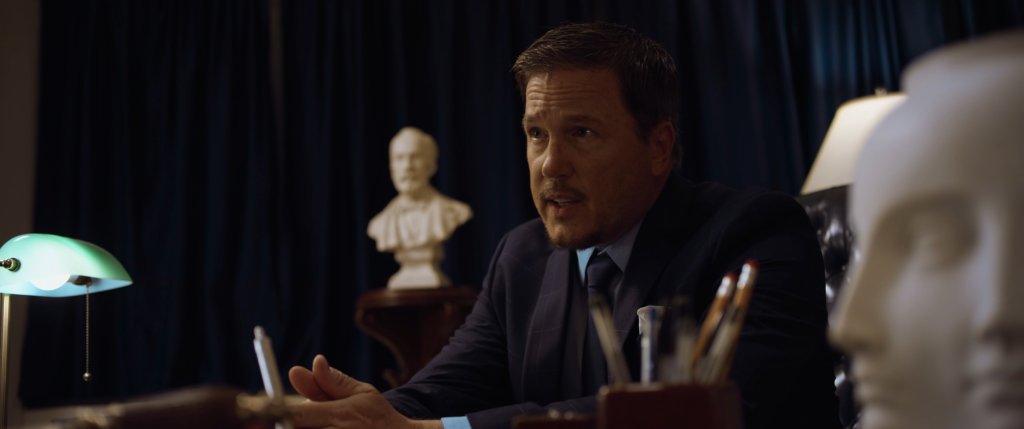
Canadian actor Lochlyn Munro is a familiar sight to genre fans, most notably for his recent role as Hal Cooper–aka revenging serial killer the Black Hood–on the CW series, Riverdale. His newest role is chancellor Bruce Van Horn in the new college slasher, Initiation, from director John Berardo where, “during a university’s pledge week, the carefree partying turns deadly serious when a star athlete is found impaled in his dorm. The murder ignites a spree of sinister social-media messages, sweeping the students and police into a race against time to uncover the truth behind the school’s dark secrets…and the horrifying meaning of a recurring symbol: a single exclamation mark.”

It’s a fun inversion of a lot of slasher tropes, and Munro seems to have a blast playing his take on the “crusty college dean” trope, so it was a real pleasure to speak with the actor by phone about the new film and his genre history.

STARBURST: One of the things that struck us upon watching Initiation was the fact that you and Jon Huertas and Bart Johnson–all the adults in the movie–also have experience in teen dramas.

Lochlyn Munro: Yeah, I know, right? It’s funny because when I did the movie Dance Flick for the Wayans brothers, I actually going for a slight parody of Bart’s character from High School Musical. It’s kind of funny that I’ve done that a couple of times because during Riverdale, Skeet [Ulrich] and I used to always joke that I also did a parody of his Scream movie character [in Scary Movie]. I have a way of doing that. I just like to parody other people’s lives, you know?

Going all the way back to when you got your start as a young actor yourself, you were on 21 Jump Street. What’s it like now, playing the dad on Riverdale, as you mentioned, or in this film, the crusty chancellor?

I remember a moment specifically during our first table read of Riverdale for the pilot. Luke [Perry] and I have known each other for a lot of years and we looked across the table at each other and just kind of laughed at it. All these young good looking kids are on the show and that we used to be able to date all those young good looking kids, and now we’re their fathers. The tides change, you know, but now it’s a lot of fun.

I was just really really humbled that John [Berardo, co-writer/director] and Brian [Frager, co-writer] wanted me to play this character in their film. I had a great time. I love this: really enthusiastic, fun, smart young filmmakers. It was a very exciting time for them to get this off the ground and I was really lucky to be part of it.

You’ve gotten to do a lot of really interesting sort of genre stuff over the course of your career. Is that something to which you’re attracted or are those the roles that just happened to come your way as a result of doing some of that early on, like Nightmare Cafe or Highlander?

Oh my gosh, you remembered all that stuff?

We love Nightmare Cafe.

That was interesting, that show. I guess I just love movies. I love stories. And whether they be comedic, whether they be horror films, whether they be really interesting and dramatic films, I guess it just comes down to being able to create characters and great stories.

Again, even though Scary Movie was sort of a parody on horror films, you still had to sort of play it real because then all the situations around it work, whereas if you make fun of them, then the audience sees sort of a fakeness to it. I played Greg in Scary Movie as real as I could to create that character and that, I believe, is where the comedy came from. I’ve been very fortunate to be able to do horror, comedy, and serious dramas. I’m really lucky that I’ve been able to tackle each genre.

What specifically attracted you to Initiation? Had you seen John’s short film, Dembanger, before you read the script?

No, I hadn’t seen his short. I was aware of the project when the casting person, Ricki Maslar, who was casting the film has always been a really good friend of mine, phoned me up and said, “Hey, would you be interested in coming on board with this stuff? You know, it’s a smaller movie, but I think that the filmmakers are really cool and I think you would enjoy it.”

I was fully on board because, one–I adore her, so anytime she asks me to do anything, I’m always on board because she’s got great taste. And once I met the guys–again just really passionate, smart, young filmmakers, and, and I loved being part of it. I thought that story was great. They shot it in a way that they created suspense, they created questions, and then they pulled no punches. Just a ton of great classic film beats, you know? It was pretty easy for me to say, “Yeah!”

The only thing I have a hard time with is that, every time I do a horror film, I forget that it’s always scarier at night and I suck at night shoots, man. I just have such a hard time. My internal clock doesn’t work that way very well.

What’s really interesting about the film is the message that it has and the way it sort of flips the traditional slasher script. It reminds us of old Italian Giallo movies: dude in the mask, stalking people with a lot of interesting interpersonal drama. What specifically did you like about the character of the chancellor? He’s a little weaselly.

Yes, yes. I think a lot of the reasons for that are, in a sense, I always felt that Van Horn was always balancing humanity and business. He had a responsibility to protect the students, which to me personally would have been first and foremost, but he also felt like he had a responsibility to protect the integrity of the school and what that brings to his school, whether it be hefty donations from the well-to-do.

Did he do all the right things? I’d say no, but he was trying to balance everything that he felt that he could and I think that that was a great approach to create that character, because it also created suspense for the audience, wondering how involved is Van Horn in this whole situation?

We have to ask: did you go to college yourself?

During my college years, I actually played in a hockey league in Canada called the Western Hockey League. I did do a bit of college for one year. I actually was taking classes because I wanted to. I was interested in forensics and stuff like that, so I took a couple of psychology courses and whatnot, and it’s kind of interesting because I think that that also lent its hand to creating characters and in the film world, as well.

I can honestly tell you, I do wish that I had a four-year college experience. I think that would have been amazing. I’m hoping that that’s what my daughter and my son can now achieve and experience.

That’s fantastic that you studied forensics, given the number of cops you’ve played over the years. That just seems like such a perfect background detail that we’re so happy to know.

Isn’t that weird? It’s so fun, the cop roles and stuff like that. I’ve never made a conscious effort to them to just play cops, but they come my way a lot. You can say I’ve played a detective many times in my career. A lot of people do talk about that and I think, “Well, I guess the reason being is that there’s just so many storylines involved with the law,” you know? They’re endless. You just pick up the newspaper and go through the newspaper. That’s probably how they do Law & Order: every day, one of the writers or the showrunners read the New York Times and create stories out of what they’re reading.

Saban Films will be releasing INITIATION in theaters, on-demand, and on digital May 7th.

Mickey Fisher | EXTANT

extant mickey

The hit sci-fi thriller series Extant is heading to Horror Channel, so we caught up with Mickey Fisher, the writer of the show to find out about the story, having his first show made by Steven Spielberg’s Amblin Studios and the writers’ room…

STARBURST: Could you tell us what the premise of Extant is?

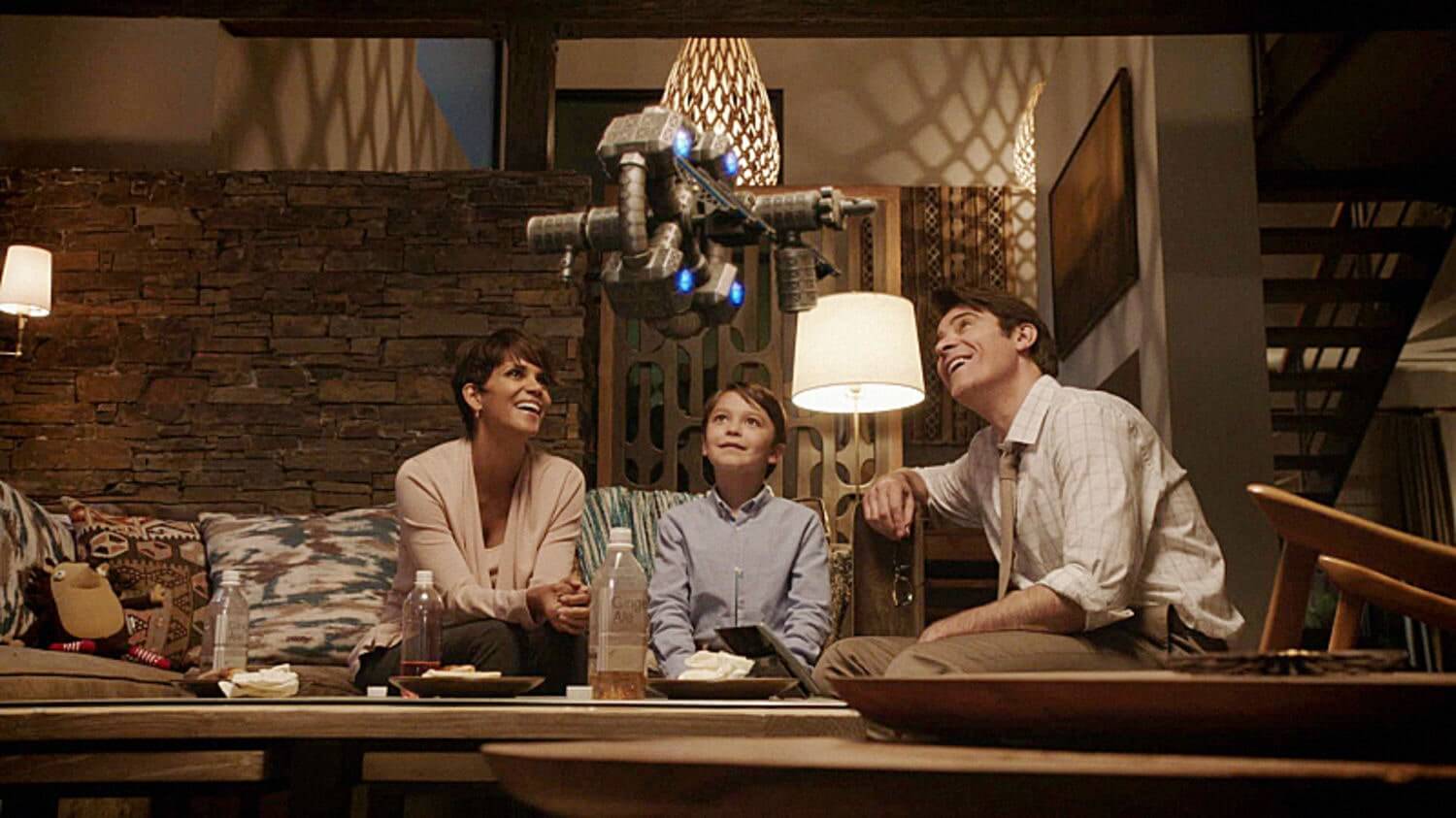
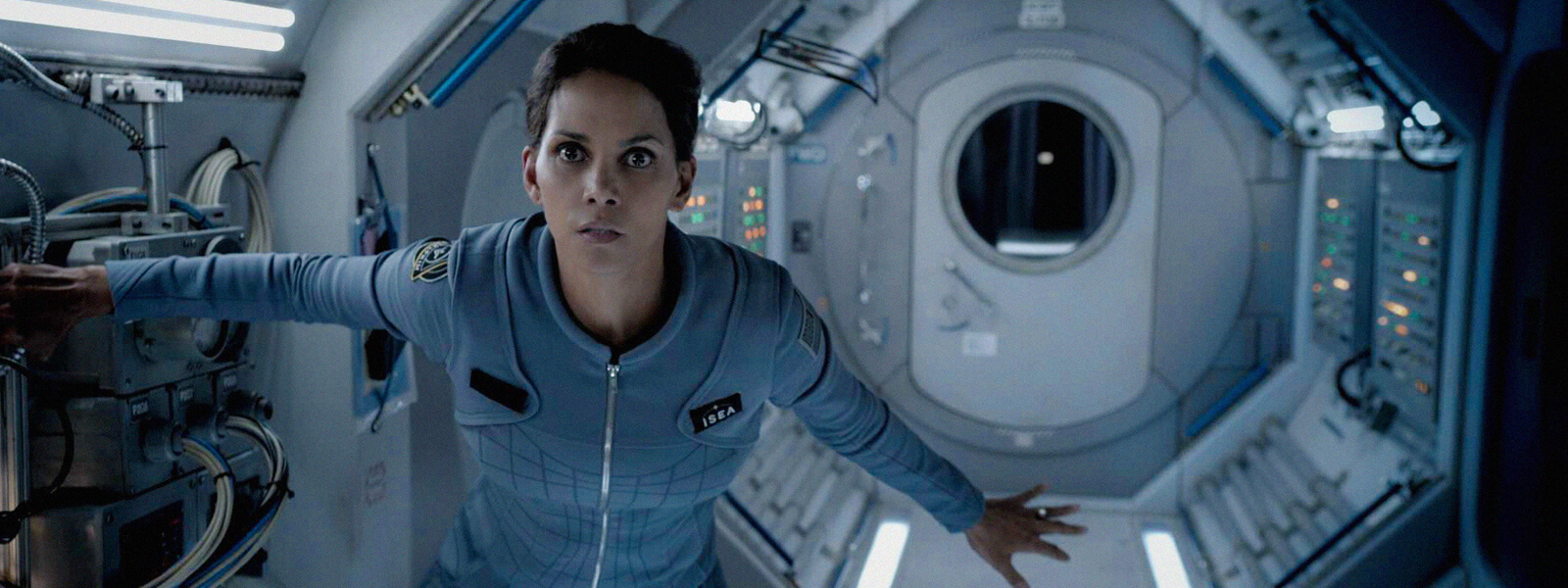
Mickey Fisher: The show is about an astronaut named Molly Woods who goes to space on a solo mission she’s up there for a little over a year. When she comes back home, she makes this shocking discovery that somehow, miraculously, she is carrying a child. Her husband John is the designer of this revolutionary, entirely lifelike version of androids he called humanichs, and he has created a child called Ethan, who has become their son. So really the show is about the existence now of these three different life forms; the title Extant is the opposite of extinct and so it really is about all of us vying for survival, now that these three life forms are put into conflict.

Like a survival of the fittest?

Yeah, exactly. What was really interesting when I created the show was there are all these questions about artificial intelligence and lifelike androids, and science fiction has a long, rich history of these kinds of stories. About robots turning on us, and ultimately leading to our destruction. But the story that I wanted to tell is could they ultimately be our salvation and how do we get there? If we’re being threatened by this new entity that attacks us via our physiology, through what makes us human; through our hopes, dreams, and emotions. Then maybe the only thing that’s going to be able to save us is a being that isn’t capable of being manipulated that way because they’re a synthetic being. But in order for them to be invested in our survival, we have to form a connection to them. So that is the story between Molly and her son Ethan throughout the course of the first season and the second season is an evolution of that.

There’s an interesting story on how you got the script made, wasn’t there?

Yeah! I was kind of one of those proverbial 20-year overnight success stories. I actually was going to be an actor. I studied musical theatre the Conservatory of Music in Cincinnati. While I was there I started writing. And for the next 20 years after I left college, I was acting in shows and I was writing and making my own films. Writing a tonne of scripts and nothing was quite working, although I just kept at it. Then I eventually moved to Los Angeles when I was in my late 30s. I knew maybe like two people who were working in Hollywood, but nobody that I could really send my scripts to and nobody who could really do anything with it.

So I entered the TrackingB TV Pilot Contest. I had written this pilot for Extant, and I didn’t really know anybody I could send it to, so I thought well maybe if I win this contest, it’ll help get some notoriety. I didn’t win the contest, I was in second place, but the prize is that they try to put it in the hands of people who can do something with the script. I got a call from the guy who runs the contest and he said, ‘You’re going to start getting emails from agents and managers and people like that who are interested in meeting with you’. So I got a call from a manager on Saturday, and he said ‘look I think I can change your life with this script, there are no guarantees because the business is crazy but I think you really have something here’, and then by Monday, he starts sending it around, and my script went viral in Hollywood. About two weeks later, I was signed with this agency WME. And the very next day they said, ‘hey this crazy story about aliens and robots, let’s send it to the guy who does that better than anybody, let’s send it to Steven Spielberg’. And so I was totally freaking out because, again, I didn’t know anybody in Hollywood and the fact that guy might even see my name on a piece of paper on his desk was insane to me. They sent it to Amblin, his company, and they really liked it, so the next thing I heard was, ‘Hey, there’s this filmmaker named Steven Spielberg, and he really liked your script, they want to they want to make the series’. So yeah, I went from not knowing anybody to having a meeting and Amblin Television. And then we brought a showrunner on board, Greg Walker, and he and I developed the pitch more with Amblin, and it went straight to series at CBS. We kind of leapfrogged the whole process that generally happens when you’re making a television show, which is, you go pitch the idea, they have you write the pilot script, they make the pilot, and then they decide if they want to make the series.

We got a call saying that Halle Berry is interested in playing the lead. As if the Spielberg part of it wasn’t crazy enough they’re like ‘hey, Halle Berry thinks this is great’. And at that point, you just say yes!

And you have to be as cool as you can…

Exactly. That is very difficult for me because eight years later, I’m still like a kid in the candy store when I get to meet cool people. I’m still such a fan of movies and television, that when I run into people who make the stuff that I love, I can’t help but be an eight-year-old kid.

Was Spielberg hands-on with the series?

He was very much hands on in that first season, He was very instrumental in helping to shape the design of the show, as well as key casting decisions. When it came to casting the kid, Pierce Gagnon, who played Ethan, the humanichs child, he was very instrumental in that. Gagnan had been in the movie Looper, and when he came in he was the character that I had envisioned.

There’s a day Steven came to the set, when we were shooting the pilot, which was super fun, and we were shooting at Culver Studios, which doesn’t even exist anymore they’ve torn it down, but the stage we were shooting on. We’re shooting our pilot we have all of our key, oh sorry, It’s my dogs go crazy. We built a lot of our standing sets there, we built the main house and built the space station stuff. So when Mr Spielberg came to visit, we were all standing around talking to him and Steven’s looking around, he’s like ‘yeah this is the stage where we shot E.T., the spaceship was like right over there’. So we had a bit of that providence in that we were actually shooting on the stages where he dropped some excellent stuff.

So were you on set for the whole shoot?

I was on set for a lot of it. I wrote four episodes that first season, and as you know, it was my first job in television, so during the course of the pilot, I was on set with the showrunner for most of that. I was on set to produce my episodes, and I spent a lot of time on set for the finale of the first season that I wrote. It was directed by a guy named Miguel Sapochnik, who directed a tonne of the huge Game of Thrones episodes. I only wrote two episodes in the second season and I spent a little less time on set then, but I would still go over there just to be part of it and hang around and see what the cast and crew were doing and also because I think, for the crew, it’s kind of nice to you know to be there to say thank you to the people who are making the show happen on a day to day basis.

Jeffrey Dean Morgan joins the cast in Season Two


Did you feel a bit possessive of the product that you’d created, and see others come to write for it?

I was in the writers’ room when I wasn’t on set helping to fashion those stories, and giving input and curating. The fact is TV production is very much a village kind of effort. It’s incredibly collaborative because the way the production works is when somebody is writing an episode, there’s another episode in production, and there’s another episode that’s in post-production. And so there are all these different episodes in different stages – all these plates in the air. You really need this huge team of people to make it happen. One of the first things I had to learn coming in was to let go of things a bit. Unless you’re a super control freak, you really can’t control every part of the process and so it was a little difficult at times not to go, ‘I wouldn’t necessarily write it like that’. I have to give this writer their space in their room to make it their own if the show is going to be a success. There are writers who have very different life experiences than I have, and they’re going to bring something very different to it, and the show is going to be better for that. And so I tried to remind myself of that as often as possible.

Was writing for TV much different than writing a film for yourself?

One of the first things I learnt is that TV is very much like an office job, it’s like office hours, 9.30 to 5.30. You’re in a room with seven or eight other people if you’re a drama or maybe if you’re in a comedy room that can be much larger. And you’re just talking about the story, all day long, talking about the characters, and it’s really fun but mentally exhausting. Then at a certain point, you know you’re all coming up with the story together and at a certain point, a writer takes that episode and then they’ll write an outline and then they’ll go write the script. And then there’s a lot of rounds of revision between the studio and the network and then you get to the cast and the producers. And so it’s very much like a team sport.

I think writing a film – I have yet to have a film that’s actually produced yet out here, but I’ve made my own – is a bit more solitary. It’s what I do out here in my office right now when I’m not on a show. So when I’m out here, it’s just me and the dog, and I’m left to my own devices. That can be great sometimes but also there are plenty of times when I get stuck where I wish I had seven other really smart people that I could turn to them and go ‘what should I do here?’ [laughs].

Extant is coming to Horror Channel in the UK, which will be the first time it’s been on a free-to-air channel over here, how does that feel?

I’m thrilled! I was so excited when I got the email about this because, Extant is still alive out there in the world and people are still watching it. The nature of this business is that you make these things, and then they exist for a period of time and you move on, and the fact that they exist now on certain streaming platforms and stuff like that is great, but it’s still not accessible to everybody. And so the fact that it’s airing there and that it’s accessible to everybody is really exciting and I love the fact that there may be young people who are going to tune into it for the first time who’d never even heard about it the first time around, and that will be an all-new story to them.

Finally, what’s next for you?

Right now I’m working on a pilot for Netflix. I’m the showrunner and co-creating a pilot for it. It’s an adaptation of a novel called Firekeeper’s Daughter by Angeline Boulley. It’s being produced by the Obama’s production company Higher Ground. We’re just now in the pilot writing phase, so I’m doing that, and then working on some new pitches and trying to get the next ball up the hill!

Extant begins on Horror Channel on May 11th and screens weeknights at 8pm.

Tune in on Sky 317, Virgin 149, Freeview 68, Freesat 138.

Jed Shepherd | GHOSTS

ghosts

In 2020, screenwriter Jed Shepherd burst onto the scene with one of the most talked-about horror movies in the last ten years, HOST (read our five-star review here). This year, Jed is developing a fascinating successor in the form of GHOSTS, a full-motion horror video game in partnership with Visible Games & Limited Run Games. Head to its Kickstarter page to learn more about the fascinating project, and watch our new interview with its award-winning creator below…

Matthew Modine | WRONG TURN

modine

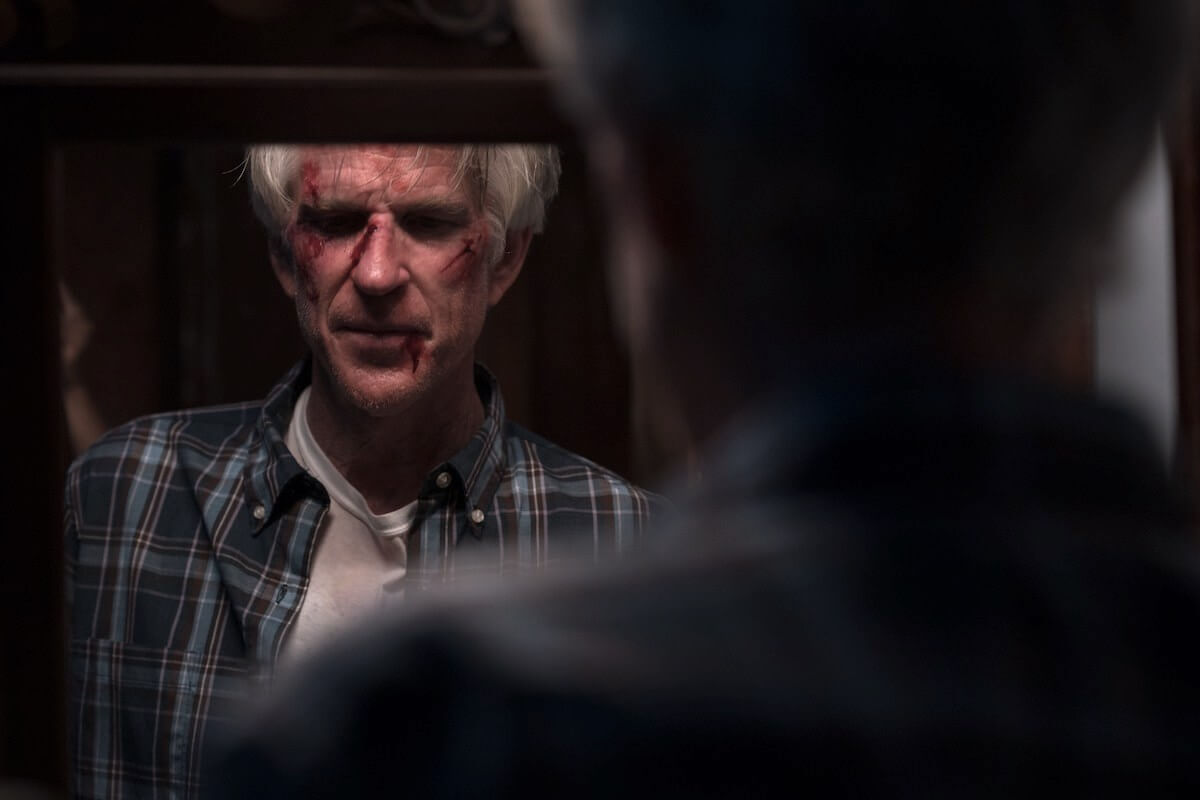
Matthew Modine is one of his generation’s most versatile and popular actors. Having worked with revered directors such as Christopher Nolan (The Dark Night Rises) and Oliver Stone (Any Given Sunday), he is recognisable to modern audiences as the manipulative Dr Brenner in Stranger Things. Yet despite a long and varied career, his most notable role will always be as Private Joker in Stanley Kubrick’s Full Metal Jacket.

Matthew recently took some time to talk to STARBURST about the new horror film Wrong Turn, that career and, of course, that film.

STARBURST: Are you a horror fan?

Matthew Modine: Yes and no. I got very damaged at an early age. My father was a drive-in theatre manager and I saw, from the projection booth as I wasn’t allowed out into the theatre, Night of the Living Dead. In a way, seeing the movie without sound, with just the noise of the projector running next to me, it was more terrifying. And the blood in black and white. It becomes more magnified in a way. And just as I was getting over that movie, I saw The Exorcist, which damaged me all through high school. It’s funny how they hang on or linger in the back of your mind, when you go down into a basement or something, they rush back into you.

Which leads into Wrong Turn. Perhaps we don’t understand it fully over here because of the difference in size between the UK and America, but the idea that there could be people living out in the vast woods of West Virginia, that fear being modern and relevant.

Not only is it possible, but I think there are people living in the backwoods of the some of the Appalachian states that have no contact at all outside the world in which they live. We filmed the movie in Ohio, and it’s incredibly rural. I made two movies there over the last couple of years, and I went into a small town, and people were waving the Southern Cross flag, which is pre-Civil War. There are some really backward people in the United States, so in my mind there’s no question this film could be real.

When reading about you two things comes up: firstly, Full Metal Jacket and we’ll come back to that, but also the roles you’ve turned down. Not to linger on those specifically, how do you choose your roles? Is there a process?

It’s changed over the years. I studied with a lady called Stella Adler at the Stella Adler Studio of Acting in New York City and she had come from a generation of political theatre, Chekhov and Arthur Miller, and the plays they wrote often had great political content. Doing the right thing and being a moral person. She infused within me the notion that when you are projected upon the big screen or come into people’s homes on the television, the things that you do and the things that you say will have an impact on those people’s lives. You can influence people like Fox News does in America. It’s a very detrimental news source because it’s filled with untruth and propaganda. It was like I didn’t learn anything until I left school. I was invited to go to the Berlin Film Festival and while I was there, I was invited to go to East Berlin. Americans aren’t really taught about the Second World War. We know the British were our Allies but if you study American history of the war you discover that the Brits and the Americans were responsible for winning the war. The French and the Italians had nothing to do with it. And the Russians had zero to do with the war. So, when I went to East Berlin and I went to a monument to the millions of Russians who died fighting the Nazis that was eye-opening because I’d never been taught that. I was 21 years old and I never knew that. Then I met these Russian soldiers who spoke English, and we swapped cigarettes and pins, and I realised these kids were no different than my brother Mark who had participated in the Vietnam War. I was taught that Russians were evil and wanted to destroy the world. The whole thing changed me. So, when I came back and the script that was waiting for me was Top Gun, I read it and thought it was a propaganda piece. That it was perpetuating this myth that the Russians were an evil empire who wanted to destroy the Earth.

With Wrong Turn, you have The Foundation separating themselves off from society, predicting the downfall of America, which is strangely topical. The killing and the torturing aside, would you say then this is a view shared by a lot of Americans right now, to distance themselves from the marketed truth?

Yeah. The interesting thing that America is asking itself now, if we compare the attacks of 9/11, is Donald Trump like Osama bin Laden? He led this insurrection, he inspired people to attack the United States Capitol. How is one act of foreign terrorism different to domestic terrorism?

That’s interesting because your character in the film is an everyman, fighting against this powerful sect to protect his family. Did that then seem relevant to you right now?

[Laughs] You choose films for different reasons at different times. I’m a father with a daughter of similar age to Charlotte Vega, who plays my daughter in the film. I certainly understood it. More importantly, Liam Neeson is possibly my best actor friend and the one thing I don’t have in the movie is a great line like him. ‘I will find you…I will kill you…’ [Laughs]

Did you campaign for one?

I wanted one! The one thing I did get to do, without spoiling the movie, is to dispatch one of the baddies. In the script, it was my daughter saving my life. I said to the director you got to give it to the dad. All these dad’s that are watching the movie, feeling emasculated by these horrible people, you got to give them a moment where they defended their honour.

You’d earned the right by that point.

Absolutely. I’d done a movie with John Schlesinger, with Michael Keaton and Melanie Griffith called Pacific Heights. I think the movie would have made a load more money if at the end when Michael Keaton fell on the spikes, if he’d started to pull himself off, and I’d reached up from where I was below him and pulled him back down on to them. Because he’s shot me, he’s beaten me with a golf club, he’s ruined my life, he’s destroyed my apartment. The audience really wanted my character Drake Goodman to get one back at him.

It sounds like you need some more action in your films.

[Laughs] As I told you, my dad was a drive-in theatre manager and we loved those type of films. I can practically quote all of Clint Eastwood’s films. They’re fun, fantasy movies and every actor would probably be lying if they said they wouldn’t like an Eastwood role, or to get a line like Arnie.

We have to mention Full Metal Jacket, and I’m sure you’ve been asked pretty much every question there is. What do you think of the film now compared to when you made it, given everything you said and how life changes?

It’s extraordinary to be a part of a project that is as relevant today as it was when it came out. There’s no expiration date on Full Metal Jacket. So many things are ‘80s movies, or ‘90s movies. Full Metal Jacket’s not like that. Kubrick and I had that conversation while making the movie. Films should be like great pieces of music. I could put on a Beatles song from ‘62 or ‘68 and they’re just good songs. I’ve done about 90 movies now and everyone has the same equipment, cameras and so on. Some film directors are able to take that equipment and create something multi-dimensional; which is interesting and compelling, and some people take it and make one-dimensional, boring crap. I haven’t figured out why sometimes it works. Why did Stranger Things become the global phenomena it is? Who knows?

As a moral person then, and given what you’ve talked about, how do you feel about the future of filmmaking and generally in these unprecedented times? And emerging from the Trump Era?

You have to remain optimistic and hopeful. I just drove across America because the airports are a disaster right now. It’s fascinating because there are so many different Americas. If you live in California or New York you have a certain perspective of what America is, but when you get outside into Pennsylvania or Georgia or Virginia or Texas, they’re very different with different values. What’s important in California and New York such as environmentalism and improving the world, outside of those states people don’t care. They’re just trying to make ends meet and get by. They often call them the flyover states. It’s important to remember we share this world with people who have different wants and desires and ambitions. But the most important thing, and going back to the start of our conversation, is getting outside the United States and realising the Russians are not bad people. As soon as we can give people education and help them understand that we all share similar desires the better we’ll be and the more we’ll understand the world.

A perfect place to finish. Finally, congratulations on the film.

Thank you. It’s got some good scares!

Signature Entertainment releases Wrong Turn on digital platforms to rent from February 26th and DVD/Blu-ray on May 3rd. You can read our review here.

Jeffrey Wright | NO TIME TO DIE

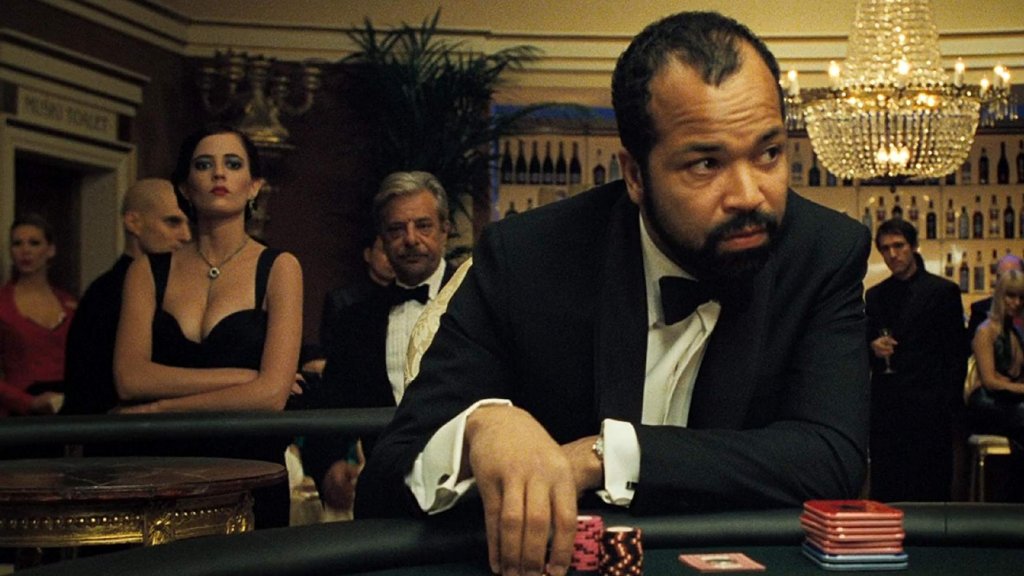
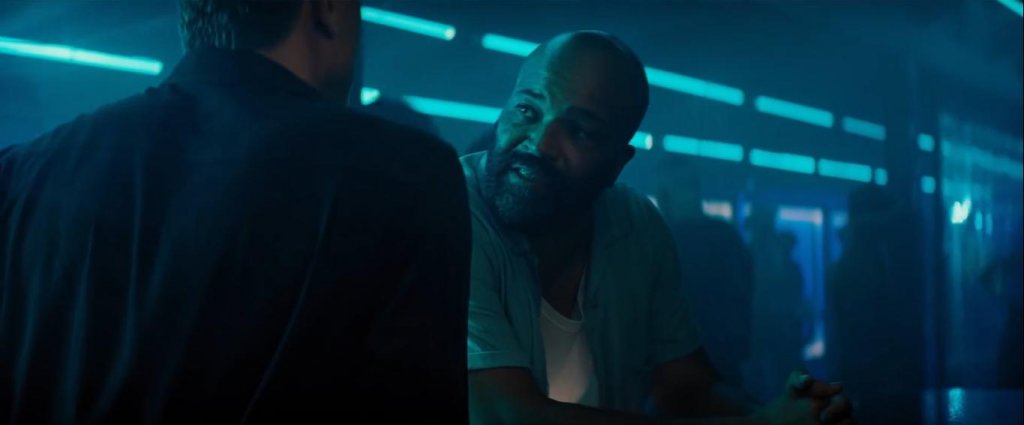
After making his debut as Bond ally Felix Leiter in 2006’s groundbreaking CASINO ROYALE, JEFFREY WRIGHT now returns to the character for the third time, the first actor to do so. STARBURST talks with him to reflect back on his experience as this iconic character, while finding out what we can expect from the highly anticipated NO TIME TO DIE…

STARBURST: You’re a huge fan of how Jack Lord portrayed Felix Leiter in Dr. No; why do you think that his take on the role was so special to you? 

Jeffrey Wright: He was just so magnetic and slick. As well, he was my first introduction to Felix. He is the first footstep that I discovered as I was in the woods looking for the character myself.

When originally preparing for the role in Casino Royale, how much influence did you take from Jack Lord’s approach, and overall how did you yourself go about getting ready to play Felix? 

I don’t think I really reached out to his portrayal in that way, aside from asking if I could wear sunglasses at the poker table. Beyond that, it was just about trying to be as absolutely cold and cool as humanly possible, which is what the Bond audience will generally ask for. Also, I tried to create Felix in relationship to Daniel’s Bond. Daniel brought a new type of legitimacy and authenticity to the character. We pushed the storytelling and the franchise into new territory. One of the things that was important for me was to emphasise the glamour less, which maybe Lord for example represented, and focus, to a larger extent, on this being a guy that the audience can absolutely picture in their head, laying incognito inside some intensely seedy, but necessary environment. Being functioning, and surviving, and being adept. Getting the job done. So yeah, we live within the same franchise, but to some extent, it’s inside a different world.

Quantum of Solace was the last time you appeared in the James Bond universe. What was it like to actually be back on a Bond set after some time away? How were those first couple of days on No Time to Die?

It was like being back in the band for the new tour! It’s like we’d taken a couple of tours off, and we were now back at it. It was great! We didn’t miss a beat or a note. The first days were down in Jamaica, and it just felt great to be back. I had forgotten how much I enjoyed working with Daniel, and how much I enjoyed being on a Bond set, which is a really welcoming, obviously demanding set, but at the same time, it has a real laid back, humble energy about it. The expectation is that everyone knows what they’re doing, does it well, and is given space to do that. As well, the Bond franchise is a family business. What audiences might under-appreciate is that there’s a real sense of warmth about the whole affair. It just felt like I belonged to that moment.

This is your third time playing Felix, so when it comes to the character’s story arc, did No Time To Die feel like a full circle acting experience, especially as this is Daniel Craig’s last film as James Bond? 

Well, as it’s Daniel’s last, I was certainly looking forward to the invitation of coming back, to round out Felix’s time with him. I don’t know if we came full circle, but we definitely keep extending the line. From Casino Royale into this one, there’s obviously a continuation to the story that’s being told.

You’re the only person to play Felix for the third time; did that fact have any sort of effect or even add pressure?

It’s hard not to be aware of any of this when you spend any time on social media! I didn’t think about that for one second while being on set, because you just don’t have any time or space to be thinking about things like that. You’re pretty much focused on the job at hand. On a Bond set, at times, if you’re not focused on the here and now, you can end up being pretty jacked up real quick if you’re not careful! It’s like when I used to play sports at school, they’d say “Boys, don’t bring your newspaper clippings to the field! Those articles praising you, don’t bring them inside the huddle!” That’s how you get disappointed really quick.

Director Cary Joji Fukunaga has worked on a diverse list of projects; what was he like to work with on No Time To Die?

Well, Cary has a very quiet energy on set really. He’s clear, he is in the moment, and he adapts as necessary. He’s also multi-tasking at times in ways, which I noticed, that were really remarkable. He would be filming a scene with us, and there’s another second unit scene that’s happening with a couple of hundred characters. So he’d be watching that unfold on a series of monitors, as he is watching the scene that we are filming on another set of monitors! He was juggling a lot of plates, but he was doing that with a great deal of clarity and vision, self assuredness, and a sense of ease. He’s a great collaborator.

No Time To Die doesn’t pull from Ian Fleming’s work directly, which has only been done a couple of times. Can you tell us how you think the returning writers, along with the addition of Scott Z. Burns and Phoebe Waller-Bridge, have approached the script, and how you personally think they’ve made it stand out? 

What audiences appreciate about the Bond films is that they’re fantastical, but at the same time they’re grounded in a contemporary way. They are relevant, but at the same time escapist. I think that this film is a continuation of that. With it being Daniel’s last film, it was shaped in such a way that’s befitting of that. Within the canon of Bond films, I think for several reasons, those included, it’s going to have a creative space.

Ultra-tough question time… What has been the most rewarding scene to do while playing Felix Leiter over the course of three films, and why?

In Casino Royale, that encounter with Bond on the stairs in which Felix reveals himself. Because it was at that point where the character – for me, and for audiences – worked. If that happened at the beginning of the journey, then it’s a good thing! So I’d probably say that one. It was in many ways the introduction of Felix in this new body. Fans really dug it, and it was also a turning point within the course of that story.

Straying away from Bond for just a moment, our readers would never forgive us if we didn’t mention WestworldWith such a complex production, how do you find working with so many different directors? Are there any that you’ve learnt more from?

Well, I don’t know if I could quantify it like that, as we have a raft of really talented directors. I learn from each of them in different ways. Jonah’s [Jonathan Nolan] directorial hand flies over most of the work that we do, and he is a fascinating person to work with. There are thousands of moving parts within Westworld, happening over multiple timelines, and happening in multiple zip codes, even just out in say, Los Angeles, at any given time. There are thousands of people who are collaborating, conspiring to make this show happen. So, as you must expect, shit happens, on multiple timelines, as we are working. I’ve never once seen him – and there are things we are not even aware of that are affecting production – publicly dismayed. I’ve only ever seen him try to take whatever challenges or surprises that come his way, and convert them into assets for the process. It really is remarkable. Not only the quality of leadership and directing, it also speaks to a way he glides through life. He’s a wonderful leader in that way.

Finally, and coming back to Bond, how would you say No Time to Die stands out above the rest?

Lashana Lynch is in it! I was watching the trailer, and she is seriously balling in this. There’s more Felix, too. And it’s Daniel Craig’s last appearance in the greatest film franchise that has ever been done. You’ve got to get in there and see what that’s about!

NO TIME TO DIE is scheduled for release on September 30th, 2021.

[This interview was originally published in STARBURST issue 470, March 2020.]


Rob McElhenney & Co. | MYTHIC QUEST: RAVEN’S BANQUET

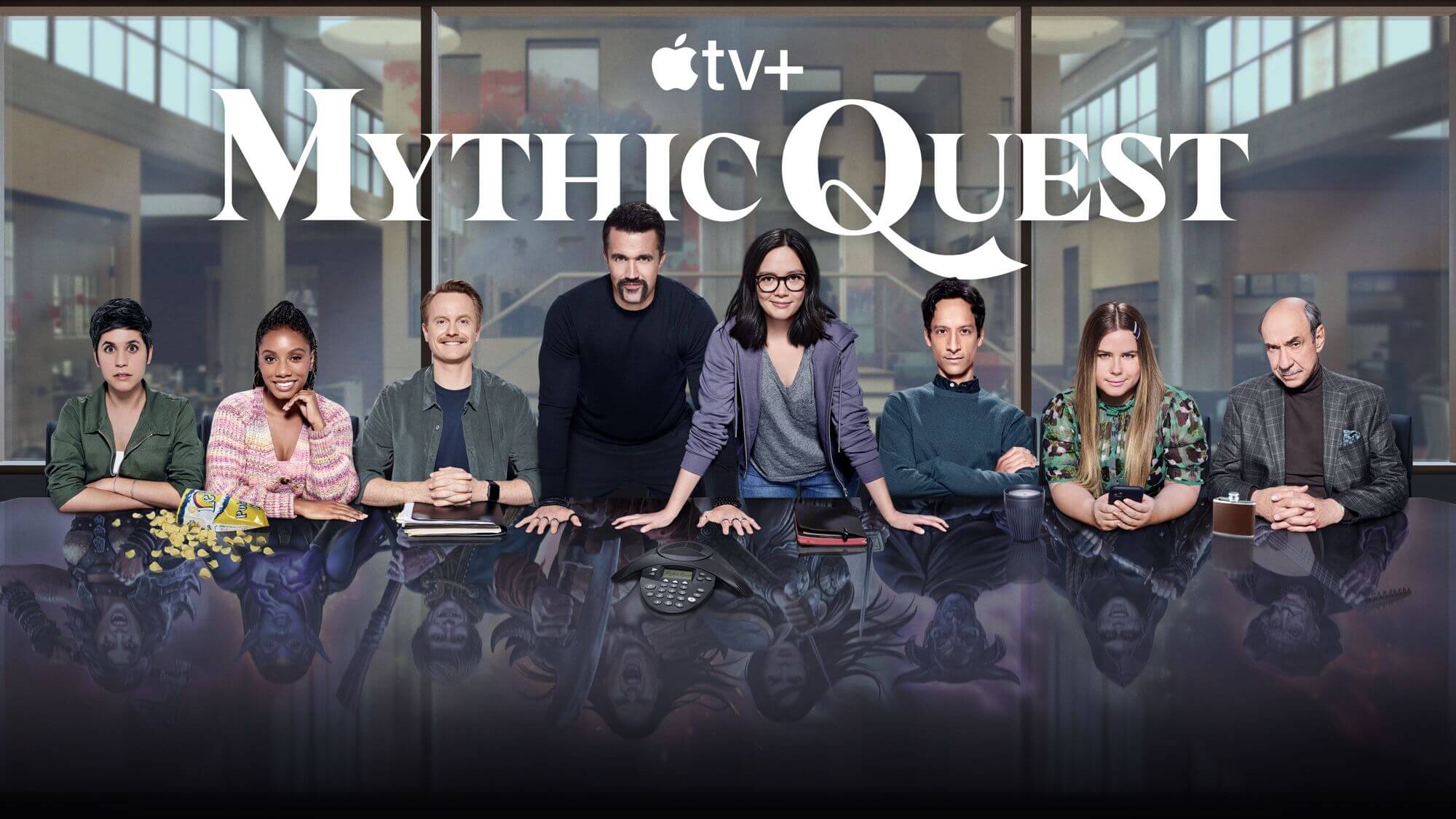
mythic quest cast

When it comes to Apple TV+’s original comedy content, everyone is talking about Ted Lasso – and rightly so. Ted Lasso is wonderful. Arguably even better, however, and far less well-known, is another of their comedy offerings: Mystic Quest: Raven’s Banquet.

Almost seemingly in reaction to Glenn Howerton “leaving” It’s Always Sunny in Philadelphia after its thirteen season so that he could headline NBC’s A.P. Bio, Rob McElhenny, Charlie Day and Megan Ganz – also of It’s Always Sunny in Philadelphia fame – launched their own comedy side-project: a sitcom set in the production offices of an MMORPG.

We sat down with two of the show’s creators, Rob McElhenney and Megan Ganz, as well as stars Charlotte Nicdao, Ashly Burch, Jessie Ennis, Danny Pudi, and Oscar-winner F. Murray Abraham for a chat about bringing the show back in these tumultuous latter-days of COVID-19.

Jessie: I feel a great sense of pride knowing that we get to bring this kind of joy to other people.

Danny: I would say the same. For me, personally, in my own life, I’ve leaned into comedy as a healing mechanism and comedy’s always been a wonderful tool for me to understand the world and my place in it, so particularly in this time period – to be able to create with people that you love – I felt very grateful for that. That we were able to work on a show that could tap into what a lot of people are feeling in this moment, was really just lovely.

The show’s first season was solid stuff, but it was inarguably bolstered by a hastily-assembled pandemic special, akin to similar offerings from the likes of Parks and Recreation, 30 Rock and even South Park.

Whereas the other shows arguably fell victim to doing half an hour of jokes about making TV over Zoom, Mythic Quest fully explored the human emotion currently at stake and gave us something not just timely but remarkably poignant and truly emotionally cathartic.

It seemingly set the tone for the show’s second season, which largely throws away the show’s comedy of cynicism in favour of giving us something more optimistic and with a surprisingly tender streak.

Rob: The biggest inspiration was putting the pandemic behind us. We wanted to make sure we were doing a show that was looking toward an optimistic future. We recognised that a return to normalcy is not going to happen soon, it’s not going to happen easily, but we felt that by the time this is going to air that people are going to be ready to put COVID behind us.

Ashly: I know from my own life, when there’s a trauma or a tragedy, it’s really difficult in the moment but it can actually lead to a tremendous amount of gratitude and hope if you’re able to move through it and process it. This is our attempt – our funny, goofy, high-concept attempt – to help people process this idea of going back to life as normal. We’re going to move past it and even if dark days come again, there’s always going to be moments to celebrate and to have hope and have light.

Charlotte: Ultimately, it’s a celebration of hope, which I think is sorely needed at the moment.

Perhaps the single most surprising things about Season Two, however, is the way that F. Murray Abraham’s character – the washed-up, sci-fi author C.W. Longbottom – forms its emotional backbone. Those familiar with the show’s first season will no doubt be shocked to discover that the alcoholic braggart takes centre stage for a couple of this season’s standout episodes and – amazingly – provides the show with a startling degree of tear-jerking emotional resonance.

F. Murray: First of all, thank you for that compliment. I like those two episodes too, very much. I think that it gave me an opportunity to do everything: I was able to make people laugh and cry and make myself laugh and cry.

Megan: I think it’s a very hopeful story that, at any age – at any point in your life – you can decide to make the decision to try something new and stretch yourself and make mistakes and fall on yourself, but that is what living is.

F, Murray: You were able to see a real human being, which I think is one of the key aspects of this series. Each character is real – is a human being. There’s a great sense of humanity here, but I think that everybody dearly loves C.W. I like him. I want to be his friend. I want to hang out with him. I’m having such a great time with this show. It’s just a sheer pleasure… and they pay me!

Megan: When we were looking for an actor for C.W., we said to our casting director, Jeanne McCarthy, “We’re looking for an ‘F. Murray Abraham type’. Obviously we can’t get him but someone like that” and she came back to us and said “What about F. Murray Abraham?” We were like “Oh yeah, right. Like he’d ever…” The casting of Murray was beyond our wildest dreams so we tried to make the second season rise to the level of actor that we had.

F. Murray: Oh!

Megan: He’s blushing now.

Mythic Quest’s creator and star Rob McElhenney recently made headlines for buying Wrexham FC with friend, Ryan Reynolds. Despite his interest in British football and the Apple TV connection, don’t expect him to turn up on Ted Lasso anytime soon.

Rob: What’s Ted Lasso? I’m not aware of Ted… Ted Lasso? Is that a television program? Look, we spend enough time working on Mythic Quest and we don’t need to help out a small, little thing – what is it? Ted Lasso? That sounds silly. What’s that about?

A new Mythic Quest special, Everlight is available on Apple TV+ now and Season Two (featuring a truly magnificent pair of C.W. Longbottom episodes) will be released in its entirety on May 7th.

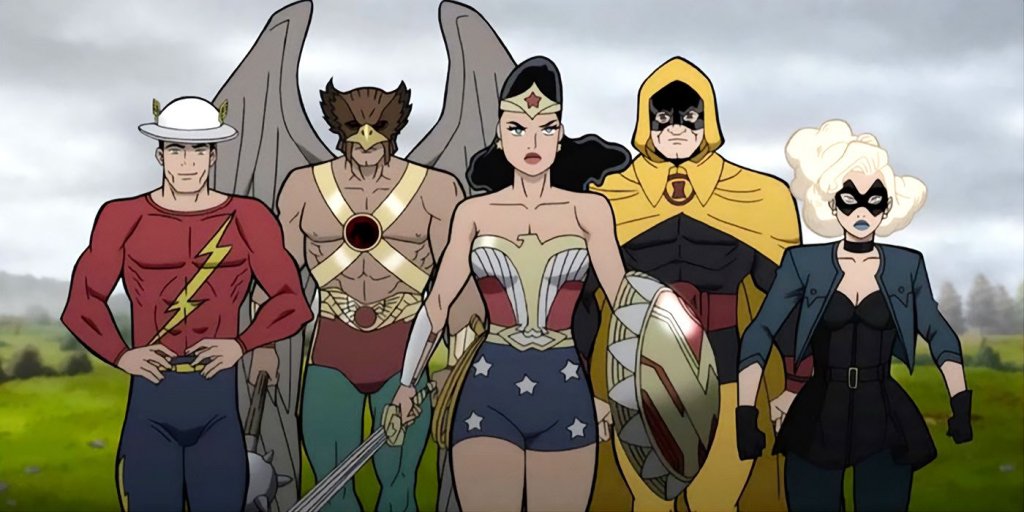
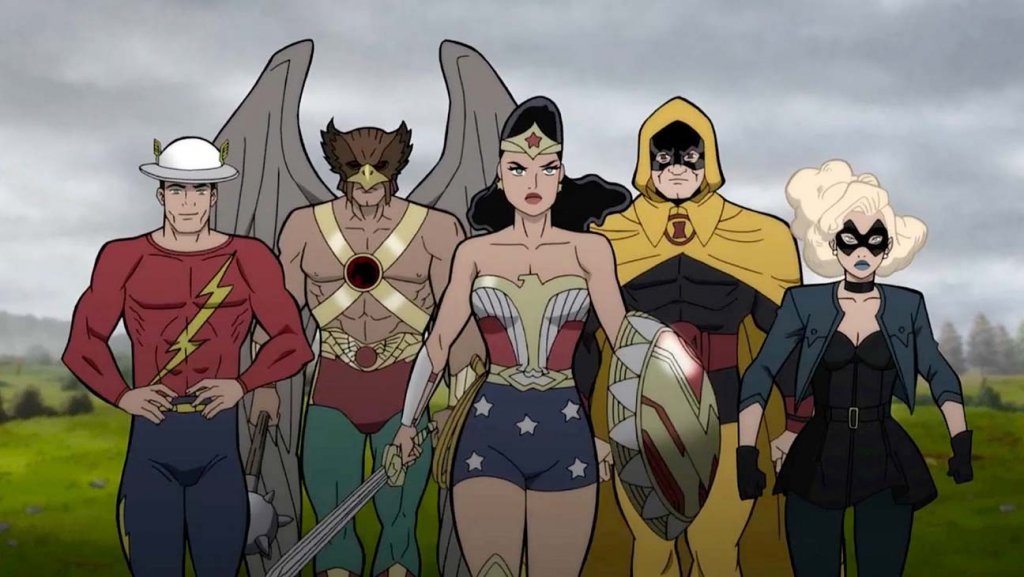
Matt Bomer | JUSTICE SOCIETY: WORLD WAR II

Getty Images. Justice Society: World War II star Matt Bomer voices Barry Allen/The Flash

Since his acting debut in 2000, Matt Bomer has had a very successful and wildly varied career. Shooting to global recognition as con-artist turned FBI criminal informant Neal Caffrey in White Collar, he went on to star in Ryan Murphy’s cult series American Horror Story and The Normal Heart (for which Bomer won a Golden Globe), Steven Soderbergh’s Magic Mike, Amazon’s historical drama The Last Tycoon, crime-mystery The Sinner, the popular sitcom Will & Grace, and is currently portraying as Larry Trainor/Negative Man in the DC Universe series Doom Patrol.

Now the voice of Barry Allen/The Flash in DC Universe’s Justice Society: World War II, Matt Bomer speaks with STARBURST Magazine about his kids’ influence in selecting his roles, his love for voice acting, and which other superhero he’d like to add to his acting repertoire.

STARBURST: Taking into consideration the many spoilers, how would you describe Justice Society: World War II?

Matt Bomer: Gosh, it’s really hard to describe without spoilers! It’s maybe easier to describe Barry’s arc – not that I want to make everything about Barry, but I can do that without spoilers. He’s someone whose mind is in a million places, who’s trying to be a hundred things for a hundred different people, who’s racing around and can’t be present for the folks in his life. And it’s only by being thrust into this extraordinary circumstance where he meets the Justice Society, and sees their relationships and what they’re fighting for, and collaborates with them, that he’s able to really appreciate and be present in his own life in a way that he wasn’t before.

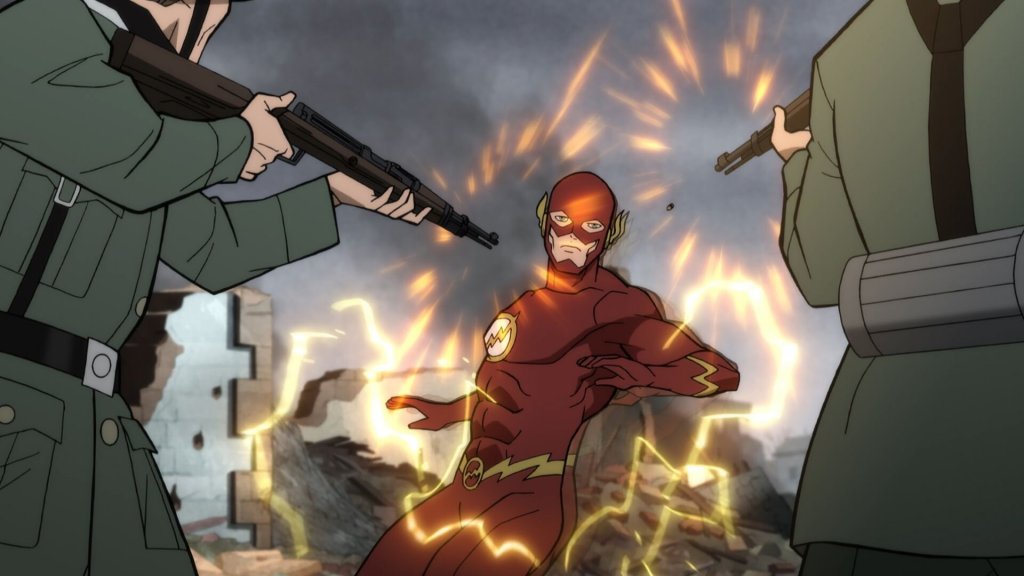
justice society world war 2 barry allen the flash fighting nazis

What was it that attracted you to this role specifically?

Matt Bomer: Well, you know, I always blame my children, but that’s really just a cop out [laughs]. It’s for me as well. I mean, these characters have been iconic for me as long as I can remember. The Flash in particular was a big hit in our home, especially with our oldest son, who was the Flash for one or two years for Halloween, and has always loved to run and be fast; he’s into sports now. It’s a character he’s always loved. And one of our kids is also a huge DC fan. As soon as he’s done with his homework tonight, we’re going to watch the Snyder cut together [this interview took place the day of Zack Snyder’s Justice League release]. So getting to have a great creative experience with characters that I have loved and getting to watch it for the first time with one of our sons who loves these characters as well… you don’t always get to do that as an actor.

And it’s a great role! I loved the arc the character went on and I loved his sense of humour, and his rhythms that were really specific to him and were different from what I’ve been able to do with other roles, like Superman (Bomer voiced the title role in Superman: Unbound) and Larry. It was challenging and intriguing, I love the story and I think there’s a romantic aspect to it that I particularly loved and, yeah, it’s kind of a no-brainer.

It’s a good time for your son to be obsessed with The Flash right now, what with so many iterations of the character existing simultaneously, right now.

Matt Bomer: Yeah, it’s pretty wild!

And you’ve been involved in the superhero genre for a while, having voiced Superman and working currently on Doom Patrol. What do you enjoy most about the genre, that keeps you coming back?

Matt Bomer: Typically, the characters are really well-rounded. And they’re each really specific in how they came to have their powers, how they came to be where they are, what their relationship is to those powers, what they feel their particular responsibilities are to society – those are all wildly different. So, even though I guess they could all be classified as superheroes, they’re extraordinarily different roles, and their circumstances are all wildly different. I don’t view it as doing another comic book character. I really just view it as an actor, and just looking at the circumstances that a particular character is experiencing and dealing with themselves.

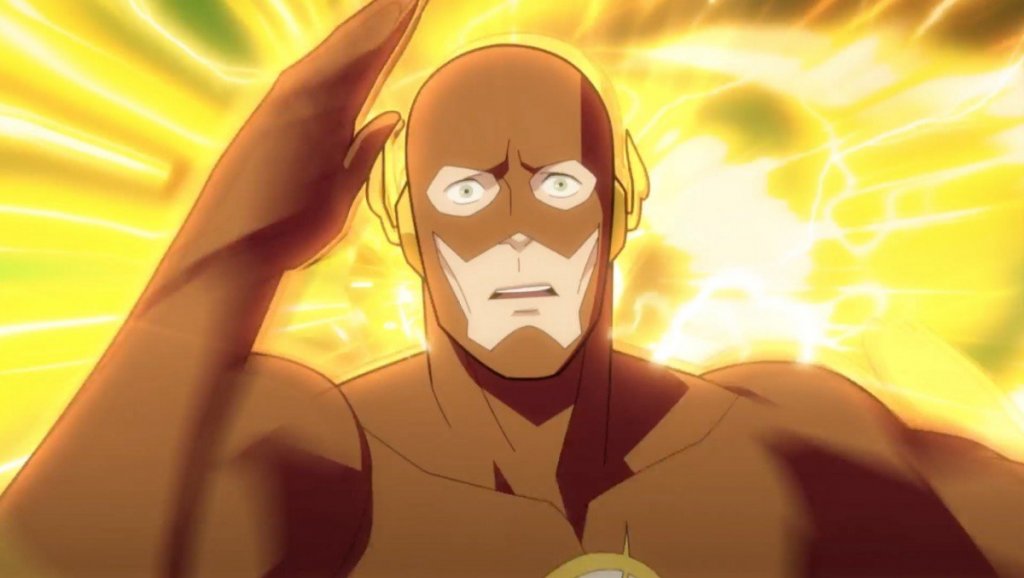
Matt Bomer voices The Flash and Barry Allen in DC Universe Justice Society: World War 2

It’s such a massive genre. You look at your role in Doom Patrol and then your role in Justice Society, and they have practically nothing in common.

Matt Bomer: I mean, they couldn’t be more different. If this genre continues to afford roles that are so nuanced, and well-written, then you can count me in!

If you could pick any other superhero to play in the future, who would you go for?

Matt Bomer: Gosh, that’s a tough one. You know, there’s so many iconic ones that I could list that are off the cuff. One of the roles I really loved in this piece and that I didn’t know at all, is Hourman. I thought he was such an interesting character, and I thought his powers and how fallible they are, and how human they are, made him really relatable. I don’t know, it was a really interesting character to me.

Justice Society does bring in a number of characters that aren’t all that well known, which is always exciting.

Matt Bomer: And I wasn’t really familiar with the Justice Society in general, other than just peripherally. So getting to meet a lot of these characters was really fresh and new for me, and I thought they were given such great life by this cast of actors.

Absolutely. And you’ve obviously done voice acting before, but what do you most enjoy about it versus live action?

Matt Bomer: You know, in many ways, they’re not that different. You’re approaching the work and the text in the same way, but there is a lack of vanity in them, in that you don’t go through hair and makeup, and you’re exploring and finding a lot of that character in the booth with these incredible creatives – Butch Lukic and Wes Gleason were really instrumental in getting everyone on the same page.

And you also have to let go of a certain sense of self-consciousness and vanity in general, because oh my God [laughs], I don’t know that I’ve ever left one of these recording sessions – particularly after we record fight sequences and things – where I haven’t been sweaty and red-faced, panting for breath! Everybody thinks it’s really easy work, but it is work.

Justice Society: World War II

You know, I love that I don’t have to think about how I look or how I’m perceived, and can really just focus on finding the rhythms and cadences of this particular character. I just love voice acting. And obviously, I’ve gotten to do it for some time now, and I’ve loved that creative process. You can’t rely on a lot of physical or behavioural cues that you get used to when you’re on set and in person. Instead, you really have to find different registers and nuances of speech pattern, and rhythms that are unique to whoever you’re playing. I think that’s a fun challenge as an actor.

And what are you most excited for fans to see with Justice Society?

Matt Bomer: A lot of things, honestly. I think the animation style is gorgeous. I already had high expectations and they were still vastly exceeded when I saw it, starting with the credit sequence which has this amazing noir feel. And there’s this great patina to the world that Barry finds himself in when he encounters the Justice League, which I love, versus the world we initially find him in.

I think there’s that aspect of things, and there’s also the action sequences – which I’ve always loved in these films – that are incredible. I also found a lot of moments that were really moving, particularly with the romantic aspect between Wonder Woman and Steve, moments which I think long-time fans of these characters are going to love.

Justice Society: World War II is available on Digital from April 27th. You can also read our interviews with Wonder Woman actress Stana Katic, Hawkman actor Omid Abtahi, and Hourman actor Matt Mercer.

Matt Mercer | JUSTICE SOCIETY: WORLD WAR II

Matt Mercer’s voice acting career has been long and diverse, with credits including the likes of Attack on Titan, Thundercats, Marvel’s Spider-Man and Resident Evil Damnation.  He’s also the voice of McCree in Overwatch amongst many other video game roles. Mercer is also one of the world’s most well-known Dungeons and Dragons Dungeon Masters as he is the host of cult smash, Critical Role In Justice Society: World War Two, Matt is the voice of Rex Tyler, aka HourMan. We caught up with him to find out more.

Starburst: How would you describe Justice Society: World War II?

Matt Mercer: This story is kind of an alternate take on the Golden Age superhero era during the World War Two time period. So without going to much in to the story it deals with modern day Barry Allen discovering the speed force and going back in time to Golden Age DC and encountering the Justice Society of America. One of the heroes he meets is the character I play, HourMan, a bad-ass scientist who developed a particular kind of pharmaceutical system, something called Miraclo, that for an hour makes him superstrong and basically on parr with all, the great superheroes around him but just for that hour, otherwise he’s a regular dude, is trying to survive.

Starburst: How would you pitch the cartoon to your grandmother?

Matt Mercer: Hey, back in World War Two how would it have been if we had a bunch of awesome, colorful superheroes that were just beating the crap out of Nazis and I got to be one. It would be the quickest way  I could describe it to her. *laughs*

Starburst: How familiar were you with Rex Tyler, HourMan before you did this movie?

Matt Mercer:  I was familiar with some of the more modern day versions. I knew about him but didn’t have an extensive knowledge of his presence in the Golden Age of comics. So it was really fun to kind of dive in and do the research and discover this aspect of the old school comic era that I wasn’t quite as familiar with and kind of build a character and performance off of that. So it was a really fun exercise and it is always fun to go into a job and have an element of discovery. And even for me, at least, deepening your nerd cred.

Starburst: How do you create a voice for a character like Rex Tyler?

Matt Mercer:  For me, it involves kind of imagining what the other characters around him sound like in my head, and then finding a unique imprint for him and trying to think what would make him stand out and make me feel like he belongs uniquely amongst this menagerie of larger than life characters and in finding a place of an honest point of connection between myself and him.
So it largely starts with my natural voice and then I begin to kind of push and tweak and add aspects that I feel kind of best represent the character where he is emotionally, where and how he is driven and kind of let those things like texture and volume intensity come together. It all creates a unique imprint that is kind of an offshoot of my natural voice, which still feels natural to me and still feels casual. Keeping it kind of natural and more human in order to ground it. I talk to myself a lot when I’m doing this so it was just an externsion of that process. I’m a weirdo. *laughs*

HourMan

Starburst: If you got to choose one of the less well known heroes from the DC Comics, who would it be?

Matt Mercer:  Oh, man, that’s a good question. I would. I’m going old school, where do I go? I mean, it’s a little more recent, but there’s the Gog and Magog story line from about a decade or so ago and I don’t know, I ‘d like to voice both Gog and Magog and just kind of make it cool, with a weird duality. I’d also like to voice Mister Mxyzptlk, he’s a fun kooky character that pulls away from the classic hero, it would be fun to do odd little sprite like character of chaos and weirdness. He’s not so much little known but he’d be a lot of fun.

Starburst: You’re also famous for long running D&D stream, Critical Role. If you got to be the Dungeon Master for a bunch of DC characters, who would you want around that table?

Matt Mercer:  I mean really, any of them. But Green Lantern would be awesome. A person with the power to turn their imagination into reality would be a real asset to the table. I think Wonder Woman would be an awesome person to have to be that kind of front- line protector for the rest of them and they’d be a bad-ass and a driving force. I wouldn’t put Superman in their, he’d be a little too powerful. And Batman would be a pain in the butt at the table because he’d be telling everyone else what to do. They would focus too much on the rules and would fight me on the rules, so no to Batman. Barry Allen would just be fun, he’s a fun guy to hang out with so I’d definetly want him, does it have to be all heroes?

Starburst: Not at all, would you have some villains as well?

Matt Mercer:  Oh then I’d pull from Gotham at that point. I think Joker would be a little to intense at the table and probably break the game and make everyone uncomfortable. The Riddler would be fun because then he could go ahead and actually find his way through all the puzzles that really confuse all the other players, so I’d go with the Riddler.

Starburst: What are your favorite DC comics, which are the ones that would inspire you to do gigs like this?

Matt Mercer:  Oh, man, I really like a lot of the DC Universe, but I would say in my my core heart should squarely in Gotham since growing up. But even though I just said I wouldn’t play with Batman, I think it has to be the atmosphere of Gotham and the rogues gallery. I really like the unique kind of all shades of grey that a lot of the characters have, the heroes, antihero and villains. So that universe really has a huge part of my love. Rex Tyler is amongst all the bigger heroes, one of the more human and complicated figures. Based on his history and what his power set is as well. Definetly Gotham would be my biggest inspiration.

Starburst: How can we expect to hear your dulcet tones in a Warner Brothers production sometime soon?

Matt Mercer:  I certainly hope so. That’s really up to Warner Brothers but I’d love to come back and do this sort of thing again.


Starburst: Critical Role is huge right now; how does that affect gigs like this? Is it seamless or is there a jump between your voice work and the work you do on the Critical Role show?

Matt Mercer: It’s a challenge when it comes to scheduling, I’ll tell you that. I’m a little more picky and choosy with the projects, which is a wonderful place to be, you know, after being a starving actor for a large part of my life and saying yes to everything it’s nice to be at a point now where I can be a little more choosy with the projects that come my way. But it is challenging, just trying to schedule it all together and make sure that I’m able to facilitate the project that I’m inspires to be a part of so. But beyond that, the one of the things that I was just getting lost in the imagination and trying to tell a story that began with the collaboration of many other people. So I’m really enjoying the way the two things fit together very well.

Justice Society: World War II is available on digital from April 27th. You can also read our interviews with Stana Katic , who plays Wonder Woman, Matt Bomer who plays The Flash, and Omid Abtahi who plays Hawkman.

Stana Katic | JUSTICE SOCIETY: WORLD WAR II

Stana Katic for Absentia

Best known for her lead roles in television series Castle and Absentia, Stana Katic has her latest turn as Wonder Woman in the upcoming Justice Society: World War II. Having previously lent her voice to Lois Lane in 2013’s Superman: Unbound – which also co-starred Matt Bomer, who voices Barry Allen/The Flash in Justice Society – Katic rejoins the DC Universe Movies as another iconic comic book heroine.

Ahead of this latest DC release, STARBURST spoke with Stana Katic about Justice Society, finding Diana’s voice, and what being Wonder Woman means to her.

Justice Society World War II in DC Universe Animated Movies, starring Matt Bomer and Stana Katic

How would you describe Justice Society: World War II?

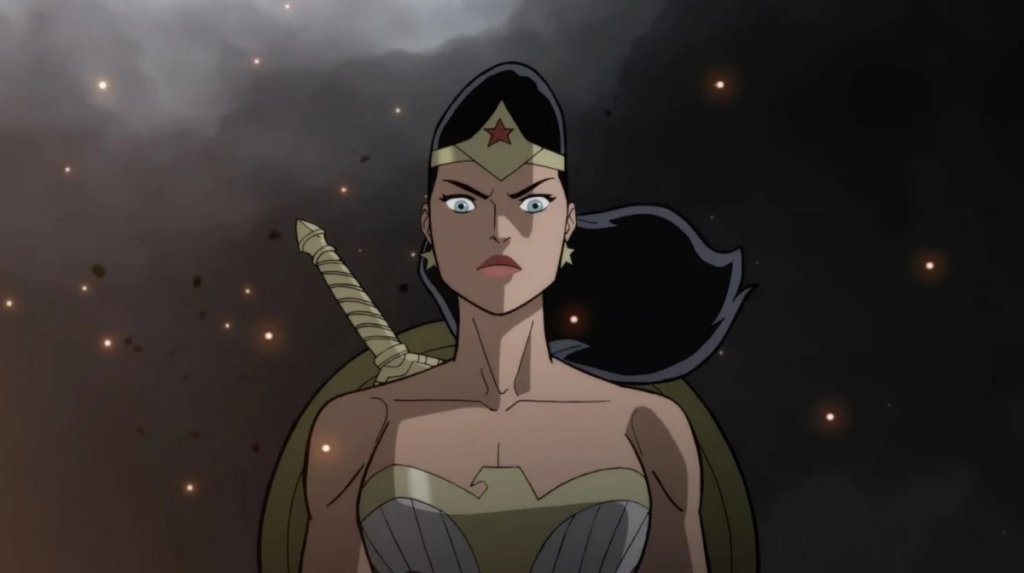
Stana Katic: This movie is like watching a feature film from the 1940s; it just has this beautiful vintage vibe. The artists behind it did a really lovely job of bringing that World War II feel to the forefront, so I think it’s a nice piece of animated art.

What attracted you to this project and the role of Wonder Woman?

Gary [Miereanu], Butch Lukic, and Wes Gleason were kind enough to offer me the role, and for me to be able to be a part of that team and to play in their world for a while, that was a no-brainer. I’ve been a fan of Butch’s work since Batman: The Animated Series, I’ve worked with Gary in the past, and Wes is just a dream to voice for. That was part and parcel of the decision and then, of course, Wonder Woman is such an iconic character! Getting to participate in that legacy in a small way was a gift.

Like you say, Wonder Woman has a long history and has had a number of iterations. What direction did you have in mind for this version of the character?

Butch and Wes were clear on wanting to honour Wonder Woman’s mythology by having her have an accent. And they offered a range within which they felt that this character’s accent could fall. I think that for me it was really interesting, because I had the task of imagining what one of these Scythian, Illyrian, Grecian warrior women might sound like today.

I got to do a deep dive and figure out the geography of where the Amazon’s history is founded, and it’s something I’ve been interested in in the past. I’ve read books on the origins of the Amazon mythology like the one by Jeannine Davis-Kimball [Warrior Women: An Archaeologist’s Search for History’s Hidden Heroines], and then it was just a matter of playing around with that, figuring out what the character might sound like.

I was also working in Bulgaria at the time when we recorded the first session, and it’s believed that the Amazon culture started somewhere near the Black Sea. So that was easy to grab at. And for me also, it was a matter of adding a touch of my grandmother’s voice, who survived World War II. So, you know, small shout-out to my girl!

What did you love most about your character arc in Justice Society?

She’s one of the leadership elements of the Justice Society at this stage, and being faced with a threat as damning as the Nazis is all-encompassing. And while there’s a sincere and deep affection and love between her and Steve Trevor, it’s something that she doesn’t necessarily allow herself time for because she’s so committed to her mission. I think that there’s a huge learning curve in being able to balance saving the world and living her life.

Justice Society World War II in DC Universe Animated Movies, starring Stana Katic as Diana Prince and Wonder Woman

And this isn’t the first time you’ve done voice acting. What do you enjoy most about it that you don’t get in live action?

You know, it’s like performing but you’re not able to rely on gestures in any way, other than to help create that sound. I’m a fan of comics, I’m a fan of animated artwork, I’ve been exposed to it and watched it since I was really, really young. So to be able to jump in and play a character in that world feels like something that I’ve been practicing for since I was four.

And then the other factor for me is, in the interim of this pandemic my house was sort of ground zero for a lot of nieces and nephews. And so, other than studying permaculture, I was taking care of little children. And you know, things happen, and I had to take my niece to the emergency room. And while we were there, I could tell that she was nervous. And so, I just randomly started playing her Wonder Woman clips from the different films and TV shows, and it truly boosted her spirits. It gave her a tremendous amount of confidence to face what we were facing in that moment, and I was especially touched by how much seeing a young Wonder Woman empowered her

So, we have our own Wonder Woman’s salute, and we’ve had it since long before she saw or knew anything about the Amazons; and that day, it become our own kind of physical battle cry. To know that we’re participating in a story that has the potential to embolden and empower people, and especially young girls, that’s just a real treat for me.

Having played iconic heroines like Lois Lane and now Wonder Woman, what would be your next dream role?

Honestly, I’m just game to play in this world – period. I would do anything, especially with this team. It’s so much fun to play and explore, and sort of be in this sandbox, that they could ask me for anything and it would be an automatic “yes”.

Stana Katic is Wonder Woman in Justice Society: World War II, releasing April 27th. You can read our interview with Matt Bomer, who plays The FlashOmid Abtahi, who plays Hawkman, and Matt Mercer, who plays Hourman.


Main image credit: Sebastien Nogier/Shutterstock