Omid Abtahi | JUSTICE SOCIETY: WORLD WAR II

Omid Abtahi

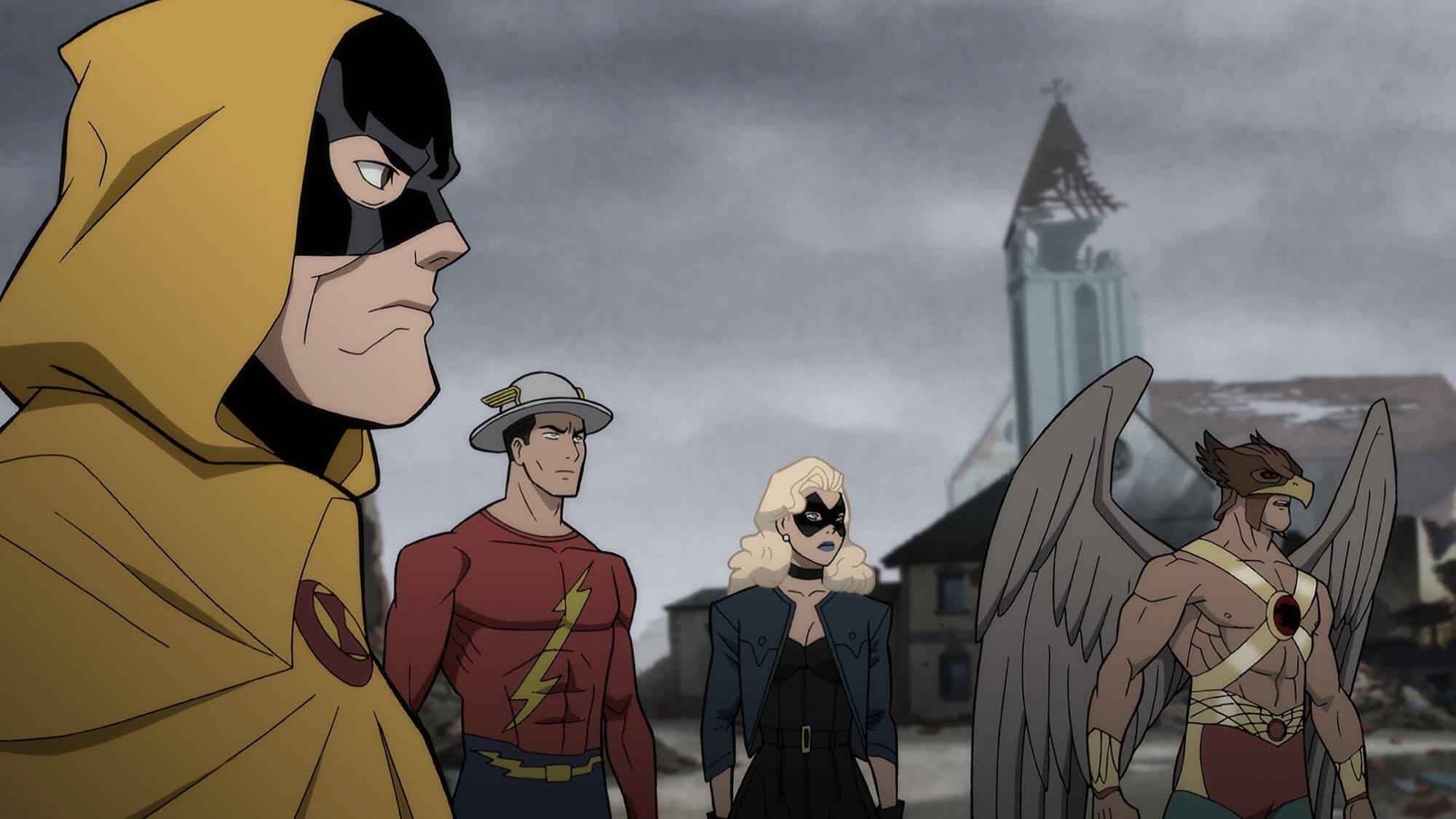
Known for playing Homes in The Hunger Games franchise, Dr Pershing in The Mandalorian, and Salim in American Gods, actor Omid Abtahi has played a long list of diverse and exciting characters, but he has never played a superhero, until now! As Hawkman, he is part of Justice Society: World War II, a new DC animation that throws iconic characters into an emotional, time travelling story, with a classic war torn setting as its backdrop. STARBURST talks with Omid to uncover how he approached portraying Hawkman, and MUCH more!

STARBURST: This is the first animated superhero film that you’ve been a part of, so how exciting was that for you, and how did it compare overall to the voice acting projects that you’ve done before?

Omid Abtahi: I was very excited about it because, whether on screen or as a voice over, I’ve never played a superhero before, and as an actor I never anticipated playing a superhero. So just to have this opportunity was very special. It wasn’t too different to the voice over work that I’ve done before, because specifically with this project and this character, I had worked with the casting director Wes Gleason before on another project. The reason that he had me in mind for Justice Society: World War II was because of this prior project that we’d worked on. So when I got the offer for this, I was like “What do you have in mind, Wes?” and he said “What you did on that other project, let’s go ahead and bring a lot of that into this. I thought it was this deep, brooding, thoughtful character. So let’s apply it to Hawkman.” So, I was able to use that as a jumping-on point into a world that I wasn’t very familiar with going into it.
Justice Society II

Hawkman has an extensive history, going all the way back to the 1940s. How much research did you do beforehand, and how did you approach putting your own spin on this classic character?

I knew who Hawkman was from growing up, and from the comics that I did read, I remembered him. He was very memorable, just because it’s a guy with wings. I wouldn’t call myself educated by any means. I went on the Internet and watched videos, and I started reading about him. I have to be honest, it was very overwhelming, and it was rather confusing. The more I read about him, the more confused I got, because he had so many different backgrounds, iterations. I even tried to watch a cartoon with him in, but I turned it off after three seconds because somebody else’s voice got in my head. That’s something that I didn’t find helpful. My main takeaway for Hawkman was that this is a man who has lived many lives, and he has access to those lives. He is deep, thoughtful, and powerful. I just wanted to bring that kind of wisdom to this character first and foremost.

The World War II setting seems to capture how we see superheroes in a unique and gritty way, what did you personally find the most interesting about playing a superhero within this historic time?

I’m a huge sucker for history, so I love that this took place in the past. I also love the animation choices that they had for this project. It’s cool to live in that world, but it didn’t really effect how I approached the character necessarily.

Justice Society: World War II has its fair share of emotional moments, especially for Hawkman. Is there a scene that really stood out to you when you worked on the film?

100%. There are two major scenes with Hawkman and Black Canary, where they’re able to take a breath in all of the action, and there’s this moment for them to have a really deep conversation over the span of two minutes. It was those two big scenes that I really gravitated towards. I was able to place who Hawkman was from those two scenes. Especially the last scene, which I’m afraid to talk about!

Hawkman can be calm and collected, but then switch to angry within a heartbeat. He gives a good balance to the Justice Society team. What do you think that he brought to this film in particular?

He is very much the quiet, brooding type. He talks very little, but when he talks it means something. A lot of the other characters are very expressive, and they vocalise their feelings. Hawkman just seems to be less like them. So I think that he brought a different dynamic to this ensemble piece. So when he speaks, people listen.

This film can stand on its own, as in you don’t have to know too much about DC beforehand to get to the story. Would you agree with that? The fact that it could appeal to a wide audience, instead of being just restricted to die-hard DC fans?

Yeah, because to be honest with you, I don’t have a huge knowledge of DC or Marvel. I was able to just read the script and enjoy it for what it was. I could lose myself, and immerse myself in that world straight away. So I guess I’m a living example of that.

Finally, why should STARBURST readers check out Justice Society: World War II?

It’s a fun movie. At the end of the day, it’s just a really good time. There’s definitely some touching moments in there. If you’re looking to be entertained for two hours, then this is that movie for you.


Justice Society: World War II is available on digital from April 27th. You can read our interview with Matt Bomer, who plays The FlashStana Katic , who plays Wonder Woman, and Matt Mercer, who plays HourMan, here

(Main image by Gage Skidmore)

Travis Stevens | JAKOB’S WIFE

Directed by Travis Stevens, Jakob's Wife stars Barbara Crampton and Larry Fessenden

Ahead of Jakob’s Wife’s premiere at South by Southwest last month, STARBURST caught up with filmmaker Travis Stevens to discuss his sophomore feature, a feminist vampire flick starring horror icon Barbara Crampton. We discuss genre tropes, different definitions of empowerment, and Stevens’ movie inspirations.

STARBURST: How would you describe Jakob’s Wife?

Travis Stevens: I’d say Jakob’s Wife is the story of a woman who has been married for thirty years, and who feels that her life has gotten too constrained. Then through an unexpected encounter, she rediscovers her own power and decides that things are going to change, and her pastor husband is going to have to change with her or he’ll have to get out of the way.

Basically, trying to do a movie that honours stories that look at women in the later stages of their life – like Alice Doesn’t Live Here Anymore – and combine that with a really fun horror movie.

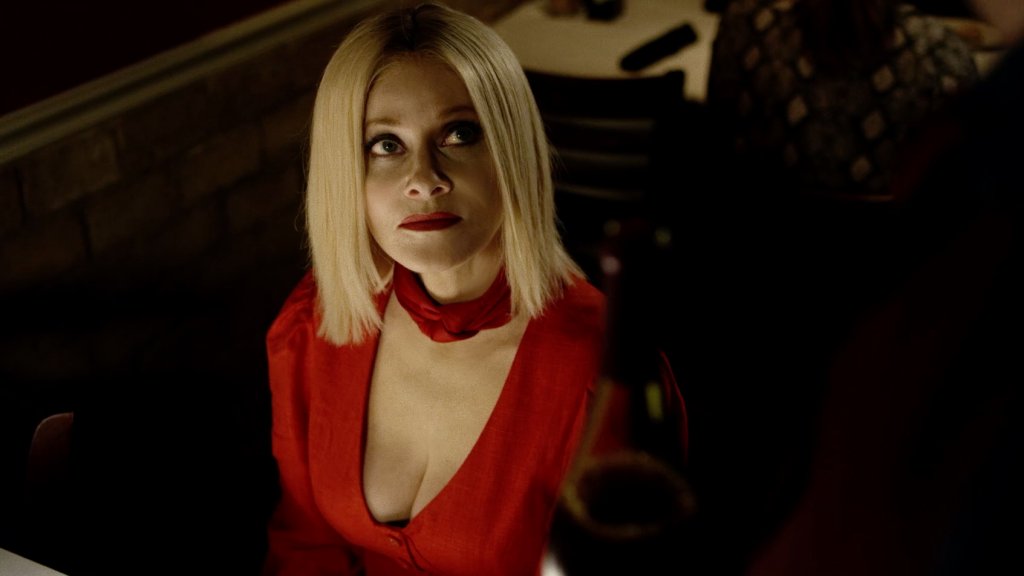
Barbara Crampton as Anne Feddler in Jakob's Wife, SXSW 2021 by director Travis Stevens

What was it that made you want to direct this screenplay?

Travis Stevens: Barbara Crampton. She found the script originally, years ago, and had worked on it, developing it and working with different people. By the time it got to me, it was very clear what this movie could be, both as a story and as a role for her. Barbara Crampton had become a horror icon as an actor, and then stepped away to focus on raising a family. And she recently got back into acting, and wanted to move more fully into storytelling as a producer. And so it was immediately clear from reading the script that this movie and this character wouldn’t just be great for her, but it also reflects her own story that she was going through both personally and professionally. That was really exciting to me as a director, to get to work with her and bring her truth into this story.

Of course Barbara Crampton was attached from the start, but how did you go about assembling the rest of the cast?

Travis Stevens: The idea was to create an on-set environment that can be loose and flexible, and encourage a bit of improvisation. People could bring a spark, a bit of naturalism to the story because I wanted to counterbalance the fantasy elements with a more grounded naturalism. It really became about casting actors who could do that, starting with Larry Fessenden as Pastor Jakob Fedder, all the way through to Bonnie Aarons, Sarah Lind, Mark Kelly, and Nyisha Bell, Robert Rusler, etc. Basically, we were just finding people who could be loose and funny, and flexible. We did a lot of improv and I got very lucky with such a great cast.

This is your second time directing a feature, both of which have been horror movies. What do you enjoy most about working in this genre?

Travis Stevens: You can use the horror movie format to talk about a lot of different subjects, and I think it’s a very flexible and malleable genre. So, with every script, whether it’s something I’m going to write or produce, I look at it and ask, “What is the core idea here, beyond the horror aspect? What is this movie about, and what does it have to say? And does that answer have relevance in our world?” And only once that’s been identified and answered, then we look at the horror elements and try to make it the scariest, goriest, most fun movie possible.

And what would you say Jakob’s Wife’s core idea is?

Travis Stevens: I think at its core, it’s about a woman who regains the confidence to state what her needs are, and a man who tunes into the fact that he has stopped listening to his partner. And that can happen in any sort of relationship, where we stop really being aware of our partner’s needs.

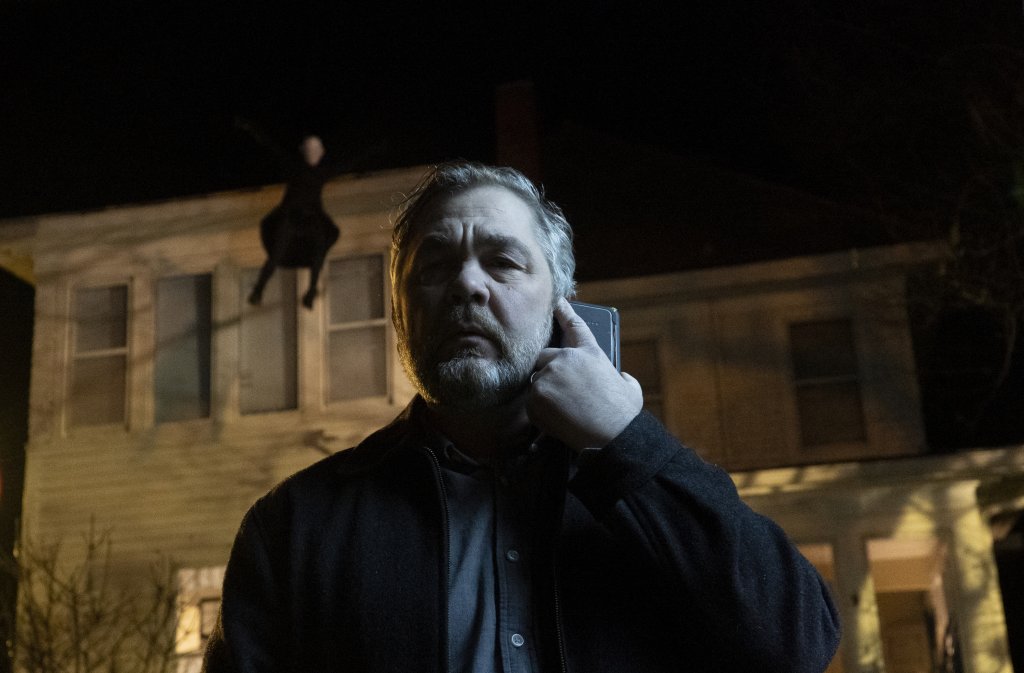
Mark Kelly as Bob Fedder in the horror JAKOB’S WIFE , a RLJE Films and Shudder release, directed by Travis Stevens

We also spoke with Barbara Crampton the other day, and she explained you were the one who suggested casting a woman as The Master. Why was that important to you?  

Travis Stevens: Well, this is tied to that last question. This is a movie about a woman deciding what she wants from life, for herself. It was important to make sure that the movie wasn’t asking her to make a choice between two men [her husband and The Master], that The Master wasn’t coming in to seduce her and make her choose between him or the pastor. That’s not what the movie is about, it’s about what Anne wants for herself. What does she want to do? Where does she want to go? What does she want to spend her days doing? And so, changing The Master’s gender allows all these interactions to completely change and be about Anne. That was really important.

It’s interesting too that often in mainstream horror, women are “empowered” through their struggle for survival.

Travis Stevens: There’s capital E “Empowerment”, and then there’s real empowerment. And one of the things that’s become clearer over the last few years, as the dialogue surrounding different kinds of social and cultural representation in films continues to evolve, is that a lot of movies think they’re doing something empowering or representative, but they’re not. It’s just on the surface and to really get to the core of what someone’s experience is outside your own experience, you have to have a dialogue with the people in question. That’s how we have movies that empower, in lowercase.

I think the most exciting and rewarding aspect of this project was the conversation with Barbara, reflecting on how she identified with Anne, on her experiences, and bringing that into the screenplay. And talking with Larry [Fessenden] about what his marriage was like and his experience with life, and then speaking with them both together. That allowed us to ground the story in truth and make a more honest empowerment story.

Another great thing about this film is the number of nods and homages to prominent horror and cult movies. What were some of your biggest style inspirations for Jakob’s Wife?

Travis Stevens: That’s a good question. So, the movie sort of reflects the experience the characters have; it starts very drab, then this event happens, Anne starts to grow into her newfound power, and the world suddenly becomes more vibrant and exaggerated. That’s what she goes through, and that’s what I wanted the audience to experience. That dictated the visual approach, where we were going to set this movie in a banal, American small town, and try to infuse it with that sort of Gothic lighting; and as the story goes on, that gets more exaggerated. We were trying to find clever ways to combine Gothic or traditional iconography from the genre, and put that in a very familiar, generic, small town environment.

One of the fun things we did was pepper in some tributes to what I consider to be the classics in this subgenre, and there’s a lot of little Easter eggs for fans. And then we tried to make some new scenes that hadn’t really been seen in this type of movie before, that would push the genre forward.

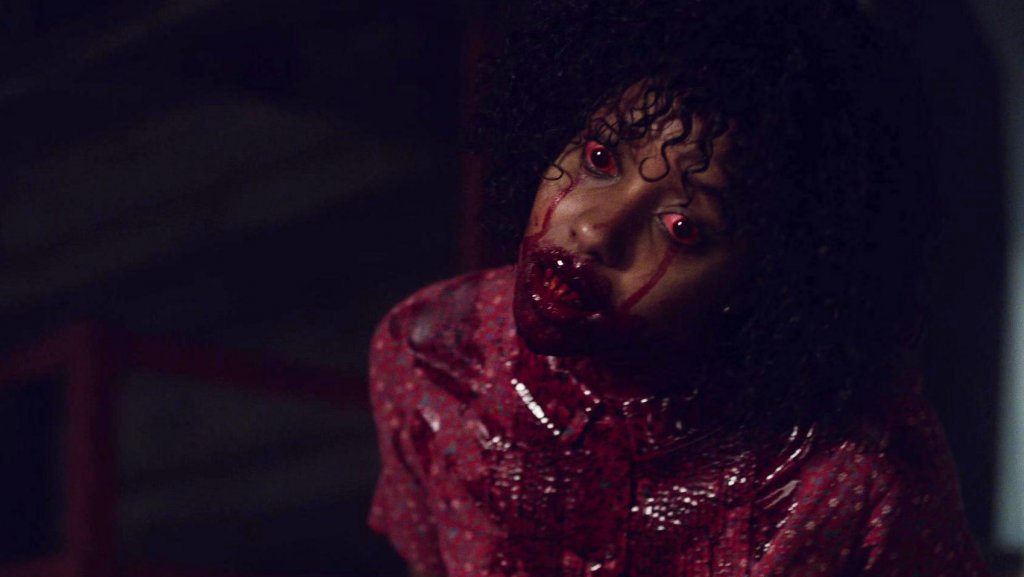
Nyisha Bell as Amelia Humphries in the horror JAKOB’S WIFE , a RLJE Films and Shudder release.

There’s a really interesting marriage between the supernatural, exaggerated style of some of the scenes, and the naturalistic dialogue and quieter character study that you were mentioning.

Travis Stevens: Thanks, it’s a balance where you’re never quite sure where it’s going to go. Sometimes it’s easier to go from A to Z because it’s been tried and tested, and you know where it’s going. But here, combining two genres and different terminologies, we don’t know how it will go down. So, I appreciate that.

And lastly, both Jakob’s Wife and your previous feature, Girl on the Third Floor premiered at South by Southwest. What would you say the importance of global festivals is for indie filmmakers?

Travis Stevens: For the filmmakers, the festivals are important because it literally gives them a global stage to step on and say, “This is what I’m about. This is the type of art that I want to make, and this is the type of artist I am.” And at any point in your career, to be able to do that, that’s the most empowering thing. It can unlock future collaborations, other opportunities, and even just playing the movie in front of people and hearing their feedback directly, that makes you a better filmmaker. Then I think for the audience and for the entire industry, having a festival that highlights different voices from around the world, different perspectives, that introduces first-time filmmakers, that helps the entire business to discover and celebrate a more diverse type of filmmaking. That’s the really exciting, and it’s great to be a part of that. I think it expands our perspective on the human condition around the world [laughs].

Jakob’s Wife releases in US theatres, on digital, and on demand April 16th. 

I BLAME SOCIETY: MAKING A GOOD MURDERER

blame Gillian

Gillian Wallace Horvat speaks to STARBURST’s Rich Cross about her new independent feminist horror film I BLAME SOCIETY…

“The original title for the film was actually I, Murderer because that was the title of the short documentary that this film grew out of,” explains writer-director Gillian Wallace Horvat of her new indie-horror. “When I was asked to come up with another title, I Blame Society came to mind. It’s a good title for our film in the sense that it expresses… the energy that the film has of just rage and vitriol.”

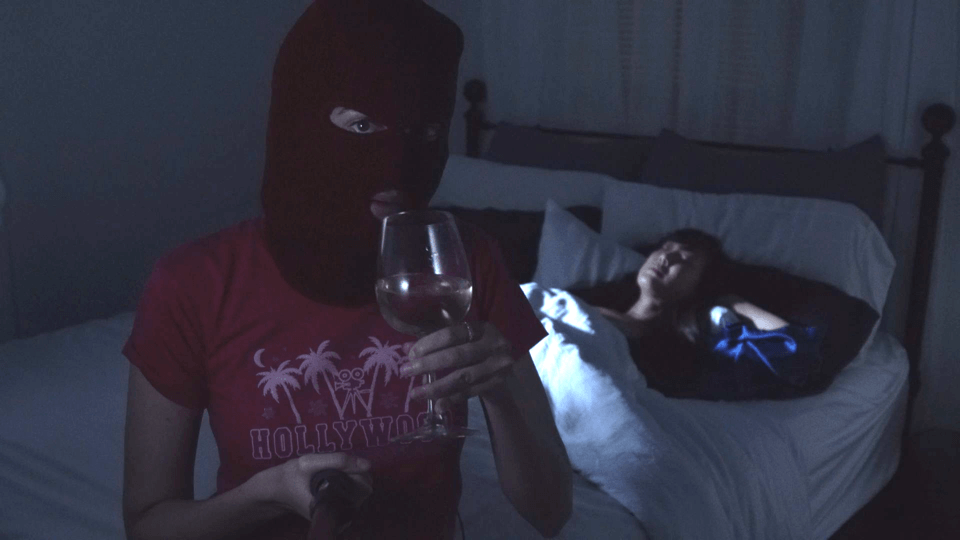
I Blame Society is a combination of horror, satire, and scathing social critique which follows the increasingly questionable choices of a frustrated female film director – played by Wallace Horvat. “She is struggling to get her first feature made,” Wallace Horvat explains. “She’s had some successful shorts, but she’s just having trouble with people believing that… they should give her a million dollars to make a first feature.”

The gatekeepers of the industry seem reluctant to give female filmmakers equal opportunities. “All the while she’s watching that same level of scrutiny not be levelled at her male peers,” she says. When her manager drops her and her boyfriend acts “like he doesn’t believe in her”, this would-be auteur reaches a pivotal decision and takes a fateful step.

She revives a long-abandoned documentary project that was “based on a compliment that she would ‘make a good murderer’,” and decides to finish the film by “actually killing people.” It’s not that her character is motivated by blood-lust, Wallace Horvat insists. It’s a determination to prove to others that “she is competent and talented and worthy of validation.”

Some of the frustration that her character experiences is autobiographical. “There’s a lot of the film that is drawn from my life,” she says, “But I also am not unique. There are lots of female filmmakers out there who face barriers to entry that male filmmakers don’t.”

One of the elements of I Blame Society that makes the film stand out amongst its horror contemporaries is its focus on female agency and the attention it affords to the perspectives of women. There’s obviously “the conceit that it’s a female character who is filming herself”, but this is also a movie with a female Director and female Director of Photography. “It’s very front-to-back a female gaze,” she affirms.

Wallace Horvat embraces the idea that hers is a feminist horror film. “I’m totally okay with it,” she says. “I think that we’ve moved past the point as a society where ‘feminist’ as a slur. So it’s totally fine with me.”

Not that there’s anything earnest or dry about the themes of I Blame Society. “We’re actually showing that films that have subversive ideology are effective entertainment,” Wallace Horvat says. “They are just as funny or gross or hot, or whatever.” Done well, movies with a social and political message “can be effective as films too.”

Key to the success of I Blame Society is the challenge that the lead character’s behaviour poses for the audience watching. “She is not there for you to unthinkingly live through her choices. But I do encourage people to feel a catharsis and feel a release from some of her actions.”

Wallace Horvat concedes that there’s no simple fix that would make the film industry more receptive to the work of women artists. “I can only express my frustration and try and get people to empathise and feel where I’m coming from,” she says. But if audiences respond to this film and it’s successful “then it guides by example – providing an antithesis to the kind of films that… the current male gatekeepers are asking for from women.” New and different types of female film that “feel personal and problematic.”

“We don’t talk enough about the cleansing power of anger and the cleansing power of rage to, to precipitate changes,” she continues. “To de-normalise things that we’ve taken for granted and have just become conditioned to… we need to get angry again. ‘Make America angry again.’ That’s what I’m running on.”

I Blame Society is released on April 19th. You can read our review here, and watch the full interview below:

Henry Lloyd-Hughes & Royce Pierreson | THE IRREGULARS

Royce Pierreson

STARBUST catches up with Henry Lloyd-Hughes and Royce Pierreson, Sherlock Holmes and Dr Watson respectively in the new Netflix series The Irregulars at the recent round-table…

STARBURST: The dynamic of Holmes and Watson is always going to be key. Did you put a lot of thought into how you would play that as their relationship is fundamental to the central story?

Royce Pierreson: I don’t think we really thought about how we would build the relationship. It’s often about how you react to the other person and luckily, Henry and I get on very well. It felt natural. It was so much our dynamic, whatever fits at that moment. Actors can get confused. What if I get to set and I don’t feel like I did when I rehearsed it? If you’ve done your work whatever will be there is there. These characters are also living through you, so you have to let them use whatever you’re feeling, otherwise you just get two people talking at each other. It was great to work with Henry and it’s great to see our Holmes and Watson come across so well.

Henry Lloyd-Hughes: If you’re reading the scripts you encounter the Watson character much earlier so I’m getting a sense of the mood and the atmos around this guy. Obviously, Royce brought that from day one. On our first day together Royce had a line ‘Do you see me?’ and there is so much wrapped up in that. There is so much meaning and import, but it’s just the one line. We’re trying to navigate all the subtext and all the history in there. You have all these ideas but on the day you just have to react simply and truthfully. You can’t play 150 years of history every day.

What was your reaction when you read the scripts and what did you think of your characters?

RP: You shoot in blocks so you get a couple of episodes at a time, but they’re always re-writing. You don’t get that much information but what you need you get from the director and the writers, and they develop it also through you. It’s a collaboration.

HLH: I agree. I think that people who are not actors can underestimate how much can change. You’re hoping that something you do in early episodes doesn’t result in you being written into a corner later on (laughs). Sometimes when you get to a table read you’ve only had the script for 48 hours so your character might have taken a great leap. It’s rare to know exactly where your character goes from the beginning.

The show is pretty scary at times so how are you guys at handling scary things? Are you fans of the genre?

RP: I’m a scaredy-cat. I can’t really watch horror films and I don’t like being scared. Filming is different. I didn’t have too many interactions with scary things in the show like some of the others. But filming is just a process and the elements don’t come together until the end.

HLH: I’m the same. I almost had a heart attack this morning as my wife came into the bathroom while I was having a shower and I didn’t hear her coming. I don’t mind making it but I’ll be hiding behind the sofa in real life.

You’ve both worked on programs with lots of CGI and sets but here you have a lot of real locations. How much of a difference does that make?

HLH: I think it makes a huge difference. Sets are always amazing and there’s always an advantage that you’re not going to get rained on. But the luxury of being able to walk in one room, then down a corridor that’s a real corridor in an old house, and then into another room that’s still in the world of the character; I don’t think you can put a price on that.

RP: I agree. I’ve never met an actor who prefers working without it that with it.

Obviously this is an original piece of work but did you feel any pressure playing these characters?

HLH: Oftentimes as an actor, you’re thrown in at the deep-end with little notice so there was really time to read up on everything Arthur Conan Doyle wrote. Also, we knew this version of Victorian London with all the supernatural elements, I couldn’t really picture any of the previous incarnations. It felt very different.

RP: Whoever has played Watson before doesn’t really inform me. To me, Watson was really just a name so I started to play around with the character and that he was a traveller. He’s a chancer who just ends up in situations. I wanted the accent to be slightly miss-matched to the man, so I was trying to find this strange balance which gave me different layers to the character.

The Irregulars is on Netflix now. Read another part of the round table interviews here and check out our review here.

Thaddea Graham, Darci Shaw & Harrison Osterfield | THE IRREGULARS

Thaddea Graham

STARBURST had a round-table chat with a trio of the stars of Netflix’s The Irregulars, Thaddea Graham (Bea), Darci Shaw (Jessie) and Harrison Osterfield (Leopold) to talk about the show…

STARBURST: There isn’t a great deal about the Irregulars in the Conan Doyle books or culturally so were you given any particular pointers or sources to draw from for your characters?

Thaddea Graham: For me, Tom [Bidwell, writer and creator] has written such a rich world and the relationships are so strong and prevalent it’s so easy to buy into. It’s worlds away from my world but the elements are so easy to relate to; the sisterly bond, choosing your family and protecting people. Tom has given us a gift.

Harrison Osterfield: I agree. The fact he has been able to create this world from four or five lines in the original books is an amazing feat and we treated the scripts as our bible. I was quite lucky as Prince Leopold was a factual person so it was interesting to see where Tom drew him from and to research what he was like and what was said about him.

Darci Shaw: For rehearsals, we had Tom in the room so we were able to ask him questions about anything. He’s been living with these characters for so long so it was amazing to sit down with him and go into them in so much detail.

What was the most surprising thing you learnt from those conversations?

DS: I asked a lot about Jessie and her relationships with her mum and with Bea, which is such a strong bond that was important to get it across on screen. And also about them going to the workhouse when they were younger and how they got out of that. We wanted to fill in the gaps as you don’t meet them until they’re teenagers. It was fun inventing the backstory.

TG: Billy, Jessie and Bea had been through all that so when they talk about the workhouse they know exactly what they mean. We thought that Spike joined the gang a little later. So it was good for us as actors to know what the characters knew as they’d lived together.

HO: Tom was also only a text away if we had any questions. For Leo’s perspective, I wanted to know what drew him to the Irregulars and what made him stick around. He was obviously looking for friendship and love and felt valued in bringing something to the team.

For Darci, you had a lot of the scary scenes. How did you find that and then trying to switch off after filming?

DS: We had such a safe environment on set and everyone was so attentive in making sure I was okay. They built these tunnels and I had such fun with it. I was burning a lot of energy running around so every night as soon as my head hit the pillow I was out for the count.

For Thaddea and Harrison, love and relationships are huge themes throughout. You two get the romance which is in contrast to what Darci as Jessie is going through.

HO: It’s interesting as there are all these dark, supernatural things going on and at the same time you’re trying to chat up the girl of your dreams. The relationship they have is very strong and from the off they notice there are some qualities they like in each other. I think it’s exploring that and being a teenager in love but there are a lot of other circumstances and they realise love isn’t easy.

TG: I love that’s there’s that depth to the relationship. It’s these two people connecting on an emotional level and they say things in each other that that person sees as a weakness. They really help each other and I think that’s lovely.

What do you think you brought of yourselves to the characters?

DS: It’s funny as originally I read for Bea and then on the train home I was asked to look at Jessie. I’m not sure. I think it just fell into place and I can’t imagine it being any other way. I’ve loved playing with all Jessie’s different sides and I had a lot of fun. And the nightmares added an interesting side to her.

TG: It’s really strange to think about it. I was cast and then I did a chemistry test with Harrison and he seemed to have the essence of Leo. The entire cast is really well cast.

HO: A big thing for Leo is finding his feet outside the palace and I was quite a shy kid growing up and I wanted to bring some of that to the role.

A lot of themes feel very timely. Could you talk about that a little?

DS: The writing and the speech is very modern, we all speak like teenagers now which makes them relatable. And obviously there is a contrast as Holmes and Watson speak very differently and it shows the difference in age and time.

TG: Some of the big themes like grief are very prevalent at the moment. Seeing that represented on screen and seeing the characters deal with it in different ways is interesting. I think it can make you feel less alone and validated in a way if you see characters going through what you are and it’s so important. And themes like friendship and love are universal and are never going away.

HO: With the language, one of the main assets of the show is to break boundaries. The choices in that and the music as well allows people to connect with the show.

Harrison, you get to dress up a little and go to a fancy palace while else is in the slums. How nice was that?

HO: We all stayed in the same apartment building and these guys would come home and they’d filmed in this damp sewer and alleyway, and I’d been filming in this huge ballroom with lots of extras. So that was tough!

The Irregulars is on Netflix now. Read another part of the round table interviews here and check out our review here.

Jojo Macari & McKell David | THE IRREGULARS

irregulars

In the first of three round table interviews, STARBURST caught up with Jojo Macari (Billy) and McKell David (Spike) from the new Netflix show The Irregulars

STARBURST: In a less well-written show, your characters could possibly have become comic sidekicks but you have lots to do as part of the collective. How important was that?

Jojo Macari: I think the gang dynamic might be the most important thing. I know in casting it was super important to get it right between the characters and us as people. Ultimately, we’re upping sticks and moving to Liverpool for a year or so, so you have to get on. I honestly couldn’t have asked for a more amazing group of people and I love all the guys so much. I think the dynamic is important as there’s something relatable in each of the characters. If someone was just relating to Jessie then I might see the sidekick think more but I feel we bring elements that no other characters do, as everyone does, and that’s really important.

McKell David: Yeah. Just to add on to that, what’s interesting about The Irregulars is that because we’ve taken them out of the 20th Century and slapped them in Victorian London it can be difficult to see. Billy and Spike are kids from Hackney or Peckham, from broken homes or deprived areas and are trying to stick together to get to the other side. I think Billy and Spike’s chemistry adds a different layer to the show.

What did you find to be the biggest challenges in playing your roles?

MD: I think, for me, every role is a new challenge that you welcome. It’s about challenging yourself to produce your best work. I look at actors as performance athletes as there aren’t many jobs where you have to stress your mind and your body quite as much.

JM: I was chatting to someone the other day who said that creativity is at its best when you’re slightly pushing yourself and I think that with every role that’s what you should be doing. Slightly further each time. So you’re never comfy; comfy is boring. In terms of Billy, he has a lot of emotional depth and trauma that isn’t necessarily on the surface and dealing with that is what makes the character Otherwise he’s just the muscle or the grumpy guy. But then also, when I read the script for the first time, it said ‘Billy enters. He’s ripped.’ And I thought, I’m not ripped. So then I thought let’s hit the gym [laughs]. That was a challenge. That was the first time I’ve had to do that.

You mentioned the stresses, so how easy do you find it to switch off after high adrenaline days?

MD: Everyone is different but for me you have to put yourself into places you don’t want to put yourself. And it makes you learn about yourself. Every role has done that for me. You have to see the differences between the character and yourself. Hanging out with the rest of the guys certainly helps.

JM: I totally agree. It’s all about the gang and that keeps you sane.

McKell, it seems like your character Spike is the voice of the audience at times, would you agree?

MD: Definitely. And that’s a credit to the writing. Spike is the straight thinker in the gang. He doesn’t really understand why they’re risking they’re lives early on for someone they don’t know. He’s more street smart than the other members, you know. He can see when someone is being manipulated and he gets very worried about that.

There is a lot going on in the show, a mix of genres and themes. If you were going to sum it up how would you describe The Irregulars?

JM: I think it’s a supernatural thriller, set in the Sherlock Holmes universe, which revolves around the dynamic of young people with a tough upbringing. And that is a very niche genre! [Laughs] I’m sticking with that!

The show feels timely. Were there themes you could relate to?

MD: Because we’re in this Victorian world, it’s easy to forget who the kids are but they’re orphans. It’s about these kids being true to who they are and not looked at as weird. I hope The Irregulars can make people look at things from a different angle.

JM: There are some heavy topics. We talk about grief and looking after yourself mentally. And that’s something that’s being talked about more than ever before for young people and it’s great that the show tackles this head on. And it never becomes overwhelming or too sad. Those subjects are dealt with in a good way which I think is cool.

The Irregulars is on Netflix now. Read another part of the round table interviews here and check out our review here.

Stacey Gregg | HERE BEFORE

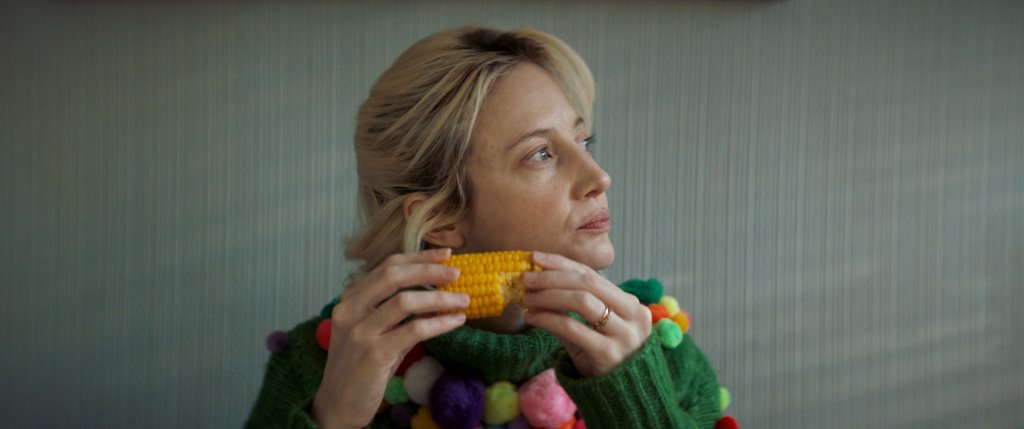
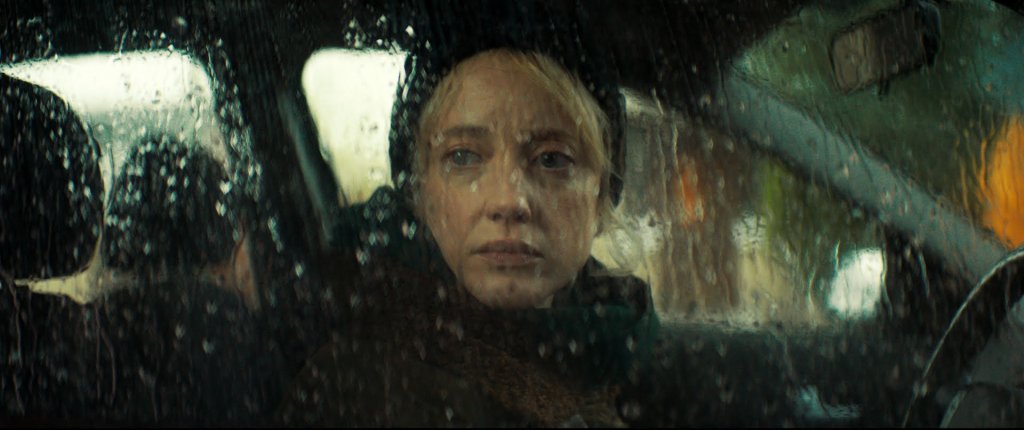
Stacey Gregg writes and directs Here Before, a genre-bending story set in Northern Ireland and starring Andrea Riseborough. When a new family moves in next door, their young daughter Megan (Niamh Dornan) immediately captivates Laura (Riseborough) to an unsettling degree, leading to an escalating conflict between the two houses at the end of the cul-de-sac.  As a tense character study and empathetic meditation on loss, Here Before is a stunning directorial debut from Gregg.

STARBURST: Having written and directed Here Before, can you talk us through how the idea came about, and how it developed?

Stacey Gregg: The idea was around for a long time, I think since I was a kid. There’s a character in the film, Megan. And I would say she’s more than a little bit of how I was as a kid. I was always interested in strange stories, in spirituality and the supernatural. And I had this idea about a family moving into a brand-new area, driving past a graveyard and the kid saying, “That’s where they put me in the ground that time.” I had that in my head for ages and I wasn’t sure what I would do with it.

And then there was a week when my laptop broke, and a theatre had a computer they were allowing me to use so I just thought, “Maybe I’ll try and write a screenplay.” What came out was not a million miles away from the script that we shot. So, I sort of found the story instinctively as I was writing. And then when I realised that I was going to direct it, then I guess the visual language of the film and a more refined sense of Laura’s character came about. And obviously as soon as Andrea was involved, she really elevates the performance in a way that you start getting an incredible collaboration between your crew and the cast. I’m probably a very collaborative director, so it’s a process of discovery which again, I find very exciting. There’s a very clear visual sense of where I’m going, but I’m always open to ideas along the way.

Directed by Stacey Gregg, Here Before stars Andrea Riseborough

Did you do much research around the various supernatural elements explored?

Stacey Gregg: Like I say, I was pretty obsessed with that when I was younger. I had quite an encyclopaedic interest anyway in those things, and some of it comes from personal experiences of the landscape of Northern Ireland, and Irishness. Something that the film is interested in, and I’m interested in, is where those things live in proximity to each other – in terms of metaphysics, and spirituality, and grief. Of course, I also do due diligence and, coming from theatre, that sort of fineness of research and care for the subjects you’re exploring feels crucial. That way you’re as informed as you can be going into that shoot and you can make sure your actors have a comprehensive understanding of these themes you’re working with.

Would you say there’s something quite unique to Northern Irish culture when it comes to certain themes like the liminal state between life and death?

Stacey Gregg: I’m always super reluctant to generalise, and I would say that there are cultural resonances across many different experiences, geographies, and histories. But I can only speak from my experience and yes, my sense of Irishness is that we treat death differently, we process it differently. We have a wake, we have open coffins, you know, we celebrate in a different way. It feels like life and death is more of a porous concept at times. And during the pandemic, when we’ve been denied those rituals, it’s been really hard and really palpable. And I think the representation of people who’ve been through that kind of trauma and grief again, I think being Northern Irish, I grew up around a lot of particularly strong women, whose kind of grief I don’t often see represented on screen. And so that’s something that I bring instinctively from my own experience.

You make interesting use of a banal, suburban setting against the otherworldly, natural landscapes of Ireland, which can be quite disorienting. And the plot of Here Before itself is ambiguous and resists providing answers as to what was and wasn’t imagined. Why was that important to you, and what were the challenges of portraying that visually?

Stacey Gregg: I think that I’m less interested in stories or films that tell us what to think and what to feel. I’m much more interested in a multiplicity of experiences and readings. And I think that speaks much more truthfully to the themes of the film and the experience that Laura has, and that was a line that we were threading throughout. That ambiguity was intentional and was absolutely reflected in the production design and the cinematography. Even the houses have a kind of visual dualism, where they’re on the edge lands between the hill and the city. There’s this sense of the strange besides and inside the suburban, the presence of absence, the defamiliarizing of the familiar, that was all very much imbued in the visual language and the framing of the film. There was definitely a desire to create the kind of ambiguity that feels rich and full of possibility, rather than in any way tricksy or evasive.

Here Before from writer-director Stacey Gregg stars Andrea Riseborough as Laura

That ambiguity also extends to how we could classify this film. If you had to label it with one genre, what would you say?

Stacey Gregg: This is a really tough one. I mean, I see it as a psychological drama. And it happens to employ some thriller muscles in order to ‘Trojan horse’ in stuff that I’m interested in. But I know that because Andrea has a certain reputation, that people get very excited about it being a thriller. I think it’s yet to be seen how the film will be received and experienced, but I think it’s a psychological drama with suspenseful and thriller elements.

And to be honest, its lack of clear genre label helps keep the viewer off-kilter. And I absolutely agree that casting Andrea Riseborough means you go into the film with certain assumptions. Was that part of why you cast her?

Stacey Gregg: Andrea is fascinating. I know that she finds it quite interesting that people… of course she did the likes of The Grudge and Possessor, but she has such a huge and diverse body of work and she’s such a versatile actor. She’s drawn to characters that she understands as real people. I think she’s brilliant, I’ve followed her career since she started on the stage in London! She had done a film several years ago that was set in Northern Ireland, and had nailed the accent. So, she was on my mind from quite early on. I basically wrote her a fan letter – I didn’t know she was going to go for this first-time feature director, so I wrote her a letter and we met, and we just clicked. She loved the script, and we instinctively seemed to share an approach and language to this project. I feel very lucky to have her on this project. She’s incredible and I think she delivered a beautiful performance.

What were some of your biggest challenges when making this movie?

Stacey Gregg: There were practical challenges, like we had child actors so had restrictions on shooting, and we were working against very short daylight hours because it was December. None of the practical challenges fazed me too much. We managed to shoot before lockdown and the pandemic, but I had to do post on the film from my bedroom. That learning curve was insane. To not have a creative context or community while you’re doing that means constantly second-guessing yourself. It was really tough, but thankfully I had a great team. And I feel like I’ve survived that so that next time, any project will feel easy-peasy.

Niamh Dornan as Megan in Here Before, directed by Stacey Gregg

Speaking of the kids, what was the casting process like finding Niamh Dornan and Lewis McAskie? Aren’t they both first-time actors?

Stacey Gregg: Yeah, they are. They’re fantastic. We worked with an agency that’s Belfast-based, called Carla Stronge Casting, and Carla is so warm and supportive that the kids respond really well. With casting Megan, some of the girls were as young as 9 and probably too young, but as soon as they were hitting 11 they became too knowing. We had to hit that sweet spot. What was fascinating about Niamh was that she didn’t learn lines because she didn’t have any acting background, but we relaxed a bit and I could see that there was this incredible, smart, savvy, really sweet kid. Working with her was a total dream. And then with Lewis again, we were looking for that cusping thing; he’s got this boyishness but is on the cusp of becoming a man. He embodies that tension very well. They nailed it, they were both brilliant.

And lastly, once Here Before releases, what’s next for you?

Stacey Gregg: I’ve actually been commissioned to write my next feature. It’s with BBC films and Rooks Nest. So I’m working on that, which is a really validating thing, and I’ve got some TV directing coming up this summer. That’s a new foray for me, so a lot to learn. And then I have a theatre commission which will be a bit more of a slow burner. And obviously, theatres are gonna take a long time to come alive again. So that’s something I’m looking forward to. But, you know, we’ll see how that goes.

Here Before screened at South by Southwest Film Festival 2021, with a UK release TBC. 

Jamie Smart | BUNNY VS MONKEY: THE HUMAN INVASION

Author photo - Jamie Smart (credit Steve Brown)

Jamie Smart is a British comic artist and writer, known for comics such as Bear, The Dandy and Desperate Dan. His new book Bunny VS. Monkey Human Invasion, is out now. We caught up with him to find out more…

How would you describe Bunny vs Monkey: The Human Invasion to an elderly relative?

Well firstly I’d try and warn them that inside this book there is going to be a lot of cute animals running around, falling over, yelling at each other and blowing each other up, plenty of fart jokes, a big bag of poo, an array of ridiculous inventions and the most explosive carrot in the world. If they seem fine with that, then I’d suggest they dive right in.

What was the most fun thing to draw?

The most fun scenes are, perhaps unsurprisingly, the action scenes. When Bunny’s riding a huge wave of custard, or a giant eyeball is rolling down the hill, just picture me sat there making the ‘woosh’ and ‘crash’ noises with my mouth.

If you weren’t a cartoonist, what would you be doing for a living?

I genuinely don’t know. Thank goodness I’ve not had to figure it out.

Where does the idea for Bunny Vs Monkey come from?

Bunny Vs Monkey was an idea I had about fifteen years ago when I was trying to come up with ideas for TV shows. All the characters emerged really quickly, the whole thing just locked into place. I loved drawing cute animals being silly, and this was a perfect outlet for that. Fast forward a bit and I pitched it to The Phoenix, and nine years later I’ve been drawing new Bunny Vs Monkey stories nearly every week!

What sort of inspiration do you draw  from for the character of Looshkin?

Looshkin inspires us all to live our best lives, to do what we’ve always wanted to do without being constrained by fear or insecurity. Now it just happens that for Looshkin that means wearing underpants on his head or driving a steam train through the living room, but I like to think I could gain a little confidence from his actions too.

What is does your working day look like?

Get up, walk the dog, try and start work before 8. That’s the plan, doesn’t always happen though. I then work through until about 6ish, at which point I switch off for the evening. I never used to take days off but over the years I’ve learned that’s silly, so now I try and take at least one day off a week.

What comic strip do you wish you’d invented?

I wish I’d come up with Teenage Mutant Ninja Turtles. I loved the 80s/90s licensed comics and toy ranges, there was something so fun and colourful about them, and TMNT is one of the longest lasting. It’s such a simple idea, and yet it has been reinterpreted in so many different mediums, I think it’s a real inspiration.

Is there a project would you love to do? It can be anything.

Honestly, and I know this sounds boring, but I’m just loving my own projects at the moment, I wouldn’t wish to be doing anything else. I’m working on a new comic series for The Phoenix right now called Megalomaniacs, and it is an absolute joy, I’ve tried to come at it in a slightly different way from my previous work and now it feels like a whole new chapter for me.

If you could have movie made out of ANY of your projects, what would it be? Who would voice it?

Probably Flember, my illustrated novel series, I think it’d make a really fancy animated movie, although I’ve no idea how you might condense the books down. I know adapting ideas into movies can take decades too, so I’m not holding out much hope.

If you could save one bit of art (or music, or book, or tv or whatever) and ensure it would survive forever,  what would it be?

A job lot of Oink! comics from the late eighties, all the issues and the annuals too. Bury it in concrete and let future generations work out what the flipping hell was going on.

What’s better, Doctor Who or Doctor No?

Doctor Who, easy.

Simpsons or Futurama?

Simpsons in general, I never quite got a hook into the main characters for Futurama although the animation and writing were brilliant.

Truth or Beauty?

Both please.

Barbara Crampton | JAKOB’S WIFE

Barbara Crampton in Jakob's Wife horror film at SXSW 2021

Ahead of the world premiere of Jakob’s Wife at SXSW Film Festival, STARBURST caught up with horror icon and actress-producer Barbara Crampton to discuss her lead role in Travis Stevens’ horror feature, and her work as producer. Read on for our spoiler-free interview with the genre legend.

STARBURST: You have become a staple of the horror genre and have been cast in a number of movies that are now considered cult. What keeps you coming back to to horror cinema?

Barbara Crampton: I think the horror genre allows us to grapple with one of the most basic emotions that we have in life, and that’s fear. And it’s about survival. And that we’re able to see how others deal with their fear, that can potentially make us all a little braver; that’s what keeps me coming back. I think you can tell so many different stories with the horror genre and how we deal with things that scare us. I mean after all, fear is our basest emotion… and I have a psychologist friend who once told me that more people make decisions based on fear than they do on love. And unfortunately, she’s right. That’s the reality. But I think in addition to horror being about dealing with your fear and survival, it is also a genre that allows us to trade in empathy and understanding, and can push us to relate to, and understand why, people do the things they do. Horror really illuminates the human condition in a way that a lot of other genres don’t.

Barbara Crampton as Anne in Jakob's Wife, directed by Travis Stevens

It’s interesting you emphasise the focus on fear, because in Jakob’s Wife your character Anne finds power through horror, more than she does fear.

She’s very fearful in the beginning, in that she’s afraid of her own power. And the movie is about reaching for that power, that newness, and that change that maybe you’ve been afraid of your whole life. So, I think that Anne at the beginning of the movie is really small. And then something horrible happens to her, something tragic and frightening, but it forces her to transform and to finally grow into that power.  And I think, you know, that’s a parallel for a lot of stories in human nature.

This is a project you’ve been developing and producing for around four years now, and you’ve spoken before about how older women in horror don’t receive many roles as protagonists. Do you feel like you have to create more mature roles for yourself because of that bias? 

Yes and no. I came back a number of years ago with You’re Next after not working as an actor for a very long time. And it was for the reasons that you’ve mentioned. I hit my mid-thirties and people weren’t offering me anything. That was thirty years ago, and we have come a long way since then. There are now more roles available for older women than there were.

When I came back to You’re Next, I decided that I wanted to rededicate myself to my career because I just really enjoyed it. And I had missed it. Around that time, I saw that all these young people that I was working with on that film – Joe Swanberg and Amy Seimetz, and Ti West, and Adam Wingard – they were all hyphenates. They were all doing other things on top of acting. They weren’t just waiting around for the phone to ring. And maybe that’s what I was doing in the 80s and 90s, maybe I was just waiting around until the day the phone stopped ringing. But thank God it rang when I was offered You’re Next, because it was then that I realised that if anything was going to happen, I would have to make it happen for myself.

And it wasn’t that I was looking to produce movies that only I would star in. I just happened to find this script because it was sent to me by Denise Gossett, who is the Festival director at Shriekfest where it had recently won Best Screenplay. I’ve continued to work on and develop other projects while I’ve been working on Jakob’s Wife, and some of these projects I’ll be in, and some of them I won’t. But for this particular project, I was really wanting to play the role of Anne because I felt like it paralleled my own life in a way. You know, I was given a second chance when I did You’re Next in the same way that she’s given a second chance when she goes through that pivotal transformation.

Barbara Crampton in Jakob's Wife horror film at SXSW 2021

And it alters her and allows her to recapture her youth and gain a hunger for life that she’d lost, or that she never knew she had. So it’s almost like a second chance at life. And I feel like Barbara was given a second chance too! So very much parallel to my own life in that regard. Now though, I do see things changing. And I feel like with recent movies that have come out like Relic and Anything for Jackson, we’re seeing some older women being given substantial, complex roles. I’m very, I’m very buoyed by that, and very happy to see that times are changing and we’re incorporating more people into stories about human life.

And it’s interesting that female roles have long been restricted to archetypes or stock characters in horror since, like you said, it’s all about fear. And who’s got more to fear than minorities, women, or the elderly?

So it’s about the vulnerable. So I think a lot of times, you know, especially with women being depicted in our movies… not so much in the 70s, because I feel like they were more experimental then. But more so in the 80s and early 90s, I feel like the women were always portrayed as vulnerable, and then there would be a hero to come in to save you. And many times, that could have been a man and yes, sometimes that was a woman. Sometimes that was Heather Langenkamp in A Nightmare on Elm Street, or somebody like Sigourney Weaver or Linda Hamilton – but you didn’t see as many of them. Mostly it was a bubble-headed co-ed screaming for her life, kind of like my role in Re-Animator. But I think that as we evolve as a society and women gain more positions of power and control, we’re now seeing that reflected in our stories.

See Barbara Crampton in Jakob’s Wife, which has its world premiere at SXSW on Wednesday 17th March

Andy Collier & Tor Mian | SACRIFICE

collier

We catch up with the writing/directing duo Andy Collier and Tor Mian to talk about the follow-up to Charismata, for which they won the Independents Day Award at the 2018 STARBURST Fantasy Awards. The new film, Sacrifice, had its world premiere at FrightFest in 2020 and stars genre legend Barbara Crampton…

STARBURST: Sacrifice is quite a different film to Charismata, how did you come up with the story?

Tor Mian: That’s an interesting question in that Sacrifice is somewhat of a cynical reaction to our experience making Charismata, which was a pretty ambitious film. While we’re extremely proud of it, we did think okay, if, if we’re in a position to make another one, let’s try and simplify. Let’s go for a more traditional horror film in terms of its structure and also in terms of the practicalities of shooting it. That was its genesis, at least, but that isn’t necessarily how things turned out in the end.

Andy Collier: We were trying to shoot a two-person cabin in the woods movie, probably in Yorkshire. We aren’t very good at following plans!

TM: We ended up we ended up shooting in Norway, which is the most expensive country on the planet with significantly more than just two actors and one location.

What was it like filming in Norway?

AC: It was difficult due to logistics, because it’s literally a seven-hour drive from Oslo. So we had to ship all this stuff from London, and it arrived two days late, so we lost two days shooting. We were completely isolated and that made it difficult. But apart from that, it was, it was great, the locals don’t get that many film crews, other than James Bond, which was filming at the same time. They were really welcoming and really nice and the extras we had were like super-well behaved. They were the best behaved extras I’ve ever seen. And you know I said to Hallstein [D. Mala], the line producer, which agency did they come from, they’re amazing. And he said none, they’re just Norwegian, so well behaved and polite. Unlike Tor, who is half-Norwegian.

TM: Yeah, as Andy says, apart from actually organising the pre-production, which was difficult for logistical reasons. Once we were there, I would say from a personal point of view, having done quite a bit of work as a line producer – certainly more work as a line producer than as a director – it was the most straightforward shoot I’ve been involved in, just because everyone was so accommodating once we were actually there. So yeah, we were extremely lucky though.

So the opening scene in the bar was not based on anything you experienced by the sounds of it?

AC: We’ve experienced that every time I’ve been drinking with tour in London.

TM: The first draft was set in the UK, so in terms of in terms of that animosity, we’ve definitely experienced that!

AC: It was actually difficult to find a bar because wherever you’re shooting you can kind of Northwest Norway is the Norwegian Bible Belt and finding a pub there is not easy.

In the one hotel within 30 kilometres of as they actually had a nightclub downstairs, which clearly because nobody there likes nightclubs, had been closed for years and they just said ‘oh you can shoot there’. An abandoned nightclub sounds like horror movie but it was quite well maintained.

Barbara Crampton Sacrifice

You got Barbara Crampton, who has relationship with H.P. Lovecraft-type material…

AC: We originally wrote that role, as a male character. And when our co-producer Sean Knopp read the script he said, ‘Barbara might love this’ and he sent it to her. And she did.

I think Barbara likes Lovecraftian stuff and she got the message it’s about lack of being in control of your own destiny. And Barbara understood that and she played it really well, really nuanced, so we were really pleased.

TM: She’d never played anything other than American and she’s playing a Norwegian character, which I think really appeal to her.

How long did you have her for? Was it a case of having to cram everything in?

Yeah, we pretty much had to cram everything in.

So from a planning perspective, we pretty much had to shoot around her schedule, of course, we were very happy to do so.

sacrifice

What was your most memorable moment during filming?

TM: This film in terms of scheduling was extremely tight and we’re in a foreign country. You know that cliché that time is money, it very much rings true, so we couldn’t get behind schedule and we had a mishap on the first day, which actually knocked us back and so we’re really, really up against it. Then we’re filming a scene with a child actor who we hadn’t met before. He turns up on set and he has a complete and utter freakout, and he just refuses to go in front of the camera, he literally runs off set. So part of me is thinking ‘we’re going to have to cut this entire scene’ but if we cut the entire scene, the film doesn’t make sense. We can’t afford to stay another day we’re completely and utterly screwed. All the tickets are booked already and I’m having a panic attack. You have to remember we’re absolutely in the middle of nowhere. This is the opposite of filming in a normal city like London, which is what we used to. And then just out of nowhere, the line producer this walks in with another kid. A completely a random kid was walking past, and he said ‘do you want to be an actor in the film?’ Now this is not just being an actor in the background, he’s actually got lines. And the kid did it. That is the best bit of line producing I’ve ever seen on anything I’ve ever been involved in. So yeah, it was very memorable to me personally.

AC: My most memorable was probably the last scene in the movie, which I think was the last thing that we shot.  We were really constrained by the Norwegian latitude. The water temperature is normally quite deadly, but it’s cool in July and August, so we thought we need to we need to pick July or August. But because there are so many night shoots, at that latitude, in June, there’s no darkness, so we chose August when we had four or five hours of darkness. So we had like four hours to get that scene in the can. We were really racing against the light and we’re running around shooting things – no breaks – and right at the end, the sun comes up. So the final shot is dawn, which actually works quite well, it looks pretty good. But had we been five minutes later, it would have simply become daytime in the finished film.

Finally, what’s next for you two?

TM: As with most filmmakers, everything is COVID dependant, so very much in limbo. Just before we had Sacrifice greenlit, we were about to shoot another horror film set in set in Utah. It’s one that’s quite difficult to describe, it’s essentially a homosexual zombie Western, and we’re hoping to get that back off the ground, that’s at least the intention.

Sacrifice is available now on digital. You can read our review here and watch the full interview below:


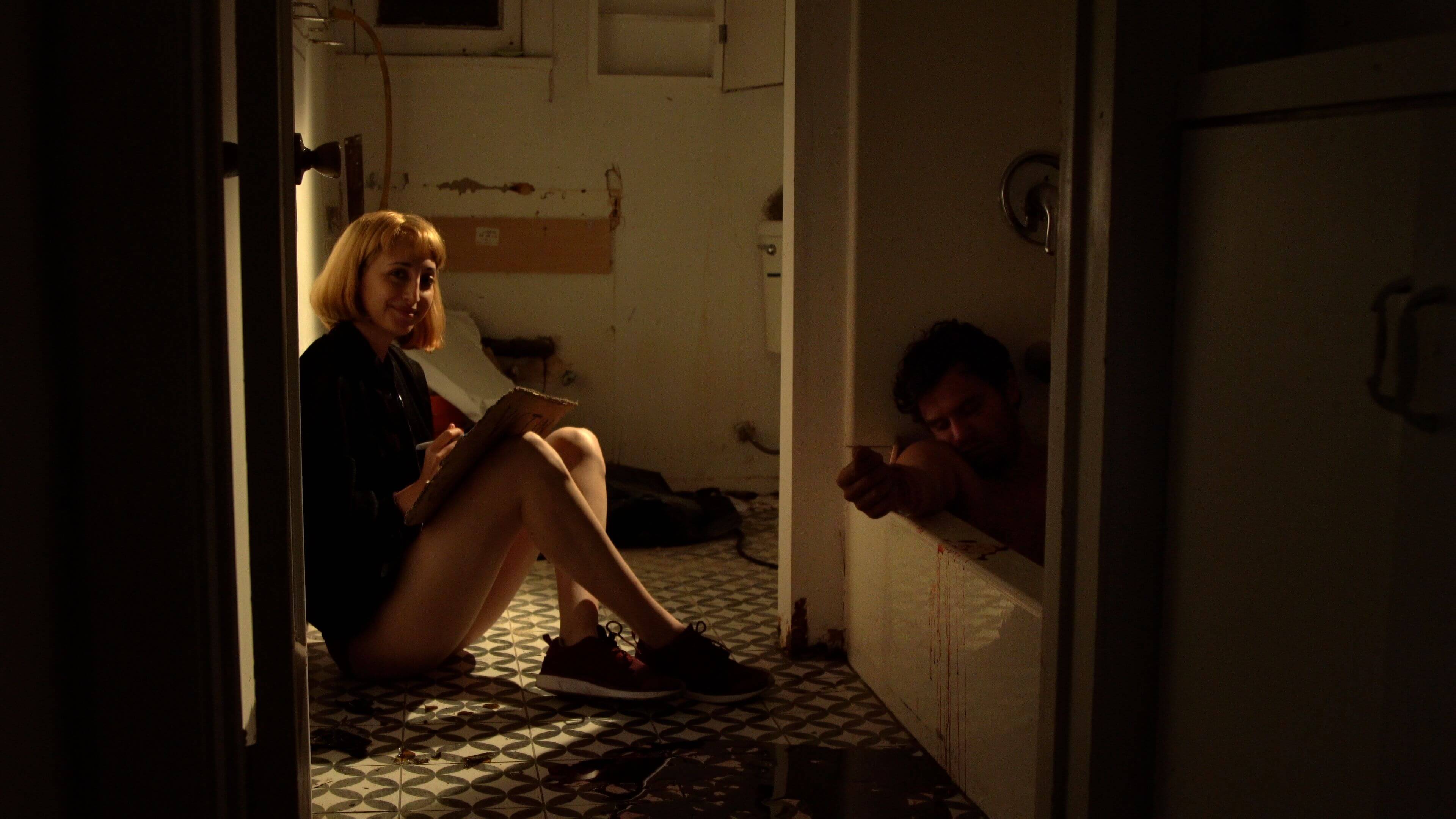
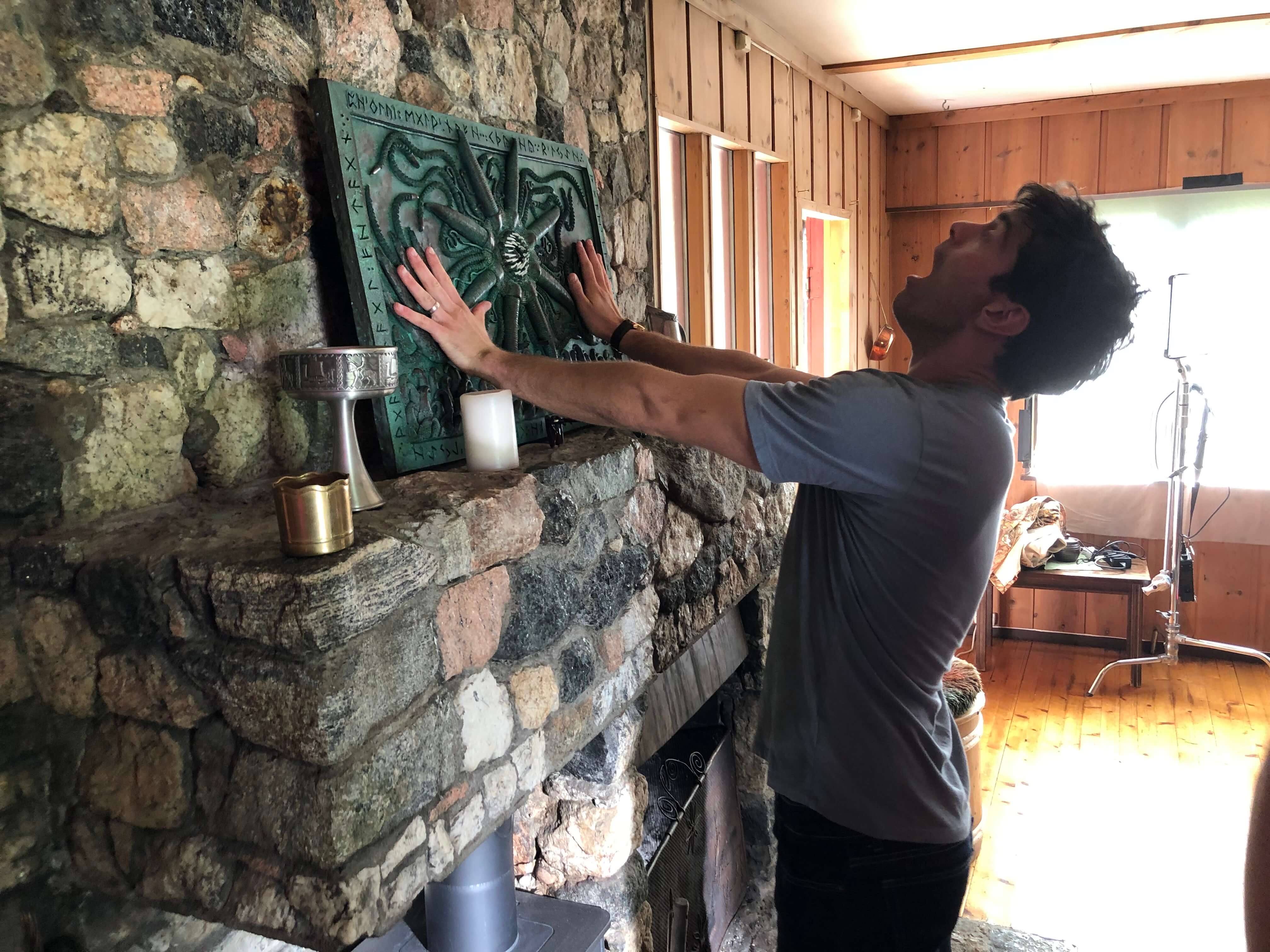
Check out these behind the scenes images (click to expand):