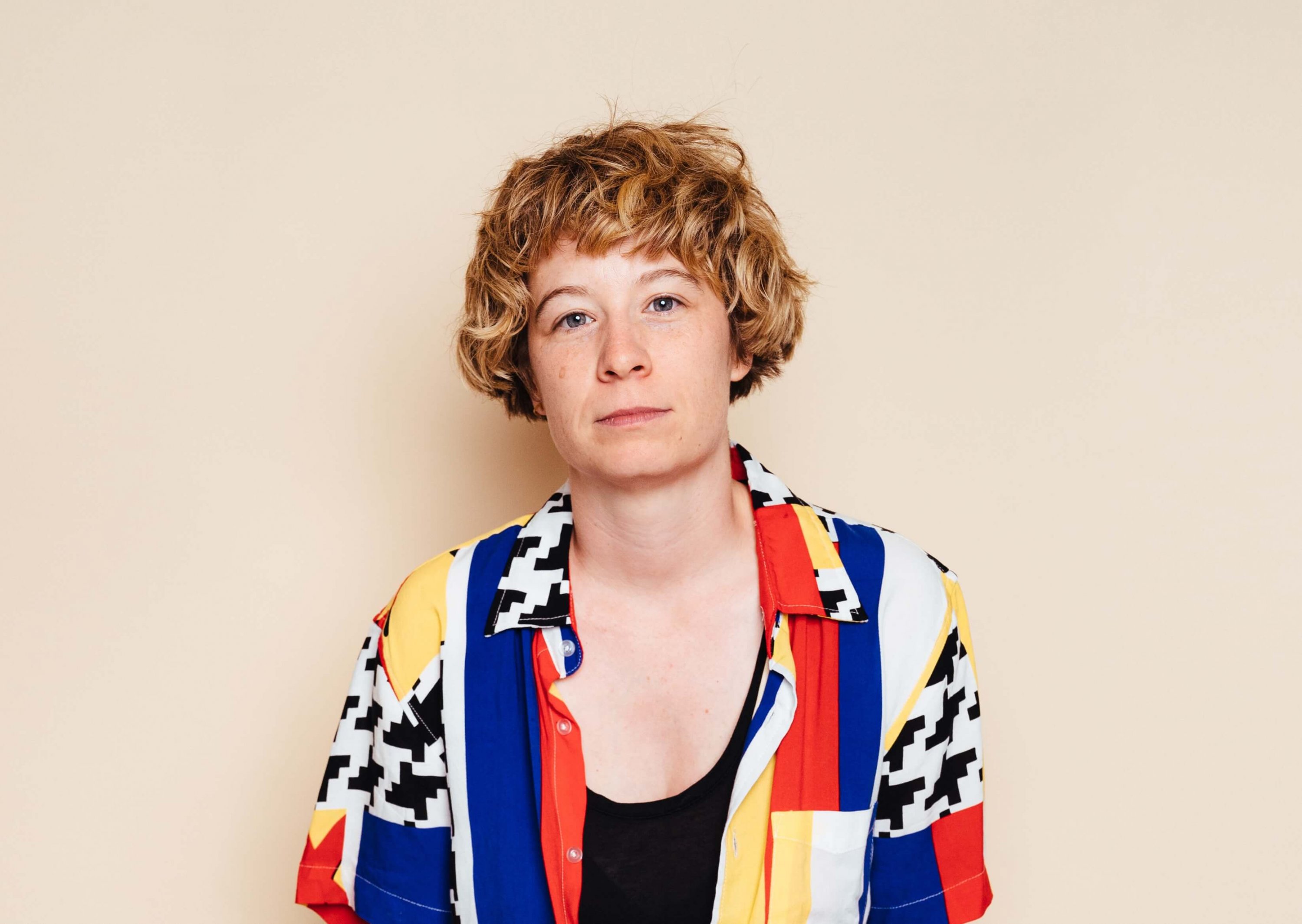
Stacey Gregg writes and directs Here Before, a genre-bending story set in Northern Ireland and starring Andrea Riseborough. When a new family moves in next door, their young daughter Megan (Niamh Dornan) immediately captivates Laura (Riseborough) to an unsettling degree, leading to an escalating conflict between the two houses at the end of the cul-de-sac. As a tense character study and empathetic meditation on loss, Here Before is a stunning directorial debut from Gregg.
STARBURST: Having written and directed Here Before, can you talk us through how the idea came about, and how it developed?
Stacey Gregg: The idea was around for a long time, I think since I was a kid. There’s a character in the film, Megan. And I would say she’s more than a little bit of how I was as a kid. I was always interested in strange stories, in spirituality and the supernatural. And I had this idea about a family moving into a brand-new area, driving past a graveyard and the kid saying, “That’s where they put me in the ground that time.” I had that in my head for ages and I wasn’t sure what I would do with it.
And then there was a week when my laptop broke, and a theatre had a computer they were allowing me to use so I just thought, “Maybe I’ll try and write a screenplay.” What came out was not a million miles away from the script that we shot. So, I sort of found the story instinctively as I was writing. And then when I realised that I was going to direct it, then I guess the visual language of the film and a more refined sense of Laura’s character came about. And obviously as soon as Andrea was involved, she really elevates the performance in a way that you start getting an incredible collaboration between your crew and the cast. I’m probably a very collaborative director, so it’s a process of discovery which again, I find very exciting. There’s a very clear visual sense of where I’m going, but I’m always open to ideas along the way.
Did you do much research around the various supernatural elements explored?
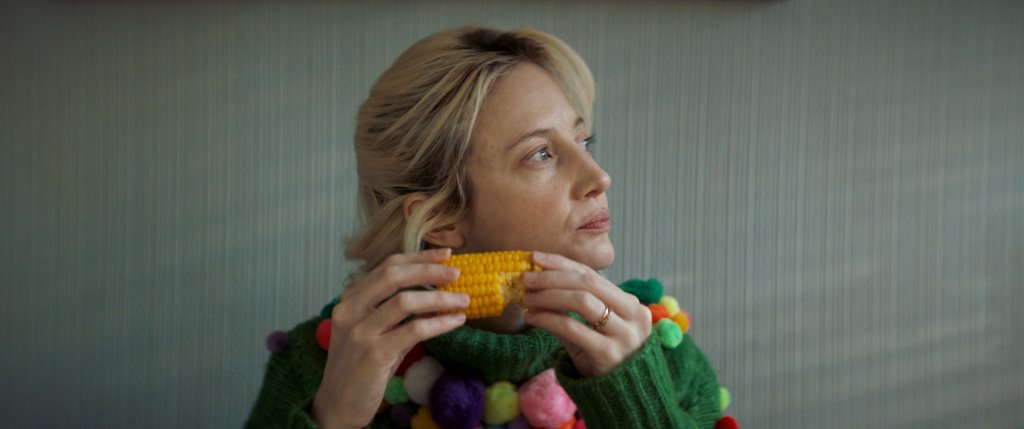
Stacey Gregg: Like I say, I was pretty obsessed with that when I was younger. I had quite an encyclopaedic interest anyway in those things, and some of it comes from personal experiences of the landscape of Northern Ireland, and Irishness. Something that the film is interested in, and I’m interested in, is where those things live in proximity to each other – in terms of metaphysics, and spirituality, and grief. Of course, I also do due diligence and, coming from theatre, that sort of fineness of research and care for the subjects you’re exploring feels crucial. That way you’re as informed as you can be going into that shoot and you can make sure your actors have a comprehensive understanding of these themes you’re working with.
Would you say there’s something quite unique to Northern Irish culture when it comes to certain themes like the liminal state between life and death?
Stacey Gregg: I’m always super reluctant to generalise, and I would say that there are cultural resonances across many different experiences, geographies, and histories. But I can only speak from my experience and yes, my sense of Irishness is that we treat death differently, we process it differently. We have a wake, we have open coffins, you know, we celebrate in a different way. It feels like life and death is more of a porous concept at times. And during the pandemic, when we’ve been denied those rituals, it’s been really hard and really palpable. And I think the representation of people who’ve been through that kind of trauma and grief again, I think being Northern Irish, I grew up around a lot of particularly strong women, whose kind of grief I don’t often see represented on screen. And so that’s something that I bring instinctively from my own experience.
You make interesting use of a banal, suburban setting against the otherworldly, natural landscapes of Ireland, which can be quite disorienting. And the plot of Here Before itself is ambiguous and resists providing answers as to what was and wasn’t imagined. Why was that important to you, and what were the challenges of portraying that visually?
Stacey Gregg: I think that I’m less interested in stories or films that tell us what to think and what to feel. I’m much more interested in a multiplicity of experiences and readings. And I think that speaks much more truthfully to the themes of the film and the experience that Laura has, and that was a line that we were threading throughout. That ambiguity was intentional and was absolutely reflected in the production design and the cinematography. Even the houses have a kind of visual dualism, where they’re on the edge lands between the hill and the city. There’s this sense of the strange besides and inside the suburban, the presence of absence, the defamiliarizing of the familiar, that was all very much imbued in the visual language and the framing of the film. There was definitely a desire to create the kind of ambiguity that feels rich and full of possibility, rather than in any way tricksy or evasive.
That ambiguity also extends to how we could classify this film. If you had to label it with one genre, what would you say?
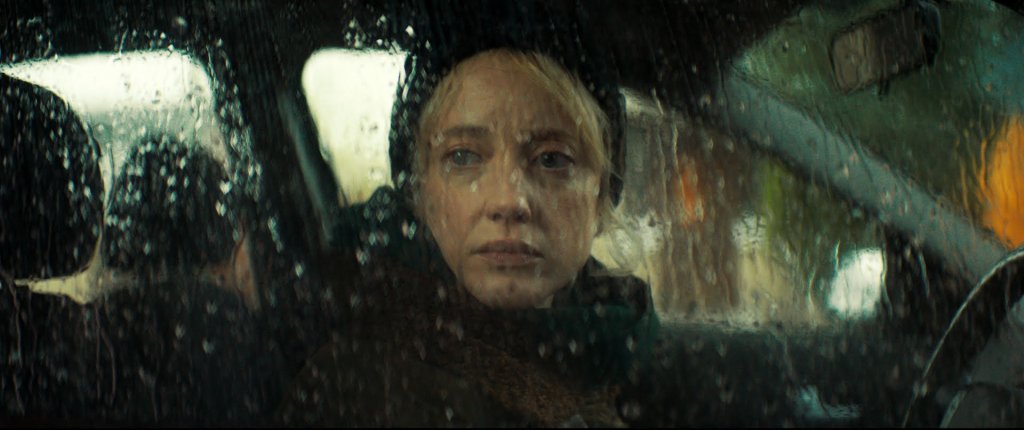
Stacey Gregg: This is a really tough one. I mean, I see it as a psychological drama. And it happens to employ some thriller muscles in order to ‘Trojan horse’ in stuff that I’m interested in. But I know that because Andrea has a certain reputation, that people get very excited about it being a thriller. I think it’s yet to be seen how the film will be received and experienced, but I think it’s a psychological drama with suspenseful and thriller elements.
And to be honest, its lack of clear genre label helps keep the viewer off-kilter. And I absolutely agree that casting Andrea Riseborough means you go into the film with certain assumptions. Was that part of why you cast her?
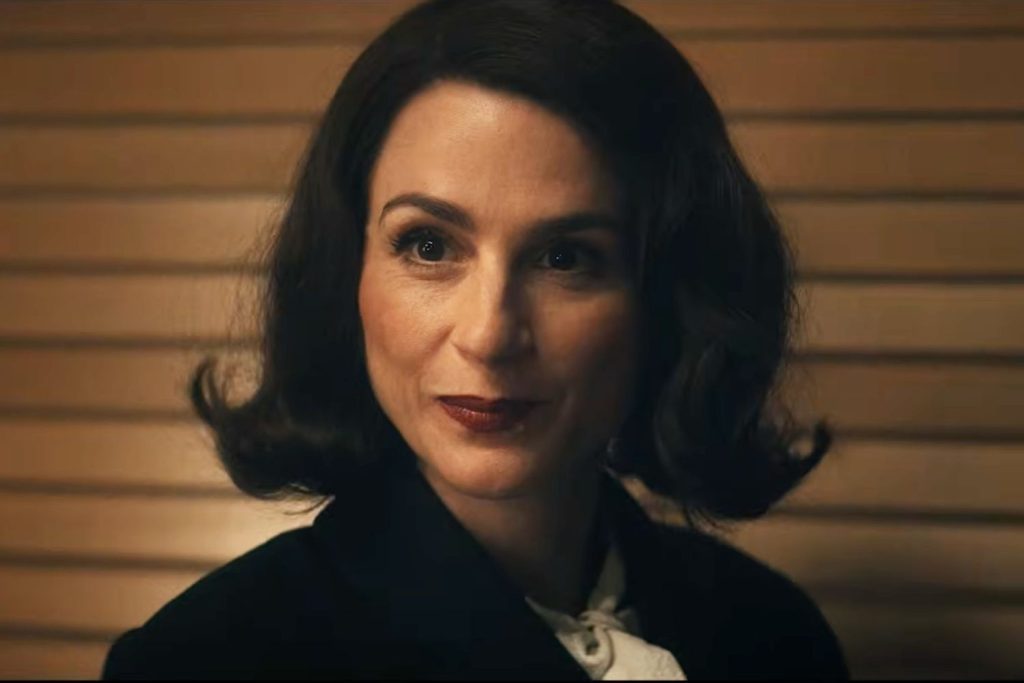
Stacey Gregg: Andrea is fascinating. I know that she finds it quite interesting that people… of course she did the likes of The Grudge and Possessor, but she has such a huge and diverse body of work and she’s such a versatile actor. She’s drawn to characters that she understands as real people. I think she’s brilliant, I’ve followed her career since she started on the stage in London! She had done a film several years ago that was set in Northern Ireland, and had nailed the accent. So, she was on my mind from quite early on. I basically wrote her a fan letter – I didn’t know she was going to go for this first-time feature director, so I wrote her a letter and we met, and we just clicked. She loved the script, and we instinctively seemed to share an approach and language to this project. I feel very lucky to have her on this project. She’s incredible and I think she delivered a beautiful performance.
What were some of your biggest challenges when making this movie?
Stacey Gregg: There were practical challenges, like we had child actors so had restrictions on shooting, and we were working against very short daylight hours because it was December. None of the practical challenges fazed me too much. We managed to shoot before lockdown and the pandemic, but I had to do post on the film from my bedroom. That learning curve was insane. To not have a creative context or community while you’re doing that means constantly second-guessing yourself. It was really tough, but thankfully I had a great team. And I feel like I’ve survived that so that next time, any project will feel easy-peasy.

Speaking of the kids, what was the casting process like finding Niamh Dornan and Lewis McAskie? Aren’t they both first-time actors?
Stacey Gregg: Yeah, they are. They’re fantastic. We worked with an agency that’s Belfast-based, called Carla Stronge Casting, and Carla is so warm and supportive that the kids respond really well. With casting Megan, some of the girls were as young as 9 and probably too young, but as soon as they were hitting 11 they became too knowing. We had to hit that sweet spot. What was fascinating about Niamh was that she didn’t learn lines because she didn’t have any acting background, but we relaxed a bit and I could see that there was this incredible, smart, savvy, really sweet kid. Working with her was a total dream. And then with Lewis again, we were looking for that cusping thing; he’s got this boyishness but is on the cusp of becoming a man. He embodies that tension very well. They nailed it, they were both brilliant.
And lastly, once Here Before releases, what’s next for you?
Stacey Gregg: I’ve actually been commissioned to write my next feature. It’s with BBC films and Rooks Nest. So I’m working on that, which is a really validating thing, and I’ve got some TV directing coming up this summer. That’s a new foray for me, so a lot to learn. And then I have a theatre commission which will be a bit more of a slow burner. And obviously, theatres are gonna take a long time to come alive again. So that’s something I’m looking forward to. But, you know, we’ll see how that goes.
Here Before screened at South by Southwest Film Festival 2021, with a UK release TBC.